p.5 Editor’s Foreword
VITA 100: The next phase of embedded computing standards
p.14 Technology Update VME in defense systems
p.5 Editor’s Foreword
VITA 100: The next phase of embedded computing standards
p.14 Technology Update VME in defense systems
Pg Advertiser
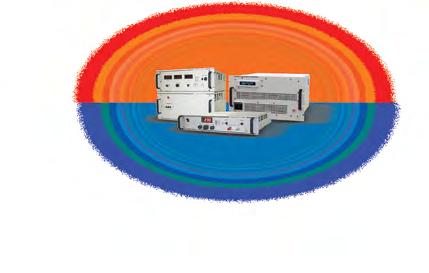
3 Behlman Electronics, Inc. –When it comes to VPX, one company has the most flavor
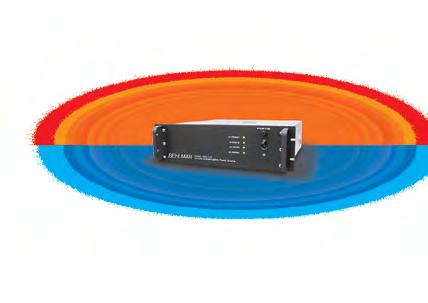
28 Behlman Electronics, Inc. –Behlman leads the pack again!
10 Dawn VME Products –Dawn single slot OpenVPX development backplanes
11 Elma Electronic –Leaders in Modular Open Standards Deliver for the Modern Warfighter
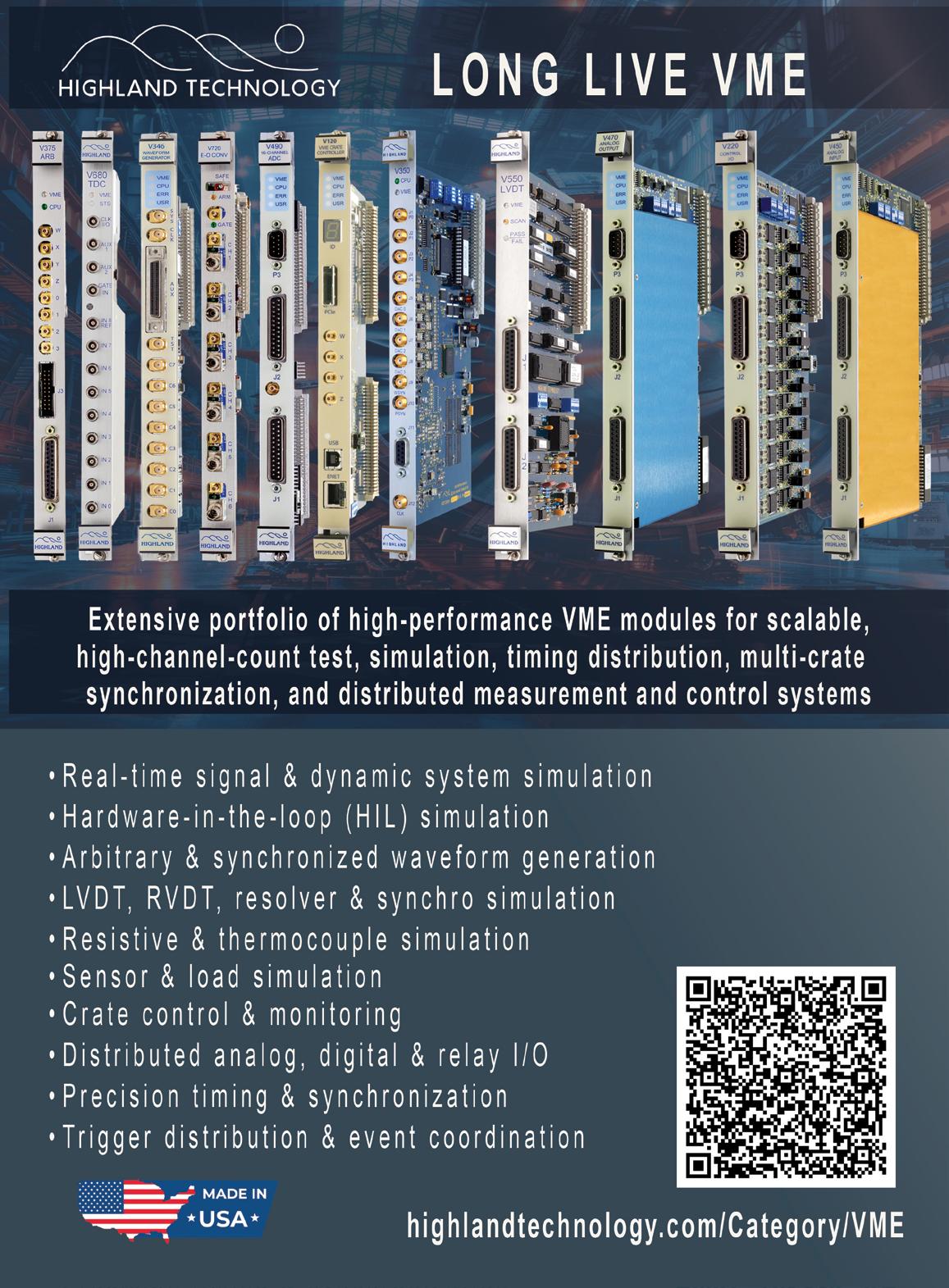
13 Highland Tech –Long Live VME
17 LCR Embedded Systems, Inc. – Liquid cooling for the next generation of AI-driven compute
7 New Wave Design –Processing data in small form factor
15 New Wave Design –Executive Speakout
18 Samtec – Interconnect solutions
EUROSATORY 2026
June 15-19, 2026
Paris, France https://www.eurosatory.com/en/ Farnborough International Airshow
July 20-24, 2026
Farnborough, England https://www.farnboroughairshow.com/
18th Annual GVSETS
August 11-13, 2026
Nova, MI
https://ndia-mich.org/event/gvsets/
AFA Air, Space & Cyber Conference
September 14-16, 2026
National Harbor, MD www.afa.org/air-space-cyber-conference/
VITA EDITORIAL DIRECTOR Jerry Gipper jerry.gipper@opensysmedia.com
GROUP EDITORIAL DIRECTOR John McHale john.mchale@opensysmedia.com
ASSISTANT MANAGING EDITOR Lisa Daigle lisa.daigle@opensysmedia.com
TECHNOLOGY EDITOR – WASHINGTON BUREAU Dan Taylor dan.taylor@opensysmedia.com
CREATIVE DIRECTOR Stephanie Sweet stephanie.sweet@opensysmedia.com
WEB DEVELOPER Paul Nelson paul.nelson@opensysmedia.com
EMAIL MARKETING SPECIALIST Drew Kaufman drew.kaufman@opensysmedia.com
WEBCAST MANAGER Marvin Augustyn marvin.augustyn@opensysmedia.com
DIRECTOR, SALES OPERATIONS Tom Varcie tom.varcie@opensysmedia.com (734) 748-9660
STRATEGIC ACCOUNT MANAGER Bill Barron bill.barron@opensysmedia.com (516) 376-9838
STRATEGIC ACCOUNT MANAGER Bill Baumann bill.baumann@opensysmedia.com (609) 610-5400
SOUTHERN CAL REGIONAL SALES MANAGER Len Pettek len.pettek@opensysmedia.com (805) 231-9582
DIRECTOR OF SALES ENABLEMENT Barbara Quinlan barbara.quinlan@opensysmedia.com AND PRODUCT MARKETING (480) 236-8818
INSIDE SALES Amy Russell amy.russell@opensysmedia.com
STRATEGIC ACCOUNT MANAGER Lesley Harmoning lesley.harmoning@opensysmedia.com
EUROPEAN ACCOUNT MANAGER Jill Thibert jill.thibert@opensysmedia.com
EUROPEAN ACCOUNT MANAGER Michael O’Kane michael.okane@opensysmedia.com
TAIWAN SALES ACCOUNT MANAGER Patty Wu patty.wu@opensysmedia.com
CHINA SALES ACCOUNT MANAGER Judy Wang judywang2000@vip.126.com
www.opensysmedia.com
CO-PRESIDENT Patrick Hopper patrick.hopper@opensysmedia.com
CO-PRESIDENT John McHale john.mchale@opensysmedia.com
DIRECTOR OF OPERATIONS AND CUSTOMER SUCCESS Gina Peter gina.peter@opensysmedia.com
GRAPHIC DESIGN MANAGER Kaitlyn Bellerson kaitlyn.bellerson@opensysmedia.com
FINANCIAL ASSISTANT Emily Verhoeks emily.verhoeks@opensysmedia.com
SUBSCRIPTION MANAGER subscriptions@opensysmedia.com

®
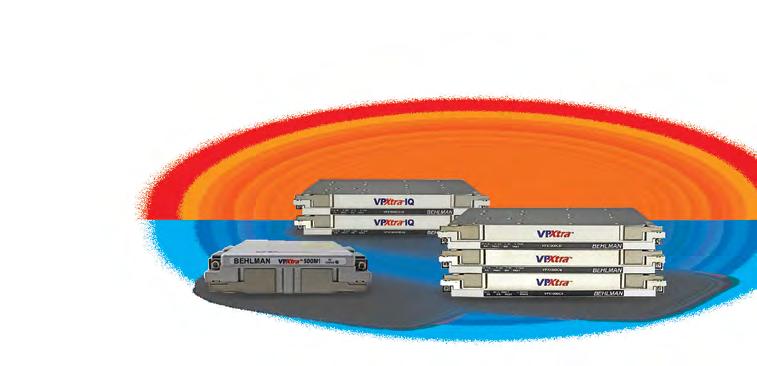
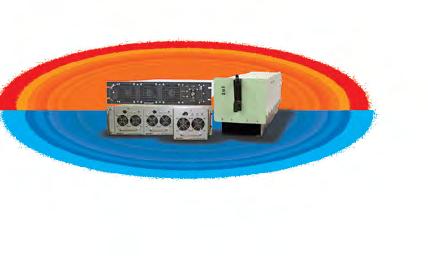
Most manufacturers offer just a few VPX power supplies off the shelf, with high costs for full-custom. The Behlman the most COTS AC to DC and DC to DC units configured for a wide range of high-end industrial and military applications. All feature our state-of-the-art new engineering standard, Xtra-reliable design and Xtra-rugged construction.
Insist on the leader. Not just VPX,
MOSA, SOSA, and VITA explained: The standards behind VPX defense electronics
8 MOSA, SOSA, and VITA explained: The standards behind VPX defense electronics
By Ben Palmer, WaveTherm
By Richard Kirk, Abaco Systems
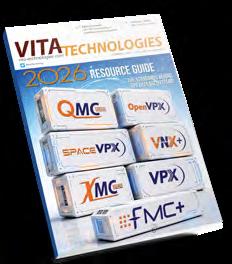
The 2026 VITA Technologies Resource Guide features articles on open standards and provides updates on VITA standards activity. Also featured: Information on technologies and products based on various standards, including OpenVPX, VME, VNX+, and VPX.
(Cover graphic: Jerry Gipper/Steph Sweet.)
By Jerry Gipper, Editorial Director
The VITA 100 initiative reflects a broader inflection point in embedded computing. System architects are being asked to deliver more bandwidth, processing capability, and power density within the same ruggedized footprints that have defined VPX deployments for more than two decades. As those demands accelerate, the standards framework supporting highperformance embedded systems must evolve as well. Introduced in 2004, VPX has matured through years of deployment and refinement; VITA 100 represents the industry’s effort to define the next architectural step.
That transition began with a study group formed in May 2022 to define requirements for a nextgeneration VPX standard, followed by the launch of the VITA 100 working groups in January 2025. Those groups are developing a coordinated family of specifications intended to evolve OpenVPX and related mechanical standards while supporting greater connector density, faster protocol support, and increased power capacity. The architecture is being defined through a closely related set of standards (dot standards) spanning connectors, slot profiles, system management, power distribution, and validation.
Within that framework, the VITA 100 family is being organized around several core technical domains:
› System architecture and electrical interfaces
› Mechanical specifications
› System management
› Connector technology
› Power conversion and delivery
› Signal integrity
› Test and development methodologies
As that work progresses, those domains are expected to produce more than a dozen related standards, highlighting the scale of the transition from legacy VPX implementations to a more capable next-generation architecture.
At a strategic level, VITA 100 is intended to preserve the installed value of the VPX ecosystem while enabling a meaningful increase in system capability. The standard must be defined early enough to align with the point at which next-generation interconnect, processing, and power technologies become practical for deployment.
The effort is also shaped by more than two decades of VPX and OpenVPX deployment experience, with the goal of reducing implementation ambiguity and improving the path from specification to interoperable products.
Enhance interoperability and integration
One objective is to reduce the number of slot profiles by increasing connector density and effectively doubling usable pin count.
Another is to preserve chassis-level and architectural backward compatibility while enabling migration to newer implementations. In practice, that could allow a common chassis to support a hybrid backplane incorporating VITA 100 and/or VITA 65 plug-in cards.
Advance embedded computing capability
Additional technical goals include maximizing bandwidth through support for emerging high-speed protocols, including 400GBASE-KR4 and PCIe Gen6.
They also include increasing plug-in card powerhandling and thermal-dissipation capacity to support denser, higher-performance devices.
The effort further calls for an expanded 4U form factor capable of accommodating current-generation chipsets whose package sizes exceed the dimensional constraints of 3U implementations.
Finally, the group aims to qualify a representative design to VITA 47 environmental requirements and evaluate it against VITA 72 vibration criteria prior to public release, supported by a documented test plan and formal test procedures.
Taken together, these objectives make clear that VITA 100 is not simply an incremental revision of VPX. It is a deliberate effort to prepare the embedded computing ecosystem for a new performance regime while preserving the interoperability, ruggedization, and deployment flexibility that makes VPX broadly successful.
The VITA 100 effort is also bringing many new companies into VITA, both to help shape the standards and to gain early insight into their implementation. The initial set of standards is expected to be released this summer.




By Jerry Gipper, Editorial Director

Note: This update is based on the results of the May 2026 VITA Standards Organization (VSO) meeting, held in Tempe, Arizona. Contact VITA if you are interested in participating in any of these working groups. The full reports can be accessed at www.vita.com/StandardsUpdates. Visit the VITA website (http://www.vita.com) for details on upcoming VITA meetings.
Accredited as an American National Standards Institute (ANSI) developer, VITA provides its members with the ability to develop and promote open technology standards.
The following standards have recently been approved via public VITA consensus ballot:
› ANSI/VITA 48.5-2026: Mechanical Standard for VPX REDI Electronic Plug-In Modules Using Air Flow Through Cooling
› ANSI/VITA 78.0-2026: SpaceVPX System Standard
› ANSI/VITA 90.0-2026: VNX+ Base Standard
› ANSI/VITA 90.1-2026: VNX+ Profile Tables
› VITA 90.2-2026 VDSTU: VNX+ Optical and RF Connector Modules - Type
› ANSI/VITA 90.3-2026: VNX+ Power Supply and Storage Modules
› ANSI/VITA 90.4-2026: VNX+ Cooling and Mounting Systems
› ANSI/VITA 90.7-2026: VNX+ Optical and RF Connector Modules – Type 7
All published standards are available for download by VITA members and are posted at the online VITA Store for purchase by nonmembers.
VSO study and working group activities
Standards within VITA may be initiated through the formation of a study group and developed by a working group. A study group requires the sponsorship of one VITA member, while a working group requires sponsorship of at least three VITA members.
Several working groups have current projects underway. Here’s a roundup of these projects:
VITA 46.32: VPX Connector Supporting 56 Gbaud Class Data Rates
Abstract: This standard defines a VPX connector that supports data rates to 56 Gbaud, for protocols such as 200GBASE-KR4 Ethernet and PCIe Gen 5. These connectors are intermateable to legacy VITA 46.X backplane connectors and follow the same form factor.
Status: Working group has developed a draft document that is ready for public review.
VITA 48.9: VPX AFT Cooling –Retractable Seals
Abstract: This standard defines an AFT module format, 3U and 6U, that uses retractable module rack seals to improve module-chassis seal durability, simplifies the design by eliminating tapered module and chassis features, and allows easy migration of existing CCA designs to an air-cooled module format.
Status: Working group is developing a draft document.
VITA 92: High Performance Cable –Ruggedized 10 Gbaud Bulkhead High Speed, D-Sub, Rectangular Connector for Copper Cables
Abstract: This standard defines a rugged standardized 10 Gbaud interconnect system with a high pin count and high-density, lightweight, rectangular connector (meets MIL-DTL-24308 physical envelope) for I/O. It can support multiple high- bandwidth protocols and power while optimizing SWaP [size, weight, and power] benefits in smaller systems with limited panel space availability.
Status: The public review phase has completed and the document is being prepared for publication.
Abstract: This standard complements the VITA 93.0 QMC standard by detailing the mechanical design of a mezzanine card installed on a carrier card or reartransition module, enabling the transition of QMC I/O signals to industry-standard connectors accessible through the carrier card’s or rear transition module’s front panel.
Status: Working group developing draft document.
Abstract: This standard defines a small-form-factor mezzanine based on the existing QMC standard but replacing the I/O connector with blind-mate
50-ohm or 75-ohm coaxial connectors. This is intended to allow for easy integration between mezzanines and carriers using high-performance coaxial connections for RF/IF or video applications.
Status: Working group developing draft document.
VITA 94.0-2024xNew:
Power Distribution Plug-In Module
Abstract: This standard provides requirements for building a power distribution plug-in module with digital controls that can be used in a VPX chassis. The plug-in module will fit within the standards envelope defined for VPX modules in the VITA 48.x
Status: Working group is developing a draft document.
Abstract: This document defines a standard for backplane connectors with EBO ferrules. EBO ferrules are available in multimode and single mode.
Status: Working group is developing a draft document.
Abstract: The VPX 100 suite of standards is an evolution of OpenVPX, VPX, and related mechanical standards while



By Ben Palmer
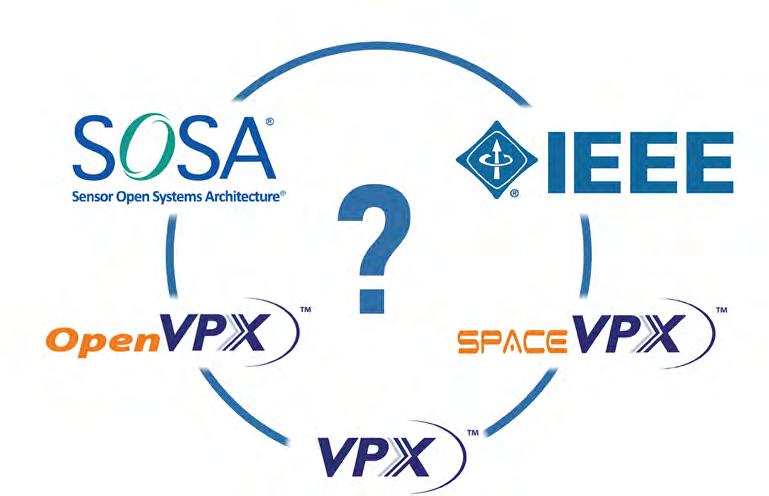
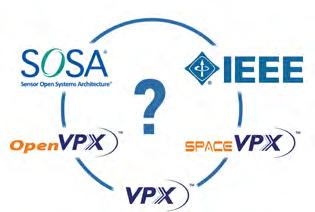
f you work in defense embedded computing, you have probably encountered MOSA, SOSA, VITA, and VPX in the same conversation and wondered exactly how they fit together. Add IEEE, SpaceVPX, PCI, and a handful of regulatory frameworks and the landscape can feel overwhelming fast. This guide breaks down each standard and framework; explains how they relate to one another; and clarifies what they mean for engineers designing, procuring, or integrating rugged electronic systems.
What is MOSA and why is it required for defense programs?
MOSA is the acronym for “modular open systems approach.” It is a technical and business strategy mandated by U.S. law under 10 U.S.C. 4401-4403 for all Major Defense Acquisition Programs (MDAPs) and, to the maximum extent practicable, for all U.S. Department of Defense (DoD) acquisition programs. MOSA is not a hardware specification or a product certification. It is a policy framework that requires programs to be designed with modular components and standardized, open interfaces that enable hardware and software to be added, replaced, or upgraded throughout the system life cycle without redesigning the entire system.
The DoD pursues MOSA for five primary reasons:
› Enhanced competition among vendors through open, modular architecture that allows components to be openly competed across suppliers.
› Easier technology refresh by replacing individual components without redesigning the entire system.
› Faster integration of innovation through operational flexibility to configure and reconfigure assets to meet changing requirements.
› Cost savings through component reuse across the acquisition life cycle and across programs.
› Improved interoperability by allowing hardware and software modules to be changed independently without cascading system-wide changes.
MOSA is enforced through contract language in the Defense Federal Acquisition Regulation Supplement (DFARS). The way MOSA actually gets implemented
in hardware is through consensus-based open standards, which is where bodies like VITA and IEEE, and consortiums like SOSA, become essential.
For VPX hardware suppliers and integrators, MOSA compliance is not a separate certification to pursue. It is the natural outcome of building products around consensus-based open standards. Wedgelocks and ejectors designed to VITA dimensional standards allow multivendor card sources in any compliant chassis, directly enabling the competitive, refreshable architecture MOSA requires. WaveTherm’s OpenCOTS program takes this further by providing open-reference heatframe designs to lower barriers for engineers building VITA-compliant systems.
What is SOSA and how does it relate to VITA and VPX?
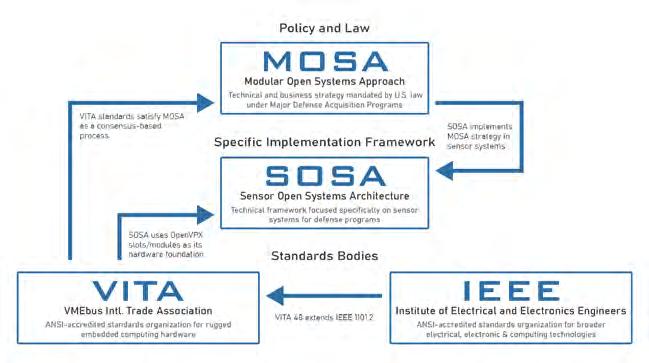
SOSA, or the Sensor Open Systems Architecture, is a technical standard developed by The Open Group SOSA Consortium focused specifically on sensor systems for
defense programs. The goal of the SOSA Technical Standard is to promote interoperability, modularity, and reusability in sensor payloads and processing across different platforms and vendors. Where MOSA is the overarching DoD policy mandate, the SOSA approach is a specific implementation framework within that policy, targeting the sensor system domain.
The SOSA approach does not create its own hardware form factor. The SOSA Technical Standard uses OpenVPX (VITA 65) slot and module profiles as its hardware foundation. VITA defines over sixty distinct 3U VPX profiles; the SOSA approach selects approximately 15 percent of those and in some cases adds additional requirements on top. A SOSA aligned card is a VPX card built to specific VITA 65 profiles with additional SOSA requirements layered on. You cannot build SOSA aligned hardware without first conforming to the underlying VITA standards.
Like standard VPX, the SOSA approach supports the range of VITA 48 cooling methods. The cooling approach for a given system is defined at the slot-profile level, not mandated uniformly across all SOSA aligned deployments. For thermal and mechanical components, SOSA alignment adds no new requirements on top of the underlying VITA standards. The wedgelock geometry, heatframe dimensions, and thermal interfaces are defined by VITA. The SOSA Technical Standard inherits them.
VITA is an ANSI-accredited standards organization that writes and maintains open technical standards for rugged embedded computing hardware. VITA is the standards body that produces the building blocks that programs like the SOSA Technical Standard use and that policy frameworks like MOSA rely on. VITA standards define connectors, mechanical envelopes, backplane fabrics, cooling interfaces, and everything else that makes VPX cards and chassis physically and electrically interoperable across vendors.
Because VITA is ANSI-accredited and develops standards through a consensus-based process, VITA standards
qualify as “widely supported and consensus-based standards” under 10 U.S.C. 4401, the statute that defines MOSA requirements. This is what makes VITA the primary vehicle for MOSA compliance in embedded computing hardware. Programs that design to VITA standards are inherently building on the open, consensus-based interfaces that MOSA requires by law.
VITA 46: What is VPX?
VPX is a rugged embedded-computing standard used across defense, aerospace, and other harsh-environment applications. A VPX system consists of a chassis, a backplane, and plug-in cards (PICs) that slot into the backplane. The chassis provides the mechanical structure, cooling infrastructure, and power distribution, while the backplane carries high-speed data between cards. The plug-in cards are where the actual processing, sensing, communications, or I/O happens. VPX was introduced in 2007 as a successor to VMEbus, designed to support modern high-speed serial data rates while retaining the ruggedized Eurocard form factor that defense programs had relied on for decades. It comes in two primary sizes: 3U (smaller, lighter, common in size, weight, and power (SWaP)-constrained airborne and vehicle applications) and 6U (larger, higher power capacity, used in systems with more I/O and processing demands).
VITA 46 is the specific standard that defines VPX at its foundation. It specifies the base connector, mechanical format, and backplane interface that all VPX cards and chassis share. Rather than the parallel bus architecture of VME, VITA 46-compliant backplanes use high-speed serial fabric protocols including PCIe, Ethernet, and RapidIO, giving VPX the bandwidth needed to feed modern processors and FPGAs. VITA 46 is one of the primary MOSA-enabling standards for embedded computing in defense programs. Programs using VPX can source boards from multiple competing vendors without chassis redesign, directly enabling the multi-vendor competition and technology refresh that MOSA requires.
VITA 48: How does VPX handle thermal management?
VITA 48, also known as REDI [Ruggedized Enhanced Design Implementation], is the standard family governing thermal management and mechanical design for VPX modules. Each sub-standard defines a distinct cooling approach suited to a different deployment environment. Selecting the right VITA 48 method is a system-level decision driven by available cooling infrastructure, power density, and environmental requirements.
VITA 48.1 – Air Cooling: VITA 48.1 uses airflow as the primary means of removing heat from VPX modules. This approach is typical for development and lab setups, where a sealed chassis and harsh-environment thermal management are not required. Certain field-deployed systems also run air cooling where the operating environment allows it.
VITA 48.2 – Conduction Cooling: VITA 48.2 is the dominant standard for deployed rugged military systems. Heat generated by the circuit card travels through the heatframe, through the wedgelock, and into the chassis cold wall. The wedgelock is not just a mechanical retainer. It is the critical thermal interface in the heat path, and its clamping force, contact surface, and thermal cross-section directly determine how much heat moves out of the card. VITA 48.2 also defines Two-Level Maintenance (2LM) requirements, meaning that wedgelocks and ejectors must enable field technicians to swap cards without specialized tools or depot-level support.
WaveTherm designs wedgelocks and ejectors specifically to VITA 48.2 requirements. The OpenCOTS program provides standardized, open-reference heatframe kits for engineers building VITA 48.2 systems, thereby removing one of the most common development bottlenecks: getting a manufacturable heatframe design without engaging a custom supplier for a small-run project.
VITA 48.4 – Liquid Flow-Through Cooling: VITA 48.4 routes liquid coolant directly through the module, drawing from the host vehicle’s thermal-management system. It
targets vehicle-integrated applications where power density is high enough to exceed what conduction cooling can handle. Because the coolant source is the vehicle itself, implementation details are generally specific to each platform.
VITA 48.5 – Air Flow-Through Cooling: VITA 48.5 circulates air across a heat exchanger that is isolated from the module’s internal electronics. Keeping the airstream separate from the electronics makes this approach practical in environments where particulates or contaminants in the air would otherwise be a concern.
VITA 48.7 – Air Flow-By Cooling: VITA 48.7 moves air across fins integrated into the outer surface of the module. Thermal performance depends heavily on the fin geometry and available airflow rate, so the heatsink design is typically optimized for the specific application.
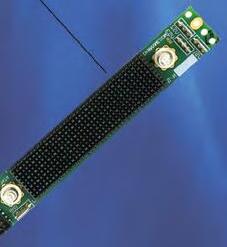

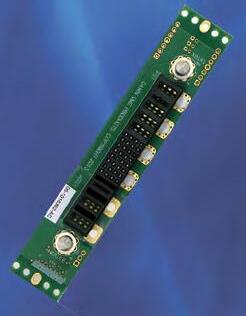

VITA 48.8 – Air Flow-Through Cooling with Finned Heat Exchanger: VITA 48.8 passes air through a structured fin array built into the module, with configurable flow paths to improve thermal efficiency. It is worth noting that higher-performance forced-air designs do not always outperform conduction cooling when power density climbs. A system-level comparison against VITA 48.2 is worthwhile before settling on an air-cooled approach.
VITA 65: What is OpenVPX and why does it






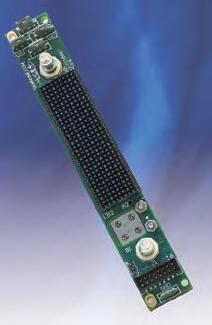
Highly useful as stand alone or in combination with other backplanes, with or without RTM connectors. Multiple units can be topology wired using MERITEC VPX Plus cables. The Dawn family of one-slot OpenVPX test station and development backplanes gives engineers the ability to perform compatibility tests and easily reconfigure payload module profiles and slot interoperability to meet custom requirements.





VITA 65, known as OpenVPX, is the system-level interoperability standard built on top of VPX. VITA 46 defines the physical hardware, while VITA 65 defines how to assemble that hardware into a working, interoperable multi-vendor system. OpenVPX does this through three profile types: Slot Profiles (what a chassis slot accepts), Backplane Profiles (how slots are interconnected), and Module Profiles (what a PIC supports). All three must align for a multivendor system to function correctly.
OpenVPX is the layer where multivendor interoperability becomes predictable and guaranteed rather than theoretically possible. When a program specifies an OpenVPX slot profile, any PIC from any manufacturer meeting that profile will insert into that slot and communicate across the backplane. This is the competitive, refreshable architecture MOSA requires at the hardware level. SOSA selects its hardware profiles from OpenVPX and adds additional requirements on top, making conformance to the relevant VITA 65 profiles the prerequisite for any SOSA aligned hardware.
is SpaceVPX?
VITA 78 is an adaptation of the VPX standard designed specifically for space applications, including satellites, launch vehicles, and spacecraft. Standard VPX was designed for ground, airborne, and naval environments. Space introduces fundamentally different challenges: vacuum conditions that eliminate convection cooling, ionizing radiation that damages standard electronics, extreme thermal cycling between sunlight and eclipse, severe launch vibration and
shock loads, and outgassing requirements that rule out many materials common in ground systems.
In a SpaceVPX system, conduction cooling is not a preference but instead is a requirement. With no atmosphere, every module must transfer heat conductively through the chassis structure, which ultimately radiates to space. This reality makes the mechanical interface between the card, the wedgelock equivalent, and the chassis rail critical in a way that is even more absolute than in ground systems. SpaceVPX also requires radiation-tolerant or radiation-hardened components and strict outgassing-compliant materials for all hardware in the thermal path.
WaveTherm’s ejectors are fully compliant with VITA 78.0, and OpenCOTS heatframe kits are available for VITA 78.0 applications.
What is the difference between PCI, CompactPCI, and VPX?
PCI, or Peripheral Component Interconnect, is a parallel bus standard developed by Intel in the early 1990s for desktop computer expansion cards. PCI itself is not used in modern VPX systems, but it is the ancestor of PCIe (PCI Express), which is one of the primary high-speed serial fabrics used across VPX backplanes today. PCIe is governed by the PCI-SIG (PCI Special Interest Group) and qualifies as a MOSA-enabling standard through its consensus-based development process.
CompactPCI (cPCI), developed by PICMG in the mid-1990s, adapted the PCI bus for the Eurocard mechanical format used in rugged industrial and defense applications. cPCI was the dominant rugged embedded computing platform through the late 1990s and 2000s before being displaced by VPX in high-performance defense applications. VPX replaced the parallel PCI bus with high-speed serial fabrics while keeping the ruggedized Eurocard mechanical heritage. Many legacy defense programs still run on cPCI hardware, and MOSA-driven technology refresh is one of the primary forces moving those programs toward modern VPX architectures. WaveTherm’s ejectors serve cPCI platforms in addition to VPX,
covering the full range of Eurocard-based board retention needs.
What role does IEEE play in VPX systems?
IEEE, the Institute of Electrical and Electronics Engineers, is one of the world’s largest technical standards organizations. IEEE is relevant to VPX because VITA builds several of its standards on top of IEEE foundational standards. IEEE is also recognized as an ANSI-accredited, consensus-based standards body, meaning that IEEE standards qualify as MOSA-
enabling standards under 10 U.S.C. 4401 the same way VITA standards do.
IEEE 1101.2 – The Mechanical Foundation for Conduction-Cooled VPX: IEEE 1101.2 is the most directly relevant IEEE standard for VPX thermal and mechanical design. It specifies the mechanical design and thermal interface requirements for conduction-cooled Eurocards. VITA 48 builds directly on IEEE 1101.2, and 6U VPX explicitly requires IEEE 1101.2 conduction- cooled envelope compliance. This requirement makes it the
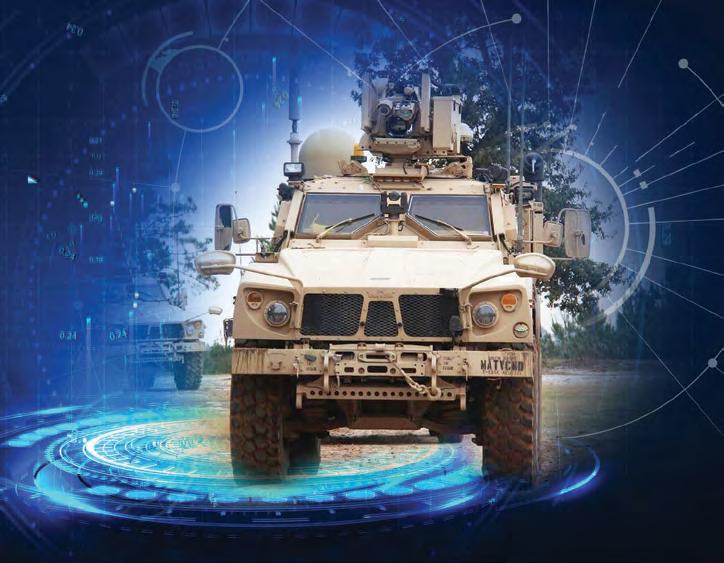
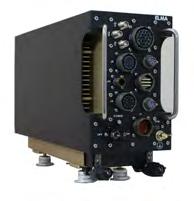
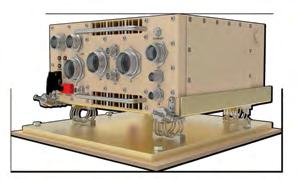

Accelerate mission deployment with the same backplane and integrated plug-in card payload set aligned to VITA, SOSA® and CMOSS. Includes chassis management, power and rugged enclosure for EO/IR, EW, SIGINT and C5ISR applications.

foundational document for wedgelock thermal interface geometry and heatframe design in VPX systems.
A wedgelock or heatframe that conforms to VITA 48.2 is by extension conforming to the underlying IEEE 1101.2 mechanical baseline. The two standards are layered, not competing. IEEE 1101.2 sets the physical envelope for conduction-cooled Eurocards. VITA 48 adds VPX-specific requirements on top of that baseline. (Figure 1.)
Other IEEE standards in the VPX ecosystem
IEEE 802.3, the Ethernet standard, is used in VPX backplane communications. VITA has developed interface standards for handling IEEE 802.3 protocol layers across VPX backplanes. IEEE 1149.1, also known as JTAG, is the boundary scan standard used for test and debug access in VPX board designs. IEEE 1386, the PCI Mezzanine Card standard, is a legacy reference that provides historical context for understanding how VPX evolved from earlier mezzanine form factors. These standards operate at the electrical and protocol level and have no direct effect on thermal or mechanical components in the system.
Beyond the technical standards that govern hardware design, defense electronics suppliers operate within a set of regulatory and compliance frameworks. These are not design specifications but legal and contractual requirements that affect how products are manufactured, exported, and sold into defense programs.
› ISO 9001 [Quality Management]:
The foundational quality-management system certification. Defense customers commonly require ISO 9001 as a baseline supplier qualification, demonstrating documented and repeatable processes for design, manufacturing, and quality control. WaveTherm is ISO 9001-certified.
› ITAR [International Traffic in Arms Regulations]: U.S. State Department regulations governing the export and import of defense
articles and technical data listed on the U.S. Munitions List. ITAR registration is a nonnegotiable requirement for suppliers selling thermal or mechanical solutions into U.S. defense VPX programs. It restricts how hardware and data can be shared with foreign nationals or entities without an export license.
› DFARS [Defense Federal Acquisition Regulation Supplement]: DoD-specific additions to the Federal Acquisition Regulation that govern defense contracts. DFARS is how MOSA policy becomes a contract obligation. DFARS Part 207.106 specifically requires modular, open architectures to enable competition for upgrades. DFARS 252.227 governs technical data rights relevant to MOSA interface documentation requirements.
› RoHS [Restriction of Hazardous Substances]: A European Union directive restricting certain hazardous materials in electronics. Defense and military electronics are generally exempt from RoHS in both the EU and the U.S. Military programs frequently specify non-RoHS (leaded) solder processes for reliability reasons, as lead-free solder is more susceptible to tin-whisker growth in highreliability applications.
› REACH [Registration, Evaluation, Authorisation and Restriction of Chemicals]: A European Union regulation governing chemical substances in products sold in EU markets. REACH compliance is most relevant for suppliers with European market exposure. For purely domestic U.S. defense programs, REACH has limited direct applicability, though awareness of restricted substances in manufacturing materials remains good practice.
In short, MOSA is the policy driver that pushes defense programs toward modular, upgradable systems, while VITA and IEEE provide the consensus-based technical standards that make that goal practical in hardware. Within that structure, VPX and OpenVPX define the physical and interoperability foundation for rugged embedded computing, and the SOSA approach builds on those standards to narrow choices and improve consistency for defense sensor platforms. Together, these frameworks help engineers and program teams reduce vendor lock-in, simplify technology refresh, and build systems that are more interoperable, maintainable, and ready to evolve over time.

Ben Palmer is a technical design manager with WaveTherm focused on public-facing digital content and early product development. He translates engineering complexity into clear, compelling visuals spanning datasheets, product renders, interactive CAD files, and educational material.
WaveTherm • https://wavetherm.com/
By Richard Kirk
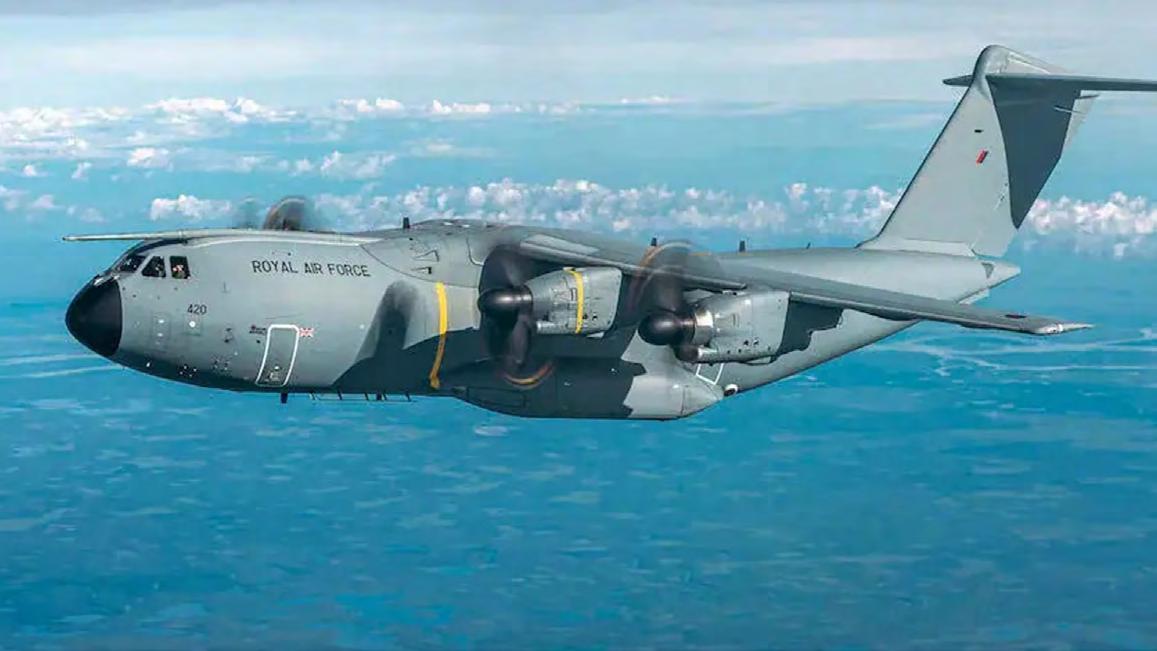
Despite the proliferation of high-speed serial fabrics and switched architectures, VMEbus remains in widespread use across defense platforms worldwide. Introduced more than four decades ago, VME continues to underpin deployed systems in naval combat management, radar processing, electronic warfare, avionics, and C4ISR applications.
In commercial electronics, architectural longevity is often viewed as a limitation. In defense systems, it is often an asset. Military platforms are developed, qualified, deployed, and sustained over timelines that can span decades. Computing architectures selected at program inception may still be operational – and mission-critical –long after their commercial counterparts have disappeared.
VMEbus is a case in point. First standardized in the early 1980s, VME has served as a foundational embedded computing architecture for defense systems for over forty years. While newer standards such as VPX and Ethernet based fabrics now dominate high-performance designs, VME continues to be specified, deployed, and supported in both new and legacy programs.
This persistence is not accidental. Rather, it reflects deliberate technical design choices and a strong alignment with defense program realities. Understanding VME’s legacy offers insight into how “mature” technologies can remain strategically relevant in mission critical environments.
My personal experience with VME began in 1999, when I joined Radstone Technology as a Product Manager. Much like VME itself, which has continuously evolved over the past 30 years, Radstone also underwent significant transformation – first becoming part of General Electric, then Abaco, and ultimately joining the AMETEK portfolio. Notably, we continue to supply to this day, a specific VME product that was being introduced to the market at that time. This PowerPC based single board computer has been deployed
across a remarkably diverse set of applications, including a naval torpedo, an airborne targeting pod, and a ground control station for an unmanned aerial vehicle (UAV). While the product’s lifecycle has not been without challenges, the implementation of a well defined DMSMS strategy has clearly demonstrated that it is possible to extend the operational life of a single board computer – typically expected to be in the 7- to 9-year range –to well beyond 25 years. In this respect, VME technology continues to demonstrate exceptional longevity and relevance
Origins of VME and early defense adoption
VME was introduced in 1981 by a consortium led by Motorola, Philips, and Mostek. Unlike proprietary buses common at the time, VME was conceived as an open, vendor-neutral standard, later formalized under IEEE 1014.
Several attributes drove early defense adoption:
› Processor independence, allowing multiple CPU architectures to coexist.
› Mechanical standardization based on Eurocard formats.
› Published specifications, enabling multivendor competition.
For defense organizations seeking to avoid vendor lock-in and mitigate long-term obsolescence risk, these characteristics were immediately attractive. By the late 1980s and early 1990s, VME had become a de facto standard for naval combat systems, radar processors, and military test equipment.
Of course, vendors have always sought to achieve some degree of lock-in, and companies such as Abaco developed defined board families and technology-insertion roadmaps that preserved pinouts across multiple generations of VME products. This approach encouraged customers to upgrade to fully compatible replacements while minimizing integration costs. PowerPC architectures often went hand in hand with VME, and Abaco’s PowerX family evolved over many years – from single-core processors such as the 100 MHz Motorola 603e to the 8-core QorIQ T2081 running at 1.2 GHz.
Nevertheless, the fundamental architectural strengths of VME continued to attract users, even as alternative standards such as VPX and CompactPCI became available.
Core architectural characteristics
Shared parallel backplane architecture: At its most fundamental level, VME is a shared parallel bus implemented on a passive backplane (Figure 1). Plug-in modules communicate via common address, data, and control lines routed across the chassis.
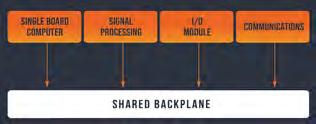
While modern standards favor switched point-to-point links, the shared bus model offers several defense-relevant advantages, such as predictable latency, transparent hardware behavior, and simpler fault analysis. These attributes are especially valuable in real-time and safety-critical environments.
Asynchronous operation: VME employs an asynchronous transfer protocol using handshaking rather than a system-wide clock. While this approach limits maximum throughput compared to synchronous fabrics, it enables interoperability between modules of differing speeds, incremental technology insertion without timing redesign, and stable operation across wide environmental ranges
By Travis Rupp, Director of Product Management
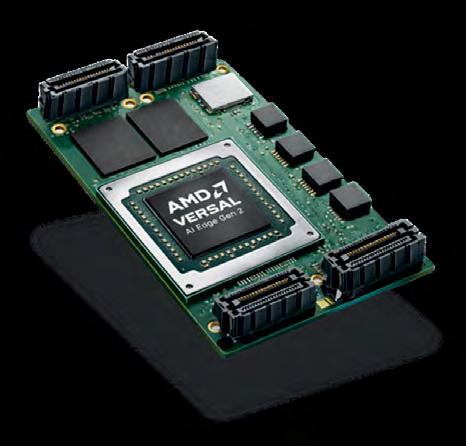
The processing demands on small airborne platforms are not small. Loitering munitions, UAS, launched effects, and packable electronic warfare systems are expected to run sensor interface, AI inference, and real-time signal processing workloads that previously required a full rack of embedded computing hardware. The V3211 is built to fill that gap.
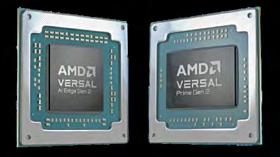
The V3211 is a rugged, double-width VITA 93 QMC System on Module (SoM) featuring the AMD Versal® AI Edge Gen 2 Adaptive SoC. It integrates Arm® Cortex®-A78AE application processors, Cortex-R52 real-time processors, AI engine cores, and large FPGA fabric on a single piece of silicon. No separate CPU board. No discrete GPU. No additional FPGA card. The heterogeneous compute stack fits on the module.
Memory and I/O scale to match. The V3211 carries 36 GB of LPDDR5X SDRAM at up to 6400 Mbps, PCIe Gen5 x4 connectivity via dedicated CPM5 controller, and high-speed serdes supporting up to 32G PL lanes. The module deploys into VNX+, 3U/4U/6U VPX, PCIe, CompactPCI, and most carrier card systems.

What separates the V3211 from other small form factor solutions is not just size – it is that the VITA 93 form factor and interfaces comply with the Modular Open Systems Approach (MOSA) in a less-than-3U VPX small form factor (SFF).
The FPGA fabric supports New Wave Design IP cores for Fibre Channel, ARINC-818, sFPDP, and Aurora, covering the legacy protocol requirements airborne and ground platforms still carry. VITA 93 and VITA 47 compliance means the module meets the open architecture requirements programs are mandated to follow, not as an afterthought, but by design.
For programs where the platform cannot grow to fit the compute requirement, the V3211 brings the compute requirement down to fit the platform. https://newwavedesign.com

For defense systems that integrate hardware across multiple technology generations, asynchronous operation reduces integration risk.
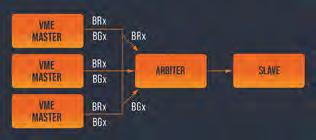
Multi-master capability: VME was designed from the outset to support true multimaster operation (Figure 2). Any capable module may request bus ownership and initiate transactions, subject to arbitration.
This capability supports advanced system architectures, including distributed signal processing, redundant controllers, and graceful degradation in fault conditions. In contrast to architectures reliant on a single root complex, VME inherently supports decentralized control.
As seen in Figure 2, each bus master asserts a bus request (BRx) to the arbiter. The arbiter resolves contention and returns a corresponding bus grant (BGx), allowing the selected master to access shared bus resources.
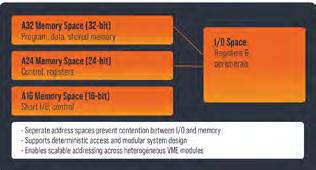
Explicit addressing model: VME defines multiple address spaces – notably A16, A24, and A32 – each associated with specific use cases (Figure 3). Address decoding is typically hardware defined and static.
While less dynamic than plug-and-play enumeration models, this explicit approach offers deterministic behavior, simplified system verification, and easier long term maintenance. These characteristics align well with defense certification and assurance requirements.
Evolution without disruption: Rather than stagnating, VME has evolved gradually to meet emerging requirements.
VME64 and VME64x: VME64 (VITA 1) increased data widths and power delivery while retaining backward compatibility. VME64x (VITA 1.1) added features such as geographic addressing, hot-swap support, and improved connector reliability. Crucially, these extensions preserved interoperability with legacy hardware.
Enhanced transfer modes: Technologies such as 2eSST (VITA 1.5) improved throughput into the hundreds of megabytes per second – sufficient for many defense workloads where determinism and reliability outweigh peak bandwidth.
Coexistence with VPX and modern architectures: VME is increasingly deployed alongside newer technologies rather than in isolation. Hybrid systems may combine VPX for high-performance processing with VME for legacy I/O, control, or missionproven subsystems.
This layered approach enables evolution without disrupting deployed capability – a recurring theme in defense system design.
Environmental robustness and mechanical design: Defense platforms impose demanding environmental constraints, including shock, vibration, temperature extremes, humidity, and electromagnetic interference. VME’s mechanical ecosystem has evolved specifically to address these challenges.
Eurocard mechanics and ruggedization: VME modules use standardized 3U, 6U, and 9U Eurocard formats with rigid front panels, injector ejector hardware, and secure card retention. For harsh environments, conduction-cooled variants compliant with IEEE 1101.x standards are widely deployed.
These features make VME particularly well-suited to use in naval vessels, ground vehicles, and airborne mission systems.
VME across defense domains
Naval combat systems: Naval platforms represent one of the strongest longterm bastions of VME usage. Combatmanagement systems, sonar processors, and fire-control subsystems often depend on VME architectures that have been incrementally upgraded over decades. The ability to sustain and evolve these systems without wholesale redesign is a decisive advantage in naval procurement.
Radar and electronic warfare (EW): Radar and EW systems frequently require deterministic latency, high I/O density, and distributed processing. VME’s shared memory access and multimaster operation have historically met these needs well.
Even as processing performance has migrated to FPGAs and multi core CPUs, VME backplanes continue to provide reliable integration for sensor interfaces, timing modules, and control processors.
Avionics and mission systems: In military avionics – particularly in legacy and rotary wing platforms – VME remains present where proven certification paths and predictable real-time behavior are prioritized over raw bandwidth.
The maturity of VME board-support packages and RTOS [real-time operating system] integrations reduces software risk and life cycle cost.
C4ISR and ground systems: Commandand-control and intelligence systems often favor architectures with high avaiability and maintainability. VME’s multi-vendor ecosystem and field-proven reliability continue to support these objectives.
Despite the availability of newer architectures, VME persists in defense systems for several pragmatic reasons:
› Long program life cycles demand continuity
› Certification costs discourage wholesale architectural change
› Supply-chain diversity supports long term availability
› Performance sufficiency meets mission requirements in many roles
In many cases, VME is not the fastest option – but it is the least risky.
However, even with the benefits described above and its true longevity, matching availability to program lifetimes cannot be achieved without a robust obsolescence-management strategy.
A robust DMSMS strategy is essential for sustaining VME-based products over long program life cycles, which may extend for several decades in defense, aerospace, and industrial systems. While VME itself has demonstrated exceptional architectural longevity, the underlying components – processors, memory devices, ASICs, and support silicon – are subject to commercial obsolescence cycles that are far shorter than the operational life of the platforms they support.
Without a proactive DMSMS approach encompassing life cycle forecasting, last-time-buy planning, form/fit/function replacements, and controlled technology refresh, systems face increased cost, schedule risk, and potential loss of capability. A well-executed DMSMS strategy therefore enables continuity of supply, preserves certification status, and mitigates integration risks, ensuring that VME products can reliably support long-term programs well beyond their original commercial design horizon.
The legacy of VME in defense applications is defined not by obsolescence resistance alone, but by architectural suitability. Its deterministic behavior, rugged mechanical ecosystem, backward compatibility, and open standard governance have proven remarkably well-matched to military requirements. Even four decades after its introduction, VME remains a relevant and trusted building block in defense electronics. In an industry where reliability, predictability, and sustainment matter as much as raw performance, VME’s continued presence is not surprising – it is instructive

Richard Kirk is a Senior Product Manager at Abaco Systems, responsible for the Single Board Computer (SBC) product line and leading the Product Lifecycle Management team. Richard has more than 25 years of experience in embedded computing for defense applications. Readers may reach him at Richard.Kirk@ametek.com.
Abaco Systems • https://abaco.com/
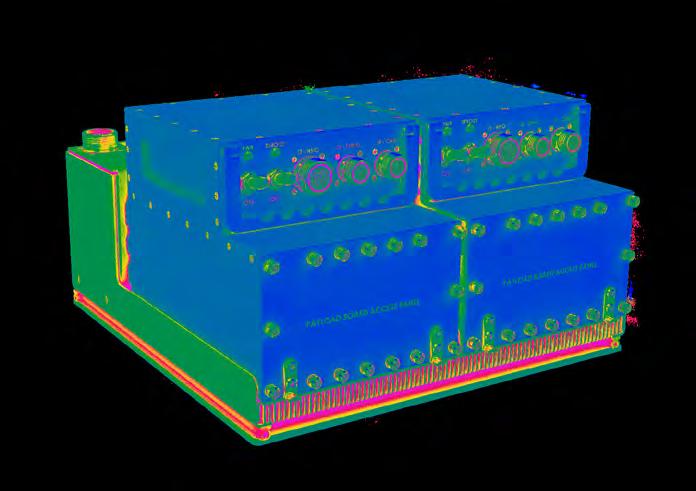


VITA™ 74 VNX™ to 90 VNX+™ Solutions
VITA™ 90 (VNX+™) is a SFF standard that is a direct descendant of VITA™ 74.
VNX™ architectures bring the essential tenants of VITA™ 65 (OpenVPX™) to SFF applications.
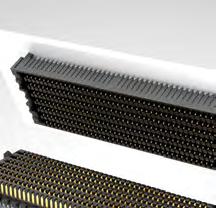
VITA™ 42 XMC ™
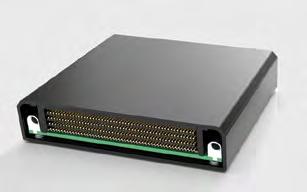
VITA™ 90 standard-based products serve markets that require rugged performance, as well as data plane interconnect technologies that closely follow the industry’s state-of-the-art.
• Small Form Factor (SFF) switched serial interconnects
• Open-frame backplane design
Features
• 5-inch tube architectures
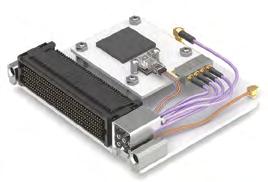
• 110 GHz RF connectivity via size 16 and size 20 contacts
• Configured with Samtec SEARAY™ Right-Angle Array and FireFly™ Optics
• Rugged fiber optic connectivity via MT ferrules
• COTS solutions for cost optimization and fast time to market

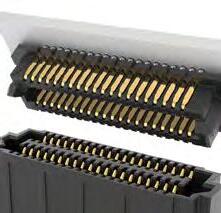
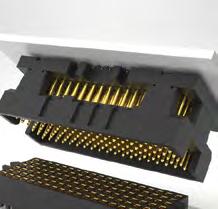
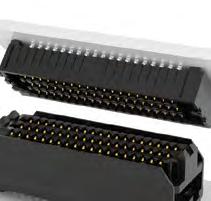
SamArray® High-Density Open Pin Field Arrays
VITA™ 42 XMC™ is a widely deployed mezzanine standard used in high-reliability computers implementing switched-fabric architectures. VITA™ 42 XMC™ specifies solder ball-equipped SamArray® connectors in 10 mm and 12 mm stack heights supporting PCIe® 4.0 performance.
VITA™ 88 XMC+™
SEARAY™ High-Density Open Pin Field Arrays
VITA™ 88 XMC+™ defines an alternative connector backwards compatible with VITA™ 42 electrical footprints. This allows designers to improve existing VITA™ 42 and/or VITA™ 61 designs by swapping connectors. The result is superior Signal Integrity (PCIe® 5.0 and 100 GbE operation) and improved mechanical performance and durability.
VITA™ 42, VITA™ 57.1/57.4
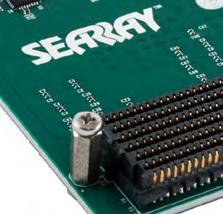
Micro Jack Screw Precision Board Stacking Standoffs
Optional standoffs reduce risk of damage when unmating mezzanine cards. Designated for PCI/104-Express®, VITA™ 42, 57.1 and 57.4 systems for use with SamArray® and SEARAY™ connectors.
VITA™ 57.1 FMC™ & 57.4 FMC+™ Connectors
FMC™ / FMC™+ Standards are essential for FPGA vendors making baseboards and comprehensive development kits to enable Designers to accelerate their VPX™ application development.
VITA™ 66 Optics
Extended Temp FireFly™ Optical Micro Flyover System™ offers multiple connector options including MT38999, MT, MTP® and MXC®.
VITA™ 93 QMC™
The VITA™ 93 Standard relies on the high-speed capabilities and the slim, dense design of Samtec’s AcceleRate® HD Ultra-Dense, Slim Body Arrays. The 80-pin (4 x 20) QMC™ Connectors are available in 9 mm, 11 mm, 14 mm, and 16 mm stack heights.
Acromag’s new VPX7600 is a Sensor Open Systems Architecture™ , or SOSA®, Technical Standard aligned I/O Intensive single board computer. This SBC features Intel’s 11th Generation Tiger Lake-H Xeon W-11000E Series processor. The high-performance 8-core processor supports up to 32GB of dual-channel, soldered-down DDR4 ECC memory. It also contains an integrated Intel Gen12 UHD Gfx-32 graphics engine. A wide variety of I/O peripherals are supported. The XMC expansion site enables advanced computation capabilities with plug-in mezzanine modules. A DisplayPort 1.4 interface on the backplane with HBR3 data rates supports 4K resolution. NVME SSD on-board storage holds up to 1TB of data. Other peripheral interfaces include a 2.5GBASE-T port, USB 3.2, USB 2.0, SATA III, 4x GPIO, and an RS422 or dual RS232 ports. Air-cooled and conduction-cooled versions are available. Board support packages facilitate use with Microsoft Windows®, Linux®, and VxWorks™ operating systems.
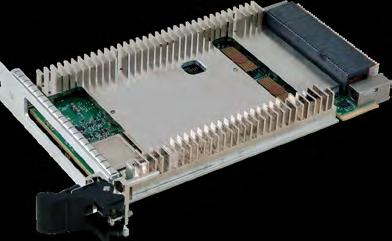
Ą Intel 11th Gen Xeon-W Tiger Lake-H 8-Core CPU
Ą 32GB of dual channel DDR4 SDRAM with ECC
Ą Up to 1TB NVMe SSD on-board storage
Ą 100Gb Ethernet Data Plane
Ą 10Gb Ethernet Control Plane
Ą x4 PCIe Gen3 Expansion Plane
Ą IPMC VITA 46.11 Tier-3 System Management
https://acromag.org/VPX7600

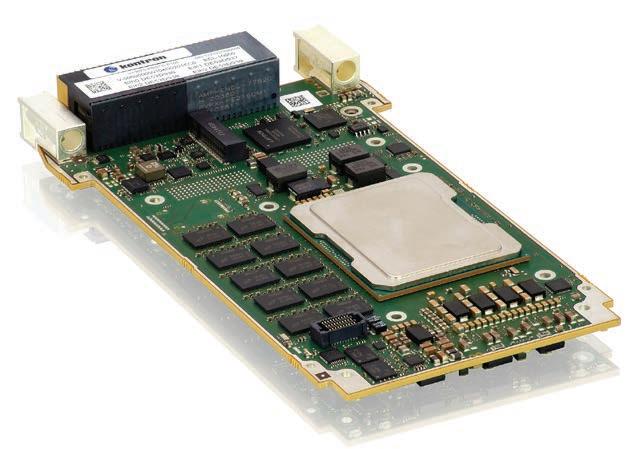
Introducing the Kontron VX307H Computing Node, the ultimate SOSA™ Architecture Booster
Offering best-in-class performance and XMC support on VITA 48.8 Air Flow Through (AFT) models, this rugged 3U embedded server card redefines the SWaP-C limits and enhances the capabilities of your HPEC architectures. Designed as a reusable building block with numerous innovations and extensions to fulfill the most demanding mission profiles.
Powered by the Intel® Xeon® D-2700 Platform, the VX307H is offered with a 12, 16, or 20-core processor with features like 100Gb Ethernet, PCIe gen4, and an on-chip DMA engine. AVX-512 VNNI support is engineered for AI, signal processing, and cryptography, offering double the performance over previous generations for critical applications like computer vision and media processing.
The VX307H is available in VITA48.8 AFT and conductioncooled versions, operating in extended temperature ranges and aligned with industry standards. Leveraging the VX307H architecture is a sure way to deploy a vast choice of applications and serve demanding programs with a single computer blade for years to come, optimizing development efforts and long-term logistics.
Unleash the potential of your engineering projects with the SOSA™ Architecture Booster – Kontron VX307H Computing Node.
Contact us to explore how this rugged solution can transform your defense applications.
Intel® Xeon® D-2700 HCC processor with 100Gb Integrated Ethernet
From 12 to 20 processing cores to be adapted to SWaP-C applications
Enhanced instructions for Artificial Intelligence and Signal processing (Intel AVX-512, VNNI)
Up to 64GB DDR4 memory with ECC
New VITA48.8 AFT (Air Flow Through) and VITA47 CC3 (Conduction-Cooled) support
XMC support on VITA48.8 AFT versions
Security enforced by Hardware Root of Trust
Designed in accordance with SOSA™ requirements
Meets VITA 47 class EAC4 V2 (extended temperature environments up to of 0 °C/+55 °C)
Long term availability with 10-years of typical lifecycle
Ensures trustable data with M.2 NVMe SSD Boot storage

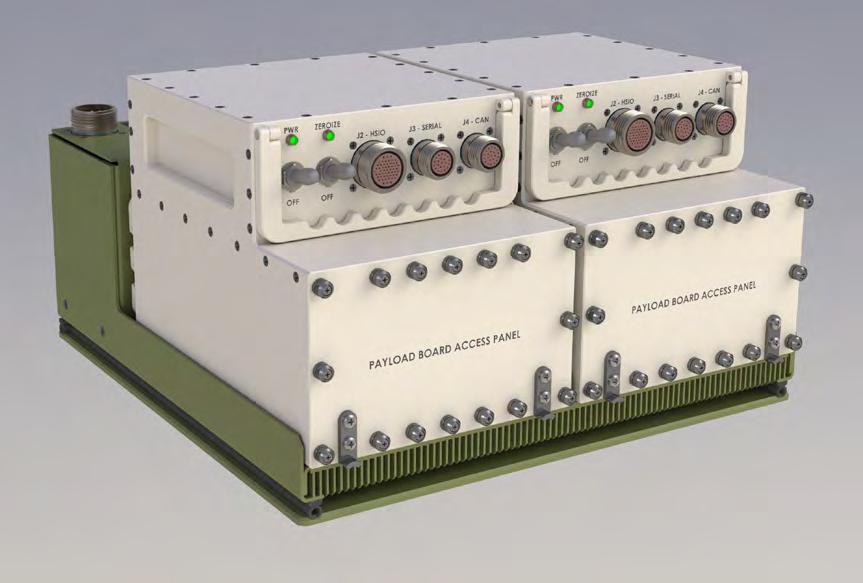
The VE03 chassis from LCR Embedded Systems is a next-generation embedded compute platform engineered for AI-driven, high-power payloads in demanding ground environments. Fully compliant with the SAVE A-Kit envelope, it integrates a compact closed-loop liquid cooling system delivering up to 140W per slot – ideal for 3U VPX, SOSA aligned GPUs, FPGAs, and high-speed processing cards.
Designed for scalability and resilience, the VE03 supports dualchassis configurations for redundancy or mission flexibility, with five payload slots plus a VITA 62 PSU per chassis. An integrated heat exchanger, reservoir, and shock-isolated tray create a selfcontained thermal solution – eliminating external liquid infrastructure while protecting sensitive electronics.
Optimized for MOSA architectures, the VE03 enables higher power density, reliable thermal performance, and future-ready deployment for C5ISR and advanced defense systems.
Ą Per slot cooling of up to 140W
Ą Closed-loop liquid cooling system
Ą 3U VPX VITA 48.2 conduction cooled modules
Ą 5 payload and 1 VITA 62 PSU slot per system
Ą Integrated shock tray, heat exchanger and reservoir in the SAVE envelope
Ą Enables operational or redundancy requirements
Ą Intended for MOSA OpenVPX and SOSA payloads
LCR Embedded Systems
Serving critical defense programs for over 35 years
https://www.lcrembeddedsystems.com/liquid-cooled-save-compliant-chassis/
LCR Embedded Systems
www.lcrembedded.com
sales@lcrembedded.com
www.linkedin.com/company/lcr-embedded-systems-inc-
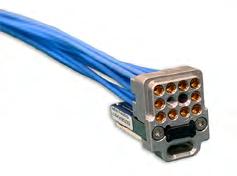
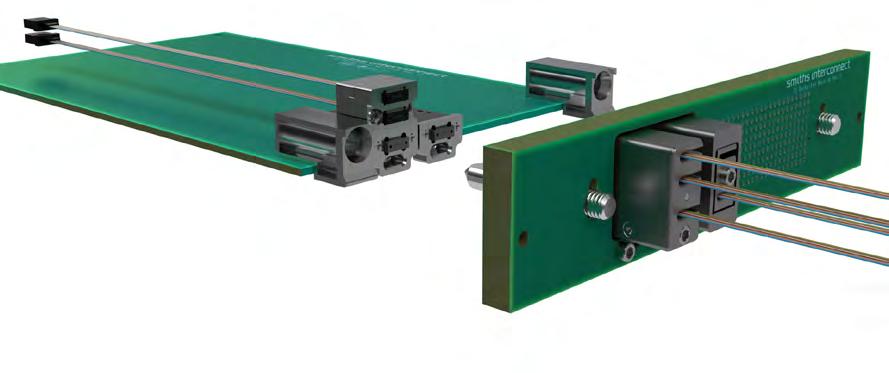
The LightCONEX® series of optical plug-in and backplane module connectors for OpenVPX systems is Smiths Interconnect's answer to the stringent SWaP requirements of today’s defense applications in which fiber optics are replacing high bandwidth copper interconnects.
This series of active, blind-mate optical interconnects offers flexibility, light weight, very high bandwidth, and forward compatibility.
The LightCONEX active blind-mate optical interconnect is a revolutionary solution for OpenVPX systems that includes a fixed, plug-in module connector and a floating backplane connector compatible with VITA 66.5 and aligned to the SOSA® Technical Standard.
• Increases volumetric density of 3U and 6U high-speed switch and processor boards by integrating an optical transceiver into a plug-in module connector
• Intermateability with OpenVPX 66.5-defined backplane connectors enables multiple sources and drives faster design cycles
• Reduces SWaP with rugged MIL-STD qualified, edge-mounted, optical interconnects
• Enables ultra-high port bandwidth density of up to 700 Gbps full duplex (28 lanes at 25 Gbps) in a single half-width slot
• Simplifies OpenVPX board assembly and rework by eliminating fiber pigtail on edge-mount transceiver
• 10G and 28G per channel datarates in TRX, TX-only, and RX-only configurations
• OpenVPX single board computing, C5ISR embedded systems
• Available in Styles A, C, C Hybrid, and D
https://www.smithsinterconnect.com/products/optical-transceivers/vpx-optical-interconnects-en/lightconex-lc-series/
Smiths Interconnect, a Molex Company www.smithsinterconnect.com/
focom.uscsr@smithsinterconnect.com
www.linkedin.com/company/smiths-interconnect/ @smithsinterconn

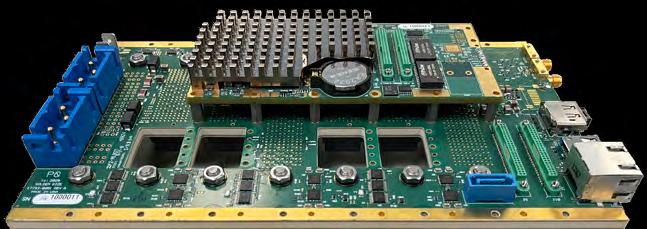
Chassis Managers / SoMs / Hardware Management Cards are Optimized for VITA 65/SOSA™ Profiles
We now offer four VITA 46.11-aligned WILD™ Cards that can be used for Chassis Management, Systems on Module, or Hardware Management. They enable critical chassis control, maintenance, and security functions, are optimized for VITA 65/ SOSA profiles, and support Tier 3 requirements. These are highly-integrated modules. They provide access to plug in card (PIC) JTAG and Maintenance ports, CLK1 usage via on-board Zynq FPGA, network functions, and some optional advanced security functions. For security, they implement security signal interfaces and a Xilinx UltraScale+ Zynq MPSoC and latest Microsemi PolarFire FPGA, which can be end-user modified with the optional BSP.


Shown mounted to a 3U VPX Backplane
Ą Capability: Provides control and access to Plug-In Card JTAG and Maintenance ports, CLK1 usage, network functions & optional advanced security functions
Ą FPGAs: Xilinx UltraScale+™ Zynq (ZU5EG or ZU11EG or ZU15EG) & MicroSemi PolarFire
Ą Mounting: Directly on backplane
Ą Power: Only requires 3.3V
Ą Optional BSP: For customizing Zynq PS & PL for security
Ą Standards: VITA 46.11 & SOSA Tier 3
Ą Availability: Commercial off-the-shelf
www.annapmicro.com/product-category/chassis-and-backplane-accessories/
Annapolis Micro Systems, Inc. www.annapmicro.com

OpenVPX & SOSA® Aligned Enclosures, Backplanes, & Chassis Managers
Pixus offers various MIL rugged and COTS enclosure solutions for 3U or 6U OpenVPX boards. There are several Sensor Open Systems Architecture®, or SOSA®, aligned slot profiles to choose from, with backplane designs to PCIe Gen4, 100GbE, and High Density 56Gbaud/s speeds. The company also has quick-turn SOSA aligned backplanes in chassis in dozens of SOSA aligned slot profile configurations. The MIL rugged ATRs utilize a modular design tailored to a customer’s specific application based on proven standard base platforms. Our ATRs come in conduction-cooled, airflow over fins in sidewalls, and liquid through sidewall configurations. Contact Pixus for Air Flow Through (AFT) and Air Flow By (AFB) designs. All Pixus chassis come with the option of our SOSA aligned Tier 3+ chassis hardware manager in a SlotSaver mezzanine format that fits behind the backplane.
marketing@annapmicro.com
410-841-2514
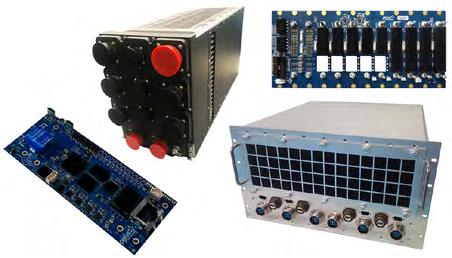
Ą Pixus offers various MIL rugged COTS enclosure solutions for 3U and 6U OpenVPX / SOSA aligned boards
Ą Backplane design expertise up to and above 100GbE speeds, vast array of SOSA aligned slot profile options
Ą SlotSaver mezzanine-based SOSA aligned chassis hardware management card (HMC), Tier 3, 100% USA software/firmware"
Ą Conduction-cooled, airflow through sidewalls, and liquid cooled through sidewall configurations
Ą Quick-turn prototyping and accelerated project development options
Ą Pixus USA is a proud member of the SOSA Consortium
https://pixustechnologies.com/products/category/openvpx

Dawn VPX Cube Enclosures
Rugged, conduction cooled 1 to 6 slot 3U VPX with 6 channel intelligent 400 Watt power supply.
Designed to MIL-STD-810E, DO-160E and MIL-STD-461E. For all rugged environments: Air, Land, and Sea.
Small and extremely rugged, cold plate base coupled, conduction cooled enclosure. Full environmental sealing ensures reliable operation in any environment.
Embedded RuSH Technology monitors Power Supply voltage and current on all 6-channels, plus temperature, and (optionally) humidity. Flexible, Dawn patented, “Eye”-tested backplane fabric and I/O mapping supports any application. Backplane is configurable to meet any data plane connection fabric.
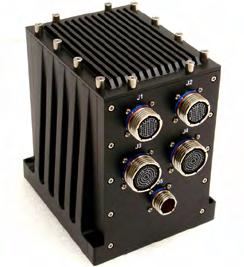
Ą Ideal packaging solution for UAV applications.
Ą 1 to 6 Slots of 3U VPX on 1" pitch (OpenVPX Ready).
Ą Integrated intelligent Power Supply provides up to 400 Watts of 6-channel power.
Ą Embedded RuSH technology actively monitors voltage, current and temperature and talks over system management bus using I2C.
Ą Performance “Eye”-tested and Dawn patented Fabric Mapping Modules allow customization of data plane fabric.
Ą High-bandwidth, differential shielded PCI Express type Rigid I/O panel interface eliminates wiring challenges.
Ą Dawn patented backplane I/O mapping modules enable PMC/XMC to I/O customization.
www.dawnvme.com/product-category/vpx-cube-enclosures/
Dawn VME Products www.dawnvme.com

– 6U VME 1/10/40 Gigabit Ethernet Switch
sales@dawnvme.com 800-258-DAWN (3296)
The ComEth4070e is a cutting-edge 6U VME Layer 2/3 Ethernet switch compatible with VME 64x systems.
It provides up to 32 Ethernet ports in two different options: 24 rear Giga Ethernet ports and 8 front SFP+ (1/10Gbs), 20 rear Giga Ethernet ports, 8 front SFP+ (1/10Gbs) and a front interface mezzanine.
The available mezzanines are: 4 front SFP+ (1/10Gbs), 2 front 1/2.5/5/10 GigaE-baseT, 1 front QSFP+(40Gbs).
The ComEth4070e matrix coupled with an independent management processor is controlled by the Switchware, the field-proven Interface Concept network management application. The Switchware supports a wide range of Ethernet protocols and has an easy to use graphical user interface (GUI).
In addition to a non-Flash device, a removable Flash disk allows storing switch configuration files and logs, offering flexibility to the user, and allowing sanitization when needed.
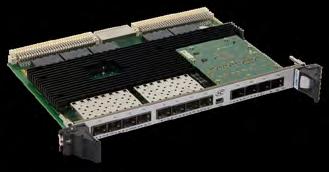
Ą 6U VME
Ą Managed Layer 2+/3 switch
Ą Up to 32 ports
Ą SFP+ (front)
Ą 10/100/1000Base-T (rear)
Ą VME 64x compliant standard, extended, rugged air-cooled and conduction-cooled versions
https://www.interfaceconcept.com/products/ethernet-switches-and-routers/cometh4070e/
TEWS Technologies: Driving Innovation in Embedded
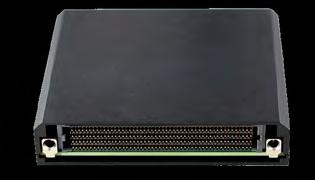
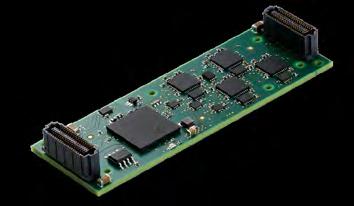
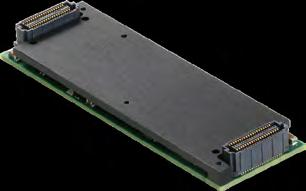
Leveraging our extensive experience in PCIe-based solutions, TEWS Technologies is committed to leading the adoption of the VITA 93 – QMC standard. Our product portfolio encompasses a range of QMC modules, from simple I/O interfaces to high-performance FPGA-based solutions. Further planned product developments will include Video/ Vision, Motion Control, Graphics, MIL-STD-1553, ARINC, RF/SDR, and are being driven by customer demand and adoption of the QMC standard. This initiative underscores our dedication to providing cutting-edge, customizable solutions for diverse applications.
TQMC400 4 Channel Full-Modem RS232/RS422/RS485 Programmable Serial Interface
TQMC401 4 Channel High Speed Sync / Async Serial Interface
TQMC402 4 Channel Isolated RS232/RS422/RS485 Programmable Serial Interface
TQMC500 20 Isolated Analog Inputs, Simultaneous Sampling
TQMC600 Reconfigurable FPGA with Digital I/O
TQMC601 32 Isolated Digital Inputs (15-60 V)
TQMC602 16 Digital In, 16 Digital Out (0.3 A), Isolated
TQMC603 20 Digital Outputs (5-36 V, 0.3 A), Isolated
TQMC604 32 Digital Outputs (5-36 V, 0.15 A), Isolated
TQMC700 Reconfigurable FPGA with AD/DA & Digital I/O
TQMC701 8 Single-Ended / Differential A/D Channels, 8 D/A Channels and 16 Digital I/O Channels
TQMC800 1 Channel 1000BASE-T Ethernet
TQMC801 1 Channel 1000BASE-KX Ethernet
TQMC802 4 Channel Isolated CAN FD
Whether you need standard COTS solutions, modified designs, or custom developments, our team can provide the expertise and support to ensure your successful system implementation.
QMC Carrier
TEWS Technologies offers the industry’s broadest portfolio of carriers for QMC modules and will further extend the offering covering additional standards like VPX. We are also offering development of custom carriers according to your projects needs.
Ą TPCE210 PCI Express Carrier with 2 QMC Sites, PCIe Gen 2 x4, Front I/O
Ą TCPS210 CompactPCI Serial Carrier with 3 QMC Sites, PCIe Gen3 x4, Rear-I/O
Ą TVNX210 VNX+ Carrier with 2 QMC Sites, PCIe Gen 3 x4, Rear I/O
https://www.tews.com/products/qmc/

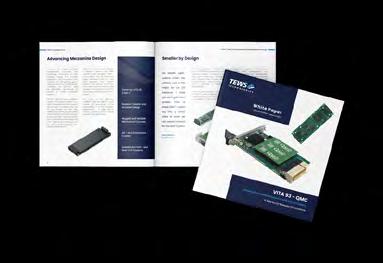
Our white paper explores how the new VITA 93 – QMC standard addresses the inherent challenges in current mezzanine card standards through its innovative QMC architecture, enabling unprecedented flexibility and scalability while maintaining backward compatibility and rugged reliability. It also covers how VITA 93 – QMC builds on lessons learned from previous standards, blending their best features with new capabilities for the future.
IC-ADDA-VPX3a – 3U VPX SOSA-aligned FPGA board
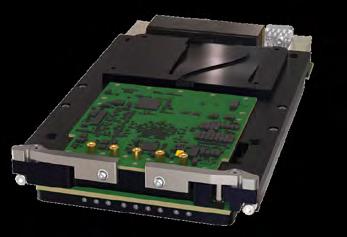
The IC-ADDA-VPX3a board is part of our Front End Processing product line to meet the increasing demand in fast data sampling for embedded systems especially in the field of Software-Defined Radio, Radar and Electronic Warfare solutions.
The IC-ADDA-VPX3a 3U VPX board is based on an AMD Versal™ FPGA and an Apollo MxFE™ AD9084 featuring quad 12-bit 20 GSPS ADC and dual 16-bit 28 GSPS DAC. These high-performance capabilities enable customized and heterogeneous hardware solutions for a wide array of applications. Such solutions provide a higher performance/ watt ratio over conventional FPGAs, CPUs and GPUs.
Based on the Apollo MxFE™ latest technology from Analog Devices, the IC-ADDA-VPX3a features ultra wideband A/D (4) and D/A (2). he IC-ADDA-VPX3a complies with the SLT3PAY-1F1U1S1S1U1U4F1J-14.6.13-n. This Payload Slot Profile is similar to the SLT3PAY-1F1U1S1S1U1U2F1J-14.6.11-n, except that it narrows the optical/coax Aperture and doubles the Expansion Plane from 16 to 32 pairs.
https://pixustechnologies.com/ecommerce/ Mil/Aero Products | SOSA Chassis Platforms & Backplanes
Interface Concept www.interfaceconcept.com
Ą 3U VPX VITA 65
Ą 1 * AMD Versal™ FPGA
Ą 2 * DDR4 banks (up to 8GB each)
Ą 2 * channels 16-bit 28 GSPS DAC (2GHz – 18Ghz bandwidth)
Ą 4 * channels 12-bit 20 GSPS ADC (0.5GHz – 18Ghz bandwidth)
Ą Advanced synchronization features (5 pS)
Ą Aligned with the SOSA® Technical Standard
https://www.interfaceconcept.com/products/fpga-boards/ic-adda-vpx3a/
info@interfaceconcept.com +33 2 98 57 30 30 www.linkedin.com/company/interface-concept
VNX+ Development Chassis
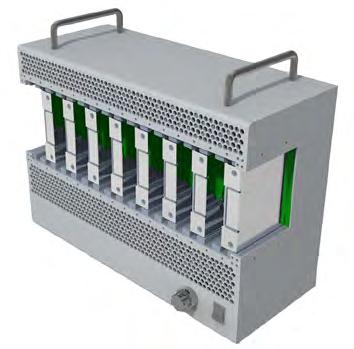
The new VITA 90 VNX+ Development chassis is a versatile solution for test/debug of your boards. The backplane features a high-speed design to maximize performance options for various protocols. The versatile chassis has options for both internal power and the use of VITA 90.3 PSUs. It features a mix of slot size options (19mm, 39mm, 13mm, 27mm) and multiple slot pincount options.
Other features of the chassis include a fan speed control dial, a convenient carry handle and open-frame approach for easy access. Contact Pixus for ruggedized and other deployable versions.
https://pixustechnologies.com/products/
Pixus Technologies www.pixustechnologies.com
Ą Significant experience with VNX+ with hybrid backplanes in production today
Ą Ideal for testing and prototyping of various VNX+ configurations
Ą High-performance backplane design with versatile slot width options
Ą Supports slots for various mezzanine requirements
Ą Modular power supply options that maximize flexibility
Ą MIL rugged versions available upon request
sales@pixustechnologies.com
916-297-0020 519-885-5775

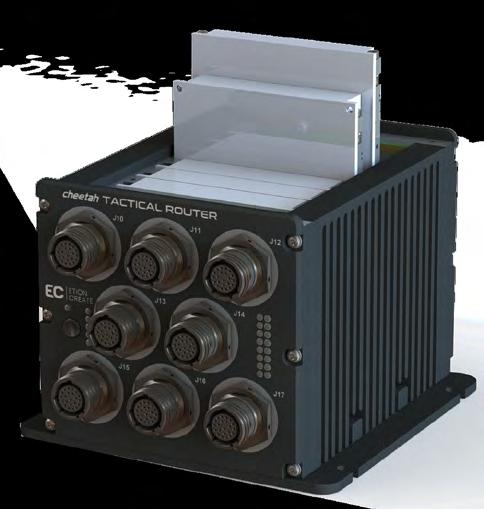
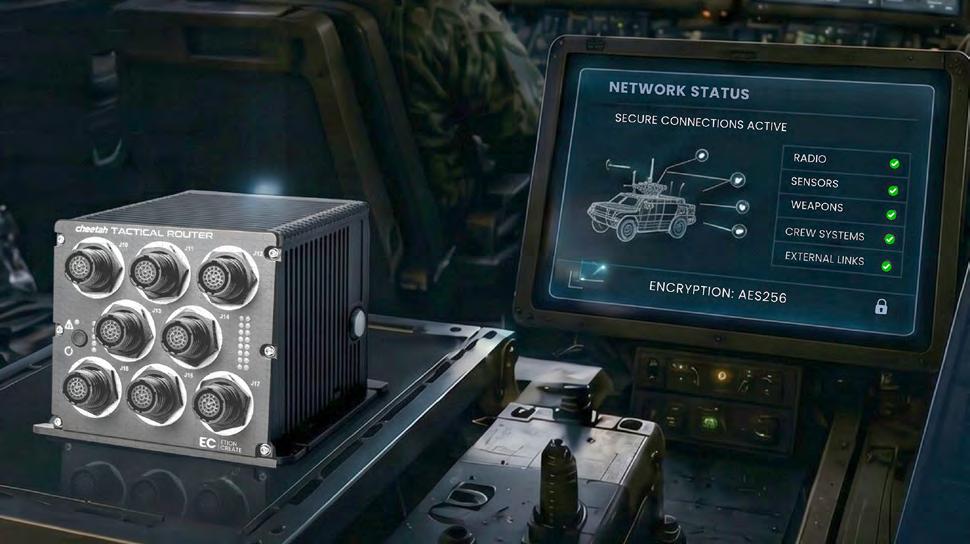
Etion Create’s VITA90 VNX+ Cheetah Tactical Router is designed for tough operational conditions; the ruggedised design has been tested to withstand severe customer environments.
Ideal for vehicle applications, it provides security-encrypted connectivity for situational awareness, communications internal and external to the vehicle, as well as Tactical Datalink functions.
Ą VITA 90 VNX+ design with modular expandability
Ą VITA 90 Tier 1 module management
Ą Linux-based OS allows custom software functions
Ą NATO Generic Vehicle Architecture (NGVA) compliant
Ą Ruggedised design
Ą Conduction cooling
Ą IEEE1588 PTP
Ą Non-ITAR controlled
Ą Web-based management interface
Ą RS232 / RS422 / 2x FDCAN – ISO11898
Ą Legacy Radio Synchronous Serial interface
Ą PoE – Power over Ethernet (1x Class3 / x15 Class1)
Ą Modular system allows future processing upgrades


Behlman introduces the first test-proven VPX power supplies developed in alignment with the SOSA Technical Standard. Like all Behlman VPXtra® power supplies, these 3U and 6U COTS DC-to-DC high-power dual output units feature Xtra-reliable design and Xtra-rugged construction to stand up to the rigors of all mission-critical airborne, shipboard, ground and mobile applications.
> 6U power module developed in alignment with the SOSA Technical Standard
> Delivers 1050W DC power via two outputs
> VITA 46.11 IPMC for integration with system management
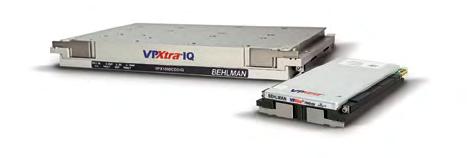
> 3U power module developed in alignment with the SOSA Technical Standard
> Delivers 800W DC power via two outputs
> VITA 46.11 IPMC for integration with system management