A nationwide creative programme across the UK marking the 80th anniversary of the end of the Second World War
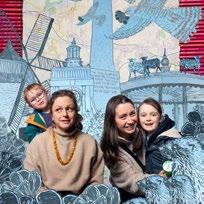
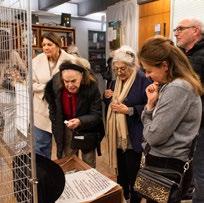
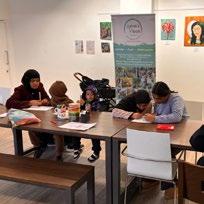
Stephanie Peacock MP visits The Old Fire Station, Oxford
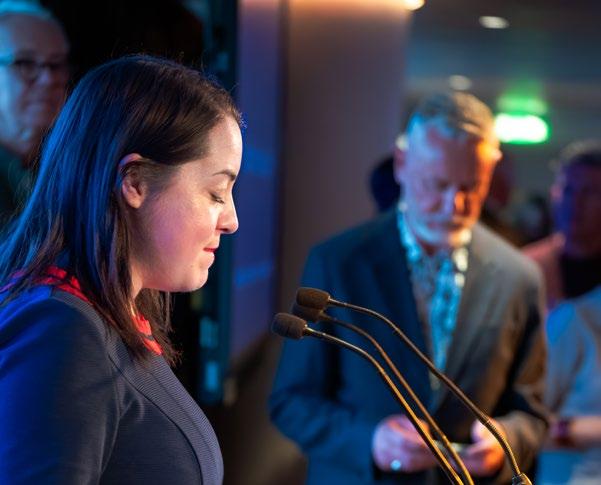
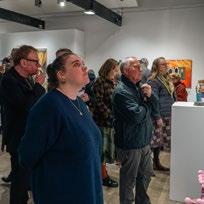
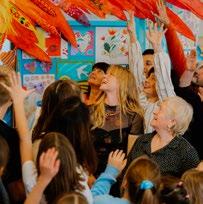
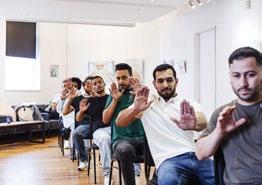
Stephanie Peacock MP at the launch of the photography exhibition Credit: Dan Martin
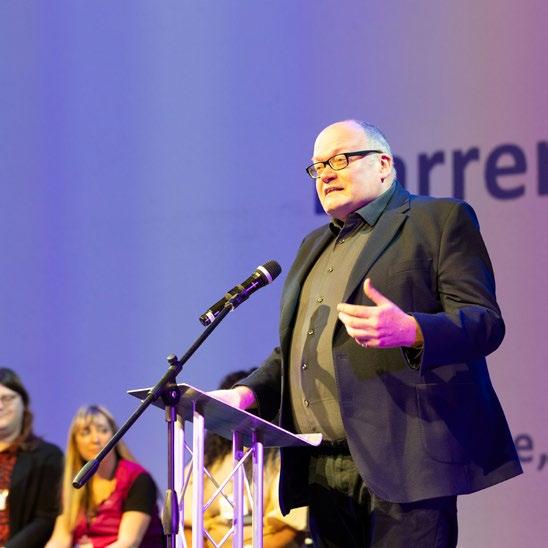
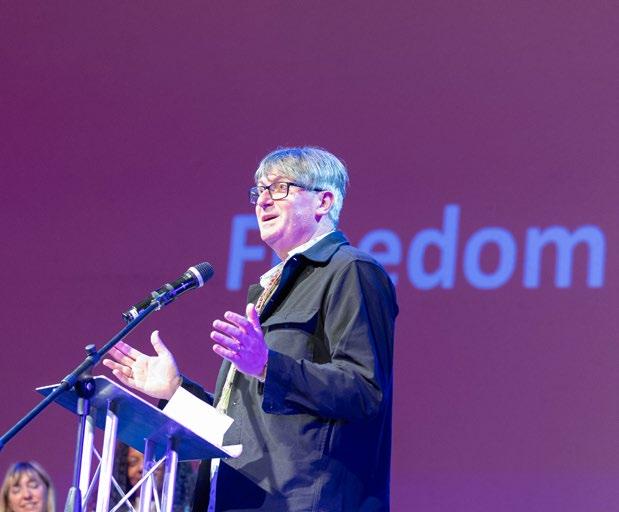
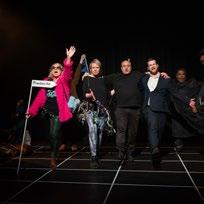
Darren Henley CBE at the launch of Our Freedom: Then and Now Credit: Jonathan Keenan
FOREWORDS
The 80th anniversaries of VE and VJ Day were moments of profound national reflection, and may be the last major milestones shared with veterans of the Second World War. As living memory fades, remembrance becomes something we must actively sustain and renew.
Our Freedom: Then and Now, delivered through Future Arts Centres, Libraries Connected, Arts Council England and partners nationwide, has shown how powerfully arts, culture and community spaces such as public libraries can keep these stories alive. Through exhibitions, performances and creative participation, communities shared stories of service, sacrifice, resilience and hope, making them accessible to people of all generations. The programme demonstrated that remembrance is not only about looking back, but about understanding who we are today and the values we carry forward into the future.
As the Minister responsible for the Government’s contribution to the VE and VJ Day 80 commemorations, I was proud to see the impact of this work, including at the Southbank Centre exhibition launch and during visits to projects at Barnsley Civic and the Old Fire Station in Oxford. What stood out most was the sense of connection: local stories from the 1940s brought into conversation with the present day, encouraging people to reflect on solidarity, resilience and community in modern Britain.
This Government believes that while talent is everywhere, opportunity is not. Through our Arts Everywhere plans and the Modern Industrial Strategy, we are committed to ensuring arts and culture thrive in every part of the country, strengthening civic pride, social connection and local growth.
This programme reminds us that the legacy of the Second World War lives on in the freedoms we enjoy every day: the freedom to speak openly, gather freely and live without fear. Those freedoms were secured at immense cost and cannot be taken for granted.
On behalf of the Government and the Department for Culture, Media and Sport, I would like to thank everyone involved in delivering this programme and exhibition. Your work has ensured that remembrance remains living, relevant and rooted in communities across the whole country. Through your creativity, commitment and collaboration, you have helped bring history into the present and ensured that its lessons continue to inspire future generations.
Stephanie Peacock MP Minister for Sport, Tourism, Civil Society and Youth
Asking people across the nation to reflect on Our Freedom: Then and Now proved to be an act that was both powerful and meaningful. That this question was posed to mark the 80th anniversary of the end of the Second World War made it even more poignant.
This was a conflict where a generation fought for the freedom of those who followed. Without their sacrifice on our behalf, eight decades later, we might well not have had the opportunity to pose this sort of question at all.
Thousands of people rose to the challenge by creating exhibitions, performances and events at sixty arts centres and libraries across England, Scotland, Wales and Northern Ireland. This burst of creativity sparked connections across the country with more than a million people attending Our Freedom: Then and Now events.
We saw and heard peacetime and wartime stories from villages, towns, and cities. We gained a renewed understanding of freedom, in all its preciousness and fragility. By taking part in a national conversation about the meaning of freedom today, we learned from the experiences of those who had gone before. By dwelling in the past, we acquired new insights that are relevant to our lives today. This new understanding will help us work together with positivity, kindness and optimism to shape tomorrow.
Through Our Freedom: Then and Now, we were reminded of the importance of creative and cultural spaces in neighbourhoods across the country. Arts centres, museums and libraries keep their doors open for respectful, meaningful discussion. They are places that brim with joy, connection - and freedom. And their existence powerfully illustrates the value of public investment in artistic and cultural excellence for everybody everywhere.
Darren Henley CBE Chief Executive Arts Council England
Acknowledgements
Our Freedom: Then and Now has been shaped by an extraordinary number of people and organisations across the UK. This programme only exists because of their commitment, care and belief in the value of local cultural spaces as places for civic conversation.
We are grateful to the Department for Culture, Media and Sport and Arts Council England for supporting the programme using public funding from the UK Government. Their investment made it possible to connect 40 arts centres and 20 libraries in a shared national moment, while ensuring that work could be rooted in local priorities and partnerships.
We would also like to thank our delivery partners, Libraries Connected and Open Eye Gallery, whose expertise, collaboration and generosity strengthened the programme at every stage. Their insight helped shape a model that balanced national connection with local distinctiveness.
Our thanks to the Poet Laureate Simon Armitage for his contribution of a new poem to the programme. His words offered a powerful national frame for the conversations taking place in arts centres and libraries across the country.
We are also grateful to the photographers from the Socially Engaged Photography Network, who helped capture the spirit and texture of the programme through their lens. Their work documents not only events and artworks, but the exchanges between people that sit at the heart of this project.
Thank you to the team at Milk & Honey, our PR and social media partners, who supported us so effectively throughout the programme and helped us shape our messaging and communications to reach many more people.
Altogether Creative devised a thoughtful brand identity which was an excellent framework for communicating with a huge range of audiences. Our website was designed and built by Tim Jukes Design which has been a valuable and central part to draw together all elements of the programme. The short film documenting the project was expertly created by Shaw & Shaw
Our six Cluster Coordinators (Millie Bottomley, Jen Farmer, Amanda Gould, Helen Johnston, Annabel Weeden, and Laura Yates) were seconded from participating arts centres and, alongside Simon Savidge from Libraries Connected, attentively supported all the projects, providing one-to-one mentoring and facilitating rich peer-learning.
The small team at Future Arts Centres did an amazing job holding everything together – thanks to Christine Lee (Administrative Director), Sophie McKenna (executive support) and Louise Wilkin (comms support).
Our deepest thanks go to the venues across the Future Arts Centres network and to the libraries who took part. Many teams worked with limited capacity yet still found the time and energy to convene conversations, commission artists, build partnerships and welcome communities into their spaces.
We are equally grateful to the artists, facilitators and local partners who brought imagination, sensitivity and rigour to the work. You created environments in which people felt able to speak honestly and to experiment creatively.
Above all, we want to acknowledge the communities who took part. Individuals and groups of all ages shared stories, memories and ideas, often drawing on deeply personal experience. Some contributed publicly for the first time. Others returned again and again, helping to shape the direction of the work. Your willingness to participate, to question and to listen is at the heart of this programme.
Our Freedom: Then and Now has shown what can happen when national resource meets local trust. To everyone who hosted, created, contributed, supported or simply showed up, thank you.
Gavin Barlow & Annabel Turpin Co-Directors Future Arts Centres & Our Freedom: Then & Now
What Freedom Looks Like Now
Eighty years after the end of the Second World War, Our Freedom: Then and Now set out to ask a simple question: what does freedom mean today?
Produced by Future Arts Centres in partnership with Libraries Connected and Open Eye Gallery, and supported using public funding by the UK Government through Arts Council England, the programme brought together 40 arts centres and 20 libraries across the UK. Each worked with its community to explore freedom - past and present - in ways that felt relevant to where they are and who they serve.
Over the past year, artists, library teams and cultural leaders have gathered in theatres, community rooms, libraries and temporary spaces. People have shared stories, made new work, listened to one another and, in many cases, spoken about freedom in public for the first time. What follows in this report is a reflection on what we have learned.
Freedom in everyday life
Across the programme, freedom rarely appeared as an abstract principle. Instead, it showed up in the details of everyday life.
In some places, conversations centred on migration, safety and the right to belong. In others, people spoke about mental health, identity, housing or the loss of shared public space. Migrants and refugees often described freedom in contrast to what came before - the ability to speak their own language in public, to practise culture openly, or to feel safe walking down the street. Older participants reflected on memory and responsibility. Younger people spoke about climate anxiety and the uncertainty of building a future.
Again and again, people described a quiet narrowing of choice. Economic pressure, shrinking civic space and the fear of saying the wrong thing all shape how free we feel. When places to gather disappear, and when trust erodes, freedom can contract without anyone formally taking it away.
These were not dramatic statements. They were grounded, practical observations about how life feels.
Making space through art
What was striking was how often creative activity opened the conversation up.
People who did not think of themselves as creative wrote poems, shared photographs or stepped onto a stage. Groups with lived experience of homelessness created performances that challenged audiences to think about who really gets to experience freedom. Schools, choirs, care homes and grassroots organisations worked together on exhibitions and events that were later shared publicly.
When someone sees their words displayed on a wall or hears them spoken aloud, something shifts. Being listened to carefully, and having your contribution treated seriously, is a form of recognition. In many places, freedom was not something being defined for an audience. It was something being practised - through collaboration, shared authorship and conversation.
Where communities helped shape the work from the outset, engagement deepened. People returned, brought friends and stayed to talk. The atmosphere in many venues felt open and generous. Freedom, in those moments, felt less like a concept and more like a condition created between people.
Credit: Sam Ivin
Being part of the Freedom Festival came at a moment when I really needed connection… the experience has had a much deeper impact on me than I expected.’
Participant,
The Art House Wakefield
Local voices, national connection
Being part of a national programme mattered. It gave venues confidence to host conversations that might otherwise have felt difficult. At the same time, each place responded in its own way. Freedom in a coastal town did not look the same as freedom in a city centre library, and it should not.
The strength of the programme lay in that balance - shared purpose, locally expressed. Stories were rooted in place, but participants also knew they were part of something wider. That sense of connection added weight and solidarity without flattening difference.
The role of arts centres and libraries
At a time when public debate can feel polarised, arts centres and libraries have a particular role to play. They can choose to create spaces where people are invited to listen as well as speak. They can hold complexity without rushing to resolution.
Our Freedom: Then and Now has reaffirmed that these spaces matter. They are not only places to consume culture, but places where civic life is rehearsed in small, everyday ways. Freedom, as it emerged through this programme, was not an abstract ideal. It was something built graduallythrough trust, participation and shared experience.
This report does not attempt to settle the question of what freedom should mean. Instead, it captures a moment in which communities across the UK were invited to consider it together. The answers are varied, sometimes uncomfortable, often hopeful.
What unites them is the act of making space - for conversation, for imagination and for one another.
Credit: Romy Ashmore-Hills
Poem
Poet Laureate Simon Armitage was commissioned to write a poem which could be a stimulus for people to ask ‘what did the end of the Second World War mean for their freedom, in their communities, then and now’?
Translated into 22 different languages, the poem was used as the starting point for all 60 projects and to ignite creative conversations about freedom in 1945 and today.
SCAN TO see a film of the poem and BSL version here
Or visit: ourfreedom.org.uk/freedom-road
...freedom isn't something that is absolute. It's something ambiguous, and there's something hard to define about it. We kind of know when we've got it, but we know more about freedom when we're denied it. I wanted to write something a little bit belligerent about our right to freedom, but something that said it has to be achieved and maintained, either by keeping it in mind as a direction or ambition or coordinate. Or by living a certain kind of life, one of tolerance and understanding of values that might not be our own.
I wanted to say freedom is not a naturally occurring substance like diamonds or acorns, and it cannot be taken for granted or casually delivered.”
Simon Armitage
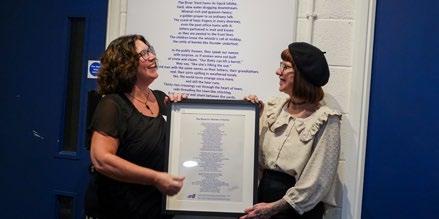
Simon Armitage at the Our Freedom: Then and Now launch
Credit: Jonathan Keenan
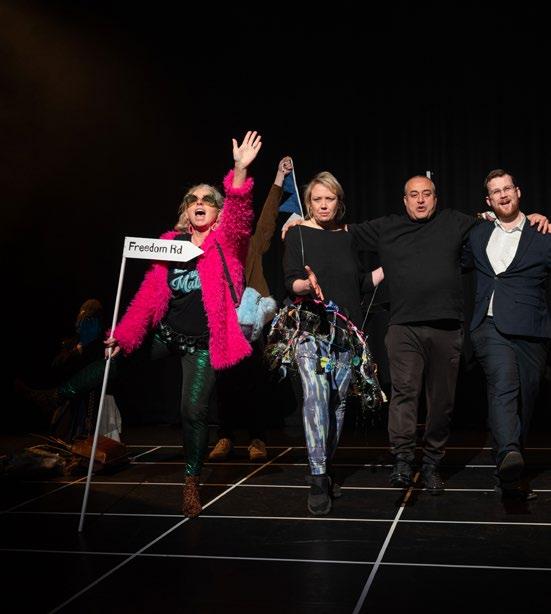
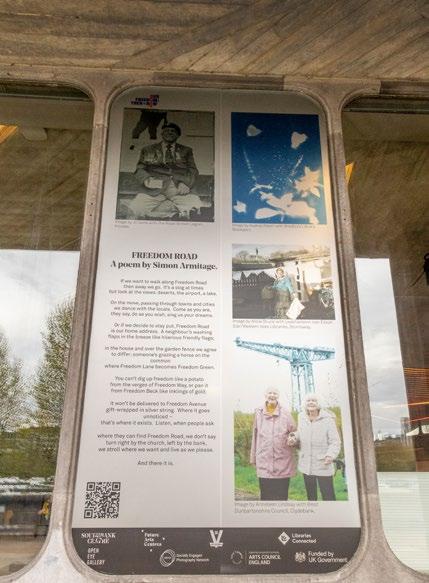
Freedom Road
If we want to walk along Freedom Road then away we go. It’s a slog at times but look at the views: deserts, the airport, a lake.
On the move, passing through towns and cities we dance with the locals. Come as you are, they say, do as you wish, sing us your dreams.
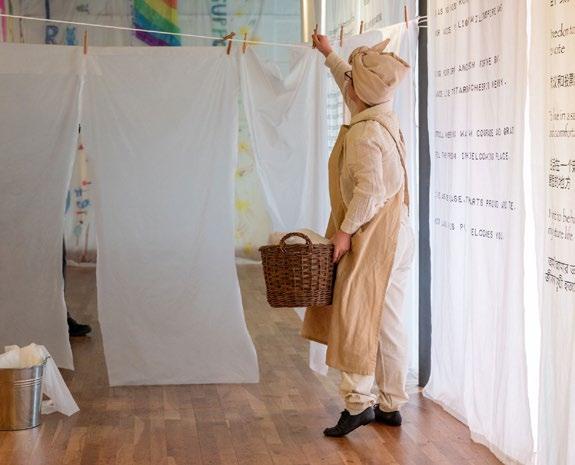
Or if we decide to stay put, Freedom Road is our home address. A neighbour’s washing flaps in the breeze like hilarious friendly flags; in the house and over the garden fence we agree to differ; someone’s grazing a horse on the common where Freedom Lane becomes Freedom Green.
You can’t dig up freedom like a potato from the verges of Freedom Way, or pan it from Freedom Beck like inklings of gold; it won’t be delivered to Freedom Avenue gift-wrapped in silver string. Where it goes unnoticedthat’s where it exists. Listen, when people ask where they can find Freedom Road, we don’t say turn right by the church, left by the bank, we stroll where we want and live as we please.
Lovely to see people from our community represented this way and to have our local voices magnified in a national project, it’s quite special.”
Audience member, An Tobar and Mull Theatre
Credit: Southbank Centre
Credit: Tadhg Devlin
Programme Overview
Our Freedom: Then and Now was a nationally connected, locally delivered cultural programme marking 80 years since the end of the Second World War. Coordinated by Future Arts Centres, in partnership with Libraries Connected and Open Eye Gallery, it brought together 40 arts centres and 20 libraries across the UK in 2025.
The programme used this anniversary not simply as a moment of remembrance, but as a prompt for reflection. Rather than looking only backwards, it asked how freedom is understood and experienced todayand who gets to define it.
Our Aims
At its heart, Our Freedom was designed to use culture as a tool for connection, reflection and civic participation. It deliberately anchored a significant historical milestone in the lived realities of communities now.
The programme aimed to:
Open up conversations about freedomthen and now
To create space for thoughtful, accessible reflection on what freedom means, how it has been shaped by history and how it is experienced unevenly in the present, holding multiple perspectives rather than a single narrative.
Centre lived experience and broad participation
To ensure that stories were told by communities themselves through co-creation and socially engaged practice, and to reach beyond traditional arts audiences - including young people, older residents, migrants, refugees, veterans, carers and people experiencing isolation.
Build connection and support wellbeing
To bring people together across generations and backgrounds through shared creative activity, strengthening local relationships while supporting confidence, self-expression and mental wellbeing.
Demonstrate the civic role of arts centres and libraries
To show how trusted cultural spaces can host complex conversations safely, contribute to democratic life and act as anchors for community dialogue.
Create a nationally connected moment with local meaning
To link activity across 60 venues through a shared theme and collective visibility, while enabling each place to respond in ways rooted in its own history, partnerships and community context.
Our Approach
Our Freedom combined light touch national coordination with deep local autonomy. Future Arts Centres provided a shared framework, branding, communications support and opportunities for peer exchange. Within that, each venue shaped its own response according to local history, demographics and partnerships.
This approach recognised that freedom does not mean the same thing everywhere. It also acknowledged that trust sits locally. By allowing venues and libraries to work with artists, schools, community groups and grassroots organisations they already knew, the programme built on existing relationships rather than importing external narratives.
Co-creation and socially engaged practice were central. Many projects began with open conversations or workshops, inviting participants to share experiences before any final artistic outcome was defined. In some places this led to exhibitions of photography or visual art. In others, it resulted in poetry, performance, oral histories, publications or public events. Often, it led to ongoing dialogue that extended beyond the life of the programme.
The partnership with libraries was particularly significant. Libraries provided accessible, trusted entry points for people who may not identify as arts attenders. Together, arts centres and libraries expanded the reach and diversity of participation, creating spaces that felt open and familiar.
Nationally, the programme was connected through shared communications, documentation and a touring photography exhibition. Contributions such as the commissioned poem by Simon Armitage provided a unifying thread, while photographers from the Socially Engaged Photography Network documented activity across the country, helping to create a collective record of the work.
Programme Overview
What Happened
Across 60 venues, activity took many forms:
• Community conversations and intergenerational dialogues
• Artist residencies and co-created performances
• Photography exhibitions and public installations
• Creative writing workshops and poetry events
• Oral history projects and publications
• School and youth engagement programmes
• Events in libraries, community centres and non-traditional cultural spaces
Participants ranged from primary school children to care home residents, from recent arrivals to long established communities. In some places, projects focused on migration and belonging. In others, they explored mental health, public space, climate anxiety or economic pressure. In all cases, freedom was approached as something lived and felt, rather than abstract.
SCAN TO WATCH THE PROJECT FILM
Or visit: ourfreedom.org.uk
While outputs varied, common themes emerged. Participants valued being listened to. They appreciated the opportunity to contribute creatively, often for the first time. Many venues reported deeper relationships with community partners and increased confidence in hosting civic conversations.
Our Freedom: Then and Now demonstrated that marking a national anniversary can be more than an act of remembrance. With the right framework and trust in local leadership, it can become a platform for participation, dialogue and renewed connection.
This report sets out what we learned from that process, and what it suggests about the role of arts centres and libraries in supporting civic life across the UK.
It made me consider freedom in new ways and from new perspectives, especially how unequal it is, and that one person’s freedom can have a huge impact on another’s… I will take away how incredible it is what people can create when they come together.”
Old Fire Station, Oxford
Credit: Carole Evans
What struck me most was how much depth there is in people’s personal experiences of freedom… For me, the project has been a reminder of how important it is to listen, reflect, and appreciate the freedoms we have –and the stories that define them.”
Participant, Hartlepool Libraries
Credit: Anneleen Linsday
Credit: Southbank Centre
Credit: Sally Barton
Credit: Johannah Churchil
Credit: Seema Khalique
Projects
Taking part in the Freedom Project has been the single most uplifting thing in my life... I’ve loved every moment.”
Participant, Exeter Libraries
Alnwick Playhouse
A two-day community takeover featuring storytelling, music, visual art, performance and shared cultural traditions explored how the past resonates across generations. A new film created with young people captured memories from 80 residents, forming a collective portrait of liberation.
An Tobar and Mull Theatre
A powerful, island-wide creative project brought together community voices, young composers, and local history. Through film, storytelling, and sound, they created a living portrait of Mull during wartime and explored how memories of VE Day continue to resonate across generations.
ARC Stockton
Our Freedom: Stockton Rising brought together ARC’s creative classes, refugees and asylum seekers, learning-disabled theatre makers Full Circle, and Tees Valley New Creatives. Each group creatively responded to Freedom Road, culminating in a reflective Remembrance Day performance.
ARK
ARK marked the culmination of their Our Freedom: Then and Now project with a three-day reopening weekend of free events. Highlights included the launch of the Freedom Garden, music and spoken word at Freedom’s Just Another Word, animation workshops, a community ceilidh, a performance of Caspian’s Storm, and Machloket, an evening of food, live music and conversation.
Arts at Old Fire Station, Oxford
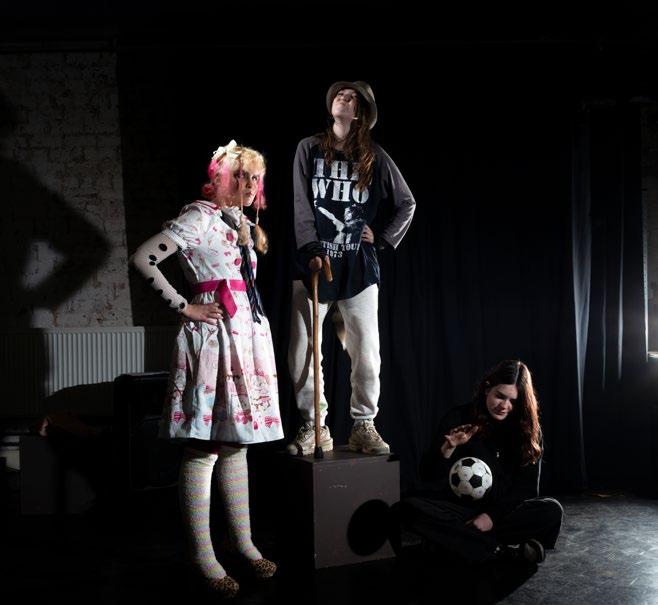
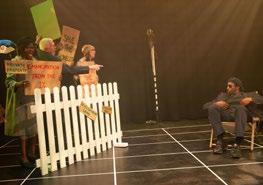
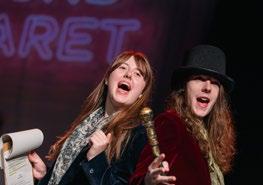
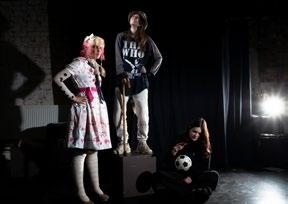
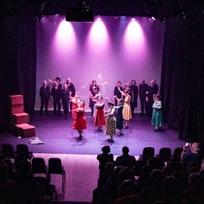
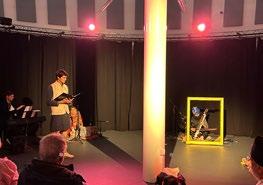
Am I Free Yet? was a theatre production and photography exhibition by Hidden Spire Collective, a participatory group including people with lived experience of homelessness. With Oxford academics, the group explored 1945 social conditions and created a script about different journeys to freedom.
Arts Centre Washington
The Unbound: Our Freedom cabaret and podcast were intergenerational projects featuring live performances of theatre, storytelling and music alongside films, oral histories and soundscapes, all framed by the notion that freedom starts with small acts of courage, resistance, or self-belief. Alongside, Washington Open Exhibition 2025 responded to how freedom has shaped the community.
Image Credits (top to bottom): Johannah Churchill, Alicia Bruce, Johannah Churchill, Sam Ivin, Sam Ivin, Johannah Churchill
Projects
Artsdepot, North Finchley
To Us It Means was a community led exhibition using photography, archive and sound, created with people from Burnt Oak and the surrounding areas. Rooted in personal stories, shared histories and lived experience, the gallery became a site of dialogue, pride and connection.
Awen Cultural Trust - Maesteg Town Hall
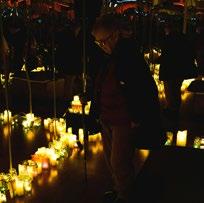
Voices of Freedom was a multi-sensory immersive exhibition reflecting on the sacrifices of the UK’s Armed Forces. It featured lanterns created with 100 community participants, an augmented-reality poppy field, and projections animating poetry and imagery from Welsh wartime artists and veterans.
Barnsley Civic
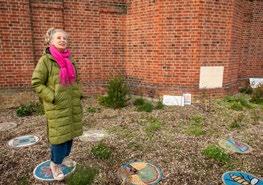
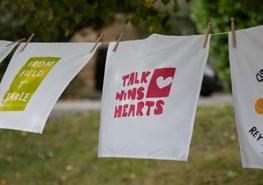
Barnsley Civic held a garden gathering which exploring shared histories and Freedom from Want, collaborating with partners including Creative Recovery, food banks and pantries.
At the heart of the project was a creative prompt: ‘What can you bring to the table?’, highlighting that everyone has something valuable to offer.
Barrow Library
Created alongside workshops with young people, After the Fire was a new comic and exhibition inspired by the stories of the Barrow Blitz. The workshops also explored black-out poetry as a simple, expressive exploration of freedom and resilience.
Bracknell Forest Libraries
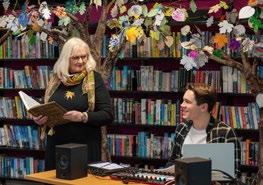
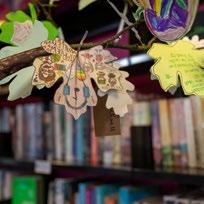
Bracknell Forest Libraries created Freedom Trees with artist Areej Abdi, using recycled materials and community made leaves expressing what freedom means to local people. A new fairy tale, celebration events and a self guided history walk further explored Bracknell’s stories of growth, welcome and belonging.
Brent Libraries
Brent Libraries and the Jason Roberts Foundation delivered community events featuring footballers, athletes and heritage sessions, alongside Splats workshops where children explored wartime and modern childhood through circus and drama. The wider programme connected sport, culture and history across diverse groups in the borough.
Image Credits (top to bottom): Sally Barton, Abby Poulson, Karina Lax, Tadhg Devlin, Sam Ivin, Sally Barton
Brewhouse Arts Centre
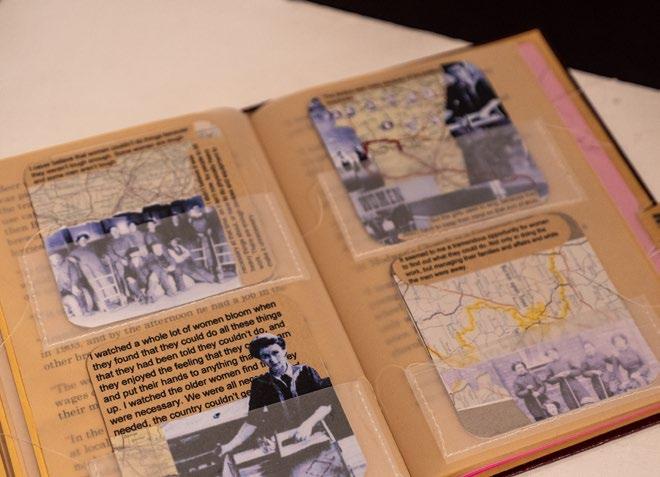
Brewhouse Arts Centre marked the project with a celebration event featuring a commissioned poem by Scarlett Ward and a new installation by Jennifer Collier. A touring exhibition at Burton Library showcased community artworks exploring women’s roles in the brewing industry during the Second World War.
Bridport Arts Centre
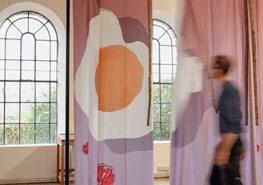
From and To was an evolving exhibition centred on Laura Eldret’s large scale curtain installation, exploring ‘freedom from’ and ‘freedom to’ through community research, workshops and creative contributions, alongside participatory elements such as the Honestly Honesty Shop and an extensive programme of free events.
Cast, Doncaster
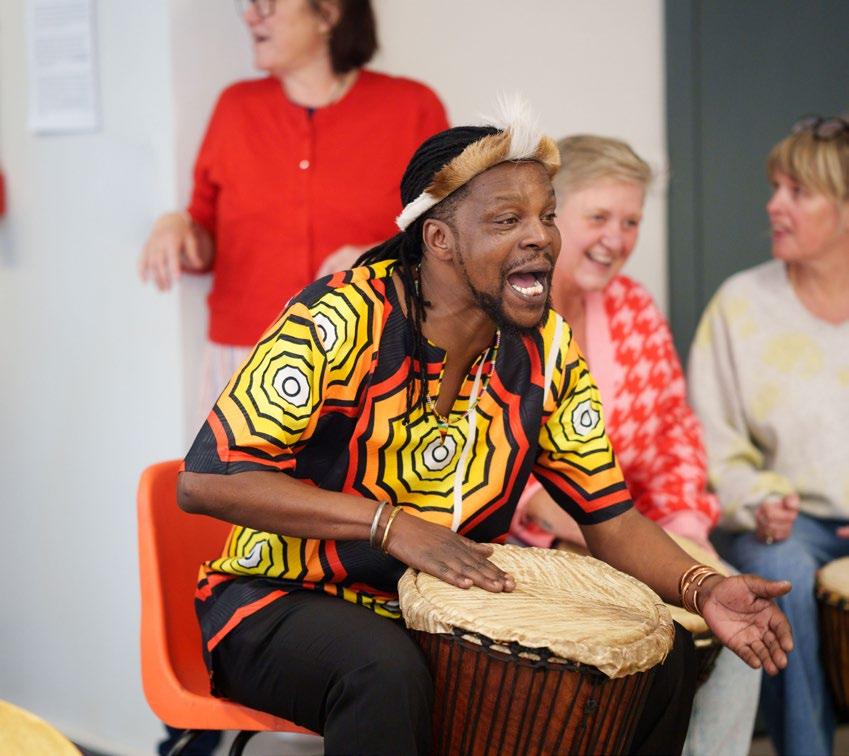
Cast brought together young people, older residents and community groups to explore freedom through poetry, performance, music and visual art. The project culminated in a VE/VJ Day Tea Party for over 170 people, featuring live drumming, poetry, music and community celebration.
Chapter Arts Centre, Cardiff
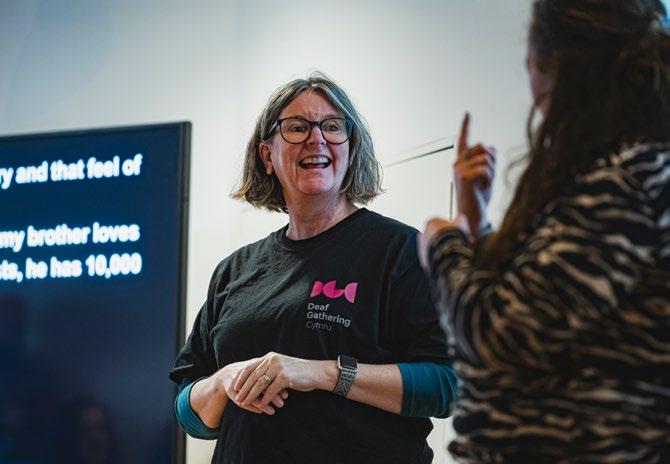
Chapter Arts became a hub for Deaf creativity, sharing newly commissioned poetry exploring identity, resilience and Welsh Deaf culture, alongside an inclusive drop in workshop where people of all ages explored creative freedom through drawing, collage and mixed media making as part of Deaf Gathering Cymru.
Clydebank Library
Clydebank Library explored local wartime history and ideas of freedom through a talk on Hamish Henderson’s cultural political vision and an exhibition pairing Clydebank Blitz archive photographs with contemporary images, inviting reflection on the town’s suffering, resilience and the enduring significance of freedom.
Colchester Arts Centre
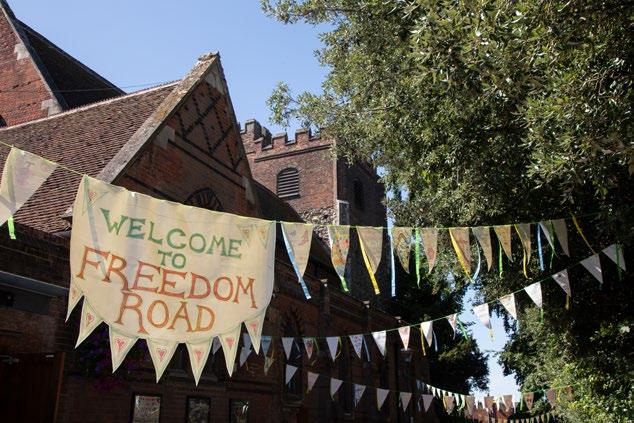
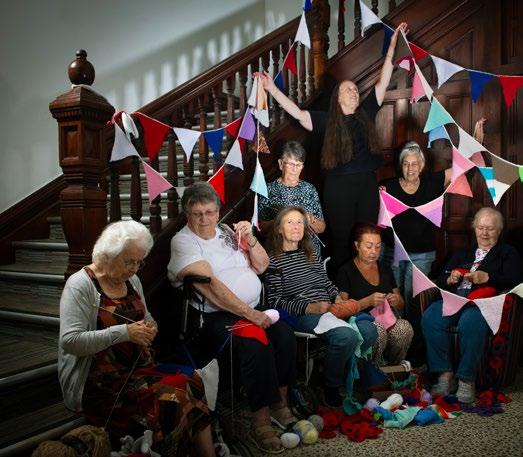
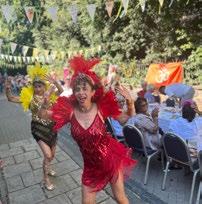
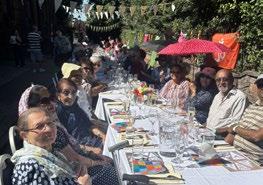
A vibrant Freedom Road Street Party brought together Colchester’s diverse communities for shared food, cabaret, dance and storytelling. Residents, Gurkha families and local groups connected across generations, with handmade bunting from community workshops symbolising collective reflections on freedom and belonging.
Image Credits (top to bottom): Romy Ashmore-Hills, Pete Millson, Wayne Sables, Kirsten McTernan, Anneleen Lindsay, Colchester Arts Centre
Projects
Derbyshire Libraries
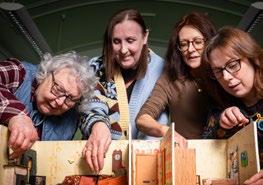
A county-wide programme across Belper, Chesterfield, Ilkeston and Eckington Libraries featured exhibitions, workshops and collaborative artworks exploring memories of WWII and freedom today. Community-created installations, journals, a miniature post war house and large collages showcased local voices and creative reflection.
Eastern Angles, Ipswich
Two linked projects rooted in Ipswich’s Westgate Ward celebrated local heritage and community voices. A community sound collage accompanied a 30-minute walk, sharing stories linked to Westgate’s buildings and residents, while immersive production Home Fires drew on real-life accounts of wartime experiences. Weekly workshops with core groups ensured both works were shaped collaboratively by residents.
Eden Court, Inverness
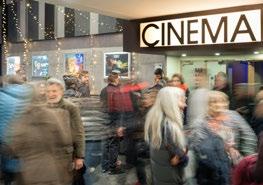
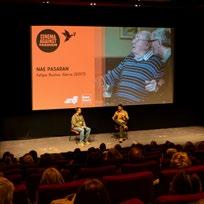
Cinema Against Fascism was a three-month film season and community programme exploring freedom amid rising authoritarianism. Screenings, discussions and a commissioned poem connected Highland voices with global resistance movements, creating space for shared reflection on justice and solidarity across generations.
Farnham Maltings
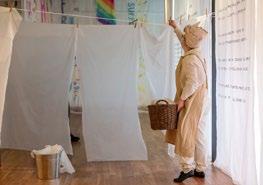
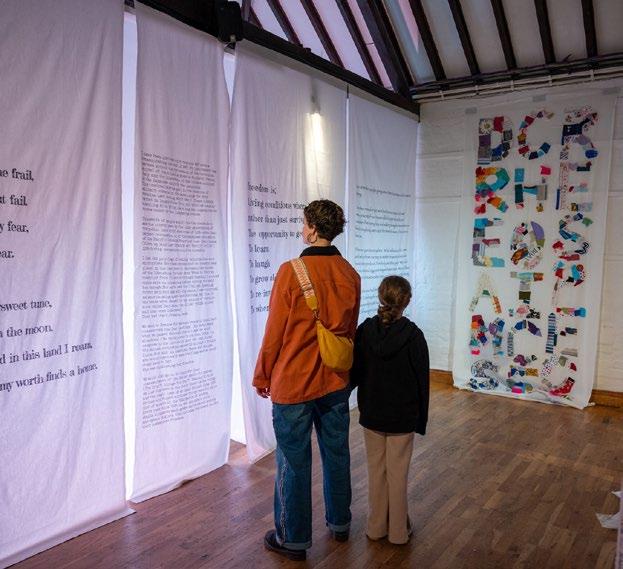
The Freedom Line was a collaborative promenade artwork co-created with communities in Farnham and Aldershot. Inspired by the poem Freedom Road, artist-led workshops with local groups and a primary school shaped a multi-sensory installation of text, fabric, light and audio, inviting visitors to walk through shared reflections on freedom.
Gosforth Civic Theatre, Newcastle
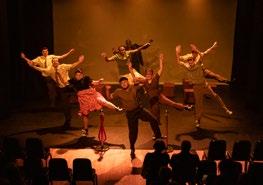
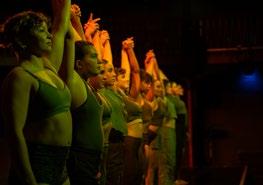
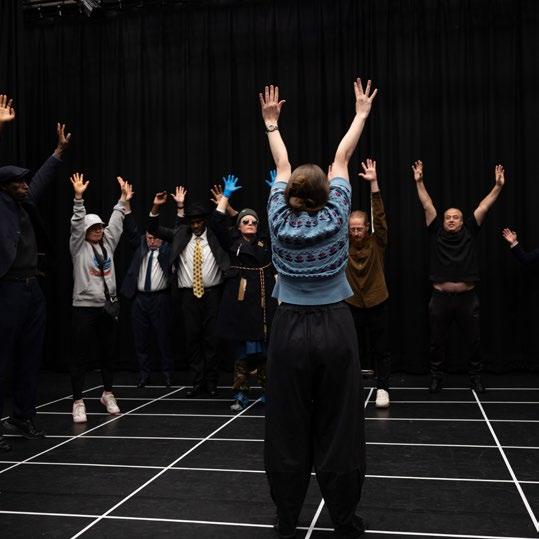
Gosforth Civic Theatre’s largest ever flagship performance, Freedom Moving: Then and Now, brought together more than 60 learning disabled and autistic performers with the Sing United Choir. Using dance, physical theatre and song, the piece celebrated GCT’s heritage, explored what freedom means today, and created an uplifting, community led night.
Hartlepool Community Hubs & Libraries
Hartlepool marked the anniversary with a family fun day of creative activities exploring freedom, followed by From Conflict to Community, an exhibition of local stories and reflections. Together, the events invited all ages to consider 80 years of change, remembrance and community identity.
Image Credits (top to bottom): Karina Lax, Sophie Ellen Lachowycz, Eden Court, Sam Ivin, Johannah Churchill, Hartlepool Community Hubs & Libraries
JW3, London
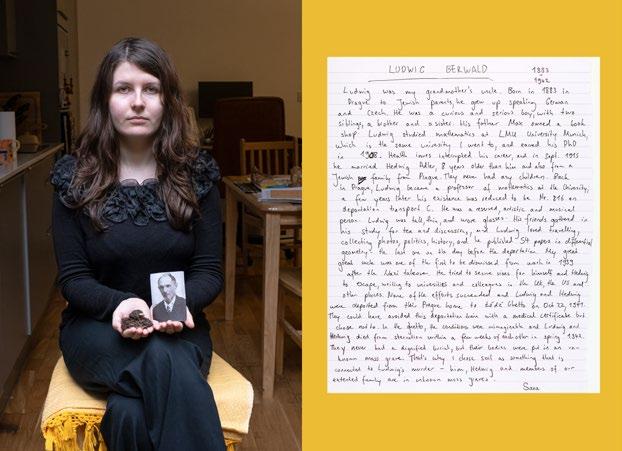
An intergenerational project brought together young Jewish adults to explore inherited memory, identity and responsibility 80 years after liberation. Through workshops with artists and historians, participants created personal ’memory pieces’ and a podcast series, reflecting on Holocaust legacy, storytelling and the responsibilities of becoming future memory holders.
Kirkgate Arts and Heritage, Cockermouth
Kirkgate Arts & Heritage created a community musical with local artists and residents, drawing on Cockermouth’s wartime memories and today’s reflections on freedom. Developed through workshops with community groups and the Heritage Group, the piece was premiered by a 50-strong scratch choir, blending storytelling and song to honour local histories and post war experiences.
Lawrence Batley Theatre, Huddersfield
Local groups Immigration & Asylum Support Kirklees, The Sikh Soldiers Organisation, 6 million+ and the Ukrainian British Friendship Group explored VE Day’s legacy and freedom today. Each created a distinct artistic response, from banners and poetry to music and movement, culminating in performances and a shared feast celebrating diverse community storytelling.
Leeds Libraries
Threads of Freedom invited communities across Leeds to explore freedom through textile workshops inspired by Freedom Road. Their stitched pieces created a new panel now integrated into the Leeds Tapestry, with a digital patchwork display showcasing every contribution.
Level Centre, Derbyshire
LEVEL Centre explored Matlock’s hidden WWII history and today’s ‘secret freedoms’ through SMEDfest, a heritage inspired community festival; Secret Freedoms: Ride the Rails, a moving exhibition on Peak Rail; and a multi-site Celebration Day. Through dance, storytelling, visual art, heritage railways and hands-on making, the programme brought together communities of all ages and abilities to celebrate creativity and connection.
Lou Morris, Tadhg Devlin, Towers Film & Media, Amma Hayton, David John King
Projects
Libraries Unlimited, Devon
Libraries Unlimited worked with communities in Barnstaple, Newton Abbot and Exeter to explore freedom through workshops with local artist Athena Jane Churchill and local partners. Hundreds of artworks created by groups including a Memory Café, wellbeing groups, Ukrainian families and school pupils formed large scale installations and a final exhibition, inviting ongoing reflection across all three libraries.
Lighthouse, Poole
Lighthouse invited people of all ages to explore freedom through writing workshops, hands-on making and sound-making with local artists and partners. Sessions for adults, young people, families and LGBTQ+ participants led to new creative responses showcased in an exhibition reflecting Poole’s diverse voices and experiences of freedom.
Lincoln Arts Centre
Lincoln Arts Centre worked with RAF bases, schools, volunteers, students and local residents to explore freedom through the International Bomber Command Centre’s archive. A community-first commissioning process selected digital artist Allan Levy to create The Lincolnshire Mosaic of Freedom, four aluminium mosaic artworks made from thousands of contributed images revealing archival and contemporary scenes of freedom and accompanied by audio history.
Maltings Berwick
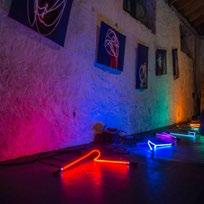
The Maltings worked with the Community Crew from Berwick Youth Project to explore freedom through visual arts. Over several months they experimented with drawing, writing, sculpture, glass bending, photography, film and neon, commissioning artist April Key to create a co-produced public artwork and curating their own exhibition for the community.
Newham Libraries
Newham Libraries highlighted the often overlooked contributions and experiences of South Asian people through creative workshops, talks, performances and intergenerational projects. Collage, printmaking, Risograph sessions and community storytelling connected histories of conflict, migration and resilience with how Newham’s communities define freedom today.
Image Credits (top to bottom): Carole Evans, Jayne Jackson, Lincoln Arts Centre, Victoria Hedges, Newham Libraries
Norfolk - Great Yarmouth Library
Great Yarmouth Library delivered a two-day programme marking its first year in a new building and its role in Our Freedom: Then and Now. Working with the American Library team and Reel Connections CIC, visitors explored local heritage, film, music, poetry and family workshops, engaging with local stories, shared memories and the theme of freedom.
North Lanarkshire Libraries
North Lanarkshire Libraries delivered creative writing and visual art workshops exploring the legacy of 1945 and what freedom means today. Led by local artists, the sessions invited people of all ages to share memories and create work for a final community exhibition in Motherwell Library’s Immersive Room.
North Tyneside Community Hubs & Libraries
North Tyneside Libraries created River to Freedom, a community-led project with artist Amy Langdown across Battle Hill, Wallsend and North Shields Libraries. Participants explored freedom through lino cut printmaking, producing a shared banner unveiled at a celebration event in Wallsend and followed by a multi-site exhibition.
Queen's Hall, Hexham
Queen’s Hall Arts worked with over 120 participants connected to RAF Spadeadam through workshops led by artist Emma Tominey, using Freedom Road as a creative starting point. Their ideas shaped Freedom: Reframed, launched at a celebratory event with new AR artworks and later exhibited across two gallery spaces with films, information and interactive elements.
Rural Arts, Catterick
Rural Arts created ATTENTION!, an evening of music, light and shared experience in Bramble Woods, part of Catterick Garrison. Lanterns made in community workshops welcomed visitors to performances including by the Military Service Children’s Choir, alongside artist-led tours and talks exploring the themes, a new film screening, food stalls and creative activities for all ages.
Scunthorpe Central Library and 20-21 Visual Arts Centre
Local people were invited to explore wartime history and changing ideas of freedom through film, hands-on activities and a community exhibition. Families helped create Then & Now, a 1940s style film later premiered at 20-21 alongside the launch of an exhibition of local stories, memories and creative responses.
Image Credits (top to bottom): Sophie Ellen Lachnowycz, Anneleen Lindsay, Johannah Churchill, Emma Tominey, Andrew Atkins, Andy Fell
Projects
Solihull: Knowle - Library and British Legion
Solihull Libraries worked with poet Emily Holtom, who created personalised poems in pop-up sessions across Knowle based on residents’ reflections on freedom. The project culminated at Knowle Royal British Legion with a new zine and exhibition of poetry and photography made with local people.
South Ayrshire - The McKechnie Institute & Girvan Library
The McKechnie Institute showcased new music created by Sacred Heart Primary pupils with Simon Lamb, Davie Hunter and The Girvan & District Great War Project. An exhibition of visual, written and recorded reflections on freedom ran from November 2025 to February 2026.
Stanley Arts
Stanley Arts delivered community workshops in Croydon using Freedom Road to explore what freedom means today. The sessions informed commissioned artistic responses shared at two Community Supper Socials, bringing participants and the wider public together for food, performance and conversation.
Stockport - Bredbury Library
Bredbury Library gathered more than 150 community stories about what freedom means today through conversations, workshops and story packs. These reflections shaped Plastic Shed’s recycled plastic mural and colourful bee art trail linking the library, the artwork and the Bredbury & Romiley War Memorial.
Storyhouse, Chester
Storyhouse worked with residents across Winsford to explore what freedom means today through workshops, photography, writing and collaborative making. Their contributions shaped a community Manifesto for Freedom, an accompanying exhibition by young photographers, and creative sessions reflecting on freedom past, present and future.
Strand Arts Centre, Belfast
The Strand delivered an intergenerational project exploring what freedom meant in east Belfast at the end of the Second World War and what it means today. Workshops and site visits culminated in an immersive event at the former Strand Spinning Mill featuring a photographic exhibition and two new short films.
Image Credits (top to bottom): Jo Gane, Anneleen Lindsay, Marysa Dowling, Audrey Albert, Tadhg Devlin, Stuart Calvin
The Albany, Deptford
Inspired by the Castellars of Barcelona, the Albany worked with National Centre for Circus Arts students and local young people to explore balance, resilience and freedom. A joyful community celebration featured circus workshops, performances, shared food, collaborative craft-making and a film about community and togetherness.
The Art House, Wakefield
The Freedom Festival brought together The Art House community to explore peace, unity and freedom through workshops, conversations and shared stories. Live music, global food stories illustrated by local artists, and creative activities shaped a celebratory day of connection and community reflection.
The Bluecoat, Liverpool Artist Lou Miller worked with local primary pupils to explore their visions of freedom, creating textile banners, clay pieces and prints. The gallery became a community studio with postcard and zine-making, family days, and an audio installation featuring diverse voices reflecting on freedom.
The Customs House, South Shields
Led by veterans and their families, this co-created project drew on 103 personal stories to shape outdoor performances across the Mill Dam and Harton Quays. The event honoured South Tyneside’s wartime experiences through living memorials rooted in local history, memory and community connection.
The Dukes, Lancaster Lancaster city centre became the canvas for two public artworks: large scale murals celebrating local identity and wartime history, and By The Light of Our Losses, a poetic light installation. Together they invited communities to reflect on freedom, remembrance and the city’s past and present.
The Met, Bury
Working with ADAB, The Proud Trust and Military Mondays, The Met explored what freedom means to local people through conversations and creative sessions. The project culminated in a special event premiering three new musical works co-created with each group, alongside wider community contributions.
Credits (top to bottom): Dan Martin, Karina Lax, Benjamin Nuttall, Benjamin Michael Smith, Gabi Dawkins, Emma Case
Projects
The Point, Eastleigh
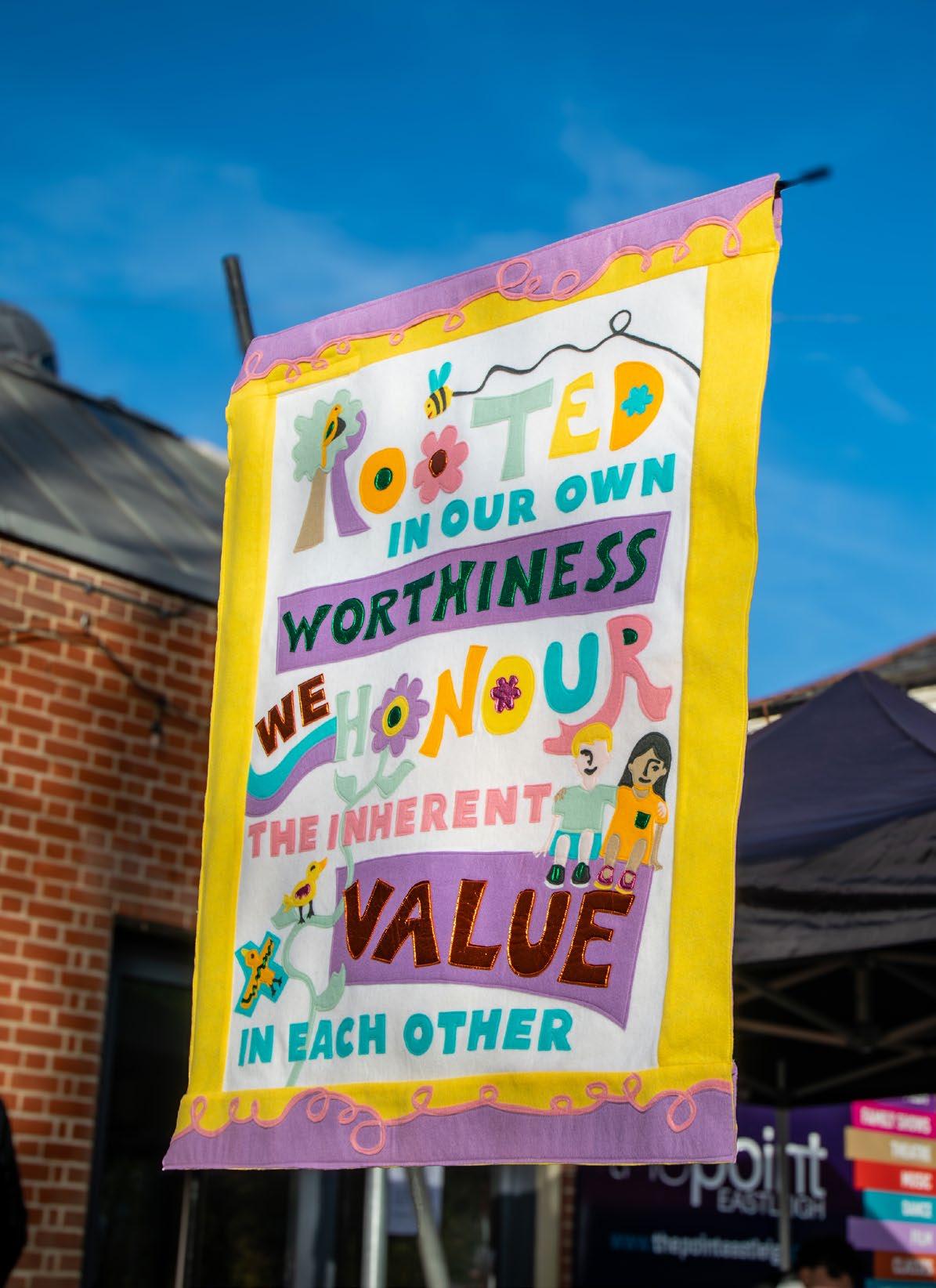
The Fabrics of Freedom brought together local residents, school pupils and care home participants to explore what freedom means today. Working with artist Alisa Ruzavina and creative practitioner Dani Bond, the project produced community designed banners, culminating in a celebratory parade showcasing the artworks and ideas behind them.
The Spring Arts & Heritage Centre, Havant
Threads of Freedom invited more than 200 people, aged 7–90, to reflect on freedom through stitch and drawing, inspired by historical autograph cloths. Led by artists Helen Sill and Tanya Wood, contributions were assembled onto dungarees and exhibited alongside layered drawings, with workshops and a celebration bringing participants together.
Trinity Centre, Bristol
Creative writing and printmaking workshops brought together local groups to explore freedom, inspiring Bristol City Poet Sukina Noor’s poem Gold and a large, printed fabric banner designed by visual artist Sonja Burniston. A movement-based photoshoot, a Dovetail Orchestra celebration, and indoor and outdoor exhibitions showcased participants’ words and artwork across the city.
Warwickshire Libraries
Artist Heidi Pendergrast worked with communities in Atherstone, Bedworth, Lillington and Nuneaton, leading workshops with intergenerational groups. Their work culminated in four celebration events showcasing creative outcomes including three zines, six giant art display boards and a documentary film capturing the project’s journey.
Watermans, Hounslow
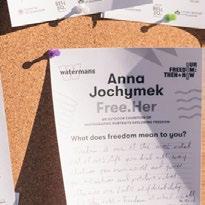
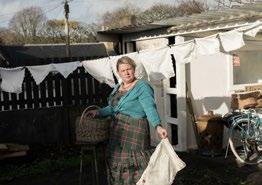
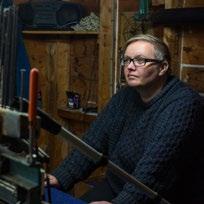
Watermans commissioned artist ethnographer Anna Jochymek to create large format photographic portraits and stories with Polish migrant women in Hounslow. The resulting Free.Her exhibition was presented outdoors in Brentford and Hounslow, later shown at Gunnersbury Park Museum, and captured women’s experiences through images, testimonies and filmed celebration events.
The Point, Sam Ivin, Trinity Centre, Warwickshire Libraries, Anna Jochymek
Western Isles - Stornoway & Tarbert Branch Libraries
Stornoway Library opened their project with awarm community event featuring a screening of Battle of the Atlantic, contributions from the Hebridean Women collective and Kelly Macdonald, and an evening of storytelling, music and conversation reflecting on the Second World War and the meaning of freedom.
Wolverhampton Arts Centre
Families joined a lively drop-in day exploring Wolverhampton’s wartime history, delivered with Gazebo Theatre in Education, RAF Midlands Museum and Learn Play. Period photography, creative workshops, interactive technology, wartime artefacts and a recreated British Restaurant offered hands on insight into life on the home front.
Woolwich Library
Woolwich Centre Library marked the programme with Woolwich at War, an exhibition featuring new artwork by Lucia Collelo and Stuart Lee and archival material from Greenwich Archives. The exhibition opened with a special event including a talk by local historian Richard Sylvester and ran for a month at the library.
From the first moment, I felt very welcome. I felt like I found another family… I am not from this country. For me, freedom is being able to be here and to take part in a project like this… I feel I belong and I am part of this community.”
Participant, ARC Stockton
Image Credits (top to bottom): Alicia Bruce, Wolverhampton Arts Centre, Seema Khalique
Photography Exhibition
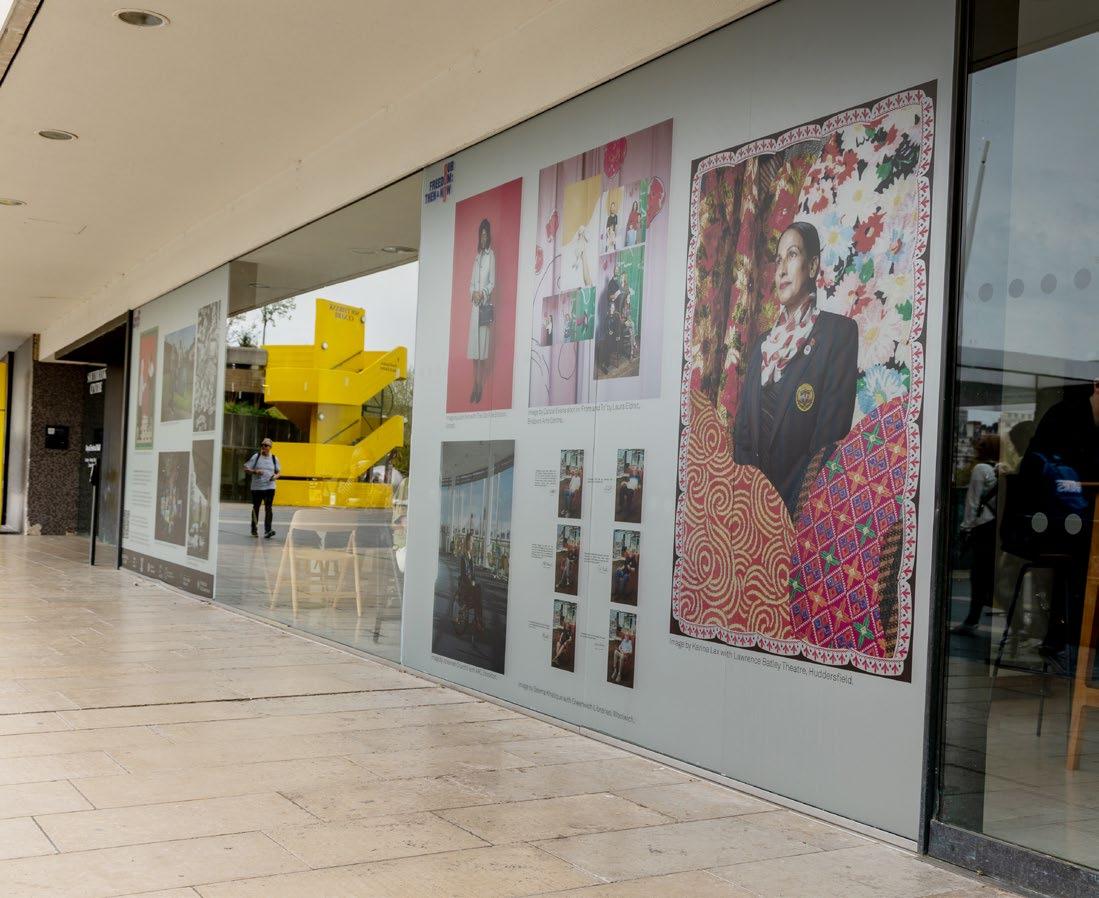
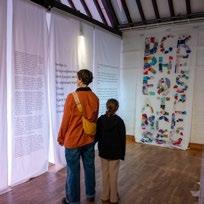
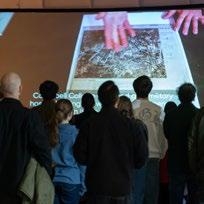
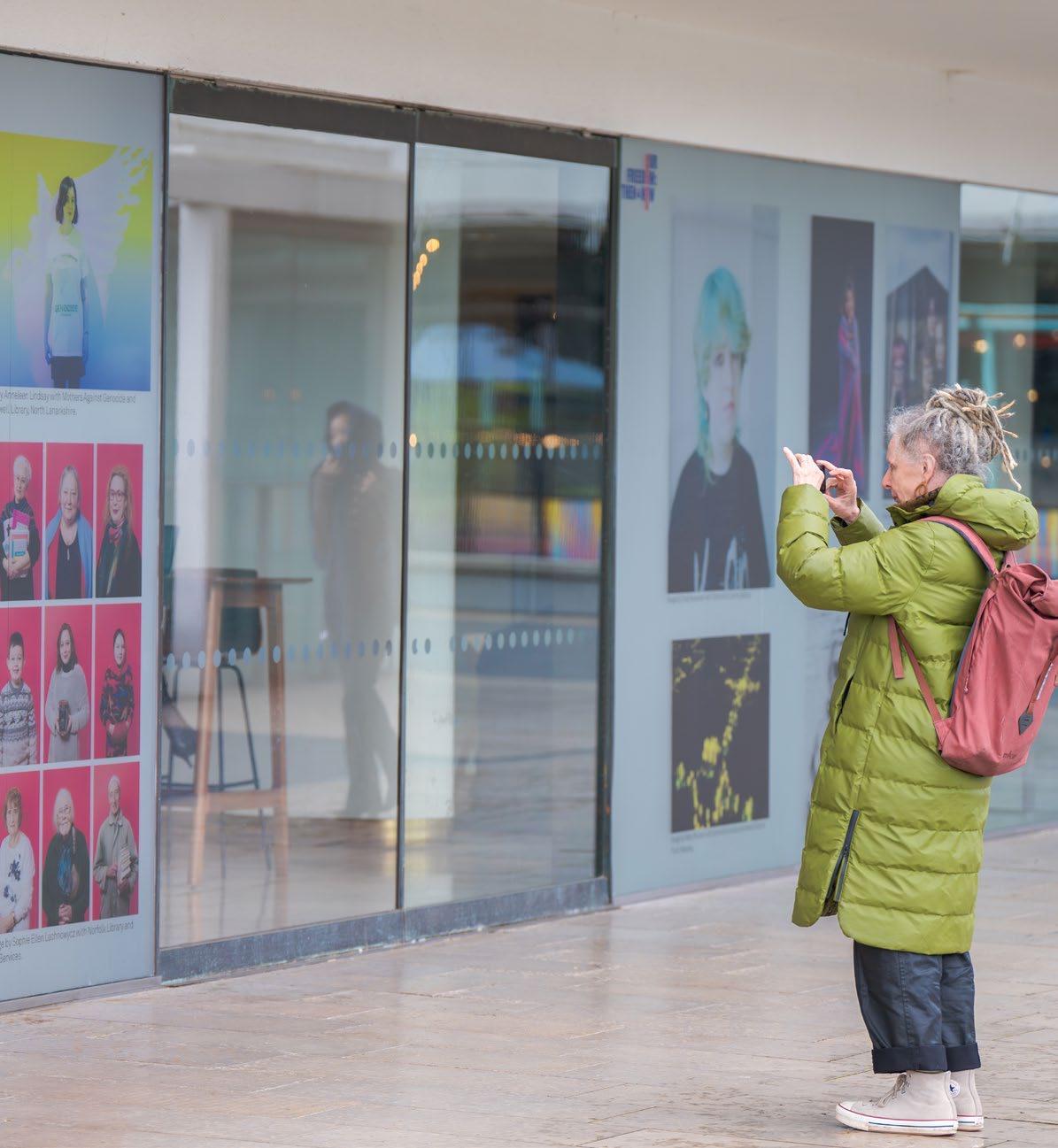
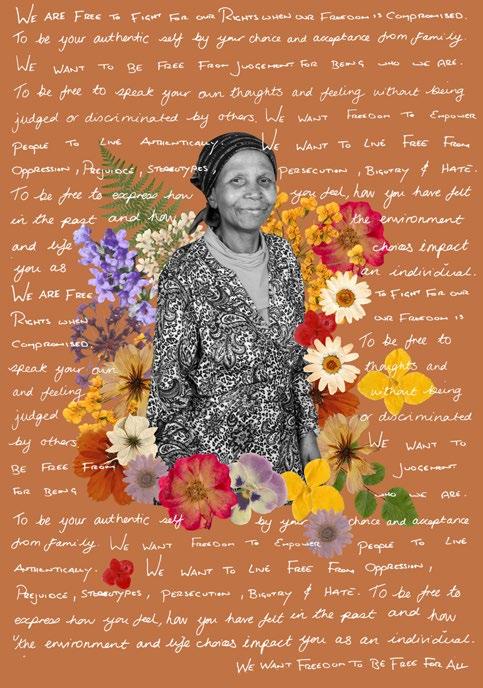
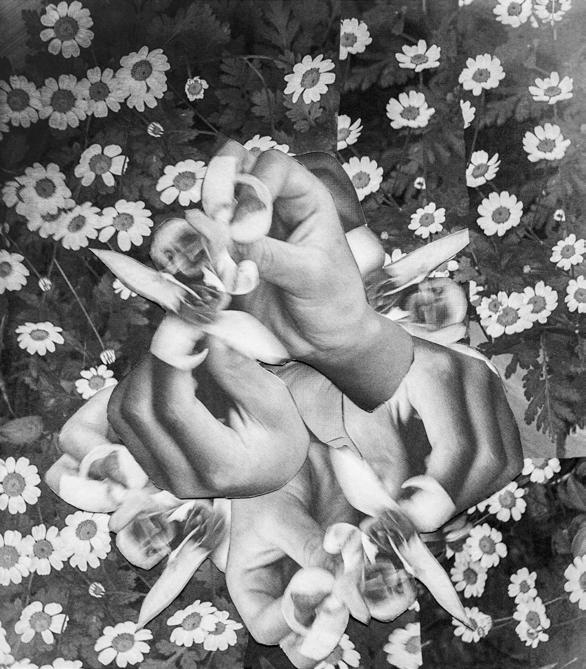
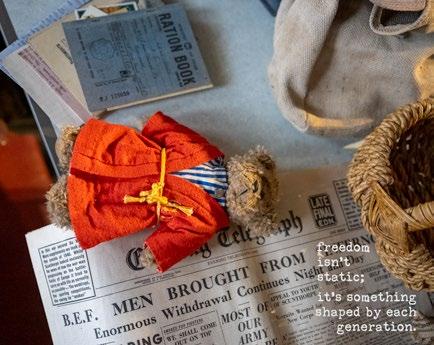
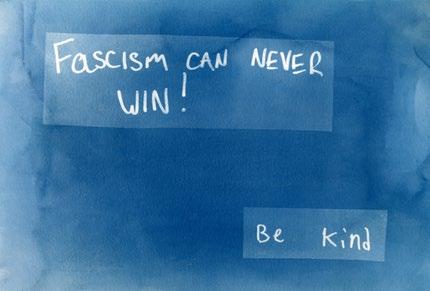
Our Freedom: Then and Now culminated in a national exhibition launched at the Southbank Centre in London, in March 2026. Commissioned in partnership with Open Eye Gallery in Liverpool, and its national role within the Socially Engaged Photography Network, 22 photographers documented projects and participants across the UK during 2025, capturing some of the powerful and diverse stories that emerged from the programme.
The resulting exhibition offers a powerful visual record of the people involved – from schoolchildren and veterans to artists and participants aged 0–100 – reflecting the breadth, diversity and creativity at the heart of the programme.
Following its London premiere, the exhibition toured nationally to arts centres and libraries that took part in the programme, from Libraries Unlimited in the South West to Eden Court in the Highlands.
Or visit: ourfreedom.org.uk/exhibition
The photographers were:
Abby Poulson
Alicia Bruce
Andy Fell
Anneleen Lindsay
Anoosh Ariamehr
Audrey Albert
Carole Evans
Chad Alexander
Emma Case
Jo Gane
Joanne Coates
Johannah Churchill
Karina Lax
Leticia Valverdes
Marysa Dowling
Rosie Barnes
Sally Barton
Sam Ivin
Seema Khalique
Sophie Ellen
Tadhg Devlin
Yaqeen Amir SCAN TO VIEW THE EXHIBITION ONLINE
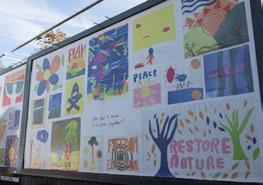
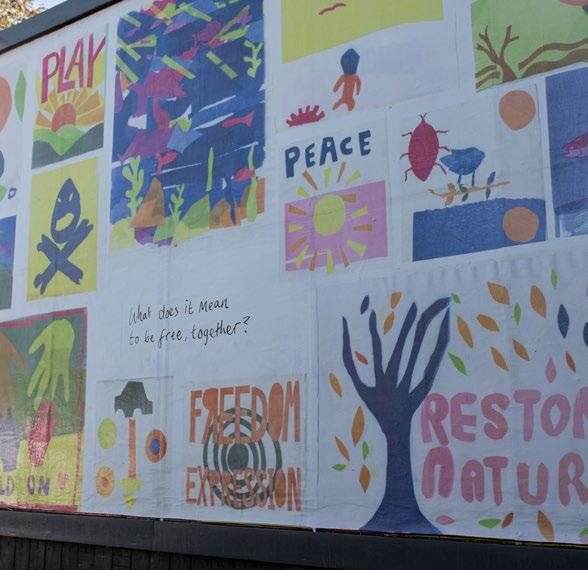
Participating in this project, I knew there was going to be some kind of exhibition, but I didn’t realise it was going to be on one of the billboards so it’s really powerful, it’s kind of amazing knowing if I walk by, or ride my bike by, I can see something that I made up on a billboard.”
Participant, Trinity Centre, Bristol
Credit: Dan Martin
Credit: Jo Gane
Credit: Emma Case
Credit: Sally Barton
Credit: Andy Fell
Credit: Abby Poulson
Learning about these events has changed the way I see history and has helped me think more deeply about human rights and equality.”
Participant, Chapter Arts Centre, Cardiff
Credit: Anneleen Lindsay
Credit: Anoosh Ariamehr
Credit: Joanne Coates
Credit: Carole Evans
Credit :Alicia Bruce
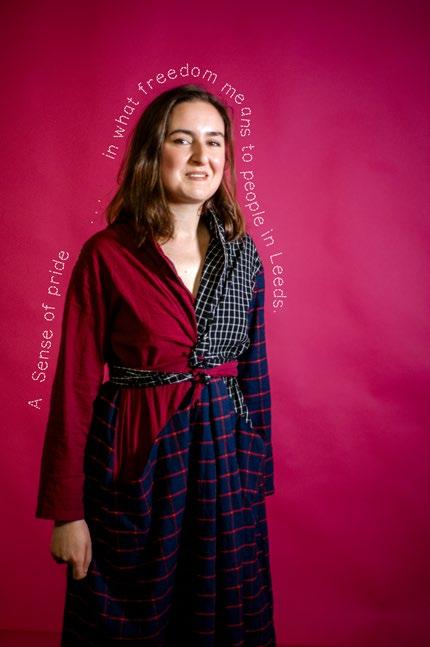
I wanted to make my voice heard, about what living in Leeds meant and still means to me... It’s an experience I will treasure for the rest of my life.”
Participant, Leeds Libraries
Credit: Rosie Barnes
Credit: Sophie Ellen
Credit: Sam Ivin
Credit: Johannah Churchill
Credit: Tadhg Devlin
Credit: Marysa Dowling
Credit: Audrey Albert
Credit: Chad Alexander
Credit: Karina Lax
Credit: Leticia Valverdes
Credit: Seema Khalique
Credit: Yaqeen Amir
Programme Reach
Audiences
In total audiences of more than one million people have engaged with Our Freedom during 2025 and 2026
228 public facing events and exhibitions, created by communities and artists, were held across the country with total audiences of 900,506
532,173 in person and 368,333 attending online events
In addition, the audience for the national touring photographic exhibition is 248,000
Press and digital
Supported by Milk & Honey and working with individual venues we gained the following coverage and digital reach:
• 40 PR hits across TV, mainstream and regional coverage reaching a potential audience of 408 million.
• More than 1,600 Our Freedom social media posts from the 80 venues and FAC, seen more than 2 million times.
• Our Freedom website reached 33,500 views ahead of the launch of the online exhibition in March 2026.
Participants
Each project was shaped by its communities. Across the UK, there were more than 10,000 participants and overall the demographics or participants broadly represented the make-up of the UK population*.
Community groups who shaped the projects included: veterans, asylum seekers and refugees, young people, students, LGBTQ+, care home residents, and mental health support groups.
45% of participants identified as Disabled, D/deaf, neurodiverse and/or living with a long-term health condition*
*based on data from 44.5% of participants
Socio-economic
Learning and Reflections
Future Arts Centres used the Most Significant Change methodology as a tool to reflect on the programme and evaluate its impact in different ways. In addition, reflection and evaluation sessions were held within each project, across clusters, the commissioned photographers and with partners. Some of the key learnings are summarised below.
Central theme
Defining a strong central theme for the project, supported by Simon Armitage’s poem which provided a powerful artistic impetus, proved to be very successful. Venues reported that this was a highly effective starting point for community engagement and participant groups responded in different but compelling ways across the country.
Branding
A strong brand identity allowed consistency across the programme, strengthened the digital presence particularly via social media, and helped provide effective, practical resources and templates for individual venues. This was useful for marketing teams across the project, but especially for venues with limited marketing resource.
PR and digital
Whilst we met targets for press and digital coverage, we also noticed limitations and identified ways for future projects to maximise PR coverage, including:
• Greater use of case studies: offering clear, evidence-based narratives that support editorial needs, and help bring the campaign to life through real-life experiences, highlighting personal perspectives that resonate with journalists.
• Stronger imagery - particularly action-led shots, and prioritising more natural, in-the-moment photography over staged imagery, alongside a small number of refreshed hero images, to support PR storytelling and strengthen pitches.
• Commissioned research: to provide newsworthy data hooks to support campaign narratives.
Timing was also an issue – PR opportunities could have been greater if projects had public moments ahead of the major commemorative dates instead of after them.
Connecting nationally
A national launch event in Manchester was crucial for programme-wide understanding and helping people feel part of something bigger than their individual project. The final event and celebration at Southbank in London proved to be a fitting way to come together and celebrate achievements for the many partners and participants that took part. On reflection, one further national gathering during the project for all partners would have been beneficial for the project and the participating venues.
Cluster working
Dividing the project into six clusters, each with a co-ordinator, created an effective mechanism for shared learning and mutual support, as well as for identifying issues early and being able to provide further support where needed. Cluster meetings were the main space for shared learning between libraries and arts centres, for example supporting libraries who were commissioning artists for the first time.
Clusters worked best when there was some commonality (e.g. a regional group as in the North East), which has led to other shared working beyond Our Freedom.
Working with specialist partners
Strong partnership working enabled people to have more specialist support when it was needed – for example, Open Eye Gallery could provide more technical specification to the photographers, and Libraries Connected could help libraries navigate local authority systems when trying new ways of working.
Co–creation
Co-creation between communities, artists and venues was a core principle of the programme. Venues approached this in their own ways but, despite challenging timescales, were supported and encouraged to try new ways of working and/ or identify new communities to work with. Overall, this was considered a successful approach, embedding the work fully in communities and enriching the artistic outcomes.
Many of the artists and photographers reflected on profound experiences they had because of the people they met through the project – from young children to older veterans – which have subsequently changed their artistic practice. As one commented: “These interactions will stick with me for the rest of my life”.
Timescales
Timescales were challenging for the project, with funding awarded in March 2025 ahead of mobilising 60 venues and a national launch in June, with community engagement starting over the summer and final events and exhibitions taking place from July to December of the same year.
Providing a clear framework for projects at the outset was essential, as was providing effective support mechanisms for each project. Many projects reflected on the challenges and pressures of working to such a tight timescale, and felt that they could have achieved more if more time had been available. In some cases, the tight timescales meant that it was difficult to resolve unexpected issues, and a few projects had to be delayed (the latest finalised in March 2026).
However, there was also a sense for many that the timescale created energy and momentum for the project and, in some cases, a greater sense of achievement at the projects’ success.
Photography commissions
Photographers reflected that they experienced an openness and creative freedom, whilst the brief also provided a helpful clarity and structure. Occasional challenges arose when projects had more rigid plans for specific events, but the photographers were adaptive and took socially engaged approaches to shape their work around the communities. The exhibition was felt to be an excellent way to provide further public engagement in the project into 2026.
Most Significant Change
The storytelling evaluation methodology Most Significant Change (MSC) was used to gather reflections from a range of people involved in the programme including participants, artists, photographers and project leads. MSC is a participatory, qualitative approach that focuses on hearing what matters most to people in their own words, rather than fitting experiences into pre-set outcome categories. It is particularly useful for people-centred projects where rich, narrative insight helps reveal the depth and complexity of change.
Each conversation was written up as a short story, and with the consent of the storyteller, was then reviewed by a panel of stakeholders, including representatives from DCMS, Arts Council England, Open Eye Gallery, Milk & Honey, Future Arts Centres’ Board and the Our Freedom delivery team. The panel discussion is a core part of the MSC method: by reading and reflecting on the stories together, stakeholders identify the themes, learning points and implications that matter most, and gain a shared understanding of the project’s impact.
The panel reviewed eight stories (see Appendix) which brought forward many voices, surfaced diverse experiences, and enabled stakeholders to hear directly from people in their own words. Together, the stories suggest that Our Freedom: Then and Now had an extremely positive, layered impact, reaching community members of very different types whose voices may not often be heard, in all parts of the UK.
Credit: Kirsten McTernan
This offered experiences many would describe as once in a lifetime… Every young person developed practical abilities that will serve them well in future creative endeavours, but perhaps more importantly, they discovered new levels of confidence and self-belief.”
Project partner, Maltings Berwick
Credit: Sam Ivin
Credit: Art House Wakefield
Appendix
The following stories were captured using the Most Significant Change evaluation methodology, and give a deeper insight into the impact the programme on some of the people involved.
1. I’d do it all again
Arts at Old Fire Station (Oxford) held Am I Free Yet?, a theatre production and photography exhibition created by the Hidden Spire Collective, a participatory art group working with people from all walks of life, including many who have experience of homelessness. This story was collected by the team at AOFS from of the participants.
Writing poetry has been one of my outlets since I was at school. I’ve written thousands of poems over the years. But no one encouraged me in that direction.
I’m from Birmingham originally. I didn’t go to school much. I wasn’t a stupid kid, I was quite bright. I just never went to school. I’m the youngest of eight. I preferred to earn money than focus on books.
I think it was by the divinity of God that every time I did go to school, I’d go to English and we’d be doing poetry. I’d write about the school, people in the class. It was comical and we’d have a laugh about it. The teacher always made me read my poem out. At the time I thought she was picking on me, but now I feel like she saw something in my work.
It’s the only class I really enjoyed and I never told anyone. It’s like my secret autistic savant thing. Plus I’m very dyslexic. So how I write and see things is a lot different from other people.
I’ve got a visual mind. I don’t see words in my head, I see the story itself. It’s like a video started and I’m just writing down what I see. That’s how I wrote my poem Freedom You’re Word.
I wasn’t originally part of the programme. I only came because my friend invited me. I think he was a bit lonely and wanted me to hold his hand! So I turned up and I’ve been here these seven months since. It’s been great.
The whole play was birthed out of discussion and opinions. We’d go away to make our own creative responses and then come back to present them. I chose to write. I wrote four poems.
There is a lot of me in my poems. This is probably the first time where I’ve actually expressed things that have happened in my life. I never told anybody that I wrote. I was just there, gelling with people and keeping spirits up. So I think people were surprised with my poems. For the play, Polly chose my poem Slums are our Mums. She said if there was more time she would’ve let me read them all.
My poems are me putting my feelings and opinions into words. I didn’t expect people to understand because when does the topic of freedom ever come up? No one sits around the table and says ‘Oh, let’s discuss freedom.’ I wrote how freedom is a bubble you can pop anytime. We’re so conditioned to be part of the system. I didn’t say it directly but I tried to show it in the way the poem was structured. I expected it to pass people by. I was really surprised at the interest in it.
It was fantastic to get the play to where we got it. I didn’t know what it took to make it in terms of acting and directing. I was just there, a willing body. I felt so inspired. Everyone involved was great. I was flabbergasted how Polly captured a lot of what we’d said and produced a play from it. It was really unbelievable! Especially as we’re all amateurs.
I have a lot of respect for every individual in that group. They were a fantastic bunch. We chatted in class, we debated, we made friends. One person doesn’t speak much English, but he persevered. Every session, he was there. It was encouraging. I thought, if this guy don’t speak English and he’s rolling with it, then I gotta roll with it too! Once I was involved, I enjoyed myself.
It was brilliant because we could choose to be whoever we wanted to be. My character was called Vaughn Wright. He’s my invention. Though we had freedom with our characters, Vaughn got restrictions! Originally I wanted to open my jacket and have all kinds of paraphernalia - Vaughn was like the hustlers I grew up with - but they said it wasn’t suitable to put that on stage. I’m saying where’s the realism?! So my only disappointment was that they curtailed who that character really was. I ended up having jewellery on the inside of my jacket instead.
The first show was quite daunting. I’d done drama before, but I’ve never actually done a play. This was out of my comfort zone. Especially being dyslexic, learning the words and knowing when my cues are. But I didn’t mind. I enjoyed the danger. I even enjoyed the fear! This experience stretched me. We all have a limit to what we think we can do. But with this, I felt as if I’d gone beyond my boundaries. Now, if we were to do another one, I feel I could push myself even more.
I dunno how I managed to survive to perform. I was struggling all day, I had such bad flu. I couldn’t speak. But when the time came I was able to get my words out, remember what I had to say. It was nice.
The feedback shocked me. I didn’t think people would enjoy it so much. The positive response was overwhelming after that first show. I went across the road to cool down and people who I’d never met before in my life were crossing to talk to us about the play. It was fantastic. It encouraged me more for the second show.
This whole experience has been great. I’m still writing now. I’ve got quite close with Isabelle. She writes, and she does a creative writing class. I’m only a couple of weeks in but I’ve written about 15 poems. I feel inspired.
I’ve said to the group we need to either find another project or take this on the road and visit other centres. I’d do it all again. We all want to do it again. Okay, I know you’ve got to find funding etc, but it’d be nice. I enjoyed it.
You know, I’ve thought about moving to another city, but I doubt if I’d do that now. The feedback has been so good that it’s encouraging me to stick around for the next one. I think this might keep me in Oxford.
2. Dignity through subtle beauty
JW3 (London) is a Jewish community and arts centre who brought together 20 young adults to creatively explore connections to the Holocaust, to create an exhibition and podcast. Marta Fisher, 37, was a participant.
This project was a vulnerable project, where we all explored family, place and trauma. But somehow it wasn’t made into a psychological session; it was really creative, and we would listen to each other and bounce new ideas around. Initially, it felt like an experiment. I don’t think any of us had done anything like this before. We weren’t sure where it would go or how it would manifest for the exhibition… but I guess that was part of the adventure of it. I think we all had different moments of doubt and different ideas, but we guided one another so it was truly collaborative and thoughtful.
We had great support from the artist, Adam, and the team at JW3 – they animated, but didn’t overly lead us. They prodded and fed us ideas, but allowed flexibility in the process. I felt trusted and that’s what this whole project is about: freedom now, and then. We were all given the freedom to express ourselves.
We had applied to be a part of the project to remember a person or a place from the Holocaust. I have Jewish ancestry, but I wanted to focus on a memory site in Poland called Zofiówka. I really wanted to learn from others in the group. Hearing from others and the stories of their ancestors really humbled me.
The audience was visibly emotional, many of us were in tears… It was a poignant reminder of the strength, resilience, and unity within our community… Not only a beautifully crafted artistic achievement but also a heartfelt and timely tribute to our Armed Forces community. It captured the spirit of remembrance, respect, and freedom that defines South Tyneside.”
Local Councillor, The Customs House, South Shields
I was coming from a different perspective. I have Jewish heritage – my great grandmother grew up in Kazimierz, Kraków. In one session I said ‘oh, I’m not really Jewish. I wasn’t brought up Jewish’, but everyone was very reassuring and it became a gorgeous moment of togetherness.
I had a strong connection with JW3 as before this project, I would attend events, Krav Maga classes, film screenings, debates and even some Shabbat meals. Even though it’s not what I grew up with, I’ve always felt so welcome. People were genuinely interested in me and my perspectives, and the complexities of each story. There was incredible humility and we were able to open up to one another. If I had worked doing research alone, I would have enjoyed it, but the creative group experience was the most rewarding part and took us places we couldn’t get to on our own.
I have friends who are Jewish and from Israel –it’s a sensitive topic in many ways, fraught with different, complex feelings. Now I know much more about their context. I’ve been part of different groups before, but this feels different – because we’ve all gone through something together.
People are hungry for more – forgive my cynicism but, as a Londoner, you can end up being quite anonymous and people can lose touch easily. So, it was really surprising to find these rare connections, and it feels like this group will always stay there, even if we don’t see each other for a while. So, I think that the way people were selected for the group was really important, and it was clear that a lot of thought had gone into that. We had people from all walks of life and different personalities and professional backgrounds.
The sessions themselves were a balanced combination. We ate and caught up, then had the creative workshop, followed by time to write. The writing exercises were brilliant. We would work alone or with a partner. It was a great way to be creative, collaborative and deeply reflect.
Overall, we gave every story dignity. So many people were given back a dignity that they had lost, or had taken away from them; even if a place or a someone disappears, we can still remember and reinstate their stories, and that’s the most beautiful thing. It’s been a real privilege as this project had the most wonderful kind of subtle beauty.
3. Now we’ll always know these things
Arts Centre Washington (Sunderland) hosted Unbound: Our Freedom Cabaret and Podcast which were intergenerational projects featuring live performances of theatre, storytelling and music alongside films, oral histories and soundscapes created across their participatory groups. This story was collected from two 11-year-old females who were part of the one of the youth theatre groups.
It’s made us think more about theatre, and now we’re telling deeper stories.
At the beginning of the project, we talked about different types of freedom – like freedom of speech, or movement. Then, in groups, we picked one and made a scene about it.
One group did a scene about how all the people needed to escape to survive, but one man was from a different culture and he was stopped from getting on a plane - just because of the colour of his skin. It was an extreme example, but we wanted to show how people can be treated unfairly and have their freedom taken away, and that’s not right.
Another scene was set in a classroom – it was having a dig at schools and the things that we think are wrong about the system.
Before we did the Freedom Cabaret, we did things like a panto about fairy tale characters. There were happy, but silly things. But now we’ve moved on to think about more deep things.
It’s also made us think more about drama and theatre, and that’s a good experience for us, as we’re exploring new ways of expressing things.
I’d not really thought about freedom before, so at the start it was really hard. But in our group, we worked together to write a script. We had some initial ideas, but what we created in the end was totally different. I think that’s often what happens – you come up with a first idea, but it never stays the same.
We wanted to show that, even though every person is different, we should respect everyone.
This is an important topic. If people don’t have freedom, then that’s unfair. And, if we don’t talk about difficult things, then nothing going to change. We need to talk about it and find new ways to talk about it – so that we can be part of making things better.
I think it’s especially important to learn about these things when you’re young, so you know about it for your whole life. Now, we’ll always know about freedom, and how important it is.
4. Finding connections and advocates
Donna Stone is Communities Led Coordinator for Hartlepool Libraries and Communities Hub, and was Project Lead for Our Freedom. They held a family fun day and an exhibition looking at 80 years of freedom and reflection.
The biggest impact for us was the opportunity to work with organisations that we haven’t in the past.
Connecting with the veterans’ community was really significant. It evolved from visits to their Saturday breakfast club and, the more they saw how they could shape the project, the better we worked together. From that, they’ve been so supportive, and it’s led to so many other connections. We’ve already gone on to work some of them again – for example, one of the veterans is an author and he’s since done activities with us for young people struggling with their school environment, and was an advocate for the summer reading challenge. He’s shared his personal journey and what it means to have someone believe in you; he’s been inspiring young people to read, write and raise their aspirations.
Another example was through connecting to a charity that provides opportunities for children to learn instruments, it’s inspired me to put in a successful application for some pianos, so we’ll be running new activities for collective song writing. We’re really proud of that and that type of fundraising is new for us.
We’ve also connected with artists. They’ve all been really passionate and generous, and we want to find ways to commission artists again. Before, as a library service emerging into a role as a community hub there’s always more demands on our funding. So, to have the resource to go into the community and work with artists has been amazing, and it’s promoted a stronger sense of community. We’re trying to do more, with less, but we never want people to work for free; we want to work with artists and other smaller organisations, but we don’t usually have the budget. Something that surprised me was that £500 we contributed to one organisation towards their costs was the difference between make or break for that small organisation last year; our work through Our Freedom kept them afloat.
This project was a steep learning curve for us, but we’re all very proud of what we accomplished. Now, we’re looking at how we can keep approaching new groups of people in the community. We want to offer a service that’s universal, which means we can’t wait for people to come to us. So, after the way we worked with the veterans, we’re now thinking about how, we can carefully reach out to find new pockets of people.
We’re also actively applying for other funding opportunities. Our Freedom has given me the confidence to say that everything is worth a shot. It’s also improved my skills to know how to apply for funding. I’ve recently completed a degree that was very assessment-heavy, but this is giving me the real-world application.
We aim to continually increase the number of people coming into our buildings and hubs. Our Freedom really raised our profile, especially on social media. We can see in the figures –it’s hard to pinpoint the exact amount, but we definitely saw engagement go up.
We’re always trying to hear the community –but this really was led by them. Rather than us second guessing, the key part of Our Freedom was listening to what people wanted, and that’s changed so many things for us.
The young people who did the poem and the photography are so talented, it’s so good to see how creative people in this town are and to hear how positive people can be about it too, there’s too much negativity sometimes and this gives me hope.”
Audience member, Storyhouse, Chester
5. It shouldn’t be a big deal, but it’s changed everything
Lou Miller is an artist and activist, who collaborated with children from a primary school near The Bluecoat (Liverpool) to create their exhibition exploring the children’s vision of freedom. This story was collected by Laura Yates at The Bluecoat.
One of the things I struggle with in my practice is that I want to spend lots of time with the people I’m working with – otherwise it can feel a bit like you’re parachuted-in; you take whatever you can gather in a short time and then you go away and make something on your own. That sits at odds with the ethos of community that sits at the heart of my practice. With this project I felt like I was able to work with the kids and have ongoing dialogue with them - it totally changed what I was planning on doing.
I started out with a framework and some structure for what we were making, partly because we had a fairly tight time frame, but also because I was working with children. Effectively, I went in knowing what I wanted to get out of it – but that disappeared very quickly. The project allowed me to listen to what actually resonated, and what freedom really meant to them. Also, children are blunt. They asked me ‘why?’ all the time – not because they were being difficult, but because they wanted to understand - they were curious about everything, and that’s a lot of what making art is about. I quickly realised that I could make what I originally wanted to, but it would be a lot less interesting and a lot less authentic than if I took myself out of my comfort zone and just went with them on this journey. Each time I had a conversation with them I thought, ‘what have I learned from that? What’s next?’.
I tend to be quite tightly controlled with the way I work and I found it difficult to step outside of that, but I think we have a better output as a result. The project is better for those questions.
So, the significant change is my method of working, but also the way I think about work. I really struggled with a more free-flowing approach, but I felt like I came out the other side having learned so much. I went into this project thinking I was going to teach the kids quite a lot about activism, community, collective action, engagement – all things that they wouldn’t understand. But they knew it all already. They might not have known the terminology for things, but their natural way of working and their inclination was toward those things. The way they collaborated in workshops was a really good example: one of them would say. ‘I’ve done this before’ and they would take it upon themselves to go around and help the others. I tried to step back a bit and allow that to unfold. I probably learned more from them than they did from me!
The origin of my practice goes back to time spent working with Unions and being in committee meetings. Surprisingly, they aren’t always that collaborative. They can be a bit didactic and quite set ideas in a way that’s at odds with the intention. I think I was probably doing a bit of that myself, but the children made me realise that isn’t what I want to do. They gave me a lot of insight into how I want to work as a creative practitioner.
I’ve never worked with a gallery like The Bluecoat before. I’ve worked with artists who have been commissioned by galleries and I’ve worked as a Studio Manager, but I’ve never had the kinds of conversations I have here. Working with you guys has spoilt me a bit! In many galleries it’s about money and getting work on walls: it’s a business. But The Bluecoat is clearly the heart of a community in Liverpool and a really important space to a lot of people. Many parents told me that it was a bit of a lifesaver for them. That shouldn’t be a big deal, or unusual, but sadly it is. Other places aren’t run for the community; they’re run for the art world.
I was in dialogue with the Bluecoat team all the time; it was all very free-flowing and open. It felt like a lot of like-minded people coming together. Everyone had their own expertise and so if they didn’t think it would work, they would say ‘how about doing it this way instead?’ I think it’s really useful to be told no or ‘let’s try it a different way’, otherwise you end up in a bit of an echo chamber of your own ideas, and you don’t learn anything. It felt like everyone was very collaborative and I was part of a real community. I learned so much about effective teamwork from you.
This experience has changed my outlook on everything. I’m more confident to try things out and experiment. In the past, I haven’t been able to do that - I know I’m on the right path now.
6. Demystifying the process
Katy Taylor is CEO at Queen’s Hall (Hexham), who worked with RAF Spadeadam, cadet and veteran groups and multi-media artist Emma Tominey to create an exhibition using augmented reality.
The whole project has helped us to reach out, and to be more confident to reach out to new communities. It was so positive from the outset, and that really set the tone; it’s made us think about the work that we do in a more ‘whole-world’ way.
Our Freedom is feeding into loads of different conversations. For the first time, we worked in a military setting – it was totally new to us, but now we feel really confident that we have something to say, and something to add to big, topical conversations.
I had a lady who came up to me in tears at the exhibition – just overwhelmed because of the world situation. She recognised me from the Our Freedom film and wanted to talk about it. We know it’s profound: we can make a difference to people. We are shaping the conversations that our communities have, and the voices that are heard. There were cadets – young people who don’t normally have a platform – given a central role and voice in this project.
We were nervous about working with the armed forces. It was a totally new relationship, and we wondered what kind of conversations we’d have, and whether that might be difficult for our organisation and our values. But there was none of that – it was all about how lucky people feel to have freedom, how it’s part of the military, whatever each person’s role, and how we need to build an infrastructure of freedom.
That changed our perspectives on freedom, and how view of the armed forces.
It’s given us confidence in new relationships, and already changing the way we co-commission. RAF representatives sat on the artist commissioning panel, and co-wrote the brief; we always do that with our communities, but this project has deepened our understanding so that it’s really empowering change, as we’re finding more ways to demystify the process to ensure that communities are completely engaged.
Before, we were more reactive, but now we’re thinking about how we can be more strategic with partnerships. That’s not just come from Our Freedom, but this has been a big part of the journey.
We’ve now got a project, funded through Culture Bridge, with German artists in Leipzig. We’re taking House of Hexham with lots of our projects, but Our Freedom will be a key part of it. The theme of freedom, and the way this project has worked, means that people – even in another place or country – can easily contribute to the conversation. Our Freedom was a substantial part of our work last year; I think that shows that we’re resourceful and, if you give a relatively small amount money to arts centres, we really can do amazing stuff and host essential conversations. In fact, we can take it international.
Creating a space where people at very different stages of life could come together, share ideas on a theme and support one another was really special.”
Project Co-ordinator, Stanley Arts, Croydon
7. Ambition rising
Hannah Clarke was Project Lead for Barrow Library (Westmorland and Furness) who commissioned comic artist, Lyndon White, to co-create After the Fire with young people, a comic with the story of the Barrow Blitz. Ambition. That’s been the biggest change as this project has made us realise ‘we can’. We can do this one. We can hold our heads up.
Since we completed Our Freedom, I’ve submitted a bid for another project, where we’ll be part of a consortium. That’s possible because we’ve seen that now we’ve done it once, and learnt so much, we can continue to do more. It’s raised the ambition and appetite for myself, for our library team, and for what I now believe is genuinely possible for Barrow.
As a library service, we hadn’t really commissioned an artist before. We’d used activity providers here and there, but the act of commissioning someone was new for us. We were lucky that Pippa, on our team, has that kind of background, so – even though it’s not an expectation of her role – she could guide us through it. At first, it felt daunting, especially writing an artist brief. And the processes were different. Our finance processes can be difficult to navigate when paying invoices for artists and not goods, but everything went quite smoothly with this project; but it was actually very straightforward for this project. Other parts of the navigating our systems were harder, like the practicalities of file-sharing outside the library service, but we always found workarounds. So, as the project unfolded, I realised: we can do this. Despite the challenges we can hold our heads up high, and try for the next project, because we’ve done this one successfully.
That’s had an impact across the team too. Other colleagues have seen how we’ve worked on this project and the results, and it’s making them more ambitious in their roles, too. It’s also helped us demonstrate, internally, what we do – and can do. I think the people who hold the purse strings now see that libraries can achieve exciting projects, and it’s given them more understanding of why appropriate resource and project-based staff roles need to exist.
Partnerships have been really key, and it’s raised our profile a bit with other organisations. To be frank, we find people don’t work with us at the library as much as they maybe could, but now other community and arts organisations can see how we can work together more, and it’s strengthened ways we’re part of the cultural ecosystem in Barrow.
We’ve still got challenges. The Council is in a budget crisis and we have two vacancies that aren’t currently going to be filled. So capacity is stretched, and we have to prioritise more carefully: but the ambition is strong, and we want to do more.
We now have an exciting and trusting new relationship with the RAF community and are looking for opportunities to work with them again.”
Project Lead, Queen’s Hall Arts Centre, Hexham
8. Meaningful electricity
Vijay Patel is Associate Director at Colchester Arts Centre who hosted Freedom Road Street Party, shaped with and for local community groups and featuring a range of professional and community performances.
Our Freedom has transformed our community engagement. When I look at where we were, there are now loads more different people attending our events. The change is still embryonic – but there’s been a stark shift.
Going back through the data, it shows there that this was different compared to our previous projects, and it’s all positive and more varied. Usually, our audiences are predominantly older and White British – and we planned to increase diversity. We knew that we wanted Our Freedom to be an antidote to flag painting and flag waving –we wanted to make the statement that everyone is welcome. Everyone.
We now have new ways to connect with people. We knew we needed to meaningfully engage with many communities – not just send a detached invite them to a street party. Clare Marsh was instrumental as an artist who could bring people in – yes, everyone made bunting, but people also starting to really buy-in.
Seeing our community come together was amazing - artists and diverse communities altogether - not “us and them”, but the stats show it was a real balance of people. That’s because of thoughtful community engagement especially at the first stage of this project where we reached out to connect with people, asked what they want and invited them in.
Credit: Tadhg Devlin
Now, it’s really opened us up to other communities. The Gurkhas created a reflective area with candles and stories at the front of our building, shaped by their traditional remembrance services. I heard people from different backgrounds learning and saying “I had no idea they did this every year”. It was a space people could use, not just learn about, and could use it for their own private remembrance. That made the project rooted in history, not just about entertainment. And it meant that our whole staff team, as well as our communities, learned so much about other cultures.
And the event itself was an electric atmosphere – with drag performers, global majority dancers, community dance performances and culturally significant performers – all celebrating the central theme of freedom. Everyone was eating and enjoying themselves. It was exciting. And, it was affordable – we had people travel in from areas like Tendring and places where we knew it was essential to make it engaging and accessible to lower-income families. The local press were sniffing around immediately. Not many people in Colchester have seen something like this –or this way of working.
In the end, Our Freedom effectively gave us chance to research and understand our community’s needs, and we’re already using that to shape other projects. I now know when and where different groups meet, so I can pop in for a cup of tea – and I know I’m always welcome. We’re already seeing that this has built audiences for Diwali and other programming throughout the year – which is a win for the arts centres, and for the community. Now, we’ve got funding for another project, where we’ll be working with the global majority – and that’s going to be a lot easier because we created a starting point. We have community members we can go to and draw upon to shape future projects. And, I’ve learnt a lot about how to bring in those community members, support their needs and consider their wants.
We would like to do this again, but it took a lot of capacity from the team, so in the future it might have to be something different, or scaled down. Loads of the elements we’ve been wanting to do for ages, but Our Freedom gave us the time, resources and the focus to do it all. It’s really helped us and our community engagement in phenomenal ways.