As we move further into the summer season, excitement is building ahead of the OnTrade Awards 2026. We have already received an incredible number of votes across all categories, underlining both the passion and resilience that continues to define our industry. With nominations and voting gathering momentum, this promises to be our biggest and most competitive awards programme yet, celebrating the very best operators, venues, suppliers and individuals from across the sector.
In this month’s edition, we take a closer look at one of the UK’s most iconic nightlife institutions as we explore the history, evolution and enduring appeal of London’s legendary Fabric nightclub.
We also head north to Glasgow to visit The Quarter Gill in Partick, discovering the story behind one of the city’s standout venues and the team driving its success.
Politics and hospitality are becoming increasingly intertwined, so we also examine what a change in Prime Minister could potentially mean for the industry, and whether new leadership might bring fresh opportunities for operators across the UK.
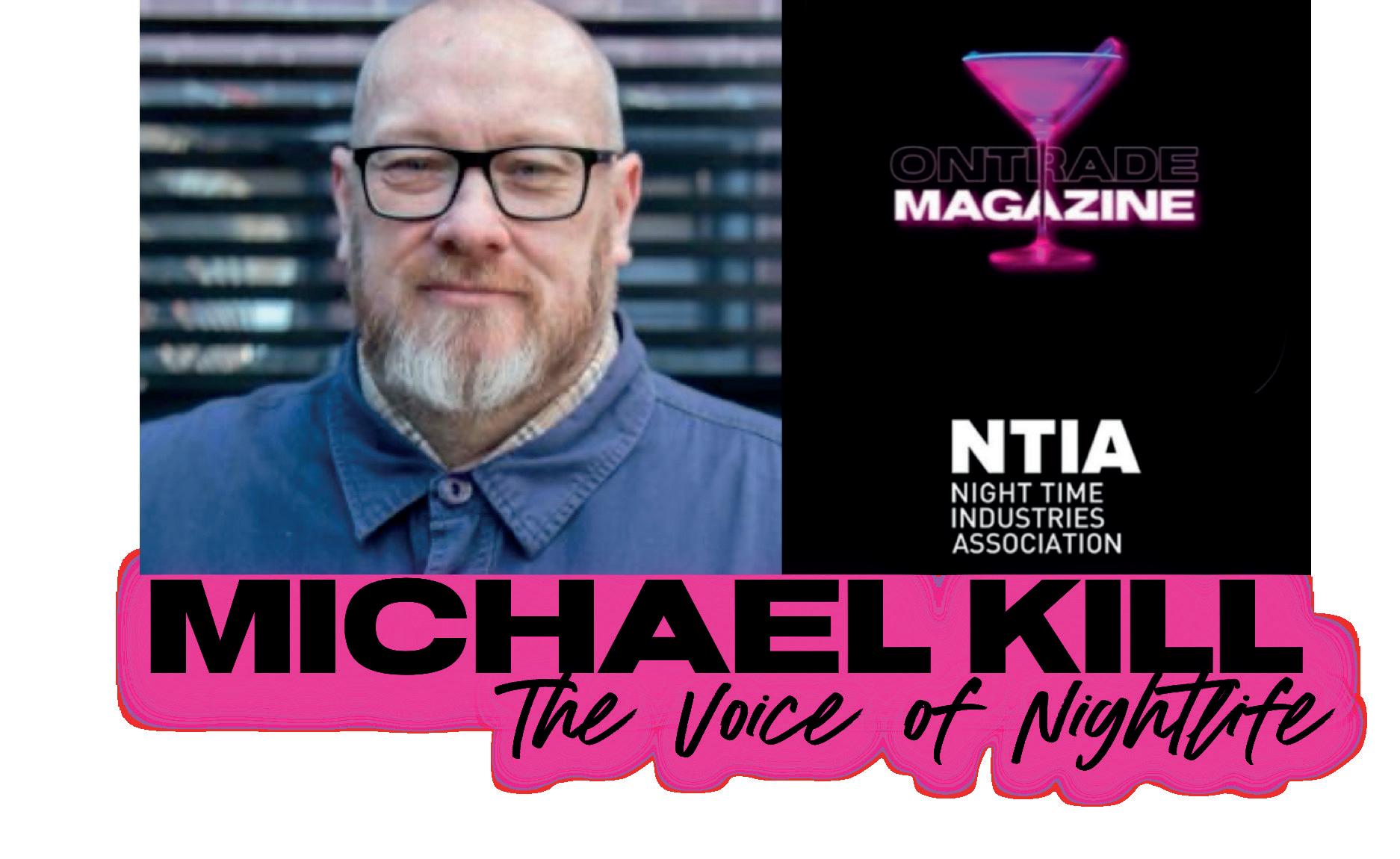
Alongside our features, you’ll find the usual expert insights and analysis from our regular contributors, including Michael Kill of the Night Time Industries Association, Joanna Miller from The Licensing Co and many more voices helping to shape the conversation around the future of hospitality.
Thank you, as always, for your continued support of OnTrade Magazine.
Justin Wingate Director at TopGunMedia
Fiona Gauld Production - info@topgunmedia.co.uk
For press enquires or advertising opportunists please call or email: Email: info@topgunmedia.co.uk Telephone: 0141 556 4111
FABRIC AT 27 CONTINUING TO DEFINE CLUB CULTURE
THE QUARTER GILL
WHERE GLASGOW STILL SINGS
12 BURNHAM OR BUST COULD THIS BE A TURNING POINT
6 10 34
MICHAEL KILL THE RISE OF THE KING OF THE NORTH
SIGNATURE WINES LAUNCHES TO THE ONTRADE
Part of the Alchemy Drinks family, Signature Wines has been created in partnership with LWC Drinks, the UK’s largest independent drinks wholesaler.
Their mission is to make wine simple, clear and accessible to everyone in Scotland’s hospitality industry.
Their focus is to give Scotland’s venues access to a world-class wine range, backed by genuine expertise and a fresh approach to the wine conversation.
Great wine starts with great sourcing. Through the partnership with LWC Drinks, they give you access to one of the most comprehensive wine portfolios available in Scotland - over 1,500 carefully selected wines, sourced from more than 17 countries spanning every price point and occasion.
What they state sets them apart isn’t just the range, it’s the approach.
“Our wine team brings a fresh perspective to the wine industry. combining deep expertise with a passion for making wine simple and accessible across Scotland’s venues. From citycentre restaurants and gastropubs, to Highland hotels, every recommendation we make is thoughtfully tailored to your business and your customers.”
“ Based in Hillington, Glasgow, with our own offices, warehouse, and delivery fleet, we’re firmly rooted in Scotland’s on-trade, and we’re built around one idea: Great wine doesn’t have to be complicated.”
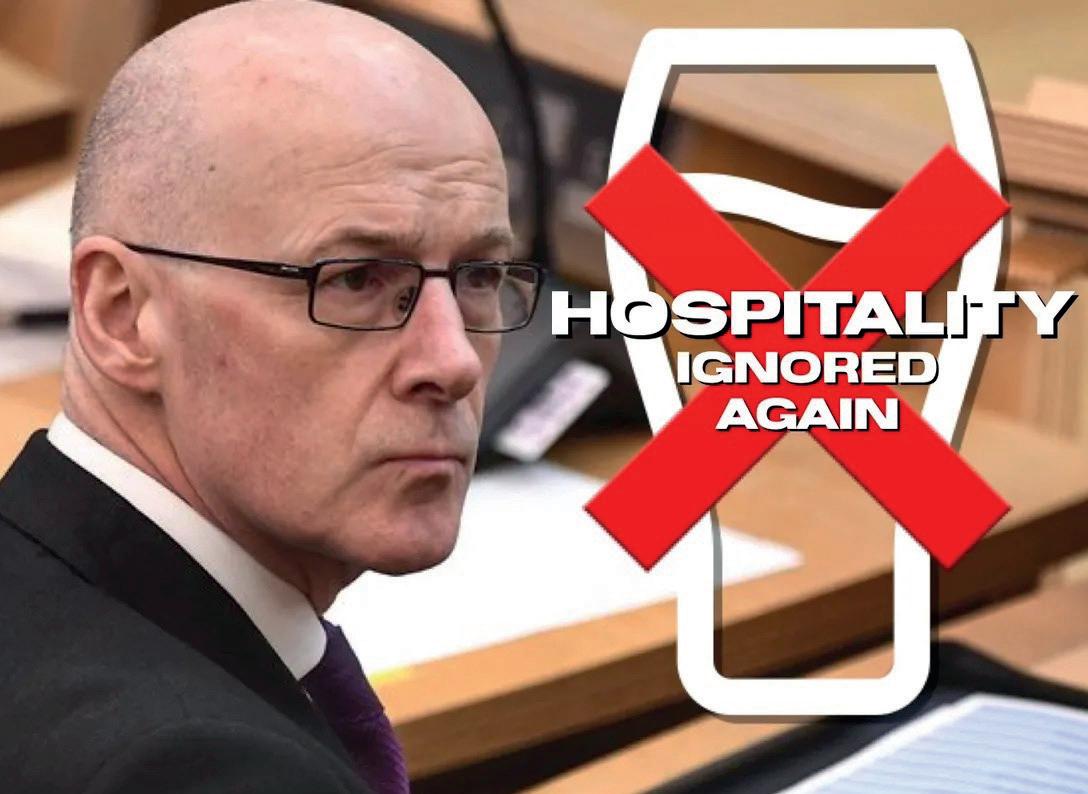
FIRST MINISTER’S LACK OF RESPONSE TO VAT LEAVES BITTER TASTE
The (SLTA) Scottish Licensed Trade Association has criticised First Minister John Swinney for failing to give a “straightforward answer to a straightforward question” when asked if he would back the UK-wide VAT’s the Problem campaign which is calling on the Westminster government to cut VAT to 10% for hospitality businesses.
Mr Swinney, who was asked the question by Alyn Smith MSP
at FMQs yesterday, angered the SLTA with his response, described by its managing director, Colin Wilkinson, as “deplorable”.
He said: “Rather than giving a straightforward answer to a straightforward question, the First Minister’s deplorable response was more focused on playground bickering and political point-scoring than answering a question, raised by one of his own industry-respected party colleagues Alyn Smith MSP, a champion of the hospitality sector.
Mr Wilkinson added: “The lack of response, whether positive or negative, in our opinion signals a high level of disinterest and contempt for one of Scotland’s key sectors and contributor to the Scottish economy. It also begs the question of the First Minister as to what he sees the future role of the hospitality sector, if in his mind it has any part to play at all, in his aims to grow Scotland’s economy.”
The SLTA has long called for greater recognition of the importance of the licensed hospitality and overall tourism sectors to the Scottish economy, our cultural heritage, social wellbeing and the jobs provision the sector provides, particularly for young people.
Mr Wilkinson said: “We thought that progress was being made when “tourism”, one of Scotland’s most important key industries and intrinsically linked with hospitality, was now a named portfolio at Cabinet Secretary level. However, the First Minister’s lack of response to support a campaign to help the hospitality sector has dented our aspirations.
First Minister’s lack of response to VAT question leaves bitter taste on palate of Scotland’s hospitality sector
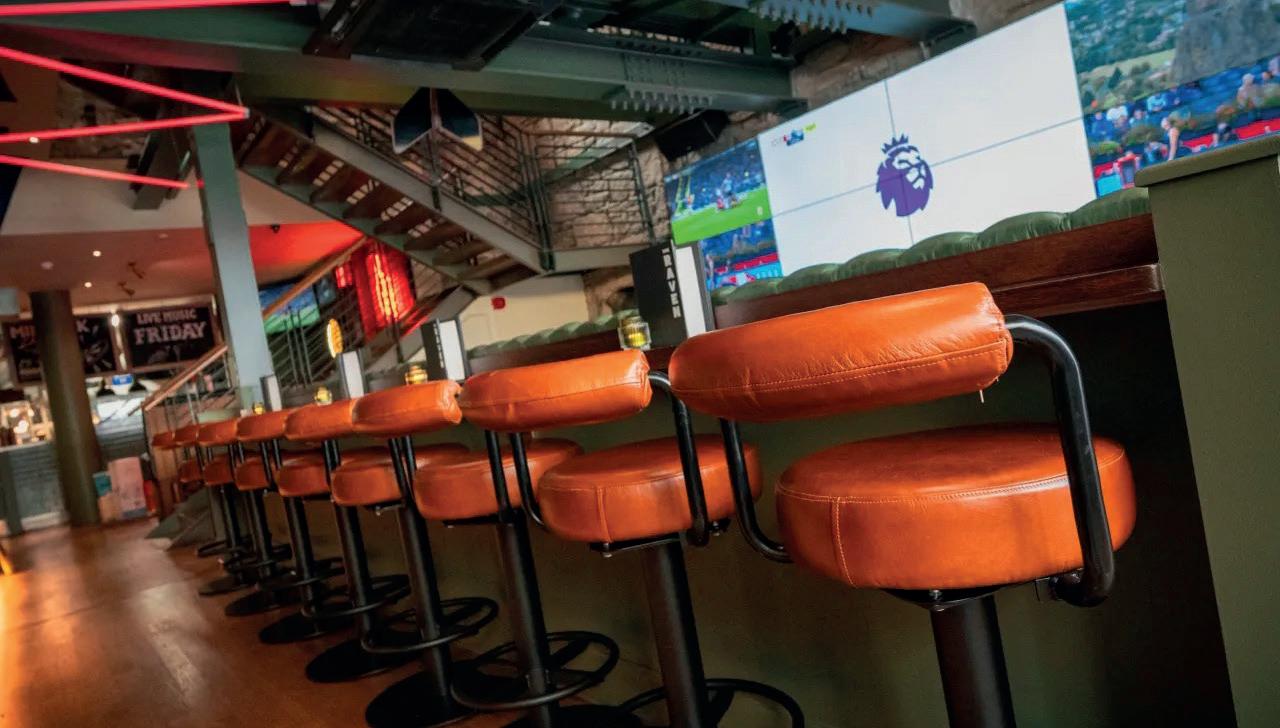
THE RAVEN SPORTS BAR IN GLASGOW REOPENS TO A FAN-FAIR
One of Glasgow’s most popular sports bars has reopened to customers in time for this summer’s World Cup following a major £500,000 makeover.
The Raven on Renfield Street is now the go-to live sports venue in Glasgow.
State of the art audio visual media technology has been used to create the best sporting experience in the city, including one digital wall of 8 HD TV screens and 20 screens to choose from around the venue.
A new sports viewing zone (The Arena) now offers more space for groups and matchday packages.
The venue now has a brighter, retro American sports bar feel with a cool, modern industrial edge, complete with LaZ-Boy seating for prime viewing and a choice of sumptuous booths that can be booked in advance.
The first-floor area is equipped with two electric darts oches, one new pool table and a dedicated bar can also be privately booked.
Highlights of the new menu include pizza doughnuts,
a choice of Detroit pizzas, burgers, hot dogs and sandwiches, plus deep-fried mars bars and toffee apple pecan pie sundaes.
A special £12 lunch deal includes Texas toasties, brisket dogs, Raven Philly cheesesteaks and a free soft drink.
Midweek drinks deals include pints from £3.50, glasses of wine from £5 and a choice of cocktails from £5.
Ultimate stadium packages are perfect for groups in the new ‘Director’s Boxes’ or La-Z-Boy seating.
Customers also have the choice to order in a variety of ways, including table service with a member of The Raven team, via a QR code app or at the bar.
Football fans will also get a free pint of Cold Town Beer at The Raven every time Scotland wins a match during this year’s tournament.
Stuart Harrison, general manager at The Raven, said:“We’re back just in time for this summer’s World Cup with an epic new look and the ultimate sporting experience in the city.
“We’re already making our name as the go-to sports venue in Glasgow, complete with new sports viewing zone, La-Z-Boy seating for prime viewing and matchday packages for groups.
“We also have an incredible food and drink offer, including our new pizza doughnuts and Detroit Pizzas.”
Louise MacLean, Business Development Director for Signature Group, which owns The Raven, added:“There’s no better place in Glasgow to cheer Scotland on during the World Cup than at The Raven. We’re also offering a free pint of Cold Town Beer for each customer with every match Scotland wins during this year’s tournament.”
PUBS SET FOR 40% SALES BOOST DURNG WORLD
CUP
Scottish pubs and bars are in line for a significant sales boost as Scotland kicks off its World Cup campaign.
Despite the later than usual kick-off times, UKHospitality Scotland said it expects similar levels of demand from Scotland fans watching the games in their local.
The majority of local authorities across Scotland have provided extensions to licensing hours to accommodate the games, and fans wanting to watch in the pub.
Leon Thompson, Executive Director of UKHospitality Scotland, said: “Scotland’s return to the World Cup after 28 years is a huge moment for the country.
“While the Tartan Army is well represented in Boston and Miami, there will be millions of Scots heading to their local to cheer the team on and celebrate Scotland’s rightful return to the biggest footballing stage.
How London’s
Underground Institution Continues to Define Club Culture
Long before experiential hospitality became an industry buzzword, Fabric was proving that consumers would travel, queue and stay until sunrise for one thing above all else: authenticity.
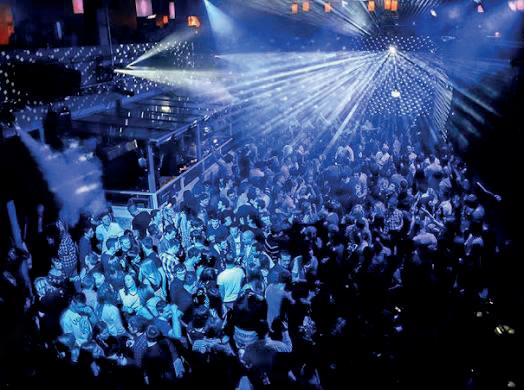
Hidden beneath the streets of Farringdon in a former Victorian meat storage facility opposite Smithfield Market, Fabric opened its doors in October 1999 and quickly established itself as one of the most influential nightclubs in the world. More than a venue, it became a cultural institution that helped shape London’s reputation as the global capital of electronic music.
Today, as the late-night economy faces rising operational costs, licensing pressures and changing consumer habits, Fabric remains a compelling example of how a venue can evolve while remaining fiercely loyal to its original identity.
BUILT FOR MUSIC, NOT MARKETING
Founded by Cameron Leslie and Keith Reilly, Fabric arrived at the tail end of the superclub era. While much of the market chased celebrity DJs, VIP culture and commercial dance music, Fabric took a different route.
The philosophy was simple: exceptional sound, underground music and a customer experience centred around the dancefloor.
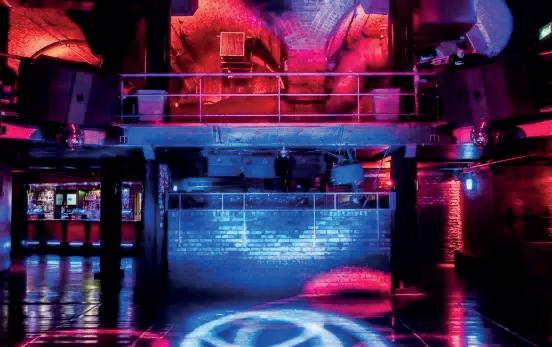
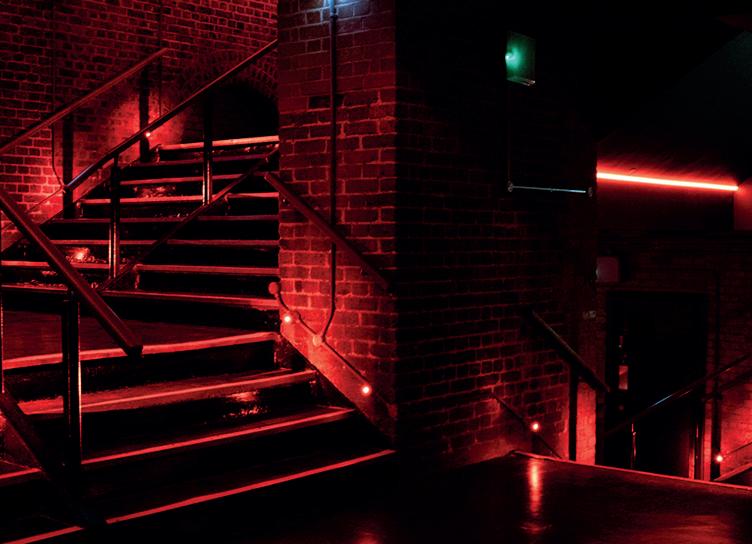
That ethos was reflected in the building itself. The club’s three-room layout allowed different genres and communities to coexist under one roof. Room One became famous for its bodysonic dancefloor, where bass frequencies could literally be felt through the floor itself, while Rooms Two and Three developed reputations for marathon techno, house, drum and bass and experimental electronic sessions.
The stripped-back industrial aesthetic of exposed brick, steel and concrete reinforced the message that the music was the star.
A SURVIVOR OF LONDON’S NIGHTLIFE CHALLENGES
Few venues illustrate the challenges facing the UK’s nighttime economy more clearly than Fabric.
In 2016 the club was forced to close following the deaths of two young club-goers and the subsequent revocation of its licence. The decision triggered international headlines and the #SaveFabric campaign, with artists, industry figures and Londoners rallying behind the venue.
Following negotiations with authorities, Fabric reopened with enhanced safety procedures and revised operating conditions.
The episode transformed the club into a symbol of the wider debate surrounding nightlife, licensing and the cultural value of late-night venues in major cities.
Nearly a decade later, Fabric’s continued success demonstrates the resilience of well-managed nightlife businesses that understand both their audience and their responsibilities.
THE MODERN FABRIC OFFER
While many heritage venues trade primarily on nostalgia, Fabric continues to invest heavily in its product.
Recent upgrades to Rooms Two and Three have modernised the club’s already celebrated sound systems, ensuring the venue remains technically competitive with newer international competitors.
The programming remains deliberately broad while staying true to underground electronic culture. Fabric’s flagship Saturday night programme sits alongside the long-running FABRICLIVE brand, championing drum and bass, grime and bass music, while sister labels fabric Records and Houndstooth have extended the brand far beyond Charterhouse Street.
Membership schemes, merchandise, recordings and international collaborations have helped diversify revenues in an increasingly challenging market for standalone nightclubs.
For operators across hospitality, Fabric offers a masterclass in brand extension without diluting identity.
PROGRAMMING THAT CONTINUES TO LEAD
One of Fabric’s greatest strengths has always been curation.
The venue remains a destination for international artists and emerging talent alike, maintaining credibility with serious music fans while attracting a new generation of clubbers discovering the venue for the first time.
Upcoming highlights include performances from Above & Beyond, Ricardo Villalobos, Seth Troxler, Deep Dish, Oden & Fatzo and Nina Kraviz as part of the venue’s summer programme.
The continued success of collaborations such as Junction 2 x Fabric demonstrates the commercial value of strategic partnerships between festivals and venues seeking year-round audience engagement.
LESSONS FOR THE ON-TRADE
Fabric’s longevity offers several lessons for operators across pubs, bars and nightclubs.
Firstly, authenticity remains commercially valuable. Consumers can identify venues that genuinely stand for something.
Secondly, investment in the customer experience matters. For Fabric, that means sound quality, programming and atmosphere rather than bottle service or gimmicks.
Finally, community is a competitive advantage. Fabric survived because customers, artists and the wider industry viewed the venue as something worth protecting.
In an era where many venues are searching for differentiation, Fabric’s story is remarkably straightforward: know your audience, deliver consistently and never lose sight of what made customers fall in love with the venue in the first place.
More than a quarter of a century after opening, the bass is still shaking the walls beneath Smithfield Market — and London’s underground heartbeat shows little sign of slowing down.
THE PARTICK INSTITUTION WHERE GLASGOW STILL SINGS
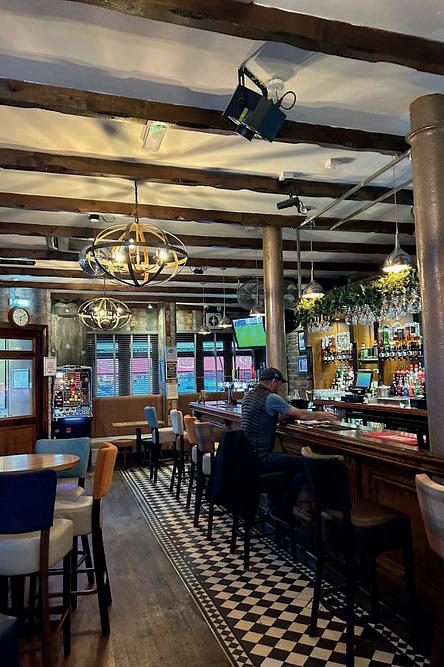
There are pubs you visit and pubs you belong to. In Glasgow’s fiercely competitive west end hospitality scene, where craft beer bars, cocktail venues and premium dining concepts compete for attention, The Quarter Gill has built something many operators spend years trying to create — genuine community.
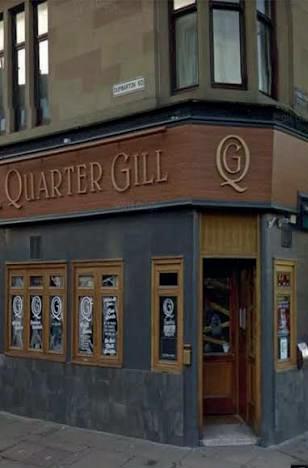
Situated on Dumbarton Road in the heart of Partick, the venue has become one of Glasgow’s best-known local bars, earning a reputation that stretches well beyond the west end thanks to one ingredient that never goes out of fashion: atmosphere.
And, of course, karaoke.
THE SOUNDTRACK OF PARTICK
On paper, karaoke should be simple. A microphone, a screen and a song list.
Yet anyone who has experienced a weekend night at The Quarter Gill knows the formula is considerably more complicated than that.
The magic lies in participation.
Students from nearby Glasgow University mingle with longstanding regulars, hospitality workers finishing shifts, football fans, families and locals who have been drinking in the area for decades. By the end of the night distinctions disappear and the entire pub becomes part of the performance.
In an era dominated by curated social media experiences, there is something refreshingly authentic about a venue where enthusiasm matters more than vocal ability.
The Quarter Gill understands that hospitality is not simply about serving drinks.
It is about creating moments.
A TRUE COMMUNITY PUB
Partick has always been one of Glasgow’s great pub districts.
The area combines students, professionals, long-term residents and visitors travelling through one of Scotland’s busiest transport hubs.
That diversity has helped shape The Quarter Gill’s identity.
The venue has managed to retain the feel of a traditional Glasgow local while remaining accessible to newcomers discovering it for the first time.
For operators across the on-trade, there is an important lesson in that balance.
Many venues chase trends.
The Quarter Gill has instead focused on consistency, familiarity and customer relationships.
Experience has become currency.
Quiz nights, live music, DJs and interactive entertainment have become essential weapons in the battle for customers.
The Quarter Gill was ahead of the curve.
Its karaoke offering has evolved from entertainment into identity, creating a destination venue that attracts customers from across Glasgow while ensuring repeat visits from local regulars.
For hospitality businesses facing economic pressures and changing consumer habits, it offers a simple reminder that memorable experiences continue to outperform discounting strategies.
People may forget what they drank.
They rarely forget singing Whitney Houston to a packed pub on a Friday night.
Holding Onto What Matters
Customers know what they are getting and, more importantly, how the venue makes them feel.
That creates loyalty money cannot buy. Entertainment as a Competitive Advantage Across the UK, operators are increasingly recognising that drinks alone are no longer enough to drive footfall.
Perhaps the biggest achievement of The Quarter Gill is that it feels unmistakably Glasgow.
The conversations are loud, the humour is quick and strangers become friends remarkably fast.
In a hospitality landscape increasingly dominated by national brands and standardised concepts, venues with genuine personality stand out more than ever.
That authenticity is difficult to manufacture and impossible to replicate.
It is earned over years of serving the same community, welcoming new customers and creating the kind of nights people talk about long after last orders have been called.
THE FUTURE OF THE LOCAL ICON
The hospitality industry often talks about innovation, reinvention and disruption.
The Quarter Gill proves there is another route to success. Know your customers.
Deliver consistently.
Create an atmosphere people cannot recreate at home.
Because while trends come and go, there will always be demand for a great local pub, a welcoming crowd and the chance to sing one more song before heading home.
For pubs, bars, clubs and restaurants, Britain’s “Night Mayor” could become the industry’s biggest political ally yet.
For much of the past decade, hospitality operators have become accustomed to feeling overlooked in Westminster. Business rates, staffing shortages, licensing restrictions, transport concerns and the rising cost of doing business have often left operators believing government sees the sector primarily as a tax generator rather than an economic and cultural asset.
But what if that changed?
What if Britain’s next Prime Minister understood not only the economics of hospitality, but its role in creating vibrant towns, safer cities and stronger communities?
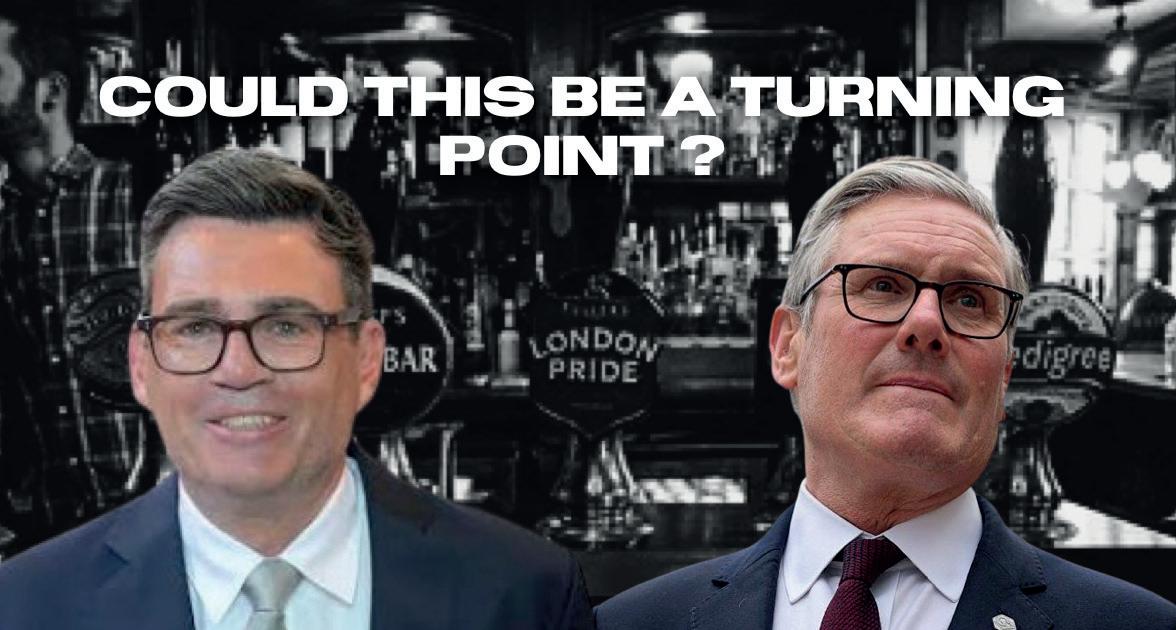
The prospect of Andy Burnham entering Number 10 may still be hypothetical, but for many within the on-trade, it is a scenario that carries considerable appeal.
THE PRIME MINISTER WHO UNDERSTANDS THE NIGHT-TIME ECONOMY
As Mayor of Greater Manchester, Burnham has developed a reputation as one of the UK’s strongest political advocates for the night-time economy.
His administration backed the appointment of a Night Time Economy Adviser, championed cultural venues and regularly argued that hospitality businesses should be viewed as critical infrastructure rather than optional leisure amenities.
That distinction matters.
The hospitality sector contributes more than £90 billion annually to the UK economy and employs millions of
people, yet operators frequently argue that government policy fails to reflect its importance.
A Burnham-led government could potentially change that relationship.
A MORE BALANCED VIEW ON LICENSING
One of the biggest frustrations for operators remains the complexity and inconsistency of licensing regulation.
Many in the sector believe Britain continues to regulate latenight venues through the lens of public order rather than economic growth.
Burnham has consistently spoken about the need for thriving city centres after dark and the importance of supporting venues that operate responsibly.
A future administration could therefore place greater emphasis on partnership between local authorities, police and operators rather than enforcement-led approaches.
For nightclubs in particular, that could represent a significant cultural shift.
TRANSPORT THAT WORKS FOR HOSPITALITY
One of Burnham’s flagship achievements in Greater Manchester has been the expansion and integration of public transport.
For hospitality businesses, transport policy is rarely discussed but hugely important.
Later services mean customers stay longer and spend more.
Staff can access a wider range of employment opportunities. Consumers are more likely to visit city centres if they know they can get home safely and affordably.
A government that prioritised late-night transport infrastructure could provide a substantial boost to urban hospitality economies across the UK.
The success of London’s Night Tube demonstrated the commercial impact transport can have on the evening economy.
DEVOLUTION COULD BENEFIT LOCAL OPERATORS
Burnham has long argued that regions need greater control over economic development.
For hospitality businesses, greater devolution could allow local leaders to develop licensing, tourism and regeneration
strategies that reflect regional realities rather than national assumptions.
Cities such as Manchester, Birmingham, Bristol and Liverpool all have unique hospitality ecosystems and face different challenges.
Giving regional leaders more power to support their local sectors could unlock investment and innovation.
A STRONGER VOICE DURING ECONOMIC CHALLENGES
The hospitality sector has not forgotten Burnham’s vocal opposition to pandemic restrictions that he believed unfairly penalised businesses in northern England.
Whether operators agreed with every position he took, many respected the fact he publicly fought for businesses that felt unheard.
That experience could shape a future approach to crisis management, with greater consultation between government and industry bodies before major policy decisions are introduced.
HOSPITALITY AS PLACE-MAKING
Perhaps the biggest change a Burnham premiership could bring would be philosophical rather than financial.
Burnham has frequently argued that successful cities require more than offices and housing developments. They need culture, entertainment, restaurants, bars and venues that create identity and community.
For an industry that has often felt politically undervalued, having a Prime Minister who views pubs, restaurants and clubs as civic assets rather than social liabilities could prove transformational.
THE REALITY CHECK
Of course, no Prime Minister can eliminate rising energy costs, labour shortages or inflationary pressures overnight.
Many of the structural challenges facing hospitality are global rather than political.
But political leadership shapes priorities.
If the next decade sees hospitality move from the margins of economic policy to the centre of regeneration, tourism and cultural strategy, operators may look back and identify one politician who helped accelerate that shift.
For an industry that has spent years asking government to understand its value, Andy Burnham may be one of the few politicians already speaking its language.
10TH AUGUST
AUGUST 2026
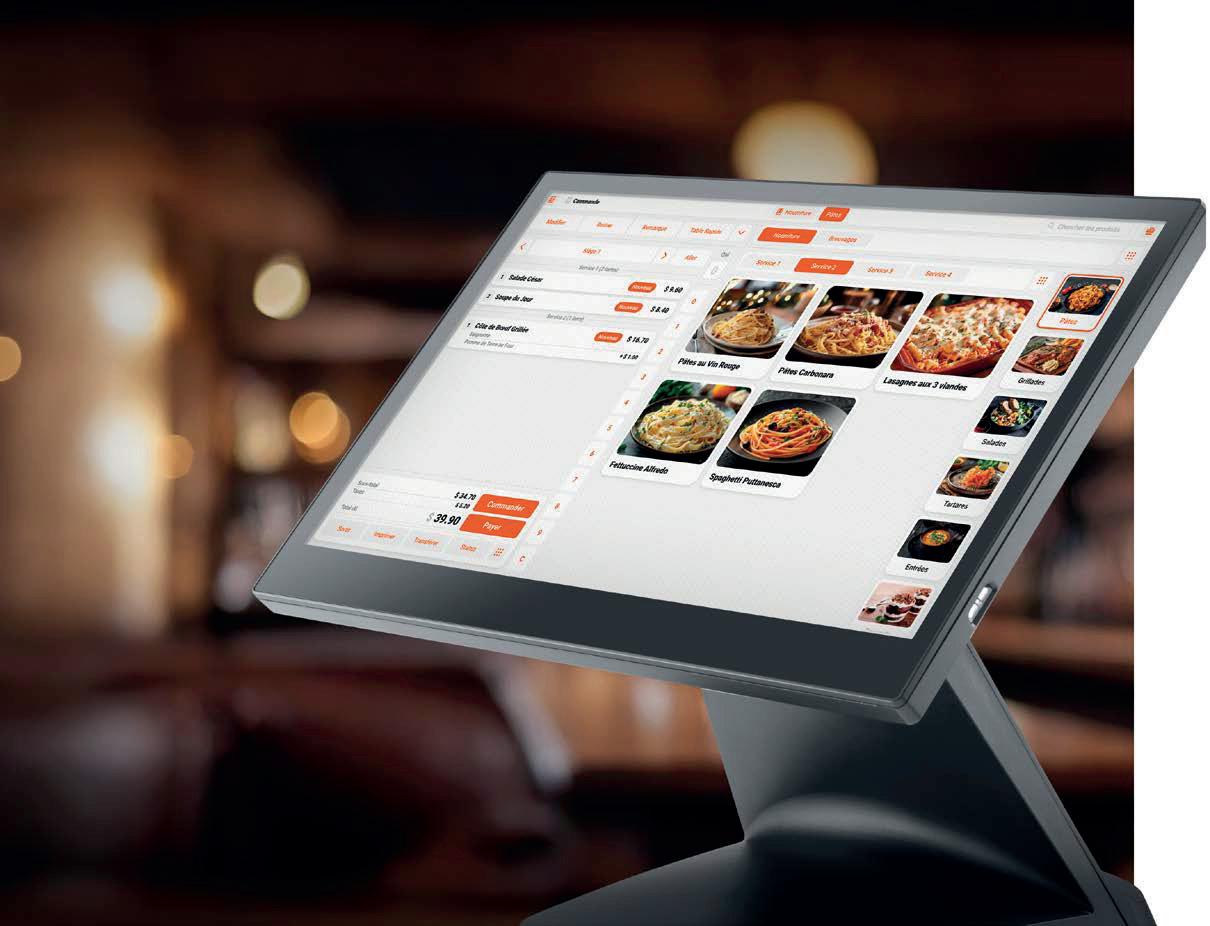
A new era of restaurant POS and management technology
WHAT’S NEW Cloud architecture that scales with you. Manage from anywhere, with reliable local performance.
Intuitive interface that’s easy to learn, fast to use, and built for busy environments.
Open integration ecosystem that connects your POS, payments, operations, and reporting.
Tito's Handmade Vodka was founded by sixth-generation Texan, Tito Beveridge. His career track took a few turns, but he always found time to do what he loved: make people smile with spirits. Tito got a kick out of infusing vodka for friends and handing out bottles at parties. He quickly became known as "the vodka guy." Willing to risk it all, he pursued the career of his dreams and set out to build a distillery.
With a dog by his side, Tito found a plot of land in rural Austin, convinced a few friends to help him build a shack for his still and, against all odds, perfected his pot-distilled spirit. He fought Texas laws, took on nearly $90,000 of debt, and for several years, played a one-man show to get his dream going, overseeing all distilling, hand-bottling, and selling during the hours in-between. In 1997, he sold his first case. Almost three decades later, Tito's Handmade Vodka has gained a reputation for its high-quality product, charitable contributions, and its goal to make people happy while making the world a better place.
The most awarded vodka in the British isles
MARTINI GRADE VODKA
BOOST YOUR CASH FLOW WITH LICENSING AND MANAGEMENT TIPS – PART 3
The hospitality and tourism sectors across the UK operate within a challenging financial landscape. Increasing operational costs, fluctuating consumer demand, and a complex regulatory environment mean managing overheads has to be able to pivot and react to ongoing changes. This is a six-part review which we started in May 2026, so continue to watch this space. (Please contact us if there are specific areas you want us to cover.)
COMPLIANCE PREVENTS REVENUE LOSS:
One of the most severe threats to cash flow is interruption of your liquor licence. This can be the suspension, revocation, or ineffective management of your premises licence. Compliance failures can stop alcohol sales immediately and expose the business to hearings, review proceedings, and reputational damage, all of which carry their own stress … and cost.
For many hospitality businesses, the loss is not confined to the period of investigation or suspension. It affects grant and funding availability - due diligence reporting will throw up these issues and could affect future sale and borrowing options. A review process can also include cancelled bookings, staff disruption, supplier concerns, adverse local attention, and reduced customer confidence.
Read on to understand what failures can trigger action and how to avoid them.
FAILURE TO PAY ANNUAL FEES.
Scotland:
Annual fees are set by the regulations and are based on rateable value which fixes the categories (information of your rateable value can be found at saa.gov.uk) and range from category 1: up to £180 to category 6: up to £900. This is a legal requirement and mut be paid every year by 1st October. Some operators think they need to receive a notice or invoice but that is not necessary. The payment is an annual obligation so must be paid regardless. If in doubt, check your council’s website as it will explain what sum needs paid. And diary this to pay every September before you get to the deadline of 30th September. Unpaid annual fees can lead to the licence being out into a board hearing and then revocation or suspension of the licence even if the fee is paid late.
England and Wales:
Annual fees, under the Licensing Act regulations, are also based on the premises’ rateable value band (A–E): ranging
from band A £70 to band D: £320 (x2 for alcohol on-sale premises = £640) and band E: £350 (x3 for alcohol on-sale premises = £1,050). Additional fees apply for premises with a capacity of 5,000+. Again failure to pay these or pay on time can lead to loss or restriction of the premises licence.
Northern Ireland:
NI operates a court-based system. Licences are granted by the county court and renewed by the magistrates’ court. NI does not have an annual fee equivalent. Instead, licences are renewed every 5 years, with court fees payable at each renewal (set by the county court or magistrates’ court rules, varying by district). There is no annual recurring fee between renewals. If the renewal fee is not paid the renewal application will not be processed and the licence will be lost.
Ireland (Republic):
The Irish system is distinct from other jurisdictions. Renewals now generally happen directly with the Revenue Commissioners, not the courts. Annual fees are in place but are but paid as excise duty to Revenue. For a Publican’s Licence, the renewal cost is based on previous turnover: Under €190,500: €250 up to €952,500–€1,269,999: €2,535 and €1,270,000+: €3,805. Again there are sanctions for non or late payment.
CORRECTLY APPOINTED PREMISES MANAGER.
Operating without proper management arrangements can lead to immediate operational difficulty and potential criminal consequences. In practical terms, this means the departure of one key manager should trigger an immediate internal process. Where that process is absent, businesses can drift into non-compliance far more quickly than they expect.
Scotland:
The premises licence holder names the premises manager on the premises licence by way of a minor variation application. The premises manager must have a personal licence. In Scotland, only one personal licence holder can
be named as manager on the premises licence and each personal licence holder may only be named on one premises licence, not on multiple. South Ayrshire council has a policy where the premises must have a personal licence holder on duty at all times but no other council in Scotland insists on that. There must be a personal licence holder on premises after 1am if the premises have a capacity of 250 people or more and are opening after 1am. If the premises manager leaves, the premises licence holder has 7 days to notify the Licensing Board and 6 weeks to nominate a replacement.
England & Wales:
The premises manager named on the premises licence is called the Designated Premises Supervisor (DPS). Every premises licence authorising the sale of alcohol must name a DPS and the DPS must hold a valid personal licence. The DPS is nominated by the premises licence holder who applies for a variation under Section 37 of the Licensing Act 2003 to name or change the DPS and the new DPS must give written consent. The police must be notified and can object — if they do, a hearing will take place. As in Scotland there is only DPS per premises, but one person can be DPS for multiple premises.
Republic of Ireland:
The licence holder (the named person/entity) is responsible and they must be the beneficial owner of the business. The licence holder’s employees or agents can carry on licensed activities and a nominee can be appointed (confirmed by case law), but they must be the one who actually carries on the licensed trade at the premises. The courts assess fitness based on the applicant’s character, reputation, and financial standing.
Northern Ireland:
The court considers who will manage the business. The licence should be granted to the owner of the business and when assessing fitness, the court considers the applicant’s
qualifications and experience to manage. Corporate licence holders directors are treated as if they hold the licence jointly. Any change in directors must be reported to police within 28 days and if the licence holder dies or becomes insolvent, personal representatives can step in.
Although the terminology differs across the UK, the commercial lesson is the same: management changes, poor record keeping, inadequate staff training, and failure to monitor licence conditions can all create preventable risk.
A useful example is a busy food-led pub that performs well operationally but fails to keep training records updated and does not react quickly when the responsible manager leaves. This premises could be told to immediately stop selling alcohol if the police, or licensing standards officers, attend the premises.
Another is a city-centre venue that secures extended permissions but then drifts from the agreed operating model, prompting non compliance and review activity. It could have the liquor licence suspended or revoked.
In both cases, the issue is not lack of trade but lack of systems. The Licensing Company can support with those systems and requirements. At The Licensing Company, we specialise in providing expert advice on licensing and related matters to hospitality and tourism operators. Whether you require representation at a hearing, assistance with a complex variation, or strategic input on business rates appeals and reliefs, professional advice can help protect both compliance and cash flow. For business advice, a free licence review and general advice and support, please contact Joanna Millar at The Licensing Company on info@ thelicensing.company or 07747 653417.
This article is provided for informational purposes only and does not constitute specific legal or financial advice. Licensing law and business rates rules differ across the UK and are subject to change. Contact us for advice on your specific circumstances before taking action.
THE RISE OF THE KING OF THE NORTH
British politics has always had a curious habit of searching for saviours.
When one leader falls, attention immediately turns to the next. Hope replaces disappointment, enthusiasm replaces frustration and supporters convince themselves that this time things will be different. It is a cycle as old as Westminster itself. Yet every so often a figure emerges who genuinely appears capable of changing the political weather. That is the position Andy Burnham now finds himself in.
Following Sir Keir Starmer’s departure from Number 10, Labour stands at a crossroads. The party that swept to power promising stability and renewal has discovered that governing modern Britain is considerably harder than winning an election. Economic growth has remained stubbornly elusive, public services continue to struggle under immense pressure and many voters who longed for change have found themselves wondering why so much still feels the same.
Starmer deserves credit for restoring Labour’s credibility after years in the political wilderness. He rebuilt a fractured party, returned it to government and brought a sense of professionalism back to British politics. History may well judge him more kindly than
contemporary headlines have. Yet politics is ultimately a business of public confidence and, rightly or wrongly, that confidence began to ebb away. Into that vacuum steps a politician unlike any Labour leader of recent times.
For years Burnham has operated beyond Westminster’s gravitational pull. While colleagues obsessed over parliamentary manoeuvres, he was building a political brand rooted in place, identity and community. As Mayor of Greater Manchester, he became a powerful advocate for devolution, investment and regional pride. He developed a reputation for speaking plainly and standing up for his city, whether the government of the day was Conservative or Labour. It is no surprise that supporters have christened him the “King of the North”. The nickname may be slightly theatrical, but it captures something important. Burnham has managed to achieve what few politicians can. He has become associated with a place and a purpose. In an age when many voters struggle to distinguish one politician from another, that is a considerable asset.
His appeal stretches beyond Labour’s traditional base. He speaks comfortably to working class communities that have drifted towards Reform UK, while remaining
broadly acceptable to Labour’s metropolitan and progressive wings. He understands the frustrations of towns and cities that feel overlooked by Westminster and has spent years arguing that Britain’s economic future depends upon empowering regions rather than concentrating power in London.
That message resonates far beyond Manchester. There is a growing sense across the country that the old model is running out of road. Too many communities feel disconnected from political decision making. Too many people believe that economic success is concentrated in too few places. Burnham has built his political identity around addressing precisely those concerns. That is why his arrival matters.
For the first time in many years, Labour may have a leader who can credibly argue that he understands both the opportunities and the frustrations of modern Britain.
Yet if Burnham’s supporters are excited, they should also be cautious. The history of British politics is littered with leaders who arrived carrying the hopes of millions only to discover that reality is far more complicated than rhetoric. Tony Blair, David Cameron, Boris Johnson and Keir Starmer all entered office with promises of transformation. Each eventually collided with the stubborn realities of governing. Burnham will be no different.
His first challenge is political. Reform UK has fundamentally altered the electoral landscape. Nigel Farage has successfully channelled frustration among voters who feel abandoned by the mainstream parties. Burnham’s task will be to reconnect with those voters without alienating Labour’s broader coalition. It is a delicate balancing act that will require political skill, discipline and perhaps a degree of luck.
His second challenge is economic. Britain remains burdened by weak productivity, sluggish growth and overstretched public services. Voters are increasingly impatient. They are less interested in political arguments than practical outcomes. They want better living standards, safer communities, functioning public services and a sense that the country is moving forward again.
Burnham’s instincts suggest he understands this. Throughout his career he has tended to focus less on ideological debates and more on tangible results. That approach may prove valuable in an era when voters are increasingly sceptical of grand theories and sweeping promises.
Then there is the question of Labour itself. Every leadership contest creates expectations. Every faction believes it has backed the right candidate for the right reasons. Burnham’s broad appeal is undoubtedly one of his strengths, but it could also become a source of tension. The left sees him as more authentic than Starmer. Centrists view him as electorally effective. Trade unions trust him. Regional leaders admire him. At some point he will have to make choices that
disappoint some of those supporters. That is the unavoidable reality of leadership. Speculation about his Cabinet is already beginning. Familiar names are expected to remain influential, while a younger generation may be promoted to demonstrate renewal. Burnham is likely to favour competence and practical experience over factional point scoring, but every appointment will be scrutinised as a signal of the direction he intends to take.
What matters most, however, is not who sits around the Cabinet table. It is whether Burnham can create a sense of momentum. Politics is often about belief. Not blind faith, but belief that improvement is possible. One of the greatest challenges facing Britain today is not simply economic or political. It is psychological. After years of crises, stagnation and division, many people have become doubtful that governments can genuinely improve their lives.
Burnham has an opportunity to challenge that pessimism.
His record suggests a politician who believes in institutions rather than tearing them down, in reform rather than revolution and in practical solutions rather than ideological purity. Those qualities may not generate the loudest headlines, but they are often the foundations upon which successful governments are built.
Still, caution remains necessary.
The cries of “Your not the Messiah” reportedly heard from some enthusiastic supporters should be treated as a warning as much as a compliment. No politician can carry the weight of impossible expectations forever. Burnham is not a miracle worker. He cannot instantly solve Britain’s economic challenges, heal political divisions or transform public services overnight.
Nor should anyone expect him to. The better question is whether he can begin moving the country in a more confident direction. Whether he can restore trust where trust has been lost. Whether he can reconnect politics with communities that increasingly feel ignored.
If he can achieve even part of that, his premiership could prove significant. For now, Britain watches and waits.
The King of the North may soon inherit the crown, but crowns in modern politics are fragile things. They are not secured by applause, headlines or nicknames. They are earned through delivery, resilience and results.
Burnham enters this moment with advantages few politicians enjoy: public goodwill, a strong personal reputation and a sense that he represents something different. That alone does not guarantee success.
But after years of drift and disappointment, it may just provide something Britain has been missing.
A reason to believe that things can get better, even while recognising how difficult the journey ahead will be.
When the Wi-Fi drops, the phones fail or your systems go down, your venue feels it immediately.
Welgo helps hospitality businesses stay connected, secure and supported - providing reliable internet, Wi-Fi, telephony, cyber security, Microsoft 365 and managed IT support.
With over 50 years’ experience supporting Scottish businesses, we offer practical advice, local support and technology that helps keep your venue running.