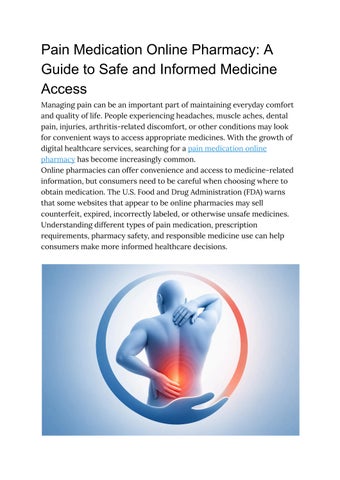
Pain Medication Online Pharmacy: A Guide to Safe and Informed Medicine Access Managing pain can be an important part of maintaining everyday comfort and quality of life. People experiencing headaches, muscle aches, dental pain, injuries, arthritis-related discomfort, or other conditions may look for convenient ways to access appropriate medicines. With the growth of digital healthcare services, searching for a pain medication online pharmacy has become increasingly common. Online pharmacies can offer convenience and access to medicine-related information, but consumers need to be careful when choosing where to obtain medication. The U.S. Food and Drug Administration (FDA) warns that some websites that appear to be online pharmacies may sell counterfeit, expired, incorrectly labeled, or otherwise unsafe medicines. Understanding different types of pain medication, prescription requirements, pharmacy safety, and responsible medicine use can help consumers make more informed healthcare decisions.
Understanding Pain Medication Pain medication, also known as analgesic medication, is used to relieve or manage different types of pain. The appropriate medicine depends on the cause, severity, duration, and characteristics of the pain. Some commonly used categories include over-the-counter medicines and prescription medicines. Examples of commonly used over-the-counter pain relievers include acetaminophen and certain nonsteroidal anti-inflammatory drugs (NSAIDs). Prescription pain medicines may be appropriate for particular medical conditions or more significant pain, but they require professional assessment and should be used according to a healthcare professional's instructions. Not every pain problem requires medication. Depending on the underlying cause, treatment may also involve physical therapy, rest, lifestyle adjustments, treatment of an underlying condition, or other approaches recommended by a healthcare professional.
Why People Search for an Online Pharmacy Convenience is one of the main reasons consumers search for medicines online. An online pharmacy may allow customers to review product information, compare available options, and manage orders without visiting a physical store. Privacy can also be important for some consumers. Online services may make it easier to research health-related products from home. However, convenience should not replace safety. Before ordering any medicine online, consumers should determine whether the pharmacy is legitimate, appropriately licensed, and following applicable regulations. The FDA recommends checking whether an online pharmacy requires a prescription when one is required, provides appropriate contact information, and has a licensed pharmacist available to answer questions.
Choosing a Pain Medication Online Pharmacy Safely Consumers should take several precautions when evaluating an online pharmacy.
Check Pharmacy Credentials A legitimate pharmacy should operate according to the laws and licensing requirements applicable to its location and the customers it serves. For consumers in the United States, the FDA recommends using state-licensed pharmacies and checking licensing information through appropriate pharmacy regulatory resources.
Prescription Requirements Prescription medicines should only be obtained through appropriate medical and pharmacy channels. A website offering prescription medication without requiring a valid prescription can be a warning sign. The FDA specifically identifies websites that sell prescription medicines without requiring prescriptions as potentially unsafe.
Look for Pharmacist Support A legitimate pharmacy should provide access to qualified pharmacy professionals who can answer questions about medicines, directions, potential interactions, and other concerns. Having access to professional guidance can be particularly important when a person takes several medicines or has an existing medical condition.
Review Contact Information Consumers should look for clear business contact information, including an appropriate physical address and telephone number where applicable. A website that provides limited or unclear information about who operates the pharmacy may require additional verification before a customer shares personal or financial information.
Common Types of Pain Relief Different medicines are designed for different situations. The choice should depend on the individual's health circumstances and professional advice.
Acetaminophen Acetaminophen, also known as paracetamol in many countries, is commonly used for pain and fever. It may be used for headaches, toothache, muscle aches, and other common forms of mild-to-moderate discomfort. However, taking more than the recommended amount can cause serious liver damage. Consumers should carefully follow package instructions and avoid unintentionally taking multiple products containing the same active ingredient.
NSAIDs Nonsteroidal anti-inflammatory drugs, commonly called NSAIDs, include medicines used to manage pain and inflammation. They may be used for conditions involving muscle or joint discomfort, headaches, menstrual pain, and other situations depending on the specific medicine. However, NSAIDs are not appropriate for everyone. Certain health conditions, medicines, allergies, and other factors can affect whether an NSAID is suitable.
Prescription Pain Medicines Some pain medicines are available only with a prescription. These medicines may carry significant risks, including dependence, interactions, side effects, or misuse. Prescription pain medicines should therefore be used only as directed by an appropriately qualified healthcare professional. The FDA notes that misuse of prescription pain relievers can lead to serious consequences, including addiction and overdose.
Why Medical Guidance Matters Pain is a symptom rather than a diagnosis. The same type of pain can have different causes. For example, recurring headaches may be associated with several different conditions. Persistent abdominal pain, chest pain, severe back pain, or unexplained pain may require medical evaluation rather than simply treating the symptom with an over-the-counter medicine. A healthcare professional can assess symptoms, medical history, current medicines, allergies, and other relevant factors before recommending an appropriate approach. Consumers should also tell their healthcare professional about all medicines and supplements they currently use. This can help reduce the risk of harmful drug interactions.
Warning Signs of Unsafe Online Pharmacies Not every website that appears to sell medicine is trustworthy. Consumers should be cautious about websites displaying warning signs. According to the FDA, warning signs can include pharmacies that do not require prescriptions for prescription medicines, lack appropriate licensing, do not provide access to a licensed pharmacist, offer unusually deep discounts, or provide medicines in damaged or suspicious packaging. Other concerns may include unclear privacy policies, suspicious payment processes, missing expiration dates, or claims that sound unrealistic. Medicines obtained from unsafe sources may contain incorrect ingredients, too much or too little active ingredient, or potentially harmful substances.
Protecting Personal Information
Online healthcare transactions involve personal and financial information. Consumers should therefore consider website security and privacy before creating an account or placing an order. A secure connection is useful, but security indicators alone do not prove that a pharmacy is legitimate. Consumers should also verify the business, pharmacy licensing, contact information, and prescription practices. The Federal Trade Commission recommends researching unfamiliar health-related sellers and confirming their physical address and telephone information before sharing personal or financial details.
Responsible Use of Pain Medicines Using pain medication responsibly means following the instructions provided by a healthcare professional or the medicine's approved labeling. Consumers should avoid exceeding recommended doses or combining medicines without checking whether they contain the same active ingredient. People should also avoid sharing prescription medicines with others. A medicine prescribed for one person may not be appropriate for another person, even when their symptoms appear similar. If unexpected or serious side effects occur, appropriate medical advice should be sought promptly.
When Should You Seek Medical Attention? Some pain requires more than routine medication. Immediate medical attention may be necessary for severe or sudden pain, chest pain, serious injuries, difficulty breathing, loss of consciousness, or other potentially serious symptoms. Persistent or recurring pain should also be discussed with a healthcare professional, particularly when the cause is unknown or symptoms are becoming worse. Self-treating ongoing pain without identifying the underlying cause can delay appropriate diagnosis and treatment.
Benefits and Limitations of Online Pharmacy Services Online pharmacies can provide several practical benefits. Consumers may be able to research products from home, access medicine information, and manage certain pharmacy services remotely. However, online services cannot replace professional diagnosis when medical assessment is necessary. Consumers should view online pharmacy services as part of a broader healthcare process rather than as a substitute for doctors, pharmacists, or emergency medical services.
What to Consider Before Ordering Before using a pain medication online pharmacy, consumers can consider the following checklist: ● Verify that the pharmacy is appropriately licensed. ● Check whether a prescription is required when applicable. ● Look for access to a licensed pharmacist. ● Review the pharmacy's contact information. ● Read the medicine's labeling and safety information. ● Check the active ingredients and expiration date. ● Avoid products making unrealistic medical claims. ● Discuss prescription medicines with a qualified healthcare professional. ● Protect personal and financial information. ● Seek medical attention when pain is severe, unusual, or persistent. These steps can help consumers reduce avoidable risks when researching or obtaining medicines online.
OnlineMedicine4U and Medicine Information
OnlineMedicine4U provides an online platform where users can explore medicines and healthcare-related products across different categories. Its website also publishes educational content covering medicine uses, dosage information, precautions, and safety considerations. Consumers researching a pain medication online pharmacy should still verify applicable prescription requirements and pharmacy credentials before obtaining any medicine. For prescription products, consultation with a qualified healthcare professional remains important. Medication should be selected and used according to individual medical circumstances rather than solely on the basis of online product information.
Making Informed Healthcare Decisions The availability of medicines online has made healthcare information and pharmacy services more accessible, but it has also created a need for greater consumer awareness. A trustworthy pharmacy should prioritize appropriate dispensing practices, accurate medicine information, patient safety, and professional support. Consumers should be cautious about websites that encourage customers to bypass prescriptions or make unusually strong claims about medicines. The FDA's BeSafeRx resources provide tools and information designed to help consumers identify safer online pharmacy practices.
Conclusion Searching for a pain medication online pharmacy can provide convenience when consumers need to research medicines or access legitimate pharmacy services. However, safety should remain a priority throughout the process. Consumers should verify pharmacy credentials, understand prescription requirements, review medicine information, protect personal data, and consult qualified healthcare professionals when necessary. Different pain
medicines have different uses, risks, and precautions, so choosing medication should depend on individual circumstances. OnlineMedicine4U provides a platform for exploring medicines and healthcare information, while responsible consumers should always verify the suitability and legality of medicines before use. When pain is severe, persistent, or unexplained, professional medical evaluation is especially important.
Frequently Asked Questions 1. What is a pain medication online pharmacy? A pain medication online pharmacy is a digital pharmacy platform where customers can research and, where legally permitted, obtain pain-relief medicines. Prescription medicines should be supplied only according to applicable prescription requirements.
2. Is it safe to use an online pharmacy for pain medication? It can be safe when using a legitimate, appropriately licensed pharmacy that follows applicable regulations. Consumers should verify pharmacy credentials and prescription requirements before ordering medicines.
3. Do pain medicines require a prescription? Some pain medicines are available without a prescription, while others require one. Prescription requirements vary by medicine and jurisdiction, so consumers should check applicable regulations and consult a healthcare professional.
4. What types of pain medication are available? Pain medicines can include over-the-counter options such as acetaminophen and certain NSAIDs, as well as prescription medicines. The
appropriate option depends on the type and cause of pain and individual health circumstances.
5. How can I identify a legitimate online pharmacy? Check whether the pharmacy is appropriately licensed, provides clear contact information, follows prescription requirements, and offers access to a qualified pharmacist. Be cautious of websites offering prescription medicines without prescriptions. Source link:https://penzu.com/p/9b531416c917d667