for students outside of Australia
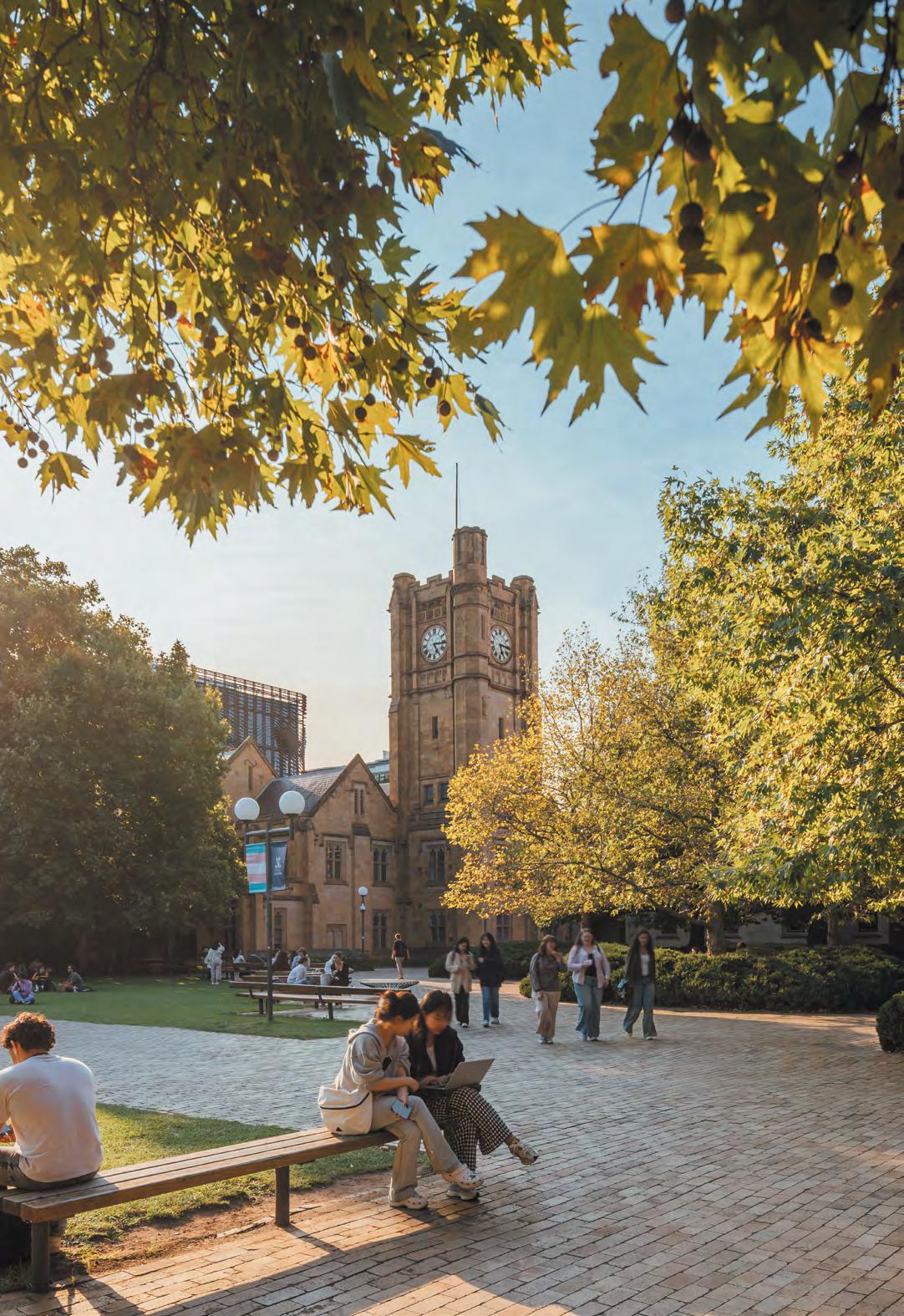
No matter where you’ve come from or where you aspire to be, at Melbourne you’ll create a path that’s uniquely yours. You’ll join a diverse, inclusive global community that encourages you to explore what you’re good at, what excites you and where your interests might lead.
Our degrees aren’t like most others you’ll find in Australia. Instead, we offer a unique curriculum designed to change with you, as your interests develop and your goals take shape.
From undergraduate study through to advanced graduate degrees, the Melbourne curriculum offers the freedom to explore subject areas before focusing on your chosen specialisation. This approach builds the skills and expertise you need to thrive in a changing job market and is why Melbourne graduates are Australia’s most highly regarded by global employers, outranking other global top 20 institutions.
in Australia
Meet the needs of the world’s rapidly evolving workplace with a strengthened ability to think critically and creatively across disciplines.
98% of graduates in work #
We are internationally recognised for graduate employability with unparalleled industryintegrated learning and networking opportunities to set you up for success.
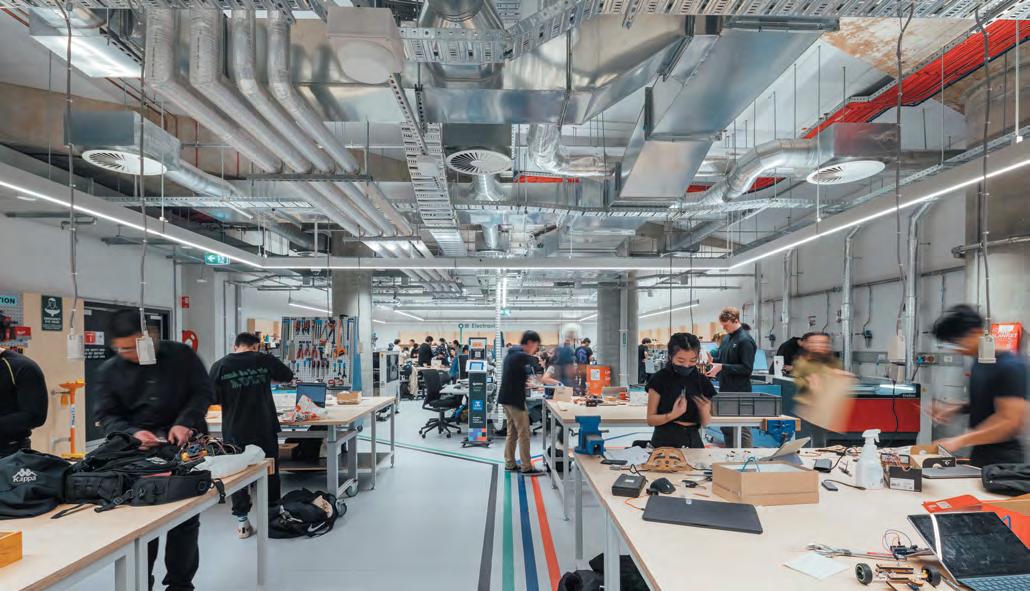
You start with a three-year bachelors degree. From there, you can enter the workforce or continue into graduate study to develop specialised expertise and earn a globally recognised qualification.
Choosing Melbourne means choosing an education that puts your future first. With a curriculum built around flexibility and discovery, you’ll have the support to figure out who you want to become, backed by world-leading expertise to help you get there.
Direct your learning experience
Undergraduate (bachelor) degree
3 years duration
Specialised graduate program
1+ years’ duration (depending on the program)
Professional masters
Accredited world-leading qualifications to help you enter a wide range of professions
OR
Research specialisation
In-depth study to build your research career
Your career
Enter the workforce career-ready with a Melbourne degree
Build on your career experience and industry knowledge with specialised graduate study later in life
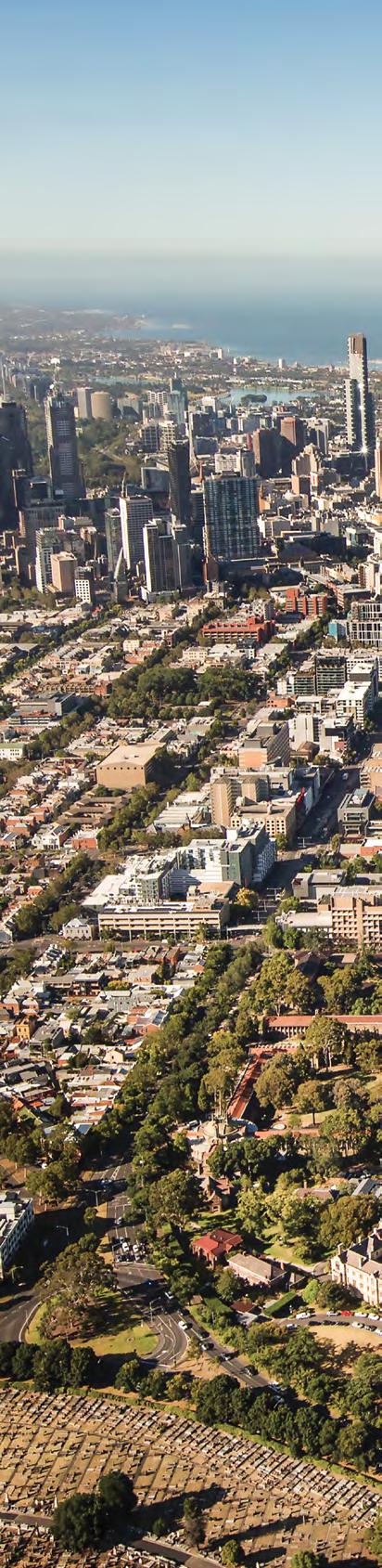
Located in the state of Victoria on the southeast coast of Australia, Melbourne is the state’s cultural and business centre with a population of over 5 million people.
Melbourne has been recognised as fifth best student city in the world and best student city in Australia !. It is a safe, vibrant multicultural hub with annual festivals celebrating art, food, music, comedy and sport.
The University is in the inner city, connected by great public transport, bike paths and near the Queen Victoria Market where you can buy fresh fruit, vegetables, seafood and meat.
Explore the city’s famous cobblestone lanes, go to a music festival, take in a world-class
Travel from our Parkville campus to the city centre in 15 minutes by tram
Live in a city with more cafes and restaurants per number of residents than any other city in the world
Over 3000 live music performances weekly
theatre production, or watch an Aussie Rules football match.
Beyond the city of Melbourne, students can enjoy all that the state of Victoria has to offer: stunning beaches, wineries, bushwalking and farm-to-table food, and is accessible by train, bus or car.
Enjoy drives along the scenic Great Ocean Road, learn to ski at alpine resorts, discover the north-east art silo trail, or see the penguins at Phillip Island.
Almost half of the Australian population was born overseas, and this is especially true in Melbourne, making it one of the most culturally diverse cities in the world.
The University of Melbourne reflects this diversity in student backgrounds on our seven campuses in Melbourne and Victoria.
Parkville campus has a mix of historic sandstone buildings, a dedicated Student Precinct, cafes, state-of-the-art facilities, 12 libraries, gyms and specialty stores. Located north of the city centre within a renowned knowledge precinct of eight hospitals, leading research institutes and a wide range of knowledge-based industries.
Southbank campus is purpose-built for the creative arts with sound and dance stages, animation studios, cinemas and visual arts studios. Situated in the city’s lively arts precinct with the National Gallery of Victoria, Melbourne Theatre Company, Melbourne Recital Centre, the Australian Ballet, the Arts Centre and the Australian Centre for Contemporary Art.
Burnley campus, situated within the heritagelisted Burnley Gardens, is internationally recognised for its teaching and research in urban horticulture. The campus has an expanding profile in green infrastructure and focuses on sustainability and climate change.
We have four campuses in the state of Victoria: Creswick campus is Australia’s only dedicated forest ecosystem science campus, Dookie campus is a focal point for key research, teaching and technology development in agriculture, Shepparton Medical Centre campus specialises in rural health and clinical education, and Werribee campus is a hub for advanced veterinary teaching and research.
Curious about our campuses? Choose your own adventure on this self-guided, virtual tour.
study.unimelb.edu.au/student-life/campusand-facilities
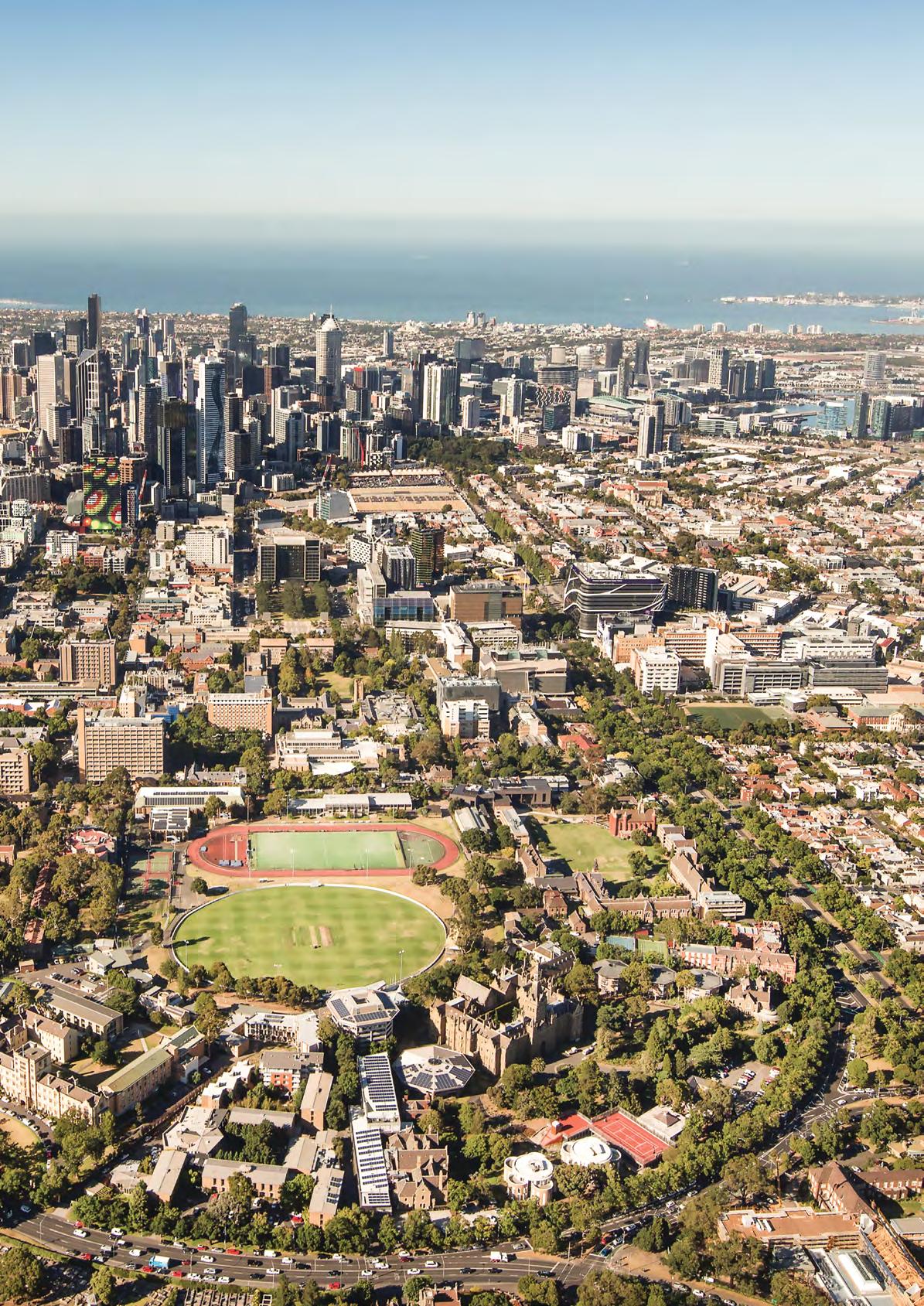
Take a virtual tour of our campuses
Live in the heart of Melbourne. The University of Melbourne provides an accommodation offer for all commencing students who are new to Melbourne and apply for university accommodation. !
Choose from shared apartments, selfcontained studios, dormitory-style living, residential colleges, homestay and private rental options.
University Accommodation is popular so we encourage you to apply early (see table below for dates) to secure your preferred accommodation and room. Commencing Student Cover !enables you to book your preferred accommodation early, knowing you have the option to cancel if circumstances change.
Little Hall – designed for your academic success, Little Hall offers premium apartment living close to campus.
Lisa Bellear House – surrounded by parklands next to the main campus, find modern apartments with a caring community.
The Lofts – dedicated graduate accommodation, built to support your study and career goals.
To find out more visit: study.unimelb.edu.au/accommodation
There are ten residential colleges ranging in size from 70–400 students. Two of these colleges, International House and Wilam Hall, are owned and operated by the University. All colleges provide weekly tutorials to support your learning from residential tutors on site. Meals are provided and there are social clubs, cultural, sporting and leadership programs. Scholarships worth $8.3 million are available to support students across the colleges each year. Explore our ten Colleges:
• International House
• Janet Clarke Hall
• Newman College
• Ormond College
• Queen’s College
• St Hilda’s College
• St Mary’s College
• Trinity College
• University College
• Wilam Hall
College applications typically open in April each year and we encourage you to apply early. To find out more visit: colleges.unimelb.edu.au
We have collaborated with some nationally recognised student accommodation providers to create more accommodation options around our campus. UniLodge Lincoln House offers modern dormitory-style living with impeccably designed shared facilities overlooking the city. Student Village Melbourne have furnished bedrooms with ample workspaces and access to village facilities designed specifically for students.
Semester 1: 1 March–30 May (12 weeks)
• Easter Holiday: 26–30 March
• SWOT Vacation: 31 May–4 June
• Examinations: 7–25 June
• Results release date: 9 July
To find out more scan this QR code
Offers flexible stays, from one night, a semester or a few years depending on your needs.
graduatehouse.com.au
If you are ready to embrace total independence, you might be interested in renting privately. Our University-owned apartment-style accommodation is the ideal blend of independence and support. All our residences are within walking distance of our Parkville campus, and include year-round social, academic, wellbeing and sporting activities and a team of professional staff at each site to ease your transition into university life. Our Student Accommodation team can provide you with resources and information regarding homestays, hostels and private rentals. study.unimelb.edu.au/accommodation
Melbourne offers many lifestyle options to fit many budgets. Living in the inner suburbs means you can walk or cycle to uni. Some students pay less rent by living further out, in which case they pay more for public transport or a car.
Savings can be made by sharing accommodation, shopping at Melbourne’s Queen Victoria and South Melbourne markets, using our libraries and student-owned co-ops, and attending free events on campus.
There are also a range of scholarship options available for students to support their stay in University of Melbourne accommodation.
Visit scholarships.unimelb.edu.au to view our full range of scholarships.
Semester 2: 26 July–24 October (12 weeks)
• SWOT Vacation: 25–29 October
• Examinations: 1–19 November
• Results release date: 3 December
To make the most of your time in Melbourne, it’s important to know upfront the average cost of living here.
How much it costs to live in Melbourne will depend on your individual circumstances. The table below provides an overview of accommodation features for a student at the Parkville campus of the University of Melbourne, according to the type of accommodation chosen.
Costs are a guide only. Calculate your budget using the cost of living calculator:

Graduate with skills and experience employers are looking for.
Whether you have a dream career in mind or want to explore your options first, we’re here to help you achieve your ambitions.
Our Stop 1 team can help you from administration and enrolments, to health and wellbeing support and academic skills and career opportunities. You can drop in or book an individual appointment with a student adviser all throughout the year to talk to someone who can help you navigate your university experience.
study.unimelb.edu.au/student-life/life-atmelbourne/your-support-services
Internships are a great way to get first-hand industry experience. Our students intern in leading companies and institutions in Australia and abroad, paving the way to fulfilling and exciting careers.
The Students@Work Internship Program is available to students for on-campus paid employment for up to 9 months providing work and skill development.
Find out more go.unimelb.edu.au/vd3e
Employers love to see leadership experience on your resume – and we love to help you get it. Lead a student group, direct a play, mentor a younger student or help run one of over 200 clubs and societies to make connections and build your networks.
Your uni journey extends beyond lectures. It's also about finding who you are, your passions and your people. Melbourne Plus is the University’s co-curricular recognition program, with over 150 activities to discover. Build your skills, strengthen your employability and earn university-verified digital credentials. Plus, you get to explore your interests, have fun and meet like-minded students.
The Global Leadership and Employability team provides programs and services to students free of charge, including screened job listings, workshops, industry events and connections with alumni. In addition, many faculties offer seminars, practical training and networking events to help you break into a great career.
You can also participate in the Student Peer Leaders Network career-readiness programs, events and services to support the student community.
Learn more go.unimelb.edu.au/6h8i
Find your place in our vibrant, diverse and welcoming community through our Orientation activities, Melbourne Commencement Ceremonies and Wominjeka welcome event.
This event marks the beginning of your journey as a University of Melbourne student and is a core feature of the Melbourne Orientation experience.
Starting uni is exciting – and the Melbourne Peer Mentor Program (MPMP) is there to make sure you don't have to navigate those early weeks alone! As a new undergraduate student, you're automatically enrolled into MPMP, which matches you with a later-year student and other first-year students in your faculty. You’ll meet with your group five times in the first five weeks, meet new people, make connections, and discover what uni is all about. You can then develop your leadership skills from your second year onwards by signing up to become a Peer Mentor yourself!
Your student journey will be full of choices, milestones, and opportunities. When you join Academic Mentoring, you'll have an expert guiding you along the way. Every student gets the chance to connect with an academic who's been through the student experience themselves. Meetings are a safe space to chat about what you want to get out
To find out more scan this QR code
of your studies, explore your interests, discuss personal goals, and get tips for navigating university life in general. Throughout your studies, you’ll also be able to explore career and graduate study options with alumni and industry mentors.
First-year subjects help you understand the University’s role in Melbourne, Australia and globally; the importance of Indigenous heritage, knowledge and culture; respect for diversity and inclusion sustainability; and the cutting-edge research happening in your study area.
go.unimelb.edu.au/u59s
Proudly multicultural, our diverse student community is represented by more than 200 clubs and societies. Joining a club or society allows you to continue the extracurricular activities you love, find a new interest or meet like-minded friends.
umsu.unimelb.edu.au/buddy-up/clubs
Access fitness centres, pool, playing fields and tennis courts for your physical and mental well-being. Choose from over 40 sports to play at all levels, from recreational to intervarsity. sport.unimelb.edu.au
You could study at some of the world’s most prestigious institutions to gain an academic and professional edge. Take French in Québec, science in Boston, business in Beijing or anthropology in Santiago. Go for as long as a year on exchange to another renowned university or use your summer/ winter break to immerse yourself in a short term overseas program.
Connect with industry leaders shaping your future career. Join panel conversations and networking opportunities to gain employer insights and start building your professional network.
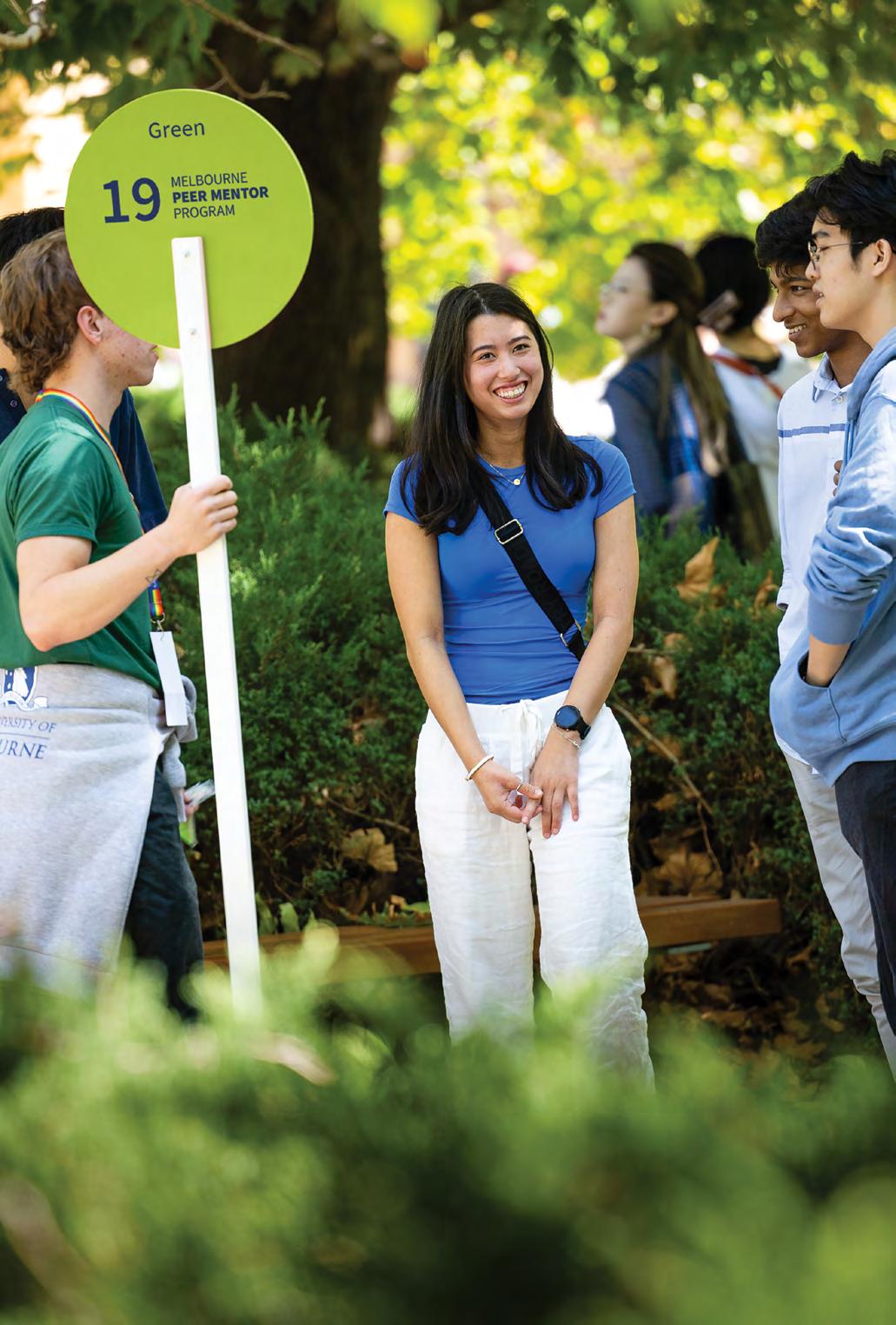
“I’m currently part of a student club – I’m part of the Malaysian Society, and it’s been really good to just meet fellow Malaysians from back home.”
Build a degree around your interests and strengths
At the University of Melbourne, you’ll be empowered to direct your own learning experience. Our curriculum enables you to explore your passions and strengths, while giving you the flexibility to specialise when you’re ready.
Aligned with leading universities across Europe, North America and Asia, our course structure encourages you to develop both well-rounded skills and deep expertise in your chosen discipline. You’ll graduate with a globally recognised qualification as well as the knowledge and experience to make an impact in your career, wherever that may take you.
You start with a three-year bachelors degree. Once completed, you can enter the workforce with a deep knowledge base and career ready skill set. Or, go on to gain advanced training through graduate coursework or research.
We offer seven bachelors degrees in the Melbourne curriculum – arts, biomedicine, commerce, design, fine arts, music, and science – covering over 100 different study areas. We also offer specialist degrees in agriculture and oral health, where everything you study is structured for your chosen discipline.
Making up one third of your subjects, a major is the subject area you’ll focus on during your undergraduate degree. Each degree has a different set of majors. For example, if you’re studying a Bachelor of Design, you might choose to major in architecture or construction. Or in a Bachelor of Commerce, you might pick a major in management or finance. In some of our courses, you can choose to do a double major.
In your first year you can focus on your major straight away or explore other subjects before deciding on what major you want to pursue.
Designed to support your introduction to university, Discovery subjects are core first-year subjects within each undergraduate degree that offer varying experiences and delivery modes. These subjects connect your studies to outside the classroom, showing you how your degree can address real-world problems.
To find out more scan this QR code
Breadth subjects !
Breadth is a key feature of your Melbourne curriculum undergraduate degree that allows you to study a wide range of subjects from outside your home faculty. It’s a requirement of your course that a certain number of subjects are dedicated to breadth. Through breadth, you will develop a broader range of skills and can explore interests that may not traditionally be available within your main field of study.
Find out more go.unimelb.edu.au/4wor
Assessment may consist of essays, class or group exercises, case studies, projects, reports, class presentations, or exams. One subject may only require two or three pieces of assessment. In some areas, up to 80 per cent of the assessment may be based on an exam at the end of the semester. Further information on how each subject is assessed can be found in the University Handbook: handbook.unimelb.edu.au
The University offers an online course to help you meet the required mathematics prerequisite.
To find out more and enrol, visit: go.unimelb.edu. au/vq4x
For other ways to satisfy subject prerequisites, visit: go.unimelb. edu.au/jmy6
Below is a list of majors, minors and specialisations offered within your chosen field of study.
Use science, technology and business to tackle critical sustainability issues
• Agricultural Economics
• Plant and Soil Science
• Production Animal Science
Develop scholarly, critical and creative thinking skills in the arts, humanities and social sciences
• Ancient World Studies
• Anthropology
• Arabic Studies
• Art History
• Asian Studies
• Chinese Societies @
• Chinese Studies
• Classics (Ancient Greek and Latin)
• Creative Writing
• Criminology
• Development Studies @
• Digital Studies @
• Economics
• English and Theatre Studies
• English Language Studies @
• Environmental Studies @
• European Studies @
• French Studies
• Gender Studies
• Geography
• German Studies
• Hebrew and Jewish Studies
• History
• History and Philosophy of Science
• Indigenous Studies
• Indonesian Studies
• Islamic Studies
• Italian Studies
• Japanese Societies @
• Japanese Studies
• Korean Studies
• Law and Justice @
• Linguistics and Applied Linguistics
• Media and Communications
• Medieval and Early Modern Studies @
• Philosophy
• Politics and International Studies
• Psychology
• Russian Studies
• Screen and Cultural Studies
• Sociology
• South Asian Studies @
• Spanish and Latin American Studies
Build the foundations for a broad range of professional health careers, including medicine
• Biochemistry and Molecular Biology
• Biomedical Engineering Systems
• Biotechnology
• Cell and Developmental Biology
• Genetics
• Human Nutrition
• Human Structure and Function
• Immunology
• Infection and Immunity
• Microbiology
• Neuroscience
• Pathology
• Pharmacology
• Physiology
• Psychology
• Public Health and Epidemiology
Gain the skills and knowledge needed to understand and solve key business challenges
• Accounting
• Actuarial Studies
• Business Analytics
• Economics
• Finance
• Management
• Marketing
Learn new ways of thinking, practical skills and expertise for a rewarding career as a design professional
• Architecture
• Civil Engineering Systems
• Computing and Software Systems
• Construction
• Digital Infrastructure Engineering Systems
• Game design
• Graphic Design
• Interior Design
• Landscape Architecture
• Mechanical Engineering Systems
• Performance Design
• Property
• Urban Planning
• User Experience Design
To find out more scan this QR code
Think and create with your own unique voice within a dynamic community of dedicated creators and performers
• Acting
• Animation
• Dance
• Film and Television
• Music Theatre
• Production
• Screenwriting
• Theatre
• Visual Art
Help shape the future of music in Australia and across the globe with advanced training in your musical discipline of choice
• Composition
• Interactive Composition
• Jazz and Improvisation
• Musicology and Ethnomusicology
• Music Studies
• Performance
Qualify as an oral health therapist, ready to provide care in a variety of clinical settings. Instead of majors, this course consists of four main components:
• Oral Health Sciences
• Preventive and Clinical Dentistry
• Social Sciences and Health Promotion
• Vocational and Clinical Practice
Develop technical skills and specialised knowledge needed across the full range of science, biomedicine, mathematics, engineering and IT subjects.
• Agricultural Science
• Animal Health and Disease
• Animal Science and Management
• Biochemistry and Molecular Biology
• Biomedical Engineering Systems
• Biotechnology
• Cell and Developmental Biology
• Chemical Engineering Systems
• Chemistry
• Civil Engineering Systems
• Climate and Weather
• Computing and Software Systems
• Data Science
• Digital Infrastructure Engineering Systems
! Double major available
@ Study area available as a minor only
• Ecology and Evolutionary Biology
• Ecosystem Science
• Electrical Engineering Systems
• Environmental Engineering Systems
• Environmental Science
• Food Science
• Genetics
• Geography
• Geoscience
• Human Nutrition
• Human Structure and Function
• Immunology
• Infection and Immunity
• Marine Biology
• Mathematical Physics
• Mathematics and Statistics
• Mechanical Engineering Systems
• Mechatronics Engineering Systems
• Microbiology
• Neuroscience
• Pathology
• Pharmacology
• Physics
• Physiology
• Plant Science
• Psychology
• Veterinary Bioscience #
• Zoology
# The Veterinary Bioscience major is the fastest pathway to the Doctor of Veterinary Medicine (DVM). Successful applicants for this major (in second year) also receive a conditional offer to the DVM. Your third year subjects are equivalent to DVM year one, reducing your DVM duration to three years. Speak with a course adviser early to ensure you meet subject prerequisites from first year. The DVM offers start year commencement only.
Following your bachelors degree, you can deepen your knowledge, build specialist expertise and broaden your perspectives with graduate study. You’ll earn a globally recognised qualification to advance your career — whether you’re seeking accreditation for your chosen profession or aiming to build your skills at a higher level.
Linked to globally leading research, our graduate courses offer industry mentorship, real-world projects, and placements. You’ll develop practical, industry-relevant skills while applying the latest research and practices to your study. You’ll have the opportunity to study alongside peers from around the world, building an invaluable network of connections and joining a community of over 500,000 graduates to support your career long after graduation.
We offer more than 400 graduate courses across a broad range of disciplines, with specialist graduate schools in medicine, dentistry, health sciences, education, law, arts, design, plus Melbourne Business School.
Our graduate study areas include:
• Agricultural and veterinary sciences
• Architecture, building, planning and design
• Arts, humanities and social sciences
• Business and economics
• Education
• Engineering and information technology
• Environment
• Health
• Law
• Music, and visual and performing arts
• Science study.unimelb.edu.au/study-with-us/ graduate-courses
If you are graduating high school and know the career pathway you want to follow, you can bundle your undergraduate degree offer with a graduate degree offer by applying for a Graduate Degree Package.
Australian and New Zealand citizens and international school leavers studying an equivalent international qualification are eligible for Graduate Degree Packages except for Health Graduate Degree Packages. Applicants must enrol in their preferred Graduate Degree Package immediately after Year 12, unless granted a deferral by the University.
go.unimelb.edu.au/9vmi

To find out more scan this QR code
Step 1
Choose your course. Find the graduate coursework degree you want to apply for. There are over 400 graduate courses in 18 graduate schools you can choose from
Step 2
Check your eligibility and fees. You must have completed an undergraduate degree (or equivalent) from a recognised institution. Use our Graduate coursework grade conversion eligibility calculator study.unimelb.edu.au/how-to-apply/ graduate-coursework-study/gradeconversion-eligibility-calculator
Step 3
Prepare your application and documentation, if your academic transcript is not in English you will need to provide an official translation.
Step 4
Apply online and wait for the outcome.
Step 5
If you receive an offer, you can then accept your place and prepare to start your life at Melbourne.
Find out more study.unimelb.edu.au/ how-to-apply/graduate-courseworkstudy/international-applications/ applications
As a leading research-intensive university, we attract the best researchers from all over the world. !
We collaborate with industry partners, other universities, research organisations, government and not-for-profit organisations to achieve research excellence and remain at the forefront of innovation.
As a graduate researcher, youʼll be supervised by leading experts in your field.
With internationally recognised research programs and supervisors in most major disciplines, you will be challenged and supported to make a difference in your field. All research degrees require a thesis based on original research on a specialised topic.
For help in finding supervisors, see: findanexpert.unimelb.edu.au
Master of Philosophy (MPhil)
A two-year degree in which you'll complete a substantial research project and thesis. You'll develop advanced research skills, techniques and specialist knowledge in your discipline.
Masters by Research
A two-year research and coursework degree, at least two-thirds of which is devoted to research. You'll gain advanced disciplinary and research expertise and produce a major research thesis.
Doctor of Philosophy (PhD)
You'll complete a four-year research project, where you'll develop expert research and analytical skills. And you'll communicate the outcomes in a thesis and through an oral presentation. We also offer joint PhDs with other leading international universities.
We offer comprehensive support and professional development programs to guide you throughout your research degree. From dedicated research centres and advanced facilities to generous scholarships, career planning resources and established networks, you will be supported to achieve your goals and secure your future.
study.unimelb.edu.au/study-with-us/ graduate-research
Most domestic graduate research students receive an Australian Government Research Training Program Fee Offset Scholarship (RTP) to cover the cost of tuition.
International students
Over 400 scholarships are available to international graduate researchers. Most, including the Melbourne Research Scholarship, cover tuition fees, a living allowance, and paid maternity, parental and sick leave.
International students admitted to a research degree are automatically considered for a Graduate Research Scholarship. A separate application is not required.
scholarships.unimelb.edu.au
To find out more scan this QR code
How to apply for a research degree
Step 1
Choose your course, review the course requirements, including application submission dates, and check your eligibility.
Step 2
Find potential projects and supervisors at findanexpert.unimelb.edu.au
Contact potential supervisor for support.
Step 3
Prepare your documentation, which will vary by course.
Step 4
Submit your application and wait for the outcome.
Step 5
If you receive an offer, you can then accept your place and prepare to start your life at Melbourne.
Find out more at study.unimelb.edu. au/how-to-apply/graduate-research
Combining undergraduate and graduate study at the University of Melbourne is a pathway to limitless opportunity. Here are just some of the doors it can open across our broad range of study areas.
For entry requirements and more information about pathways and where they can take you, visit study.unimelb.edu.au
Architecture (Master of Architecture is available in a
Bachelor of Design (major in Architecture) OR Any degree with an Architecture Design Studio subject and an Architecture History subject (requires 3 years for Master of Architecture)
Data science (Master of Data Science is available in a Graduate Degree Package)
Any undergraduate degree with prerequisite subjects in Linear Algebra and Calculus 2 (or equivalent), and a tertiary level computer science subject with a focus on computer programming
Dentistry (Doctor of Dental Surgery is available in a Graduate Degree Package)
Bachelor of Biomedicine or Science
Bachelor of Arts, subject to completing prerequisite subjects, and course plan approval by home faculty
(Master of Engineering is available in a
Bachelor of Biomedicine, Design or Science with an engineering major
Students in any other undergraduate degree are eligible to progress into the 3-year Master of Engineering, subject to completing prerequisite subjects
(Master
Bachelor of Design or Science with an IT major e.g. Bachelor of Science with major in Computing and Software Systems.
Students in any other undergraduate degree are eligible to progress into the 2-year Master of Information Technology, subject to completing one prerequisite subject.
Package)
Application deadlines for the standard offer rounds of most degrees are:
Semester 1, 2027 (start year, February/ March intake): 30 November 2026
Semester 2, 2027 (mid-year, July intake): 31 May 2027
If required, seek assistance from one of our official overseas representatives. study.unimelb.edu.au/how-to-apply
International students studying Australian Year 12
Current international University of Melbourne applicants must apply directly via the internal application form.
study.unimelb.edu.au/how-to-apply/youronline-application
Application deadlines for the standard offer rounds of most degrees are:
Semester 1, 2027, Timely application closing dates for 2027 start year intake: 30 November 2026
Semester 2, 2027, Timely application closing date for 2027 mid-year intake: 31 May 2027
Some courses have early closing dates, and not all courses are available in Semester 2. Please check the course details online before applying. If required, you can seek assistance from one of our overseas representatives. study.unimelb.edu.au/study-with-us/ graduate-courses
Applications are accepted throughout the year. Entry requirements vary so check with the relevant graduate school.
unimelb.edu.au/study/graduate-research
Submit an application online
Step 1
Apply direct
To find out more scan this QR code
Fill out an online application. We will contact you with the outcome and let you know if additional information is required. You can also accept your offer and apply for a student visa online.
Or apply through an authorised education agent
You can use one of the University’s authorised education agent in your country to help lodge an application, accept your offer, or apply for a student visa (if you are admitted to the University).
For more information about their costs, services and contact details, go to: study.unimelb.edu.au/how-to-apply/find-an-overseas-representative
Step 2
Provide a copy of your academic results to the University as part of your online application. If you are currently studying, you may be required to submit your final results (when they become available) before a complete assessment can be made.
Step 3
Within four weeks of the University receiving your complete application you will receive an outcome email. If we require further information, you will be notified and processing will proceed once the missing details are provided.
Step 4
Complete the steps outlined in your emailed letter of offer, complete your personalised offer acceptance form and provide your tuition fee deposit and Overseas Student Health Cover payment. For more information go to: students.unimelb.edu.au/get-started
Step 5
Receive your Confirmation of Enrolment (CoE) document, which you require to obtain your student visa.
There are different student visas based on the type of course you study and whether you want part time employment. Check the website of the Australian Department of Home Affairs for details:
immi.homeaffairs.gov.au/visas/getting-avisa/visa-finder/study
The Australian Government has laws for education institutions that deliver education services to international students on a student visa. To find out about your rights, go to: services.unimelb.edu.au/international/ visas/esos
To find out more scan this QR code
Australian citizens and permanent residents and New Zealand citizens are domestic students regardless of where they live in the world.
All domestic undergraduate applicants must apply through VTAC. To find out more visit: go.unimelb.edu.au/cvk6
Domestic graduate applicants apply direct to the University. Domestic applicants are not permitted to use the services of education agents.
Domestic students currently residing overseas are eligible for Commonwealth Supported Places, domestic tuition and loan schemes. go.unimelb.edu.au/cvk6
Internal transfer students may apply directly via the internal application form.
study.unimelb.edu.au/how-to-apply/ transferring-courses
English language test !
Use an approved English language test to meet English language requirements. You must satisfy the requirements within the 24 months preceding the proposed date of commencement.
Meet the English language requirements for undergraduate study by satisfactorily completing secondary studies in an approved final-year English subject, or through approved tertiary study in English. Further information about the University’s English language requirements, including graduate requirements, is available at: unimelb.edu.au/study/english-reqs

We accept a number of foundation studies programs for international students only as entry pathways to our undergraduate courses.
This one-year course is designed to help international students transition into top university courses. The coursework you'll undertake is tailored towards your desired study pathway.
Graduates are guaranteed a place in the University of Melbourne course of their choice if they satisfy the prerequisites and meet the required scores.
Trinity offers Comprehensive, Standard, Fast track programs to meet your individual needs, and the curriculum is supervised by the University of Melbourne’s Academic Board.
The College is ideally located near the University’s Parkville campus.
trinity.unimelb.edu.au/tcfs
! To see graduate English language requirements, please see: study.unimelb.edu.au/how-to-apply/english-language-requirements/graduate-english-language-requirements
@ You must achieve the following scores to meet the English language requirement for the Bachelor of Oral Health: TOEFL (internet-based): total score of at least 94 and scores of at least 24 for writing, 23 for speaking, 24 for reading and 24 for listening. To submit your scores when you apply, use our TOEFL Institution Code: 0974. IELTS: total score of at least 7.0 in the Academic International English Language Testing System (IELTS), with no bands less than 7.0. Pearson Test of English (Academic): overall score of at least 72and scores of at least 75 for writing and 76 for speaking. # Applicants to the University of Melbourne must submit a TOEFL IBT report that includes overall and individual band scores presented on the
We offer more than 1200 scholarships and prizes for new and current students.
Our scholarships either award academic excellence or assist students from diverse backgrounds or experiencing difficult circumstances with enrolling and completing their course.
To get the most out of your time at university, there are prizes for academic achievements, to undertake overseas study or leadership opportunities, and bursaries to ease financial pressures so you can focus on your studies.
For a full overview of programs offered by the University and its faculties, see: scholarships.unimelb.edu.au
The Melbourne Chancellor’s Scholarship is one of the University’s most prestigious scholarships and is offered to recent school leavers in recognition of their outstanding academic achievement during their Australian Year 12 or International Baccalaureate (IB).
As a Chancellor’s Scholar, you will enjoy generous fee exemptions and be guaranteed a place in the graduate program of your choice at Melbourne.
Eligible students who apply for admission to the University through VTAC are automatically considered for a Melbourne Chancellor’s Scholarship, so you don’t need to make a separate application.
The scholarship is guaranteed to students who achieved an ATAR of at least 99.90, Indigenous students with an ATAR of at least 90, or students enrolling in the Bachelor of Music with an ATAR of at least 99.85 and an audition score of A+.
To find out more scan this QR code
Offers fee sponsorships for high-achieving students who are enrolling in a bachelor degree and are citizens of countries where international educational opportunities are limited by financial disadvantage.
Offering full sponsorship and a living allowance of $5000 per year to talented students, the Humanitarian Access Scholarship is for those who have applied for asylum in Austalia.
Offered to high-achieving international students with one-off $5,000 or $10,000 or 25% to 100% fee remissions for the duration of the course.
Our faculties offer hundreds of specific awards that can help you through your undergraduate studies. For a full list and how to apply, check faculty websites.
More than one third of college students receive financial assistance, with a combined $8.3M in college scholarships and bursaries available. A scholarship may reduce the fees by between $100–$500 per week. A further $1.6M is for students who are employed parttime by their college
colleges.unimelb.edu.au/scholarshipsand-fees
If you excel in sport, our Elite Athlete Program offers generous scholarships to help you pursue your sporting dreams as well as your academic aspirations.
sport.unimelb.edu.au/programs/ elite-athlete-program


“The Dr. Hans Prem Scholarship allowed me to reduce my working hours and move closer to the uni. It’s been a huge help for me during my studies.
John Korasidis Master of Mechatronics Engineering
This table provides a quick summary of our undergraduate degrees and should be used as a guide only. The published guaranteed scores are those approved for 2026 and should be considered indicative for 2027. The 2027 guaranteed scores are yet to be finalised and will be available on the University’s website once confirmed.
! Equivalent Full-Time Student Load (EFTSL): 1 EFTSL is a standard annual full-time load.
@ Domestic students: Applicants who achieve the minimum Australian Tertiary Admission Rank (ATAR) for a course will be considered for a place, provided prerequisite studies and any other specific course requirements are met. The lowest selection ATAR to which an offer was made may be higher, depending on demand for the course and the number of places available. All domestic students are eligible for a Commonwealth Supported Place (CSP). Only applicants eligible for special entry schemes will be admitted below the lowest selection ATAR.
# International students: The University guarantees admission to a course when an international student achieves the required score, meets prerequisite studies, satisfies the English language requirements and there are still places available in the course at the time of acceptance. If you do not meet the guaranteed score, your application will not be considered for entry.
Guaranteed scores apply only if no further study has been undertaken after completion of one of these qualifications. Guaranteed scores are reviewed annually.
These scores apply to applicants completing UK GCE A Levels only. Please refer to our website for Singapore A Level and Sri Lanka A Level requirements: go.unimelb.edu.au/efy6 Domestic students completing an international qualification: Entry score may be higher for domestic applicants, depending on demand for the course and the number of Commonwealth Supported Places (CSPs) available. Prerequisites and any other entry requirements are applicable for domestic and international applicants.
$ International students must achieve at least the indicative score, meet the prerequisite subjects and satisfy the English language requirements to be eligible to be considered for the course. For domestic students completing an international qualification, the score listed should be considered a minimum score to be eligible for a place in that course.
% A minimum of 50 is required in English for Academic Purposes (EAP) and prerequisite subjects unless otherwise specified. The score is calculated using the best four subjects excluding EAP. Maths 1 is included in the best four score for Commerce; and English and History of Ideas are included for Arts.
The final average is usually the average of the best four year-long subjects, including prerequisites for some courses. For UNSW, the GPA on the final transcript is used. For WAUFP, the CPS is used and different scores apply.
^ US High School Diploma
The GPA score is as reported on the official US High School Diploma Transcript. A test score is required, either SAT, ACT or an AP exam aggregate score. See go.unimelb.edu.au/b276 for additional information about US high school diploma entry requirements.
/ International students: The indicative course fee shown provides an estimate of the tuition fees for the first year of the course in 2027. This estimate is based on a typical student’s subject selection in the
US High School Diploma #^
GPA 2.5 and a test score
(SAT 1090 or ACT 20 or AP exam aggregate score 9)
GPA 2.7 and test score
(SAT 1120 or ACT 21 or AP exam aggregate score 10)
Prerequisite subjects
A-levels, IB Diploma , US High School Diploma and VCE subjects
GPA 3.3 and test score
(SAT 1260 or ACT 26 or AP exam aggregate score 13)
GPA 3.4 and test score
(SAT 1260 or ACT 26 or AP exam aggregate score 17)
GPA 3.2 and test score
(SAT 1170 or ACT 23 or AP aggregate score 13)
Admission based on portfolio or audition and completion of high school BN
Completion of SAT or ACT or completion of minimum 3 AP examinations BN
GPA 3.7 and test score
(SAT 1330 or ACT 30 or AP aggregate score 18) BO
GPA 3.2 and test score
(SAT 1210 or ACT 25 or AP exam aggregate score 13)
To find out more scan this QR code
Refer to study.unimelb.edu.au/how-to-apply/satisfy-subject-prerequisites for additional tests and subjects as alternatives to those listed below.
A-levels: Mathematics and at least grade C in an approved A or AS Level English subject.
IB: English, and a minimum grade of 4 in either Applications and interpretations HL, Analysis and approaches SL, or Analysis and approaches HL; or a minimum grade of 5 in Applications and interpretations SL.
US High School Diploma: AP Calculus AB or AP Calculus BC exam; AP English Language and Composition or AP English Literature and Composition exam. BL
VCE: A study score of at least 25 in English/English Language/Literature or at least 30 in EAL, and at least 25 in Mathematical Methods or Specialist Mathematics or a study score of at least 30 in Further Mathematics.
A-levels: Approved A or AS Level English subject. (
IB: English. (
US High School Diploma: AP English Language and Composition or AP English Literature and Composition exam. (BL
VCE: A study score of at least 25 in English/English Language/Literature or at least 30 in EAL . Applicants intending to major in Economics are strongly encouraged to complete Mathematical Methods or equivalent. BP
A-level: Chemistry, Mathematics and an approved A or AS Level English subject.
IB: English, Chemistry and a minimum grade of 4 in either Applications and interpretations HL, Analysis and approaches SL, or Analysis and approaches HL.
US High School Diploma: AP Chemistry, and AP Calculus AB or AP Calculus BC and AP English Language and Composition or AP English Literature and Composition. BL
VCE: A study score of at least 25 in English/English Language/Literature or at least 30 in EAL, and at least 25 in Chemistry and in Mathematical Methods or Specialist Mathematics. BP
A-level: Mathematics and an approved A or AS Level English subject.
IB: English, and a minimum grade of 4 in either Applications and interpretations HL, Analysis and approaches SL, or Analysis and approaches HL.
US High School Diploma: AP Calculus AB or AP Calculus BC exam; AP English Language and Composition or AP English Literature and Composition exam. BL
VCE: A study score of at least 25 in English/English Language/Literature or at least 30 in EAL, and at least 25 in Mathematical Methods or Specialist Mathematics. *BMBP
A-level: An approved A or AS Level English subject.
IB: English.
US High School Diploma: AP English Language and Composition or AP English Literature and Composition exam. BL
VCE: A study score of at least 25 in English/English Language/Literature or at least 30 in EAL. BPBQ
A-level: An approved A or AS Level English subject.
IB: English.
US High School Diploma: AP English Language and Composition or AP English Literature and Composition exam. BL
VCE: A study score of at least 25 in English/English Language/Literature or at least 30 in EAL.
A-level: An approved A or AS Level English subject.
IB: English.
US High School Diploma: AP English Language and Composition or AP English Literature and Composition exam. BL
VCE: A study score of at least 25 in English/English Language/Literature or at least 30 in EAL. BP
A-level: Biology or Chemistry and at least Grade B in an approved A or AS Level English subject
IB: English and one of Biology or Chemistry
US High School Diploma: AP Biology or AP Chemistry exam; AP Calculus AB or AP Calculus BC exam; AP English Language and Composition or AP English Literature and Composition exam. BL
VCE: A study score of at least 25 in English/English Language/Literature or at least 30 in EAL, and at least 25 in one of Biology or Chemistry.
A-level: An approved A or AS Level English subject, Mathematics and one of Biology, Chemistry or Physics, OR An approved A or AS Level English subject and both Mathematics and Further Mathematics.
IB: A minimum grade of 4 in either Applications and interpretations HL, Analysis and approaches SL, or Analysis and approaches HL.
A minimum grade of 4 in one of Biology, Chemistry or Physics at HL or SL.
US High School Diploma: AP English Language and Composition or AP English Literature and Composition exam; AP Calculus AB or AP Calculus BC exam; AP Biology or AP Chemistry exam or one of the following Physics combinations: AP Physics 1 and 2 exams, AP Physics 1 and AP Physics C Electricity and Magnetism exams, or AP Physics C: Mechanics and AP Physics C: Electricity and Magnetism exams. An AP science exam is not required with both AP Calculus AB and AP Calculus BC exams. BL VCE: A study score of at least 25 in English/English Language/Literature or at least 30 in EAL, and at least 25 in Mathematical Methods or Specialist Mathematics, and in one of Biology, Chemistry or Physics; OR A study score of at least 25 in English/English Language/Literature or at least 30 in EAL, and at least 25 in both Mathematical Methods and Specialist Mathematics. BP
first year. This estimate assumes a fulltime study load, commencing Semester 1. For some degrees, an indicative fee range is shown due to the wide range of variables that may affect the course structure, and subjects taken. Actual tuition fees payable may vary and will be the sum of the fees for all subjects in which you enrol.
* Domestic students: Eligible domestic students who satisfy course prerequisites and achieve an ATAR of 92.00 or above are guaranteed a place in the Bachelor of Commerce in 2026.
International students: Recipients of the Bachelor of Commerce Global Scholarship may be admitted with an entry score that is lower than that published here. This scholarship is available only to international students. For more details, see: scholarships. unimelb.edu.au/awards/bachelor-of-commerce-globalscholarship
) Applicants intending to major in Economics are strongly encouraged to complete VCE Mathematical Methods or equivalent.
BL AP exams are a minimum score of 3. Alternatives to AP exams for academic prerequisites include: a. an equivalent subject from a US university or college (pending a review of the syllabus); b. an equivalent subject from another high school qualification recognised by the University. Alternatives to AP exams to the meet the English requirement include: a. an English subject from a US university or college (pending syllabus review); b. an English subject from another high school qualification recognised by the University; or c. a standardized English test recognised by the University.
BM Applicants intending to major in Actuarial Studies or continue on to the Master of Engineering following the Bachelor of Commerce complete VCE Specialist Mathematics Units 3 and 4 or equivalent.
BN A range of criteria is used for selection. Visit study.unimelb.edu.au for additional requirements.
BO Indicative score only (entry is not guaranteed).
$54,848
$44,356–$57,764
$58,084–$65,288
$56,451–$62,464
$45,928–$63,924
$43,904
$43,904–$44,808
$85,840
$55,556–$65,344
BP Arts, Biomedicine, Commerce, Design and Science: Students who achieve an ATAR or notional ATAR of 99.90 or above and satisfy course prerequisites will be guaranteed a Melbourne Chancellor’s Scholarship.
Music: Students who achieve an ATAR or notional ATAR of 99.85 or above, achieve an audition score of A+ and satisfy course prerequisites will be guaranteed a Melbourne Chancellor’s Scholarship (Music).
Students must have completed an Australian Year 12 qualification or the International Baccalaureate (IB) in Australia or be an Australian citizen and have completed an Australian Year 12 or IB overseas in the year prior to entry (students must either enrol immediately or be granted a deferral in the year following Year 12).
BQ Applicants intending to major in Construction, Civil Systems, Mechanical Systems, Digital Infrastructure Engineering Systems, Computing and Software Systems may be required to undertake a bridging subject in mathematics as breadth in first year. This is equivalent to Units 3 and 4 Mathematical Methods, and entry requires a mathematics background equivalent to Units 1 and 2 Mathematical Methods.