How Lighting and Composition Transform Wedding Images at Once, Like a Spark Wedding Co Published on: 01/13/2026
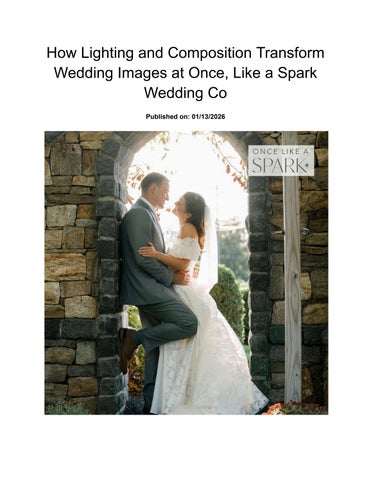
Photography is shaped as much by how something is seen as by what is being photographed. On a wedding day, moments happen quickly and often without warning. Lighting and composition are the tools that help turn those moments into lasting memories. At Once Like a Spark Wedding Co, careful use of light and thoughtful framing guide every decision behind the camera. This approach to wedding lighting and composition allows photographers to create images that feel balanced, emotional, and visually clear. When paired with strong intent, transformative wedding photography becomes more than a visual record; it becomes a story that feels complete and meaningful. Lighting sets the emotional tone of an image. Soft light creates calm and intimacy, while stronger contrast adds energy and depth. On a wedding day, light changes constantly as events move from indoors to outdoors and from day to night. A skilled photographer reads these changes and adapts quickly. Instead of forcing artificial effects, natural light is used to support the mood of the moment. Window light during preparations feels quiet and personal, while open shade during a ceremony keeps attention on expression rather than distraction. Composition guides the viewer’s eye. It determines where attention lands first and how the image is experienced. Strong composition uses space, balance, and perspective to highlight connection. When a couple is framed with intention, their relationship becomes the center of the image. Background elements are carefully considered to add context without pulling focus from emotion. This clarity makes images easier to understand and more impactful over time. Lighting and composition work best when they support each other. Good light without thoughtful framing feels incomplete, and strong composition without the right light can feel flat. When both elements are aligned, images gain depth. Shadows add dimension, and highlights bring attention to faces and gestures. This balance helps images feel alive rather than static. Another important role of lighting and composition is consistency. Weddings feature a range of locations and moments, but a consistent visual approach helps the final gallery feel unified. Viewers move smoothly from one image to the next without feeling disconnected. This flow enhances storytelling and makes the photo-viewing experience more emotional and engaging. Good lighting also protects authenticity. Harsh or forced light can overpower emotion, while gentle light allows expressions to stay natural. A composition that respects personal space allows moments to unfold without interruption. Together, these choices help preserve honesty. The images feel real because they were created with care rather than control. In the end, lighting and composition are not just technical skills. They are creative tools that shape how we see and feel memories. When used with purpose, wedding lighting and composition elevate moments into memories, and transformative wedding photography becomes a lasting reflection of love, presence, and the story as it truly happened.