March/April 2013 • USA $1.95
ALSO INSIDE
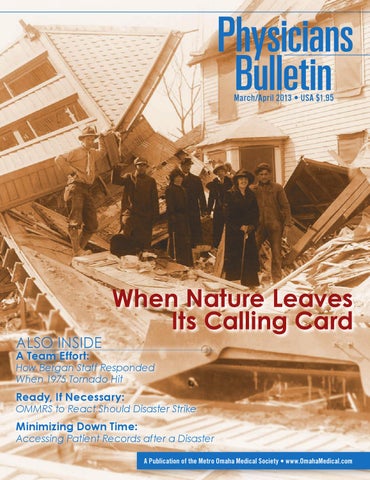
When Nature Leaves Its Calling Card
A Team Effort:
How Bergan Staff Responded When 1975 Tornado Hit
Ready, If Necessary:
OMMRS to React Should Disaster Strike
Minimizing Down Time:
Accessing Patient Records after a Disaster A Publication of the Metro Omaha Medical Society • www.OmahaMedical.com
Working with you for a
healthy Nebraska
nebraskablue.com Blue Cross and Blue Shield of Nebraska is an Independent Licensee of the Blue Cross and Blue Shield Association.
“Love one another as I have loved you.� John 13:34
A Catholic Hospice serving all people according to the directives of the Church on end-of-life care For More Information: 402.609.4818 or 1.888.980.1226
www.saint judehospice.org 4 Physicians Bulletin March/April 2013
Where Love and Healing F low
member benefits FOR THE PASSIONATE GOLFER Pure air, clear blue skies, and endless grass covered sand dunes, stretching unobstructed for miles in every direction. Rugged, serene, untarnished. The Nebraska Sand Hills is the finest golf country in the world. This book tells you about the magnificent golf courses that have created a "golf trail" in the Nebraska Sand Hills.
Did you Know?
M
To Order: Call (402) 884-5995 www.GolfintheNebraskaSandHills.com
$29.95
OMS/NMA membership benefits physicians in a variety of ways –
everything from legislative representation, access to health and dental plans designed for physicians, and access to a variety of personal and medical practice products and services to save you time and money.
Here is one of our membership benefits:
Reduce your total COPIC premium by up to 10 percent. Members with COPIC medical liability insurance receive an automatic 5 percent premium reduction. Combine it with another 5 percent reduction for participating in risk management education and save even more. Contact Kristin Stepien, director of sales at COPIC, at (800) 421-1834, or kstepien@COPIC.com for more information on the premium credit or a premium indication.
For a complete list of membership benefits, visit www.omahamedical.com.
The Metro Omaha Medical Society Foundation identifies and provides support to community priorities where physician involvement can make a difference in improving the health of the Metro Omaha Community.
Not currently a MOMS/NMA member, but would like to start taking advantage of our many membership benefits? Apply for membership online at
www.omahamedical.com or
complete the membership application on page 36 and return it. Contact Laura Polak at the Metro Omaha Medical Society if you have any questions – phone: (402) 393-1415 or email: laura@omahamedical.com
MOMS Foundation 7906 Davenport St. Omaha, NE 68114 402-393-1415 March/April 2013 Physicians Bulletin 5
this issue
March/april 2013
features
departments
1 9
COVER: When Nature Leaves Its Calling Card
1 0
Editor’s Desk
0 2
“Proud of the Medical Profession that Day” Bergan Mercy and the 1975 Tornado
1 2
NMA Message
1 4
Legal Update
2 2
Ready, If Necessary
1 5
Young Physician Report
Community Leaders + Physicians = Greater Understanding Your Dues, Your Association HIPPA Omnibus Rule Modifies What Constitutes A Reportable Breach of Protected Health Information The Glamour of Medicine
4 2
‘Will You be Ready?’ HIPPA and Your Liability
1 6
Clinical Update
2 7
Minimizing Down Time Accessing Patient Records After a Disaster
2 9
MOMS Coming Events
3 0
MOMS Events
3 2
Member News
3 4
Campus Update
3 7
New Member Update
6 Physicians Bulletin March/April 2013
Top Ten Tips for Prescribing Pain Medication
spend time with them. Leave your wealth management to us. It’s what we do. Learn about our approach. Call today.
www.bonnettwm.com 14710 West Dodge Road #203 Omaha, NE 68154 Wealth Management Personally Delivered.
(402) 556-8858
Securities offered through Securities America, Inc., member FINRA/SIPC. Jerome P. Bonnett, Jr., CFP®, ChFC®, Registered Representative. Advisory services offered through BWM Advisors, LLC. Jerome P. Bonnett, Jr., Investment Advisor Representative. BWM Advisors, LLC (dba Bonnett Wealth Management) and Securities America companies are unaffiliated.
March/April 2013 Physicians Bulletin 7
November/December 2012 VOLUME 33, NUMBER 6 A Publication of the
Metro Omaha Medical Society 7906 Davenport St. • Omaha, NE 68114 (402)393-1415 • www.omahamedical.com Officers President | Marvin J. Bittner, M.D. President-Elect | Debra L. Esser, M.D. Secretary-Treasurer | David D. Ingvoldstad, M.D. Past President | Pierre J. Lavedan, M.D. Executive Director | Diane Parsons EXECUTIVE BOARD Marvin Bittner, M.D. Debra Esser, M.D. David Ingvoldstad, M.D. Pierre Lavedan, M.D. Mohammad Al-Turk, M.D. Jane Bailey, M.D. Lori Brunner-Buck, M.D. David Filipi, M.D. Harris Frankel, M.D. Sherrill Murphy, M.D., James Newland, M.D. William Orr, M.D. Laurel Prestridge, M.D. William Shiffermiller, M.D. Gamini Soori, M.D. Jeffry Strohmyer, M.D. EDITORIAL/ADVERTISING STAFF Publisher | Omaha Magazine, LTD Editor | Marvin Bittner, M.D. Art Director | John Gawley Senior Graphic Designer | Katie Anderson Junior Graphic Designer | Paul Lukes Director of Photography | Bill Sitzmann advertising sales Todd Lemke • Sandy Besch • Greg Bruns Gwen Lemke • Gil Cohen • Alicia Smith • Vicki Voet • Paige Edwards • Jessica Linhart for advertising information: 402-884-2000
in e
B2 B
e’s in
LTD, P.O. Box 461208, Omaha NE 68046-1208. © 2012. No whole or part of contents herein may be reproduced without prior permission
|
ag sin
•
e s s t o B u sin e
ss
M
ER
Bu
ER
N
IN
Kansas City
s
a’
W
|
ah
Des Moines
az
Om
oMaha
N
Physicians Bulletin is published bi-monthly by Omaha Magazine,
aha Maga z Om
2 012 • W
IN
LeawooD
of Omaha Magazine or the Metro Omaha Medical Society, excepting individually copyrighted articles and photographs. Unsolicited manuscripts are accepted, however, no responsibility will be assumed for such solicitations. Omaha Magazine and the Metro Omaha Medical Society in no way endorse any opinions or statements in this publication except those accurately reflecting official MOMS actions.
8 Physicians Bulletin March/April 2013
Always Local, Always Beautiful May/June 2012
tiful l, Always Beau Always Loca
Each issue also features human interest pieces, including architect/designer/builder profiles, hot products, maintenance columns, room spotlights, landscaping columns, neighborhood profiles, home transformations, home happenings, mortgage columns, new business stories, green A Home For All Ages design features, and much, much more. September/Oc tober 2011
Always Local, Always Beauti ful
Architect Steven Ate
WAtkins ULtim
e Backyard Challeng ” “Band of Brothers trUCtion
r Cons CUrt Hofe
A Publication
Ginn’s Innova
tive Reside
nce
2012 July/August
of
tiful l, Always Beau Always Loca
Room spotlight
Kitchen Remodel March/April
neighboRhood pRofil
e
Field Club Historical Distr ict
2012
Always Loca l, Always Beau tiful
2011 nebRaska-io wa
ASID Project Awards
A Publication
ect ron hAckett’s a Hills PoncArchit
Home in the Woods od profiLe
neighBorho
cts
hot produ
Luminous Lamps of A Publication
Certified
A Publication
of
Green Home
Jeff rensch & Brau Builders
s
tApestry/ru
G WeAver
Mary Zicafoose
Have your cake. And eat it, too. Dining. Family. Fun. Health & Beauty. Household. Retail. Services. Transportation. March/April 2013 Physicians Bulletin 9
editor’s desk
Marvin Bittner, M.D. President Metro Omaha Medical Society
Community Leaders + Physicians = Greater Understanding
M
y last column took issue with a
statement made by the governor of Nebraska, a Republican. In this column, I am taking issue with a statement made by the exgovernor of Kansas, a Democrat. Some weeks ago, she issued a statement consisting of fact, interpretation and threat. Fact: The increasing use of electronic health records has been associated with an increase in the level of billing by physicians. Interpretation: This increase in billing is inappropriate and represents nefarious conduct. Threat: Physicians engaging in this practice will be punished. Because her statement was made in her role as secretary of Health and Human Services and issued in conjunction with the attorney general, the threat had credibility. I cannot argue with the facts. However, her interpretation is not the most plausible one to me. One of the things that has struck me about electronic health records is the ease with which extensive documentation can be recorded. More documentation facilitates higher billing codes. I am not the only one who has found this interpretation to be plausible. Why is it that the ex-governor of Kansas did not exclude this interpretation before issuing her statement? Surely this reflects a lack of familiarity on her part with day-to-day medical practice. This is not the only setting in which a lack of familiarity with medical practice has become evident when the subject of electronic health records has been discussed. At a MOMS meeting last year, our former president, Harris Frankel, made an intriguing statement about the use of information technology in medicine. In most fields, he noted, the introduction of information
10 Physicians Bulletin March/April 2013
technology has lowered cost or increased efficiency. This has not been the case in medicine. Why? I got some insight into this puzzle the other day. I was reading an article by an individual who is, of all things, a writer. John McPhee, a renowned writer for the New Yorker, recounted his introduction to computers when he was in his 50s and a faculty member at Princeton University. A Princeton information technology specialist came to him and started a conversation by saying: “Tell me what you do.” Is this the way electronic health records have been introduced to medicine? Hardly. Instead, administrators have coerced physicians into Procrustean beds of information technology. A bizarre episode in the coercive introduction of information technology occurred some years ago. A clinic was in the final stages of transition from paper to electronic records. I received a message: The use of paper – now prohibited – had been detected in my clinic. I inquired. In what situation had paper been used? Administrator after administrator could not tell me. I was accused of an infraction and could not be told what it was. Straight out of Kafka! When a federal cabinet official or an administrator introducing electronic health records is unfamiliar with the practice of medicine – yet trying to affect it, we can expect trouble. MOMS is doing something about this. We have a community internship program. Community leaders spend time with physicians. They see what is happening. All this can only result in greater understanding, fewer misinterpretations and fewer threats.
Your Best Choice
for Antibiotic Infusion Therapy Office Infusion Center for IV Antibiotics • Healthcare provider on site • Open 7 days a week
Infectious Disease Specialists
• Inpatient/outpatient comprehensive care
More than 50,000 successful infusions.
Vaccine Clinics
• for immunocompromised • for travelers
Learn more at www.idmidwest.com
Robert G. Penn MD, FACP, FSHEA, FIDSA
Board Certified: Infectious Diseases Douglas Penington, APRN Allison McLeay, APRN Stacey Shinaut, APRN Elizabeth Jacobsen, PA-C Courtney Sullivan, ACNP
Infectious Diseases Associates, PC 8111 Professional Building • 8111 Dodge Street, Suite 363March/April • Omaha, NE 68114 2013 Physicians Bulletin 11 Phone: 402.934.6504 • Fax: 402.934.6518 • www.idmidwest.com
nma message
Dale Mahlman Executive Vice President Nebraska Medical Association
Your Dues, Your Association
I
n early 2013, we sent our annual member-
ship survey to all NMA members to query why you joined the NMA, how you describe your activity in the NMA, your perception of the NMA, if your needs are being met, if there is value in your NMA membership, what issues are important to you, if you receive and read the NMA email update STAT, as well as requesting general demographic information. This year, we inquired about employed or private practice status as the trend toward employed practice continues. Every year, we find a common theme: Physicians join the NMA to support the medical profession. We also review the results to find ways we can improve as an organization so that we provide the best value possible to our members. We wouldn’t ask these questions if we didn’t sincerely want to know the answers. In addition to purchasing discounts with COPIC and access to our NMA-sponsored health plan, we believe in many cases that one phone call to our office can validate the cost of your membership. NMA dues have not increased since 1996, and we remain confident that we continue to provide value to the physicians who have placed their confidence in us and continued their memberships over the years. From an information standpoint, we believe our bi-weekly electronic STAT, our quarterly NMA News, and Nebraska Medicine provide both valuable and timely information to our membership. Last year, we joined Facebook (please Like our page!), which serves as another way
12 Physicians Bulletin March/April 2013
to open a dialogue with physicians and patients alike. While I understand the hectic schedules our members maintain, I am always disappointed when I review the survey results associated with our informational offerings. We try our best to give you timely and effective communication, and welcome any suggestions anyone has to improve our ability to communicate to you. As I mentioned earlier this year, active participation in the advocacy arena needs to include a mobilized, well-informed membership. I remain confident that the physicians of Nebraska will continue to be advocates for their patients just as we will continue to be advocates for both you and your patients. The NMA consists of a very diverse group of physicians practicing in various practice arrangements and in very different geographic locations. When we advocate for our members with a commercial carrier, Medicaid or Medicare, we are advocating for all physicians in the state, regardless of specialty, location, or employment status. Likewise, when we advocate on a specific issue on behalf of a member or specialty, we hope our efforts, if possible, can benefit the entire membership. In closing, a membership organization is what you want it to be. Our hope is that you see it as an opportunity to shape the future of medicine and to improve the lives of your patients. We appreciate your past support of the NMA and we look forward to having your support into the future.
in e
B2 B
e’s in az ag
sin
•
e s s t o B u sin e
ss
M
2 012 • W
ER
Bu
ER
N
N
IN
A+ Rating
s
a’
W
ah
at the
aha Maga z Om
Om
MOMS MEMBER EVENT
IN
4 Consecutive Years
Commercial Construction Green Environments Disaster Recovery Industrial Medical Education 2606 S. 156th Circle | Omaha, NE 68130 (402) 399-9233 | www.sparklingklean.com
Boys Town Ear, Nose & Throat Institute
Helping Your Patients Feel Better Again Sunday, June 9th Stormchasers vs. Oklahoma City RedHawks 12:30 PM • Lunch Buffet 2:05 PM • First Pitch No cost for MOMS members and their immediate family.
Call 402-393-1415 to reserve your tickets. Boys Town Medical Campus Pacific Street Clinic
Sponsored by:
14040 Hospital Road (139th & Pacific Street)
(402) 778-6800
Boys Town Medical Campus Downtown Clinic
Our Board Certified physicians specialize in treating problems ranging from chronic ear, nose and throat illnesses to complex head and neck disorders calling for specialized surgical care.
555 North 30th Street
(402) 498-6540
BOYS TOWN
Ear, Nose and Throat Clinic
Ear, Nose & Throat Institute
(712) 256-5272
BoysTownENT.org
320 McKenzie Avenue, Suite 202 Council Bluffs, Iowa 51503
SM
March/April 2013 Physicians Bulletin 13
Legal update
Tom Kelley Partner McGrath North Mullin & Kratz
O
HIPPA Omnibus Rule Modifies What Constitutes A Reportable Breach of Protected Health Information
n Jan. 25, the Health Insurance Portabil-
ity and Accountability Act (“HIPAA”) regulations (the “Omnibus Rule”) implementing the statutory amendments under the Health Information Technology for Economic and Clinical Health Act (“HITECH Act”) were published in the Federal Register.1 The Omnibus Rule modifies the HIPAA privacy, security, enforcement and breach notification rules under the HITECH Act. The Omnibus Rule becomes effective on March 26, and compliance is required by Sept. 23. While the rule modifications span more than 130 pages in the Federal Register and cover a variety of areas, one key change involves the breach notification requirements first enacted under the HITECH Act. Since the passage of the HITECH Act in 2009, covered entities have had to provide notification of discovered breaches to affected individuals, the federal government, and even the media in some cases. For HIPAA/HITECH Act purposes, a breach was defined as an unauthorized acquisition, access, use or disclosure of “protected health information” (“PHI”) that compromised the security or privacy of the PHI. Under the interim rule released by U.S. Department of Health 1 Modifications to the HIPAA Privacy, Security, Enforcement and Breach Notification Rules under the Health Information Technology for Economic and Clinical Health Act and the Genetic Information Nondiscrimination Act; Other Modifications to the HIPAA Rules; Department of Health and Human Services, Office of the Secretary (45 C.F.R. Parts 160 and 164). 78 Fed. Reg. 5566 (Jan. 25, 2013).
and Human Services (“HHS”) later in 20092, covered entities and their business associates were required to determine if a reportable breach had occurred by performing a risk assessment of whether there was a “significant risk of harm” to the individual as a result of the unauthorized acquisition, access, use or disclosure of PHI. In its comments included with the Omnibus Rule, HHS noted its concern that the risk assessment focused on “harm to the individual” in the interim rule, was too subjective and often led to inconsistent interpretations and results across covered entities and business associates.”3 In order to address this concern, the Omnibus Rule replaces the current “significant risk of harm” standard with a “low probability of compromise” standard for determining whether an unauthorized acquisition, access, use or disclosure of PHI constitutes a reportable breach. In addition, under the new standard, there is presumption that any unauthorized acquisition, access, use or disclosure of PHI is a reportable breach. In other words, a covered entity and/or business associate may now be required to provide notification of an unauthorized acquisition, access, use or disclosure of PHI absent a finding that there is a low probability that the PHI has been compromised. The Omnibus Rule requires covered entities and business associates to assess the probability that PHI has been compromised based on a risk assessment that considers at least the following factors:
14 Physicians Bulletin March/April 2013
2 74 Fed. Reg. 42740. 3 78 Fed. Reg. 5642.
(1) The nature and extent of the PHI involved, including the types of identifiers and the likelihood of re-identification; (2) The unauthorized person who used the PHI or to whom the disclosure was made; (3) Whether the PHI was actually acquired or viewed; and (4) The extent to which the risk to the PHI has been mitigated. HHS believes that use of these factors, which are derived from the factors listed in the interim rule as well as many of the factors suggested by commenters to the Omnibus Rule, will result in a more objective evaluation of the risk to PHI and a more uniform application of the breach notification rule.4 It is also likely that the Omnibus Rule changes will result in substantially more breach notifications. The new breach reporting standard under the Omnibus Rule will need to be incorporated into the policies and procedures of covered entities and business associates, and, if, as expected, the new standard results in additional reporting, such organizations will also need to anticipate the additional costs associated with this reporting. Editor’s Note: This article has been provided for informational purposes only and is not intended and should not be construed to constitute legal advice. Please consult your regular counsel in connection with any fact-specific situation under federal law and the applicable state or local laws that may impose additional obligations on you and/or your organization. 4 78 Fed. Reg. 5642.
Young physician report “As physicians, we have so many unknowns coming our way...
One thing I am certain about is my malpractice protection.”
The Glamour of Medicine
A Medicine is feeling the effects of regulatory and legislative changes, increasing risk, and profitability demands—all contributing to an atmosphere of uncertainty and lack of control. What we do control as physicians: our choice of a liability partner. I selected ProAssurance because they stand behind my good medicine. In spite of the maelstrom of change, I am protected, respected, and heard. I believe in fair treatment—and I get it.
s a little girl who grew up on a farm in
western Nebraska, the life of a physician had always seemed so glamorous to me. I could picture it: every day, wearing a crisp white coat with a stethoscope around my neck, saving lives every other minute, working with patients who were eager for my help and always receiving copious amounts of thanks for a job well done. By the time I started medical school, I definitely had a more realistic version of the life of a physician, but I was still a little starstruck. So on my first day of medical school, I was filled will an overwhelming sense of excitement and accomplishment. Sure, I was extremely nervous and scared of the unknown, but I was more excited to start the poetic life of service and fulfillment that belongs to those in medicine. I quickly realized during the first week that this journey would not be easy nor what I had expected. As I wandered around the halls looking for where I was supposed to be, I realized I was once again the low man on the totem pole. Not only that, but once I found my classes, I quickly realized medical school was education on crack cocaine. The pace of lectures was so fast that, if I was not trembling from three cups of coffee beforehand, I would be struggling to keep up. “Free time,” I also found out, was a luxury only afforded one afternoon, every three weeks, after a five-hour Saturday exam. And to top it all off, I stunk. Yes, for the first 10 weeks of school during anatomy class, we all smelled like formaldehyde and embalming fluids. Finally, it was also my introduction to the fact that in medicine, there is no time for yourself to be sick.
Ashley Bauer Third-year Medical Student University of Nebraska Medical Center
As I came down with mononucleosis at the end of my first semester, my own physician told me to “Just keep going.” But my first year was also the year that I participated in the MOMS Medical MESS Club performance where physicians all across Omaha get together to perform comedic numbers, while poking fun at themselves and the unique situations physicians find themselves in. It was the first time that I was on a “peer” level with multiple physicians. The camaraderie was infectious and most everyone was sharing stories about their own medical school experiences and assuring me there will be many more life-changing events in my future. It was then that I realized that all these experiences were actually character-building rites of passage for me and all those that will come after me. So as I finish my third year of school, I look back at these three anxiety-provoking, life-changing years with fondness. It is because of these difficult and eye-opening years that I see the true glamour of medicine. I see a community of like-minded individuals who have sought knowledge and lifelong learning in order to serve the people they treat. I see physicians who continue to fight for the best care of their patients, even if that means not being financially compensated and using their own personal time. This is a glamour that might only be appreciated by those of us in this wonderful field. A glamour that doesn’t revolve around fancy cars or big paychecks and may not even include words of gratitude from the patients we care for. For me, the glamour of medicine is the journey.
Professional Liability Insurance & Risk Management Services ProAssurance Group is rated A (Excellent) by A.M. Best. ProAssurance.com • 800.279.8331
March/April 2013 Physicians Bulletin 15
clinical update
Top Ten Tips
for Prescribing Pain Medication
P
rescription drug use, and its associated
abuse and diversion, have repeatedly made national headlines this past year. While Nebraska has one of the lowest per-capita utilization rates for opioids in the nation, recent events such as one involving a hostage at an Alliance Pharmacy and a large-scale illicit marketing scheme in Fremont, prove that we are not immune to the epidemic. At a series of presentations this past fall, an investigator from the Nebraska State Patrol provided evidence of abuse and diversion, a Ph.D. pharmacist from Creighton University provided insight into addiction and its associated problems, and a physician provided advice on risk management strategies for the appropriate use of these medications. There is a collaborative effort underway between health-care professionals, state agencies and other groups to address this problem and develop solutions. The following are not guidelines. They are merely suggestions or tips for clinicians to consider when they are prescribing these medications: 1) Make sure the clinical diagnosis is correct. Is the opioid you’re giving indicated for the diagnosis that you are treating? When pain is out of proportion to the disease, you need to consider if there is another process or even a malignancy causing the severe pain. A thorough history and physical is helpful in sorting through what is going on. Make sure the opioids are necessary and if they are not working ask “what else is going on?” 2) Consider alternative treatments. If the pain is from neuropathy or shingles, consider some of the many other neurologic medicines that work for these illnesses. If treating fibromyalgia, remember that there are no controlled studies that suggest opioids help with this condition. Again, consider alternative (often neurologic) drugs. Finally, if the patient was a 7 out of a 10 before starting opioids and is still at the same level after a month, then consider a different treatment regimen. 3) Be aware of the risk of accidental death from overdose. The Centers for Disease Control and Prevention estimated accidental overdose deaths for prescription pain killers at more than 16,500 annually, a nearly four-fold increase from incidences reported in 1999. Pain management experts point to four common issues in reviewing accidental
16 Physicians Bulletin March/April 2013
By: COPIC’s Patient Safety and Risk Management Department
overdose deaths: a.) A lack of appreciation of the highly variable metabolism of methadone, particularly when first starting the medication. b.) Trusting conversion tables and switching 100 percent “equivalency” when changing to a new agent. The conversion tables have been called into question especially in the initial period. Close follow-up and potential reduction of the initial doses when converting among different opioids is likely indicated. c.) A lack of appreciation of the complexity of the metabolism of concomitant long- and short- acting opioids, leading to unpredictable toxic levels. d.) Concomitant prescription of benzodiazepines in combination with high-dose short and long acting opioids. 4) Perform an addiction screen. There are many screens available. The CAGE screen is simple and well known. Some of the others, such as the Screener and Opioid Assessment for Patients in Pain (SOAPP), are made especially for chronic narcotic use and are subtler. It is important to know if the patient has a high-risk for addiction and/or if there is an underlying psychological disorder or prior abuse that makes opioids have a higher addiction potential. These types of screens can provide information that is important to know prior to prescribing chronic, potentially addictive drugs. 5) Do a urine toxicology screen. In conjunction with the above, a urine toxicology screen should be considered before embarking on treatment. It can help answer several questions: • Is the patient using other street drugs? • Is the patient claiming that he or she is not taking opioids, yet testing positive on the toxicology? • Is the patient supposedly on drugs, yet the toxicology screen is negative? Consider diversion in this situation. Check with your lab to see what drugs show up on their screen for the patient. Not every urine toxicology screen checks for the same drugs and has the same sensitivities. You can make random urine toxicology screens a condition of your continued prescribing via the opioid contract/agreement, but must still inform the patient that you are doing the test (it cannot be done surreptitiously). 6) Have the patient sign a pain consent form. The informed consent form is a tool to help you review the risks and benefits for using opioids, as well as the potential side-effects (constipation, sexual dysfunction, and
drowsiness are among the many potential side-effects). Remember to warn patients about using opioids while driving or using heavy machinery. And make sure you talk about the interaction with other drugs, especially alcohol and marijuana. 7) Also consider a pain agreement. This is distinct from the informed consent form. It is similar to that discussion you had with your teenager when you gave him or her car keys for the first time. The agreement establishes the boundaries, rules and regulations that you’ve set up around the prescribing of opioids. An example rule would be “no refills on the weekend or at night.” These established rules also help you deal with stories you may hear such as “the cat ate the Oxycodone,” “my script got stolen,” or “I lost my pills down the toilet.” 8) Understand the street price. Law enforcement has given us the range of the street price for Oxycodone as $1 to $2 per 1mg. This means that a one-month script of 120 Oxycodone (5mg) could be sold for as much as $1,200. Once you see the prices that Oxycodone, Percocet and Oxycontin can be sold for, you will understand why diversion is such an issue. 9) The buzz words. Addiction is the compulsive use of a drug that results in personal harm. Often in these cases, there is psychological dependence and a history of preexisting abuse. Tolerance refers to decreased effectiveness over time. The important issue is to avoid labeling patients as “addicted” when they are really becoming tolerant and needing to increase their medication. Finally, there is physical dependence, which is the abstinence syndrome that occurs when discontinuing opioids. Withdrawal symptoms following discontinuation of opioids does NOT indicate that the patient is an addict; most patients can suffer some withdrawal symptoms following a course of continuous opioids even when indicated and appropriately administered. 10) Listen. Some of our most difficult patient conversations occur around these drugs. It can be a complex issue. The patient wants pain relief and we have an obligation to relieve suffering. On the other hand, there are times when it is clear that opioids are not what are best for the patient. “Primum Non Nocere” is the first precept of medical ethics. Instead of starting the boundaries discussion with a resounding NO, listen to what the patient is concerned about, understand his or her fears, and see if there is compromise that will meet the patient’s needs and still be considered safe medicine.
(720) 858-6000 • (800) 421-1834 March/April 2013 Physicians Bulletin 17
Too many patients, not enough time?
medical/office building for lease
Consider hiring a Physician Assistant PA’s practice medicine as a licensed professional with physician supervision. They exercise autonomy in medical decision-making and can: • take complete medical histories • perform physical examinations • order and interpret diagnostic studies • make diagnoses • order treatments • write prescriptions • assist with surgery • perform procedures such as stress electrocardiograms, sigmoldoscopic exams, lumbar punctures, suturing lacerations, and bone aspirations • apply casts and splints to fractures • provide emergency treatments for life-threatening situations
17055
FRANCES STREET OMAHA, NE
::
located next to lakeside hospital
::
up to 14,508 sf
::
newer construction
::
ample parking
NAPA at:
1335 H Street, Ste. 100 Lincoln, NE 68508-3784 402-476-1528 info@nebraskapa.org
FOR MORE I N F O R M AT I O N C O N TA C T
David Barton Steve Sheppard +1 402 334 8877
Part of the CBRE affiliate network
Margaret Block, M.D. M. Salman Haroon, M.D.
Ralph J. Hauke, M.D. Timothy K. Huyck, M.D.
Robert M. Langdon, Jr., M.D. Kirsten M. Leu, M.D.
*Nationally Recognized in Clinical Trials and Oncology Research by the American Society of Clinical Oncology (ASCO) (402) 393-3110
(402) 334-4773
(402) 354-8124
(402) 593-3141
Alegent Creighton Health Cancer Center - Bergan
Methodist Estabrook Cancer Center
Midwest Cancer Center Legacy
Midwest Cancer Center Papillion
(402) 941-7030 Fremont and West Point
John M. Longo, M.D. Patrick J. McKenna, M.D.
Geetha Palaniappan, M.D. David A. Silverberg, M.D.
Gamini S. Soori, M.D. Yungpo Bernard Su, M.D.
Stefano R. Tarantolo, M.D. Peter M. Townley, M.D.
18 Physicians Bulletin March/April 2013
SPECIAL EDITION: Natural Disasters and Health Care
The Child Saving Institute sustained considerable damage in the 1913 tornado that tore through Omaha.
When Nature Leaves Its Calling Card
T
he Omaha Daily News headlines tell this story: “Pitiful Scenes on Franklin St.” “Two Babies
Blown Out and Killed.” “Roy Counsman Missing.” Easter Sunday, March 23, 1913 – a tornado smashed its way though Omaha. Its toll: 140 deaths, 300 injured and estimated damages of more than $5 million. Sixty-two years later, another tornado battered Omaha, causing three deaths and up to $500 million in damages. This time, Civil Defense sirens provided early warnings. Survivors told the Omaha World-Herald that they had heard the sirens and had enough time to take cover. “People had ample warning,” Public Safety Director Richard Roth told the World-Herald. “But even at that it’s miraculous we didn’t lose more.” Tornadoes and other natural disasters can knock communities at their core. Health-care institutions must ready themselves for the possibility of disaster. This special edition of the Physicians Bulletin examines issues related to health care and natural disasters, starting with an emergency room physician’s recollection of how Bergan Mercy staff banded together when the tornado in 1975 blindsided the hospital. Learn about how community leaders are banding together to be ready should disaster strike again. Finally, some advice for health-care institutions for backing up their important data and ensuring access to patient records should disaster strike.
March/April 2013 Physicians Bulletin 19
feature
Bergan Mercy and the 1975 Tornado
“Proud of the Medical Profession that Day”
T
o this day, Joe McCaslin, M.D., can’t explain how the $1 bill ended
up on the front seat of the family station wagon. Dr. McCaslin noticed the dollar bill after he made his way through the rubble in Bergan Mercy Hospital’s parking lot – rubble left from a tornado that had rocked Omaha earlier in the day. He was headed home after a long day of directing patient traffic as Omaha dealt with one of the worst tornadoes to ever blow through town. He knew his wife and their 11 children were waiting at home, and wondered what he would find when he arrived. First, he found his station wagon in the physician parking lot and noticed all the windows were gone. Then, he noticed the $1 bill. Dr. McCaslin, 81, recalls the details of that day nearly 38 years later. He mostly talks about how the hospital staff, led by administrator James Johnson, rallied to treat patients immediately following the storm and to ensure the safety of its resident patients. No one died that day because of injuries suffered when the tornado broadsided the hospital, Dr. McCaslin recalled. Ironically, the hospital had just conducted a disaster drill several months previously. True, that drill hadn’t attracted a crowd of participants, but when it came time to react to the real thing, hospital staff knew what to do, he said. Even that drill couldn’t prepare hospital staff for what happened that day. “Disaster drills don’t presume your own hospital is going to get hit.” Several days after the May 6, 1975, storm, World-Herald writer Al Frisbie
20 Physicians Bulletin March/April 2013
recounted the ordeal – as told by a host of hospital staffers, including Dr. McCaslin and Johnson, the hospital administrator. Frisbie quoted patients who praised the staff for remaining calm during an obviously stressful stretch of time. Frisbie wrote: All told, the hospital cared for 35 emergency patients Tuesday night, plus more than 400 already under its care. One onlooker, viewing the damage, shook his head when informed not one resident patient had been killed or seriously injured. “It’s a miracle,” he said. Perhaps. But if so, it was one born of preparation and execution and responsibility. Said Administrator Johnson: “I can’t praise our hospital people enough.” Neither can Dr. McCaslin. “Everyone in the hospital seemed to know what to do. The doctors, nurses, lab technicians, X-ray personnel and certainly the administration knew what to do. “The biggest part of the story is the medical community. Doctors, nurses, X-ray techs, nurses’ aides just showed up and asked what they could do. Some didn’t even work at the hospital.” Before this story continues, let’s take a moment to explain how Dr. McCaslin ended up working in Bergan Mercy’s Emergency Room on that Tuesday in May 1975:
feature
Photo courtesy of Alegent Creighton Health
After finishing medical school and a one-year internship at St. Catherine’s (the precursor to Bergan Mercy Hospital), Dr. McCaslin joined Dr. Harry Sullivan’s downtown Omaha family practice in 1957. “There wasn’t emergency medicine when I was a young doctor. My intention was to do all I could do. I had no intention of specializing. I wanted to treat young people, old people, do surgery, and deliver babies. Working with Dr. Sullivan, I got to do it all. He was one of the last of the house-call doctors.” Several years later, Dr. McCaslin started his own practice in a building near 61st and Ames streets that he shared with a dentist. Nine years later, Immanuel Hospital was forming a physician group for emergency medicine, and Dr. McCaslin joined them. No more house calls. “Going to E.R. was like a vacation. When you worked, you worked hard. But when your shift was over, your work was over until the next time – a big change from family practice.” He remained at Immanuel until January 1975 when he moved to Bergan Mercy. On that Tuesday, McCaslin recalled not being overly concerned about the possibility of a storm. Weather forecasting wasn’t as sophisticated as it is today, he said. He recalled chatting with one of the nuns at the hospital, who asked about his day. “It’s kind of a slow day. Not much going on,” he told her. In those days, when a tornado watch was issued, the hospital announced it over a loudspeaker. Hospital staff then followed protocol to prepare for the possibility of a severe storm. “If they announced a tornado warning, that meant one was going.” When the announcement of the tornado watch came, Dr. McCaslin recalled not giving it much thought. “The truth is you get a lot of tornado watches.” So he kept working. Other staffers, however, were instigating hospital protocol, including shutting the window blinds, which would prevent glass from blowing through the hospital. They also began moving patients. “Then, they’re announcing a storm warning. It was coming, but I never did see it.” Just prior to the storm, Dr. McCaslin was working on a patient, who had come by rescue squad. The working prognosis was cardiogenic shock, which has a poor prognosis, he said. The man had no blood pressure or pulse. Dr. McCaslin said he heard the warning over the loud speaker to take cover. “I couldn’t see how I could do that. I just kept working on this guy.” When the tornado struck, Dr. McCaslin and a nurse hit the floor. The gurney and their patient were in the line of flying debris. They were able to move the gurney – and out of harm’s way. The World-Herald writer reported that the door where the three were was blown off its hinges. “That’s a bit dramatized,” Dr. McCaslin recalled.
“I remember there was this tremendous noise. You could hear this glass breaking at the same time. The door didn’t get blown off its hinges. I think the reporter just couldn’t figure out what happened to door – so he had it blown off its hinges.” In Bergan Mercy’s disaster plan, patients – walk-ins and those brought by rescue squad – were diverted from the emergency room to the main lobby, which was set up as a triage station with a physician in charge. “In a disaster, you thought the emergency room would be jammed, so you started patients elsewhere.” From there, patients were sent to other locations in the hospital, depending on the seriousness of their injuries. Some, for example, were sent to a treatment station set up in surgery, others to a station set up in physical therapy – which was for those with less severe injuries. For Dr. McCaslin’s part, he stayed in the Emergency Room and triaged patients who still showed up there. Several treatment rooms still could be used – and a physician and nurse were assigned to each. He also directed the physicians and other health-care staff who offered their services. Clean-up crews arrived shortly after the storm hit and began clearing away debris, which opened space in the Emergency Room to treat more patients. The hospital was operating on generator power, which meant some areas didn’t have lights. Eventually, the public learned that Bergan had been hit, Dr. McCaslin said, and started heading to other hospitals. Emergency transports were diverted to other hospitals. The day’s list of heroes should lead with Johnson, the hospital administrator, and LaVerne Burner, who was in charge of nursing services. “They never got their due. I was really proud of the medical profession that day.” “It was a great team effort that day – from the administration on down.” Dr. McCaslin, who retired for the second time in 2010, recalled it was still light outside when his shift ended. The family station wagon had been hit on the side, but was still drivable. All the windows were gone. On his way home, Dr. McCaslin recalled, the damage near 72nd and Pacific streets was especially daunting. On his return, he would learn that his wife, Theresa, had managed to get the 11 children and Dr. McCaslin’s father, who was in his 90s, down to the basement. Everyone was OK, including Theresa, who was pregnant with the couple’s 12th child. The family home was not damaged. As for the $1 bill: “It was very wet. The old saying that a dollar doesn’t go very far didn’t hold true that day.”
March/April 2013 Physicians Bulletin 21
feature
The Williams File Hometown: Lincoln Bachelor’s Degree: University of Nebraska Lincoln in chemistry Medical Degree: University of Nebraska Medical Center Residency: Methodist Hospital in anatomical and clinical pathology Specialty: Pathology Location: Methodist Pathology Center Why Joined: “To support medicine locally and to meet other physicians in the Omaha area.”
Ready, If Necessary
A
tornado strikes Omaha, causing damage and, potentially, casualties. Emergency
responders, representing law enforcement, health care and others, move quickly to ensure public safety, assess the damage and start the recovery process. Rest assured, because of years of planning, Omaha would be ready to respond should a natural disaster strike, said Tom Williams, M.D., a pathologist who has been part of an effort to prepare the community should a disaster strike. The Omaha Metropolitan Medical Response System, or OMMRS, a consortium that includes representatives from more than 70 local organizations, is part of the federal Metropolitan Medical Response System, which was founded by the Department of Health and Human Services after terrorist attacks in the mid-1990s. “OMMRS is by and large a volunteer effort,” Dr. Williams said. “The money comes from federal funding and goes directly to benefit the community through training and equipment.” The MMRS includes 24 of the nation’s largest cities and covers 80 percent of the country’s population. The MMRS program was founded in 1996 to improve emergency response in the Washington D.C. area and then expanded to include Atlanta in preparation for the 1996 Summer Olympics. The Omaha program stands out, said Dr. Williams, a pathologist with the Methodist Pathology Center. “OMMRS is a bit unique because it was one of the few developed emergency plans that emerged via a consortium of committees. In many cities, the planning is done by public safety – and health care has more limited input. “We plan for the expansion of care during difficult times. Plans for alternate care sites – the needs of hospitals and other health-care systems. We plan for the worst-case scenario.”
22 Physicians Bulletin March/April 2013
feature Dr. Tom Williams at the 911 Communications Center.
He explained that OMMRS consists of 22 committees that focus on such areas as law enforcement, equipment and training, behavioral health and transportation. Local health-care systems have set aside their competitive nature, he said, to become involved in a common cause: preparing to respond to a natural disaster, a medical pandemic or a terrorist attack. The organizations involved include the obvious – hospitals, law enforcement and public safety – and a few of the not-so-obvious: busing companies, veterinarians, behavioral health specialists and nursing home administrators. OMMRS participates in local emergency disaster drills. Since the Omaha effort began in 2000, its assistance has been needed one time – when Hurricane Katrina ravaged the southeast, displacing many of its residents. Some ended up in Omaha – and the community responded, Dr. Williams said. Should a natural disaster strike the Omaha area, OMMRS members would be called to action – via telephone or by amateur radio, if necessary, to the Douglas County Civic Center. Among their responsibilities would be to track casualties and available resources. “We would conduct ongoing bed counts – as one (hospital) fills up, we can move resources to another. What do we need – and where?” Dr. Williams encourages physicians to get involved in emergency planning – be it with OMMRS or their own organization. “All (health-care institutions) have emergency management committees – people who are planning for these events.” He also encouraged physicians, especially retired ones, to get involved with the Medical Reserve Corps. Visit: http://www.uwmidlands. org/medicalreservecorps Finally, he encouraged his peers to have their own emergency plan in place for their families – check out www.ready.gov. “Have your own family plan in place, so you can assist the public.” For more information about OMMRS, visit www.ommrs.org
Be protected, stay cool. We protect your peace of mind. It’s what we do for medical professionals and specialists. We know your organization is unique. We are, too. MMIC provides medical liability insurance coverage, and delivers personalized peace of mind. It’s a movement, and we’d love to have you join us. Contact your independent agent or broker, or go to PeaceofMindMovement.com to see what MMIC can do for you.
March/April 2013 Physicians Bulletin 23
feature
Richard D. Vroman Attorney Koley Jessen, P.C., L.L.O.
‘Will You be Ready?’
T
he EF5 multiple-vortex tornado that struck Joplin, Mo., on a late afternoon in May 2011, caught the local
hospital in transition as it converted to electronic patient records. “Unfortunately, they still had paper records on site,” said Rick Vroman, a corporate attorney who specializes in health law with the Omaha firm of Koley Jessen. “Those records were strewn for hundreds of miles and found in farm fields and elsewhere following the tornadoes,” said Vroman, a member of the American Health Lawyers Association. But the tornado, which resulted in 158 deaths and left more than 1,100 people injured, raises questions for healthcare systems and their potential liability should disaster strike. “What are the issues when a farmer finds a medical record in his field?” Vroman asked. “There are questions of confidentiality and liability.” Such liability, he said, goes beyond the arguable breach of security: “What liability exists if providers cannot access medical information on their patients?” HIPAA requires the implementation of reasonable policies and procedures designed to protect the confidentiality, security and integrity – so information remains accurate – of medical records. In Joplin, the hospital did not violate HIPAA, Vroman said. However, lessons still can be learned. “This was not an intentional act. The question is whether the hospital took reasonable measures to protect information under HIPAA, and, maybe more importantly, to ensure that information was available for use in the aftermath of the disaster.” In Joplin’s situation, the hospital took appropriate actions. The hospital acted reasonably, Vroman explained, as it had converted to electronic medical records several months prior, and, presumably, had taken reasonable measures to protect the remaining paper records. Unfortunately, for the hospital and its patients, the tornado destroyed the hospital and the paper records were lost. Following the tornado, the hospital promptly notified the Department of Health and Human Services as required by HIPAA’s breach notification rule. This rule requires that if a breach occurs, patients must be notified, the incident logged and HHS notified. “They did that.” By working with HHS and the public, the hospital was able to limit the potential damages that could have been caused by the medical information falling into the wrong hands – such as identity theft.
24 Physicians Bulletin March/April 2013
feature
FINANCIAL EXPERTISE FOR THE HEALTH CARE INDUSTRY. To speak with a dedicated specialist from our Health Care Banking Division call Ed Finan at 402-399-5028.
www.anbank.com • 32 locations in Nebraska and Iowa. Call 402-457-1077 or 800-279-0007.
?
swollenachylegs leg ulcers varicose& spider
In addition to properly responding to the breach, the hospital also had a contingency plan in place and was able to access the electronic medical records following the tornado. The hospital was able to treat the town’s injured with accurate information available. Vroman encourages health-care organizations to ensure that they have reasonable policies and procedures in place, including contingency plans. Ask these questions: “What would we do if our current records were destroyed or lost? Do you have a backup system in place? Can you access the backup records in a reasonable time?” A good contingency plan is not only required by HIPAA, but imperative for the provider to be able to access accurate and complete medical records for future treatment. Vroman pointed out that “not all penalties under HIPAA are imposed because of a breach – many are imposed due to the lack of policies and procedures.” In most cases, the first question that’s going to be asked in an investigation will be: “Can we see a copy of your policies and procedures?” “Will you be ready?” he said.
HEARTLAND VEIN & VASCULAR INSTITUTE
heartlandvein.com March/April 2013 Physicians Bulletin 25
Customed Tailored TO FIT
Your Practice METRO OMAHA MEDICAL SOCIETY PRESENTS:
MEDICAL MESS CLUB Friday, April 26, 2013 Joslyn Art Museum Witherspoon Hall
Clinical Expertise Professional and Friendly Service Convenient Scheduling and Location 501 N 87th Street Omaha, NE 68114 (P) 402-397-7100 (F): 402-505-6949 www.omahaimaging.com
What is Medical MESS Club? It’s a unique evening of entertainment featuring MOMS member physicians performing musical parodies of popular songs that they have rewritten with a medical theme.
Our MESS performers will once again be led by Chuck Penington, Orchestra Conductor for Mannheim Steamroller. 6:30 PM - Reception
LEGAL TECHNOLOGY WITH PERSONAL SERVICE
We are dedicated to legal innovation, and have taken steps to make the practice of law a more streamlined, accurate and interactive experience.
Hors D’oeuvres and Cash Bar
8:00 PM Performance
ATTENDANCE IS OPEN TO EVERYONE! (Medical community, friends, family and anyone with a sense of humor.)
Reservations - $30 per person.
RSVP at www.omahamedical.com or call 402-393-1415 for reservations. 26 Physicians Bulletin March/April 2013
• Asset Protection Planning • Business Succession Planning • Estate Planning • Business Structure & Transactions • Retirement Plan Design & Tax Planning • Health Care Law Blogs, Videos, Legal Articles & Information can all be found at:
www.pvwlaw.com
CONTACT US 402.504.1300 5332 S. 138TH ST, SUITE 100 OMAHA, NE 68137-2974
feature
Minimizing Down Time
I
t all comes down to what is acceptable
down time for a health-care organization. A natural disaster strikes – causing severe damage to local health-care organizations, including hospitals and private clinics. These organizations will quickly need access to their stored data, said Nick Bock, chief executive officer of Five Nines Technology Group, with offices in Omaha and Lincoln and a client list that includes health-care organizations and banks. But “quickly” is a relative term, he said.
March/April 2013 Physicians Bulletin 27
feature
Left: Nick Bock of Five Nines Technology Group. Below: Dr. William Livingston and his colleagues at Midwest Gastrointestinal Associates are among the medical clients that rely on Five Nines for IT support.
And how “quickly” is defined also dictates the costs a health-care organization must spend for immediate access to its data, Bock said. These organizations – no matter the size and the immediacy of access needed – should have a system in place for backing up data and storing it off-site, Bock said. Health-care organizations other than hospitals typically need access to data, including patient records, within 24 hours – should something catastrophic happen at their location. The Metro Omaha Medical Society and the Nebraska Credentials Verification Organization are Five Nines’ clients, as are Omaha Orthopedic, Mid City OB-GYN, Midwest Gastrointestinal Associates and Outpatient Surgical Specialties Center. “While we might not need access to our data as quickly as a hospital should disaster strike, we owe it to our members to be able to assure them that our membership information is kept confidential and secure, and is accessible,” said Diane Parsons, MOMS executive director. Hospitals, Bock explained, don’t have the luxury of being able to wait 24 hours for access to their stored data. They require robust data recovery systems and access within minutes, he explained, as do banks. Bock uses terms such as “warm” and “hot” to describe the degree of immediacy for access to stored data. Bock likens the need for a backup data recovery system to insurance. “You don’t need insurance until the day your house burns down or you wreck your car. It’s an investment, but it’s money well-spent.” “It is important for physicians – in the same sense that they will take
28 Physicians Bulletin March/April 2013
enough interest in the operations of their practice to make sure it is financially healthy – to know and verify their informational technology is backed up and will be available in case of a tornado or a fire burns the building. Make sure data are protected by a robust off-site data backup system.” He added: “It’s a given that they should have a backup system in place. It’s not a given that all of them do.” Bock explained the need for companies such as his: Many companies are not large enough to justify the expense of having a full-time employee responsible for technology. For example, a company with 75 employees doesn’t need a fulltime IT person. “Some still choose to overspend for the luxury of having someone there – but not busy all the time.” Others outsource. That’s where companies such as Five Nines come into play, Bock said. “These companies take care of what a business needs – laptops and desktops, servers and the backing-up environment, and networking – and everything in between.” They provide 24-hour technical support. Bock said his company also provides specific technical service for its clients. He said cardiology practice recently asked Five Nines to optimize its connectivity between the vehicles it uses to service hospitals throughout Nebraska. Instead of waiting until its trucks returned home to transmit images, technicians can now transmit those images from the vehicles onsite. Bock explained his company’s name: Five Nines refers to 99.999 percent up time. “It’s a technology term used to measure uptime of servers or networks. It refers to high performance and high availability, which is what Five Nines is all about.”
moms events
Regain the Joy of Reading Vision Helpers has modern solutions to help you.
New HD Reading Machines Lighted Magnifiers Large Print
Coming Events April 26 Medical MESS Club Performance Joslyn Art Museum Witherspoon Hall
FREE Showroom or In Home Demo: Call 402-491-3191 11110 Fort St. |Omaha, NE | 68164 www.visionhelpers.com
6:30 PM – Reception & Cash Bar 8:00 PM Performance
May 15 Retired Physicians Meeting MOMS - 7906 Davenport St
10:00 AM Featuring Ben Sasse, President Midlands University Presenting “Economics of Medicine Present and Future”
May 16 MOMS OSHA Seminar ITT Technical Institute – 1120 N 103 Plz, Ste 200
1:00 PM – 4:30 PM
June 9 MOMS Member Event at Storm Chasers Werner Park – Papillion
Dedicated to providing wellness solutions to the communities we serve in the form of state of the art treatment options, education and products.
• Lift Chairs • Portable Oxygen • Wheelchairs • Power Chairs & Scooters
• CPAP & BiPAP • Trilogy Ventilators • Ramps • Stairlifts
877-592-2435 • 402-592-6914 (fax) www.midwestrespiratory.com
1:00 PM – 2:30 PM Lunch Buffet 2:00 PM First Pitch
Call 402-393-1415 for more information or to make reservations for any of these events.
Serving Omaha/LaVista, Lincoln, Grand Island, Blair March/April 2013 Physicians Bulletin 29
moms events Annual Meeting Filled with Activity
The Metro Omaha Medical Society held its Annual Meeting Jan. 24 at the Omaha Marriott. The evening recognized outgoing members of the Board of Directors and Foundation Board, the 2012 MOMS Foundation grant recipient organizations and MOMS 2013 Strategic Partners, as well as a check presentation to Food Bank of the Heartland with proceeds from the MOMS Foundation Match Program. Following the recognitions, a panel discussion featured representatives from the area’s federal health centers. 1.
1
Dr. Marvin Bittner, MOMS president, delivers an unusual and entertaining address to attendees. It’s not every event when opening remarks include phrases such as “a suitcase full of speculums.”
2. Dr. James Newland, outgoing MOMS Foundation chairman, was recognized for his dedication and years of service. 3. Susan Ogborn, president of Food Bank of the Heartland, accepts a check for $15,906, which was the proceeds from the MOMS Foundation match program. 4.
3
Dr. Richard Brown, chief executive officer of Charles Drew Health Center (left) and Cecelia Creighton, executive director of All Care Health Center, served as two of the four members on the discussion panel.
5. Also serving on the discussion panel were Joel Dougherty, chief operating officer of OneWorld Community Health Center (left), and Dr. David Filipi, board member of HOPE Medical Outreach Coalition.
4
5
30 Physicians Bulletin March/April 2013
2
moms events 1
Medical legal dinner
The Metro Omaha Medical Society and the Omaha Bar Association hosted its annual joint event at Champions Run on March 19. Keynote speaker Dr. Lee Simmons, Chairman of the Omaha Zoo Foundation, started off the evening with a joke comparing the event for physicians and attorneys to the difficult balancing act of some of the Henry Doorly Zoo’s “mixed exhibits” (pairing predators and prey). He went on to entertain the full house with stories from his years of adventures. 1. Dr. Jack Lewis, Dr. Lee Simmons, and Dr. Paul Sherrerd conversed during the networking reception. 2. Michaela Harper and Dr. James Harper were in attendance. 3.
Tom Brush, a third year medical student, Dr. Jane Dahlke, Kyoko Fuller and Dr. Jonathan Fuller visit before dinner.
4.
Dr. Deb Esser, MOMS President-Elect, started the program by welcoming members of both organizations and thanking the MOMS event sponsors.
2
5. Dr. Lee Simmons injected humor as he shared stories— that stretched over decades and around the globe — of his work as director of the Henry Doorly Zoo.
3
4
5
March/April 2013 Physicians Bulletin 31
Member news
Gene Herbek, M.D.
Dr. Herbek is incoming CAP President
G
ene Herbek, M.D., who has practiced anatomic and clinical pathology at Methodist Hospital since 2004, will take office in October as president of the College of American Pathologists (CAP). “As CAP president, I hope to make pathologists better known to patients, medical colleagues, hospital administrators and policy makers by educating them on our role in patient care,” says Dr. Herbek. Dr. Herbek has been involved in CAP throughout his professional career. He has served as chairman of the Finance Committee and Audit Subcommittee. He has served as a member of the College’s Compensation Committee, Executive Committee, Governance Committee, and Investment Subcommittee. He also served as chair of the CAP Political Action Committee, the CAP Council on Membership and Public Affairs, and as vice-chair of the CAP Council on Scientific Affairs. At the CAP annual meeting in 2005, Dr. Herbek received the CAP Outstanding Communicator Award established in honor of William H. Kuehn, Ph.D., for his efforts to raise public awareness about the role that pathologists play in both determining the cause of illness and in the preventive health care available to patients. He was also awarded the CAP President’s Honors Award in 2001 and 2004. In addition, Dr. Herbek was recognized at the College’s annual meeting in 2004 for his outstanding efforts, dedication, vision, and support of the CAP Foundation’s Humanitarian Grant Program. He is a past recipient of the CAP Foundation’s Lansky Award. As CAP President, Dr. Herbek, who will serve a two-year term, plans to “focus on improving the CAP Laboratory Improvement Program with CAP members and staff.” His other goals include supporting CAP members in their various practice settings by promoting practice enhancement skills beyond the traditional pathologist skills while maintaining the support of traditional pathologist roles. “I plan to work to form solid relationships with other pathology and medical organizations to advocate for patients and pathologists in a changing health care environment at local and national levels,” he said.
32 Physicians Bulletin March/April 2013
Audrey Paulman, M.D.
Dr. Paulman involved in study aimed at reducing Medicare costs
A
udrey Paulman, M.D., a UNMC family medicine physi-
cian, was involved recently in a statewide effort aimed at lowering costs in Medicare patients by reducing hospitalizations and re-hospitalizations. Dr. Paulman serves as principal clinical coordinator for CIMRO of Nebraska, the Medicare Quality Improvement Organization (QIO) for the state of Nebraska. CIMRO works with health-care organizations to assure that services delivered are appropriate, safe and high quality and that consumers are educated about their rights and what can be done to ensure they receive the right care, at the right time, every time. In her position with CIMRO, Dr. Paulman was involved in a study that appeared in the Jan. 23 issue of the Journal of the American Medical Association. The study determined that hospitalizations and re-hospitalizations among Medicare patients declined nearly twice as much in communities where QIOs coordinated interventions with communities. The study showed how state-based QIOs, funded by the Medicare program, systematically coordinated community-based efforts to improve the quality of care transitions and avoid costly readmissions. CIMRO of Nebraska is one of the 14 state-based QIOs that received funding from the Centers for Medicare & Medicaid Services (CMS) to participate in the project.
Member news
We’re Making Healthcare a Little Easier to Digest
Kevin Garvin, M.D.
Dr. Garvin makes it all three
K
Midwest Gastrointestinal Associates’ dedicated endoscopy centers perform thousands of procedures annually. This allows our team of GI professionals to provide the highest quality of care at the lowest cost in the region. To learn more about screening colonoscopy and other GI issues, visit our website at midwestgi.com.
John C. Mitchell II, MD
Michael E. Schafer, MD Marc A. Scheer, DO Bradley J. Schroeder, MD
John J. Cannella III, MD
Michael B. Jones, MD
Trevor J. Pearson, MD
Brian W. Ward, MD
Jason J. Cisler, MD
William C. Livingston, DO
Edwin C. Schafer, MD
Steven D. Wilkening, MD
Tyron A. Alli, MD
Joshua T. Evans Sr., MD
Thomas R. McGinn, MD
Alexander B. Bernal, MD
John J. Ferry, MD
Matthew M. McMahon, MD
Douglas E. Brouillette, MD Kimberly S. Harmon, MD
evin Garvin, M.D., professor and chair
of the Department of Orthopaedic Surgery and Rehabilitation, was elected into membership of the International Hip Society. Dr. Garvin is the first and only orthopaedic surgeon from Nebraska to be a member of the International Hip Society, The Hip Society, and The Knee Society, three of the most pre-eminent groups in the field of orthopaedic surgery.
midwestgi.com
8901 Indian Hills Drive Suite 200 Omaha, NE 68114 402.397.7057 or 402.504.3880
17001 Lakeside Hills Plaza Suite 200 Omaha, NE 68130 402.885.8700
March/April 2013 Physicians Bulletin 33
CAMPUS update
T
Creighton Receives Department of Defense Grants he Department of Defense (DoD) announced
the approval of more than $650,000 in grants to help Creighton University researchers continue their work toward developing an improved treatment approach for prostate cancer. Yaping Tu, Ph.D., associate professor of pharmacology, was awarded more than half a million dollars to design a new drug that will block the growth of prostate cancers and keep them from spreading to other parts of the body. He will collaborate with Peter Abel, Ph.D., professor of pharmacology, and Poonam Sharma, M.B.B.S.,
Resident and fellow training programs implement new system
T
he Next Accreditation System, touted
to possibly be the biggest change in medical education in more than 100 years, will change how resident physicians and fellows are trained. It goes into effect across the country in July 2013 with seven specialties – internal medicine, pediatrics, emergency medicine, neurosurgery, radiology, urology and orthopaedic surgery – being the first to implement the system. By July 2014, all 23 medical specialties and their fellowships will implement the NAS. “This is a well overdue paradigm shift,” said Kelly Caverzagie, M.D., assistant professor, internal medicine, for the University of Nebraska Medical Center. Dr. Caverzagie is a member of UNMC’s Graduate Medical Education Committee, which
associate professor of pathology, to expand on previous research, also funded by the DoD, in which he identified two genes at work in the development of prostate cancers. “Because the Department of Defense only funds about four percent of applicants, they want to make sure we are studying something that has a real-world application,” Dr. Tu said. “We hope to potentially have a drug to test on advanced prostate cancers in the next three to five years.”
Creighton to host Pulmonary, Critical Care and Sleep Medicine Conference
C
reighton University will sponsor
the ninth annual Pulmonary, Critical Care and Sleep Medicine Conference on April 19-20 at the Omaha Marriott Regency. The conference is designed to enhance attendees’ clinical competence in the diagnosis and treatment of select pulmonary, critical care and sleep medicine diseases. The two-day conference is split into sessions
is working closely with the UNMC Center for Continuing Education to implement the system. With NAS, residents will be evaluated on their achievement of educational outcomes, called Milestones, categorized by six different general competencies: • Patient care; • Medical knowledge; • Interpersonal and communication skills; • Professionalism; • Practice-based learning and improvement; and • System-based practice. Dr. Caverzagie said the new system will take away the subjectivity of evaluating residents. “It will define the outcomes that we expect our residents to accomplish,” he said. “It gives them the direction they need to move forward. It is a very meaningful change that really makes sense.” He said the new system is being introduced because there is evidence that residency programs are training physicians who are not ready to function in our increasingly complex health care system. Residents will need to achieve these milestones that will be spelled out to them over the course of their training, Dr. Caverzagie said. “It no longer will be good enough to be the
34 Physicians Bulletin March/April 2013
based on topic and covers an array of subjects in these fields. During three sessions on sleep medicine, attendees will discuss obstructive sleep apnea, the science of circadian rhythms, the neurocognitive consequences of sleep deprivation and new advances in the treatment of sleep apnea beyond the CPAP. An optional workshop will help clinicians with CPAP mask selection, fitting, and troubleshooting. Two sessions will focus on pulmonary medicine, including a pharmacy update, new asthma therapies, what’s new in COPD, pulmonary rehabilitation and recent controversies in patients with pneumonia. The two sessions on critical care will address the roles and responsibilities of providers when dealing with suicidal patients, how to evaluate and treat delirium in the ICU, the pathophysiology of sepsis and recent advances in the care of patients with neurologic injury. The cost of the conference is $175 for physicians, nurse practitioners, physician assistants and pharmacists; and $75 for fellows, residents and full-time students. Continuing education credits are available.
top resident in your class,” Dr. Caverzagie said, “because that could mean that you are merely the best of an incompetent group.”
Cancer guidelines to help adolescents and young girls
A
UNMC pediatric oncologist, Peter
Coccia, M.D., served as chairman of a national panel that developed patient guidelines to help guide adolescents and young adults with cancer through diagnosis, treatment and after therapy. These guidelines answer patients and their family’s most common questions related to how to prepare for treatment, what to ask the doctor and explain the most common medical terms. “The adolescent and young adult (AYA) group includes individuals between the ages of 15 to 39 and represents a challenging age group for oncologists to treat successfully,” Dr. Coccia said. The guidelines were developed through the National Comprehensive Cancer Network® (NCCN). The UNMC Eppley Cancer Center at The Nebraska Medical Center is a charter member of the NCCN.
Metro maha Medical Society STRATEGIC PARTNERS
EXPEC T MORE FOR YOUR PATIENTS VNA INfusIoN PhArmAcy VNA is one of the area’s largest providers of IV therapy in the home. Our highly skilled team of Pharmacists, IV Technicians, Registered Dietitians, and Certified Infusion RNs offer comprehensive patient care to improve patient outcomes.
The Metro Omaha Medical Society Strategic Partners offer products and services that are of value to our member physicians.
• Specialize in providing safe, efficacious, evidence-based nutrition support for parenteral and enteral nutrition patients • A.S.P.E.N. and Board of Pharmacy Specialties Certified Nutrition Pharmacist
Many of our member events and membership benefits are made possible by these partner organizations. We encourage you to talk with our Strategic Partners when making decisions for yourself or your practice.
PLATINUM PARTNERS
• Provide a full range of drugs that can be safely administered in the home • Telehealth in-home health monitor for daily monitoring of patients • Joint Commission accredited since 2005 Contact Laura Grothe, PharmD, BCNSP, at 402-342-5566 to learn more.
www.FosterGrp.com
www.CallCopic.com
www.GoNines.com
GOLD PARTNER
www.theVNAcares.org
Molly Maid clean is now green! Trust Molly Maid to clean your home so thoroughly, people are guaranteed to notice!
www.YourFutureCounts.com
5
SILVER PARTNERS www.KoleyJessen.com
BRONZE PARTNERS www.LutzCPA.com
Reasons why it makes sense.
www.SeimJohnson.com
www.NebMed.com
www.NebraskaSpineHospital.com
www.Tsys.com/tms
For more information on our Strategic Parnters, visit www.omahamedical.com
1
Molly Maid’s private label cleaning products are environmentally safe, biodegradable and non-toxic.
2
It’s healthier for my family, the products are all natural cleaners and disinfectants, I don’t worry about fumes,
For a Cleaning Plan designed around your home and your lifestyle Call your Local
residue or build up.
3
4 5
I’m doing my part to help the environment. Even the smallest contributions can make a big difference over time. Molly Maid’s “Small Efforts. Big Results.” brochure provide additional information about creating a more green friendly home.
People always notice how clean and fresh my home is, now I’m proud to tell them it’s also a Molly Maid Green Home!
MOLLY MAID OF CENTRAL OMAHA/COUNCIL BLUFFS
402.932.MAID (6243) A clean you can trust!
.
Each franchise independently owned and operated
cathy.tichy@mollymaid.com
March/April 2013 Physicians Bulletin 35
Application for Membership This application serves as my request for membership in the Metro Omaha Medical Society (MOMS) and the Nebraska Medical Association (NMA). I hereby consent and authorize MOMS to use my application information that has been provided to the MOMS credentialing program, referred to as the Nebraska Credentials Verification Organization (NCVO), in order to complete the MOMS membership process.
Personal Information Last Name: _____________________________ First Name: _______________________ Middle Initial: ______ Birthdate: _________________________________________________ Gender: Male or Female Clinic/Group: __________________________________________________________________________________ Office Address: ________________________________________________________________ Zip: __________ Office Phone: ____________________ Office Fax: ___________________ Email: _________________________ Office Manager: _______________________________________ Office Mgr. Email: ________________________ Home Address: ____________________________________________________ Zip: ________________________ Home Phone: __________________________________________ Name of Spouse: ________________________ Preferred Mailing Address: Annual Dues Invoice: Event Notices & Bulletin Magazine:
Office
Home Other: __________________________________
Office
Home Other: __________________________________
Educational and Professional Information Medical School Graduated From: __________________________________________________________________ Medical School Graduation Date: ____________________ Official Medical Degree: (MD, DO, MBBS, etc.) _______ Residency Location: _____________________________________________ Inclusive Dates: _________________ Fellowship Location: _____________________________________________ Inclusive Dates: _________________ Primary Specialty: ______________________________________________________________________________
Membership Eligibility Questions YES
NO
(If you answer “Yes” to any of these questions, please attach a letter giving full details for each.)
Have you ever been convicted of a fraud or felony?
Have you ever been the subject of any disciplinary action by any medical society, hospital medical staff or a State Board of Medical Examiners? Has any action, in any jurisdiction, ever been taken regarding your license to practice medicine? (Including revocation, suspension, limitation, probation or any other imposed sanctions or conditions.) Have judgments been made or settlements required in professional liability cases against you?
I certify that the information provided in this application is accurate and complete to the best of my knowledge.
_____________________________________
Signature
___________ Date
B
Fax Application to: 402-393-3216
36 Physicians Bulletin March/April 2013
Mail Application to: Metro Omaha Medical Society 7906 Davenport Street Omaha, NE 68114
Apply Online: www.omahamedical.com
new member update
Jeremiah Ladd, M.D.
Marc Scheer, M.D.
Judy Wolpert, M.D.
Aishwarya Patil, MBBS
Medical School: University of Nebraska Medical Center
Medical School: Nova Southeastern University
Specialty: Physical Medicine and Rehabilitation
Specialty: Gastroenterology
Medical School: Creighton University School of Medicine
Medical School: Government Medical College, Miraj, India
Location: Nebraska Spine Center, LLC
Location: Midwest Gastrointestinal Associates, P.C.
Specialty: Dermatology
Specialty: Physical Medicine and Rehabilitation
Location: Dermatology Specialists of Omaha
Location: Immanuel Rehabilitation Center, Omaha
Dr. Ladd has traveled to Africa, Central America and South America for medical missions work and hopes to continue international medical missions in the future. He also says he “bleeds Husker red” and believes there is no better thing than college football Saturdays in Lincoln.
Dr. Scheer was born and raised in Toledo, Ohio. He completed his internship and residency in internal medicine at Northwestern University (Evanston Hospital) before moving to Omaha, where he recently completed his fellowship at UNMC. In his free time, he enjoys shortand long-distance running, including marathons. He also plays a defensive position on a recreational ice hockey team and pitches for the Midwest GI slow-pitch softball team. He and his wife enjoy spending time with their three children, taking them to the zoo or going to the Orpheum Theater for plays and musicals. Editor’s Note: Dr. Scheer’s profile was included in the January/ February issue of the Bulletin, but had an incorrect photo.
Dr. Wolpert (formerly Judy Wong) is newly married. She recently moved back to Nebraska from Vermont, where she completed dermatology training. She and her husband, Joseph Wolpert, M.D., received numerous kitchen gadgets as wedding presents and have had a wonderful time using family members as guinea pigs to test out the culinary creations from such appliances as the Panini-maker, slow-cooker, steamer and juicer. Now all they need is more counter space.
NEW MEMBERS Robert Lindau III, M.D. Head and Neck Surgery
Chad Reade, M.D. Internal Medicine
Dustin Volkmer, M.D. Orthopedic Sports Medicine Surgery
Samuel Medaris, M.D. Otolaryngology
Jean Thomsen, M.D. Anatomical & Clinical Pathology
Joshua Woelk, M.D. Obstetrics and Gynecology
Pablo Palomo, M.D. Pediatric Gastroenterology
Joby Varghese, MBBS Anesthesiology
Dr. Patil is a world traveler. She is captivated by the National Parks and enjoys hiking in the parks across the United States with her husband, Amol. Having done her internship and residency in Milwaukee and New York, she is happy to call Omaha her home.
Interested in becoming a MOMS Member? Call 402-393-1415, apply online at www.OmahaMedical.com or complete the application on page 36.
March/April 2013 Physicians Bulletin 37
Your home...your builder.
Exceptional.
Selecting a builder is as much an expression of taste as it is a statement of confidence. No one understands this better than Curt Hofer & Associates. As one of the area’s most respected custom homebuilders, we provide a one-of-a-kind experience in creating your once-in-a-lifetime home. Your wants, your needs, your style, your preferences – everything we do at Curt Hofer & Associates is advanced with the thought of you in mind. That means spending time with you, from the very beginning and at every step along the way. From individual rooms, to how these rooms come together to create a home, to the landscape and exteriors that immediately bid you welcome, the team at Curt Hofer & Associates knows how to bring the best ideas to life – yours. The result? Your home...your builder. Exceptional.
CURT
HOFER
& ASSOCIATES
Your home...your builder. Exceptional.
2332 Bob Boozer Drive Omaha, NE 68130 Phone: 402.758.0440 n
www.cur thofer.com
38 Physicians Bulletin March/April 2013
Ruby Satpathy, M.D.
A REVOLUTIONARY HEART PROCEDURE THAT GIVES PATIENTS WITHOUT OPTIONS WHAT THEY NEED: AN OPTION.
Alegent Creighton Health Heart & Vascular Institute stands alone as the highest quality program in the Omaha-Council Bluffs metro area. And we are the only heart program in Omaha to offer TAVR, a new technology for treating aortic stenosis. For hear t patients with severe aor tic stenosis, where traditional open-hear t surgery is generally not an option, we have TAVR (Transcatheter Aor tic Valve Replacement). It’s a new, revolutionary, minimally invasive technique with major benef its – no chest wall incision, no hear t-lung machine, a shor ter procedure, with earlier ambulation and a shor ter hospital stay. It’s all par t of Alegent Creighton Health’s larger vision to be at the leading edge of cardiology by providing consistent care with ex traordinary outcomes–and then going even fur ther. Because we, like you, want to get patients back to their lives and the things that matter most. And that’s what makes healthcare healthier. To learn more about TAVR, call Dr. Satpathy at Alegent Creighton Health Hear t & Vascular Institute at 402-398-5880. Or visit AlegentCreighton.com/Hear t
1-800-ALEGENT AlegentCreighton.com
Bergan Mercy
Creighton University Medical Center
Immanuel
Lakeside
Mercy/Council Bluffs
Midlands/Papillion
Metropolitan Omaha Medical Society 7906 Davenport Street Omaha, NE 68114
PRSRT STD U.S. POSTAGE
PAID
PERMIT NO. 838 OMaha, NE
ADDRESS SERVICE REQUESTED
One number accesses neonatal and pediatric transport, any problem, anytime.
1.855.850.KIDS (5437)
Physicians’ PriOrity Line
your 24-hour link to pediatric specialists for physician-to-physician consults, referrals, admissions and transport service.
ChildrensOmaha.org
PhysiciansBulletinFNL, Mar. 2013.indd 1
2/27/13 1:12 PM