








TRADE YOUR USUAL TEE TIME FOR A SEAT AT OMAHA’S BIGGEST TOURNAMENT. DON’T MISS A SECOND AS PLAYERS BATTLE THEIR WAY TOWARD THE PGA TOUR.
INDIAN CREEK AUGUST 3-9, 2026




TRADE YOUR USUAL TEE TIME FOR A SEAT AT OMAHA’S BIGGEST TOURNAMENT. DON’T MISS A SECOND AS PLAYERS BATTLE THEIR WAY TOWARD THE PGA TOUR.
INDIAN CREEK AUGUST 3-9, 2026




















Because growth without clarity isn’t sustainable.
You did not build your business to feel overwhelmed by it.
When strategy loses clarity, execution slows, and leadership alignment begins to strain, growth becomes heavier than it should be.
That is often the moment leaders realize the business has outgrown its current way of operating.
We can help with that.
B2B Omaha is dedicated to empowering local CEOs and business leaders by delivering authoritative insights into emerging trends, visionary leadership, and economic indicators shaping our region. We strive to be the go-to resource for professionals seeking data-driven reporting on Omaha’s GDP, in-depth analysis of evolving market dynamics, and stories of the trailblazers who are setting the pace for growth and innovation in our community.
EDITORIAL
executive editor
Doug Meigs
senior editors
Isaac Nielsen
Natalie Veloso
assistant editor
Naomi Heu
guest editor
Carmen Tapio
contributors
Beaufield Berry
John Ewing
Dwain Hebda
Chad Mares
Kara Schweiss
Tim Trudell
CREATIVE
creative director
Rachel Birdsall
senior graphic designers
Renee Ludwick
Nickie Robinson
graphic designer
Joey Winton
chief photographer
Sarah Lemke
photographers
Katie Anderson
Roger Humphries
SALES
director of business and development
Carole Sprunk
executive vice president of
sales and marketing
Gil Cohen
branding and digital specialists
Greg Bruns
Dawn Dennis
Francine Flegg
Sandy Matson
Kim May
Tim McCormack
senior sales coordinator
Alicia Hollins
sales coordinators
Jessica Linhart
Sandi McCormack
OPERATIONS
business manager
Kyle Fisher
ad traffic manager
David Trouba
digital manager
Luis De La Toba
distribution manager
Carson Kruse
publisher
Todd Lemke
associate publisher
Bill Sitzmann



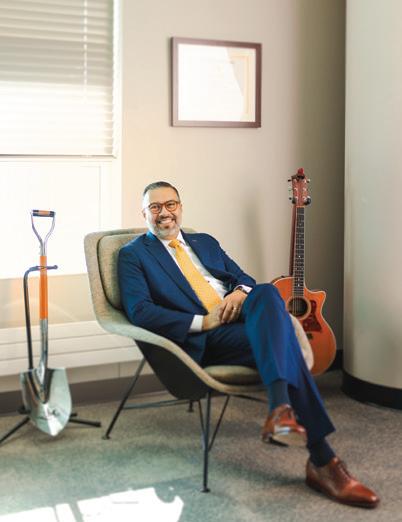
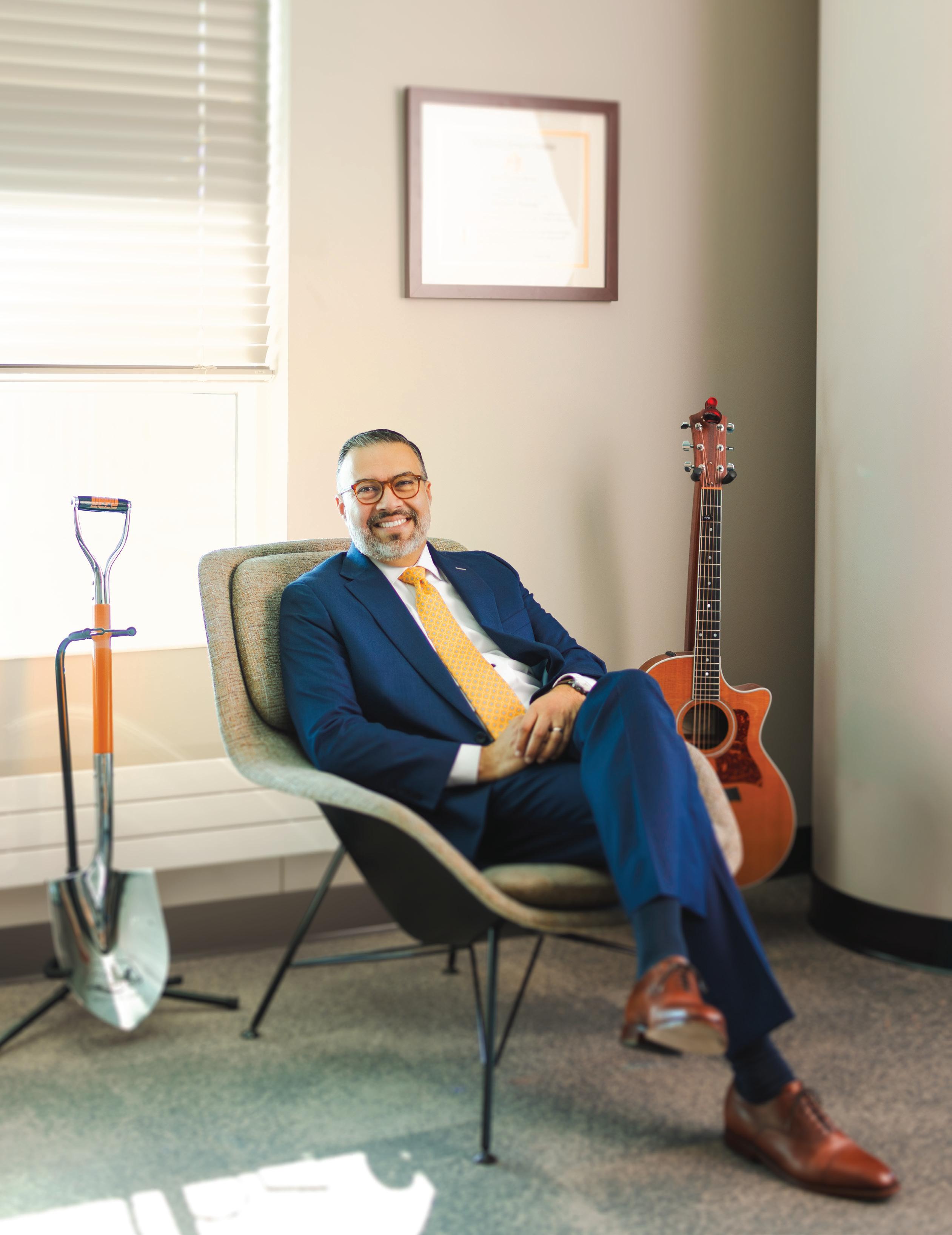
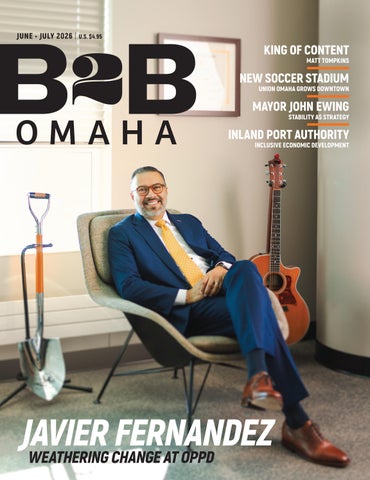
ABOUT THE COVER Javier Fernandez, CEO of Omaha Public Power District, leads the charge in navigating evolving energy demands and political roadblocks while working to power a rapidly growing region. Full story on page 18.
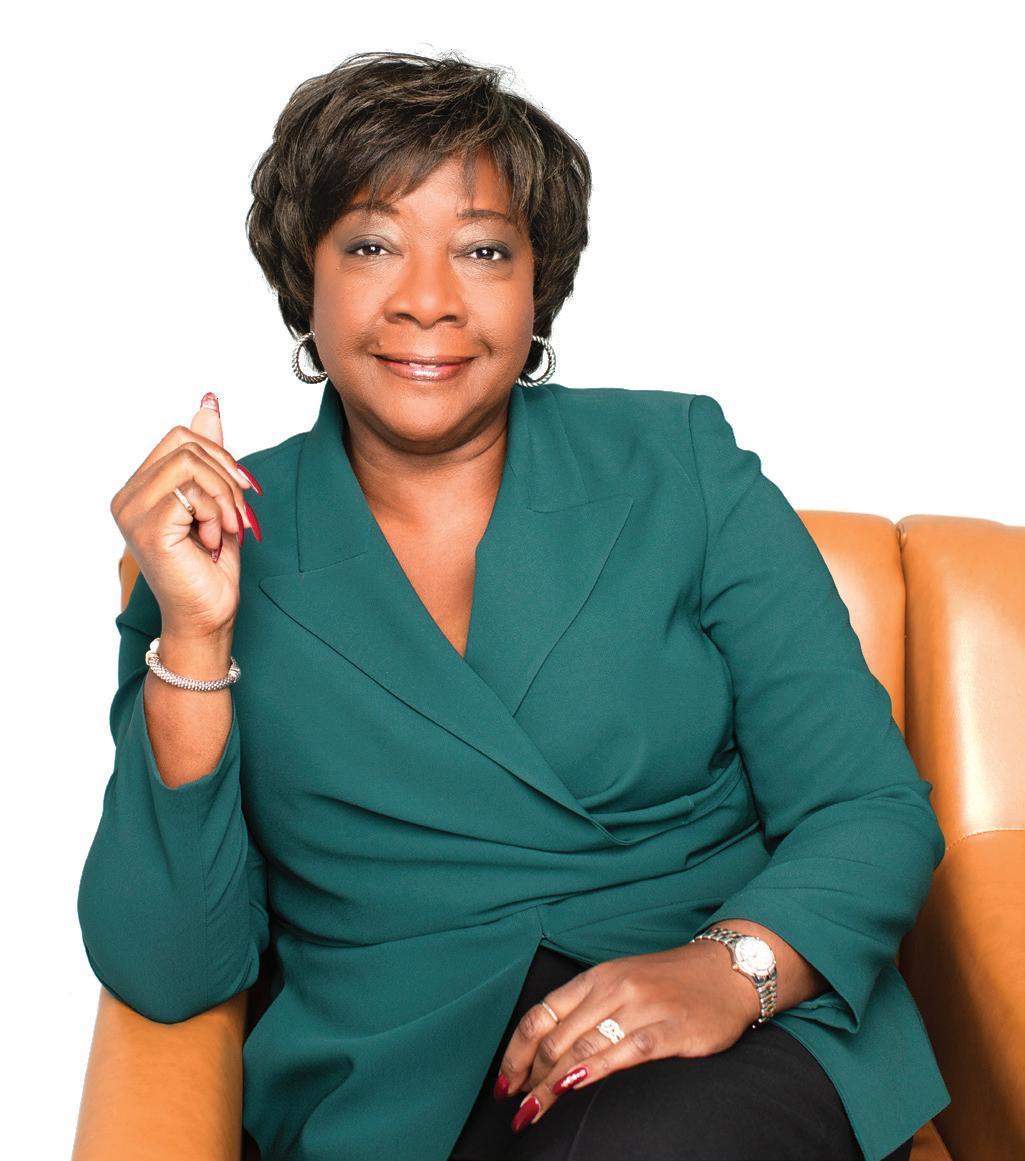
Iam the CEO of North End Teleservices. I am a philanthropist, board member, stepmom, and wife. I am blessed to have traveled the world and to have founded startups that are foundational to my contribution to business and community. I am excited to introduce myself in the capacity of guest editor for B2B Magazine .
I have been blessed to enjoy a career with some very large firms doing business nationally and internationally, but consistently find myself diving headfirst into the realm of entrepreneurship, building businesses in what I consider to be the best place in the world while holding on to a relentless belief in the human spirit and that anything is possible.
Having lived and worked all over the world, I love Omaha. I love business and what it can do in so many ways to impact community and the lives of the people in it. I happen to believe in business for good.
When I think about industry leaders, it compels me to think about what industry means in the Omaha region and the many ways it can be defined. From the Missouri River to Council Bluffs, and the furthest reaches of the Omaha metro, our region is composed of over 125,000 businesses varying in size, with the strength of our economy being found in small business. When we speak to industry in this magazine, it shows up in different ways from large to small.
The Omaha metro area has a strong concentration of small establishments. Firms with fewer than 10 employees account for the largest share of all businesses (70.3%), followed by those with 10 to 49 employees (23.4%). Together, these categories form the backbone of the region’s economy. A limited number of firms employ more than 1,000 workers, demonstrating that the region is not dominated by only a handful of large employers.
Our sector strengths in finance, health care, transportation, manufacturing, and insurance work alongside the 17,778 small businesses with fewer than 10 employees that make up the majority of businesses in our region.
In the region, we represent a vast array of businesses, many of which have been here for decades, some of which have been here for over 100 years. We continue to grow our entrepreneurial ecosystems to create both mainstreet and high-growth technology businesses that help nurture and sustain economic churn.
Scale is not synonymous with significance. Local ownership and innovation play a central role in Omaha’s service-oriented economy. We have businesses that have been known for resilience because of their leadership, the quality of products and services they deliver, and what they mean to the community. While we don’t often brag enough about our strengths, we are known for our service heart, our restaurant scene, sports, and nationally recognized attractions.
From the food truck that supports the business neighborhood to the large business rising from the Omaha skyline, each is faced with the challenge of coming up with ways to attract and retain talent. It’s not just about the employees. It’s also about their families. Being creative in supporting and responding to their needs is the fertile ground of innovation. This drive for innovation and creativity is birthed at times from a place of necessity.
Just as it takes all kinds of businesses to support the economy, it also takes all kinds of thinking from a business perspective in how we solve the challenges of resiliency, competitiveness, and community. This is industry leadership.
These are the stories of B2B Magazine told in our digital distribution and in the beautiful, printed publication that archives the story of Omaha.
I’m honored to serve as the guest editor for B2B Magazine and my hope for you as a reader is that your business will be enriched by the stories that you read and the stories you contribute to this magazine in 2026. B2B OMAHA
FROM THE GUEST EDITOR
For story suggestions and pitches, email editor@omahapublications.com.




STORY: KARA SCHWEISS
PHOTOS: BILL SITZMANN
DESIGN: NICKIE ROBINSON
The Omaha Inland Port Authority was officially created by the Omaha City Council on Jan. 9, 2024, and made possible by The Municipal Inland Port Authority Act passed by the state in 2021. OIPA is now a public entity dedicated to advancing inclusive economic development by combining property development, infrastructure investment, and community-focused programs to create long-term opportunities throughout Omaha, but its roots and strategic efforts are centered in the historically underinvested communities of North Omaha and eastern Omaha.
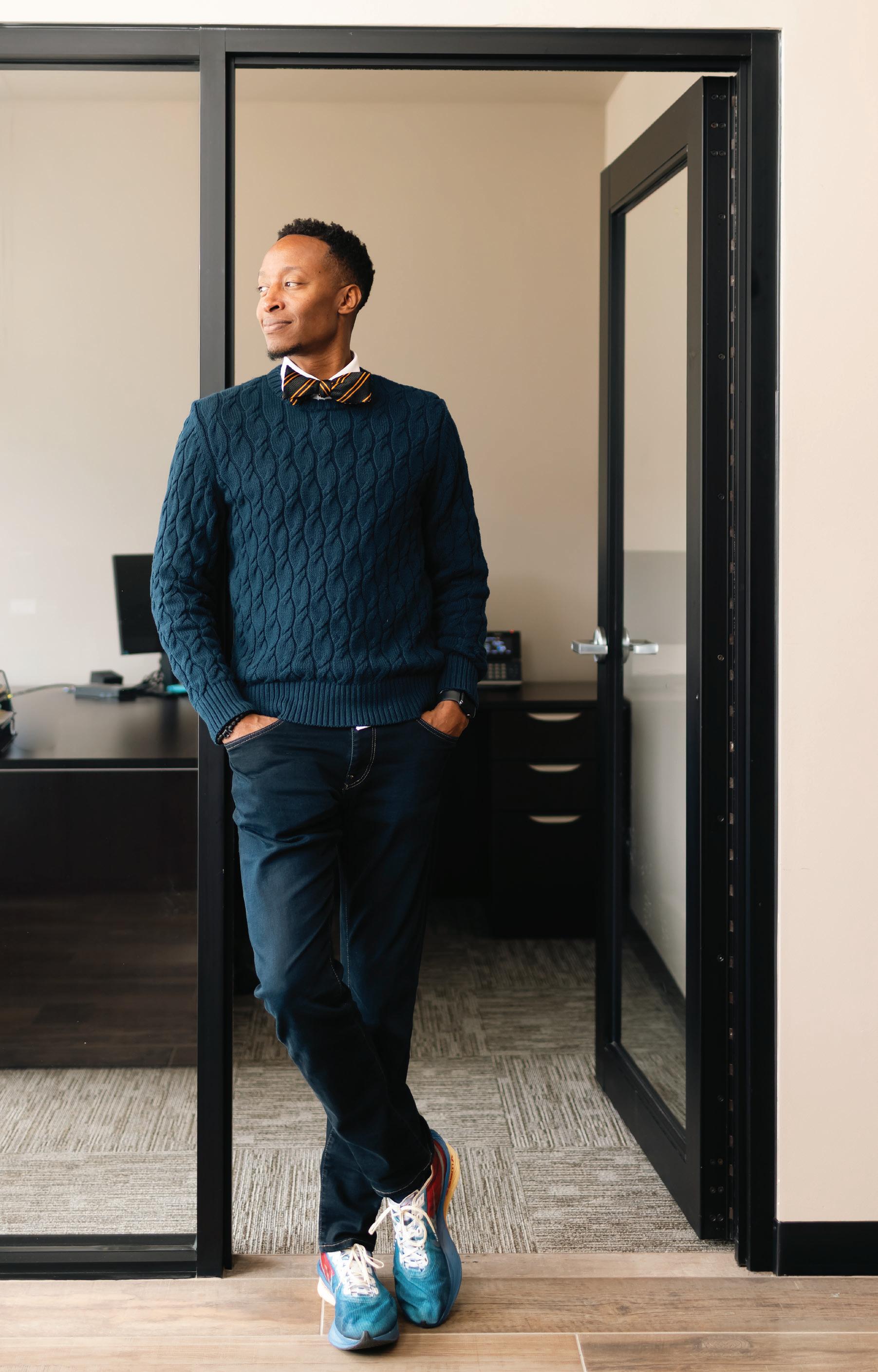
At its inaugural meeting in the summer of 2024, the OIPA board of commissioners elected as its president Nebraska State Sen. Terrell McKinney, who supported legislation introduced in the 107th legislative session by former Sen. Justin Wayne.
“We put the legislation together to make sure it took place,” McKinney said. “The impetus was more so to make sure the money that was allocated from the Economic Recovery Act was going towards the [airport-area] business park, the Innovation District and such; it was to make sure that the projects were inside, that there was a focus around the projects and that the community also had a voice in what was planned.”
OIPA focuses on projects in logistics, advanced manufacturing, technology, and affordable housing. Priority is given to developments that support job creation, infrastructure improvement, and equitable economic growth. A new North Omaha Innovation District, backed by $30 million in state funding and managed by OIPA, aims to drive economic growth through specialized business hubs, startups, and innovative housing. The project includes community-driven plans for mixed-use development, entrepreneur support, and job creation in sectors like construction, agriculture, and tech.
OIPA is also managing the development of a $90 million state-funded commercial and industrial business park near Eppley Airfield identified in the North Omaha recovery plan signed into law as part of a legislative effort led by Wayne and McKinney and finalized as the North & South Omaha Recovery Grant Program that is expected to boost economic growth, job creation, and industrial development. Both projects, operating within a 3,000-acre zone near Eppley Airfield, are designed to work together to foster industrial growth, high-tech startups, and communityfocused development.
“We continue to remind people that we’re still a work in progress; nothing is completed yet, we’re still moving,” McKinney said. “I think our role from a broad perspective, and our No. 1 mission, is to try to bring jobs back to the North Omaha community.”

BY STRENGTHENING
EAST
THE ORGANIZATION SUPPORTS THE CITY’S OBJECTIVES TO MAKE THE OVERALL COMMUNITY MORE ECONOMICALLY VIBRANT. IT ALSO GIVES US AN OPPORTUNITY TO CHANGE THE PERCEPTION OF NORTH OMAHA IN A GOOD WAY, BY BRINGING JOBS FOCUSING ON INNOVATION AND HELPING SMALL BUSINESSES.
—TERRELL MCKINNEY
OIPA will also offer targeted grant programs that support housing, small business growth, and workforce training to build generational wealth and economic mobility. By strengthening North and east Omaha, the organization supports the city’s objectives to make the overall community more economically vibrant, McKinney said. “It also gives us an opportunity to change the perception of North Omaha in a good way, by bringing jobs focusing on innovation and helping small businesses.”
Economic and community development expert Garry Clark began serving as the organization’s first executive director in July 2025. Within the relatively short period under his leadership, OIPA has brought in experienced professionals in economic development, real estate, industry, and planning. This growth has not only increased capacity, but is also showing community members and other stakeholders that OIPA is proficient at execution. Clark has also been focused on leveraging local expertise and institutional partnerships.
“I hit the ground running,” Clark said. “I’m proud of the team that’s been assembled.”
“Just being able to hire staff and have people working on this day to day…it allows the community to have people directly on the ground every day that they can go to and connect with and ask questions,” McKinney said. “Another success, I would say, is our interaction with the community, especially with the visioning for the Innovation District. I think we picked a good organization [real estate, economic development, and public policy consulting firm HR&A Advisors] to do that and the community felt like their voices were heard throughout that process. It made things a lot easier on our end, because we didn’t have somebody that was misaligned and not necessarily listening and doing right by the community. That was big, that we were able to get that done and the community felt good about it.”
Not resting on early successes, Clark said, funding is an ongoing endeavor for the developing organization. State allocations, tax increment financing, and state grants are among OIPA’s present and potential funding sources. The goal for the organization is to eventually become self-sustaining through revenue generated from activity such as land sales, property leases, corporate sponsorships, and event hosting.
“We’ve been able to deploy our resources swiftly,” he said. “We have great initial funding, $120 million, but if you compare that to other major projects, it’s probably $100 million or more short.”
OIPA also faces a challenge rooted in the past, Clark said. The North Freeway, constructed in the 1970s, was one of the most controversial street projects in the city’s history. The roadway that connected I-480 and I-680 also split and segregated the Black community by creating a physical barrier, called a “concrete redline” by some locals, and its construction resulted in the demolition of some 2,000 businesses and homes. Detractors have since said the project fueled long-lasting mistrust, systemic racial injustice, a belief in intentional neglect by city officials, reduced property values, and other negative effects.
“You still have the trauma, technically from the past 60 to 100 years, for the community,” he said. “And we also have lack of trust.”
Rebuilding trust demands transparency and inclusion, as well as sustained connection, so an important early goal for Clark was to improve the organization’s online presence.
“We needed a new website developed to engage the public and provide our information. Our slogan is ‘Real Investment. Real Change. Right Now,’” he said. “We want to make sure people know that this is not operating in a silo, but it is a public engagement process. Everything that we do is shared on our website, and KPIs show on our website where we are.”
Business leaders and community members interested in getting involved in OIPA activities are welcome to attend public meetings, explore procurement opportunities, apply for open positions, or contact the team to discuss partnerships. They may submit an application for membership on the Community Advisory Committee, which is to have nine or more members and is required to include all within the inland port district at least two owners of residential property, at least two owners of businesses, an Omaha City Council member and a state legislator; plus a youth representative or someone closely involved with youth in the community. A single member may meet more than one committee requirement.
Omaha is one of five inland port authority organizations established or proposed in Nebraska. Others are the Fremont Municipal Inland Port Authority (FMIPA), a partnership between the city of Fremont and Dodge County focusing on a 1,500-acre greenfield site suited for industrial development, and bordered by the Union Pacific Railroad and a four-lane divided highway; the South Sioux City Inland Port Authority, certified by the Nebraska Department of Economic Development to develop industrial and commercial sites; the proposed Lincoln County Inland Port Authority (Nebraska International Port of the Plains), expected to focus on developing large-scale industrial and commercial sites; and the Bellevue Inland Port Authority, a certified district focusing on expanding economic opportunities through port authority tools.
All five organizations in the state have emerged in the five years since the Municipal Inland Port Authority Act was passed in 2021, so every step OIPA takes is relatively unprecedented, McKinney said. The young organization is nevertheless making impressive progress.
CONT. PAGE 10
“The challenge is that it’s just something new and getting people to understand what an inland port authority is, what it can do, what it can’t do, the [details] around the project and getting the community to understand what the purpose of the projects are,” McKinney said. “I think that’ll be ongoing, but the more we start doing things and [the public] starts seeing more tangible results, a lot of the confusion and the questions will go away.”
OIPA maintains a regularly updated inventory of sites suitable for commercial, industrial, and mixeduse development, with access to infrastructure and supportive zoning. The organization also offers a selection of existing buildings ideal for office, logistics, manufacturing, and retail uses; these spaces are intended to help businesses get up and running. OIPA also offers comprehensive data covering workforce trends, demographics, infrastructure assets, market performance, and other key metrics to help businesses, developers, and investors make informed decisions.
“The short-term goals are, No. 1, getting the airport business park project off the ground, making sure that’s successful, and getting the innovation district off the ground. And then we also are tasked with developing housing, I think 20 single-family homes and 150 units. Those are our priorities based on statutory requirements,” McKinney said. “But then, longterm, it’s just continuing to find other things that can be developed and talking to people in the community and trying to see what other projects are out there that we can support and lift up.”
B2B OMAHA
Visit omahaipa.com for meeting agendas, job listings, and more information.
WE NEEDED A NEW WEBSITE DEVELOPED TO ENGAGE THE PUBLIC AND PROVIDE OUR INFORMATION. OUR SLOGAN IS ‘REAL INVESTMENT. REAL CHANGE. RIGHT NOW. WE WANT TO MAKE SURE PEOPLE KNOW THAT THIS IS NOT OPERATING IN A SILO, BUT IT IS A PUBLIC ENGAGEMENT PROCESS. EVERYTHING THAT WE DO IS SHARED ON OUR WEBSITE, AND KPIS SHOW ON OUR WEBSITE WHERE WE ARE.
—GARRY CLARK

Most employers I talk to genuinely want to help their people. They’ve added employee assistance programs, wellness apps, mental health days, and financial planning portals. Their benefits package looks comprehensive on paper. And yet, something more fundamental is missing. Employees aren’t failing to use their benefits. They’re failing to connect their work to their lives. The benefits package doesn’t change that. It wasn’t built to.
Here’s what I’ve come to believe: the problem isn’t investment. It’s infrastructure.
We’ve built elaborate systems to deliver benefits, but almost none of them are relational. An employee three months behind on rent, one quietly carrying a dream she hasn’t told anyone about, and one who shows up every day without quite knowing why, none of them need another portal. They need someone who knows their name and has time to help them think about what they want.
That’s the idea behind The Work Lab.
Through my career in sales, management, and HR, I kept asking a question I couldn’t shake: What if instead of engaging employees in the goals of the organization, the company invested in the goals employees have for their own lives, and the barriers keeping them from reaching them?
The answer was already being tested. A nonprofit in Grand Rapids called The Source had been partnering with employers since 2003, embedding professionals they call Resource Navigators into workplaces people whose only job was to help employees navigate the personal and financial challenges quietly disrupting their work. At the time, employers had been investing for nearly 15 years, and the program was still growing. The model worked. I was convinced we could build something like it in Omaha.
We started in 2019 as a program of the Greater Omaha Chamber called GrOW. At the beginning of 2024, we became The Work Lab, an independent 501(c)(3) with a straightforward structure: employers fund WorkLife Coaches, and we embed them inside their workplaces. Not in a portal. Not on a hotline. In person, on-site, in relationship with the people they serve.
It began with one employer. Today, a team of 10, myself included, serves more than 12,500 employees across 11 organizations, on-site in Omaha and surrounding communities, and remotely across the country. The model hasn’t changed: employer-funded, employer-led, built in collaboration with the businesses we serve.
WorkLife Coaches are not therapists, social workers, or HR. That distinction matters.
HR manages the employment relationship: policies, performance, compliance. A WorkLife Coach manages something different: the conditions that determine whether an employee can be fully present at work. They help employees set goals, make plans, and navigate the challenges, personal and professional, that rarely surface in a performance review.
Sometimes that means helping someone navigate a medical bill their insurance won’t cover. Sometimes it means preparing for a promotion, talking through a conflict with a supervisor, or figuring out which of the company’s benefits fits their family. A WorkLife Coach connects the dots between what an employer
offers and what an employee needs, in a relationship built on trust, without a power dynamic.
The boundaries are deliberate. What a coach learns stays with the employee. Employers fund the relationship; they don’t own its contents. That separation is what makes the trust possible. And without the trust, none of it works.
If you lead a company, I’d ask you one question: How many of your employees came to work today carrying something heavy, or working toward a dream, that you know nothing about?
This isn’t negligence. It’s a consequence of the professional boundaries we’ve built, and should maintain, because they serve our customers best. That said, neither your employees nor you work to support your customers. Yes, customers pay the bills. But we work for ourselves, our families, and the lives we’re trying to create.
Our employer partners aren’t doing this out of charity. They’re doing it because it produces value for their teams. Fewer personal crises that become workplace disruptions. Stronger relationships at home and at work. More employees achieving a promotion, buying a home, going back to school, or even starting their own business. Building a future, not just earning a paycheck. The return compounds, and it starts with a single coach building a single relationship with one employee who finally has someone in their corner.
The Work Lab is not another benefits vendor. We’re a nonprofit: employer-funded, employer-led, and accountable to the outcomes businesses care about. We ask for a partnership. In return, you get a WorkLife Coach embedded in your workplace, someone who shows up, builds relationships, and creates the conditions for your employees to do the same.
Businesses are built on relationships. They run on trust. It’s time our workplaces and the benefits we offer reflected that.
If this resonates with you, I’d welcome the conversation. You can reach us at theworklab.us. B2B OMAHA
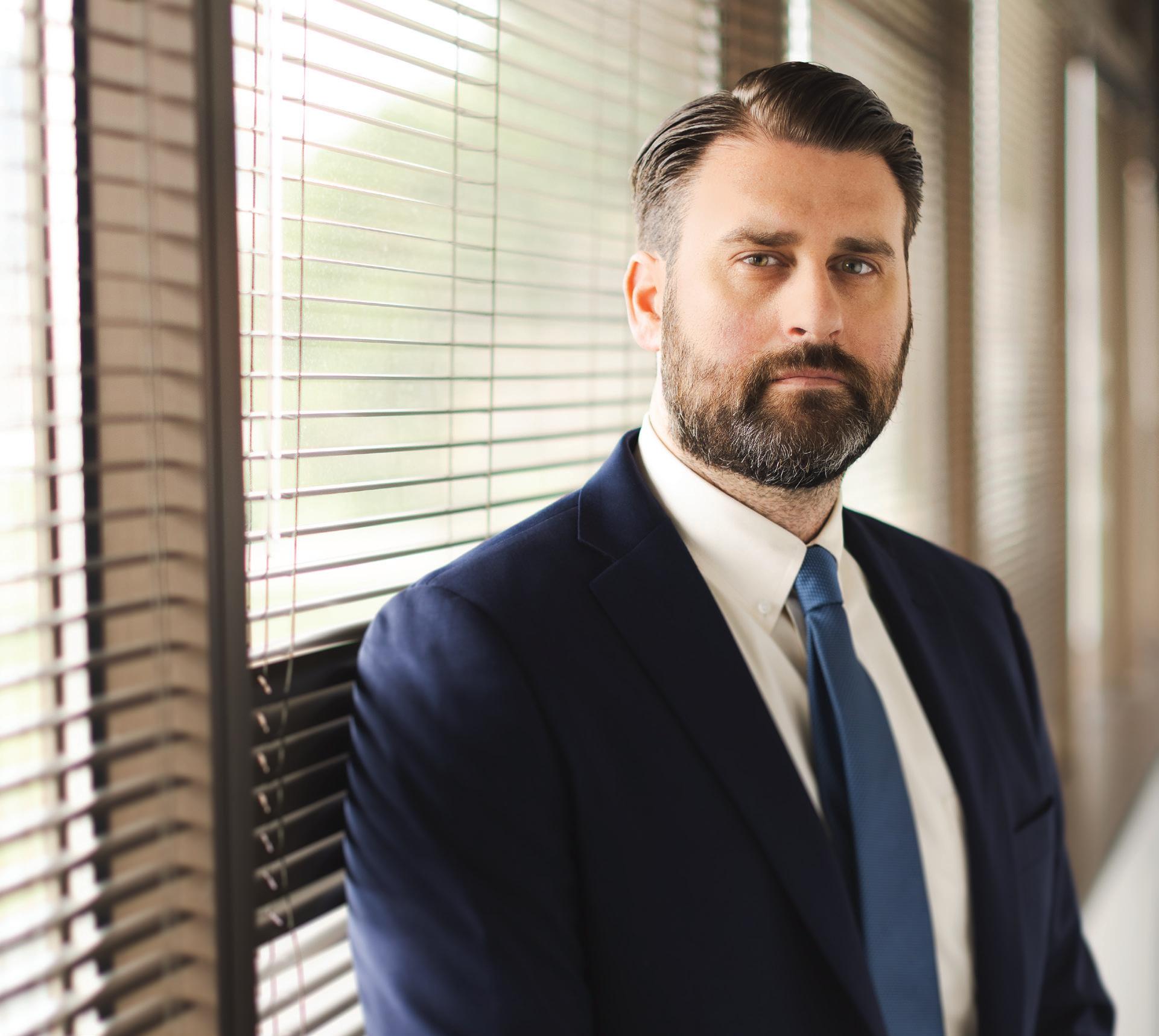
Chad Mares is the Founder and CEO of The Work Lab, an Omaha-based nonprofit that partners with employers to embed WorkLife Coaches in workplace settings.
DESIGN: NICKIE ROBINSON
Officials say 2026 will be a big year for Union Omaha, and that means it’s a big year for the continued development of soccer in the metro, from youth leagues all the way through the professional ranks.
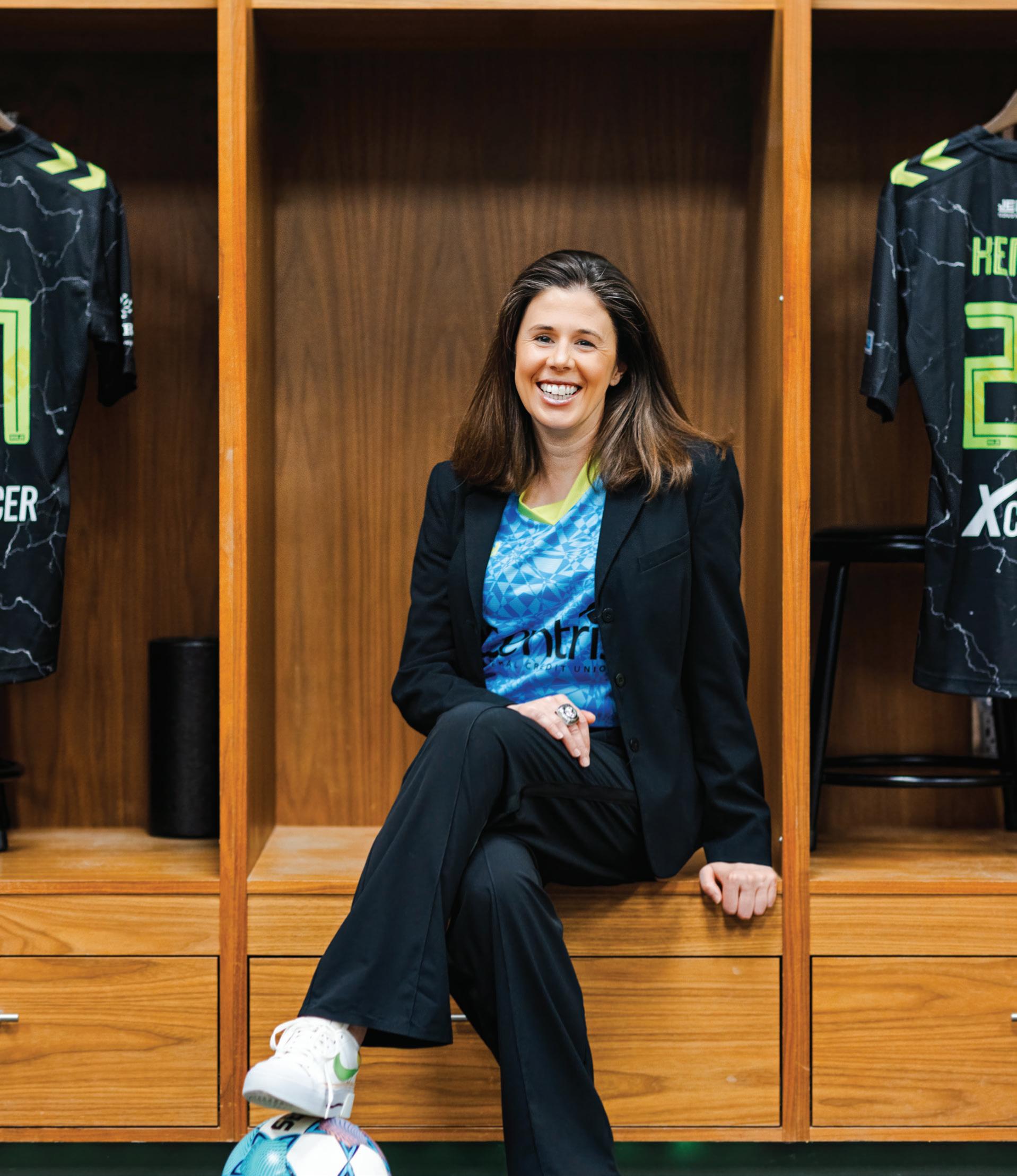
“Soccer is one of the fastest-growing sports in the United States right now, surpassing baseball at a youth level,” said Alexis Boulos, general manager of Union Omaha. “For us, that’s an opportunity to embrace the new fan base, embrace folks who maybe didn’t know or understand soccer, and bring them into the fold. It truly is a sport that everyone can enjoy watching.”
Boulos credited the steady increase to several factors. Soccer has long enjoyed an exodus from American football over safety concerns, and the game has gained wider appeal due to more comprehensive game coverage and hit streaming series like the docudrama Welcome to Wrexham and the fictional comedy Ted Lasso. Add to that the World Cup being played in America this summer, and the international game is getting more prime-time exposure in the States than ever.
“A lot of people watch Ted Lasso and think it’s great and it leads them to check out a match,” Boulos said. “Things like that have been the bump that gets them through the door, and once they get here, they love it.”
Union Omaha has been able to capitalize on this popularity in a big way. Despite entering only its seventh season, the team has been consistently competitive in USL League One play. But without question the biggest development in the club’s short history came last fall with the announcement of an agreement with the city to develop a professional soccer stadium and mixeduse district in North Downtown.
The project took major steps forward with the city approving a purchase agreement with Union Pacific to buy the site north of 11th and Cuming streets for $18.7 million and with the Omaha Planning Board’s approval of Tax Increment Financing for the $114 million project in February.
Boulos said the importance of the stadium project could not be overstated, both for what it brings to the club and for what it will mean to the city.
“We need a home. We need a place to call our own. We need a place where our players and our staff feel like they’re welcome and supported. We need a place where our community feels like they can come to a match and see their home team play and win championships,” she said. “But it will also be a place where people can watch their high school soccer team play a match or their favorite nonprofit charity have a fundraiser or a benefit walk to support their efforts. We want to provide that exterior community space and experience to Omaha and the wider community. This needs to not only be home for us, but a home for the community and a space we share for everyone to enjoy and feel welcomed.”
Soccer enthusiasts are preparing for the spectacle and hype of the men’s World Cup this summer, to be jointly hosted by Canada, Mexico, and the U.S., forecasting the event as a catalyst for pushing the sport closer to the front of the American sports landscape. This isn’t the first time such predictions have been made, however, as soccer’s rise to prominence in the U.S. has been a slow march.
Following the U.S. hosting the 1994 men’s World Cup and the women’s tournament in 1999 and 2003, adoption of the game at all levels was expected to catapult. Instead, per Darin White, Ph.D., of Samford University, who authored a study on the phenomenon, the game has remained comparatively niche, despite massive exposure and millions spent.
“This isn’t just an academic question,” White said. “Leagues, teams, broadcasters, and sponsors have invested enormous resources trying to crack the code of American soccer fandom.”
Boulos, whose job is to do just that in Omaha, said the organization’s strategy is to make its matches as fan-friendly and welcoming as possible and rededicating itself to helping youth soccer grow.
“We’re excited to have the opportunity to engage with the city of Omaha and the surrounding community,” she said. “These projects are bigger than one organization. We’re doing our very best to engage all those stakeholders and all those groups and get everyone as excited as we are. I look for opportunities to have conversations with anyone who has questions about what we’re doing so everybody understands where Union Omaha is coming from and how we want to positively impact our community in the best way possible.
“There’s a lot going on and there’s so much upside and that’s the most exciting part of it. I also think it’s great to have hired staff who are people who moved outside Omaha to get experience elsewhere who saw what we’re growing and they want to move home. I’m thrilled to be a part of that. As a person who grew up in Omaha and went away for quite some time and decided to come back to raise my family, it’s exciting to be part of something that I hope will bring other people in our community as much joy and impact as it has for myself and my family.” B2B OMAHA
Visit unionomaha.com for more information.
WE NEED A HOME. WE NEED A PLACE TO CALL OUR OWN. WE NEED A PLACE WHERE OUR PLAYERS AND OUR STAFF FEEL LIKE THEY’RE WELCOME AND SUPPORTED. WE NEED A PLACE WHERE OUR COMMUNITY FEELS LIKE THEY CAN COME TO A MATCH AND SEE THEIR HOME TEAM PLAY AND WIN CHAMPIONSHIPS. —ALEXIS BOULOS
STORY: NAOMI HEU DESIGN & ILLUSTRATION: NICKIE ROBINSON
n Maslow’s hierarchy of needs, humans must fulfill physiological needs first before anything else. Adequate shelter is one of these physiological needs, but attainable, affordable housing is something that many cities struggle with Omaha included.
Omaha and the surrounding metro area have experienced a shortage of affordable housing in recent years. The cost of living has increased dramatically, and incomes have failed to match this growth.
“As housing costs go up and people have to spend more and more of their income on housing, they have less to spend on everything else,” said Jody Holston, executive director of Front Porch Investments.
Front Porch Investments is a local nonprofit focused on affordable housing solutions. Most of its work is done with low-income housing, which serves areas that earn below 80% area median income, the midpoint income for an area that determines eligibility for affordable housing programs.
In order for Omaha to keep up with the housing demand, 30,000 housing units need to be built in the next five years and at least 60% need to be affordable, according to a number of studies. Affordable housing, sometimes referred to as attainable housing, is housing that does not cost more than 30% of income.
Pete Festersen is an Omaha City Council member who has been pushing for reform on affordable housing specifically a policy to incentivize or require affordable housing in development projects that receive tax increment financing.
According to the “Affordable Housing Report” by the City of Omaha, “TIF helps finance the redevelopment costs of specific types of projects within community redevelopment areas, typically in older areas of the city.” A developer takes out a loan to help with expenses tied to a city-approved project. Then, this loan is paid back over a 15- to 20-year period with the property taxes generated on that development.
It is an economic incentive at the city level, and it has been used successfully in all kinds of projects throughout Omaha, Festersen said.
The “Affordable Housing Report” says that TIF was approved for projects that created 119 affordable units and 1,706 total units in 2022, and 413 affordable units and 2,642 total units in 2023.
Currently, there is no housing requirement for TIF, and instead, it is decided case-by-case, Holston said. It’s not built into the system. But many people, including Festersen and Holston, believe it should be something that gives back to its community since it is funded by tax dollars.
“When we’re using a public tool, there should be a community and public benefit attached to it,” Holston said.
On March 24, Festersen’s proposal was approved, so projects focused on creating affordable housing are required to include TIF. The Planning Department has until Sept. 1 to finalize the proposed policy and put it into an ordinance.
Holston argues that this issue matters for businesses because it affects everything. “When people have a safe, stable place they can afford, they can show up fully at work,” Holston said. “It helps businesses with hiring and retention. It helps our entire neighborhoods, schools, and stability overall.”
As an employer, you can invest, stay informed, and advocate for change. “Businesses have a different perspective,” Holston said. “They see firsthand how their employees are affected when they can’t find housing or can’t afford it.”
“I want to see urgency around this issue,” Festersen said. “We have good consensus that this needs to be a priority right now, so I think now is the time.”
B2B OMAHA
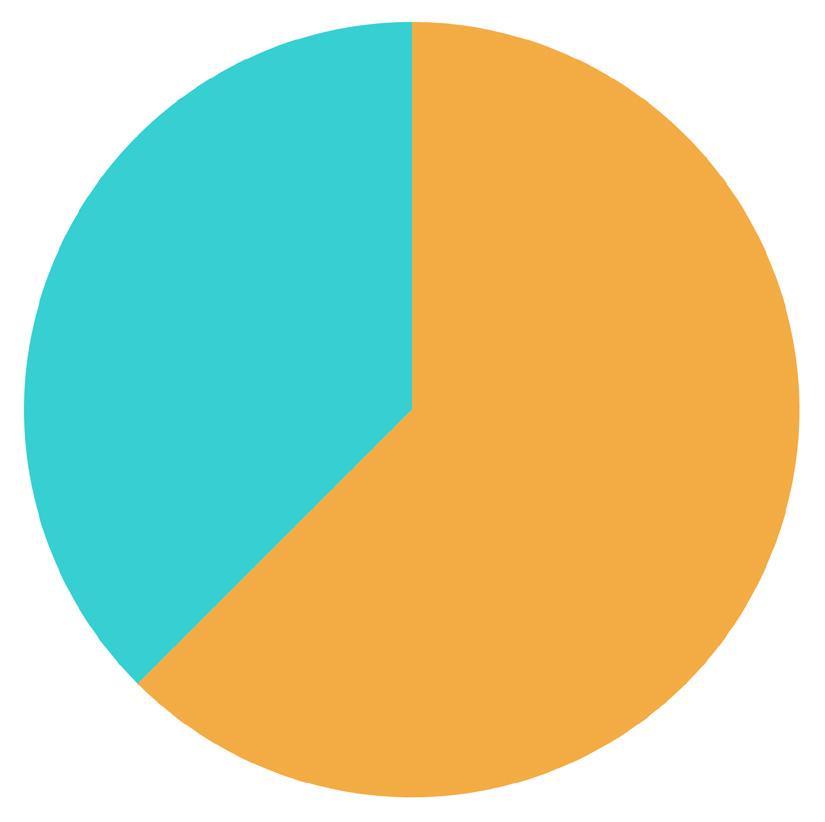
TO KEEP UP WITH HOUSING DEMAND OVER THE NEXT FIVE YEARS 30,000 UNITS NEED TO BE BUILT.
SOURCE: CITY OF OMAHA 2025 AFFORDABLE HOUSING REPORT
AFFORDABLE/ATTAINABLE HOUSING: HOUSING COSTS ARE <30% OF INCOME
LOW-INCOME HOUSING: FOR PEOPLE WHO MAKE <80% OF AMI
80% AMI OF THE OMAHACOUNCIL BLUFFS METRO AREA IS $91,000 FOR A FAMILY OF FOUR.
SOURCE: U.S.
AREA MEDIAN INCOME (AMI): THE MIDDLE INCOME IN AN AREA. HALF OF PEOPLE IN THE AREA MAKE MORE, HALF MAKE LESS. AMI HELPS FIGURE OUT WHO IS ELIGIBLE FOR AFFORDABLE HOUSING IN DIFFERENT PARTS OF THE STATE AND COUNTRY THAT HAVE DIFFERENT COSTS OF LIVING AND INCOMES.
STORY:
TIM TRUDELL
PHOTOGRAPHY:
BILL SITZMANN
DESIGN: NICKIE ROBINSON
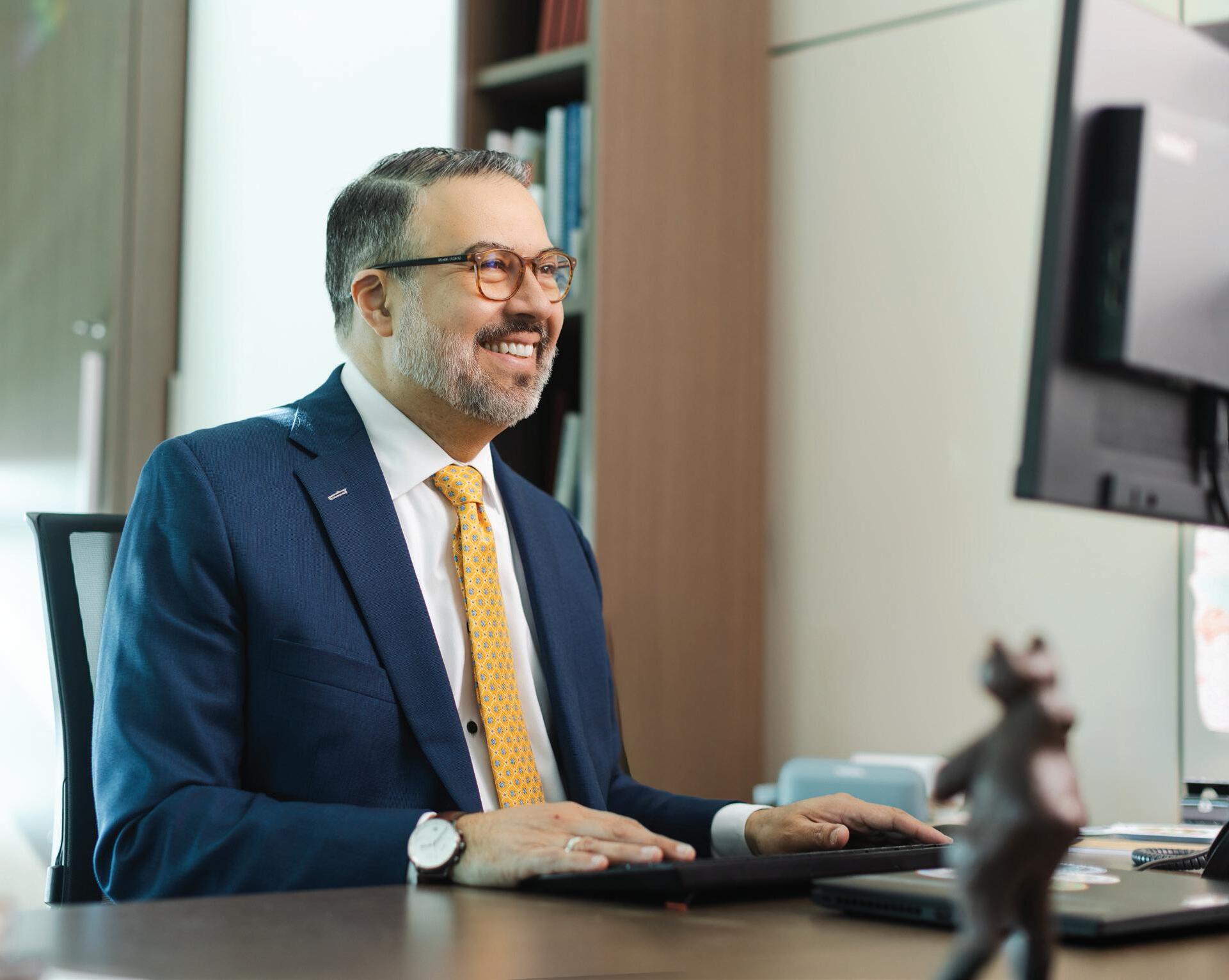
amily drives Javier Fernandez’s career decisions. The birth of his daughter changed his outlook toward life on the road, juggling public finance as an investment banker. His love of family eventually led him to Omaha, where he has served as the president and chief executive officer of Omaha Public Power District since 2021.
As OPPD’s CEO, Fernandez finds himself juggling ongoing energy challenges with an eye toward the future.
Prior to arriving in Omaha in 2017 as OPPD’s vice president and chief financial officer, Fernandez spent five years with Bonneville Power Administration in Portland, Oregon, overseeing its investments and managing debt.
Bonneville provided the perfect training ground, Fernandez said. The federal agency delivers electricity to 12 million people in seven states in the western United States.
His work included gaining intimate knowledge of the industry’s regulatory environment, as well as interacting with state agencies and private companies, Fernandez said.
As their eldest child approached the age of 6, Fernandez and his wife, Belinda, sought an ideal area to raise the children. OPPD was too enticing to stay in the Pacific Northwest, he said.
“Nebraska, the Midwest, was a place where we could raise our children the way we wanted to raise them,” Fernandez said.
The sense of family among employees also impressed Fernandez.
“I get to walk into meetings with different departments, meet people that I didn’t know nine out of 10 times before the meeting starts, people are talking about their family,” he said. “They’re talking about their hobby, what they did on the weekend. It’s very social. That didn’t happen in the other companies where I’ve worked before, where you come in and everyone is quiet, waiting for the official business to start. Here, there’s an element of relationship.”
Once at Omaha Public Power District, Fernandez established himself as a key player as vice president and CFO, playing a role in the utility’s response to the 2019 flood that encompassed eastern Nebraska.
But it’s been the severe storms that the area has experienced that have defined his leadership since 2021, when he was named OPPD’s president and CEO, succeeding Tim Burke.
“The flood was bad, but it pales in comparison to the big storms that we’ve had, in 2021, ’22, ’23,” Fernandez said. “Basically, every year under my tenure as CEO, we’ve had four of the 10 largest storms on record happen.”
Storms have caused power outages lasting from a few hours to more than a week. Omaha Public Power District’s handling of the crises is impressive, Fernandez said.
While he understands why customers are upset about being without power for several days, OPPD personnel work around the clock to resolve those issues, with line technicians working 16-hour days and outside utility companies dispatching line workers to help, Fernandez said.
Communication is key to updating the public on what’s being done to address outages, including social media and television, he said.
“Imagine you’re sitting in your house six days without power, and you see OPPD trucks drive by your street every day, and you’re thinking, ‘What about me? When is it my turn?’” Fernandez said. “I think the important thing for us is to share our progress, or lack thereof, and what we are doing.”
While OPPD handles the day-to-day business of providing power for more than 850,000 people in a 5,000-square-mile area covering 13 counties, the 80-year-old utility looks for new ways to serve a growing population’s power needs.
Climate change may be a political football, but it’s something OPPD officials face daily, Fernandez said. The utility has diversified its fleet and sought power alternatives so it doesn’t have to rely on the Missouri River as it has in the past, he said.
“We rely on a lot of that water for cooling purposes for our power plants,” Fernandez said. “We’ve had instances, not this winter, thank goodness, but the past three winters where we haven’t had enough water in the Missouri River.”
Walking a fine line between the environmental impact of fossil fuels and renewable energy, with its effect on OPPD’s carbon footprint, Fernandez seeks the best options for serving the utility’s “customer owners.”
“Having a diverse portfolio of generation is how you can better adapt to the changing climate, and then, we have to weatherize them, prepare them for really deep winter temperatures,” he said. “The new power plants we’re building can withstand temperatures of minus-40 degrees. They’re designed for temperatures our predecessors didn’t have to worry about.”
The Fort Calhoun nuclear plant was shuttered a decade ago, not because of changing views on nuclear power, but because of flooding on the Missouri River, Fernandez said.
While it’s cost prohibitive to retrofit the Fort Calhoun facility, OPPD joined a four-utility pact to build a Midwest-based nuclear power facility, he said. OPPD, Lincoln Electric System, Nebraska Public Power District, and Oklahoma-based Grand River Dam Authority formed the Great Plains New Nuclear Consortium. A new plant is unlikely to be online earlier than the late 2030s, he said.
Meanwhile, OPPD invests in natural gas, wind energy, and solar farms to provide energy, Fernandez said.
Its Platteview solar farm the largest solar project in Nebraska covers 500 acres near Yutan. Creating 81 megawatts of power, the farm’s 188,000 panels can generate electricity for 14,000 homes.
Energy politics have become polarizing, blocking OPPD from ultimately providing much-needed power, Fernandez said.
“Virtually every county that we have gone to has adopted rules and regulations that basically ban solar from ever being built in those counties,” he said. “Even worse with wind farms, because those are much bigger and much more visible, regardless that you can farm in between towers.
“You have places where partisanship doesn’t like renewable generation, and others where partisanship doesn’t like fossil generation. That makes it nearly impossible for us to build the infrastructure we need to keep power in this community. So, the window for us to build what this community needs is narrowing incredibly, yet everybody wants power.”
B2B OMAHA
IMAGINE YOU’RE SITTING IN YOUR HOUSE SIX DAYS WITHOUT POWER, AND YOU SEE OPPD TRUCKS DRIVE BY YOUR STREET EVERY DAY, AND YOU’RE THINKING, ‘WHAT ABOUT ME? WHEN IS IT MY TURN?’ I THINK THE IMPORTANT THING FOR US IS TO SHARE OUR PROGRESS, OR LACK THEREOF, AND WHAT WE ARE DOING.
— JAVIER FERNANDEZ
STORY: TIM TRUDELL
DESIGN: NICKIE ROBINSON
Instead of accepting young people leaving for greener pastures, Omaha leaders are working to reverse that loss, creating “All in Omaha,” promoting Mayor John Ewing Jr.’s “brain gain” initiative.
A report released in December 2025 by the Greater Omaha Chamber of Commerce revealed two major areas of employment lost jobs over a five-year period from 2019 to 2024 down 17% in finance and insurance and 5% in business, professional, and information services. The drops accounted for losses of about 10,000 positions.
Rather than focus on “brain drain” the loss of younger people leaving Nebraska for higher-paying jobs elsewhere All in Omaha aims to focus on the positives of living in Omaha and improving the workplace environment and salaries to attract people to the city.
“It’s looking at how we can highlight opportunities in Omaha for people and really show what the career ladder looks like here,” said Marco Floreani, Omaha’s deputy chief of staff for economic development and development services, “then working with local industry leaders and businesses, both small and large, to commit to grow jobs and wages, and do more for career development.”
A collaboration between the City of Omaha and the Chamber, All in Omaha will track businesses’ commitment and progress as part of the initiative, he said.
“It’s really kind of like a real-time opportunity to measure buy-in, because what we’ve realized is you can have all these conversations, but what it comes down to is we need employers to really step up,” Floreani said.
Omaha has proven it’s a leader among cities when it comes to affordability. With affordable housing, great education systems, and a low crime rate, Omaha scores high when compared with cities such as Kansas City, Dallas, Denver, Phoenix, and Minneapolis, Floreani said.
CONT. PAGE 22
FROM PAGE 20
But the city hasn’t shown that it can provide a dynamic opportunity for people to earn a good living and grow professionally, despite being home to several innovative startups and growing technology firms, Floreani said.
“Omaha can be a city where ideas can be built in which, if you feel like it’s a good idea, you can get it done here,” he said. “You don’t have to go someplace that maybe is less risk-averse or willing to take a chance. You can do that here, whatever it is that you’re trying to build.”
Community leaders need to be bold about promoting opportunities, Floreani said.
“There are high-growth companies here, but being able to understand that we can be humble, we should also know when it’s a good time to brag, and we need to share that,” he said. “I think we’ve spent a lot of time crafting messages for bringing people to Omaha, but haven’t spent enough time focusing on messaging people who are currently here about what opportunities are in Omaha. What resources are here, what research is being done, where technology is being developed, and where companies that are startups, specifically, are raising money.”
A key element of the “Brain Gain” initiative is that it’s fundamentally employer-led, said Dell Nared
Jr., chief workforce excellence officer with the Greater Omaha Chamber of Commerce.
“Things that we’ve seen, traditionally, through a lot of these movements have kind of fizzled,” Nared said. “So one thing that we want to be intentional about is the Chamber’s role as the organizer of this movement, to track this through an annual scorecard, and then convening employers through peer learning and continuous improvement.”
To help build the local economy, the Chamber launched Omaha COMPETES, which showcases how it supports the business community and advances policies to give them the tools and resources necessary to attract and retain talent, as well as attract businesses, Nared said.
“It makes all of that work a lot easier, because Omaha COMPETES is truly an investment in infrastructure, workforce development policies, and, obviously, tax competitiveness,” he said. “If we are able to do that, Omaha COMPETES creates a favorable business climate.”
Omaha COMPETES, combined with the All in Omaha initiative, creates momentum in the right direction, with the support of the business community, Nared said.
IF I WERE MAKING THE SAME EXACT RATE WITH A BETTER AND LOWER COST OF LIVING, BETTER CHILD CARE, ALL THOSE THINGS, I THINK THAT’S WHERE WE CAN BE COMPETITIVE AROUND ATTRACTING PEOPLE TO OMAHA. —DELL NARED JR.
“Because we know, from even a public policy standpoint, that if you don’t have things that can tie into initiatives, it doesn’t move forward,” he said. “But we believe we have that through what Omaha COMPETES is able to do by creating competitive business environments.”
A perception gap seems to imply that Omaha can’t attract talent. Instead, it tends to be employers not making quality job offers, he said. If a person makes more money in Dallas than Omaha, they’ll likely stay there, he said. But, if an Omaha business can at least match the salary, it changes the landscape, Nared said.
“So the wages come back into play, because we have all the things that you want to build a family here,” Nared said. “You have a great food scene. You have things that you can do. You can get to our airports. You can get to a lot of places really quickly. There are cool things that we’re doing here, and if we’re talking about quality of life, we have that here in Omaha. If I were making the same exact rate with a better and lower cost of living, better child care, all those things, I think that’s where we can be competitive around attracting people to Omaha.”
While the city hasn’t completed updates to its comprehensive plans, prioritizing walkability and denser development have been key areas in which to focus, contributing to “brain gain,” Floreani said.
“Those themes, of course, are everywhere in the scenarios of how Omaha should grow,” Floreani said. “And so we are looking at how we can extend the streetcar, and I believe that Metro is looking at how they can expand bus rapid transit as well, because there is a mismatch between where jobs are growing and where people live who maybe want access or need access to those jobs. Transit is a key piece of that.” B2B OMAHA
Visit omahachamber.org for more information.







STORY: DWAIN HEBDA
PHOTOS: PROVIDED BY UNION PACIFIC RAILROAD
PHOTO COLLAGE & DESIGN: NICKIE ROBINSON

Are these important skills to develop in your managers?
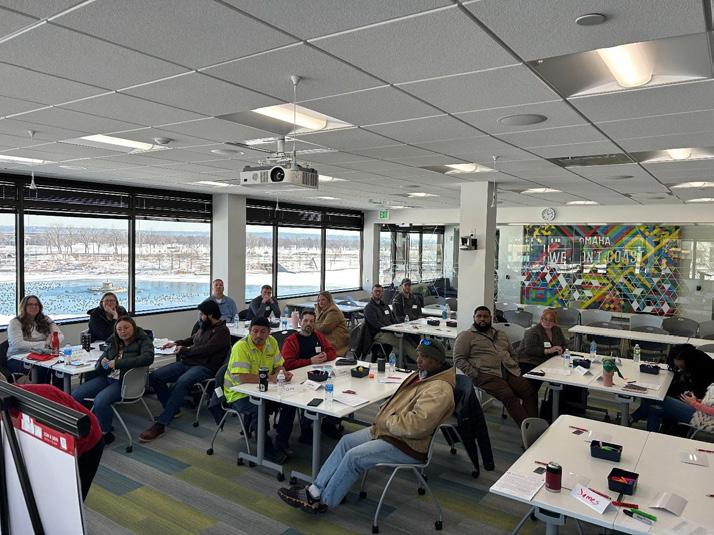
These are just 3 of the 24 topics we cover. Our award-winning interactive leadership program changes behavior and produces measurable results.
If you don’t continue to develop your current leaders, you’ll be training new ones instead.
Call 402.399.9239 to see if we might be a right fit for you. We can also set up a complimentary session to see if we’re the right fit for your people.

Many of the nation’s seminal corporate giants are indivisible from the saga of the nation’s history itself. Through their rise and in some cases, their fall they changed the very arc of American history. John Deere, General Electric, Ford Motor Company, and U.S. Steel are on the short list of legacy companies that fundamentally and irreversibly changed the face of the nation and the American way of life.
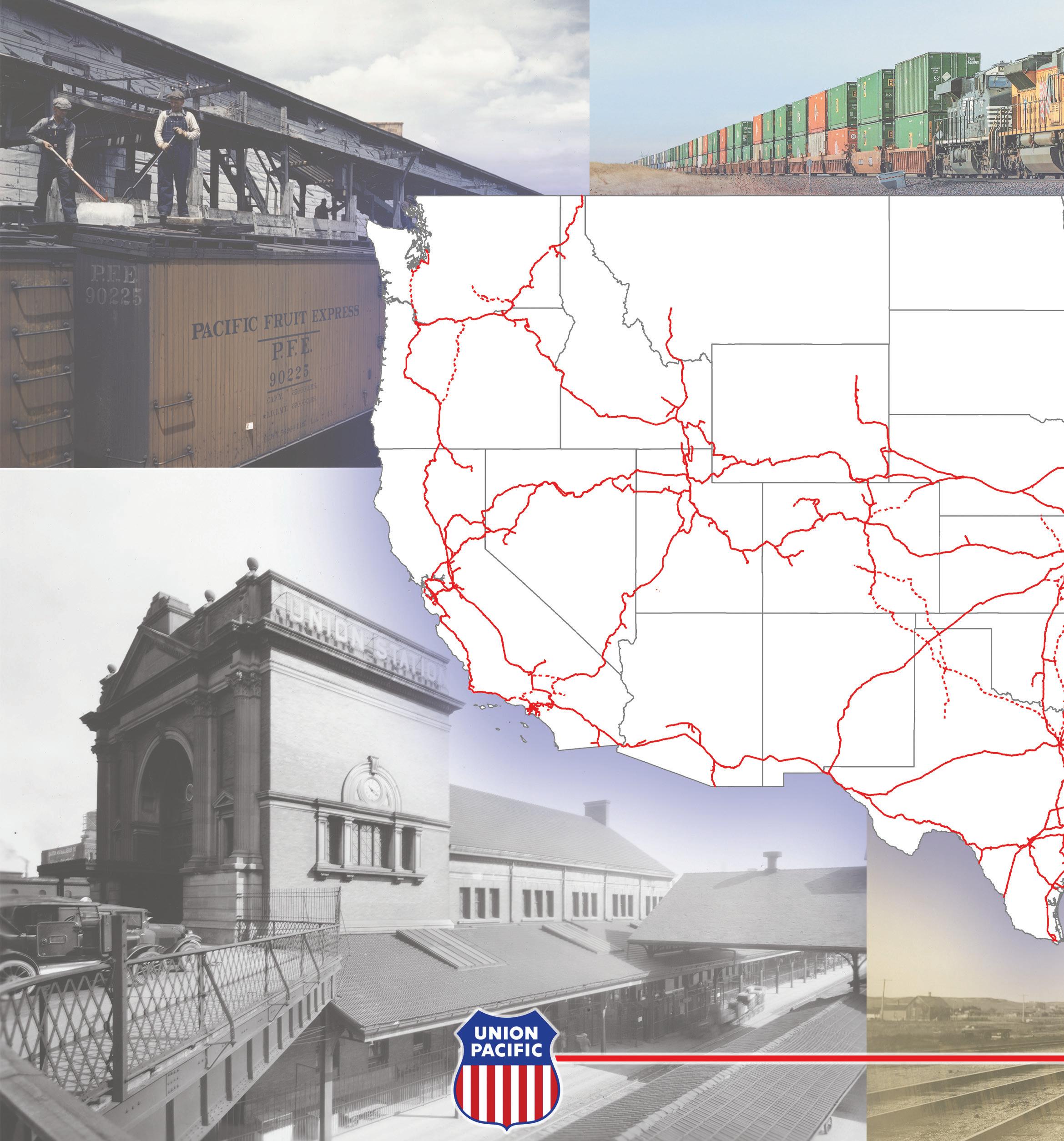
Union Pacific is another member of this proud roster of companies. Created via the Pacific Railway Act of 1862 by President Abraham Lincoln, UP has stood for 164 years as emblematic of the nation’s pioneering and adventuresome moxie.
The company has made the most of its time in business, growing into a mammoth player in the nation’s transportation industry, generating $24.5 billion in 2025, per company reporting. The railroad encompassed nearly 33,000 route miles across 23 states as of the end of 2024, over which UP hauled 8.3 million carloads of freight pulled by more than 7,000 locomotives and overseen by 32,400 workers.
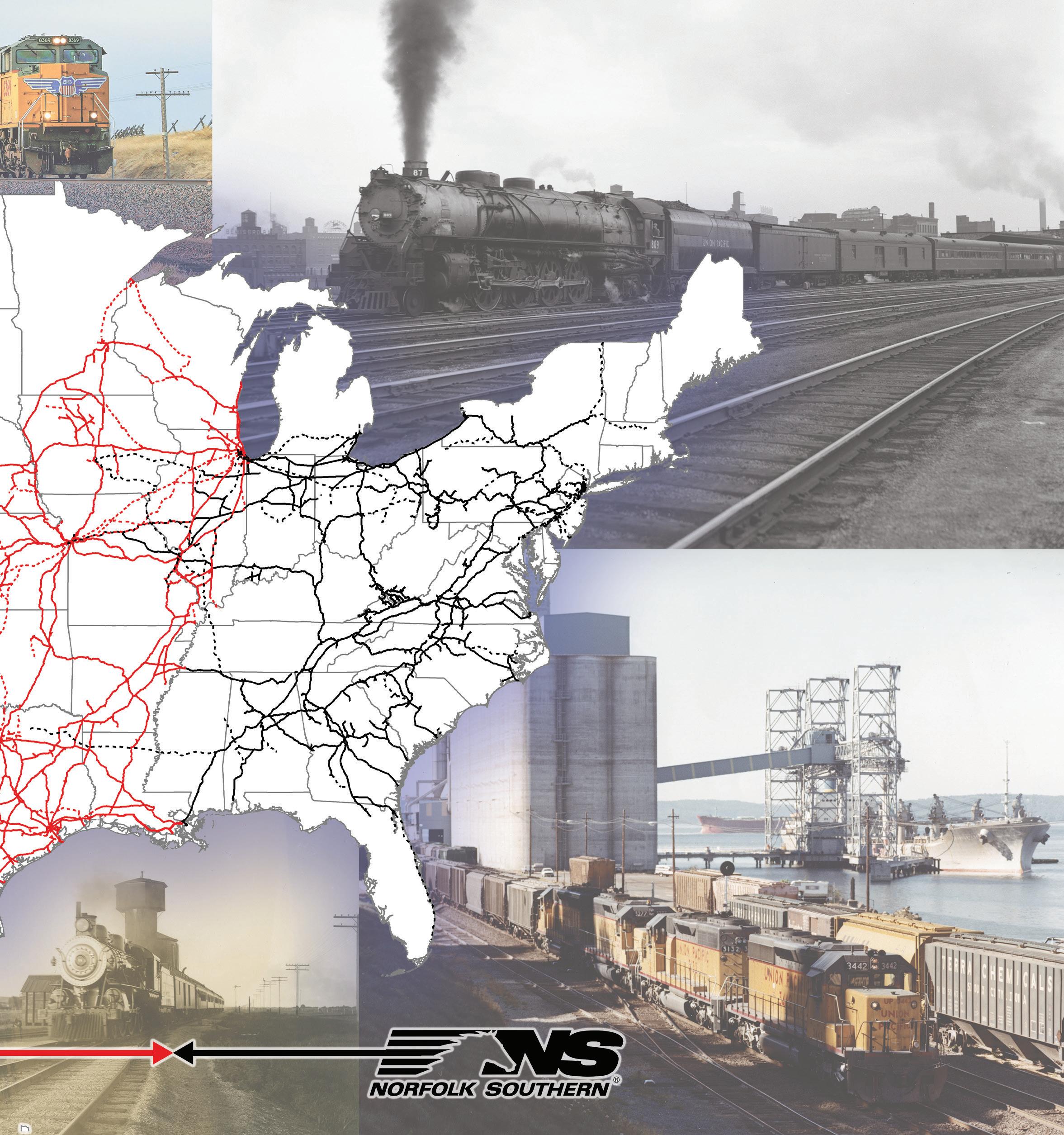
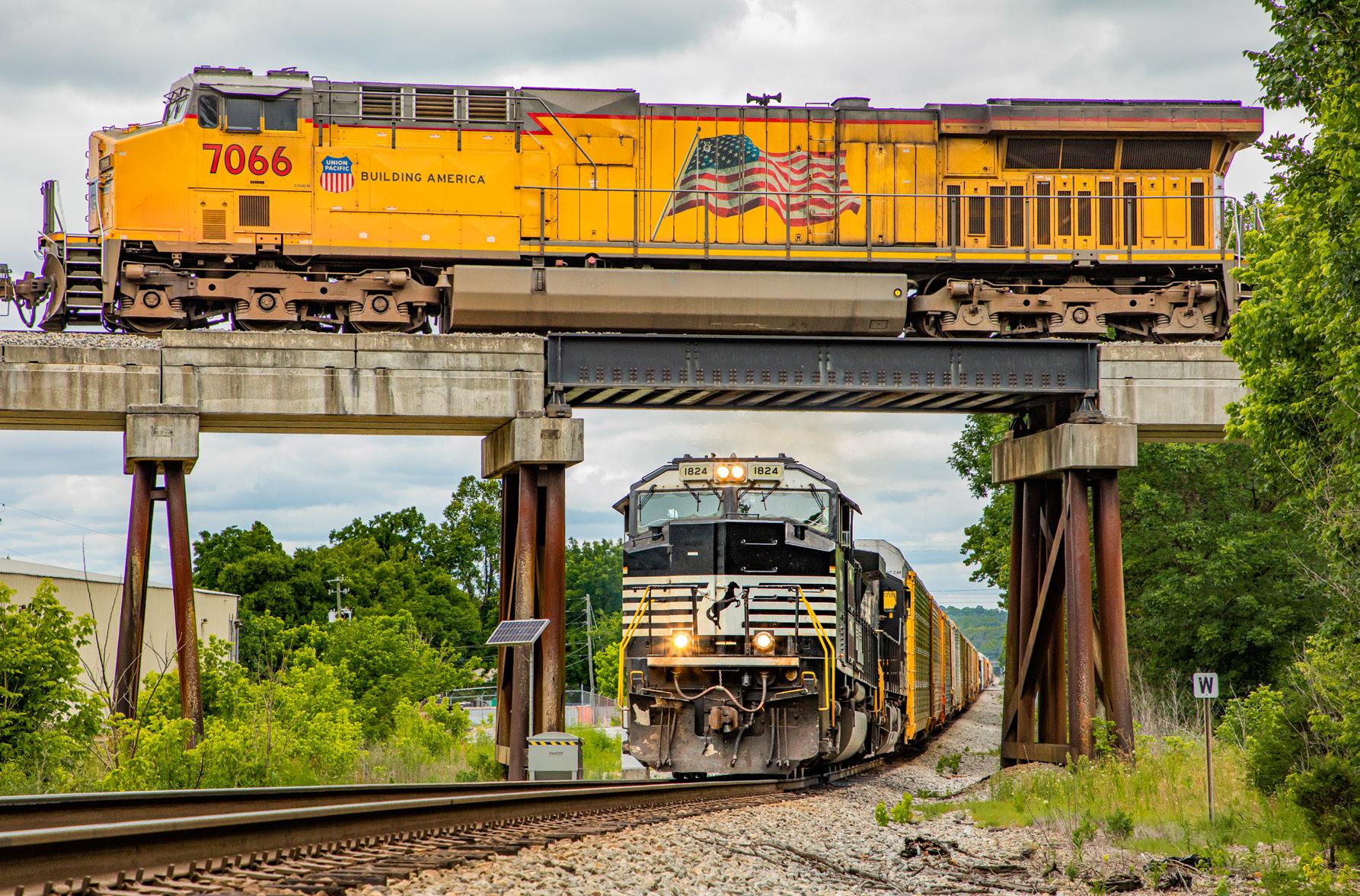
Yet for all that, the Omaha-based company’s greatest achievement lies just around the bend. A proposed merger, currently awaiting approval by regulators, would fold Norfolk Southern into the Union Pacific rail network, extending UP’s reach from the Mississippi River to the eastern seaboard to create the nation’s first transcontinental railroad. The 7,000-page application for approval of the deal, which the companies entered into last July, was filed with the Surface Transportation Board in December 2025; a revised merger application was submitted in April.
While the deal represents a measure of incredible complexity and far-reaching historical significance, the primary goal is to streamline and simplify shipping as much as possible, said Eric Gehringer, executive vice president of operations.
“The foundation for this merger is, how do you actually remove complexity?” said Gehringer, a 20-year veteran of the company. “Let’s say you’re Customer X and you want to ship a car from Seattle all the way to Atlanta. The way that works today, and this is a real example, short line picks up that car in Seattle, moves it over to Burlington Northern, that brings it to the south part of Washington. They give it to us, we take it over to Memphis. From Memphis we give it over to Norfolk Southern, they take it over to Atlanta, then they give it to a short line.
“The merger removes that complexity because, as one combined entity, Union Pacific and Norfolk Southern, that will be called Union Pacific, can go nearly 3,000 miles without having to hand off that car to another railroad. It also generates faster transit times for our customers, anywhere between 24 and 48 hours faster, and when you think about fluidity and speed on the railroad, that’s what we sell, getting from Point A to Point B as quickly as we can, as seamlessly as we can.”
Gehringer said the on-track logistics aren’t the only element of the shipping process that would be improved by the deal. He said ease of use would extend to the granular level for shippers, all the way to booking freight loads. He likened the forthcoming customer experience to the single point of contact revolutionized by global retail giant Amazon.
“If we went to Amazon, we would go to their website and search for, let’s say, pencils. I search for No. 2 pencils, and the option comes up, and I order them. It’s seamless,” he said. “If you are a customer of the railroad today, this is what Amazon would look like: You’d find the No. 2 pencil, but that pencil is sold by a wholesaler. So then you’ve got to go to the wholesaler’s website, but they don’t actually manufacture that pencil. So then you actually have to go to the manufacturer’s website.
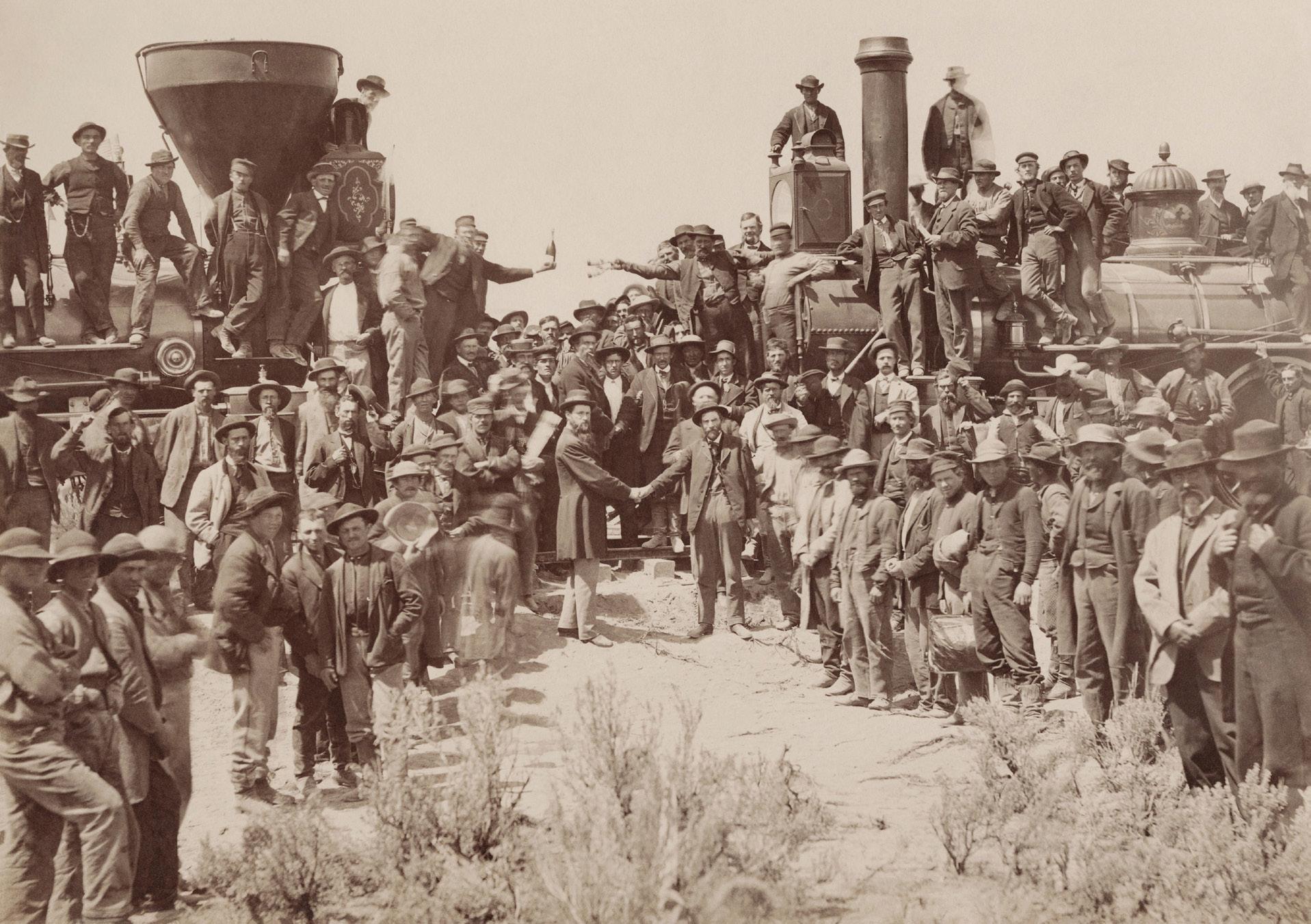
ANDREW J. RUSSELL CAPTURED THIS MAY 10, 1869, CELEBRATORY PHOTO COMMEMORATING THE COMPLETION OF THE FIRST TRANSCONTINENTAL RAILROAD AT PROMONTORY SUMMIT, UTAH. SAMUEL S. MONTAGUE OF CENTRAL PACIFIC RAILROAD (CENTER LEFT) SHAKES HANDS WITH GRENVILLE M. DODGE OF UNION PACIFIC RAILROAD.
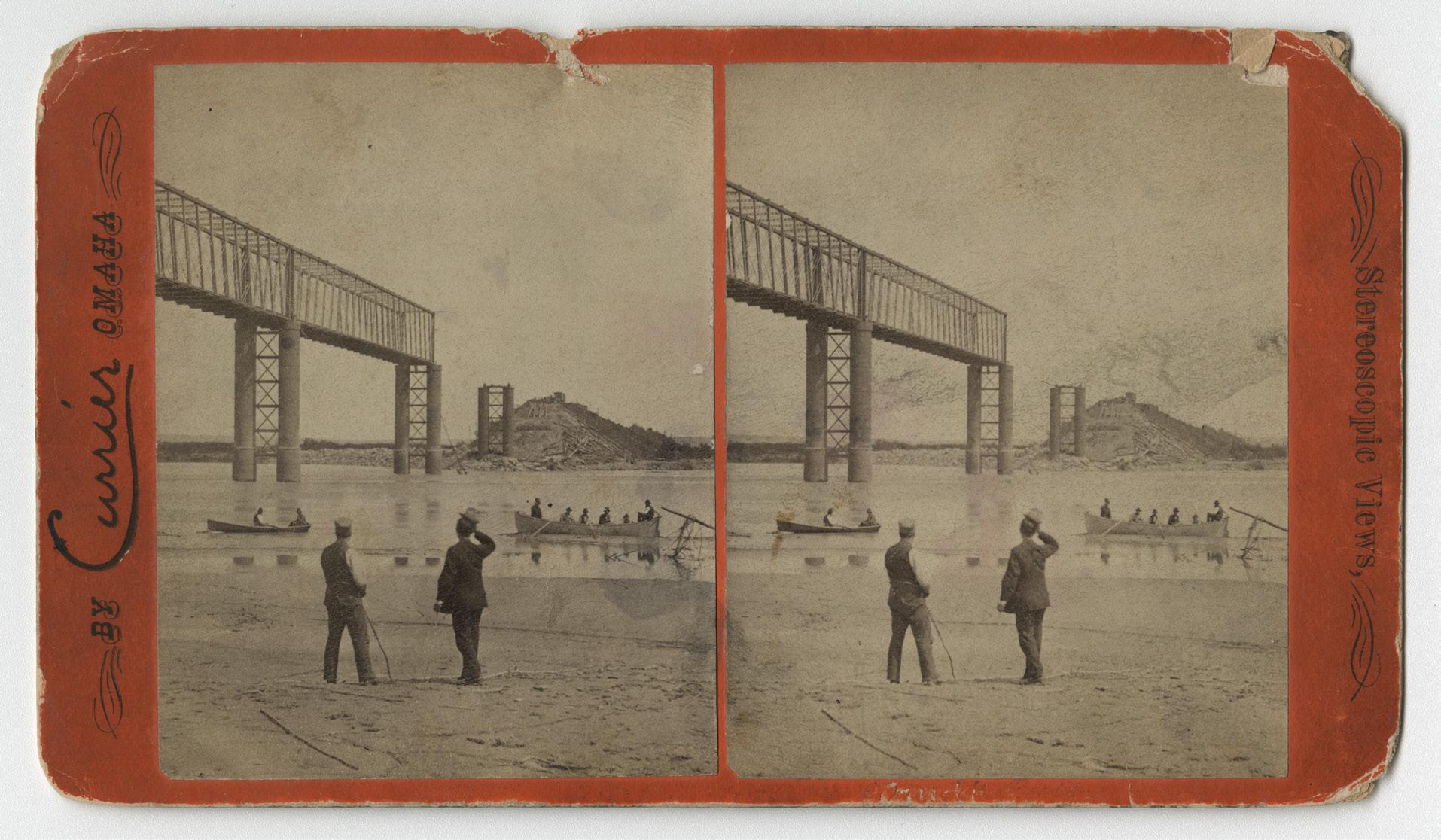
THE UNION PACIFIC MISSOURI RIVER BRIDGE (ALSO KNOWN AS THE “OMAHA BRIDGE”) WAS COMPLETED IN MARCH 1872. ALTHOUGH IT HAS BEEN REPLACED MULTIPLE TIMES OVER THE YEARS TO ACCOMMODATE HEAVIER MODERN TRAINS, THE BRIDGE REMAINS IN ACTIVE USE TODAY.
“The customers of Union Pacific, and all Class I railroads, that’s what they experience today. In our example, without the merger being approved yet, they have two different companies, they work with two different websites to get quotes, two different systems to be able to track their shipments across the United States. Post-merger, one entity, all those twos become one and the experience of our customers becomes better with issues resolved as quickly as possible.”
Technically, this is the second time Union Pacific has been a player in the creation of a coast-to-coast rail network, the other effort dating back to the company’s founding. Even as the opening salvos of the American Civil War rang out, President Abraham Lincoln was already pushing for ways to unite the nation, in this case literally and physically through the creation of a railroad that would pick up where the eastern rail terminated in the Midwest and stitch a path to California.
The epitome of common sense in hindsight, the issue was a contentious one when Lincoln took up the cause. First proposed 30 years prior, the idea had bogged down in congressional quibbles over cost to build and various logistical and turf battles, not to mention a vocal faction that wondered aloud about the wisdom of taking on such a project while the nation was embroiled in civil war.
Nevertheless, the die was cast at the 1860 Republican National Convention in Chicago that not only put Lincoln atop the ballot but passed a platform where, among other things, Republicans pledged to stop the spread of slavery, establish daily mail service, and build a transcontinental railroad.
Sixteen months after taking office in March 1861, Lincoln made good on the railroad pledge by signing the Pacific Railway Act of 1862, which bestowed the work of building the railroad between the Missouri River and Sacramento to two companies. The first, Central Pacific, an existing California railroad, would start at the Pacific Ocean and carve a path east through the Sierra Nevada mountains. Meanwhile, Union Pacific, a new railroad chartered by the Act itself, would start in the middle of the country at the edge of the frontier and head west.
What followed ranks easily among the major engineering feats of the civilized world. UP got off to a sluggish start; the new company broke ground in Omaha in 1863 but the first rails weren’t laid until 1865, reaching just to the city’s outskirts. However, the end of the war in 1866 greatly accelerated progress and by April 1868, UP’s efforts had traversed modern-day Nebraska and reached the mountains of southern Wyoming, crossing the Continental Divide.
Despite harsh Great Plains winters, brutal heat, battles with the Lakota and Cheyenne tribes, and the omnipresent need for supplies, Union Pacific crews would ultimately lay 1,086 miles of track, construct eight bridges including the 700-footlong Dale Creek trestle in Wyoming, and blast four tunnels, three in Echo Canyon, Utah, and one in Wyoming.
Central Pacific had challenges of its own, from supply ships that took seven months to navigate around Cape Horn to San Francisco to the creation of 15 tunnels in the rugged Sierra Nevadas where most of its 690 miles of track was laid.
By 1869, both companies had pushed into Utah Territory. The project was completed in just seven years, which was six years ahead of schedule. They met in May at Promontory Summit where a 17.6karat gold spike was ceremoniously “driven” to mark the project’s completion.
Patricia LaBounty, curator of the Union Pacific Railroad Museum in Council Bluffs, said the impact of the project cannot be overstated.
“Railroad history is really human history a history of human toil and achievement and problem solving and innovation that is still exemplified today,” she said. “This project, the way it was executed, the scope of it, the public-private partnership that this exemplified, became the model for all future western trunk lines in the United States as well as a model for how to build railroads throughout the world.
CONT. PAGE 30 FROM PAGE 26
POST-MERGER, ONE ENTITY, ALL THOSE TWOS BECOME ONE AND THE EXPERIENCE OF OUR CUSTOMERS BECOMES BETTER WITH ISSUES RESOLVED AS QUICKLY AS POSSIBLE.
—ERIC GEHRINGER
“Today, supply-chain issues are a buzzword, but in the 19th century, they had to organize supplies and supply chains in places that were largely unsettled. One of [UP’s] biggest innovations was the idea of creating a
40-car train that became a city on wheels. This train would go up and back down the track, bringing supplies by which they were able to construct two to three miles a day, four to six miles a day, depending on the terrain.”
Once completed, the railroad continued to be the backbone of the nation’s supply chain, bringing existing and future settlements alike supplies ranging from foodstuffs to building materials and a myriad of other freight. This, along with passenger service, achieved Lincoln’s original hopes of knitting together a nation that had only recently torn itself apart.
“I think the largest impact for the railroad and the railroad’s legacy over time is connection and communication,” LaBounty said. “After the transcontinental railroad was constructed, when someone moved across the country, it was no longer forever. It didn’t take a seven-month, deathdefying journey you could go visit someone in California in seven days. You could communicate with them via the mail, as a letter could reach the coast in seven days as opposed to months and months or maybe never.”
Gehringer said for all the business advantages and commercial benefits the proposed merger provides, there’s also a huge measure of pride and satisfaction the company feels at being at the center of such an achievement, given UP’s role in the history of American rail thus far.
“You know, I get asked lots of questions about the merger, but not a lot of people want to talk about the personal commitment we made starting back in 1862 all the way to the commitment I made today when I showed up to work, which is that we’re going to operate even better today than in the past,” he said. “It doesn’t matter which of the 30,000 Union Pacific employees you talk to today or tomorrow or the next day, all of us take a tremendous amount of pride in that mission.
“We often say we bleed yellow, which is the color of our locomotives, because of our pride in what we do every day to build America. It is so deep and so ingrained in our culture, dating all the way back to when Abraham Lincoln gave us the challenge to build all the way from Omaha to Sacramento. Now we have the opportunity to do that again; we get to take that pride, that right now is physically constrained by the Mississippi River, and we get to deliver it on a bigger scale.”
B2B OMAHA
For more information, visit up-nstranscontinental.com.


QUALITY. VARIETY. EXPERIENCE. EXPERTISE. SERVICE. Our priority is to deliver the best and freshest products that meet your highest standards and help you grow your business.
Our priority is to deliver the best and freshest products that meet your highest standard and help you grow your business.
B&B Trees • Evergreen Trees/Shrubs • Bagged Trees Deciduous Shrubs • Shrub Roses • Ornamental Grasses Perennials • Annuals • Grafted Evergreens Topsoil • Hardwood Mulch
B&B Trees • Evergreen Trees/Shrubs • Bagged Trees Deciduous Shrubs • Shrub Roses • Ornamental Grasses Perennials • Annuals • Topsoil • Hardwood Mulch

talk. Listen to the official Omaha Magazine podcast now!

PHOTO: BILL SITZMANN
DESIGN: NICKIE ROBINSON
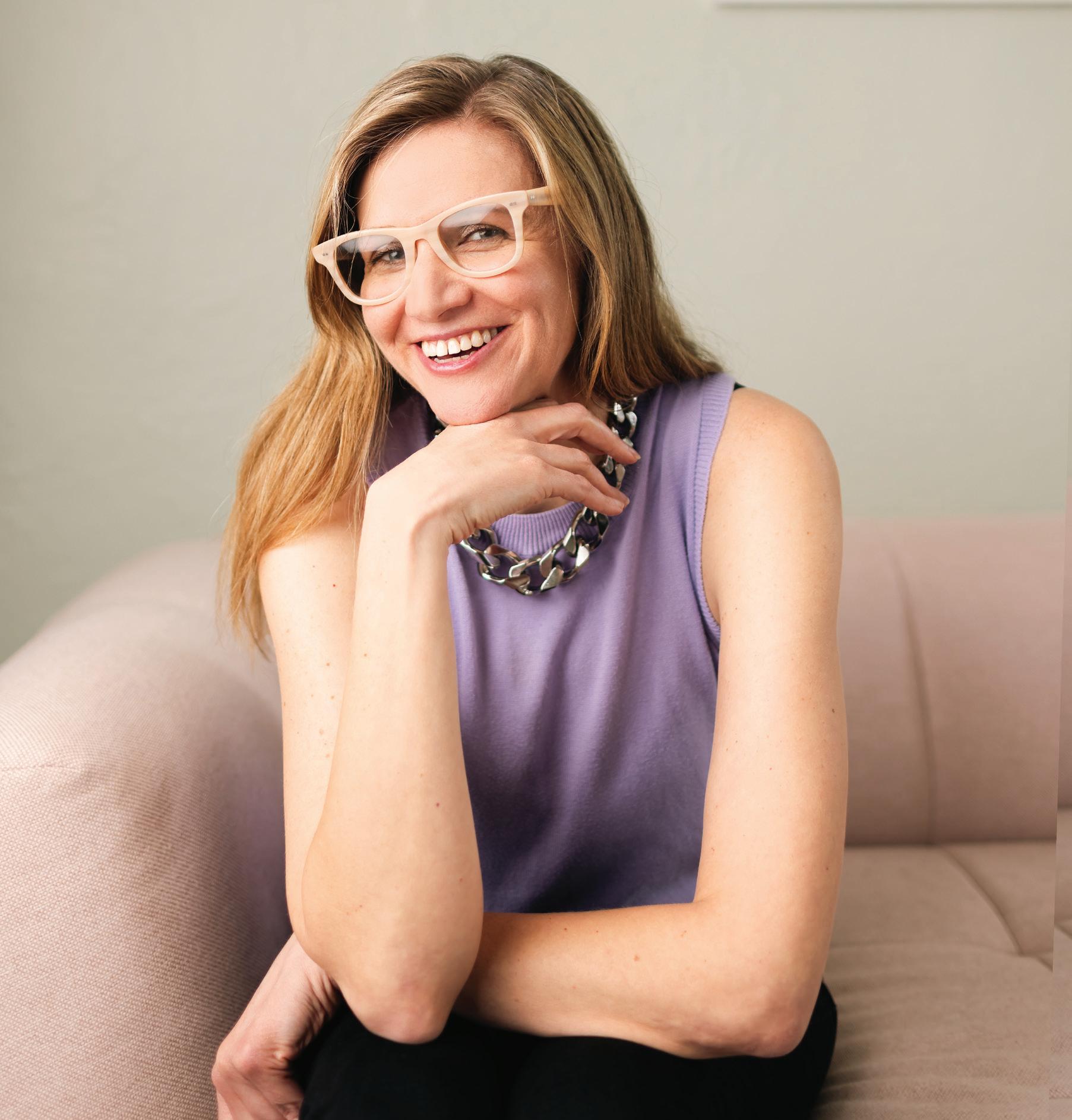
There are some people in Omaha who don’t just witness the city changing they help shape the change, often before the rest of us can even see what’s coming. Rachel Jacobson is one of those people.
What stands out about Jacobson’s career is not just the scale of what she’s done from founding Film Streams to helping shepherd major civic projects but the way she talks about institutions as living, breathing gifts to the community. She is deeply practical, intensely visionary, and, maybe most importantly, still full of belief.
“It was an idea I had when I was a senior in college,” she said of Film Streams. She was 21 years old, studying film history and criticism and already noticing what Omaha didn’t have. “There was no art house here.”
That absence stayed with her. After time in New York, where she worked at Miramax and later at WNYC, Jacobson came into sharper focus about what she wanted to build back home. “I wrote the mission,” she said. “There’s still the mission of Film Streams…25 years later. To enhance the cultural environment of Omaha through the presentation and discussion of film.”
What made that idea radical at the time was its structure. “We are a nonprofit organization because we believe in the power of film,” she said, “and we want to be able to make decisions that aren’t just bottom line.” For Jacobson, that meant making room for films that mattered, even if they weren’t the most commercially obvious choice. “Documentaries, international films, independents, that might not get a screen because they just don’t have the marketing budget,” she said. “That doesn’t mean they’re not worthwhile.”
She spent five years in New York learning the mechanics of how to make that vision real. “I was working in fundraising because I knew I was going to watch all the movies on my own,” she said. “That was the most intimidating part. That’s the hardest part, right? The nonprofit structure.” But she learned quickly that a mission-driven arts organization could only survive if the mission and the money were in constant conversation.
“The way that you create a nonprofit cinema that is missionoriented is you diversify your revenue streams,” she said. “You definitely have the box office. You definitely have concessions. You have earned revenue. But you also have gifts from people who care about it.”
That balance between art and business, vision and execution has defined Jacobson’s career. When Rob Nansel of Cursive called her about returning to Omaha as North Downtown was beginning to take shape, everything clicked. “Rachel, I think it might be time for you to come home,” he told her. He wanted Film Streams to become an anchor tenant alongside the new venue, Slowdown.
So she did what builders do: she got to work. “I built out the business plan,” she said. “I burned out my laptop in my bed…I’m in chat rooms with theater owners, finding out all the questions how much do you make in concessions per customer and stuff like that.”
Film Streams opened in 2007, and Jacobson ran it for 15 years. “It was an amazing job and I had so much wonderful support,” she said. “It almost killed me. It was very, very hard. You have to do everything.” Yet she loved the totality of it. “I learned how spreadsheets could manifest the vision.”
That phrase may be the clearest window into how she thinks. Numbers, to Jacobson, are not separate from the dream. They are how the dream survives.
That same sensibility shaped her work later at Heritage Foundation, where she helped lead transformational civic efforts like the Luminarium and the controversial downtown library project. On the library, especially, she remains passionate. “Libraries…are more relevant than ever, I would argue, but they need to evolve,” she said. “They need to be dynamic spaces.” She imagines them as places of access, creativity, and belonging. “Safe spaces for everyone in the community…access to information for everyone.”
She also understands why trust can fray between communities and the institutions meant to serve them. “If you’re just surveying your patrons, then you’re in an echo chamber,” she said. “Your audience is the entire community.” Of the public engagement process around the library, she said, “There are seriously thousands of people who informed what will go into that place. That’s how it should be.”
Now Jacobson is turning her attention toward a new venture: a tool called Pedal, designed to help nonprofits connect mission and money in a smarter, more transparent way. The idea grew out of what she has seen for decades. “You have people who really understand the mission…who know how to execute the programs,” she said. “A lot of the time, they’re not the same people who understand the business.”
That disconnect is where organizations get into trouble. “Every decision should link the two things,” she said. “Every program that you have an idea for, you should have a little spreadsheet, figure out how much this is going to cost, and what your goals are, and where the money’s gonna come from.”
It’s classic Jacobson: visionary, but grounded. Big picture, but never allergic to detail. She believes in artists, in public life, in civic infrastructure, in institutions that can outlast the people who started them.
“A nonprofit is intended to be a gift to the community,” she said. “That’s what makes it an institution.”
And in Omaha, that may be exactly what Jacobson has been building all along. B2B OMAHA
Visit pedaltogether.com for more information.
A NONPROFIT IS INTENDED TO BE A GIFT TO THE COMMUNITY. THAT’S WHAT MAKES IT AN INSTITUTION. —RACHEL JACOBSON
COLUMN:
MAYOR JOHN EWING
PHOTO:
BILL SITZMANN
DESIGN: NICKIE ROBINSON
The night I won the mayoral race, I took a call from one of my best friends since childhood, a man I trust completely, and one who, during the campaign, was professional and loyal to former Mayor Jean Stothert.
“Congratulations,” Thomas Warren, Stothert’s then-chief of staff, said to me.
I replied with a question: “Would you stay on in your current role for me?”
That conversation set the stage for what apparently is an unusual HR decision for mayoral administrations: Most everyone who had served Jean Stothert either in the mayor’s office or heading up the 11 city departments wanted to stay on.
I interviewed them all, and before I ever took the oath to become Omaha’s 52nd mayor, we had a staffing plan in place that included just two new people: a North Omaha community liaison and a new deputy chief of staff for communications.
This is apparently rare journalist Henry J. Cordes reported at the time that incoming mayors typically “clean house.” For me, though, it was a no-brainer. I had a chief of staff I knew from our childhood days in North Omaha and our years working together on the Omaha Police Department, which he led as chief. We spent a lot of time together partnering on violence reduction and community betterment projects. In the others, I saw good public servants who wanted to keep on serving the public. And I operate from a fundamental belief that government should work as a stabilizing force.
While a mayoral race is political, the people who serve the city are not. At the end of the day, we want to serve the people of Omaha, keeping the public safe while providing a good quality of life in city services. Continuity is important.
Furthermore, this stable cadre of civil servants allowed me to hit the ground running last June with seven key priorities, starting with affordable housing. Omaha faces a severe shortage of affordable places to live. I saw a way to speed up streetcar bond revenue designated for this, and we were able to put $40 million toward this effort right away.
Since I took office, two directors have left. One resigned, and we are conducting a national search to head up the city’s Parks, Recreation, and Public Properties Department a department that has been underfunded and will be transformed with a partnership with philanthropy. The director of the Omaha Convention and Visitors Bureau retired, and in her place is a trusty veteran.
Keeping senior leaders in their positions isn’t a new idea for me. When I took over the Douglas County Treasurer’s office after my 2006 election, nearly everyone stayed and we were able to keep continuity while implementing my vision and major changes for that office.
Perhaps the idea of “cleaning house” is rather unprecedented for political leaders. I’ve never viewed myself as a politician. Instead, I remain a public servant and want to put the needs of constituents first. What was best for the City of Omaha? Keeping Chief Warren in his role and the other leaders who wanted to stay. So far, one year in, I’d say it’s worked out well for Omaha.
And we’re evolving. To implement my vision for Parks and other public-private partnerships, one of my two senior leaders for economic development is taking a new role, funded by philanthropy, to head up and implement innovative ideas. Jacquelyn Morrison will become the director of transformation and strategic partnerships.
Leading a large and complex organization like the 3,000-employee City of Omaha, with vital services more than half a million people depend on, requires a dedicated, knowledgeable, and responsive staff. I am proud of the folks we have in place and look forward to how we can make Omaha even better than it is. B2B OMAHA
Visit mayors-office.cityofomaha.org to learn more.
1 Million Cups
Every Wednesday • 8:30-9:30 a.m.
The Ashton Building at Millwork Commons 1229 Millwork Ave. —1millioncups.com
B.A.I.L. Open Office Hours
Every Wednesday • 10:30 a.m.-1 p.m.
Grow Nebraska Women’s Business Center 5425 N. 103rd St. —gnwbc.org
CREW Omaha Classic
June 2
Indian Creek Golf Course 3825 N. 202nd St., Elkhorn —omaha.crewnetwork.org
Fundraising Palooza
June 3 • 8:30 a.m.-4 p.m.
Scott Conference Center 6450 Pine St. —nonprofitam.org
Business Excellence Awards
June 4 • 4:30-6 p.m.
All Makes 2558 Farnam St. —your.omahachamber.org/events
Startup Your Summer Summit 2026
June 6 • 8:30 a.m.-4 p.m.
Hot Shops Arts Center 1301 Nicholas St. —humblelionconsulting.com
Coffee & Connections
June 10 • 7:30-9 a.m.
OCI Insurance & Financial Services 4221 N. 203rd St. —westochamber.org
CREW Omaha June Program
June 10 • 11:30 a.m.-1 p.m.
Scott Conference Center 6450 Pine St. —omaha.crewnetwork.org
Aksarben Foundation
Summer Baseball Mixer
June 13 • 11 a.m.-4 p.m.
The Old Mattress Factory Bar & Grill 501 N. 13th St. —aksarben.org
BIPOC Roundtable
June 23 • 11:30 a.m.-1 p.m. TBD —nonprofitam.org
Idea Pub: Morning Edition
June 25 • 9-11 a.m.
Catalyst Omaha, Forge Event Hall 4601 Catalyst Ct. —unemed.com
Humanex Community
Leadership Summit
June 24-25 • 8 a.m.-4 p.m.
Baxter Arena 2425 S. 67th St. —humanexventures.com
Coffee & Connections
July 8 • 7:30-9 a.m.
OCI Insurance & Financial Services 4221 N. 203rd St. —westochamber.org
ALP National Conference
July 13-16
TBD —alpleaders.org
New Member Coffee
July 29
Stories Coffee 11432 Davenport St. —omaha.crewnetwork.org
Idea Pub: Morning Edition
July 30 • 9-11 a.m.
Catalyst Omaha, Forge Event Hall 4601 Catalyst Ct. —unemed.com
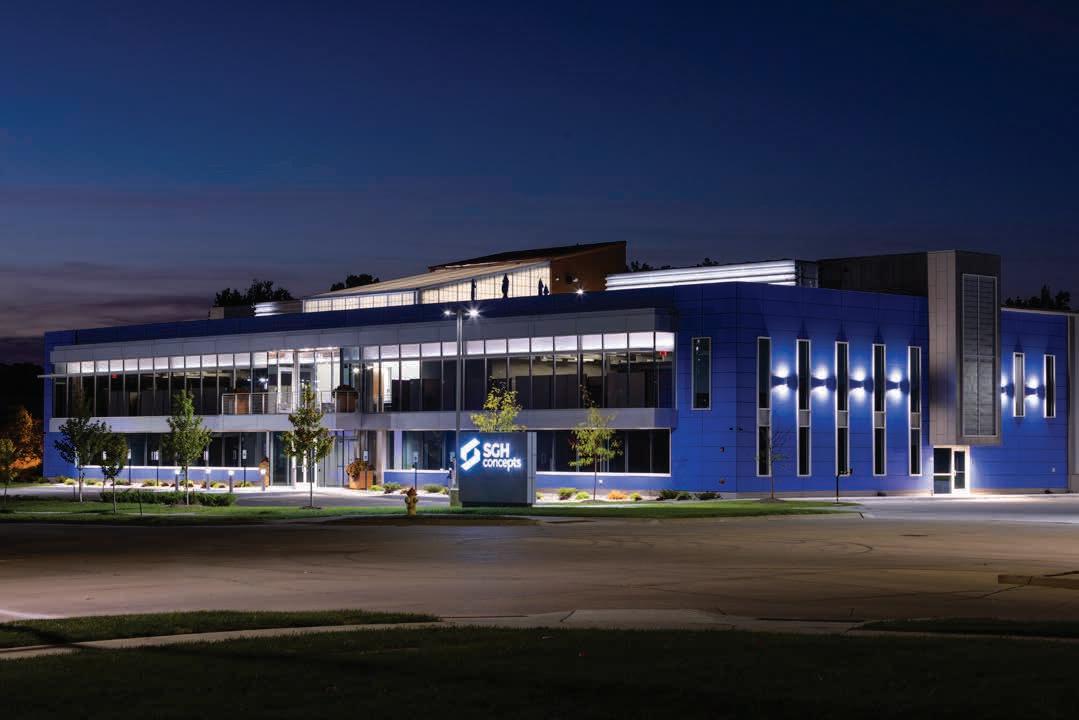








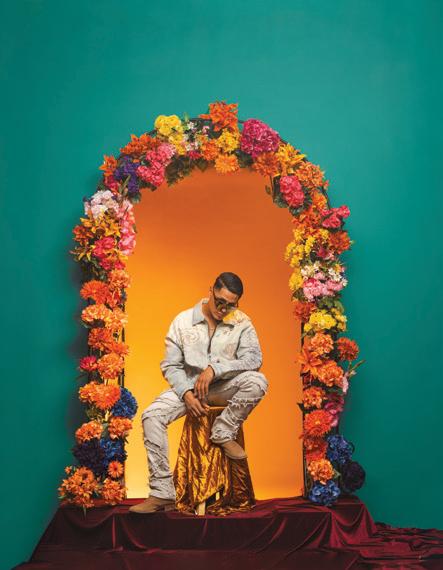


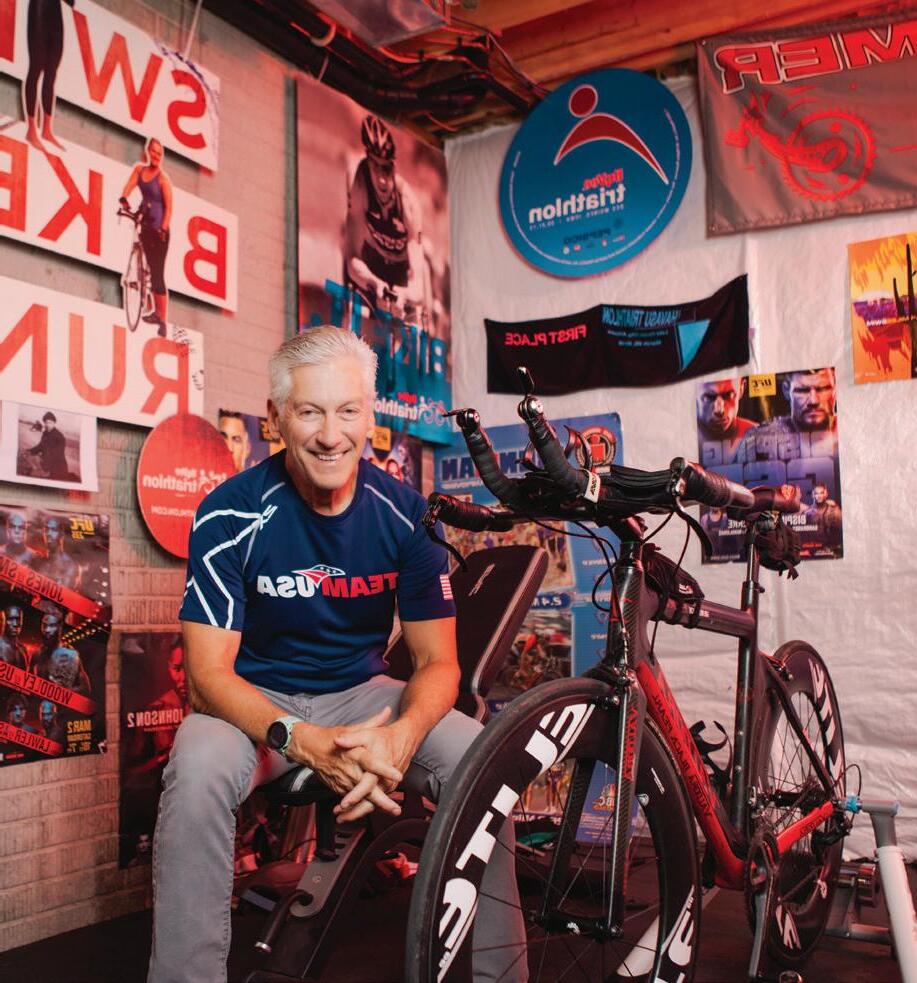
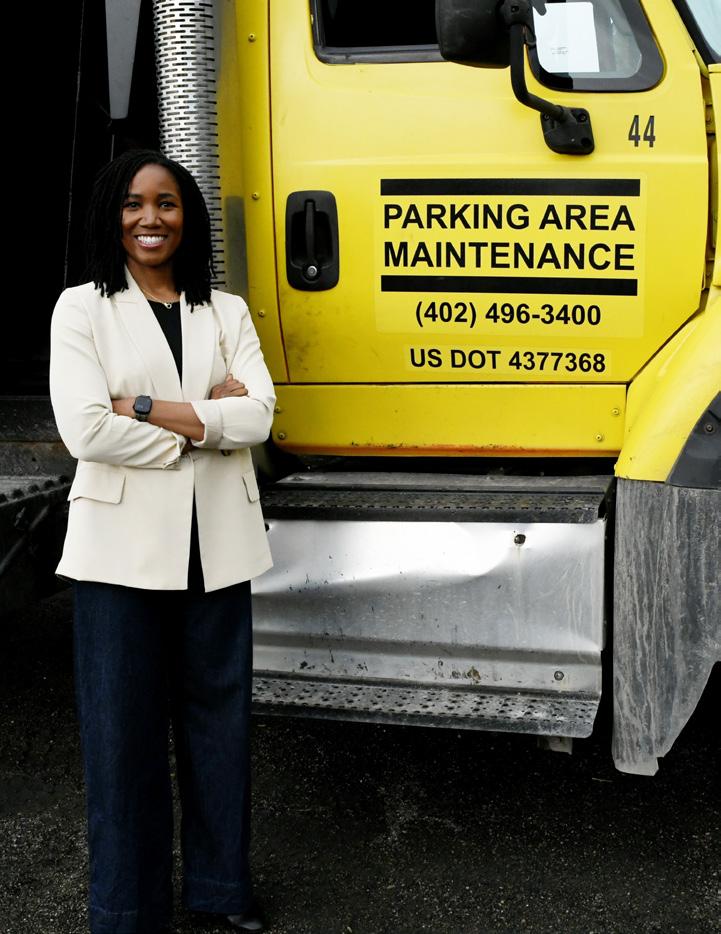
After acquiring Parking Area Maintenance four years ago, Army veteran Victoria Mbachu immediately put her construction officer background to work managing the scope of services provided by the company from asphalt paving and sealcoating to crack sealing, concrete care and line striping for both new and established properties.
Her second area of expertise in the military, psychological operations, is also helping her grow and differentiate her company.
“We’re really intentional about how we take care of our people,” Mbachu explained. “I believe maybe it’s an Army thing, but if I invest in my team, support them and hold a high standard, it really shows up in our work.”
Mbachu’s team has already built a positive reputation in a competitive, relationship-driven seasonal market. Parking Area Maintenance is now expanding and pursuing government contracts, Mbachu said, adding that she intends to scale the business while maintaining quality.

“We have a high level of discipline, accountability and ownership,” she said. “We answer our phones when someone calls; they can count on us to communicate, move quickly. … Trust is everything.”
With a skill set including sales, marketing and finance, Evan Meester had owned and operated as well as bought and sold several businesses, so his first experience with business brokerage was from the seller’s side.
“I went around to different brokers around town and said, ‘OK, what do you think this company’s worth, and what else do you have for sale?’” he recalled. “I would say I was underwhelmed.”
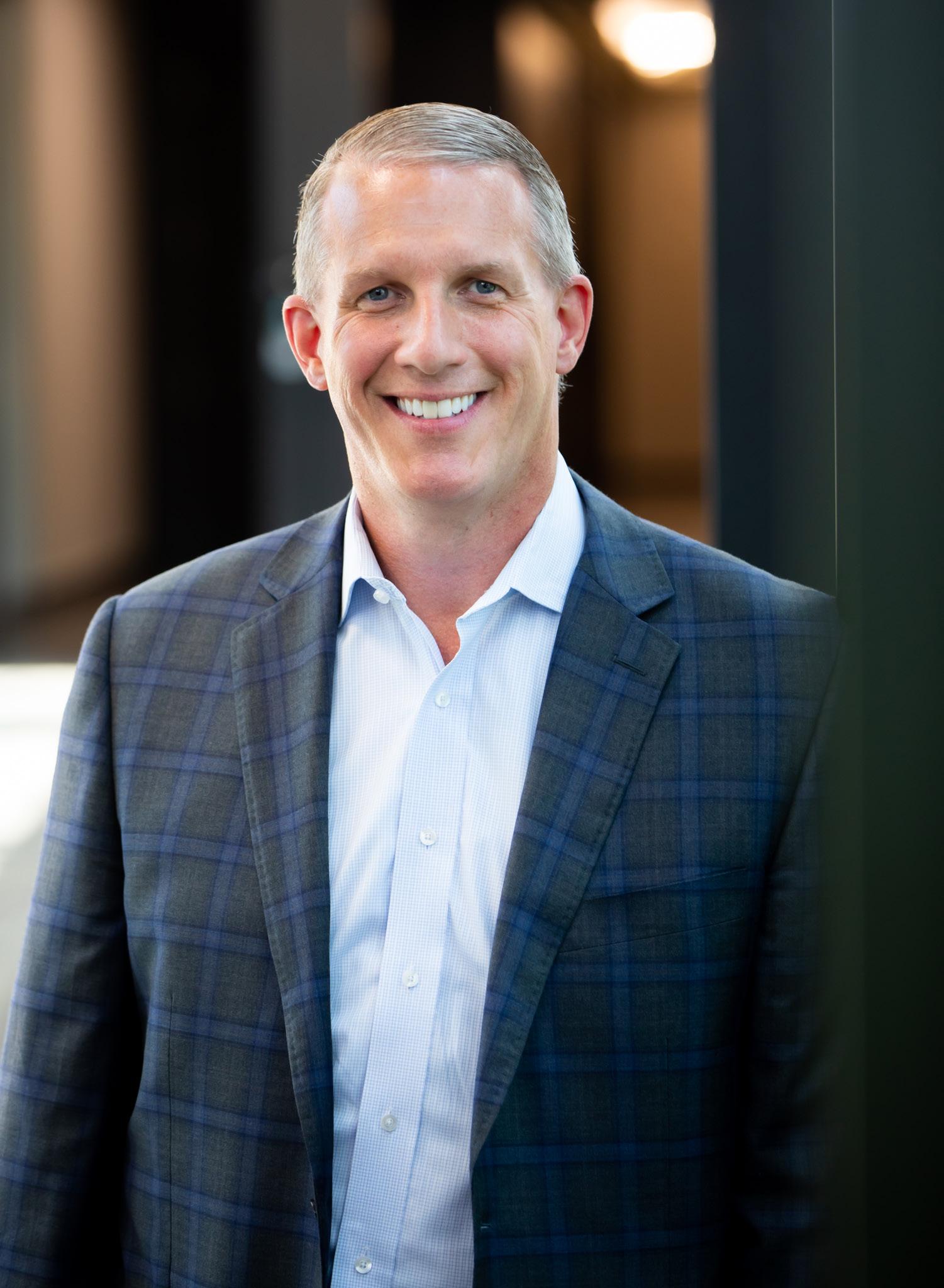
He not only felt he could do better, he ultimately proved it. In June 2013, Meester created Results Business Advisors and began evaluating, listing and selling businesses in Nebraska. As president, he now leads a team of seven brokers who assist sellers in valuing and marketing their company and navigating them through the intricate and complex buying process.
“We represent sellers, privately held companies typically valued under $50 million, and we help them sell their company everything from soup to nuts, if you will from doing the valuation of the company all the way to getting them connected with the right buyer. Which is important, not just a buyer that has money, but is a good fit,” he said. “We coordinate everything and keep the ball rolling.”
Integrity is key, Meester added, involving transparency and confidentiality at different points in the process.
“At the end of the day, if we make a match and it’s the wrong buyer… it’s going to be a bad transition, and there are going to be issues, probably for years to come, for the buyer and seller,” he said. “But if we help make the right match, because of the way we vet our buyers, things go a lot more smoothly both getting to the finish line and beyond that.”
Meester also said he understands the emotional and sentimental aspects of selling and buying a business, especially when a deal nears completion and reality sets in, exacerbating potential second-guessing or setbacks over minor details. These are just some of the everyday challenges his team manages as part of their work, like guiding business owners who’ve put off exit planning or managing a sale abruptly initiated by an owner in response to life changes. Results Business Advisors has the talent
and experience to assess, prepare and position the business as effectively as possible even when conditions are less than ideal, Meester said.
“I’ve got a great team, the best team I’ve ever had,” he said. “That makes things very manageable.”
He’s confident enough in his brokers to let them take the lead with clients, he explained, and his overall focus for the company relies on the strength of his team rather than aggressive expansion. In fact, his role has evolved into guiding strategy and only stepping in when needed.
“Almost all of our customers come from referrals,” he said. “Not having to advertise and being able to still get a lot of new business I think is a testament that we did a good job, and people can trust us to do it the right way and get results.”
RESULTS BUSINESS ADVISORS
ATTN: EVAN MEESTER
12020 SHAMROCK PLAZA
OMAHA, NE 68154
What is marketing?
If you gather 10 business owners in a room and post that question, you’ll get 10 different answers.
Facebook. Ads. Websites. Click funnels. Can I ask Alexa? Those videos Carol posts on Fridays. Instagram. OnlyFans (I’m kidding! Wait...Carol?!) AI. And that right there is the problem.
Let me share the uncomfortable truth: Marketing today is not just another thing your company has to do.
Marketing is not a department. It’s not a campaign. It’s not something you ask a virtual assistant in the Philippines to have ChatGPT spit out in 30 seconds.
Marketing is perception.
And, especially now, perception is everything.
It’s how your business is experienced. How it’s validated. And it affects every aspect of your business: from sales to attracting “A players,” your product’s pricing to how the market responds, even the decision fatigue and leadership drain that plagues most CEOs and executives today.
Marketing is a leadership function because it is your Perception Operating System your reputation system. Marketing is how your name is experienced when you’re not in the room.
Twenty years ago, trust formed more slowly. Validation happened face-to-face.
Today, someone hears your name and then Googles you. They read reviews. They scroll through your website. They compare you to three competitors. And their perception of you is formed in seconds minutes if their WiFi is slow.
Perception now forms (and starts to grow) before contact has even occurred.
That shift alone changes everything.
When leaders treat marketing like an activity instead of a leadership responsibility, they lose control of perception without realizing it. The symptoms surface elsewhere pricing pressure, inconsistent leads, talent that doesn’t quite fit, decision fatigue that makes growth feel chaotic instead of clean.
Most leaders respond by trying harder. More posts. More vendors. More tools. More noise.
But willpower doesn’t scale. Systems do.
Leading your company’s marketing doesn’t mean getting in the weeds of the tactics, let alone becoming a marketer. It means deciding what you want to be known for and making sure the market experiences you that way consistently.
Clarity beats activity. Signal beats noise. Reputation beats volume.
The companies that win the next decade won’t be the ones trying to be everything, everywhere, all at once. They’ll be the ones leading perception intentionally.
Marketing isn’t magic. It’s management. It’s the most misunderstood leadership function in business.
And the cost of failing to lead this perception operating system is far greater than most business owners realize. It’s not just a one-time missed payment, but a debt that grows (and eventually erodes) your company’s reputation and you over time.
Make the wise investment in your marketing strategy. You’ll quickly discover how seamlessly it will find its way into your daily operations and even strategic goals.
If I have your attention, that’s good. If you want to take the next step, let’s chat.
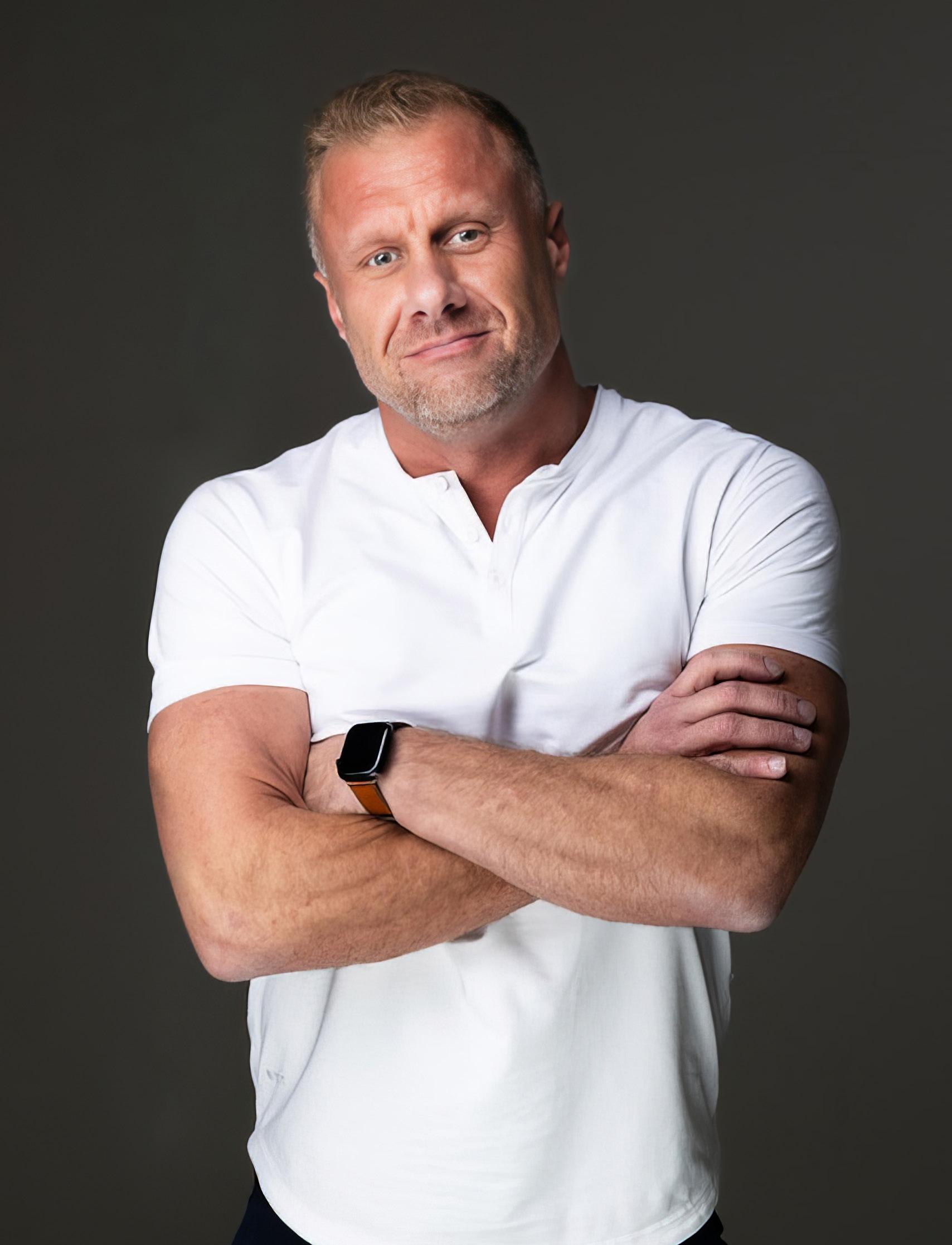
MATTHEW WAYNE TOMPKINS
FOUNDER | SPEAKER | LEADERSHIP EDUCATOR
ENTREPRENEUR ADDICT
402.672.1974
MATT@THECONTENTBOX.COM
TWO BROTHERS CREATIVE
8790 F STREET, SUITE 712 OMAHA, NEBRASKA 68127
531.232.9811
TWOBROTHERSCREATIVE.COM




Redefine your office with Beyond Walls by Allsteel. These innovative wall systems offer acoustic privacy, modern design, and adaptability for evolving workplaces. Perfect for creating collaborative or quiet spaces, Beyond Walls combines functionality with sleek, sustainable style. Let All Makes help you build smarter, more flexible environments. VISIT ALLMAKES.COM TO SCHEDULE A CONSULTATION