NOVEMBER 11, 2026
MEN’S HEALTH
PAGE 1
Your health is your greatest investment, and there’s no better time to put it first!
From heart health and prostate care to cancer prevention, mental wellness, fitness and nutrition, our Men’s Health section is packed with important information every man should know. Discover tips, advice and resources to help you stay healthy, feel your best and take charge of your well-being.
Turn the page — your health is worth it!
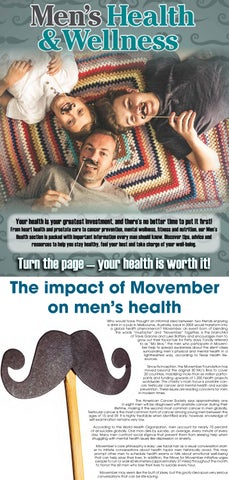
The impact of Movember on men’s health Who would have thought an informal idea between two friends enjoying a drink in a pub in Melbourne, Australia, back in 2003 would transform into a global health phenomenon? Movember, an event born of blending the words “mustache” and “November” together, is the brainchild of Travis Garone and Luke Slattery and encourages men to grow out their facial hair for thirty days. Fondly referred to as “Mo Bros,” the men who participate in Movember help to spread awareness about the silent crises surrounding men’s physical and mental health in a lighthearted way, according to Texas Health Resources. Since its inception, the Movember Foundation has moved beyond the original 30 Mo’s Bros to cover 20 countries, mobilizing more than six million participants and funding upwards of 1,250 health projects worldwide. The charity’s main focus is prostate cancer, testicular cancer and mental health and suicide prevention. These issues are leading concerns for men in modern times. The American Cancer Society says approximately one in eight men will be diagnosed with prostate cancer during their lifetime, making it the second most common cancer in men globally. Testicular cancer is the most common form of cancer among young men between the ages of 15 and 39. It is highly treatable when identified early; however, knowledge of self-examination remains very low. According to the World Health Organization, men account for nearly 75 percent of all suicides globally. One man dies by suicide, on average, every minute of every day. Many men confront social stigmas that prevent them from seeking help when struggling with mental health issues like depression or anxiety. Movember’s core philosophy is easy: use facial hair as a visual conversation starter to initiate conversations about health topics men historically avoid. This may prompt other men to schedule health exams or talk about emotional well-being that can help save their lives. In addition, the Move for Movember initiative urges people to run or walk 60 kilometers (approximately 37 miles) throughout the month to honor the 60 men who lose their lives to suicide every hour. Movember may seem like the butt of jokes, but this goofy idea spurs very serious conversations that can be life-saving.
PAGE 2
MEN’S HEALTH
NOVEMBER 11, 2026
Warning signs of mental health issues The significance of measures to protect mental health has garnered renewed attention in recent years. As that shift has taken place, measures to safeguard mental health have become vital components of the health and wellness routines of people from all walks of life. Education is an important component of mental health care. While mental health issues were once stigmatized, education has helped to raise awareness about mental illness and how common it is among people of all ages, countries, and socioeconomic backgrounds. One of the first steps to educate oneself or others about mental health is to learn the warning signs and symptoms that someone might be dealing with mental illness. The National Alliance on Mental Illness notes each illness has its own symptoms, but there are some common indicators that characterize various conditions. According to the NAMI, signs of mental illness in adults and adolescents may include: · Excessive worrying or fear · Feeling excessively sad or low · Confusion when thinking or difficulty concentrating and learning · Extreme changes in mood, including uncontrollable highs or feelings of euphoria · Feelings of irritability or anger that are prolonged or strong · Reluctance to engage with friends and avoidance of social activities · Difficulty understanding or relating to other people · Alterations in sleeping habits or feeling tired or lacking energy · Changes in eating habits, such as increased hunger or lack of appetite · Changes in sex drive · Difficulty perceiving reality. These difficulties may be marked by delusions or hallucinations, in which a person experiences and senses things that don’t exist in objective reality. · Inability to perceive changes in one’s own feelings, behavior or personality, a lack of insight known as anosognosia · Excessive consumption of substances like alcohol or drugs · Multiple physical ailments without obvious causes, such as headaches, stomach aches, and vague and ongoing aches and pains · Thoughts about suicide · An inability to carry out daily activities or handle daily problems and stress · An intense fear of weight gain or concern with appearance
Parents should know that even young, school-aged children can experience mental health issues or illness. The symptoms of such conditions in young children may manifest behaviorally, which the NAMI notes occurs because kids are still learning how to identify and talk about their thoughts and emotions. Young children dealing with mental health issues may exhibit these symptoms: · Changes in school performance · Excessive worry or anxiety. Children may exhibit these symptoms by fighting to avoid going to bed or school. · Hyperactive behavior · Frequent nightmares · Frequent disobedience or aggression · Frequent temper tantrums The World Health Organization estimates that more than one billion people across the globe are living with mental health conditions. More information about mental illness can be found at nami.org.
NOVEMBER 11, 2026
MEN’S HEALTH
PAGE 3
MEN’S HEALTH HEALTH MA MATTERS TTERS
A lot of good years ahead. Let’ss make sure you’re well for them. Let’
An annual wellness visit is an opportunity to talk with your provider about your health history, lifestyle, and goals. To Together, T gether, you can discuss changes or concerns, and create a prevention plan that fits your age and individual needs. CARE YOU YO OU CAN COUNT ON, CLOSE TO HOME ANNUAL WELLNESS VISIT with trusted Primary Care Providers
HEART & VASCULAR CARE Cardiology Care with Clyde Sullivan, MD and Sarah Christenson PA
UROLOGY & PROSTA PROSTATE TA AT TE HEALT HEALTH LT TA L H with urologist Andrew J. Blazek, MD
GASTEROENTEROLOGY GI care with Ryan Burkholder, r MD r,
PODIATRY PODIAT A ATRY CARE keeping you on your feet with Levi Smith, DPM
BEHAVIORAL HEALTH HEALT L H LT confidential care, no drive to the city
712-246-7400 CALL C ALL F FOR OR AN AN APPOINTMENT APPOINTMENT TODAY TODA AY Y
www ww www.smchospital.com ww.smchospital.com
1 Jack Foster Drive M F i 8am Mon-Fri: 8 - 5pm 5
PAGE 4
MEN’S HEALTH
NOVEMBER 11, 2026
What men should learn about heart disease Heart disease has remained the leading cause of death for men in the United States for the last century. It’s also the second leading cause of death among men in Canada. Despite significant medical breakthroughs in recent years, the American Heart Association 2026 Statistical Update reveals approximately 54 percent of adult males currently live with some form of cardiovascular disease (CVD).
High burden for men
The overall burden for CVD remains high. CVD claims the lives of more than 350,000 men annually, says Kirby Medical Center. Men need to know about heart health so they can take proactive steps to protect themselves against CVD. One thing to realize is that a man’s risk begins to climb sharply around age 35, according to Northwestern University. On average, men develop coronary heart disease a full decade earlier than women. Many men miss the window to catch rising blood pressure or cholesterol that can lead to future damage.
Recognizing symptoms
Men are more likely to experience the textbook symptoms of a heart attack than women. Still, these symptoms may be ignored. Here are some key signs, courtesy of Brown University Health. · Intense chest pain: A crushing pain, often described as an elephant sitting on the chest. · Radiating pain: Discomfort may move to the left arm, jaw or neck. · Shortness of breath: Difficulty breathing, even while resting.
Prevention strategies
The AHA says up to 80 percent of heart disease cases are preventable with some simple lifestyle adjustments. Clinical focus has shifted toward the following advice. · Reduce noise exposure. Reducing exposure to high levels of transportation and industrial noise can help, as noise is linked to chronic hypertension, according to Labcorp. · Avoid sleep extremes. It’s important to get between seven and eight hours of sleep each night. Less than five hours or more than 10 hours is directly linked to higher coronary event risks, says UChicago Medicine. · Manage CKM syndrome. The AMA says CKM syndrome is a systemic disorder defined by an interconnection between obesity, diabetes, kidney disease, and heart disease. Left untreated, it can progress to organ failure, heart attack or stroke. Early screening for CVD is advised for men so they can head off potential heart problems.
High Blood Pressure:
Many men have high blood pressure without knowing it because it often has no symptoms.
High Cholesterol:
Excess waxy plaque builds up and narrows the arteries over time.
Smoking:
Cigarette smoke damages blood vessel linings and constricts blood flow. Men smoke at slightly higher rates than women.
Diabetes and Obesity:
Excess weight and high blood sugar strain the heart and blood vessels
Risk factors for heart disease The World Health Organization reports that ischaemic heart disease, also known as coronary artery disease, is the leading cause of death across the globe. Ischaemic heart disease accounts for 13 percent of the world’s deaths, affecting people from all walks of life and every corner of the globe. The WHO also notes that deaths attributed to ischaemic heart disease rose by 2.7 million between 2000 and 2021, the largest uptick in deaths of any disease in the world during that time. Data from the WHO underscores the threat posed by ischaemic heart disease. But humanity is not helpless against the disease. In fact, many risk factors are within a personal’s control, suggesting that a concerted effort to educate the public about the risk factors, and how to avoid them, could have a profound and life-saving impact. The National Heart, Lung, and Blood Institute reports that almost half of all adults in the United States have at least one of three key risk factors for ischaemic heart disease, and the Heart and Stroke Foundation of Canada indicates nine in 10 Canadians have at least one risk factor for heart conditions, stroke or vascular cognitive impairment. One of the more significant hurdles to beating heart disease is raising awareness of its risk factors among the billions of people across the globe who have at least one of those factors, even if they don’t know it. According to the NHLBI, the following are some notable risk factors for heart disease.
· Age: Heart disease risk increases with age, but anyone can develop it. For men, risk increases significantly around age 45, while women’s risk increases more rapidly around age 55. · Environmental/work conditions: Indoor or outdoor air pollution increases risk for heart disease. The NHLBI notes that air pollution may cause or worsen conditions like high blood pressure or inflammation, which are known risk factors for heart disease. Long and/or irregular working hours (55 hours or more per week); exposure to toxins, radiation, secondhand smoke, or other hazards; work-related stress; and sedentary positions throughout a workday are some work conditions associated with an elevated risk for heart disease. · Family history/genetics: A father or brother diagnosed with heart disease prior to age 55, or a mother or sister diagnosed before age 65, is a risk factor for heart disease. The NHLBI also notes research has found that some genes are linked to a higher risk of heart disease. · Lifestyle habits: Unhealthy lifestyle habits that increase heart disease risk include a sedentary lifestyle, excessive alcohol consumption, insufficient sleep over a prolonged period of time, smoking, and poor diet. These are some heart disease risks that people should be aware of as they seek to improve their overall health. More information about ischaemic heart disease can be found at nhlbi.nih.gov.
NOVEMBER 11, 2026
MEN’S HEALTH
PAGE 5
The Toughest Thing You’ll Do All Year Takes 20 minutes.
A yearly checkup. No lecture. No Judgement. Clinics in: • Hamburg – 712-382-2626 • Sidney – 712-374-2649 • Tabor – 712-629-2975
grapehospital.com
PAGE 6
MEN’S HEALTH
NOVEMBER 11, 2026
According to the Centers for Disease Control and Prevention, physical activity can improve cognition and thinking, reduce short-term feelings of anxiety, and make it easier for people to manage their weight.
Regular exercise can reduce risk for cardiovascular disease, type 2 diabetes and metabolic syndrome, infectious diseases like COVID-19 and pneumonia, and various forms of cancer, including cancers of the breast, colon, kidneys, and lungs.
How exercise builds a stronger heart The benefits of physical activity are well-documented. Adults may be reminded of the short- and long-term benefits of exercise when visiting their physicians for annual well visits or to treat an illness. Though exercise is often viewed as a means to losing weight, it’s equally important for people of all ages to recognize the many other ways physical activity benefits the body, including its role in heart health. The World Health Organization reports that cardiovascular diseases (CVDs) are the leading causes of death across the globe. A host of variables can lead to a CVD diagnosis, and a sedentary lifestyle is among them. By including exercise in their daily routines, individuals can build a stronger heart that benefits their bodies in myriad ways.
Exercise, the heart and lung function
The National Heart, Lung and Blood Institute notes that regular moderate- and vigorous-intensity physical activity strengthens the heart muscle. A stronger heart is more capable of pumping blood to the lungs, which the NHLBI notes ensures a stronger blood flow to the muscles.
Exercise and blood oxygen levels
Exercise helps to increase oxygen levels in the blood by improving the ability of the heart to pump blood not only to the lungs, but throughout the body. That’s a notable benefit, as the Cleveland Clinic notes hypoxia, a condition marked by low blood oxygen lev-
els, can lead to adverse health conditions, such as damage to individual organ systems, including the brain.
Exercise and coronary heart disease
Coronary heart disease is a condition marked by the buildup of plaque in the coronary arteries, which the NHLBI notes supply the heart muscle with oxygen-rich blood. Moderate- and vigorous-intensity aerobic activity has been linked to a lower risk for coronary heart disease because it can help people lower their blood pressure; reduce a type of fat in the blood known as triglycerides; increase “good” cholesterol levels; help the body manage its blood sugar and insulin levels; and reduce levels of C-reactive protein (CRP), which is a sign of inflammation associated with a higher risk of heart disease. These are just a handful of the ways that exercise can help individuals build a stronger heart. Individuals who have already been diagnosed with heart disease and have lived a largely sedentary lifestyle are urged to speak with their physicians about safe ways to incorporate exercise into their daily routines. Vigorous aerobic activity may not be safe for people who have heart disease, so anyone in that situation should not simply begin exercising on their own. A healthy heart is a building block of a long life. More information about exercise and heart health can be found at nhlbi.nih.gov.
NOVEMBER 11, 2026
MEN’S HEALTH
PAGE 7
Men: Get the facts about testicular cancer Testicular cancer may or may not be on the minds of men during health checkups. Despite being relatively rare, accounting for approximately 1 percent of all male cancers, testicular cancer may warrant concern for men between the ages of 15 and 35, as the American Cancer Society notes the average age at the time of a testicular cancer diagnosis is 33. Those seeking to learn more about testicular cancer can review the following information about the condition.
Highly treatable
It is estimated that nearly 10,000 men in the United States will be diagnosed with testicular cancer in 2026, according to Johns Hopkins Medicine. However scary that might seem, treatment is highly effective. The overall five-year relative survival rate for testicular cancer is approximately 95 percent. If the cancer is caught in the localized stage (confined to the testicle), the survival rate rises to 99 percent, according to data from the National Cancer Institutes’s SEER Program. Only about one in 5,000 males will die from testicular cancer, says the American Cancer Society.
Signs of the condition
Oftentimes the first sign of testicular cancer is a painless lump or swelling in the testicle. Additional symptoms may include a feeling of heaviness in the scrotum, a dull ache in the groin, or sudden fluid collection, advises the Cleveland Clinic.
Types of testicular cancer
Medical professionals generally categorize testicular cancer tumors into two main types, based on where a tumor originates. Seminomas are typically slow-growing and highly sensitive to radiation therapy. Non-seminomas tend to grow and spread more quickly and are often treated with surgery and chemotherapy.
Risk factors
The exact cause of DNA mutations that result in testicular cancer are unknown, but several factors increase a person’s risk. · A family history (father or brother) who has had the disease. · White men are diagnosed at higher rates than men from other demographics in the United States. · Men with cryptorchidism (an undescended testicle at birth) are at elevated risk.
Treatment options
The Mayo Clinic says that treatment typically begins with a radical inguinal orchiectomy, which is the surgical removal of the affected testicle. Further treatments like chemotherapy or radiation also may be recommended. Medical professionals recommend men familiarize themselves with what looks and feels “normal” on their bodies through monthly self-exams. Such exams may catch changes that indicate testicular cancer at a point in time when the disease is most treatable.
Did You Know?
• About 9,810 new cases of testicular cancer are estimated to be diagnosed in the United States. • About 630 deaths are expected annually in the U.S., making the lifetime risk of dying very low (about 1 in 5,000). • The 5-year relative survival rate is over 94% to 95%, making it one of the most treatable forms of cancer. • The average age at diagnosis is about 33 years old
Testicular cancer is a rare disease, but it is the most common cancer in young and middle-aged men, primarily affecting individuals between 15 and 45 years old
So Much Depends on Your Health
IS A LUNG CANCER SCREENING
RIGHT FOR YOU?
TALK TO YOUR PROVIDER
Montgomery County Memorial Hospital + Clinics
Make Time for an Annual Physical Preventive health checks are simple tune-ups that keep you moving strong for years to come. What to check at your annual visit: • Blood Pressure & Cholesterol • Blood Sugar & Heart Health • Recommended Age-Based Screenings
Schedule your annual well-man visit today.
Committed to you. Committed to our community. Harlan Clinic 1220 Chatburn Ave Harlan, IA 51537 712.755.5130
Avoca Clinic 510 N Elm Avoca, IA 51521 712.343.6455
Elk Horn Clinic 4022 Main St Elk Horn, IA 51531 712.764.4642
Earling Clinic 100 Industrial Drive Earling, IA 51530 712.747.5700
Shelby Clinic 301 East St Shelby, IA 51570 712.544.2511
1220 Chatburn Avenue | Harlan | 712.755.4516
PAGE 8
MEN’S HEALTH
NOVEMBER 11, 2026
A guide to prostate and testicular cancers Each November, men embrace a popular and fun yet serious phenomenon known as Movember®, an annual effort to raise awareness about health issues that affect men. The prostate and the testes are exclusive to the male reproductive system. Prostate cancer and testicular cancer are two issues that garner much attention thanks to Movember®, so now is an ideal time for men to learn about these conditions.
Testicular cancer
The testes are small, egg-shaped glands responsible for making and releasing male sex hormones for growth of muscle, body hair and bone. They also make and move semen and sperm for reproduction. According to the Urology Care Foundation, testicular cancer occurs when cells in the testicles grow to form a tumor, which is rare. More than 90 percent of testicular cancers begin in germ cells that are responsible for producing sperm. The Mayo Clinic says it can happen at any age, but testicular cancer occurs the most between the ages of 15 and 45 and is first noticed as a bump or lump on a testicle. Testicular cancer can quickly spread outside of the testicle, but it is highly treatable even if it spreads.
Prostate cancer
Unlike testicular cancer, which affects a relatively small amount of men each year, prostate cancer is one of the most common types
of cancer, indicates the Mayo Clinic. Oftentimes prostate cancers grow slowly and are confined to the prostate gland. Still, some types of prostate cancer are aggressive and can spread quickly. Catching prostate cancer in its early stages when it is localized greatly improves the odds that treatment will prove successful. The American Urological Association says ethnicity plays a role in prostate cancer, with African American men having a higher risk of the disease than men from other demographics. Men over the age of 55 as well as those who have a grandfather, father or brother with prostate cancer face a higher risk as well. Sometimes prostate cancer shows no symptoms. In other cases, dull pain in the lower pelvis, frequent urination, trouble passing urine, blood in urine, and painful ejaculation may be associated with prostate cancer. These symptoms also can be related to a condition called benign hyperplasia, so it’s best to speak to a doctor. Doctors will use prostate-specific antigen (PSA) tests and other information to check for prostate cancer. Some men never need to have any treatment other than active surveillance or watchful waiting, particularly if they are at advanced ages when a slow-growing prostate cancer is detected. As with any health abnormalities, individuals should know their bodies and what is normal for them. Anything that seems out of the ordinary, particularly lumps, bumps, pain, blood, or issues around the groin, should be brought to the attention of a physician.
Fast facts about prostate cancer all men should know Preventive health care encompasses a host of strategies designed to reduce individuals’ risk for conditions and diseases that can adversely affect their quality of life. Routine exercise and a commitment to a nutritious diet are two such strategies, and each can go a long way toward protecting an individual’s long-term health. Education is another key component of preventive health care. By educating themselves about their own family histories and additional variables that may increase their risk of developing certain conditions, individuals can take steps to mitigate that risk. The World Health Organization reports that roughly one in five people across the globe develop cancer in their lifetime. Prostate cancer poses a unique threat to men. The WHO notes prostate cancer is the second most commonly occurring cancer in men, and recognition of that threat may compel men to learn more about the disease. Data does not tell the whole story of prostate cancer, but some fast facts about the disease can serve as a springboard to learning more about it and what, if anything, can be done to prevent it. · The Prostate Cancer Foundation reports that one in eight men will be diagnosed with prostate cancer in his lifetime. · Rates of prostate cancer are higher among Black men. According to the PCF, one in six Black men will develop prostate cancer in his lifetime. In addition, Black men are more than twice as likely to die from the disease.
· Estimates from the PCF indicate just under 300,000 men will be diagnosed with prostate cancer in 2024, and roughly 35,000 men will die from the disease. · Men with first-degree relatives who have had prostate cancer may be twice as likely to develop the disease. First-degree relatives include a father, brother or a son. Men are urged to learn their family medical histories so they can identify their own individual risk for prostate cancer. · The American Cancer Society reports that roughly six in 10 prostate cancers are found in men older than 65. However, the ACS also notes that the chances of being diagnosed with prostate cancer increase significantly after age 50. And while instances of prostate cancer in men younger than 40 are rare, men 39 and younger can still develop the disease. · Five-year survival rates for prostate cancer are high when the disease is detected in the localized or regional stages. Localized indicates there is no sign the cancer has spread beyond the prostate, while regional means the cancer has spread to nearby structures or lymph nodes. The five-year survival rate for these stages is greater than 99 percent. Prostate cancer poses a notable threat to men. Understanding that threat and what can be done to mitigate it is an integral component of preventive health care.
NOVEMBER 11, 2026
MEN’S HEALTH
PAGE 9
Age-based calorie guidelines for men The human body changes quite a bit as a person ages. A glance at a man’s face is a testament to the changes men’s bodies undergo during their lifetimes, as boys are not born with facial hair but begin to grow it during puberty.
lines from the U.S. Department of Health & Human Services and the United States Department of Agriculture in mind as they plan their diets.
Men’s bodies indeed undergo significant changes during their lifetimes, and that’s reflected in various recommendations from health care experts. Men’s dietary needs change as their bodies age, and calorie consumption guidelines can help them avoid overeating. That’s no small benefit, as the MD Anderson Cancer Center notes the consequences of overeating are wide-ranging and include:
· Age 19 to 30 years: Between 2,400 and 2,600 calories per day · Age 31 to 50 years: Between 2,200 and 2,400 calories per day · 51 years and older: Between 2,000 and 2,200 calories
· Feeling tired, sluggish or drowsy · Discomfort · Overexertion of the organs, which must secrete extra hormones and enzymes to break food down · Heartburn, which results when the stomach produces hydrochloric acid to break down food. When that happens, acid can back up into the esophagus. · Temporary feelings of being hot, sweaty or dizzy, which can occur as metabolism speeds up in an effort to burn extra calories. Each of those side effects is unpleasant but preventable. Men who recognize calorie consumption needs change as their bodies age can alter their diets so they avoid overeating and all the negative side effects that come with it. The National Institutes of Health notes that calorie needs differ by age and also by physical activity levels. Men can keep these guide-
Not Active
Somewhat Active
· Age 19 to 30 years: Between 2,600 and 2,800 calories per day · Age 31 to 50 years: Between 2,400 and 2,600 calories per day · 51 years and older: Between 2,200 and 2,400 calories per day
Very Active
· Age 19 to 30 years: 3,000 calories · Age 31 to 50 years: Between 2,800 and 3,000 calories · 51 years and older: Between 2,400 and 2,800 calories It’s important that men recognize that all calories are not the same. Certain calories are characterized as “empty” because they are found in foods that provide little or no nutritional value. Indeed, WebMD notes it’s possible to stay within a calorie budget eating low-quality foods that lack nutrition. Doing so negates the benefits of planning and consuming a diet that adheres to HHS and USDA calorie guidelines. Men are urged to work with their physicians and/ or a certified dietitian or nutritionist to develop a dietary plan that provides sufficient nutrition and stays within recommended calorie intake guidelines.
PAGE 10
MEN’S HEALTH
NOVEMBER 11, 2026
Experts in Men’s Health. Close to Home. You work hard, juggling responsibilities at work and home. It’s time to take care of you. At CHI Health Missouri Valley, we are committed to making your well-being a priority, offering expert men’s care that fits seamlessly into your busy life, close to home. From routine check-ups to specialized procedures and advanced outpatient services, we’re here to keep you healthy, active, and focused on what matters most. No long drives, no complicated appointments – just straightforward, quality care from your neighbors, for your neighborhood.
CHI Health Missouri Valley Hospital 631 N 8th St Missouri Valley, IA 51555 712.642.2784 24-Hour Emergency Care Missouri Valley Clinic 631 N 8th St Missouri Valley, IA 51555 712.642.2794 Dunlap Clinic 704 Iowa Ave Dunlap, IA 51529 712.643.2298
Woodbine Clinic 518 Lincoln Way Woodbine, IA 51579 712.647.2566 Logan Clinic 118 S 1st Ave Logan, IA 51546 712.644.3288 Oakland Clinic 700 S Highway St Oakland, IA 51560 712.482.6484