Duncan Brown, Sandra Henderson, iStock, Joanne McCloy, Peter McDermott, Marty Melville, Phil Scott, Zach Stark, Alan Stevens.
DESIGN & LAYOUT
Mervyn Hurley
HNZL 2014 Limited
PRINTER
Webstar, Auckland PUBLISHER
T: +64 274 599 503
E: oliver@oliverlee.co.nz
W: oliverlee.co.nz
ISSN 2463-3380 (Print)
ISSN 2463-3399 (Online)
COPYRIGHT: Reproduction in whole or in part by any means is prohibited. DISCLAIMER: The opinions expressed in this magazine do not necessarily reflect the opinions of the publisher. Although all material is checked for accuracy, no liability is assumed by the publisher for any loss due to use of material in this magazine.
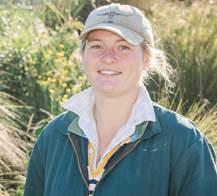
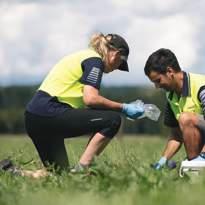
Maria is loving the DairyNZ Grassroots Graduate Management Programme. EARLY CHILDHOOD TEACHER
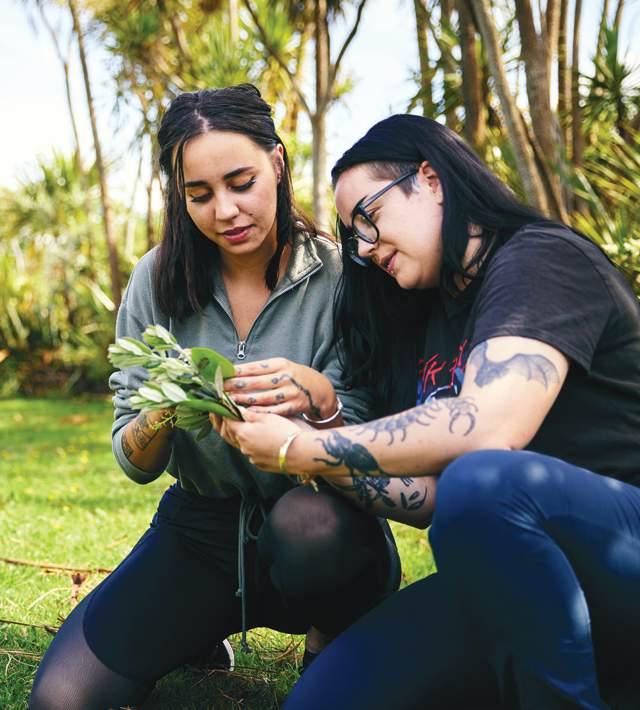
Giving back to her community matters so much to Zariah. LAB/FIELD TECHNICIAN
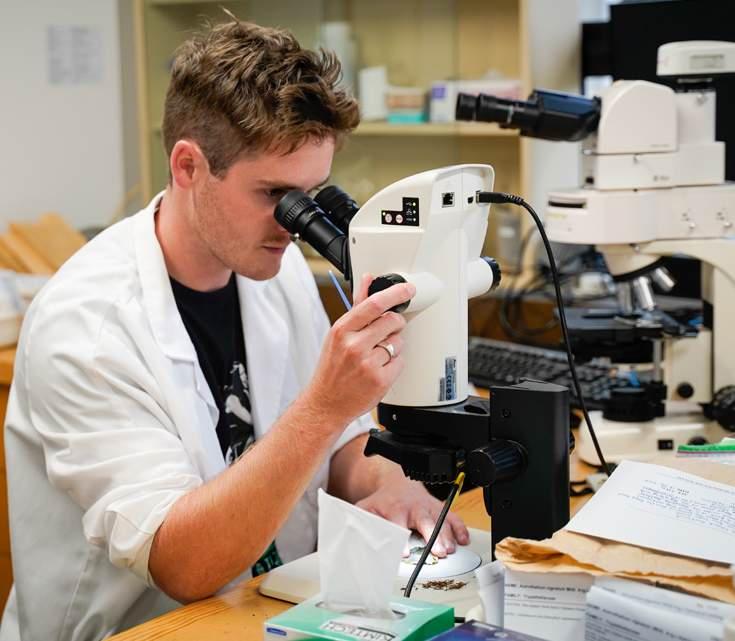
This recent graduate is back full-time working at Unitec.
GEOGRAPHIC INFORMATION SYSTEMS (GIS)
An interesting role in the NZ Police Forensic Geolocation Unit.
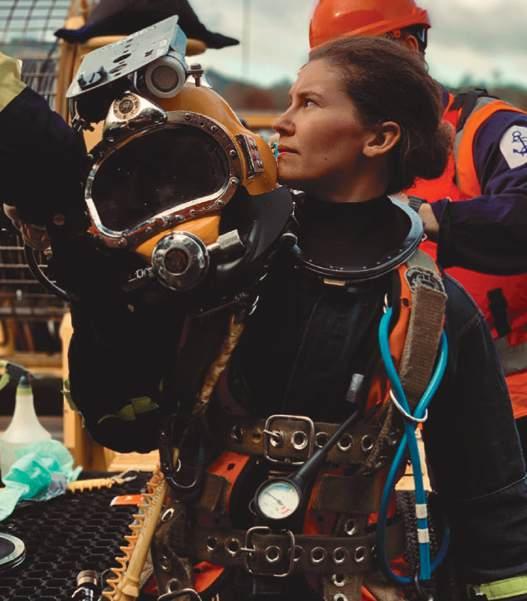
COMMERCIAL DIVER
This dive academy graduate is set for an underwater career.
How this fourth year Auckland Law School student is making a name for himself.
ACCOUNTING TECHNICIAN
There is much more to accounting than just numbers.
ELLIOT BACON
Young qualified builder is looking forward to a bright future in the industry.
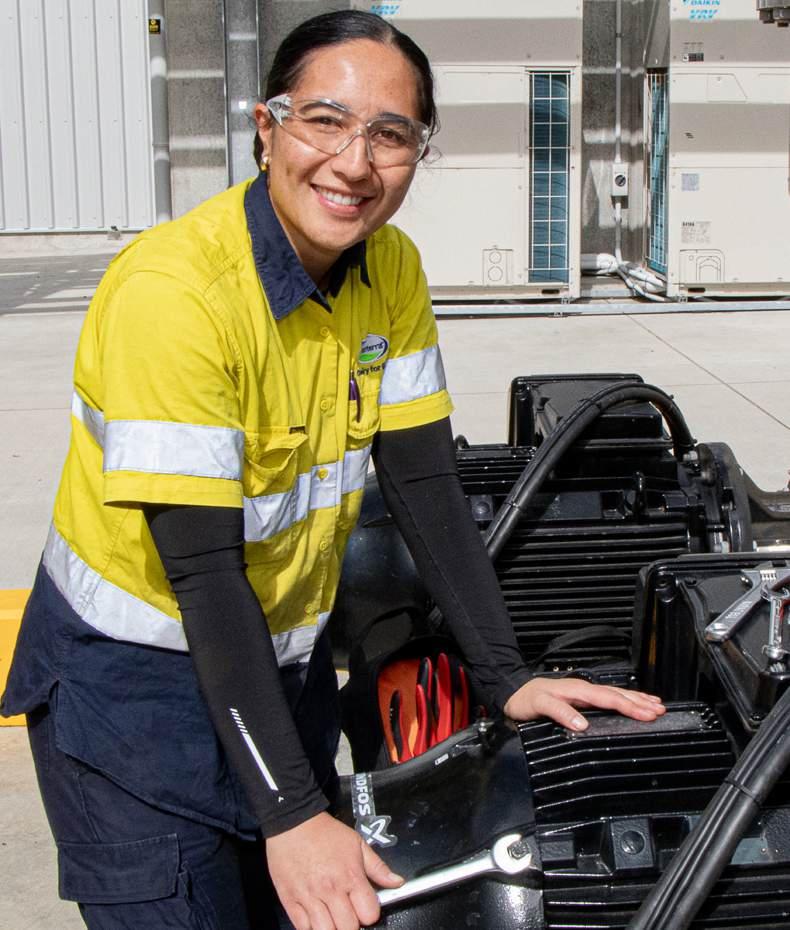
15 MACHINE OPERATOR | BRIANNA McNAUGHT
A love of machinery and hard work is driving Brianna. 16 NOTICEBOARD
Key dates, websites and information are all collated in one easy-to-find spot.
18 ELECTRICAL APPRENTICE | ELYSSE KERR
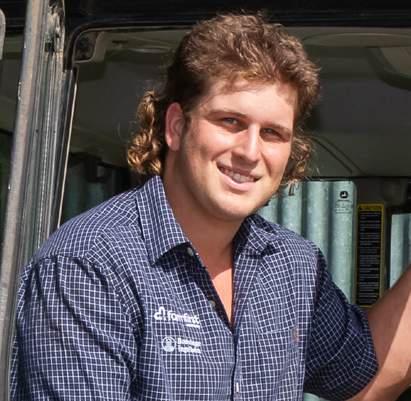
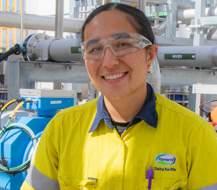
Elysse is in the fourth year of her Electrical and Instrumentation apprenticeship with Fonterra.
19 MECHANICAL APPRENTICE | MURIHIKU MARTELL
Switching to do a mechanical apprenticeship has paid off for Murihiku.
LEVI WESFORD
Meet the 2026 Waikato Dairy Trainee of the Year.
CHARTERED ACCOUNTANT | GARTH PECK
A change of career has worked well for this accountant.
SEVEN SKILLS EMPLOYERS WANT
Seven key skills employers are looking for in new employees.
What to look out for when you start your first job.
27 CREATING A QUALITY CV
Tips on creating a CV that gets attention.
28 EASY MONEY – FAST DEBT
How easy credit can turn into long-term debt.
29 STUDENT LOANS
A great help with study and living expenses while at university but loans NEED to be repaid.
30 KIWISAVER
It’s never too early to start saving for your future even if it’s only a few dollars a week.
PASSIONATE ABOUT FARMING
GRASSROOTS
GRADUATE PROGRAMME
writer PETER WHITE // photographer JOANNE McCLOY
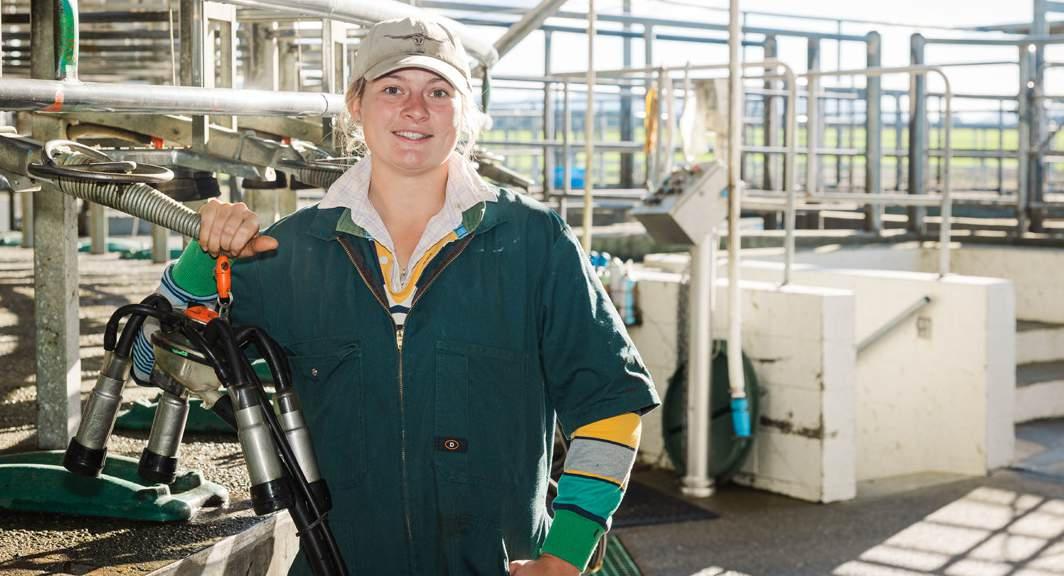
“Working with animals and being outdoors every day is amazing. Not many people have a job where they get the best of both worlds – the practical side, the theory side and meet some amazing people in the industry. You can’t go wrong, really,” says MARIA
PERRIAM
.
The 22-year-old is one of seven graduates on the Grassroots Dairy Graduate Management programme that connects recent graduates with high-performing farmers in the Canterbury region.
The highly regarded programme is designed to develop and retain university graduates in the agricultural industry.
Maria completed a Bachelor of Agricultural Science at Lincoln University and now works just outside Methven on an 850-cow dairy farm.
She attends weekly training modules and networks with the other graduates on the programme.
The modules are designed to challenge the graduates in areas like personal development, financial development, New Zealand dairy industry fundamentals, pasture management essentials and environmental compliance.
“They have been very good so far. We have had people in the industry who are passionate about
what they do, like recently we had a vet come in who was able to relate to us,” says Maria.
“We are all at different stages of how confident we are around certain aspects, so having these modules allows us to have free reign in asking questions and making sense of why we do certain things on farm. It is a really good pathway to grow and to understand different systems.”
The programme gives graduates that extra bit of guidance coming out of university and going into their first full-time job.
“It is so good to have people to ring if you need support. The networking is amazing, from farmers to former graduates, which is a great way to keep moving forward in the industry.”
Maria grew up in rural Southland. She started rousing in the woolsheds from the age of 14 but it was not until Year 13 at Menzies College – where she took Chemistry, Biology, English, Statistics and Art – that she found a passion for dairy farming
when she went relief milking for a neighbour.
“Before then I really had no idea where I wanted to go. It was when I talked to my biology teacher and he asked me ‘What do you love?’ and we realised that was farming. I decided that’s what I wanted to do and I looked into Lincoln and that’s where I went.”
The agricultural industry offers wide ranging opportunities for school leavers in so many different sectors. Maria says it is a good time to get into the industry.
“The dairy sector at the moment is really booming and there is a lot going on there. The older farming generation are looking for younger people to come in on farm and bring in fresh ideas as well.
“That is really positive to see and in the rural business space there are always people taking on grads. It is a very competitive environment so just be open to anything in the industry, rather than limiting yourself to one sector.”
“The dairy sector at the moment is really booming and there is a lot going on there. ”
MARIA PERRIAM
There are plenty of options in dairy
As one of New Zealand’s largest employers, the dairy sector needs motivated and passionate people to make a difference in the world. Discover your future in dairy and learn about the range of career options that dairy has to offer.
Dairy farming is working with animals, protecting the environment, contributing to your local community and making a real difference to the future of New Zealand. Dairy farming
With a career in agri-business, you can provide a range of skilled, professional services to farmers and farm businesses.
Scan the code and take the quiz to find out what your next step could be towards a brighter future. Discover your fit
A career in Agri-science will see you providing creative solutions for the agri-sector in areas such as genetics, sustainability, animal welfare, farm systems and professional services to farmers.
writer PETER WHITE // photographer PHIL SCOTT
TEACHING OUR TAMARIKI INSPIRING FUTURE LEADERS
“I wanted to help the tamariki in my community succeed from a young age. I know the impact I can have on them to become confident and capable individuals,” says ZARIAH BATY.
The 22-year-old is an early childhood education (ECE) teacher based in Gisborne. In March, she graduated with a Bachelor of Teaching (ECE) in front of her whānau, friends and eight-month-old baby. She says it was one of the proudest days of her life.
“I wanted to make a positive difference in my community and I felt the earliest years was when I could make the biggest impact, so that is why I went into early childhood teaching.”
Zariah says studying online with Te Rito Maioha (Early Childhood New Zealand) is the best decision she has made.
“Te Rito was so good. I am so happy I went there because I was not sure where I wanted to do my studies, but I knew I did not want to go away from home. I studied online, and I received so much support from the tutors and got to learn and work in my community, which was amazing.
“It is great how you create a real bond with the younger kids and share so many precious moments with them. ”
ZARIAH BATY
“All the staff just want to see you succeed. I had my baby in the second half of my last semester and I probably would not have been able to finish the course, without them motivating me and supporting me right to the finish line.”
The Te Rito Maioha course requires 12 hours per week of training at an ECE centre. Zariah spent her time at Awhi Tairāwhiti Early Learning Centre and was offered a full-time job there looking after children aged from six months to five years. She says it is a good way to get into the workforce and to get hands-on learning while you are studying.
“I found it great to be able to put what you are learning into place every day and you had a liaison teacher there to mentor you throughout to help. You learn so much more from being on the floor that you might not learn from studying.”
Zariah is affiliated to Ngāti Porou and Te Aitanga-aMāhaki iwi. The Māori world – te ao Māori – is so important to her.
“Looking at tamariki through a Māori lens, they are precious taonga that you want to uplift and empower to be the best version of themselves, where they can succeed just by being who they are.”
Zariah went to Gisborne Girls’ High School. In Year 13 she took Tikanga, Chemistry, Biology, Statistics and English. Nursing was her first career goal during that year, but she switched to training to be an ECE teacher and has loved the journey ever since.
Her advice for school leavers considering a career in ECE – be respectful and uplifting of kids, they are more capable than we often think.
“Be caring and compassionate. It is great how you create a real bond with each child and share so many precious moments with them.”
STUDY AT UNITEC OPEN CAREER OPPORTUNITIES
“My time at Unitec was fantastic, mainly because of the people and the opportunities the course offered,” says CAMPBELL JAMES.
The 23-year-old is a lab and field technician at the Unitec School of Environmental and Animal Sciences in Auckland. It is Campbell’s dream job after he graduated from the school with a Bachelor of Applied Science (majoring in Biodiversity Management) last year.
“There were only 30 people in my class when I first started so you get to know everybody, including the lecturers who really got to know me. They helped guide me in to what I wanted to do and gave me lots of opportunities.”
Campbell started volunteering in the herbarium in his first semester in 2022. The networking through that work led to more opportunities after he gained a well-respected reputation.
“I loved the practical element of the course. I gained so much practical experience and the lecturers also got me external opportunities. I think I would have been really bored stuck in a classroom so the fact there were lots of extra curricula opportunities was the selling point for me.”
The voluntary work he did in the herbarium during his degree opened up the chance to get his fulltime role at Unitec. Campbell says they wanted someone with a botanical focus who had research experience.
“They thought this is someone who can look after the collections, run the labs and also do field work. One of the biggest highlights of my job is I feel I am giving
back to the students who may be uncertain about what they want to do. They see someone who is their age, who followed what he was passionate about, to get the job he wanted.
“The job also gives me chances to get out and about more often, whether taking classes on field trips or off to collect plant material for the botany courses. It also gives me time to work with the lecturers and continue learning from them on many topics.”
Campbell went to Whanganui High School. He admits he was more of a Physics nerd, into Maths and Calculus, so he was going to do civil engineering in Christchurch but he did not really want to do that.
“It was just a career choice that made sense with what I was good at in high school. I always liked Duke of Edinburgh hiking and all that jazz and was considering becoming a DOC worker. I took a gap year and worked in a garden centre. I wanted to learn about plants, how to grow them and take care of them, so I then did some work experience with Horizons Regional Council in Whanganui working on pest planting.
“After I enrolled at Unitec, I bought a book called Botany for Gardeners and fell in love with the science of the plants, botanical science, so from there I was set.”
Campbell has published some papers on botany and ecology. He wants to get into academia in the future and completing a post-graduate doctorate is his next goal.
■ CAMPBELL JAMES IS A LAB AND FIELD TECHNICIAN AT THE UNITEC SCHOOL OF ENVIRONMENTAL AND ANIMAL SCIENCES IN AUCKLAND
■ HE HAS A BACHELOR OF APPLIED SCIENCE (MAJORING IN BIODIVERSITY MANAGEMENT) FROM UNITEC
‘‘ I GAINED SO MUCH PRACTICAL EXPERIENCE AND THE LECTURERS ALSO GOT ME EXTERNAL OPPORTUNITIES. ’’ CAMPBELL JAMES
■ CAMPBELL HAS PUBLISHED SOME PAPERS ON BOTANY AND ECOLOGY For more information on studying at Unitec, visit www.unitec.ac.nz or scan the QR code
‘‘ THERE ARE VERY FEW JOBS WHERE YOU ACTUALLY GET FIELD WORK AND INSIDE WORK. ’’ SEAMUS EVANSON
GEOSPATIAL CAREERS
GIS OPENS NEW OPPORTUNITIES
“My advice is to focus on what you want to do and not who you want to be – don’t worry about what roles are called, focus on what you actually will be doing day-to-day in those roles,” says SEAMUS EVANSON.
Last August, Seamus started as a Geolocation Analyst with the New Zealand Police, based in Wellington.
He is part of the Forensic Geolocation Unit (FGU). Essentially, his role is analysing and interpreting data that gives an indication of the location of an electronic device. This is particularly helpful when assisting with missing persons.
“It is a really good role. We work closely with the telcos in New Zealand, like 2degrees, One New Zealand and Spark, to figure out where devices are and track their movements. That is what our role boils down to. There is a lot of analysis involved, lots of working with different teams in the police and some field travel, which is always fun.
“You get to learn a lot about how telco data work, like 4G, 5G. It is actually fun to work in the police organisation because you can see the benefits when you actually find a missing device and find a person. That feels really good.”
Seamus did a Bachelor of Science (Geography) degree at the University of Auckland before working as a junior analyst with Balance Agri-Nutrients in Tauranga.
He then studied for a Master of Information Technology (MInfoTech), focused in Geographic Information Systems, at Auckland ICT Graduate School – a joint initiative by the University of Auckland and the University of Waikato.
“That pretty much taught me development skills, like coding skills, and from there I became a GIS developer – like a programmer.
“I worked as a GIS Analyst for Downer, then Environment Canterbury and Hawke’s Bay Regional Council, before joining the police force.”
Seamus says the good thing about working in the GIS field is you get to work with “a little bit of everything”.
“You get the goodness of GIS – like building applications, getting to play with mobile devices and installing things on them – but with geolocation and working with the police you get to work with the information passed on from the telcos.
writer PETER WHITE photographer MARTY MELVILLE
“It is interesting getting to learn how phones interact with cell phone towers. It is very complex but very rewarding.”
Seamus went to Rotorua Boys’ High School where Geography was his favourite subject.
“GIS, in a nutshell, is digital mapping. It is taking any event that is occurring and plotting it on a map. The benefits of working in GIS is that if you like working with technology, you will enjoy GIS because there are lots of different systems that can create GIS data.
“You get out and about as part of the job. There are very few jobs where you actually get field work and inside work. You get the benefits of both worlds. There are plenty of career options and it is a well-paid job.
“Lots of people find their home in GIS from different areas, like computer science or geology or physical sciences.”
COMMERCIAL DIVING COURSES
DIVING FOR A CAREER
writer PETER WHITE
photo credit OMNE MARINE
A career spent underwater as a commercial diver is the dream for LUKE HAYWARD.
The18-year-old’s love of diving is a natural response to growing up next to the water – his family home can only be reached by boat. Luke went to Mercury Bay Area School in Whitianga, where he took English, Calculus, Biology, Physics and Dive Academy in Year 13. The dive academy course was the stepping stone to him enrolling with Omne Marine Group – New Zealand’s only commercial diver trainer provider with over 28 years of experience teaching people from the civilian, navy and customs sectors.
“Every Friday, a few of us from school went out to do our PADI (Professional Association of Diving Instructors) dive qualifications,” says Luke.
“In Year 11, I did my PADI open water and advanced open water courses, then in Year 13 I did my rescue and dive masters.”
Luke went straight from school to train with the highly regarded Omne Marine Group, based in Huntly,
Christchurch - Thursday 7 - Friday 8 May, Wolfbrook Arena.
Dunedin - Wednesday 13 May, More FM Pavilion, Edgar Centre.
Palmerston North - Thursday 21 May, Central Energy Trust Arena.
Hawkes Bay - Wednesday 27 May, Pettigrew Green Arena, Napier.
Waikato. In March, he passed his New Zealand Certificate in Surface Supplied Breathing Apparatus (SSBA) Construction Diving to 50 metres (Level 5).
Graduates with this qualification are employed in onshore construction, aquaculture, police, customs and military industries that require underwater construction – plus highly sought after positions as offshore construction air divers.
The diving school is based at the old Huntly quarry which is 80 metres deep. Luke loved the whole experience of challenging himself to become a qualified diver.
“It was a big jump from just recreational diving. There is so much more that you have to do, with the 20kg helmets and umbilical cables and all the gear,” says Luke.
“We learnt a lot of stuff. The biggest challenge for me was getting used to everything at the start because it was all so new. It is a cool experience but nearly all the training we did was in pitch black water.”
‘‘ THE KEY THING TO SUCCEED AS A COMMERCIAL DIVER IS TO BE ACCEPTING OF WHAT THE ENVIRONMENT IS. ’’ LUKE HAYWARD
“It is a very good course. All the instructors are really supportive. If you are struggling with the paperwork, they are so helpful.
“The exams needed you to put plenty of hard work into but overall, the whole course was just bsolutely incredible. It is kind of sad it ended to be honest.”
Luke is in the process of getting his Certificate of Competency (CoC) so he can work commercially.
His goal is to work offshore in Australia, doing maintenance on boats and oil rigs.
“I am looking forward to diving offshore in 800 metres of clear water. That will be pretty cool.
“The key thing to succeed as a commercial diver is to be accepting of what the environment is. You can’t panic at all. You just have to be chilled and not worry.”
For school leavers who love being in and under the water, Luke says the diving course is a great way to get into the industry.
“The course is open to people who haven’t dived before but if you have dived before, it is a huge help.”
KEY FACTS ONLINE
■ LUKE HAYWARD PASSED HIS NEW ZEALAND CERTIFICATE IN SURFACE SUPPLIED BREATHING APPARATUS (SSBA) CONSTRUCTION DIVING TO 50 METRES (LEVEL 5)
■ HE TOOK ENGLISH, CALCULUS, BIOLOGY, PHYSICS AND DIVE ACADEMY IN YEAR 13 AT MERCURY BAY AREA SCHOOL IN WHITIANGA
■ LUKE IS GETTING HIS CERTIFICATE OF COMPETENCY (COC) SO HE CAN WORK COMMERCIALLY
SSBA CONSTRUCTION DIVER TO 30M
For more information on commercial diving courses offered by OMNE Marine, visit www.omnemarine.co.nz
Our commercial diver courses train you for real world, underwater work – construction, inspection, repair and offshore operations. Our programs are hands on, intensive and designed to prepare you for life on the job – not just the classroom. If you are ready for challenging work, serious responsibility, and a career that few can do, commercial diving starts here. Student loans and fees free available if eligible.
CONTACT US
+64 21 0225 6131 admin@omnemarine.co.nz
Luke loved his experience learning under the Omne Marine Group.
THE PROCESS MATTERS STUDY AT AUCKLAND LAW SCHOOL
writer PETER WHITE
Last August, Auckland Law School student
SEAN O'LOUGHLIN won a judicial review against Auckland Transport in front of a High Court judge.
Sean took the case to establish that a decision by AT to install a raised pedestrian crossing and three speed humps in Bucklands Beach – where he lives - were in breach of their duty, procedurally improper and unlawful.
Now in the fourth year of his conjoint Bachelor of Laws (LLB) and Bachelor of Health Science (BHSc) degree, the 21-year-old says he gained so much from going through the process in front of a High Court judge.
“In terms of preparing for the actual hearing itself or putting together your pleadings in court, that requires an extensive amount of research which having done the first few years of courses at the University of Auckland gives you a base line to start in doing the research. Having access to the university’s resources was a huge help,” says Sean.
“I felt the process that Auckland Transport had taken in installing the measures in Bucklands Beach was unlawful but you can’t just say that. You have to have reasoning behind it. With the research skills I gained from those years of studying at the Auckland Law School, I was able to attempt to apply that in a real world context.
“That’s where the practical teaching they have at the law school came into play. They take a great deal of time teaching the analytical skills that are needed so you can actually put an argument together in a real world situation.”
Sean says it may seem a somewhat trivial reason to take a public organisation to court for but the question was really about the process.
“My opinion is that if the correct process is not taken in one instance and they are not held to account, then what is stopping them from continuing to do that?”
Auckland Law School has a world wide reputation for excellence built up over many decades. Sean says the lecturers are top tier and know what they are talking about.
“A lot of them are extremely experienced and have not just been lecturers their entire lives but have
KEY FACTS
‘‘ THE LAW SCHOOL IS VERY SUPPORTIVE OF ITS STUDENTS AND THERE IS ALSO GREAT ENCOURAGEMENT FOR STUDENTS TO SHOW UP TO LECTURES AND ENGAGE IN PRACTICAL LEARNING. ’’
SEAN O’LOUGHLIN
worked in law firms and appeared in court for clients, they have submitted to parliament, they have worked in tribunals.
“The law school is very supportive of its students and there is also great encouragement for students to show up to lectures and engage in practical learning. The facilities are excellent, particularly the Davis Law Library.”
Sean is interested in the area of health care law. It is not a big field in New Zealand but certainly is overseas. At Macleans College he considered doing medicine so took health science as a conjoint alongside law at the University of Auckland.
■ SEAN O’LOUGHLIN IS IN THE FOURTH YEAR OF A CONJOINT BACHELOR OF LAWS (LLB) AND BACHELOR OF HEALTH SCIENCE (BHSC) DEGREE
■ LAST YEAR HE WON A JUDICIAL REVIEW AGAINST AUCKLAND TRANSPORT IN FRONT OF A HIGH COURT JUDGE
In Year 12, he qualified for law school but continued into Year 13 to gain credits to do health science. He did mostly science-related subjects in that final year plus Cambridge (CAIE) English Language.
Sean’s advice to students – consider a law degree as it opens up huge opportunities for you in the future in so many different fields.
■ SEAN QUALIFIED FOR AUCKLAND LAW SCHOOL IN YEAR 12 AT MACLEANS COLLEGE BUT CONTINUED INTO YEAR 13 TO GAIN CREDITS TO DO HEALTH SCIENCE
CAREERS IN ACCOUNTING
HELPING PEOPLE ADDS UP
“I think a lot of people assume accounting is just spreadsheets and numbers but there is so much more to it,” says KYLEE POOLE . “There is communication, relationship building, problem-solving and helping people understand their business. The people side of accounting is much bigger than many expect.”
Kylee is an Accounting Technician with Bailey Ingham in Otorohanga. She enjoys how it combines technical work with supporting people in the day-to-day side of running their businesses.
“A huge part of what I do is about helping people and making the accounting side of things feel less overwhelming for them. That is definitely one of the most rewarding parts of the job. A lot of clients come to us feeling unsure so being able to guide them make things easier to understand – and take some of that stress away – is incredibly satisfying.
“My role is very practical and client focused. It involves preparing financial information, tax returns, GST returns and helping clients stay organised and compliant. I love the variety, the problem-solving and especially the people side of it.”
Kylee says problem-solving is a big part of accounting. Whether it is figuring out why something does not reconcile, working through an IRD issue or helping a client understand the best way to handle something, there is always an element of problem-solving involved.
Kylee took a slightly different path to her accounting career after leaving Piopio College, where her Year 13 subjects were Accounting, English, Maths and PE. She studied part-time at Massey University before joining Bailey Ingham in a full-time payroll role, before shifting into the accounting team.
“From there I kept building my experience and continued my degree part-time while working. The directors and team at Bailey Ingham have been incredibly supportive throughout my studies and through some big life changes along the way, which has meant a lot to me. It has definitely been a longer and less traditional journey than I ever expected but I’m really proud of how much it has shaped me.”
Becoming a full Accounting Technician member of CA ANZ in 2024 was a proud milestone for Kylee.
“It means I have completed the recognised study and practical experience requirements and I am
writer
PETER WHITE photo credit HAYLEY ADELE PHOTOGRAPHY
part of a respected professional body in the industry. For me, it represents years of working, studying and building experience step-by-step, and it has given me a really strong foundation for continuing to grow in accounting and business.”
Kylee has started her own e-commerce brand, The Rose Edit. She says it is exciting to step into business ownership and apply so much of what she has learnt through accounting in a real-life business setting.
Her advice to school leavers – do not assume accounting is boring or one dimensional.
“It is such a practical career with so many different pathways and your journey does not need to look perfect or happen in a straight line – mine definitely did not. Along the way, I have learned that consistency, resilience, asking questions and being willing to learn, matter just as much as academic results.”
‘‘ A HUGE PART OF WHAT I DO IS ABOUT HELPING PEOPLE AND MAKING THE ACCOUNTING SIDE OF THINGS FEEL LESS OVERWHELMING FOR THEM. ’’ KYLEE POOLE
CHARTERED ACCOUNTANTS ANZ STUDENT MEMBERSHIP
Explore the accounting and finance world and receive valuable information and resources to broaden your skills and understanding. You will be invited to networking and careers events and have access to exclusive employment opportunities. What are you waiting for? Sign up to be a Chartered Accountants ANZ student member today.
BUILDING A BRIGHT FUTURE
In June last year, ELLIOT BACON completed his carpentry apprenticeship working for L.T. McGuinness Building Contractors in Auckland.
“I was excited to get through my apprenticeship but I was also looking forward to what’s next. It was a big stepping stone in my career. I enjoyed the wide range of tasks in the job, and I took every opportunity that LTM gave me. I love working for the company,” says Elliot.
“I’ve learnt how to do things efficiently and quickly. I also took on the worst jobs and learnt how to actually look for the fun in them. Take digging a muddy hole, for example. I saw it as an activity for fitness and to have fun and laugh, rather than saying ‘this sucks’ and allowing it to drag out.”
Elliot (23) says the job satisfaction he gets from his work is the best thing about being a builder.
“You get given a task and when you see it completed, it is really satisfying. Like when you have an empty space and you start building a wall from scratch –it is incredible when it is finished.
“I build mostly offices and apartments. We did a job
out at Hobsonville which was a 14-storey apartment block. It was pretty cool to work on that – you don’t realise how special things like that are until you leave and it is finished.”
One of the first challenges Elliot faced was the physical side of the job. He admits to being “a scrawny little kid” when he left school.
“The job has given me really good fitness and I have become quite strong doing it, so that is all good. When I started, dealing with older people I sometimes found it hard. It was something I had to learn how to deal with.”
Elliot was helped through his apprenticeship by Building & Construction Industry Training Organisation (BCITO) – New Zealand’s largest provider of apprenticeships.
“My training adviser would always call me back or text straight away and he always replied to emails. He was always on top of my assessments and would get back to me quickly, and give me a full reason about what’s needed and what’s not. He was with me the whole way through my apprenticeship.”
Elliot will soon complete his New Zealand Certificate in Construction Trades Supervision Level 5 through
BCITO. He was motivated to get ahead in his career as being a builder is not where he wants to finish his career at.
“I would like to move up. University is not something I want to do and BCITO gives me that flexibility through on-line learning. You have to do it in your own time which I actually quite like.
“I have also been offered some in-house training through LTM to become a manager, which broadens my horizons.”
At Scott’s College in Wellington, Elliot took English, Statistics, History and Photography in Year 13.
He hoped to become a professional sailor when he first left school but when that did not work out, he chose a career in building.
‘‘ THE ROADS YOU USE EVERY DAY, THE CONCRETE YOU PLAY HANDBALL ON, THE LIMESTONE PATHS YOU WALK – WHERE DO YOU RECKON ALL THAT ROCK COMES FROM?’’ BRIANNA M c NAUGHT
CAREERS IN AGGREGATE WORKING WITH HEAVY MACHINERY
“Anyone who loves big gear, working outdoors, getting their hands dirty and wants a progressive career, should take a look into quarrying,” says BRIANNA McNAUGHT.
“We may be a silent industry but the impacts we make on the country are massive. The roads you use every day, the concrete you play handball on, the limestone paths you walk – where do you reckon all that rock comes from?”
Brianna (21) works for Tūpore Aggregates in Hastings. She is a fourth generation quarry woman and has been surrounded by big yellow machines her whole life.
“Both of my parents have worked their way up within the industry so I had a fairly good idea of the different roles, qualifications and responsibilities of being someone who works in the industry. I knew uni wasn’t for me. I liked being outdoors, working with big gear, and I soon realised that maybe I was in the right place all along.”
Brianna’s role at Tūpore as an operator includes loading out trucks and running a wash plant.
“I test the sand coming off the plant weekly to ensure it’s at the right spec and carry out any maintenance needed on those machines throughout the week. A cool thing about working with mobile gear is that you’re not always working at one site.
“I’ve had the opportunity to get out on the river with our extraction crew and learn how that process works. I work with different types of crushers – and the maintenance that goes with it – and operate a variety of machines like dumpers, excavators and loaders.
“What I enjoy most is the pathway it creates. There’s always something new to learn and it feels like the work I’m doing now is building towards bigger
opportunities in the future. I like being in an environment where I’m challenged and can keep developing my skills.”
Brianna’s next step is completing her A Grade Quarry Manager CoC (certificate of competence), with the goal of moving into a management position. From there, she would like to take on more responsibility in overseeing operations and supporting the development of others entering the industry.
She is also involved with the Women in Quarrying Committee (WIQC). Like the NAWIC (National Association of Women in Construction NZ), WIQ is a group of women who uplift and provide new opportunities to other women in the extractives industry.
“This group is important to me, as we’ve never had our own space before and haven’t had the opportunity to come together as women to discuss all those matters within the industry, that haven’t been addressed in the past.
“We help each other with industry-related matters, share our wins and help support each other through difficult situations.”
In Year 12 at Karamū High School in Hastings, Brianna’s favourite subjects were English, Building and Geography. Her advice for school leavers – contact your local quarries and see if they’re open to a cadet joining the crew.
“Don’t be afraid to ask questions and take every opportunity you get to learn something new.”
■ BRIANNA McNAUGHT (21) WORKS FOR TŪPORE AGGREGATES IN HASTINGS
■ HER NEXT STEP IS COMPLETING HER A GRADE QUARRY MANAGER COC (CERTIFICATE OF COMPETENCE)
■ BRIANNA’S FAVOURITE SUBJECTS IN YEAR 12 AT KARAMŪ HIGH SCHOOL WERE ENGLISH, BUILDING AND GEOGRAPHY
For more information on career opportunities in the aggregate and quarry industry, visit www.aca.org.nz
writer PETER WHITE
photographer DUNCAN BROWN
Leaving school is one of the biggest transitions we undertake in our lives, and it’s a time when anxiety, worry and depression can surface. www.thelowdown.co.nz is full of ideas and people who can help you get unstuck and get to a better place.
Need to talk? Free text to 1737
OPEN DAYS 2026
StudyLink can help. You need to apply by 16 December 2026. Sign up for info at www.studylink.govt.nz University and Polytechnic open days are a fantastic way of getting to know more about your proposed courses of study, meet fellow students and become familiar with the campus. If you’re choosing between several tertiary providers, you may find open days help you make your choice.
while you’re
HOLIDAYS 2026/27
Term 2 holiday:
4 –29 July 2026
Term 3 holiday: 26 September – 11 October 2026
Term 4 holiday:
No later than 19 December 2026 through to no earlier than 28 January 2027
Information sourced from Ministry of Education, visit www.education.govt.nz
CHRISTCHURCH
DUNEDIN
PALMERSTON NORTH
HAMILTON 7
AUCKLAND 16
WELLINGTON www.careersexpo.org.nz
It’s always important to make sure that you are on the electoral roll and ready to take part in national and local elections. How else can you be sure that you are ready to have your say on the big issues affecting you and your family?
vote.nz
I am a firm believer that you don’t achieve greatness on your own. There is always someone there to lend a hand.
Greg Louganis
opportunities to develop your skills in new and interesting ways as well as providing valuable real-world experiences – all important attributes to your CV when applying for your
SCHOLARSHIPS
There is a free-to-use comprehensive list of Year 13 scholarships available to 2026 school leavers at MoneyHub. Millions of dollars are available and applications close throughout the year.
Talk to your careers advisor or visit www.moneyhub.co.nz/students
LIFELINE available 24/7
0800 543 354 www.lifeline.org.nz
YOUTHLINE available 24/7
0800 376 633 or free text 234 www.youthline.co.nz
WHAT’S UP? available 24/7
0800 942 8787 www.whatsup.co.nz
ALCOHOL DRUG HELPLINE
0800 787 797 available 24/7 www.alcoholdrughelp.org.nz
The people who are crazy enough to think they can change the world are the ones who do.
Steve Jobs
LEARN TO DRIVE
DRIVE has everything you need to get ready for your learner, restricted and full licence tests
www.drive.govt.nz
DAIRY INDUSTRY
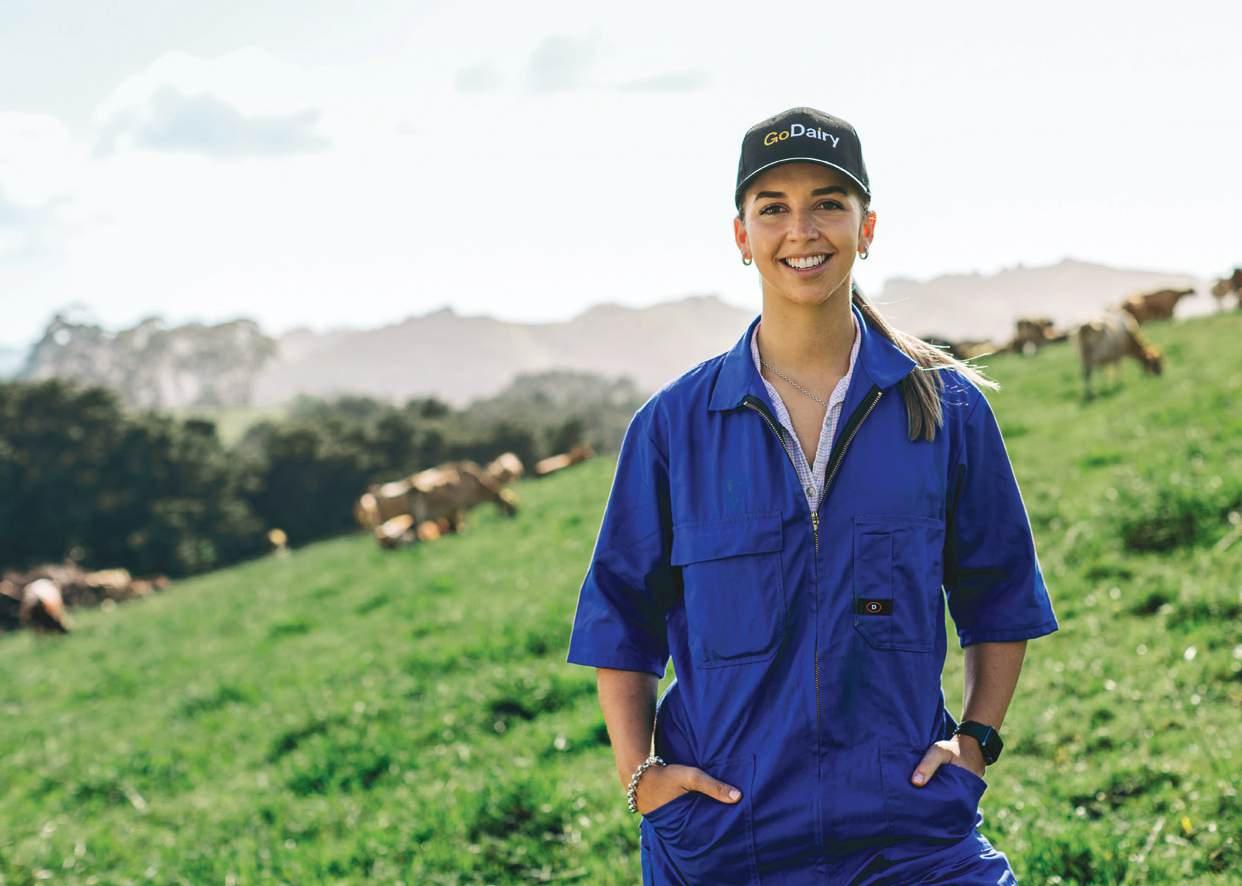
If you are interested in career opportunities within the dairy industry, visit www.godairy.co.nz
LEARNING ON THE JOB
writer PETER WHITE photography SANDRA HENDERSON
APPRENTICESHIPS WITH FONTERRA
“Being an electrician, you are always learning. Don’t think you know it all because even the seasoned electricians will scratch their heads from time-to-time,” says ELYSSE KERR.
“That might be scary for some but if you keep an open mind, follow your supervisor, and learn as much as you can, you’ll be good as gold.”
Elysse (21) is in the fourth year of her Electrical and Instrumentation apprenticeship with Fonterra, based in Taranaki. She started her apprenticeship when she was 17, straight out of school with a company in her home town of New Plymouth. She completed six months but unfortunately was let go due to the company not being able to keep many apprentices on. At the end of 2023, she applied for an apprenticeship through Fonterra and got it.
“They wanted to continue where I left off so luckily I didn't have to start my apprenticeship again. I interviewed along with a small group of people having to build a mini forklift – the most interesting job interview I’ve been to.”
Elysse loves working for Fonterra and the culture within the work environment.
“The people are great, always saying hello, having a talk and a laugh about anything. You get to know them quite well.
“I’m the only woman on the crew and one of the youngest. I love that they haven’t excluded me due to those factors.
“Someone is always there. The apprenticeship itself is full of people trying to help you to succeed in any way possible. I recommend Fonterra if you want to work on big machinery and get your hands dirty on a project.
“The best way is to keep an eye out on the Fonterra careers website and follow Fonterra pages on social media. They close their yearly applications around August.”
There is no shortage of variety in the work Elysse does at the Fonterra plant, including working on machinery, robots, PLC (programme logic controllers), control panels, motors, and even power points.
“At the factory I work at, it changes day-to-day, through preventative maintenance and breakdowns. No two days are the same. You can get multiple jobs within a day or one big job that requires more than one of you to complete.”
Elysse went to Stratford High School in Taranaki. In Year 13 she took Media Studies, Music, Calculus, English, Drama and Digital Technology, and had a leadership role.
“At that time, I didn't know what career I wanted to take so I kept my options open. If you want to become an electrician, I suggest taking Physics to have a basic understanding of how it all works.
“To school leavers, a good attitude is always a given. You are working with the crew for a long time and you quickly get to know them pretty well. Everyone is in the same boat and you want the day to go smoothly with some laughs along the way.
“Just remember your manners – long days get to some people so be polite, listen and learn.”
‘‘ I’M THE ONLY WOMAN ON THE CREW AND ONE OF THE YOUNGEST. I LOVE THAT THEY HAVEN’T EXCLUDED ME DUE TO THOSE
CAREERS WITH FONTERRA
THE PEOPLE MATTER
“The best thing about working here at Fonterra is the people. The support and opportunities you get make you want to keep growing,” says mechanical engineering apprentice MURIHIKU MARTELL.
When Murihiku was at Hamilton Girls High School, she had aspirations to be a professional rugby player. But after injuries sadly put that dream on hold, she thought she would do something hands-on to stay in the sports world – like physiotherapy or occupational therapy – but that did not happen for her.
So, she got stuck into doing the hard mahi.
Murihiku spent nearly five years at Fonterra’s Hautapu cheese factory, working in different roles and gaining a deep understanding of the journey –from milk in its liquid form to finished 20kg cheese blocks. It sparked her curiosity about the machinery and systems behind it, inspiring her to take the next step and begin a mechanical apprenticeship at the factory.
“I’ve always wanted to do a trade or something hands on as this is what I grew up around. Would it have been my first choice? Probably not, but now that I am in it, I am so happy I chose this pathway and I wouldn’t change it for anything.
“Having the knowledge of the plant definitely has added to my know-how and why-how. Getting the opportunity to learn more in depth of how the plant runs was definitely a reason why I chose to do a mechanical engineering apprenticeship.”
Murihiku has just started her second year, with two more years to go – or until she reaches 8000 worked hours – until she is qualified. She loves working with the people she is surrounded by.
“The mentors I have been fortunate enough to have thus far have made the apprenticeship very enjoyable. I love learning something new every day, learning different ways to do the same job and being able to find which way works for me.
“I really enjoy the challenge of welding and machining, whether it be modifying motor guards, making up specific bushes or even just practicing on the machines. I like the challenge of perfecting my skill – no matter what the job may be.”
writer PETER WHITE // photographer ALAN STEVENS
‘‘ I LOVE LEARNING SOMETHING NEW EVERY DAY, LEARNING DIFFERENT WAYS TO
DO
THE SAME JOB AND BEING ABLE TO FIND WHICH WAY WORKS FOR ME.’’ MURIHIKU MARTELL
is proud of her Māori heritage. She says Fonterra provides Te Reo classes and cultural inclusion.
“I feel cultural diversity is very important to Fonterra. I’ve been fortunate that my mentors right through my career at Fonterra have all been Māori. Everyone makes an effort to be supportive even if it is just pronouncing my name correctly!
“But I think, without bringing culture into it, if you are someone who is willing to learn, willing to put
■ MURIHIKU MARTELL IS DOING A MECHANICAL ENGINEERING APPRENTICESHIP WITH FONTERRA
■ SHE HAS TWO MORE YEARS TO GO – OR UNTIL SHE REACHES 8,000 WORKED HOURS – UNTIL SHE IS QUALIFIED
in the mahi and willing to be a team player, you’ll be supported.”
In the future, Murihiku wants to put her trade to use.
“I am someone who likes to keep learning so even getting an advanced trade could be on the cards. I think there is no telling at Fonterra where your career may go. There are so many opportunities if you are willing to look and learn.”
■ MURIHIKU SAYS FONTERRA PROVIDES TE REO CLASSES AND CULTURAL INCLUSION
For more information on career opportunities with Fonterra, visit https://careers.fonterra.com/ careers/Early-Careers or scan the QR code to register your interest
Murihiku
HARD WORK PAYS OFF
writer PETER WHITE
photographer ALAN STEVENS
AWARD-WINNING FARMER
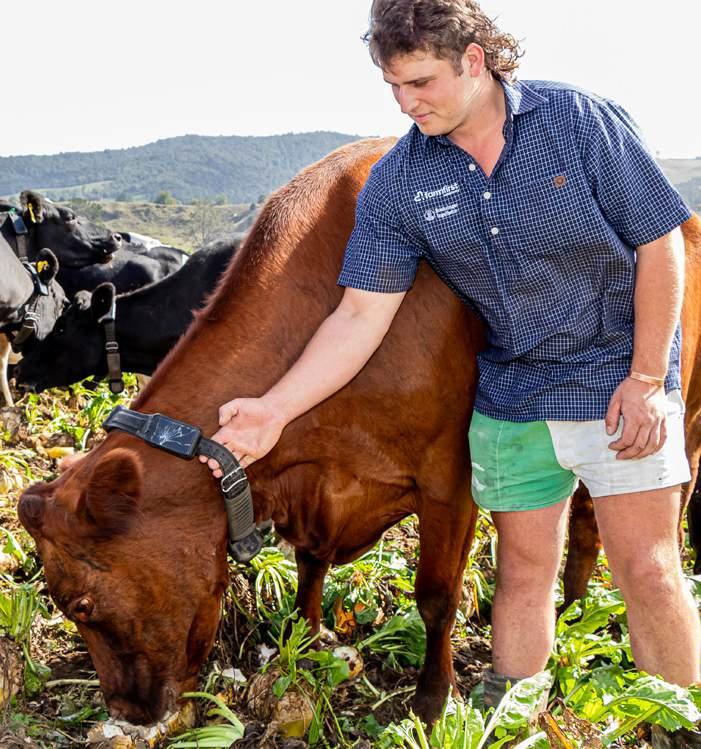
LEVI WESFORD did not grow up on a farm or get a university qualification – but it has not stopped him becoming one of the top young farmers in the country.
In March, Levi (20) was awarded the prestigious Waikato Dairy Trainee of the Year title, after finishing second last year. He is rightly proud to have taken out the competition.
“I am getting recognised that hard work does pay off and it has given me a big boost, not only in confidence but also in giving me opportunities in the industry, which is really rewarding,” says Levi. Those opportunities include networking with rural professionals but also opening doors for Levi with potential employers before he runs his own business as a contract milker.
“We went through a skills day which included practical activities like fencing, changing a tyre on a quad bike, plus theory quizzes and questions on animal culling, plant identification and how to fill out an ASD form (animal status declaration), which is used when you send cows on a truck.
“The top six then were interviewed about career goals and future plans in the industry and more complex theory questions.”
Levi grew up on a lifestyle block outside Cambridge. He gained valuable experience relief milking on a 220 cow farm at Te Miro – where he is still based – during his time at Cambridge High School. He made the decision to leave school early after Year 11 and start some valuable training programmes.
“I decided I would be better off getting real farming experience rather than staying at school. I started Primary ITO training and achieved my NZ Certificate in Dairy levels 3 and 4.
“I always wanted to take a pathway through industry training, rather than going to university. I could see the benefit of that time at the start of my career to gain knowledge on farm, rather than spending four years getting a degree and a student loan.
“It really has helped to kick start my career. You learn so much from watching what is happening. The DairyNZ discussion groups held on local farms – and the tutors on my courses – were really good to gain knowledge from.”
What Levi loves most about working on farm is knowing that everything he does has real impact.
‘‘I ALWAYS WANTED TO TAKE A PATHWAY THROUGH INDUSTRY TRAINING, RATHER THAN GOING TO UNIVERSITY.’’
LEVI WESFORD
“It gives you a bit of purpose. You are not just there doing something for the sake of it. You actually have animals that are depending on you to show up and do a good job. I find that really rewarding.”
Levi is a big supporter of the Agribusiness in Schools programme that DairyNZ helped set up in 125 secondary schools to teach agriculture, horticulture and agribusiness.
“I think it is really good to have the opportunity to get an insight into how the business side of things works, so that going into a career in the industry you have a cushion of knowledge.
“It means you’re not going in having to learn business skills as you go. You have a base line to set some career goals and also manage your money better.”
for 16-24 year olds
Agriculture Level 2 free*
If you prefer learning by doing instead of sitting at a desk, this programme is for you.
At Land Based Training, we’ve helped young people into employment for over 30 years through hands-on learning and strong support.
WHAT YOU’LL LEARN
• Safe animal handling and livestock care
• Milking, fencing, and everyday farm work
• Safe operation of farm vehicles
• Identifying and managing farm hazards
Available in Palmerston North, Whangarei, Masterton, Hawera, Hamilton & Hastings.
You will also be able to achieve NCEA Level 2 as part of this 26 week programme.
WHERE IT CAN TAKE YOU
• A career in dairy or sheep farming
• Pathways into apprenticeships and further training
• Graduate ready for employment, with the confidence to plan your future, and manage your finances.
Learn by doing. Build confidence. Create your future. Sign up today.
ACCOUNTING ADDS UP
MUCH MORE THAN NUMBERS
The key attributes you need to become an accountant include being adaptable, able to work well in a team and to multi-task, and to have good time management skills.
So says GARTH PECK who has been with Silks Audit Chartered Accountants in Palmerston North for three years – two as an Auditor and just over a year as Team Leader.
“My role is helping to implement work plans and assisting junior staff with queries and staff training. Most of my time is spent completing audit planning and testing, with some time also spent liaising with clients and their accountants where explanations or documents are needed.
“Since audit testing is the largest part of my job, I spend a lot of time investigating and problem solving. It’s a bit like doing maths puzzles, except I’m applying those skills to someone’s financial accounts and assessing whether we agree with the figures and how they were prepared.”
Garth is almost half way though his studies to become a Chartered Accountant (CA). He says when he sees an auditor is a Chartered Accountant, it demonstrates to him that the person has worked exceptionally hard – they’re driven, resilient, passionate and have a fantastic base of knowledge. There is far more to accounting than just spreadsheets and numbers.
Garth says the thing that really sets someone apart as an accountant – and opens opportunities for them – is how they apply their interpersonal skills to their work.
“We often need to have discussions with clients to explain audit findings or figure out how their system works for a particular balance. Leaving a positive impression on people is hugely important.”
At Palmerston North Boys’ High School, Garth took Biology, Chemistry, Physics, Calculus and Statistics in Year 13. He also completed a paper with Massey University as part of the Accelerate+ Programme – but medicine was his chosen career choice at that stage.
“Since I’d decided early in my high school years that I wanted to be a doctor, I didn’t take the time to explore other options. I pigeon-holed myself into science, after medical school didn’t pan out, and ended up dropping out of my course after the second year.
writer PETER WHITE photographer PETER McDERMOTT
“I really wish I’d taken more time to try different subjects at school and gain more of an understanding of how my skills could match with other career options.”
In 2021, Garth gained a Bachelor of Business (Accounting) degree and has never looked back. He says for school leavers, there are excellent opportunities in accounting and especially audit, with a shortage of qualified auditors in the field.
“Chartered Accountants Australia and New Zealand have a presence on many of the campuses around New Zealand. They’ve been supportive of students wanting to move into accounting roles and eventually complete a CA.
“The networking events they host at the universities and polytechnics are a great opportunity for students with a passion for accounting to make contacts early – and find a fulfilling role to start in right after graduation.”
CHARTERED ACCOUNTANTS ANZ STUDENT MEMBERSHIP
Explore the accounting and finance world and receive valuable information and resources to broaden your skills and understanding. You will be invited to networking and careers events and have access to exclusive employment opportunities. What are you waiting for? Sign up to be a Chartered Accountants ANZ student member today.
■ GARTH PECK HAS BEEN WITH SILKS AUDIT CHARTERED ACCOUNTANTS IN PALMERSTON NORTH FOR THREE YEARS
■ HE IS ALMOST HALFWAY THROUGH HIS STUDIES TO BECOME A CHARTERED ACCOUNTANT (CA)
■ GARTH TOOK BIOLOGY, CHEMISTRY, PHYSICS, CALCULUS AND STATISTICS IN YEAR 13 AT PALMERSTON NORTH BOYS’ HIGH SCHOOL
‘‘ SINCE AUDIT TESTING IS THE LARGEST PART OF MY JOB, I SPEND A LOT OF TIME INVESTIGATING AND PROBLEM SOLVING. ’’ GARTH PECK
For more information on careers in Accounting, visit www.MakeEpicThingsHappen.com
SEVEN SKILLS EMPLOYERS WANT PRESENT YOURSELF IN YOUR BEST LIGHT
Have you ever wondered, ’What is that magical power some people have that gets them a job?’ The answer isn’t magical – the key is that these job seekers demonstrate they have the employability skills employers are looking for.
The world of work is rapidly changing. While new jobs will be created in the future, others will disappear or become automated.
Employers seek workers who have the skills, confidence and the ability to adapt to new technologies and other market opportunities. The good news is that you will have many of these skills already. These skills can be learned in daily life by doing work experience or volunteer work, playing sport, helping your whānau, taking up a hobby or taking part in school and community activities.
WHAT ARE EMPLOYABILITY SKILLS
Employability skills, or soft skills, are the personal qualities and attitudes you have that make you ready for work, such as getting to work on time or following instructions. Employers tell us they need young people to be work-ready – if you have the right attitude, the technical skills can be taught.
SEVEN EMPLOYABILITY SKILLS EMPLOYERS
WANT
Employability skills include:
1. POSITIVE ATTITUDE: A positive attitude is not just about being bubbly. It means showing that you’ll happily do the work asked of you, and you’ll stay upbeat when the work gets hard.
2. COMMUNICATION: Good communication skills are when you follow instructions well and ask questions when you’re confused. Being able to explain things clearly is a bonus for employers.
3. TEAMWORK: Playing or working well with others is not just a bonus on the rugby ground or during that science project, it’s something employers value.
4. SELF-MANAGEMENT: Getting to work on time and dressed appropriately is just one part of self-management. Not getting angry at others when you’re frustrated and managing stress are top skills that will get you a job.
5. WILLINGNESS TO LEARN: Learning doesn’t stop once you leave school. Employers want to know that you can learn new technologies or new skills. Being keen to learn is a good bet for getting a job.
6. THINKING SKILLS: Employers rate thinking skills the highest when looking at your CV. Do you like to solve problems? Can you make a good decision? Do you think before you act?
7. RESILIENCE: Have you got grit? When something knocks you down, do you get back up again? This is resilience. Employers need you to have this skill to cope when things go wrong at work.
SHOW OFF YOUR EMPLOYABILITY SKILLS ON YOUR CV
Include employability skills in the skills list, work history, interests and achievement sections of your CV to wow employers.
■ SKILLS LIST: Bullet point up to five employability skills on your CV, with an example of how you got them.
■ WORK HISTORY: List volunteer work or paid work experience in your work history in a way that showcases your skills.
■ INTERESTS AND ACHIEVEMENTS SECTIONS: What you do in your spare time is a powerful indicator to employers of your range of skills.
Remember: If you can show these skills on your CV, you are on the right track to getting an employer interested in hiring you.
WHERE DID MY PAY GO?
YOUR FIRST JOB EXPLAINED
writer DIANA CLEMENT // photo credit i STOCK
Starting work is a big step forward. It’s exciting to earn your own money. But there are a few basics to learn about tax and other money deducted from your pay before you get it.
This stuff might sound boring, but it affects your money. Here’s what to watch out for.
Whether it’s part time retail / hospitality work or your first full-time job, you’ll pay tax. Your boss deducts PAYE (Pay As You Earn) tax from your wages and sends it to the Inland Revenue.
The first $15,600.00 you earn is taxed at 10.5 cents per dollar you earn. Over that you’ll pay 17.5 cents in the dollar up to $53,500.00. You will also have around 1.75 cents in every dollar you earn taken out for ACC.
If you have a student loan and earn more than $24,128.00 a year, or $464 per week, then 12 cents in every extra dollar you earn will be deducted to repay it. Even if you’re still at uni.
It’s a very good idea to sign up for KiwiSaver once you’re 16 and qualify. You save a minimum of 3.5% of your earnings and your employer adds 3.5%. That 3.5% + 3.5% is sent to the Inland Revenue, which passes it onto your KiwiSaver provider. It’s not tax. It’s your savings. The government adds 25 cents for every dollar you contribute up to a maximum payment of $260.72.
(Note: to get the Government contribution of $260.72 you need to contribute $1,042.86 annually)
WHAT ARE TAX CODES?
For most people tax deductions are automatic. However, make sure you fill in an IR330 form from your employer when you start work. That tells your boss what “tax code” to put you on and ensures you are taxed the right amount and don’t end up with a bill later for unpaid tax and penalties. The most common codes include M if you have one job, and S for secondary income. If you have a student loan, your tax code should include the letters SL – this is important to ensure you don’t face penalties later.
You don’t need to file a yearly tax return if you work for one employer and your boss deducts your tax. But you should sign up to myir.ird.govt.nz and check that your tax and KiwiSaver have been paid by your boss. Although rare, employers deduct this money from your pay but don’t actually pass it on.
DODGY BOSSES
Most bosses are honest. But some take advantage of young workers who don’t know their rights. They might try to pay you in cash without tax deductions. They’ll say you’ll take home more money that way. But here’s the catch – it’s illegal. Both you and the boss could face Inland Revenue penalties. You’ll also be missing out on free employer KiwiSaver contributions. Your boss must give you a written employment agreement and should provide regular payslips –even for part time work.
MINIMUM WAGE
IT’S A VERY GOOD IDEA TO SIGN UP FOR KIWISAVER ONCE YOU’RE 16 AND QUALIFY.
Check that your employer is paying the correct rate. The minimum adult wage is currently $23.95 an hour. In some circumstances an employer may pay a “starting out” rate or a “training” rate to young people, which are currently $19.16 per hour.
Check here for more information: Tinyurl.com/NZMinimumWage
PRO TIPS FOR FIRST-TIME WORKERS
Check your payslip to make sure tax and other deductions look right.
Sign up for myIR.ird.govt.nz to track your tax, student loan and KiwiSaver.
Check your tax code on Inland Revenue’s tax code checker: Tinyurl.com/NZTaxCode or ask your boss. Don’t ignore student loan letters. Unpaid loans mean penalties, especially if you go overseas.
STAND OUT FROM THE CROWD PUTTING YOUR BEST CV FORWARD
written by JANET TUCK // graphic iSTOCK
When you want to find any kind of job, you are going to need a curriculum vitae (CV). A CV is important because it gives an employer information to help them choose the best person for a job, and it helps you stand out from other applicants.
Your CV needs to include your contact details, a short summary of your skills, any work experience you’ve had and where you are up to with your education. It is also helpful to include a short profile summary.
CV STRUCTURE AND CONTENT
l Put your name and contact details clearly at the top, and include a a residential address.
l Add a short profile – two to three sentences in length – explaining a bit about yourself and what you are aiming for in terms of study or career aspirations.
l List your skills as bullet points and explain where you have used each skill. Include things like team work, responsibility, time management, money handling, customer service, written and oral communication, and computer skills. These are what employers are looking for in younger employees. You can use experience from being in clubs and teams, as well as any paid or unpaid work you have done. Don’t forget to include the skills that are mentioned in the job advertisement.
l List any previous jobs you have had, along with the name of who you worked for and what you did.
l Include an Education section. Provide the year you are in and the subjects you are studying.
l List your interests.
l List the names and contact details of people who will be referees for you. You need people who know you and have worked with you in some way.
A WORD ABOUT LAYOUT
Use a computer to format your CV clearly, leaving plenty of white space so it doesn’t look cluttered. Choose a font that is easy to read. Use headings for each section and list your skills with bullet points. Make sure all headings line up and the line spacing is the same throughout.
When you have finished, ask someone else to proofread it for you before you send it off.
FREQUENTLY ASKED QUESTIONS
Is it a good idea to get someone else to write my CV for me?
No. It is easy to tell when someone else has written a CV because the language is generally more formal and sometimes a bit too sophisticated. Sure you can
get someone to help you if you are not sure how to say something, but putting your CV together yourself will mean that you know what is in it and you will answer interview questions using the same style and language.
Should I include a photo?
As a rule, I generally advise not to. We all like to think that our picture might get us a job, but I think it can introduce the possibility of bias, for whatever reason.
Should I use colour or make it look more attractive in some way?
The content of your CV is the most important thing. Using a lot of colour and design features can be distracting.
ONLINE
Janet Tuck is a Career Specialist and Director of Career Clinic
more information visit www.careerclinic.co.nz
writer DIANA CLEMENT photograph i STOCK
BIG LEARNING CURVE TURNING EASY CREDIT INTO LONG-TERM DEBT
For most young people, turning 18 feels like freedom. For many, it’s also your first real taste of borrowing money.
If you’re studying, you’ll qualify for a student loan. Young adults can also get credit cards, overdrafts, and buy now pay later (BNPL) once they turn 18.
education versus everyday spending like pizza, clothes and social life.
Small loans that you can afford to pay can help, provided you can realistically repay the money. For example, a car loan can help if you genuinely need transport, but it can quickly escalate in cost.
“Unfortunately, our culture has made it so that people just expect (you) to use credit for everything. Part of our work is helping young people to flip the script a little bit and look at putting money aside (for their needs and wants), instead of using credit cards or BNPL.”
Suddenly you can buy a lot more thanks to credit and it becomes a habit. It can be used safely but it’s going to get you in a heap of financial trouble if you don’t understand that:
a) you’re spending money you haven’t earned yet b) you have to pay it back
c) interest or late payment charges can spiral out of control.
A student loan is also debt but it’s designed to fund your study and is interest free while you’re living in New Zealand. The key difference is purpose –
“A $12,000 car bought with a loan could end up costing you $30,000”, says Catherine Rikihana, a Palmerston North-based financial mentor with the Financial Freedom Trust.
Catherine runs financial management workshops for students and other rangatahi. She says some are spending beyond their means.
“Credit providers make borrowing feel effortless. With a swipe, click, or ‘buy now, pay later’, money is instantly available. They want you to spend because that’s how they make money.
That doesn’t mean never use credit. Use it intentionally when you know you truly need the item and can repay on time. Interest and fees can add up quickly, especially with missed payments or BNPL stacking.
“We had one lady that had 33 purchases on Afterpay,” says Catherine. “Every week she was having $300 late payment fees.”
It’s an extreme example, but multiple BNPL commitments can quickly become unmanageable. Catherine says a key skill is understanding what you really need, and slowing down financial decisions.
“Everyone has their own version of needs and wants. We have a big discussion in our classes about what needs and wants are. If you’re on a deserted island, what would you keep with you? Obviously, food, transport, clothing, what’s going to keep me warm, that kind of stuff. Not new clothes for a social event.”
She encourages students to save small amounts regularly for purchases to avoid relying on credit. Sharing resources also helps reduce pressure.
“If you’re in the hostels with a bunch of students, they will probably become your family in your first couple of years of university. There’s an opportunity to help each other out with essentials instead of going out to buy things.”
TIPS FOR USING CREDIT SAFELY INCLUDE:
■ Read the fine print and know the real cost of interest or late fees
■ Think before you spend
■ Stick to a budget so you know how much you can spend each week
■ Don’t treat credit like free money
■ Avoid stacking multiple loans and BNPLs
■ Repay on time, every time
■ Use credit mindfully and strategically
■ Ask for help from your lender, or a free money mentor if you’re struggling
GUIDE TO STUDENT LOANS
WHAT YOU NEED TO KNOW BEFORE YOU BORROW
writer DIANA CLEMENT photograph i STOCK
Student loans feel like free money, until they don’t. The money can be a lifesaver when you’re studying, but it’s not a gift. It’s debt and it sticks around.
What is a student loan?
Most students can borrow for three things – their tuition fees, up to $1,000 for course-related costs, and living expenses up to $333.48 a week. The loan from StudyLink is interest-free if you stay in New Zealand. If you head overseas for more than six months, you’ll be charged 5.6% interest, or 9.6% for late payments, which can make your debt balloon quickly. It can feel like Christmas, when the payments drop, but it’s debt – not free money. Knowing how it works can help you avoid the common traps.
The “Interest-free” myth (and the reality)
Every dollar you borrow must be paid back. If you don’t finish your course and don’t get a qualification, you’ll still have to pay back the loan. It’s interest free if you work in New Zealand. If you leave NZ for an OE of more than six months, you’ll pay interest, which increases the debt fast.
Understanding the repayment process
Repaying your student loan is generally simple. Once you’re earning more than $24,128 a year (or $464 a week), 12% of what you earn comes out of your pay
automatically. You can make extra repayments any time you want to pay your loan off faster. Common pitfalls to avoid. You don’t want to build up more debt than necessary. So, watch out for these traps:
1. Don’t borrow more than you need. It’s tempting to take the full amount and splash out, but ask yourself: how much is going to your studies versus your lifestyle? Sort a basic budget to make your money go further. Can you pick up part-time work to cut costs? Living at home saves a lot, if you can.
2. Keep an eye on your outstanding balance. Always knowing how much you owe can help you manage it better. Log into Inland Revenue’s MyIR regularly to see how you’re doing. It makes a difference.
3. Don’t ghost your loan if you go overseas. If you move overseas for more than six months, you’ll pay interest on your loan. If you stop your repayments, your loan balance will grow bigger with interest and possibly fines. Don’t ignore it. Contact Inland Revenue before you go and set up a repayment plan.
4. Watch out for other debt. Loading up on credit cards, personal loans or buy-now-pay-later (BNPL) on top of your student loan can seriously mess with
your finances and stress levels. Student loans are one thing. Extra debt comes with extra stress. If you can’t pay it off right away, skip it
Minimise the pain.
If you’re clued-up, you can get through uni without being stuck in debt for years. Budget wisely. The less you borrow, the quicker it’s gone. Be honest about what you really need.
Remember, a student loan is an investment in your future. Treat it with the respect it deserves, and you'll be well on your way to a successful future without dragging a debt chain behind you.
Fleur Howard, of FinCap which coordinates free budgeting help around the country, says some graduates find themselves in situations where it’s hard to pay back their student loans. “When that happens, it’s a good idea to talk to Moneytalks (www.moneytalks.co.nz) for help and see if IRD can help with hardship support and relief.”
If you are planning to apply for a Student Loan to help with your tertiary studies in 2027, you will need to apply by 16 December 2026.
A LITTLE GOES A LONG WAY NEVER TOO POOR FOR KIWISAVER
You’re never too poor for KIWISAVER. Even students working part time will benefit from saving tiny sums of money in KIWISAVER. A few dollars a week drip fed into KIWISAVER now will grow into thousands of dollars way faster than you’d expect. That’s the power of compounding, which is your money growing while you sleep. provided you contribute too. Even if you’re just working a few hours part-time.
If you’re working part time, KiwiSaver is peanuts. You only have to put away a minimum of 3.5% of what you’re earning. So, if you earn $100 in the week it’s just $3.50 – less than one single energy drink or coffee. You won’t even notice that if it’s transferred to KiwiSaver automatically by your employer before you receive your pay in the bank.
Why? You probably don’t think about yourself in 10, 20 or 30 years’ time. If you start saving that small percentage from your very first part or full time pay packet, you’ll thank yourself big time in a decade when, believe it or not, you might start to think about buying a house. It happens. By then you’ll have a good chunk of a deposit saved without much effort.
The other reason to start early is that you get into a good habit. If you learn to put money aside BEFORE spending, you will find it easy.
The best part about KiwiSaver? It’s basically a cheat code for free money. Once you’re 16, your boss has to chip in an extra 3.5% alongside yours,
25c for every dollar you put into KiwiSaver overall, up to a maximum of $260.72 each year.
“Even students working part time will benefit from saving tiny sums of money in KiwiSaver. ”
Pro tip: Check your pay carefully. Some employers include their KiwiSaver bit in your “total pay”, which isn’t a great deal for you. If you’re earning the minimum wage, it’s illegal for them to do that. Your 3.5% employer match has to be paid on top of your hourly pay, not taken out of it.
If you have extra money, such as birthday money or cash from a summer job, you can make additional voluntary contributions direct to your KiwiSaver provider any time. There’s a very good reason to do that if you can. That’s because the government chips in
To get the $260.72, you need to contribute around $20.05 per week, or $1042.86 over a year.
It doesn’t matter if you drip feed your money to you KiwiSaver provider every week or pay a lump sum once a year, you still get the government money. You can also make one-off payments via online banking by choosing the
IRD payment option and then “KiwiSaver member account” as your payee type. The money will be forwarded to your KiwiSaver account.
If you wonder why you’re contributing to KiwiSaver at such a young age, those small regular savings keep growing. When you want to buy a house, you can withdraw your KiwiSaver savings, your employer’s contribution and investment growth, to contribute to your deposit.
The very best advice is instead of saying “I can’t”, look for excuses to invest that tiny 3.5% into KiwiSaver each week. Your future self will be grateful.
KiwiSaver isn’t just about retirement or buying a house. It’s also a simple way to learn how money works in real life. How saving, consistency and patience all add up. It teaches you how to balance spending and saving in a real-world way, without feeling overwhelming.