UMCOR Early Response Team training comes to Claremore. Learn disaster response, safety, and on-site ministry, and be ready to bring hope and healing when communities need it most. Cost is $25.
July 25
Fall 2026
Cookson Hills Indigenous Center is reimagining its ministry and needs your help. Join them from 9 a.m. to 3 p.m. for Re-Tool Time – a day of volunteering to help shape the future of this beloved ministry.
Duke Divinity School will host four fall sessions of Study Leave for Ministry Professionals are available at this fall. Registration is open now with limited spots available.
Communications Ministry Staff
948.75 900 MORE THAN BOOKS DONATED TO THE PROJECT TRANSFORMATION BOOK DRIVE CLERGY ONLY 90 CLERGY & LAITY 115 LAITY ONLY 22
270 OF 554 CLERGY ATTENDED
275 OF 567 LAY MEMBERS ATTENDED
from the editor
This month, I found myself quieted and humbled as I read the contributor stories. I’m grateful they trusted us with something so personal and so important.
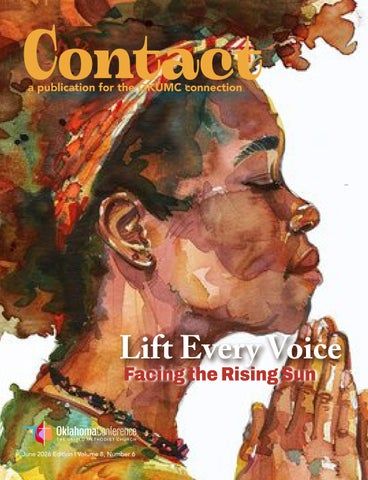
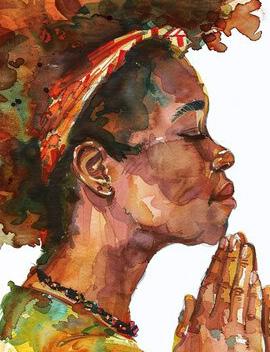
This issue is built around the hymn “Lift Every Voice and Sing” and the spirit of Juneteenth. Like the hymn, the stories in this issue hold more than one thing at once. They hold sorrow and joy. History and hope. A hard-won past and a rising sun.
The hymn is not a song of arrival, but of perseverance. Of celebration. Of faith that keeps moving forward even when the road is rocky, and of joy that refuses to be erased even when it has every reason to be. That is also the thread that runs through the stories in this issue.
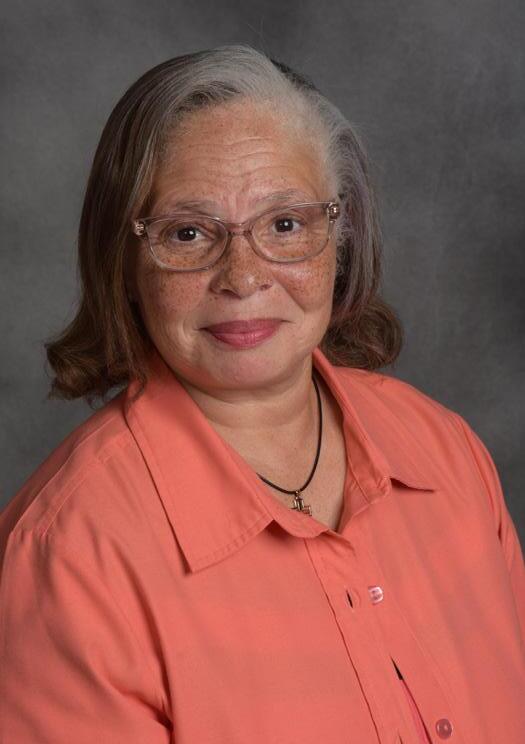
Rev. Gwendolyn Collins Derrick writes from the shadow of Jim Crow, remembering what it meant to hear this hymn as a child. Before she even understood the words, she understood that something shifted when it was sung. Rev.
Dr. Sherri Wood-Powe arrived in Oklahoma planning to rest after 30 years of ministry and found herself – after saying no more than once –planting a church in Bixby, lifting her voice in a place she never expected.
Erica Thomas celebrates 136 years of Quayle UMC, a congregation that has sung this hymn through padlocked doors and segregated jurisdictions, yet has come out still standing, still joyful, still home to seven generations of the same family.
And Carlos Ramirez offers something equally important: a clear-eyed look at the demographics of our state and a direct invitation to every congregation to ask whether we are truly making disciples of all people, not just the ones who already look like us.
I am grateful to every contributor who trusted us with their important stories this month. And I am grateful to you for reading and for being willing to sit with voices and perspectives that may stretch you. That stretching, I believe, is exactly what God asks of us.
These voices remind me that we all have more growing to do – through listening, through learning, through the willingness to be changed by someone else’s story. And that kind of individual growth, multiplied across a congregation, is how the church becomes more fully itself.
Together, we can lift every voice.
Jenny Herzberger
Interim Editor
Lift Every Voice: A Juneteenth Reflection from the Shadows of Jim Crow
By Rev. Gwendolyn Collins Derrick, Director of Center for Black Faith & Leadership Transformation
I remember the sound before I understood the meaning. It rose from the wooden floors of our little church, carried by voices that had known too much sorrow to sing anything but truth.
“Lift every voice and sing,” the church mothers would begin; their eyes closed not in escape, but in remembrance.
As a young Black girl growing up during segregation under Jim Crow laws, I did not know that this hymn was our testimony. I only knew that when we sang it, something in the room shifted.
Something in us shifted.
Life under Jim Crow was a lesson in endurance. We learned early on how to navigate signs that told us where we could not go, fountains we could not drink from and opportunities that seemed designed to pass us by. Yet, even in those confines, we carried something uncontainable, a quiet strength passed down from those who had survived even worse.
My grandmother used to say, “Baby, trouble don’t last always.”
I held on to that.
Juneteenth came to us not just as a date, but as a declaration. It was a whisper that turned into a shout: You are free, even if the world has not caught up yet!
Every year, when June rolled around, our community gathered not in denial of our struggles, but in defiance of them. There would be food – always food – laughter that rang louder than sorrow and stories that reminded us of who we were. Someone would inevitably begin humming that hymn, and before long, we would all join in.
“Sing a song full of the faith that the dark past has taught us…”
We knew that dark past. We lived in its long shadow.
My father worked sun up to sundown for wages that barely sustained us, yet he walked with dignity. And, as far as I can remember, he always held a two-point charge and was very committed to his call to serve.
My mother worked as a nurse’s assistant at a wage lower than her co-workers’. Both maternal and paternal grandmothers cleaned houses for families who never respected them. Faith, for us,
was not abstract. It was survival. It was waking up every morning believing that God saw us, even when the world pretended not to.
There were moments when hope felt fragile. I remember being turned away from park playgrounds, movie theatres, stores, medical facilities and some churches simply because of the color of my skin. I remember the way my mother held my siblings and me – not with empty reassurances, but with a quiet resolve.
“They may block the door,” she told us, “But they can’t stop your journey.”
That was the kind of unwavering faith and resilience we inherited, not naive, but stubborn. Not blind but determined to see beyond what it was.
“Facing the rising sun of our new day begun…”
Juneteenth gave us that rising sun. It reminded us that freedom had already been spoken over our lives, even if it had been delayed, distorted or denied.
It told us that our story did not end with oppression.
Each year, as we celebrated, it felt like stepping into that promise again – like claiming something that had always been ours.
I think about the women in my life – the backbone of our community – who carried both burden and blessing. They sang not because life was easy, but because singing made it possible to keep going. They taught me that perseverance was not just about enduring pain, but about insisting on joy.
We found joy. Not the kind that ignores suffering, but the kind that rises in spite of it.
Joy in shared meals, in children’s laughter, in Sunday mornings when the sanctuary felt like holy ground. Joy in knowing that every small step forward was a victory.
“Let us march on till victory is won.”
That line was not just poetry, it was instruction.
We marched in our own ways. Some marched in protests, risking everything for a glimpse of justice. Others marched in quieter ways, educating their children, building communities, refusing to be diminished.
Every act of perseverance was a step toward victory.
Looking back now, I see that our lives were woven from both struggle and grace.
Jim Crow laws tried to define us by limitation, but we answered with expansion.
It tried to silence us, but we lifted our voices. It tried to deny our humanity, but we affirmed it –again and again.
Juneteenth and “Lift Every Voice and Sing” are forever intertwined in my spirit.
One marks the moment freedom was declared; the other carries the ongoing song of that freedom unfolding.
Together, they remind me that breakthrough does not always come in a single moment. Sometimes it comes in the steady rhythm of faith, the courage to keep moving, and the audacity to believe in new beginnings.
I am still that little girl in the wooden church, listening as the voices rise. But now I understand. We were not just singing a hymn – we were telling our story. A story of perseverance. A story of faith through hardship. A story of joy that refuses to be erased.
And even now, I lift my voice – not because the journey is over, but because the promise still stands.
A New Day Begun in Bixby
Lifting My Voice in a Place I Never Expected
by Rev. Dr. Sherri E. Wood-Powe, Associate Pastor at Faith UMC Bixby
Juneteenth is upon us.
Many, especially in the African American community, will be celebrating the news of liberation for those enslaved in Texas who did not learn of their freedom until two years after the signing of the Emancipation Proclamation.
What a day of rejoicing that must have been.
After years of inhumane treatment, blood, sweat, and tears, they were finally free. As I think of the dark past of my ancestors and all they have endured, my faith is always strengthened. I have the courage to face the stony roads ahead knowing that God was with them, even in the darkest days, and God is with me as I travel the path of planting a church in Bixby, Oklahoma, as an African American female.
It amazes me that in 2026 being female clergy AND African American means I must be intentional to “lift my voice and sing.” I stand and
Sing a song full of the faith that the dark past has taught...
Sing a song full of the hope that the present has brought...
Facing the rising sun of [a] new day begun, [I] march on till victory is won.
During my time in ministry, I have often found
myself pioneering as the first female pastor, first African American pastor and sometimes both. In these appointments, I have truly had to hold fast to my faith and remember there are many who came before me who have had to endure stony roads, yet journeyed on until they could “stand at last where the white gleam of [their] bright star [was] cast.”
At the point of arriving in Oklahoma, I had spent over 30 years in ministry. I was truly looking forward to my year of transitional leave. My intent was to spend the first six months to set up my house, familiarize myself with Tulsa, get acclimated to my new role as “first lady” of the seminary and make connections in the Oklahoma Conference.
After a month of unpacking, I found myself in a local congregation with inspiring worship. I was very pleased with the exegesis of the text, flow of worship, welcoming of the congregation, and warmth of the pastoral team.
After worship I elatedly exclaimed to my husband, “I think we have a church home.”
As we continued to attend, the pastor seemed to be going through a rough patch personally. I offered my assistance as an ordained elder, “However I can help let me know.” She took me up on my offer, allowing me to write liturgy for worship, as well as inviting me to preach and lead worship in her absence.
Before I knew it, I was attending worship meetings and engaging more at the church. Unbeknownst to me, there seemed to be a plan
brewing of which I was not aware. I knew that the pastor was looking for someone to lead a church plant in Bixby. We had talked about it, and when she asked if I was a church planter, I responded with a resounding “NO”, declaring I do not need to take a test or attend a class, I know I am NOT a church planter.
As she and I worked together more, she asked several more times and the answer was always “NO!”
I began to wonder why God had placed me here. Why was I in Oklahoma? Why was my house only about five minutes from this church? Why had God connected me with this pastor and at this time?
There was a lot to ponder and pray. I wasn’t sure whether I was being tested to see if I would be true to myself and indulge in the time off that I felt I really needed or put my interests aside and help someone in need.
Hearing her frustration with wanting to move forward, but not having a church planter, I finally acquiesced with the caveat that I would only be part-time. That was my compromise with myself. This way, I could still have time to myself, support my husband, and help her until a “real church planter” was found.
The DS, Cabinet, and Bishop were onboard, and before I knew it, I was in the throes of a new part-time appointment as the church planter for Faith-Bixby.
WOW! I never saw that coming in a million years. A new beginning in ministry. A road I had never dared to trod.
In addition to leading worship and overseeing the Bixby campus, I was thrust into planning the Ribbon-Cutting Event. I quickly moved into project management mode with a goal of 30 people minimum, 50 maximum in attendance for the event. Having just arrived in town, I did
not have a lot of contacts I could count on, but the Lord did not fail me.
We counted around 150 people in attendance including Bishop Merrill, many from her cabinet, members of the District Strategic Missions Team, and members of the Conference New Faith Communities Team.
Receiving this as my confirmation from God that I was right where God needed me to be for this season, I emphatically introduced myself, for the first time, as the church planter for Faith-Bixby. And now, I have been appointed full-time to serve as the church planter.
This new beginning caught me completely by surprise. I had no idea what my next step or next path was going to be when I arrived in Oklahoma, but I have learned to be open to where God is calling me to serve. So, I lift my voice and sing. I sing a song full of the faith that the dark past has taught. I sing a song full of the hope that the present has brought.
I am grateful for this new beginning.
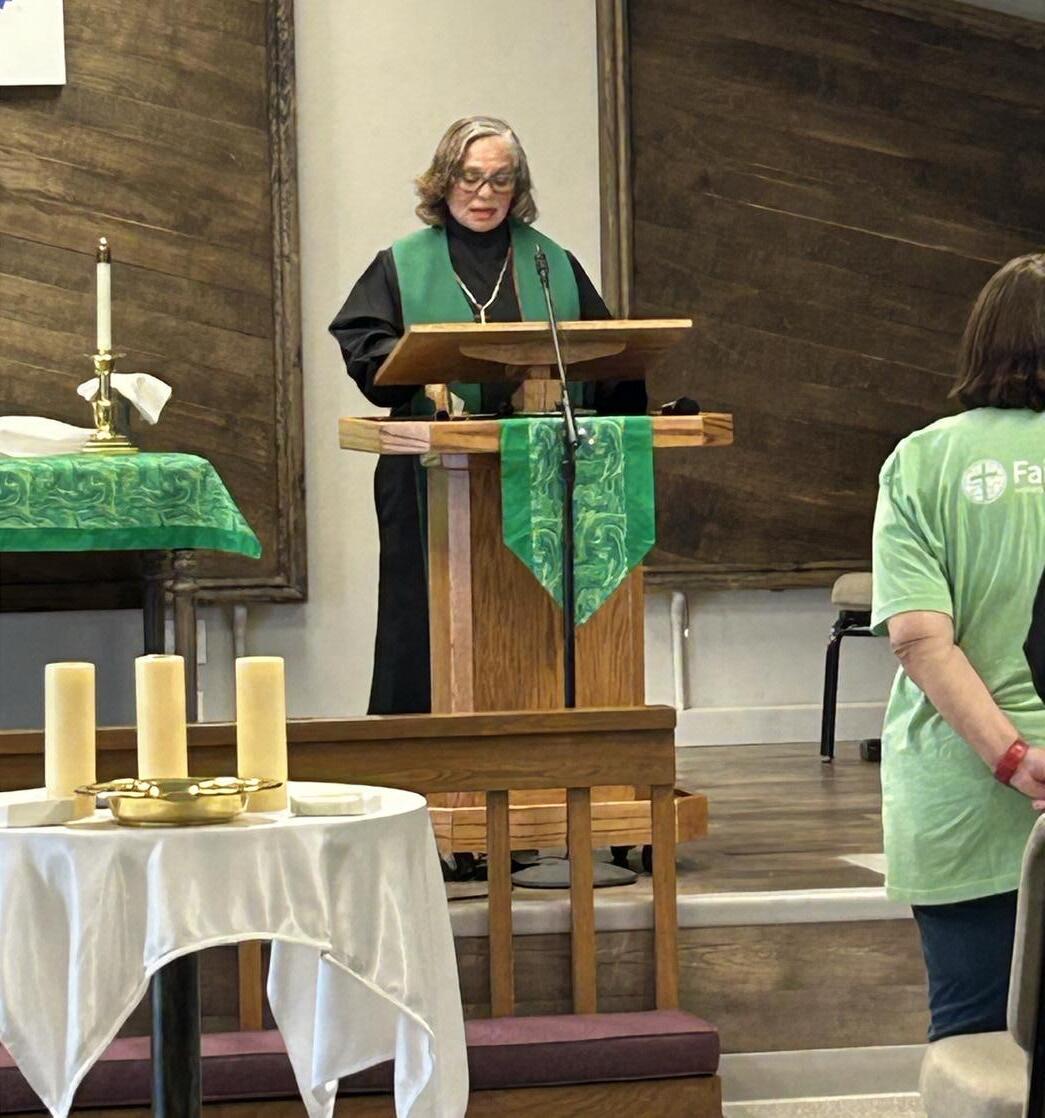
Sherri Wood-Powe leads worship at Faith Bixby’s first worship service on Nov 8, 2025.
Till Now We Stand at Last: 136 Years of Quayle UMC
A 5th Generation Quaylite Becomes Pastor
By Erica Thomas, Pastor at Quayle UMC
Lift every voice and sing till earth and heaven ring, Ring with the harmonies of Liberty; Let our rejoicing rise
High as the listening skies, Let it resound loud as the rolling sea.
“Quayle Methodist Church was organized in 1890 as a prayer band on a site at the corner of 4th and Robinson streets in Oklahoma City. It was formally organized by Reverend A. G. Murry (Caucasian) and a Reverend Towns (Negro).”
These are the words that begin the history of Quayle in Northeast Oklahoma City.
Quayle Methodist Church had been in existence 10 years when James Weldon Johnson penned the words to Lift Every Voice and Sing in 1900.
Over 126 years the anthem has had other composers add their touch to the arrangement of
the song while retaining the heart and soul of a resilient, proud and faithful people.
I heard the song from a very young age. Hearing it sung primarily in my church as well as at Black History Programs, MLK celebrations and Langston University where I taught for many years. Today we even hear it performed at major sports events alongside The Star-Spangled Banner (now that is progress!).
It continues to resound deep in my spirit, as I remember the ancestors who paved the way for me and countless others to achieve and succeed wherever God was leading. And today when Quayle United Methodist Church sings this song, it is with joy and commitment commemorating a past that was fraught with hardship, uncertainties and perseverance, but mostly a faith in the God of the past, present and future that continues to this day.
Sing a song full of the faith that the dark past has taught us
Sing a song full of the hope that the present has brought us
The past included having no worship space, no pastor to lead this flock for several years in the early days and padlocked doors until the church became solvent.
Also during that time, The Methodist Episcopal Church, South and North, by a declaration of Union issued at Kansas City, Missouri on May 10, 1939, came together again as a united church with more than 8 million members under the name The Methodist Church.
However, the church was not truly unified. The
Black membership of the church was organized in what was known as the Central Jurisdiction which included all the “Negro” Annual Conferences, Negro Mission conferences and Missions in the United States. That meant all Negro churches in the United States comprised The Central Jurisdiction which was based on color rather than geography.
The Central Jurisdiction would continue to exist until 1968. By virtue of being predominantly Black, the church called Quayle Methodist Church was part of the Central Jurisdiction from 1939 until 1968.
It has been a delight to read the history of Quayle and how the church came together during those years to be a light in the community.
Have not our weary feet
Come to the place for which our fathers sighed We have come over a way that with tears has been watered, We have come, treading our path through the blood of the slaughtered, Out from the gloomy past, Till now we stand at last where the bright star is cast.
In September of this year, Quayle will celebrate 136 years of Mission and Ministry. As a 5th generation Quaylite, I am humbled and blessed that I have the joy and honor of serving as Quayle’s 40th pastor.
It is amazing really.
As an Ordained Deacon, I had not planned to lead this congregation of faithful family and friends (or any congregation as a senior pastor actually) – those whom I had grown up singing and serving together with throughout my 60+ years at this place on the hill. I was quite content to be a life-long member, and after ordination, Associate Pastor, serving with three wonderful Senior Pastors.
But God had other plans, and in June of 2025, I
was asked to serve as Interim Pastor and then in 2026 the word “Interim” was removed, and I am Pastor.
I am always amazed at how God does what God does. God has orchestrated everything in God’s time when Deacons were granted sacramental rites by the General Conference of 2024, allowing me to serve my home church fully.
While I am most definitely called to be a Deacon, connecting the world and the church, I feel very much at home serving communion and performing the baptism rites. In fact, one of my first baptisms in the church was of my great-nephew, 18-month Raiden Jax Smith, the 7th generation of my Thomas-Neal family that calls Quayle home.
I cannot begin to explain the utmost joy that I feel every time the church comes together to celebrate and partake of the communion. The joy when we take communion to our sick and shut-ins is an absolute pleasure. The fun we have as a church family and community bridging the gap where God says to “GO”.
God has truly brought us this far and has never failed to be a light to guide our path. We will continue to sing with every ounce of our being Shadowed beneath Thy hand, May we forever stand. True to our God, True to our native land.
Amen? AMEN!
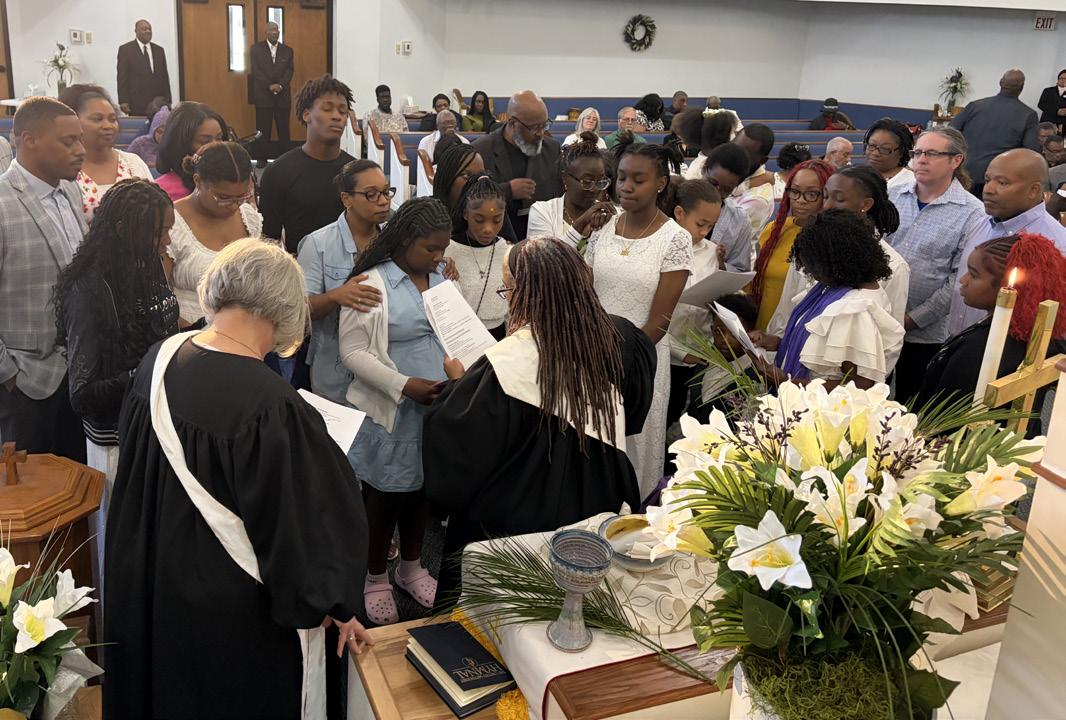
Erica Thomas with the Quayle UMC’s 2026 confirmation class and their parents on Easter Sunday.
Embracing the Diversity of Our Mission Field
The demographics have changed. Will we?
By Carlos Ramirez, Director of Communications & Strategy
Juneteenth is a holiday that “celebrates African American resilience and achievement.” Since I am not an African American person, I do not feel myself qualified to speak “on behalf” of this important federal holiday and what its implications are.
I would like to use this edition of the Contact to highlight a very important reality in our state. I think it is important to note that this reality is not only experienced in Oklahoma, but all the states that make up the South Central Jurisdiction of the United Methodist Church: Nebraska, Kansas, Texas, Louisiana, Missouri, New Mexico, Arkansas, Oklahoma Indian Missionary Conference and Oklahoma.
The reality I’m referring to is the fact that the majority of the student body in our state is nonwhite.
In 2022, 45.5% of students were white. While percentages obviously vary from town to town and city to city, the fact remains: our schools are diverse.
As I stated previously, this is a reality across the South Central Jurisdiction. It is probable that what you know about me is that I talk a lot about demographics. I think they are important. I think demographics (who is our neighbor, what are their means for living, where do they live, what do they prefer, what is the culture and/or values) are part of the discernment God invites us to be part of as we serve our mission fields.
If we do not take demographics into account in our daily work, we may run the risk of “doing
ministry in a vacuum.” By doing so, we accommodate our work according to our wants, needs and ideas, instead of tailoring our service to the people who are in our mission field.
Now, here is something very interesting: In 2022 and 2023, we conducted research that helped us understand the conditions under which a United Methodist (UM) congregation became unsustainable. We identified five data points that lead congregations to unsustainability. I will just talk about one of these data points: the student body.
When the student body of the school or schools (understood as K–12) “attached” to the zip code where a UM congregation resides is 50% or more non-white, the UM congregation struggles to remain sustainable.
It is not a secret that our denomination is largely white, yet the demographics of our state, jurisdiction and nation have changed. This is not an indictment of our denomination. It is just a simple fact.
My demographic work has continued and across our state, the reality of diversity in our schools is very palpable.
“For far too long we have preferred to ‘tiptoe’ around our lack of diversity than to face it head on. I do not think we have that luxury anymore.”
These numbers tell the story of changing neighborhoods, towns and cities throughout Oklahoma. People who identify as Latinx, 2 or more, Native American, African American and Asian, combined, far surpass those who identify as white.
I think God is placing before us a chance.
For far too long, the toxic racial/ethnic divide that has plagued our country has influenced the trajectory of our denomination. For far too long we have preferred to “tiptoe” around our lack of diversity than to face it head on.
I do not think we have that luxury anymore.
The time has arrived when we need to make a choice: will we remain who we are by doing what we have always done or will we be courageous enough to do what is necessary in order to become who God is calling us to be for the communities God is sending us to serve?
Trust me, I know change is not easy. I know that cross-cultural ministry is not easy. It is a hard road… a hard choice.
Yet, I also know that each congregation of the Oklahoma Annual Conference is a welcoming, loving and caring congregation. I have experienced more openness and love than apathy or straight rejection. I can say with
certainty that the heart of each UM congregation in Oklahoma is in the right place and wants to serve and thrive in its local communities.
It is with this certainty and hope that I invite you all to take a closer look into your local schools and community. To enter a time of discernment and learning about your own culture and how it shapes your world view about a culture different from yours. To start to make intentional steps toward building relationships with those who make up your community, yet they are not present in your congregation.
“Therefore, go and make disciples of all nations, baptizing them in the name of the Father and of the Son and of the Holy Spirit.”
The word translated as “nations” is actually ethne which is where our word for “ethnic” comes from.
Ethne means race or peoples. Jesus has commanded us to go and make disciples not of “some” people, but of ALL people.
May we have the courage of our foremothers and forefathers who stood against slavery, against the denial of human dignity and against hate. May we stand against racism, toxic division and may we, the United Methodist Church, be God’s instrument to bring reconciliation among all people.
Juneteenth gave us that rising sun.
It reminded us that freedom had already been spoken over our lives, even if it had been delayed, distorted or denied.
It told us that our story did not end with oppression.