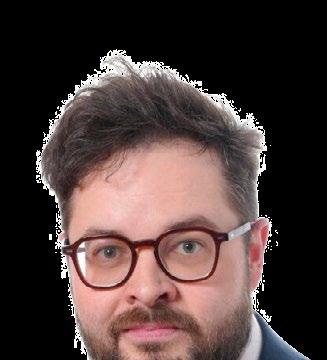
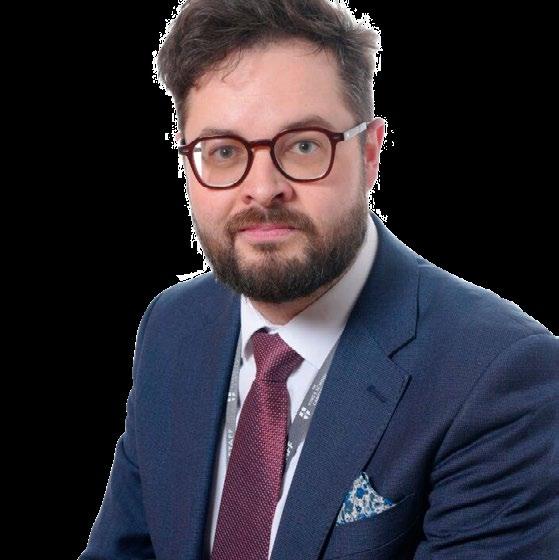
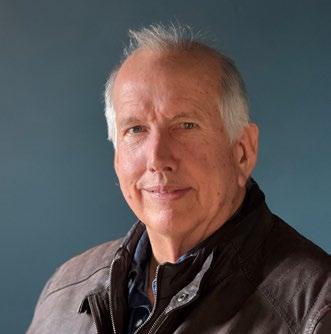
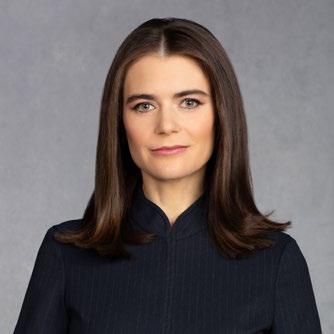
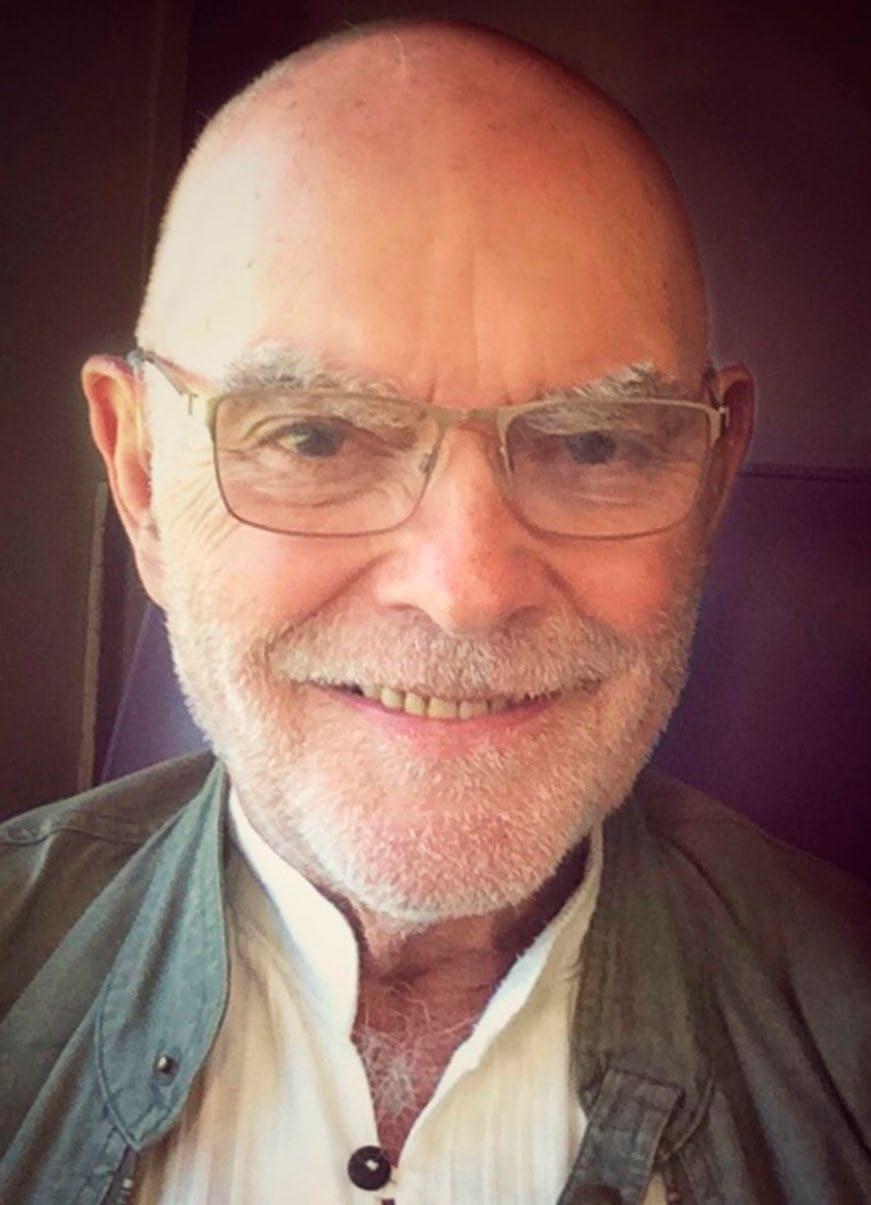
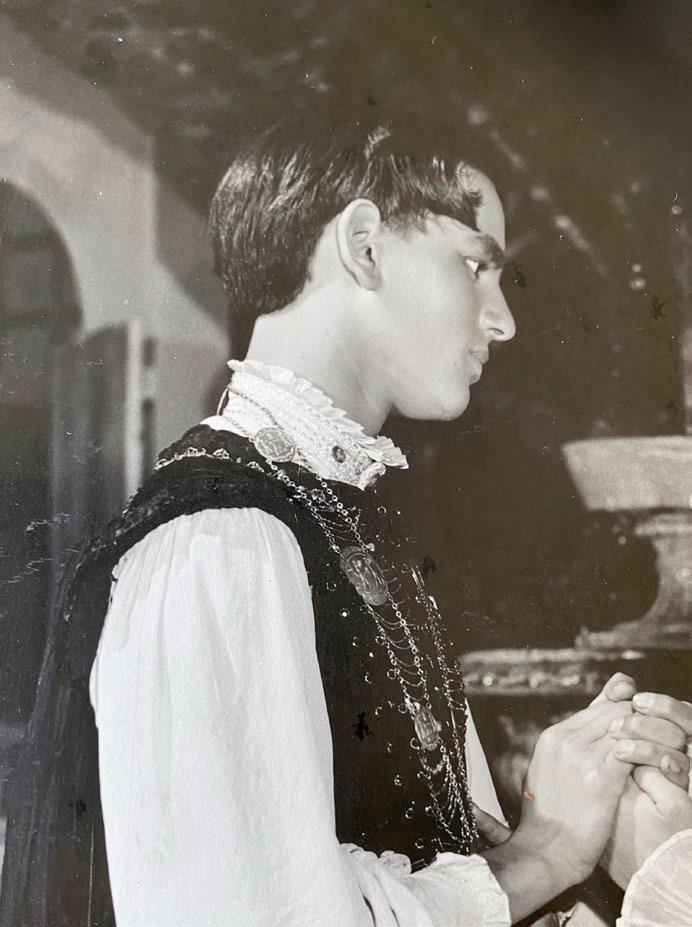
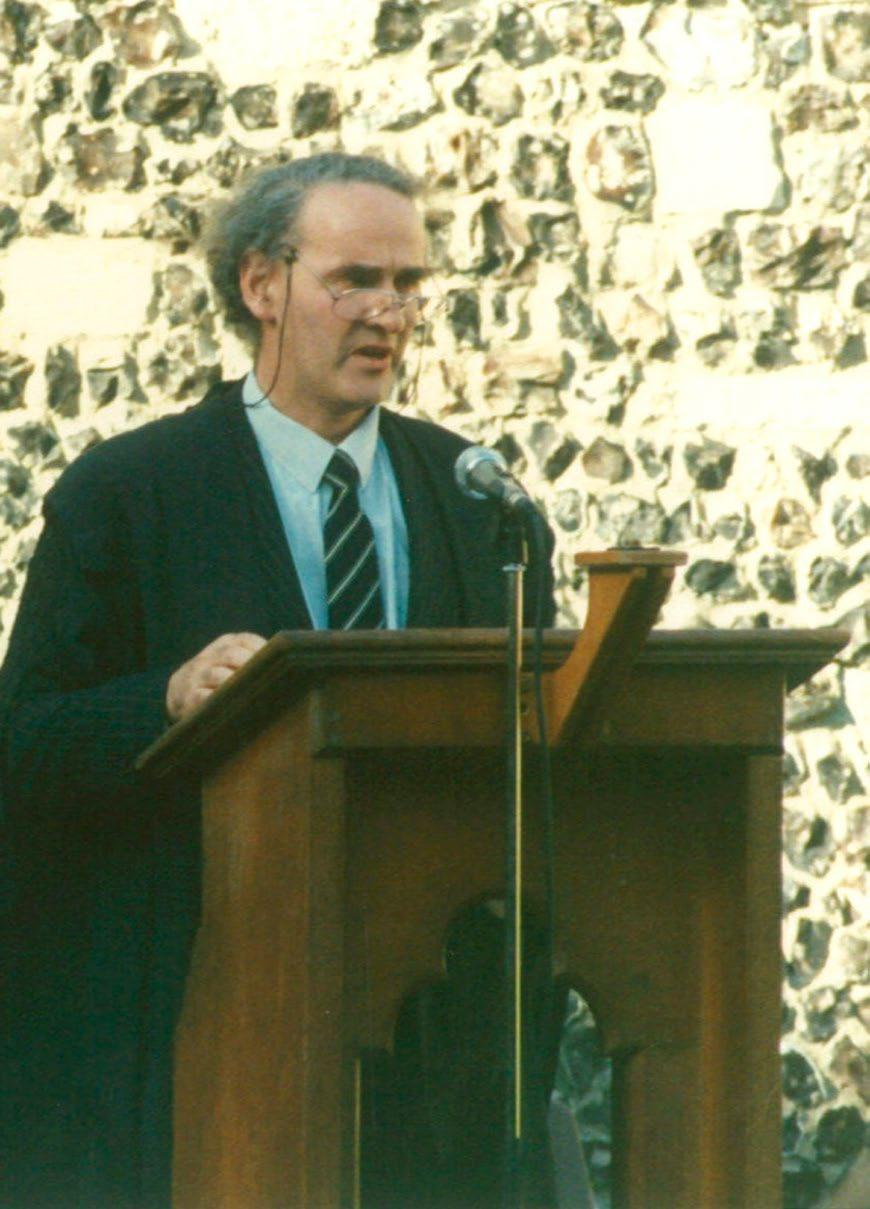
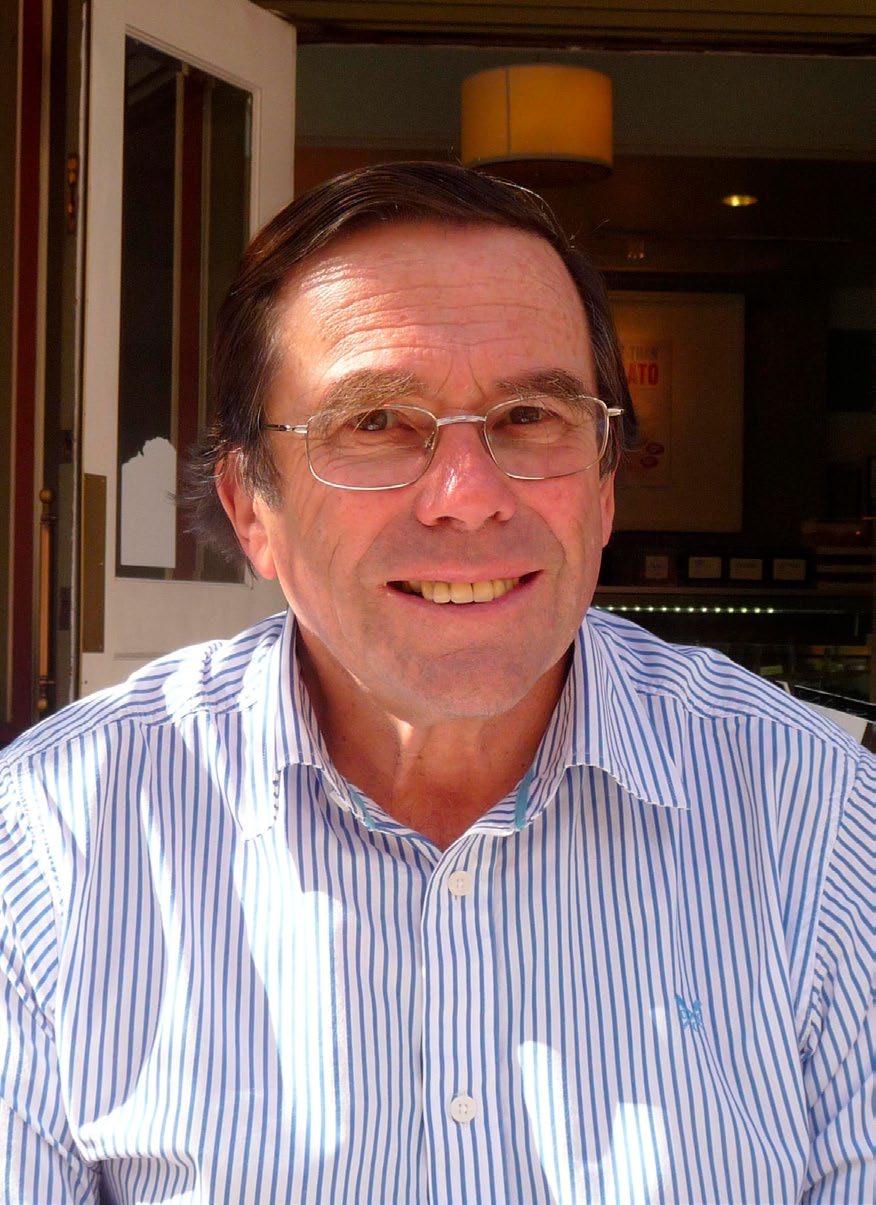
Pippa Stevens reflects on her career as a markets reporter for CNBC
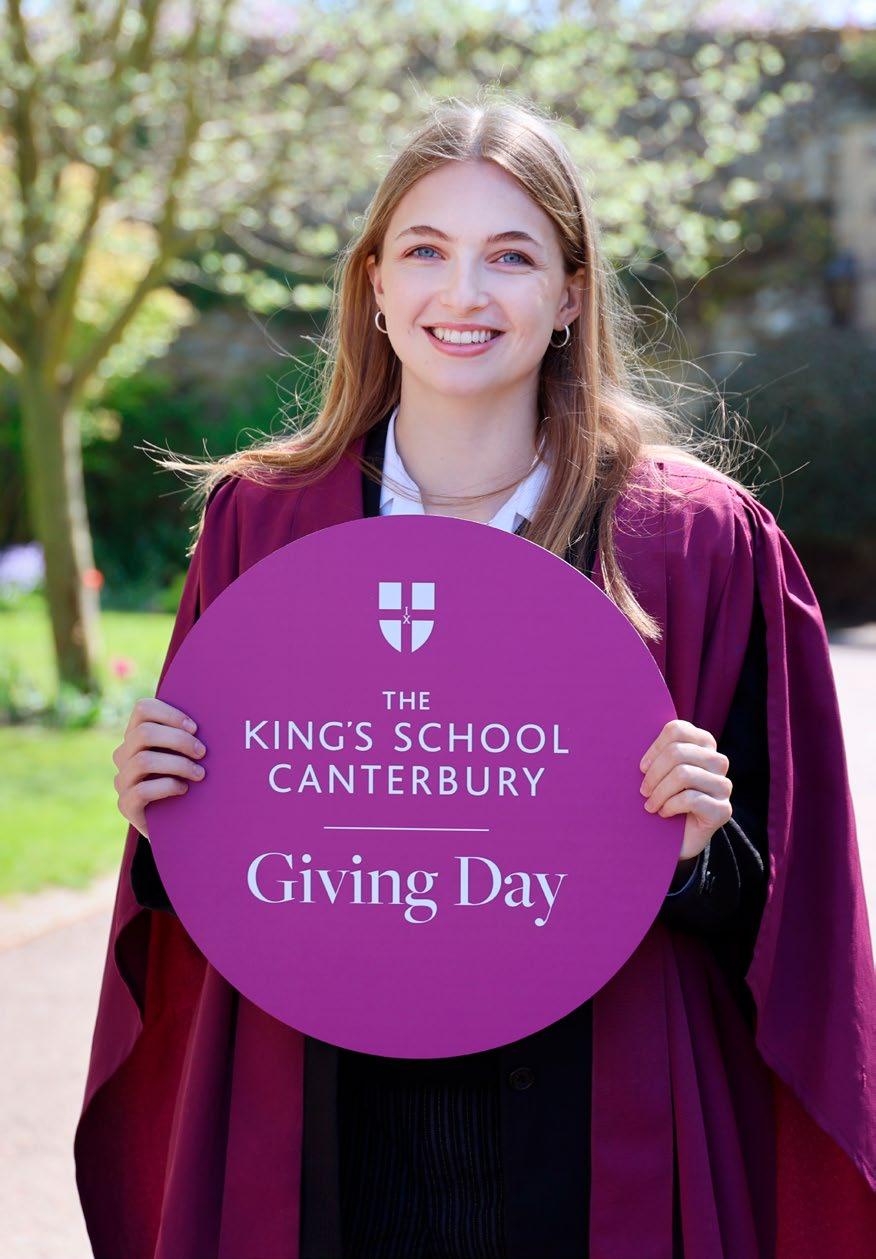
King’S giVing DAY
Help us build brilliant futures on our first ever Giving Day
SEVEn nOVELS
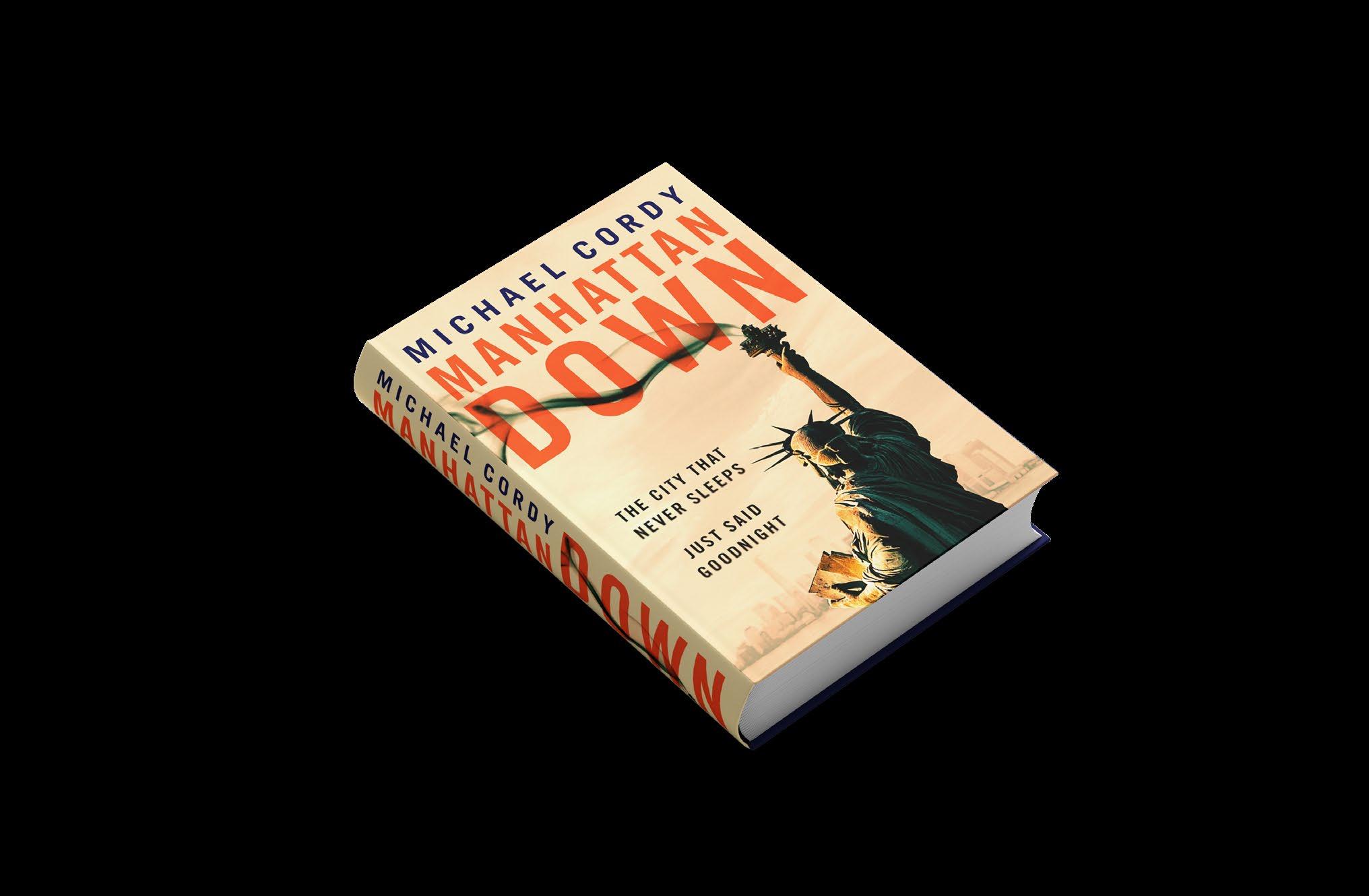
Michael Cordy tells us about his latest novel, Manhattan Down
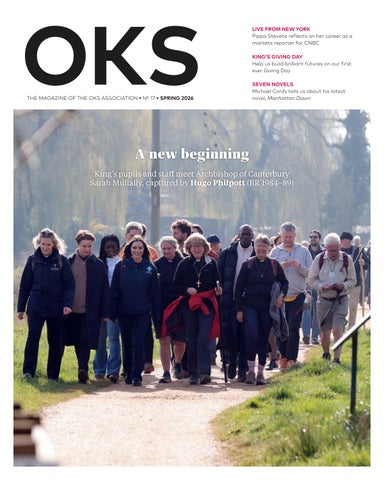
A new beginning
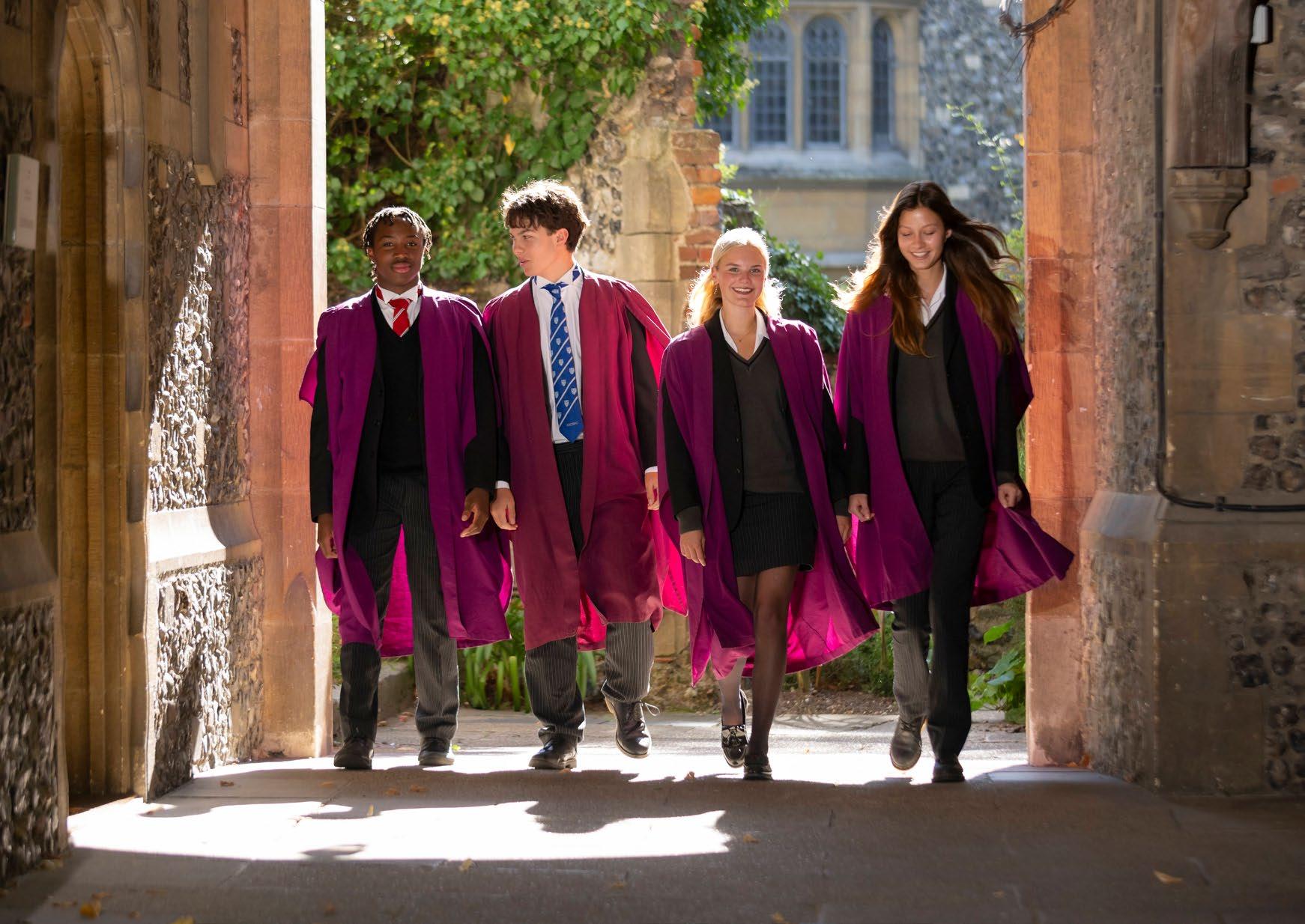
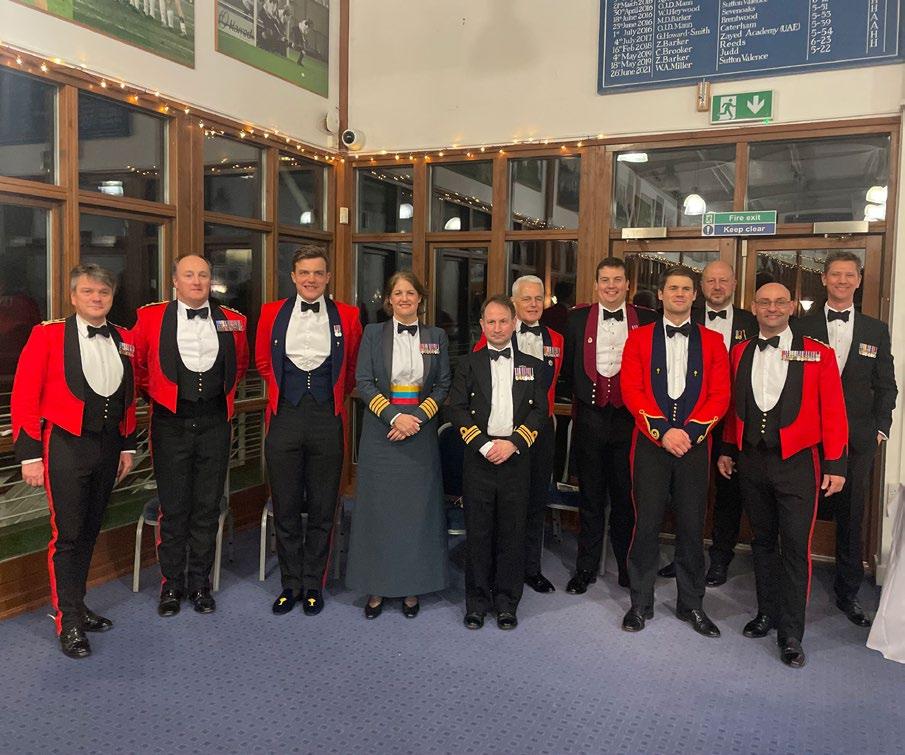
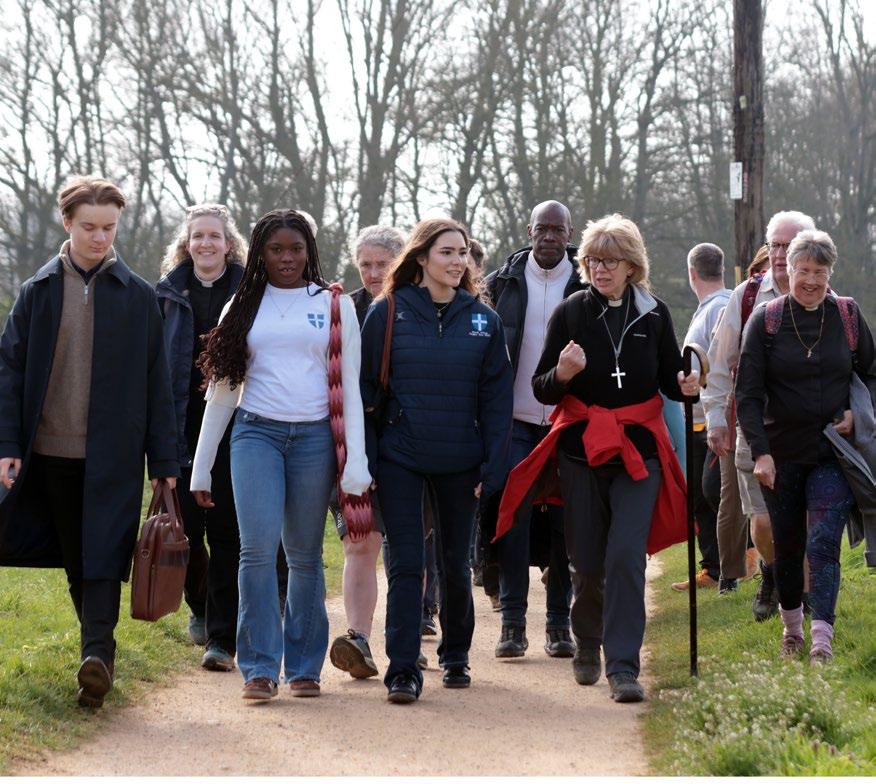
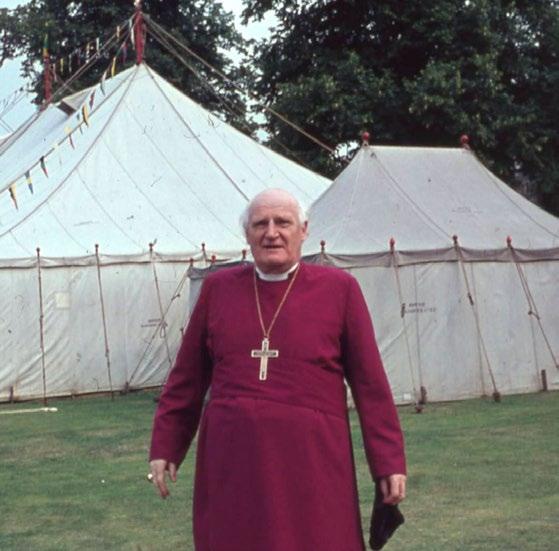
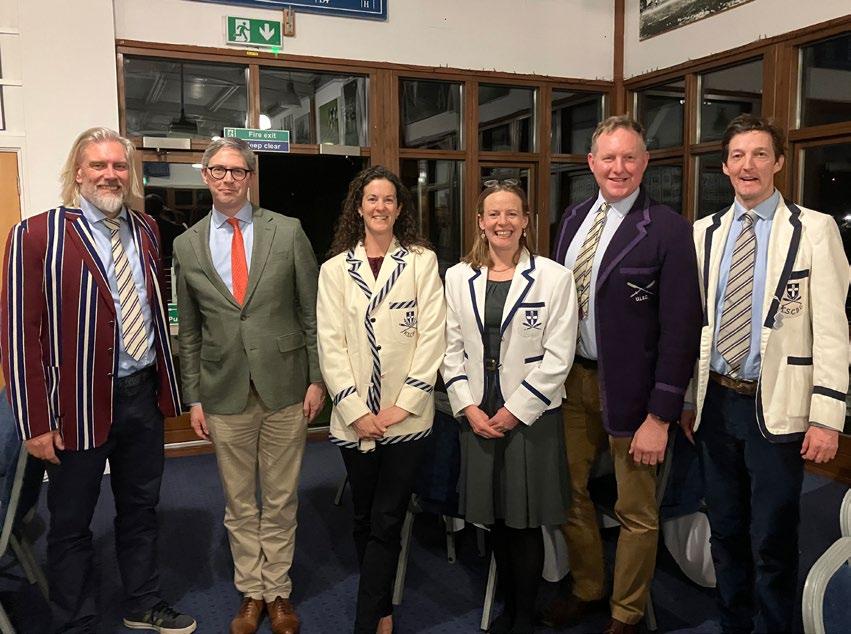
King’s pupils and staff meet Archbishop of Canterbury Sarah Mullally, captured by Hugo Philpott (BR 1984–89)
From the Head
As the summer term gets underway, there is a great deal at King’s to reflect on with satisfaction – and, looking ahead, rather more still to be excited about. This year’s higher education cycle has been a particularly strong one. Fourteen pupils have received offers from Oxford and Cambridge across a wide range of courses and colleges, and the wider cohort have secured places at an impressive range of universities. Alongside the formal mechanics of the applications process, we have worked hard this year to make the world beyond King’s feel more vivid and navigable for pupils. This term’s Futures Fair will draw together a wide range of employers, universities and pathways, and the ‘UniChats’ series – conversations with recent OKS reflecting honestly on their experiences of university life – has been warmly received. It is exactly the kind of connection between our current pupils and our OKS community that we hoped the King’s Association would foster, and it is wonderful to see it working in practice.
There has also been much to celebrate on the admissions front. The School is larger than it has ever been, and that growth has been driven in significant part by a resurgent interest from local and domestic families. The successful launch of our new Day House – which opened earlier this year in the beautifully restored former Choir House – has been a real catalyst here. It has met a genuine appetite from families in and around Canterbury for a King’s education with the flexibility of day and flexi-boarding options, and the response has exceeded our expectations. We are also delighted to announce that the House will be named Morpurgo House, in honour of one of King’s most celebrated OKS. The official launch takes place in September; a fitting moment to mark both the contribution of a remarkable OKS and the beginning of a new chapter in the life of the School.
On the Charter Awards, I am delighted to share that we have reached our initial fundraising target – and done so ahead of schedule. When the campaign was launched, the ambition was to build a permanent endowment capable of
funding fifty full bursaries for talented pupils who would not otherwise be able to attend King’s. With the first milestone passed, the funds already raised are supporting several transformational bursaries – exactly the outcome we had hoped for. The highlight of this term will be our Giving Day, which you will read much more about on page 9 and in the carrier sheet. We hope it will be a moment that the whole community can get behind, and a springboard for the next phase of the campaign.
Further afield, one of the most memorable moments of recent weeks was attending the groundbreaking ceremony for our new school in Cairo over Easter. The site is ambitious in scale and the plans genuinely impressive – it was one of those occasions that makes the abstract suddenly concrete (literally and metaphorically), and I came away with a real sense of excitement about what is being built. The Cairo school will open with a Nursery in 2027 and develop into a full school by 2028 – and alongside our forthcoming Bengaluru partnership, it represents a significant expansion of the King’s network beyond Canterbury. These projects involve no financial outlay from the School here, but they will generate meaningful income to support our work and, in time, create rich opportunities for exchange and collaboration across the network. They are also, I think, a reflection of the reputation that King’s carries in the wider world – and seeing that at first hand, in the enthusiasm and ambition of our partners on the ground, was a real pleasure.
As always, it is the privilege of this role to see –day in, day out – the exceptional things that our pupils and staff make happen. I am grateful to all of you for the loyalty and warmth you continue to show towards the School, and I very much hope to see many OKS at events over the summer.
Jude Lowson
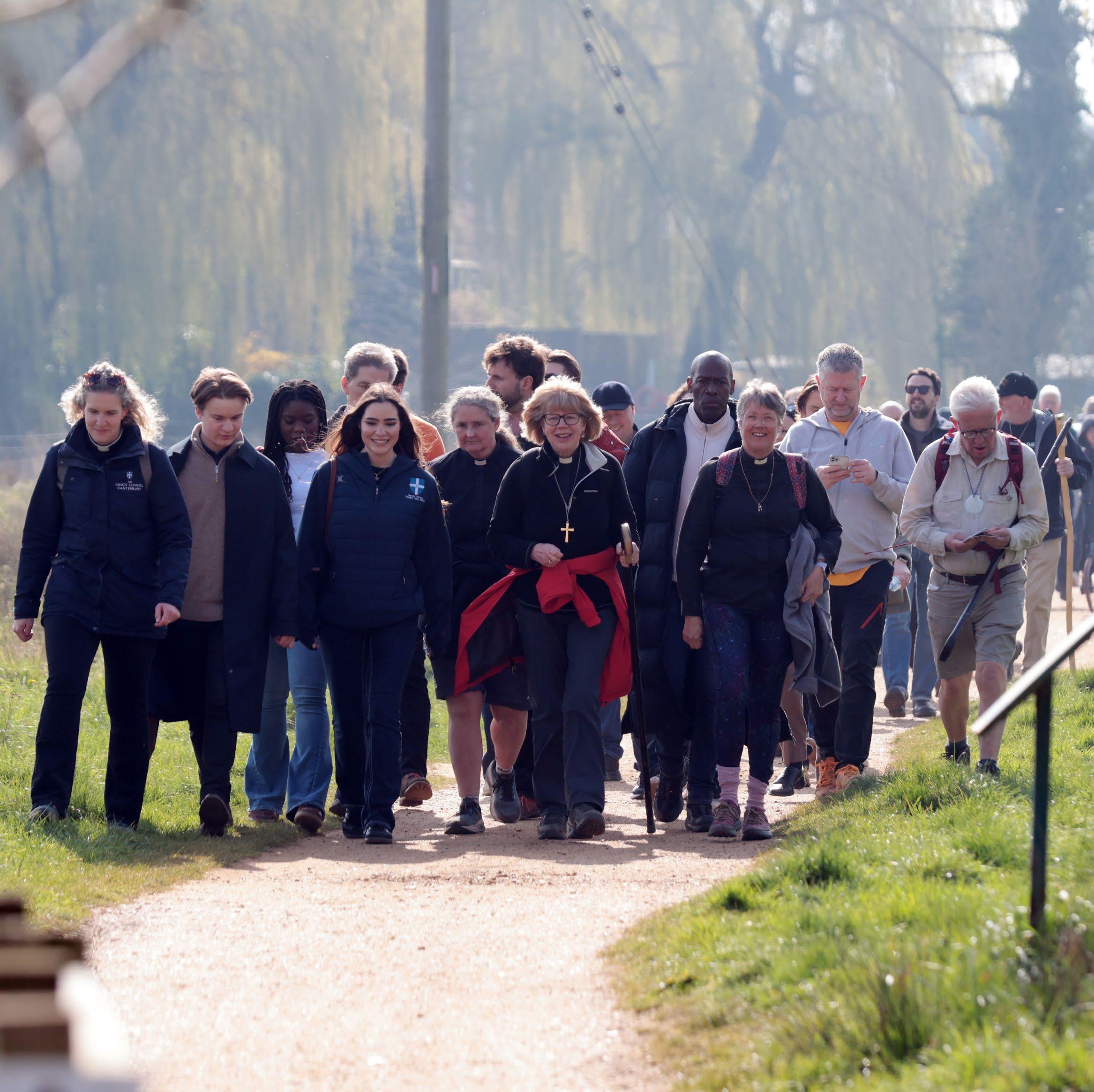
Cover: the King’s contingent (first four on the left) with Archbishop Sarah Mullally (centre)
Photo: Hugo Philpott (BR 1984-89)
Update for Overseas OKS Readers
For many years, we have posted the OKS Magazine to all OKS around the globe, twice a year. To help manage increasing overseas postage costs – exacerbated in recent years by the pandemic, Brexit, and global conflicts – and to reduce our environmental impact, we have moved to an opt-in system for hard copies sent outside the UK.
This decision follows careful consideration, as well as feedback from OKS who have expressed a desire to reduce their environmental footprint.
The digital copy of the magazine will still be available online and emailed to all OKS.
OKS living overseas who would like to continue receiving a printed copy can opt-in to hard copies of the OKS Magazine by contacting the office via email: community@kings-school.co.uk
Thank you for your support and understanding.
Did you know that all back issues of the OKS Magazine can be viewed at any time online? Visit the King’s Association website to browse previous issues: kings-association.co.uk
To book tickets to upcoming events, please visit kings-association .co.uk/events or contact community@ kings-school.co.uk
4 news from King’s: Morpurgo House, AI and Marlowe matters
The OKS Magazine is produced by an editorial committee chaired by Jenny Grant (Director of Development, Marketing & Communications)
The Executive Editor is Molly Burgess (Engagement Manager) who is assisted by Associate Editor Stephen Woodley (CR 1969-98) and Peter Henderson (School Archivist, CR 1969-). Unless otherwise credited, photographs are by Matt McArdle, the contributors, or from the school archives. The magazine is designed by Nick Ebdon (nickebdon.co.uk).
News from King’s
King’S inTELLigEnCE
At the 6a Scholars’ Dinner in March Matthew Key, Deputy Head Academic, spoke about Senior Management’s response to the challenges of Artificial Intelligence. “AI is immensely powerful. It can produce fluent arguments, plausible interpretations, and polished responses almost immediately. But it does not care whether those answers are true, wise, or well-judged. It cannot ask better questions.
What we are calling King’s Intelligence speaks to enquiry: the discipline of thinking deeply, questioning carefully, and resisting surface fluency in favour of understanding. It places humanity at the centre of learning – empathy, creativity, and an awareness of what we owe to others. It recognises the need for adaptability in the face of rapid change, without surrendering intellectual or moral bearings. It values advocacy: the ability to speak with confidence, clarity, and civility, especially when the stakes are high. And it emphasises legacy – the understanding that what we know, say, and do carries weight beyond ourselves.”
MArLOWE MATTErS
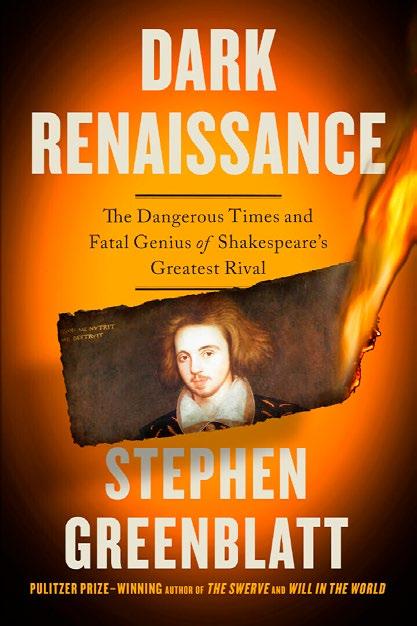
Sounds. Then, from Sat 25th July to Sunday 22nd November, The Beaney in Canterbury will present an exhibition entitled ‘The Making of Marlowe: Poet, Playwright, Provocateur’. Meanwhile Stephen Greenblatt’s Dark Renaissance – “The Dangerous Times and Fatal Genius of Shakespeare’s Greatest Rival” – is the latest biography of this endlessly fascinating OKS.
FrOM THE ArCHiVES
Jerry Brotton, Professor of Renaissance Studies at Queen Mary, University of London, visited Canterbury on Wednesday 4 February. He interviewed the School Archivist and Charlotte Cornell (Common Room 2008-17) among others about Christopher Marlowe and the Canterbury of his day. A 10-part series on Marlowe’s death and life was broadcast on Radio 3’s The Essay from 21 April to 1 May. It is available on BBC
Sylvia McNally has published an impressively informative biography of William Masters (KS 1807-11?). Masters was a horticulturist, best known for his ‘Exotic Nursery’ in Canterbury and for corresponding with Charles Darwin.
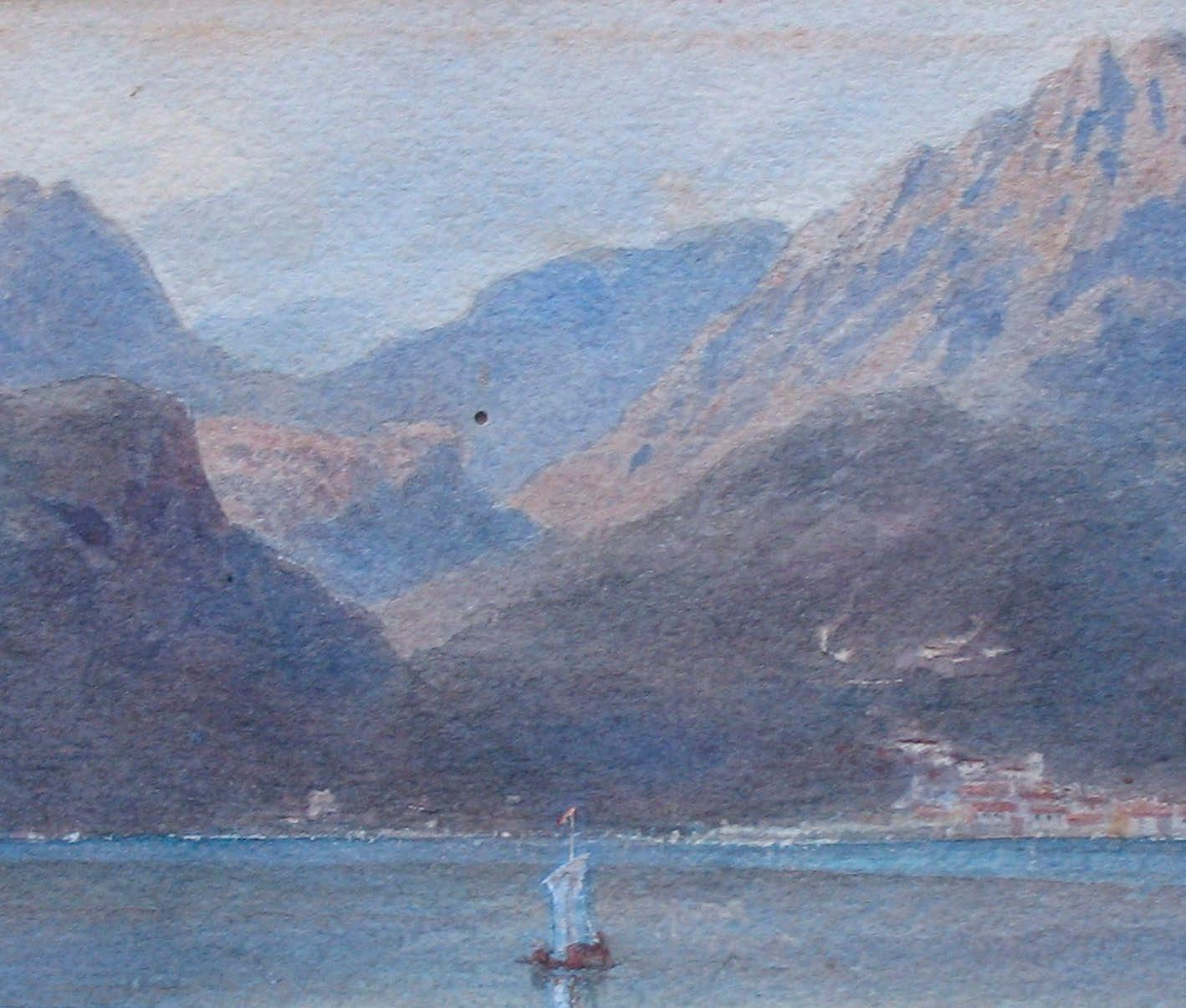
Ben Raeside has most generously given us three watercolours by Louis Laurent Razé of scenes in France and Italy. Razé was art master from 1842 to 1864 and is well known for his topographical
prints of the King’s School, the Cathedral and the other East Kent sites.
Bruce Thorndike (GR 1965-68) has sent us play programmes for Richard of Bordeaux (1935), Hamlet (1936) and Richard II (1937). Some are signed by cast members and have various press cuttings included. He notes: “My grandfather Russell Thorndike was involved in the production of Richard of Bordeaux and my father Daniel Thorndike (GR 1934-38) played Hamlet and Richard the Second. My uncle Richard Thorndike (GR 1935-39) was also in Richard of Bordeaux.”
THiS AnD THAT
The new day house in the former choir house will be named Morpurgo House. Michael Morpurgo (GL 1957-62) will preside over a formal naming event in September.
The Lent Term’s ‘Monday Experts’ talks from members of staff have included: Petri Mostert on ‘The Great Art Heist: Does AI Steal to Create?’; Anthony Lyons on ‘Hot Air: how to be a writer’; Hannah Warwicker on ‘Roman gravestones and cultural identity’; and Matt Key on ‘Napoleon Bonaparte: Architect of the Modern World’.
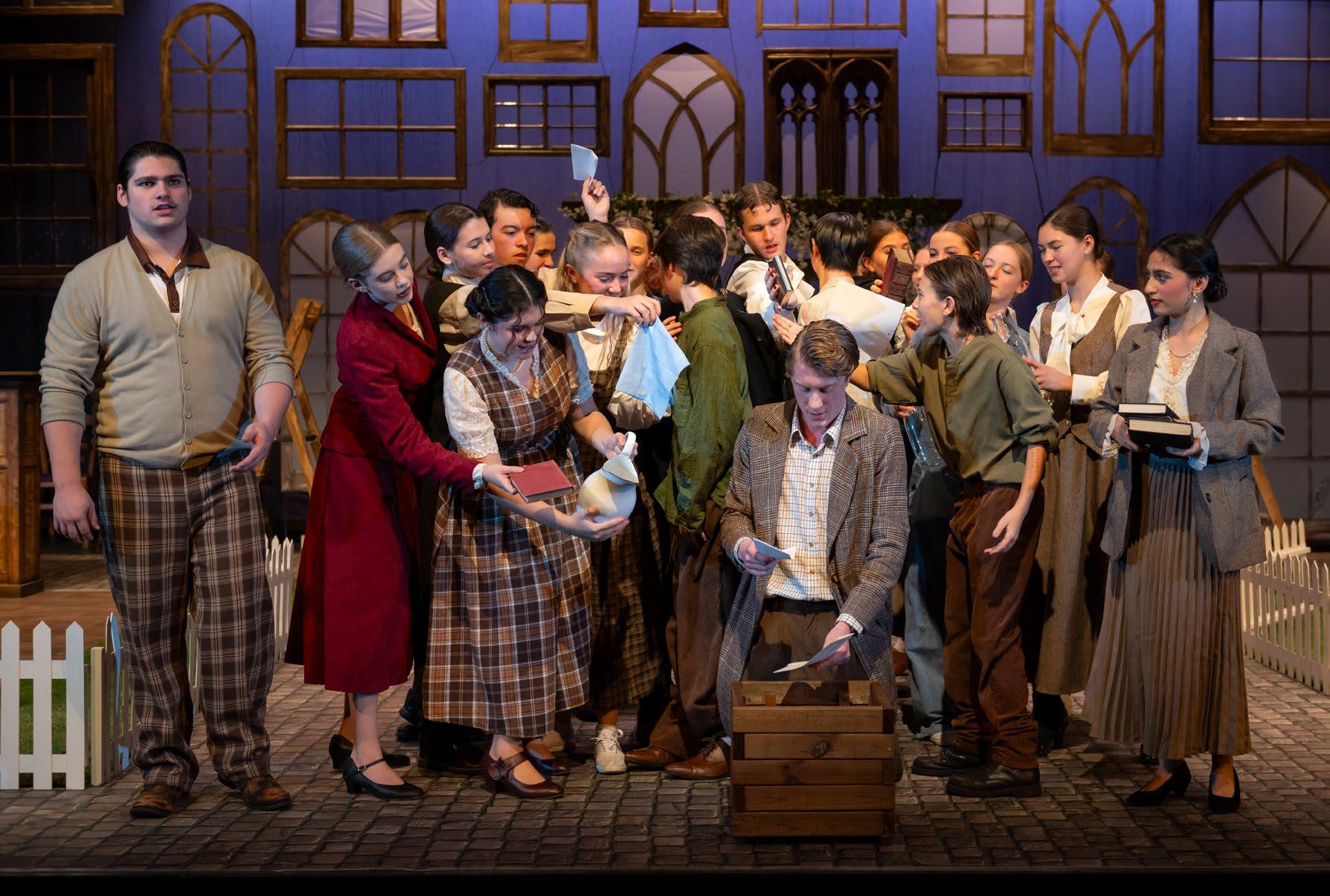
In November the Chamber Orchestra Concert entitled ‘Water Music’ was held on the Malthouse stage and featured a programme of works by Bizet, Mozart, Handel, Bartok, Janacek, Ligeti and Tchaikovsky. The School Play later in the month saw the Malthouse converted into Grover’s Corners for a stylish production of Thornton Wilder’s ‘Our Town’. The Christmas Concert went with a seasonal swing, a cracking whip and a neighing reindeer. February saw ‘A Night at the Musicals’. Around 100 performers were involved in numbers from 18 different shows. A Lenten Meditation in a candlelit Shirley Hall in March presented extracts from several Bach cantatas.
Photos, clockwise from top left: Lake Como watercolour; Our Town play; Dark Renaissance by Stephen greenblatt; Matt Key
An interview with Michael Cordy
Michael Cordy (SH/TR 1974-79) is the author of seven novels, including his new high-concept thriller Manhattan Down. We asked him about King’s, writing and the inspiration behind Manhattan Down.
Do you have any particular memories from King’s you would like to share?
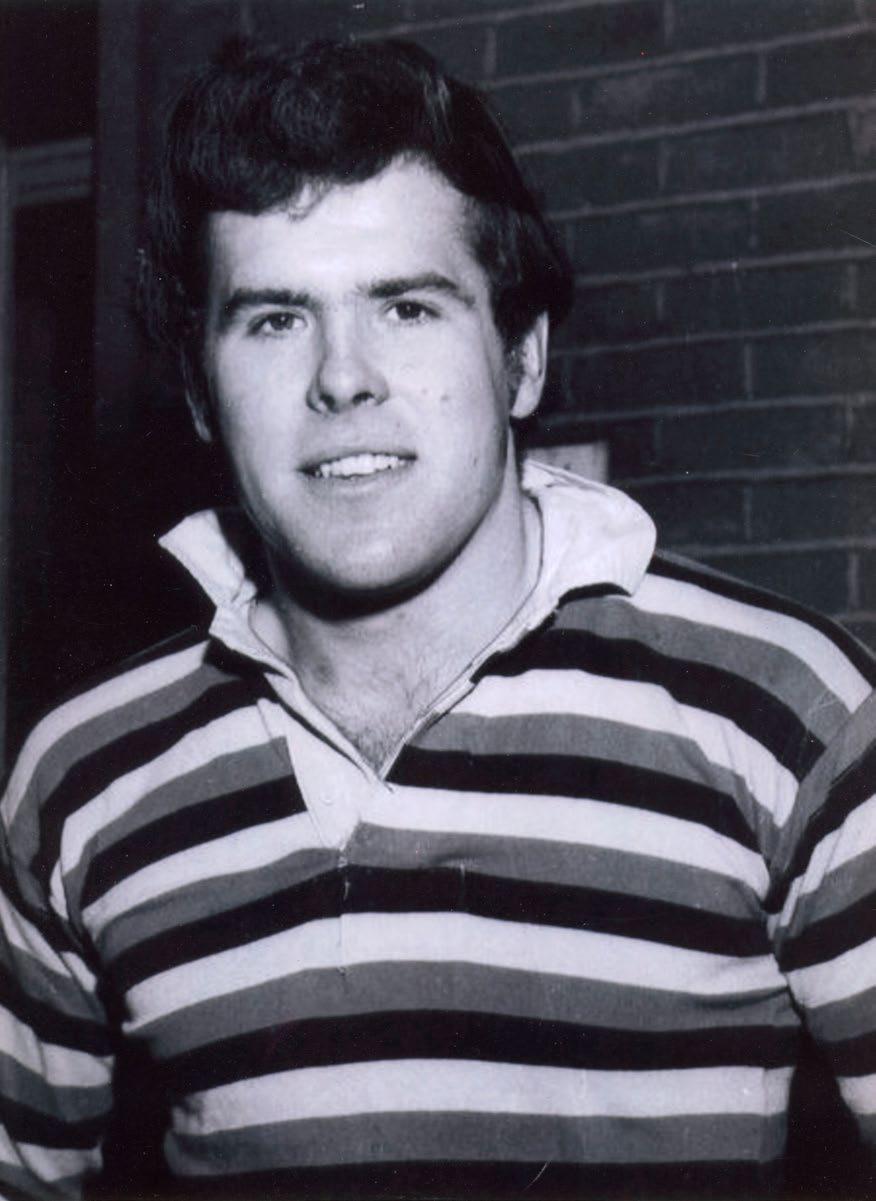
I have many fond memories from King’s: Dashing out of the Mint Yard after lessons to get discounted buns before the baker closed; early morning swimming training at Blore’s; watching plays during King’s Week; moving from School House to be one of the first boys in the newly founded Tradescant (when I last visited, I noticed that our year’s house photo seemed to be the only one in black and white).
congratulations on your latest novel, manhattan down! what was the writing process like?
Thank you. After my sixth novel, I spent years trying to get one of the stories I’d sold to Hollywood made into a film. Then the pandemic stopped everything. The idea for Manhattan Down came to me during that strange time when I was running in my deserted local park. There were no planes in the sky and the world
seemed to be hibernating, waiting until it was safe to come out again. It was easy to imagine that everyone, except me, was asleep. I imagined being in Manhattan, the city that never sleeps. What if all the world leaders were assembled in the UN HQ for a climate crisis summit when Manhattan fell asleep? I ran home with the germ of an idea and began writing.
I try to be disciplined when I write. I start early in the day and work for a designated period of time. But I’m easily distracted. Although the pandemic was a dreadful time for many people, it helped me to focus because I couldn’t meet a friend for a drink or play tennis whenever I felt like it. I had to stay indoors and write.
in a world where you can only read three books for the rest of your life, what would they be?
That’s a tricky question, like asking who your favourite child is or who’s your best and only friend. The novel I loved the first time I read
it and still go back to is One Hundred Years of Solitude by Gabríel Gárcia Marquez. Another book that I could dip into time and time again because of what it says about the human spirit is Joe Simpson’s account of his survival against all odds in Touching the Void. My third choice would be a book so full of interesting trivia and facts and told with such humour that I’d never tire of it. Bill Bryson’s A Short History of Nearly Everything explores every seemingly boring aspect of our natural world and makes it fascinating.
has king’s ever inspired your writing in any way? or did you write during your time at king’s?
I wrote and told stories at home with my family but not really at King’s. I did enjoy my English lessons, though. I particularly remember two English teachers, Stephen Woodley and Bob (‘Ronnie’) Milford. Mr Woodley was always quicker to praise a particular turn of phrase or evocative description than correct our grammar. And Ronnie Milford, who was a tutor in my house, Tradescant, would always encourage us to be curious and think outside the narrow confines of the syllabus. Both inspired me to be creative and find meaning in the words – to tell stories.
what inspired your career change from marketing to writing?
A simple idea that wouldn’t go away: What would you find if you could analyse the DNA of Jesus Christ? The genes of a normal man? Or the genes of God? This idea inspired a story about a scientist so desperate for a miracle that he dares to go beyond science. My career was going well but I kept getting up ridiculously early to develop my story, even on holiday in Bermuda. Eventually, my wife Jenny encouraged me to resign, take a year off, write the novel and get it out of my system. It actually took me two years to finish the book. Then I got incredibly lucky. The Messiah Code, originally published as The Miracle Strain, was snapped up at the Frankfurt
Manhattan Down was published in May 2025 and the paperback version is out now. You can pick up a copy on Penguin Books, Amazon or Waterstones.
Find out more about Michael on his website: michaelcordy.com
book fair and published in over thirty languages. The film rights sold to Disney for $1.6 million. After that I didn’t look back.
what has been your ‘defining moment’ in your career so far?
There have been three key moments. One is the phone call I received after submitting my first novel to an agent. I can still remember the assistant’s precise words: ‘Please don’t show your manuscript to anyone else. Patrick is very enthusiastic.’ The second is the night my wife Jenny and I sat in our house in London while a London literary agent, a Hollywood film agent and Disney producers thrashed out our first movie deal. The third is the first time I walked into a bookshop, saw my novel on a shelf alongside authors I’ve always admired and watched a customer pick it up, open it and buy it.
do you have any advice for budding writers?
First, you need to read. A lot. Second, you need to write. A lot. You are what you do and you can’t call yourself a writer unless you write. There are countless books and courses telling you how to compose and structure a story. But the one I found most inspiring was an old book a friend lent me. Becoming a Writer by Dorothea Brande is all about developing the discipline, habit and joy of writing. It was a revelation. Originally published in 1934, it’s still in print and still contains great advice.
what is at the top of your bucket list?
I have been lucky. I have a lovely wife and daughter. I have travelled extensively and been able to make a career out of what I love. The one thing that tops my professional bucket list, however, is to sit in a cinema as the lights go down and the opening credits appear on screen and see the words… “Based on a novel by Michael Cordy”. Whether the film is based on Manhattan Down or one of my earlier books, I don’t mind.
Development News
Finding Home, Opportunity and Purpose at King’s
Current Captain of School, Bea (WL), shares more about the doors King’s has opened for her and asks for your support this Giving Day.
Arriving at king’s four years ago, I found no barriers to getting involved, despite technically joining “a year late”. It was easy to find my place thanks to the warm welcome of the whole community and that distinctive King’s culture, shaped by our history and surroundings. I moved because I wanted a bigger pond – and that is certainly what I found!
I have adored being at King’s and I am aware that it is such a special opportunity, so I’ve tried to get involved in every aspect that I can. Since joining, I’ve discovered all these passions that I didn’t have when I started, and that the School has helped me nurture: learning to improvise jazz on the piano as I’ve never been very good at reading music; joining choirs open to all abilities and performing in the truly special Requiem; and being coached in lacrosse to a level where I now hope to play at university.
I’ve also grown to love my academic studies. I discovered a love for History thanks to the extraordinary range of lectures that the school provides – everything from humanitarian fieldwork to the court of Louis XVI. These experiences didn’t just supplement lessons; they shaped what I now hope to study at university.
Above all, the cornerstone of my school experience has been my house and friends. My housemates have become family – friends I miss in the holidays and who turn everyday moments into lifelong memories, from watching The Traitors finale, completely hooked squeezed on one bed, to hiding in each other’s rooms to scare my housemistress when she was coming around to say goodnight.
As I prepare for a gap year travelling and
(hopefully!) a place at Oxford afterwards, I couldn’t feel further from having completed some sort of linear transformation which has turned me out as a gift-wrapped product of King’s. I am completely different from my peers. King’s never tried to shape me into a particular type of person; rather it gave me the structure and support alongside independence and responsibility to grow into myself. And whilst my journey has had its ups and downs, I know that King’s has left its mark on me in the best way possible.
Yet I am acutely aware that my experience is a privilege that many talented young people simply cannot access. This year’s Giving Day is about changing that. Every contribution to The Charter Awards ensures that the opportunities which I have been so fortunate to experience are made accessible for pupils of different walks of life.
So, if you can, please support me and my fellow pupils this Giving Day. I hope I have given you an insight into the kind of experience that awaits any young person lucky enough to benefit from your generosity. Thank you.
Support King’s this Giving Day
Thursday 25 June –Friday 26 June 2026
On 25-26 June 2026, King’s is holding its first ever giving Day. For 36 hours, please join us in celebrating everything that makes King’s remarkable, whilst also raising vital funds to support our gifted bursary pupils through the Charter Awards.
Thanks to the generosity of OKS and parent donors, thousands of pounds are available in matched funding, ready to be unlocked. if you have ever considered supporting King’s, this is the perfect
moment – all donations made in advance of the day will be doubled by a generous King’s supporter (up to the value of £10,000). This means the impact of your gift will go even further!
Please consider making a gift in advance of the giving Day by completing the enclosed donation form or contacting the Development Team via: community@kings-school.co.uk
Donate, share a memory, or find out more on our dedicated giving Day website: kings.givingday.co.uk
Scan me to make a donation
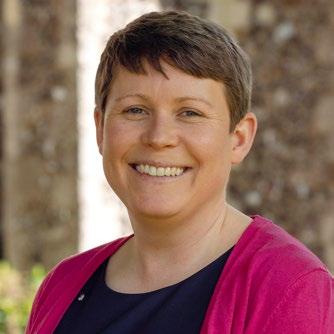
Left: Bea
Right: Purples at Lardergate
Live from New York: covering the energy markets
Pippa Stevens (JR 2004-09) reflects on her career and becoming a markets reporter for CNBC.
When I was a student at King’s, I never could have imagined that one day I would be covering financial markets – and energy in particular – on live television. I arrived at King’s for my Shell year with a thick New York accent and zero time spent living in the UK. But while I had a different geographic background, I immediately found many of my fellow classmates shared my wide-ranging set of interests, and an openness to trying new things. At King’s you felt encouraged to explore ideas across disciplines, whether through classroom discussions that encouraged debate and questioning or through the countless extracurricular opportunities available to students. No matter what your interests were, there was always a way to pursue them. Not to mention it was an enormous amount of fun to live with a bunch of friends – I was in Jervis House under Mrs. Horn – from such an early age.
Back in the U.S. for college at Princeton University, I majored in Classics and wrote my
I love the fastmoving, high-
adrenaline pace of newsrooms
senior thesis on the role of lawyers in ancient Rome, and ultimately decided that I wanted to become a lawyer. But after working at a law firm for a year straight out of university, I ultimately decided it wasn’t the right fit for me.
Through a somewhat circuitous route, I ultimately found my way into journalism. It was a path I had never considered, and I initially thought it would be temporary. But I quickly realized it was the environment I had been looking for. I love the fast-moving, highadrenaline pace of newsrooms, as well as the intensity of covering financial markets in real time – translating market moves into something viewers can understand. My job is to absorb a large amount of information quickly, parsing what matters most, and then explain on air why it matters – sometimes condensing it all into a sixty second “hit”. I thrive in the dynamic, deadline-driven nature of the work.
I began my career behind the camera, working in production roles that involved researching
stories, writing scripts, and helping assemble live broadcasts. I learned how business news works, and how to communicate complex information in a clear and concise way.
After several years working behind the scenes, I decided to try my hand at reporting – first as a writer for CNBC’s website, and then as an on-air broadcast reporter.
Today my reporting focuses on the energy sector, which is going through one of the most transformative periods in its history. Energy sits at the center of so many global conversations: economic growth, national security, technological innovation, climate policy – and at the time of writing, the ongoing tension and conflict in the oil-rich Middle East. My coverage spans everything from fossil fuels and renewable energy to the metals and materials needed to build modern energy systems. I report on the companies that produce energy, the infrastructure that moves it, and the policies that shape how it is used.
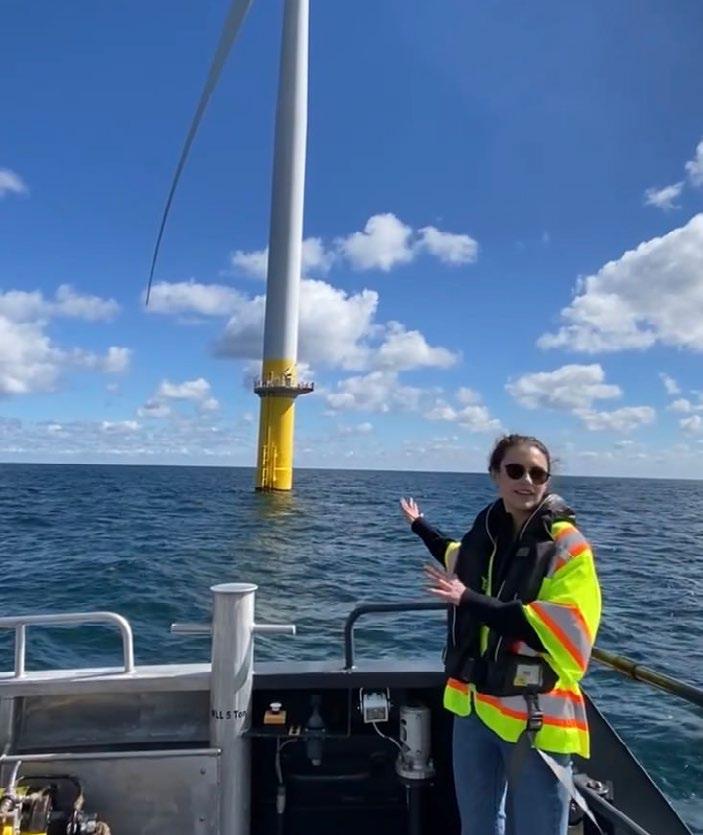
One of the most rewarding aspects of my job has been the opportunity to report from the field and see these systems up close. I’ve reported live from an offshore wind site, the deepest openpit mine in the world, 1600 feet underground at a uranium mine – where it was –32 degrees Celsius – the first nuclear plant built in the U.S. in decades, the only lithium mine in America, to name a few.
Photos: Pippa reporting live and on location
Looking back, it is clear that the curiosity King’s encouraged played a role in shaping the path that led me here. King’s instilled that habit early on. The School created an environment where curiosity was not just welcomed but encouraged. And of course, there was all the fun we had: house song, volunteering at King’s Week during 6b – and the lasting friendships made. When I got married at a ranch in remote Montana three summers ago there was a Jervis contingent that made the trek to the American West for our hoedown and wedding. What wonderful memories!
Bigger than ever: OKS Christmas Drinks 2025
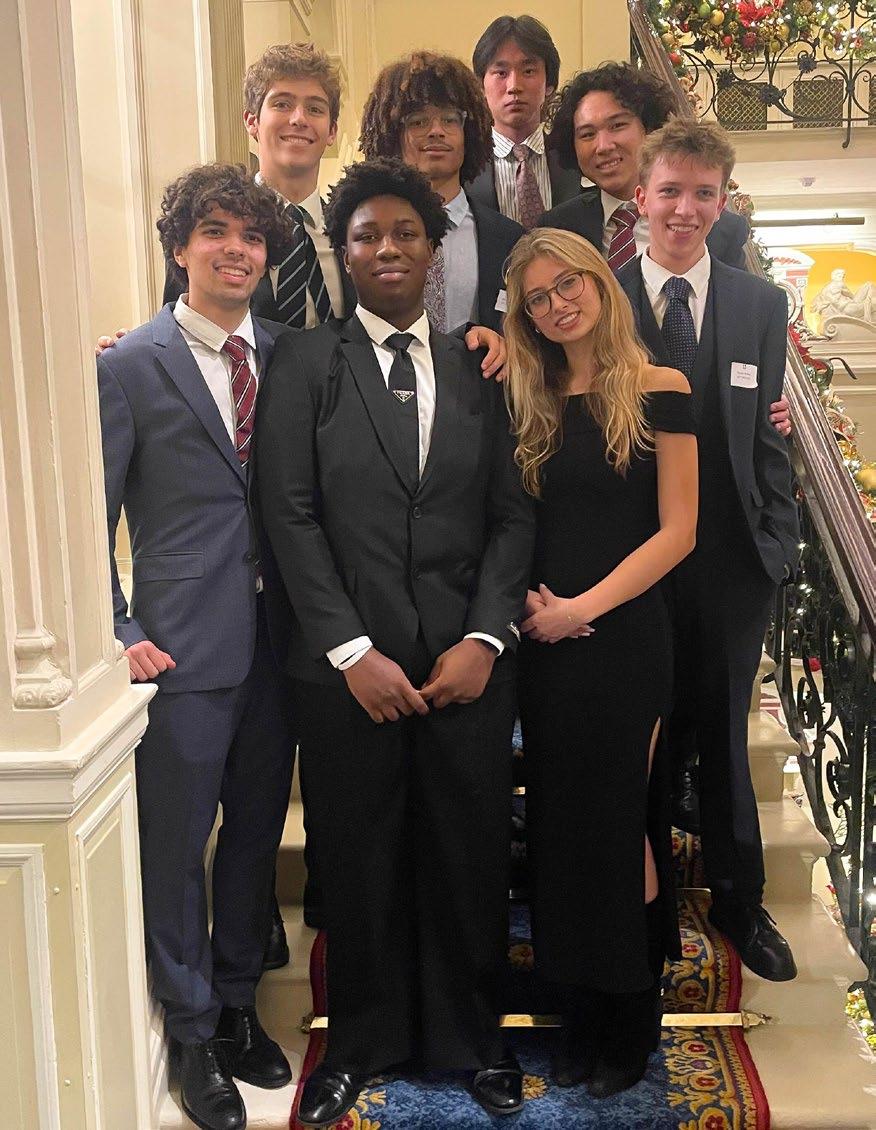
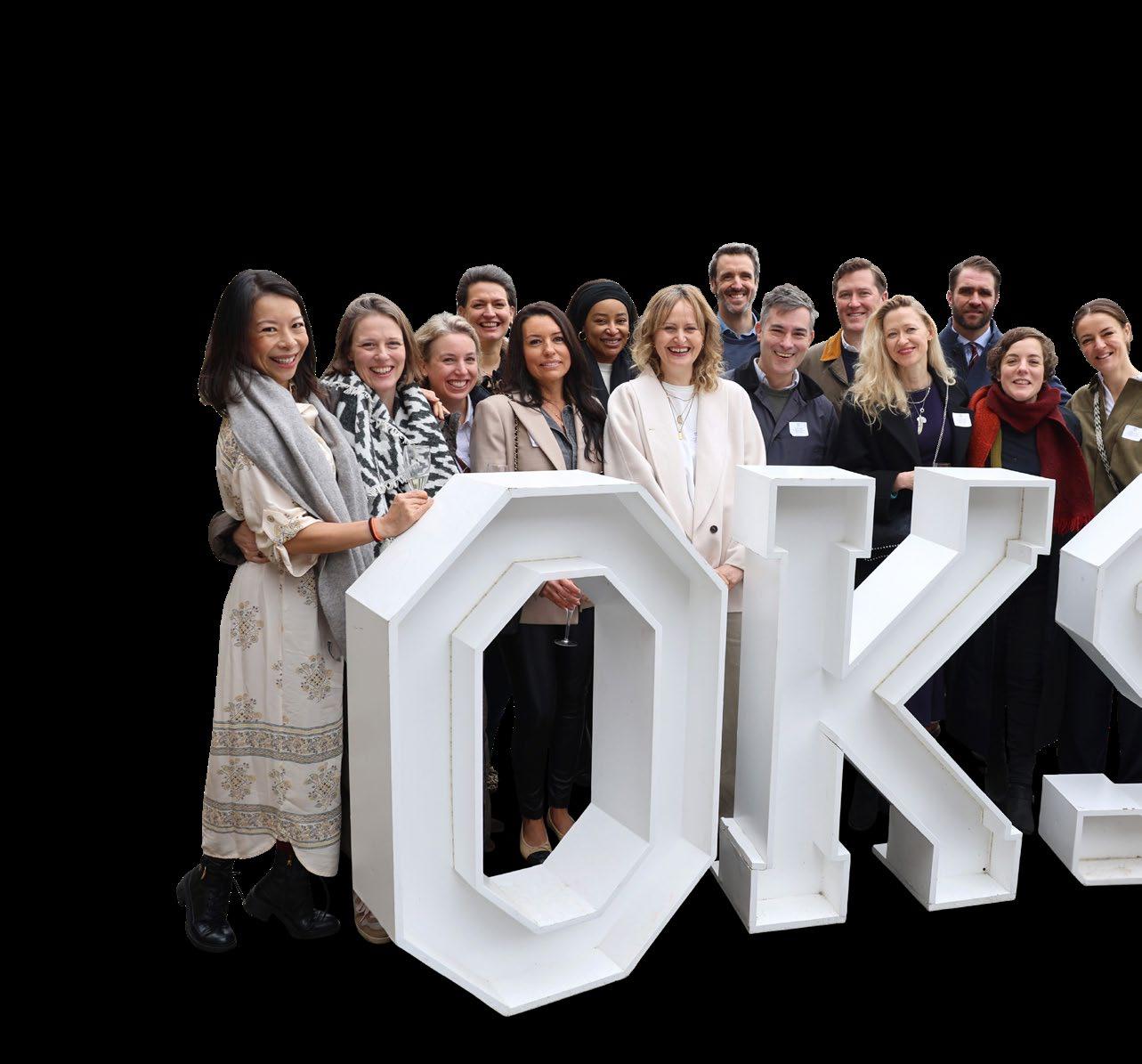
Our most popular OKS Christmas Drinks event yet – 170 OKS gathered on Thursday 4 December 2025 at the Cavalry and Guards Club. Our oldest attendee was 87 (1956 leaver) and youngest was 18 (2025 leaver). Linacre was once again the most represented house, closely followed by Walpole and Luxmoore.
With thanks to Graeme Tester (GR 1987-92), the class of 1992 had a mini reunion with 30 OKS in attendance. There was also a strong contingent of ten 2025 leavers who came together to enjoy their first ever OKS event.
Thanks to incredible demand, we’re excited to reveal a new venue and increased capacity for the 2026 OKS Christmas Drinks!
Save the Date
Join us at the City of London Club on Thursday 3 December 2026.
Tradescant and Broughton 50th Anniversary Reunion
On sunday 8 March 2026, more than 120 OKS returned to King’s to celebrate a very special milestone – the 50th Anniversary of Broughton and Tradescant Houses. The event started with tours of the houses, followed by speeches by both Heads of House, George (Tradescant) and Anna (Broughton).
The spirit of the day was summarised by George: “What makes all of this even more meaningful is the history we share. Tradescant has a brilliant and distinguished heritage, shaped by the pupils who came before us – many of whom are here today. It’s humbling to think about the stories, achievements and character that have built this house over time. For me, it has been an honour simply to be part of that story, let alone to have been elected Head of House. That is something I will always carry with real pride.”
The reunion was made even more meaningful by the return of several former Housemasters and Housemistresses, who were warmly greeted by their former pupils. A special thank you to Peter Dix (Tradescant 1988-93), Stephen Graham (Broughton / Tradescant 1988-2002), Pat Wakeham (Broughton 1993-2005) and Catherine Shearer (Broughton 2010-18).
CCF Mess Dinner
On saturday 28 February, we welcomed 15 OKS back to the annual CCF Mess Dinner –the first time the invitation has been extended to OKS. The dinner is a highlight of the year for our CCF pupils. It gives them a chance to enjoy themselves and reflect on the past year while learning the traditions and etiquette of a formal black-tie occasion.
A two-course dinner was served by candlelight and the School was lucky to have musical entertainment provided by the Fanfare Trumpeters and Band of the Princess of Wales’s Royal Regiment, the School’s affiliated regiment.
Cadet Under Officer Pani (6a) delivered a heartfelt speech about the importance of the CCF to her, highlighting some of the many accomplishments from the past year. This was followed by a short address from Brigadier Paul Dupuy (BR 1988-93), who spoke about how special it was for OKS to be invited, concluding with a toast to all OKS in the room.
Thank you to Major Alistair Goddard (CCF Contingent Commander) for organising a wonderful dinner and welcoming OKS.
King’s Association: Wreath Making
On friday 5 December 2025, we hosted our first ever King’s Association Wreath Making Workshop in the beautiful Gateway Chamber. The space was filled with festive spirit as 15 guests, including OKS, current and former parents and staff, came together to craft their own stunning wreaths under the gentle guidance of Lucy Day (LX 1991-96) from Wild Bloom.
Dates for your diary
MArLOWE HOUSE
90TH AnniVErSArY rEUniOn
Sunday 17 May 2026
The King’s School Canterbury
giVing DAY 2026
Thursday 25 June 2026
The King’s School Canterbury
OKS SUMMEr rEUniOn
Saturday 27 June 2026
Birley’s, The King’s School Canterbury
CLASS OF 1986 rEUniOn Friday 18 September 2026
The Ivy Soho Brasserie, London
MEiSTEr OMErS
90TH AnniVErSArY rEUniOn Sunday 20 September 2026
The King’s School Canterbury
• To book tickets to upcoming events, please visit kings-association.co.uk/events or contact community@kings-school.co.uk
Photos, clockwise from top left: 2025 leavers at OKS Christmas Drinks; OKS at the CCF dinner; Tradescant and Broughton House OKS
Life on the rocks
John Thompson (LN 1968-72) tells us about his life as a geologist.
As I went into my final term in 1972 living in Linacre House at King’s, my horizon began to expand from the next rugby match to university applications and a vague appreciation of the future. I enjoyed science and assumed that I would become a civil engineer, a concept that my supportive housemaster helped me understand. But when it came to pick my subject, I simply couldn’t select civil engineering. My eyes wandered down the long list of subjects and I ticked geology. This was not as random as it sounds. My father was an archaeologist and had some understanding of geology. I spent time with him on digs and the concept of the rocks beneath his sites, and their importance probably rubbed off on me. The idea of working outside, as my father did in the summer, appealed as did the possibility of going to remote places.
Much to my surprise, I was accepted to Oxford. As my first lecture started in the autumn of 1973, I knew I was in the right subject. The nature and history of the Earth, the character of rocks, and
the stories they tell instantly fascinated me. I couldn’t believe my luck.
On graduation, my class dispersed to oil and gas – the North Sea, as well as to a wide variety of careers unrelated to geology. Neither of these options appealed, and I moved to Canada where I did an MSc and PhD in Earth science related to the concentration of economic minerals in the Earth – the world of mineral exploration, mining and the supply of critical minerals. When my formal education finally finished, I joined the mining industry carrying out exploration for nickel, copper, zinc, and gold in Australia. Over the next ten years, I lived in Australia, UK, USA and Canada and worked in over twenty other countries. I met amazing people, was exposed to indigenous and other diverse communities, and learnt more about the mysteries of the Earth.
In the 1990s, I left the industry to run a research group at the University of British Columbia in Vancouver, Canada, but returned to a Canadian mining company towards the end of the decade. Although still focused on understanding rocks and attempting to predict where metals of interest might be concentrated, I also embraced new technologies, sustainability related to extractive industries, and engagement with people and communities. Fourteen years ago, I shifted again, starting a new phase of my career working with exploration and technology startups, venture capital and non-profits while still maintaining research interests in Earth science through positions at Cornell University and, most recently, the University of Bristol.
A career that involved industry and academia, science and elements of social science, and technology and environmental management is unusual, far from anything I imagined during my final months at King’s. I became a generalist with wide interests related to the metals that we need for infrastructure, the energy transition, transportation and defence, and a profound belief that we must deliver these metals in the cleanest and most effective way possible with benefits for local communities and society. As I tell people, I am dangerously broad.
In spite of deviations, my passion for rocks and
geology – Earth science – that hit me in my first undergraduate lecture remains intact. Our planet is remarkable in many ways, not least because it sustains life but also because it provides the food, materials, water and energy that humans need.
Rocks tell the story of the planet, and as an Earth scientist, I get to examine rocks from nano to planetary scales. I attempt to understand the rock-forming processes that have operated over billions of years, and I try to use this knowledge to discover concentrations of metals. I worry about current phenomena such as volcanic hazards, earthquakes and climate change, but also how we can exploit the Earth to meet human needs without damaging the environment.
I have lived the second half of my life on the west coast of Canada, a stunningly beautiful part of the world supported economically by natural resource industries, a juxtaposition that is difficult. For me, challenges between humans and the Earth are endlessly demanding and fascinating. Our future depends on what we do at this interface.
My life has been a wonderful and exciting ride that is anchored in the education I received as a young person, my family, and the extraordinary people that I have met on the way.
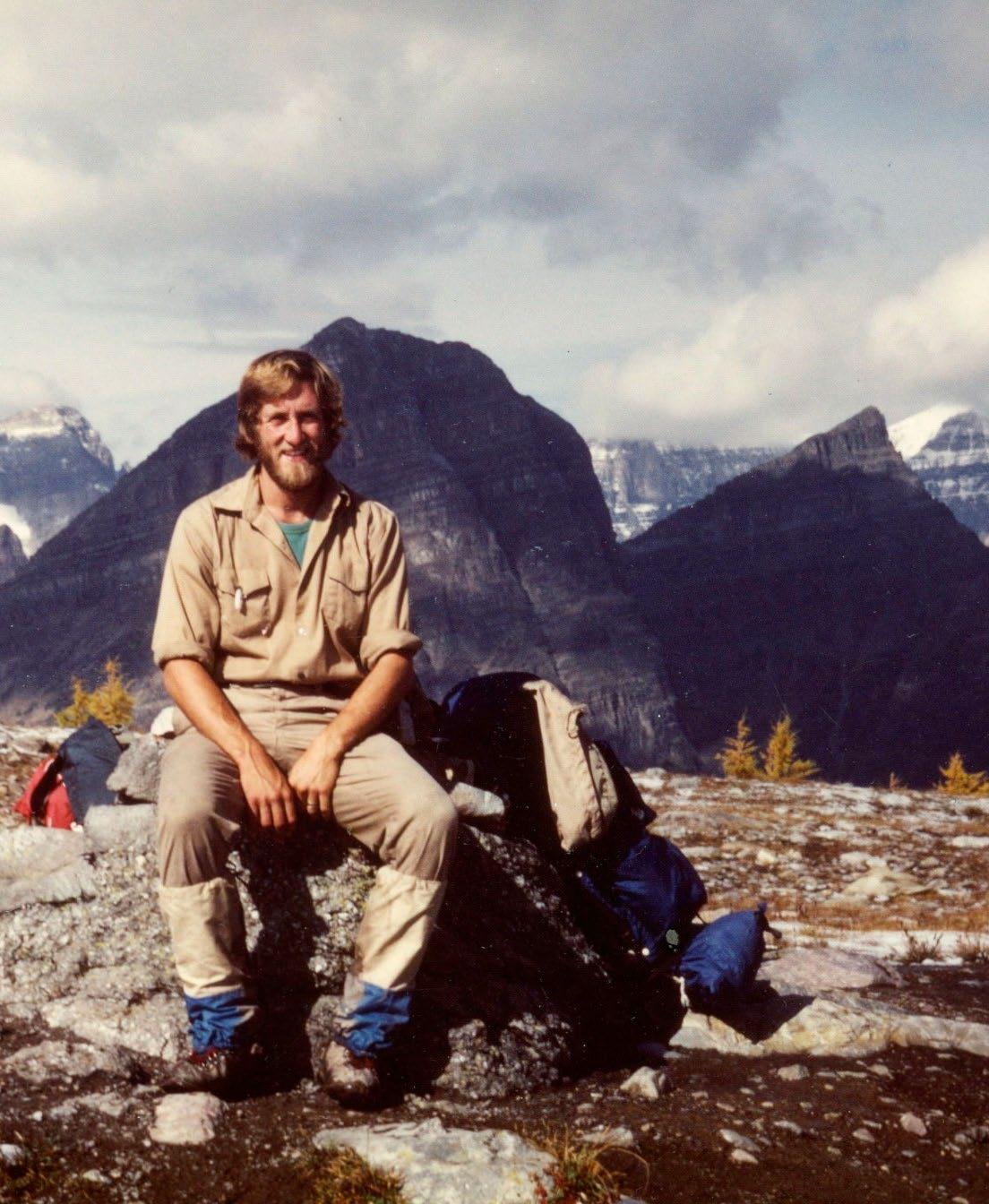
Left: taking a break in the Canadian Rockies, 1980
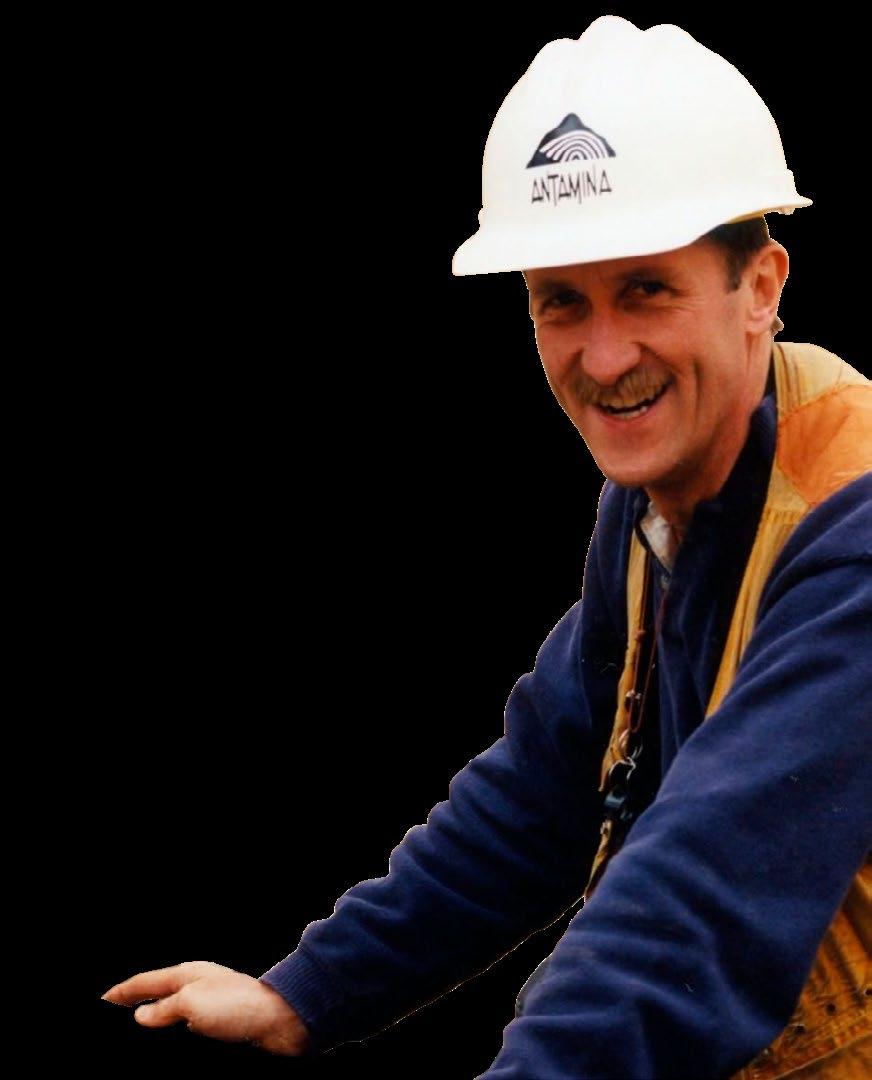
Right: examining drill core at the Antamina mine in central Peru, 2001
A SNAPSHOT OF THE KING’S SCHOOL CANTERBURY IN 2026
Cathedral School (Exeter)
4
775
14 Day Houses at King’s British pupils at King’s
(Including the recently opened Morpurgo House)
(2025/26 across all three Schools)
(A new transport service for local pupils) 43 Different nationalities represented at King’s (In 2025/26)
“Home to School” pick up points
Exeter
Port Regis School (Dorset)
WHiCH prEp SCHOOLS DO
OUr pUpiLS COME FrOM?
Papplewick School (Ascot) ❹
King's College School (Cambridge)
William de Ferrers School (Essex)
Lockers Park (Hertfordshire)
Westminster Abbey Choir School (London) ❸
St Paul's Cathedral School (London)
Newton Prep (London)
Overseas OKS reunions
A summary of our recent international gatherings – from New York to Sydney.
SingApOrE
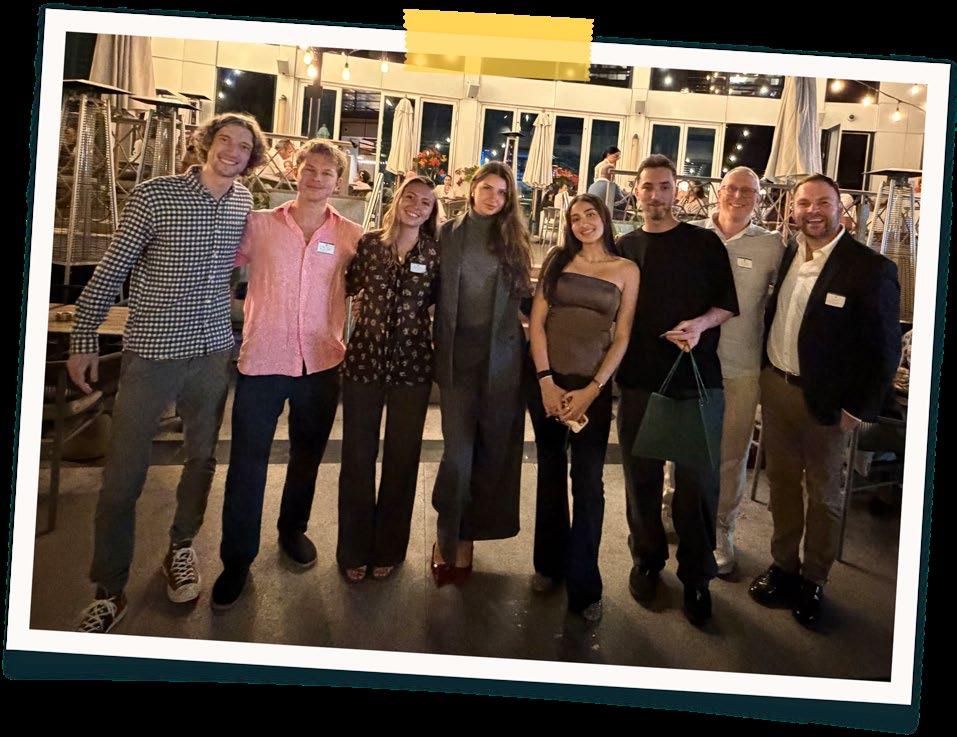
With the help of Brian Sun (MO 1987-91), a small gathering of OKS and parents took place at the Highland Bar in Singapore on 1 November 2025.
Junior King’s School (Canterbury, Kent) ❶
Saint Ronan’s School (Hawkhurst, Kent) ❷
Hilden Grange (Tonbridge, Kent)
Holmewood House (Tunbridge Wells, Kent)
Marlborough House (Kent)
St Michael's (Kent)
Brambletye (West Sussex) ❺
Handcross Park (West Sussex)
Windlesham House (West Sussex)
Cumnor (West Sussex)
Westbourne House (West Sussex)
Above: OKS in
nEW YOrK
Our first event in New York City in over 8 years took place at Tanner Smith’s bar on 16 December 2025. Throughout the evening, we were joined by 30 OKS, current and former parents. We look forward to returning!
nigEriA
Jason Mycroft (BR 1984-89) helped organise our second drinks event in Nigeria. We returned to the Lagos Yacht Club and celebrated everything King’s with 18 guests.
DUBAi
Overlooking the iconic Burj Al Arab, 20 OKS and parents met at the Dhow and Anchor Pub in Dubai on 13 February 2026.
SYDnEY
On Friday 13 March 2026, over 20 OKS, including two former Captains of School, living in Sydney enjoyed drinks in the Tank Stream Bar. With thanks to Lawrence Lo (WL 1985-88) for organising this reunion.
Hong Kong Drinks Event
This Autumn, we will be returning to Hong Kong for the annual Hong Kong drinks event featuring Senior members of the leadership team at King’s. Date to be confirmed. To register your interest, please contact the office via email: community@kings-school.co.uk
❶ Top 5 Prep School
Left: Pupils celebrate Speech Day
Dubai
Behind the lens
Hugo Philpott (BR 1984-89) recounts how a gap-year hobby led him to photograph the Taliban, the Royal family, celebrities and sporting icons.
Afew weeks ago when I was asked if I’d like to write a few words about my photographic career I was full of mixed emotions. Having left King’s in 1989, it felt like a lifetime ago, but hey what’s the harm! I’d been through the whole King’s system from 1978 to 1989, following my brother Russell who left King’s in 1984. It had been a very happy time at Broughton House in St Augustine’s – leaving me with some wonderful lifetime friends. If truth be told, I was more interested in sport than academia, but I just about scraped through.
A few months after leaving King’s I travelled on my own around Southeast Asia, Australia, New Zealand, Hawaii and properly got the bug for taking pictures. I never thought for a moment a career beckoned but here the seed was sown.
After I left university with a Humanities degree, I moved to Whitstable and started working in a pub in Canterbury and driving lorries with valuable contents (this didn’t end well). A
long drinking session in the Neptune pub in Whitstable provided a moment of serendipity, a photography tutor who liked my travel photos, and an invitation to attend an interview at the prestigious London College of Printing. A year of learning to take pictures ended in my first published photo of OJ Simpson at the Oxford Union. The career had begun.
front pages all over the world
It was a few months later whilst sitting in a coffee shop in Whitstable that I took a call from a great friend and fellow OKS Justin Marozzi (MR 1984-89) asking if I wanted to accompany him to Afghanistan. Justin had a commission from The Financial Times to interview Mujahideen leader General Ahmad Shah Massoud, “the Lion of the Panjshir”. I obviously said yes and a couple of weeks later we found ourselves in a snowy Kabul, it was mid-October 1996. Just two weeks before our arrival the Taliban had hung the Prime Minister in the football stadium. A twoday journey fraught with danger across Taliban front lines and we arrived in the Panjshir valley at Massoud’s compound. They had no idea we
were coming but a letter was delivered by Justin to his spokesman and that same night we had dinner with the General, we ate mutton stew and sweet tea and delved deep into the history of Afghanistan and their struggle for democracy in the times of the Taliban.
Returning to London with 20 rolls of colour and black and white film and a large Afghan rug, I had pulled off my first foreign assignment with a happy picture editor, stories to tell and relieved parents. With newfound confidence I approached international news agencies and after capturing a protester running towards the Queen’s carriage during a Chinese State visit, I got my break and started stringing for Agence France Presse.
Charlotte Thomas (née Bishop, SH 1983-85) I worked as the house photographer for Moët Hennessy: A list parties and a lot of champagne was photographed and drunk.
Over the next few years, I was freelancing for all the major wire agencies covering hard news, sporting events and fashion shows. One in particular led me into the world of luxury PR. Working under the guidance of PR maestro OKS
It was around the turn of the century that I got the call to return to King’s Canterbury to inspire the next generation of King’s leavers and join the careers team, I’m not sure anyone became a photographer off the back of my vision but they always seemed to enjoy the stories.
As my career progressed so did the technology and in 2000 I bought my first digital camera: a Canon DCS 520, a six-thousand-pound megapixel camera that enabled photographers to send their pictures on the go. This meant photographers could cover more jobs without having to process their film but had less time conversing in the pub.
In 2005 I managed to get accredited for Wimbledon and this year will be my 21st
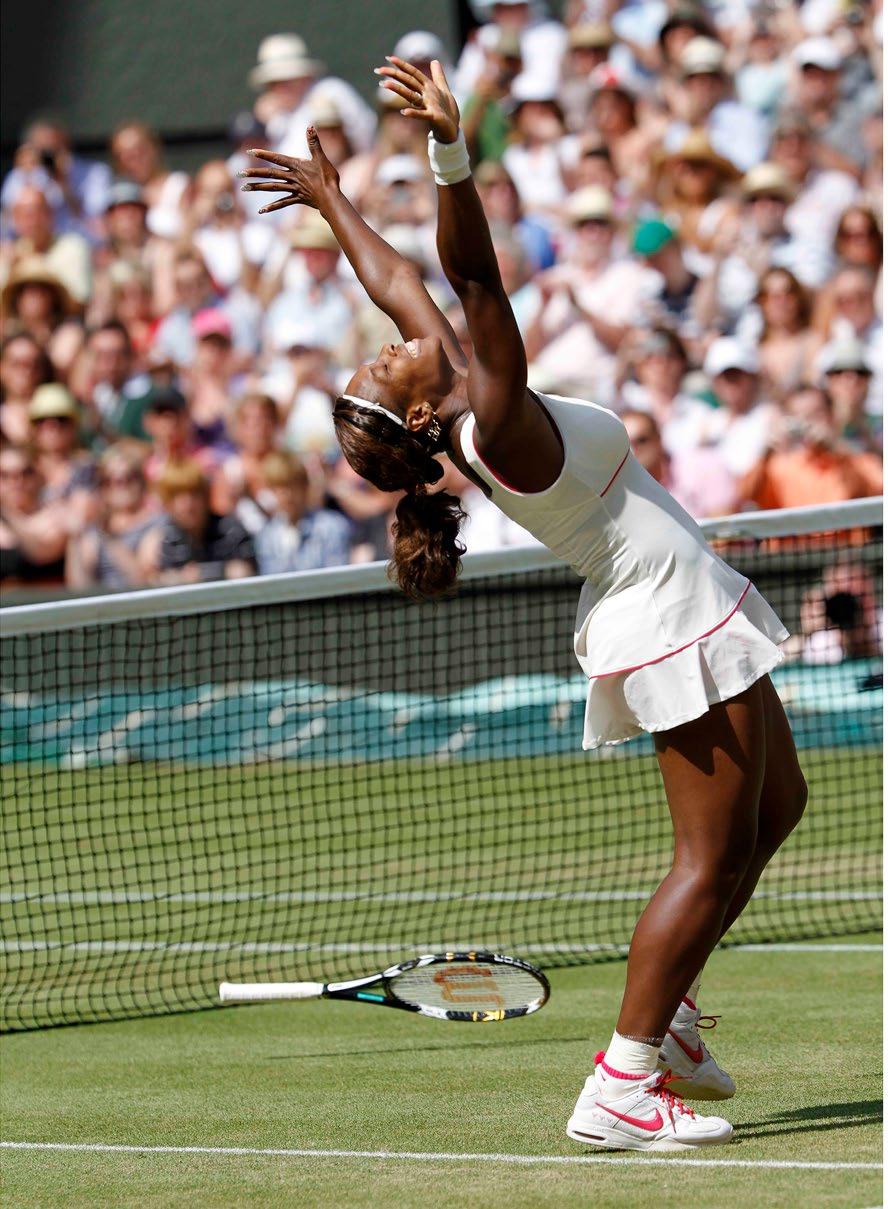
championships – a total pleasure every year and I have been fortunate to witness one of the greatest sporting rivalries ever between Federer, Nadal and Djokovic. One of my greatest sports photographs was in the 2008 Wimbledon Final capturing Nadal’s victory over Federer providing me front pages all over the world.
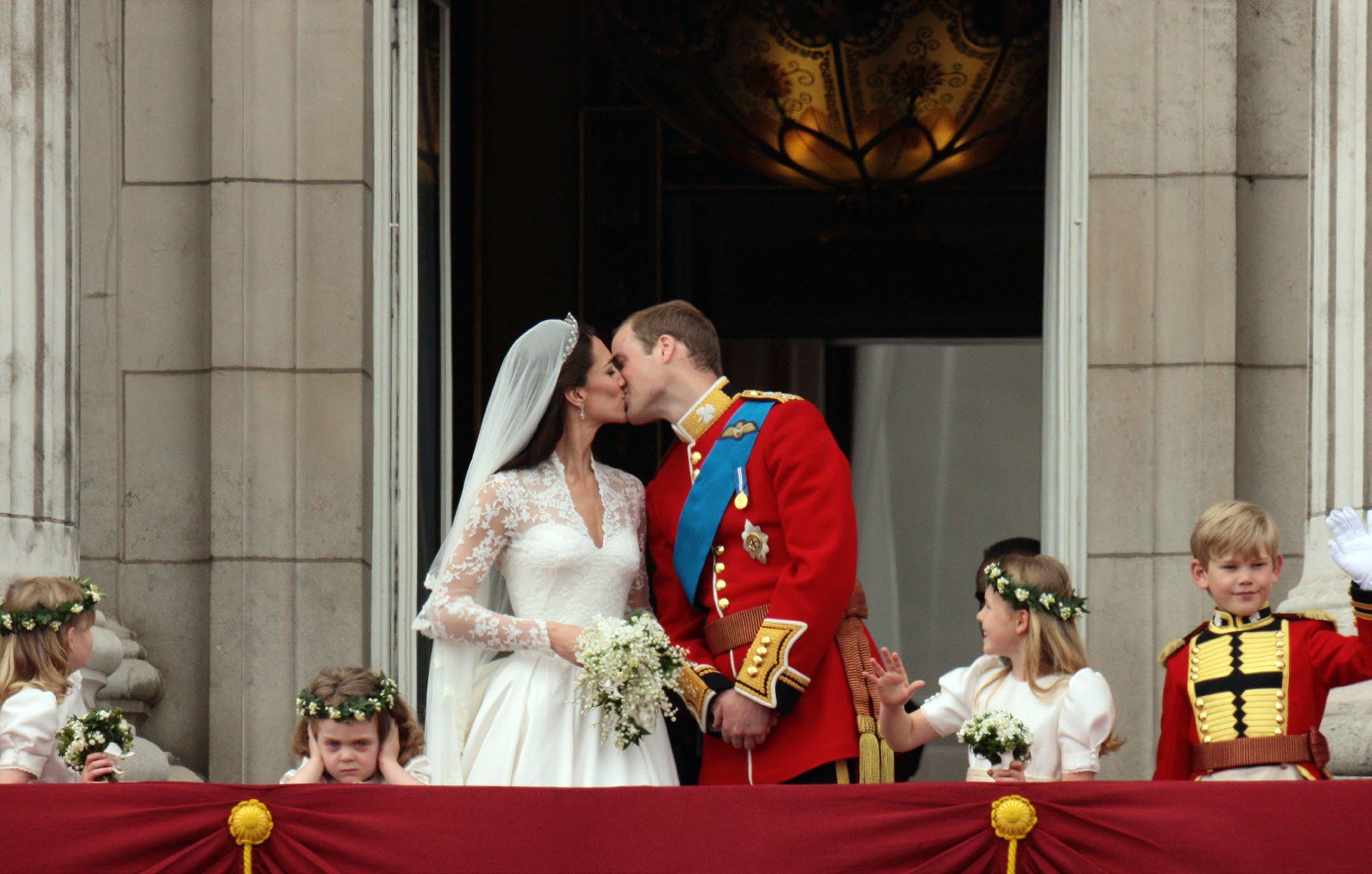
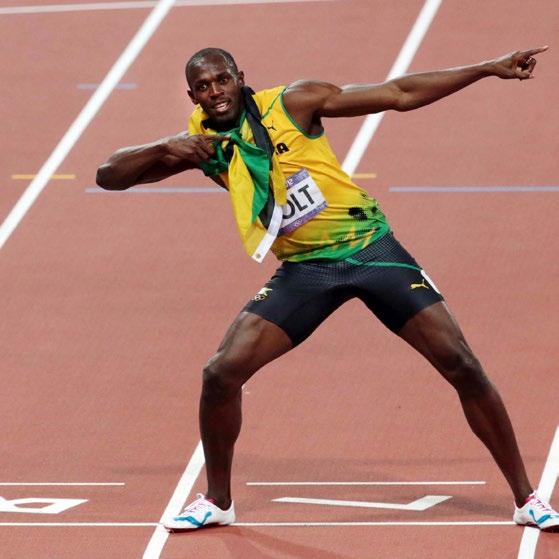
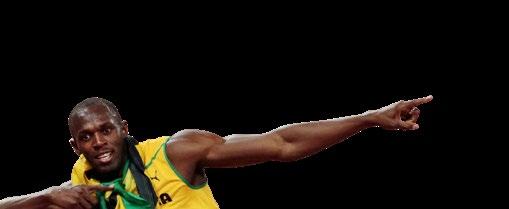
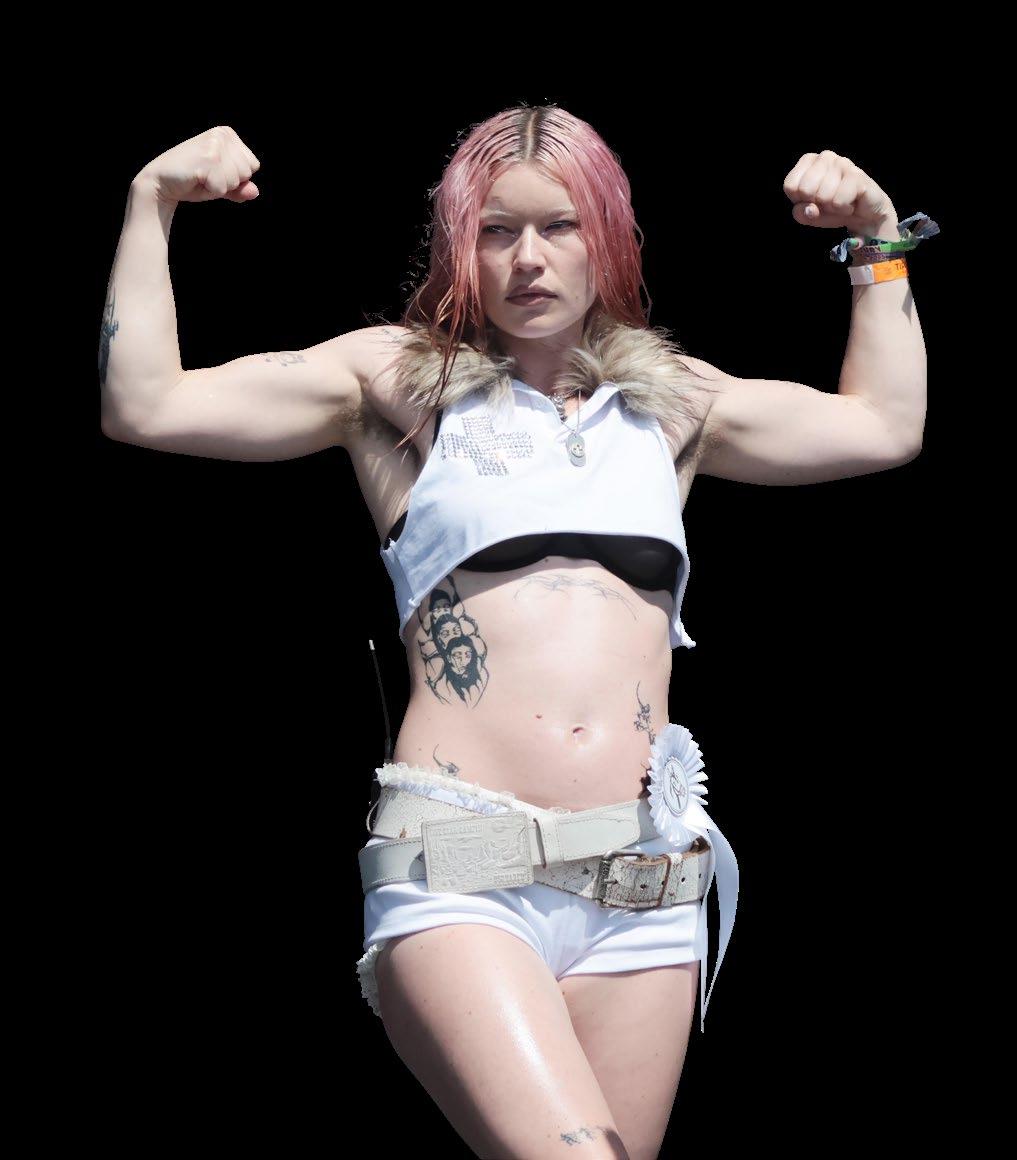
Over the next decade my career took me to the Cannes Film Festival, Glastonbury Festival, Ryder Cups and in 2012 the London Olympics. My agency gave me carte blanche to photograph everything I wanted from Usain Bolt’s 100m final to Chris Hoy’s final gold and Mo Farah’s Super Saturday. In the last decade I have been fortunate to photograph the 2015 Rugby World Cup, the weddings of Prince William and Kate and Prince Harry and Meghan, the Queen’s funeral and the King’s Coronation. Other highlights include trips to Africa for Comic and Sport Relief which were resoundingly satisfying in every way.
In 2024, I covered the Paris Olympics, another spectacular sports event in a fabulous city. This year, I was at the Milano Cortina Winter Olympics covering the Women’s Alpine events, Bobsleigh and Skeleton.
Looking back over 30 years, I have a resounding sense of pride in what I’ve achieved but also thanks to the many great memories I have of King’s and to all the lifelong friends I still see.
• www.hugophilpottphoto.com
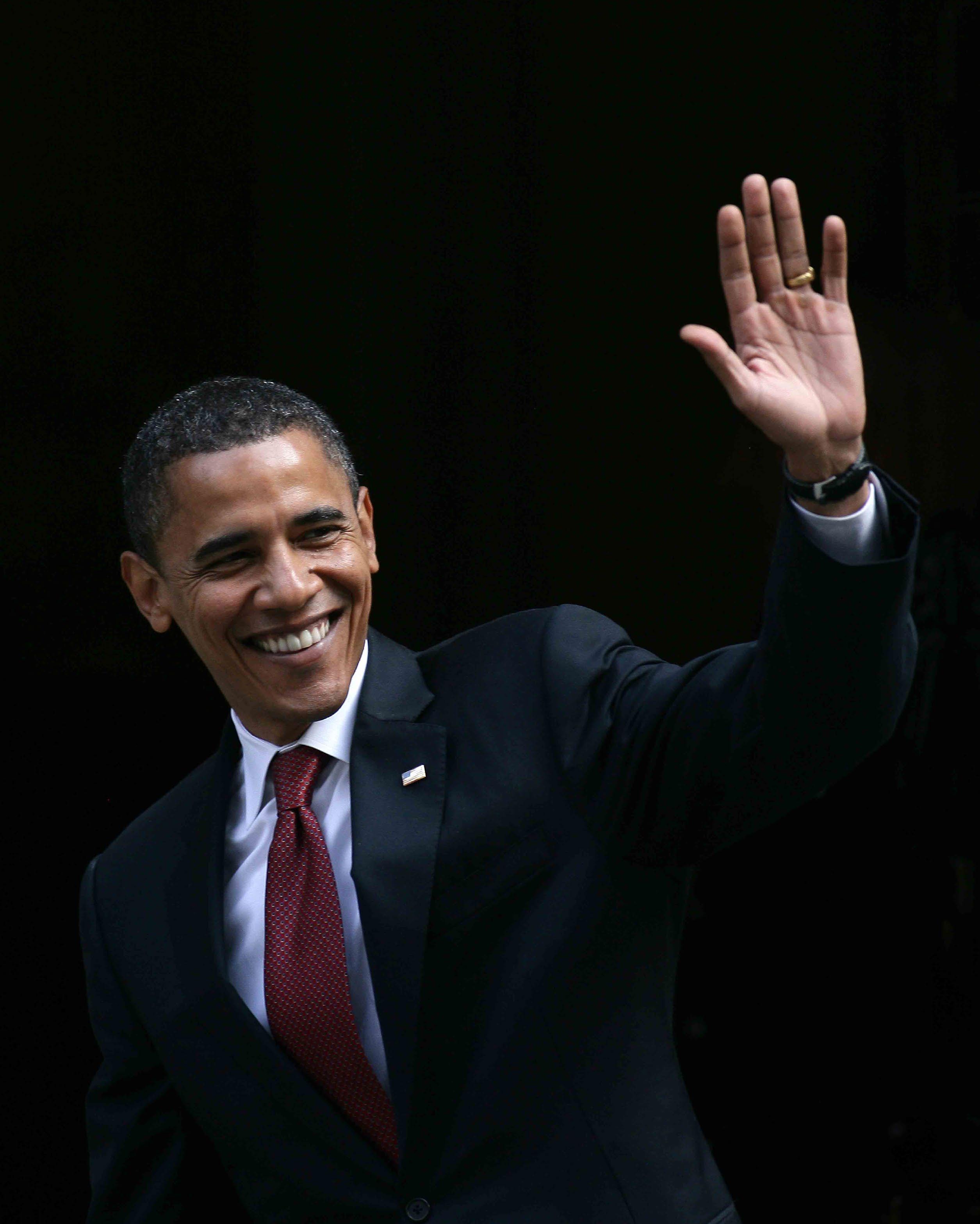
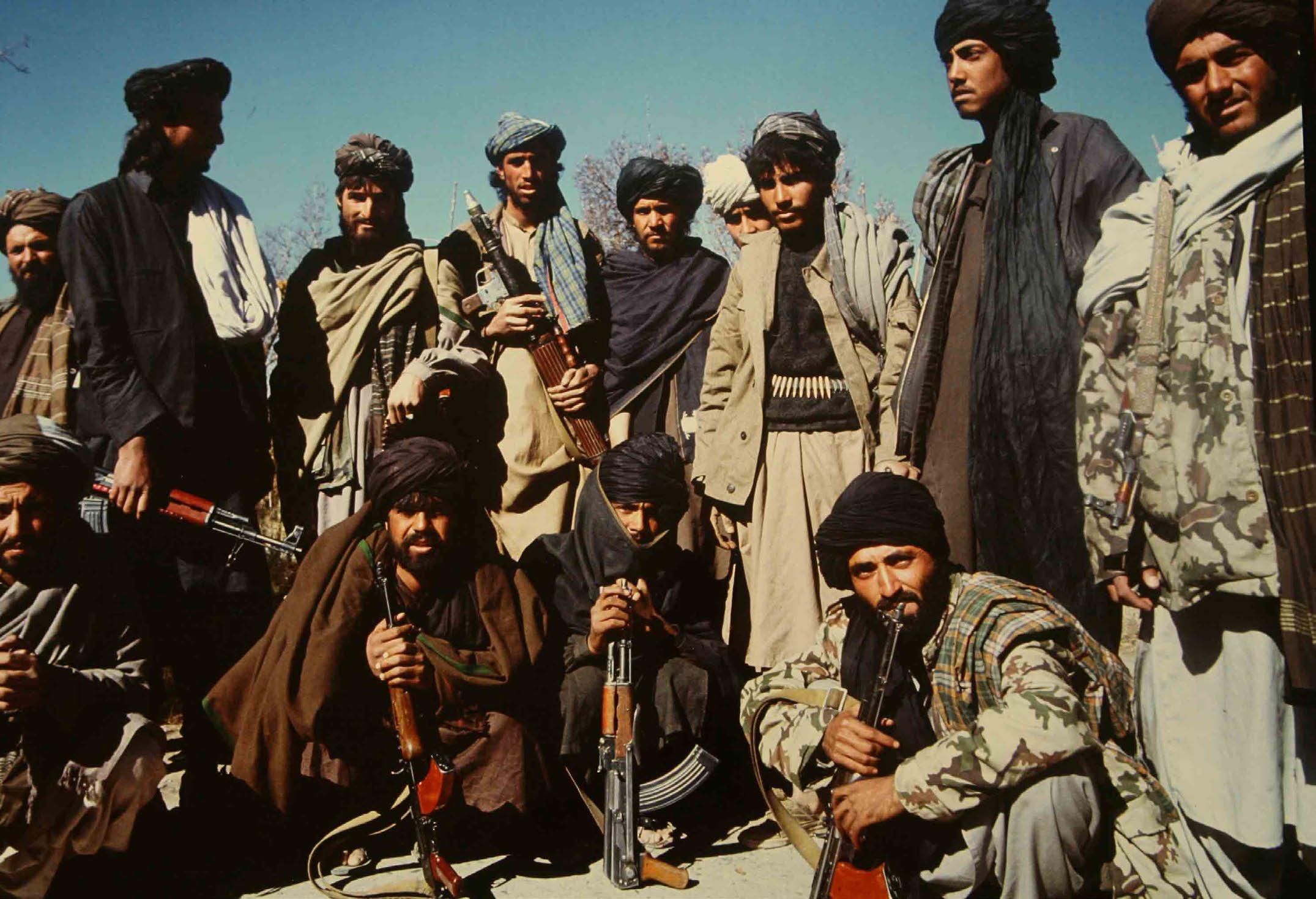
Previous page: President Barack Obama (left), Taliban members in 1996 (right)
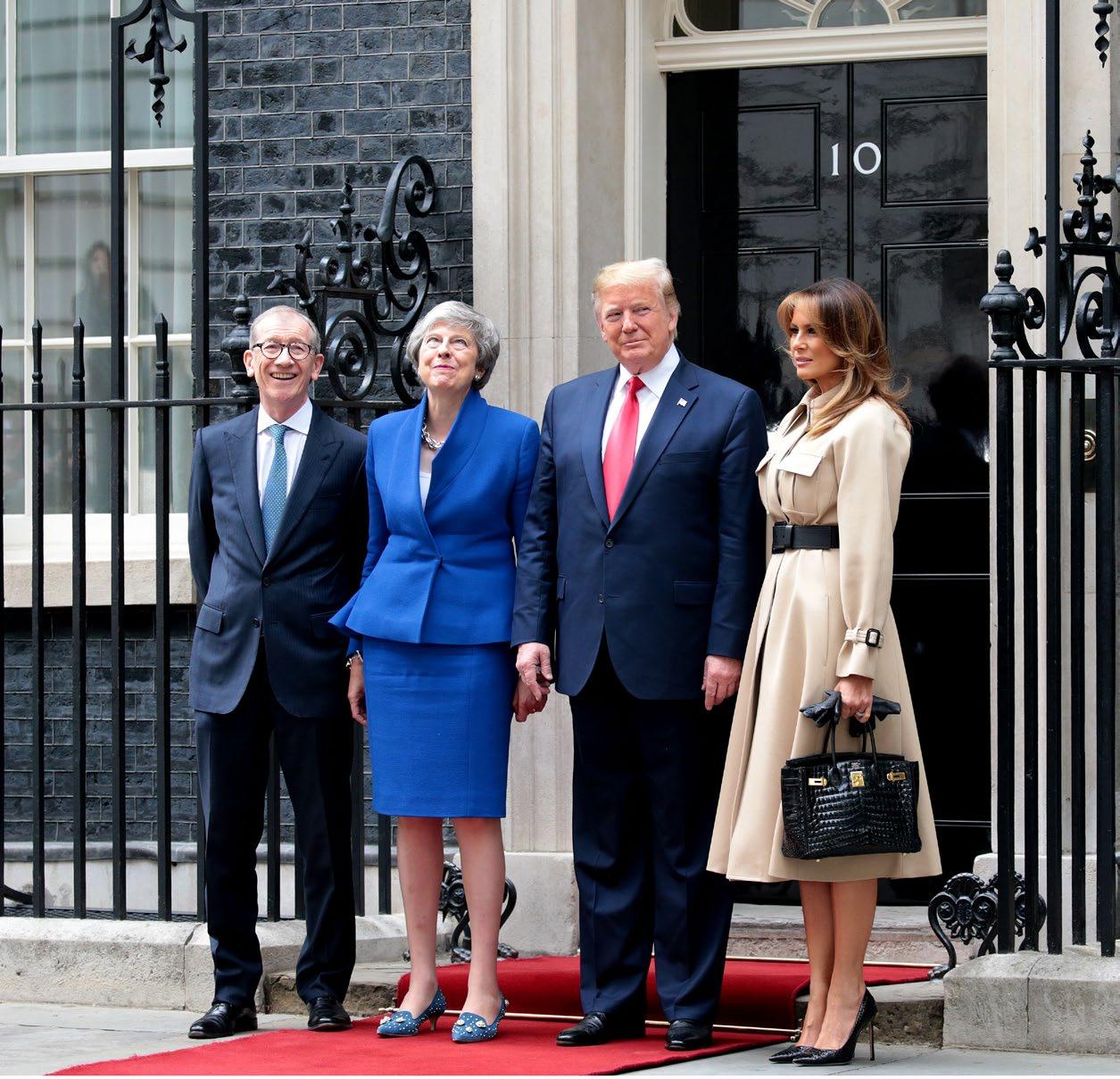
This page, clockwise from top left: Prince William and Kate Middleton’s wedding in 2011; Donald and Melania Trump, with Theresa and Philip May, on their first UK state visit in 2019; Serena Williams wins her fourth Wimbledon in 2010; Wet Leg perform at glastonbury Festival 2025; Usain Bolt strikes his pose at the London Olympics 2012
OKS Network
Breakfast Networking: Real Estate
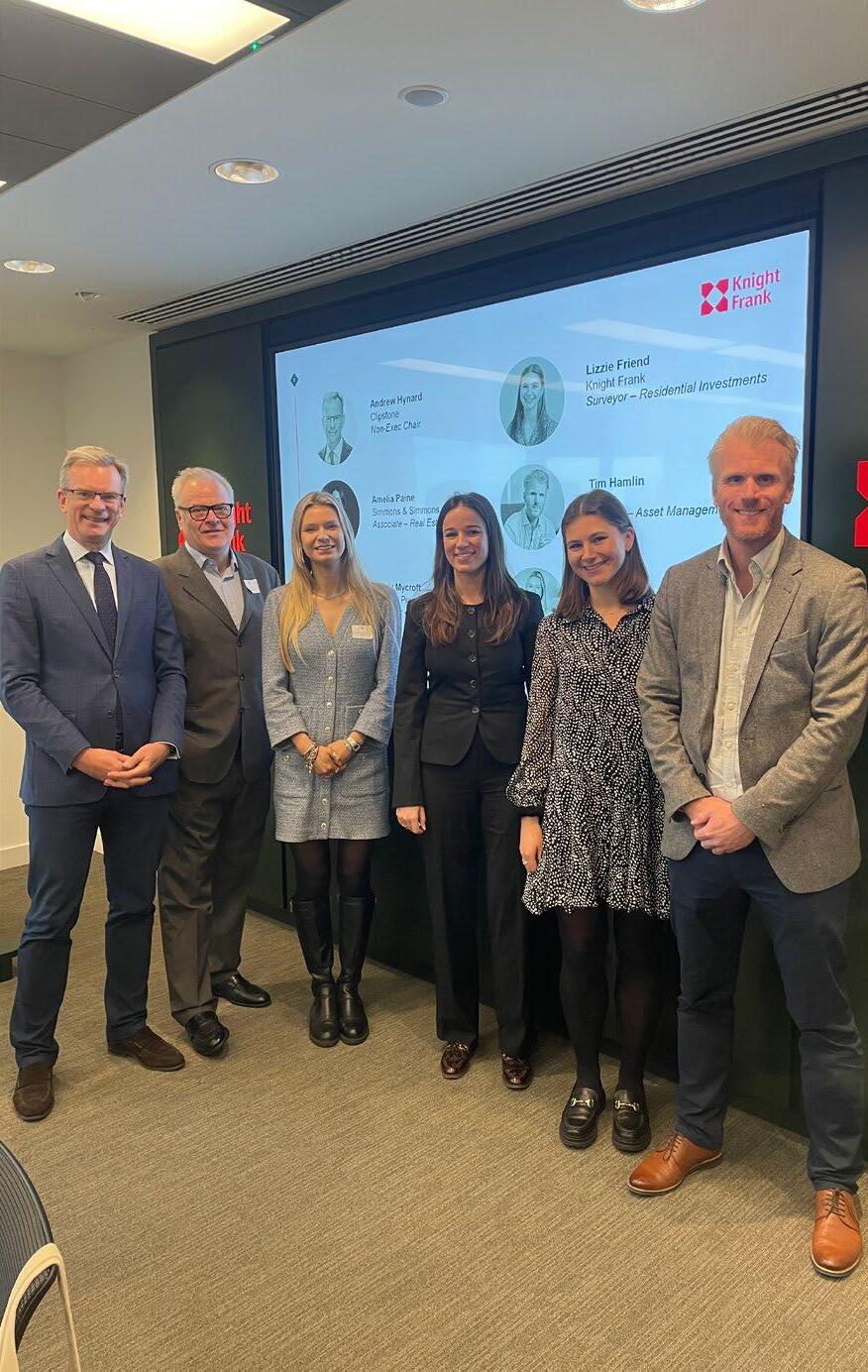
On Thursday 26 February 2026 our latest breakfast networking event, this time focused on real estate, took place at Knight Frank in London. 40 OKS and parents were in attendance. The panel consisted of:
Amber Kendall (BR 2013-17)
Surveyor at Savills
Amelia Paine (JR 2013-18)
Associate (Real Estate) at Simmons & Simmons LLP
Jody Mycroft (BR 1984-89)
Director at Mungo Property
Tim Hamlin (MR 1993-98)
Director of Asset Management at Picton Property Income Limited
Lizzie Friend (LX 2015-17)
Surveyor (Build to Rent Funding) at Knight Frank
Panel Chair: Andrew Hynard (LX 1973-76)
Non-Exec Chair at Clipstone, Non-Exec at Howard Group
The panel discussion started with Amber, Lizzie and Amelia explaining how they had started their careers. They had all taken similar routes, through graduate schemes, but also noted that various apprenticeship pathways have recently become popular. Working in the law side of real estate, Amelia’s path was slightly different, and she explained the competitive nature of getting into the industry.
Tim shared that he got into real estate through a career change, so he found it slightly easier to get into because of his working experience. He spoke about asset management being ‘the jack of all trades’ where you need a good general knowledge of the industry to succeed.
Jody led an interesting discussion about the advancement in technology, including the use of ‘digital twins’ and the importance of connection.
After insightful audience questions, to wrap up the discussion, Andrew asked each panellist to share their key advice for someone considering a real estate career. Their answers were:
jody: “Act in the best interest of your client, make contacts and be truthful.”
amelia: “The real estate world is a small one, so be kind to one another and leave a good impression.”
tim: “Many applications are written using AI now – some of the best ones are handwritten.”
amber: “Get to know people, it is a people industry.”
lizzie: “Explore all the different pathways available and do your research.”
We would like to extend a huge thank you to our panellists, to Lizzie for hosting at Knight Frank, and to Andrew for chairing the discussion. We hope those who attended found the discussion engaging and made useful connections over coffee!
Professor Nick Maynard Delivers a Poignant King’s Talk on Gaza
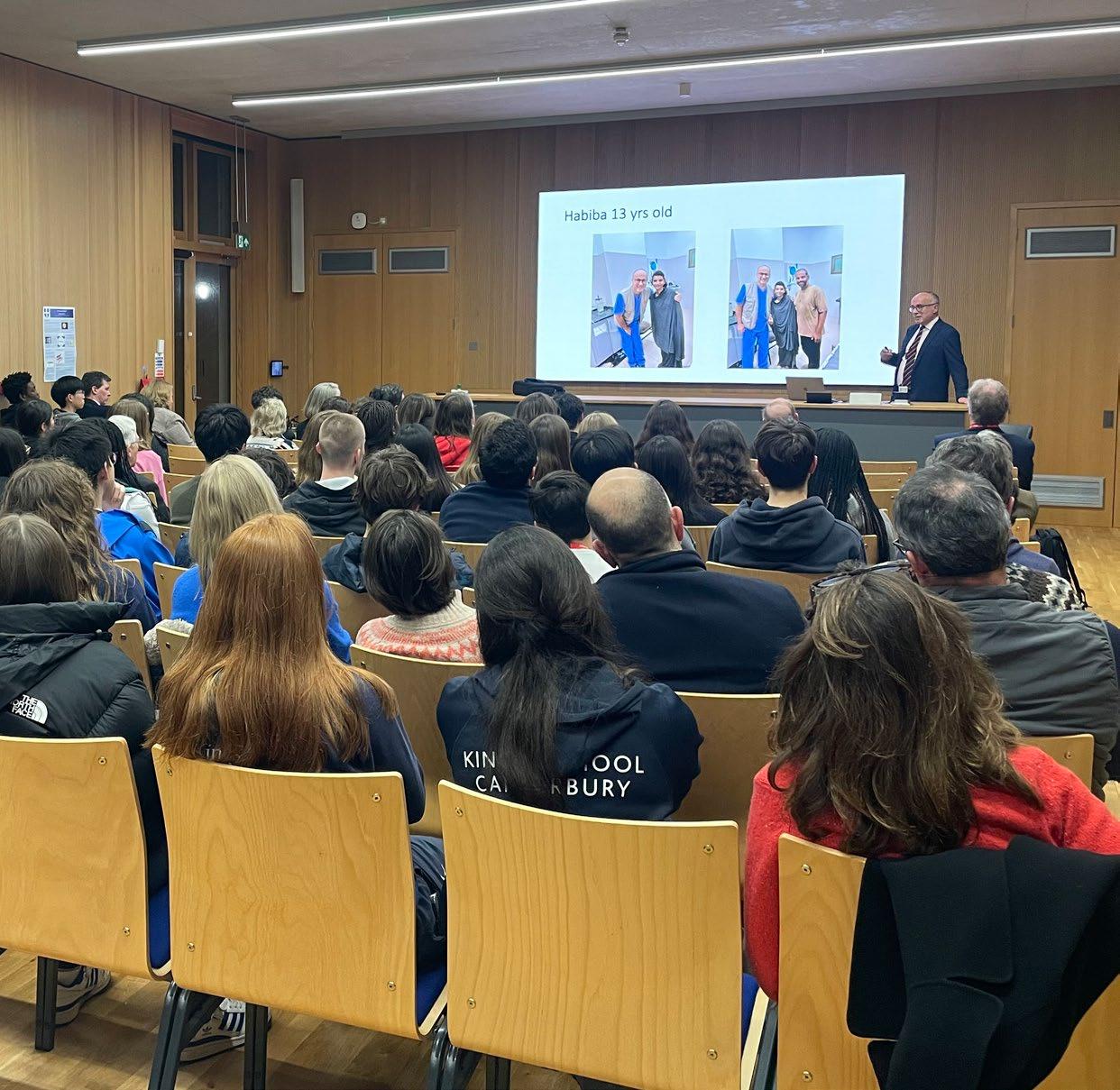
On Monday 9 February 2026, we had the honour of welcoming Professor Nick Maynard (WL 1975–79) back to King’s for a special King’s Talk. The Science Auditorium was full, with pupils, staff, local parents, OKS and former staff members all in attendance.
Nick is a Consultant Upper Gastrointestinal Surgeon based in Oxford. He has worked extensively in Gaza, including leading Medical Aid for Palestinians (MAP’s) first emergency medical team to the region in 2023. He is currently Chair of MAP’s Board of Trustees and has shared his experiences through national media appearances. In 2025, he was awarded the Humanitarian Medal by King Charles III in recognition of his work in Gaza.
Nick’s talk, Delivering Emergency Medical Aid in Gaza, began with an outline of his career in the UK. Since 2010, Nick has led teams from Oxford to Gaza to provide training and clinical support, working within a healthcare system that was already under severe pressure long before the war began on 7 October 2023. Following 7 October, Nick felt a strong sense of duty to return, making repeated trips to deliver urgently needed emergency care.
Throughout the talk, Nick shared moving stories of Gazans he knew on a personal level who had been injured or killed during the conflict. Most poignantly, he spoke about child patients he had operated on who should have survived, but later died due to malnutrition, lack of pain relief and basic medical equipment.
values of being a doctor: empathy, adaptability and the ability to work with limited resources.
To finish, Nick shared practical ways the audience could help, encouraging people to talk openly, educate one another, march and demonstrate, volunteer, and donate to organisations supporting humanitarian relief efforts. The floor was then opened to questions, with pupils asking thoughtful and challenging questions.
• If you would like to hear more from Nick Maynard, you can follow him on Instagram: @nickmaynard.surgeon
Through his work and personal connection to Gaza, Nick has become a passionate advocate for Palestinian rights and has spoken to senior UK politicians about what he has witnessed. Reflecting on his experiences, Nick explained that his work in Gaza had reaffirmed the core
Did you know that you can use the King’s Association website to network and find online mentors?
Join 2,700+ OKS, parents and staff online: kings-association.co.uk
Left: Andrew, Jody, Amber, Amelia, Lizzie and Tim
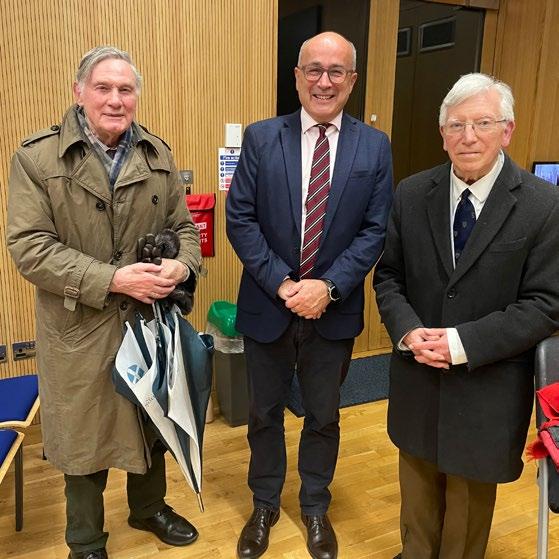
Above: nick Maynard pictured with Hubert Pragnell and Roger Mallion
A new beginning
Stephen Woodley (Common Room 1969-98) has now seen six Archbishops of Canterbury enthroned (or installed) – five as a marshal or steward and the latest viewed from his sofa. These are his reflections on 2026.
There was a joyous mood at the Installation on 25th March of Dame Sarah Mullally as the 106th Archbishop of Canterbury. On the Feast of the Annunciation she became the first woman in that role in 1400 years: “Here am I, the servant of the Lord”. There were women’s voices throughout the two hour service, and in her Sermon Dame Sarah described how she pledged herself to Jesus when she was 16 before starting the career that was to take her on to be the youngest-ever Chief Nursing Officer at 37. Attached to her vestments she wore the buckle that her father gave her when she began nursing.
Of the stories that attach themselves to 1400 years of the Church in England few are more memorable than that of Archbishop Sigeric journeying the 1900 km to Rome in 990 to receive from the Pope his mantle of office, the pallium. OKS with the stamina for distances might like to try the recently re-marked Via Francigena!
Dame Sarah set a precedent for her successors by walking the 140km Becket Camino from St Paul’s Cathedral to Canterbury, joined for a while by some King’s pupils, with the final stage in from Chartham after six days. Her knocking at the Great West Door was followed by some questions from three pupils from John Wallis Academy, Ashford: this role of interlocutor had at Archbishop Welby’s Enthronement in 2013 been taken by Evangeline Kanagasooriam (MR 2008-13).
Thence her procession up the Nave took her past King’s Head Jude Lowson, who was present at the Service with the Head of School, Head Scholar, and three other pupils; and besides from JKS the Acting Head, one other member of staff, and the JKS Heads of School. Not part of the Service this time was the historic Augustine’s Gospels, “because of the vulnerability of that manuscript”, and therefore no Master and Fellows of Corpus Christi College, Cambridge nor King’s Scholars.
But times change, and one long-serving Marshal/ Steward recalls from 1975 and Dr Coggan’s Enthronement that there were diocesan clergy earnestly discussing beforehand the composition of their cricket team. That would have been unlikely this time. But “Praise my Soul” took everyone in to the Service and “Tell out, my Soul” took them out, and it was all wonderful.
Right: King’s pupils and Chaplains walk with Archbishop Sarah Mullally on the last day of her 6-day pilgrimage from London
OKS benefit for prospective families
New for 2026, we are proud to announce an exclusive discount for OKS considering King’s for their child. Prospective OKS families can now have their registration fee waived, helping your child take the first step towards a King’s education.
To claim your discount, please scan the QR code to go straight to the OKS registration form. Please ensure that you clearly state your house and years at King’s, using the following format: SH 1989-93.
You can also contact the Admissions team for the link and further information: admissions@kings-school.co.uk
Boarding Flexi Introducing
OKS Update
1950s
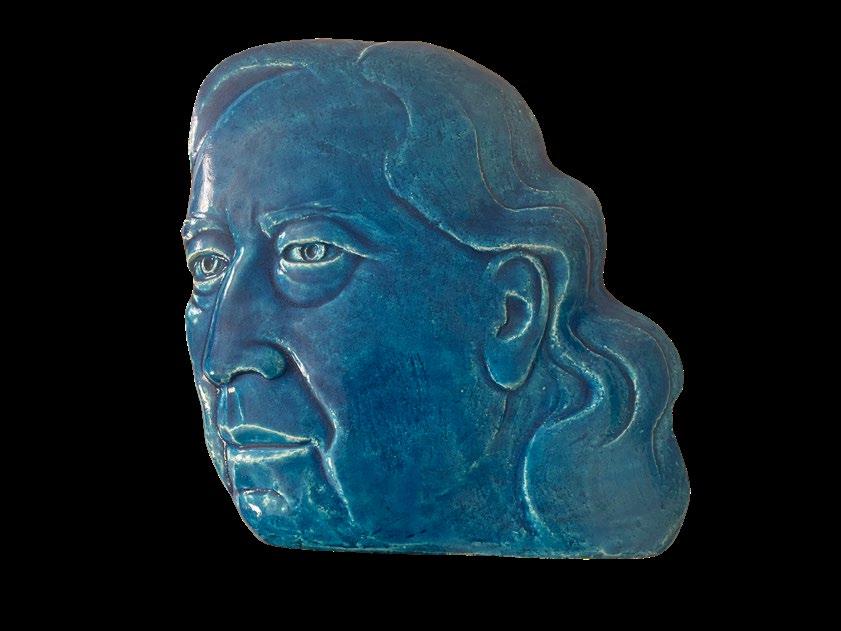
Edward Lucie-Smith (SH 1946-51), through his attorneys Tim Maslen and Jennifer Mehra, has generously donated his collection of his own books to the School. In addition to his poetry, the books reflect the astonishingly wide range of his artistic interests from Rembrandt and Turner to Albert Huie and from eroticism to furniture, published from the 1960s to the 2020s. Almost all are signed by EL-S. There are also some photographs and a striking blue ceramic head by Glenys Barton.
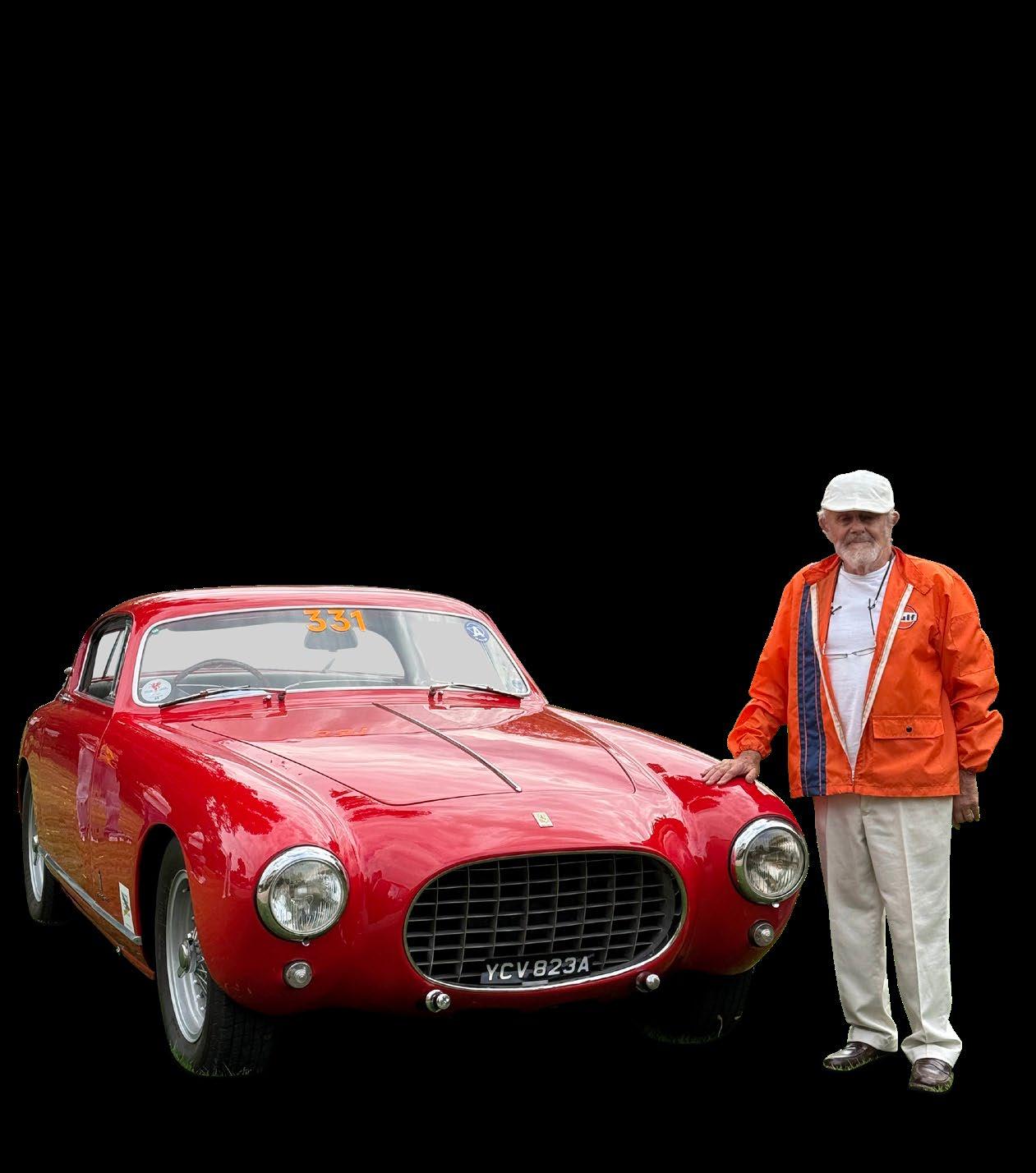
Mark Finburgh (LN 195357) sends this update: “Since the mid-1960s, the family have been into classic cars – collecting, restoring, racing, also even motor bikes. I attach a recent photo. The car, Ferrari, 71. The driver, 86. Car in much better condition than driver!”
1960s
In March 2026, a new sign was installed at Keswick St John Churchyard to point visitors to the grave of OKS novelist Hugh Walpole. Nick Redman (GL 1957-62) is the Chairman of the Hugh Walpole Society and was featured in an ITV news report about the unveiling.
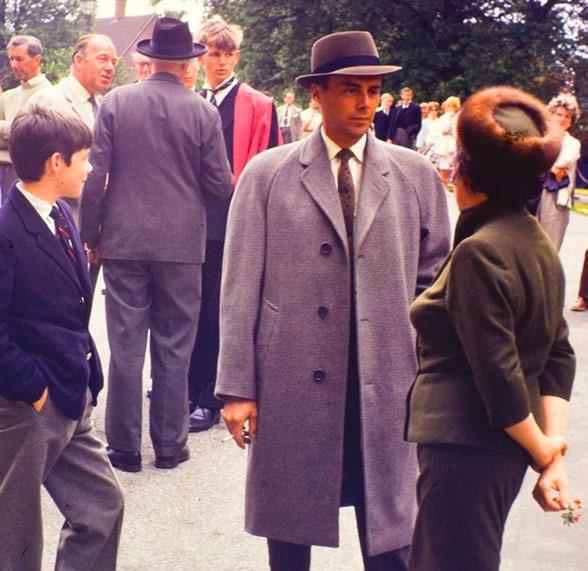
Malcolm Campbell (MO 1958-63) has shared an excellent collection of photographs that he took during his time at King’s. They include rugby 1st XV photos, aerial views of King’s, the Red Dean, a fire at Linacre House and other nostalgic shots. Malcolm explains an amusing story behind one particular photo of Judy Garland and Dick Bogarde in 1962 when filming I Could Go On Singing in the Precincts: “Ronald Neame (Director) dreamt up the idea of a film set partly in the Precincts and at one stage, it was said, possibly involving a King’s pupil playing the boy lead. But he seems not to have asked for permission to film in the Precincts. In the background, the Red Dean (back to the camera in a hat) and Captain of School, Michael Morpurgo (GL 195762) are shown throwing him out. In the foreground are Judy Garland and Dirk Bogarde.”
You can view the photos in the 1960s album on our website: kings-association.co.uk/pages/memories
Colin Arney (LX 1959-65) has added to earlier donations of programmes and recordings by sending us a goodly selection of photographs. They include a dozen images of the 1963 production of The Yeomen of the Guard, several of the orchestra, and two-colour slides of Archbishop Ramsay at Speech Day in 1965.
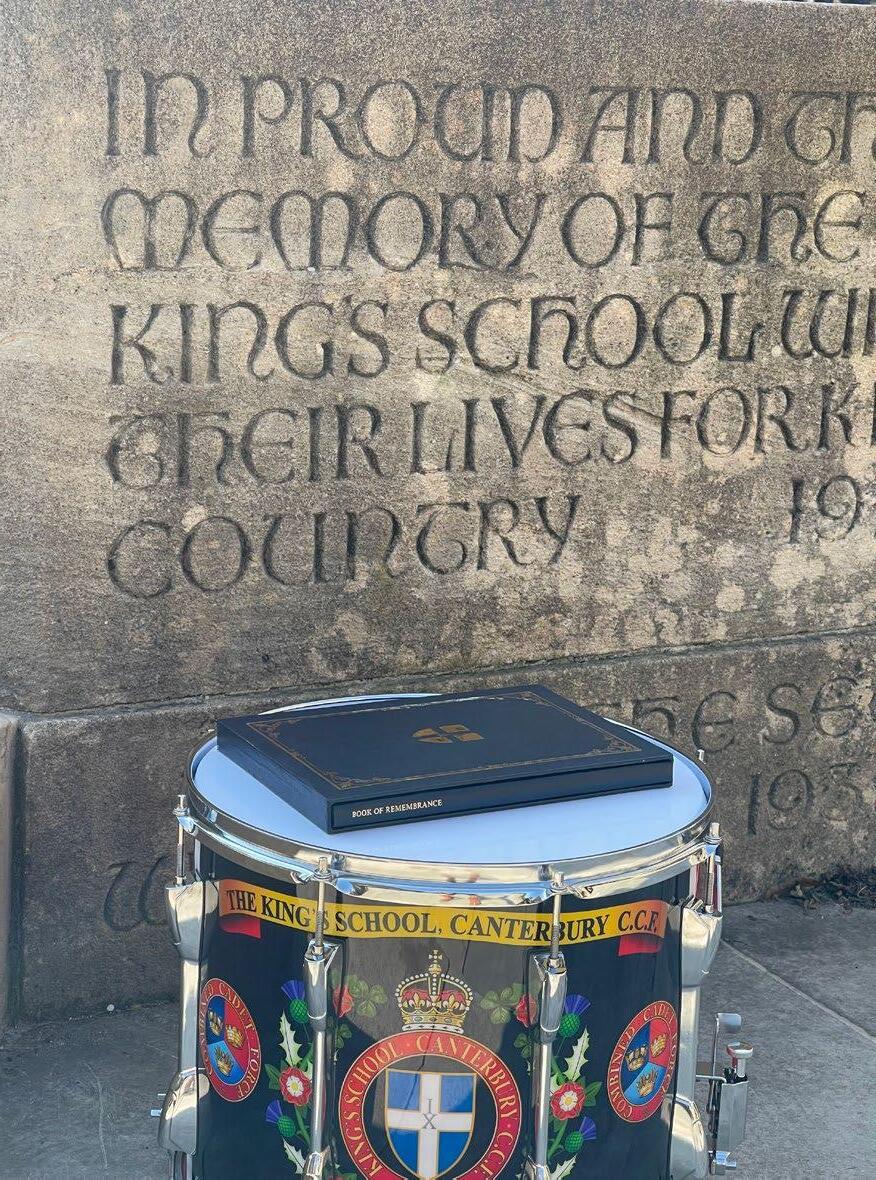
We are proud to announce the addition of a newly donated King’s Book of Remembrance, created to honour the service of OKS during armed conflict. We are deeply grateful to Edward Holman (MR 1963–68) for his generous support of the project.
This beautifully bound volume records the 297 OKS and school staff who gave their lives during the World Wars. It also includes excerpts from speeches, letters, and poems written by OKS reflecting on their experiences of war. The book stands as a solemn testament to the courage and sacrifice of those whose names it preserves, ensuring their legacy endures within the King’s community for generations to come.
It holds a central place in the School’s Remembrance Sunday open-air service in Memorial Court, where the CCF construct a Drumhead Altar and the book is placed on top by the Chaplain and a Shell pupil.
1970s
In October, Michael Foale (SH 1970-74) was featured in a new BBC mini-series titled Once Upon a Time in Space. The series offers a personal perspective on the space race using a blend of archival footage, interviews and firsthand accounts. You can watch the series on BBC iPlayer.
Photos, clockwise from top left: I Could Go On Singing 1962; the King’s Book of Remembrance; David Hopkins’ talk at King’s; The Orange Man; Mark Finburgh; Archbishop Ramsay 1965; the ceramic head of Edward Lucie-Smith
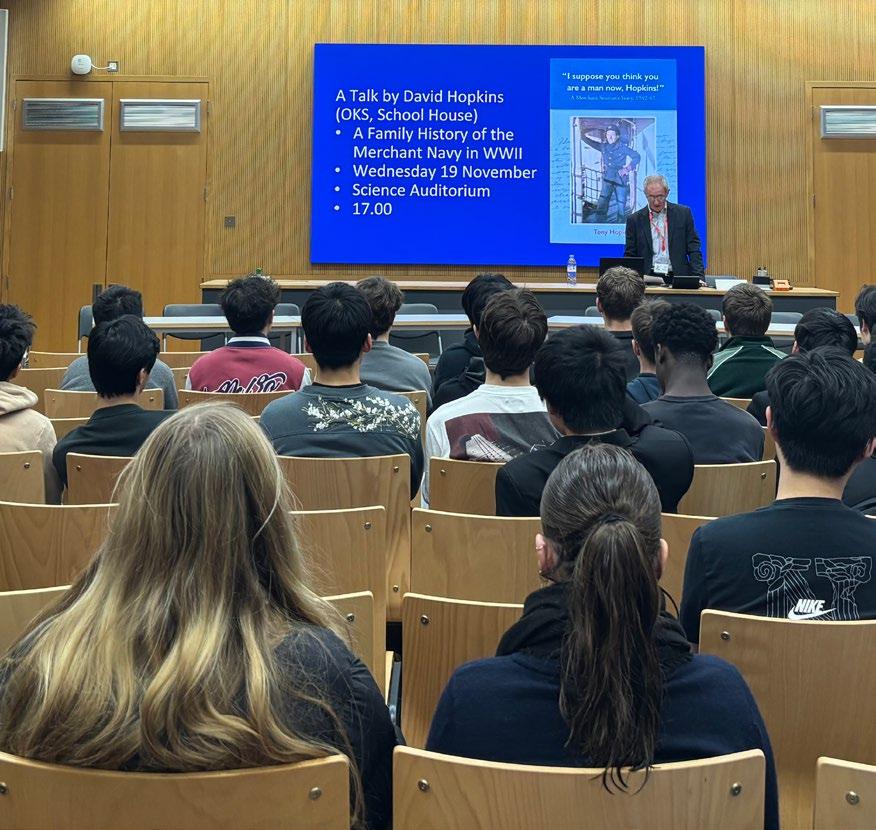
individuals often feel their lives are insignificant and not worth writing about. He disagreed, emphasising that history is also about ordinary people. He encouraged pupils to write about activities and events that might seem mundane, reminding them that “what might be routine today will be history in the future.”
Tim Clack (GR 1975-77) sent this update from New Zealand: “I regularly read the OKS Magazine and it always brings back vivid memories of my time at King’s. I began at Riversleigh, becoming Top Fire and later Captain of Hall, before moving to Grange where Alan Dyer’s dry humour made a lasting impression. Those were the days of fagging – carting chairs and delivering milk – but eventually I became Co-Captain of Halls. I loved sport, captaining the U14 XV and Junior Colts XV, and playing basketball under RIHG.
David Hopkins (SH 1970-75) was invited by the History Department at King’s to deliver a talk to pupils on 19 November 2025. The talk focused on David’s recent publication about his father’s wartime experience in the Merchant Navy. Towards the end of the talk, David explained that
After many years teaching in England and later emigrating to New Zealand, I still look back on King’s as a formative and treasured part of my life.”
1980s
Marcus Robinson (MO 1981-83) published The Orange Man. It is a satire in which a modernday Dr Frankenstein secretly creates online influencers as social experiments. One invention,
‘the Orange Man’, gains power precisely because of his repulsiveness, a joke presidential run spirals into a dangerous reality, fuelled by money, manipulation, and echo chambers. The book is the first in a trilogy and can be purchased online at: inmeliore.com
1990s
Tim Armstrong (Common Room 1993-2016) is the Chairman of the East Kent Branch of the Oxford University Society. They organise regular social events (speakers, dinners, garden parties) and run a grant to support current undergraduates wishing to undertake academic and research work during vacations. If you live in East Kent, have a connection to the University of Oxford and would like further information, please visit ouseastkent.org
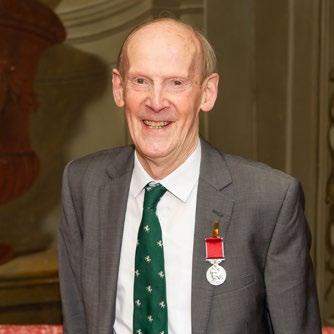
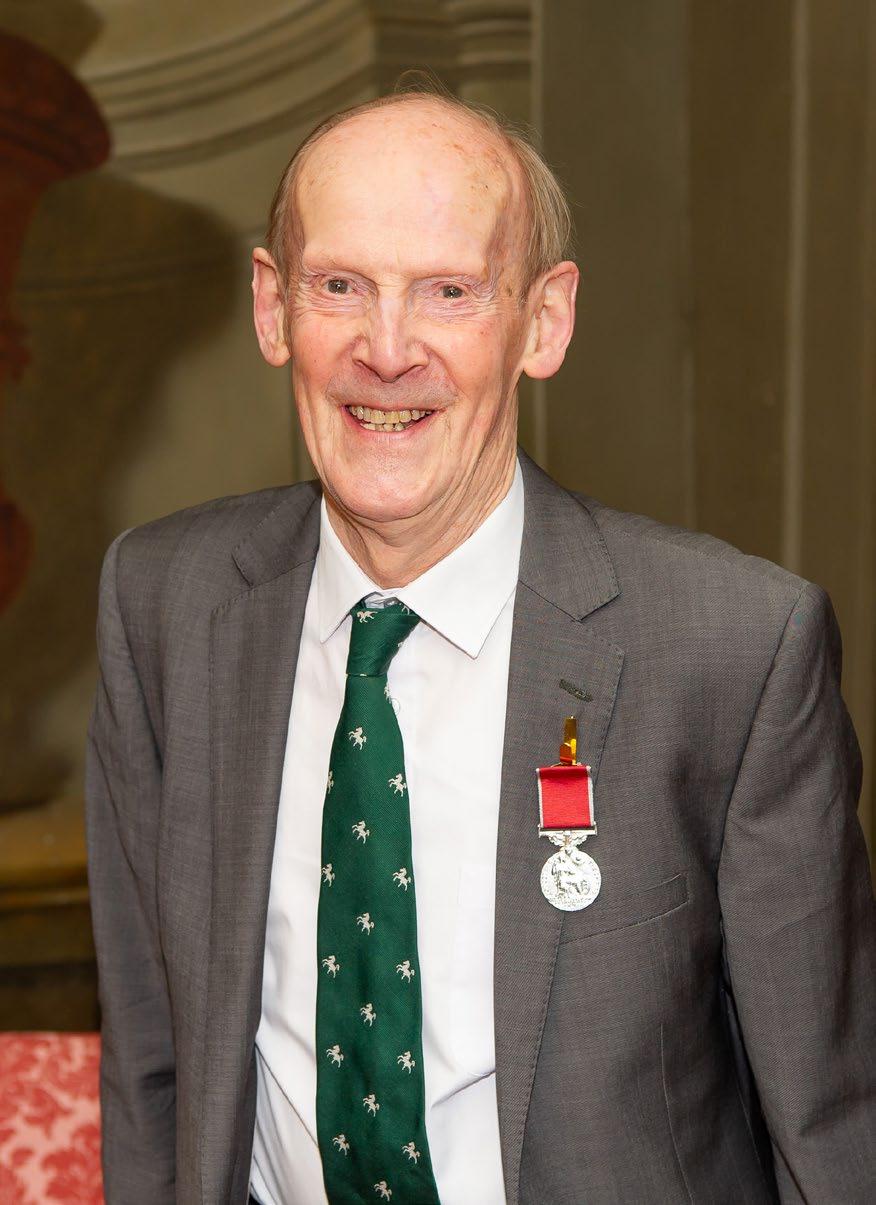
Stephen Woodley (Common Room 196998) has been awarded a BEM (British Empire Medal) for his services to tennis in the New
Left: Stephen Woodley and his BEM
Below: Oxford University’s literary logo
Year’s Honours List 2026. The medal is awarded to those who have made an achievement or contribution to the community in a local geographical area.
Stephen became deeply involved with Canterbury Lawn Tennis Club from the late 1960s, playing a key role in its move to Polo Farm in 1989 and later serving as Chair and trustee, helping drive the club’s growth and improved facilities over several decades.
2000s
James Berry (MR 1996-2001) was appointed King’s Counsel at a ceremony in Westminster Hall, followed by the Royal Courts of Justice, on 24 March 2025. James is a leading public, civil and regulatory barrister at Serjeants’ Inn Chambers.
A letter written by Hubert Pragnell (Common Room 1973-2002) was published in the Daily Telegraph in January 2026. An extract reads: “the credit for Christopher Marlowe’s excellent Latin was owed to the teaching he received at The King’s School Canterbury, where Latin and Greek are still taught. […] These subjects should be available to all children in state schools for the enrichment of their minds, and to provide broader cultural value to the nation. They should not be allowed to become the preserve of the independent sector.”
Ed Newton-Rex (GL 2001-06) continues to campaign for protection of artists’ work being stolen to train AI. In December 2025, he gave evidence in UK Parliament on AI and copyright.
He said: “I’d really like us to lead and be a country that can be proud of our AI ecosystem and not have it be one that is fundamentally exploitative of such an important industry as the creative industry.”
Earlier in 2025, Ed organised an album Is This What We Want? through Virgin Music Group. The album consists of ambient noise, protesting the use of unlicensed copyright work to train AI. Each track is uncredited, but 1,000 artists
are credited as co-writers including Kate Bush, Damon Albarn and Ed O’Brien. In December 2025, a vinyl version was released featuring a bonus track by Paul McCartney.
2010s
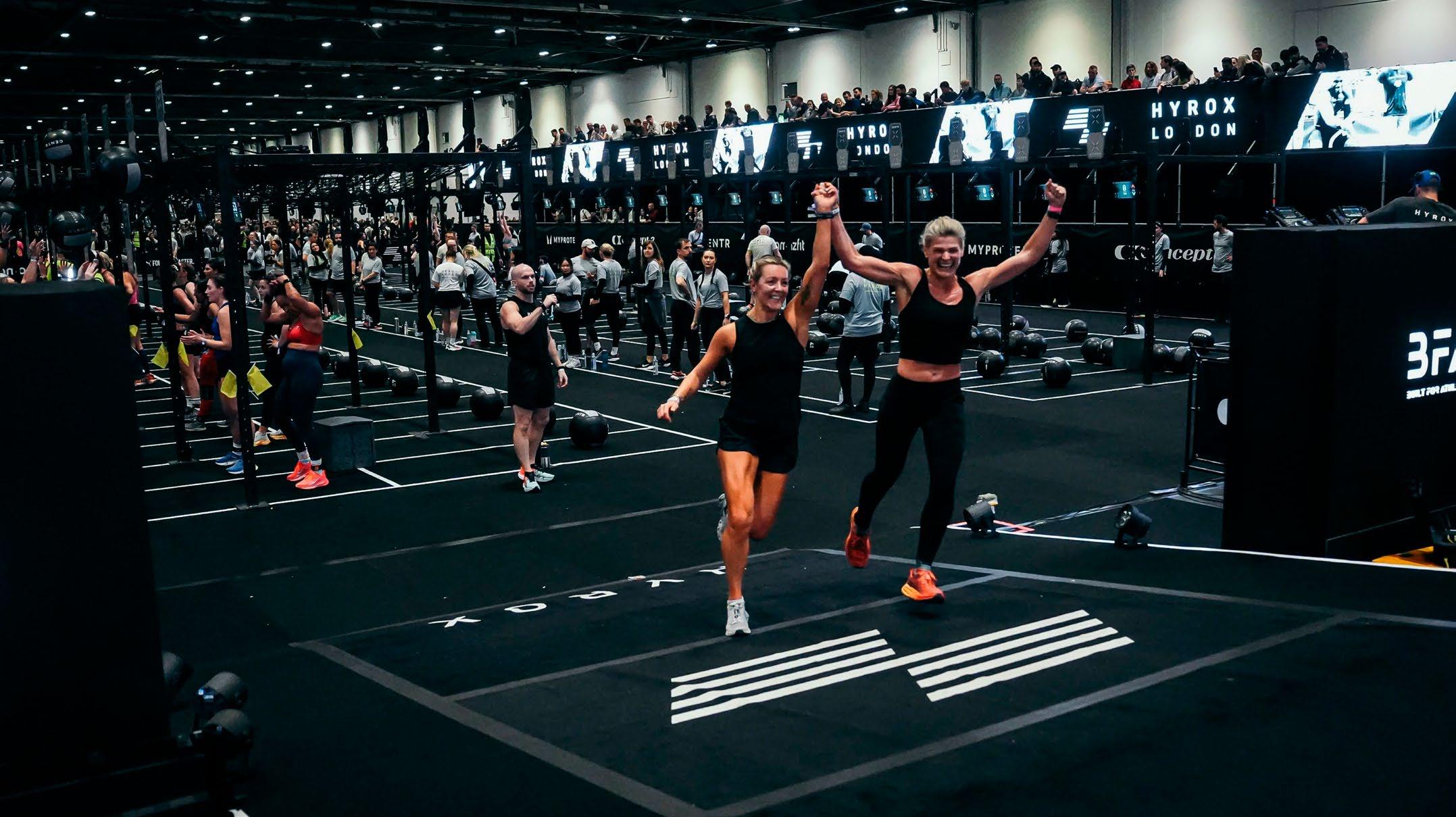
Stephanie Masters (BY 2007-10) and Jolindi Jefferson (Common Room 2008-20) completed a Hyrox doubles race together in December 2025. They completed it with a time of 01:15:19.
Jolindi writes: “I first met Steph when she started Sixth Form at King’s in Bailey House. I had just arrived in the UK from South Africa, determined to learn English as a second language. I was a new teacher and Steph was my tutee. I will never forget the kindness and grace she showed me in those early days. I supported her, whilst she was navigating new challenges and in doing so, we connected whilst finding our feet.
Sixteen years later, we entered the Hyrox event
together. As we ran around the track side by side, something felt very familiar. With what little breath we had left, we were still checking in with each other every step of the way, just as we had all those years ago. “Are you OK?” “I’m OK. You?” “I’m OK”.
Simple words, yet far more powerful than we often realise – words that say, I’m here. Thank you, Steph and thank you King’s for fostering these life-long connections.”
Ollie Robinson (MT 2007-10) has been announced as Sussex County Cricket Club’s new Captain for the men’s team. This marks his first appointment as full-time captain.
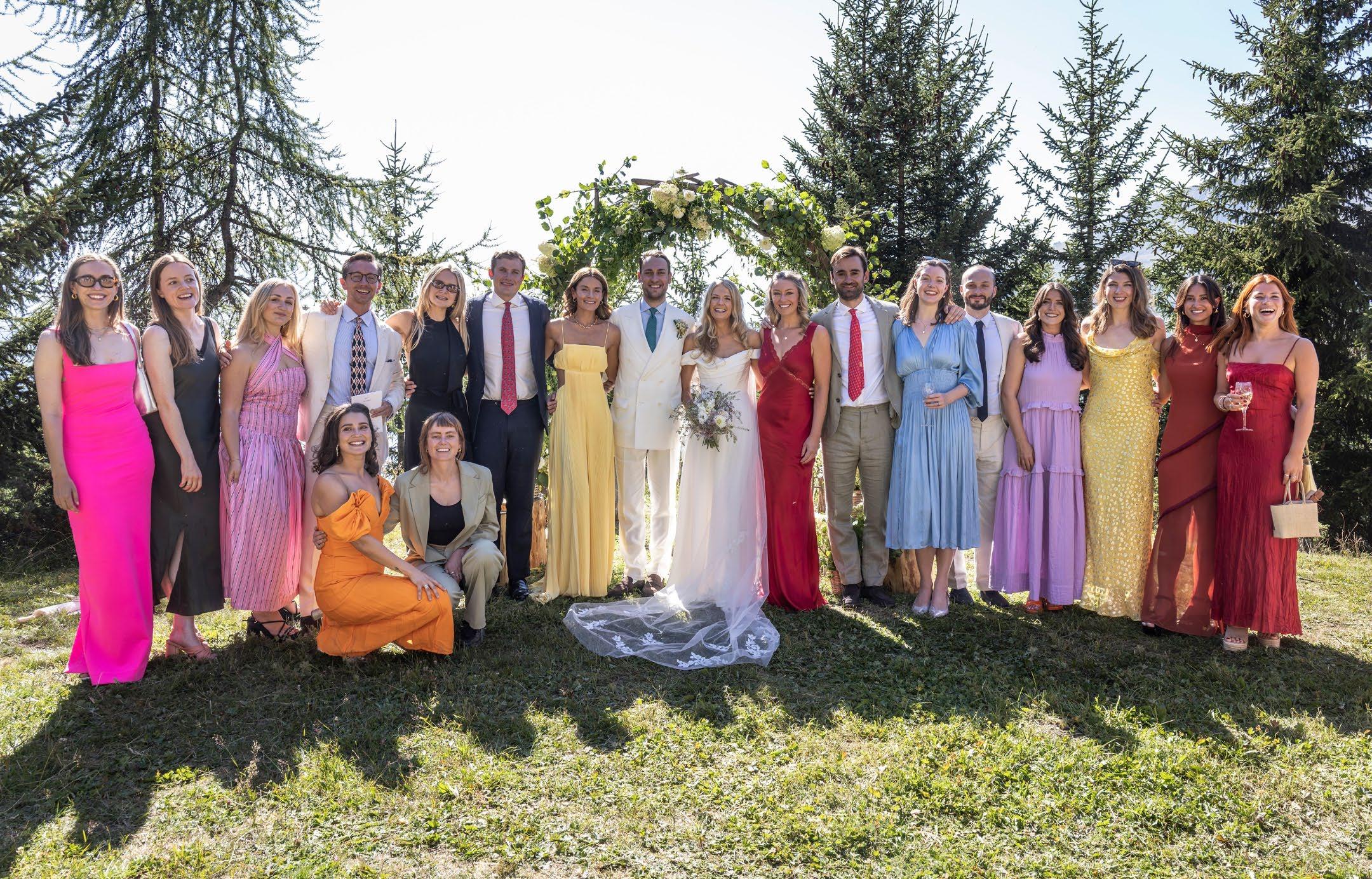
Louisa Dearlove (HH 2007-12) married Max Wrobel on 8 August 2025 in Verbier, Switzerland. At least 20 OKS guests were in attendance, many of whom are 2012 leavers.
Fraser Morrison (TR 2008-13), who was on the front cover of the Spring 2025 OKS Magazine,
Above: Stephanie Masters and Jolindi Jefferson reach the Hyrox finish line
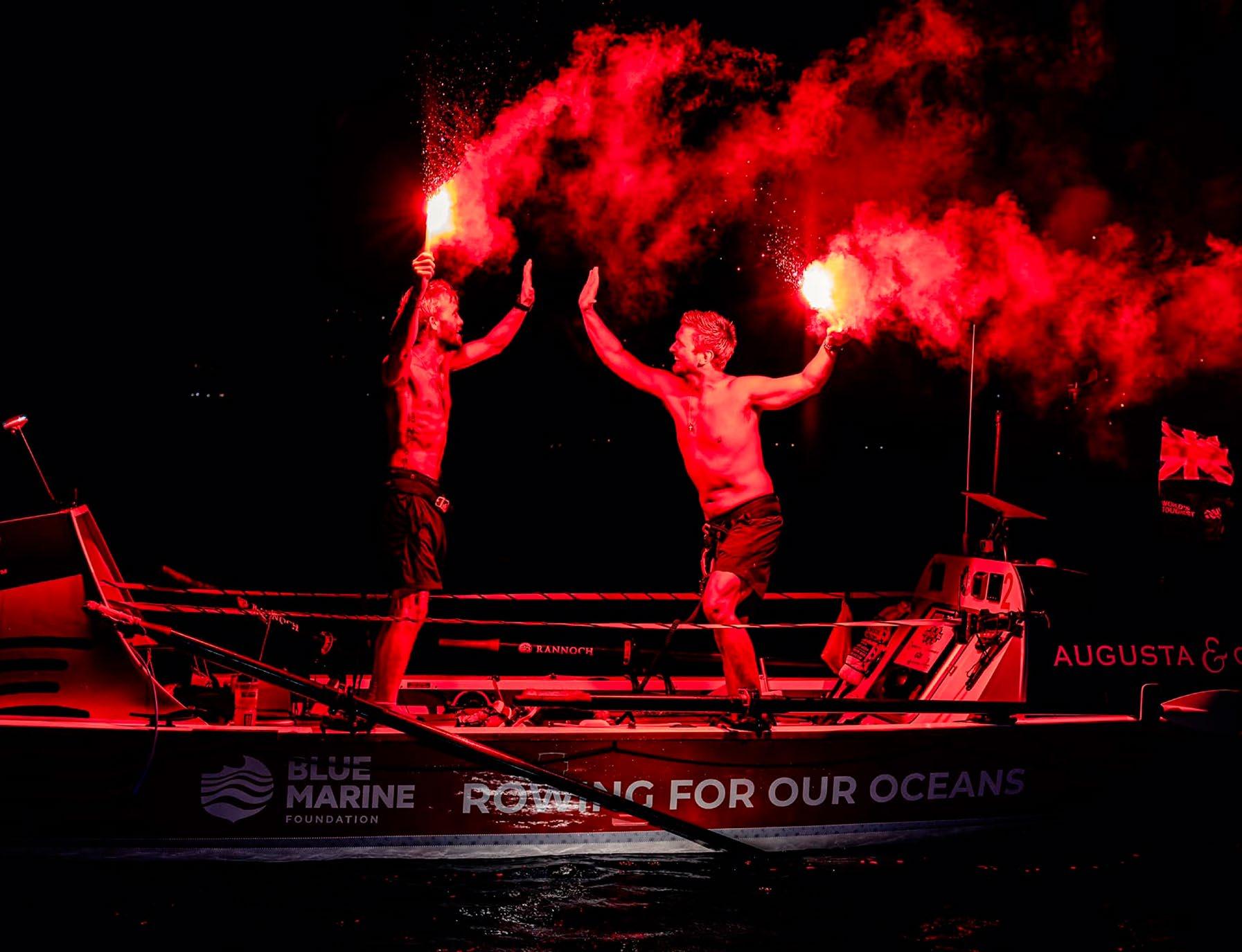
has completed the World’s Toughest Row with great success. Fraser and crew mate Kirill set off on the 3,000-mile unassisted rowing race across the Atlantic Ocean in December and completed the row in 36 days and 11 hours. They crossed the finish line on 19 January, earning themselves first place in the pairs category and 6th place overall.
The row was in support of the Blue Marine Foundation, an organisation fighting to restore the ocean to its full health.
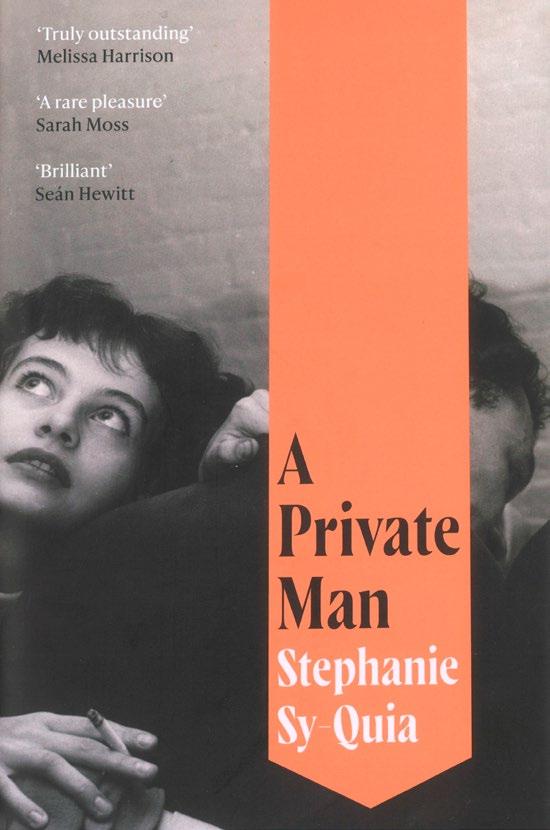
Stephanie Sy-Quia (LX 2009-13) has published her second book, her first novel, A Private Man. It is inspired by the story of her grandfather who was a Catholic priest. It is a story about forbidden love, devotion and sacrifice. A writer for The Sunday Times describes it as “A truly impressive debut novel, one I could see appearing on the Booker longlist.” The book has also been reviewed by Ali Lakhani (MO 1968-73) on sacredweb.com
In October 2025, Will Love (LN 2009-14) created Live Casino Score – the largest directory of casino games to date using only AI technology. The website allows avid gamblers to compare 690+ live casino games by RTP, features, payout, and provider. Following this, Will’s other initiative, Smart Scratchcard, was featured in The Sun. The Smart Scratchcard website provides information on UK National Lottery Scratchcards with the aim to find the best scratchcard at any given moment using live data published by Camelot to the Gambling Commission. You can learn more about both at: livecasinoscore.com and smartscratchcard.co.uk
Juliet Wolff (WL 2012-15) performed in a recital at Wigmore Hall on 24 January 2026. It was her debut in the Cuore Piano Trio.
Tatyana Kalaydjian Serraino (BY 2013-15) has released her second book focused on Art History. Dear Art Diary is an interactive journal designed
to help readers look at and connect with art more deeply. It is ideal for anyone interested in learning how to better observe and appreciate art. The book is available to purchase on Amazon.
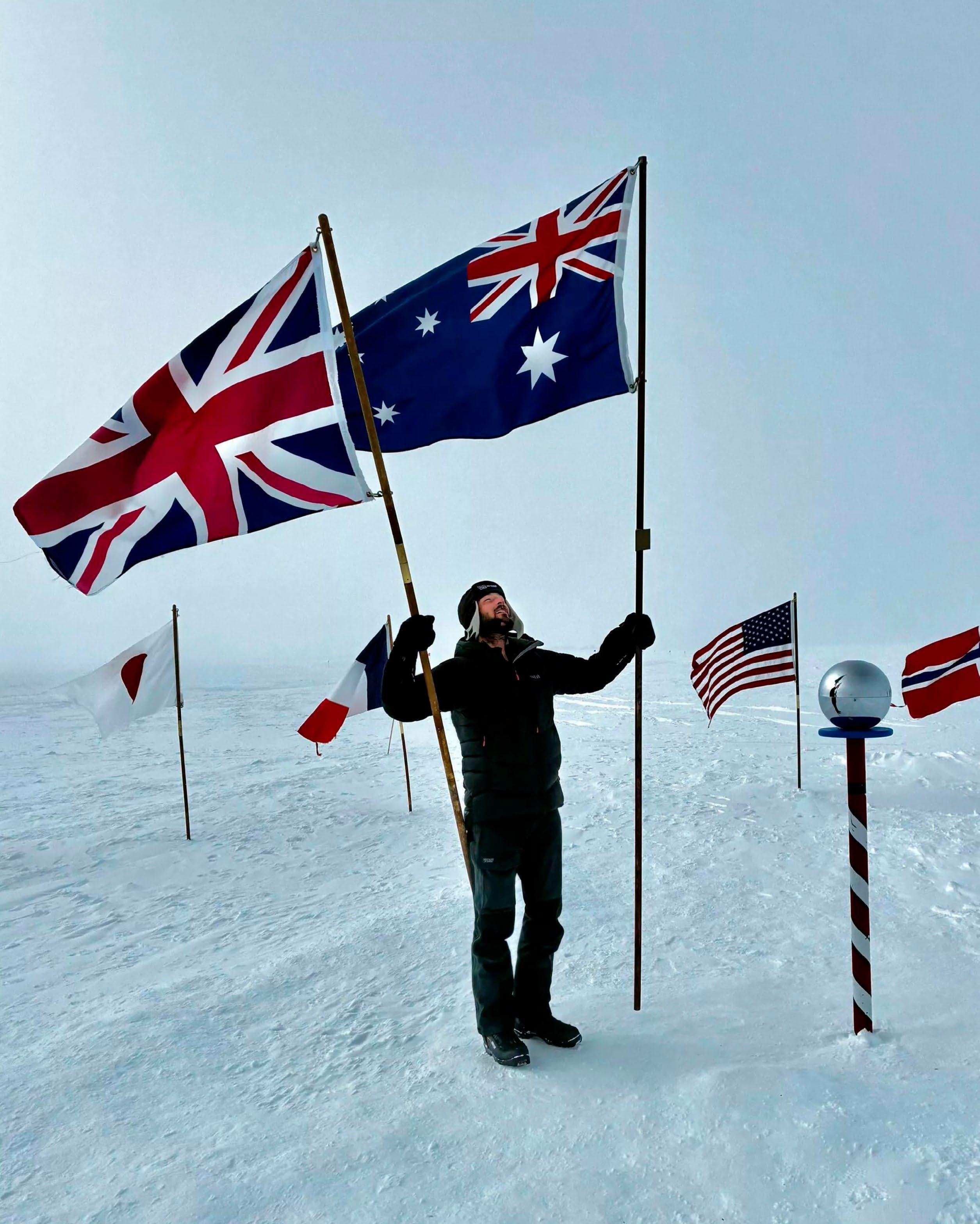
Full-time geometallurgist, part-time endurance athlete, Tom Hunt (SH 2011-16) has attempted to break the world record for the fastest solo, unsupported expedition to the South Pole. The attempt comprised hauling a sled filled with supplies across 1130 km of Antarctica in less than 22 days, alone. For the first 16 days, Tom was ahead of record pace. By day 17, he had developed kidney failure and 8 days later, he ran out of food. Despite these setbacks, Tom kept going and reached the Pole on day 34. Whilst he didn’t break the record he hoped to, it is an incredible story of fight and perseverance.
On Instagram, Tom said: “This expedition was truly a game of two halves. In the first, I saw myself keeping pace, almost all was going to plan, challenges were environmental and mostly familiar. In the second, things started to break
down. Various health issues combined with an attributable absence of sleep, subsequently led to implacable pain, timeline blowout, and insufficient rations – causing a self-perpetuating downward spiral. The objective became completion.
[…] Whilst on one hand it is obvious to me that I failed (and this is something for me to confront, navigate and learn from); on the other I have never been more proud of seeing something through. The last two weeks of this trip were simply ungodly.”
You can visit Tom’s Instagram (@thuntsmanspider) to listen to daily voice memos from his journey. Australian Men’s Health also covered the story in detail online.
Sibling duo, Angus (MT 2011-16) and Issy Forbes (MT 2009-14) are taking on the London Marathon together to raise funds for Kent-based charity Slide Away. They aim to raise £5,000 and at the time of publication, they have already raised
Left: Louisa Dearlove’s wedding
Below: A Private Man by Stephanie Sy-Quia
Right: Fraser Morrison (left) celebrates his World’s Toughest Row victory
£6,000. You can support them, and find out how their training is going, on Instagram @ss4s2026
Saskia Piper (MR 2011-16) is running the London Marathon this year in support of the palliative care charity, Marie Curie. Her donation target is £2,500 and she would appreciate any support from OKS. Her donation page is linked on our website: kings-association.co.uk
Luca Pawson (MT 2011-16) returned to King’s on 25 November 2025 to deliver a talk to art pupils. Luca is an accomplished fashion designer, having worked for several leading luxury couture houses, beginning his career under the mentorship of John Galliano at Maison Margiela, and more recently working with Givenchy.
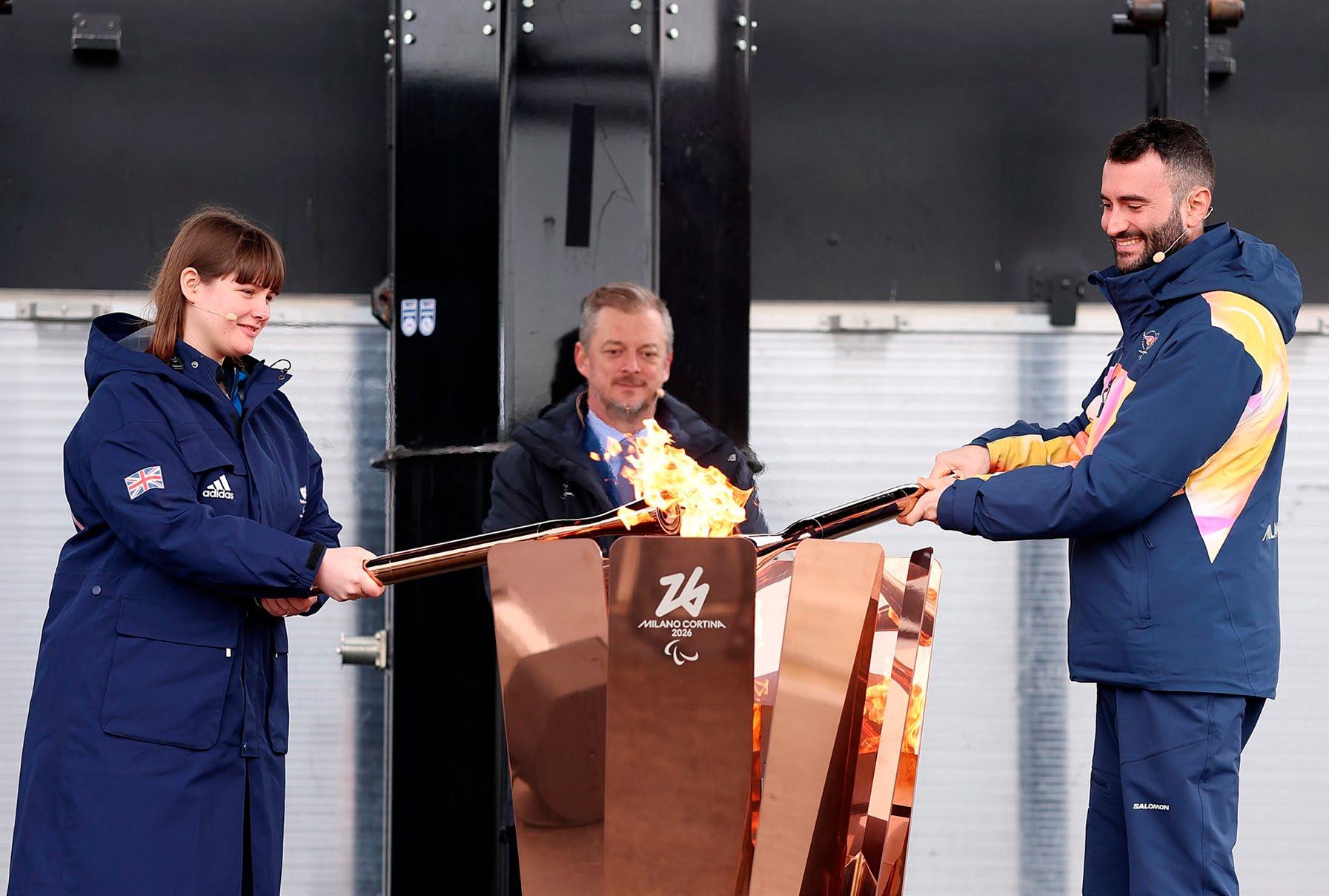
On 24 February, Millie Knight (MR 2012-17) had the honour of lighting the Paralympic flame ahead of the 2026 Winter Paralympic Games in Milano Cortina. The flame was lit in Stoke Mandeville, the home of the Paralympics, and Millie was accompanied by fellow GB
Paralympian, Dame Sarah Storey.
It was a meaningful moment for Millie, a retired Paralympic medallist who has represented Great Britain at three Paralympic Games and won four medals. Since stepping away from Paralympic skiing, Millie has continued to push boundaries in sports. She has turned her focus to Taekwondo and Karate, where she has achieved remarkable success, earning the title of Taekwondo World Champion and becoming a Karate Commonwealth Champion.
In March 2026, George Thompson (GL 201217) completed a 50km trek across the Sahara Desert. In total, the group of 30 raised more than £81,000 for Meningitis Now – a charity close to George’s heart after contracting meningitis in his 6b year at King’s. Marking ten years since being admitted to hospital, George says: “Not remembering much of my time in hospital is actually a bit of a blessing. Listening to people who do remember it, or who had to learn to walk again, really puts things into perspective.”
Left: Tom Hunt
Right: Millie Knight (left) lights the Paralympic flame
William Melville Wilcox: Lewis Carroll’s godson
Three letters that Carroll wrote to William in Canterbury have been published. In the first (23 November 1880) he wrote: “You must have time in the long evenings, now, I should think, when games different from cricket and football are possible: so you might like to try my new game Mischmasch with some young friend. I hope the rules are clear enough: but, if you can’t understand them, I will try to explain… PS I enclose another bit of paper, thinking you might like to amuse yourself by taking it to the postoffice, to see if anything happens when you hand it in. It is a curious and interesting experiment.”
The piece of paper was presumably a money order and the second letter (25 November) deals with the Canterbury post office’s refusal to cash it. Carroll explained and resolved the problem and added some further hints on how to play Mischmasch.
The third letter (7 June 1881) ended with the comment: “I am very glad you and your schoollife suit each other so well: and I hope you will win so many prizes that at last Dr Blore will threaten to send you away if you win any more, and will say he cannot afford to keep such a boy!”
William melville wilcox was born in Sunderland in 1866. He was the son of William Edward Wilcox, a customs officer, and his wife Fanny. His godfather, also a cousin, was Charles Lutwidge Dodgson, better known as Lewis Carroll. (William Edward’s mother was the daughter of Dodgson’s grandmother by a second marriage.)
The family moved to Scarborough, but in December 1876 William Edward died. After enquiring about her circumstances, Carroll wrote to Fanny in February 1877 suggesting “that I might offer help towards educating the children. I rejoice to be able to do such a thing, for dear William’s sake. And now will you kindly let me send you £30 a year, paid half-yearly in advance. Just now it is of course more needed for my godson – but I don’t want it to be considered as restricted to him.”
William joined the King’s School in the summer term of 1880. It seems clear that King’s was chosen as Carroll knew the Headmaster George Blore, who had been an undergraduate and later a tutor at Christ Church, Oxford.
William did not in fact win any prizes, but school life certainly did suit him well. He became a monitor and was on the sports and debating society committees. On Sports Day 1884 he came first in kicking the football and second in the high jump. The following year he won throwing the cricket ball (87 yards 2 feet). He played for the cricket 1st XI and The Cantuarian in typically frank style noted: “A slow left-hand round-arm bowler, at times successful. Improved in batting a good deal, but too reckless.”
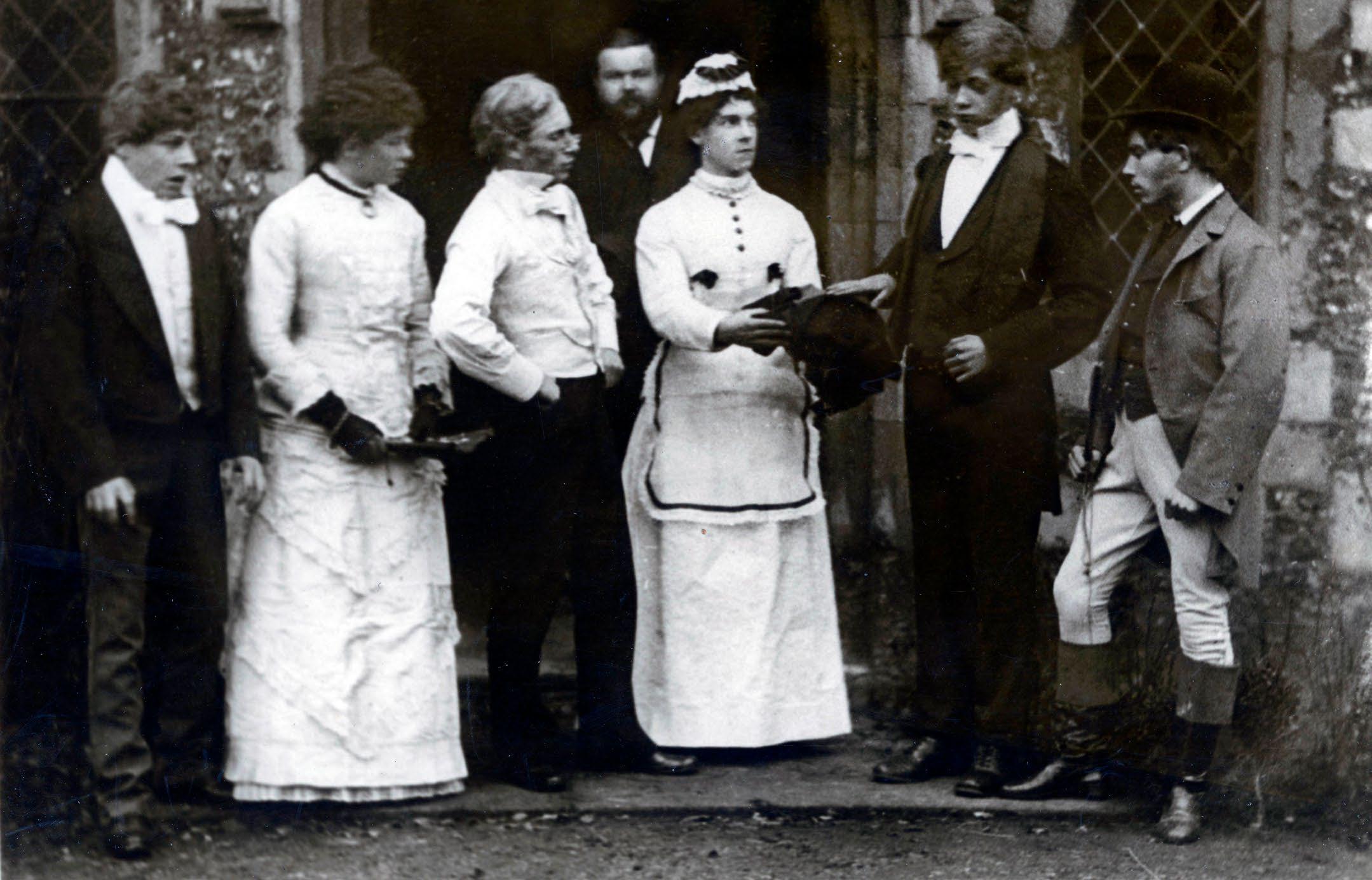
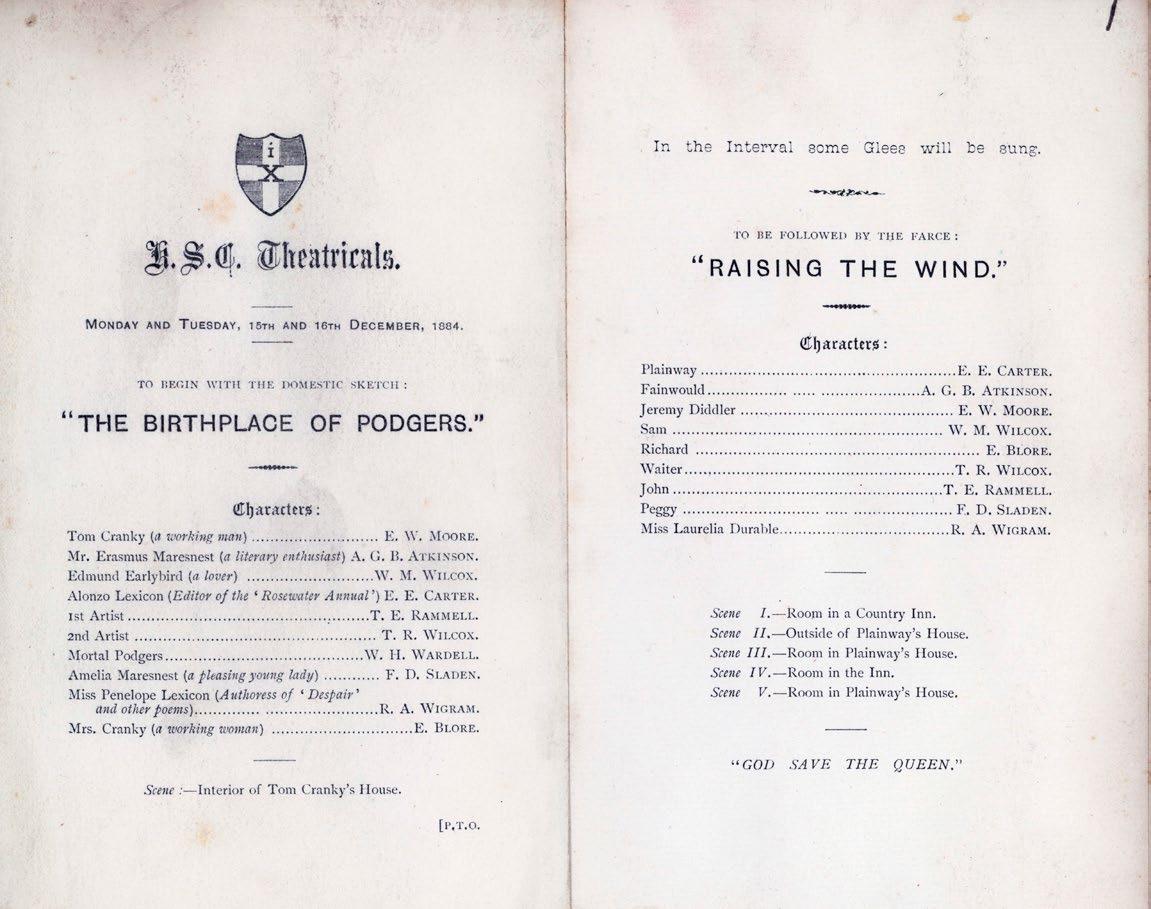
Theatricals were another satisfying activity. In December 1884 he appeared in a double bill of The Birthplace of Podgers and Raising the Wind
The Cantuarian reported that in the second piece “W.M. Wilcox as Sam frequently ‘brought the house down’; he was a Yorkshireman all over, not least in his back and shoulders, and he spoke Yorkshire as if he had been born and bred to it” –which, indeed, he more or less had been. In the July 1885 Speeches in the Chapter House he was Trania in Mostellaria, the Duke of Gloucester
in Henry VI, Part I and Aeacus in The Frogs.
William left in 1885 and went to Selwyn College, Cambridge. On graduating in 1888 he spent eleven years as an assistant master at Woodcote House School, Windlesham. Then, after a brief stint as a journalist, he became Secretary of the Royal Hampshire County Hospital, Winchester in 1902. Finally in 1905 he was appointed Secretary to the East London Hospital for Children and Dispensary for Women in Shadwell. He retired in 1932 and died in 1958.
and followed William to Selwyn, graduating in 1889. He initially struggled to find a teaching post, despite testimonials from Carroll, but in 1892 he became an assistant master at Dulwich College Preparatory School. This experience encouraged him to become the founding Headmaster of Alleyn Court Preparatory School in Westcliff-onSea in 1904. He died in office in 1932.
His younger brother Theodore Robert Wilcox came to Canterbury in September 1881. He had a scholarship, played in both the 1st XI and the 1st XV and appeared in theatricals – there are photographs of him in costume. He left in 1886
KSC Theatricals, December 1884: some of the cast pose outside The grange. The brothers were in both plays, but only Theodore (far left) is in the photograph.
It is clear that Carroll continued to support both boys, via their mother, until they left university. The strap-line on the Alleyn Court website is ‘Curiouser & Curiouser’ and the School History page emphasises that Lewis Carroll’s generosity had enabled Theodore to realise his ambition to run his own school. Both Theodore and William had much to be grateful for.
Lives Remembered
Peter Davidson
(SH 1944-49)
Alan Gerald Peter Davidson died on 14 February 2026, aged 95. His granddaughter Victoria Elliott (BR 2004-09) sent this tribute.
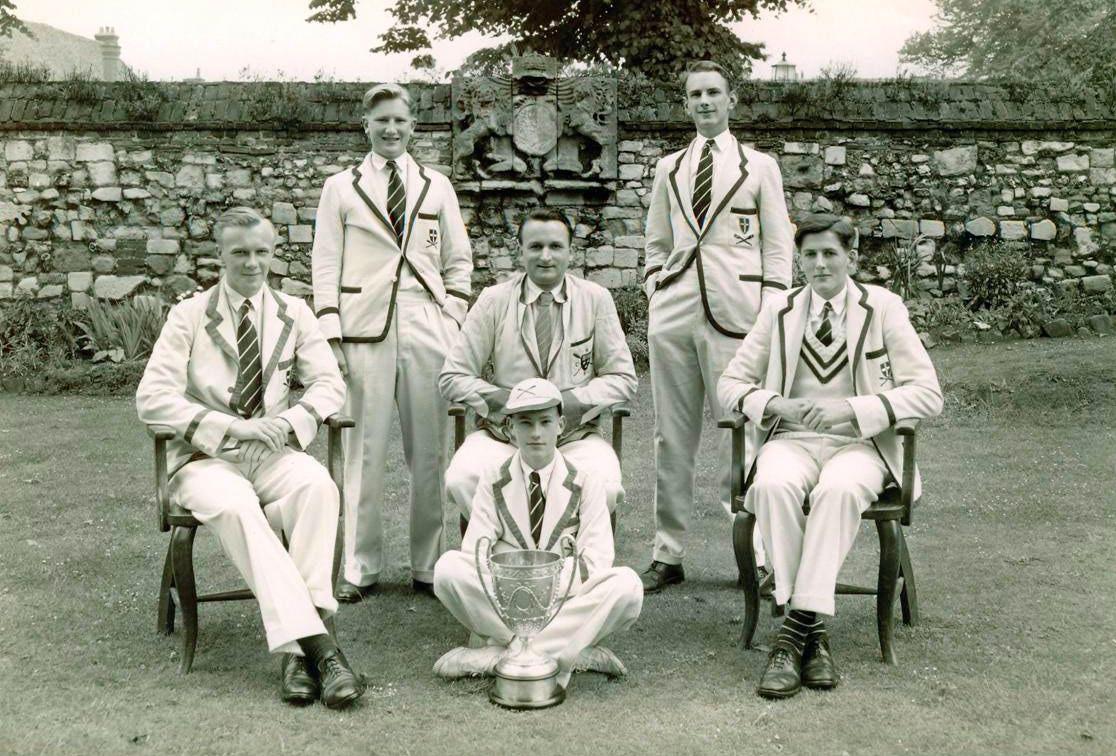
Peter spent some of his time at King’s as an evacuee in Carlyon Bay. He took two of his granddaughters with him to the 50 year anniversary at Carlyon Bay and was proud to return to King’s for the opening of Carlyon House a decade later. He was an excellent rower, and was in the 1st IV that won the Public Schools’ Fours Cup at Marlow in 1948. Sadly, he never made Purple due to a penchant for climbing out of the window to go to the local pubs. He went on to read engineering at Imperial College, though he was too keen on the rowing and moved to the Camborne School of Mining after just a year. Fortuitously, this was where he met Cornish Maureen. They married in 1953 and had four children, Charlotte, Anne, Carol and John (SH 1973-78).
Peter first worked in Canada as a mining engineer in a town called Asbestos (no longer an active mine today, for obvious reasons). He then had a career with Costain, opening and running an office in Melbourne, Australia. Intrepid travellers, the young family enjoyed flying and boating around the world, visiting Pakistan, Thailand and Hong Kong on the way to Australia and Fiji, Tonga, Samoa, the US and Hawaii on the way back. He then joined Greenwell as their diamond and gold expert and settled in Tenterden. He was a keen gardener, bridge player and amateur magician, known as the Magic Man by his great grandchildren.
Peter died peacefully in Wadhurst on Valentine’s Day, joining his wife of 70 years, Maureen, who died on Christmas Day 2024 – both choosing memorable occasions. He had eight grandchildren, including OKS Alexandra (BR 1994-99), Laura (BR/WL 1996-98), Orlanda (BR 1997-2002), Victoria (BR 2004-09) and Matilda (BR 2005-10), and was loved by his fifteen great grandchildren.
David Moor
(MO 1947-54)
David Child Moor died on 27 June 2025, aged 90. Wendy, Susie and Chris Moor sent this tribute.
Dad was always grateful for what he called his luck in life. Growing up on his parents’ Faversham fruit farm, and having enough to eat during the war – although conceding perhaps this hadn’t been the safest of places, given he’d watched the Battle of Britain from directly beneath it! Meeting his beloved wife Janet. And for the many opportunities offered by King’s – particularly cricket. He came from a large King’s family – his father Donald (Holme House 1920-24), his brother John (MO 1945-50) and two nephews Stephen (MO 1971-75) and Crispin (MO 1975-80). Celebrated in press reports as a gifted, graceful left-hander he went on to bat at Number Four for Oxford University, where he read Zoology at Trinity.
Dad was determined to forge his own path, and instead of joining the ‘family firm’, in 1960 became Manager of Waveney Apple Growers in Norfolk. There, quietly pioneering, he and Mum designed their own open-plan light-filled bungalow, gardened instinctively, developed a passion for and expertise in early English oak furniture, and established a stable home for their growing family.
Under Dad’s skillful leadership, through ingenuity and innovation WAG became one of the most successful fruitdistribution cooperatives in the world. Dad staunchly defended his team during the 1980s industry crisis, and in 1990, returning to his roots, joined a similar organisation, East Kent Packers. While renovating a timber-framed farmhouse on the Kent Downs, he and Mum created an exuberant, prize-winning garden which they regularly shared with the village for church fundraising.
Memorial tributes painted a consistent picture of a consistent individual, always himself whatever
the context. Modest, loyal, kind and calm, with an unwavering sense of integrity, duty and fair play. A ‘people person’, who engaged meaningfully with everyone he encountered, taking time to listen and give wise counsel. Gently mischievous. Tenacious. And in the face of long-term illness, blindness, and Mum’s devastating death in 2021, stoic and extremely brave.
Dad was a gentleman to the last – remembered by carers, friends and family for his unfailing courtesy, twinkling sense of humour and the joy with which he shared his love of nature, travel, poetry, music and song.
He and Mum have shown us the way. We and our children are the lucky ones.
David Woodrow
(GR 1950-56)
Frederick David Woodrow died on 24 September 2025, aged 88. His daughter, Andrea, sends this tribute.
Our dear father, David Woodrow, passed away peacefully at the Alexandra Hospital Redditch on 24 September 2025, after a short illness. He was 88 years old. Dad was a pupil at Junior King’s 1948-50 and then King’s 195056, before going on to study civil engineering at Corpus Christi College, Cambridge. As an engineer he took jobs in (then) Persia and Ghana, before in later years becoming a town planner, rising to the level of Chief Planning Officer at Redditch Borough Council, and then to director level. Upon taking early retirement from local government, he became an Inspector with the Planning Inspectorate.
He was a true original, maybe somewhat eccentric, had a memory for facts like an encyclopedia and a thirst for knowledge (and the imparting of it) that is rarely seen. He was curious, original, loyal and fair. We miss his advice, and his historical lectures. He leaves three children and three grandchildren, his wife Mary having predeceased him in 2018.
Left: Peter Davidson (seated on the right) in the Rowing 1st iV, 1948
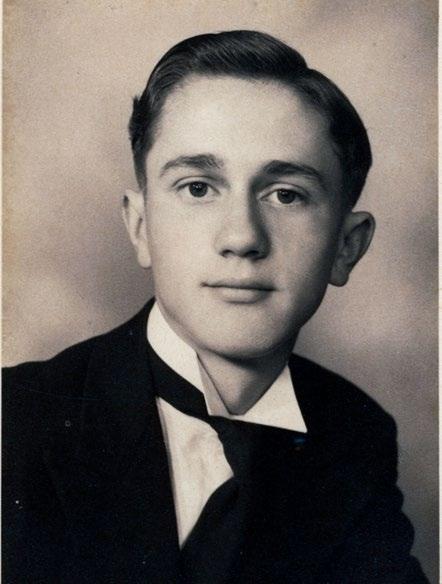
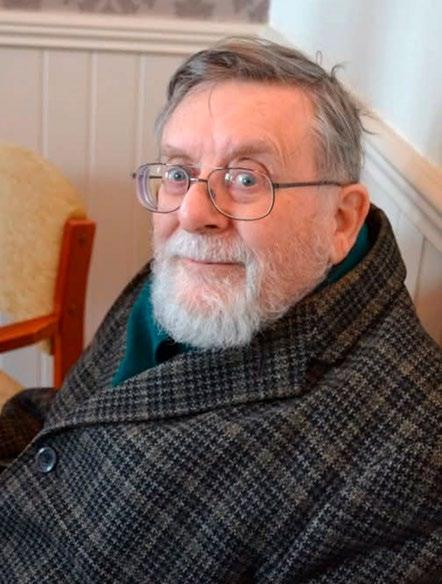
Top: David Moor
Bottom: David Woodrow
John Turner
(MO 1953-58)
John ‘Johnny’ Alworth Turner died on 10 November 2025, aged 86. His contemporary and close friend Diarmid Williams (SH 1953-58) sent this tribute.
Johnny was an outstanding scholar, elite sportsman, and very popular leader at King’s. He was Head of House and Captain of Rugby, Squash, Athletics and Tennis. He never forgot the debt he owed to his legendary Headmaster, Canon “Fred” Shirley, whom he believed touched every field of education and gave every pupil under his care the opportunity to develop their many gifts through his visionary leadership and enlightenment.
Johnny graduated in 1961 from St Edmund Hall, Oxford, where he played in the Blues Rugby squad in his first year, until a serious injury put paid to any hopes of gaining a Blue. He later
became Secretary of the Oxford Greyhounds. He worked with Bowaters and then Selection Trust in London, maintaining close contact with his many King’s friends and professional connections. In 1964 he married his beloved Helen at his home church in Puttenham, near Guildford.
The couple subsequently lived in Sierra Leone and Ghana in West Africa, while Johnny was working with Selection Trust. They later returned to England and settled in Prince of Wales Drive, Battersea, and subsequently bought a house in Guildford. Their daughters, Annalisa and Rebecca, were born, completing the happy family circle.
Particularly interesting and successful employment with McKinsey & Company followed, taking Johnny to Ireland and throughout Europe, often with the family.
The family later moved to Montreal, Canada, for several years, where Johnny worked in the banking sector, returning to the country of his birth, having been born in Toronto. His work eventually brought them to Sydney, Australia. The family decided to remain in Australia, basing themselves in Sydney while the girls attended school, and later enjoying a country property at Mangrove Mountain.
They then settled in the idyllic Blue Mountains upon Johnny’s retirement, where he maintained a lively interest in politics and world affairs and enjoyed family life, cooking, gardening, and his enduring passion for golf.
In 2020, Johnny and his adored wife moved to Coffs Harbour in northern New South Wales, to be nearer daughter Rebecca. Sadly, in late 2023 Johnny was diagnosed with cancer. Nevertheless, he continued playing golf and enjoying life until he died in the family home, surrounded by his beloved family and dog, Rusty.
Deepest sympathy goes out from all associated with King’s to Helen and their daughters on the loss of their beloved Johnny.
Left: John Turner
Anthony Austin
(GR 1955-59)
Anthony James Kirkpatrick Austin died on 7 October 2025, aged 85. His family sent this tribute.
Anthony was born, as the Battle of Britain was raging overhead, on 24 September 1940. His post-war life and schooling started in what was then India, which he always regarded as his first and dearest home. His father’s job as colonial architect then took him to Nairobi where school gave him his love of Latin. Secondary school started disastrously after the family spent a year in Cambridge and then were posted to Sarawak, leaving Anthony at a school which he found repressive and uncaring. His move to King’s was transformational. He loved every minute of his time there and the many inspirational teachers and fellow pupils he met gave him a lifelong passion for music, theatre and beautiful things, as well as strong and lasting friendships. Despite the inevitable tension with contemporaries caused by being pushed as a new boy into the leading role of a remarkable production of Romeo and Juliet, and the next year, Orsino in Twelfth Night, King’s became family and home to him. As soon as he started work in London, he became guardian to his three younger brothers, two of whom were at King’s, since his parents remained in Malaysia. They remember his generous and imaginative programme of Christmas celebrations, outings, theatres and visits, with immense gratitude.
After a false start in banking, he was lucky enough to get a post at the BBC, where he worked for 30 years. His King’s background stood him in good stead, and he progressed through various roles in production, presentation, and finally administration. It was a career rich in friendships
and immersed in performance and the arts. Essentially an enabler and facilitator, he none the less reluctantly found himself starring in a production of Ivor Novello’s The Dancing Years in Drury Lane, produced by the BBC amateur dramatics group, in reality a highly professional and competent company!
As a presenter in TV and radio he loved announcing concerts and performances all over the Midlands and East Anglia. Moving to administration, his job took him into universities on ‘the milk round’, recruiting journalists from all over the UK and then helping initiate the BBC’s News Training Scheme. In his final role in news administration, he set up the pilot broadcasting of Parliament project. He also visited and oversaw correspondents and their office facilities all over the world, relishing their friendships and insights into world politics.
In 1988 he reorganised himself out of a job, feeling that he had given what he could to a BBC, which was beginning to need different skills, and began his second career in the NHS in Kent and Scotland. When he finally retired, he put this experience to good use as a town councillor in Shaftesbury, Dorset, managing the successful campaign to save Shaftesbury Hospital. His long membership of the advisory board of British Rail and his skill in union negotiations, developed from work with ACAS, the various BBC and, later, healthcare unions meant that his informal HR consultancy was in frequent demand. Many individuals benefited from his expert support, though he seldom charged anyone in need of help. He volunteered with the Dorset NHS trust, mentoring research students and supporting the Dorset County Hospital, which turned out to be where he died under the loving care of the exceptional team. His 57 married years were spent with his wife Juliet and recently also with his daughter Elizabeth Le Mare. His last month was immensely enriched by a visit from his brothers, all of whom now live in Canada, and by the thoughtful care of the hospital, which allowed him to be pain-free almost to the end. He never lost the belief that he could help change the world for the better.
Above: Anthony Austin in the School production of Romeo and Juliet, 1955
Chris Graham
(GR 1954-60)
Christopher Forbes Graham FRS died on 22 May 2025, aged 84. A full obituary can be found on the Company of Biologists website.
Born in drumelzier in the Tweed Valley, Scotland, Chris went to St Andrew’s School, Berkshire and joined King’s as a Milner exhibitioner. Having studied Chemistry and then Physics at O Level, he took up Biology and then Zoology in the Sixth Form. He was Head of House and Captain of School and left with a Rose exhibition to read Zoology at St Edmund Hall, Oxford.
He spent his entire career at Oxford, as undergraduate, research student, and, from 1970 to 2007, as Lecturer and then Professor in the Department of Zoology. For his DPhil degree, he worked on DNA synthesis in Xenopus under the supervision of Sir John Gurdon. Chris
then switched to studying early mammalian development, becoming one of the early pioneers during the transition of the subject from being purely descriptive to experimental and analytical. He was elected to the Royal Society in 1981, by which time his research achievements were already widely recognised internationally. He remained active in research even after retirement.
In November 1989 he returned to the Mint Yard to open the three new biology laboratories in the roof space of the Parry Hall. He commented: “The overthrow of all orthodoxy by scientists seems to depend on work carried out in wooden huts out of the way. It is a pleasure to open these new biology labs. I hope it is the most expensive ‘wooden hut’ I ever have to open.”
Chris was a distinguished embryologist and reproductive physiologist whose kindness and erudition inspired many.
Edward Davidson KC
(GL 1957-62)
Edward Alan Davidson KC died on 10 July 2025, aged 81. His friend Laurence Scott (GL 1957-61) sent this tribute.
Edward had a remarkable mind, as evidenced by his steady progression – from King’s Scholar at King’s to King’s Counsel at the Bar. Edward entered Galpin’s in the Michaelmas term of 1957 and he left King’s at Easter 1962. During that time, his main subjects were Greek and Latin, and also English and History. At King’s, he sat the school scholarship exam and was quickly appointed King’s Scholar and moved to the Upper 6th. The archives show he gave papers to a number of the school’s societies on subjects as varied as logical positivism and Athenian democracy. In December 1961 he was awarded an open exhibition at Gonville & Caius College, Cambridge to study law: he graduated with first class honours.
Edward had determined on a career at the Chancery bar; and after his pupillage he practised
Left: Chris graham
from chambers in Lincoln’s Inn. He always worked extremely hard: he mastered the facts of a case very quickly, and he then applied the law. His pleadings were clear and concise (words matter, and words certainly mattered to him), and his written opinions were erudite. He earned the respect of his colleagues; and whether in court or in chambers, the judges listened to him.
Away from Lincoln’s Inn and the courts, Edward had many varied interests: travel, wine, literature and his involvement for many years as a governor (and sometime chairman of governors) at Summer Fields; but above all, his beloved family and home in Hertfordshire. He will be sorely missed.
James Parsons
(MO 1956-62)
Michael James ‘Big Jim’ Parsons died on 22 February 2026, aged 82. His daughters sent this tribute.
Daddy was an avid sportsman at King’s and represented the school in the 1st XV for rugby and 1st VIII for rowing. He was invited to stay on for an additional year at school, which he accepted. It was during this period that rugby began its ‘golden age’ at King’s. The Headmaster Canon Shirley (aka ‘King Fred’) wrote in his school report that year “If only you could have seen him against the Tonbridge side – he was magnificent, and almost by himself master of them all – I was so proud of him.”
James was born into a farming family in Chipping Norton on 13 March 1943 and lived in Wootton, Oxfordshire for nearly 80 years. After King’s he played for Oxford RFC and
Left: Edward Davidson KC
Right: James Parsons
Northampton before winning his first England cap after only one trial match. He was introduced as one of eight debutants as a lock in the 1968 Five Nations Championship against Wales at Twickenham. Speaking to the Oxford Times in 2012, he said “It was a big deal. Wales were a very good team and had far better players than we did. It was the most amazing thing ever, trotting out at Twickenham in front of 70,000 people.”
His rugby career ended when he suffered a knee injury playing sevens, after which he studied at Moulton agricultural college and returned home to focus fully on Dornford, a 500 acre mixed farm outside Woodstock.
Daddy enjoyed his time at school and in his letters home during the first term he mentions tuck, fagging, his bed (which was “just long enough”) and the food, which was “adequate” but in short supply!
Howard Carter (MO 1956-61) shared fond memories of how they learnt to row together in a pair, and they shared a study in Meister Omers. He also recalled how sometimes, at the end of a long day (most days included two hours of rowing), the school supper was just not enough to satisfy their appetites, so they would sneak out for omelette and chips in a local restaurant! John Norwood (WL 1960-64) remembers his coach saying he was the only schoolboy he had ever known to break an oar during training on the River Stour.
James Foster
(MO 1963-68)
James Michael Gerard Foster died on 27 December 2025, aged 76. His brother Nigel (MO 1965-70) sent this tribute.
James was born in Cambridge and spent his childhood in Kenya where his father, a doctor, led the medical campaign against the polio epidemic. At King’s he became Head of Meister Omers and Vice-Captain of School. A keen sportsman, he played for the school hockey team. On leaving King’s he was awarded the Crawford Exhibition to read Medicine at St. Bartholomew’s Hospital, University of London, graduating in 1974.
After initially specialising in anaesthesia his interests progressively morphed towards pain medicine where the discovery of endorphins and research into pain memory were revolutionising patient treatment possibilities.
Daddy was a much loved father to three daughters Gemma, Lottie and Alice, and a proud grandfather to seven grandchildren.
His daughters Alice and Lottie said: “He was our hero really. The kindest and most genuine father anyone could have wished for. Larger than life in both stature and spirit, he was our rock — always calm, reliable, and happy to see you, no matter how many difficulties he faced in his own life.” His eldest daughter Gemma added: “He was a witty, charming and kind man who will be deeply missed by all.”
In 1984, whilst King’s Fund Travelling Fellow at Sir Charles Gairdner Hospital in Western Australia, he developed a lifelong interest in the technique of spinal cord stimulation. Appointed Consultant in Anaesthesia and Pain Medicine at St Bartholomew’s and St. Mark’s Hospitals in 1985, he founded and developed their Pain Clinic, running this service single handedly for many years. In 1986 he was appointed Visiting Consultant to St. Joseph’s Hospice, London where he introduced new palliative care methods to relieve acute pain. He was subsequently (1994) appointed Honorary Senior Lecturer to the College of St. Bartholomew’s Hospital.
A keen golfer, he captained the OKS teams in both Halford Hewitt (2000-02) and Cyril Gray (2007-11) tournaments. In the Hewitt with his brother Nigel he took some notable scalps which were reported in the national press. He also won the Arnold Scratch Cup (2001). James is survived by his wife Felicity, sons Charles and Simon, and granddaughter Isabella.
Above: James Foster
Andrew Dorward
(LX 1969-74)
Andrew died on 27 December 2024, aged 68. His family sent this tribute.
Andrew was born in Worthing in 1956 while his parents were home on leave from Malawi. Travelling was a significant part of Andrew’s life from an early age, going from boarding schools in the UK, to visit his parents in Malawi and later Eswatini. These trips were often with his brothers John (LX 1966-70) and Peter.
and health, became more influential. Sadly, Wye College closed in the 2000s, and Andrew helped navigate moving the team to Imperial College (where he became a Professor in Development Economics) and then to SOAS in London.
Andrew was both a do-er and a thinker, he combined these with his love of the outdoors and a desire to contribute to society by studying Agricultural Science at Queen’s College, Oxford. While Andrew came from a Christian family, he credits his time in Oxford as when his personal faith developed. This formed a cornerstone of the rest of his life.
His first job was a three-year fellowship in northern Malawi evaluating the impact of an agricultural development project on smallscale farmers. This was a formative experience on which he based his PhD and he carried this interest for the rest of his working life. He returned to the UK to do Biblical studies at All Nations Christian College, where there was a prophetic sign on the notice board stating, ‘Marriage is made in Heaven, and Bible College is the dating agency”. Sure enough, he soon met a beautiful Malaysian Chinese lady, and he and Sam Ling married in 1982.
The early years of their marriage were spent in the UK, Ethiopia and a particularly happy, five years returning to Eswatini, where they brought up their two boys, Jienchi and Leejiah, while Andrew taught at Mananga Agricultural Management Centre. In 1993 they settled in Kent, where Andrew worked at Wye College. Andrew’s career found its stride, and he became part of a close team that worked together for the next 20 years. He taught students from around the world, and his research into small-scale farmers, and his thinking around climate change, agriculture,
Above: Andrew Dorward
Andrew was globally recognised for his scholarship in agricultural development economics, particularly relating to smallholder agriculture, institutional economics and rural livelihoods. He was especially well known for his work on input subsidies and other agricultural policy interventions in Malawi. Andrew was also a pioneer in defining the research space linking agriculture, nutrition and health. He was a core part of the London-based team that became the Leverhulme Centre for Integrative Research on Agriculture and Health (LCIRAH). His colleagues and students remember him as a wise, generous, humorous, hard-working and supportive colleague and mentor.
A huge moment in Andrew’s life took place in late 2014, when he suffered a stroke that left him in a deep coma. Initially, it was thought that he would not survive, but somehow, very gradually, he showed small signs of improvement, giving hope for recovery. It is a testament to Sam Ling and Andrew’s faith, love, and commitment that Andrew was able to come home from hospital after one year, with another three and a half very tough years of rehabilitation, until the last carer left the house. The stroke had left him with a loss of physical abilities, and especially in the initial difficult years, mental capabilities. However, so many aspects of Andrew’s personality still shone through, and he remained up for taking on challenges and managed to regularly beat family at board games, go fly fishing (sometimes successfully), travel for family holidays to Singapore and India, and organise Sam Ling’s surprise 70th birthday party!
He lived a full life, even after his stroke, and will be sorely missed.
Mark Burges Watson
(GR 1980-85)
Mark Eagleson Burges Watson, known as “Burge”, died on 12 January 2026, aged 58 after a courageous battle with cancer. His brother, Tom (GR 1990-95) sent this tribute.
Mark’s time at King’s was marked by energy, curiosity and a sense of adventure. He retained fond memories of his Canterbury days, including the occasional after-hours exploration of the Cathedral and an acquaintance with parts of the building not usually seen by visitors. It was at King’s that Mark also developed a passion for history – particularly military history – on which he was exceptionally well read.
After leaving King’s, Mark spent a year at the University of Pavia before going up to Cambridge. He began his career in the City, though his working life also took him to Geneva, Tokyo and Hong Kong. In the early 2000s he
took an entrepreneurial turn, co-founding Japaninvest, a stockbroking firm which became the first European company to achieve a primary listing on the Tokyo Stock Exchange.
More recently, after completing an MBA at Oxford’s Saïd Business School, Mark founded Kaldi, a fintech app linking everyday spending with investing, inspired by his desire to help younger people start saving early.
Despite an international career, Mark remained close to many friends from King’s, and his funeral in Devon in February was attended by several of them.
In the final months of his life Mark established a charitable foundation, Burge’s Meadows, which aims to create 1,000 acres of wildflower meadow by 2035, reflecting his love of the countryside.
Mark was deeply grateful for the opportunities he had. “Whilst my life was relatively short, it was very full”, he wrote in a parting valete. He particularly loved his years in Italy, Japan and England. But his family was his greatest love. He is survived by his wife Fiona and their children, William, Edward and Louisa.
• For more on Burge’s Meadows please visit: burgesmeadows.org
Reverend David Eve (LN 1959-64) 8 December 2025 in MEMOriAM
Left: Mark Burges Watson
Join the King’s Association Community Online
Wherever you are in the world, the King’s Association website is your gateway to a vibrant global network of OKS, parents, and staff. It offers opportunities to reconnect, expand your network, and stay involved wherever life takes you.
Since its launch, the platform has brought together more than 2,700 members, creating a hub for information, events, and community. Many OKS have also used the website to reconnect with lost friends, seek career advice, and share their own news.
Be part of it – join today and register your account.
www.kings-association.co.uk
Sport
Celebrating tradition and the future at the Boat Club Dinner
The Boat Club Dinner took place on Saturday 17 January 2026 and once more a strong contingent of OKS joined pupils, parents and staff for an evening celebrating rowing at King’s.
To begin the evening, a special naming ceremony was held for the new boats recently acquired by the Club, made possible by the generosity of our community and the success of the recent Boat Club Fleet Appeal. It was a pleasure to have so many of our donors in the room to celebrate this significant milestone. We were especially pleased to welcome Chris Culverhouse-Hall (WL 1985-90) and his wife, Katie, as our guests of honour.
This year, we were honoured to welcome Vicky
Spencer (MT 1992-94) as our keynote speaker. She shared invaluable insights into her role as Olympic Transition Coach for U19-U23 with GB Rowing and inspired our pupils with the potential the sport offers for their future. Every year, it is clear that the Boat Club is not simply an extracurricular activity, but a defining chapter of School life. With such commitment, spirit and fellowship at its heart, the future of the King’s Boat Club looks every bit as strong as its storied past.
King’s, in collaboration with the Pilgrims Boat Club, will return to Henley for the annual HEnLEY rEgATTA LUnCH on Wednesday 1 July 2026. All OKS are welcome to join, and limited tickets for the Stewards Enclosure are available for a small donation. Visit the event page of our website for more details kings-association.co.uk
Annual OKS Rugby Match
On saturday 6 December 2025, the annual OKS v. OKS rugby match took place at Birley’s, bringing together old friends and familiar faces. The ‘maroons’ and the ‘blues’, named for their shirt colours, battled for the OKS title in a game played with great energy and good humour. From the sidelines, a mix of current pupils, former staff and parents were there to cheer them on. After match tea and refreshments, our OKS players watched the 1st XV match, rounding off the day with an enjoyable festival of rugby.
Photos, clockwise from top left: OKS at the Boat Club Dinner; sailing dinghys; OKS sailors are presented with a King’s burgee; OKS rugby players
OKS v. King’s Sailing Race at Westbere
GET INVOLVED
To find out more about OKS sailing – including involvement in the Round the Island Race and the Arrow Trophy – visit the Sailing Club page on kings-association.co.uk
There, you can catch up on the latest news, contact fellow members, and learn how to get involved.
Brian Mumford, Head of Sailing at King’s, reports on the inaugural OKS v. King’s Sailing Race.
King’s sailing hosted the inaugural OKS v. King’s Sailing Race at Westbere on Sunday 22 March 2026. In a moderate chilly breeze, the OKS raced against 3 pupil teams from King’s: King’s Blue, King’s Silver and King’s Gold. 12 races took place in a round robin format with each team racing against all other teams twice.
Although the OKS were vastly more experienced, the King’s Sailors kept them honest, with King’s Blue and King’s Gold just missing out on a win
each against the OKS; a couple of quick tactical decisions making the difference.
Ultimately the OKS took the inaugural OKS Cup with a tie for 2nd between King’s Blue & King’s Gold and King’s Silver in 4th. At the prizegiving, Sailing Captains Daniel Dittrich (Galpin’s House) and Athena Cox (Walpole House) presented the OKS team with the OKS Cup and The King’s Sailing Burgee.
A thoroughly enjoyable day for all taking part, with everyone looking forward to the next headto-head in 2027.