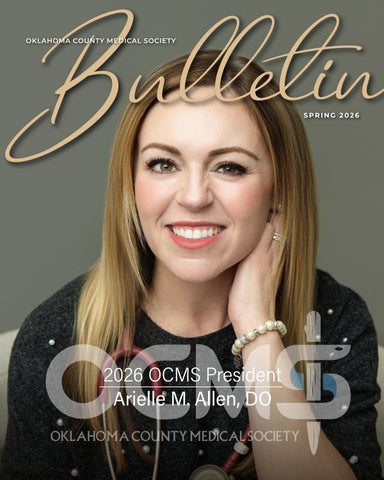
Bulletin OKLAHOMA COUNTY MEDICAL SOCIETY
SPRING 2026
Your Finances Deserve Specialized Care, Not General Practice. Comprehensive wealth, trust, and estate strategies from Oklahoma’s leading independent fiduciary. Your financial complexity requires our focused expertise.
405.840.8401 trustok.com
Spring 2026 | The Bulletin 1
2 The Bulletin | Spring 2026
Forever real estate in Nichols Hills
Sanctuary is a private enclave of 14 single-family homes of exceptional quality that adjoin the 65-acre Grand Boulevard Park in Nichols Hills. The development is adjacent to Nichols Hills Plaza as well as many multi-million-dollar homes along Grand Boulevard. Homes in the development will have a timeless architectural character using cast stone, plaster, and natural stone masonry. All homes overlook a gracious fountain and have generous outdoor living spaces, abundant glass, magical lighting, and lush landscaping that is maintained by the homeowners association. Sanctuary occupies what is widely regarded as the last and best site in Nichols Hills, within easy walking distance of parks, offices, and restaurants in Nichols Hills Plaza. Homes range in size from 3,300 SF to 4,900 SF. All homes will be constructed concurrently, with the full enclave scheduled for completion within the next 36 months. Spring 2026 | The Bulletin 3 For more information contact Sanctuary Partners at charlie@sanctuary-nh.com
Bulletin Spring 2026
Volume 99
Number 1
Four Annual Publications
TABLE OF CONTENTS Thank You To Our Sponsors & Advertisers....................6 President’s Page...................................................................8 Our New President...........................................................10 2025 Rhinehart Award Winner......................................11 2026 Inaugural Celebration.............................................12 Physicians Leadership Academy.....................................16 Director’s Dialogue...........................................................18 Law & Medicine/AI Scribes.............................................19 On Kindness & Cruelty....................................................22 Law & Medicine/Marijuana Rescheduling...................24 Laugh With Me.................................................................28
EXECUTIVE OFFICE Alison Williams . . . . . . . . . . . . . . . . . Executive Director Rebecca Carr . . . . . . . . . . . . . . . . . . . Associate Director
EDITORIAL BOARD Hanna A. Saadah, MD Editor S.S. Sanbar, MD, PhD, JD Assistant Editor Anureet K. Bajaj, MD H. T. Kurkjian, MD Christopher Jordan, MD Jennifer Morris, MD Betsy M. Nolan, MD Tomás P. Owens, MD Janet G. Rodgers, MD Chittur A. Sivaram, MD Michael D. Taylor, MD William P. Truels, MD Elizabeth A. Wickersham, MD 4 The Bulletin | Spring 2026
313 Northeast 50th Street, Suite 2 Oklahoma City, OK 73105-1830 phone: 405-702-0500 fax: 405-702-0501 email: ocms@okcountymed.org
www.okcountymed.org OFFICERS
Arielle M. Allen, DO . . . . . . . . . . . . . . . . . . . President
Pooja Singhal, MD . . . . . . . . . . . . . . . . . President-Elect David Korber, MD . . . . . . . . . . . . . . . . . . . Vice President Irim Yasin, MD . . . . . . . . . . . . . . . . . Secretary-Treasurer
Bradley J. Margo, MD . . . . . . . Immediate Past President
BOARD OF DIRECTORS Tauseef Ali, MD Alisa Cross, MD Samid Farooqui, MD Betsy Jett, MD Amanda Levine, MD Robert Leonard, MD Adam McConnell, MD Ryan Morgan, DO Anil Patel, MD Nicole Sharp Cottrell, MD Nigam Sheth, MD Mark Shreve, MD Mitchell West, MD
BOARD OF CENSORS R. Kevin Moore, MD
Lisa J. Wasemiller-Smith, MD Basel S. Hassoun, MD
Ashley Weedn, MD . . . . . . . . . . . . . .
OSMA Trustee
Ian F. Dunn, MD, FACS, FAANS . . . Executive Dean University of Oklahoma College of Medicine
Ideas and opinions expressed in editorials and feature articles are those of the authors and do not necessarily express the official opinion of the Oklahoma County Medical Society.
405.627.8625
EdmondKitchen.com
Remodel Design/Build • New Construction Interior Design • Tailored Custom Cabinets
Spring 2026 | The Bulletin 5
THANK YOU TO OUR 2026 SPONSORS!
GOLD
Our Blood Institute
BRONZE
INTEGRIS Health McBride Orthopedic Hospital Oklahoma Financial Center OU Medicine PLICO Quail Creek Bank
THANK YOU TO OUR ADVERTISERS! First Liberty Bank EKB Home Modhi Gude, MD
6 The Bulletin | Spring 2026
INTEGRIS Hospice Metro Physicians Sanctuary
Soulbird Stetson Bentley Real Estate Trust Co. of Oklahoma
DEBIT CARD CONTROLS BILL PAY
MOBILE DEPOSIT
Your Your MONEY SCHEDULE A LW AY S AVA I L A B L E 2 4 / 7
12201 N. May Avenue
•
OKC
•
quailcreek.bank
•
405.755.1000
•
Member FDIC| The• Bulletin 7 Spring 2026
From the President
HELLO
Arielle Allen, do
Drs. Arielle Allen and Steven Sands with their children Sutton and Ainsley
to all of you Oklahoma County physicians!
As this is my first President’s column to write, let me introduce myself a little. I am a fellowship-trained urogynecologist and I own my own solo practice near Lakeside Women’s Hospital. What a scary crazy decision it was to start my own practice, but I’ll tell you I am four years into it now and haven’t looked back. With all of its ups and downs, I remain proud to say my practice is my own. It’s hard as heck to own your own business, not to mention a medical practice, as I’m sure all of you private practitioners know. Times are tough and they keep getting tougher. Prior to being in private practice, I was an employed physician for several years. That also had its ups and downs, of course. But the point of me bringing this up is that I do have experience in both arenas – employed and private – and despite where our paychecks come from, I’d like to emphasize that we all have struggles, as physicians. It’s not easy 8 The Bulletin | Spring 2026
being a physician. We all work really hard to care for patients every day. We all have hoops to jump through. We all have struggles. And I understand this, just as you all do. I hope to, as president this year, help with providing a place for physicians to connect and for physicians to feel as if they have a say. That is the purpose of organizations such as this one, to get physicians together from all specialties, private and employed, early in their careers (or not so early), so we can be together, talk to each other, and see that we’re not alone in our day-to-day ups and downs.
ideas, your suggestions for improving physicians’ quality of life. What can I do to help make your day-to-day struggles just a bit easier? If it is just an empathetic ear to listen to whatever craziness you dealt with today, or an idea for a new resolution you feel strongly about, we are here for you. Let’s keep OCMS as an organization where physicians feel heard, where physicians feel unity, where we are not alone. Physicians supporting physicians is what we are all about. Thank you for your attention. I appreciate you taking the time to read this. Have a great day and continue to be the amazing physician that you are!
It’s good for our mental well-being to not feel so alone in the struggle; to know we aren’t the only ones dealing with things such as insurance denials, patient complaints, or not-so-perfect surgical outcomes. I’d like to think that OCMS can and should be a safe place where physicians can feel that kind of camaraderie, and feel like they are not alone. I’d like to think that if we as physicians were more unified, there might be less depression amongst our colleagues, less anxiety, less burn-out, less suicide … I don’t know if that is true, but I’d like to think it is. Therefore, I’d like to implore you to bring me your Spring 2026 | The Bulletin 9
2026 DR. OWENS NAMED RHINEHART AWARD RECIPIENT Tomás P. Owens, Jr., MD, has been honored with the prestigious Rhinehart Award, recognizing his extraordinary contributions to family and geriatric medicine. Born in Panamá as the eldest of five children to the late Drs. Thomas and Cris Owens—pioneers in family medicine and neonatology in Panamá—Dr. Owens has carried forward a legacy of service, education, and leadership. A top student at both Colegio Javier (1979) and the Universidad de Panamá Facultad de Medicina (1986), Dr. Owens began his medical career in rural Santiago de Veraguas, serving as Chief of Interns before moving to the United States for residency training at the University of Oklahoma Health Sciences Center, where he earned multiple awards for teaching and leadership. He completed a fellowship in Geriatric Medicine at the Mayo Clinic, later joining OUHSC as founding faculty of the Department of Geriatric Medicine and serving in dual appointments in family and internal medicine. Dr. Owens has been instrumental in shaping residency training as founding faculty of the INTEGRIS Health Great Plains Family Medicine Residency Program, where he has directed the program since 2018 and leads resident geriatric care at Epworth Villa. He has also contributed extensively 10 The Bulletin | Spring 2026
as a preceptor and attending physician, volunteering thousands of hours in teaching and patient care. Throughout his career, Dr. Owens has held numerous leadership roles, including past president of the Oklahoma County Medical Society, Oklahoma Academy of Family Physicians, and INTEGRIS Health Baptist Medical Center, where he currently serves on the Leadership Council. His expertise spans family medicine, geriatrics, sports medicine, adolescent medicine, hospice and palliative care, and long-term care—the most board certifications held by any American physician. Beyond medicine, Dr. Owens has actively supported community initiatives, including the Integris Latino Initiative, the Oklahoma Blood Institute, and the Independent Transportation Network-Central Oklahoma. He maintains strong ties to Panamá as a visiting professor and advisor to the Ministry of Health. Dr. Owens and his wife, Tammy Owens, RN, are proud parents of Thomas, a sports medicine physician, and Emily, an economist. He cherishes time with his two grandchildren, enjoys history, travel, and has recently embraced golf. His career exemplifies the impact of dedicated service, education, and leadership in medicine, making him a worthy recipient of the Rhinehart Award.
Rhinehart Award Dr. Tomas Owens receiving the 2026 Rhinehart Award from Dr. Matthew Jared.
Spring 2026 | The Bulletin 11
2026 Inaugural Celebration
T
he annual Inaugural Celebration was held in February at the Oklahoma City Golf & Country Club, featuring AMA President Dr. Bobby Mukkamala. Dr. Arielle Allen (Urogynecology of Oklahoma) was inaugurated as the 2026 President of the Oklahoma County Medical Society’s Board of Directors. Bradley J. Margo, MD (McBride Orthopedic Hospital), the 2025 President, passed the gavel to Allen during the black-tie gathering.
Hakeem Shakir, MD; Ahmed Aziz, MD
Other officers include Pooja Singhal, MD (Oklahoma Gastro Health and Wellness), President Elect; David Korber, MD (Korber Eyecare), Vice President; Irim Yasin, MD (INTEGRIS Health Cancer Institute), Secretary/Treasurer. Board Members for 2026 will include Tauseef Ali, MD (SSM Health Digestive Care); Alisa Cross, MD (OU Health Surgical Critical Care); Samid Farooqui, MD (SSM Health Pulmonary Disease); Betsy Jett, MD (SSM Health Breast Care Diagnostic Radiology); Amanda Levine, MD (Mercy Clinic Edmond I-35 OB/GYN); Robert Leonard, MD (Retinal Associates of Oklahoma); Adam McConnell, MD (SSM Health Medical Group); Ryan Morgan, DO (VITALIS Metabolic Health); Anil Patel, MD (Dean McGee Eye Institute); Nicole Sharp Cottrell, MD (INTREGRIS Health Edmond Hospital); Nigam Sheth, MD (Oklahoma Anesthesia Professionals); Mark Shreve, MD (McBride Orthopedic Hospital); and Mitchell West, MD (INTEGRIS Health Medical Group). 12 The Bulletin | Spring 2026
Dr. Tomas Owens and family
Barbara & Mason Jett, MD
Metro Physicians - Bobby Verma, MD; Geetika Verma, MD; Julie Mahaney, MD; Matthew Jared, MD; Brindha Gopala-Krishnan, MD; Luze Tono, MD; Katie Jared
Unexpectedly better urgent care. Welcome to the exclusive concierge care approach that’s more personalized for true ease and convenience. Now opening locations throughout the metro.
Dr. Arielle Allen, receiving the presidential gavel from Dr. Bradley Margo You’re good to go. allseturgentcare.org
Modhi Gude, MD, MRCP, FACP, FACE (Former Clinical Professor of Medicine, OUHSC) 3/29/2024 11:46:24 AM AllSet-Bulletin_Ad-3.5x4.5.indd 1
Access Endocrine, Diabetes & Thyroid Center (Where Molecular Endocrinology is applied and practiced clinically)
Locations:
North
6001 NW 120th Court, Suite 6 Oklahoma City, OK 73162 Phone: 405-728-7329
South
1552 SW 44th Street Oklahoma City, OK 73119 Phone: 405-681-1100
New Patients: Referrals are welcome, by appointment only Comprehensive Diabetes Care | Obesity, Metabolic and Insulin Resistance Syndromes Hypoglycemic Syndromes notably Post-Bariatric Surgery and Insulinomas Thyroid Disorders, mostly Graves’ Disease, Hashimoto’s Disease, Thyroid Cancer and Thyroid Hormone Resistance Syndromes UG Guided FNA Biopsies of Thyroid Nodules Pituitary Diseases, notably Incidentalomas, Growth Hormone Deficiency and Hypopituitarism Adrenal Incidentalomas | Addison’s Disease and Cushing Disease Hypercalcemia notably Hyperparathyroidism | Osteoporosis Primary Aldosteronism | Hypogodanism Rare Endocrine Disorders such as Pituitary Tumors MEN1, MEN2, Acromegaly
Drs. Son & Thy Nguyen with their son and med student Sang Nguyen
Open Monday-Friday 8:30 AM-5:30 PM Spring 2026 | The Bulletin 13
2026 Inaugural Celebration
Above: Drs. Abhay Vaidya, Bobby Kukkamala, Sumit Nanda and Sumeeta Nanda Right: Drs. Pooja Singhal; Chittur Sivaram; Shruti Mony; Tauseef Ali; Nigam Sheth
14 The Bulletin | Spring 2026
Dr. Bobby Mukkamala, AMA President
Above: OCMS Board members with OSMA and AMA Presidents Drs. Shreve, Korber, Margo, Nanda, Mukkamala, Allen, Jett, Singhal & Sheth
Left: Lisa Korber, PharmD; David Korber, MD
Dr. Bradley Margo receiving his presidential plaque from Dr. Matthew Jared.
PROVIDER PREFFERED CHECKING
Earn % up to 3.82
*
APY
WITH OUR HIGH-YIELD CHECKING ACCOUNT
NO WAITING ROOM
required!
OPEN YOUR ACCOUNT TODAY!
JAMIE VAFADAR NMLS# 799925
JVAFADAR@MYFIRSTLIBERTY.COM
myfirstliberty.com
1 - Annual Percentage Yields (APYs) are accurate as of February 1, 2026. Interest rates and APYs are subject to change. **Account offered exclusively to MD, DO, DDS, DMD, OD, DPM, DC, NP, APRN, PA, DVM, PharmD & RPh professionals. Interest compounds daily and is credited monthly. Minimum balance of $1,000.00 to open the account and to earn the stated Annual Percentage Yield for the $1,000 to $49,999.00 tier. One (1) Provider Preferred Checking account per household. Terms apply. Qualification: At least 1 ACH direct deposit, First Liberty Bank Debit Card & be enrolled in estatements. Fees could reduce the earnings on the account. See our separate fee schedule for details. Member FDIC. 2 - Wireless carrier data rates may apply. 3 - Paid Item Fees and Return Item Fees apply to items created by check, in-person withdrawals, and electronic means. Inadvertent overdrafts caused by ATM and one-time debit card transactions are excluded.
Spring 2026 | The Bulletin 15
Physicians Leadership Academy
Class
XV
16 The Bulletin | Spring 2026
Physicians from OCMS Physicians Leadership Academy Class XV. Pictured are Drs. Bushra Siddique, Aisha Mohammed, Sharon D’Souza, Swapna Deshpande, Shruti Mony, Alisha Soloman, Ronni Farris, Jessica Enix, Laure DeMattia, and Ahmed Aziz.
Spring 2026 | The Bulletin 17
BULLETIN
Alison Williams
DIRECTOR’S DIALOGUE
A
s we look ahead through 2026, I’m proud of the momentum within the Oklahoma County Medical Society. Our Board has been intentional in leading the way to expand engagement opportunities for members, with a renewed focus on meaningful connection, practical education, and strengthening our physician community. This spring, we are offering several events created with members’ needs and interests in mind. I encourage you to attend the programs that resonate with you. To register, scan the included QR code.
Lieutenant Governor Candidate Q&A Forum March 11 | 6 p.m. This forum provides OCMS physicians the opportunity to hear directly from candidates for Lieutenant Governor and ask questions in a professional setting. This event is strictly educational; OCMS does not lobby and is not engaging in advocacy through this program. Participation is limited to members, and nonmembers are welcome to join OCMS to attend. Retired Physician Roundtable March 31 | 11:30 a.m. Retired physicians remain a vital part of the medical community. Hosted by Dr. Steven Crawford and Dr. Ervin Yen, this luncheon offers an opportunity to stay informed about OCMS initiatives and issues relevant to retired physicians. It is free for all OCMS members who are retired, semiretired, life, or active.
18 The Bulletin | Spring 2026
Women in Medicine: An Evening of Connection April 23 | 6:30 p.m. This event provides a welcoming, informal space for women physicians to connect across specialties. With no formal program, the evening centers on conversation, shared experience, and strengthening the network of women in medicine in Oklahoma County. Open to any physician. The Shielded Physician: Smart Structuring for Assets, Practice, and Liability April 30 | 6 p.m. | Virtual Roundtable Physicians face uniquely complex financial and legal challenges. This session will explore malpractice exposure, smart asset structuring, riskmanagement strategies, insurance considerations, and best practices for financial statements. The goal is to offer clear, actionable insights to help protect both personal and professional assets. The Oklahoma County Medical Society remains committed to supporting physicians, promoting excellence in medicine, and advancing the health of our community. I hope to see you at one or more of these upcoming events! Scan the QR code to register.
AI-Powered “Ambient Scribes” Reduce Burnout Compiled by S. Sandy Sanbar, MD, PhD, JD, FCLM, DABLM
T
he burden of documentation has long been recognized as one of the most significant contributors to physician burnout. Electronic health records (EHRs) are essential for modern healthcare, but they often demand hours of after-clinic work, leading to exhaustion and reduced job satisfaction. In November 2025, the New England Journal of Medicine Artificial Intelligence (NEJM AI) published two evidence-based medicine (EBM) articles examining ambient voice recording technologies. These studies provided rigorous data on how AI-driven ambient scribes, such as Microsoft Dragon Ambient eXperience (DAX) Copilot and Nabla, are reshaping clinical workflows, saving time, and restoring joy in medicine.
Ambient Voice Recording by an AI Scribe Ambient voice recording refers to AI systems that passively listen to physician-patient encounters, transcribe the conversation, and generate structured clinical notes. By capturing patient-doctor conversations, the ambient AI scribe generates draft notes and allows clinicians to focus more on care rather than paperwork. Unlike traditional dictation or manual *With gratitude for the help of Microsoft Copilot.
typing, these systems operate in the background, producing draft documentation that physicians can quickly review and approve before integration into the EHR. • The transcription of patient encounters is in Real-time. • At the end of every encounter, automatic structuring is made into SOAP notes or specialty-specific formats, for review and editing by the physician. • Once approved, the note is integrated with EHRs for seamless workflow. • Importantly, physician oversight ensures accuracy and accountability. In November 2025, two NEJM AI studies were randomized controlled trials involving hundreds of physicians across multiple specialties. Study 1 (UCLA Health, 238 physicians): Compared two AI scribe applications (DAX Copilot and Nabla) against usual care. Results showed a significant reduction in documentation time, with physicians spending less time on notes and reporting improved well-being. Burnout scores, measured by validated instruments like the Mini-Z 2.0 and Professional Fulfillment Index, improved notably. Continues on page 20 … Spring 2026 | The Bulletin 19
LAW & MEDICINE Continued from page 19… Study 2 (UW Health & Mass General Brigham collaboration): Focused on long-term adoption and workflow integration. Physicians reported greater patient engagement, more eye contact, sharper follow-up questions, and less distraction during visits. The study emphasized that ambient AI scribes not only save time but also enhance the quality of patient interactions, a critical dimension of care. These two articles provide some of the most comprehensive EBM evidence to date, confirming that ambient documentation technologies are not just promising innovations but practical solutions for clinical practice. Time savings are the most immediate benefit: • Reduced after-hours work: Physicians often spend “pajama time” completing notes late at night. Ambient scribes cut this burden dramatically. • Streamlined workflows: Draft notes are ready for review immediately after the encounter, reducing duplication of effort. • Cross-specialty efficiency: Trials included 14 specialties, from primary care to cardiology, showing broad applicability. Quantitatively, studies reported minutes saved per encounter, which scale to hours saved per week. This reclaimed time can be redirected toward patient care, teaching, or personal well-being. Burnout among physicians is a crisis, with nearly half reporting symptoms in recent surveys. Ambient voice recording addresses several root causes: 1. Lower cognitive load: Physicians no longer juggle typing, listening, and thinking simultaneously. 2. Improved work-life balance: Less after-hours documentation means more time for family and rest. 3. Restored patient connection: Freed from the keyboard, physicians can maintain eye contact and engage more meaningfully. 4. Professional fulfillment: Studies noted improvements in scores measuring joy in medicine and reduced exhaustion. 20 The Bulletin | Spring 2026
By tackling both the time burden and the emotional strain of documentation, ambient AI scribes represent a dual intervention against burnout. There are Challenges and Limitations including: 1. Accuracy concerns: Occasional clinically significant inaccuracies were noted. Physicians must remain vigilant in reviewing drafts. 2. Privacy and consent: Patients must be comfortable with conversations being recorded and transcribed. 3. Integration hurdles: Not all EHR systems seamlessly support ambient AI tools. 4. Cost and scalability: Widespread adoption requires investment, though rapid uptake suggests strong demand. The adoption of ambient voice recording technologies signals a broader shift in healthcare: Reports suggest ambient AI scribes are among the fastest technologies to scale in healthcare, driven by necessity rather than regulation. Physicians increasingly view AI not as a threat but as a partner in reducing administrative burden. By restoring focus to the patient, ambient documentation aligns with the core mission of medicine.
Conclusion The November 2025 NEJM AI articles mark a turning point in evidence-based evaluation of ambient voice recording technologies. By rigorously demonstrating time savings, reduced burnout, and improved patient engagement, these studies validate ambient AI scribes as transformative tools in clinical practice. While challenges remain, the trajectory is clear: ambient documentation is poised to become a standard of care, reshaping how physicians interact with patients and reclaiming the joy of medicine. References 1. Shanafelt TD, Dyrbye LN, Sinsky CA, et al. Randomized evaluation of ambient artificial intelligence scribes in clinical practice. NEJM AI. 2025;2(11):Article e2400152. doi:10.1056/ NEJMai2400152
2. Patel V, Landman AB, Pfeffer MA, et al. Ambient voice recording and AI documentation in clinical encounters: A multicenter randomized controlled trial. NEJM AI. 2025;2(11):Article e2400153. doi:10.1056/NEJMai2400153 3. Sinsky C, Rule A, Cohen G, et al. Metrics for assessing physician burnout and professional fulfillment. JAMA. 2020;323(22):2133-2134. doi:10.1001/jama.2020.2224 4. Shanafelt TD, Boone S, Tan L, et al. Burnout and satisfaction with work-life balance among US physicians relative to the general US population. Arch Intern Med. 2012;172(18):13771385. doi:10.1001/archinternmed.2012.3199 5. Arndt BG, Beasley JW, Watkinson MD, et al. Tethered to the EHR: Primary care physician workload and burnout. Ann Fam Med. 2017;15(5):419-426. doi:10.1370/afm.2121 6. Downing NL, Bates DW, Longhurst CA. Physician burnout in the electronic health record era: Are we ignoring the real cause? Ann Intern Med. 2018;169(1):50-51. doi:10.7326/ M18-0139 7. Dyrbye LN, Shanafelt TD, Sinsky CA, et al. Burnout among health care professionals: A call to explore and address this underrecognized threat to safe, high-quality care. NAM Perspectives. National Academy of Medicine. 2017. doi:10.31478/201707b
About Dr. Sanbar Dr. Sanbar is an Adjunct Professor of Medical Education, University of Oklahoma Health Sciences Center; Executive Director and Past Chairman and Diplomat, American Board of Legal Medicine; and Past President and Fellow, American College of Legal Medicine. He is a health law attorney and a retired cardiologist.
Serving Physicians Since 1987 At Oklahoma Financial Center, we help physicians safeguard income and assets against malpractice, create tax-efficient strategies, build long-term wealth and retirement security, and protect their family and legacy. From just starting out to nearing retirement, we provide guidance tailored to your stage of practice.
Take the Next Step
Securities offered through Kestra Investment Services, LLC (Kestra IS), member FINRA/SIPC. Investment advisory services offered through Kestra Advisory Services, LLC (Kestra AS), an affiliate of Kestra IS. Oklahoma Financial Center and Bluespring Wealth Partners LLC are affiliates of Kestra IS and Kestra AS. Investor Disclosures: https://www.kestrafinancial.com/disclosures
Karen Cunningham, ChFC® | Shamiah Evans, CFP® 12436 St. Andrews Dr, Oklahoma City, OK 73120 (405) 302-2900 | okfin.com Spring 2026 | The Bulletin 21
OnKindness andCruelty By Hanna Saadah, MD
A fundamental attribute of good doctors is kindness. Patients respond to kindness before they respond to medications because kindness denotes genuine caring, dedication, humility, honor, respect and love. Practicing kind medicine is our cardinal duty. Speaking against cruelty is another cardinal medical duty because cruelty is antithetical to kindness.
indness has been uncommon throughout human history, whereas cruelty has been widespread. Homo sapiens’ history is, and continues to be, punctuated by violence and cruelty. We, as caring physicians, have been hearing about the incessant historical cruelties throughout our lives. Since one of our ethical duties is to speak against cruelty, how do we do it? 22 The Bulletin | Spring 2026
I think one possible answer is to teach kindness in publications, in lectures, in medical schools and in premedical years. Teaching kindness to our patients, students, colleagues, children, and society includes speaking against cruelty, which should be one of our ethical duties as caring physicians. Kindness is within everyone’s reach—to preach and to teach. Kindness is also empowering. It is very hard to subdue a spirit whose life’s keynote is kindness. Kindness purifies minds, plants good-will seeds, promotes gratitude, resists cruelty, and promotes peace. Human communities teach and insist on politeness and good manners. However, human communities neglect to teach kindness to children. Our world would become less cruel and less violent were we to teach kindness, at home, at school, in colleges and in our media. Teaching kindness should become an extension of our Human-Rights ideology. The Universal Declaration of Human Rights was approved on December 10, 1948, by the United Nations General Assembly in Paris. It was approved in the aftermath of World War II as a response to atrocities and to the Holocaust. It promulgated 30 Fundamental Rights among which was protection from torture, the demeaning deliberative use of cruelty.
tools, or heated metal rods. Out of each 100 blinded soldiers, one was left with one eye so he could lead the mutilated others back home with the message never to rebel against the Roman Empire again. After this horrific defeat and cruelty, Bulgaria became a Byzantine province for the next 150 years. As a race, our historic lack of kindness and of clemency is our shame. William Shakespeare (15641616) took a brave stand against cruelty in his play, The Merchant of Venice. More than four-hundred years ago, Shakespeare taught kindness in Portia’s speech when she pled with Shylock to show mercy rather than insist on the legal bond, which would cause Antonio’s death. Shakespeare points out that mercy is mightiest in the mightiest, that mercy is an attribute to God, and that earthly power does show like God’s when mercy seasons justice.
Mercy (The Merchant of Venice)
Homo sapiens are hardened by cruelty and softened by kindness. However, the history of our race is shamefully replete with violence and cruelty. We can all recall the violence and cruelties, which were and continue to be reported during our lifetimes. But historians tend to play down the committed cruelties of our race. However, Dr. J. M. Roberts of Oxford, a renowned history professor and author of History of The World (a book which sold a quarter-million copies), did not play down humanity’s shameful history. His report on the battle of Kleidion (which took place in1014 CE between the forces of the Roman Empire led by Emperor Basil II and the Bulgarian Empire forces of Tsar Samuel) reveals incredible cruelty. Basil II who outmaneuvered Tsar Samuel’s army, captured thousands of his troops, and blinded 15,000 prisoners by gouging out their eyes with knives, daggers, iron
The quality of mercy is not strained; It droppeth as the gentle rain from heaven Upon the place beneath: it is twice blest,— It blesseth him that gives and him that takes: ‘Tis mightiest in the mightiest; it becomes The throne’d monarch better than his crown: His sceptre shows the force of temporal power, The attribute to awe and majesty, Wherein doth sit the dread and fear of kings; But mercy is above this sceptred sway,— It is enthrone’d in the hearts of kings, It is an attribute to God himself; And earthly power doth then show likest God’s When mercy seasons justice. If more than 400 years ago, William Shakespeare could take a fearless stand against cruelty, is it not about time that the medical profession should follow suit? Spring 2026 | The Bulletin 23
LAW & MEDICINE Marijuana Rescheduling to Schedule III: Clinical, Legal and Policy Implications for U.S. Healthcare Compiled by S. Sandy Sanbar, MD, PhD, JD, FCLM, DABLM*
Key Points 1. Rescheduling to Schedule III is the most significant federal cannabis policy shift in over 50 years, but cannabis remains Schedule I until the Final Rule becomes effective. 2. Rescheduling does not legalize cannabis federally; the Controlled Substances Act (CSA) will continue to prohibit possession, distribution, cultivation, and interstate transport outside FDAapproved pathways. 3. Clinicians will still recommend, not prescribe, state dispensary cannabis, because only FDA-approved Schedule III products may be prescribed under federal law. 4. Schedule III status substantially reduces barriers to research, enabling easier DEA registration, less restrictive storage requirements, and more feasible multisite clinical trials. 5. State medical and adultuse cannabis programs remain intact, as the CSA’s limited preemption clause does not invalidate state legalization frameworks. 6. Economic impacts will be significant, including the end of IRS §280E restrictions once *With gratitude for the help of Microsoft Copilot. 24 The Bulletin | Spring 2026
rescheduling becomes effective, reducing tax burdens for cannabis businesses. 7. Interstate commerce will remain prohibited, except for FDA-approved cannabis-based medications, limiting national market integration. 8. Rescheduling is expected to accelerate pharmaceutical development, policy reform debates, and integration of cannabis science into medical education, but major structural changes will still require congressional action.
Abstract The federal government’s movement via an Executive Order in December 2025 toward reclassifying cannabis/marijuana from Schedule I to Schedule III represents a major shift in U.S. drug policy. Despite widespread assumptions that rescheduling will legalize cannabis or permit prescribing of dispensary products, the actual implications are more nuanced. This article reviews the federal rescheduling process, clarifies what changes and what remains unchanged, and analyzes the clinical, legal, economic, and research implications of Schedule III status. The goal is to provide clinicians and legal professionals
with a clear, evidencebased framework for understanding the evolving regulatory landscape.
Introduction Cannabis has been classified as a Schedule I substance under the Controlled Substances Act (CSA) since 1970, defined as having “no currently accepted medical use” and a high potential for abuse.¹ This classification has long been inconsistent with state medical cannabis programs, emerging clinical evidence, and widespread patient use. The federal government’s recent move by Executive Order toward rescheduling cannabis to Schedule III marks the most significant federal policy shift in over 50 years.² However, rescheduling is often misunderstood. Many clinicians assume Schedule III status will allow prescribing of cannabis, while many attorneys assume it will resolve federal–state conflicts. Neither assumption is correct. This manuscript provides a comprehensive analysis of the implications of rescheduling for clinical practice, legal frameworks, research, and healthcare systems.
The Federal Rescheduling Process Rescheduling requires a formal rulemaking process involving the Department of Health and Human Services (HHS), the Food and Drug Administration (FDA), and the Drug Enforcement Administration (DEA).³ The process includes a scientific and medical evaluation by HHS, a scheduling recommendation to DEA, a Notice of Proposed Rulemaking, a public comment period, potential administrative hearings, and a Final Rule.⁴ This process typically takes 6–18 months.⁵ Importantly, cannabis remains Schedule I until the Final Rule becomes effective. The Executive Order directing agencies to expedite rescheduling does not itself change the law; it accelerates the administrative process.⁶
Clinical Implications 1. Prescribing vs Recommending - Rescheduling does not authorize clinicians to prescribe state-dispensary cannabis. Under federal law, only FDA-approved Schedule III products may be prescribed.⁷ No wholeplant cannabis products have FDA approval. State medical cannabis programs continue to rely on recommendations, not prescriptions.⁸ 2. Research Access - Schedule III status significantly reduces barriers to research, including simplified DEA registration, less restrictive storage requirements, and improved feasibility of multisite trials.⁹ This may accelerate development of cannabinoidbased pharmaceuticals. 3. Patient Counseling - Clinicians should counsel patients that rescheduling does not change the legal status of dispensary products, cannabis remains federally illegal outside FDAapproved pathways, and product quality varies widely across state markets.¹⁰ Legal and Regulatory Implications 1. Federal Criminal Law - Rescheduling does not legalize cannabis federally. The CSA continues to prohibit possession, distribution, cultivation, and interstate transport outside FDA-approved channels.¹¹ 2. State Medical and AdultUse Programs - State programs remain intact. The CSA’s limited preemption clause means federal law does not automatically invalidate state legalization.¹² States may continue to regulate cannabis independently. 3. Federal Preemption - Rescheduling does not create new preemption. Courts have consistently held that state legalization does not require individuals to violate federal law; it merely removes state penalties.¹³ Continues on page 26 … Spring 2026 | The Bulletin 25
LAW & MEDICINE Continued from page 25 …
Conclusion
4. UN Drug Treaties - The United States remains bound by international treaties that classify cannabis as a tightly controlled substance.¹⁴ Rescheduling increases symbolic tension but does not materially alter treaty compliance, which is already strained by widespread state legalization. 5. Interstate Commerce - Interstate transport of cannabis remains prohibited. Only FDA-approved cannabis medications could legally cross state lines.¹⁵
Rescheduling cannabis to Schedule III represents a major policy shift, but its practical effects are often misunderstood. Clinicians will not be able to prescribe dispensary cannabis, federal criminal prohibitions remain in place, and state programs continue unchanged. The most immediate impacts will be improved research access and eventual tax relief for cannabis businesses. Understanding these nuances is essential for clinicians, attorneys, and healthcare leaders navigating the evolving landscape of cannabis regulation.
Economic and Administrative Implications 1. Section 280E Tax Relief - Once rescheduling becomes effective, Internal Revenue Code §280E will no longer apply.¹⁶ Cannabis businesses will be able to deduct ordinary business expenses, significantly reducing effective tax burdens. 2. Banking and Payment Processing - Rescheduling may encourage more banks to serve cannabis businesses, but federal prohibition still creates compliance risks.¹⁷ Major credit card networks are unlikely to process cannabis transactions until Congress enacts broader reforms. 3. Market Consolidation - Lower taxes and improved banking access may accelerate consolidation, with larger companies gaining competitive advantages.¹⁸
Future Directions • FDA-Approved Cannabis Medications - New cannabinoidbased pharmaceuticals may emerge, but drug development typically requires 5–10 years.¹⁹ Dispensary products are unlikely to meet FDA standards without substantial reformulation. • Congressional Action - Rescheduling may increase pressure for federal legislation addressing banking, interstate commerce, and full legalization.²⁰ • Medical Education - As research expands, cannabis pharmacology and therapeutics may become more integrated into medical curricula.²¹ 26 The Bulletin | Spring 2026
References
1. Controlled Substances Act, 21 USC §812 (1970). 2. Congressional Research Service. Cannabis Rescheduling: Legal and Policy Considerations. 2024. 3. Drug Enforcement Administration. Drug Scheduling Process. DEA.gov.. 4. Federal Register. Proposed Rule: Rescheduling of Marijuana. 2024. 5. Pacula RL, Smart R. Medical marijuana and marijuana legalization. JAMA. 2017;317(6):631632. 6. Executive Office of the President. Executive Order on Expediting Cannabis Rescheduling. 2025. 7. Food and Drug Administration. FDA and Cannabis: Research and Drug Approval Pathways. FDA.gov.. 8. National Conference of State Legislatures. State Medical Cannabis Laws. 2024. 9. National Academies of Sciences, Engineering, and Medicine. The Health Effects of Cannabis and Cannabinoids. 2017. 10. Volkow ND, Han B, Compton WM, McCanceKatz EF. Self-reported medical and nonmedical cannabis use. Ann Intern Med. 2019;170(1):18. 11. Controlled Substances Act, 21 USC §841. 12. Mikos RA. Preemption under the Controlled Substances Act. Vanderbilt Law Rev. 2012;62:14211482. 13. Gonzales v. Raich, 545 US 1 (2005). 14. United Nations. Single Convention on Narcotic Drugs. 1961. 15. Hudak J. Marijuana: A Short History. Brookings Institution Press; 2016. 16. Internal Revenue Service. Section 280E Guidance. IRS.gov.. 17. Congressional Research Service. SAFE Banking Act: Legal Considerations. 2023. 18. Caulkins JP, Kilmer B, Kleiman MA. Marijuana Legalization: What Everyone Needs to Know. Oxford University Press; 2016. 19. DiMasi JA, Grabowski HG, Hansen RW. Innovation in the pharmaceutical industry. Clin Pharmacol Ther. 2016;97(3):297306. 20. U.S. Senate Committee on Banking. Cannabis Banking Reform Hearings. 2024. 21. Danovitch I. Cannabis and medicine: A guide for clinicians. N Engl J Med. 2020;382:10781080.
CHAMPIONS More than ice in our veins
STEP UP. GIVE BLOOD. EARN OUR EXCLUSIVE DONOR CHAMPIONS T-SHIRT.
SCAN TO SCHEDULE WHETHER YOU’RE A DIE-HARD FAN OR SIMPLY BELIEVE IN SHOWING UP FOR OTHERS, EVERY DONATION IS A CLUTCH PLAY FOR PATIENTS COUNTING ON BLOOD. BECAUSE THERE’S NO OFF SEASON FOR SAVING LIVES.
Photo ID required. While supplies last.
877-340-8777 • obi.org Spring 2026 | The Bulletin 27
The 1914 witticisms between Sir Winston Churchill (1874-1965) and George Bernard Shaw (1856-1950) reveal their mordant wits: Bernard Shaw: “I am enclosing two tickets to the first night of my new play, Pygmalion. Bring a friend, if you have one.” Winston Churchill: ”Cannot possibly attend first night; will attend second, if you have one.” HaHa Saadah
If you have a lighthearted, funny bone-tickling joke you would like to share with our readers for this feature, please send your submission to hannasaadah@hotmail.com and to nightowlokc@gmail.com.
28 The Bulletin | Spring 2026
Comfort • Care • Compassion Early hospice referrals provide patients and families with more time for comfort, dignity and support. INTEGRIS Health Hospice enhances the quality of life for those facing terminal illness, whether at home or in our dedicated Hospice House for inpatient care. Discover the benefits of hospice and palliative care with INTEGRIS Health Hospice.
Scan the QR code to learn more.
integrishealth.org/hospice • 405-848-8884
PRESORTED STANDARD U.S. POSTAGE
PAID
OKLAHOMA CITY, OK
PERMIT NO. 381
Oklahoma County Medical Society 313 N.E. 50th St., Suite 2 Oklahoma City, OK 73105-1830
Address Service Requested
Launching You into
Private Practice We streamline the process so you can focus on patient care. Logistics Management
Legal Hurdles
Credentialing Support
Budgeting Assistance
METRO-PHYSICIANS.COM
405-272-4978