Holy Spirit Empowerment
Why We Should Walk in the Spirit


Oklahoma Outlook
Oklahoma Assemblies of God
The
Publisher: Dr. Darryl Wootton
Editor: Phil Taylor
Designers: Jayson Evans, Chris Ainsworth
Contributors: Dr. Darryl Wootton, Dr. Daniel Isgrigg, Tim Enloe, Dr. Charles Kinman, Cody Phillips, Phil Taylor
Advertising: For advertising inquiries, email outlook@okag.org.
www.okag.org

Upcoming Events
All Dates, Locations, and announced speakers are subject to change. For a complete list of upcoming events, visit okag.org/events.
FEBRUARY
Network Tour, Section 12 (AM)
February 2
Network Tour, Section 11 (PM) February 2
Network Tour, Section 8 (AM) February 3
Network Tour, Section 5E/5W (PM) February 3
Network Tour, Section 9N/9S (PM) February 5
OSOM – Locations 1, 2, 3 February 7
Hispanic School of Ministry
Network Tour, Section 2 (AM)
Network Tour, Section 3 (PM)
February 7
February 9
February 9
Network Tour, Section 4 (AM) February 10
Network Tour, Section 7 (PM)
Network Tour, Section 6 (AM)
February 10
February 12
Network Tour, Section 1 (PM) February 12
OSOM – Locations 4,5
NextGen Conference
Network Tour, Section 10 (AM)
Camp Refresh Day
MARCH
Network Resolutions Submissions Deadline
Missionary Retreat
Fun Arts
OSOM – Locations 1, 2, 3
Hispanic School of Ministry
OSOM – Locations 4, 5
General Treasurer Conference
APRIL
OSOM – Location 1,2,3
Hispanic School of Ministry
Fine Arts Festival
OSOM – Locations 4, 5
Better Together Conference
MAY
National Day of Prayer
OSOM – Locations 1, 2, 3
Hispanic School of Ministry
Rescue Day Sunday
NextGen Prayer Walk
OSOM – Locations 4, 5
Youth Camp Work Week
Youth Camp #1
Youth Camp #2
JUNE
Youth Camp #3
Youth Camp #4
Youth Camp #5
Youth Camp #6
Middle School Camp (Ages 11-14)
February 14
February 19-21
February 23
February 28
March 6
March 6-7
March 7
March 7
March 7
March 14
March 14
April 4
April 4
April 10-11
April 11
April 20-21
May 1
May 2
May 2
May 3
May 5
May 9
May 17-21
May 24-27
May 27-May 30
June 1-5
June 8-12
June 15-19
June 22-26
June 30-July 3
JULY
Kids Camp #1
Kids Camp #2
Kids Camp #3
Little Radicals (Ages 6-8)
National Fine Arts
AUGUST
Mission Ready Conference
OKAG Girls Celebration
July 6-10
July 13-17
July 20-24
July 27-28
July 27-31
August 13
August 15
New People Party August 20
Hispanic Pastoral Leadership Retreat
SEPTEMBER
Century Leadership Roundtable
OSOM – Locations Combined
Hispanic School of Ministry
PK Retreat
Daughter’s Conference
Sacred Assembly
Foster Family Camp
Called One Day
Thrive Men’s Conference
OCTOBER
Pastor Appreciation Month
OSOM – Locations 1,2,3
Hispanic School of Ministry
Renew Network Retreat
OSOM – Locations 4,5
Youth Fest
Women of Valor Conference
NOVEMBER
Global Workers Appreciation Month
Light for the Lost Night
Youth Pastors Retreat
OSOM – Locations 1,2,3
Hispanic School of Ministry
Made for This: One Day
OSOM – Locations 4,5
Century Leadership Roundtable
OKAG Foster Care Summit
DECEMBER
Evangelist Appreciation Month
OSOM – Locations 1,2,3
Hispanic School of Ministry
Fiesta De Navidad
August 21-22
September 3
September 5
September 5
September 5-7
September 11-12
September 13
September 18-20
September 19
September 25–26
October 1-31
October 3
October 3
October 5-7
October 10
October 16-17
October 30-31
November 1-30
November 1
November 5-6
November 7
November 7
November 14
November 14
November 19
November 21
December 1-31
December 5
December 5
December 5
Senior Ministries Heritage Christmas December 5
OSOM – Locations 4,5
OKAG Faith Promises Due
Ministerial Credentials Renewal Deadline
December 12
December 15
December 31
From Our Pastor
Holy Spirit Church without the
Have you ever wondered what church would look like without the Holy Spirit?
If we’re honest, we have all sat through services where we quietly wondered, “Did someone forget to invite the Holy Spirit? Is He stuck in traffic?”
But I trust we have also experienced the opposite. You were not expecting it, but the supernatural broke through. The Holy Spirit was tangible and perhaps even read your mail. You cannot always explain what happened, but you knew the Holy Spirit was there.
strategy session. The church was born when the Holy Spirit showed up at Pentecost and set things on fire, literally. Acts 2 tells us that when the Spirit descended, He did not land on a building. He landed on a group of worshipers. They suddenly became the dwelling place of God.

So here’s my experiment: What would church actually look like without the Holy Spirit? The answer, of course, is absurd. It would be easier to navigate a sailboat without wind than to lead a church without the Holy Spirit. A church without the Holy Spirit would be like a coffee shop that announces: “We don’t actually serve coffee, but we’re really passionate about community.” It would be like a fire department with really loud sirens but empty hoses. For just a moment, let’s imagine what church would look like without the Holy Spirit.
1. There Would Be No Church at All
A church without the Holy Spirit is not a church. Let’s restate the obvious: without the Holy Spirit, there is no church. I guess I could just end this article right here. The church was not born from a focus group or a religious
A church without the Holy Spirit is just a club with a steeple. A Spirit-filled church is heaven invading earth. Without the Holy Spirit, you can still have the building, the bylaws, and a business meeting; you just will not have a Church.
2. There Would Be No Mission
A church without the Holy Spirit is purposeless. You could still fill the calendar and stay busy with nice activities. But without the Spirit, any semblance of mission becomes self-assigned rather than God-directed. A Spirit-filled church knows its mission: a great commitment to the Great Commandment and the Great Commission. The Holy Spirit propels us to love God, love our neighbor, and make disciples of all nations. A church without the Holy Spirit focuses on leadership’s selfish ambitions. A Spirit-filled church follows the Holy Spirit into divine purpose and fulfillment. Without the Holy Spirit, the church is like a hamster on a wheel, lots of running, but no actual destination.
3. There Would Be No Discernment
A church without the Holy Spirit has no spiritual discernment. It makes decisions based solely on personalities, trends, or whoever speaks the loudest. It replaces divine direction with diplomatic consensus. A Spirit-filled church seeks the face of the Lord. In the book of Acts, leaders made difficult decisions through spiritual discernment and then stated, “It seemed good to the Holy Spirit and to us” (Acts 15:28). Without the Spirit, it’s the overly confident leading the fairly uncertain, and both end up in the ditch.
4. There Would Be No Unity
A church without the Holy Spirit is always divided. A Spirit-filled church experiences unity within diversity. The Holy Spirit distributes gifts for the common good. Every person brings something different, and the Spirit weaves it all together. With the Holy Spirit, diversity becomes a strength. Without the Spirit, diversity becomes a threat. A church without the Holy Spirit mistakes uniformity for unity, often demanding that everyone look the same, think the same, and always vote the same. A Spirit-filled church becomes a spiritual family bound by something stronger than individual preference. They are centered on the cross of Jesus Christ and His resurrection. Without the Spirit, the church feels like the DMV with better donuts. You show up, hoping it’s over soon.
5. There Would Be No Gifts
A church without the Holy Spirit would be boring. At best, people would find areas to serve based on human capabilities. A Spirit-filled church operates in the gifts of the Spirit! Through these gifts, the Spirit equips the church to teach, serve, lead, exhort, show mercy, and demonstrate supernatural power. Why would we not want all the gifts Scripture offers? Why would we not want anointed preaching, signs and wonders, divine healing, and the power to see salvations. Without the Spirit, a church would have to skip every part of the book of Acts except possibly casting of lots.
6. There Would Be No Transformation
A church without the Holy Spirit could have lots of information but no transformation. Discipleship would be about data transfer rather than life change. A Spirit-filled church transforms individuals and communities. The church is called to become holier, not just smarter. “The Holy Spirit produces this kind of fruit in our lives: love, joy, peace, patience, kindness, goodness, faithfulness, gentleness, and self-control. There is no law against these things!” (Galatians 5:22–23) Without the Spirit, members might exegete Romans, quote Leviticus, and completely draw John G. Hall’s Biblical prophecy chart, but still gossip in the parking lot.
7. There Would Be No True Worship
A church without the Holy Spirit could still have musical performances, but no true worship. Songs could still be sung with spectacular harmonies. But true worship is not something we generate for God; it’s something the Spirit enables us to present to God. A Spirit-filled church prays and plans for the right atmosphere but centers on adoration. Jesus taught that true worship happens in Spirit and truth. A church without the Holy Spirit focuses solely on atmosphere. A Spirit-filled church focuses on the One the atmosphere is for. Without the Holy Spirit, the fog machine has to do all the heavy lifting.
8. There Would Be No Conviction
A church without the Holy Spirit would have no conviction. Jesus said the Holy Spirit would convict the world concerning sin, righteousness, and judgment. This is not condemnation. This is the gracious, surgical work of God, revealing what needs to change so that healing can begin. A Spirit-filled church experiences the kind of conviction that leads to repentance and freedom. A church without the Holy Spirit replaces conviction with self-help tips. You might leave inspired but not convicted. Without the Holy Spirit, we might make people feel good, but forfeit giving them an opportunity to experience God in all of His glory.
9. There Would Be No Comfort
A church without the Holy Spirit could only offer coping mechanisms. A Spirit-filled church is filled with comfort. Jesus called the Holy Spirit the “Comforter,” the One who comes alongside in seasons of fear and grief. Scripture records that the early church “walked in the fear of the Lord and in the comfort of the Holy Spirit, and it multiplied” (Acts 9:31). A church without the Holy Spirit could offer strategies for managing anxiety. A Spirit-filled church offers access to the One who calms the storms. Without the Spirit, if you’re drowning, the church would throw you a book on learning how to swim. With the Spirit, someone pulls you out of the water.
The Real Question
A church without the Holy Spirit could still gather regularly. It could still preach sermons, sing songs, manage budgets, and run programs. Committees could meet, calendars could fill, and systems could function efficiently. From the outside, it might even appear successful. But a church without the Holy Spirit is a group without a soul. At Pentecost, the Spirit filled all believers with God’s presence and launched the church into its mission. The Spirit-filled church became the primary instrument God used to bring new disciples into the body of Christ. So perhaps the real question is not whether your church believes in the Holy Spirit. The question is whether your church depends on the Holy Spirit.
Never try church without the Holy Spirit!

Dr. D.E. Wootton Superintendent/Network Pastor
Oklahoma
Assemblies
of God
Our Mission Networking together to better share the love of Jesus with the least, last and lost.
Our Vision
A healthy Church in every Community
Our Values LOVE God together LIVE healthy lives together
LEAD healthy churches together LAUNCH healthy ministries together
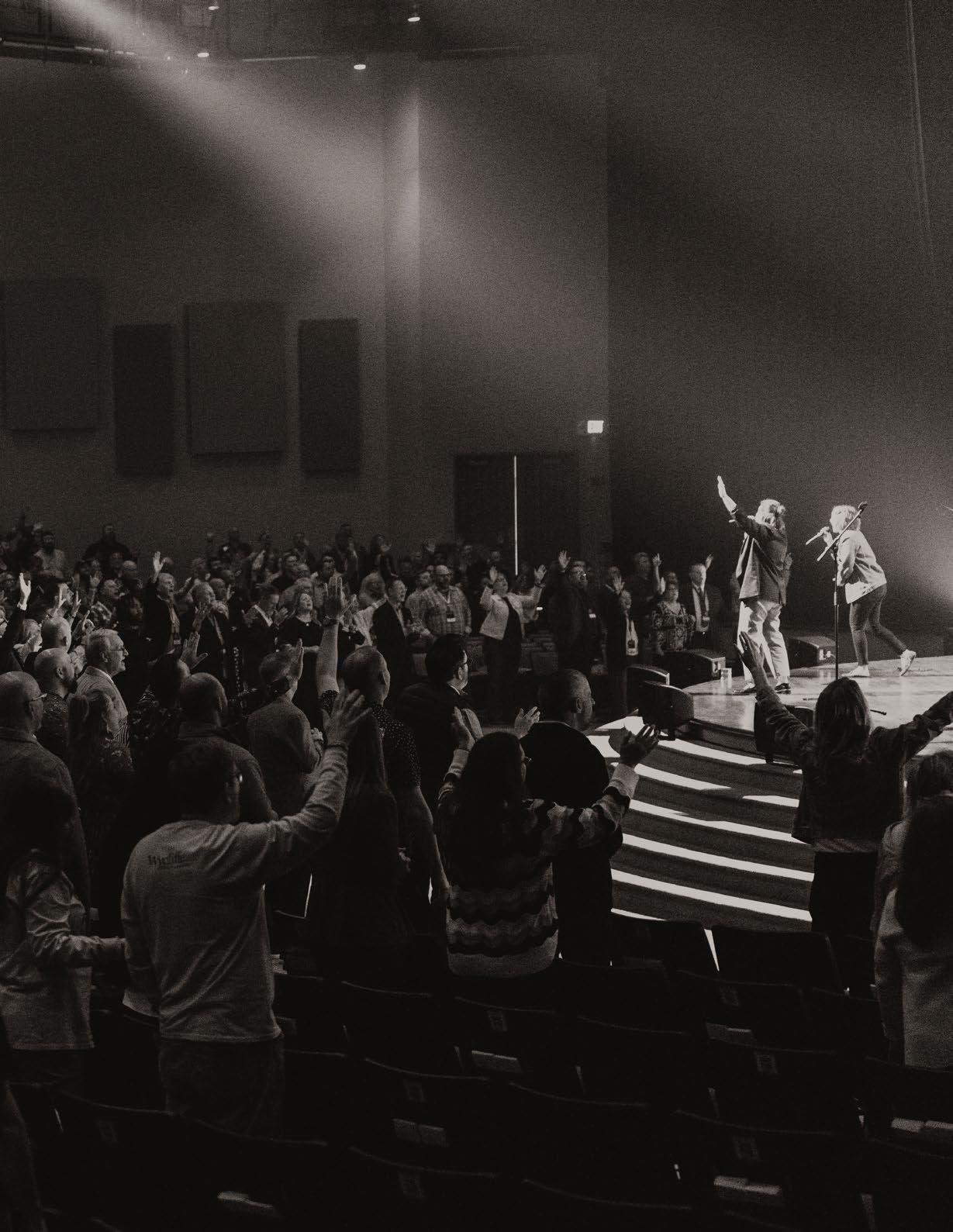
OKAG Network Team
Executive Leadership Team
Dr. Darryl Wootton Superintendent/Network Pastor
Craig Dacus Assistant Superintendent
Dr. Jamie Austin General Presbyter
Bruce McCarty Executive Presbyter – East
Darren Pilcher Executive Presbyter –West
Sectional Presbyters
Jackie Crafton Section 1
Keith Williams Section 2
Lyn Gaskey Section 3
Robert Yandell Section 4
Dave Mewbourne Section 5E
Jason Byers Section 5W
Jeromye Jackson Section 6
Jimmy Keith Section 7
Kelly Coffey Section 8
Kevin Fouts Section 9N
Steve Lance Section 9S
Chad Allred Section 10
Charlie Newman Section 11
Arliss Moon, Jr. Section 12
OKAG Lead Team
Kevin Conner Finance & Operations
Gary Davidson Mission
Heath Corrales NextGen
Jamel Crawford Compassion
Jayson Evans Communications

Pentecostal
Reflections
By Tim Enloe
Pentecost is one of those stories many of us think we know so well that we’ve stopped really hearing it. We can quote the verses. We’ve sung the songs. We’ve seen the paintings and the dramatizations. But sometimes, our familiarity has smoothed over details that have profound meaning for our lives and ministries today.
My hope in these reflections is to look again—carefully—at what Scripture actually says about Pentecost and Spirit baptism, and then consider what it means for us as followers of Jesus in the present tense.
Consider these common assumptions:
120: We often say there were 120 people present on the day of Pentecost. The Bible never explicitly says that. It tells us that about 120 were gathered the week prior when they chose Matthias (Acts 1:15). Acts 2 doesn’t give a headcount.
Upper Room: We commonly imagine the event taking place in an upper room. Acts 1 mentions an upper room where they were staying (Acts 1:13), but Acts 2 doesn’t say Pentecost itself occurred there.
Wind and Fire: We assume there was actual wind blowing and fire burning. But Acts 2 describes a sound from heaven like a mighty wind and tongues like fire, not a meteorological or combustible event. Prophetic, metaphorical language is used to describe an overwhelming, heavenly reality.
The description in Acts 2 is full of metaphor because human language struggles to capture what happens when heaven touches earth. They heard God-inspired sounds. They saw God-inspired sights. They felt God’s presence resting upon them. And then they spoke God-inspired words.
We cannot reduce Pentecost to a caricature of flames on heads and a gust of wind. It is too big, too rich, and too holy to be captured by one image. And importantly, Pentecost is not just about “back then.” It is about now. It is about you, your church, and your personal spiritual life. From the biblical account, there are some things we can say with confidence about Pentecost and Spirit baptism.
Pentecost Is Power for Ministry
Jesus was clear, “You will receive power when the Holy Spirit comes upon you; and you will be my witnesses…” (Acts 1:8)
The Greek word translated power is dunamis. People often connect it to our word “dynamite,” but that can be misleading. Dynamite didn’t exist for 700 years after the New Testament was written. The idea isn’t explosive chaos; it is ability beyond your present capacity. Spirit baptism is God’s promise that there is more available than what you can provide on your own.
Spirit baptism is not a badge you earn; it is power given so that you can participate in the ministry of Jesus beyond your limitations.

Pentecost Is for Everyone
In the Old Testament, the Spirit’s empowering presence for vocational ministry rested primarily on a few individuals—prophets, kings, elders, and judges. It was often a “millions-to-one” ratio. Moses longed for the day when: “All the Lord’s people were prophets and that the Lord would put his Spirit on them!” (Numbers 11:29). Joel prophesied, “I will pour out my Spirit on all people… sons and daughters… young and old…” (Joel 2:28-29).
On the day of Pentecost, God fulfilled that longing and prophecy. The flame came to rest on every head. They all heard. They all saw. They all felt. They all spoke.
Acts shows the same Spirit who empowered Jesus now empowers His followers. The ministry of Jesus continues through ordinary people who have received extraordinary help. Once you have given your life to Christ, your potential in the Holy Spirit is limitless. The promise is for all flesh.
Pentecost Is Subsequent to Yet Connected with Salvation
This is one of the distinctives of classical Pentecostal theology. In Acts, everyone described as receiving Spirit baptism is already a believer.
We use two keywords:
Subsequent (or after) – Spirit baptism happens after conversion.
Separate (or distinct) – It is a work of the Spirit that differs from conversion.
However, these truths come with an asterisk. Spirit baptism is not random or disconnected. When you are saved, you receive the indwelling Holy Spirit. You also step into the inheritance of all that God desires to give you—including Spirit baptism.
So yes, Spirit baptism is not the same as salvation, and it happens after salvation. But it is deeply connected to salvation, part of the normal inheritance God intends for every Christian.
Notice also that everyone baptized in the Holy Spirit in Acts is relatively new in the faith. Spirit baptism is not a reward for decades of faithful service. It is part of the birthright of those who have just begun their journey with Jesus.
As believers, we are pre-wired for Spirit baptism. To develop a theological framework against accepting Spirit baptism, someone must be taught against it.
Pentecost Is About Power and Personal Encounter
We rightly emphasize that Spirit baptism gives power to be witnesses. But we must not forget that Spirit baptism is also a profound relational encounter with the Holy Spirit Himself.
Jesus said, “John baptized with water, but you will be baptized in the Holy Spirit” (Acts 1:5).
Not merely in the Spirit’s power, but in the Spirit Himself.
When a person receives Spirit baptism, they are in one of the most open, vulnerable moments of their life before God. They are emptying themselves, crying out in dependence, stepping beyond their comfort zone, and obeying a prompting they cannot fully understand or control.
In that sacred moment, the Holy Spirit is not simply doing something to them; He is drawing them into a deeper relationship.
If we treat Spirit baptism as nothing more than a spiritual tool—another item in the ministry toolbox—we miss its heart. The Holy Spirit is not a heavenly gadget; He is another Advocate who stands alongside us. (John 14). Spirit baptism is not just the power to do more for Him; it is an encounter that invites us to know Him more.
Pentecost Requires Childlike Trust
The phenomenon of tongues is unapologetically outside normal human experience. On the day of Pentecost, they spoke in “other languages” (heterais glossais), meaning languages they had not learned. Paul further clarified the dependence required when he called it “unknown tongues” — unknown to the speaker. To yield to Spirit-prompted speech in a language you do not understand requires childlike trust.
Theologian Simon Chan uses the image of a parent teaching a small child to speak. Parents bend low, exaggerate
syllables, repeat sounds, and delight in half-formed words as their child mimics the sounds their trusted parent is leading. The goal is not perfect grammar but shared communication and shared joy. Spirit baptism, in this sense, is God condescending in love to teach us to “talk like Him”— to participate in a language of trust that bypasses our pride and our need to control.
When you first speak in tongues, it is unprecedented in your human experience. Your mind protests, “This sounds strange; am I making this up?” Yet by choosing to trust the Spirit’s prompting more than your own limited understanding, you step into a deeper surrender. Tongues are not a mark of spiritual eccentricity. They are an act of trust—a sign that you will let the Spirit lead you into something beyond your full comprehension.
Pentecost Is Incarnational: Heaven
Touches Flesh
On Pentecost, God poured out His Spirit on flesh. That phrase is important. Many of us fear “being in the flesh,” but the biblical focus is different. The greater danger is not that sincere, teachable believers will somehow “contaminate” the Spirit’s work; the greater danger is that we will resist or ignore His prompting altogether.
Think of Moses at the burning bush. God says, “Take off your sandals, for the place where you are standing is holy ground” (Exodus 3:5). We might expect him to ask the opposite, “Put safety gear on to protect yourself from My holiness.” Instead, God invites Moses’ bare, flawed humanity into direct contact with His raw divinity. Why? God is not afraid of our brokenness. He knows that the more contact we have with Him, the more we become transformed into His image.
Spirit baptism is similar. God puts His Spirit upon human flesh. In Acts 2:4, we see a beautiful, interactive partnership: Jesus pours out the Spirit, the Spirit gives the utterance, and we speak. In Spirit baptism, God doesn’t erase your humanity; He partners with it. You remain fully you; He remains fully God; yet you are working together in real-time obedience. Tongues become a sign of divine–human cooperation. Heaven and earth meet—not in a temple made of stone, but in your own physical body and voice.
Implications for Ministry (and for You)
What does all this mean for us—especially for those serving in ministry?
1. You are not alone in your calling. The Spirit’s power is near. Every time you face a crisis, a decision, a need, let your first reflex be: “Holy Spirit, help me.” We have access to a better Counselor than the finest consultants on earth.
2. God does not love you because of your ministry, but because you are His child. Never let what you do for God overshadow who you are to God. He loves you more than He loves your ministry. Spirit baptism is not just about making you more effective; it is about drawing you closer to God.
3. Give people consistent, clear opportunities to experience Jesus as the Baptizer in the Holy Spirit. If we, as leaders, do not lead our people into this promised experience, we may unintentionally rob them of a dimension of knowing God more. Yes, there is always the fear: “What if nothing happens?” But we must also ask: “What if something does?” And most often, it does.
4. Keep Pentecost tied to intimacy and obedience, not just phenomena. The goal is not simply that people speak in tongues once and then enshrine that moment in a “spiritual museum.” Ephesians calls us to “be being filled with the Spirit”—a continuous posture of living under the waterfall of God’s presence.
A Final Invitation
Pentecost is not a historical relic. It is a living reality. It is a Trinity activity—Father promised, Jesus provided, Spirit prompted. Pentecost is both power for ministry and intimacy with God. Pentecost is subsequent to salvation yet deeply connected to it. Pentecost is an invitation to growing in childlike trust. And Pentecost is an incarnation-
al moment where heaven and earth, Spirit and flesh, meet in your life.
The same Jesus who saved you also longs to immerse you in the Holy Spirit. The same Spirit who came upon a small group in Jerusalem continues to move across the earth, across cultures, across centuries, resting on ordinary people.
Would you consider setting ministry roles aside for a moment and prayerfully recover your identity as a son or daughter of God? Would you pray with me, “Holy Spirit, I welcome You. Not only for what You can do through me, but for what You desire to do in me. I welcome a fresh revelation of Jesus, my Spirit baptizer.”

Since 1993, Tim and Rochelle Enloe have traveled in full-time teaching ministry–with a special emphasis on the Holy Spirit. God has gifted them to present the ministry of the Holy Spirit in a simple, accessible manner. Learn more at enloeministries.org


Oklahoma’s Pentecostal Heritage
By Daniel D. Isgrigg, Ph.D.
When you think of the beginnings of the Pentecostal revival, you may think of the Azusa Street Revival in Los Angeles or the outpouring at Parham’s Bible College in Topeka. But as Oklahomans, we have our own stories of revival that spring out of the rich farmland near Sayer in Western Oklahoma, or the tallgrass prairies near Lamont, or the Ozark Hills near Miami.
Pentecostalism in Oklahoma found homes in the oil-rich lands near Tulsa, on the tribal lands near Tahlequah, and in the granite hills near the Arbuckle Mountains.
In fact, Oklahoma played a significant role in the early history of the Assemblies of God. As a crossroad for traveling Pentecostal preachers on the railroads, many early works were established in Oklahoma that became pioneer churches in our fellowship. Some of our churches were founded by early Pentecostal pioneers, including A.B. Cox, M. M. Pinson, and Howard Goss. Early General Superintendents J. W. Welch and W. T. Gaston pastored our churches.
That story has been documented in Bob Burke’s wonderful OKAG history, Like a Prairie Fire, and in my recent book, Pentecost in Tulsa, which provides a history of Pentecost in Oklahoma. But here are some of the highlights that make Oklahoma’s Pentecostal Heritage special.
Early History
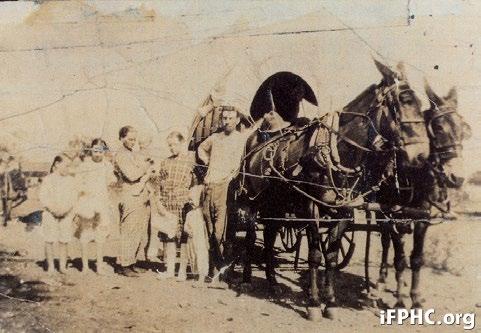
Oklahoma’s story begins in Western Oklahoma, near Carter, in a now-abandoned area called Doxey. In 1898, near the Texas border, Jerry Osborn received the baptism in the Holy Spirit and spoke in tongues. He later teamed up with Frank Alexander to start a Pentecostal work on a plot of land at Doxey. The first person to receive Spirit baptism was a Native American woman who spoke only two words of English. The rough and tumble cowboys of the region were some of the first converts. Alexander built the Beulah Home and Bible School in 1906, which hosted early Pentecostal preachers such as F. M. Britton, E. N. Bell, A. B. Cox, and R. E. Winsett, who published the first Pentecostal hymnbook, Songs of Pentecostal Power. The fire from Doxey spread to Cordell and other towns in Western Oklahoma.
In 1905, Pentecost came to Oklahoma City as several women prayed for revival among the rough-and-tumble cowboys in the bustling young city. In January 1906, R. B. Beall, Oscar C. Wilkins, and Harry Lott opened a Holiness work in the Blue Front Saloon downtown. A few months later, the Pentecostal fire fell, and many received the
baptism in the Holy Spirit and spoke in tongues. Pentecostal churches spread to southeastern Oklahoma, including Ada, Pauls Valley, and Lawton. In 1909, near Frederick, Oscar Jones (who later served as District Superintendent) held Pentecostal meetings in schoolhouses among the cowboys. James Hutsell, another District Superintendent, worked in Dustin in Hughes County.
In 1905, Vandella Frye, who had received the baptism in the Spirit in Charles Parham’s meetings in Joplin, arrived in Tulsa with her husband. She noted she was the only Pentecostal in the city at that time, so she organized a prayer meeting in her home, and slowly the message of Pentecost spread. In 1906, several revivals were held in Tulsa. But in 1908, she invited Parham to hold a meeting. Over one hundred people came to Christ, and many experienced the baptism in the Holy Spirit. This established the first Apostolic Faith Mission in 1908, which eventually became the first AG church led by future General Superintendent W. T. Gaston. Converts of the revival established
Pentecostal works in Broken Arrow, Sapulpa, Claremore, and Bartlesville over the next few years.
Meanwhile, in 1906, in the Tallgrass Prairie towns of Lamont and Billings, a seven-year revival broke out that catalyzed the spread of Pentecostalism. In December 1906, Glenn A. Cook came to Lamont from the Azusa Street Mission to hold meetings among some Holiness people. It wasn’t long before the people accepted the Pentecostal message, and God poured out His Spirit. People came from as far as 100 miles away to experience the Pentecostal blessing. Pentecostal ministers also came from all over the country to preach at this revival, including J. H. King, G. B. Cashwell, and A.S.. Copley. The fire spread to other towns, including Pawhuska, Billings, and Enid. As Bob Burke famously coined, Pentecost in Oklahoma was spreading “like a prairie fire.”
As Pentecost was moving in Western Oklahoma, another fire was spreading in the Indian Territories of the eastern part of the state. With its close proximity to Parham’s revivals in Galena, Kansas, word spread about Pentecost into the Miami area as early as 1903. In 1905, Howard Goss held a revival in Tahlequah that established the Pentecostal church in the city. In 1910, John W. Welch (Future AG General Superintendent) was serving as a missionary in Muskogee when he heard about the Pentecostal experience at a camp meeting led by A. B. Cox. Welch was filled with the Holy Spirit and opened his church as the first Pentecostal mission in Muskogee in 1912.
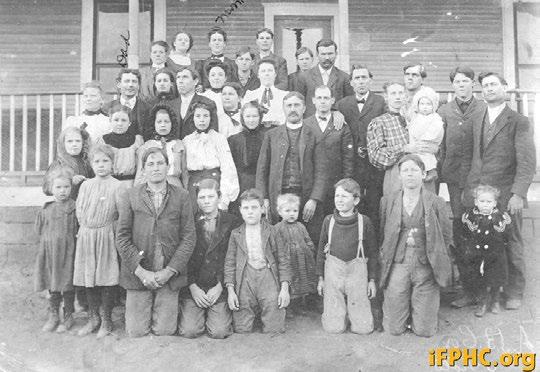
1912 Revival Hickory Grove (Credit IPHC)
Across the newly formed state of Oklahoma, women and men traversed the dusty plains with little but a Bible in their hands, the shirts on their backs, and the fire of the Holy Spirit in their hearts. They preached in brush arbors and country schoolhouses. They were content to baptize new believers in the Arkansas River, in Panama Lake, or pools of Sulphur Springs. They preached Jesus as the Savior, Spirit-baptizer, Healer, and Soon-Coming King.
The Assemblies of God begins in Oklahoma
By 1912, Oklahoma was a significant hub for Pentecostalism in the South. From 1912 to 1914, Oklahoma hosted the state encampment for the Apostolic Faith Churches. These meetings brought together the loose network of independent Pentecostals in the South, which eventually converged to form the Assemblies of God. In 1912, W. T. Gaston led the church in Tulsa and organized the Pentecostal churches in Oklahoma under the name of the Apostolic Faith or Churches of God in Christ.
In 1913, the Tri-State Convention was also held in Tulsa. In attendance at that meeting were all the significant leaders who formed the Assemblies of God, including E. N. Bell,
Beulah Home at Doxey (IFPHC)
Revival in Lawton, 1915 (Credit IFPHC)
Howard Goss, and M. M. Pinson. Gaston recalls:
The power of God increased from day to day until the ninth day when the glory of the Lord over-shadowed the camp, and wave after wave of power and glory swept over the vast audience. Some cried and shouted, while others, like David of old, danced before the Lord. (Word and Witness, September 20, 1913).
The success of this meeting led Bell, Goss, Pinson, and Opperman to plan a meeting in Hot Springs, Arkansas, for April 1914. From there, the famous call went out to “all the churches of God in Christ, to all Pentecostal or Apostolic Faith Assemblies who desire to, with united purpose to cooperate in love …” The success of this meeting in Oklahoma was crucial to the Assemblies of God’s beginnings as a fellowship!
After the first General Council met in April 1914, Oklahoma became the first district to form in July of that same year. The report of the meeting was as follows:
During those meetings, the altar was crowded about every meeting, with twenty to forty earnest seekers [of the baptism in the Holy Spirit]. Many were saved and baptized in the Holy Ghost. Many professed healing, and a blessed unity of the saints was manifested. Especially we commend the saints for the blessed unity.
The leaders of the meeting were a who’s who in the early AG, including A. P. Collins, T. K. Leonard, Howard Goss, J. W. Welch, and J. H. James. In addition, W. T. Gaston was elected as the first District Superintendent, who later served as General Superintendent from 1925 to 1927. Other notable ministers who led Oklahoma and were also national AG leaders were J. R. Evans, S. A. Jamieson, Willard Pope, and Bert Webb.
Centennial Churches
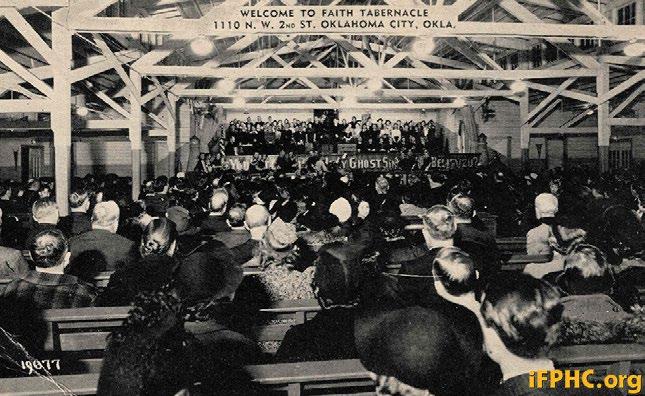
The fruit of the early revivals was the establishment of churches across Oklahoma. Many of these churches have celebrated their centennials in the last decade. A key factor in their growth was the revivals held by traveling healing evangelists of the early 1920s. In 1918, Aimee Semple McPherson preached in Tulsa, and the number of Pentecostals attending the 5th and Peoria Tabernacle doubled overnight. Raymond T. Richey preached healing revivals in Tulsa in 1923 and in Oklahoma City in 1928, leading to the establishment of several Centennial Churches. Charles Price held a healing revival in 1928 that helped establish Faith Tabernacle in OKC. Even though these notable evangelists made an impact, it was the thousands of small revivals held by local pastors that reached people in communities, big and small, across Oklahoma.
By the 1930s, Pentecostalism shifted from pockets of revival to hundreds of brick-and-mortar churches established in towns and communities across the state. Many
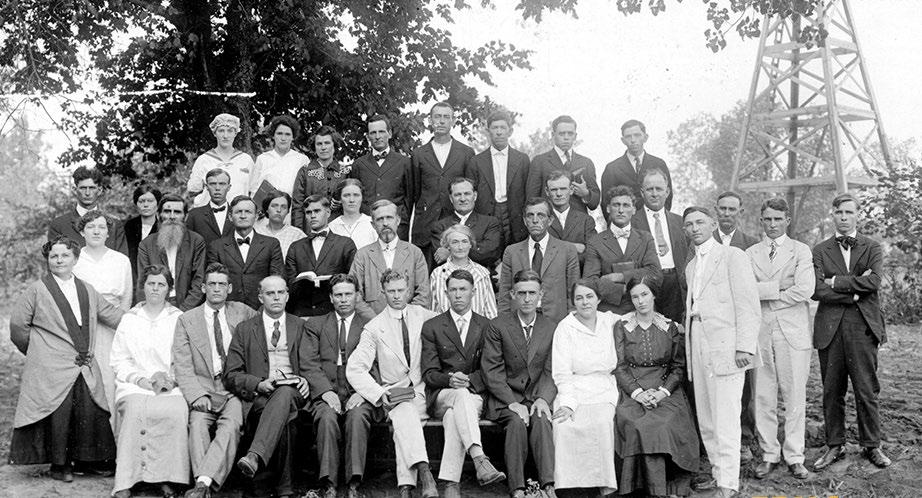
First OK District Assemblies of God Meeting, Tulsa, 1914 (IFPHC)
of those churches are still going today. This success can be attributed to the perseverance and tenacity of congregants and leaders who stayed focused on the mission and kept their eyes on reaching people in every generation. Many churches have withstood the test of time. There are many, but some of the Centennial Churches are as follows:
• Carney Assembly (1914)
• Broken Bow (1914)
• McCurtain (1917)
• Shawnee Assembly (1919)
• Broken Arrow Assembly (1918)
• Panama Assembly (1917)
• Covenant Church, Poteau (1922)
• Miami First Assembly (1923)
• Woodlake, Tulsa (1923)
• Calvary Temple, Tulsa (1924)
• Rush Springs (1924)
• Okmulgee First Assembly (1924)
• OKC Faith (1925)
• Lawton First Assembly (1925)
• Miami (Eastside) Assembly (1925)
• Wetumka Assembly (1925)
• Muldrow (1925)
with gratitude for the pioneers of our fellowship whose story is told in this article. The work they began a century ago is still present, continuing to provide a Spirit-empowered witness to Jesus in this community.
It was in this moment that the Spirit of God spoke to my heart about the importance of our earliest churches reaching the centennial moments. The early days of the revival were glorious, but many were short-lived. They took place in dusty fields and public parks; they rented schoolhouses and set up in barns. However, it wasn’t until permanent churches were established in these communities in the 1920s that our fellowship truly took root in Oklahoma. Some of our centennial churches continue to be leading churches in these communities.
With each celebration of 100 years in existence, I have observed that many of these churches have also experienced a fresh wind of the Spirit. I have seen a hunger in these churches to see God move again, like He did in the days when these churches were established. It was almost as if the Spirit spoke to me, “Just like the 1920s when the AG became established and began to flourish in Oklahoma, so too, Oklahoma churches are in a centennial season of God’s blessing on our churches.” This is what I see in Oklahoma.
Lessons from History
Earlier in 2025, our District Pastor, Dr. Darryl Wootton, called for a Sacred Assembly to gather our sections for a time of prayer. My section, 5E in Tulsa, met at Claremore Assembly, a church with roots dating back to 1915, when Willard Pope from Broken Arrow Assembly established a work there. As I sat there among my fellow ministers, I was deeply moved by the significance of being in a church that exists today because of one man’s dedication and obedience over 110 years ago. I became overwhelmed
We are the products, not of revival, but of called women and men who were filled with the Spirit, who evangelized the lost, planted churches, sacrificed for the gospel, and stayed faithful to the call of God. Not every story is a success story. Not every church made it. But we stand on the shoulders of people we have never heard of and reap the benefits of their strength, commitment, and desire to do what God called them to do. Our generation has been given a great task. Inspired by those who have gone before us, we must continue to preach the gospel and plant churches. We must continue to proclaim the message of Pentecost, that Spirit empowerment and God’s healing power are still meant for today. It’s a success formula that has led us this far. It is what will enable the Assemblies of God to continue being effective in our day.

Daniel D. Isgrigg, Ph.D., is an ordained AG minister with over 20 years of pastoral ministry in AG churches in Tulsa. He serves as a historian for the Assemblies of God and as a professor of Spirit-empowered History at Oral Roberts University. He has authored three books on AG history, including a new AG history from Gospel Publishing House, titled “The Assemblies of God: Our Story.”
Faith Tabernacle, OKC (IFPHC)
The Vibrant Ministry of the Holy Spirit
By Rev. Charles W. Kinman, PhD, LMFT (retired)
“We have not received the spirit of the world but the Spirit who is from God, that we may understand what God has freely given”
(1 Cor. 2:12)
One of the greatest and most cherished mysteries of God is the presence and movement of His Holy Spirit. When I became a Christian in the 1970s, the Charismatic movement was aflame, and spiritual gifts were happening everywhere. Pentecostal churches flowed with the Holy Spirit’s manifestations, revealing a loving Jesus.
However, in the 1990s, the Spirit’s active stirring in congregations quieted. Although some churches grew to great congregations, many observed a simmering of passion. Churches continued to serve faithfully but struggled to maintain their zeal. I served a significant church in the Northwest for twenty-four years (1997-2021). While we
grew from hundreds to thousands, the manifestations of the Spirit were rarely present. However, recently, I have observed the Holy Spirit’s vibrancy empowering servants with new energy, insight, and hope.
The verse above speaks to God’s intentional giving of such a gift of presence and movement to assure us of His invitation. The Spirit provides our key resources for ministry and life in Jesus. He indwells us (Jn. 14:17; 1 Cor. 3:16); He regenerates us (Jn. 6:63; Titus 3:5); He baptizes us (Matt. 3:11; 1 Cor. 12:13); He seals us (2 Cor. 1:21-22; Eph. 1:13). The Spirit’s work among us fills, empowers, and teaches all we need to know to serve our Lord and Savior.
At Jesus’ baptism, the Spirit anointed Jesus with messianic authority to demonstrate God’s approval and empowerment of His mission. The Holy Spirit’s presence with the Apostles affirmed and encouraged everything Jesus

taught them (Jn. 16:8ff; Acts 4:31). His movement among them built the New Testament church. “The Holy Spirit provided the warmth, the dynamic, and the joy that characterized the movement of the gospel in the first century.” Without the interaction of the Spirit, we never could create in and of ourselves the life given by God. He is the hand that feeds us the Bread of Christ (Jn. 6:57).
Here, the word ‘vibrant’ is not about the number of people; it is about the close connection between members emerging as vivacious, vital, and felt–zeal. Vibrant minis-
tries teach and celebrate three important characteristics of the Holy Spirit to form relational collaboration with God’s purposes.
The first characteristic vibrant ministries teach and celebrate is that the Holy Spirit is relational. Christ gave Him to us to be a personal comfort and instructor. The Apostles considered Him a constant presence and help in ministry decisions (Acts 5:32; 15:28). When He joins with us, we not only recognize His intelligence and wisdom in His guidance (Isa. 11:2; Eph. 1:7), but the warmth of God’s love (Jn. 17:23). Within our relationship, His person can be grieved by our actions (Isa. 63:10; Eph. 4:30). He knows us emotionally and rationally as we pray desperately for matters beyond our own understanding (Rom. 8:26-27).
In last quarter’s OUTLOOK, I shared that neuroscience “shows God designed the brain as a ‘social organ’ that constantly builds itself by interactive relationships.”1 Our daily walk with God brings relational interaction with His Spirit. There must be a hundred clichés about how the kind of company we keep influences us. We learn conscious awareness and response from others, even beginning in the womb.2
Remarkably, John the Baptist “leaped” while in his mother’s womb at Mary’s sweet greeting, voicing loving devotion. They were then filled with the Holy Spirit, and Elizabeth exclaimed in a “loud voice” an elation of blessings that poured out of her (Luke 1:39-45). She was emotional about Mary, and the Holy Spirit held her and her fetus with amazing gentleness. This kind of loving relationship reveals to us God’s parental embrace that draws us to seek His approval and to be like Him.
Thus, His presence and movement in us are emotively relational. Most emotions, which are felt, are communicated through nonverbal behaviors such as eye gaze, facial expressions, physical movements, and tone of voice. When meeting with dearly loved people, we share feelings of joy, sorrow, and fear from both our cognitive and volitional states of consciousness. In Christ, these feelings arise in our souls as a profound sense of peace, affirming our connection to Him and to one another.
Psychologist Kenneth Dodge states, “all information processing is emotional, in that emotion is the energy that drives, organizes, amplifies, and attenuates cognitive activity and in turn is the experience and expression of this activity.”3 Our limbic system forms emotion that impacts nearly every other region of the brain and intricately threads throughout our entire body and mind. This includes the appraisal of meaning, the value of physical and mental stimuli, and social perception, such as recognizing another’s face or tone of voice.
A vibrant ministry teaches that we join the Spirit in an active, relational partnership in the ministry of reconciliation (Jn. 15:15; 2 Cor. 5:18-21). We are baptized into a common interactive bond (1 Cor 2:12; 10:14). Walter Wangerin speaks of faith as the movement of faithing, life as living, and love as loving. “For faith—this mutual apprehension by and of two living beings, both God and us—is relationship. And relationship is ever and ever a dramatic thing, subsisting not in definitions which freeze it to objectify it, but in the changing itself. The changing is the livelihood of relationship.” He speaks about the fluidity of an intimate, growing relationship.
When God’s dear Spirit speaks to you, how do you hear Him? What does His presence mean to you? Can you seek Him like a trusted friend? If we approach Him like a cosmic vending machine in prayer, then we miss valuable relational interaction that can develop in us the spiritual design of Christ. Teach people to relish His presence, like a dear friend closer than a brother. Encourage them to trust His movement with all their heart to follow straight paths.
The Holy Spirit’s second characteristic is that He actively works God’s purposes. In Ephesians 1:1-14, Paul presents God’s “Mission Statement.” If read like a corporate legal document, it establishes the authority of the parties, the purpose of the provision, and the recipients of the provision, and is notarized by an authoritative guarantor. In sum, Paul pronounces, ‘In His love, by His choice, pleasure, and will, He freely gave, lavished, and purposed for us to be blameless and holy in His sight, sealing us with the promised Holy Spirit.’ In humble tears and submissive hearts, we sign on with belief.

ity. This sent an alarming message to the early Gnostic audience to whom John was writing.

The Holy Spirit is the executor of God’s mission statement. For example, He convicts the world of sin, righteousness, and judgment (Jn 16:8-11). Sin due to people’s unbelief, righteousness because Jesus fulfilled all obligations for which He was sent, and judgment because Satan is condemned. An epistemological question must be asked of this last point. What was God’s purpose in allowing Satan to continue? Jesus’ use of the word (now stands condemned) in John 16:11 shows Satan is not just a rebel wreaking havoc on God’s kingdom, nor is his judgment awaiting some final sin, but it is complete now. as a perfect passive is used specifically of the act of condemning or decreeing penalty on someone.4 The perfect tense shows completed action in the past with continuing results. Although condemned, Satan serves the purposes of God.
Therefore, Satan’s judgment waits only for the fulfillment of his sentence. Jesus affirms the Holy Spirit’s power to convince humanity that judgment is inevitable. If the ‘prince of this world’ is judged, then people can be assured God has the authority and ability to judge human-
We also learn from Scripture that evil is always viewed as being under the sovereign permission of the eternal God. The Spirit restrains and controls the direction of evil (II Thess. 2:6-8). Satan can neither tempt (Matt. 4:1), afflict (1:16), kill (Job 2:6; Heb. 2:14), nor touch a believer without God’s permission. This is not to minimize the power he has achieved by ensnaring men and women by preying on their own lust and desires (2 Cor. 4:3-4; Eph. 2:2). It serves to remind us that the spiritual battle deeply involves us.
Vibrant ministries view matters from the spiritual purposes of God so as to cooperate with His Spirit. The New Testament states that it is the believer who is at spiritual war in the heavenly realms (Eph. 6:12-17; 2 Cor. 10:3). The focus is on overcoming sin, which people choose by their own will (Rom. 8:4-5; Gal. 5:24-26; 6:7-8). Not all our struggles with evil come from demons or Satan, but rather from a person’s own evil intent within themselves (Rom 7:21-24; James 1:13-15; Eph. 2:2-3). While pastoring, we believed people in Christ desired to know Jesus better. Operating from this assumption precluded many “ought
to” sermons, allowing for a greater focus on “how to” teachings that addressed removing obstacles and empowering the Holy Spirit within them.
All that we cherish about Jesus in these times, God’s Spirit has made known. “The Holy Spirit reveals Christ and enables us to see spiritual things from the divine point of view…The person led and illuminated by the Spirit sees [and feels] everything from a completely different perspective than does the unspiritual worldling.”5 The battles we fight for God take place on invisible fields of warring prayer. It sets us free to live and love in the now; to be present with people without presumptive judgment.
The third characteristic that vibrant ministries celebrate is that the Holy Spirit is both the author and interpreter of Scripture.6 “It was He who revealed to the New Testament apostles, and prophets matters undiscoverable through human philosophy and the natural reasoning processes of the human mind (Matt. 16:17; Eph. 3:5).”7
The early church emphatically trusted His work to reveal the truth about Jesus and what was to come to strengthen their faith.
His presence and movement among believers determined the manifestation of spiritual gifts given to encourage faith and trust (1 Corinthians 12:4-11). John assured the church of the Spirit’s care to interpret that which He inspired, “The anointing you received from Him abides in you, and you have no need for anyone to teach you; but… His anointing teaches you about all things” (1 Jn. 2:20 & 27 NASB). Peter received additional knowledge when the Spirit interpreted for him Ananias and Sapphira’s intent to deceive. Similarly, in Lystra, when Paul looked “directly” at the crippled man, feeling compassion for him, the Spirit interpreted the felt information that the man had faith and instructed Paul to heal him.
Vibrant ministries use testimony to give a free rein to the Spirit’s movement among members. Personal testimonies fertilize the soil in which we sow the seeds of God’s word. The presence and movement of God’s Spirit among us today provides discernment between truth and lies. Jesus said the Spirit would validate the truth about Him, and that we would not be able to testify otherwise (Jn 15:26-27; Acts 5:32). The biblical authors relied emphatically on testimonies from people and the Spirit Himself to proclaim Christ Jesus.
Luke’s writings to Theophilus are a compilation of personal testimonies. When Luke points out that Mary “treasured all these things in her heart,” he reports her testimony of encountering the Holy Spirit. In John’s first epistle, he gives pure testimony presenting substantial eyewitness evidence: we did not just see, we heard, we felt, we learned, and we testified. The Law established that the testimony of two or more witnesses confirmed the truth.
The confession of our mouth can reveal the beliefs of our heart, and only the Spirit can discern it (Heb. 4:12-13).
Our pastor allowed an entire service for people to share brief testimonies. Tender hearts shared their clearly answered prayers by no other means than God’s active kindness. The Spirit interpreted for us all God’s caring provision of healing, finances, and family reconciliations. He moved in them to glorify our Lord Jesus, helping them to know God’s faithfulness. Their tearful declarations inspired sweet praise. I affirmed, “From what I hear, God is certainly busy among us.”
Peterson stated, “Embracing what God does for you is the best thing you can do for Him” (Rom. 12:1MSG). Dear Pastor, teach and celebrate the relational and purposeful presence of God’s Holy Spirit. Release His characteristics to move among members in testimony to declare His great love, so many may hear, believe, and be filled.

Dr. Kinman recently retired from 30 years as a pastoral marriage and family counselor and 20 years as a professor at Northwest University. He is a nineyear military veteran and now serves the Oklahoma district as an encourager. The Kinmans live with their family in Newalla.
1. Kinman, C. W. OUTLOOK, Fall 2025, pp. 17-20.
2. See more about these in research around Attachment Disorders and Action Tendencies development.
3. Dodge, K. (1991). Emotion and Social Information Processing. In J. Garber & K.A. Dodge (Eds.) The development of emotion regulation and dysregulation (pp. 159-181). Cambridge, UK: Cambridge University Press. (p. 159).
4. Joseph Thayer, Greek/English Lexicon of the New Testament (Grand Rapids, Mich.: Baker Book House, 1977), p. 361.
5. Horton, S. M. (1976). p. 202.
6. 2 Pet. 1:21; Jn 16:13; Acts 1:16, 28:25; Eph. 1:17, 3:2-6; Heb. 3:7, 10:15; Rev. 2:7, 11, etc.
7. Thiessen, H. C. (1979) Lectures in Systematic Theology, Revised Edition by Doerksen, V. D. Grand Rapids, Michigan: William B. Eerdmans Publishing Co., p. 253


The Assemblies of God of Oklahoma Foundation (AGOKF) has been established to provide a sustainable financial foundation, allowing OKAG Ministries to continue focusing on reaching future generations through missions, children, and youth ministries.

agokfoundation.org


A Spirit-Filled Life
By Phil Taylor
What does it mean for us to live a Spirit-filled life? Most Pentecostals would start with Spirit Baptism and the initial evidence of speaking in tongues.
We wouldn’t be wrong, but there is more to the work of the Spirit in the life of the believer. Consider what Paul tells us in Romans 8.
We have a new life
“Therefore, there is now no condemnation for those who are in Christ Jesus, because through Christ Jesus the law of the Spirit of life set me free from the law of sin and death” (Romans 8:2). At salvation, through Christ, our sins are forgiven. The Holy Spirit takes residence in us, carrying out this sanctifying, life-giving, life-transforming work of grace. No longer condemned, we are so fundamentally changed that we can only describe it as a new birth. It is a conversion, a new life, for now, “the Spirit of life” is at work in us!
We have a new way of thinking
Paul writes, “Those who live according to the sinful nature have their minds set on what that nature desires; but those who live in accordance with the Spirit have their
minds set on what the Spirit desires. The mind of sinful man is death, but the mind controlled by the Spirit is life and peace” (Romans 8:5-6). What is Paul saying? Essentially, our nature determines our mindset and our way of thinking. If we live according to our sinful nature, our thoughts will be centered on pleasing and serving ourselves, and in the long run, those thoughts prove injurious and self-destructive. Remember, the “mind of sinful man is death.” On the other hand, if you live “in accordance with the Spirit,” your thoughts will be centered on pleasing Jesus, on serving Him and serving others, and the result is “life and peace,” not selfishness, destruction, and death.
Life with the Spirit is a whole new way of thinking, with a mind renewed by the Holy Spirit and informed by the Word of God. It is living with a new awareness of Christ in all areas, with the Holy Spirit actively involved in every decision and choice we make.
We live under new management
Paul writes, “The sinful mind is hostile to God. It does not submit to God’s law, nor can it do so. Those controlled by the sinful nature cannot please God. You, however, are controlled not by the sinful nature but by the Spirit, if the Spirit of God lives in you. And if anyone does not have the Spirit of Christ, he does not belong to Christ” (Romans 8:7-9).
Paul says we are controlled by the Holy Spirit who lives in us. This does not mean we no longer have a choice. We still have free will to choose, but we choose to live a life surrendered to Christ and guided by the Holy Spirit. We no longer surrender to the control of unredeemed emotions and unrestrained desires. Instead, we are influenced, directed, and empowered by the indwelling presence of the Holy Spirit.
Notice how definitive Paul is. “If anyone does not have the Spirit of Christ, he does not belong to Christ.” He is affirming what Jesus said in John’s gospel – “you must be born again, born of the Spirit.” You must have the Spirit of Christ dwelling within you by the new birth. You must have been made alive by the Holy Spirit!
In his commentary on Romans, the late John Stott wrote, “This passage teaches that the hallmark of the authentic believer is the possession or indwelling of the Holy Spirit. Indwelling sin is the lot of all the children of Adam; the privilege of the children of God is to have the indwelling Spirit to fight and subdue indwelling sin. As Jesus has promised, ‘he lives with you and will be in you.’ Now in fulfillment of this promise, every true Christian has received the Spirit, so that our body has become ‘a temple of the Holy Spirit’ in which he dwells. Conversely, if we do not have Christ’s Spirit in us, we do not belong to Christ at all.” We have submitted ourselves to the Lordship of

Christ, and His Spirit now dwells with us, leading us and empowering us to make redeemed choices in our lives. Thank God our lives are under new management as the Spirit directs our steps.
We have a new power source
Paul writes, “And if the Spirit of Him who raised Jesus from the dead is living in you, He who raised Christ from the dead will also give life to your mortal bodies through His Spirit, who lives in you” (Romans 8:11). The Holy Spirit is not only referred to as the Spirit of life in this passage, He is also the Spirit of resurrection. It was the power of the Holy Spirit that raised Jesus from the dead, and it is that same Spirit that dwells in each believer. Stop and consider the power we are talking about, power not just to resuscitate someone, but power to quicken the mortal body and transform it into a body like Jesus’ resurrection body, one that will never die or grow old. It is that life-giving, life-transforming power of the Holy Spirit that lives in us! No wonder Paul declares, “I can do all things through Christ who strengthens me.”
Paul writes, “If you live according to the sinful nature, you will die; but if by the Spirit you put to death the misdeeds of the body, you will live…” (Romans 8:13). We don’t have to be controlled by sin. We don’t have to yield to temptation. We have resurrection power at work in us by the indwelling presence of the Holy Spirit, so we can “put to death the misdeeds of the body” and live! That’s what the Spirit-filled life looks like. That’s why we persevere and overcome, that’s why if we get knocked down, we get back up, because we have the same Spirit that raised Christ from the dead living in us and empowering us.
We have a new identity
Paul writes (and I’m quoting from the Revised Version for accuracy and clarity), “For all who are led by the Spirit of God are children of God. For you did not receive a spirit of slavery to fall back into fear, but you have received a spirit of adoption. When we cry, ‘Abba! Father!’ it is that very Spirit bearing witness with our spirit that we are children of God, and if children then heirs, heirs of God and joint heirs with Christ…” (Romans 8:14-17). No longer strangers, aliens, outcasts, but rather we are sons and daughters of God. Talk about a new identity! We have been chosen, selected, saved, redeemed, and adopted into the family of God. The Holy Spirit reminds us: That’s who we are!
The Roman audience Paul was writing to would have understood the strong legal ramifications of adoption in their culture and society. The adopted person gained all rights as a fully legitimate son or daughter in their new family. From a legal standpoint, the old life of the person being adopted was essentially wiped out. Debts were canceled. The adopted person entered a whole new life.
We have been born again through Christ and received the Holy Spirit, and He now bears witness that we are indeed children of God. He is the Spirit of adoption, sealing, affirming, and confirming our new identity. The Spirit makes it plain to us that we have a new Father, a new family, a new identity as the son or daughter of our Heavenly Father, and a joint heir with Jesus Christ. Our debt has been canceled. We have an intimacy that allows us to cry out, “Abba, Father.” That’s part of what the Holy Spirit provides for us in our relationship with our Heavenly Father.

We have a new destiny
Paul speaks of our destiny as heirs and joint heirs with Christ. “Now if we are children, then we are heirs–heirs of God and co-heirs with Christ, if indeed we share in his sufferings so that we may also share in his glory” (Romans 8:17). The promise is for us that we will share in his glory if we continue to be led by the Spirit. But it’s not just a final destiny or destination. It’s all along the journey, from here to heaven. Examine Romans 8, and you’ll find that destiny is mapped out. The Spirit-filled life means we are no longer bound by sin and death. Led by the Spirit, indwelt by the Spirit, we have been set free from condemnation, given a new way of thinking, a new way of living, and a new
identity as children of God. As we are led by the Spirit, we discover we are destined for a path of life and peace. We are destined to be led in conformity with God’s good purpose and destined to be made conformable to the image of Christ as the Spirit continues His work in us, interceding through us and for us in accordance with God’s will. We are destined to be ultimately and completely redeemed and resurrected to share forever in his eternal glory in heaven. We don’t have to wonder or be afraid of how it’s all going to turn out for us. We have a new identity and a new destiny. If we continue to allow the Holy Spirit to lead and guide us, He will take us all the way to heaven and into God’s unhindered glory and presence. A Spirit-filled life, a new destiny, now and for eternity.
We have a new obligation
Paul writes, in light of everything we have said about the Spirit-filled life, “Therefore, brothers, we have an obligation – but it is not to the sinful nature to live according to it” (Romans 8:12). Implied is our obligation to the Spirit of God. We aren’t obligated to our sinful nature. All it has ever done for us is lead us further into bondage, sin, and ultimately to death. Instead, we have an obligation to the one who gave His life for us on Calvary and to the Holy Spirit who dwells in us, gives us life, and who someday will quicken our mortal body so we can spend eternity in heaven. We owe nothing to that sinful nature, but we owe everything to Jesus and to the Holy Spirit who lives and works in us. Paul writes in Galatians 5, “Since we live by the Spirit, let us keep in step with the Spirit” (Galatians 5:25).
Amen. May it be so!

Phil Taylor is the Pastor Emeritus of Carbondale Assembly of God in Tulsa, having served for a total of 47 years. He and his wife Paula have been married for 50 years.

When the Spirit Feels Like Tuesday
By Cody Phillips
I am deeply grateful for the heritage and legacy of the Assemblies of God, as well as for my own Pentecostal upbringing. I am thankful for altar calls, camp meetings, prayer language, raised hands, prophetic moments, and the unmistakable sense that God is near and active. Pentecostalism taught me to expect God to move and to believe that the Holy Spirit is not a distant doctrine but a present reality.
Growing up in Pentecostal and Charismatic circles, I often made the mistake of connecting the Holy Spirit primarily to my emotions. If I felt something—goosebumps, tears, excitement, energy—I assumed the Spirit was present and active. If I didn’t feel much of anything, I quietly wondered whether God had stepped back, whether I was doing something wrong, or whether my spiritual life was stalled. This emotional framework worked—until it didn’t.
There’s a scene in the 90s TV show, Seinfeld, where Kramer and Newman are discussing days of the week. Newman insists that Tuesday has no feel. Monday is heavy. Friday is hopeful. Sunday is calm. But Tuesday? Tuesday is nothing. It’s just there. It doesn’t inspire dread or anticipation. It’s painfully ordinary.
For many believers—and for many leaders—Holy Spirit empowerment can feel like Tuesday.
We know the Holy Spirit graciously empowers us. We preach it, sing it, and affirm it theologically. But what do we do when we don’t feel empowered? How do we live a Spirit-filled life when the moment is mundane, our prayers feel dry, and our emotions are flat? What happens when empowerment doesn’t feel like Pentecost Sunday but like a quiet, unremarkable Tuesday afternoon?
These are not theoretical questions. They are pastoral ones. They are questions our congregations carry, often silently. They are questions leaders wrestle with while still standing on platforms and leading prayers. If we don’t address them honestly, we unintentionally train people to equate the Holy Spirit with heightened emotion—and to doubt His presence in seasons of normalcy.

Making Sense of Pentecost
To understand Spirit-empowered living, we must return to Pentecost itself. Acts 1 and 2 frame empowerment not as an emotional experience for its own sake, but as divine enablement for faithful witness.
In Acts 1:8, Jesus promises, “You will receive power when the Holy Spirit has come upon you, and you will be my witnesses.” The purpose of empowerment is not primarily internal sensation but external mission. The Spirit comes to give courage, clarity, endurance, and boldness.
Acts 2 describes a dramatic outpouring—wind, fire, tongues—but the lasting fruit is not emotional ecstasy. The lasting fruit is transformed people. Peter, once fearful and inconsistent, now stands with courage and proclaims Christ publicly. The early church devotes itself to teaching, fellowship, prayer, generosity, and endurance (Acts 2:42–47).
Throughout Acts, Spirit empowerment shows up in prison cells (Acts 16), courtrooms (Acts 4), missionary journeys (Acts 13), and moments of suffering (Acts 7). Paul later writes that the Spirit gives power, love, and self-control (2 Timothy 1:7)—hardly emotional highs, but steady and faithful virtues. Pentecost was powerful, but it was not meant to be perpetually spectacular. The Spirit did not come to keep believers emotionally elevated; He came to keep believers faithfully obedient.
Empowerment vs. Emotionalism
One of the most important distinctions Pentecostals must recover is the difference between empowerment and emotionalism.
Being empowered by the Spirit does not mean you always feel energized, inspired, or spiritually intense. It means you are sustained, directed, and made effective for God’s purposes. Empowerment changes your influence more than your feelings.
I am aware of the irony of quoting an author who has already appeared in this issue of Outlook. But it’s hard to discuss Holy Spirit empowerment without mentioning the work of Tim Enloe. In Goodbye Chicken, Hello Dove, we are reminded that the Holy Spirit is not a novelty to be chased, but a Person to be followed. Enloe warns against substituting emotional excitement for genuine spiritual maturity, noting that spiritual power is often quiet, costly, and consistent rather than flashy.
Emotionally Healthy Spirituality echoes this concern, insisting that emotional awareness matters—but emotionalism is not the same as spiritual depth. As Peter Scazzero observes, many Christians confuse strong emotions for spiritual maturity, even though Scripture consistently points to love, patience, and faithfulness as marks of the Spirit’s work.
Dallas Willard famously wrote, “Feelings are good servants but terrible masters.” When our theology of the Spirit is governed by how we feel, we place our emotions in the driver’s seat, but the Spirit’s work is not limited to moments when our hearts are racing.
Spirit empowerment doesn’t mean you wake up inspired every day. It means you keep walking when inspiration is absent.
Anchoring Faith in Discipline, Not Emotion
If emotionalism is insufficient, what anchors Spirit-empowered living? The answer, surprisingly to some, is discipline. Tyler Staton, in his book Praying Like Monks, Living Like Fools, writes that spiritual disciplines are not about earning God’s presence, but about positioning ourselves where transformation can occur. In The Spirit of the Disciplines, Dallas Willard described disciplines as “training, not trying.” John Mark Comer regularly reminds the Church that formation happens through repeated practices, not through repeated emotional peaks.1 Richard Foster, in The Celebration of Discipline, insists that disciplines are not dry religious obligations but pathways to freedom. They anchor us when feelings fluctuate. They form us when motivation fades.

Pentecostals sometimes resist disciplines like written prayers or fixed rhythms because they feel “stuffy” or overly religious. But the early church didn’t see it that way. The Book of Common Prayer, structured liturgies, and daily offices are not replacements for the Spirit—they are invitations for the Spirit to meet us consistently, not just spontaneously.
C.S. Lewis once observed that faith is the art of holding on to what reason and revelation have taught us, despite changing moods.2 The Spirit does not leave when emotions cool. He remains present, active, and faithful.
Do We Believe the Spirit Is Still Active on Tuesday?
Here is the core question beneath all of this: Do we believe the Holy Spirit and the Word of God are still active even when we don’t feel spiritual enough?
Scripture answers with a resounding yes.
Paul writes in Romans 8 that the Spirit helps us in our weakness and intercedes for us when we do not know what to pray. That assumes seasons when prayer feels unclear, unmotivated, or even dull. The Spirit’s activity does not depend on our emotional clarity. This is why reciting Scripture and written prayers matters. When we speak God’s Word aloud and pray ancient prayers, we are not being inauthentic—we are partnering with the Spirit. We are letting truth carry us when feelings cannot. Early church fathers understood this deeply. They prayed the Psalms not because they always felt them, but because the Psalms formed them. They trusted that God’s Word works on us even when we are unaware of it.
Sometimes Spirit empowerment looks like praying anyway. Reading Scripture anyway. Showing up anyway. And loving anyway.
Sometimes empowerment feels like Tuesday.
I do not regret informing you that my baptism in the Holy Spirit—with the initial physical evidence of speaking in tongues—did not happen on Wednesday night at youth camp, in the altars at youth convention, or during an emotionally charged D-Camp service.
My experience came when my emotions were not high or bombastic. It came during daily devotions, concluding a very ordinary Tuesday by reading my Bible and beginning to pray alone in my room. No music swelling. No crowd responding. Just faithfulness meeting grace.
That experience reshaped my understanding of the Spirit. It taught me that empowerment is not fragile. It does not disappear when emotions settle. The Holy Spirit is not sustained by intensity; He sustains us through consistency. I offer this as encouragement—to you and to myself—that even in the mundane, the regular, the ordinary, the Spirit’s empowerment does not fade. Tuesdays may have no feel, but they are not empty. The same Spirit who fell at Pentecost abides in quiet rooms, whispered prayers, written liturgies, and disciplined lives.
The Holy Spirit is still active.
Still empowering.
Still faithful.
Even on Tuesday.

Cody Phillips (MATM) and his wife, Lindsay, serve as Campus Pastors at The Bridge Church in Bethany, OK, and he teaches Theology and Bible at Southwestern Christian University.
1. Practicing the Way, by John Mark Comer
2. Mere Christianity, by C.S. Lewis


Itinerating Missionaries
Thank you for praying for our Oklahoma Missionaries! For more information, please contact the Mission office.
Garret Boren garret1129@gmail.com
Darin & Dianna Clements drclements97@outlook.com
Blake & Katy Edgmon blakedge@gmail.com
Stephen & Tiffany G
Thailand
Philippines, Asia Pacific
Ireland, Europe
Contact OKAG Mission for email info **Sensitive Country
Tim & Lynley Hatcher tim_hatcher@wycliffe.org
Tim & Jennifer Land tim.land@agwmafrica.org
Matt & Randi M
Wycliffe Bible Translators
South Africa, Africa
Contact OKAG Mission for email info **Sensitive Country
Lauren Morgan lauren@newtribebali.org
Trent & Tina Morrow trent.morrow@lacagwm.org
Joleta Nash chaplainjnash@gmail.com
Ryan & Lauren Plute laurenplute@gmail.com
Dave & Patricia Schatzmann healinghope@schatzmann.com
Audra S
Indonesia, Asia Pacific
Uruguay, Latin America
Chaplaincy - Widow Care
International Ministries
Pohnpei, Asia Pacific
Contact OKAG Mission for email info **Sensitive Country
CONNECT WITH US!



Sign Up for Our Newsletter
Receive monthly email news and announcements

Sign Up to Receive Prayer Requests
Receive emails for OKAG minister prayer requests

Submit Your Monthly Connect Form
We want to celebrate with YOU!

CONNECT with us ONLINE