
UPCOMING EVENTS
All Dates, Locations, and announced speakers are subject to change. For a complete list of upcoming events, visit okag.org/events.
AUGUST
Mission Ready Conference August 13
OKAG Girls Celebration August 15
New People Party August 20
Hispanic Pastoral Leadership Retreat August 21-22
SEPTEMBER
OSOM – Locations Combined September 5
Hispanic School of Ministry September 5
PK Retreat
Daughter’s Conference
September 5-7
September 11-12
Sacred Assembly September 13
Foster Family Camp
Called Rally
September 18-20
September 19
Century Leadership x CMN One Day September 24
Thrive Men’s Conference September 25–26
OCTOBER
Pastor Appreciation Month
OSOM – Locations 1,2,3
Hispanic School of Ministry
Renew Network Retreat
October 1-31
October 3
October 3
October 5-7
OSOM – Locations 4,5 October 10
Youth Fest October 16-17
NOVEMBER
Global Workers Appreciation Month November 1-30
Light for the Lost Night November 1
Generosity Accelerator November 5
Kidz on a Mission Parade
November 7
OSOM – Locations 1,2,3 November 7
Hispanic School of Ministry November 7
Made for This: One Day November 14
OSOM – Locations 4,5 November 14
OKAG Foster Care Summit November 21
DECEMBER
Evangelist Appreciation Month
OSOM – Locations 1,2,3
Hispanic School of Ministry
Fiesta De Navidad
December 1-31
December 5
December 5
December 5
Senior Ministries Heritage Christmas December 5
OSOM – Locations 4,5
December 12
OKAG Faith Promises Due December 15
Ministerial Credentials Renewal Deadline December 31

Why Campus Ministry Matters More Than Ever THE TIME IS NOW From Our Pastor
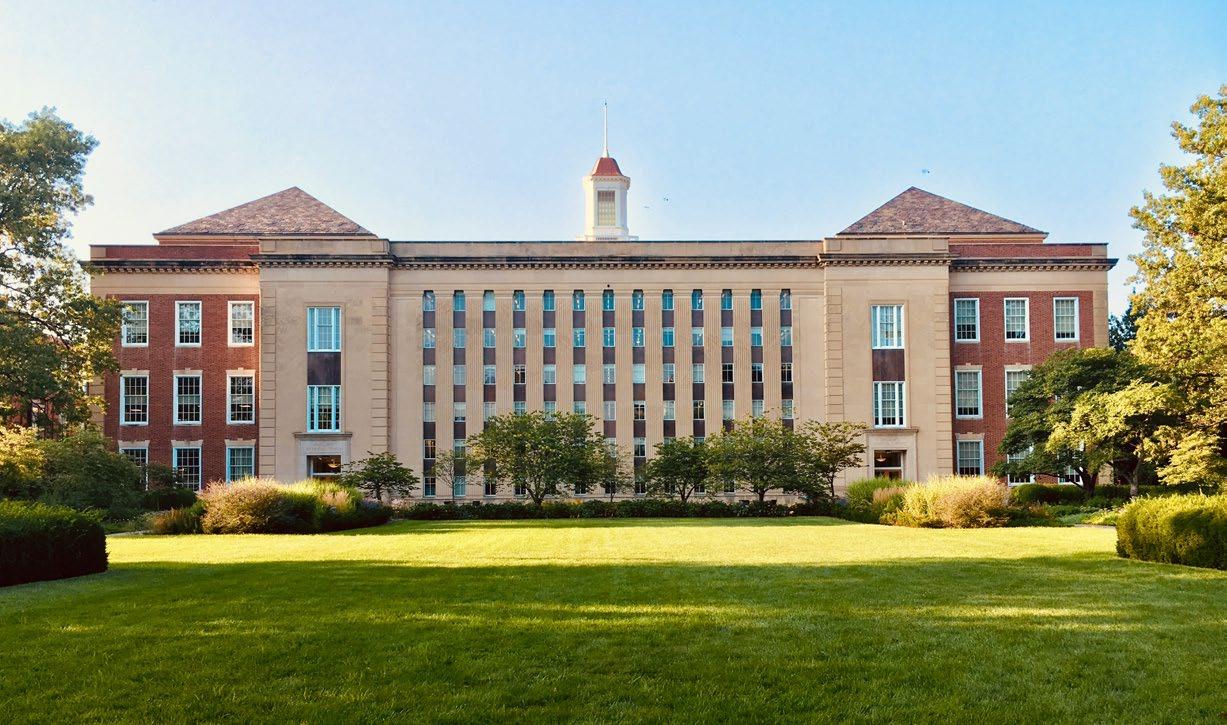
Walk onto a public campus today, whether it is a middle school hallway, a high school football field, or a university quad, and one thing becomes immediately clear: you have just stepped into a mission field.
The conversations students are having, the pressures they are carrying, and the voices shaping their worldview are not what they were even a decade ago, much less 50 years ago. Something has shifted. And if we are paying attention, we know this is not a moment to retreat.
Today, I want to take a step back and look at the broader picture. We will look at how campus culture has changed over the past 50 years, how those changes are showing up from middle school all the way to the university, the rich legacy of campus ministry within the Assemblies of God, and ultimately, why the call to reach students is more urgent now than it has ever been.
A Personal Connection to the Campus
For me, campus ministry is part of my story. My parents met at Chi Alpha on the campus of Northeastern State University. That ministry did not just impact a season of their life; it helped shape their future. They went on to
become public school teachers, faithfully serving for decades and living out their faith in environments that, over time, became increasingly resistant to Biblical values.
I also spent a decade as a youth pastor. I made it a priority to be on campuses every single week. I listened to students’ questions, their fears, and their hunger for something real. As a Lead Pastor, I became close friends with our Superintendent of Schools and a prayer partner. When I assumed my current role, I felt led that the OKAG should have campus ministry on all our nearly 500 public school high schools and on our more than 25 public college campuses.
A Culture That Has Dramatically Shifted
Over the past 50 years, the spiritual climate on campuses has changed in undeniable ways. There was a time when you could assume that most students had some kind of church background, a basic understanding of Scripture, or at least an awareness of Biblical values. Today, that assumption no longer holds.
We are ministering in a culture shaped by increasing secularization, a growing mix of competing worldviews, digital influences shaping belief systems at younger ages, and rising anxiety and mental health struggles.
Historically, many universities were founded on Christian principles, with spiritual formation seen as part of edu-
cation. Today, faith is often pushed to the margins. And yet, spiritual hunger has not gone away. Students are still asking the big questions: who am I, why am I here, what is truth? The difference is that many of them are asking those questions without ever having heard a clear presentation of the gospel.
One of the biggest changes we are seeing with students is when worldview formation begins. Middle school students are navigating identity and pressure far earlier than previous generations ever did. High school students are forming core beliefs about truth and morality. College students are arriving on campus with deeply held worldviews and, in many cases, little to no meaningful exposure to faith. That means campus ministry is no longer just about strengthening faith; it is often about introducing it for the first time.
A Rich Heritage: Campus Ministry in the Assemblies of God
The Assemblies of God has long understood the importance of reaching students where they are. In the 1940s, leaders began recognizing the need to intentionally reach students attending secular universities. That vision took shape in 1953 when J. Calvin Holsinger launched what we now know as Chi Alpha Campus Ministries.
His conviction was simple but powerful. Student movements have often been the birthplace of revival. From the Reformation to the Wesleyan movement to early Pentecostal outpourings, God has consistently used young people in academic environments to spark spiritual awakening. Chi Alpha was built on that same foundation, reaching students, discipling them deeply, and sending them out.
Alongside Chi Alpha, ministries like Youth Alive have focused on middle and high school campuses, equipping students to live out their faith where they already are. The strategy has never been complicated: empower students to reach their peers.
Why Campus Ministry Matters More Than Ever
In today’s world, campus ministry is not just important; it is essential. Students today will shape culture tomorrow, so if we want to impact the future, we must reach students now. The mission field has come to us. Campuses are more diverse than ever. Nations, cultures, and worldviews are gathered in one place. Students are the best missionaries. When they are equipped, they can reach their campus in ways no one else can.
A Season of Transition: Chi Alpha Moving Forward
As we talk about campus ministry in this issue of the Outlook, it’s important to acknowledge a transition underway within our own Chi Alpha. Chi Alpha is currently being
restructured and will move from being an embedded ministry within the national office of the Assemblies of God to becoming an affiliated ministry with the Assemblies of God.
This means that Chi Alpha will no longer be under U.S. Missions, and the Oklahoma Assemblies of God Network will no longer have authority over Chi Alpha directors or ministries. Chi Alpha will now have its own national board. The OKAG will continue to work closely together through a relationship and a shared mission.
Both the national leadership for Chi Alpha and the Assemblies of God are very positive about this transition. While they may not yet have every detail fully defined, one thing is clear: our partnership in reaching students is not ending; it is continuing with intentionality. We remain committed, together, to bringing the message of Jesus to every campus in Oklahoma.
Youth Alive: A Vision for What’s Next
The old “Youth Pastor” part of me never fades away. From the day I stepped into this role, I have had a vision to relaunch Youth Alive in Oklahoma. If you are not familiar with Youth Alive, just consider it our “Chi Alpha” for public middle and high schools. This ministry has already made a lasting impact in Oklahoma. Pastor and Presbyter Dave Mewbourne planted and led this ministry so well that, so many years later, we now have the opportunity to build on that legacy.
I am grateful to share that the Presbytery unanimously approved the relaunch, and we are stepping forward with faith and expectation. This fall, we will be sharing exciting details about how OKAG Youth Alive will equip and train students across Oklahoma to be missionaries on their campuses, raising up a generation that does not just attend school but transforms it.
The culture has changed. The campus has changed. Our mission has not changed. If our network did not exist and we were strategizing about how to fulfill the Great Commission in Oklahoma, campus ministries would be a top priority. Let us all make it a top priority. Let us believe that students will be empowered, called to ministry, and sent out to be world changers. Let’s believe for a Great Awakening.

Dr. D.E. Wootton
Superintendent/Network Pastor Oklahoma Assemblies of God
OUR MISSION
Networking together to better share the love of Jesus with the least, last and lost.
OUR VISION
A healthy Church in every Community
OUR VALUES
LOVE God together
LIVE healthy lives together
LEAD healthy churches together
LAUNCH healthy ministries together
AUTHENTICITY VS. RELATABILITY
Connecting with the Next Generation

by Candice Gibbons
In the Bible, Job found favor with God by living in open honesty and humility before Him. It was his friends who insisted on explanations of the Almighty that were found guilty, and that’s what can happen to us as leaders if we’re not careful. Like Job, we should remind students that God is not intimidated by their questions; He is more disappointed by intellectual dishonesty (Job 42:7). Instead of giving “church answers” for every theological question, invite them to explore their faith for themselves. Guide them to topical passages, devotionals, and offer your own story. In a world of vlogs and viral daily routines, personal experience far outweighs a degree or credential. The great news is, we all have personal experiences!
Many Gen Z students are specifically curious about the infilling of the Holy Spirit. It’s exciting to invite them to seek more of God’s power without the labels that previous generations applied to sensationalism or the lack thereof. Instead of leaving them to the instability of YouTube videos and distorted viewpoints on reels, tell them about your own experience encountering the Holy Spirit and how it changed your life. Identify common misconceptions and give practical answers, guiding them to the right sources when you aren’t sure how to respond.
Some leaders shy away from topics like atheism, pornography, and gender questions because they aren’t sure they have the knowledge or the training for the right answers. Personal experience backed by scriptural authority is a firm foundation for leading students to truth. For guidance on leading through cultural hot topics with teens, consider Dealing with Hot Topics devotional guides on MyHealthyChurch.com or Meet Generation Z by James Emery White. Stay updated on cultural issues so you are prepared to intellectually engage with questions from Gen Z. They are asking!
3. Connect strategically.
Jesus became like any other man (Hebrews 2:17, Isaiah 53:2). But that didn’t change his convictions. When the disciples and brothers James and John argued, Jesus didn’t argue with his brothers for relatability, nor did He pull away. Multiple times, Jesus pulled His disciples close and asked questions (Luke 22:24-27, Matthew 6:13-15).
Effective mentors don’t join in confusion; they counter it. This can be very practical and strategic. When we, as Gen Z, frustrate you with our “situationships”, don’t ask us to ditch our boyfriend; ask us to coffee. Instead of statements like, “Your parents don’t like him, and I don’t either.” Ask, “Does this situationship feel life-giving or draining? Why or why not? How can I be a friend/mentor to you as you navigate this?” When you see a questionably-worded post on social media, don’t comment, “I didn’t know this side of you existed.” Try DMing (private messaging): “Was it a fun night? How do you feel today?”
Things aren’t always as they seem. There’s a reason an explicit song was used and profanity is in the post description. An outward sign of rebellion is often a sign of inner heartache. Is there anger or abuse in the home? Are they forced to attend church, making it unappealing? Is their primary role model of a Christian positive or negative? Who are their friends—and what are they posting?
Reacting starts where you are; responding recognizes where they are. Your instinctive reaction could cut off circulation from your role as someone who could influence a post down the road. Reacting to how your parents or leaders would react can also be ineffective. Connecting with Generation Z means rewiring your brain.

There’s a joke among Gen Z about how adults text, and it’s not endearing. Gen Z sees it as very reactive with lots of punctuation, capital letters, and verbalized emotion and emojis. Sadly, this serves as a visual of how some adults talk aloud to Gen Z in reaction to inappropriate behavior. It’s reactive, not responsive. Respond to their text in the style of punctuation, length of the text, and capitalization. Match their texting abbreviations and study how frequently they use them. You might be surprised by just how many positive answers it produces.
Why is any of this important? Because this generation is about to take your place.
Right now is an unbelievable time to be a teenager. We’re looking at thirteen-year-old Alyssa Carson giving TEDx talks in Europe; sixteen-year-old Coco Yoshizawa winning gold at the 2024 Paris Olympics; sixteenyear-old Defne Özcan piloting a single-engine aircraft alone, and seventeen-year-old Kornelia Wieczorek on the brink of creating an app to detect and diagnose skin changes.
And yet, what a terrible time for teenagers. 1 million girls under 18 will get pregnant this year. 30% of teen girls are thinking about suicide. Nearly 3 in 5 high school girls feel hopeless. “Teens Are the Loneliest People in the World” reads a report by the World Health Organization.

school and support missions in third-world countries. Girls are reciting Bible verses to 1 million followers on social media, and teens all over the world are giving up Christmases to sponsor children around the world.
When you look at the lives of people who have made a difference in the world, it is often credited to the mentors of their day who pulled greatness out of them. Dr. John Minder is one of these people. He saw a young boy who struggled with the fear of public speaking and gave him the pulpit of a church. It was a bold connection that paid off.
Dr. Minder could have waited until the boy asked him for a speaking opportunity. He could have said, “I don’t want him to feel uncomfortable, so I just won’t put pressure on him.” But he just laughed and said he would pray for his nerves. The boy’s name was Billy Graham.
There are Billy Grahams right beside you.
This generation? The one who spends hours on social media?
Right now, teen boys are actively booking one-way plane tickets to religiously hostile countries to share the gospel. While some teenagers spend all their money on G Shop, others, like a girl named Ellie, regularly skip lunch at
This isn’t the next generation; this is the now generation. In a world full of leaders who stand by and wait for Gen Z to reach their style, or who doubt their own influence, be connected to Gen Z through authenticity and relatability. We need you more than you know.

Candice Gibbons has written three books for teen girls: A Time to Trust, A Time to Stand, and A Time to Learn. She graduated from the University of Oxford with a Diploma in Creative Writing. Candice is passionate about reaching the Next Generation as a journalist and speaker, and she divides her time between People’s Church in Oklahoma City and Oxford, England.

Exciting news for students applying for Fall 2026 & beyond! Check out our new degrees below:
D.B.A. Doctorate of Business Administration
M.B.A. in Healthcare Administration
M.A. in Practical Theology – Business
M.A. in Practical Theology – Family Ministries
M.A. in Practical Theology – Next-Gen Youth Ministry
M.A. in Transformational Leadership
B.A. in Church Ministries & Business (dual degree)



STANDING AT THE GATE
An Interview with 2024 Oklahoma Teacher of the Year, Rachel Keith

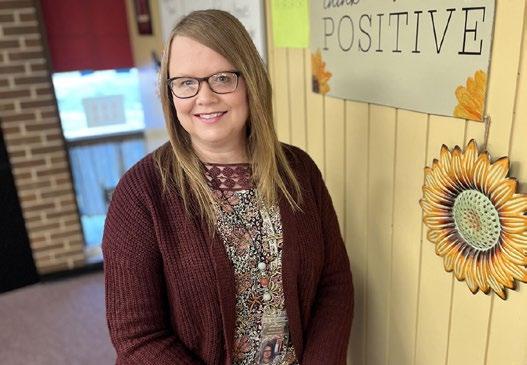
Rachel Keith has spent 21 years believing a public school classroom is one of the most strategic places a Christian can stand. The 2024 Oklahoma Teacher of the Year sat down with the OUTLOOK to make the case that Christian educators belong in public schools now more than ever.
The following interview has been edited for clarity and consistency.
You served as the 2024 Oklahoma Teacher of the Year. What did that role involve?
Oklahoma is one of only five or six states that still offer a sabbatical year for its Teacher of the Year. Rather than staying in the classroom, I spent the year as the Ambassador of Teaching across the state, working out of the Office of Teacher Certification, Retention, Recruitment, and Recognition at the State Department of Education. I traveled to small and large schools and to nearly every college of education across Oklahoma — from OU to Southeastern to Tahlequah (NSU) — promoting the teaching profession and supporting educator preparation programs. It was a year and a half of service, including the National State Teacher of the Year program.
What was it like to win?
Honestly, it was overwhelming — and very humbling. I just felt like the Lord had set another path before me for that season. It was quite an honor.
You’ve now been teaching for 21 years. How has your faith shaped the way you approach your classroom?
The very first thing I tell every Christian teacher I mentor — including my four children, who are all in education — is to get to school five or ten minutes early, before contract time, close your door, and pray over your classroom. I would pray over every seat, every life that was going to walk through that door. I’ve had students tell me, “Ms. Keith, your room is just so peaceful.” One student told my husband, Jimmy (also an educator), “Mr. Keith, your room smells like church.” We don’t fight in the flesh — the battle is in the spirit. You have to cover your room in prayer every single day before you can do anything else.
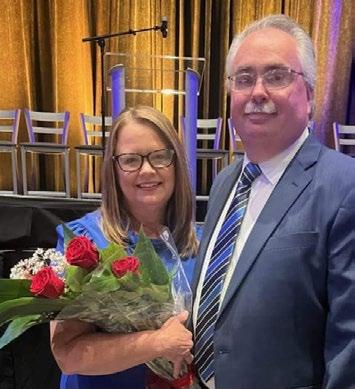
You and your husband also pastor a church (Ada First Assembly). How do ministry and teaching overlap?
The people skills are the same. Whether it’s students, teacher peers, or church members — you’re recognizing hurt, pain, depression, unspoken needs. Jimmy and I have both had coworkers hem and haw around a topic and finally say, “I know you’re a woman of faith — would you pray for me?” I always say, “Absolutely. Can we pray right now?” Sometimes they look at me funny, but after that first moment, if they ever need prayer again, they come straight in. You meet people where their need is — they may never come to your church, but they’ll come to your room.
Public schools get a mixed reception in Oklahoma right now. Why do you believe Christian teachers still need to be there?
Years ago I heard a message about the city gates of Israel — every city had them, and each gate served a purpose. It struck me that one of the city gates in every community, large or small, is the school system. It is a place of power and position. If Christians walk away from that gate, someone else will step in. And are they going to be praying — or preying? We can’t walk away. We have to walk in. I can’t lead a Bible study during class, but I can open my room at lunch for a student-led one. I keep my Bible visible on my desk. When a student asks me a faith question on their own time, I have the legal right to answer it. If they ask, it’s because they genuinely want to know.
Are students today more open — or more closed off — to spiritual conversations?
Both exist. Some are in a deconstruction season and carry real church hurt. But what I’ve found is if you listen without glossing over their questions and without immediately passing judgment, they are hungry. My daughter Kayla is a science teacher at Ada Junior High, and her students constantly ask, “You’re a Christian and a scientist — how?” She tells them, “Because the science proves my God is so real.” This past spring, students begged her to sing at the school talent show. She chose to sing ‘Call on Jesus.’ The room went quiet. Afterward, a student came up to her in tears and said, “Ms. Blaine, I feel like that song — I feel so
lost sometimes. What does it mean to call on Jesus?” That door opened because Kayla was there and said yes. Two staff members also approached her — one said, “I think I’ve forgotten I should be calling on Jesus.” Something so simple. But that moment would’ve been lost if she hadn’t been there.
You’re now serving as an instructional coach. What are you seeing on the ground with teacher shortages?
When I started this position last August, Ada had 23 emergency-certified teachers out of only 185 total. That’s a significant percentage — from preschool through 12th grade. An emergency certificate means the person may have a degree but hasn’t yet passed their certification tests. We’ve worked hard to move them along the path to provisional and full certification. We’ve gone from 23 to 7 this year, and I’m working with those 7 over the summer. The shortage is extremely real, and it creates an urgent need — not just for qualified teachers, but for Christian teachers specifically.
What would you say to a pastor or ministry leader considering a teaching role?
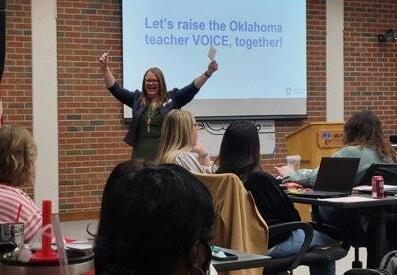
I’d say, think about it seriously. We’re going to see more bi-vocational pastors in the years ahead. If you’re pursuing any kind of degree — through Bible school, Global University, or a traditional university — consider adding a minor in a core subject, kinesiology, or early childhood education. You can teach in your rural community, serve your neighbors, ease the financial burden on a small congregation, and carry the presence of God into a school that desperately needs it. And for
Christian retirees who still have five or ten years left — we would fill the teacher shortage in this state very quickly if you would walk into a classroom. I would personally walk anyone through the alternative certification process. Reach out to me. Now is the time.
To connect with Rachel Keith about the alternative certification process, contact her at keithr1315@gmail.com.
ON CAMPUS ON MISSION
Baxter Stewart’s Vision for Oklahoma Chi Alpha

by Jayson Evans
The summer throws Baxter Stewart off his rhythm. That’s how he describes it— not as a complaint, but as a confession from someone who thrives on relationships, community, and presence. As Director of Chi Alpha Campus Ministries for the OKAG Network, Stewart is rarely sitting still.
He’s evaluating chapters across the state, helping raise support for missionaries-in-training, and driving international students to airports to return home. But in the summer, the rhythms go quiet—and for a man whose ministry is built on showing up to the same place, with the same people, over and over again, that is genuinely difficult.
It’s a small detail, but it tells you something important about Baxter Stewart: consistency is his theology.
Stewart grew up in Chester, Oklahoma—a small community in the northwestern part of the state—attending high school in Fairview and church at Elm Grove Assembly of God. His dad wasn’t a Christian when he was growing up. His mom, an accountant, fought to keep the family connected to church. Sports filled the rest: basketball, football, baseball. But the person who shaped him most spiritually wasn’t a parent or a coach. It was his youth pastor, Sherri Smith. Stewart recounts, “She was there in ways that my family couldn’t be. She came to all our games, was the same person all the time, whether there were three people at youth group or fifty.”
Stewart remembers her tears, her prayer life, her constancy. He talks about her the way people talk about someone who changed the direction of their life without ever trying to make it dramatic. “There’s just a passion and a difference in how she did that. She was always present for us. She taught us how to follow the Lord.”
He also credits the senior pastor, Orville White—a preacher who, Stewart says, walked with wisdom. White’s approach matched the same steady, ministry Stewart had already learned to value.
A Stranger with a Chi Alpha Shirt
Stewart enrolled at Southwestern Oklahoma State University in Weatherford, intending to study mass communications and public relations. He had no idea Chi Alpha existed. That changed on move-in day. “Some people came up to my car and carried my stuff up the stairs in one trip. They were wearing shirts that said, ‘You look like you need some help.’”
One of them, Jason Barr, sat on Stewart’s bed and talked with him for thirty minutes. “He made me feel like I was the most important person in the world.” At the end of the conversation, Barr, who was the campus’s Chi Alpha Director, mentioned the ministry. Stewart was curious but cautious. He tried other campus ministries as well as Chi Alpha. The Baptist Campus Ministry lasted until a leader told him he had to choose. “You made the decision for me,” Stewart recalls with a laugh. “That was easy.” What kept him in Chi Alpha wasn’t the programming. It was the people on his dorm floor—guys who weren’t Christians, who played intramural sports and stayed up too late and did “a bunch of stupid stuff.” Chi Alpha became the place where Stewart could bring their names and pray over them. It was less a church club and more a mission post embedded in ordinary college life.
By the end of his college career, several of those dorm friends were sitting alongside him in Bible studies he and a roommate had started on their own. Nobody gave them a curriculum. They just started meeting and invited people. “We didn’t know anything about anything,” he says. “But we just did it.”
Some of Stewart’s most formative moments came not in a Chi Alpha service or organized retreats, but in ordinary campus spaces where the Holy Spirit showed up anyway. A student gets filled with the Holy Spirit at midnight on the track. His brother-in-law encounters God while Stewart plays music on an iPod and reads a few scriptures. His apartment seems to shake when a friend, who didn’t grow up Pentecostal, starts speaking in tongues after thirty minutes of quiet prayer. “Whatever was (written) in the Bible felt real,” Stewart says simply. “It wasn’t churchy or stuffy. It felt like we were actually living this thing.” For Stewart, the pattern was clear: faith had to show up where students already lived.

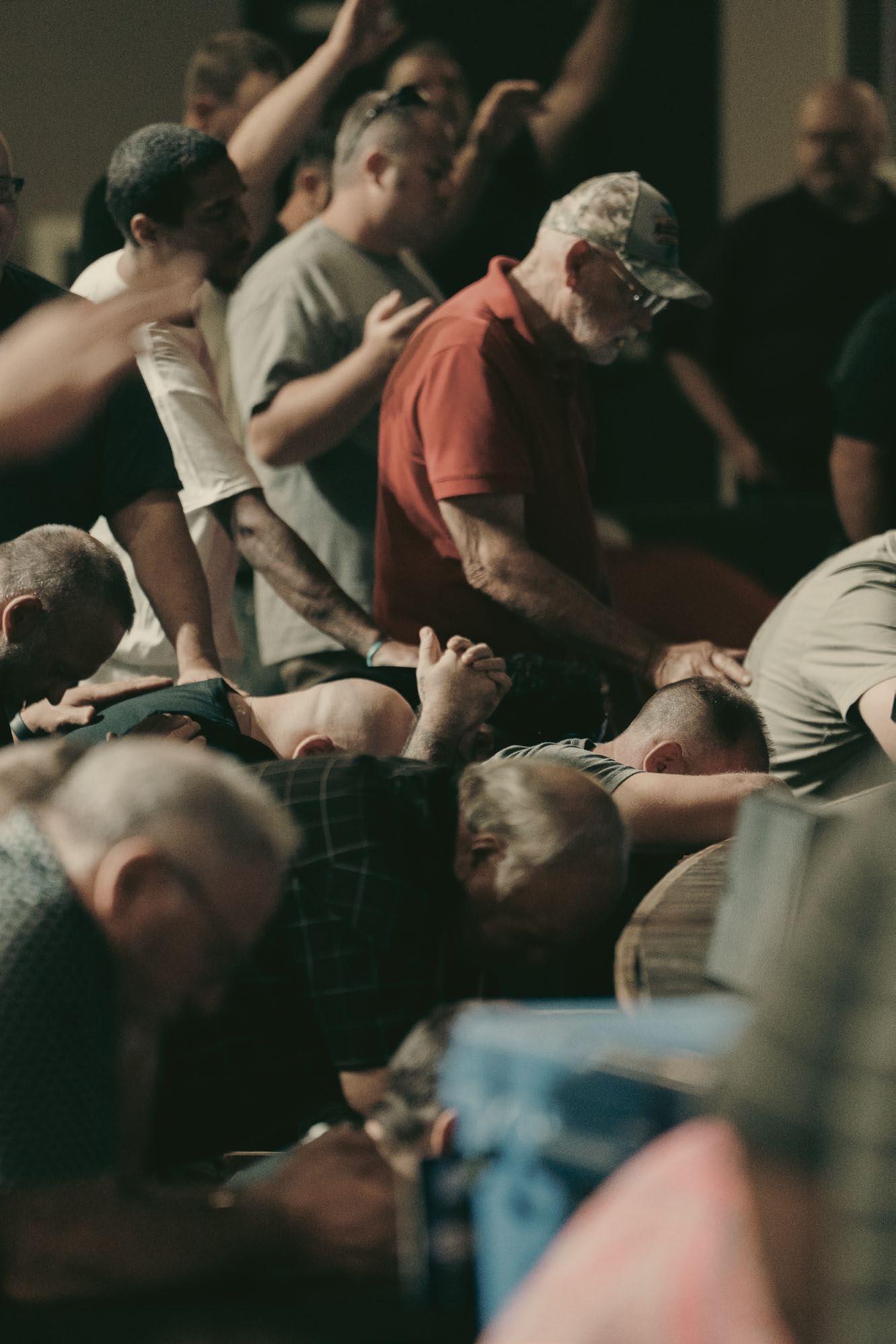


SEPTEMBER 11-12
$55 Until August 11
$65 August 12–September 10
$75 At The Door





BACK TO CAMPUS
How OKAG NextGen Is Pioneering a Youth Alive Revival
There is something happening in the hallways of Oklahoma’s public schools. In lunchrooms and at lockers, in small circles before the first bell rings, students who call themselves campus missionaries are beginning to take their faith public.
It’s a movement that was once vibrant in this state, then went silent for over 20 years — and now, the OKAG NextGen Department is working to bring it back as a new effort centered on student-led campus mission.
Youth Alive, the Assemblies of God’s campus ministry initiative, equips students to share the gospel on their school campuses through a tiered approach. At the most grassroots level, a Youth Alive Convo involves a student meeting with a friend near their locker to pray. A step up from that, a Youth Alive Circle is a more organized gathering — perhaps a lunch table Bible study. At the highest level, a Youth Alive Club is a formal group with administrator backing, functioning like a student-led church service within the school building. The entire model is built on a single, radical premise: that the students sitting in Oklahoma’s pews every Sunday are also the state’s most strategically positioned missionaries.
“At its core, Youth Alive is a ministry that trains students to share the gospel on their school campuses,” said Heath Corrales, the OKAG’s NextGen Director. “And what makes it so unique compared to other campus ministries is that it puts everything on the student. It is student-led.”
A Ministry Born for the Classroom
To understand why Youth Alive’s return matters, it helps to see what it once was — and who helped build it here in Oklahoma.
Dave Mewbourne served as the Oklahoma Youth Alive Director from 1995 to 2002, during a period when campus ministry was still finding its footing in Assemblies of God culture. Before his official appointment, he had been doing Youth Alive work under the radar as a youth pastor at Woodlake Assembly of God, leading clubs and conducting school assemblies at the direction of then-District Youth Director, Tom Greene. When the role became
official — eventually becoming a nationally appointed missionary position under the US Missions Department, complete with a required support-raising process — Mewbourne poured himself into the work.
“The basics of Youth Alive were to equip our young people in our churches to have an active strategy to reach their campus for Christ,” Mewbourne explained. “The focus was to take the discipleship youth were receiving in their church’s Sunday schools, youth groups, and church services and take it to the campus.”
The three pillars of his ministry were prayer, witnessing, and club formation. He traveled across the state, bringing in speakers like Reggie Dabbs, Eric Johnson, and Rick Enloe for school assemblies, followed by community night rallies where the gospel could be presented openly. His team also launched creative initiatives, such as “Prayer Zone Partners,” encouraging churches to pray for their local schools every time they drove through a school zone.
“To me, the most encouraging thing about Youth Alive was to see students take personal responsibility for reaching their campus,” Mewbourne said. “Creating Youth Alive Clubs where students from every church — not just Assembly of God churches — were meeting to fellowship, be encouraged, pray, and reach others for Christ on their campus.”
The impact was real. But by 2002, that chapter closed. Mewbourne moved on to become the lead pastor at Claremore First Assembly of God, and without a dedicated missionary to sustain the infrastructure, Youth Alive in Oklahoma quietly faded. What remained was a ministry concept that older youth pastors recognized by name but that a new generation of leaders had never encountered.
24 Years Later: Why Now?
Corrales recognizes that after a 24-year gap, it is time to bring Youth Alive back into focus in Oklahoma. “Here’s the thing,” Corrales said, “you look at the school campuses, there are different variations of Christian clubs, from Young Life to FCA. But the one thing that makes Youth Alive so unique is that it puts everything on the student.”
That distinction matters. In a ministry landscape crowded with adult-led campus organizations, Youth Alive carves out a lane that others don’t occupy. It doesn’t rely on a parachurch staff member to show up at school. It doesn’t

OKAG World Missionaries
Meredith Bagby – South Africa
Aaron and Krista B – Eurasia
Darrin and Sarah B – Eurasia
Nathan and Emily Blackmore – England
Garrett Boren – Thailand
Michael and Debbie Caldwell – Uruguay
Jordan and Shea Campbell – Germany
Michelle C – Eurasia
Sam and Kailee U – Eurasia
Darin and Diana Clements – Philippines
Gary and Wilma Davidson – OKAG Mission Directors
Blake and Katy Edgmon – Ireland / Zoe Community
Kirk and Karla Ford – England
Steven and Tiffany G – Eurasia
Chris and Amy Hales – England
Tim and Lynley Hatcher – Wycliffe Bible Translators
Ted and Carolyn Heaston – Global University
Bethany H – LAC
Cory and Angela Hogan – Mexico
AJ Jenkins – Mozambique, Africa
Josh and Lindy J – Eurasia
Tim and Jennifer Land – Cameroon
Jimmy and Cynthia Lemons – Togo
Danny and Faith Lund – Latin America Caribbean
Matt and Randi M – Eurasia
Quentin and Elizabeth McGhee – Latin America Caribbean
Stephen and Kristen McKnight – Philippines
Joni Middleton – Europe Project Rescue
Bill and Reita Moore – Africa Tabernacle Evangelism
Lauren Morgan – Indonesia
Trent and Tina Morrow – Uruguay
Ryan and Lauren Plute – International Ministries
Adam and Sarah Quinn – Costa Rica
Fari Rider – Taiwan
Matt and Rhea R – Eurasia
Dave and Patti Schatzman – Pohnpei
David and Carol Schmidt – Cameroon
Josh and Lisa Sears – Brazilian Amazon
Tim and Liz S – Eurasia
Jared and Kaila Shoultz – Mozambique
Grady and Janet Smalling – Europe
Audra S – N. Asia
Isiah Smith – Netherlands
Larry and Sharon S – Eurasia
Jim and Jody Smith – Spain
Todd and Leslie Stamps – Portugal
Charles and Linda Stewart – Latin America Caribbean
David and Shirley Swafford – Latin America Caribbean
Adam and Bethany Weatherly – Spain
Loretta Wideman – Kenya
Aaron and Ashley Withington – Japan
OKAG U.S. Missionaries
Brian and Mariah Abraham – Chi Alpha, Langston
Shane and Treva Adams – Chi Alpha, USA
Finlea Baxter – Chi Alpha, OSU
Mattie Bright – Chi Alpha, NSU
Charlie and Dona Bunn – Central Chi Alpha
Karen Coon – LIFT Prison Ministries
Cynthia and Destry Dobbs – Regional Chi Alpha Director
Madison Dunn – Chi Alpha NW OSU
Ryan and Zoe Evans – Central Chi Alpha
Nancy Fitzgerald – Intercultural, Hispanic Ministries
Marisa Ford – Chi Alpha, OSU
Brandon and Stacy Garrett – Chi Alpha, OSU
Wayne and Mischa Gray – Teen Challenge
Terence and Laurel Harris – Intercultural Ministries
Scott and Rebecca Howell – Chaplaincy, Backyard Orphans
Greg and Darlene Hurta – Church Multiplication, RV Maps
David Kayembe – Chi Alpha, TU
DuWayne and Cara Lee – Chi Alpha TU
Jeff and Alesa Miller – Church Mobilization,RV Ministries
JoLeta Nash – Chaplaincy Ministries, Widow Link
Shemaiah Oatman – Chi Alpha, TU
Dacia and Tim Perkins – Chi Alpha, OSU
Steve and Kimberly Snow – Intercultural Ministries
Michael and JayLynn Sperry – Central Chi Alpha
Baxter and Shayla Stewart – OKAG Chi Alpha Director, NSU
Vanessa Taylor – Chi Alpha, TU
Melliza and Colby Taylor – SaveONE
Shawn and Brenna Tayon – Intercultural Ministries
Greg and Susan Tiffany – Chi Alpha, OCCC and Rose State
Jasen and Alyssa Waterson – Chi Alpha, OSU okag.org/mission
Pray for us that the word of the Lord will spread rapidly and be glorified, just as it did also with you


Helping