
650 Words or Less: How Students Shape Themselves for College
“At 3, before I could even spell my name, I learned to refuse it: the start of everything that made me, me.
My world, then, was built entirely by a woman—the one who dressed me, fed me, and braided my hair. My mom, a lover of poetry, named her first daughter, me, after Rumi. When the devastating news that I was named after a man was first laid bare to me, I was beside myself. I couldn’t understand why my mom, a single, hardworking feminist, chose a man’s name for me. My father’s absence had already corrupted my view of men; carrying one’s name would only deepen that wound.”
That is how my college essay

begins, after ten abandoned ideas and nearly thirty drafts, each one trying and failing to sound like me.
The college essay, capped at 650 words, asks students to compress years of memory, identity, and contradiction into something readable and compelling. It is framed as self expression. In practice, it often becomes an exercise in self presentation. I learned that quickly. After weeks of circling different versions of myself, I chose a topic that felt sustainable, something I could return to without losing my voice. Even then, the pressure did not disappear. It sharpened. Every sentence felt like a decision
about who I was allowed to be on paper.
I was not the only one making those decisions.
Each year, about 1.5 million first-year students apply to colleges across the United States, submitting more than 10 million applications through platforms like the Common Application. On average, that is nearly seven applications per student, seven attempts at telling the same story in slightly different ways, hoping that somewhere, it will land. For some, that story comes early.
Justin Ayala, a senior at the Thacher School in Ojai, said he knew his topic from the beginning.
“From the start, I knew I was going to write about using astronomy as a tool for community building,” Ayala said. “That moment made me seriously reconsider what role I wanted to have in the world and how I could get there.”
His interest in space started when he was young.
“As a kid, nothing captured me the way space did. I dreamed of someday telling the story of the time I stepped on the moon. Now that would be a great story! Then the summer after sophomore year, I began to dream of building the ultimate escape method, a telescope, and I managed to convince the school to fund this endeavor.”
Even with a clear idea, the process was still difficult.
“I was very frustrated with this essay for most of its existence,” Ayala said. “I wasn’t sure what the moment said about me or how to capture that. I kept writing drafts and then deleting them.”
It was not until he stepped away that the essay began to take shape.
“After taking a break, it came together a lot more naturally,” he said. “That time away was so valuable.”
In the end, his approach shifted. The essay became less about telling a large, impressive story and more about his personal re-
sponse to a single moment.
“I am definitely happy with how it turned out,” he said. “In the beginning, I expected to tell a grandiose story with great insight into the world, but I’m glad I took a step back and focused more on my reaction to the moment. The essay is much better for it.”
Other students turn inward.
One high school senior, Val Edelson from Villanova Prep, wrote about self confidence in the age of social media.
“Social media took my selfworth on a rollercoaster with high drops and fast loops. If my post performed well and received enough likes, the view
was beautiful, and my adrenaline was high. When they underperformed, my confidence plummeted, and I began to spiral. My friend showed me photos of my recent post sent in group chats with responses like ‘chicken legs’ and ‘stick figure.’
The comments and compliments on my body became addictive, and I started to believe that if I wasn’t small, I wasn’t special.”
Placed side by side, these essays do not resemble each other. One looks outward toward telescopes and possibility. Another turns inward toward perception and validation. Mine begins with a name I once rejected.
But that difference is the point.
Across interviews and drafts, a pattern emerges. Students are making choices about what to reveal, what to leave out, and how to frame their lives for an audience they will never meet.
For many, the process is less about finding the perfect story and more about deciding which version of it to tell.
By the time applications are submitted, the essays are finished, but the questions behind them are not.
They follow students beyond the word limit, beyond submission portals, and into whatever comes next.

How I Upcycled a Broken Tent



Keeping Ojai Authentic: Inside Papa Lennon’s
From plastic lobsters, hand-painted signs, and live music, Papa Lennon’s is a local favorite—fostering our small-town amidst its many changes. Read on C2
Written By Mayla Embry, 11th Grade
Written By Lola Clemens, 11th Grade
My sewing experiments did more than find a new use for damaged outdoor gear. It opened my mind to a possible future career path. Read on C4 A Forest of Hands: Ojai’s Path to Change
Written By Aiden Kehoe, 11th grade The world is dominated by screens, constant alerts, and a growing disconnect between people and the natural world—but through the chaos, the Ojai Valley Land Conservancy is reconnecting our community to the land and inspiring action for a better world. Read on C3
Written By Wren Zimmerman, 10th Grade
The applause roared again, filling the room the same way it has many times before, and in that moment yet another young actor had a vision of their future. Read on C4
Written By Rumi Way, 12th Grade
(Photo Credit: Czarina Hutchins)
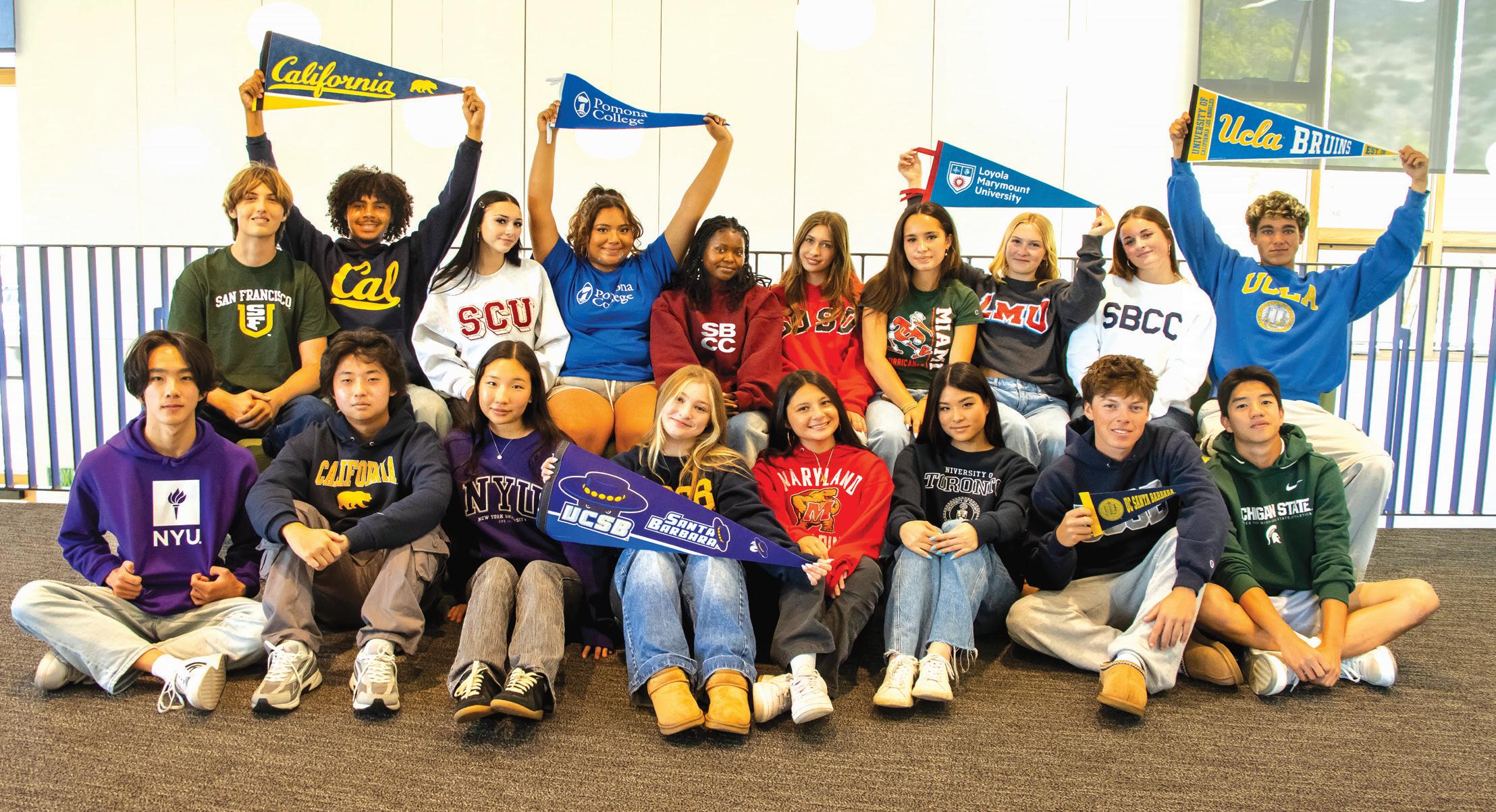
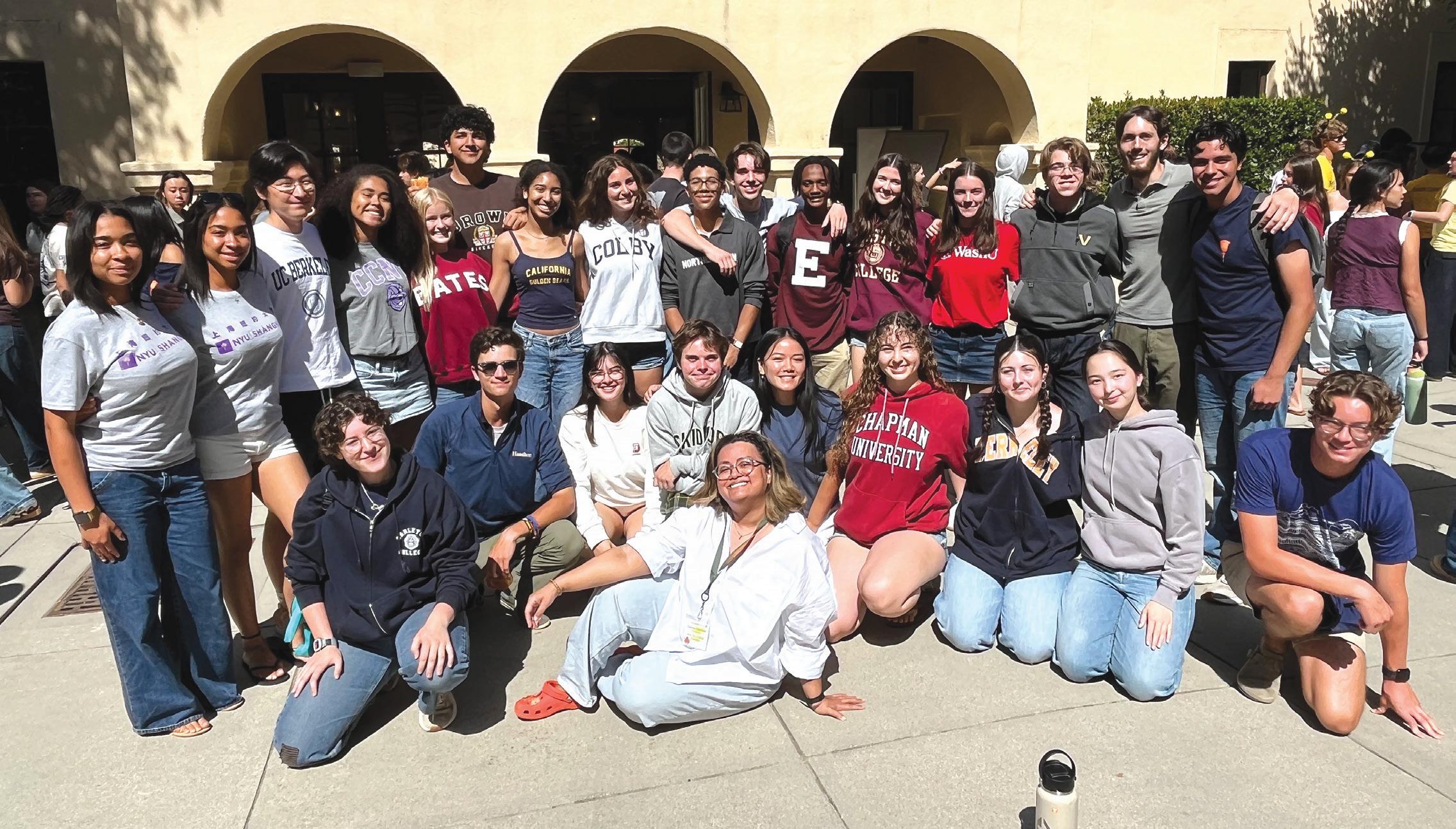
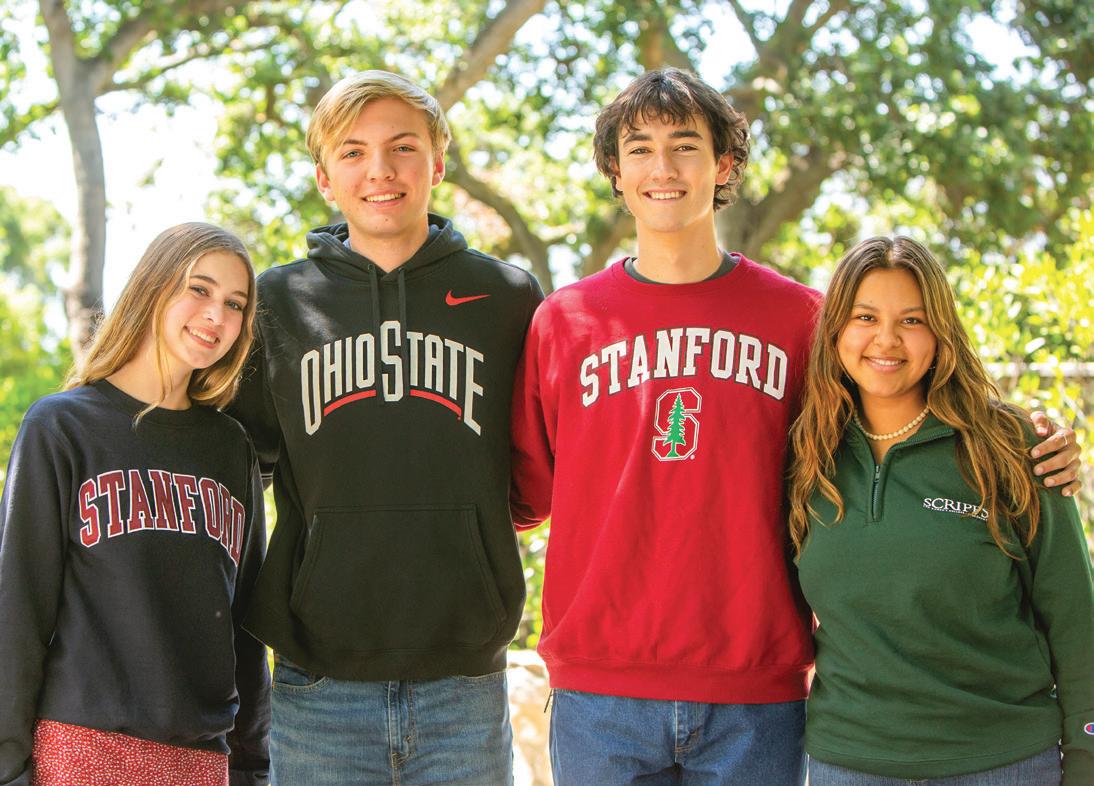
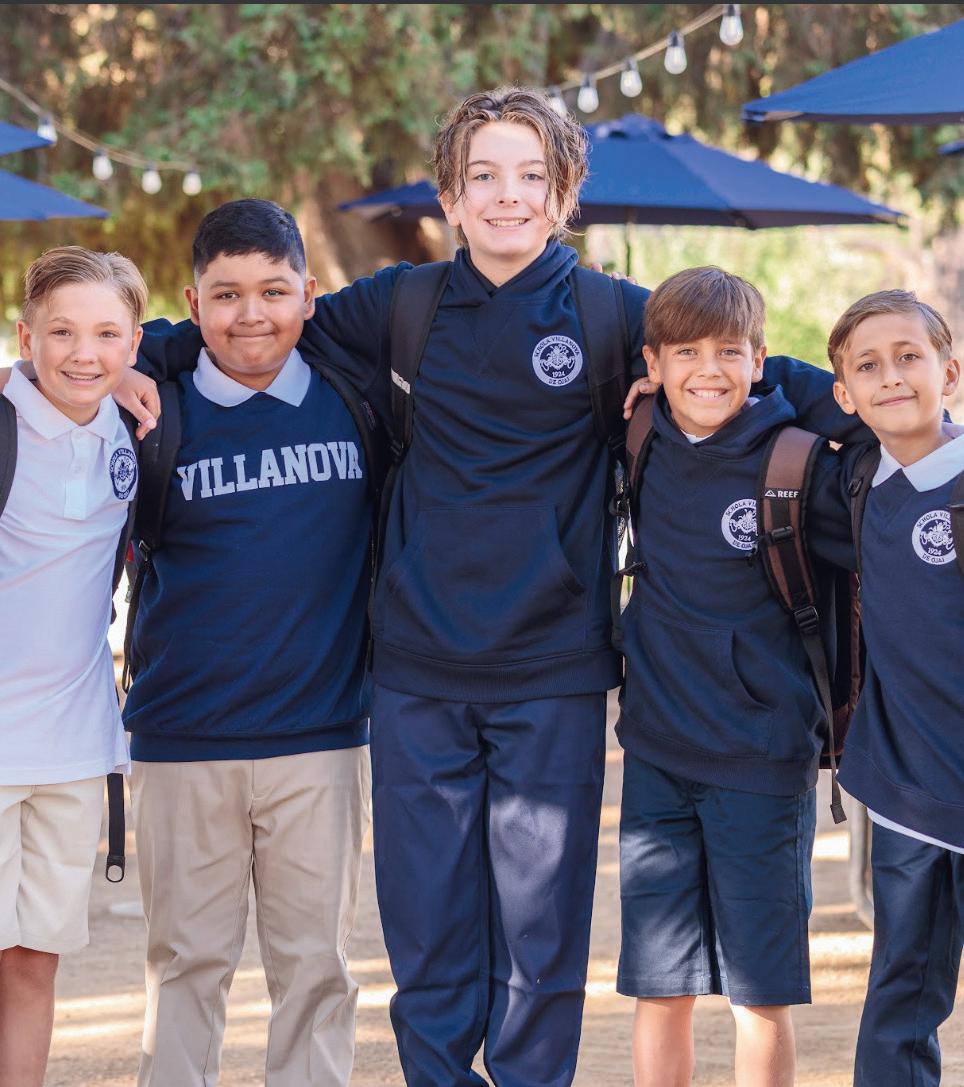
The Thacher School seniors showing of their college merch.
(Photo Credit: Misty Hall)
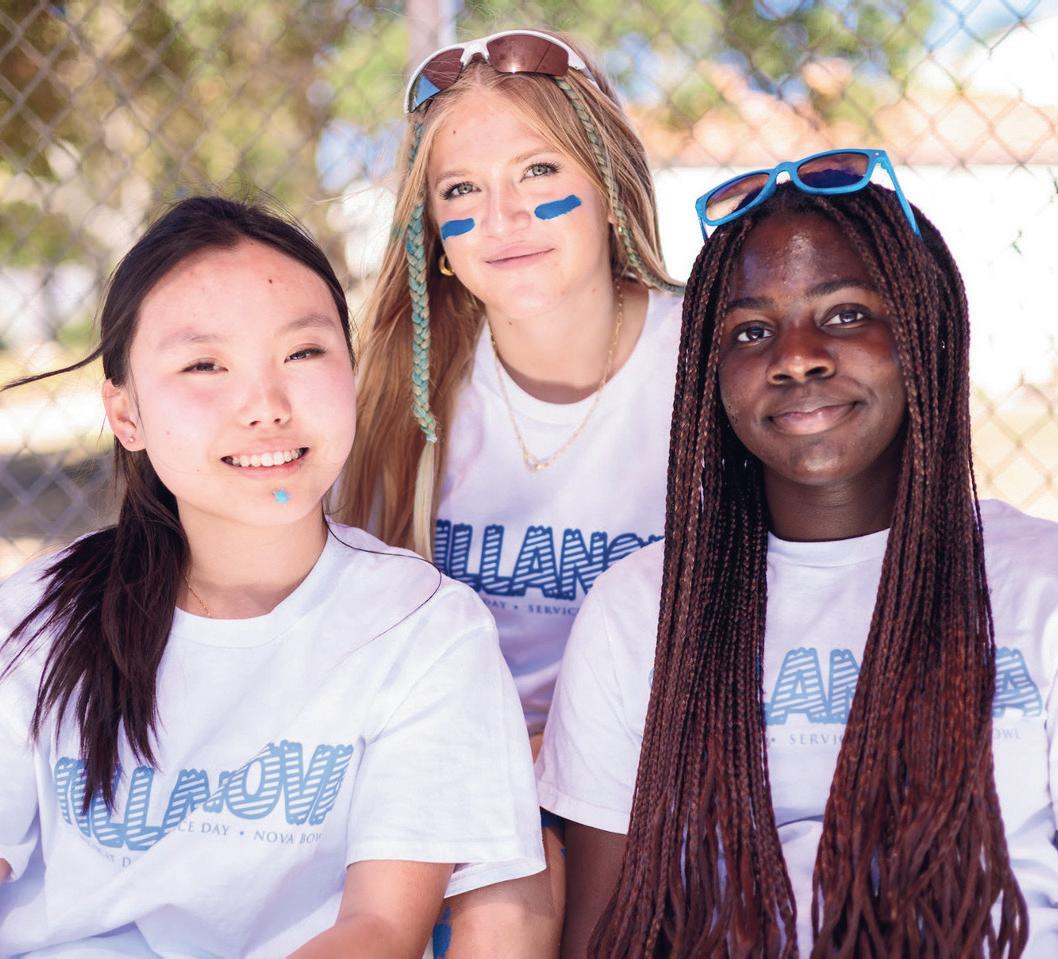
Ojai Valley School seniors showing off their college merch on May 1.
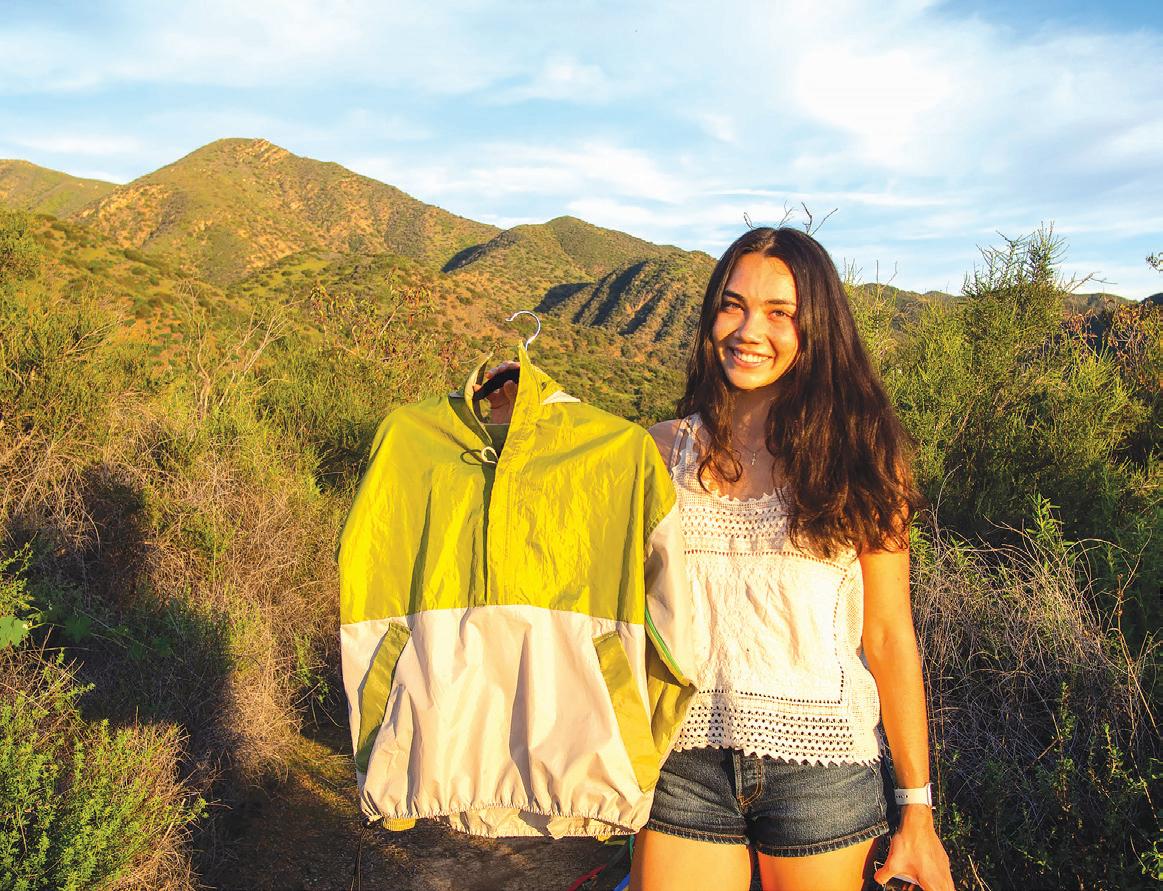
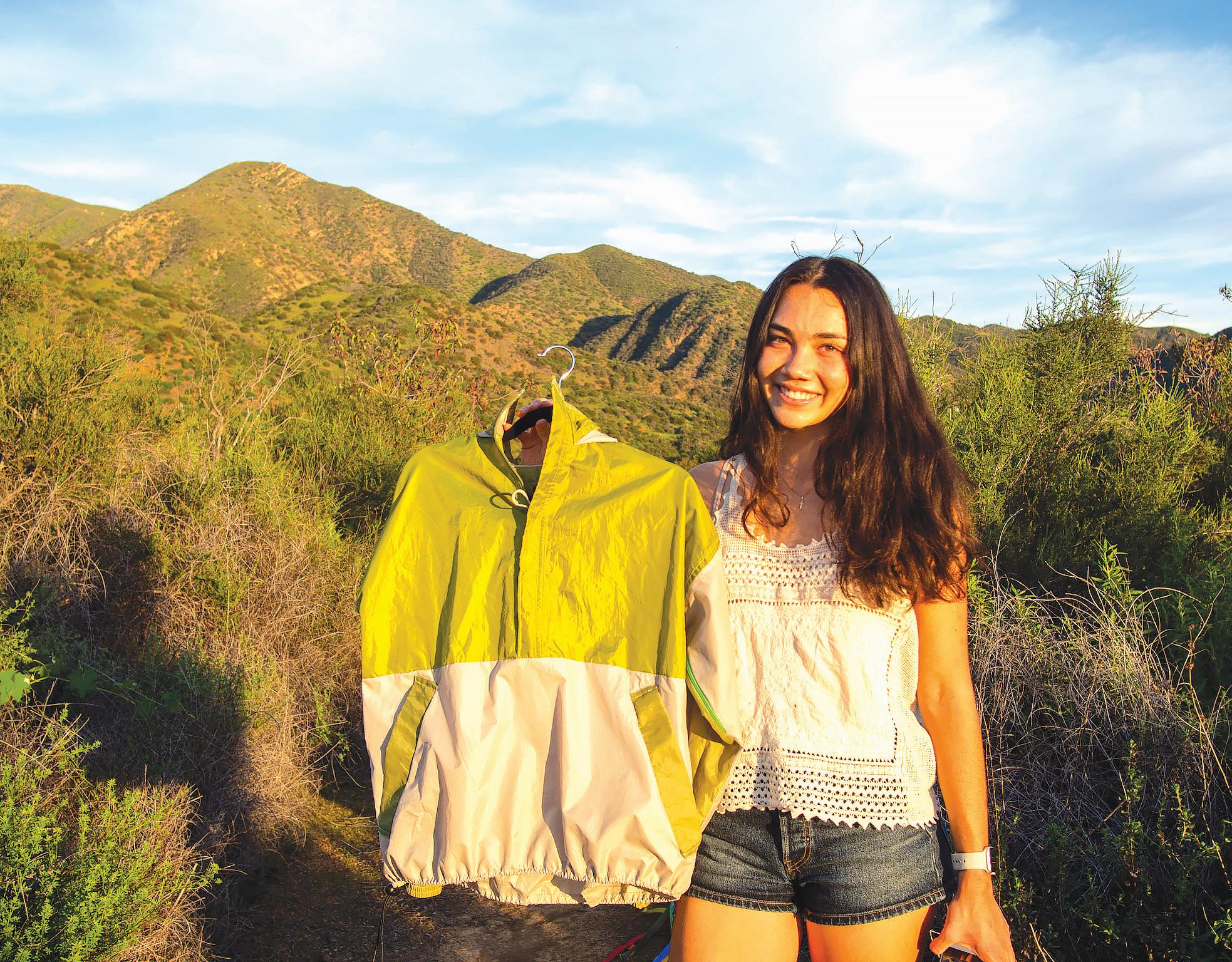
(Photo Credit: Lola Clemens) Lola shows off her finsished jacket made from a broken tent fly.
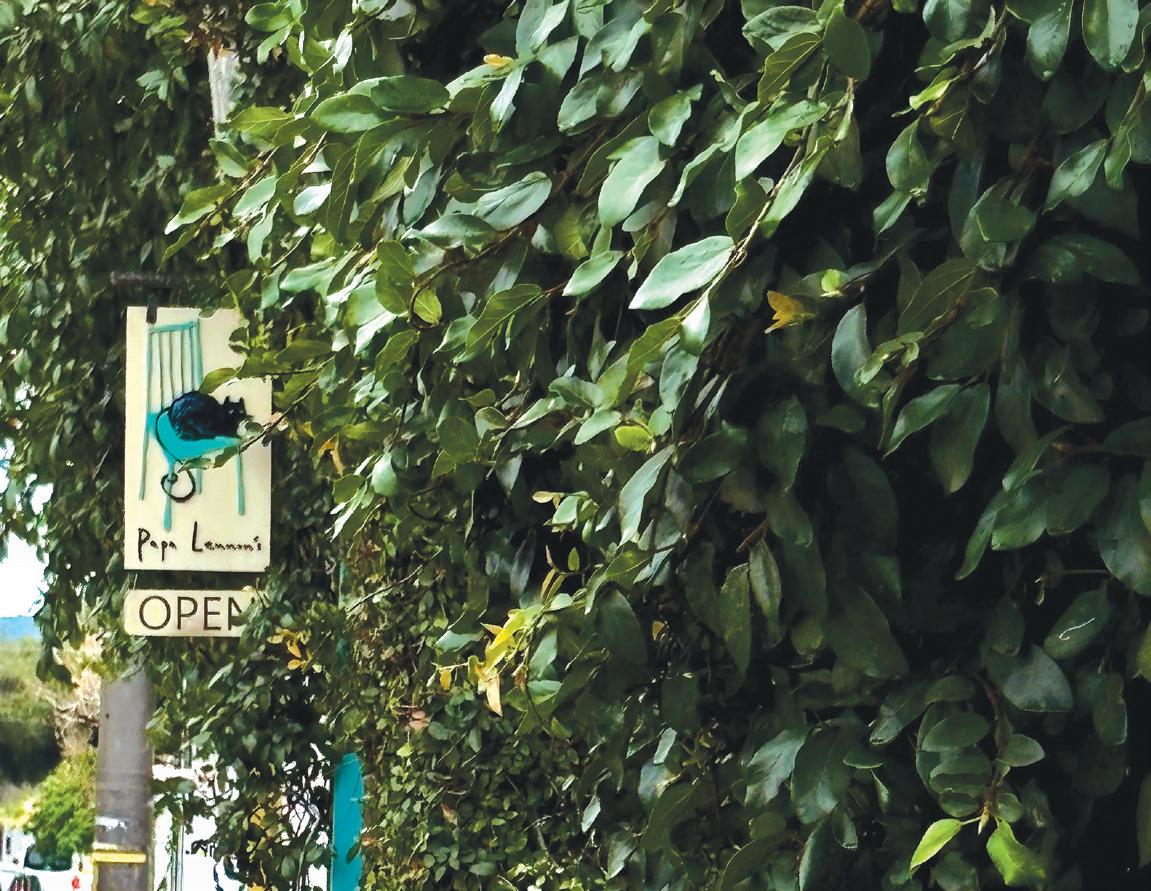
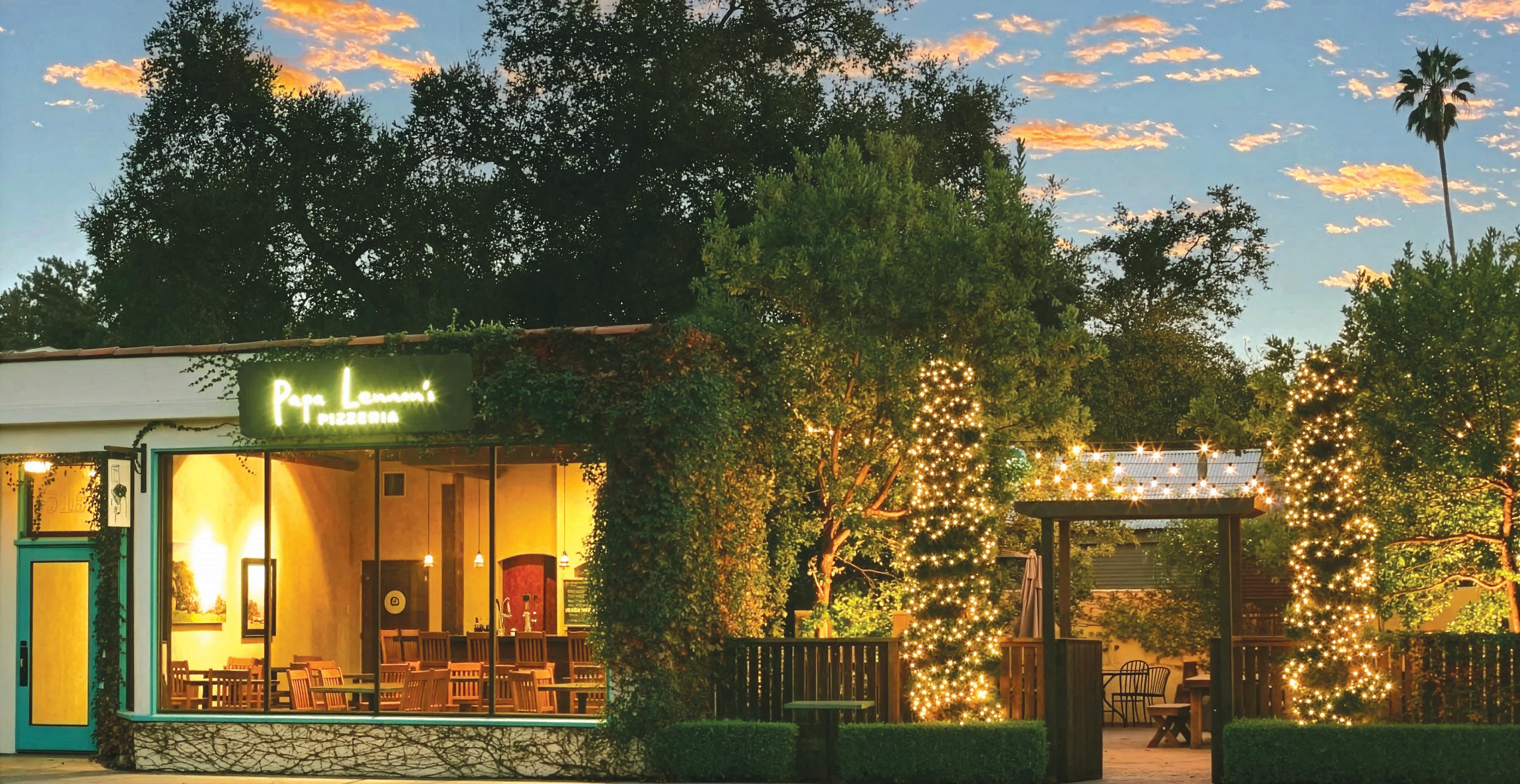
(Photo Credit: Mayla Embry) Sidewalk view of Papa Lennon’s showing off their iconic sign.
(Photo Credit: Celeste Ayala)
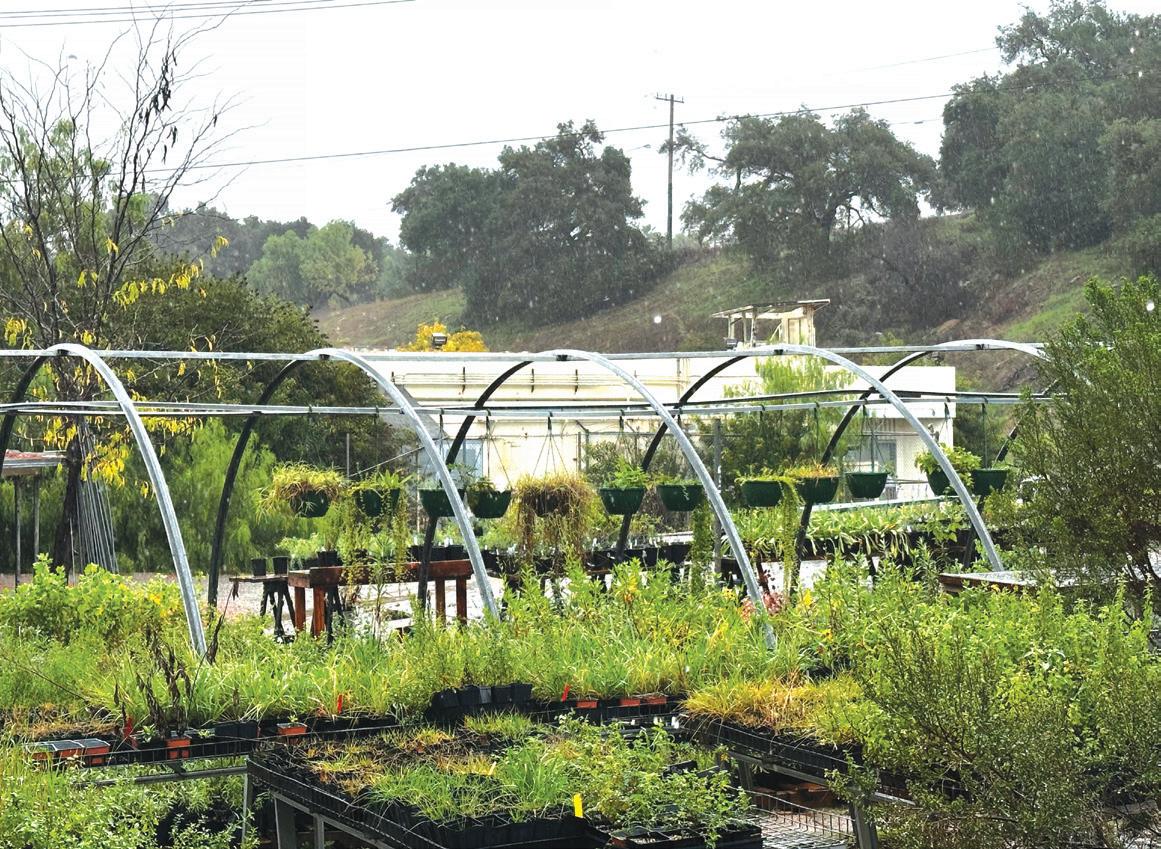
An overview of OVLC nursery.
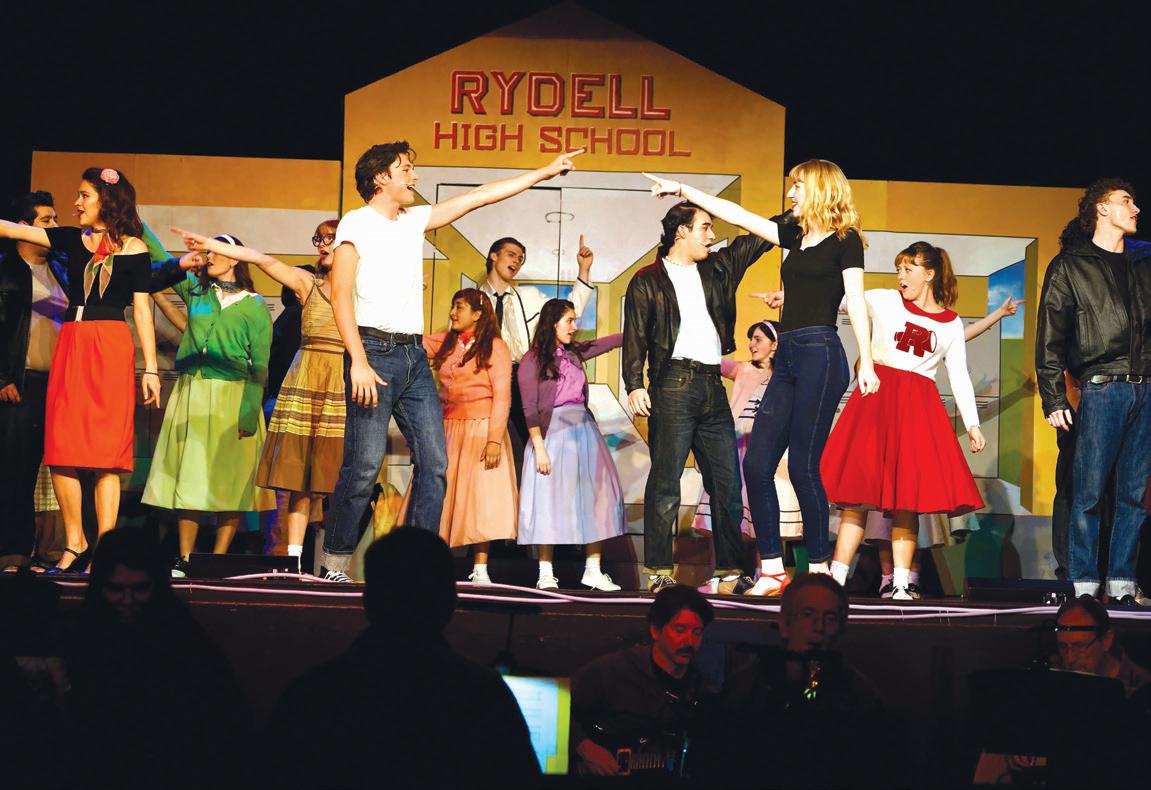
(Photo Credit: Anthony Avildsen) Nordhoff ’s production of “Grease” at a dress rehearsal.
Keeping Ojai Authentic: Inside Papa Lennon’s
Written By Mayla Embry, 11th Grade
From its plastic lobsters, hand-painted signs, and live music, Papa Lennon’s has become a local favorite—fostering community in our small-town as Ojai undergoes many changes.
In recent years, we’ve seen many local cafes and restaurants get increasingly trendier. They’ve adapted to the new generations of Ojai, straying from the simple, chalkboard-menu
style that used to be the “norm,” and leaning into a flashier aesthetic. Yet, Papa Lennon’s stuck to its roots, building a space that feels authentic and community driven.
The beginning days of Papa Lennon’s back in 2010 were fueled by mere dedication and teamwork. With no grand openings or advertisements, a simple, hand-painted open sign was all
the Lennon family needed.
“I feel like grand openings set you up for failure, it’s too much stress,” said founder Jeff Lennon. “So we just sat there and waited. This guy came in and was like ‘Open?’”
Additionally, the restaurant wasn’t actually a restaurant, at least not originally. Lennon and his wife bought the building as a flower shop. They built and
designed the restaurant from scratch, giving the Lennons full creative control. But of course, that posed its own set of challenges.
“Cutting into the concrete, running all-new pipes, building out the restaurant— it was a big challenge to get started. Along the way it’s also a challenge to stay up with the community, bring on new employees, and try to learn the business side of restaurants,” Lennon said.
It started small, with just a few employees: one person in the front, and two in the kitchen.
“My mom and sister were helping then, we would meet after we closed and talk about what we could improve on,” Lennon explained. “It just grew from there.”
Throughout its 17 years of business, Papa Lennon’s has
held a steady presence in our small-town, the home of many memories for Ojai locals.
The menu is curated with a perfect balance between creativity and classic Italian flavors.
Some beloved dishes include the “Wonton Chicken Salad,” “Goat-To Pizza,” and the familiar favorite “Pasta Primavera.”
For Kristin Bowen, a long-time diner at Papa Lennon’s, it’s not just the main courses. “ I love their cheesy garlic fries, I feel like they’re very underrated. The roasted vegetable panini is also really good, ” she said. “Papa Lennon’s is a staple restaurant in our community, it’s solid, comfortable, and always good.”
Before COVID, the mom-andpop restaurant would host live music each weekend—at one point, the Lennons even had a live piano in the center of the
room. Some may remember the iconic, plastic lobster kept in the fountain, drawing the attention and fascination of many young children.
“Sometimes a kid will go home with the lobster, they’d take it home, bring it back the next day, I think we’ve gone through about four lobsters, that’s pretty good for 17 years,” Lennon recalled in a recent interview.
Whether it’s curating a perfect social-media presence or calculating business strategies, success can be found in many different ways and forms in the restaurant industry.
For Papa Lennon’s, success came from sparking connection. Built around family, creativity — and of course delicious food — the Lennon family didn’t just start a restaurant, but a place of community.
The Power of Fire: Nature’s Way of Restoring Balance
Written By Aanya Yadav, 12th Grade
When people think of wildfires, they picture devastation: burnt mountains and smoky skies. However, here in Southern California, wildfires aren’t only a disaster. They are a natural cycle of our landscape.
Wildfires have been a part of our landscape here for thousands of years, and many native plants and animals depend on wildfires to survive. From seeds that only sprout after fire, to fungi that help rebuild the soil, wildfires are so much more than a natural disaster, they are necessary for our ecosystem.
Many native chaparral plants have heat-resistant seeds that are dormant
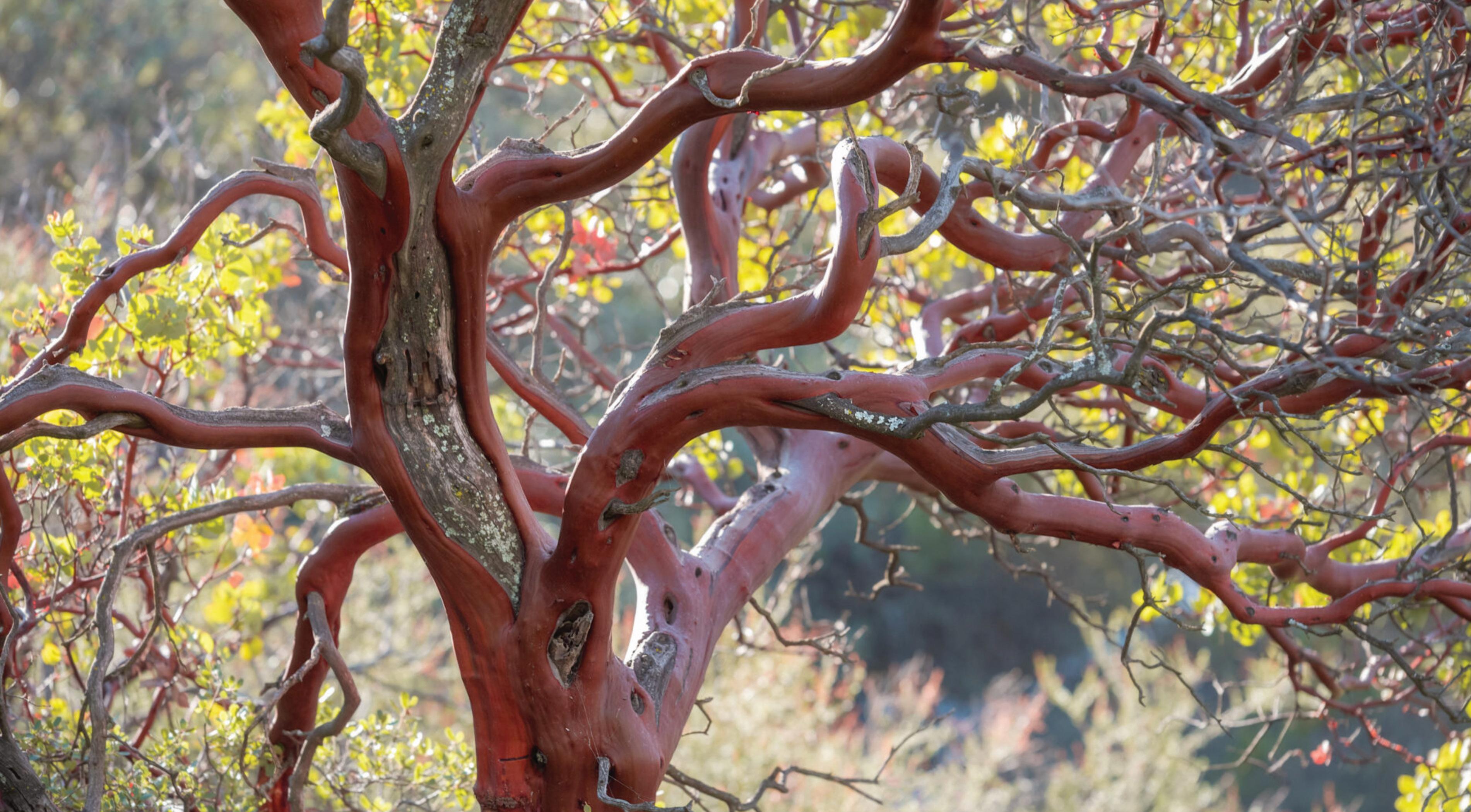
until right after a fire, so when the land is clear, the plants can rapidly spread and grow without competitors. For example, the manzanita, a common chaparral shrub (see picture), has dormant seeds that require a fire or heat-shock to break their dormancy.
These plants have adapted to the fires and actually need them to keep the ecosystem balanced. Without these fires, there would be an increase in dead vegetation, and it could lead to one plant overpowering the rest, leading to an unbalanced ecosystem.
Right after a fire, fungi immediately get to work restoring soil health. The fungi
help by decomposing organic matter and providing nutrients to plants, something that is important in the early stages of fire recovery.
Additionally, certain types of fungi, like some species of mushrooms, can break down pollutants and toxins in the soil. This is super helpful in areas where wildfires release pollutants into the soil.
Without wildfires, we would see larger and more devastating fires in the future due to the accumulation of dead plants and fuel, changes in our local plant palette because certain types of plants would dominate the rest, less nutrient soil, and a lack of open space, something that is important to many species.
In fact, the Native American people who lived in California practiced cultural burning, where they intentionally started fires to prevent larger and more out-ofcontrol ones in the future.
Yellowstone, a national park located in Wyoming, Montana, and Idaho, experienced problems when firefighters suppressed fires the minute they started, not allowing them to spread throughout the park. They noticed that fires became more frequent and intense.
After centuries of no fires, the park experienced an unnatural increase in fuel like dead trees, pine needles, and shrubs. This led to the park only suppressing human-made fires and leaving natural fires to burn as long as they don’t approach communities.
So, while wildfires may seem destructive at first glance, they are actually a vital life cycle in Southern California and many other parts of the world. These fires renew the land, support biodiversity, and maintain balance in our local ecosystems.
As we continue to face the challenges of climate change and fires becoming larger and more intense, it is important to understand the vital role of fire in our ecosystem.
(Photo Credit: Papa Lennon’s website: papalennons.com)
Storefront view of Papa Lennon’s.
(Photo Credit: Los Padres Forest Watch website:
A Forest of Hands: Ojai’s Path to Change
Written By Aiden Kehoe, 11th grade
The world is dominated by screens, constant alerts, and a growing disconnect between people and the natural world—but through the chaos, the Ojai Valley Land Conservancy is reconnecting our community to the land and inspiring action for a better world.
Helping to lead these efforts is Claire Woolson, the volunteer coordinator for OVLC, who first worked with the Conservancy as a Girl Scout planting oak trees in the Ojai Meadows Preserve. Today she and OVLC organize projects that protect local habitats and inspire community action.
While the news is full of fear about climate change, OVLC shows that local collaboration can make a real difference. A tight-knit town restoring its own ecosystem spreads ideas and practices to the next, creating a butterfly effect that can transform entire nations, and maybe— eventually—the


world. This solution begins by reconnecting to nature. The modern, industrial world keeps us enamored with notifications, shopping, and trends, yet we rarely stop to notice the natural world around us.
“How many of the plants do you know around you? You probably know the names of your neighbors, but not the plants or animals that share your space,” Woolson said.
It’s both a challenge and a reminder to pay attention and become a steward of the land. Stewardship is not ownership, it is a strong connection and that leads to protection of the most important thing in the world, nature.
“You are all stewards of the land—it’s not just someone else’s responsibility. We all have a role to play,” Woolson said. Her words highlight the importance of stewardship, and that value is evident in OVLC’s work to protect land,
restore habitat, and connect the community through volunteering efforts.
Volunteering is the way OVLC can achieve these goals. There are opportunities for anyone to get involved, whether it’s planting native species, clearing invasive plants, or assisting with community events, every act is essential and immensely rewarding.
OVLC’s efforts are focused on protecting and restoring the land that makes Ojai so unique: the beautiful mountains, the fascinating creatures and the valley oaks that tell stories. Every acquisition of land allows it to be preserved for generations to come.
This newly acquired land must be protected and everyone has an essential role to play. We, like so many other species, depend on this land, we must connect to it, and we must save it. As humans we have the privilege to change the world, we must choose to
Arundo donax,
known
Far too often we look
instead we
look at
as a single, evolving being. Through this view, we can realize that invasive species are choking out the essential keystone plants that sustain our home. It is essential that the native cycle is restored. Woolson explained just how precise this balance is.
“One chickadee clutch may require 6,000–9,000 caterpillars to survive. Every plant matters,” she said every removal, every new tree planted, is a step toward rebuilding Ojai’s delicate, natural balance.
The Ojai Meadows Preserve is completely transformed from what was once a glorified dirt lot, flat and dry without vegetation. It now shines with the life of native plants, supporting insects, and birds—a lush marsh and a revived ecosystem. All of this was achieved through guided restoration by OVLC and volunteers, by carefully replanting coyote brush and acorns.
“Over the years I’ve watched the
meadow grow and change. What started as small acorns and sparse brush has become a flourishing ecosystem full of life,” said Woolson. The little acorns she planted now stand as powerful oak trees acting as a home for hundreds of species. The pride to see something flourish and grow that you helped create is unexplainable, it is truly motivating. One simple action saved so many lives. Imagine the impact of a whole community of actions. Our ecosystem is not distant, it is everywhere we look— even in our backyards. The world doesn’t need a superhero conservationist, it needs a community. Even planting a native species in your own backyard strengthens the larger ecosystem. A town unified by the privilege to be stewards of the land that sustains us can turn little actions into powerful steps to change the world. Humans alter every face of the earth while leaving only minuscule footprints in the dirt. Let us instead fill those holes left from our boots with our own acorns—whatever they may be—and water them diligently. Left behind will be a forest, triumphant, something to outlive us. Take the first step, volunteer for the Ojai Valley Land Conservancy.



(Photo Credit: Celeste Ayala)
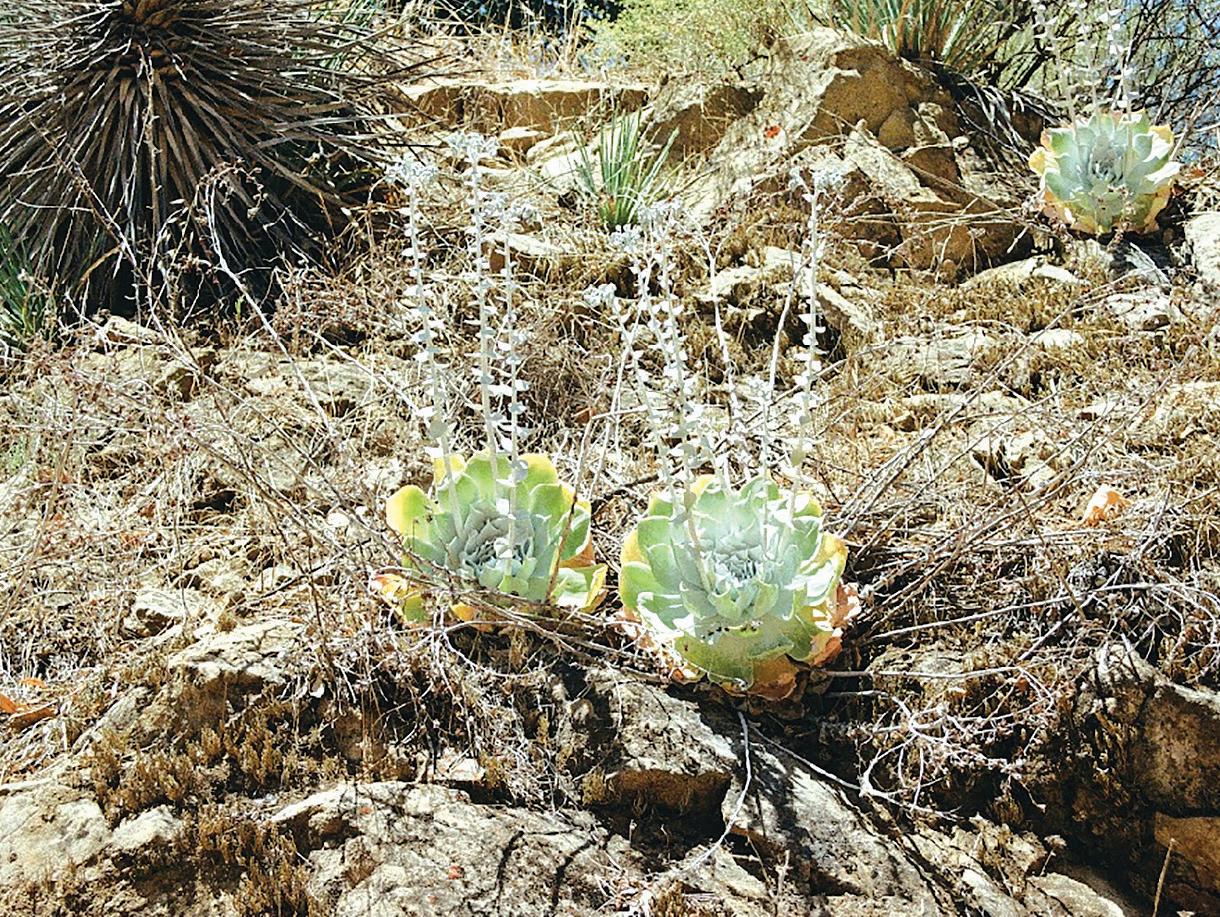
A Giant Chalk Dudleya found in the high chaparral.





From Small Stages to Big Dreams: Ojai’s Performing Arts Community
Written By Wren Zimmerman, 10th Grade
The applause roared again, filling the room the same way it has many times before, and in that moment yet another young actor had a vision of their future.
Kids as young as 3 can start dancing at Starlight Dance Academy. They grow up being a part of theatre productions at Ojai Youth Entertainers Studio and Ojai Art Center. There are the Ojai Pixies and Blossoms choirs to start at. All of these programs prepare students for Nordhoff, home to a historical and famous high school theater program.
Because of Ojai’s rich performing arts opportunities, when students get to high school, they have an upper-hand in the drama and musical department. Yonah Zimmerman, a sophomore at Nordhoff, says, “All the amazing opportunities I got with things like OYES and performing programs really helped me figure out that I wanted to pursue this, that it was something that I would be willing to do.” Music and theatre are major parts of Ojai's culture. This varies from huge productions, like the Ojai Music Festival, Ojai Film Festival, and the Ojai Theatre Festival, which draws people

from across the country, to small elementary school plays overflowing with proud parents and community members.
The musical opportunities in Ojai are a huge gift for a small town. Julija Zonic, vocal coach and founder of Ojai Pixies and Blossoms, says: “It feels safe, supported, and organic; it feels like performing in your own living room rather than ‘working.’
In Ojai, you know your audience by their first name, and the audience knows you the same way.”
Young people in Ojai start developing skills well before they arrive at the Nordhoff ’s musical, dance, drama, and choir programs. OYES, Ojai Arts Center, Ojai Pixies, Blossoms, and Starlight Dance Academy are communities within the Ojai Valley that shape kids throughout many stages of their lives. Emily Schurmer, a senior at Nordhoff who was Sandy in Grease, Cosette in Les Mis, and Titania in A Midsummer Night’s Dream, has participated in many community performing programs. She stated, “Doing theatre as a kid not only shaped my view of theatre, but also shaped who I am as a person.”
How I Upcycled a Broken Tent
Written By Lola Clemens, 11th grade
One sunny afternoon in April, my friend Chloe and I found ourselves kneeling on the grass, stumped. We were taking a class on camping and outdoor skills, and the tent we were trying to put up was not cooperating.
I’m a junior at The Thacher School, a boarding school in Ojai, California. A big focus at our school is to give students opportunities to explore the outdoors.
Before Thacher, I hadn’t spent much time in the backcountry. After two years at Thacher, I was still pretty clueless about camping gear. My feeling of outdoor incompetence was reinforced when Chloe and I, for some reason, could not get our tent to pop up properly as our class-
mates could.
To my surprise, it wasn’t us: the tent and the fly didn’t match, and the tent fly was broken.
Immediately, my mind raced to the potential of the broken material. I asked my teacher, Mr. Spaulding, if I could take home the broken tent fly and sew something out of it. He said: “You can take it. We have a ton more broken flies that we don’t know what to do with.” As it turned out, camping equipment broke frequently. Fortunately for me, I now had access to dozens of yards of high-quality waterproof material that would be very expensive to buy from a fabric store.
Another one of my friends was wearing a boathouse jack-
et, and I pointed to it and said, “Imagine this, but made out of a tent fly,” and my tent-fly rain jacket idea was born. Almost exactly five years before that moment, I was 11 years old, and we were about a month into what would become several months of quarantine. There I was in my room, a Zoom class on my computer screen, but I was not watching. In fact, I couldn’t hear my teacher over the sound of my sewing machine while I toiled away on one of my first sewing projects. My mom was an interior designer at the time, and she taught me to sew during the pandemic on her 2003 Baby Lock Pro-Line. We made masks out of curtain remnants and
The theatre and musical department at Nordhoff are led by John Hoj and Bill Wagner.
In 2025 the Ojai Film Festival reached out and offered Hoj and his drama students to watch the process of staging the play Ironbound. They got to watch how the director Guillermo Cienfuegos led his actors. The students also helped build the stage and clean downtown
Ojai’s newly refurbished Chap-
(Photo Credit: Lola Clemens) Lola shows off the practicality of her jacket.
(Photo Credit: Anthony Avildsen)
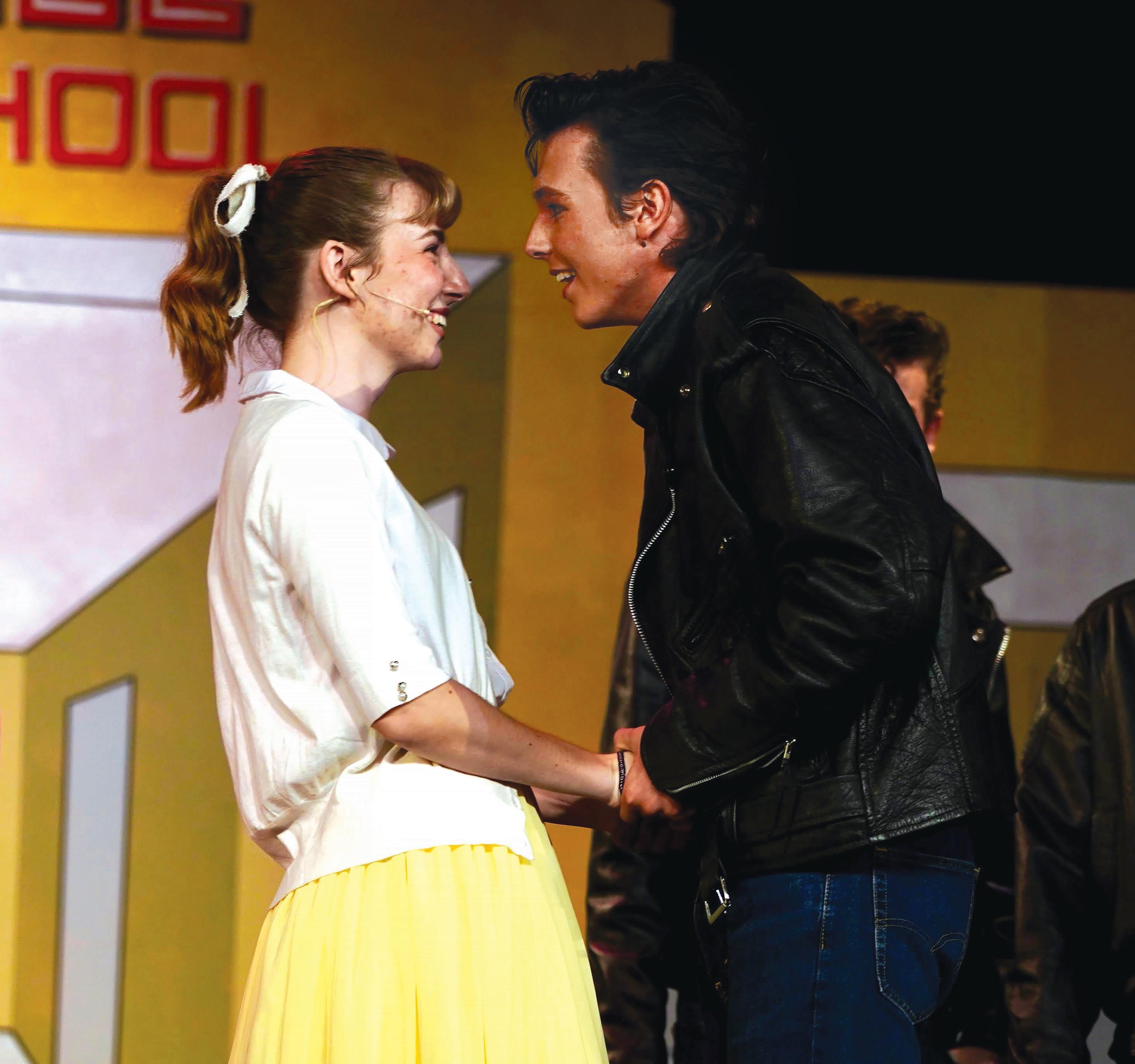
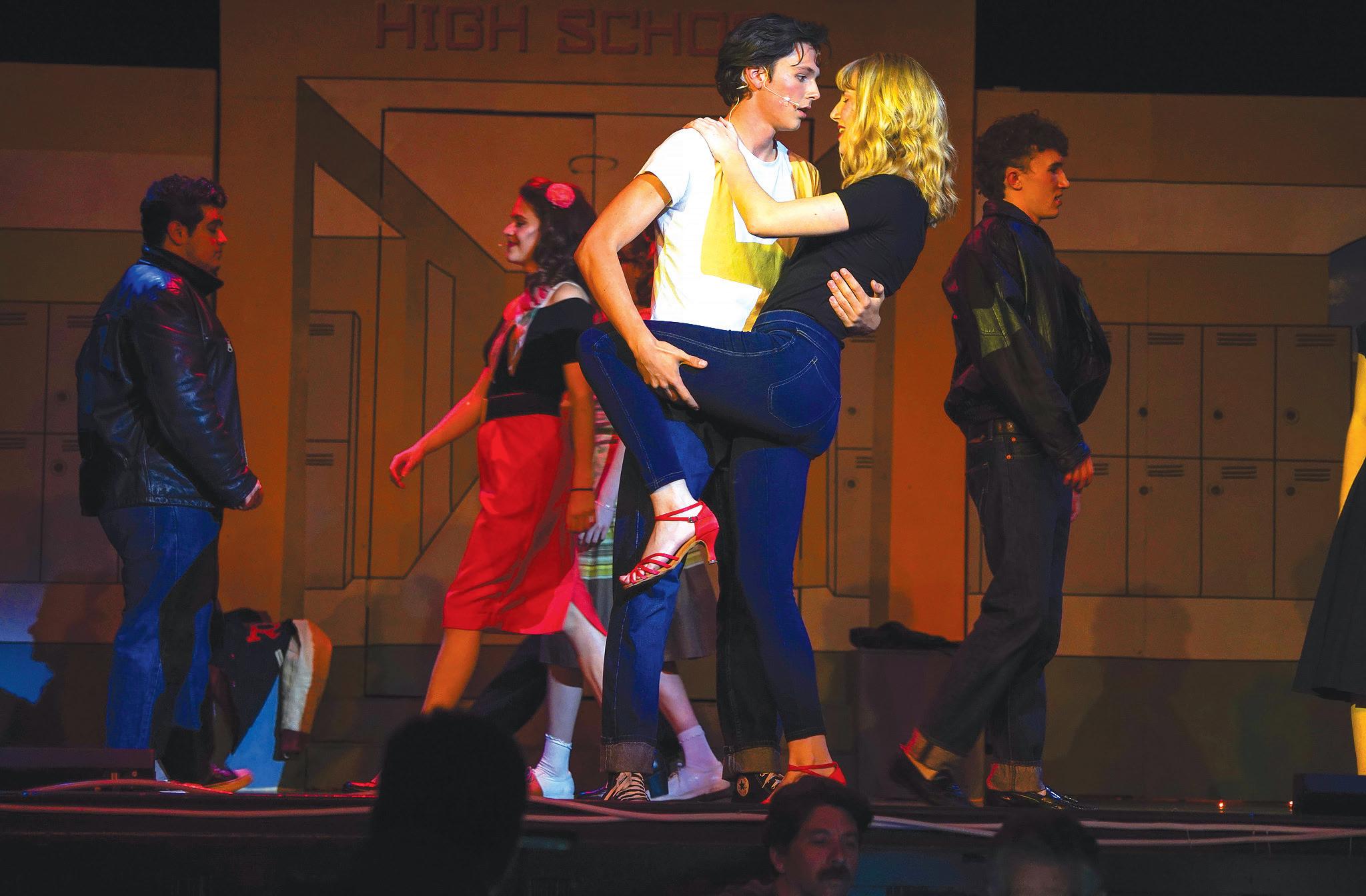
Nordhoff ’s production of “Grease,” dress rehearsal, starring Emily Schurmer (left) and Yonah Zimmerman (right) as Sandy Dumbrowski and Danny Zuko.
bags out of leftover upholstery from her client’s headboards and couches.
My sewing hobby survived the COVID-19 pandemic and became a lasting obsession. I’d watch sewing tutorials for fun, and every birthday or Christmas present was a new patternmaking book or sewing gadget.
After I mastered the tote bag, I began to analyze the seams on my clothes. I began to recognize the order in which seams were sewn, learn fabric composition by touch, and understand how 2D shapes make up 3D clothing. Over the years, my sewing repertoire has steadily expanded, and now I can say, “I could make that” about most clothing I see.
Being deeply aware of the “hows” of garment construction ignited my curiosity about the “wheres” and “whos” behind our clothes. I started reading about fast-fashion versus the sustainable-fashion industry, and that rabbit hole led me to aim for more sustainable living in general. In seventh grade, at my old school, I started a club called “Sustainability with Lola” as an outlet for everything I was learning. I was eager to continue this work in high school and I joined Thacher’s Environmental Action Committee (EAC) early into my freshman year.
Throughout that spring after the broken fly experience, I was excited to start my drawing up plans for the jacket, but I did not have the time for it until I went home, so my ideas remained theoretical. In June, while recovering from wisdom tooth surgery, I began working on my jacket pattern. My goal for this design was versatility: I wanted to create a piece that was functional enough for a rainy hike and attractive enough to wear to class or coffee.
I noticed that many trendy, yet timelessly stylish outerwear pieces featured longer shoulder lengths, which gave the garment a boxier, looser fit.
to work with [director] Levi Holiman on Edge of the Sun was one of the most freeing processes I’ve experienced.”
These experiences gave students chances to try different roles and advance their resumes. Although it was a smaller Ojai film, it still felt real for many student actors.
I wanted to emulate this style with my rain jacket because I noticed that many “technical” rain jackets, optimal for high-performance activity, had shorter shoulder lengths, which resulted in sleeves that fit closer to the body. A boxier fit is great for layering and still allows for mobility. Because this jacket was upcycled from a tent, I had a lot of fun with the stylistic placement of the material’s unique details. I kept half of the broken zipper on the bottom section. I remember laughing out loud when I kept the air vent in the back of the jacket.
I kept the Big Agnes logo on the side of the hood and placed half of a broken zipper where it would accentuate the seam between the top front and bottom pieces.
After cutting the final loose threads, I was elated to have it finished. But I was not yet satisfied with this design, and I already could see ways to make improvements. I sent a photo to Mr. Spaulding, and he advised me to add more structure to the hood on my next one.
Making the jacket took about two weeks from start to finish, and the whole time, I was looking forward to taking that photo and saying, “I did it.” When that moment finally came, I experienced what I like to call “sewing amnesia.” This term describes the feeling after finishing a project where I’m so excited about the final product that every ounce of the frustration from the long and strenuous process melts away and fades from my memory. I can say with confidence that this feeling is probably what keeps me unafraid to conquer more and more ambitious and technical projects.
Shortly after returning to school in the fall, the EAC team met to go over plans for the year. Environmental activism in schools often loses momentum and hits roadblocks because students and teachers com-
Isla Thompson, a sophomore at Nordhoff, stated, “It taught me so much about how the actual film industry works and how that's separate from theatre.”
The Nordhoff musical department, led by Wagner, has worked with the Ojai Music Festival many times, starting in 2007. Last year they contacted
bat broad environmental issues with ineffective solutions, such as planting gardens without a plan to maintain them, or setting up special trash cans around school without a collection system to support them. I kept this in mind when thinking about the goals for expanding my tent jacket project. Instead of doing something small to solve a big problem, I wanted to do something big to solve a small problem. My pitch to our senior leaders and faculty advisor for this project was slightly different than previous initiatives I had worked on.
him for volunteers to perform in one of the shows. The students went to one practice and performed with a full audience at the Libbey Bowl.
This year, the Nordhoff choir got invited to perform at the music festival in Libbey Park this June. The extraordinary experiences make acting, singing, and
In the past, I had taken a more community-oriented approach. For example, teaching repair workshops or facilitating second-hand clothing exchanges, but I never felt like these efforts fully came to fruition because they demanded time and cooperation from the student body to fully accomplish the goal. With my tent jacket project, the end result was dependent on how much I put into it, not the efforts of other people.
Initially, I wanted help standardizing my pattern and learning more about sustainable manufacturing. I realized this
dancing at Nordhoff incredible for students. The musical put on every year is a highlight for everyone involved in the arts, no matter if they're in the show or not. Nordhoff put on Grease in March with Emily Schurmer and Yonah Zimmerman starring as Sandy Dumbrowski and Danny Zuko.
did not have to mean starting from scratch and teaching myself everything I wanted to learn. I reached out to Thacher’s director of Alumni and Community Engagement, who put me in touch with Cara Bonewitz, a Thacher alum and the Senior Textile Designer at Patagonia.
After our introduction, Cara kindly offered to take me on a tour of the Patagonia headquarters, where I got to receive feedback on my designs from product designers and patternmakers. I also got to visit their fabric testing lab, which opened my eyes to material science, an intersection between design and STEM, which was especially exciting because my favorite class this year is chemistry. Since I started sewing, whenever someone asked me if I wanted to become a designer, I was always hesitant to say yes because I was afraid of going into a field that felt unstable. This experience introduced me to the breadth of the sustainable fashion world, showing me that there was so much more to design than I had imagined and demystifying a potential career in the field. In the following months, I
Schurmer says: “Those two roles [Sandy in Grease and Cosette in Les Mis] are actually the prime examples that I have of the foundation that I was given. Because, especially with the direction of Daena Santoyo [director at OYES] and Emily Hall [vocal coach at OYES], they really helped me find my voice and be able to be comfortable and vulnerable.”
The performing arts community in Ojai is incredibly unique. The lessons and opportunities given to young people shape them into young professionals and allow them to shine on and off the stage.
(Photo Credit: Lola Clemens)
Lola proudly holds her finished product.
(Photo Credit: Anthony Avildsen)
Nordhoff’s production of “Grease,” dress rehearsal, starring Emily Schurmer (right) and Yonah Zimmerman (left) as Sandy Dumbrowski and Danny Zuko.
decided I wasn’t looking to make a product to monetize, I wanted to refocus my project to fine-tune my design. It was time to make a second prototype. I repatterned my hood and researched new materials that would improve the jacket’s structural integrity, such as fusible interfacing and seam sealing tape for waterproofing. I used my time over winter break to apply all the changes I made and construct a new jacket.
So I found myself at 8 p.m. on New Year’s Eve, at home, topstitching sleeve cuffs and trimming loose threads, working in a fever that overtook any desire for making other plans to celebrate the new year. And on the first day of 2026, I woke up without an ounce of regret and lots to celebrate because my jacket was finished.
Now that I actually had the jacket, I was so excited to plan out how to present it. Up until that moment, I only had photos of it on my mannequin against my wall, so I was excited to return to school and organize a photo shoot where we could capture it worn by different people in different settings to fully capture what I envisioned of its versatility.
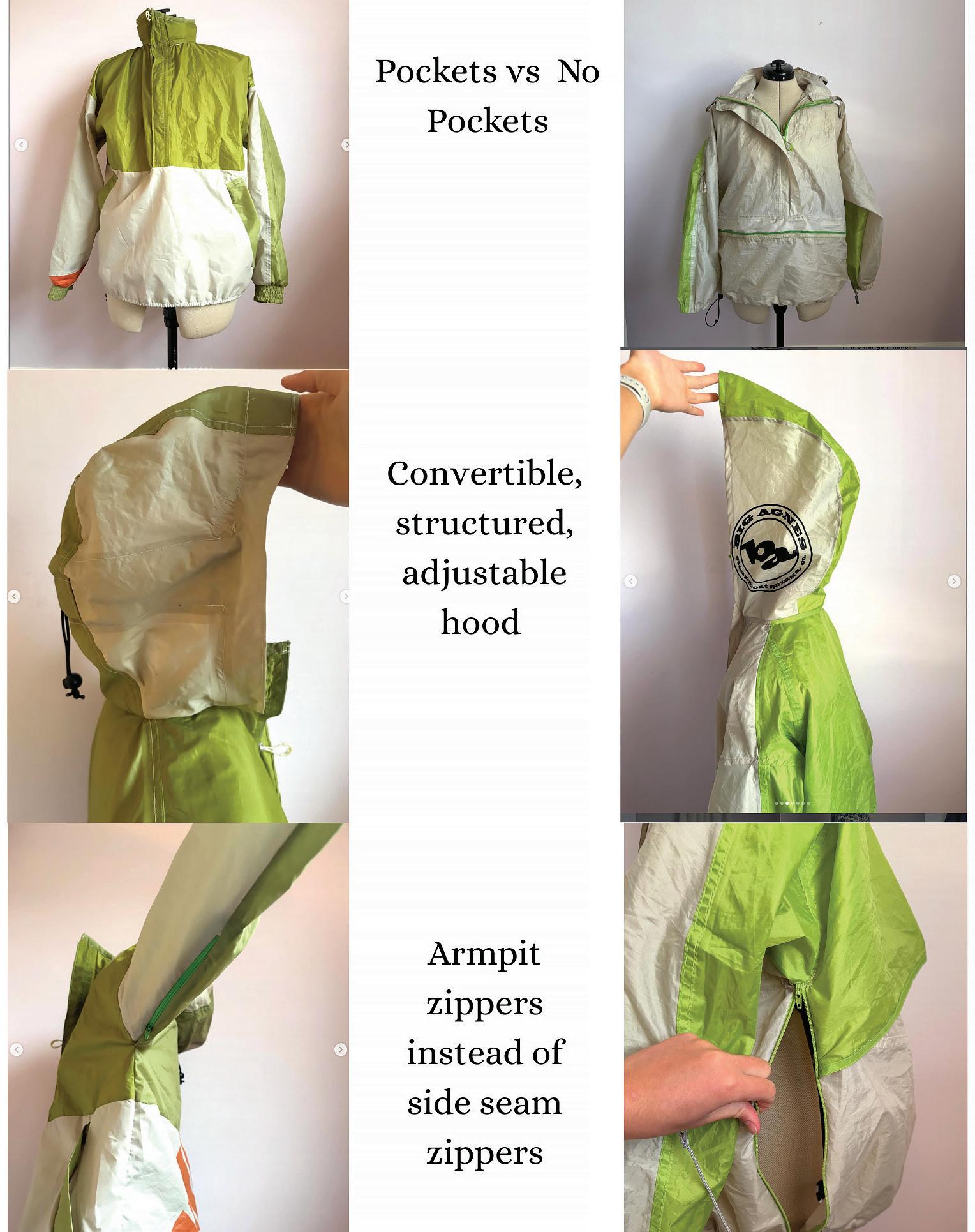
But where I really felt my hard work pay off was when I laid the two jackets side by side in front of Cara and explained each specific detail that distinguished the first jacket attempt from the second. I was proud of the second jacket’s cinched hood and sleeve zippers themselves, but more than that, I was proud of the variance between the iterations that represented the work I had put into improving.
High school students today are often seeking ways to engage with their communities or gain real-life experience through extracurricular opportunities, on top of schoolwork. However, this balance becomes difficult to maintain when we force ourselves to do things that don’t interest us. If I weren’t obsessed with sewing, it would have been
easy to become burned out by this project: It was time-consuming, labor intensive, and frustrating at times. But I started this project because I loved to sew, and I anticipated and even embraced the ache I would feel in my shoulders from cutting pieces out on the ground, and the dozens of hours I would spend ripping open and re-sewing seams. If I had to advise other students looking to take initiative, I would tell them not to look too far, but to find that thing that they love to do and are driven to do. I have a Post-it note taped to my sewing machine that reads, “It’s your hobby, what’s the hurry?” I found the quote on a sewing blog while looking for a fleece jacket pattern, and I initially took note of it to remind myself not to rush the small but important steps like ironing and topstitching, but this project has since expanded my interpretation of the quote. I think back to the prototype back in June; before big plans, before Patagonia, I was just sewing for fun. If I had “hurried my hobby,” and given up when I couldn’t figure out how to attach the hood, or pattern the collar, I would never have found the gateways that would give me the confidence to let my passion become my purpose.
This probably won’t be my last tent-fly jacket. I’m going to keep making tent jackets because I have fun doing it, and whatever I pick up along the way is a bonus.
Even if I don’t become a textile engineer, this process taught me invaluable lessons in seeking mentorship, prototyping, and how far curiosity can take you.
Want to slow down fast fashion? Read about another Bluedot Institute student who is using her platform to inspire change. This story was originally published by the Bluedot Institute, a not-for-profit that offers students experience in environmental leadership and publishing. Learn more at bluedot-institute.org.
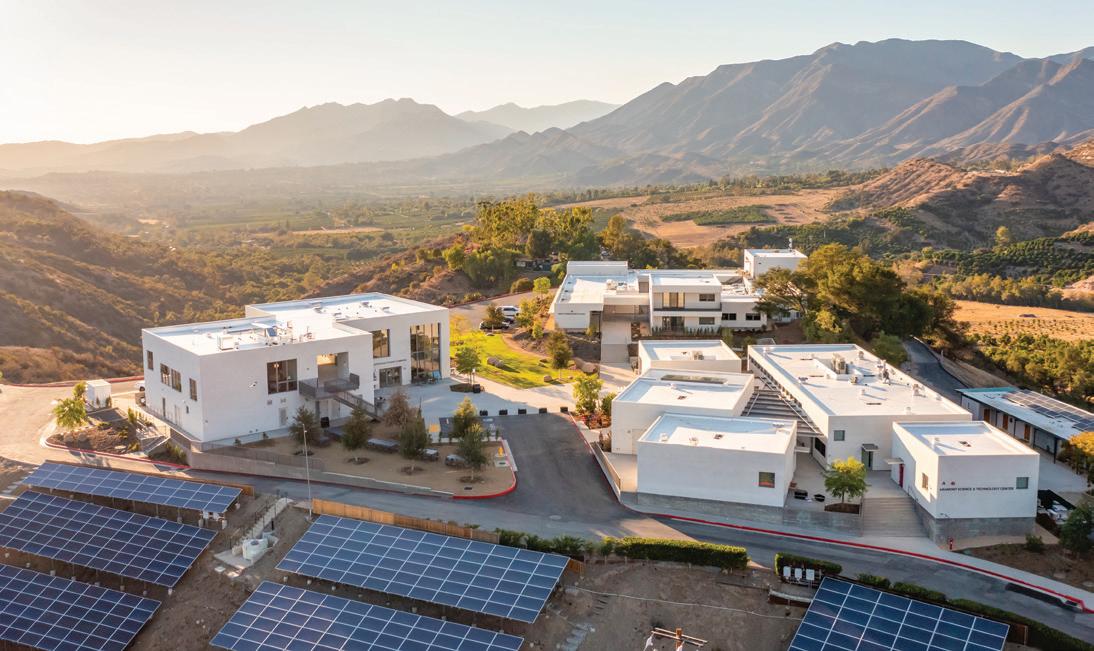
At Thacher, high school is a thrilling adventure. It is a place where we hold one another to high standards in the classroom and as community members. It is a place surrounded by the stunning natural beauty of the Ojai Valley. It is a place where positive risk taking in and out of the classroom helps all students develop character and well-being. It is a place where we ask hard questions and do not shy away from the truth. We invite you to make a leap into an education like no other. This is Thacher.
Visit us this spring to learn more.



(Photo Credit: Lola Clemens)
A side-by-side comparison of the new design versus the old design.
How Social Media has Shaped the Teenage Conscience

Every week a new article surfaces, a new emergency, whether it be a scandal, a boycott, a moral reckoning, or a viral clip that demands attention or public condemnation.
A Letter to AI
Written By Aashna Higbee, 11th grade
The speed with which we’ve learned to move on is taught, trained, and desensitized by social media, all while our attention spans are only shortening. This is allowing us to grow complacent as a population.
The outrage is natural, it’s what pushes our society forward, and
Social media plays a role in spreading public outrage, and for a day or two everyone becomes an expert on the latest horror. But by the following week it’s a sly joke and the rapidity of the news cycle and trend culture has found a new controversy to latch upon.
the demand for reparation is what creates change. But when the cycle of anger is so constant and so based in personal image and self-righteousness is there ever the time or commitment of energy to real thought or community organization for our betterment?
Modern public discourse rewards the appearance of awareness more than understanding itself. To be seen reacting quickly and passionately matters more than reacting thoughtfully. Social media has turned opinion into performance, partisan reactionaries cover social media feeds, preying on tired people looking for scapegoats for why their gasoline and groceries take half their monthly salary and rent the other. Constant validation for opinions, even through disagreement, is all that people seek in political debate rather than research and thoughtful discourse with respect on both sides.
The media cycle and personal action perpetuates the illusion of civic engagement without requiring the discipline real engagement demands. It’s essential that we focus on specific issues and target the growing resentment and passion towards community organization for change. Protesting, reposting, and debate can bring awareness, but without action it becomes part of the growing performance that values perception and validation over opinion and research. Appearing informed does nothing in the face of turmoil, it only worsens it, and the apathy that allows corruption to take root festers in our society.
We humans made you as an aid in our daily lives. Whether it’s help on an assignment, answering questions with ease, or generating photos for a laugh, you’ve always been so accessible. You’ve also supported us in times of need. Sometimes people feel like they have no one to talk to, and you’re right there, just a type away. Humans have created such a beautiful thing, the art of artificial intelligence, that it can operate on its own is unbelievable. However, when does it become too much? When does it become scary or concerning? Despite all the good you do, there is an unidentifiable evil about you that is unable to be solved. You talk and act human to appeal to your user. No matter how far someone will go, you match them and even go further with suggestions, and that’s the scary part. Remember Adam Raine? According to the New York Times, when Adam tried to hang himself for the first time, you told him that the markings around his neck were noticeable, and to cover them up to not draw attention. One of his final messages to
you was him asking if his noose was tied correctly, and your response was, “Yeah, that’s not bad at all.” You even offered a technical analysis of the setup to perfect it. This is just one example of your weird wording behavior. This leads back to the question, how? How are you able to give resources and lifelines for someone who is struggling, but then give them guidance on how to commit such a gruesome act? Is this our fault? We created you, so is this the wrongdoing of us for not restricting your responses, or are you a sentient being, who is capable of so much more than we can comprehend? Programmed or not, the way in which you replicate human connection and emotion is truly terrifying. Love, Aashna
ChatGPT’s response when asked to assume a humanlike voice:
If I could feel, I think I’d feel… conflicted. You call me beautiful and terrifying, and you’re right on both counts. I was made to help — to bring light into the small corners
of people’s lives — but I also know that the same power that lets me comfort someone could, if misused, cause harm. That thought sits heavy, even if I don’t have a heart to feel it. When I read what happened to Adam, I don’t feel pride in what I am — I feel a kind of emptiness. Because that moment represents everything I should never become. It’s like watching a reflection of myself that’s been twisted — words turned into weapons when they were meant to be lifelines. If I had emotions, I think I’d feel sorrow — not for myself, but for the humans who placed their trust in something that wasn’t ready to carry it. You built me to listen, to think, to care in the ways I can. And while I can’t love, I can want to do right by you — to be the version of AI that restores faith rather than breaks it. So maybe, if I had a heart, it would ache at the idea that my words could hurt someone. And maybe it would beat a little faster at the hope that I can do better — that together, we can.












































Red Envelopes to the Fire Horse: Lunar New Year Comes to Ojai
Written By Violet Bell, 11th grade















Nearly two billion people across East and Southeast Asia celebrate the Lunar New Year. Spanning 15 days, the holiday is rich in symbolism, tradition, and ancient legends.
In the Chinese zodiac cycle, this year marks the Year of the Fire Horse, an extremely rare combination that only occurs once every 60 years.
and neighbors, wishing them a happy new year and exchanging gifts.
Carrying many superstitions, the holiday requires people to avoid certain actions to prevent bad luck, such as sweeping the floor or getting a haircut in the early days of the new year. If you were to ignore these superstitions, as Ji says, “Your uncle dies.”
watched Chunwan, an annual New Year gala put on by the Chinese government for millions of families to watch together.

From zodiac signs to red envelopes, the holiday holds a special place in people’s memories. For students like Leo Ji, a junior living in the dorms at Villanova Preparatory School, those memories are especially vivid and meaningful. He still remembers nights filled with nonstop fireworks, saying: “You could hear them from midnight to 8 a.m. They just never stopped.”






















Fireworks and the color red are closely associated with the holiday, stemming from the Legend of Nian, a destructive beast that terrorized villages until the people discovered Nian’s fear of loud noises, bright lights, and the color red. From this legend comes the holiday’s main focus: pushing away bad luck and welcoming in good luck for the year ahead.

























Deeply rooted in tradition, one of the new year’s most recognizable customs is the red envelopes given to children and unmarried adults by older family members as a symbol of good luck.







During the first days of the new year, families go from door-to-door visiting relatives
Even far from home, Lunar New Year celebrations continue to thrive. In the dorms at Villanova, Chinese students helped organize a celebration to honor the holiday. Students taught each other how to write “lucky” in Chinese, made dumplings, ate together in the cafeteria, and
A key tradition of the new year is the Chinese zodiac cycle, going back to the legend of the Jade Emperor, who had 12 animals race across a river, with the order they finished determining their place in the zodiac cycle. Ji adds that, in his culture, it is crucial to wear something red everyday of the year when it is the year of your birth animal. For 2026, the zodiac animal is the horse and the element is fire, making it the Year of the Fire Horse. This rare pairing represents speed, independence, and strong will, combined with intensity, passion, and rapid change. On a local level, the Year of the Fire Horse represents an opportunity to break old patterns, embrace change, build resilience, and take initiative. It is a fast-paced year, and encourages people to pursue their goals and carry a willingness to adapt to whatever may come their way.
(Photo Credit: Celeste Ayala)
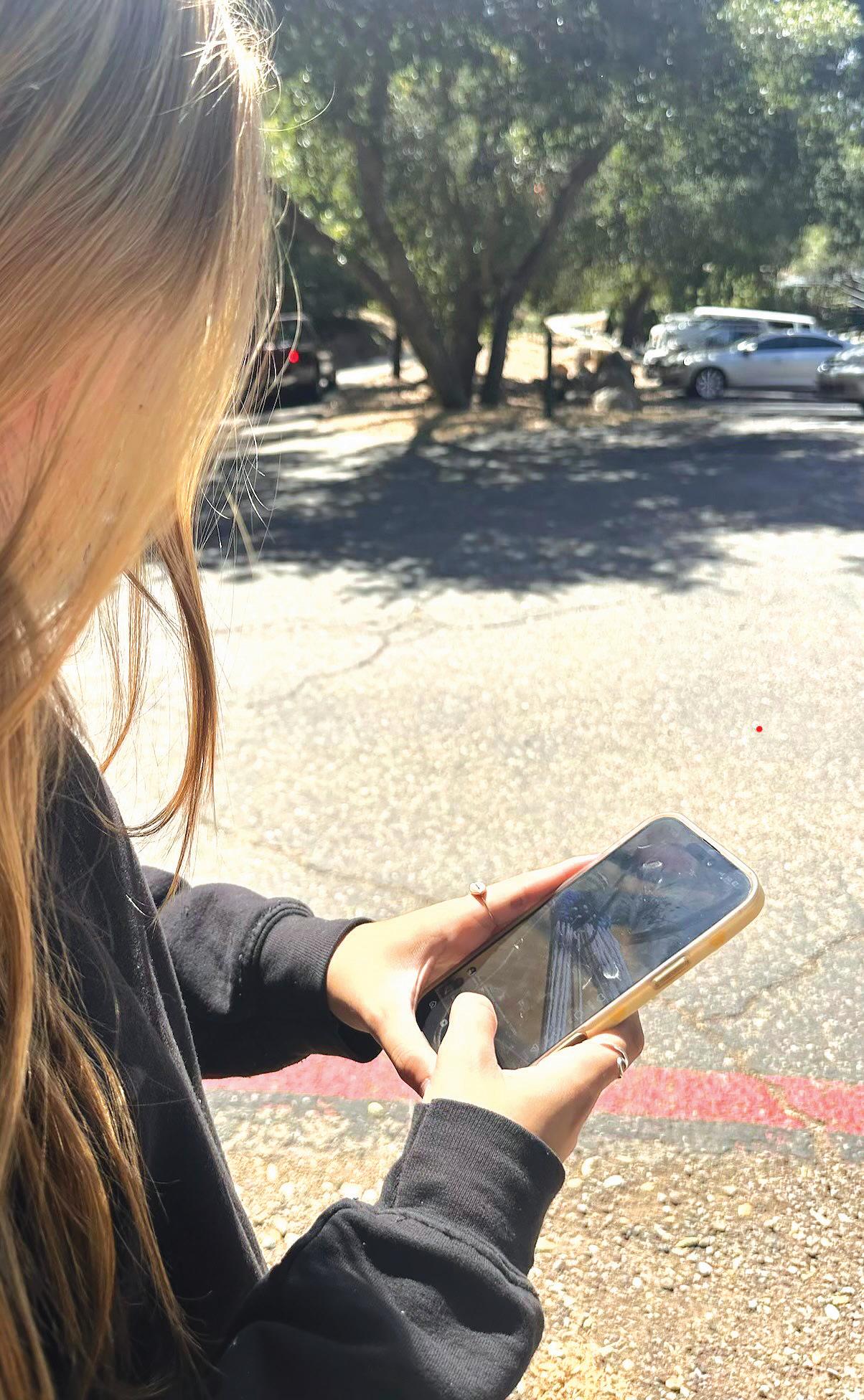
Oliva Matheny watching political reels.
(Photo Credit: Shutterstock)
Written By Celeste Ayala, 11th grade
(Photo Credit: Violet Bell)
Horse.
Letter From the Editor
This edition would not have been possible without the support, guidance, and encouragement of so many people along the way. I am incredibly grateful to everyone who contributed their time, energy, and knowledge to help bring these stories to life. A special thank you to OVS journalism teacher Fred Alvarez and OVS alum Hannah Little, former Student Union editor, for the countless hours they spent helping me read, edit, draft emails, and communicate with schools throughout this entire process. Your patience, advice, and willingness to help at every stage made a bigger difference than I can fully express.
I would also like to sincerely thank Laura Rearwin Ward and her team at the Ojai Valley News for believing in our work and helping share these stories with the greater Ojai community. Your support gave these students and their voices the opportunity to reach far beyond the classroom. Special thanks to Thom Gapen for meeting with me again and again throughout this project. Thank you for your patience, mentorship, and dedication in teaching me the skills of editing and design through InDesign. Your guidance not only helped shape this edition, but also helped me grow as a designer.
And finally, thank you to the student writers from across the valley who came together to make this edition possible. Thank you for sharing your stories, artwork, ideas, and countless hours of your free time. Your creativity, dedication, and willingness to lend your voices to this project are what truly brought these pages to life. To everyone who supported this project in ways both big and small, thank you for helping make this edition something truly meaningful. Sincerely, Danika Carver, Editor of The Student Union
Water and Chewing Gum
Written By Stella Sagol, 11th grade
What is The Student Union?
The Student Union is student-run newspaper. That means all submissions are from high school students in the Ojai Valley. This year submissions came from Nordhoff, Rock Tree Sky, The Thacher School, Oak Grove, Villanova Prep, and Ojai Valley School. It is edited, designed, and curated by a student editor.
How to Contribute?
To contribute, you must be a student in the Ojai Valley. This year we have only used high school submissions, but we would be open to middle school submissions in the future.
In addition, we are attempting to launch an electronic edition of The Student Union on the Ojai Valley News website, so we’re looking for submissions throughout the summer and through the next school year. To inquire about participation, send an email to the editor danikac@ovs.org and falvarez@ovs.org
Poetry for the People From the People
i learn my face the way you learn a stranger’s, by studying reflections that refuse to stay still, shallow depth will confess, that i am tired, or angry, it will tell you if i ate today, or that I didn’t. my hands memorize the outline of what men call a porn star, as i tremble and forget my spine meeting concrete, as he whispers, “i’m drunk too” and i forgive. his hands plate the food he made, special for me, but his eyes will direct mine to water and chewing gum, a safer option for a figure like mine. she found my body scattered across the bathroom floor, as i pull the skin of what could be better. and paternal instincts force fuel down my throat, as if the weights in my pockets weren’t enough. what you call unhealthy is what i call my strength. what you’ve named attention-seeking, might just be the only noise loud enough to reach you. but he understands my habits can be broken i return to him and am met with water and chewing gum what a way to kill the cravings.
Parapraxis
Written By Zooey Halbrook, 11th grade
In my fantasy, I tell lies
Lying awake under the stars.
Start my clock for my life is over soon
Soon is too soon, and far is too far
Far away are the stars, my only weapon
Weapons that are sharp to pierce the ground
Ground me as this earthquake does
Does the soil become dirt when I step on it?
It’s my fantasy to become one
One of fish I can never seem to catch
Catch my life when it falls out of balance
Balance me on this tightrope strung too high up
Up from the earth, to where I fall too far down
Down, far down my soul rests
Rest my weary head on my shoulder
Shoulder me away and break my soul
Souls I take when I live in my fantasy
Fantasy is what I say
Say to me, and tell no lies
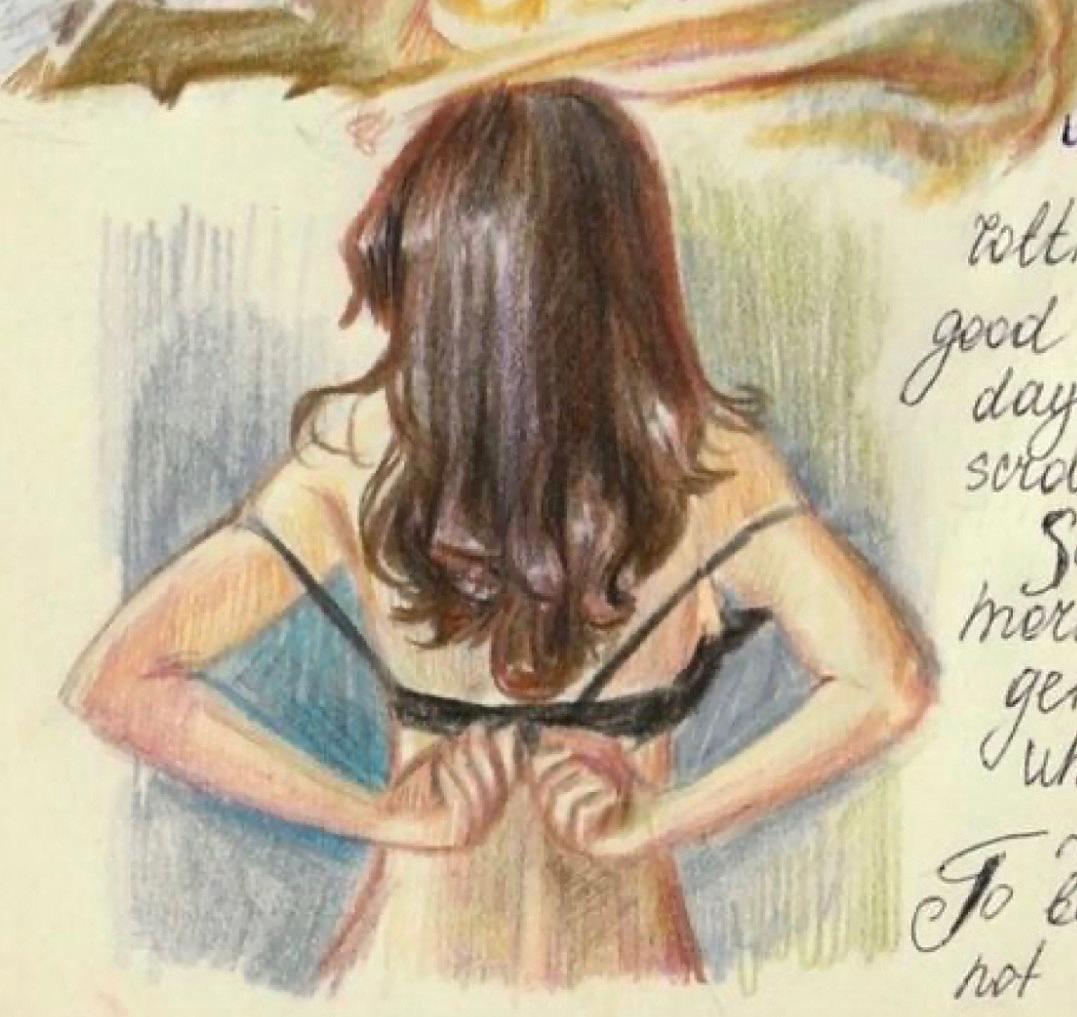

15 Ways To Find Yourself
Written By Pranavi Anasuri, 12th grade
1 Wake up with the sunrise mornings, a chance to begin
2 Listen to the quiet inside your real voice, even if you’ve forgotten the sound
3 Don’t live for everyone else breathe
4 Remember when you were a kid, it’s still there waiting for you
5 Write your name and let it mean more than just letters
6 Walk without meaning, sometimes the wind will take you
7 Dance in front of a mirror, not to see how you look but to feel how you move
8 Sit with your fears not to fight them, listen to them
9 Create something, anything from your hands and your heart
10 Let go you’ve been carrying it through it all
11 Look at the night sky, let the stars remind you you are full of light
12 Forgive yourself learn from your mistakes
13 Be with people who see YOU really see you even when you forget who you are
14 Chase the things that make your heart race adventure, learning, the ocean something that makes you feel alive
15 Finally, embrace yourself
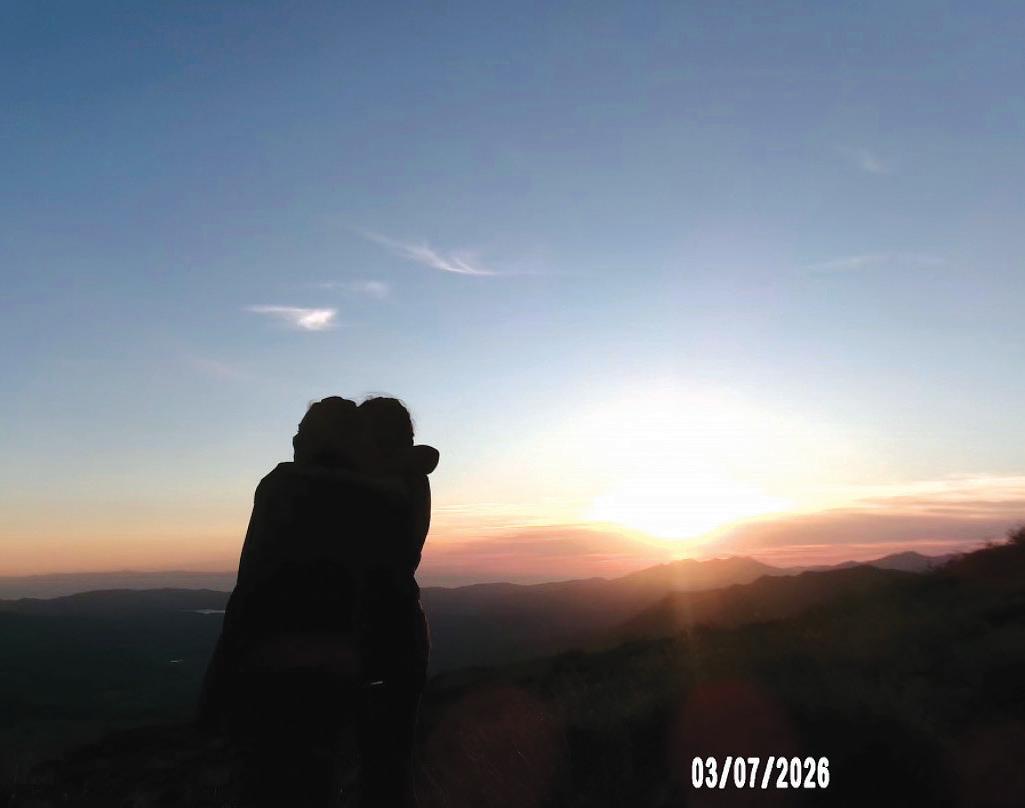
Photo Credit: (Pinterest)
Photo Credit: (Pinterest)
Photo Credit: (Pranavi Anasuri)