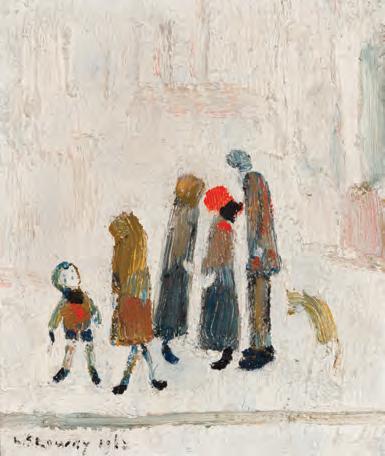
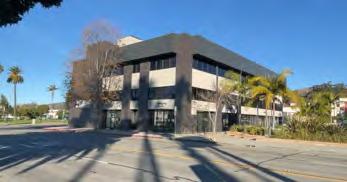
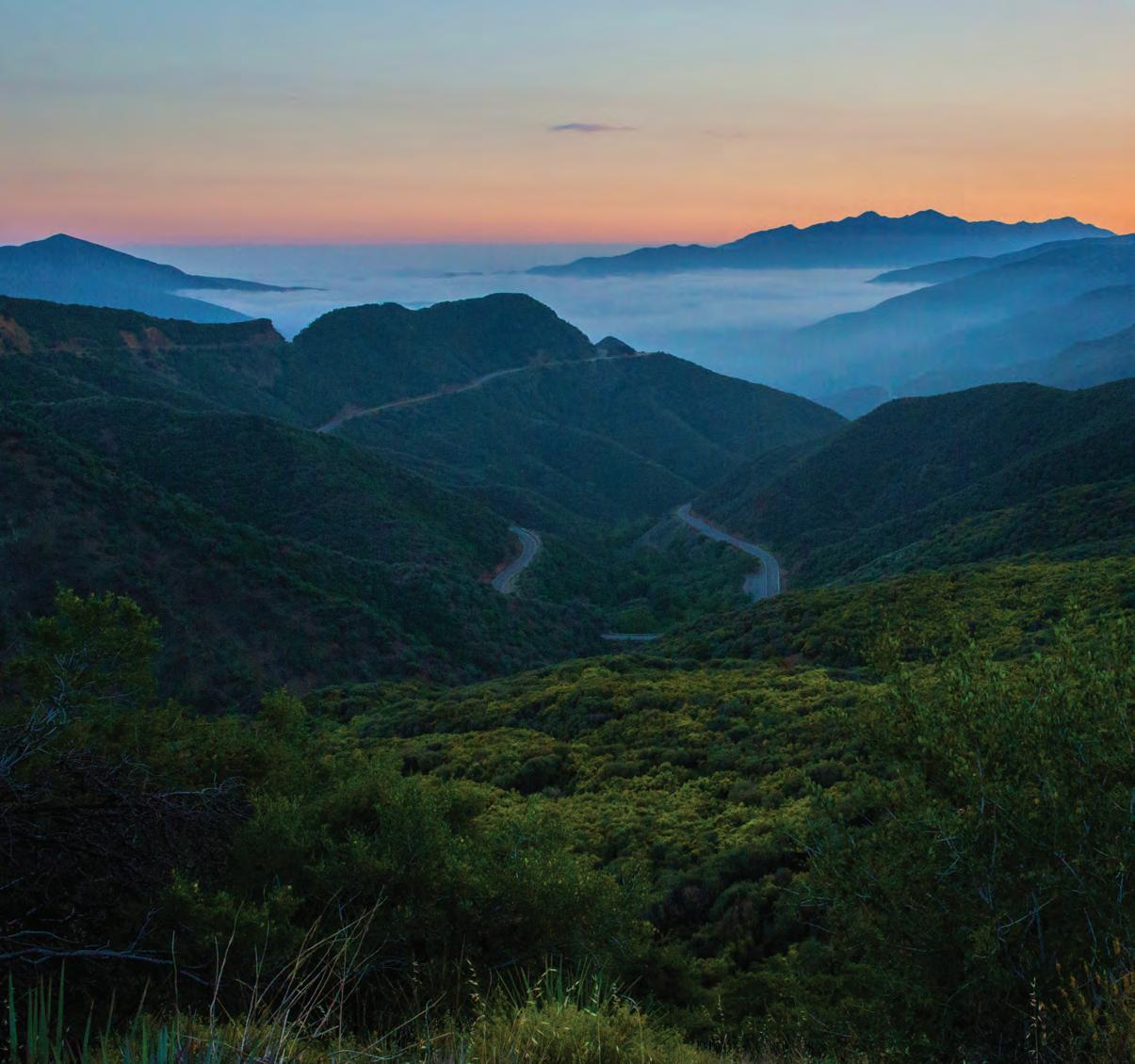
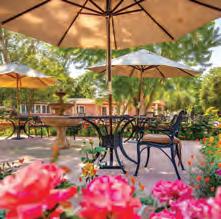
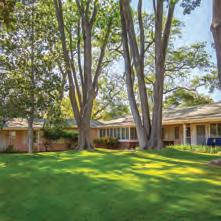
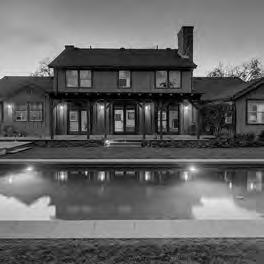
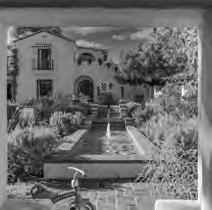
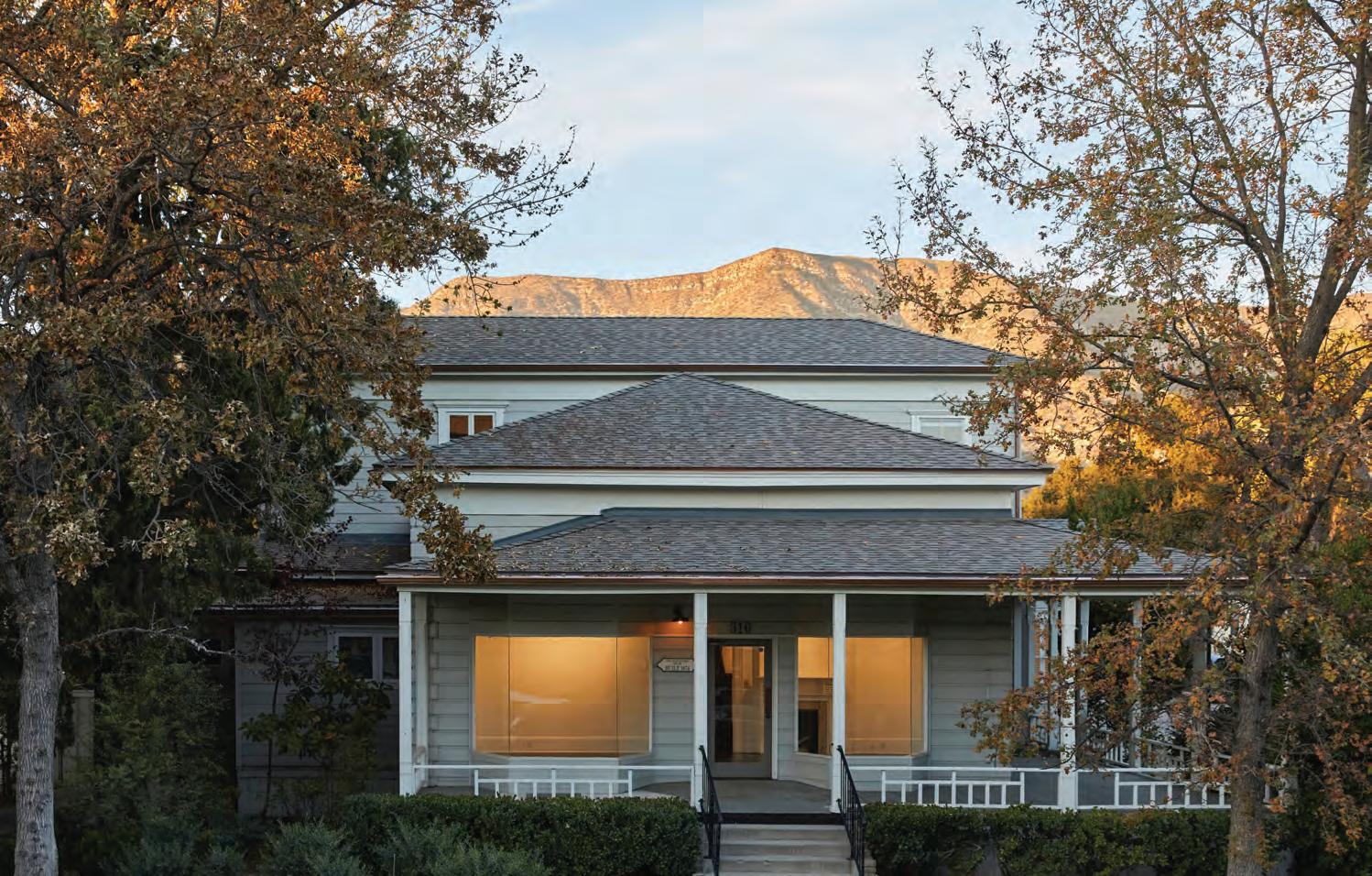
located in a classic california bungalow a short walk from the arcade, canvas and paper is a small art museum with a focus on 20th century modernism. exhibits change every two months. admission is free.
311 n. montgomery street
thursday – sunday noon – 5pm
canvasandpaper.org
TABLE OF CONTENTS
FESTIVAL EVENTS
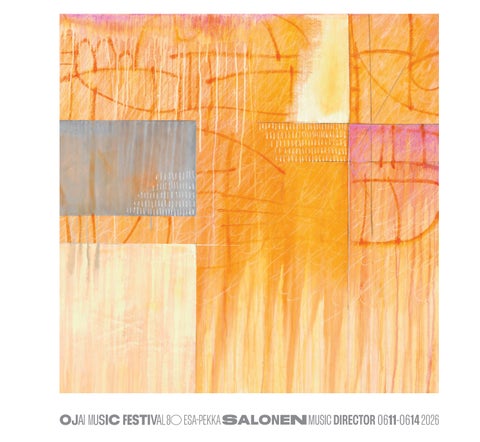
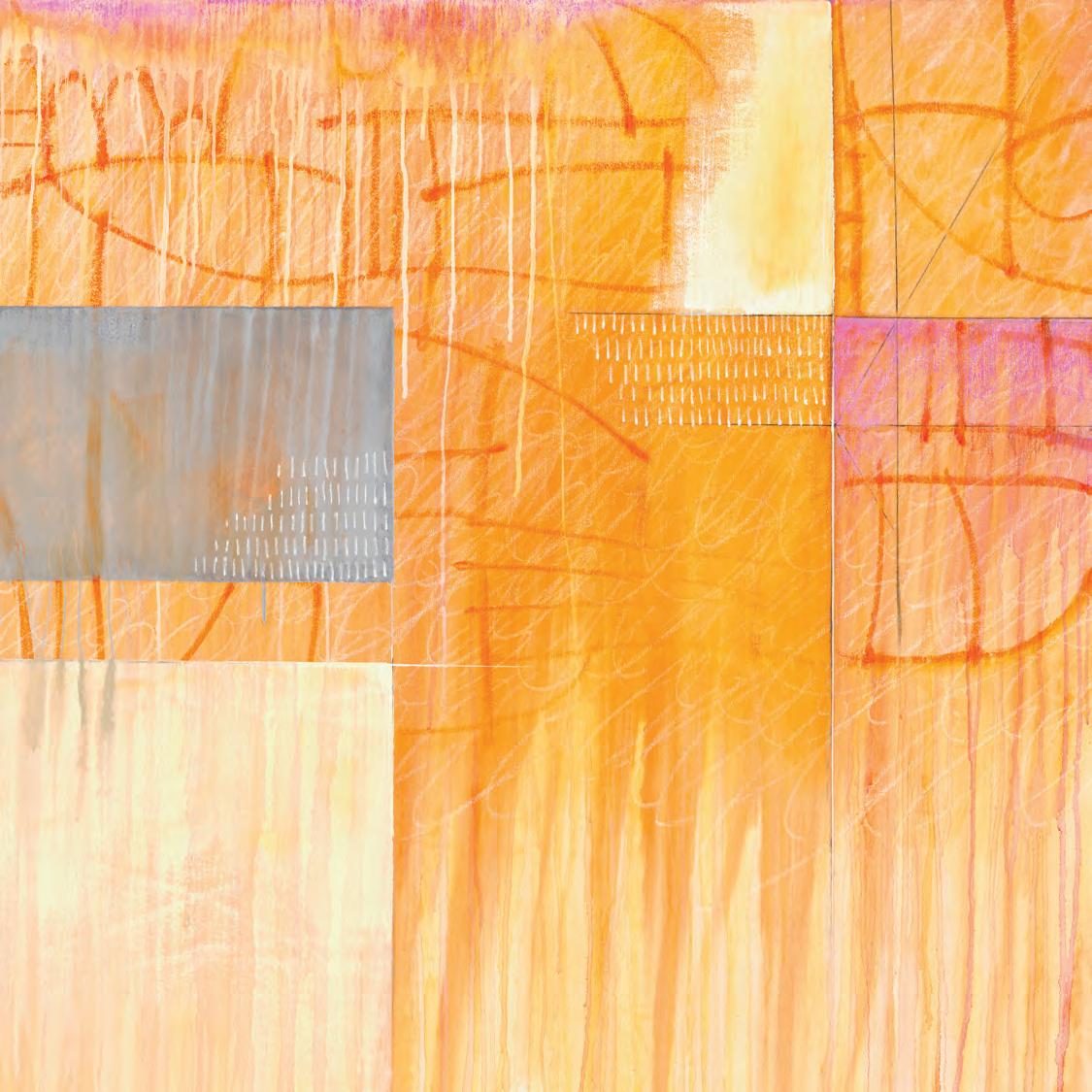
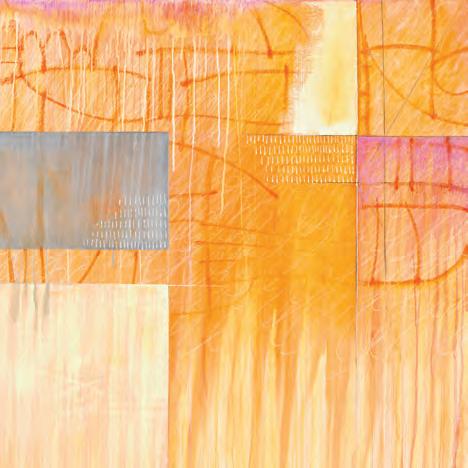
About the Cover:
Summer by Stephanie Hubbard
I painted Summer during that season, a title that felt fitting since it reflects the joyful freedom I was experiencing in that flow state. My process painting a large canvas is iterative — as I explore color, line, and pattern, the work provides feedback that guides my next moves. What resonates most deeply is when viewers bring their own interpretations to the finished work, making connections I couldn’t have anticipated and completing the work through their own unique perspectives.
About the Artist
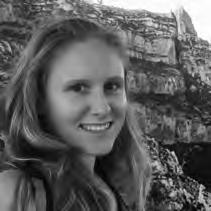
Stephanie Hubbard is a contemporary artist based in Ojai, California. Her work explores the balance between structure and spontaneity, layering organic forms with line and pattern, weaving deliberate rhythm into a field of spontaneous motion. Shaped by early connections to the natural world and a background in landscape architecture, she brings a unique perspective to her compositions. Her work reflects a lifelong practice of seeking pattern and meaning in the world around her.
Hubbard earned her design degree at the University of Massachusetts Amherst including a year of design studies at the University of Copenhagen, Denmark. She has completed long-term residencies at Split Rock Cove in Rockland, Maine, and at Taft Gardens and Nature Preserve in Ojai. Her work is displayed in corporate spaces and private residences, and she has exhibited in galleries across the country. Hubbard is currently represented at the 10 West gallery in Santa Barbara, California.
– J. Krishnamurti Education
A MESSAGE FROM THE CHAIRMAN OF THE BOARD
Welcome to the 80th Anniversary Festival. This year, this Festival is truly a celebration.
We are delighted to welcome back Esa-Pekka Salonen as Music Director, celebrating his work as both conductor and composer. Esa-Pekka will be conducting the Colburn Orchestra and the LA Phil New Music Group. Performances by the L.A. Dance Project, a stellar array of artists, and world and U.S. premieres promise a memorable Festival.
This year, we are enjoying record ticket sales and generous donor support. Whether you have been a donor for decades or are a new donor or patron, your support has helped us to offer a unique musical experience connecting audiences with creative and innovative artists in a magical setting. Thank you.
The Ojai Music Festival is financially stable because of your support, our outstanding staff, a dedicated and generous Board of Directors, and Ara Guzelimian’s leadership. Ara led us out of the pandemic in September 2021 with John Adams as Music Director. This milestone Festival with Esa-Pekka as Music Director marks Ara’s sixth and final season as Artistic and Executive Director, with Teddy Abrams beginning in that role this coming September.
Ara’s artistic brilliance, lifelong working relationships, and warm eloquence have been the foundation for our success and financial health. As we kick off our 80th anniversary season, the Board of Directors is establishing an Artistic Director Creative Fund. This fund will honor Ara’s tenure and help support future Artistic Directors, beginning with Teddy, as they pursue new ideas, commission new work, and continue Ojai’s tradition of artistic exploration.
Every member of the Board has committed to this fund. We are announcing this new initiative with personal donations of more than $300,000. With a few additional early donors, total contributions are $400,000. Please consider joining us and make an investment to honor Ara and ensure the Festival’s artistic future. What a legacy that would be for all of us!
Finally, thank you to the Ojai community for making the Festival a magical place to gather; thank you to everyone who contributes to the success of the Festival; and thank you for your engagement and support.
Let’s enjoy the music, the company, and celebrate!
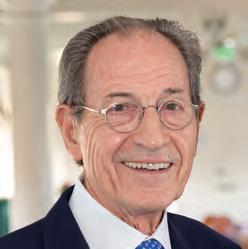
Jerry Eberhardt
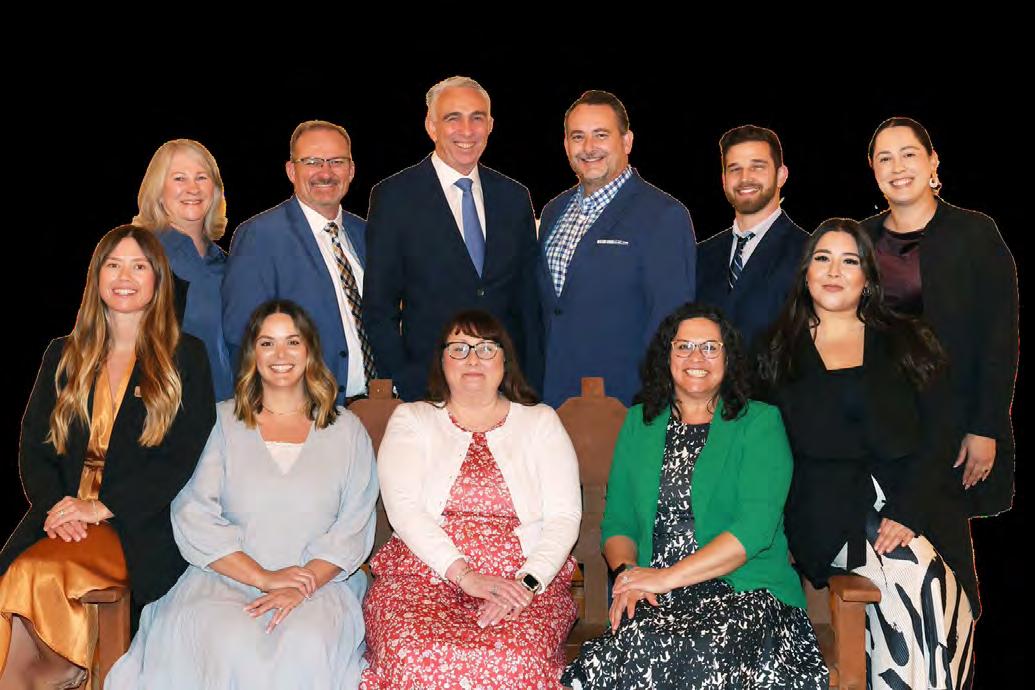
BOARD OF DIRECTORS
Jerry Eberhardt Chair
Barry Sanders Vice ChairGovernance
Don Pattison Vice-Co-Chair-Development
Luther Luedtke Vice-Co-Chair-Development
Cathryn Krause Secretary
Hope Tschopik Schneider Treasurer
Margaret Bates
Michele Brustin
NancyBell Coe
Ruth Eliel
Stephan Farber
James Freeman
Betsy Greenberg
Chris Hacker
David Leeds
Tom McNalley
Glenn Mercer
Joan Oliver
Faith Raiguel
Robin Roy
Neil Selman
Bridget Tsao Brockman
Jeremy Turner
Gayle Whitaker
OMF Friends President
Directors Emeritus
Rick Gould, MD*
Joan Kemper*
Stephen J.M. Morris*
Esther Wachtell*
Ara Guzelimian
Artistic and Executive Director
BOARD OF GOVERNORS
Kate Barnhart
William J. Shanbrom
Co-Chairs
Sasha and Bill Anawalt
Ann Barrett
Barbara Barry
Marjorie Beale and William Meyerhoff
Carolyn Bennett
Judy and Merrill Blau
Tom and Lily Brod
Pamela Burton and Richard Hertz
Jill Cohen
Barbara Cohn
Nancy and Herb Conley
Barbara Delaune Warren
Kathy and James Drummy
Michael Dunn
William Duxler
Constance Eaton and William Hart
Lisa Field
Lenore S. and Bernard A. Greenberg
Mechas and Greg Grinnell
Linda Joyce Hodge
Mary and Jon Hogen
Scott Johnson
Raulee Marcus
Sharon McNalley
Pamela Melone
Diane Murphy
Claire and David Oxtoby
Sandy Robertson and Marshall Donovan
Arthur Rieman
Peter Schneider
Abby Sher
Shelley and Greg Smith
Anne-Marie Spataru
Christine Upton
Gary Wasserman
Jane Weirick
Susanne Sheehan Wilson
Joan Wynn
Emilia Yin and Emmanuel Sharef
*In Memoriam
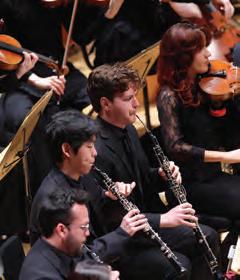
Colburn at Ojai Music Festival
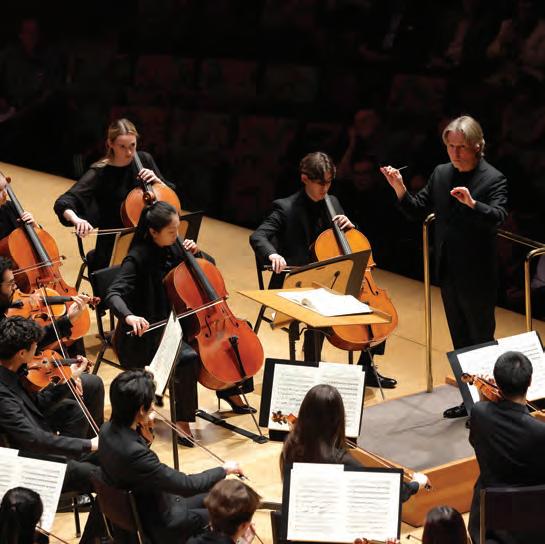
Colburn faculty, students, and alumni light up the 2026 Ojai Music Festival, bringing a shared spirit of creativity, collaboration, and artistic excellence to one of the world’s most inspiring music festivals.
Esa-Pekka Salonen Head of the Negaunee Conducting Program and Maestro Ernst H. Katz Chair of Conducting Studies
Orchestra
www.colburnschool.edu
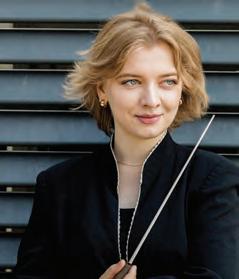
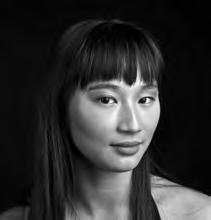
Aleksandra Melaniuk Salonen Conducting Fellow
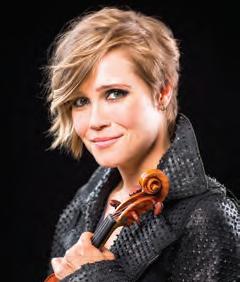
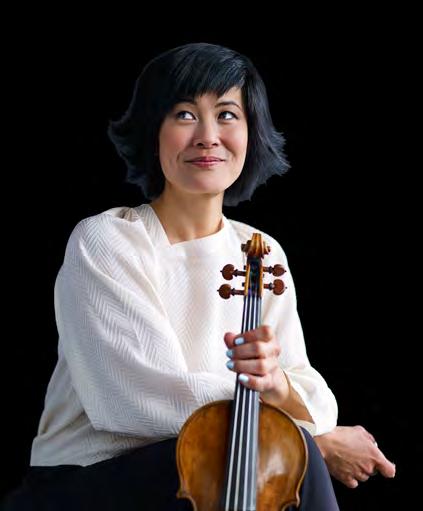
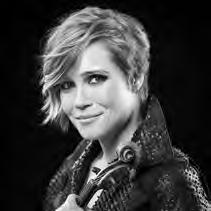
Leila Josefowicz Community School of Performing Arts, 1991 Graduate
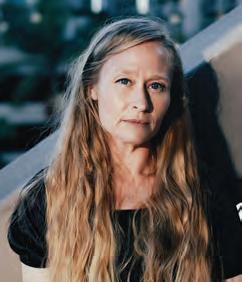
Janie Taylor Artistic Director, Trudl Zipper Dance Institute
Geneva Lewis
Community School of Performing Arts, 2016 Graduate
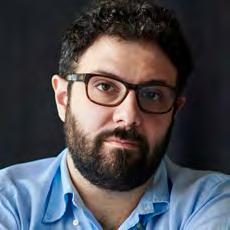
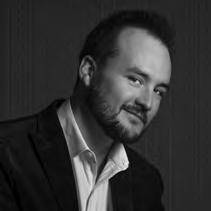
Mert Yalniz Salonen Conducting Fellow
Colburn
A MESSAGE FROM THE ARTISTIC AND EXECUTIVE DIRECTOR
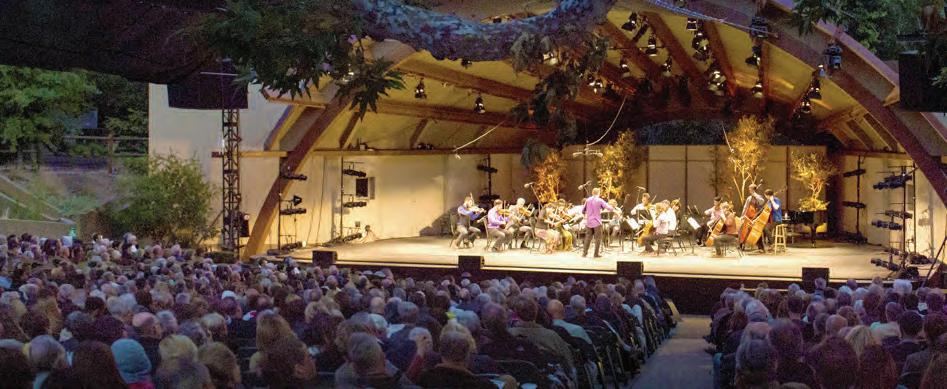
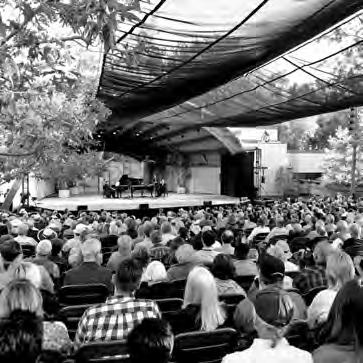
Welcome! It is always a joyful moment when we return to the enchanted setting of Libbey Park, gathering for the musical adventure to come.
I am so thrilled to welcome back Esa-Pekka Salonen as Music Director, part of an extended California homecoming for him as he returns later this year in the new role of Creative Director at the Los Angeles Philharmonic and continues his position as a faculty member at the Colburn School, where he directs the Negaunee Conducting Program. Fittingly, both the LA Phil New Music Group and the Colburn Orchestra feature prominently in our programs this year. Collaborating with Esa-Pekka is a particularly meaningful reunion for me, as our friendship and work together date to his very first years at the LA Phil. It’s been so rewarding (and downright fun!) to dream up these programs together.
We have brought together a stellar community of artists, both those new to Ojai and those making welcome return visits. The programming acknowledges our own history, with key works by Olivier Messiaen and Igor Stravinsky, who each participated personally in earlier years of the Festival; we also pay homage to some central figures of 20th century music, including György Ligeti, Witold Lutosławski, Iannis Xenakis, Morton Feldman, and Luciano Berio, among others. But pride of place is given to recent music, with much of the music on this year’s programs having been written in the last 20 years. And some written in the last few months, with brand new works by John Adams (three world premieres!) and Esa-Pekka himself, whose new Drømmelogikk for violin and cello receives its U.S. premiere in Ojai just days after a first performance at the Bergen Festival.
This is a particularly touching moment for me, as I prepare to step down from my role as Artistic and Executive Director at the end of summer. This has been a profoundly rewarding time for me. Ojai has been central in my life since my teens and I count so many defining musical experiences that have taken place here over the decades. I’m overwhelmed with gratitude — for the extraordinary artists, for the incredibly dedicated Board of Directors, donors, staff, and audiences, who have sustained us over the years, and for the many deep, enduring friendships formed in this very special community. I know that this unique Festival will continue to flourish in the years to come as we welcome Teddy Abrams as the incoming Artistic and Executive Director.
My heartfelt thanks to each of you for your part in this year’s Festival. Let the music begin!
With warm regards,
Ara Guzelimian
The position of Ara Guzelimian as Artistic and Executive Director is made possible by the generous support of Jill and Bill Shanbrom and the Shanbrom Family Foundation.
Ojai Valley School offers a challenging curriculum with small classes led by supportive & dedicated teachers, a diverse student body, a vibrant visual & performing arts program, competitive athletics and equestrian programs, and numerous opportunities for hands-on learning through outdoor exploration & service PRE-KINDERGARTEN-12TH
Ojai Valley School is proud to support the 2026 Ojai Music Festival as a performance venue. LEARN MORE AT OVS.ORG
A MESSAGE FROM THE MUSIC DIRECTOR
The tradition of the Ojai Festival is that there is no tradition—only that people tend to do things here that would be impossible elsewhere. Ojai invites us to dream, and the Festival brings those dreams into reality. If that’s tradition, then call me a traditionalist.
Returning to this place, especially in the company of the musicians of the LA Phil New Music Group and the Colburn Orchestra, feels like a homecoming. I’m so grateful to have so many friends of long standing along for the journey, and to those guest artists who are new to me: I look forward to marking the beginning of a long and happy collaboration.
There’s no other place, and no other festival, quite like Ojai. It’s a special place, and it invites you to do something special. I’m grateful to my old friend Ara Guzelimian for bringing me on this year. We’ve had such a rewarding time putting together a program that honors the Ojai spirit of innovation, while also recognizing its extraordinary history in this anniversary year, and I’m happy to make his final festival at the helm one to remember.
It’s great to be back,
Esa-Pekka Salonen
ABOUT THE COLBURN’S NEGAUNEE CONDUCTING PROGRAM
Colburn’s Negaunee Conducting Program is led by Esa-Pekka Salonen, who also holds the Maestro Ernst H. Katz Chair of Conducting Studies at the Colburn School. Esa-Pekka Salonen joined the Colburn faculty in 2018 to develop the Negaunee Conducting Program, designed to provide a select group of emerging young conductors with significant realworld podium experience to prepare them for professional careers.
Known as Salonen Fellows, these conductors refine their craft and nurture their talent through personal mentorship. They assist Salonen around the world at international engagements with orchestras, opera houses, tours, and festivals. On campus, Fellows lead performances, serve as preparatory conductors for the flagship Colburn Orchestra, and present community concerts alongside the Zipper Orchestra, Colburn’s performing ensemble for its community engagement activities.
The residency of Esa-Pekka Salonen as Music Director is made possible with the generous support of Michele Brustin.
In keeping with the Colburn Conservatory model, Fellows receive full scholarships to cover tuition, room, and board. The conducting program is made possible by the Negaunee Foundation, created in 1987 to celebrate and support arts and cultural institutions.
At this year’s Ojai Music Festival, Salonen Fellows are Aleksandra Melaniuk and Mert Yalnız.
World-renowned orchestras. Legendary recitalists. Masterworks and new voices. Heard live in Santa Barbara. A season of VIRTUOSI
Photo by Marco Borggreve
Vilde Frang
2026 MUSIC DIRECTOR ESA-PEKKA SALONEN
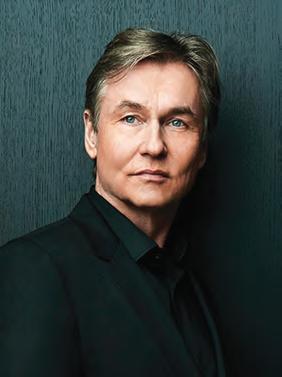
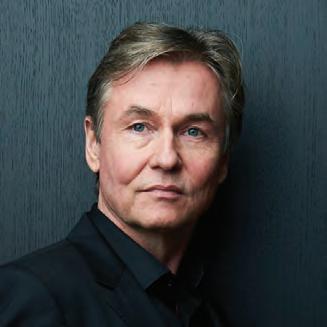
Esa-Pekka Salonen, who previously collaborated with the Ojai Music Festival as Music Director for the 1999 and 2001 Festivals, is renowned as both a composer and conductor. He was recently named Creative Director of the Los Angeles Philharmonic, effective 2026–27, and Creativity and Innovation Chair of the Philharmonie de Paris and Principal Conductor of the Orchestre de Paris, effective 2027–28. He is the Conductor Laureate of the Philharmonia Orchestra, Los Angeles Philharmonic, and the Swedish Radio Symphony Orchestra, all of which he has led as Music Director or Principal Conductor, and formerly served as Music Director of the San Francisco Symphony. He is the founder of the Colburn School’s Negaunee Conducting Program, which he directs as a member of the faculty. Salonen co-founded, and until 2018 served as the Artistic Director of, the annual Baltic Sea Festival.
In recent seasons, Salonen has co-founded the statewide California Festival with Gustavo Dudamel and Rafael Payare; led a synesthetic production of Scriabin’s Prometheus: the Poem of Fire in collaboration with pianist Jean-Yves Thibaudet and Cartier’s head perfumer Mathilde Laurent, recently made the subject of a documentary produced by Cartier in partnership with Mezzo TV; and held residencies at the Berlin Philharmonic, Elbphilharmonie Hamburg, and Salzburg Easter Festival. He also led the Finnish Radio Symphony Orchestra in a Salzburg Easter Festival residency featuring a Simon McBurney production of Modest Mussorgsky’s unfinished opera Khovanshchina, with never-before heard music compiled by Gerard McBurney from a recently rediscovered manuscript.
Salonen begins the 2025–26 season on tour with the Orchestre de Paris, centered on the premiere of his new Horn Concerto, composed for Stefan Dohr. After a world premiere at the Lucerne Festival and performances in Berlin and Hamburg, he brings the piece to the Boston Symphony Orchestra, Filarmonica della Scala, and Hong Kong Philharmonic Orchestra. Other conducting highlights this season include a pair of Pierre Boulez centennial programs at the New York Philharmonic, featuring Notations with Pierre-Laurent Aimard and Rituel with choreography by Benjamin Millepied; residencies with the Swedish Radio Symphony Orchestra and Bergen International Festival; and dates with the LA Phil, Philadelphia Orchestra, Chicago Symphony Orchestra, and Orchestre de Paris. He concludes the season at the Ojai Music Festival, which he curates as the 2026 Music Director.
Salonen is as well-known for his intuitive and cerebral compositions as he is for his work as a conductor. He conducts several of his compositions this season, including Tiu and Dona Nobis Pacem with the Swedish Radio Symphony Orchestra, and his Sinfonia concertante for organ and orchestra with Olivier Latry and the Gothenburg Symphony Orchestra. His music is also programmed, with other conductors, at orchestras and ensembles around the world.
Esa-Pekka Salonen has an extensive and varied recording career, both as a conductor and composer. Recent releases include the GRAMMY® Award-winning (Best Opera Recording) world premiere recording of Kaija Saariaho’s Adriana Mater on Deutsche Grammophon, recordings of Bartók’s three piano concertos with Pierre-Laurent Aimard on Pentatone, as well as spatial audio recordings of Ligeti’s Clocks and Clouds, Lux Aeterna, and Ramifications on Apple Music Classical. His concertos for piano (composed for Yefim Bronfman), violin (for Leila Josefowicz, featured in an ad campaign for the Apple iPad), and cello (for Yo-Yo Ma) all appear on recordings conducted by Salonen himself.
Esa-Pekka Salonen was educated at Helsinki’s Sibelius Academy, where he founded the new music appreciation group Korvat Auki and ensemble Toimii with classmates Magnus Lindberg and Kaija Saariaho. He is the recipient of numerous awards and honors including Sweden’s Litteris et Artibus medal; the Pro Finlandia Medal of the Order of the Lion of Finland, the Helsinki Medal, and Commander, First Class of the Order of the Lion of Finland; Poland’s Gloria Artis Medal for Merit to Culture; and the Rank of Commandeur of France’s Ordre des Arts et des Lettres. He was elected an honorary member of the American Academy of Arts and Sciences in 2010 and appointed an honorary Knight Commander of the Order of the British Empire (KBE) by Queen Elizabeth II in 2020. In 2023, he led the Nobel Prize Concert, and in 2024 received the Polar Music Prize. To date, he has received seven honorary doctorates in four different countries.
The residency of Esa-Pekka Salonen as Music Director is made possible with the generous support of Michele Brustin.
CELEBRATING 25 YEARS FEB 2-7 2027
For 25 years, the Laguna Beach Music Festival has brought world-class artists to our seaside community through intimate performances and meaningful educational and community engagements.
This year’s festival is a heartfelt homecoming, featuring an all-star lineup of past Artistic Directors and cherished collaborators, returning to Laguna Beach to celebrate the music that has shaped our journey.
Featuring Festival All-Stars
Calder Quartet (2003 guest artist)
Angella Ahn, violin (2007 with Ahn Trio)
Los Angeles Guitar Quartet (2015)
Joyce Yang, piano (2019)
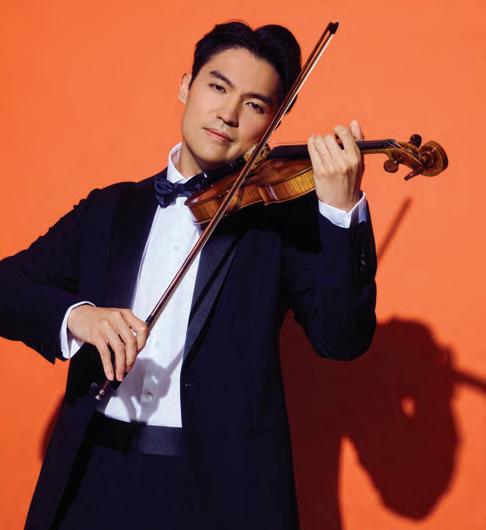
Ray Chen, violin (2020)
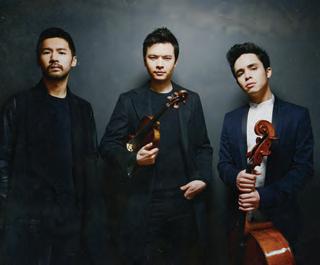
Junction Trio
Conrad Tao (2021)
Stefan Jackiw (2026)
Jay Campbell
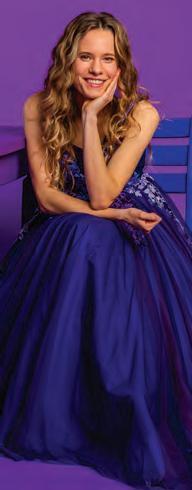
Aubree Oliverson, violin (2024 guest artist)
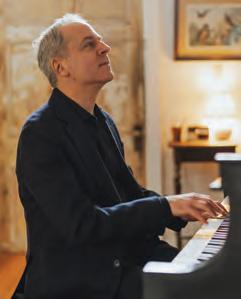
Jeremy Denk, piano (2023)
Concerts at Laguna Playhouse
Friday, February 5, 2027, 8pm
Saturday, February 6, 2027, 8pm
Sunday, February 7, 2027, 3pm
Co-presented with
Philharmonic Society of Orange County and Laguna Beach Live!
Ray Chen
Junction Trio
Jeremy Denk
Aubree Oliverson
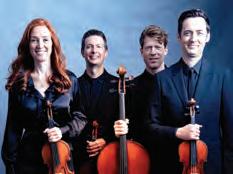
Calder Quartet
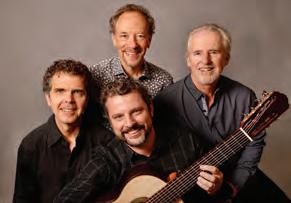
Los Angeles Guitar Quartet
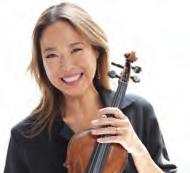
Angella Ahn
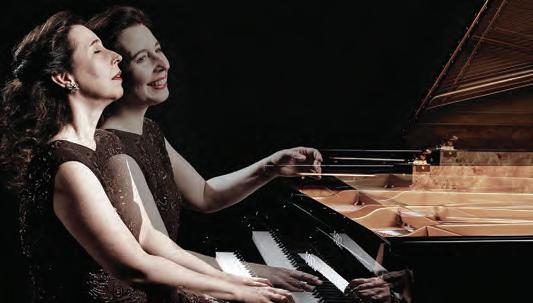
Joyce Yang
MUSIC ACADEMY OF THE WEST SANTA BARBARA CALIFORNIA
JUL 10
JUL 18
JUL 24/26
JUL 25
MISSY MAZZOLI: In Her Words
JASMINE BARNES: American Lament
KEVIN PUTS opera Elizabeth Cree
JENNIFER KOH performs PHILIP GLASS
JUNE 17 - AUGUST 8
JUL 30
CHRISTOPHER CERRONE & JOEL THOMPSON
A FIELD OF CONNECTIONS
“The biggest danger for a musician… is to stick to what you know — to think, ‘I’ve always done this and it’s always worked. Why change now?’”
Esa-Pekka Salonen, who returns to the Ojai Music Festival for the first time in 25 years, points to a paradox that arises precisely when habits are most secure. The difficulty is not lack of experience but recognizing when it begins to calcify — and how much remains to be discovered.
That situation finds a natural setting at Ojai, with a different music director each year shaping the programs. In recent years, as Artistic and Executive Director, Ara Guzelimian, has emphasized an approach that avoids fixed themes and predetermined arguments, placing works side by side so they are heard in relation to one another — which in turn allows connections to register across programs. “The programs talk to each other,” he observes.
The result is cumulative rather than conclusive, keeping earlier music in play rather than treating it as settled knowledge — closer to Socrates’s idea that wisdom begins with recognizing the limits of what one knows.
Salonen’s 2026 Festival brings these relationships into view, placing his work alongside composers he has studied with and championed, and performers with whom he has collaborated. At its center is his dual identity as conductor and composer, with a particular emphasis on his recent output. Among these is Drømmelogikk, a newly completed duo for violin and cello that
takes its point of departure from a dream. Festival artists Geneva Lewis and Jay Campbell give its U.S. premiere on opening night.
Salonen remarks that his recent role on the faculty of the Colburn School, where he mentors a new generation of conducting students, has helped force him to account for habits that might be taken for granted — a sure way of avoiding the trap that allows experience to settle into received ideas.
And it is a dynamic that extends across the Festival. The composers who shaped Salonen’s early development appear alongside those writing today, expanding the sense of lineage into a living network. Figures he has long championed as a conductor — Witold Lutosławski and György Ligeti — are heard alongside close associates from his conservatory years such as Magnus Lindberg and Kaija Saariaho, as well as composers of a younger generation, including Gabriella Smith and Anna Thorvaldsdottir.
These connections are not only musical but institutional, rooted in Southern California’s new music life. The Colburn Orchestra and the LA Philharmonic’s New Music Group form part of that landscape, alongside longer-standing presences such as the Monday Evening Concerts, which benefited from the leadership of longtime Ojai director Lawrence Morton; current director Jonathan Hepfer brings that legacy back to Ojai with a bold program of solo percussion. Leila Josefowicz, a longtime collaborator of both Salonen and John Adams, appears in Ligeti’s Violin Concerto, bringing another strand of this shared history into the present.
Set within this network are two defining figures of the 20th century: each helps frame the Festival. Olivier Messiaen, who visited Ojai in 1985, anchors the opening concert with Quartet for the End of Time. Salonen recalls how an accidental encounter with the Turangalîla Symphony on the radio at age 11 proved to be a shocking discovery that “music could do things completely unlike what I had known from Sibelius, Beethoven, and Brahms.” Salonen went on to collaborate directly with Messiaen, preparing a production of Saint François d’Assise under the composer’s
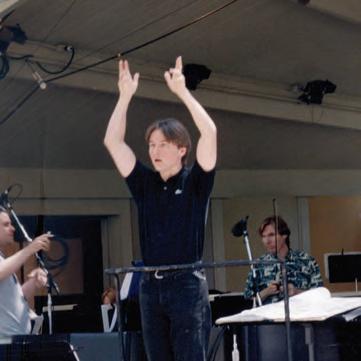
Esa-Pekka Salonen, Ojai 1999. Photo by Betty Freeman
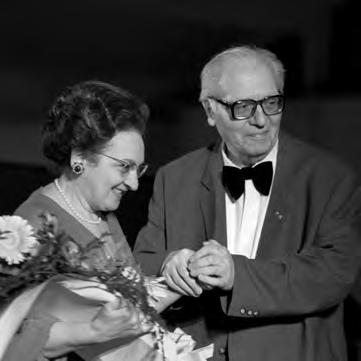
Yvonne Loriod and Olivier Messiaen, Ojai 1985. Photo by Timothy Teague
guidance. The association left a lasting mark, and Messiaen’s music has remained central to his identity as a conductor.
Igor Stravinsky, who had an even stronger association with the Ojai Music Festival in its early years, enters from a different vantage point. His ballet Pulcinella, which we hear in its full-length version in the closing concert, articulates an approach to the past that has taken on renewed force among many American composers of the 21st century, where earlier styles remain available to be freely reimagined. “Pulcinella was my discovery of the past,” Stravinsky recalled, “the epiphany through which the whole of my late work became possible … a look in the mirror, too.” For Salonen, this way of engaging with the past has taken on new life in a generation of composers for whom stylistic boundaries are increasingly fluid.
Alongside these figures, the program includes a group of composers from the postwar Italian avant-garde who left a mark during Salonen’s formative years — among them Franco Donatoni and Niccolò Castiglioni, as well as figures such as Vinko Globokar, who formed part of the experimental milieu in which he came of age. From Donatoni he absorbed an uncompromising focus on craft — “lavorare, lavorare, sempre lavorare” (“work, work, always be working”), Salonen recalls hearing him intone one summer in Italy — with an emphasis on the discipline of writing rather than questions of expression. Castiglioni, by contrast, pointed in another direction, loosening the grip of system and opening a different kind of freedom. Luciano Berio appears as well, his Sequenzas part of a movable feast — pushing performers to the edge of what their instruments, and they themselves, can do, and redefining music in the act of its making.
John Adams, whose associations with Salonen and Ojai alike run deep, is a guiding thread across the 2026 Festival, with no fewer than two world premieres underscoring the vitality of his creative work as he nears eighty. Pianist Conor Hanick performs two selections
from Visions fugitives, a recently completed cycle of “character pieces … but with a contemporary twist.” And on Sunday morning, Iron Jig, a hard-driven new piece for the Attacca Quartet — fearless champions of new music — is heard for the first time. Adams’s Chamber Symphony meanwhile brings another — and unsuspected — 20th-century lineage into focus through its irreverent response to Schoenberg, who, like Stravinsky, spent his later years in Southern California. With its narrative of crisis and reconciliation stretched over a moonlit encounter, Transfigured Night even offers a counterpart to Messiaen’s suspension and fragmentation of time.
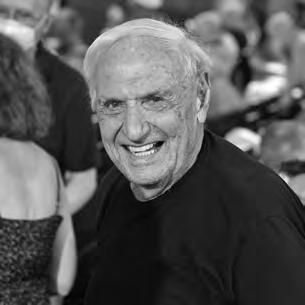
That stance informs Salonen’s long association with the late Frank Gehry, whose presence is keenly felt in the closing concert through Fog — a work composed to celebrate the great architect on his 90th birthday. Fog was directly inspired by their shared first experience in the still-unfinished Walt Disney Concert Hall, an essential part of Gehry’s legacy. Reflecting on that collaboration, Salonen draws a contrast between the transience of musical performance and the permanence of architecture: “After the concert is finished, the notes have gone out and will never come back, but the hall is concrete and lasting.”
Taken together, these threads give the 2026 Ojai Music Festival the character of an artistic homecoming, shaped as much by personal and institutional ties as by repertory. In his final season as Artistic and Executive Director, Ara Guzelimian draws these lines into focus as a field of connections where past and present remain in active exchange. At its center is Esa-Pekka Salonen, whose commitment to listening with “open ears” — a principle dating back to his earliest years — continues to guide the Festival’s forward motion, sustained by the musicians who bring it to life.
—Thomas May
Thomas May is a freelance writer, critic, educator, and translator whose work appears in an array of international publications, including the New York Times and Gramophone. The Englishlanguage editor for Lucerne Festival in Switzerland, he also writes for such institutions as the Hong Kong Arts Festival, Edinburgh Festival, Davos Festival, Metropolitan Opera, and The Juilliard School. He blogs at memeteria.com.
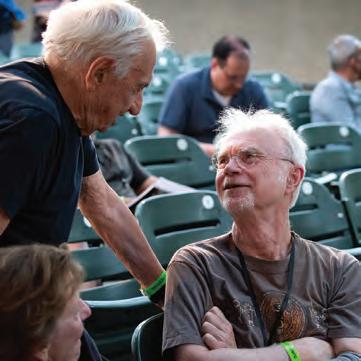
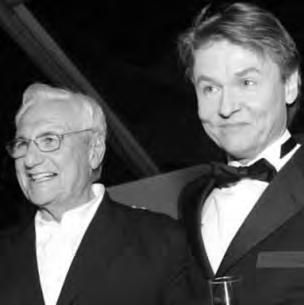
Frank Gehry and John Adams, Ojai 2021. Photo by Timothy Teague
OJAI VALLEY VENUE MAP
THURSDAY, JUNE 11
3:00PM Ojai Talks (Ojai Presbyterian Church)
SATURDAY, JUNE 13
8:00AM Morning Meditation (Ojai Meadows Preserve)
OJAI RUNDOWN
6:30PM Ojai Chats (Libbey Park Gazebo)
8:00PM Opening Night (Libbey Bowl)
FRIDAY, JUNE 12
THURSDAY
8:00AM Ojai Dawns (Zalk Theater, Besant Hill School)
Enjoy the wonderful setting of our open Green Room in the Park right outside of the Libbey Bowl—a great place to meet up with friends and music enthusiasts, grab a bite, shop, or relax between concerts.
GRAB-AND-GO
06�11
Ojai Talks (Ojai Presbyterian Church)
Visit our concessions area for wine and mocktails to small bites and sweet treats. Find Mental Frosting Coffee Roasters, a full coffee shop on wheels, before and after concerts.
Opening Night (Libbey Bowl)
06�12
Ojai Dawns (Zalk Theatre, Besant School)
This year, each day of the Festival will feature a culinary takeover by different Ojai restaurants: Ojai Rotie, Pinyon, Sam’s Place, and Sama Sama Kitchen.
Morning Concert (Libbey Bowl)
FESTIVAL POP-UP MARKET
Ojai Chats (Libbey Park Gazebo)
Ojai Films: Wings of Desire (Ojai Playhouse)
Ojai Afternoons (Greenberg Activity Center)
Take something home to help remember your Festival experience, featuring 2026 Festival T-shirts, as well as essentials including hats, blankets, seat cushions, and more.
Ojai Chats (Libbey Park Gazebo)
SUPPERS IN THE PARK
Evening Concert (Libbey Bowl)
SATURDAY 06�13
Morning Meditation (Ojai Meadows Preserve)
Enjoy a gourmet boxed dinner with wine provided by The Ojai Vineyard. Friday, June 12 and Saturday, June 13 with Sundance Catering. Advance reservations only.
Learn about concert works from the composers. John Schaefer of WNYC/New Sounds hosts conversations with Festival artists followed by Music Pop-Ups at Libbey Park Gazebo!
Ojai Chats (Libbey Park Gazebo)
80TH VILLAGE + BOOTHS
Evening Concert (Libbey Bowl)
06�14
Morning Meditation (Chaparral Auditorium)
Take a stroll in Libbey Park and make sure you visit our special Ojai at 80 display as well as others, including the Festival’s BRAVO Music Education and Community Programs, Bart’s Books, and Ojai Studio Artists.
Morning Concert (Libbey Bowl)
Family Concert (Ojai Art Center)
AV (AUDIO VISUAL) INSTALLATION IN LIBBEY PARK
Ojai Films: 2001: A Space Odyssey (Ojai Playhouse)
Ojai Afternoons (Greenberg Activity Center)
Festival Finale (Libbey Bowl)
As part of the Ojai Festival’s “Between Junes” year-round programs, AV was a collaboration exploring the convergence of audio and visual art. Co-produced with Black Barn Sessions and curation by Christopher Noxon and Will Thomas, the show featured 12 works by Ojai-based artists, each paired with a custom-composed soundtrack. During the Festival, enjoy two of the installations placed in Libbey Park: Wind Constellations 1-3 by Joel Fox and Sonic Blooms by Christopher Noxon.
Visit OjaiFestival.org for schedule, places to explore in Ojai, and more.
ORCHESTRA SERIES MOVEMENT(S)!
STRAUSS, RAVEL, BEETHOVEN
EAST MEETS WEST STRAVINSKY, MOZART, GOODE HAYDN, MOZART, KALHOR BRAHMS, BEETHOVEN, RAVAEI
CHAMBER SERIES PULSE & PRECISION SHOSTAKOVICH & HAMELIN
NEW! RECITAL SERIES
ANGELA HEWITT PIANO
BAROQUE SERIES
VIVALDI’S VENICE
BACH: THE CHRISTMAS ORATORIO
FRANCESCO CORTI HARPSICHORD
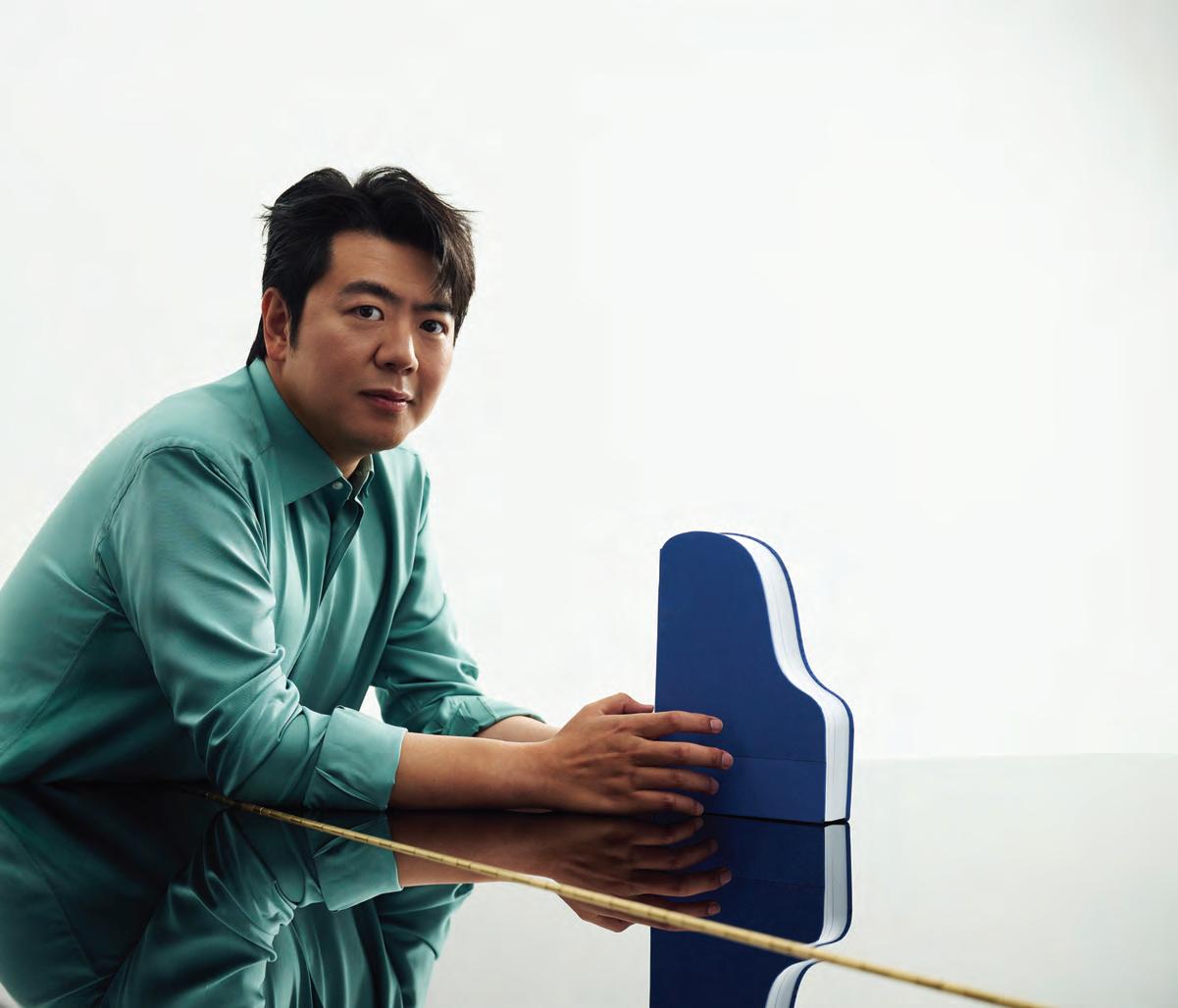
FAZIL SAY PIANO
CURRENT SERIES SHANGRI-LA
SPECIAL CONCERT MOZART UNDER THE STARS AT THE HOLLYWOOD BOWL
JOHN HOLIDAY
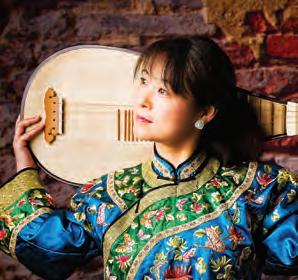
WU MAN
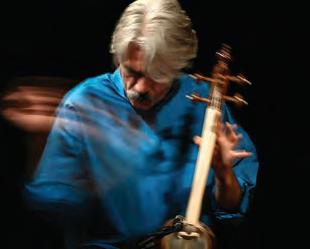
KAYHAN KALHOR
ANGELA HEWITT
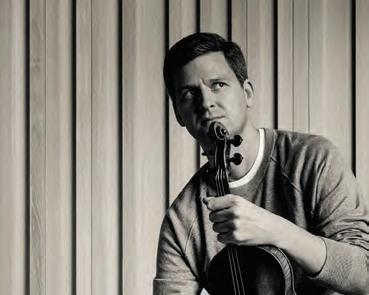
JAMES EHNES
FRANCESCO CORTI
MY CLIENTS SAY IT ALL:
“We had the best experience working with Sharon. When my husband and I decided to sell our home, we were overwhelmed by the process. But Sharon swooped in and made everything easy and seamless. We would work with Sharon again in a heartbeat.” - Gabriela London
“Sharon is personable and an absolute pleasure to deal with, and she’s a great advocate for your interests. A+ experience.” - Bob and Trish Moore
“Sharp, helpful, and friendly, Sharon is a pro with a deep knowledge of the market and a super helpful attitude.” - Chris Noxon
“Sharon was hands down the best agent I’ve ever worked with. You’ve got a great agent if you’re lucky enough to work with her.” - Leslie Rathe
THE GENEROSITY OF TIME
Der Augenblick ist Ewigkeit (The moment is eternity)
— Goethe, Vermächtnis
First, stillness, a valley’s embrace, gradually punctuated by sounds of nature’s greeting. Our return, a prelude, a look around, what’s changed, what hasn’t, a leisurely gathering. Even newcomers sense a homecoming, of knowing, and belonging.
Conversations begin easily here, memories revive. The gentle jostle of jumbled reminiscence. Last year, or was it the year before? Has it really been as long ago as that? In this deeply sensuous, textured place thoughts are tactile, our senses feel the space. Here a presence lost lingers — yes, he always used to sit there, she beneath that tree; their spot on the lawn, friends nearby. Faces, voices recalled. We made room at this table, crowded onto spongy bleachers, ambled in the market, or perused a bookstore’s shelves. And here’s my spot along the gentle slope that reaches toward the stage. These are the physical, tangible vignettes that bind us to each other, to those who came before and those who’ll follow.
Such are the memories threaded across Ojai generations, but it is not memory that brought and brings us here but anticipation. Creative imagination thrusts us into the precious Now. No dwelling on decades past or tidy anniversaries. Now revels in this moment, an edge of time between where we’ve been and might yet go. Now is possibility, the canvas for creators who dream and design, speculate and challenge, succeed or fail. The podium for performers who bring such dreams to life,
then sit among us to listen as others do the same. And Now, for us, is time’s worm hole, the conduit through which we slip into a weekend’s universe of sound and experience as conceived by each year’s musical mentor.
We entrust ourselves to the visions and whims of this succession of inventive minds and offer our praise — or reproach — with disarming candor. They turn to greet, welcome inquiry, and invite response in hopes that their new worlds may someday be our own. Looking back (as one does from time to time) it’s hard to see a pattern. Trends, of course, fashions that come and go, but no straight path of historical inevitability. All zigs and zags, old mixes with new, strange and startling juxtapositions produce surprising connections. Post-concert conversations reveal still others because no one slinks away in silence. After the music dies away the talk begins in earnest.
In Ojai, tradition is the guarantor. Not, mind you, the tradition of stodgy repetition or received ideas, but of vital, openhearted exchange based on curiosity, respect, and trust that appreciates the daring risk. If such qualities are today in short supply in our national conversation, this quirky, unpredictable annual gathering shelters a flame of which we are the keepers. This is the generosity of time, of moments held and passed along.
At day’s end, in the stillness of the night, we are enmeshed with this place that listens, at one with its flow in a community of wonder that is, each year, assembled anew. This moment shared is our eternity.
— Christopher Hailey
Festival images by Timothy Teague.
Chris Thile 2027 Music Director
CHRIS
June 10–13, 2027 Libbey Bowl passes on sale now!
FOR MTT
(1944-2026)
It’s hard to imagine that Michael Tilson Thomas was in his 80s, let alone that he has now sadly left us. Michael was eternally young, his endless exuberance, contagious curiosity, and utter delight in countless subjects always present. His great legacy is not only in his many unforgettable performances and recordings but also in his generous mentorship of generations of young musicians.
Happily for us, he was a quintessential Californian, born and educated in Los Angeles, counting Ingolf Dahl and Lawrence Morton (the defining guiding hand of the Ojai Festival from the 1950s to the 1980s) among his most influential mentors. He shared with Pierre Boulez the distinction of having most frequently served as Music Director of the Ojai Music Festival — seven times between 1977 and 1994. My own first encounter with him was at the 1974 Ojai Festival. I was here as a member of the UCLA A Cappella Choir, taking part in a characteristic MTT program exploring completely neglected works by Beethoven — it’s still the only time I’ve ever heard the King Stephen incidental music as well as several shorter works for chorus and orchestra! When we worked together for the 1994 Ojai Festival, the music was a different but utterly MTT mix of Lukas Foss, Henry Cowell, Astor Piazzolla, Ruth Crawford Seeger, and Ingolf Dahl, all played by another one of his enduring creations, the New World Symphony.
Michael’s career took him far and wide, with memorable chapters at the Boston Symphony, Los Angeles Philharmonic (as Principal Guest Conductor in the 1980s, leading historic festivals on Stravinsky and music made in Los Angeles), the London Symphony and, eventually, a defining tenure of 25 years as Music Director at the San Francisco Symphony, where his series devoted to American Mavericks were a revelation — where else could you hear Jessye Norman join Meredith Monk and Joan La Barbara to sing John Cage?
One of my many memories of working with Michael came in the early 2000s when he led a Carnegie Hall workshop centered on the original version of Aaron Copland’s Appalachian Spring. Characteristically, he restored a highly dramatic passage that is cut in the familiar suite, deepening the scope of the work. It was there that I met another one of his young musician mentees, an eager teenaged clarinetist and budding conductor from the Bay Area named Teddy Abrams. It is so deeply meaningful that Michael’s direct legacy at the Ojai Festival now continues with that same Teddy Abrams taking over as Artistic and Executive Director later this year
— Ara Guzelimian
OJAI MUSIC FESTIVAL MUSIC DIRECTORS
1947
Johnson
Rebner
Johnson
William Steinberg
Thor Johnson
Thor Johnson
Robert Craft
Robert Craft
Igor Stravinsky 1956 Robert Craft
Igor Stravinsky
1957 Aaron Copland, Ingolf Dahl
1958 Aaron Copland
1959 Robert Craft
1960 Henri Temianka
1961 Lukas Foss
1962 Lukas Foss
1963 Lukas Foss
1964 Ingolf Dahl
1965 Ingolf Dahl
1966 Ingolf Dahl
1967 Pierre Boulez
1968 Robert LaMarchina
Lawrence Foster
Michael Tilson Thomas
1969 Michael Zearott
Stefan Minde
Michael Tilson Thomas
1970 Pierre Boulez
1971 Gerhard Samuel 1972 Michael Zearott
1973 Michael Tilson Thomas 1974 Michael Tilson Thomas 1975 Michael Tilson Thomas 1976 Aaron Copland 1977 Michael Tilson Thomas
Calvin Simmons
Lukas Foss
Lukas Foss
Daniel Lewis
Robert Craft
Daniel Lewis 1984 Pierre Boulez
1985 Kent Nagano
1986 Kent Nagano
Stephen Mosko
1987 Lukas Foss
1988 Nicholas McGegan
Sir Peter Maxwell Davies
Diane Wittry
1989 Pierre Boulez
1990 Stephen Mosko
1991 John Harbison
Sir Peter Maxwell Davies
1992 Pierre Boulez
1993 John Adams
1994 Michael Tilson Thomas
1995 Kent Nagano
1996 Pierre Boulez
1997 Emanuel Ax, Daniel Harding
1998 Mitsuko Uchida
David Zinman
1999 Esa-Pekka Salonen
2000 Sir Simon Rattle
2001 Esa-Pekka Salonen
2002 Emerson String Quartet
2003 Pierre Boulez
2004 Kent Nagano
2005 Oliver Knussen
2006 Robert Spano
2007 Pierre-Laurent Aimard
2008 David Robertson
2009 eighth blackbird
2010 George Benjamin
2011 Dawn Upshaw
2012 Leif Ove Andsnes
2013 Mark Morris
2014 Jeremy Denk
2015 Steven Schick
2016 Peter Sellars
2017 Vijay Iyer
2018 Patricia Kopatchinskaja
2019 Barbara Hannigan
2020 Matthias Pintscher
2021 John Adams
2022 AMOC*
2023 Rhiannon Giddens
2024 Mitsuko Uchida
2025 Claire Chase
2026 Esa-Pekka Salonen
FESTIVAL INFORMATION
BOX OFFICE HOURS
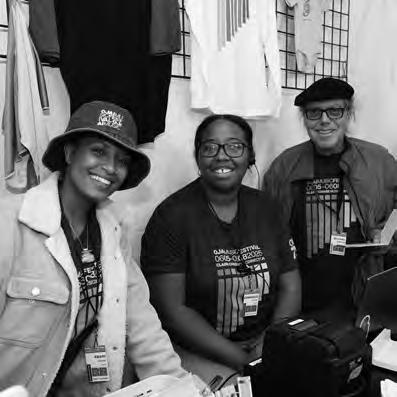
The Festival Box Office is in the center of Libbey Park, just north of the Tennis Courts. Our friendly staff and interns will be glad to help you with ticket purchases and questions, as well as ordering your passes for next year’s 2027 Festival. Assisted listening devices are available for checkout at the Box Office. Please bring a valid photo ID. If you cannot use your tickets, convert them to a taxdeductible contribution at least one day before the concert. Tickets received less than 24 hours in advance may still be converted. Stop by the Box Office or call our Ticket Donation Hotline at 805 646 2192.
HOURS OF OPERATION:
THU June 11 12PM-9PM
FRI June 12 9AM-1PM and 2:30PM-9PM
SAT June 13 9AM-1PM and 2:30PM-9PM SUN June 14 9AM-1PM and 4PM-7PM
LATE SEATING
Performances start at the time designated on your ticket. We recommend that you arrive at the venue at least 30 minutes prior to the beginning of the concert. In deference to the comfort and listening pleasure of the audience, late-arriving patrons will not be seated while music is being performed. Latecomers are asked to wait quietly in the designated areas until the first break in the program when ushers will assist them to their seats. Late seating breaks vary by concert and are at the discretion of the House Manager in consultation with the conductor and performing artists. Please note that select performances may not have late seating opportunities. Chimes will ring before the concert starts and before the end of intermission.
Note: Artists and programs are subject to change without notice. In the event of a weather emergency, concerts may be canceled without ticket refunds.
PHOTOS AND RECORDINGS
Photography, audio recording, and videography are prohibited during Festival performances. We appreciate your cooperation in helping us create an environment for the artists and audience that is not distracting.
PHONES AND ELECTRONIC DEVICES
As a courtesy to others, please turn off your phone, watch, and car alarms, and any other electronic device that makes noise or emits light before the start of Festival performances. Efforts to limit paper rustling, coughing, and unwrapping candy will be appreciated by both audience members and artists.
ALCOHOL & DRINKS POLICY
We appreciate that patrons do not bring beverages in the reserved seating sections of the Libbey Bowl. Due to City of Ojai policy, alcohol that is purchased at the Festival’s Green Room in the Park must be consumed in the designated restricted areas. Alcohol purchased at our concessions in the Green Room in the Park will be permitted only in the lawn area of the Bowl. No food or drinks will be allowed in our off-campus venues. No outside alcohol may be brought into Festival concerts and events.
SMOKING POLICY
Both Libbey Park and Libbey Bowl are designated no-smoking zones (including vape pens and e-cigarettes) by the City of Ojai. The Festival’s office, donor lounge, off-campus events, and backstage are also non-smoking areas.
LAWN SEATING
As a courtesy to other lawn patrons, blankets and low-rise chairs are preferred. Please bring low-rise, beach-style chairs with legs of 10 inches or less. Patrons with higher-rise chairs, such as camping or deck chairs, will be asked to move to the house right side of the lawn. Please do not leave valuable items in the lawn area and be sure to remove lawn chairs at the end of each Festival day. The Festival is not responsible for lost or damaged items.
LOST AND FOUND
If you lose or find an item, please check in with the Festival Box Office, just outside the entrance to Libbey Bowl.
RESTROOMS
The Festival provides and maintains portable restrooms which are located 50 yards east of the Box Office in Libbey Park. An ADA accessible restroom is located in Libbey Park and on Signal Street near the handicapped drop-off point.
ADA ACCOMMODATIONS
Seating for patrons with wheelchairs is available in a reserved section of Libbey Bowl. Please contact the Box Office as early as possible for special seating requests or questions about accessibility. A handicapped parking lot is located on Signal Street for vehicles displaying a DMV handicapped parking hang tag or license plate. Early arrival is encouraged, as these spaces fill up. For patrons requiring a short walk into Libbey Bowl, a handicapped drop-off point is located near the backstage on Signal Street. Please notify the barricade attendant and they will direct you. There is also nearby parking for the drivers of those needing assistance. For listening devices, please visit the Box Office. Public restrooms at the east end of Libbey Park are wheelchair accessible. Please contact an usher if you need assistance.
SERVICE ANIMALS
Patrons with disabilities are welcome to bring service animals. Service animals, as defined under the Americans with Disabilities Act (ADA), are dogs that are individually trained to do work or perform tasks directly related to a person’s disability. The dog must be able to rest in the seat area of the individual with a disability, excluding aisles or walkways. Please note that any animal whose sole function is to provide comfort or emotional support does not qualify as a service animal under ADA regulations.
We reserve the right to withhold or remove a service dog that fundamentally alters the nature of our programming by behaving in an unacceptable way during a performance, and/or if the person with the disability does not or cannot control the animal. No other animals or pets are permitted at Festival concerts and events.
IN THE EVENT OF AN EMERGENCY
Emergency exits are clearly marked, please take note of your nearest one as you enter. In the event of an emergency, ushers and Festival staff will provide instructions. Contact an usher or member of the Festival staff if you require medical assistance.
AFTER THE PERFORMANCE
We appreciate your cooperation in helping to clear the seating area after concerts. Be sure to take all lawn chairs and personal items with you when you leave the Bowl and please dispose of your recyclable trash in the Festival recycle boxes.
GO GREEN
The Festival strives to minimize its ecological footprint. We encourage you to do your share by separating your trash and using our recycle boxes provided by E.J. Harrison & Sons, and by using our complimentary water refill stations located throughout the Park and inside the Bowl. The same program book can be reused throughout the Festival and recycled at Festival’s end by dropping it off at the front gate.
HEALTH & SAFETY PROTOCOL
The Ojai Music Festival is committed to protecting and ensuring the health and safety of its staff, artists, volunteers, and the Ojai community. Your support and participation are greatly appreciated. Masks are optional but recommended for individuals who are at increased risk for severe disease. We will have hand sanitation supplies available throughout the Festival campus. Please stay at home if you have any symptoms of illness. If you find yourself coughing and sneezing during a performance, please remove yourself to an open area away from others to keep performance distractions and health risks at a minimum. These guidelines are subject to change based on the advice of public health officials and conditions at the time of the Festival.
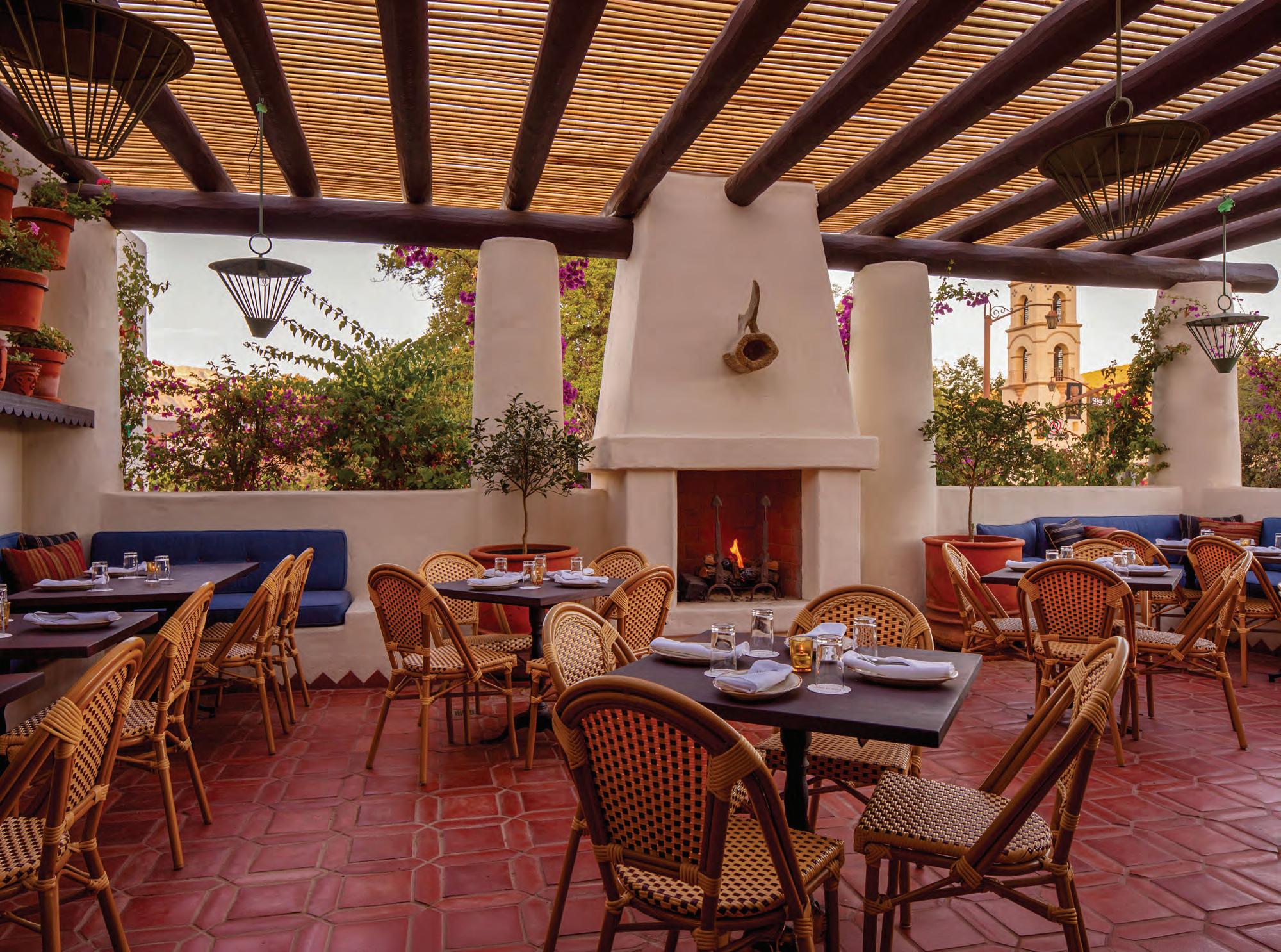
www.ojairotie.com
rotisserie sourdough winebox
FREE OFFERINGS AND EVENTS
An important part of the Ojai Music Festival’s tradition is offering free events and musical surprises during our four days together. Add these to your Ojai Festival experience calendar!
THURSDAY, JUNE 11
6:30PM
FRIDAY, JUNE 12
12PM
6PM
SATURDAY, JUNE 13
8AM
12PM
6PM
SUNDAY, JUNE 14
8AM
Ojai Chats and Music Pop-Up
Libbey Park Gazebo
Ojai Chats
Libbey Park Gazebo
Ojai Chats
Libbey Park Gazebo
Morning Meditation
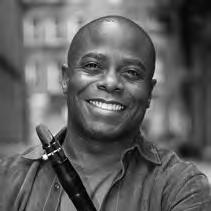
Bird-inspired music featuring Rose Lombardo, Anthony McGill, and Hanzhi Wang (see page 60)
Ojai Meadows Preserve (1601 Maricopa Hwy)
Ojai Chats
Libbey Park Gazebo
Ojai Chats
Libbey Park Gazebo
Morning Meditation
Music of Saariaho, Cage, Ravel, and others, featuring Geneva Lewis and Jay Campbell (see page 74)
Chaparral Auditorium (414 E. Ojai Ave)
12PM Family Concert
Hosted by the Ojai Music Festival’s BRAVO Music Education and Community Programs
Ojai Art Center (113 S. Montgomery St)
THURSDAY
JUNE 11, 2026 | 3PM
Ojai Presbyterian Church
OJAI TALKS
PART I
The Ojai Talks are made possible with the generous support of Betsy Greenberg
OJAI CHATS
6:30PM
Libbey Park Gazebo
PART II
2026 Featured Composers
John Adams and Gabriella Smith with host John Schaefer BREAK
Music Director Esa-Pekka Salonen with Ara Guzelimian
Major funding for the 80th anniversary Ojai Music Festival is generously provided by Terri and Jerry Kohl. The residency of Esa-Pekka Salonen as Music Director is made possible with the generous support of Michele Brustin.
304
OJAI PRESBYTERIAN CHURCH
N. FOOTHILL ROAD, OJAI
THURSDAY
JUNE 11, 2026 | 8PM
Libbey Bowl
Geneva Lewis violin | Jay Campbell cello | Conor Hanick piano | Anthony McGill clarinet
Attacca Quartet: Amy Schroeder and Domenic Salerni violin | Nathan Schram viola | Andrew Yee cello
Reena ESMAIL
Esa-Pekka SALONEN
This concert is made possible with the generous support of Cathryn and Tom Krause
The concert appearances of Conor Hanick are made possible with the generous support of Kathy and David Leeds
OJAI CHATS
6:30PM
Libbey Park Gazebo
John ADAMS
Darshan, III. Charukeshi
Geneva Lewis violin
Drømmelogikk (U.S. Premiere)
Geneva Lewis violin
Jay Campbell cello
Commissioned by the Ojai Music Festival and the Bergen International Festival with the generous support of the Lenore S. and Bernard A. Greenberg Fund
Selections from Visions fugitives (World Premiere)
song without words il testardo
Conor Hanick piano
Esa-Pekka SALONEN Homunculus
Attacca Quartet
INTERMISSION
Olivier MESSIAEN
Quartet for the End of Time
I. Liturgy of Crystal
II. Vocalise, for the Angel Who Announces the End of Time
III. Abyss of the Birds
IV. Interlude
V. Praise to the Eternity of Jesus
VI. Dance of Fury, for the Seven Trumpets
VII. Cluster of Rainbows, for the Angel Who Announces the End of Time
VIII. Praise to the Immortality of Jesus
Anthony McGill clarinet
Geneva Lewis violin
Jay Campbell cello
Conor Hanick piano
Major funding for the 80th anniversary Ojai Music Festival is generously provided by Terri and Jerry Kohl.
The residency of Esa-Pekka Salonen as Music Director is made possible with the generous support of Michele Brustin.
Reena ESMAIL (b. 1983)
Darshan, III. Charukeshi (2018)
Esa-Pekka SALONEN (b. 1958)
Drømmelogikk (2026)
John ADAMS (b. 1947) song without words and il testardo from Visions fugitives (2026)
Esa-Pekka SALONEN (b. 1958) Homunculus (2007)
RECASTING TIME
lntersections among composers, performers, materials, and lines of influence make this opening concert a telling prologue to the 2026 Ojai Music Festival. Across the program, music by Music Director Esa-Pekka Salonen is heard alongside works by composers ranging from Olivier Messiaen to the present. Together, they revisit inherited traditions, recast familiar genres, and introduce a current of theatricality — establishing a field of ideas that will unfold over the course of the weekend.
Los Angeles–based composer Reena Esmail, whose work bridges Western and Indian classical traditions, draws on Hindustani classical music in Darshan, each movement organized around a specific ra’ag within a form evoking a Baroque solo partita. Written for her husband, the violinist Vijay Gupta, it reflects a collaborative process over several years.
“In the Hindu religion, to give ‘darshan’ is to see and worship God,” Esmail writes. “As Vijay and I worked on this music together over three years, we began to see the divine in one another.” The third movement takes as its point of departure Charukeshi, a ra’ag defined
by the close interplay of shadow and piercing light, which she describes as capable of revealing “the sound of the soul cracking open.”
From Esmail’s devotional act of seeing, the program turns to the stranger optics of dream perception in the first of several encounters with Esa-Pekka Salonen’s music threaded across the 2026 Festival. A brand-new duo for violin and cello, Drømmelogikk is presented at Ojai in its U.S. premiere by Geneva Lewis and Jay Campbell. The title, Norwegian for “dream logic,” evokes a modernist lineage from Scandinavia: in the preface to A Dream Play (1902), August Strindberg described the dream as a state in which time and space dissolve and anything can happen. That hallucinatory logic has an uncannily contemporary resonance as well, bringing to mind the associative recombinations of generative AI.
Salonen traces the piece to an actual dream in which he heard “a Salvador Dalí-esque version” of the overture to Rossini’s La gazza ladra (The Thieving Magpie). What he heard in his dream, Salonen notes, is essentially what appears in the duo, except that in the
Olivier MESSIAEN (1908-92) Quartet for the End of Time (1940-41)
dream a descending line “went on forever, like the stairs in Escher.”
The piano occupies a selective, even paradoxical, place in John Adams’s catalogue. “It borders on the absurd that I never took a piano lesson, can’t play the piano and yet have some of the world’s best pianists playing my keyboard works,” he quips. Yet the piano played a key role in the early formation of his language. In the late 1970s, Adams found a way forward from the artistic impasse he had faced as a young composer in the solo piano works Phrygian Gates and China Gates, which he has described as his “first coherent statements in a new language” and, together, as what could be his “opus one.”
In his newest work for solo piano, Adams nods to another piano lineage. Sergei Prokofiev’s Visions fugitives, composed between 1915 and 1917, comprises 20 miniatures — brief, fleeting mood shifts, as the French term implies, from early in the composer-pianist’s career. Adams borrows the title but not the scale: his own visions are considerably longer than Prokofiev’s, averaging five to six
CONTINUED }}
minutes. “They are, for lack of a more precise term, character pieces, but with a contemporary twist,” he says.
Though the set was not composed with any particular pianist in mind, the two selections heard here receive their first performances from Conor Hanick, whose playing Adams has come to admire through his collaboration with Julia Bullock in Olivier Messiaen’s Harawi — originally scheduled for Ojai in 2022 — as well as through his interpretations of works by Adams’s son, Samuel Adams.
The set’s eight titles suggest the breadth of Adams’s “visions.” song without words, he remarks, “starts out in a manner very similar to the opening chorus of The Death of Klinghoffer but then goes off into a very different realm.” During the pandemic, Adams recalls, he began learning Italian, and the first three pieces — il testardo, una collana, and morbido … caldo — reflect his pleasure in reading the language. In il testardo (“the stubborn one”), rhythmic insistence is played off instability through clipped rhythmic cells, jazzy asymmetries, and intervening silences. The set’s remaining titles — hunt and peck, the broken cadence, rhumba, and philip on the beach — complete the gallery. “I enjoyed composing them,” Adams adds, “and may very well write a second set, who knows?”
“A little piece that behaves like a big piece” is how Salonen describes Homunculus, a single-movement string quartet in which the roles of conventional movements are recast
as distinct musical “characters” — including jagged scherzo music and densely active “main movement” material — that overlap and intercut rather than proceeding in sequence, culminating in a melancholy chorale.
The title alludes to the arcane 17thcentury theory of the homunculus, the notion of a fully formed “little man” contained within the sperm — an image Salonen wryly adopts for a work that, though small in scale, contains the elements of a “fully grown” string quartet.
Olivier Messiaen, who himself visited the Ojai Festival as a featured composer in 1985, wrote Quartet for the End of Time during his internment early in World War II in a German prisoner-of-war camp. Making use of the instruments available to him — clarinet, violin, cello, and piano — he created a work in the midst of this bleak, despairing environment that seeks “the abolition of time.” Quartet, which Messiaen and fellow inmates premiered in January 1941 before an audience of prisoners and guards, embodies the French composer’s theological reflections and personal symbolic language.
Though Messiaen refers in his preface and some of the movement titles to the Book of Revelation, his idiosyncratic vision centers not on apocalyptic melodrama but on the idea of time as we know it in the ordinary sense brought to an end “ — that there should be time no longer.” This underlies the work’s treatment of polyrhythmic tracks and serenely slow-motion melody alike.
As attuned to the symbolism of numbers as J.S. Bach (or Arnold Schoenberg), Messiaen structured the work in eight movements to give architecture to this idea. Seven is the “perfect number,” representing “the creation of six days made holy by the divine Sabbath; the seventh in its repose prolongs itself into eternity and becomes the eighth, of unfailing light, of immutable peace.”
Quartet fuses Messiaen’s deeply held Catholic faith with an extraordinarily original musical language. This is characterized by a novel harmonic vocabulary, intricate rhythmic constructions — including palindromic patterns that sound the same forward and backward (“nonretrogradable rhythms,” as he termed them) — and a striking range of atmospheres and timbral characters, from the stark, unison force of the “Dance of Fury, for the Seven Trumpets” (VI) to the near-stasis of the fifth and eighth movements, where the music turns to a contemplation of the eternity of Jesus.
Birdsong — one of the signatures of Messiaen’s musical language — already appears in the first movement in the clarinet and violin lines, evoking the awakening of birds, and is given the spotlight in the solo clarinet movement “Abyss of the Birds” (III). Messiaen’s mystical image of birds as “the opposite to Time,” voicing “our desire for light, for stars, for rainbows, and for jubilant songs,” opens onto a perspective apart from the forward-driving energies heard in the first half of the program.
—Thomas May
SHARED MEMORIES from our friends
“On June 11, 2017, at the Ojai Music Festival, I was one of several hundred witnesses to one of the final performances of pianist-composer
Muhal Richard Abrams (1930–2017). Abrams was appearing in trio with two longtime colleagues, multiinstrumentalist Roscoe Mitchell (b. 1940) and trombonist/electronic musician George Lewis (b. 1952); all three were members of the Association for the Advancement of Creative Musicians, a long-standing aggregate of African American composer-performers formed in 1963 on Chicago’s South Side. In this trio’s music-making, a guiding aesthetic invariably revealed itself: a profoundly committed ethos of rigorous listening, plaintive sonic inquiry, and elemental construction. That morning in Ojai, as the music proceeded in what initially appeared as irresolvable clumps, the three men carried themselves with an uncanny composure, displaying a faith in some mysterious process. Musical acts were conjured in real time, seemingly from scratch but somehow with great foresight: fragments and shards of sound from Mitchell’s soprano saxophone, plangent clusters and raw gestures from Abrams’s piano, digitally processed, and multiplied drones from Lewis’s trombone. The music grew steadily more significant, as each new bit of material revealed new counterpoints and conjunctures, and the gently ebbing episodes stirred up subtle energies. In just under an hour, as this calm, resourceful enactment of musical interdependence drew to a close, the entire Libbey Bowl audience solemnly held onto the gravity of the moment, before erupting in an ecstatic ovation. It was one of the greatest performances I have ever witnessed.”
— Vijay Iyer, 2017 Music Director
“After nearly a dozen appearances at the Ojai Music Festival, it is difficult to choose highlights. Certainly, among the brightest moments would include working with close personal friends Claire Chase and Vijay Iyer in their years as music director. I also remember a poignant performance from the mid-1990’s—the US premiere of Kaija Saariaho’s Six Japanese Gardens—in which Kaija’s musical rain drops, inspired by her visit to the lush Moss Garden at Saiho-ji, were echoed by real drops from the massive oaks surrounding the Libbey Bowl in an unusual and beautiful foggy night. But the true gift to me was the chance to be Music Director in 2015. My favorite moment of that year was finishing a performance of Appalachian Spring a little after midnight and beginning the next concert just a few hours later for a crowd that camped out at the Ojai Art Center. I always wondered what it felt like for our audience to wake up to Morton Feldman’s glorious 5-hour piece, For Philip Guston. Another ‘only-in-Ojai’ moment to add to the treasure trove of extraordinary experiences at the Festival.”
— Steven Schick, 2015 Music Director
“Looking back over Ojai history, the Festival has a history of giving people a chance before they become really recognized for their talents. Stravinsky, Boulez, Tilson Thomas. It is an important pivotal point for a lot of artists…And there is the unusual mingling with people. Real people. The absence of slickness. No pretense. No feigning or pretending. That is refreshing.”
— Kent Nagano, 1985, 1986, 1995, 2004 Music Director
FRIDAY
JUNE 12, 2026 | 8AM
Zalk Theater, Besant Hill School
Attacca Quartet: Amy Schroeder and Domenic Salerni violin | Nathan Schram viola | Andrew Yee cello
OJAI DAWNS
David LANG daisy
first daisy
second daisy
George CRUMB
This concert is made possible with the generous support of Abby Sher
The concert appearances of Attacca Quartet are made possible with the generous support of Ruth Eliel and William Cooney
There is no intermission at this concert
Black Angels: Thirteen Images from the Dark Land
I. Departure
Threnody I: Night of the Electric Insects
Sounds of Bones and Flutes
Lost Bells
Devil-music
Danse Macabre
II. Absence
Pavana Lachrymae
Threnody II: Black Angels!
Sarabanda de la Muerte Oscura
Lost Bells (Echo)
III. Return
God-music
Ancient Voices
Ancient Voices (Echo)
Threnody III: Night of the Electric Insects
Major funding for the 80th anniversary Ojai Music Festival is generously provided by Terri and
Jerry Kohl.
David LANG (b. 1957) daisy (2024)
DARK CURRENTS, TWO FUTURES
George CRUMB (1929-2022)
Black Angels (1969-70)
When George Crumb composed Black Angels in 1969-70, at the height of the Vietnam war, he did not explicitly set out to create a political work. But as he continued, Crumb became aware that the musical ideas were “picking up vibrations from the surrounding world,” shaped by what he called “dark currents” in the atmosphere of the time. He inscribed the finished score in tempore belli — “in time of war” — marking a shift from intention to recognition.
Crumb also emphasized the spiritual significance of Black Angels and described it as portraying “a voyage of the soul.” He designed a three-part arch form, each part comprising multiple movements, and identified three stages of this voyage: “Departure (fall from grace), Absence (spiritual annihilation), and Return (redemption).” The title evokes fallen angels and foregrounds the work’s pervasive diabolical imagery.
That imagery operates directly in the musical materials: the tritone, long associated with the “devil in music,” recurs as an unstable interval, while quotations linked with diabolical motifs — from the medieval Dies irae chant signifying the Last Judgment to Schubert’s Death and the Maiden — are woven into the score.
Numerological symbolism further shapes the design. The number 13 governs its structure — there are 13 movements, and the players observe 13-second pauses between the three larger parts — embedding what Crumb described as “magical” proportions into the fabric of the piece. He even finished the score on Friday the 13th in March 1970.
The instruments are amplified, and each player also contributes to the soundscape with percussion instruments, water-tuned crystal glasses, and vocalizations, including “a kind of ritualistic counting in various languages.” In its shocking departure from the sound world of the traditional string quartet, Black Angels immediately caught the attention of adventurous listeners outside the classical music sphere. David Bowie recalled that when he first heard the piece, “it scared the bejabbers out of me.”
David Lang encountered Black Angels through the widely circulated first recording when he was a teenager and regards it as a formative experience. He also vividly recalls being “too young to be drafted to fight in Vietnam but old enough to feel the great upheaval and pain in my community, all around me.”
Lang points out the irony that the escalation of the Vietnam war occurred under President Johnson, despite his campaign as “the candidate who promised not to destroy the world.” He had run for office using a powerful political ad — which has become known as “Daisy” — showing a little girl plucking petals from a flower before the scene is overtaken by an ominous mushroom cloud.
Working from this image, daisy “proposes two different futures” for the innocent girl. The opening movement (“first daisy”) suggests the nightmare outlined by the ad, beginning “in a gentle openness that is soon forgotten, and taken for granted, and which then becomes relentlessly overwhelmed,” writes Lang. In the second movement (“second daisy”), he “imagines what might happen if that gentle and open spirit could be believed, and valued, and supported, and preserved.”
Lang wrote daisy for the Attacca Quartet, who premiered it at the Venice Biennale in 2024 in a program alongside Black Angels.
—Thomas May
FRIDAY
JUNE 12, 2026 | 10:30AM
Libbey Bowl
Geneva Lewis violin | Conor Hanick piano | Jay Campbell cello | Andrew Yee cello
Rose Lombardo flute | Aron Kallay celesta | Jonathan Hepfer percussion
Hanzhi Wang accordion | Todd Moellenberg harpsichord
Oliver KNUSSEN
Esa-Pekka SALONEN
Franco DONATONI
Luciano BERIO
Iannis XENAKIS
Reflection
Geneva Lewis violin
Conor Hanick piano
Arabesques for Olly
Jay Campbell cello with Andrew Yee cello
Ave
Rose Lombardo flute
Aron Kallay celesta
Jonathan Hepfer percussion
Sequenza XIII (Chanson)
Hanzhi Wang accordion
Komboï
Jonathan Hepfer percussion
Todd Moellenberg harpsichord
This concert is made possible with the generous support of Luther and Carol Luedtke
The concert appearances of Rose Lombardo are made possible with the generous support of Cathy Zoi and Robin Roy
The concert appearances of Geneva Lewis are made possible with the generous support of the McNalley Family
The concert appearances of Aron Kallay are made possible with the generous support of James Freeman
There is no intermission at this concert
OJAI CHATS
12PM
Libbey Park Gazebo
Major funding for the 80th anniversary Ojai Music Festival is generously provided by Terri and Jerry Kohl. The residency of Esa-Pekka Salonen as Music Director is made possible with the generous support of Michele Brustin.
Oliver KNUSSEN (1952-2018)
Reflection (2016)
Esa-Pekka SALONEN (b. 1958)
Arabesques for Olly (2022) for solo cello and drone
IN NEW CONTEXTS
Most of the works on this morning program start out from unusual instrumental premises: a cello and drone play an homage from one artist to another; a trio of piccolo, celesta, and glockenspiel merges into a surreal, high-register not-quite music-box; an amplified harpsichord is set against a shifting array of percussion. In each case, the point is not the novelty of the setup but the context it creates: a way of placing musical patterns under new conditions, where ornament ceases to be mere filigree but a force that drives the music forward.
Written in 2016, near the end of his life, Reflection continues Oliver Knussen’s long-standing preference for concentrated forms — music that creates and explores an imaginary world within a few minutes, here within the confines of a “salon piece.” The title operates on several levels. Musical ideas are mirrored and transformed on the local level through the flowering of a melody and its upside-down version; a six-note mode is paired with its complement; and echoes rebound
Franco DONATONI (1927-2000)
Ave (1987)
Luciano BERIO (1925-2003)
Sequenza XIII (Chanson) (1995)
between the three sections that comprise Reflection.
But alongside these purely musical senses, reflection suggests something from the external world as well. Knussen recalled that the main melody was prompted by his reaction to In the Waves, Gauguin’s 1889 painting of a solitary Breton woman borne aloft on sea waves. With its fervent ornaments and figures, the music evokes “an echo of the lonely underwater world of an ondine,” as Knussen teasingly suggests, who emerges from below in the final moments.
“Olly” was the name by which Oliver Knussen was fondly known among his friends and colleagues. EsaPekka Salonen offers a tribute to that friendship in Arabesques for Olly, which he wrote for a memorial series held at the Aldeburgh Festival in 2022. Scored for solo cello and drone, the latter is realized here by a second cello that is placed at a distance and invisible to the audience. This separation shapes the music’s perspective: a single, searching line unfolds in the foreground while the
Iannis XENAKIS (1922-2001)
Komboï (1981)
drone persists as a tight, close-grained trill at first, later shifting an octave higher and opening out in color.
An arabesque involves a pattern of continuous, curving ornament, in which a line extends and elaborates itself without settling into fixed shapes. The solo writing here has an improvisatory character, the wide-ranging cello voice thickening into chords and rising into the upper register, where, in the final bars, it comes to rest above the treble clef, vanishing into absence.
Among the composers with whom Esa-Pekka Salonen studied early in his career, Franco Donatoni developed a distinctive approach based on manipulating small fragments that are continually transformed and recombined, shaped by an exacting, artisanal attention to timbre and instrumental detail.
In Ave (1987) for piccolo, celesta, and glockenspiel, the music is set entirely in a high register, bringing together the human breathiness of the wind instrument with the bright, struck
CONTINUED }}
sonorities of its companions. Though the title hints at a formal ritual, the combo might evoke the cliché of a music box, but Donatoni upends typecasting at moments by giving the celesta a more percussive role and fusing the three voices into an odd hyperinstrument. As in Salonen’s arabesques and the ornamental figures of Knussen’s Reflection, Donatoni recontextualizes a vocabulary of Baroque-like ornamentation, here compressed into a tightly fused, high-register sonority.
Like Donatoni, Berio was part of the postwar European avant-garde milieu that left an imprint on Salonen’s early development. Sequenza XIII (1995) is among the final works in the series of solo Sequenzas that spanned a long stretch of Berio’s career. It was written for the accordionist Teodoro Anzellotti, a central figure in establishing the instrument within the contemporary repertoire.
Berio described the piece as “an improvisation, a rondo?” — suggesting a form defined by recurrence and variation rather than linear development. The subtitle Chanson invokes song without
stabilizing it: Brief melodic figures appear and recede, interrupted by changes in register and articulation. As in the other Sequenzas, the performer’s physical engagement with the instrument is integral: Breath, pressure, and gesture determine how the material connects and breaks apart.
Trained as an engineer and architect, Iannis Xenakis was indelibly marked by his experiences in the Greek Resistance and Civil War. In a sense, he approached composition as the construction of sonic events under extreme conditions. He collaborated with the seminal modernist architect Le Corbusier and drew on mathematical models and architectural thinking for his compositional ideas.
Xenakis wrote Komboï (1981) for the harpsichordist Elisabeth Chojnacka and the percussionist Sylvio Gualda — close collaborators who inspired several works exploring unusual timbral combinations. The one here is especially rare: an amplified harpsichord placed in direct confrontation with a changing array of percussion. The title, Greek for “knots,” refers to intricately bound intersections of rhythm, timbre,
structure, and personality — in the sense of the performers whose execution of the piece demands an extraordinary kind of mind-meld. Underlying the work is Xenakis’s larger concept of the sieve, a mathematically derived system for generating pitch and rhythmic patterns — not a scale but a reservoir from which materials are selected and combined.
Komboï is organized as a series of five contrasting sections, each defined by a different timbral opposition: bongos, then vibraphone — a passage marked to be played with “crystalline” character — followed by woodblocks and, later, the dry but surprisingly musical resonance of ceramic flower pots. At points, the harpsichord breaks away in extended solo passages before new combinations emerge. “It’s like mixing oil and water: of course it doesn’t blend,” notes percussionist Jonathan Hepfer. Yet despite the contrasting sound worlds, at times the duo takes on a shared sonic profile — what Xenakis calls “homeophanies” — so that contrast and resemblance are held in tension, forming the dense “knots” of the title.
—Thomas May
FRIDAY
JUNE 12, 2026 | 1PM
Ojai Playhouse
OJAI FILMS
Curated by Esa-Pekka Salonen
Wings of Desire
Director: Wim Wenders
Starring: Bruno Ganz, Peter Falk, Solveig Dommartin, Otto Sander, Curt Bois
Two angels, Damiel and Cassiel, glide through the streets of Berlin, observing the bustling population, providing invisible rays of hope to the distressed but never interacting with them. When Damiel falls in love with lonely trapeze artist Marion, the angel longs to experience life in the physical world, and finds with some words of wisdom from actor Peter Falk (playing himself) that it might be possible for him to take human form.
Year: 1987
Running Time: 2hr 8min
Rated: PG-13
In Collaboration with the Ojai Playhouse
For tickets, visit OjaiPlayhouse.com or visit their box office at 145 E. Ojai Avenue.
145 E. OJAI AVENUE
Major funding for the 80th anniversary Ojai Music Festival is generously provided by Terri and Jerry Kohl. The residency of Esa-Pekka Salonen as Music Director is made possible with the generous support of Michele Brustin.
OJAI PLAYHOUSE
FRIDAY
JUNE 12, 2026 | 3:30PM
Greenberg Center, Ojai Valley School
L.A. Dance Project | Benjamin Millepied Artistic Director
Janie Taylor, Madeline Hollander, and Jobel Medina choreographers
Shu Kinouchi, Hope Spears, Marissa Brown, Rachel Hutsell, and Audrey Sides dancers
Jay Campbell cello | Rose Lombardo flute | Hanzhi Wang accordion | Nathan Schram viola
Luciano BERIO
Sequenza XIV
Jay Campbell cello
Janie Taylor choreographer
Shu Kinouchi and Hope Spears dancers
Sequenza I
Rose Lombardo flute
Janie Taylor choreographer (in collaboration with the dancers) Company
Sequenza XIII (Chanson)
Hanzhi Wang accordion
Madeline Hollander choreographer
Shu Kinouchi dancer
Sequenza VI
Nathan Schram viola
Jobel Medina choreographer
Marissa Brown, Rachel Hutsell, Audrey Sides, and Hope Spears dancers
This concert is made possible with the generous support of Hope Tschopik Schneider
The concert appearance of the L.A. Dance Project is made possible with the generous support of Margaret Bates and Scott Johnson
The concert appearances of the musicians for L.A. Dance Project in the Berio Sequenzas are made possible by the generous support of Musicians Advocacy Fund
There is no intermission at this concert
GREENBERG CENTER
OJAI VALLEY SCHOOL (LOWER CAMPUS)
723 EL PASEO ROAD
Major funding for the 80th anniversary Ojai Music Festival is generously provided by Terri and Jerry Kohl.
Luciano BERIO (1925-2003)
Sequenza XIV for cello (2002)
Sequenza I for flute (1958; rev. 1992)
Sequenza XIII (Chanson) for accordion (1995)
Sequenza VI for viola (1967)
VIRTUOSITY, GESTURE, AND THE SOLO BODY
Luciano Berio resisted the avant-garde illusion of starting from a “blank slate.” His music works by accumulation instead — layers of history, gesture, and sound pressed into the present, where they remain active rather than resolved. In the Italian composer’s Sequenzas, that idea becomes most exposed: a long-running series of solo works, each testing how much can be contained within a single performer.
The Sequenzas, a series of solo works Berio composed over the span of more than four decades, form a significant thread through his work. He completed 14 of these solo pieces, each for a different instrument (including one for voice, tailored for the soprano Cathy Berberian, his longtime collaborator and a pioneer of contemporary vocal performance).
Variable in scale, these works can feel almost labyrinthine, dense with competing lines of thought. The term
reflects Berio’s idea of constructing the music from “a sequence of harmonic fields,” from which other musical elements — melody, rhythm, texture — emerge, encouraging what he called “a polyphonic mode of listening.” That idea takes different forms across the series.
The Sequenzas are, in part, studies in extreme virtuosity, pushing each instrument toward the edge of what it can physically sustain, but they also draw in layers of its history and performance tradition. Berio was fascinated by the edges where music meets other forms of expression — language, theater, even the heightened artifice of the circus — as well as by disciplines like anthropology and linguistics that shape how we understand human behavior and communication.
The Sequenzas distill that impulse to its most immediate form: the performer alone, fully exposed, every gesture
carrying expressive weight — a language of physical action as much as sound, and one that a choreographer like Benjamin Millepied can readily draw into motion.
The series began in 1958 with Sequenza I, written for the flutist Severino Gazzelloni, a champion of the Italian avant-garde. Sequenza XIV (2002), written for Rohan de Saram, reflects the former Arditti Quartet cellist’s background by drawing on the traditions of Kandyan drumming from Sri Lanka. The player’s gestures extend beyond the cello’s lyrical voice to include its percussive potential, with the hands striking the body of the instrument as well as the strings. Sound and action are inseparable, and the performer’s physical presence takes on a new force.
The starting point for Sequenza I is a deceptively simple single line for the flute. But as Berio noted, writing for a solo instrument entailed rethinking the relationship between what is exposed CONTINUED }}
VIRTUOSITY, GESTURE, AND THE SOLO BODY
and what remains concealed — between linear motion and something like counterpoint. In practice, that tension plays out as instability in phrases that splinter or veer off course, a line that never quite settles, as if the instrument were being asked to exceed its own nature.
With Sequenza XIII (1995), subtitled Chanson, the instrument’s musical and cultural associations move closer to the surface. Berio notes that he had previously treated the accordion as a kind of hidden mediator within the
orchestra, where it served as a “timbre bridge” between instrumental families. His encounter with the accordionist Teodoro Anzellotti led him to engage more directly with the accordion’s links to popular idioms “ — walks in the countryside, working-class songs, nightclubs, Argentine tangos, and jazz.”
Rather than smoothing these into a single style, Berio describes the piece as a “spontaneous expression (an improvisation, a rondo?)” of his relationship to the instrument: a “memory to the future,” borrowing a
phrase from Italo Calvino, that carries its past lightly, even as it continues to evolve.
Sequenza VI (1967), for violist Serge Collot, is built from a single harmonic sequence that is subjected to constant reworking, its material cycling back on itself while being reshaped along the way. Berio described it — with a hint of mischief — as an “uncouth” homage to Paganini’s violin Capricci, culminating in “the unexpected and alien formation of a melody.”
—Thomas May
FRIDAY
JUNE 12, 2026 | 8PM
Libbey Bowl
Anthony McGill clarinet | Jay Campbell cello
Colburn Orchestra
Mert Yalnız conductor
Esa-Pekka Salonen conductor
Steven STUCKY
Colburn Variations
Esa-Pekka SALONEN kinēma
I. Dawn
II. Theme and variations
III. Pérotin dream
IV. J.D. in memoriam
V. Return
Anthony McGill clarinet
INTERMISSION
Witold LUTOSŁAWSKI Grave: Metamorphoses for Cello and Strings
Jay Campbell cello
Mert Yalnız conductor
Arnold SCHOENBERG Verklärte Nacht (Transfigured Night)
This concert is made possible with the generous support of Barry and Nancy Sanders
The concert appearances of Anthony McGill are made possible with the generous support of Cynthia Chapman and Neil Selman
The concert appearances of Jay Campbell are made possible with the generous support of Rachel Blanchard and Jeremy Turner
OJAI CHATS
6PM
Libbey Park Gazebo
Major funding for the 80th anniversary Ojai Music Festival is generously provided by Terri and Jerry Kohl.
The residency of Esa-Pekka Salonen as Music Director is made possible with the generous support of Michele Brustin.
Steven STUCKY (1949-2016)
Colburn Variations (2002)
Esa-Pekka SALONEN (b. 1958)
kinēma (2021)
SET IN MOTION
A name becomes a motif. Four notes from Pelléas et Mélisande open into a chain of transformations. Music conceived for a film is reimagined as a concerto. A poem is recast as inner drama in sound. Across this evening’s program, composers take something given — notes, stories, memories — and set it into musical motion.
Composed as a tribute to the students, faculty, and staff of the Colburn School of Performing Arts and to the vision of founder Richard Colburn, Steven Stucky’s Colburn Variations (2002) takes the form of six variations on a concise motif derived from the musical spelling of the name Colburn.
In Stucky’s scheme, the name yields a short motif — C – A – B ♭– C – D — which serves as the basis for the entire work. From this spare idea, he generates a sequence of sharply contrasted variations. Beginning with the minor third between the opening notes, the variations proceed through a lyrical viola line with pizzicato accompaniment, rapid perpetual motion, dense chordal writing, and a slow violin solo whose harmonies
Witold LUTOSŁAWSKI (1913-94)
Grave: Metamorphoses for Cello and Strings (1981)
Arnold SCHOENBERG (1874-1951)
Verklärte Nacht (Transfigured Night) (1899)
are slowed-down versions of those from the preceding variation. Pulsating figures in the lower strings underpin the sixth variation, before fragments of the theme coalesce into a clear unison statement in the final section.
Stucky dedicated Colburn Variations to the beloved Los Angeles–based arts patron Betty Freeman, “that extraordinary friend and lover of music whose belief in the future of our art has nurtured countless composers and enriched the lives of countless listeners.”
kinēma, which Esa-Pekka Salonen composed in 2021 for the Finnish Radio Symphony Orchestra’s principal clarinetist Christoffer Sundqvist, developed from an unusually layered creative process. Performed here by Anthony McGill, the concerto took shape during the pandemic shutdown of 2020, when Salonen’s conducting activity came to an abrupt halt. He turned to composing for an interactive installation, Laila, an experience that led him to consider how the visitor’s movement through space determines the unfolding of musical time. These ideas fed directly
into his score for Aku Louhimies’s 2021 film Odotus (The Wait), an intimate drama set on an isolated Baltic island. Drawing on material from the film score — some of it left unused, and itself partly drawing on music he wrote for Laila — kinēma reworks and extends it into a clarinet concerto.
kinēma alludes to early cinema, whose name derives from the ancient Greek word for “movement.” Salonen reflects this dual meaning in the concerto’s five “scenes,” each exploring a different state of musical motion and transformation. A long-breathed clarinet line emerges against shifting string textures in “Dawn,” while “Theme and variations” sets up a division between bass pizzicati and clarinet that becomes disrupted. The playful “Pérotin dream” evokes a “dreamwithin-a-dream,” refracting the voice of the medieval composer through a sci-fi lens, before the fourth movement, “J.D. in memoriam,” offers an elegiac tribute to the Finnish filmmaker Jörn Donner. In the final movement, material from the first scene returns in altered form, while the clarinet pushes into an increasingly strained upper register, before the work
CONTINUED }}
ultimately arrives at a sense of “light and hope.”
A composer whose music Stucky championed throughout his career, Witold Lutosławski distills an entire expressive world into the brief, concentrated span of Grave (1981). Originally written for cello and piano and later arranged for cello and string orchestra, the work was composed in memory of the Polish musicologist Stefan Jarociński.
The opening four notes of Debussy’s opera Pelléas et Mélisande provide the point of departure for the cello’s melodic line, thus nodding to a composer to whom Jarociński devoted much of his scholarship. The music proceeds through a series of “metamorphoses,” to use Lutosławski’s preferred term, in which longer note values are gradually transformed into shorter ones, creating the illusion of accelerating motion and intensification. Near the end, the Debussy quote returns, closing Grave’s arc in a widely spaced, hushed texture, with the solo cello suspended in its highest register above ghostly tremolos, its tone thinned to a near-inaudible filament.
The first major work by the largely self-taught Arnold Schoenberg, and composed in a mere three weeks, Transfigured Night (1899) demonstrates
an uncanny command of the musical legacies it synthesizes. Schoenberg here bridges a notorious polarization: Wagner versus Brahms, whose aesthetic divide had hardened into rival camps by the late 19th century. Transfigured Night appeared on the eve of the 20th century, just one year before Schoenberg’s fellow Viennese Sigmund Freud published The Interpretation of Dreams and proposed a groundbreaking theory of the unconscious. Schoenberg’s own musical language here seems likewise attuned to psychological depth and transformation.
His inspiration was a controversial poem by Richard Dehmel, published in 1895, which describes a moonlit encounter between an unnamed woman and her lover. She confesses that she is pregnant by her husband, not by the man she truly loves, and therefore feels herself to be “in a state of sin.” The lover’s acceptance of “the stranger’s child” reverses conventional morality. Along with Schoenberg’s harmonic audacity, this helped provoke a scandal at the work’s premiere in 1902.
Schoenberg conceived Transfigured Night as a single-movement tone poem for string sextet. The addition of two “extra” voices points to the contrapuntal richness of his thinking and to his ambition to fuse symphonic breadth with intimate scale. In 1943, he prepared the string orchestra version we hear.
The piece unfolds in five interconnected sections corresponding to the poem’s emotional trajectory. Schoenberg manipulates the principle of thematic transformation throughout, not only as an abstract compositional device but as a vehicle for narrative and psychological development. Even without knowledge of the poem, the listener can follow the logic by which a network of themes is continually reconfigured.
The softly restless D minor opening evokes the lovers’ walk through the lonely night. Against the moon’s stark clarity, the woman makes her tormented confession. A climax of dissonance marks the crisis, after which comes a remarkable reversal: the man’s response reframes her anguish with compassion. Schoenberg transforms her musical material, endowing it with a new, radiant hope.
This “transfiguration” extends beyond motive. Rhythm, color, and texture become dramatic agents: a flickering of muted strings marks the turning point, the music taking on an almost celestial glow. Tonally, Schoenberg reimagines a familiar trajectory, from minor to major, with detours and instabilities that complicate the path. At the end, the same moon shines over the lovers. Yet its radiance has been transformed, now suffused with the assurance of their newfound understanding.
—Thomas May
SHARED MEMORIES from our friends
“I first started attending as a young woman with my dad, then as a subscriber starting in the 2000s. One of my favorite memories that stayed with me was Vikingur Ólafsson’s solo piano concert in 2021, on Sunday morning, combining Debussy, Rameau and Glass — one of the most moving performances of ANY kind I’ve ever heard, and I’ve heard a lot! I wept; I was overcome. The music, accompanied by birdsong in the bowl...unforgettable.”
— Erica Clark
“On June 12, 2011, I was in Libbey Bowl listening to Dawn Upshaw sing and the Australian Chamber Orchestra play the premiere of Maria Schneider’s Winter Morning Walks, a piece commissioned by the Ojai Music Festival. The piece, set to the poems of Ted Kooser written on the American plains, evoked for me nostalgic images of my native Midwestern landscape. This is still one of the most memorable performances I’ve experienced, and I can still picture the stage, the orchestra, and the wintery images playing in my mind’s eye. Because of that moment, I attend Maria Schneider’s concerts any chance that I get!”
— Kathryn Haydon
“I have so many lovely memories of the Festival…. the spirit of friendship that collects around each new season, and the connections we’re able to make with the artists. In June of 2014 I came upon Johnny Gandelsman in the park, and we learned we shared friends in Brooklyn. In 2016, I reached to shake hands with Peter Sellars at a local restaurant, and he pulled me in for a hug. I think he hugged dozens, maybe hundreds of concert-goers during that weekend. In truth, the Ojai Music Festival can feel like one giant hug. It’s the birds singing along with Messiaen in the trees, and the people you reconnect with at the beginning of each new summer. It’s the dancers who come down from the stage and begin to wind their way through the aisles. It’s the Pulitzer-prize winning composer who makes an instrument of a plant’s spreading leaves. It’s the experiences you can never predict… and the moments you’ll never forget.”
— Lisa Cervantes
SATURDAY
JUNE 13, 2026 | 8:00AM
Ojai Meadows Preserve
Rose Lombardo flute and piccolo | Hanzhi Wang accordion | Anthony McGill clarinet
MORNING MEDITATION
Kathleen HOOVER
Katherine BALCH
This concert is made possible with the generous support of Susanne Sheahan Wilson and City of Ojai Arts Commission
Free. Open to the public. Bring your own chair and blanket
There is no intermission at this concert
Olivier MESSIAEN
Hanzhi WANG
Franco DONATONI
Kokopelli
Rose Lombardo flute
Impromptu for Hanzhi
Hanzhi Wang accordion
Abyss of the Birds from Quartet for the End of Time
Anthony McGill clarinet
Mountain Song
Hanzhi Wang accordion
Nidi 1
Rose Lombardo piccolo
Major funding for the 80th anniversary Ojai Music Festival is generously provided by Terri and Jerry Kohl.
Kathleen HOOVER (1937-2018)
Kokopelli (1990)
Katherine BALCH (b. 1991)
Impromptu for Hanzhi (2020)
Olivier MESSIAEN (1908-92)
Abyss of the Birds from Quartet for the End of Time (1940-41)
Hanzhi WANG (b. 1990)
Mountain Song (2025)
MORNING CALLS
In this selection of solo works, Rose Lombardo, Anthony McGill, and Hanzhi Wang play instruments that sing, breathe, or imitate breath: flute and piccolo, clarinet, accordion. Together, they awaken a morning soundscape of birdsong and nests, canyon echoes and mountain song.
Kathleen Hoover was a flutist-composer whose music has a special place in the modern flute repertoire. Kokopelli takes its title from the Hopi figure of the humpbacked flute player, a fertility deity and trickster. “He is said to have led the migrations through the mountains and deserts, the sound of his flute echoing through the great canyons and cliffs,” according to the composer. “In this piece, I have tried to capture some of this sense of spaciousness, and of the Hopi’s deep kinship with this land.” The flute becomes both voice and landscape, a sound moving through open air.
Created during the imposed stillness of the 2020 shutdown, Katherine Balch’s Impromptu for Hanzhi finds an ideal medium in the accordion’s
bellows-breath. Balch, a San Diego-born composer known for music attentive to found sounds and textural detail, wrote the piece for Hanzhi Wang after hearing in her playing what she called “such lightness and thoughtfulness.” Fascinated by the accordion’s ability to let a single held note change from within, Balch focused on “very slow meditative material” to shape the piece around Wang’s playing and personality.
Like Kokopelli, Wang’s own Mountain Song links sound with landscape and folklore. Inspired by her personal journey to Kawagarbo, the sacred peak of the Meili Snow Mountains in China’s Yunnan Province, near Tibet, the piece carries a spiritual dimension rooted in the connections between music and healing.
In “Abyss of the Birds,” the solo clarinet third movement from his Quartet for the End of Time (see p. 42) — written when Olivier Messiaen was held as a prisoner of war by the Germans early in the Second World War — one of the composer’s lifelong obsessions is already apparent. Messiaen was
Franco DONATONI (1927-2000)
Nidi 1 (1979)
a devoted birdwatcher who treated birds as musicians in their own right, transforming their irregular rhythms, subtle gradations of color, and sudden flights of motion into a strikingly modernist musical language. Not just a solitary voice, the clarinet is stretched between extreme stillness and sudden, birdlike animation, a herald of another order of time.
Franco Donatoni, a prominent voice within the postwar European avantgarde and an early mentor to EsaPekka Salonen, built his music from small fragments that are continually transformed and recombined into new sequences. Nidi 1, from a two-part 1979 work for piccolo, makes this process vividly audible. Built from a tiny cell of three pitches at the outset, the music erupts in a rapid proliferation of ornamental devices and extended techniques across the instrument’s registral extremes. Additional pitches are gradually woven into the design — like a small bird constructing its nest.
—Thomas May
SATURDAY
JUNE 13, 2026 | 10:30AM
Libbey Bowl
Rose Lombardo flute | Jay Campbell cello | Conor Hanick piano
Leila Josefowicz violin | John Novacek piano
Claude DEBUSSY
Kaija SAARIAHO
This concert is made possible with the generous support of Don Pattison
The concert appearances of Leila Josefowicz are made possible with the generous support of Linda Joyce Hodge
There is no intermission at this concert
OJAI CHATS
12PM
Libbey Park Gazebo
Esa-Pekka SALONEN
Syrinx
Rose Lombardo flute
Sept Papillons
Papillon I: Dolce, leggiero, libero
Papillon II: Leggiero, molto espressivo
Papillon III: Calmo, con tristezza 1
Papillon IV: Dolce, tranquillo
Papillon V: Lento, misterioso
Papillon VI: Sempre poco nervoso, senza tempo
Papillon VII: Molto espressivo, energico
Jay Campbell cello
Six Preludes
1. Iscrizione per un amico
2. Invenzione a due voci
3. Chorale
4. Libellula Meccanica
5. Pavane
6. Sisar
Conor Hanick piano
John ADAMS Road Movies
I. Relaxed Groove
II. Meditative
III. 40% Swing
Leila Josefowicz violin
John Novacek piano
Major funding for the 80th anniversary Ojai Music Festival is generously provided by Terri and Jerry Kohl. The residency of Esa-Pekka Salonen as Music Director is made possible with the generous support of Michele Brustin
Claude DEBUSSY (1862-1918)
Syrinx (1913)
Kaija SAARIAHO (1952-2023)
Sept Papillons (2000)
Esa-Pekka SALONEN (b. 1958)
Six Preludes (2004-16)
John ADAMS (b. 1947)
Road Movies (1995)
SEPARATE VOICES, SHARED TIME
In the opening of Prélude à l’après-midi d’un faune, Claude Debussy gives the flute a new kind of freedom: a line that moves and sways on its own terms before the orchestra responds to its spell. It seems to arise from — and recede into — the Symbolist world of Stéphane Mallarmé’s poem, evoking the voice of the faun. But what happens when that response is taken away?
Nearly two decades later, in 1913, Debussy carried that idea further in Syrinx for solo flute. Written for a scene from Psyché, a verse drama by another Symbolist poet, Gabriel Mourey, the piece once again revisits the flute’s association with classical antiquity — though here it is not the faun but Pan himself who is summoned. Among the first works of substance for solo flute since the instrument took on its modern form in the mid-19th century, Syrinx is recognized as a landmark of the repertoire.
Psyché recounts the myth of the nymph Syrinx, a devotee of Artemis who flees the pursuit of Pan, the rustic god of the wild, and is transformed into reeds. Pan,
perceiving the music made by wind moving through the reeds, fashions them into pipes, preserving the voice of the nymph he cannot possess. In fact, Debussy’s title was originally La flûte de Pan. Though brief, the piece is intensely evocative, depending less on formal design than on the performer’s shaping of its dramatic sense.
Mourey characterized the music as “the last melody Pan plays before his death,” while Debussy indicated that it should be played offstage. Are we hearing the music Pan plays on his new instrument, longing for the lost nymph, or does the music give voice to her perspective, her captivity within this transformed state?
If Syrinx leaves the line to sustain itself, Kaija Saariaho’s Sept Papillons turns toward something more fleeting and fragmentary. Composed in 2000, shortly after completing her first opera, L’amour de loin, Sept Papillons marked an abrupt shift from the opera’s extended meditation on love shaped by distance and longing in favor of a series of concentrated miniatures. Drawn from the story of the medieval troubadour Jaufré
Rudel and his distant beloved, L’amour de loin unfolds across a temporal span marked by waiting, separation, and imagined connection; the Papillons, by contrast, compress their statements into self-contained fragments that appear and vanish in quick succession, like the erratic flight of butterflies.
Saariaho works with an intentionally restricted harmonic vocabulary, shifting attention to rhythmic profiles, timbre, and articulation in the work’s seven movements — each marked by distinct expressive and temporal indications. The solo cello allows her to isolate these changes at close range: harmonics, glissandi, and rapid movement between playing near the bridge and ordinary tone continually alter the sound’s color and stability, at times reducing it to noise or percussive attack. Within that limited palette, the individual papillons range from stillness and fragility to more agitated, nervous motion.
Esa-Pekka Salonen’s six piano preludes, whose composition spans more than a decade (2004-16), can be performed individually or in flexible groupings.
CONTINUED }}
Originally conceived as separate occasional pieces, they have only recently been gathered under a single heading; this performance marks the first time they are presented as a complete set. Several draw on material connected to larger works from the same period, serving, in the composer’s words, “sometimes as a testing ground for new ideas, sometimes as an afterthought, an alternative reality.” As pianist Conor Hanick notes, the Preludes place unusual demands on the performer, requiring a special kind of precision and control that must also remain flexible from moment to moment.
The individual pieces carry distinct associations. The paired “Invenzione” and “Chorale” (both 2004), written for pianist Paul Crossley, form the earliest layer of the set, while later works draw on more personal or imagistic sources. “Iscrizione per un amico” (2016) and “Pavane” (2010) were written in memory of close colleagues: Steven Stucky and Los Angeles Philharmonic trombonist Steven Witser, respectively.
“Libellula Meccanica” suggests the darting, fitful motion of its title (“Mechanical Dragonfly”), and “Sisar” (2012) plays on a double meaning: in Finnish, “sister,” and in Spanish, “to steal” or “filch.” Salonen describes it as both a “little sister” to his orchestral work Nyx (another work inspired by classical Greek myth) and a piece that “steals” material from it. Among the longest of the Preludes, “Sisar” presents a “capricious and dream-like” demeanor, alternating wildly energetic gestures with more serene music.
“Sometimes characters and gestures mutate gradually into something new, sometimes a new identity is introduced suddenly, like a montage or an edit in a film,” notes Salonen. “I have long been interested in juxtaposing the musical metaphors of organisms and mechanisms in my music.”
Having long avoided chamber music, John Adams turned to the medium in the early 1990s, following his opera The Death of Klinghoffer. That work had prompted what he describes as a “new
appraisal” of his approach to melody. Earlier, Adams’s large-scale scores had relied on “massed sonorities” and “big walls of triadic harmony,” gestures at odds with the “transparency and timbral delicacy” inherent in chamber writing. Road Movies (1995) is one result of this shift in focus. First recorded on Nonesuch by Leila Josefowicz and John Novacek, Road Movies has become a staple of Adams’s chamber music.
The title is, in Adams’s words, “total whimsy,” though it points to the work’s underlying sense of motion and rhythmic drive. The piano part is cast in a continuous “swing” feel, subtly displacing the pulse and giving the music its characteristic propulsion. Each movement takes on a distinct profile: the first unfolds as “a relaxed drive down a not unfamiliar road,” in which ideas return in altered form; the second pares the material down to a sparse meditation, evoking “a solitary figure in an empty desert landscape”; and the third, with its cross-hand piano writing, is “for four wheel drives only, a big perpetual motion machine.”
—Thomas May
SATURDAY
JUNE 13, 2026 | 1PM
Ojai Playhouse
OJAI FILMS
Curated by Esa-Pekka Salonen
Fallen Leaves
Director: Aki Kaurismäki
Starring: Alma Pöysti, Jussi Vatanen, Janne Hyytiäinen
In modern-day Helsinki, two lonely souls in search of love meet by chance in a karaoke bar. However, their path to happiness is beset by obstacles — from lost phone numbers to mistaken addresses, alcoholism, and a charming stray dog.
Year: 2023
Running Time: 1hr 21min
In Collaboration with the Ojai Playhouse
For tickets, visit OjaiPlayhouse.com or visit their box office at 145 E. Ojai Avenue.
145 E. OJAI AVENUE
Major funding for the 80th anniversary Ojai Music Festival is generously provided by Terri and Jerry Kohl. The residency of Esa-Pekka Salonen as Music Director is made possible with the generous support of Michele Brustin.
OJAI PLAYHOUSE
SATURDAY
JUNE 13, 2026 | 3:30PM
Greenberg Center, Ojai Valley School
L.A. Dance Project | Benjamin Millepied Artistic Director
Janie Taylor, Madeline Hollander, and Jobel Medina choreographers
Shu Kinouchi, Hope Spears, Marissa Brown, Rachel Hutsell, and Audrey Sides dancers
Jay Campbell cello | Rose Lombardo flute | Hanzhi Wang accordion | Nathan Schram viola
Luciano BERIO
The concert appearances of the musicians for L.A. Dance Project in the Berio Sequenzas is made possible by the generous support of Musicians Advocacy Fund
There is no intermission at this concert
GREENBERG CENTER
OJAI VALLEY SCHOOL (LOWER CAMPUS)
723 EL PASEO ROAD
Sequenza XIV
Jay Campbell cello
Janie Taylor choreographer
Shu Kinouchi and Hope Spears dancers
Sequenza I
Rose Lombardo flute
Janie Taylor choreographer (in collaboration with the dancers)
Company
Sequenza
XIII (Chanson)
Hanzhi Wang accordion
Madeline Hollander choreographer
Shu Kinouchi dancer
Sequenza VI
Nathan Schram viola
Jobel Medina choreographer
Marissa Brown, Rachel Hutsell, Audrey Sides, and Hope Spears dancers
See page 53 for program notes.
Major funding for the 80th anniversary Ojai Music Festival is generously provided by Terri and Jerry Kohl.
SATURDAY
JUNE 13, 2026 | 8PM
Libbey Bowl
LA Phil New Music Group
Geneva Lewis violin
Aleksandra Melaniuk conductor
Esa-Pekka Salonen conductor
Gabriella SMITH Anthozoa
Rebecca Reale violin | Jason Lippmann cello
Wesley Sumpter percussion | Mark Robson piano
Esa-Pekka SALONEN Lachen verlernt
Geneva Lewis violin
Magnus LINDBERG Related Rocks
Aron Kallay, Vicki Ray piano
Kana Funayama, Wesley Sumpter percussion
INTERMISSION
Anna THORVALDSDOTTIR Ró
Aleksandra Melaniuk conductor
John ADAMS Chamber Symphony Mongrel Airs
Aria with Walking Bass Roadrunner
Esa-Pekka Salonen conductor
This concert and the concert appearance of the LA Phil New Music Group are made possible with the generous support of The Lenore S. and Bernard A. Greenberg Fund
OJAI CHATS
6PM
Libbey Park Gazebo
Major funding for the 80th anniversary Ojai Music Festival is generously provided by Terri and Jerry Kohl. The residency of Esa-Pekka Salonen as Music Director is made possible with the generous support of Michele Brustin.
Gabriella SMITH (b. 1991)
Anthozoa (2018)
Esa-Pekka SALONEN (b. 1958)
Lachen verlernt (2002)
STILLNESS AND FRENZY
Across this program, images drawn from the natural world shape how sound is imagined and heard, from the sonic marine ecosystem of Gabriella Smith’s Anthozoa and geological formations underlying Magnus Lindberg’s Related Rocks to the near-still environment Anna Thorvaldsdottir creates in Ró. Alongside these natural images, a different point of departure emerges in compositions by Esa-Pekka Salonen and John Adams that engage the legacy of Arnold Schoenberg.
Gabriella Smith builds her music from direct encounters with the natural world. But instead of “sonifying data,” she finds imaginative sonic correspondences, letting musical cells and forms emerge from lived experience. Anthozoa (2018) transforms impressions from field recordings she made while exploring reefs, seashells, and underwater soundscapes in French Polynesia.
Prepared piano, sliding pizzicatos, swirling string figurations, and textures produced by found percussion generate a surface teeming with pulsating, multichromatic life. Smith creates
Magnus LINDBERG (b. 1958) Related Rocks (1997)
Anna THORVALDSDOTTIR (b. 1977) Ró (2013)
a sense of ceaseless motion that shifts between restless activity and suspension. Over time, that density begins to thin, the music’s energy draining into a long, eerie fade, as if the system were slowly bleached of life.
If Anthozoa unfolds as a living system, Lachen verlernt (2002) isolates a single voice within a fixed structure, its expression pushed toward breaking point. Esa-Pekka Salonen took his title from the “Prayer to Pierrot” movement of Schoenberg’s Pierrot lunaire (1912), a landmark of early Modernism. The title phrase (“laughing unlearnt”) comes from a line in which the speaker implores Pierrot to recover her lost capacity for laughter. Salonen recasts this as a miniature drama for solo violin, imagining the performer as “a serious clown trying to help the audience to connect with emotions they have lost, or believe they have lost.”
Cast as a chaconne, the piece proceeds over a repeating harmonic pattern whose surface grows increasingly agitated: a lyrical melody is subject to increasing pressure, gradually
John ADAMS (b. 1947) Chamber Symphony (1992)
accelerating into frenzied motion that builds toward a near-frantic, despairing intensity. The music seems to strain against its own structure, before a brief, unexpectedly peaceful coda closes the piece.
From a psychological reimagining of the modernist legacy of Pierrot lunaire, his fellow Finn Magnus Lindberg turns to a more materially grounded lineage, invoking the distinctive pairing of pianos and percussion in Béla Bartók’s Sonata for Two Pianos and Percussion. Related Rocks (1997) builds a volatile sound world for two pianos, two percussionists, and electronics.
Working in the electronic studio environments of IRCAM and Finnish Radio near the end of the last century, Lindberg drew on the “diphône” technique developed at IRCAM, which allows one sound to be gradually transformed into another; as he notes, a Chinese cymbal can “imperceptibly be transformed into an orchestral chord.”
The title reflects Lindberg’s fascination with geological formations — an
CONTINUED }}
immense variety of rocks forming what he describes as a “completely unified assemblage.” The idea recalls the logic of land art, associated with artists such as Andy Goldsworthy, in which natural materials are arranged into shifting, interdependent structures.
Beginning with seismic rumblings in the lowest register, the piece metamorphoses through colliding and recombining textures, charged with lava-like flows of energy; acoustic and electronic sounds merge into a constantly reconfiguring continuum. At times, Lindberg evokes the metallic shimmer and layered resonance of an Indonesian gamelan. Throughout, he plays on the tension between prerecorded electronic material and live acoustic sound, staging their interactions as a fluid, organic interplay.
Anna Thorvaldsdottir’s Ró (2013) shifts the focus inward again, now to a state of fragile equilibrium. Sustained tones are treated as something to be carefully carried, “like a fragile flower… on a thin rope,” in the composer’s words — an image that reflects the work’s extreme demands of control and concentration.
Across extended spans at the lowest dynamic levels, sound is held in
suspension, animated only by minute internal shifts of timbre, pressure, and pitch — a sonic incarnation of Ró, the Icelandic word for calm or stillness. As in much of Thorvaldsdottir’s music, materials behave less as discrete lines than as an evolving sonic environment, here distilled to near-stillness: a “fragile state of wholeness,” where the slightest inflection can unsettle the balance. Time, no longer driven forward, is measured through the smallest internal changes.
John Adams’s Chamber Symphony (1992) compresses symphonic weight into a chamber-scale format. Written in the aftermath of The Death of Klinghoffer, it can be heard as a work of decompression, standing in relation to that opera, as the composer put it, “as a fool is to a brooding king.”
The piece emerged from a collision of influences. While studying Schoenberg’s Chamber Symphony No. 1, Adams noticed his young son Samuel — now an acclaimed composer in his own right — watching 1950s cartoons. The hyperactive, acrobatic character of cartoon soundtracks fused in his imagination with Schoenberg’s own music, suggesting a style that is
“flamboyantly virtuosic and polyphonic, yet not overly self-important.”
The Schoenberg model also suggested a way forward: a format in which the weight and mass of a symphonic work could be married to the transparency and mobility of chamber music. Scored for a compact ensemble that includes synthesizer and trap set, Chamber Symphony explores this tension through rapidly shifting textures, angular rhythms, and kaleidoscopic changes of color.
Cast in three movements, the work balances propulsion and contrast. “Mongrel Airs” opens with explosive energy, its title a wry response to critics who accused Adams’s music of stylistic impurity. The central “Aria with Walking Bass” unfolds a more sustained melodic line — what Adams calls “hypermelody” — while maintaining a restless motion. The finale, “Roadrunner,” intensifies the manic drive with dazzling virtuosity and continuous polyphonic invention. Resisting any sense of resolution or “destination,” Chamber Symphony reaches a point where it simply has to end: entropy conquers all.
—Thomas May
8 DECADES OF MUSIC
1940s
Lawrence Morton becomes first program annotator and begins his association with the Festival; Igor Stravinsky’s Histoire du soldat (A Solider’s Tale) is billed as the premiere of the final version of his work (1948)
Igor Stravinsky conducts his own works at the Festival (1955)
1950s
For a complete list, visit OjaiFestival.org and stop by the 80th Village in Libbey Park.
Ojai celebrates its 25th anniversary including Lou Harrison’s Chinese Classical Music Ensemble (1971)
Michael Tilson Thomas is Music Director and brings minimalism to Ojai with Steve Reich’s Four Organs with Percussion plus John Cage’s Three Dances for Two Amplified Prepared Pianos, both in their West Coast premieres (1973)
1960s 1970s 1980s
Pierre Boulez makes his Ojai debut in his fifth American appearance (1967)
The 60th anniversary of the Festival is led by Robert Spano as Music Director and featured composer is Osvaldo Golijov; Golijov’s revised concert version of Ainadamar is given its West Coast premiere (2006)
Composer Steve Reich returns after a 35-year absence with his music at the centerpiece of the Festival. (2008)
Kent Nagano makes his first Ojai appearance as Music Director; the music of Olivier Messiaen is highlighted, and he attends his first Ojai Festival; Messiaen’s wife Yvonne Loriod performs in a piano recital (1985)
After appearing at the 75th Ojai Festival, Rhiannon Giddens returns as Music Director. Highlights include the world premiere of Omar’s Journey, an Ojai-based commission drawn from the opera Omar by Giddens and collaborator Michael Abels (2023)
1990s 2000s 2010s 2020s
Pierre Boulez as Music Director brings director Peter Sellars to Ojai, staging Stravinsky’s Histoire du soldat in its fifth incarnation in Ojai (1992).
John Adams makes his first Ojai appearance as Music Director highlighting the work of Cage, Reich, and Gorecki (1993)
Dawn Upshaw returns for her fourth appearance as Music Director celebrating the opening of the new Libbey Bowl. World premieres include the staged production of George Crumb’s The Winds of Destiny directed by Peter Sellars performed by Upshaw (2011)
SUNDAY
JUNE 14, 2026 | 8AM
Chaparral Auditorium
Geneva Lewis violin | Jay Campbell cello
MORNING MEDITATION
Hildegard von BINGEN O virtus Sapientie
Geneva Lewis violin
Jay Campbell cello
Kaija SAARIAHO
Kaija SAARIAHO
ANONYMOUS
Nocturne
Geneva Lewis violin
Papillon II from Sept Papillons
Jay Campbell cello
Alleluia from the Winchester Troper
Geneva Lewis violin
Jay Campbell cello
Guillaume de MACHAUT Biauté qui toutes autres pere (Ballade 4)
Geneva Lewis violin
Jay Campbell cello
Andrew NORMAN Sabina
Geneva Lewis violin
John CAGE (arr. Jay CAMPBELL)
Melody No. 5 from Six Melodies
Geneva Lewis violin
This concert is made possible with the generous support of Joan Oliver and the City of Ojai Arts Commission
Free with no ticket required. Limited seating.
There is no intermission or late seating at this concert
Maurice RAVEL
Marin MARAIS
Jay Campbell cello
Movement III (Lent) from the Sonate pour Violon et Violoncelle
Geneva Lewis violin
Jay Campbell cello
Les Voix Humaines
Jay Campbell cello
AUDITORIUM
414 E. OJAI AVENUE
Major funding for the 80th anniversary Ojai Music Festival is generously provided by Terri and Jerry Kohl.
CHAPARRAL
Hildegard von BINGEN (c. 1098-1179)
O virtus Sapientie (c. 1150)
Kaija SAARIAHO (1952-2023)
Nocturne (1994)
Papillon II from Sept Papillons (2000)
ANONYMOUS
Alleluia from the Winchester Troper (c. 1000)
Guillaume de MACHAUT (1300-77)
Biauté qui toutes autres pere (Ballade 4) (c. early 1350s)
Andrew NORMAN (b. 1979)
Sabina (2008-09)
John CAGE (1912-92) (arr. Jay CAMPBELL, b. 1989)
Melody No. 5 from Six Melodies (1950)
VOICES IN DEEP TIME
In O virtus Sapientie, the 12th-century composer, poet, visionary, and abbess Hildegard von Bingen lauds Divine Wisdom as integral to creation rather than a transcendent abstraction — “the idea of cosmos/nature/divinity existing in all levels simultaneously,” as Jay Campbell describes it.
From one singular woman composer who asserted creative authority in a male-dominated world to another, born nearly nine centuries later: Kaija Saariaho brings the medieval thread into a contemporary sound world without actually imitating old music. Written in 1994 as a memorial to Witold Lutosławski, Nocturne grew from material connected with Graal théâtre, her violin concerto then in progress, whose title invokes the Grail legend and its entangling of sacred and profane realms. Papillon II comes from Saariaho’s set of concentrated cello miniatures composed in 2000, soon after she completed her first opera, L’amour de loin — a work rooted in the lore of the medieval troubadour Jaufré Rudel and his idealized love for a distant woman he had never seen.
The Winchester Troper brings the program back to one of the earliest
witnesses to Western polyphony: a large-scale collection from Anglo-Saxon England, dating from c. 1000, that preserves two-part settings of liturgical chant. Fast forward a few centuries to Guillaume de Machaut, a key figure of the late-medieval ars nova, the 14thcentury “new art” that gave French song a more intricate rhythmic and formal language. Biauté qui toutes autres pere (“Beauty whom all others cannot equal”) comes from a three-voice setting of Machaut’s own courtly-love poem and is built from transpositions of a six-note melodic idea.
Los Angeles–based composer Andrew Norman’s Sabina began in a sacred space. Norman recalls entering Santa Sabina, one of Rome’s most ancient basilicas, “while it was still dark,” and witnessing sunrise during Mass as light shot through clerestory windows of translucent stone, “making luminous designs appear all over the church’s marble and mosaic surfaces.”
A different stillness emerges in a selection from John Cage’s Six Melodies (1950), written soon after his String Quartet in Four Parts. Originally scored for violin and keyboard, and heard here in Campbell’s arrangement, the piece does
Maurice RAVEL (1875-1937)
Movement III (Lent) from the Sonate pour Violon et Violoncelle (1920-22)
Marin MARAIS (1656-1728)
Les Voix Humaines (1701)
not set melody against accompaniment in the expected way. Six Melodies shares with Quartet Cage’s interest in fixed sonorities and mathematically proportioned rhythmic patterns, along with a sound world renouncing vibrato.
Here, and in the slow movement from Maurice Ravel’s Sonate pour Violon et Violoncelle, Campbell hears traces of “a deeper time.” Ravel described the sonata as marking “a turning point” in his career, one in which “thinness of texture is pushed to the extreme” and “harmonic charm is renounced” in favor of melody.
The program ends with Marin Marais’s Les Voix Humaines, originally for viola da gamba and basso continuo. A composer at the court of Louis XIV, Marais became the leading French master of the gamba. Often associated with the 1991 film Tous les matins du monde, the version heard here on solo cello creates the illusion of more than one voice speaking through a single instrument: the melodic line unearthly in its simplicity above a resonant bass. For Campbell, the piece evokes David Attenborough’s observation that humans are “part of the larger scope of nature rather than outside of it.”
—Thomas May
SUNDAY
JUNE 14, 2026 | 10:30AM
Libbey Bowl
Anthony McGill clarinet | Conor Hanick piano | Hanzhi Wang accordion
Attacca Quartet: Amy Schroeder and Domenic Salerni violin | Nathan Schram viola | Andrew Yee cello
Olivier MESSIAEN
Abyss of the Birds (from Quartet for the End of Time)
Anthony McGill clarinet
Jessie MONTGOMERY Peace
Anthony McGill clarinet
Conor Hanick piano
Niccolò CASTIGLIONI
Dulce refrigerium: Six Spiritual Songs for Piano
I. Humilitas
II. Humus
III. Urquelle
IV. Lied
V. Liebeslied
VI. Choral
Conor Hanick piano
An Attacca Quartet Playlist
Bryce DESSNER Circles
Hanzhi Wang accordion
Michael IPPOLITO
This concert is made possible with the generous support of Ida and Glenn Mercer
The concert appearances of Hanzhi Wang are made possible with the generous support of Claire and David Oxtoby
There is no intermission at this concert
OJAI CHATS & MUSIC POP-UP 12PM
Libbey Park Gazebo
Smoke Rings
RADIOHEAD
Pyramid Song (arr. Amy Schroeder)
Shye Ben TZUR Junun
Jonny GREENWOOD
RAJASTHAN EXPRESS (arr. Nathan Schram)
John ADAMS
Iron Jig (World Premiere)
Commissioned by the Ojai Music Festival with the generous support of the Lenore S. and Bernard A. Greenberg Fund.
Co-commissioned by Cal Performances and the Library of Congress.
Major funding for the 80th anniversary Ojai Music Festival is generously provided by Terri and Jerry Kohl.
The residency of Esa-Pekka Salonen as Music Director is made possible with the generous support of Michele Brustin
Olivier MESSIAEN (1908-92)
Abyss of the Birds (from Quartet for the End of Time) (1940-41)
Jessie MONTGOMERY (b. 1981)
Peace (2020)
Niccolò CASTIGLIONI (1932-96)
Dulce refrigerium: Six Spiritual Songs for Piano (1984)
MEASURED AND UNMEASURED
Bryce DESSNER (b. 1976)
Circles (2021)
Michael IPPOLITO (b. 1985)
Smoke Rings (2015)
RADIOHEAD (arr. Amy Schroeder)
Pyramid Song
One of the three movements in Quartet for the End of Time that spotlights a solo instrument (see p. 42), “Abyss of the Birds” unfolds at an extremely slow tempo, stretching time toward near-stasis — and to the limits of the clarinetist’s breath. “The abyss is Time with its sadness, its weariness,” writes Olivier Messiaen. “The birds are the opposite to Time,” and their presence is felt here in sudden, irregular flashes — rhapsodic trills, rapid figuration, and wide leaps that suggest the bird calls that fascinated the composer as harbingers of spiritual meaning.
A 2025 Grammy Award–winning composer as well as a violinist, Jessie Montgomery grew up in an artistic family where classical training intersected with experimental music and jazz. Written for clarinet and piano during the early months of the COVID pandemic, Peace finds her “making peace with sadness,” she writes, “not as a negative emotion, but as a necessary
dynamic to the human experience.” Montgomery’s piece shares an inward, meditative character with the preceding clarinet solo.
A more rarefied interiority follows in music by Niccolò Castiglioni, whose Dulce refrigerium (“Sweet Consolation”) turns toward an almost devotional mindfulness. Castiglioni, who taught Esa-Pekka Salonen in his early years, emerged from the postwar European avant-garde, later developing a more personal language centered on timbre, high registers, and suspended textures.
The title of this set of “six spiritual songs” for solo piano is taken from the Gregorian sequence Veni Sancte Spiritus, where dulce refrigerium names the Holy Spirit as a source of “sweet refreshment.” “Humilitas” (lowliness) opens in a state of intense restraint, where musical material is reduced to its most essential form as a single melodic line. The rest of the cycle leads from
Shye Ben TZUR (b. 1975)
Jonny GREENWOOD (b. 1971)
RAJASTHAN EXPRESS (arr. Nathan Schram)
Junun (2015 album)
John ADAMS (b. 1947)
Iron Jig (2025)
“Humus” (Earth) and “Urquelle” (original source) to the explicitly lyrical — “Lied” and “Liebeslied” — and culminates in “Choral,” a hymn-like utterance whose radical compression, lasting just 17 seconds, is reminiscent of Anton Webern. Conor Hanick notes his deep admiration of Castiglioni’s craft, describing music of “concentrated clarity” and “pristine” construction.
By curating a playlist from music they feel a direct connection to, the Attacca Quartet brings their own listening into performance, reworking these sources for their ensemble and, in doing so, underscoring the remarkable versatility of the string quartet as a medium.
Bryce Dessner, who was chosen by Salonen as an artistic partner during his San Francisco Symphony tenure, recently served as the first-ever composer-in-residence with the Czech Philharmonic and is a founding member of the indie rock band The National. CONTINUED }}
He wrote Circles for accordion and string quartet during the COVID lockdown, which he experienced at his home in France.
Michael Ippolito, an American composer who studied with John Corigliano at Juilliard, wrote Smoke Rings for the Attacca Quartet, borrowing his title from the 1967 song by The Mills Brothers. He describes it as a study in “wandering thoughts and idle speculation,” inspired in part by the 14th-century rondeau Fumeux fume par fumee (“Smoky Smokes through Smoke”) by Solage. “This bizarre and intensely chromatic song is itself a parody of the Society of Smokers, a group of poets and musicians,” Ippolito suggests, who may have smoked hashish or opium to induce “whimsical artistic fantasies.”
Included on Radiohead’s 2001 album Amnesiac, Pyramid Song translates the original’s famously elusive rhythmic structure into a string quartet texture. “You can’t really tell what meter you’re in,” remarks Amy Schroeder, who created this arrangement, and interpretations of its pulse vary widely.
Junun — an Arabic-derived word connoting ecstatic intensity — is a collaborative album released in 2015 by Israeli musician and poet Shye Ben Tzur, Radiohead’s Jonny Greenwood, and the Indian ensemble Rajasthan Express, recorded in Rajasthan with local musicians and drawing on Sufi devotional traditions, with songs in Hebrew, Hindi, and Urdu. Violist Nathan Schram describes it as a “lodestone” for the Attacca Quartet’s work, a shared point of reference that has led several members to create their own arrangements from the album.
Moving on from their vividly eclectic playlist, the Attacca Quartet unveils a new work written for them by John Adams — appropriately, a play on the concept of a gigue or jig, which you would expect to round off a Baroque suite. But in Adams’s hands, the dance acquires a new intensity. Instead of the lilting, regular swing of a conventional — especially Irish — jig, the rhythm is constantly redirected through shifting meters. “Right out of the gate,” he notes, “the viola sets up an asymmetrical rhythm only to have it countered by the other instruments, creating a clashing
phrase dynamic that finally is resolved when the ‘gigue’ rhythm takes over.”
Adams treats the four players as parts of a single, tightly coordinated mechanism or machine, in which patterns lock in only for the ground to shift underneath. As the Attacca Quartet suggests, “It’s as if an automaton has been set in motion and then at the end dances itself apart.” Iron Jig belongs to a line of insistently energetic works in Adams’s output — think of Short Ride in a Fast Machine or the “Road Runner” finale of Chamber Symphony. But here the motion is shaped by the recurring impulse of the jig.
Adams points out that such triple or compound motion is rare in the Minimalist lineage from which his music emerged, making the rhythmic premise of Iron Jig something of an outlier within his own work — an approach he traces in part to Absolute Jest (his 2012 concerto for string quartet) and its engagement with Beethoven’s late scherzos. The title Iron Jig captures the character of the music: the lightness of the dance is recast with a new sense of weight and force — as if forged in iron.
—Thomas May
SUNDAY
JUNE 14, 2026 | 12PM
Ojai Art Center
FAMILY CONCERT
hosted by the Ojai Festival’s BRAVO Music Education and Community Programs
Nordhoff Junior High and High School Chamber Choir, directed by Bill Wagner
Rose Lombardo flute BRAVO students
The award-winning Nordhoff Chamber Choir performs a selection of a cappella spirituals and contemporary classical works, also featuring 2026 artist and flutist Rose Lombardo.
Led by BRAVO education coordinator Laura Walter, BRAVO students sing and demonstrate folk songs and play music party games from throughout the centuries. Audience participation welcomed!
The Family Concert is made possible with the generous support of the Ojai Music Festival Friends
Free and open to the public
There is no intermission at this concert
OJAI
YOU’RE INVITED:
Celebrate the 80th Festival with us on June 14, right after the Sunday Morning Concert
Find us at the Greenroom in the Park for a sweet treat and learn more about the ‘Friends!”
Supporting the Heart of the Festival: On the Stage, In the Classroom, Throughout the Community
Members of the “Friends” are invited to fun events year-round and make a difference in our community through volunteering. Don’t be a stranger and become a Member today, starting at $45 annually!
Learn more at OjaiFestival.org/friends
*Previously the Ojai Festival Women’s Committee
SUNDAY
JUNE 14, 2026 | 1PM
Ojai Playhouse
OJAI FILMS
Curated by Esa-Pekka Salonen
2001: A Space Odyssey
Director: Stanley Kubrick
Starring: Keir Dullea, Gary Lockwood, William Sylvester
When a mysterious artifact is uncovered on the Moon, a spacecraft manned by two humans and one supercomputer is sent to Jupiter to find its origins.
Year: 1968
Running Time: 2hr 29min (plus intermission)
Rated: G
In Collaboration with the Ojai Playhouse For tickets, visit OjaiPlayhouse.com or visit their box office at 145 E. Ojai Avenue.
Major funding for the 80th anniversary Ojai Music Festival is generously provided by Terri and Jerry Kohl. The residency of Esa-Pekka Salonen as Music Director is made possible with the generous support of Michele Brustin
OJAI PLAYHOUSE
145 E. OJAI AVENUE
SUNDAY
JUNE 14, 2026 | 2:30PM
Greenberg Center, Ojai Valley School
Jonathan Hepfer percussion | Todd Moellenberg piano | Aron Kallay celesta
Alvin LUCIER
Nothing Is Real
Jonathan Hepfer percussion
Vinko GLOBOKAR Toucher
Jonathan Hepfer percussion
Karlheinz STOCKHAUSEN Refrain
Jonathan Hepfer percussion
Todd Moellenberg piano
Aron Kallay celesta
Brian FERNEYHOUGH
Morton FELDMAN
Bone Alphabet
Jonathan Hepfer percussion
The King of Denmark
Jonathan Hepfer percussion
This concert is made possible with the generous support of Chris Hacker and Will Thomas
The concert appearances of Jonathan Hepfer are made possible with the generous support of Bridget Tsao Brockman and Bruce Brockman
There is no intermission at this concert
GREENBERG CENTER
OJAI VALLEY SCHOOL (LOWER CAMPUS)
723 EL PASEO ROAD
Major funding for the 80th anniversary Ojai Music Festival is generously provided by Terri and Jerry Kohl.
Alvin LUCIER (1931-2021)
Nothing Is Real (1990)
Vinko GLOBOKAR (b. 1934)
Toucher (1973)
Karlheinz STOCKHAUSEN (1928-2007)
Refrain (1959)
Brian FERNEYHOUGH (b. 1943)
Bone Alphabet (1991)
SOUNDING MATTER
For a percussionist, sound can be drawn from almost any source — and can even be made to speak in a way that mimics human language. As Jonathan Hepfer puts it, the practice seems to begin with a simple question: “Do these objects have a soul? Can they be made to come to life sonically?”
In Nothing Is Real, Alvin Lucier sets sound in motion and allows it to be reshaped with an absurdist tinge: he dissects The Beatles song “Strawberry Fields Forever” into fragments played on the piano; these are recorded and rerouted through a small speaker placed inside a teapot, turning an everyday object into a resonating chamber; the pianist opens and closes the lid of the teapot to alter the sound.
Vinko Globokar’s Toucher shifts attention back to the performer with a combination of speech and percussion. Written for a single performer, it incorporates texts drawn from Bertolt Brecht’s 1938 play The Life of Galileo (in French translation), including stage directions. Globokar maps the 13 vowels of the French language onto seven instruments, creating what Hepfer terms a “surrogate voice.” These correspondences are presented in the first scene, followed by five more scenes, with interludes for percussion alone separating the scenes and calling for different kinds of hand contact with
the instruments — nails, fingers, palms, fists. Hepfer sees the piece on one level as a metaphor for the “voicelessness” of being in a situation as desperate as Galileo’s — and for “the need to speak truth in the face of something very dark.”
Karlheinz Stockhausen’s Refrain, which stands at the center of a program curated in a general arch form, is likewise concerned with utterance and “hidden sounds,” as Hepfer notes. Three players navigate a score laid out in curved paths rather than a fixed sequence, including a transparent strip bearing the refrain. This refrain contains “glissandi and clusters, trills, bass notes (in the piano) and brief snatches of melody,” writes Stockhausen. During performance, the musicians place the strip over the page, moving it to insert the refrain at different points in the music. Once placed, the refrain is shaped by its surrounding material and, in turn, alters what follows. Across the piece, the refrain interrupts a continuous texture six times. Within what the composer describes as a “static condition,” a “dynamic formal process” is thus set in motion “by unforeseen disturbances,” with each element leaving its mark on the other.
Brian Ferneyhough’s Bone Alphabet – written for Ojai Festival alum Steven Schick — is built from a set of seven unspecified instruments capable of a wide range of dynamics and
Morton FELDMAN (1926-87)
The King of Denmark (1964)
chosen for their “closely similar attack and decay characteristics,” yet with no two adjacent instruments made of the same substance. This tightly constrained sound world is nevertheless intensely polyphonic, with individual lines distinguished by what Ferneyhough describes as “sharply etched articulational characters.” The primary challenge is for the performer to overcome “the initial timbral constraints” through “stamina and physical dexterity.” In Hepfer’s view, Ferneyhough’s resistance to conventional notions of polyphony encourages “a journey into yourself” — an experience that, in his words, makes it “almost impossible to hear other music in the same way.”
Morton Feldman’s The King of Denmark refers to a widely circulated legend — albeit likely apocryphal — that King Christian X of Denmark wore the yellow star in solidarity with Danish Jews during the Nazi occupation. Feldman does not illustrate the story, but the idea of equality is built into the piece: nothing is allowed to dominate — or, in the words of a mentor Hepfer cites, “every sound could be the king.” Using hands instead of sticks or mallets, the performer produces a field of extremely soft, isolated sounds — these are, as Feldman remarks, “only fleetingly there and disappear.”
Prelude from the Partita No. 3 in E major for solo violin, BWV 1006
Geneva Lewis violin
Esa-Pekka SALONEN Fog
György LIGETI
This concert is made possible with the generous support of Kathleen and Jerry Eberhardt
Igor STRAVINSKY
Violin Concerto
I. Praeludium
II. Aria, Hoquetus, Choral
III. Intermezzo
IV. Passacaglia
V. Appassionato
Leila Josefowicz violin
INTERMISSION
Pulcinella (complete ballet)
I. Overture
II. Serenata (tenor: Mentre l’erbetta)
III. Scherzino
IV. Poco più vivo
V. Allegro
VI. Andantino
VII. Allegro
VIII. Ancora poco meno (soprano: Contento forse vivere)
IX. Allegro assai
X. Allegro — Alla breve (bass: Con queste paroline)
XI. Trio (Sento dire no’ ncè pace)
Bridget Esler soprano
Eric Finbarr Carey tenor
Abdiel González baritone
XII. Allegro (tenor: Chi disse cà la femmena)
XIII. Presto (soprano and tenor: Ncè sta quaccuna/tenor: Una te fa)
XIV. Allegro — Alla breve
XV. Tarantella
XVI. Andantino (soprano: Se tu m’ami)
XVII. Allegro
XVIII. Gavotta con due variazioni
XIX. Vivo
XX. Trio (Pupillette, fiammette)
XXI. Finale (Allegro assai)
Major funding for the 80th anniversary Ojai Music Festival is generously provided by Terri and Jerry Kohl.
The residency of Esa-Pekka Salonen as Music Director is made possible with the generous support of Michele Brustin
BUILDING MUSIC:
FRANK GEHRY (1929–2025)
Frank Gehry is one of the best friends that music ever had.
Frank loved music. And he loved the company of musicians, whom he found to be his artistic kindred spirits. The walls of his office are covered with photos of musician friends — EsaPekka Salonen, Gustavo Dudamel, Pierre Boulez, Daniel Barenboim, Michael Tilson Thomas, Emanuel Ax, among others. The ringtone on his phone sounded out with a Mozart sonata played by his adored Mitsuko Uchida. He and his wife, Berta, could be found most weeks at his glorious Disney Hall, basking in the Los Angeles Philharmonic, who were really his “home team.”
that came from being a devoted concertgoer. He knew how he wanted to feel — the sense of direct contact with the musicians, the awareness of a communal gathering of listeners sharing the same experience.
And Frank was a great friend of the Ojai Music Festival, attending regularly, generously supporting major projects, and eager to know what was being planned next. When Esa-Pekka and I started thinking about this year’s Festival, we simply wanted to have Frank with us, whether he could actually attend or simply be here in spirit. He knew that we had scheduled a performance of Esa-Pekka’s Fog (named for (F)rank (O)wen (G)ehry) for our closing concert as we couldn’t imagine an Ojai Festival without him.
As you will read elsewhere in the program notes, Fog commemorates a singular moment when Esa-Pekka and Frank heard music for the first time in a stillincomplete Disney Hall. It also symbolizes the extraordinarily close friendship between Frank and Esa-Pekka, two great artists who became family for each other. The hall itself is such an ideal realization of the collective experience of playing and listening to music. Frank designed the hall with the deep, internalized knowledge
Frank was a profound humanist and scaled his buildings for the experience of the humans using them. Walking into the auditorium at Disney Hall quite literally makes me happy every time I enter. That emotional dimension of a great building is ever-present in Frank’s work. Luckily for us, Frank focused on making concert halls in the later years of his career — including those for Michael Tilson Thomas and the New World Symphony in Miami and the Pierre Boulez Saal in Berlin, commissioned by Daniel Barenboim. He once told me that he would be very happy if he did nothing but make concert halls for the rest of his life. He consistently assigned concert hall projects to his studio class at the Yale School of Architecture, partly so his students could learn from encounters with musician friends such as Boulez, Barenboim, and Simon Rattle, who happily gave inspiring guest lectures that broadened their perspectives.
One of my fondest memories centers around Frank’s design for the Boulez Saal. He had a particular reverence
for Pierre Boulez as an innovator and thinker, so the project was a personal gift to Boulez, even as the composerconductor was in failing health. We took a trip together to Boulez’s home in BadenBaden, where Frank delivered a scale model of the Boulez Saal, to the obvious delight of his great friend. The model occupied a place of honor in Boulez’s living room for the rest of his days.
Frank had a rare gift of friendship, something that both Esa-Pekka and I, among many others, will always cherish. When you were with him, he was completely focused on your conversation, endlessly animated, wanting to know everything you were up to and talking with infectious energy about his next project. Frank retained that amazing spark in his eyes to his last days, embracing his work, his family and his friends with a perpetually youthful delight.
Thank you, Frank, and much love to you.
—Ara Guzelimian
Above left: Frank and Esa-Pekka Salonen.
Above: Frank and Ara Guzelimian with an early model of the Pierre Boulez Saal, November 2012.
Below: Frank at the 2021 Festival. Photo by Timothy Teague
Johann Sebastian BACH (1685-1750)
Prelude from the Partita No. 3 in E major for solo violin, BWV 1006 (c. 1720)
Esa-Pekka SALONEN (b. 1958) Fog (2019)
TIME, REHEARD
Our closing program begins with a memory: Bach, heard for the first time in an unfinished concert hall. We hear that music first as it stands on its own, before it returns, transformed, in Esa-Pekka Salonen’s tribute to architect Frank Gehry, as if recalled in a dream.
Fog (2019) is rooted in that memory. A couple of years before Walt Disney Concert Hall opened in 2003, Gehry contacted Salonen and asked if he could hear music in the unfinished space he had designed. There was no stage yet — only a hole in the construction site where it would eventually be. Salonen enlisted the LA Philharmonic’s concertmaster, Martin Chalifour, to play the Prelude from J.S. Bach’s Partita in E major. From high in the balcony in the back of the space, wearing hard hats, Salonen and Gehry listened as the sound carried effortlessly through the empty room, every detail clear. Both men found themselves in tears.
Written decades later as a tribute for the late Gehry on his 90th birthday in 2019, Fog returns to that experience. Originally conceived for a 13-player chamber ensemble and first performed
György LIGETI (1923-2006)
Violin Concerto (1989-93)
Igor STRAVINSKY (1882-1971)
Pulcinella (1919-20)
on that occasion by the Colburn Orchestra, the work is heard here in the expanded version Salonen later made for full orchestra. He describes it as a fantasy around the Bach prelude, “whose harmonic and melodic structure is almost omnipresent, sometimes clearly identifiable, sometimes veiled or completely hidden.” Bach’s brisk, buoyant melody circulates through the work in shifting forms, sometimes near the surface, sometimes receding into the texture.
A second strand runs alongside it. Much of the harmonic material is derived from Gehry’s name (rendered as notes: F–A–G–E–H), so that the dedicatee is inscribed within the music itself. Even the title gathers these associations: (F) rank (O)wen (G)ehry, along with the name of his beloved sailboat, Foggy.
In performance, Salonen preserves the spatial distance of that first encounter by having a solo violinist play the Bach prelude from the back of the space, leading without pause into Fog. The solo line opens into something more diffuse, the remembered sound dissolving into an ensemble texture. In
its final moments, Fog gathers renewed intensity before turning elegiac, the descending line thinning into something more distant, as if the sound itself were slipping into a dream.
Ligeti’s Violin Concerto exudes its own dreamlike qualities. In 1994, Salonen led the Los Angeles Philharmonic in the American premiere of this late-period work, with its dedicatee, Saschko Gawriloff, as soloist. This performance marks Leila Josefowicz’s first time taking on the concerto, a challenge she describes as requiring “total immersion,” with its markings — ferocious, whispering, singing — opening up “sonic labyrinths” and “new emotional corridors.”
Having survived the Holocaust and fled Hungary after the 1956 uprising, Ligeti spoke of “an immunity to all ideologies.” No method held for long; each work rethinks its starting point. Revised between 1989 and 1993, the concerto became a testing ground for his late concerns with tuning, texture, and the shifting relationship between soloist and ensemble.
Ligeti treated the dense, cloudlike textures of his earlier music as substance rather than color, and turned toward the spaces between notes and the role of intonation in shaping perception. The “microtones” that occupy these in-between regions are central to the concerto. Natural harmonics are set against standard tuning; strings are retuned, brass bend their pitches, and a chorus of ocarinas and recorder shadows the winds like a slightly macabre — and whimsical — double.
The concerto’s five movements range widely in character while continually rethinking the relationship between soloist and ensemble. The opening Praeludium unsettles expectations of concerto dialogue, threading the violin through shifting instrumental colors. The second movement unfolds as a stoic lament intercut with ocarinas and slide whistles, followed by a section using a medieval technique (hoquetus) in which a melody is split between voices in interlocking fragments; a quasi-Baroque chorale eerily closes the movement.
The Intermezzo briefly suggests a Romantic trajectory, with the soloist rising above the ensemble, but the surrounding textures close in and absorb it. The fourth movement, an ironic Passacaglia, undermines the form’s usual stability as its repeating pattern begins to erode.
In the dramatic finale, the restless motion of the opening returns. The ensemble presses outward while the
violin seems to hover above it. A cadenza — here newly composed by Josefowicz — appears to open a space for release, but is abruptly cut off by the ensemble, like a guillotine. The concerto ends before anything can settle.
Ligeti spoke of his admiration for Stravinsky’s ability to move between styles — an affinity evident in the shifting sound worlds of his own concerto. The 1920 ballet Pulcinella is one of the most striking examples of Stravinsky’s capacity for abrupt change across his career. His partnership with Sergei Diaghilev and the Ballets Russes had initially been defined by modernist, lavishly orchestrated scores. But when he returned after a seven-year hiatus, it was under altered conditions.
The constraints of the First World War had led Stravinsky to a leaner, more transparent style in the transitional L’Histoire du soldat; with Pulcinella, that economy became deliberate and part of a new aesthetic usually pigeonholed as neoclassicism. Diaghilev proposed that Stravinsky rework a collection of pieces then attributed to the early-18thcentury Italian Giovanni Pergolesi; many of these were later found to have been falsely attributed — a sign of Pergolesi’s enormous cachet at the time.
Stravinsky did not attempt imitation but set the material into motion again, preserving its outlines while altering how it behaves. The intervention lies in detail: slight rhythmic displacements, unexpected harmonic turns, and the stylized handling of the chamber
orchestration and vocal writing. He later remarked that “the remarkable thing about Pulcinella is not how much but how little has been added or changed.” The 18thcentury voice remains audible but is made slightly eccentric, continually refracted through a modern lens.
The ballet’s stage world mirrors this play of identities. Drawing on the commedia dell’arte, Léonide Massine devised the scenario and choreography from that tradition’s stock characters, disguises, and reversals. Pulcinella feigns death, returns, and resumes his place as if nothing had happened, ending in a tangle of reconciliations and marriages. The episodic structure recalls the jumpcut logic of Petrushka. Pablo Picasso’s designs placed this comic world in a stylized, Cubist Naples.
The full ballet we hear includes music Stravinsky later cut for the more frequently performed concert suite, including vocal numbers that function not as operatic characterization but as part of the same stylized field.
Stravinsky rejected the Romantic notion of music as subjective expression, insisting instead on its emotionless “objectivity.” Yet Pulcinella, for all its restraint and clarity, projects a sense of joy and exuberance that arises from the play of its material. Stravinsky’s abundance of imagination provides an especially fitting close to this final Ojai Music Festival under Ara Guzelimian’s leadership.
ENSEMBLE PROFILES
Attacca Quartet
Amy Schroeder violin
Domenic Salerni violin
Nathan Schram viola
Andrew Yee cello
Grammy award–winning Attacca Quartet, as described by The Nation, “lives in the present aesthetically, without rejecting the virtues of the musical past,” and it is this dexterity to glide from the music of the 18th through to the 21st century that places them as one of the most versatile and outstanding ensembles of the moment—a quartet for modern times.
Touring extensively in the United States, recent and upcoming highlights include Carnegie Hall Neighborhood Concerts; New York Philharmonic’s
Nightcap series; Lincoln Center’s White Lights Festival and Miller Theatre, both with Caroline Shaw; Phillips Collection; Chamber Music Austin; Isabella Stewart Gardner Museum in Boston; and Trinity Church at Wall Street, where they will perform the complete cycle of the Beethoven String Quartets. Attacca Quartet has also served as Juilliard’s Graduate Resident String Quartet, the Quartet in Residence at the Metropolitan Museum of Art, and the Ensemble in Residence at the School of Music at Texas State University. Outside of the U.S., recent performances include Gothenburg Konserthuset, MITO Septembre Festival in Italy, and their debut in London at Kings Place and in Oslo at the Vertravo Haydn Festival. Following their recent tour in Central and South America, they will return to Europe for a tour of 10 concerts around Sweden as well as taking part in the Prague String Festival and September Me Festival in the Netherlands.
Passionate advocates of contemporary repertoire, their recording, Orange, features string quartet works by Pulitzer Prize–winning composer Caroline Shaw. Greatly received by the critics, Attacca Quartet won the 2020 Grammy award in the category Best Chamber Music/Small Ensemble Performance in recognition for their work on this album. Previous recordings include three critically acclaimed albums with Azica Records, including a disc of Michael Ippolito’s string quartets, and the complete works for string quartet by John Adams.
ENSEMBLE PROFILES
Colburn Orchestra
Yehuda Gilad Music Director
Now in its 22nd season, the Colburn Orchestra is the flagship ensemble of the Colburn Conservatory of Music. Under the direction of Music Director Yehuda Gilad, the Colburn Orchestra performs across Southern California in venues including Walt Disney Concert Hall, the Soraya, Royce Hall, the Wallis, Ambassador Auditorium, Fred Kavli Theatre, and Segerstrom Concert Hall, as well as on the Colburn campus in Zipper Hall. Dedicated to serving the greater Los Angeles community, the Colburn Orchestra performs for schools in neighboring communities every year, giving five concerts in a one-week period to school children of all ages.
Since the inception of the Orchestra, Gilad and the esteemed Colburn faculty have invited leading guest artists to perform with the Colburn Orchestra to mirror a professional orchestral experience. Esa-Pekka Salonen, head of the School’s Negaunee Conducting Program and the Maestro Ernst H. Katz Chair of Conducting Studies, regularly leads the orchestra and previous visiting conductors include Carlos Miguel Prieto, Earl Lee, James Conlon, Stéphane Denève, Miguel Harth-Bedoya, and Peter Oundjian. Acclaimed artists such as Mstislav Rostropovich and Itzhak
Perlman actively worked with the orchestra during its inaugural year. The ensemble made its United Kingdom debut at the Edinburgh International Festival in 2018, followed by a performance in Dublin.
Colburn Orchestra recordings include a live recording of Mahler’s Symphony No. 5 led by guest conductor Gerard Schwarz (Yarlung Records); an album of works by Menachem Wiesenberg (Live Classics) featuring Ronald Leonard performing Wiesenberg’s Cello Concerto; and If You Love For Beauty (Yarlung), featuring works by John Adams, Chausson, Handel, and Mahler with mezzo-soprano Sasha Cooke.
First Violin
Ray Ushikubo
Concertmaster
Eunice Lee
Assistant Concertmaster
Joshua Kim
Brian Zhan
Second Violin
Jason Moon*
Joel Kang
Kailey Yun
Steven Lu
Viola
Lan Cao
Dominick Douglas 1, 2, 3
Hope Hyink
Tom Mantel
Elzbieta Kallidou
Cheng Io Lo
Whitney Takata
Ari Han
Kaia Selden
Ellen Zhou
Adriel Sloss
Nathan Lau
Yxing Guo
Ethan Mayer
Zechariah Mo
Yuri Santos 4, 5, 6, 7
Valeria Serrano
Henry Woodruff
Cello
Jakob Taylor *
Jayden Lamcellari
Tessa Nysetvold
Bass
Bryan Bailey 1, 2, 6
Gabriel Rodriguez
Martinez 7
Alexis Schulte-Albert 4
Chloe Yu 3, 5
Flute
Martha Chan 5, 7
Reina Shim 6
Clarinet
Louis Milne ‡
Abraham Schenck *
Horn
Gabriel Christensen 5, 6
Lily Kern 7
Trombone
Sarah Goldberg *
Percussion
Michael Dehan ‡ 6
Dominic Grande ‡
Luciano Valdes ‡ 5
Orchestra Librarian
Caitlyn Chenault
Key
* Principal
1 Principal, Stucky
2 Salonen kinēma
3 Lutosławski
4 Schoenberg
Osheen Manukyan
Jaemin Lee ‡
Keeon Guzman ‡
Oboe
Yeji Cho 5, 7
Luca Ortolani 6
Bassoon
Evan Judson 6, 7
Hank Yin 5
Trumpet
Luke Fox *
Timpani
Ritvik Yaparpalvi *
Harp
Joshua Ho *
Piano
Bogang Hwang *
Stage Manager
David Mencos
5 Salonen FOG
6 Ligeti
7 Stravinsky ‡ Guest Musician
ENSEMBLE PROFILES
Aleksandra Melaniuk, Salonen Fellow
Polish conductor
Aleksandra Melaniuk is one of the leading young conductors of her generation. She has worked with the London Symphony Orchestra as a semi-finalist of the 17th Donatella Flick Conducting Competition and is one of the winners of the 2023 Das Kritische Orchester, led by Forum Dirigieren. Raised between Warsaw and Edinburgh, Melaniuk is currently a Salonen Fellow in the Negaunee Conducting Program at Colburn Conservatory, where she will assist EsaPekka Salonen internationally, and is a former Britten-Pears Young Artist.
Recent highlights include her subscription concert debut with the Helsinki Philharmonic, with the LA Phil in the Symphonies for the Youth series, performances in the San Francisco Symphony’s SoundBox series, and a last-minute jump-in to conduct four performances of Verdi’s La Traviata at Opera Holland Park. Her work as a cover conductor includes engagements with the Orchestre de Paris, Los Angeles Philharmonic, Philadelphia Orchestra, San Francisco Symphony (with EsaPekka Salonen), Royal Concertgebouw Orchestra, and Orquesta Nacional de España (with Simone Young).
Despite her young age, Melaniuk has already conducted numerous orchestras in Europe, including the Flanders Symphony Orchestra, Stavanger Symfoniorkester, Baltic Sea Philharmonic, Lithuanian State Symphony Orchestra, Moravska Filharmonie Olomouc, Lower Silesian Philharmonic Orchestra or the Orchestra of the Grand Theatre in Poznan. Having deep interest in opera, she has participated in preparations for Puccini’s La Rondine in Silesian Opera and Szymanowski’s King Roger and Mozart’s La Clemenza di Tito at the Baltic Opera.
Melaniuk has degrees in conducting from the Ignacy Jan Paderewski Academy of Music in Poznan.
Aleksandra Melaniuk is currently represented by Colburn Artists.
Mert Yalnız, Salonen Fellow
GermanTurkish musician
Mert Yalnız is recognized as one of the most compelling artistic voices of his generation. Active as a conductor, pianist, and composer, he unites technical brilliance with artistic depth and an interdisciplinary perspective. With this versatility, he is increasingly establishing himself on the international classical
music stage. Yalnız gained international attention as a Salonen Fellow in the Negaunee Conducting Program at the Colburn School. In this role, he works closely with Esa-Pekka Salonen and collaborates with leading orchestras including the San Francisco Symphony, the Los Angeles Philharmonic, and the Orchestre de Paris.
He began his piano studies at an early age with Prof. Elena Levit before joining the class of Prof. Igor Levit as a young student, with whom he continues his studies at the Hanover University of Music, Drama, and Media.
His performances have taken him to renowned festivals such as the Lucerne Piano Festival and Heidelberger Frühling. Yalnız has appeared with major orchestras across Germany and developed a repertoire ranging from Bach and Mozart to Gershwin and contemporary composers. In 2022, he presented his large-scale work People-Fantasy, which received critical acclaim for its innovation and emotional depth. As a conductor, Yalnız has collaborated with ensembles including the Theater für Niedersachsen, the Philharmonic Chamber Orchestra Wernigerode, the Pori Sinfonietta in Finland, and the Colburn Orchestra in Los Angeles. In 2025, he made his U.S. debut in the San Francisco Symphony’s acclaimed SoundBox series
He is currently represented by Colburn Artists and pursues his multifaceted career as conductor, pianist, and composer with steadily growing international recognition.
ENSEMBLE PROFILES
L.A. Dance Project
L.A. Dance Project is a non-profit dance company under the Artistic Direction of Benjamin Millepied. Founded in 2012, we opened the doors to our studio and performance space in Los Angeles’ downtown arts district in 2017. L.A Dance Project is dedicated to the pursuit of artistic innovation and excellence in the realm of contemporary dance. Our mission is to explore the boundaries of movement, creativity, and expression. Through experimentation and collaboration, we strive to create captivating performances that challenge, provoke, and inspire audiences worldwide. Grounded in a commitment to artistic integrity and authenticity, we aim to cultivate a culture of curiosity, openness, and growth within our company and beyond. With humility and passion, we seek to contribute to the evolution of dance as a dynamic and transformative art form, enriching lives and fostering connections across cultures and communities.
Choreographers
Madeline Hollander
Initially trained as a ballet dancer, Madeline Hollander (b. 1986, Los Angeles, CA) studied cultural anthropology and visual arts at Barnard College (BA) and Bard College (MFA), New York. Solo exhibitions of her work have been mounted at the Whitney Museum of American Art (2021); the
University of Texas at Austin, Visual Arts Center (2020); Bortolami Gallery, New York (2020); The Artist’s Institute, New York (2018). Her work has been exhibited at the Brandhorst Museum, Munich, Germany (2022); Performa Biennial, New York (2021); The Aldrich Museum, Connecticut (2020); the Whitney Biennial curated by Rujeko Hockley and Jane Panetta (2019), Helsinki Contemporary, Finland (2019), the Work Marathon Festival at the Serpentine Galleries in London (2018), and Centre Pompidou Metz, France (2019). As a choreographer, Hollander’s pieces have been performed at the Metropolitan Museum of Art, New York; the Joyce, New York; The Théâtre des Champs-Elysées, Paris, and Louvre Abu Dhabi with the Los Angeles Dance Project, and she has collaborated with Jordan Peele on his feature film Us (2019) and Urs Fisher’s immersive installation PLAY at Gagosian, New York (2019) and Jeffrey Deitch, Los Angeles, CA (2019).
Jobel Medina
Jobel Medina (b. 1990 in Pasig City, Philippines) is a Filipino-American dancer and choreographer based in Los Angeles, who has worked across America and France with artists including Tino Sehgal, Benjamin Millepied, Dimitri Chamblas, Alex Prager, Kim Gordon, Simon McBurney, Shahar Binyamini, Danielle Agami, and Tom Weinberger. His work has been presented at museums in Los
Angeles and Paris, such as The Broad Museum (LA), Museum of Contemporary Art (LA), Musée d’Orsay (PR), and Institute of Contemporary Art (LA). Medina’s work is rooted in dance, but he defines his choreography within the parameters of each project. A prime example of this is seen in his most recent piece, IMMDED IMMGEWD presented at Los Angeles Dance Project, a duet co-created with his film and music collaborator, Elliott Sellers. Medina received his Master of Fine Arts / MFA at California Institute of the Arts and has taught at various universities across the United States.
Janie Taylor
Janie Taylor was born in Houston, Texas, and began her ballet training at age two with Gilbert Rome before continuing at the Giacobbe Academy of Dance in New Orleans from 1993–1996. After two summers at the School of American Ballet, she was invited to join the year-round program in 1996. While a student, she originated a featured role in Christopher Wheeldon’s Soirée Musicale for SAB’s 1998 Workshop and received the Mae L. Wien Award. She joined New York City Ballet as an apprentice shortly afterward, entering the corps de ballet one month later. Taylor was promoted to soloist in 2001 and to principal dancer in 2005. During her NYCB career, she originated roles in works by Peter Martins, Benjamin Millepied, and Justin Peck, and performed
ENSEMBLE PROFILES
featured roles in numerous ballets by George Balanchine, Jerome Robbins, Lynne Taylor-Corbett, Christopher Wheeldon, Susan Stroman, and Twyla Tharp. She also appeared in Nicholas Hytner’s 2000 film Center Stage.
After retiring from NYCB in 2014, Taylor began working as a répétiteur for Justin Peck and Benjamin Millepied and launched a career in costume design, with commissions for New York City Ballet and L.A. Dance Project. From 2014–2016 she lived in Paris, assisting Millepied on new works for the Paris Opera Ballet and staging repertory for Miami City Ballet, Joffrey Ballet, Dutch National Ballet, Ballett Dortmund, and Ballet du Rhin. She also assisted Christopher Wheeldon on his curatorial work for the Fashion Forward exhibition at the Musée des Arts Décoratifs. Returning to Los Angeles in 2016, Taylor joined the faculty of the Colburn School and later danced with L.A. Dance Project through 2021. At Millepied’s encouragement, she began choreographing in 2019; she now has four works in the company’s repertoire. Taylor currently serves as the Artistic Director of the Trudl Zipper Dance Institute.
Dancers
Marissa Brown
Marissa Brown is a dancer, actress, and multidisciplinary artist whose primary language comes from movement of the body. She holds a BFA in performance and choreography from the University of California, Irvine, and an MFA from the California Institute of the Arts. Brown has performed with Dimitri Chamblas, Benjamin Millepied’s L.A. Dance Project, Ivo van Hove’s Broadway production of West Side Story, Celia Rowlson Hall, Alexis Blake, Phantom Limb Company, Heidi Duckler Dance, Donald McKayle, Sharp & Fine, Heiner Goebbel’s production of De Materie, Alexandra Pirici, Rosanna Gamson, Patricia Norowol Dance Theatre, Madeline Hollander, and more.
Rachel Hutsell
Rachel Hutsell was born in Houston, Texas and joined New York City Ballet in 2015. In 2023 she began performing with State Street Ballet, and she is now a freelance artist based in Southern California. In 2018 while she was at NYCB, Hutsell was featured in Ballet Now, a documentary directed by Steven Cantor, and in 2019 she was the dance double for “Anita” in Steven Spielberg’s West Side Story. Hutsell has been highlighted in articles by Women’s Wear Daily and Dance Spirit, as well as the cover feature of Pointe Magazine’s June/July 2018 issue.
ENSEMBLE PROFILES
Shu Kinouchi
Shu Kinouchi, a Japanese artist, trained at Mayumi Kinouchi Ballet Studio, the Hamburg Ballet School, and the Jacqueline Kennedy Onassis School at American Ballet Theatre, then joined the ABT Studio Company. He has danced with Houston Ballet, Tulsa Ballet, and, since 2020, L.A. Dance Project, performing works by Benjamin Millepied, Bobbi Jene Smith, Or Schraiber, Dimitri Chamblas, Idio Chichava, Rauf Yasit, and Janie Taylor. Kinouchi creates choreography and solo performances, including collaborations with WAKA WAKA on SHU LOVES CHAIR and Hiroshi Kaneko on WALL—BODY. He served as Creative Lead for L.A. Dance Project’s 2025 Summer Dance Intensive.
Audrey Sides
Audrey Sides trained at the Oakland Ballet School, the Oakland School for the Arts, and the San Francisco Ballet School before joining Ballet Austin as a trainee. In 2019, she moved to Chicago to train with the Hubbard Street Professional Program and helped found Little Fire Artist Collective. Sides relocated to Vancouver in 2021, working with Daina Ashbee, Joshua Beamish, the Biting School, Alyssa Favero/VOLT24, and Eilish Shin-Culhane while developing her choreography and training at Modus Operandi. She performed works by Shay Kuebler, Nicolas Ventura, b. Solomon, Brandon Alley, Yin Yue, and Zahra Shahab. Sides joined L.A. Dance Project in 2023.
Hope Spears
Hope Spears (she/her) trained in West Palm Beach, Florida, before earning her BFA in Dance from George Mason University, where she performed works by Micaela Taylor, Kyle Abraham, Christopher d’Amboise, and Hope Boykin. She attended programs including Bates Dance Festival, Jacob’s Pillow Contemporary Program, and NW Dance Project’s MOVE program. After graduating in 2021, Spears began guesting with L.A. Dance Project before joining full-time in 2023. While dancing for LA Dance Project she has performed works by Benjamin Millepied, Bobbi Jene Smith and Or Schraiber, Idio Chichava, Janie Taylor, Jobel Medina, Madeline Hollander, Pam Tanowitz, and Rauf Yasit.
ENSEMBLE PROFILES
Group
The LA Phil New Music Group (LAPNMG), comprising musicians of the Los Angeles Philharmonic, is dedicated to introducing Los Angeles audiences to rising composers and to pushing the boundaries of live musical performance. Founded in 1981 by former Executive Director Ernest Fleischmann and then-Principal Timpanist William Kraft, the LAPNMG exemplifies the LA Phil’s commitment to the music of our time as a vital commissioner of new work and a leading exponent of cutting-edge talent.
In 1985, composer John Harbison was appointed as LA Phil’s New Music Advisor, composer-in-residence, and LAPNMG
director. Together, Fleischmann, Kraft, and Harbison laid the groundwork for the 1987 launch of the LA Phil’s new music series Green Umbrella with LAPNMG at its center. Since then, both the LAPNMG and Green Umbrella have evolved through the leadership of eminent composers including Steven Stucky (former LA Phil composer-inresidence and Consulting Composer for New Music), Esa-Pekka Salonen (former LA Phil Music Director), and John Adams, who currently serves as LA Phil Creative Chair.
Bassoon
Jin-Shan Dai
Rebecca Reale
Jung Eun Kang
Viola
Jenni Seo
Cello
Jason Lippmann
Bass
Ted Botsford
Flute
Cathy Karoly
Oboe
Thacher Schreiber*
Clarinet
Jongeui Kim*
Michael Yoshimi*
Evan Kuhlmann
Jon Stehney*
Horn
Amy Jo Rhine
Trumpet
Drew Nimmer*
Trombone
Paul Radke
Percussion
Kana Funayama*
Wesley Sumpter
Keyboard
Vicki Ray*
Mark Robson*
Aron Kallay*
*guest artist
ARTIST PROFILES
Jay Campbell cello
Jay Campbell has been recognized around the world for approaching both old and new works with equally probing curiosity and emotional commitment. His performances have been described as “brilliant and insatiably inquisitive,” “electrifying,” and “prodigious” by The New York Times, and “gentle, poignant, and deeply moving” by the Washington Post.
A recipient of the Avery Fisher Career Grant, Campbell performed with the New York Philharmonic in 2013 and was a curator for the New York Philharmonic’s 2016 Biennale. He has soloed in major venues around the globe including Carnegie Hall’s Stern Auditorium, Avery Fisher Hall, and Lucerne’s KKL and performed recitals in Carnegie’s Weill Hall, the Kennedy, Mondavi, and Krannert centers.
Dedicated to introducing audiences to the music of our time, Campbell has worked closely with some of the most creative minds of the 20th and 21st centuries, including Pierre Boulez, Elliott Carter, Matthias Pintscher, Kaija Saariaho, and countless others from his own generation. His close association with John Zorn has resulted in over a dozen works written for him including The Aristos, a Pulitzer Prize runner-up resulting in the release of Hen to Pan (Tzadik), listed in The New York Times’ “Best Recordings of 2015.”
Campbell is the cellist of Junction Trio with violinist Stefan Jackiw and pianist Conrad Tao. He has been a guest at the Marlboro, Chamber Music Northwest, Moab, Heidelberger Frühling, DITTO, and Lincoln Center festivals. Campbell has been a member of the JACK Quartet since 2016 and serves on the faculty of the Mannes School of Music, where the quartet is in residence.
Eric Finbarr Carey tenor
Eric Finbarr Carey’s 202526 season has featured debuts and reengagements. Carey sings Le Messie at Opéra Limoges, the title role of Albert Herring with Opera Baltimore, Il combattimento di Tancredi e Clorinda, reprises the roles of Tom Rakewell in The Rake’s Progress with Fargo-Moorhead Opera, and the Evangelist in Bach’s St. John Passion with Upper Valley Baroque, along with appearances as tenor soloist in Bach’s B Minor Mass with Philadelphia Choral Arts and in cantatas with the Bethlehem Bach Festival, as well as a solo recital tour with pianist Erika Switzer.
Carey also performs Stravinsky’s Pulcinella with the Czech Philharmonic at the Elbphilharmonie in Hamburg, at Teatro alla Scala in Milan, and at the Wiener Konzerthaus, as well as with the Gewandhausorchester. In summer 2025, he was the tenor in residence at the international Marlboro Music Festival, where he returns in 2026.
Last season, Carey made debuts at Carnegie Hall in Mozart’s Requiem and Bach’s Magnificat with the Oratorio Society of New York, with the Gewandhaus Orchester for Stravinsky’s Pulcinella, and returned to the Boston Symphony Orchestra, performing Doug Balliet’s Beast Fights and Britten’s Canticle V. He sang the Evangelist in Bach’s St. John Passion with both Princeton Pro Musica and Bach in Baltimore and was featured as a soloist in Handel’s Dixit Dominus and Monteverdi’s Vespers of 1610 with Upper Valley Baroque.
An avid recitalist, Carey presented a series of recitals with pianist Bethany Pietroniro and a recital of Air de Cour with theorbist Richard Stone of Tempesta di Mare.
Carey has held residencies at the Renée Fleming Song Studio at Carnegie Hall and twice at both the Britten-Pears Festival and the Tanglewood Music Center. He is an alumnus of Bard College, Boston University, Peabody Conservatory, and The Johns Hopkins University.
Praised as “an artist who leads with musical intelligence and technical assurance” (La scena musicale), Canadian soprano Bridget Esler is currently a young artist at the Opéra de Montréal’s Atelier lyrique. Esler has performed across Canada, Europe, the United Kingdom, and the United States with orchestras including
Bridget Esler soprano
ARTIST PROFILES
the London Symphony Orchestra and the Orchestre symphonique de Montréal.
In the 2025-26 season, Esler made role debuts as the Governess in The Turn of the Screw (National Arts Centre Orchestra/ Atelier lyrique), Barena in Jenůfa, and Zerlina (cover) in Don Giovanni (Opéra de Montréal). She has appeared as a soloist with the Bach Collegium Fort Wayne and the Vancouver Symphony Orchestra in their annual Christmas concert series.
She toured a program of vocal chamber music to venues including Carnegie Hall and Benjamin Franklin Hall as part of the Marlboro Music Festival’s popular touring program. She also returns to Marlboro for a third summer, where she has previously collaborated with musicians including Jonathan Biss and Kim Kashkashian.
Esler was awarded the Mélodie Prize, Lied Prize, and New Commission Prize at the 2025 Nadia and Lili Boulanger International Voice-Piano Competition, Second Prize at the 86th OSM Competition, and Third Prize at the 2024 Gerda Lissner Foundation Song Competition. A keen chamber musician and recitalist, with a special interest in contemporary music, Esler has sung numerous world premieres by composers including John Harbison and David Palmer, her duo partner.
Recent new music performance highlights include Lukas Foss’ Time Cycle at the Gewandhaus, Leipzig; Unsuk Chin’s Cantatrix Sopranica with the Nouvel Ensemble Moderne; and an appearance at the Opera America New Works Forum. In the 2026-27 season, Esler will join the inaugural cohort of the Brooklyn Art Song Society’s young artist program.
Abdiel
González baritone
Puerto Rican
baritone Abdiel
González has been praised for his “rich, lush baritone” and for having a “superb voice, which commanded the stage.” Most recently, González sang the bass solos in Beethoven’s Mass in C in Rancho Palos Verdes and the Ninth Symphony at La Sierra University and recorded the role of Thermus in Harrison’s Young Caesar with the Los Angeles Philharmonic. He played Advisor in LA Opera’s Festival Play of Daniel under James Conlon and sang the baritone solos in Orff’s Carmina Burana with the UCLA Choral Union and Philharmonia and with the Angeles Chorale. González also sang the Traveler in Britten’s Curlew River with Jacaranda as part of the Britten100/LA celebration.
González made his debut with the Los Angeles Philharmonic, soloing in Stravinsky’s Renard under Esa-Pekka Salonen. Operatic roles include Mercutio in Roméo et Juliette, Shrike in the West Coast premiere of Miss Lonelyhearts, Athanaël in Thaïs, Enrico in Lucia di Lammermoor, Guglielmo in Così fan tutte, Papageno in Die Zauberflöte, and Don Quixote in Man of La Mancha. He has performed lead roles in three zarzuelas: the title role in Luis Alonso, Paquiro in Goyescas, and Don Pedro in El Barberillo de Lavapiés.
On the concert stage, González has appeared as a soloist in such works as Handel’s Messiah, Bach’s St. Matthew and St. John Passions, Orff’s Carmina Burana, Fauré’s Requiem, Stravinsky’s Pulcinella, Mozart’s Requiem, Brahms’s A German Requiem, and Britten’s War Requiem. He was a first-place winner in the San Diego District of the Metropolitan Opera National Council Auditions and in the Opera 100 Competition. González created Frank Shabata in the world premiere of Marie’s Orchard with Center Stage Opera and sang Arman Fleuri in the world premiere of Shostakovich’s unfinished Orango with the Los Angeles Philharmonic under Salonen. He can also be heard on numerous film soundtracks, including Star Wars: The Last Jedi, Coco, and Frozen.
Conor Hanick piano
Pianist Conor Hanick is regarded as one of his generation’s most inquisitive interpreters of music new and old whose “technical refinement, color, crispness, and wondrous variety of articulation benefit works by any master” (The New York Times). Hanick has worked with conductors including Esa-Pekka Salonen, Ludovic Morlot, Alan Gilbert, and David Robertson; collaborated with the San Francisco Symphony, Seattle Symphony, Phoenix Symphony, Alabama Symphony, Orchestra Iowa, Boston Modern Orchestra Project, and Juilliard
ARTIST PROFILES
Orchestra; and been presented by the Gilmore Festival, New York Philharmonic, Elbphilharmonie, De Singel, Centre Pompidou, Cal Performances, Philadelphia Chamber Music Society, Park Avenue Armory, and the Ojai Music Festival, where in 2022 as part of AMOC* (American Modern Opera Company) he served as the Festival’s Music Director.
A fierce advocate for the music of today, Hanick has premiered over 200 pieces and collaborated with composers ranging from Pierre Boulez, Kaija Saariaho, and Steve Reich to the leading composers of his generation, including Nico Muhly, Caroline Shaw, Tyshawn Sorey, Marcos Balter, and Samuel Carl Adams, whose piano concerto, No Such Spring, he premiered in 2023 with Salonen and the San Francisco Symphony.
In the 2025-26 season, Hanick presented solo and chamber recitals in the US and Europe, including concerts at the Barbican Centre, Cal Performances, Da Camera, Kaufman Center, and Aviva Studios Manchester, where in May he joined the BBC Philharmonic in the UK premiere of No Such Spring. He also appeared with Orchestra Iowa, Ensemble New SRQ, and AMOC*, and collaborated with Julia Bullock, Seth Parker Woods, Jay Campbell, and Sandbox Percussion, including in the premieres of new works by Tania León, Samuel Adams, Marcos Balter, and others.
Hanick is the creative and artistic advisor and director of solo piano at the Music Academy of the West and serves on the faculty of The Juilliard School, the CUNY Graduate Center, and Mannes College at The New School.
Jonathan Hepfer percussion
Jonathan Hepfer is a percussionist, conductor, and concert curator. He began playing classical music at 17 after discovering the work of John Cage while studying at SUNY Buffalo. Subsequently, Hepfer attended Oberlin Conservatory, UC San Diego, and the Musikhochschule Freiburg (on a DAAD fellowship), where he studied with Michael Rosen, Steven Schick, and Bernhard Wulff.
Since 2015, he has been the artistic director of Monday Evening Concerts (MEC) in Los Angeles and of its resident ensemble ECHOI. As a curator and producer, he has presented works by Georges Aperghis, Pierluigi Billone, Carolyn Chen, Chaya Czernowin, Julius Eastman, David Hammons, Sarah Hennies, György Kurtág, Klaus Lang, Alvin Lucier, Hans Otte, Éliane Radigue, Michael PisaroLiu, Caroline Shaw, Wadada Leo Smith, Steven Takasugi, Davóne Tines, and Wu Tsang.
Hepfer has directed (or co-directed) projects at venues such as the Getty Museum, Harvard University, Hauser & Wirth, Jeffrey Deitch, LACMA, LAXART, Marciano Art Foundation, the Santa Monica Carousel (Frieze), Thomas Mann House, and the Pinault Collection in Paris.
As a percussion soloist, Hepfer has focused extensively on the works of Georges Aperghis, Pierluigi Billone,
Julius Eastman, Brian Ferneyhough, Morton Feldman, Vinko Globokar, Helmut Lachenmann, Giacinto Scelsi, Iannis Xenakis, and Walter Zimmermann. In this capacity, he has performed widely across the United States, Europe, and Asia. Recent independent projects have included serving as artistic director for a portrait of Julius Eastman at the Pinault Collection in Paris (a collaboration with Anaïs Ngbanzo, Dev Hynes, and Adam Tendler) and conducting a revival of Deborah Hay’s Solo 2 at the Getty Museum.
Hepfer has served on the faculty at Art Center Pasadena and Cal Arts. He is interested in the ways that music intersects with visual art, literature, architecture, fashion, and film.
Leila Josefowicz violin
Leila Josefowicz’s passionate advocacy of contemporary music for the violin is reflected in her diverse programs and enthusiasm for performing new works. A favorite of living composers, Josefowicz has premiered many concertos, including those by Colin Matthews, Matthias Pintscher, Luca Francesconi, John Adams, and Esa-Pekka Salonen, all written especially for her.
In May, Josefowicz presented the world premiere of Jüri Reinvere’s Concerto for Violin, Harp, and Orchestra with the
ARTIST PROFILES
Cleveland Orchestra. Further engagements this past season included the Philadelphia Orchestra, Pittsburgh Symphony, Tonhalle-Orchester Zürich, RundfunkSinfonieorchester Berlin, and the Hong Kong Philharmonic Orchestra.
Together with John Novacek, with whom she has enjoyed a close collaboration since 1985, Josefowicz has performed recitals at world-renowned venues such as Zankel Hall and Park Avenue Armory in New York and the Kennedy Center and Library of Congress in Washington, DC, as well as in Reykjavik, Trento, Bilbao, and Chicago. In October, they gave the US premiere of Charlotte Bray’s Mriya at Lincoln Center.
Highlights of recent seasons include appearances with Berliner Philharmoniker; Royal Concertgebouworkest; London Symphony Orchestra; London and Los Angeles Philharmonic orchestras; NDR Elbphilharmonie; and the Chicago, San Francisco, KBS, City of Birmingham, and Prague symphony orchestras, where she worked with conductors at the highest level, including Paavo Järvi, John Storgårds, Esa-Pekka Salonen, Dalia Stasevska, and Hannu Lintu.
Josefowicz has released several recordings, notably for Deutsche Grammophon, Philips/Universal, and Warner Classics, and was featured on Touch Press’s acclaimed iPad app, The Orchestra. Her latest recording, released with PENTATONE in November 2025, features Thomas Adès’s Violin Concerto (Concentric Paths) with the Minnesota Orchestra and its music director Thomas Søndergård. In recognition of her outstanding achievement and excellence in music, she won the 2018 Avery Fisher Prize
and was awarded a prestigious MacArthur Fellowship in 2008, joining prominent scientists, writers, and musicians who have made unique contributions to contemporary life.
Described as a “modern renaissance man” (Over the Mountain Journal), Grammy-nominated pianist Aron Kallay’s playing has been called “exquisite … every sound sounded considered, alive, worthy of our wonder” (Los Angeles Times). Kallay’s performances often integrate technology, video, and alternate tunings; Fanfare described him as “a multiple threat: a great pianist, brainy tech wizard, and visionary promoter of a new musical practice” and wrote: “Kallay’s performance is that of a Liszt for the modern era, of a live electricity that is unforgettable.”
Kallay performs throughout the United States and abroad and is a fixture on the Los Angeles new-music scene. He is the founder and artistic director of Brightwork newmusic, a nonprofit organization dedicated to curating and presenting cutting-edge new work. Kallay is on the faculty of Pomona and Scripps Colleges and spends his free time with his family and cycling in the San Gabriel Mountains.
Geneva Lewis violin
New Zealand–born violinist
Geneva Lewis has forged a reputation as a musician of consummate artistry whose performances speak from and to the heart. Lauded for “remarkable mastery of her instrument” (CVNC) and hailed as “clearly one to watch” (Musical America), Lewis is the recipient of a 2022 Borletti-Buitoni Trust Award and a 2021 Avery Fisher Career Grant, and Grand Prize winner of the 2020 Concert Artists Guild Competition. Additional accolades include Kronberg Academy’s Prince of Hesse Prize, Performance Today Young Artist in Residence, Musical America’s New Artist of the Month, and one of BBC Radio 3’s New Generation Artists.
Since her solo debut at age 11 with the Pasadena POPS, Lewis has performed with such orchestras as the Orpheus Chamber Orchestra, Sarasota Orchestra, Auckland Philharmonia, Kansas City Symphony, and Arkansas Symphony. Among the conductors with whom she has worked are Nicholas McGegan, Edwin Outwater, Michael Feinstein, and Sameer Patel. Recital highlights include performances at Wigmore Hall, Tippet Rise, Philadelphia Chamber Music Society, Washington Performing Arts, Merkin Hall, and the Dame Myra Hess Memorial Concerts.
Deeply passionate about collaboration, Lewis has performed with musicians
Aron Kallay piano
ARTIST PROFILES
including Jonathan Biss, Miriam Fried, Kim Kashkashian, Gidon Kremer, Sir András Schiff, and Mitsuko Uchida. She is a founding member of the Callisto Trio, artist-in-residence at the Da Camera Society in Los Angeles; Callisto received the Bronze Medal at the Fischoff Competition as the youngest group to compete in the senior division finals.
An advocate of community engagement and music education, Lewis was selected for New England Conservatory’s Community Performances and Partnerships Program’s Ensemble Fellowship. She studied at New England Conservatory with Miriam Fried and at the Colburn School of Performing Arts with Aimée Kreston. Past summers have taken her to Marlboro Music Festival, Ravinia Steans Institute, Perlman Music Program’s Chamber Workshop, International Holland Music Sessions, Taos School of Music, and the Heifetz International Music Institute.
Lewis performs on a Zosimo Bergonzi violin, c. 1770, courtesy of Guarneri Hall NFP and Darnton & Hersh Fine Violins, Chicago.
Rose Lombardo was appointed principal flute of the San Diego Symphony in 2011 at the age of 23. At the time, she was in her second year of graduate studies with Jim Walker at the Colburn School Conservatory
of Music in Los Angeles and graduated with a Professional Studies Certificate. Previously, Lombardo earned a Bachelor of Music degree from The Juilliard School, where she studied with Jeffrey Khaner. She has traveled across the globe as an orchestral, chamber, and solo artist. Her solo recitals have taken her from Boston to Europe and to China, and she has had the privilege of collaborating with some of the finest musicians in the most beautiful halls around the world, including Carnegie Hall, Bolshoi Zal at the St. Petersburg Philharmonia, Suntory Hall, Seiji Ozawa Hall, Jordan Hall, and Boston Symphony Hall. Chamber music collaborations include performances alongside musicians from the Cincinnati Symphony, Chicago Symphony Orchestra, Berlin Philharmonic, and Vienna Philharmonic and from William Christie’s early music ensemble, Les Arts Florissants. Lombardo performs regularly in San Diego with the Art of Elan and San Diego Symphony Chamber Music Series. She has appeared as principal flute in numerous summer music festivals, including the 2008 Pacific Music Festival in Sapporo, Japan; the 2011 Spoleto Music Festival USA in Charleston, South Carolina; and the 2012 Sunflower Music Festival in Topeka, Kansas. Most recently, Lombardo performed as principal flutist with the 2013 Artosphere Festival Orchestra in Fayetteville, Arkansas.
Anthony McGill clarinet
Anthony McGill, praised for his
“trademark brilliance, penetrating sound and rich character” (The New York Times), is one of classical music’s most recognizable and multifaceted figures. He serves as principal clarinet of the New York Philharmonic — the first African-American principal in the orchestra’s history — and enjoys a dynamic solo and chamber music career.
McGill was named Musical America’s Instrumentalist of the Year in 2024 and is a recipient of the 2020 Avery Fisher Prize. He appears regularly as a soloist with leading orchestras including the New York and Los Angeles Philharmonics and the Chicago and Detroit Symphonies. He has released acclaimed recordings with the Pacifica Quartet (American Stories, Mozart & Brahms Quintets) and with pianist Gloria Chien (Here With You) and performed at President Barack Obama’s 2009 inauguration. His advocacy for racial equity includes founding the viral #TakeTwoKnees campaign and partnering with Bryan Stevenson and the Equal Justice Initiative, with whom he performed in Montgomery, Alabama, on Juneteenth 2024.
McGill is a faculty member at Curtis and Juilliard where he directs the Music Advancement Program (MAP), focused on young musicians from underrepresented
Rose Lombardo flute
ARTIST PROFILES
communities. He helped launch the MAP Summer Scholarship Fund and supported its $50 million Crankstart endowment. McGill is a graduate of Curtis, a board member of Cedille Records and of the Harmony Program, and an advisor to several youth initiatives. He is a Backun Artist.
Todd Moellenberg piano
Todd Moellenberg is a pianist and artist based in Los Angeles. He specializes in both classical and contemporary repertoire and has been featured in performances with Piano Spheres, Monday Evening Concerts, Wild Up, Hear Now, Brightwork, the Los Angeles Philharmonic, People Inside Electronics, the PARTCH Ensemble, The Industry, and actress Laverne Cox. He has worked closely with composers Czaya Chernowin, Roger Reynolds, Yiheng Yvonne Wu, Rand Steiger, Bunita Marcus, Thomas Meadowcroft, and Xavier Beteta, and he has released recordings on Deutsche Grammophon, Sideband, and Petrichor. His creative work encompasses composition, video, poetry, and performance art and has been featured by Conrad Tao, Ryan Nestor, Autoduplicity, Music for Your Inbox, Meaningless Work, Weirdo Night, and Dog Star Orchestra.
Moellenberg received his DMA in contemporary piano performance at the University of California, San Diego, under the mentorship of Aleck Karis. His dissertation demonstrates how the work of Ravel and Jean Barraqué can generate poetic forms and structures for durational performance. He currently lectures and instructs piano at University of California, Riverside.
John Novacek piano
Versatile, Grammy Award–nominated pianist John Novacek tours the Americas, Europe, Asia, and Australia as solo recitalist, chamber musician, and concerto soloist; in the latter capacity, he has presented over 30 concerti with dozens of orchestras.
Novacek’s major American performances have been heard in Carnegie Hall, Lincoln Center’s David Geffen and Alice Tully halls, the 92nd Street Y, Columbia University’s Miller Theater, Merkin Concert Hall, the Metropolitan Museum of Art, Symphony Space, the Kennedy Center, Boston’s Symphony Hall, Chicago’s Symphony Center, and the Hollywood Bowl. International venues include Paris’ Théâtre des Champs-Élysées, Salle Gaveau, and Musée du Louvre; London’s Wigmore Hall
and Barbican Centre; and Tokyo’s Suntory, Opera City, and Bunkamura halls.
Novacek is a highly sought-after collaborative artist and has performed with Joshua Bell, Renaud Capuçon, Jeremy Denk, Matt Haimovitz, Leila Josefowicz, Cho-Liang Lin, Yo-Yo Ma, Truls Mørk, Elmar Oliveira, and Emmanuel Pahud, as well as with the Afiara, Colorado, Harrington, Jupiter, New Hollywood, St. Lawrence, SuperNova, and Ying string quartets. He also tours as a member of Intersection, a piano trio with violinist Laura Frautschi and cellist Kristina Reiko Cooper.
Novacek has given world premieres and worked closely with composers including John Adams, Kenji Bunch, Gabriela Lena Frank, John Harbison, Jennifer Higdon, George Rochberg, Robert Sierra, John Williams, and John Zorn. Novacek is a member of the artist roster of The Chamber Music Society of Lincoln Center. Novacek took top prizes at the Leschetizky and Joanna Hodges International Piano Competitions, among others. He studied with Jakob Gimpel at California State University, Northridge, and with Peter Serkin at Mannes College of Music, where he also studied chamber music with Felix Galimer and Julius Levine. Novacek’s composition coaches included Frederick Werle, Aurelio de la Vega, and Daniel Kessner.
In 2022, Novacek was appointed to the Piano and Collaborative Piano faculty of The Mannes School of Music at The New School’s College of Performing Arts. Novacek is a Steinway Artist.
ARTIST PROFILES
Hanzhi Wang accordion
Acclaimed for her “staggering virtuosity,” Hanzhi Wang is the only accordionist to ever win a place on the roster of Young Concert Artists in its 63-year history. As a groundbreaking artist, Wang’s achievements include being named Musical America’s New Artist of the Month, becoming the first solo accordionist to be featured on New York WQXR’s Young Artists Showcase, and releasing the Naxos label’s first-ever solo accordion CD, On the Path to H.C. Andersen, which was nominated for the prestigious DR (Danish Radio) P2 Prize in 2019.
The First Prize winner of the 2017 YCA Susan Wadsworth International Auditions, Wang made her New York debut at Carnegie Hall’s Zankel Hall and her Washington, DC, debut at the Kennedy Center, opening the 40th Anniversary Young Concert Artists Series. She holds the Ruth Laredo Prize and Mortimer Levitt
Career Development Award for Women Artists of YCA and won First Prize in the 40th Castelfidardo International Accordion Competition in Italy. Composers such as Martin Lohse, James Black, and Sophia Gubaidulina have written works for Wang. Wang has been featured as a soloist with orchestras such as the Oregon Music Festival Orchestra, Reno Chamber Orchestra, Erie Philharmonic, Victoria Symphony, and the Hawaii Symphony. She recently performed on a coast-to-coast tour with mandolinist Avi Avital, including a performance presented by the New York Philharmonic. During the 2025-26 season, Wang embarked on another collaborative tour with acclaimed violinist Nicola Benedetti.
Additional highlights included appearances with the Fort Smith Symphony, Eugene Symphony, Santa Barbara Symphony, and the Walla Walla Symphony. She also appeared in a special recital on the MetLiveArts Series at The Metropolitan Museum of Art in The Met’s Astor Chinese Garden Court. Wang studied at the China Central Conservatory of Music and the Royal Danish Academy of Music.
COMPOSERS IN RESIDENCE
John Adams Composer, conductor, and creative thinker — John Adams occupies a unique position in the world of music. His works stand out for their depth of expression, brilliance of sound, and the profoundly humanist nature of their themes; his stage compositions, many in collaboration with director Peter Sellars, have transformed the genre of contemporary music theatre. Works such as Harmonielehre, Shaker Loops, El Niño, and Nixon in China are among the most performed in contemporary classical music.
As a conductor, Adams has led the world’s major orchestras, programming his own works with repertoire ranging from Beethoven, Mozart, and Debussy to Ives, Carter, and Ellington. Among his honorary doctorates are those from Yale, Harvard, Northwestern, Cambridge, and The Juilliard School. A provocative writer, he is author of the autobiography Hallelujah Junction and is a frequent contributor to The New York Times Book Review. Since 2009, Adams has been creative chair of the Los Angeles Philharmonic.
Born and raised in New England, Adams learned the clarinet from his father and played in marching bands and community orchestras during his formative years.
He began composing at age 10, and had his first orchestral pieces performed while still a teenager. In 2017, he celebrated his 70th birthday with festivals of his music in Europe and the US, including special retrospectives at London’s Barbican, Cité de la musique in Paris, and in Amsterdam, New York, and Geneva. In 2019 he received Spain’s BBVA “Frontiers of Knowledge” award and Holland’s Erasmus Prize “for notable contributions to European culture, society, and social science.”
Recent recordings include Grammynominated albums Doctor Atomic and Scheherazade.2, a dramatic symphony for violin and orchestra written for Leila Josefowicz, as well as Must the Devil Have All the Good Tunes?, written for and performed by Yuja Wang with the Los Angeles Philharmonic under Gustavo Dudamel, and the Berliner Philharmoniker’s John Adams Edition, a box set comprising seven of his works.
Gabriella Smith
Gabriella Smith is a composer whose work invites listeners to find joy in climate action. Smith’s music comes from a love of play, exploring new instrumental sounds, and creating musical arcs that transport audiences into sonic landscapes inspired by the natural world.
An “outright sensation” (Los Angeles Times), her music “exudes inventiveness with a welcoming personality, rousing energy and torrents of joy” (The New York Times).
Lost Coast, a concerto for cello and orchestra that was written for her longtime collaborator Gabriel Cabezas, received its world premiere in May 2023 with the Los Angeles Philharmonic conducted by Gustavo Dudamel. This work joins her organ concerto, Breathing Forests, written for James McVinnie and premiered by the LA Phil under Esa-Pekka Salonen. Other current projects include a large-scale work for Kronos Quartet, commissioned in celebration of their 50th anniversary season, and an album-length work for yMusic featuring underwater field recordings. In December 2023, Smith’s Tumblebird Contrails was performed at the Nobel Prize Concert by the Royal Stockholm Philharmonic Orchestra, conducted by Salonen.
Smith’s first full-length album, Lost Coast, was recorded with Cabezas and producer Nadia Sirota at Greenhouse Studios in Iceland and named one of NPR Music’s “26 Favorite Albums of 2021” and a “Classical Album to Hear Right Now” by The New York Times. Gabriel and Gabriella, as a cello-violin-voice-electronics duo, have performed together around the world, including in Reykjavík, New York City, and Paris. Smith grew up in the San Francisco Bay Area playing and writing music, hiking, backpacking, and volunteering on a songbird research project.
ARTISTIC DIRECTOR CREATIVE FUND
Honoring the Past. Ensuring the
Future.
For eight decades, the Ojai Music Festival has been a place where bold ideas take flight — where artists collaborate in unexpected ways, audiences embrace discovery, and each year leaves a lasting artistic imprint.
As the Festival celebrates its 80th Anniversary and Ara Guzelimian’s final season as Artistic and Executive Director, the Artistic Director Creative Fund was created to honor his extraordinary leadership while investing in the Ojai Music Festival’s future.
The Fund will provide future Artistic Directors with resources to pursue new ideas, develop innovative projects, commission new work, and continue Ojai’s tradition of artistic exploration.
We are deeply grateful to the founding supporters who have helped launch this effort and shape the Festival’s next chapter.
Barney and Kate Barnhart
Margaret Bates and Scott Johnson
Carolyn Bennett
Rachel Blanchard and Jeremy Turner
Drs. Bruce Brockman and Bridget Tsao
Michele Brustin
Cynthia Chapman and Neil Selman
NancyBell Coe
Kathleen and Jerry Eberhardt
Ruth Eliel and William Cooney
Chris Hacker and Will Thomas
Stephan Farber
James Freeman
Betsy Greenberg
Linda Joyce Hodge
Cathryn and Tom Krause
Kathy and David Leeds
Daniel Lewis
Luther and Carol Luedtke
Pamela Melone
Ida and Glenn Mercer
Joan Oliver
Claire and David Oxtoby
Donald Pattison
Rachel Sater and Thomas McNalley
Barry and Nancy Sanders
Hope Tschopik Schneider
Jill and Bill Shanbrom
Barbara Delaune Warren
Cathy Zoi and Robin Roy
Michael Tilson Thomas and Teddy Abrams.
Pierre Boulez, Ara Guzelimian, Lawrence Morton, 1987. Photo by Betty Freeman.
Thomas W. Morris, Pierre Boulez, Ernest Fleischmann, Ara Guzelimian, 2003.
Barbara Hannigan and Thomas W. Morris, 2019.
2025-26 ANNUAL GIVING CONTRIBUTORS
80 YEARS, MADE POSSIBLE BY YOU!
As an audience-supported organization, we are deeply grateful for your support. Your gifts sustain the Festival and extend its impact beyond Libbey Bowl—through BRAVO music education programs, college internships, digital offerings, and year-round events.
Thank you. Your support brings compelling artistic work to this iconic setting and sustains the spirit of discovery that defines Ojai. We are grateful for every member of the Festival family.
For more information on becoming an Ojai Music Festival donor, please contact Anna Wagner at awagner@ojaifestival.org or use the QR code.
$100,000+
Anonymous
Audre Slater Foundation
Michele Brustin
The Lenore S. and Bernard A. Greenberg Fund
Jerry and Terri Kohl
Daniel Lewis
Jill and Bill Shanbrom, Shanbrom Family Foundation
$50,000-99,999
Art Mentor Foundation Lucerne
DISTINC_ Design & Communications
Kathleen and Jerry Eberhardt
Ruth Eliel and Bill Cooney
Cathryn and Tom Krause
Ojai Civic Association
Hope Tschopik Schneider
$25,000-49,999
NancyBell Coe and Bill Burke
Kathy and Jim Drummy
Linda Joyce Hodge
Carol and Luther Luedtke
Ida and Glenn Mercer
Mericos Foundation
Donald Pattison
Nancy and Barry Sanders
$10,000-24,999
Amphion Foundation
Sasha and William Anawalt
Anonymous (3)
Ann Barrett
Margaret Bates and Scott Johnson
Carolyn and Jamie* Bennett
Rachel Blanchard and Jeremy Turner, in memory of Alfred Brendel
Drs. Bruce Brockman and Bridget Tsao
Cynthia Chapman and Neil Selman
Jill R. Cohen
The Aaron Copland Fund for Music
William M. Duxler
Constance Eaton and William Hart
Lisa Field
James Freeman
Richard S and Cindi B Gould Charitable Trust
Elizabeth A. Greenberg
Chris Hacker and Will Thomas
David and Kathy Leeds
Musicians Advocacy Fund
Brook Morris, in memory of Stephan J.M. Morris
Joan Oliver
Claire and David Oxtoby
Pacific Harmony Foundation
Sandy Robertson and Marshall Donovan
Rachel Sater & Tom McNalley
Abby Sher
Shelley and Gregory Smith
Smith-Hobson Foundation, Ventura County Community Foundation
Adam and Helen Tolmach, The Ojai Vineyard
Susanne Sheahan Wilson
Emilia Yin and Emmanuel Sharef
Cathy Zoi & Robin Roy
$5,000-$9,999
Jeannine Altmeyer, in memory of Sverre Soiland
Barbara Barry
Marjorie Beale and William Meyerhoff
Judy and Merrill Blau
Kyle and Rodney Boone
Lily and Thomas Brod
Pamela Burton and Richard Hertz
Barbara Cohn
Nancy and Herb Conley
Barbara Delaune Warren
Michael Dunn
Patrick D. Garvey
Ruth Gilliland and Arthur Rieman
Mechas and Gregory Grinnell
Mary and Jon Hogen
Joy Kovaleski
Kathryn Lawhun and Mark Shinbrot
The Lenny Bruce Lee Memorial Weird Groove Fund
The Lutheran Church of the Holy Cross
Raulee Marcus
Sharon McNalley
Thomas W. and Jane Morris
Diane W. Murphy
City of Ojai Arts Commission
Ann and Harry Oppenheimer
Stephanie Shuman, in honor of Michele Brustin
Anne-Marie Spataru
John and Beverly Stauffer Foundation
Christine Upton
Gary L. Wasserman, Wasserman Projects Fund
Joan Wynn
$2,500-$4,999
Betsy Bachman and Bob Tallyn
Barney and Kate Barnhart
Sue Bienkowksi and Wang Lee
Sue-Ellen Case
Carol Ann Dyer
Jan and Arnold Friedman
Stephanie and Bruce Hearey
Kathleen Howe and Jerome Burstein
Howard Jelinek
Janet Levin and Frank Gruber
Dr. Cheryl Lew
Dorothy Loebl
Pamela Melone
Anna and Scott Osher
Linda and Ron Phillips
Rotary Club of Ojai West
Howard and Sarah D. Solomon Foundation, in honor of Ara Guzelimian
Nancy and Michael Stallings
Ann and Steven Sunshine
Debra Vilinsky and Michael Sopher
Jane and Richard Weirick
2025-26 ANNUAL GIVING CONTRIBUTORS
$1,000-$2,499
Susan and Jim Acquistapace
Susan and Michael Addison
Dr. Abdelmonem and Marianne Afifi
Anonymous
Margaret and Danilo Bach
Mary Baiamonte
June Behar
Jean and John Berghoff
Diane Bertoy and Jerome Maryniuk
Beverlee Bickmore and Jim Kelly
Leni & Jon Boorstin
Burnand-Partridge Foundation
Robert C. Davis
Olivia Erschen and Steve Starkey
Karen and Don Evarts
Hung Y. Fan and Michael Feldman
Gloria and Thomas Forgea
Susan Foster
Nancy Gallagher
Fariba Ghaffari
Gina Gutierrez and Gary Richardson, in memory of Joan Kemper
Janet Clough and Ara Guzelimian, in memory of Joan Kemper
Kathryn and Jeff Haydon, in memory of Joan Kemper
Lauren Hobratsch and Charlie Chang
Kerry and Paul Hoffman
Nancy Scheurwater Hunter, in honor of Michele Brustin
Elise and William Kearney in honor of Cathryn and Tom Krause
Angela and Matt Kilman
Ana and Stefan Kozak
Christian Perry
Thomas Kren and E. Bruce Robertson
Joyce A. Robinson
Rotary Club of Ojai
Jane Price Salonen
Heather and Bob Sanders
Lynn Sarf and Richard Watkins
Eric Sather
Lu and Tim Setnicka
Anita Rae Shapiro and Mark Howard Shapiro
Marjorie Shapiro and Ian Hinchliffe
Christine Steiner
Mark Summa
Anne and Tony Thacher, in memory of Joan Kemper
Sandra Wagner
Christine Yano and Scott Wilson
$500-$999
Lisa and John Adair
Susan Anderson
Anonymous
Scott Brinkerhoff
Aviva Bergman and Garett Carlson
John B. Dean
Fiona Digney and Michael Lee Parker, Jr.
Leland Dobbs
Lynne Doherty, in memory of Helen Allen
Dee Dee Dorskind and Bradley Tabach-Bank
Anne and James Edwards
Elizabeth J. Sampson and Robert D. Eisler
Doris and Caleb Finch
Kathan and Tony Glassman
Janet Greenberg and Mark Kempson
Susan and Kim Grossman
Martha Groszewski
Susan H. and David L. Hirsch III
Jill and Gerben Hoeksma
Neal and Patricia Howe, in memory of Joan Kemper
Diane Jackson
Joan Kemper*
David Lea
Catherine Meek and Al Earle
Margaret and Fredrick Menninger, in memory of Joan Kemper
Susan and Joseph Miller
Julie and Tommy Phillips
Kenneth Titley and John Schunhoff
The Steele Family
Susan Suriyapa & Luca Ferrero
Anna and Bill Wagner
$250-$499
Edna Alvarez Anonymous
Jenna and Robert Armstrong, in memory of Brad Halverson
Ginny Atherton
Marsha Berman
Priscilla Lambert Brennan
Jeannine Cobb, in memory of Joan Kemper
Cathy Colloff
Arthur Colman
Esther da Costa Meyer and Christopher Hailey
Judy Fish
Pat Foster and Mark Ahlstrand
Andy Gilman
Barry Gold
Sandy Goodenough and Richard Schulhof
Susan Feder and Todd Gordon
Sharon and William Griswold
Barbara and Anthony Hirsch
Judith Holly
Essie and David Horwitz
Robin Kissell and George Kushner
Rachel Levin
Phillipa and Howard Lewis, in memory of Joan Kemper
Patricia De Luca
Carole and Charles Magnuson
Lisa McKinnon
Gillian McManus and Chris Newell
Polly and Scott Nelson, in honor of Elaine Nelson
Judith Hale Norris and Bill Norrris
Cynthia Nunes and Barbara Nye
Suzy Parker
David Rivas
Dr. Stephen Rochford
Marisa Silver and Ken Kwapis
Robert Ripps and Steven Spector
Stiix Billiards
Noreen Stimac and Thomas Powers
Aryna Swope and Phil Caruthers
Anna Thomas
Libby and Sandy Treadwell
Glen C. Wallick
James Walther
Ann W Wang
Betsy Watson
Gayle and Dick Whitaker
$150-$249
Lisa Anderson and Leslie Anderson
Carl and Roberta Weiser Blau
Bruce and Marie Botnick
Francisco Bracho
Cecily Brogdon and Mark Mitchell, in memory of Morency Maxwell
Lisa and John Cervantes
Nancy Bankoff Chalifour, in honor of Ara Guzelimian
Vivian and Eric Chiel
Madeline Grass Doss
Cynthia and David Dunlop
Robert English
Caroline and Ralph Grierson
Barrie Grobstein, in honor of Neil Selman
Herbert Hemming
Mark Hilt And Patrick Scott
Louie Hopkins and Douglas Mirk
Molly Joseph
Eric and Cathy Kadison
Kathleen and Raul Kottler
Emily and Michael Laskin, in honor of Esa-Pekka Salonen
Joshua Livingston
Peter MacGill
Mary Ann Makee
Judy and Richard McCurdy
Siobhan McDevitt
Christina Mcphee
Trisha and Todd Mills
Deborah Mintz
Andrew Radford
Amelia and Ralph Saltsman
Judy and Arthur Vander
Cheryl Van Scoy and Prof. Evans Lansing Smith
$75-$149
Leslie Abbott
Karen Hohman Almeida
Patricia and Martin Angerman
Robert S. Attiyeh
Brian Bouch
Ruth and Steve Bramson
Barbara Britton and Ursula Britton
Kim Brown
John T. Chapman, in memory of Joan Kemper
Peter Corrigan
Laura Denne
Gregory Dubinsky
2025-26 ANNUAL GIVING CONTRIBUTORS
Susan Ellis, in memory of Joan Kemper
Dorothea Endicott
Richard Foye
Deborah and Jeff Frank
Steven Feig
Kathleen Waltrip-Gardella
Ronald Garrity
Peter Garst
Carol Gillam
Allen Grogan
Les Guthman
Lynda Hadjian
Angela Heald
Camille and Kingsley Hines
Susan and Steven Hodges
Terry Hoffman
Susan Taylor and John Houghton
Jeff Ingram
Larry Isberg
Marion Joy
Lynn Julian
Sally Kaled and Bill Trimble
Cynthia Kaplan
Clare and Doug Kiklowicz|
Elayne Klasson and David Wong
Hannah and Marshall Kramer
Carol LaBriola
Carol and Ed Lane
Harry Lewis
Karen Lewis
Devitt Liptak
Angela and Jeffrey McGregor
Ann Millican
Barbara Schwartz and Thomas Moore
Lynn Nakama
Lauren Nilsson
Ojai Valley Women’s Club
Jennifer O’Toole
Nancy Linke Patton
Linda Peterson
Marlene Pitkow & Mark Kalow
Lori Pond
Alan Prochaska
Donna Dahlstrom and Barry Rabe
Faith Raiguel
Christopher Reed
Diana and Bijan Rezvani
Marueen K. Robinson
C.M. Kruse de la Rosa
Alan and Pamela Ross
Sandra and Charles Sledd
Rebecca and Jeff Smith
Elizabeth Spiller
Victoria Talbot
Laurie Taylor and Neal Wrightson
Ellie and Dan Thomas
Cynthia Ulman and Lyle Novis
Sheila Wald
Karen Walter
Neil Watt
Wanda Weller
Joemy Wilson
Geoffrey Winterowd
Joann Yabrof
Fortune Zuckerman, in memory of Kenneth Fry
Many thanks to all our generous donors. Every effort has been made to accurately list Festival donors (5/5/2025-5/8/2026).
If you have any questions or a correction, please contact Anna Wagner at 805 646 2094 or email awagner@ojaifestival.org.
Ojai Festivals, Ltd. is a 501 c3 non-profit tax exempt organization.
Donations to the Jamie Bennett Community Fund
We remember with deep gratitude Jamie Bennett, former Executive Director of the Ojai Music Festival, whose care for this community continues to inspire us. We are grateful to the following donors whose gifts established the Jamie Bennett Community Fund in his memory.
Sue Albertson
Betsy Anderson
Carl T Anderson
Jeanne Anderson
Mary and Theodore Arbuckle
Matt Arrillaga
Kelli Bachmann
Ann Barrett
Jean and John Berghoff
Jeannine Cobb
NancyBell Coe
Sally Graves De Witt
Lynne Edgerton
Katherine R Enright
Leah Fischer
Carol and Neal Garonzik
Gina Gutierrez and Gary Richardson
Julie Hahn
Eileen Hayes
Keith Herbers
Suzie Hill
Jill and Gerben Hoeksma
Kelly Holding
Glen Janken
Cathryn and Tom Krause
Amy and David Lamb
Rachel Lang
Jesse Legaspi
Stephanie Long
Carol and Luther Luedtke
Betsy and Ed McDermott
Maureen Milligan
Judy and Bill Norris
Ann and Harry Oppenheimer
Donald Pattison
Nancy Pepper
Mary Pickhardt and
Paul Newman
George Powell
Maggie Pringle
Rachel Sater and Thomas McNalley
Dr. Adriana Schmidt and Mr. Douglas Scherrer
Hope Tschopik Schneider
Jill and William Shanbrom
Abby Sher
Richard Slater
Anne and Tony Thacher
Mr. and Mrs. Vincent S. Thompson
James and Daryl Twerdahl
Daniel Warom
Jane and Dick Weirick
Buzz Wiesenfeld
Judith Wilson
Marian and H Ward Wolff
Dan Yeung
LUMINARY CIRCLE
The Luminary Circle honors those who have included the Ojai Music Festival in their estate plans or endowment giving. Their visionary generosity sustains bold, adventurous programming and ensures extraordinary musical experiences will continue to inspire future generations. Their generosity lights the way to the future.
We gratefully acknowledge the following Luminary Circle members who have included the Ojai Music Festival in their estate plans:
Betsy Bachman
Margaret Bates and Scott Johnson
Marjorie Beale and William Meyerhoff
Carolyn and Jamie* Bennett
Judy and Merrill Blau
NancyBell Coe
Sheila* and Don Cluff
Lynne Doherty
Kathleen and Jerry Eberhardt
Theresa and Jeff Ferguson
Ruth Gilliland and Arthur Rieman
Richard S. Gould*
Frank* and Linda Granat
Should your name appear here?
Cathryn and Tom Krause
Louie Hopkins and Douglas Mirk
Russ Irwin
Raulee Marcus
Anne and Stephen J.M.* Morris
David Nygren
Don Pattison
Laura and William* Peck
Hope Tschopik Schneider
Christine Upton
Leslie Westbrook
Nita Whaley and Don Anderson
If so, please tell us about it! We can tell the world or keep it quiet if you want to stay anonymous. Either way, knowing about your plans will help us to better prepare for the future.
MAKE A LASTING IMPACT
Making a planned gift is a wonderful way to show your support for the Ojai Music Festival, while achieving your own philanthropic, estateplanning, and financial goals. Planned gifts can benefit you and your loved ones today and, in the future, allow the Festival to provide innovative musical programming, create groundbreaking new work, engage students and learners of all ages through arts education, while securing this creative laboratory for generations to come.
We encourage you to discuss your planned gift confidentially with the Ojai Music Festival. Please contact Anna Wagner, Director of Philanthropy at 805-646-3178 or awagner@ojaifestival.org
Our heartfelt thanks to the following supporters of the Ojai
Music Festival Endowment:
Barney and Kate Barnhart
Betsy Bachman
Meg Bates and Scott Johnson
Marjorie Beale and William Meyerhoff
June and Shed* Behar
Karen Marie Bellavita
Carolyn and Jamie* Bennett
Lerie Bjornstedt*
Judy and Merrill Blau
Barbara Bowman and Sol de la Torre Bueno
Witold Brabec
William H. Brady, III*
Marion and William Burke*
Lainie and Peter Cannon*
Janet Clough and Ara Guzelimian
Don and Sheila* Cluff
NancyBell Coe and Bill Burke
The Colburn Foundation
Jennifer Coleman
Molly Cook
Joan Davidson
Robert C. Davis, Jr
Carlos Diniz*
Lynne Doherty
Christine and Sanford Drucker*
Constance Eaton and William Hart
Merilee* and Samuel Eaton
Kathleen and Jerry Eberhardt
Mercedes H. Eichholz*
Yvette Ellis*
Betty and Robert* Emirhanian
Harriette and Robert Erickson*
Evans Foundation
Theresa and Jeff Ferguson
Lorraine Holve Finch
Frank and Maudette Fink Fund*
Frances Fitting
Ernest Fleischmann*
Kate and Richard Godfrey
E. Louise Gooding*
Helene Gordon and Bill Blackburn
Richard S. Gould
Dennis Gould
Virginia and Richard Gould*
Linda and Frank Granat*
Caroline and Ralph Grierson
Ginger Harmon*
Philip Heckscher
Janette and Richard Hellmann
Louie Hopkins and Douglas Mirk
Natalia and Michael Howe
Carolyn Huntsinger*
Nancy Huntsinger*
Russ Irwin
Betty Izant*
Barbara Jackman
Bernice and Wendell Jeffrey*
Edith and Jack Jungmeyer*
Jorjana and Roger Kellaway
Joan Kemper*
Pat Kennedy*
Margaret Krauss
Muriel Lavender
Robert M. Light*
Andree Lindow
Dorothy Loebl
Jon Lovelace*
Carol and Luther Luedtke
Raulee Marcus
Elise Marvin*
Martha and Thomas May
Zelda and Dennis McCarthy
Quentin McKenna*
Pamela Melone
Margaret and Fritz Menninger
Lolita and Joe Metscher
Charles Millard III*
Rachael and Philip Moncharsh
Thomas W. and Jane Morris
Anne and Stephen J.M.* Morris
William Myers*
Sandi Nicholson
Marianne and Philip Nielsen
Victoria Nightingale
Maj. Gen. Frank Norris
David L. Nygren
Donald Pattison
Laura and William* Peck
Barbara and Martin Pops
Ruth and Rodney Punt
Claire Rantoul
Alice and Robert* Rene
John Rex*
Susan and Mark Robinson
Merle and Hans Schiff
Jill and Bill Shanbrom, Shanbrom Family Foundation
Helen and Edward Shanbrom*
Dorothy and Richard Sheahan*
Harry Sims*
Ellen Sklarz and Peter Thielke
Paula Spellman
Melody and John Taft
Sheila Tepper
Margaret Thomas*
Charlotte and Charles Thompson
Glenda Tippett*
Hope Tschopik Schneider
Christine Upton
Ventura County Community Foundation
Joan and William Vogel
Patricia Weinberger*
Jane and Richard Weirick
Harriet Wenig*
Joyce and Allan West
Leslie Westbrook
Nita Whaley and Don Anderson
Julia and Marc Whitman
Margaret and Philip Williams
Susanne and Blake* Wilson
Helen Wolff*
Constance Wood*
Willard Wyman*
*In Memoriam
REMEMBERING JOAN KEMPER
(1922-2026)
One of my favorite landmarks in Ojai is on a corner of Libbey Park, a path connecting the park to the adjacent Ojai Art Center. Fittingly, in 2020 it was named Joan Kemper Way, honoring a woman who was central to so many community organizations and so many worthy endeavors throughout Ojai. She was one of those treasures who made the quality of life better not only for those around her but also for so many people she may have never met.
Joan was a relatively recent arrival to Ojai when she stepped in to serve as Executive Director of the Ojai Music Festival in the early 1990s. I had the huge pleasure of working with her for several years and marveled at her boundless gifts for making things happen. She was one of those remarkable people who never met a problem she couldn’t solve. The Festival was floundering without leadership at the time she took it over — there was no task too large or small for Joan, one of the most persuasive and creative problem solvers I’ve ever met. The fact that the Festival flourishes today is due in no small measure to Joan.
Good things happened whenever Joan was around, particularly throughout the Ojai community. She had a way of rallying people to a common cause, with music and theater being particularly close to her heart. And she made the whole thing such great fun that you ended up thanking her. She never let up in her efforts, with her indefatigable spirit as lively and inspiring at 103 as the day I first met her more than 30 years ago.
I am so grateful, like so many others, to continue to travel on Joan Kemper Way!
— Ara Guzelimian
LONGTIME FESTIVAL ATTENDEES
THANK YOU, our longtime Festival patrons, attending year after year for a decade or more. You are why we exist. We are grateful for your longstanding appreciation of the Festival’s innovative programs and adventurous music.
SINCE 1940s
Diane Jackson
The Steele Family
SINCE 1950s
Elisa Callow
Tony Thacher
SINCE 1960s
Sue-Ellen Case
Betty and Robert* Emirhanian
Camille and Kingsley Hines
Caroline and Ralph Grierson
John May
Mark Swed
SINCE 1970s
Beverlee Bickmore and Jim Kelly
Robert C. Davis
Richard Ginell
Anthony Glassman
Judith Holly
Eric and Cathy Kadison
Susan and Joseph Miller
Mark Summa
SINCE 1980s
Marsia Alexander-Clarke
Kate and Barney Barnhart
Maureen Bauman and Isaac Malitz
NancyBell Coe
Michael Dunn
William Duxler
James Farber
Jan and Mark Fisher
Gloria and Tom Forgea
Moey and Bruce Gilman
Peggy Grossman and Josef Woodard
Linda Joyce Hodge
Lorraine Lim and Glenn Fout
Margaret and Fredrick Menninger
Annat Provo
Stephen Rochford
Jonathan Said
Helen and Justus Schlichting
Patrick Scott and Mark Hilt
Jill and William Shanbrom
Jude Sharp and Jack Jackson
Noreen Stimac and Thomas Powers
Anna Thomas
Bridget Tsao Brockman and Bruce Brockman
Carl and Roberta Weiser Blau
Ralph E. Wiggen
Susanne and Blake* Wilson
SINCE 1990s
Lisa and John Adair
Marianne and Abdelmonem Afifi
Lisa Anderson
Patricia and Martin Angerman
Ginny Atherton
Linda and Bob Attiyeh
Kay Austen and Craig Houx
Margaret and Danilo Bach
Marjorie Beale and William Meyerhoff
June and Shed* Behar
Jeanette and Joel Berkovitz
Caryn and Charles Bosson
Marie and Bruce Botnick
Pamela Burton and Richard Hertz
Eric and Elisa Callow
Deanna and Robert Chauls
Lora and Philip Clarke
Debra Cohen and Thomas Stahl
Francine and Herb* Cooper
Peter Corrigan
Kathleen Crandall
Donald Crockett
Lynne Doherty and Helen Allen*
Barbara and Alan Ducker
Sharon and Robert Eaton
Diane and Robert* Eisenman
Ruth Eliel and William Cooney
Gerald Faris
Diana Feinberg
Susan Foster
Ruth Gilliland and Arthur Rieman
Lennie and Bernie Greenberg
Barbara and Anthony Hirsch
Mary and Jon Hogen
Essie and David Horwitz
Cynthia Kaplan
Joan Huang-Kraft
Cathryn and Tom Krause
Susan* and David Kuehn
Karen Lewis
Richard Linnett
Lisa McKinnon
Tom McNalley
Raffi and Myrna Mesrobian
Anne and Stephen J.M.* Morris
Wyant Morton
Mary* and Weston Naef
Cynthia Nunes and Barbara Nye
Ann and Harry Oppenheimer
Nancy Pepper
Nancy Perloff and Robert Lempert
Daniel Petry
Philharmonic Society of Orange County
Linda and Ron Phillips
Paris Poirier
Stephen Pope
Sylvia and Shlomo Raz
Stephen C. Reilly
Penny Righthand
Linda Rudell-Betts and John Betts
Barry and Nancy Sanders
Heather and Bob Sanders
Catherine and Barry Schifrin
Barbara Schwartz
Anita Rae Shapiro and Mark Howard Shapiro
Ken Kwapis and Marisa Silver
Ellen Sklarz and Peter Thielke
Christine Steiner
Kit Stolz
Ann and Steven Sunshine
Kenneth Titley and John Schunhoff
Julia Trotter
Christine Upton
Glen Wallick
Barbara and Deric Washburn
Neil Watt
Susan and Michael Weaver
Jane and Dick Weirick
Beth Wickstrum
Ed Yim
*In Memoriam
LONGTIME FESTIVAL ATTENDEES
SINCE 2000s
Caroline Allen
Joyce and Ronald Allin
Sasha and William Anawalt
Susan Anderson
John Aufderheide
Elizabeth Bachman
Karen Bailey
Marjorie Beale and William Meyerhoff
Mary Bergen
Sue Bienkowski and Wang C. Lee
Rosalyn Bloch
Susan Bloom and Dirk Farner
Kyle and Rodney Boone
Francisco Bracho
Bret Bradigan
Lily and Thomas Brod
Cindy Pitou Burton
Vanessa Butler
Lisa Cervantes
Nancy Bankoff Chalifour
Ruth Charloff
Maurice Singer and Hyon Chough
Raelynn Clare
Brooks Cochran
Debra Cohen and Thomas Stahl
Sheila and Sidney* Cohn
Ross Conner and Emmett Carlson
Esther da Costa Meyer and Christopher Hailey
Nava and Gabriel Danovitch
Juanita J. Davis and Dan Saucedo
Barbara Delaune Warren
Carin Dewhirst and William Knutson
Kathy and Jim Drummy
Constance Eaton and Bill Hart
Jerry Eberhardt
Karen and Don Evarts
Judy Fish
Kimberly Fox and Robert Fink
Pablo Frasconi
Jan and Arnold Friedman
Berta and Frank* Gehry
Andreas Georgi
Allen Grogan
Martha Groszewski
Gina Gutierrez
Carole* and Roger Hale
Herbert Hemming and Ruth Hemming
Sasha and Lloyd “Lenny Bruce Lee”* Heslip
Susan and Steven Hodges
Terry Hoffman
Farzaneh and Brian Hulan
Naomi and Michael Inaba
Jeff Ingram
Linda Kachel and David Katz
Cathy Karol-Crowther
Diana Kelly
Ruth Lasell and Robert Bonewitz*
Lydia and Scott Lawson
Lynda and Stan Levy
Cheryl Lew
Daniel Lewis
Raulee Marcus
Geneva Martin and Patrick Garvey
Christina and Todd McGinley
Carolyn McKnight and Rajeev Talwani*
Gillian McManus and Chris Newell
Sharon McNalley
Pamela Melone
Carla Melson
Elizabeth Memel
George Mood
Thomas and Jane Morris
Lena Muniz
Sara Munshin
Jennifer and Richard Niles
David L. Nygren
Victoria and Thomas Ostwald
Claire and David Oxtoby
Donald Pattison
Christian Perry
Lisa Roetzel and Alan Terricciano
Peggy and John Russell
Louise Sandhaus and Michael Shapiro
Ruth Sayre
Susan Scott
Lucinda Setnicka
Abby Sher
Marianne and James Short
Thomas Moore and Barbara Schwartz
Shelley and Gregory Smith
Edda Spielmann and Andrew Nichelson
Jane Spiller
John Strysik
Susan Suriyapa and Luca Ferrero
Aryna Swope and Phil Caruthers
Brett Tarnet
Susan Tova and Lawrence Clevenson
Hope Tschopik Schneider
Judy and Art Vander
Anna Wagner
Robin* and James Walther
Leslie Westbrook
Geoffrey Winterowd
Kathy and Larry Yee
Anne Zimmerman
SINCE 2010s
Susan and Michael Addison
Carolyn Albiston
William Arnold
Mary Baiamonte
Ann and Olin* Barrett
Margaret Bates and Scott Johnson
Carolyn and Jamie* Bennett
M Susan Bjerre
Judy and Merrill Blau
Corinne Bourdeau and Andrew Koski
Scott Brinkerhoff
Michele Brustin
Edward Casey
Cynthia Chapman and Neil Selman
Vivian and Eric Chiel
Erica and William Clark
Nova Clite and Neil Schleimer
Jill Cohen
Barbara Cohn
Nancy and Herb Conley
Jane Deknatel and John Seddon
Stuart and Beverly Denenberg
Pradeep and Ranjit Dhillon
Cynthia and David Dunlop
Carol Ann Dyer
Adrienne Edgar
Anne and James Edwards
Robert D. Eisler
Hung Y. Fan and Michael Feldman
Doris and Caleb Finch
Rachel Fine and Christopher Hawthorne
Shawn Fitzgerald
James Freeman
Fariba Ghaffari
Jocelyn Gibbs
David H. Gilbert and David Farneth
Susan and Kim Grossman
Erroll Hackner
Kate Hatmaker
Susan and David Hirsch
Susan and Steven Hodges
Louie Hopkins and Douglas Mirk
Essie and David Horwitz
Ellen and William Ireland
Anne Johnstone
Birgit Jung-Schmitt
Clare Kiklowicz
Kathleen and Raul Kottler
Hannah and Marshall Kramer
Diane Kravif
Neil Kreitman
Kathryn Lawhun and Mark Shinbrot
Janet Levin and Frank Gruber
Carole and Charles Magnuson
Mary McConnel
Angela and Jeffrey McGregor
Christina McPhee
Maxine Meltzer and Douglas Whitney
Ida and Glenn Mercer
Ann Millican
Karen Molleson
Joseph Rand and Jae Moreno Rand
Rex Moser
Joan Oliver
Lori Pond
Krisanto Pranata
Jennie Prebor and Fred Fisher
Diane Reynolds and Robb Brown
Sandy Robertson and Marshall Donovan
Joyce A. Robinson
Maureen Robinson
Nikki Scandalios
Emmanuel Sharef
Marianne and James Short
Ginny Siegfried and Barry Verga
Kathy Solomon and Bob Burchman
Eva Soltes
Thomas Steenland
Libby and Sandy Treadwell
William Ulrich
Maren Vertoch
Sandra Wagner
Gary Wasserman and Charles Kashner
Martha Wilson
Zach Woolfe
Joann Yabrof
Melike Yersiz We have made every effort to accurately list our longtime attendees and regret any errors or omissions. Please stop by our Box Office if you have any questions or changes. *In Memoriam
BRAVO MUSIC EDUCATION & COMMUNITY PROGRAMS
What is BRAVO?
For 35 years, the Ojai Music Festival’s BRAVO program has been leading local music students to discover music through singing and playing instruments. Programs include: Education Through Music, Imagine Concert, Score Composition, Music Van, Bridge for Seniors and Children, Summer Music Camps, Artist in Residence, Internships, Workshops, and free concerts.
Why Music Education?
MIT researchers’ recent study shows that music makes you smarter. They found that learning music strengthens memory, focus, problem-solving, and language skills by activating both sides of the brain at once. Unlike coding, which mainly builds logic, music also lights up creativity, emotion, and collaboration giving students a fuller mental workout. Experts say starting with music doesn’t just boost intelligence—it can actually make learning to code easier later on. So maybe the best way to raise future innovators is to hand them an instrument first!
Playing and singing with others helps lower anxiety. It regulates the nervous system by being in sync with others. The balm of music increases our depth of attention. When music is an experience of beauty, we have a feeling of being a part of something bigger than ourselves and gain a sense of community.
— Laura Walter BRAVO Education Coordinator
BRAVO EDUCATION COORDINATOR
Laura Walter
EDUCATION COMMITTEE
Bridget Brockman, Co-Chair
Judy Fish, Co-Chair
Joann Yabrof, Secretary
Kathy Broesamle
Kerri Climer
Laura Denne
Lynne Doherty
Alex Fager
Rosanne Forgette
Gina Gutierrez
Audrey McPherson
Ray Reich
Jane Roberts
Kathleen Robertson
Michelle Sherman
Lillian Tally
Laura Walter
INSTITUTIONAL FUNDERS
Ojai Valley School - Barbara Barnard
Smith Fund
Mericos Foundation
Ojai Music Festival Friends
Rotary Club of Ojai West
John and Beverly Stauffer Foundation
Santa Barbara Symphony Music Van
ARTISTS-IN-RESIDENCE
Susan Anderson
Dave Cipriani
Alex Fager
Mikael Jorgensen
Ray Reich
Ruben Salinas
Will Thomas
Laura Walter
Learn more about the BRAVO program at www.OjaiFestival.org.
BRAVO VOLUNTEERS
Bailey Aguilar
Betsy Bachman
Fern Barishman
Jim Bell
Kathy Broesamle
Eilam Byle & The Lemmings
Kelly Carrol
Kerri Climer & Friends
Caressa Cowan
Laurel Crary
Pat Cronin, Sympatico Music
Amy Davis, JD & Fam
Lynne Doherty
Maddy Doss
Giselle Duarte & VHS String Quartet
Kim Eck
Michael Estwanik
Alex Fager
Deborah Finley
Judy Fish
Rosanne Forgette
Jackie Francis
Andy Gilman
Elian Gomez
Louis Grace
Bonnie Griffin
Gina Gutierrez
Gretchen Hayes
Martha Highfill
Laurie Johnson
George Lemire
Madrigali
Jennifer Masters
Leigh Ann McDonald
Audrey McPherson
Don Midgett
Lynn Mullins
Gloria Namugga
Karen Nelson
Bill & Judy Norris
Ojai Library Ukulele
Group
Ann Oppenheimer
Audrey & Emmy
Pearson
Cindy Pitou-Burton
Emily Praetorius
Razzberry Jam
Toby Ricii
Dori Riggs
Jane Roberts
Kathleen Robertson
Joyce Robinson
Ruben Salinas
Santa Barbara County
Flute Ensemble
Michelle Sherman
Liz Spiller
Ray Sullivan
Morgan Swaidan
Tracy Sweetland
Lillian Tally
Jaxon and Caden Turse
Anna Wagner
JB White w/Sus Corez
Reggie Wood
Joann Yabrof
Kendra Yoes
Amber Young
Fereschta Zamadi-Sinclair
BRAVO PROGRAMS INCLUDE:
EDUCATION THROUGH MUSIC brings interactive song and play to students in grades TK-3, building empathy, intelligence, and cooperation. Experiences with pitch and rhythm prepare students for further musical experience and increase language and math literacy.
IMAGINE concert is presented for fourthsixth grade students. In collaboration with Ojai Valley School and the Barbara Barnard Smith Fund, more than 700 students and 100 adults enjoy music and dance from around the world. Audience members were recently treated to a performance of Mariachi Ochos Estrellas at Libbey Bowl.
MUSIC VAN visits Ojai elementary and Ventura-area schools to encourage students to choose their favorite instrument to learn in their own school music programs. Students blew, plucked, and bowed, all to great laughter, inspiring our future citizens! Special thanks to the Santa Barbara Symphony Music Van.
BRIDGE program enriches our world through interactions of third grade students with Ojai seniors through music and song games. Children invite the residents to join them in walking or skipping, or even just staying in their place and having a turn in the songs!
SCORE is BRAVO’s music composition enrichment class for public high school students, coordinated by Emily Praetorius with Nordhoff High School’s music teacher Bill Wagner. The class provides tools and guidance to improve on their instruments, understand the technology and business of music, and create their own compositions.
ARTISTS IN RESIDENCE program provides workshops with Ojai musicians in elementary schools to enhance learning about other cultures around the world.
Photos provided by Cindy Pitou Burton and Misty Hall.
ARTS MANAGEMENT INTERNSHIP PROGRAM
Each year, the Ojai Music Festival Arts Management Internship Program welcomes a dozen college students to go behind the scenes working closely with the staff and production team, providing critical support, and gaining invaluable hands-on experience for their future careers.
The Festival invites students from all fields of study to apply for our internship program. The program is ideally suited for curious, motivated individuals who are interested in the diversity of possible careers in either the arts, live event management, or the nonprofit world. Festival interns have gone on to have successful careers in both the nonprofit and for-profit sectors. Those who have gone on to work in the arts have done so at organizations across the country, including the AMOC* (American Modern Opera Company), International Contemporary Ensemble (ICE), Pacific Symphony, Early Music Guild of Seattle, and Voices of Change, as well as forged new paths as entrepreneurial performing artists and composers.
Over the years, colleges and universities represented have included Berklee School of Music, Boston University, CalArts, California Lutheran University, Cal State University-Long Beach, Manhattan School of Music, Oberlin College, Occidental College, San Diego State University, San Francisco Conservatory, Smith College, UCLA, USC, Moorpark College, Ventura College, and Westmont College.
“Traveling from the other side of the country, I had no idea what to expect. My expectations were far exceeded as I was welcomed by the kindest and most embracing community, one that puts music and the arts at the very center of their lives. I made friendships that I know will last a lifetime, all while growing my skills in ways that will stay with me as I begin my career.”
—Christian Galoppe, Kennesaw State University, Intern Alum, 2025
The Arts Management and Internship Program is generously underwritten by Kathleen and James Drummy
SPECIALTHANKS
The Ojai Music Festival wishes to express our deepest gratitude to the following:
Ashly Piano Crafts
Besant Hill School/Alex Smith
Barbara Bowman
Ed Brooks
City of Ojai and Arts Commission
Jill Cohen
Custom Printing
Gold Coast Ambulance
LA Percussion Rentals
LS Promotions/Linda Schimmel
Music Academy of the West
Nordhoff High School Music Department/Bill Wagner
Ojai Citrus Growers
Ojai Playhouse/David Berger
Ojai Presbyterian Church
Ojai Valley Museum
Ojai Valley School/Tracy Wilson
Ojai Wesleyan Church/Pastor Lyn Thomas
Kristine Pregot
Radio Roma
Steinway & Sons LA/Benjamin Salisbury
Sundance Catering
Ventura County Sheriff’s Office, Ojai Station
Ventura Party Rentals
Ventura Water Store
Westridge Market
OJAI MUSIC FESTIVAL FRIENDS
Heartfelt thanks to the Ojai Music Festival Friends for all they do in support of the Festival throughout the year. Special thanks to those members who host the Festival Lounge.
FESTIVAL HOUSING HOSTS
An important part of the Ojai Music Festival community is the housing hosts. They graciously open their homes every year to visiting artists, interns, and the production crew. Their wonderful hospitality makes each visit a memorable occasion for Festival guests. If you are interested in being a Housing Host, call Deirdre Daly at 805 646 2094 or email ddaly@ojaifestival.org.
Who:
College students* (graduate and undergrad) Young professionals interested in the arts Artists and musicians inspired by the Ojai Festival
Annual OJAINEXT Member Event during the Festival
A community of musicminded folks
Other unexpected deals, invitations, and opportunities!
*Learn more about student and family opportunities at ojaifestival.org/students next generation of audiences for free at ojaifestival.org/ojainext or scan the QR code
FESTIVAL VOLUNTEERS
Since the Ojai Music Festival’s founding in 1947, volunteers have ensured the enduring success of the organization, from our renowned four-day Festival to our acclaimed BRAVO music education program. Many thanks to this year’s wonderful community of volunteers for their tireless efforts and kindness.
Kaelynn Adams
Loni Anderson
Nicholas Baldwin
Tom Boyles*
Barbara Britton*
Ursula Britton*
Dianne Bullard
Kat Burke
Susan Carpenito
Kelly Carrol
Sheila Cohn
JAB D
Ariant Dhiman
Penelope DiFrancesco
Ana Droscoski
Richard Ehrman
Michael Estwanik
Gloria Farley
Brenda Farrant
Christopher Flacke
Mary Fleming
Mario Flores
Jacqueline Francis
Debbie Godfrey
Sandra Hamlett
Jodine Hammerand
Eli Harr
Tamsyn Hunnewell
Kai Jenkin
Jeanne Korn
Lorne Label
Aaron Lenox
Sophie Loire
Miranda Magdaleno
Julie Martin
Jerry Maryniuk
Allison Monahan
Karen Nelson
April Palmer
Peter Parziale
Maggie Pfeffer
Kristine Pregot
Beverly Schuberth
Carla Sherman
Virginia Siegfried
Toni Solis
Larry Steingold
Barry Verga
Ruth Walker
Christine White
Terry Wright
Joann Yabrof
As of 5/21/2026
*Special thanks to our long-time volunteers who have been supporting the Ojai Music Festival for 10-plus years!
If you are interested in volunteering at next year’s Festival, please email info@ojaifestival.org.
FESTIVAL STAFF
Ara Guzelimian Artistic and Executive Director
Gina Gutierrez
Managing Director and Director of Marketing
Anna Wagner Director of Philanthropy
Fiona Digney Producer and Artistic Administrator
Amber Young Operations and Events Manager
Elizabeth Spiller Patron Relations Manager
FESTIVAL TEAM
Melissa Gorris Producing Stage Manager
Jonathan Bergeron Stage Manager, Libbey Bowl
Landon Wilson
Assistant Artistic Administrator
Yaesol Jeong
Stage Manager, Greenberg
Evan Smedley
Production and Stage Manager, Zalk Theater
Dalton Smith Production Associate
Nick Mackie
Production Assistant
Wesley Fowler
Stage Manager and Percussion Tech
Mark Grey
Sound Designer and Head Audio Engineer
Nathan Grater
Associate Sound Designer
Toby Tittle Monitor Engineer
Christina Gasparich Sound Assistant
Nicholas Houfek
Lighting Designer and Light Board Operator
Momentum Media/Vince Pecchi Lighting Provider
Keith Fenton
David Guthrie
Alex Hall-Mounsey
Kirk Zaharris Lighting Techs
Claire Cleary
Associate Lighting Designer
Mike’s Technical Services/ Mike Tregler
Ancillary Event Engineer
Leticia Castaneda System Technician
Luke Taylor
Steinway Piano Technician
Richard Newsham Green Room Manager
Michael Cooley Rigger
Doojie Selinger Stage Crew
Tristan Cook Live Stream Director
Gropious Production/Walter Park Live Stream Production
Will Chen
Brandon Hallum
Claudio Olivera
Francesco Perlangeli Live Stream Personnel
Ray Sullivan Operations Team Leader
Eddie Caldwell
Emily Del Signore
Joseph Jimenez
Robert Koplos Operations Team
Carissa Corrigan Assistant Operations Manager
Deirdre Daly Housing Manager
Caitlin Praetorius Front of House Manager
Judith Piazza
Associate House Manager
Matthew Arat
Ryan Beaghler
Sabrina Hendersen
Jane Roberts Head Ushers
Katherine Hartley George
Dominique Wright, Amari Dennis Retail and Concessions Team
Lynn Duboux Finance Operations Manager
Madeline Doss
Patron Services and Development Coordinator
Laura Walter BRAVO Education Coordinator
Sheila Cohn Festival Concierge
Timothy Teague Photographer
Rod Givan
Joe Norris
Traffic Management
SR Global Security Security Team
Nikki Scandalios Public Relations
Keri Setnicka
Social Media Coordinator
Jerry Maryniuk, MD
Medical Tent Volunteer Coordinator
Tara Saylor
Volunteer Coordinator
Bodhi Young Craft Services
Mimi Archie
Festival Graphic Designer
Kathleen Kennedy
Program Book Graphic Designer
Bitvision Technology IT Providers
Dominique Wright Assistant Intern Coordinator
Milo Brody
Shawn Casas
Britta Elsbernd
Karolina Flores
Sofia Morena-Boydbarrett
Ashley Negrete
Benjamin Norbrook
Ayla Novemsky
Joey O’Neill
Luca Robadey
Arthur Schmiedl
Isabella Vogelaar
Jeremy Wright Interns
ADVERTISER INDEX
BC Patty Waltcher/Berkshire Hathaway 28 Sharon Maharry/Berkshire Hathaway 118 Santa Barbara Travel/Sheila Cohn 67 Sundance Catering