SUMMER 2018
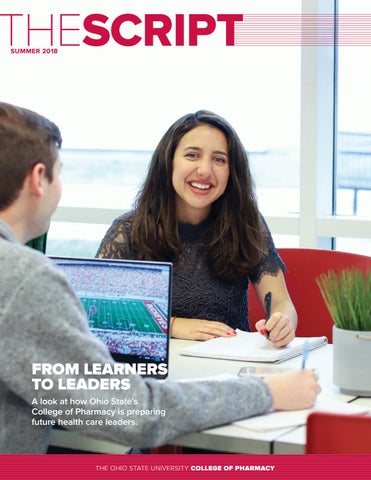
FROM LEARNERS TO LEADERS A look at how Ohio State’s College of Pharmacy is preparing future health care leaders.
THE OHIO STATE UNIVERSITY COLLEGE OF PHARMACY
FROM BUCKEYE LEARNERS I often think about the “Buckeye-Brand Pharmacy Professional” – students and alumni who are representative of the education they received at The Ohio State University College of Pharmacy. I believe that Ohio State offers an unsurpassed pharmacy education, whether students are learning in our undergraduate, professional, graduate or post-graduate residency and fellowship programs. The data supports this – our students consistently perform above the average on national exams, and as you can see on the pages that follow, both students and alumni are changing the face of health care.
TO BUCKEYE LEADERS: How the College of Pharmacy prepares students for the changing face of health care
When our students complete their education at the College of Pharmacy, we want them to feel empowered to impact the profession in the way that suits them. For some, that means delivering exceptional patient-care services that make a difference in a patient’s life. For others, that means holding executive level positions in global companies or leading dedicated groups of pharmacists in the hospital, clinic or community. No matter what their end goal is, Ohio State strives to support students to the greatest extent possible to help them reach it. Improving medications and medication-related health outcomes is at the core of everything we do. Our students and alumni are motivated to make a difference. They have the skills needed to analyze situations and create innovative and forwardlooking solutions. They are change-agents, from the micro-level, all the way to effecting changes in the profession and healthcare. This is the Buckeye-Brand Pharmacy Professional. Our alumni and donors are central to the success we see at the college, and we are eternally grateful for the support we receive. These Buckeyes go above-and-beyond to connect with our faculty, students and staff. They are generous with their knowledge, time and resources. Our extended pharmacy family is a primary reason Ohio State is consistently ranked among the top pharmacy programs in the world. While we don’t know what the future of health care delivery will look like, we do know that we will continue to prepare our students to be leaders in the changes to come. We hope you will continue to stand with us and help us impact the future of patient care. Best wishes, Henry J. Mann Pharm.D., FCCP, FCCM, FASHP Dean and Professor, College of Pharmacy The Ohio State University
TABLE OF CONTENTS FROM BUCKEYE LEARNERS TO BUCKEYE LEADERS
1
UNIQUE TRAINING PREPARES PHARMACY STUDENTS FOR REAL LIFE SCENARIOS
4
ALUMNUS HAROLD GODWIN RECEIVES 2018 REMINGTON HONOR MEDAL
6
PROFESSION LEADERS HELP SHAPE OHIO STATE PHARMACY EDUCATION
7
PHARMD STUDENT SARAH WHEELER NAMED BEST PATIENT COUNSELOR IN COUNTRY
10
MARIE LATSA RECEIVES NATIONAL AWARD FOR WORK ON OPIOID EPIDEMIC
11
MILAP NAHATA RECOGNIZED FOR LIFETIME OF CONTRIBUTION TO PROFESSION
12
OUTSTANDING ALUMNUS CLARENCE ARCHER HONORED WITH LIFETIME ACHIEVEMENT AWARD
14
YIZHOU DONG NAMED OHIO STATE EARLY CAREER INNOVATOR OF THE YEAR
15
UNDERGRADUATE STUDENT SPENDS SUMMER AT ST. JUDE WORKING TO END CANCER
16
UNDERGRADUATE FELLOWSHIP CREATES LEADERS IN DRUG DISCOVERY AND DEVELOPMENT
17
STUDENT PHARMACISTS ADVOCATE ON BEHALF OF PROFESSION AT ANNUAL LEGISLATIVE DAY
18
GALA AWARDS
20
UPCOMING EVENTS
When thinking about skills that employers look for in a successful college graduate, leadership ability is always on the list. Through innovative curricula, a focus on “the whole student”, interdisciplinary training and ample opportunity for involvement, students in The Ohio State University College of Pharmacy learn the skills they need to become influencers and trailblazers in health care. But first, how do we define leadership? At the College of Pharmacy, we believe there are two kinds of leaders – Leaders (capital L) and leaders (lowercase l).
BACK COVER
The Ohio State University College of Pharmacy
THESCRIPT 1
The Leaders are the heads of college or national student organizations. They are the strategists. They have a formal designation or authority and are responsible for pushing forward a larger vision. The leaders “lead from where they stand” regardless of their job titles or positions. They are proactive. They lead by example, step up when things need to be done and make tough decisions. The College of Pharmacy places a direct focus on preparing leaders (lowercase l) to go on and become incredible change-agents and ultimately Leaders. One of the ways the college accomplishes this is through classroom learning. Over the past three years, the college has implemented curriculum revisions in our undergraduate and professional programs to ensure that our students are prepared for the future of pharmacy. “Pharmacy is changing very quickly – while we have a good sense of what the profession will look like in ten years and can prepare students for that, we also must focus on educating students to adapt and lead what pharmacy will be in 25-35 years,” said Henry J. Mann, dean and professor of the College of Pharmacy. Our students are being prepared for this changing future by some of the leading experts in pharmacy recognized around the country. With dual appointments across campus and in the community in places such as The Ohio State University Wexner Medical Center, Ohio State Discovery Themes, The Charitable Pharmacy of Central Ohio and Nationwide Children’s Hospital, our faculty members have a wide range of experiences to draw from in the classroom and lab. PREPARING UNDERGRADS FOR A FUTURE BIOMEDICAL CAREER In 2015, the college launched its restructured Bachelor of Science in Pharmaceutical Sciences (BSPS) program – one of the largest and strongest programs of its type in the nation. The new curriculum includes a framework in which students complete their degree requirements through one of two tracks: the Healthcare Professions Pathway or the Drug Discovery and Development Pathway. Both pathways offer
2 THESCRIPT
Whitney recipients and more than 50 current directors of pharmacy across the country.
“
While our focus on leadership begins in the classroom, it doesn’t end there.
It is not just the long-standing tradition that sets this program apart; it is also the thriving alumni community active in the Latiolais Leadership Program (LLP), which bears the motto “Enthusiasm for Excellence.” The LLP program, consisting of past MS-HSPA graduates, assists health-system pharmacists in developing skills to lead and manage the medication use process to achieve optimal health outcomes. Leading pharmacy experts provide students with innovative and accessible leadership and management programs. These
”
innovative coursework with an increased focus on integrated science learning, hands-on laboratory experiences, career development and science communication.
practical experiences through 300 hours of direct patient care
“We strategically designed our BSPS program to develop students for success in both clinical and scientific careers,” said Nicole Kwiek, assistant dean of undergraduate studies. “Learning content that is typically reserved for graduate/ professional training, our students are coupling state-ofthe-art coursework and inventive co-curricular experiences to put them a step ahead. Whether it’s in the clinic or lab, our graduates are building on this strong foundation to not only succeed but also lead in their next stage of training and/or employment.”
I3 also places a direct focus on building leadership skills
Beginning their first year, undergraduate students can get involved in research happening in the College of Pharmacy and across campus. These opportunities allow students to learn valuable skills like collecting and reporting research data, collaborating on scientific papers and advocating for and defending their work and ideas.
an organization that a student is interested in, they are
INSPIRING STUDENTS TO INQUIRE, INNOVATE AND INVOLVE Created and implemented in 2015, the Doctor of Pharmacy (PharmD) curriculum, Inquire, Innovate and Involve (I3), takes a unique approach to pharmacy education. Classes are structured in modules and focus on developing a comprehensive problem-solving approach through increased incorporation of active learning strategies and mixing of pharmaceutical and clinical sciences. Students are introduced to integrated
The Ohio State University College of Pharmacy
experiences in the first three years of the program. Additional hours are spent on professional development. through teaching students self-awareness, assessing them on leadership skills and abilities during the first year of the curriculum and providing lectures and activities on the fundamentals of leadership. PharmD students can also get involved in leadership opportunities in student organizations at local and national levels. The College of Pharmacy has 20 of its own student organizations for professional students, each with multiple leadership positions available. If the college doesn’t have encouraged to create it themselves with their peers. Outside of student organizations, PharmD students also have the opportunity to be involved in leading learning exercises with younger science students in the community as part of the Generation Rx and Potions, Pills, and Poisons programs. A LEGACY OF HEALTH CARE LEADERS Ohio State led the way in establishing the tradition of Health-System Pharmacy Administration (MS-HSPA). Started in 1959, this program educates and trains pharmacists to conceptualize, plan, coordinate and evaluate pharmaceutical care in health care settings. Graduates of the program, many of whom are national recognized leaders in pharmacy management, include past ASHP presidents, Harvey A.K.
The Ohio State University College of Pharmacy
programs address contemporary issues and provide effective strategies for improvement and re-design for the medication use process. TAKING THE CLASSROOM ACROSS COUNTRY Outside of the classroom, the college partners with SinfoniaRx to run the Institute for Innovation Outcomes Medication Management Program (ITIO-MMP). The ITIO-MMP is a telepharmacy program that provides Medication Management Services to more than 3,000 patients a week through 40 professional staff members and 130 students (80 of whom are pharmacy interns). ITIO-MMP employees check their patients’ medication records for drug interactions, missing or duplicate medications and look at costs to see if there is a less expensive, generic option. They also counsel patients on their prescriptions – an invaluable learning experience that allows students to better understand cultural, social and financial barriers that patients and health care professionals face, and provides an opportunity to work with complex disease states that they might not be otherwise exposed to in the classroom. “The students working at ITIO-MMP develop enhanced communication skills and their anxiety about talking with patients erodes with practice. Our preceptors in IPPEs and APPEs have commented on how noticeable this improvement is and how it sets our students apart as practitioners,” said Mann. While our focus on leadership begins in the classroom, it doesn’t end there. On the pages that follow, you will see how The Ohio State University College of Pharmacy is inspiring, building and supporting the leaders of tomorrow.
THESCRIPT 3
Unique training prepares pharmacy students for
The College of Pharmacy is committed to ensuring students are ready for any situation that may come their way. From acing exams, to counseling patients and even being prepared in case of a robbery. In an effort to help students prepare for the unexpected on their Introductory Pharmacy Practice Experiences (IPPE) and Advanced Pharmacy Practice Experiences (APPE), the college recently implemented a Robbery and Burglary Training for its first and second year students. “We want to make sure our students are prepared for whatever may happen while they are out on rotation,” Donnie Sullivan, professor of clinical pharmacy, said. “The goal for these trainings is to give them the tips and tools they need to stay safe if they end up in a situation like a robbery.” While third and fourth year students receive training before they begin their rotations, 2018 is the first year younger students have been introduced to this topic. During the hour-long trainings, Sullivan used simulations, videos and case studies to show students what could happen during a pharmacy robbery and how to react in the safest way possible. He roleplayed with the students to demonstrate what different types of robberies could look like, from being slipped a note to being held at gun point. “You don’t think as a student that something like this could happen while you’re out on rotation getting hands-on experience,” Daniel Senger, a first-year PharmD student, said. “I’m thankful we are receiving this type of training and information early on in our careers.” Moving forward, the college will continue to host these trainings for their students and keep them best prepared for whatever may come their way. Responding to the training in Pharmacy Times, a former member of law enforcement notes that trainings on this topic should be more widespread across colleges of pharmacy. “I had never before heard of a school of pharmacy offering this kind of program, one that could help future pharmacists and their customers survive such an event,” said Cmdr. John Burke, a 40-year veteran of law enforcement, the past president of the National Association of Drug Diversion Investigators and the president and cofounder of the International Health Facility Diversion Association. “Kudos to Ohio State. I would strongly suggest that other universities with pharmacy schools follow suit, and provide students with these practical skills.”
would strongly suggest that other universities with pharmacy “ Ischools follow suit and provide students with these practical skills.”
– CMDR. JOHN BURKE past president of the National Association of Drug Diversion Investigators and the president and cofounder of the International Health Facility Diversion Association
4 THESCRIPT
The Ohio State University College of Pharmacy
Check out the footage from Channel 10 covering the training. www.go.osu.edu/CWyN
The Ohio State University College of Pharmacy
THESCRIPT 5
Alumnus Harold Godwin receives 2018 Remington Honor Medal
help shape Ohio State pharmacy education
Harold Godwin, College of Pharmacy alumnus and recipient of the 2018 American Pharmacists Association Remington Honor Medal, knew he wanted to be a pharmacist in the sixth grade. “I had to write a report about someone noteworthy in the community, so I picked the town pharmacist. From that day forward I knew pharmacy is what I wanted to do,” Godwin said. Godwin earned a bachelor’s degree in pharmacy from the University of Kansas and a master’s degree in health-system pharmacy administration from The Ohio State University. He also completed a two-year accredited residency in hospital pharmacy at The Ohio State University Hospitals. “I was very interested in completing a residency. Ohio State was one of only a few programs at the time which offered it. It is also where I met my mentor, Clifton J. Latiolais,” Godwin said. Godwin said that Latiolais was a trailblazer in advancing hospital pharmacy across the nation, and producing future leaders of pharmacy administration through his program at Ohio State. And Godwin has certainly proven to be a leader in his distinguished career. He served 34 years as director of pharmacy at the Kansas University Medical Center and 20 years as chair of the Department of Pharmacy Practice. Being involved in pharmacy organizations throughout his career, Godwin served as president of the ASHP, president of the Accreditation Council for Pharmacy Education (ACPE), and president of APhA. He also recently completed a six year term with the Board of Pharmacy Specialists and served as chairperson for 2017.
by preparing all the IV admixtures for the patient. Through this program, Godwin contributed to transferring IV admixtures responsibilities from nurses to pharmacists nationwide, which is still done by pharmacists today. Of all of the organizations Godwin has been part of, he feels fortunate to have been able to make an impact on them all, but especially ACPE.
Godwin received the H.A.K. Whitney Award in 1991, the American Pharmaceutical Association’s Distinguished Practitioner Award for Hospital Pharmacy in 2000, and was designated a Fellow by the American Society of HealthSystem Pharmacists (FASHP) in 2002. He is also a Fellow in the American Pharmacist Association (FAPhA).
“ACPE sets the standards for schools of pharmacy. During the time that I was on the organization’s board of directors, the board standardized training and accreditation standards for the profession. They created the Doctor of Pharmacy (PharmD) curriculum and degree as the sole entry degree for the pharmacy profession,” Godwin said. “This proved to be a pivotal time for the profession and has served us well, especially as we have transitioned to a clinical practice of pharmacy.”
In addition to his accolades, Godwin played a major role in changing the process for the administration of intravenous (IV) admixtures. As part of his thesis, Godwin developed a program for pharmacists to be more involved in the process
Godwin remains a leader in the field through his participation in numerous organizations, including a position on the College of Pharmacy’s Latiolais Leadership Program’s executive committee and a member of the Dean’s Corporate Council.
6 THESCRIPT
The Ohio State University College of Pharmacy
Established in 1994 by Dean Robert Brueggemeier, The Ohio
As of 2018, the council is made up of 25 members who are
State University College of Pharmacy’s Dean’s Corporate Council (DCC) facilitates conversations between academia and corporate entities to discuss the challenges and opportunities in the healthcare field. Through changes in the field and at the College of Pharmacy, DCC continues to meet twice a year, counseling current Dean Henry Mann on policies and programs pertaining to teaching, research and outreach at the college.
key decision makers in the major sectors of pharmacy. They represent managed care, chain drug stores, community pharmacy, academic organizations, health systems and drug wholesale and pharmaceutical companies. In addition to working with Dean Mann, the council members aid in the recruitment and placement of undergraduate, professional and graduate pharmacy students at externship sites, pharmacy job positions and fellowships with industry partners. The members are dedicated to advancing the mission of the college, providing individual and corporate financial support of annual goals.
At each DCC session, council members provide updates on their sectors of pharmacy and hear from college faculty members who present on curriculum updates. The dean merges the two topics by leading interactive discussions on timely issues in pharmacy. Past discussions included strategic planning, Generation Rx programming and how it is impacting the community, the new PharmD and BSPS curricula, and how corporate and academic entities can best partner for great mutually beneficial outcomes.
The Ohio State University College of Pharmacy
“This group has been a vitally important advisory group to me. I am extremely grateful for the input and support the college receives as we strive to maintain a reputation and commitment to excellence in all of our endeavors,” said Mann. Continued on next page
THESCRIPT 7
know that when we hire an “ IOhio State College of Pharmacy graduate, we are getting someone that can hit the ground running.
”
– RICK KEYES
help shape Ohio State pharmacy education The Dean’s Corporate Council (DCC) brings together leaders from across different facets of pharmacy to counsel the dean on matters important to the college. We caught up with a few of the current members to ask them about the impact of the council on the College of Pharmacy and how they benefit from the relationship.
How does DCC benefit the College of Pharmacy? “The college benefits from the varied expertise of DCC members who are key decision-makers and well-informed about emerging issues in the health care marketplace. The input from DCC can help to inform strategic directions for the college and make beneficial connections for Dean Mann and the college leadership. It’s a win-win opportunity.” – ANNE BURNS, BS ’80, RPH, SENIOR VICE PRESIDENT OF PROFESSIONAL AFFAIRS AT AMERICAN PHARMACISTS ASSOCIATION
“I think that DCC helps the faculty shape the curriculum in a way that when students graduate from Ohio State, they are prepared to practice and make a difference in a community or clinical setting. The companies and individuals represented on the council are committed to the success of the students and the college. In addition to providing feedback and industry insights, members also work to provide internships, experiential learning opportunities, scholarships and support for improvements to the college. At Meijer, we are pleased to be able to partner with the College of Pharmacy in all of these areas. I am especially excited to be a part of the remodeling of the pharmacy practice labs.” – RICK KEYES, PRESIDENT AND CEO OF MEIJER
How has DCC evolved during your time on the council? “DCC has been taken to a new level by the current dean who includes DCC member feedback on various topics and issues that are important to the college. Dean Mann routinely provides a
8 THESCRIPT
a member of DCC “ Being is an invaluable way
college update and there is a great balance between asking DCC members for feedback on a particular topic, and allowing DCC members to bring their own topics to meetings for discussion.”
of helping to make a difference and impact in the College of Pharmacy.
–M ARCIA NUSGART, BS ’76, RPH, EXECUTIVE DIRECTOR OF ALLIANCE OF WOUND CARE STAKEHOLDERS
“DCC has definitely evolved, becoming more involved in providing input on the college’s strategic planning process and having a greater focus on emerging prospectives from various pharmacy sectors.” – ANNE BURNS
In what ways is Ohio State’s College of Pharmacy best preparing its students to be top pharmacy graduates? “The college prepares students to be top graduates by hiring the most capable staff and faculty that are career and student focused; always looking for opportunities to develop innovative and challenging curriculum that is focused not only on developing technical skills but also on developing nontechnical leadership skills; teaching students the importance of networking; and providing high quality career planning for success post-graduation.” – ANDY VICK, PHD ’99, PAST PRESIDENT OF DCC, CORPORATE VICE PRESIDENT OF SAFETY ASSESSMENT, CHARLES RIVER
“
The input from DCC can help to inform strategic directions for the college and make beneficial connections for Dean Mann and college leadership. It’s a win-win opportunity.
”
– ANNE BURNS
The Ohio State University College of Pharmacy
”
– MARCIA NUSGART
“The faculty at Ohio State are committed to graduating students that are prepared from an academic perspective but also from a practical perspective. There is a genuine commitment to equipping students with real life practical skills that they can use to hit the ground running when they graduate. As an employer, I know that when we hire an Ohio State College of Pharmacy graduate, we are getting someone that can hit the ground running.” – RICK KEYES
“The college attracts top faculty, who are excellent teachers; has an excellent curriculum, clinical rotations, residencies and research opportunities; continues the important clinical focus with emphasis on the patient; provides student leadership opportunities by having many student organizations and ways for students to be involved; and, works and communicates with community pharmacy, researchers and hospital leaders to ensure that the college meets their needs and prepares students for careers in these areas.” – MARCIA NUSGART
profession. With APhA’s focus on advancing pharmacists’ patient care services and leadership development, it is very helpful to see how the college is approaching these two important areas at the grassroots level.” – ANNE BURNS
“Being a member of DCC is an invaluable way of helping to make a difference and impact in the College of Pharmacy. I am able to keep abreast of the new curriculum, faculty and current issues impacting students and the college.” – MARCIA NUSGART
“I enjoy the interaction with the faculty and staff and most importantly, the students. It gives me an opportunity to stay connected with what is happening in the practice of pharmacy and to see how it is evolving. It has been great to be able to take what I am hearing from the students and the faculty back to Meijer to better understand how we can learn from and partner with the colleges of pharmacy to improve how we serve our customers.” – RICK KEYES
“I am a big believer in service and serving on a nonprofit board, like DCC. It is an opportunity to share my time, talents and treasures in a way that I hope has created impact, influence and value to the college. It’s also beneficial to be able to broaden my connections and build valuable networks, gain experience on a breadth and depth of topics within the pharmacy discipline, and genuinely feel good about giving back to a college that has given so much to me over my life.” – ANDY VICK
What benefits do you receive as a member of DCC? “I appreciate getting updates on developments at the College of Pharmacy, my alma mater, and gaining insights into the current state of BSPS, PharmD and graduate education and training. The diverse perspectives and practice areas represented among DCC members also provides important insights into emerging issues in different sectors of the
The Ohio State University College of Pharmacy
is an opportunity to “ Itshare my time, talents and treasures in a way that I hope has created impact.
”
– ANDY VICK
THESCRIPT 9
PharmD student Sarah Wheeler named best patient counselor in country
Marie Latsa receives national award for work on opioid epidemic
Sarah Wheeler, a Class of 2018 Doctor of Pharmacy (PharmD) graduate, won the 2018 American Pharmacist Association – Academy of Student Pharmacists (APhA-ASP) National Patient Counseling Competition. Wheeler out-counseled more than 130 students from across the country at the organization’s annual meeting in Nashville, TN. She is the second Ohio State student in five years to receive the national award.
“Sarah is a shining example of the student leaders in our college,” said Dean Henry Mann. “She has capitalized on the vast opportunities available to our students, improved her skills and became the top patient counselor in the country among her peers.”
Marie Latsa, a Class of 2018 PharmD graduate, received the United States Public Health Service Excellence in Public Health Pharmacy Award. Latsa was nominated by clinical associate professor Ken Hale for her work to combat the opioid epidemic.
In addition to her classes and APPE rotations through the college, Wheeler also credits working at the College of Pharmacy’s Medication Management Program (MMP) with her knowledge of patient counseling.
The Excellence in Public Health Pharmacy award is issued by the Pharmacist Professional Advisor Committee of the United States Public Health Service (USPHS). This prestigious award recognizes pharmacy students who have made
The APhA-ASP National Patient Counseling Competition tests student pharmacists’ patient counseling skills. The competition is designed to reflect changes that are occurring in practice, to promote and encourage further professional development of the student pharmacist and to reinforce the role of the pharmacist as a health care provider and educator. Wheeler participated in the competition over the past three years, viewing it as a good opportunity to practice her skills. “I’ve been competing at the local level since my second year in the PharmD program. (The competition) is a good checkpoint to see how I am progressing. Watching my video from this year and reflecting on my skills from the first year I participated, it is incredible to see how far I’ve come and how much I’ve learned,” Wheeler said.
“Every day that I am at the MMP, I am able to directly speak with patients about their medications and how to help them be the healthiest they can be. I love that I am able to apply what I’ve learned in the classroom,” Wheeler said. It’s very rewarding to have a patient tell me that I’m the first person to help them make sense of their medications, or that I’ve helped identify a problem with their medications that no one else had.”
In the nomination letter, Hale cited Latsa’s accomplishments and passion for spearheading initiatives based on education and empathy towards the rising opioid epidemic. During her time as a student pharmacist, she reached nearly 90,000 people through collaboration and community outreach efforts related to the opioid epidemic. Some of her efforts included: • Giving 17 medication safety presentations to local city schools, senior centers, assisted living facilities, PTO meetings and after school programs through the YMCA; • Distributing educational information at community health fairs, city marathons and the college-wide Pharmathon 5K fundraiser; • Assisting with the annual NOPE candlelight vigil, which is held in remembrance of those who have lost their battle with the disease of addiction; • Supporting three drug take-back days to ensure the safe disposal of unused or unwanted prescription medications; and • Partnering with Lamar Advertising to run a series of five digital billboards educating the public about the opioid epidemic and safe medication practices.
The competition begins at the local level as students compete to be the national representative from their school or college of pharmacy during APhA’s annual meeting. The national competition is divided into the preliminary and final round. At the preliminary round, students select a simple practice scenario at random and are required to counsel a patient within five minutes on the appropriate use of the drug involved. The ten highest scoring participants are then invited to the final round. The final round involves a more complex counseling situation where the participants select a prescription at random and are asked to counsel the patient on safe and effective drug use. In addition, the patient in the final round will display personality characteristics such as anxiousness, belligerence or apathy to challenge the participants’ ability to convey pertinent information in a realistic situation.
10 THESCRIPT
significant contributions to public health by promoting wellness and healthy communities. To be considered, students are evaluated on their contributions towards voluntary health related services, an emerging public health issue, or contributions that advance the goals of Health People 2020 or the National Prevention Strategy.
In addition to receiving the USPHS Excellence in Public Health Pharmacy Award, Latsa was recognized for her work by the university. She was awarded the Student Group Excellence in Community Service Award by the Office of Outreach and Engagement, The Generation Rx Partners Award in celebration of 10 years of prescription drug misuse prevention and the Servant Leader Award in 2017. “Marie is a model of collaboration and inclusion,” Hale said. “She exhibits consummate respect and empathy for others, and she has clearly had a significant impact through her tireless work.”
“
During her time as a student pharmacist, she reached nearly 90,000 people through collaboration and community outreach efforts.
”
The Ohio State University College of Pharmacy
The Ohio State University College of Pharmacy
THESCRIPT 11
MILAP NAHATA
recognized for lifetime of contribution to profession Milap Nahata, professor emeritus of the College of Pharmacy, was named the recipient of the 2018 American Association of Colleges of Pharmacy (AACP) Lifetime Achievement Award. The award was presented to Nahata at AACP’s annual meeting in Boston, MA. AACP’s Lifetime Achievement Award recognizes and promotes individuals who have made significant contributions to instruction, advancement of the profession of pharmacy, leadership and service to AACP, local, state and national pharmacy organizations, and research and creative scholarship activities over a minimum of 25 years.
12 THESCRIPT
The Ohio State University College of Pharmacy
Dean Henry Mann nominated Nahata for the award. Five distinguished pharmacy educators wrote letters of support for his nomination, including a dean, two associate deans and two emeritus professors of colleges of pharmacy from around the country.
Therapeutics and the Richard Helms Award for Sustained
“Dr. Nahata has had an exceptional career in pharmacy and has achieved great success both nationally and internationally as evidenced by his distinguished record in education, practice, research and service to the pharmacy profession over the past 40 years. He essentially defined the role of Pediatric Pharmacotherapy Specialist as he has cared for thousands of children and infants, and established through his practice and practice-based research a basis for optimized pediatric dosing of medications. Dr. Nahata’s work has changed the landscape of pediatric pharmacotherapy,” said Mann.
this is a highly prestigious recognition given for outstanding
Nahata is the founding director of the Institute of Therapeutic Innovations and Outcomes at Ohio State, where he is professor emeritus of pharmacy, pediatrics and internal medicine. He previously served as chair of the College of Pharmacy’s Division of Pharmacy Practice and Science, and as associate director of Ohio State’s Medical Center Department of Pharmacy from 1998-2013.
the Distinguished Service Award from the AACP Pharmacy
Among his numerous other accomplishments, Nahata received seven outstanding teaching awards from the College of Pharmacy, a university teaching award from Ohio State and distinguished educator awards from AACP and the American College of Clinical Pharmacy (ACCP). He also received the highest award given by ACCP, the Paul Parker Medal for Distinguished Service to the Profession of Pharmacy. Nahata is the only pharmacist to have received both the Sumner Yaffe Lifetime Achievement Award in Pediatric Pharmacology and
The Ohio State University College of Pharmacy
Contributions to Pediatric Pharmacy Practice from the Pediatric Pharmacy Advocacy Group (PPAG). He is also the only pharmacist from the state of Ohio to be elected as a member of the Institute of Medicine, now National Academy of Medicine; contributions to health care and for service to the profession. Nahata has published nearly 600 peer reviewed journal articles and book chapters, and five books. He is a recipient of research achievement awards from ACCP, the American Society of Health-System Pharmacists (ASHP), the American Association of Pharmaceutical Scientists (AAPS), and the American Pharmacists Association (APhA). He is a Fellow of several national organizations and has presented numerous invited lectures in the United States and abroad. He has received Practice Section and is the past president of both AACP and ACCP. Nahata has also been editor-in-chief of the Annals of Pharmacotherapy, the first and highly respected clinical pharmacy journal worldwide, since 2006. Upon reflecting on his career, Nahata said, “Servant leadership resonates best with me, and my personal mission statement has been to serve with integrity, dedication, resolve, caring, and gratitude for positive impact. It has been an unimaginable journey of a 40-year career in academic pharmacy and I am glad that my enthusiasm and energy have only grown over the years. I am convinced my story would not have been possible without the generosity and kindness of so many patients and caregivers, colleagues, collaborators, staff, chairs, deans, fellows and students. I am grateful to all of them for being a part of my life.”
THESCRIPT 13
Outstanding alumnus Clarence Archer honored with Lifetime Achievement Award
Yizhou Dong named Ohio State early career innovator of the year
In April, the college awarded the Lifetime Achievement Award to Clarence Archer for his accomplishments and dedication to the practice of pharmacy. He is one of only six alumni of the college to be recognized with this award.
Yizhou Dong, associate professor of Pharmaceutics and Pharmaceutical Chemistry, was named the 2017 Ohio State Early Career Innovator of the Year. The award was announced and presented to Dong on March 6, 2018, at the university’s annual State of Research Address.
The College of Pharmacy’s Lifetime Achievement Award honors outstanding life-long accomplishments in pharmacy, pharmaceutical sciences or public service. Recipients of the award must have completed a degree or post-graduate training at the College of Pharmacy. The award is not given in any
The Early Career Innovator of the Year award recognizes an Ohio State researcher who is working to promote commercialization of university intellectual property through invention disclosures filed, patents applied for and/or
regular, repeating time period, but only when truly outstanding candidates are identified.
received, technologies licensed or spinoff companies formed. These activities support economic development in the central Ohio region, and serve to attract companies that create a base of operations within the state. The award was eligible for an assistant or early associate professor (if a faculty member), or someone who has been at Ohio State no more than 10 years (if a staff member).
A 1954 graduate of the College of Pharmacy, Archer has been an incredible trailblazer and champion for the profession of pharmacy throughout his lifetime. After graduating from Ohio State and completing time in the Air Force as a pharmacist, Archer began working at Wendt Bristol Drugs. He then transitioned to SuperX Drugs, an affiliate of The Kroger, Co. In this position, Archer developed unique promotional and merchandising techniques that were new and ground breaking for the retail pharmacy industry. He was quickly promoted to a vice president position with the company. Archer’s early success and passion for the retail side of pharmacy eventually led him to be recruited by the founder of Walmart, Sam Walton, to pioneer the company’s brand new Pharmacy Division. When Archer started at Walmart in 1981, Walmart had 16 pharmacies. By the time he retired in 1997, he had opened 2,200 pharmacies – an average of 150 per year, three per week. This earned him the nickname the “Father of Walmart Pharmacies.” Archer is credited for adapting pharmacy to Walmart and Walmart to pharmacy. Under the direction of Archer’s business philosophy of “sales cure all ills”, Walmart pharmacies were one of the first in the industry to develop a drug packaging
“
Dong joined the College of Pharmacy’s faculty in 2014. He is also a member of the globally recognized Translational Therapeutics team at The Ohio State University Comprehensive Cancer Center – Arthur G. James Cancer
Hospital and Richard J. Solove Research Institute (OSUCCC – James). Along with his research group, Dong is devoted to drug discovery and delivery for the treatment of cancer, as well as inherited genetic disorders and infectious diseases. His team’s ultimate goal is to translate scientific results and technological inventions into more effective treatments, resulting in more fulfilled lives of all individuals. Since arriving at Ohio State, Dong has filed over a dozen invention disclosures and has ten provisional patents pending. His technologies have garnered commercial interest resulting in the out-licensing of his aminoacid-, peptide- and polypeptide-lipid technologies to two companies. Moreover, he has registered a start-up company with the intention of seeking SBIR funding to translate his findings into improved patient outcomes. Dong was also recognized by Columbus Business First in the Class of 2017 “Forty under 40,” a program that recognizes young professionals who are making great strides in shaping our community’s future.
warehouse to conserve both bottom-line costs and time. Along with warehouses, Archer also firmly believed that hiring the best local pharmacists, attention to detail, creativity and being available to the customer at all times would lead to the success of the division. Archer’s pioneering pharmacy decisions led to Walmart becoming one of the leading pharmacy chains in the world. Archer recently passed away on July 16 at the age of 86. His legacy continues in the pharmacies he helped open and the staff he trained.
By the time he retired in 1997, Archer had opened 2,200 pharmacies – an average of 150 per year, three per week.
14 THESCRIPT
”
The Ohio State University College of Pharmacy
The Ohio State University College of Pharmacy
THESCRIPT 15
Undergraduate student spends summer at St. Jude working to end cancer
creates leaders in drug discovery and development
While some students took a break from their studies this summer, Reid Palumbo, a second-year Bachelor of Science in Pharmaceutical Sciences (BSPS) and pre-med student, traveled to St. Jude Children’s Research Hospital in Memphis, TN. Palumbo was one of 50 students selected to spend 11-weeks at the hospital as a part of the prestigious Pediatric Oncology Education (POE) internship program, which exposes students to clinical and laboratory research, matching them with a member of the St. Jude faculty. Sharyn Baker, professor and Gertrude Parker Heer Chair of the Division of Pharmaceutics and Pharmaceutical Chemistry, encouraged Palumbo to apply for the internship after working with him in her lab. Baker’s lab focuses on preclinical development of anti-cancer agents for the treatment of acute myeloid leukemia (AML), with an emphasis on tyrosine kinase inhibitor (TKI) drug combinations. Prior to working at Ohio State, Baker was an associate member and director of the Pharmacokinetics Shared Resource at St. Jude Children’s Research Hospital. “I encouraged Reid to apply for the POE program at St. Jude as I thought his education and training could truly be enriched by the experience,” Baker said. “This program is very competitive, and I would only recommend our brightest.” After applying and going through the interview process, Palumbo was extended an invitation. In May, he traveled to Memphis, experiencing the program alongside some of the best and brightest undergraduate and medical students in the country. Palumbo worked as a full time research assistant under Esther Obeng, MD, PhD, a highly esteemed molecular oncologist and recipient of numerous awards and recognitions. “My experience (during the internship) was incredible! Aside from my hard work in the lab, I had numerous opportunities
“
to shadow physicians, make great connections with the research staff, and even volunteer at patient/family events,” Palumbo said. “Though it was challenging, the internship taught me more about myself than I could have ever imagined. I’m grateful to have had such an opportunity, and hope the work that I did will have an impact in the fight to end childhood cancer.”
I hope the work that I did will have an impact in the fight to end childhood cancer.
16 THESCRIPT
”
The Ohio State University College of Pharmacy
For undergraduate students interested in research, drug discovery or who want experience working in a lab, the College of Pharmacy’s Summer Undergraduate Research Fellowship (SURF) is the perfect opportunity. Created in 2007, SURF focuses on creating future leaders in drug discovery and development through hands-on, inlab experiences. Originally a university sponsored program, the College of Pharmacy adapted the fellowship specifically for sophomore and junior students with an interest in pharmaceutical sciences. Over the course of a summer, students work alongside experienced faculty members in the College of Pharmacy on research projects in their area of interest, including pharmacology, pharmaceutics, pharmacy practice and medicinal chemistry and pharmacognosy. In the past ten years, more than 70 students have participated in this experience,
The Ohio State University College of Pharmacy
bringing what they have learned from their different majors, such as biology, chemistry, biochemistry, chemical engineering, pharmaceutical sciences and others, into the lab. At the end of the ten week experience, students present their findings to their peers and faculty members, showcasing what they’ve learned during the summer. While the fellowship may end, the student’s work doesn’t have to. Many of our SURF students continue to work with their research mentor on their projects. “As someone who knew they wanted to work in a lab doing research but didn’t know where to start, SURF was a great opportunity,” Adam Ard, fourth-year chemistry major and 2018 SURF student, said. “I’ve been lucky enough to get involved in cancer research and work with an awesome mentor all while growing my portfolio for grad school.”
THESCRIPT 17
ADVOCACY
Student pharmacists advocate on behalf of profession at
ANNUAL LEGISLATIVE DAY
College of Pharmacy faculty and resident testify in support of bill on provider status
This March, more than 200 student pharmacists from around Ohio traveled to the Statehouse for the Ohio Pharmacists Association’s (OPA) Student Legislative Day. A number of pharmacy students from The Ohio State University attended to advocate for their profession alongside their peers. Student Legislative Day is an event that allows student pharmacists to open a dialogue with lawmakers and educate them about the value of pharmacists in the world of health care. Students had the chance to individually visit the offices of legislators to advocate for issues that were important to their profession. This year’s advocacy topics included pricing transparency, improving access for patients to epinephrine and provider status for pharmacists. “Advocating for yourself, your profession and our public is important. It may seem intimidating at first, but when you realize you are there to try to push for the greater good, then it becomes an agenda that you can truly speak to,” said Logan Hunter, Class of 2019 PharmD student. “Putting yourself out there as an advocate helps build yourself personally and professionally and this event truly sets you up for success.” In May, Ohio pharmacists and profession advocates testified in front of the Insurance and Finance Industry Committee of the State Senate in support of Senate Bill 265 for provider status. Among this group were representatives from the Ohio State College of Pharmacy, including Jennifer Rodis, associate clinical professor and assistant dean for outreach and engagement and Dana Bachmann, Kroger health & wellness community pharmacist, PGY2 community pharmacy resident, and recent graduate of the MS in Health-Systems Administration program. Senate Bill 265, sponsored by Senator Matt Dolan (R-Chagrin Falls), introduced provider status at the state level which would formally recognize pharmacists as health care providers in Ohio law. The bill seeks to expand opportunities for patients to receive pharmacist care in addition to receiving medicines and makes the case for why the provider definitions and insurance law should match the current role of pharmacists in patient care. In their proponent testimony, Rodis and Bachmann shared how this bill will positively impact patients’ access to care, improve pharmacists access to positions where they can make a difference, and change the perception of what pharmacists do and how they provide patient care.
18 THESCRIPT
The Ohio State University College of Pharmacy
The Ohio State University College of Pharmacy
Rodis shared that according to the Health Policy Institute of Ohio (HPIO), Ohio ranks 46 out of 50 states and the District of Columbia on health value, landing in the bottom quartile. This means that Ohioans are living less healthy lives and spending more on health care than people in most other states. “By empowering pharmacists and recognizing them as providers through Senate Bill 265, Ohio can move the needle to improve our health care value and the health of the citizens in our state,” Rodis said. Bachmann detailed the variety of services she can provide as a pharmacist that are underutilized because of the lack of provider status and coverage by health insurance. This includes immunizations, medication synchronization, medication therapy management (MTM), point-of-care testing (cholesterol, blood glucose, blood pressure), and disease state management (diabetes, fitness, nutrition, weight loss, and smoking cessation). “Senate Bill 265 would offer the opportunity for pharmacists to be recognized as health care providers and overcome significant barriers,” Bachmann said. “Most importantly, provider status will allow us to improve care and outcomes for patients in our communities.”
THESCRIPT 19
GALA
Third annual Pharmacy Gala recognizes standout pharmacy Buckeyes
1
6
3
The College of Pharmacy is proud to congratulate our alumni, faculty and students who received awards at the annual gala on April 13, 2018. 5
JOSEPHINE SITTERLE FAILER ALUMNI AWARD: 1
M. Tubuo, PharmD ’10 Emlah
JACK L. BEAL POSTBACCALAUREATE AWARD: 2 3 4
Manesh A. Dixit, PhD ’99 W. Grauer, MS ’79 David Dennis W. Grauer, MS ’91, PhD ’00
2
4
7
DISTINGUISHED ALUMNI AWARD: 5 6
John Long, BS ’80; Thomas D. Schmittgen, BS ’85, PhD ’92,
OUTSTANDING COMMUNITY ENGAGEMENT AWARD 7
Jeff Steckman, PharmD ’07
LIFETIME ACHIEVEMENT AWARD NOT PICTURED: Clarence H. “Arch” Archer, BS ’54,
20 THESCRIPT
The Ohio State University College of Pharmacy
The Ohio State University College of Pharmacy
THESCRIPT 21
NON-PROFIT ORG. U.S. POSTAGE
PAID
COLUMBUS, OHIO Permit No. 711
Lloyd M. Parks Hall 500 W. 12th Ave. Columbus, OH 43210-1291
UPCOMING EVENTS September 9, 2018 Pharmathon September 20, 2018
Health Sciences Dinner for 12 Buckeyes
October 5-7, 2018 Homecoming OCTOBER 5
Continuing Professional Development Symposium – Transitions of Care Latiolais Happy Hour Class Dinner
OCTOBER 6 Alumni Tailgate
October 18, 2018
Board of Governors Meeting
October 23, 2018
Dinner for 12 Buckeyes
November 19, 2018
Career Services Networking Event
December 2, 2019
Latiolais Award Lunch at ASHP Midyear Meeting
December 3, 2019
Alumni Reception at ASHP Midyear Meeting
January 29, 2019
Getting the Inside Scoop Networking Event
February 25, 2019
Dinner for 12 Buckeyes
April 5, 2019
Pharmacy Gala