






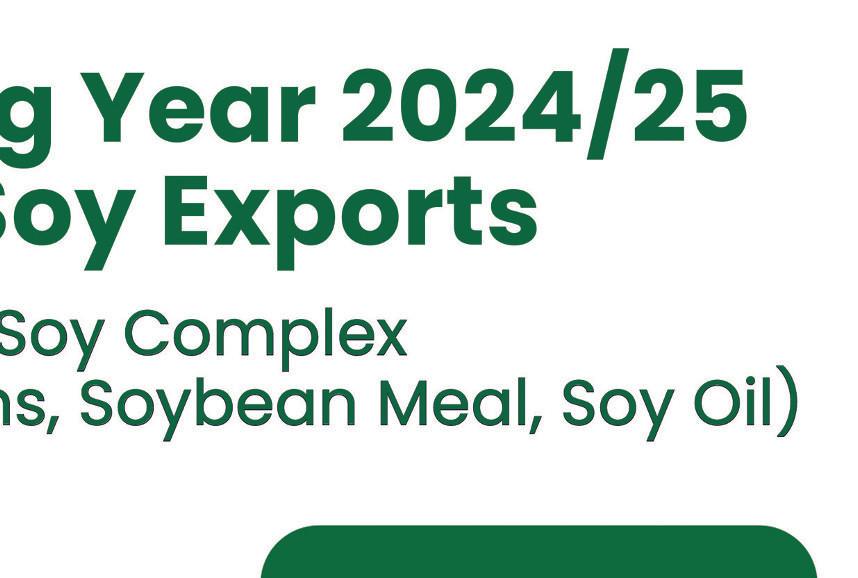
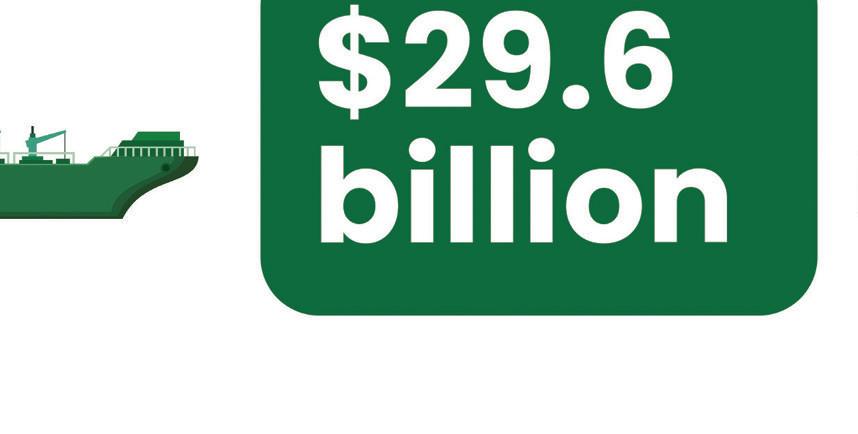



















Source: USDA, Global Agricultural Trade System (GATS), January 2026


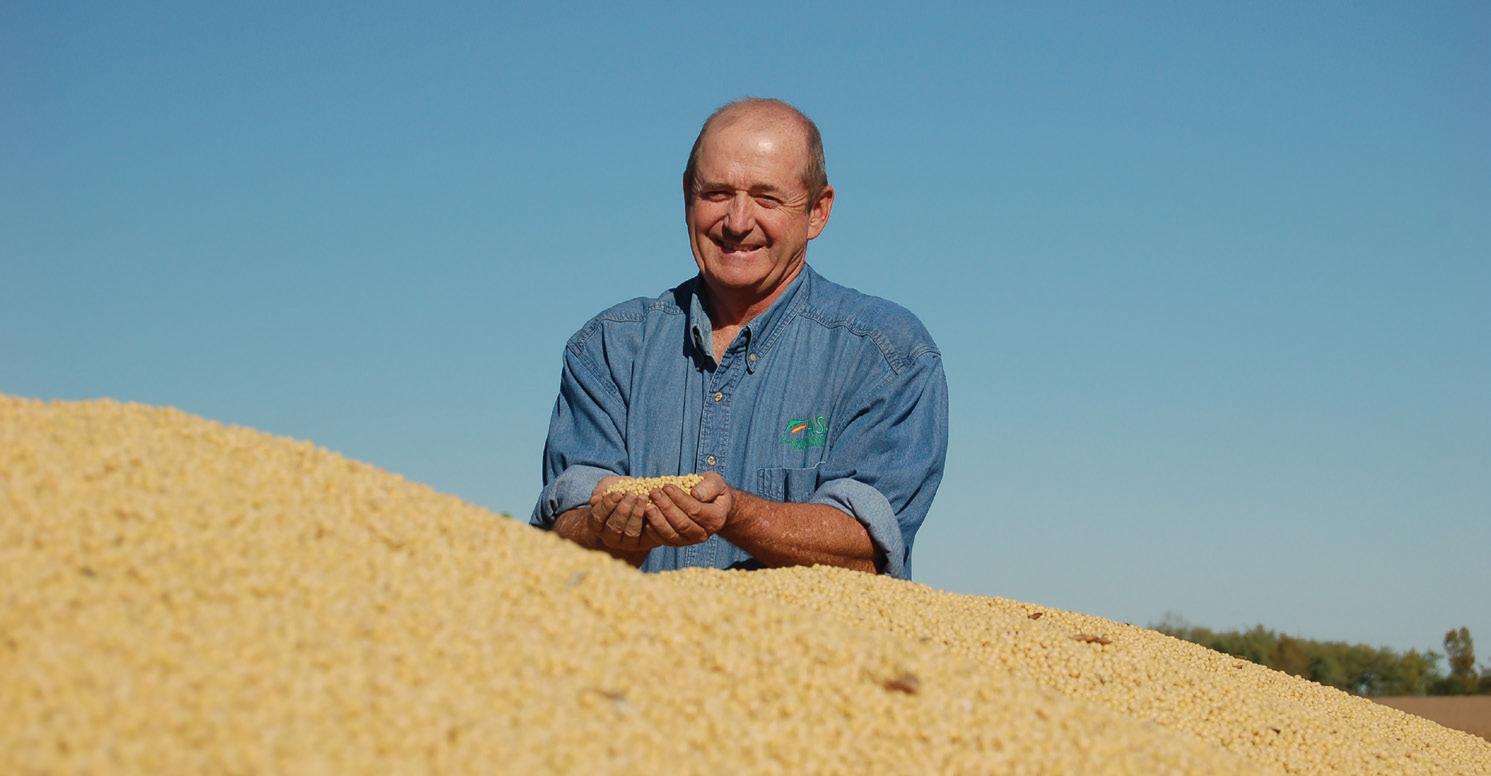
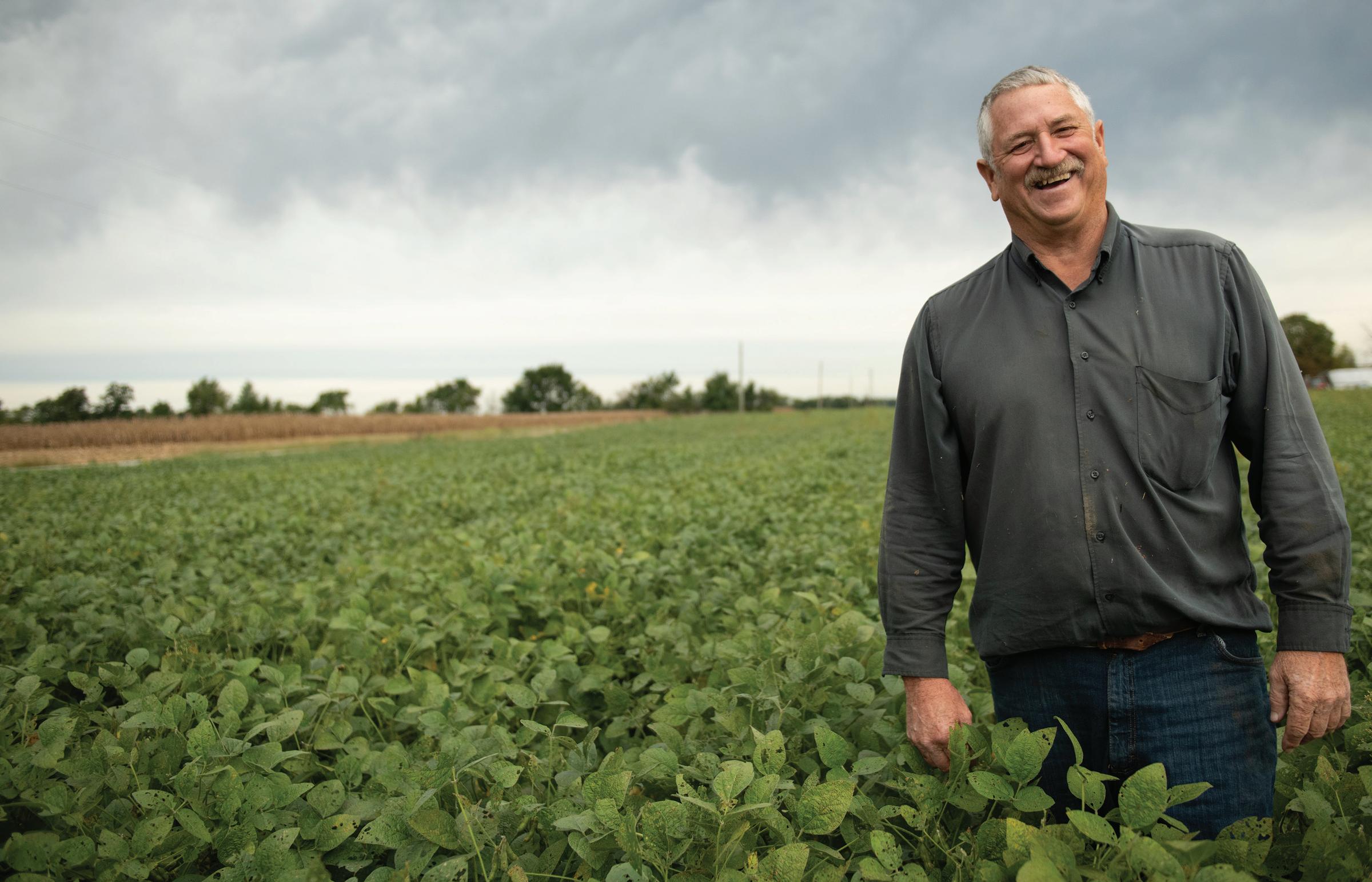
Bennett Musselman
Ohio Soybean Association President Pickaway County Soybean Farmer
Farming has never been an easy job – and it’s made even more di cult because farming is more than a job. It’s a lifestyle. Our work bleeds into every other part of our lives. I farm and work in crop insurance, many of my activities outside of farming revolve around agriculture, and many of my friends and family members are involved in farming. It can be hard to get away from the pressures related to our industry, much of which is out of our control.
At the same time, farming can often be isolating. Your operation is incredibly unique, and some issues can be hard to relate to other farmers. According to the National Rural Health Association, farmers die by suicide at a rate that’s 3.5 times higher than the national average for all occupations. Mental healthcare can also be harder to access in rural communities.
As our crop begins to germinate for another growing season, and as we enter Mental Health Awareness Month in May, I wanted to take this column to remind our readers of the mental health resources available to them. Please take a moment to review the mental health resources on page 11 or scan the QR code on this page. I encourage you to tear that page out and hang it in your o ce or on the fridge – make these resources easily accessible for yourself and others.
If you are experiencing a mental health crisis, you can call or text 988 or visit 988lifeline.org. ese lifeline resources are con dential and available 24/7 for people in distress.
If you are in a position to do so, check in on friends and family members. A simple “How are you doing?” can help reassure a struggling friend and open the door to broader conversations about mental health and the challenges of our industry.
Of course, talking about mental health isn’t limited to the month of May, but something that can and should be acknowledged year-round. Addressing farmer mental health helps sustain families, farms, and rural communities
Bennett Musselman
OSA President
Pickaway County Soybean Farmer
President
Bennett Musselman, Pickaway County
Vice President
Dustin Converse, Union County
Treasurer
Dave Green, Crawford County
Secretary
Adam Vonderhaar, Preble County
Chairman
Rusty Goebel, Williams County
Trustees
Trish Cunningham, Union County
David Clark, Warren County
Justin Esselburn, Wayne County
James Lipstraw, Sandusky County
Matt Lutz, Crawford County
Je Magyar, Ashtabula County
Scott Metzger, Ross County
Jeremy Price, Putnam County
Ryan Rhoades, Marion County
Bob Suver, Clark County
Jennifer Wilson-Oechsle, Van Wert County
Tim Zimpfer, Shelby County
Jonathan Zucker, Marion County
American Soybean Association
Board Representatives
Rusty Goebel
Scott Metzger
Ryan Rhoades
Sta Credits
Kirk Merritt - Publisher
Julia Brown - Editor
Mackenzie Joseph - Sta Writer
Lauren Gerig - Art Director
Kim Lemmon - Production Manager
Ohio Soybean News is published six times a year by the Ohio Soybean Association, 918 Proprietors Rd., Suite A, Worthington, OH 43085. Phone: 614-476-3100.
Comments and statewide news articles should be sent to the above address. Advertising space reservation must be made by the rst of the month preceding publication. In consideration of the acceptance of advertisement, the agency and the advertiser must, in respect of the contents of the advertisement, indemnify and save the publisher harmless against any expense arising from claims or actions against the publisher because of the publication of the content of the advertisement.
For Advertising Sales Contact: Kristin Flowers - (614) 323-9320 kristin@ohioagnet.com
For Address Corrections Contact: Ohio Soybean News at 918 Proprietors Rd., Suite A, Worthington, OH 43085.
Web address: www.soyohio.org E-mail: cdeboard@soyohio.org
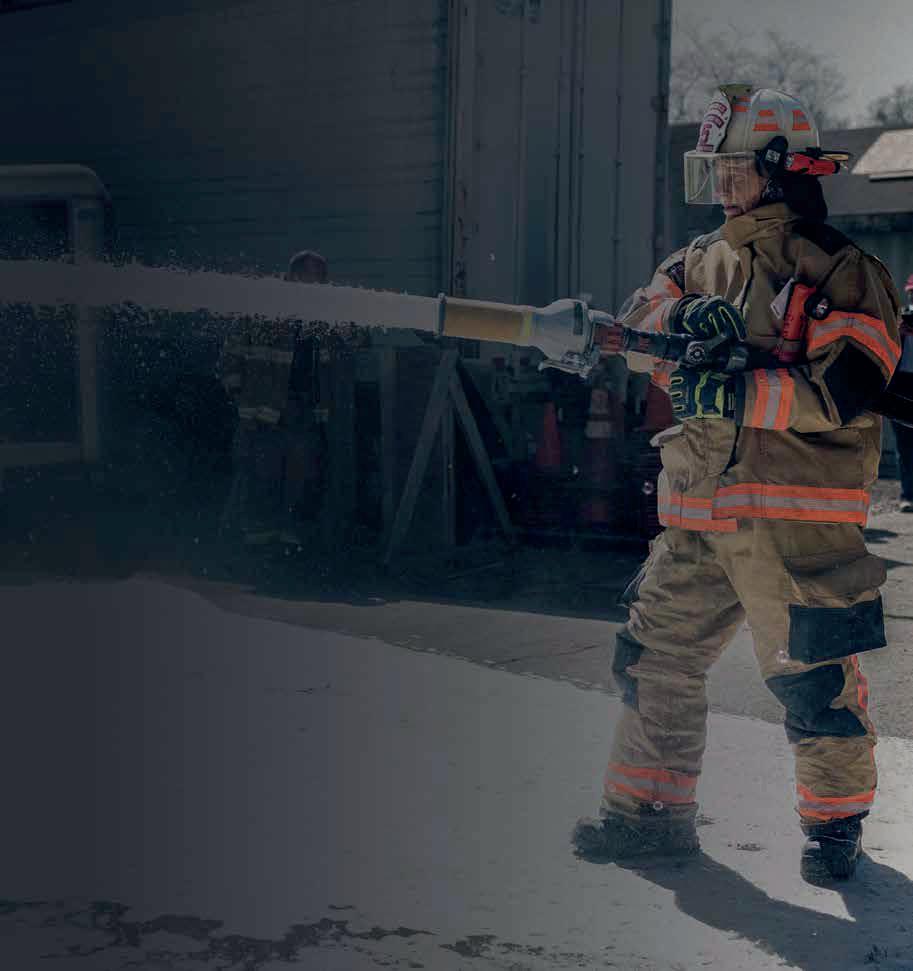


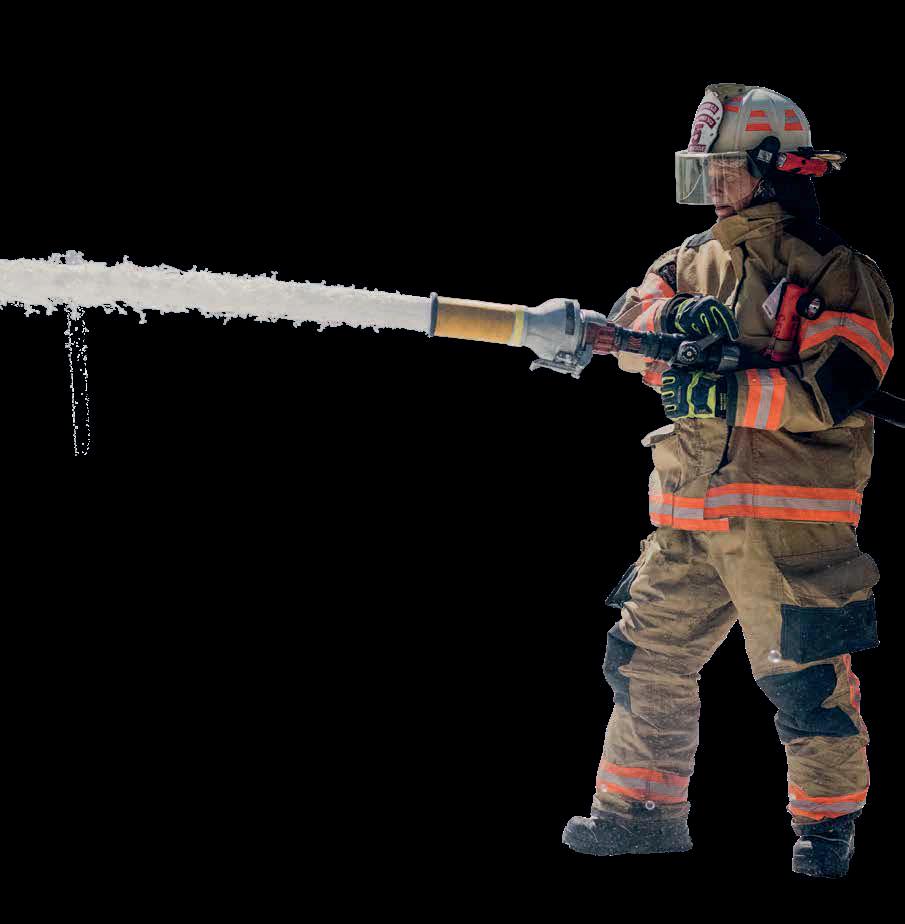
The more we discover about valuable they become. One SoyFoam™, creates a new, crop that protects firefighters
See how your Soy Checkoff markets for soybeans at
e Ohio Soybean Association (OSA) is proud to announce the recipients of its 2026–2027 scholarship program. Designed to support students pursuing careers that will shape the future of the soybean industry, the OSA Scholarship Program re ects the organization’s commitment to fostering the next generation of agricultural leaders.
As the membership and policy voice for Ohio soybean farmers, OSA established this scholarship to encourage students who are passionate about advocating for the future of soybeans. For the rst time this year, the scholarship was open to both current and incoming undergraduate students.
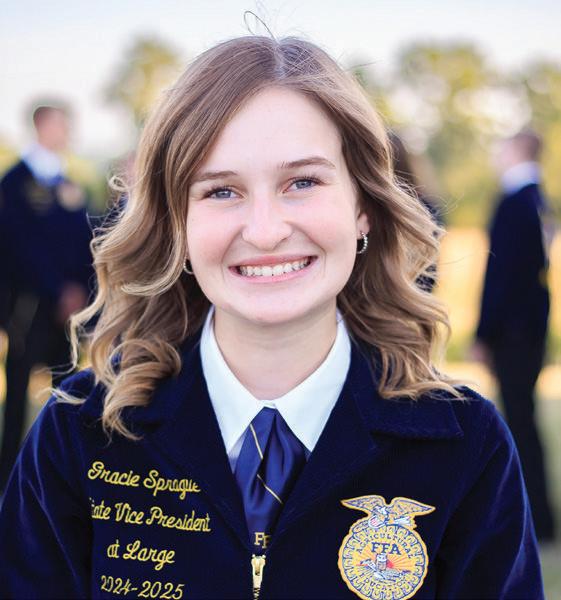
is year’s recipients are Gracie Sprague and Emma Strickler, each awarded a $1,000 scholarship in recognition of their dedication to agriculture and related elds.
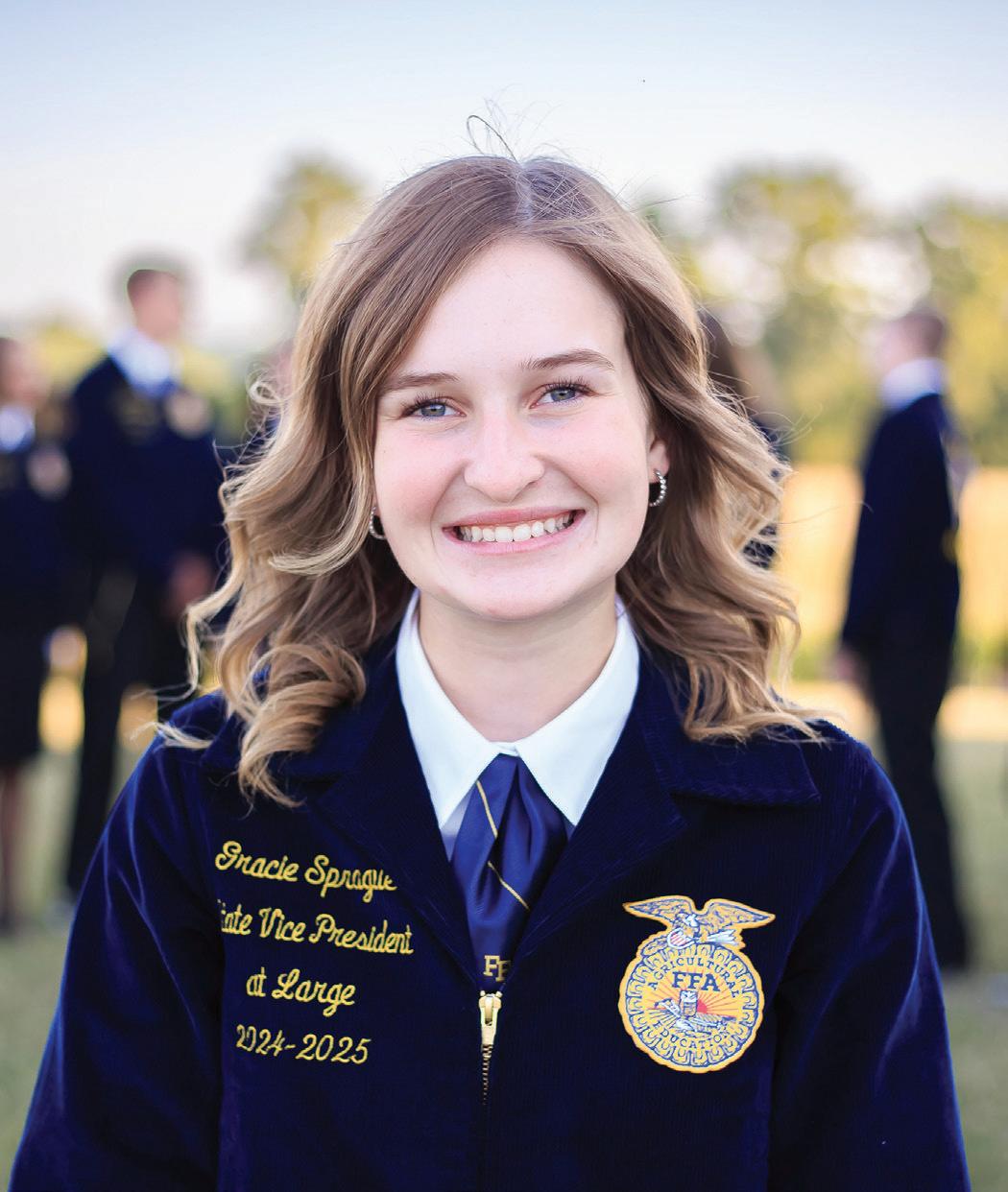
Gracie Sprague, of Genoa, Ohio, is a junior at e Ohio State University majoring in agriscience education.
Emma Strickler, of Lancaster, Ohio, is a senior at Amanda-Clearcreek High School and plans to study agricultural communications and agribusiness at e Ohio State University.
“We’re proud to invest in students who are dedicated to their education and motivated to make a meaningful impact in agriculture,” said Jennifer Wilson-Oechsle, Van Wert County farmer and Ohio Soybean Association board member. “By supporting their goals, we’re helping cultivate the next generation of leaders who will strengthen and advance Ohio’s soybean industry.”
e OSA Scholarship Program plays an important role in developing future agricultural professionals and ensuring the continued success of Ohio’s soybean industry.

Ohio
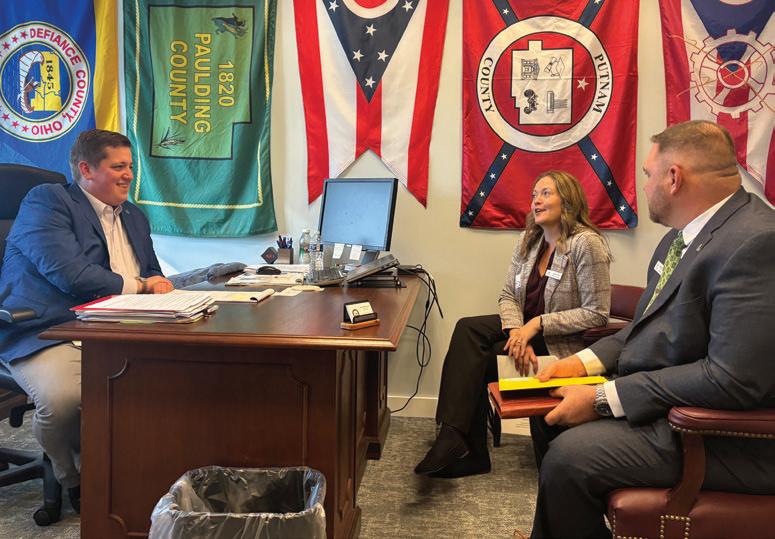
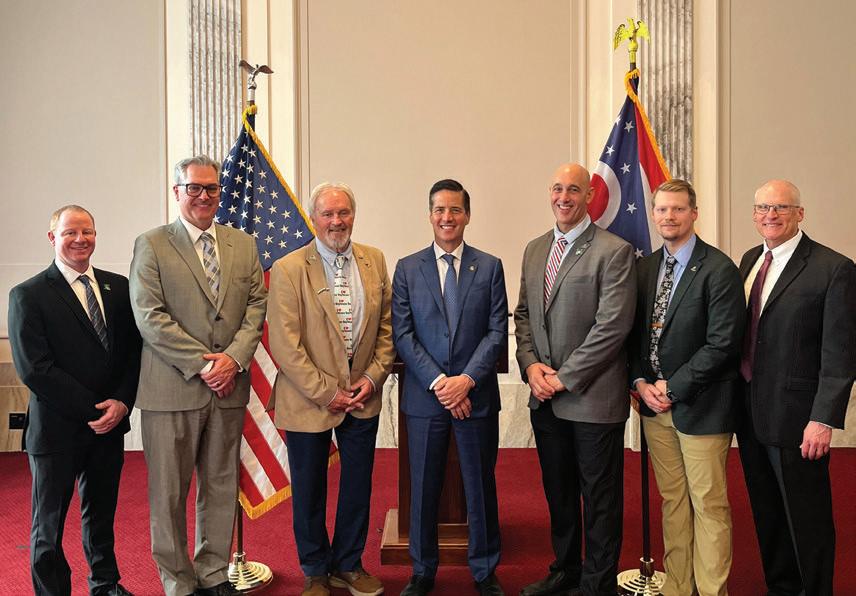
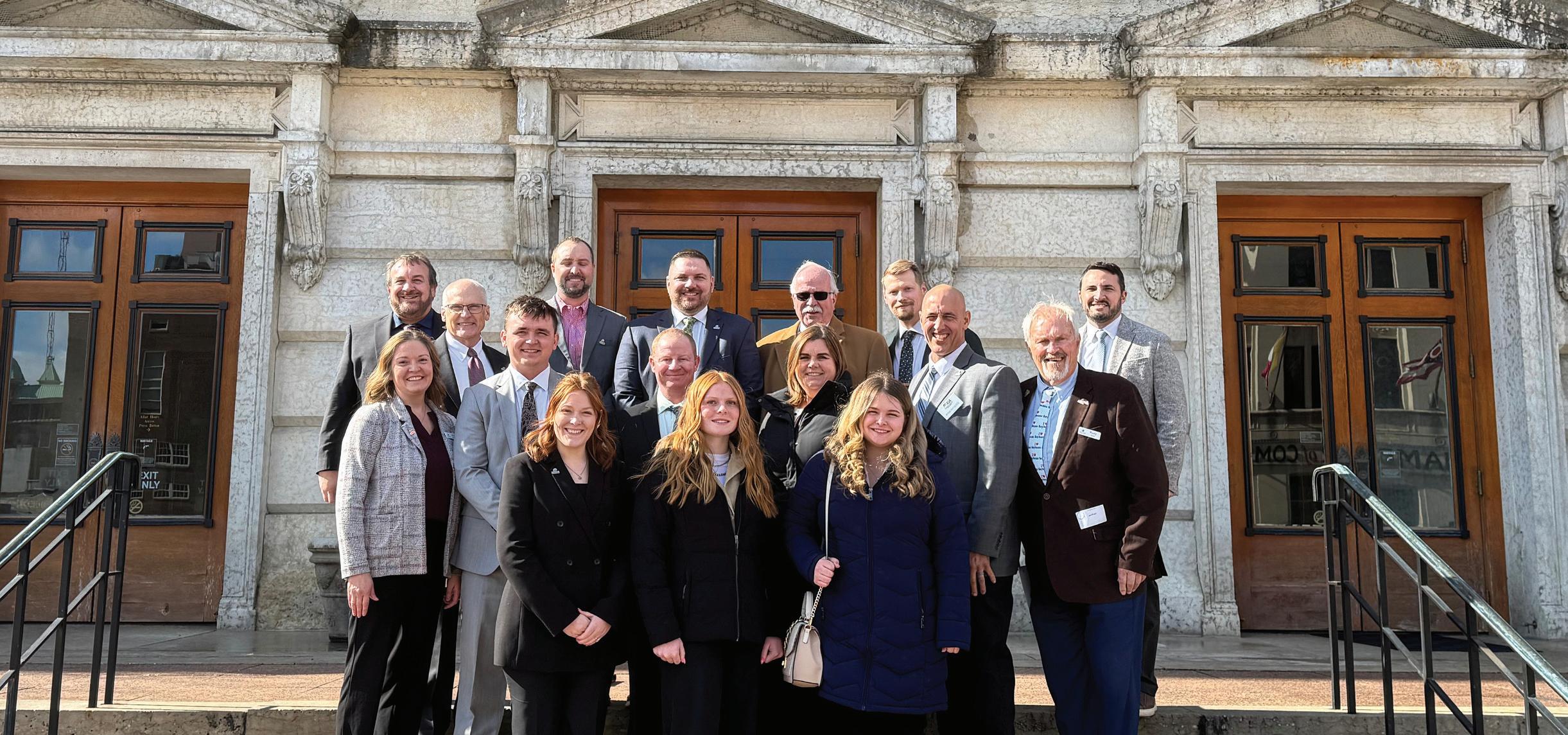
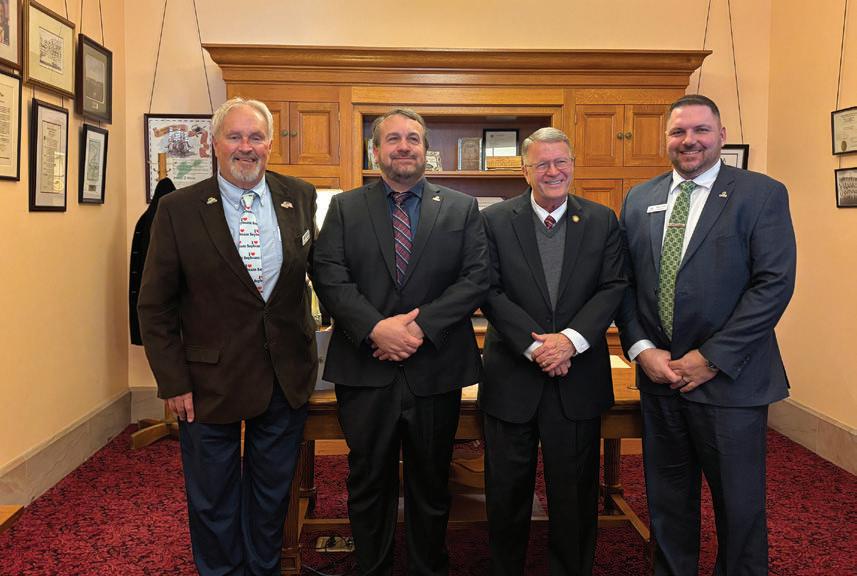
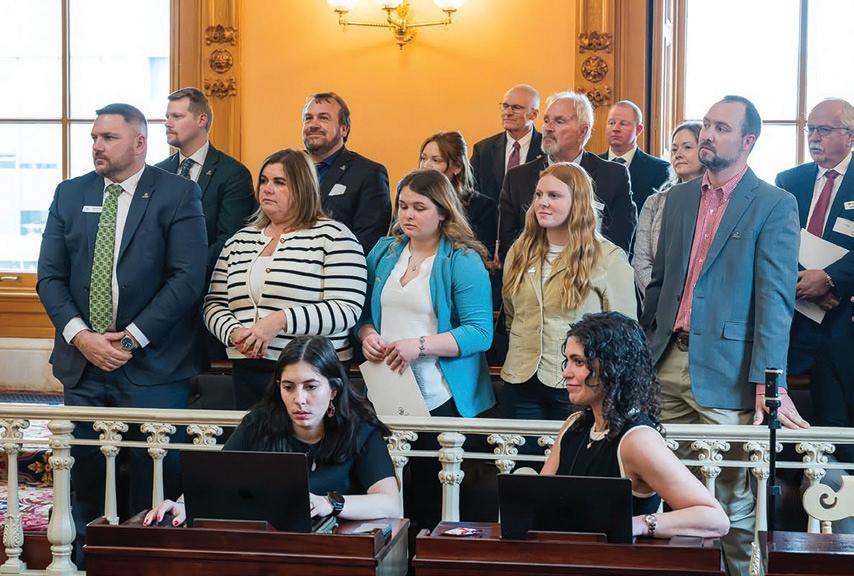
e Ohio Soybean Association (OSA) convened farmer leaders from across the state at the Ohio Statehouse for its annual Legislative Day. roughout the day, OSA leaders met with lawmakers to discuss pending legislation and priority policy issues for soybean producers. OSA Board Members met with 10 State Senators and 13 State Representatives.
e day included conversations around OSA-supported House Bill 575, which proposes several improvements to the Current Agricultural Use Valuation (CAUV) program. e bill aims to reduce administrative burdens for farmers by eliminating annual renewal forms, requiring counties to o er online applications, providing noti cation to recipients when valuations change, and simplifying the process for farms operating across multiple counties.
e central focus of the day was strained markets, high production costs and strategies Ohio can implement to create new opportunities for soybeans in the state. Farmers told lawmakers there is opportunity in enhanced domestic markets.
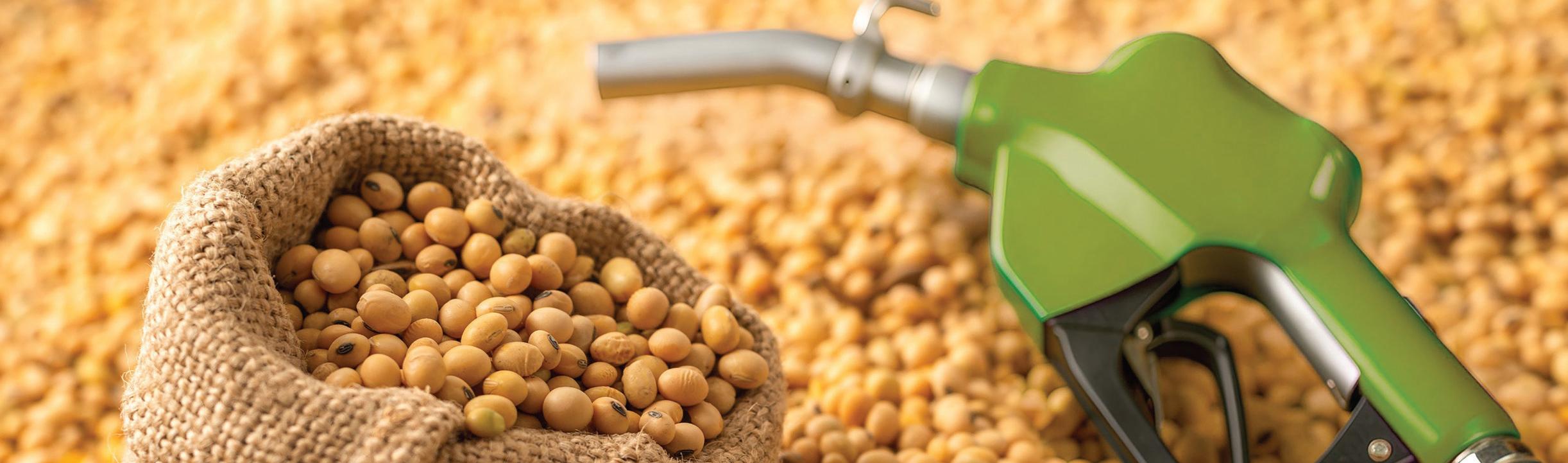
Farmer leaders encouraged lawmakers to consider state-level policies that would expand soy-based biofuel production. Renewable fuels add 13% in value to every bushel of soybeans sold and are an extremely valuable market for soybean farmers. OSA is collaborating with end users, fuel producers, and other stakeholders to identify incentives that could help grow Ohio’s biofuels sector.
However, biofuels are just one segment of what is known as the bioeconomy. OSA also highlighted the need for state level collaboration to create a comprehensive plan on how Ohio can compete in this booming industry. Ohio is an ideal state for this given the manufacturing base, research and development assets, location, workforce and access to feedstocks.
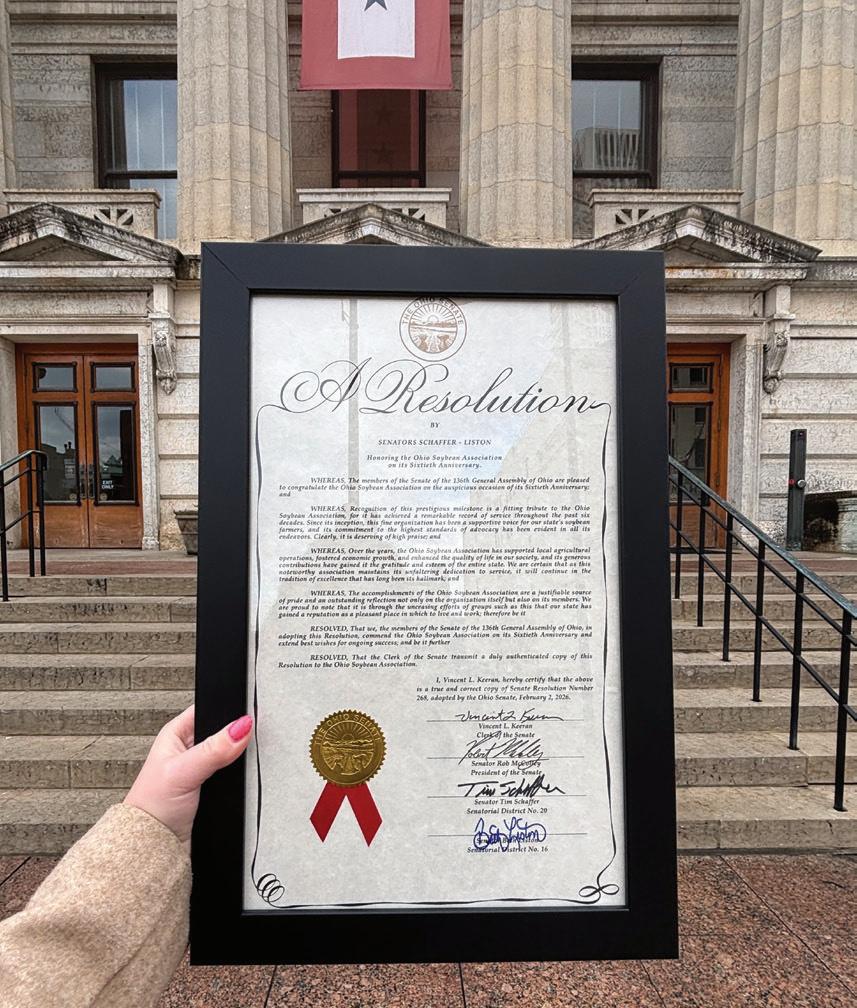
e day also included a special presentation of Senate Resolution 268 on the Senate oor, where senators recognized the Ohio Soybean Association in honor of its 60th anniversary and its longstanding service to Ohio’s farmers.
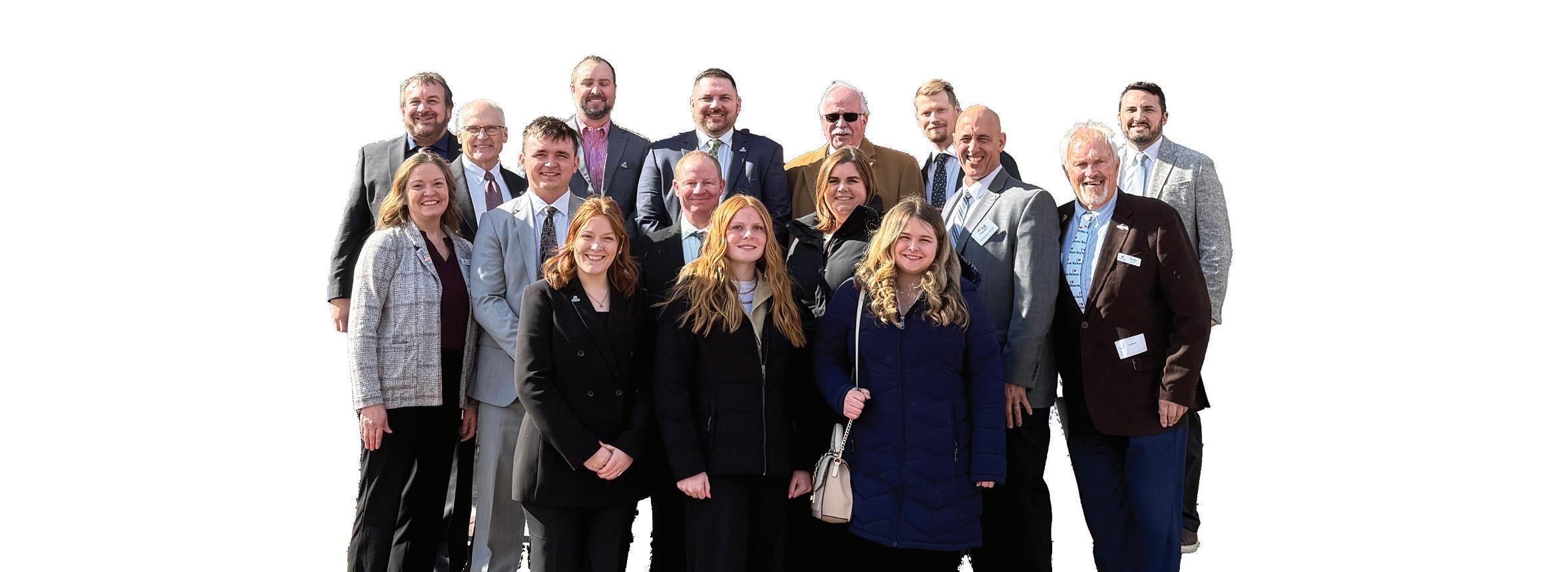
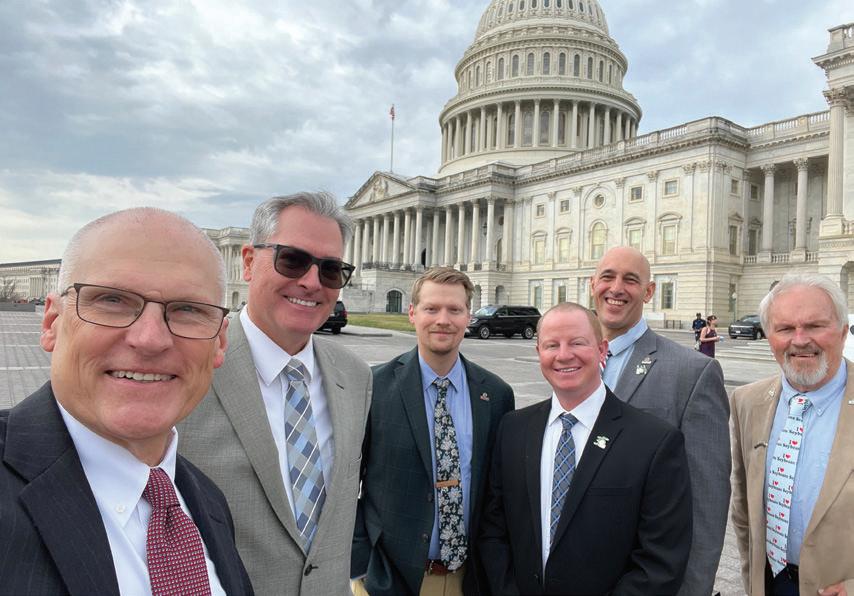
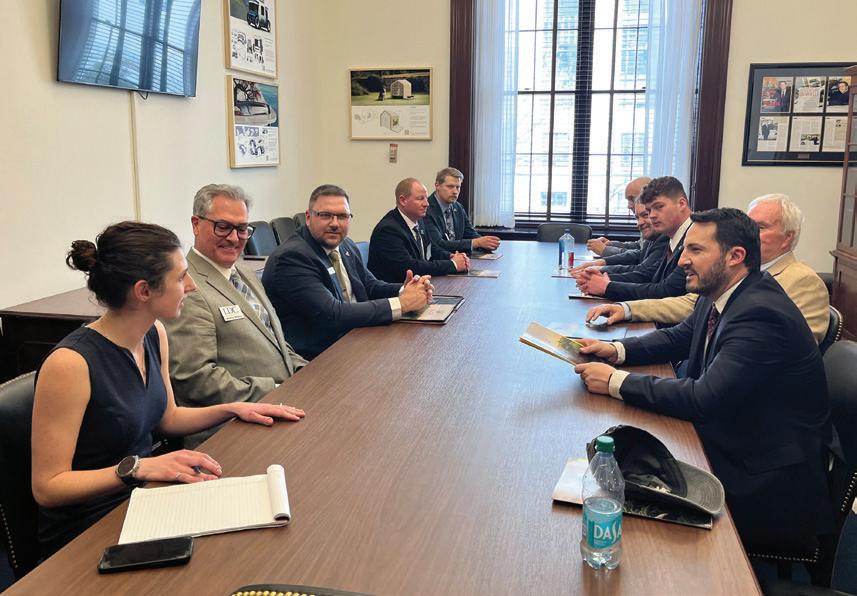
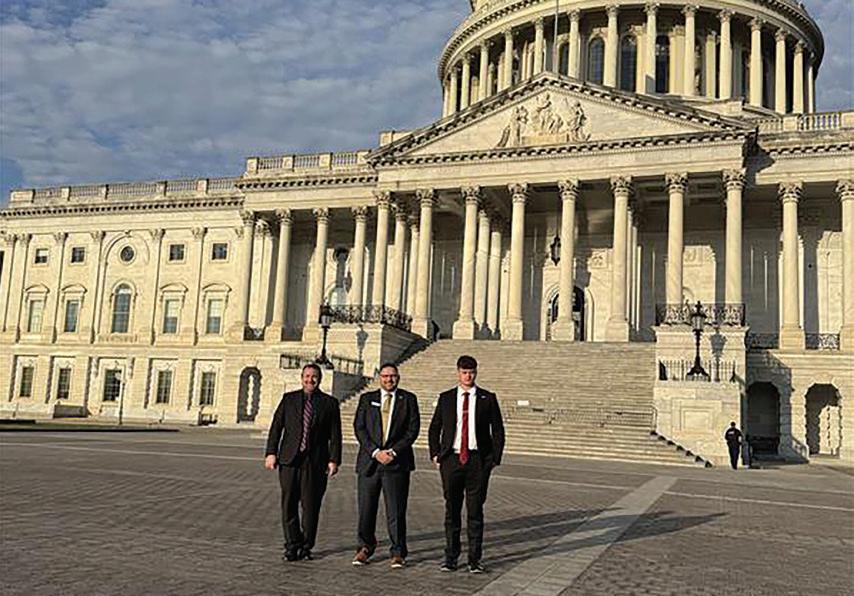
OSA board leadership and ASA directors also took to the Hill in Washington D.C. to discuss policy priorities. OSA met with the o ces of 8 U.S. Representatives and both U.S. Senators from Ohio. ese discussions focused on rising input costs, renewable fuels, the U.S. Mexico Canada Agreement (USMCA), and the importance of passing a robust 5-year Farm Bill this year.
Farmers are paying more than ever to grow their crops, and declining revenues are creating a business environment that is not sustainable. Commodity prices are down nearly 50% from highs experienced three years ago, while farmers are still facing elevated prices for land, seed, fertilizer, pesticides, and farm machinery. Due to rising costs, OSA is calling on the Administration to exempt ag inputs from tari s, including all remaining fertilizers, pesticides, seeds, machinery, and machinery parts.
Expanding domestic market demand for our crop is a significant opportunity, and strong federal biofuel policies like the Renewable Fuel Standard and tax credits (45Z) help drive consistent markets for U.S. soybeans here at home. OSA stressed the need for nalized federal biofuel policies that support domestic agricultural biofuel feedstocks including U.S. soybean oil, while removing incentives that have driven demand for imported used cooking oil and tallow. OSA applauded the EPA for their strong proposed rule for the 2026-2027 Renewable
Volume Obligations (RVOs) but urges them to nalize RVOs as soon as possible.
Also, OSA discussed the United Sates-Mexico-Canada Agreement (USMCA) review with the Ohio’s delegation. e USMCA faces a formal review by all three countries in July 2026. Failure to renew the agreement for a full 16-year term would create chaos and uncertainty at a time when U.S. agriculture needs steady and open markets. OSA supports a full 16-year reauthorization of the agreement that maintains key provisions for agriculture.
Lastly, OSA urged lawmakers to take swift action to pass the “Farm, Food, and National Security Act” (Farm Bill). Language passed through the U.S. House Agriculture Committee last week includes enhancements to improve access to credit, investments to promote expansion and diversi cation of markets, reauthorization of the BioPreferred Program, new investments in precision agriculture technology, language to support federal pesticide labeling uniformity and rural broadband improvements to increase minimum speeds as well as other important provisions. ese visits on the state and federal level reinforced the importance of farmer voices in shaping agriculture policy. OSA will continue working with lawmakers to ensure Ohio’s soybean farmers remain competitive and have the resources needed to succeed in an evolving agricultural landscape.

Whether it’s carrying on a legacy, pursuing your passion or helping tell the important story of agriculture, every operation story and purpose. And Farm Credit Mid-America is here support it. It’s why we return a portion of our profits to customers in the form of patronage*. And it’s why we’re a lending cooperative owned by our customers. Simply put, we farmers and what they value because we’re owned by farmers.

ASA and other soy groups are devoted to the wellbeing of farmersincluding combating farm stress so often experienced by growers and their families.
Visit: shorturl.at/KsfVW
OSU Extension is partnering with other agricultural groups to o er new programs and resources to help farmers and farm families as they go through stressful times.
Visit: shorturl.at/6rlvF
The #gotyourback campaign was designed to let farmers know that there is help and resources for those going through stressful times.
Visit: gotyourbackohio.org
If you or someone you know is suicidal or in emotional distress, call 988. 988 has been designated as the new three-digit dialing code for the national suicide and crisis lifeline. People can now call or text 988 or chat at 988lifeline.org if they are in crisis or are worried about a loved one who may need crisis support.
e Ohio Soybean Council (OSC) Board of Trustees has four district seats up for election this year. All eligible candidates interested in running for the OSC Board must obtain at least 15 valid signatures on the petition available at www. soyohio.org/petition or using the attached QR code.
All petitions must be submitted to the Ohio Department of Agriculture (ODA) by mail and must be postmarked no later than July 6, 2026 and received by July 13, 2026.
OSC is the Quali ed State Soybean Board for Ohio and manages state soybean checko dollars. e OSC Board is made up of farmer volunteers who direct the investment of checko dollars to improve the pro tability of Ohio soybean farmers.
Districts up for election are:
• District 3 | Ashland, Ashtabula, Columbiana, Cuyahoga, Geauga, Lake, Huron, Lorain, Mahoning, Medina, Portage, Richland, Summit, and Trumbull Incumbent Adele Flynn is eligible to run for re-election
• District 4 | De ance, Paulding, and Van Wert Incumbent Mike He el nger is term limited
• District 6 | Crawford, Seneca, and Wyandot Incumbent Tyler Miller is eligible to run for re-election
• District 11 | Clark, Greene, and Madison Incumbent Bob Suver is term-limited
To be eligible for election to the OSC Board, you must live in a county in the districts listed and be a soybean producer engaged in the growing of soybeans in the State of Ohio, who owns or shares the ownership and risk of loss of soybeans at any time during the three-year period immediately preceding November 15 of the current year. Eligible producers who have contributed to the soybean checko and have submitted a petition with the veri ed signatures of 15 other eligible soybean producers who reside in the respective district shall be determined by ODA as candidates for election. OSC Trustees serve one term of three years and may be elected to serve up to three consecutive terms.
For questions, please contact Kirk Merritt, OSC Executive Director, at kmerritt@soyohio.org.
By: Eric Woolson
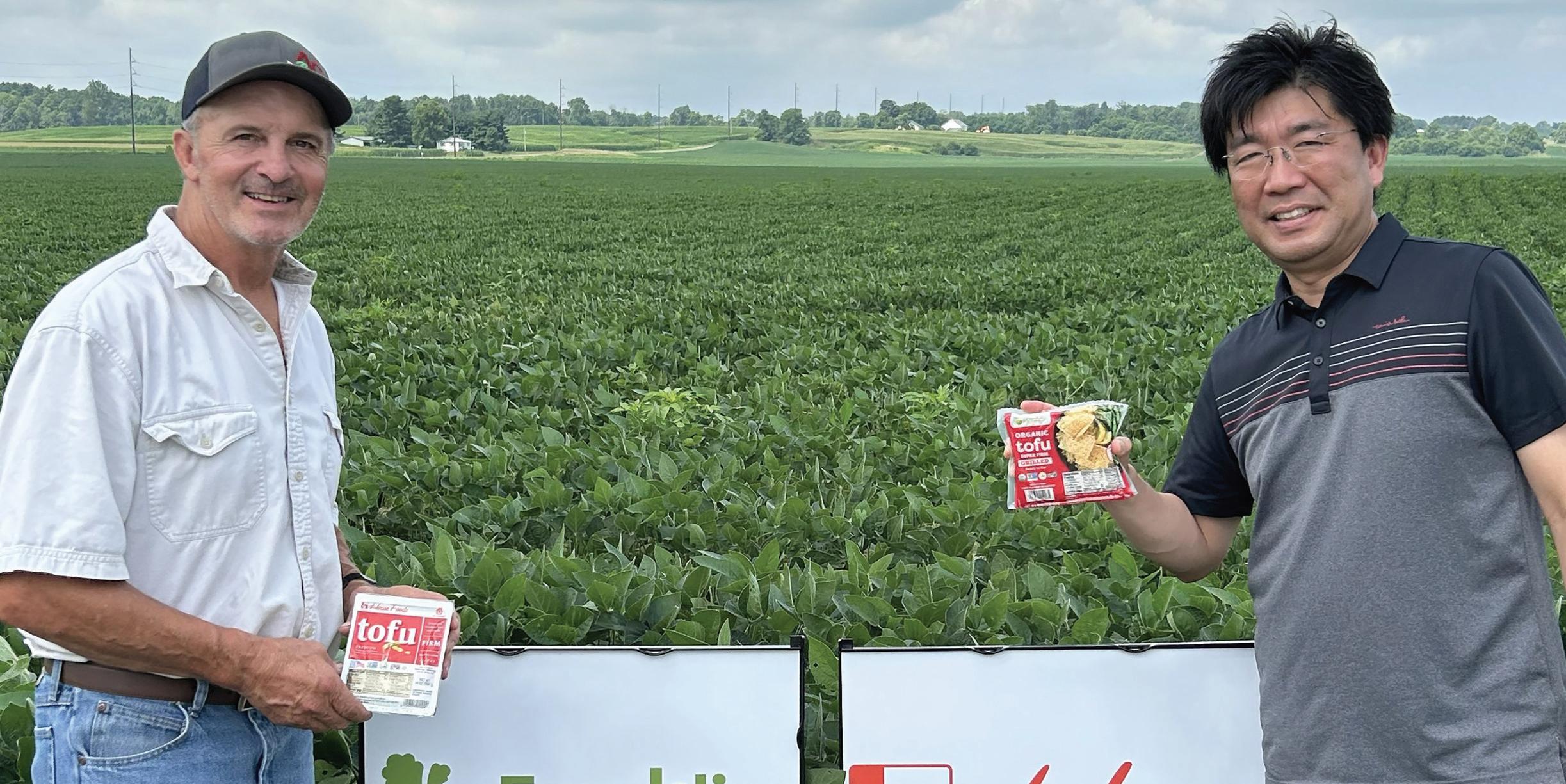
For Andy Stickley and Rodney Miller, growing food-grade soybeans is more than a business. It’s a family tradition, long-term craft and source of pride.
Both men represent the quality-focused growers at the heart of the Franklin Foods Proud Farmer Project, created by Los Angeles-based House Foods Holding USA to raise awareness about the quality of U.S.-grown organic and non-GMO soybeans. House Foods is one of America’s largest manufacturers of tofu.
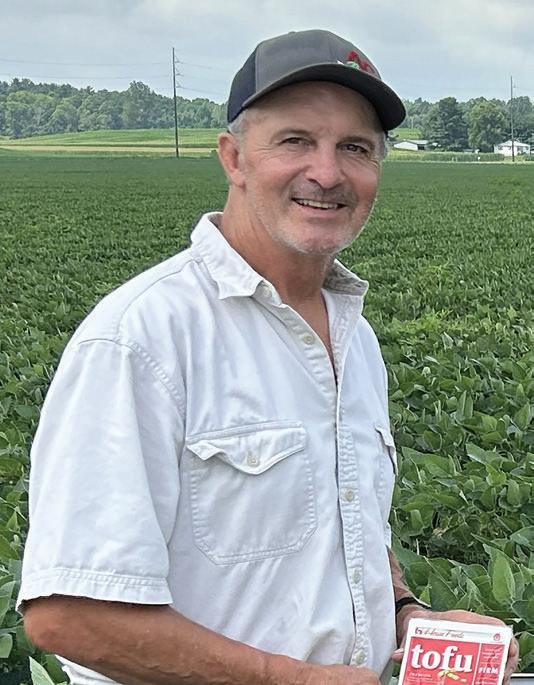
For Stickley, the farming tradition began with his grandfather and continues today with his sons. Non-GMO soybeans have been part of the family’s 900-acre Urbana-area operation beginning in the early 1990s when premiums made them attractive nancially. Over time, the appeal became about more than price.
“It’s a source of pride,” he said. “You know they’re going for human food consumption, and you’re mindful of that.”
Growing food-grade soybeans requires extra attention to quality, from minimizing split beans during harvest to maintaining optimal storage conditions. Buyers pay based on quality speci cations, meaning farmers must carefully manage their crops from planting through delivery.
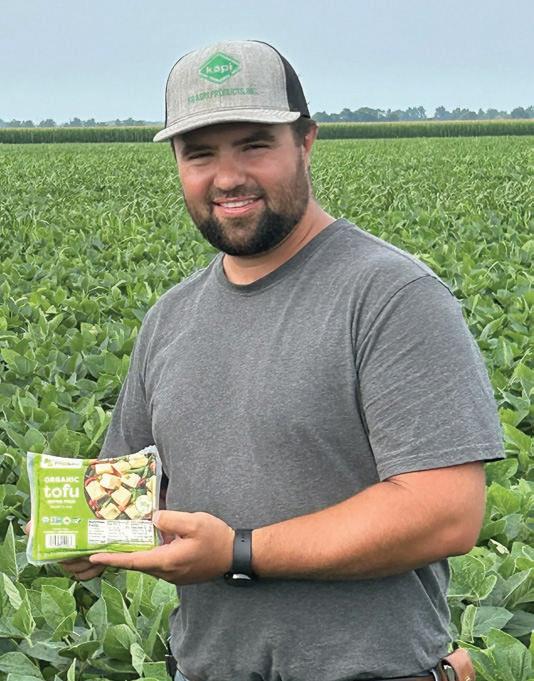
Rodney Miller’s family took a di erent path into specialty soybeans, gradually building an organic operation at Miller Heritage Farms near Plain City. e transition began around 2000 when Miller’s father cleared about 30 acres of woods that could be certi ed organic immediately. Over time, that e ort expanded into a fully certi ed organic farm of about 700 acres rotating soybeans, corn
and wheat. Miller said the move into organic production increased revenues and allowed more family members to work on the farm.
Both farmers say organic and non-GMO production requires constant vigilance, especially when it comes to weeds. “You turn your back on weeds and you’ve lost them,” Miller said.
After harvest, organic and non-GMO soybeans enter a specialized supply chain where they are cleaned to remove stems, pods and other materials and sorted by size and quality. Although such soybeans account for approximately ve percent of the market, processors say they often struggle to secure enough growers.
e Ohio Soybean Council helps connect farmers with those opportunities. Madi Corbi, the Council’s demand and market development director, said Ohio has built a strong reputation for producing high-quality soybeans.
“We do have a soft spot for non-GMO beans,” Corbi said. “ ey o er a di erent pro t opportunity for farmers.”
While non-GMO soybeans represent only a small share of Ohio’s total crop, Corbi said the state’s soil and climate create ideal conditions for producing consistent, high-quality beans. “Ohio soybeans are superior,” she said.
While neither Stickley nor Miller eat much tofu, both appreciate knowing where their soybeans end up. at connection – from Ohio farms to tables across the United States – lies at the heart of the Proud Farmers Project and the growing demand for domestic food-grade soybeans.
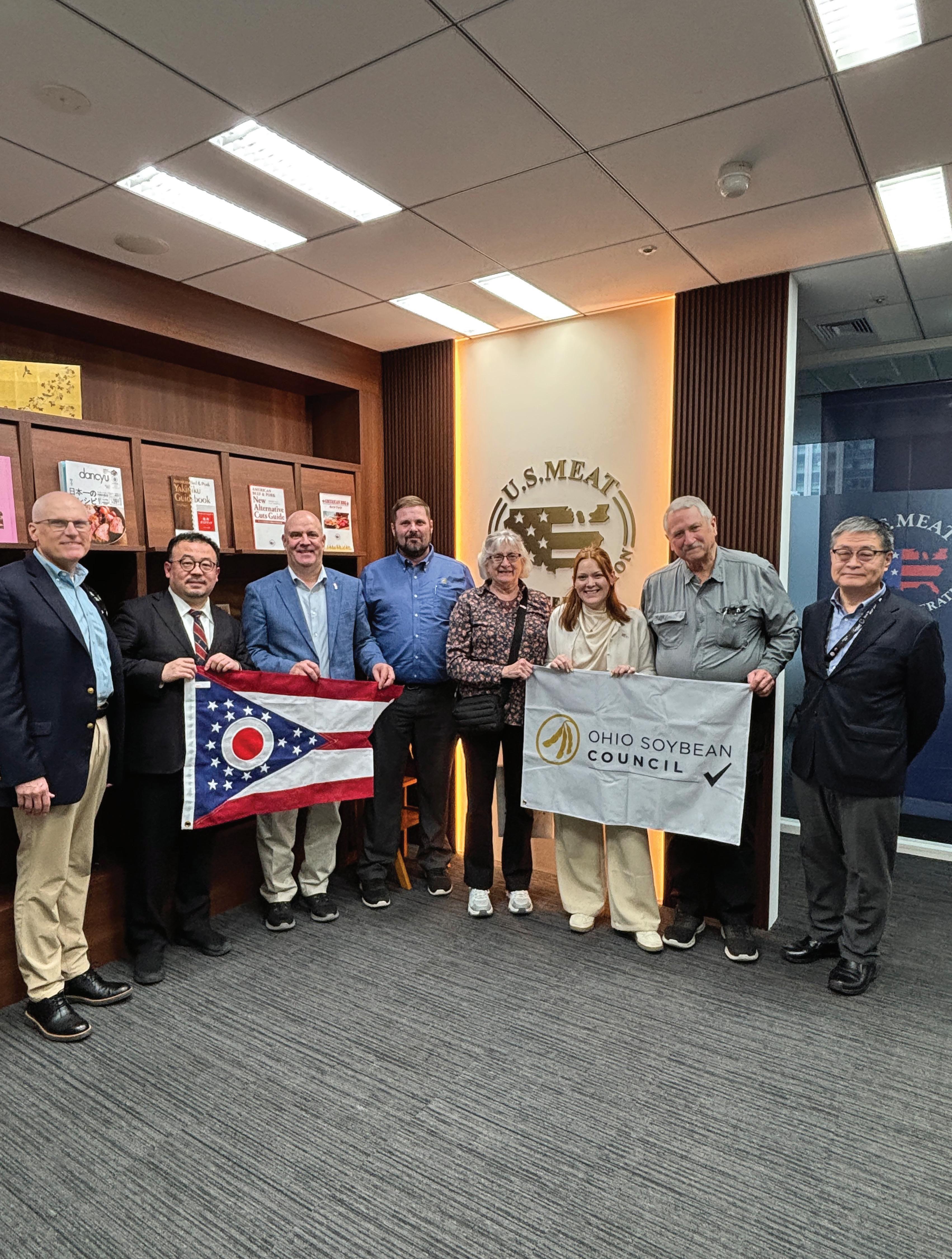
is spring, the Ohio Soybean Council (OSC) led an Ohio Soybean Promotion Mission to Japan and Vietnam on a trip with a clear purpose: to strengthen relationships, expand markets, and see rsthand how the crops they grow fuel food systems around the world. e mission, supported by farmer checko investments and coordinated with the U.S. Soybean Export Council (USSEC), brought together OSC leaders and Ohio Department of Agriculture Director Brian Baldridge to meet with international partners, government o cials, and industry leaders who rely on U.S. soybeans.
e delegation included OSC Chairman Jerry Bambauer (Auglaize County), Vice Chairman Chad Warner (Darke County), board member Cindy Layman (Hardin County), Executive Director Kirk Merritt, and Policy and Demand Coordinator Kiley Holbrook. eir presence underscored that Ohio farmers are not just producers but active participants in a global food system.
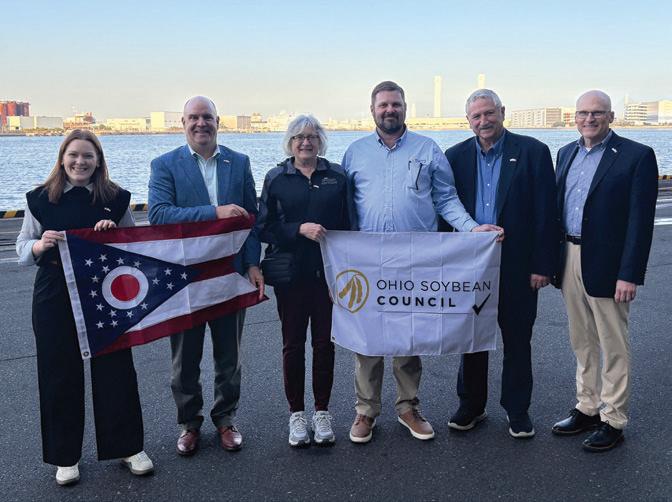
For the farmers, the mission o ered an opportunity to connect directly with the people who use their soybeans in products ranging from tofu and soy milk in Japan to livestock and aquaculture feed across Southeast Asia.
Japan:
e mission began in Japan, one of the most established markets for U.S. Soy and the largest buyer of food-grade soybeans globally. Japan imports nearly all of the soybeans it consumes and relies on foreign exporters for supplies to produce foods such as tofu, natto, miso, soy sauce, and soy milk. e United States provides about half of Japan’s food-grade soybeans and nearly 80 percent of its crush market, re ecting the consistent quality of U.S. soybeans.
During the visit, the Ohio Soybean delegation met with o cials from the U.S. Embassy in Tokyo, the global trading company Kanematsu, and and leaders from Seven & I
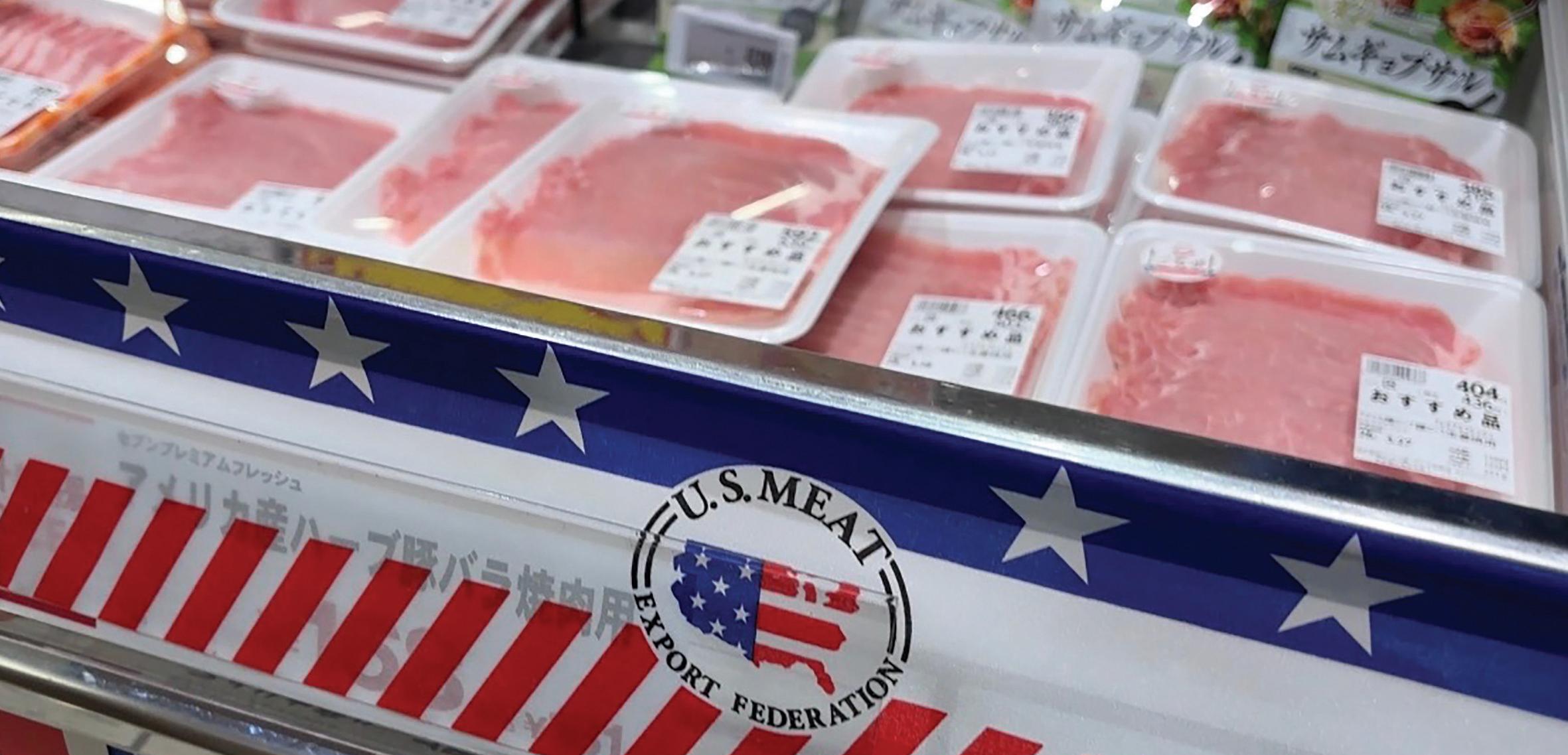
Holdings—the parent company of 7-Eleven. ey toured a warehouse in Yokohama that stored imported soybeans from Ohio, ready for distribution in Japan, and met with the U.S. Meat Export Federation, highlighting the link between soybeans and broader food systems. In 2025, U.S. pork exports reached nearly three million metric tons, with Japan among the top destinations. According to USMEF, those exports accounted for the equivalent of more than 100 million bushels of U.S. soybeans, including 5.8 million bushels grown in Ohio.
Darke County farmer Chad Warner re ected on the mission’s importance.
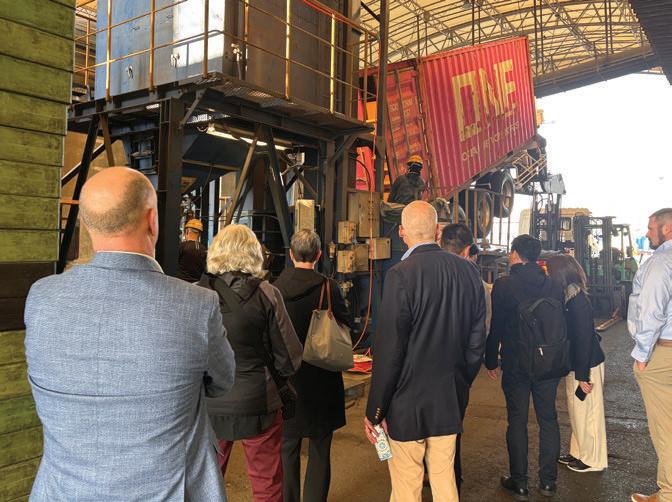
“Seeing it in person really puts it into perspective—what we grow here in Ohio doesn’t just stay here, it helps feed people around the world,” he said.
“Companies like Seven & I Holdings, with more than 60 million customers passing through 7-Eleven stores each day, are interested in our soybeans because they’re a high-quality, sustainable product. at sustainability also helps partners in places like Vietnam meet certi cation standards needed to sell seafood in markets like the U.S. and Europe.”
Hardin County farmer Cindy Layman noted that face-toface engagement is essential for maintaining strong markets. “ ese relationships take time and trust,” she said. “Being here allows us to listen, learn what our customers need, and demonstrate the quality and consistency they can expect from Ohio soybeans.”
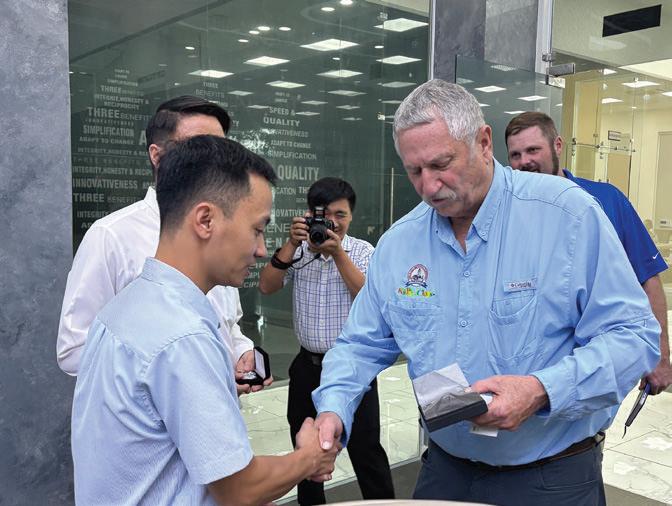
e mission continued in Vietnam, where a rapidly expanding livestock and aquaculture sector is driving strong demand for soybean meal. Vietnam is the thirteenth-largest consumer of U.S. Soy in the world. With more than 105 million people, rising incomes, and growing demand for protein, the country’s feed industry is expanding quickly. Vietnam ranks as the sixth-largest pork producer and the fourth-largest aquaculture producer globally, both heavily reliant on soybean meal.
In Ho Chi Minh City, the Ohio group met with the Louis Dreyfus Company, toured the CP Group’s Aqua Feed Mill, and engaged with the Vietnam Research Institute of Aquaculture. ey also received a market brie ng from the USDA Foreign Agricultural Service. Executive Director Kirk Merritt emphasized the strategic importance of the region. “ e demand for feed and protein in this region is only increasing, and that creates real opportunity for Ohio farmers,” he said. Policy and Demand Coordinator Kiley Holbrook added, “Understanding this growth connects global trends directly to the farm. Ohio farmers are positioned to meet this rising demand responsibly and sustainably.”
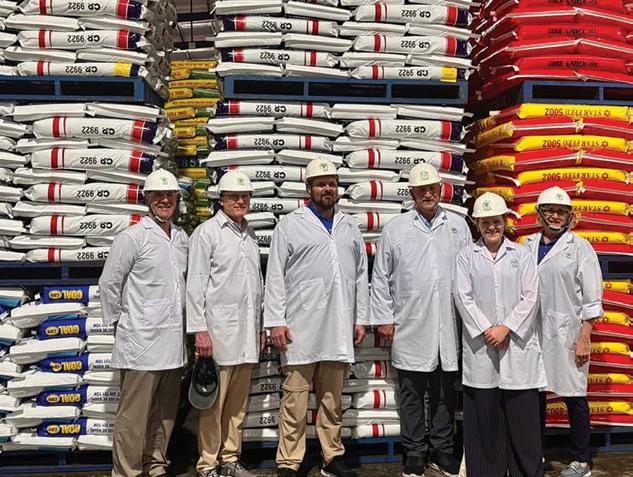
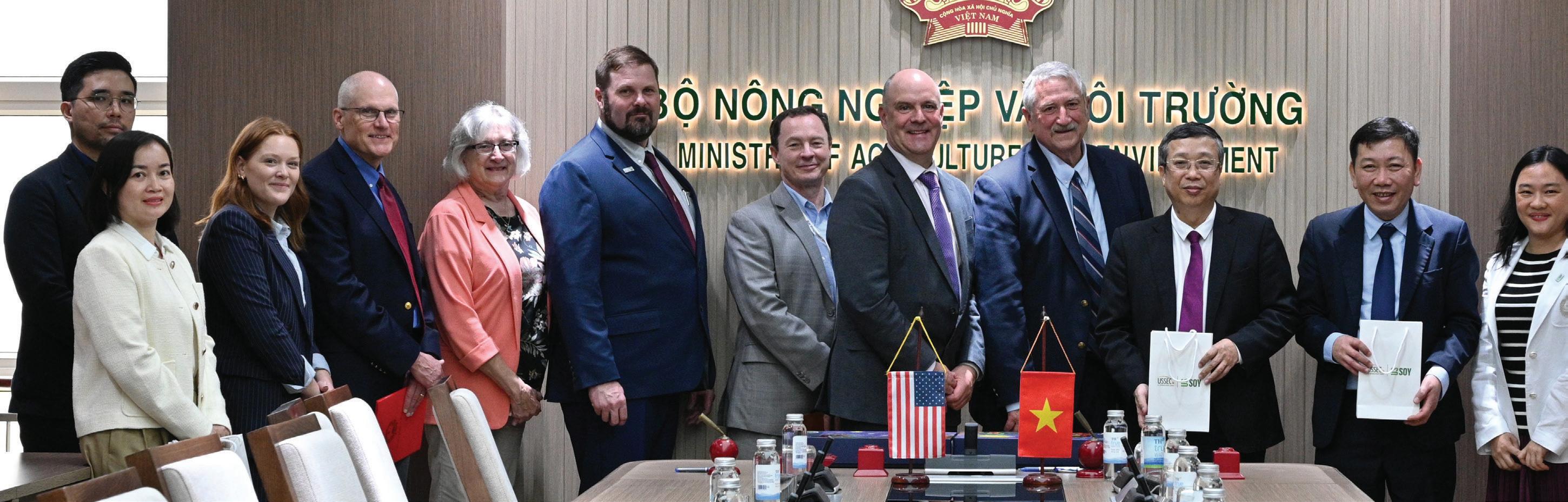
e mission concluded in Hanoi, where the delegation met with leaders from the Vietnam Ministry of Agriculture and Environment, including Deputy Minister Hoang Trung. e visit reinforced relationships strengthened in June 2025, when Ministry representatives traveled to Ohio to meet with farmers and gain a deeper understanding of the state’s soybean industry. During that visit, the Ohio Soybean Council signed a memorandum of understanding with Vietnamese o cials to promote trade cooperation, including future trade missions and joint promotional e orts.
Building on that foundation, discussions during the recent mission focused on soybean quality, sustainability prac-
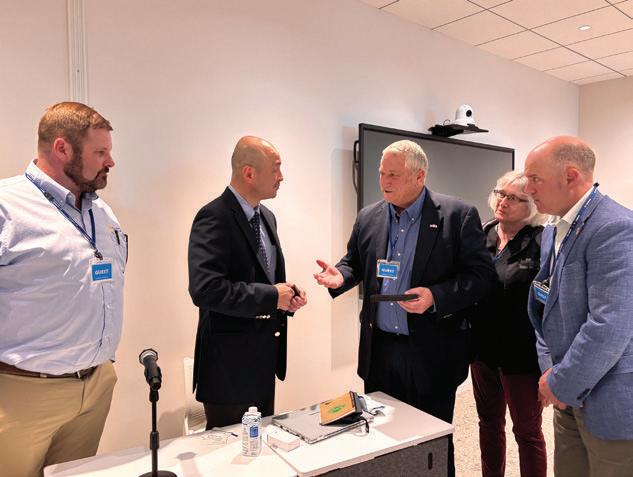
tices, and ways Ohio farmers can support Vietnam’s growing feed sector. Both sides emphasized the complementary nature of their agricultural sectors, with Vietnam specializing in tropical products such as co ee, fruits, and spices, while Ohio contributes temperate commodities like soybeans, corn, and beef.
e Ohio Soybean Council renewed its commitment to the partnership by signing an updated memorandum of understanding with Ministry representatives, further encouraging ongoing collaboration between Ohio farmers and Vietnam’s agricultural industry. e agreement also aims to expand soybean trade and strengthen supply chains as Vietnam’s demand for high-quality feed ingredients continues to grow. OSC Chairman Jerry Bambauer signed the agreement on behalf of the organization, with Director Baldridge serving as a witness.
“It was an honor to sign this memorandum of understanding on behalf of all Ohio soybean farmers” said OSC Chairman and Auglaize County farmer Jerry Bambauer. “ e connections we built during this promotion mission will bene t Ohio agriculture for years to come.”
e Ohio Soybean Promotion Mission to Japan and Vietnam set the stage for the next chapter of Ohio agriculture. By deepening relationships with international partners and understanding global demand rsthand, the delegation strengthened the foundation for future trade. e farmers returned with new insights and opportunities to meet growing needs abroad, ensuring that Ohio’s soybean industry remains competitive, resilient, and prepared to respond to the challenges and opportunities ahead.
“Trade missions are an important economic tool,” said ODA Director Brian Baldridge. “Our goal is to build relationships, protect existing markets, and identify new opportunities for growth that bene t our hardworking farmers. Every sale creates demand across the supply chain—from transportation to processing—supporting jobs and strengthening communities across Ohio.”
2026May-June 2026 | 15
is year marks the 10th anniversary of the Robinson W. Joslin Scholarship, established by the Ohio Soybean Council Foundation (OSCF) to support students pursuing careers in Ohio agriculture and the soybean industry. Created in memory of Rob Joslin, a soybean farmer and long time leader in both Ohio and the national agricultural community, the 3,000 dollar annual scholarship recognizes students
who demonstrate strong leadership potential and a commitment to advancing agriculture. Over the past decade, the program has helped recipients pursue their education and launch careers that strengthen farming, innovation, and agricultural leadership.
As OSCF celebrates this milestone, it is also proud to share that Rob’s wife, Ellen, along with the Joslin family, has made a generous contribution to
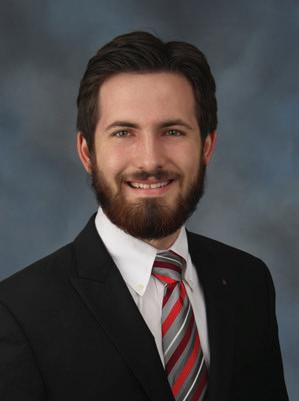
Matthew Klopfenstein earned his degree in Agricultural Engineering from e Ohio State University, specializing in Power Machinery Systems. After graduating in 2020, he began his career with CNH Industrial supporting high horsepower tractor platforms. Today, he serves as a Portfolio Management Cash Crop Segment Specialist, helping guide product strategy and research investments that support farmers and global agriculture markets. After several years away, Matthew and his family recently returned to Ohio to be closer to their farm roots.
“The OSCF scholarship was an investment in my development as a young professional.”
support the scholarship’s future. is gift will help ensure that Rob’s legacy continues to invest in students who are shaping the soybean industry for years to come.
2020-2021
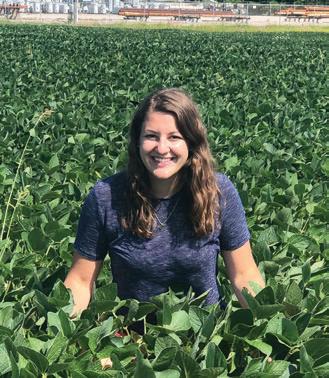
Courtney Heiser graduated from e Ohio State University with a degree in Agricultural Communication and has built her career around telling agriculture’s story. She now serves as a Partner Marketing Specialist at AgVend, helping agricultural retailers across North America strengthen their digital marketing strategies. Recently back in north central Ohio, she looks forward to becoming more involved in her family’s farming operation.
“I’m passionate about helping people understand the value of agriculture and the farmers who grow our food.”
To honor both the 10th anniversary and the scholarship’s lasting impact, the Ohio Soybean Council Foundation connected with four past recipients who are now making a di erence across the agricultural industry.
Mary Klopfenstein studied Agribusiness and Applied Economics at e Ohio State University and now serves as the Director of Leadership Development at Ohio Farm Bureau. In her role, she works with members to create opportunities for farmers and young agricultural professionals to grow as leaders. In a unique Joslin Scholarship connection, Mary and fellow recipient Matthew Klopfenstein are now married.
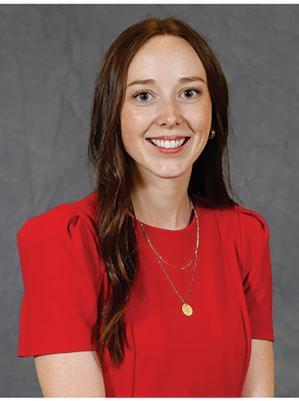
“The soybean industry is more than a crop. It connects my family, my community, and my career.”
Bethany Shoup studied Agricultural Communication and Agricultural Systems Management at e Ohio State University and has built a career in precision agriculture technology. She now works in Strategic Marketing with PTx, supporting innovations from Precision Planting and PTx Trimble that help farmers improve e ciency and maximize crop potential.

“The opportunities within agriculture are limitless. Step out of your comfort zone and find your passion.”
For ten years, the Robinson W. Joslin Scholarship has helped develop the next generation of leaders in agriculture. With continued support and new contributions, the Ohio Soybean Council Foundation looks forward to inspiring future leaders for many years to come.

BRANDT Uptake Plus advanced sugar release and accelerates translocation By enhancing active advantage over conventional and more consistent application count.
e Ohio Soybean Council Foundation (OSCF) is pleased to announce the scholarship recipients for the 2026-2027 academic year.
is is the 19th year for the OSCF Scholarship Program, which was created to encourage undergraduate students to pursue degrees in various elds that support the future of the soybean industry, including agriculture, business, communication, economics, education, science, and technology, as well as to support ongoing graduate-level research. Since 2008, the OSCF Scholarship Program has awarded over $730,000 in scholarship funds to students studying agriculture or a related eld at Ohio colleges or universities.
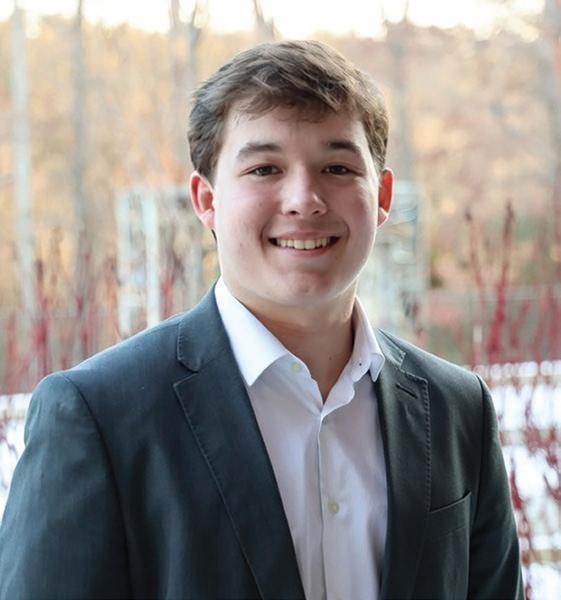
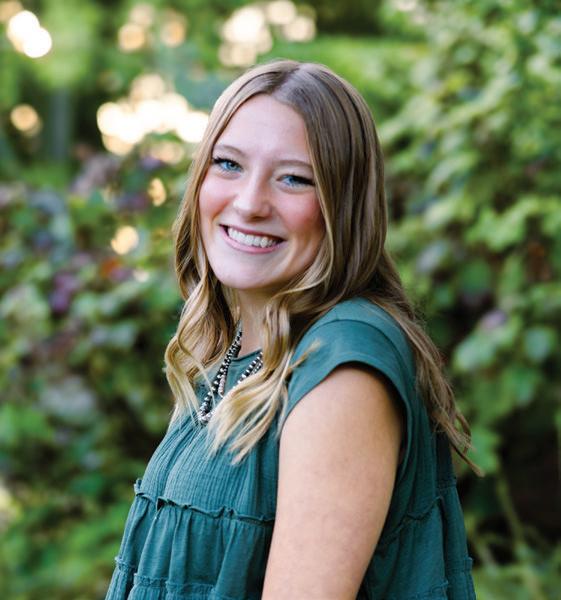
Undergraduate scholarships of $3,000 each were awarded to Alaina Bell, Adam Meyer, Anna Meyer, Kayla Meyers, Anna Moeller, Gracie Sprague, and Kaleigh Williams.
e annual $5,000 Bhima Vijayendran Scholarship, named in honor
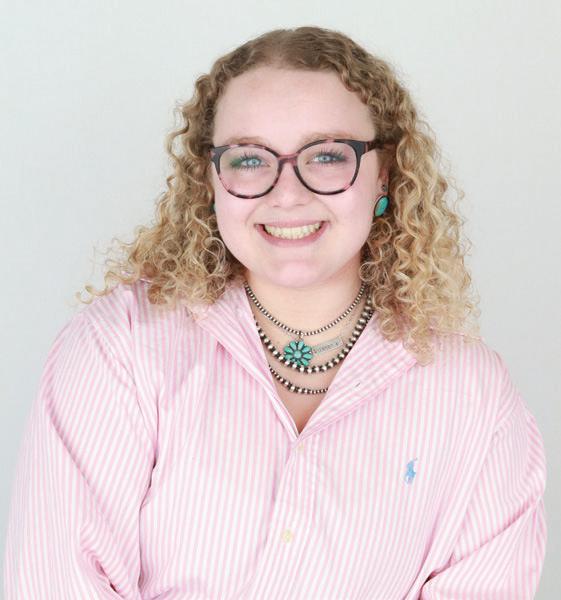
of a Battelle research scientist who made signi cant contributions to the soybean industry, was awarded to Chloee Howard.
e $3,000 Robinson W. Joslin Scholarship, established in memory of a long-time leader in Ohio’s soybean industry and beyond, was presented to Reagan Saunders.
New for this year, the $3,000 omas Fontana Scholarship was awarded to Luke Jennings. Established to honor Fontana’s more than 20-year career with the Ohio Soybean Council, the scholarship recognizes a student pursuing agricultural education who demonstrates a passion for teaching and leadership.
Graduate scholarships of $2,500 were awarded to Sushma Katari and
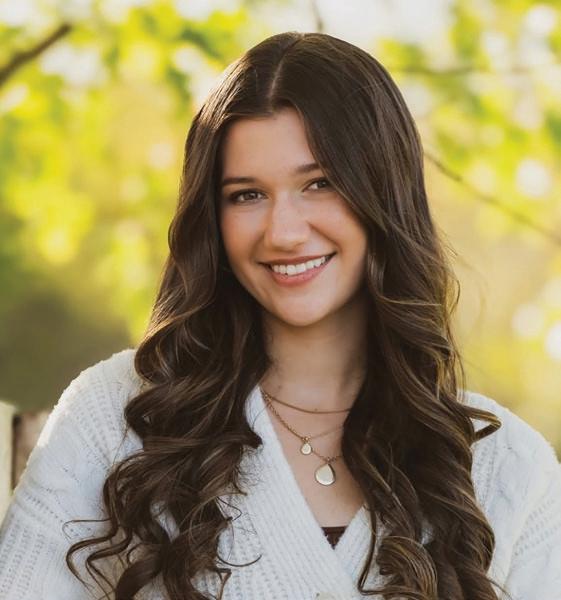
Veeramani Karuppuchamy. Graduate scholarships of $5,000 were awarded to Dylan Bambauer and Maria Kessler. “I’m very proud of the dedication and potential these scholarship recipients have shown,” said David Black, Franklin County soybean farmer and scholarship selection committee member. “ eir commitment to agriculture and drive to succeed give me great con dence in the future of our industry. I have no doubt they will play an important role in strengthening it for years to come. It is especially rewarding to know that a few years from now we may see these students thriving in the soybean or agriculture industry and that the OSC Foundation scholarship helped them along the way.”

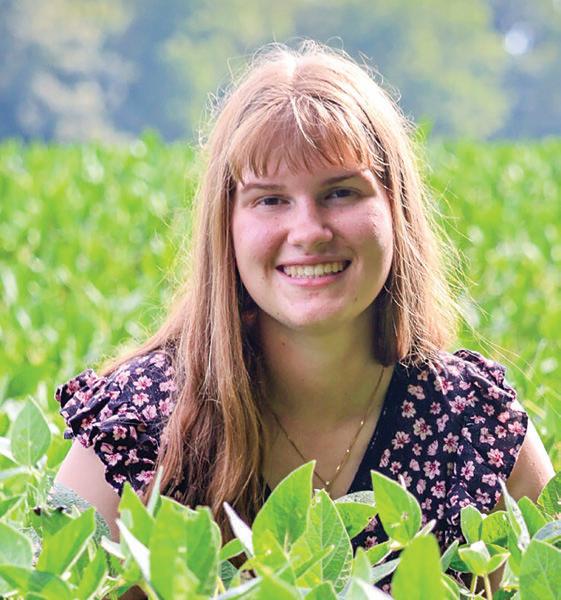

is pursuing a masters in finite element analysis at the University of Daytron. Bambauer’s research applies computational modeling to evaluate stress, deformation, vibration, and fatigue in mechanical components, with an emphasis on improving the durability and reliability of agricultural equipment.
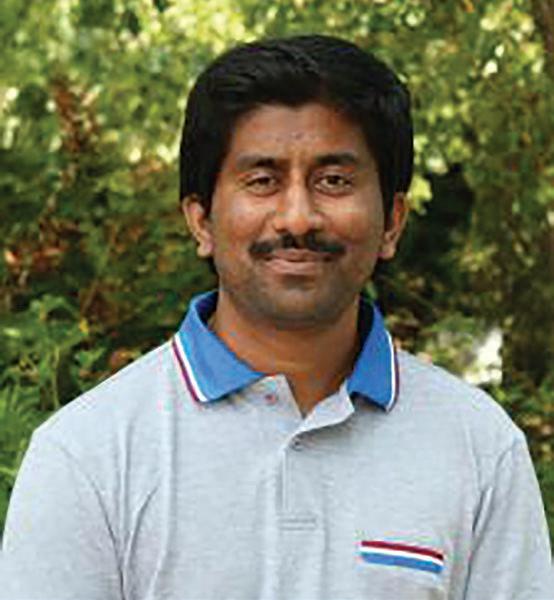
is pursuing a PhD in food science and technology at The Ohio State University. Karuppchamy’s research focuses on utilizing byproducts from the soybean and brewery industries to enhance sustainability and develop high-fiber, protein-rich foods.
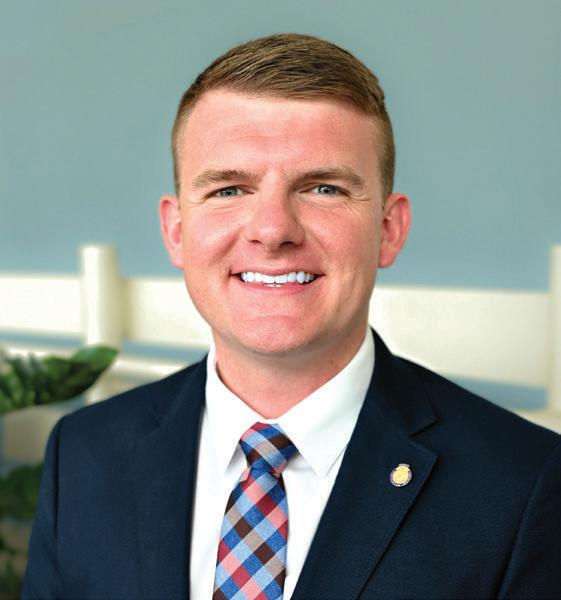
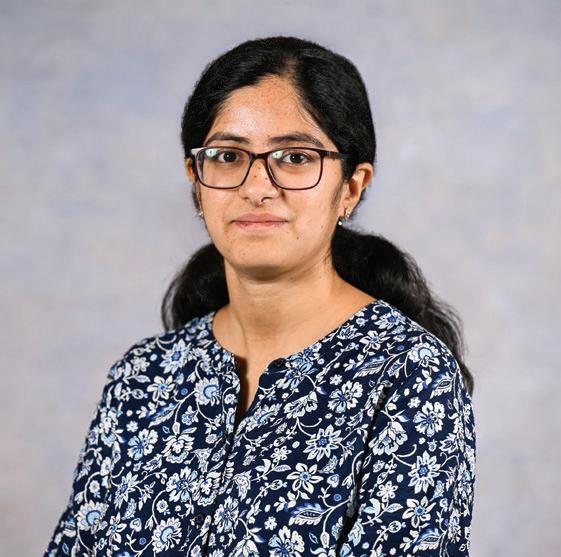
is pursuing a PHD in Food, agricultural and biological engineering at The Ohio State University. Katari’s research uses AI-driven models and drone-based imagery to enhance crop monitoring and in-season yield forecasting. By developing farmer-friendly decision-support tools, she aims to help producers optimize inputs, improve management decisions, and increase soybean yields sustainably.
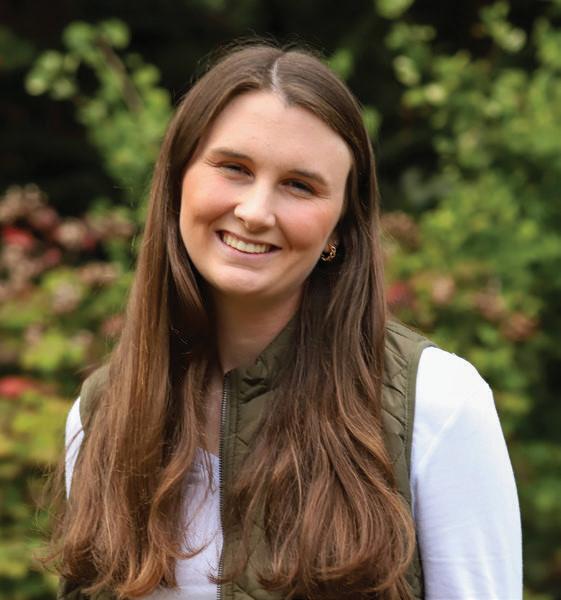
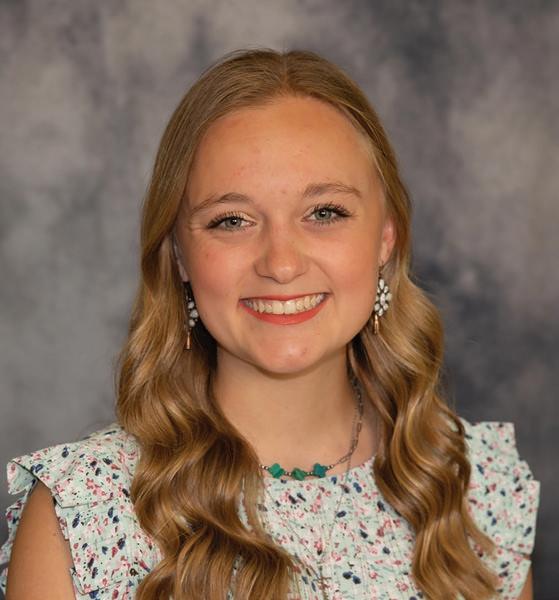
is pursuing a Masters in Horticulture and Crop Science at The Ohio State University. Kessler’s research focuses on improving replant decisions in soybean production as earlier planting increases the risk of stand loss. Her research examines how planting date and seeding rate affect yield across Ohio, helping establish region-specific guidelines.

By Matt Herman
Nearly three decades ago, farmers saw untapped potential in soybean oil, a byproduct once overshadowed by soybean meal and often in oversupply. rough checko investments and coordinated research, soybean organizations and their partners helped turn that surplus into a nearly $20 billion bio-based diesel market.
at success did not happen by accident. It happened because farmers were organized, engaged, and directly involved in shaping the market. Today, we are at another turning point.
Demand for biofuels continues to grow, driven by rising global energy consumption and renewed focus on domestic production. At the same time the recent growth in biobased diesel production has intensi ed competition for fats and oils. Major oil and gas companies with global sourcing capabilities have entered the market in a signi cant way, and policy frameworks are increasingly favoring non-crop feedstocks.
e impact has been clear. Soybean oil once held roughly 50% of the biomass-based diesel market, it now accounts for less than one-third. Even as total demand for lipids has increased, soybean oil use in biofuels has declined from 957 million pounds in December 2024 to 859 million pounds in December 2025.
at is not for lack of supply. is is a market shaped by policy, greenhouse gas accounting methodologies, and increasingly arbitrary market access barriers.
Recognizing this shift away from crop-based feedstocks, soybean leaders, including from Ohio, came together in 2025 to launch Farmers Fueling the Future (FFF). e goal for this initiative was straightforward: ensure farmers are not sidelined in markets they helped build.
While founded by soybean organizations, FFF was designed to be commodity-agnostic and focused on one thing: protecting and growing market opportunities for farmers producing biomass for biofuels.
One year in, that work is beginning to yield results.
Fixing ILUC: Bringing real economics back into the conversation
Indirect land use change (ILUC) has become one of the most in uential and least understood factors shaping
global biofuel markets. To put simply, it is broken and is increasingly being used as a political tool.
ILUC modeling has been used to assign theoretical emissions penalties to crop-based feedstocks, often without transparency or real-world validation. Even the academic institutions charged with building these models hesitate to share their modeling assumptions publicly. e result has been a systematic disadvantage for soybean oil in both domestic and international markets, prompting FFF to lead the e ort to address these issues.
Working alongside the American Soybean Association, we brought in in-house economic expertise to engage directly on ILUC modeling. is is a space where farmers have historically been underrepresented because of the technical complexity. By building internal capability and opening the door to more transparent, data-driven discussions, FFF is helping move ILUC from a black box to a debate grounded in real economics and real-world outcomes.
California: Pushing for workable, farmer-friendly solutions
California’s Low Carbon Fuel Standard continues to in uence markets well beyond its borders. Recent proposals around “sustainability guardrails” would require farm-level data, including attestations and eld-level mapping, for crops to qualify. As written, these requirements are not workable for most farmers or the existing grain handling system.
Seeing the enormous challenge, FFF stepped in. We brought together farmers, crushers, biofuel producers, associations and supply chain partners to assess the real-world impact. rough dozens of interviews and direct engagement, we developed a set of practical recommendations for California regulators.
e message is simple: If you want farmer participation, the system has to re ect how farming and grain markets actually operate. We are continuing to push for solutions that maintain integrity while remaining workable at scale. We expect a formal response from California to our whitepaper soon.
Used cooking oil (UCO) has rapidly gained market share, largely due to its favorable carbon scoring and seemingly unending supply. But the way UCO is treated today raises a fundamental question: when a product trades at similar values to virgin oils, is it still appropriate to treat it as a zero-emission waste?
at question (and answer) matters, because the current system creates a clear market distortion where waste products are trading at a premium to virgin raw materials, despite having inferior physical qualities. We engaged a leading international expert in lifecycle analysis to examine how emissions from recycled products are accounted for. Early ndings suggest a more balanced approach is possible, one that better re ects the shared emissions between the production of the original oil and the recycled product, UCO-based biofuel.
is work is already gaining attention from policymakers in multiple markets and has the potential to reshape how these fuels are evaluated going forward.
ese are just a few examples of work from our rst year. Additional work is underway to strengthen soybean oil’s position under existing U.S. programs, evaluate new pathways like co-processing, and explore whether the U.S. should de ne its own market access standards rather than defaulting to systems developed in Europe.
e common thread across all of this work is simple: putting U.S. farmers and their product rst.
Matt Herman co-leads the Farmers Fueling the Future initiative with Omid Karami, senior economist at the American Soybean Association. He is the chief o cer of demand and advocacy for the Iowa Soybean Association.
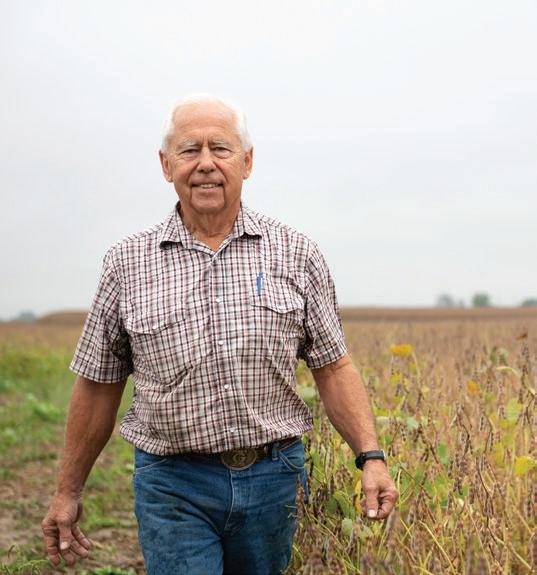
Jerry Bambauer of Auglaize County has been appointed by U.S. Department of Agriculture Secretary Brooke Rollins to serve on the United Soybean Board (USB).
USB manages the national soybean checko which was created by the Soybean Promotion, Research, and Information Act. e board is composed of 73 members representing 29 states and Eastern and Western regions.
“We’re proud to see Jerry appointed to USB to represent all U.S. soybean farmers,” said Je Magyar, Ashtabula County soybean farmer and USB board member. “He’s an active leader in Ohio, committed to nding projects that will give farmers a return on their checko investment. I know he will carry that dedication to USB.”
Bambauer farms nearly 900 acres with his son Rob in Auglaize County. He is currently serving as chairman of the Ohio Soybean Council Board of Trustees. He previously served on the Ohio Soybean Association (OSA) Board of Trustees, where he served as president, chairman, vice president, treasurer and secretary. He also served on the American Soybean Association Board of Directors.
JERRY BAMBAUER
He has a bachelor’s degree in animal science and agronomy from e Ohio State University. He is active in his community as a member of St. Paul’s United Church of Christ.
Bambauer replaces retiring USB director Steve Reinhard of Crawford County. As a member of both OSC and USB, Reinhard was appointed to USB in 2017, eventually becoming the second farmer from Ohio to be elected chairman of USB in 2024. During his tenure as Chairman, he led the organization through multiple changes, including the hiring of a new CEO.
Logan County farmer Bill Bayliss was also reappointed to the board. Bayliss has served on USB since 2020. He also recently served as the chairman of OSC in 2024-2025. In his time on USB, Bayliss has been heavily involved in growing international demand with the U.S. Soybean Export Council.
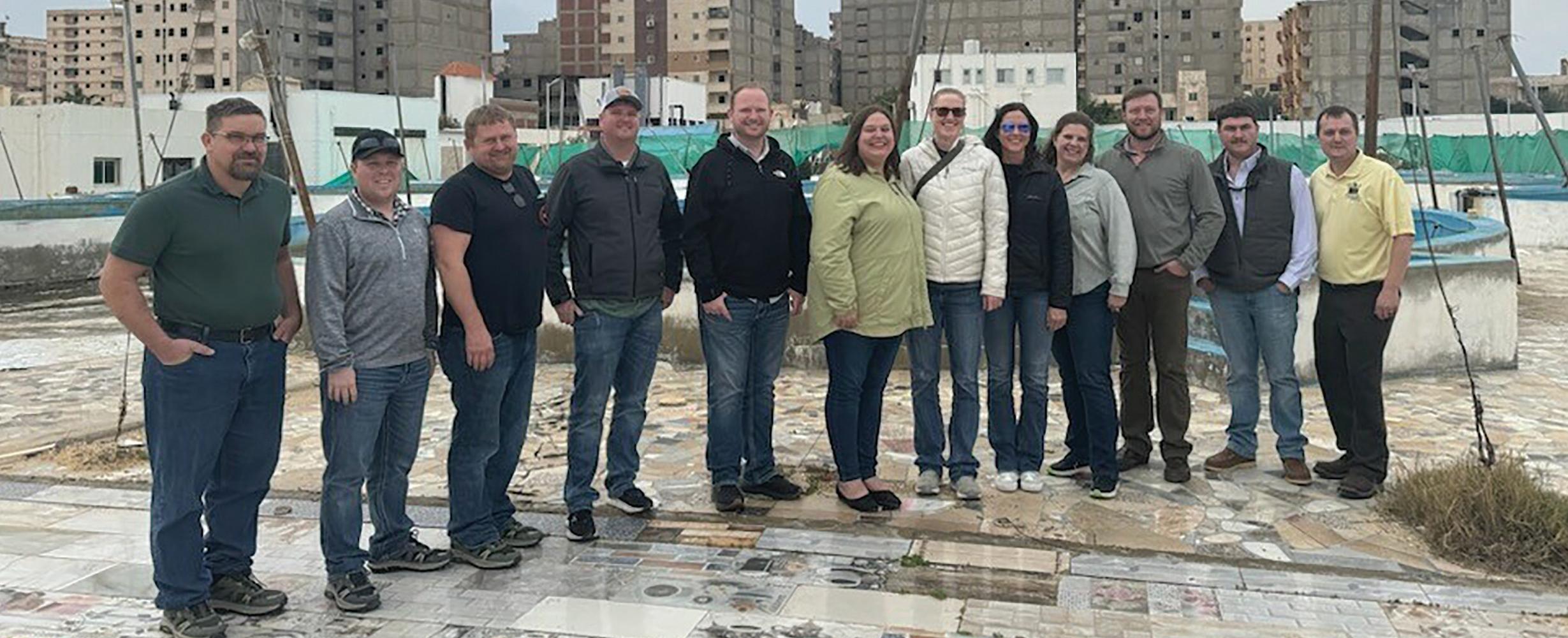
Of all the statistics Becca Waldo encountered during a recent “See for Yourself” trade mission to Egypt, one hit closest to home: the average Egyptian family eats meat only about once a month.
“ at was really eye-opening,” she said. For Waldo, who farms in northeast Ohio alongside her father, Soy Checko farmer-leader Je Magyar, that single fact reframed the stakes of growing U. S. soybeans.
e See for Yourself program gives farmers a rsthand look at how checko dollars are used to build markets overseas. In Egypt, that included a visit to the Soy Excellence Center (SEC) at WorldFish, the rst SEC established in the Middle East and North Africa region.
Launched in 2019 by the U.S. Soybean Export Council (USSEC) with support from WorldFish, the center trains people in Egypt’s poultry, livestock and sh farming industries to use soybeans more e ectively in feed.
A classroom 6,000 miles away
“It was really cool to see,” Waldo said, referring to the center. “I got to sit down with students at lunch and hear their backgrounds. One person worked for a hatchery 40 miles away but still came to the center through their job to learn more. Having those students go back to di erent industries, whether sh farming or feed milling, is something I think will help the market in Egypt grow.”
at growth is already underway. Egypt is now the fourth-largest export market for U.S. soy, driven by one of
By: Sarah Maney, United Soybean Board
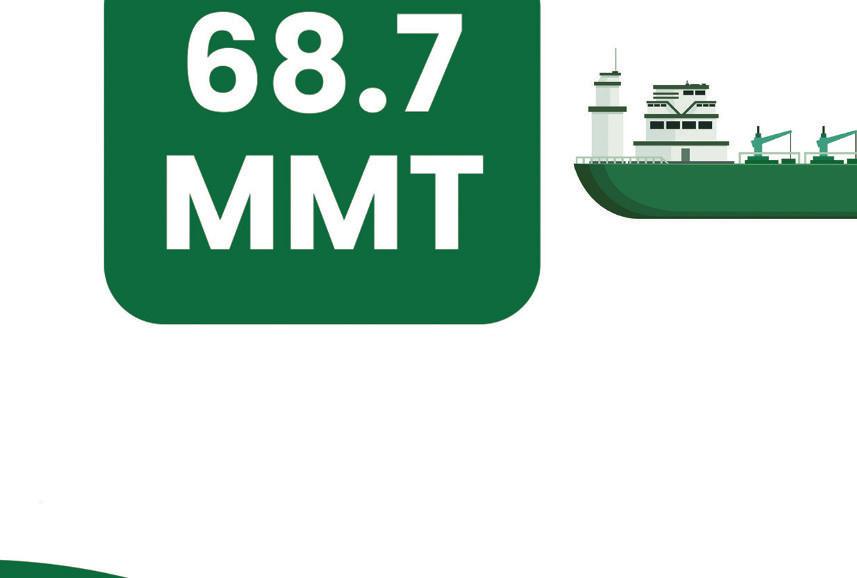
Africa’s fastest-expanding populations. Accounting for 3.3 million metric tons of imported soy at $1.4 billion, the country sources large amounts of U.S. soybeans each year that are crushed into meal for animal feed used in poultry, dairy, and sh production. ¹ Programs like the SEC help those industries raise animals more e ciently and produce more food.
“It’s not just about making food cheaper,” Waldo said. “It’s about feeding animals better feed so the person eating that food gets a better product.”
The difference you can see
At an oil processing plant, buyers explained that many companies prefer U.S. soybeans because of their color, a di erence that comes down to how the beans are dried. ey dry naturally in the eld before harvest. In some other countries, beans are harvested earlier and run through heated dryers, which can damage them.
“Whenever you put a soybean through a dryer, you’re going to see heat damage,” Waldo said. “ ey get darker, and if you have too many dark beans, it can a ect the nal product.”
It’s about relationships
Some Ohio soybeans, including Waldo’s, move through Paci c Northwest export terminals to Asian markets. Even though her beans won’t make it to Egypt, the trade mission showed her how demand in one part of the world still shapes the market for every farmer.
One of the biggest takeaways from the trip was seeing how Soy Checko dollars help build long-term relationships
with buyers overseas. At nearly every stop, the U.S. soybean representatives already knew the people they were meeting with.
“You could tell those relationships had been built over time,” Waldo said. “We weren’t just showing up somewhere unexpected.”
ose connections are developed through organizations like USSEC and the checko ’s meat export partners including U.S. Meat Export Federation and USA Poultry and Egg Export Council. ey work directly with companies that buy soybeans and meat products (fed U.S. soy) around the world. It’s the kind of reach that no individual farmer could build alone.
“If you took those checko dollars and tried to market your soybeans yourself, how far could you reach?” Waldo said.
By the time Waldo returned home to Ohio, she had a di erent view of the crop she plants every spring. Soybeans grown across the Midwest are part of a much larger food system that stretches across the world and seeing that system up close helped bring that connection into focus.
“Being a small-town farmer from Ohio and realizing you’re connected to world trade is pretty neat,” Waldo said. “Seeing those relationships and knowing that’s where your checko dollars are going — that was really reassuring.”
¹ U.S. Soy exports continued to grow in marketing year 25/2024 | United Soybean Board. USDA, Global Agricultural Trade System (GATS).




WE HELP MAKE SURE YOURS HAS A FUTURE.
Every farm here was built on generations of hard work. That’s why the Ohio Soybean Council is always hard at work making sure the next generation to operate your farm has every opportunity to make it a better one. Whether we’re driving innovation, expanding markets or educating classrooms — we’re investing in what matters most: creating a solid foundation for the next generation to operate your farm.