

HOW BANKS ARE EVOLVINGDIGITALLY, CULTURALLY AND STRATEGICALLY.
The Reinvention Edition




For Ohio’s community banks, the last five years have brought one of the most significant periods of transformation in modern banking history. What began as a rapid response to the pandemic quickly evolved into a broader shift in how banks serve customers, compete in the marketplace, and prepare for the future.
Across Ohio, community banks accelerated investments in digital banking, mobile services, fraud prevention, and cybersecurity. Customers who once preferred visiting a branch increasingly began expecting seamless digital experiences alongside personalized service. Community banks adapted quickly, proving that institutions rooted in local relationships could also innovate and compete in a fast-changing financial environment.
At the same time, economic uncertainty, rising interest rates, deposit competition, and regulatory pressures forced bank leaders to rethink strategy. Industry consolidation continued as mergers and acquisitions reshaped parts of the banking landscape nationwide.
Community banks faced growing competition not only from larger financial institutions, but also from fintech companies and digital-first financial platforms.
Yet through these challenges, Ohio’s community banks demonstrated resilience. Many diversified services, expanded treasury management and wealth offerings, embraced data analytics, and explored new partnerships to better serve customers. Industry research shows that banks are increasingly prioritizing AI, digital modernization, cybersecurity, and real-time payments technology as critical investments for the future.
Still, while technology continues to reshape banking, one thing remains unchanged: relationships matter.
Community banking has never simply been about transactions. It is about trust, local decision-making, and understanding the needs of customers and communities. In Ohio towns and cities, community bankers remain deeply connected to the businesses, families, farmers, and entrepreneurs they serve. That local presence
continues to be a defining advantage in an increasingly automated world.
As artificial intelligence, embedded finance, and digital banking tools become more prevalent, successful banks will be those that balance innovation with personal connection. Customers may appreciate convenience and speed, but they still value trusted advisors who understand their goals and challenges. The banks that thrive over the next decade will be those that use technology to strengthen, not replace, relationships.
through education, professional development, advocacy, compliance resources, peer collaboration, or leadership training, OBL continues to provide banks with the tools and connections they need to adapt and succeed.
As the industry evolves, Ohio banks do not have to navigate the future alone. The Ohio Bankers League remains committed to helping community banks embrace innovation while preserving the relationshipdriven model that has long defined Ohio banking. In an era of rapid technological advancement, that balance between progress and personal connection may be more






“Lead, follow or get out of the way.”
The famous quote, "Lead, follow or get out of the way," is attributed to a variety of historical figures from Thomas Paine to U.S. Navy Admiral Oliver Hazard Perry and U.S. Army General George S. Patton Jr. It came to mind as I pondered the topic of banking evolution. Around the OBL water cooler we seem to wrestle frequently with industry reluctance around change. Whether in sports, organizational leadership, war or banking, I firmly believe we are either moving forward or falling behind. It’s one or the other. Standing still means others are passing one by. This is certainly the case with banks. It is the “why” that drives what we do at the OBL.
The three legs of OBL’s mission—advocate, collaborate, and educate—are laser focused on delivering everything a community bank might need to not just remain relevant and survive but propel forward and thrive. OBL creates a complete support system for a community bank that wants to stay independent, competitive, resilient, and growth oriented.
Governmental advocacy is a core “why.” Thanks to those of you who read my column regularly – outside of my future son-in-law, who is a banker, and feels obligated to read it – because you know the importance of representation for our industry in the public policy arena. That is why fighting for current Ohio law to be adhered to with regards to the announcement of Ohio’s first bank selling to a credit union is so important. If we don’t stand up now, what do we stand for?
Through its advocacy role, OBL serves as the industry’s voice in legislative and regulatory matters, helping banks respond to fast-moving issues at both the state and national levels. That matters for community banks because relevance is not just about customer
experience—it is also about whether the bank can operate under workable regulations, defend its charter, and avoid being disadvantaged by policy shifts. OBL helps its community banks thrive by:
• Employing four registered lobbyists exclusively advocating on issues related to Ohio’s banking industry.
• Reducing the burden of “going it alone” on complex regulation.
• Helping smaller institutions gain a collective voice they likely could not build independently.
• Protecting strategic flexibility so leadership can focus on growth, service, and modernization rather than only defense.
OBL’s collaboration in the area of products and services is built around shared needs and strategic partnerships that create value for banks and the communities they serve. In practice, that looks like connecting banks with peers, industry experts, endorsed partners and practical services. OBL helps its community banks evolve in this regard by:
• Delivering scale with its 160 community bank member institutions.
• Match making with outsourced expertise as a more cost-effective way to stay on top of advancing technology and trends.
• Giving access to knowledge and resources that can aid their bottom lines.
• Accelerating innovation by making vetted partners, products, and solutions easier to find and deploy.
OBL’s education leg is especially important in illustrating our goal is not merely survival but forward momentum. OBL offers an extensive portfolio of professional development and education across the range of banking functions as well as leadership development.
By definition, our emphasis is to keep members on the leading edge of industry knowledge and trends. Here too, bankers are connected with peers and practitioners who are industry experts. The OBL Forums are especially powerful in serving as practical learning communities. By pooling intellectual and capital resources, OBL is a creator of knowledge and collective resources. OBL helps its community banks progress in this regard by:
• Keeping teams current as banking rules, customer expectations, fraud threats and technology continuously change.
• Strengthening the talent pipeline from frontline employees to senior leaders and bank directors.
• Improving decision-making by letting peers share what is working in the range of disciplines within a bank.
• Helping banks convert strategy into execution because the staff actually has the education to deliver it.
As much as OBL supports the prosperity of community banks, a community bank must still must execute well on its own strategy, culture, customer relationships, capital and leadership. We are honored to be trusted partners for nearly every community bank who calls Ohio home. It is disappointing when I visit a banker who confides why they don’t attend OBL professional development programs, networking events or follow through in pursuing relationships with OBL service providers. It is
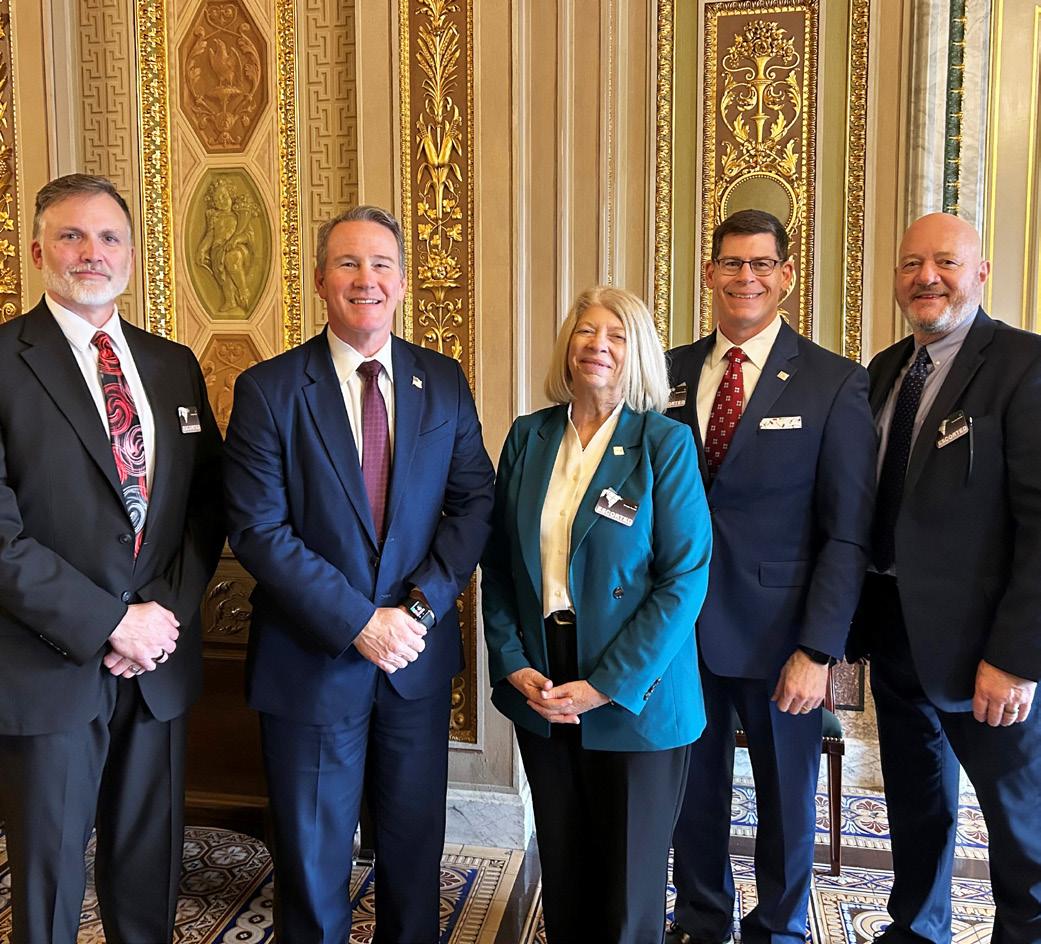
disappointing because they are choosing to stand pat and mark time versus moving their institution forward. Challenges with succession in a bank – leadership, boards of directors and shareholders – are very real. I acknowledge that and extend my hand to invite active engagement so we can deliver greater membership ROI. That is what OBL was designed for and continues to be the “why” for which the team of 18 professionals and I vigorously pursue every day.
Bankers tell me on my travels that branches are still a necessity. In many instances I see it, as some branches truly are a social hub in town. Yet, they also better have a positive mobile experience available, especially for younger customers. It seems the jury is out on interactive ATMs (ITMs) that have a video link to a live human. I know of a handful of banks that have invested in this technology, but their customers have not embraced it. A customer walks into a branch desiring to talk with a live person. It is a behavioral shift to talk with a real person, not a bot mind you, on a video screen.
I also hear from bankers that personalization versus a “one-size-fits-all” solution is the secret sauce for community banks. I wholeheartedly agree. Armed with customer knowledge, local credit decisioning should be nimbler and better serve community needs. Financial guidance and product offerings can be more customized.
On the topic of AI, it has dominated conversations for more than a year now. Despite everyone talking about AI, it appears that very few are widely embracing this new technology. There are great use cases for creating efficiencies and inputting loan data, fraud detection, chat support and customer onboarding and even employees on/offboarding, but examples of widespread execution are limited at this point.
Over time, though, banks are evolving to being more than just a destination: they are increasing the infrastructure behind financial services. Twenty years ago, the president of a larger community bank told me he was leading a technology company providing banking services. That is even more of a reality in 2026. It is a balancing act with conservative, naturally risk averse boards of directors on one side and agility to meet customer demands for innovation on the other. Leadership needs to be rethinking what a “bank” is in a digital economy. Sustainable banks will more likely learn to combine scale and trust with speed and innovation. Community banks, at their core, are trust focused rather than transaction focused. So, as digital banking becomes more commoditized, differentiation increasingly comes from: trust, security, advice, transparency and brand relevance. Banks have spent the past two centuries positioning
themselves as financial partners. What evolves is the way that they execute this value proposition, which is with a high-touch customer experience to those who want it and a technology-enabled, data-driven, customer-centered financial platform.
The encroachment of other players in the financial services space is not new. However, the Trump administration’s exuberant support of fintechs and the increasingly rapid adoption of technology across all sectors creates considerable threats for traditional banking. OBL has long advocated that any player in the financial services marketplace looking to offer bank-like services should be required to meet the same rigorous capital, regulatory and consumer protection requirements. That has been our mantra on credit unions and Farm Credit, and it naturally applies to the evolution of fintechs. Everyone must be held to the same high standards to ensure a fair, level playing field and appropriate consumer protection. This is especially the case given rampant financial fraud harming consumers in Ohio and across the country.
The legacy of exceptional service in communities across the state reflects the Ohio banking industry's ability to adapt and evolve. Even amid ongoing change and uncertainty, Ohio's banks have proven their durability and strategic foresight. You have our continued commitment to looking further over the horizon as OBL helps community banks move forward and thrive by fighting alongside you in the policy arena, connecting you to shared resources and partnerships and continuously upgrading your people and knowledge.

Michael J. Adelman President & CEO, Ohio Bankers League madelman@ohiobankersleague.com
Did you know the Ohio Bankers League has its own insurance agency? OBL Insurance Services Agency, Inc. provides full brokerage services for Medical, Dental, Vision, Life, Disability, and more.
As the trusted voice for the Ohio banking community, we understand your unique needs. That’s why we’re uniquely positioned to help you build a benefits strategy that aligns with your bank’s culture—while ensuring you get the most competitive pricing available. Our services include:
• Plan design and funding options
• Annual market checks and renewal analysis
• Compliance assistance and HR resources
• Wellness plans, claims monitoring, and more

Contact Gauri today to learn more about how OBL Insurance Services can help your bank thrive!
614.340.7598 gairi@ohiobankersleague.com
ASSOCIATION STAFF 4215 Worth Avenue, Suite 300 Columbus, OH 43219
Fax (614) 340-7596
The Ohio Record is published quarterly by OBL BankServices.
POSTMASTER: Send address changes to Ohio Record at the address listed above.
Statements and opinions expressed in Ohio Record are not necessarily those of the OBL.
Michael Adelman President & CEO madelman@ohiobankersleague.com (614) 340-7616
Gauri Airi Executive Director, Ohio Bankers Benefits Trust gairi@ohiobankersleague.com (614) 340-7598
Brenda Arnold Products & Services Manager, OBL BankServices barnold@ohiobankersleague.com (614) 340-7620
Don Boyd Senior Vice President of Government Relations & General Counsel dboyd@ohiobankersleague.com (614) 340-7608
Michelle Crume Senior Vice President, OBL Executive Director, OBL BankServices mcrume@ohiobankersleague.com (614) 340-7622
Stephanie Elam Plan Coordinator & Customer Service Specialist selam@ohiobankersleague.com (614) 340-7591
Rita Hinkle Administrator, OBBT rhinkle@ohiobankersleague.com (614) 340-7609
Daniel Holstein, CPA Senior Accountant dholstein@ohiobankersleague.com (614) 340-7604
Paige Houlihan Products and Services Coordinator, OBLBankServices phoulihan@ohiobankersleague.com (614) 340-7613
Sarah Husk Education Manager shusk@ohiobankersleague.com (614) 340-7610
Audra Johnson Director of Communications ajohnson@ohiobankersleague.com (614) 340-7621
Julie Kiplinger Education Manager jkiplinger@ohiobankersleague.com (614) 340-7612
Evan Kleymeyer Senior Vice President of Government and External Relations ekleymeyer@ohiobankersleague.com (614) 340-7605
Anthony Lagunzad Manager, Government Relations & BankPAC alagunzad@ohiobankersleague.com 614.340.7614
Stephen Mentzer Database Manager smentzer@ohiobankersleague.com (614) 340-7607
Jennifer Osburn, CPA CFO, Chief Administrative Officer josburn@ohiobankersleague.com (614) 340-7606
Megan Peiffer Education Manager mpeiffer@ohiobankersleague.com (614) 340-7618
Emily Schwegman Education Specialist eschwegman@ohiobankersleague.com (614) 340-7602
Christine Zeek
Employee Benefits Manager, OBBT czeek@ohiobankersleague.com (614) 340-7617

Banking has always been a business of trust. That has not changed. What has changed is nearly everything else.
Customers expect financial services to be faster, safer, more digital, and more personalized than ever before. Fraudsters are more sophisticated. Nonbank competitors continue to push into traditional banking activities. Technology is changing how money moves, how customers interact with institutions, and how policymakers think about financial services. Even the basic question of what it means to be a bank is being tested in new ways.
That is why this “Reinvention Issue” is so timely. Ohio banks are not standing still, and neither can the people who lead them. They are modernizing technology, rethinking branch strategies, strengthening fraud prevention, investing in talent, and finding new ways to serve customers and communities. But reinvention cannot stop at the bank level. As an industry, we also need to reinvent how we engage in advocacy, because the bankers who show up now will shape what comes next.
The policy debates happening at the Ohio Statehouse are not abstract, and they will not wait for bankers to decide whether to engage. They are happening now, and they will shape the competitive landscape for years to come. These debates affect whether Ohio banks can compete
fairly, protect customers, serve their communities, and continue to operate under a regulatory framework that recognizes the unique role banks play in the economy.
One of the clearest examples is the recently announced effort by a credit union to acquire an Ohio community bank. This proposed transaction raises significant questions about the future of Ohio’s banking system, competitive fairness, taxation, deposit insurance, community obligations, and the legal framework governing who may acquire and operate a bank. Credit unions were created for a specific purpose and receive significant tax advantages because of that purpose. When a tax-exempt credit union seeks to acquire a taxpaying community bank, it should concern every banker, every policymaker, and every community that depends on a strong banking sector.
This is not simply a dispute between two financial institutions. It is a broader question about charter integrity and whether the lines in Ohio law still mean what they say. Banks operate under a demanding framework that includes taxation, regulation, supervision, Community Reinvestment Act obligations, and public expectations tied to their role in the economy. If those obligations can be sidestepped through acquisition, the result is not innovation. It is regulatory arbitrage.
At the same time, Ohio banks are on the front lines of another major policy challenge: fraud. Every banker knows the stories. Elderly customers manipulated by scammers. Families targeted through impostor schemes. Consumers pushed toward cryptocurrency kiosks or irreversible payment channels before anyone can intervene. Bank employees often serve as the last line of defense, spotting red flags, slowing down suspicious transactions, and trying to protect customers before money is gone forever.
That is why OBL has been actively engaged in support of legislation aimed at combating elder financial exploitation and fraud, including proposals focused on digital asset kiosks and stronger consumer protections. These efforts matter because fraud is no longer a side issue. It is a core consumer protection issue, a public safety issue, and a financial stability issue for households across Ohio.
Banks already invest enormous time, training, and resources into detecting and preventing fraud. But the legal and regulatory environment must keep pace with the tactics criminals are using. Policymakers need to hear directly from bankers about what is happening in branches, call centers, compliance departments, and communities. They need to understand that faster payments, digital channels, and new financial technologies bring benefits, but also new risks that require thoughtful safeguards.
That is where advocacy becomes essential.
OBL’s government relations work is built around consistent engagement with legislators, regulators, and other policymakers. We testify, analyze legislation, meet with public officials, build coalitions, respond to threats, and look for opportunities to advance policies that support Ohio banks and their customers. But OBL’s voice is strongest when it is backed by bankers who are willing to engage.
The truth is simple: policymakers need to hear from you.
They need to hear from the community bank president whose institution finances small businesses on Main Street. They need to hear from the compliance officer managing the practical impact of new regulations. They need to hear from the lender helping families buy homes and farmers finance operations. They need to hear from the frontline banker who stopped an elderly customer from losing life savings to a scam. They need to hear from the next generation of banking leaders who are building the future of this industry.
Advocacy cannot be something we talk about only when there is a crisis. It must become part of the culture of
banking in Ohio. Less talk, more action. More bankers attending meetings. More calls to legislators. More testimony. More branch visits. More participation in OBL events. More support for BankPAC. More willingness to tell the banking story before someone else tells it for us.
The banking industry is reinventing itself digitally, culturally, and strategically. Our advocacy must evolve with it. We need to be more visible, more coordinated, more proactive, and more persistent.
Ohio banks have a strong story to tell. They support local economies, protect customers, create jobs, pay taxes, invest in communities, and help families and businesses build financial futures. But a strong story only matters if it is told.
This is a moment for engagement. This is a moment for clarity. This is a moment for action.
The future of banking in Ohio will not be shaped only by technology, markets, or customer preferences. It will also be shaped by public policy. And public policy is shaped by those who show up.
Ohio bankers need to show up, speak clearly, and stay engaged. The institutions that do will help shape what comes next for their communities, their customers, and the future of banking in Ohio.

Don Boyd SVP, Government Relations & General Counsel, Ohio Bankers League dboyd@ohiobankersleague.com
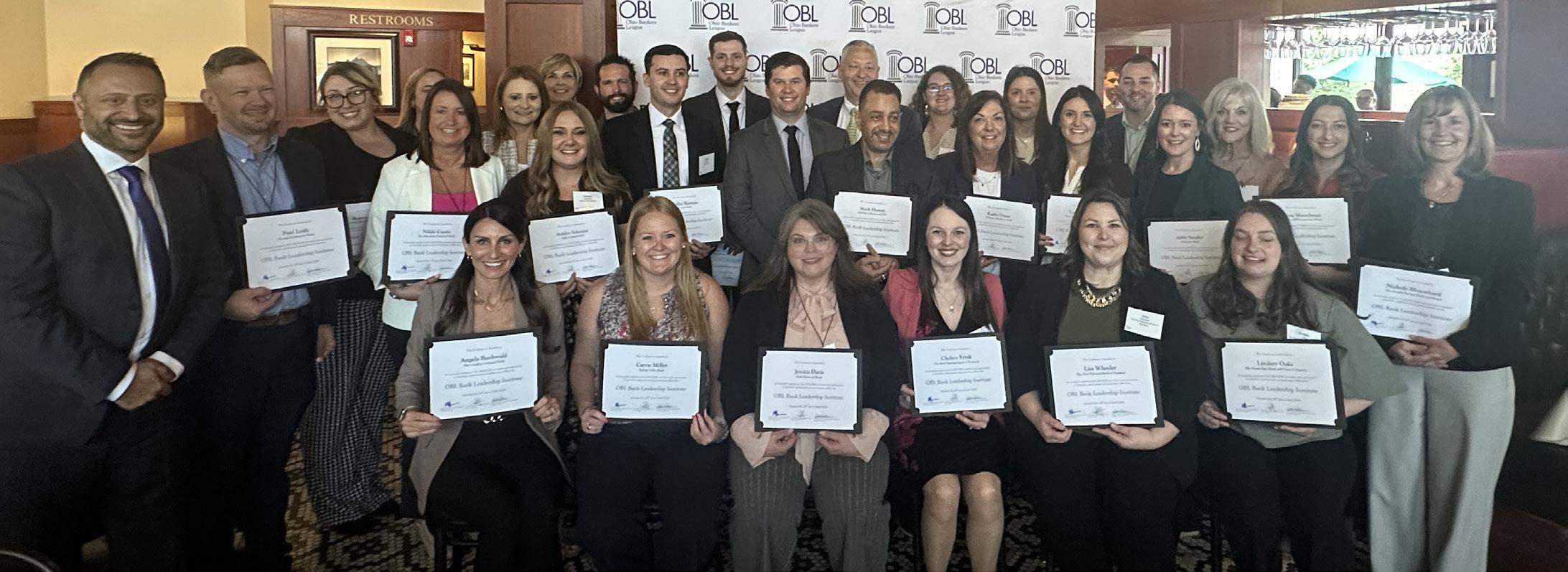
The Bank Leadership Class of 2025-26 poses for a group photo at graduation.
As banks continue to reinvent themselves to meet changing customer expectations, emerging technologies, and evolving economic realities, one question becomes increasingly important: who will lead the organization through the next era of change?
Leadership plays a critical role in how banks position themselves for the future and determine which changes to embrace, how quickly to adapt, and how to maintain stability in the midst of transformation. While reinvention in banking often centers on technology, products, or strategy, long-term success depends just as heavily on people.
At some point, every institution will face leadership transition. While it can be difficult to imagine a time when key leaders are no longer in their roles, succession planning is essential to ensuring continuity and long-term success. Banks must be intentional about identifying and developing future leaders before they are needed.
Leadership training is widely available. There is no shortage of speakers, workshops, books, and seminars dedicated to the topic. Yet leadership development is not one-size-fits-all, and identifying the right opportunities for employees can be time-consuming.
Not every employee is at the same point in their career, nor do they need the same type of development. Some may have excelled in various banking roles and possess a strong understanding of operations, regulations, and the broader industry, yet have little experience leading
people. Others may already manage teams but need to refine their leadership style and strengthen their ability to motivate, coach, and develop employees.
Because, as many leaders would agree, managing people is often more complex than the technical responsibilities of the role itself.
How do you motivate employees with different personalities and working styles? How do you build resilient, high-performing teams? How do you foster accountability while maintaining trust and engagement? These are questions leaders face every day, and the answers are not always intuitive.
That is why intentional leadership development matters.
The Ohio Bankers League has done the work to provide exceptional leadership development opportunities for future banking leaders through the Bank Leadership Institute.
Designed to help participants better understand themselves and their leadership potential, the program meets four times over the course of nine months and challenges participants to examine leadership from both a professional and personal perspective. Through guided coaching, reflection, and discussion, participants are encouraged to look inward, better understand their leadership style, and develop practical tools to lead with greater confidence and effectiveness.
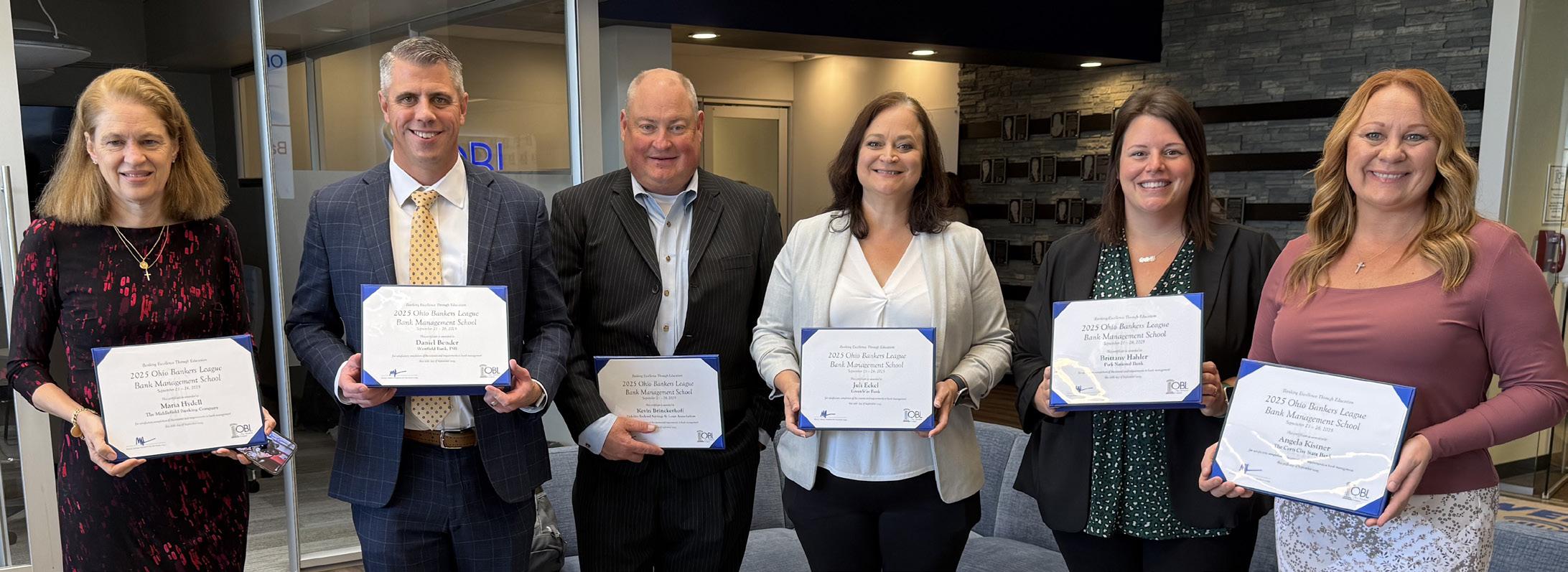
The Bank Leadership Institute goes beyond traditional leadership training by recognizing that strong leaders are not developed solely through technical expertise. Leadership requires self-awareness, emotional intelligence, resilience, and the ability to bring out the best in others.
Year after year, the program receives strong feedback from both participants and their institutions. Graduates leave with practical tools, resources, and increased confidence to lead teams and navigate challenges effectively.
Leadership development, however, extends beyond people management. Future leaders must also understand how a bank operates as a whole and how decisions made in one area affect every other part of the institution.
Banking is rich with institutional knowledge, and one of the industry’s greatest challenges is helping employees move beyond understanding their individual responsibilities to understanding how the entire organization functions together. It can be easy to become frustrated by another department’s process or priorities without fully understanding the regulatory, operational, or strategic pressures shaping those decisions.
Helping employees see the bigger picture is critical - and often difficult.
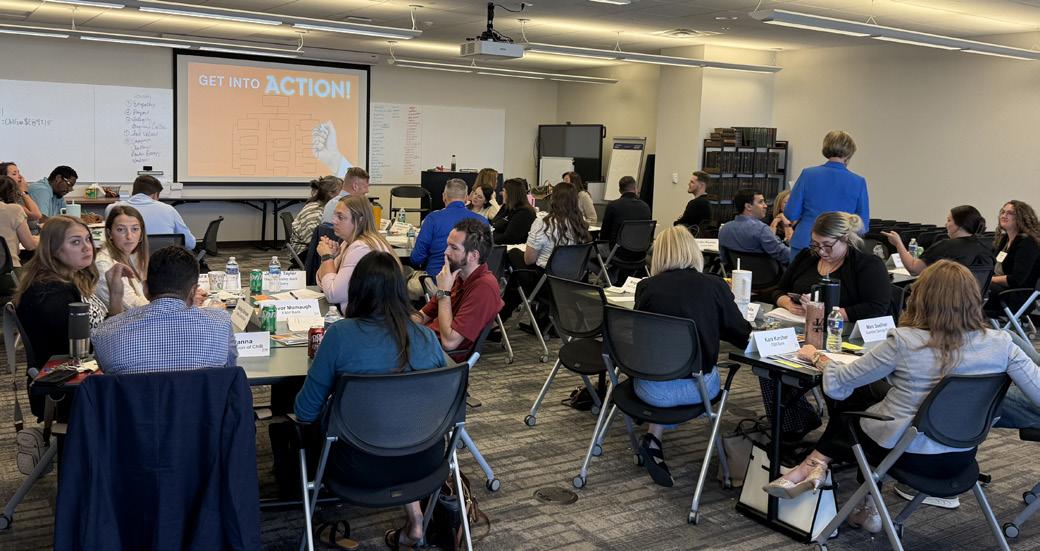
The OBL Bank Management School was designed to close that gap.
This immersive, week-long program gives students an inside look at the many moving parts required to run a successful bank. Participants are placed into teams and tasked with “inheriting” a bank - often one facing significant challenges - and serving as its leadership team.
Bank Leadership Institute
September 17 & 18, 2026
OBL Education Center
Bank Management School
September 20-25, 2026
OBL Education Center
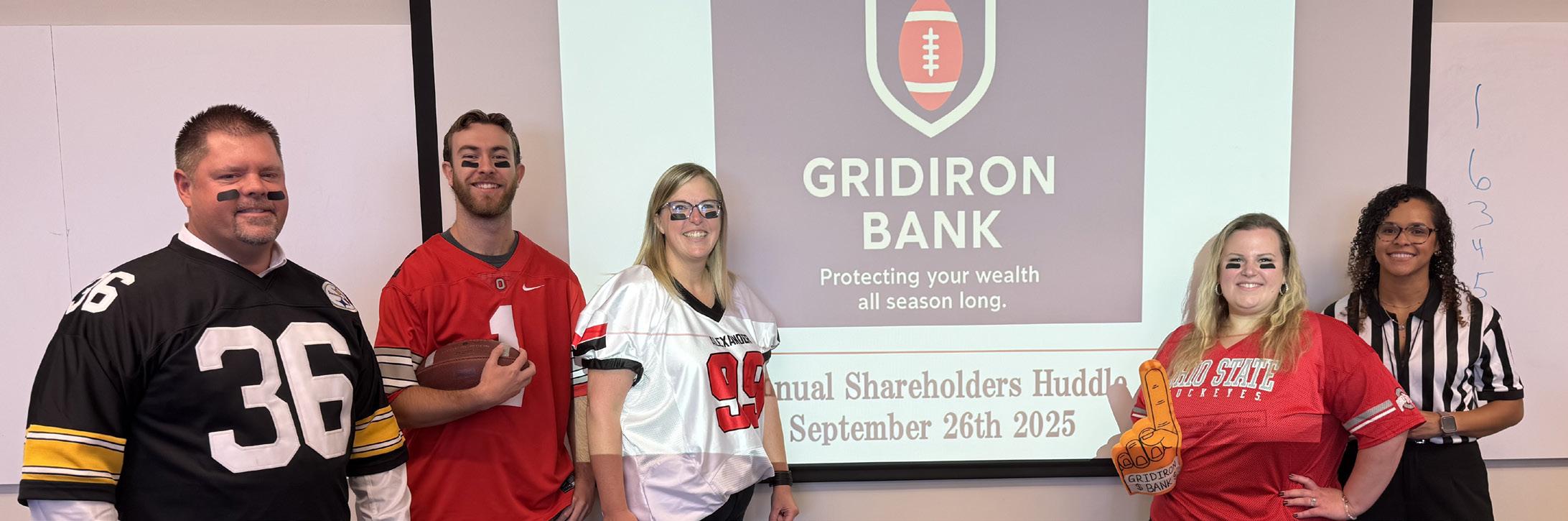
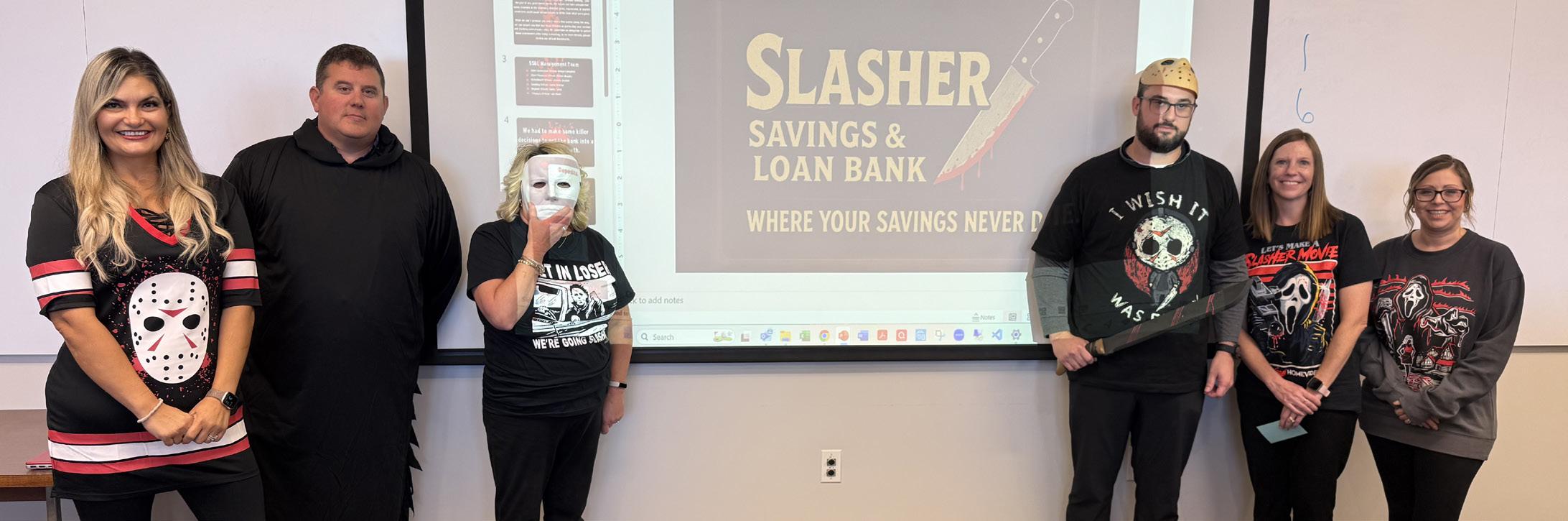
Using the BankSim platform, participants step into executive roles such as CEO, CFO, CLO, and retail leadership, often in areas outside their own professional expertise. Teams are challenged to make strategic decisions based on changing economic conditions, regulatory requirements, and competition, just to name a few.
Rather than learning through theory alone, participants see the real-time impact of their decisions. Are lending standards too conservative? Are deposit rates competitive? Does the institution maintain sufficient liquidity and capital levels? The simulation allows participants to better understand the complexity of balancing competing priorities while leading a financial institution.
By the end of the program, students gain a deeper understanding of how banks operate and a greater appreciation for the interconnectedness of every department and decision.
More importantly, they move from simply doing a job to understanding how their work contributes to the broader success of the institution.
Reinvention in banking is not only about technology or strategy - it is also about preparing the next generation of leaders to guide institutions forward with confidence, perspective, and purpose.

Sarah Husk Education Manager, Ohio Bankers League shusk@ohiobankersleague.com

We all sleep better at night knowing we’re safe. Exclusively providing IT solutions to community banks for 30 years.
provider for all your IT hardware, software, plans, testing, reporting, steering committees, BOD reports, exam preparation, risk assessments, training, help desk … everything Information Security Program related.
Brandon Krietemeyer Client Relation Specialist brandon@cbcohio.com 614-429-8823

If you’re not sure if you should call, just sleep on IT.



The financial institutions winning today are not simply offering services. They are creating experiences people want to return to.
“They will forget what you said, but they won’t forget how you made them feel.” That idea may define the future of the financial branch more than any technology trend.
For years, the industry has asked, “Are branches dying?” But the better question is: What should the branch become?
Financial institutions have consistently competed on rates, product features, convenience, and proximity. Those advantages still matter, but they are no longer enough to sustain meaningful differentiation.
Digital banking has fundamentally leveled the landscape. Most institutions now offer comparable mobile apps, online account opening, payment tools, and self-service capabilities. From a consumer standpoint, the experience
can feel increasingly uniform. Gallup research has noted that a significant portion of financial brands are perceived as “all alike.” The new reality creates both pressure and opportunity.
The contrast is no longer found in what institutions offer, but in how those offerings are experienced.
Customer experience has become the brand.
Despite long-standing predictions about the decline of physical banking, the branch continues to be one of the most visible and costly expressions of a financial institution’s brand.
The modern branch is no longer the primary engine for transactions. Digital channels now handle most routine banking tasks more efficiently. Instead, the branch has evolved into something far more strategic: a physical embodiment of your brand’s commitment to customer service.
Every element of that environment communicates meaning. Hospitality, technology, layout, and aesthetics all shape perception. Together, they create an emotional impression that digital channels cannot replicate. The most effective branch strategies today are not defined by size, but defined by intention.
Kantar has reported that a majority of future growth is driven by what makes a brand feel different.
This shifts how institutions should evaluate performance. Consumers are not forming opinions based solely on messaging, but through interactions and defining moments. For financial institutions, the key question is deeper. It is no longer simply about efficiency.
How does the experience build confidence and connection?
Some of the most influential thinking in branch transformation is emerging from outside financial services.
Retail, hospitality, and lifestyle brands have spent decades refining how physical environments shape behavior and engagement. Brands such as Starbucks, Apple, and Nike have demonstrated that space itself can be a strategic tool for brand loyalty.
For example, Starbucks was never only about coffee. It was about creating a consistent environment of comfort, community, and connection, often described as a third place between home and work. Their approach is simple. The experience is not separate from the product, it is a part of their brand.
That principle translates directly to financial environments.
People may enter a branch for a task, but what shapes their perception is the experience surrounding that task.
The next evolution of branch design is less about traditional banking layouts and more about curated, intentional environments that reflect how people actually live and interact today.
Across the industry, several clear patterns are emerging:
• Smaller neighborhood formats that prioritize accessibility and convenience
• Hybrid hub-and-spoke models that balance expertise and reach
• Enhanced drive-thru experiences that maintain service depth
• Hospitality-inspired interiors that reduce friction and increase comfort
• Technology-enabled self-service zones that support autonomy
• Flexible, micro-branches that enable quick service
Every square foot becomes a deliberate signal of identity, trust, and relevance.
Transformation is difficult when the brand itself is not clearly felt or consistently expressed.
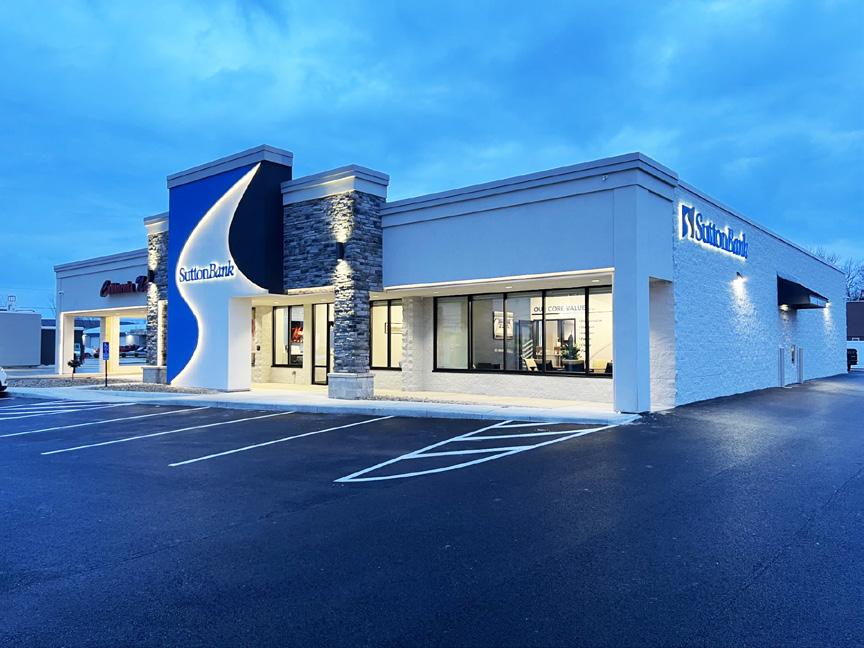
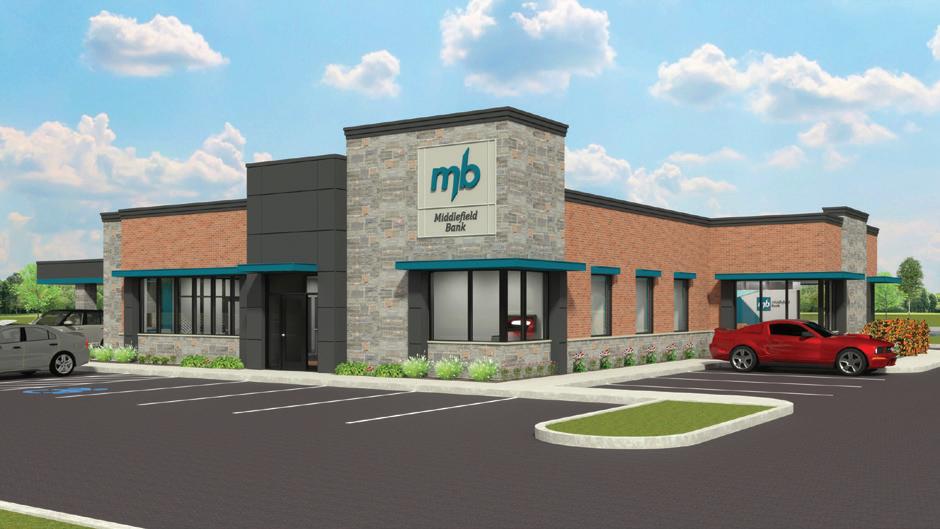
Institutions that treat branches as purely functional infrastructure risk further commonality. Those that reframe the branch as an experiential platform have an opportunity to create something far more enduring.
The future of financial environments is less about the latest innovative technology and more about designing spaces that are intentional and meaningful.
Bigger spaces don’t automatically create better experiences. What matters is how the space is designed to make people feel and what that experience communicates about the brand behind it.

Danielle Calcara SVP Marketing, NewGround
R E A C H F U R T H E R . G R O W S T R O N G E R .
T O G E T H E R .
At COCC, we believe partnership isn't just support, it's shared momentum We work side by side with community banks to provide flexible, forward-thinking core and fintech solutions that reflect your goals, your community, your mission It’s innovation with intention backed by people who know your name and understand your mission




I was born in the mid-1990s, which means many of my core childhood memories happened somewhere between the late ’90s and early 2000s. In that timeframe, I have watched entire industries completely reinvent themselves. I have watched businesses evolve to meet changing expectations, and I have watched others struggle to keep up and slowly fade into obscurity.
Looking back, it is fascinating to realize just how much has changed in what feels like a relatively short period of time.
Food
As a kid, going to McDonald’s felt like an event.
I remember the excitement of walking in and seeing the Ronald McDonald bench, the hamburger barstools, and the colorful McDonaldland character chairs. Of course, the real excitement was getting to play in the PlayPlace. I remember eating my Happy Meal, immediately checking which toy I got, and then racing through tunnels and down slides. I can almost smell the distinct PlayPlace smell just thinking about it.
To my five-year-old self, McDonald’s was the best.


But as I got older, something changed. Slowly, McDonald’s started phasing out many of the things I remembered. The bright colors became neutrals, the playful interiors turned sleek and modern, and many PlayPlaces disappeared altogether.
Today, if I stumbled upon a perfectly preserved 1990s McDonald’s, I would absolutely stop for the nostalgia. But the funny thing is, had McDonald’s refused to evolve in the 2010s, I probably would have said they needed to “get with the times.” At the time, I loved the redesign. It felt modern, sleek, and exciting. Maybe I was just growing up, or maybe I was excited by the idea of what the future could look like - even for McDonald’s.
Whether we realized it or not, McDonald’s was reinventing itself to meet changing tastes and expectations.
Technology
Technology may be one of the most obvious examples of reinvention.
As I type this article from the comfort of my couch on a laptop with my smartphone beside me and a streaming service playing on a TV I can control from my phone, I cannot help but think about what technology looked like when I was young.


I remember going into our “computer room” to work on school projects and waiting for the giant desktop computer to slowly turn on. I also remember the universal household struggle of not being able to talk on the phone and use the internet at the same time. If you know, you know.
When I finished a project, I would save it to a floppy disk so I could bring it to school the next day. A few years later, flash drives felt revolutionary.
Phones changed just as dramatically.
My mom still has her old cell phone from the 1990s, and I loved playing with it as a kid because it felt like it was from prehistoric times. Growing up, we always had a landline, and I remember how exciting it was when my parents finally put phones in my sister’s room and mine.
Eventually, my sister and I got our first cell phones - flip phones, of course. For a while, all we could really do was call people because texting cost extra and my parents did not think we needed it. Long conversations had to wait until after 9 p.m. when calls outside of Verizon were free.
And then came texting.
33-99-222-444-8-444-66-4.
If you know what that means, congratulations - you probably also remember how long it took to type a basic text.
When my dad got a RAZR for work, my friends and I thought it was the coolest thing we had ever seen. Of course, the RAZR did not stay at the top for long. Soon phones had full keyboards, touch screens, cameras, and even internet access - although many of us were terrified to accidentally click the internet button and somehow bankrupt our families with data charges. I distinctly remember smashing the “end” button repeatedly just to be safe.
Now, we carry tiny computers in our pockets. Directions replaced printed MapQuest pages. Music replaced CD binders and iPods. Phones became cameras, wallets, calendars, televisions, and practically extensions of ourselves.
Funnily enough, the RAZR is making a comebackreinvented, of course.
As someone who loves fashion and got a degree in it, I could spend days discussing the evolution of retail - but I will spare you.
Christmas was always one of my favorite times of year growing up. My mom would hand my sister and me the JCPenney catalog and tell us to circle or earmark the things we wanted for Christmas.
Of course, JCPenney did not invent catalogs, and frankly, neither did Sears - but Sears perfected them. For years, you could buy just about anything from a Sears catalog, including an entire house.
Department stores and malls once defined shopping culture. For decades, they dominated retail.
Then consumer behavior changed.
Retailers like Zara reshaped expectations with faster production cycles and rapidly changing inventory. Suddenly, fashion moved at a completely different speed. Trends that once took months to appear could be in stores within weeks.
At the same time, online shopping transformed convenience. Black Friday, once famous for overnight lines, 4 a.m. openings, and chaotic crowds, slowly began shifting online.
For years, waking up before sunrise - or staying up all night - was part of the tradition. But shopping habits changed, malls lost foot traffic, and many retail spaces that once felt packed now sit partially empty.
Retail had to reinvent itself because consumer expectations reinvented themselves.
By now, you may be wondering why a banking magazine just took a detour through fast food, technology, and retail.
Because reinvention is not unique to banking - it is universal.
Like every other industry, banking has had to evolve alongside the people it serves.
There was a time when banking centered almost entirely around the branch. Deposits, transfers, loan applications, balance inquiries, and everyday transactions required an in-person visit. Paper checks were the norm. Banking hours mattered because access was limited to when the doors were open.
Today, banking often happens in moments rather than places.
Customers move money from their phones, deposit checks remotely, open accounts online, and send payments in seconds through digital platforms. Many younger consumers have limited interaction with a physical branch at all.
For generations like Gen Z and Gen Alpha, convenience is not considered an innovation, it is an expectation.
At the same time, change continues to accelerate. Artificial intelligence is rapidly reshaping industries, digital fraud prevention is evolving, cryptocurrencies continue to generate conversation, and customer expectations are shifting almost constantly.
The question is no longer whether banking will reinvent itself. It already has.
The real question is: what comes next?
For community banks, reinvention presents a unique challenge. Banks must adapt to changing technologies and customer expectations while preserving the trust, relationships, and community impact that have long defined them.
Community banks are not simply financial institutions - they are often the backbone of the communities they serve.
That is why continued learning, collaboration, and strong partnerships matter.
The Ohio Bankers League works to help Ohio bankers stay informed, connected, and prepared for what comes next. Events like the OBL Main Event provide opportunities to explore emerging trends, strengthen operations, and learn from industry experts and peers. Through education, networking, and connections with trusted business partners, bankers gain tools to navigate change with confidence.
Reinvention does not mean abandoning what made community banking strong in the first place. If anything, it means preserving those values while adapting how they are delivered.
After all, industries change. Technology changes. Expectations change.
The banks that thrive will be the ones willing to evolve without losing sight of who they are.
Sarah Husk Education Manager, Ohio Bankers League shusk@ohiobankersleague.com



For banks rooted in their local communities, mortgage has always been about more than just transactions. It is often one of the deepest customer connections an institution has. It helps banks grow households, support communities, generate non-interest income, and remain relevant in the markets they serve. The role mortgage plays in helping institutions serve customers and communities remains just as important today as it ever has. What has changed is the operating environment around it.
Over the past several years, the cost and complexity associated with residential mortgage origination have increased dramatically. Technology expectations continue to rise. Compliance requirements remain substantial. Specialized staffing has become harder to find and retain, and unlike some areas of banking, mortgage volume still moves in cycles that can change quickly with the market.
Taken together, those pressures are creating a real challenge for many institutions. Mortgage still matters strategically, but the traditional infrastructure required to support it has become increasingly difficult to sustain consistently through changing market cycles. As a result, many banks are beginning to reconsider how mortgage can remain part of their long-term strategy while delivering it in a way that is more efficient, scalable, and sustainable, all without losing the trust, local knowledge, and customer connection that have always defined community banking.
Customers still want local lenders who understand their communities and can guide them through important financial decisions. Community banks continue to excel in that role. At the same time, the operational demands behind the scenes have become increasingly specialized and expensive to maintain independently,
particularly when production volume slows and fixed infrastructure remains.
For years, many institutions believed they needed to own and manage the entire mortgage infrastructure internally in order to maintain control of the customer experience. Today, more banks are reevaluating that assumption. They are reconsidering which parts of the mortgage process truly need to remain local and customer-facing, and where shared infrastructure or centralized operational support may create greater efficiency and scalability.
A shared services model is not about walking away from the local borrower experience. In many ways, it is about protecting it, while simultaneously creating a more sustainable way for institutions to deliver mortgage capabilities over the long term. I believe that growing willingness to rethink how those capabilities are structured and delivered is becoming one of the more significant shifts taking place in banking today.
At M2, we have approached these challenges through a shared services model that allows banks to maintain local ownership of the customer experience while leveraging centralized mortgage fulfillment infrastructure and operational scale. The goal is not to replace the bank’s customer-facing role. It is to help institutions operate more flexibly and efficiently in an environment that continues to evolve.
What has been encouraging to me is seeing how community banks respond once they realize they do not necessarily have to choose between maintaining a mortgage presence and carrying the full operational burden internally. In some cases, banks have been able to increase mortgage production without significantly increasing operational overhead. Others have improved customer experience through more modern digital capabilities and faster processing. We have even seen institutions enter the secondary market for the first time while still maintaining local ownership of the borrower experience.
To me, that is where this discussion becomes bigger than mortgage itself. Banks across the country are trying to find ways to achieve scale, remain competitive, and continue modernizing without losing their identity or independence in the process. I believe shared operational models and collaborative infrastructure will become an increasingly important part of that discussion moving forward.
Community banks should not have to choose between scale and identity. In many ways, the future of community banking may depend on finding thoughtful ways to preserve both. The institutions that navigate this evolution
successfully will likely be the ones that stay focused on what differentiates them most: trust, local market knowledge, and the ability to serve customers in a more personal way, while also remaining open to operational models that create greater efficiency and long-term sustainability.
Mortgage banking is evolving, and I believe community banks are well positioned to evolve with it. The institutions that continue to adapt thoughtfully while staying grounded in the values that built their customer trust in the first place will be the ones best positioned for the future. In many ways, that is what community banking has always done well: evolve with the needs of the people and communities it serves.
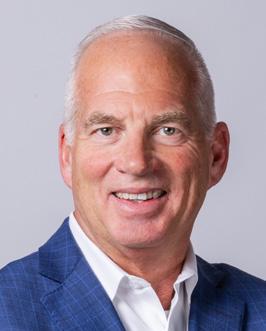
Paul M. Thompson President & CEO, M2

For decades, banks have invested heavily in understanding customer behavior. They know demographics, transaction histories, credit scores, product usage, balances, digital engagement patterns, and countless other data points. Yet despite unprecedented access to customer data, many banks still struggle with low marketing engagement, declining loyalty, weak differentiation, and increasingly fragmented customer relationships.
Why?
Because knowing who customers are and what customers do is no longer enough. The next evolution in banking is understanding why they do it.
As the industry reinvents itself digitally, strategically, and culturally, many financial institutions are discovering a critical gap in traditional banking intelligence: most data explains actions, but very little explains motivations. Transactional and demographic data can reveal that two customers have similar balances, similar incomes, and similar product holdings. But it cannot explain why one customer values financial security above all else, while another prioritizes status, independence, simplicity, or control—these are Mindsets. In this example, both mindsets dramatically alter what a customer decides to do and their level of engagement with you.
Those differences matter more than many banks realize.
The financial industry has historically relied on demographics and product behavior as the foundation for segmentation and personalization. But modern consumers no longer fit neatly into traditional categories. Two customers of the same age, income, and geography may respond entirely differently to the same marketing message, digital experience, or financial recommendation.
That is because financial behavior is deeply psychological.
A growing number of institutions are beginning to recognize that psychographics — the study of motivations, attitudes, decision-making styles, and behavioral tendencies — may become one of the most important strategic layers in modern banking. In many ways, psychographics represents the next stage of personalization.
This shift is arriving at exactly the right time. Banks are navigating generational wealth transfer, accelerating digital adoption, increasing fintech competition, the need for marketing efficiency, and rapidly changing customer expectations. At the same time, artificial intelligence is enabling institutions to analyze and operationalize behavioral patterns at a scale that was previously impossible.
The opportunity is not simply to automate banking. It is to humanize it.
Much of the conversation around AI in financial services has focused on efficiency: automation, fraud detection, operational optimization, and cost reduction. Those are important advances. But the institutions that truly reinvent customer engagement may be the ones that use AI to better understand human behavior — not just transactions. But AI is only as good as the information upon which it is trained; if it lacks human insight, it will produce impersonal content that doesn't resonate.
This has implications across the entire banking experience.
A customer who is motivated by certainty and stability may respond better to guidance emphasizing protection and long-term security. Another customer may engage more deeply with messaging centered around opportunity, achievement, and financial independence. Some customers want detailed explanations and reassurance before making decisions. Others value speed, simplicity, and autonomy.
Traditional segmentation often misses these distinctions entirely.
The result is that many bank experiences still feel generic, even when they are digitally sophisticated. Customers increasingly expect personalization that feels relevant, intuitive, and emotionally intelligent — not merely automated.
This is especially important as banks compete not only with other banks, but with fintechs and digital platforms designed around user behavior and engagement psychology. Reinvention is no longer just about modernizing technology stacks or launching better apps. It is about understanding people more deeply than competitors do.
Importantly, this evolution does not replace relationship banking. It strengthens it.
Community and regional banks, in particular, have long differentiated themselves through personal relationships and customer understanding. Psychographic intelligence offers a way to scale that understanding across digital channels while preserving the human element that customers still value deeply.
In the coming years, the banks that lead the industry may not simply be the ones with the most data. They may be the ones that best interpret human behavior, motivations, and trust.
Because the future of banking will not belong solely to institutions that know their customers’ financial transactions.
It will belong to institutions that understand their customers as people. If you know what “makes them tick,” you can get them to “click.”


Economically, these are identical communications of offers.
Psychologically, they are dramatically different in appealing to motivation
Mindsets.
Bruce Clapp President, MarketMatch
Brent Walker Co-Founder, Psympl

Countless essential insights integrated on one powerful platform.
Bankers need answers fast. Capital IQ Pro delivers— with tools you need integrated on one powerful platform.
News & Research
Real-time alerts and expert industry analysis
Credit Analysis
Risk intelligence across credit, market, and operational factors
Market Intelligence
Depository rates, economic data, and competitive insights
Company Data
Deep financials on public and private companies
Valuation and M&A
Models, comparables, and deal tracking
Peer Benchmarking
See how your performance stacks up against peers and industry aggregates

Interest Rate Datasets
Comprehensive pricing intelligence
CRA & Market Analysis
Invest in your communities
Models & Templates
Pre-built tools that save hours
Data Visualization
Turn numbers into insights instantly
Board Reporting
Professional, export-ready presentations
Regulatory Compliance
Stay ahead of requirements

Community banks have more innovation paths available to them than ever before. The challenge isn't just finding options—it's making strategic choices that actually serve their markets.
There's no one-size-fits-all innovation strategy for community banks, yet too often the industry conversation pushes toward universal ideologies: Build everything in-house, overhaul entire foundational systems or outsource innovation entirely. But the banks that are truly succeeding follow a different playbook entirely. They're not following someone else's model; they're making strategic decisions tailored to their specific market, talent, timing, urgency of problems, risk tolerance and budget.
The difference comes down to strategic alignment, partner readiness and the clarity to know when each approach makes sense. They need to be surrounded by options that underscore, support and encourage the beauty of "choice," both from a technology and a business perspective.
The banks that are truly innovating follow a different playbook—their own. They build where it serves their core strategies, investing in custom development when a capability truly differentiates them or when their local knowledge demands solutions that don't exist off the shelf. But they're equally comfortable partnering for specialized functions like fraud prevention or niche vertical solutions, understanding that a focused fintech will likely deliver better results faster than an in-house team starting from scratch with limited development resources.
Most importantly, these institutions preserve flexibility. They understand that today's third-party solution might become tomorrow's in-house capability—or vice versa.
This approach requires genuine partnerships, not just vendor relationships. Too many partnerships prioritize
deal-making over infrastructure scaling and compliance, leaving banks isolated and susceptible to regulatory risk. The stakes of this distinction have never been higher. Federal enforcement actions—which affected 13.5% of BaaS banks in 2023, according to S&P Global— demonstrate the cost of choosing deal-ready vendors over partner-ready ones.
But this applies to any fintech integration, whether it's a customer-facing digital lending platform, enhanced fraud detection or a simple API integration delivering automation and efficiency. Banks and fintechs that prioritized rapid deal-making over genuine partnership readiness faced regulatory scrutiny, while institutions investing in thoughtful vendor selection, upfront clarity of ownership and ongoing oversight thrived.
A new wave of bank-driven innovation is demonstrating this principle through cohort-based models that allow community banks to strategically invest in technologies that meet specific use cases. JAM FINTOP, for instance, unites more than 90 community banks representing over $1.3 trillion in assets—creating collective buying power equivalent to the nation's fifth-largest bank. Its recent investments like Cerebro Capital's AI-powered commercial lending platform, which recently reached $1 billion in cumulative loan closings, and Lumio (formerly SRA Watchtower) risk and business intelligence solutions demonstrate how shared investment accelerates fintech development while reducing individual bank risk.
These aren't traditional outsourcing relationships— they're strategic partnerships where community banks shape solutions that actually meet their needs and solve their most critical problems. Other innovative models demonstrate this shift in different ways. The ICBA ThinkTECH Accelerator hosts "Regulator Days" where banks and fintechs engage directly with FDIC, Federal
Reserve and OCC officials, ensuring solutions meet compliance standards.
Alloy Labs is another example of how community banks are embracing strategic flexibility, bringing innovationdriven community and mid-sized banks together to partner with startups, co-create differentiated solutions and achieve exponential growth. Operating an Alchemist Fund, the consortium allows member banks to make strategic investments in early-stage fintech companies. Their Alchemist Fund's slogan speaks for itself: "We are looking for partners to help us reinvent banking, not just replumb it."
The ability to change course as priorities shift is itself a competitive advantage. A bank that can seamlessly move from a third-party lending platform to an in-house solution when its volume justifies the investment has more strategic options than a bank locked into either approach.
This flexibility is especially critical as community banks face increasing pressure to differentiate themselves in crowded markets. Banks serving agricultural communities need different capabilities than those focused on




urban commercial lending. Banks with $100 million in assets operate under different constraints than those approaching $1 billion. One-size-fits-all innovation strategies ignore these fundamental realities.
The innovation debate has become too focused on ideology and not focused enough on the results and the impact of the problems banks are solving. Community banks don't need to choose between thinking like fintechs or thinking like traditional banks. They need to think like community banks—institutions that deeply understand their markets, operate under specific regulatory and resource constraints and serve customers who value relationship banking alongside modern convenience.
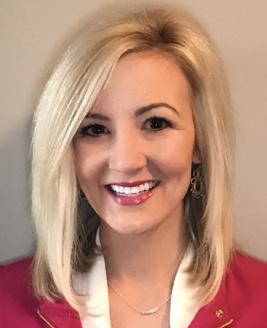
Tara Schultz Senior Vice President of Strategic Insights and Industry Relations, CSI








“My ALCO meeting is broken.”
It’s what we hear quite frequently from bankers.
Not, “My ALCO report.” Not, “My standing with regulators.” In fact, it’s quite easy to find a low-cost ALCO process that can check-the-box these days.
It’s the ALCO meeting that’s broken. The statement is generally followed up with comments such as, “stale”, “backward looking”, “check-the-box” or “a meeting that people don’t really look forward to.”
How can this be? ALCO meetings were created to attack the most pressing issues we face in our business. Think about a few today…
• The most competitive deposit environment in modern banking history.
• A yield curve that hasn’t seen 100 bps of positive spread in four years.
• A liquidity environment turned upside down by Fintechs, BaaS, Stablecoins, and an impending massive wealth transfer.
Does that sound stale to you?
Checking-the-box may work for a while. Margins are drifting higher as low-coupon loans cycle through, and loan yields rise. But a broken ALCO will not cut it in the long run. Particularly for community banks and credit unions where margin means so much when competing with larger institutions.
It’s understood that this was not by design. Nobody wants to have an unproductive meeting with valuable talent in attendance. So how did it break? We need to get to the core of the issue:
• Too much information
• Too many scenarios
• Scattered data with no storyline
• Too many pages in tiny font
So, what can an ALCO do? The next big balance sheet surprise may be right around the corner. How can we rebuild an ALCO meeting to be forward thinking and strategic?
Here are four steps to get started.
1. Start with the story.
As a sports columnist for my college newspaper, the editor-in-chief would always tell our staff “don’t bury the lead”. Then why do so many ALCO meetings begin with dense economic updates that were already read by attendees earlier in the morning? Open with the banking issues that are emerging, and how our ALCO is going to compete.
For example, one key issue today that will drive our clients’ ALCO storyline is the spread on growth. Liquidity premium is at a high and loan spreads are tightening. This story will cover the institution’s liquidity philosophy, wholesale funding comfort, take a deep dive on deposit product positioning, and ultimately engage the lending team on why it’s critical to maintain discipline on loan pricing. As George Darling would ask us, “What are the three key issues we need to tackle at this ALCO meeting?”. The meeting should be a storyboard that covers those issues.
2. Transform the data.
Go to a banking conference today and you’ll run into 50 vendors looking to help with ‘data analytics’. Often, it’s simply a repackaging of existing data. But the analytics should be transformed to drive decision making.
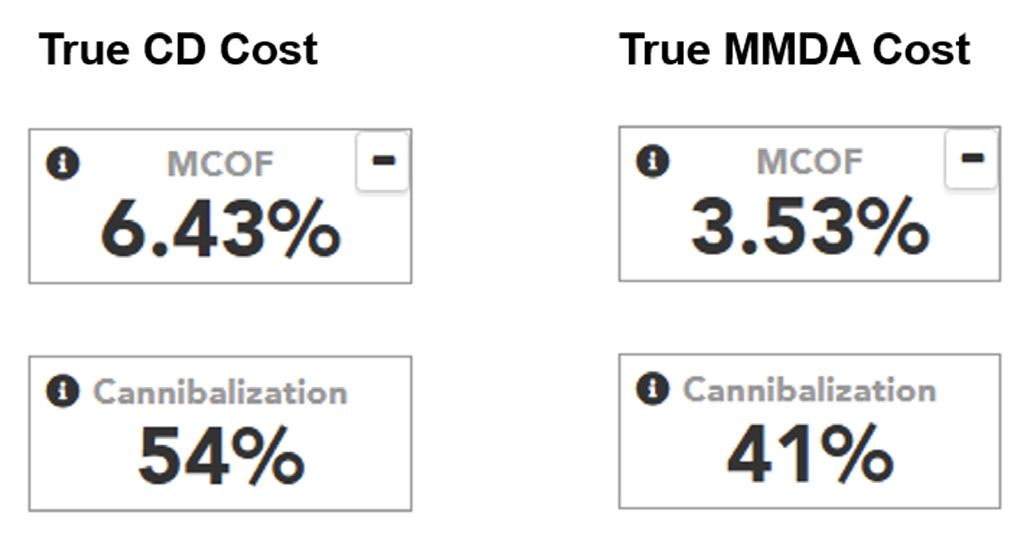
For example, interest expense is the biggest expense on the income statement. Every basis point counts, and bankers need to understand the true cost of growing deposits. The analysis below was presented at a recent ALCO meeting. DCG’s Deposits360°® solution helped capture the cannibalization trends and quantify the
marginal cost of funds of a premium MMDA product vs CDs, showing a huge cost advantage on the MMDA side. The result? The ability to let data tell the story and help fine tune the deposit strategy to focus on the most costeffective growth avenue. Basis points saved.
3. Simplify the deck.
This is an art form. DCG’s consultant team’s goal is to make the complex simple when we meet with our 375 ALCO clients on a quarterly basis. But it’s not easy. Start here…of the 25+ interest rate risk scenarios you run, what are the three or four scenarios you should focus on for your conversation? Then ditch the 100+ page ALCO report and target a strategy deck inside of 40 slides.
4. Engage.
It’s the goal for any meeting. How productive can an ALCO meeting be if the front lines aren’t engaged in conversation? Having discipline on loan credit spreads will mean so much more when the lending team can see the true cost of raising liquidity today and understand the growth impact to liquidity and margin risk. Hint: A strong ALCO education foundation is critical for market leaders to understand their business impact to the risk profile.
It’s quite easy and cheap to check-the-box on ALCO these days. But are you leaving basis points on the table by doing so? The industry is changing fast. Opportunities can appear and disappear quickly. Transforming from a stale ALCO meeting into a Profit Center will be a critical competitive advantage.
What’s it worth for you to fix a broken ALCO?

Joe Kennerson Managing Director, Darling Consulting Group





operations, fraud, BSA/AML, IT, compliance, marketing, and even lending strategy. A bank’s payment strategy now directly influences commercial deposit growth, customer retention, and long-term competitiveness.
At the same time, modernization cannot happen without proper risk management. Faster and more digital payments create new fraud and operational risks that institutions must be prepared to manage. We are seeing increasing expectations from regulators and industry rules around payment monitoring, third-party oversight, fraud detection, and governance. Reinvention without risk management is simply reckless innovation.
That is why banks need to stop viewing payments as either “operations” or “technology.” Payments are strategic. They require executive involvement, board awareness, cross-department collaboration, and ongoing education throughout the institution.
The banks that will succeed are not necessarily the ones with the flashiest fintech partnerships or the newest payment rails. The institutions that will stand out are the ones that understand how to strategically align payment capabilities with customer needs, operational readiness, fraud mitigation, and revenue opportunities.
Sometimes the biggest competitive advantage is not launching something brand new. Sometimes it is simply doing the fundamentals significantly better than everyone else.
The reality is that customers already expect seamless payments. Businesses expect faster movement of funds, easier treasury solutions, and modern digital experiences. If banks are not prepared to evolve, someone else will step in to provide those services instead.
Reinventing payments is not about abandoning traditional banking. It is about ensuring banks remain relevant in the future of financial services.

Caitlyn Mullins-Smith , AAP APRP, NCP Vice President & Director, NEACH Payments Group

August 14 | Virtual
The annual Regulator Roundtable returns in 2026, bringing together regulators from the OCC, the Federal Reserve Bank of Cleveland, and the FDIC for a timely and insightful discussion. Moderated by Scott Daugherty with Bankers Alliance, this three-hour webinar may be short in length, but it delivers valuable, practical insights.
As the regulatory landscape continues to evolve, staying informed is more important than ever. This program offers attendees a unique opportunity to hear directly from the regulators who examine banks and gain insight into what is top of mind, what to expect during examinations, and best practices for preparation.
Participants will also hear about emerging trends and common issues regulators are seeing across institutions, helping banks better prepare for exam season. While virtual, the session is designed to be interactive, with time dedicated to participant questions during a live Q&A.
When it comes to exam readiness, this is an opportunity you will not want to miss.

August 18 – 20 | Lexington, KY Virtual & In-Person Attendance Available
Fraud is no longer an occasional challenge - it is a constant threat.
From phishing emails and spoofed phone calls to fraudulent checks, cybercrime, elder fraud, wire scams, and business email compromise, financial institutions face an increasingly complex and ever-changing fraud landscape. Staying informed and ahead of emerging threats is essential to protecting institutions, employees, and customers.
The KBA Fraud Academy equips participants with the tools, strategies, and mindset needed to better identify, prevent, and respond to fraud. This immersive three-day program features experts from the DEA, FBI, Secret Service, law enforcement, and the financial industry, offering firsthand insights into today’s most pressing threats.
Participants will explore more than eighteen types of fraud, including check fraud, elder fraud, and cybercrime, while gaining practical prevention strategies and tools designed to minimize losses and strengthen institutional defenses.
Attend virtually or join us in person at the Hyatt Regency Lexington in Lexington, Kentucky.

October 1
A promotion into leadership is exciting - but it also comes with new challenges.
Stepping Up to Supervisor is a one-day seminar designed to help new and emerging leaders successfully transition into supervisory roles with confidence.
Excelling as an individual contributor does not automatically prepare someone to lead a team. Moving from peer to supervisor can be one of the most challenging transitions in a career, requiring new skills in communication, accountability, motivation, and team management.
Many supervisors find themselves asking: What makes a great leader? How do I motivate employees? How do I navigate difficult conversations or manage different personalities?
This program provides practical tools, realistic expectations, and leadership strategies to help supervisors build confidence, avoid common pitfalls, and lead more effectively from day one.
November 5
Join us for the 2026 FDIC Directors College - an opportunity offered only every other year and not available again until 2028.
A strong board is essential to a strong bank, yet many directors come from outside industries and may not have a deep understanding of the regulatory, operational, and strategic complexities of banking.
FDIC Directors College provides board members with valuable insights into the issues affecting banks today, including regulatory expectations, current challenges, and emerging trends shaping the industry. Participants hear directly from regulators and gain a broader understanding of the many considerations involved in effective bank oversight and decision-making.
Whether your board members are seasoned directors or newly appointed, this program offers valuable education tailored specifically to their responsibilities.
Join us in person at the Quest Conference Center for this important learning opportunity.

F&M Bank is proud to announce the appointment of Shalini Singhal as Chief Information and Technology Officer (CITO). “Shalini’s appointment reflects her strong leadership and the critical role technology plays in F&M’s long-term strategy,” said Lars Eller, President and CEO.
LCNB National Bank has announced that Jason Jamison joined the bank as vice president and commercial relationship manager, serving businesses across Greater Cincinnati, Northern Kentucky, Dayton, and Southeast Indiana.
Zanesville – The Community Bank is pleased to announce that Jessica Bowers has been promoted to Senior Vice President and Chief Marketing Officer. “Jessica has been an integral part of The Community Bank for over 15 years, consistently demonstrating exceptional leadership, innovation, and a profound understanding of the needs of our community. Her strategic vision has been key in shaping our brand, expanding our digital presence, and enhancing our community outreach efforts. Jessica’s dedication and contributions have been instrumental in driving the bank’s growth and reinforcing TCB’s reputation as a trusted partner in their customers’ financial success. I am confident that she will carry forward her inspiring leadership into this new chapter. Her dedication and vision will undoubtedly propel our institution to new heights, enabling us to serve our communities with even greater impact in the years to come,” said Eric S. Holsky, President and CEO.


Farmers Bank and Savings Company announces the promotion of Dru Reed to Assistant Vice President, Marketing.
With nearly 15 cumulative years of service to the Bank, Dru’s journey has come full circle—beginning as an intern and growing through roles as Finance Assistant, PR Manager, and Marketing Manager. Dru is known for being hardworking, innovative, and passionate about the work he does for both the Bank and the communities they serve.
William Vance Jr. has joined Northwest Bank, a full service financial institution offering comprehensive business and personal banking solutions, as a Small Business Banker. In this role, he supports Northwest’s continued growth in Central Ohio by helping small businesses succeed through the speed, flexibility and personal service.