







































The Ohio Pork Council would like to thank the following sponsors for their support of 2026 programming and events.




Ohio Pork Council
9798 Karmar Ct. Suite A
New Albany, OH 43054
P: 614-882-5887 www.OhioPork.org pork@ohiopork.org
STAFF
Executive Vice President
Cheryl Day cday@ohiopork.org
Senior Director of Communications and Public Relations
Mike King mking@ohiopork.org
Director of Show Pig Program
Kelly Morgan kmorgan@ohiopork.org
Advertising
Send inquiries to: Mike King P:317-432-1491 mking@ohiopork.org
Printing Post Printing Company Minster, OH 45865
Lucy Homan P:937-286-3349 lucy.homan@postprinting.com
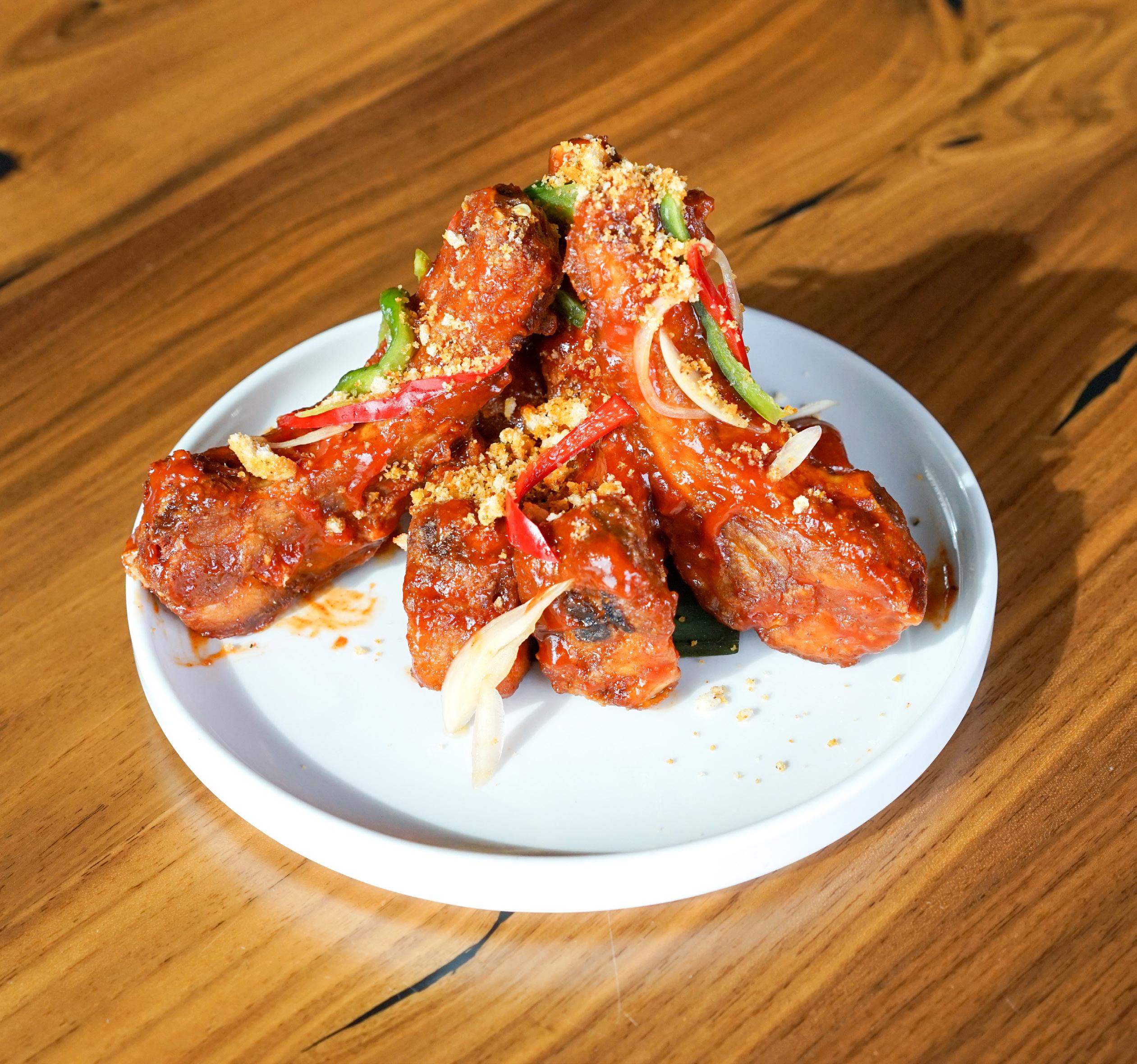
Cover photo: Smoked crispy ribs were a big winner on Columbus-based Astra’s menu in the first quarter of 2026 as it was one of 12 restaurants that participated in Ohio Pork’s phase one of a yearlong promotion to get more consumers to experience pork’s
Let’s stop pretending this industry runs on autopilot. It doesn’t.
Right now, decisions are being made about how we raise pigs, how we market pork, and whether we even get to operate the way we do today. And most of those decisions are being shaped by people who have never set foot in a barn.
That’s the reality. And if we’re not engaged — at every level of this industry — we don’t just lose influence. We lose ground.
This isn’t about size of operation. It’s not about whether you run 10,000 sows, direct-market pork, or spend your weekends in the show ring. If you raise pigs in Ohio, you have skin in the game.
Here’s something we need to understand — and own.
You don’t have to be the biggest pig farmer in Ohio to lead. You don’t have to be the largest pork-producing state in the country to set direction.
Leadership in this industry doesn’t come from size. It comes from discipline. From consistency. From doing the right things — over and over again — whether anyone is watching or not.
That’s exactly where Ohio sits.
We are not the biggest, but we are often the ones willing to step forward, stay engaged, and do the work that moves the entire U.S. pork industry forward. The momentum we’re experiencing right now didn’t come from trying to be the biggest or the loudest.
It came from leaders — producers like you — who set aside ego, focused on what matters, and made decisions that strengthen the entire industry, not just their own operation. That’s what it means to lead from the middle.
And right now, that kind of leadership matters more than ever
Over the last year, your Board made a deliberate decision to simplify and sharpen our direction not because the work got easier but because the because the stakes got higher.
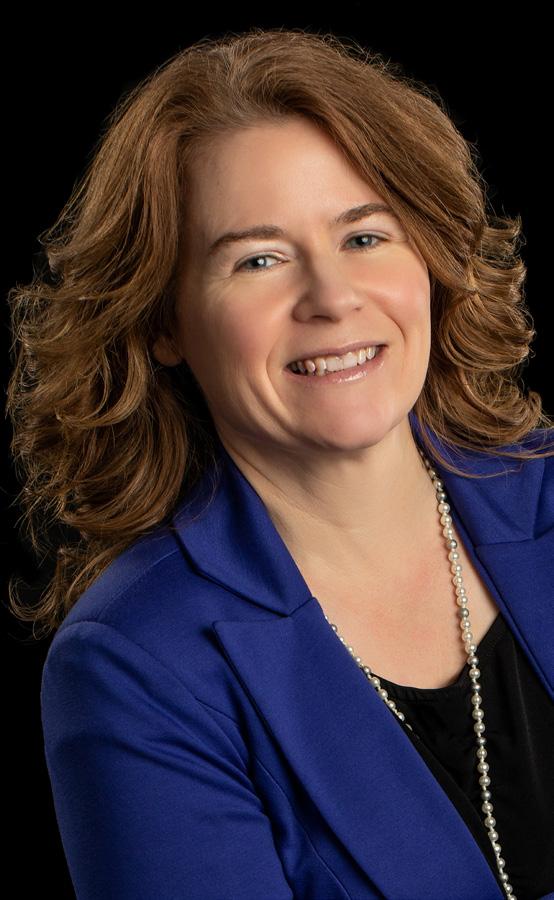
Cheryl Day Executive Vice President
Decisions about Ohio pig farms are being made every day by people who have never set foot in a barn.
You don’t have to be the biggest to lead. You have to be willing to show up and do the work that moves the industry forward together.
Everything we do now comes back to four priorities:
• Protect your freedom to operate
• Build trust, demand, and public confidence
• Safeguard animal health and emergency preparedness
• Invest in people and the future of this industry
These aren’t talking points. They’re the line.
If something doesn’t move one of these priorities forward, it doesn’t belong in the work and it doesn’t deserve your investment. That’s the level of discipline this moment requires.
Let’s be direct about what’s in front of us.
Demand is not guaranteed: Consumer preference is shifting and pork is not winning that competition today. Beef and chicken are capturing market share, and we have to be honest about why. If we are not visible, relevant, and credible — we lose space. Not because pork isn’t good, but because we haven’t stayed top-of-mind.
Political pressure is constant — and it’s increasing: If we’re not engaged, decisions get made without us. And they don’t come back in our favor.
Animal health is a business risk — not a talking point: One event can change everything. Preparedness isn’t optional — it’s survival.
And the future depends on people: If we don’t invest in them, develop them, and bring them into leadership — momentum stops.
Ohio’s pork industry cannot afford to operate in segments any longer. While operations may differ — from large commercial farms to independent producers, niche marketers, and show pig families — the challenges facing the industry do not recognize those distinctions.
From the outside looking in, there is no separation. To consumers, policymakers, and critics alike, pork production
is viewed as one unified industry. And when pressure comes — whether through regulation, public perception, or market shifts — it impacts all of us.
Freedom to operate for one segment depends on the credibility of the entire industry. Likewise, demand built in one space strengthens value across the system. Success is not isolated — it is shared.
At the same time, the next generation is paying attention. Young producers, employees, and future leaders are watching how this industry shows up, collaborates, and responds. Their decision to engage — and ultimately lead — will depend on whether they see an industry worth investing in.
Leading from the middle means recognizing that responsibility doesn’t sit with someone else. It belongs to all of us. And moving forward requires a collective commitment to act, engage, and take ownership of where this industry goes next.
Ohio pork producers are all in when it comes to investing in the future of this industry and that commitment matters.
Through the Pork Checkoff, producers contribute to building demand, strengthening consumer trust, and supporting research that benefits pork nationwide. Here in Ohio, many producers also choose to go a step further investing through the Strategic Investment Program (SIP) to support policy, advocacy, and efforts that protect the freedom to operate at the state level.
Together, those investments are what allow this industry to stay competitive, credible, and positioned for the future. But in today’s environment, maintaining programs is not enough. Every dollar invested whether through Checkoff or SIP needs to work harder. It needs to deliver real impact and move the industry forward in measurable ways.
That means building demand where today’s consumers are actually making decisions. It means defending the ability to operate with facts, science, and a consistent presence in policy conversations. It means investing in herd health and preparedness before challenges escalate. And it means developing people, ensuring there are leaders ready to step in and carry this industry forward.
This is not about activity. It’s about outcomes.
And the expectation is clear: those investments should deliver results that strengthen the entire Ohio pork industry — today and for the long term.
The pork industry is operating in a moment of rapid change. Conversations around food, health, and how it is produced are evolving quickly, and public perception is shifting alongside them.
There are signs of alignment around a message that resonates — real farmers and real food. That matters. It reinforces what producers have known and lived every day. But alignment alone will not move this industry forward.
Progress depends on leadership. Not occasional leadership, but consistent, disciplined leadership especially when it is uncomfortable. The kind of leadership that does not wait to be the biggest voice in the room, but instead steps forward to move the conversation, shape understanding, and represent the industry with credibility.
Momentum in the pork industry does not happen by chance. It is built intentionally and over time by people willing to engage, make decisions, and lead regardless of the size of their operation or where they sit in the industry.
That kind of leadership requires discipline. It requires staying engaged even when it would be easier to step back. And it requires a willingness to take responsibility for more than just individual operations for the direction of the industry as a whole.
For Ohio pork producers, that expectation is clear.
Leadership is not reserved for the largest operations or the loudest voices. It belongs to those willing to show up, stay involved, and contribute to something bigger than themselves.
Because the future of this industry will not be determined by size.
It will be determined by who is willing to lead and who is willing to take responsibility for where it goes next.


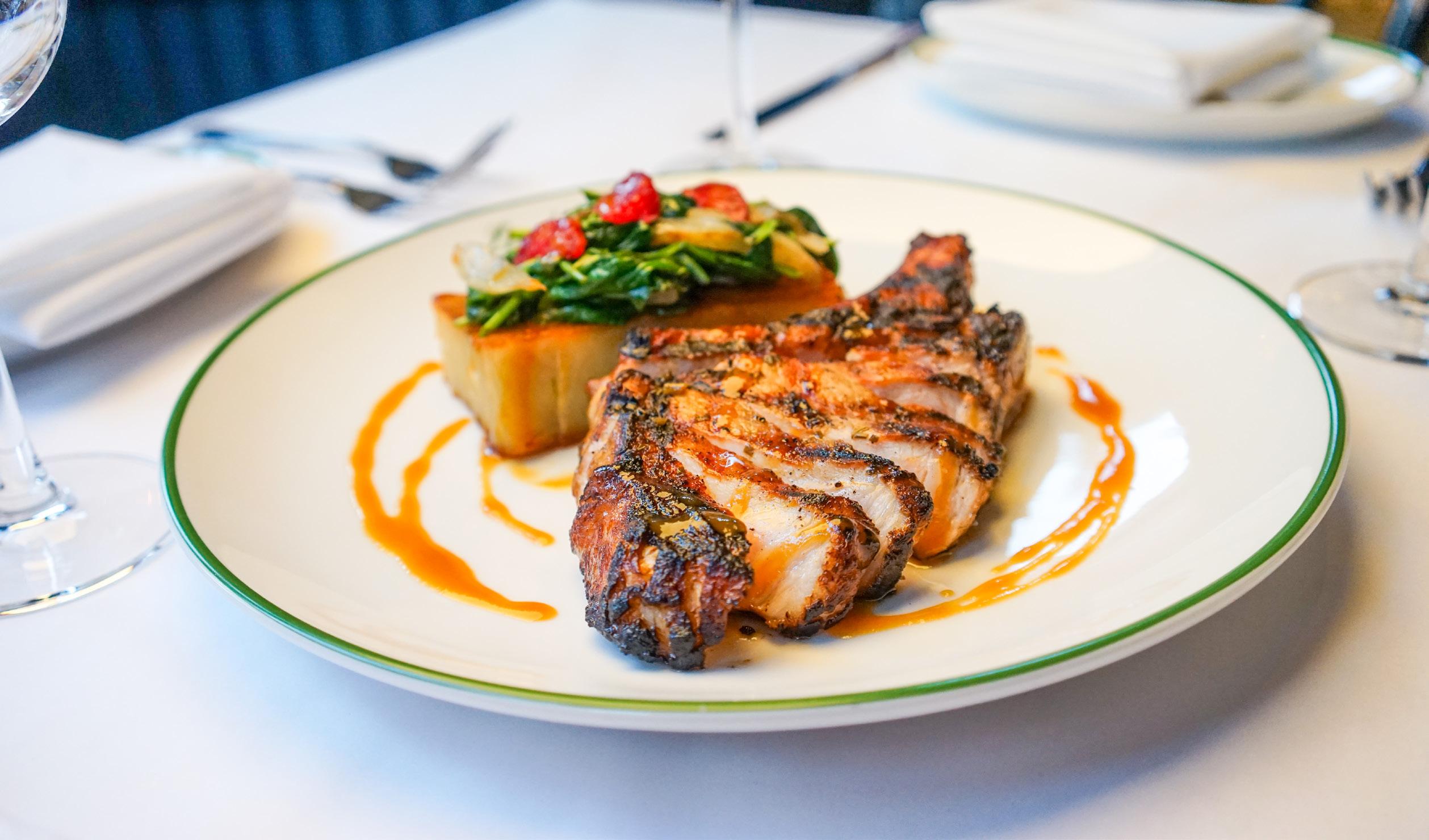
Grilled Bone-in Pork Chop with Potato Pave, Wilted spinach, Roasted Fennel, Blood Orange Citronette
In the first quarter of 2026, Ohio pork stepped confidently into the spotlight through a bold culinary collaboration designed to put the product where it matters most on restaurant plates and in front of consumers.
Through a strategic partnership with 614 Media Group, the Stock & Barrel winter feature highlighted 12 central Ohio restaurants, each developing an original pork dish that remained on menus for a full 90 days. The result was more than a media placement — it was a sustained, real-world exposure for pork in chef-driven dining environments.
At its core, the program blended editorial storytelling with on-menu commitment — a powerful combination in today’s competitive protein landscape. Diners didn’t just read about pork; they experienced it.
Thanks to Ohio Pork’s strategic partnership with 614 Media Group, the 16-page pork promotion insert in the winter edition of Stock & Barrel magazine featured 12 signature pork entrées, combining eye-catching photography with
approachable recipes that encouraged consumers to order the dish in-restaurant and then bring pork back to their own kitchen.
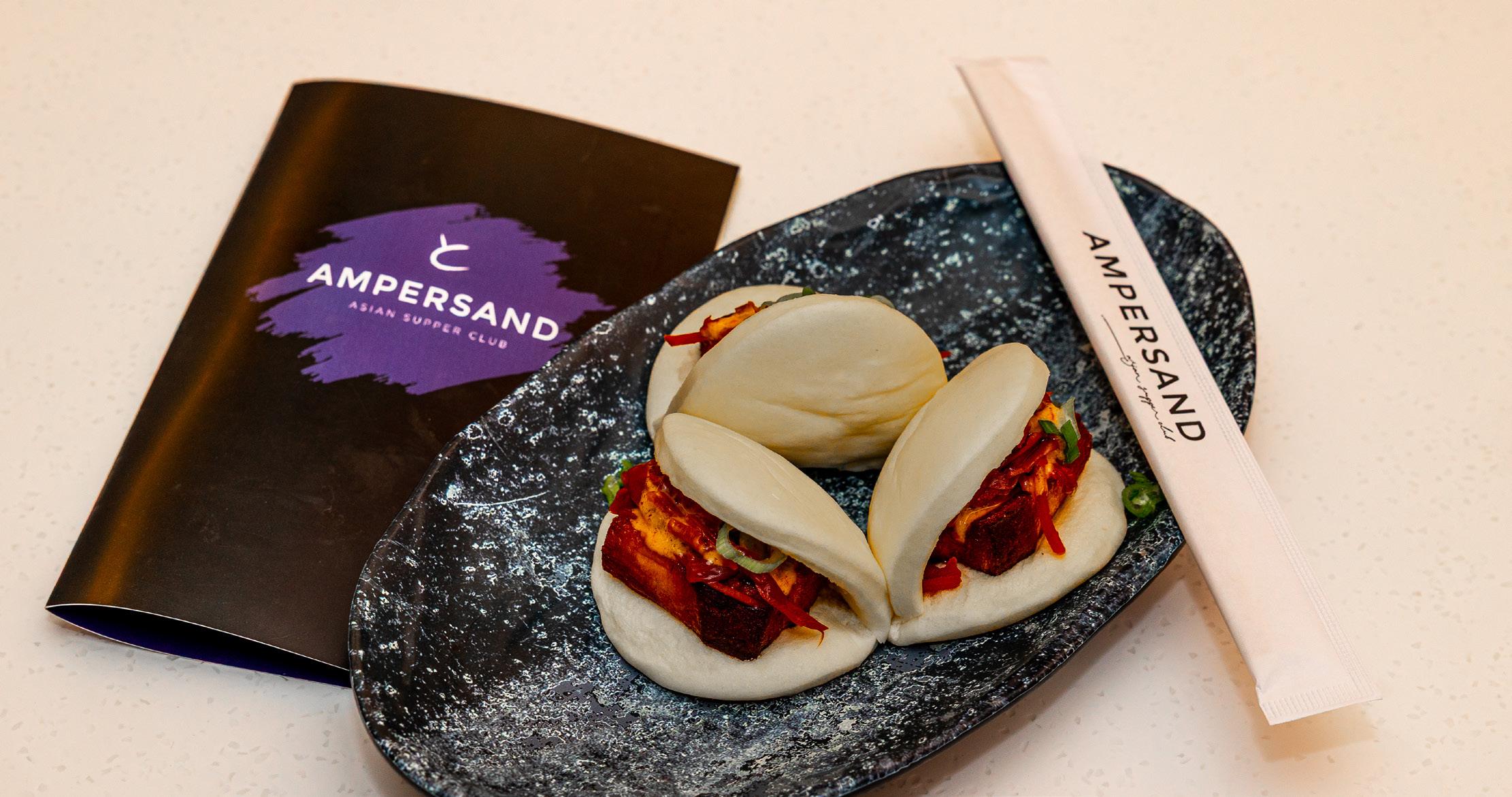
Each featured restaurant created a unique, ranging from inventive appetizers dish (like Asian-inspired Pork Chashu Steamed Buns in photo on page 9) to elevated center-ofthe-plate entrées like grilled bone-in chops. The consistency of menu placement over a three-month window ensured pork wasn’t just a one-time special but became part of the dining conversation.
“Getting pork in front of consumers in a meaningful way is how we build long-term demand,” said Nathan Schroeder, president of the Ohio Pork Council. “When chefs put their creativity behind pork and keep it on the menu, it reinforces its value as a premium, versatile protein.”
While not every restaurant saw immediate sales spikes, the initiative delivered important wins in exposure and perception.
Brett Fife, head chef at Lindey’s in Columbus, noted that while pork may not always compete with top-selling steak or seafood dishes, it still holds a unique place on the menu. “It’s a unique dish, and the people who order it really enjoy it,” Fife shared. “Any opportunity to showcase something different and get additional visibility is worthwhile.”
For Lindey’s, the partnership over the 90-day period meant that nearly 600 diners got to experience bone-in chops done to perfection – something that consumers don’t get every day. Meanwhile, Ampersand topped the charts of all participating restaurants by selling just shy of 3,000 servings of its Chashu steamed buns. Combined with all participating restaurants, over 8,800 pork dishes were served, creating a major year-over-year bump over typical pork dish sales.
This kind of success and feedback underscores a key takeaway: pork continues to resonate strongly with those who try it and initiatives like this help create those trial opportunities.
Fife also indicated interest in participating again, reinforcing that partnerships like this are valuable for restaurants seeking both exposure and menu innovation.
For Ohio’s pig farmers, this effort represents more than a marketing activation — it’s a direct investment in demandbuilding.
Every featured dish introduces pork in a new context, whether through flavor profiles, preparation styles, or presentation. These experiences can influence consumer perceptions, inspire at-home cooking, and ultimately drive repeat purchases both in restaurants and at retail.
“Programs like this are about showing how pork can shine when it's properly prepared," Schroeder added. "We need more showcasing of pork dishes cooked correctly that also show what's possible for consumers in their own kitchens.”
The success of the Stock & Barrel feature reinforces the importance of collaboration across the value chain from farmers to chefs to media partners.
By aligning with a trusted regional publication and engaging with well-known restaurants, Ohio pork reached foodfocused consumers where they already look for inspiration. The combination of compelling visuals, chef credibility, and extended menu placement created a level of engagement that goes far beyond traditional advertising.
“We’re excited to see how our ongoing efforts will resonate with consumers as we continue to work with more Ohio chefs and restaurants throughout 2026,” Schroeder added. “I hope everyone is seeing more and more just what’s possible when we truly showcase Ohio pork to its full potential.”

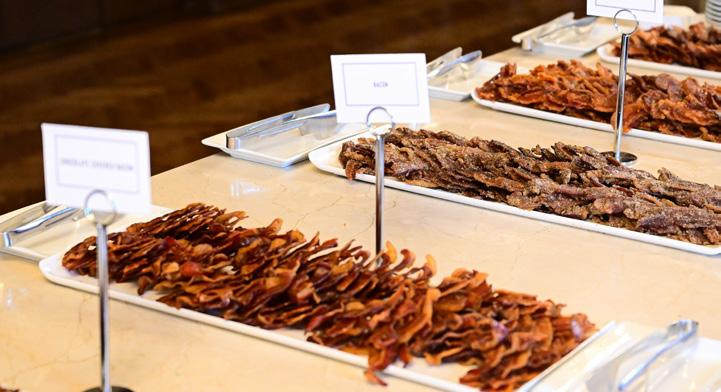
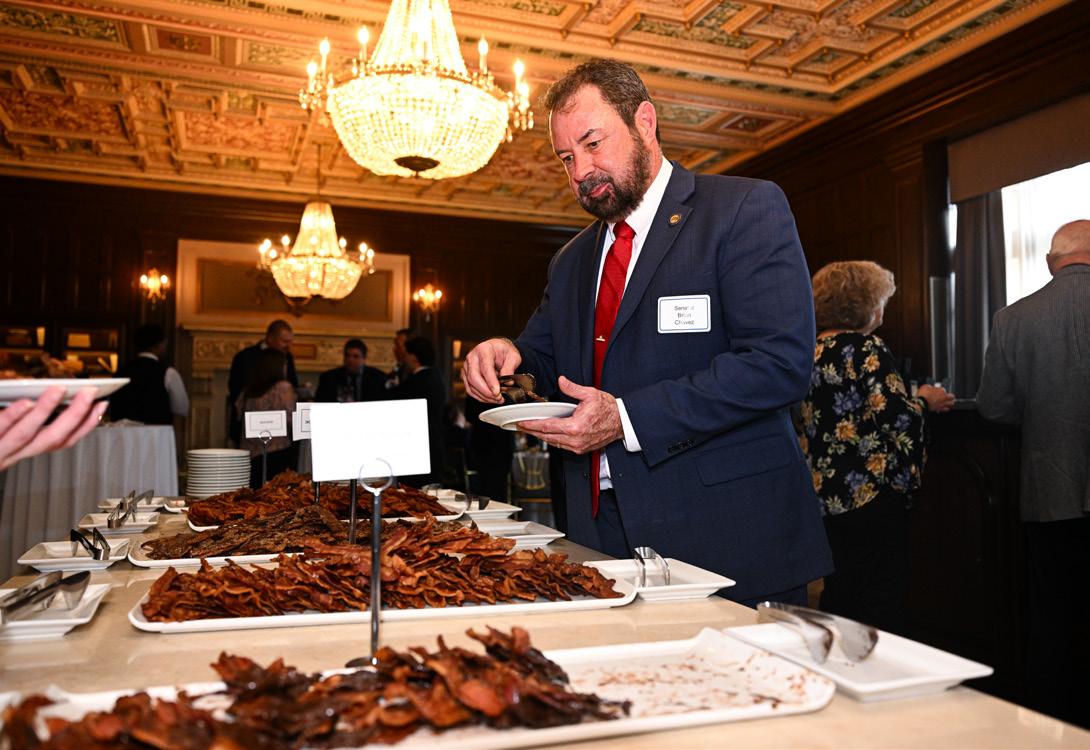
While Ohio's pig farmers and state legislators regularly connect on issues that matter most to agriculture's future, one special event has definitely earned its reputation as one not too miss — Evening with Bacon. Held annually in downtown Columbus, this unique event is where connections and conversations always lead to better outcomes for Ohio's pig farmers.
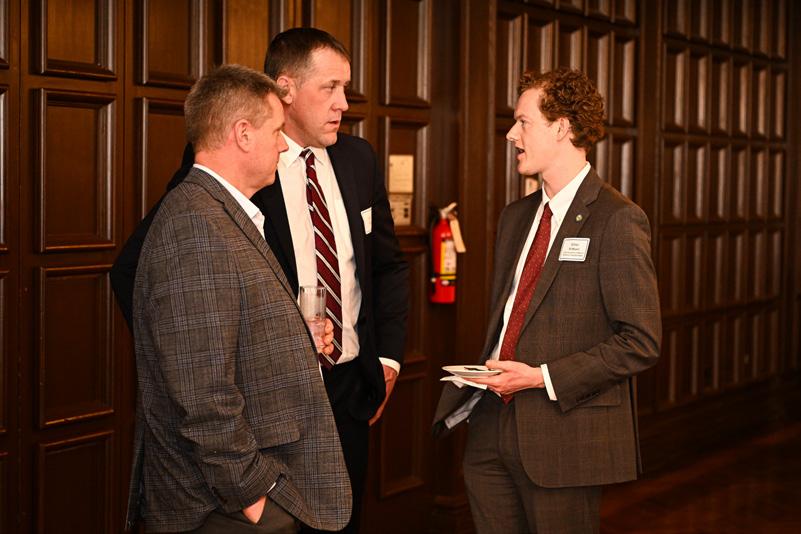
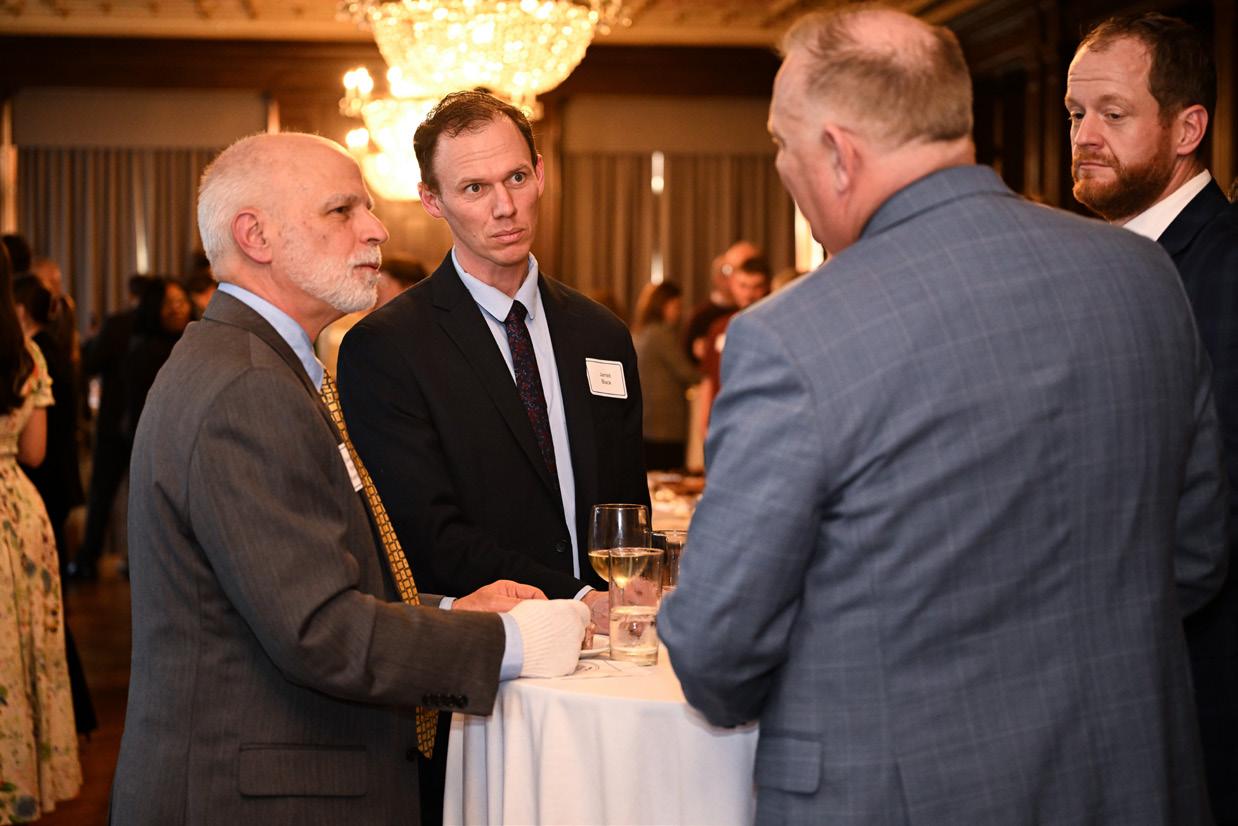
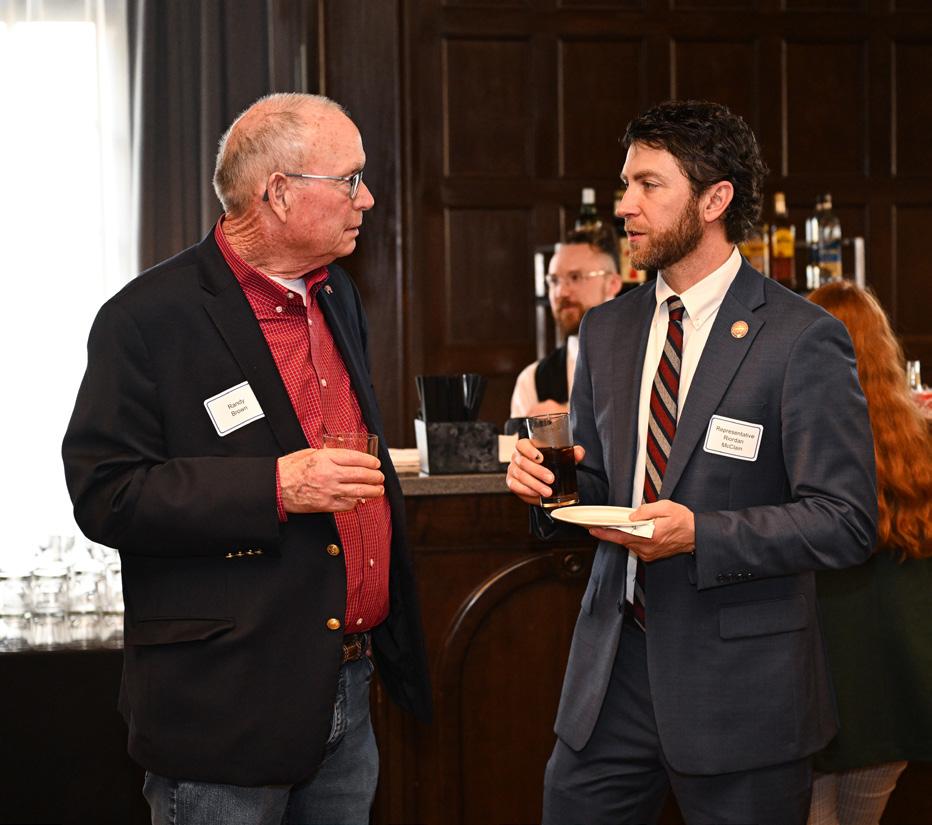
Again this year, the Ohio Pork Council brought together pork producers, legislators, agency leaders, and industry partners for an evening focused on building relationships and strengthening agriculture’s voice. With a strong turnout and a full room of guests, the event delivered exactly as promised in connecting the people who raise pork with the people who help shape the decisions that impact them.
Of course, a multitude of bacon varieties helped bring everyone together, which accompanied the event’s signature white-glove dining experience that featured mouthwatering tomahawk pork chops. Together, the pork main dishes created a memorable and savory experience for everyone, but in the end, it was the conversations that made the biggest impact.
As OPC President-Elect Jarred Black said, “Evening with Bacon continues to be one of the Ohio Pork Council’s most effective opportunities to engage directly with policymakers.” He noted that legislators from both sides of the aisle, along with staff and leaders from key agricultural organizations, spent the evening talking with producers about their farms, their experiences, and their perspectives.
Those conversations are important because many decisionmakers have never stepped inside a livestock barn. They may not fully understand the day-to-day responsibilities of caring for animals or how decisions made at the Statehouse affect farms across Ohio. That’s where producers make a difference.
By sharing their stories, instead of mere statistics, farmers help create a clearer picture of modern pork production. As Schroeder added, “It’s always surprising how a short conversation about life on the farm or a simple introduction can go a long way in building understanding and trust with our legislators.”
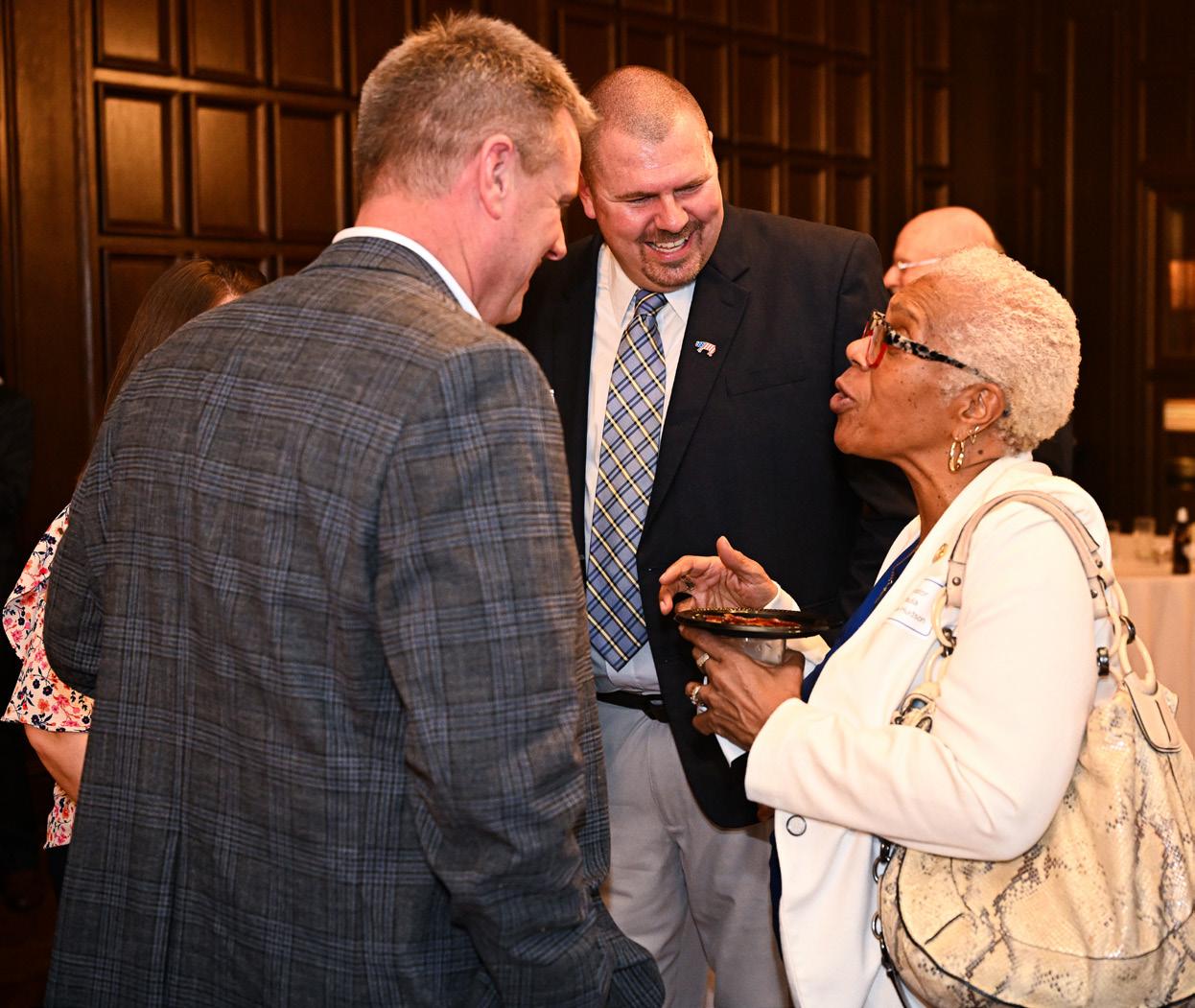
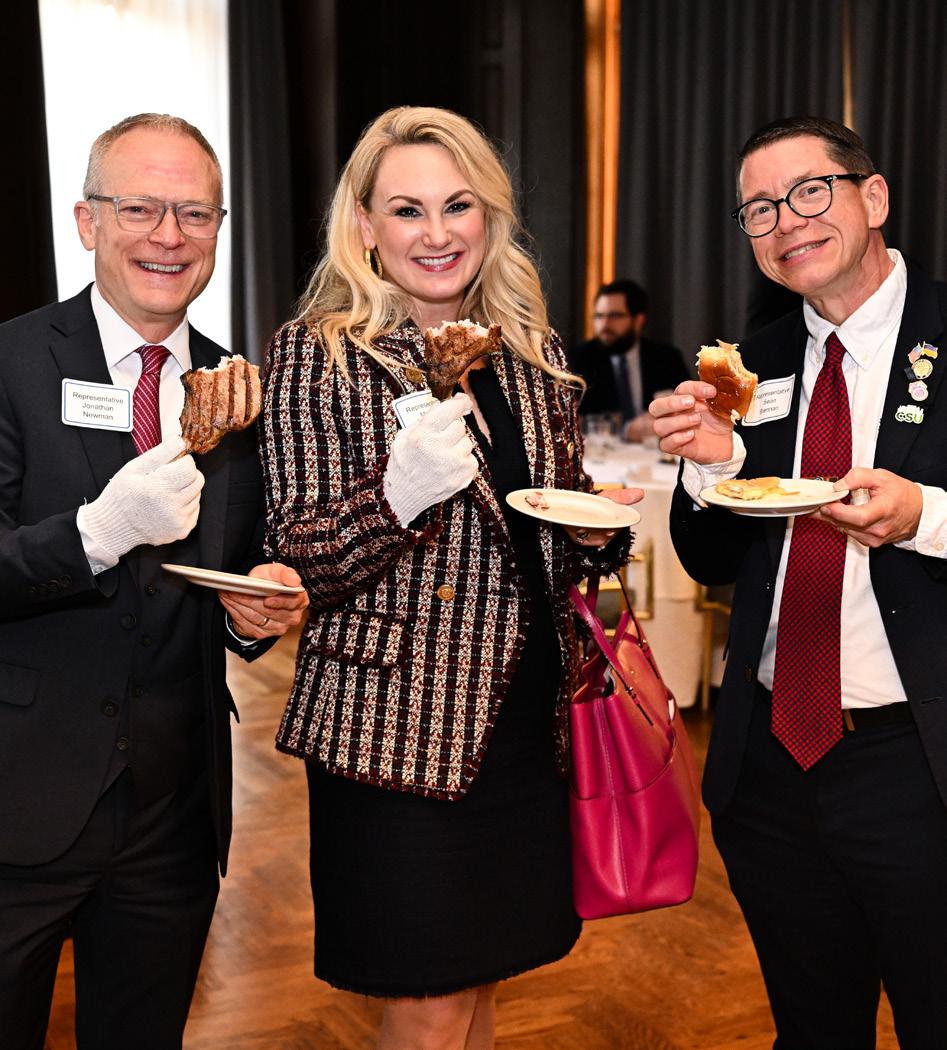
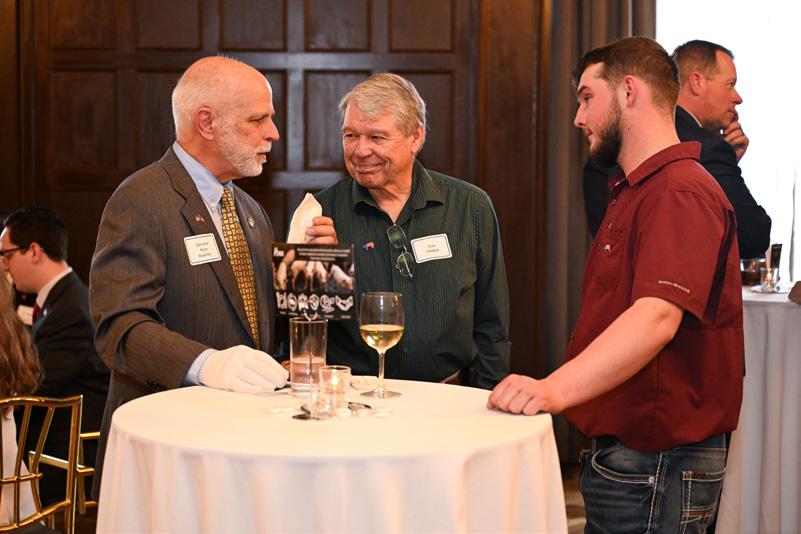
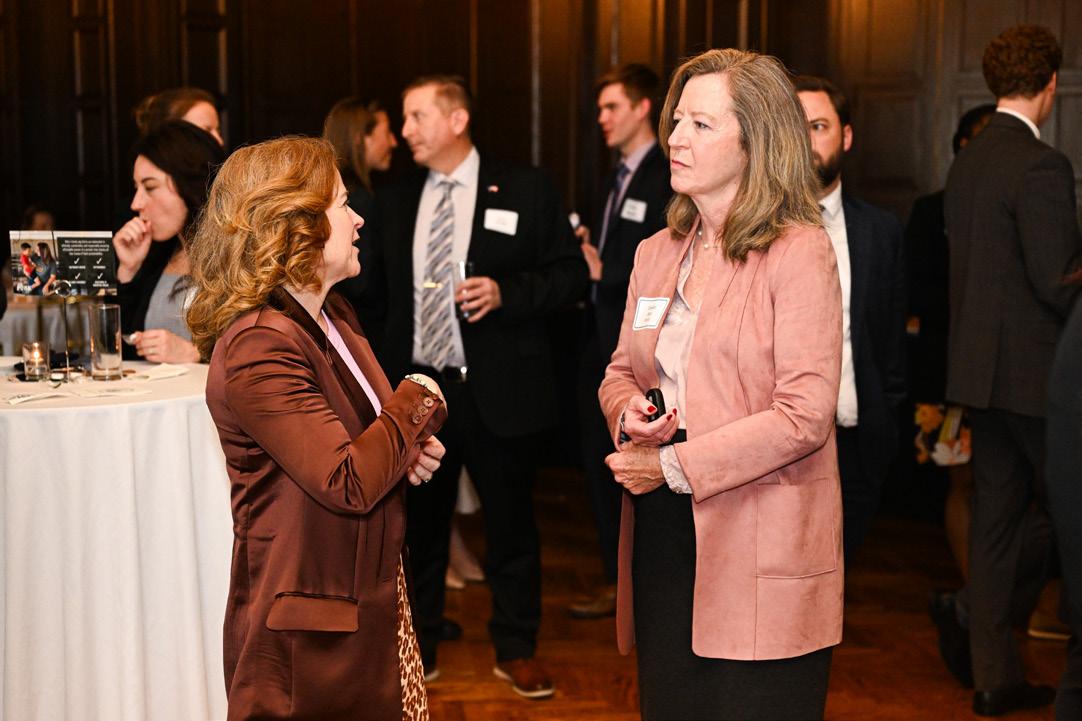
With a ballroom-capacity crowd, including lawmakers, staff, and agricultural leaders, the evening provided countless opportunities for one-on-one interaction. For many producers, it was a chance to reconnect with legislators they’ve met in previous years. For others, it was an opportunity to step outside their comfort zone and begin building new relationships.
Those connections don’t end when the evening is over. OPC Executive Vice President Cheryl Day, said, “When questions about Ohio’s pork industry come up later, lawmakers are far more likely to reach out to someone they’ve met and had a conversation with, which is why this kind of event is so critical to make and keep the connections we have.”
Of course, agriculture is not the only voice competing for policymakers’ attention. Because they hear from many different groups outside of agriculture, events like Evening with Bacon help ensure that pork producers are part of that conversation.
Sometimes the most meaningful impact comes from a simple exchange — a handshake, a shared story, or an offer to be a resource. And sometimes the best conversations happen over a slice or two of Ohio-produced bacon.

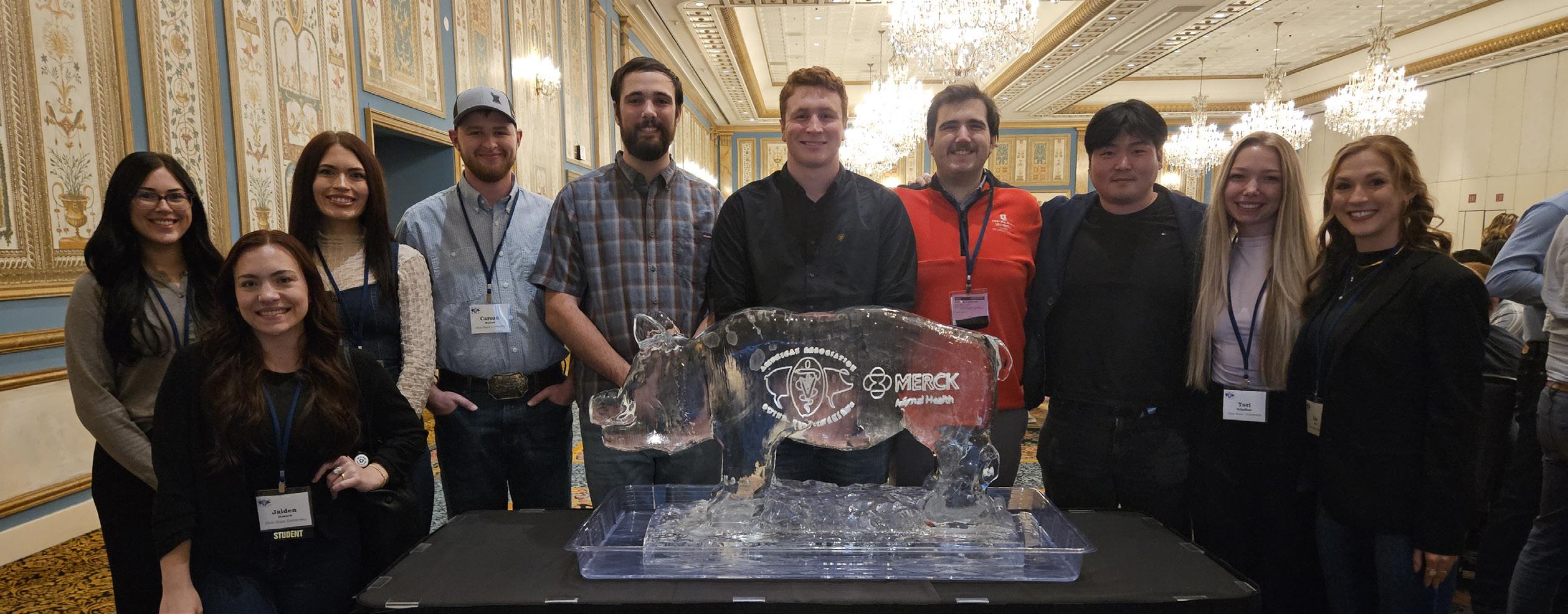
Ten Ohio State University College of Veterinary Medicine students returned from the 2026 American Association of Swine Veterinarians (AASV) annual meeting with something more than additional scientific learning — they returned with clarity, connections, and an even stronger commitment to Ohio’s pork industry.
Thanks to an investment by the Ohio Pork Council (OPC) in underwriting student travel expenses, the group was able to attend one of the premier global events in swine health. The students, who ranged from first-year to fourth, gained exposure to cutting-edge research, production trends, real-world herd health challenges, and more.
Patrick Jung, now in his third year of veterinary school, said, “I have always wanted to be a swine practitioner, and attending the AASV annual meeting, thanks to the Ohio Pork Council, only reaffirms my dedication to become one after I graduate.”
Even though he has attended the event before, Jung said he was particularly struck by the analytical depth of the discussions this year. “I was most surprised by how datadriven and economically aware the swine veterinary community is. It becomes clear that swine veterinarians are not just clinicians, they also function as advisors who integrate biology, economics, and management strategy.”
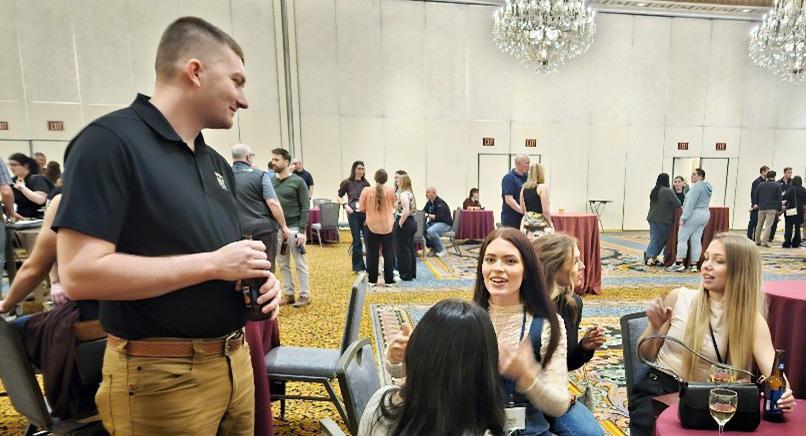
Being able to notice a systems-based mindset, where herd health, production metrics and long-term sustainability intersect, was a common takeaway among the students. This, coupled with an overarching human element, resulted in positive remarks all around.
Across the board, the OSU veterinary students found their time spent at the AASV meeting to be crucial to their understanding not only of the scope of swine veterinary medicine, but how it could truly be their future career.
For third-year student Drew Toth, the experience crystalized why he plans to make swine medicine his focus. “I will absolutely be practicing swine medicine in Ohio
when I graduate, and seeing the support of everyone at the AASV meeting reaffirms that my future career should be more focused on swine rather than just mixed practice.”
Other students echoed similar sentiments. Many noted how unbelievable it was to see the scale of collaboration within the swine industry from research presentations to hallway conversations.
Sydney Treglia, another third-year student, sees herself also remaining in Ohio after graduating. “Attending the meeting showed me how individual pig care and population medicine work together. I would like to help producers and show pig families alike in the future to prioritize herd health, biosecurity, and more.”
In reflecting on her AASV experience, second-year student Jaiden Howard, said, “I feel inspired, better informed, and excited about the role I can play in advancing swine health and production. I can see myself practicing in Ohio with its strong production base and collaborative industry environment.”
Faith Bergman, a third-year student, emphasized that her experience “would not have been possible without OPC’s support,” noting that she not only gained knowledge but built valuable professional connections that resulted in her getting a swine externship while at the meeting.
Beyond the event’s hours of research presentations Toth added, “It was great networking with Ohio State alums as well as other students from other schools and hearing how they got into swine medicine and how they want to make an impact in their future communities.”
OPC President Nathan Schroeder added, “As Ohio pork producers, we’re proud to invest in the next generation of veterinarians who might be caring for our animals and supporting our farms in the near future. By helping these students with these kinds of opportunities, we’re giving them a chance to see firsthand the many professional opportunities that our industry offers and how they can make it a reality.”
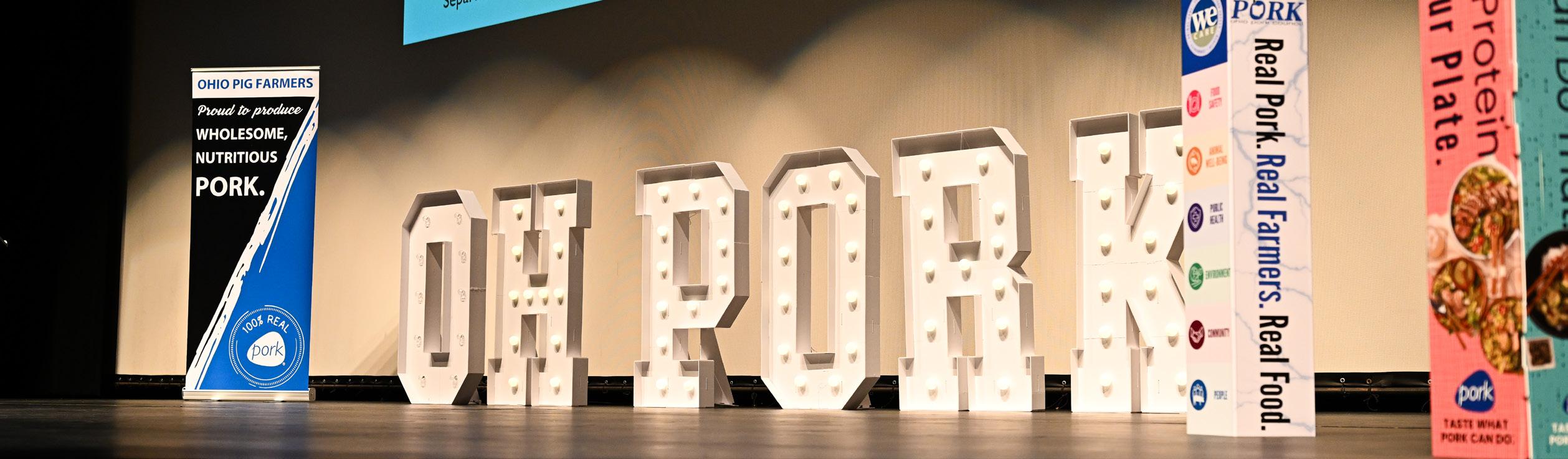
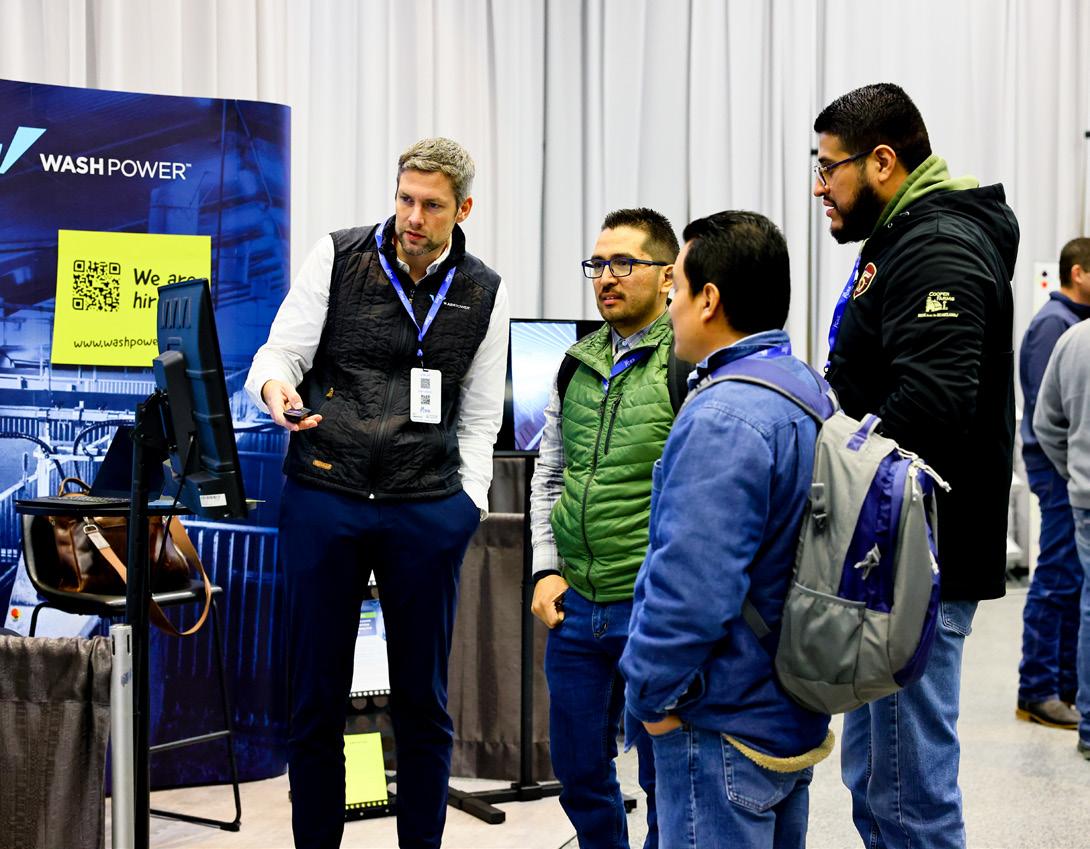
Ohio pork producers, industry partners, and students interested in pork careers, returned to Lima this February in record numbers for the 2026 Ohio Pork Congress, gathering not just to reflect on the year behind them, but to sharpen their focus on what comes next.
Across two full days, the event delivered a clear message: momentum is real, but the path forward will require discipline, collaboration, and a renewed commitment to capturing opportunity in a rapidly changing marketplace.
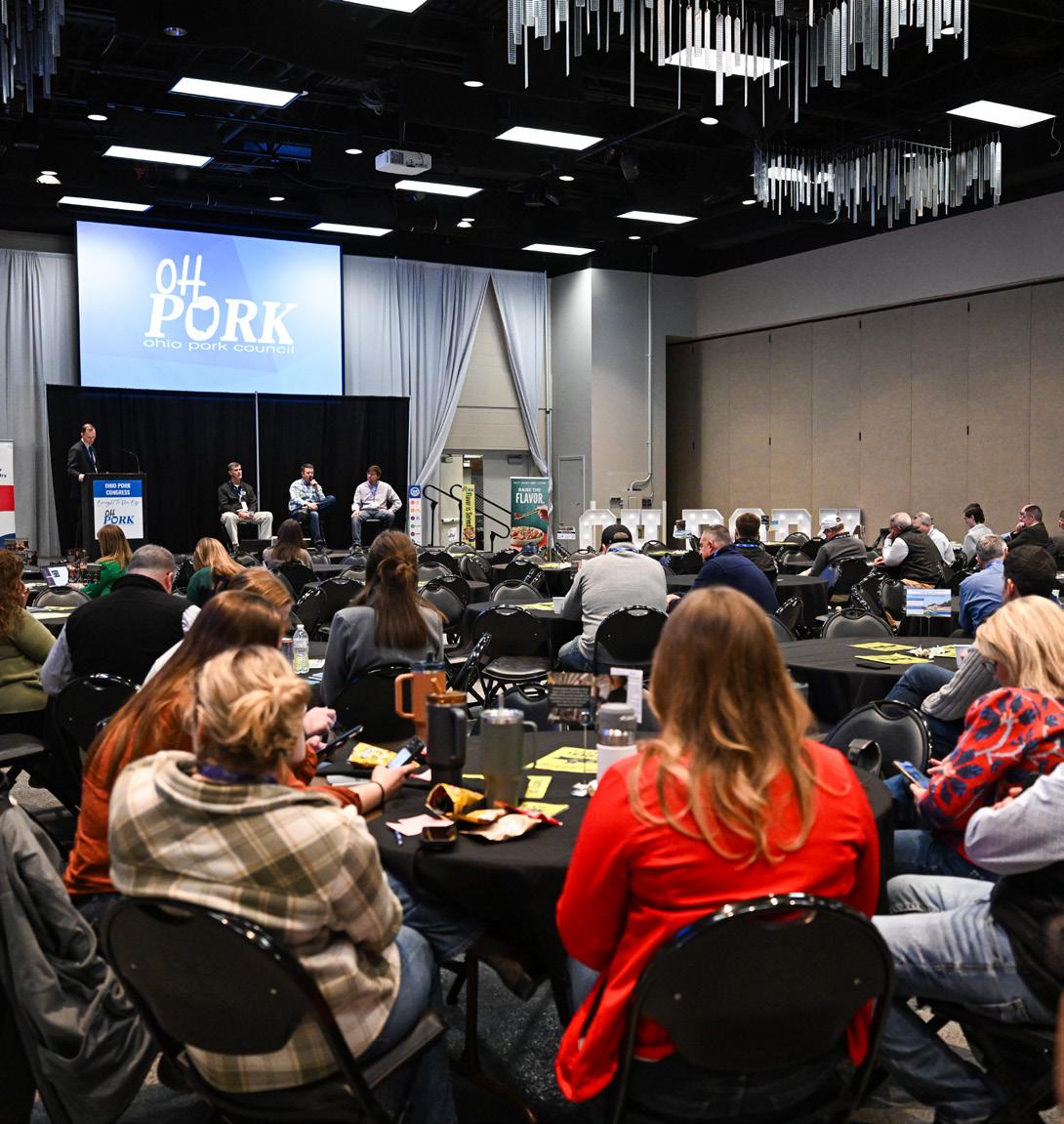
From a bustling tradeshow floor to multiple bilingual breakout sessions and a well-attended Swine Health Symposium, the Ohio Pork Congress once again offered something for every segment of the industry. Whether the goal was improving barn-level decision-making, navigating policy challenges, or identifying new ways to drive pork demand, attendees left with insights built for real-world application.
This year’s conversations reflected an industry leaning into a “better, not bigger” mindset. With continued pressure from input costs, labor availability, and animal health risks, producers are focusing more intently on efficiency, risk management, and long-term sustainability.
Nowhere was that more evident than in the Swine Health Symposium. Sessions centered on biosecurity, disease preparedness, and PRRS management reinforced a simple truth: protecting herd health remains foundational to protecting the future of the industry. The emphasis was not theoretical—it was practical, with take-home ideas designed to strengthen everyday decision-making on Ohio farms.
On the main stage, policy discussions brought clarity to an increasingly complex landscape. OPC Executive Vice President Cheryl Day and NPPC CEO Bryan Humphreys discussed how today’s focus in on policy priorities aimed at protecting producers, strengthening advocacy efforts, and ensuring our farms can continue to operate with confidence. Producers’ freedom to operate is paramount even while the industry pushes for meaningful regulatory and trade progress.
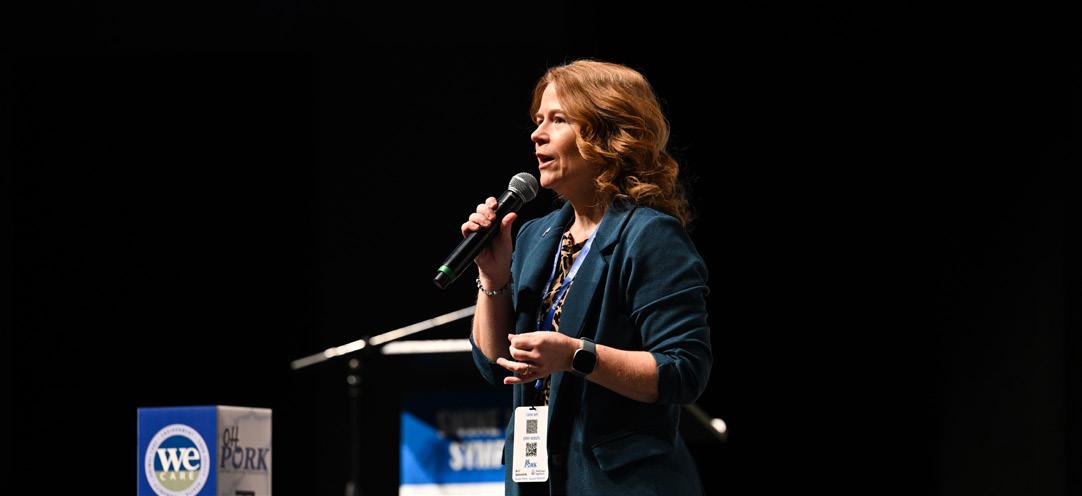
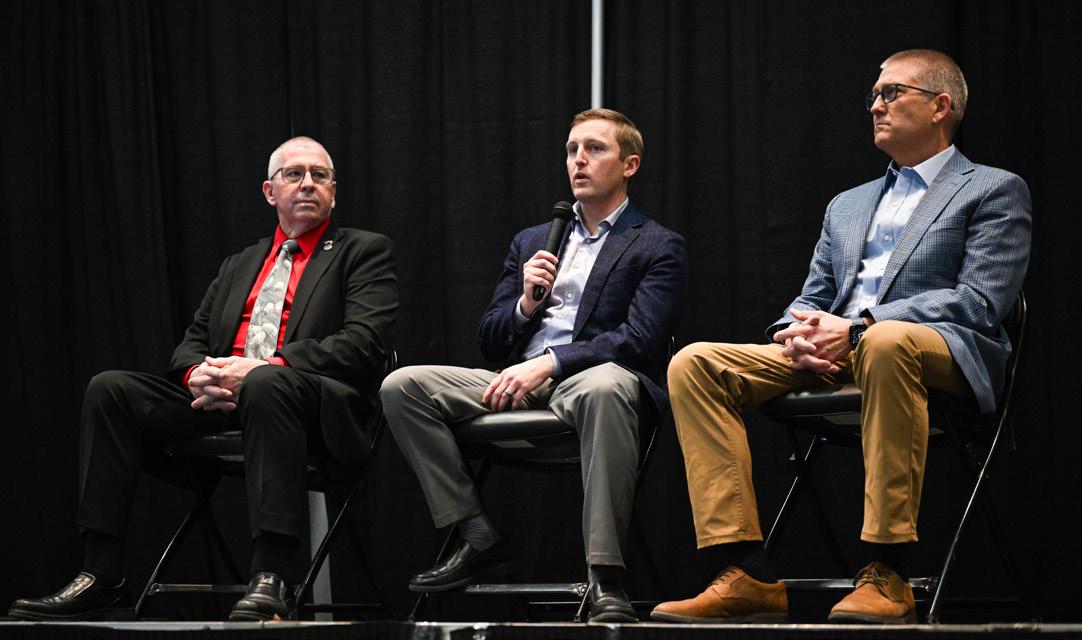
Joining Humphreys on the NPPC panel were Ohio’s Duane Stateler, NPPC immediate past-president, and Pat Hord, NPPC president-elect. They each offered a candid look at the year’s work that highlighted structural wins that carry real impact. Progress on long-standing air and water regulations, ongoing engagement in trade disputes, and influence in shaping dietary guidelines all contribute to a more stable and predictable environment for producers.
At the same time, the message was clear: these outcomes don’t happen without continued investment and engagement from producers themselves.
While policy and production remain critical, much of the forward-looking conversation centered on increasing consumer pork demand.
David Newman, CEO of the National Pork Board, highlighted the success and continued evolution of the national “Taste What Pork Can Do” campaign, while also recognizing Ohio Pork’s leadership in being bold and aligning state efforts with the broader national strategy. That alignment, he noted, is what strengthens the industry’s collective ability to move the needle.
Newman’s take-home message was to focus on doing what it takes to sell one more pound of pork — across more meals, more occasions, and more households.
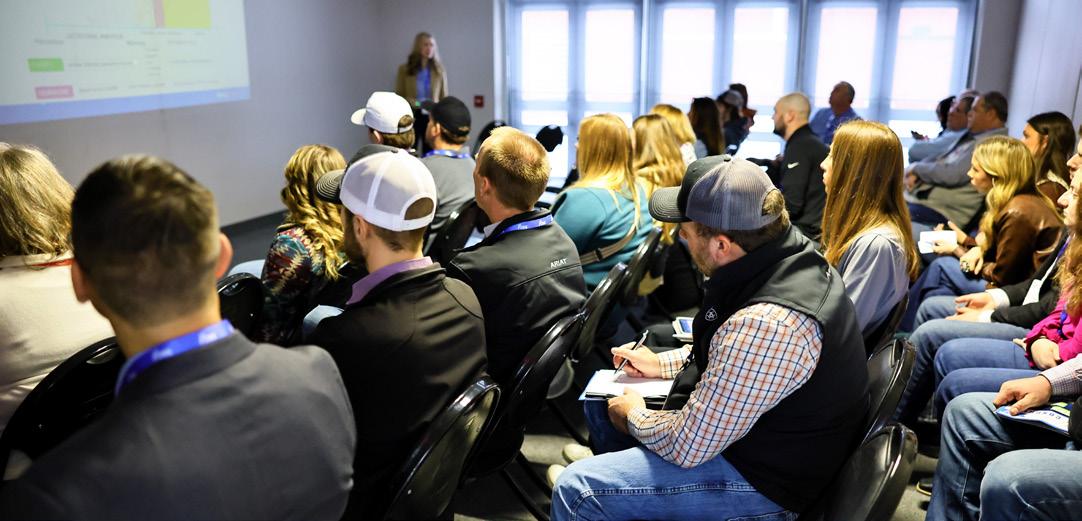
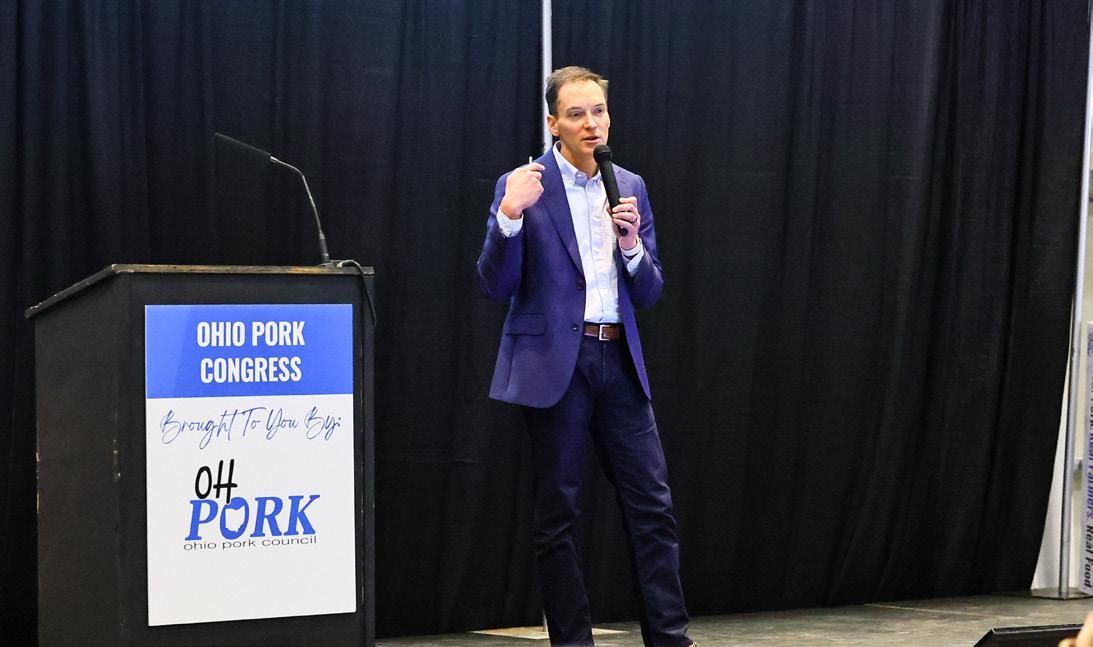
The growth mindset was reinforced by keynote economist Leo Feler, who brought a data-driven perspective to the conversation. He shared that in a market where consumers are increasingly price sensitive and beef has moved into a premium position, pork holds a clear value advantage, but that advantage must be actively leveraged. His advice was for pork to capture share through more effective retail strategy, leaning into pork’s health and protein story, and meeting consumers where they are in making purchasing decisions.
If this year’s Pork Congress made anything clear, it’s that Ohio’s pork industry is positioned for progress. From barnlevel innovation to national collaboration, the pieces are in place. The opportunity ahead lies in building on that foundation of protecting what works, staying engaged where it matters most, and continuing to grow demand one pound at a time.
During the Ohio Pork Congress, the Ohio Pork Council again celebrated individuals, families, and organizations whose leadership, accomplishments, and dedication to Ohio’s pork industry set them apart from their peers.
“These awards are truly the highest our organization has to offer,” said Jarred Black, OPC president-elect from Canal Winchester. “This year’s recipients again represent the absolute best of what it means to be part of our Ohio pork family. It’s about recognizing a lot of hard work and the ongoing commitment they have shown to make our industry better every day.”
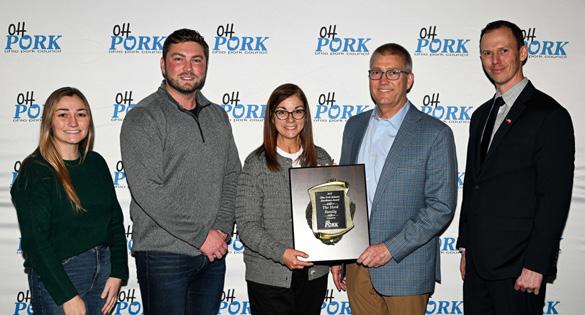
The Hord Family — Hord Family Farms
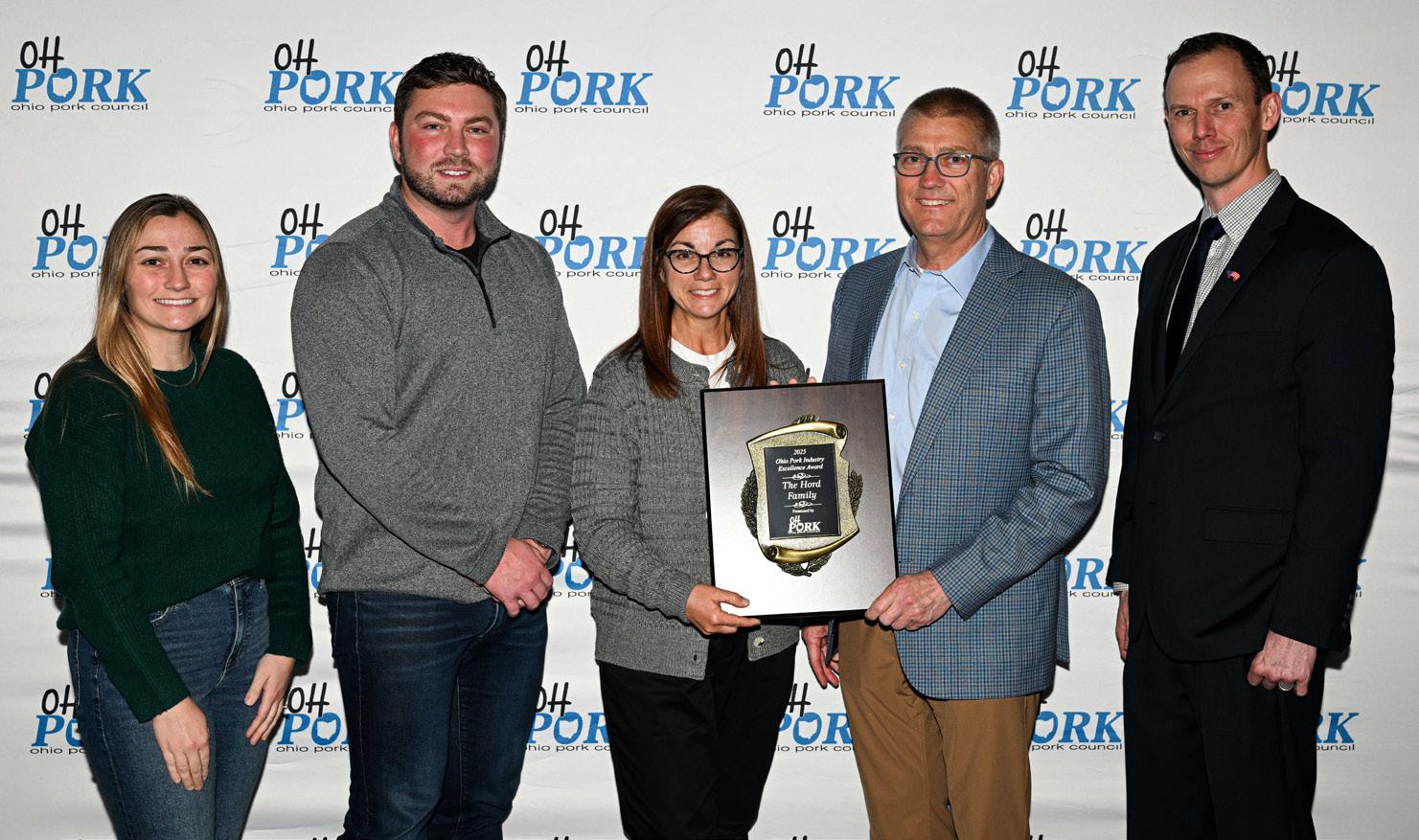
Ohio Pork Council President-Elect Jarred Black (far right) presents the Ohio Pork Industry Excellence Award to the Hord family of Hord Family Farms (left to right), Colleen, Phil, Janel, and Pat.
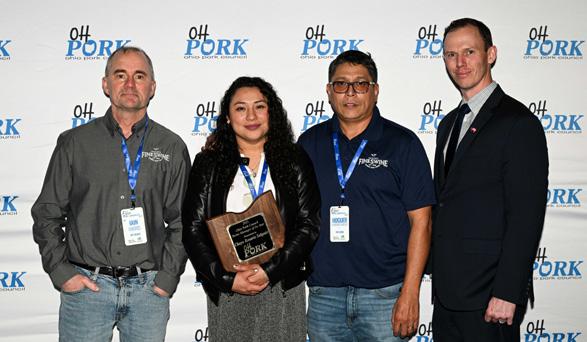
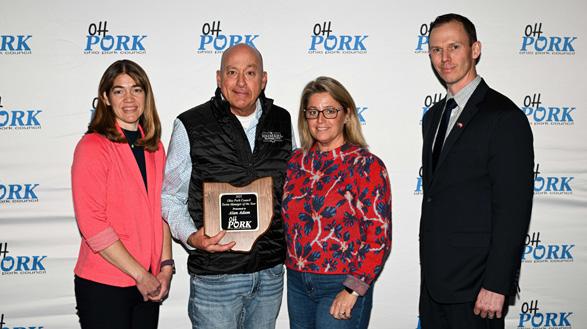
Managers of the Year
Chayo Rosario Salgado of Fine Swine & Alan Adam of Heimerl Farms
OPC President-Elect Jarred Black (far right) presents the Swine Manager of the Year Award to Chayo Rosario Salgado of Fine Swine, LLC (center left), joined by Iain Harris, and Hoguer Albarado Sanchez.
OPC President-Elect Jarred Black (far right) presents the Swine Manager of the Year Award to Alan Adam of Heimerl Farms (center left) joined by Terri Specht-Benson, DVM, and Bridget Adam.
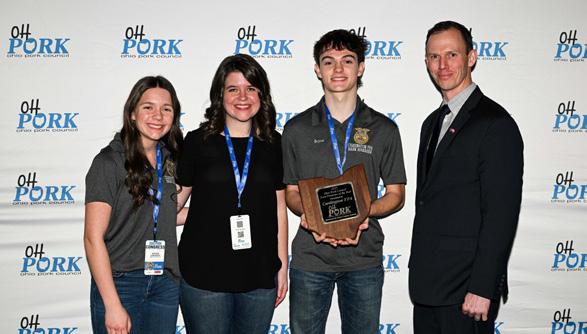
Pork Promoter of the Year
Cardington-Lincoln FFA Chapter
OPC President-Elect Jarred Black (far right) presents the Pork Promoter of the Year Award to Cardington-Lincoln FFA of Morrow County, Ohio. From left to right are Madison Garrabrant; past-FFA Advisor Erin Wollet; and Bryce Hartley.
OPC Service Award
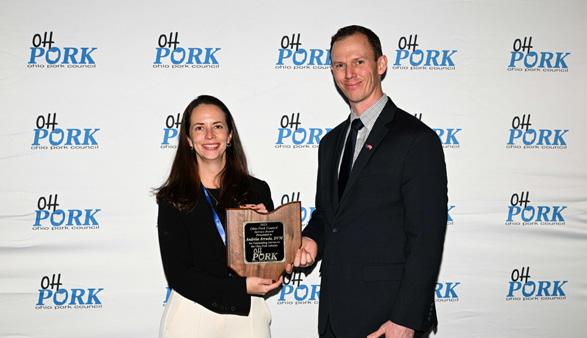
Andréia Arruda, DVM, College of Veterinary Medicine, The Ohio State University
OPC President-Elect Jarred Black (right) presents the OPC Service Award to Andréia Arruda, DVM, College of Veterinary Medicine, The Ohio State University.
Friend of Pork Award
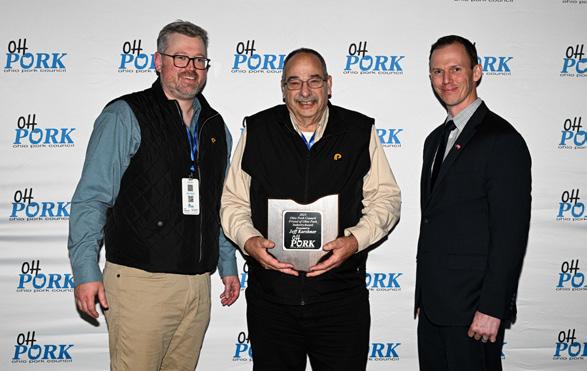
Jeff Karshner, United Producers, Inc.
OPC President-Elect Jarred Black (right) presents the Ohio Pork Council Friend of Pork Award to Jeff Karshner of United Producers, Inc. (center), with Tyler Logan of United Producers, Inc.
OPPORTUNITES:
Bet-The-Green Hole: Take a chance & bet on yourself to land on the green! All proceeds go directly to the Tony Forshey Memorial Scholarship fund.
Mulligans: Buy the chance(s) of a perfect shot.
50/50 Tickets: Get up to an arms length!
BRING CASH & HAVE FUN!
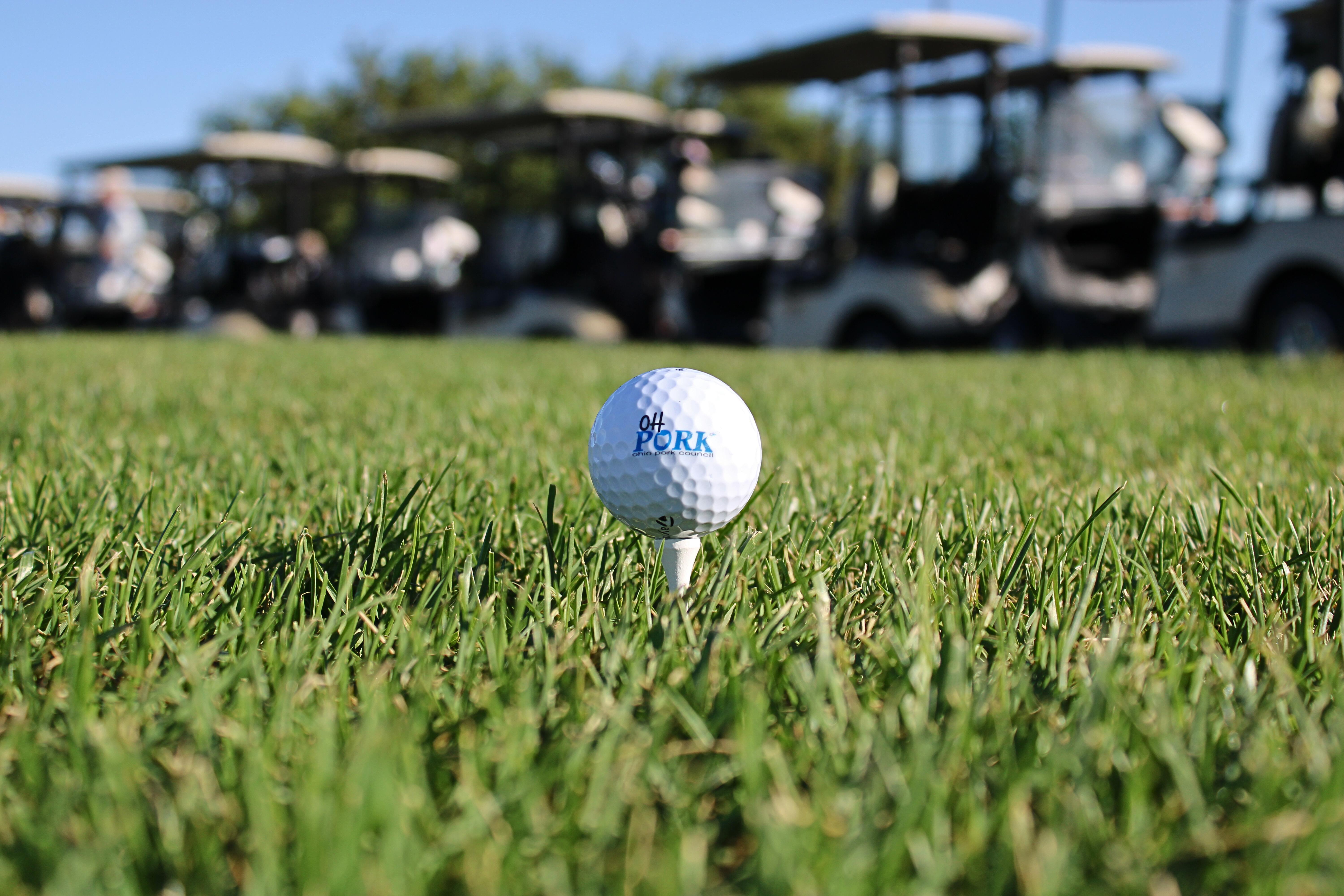
Registration Deadline: May 30, 2025 9:00AM Shotgun Start | 4-Person Scramble
Proceeds go to various scholarships and support Friends of Pork, the Ohio Pork Council’s PAC fund.
Entry: $450/foursome or $125/individual golfer (Cost includes green fees, cart, pork chop lunch, refreshments, and prizes.) Find more info at ohiopork.org or contact pork@ohiopork.org.
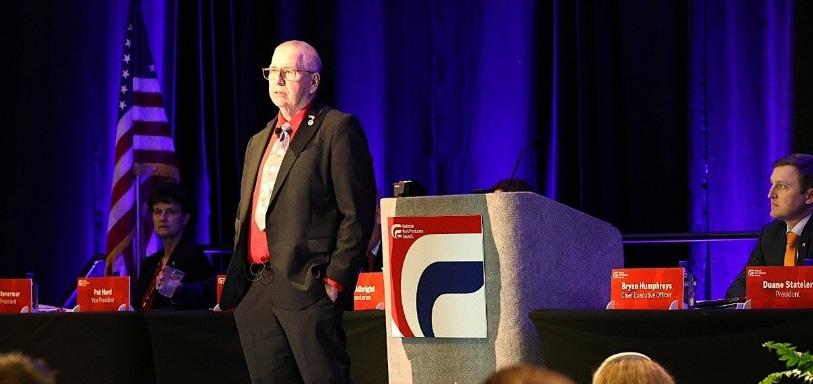
When Ohio pork producer Duane Stateler stepped to the podium in Kansas City last month to deliver his farewell address as president of the National Pork Producers Council, he reminded fellow producers that advocacy victories don’t happen by accident.
“They were one time just on a wish list,” Stateler said of the long list of policy achievements from the past year. “But through hard work by NPPC, we moved them from a wish to a win.”
Speaking before the NPPC Delegate Body, Stateler highlighted a year of significant legislative and regulatory progress driven by producer advocacy in Washington and around the world.
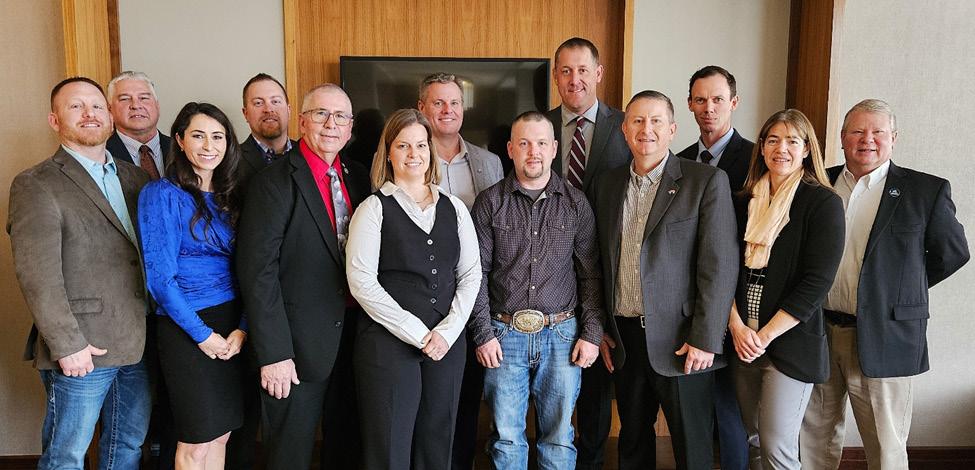
Among the most notable accomplishments were restoring access for all U.S. pork facilities to export to China, securing new trade agreements with Malaysia and Cambodia, and establishing frameworks with Thailand and Vietnam that position U.S. pork for future market growth. Stateler also pointed to progress on international standards for African swine fever vaccines and renewed focus on the National Swine Health Strategy.
Domestically, pork producers saw meaningful movement on regulatory issues long targeted by NPPC. That included progress toward permanent increased line speeds, withdrawal of a controversial salmonella rule, dropping a proposed overhaul of the Packers & Stockyards Act, and halting new EPA effluent guidelines for meat and poultry processors.
“These are not small wins,” incoming NPPC President Rob Brenneman told the audience during a tribute video recognizing Stateler’s leadership. “These are foundational wins that will continue to make a difference.”
Stateler emphasized that many victories come from simply showing up and telling agriculture’s story to policymakers. “You never know when the opportunity is going to come,” he said. “When real pork producers show up in Washington, policymakers listen.”
In fact, some of the biggest successes may never be visible to producers at the farm gate.
“The biggest wins are the wins we cannot talk about,” Stateler said, pointing to sensitive policy work happening behind the scenes. “That is a testament to how good our staff is and how important this work really is.”
Throughout the year, Stateler repeatedly urged producers to stay engaged in advocacy and strengthen the industry’s grassroots voice. “We have to work across the aisle with Democrats, Republicans and independents,” he said. “When the call goes out, producers need to be there to push these issues across the finish line.”
the NPPC board and all the way through this presidency, his goal has been, ‘How do we set up the industry for generations to come?’ That is a tremendous way for folks to look at how a trade association on behalf of an industry should operate.”
822 Completed Surveys
Other industry leaders echoed the importance of Stateler’s steady leadership during a challenging policy year.
542 Producers 99 Allied Industry 95 Vets (in field) 37 Vets (academia)
Producer Segments Represented
“Duane’s biggest success is his stance to lead in the midst of challenges,” said NPPC president-elect Pat Hord, citing issues ranging from trade disruptions to regulatory battles. Cheryl Day, executive vice president of the Ohio Pork Council, said Stateler’s willingness to mentor future leaders may ultimately define his impact. “It’s because of leaders like Duane, who are always helping the next leader behind them. That will be his legacy.”
NPPC CEO Bryan Humpreys agrees with how that plays out on a macro scale. “From the first time I met him on
Looking back on his presidency, Stateler said the experience reinforced one fundamental truth about the pork industry. “It’s not about me,” he told the crowd. “It’s about the producers.”
States Represented
Listening Sessions (over 1,000 attendees)
And as he passed the gavel to Brenneman, Stateler reminded fellow producers that advocacy remains a team effort. “If all of us work together— staff, states, producers, and partners — we all win.”

For decades, America’s pork producers have battled costly endemic diseases while also preparing for the ever-present threat of foreign animal diseases entering the country. Now, the industry is aligning behind a new, coordinated effort designed to tackle both challenges at once with the aim to align research, policy, and on-farm practices to address some of the industry’s most persistent and costly disease threats.
By Mike King
The National Swine Health Strategy (NSHS), developed collaboratively by the National Pork Board (NPB) and National Pork Producers Council (NPPC), represents a producer-driven roadmap to strengthen herd health across the U.S. pork industry. The go-ahead for the creation of a plan was given by state producer delegates at the 2025 National Pork Industry Forum, and the resulting effort was given the greenlight at the 2026 Forum in Kansas City.
“Our focus is to help producers keep out the diseases we don’t already have — and limit the pig losses from those we do,” said Dusty Oedekoven, DVM, chief veterinarian for the National Pork Board.
The NSHS centers on two overarching goals: reducing the impact of domestic diseases and preventing foreign and emerging diseases from entering the U.S. swine herd.
Under those goals, producer leaders identified five priorities:
1. Elimination of porcine reproductive and respiratory syndrome (PRRS)
2. Elimination of porcine epidemic diarrhea (PED)
3. Reducing the spread of pathogens across the U.S. pork industry
4. Strengthening foreign animal disease prevention and preparedness
5. Improving monitoring and early detection of emerging diseases
These priorities emerged from extensive industry input. More than 800 survey responses and dozens of listening sessions involving producers, veterinarians, and allied industry helped identify what producers see as the most pressing health challenges facing the U.S. swine herd.
“PRRS was mentioned far more than any other challenge we heard from producers,” said Meredith Petersen, DVM, director of swine health at the National Pork Board.
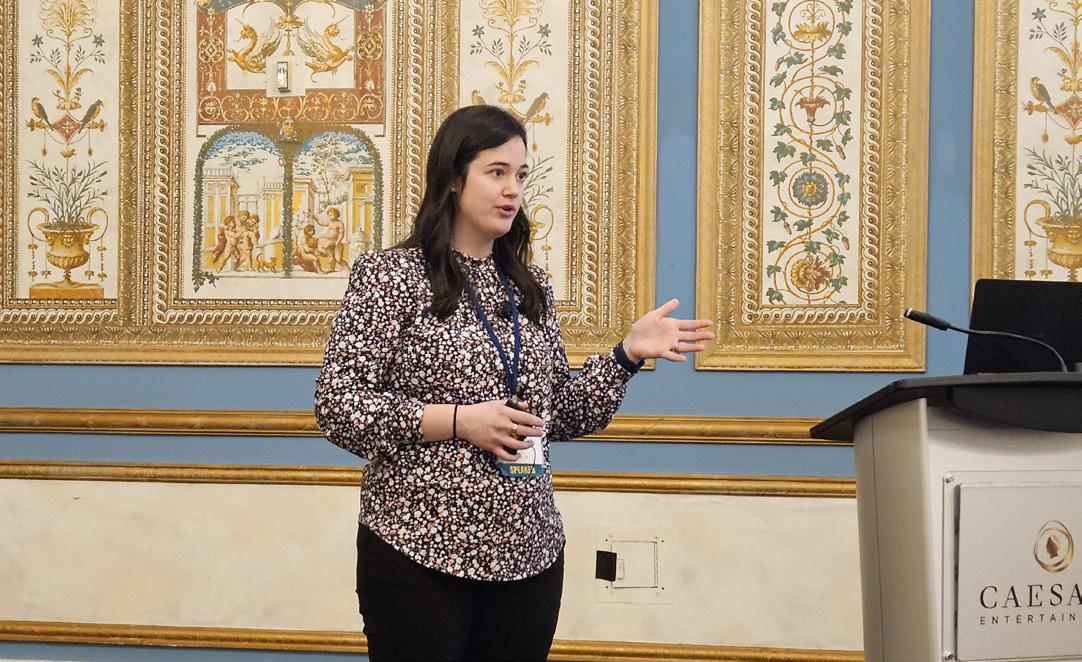
Ohio pork producers played a role in helping shape the strategy. Nathan Isler of Prospect, who serves on the Ohio Pork Council board, participated on the national advisory group last fall that reviewed producer feedback and helped establish the framework for the strategy.
Isler said the process reflected strong input from producers across the country, including many from Ohio. “I believe this plan should line up very closely with Ohio producers as there was a great deal of input from them, and I believe it aligns very closely with the health concerns and priorities of our state.”
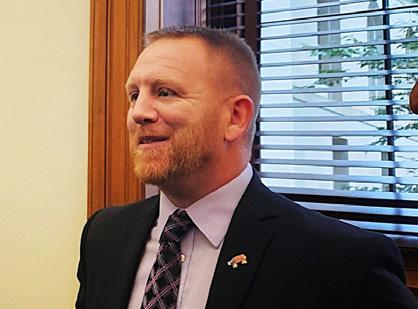
Isler added that while eliminating diseases such as PRRS and PED will require significant coordination, the industry has shown it can make meaningful progress when producers work together. “While admitting elimination of PRRS is an extremely ambitious goal, I hope that it’s one that everyone can agree should be our ultimate goal to work toward as an industry.”
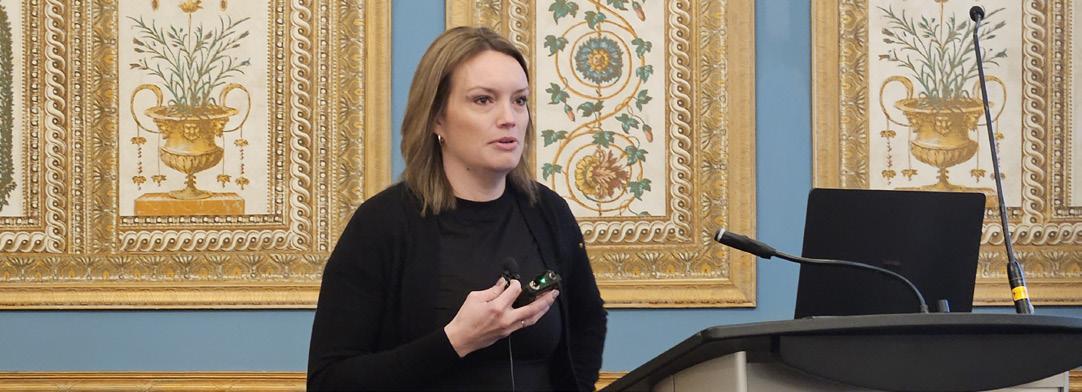
A defining feature of the NSHS is its producer-driven approach. The strategy was developed by an advisory group that included producers from multiple regions and production segments along with veterinarians and leaders from national and state pork organizations.
Anna Forseth, DVM, director of animal health for NPPC, said the strategy builds on earlier work focused on foreign animal disease preparedness while expanding the industry’s focus to additional health challenges.
“Both NPPC’s and NPB’s swine health teams have worked hard to address the six industry priority areas established in 2022 that focused on African swine fever,” Forseth said. “Now, the proposed National Swine Health Strategy will expand the two swine health teams’ focus to foreign animal diseases beyond ASF, as well as to endemic disease threats.”
Importantly, the strategy is designed to connect and leverage existing efforts across the industry. This include those related to the Swine Health Information Center (SHIC), the U.S. Swine Health Improvement Plan (U.S. SHIP), Secure Pork Supply, and AgView.
To ensure the strategy moves from vision to action, delegates at the 2026 National Pork Industry Forum unanimously approved an advisement calling for the creation of a producer-led national swine health advisory committee to guide implementation.
The committee will help prioritize research investments, identify practical tools for producers such as biosecurity enhancements, and measure progress toward the strategy’s goals. The group is expected to be established within 60 days of the Forum, meaning the committee should be in place by early May.

Industry leaders acknowledge that eliminating major diseases such as PRRS will take time and sustained cooperation across the pork production chain. But the National Swine Health Strategy signals a renewed commitment to tackling those challenges with greater coordination and producer leadership.
For pork producers in Ohio and across the country, the message is clear: improving herd health will require a
SCAN THE CODE ABOVE TO SEE PLANS AND PROGRESS! PORKCHECKOFF.ORG/STRATEGY
National pork industry leaders gathered at the 2026 National Pork Industry Forum in Kansas City for a producer panel moderated by Ohio Pork Council Executive Vice President Cheryl Day, focusing on market growth, consumer expectations, and the long-term health of the U.S. swine herd.
Day opened by pointing to pork’s strong position with today’s protein-focused consumers. “Right now, food is health,” she said. “The consumer is chasing protein… for pork and other nutrient-dense proteins, it was a win.”
Panelists agreed the opportunity extends beyond volume to value.
“I’m incredibly jealous of the run that beef has had,” said National Pork Board Vice President Chad Groves. “Price continues to go up and demand keeps pace… it’s not just volume—the other half is the value we’re getting.”
NPB President Gordon Spronk added that beef’s success offers a clear lesson. He said, “They’ve done a much better job of integrating value and volume through higher quality.”
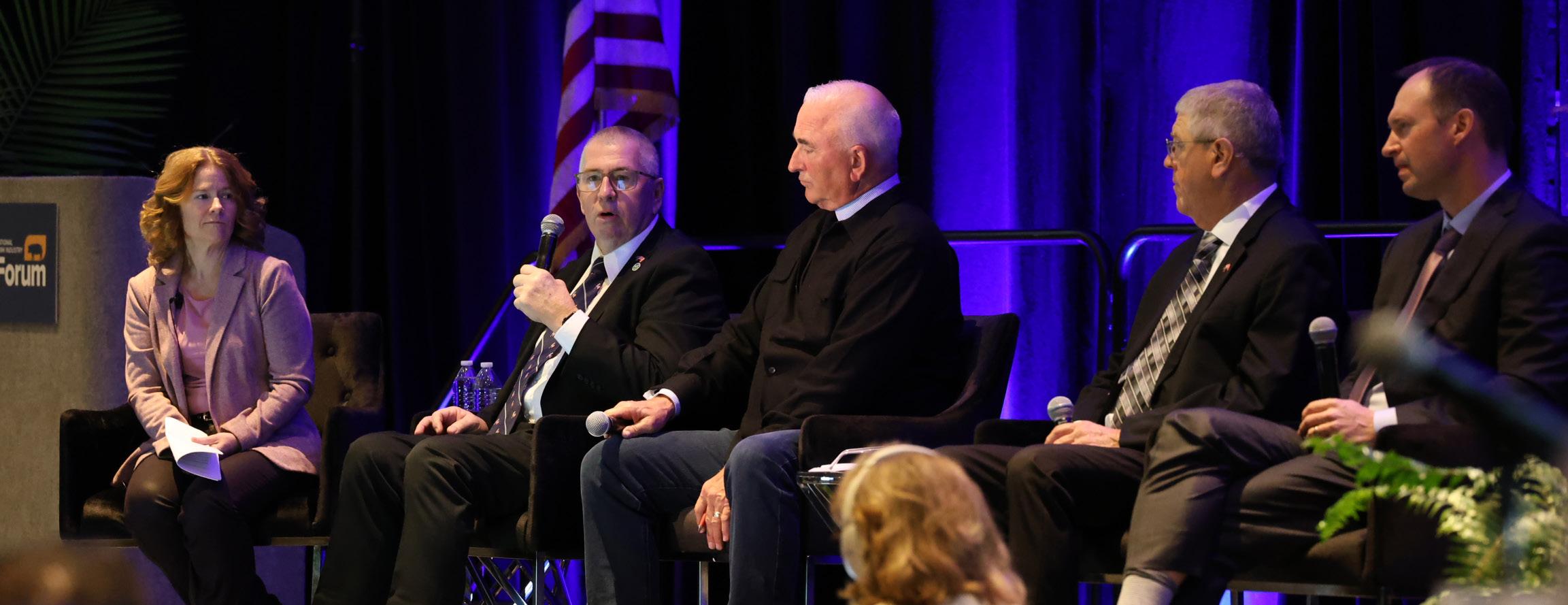
Delivering a consistent eating experience remains critical, said Duane Stateler, National Pork Producers Council immediate past president. “How do we get that experience where that pork chop is the same every time?” he said. “If the next time isn’t as good, that’s when you risk losing them.”
Groves noted that messaging must evolve with consumers. “Younger consumers want to know how long to put something in the air fryer, so getting the right message in their language is vital.”
Panelists underscored the importance of strong coordination across the pork industry.
“The real power is in the state organizations,” Groves said. “That partnership is what makes our industry so powerful.”
NPPC President Rob Brenneman reinforced the need for producer leadership. “We’re the ones out on the
front line seeing what’s happening,” he said, adding that local communication builds trust among producers and communities.
Stateler emphasized science-based solutions to protect the industry. “Let’s find out scientifically where these issues are coming from and defend our opportunity to farm.”
Emerging technologies, including gene editing, bring both opportunity and scrutiny.
“That word ‘risk’ is in capital letters,” Stateler said. “Consumers have to be confident in what they’re eating.”
Brenneman tied public trust back to local actions. “If you operate right in your local area, you build a coalition for you instead of against you.”
Spronk closed with optimism. He said, “We have high confidence that we’re going in the right direction and that our industry has the brightest future I’ve seen in decades.”

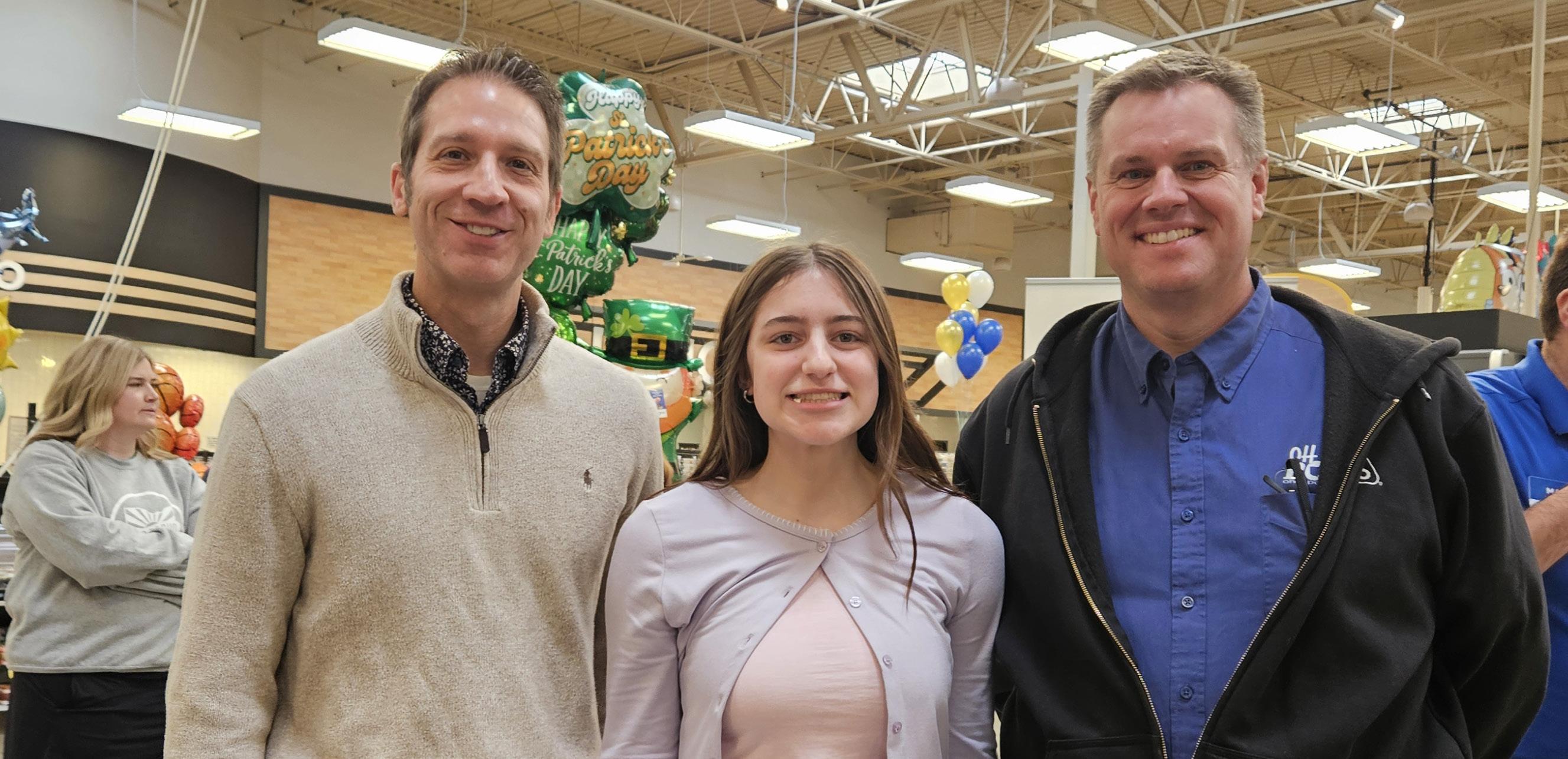
Giving back to local Ohio communities, a longstanding tradition at the Ohio Pork Council, was demonstrated again in a competitive way. This time it came by participating in the second annual Supermarket Showdown at the Kroger Marketplace in Perrysburg, where various Ohio commodity groups vie for bragging rights to see who can put the most in their shopping carts in a limited time. It was the perfect event to take place in March, Ohio Agriculture Month!
The Ohio Pork Team was made up of Ohio Pork Council President Nathan Schroeder (right), OPC Board Member Kyle Culp, and Claire Lampe, a local show pig exhibitor who helped Rep. Haraz Ghanbari take top prize in the 2025 Battle for the Bacon pig show at the Ohio State Fair. Each team member raced through the store to find Ohio Proud food products that would then be donated. The Ohio Pork Team proudly brought home the silver medal, finishing second only to the Kroger team in this fast-paced competition.
“Giving back to local communities in our state is something that we are proud to do,” Schroeder said. “It’s part of our We Care philosophy that helps guide us in being good neighbors to help those in need, which is especially fitting when we can deliver pork to those in need during Ohio Agriculture Month.”
Together, participants collected $12,627 worth of food –more than double last year’s total – and included $1,200 in pork donated by the Ohio Pork Council. All of this food will support Tim’s Rescue Kitchen, which accepts produce, meat, and other donated items to make them into meals for people in the community who need a helping hand.
Shroeder added, “We’re proud to be a part of this fun event to continue to put a spotlight on how Ohio pig farmers are trying to make a real difference in people’s everyday nutrition and food security.”

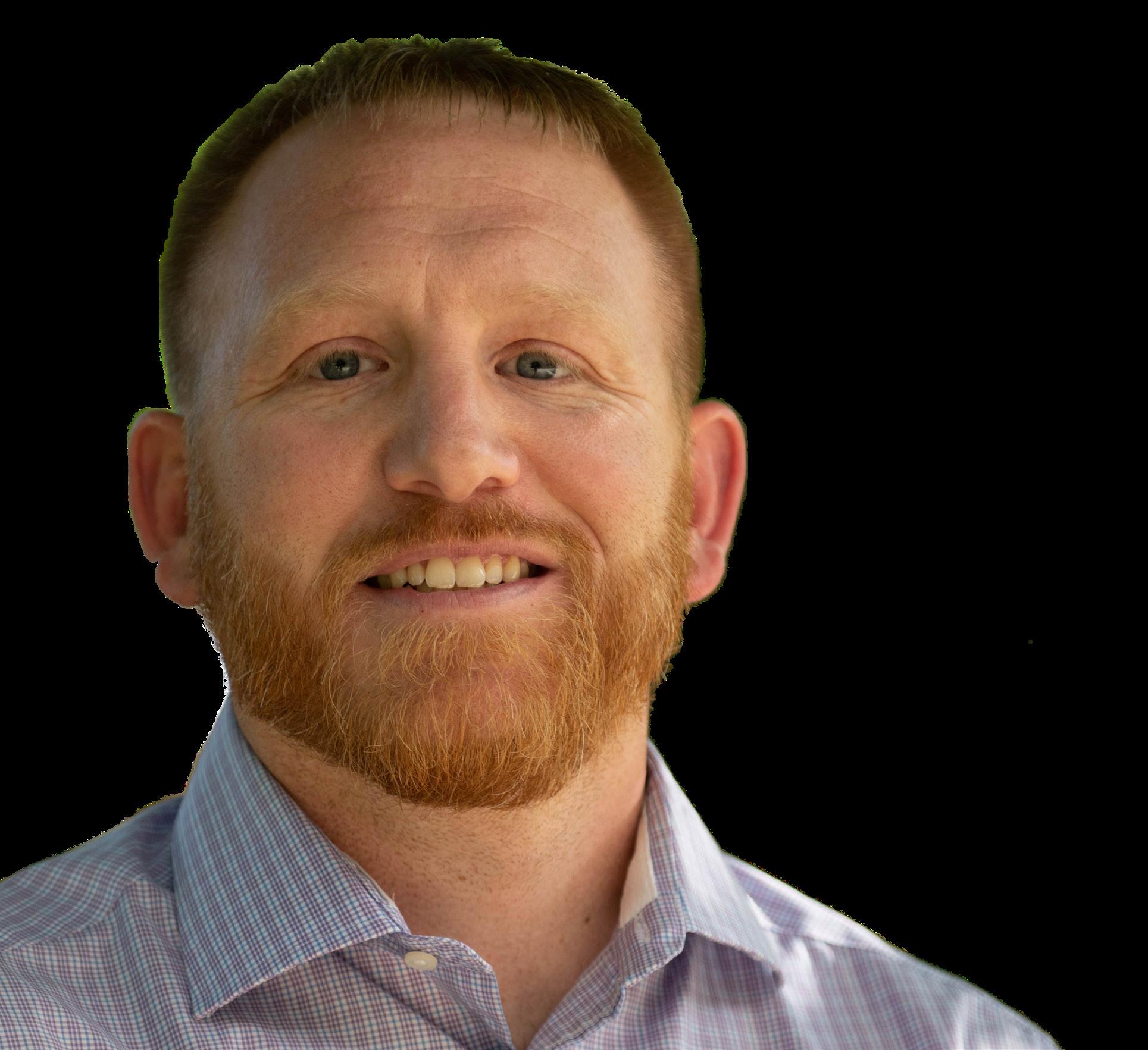
To be your voice, we need your voice.
Nathan Isler Islercrest Farms
Prospect, OH
“I support the National Pork Producer Council’s (NPPC) Strategic Investment Program (SIP) because it gives my family’s sixth generation farm a voice in countless local, state, and national conversations involving pork production. By being an SIP investor, I get to speak directly with the experts on staff at both NPPC and the Ohio Pork Council and let them know what I need as a producer to succeed.
Whether it be a misguided ballot initiative in a distant state or a burdensome regulation in my own backyard, my SIP investment gives me access to resources and information that will help defend my family’s livelihood against such threats. I ask that you join me in becoming an SIP investor today so we can continue to have the freedom to operate tomorrow.”