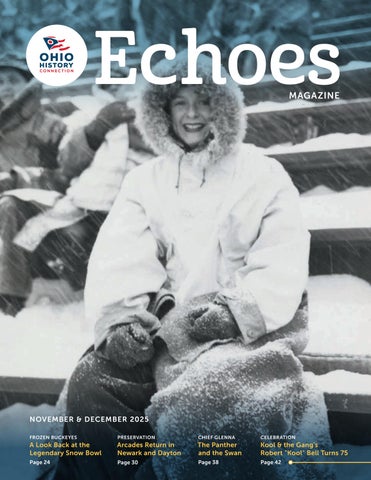
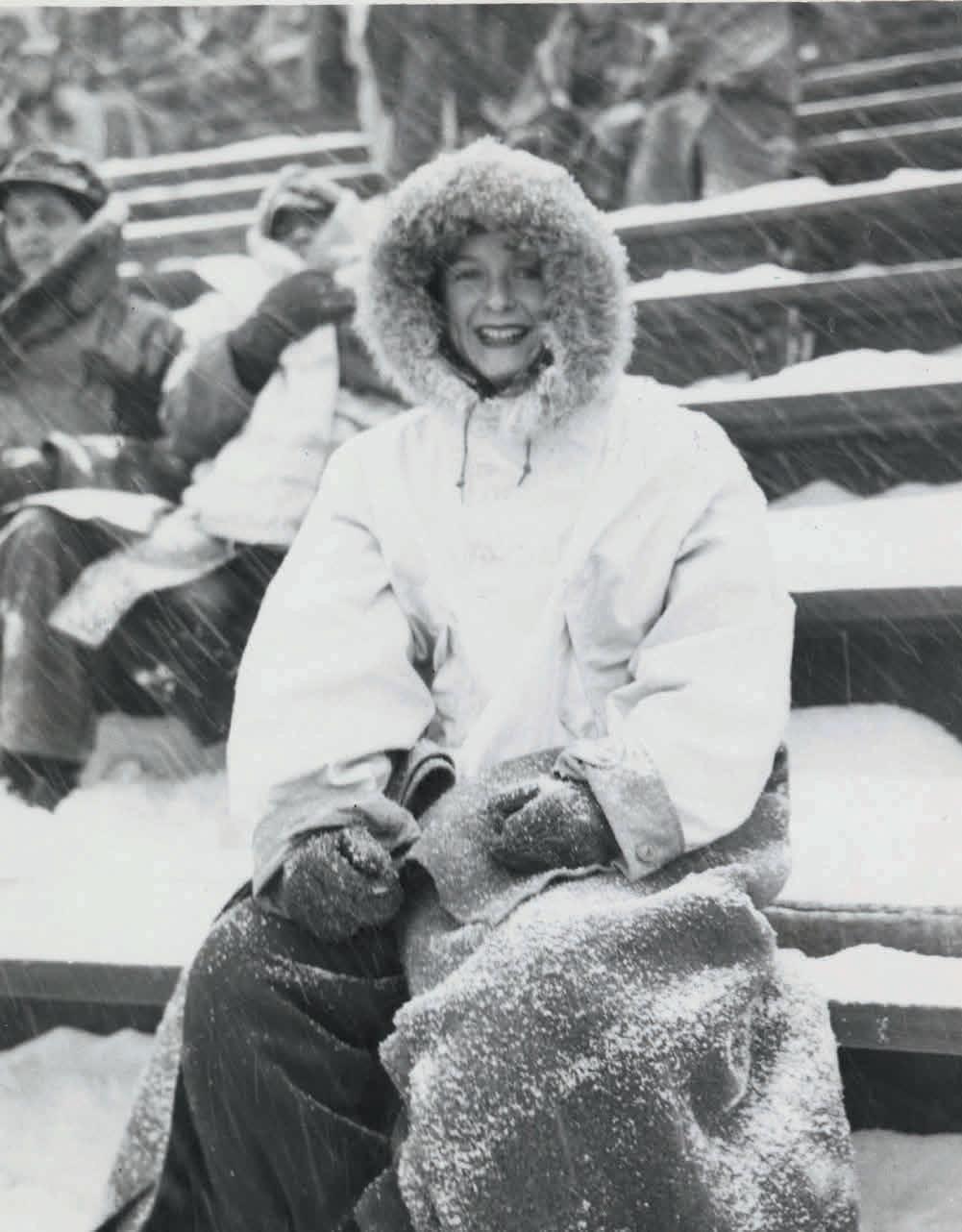
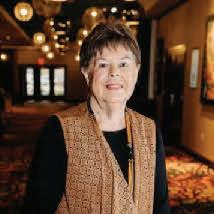
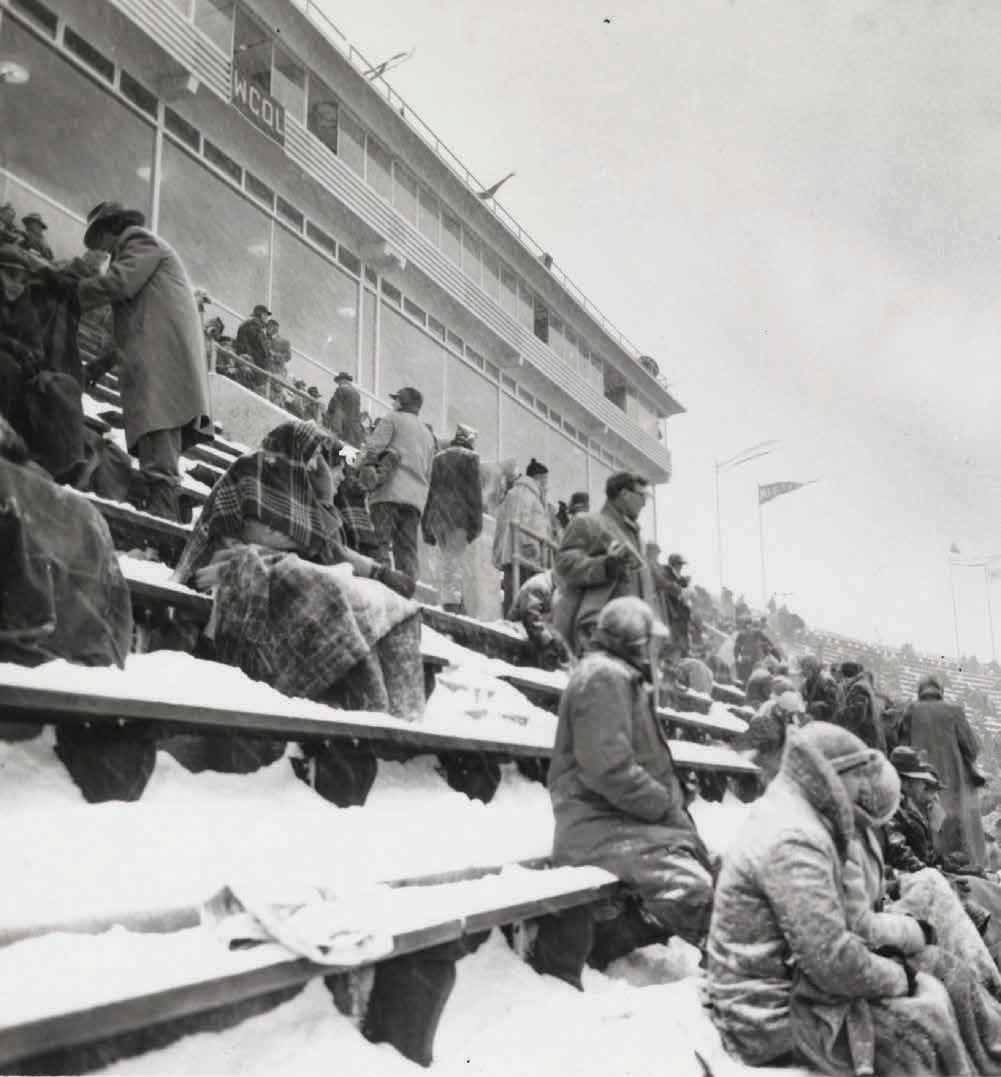
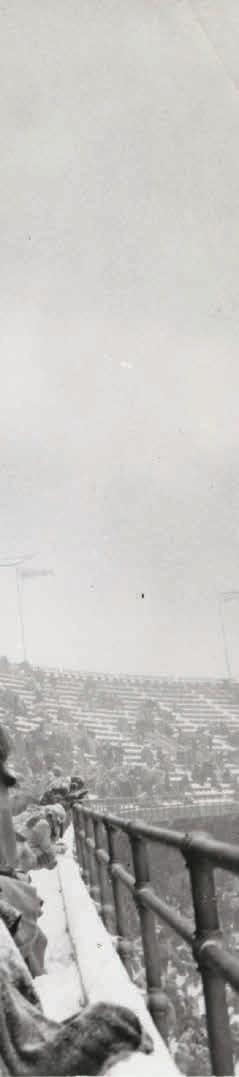
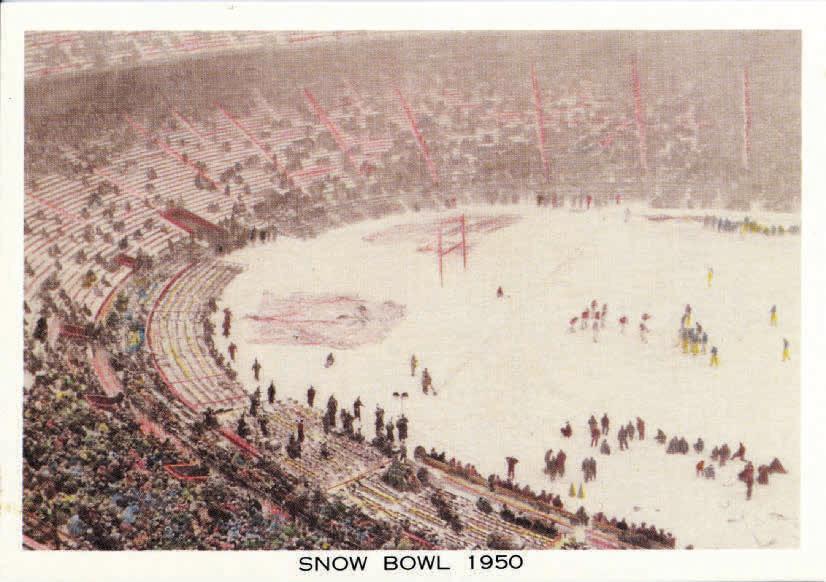
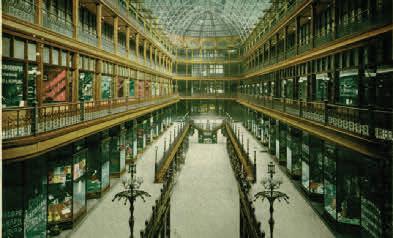
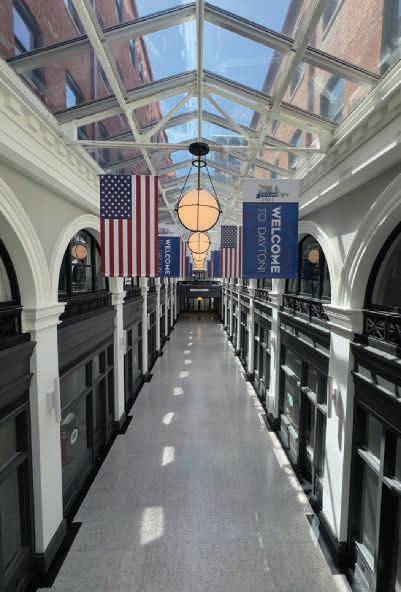
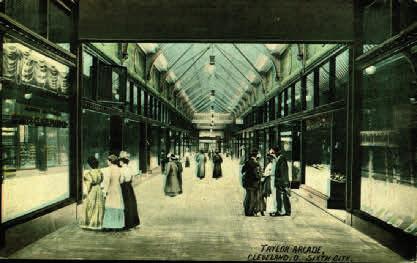
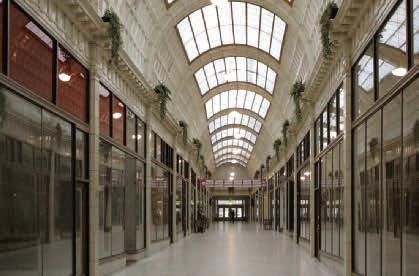
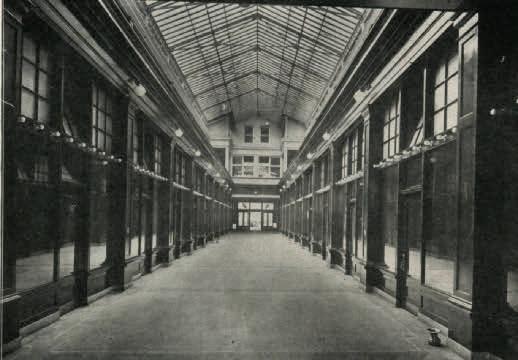
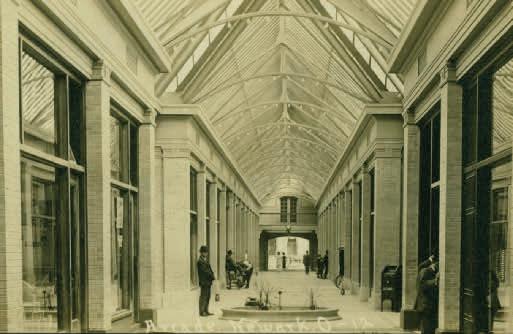
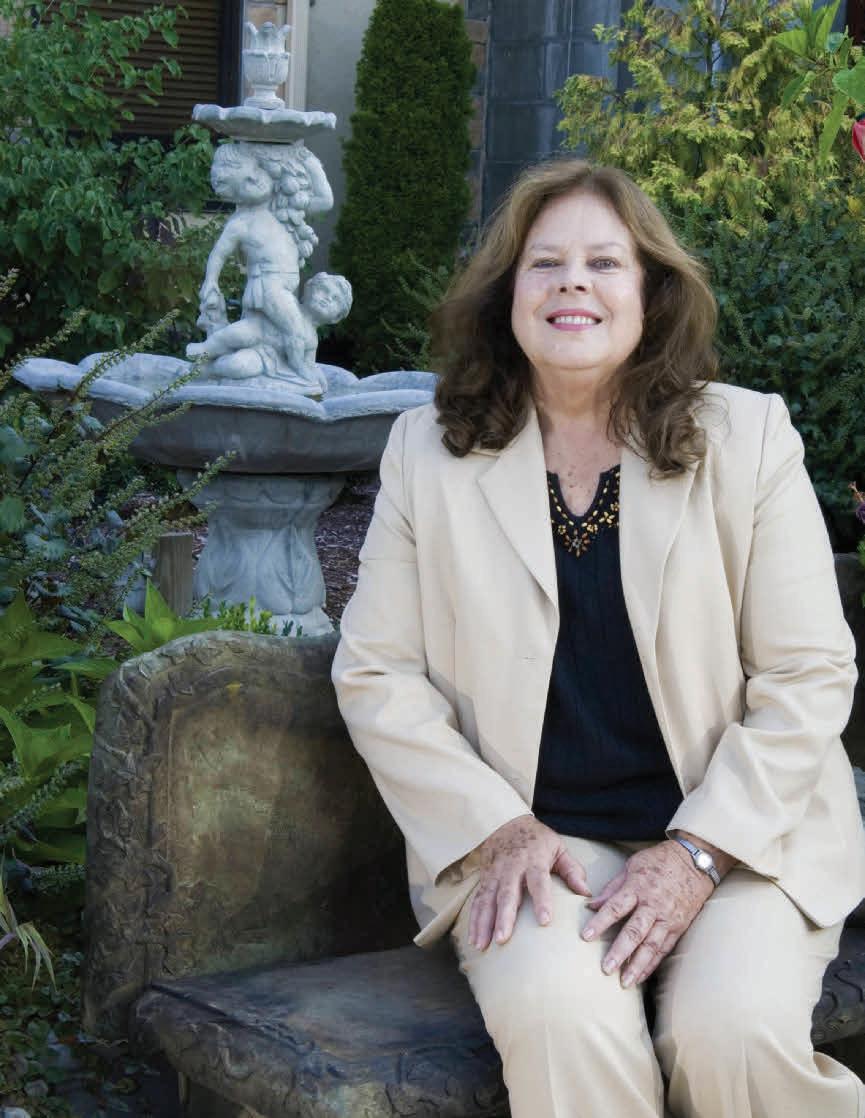
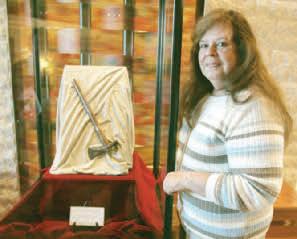
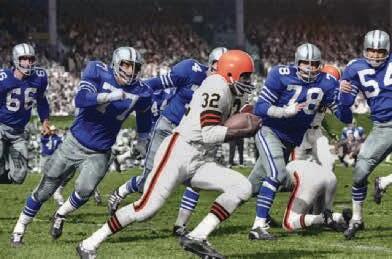
Cover: On November 25, 1950, Ohio State played Michigan in one of the most memorable games of their long-running rivalry. Despite near-whiteout conditions, 50,503 fans—including this woman wellprepared for the weather—attended what became known as the “Snow Bowl,” a 9–3 Michigan win played in up to 8 inches of snow, 35 mph winds and frigid temperatures. Columbus Metropolitan Library, Columbus Dispatch Collection
Vol. 64, No. 6
DIRECTOR OF MARKETING & DEVELOPMENT
Jerry Dannemiller
EDITORS
Bill Eichenberger
Tom Wolf
CONTRIBUTORS
Jennifer Aultman
Bob Hunter
Bill Livingston
Mira Patel
John Petkovic
Brian Williams
DESIGN
Lydia Stutzman | Lydiary Design
ADVISORY BOARD
Donna DeBlasio
Youngstown State University
Jamie Evans
The Filson Historical Society
Stephen George Ohio History Connection
Shirley Green University of Toledo
Alex Hastie
Ohio v. the World
George Ironstrack
Miami University
Katherine Jellison
Ohio University
Daniel Rivers
The Ohio State University
Truda Shinker
Ohio History Connection
George Vourlojianis
John Carroll University
Echoes Magazine (ISSN 0012-933X ) is published bimonthly and distributed by the Ohio History Connection as a benefit of Ohio History Connection membership.
Editorial Offices: Ohio History Connection, Ohio History Center, 800 E. 17th Ave., | Columbus, OH 43211-2474 | Phone 844.836.0012 Email echoes@ohiohistory. org
Postmaster: Please send address changes to:
Echoes Magazine, Ohio History Connection, Ohio History Center, 800 E. 17th Ave., Columbus, OH 43211-2474
Preserving the Past with an Eye to the Future— Dayton and Newark Revive Landmark Arcades
The Panther and the Swan— A Profile of Chief Glenna Wallace Get Down on It—Robert “Kool” Bell Turns 75
IN EACH ISSUE
Contents From Our Editors What’s Your Story? In the News
From Our Director
Historic Sites & Museums
At the Ohio History Center
Online Events
Featured Events & Exhibits I Wish I’d Been There Young Eyes on the Past
Moving? Contact us at membership@ohiohistory.org or 800.686.1545 to share your new address. Our Ohio History Connection Strategic Partner:
THANKS TO Our Ohio History Day Sponsor: Like us on Facebook, and follow us on Instagram at @OhioHistory
The Ohio History Connection is a
Deep Freeze
A LOOK BACK AT THE SNOW BOWL
It’s been 75 years since the 1950 OSU-Michigan game that’s gone down in Ohio history as the Snow Bowl. In Columbus that day, the snow was so heavy that players on one sideline couldn’t see their counterparts on the other sideline. After each play, the broom patrol had to clear a spot to place the ball for the next play. Bob Hunter looks back at the legendary game, played in conditions that started out bad and only got worse.
Preserving the Past with an Eye to the Future
DAYTON AND NEWARK REVIVE LANDMARK ARCADES
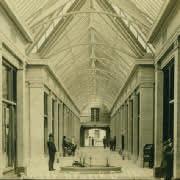
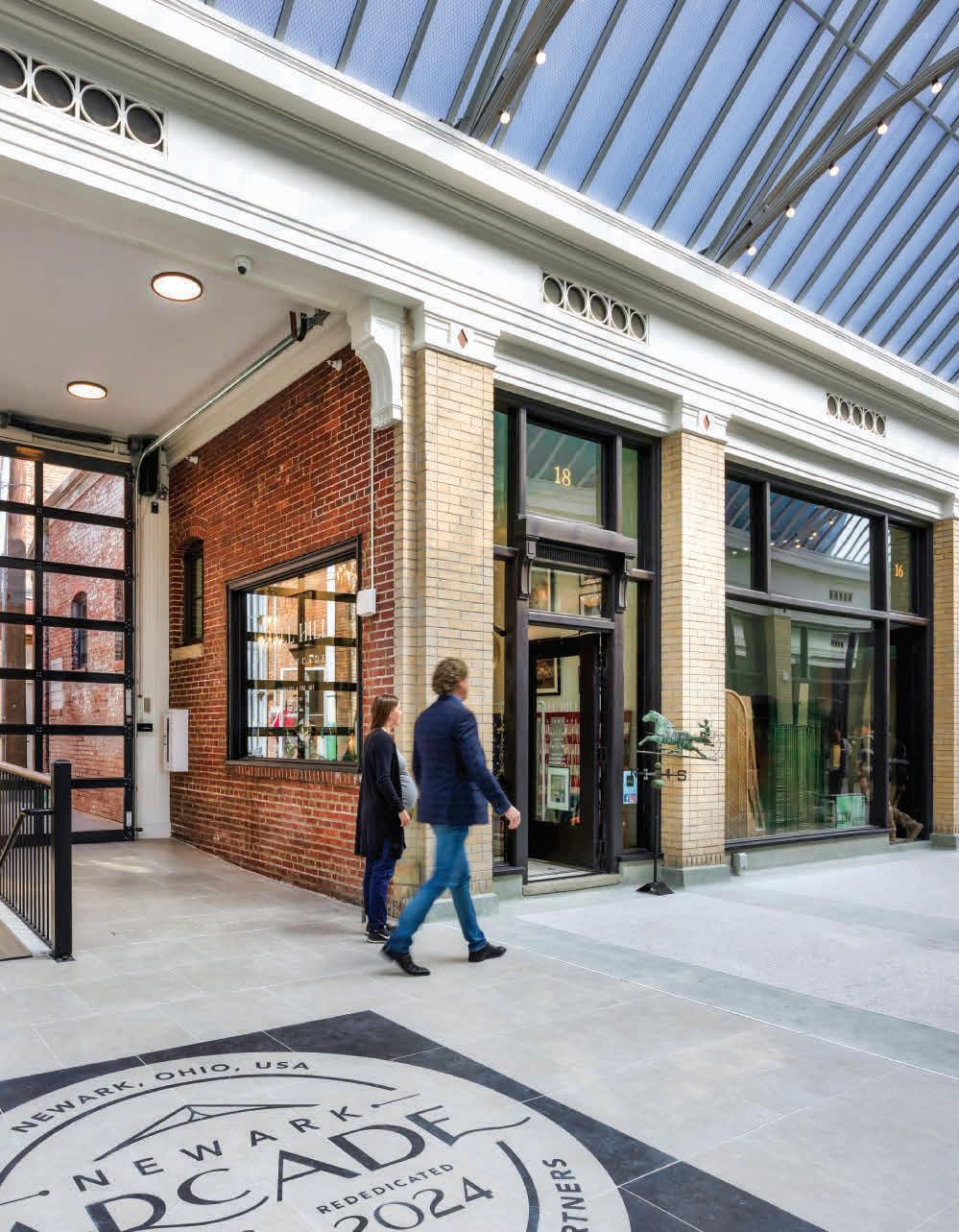
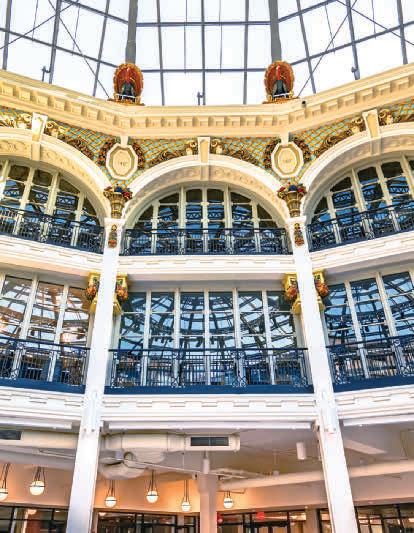
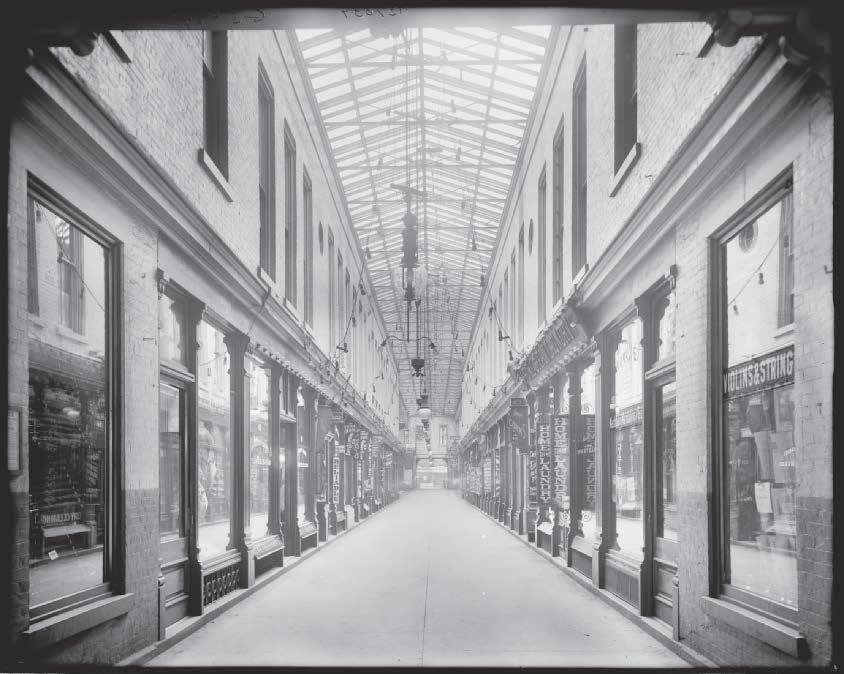
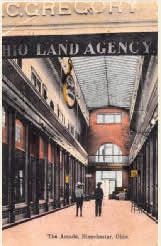
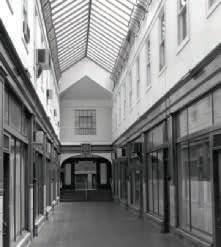
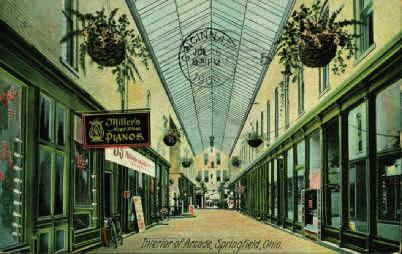
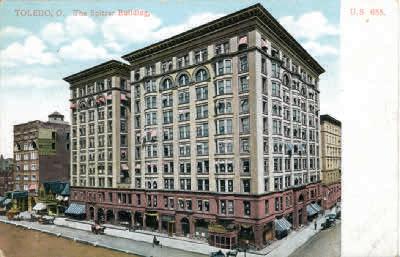
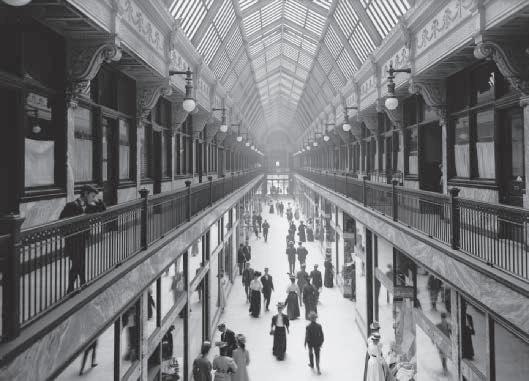
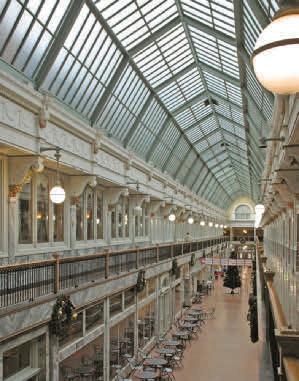
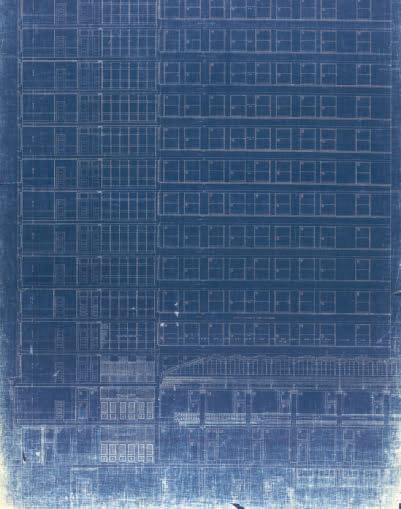
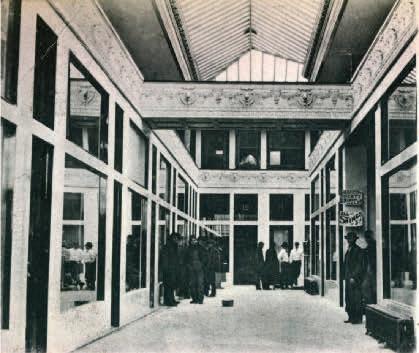
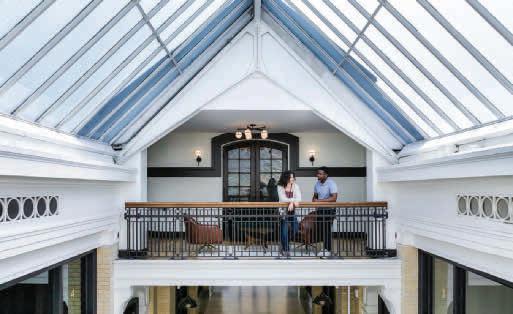
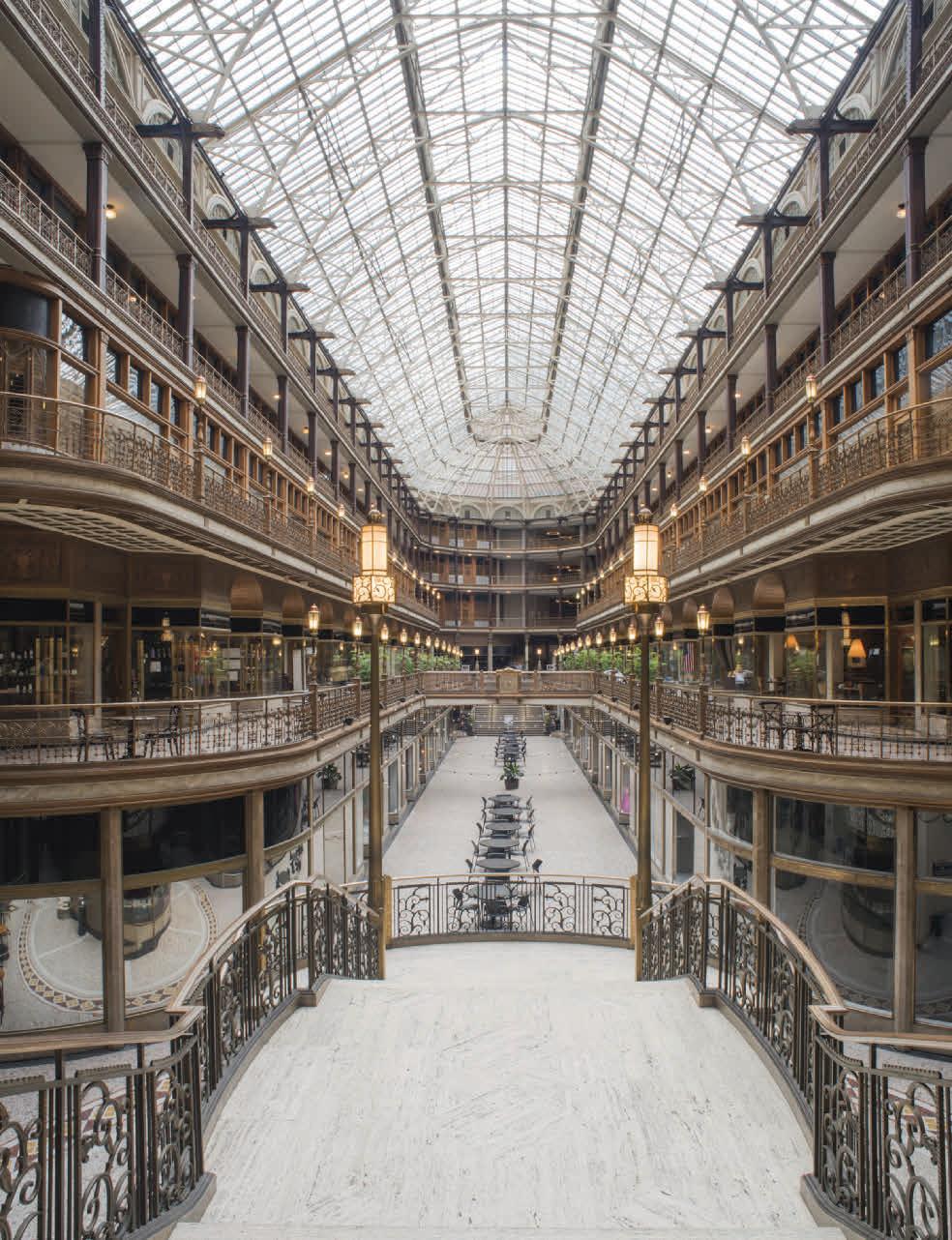
As suburban shopping malls vanish, a curious countertrend has materialized. Glass-roofed downtown shopping arcades— forerunners of those malls—are poised to thrive anew. The 116-year-old Newark Arcade reopened in February after a fiveyear, $22 million rehab, and the refurbished 1904 Dayton Arcade is bringing new life to nine historic buildings in the Gem City.
The Panther and the Swan
A PROFILE OF CHIEF GLENNA WALLACE
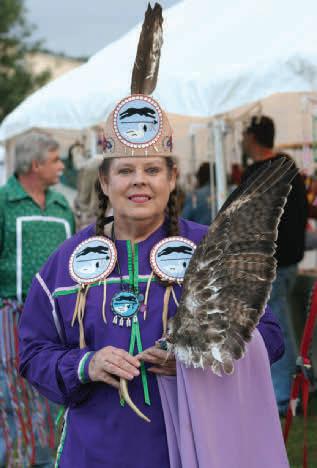
Chief Glenna Wallace has been a moving force behind efforts to have Ohio’s Hopewell Ceremonial Earthworks named to UNESCO’s World Heritage List. “Chief Glenna” is the first woman to serve as chief of the Eastern Shawnee Tribe of Oklahoma, which has its roots in Ohio. Two Eastern Shawnee symbols drive her: the panther and the swan. Be strong and graceful at the same time, persistent but adaptable.
Get Down on It
ROBERT
“KOOL” BELL TURNS 75
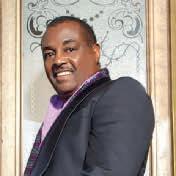
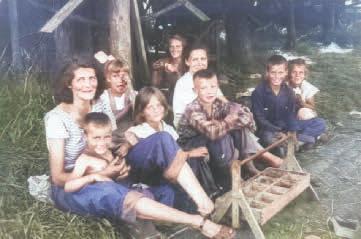
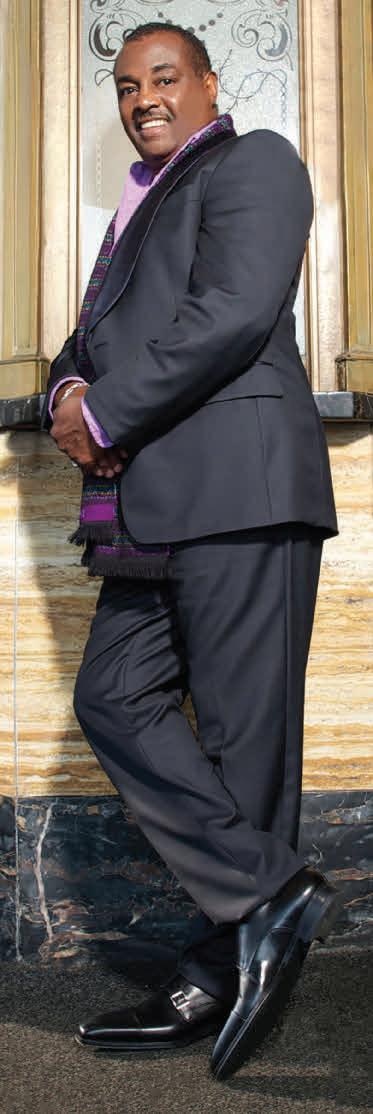
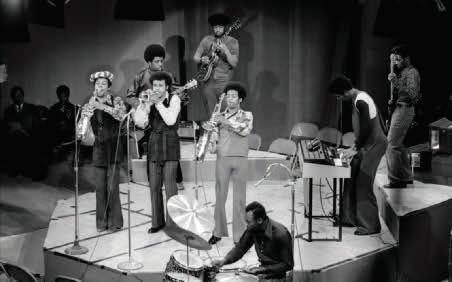
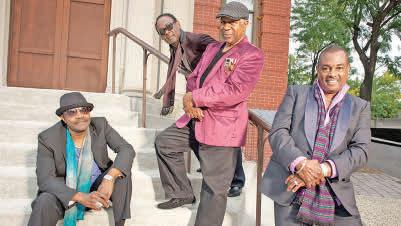
Youngstown native Robert “Kool” Bell’s hits of the 1970s and ‘80s with Kool & the Gang include dance-floor classics like Jungle Boogie, Ladies Night and Celebration. His upbringing nurtured a can-do attitude that has informed Bell’s life—one that would launch his unlikely career in music and that keeps him going at 75.
FROM OUR EDITORS
Last November, Ohio History Connection Executive Director & CEO Megan Wood interviewed Doris Kearns Goodwin. Throughout the interview, the presidential historian spoke as if we’d hired her to do publicity for us.
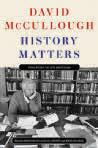
And now comes a short gem of a book, History Matters, a collection of essays written by David McCullough that were collected and edited after his death by his daughter, Dorie McCullough Lawson, and longtime assistant, Michael Hill.
In the title essay, a speech he delivered when he received the National Book Foundation’s Medal for Distinguished Contributions to American Letters, McCullough argues that “History shows us how to behave. History teaches, reinforces what we believe in, what we stand for, and what we ought to be willing to stand up for. History is—or should be—the bedrock of patriotism, not the chestpounding kind of patriotism but the real thing, love of country.”
He continues, “At their core, the lessons of history are largely lessons of appreciation. Everything we have, all our great institutions, hospitals, universities, libraries, cities, our laws, our music, art, poetry, our freedoms, everything exists because somebody went before us and did the hard work, provided the money, provided the belief.”
Looking at it from that vantage point, “Indifference to history isn’t just ignorant, it’s rude. It’s a form of ingratitude.”
McCullough concluded his speech with an enthusiastic endorsement of the American Experiment: “How lucky we are. How lucky we are to enjoy in our work and in our lives the possibilities, the precision, the reach, the glories of the English language. How lucky we are, how very lucky we are, to live in this great country, to be Americans—Americans all.”
Which pretty much sums up how we both feel every day we show up for work, every day we dive into new and fascinating stories about Ohio’s rich history, including:
F The Snow Bowl game between Ohio State and Michigan, played 75 years ago this month. (See page 24.) Weather conditions were so bad— gusting wind, blinding snow—that the teams punted 45 times for a total of 1,408 yards!
F Glass-roofed shopping arcades (see page 30), which date as far back as Paris in the 1780s. Arcades came to the United States in the early part of the 19th century and really blossomed in Ohio after the opening of the Cleveland Arcade in 1890. It quickly became a popular landmark admiringly dubbed the city’s Crystal Palace. Historic arcades in Newark and Dayton, freshly rehabbed, are bringing new life to both downtowns.
F Chief Glenna Wallace (see page 38), who in 2006 became the first woman ever elected to the office of chief of the Eastern Shawnee Tribe of Oklahoma.
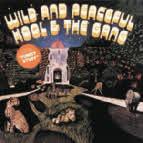
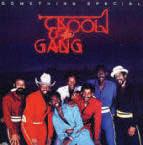
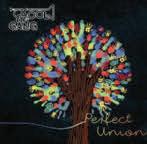
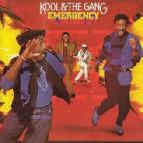
F Robert “Kool” Bell, last surviving member of Youngstown’s Kool & the Gang, who turned 75 in October. (See page 42.) The R&B/soul/funk/disco group was enormously successful, especially in the 1970s and 1980s. They recorded 12 Top 10 singles, including No. 1 hits Jungle Boogie and wedding reception standards Get Down on It and Celebration. Happy reading!
What ’s
In every issue of Echoes Magazine, we feature the stories of Ohio History Connection members and other Ohioans to stoke memories and shed light on our shared past.
“
For this issue, we asked, What ’s the most memorable sporting event you’ve attended in Ohio?”
Here are some of your responses:
ONE, TWO, BUCKLE MY SHOE I went to Ohio State for graduate school in the mid-1980s, and the most exciting sporting event I’ve ever been to in Ohio was the 1984 Ohio State–Illinois football game at the Horseshoe. Illinois had beaten us (and gone to the Rose Bowl) the year before, so people were fired up for this game, then watched in disbelief as Illinois jumped out to a 24–0 lead early in the second quarter. Ohio State scored two quick touchdowns to get back in it, and a great game ensued. Keith Byars, the Ohio State tailback, played an amazing game, gaining 274 yards rushing and scoring five touchdowns (on one of which, a 67-yard run, he lost his shoe). Byars’ last touchdown, late in the fourth quarter, gave the Buckeyes the lead and the win, 45–38.
—Kevin O’Neill, Seattle, WA
IN THE SOUP
On a recent getaway to Maine, my wife and I had a few hours to travel from our first destination, Portland, to our second spot in Ogunquit, a small town about 40 miles down the coast. What better place to kill some time, I said, than Old Orchard Beach, the site of one of the strangest
Your Story?
days in my 40-plus years as a sports journalist? “Sure,” she said, though I know she was thinking about another lobster roll. Some 39 years had passed since I was last in Old Orchard Beach, on assignment for The Columbus Dispatch covering the city’s minorleague baseball team, the Columbus Clippers. Their opponent was the Maine Guides, a club formed in 1984 by a Maine attorney who figured, rightly, that southern Maine was a more handsome spot for baseball than Charleston, West Virginia. But the Guides had issues. Among them was Old Orchard Beach itself, a summer vacation haven with no real population base—unless one counts mosquitos and black flies among its citizenry. In those numbers, it had no rivals. Insects could not be blamed for halting the Clippers-Guides game on Aug. 19, 1986, nor could the usual suspects, including rain and lightning. Rather, a beautiful New England evening disappeared with a wind shift, sending a mass of chowdery fog over, under and among the tall pines that surrounded the stadium. A baseball game suddenly became the closing scene in Casablanca. The long delay and eventual postponement were unwelcome news for a young reporter with a hard deadline and a fixed space to fill. Later, my facts-obsessed wife explained that I should not have been surprised, considering Portland is the foggiest city in the United States. But I think what she meant is that we should have had a lobster roll.
—Ray Stein, Columbus
“QUEEN ” CITY
April 17, 1976, was a great day for a ballgame in Cincinnati: It was unseasonably warm, the skies were clear and the Reds were playing the San Francisco Giants in NBC’s game of the week. As usual, we arrived early, grabbed a beer and took our seats on the first-base side. As game time approached, something seemed odd. Most of the Giants were hanging out on Riverfront Stadium’s carpeted
OHIO SPORTS
field rather than in their dugout. Soon we figured it out: A few thousand bees were swarming at the end of the dugout closer to home plate. As it happened, the crowd that day included an exterminator and an experienced beekeeper. They came out of the stands, found the queen and moved her into a makeshift hive; her loyal subjects followed and were safely removed. The bee-handlers received several stings and a standing ovation, and left-hander Fred Norman threw the first pitch about a half-hour behind schedule. The game itself provided a great second act for the home fans. The Reds, on their way to a second straight World Series championship, launched three home runs and throttled the Giants 11–0.
—Kirk Arnott, Columbus
WIN AND YOU’RE IN!
On Dec. 29, 2002, the Browns were almost four seasons into their second act beginning in 1999. Success was slow, but it was happening. We went from two wins in 1999, to three in 2000, to seven in 2001, and, coming into that day’s game with the Atlanta Falcons, we were 8–7 and on the cusp of a playoff berth. The game against the Falcons was a textbook day in the life of a Browns fan: The weather wasn’t great, with temperatures between 35 and 40 degrees and a misty, drizzly rain throughout the afternoon. The game fell between Christmas and New Year’s Day, so shenanigans were at their peak for us Browns fans. It was a great game, which saw the Browns holding a 17–16 lead when rookie running back William Green ripped off a 64-yard touchdown run to put the Browns up 24–16. With 1:23 to go, the Falcons drove the ball down to the Browns’ 4-yard line. Four chances to score and potentially tie the game. First play, Warrick Dunn gets three yards to move the ball to the 1-yard line. At this point, the PA announcer shares some critical news. “The Carolina Panthers have defeated
the New Orleans Saints 10–6, and the Atlanta Falcons have made the playoffs.” Second-and-1, quarterback Michael Vick throws an incomplete pass and again the PA announcer lets the Falcons know, “The Carolina Panthers have defeated the New Orleans Saints 10–6, and the Atlanta Falcons have made the playoffs.” Third-and-1, Dunn up the middle for no gain and, of course, the PA announcer lets 73,000 of us know, “The Carolina Panthers have defeated the New Orleans Saints 10–6, and the Atlanta Falcons have made the playoffs.” At this point, sleep is being disturbed in Beijing as Cleveland Browns Stadium was bedlam. Falcons run Dunn up the middle and gain nothing again. The Browns have an epic defensive stand to keep hope alive for our own playoff berth. It’s one of my top moments in person ever as a Browns fan, and certainly since the 1999 rebirth. Just an incredible day.
—Kim Niswander, Johnstown
WHAT’S YOUR STORY?
We want to know your stories, so in every issue of Echoes Magazine we ask you a question, then run selected answers in the following issue. Here’s the question for our January–March issue of the magazine:
Robert “Kool” Bell was, with his brother Ronald, a founding member of Kool & the Gang, a funk group straight out of Youngstown. What’s a famous or highly talented band from your part of the state?
Email your story responses (50 to 150 words) by Jan. 22 to echoes@ohiohistory.org or, if you follow us on Facebook, send us a Facebook message.
In the News
IN
MEMORY
Tom Chema
by Charley Moses
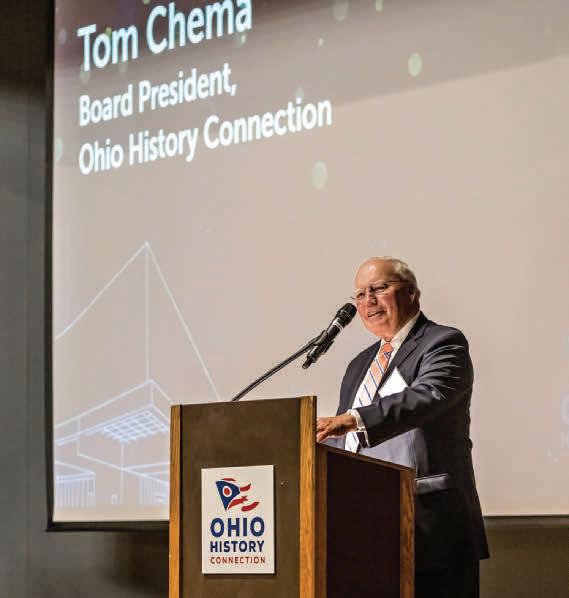
Former Ohio History Connection Board of Trustees President Tom Chema passed away earlier this year. Tom served as a trustee from 2004 to 2023. He was a guiding force in the renaissance of this organization. As in much of his career, Tom was instrumental in building the momentum that we have as an organization today.
For those of you who don’t know, Tom had an extraordinary professional career besides his service with the Ohio History Connection. An accomplished attorney, he was head of the Ohio Lottery Commission, chair of the Public Utilities Commission of Ohio and executive director of the Gateway project that transformed downtown Cleveland and brought new life to the city with the construction of Progressive Field, Rocket Arena and all the ancillary elements of the project.
Tom took that experience to advise and help construct stadiums, arenas and museums around Ohio and the United States. As president of Hiram College from 2003 to 2014, he brought the college back from the brink of a financial disaster, leading to a period of stability and expansion.
In a conversation I had with Tom about his career, he told me with each of these roles in his public life, he knew he had much to learn and discover. The interesting part of each challenge for him was knowing that with confidence and collaboration he could figure it out.
Tom was a builder not only of physical structures, but of consensus as well. He would be the first to admit that these accomplishments could only happen with many people from many disciplines all working together. That may be his greatest accomplishment. With each of these endeavors, he was able to form consensus, move forward and accomplish, in some cases, historic milestones.
The experience of leading a variety of large, complex organizations with several public stakeholders fit perfectly with the Ohio History
Connection’s mission and its dedicated and accomplished staff. Tom was instrumental in the revitalization of public support for the organization, particularly with the Collections Care Center and the renovation of Ohio Village, now underway. He told me that one of his proudest moments at the Ohio History Connection was signing Megan Wood’s first contract as CEO. On behalf of the board of trustees, we remember Tom for all his good work and his steadfast commitment to the Ohio History Connection. We thank him for leaving this organization in a better place than when he found it.
—Charley Moses is president of the Ohio History Connection’s board of trustees.
Tom Chema
Ohio History Center Museum, Columbus
OHIO HISTORY CENTER Museum Open Daily
Dec. 26–31
Looking for fun in the days between Christmas and New Year’s Eve?
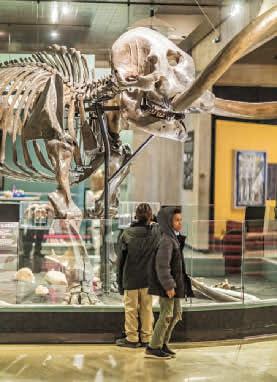
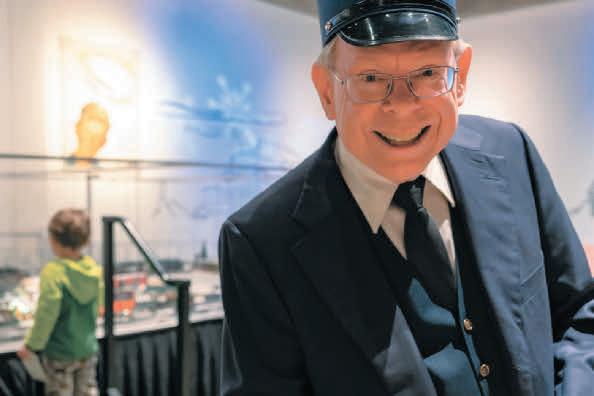
The Ohio History Center Museum, ordinarily closed on Mondays and Tuesdays, will be open 10 a.m. to 5 p.m. daily from Friday, Dec. 26, through Wednesday, Dec. 31. Visit favorites like Conway the Mastodon and the 1950s Lustron house, decked out for the holidays. See little Jimmy’s Holiday Train Display (courtesy of Central Ohio Model Railroad Club), plus exhibits on Ohio history, archaeology and natural history, and—if you still have some shopping to do—our Ohio History Store. Ohio History Connection members enjoy free admission. The third-floor Library & Archives Research Room will be closed. Questions? Call 800.686.6124 or visit ohiohistory.org/center.
You can always call our membership office at 800.686.1545 to reserve tickets for events that are free to members, including webinars.
Welcome to the end of another eventful year. As the new year approaches, I’d like to share some changes to expect in 2026.
Our beloved Echoes Magazine will come to your mailbox four times a year in 2026. In between issues, we’ll be sharing some new digital features, including videos, a new podcast and other special content for members.
I want to assure you that Echoes Magazine is not going away. We value the content that this magazine delivers to you, and we know you love it, too. We promise to keep the content vibrant and timely, and to continue to delight your curiosity in the way to which you’ve become accustomed.
I also want to assure you that our digital content will bring extra Ohio history into your life. I hope you’ll be interested in hearing the voices and seeing the faces of more Ohioans like those who have graced the pages of this wonderful publication. It gives us a chance to share even more of the kinds of stories we bring you in Echoes Magazine.
Why are we making this change? I will be honest and upfront—this is a business decision about rising costs and responsibility for resources. Printing and sending a magazine in the mail is an expensive endeavor and instead of increasing our membership prices, we've decided to move to four issues. But I pledge to you, as a person who loves and cares deeply about history (and can still read cursive), that we are committed to this publication, the written word, ink on paper and the U.S. Postal Service. Future historians will be able to tell us how long those things continued, though for now, we still support those industries, in addition to human-created content.
So, what other changes can you expect in 2026? There are some great things: Ohio Village will reopen with updates and new experiences. The new Ohio Showcase building at the Ohio Expo Center will open with a multimedia-and-exhibit experience called Shaping Ohio—a permanent installation from the Ohio History Connection that will allow us to connect with audiences at the State Fair and other large events at the Expo Center. We’ll also break ground for our new Poindexter Village African American Museum.
At year’s end, I like to take stock of things that we’ve accomplished and challenges we’ve faced. Not everything about 2025 has been easy, though we’ve been able to move forward on many important initiatives. We opened Octagon Earthworks to visitors. We broke ground on the new Ohio River Museum and on Ohio Village renovations. We began archaeological investigations at Fort Laurens. And all this happened alongside the daily work of greeting visitors, assisting researchers, working with developers, erecting historic markers, implementing programs, working with educators and much more.
Enjoy the celebrations as we wrap up 2025, and I’ll see you in your mailbox again in January 2026.
Megan Wood | Executive Director & CEO, Ohio History Connection
COLLECTIONS
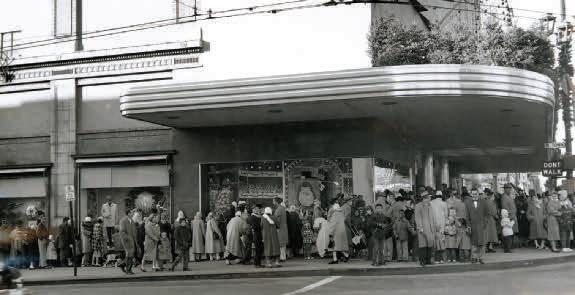
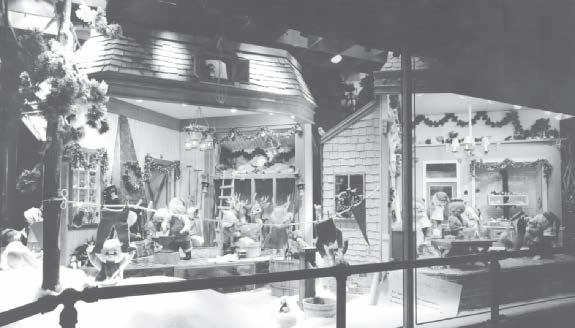
Christmas at Lazarus
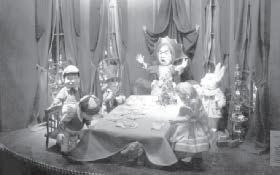
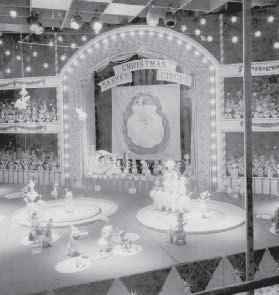
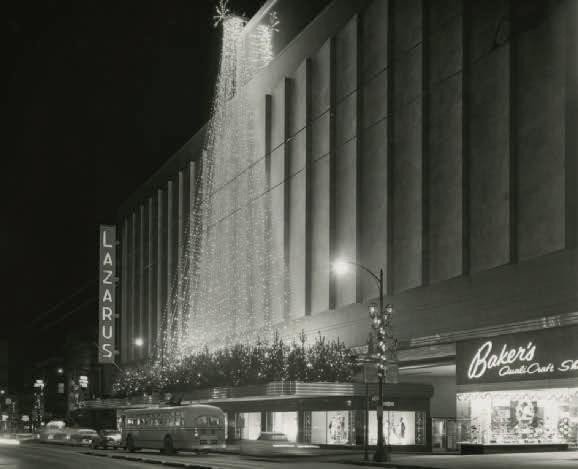
When Columbus photographer Herb Topy captured these holiday displays in the windows of the Lazarus department store in downtown Columbus in the 1950s and 1960s, most Ohioans thought of Amazon as a South American river. Lavish, animated displays like those pictured here drew throngs of holiday shoppers to Lazarus and other Ohio-based department stores in cities across the Buckeye State. At Lazarus, holiday displays went up after the store closed on the night before Thanksgiving, transforming it into a Christmas wonderland before the doors opened on the morning after Thanksgiving to herald the start of the holiday shopping season.
Hear Lazarus associates and customers recall Christmas at Lazarus in a WOSU video at ohiohistory.org/lazarus
All photos from Ohio History Connection Archival Collections, Lazarus Family Collection (P311)
Crowd of Lazarus Shoppers
Lazarus at Christmas
Christmas at Grandma’s
Santa’s Christmas Circus
Alice’s Tea Party
LIVING HISTORY
Work Underway at Ohio Village
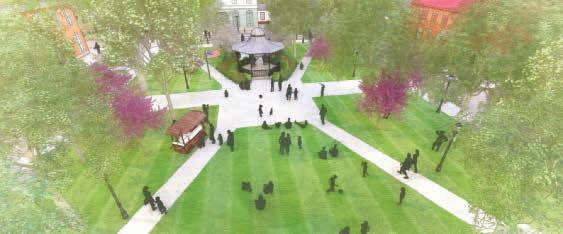
Opened in 1974, Ohio Village is undergoing a transformative renovation to improve accessibility, replace aging infrastructure and enhance what visitors experience there. The changes will allow for more storytelling, flexible programming and enhanced visitor engagement, helping the Ohio History Connection share stories of our state’s history at Ohio Village for the next 50 years and beyond. The scope of Ohio Village improvements includes:
• Infrastructure upgrades, including electric, gas, water, data and security.
• Americans with Disabilities Actcompliant walkways, building access and streetscapes.
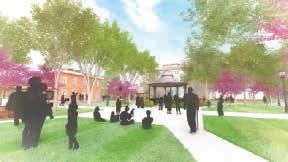
• Landscape features, including a new bandstand and redesigned Village Green.
• A forested “hinterland” and prairie buffer between the Ohio History Center and Ohio Village.
• A new Bier Garten adjacent to the hotel, with seating, stage and restrooms.
• New building experiences, including a 1920s pharmacy with a vintage (non-operating) soda fountain.
• A family farmhouse showcasing the early 1900s.
• Interpretive and visitor experience enhancements.
• A gallery space for contemporary art displays, with opportunities for visitor responses.
Ohio Village will reopen with these improvements in summer 2026. The expected reopening will coincide with the Ohio State Fair, July 29–Aug. 9.
In the meantime, Ohio History Center visitors are being invited to
offer ideas and input in a special exhibit called Village Visions that opened in Gallery Four in October.
The Ohio Village initiative is a component of the broader Campus 2.OH! initiative to revitalize the entire Ohio History Connection campus in Columbus. The first component of Campus 2.OH!, the Collections Care Center, opened in June 2024, and the final component will be the Ohio History Center, where planned upgrades include mechanical, electrical, plumbing and data system overhauls, plus exterior rehabilitation.
Our vision for Ohio Village and the Ohio History Center relies on state capital budget cycles. As part
of the state’s capital budget for FY25–26, we were allocated $22 million for the first phase of the Ohio Village project and for some maintenance and planning for the Ohio History Center. The project is being managed through the Ohio Facilities Construction Commission, Ohio History Connection and Schooley Caldwell. Construction is being managed by Continental Building Co.
The Ohio History Center and Ohio Village were added to the National Register of Historic Places in May 2023, recognizing their historical, architectural and cultural significance.
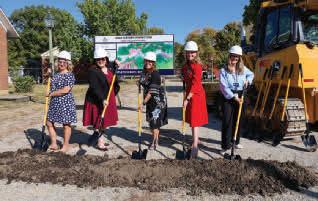
Sept. 18 Ohio Village groundbreaking. From left, Kimberly Murnieks, director, Office of Budget and Management; Joy Bledsoe, executive director, Ohio Facilities Construction Commission; Jen Miller, trustee, Ohio History Connection; Megan Wood, executive director & CEO, Ohio History Connection; and Ann Ruege, chief organizational advancement officer, Ohio History Connection.
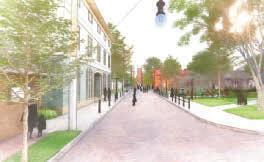
Top: Looking across the enhanced Village Green. Bottom Left: The new bandstand, a focal point of the enhanced Village Green. Bottom right: A view from the American House Hotel to the church, showing new brick-paved streets around the Village Green.
Give the Gift of
Ohio
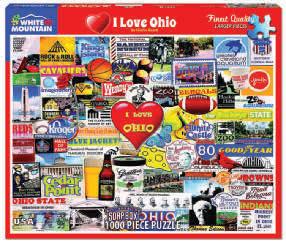
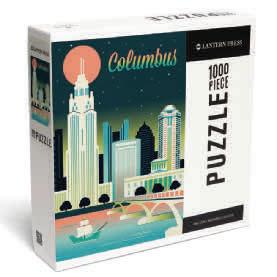
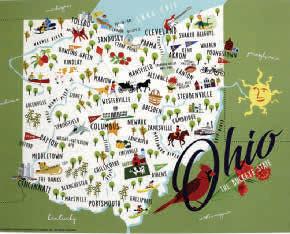
Ohio Puzzle Collection Gather the whole family around the warmth of a fireplace this winter and put together a 1,000-piece puzzle. The I Love Ohio puzzle is a classic collage of iconic brands and locations across the state. The Retro Columbus Skyline puzzle features the Art Deco LeVeque Tower in a beautiful vintage color design. The Ohio Map is a fun and whimsical take on locations throughout Ohio. Take one or all three for puzzle-building fun on those cold Ohio winter days! I Love Ohio Puzzle $19.99 X Retro Columbus Skyline Puzzle $24.99 X Ohio Map Puzzle $17.95 X
Ohio History Souvenir Collection How often do you think about Ohio history? We never stop! Represent the Ohio History Connection with our souvenir collection. These items feature our iconic logo as well as the people who have made Ohio history so great. Put on a T-shirt designed and printed in Columbus. Grab a pin or magnet to show off your Ohio history pride. Get a standee to display your love for our organization. Ohio history is your history! Ohio
History Logo Magnet $3.99 X Ohio History Logo Pin
$4.50 X Ohio History Wooden Magnets $4.50 X Ohio
History Wooden Pins $4.50 X Ohio History Standee
$13.99 X Ohio History is My Roman Empire Shirt (not shown; see ohiohistorystore.com) $19.99 X Ohio
Women Make History Shirt $19.99 X
with These Favorites!
Children’s Holiday Books Collection
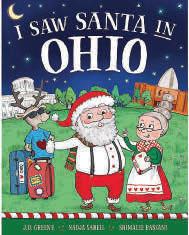
Are you ready for Santa to visit your home? Celebrate the holidays with this collection of three children’s books all about Santa visiting the Buckeye State. Along the way, you’ll spot familiar Ohio highlights, including the Rock & Roll Hall of Fame, LeVeque Tower and many more. I Saw Santa in Ohio $12.99 X Santa is Coming to Ohio $12.99 X ’Twas the Night Before Christmas in Ohio $11.99 X
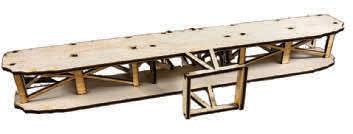
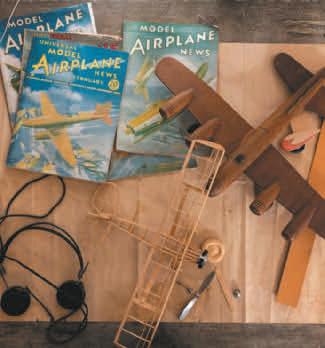
Early Biplane Inspired by the Wright Flyer, local Ohio crafter Mack4Designs has created an original model for you to build. Each carefully crafted item is not just a souvenir, but a piece of their dedication to ensuring you take home a tangible memory of your experience with the Ohio History Connection. $12.49 X
Ohio History Store
Etch A Sketch
Give this classic children’s toy that originated in Ohio! Released in 1960 in Bryan, Ohio, by the Ohio Art Co., Etch A Sketch has been a staple of children’s lives ever since. Original Etch A Sketch (7.5” x 9”) $15.99 X Pocket Etch A Sketch (3” x 3.75”) $7.99 X
Ohio History Center Ornament Collection
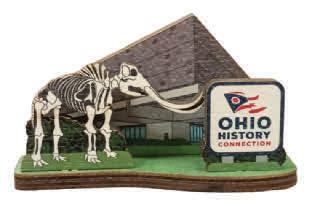
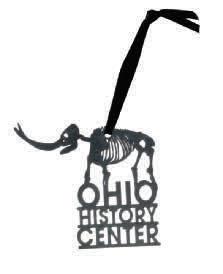
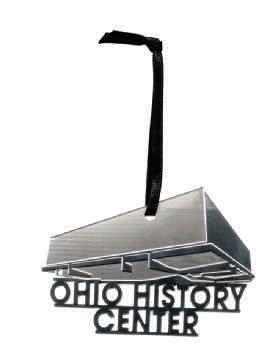
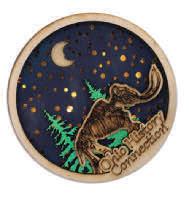
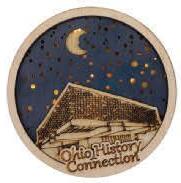
Decorate your tree or Festivus Pole with Ohio History Center ornaments. All feature either the iconic Brutalist masterpiece Ohio History Center or our beloved Conway the Mastodon. The wooden ornaments are designed and crafted by our friends at Mack4Designs in Marysville. The stainless-steel ornaments are fabricated by the wonderful Audra Azoury Designs in Pittsburgh. Get one or all four to make Ohio history part of your holiday display! Stainless-Steel Ornaments $14.99 each X Wooden LED Ornaments $21.99 each X
Shop in person at the Ohio History Center or online at ohiohistorystore.com for these and other merry gifts! X Ohio History Connection members enjoy a 10% discount with coupon code MEMB1803. Online orders add 8% sales tax, plus shipping and handling. Questions? Call 833.352.1208.
HISTORIC PRESERVATION
Recent Ohio Additions to the National Register of Historic Places
BETHESDA • BELMONT COUNTY
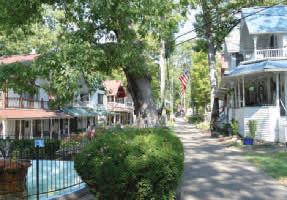
EPWORTH PARK
HISTORIC DISTRICT
215 N. Main St.
From the 1870s well into the 20th century, the Chautauqua movement brought eminent speakers and performers to audiences in small towns and rural areas, especially before the advent of movies, radio and television. President Theodore Roosevelt called it “the most American thing about America.” Epworth Park was established in 1870 as a Methodist camp meeting ground. In 1891, its focus broadened to encompass programming inspired by the Chautauqua Literary and Scientific Circle, an adulteducation program revolving around religion, education, recreation and the arts. One of Ohio’s few remaining permanent Chautauqua sites, Epworth Park is significant for its association with the larger Chautauqua movement in American history, and for its architecture and design that reflect the programming and activities that took place there until 1942.
Fifty-nine modest, wooden, oneand-a-half- or two-story seasonal cottages of a type that’s become known as the “camp meeting cottage” are laid out on narrow lots that follow the topography. (The
Epworth Park Assembly “season” was for just two weeks in July.) Many date to the Victorian era, with turned porch posts and “gingerbread” bargeboards in the gables. Nearly all the cottages and other major features of Epworth Park, such as the lake and dam, were built between 1870 and 1940. The roughly 20.5acre historic district is wooded, with oak, maple and other trees, and the ground slopes gently toward a lake that separates Epworth Park from the Village Park, originally part of the Epworth grounds.
DAYTON • MONTGOMERY COUNTY
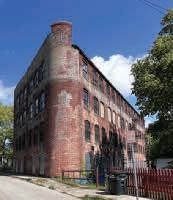
UNDERWOOD-TALMAGE
CO.
620 Geyer St.
The 1908 Underwood-Talmage Co. building is associated with Dayton’s industrial development in the early 20th century. The fourstory building is about 1.5 miles from downtown Dayton. It’s of wooden post-and-beam construction with brick walls, wood floors and ceilings, ample windows and an open floor plan. From 1908 to 1917, it was the home of the Dayton Folding Tonneau Co. and Dayton Body Co., both associated with Dayton’s early automotive industry (a tonneau was the back seat of an automobile). From 1918 to 1935, the building housed the UnderwoodTalmage Co., the pre-eminent candy manufacturer and wholesaler in the Dayton area. The building was used primarily as a warehouse after that.
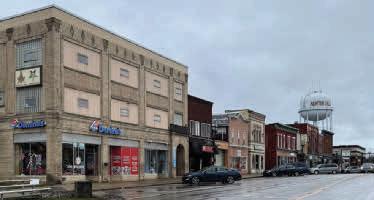
NEWTON FALLS DOWNTOWN HISTORIC DISTRICT
Broad Street, roughly bounded by Canal and Center streets
The Newton Falls Downtown Historic District is a locally significant example of a late-19th- and early20th-century Mahoning Valley retail district. It’s been added to the National Register for its association with the history of commerce in Newton Falls, and for its local architectural significance. The substantial, well-maintained buildings reflect the role of Newton Falls as a regional retail and service center for the surrounding agricultural communities. The district illustrates the economic prosperity the community enjoyed from the late 19th century through the 20th century. Buildings in the district were built between 1870 and 1971 in a variety of architectural styles. The bracketed Italianate style of the 1870s to 1890s predominates. The historic district also includes the 1908 First Christian Church at 17 N. Center St.
Enjoy free regular admission to Ohio History Connection museums and attractions when you show your membership card.
NEWTON FALLS • TRUMBULL COUNTY
12- TO 15-YEAR-OLD CATEGORY WINNER
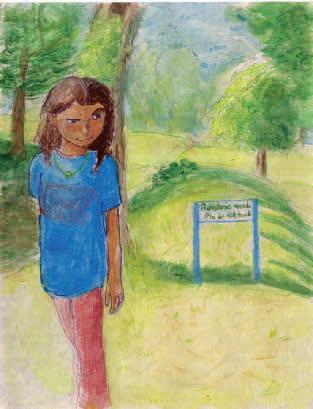
“I enjoyed the American Indian earthwork sites in Ohio because they were sacred spaces not just for local American Indian peoples but for people gathering at these sites from over 1,800 miles away. I wanted to draw this because people ignore the signs to respect the prehistoric earthworks and they should know not to walk on the mounds so we can enjoy them in the future.”
LULA, AGE 13
JUNIOR HISTORIANS
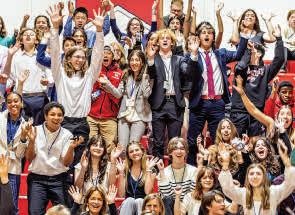
Art Contest Winners
Earlier this year, we invited kids to hit the road to explore our 50+ historic sites across the state and create an original drawing of their experience. Here are our winning entries:
8- TO 11-YEAR-OLD CATEGORY WINNER
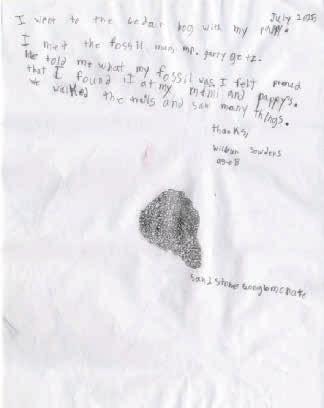
“I went to the Cedar Bog with my Pappy. I met the fossil man, Mr. Garry Getz. He told me what my fossil was. I felt proud that I found it at my Mimi and Pappy’s. We walked the trails and saw many things.”
— WILBUR, AGE 8
4- TO 7-YEAR-OLD CATEGORY WINNER
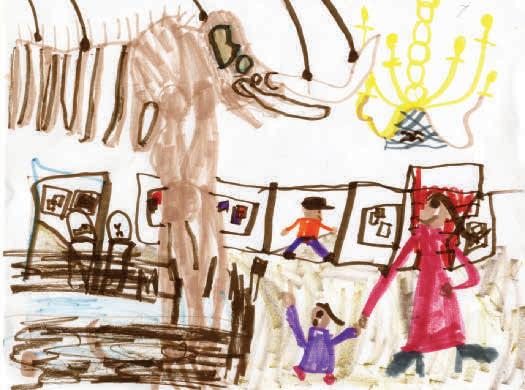
“I like seeing the mastodon when I walk into the (Ohio History Center) museum.” —WYATT, AGE 7
Lula Greiff, 12–15 Winner
Wilbur Sowders, 8–11 Winner
Wyatt Knoppe, 4–7 Winner
Many thanks to these donors who contributed at least $1,000* from January to June 2025.
Todd Alexander
Lynn Bird & Kathy
Thatcher
Karen S. Brown
Conestoga
Michael Dion
Laura & Pat Ecklar
Judy Fox
Greater Columbus
Arts Council
Paul & Linda Griesse
Clarence Hatleberg
John Hauck Foundation
Janice & William Haueisen
Henry Hauser Family Fund
Thomas C. Hays &
Mary Ann Hays Family Foundation
Richard F. Hillis
Judson Park Senior Living
Julie Jungers
The Kettering Family Foundation
Michael S. & Judith P. Krasnoff Fund
Philip Kuceyeski
Donna K. Laidlaw
The Legacy Fund
Marion Community Foundation
Frederick W. Martin
Mary Miller Patton Fund
Yvonne Mason
Neil & Christine Mortine
Larry & Peg Neal
Gary C. & Heather H. Ness
Kraig & Christine Noble
Richard W. & Jude Parke
PNC Bank Dayton
Mark & Sue Real
Ringen Fund Inc
Kathy & Bob Russell
Cloene Samuels Fund of The Columbus Foundation
Fran & Reid Wasserstrom Foundation
Dave & Nanci Westrick
Becky Wright
*includes in-kind donations
Annual fund donations support critical needs and help ensure our many programs, including Echoes Magazine, continue. Donate safely by scanning the QR code or at ohiohistory.org/give.
AMERICA 250-OHIO America 250-Ohio Launches in January
America’s 250th anniversary celebration, commemorating the signing of the Declaration of Independence on July 4, 1776, is just around the corner. Starting in January, Ohio will celebrate and commemorate the 250th anniversary of the United States by exploring all of the ways that Ohioans have contributed to U.S. history for 250+ years. Each month will focus on a different theme that reflects Ohio’s unique impact. The themes for 2026 are:
January: Ohio’s Firsts and Originals. February: Ohio Works: Innovation, Business and Work. March: Ohio Entertains: Music, Entertainment and Movies. April: Ohio Moves: Transportation. May: Ohio Creates: Arts, Culture and Literature. June: Ohio Outdoors: Parks & Natural Resources. July: Ohio Gathers: Statewide Homecoming and Picnics. August: Ohio Goes to the Fair: The Ohio State Fair and County Fairs. September: Ohio Plays: Sports & Recreation. October: Ohio Food & Farms: October is the Month of Harvest! November: Ohio Serves: Remembering Veterans, First Responders & Front-Line Heroes. Veterans Day 2026 will be a focal point. December: Future Ohio: Projecting Ohio in 2076.
Learn more about America 250Ohio and how your community can join in Ohio’s statewide celebration in 2026 at america250-ohio.org or 614.324.9954.
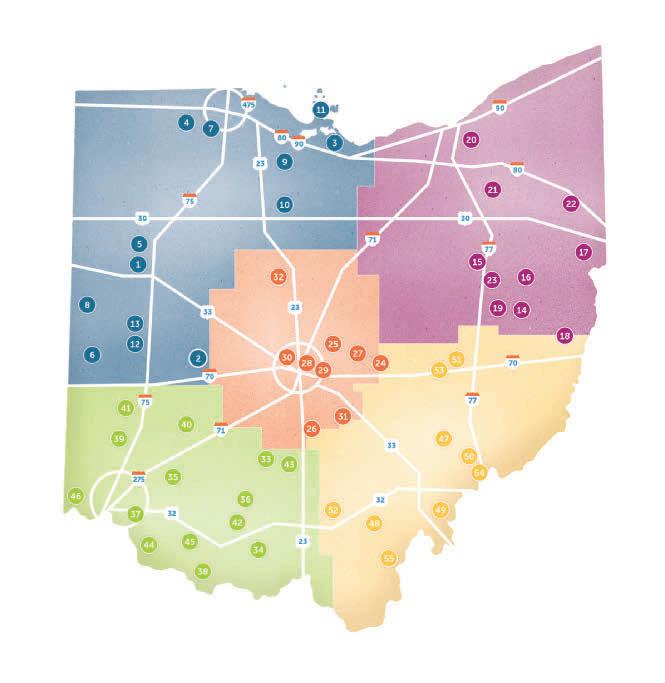
Some of our 50+ museums and attractions close for the winter at the end of October. Some don’t. Confirm before you travel at ohiohistory.org/sites.
OHIO HISTORY CONNECTION
Historic Sites & Museums
Ohio History Connection members enjoy free regular admission to these Ohio History Connection sites.
Before traveling, visit ohiohistory.org/ sites to confirm hours and any special requirements.
There are many other fascinating historyrelated museums and attractions in Ohio— far more than we can show you here.
Find more at ohio.org/things-to-do. Choose “Historic Attractions” or “Museums,” then get out and explore!
NORTHWEST OHIO
Armstrong Air & Space Museum
Cedar Bog Nature Preserve
Cooke-Dorn House
Fallen Timbers Battlefield Memorial Park
Fort Amanda Memorial Park
Fort Jefferson Memorial Park
Fort Meigs
Fort Recovery Museum & Monument
Hayes Presidential Library & Museums
Indian Mill
Inscription Rock Petroglyphs
Johnston Farm & Indian Agency
Lockington Locks
NORTHEAST OHIO
Custer Monument
Fort Laurens
McCook House
Museum of Ceramics
Quaker Yearly Meeting House (Open by Appointment) & Free Labor Store/Benjamin Lundy House (Preservation in Progress • Not Open)
Schoenbrunn Village
Shaker Historical Museum
Tallmadge Church
Youngstown Historical Center of Industry & Labor
Zoar Village
CENTRAL OHIO
Flint Ridge Ancient Quarries & Nature Preserve
Hanby House
Logan Elm
Newark Earthworks
Ohio History Center & Ohio Village
SOUTHWEST OHIO
Adena
Davis Memorial Nature Preserve
Fort Ancient Earthworks & Nature Preserve
Fort Hill Earthworks & Nature Preserve
Harriet Beecher Stowe House
John Rankin House
Miamisburg Mound
National Afro-American Museum & Cultural Center
Paul Laurence Dunbar House
Serpent Mound
Poindexter Village African American Museum (Preservation in Progress • Not Open)
Shrum Mound
Wahkeena Nature Preserve
Warren G. Harding Presidential Sites
Story Mound
U.S. Grant Birthplace
U.S. Grant Boyhood Home & Schoolhouse
William Henry Harrison Tomb
SOUTHEAST OHIO
Big Bottom Memorial Park
Buckeye Furnace
Buffington Island Battlefield Memorial Park
Campus Martius Museum
John & Annie Glenn Museum
Leo Petroglyphs & Nature Preserve
National Road & Zane Grey Museum
Ohio River Museum (Closed for Construction)
Our House Tavern
Mansion & Gardens
& EXHIBITS AT THE
Ohio CenterHistory PROGRAMS
Military History
Miniatures Gaming
SUN., NOV. 2 & DEC. 7 • NOON–3 P.M.
Ohio History Center, Columbus
Attention military history and miniature-game buffs: Join the Ohio History Connection and the Historical Miniatures Gaming Society—Great Lakes Chapter for an afternoon of tabletop miniatures gaming. Learn about battles important to the history of Ohio and put yourself in command. Would you have done anything differently if you’d been in the general’s shoes? Included with Ohio History Center Museum admission. Ohio History Connection members enjoy free admission. 800.686.6124 or ohiohistory.org/gaming
SPEAKING OF HISTORY ...
The America 250-Ohio
Revolutionary War Veterans
Graves Project
SAT., NOV. 15 • 1–2 P.M.
Ohio History Center, Columbus
Hear from Krista Horrocks of our State Historic Preservation Office, who serves as manager for America 250-Ohio’s Revolutionary War Veterans Graves Project. In partnership with the Ohio History Connection, Terracon Consultants Inc. and local chapters of Sons and Daughters of the American Revolution, this statewide initiative aims to identify, document and map the burial sites of an estimated 7,000 Revolutionary War patriots in Ohio. Learn about the project’s goals, how you can participate and how your contributions can help preserve their memory, ensuring that future generations understand and appreciate their sacrifice and legacy. Included
with museum admission. Ohio History Connection members enjoy free admission. 800.686.6124 or ohiohistory.org/speakingofhistory
Lustron House Decorated for the Holidays + Holiday Train Display
WEDS., NOV. 19–WEDS., DEC. 31
Ohio History Center, Columbus
It’s Christmas, 1950s-style, in our real, fully furnished Lustron house! Drop by to see how Dottie and Bob have decorated, and check out little Jimmy’s model train display, courtesy of Central Ohio Model Railroad Club. Included with Ohio History Center Museum admission. Ohio History Connection members enjoy free admission. 800.686.6124 or ohiohistory.org
Holiday Histories
SAT., DEC. 13 • 6–9 P.M.
Ohio History Center, Columbus
Enjoy a festive evening in the museum, with community partners sharing crafts, stories and holiday traditions, plus music, local vendors and our Ohio History Store. $18, $14/age 4–12, Free/age 3 and under. (Ohio History Connection member: $13, $9 age 4–12). Advance tickets required. 800.686.1541 or ohiohistory.org/ holidayhistories
SPEAKING OF HISTORY ... Battlefield Ballots— The Ohio Soldiers’ Vote in the 1864 Presidential Election
SAT., DEC. 20 • 1–2 P.M.
Previts, learn how Buckeye soldiers cast their votes on the front lines and discover the role they played in this historic election pitting President Abraham Lincoln against his former Army commander, Gen. George B. McClellan. Included with museum admission. Ohio History Connection members enjoy free admission. 800.686.6124 or ohiohistory.org/ speakingofhistory Kwanzaa 614
SAT., DEC. 27 & SUN., DEC. 28 NOON–4 P.M.
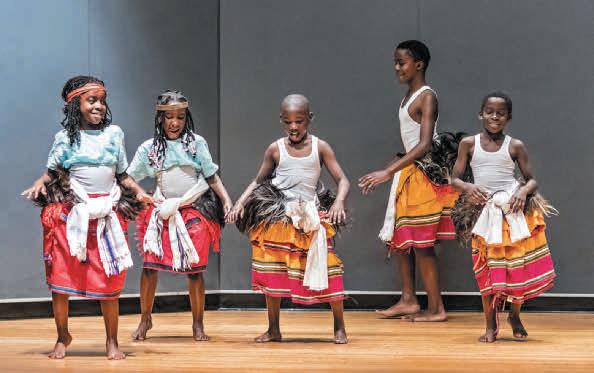
Ohio History Center, Columbus Kwanzaa is a seven-day celebration that honors community, family and heritage of African American culture and African traditions. Kwanzaa comes from the Swahili word meaning “first harvest” and is based on the seven principles of Ngubo Saba. The Ohio History Connection and Tawi Family Village invite you to enjoy two festive afternoons of African drumming, live music, dance, storytelling, food demos and hands-on art activities. Free. 800.686.6124 or ohiohistory.org/ kwanzaa
FEATURED EXHIBITS • • •
Village Visions
ONGOING
Explore the history of Ohio Village and collaborate with us to create the next chapter.
Hide and Seek—Finding Young People in the Archives
ONGOING
In the third-floor Library Lobby Gallery, see items from our archival and history collections that are associated with young Ohioans over time, including original documents, toys and a Cozy Coupe car.
Indigenous Wonders of Our World—The Hopewell Ceremonial Earthworks
ONGOING
Ohio History Center, Columbus The 1864 election marked the first time Ohio’s soldiers could vote for president while in the field. In this presentation by State Archivist Fred Museum admission is $16, $14/age 60+, $10/ages 4–12. Ohio History Connection members and ages 3 & under enjoy free admission.
Learn about the eight 2,000-yearold Hopewell earthworks in Ohio collectively named a World Heritage Site by UNESCO, including mathematical similarities among them and their alignments to the solstices and the 18.6-year lunar cycle.
Kwanzaa 614
Making Ohio Home—Early Ohio Immigrant Experiences ONGOING
Explore stories of seven representative immigrants who helped grow Ohio’s population from 45,365 in 1800 to more than 4.1 million in 1900. 1950s—Building the American Dream ONGOING
Peek in the closets and snoop in the drawers of a real, fully furnished Lustron steel house made right here in Ohio. From the contents of the cupboards to the news on TV and the toys in the yard, this hands-on exhibit is a fascinating journey back in time.
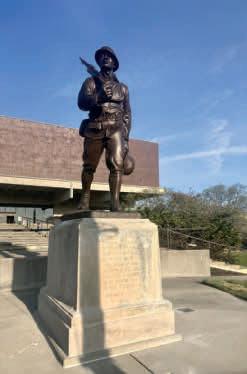
World War I Display
ONGOING
See equipment, weapons, uniforms and memorabilia.
Welcome Lobby Display Cases ONGOING
In the Welcome Lobby cases, see Dressing Ohio—From Workroom to Wardrobe, featuring garments from Ohio History Connection collections, and Columbus Women on the Move—Traveling the World in 1936–1937, with selected items from the Women’s Travel Collection.
Museum
OPEN WEDS.–SUN. 10 A.M.–5 P.M.
CLOSED VETERANS DAY, TUES., NOV. 11
CLOSED THANKSGIVING DAY, THURS., NOV. 27
CLOSING AT 4 P.M. SAT., DEC. 13, TO REOPEN AT 6 P.M. FOR HOLIDAY HISTORIES (SEE PAGE 16)
CLOSED CHRISTMAS EVE, WEDS., DEC. 24
CLOSED CHRISTMAS DAY, THURS., DEC. 25
OPEN DAILY FRI., DEC. 26, THROUGH WEDS., DEC. 31, INCLUDING MONDAY AND TUESDAY
CLOSED THURS., JAN. 1, THROUGH FRI., JAN. 16
Archives & Library
WEDS. 12:30–3 P.M. THURS.–FRI. 10 A.M.–3 P.M.
CLOSED VETERANS DAY, TUES., NOV. 11
CLOSED THANKSGIVING DAY, THURS., NOV. 27
CLOSED WEDS., DEC. 24, THROUGH TUES., JAN. 6
REGULAR HOURS RESUME WEDS., JAN. 7
SCHEDULE YOUR PERSONALIZED RESEARCH APPOINTMENT: ohiohistory.libcal.com
Ohio Village CLOSED FOR CONSTRUCTION REOPENS IN 2026
Our membership webpage— ohiohistory.org/ membership —has a Frequently Asked Questions section with helpful information about digital membership cards, membership renewals, gift memberships and more.
Holiday Train Display
DEC. 27 & 28, OHIO HISTORY CENTER, COLUMBUS NOV. 19–DEC. 31, OHIO HISTORY CENTER, COLUMBUS
ATTEND FROM ANYWHERE!
Online Events
MEMBER VIP
Get to Know Serpent Mound
TUES., NOV. 4 • 3–4 P.M.
In partnership with
Sat. & Sun., Dec. 27 & 28 Noon–4 p.m.
OHIO HISTORY CENTER COLUMBUS
Enjoy festive family fun, with African drumming, live music, dance, storytelling and hands-on crafts.
800.686.6124 ohiohistory.org/kwanzaa
Find more Kwanzaa Dec. 26–Jan. 1 at tawifamvillage.org
Online—Attend From Anywhere! Join us for a talk with Ohio History Connection archaeologist Bill Kennedy, Serpent Mound site manager, about this amazing ancient earthwork. We’ll get an overview of pre-contact American Indians in Ohio and at Serpent Mound. $10, Free/Ohio History Connection member. 800.686.1545 or ohiohistory. org/knowserpent
FAMILY HISTORY WORKSHOP
The Partitions of Poland— Introduction to Research Methods
SAT., NOV. 8 • 10–11 A.M.
Online—Attend From Anywhere! Join genealogist Owen M. McCafferty II of Saleker & Co. for this talk designed to guide you through the complex history and record-keeping systems shaped by Poland’s three partitions under Prussia, Russia and Austria. He’ll provide practical strategies for locating and accessing vital family history records, explain the impact shifting borders had on documentation and highlight key archives and online resources. Whether you’re just beginning Polish research or seeking to break through brick walls, this session will equip you with the tools to better understand where to look and how to interpret the records of ancestors from this region. $20, $15/Ohio History Connection member. Advance registration required. 614.297.2510 or ohiohistory.org/ genealogy
AMERICA 250-OHIO WEBINAR Ohio and The Revolution, Episode Four—The Revolution Begins
THURS., NOV. 13 • 7–8:15 P.M. Online—Attend From Anywhere! Hear a panel of experts explore events leading up to, and during, the American Revolution and what was happening in the Ohio Country. What would be the impact of the Revolutionary War on Native people? Who were some of the key figures in the Ohio Country during the conflict? This and more will be discussed to “spill the tea” on this important time in Ohio and American history. Free. 800.686.6124 or ohiohistory.org/250webinar
Presidential History Book Club
WEDS., DEC. 10 • NOON–1 P.M. Hayes Presidential Library & Museums, Fremont, and Online—Attend From Anywhere! 4 Read and discuss books about the American presidency at this free book club open to all. DEC. 10: Nothing Like It in the World, by Stephen E. Ambrose, a continuation of the October discussion. Attend in person or online. You’re welcome to bring your lunch. For online login information, email admin@rbhayes.org. 800.998.7737 or rbhayes.org
Tawi Family Village, Poindexter Museum/ Poindexter Village Historic Site, William H. Thomas Gallery, Urban Strings, Martin Luther King Branch Library, National Afro-American Museum & Cultural Center, King Arts Complex, All People Arts Gallery and A Tribe for Jazz
Events & Exhibits
Many programs and events at Ohio History Connection museums and attractions require advance registration. To register, call the number or visit the website listed with each program.
Our online calendar offers more up-to-date information about programs and events at Ohio History Connection museums and attractions. Find it at ohiohistory.org/calendar Questions? Call 800.840.6127
Ohio’s nearly 800 local historical societies, historic preservation groups and related organizations offer lots more opportunities to get out and explore places associated with national, state and local history in the Buckeye State. Find events online at ohio.org/festivals-and-events . Under “Category,” choose “History and Heritage.”
CENTRAL
HOPEWELL CEREMONIAL EARTHWORKS
Great Circle Earthworks Tour with Dr. Brad Lepper
FRI., NOV. 7 • 12:30 P.M. Begins at the Great Circle Museum, 455 Hebron Rd., Heath. Tour the ancient Great Circle Earthworks, one of eight sites that make up Ohio’s Hopewell Ceremonial Earthworks, with Dr. Brad Lepper, senior archaeologist for the Ohio History Connection’s World Heritage program. Free. No registration required. 800.589.8224, 740.344.0498 or hopewellearthworks.org
HOPEWELL CEREMONIAL EARTHWORKS Northernmost Moonrise at Octagon Earthworks
FRI., NOV. 7 & DEC. 5 • 5:30–7:30 P.M. Octagon Earthworks, 125 N. 33rd St., Newark 4 The northernmost moonrise is a celestial event that occurs every 18.6 years. Ancient American Indian architects designed the earthen walls of Newark’s Octagon Earthworks—now part of Ohio’s Hopewell Ceremonial
Earthworks, a UNESCO World Heritage Site—with this 18.6-year lunar cycle in mind. Built about 2,000 years ago, the earthen gateways and avenue that connect the Observatory Circle to the Octagon align perfectly with the northernmost moonrise. The close connection Indigenous peoples have with the land and sky is truly evident when you witness this event in person. The evening will begin with a talk introducing the Hopewell culture and the period in which the earthworks were created, plus a brief explanation of the 18.6-year lunar cycle. After the talk, we’ll journey into the center of the Observatory Circle to see the moon rise at its northernmost point, aligned with the earthen gateways and avenue that connect the Circle to the Octagon. Please dress for the weather, wear comfortable walking shoes and bring a blanket or folding chair. Limited to 200 participants. Free with required advance registration at ohiohistory.org/ moonrise. Questions? 740.344.0498 or ohiohistory.org/moonrise
HOPEWELL CEREMONIAL EARTHWORKS Octagon Earthworks Tour with Dr. Brad Lepper
FRI., NOV. 21 • 12:30 P.M. Begins at the Octagon Earthworks Visitor Center, 125 N. 33rd St., Newark. Tour the ancient Octagon Earthworks, one of eight sites that make up Ohio’s Hopewell Ceremonial Earthworks, with Dr. Brad Lepper, senior archaeologist for the Ohio History Connection’s World Heritage program. Free. No registration required. 800.589.8224, 740.344.0498 or hopewellearthworks.org
Hanby House
Holiday Open House
TUES., DEC. 2 • 7–9 P.M.
THURS., DEC. 4 • 7–9 P.M.
SAT., DEC. 6 • 10 A.M.–2 P.M. Hanby House, Westerville 4 Kick off the holidays with a visit to the Hanby House. The boyhood home of Ben Hanby, composer of Up on the Housetop, will be decorated for the season and offer tours,
refreshments, music and a gift store. Free. 614.891.6289, westervillehistory. org or ohiohistory.org/hanby
HOPEWELL CEREMONIAL EARTHWORKS Honoring the First Peoples
FRI., JAN. 2 • 10 A.M.–4 P.M.
Octagon Earthworks Visitor Center, 125 N. 33rd St., Newark 4 Join us for a special day commemorating the achievements of Indigenous peoples and the first anniversary of the opening of the Octagon Earthworks, presented as part of America’s 250th anniversary. Start your day with breakfast at the Visitor Center—a food truck will be on hand from 10 a.m. to Noon. Enjoy programs for all ages. Explore the earthworks with a guide, and learn about the past, present and future of the Octagon Earthworks as an achievement of Ohio’s First Peoples. Free. 740.344.0498, newarkearthworks@ohiohistory.org, hopewellceremonialearthworks.org or ohiohistory.org/Newark
NORTHEAST
NORTHEAST OHIO
Annual Workshop
SAT., NOV. 1 • 11 A.M.–1 P.M. Fort Laurens, Bolivar 4 Learn everything you need to know about cooking outdoors at our annual workshop presented by experts from Midwest Native Skills Institute. Free with required advance registration: 800.283.8914, 330.874.2059 or fortlaurensmuseum.org.
Nature Trails Into History— Explore the Past Through Nature
SAT., NOV. 8 • 10 A.M.
Schoenbrunn Village, New Philadelphia Journey through time and discover the Ohio Country as it once was. This 1.5mile hike for ages 12+ blends the rich history of Schoenbrunn, a 1770s village on the Ohio frontier, with the natural
CENTRAL OHIO
Northernmost Moonrise at Octagon Earthworks
world that shaped it. Explore landscapes familiar to 18th-century travelers, learn about the vital connection between nature and daily life, and discover how forests of the past compare to today’s. The hike will be held rain or shine and may cover uneven or difficult terrains. If postponed due to severe weather, it will take place on Sunday, Nov. 9 (subject to change). $8, $6/senior or Ohio History Connection member. Advance registration required: 800.752.2711, 330.808.4815 or ohiohistory.org/ schoenbrunn.
Fort Laurens Anniversary
March-In
SAT., NOV. 15 • 10 A.M.–3 P.M.
Fort Laurens, Bolivar 4 Join in celebrating the anniversary of the Continental Army’s arrival at the site where Ohio’s only Revolutionary War fort once stood. Re-enactors in period attire will march into the site of Fort Laurens just as Continental forces did in 1778. Greet the soldiers as they march in, enjoy a variety of historical demonstrations and learn about 18th-century weaponry, tools and practices. Museum admission is $6. Ohio History Connection members enjoy free admission. The gift shop will be offering special sales from 10 a.m. to 4 p.m. 800.283.8914, 330.874.2059 or fortlaurensmuseum.org
Unveiling the Trees
FRI. & SAT., NOV. 28 & 29 & DEC. 5 & 6 • 1–8 P.M.
McCook House, Carrollton 4 On a complimentary walk-through tour, see Christmas trees decorated by local groups and families throughout the
house. On Sat., Dec. 6, model train enthusiast Austin Brodzinski fields questions and operates his model trains throughout the day. Free. 800.600.7172, 330.437.9715 or ohiohistory.org/mccook
Christmas Tours
SAT., NOV. 29, DEC. 6 & DEC. 13 11 A.M.–4 P.M.
Zoar Village, Zoar 4 Immerse yourself in a one-of-a-kind holiday experience while enjoying the festive atmosphere of this charming and well-preserved village, now a National Historic Landmark. Explore beautifully decorated 19thcentury buildings, each showcasing German Christmas traditions. Learn about Christmas customs and hear stories of Christmas past on guided tours of historic Zoar Village, home of a communal society of German religious separatists from 1819 to 1898. Tours, $15/person, require advance registration and depart every 30 minutes, with a limit of 15 people per tour: 800.262.6195, 330.874.3011 or historiczoarvillage. com/shop.
Zoar Village, Zoar 4 Experience Zoar Village at Christmas. Listen to live, festive music and learn about early American and German holiday traditions. Other activities include horse-drawn wagon rides through the town, a Saturday church service and tree lighting, and visits from the Kristkind, the German Belsnickel and Santa. Self-guided tours of the village will be available. Find the perfect holiday gift with
extended shopping opportunities at the Zoar Store, Bakery and Bimeler Museum, or from vendors and crafters throughout the village. $10, Free/age 12 & under. For tickets, more about the event or to apply to become an artisan vendor, call 330.874.3011 or visit historiczoarvillage.com.
NORTHWEST
NORTHWEST OHIO
Grand Illumination
FRI., NOV. 28 • 6–8:30 P.M.
Armstrong Air & Space Museum, Wapakoneta 4 Join us as we flip the switch on our annual Holiday Lights Display! Enjoy indoor and outdoor activities, along with free hot chocolate. The lighting ceremony begins at 7 p.m. Free. 800.262.6195, 419.738.8811 or armstrongmuseum.org
Holiday Lights Display
FRI., NOV. 28–THURS., JAN. 1 6–10 P.M.
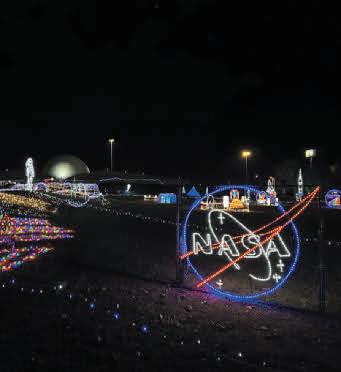
Armstrong Air & Space Museum, Wapakoneta 4 For more than a decade, Armstrong Air & Space Museum has been celebrating the season by illuminating our grounds with a vast array of festive and colorful lights known as the Holiday Lights Display. See a multitude of aviationand space-themed displays made from tens of thousands of vibrant LED bulbs, including a 20-foot-tall Saturn V rocket and a giant Apollo-era astronaut saluting the American flag. Free. 800.262.6195, 419.738.8811 or armstrongmuseum.org
ZOAR, DEC. 6 & 7
Christmas In Zoar
NEWARK, NOV. 7 & DEC. 5
Armstrong Museum
Holiday Lights
WAPAKONETA, NOV. 30–JAN. 1
Presidential History Book Club
WEDS., DEC. 10 • NOON–1 P.M.
Hayes Presidential Library & Museums, Fremont 4 See page 18.
A PRESIDENTIAL CHRISTMAS Lights of Spiegel Grove
FRI., DEC. 12 • 6–7:30 P.M.
Hayes Presidential Library & Museums, Fremont 4 Be on hand at 6:15 p.m. to see Santa light the 50-foot outdoor Christmas tree at Spiegel Grove, estate of 19th president Rutherford B. Hayes and first lady Lucy Hayes. Enjoy refreshments, carolers, visits with Kriss Kringle and more. From 6:30 to 7:30 p.m., enjoy a walk-through open house on the first floor of the Hayes Home, which will be lightly decorated in a historically accurate manner. Take a short walk through the lighted grounds, see the Hayes Museum and enjoy the Hayes Train Special model train display. Carolers will sing around the property throughout the event. Free. 800.998.7737 or rbhayes.org
Historic Holidays
Outdoor Winter Festival
SUN., DEC. 14 • NOON–5 P.M.
Fort Meigs, Perrysburg 4 Join us for a rare trip inside Fort Meigs in the winter months. Explore how the holidays were celebrated in early America and during the War of 1812. Enjoy hands-on activities for all ages, decor and historic seasonal music. Other features include bonfires, bake ovens, storytelling, a toymaking shop, hot cider and cocoa. $7, $6/senior, $5/ student, $3/Ohio History Connection
member. 800.283.8916, 419.874.4121 or fortmeigs.org
A PRESIDENTIAL CHRISTMAS Hayes Home Holidays
FRI., DEC. 19 & SAT., DEC. 20 • TOURS AT 5, 5:30, 6, 6:30, 7, 7:30 AND 8 P.M. Hayes Presidential Library & Museums, Fremont 4 Hear presenters in Victorian attire share beloved Christmas stories by Charles Dickens, a favorite author of President Rutherford B. Hayes, in the comfort of the president’s Victorian mansion. During these special evening tours, the Hayes Home will be lightly decorated for the holidays in a historically accurate manner. Guests will also hear some holiday history of the president, first lady and their family, and enjoy a warm cup of wassail, popular during the Victorian era. Before your tour, enjoy the Hayes Train Special model train display (column 3, this page) in the Hayes Museum auditorium. $18, $10/ages 6–18, Free/age 5 & under. Advance registration recommended: 800.998.7737 or rbhayes.org
A PRESIDENTIAL CHRISTMAS Model Train Clinic
SAT., JAN. 3 • 11 A.M.–4 P.M.
Hayes Presidential Library & Museums, Fremont 4 Need help troubleshooting a problem with your model train? Or maybe you’re wondering how best to care for it? At this clinic, veteran model train hobbyists will be on hand to examine model trains that you bring in and to help you with advice and issues. Those who bring standard, O-gauge and G-gauge trains may also run them on the tracks of the Hayes Train Special model train display. Purchase clinic tickets at the museum front desk the day of the event or online at rbhayes.org. $5, Free/age 5 & under. 800.998.7737 or rbhayes.org
FEATURED EXHIBITS • •
HURRY! ENDS SOON Factions & Fraternalism— A History of America’s Presidential Parties
THROUGH WEDS., DEC. 31
Hayes Presidential Library & Museums, Fremont 4 See campaign materials, political memorabilia and artifacts related to voting throughout American
history, including campaign pins, handkerchiefs, ribbons and medallions. Also on display is a ballot box that Rutherford B. Hayes and his regiment used to vote in the field while serving in the Civil War, and the 1880 book Conspectus of American Politics, with a fold-out chart showing the evolution of American political parties to that time. Included with Hayes Museum admission. Ohio History Connection members enjoy free admission. 800.998.7737 or rbhayes.org
A PRESIDENTIAL CHRISTMAS
Hayes Train Special SUN., NOV. 30–SUN., JAN. 4 (CLOSED DEC. 24–25 & JAN. 1)
Hayes Presidential Library & Museums, Fremont 4 See operating Victorianstyle model trains running through a winter holiday landscape. Pushbuttons let you run one of the trains, blow the whistle and control other aspects of the trains moving through the multitiered 12- x 24-foot layout. Free. 800.998.7737 or rbhayes.org
Current members save 20% on all new Ohio History Connection gift memberships! Use code HOLIDAY25 when you purchase online at ohiohistory.org/join or call 800.686.1545 and mention this o er.
Sounds
of Sandusky County THROUGH MAY 25, 2026
Hayes Presidential Library & Museums, Fremont 4 See memorabilia of local concerts featuring the Beach Boys, the Lettermen and the Kingsmen, vintage equipment and artifacts from Sandusky County’s earliest recording studio, original vinyl records, reel-to-reel tapes, analog soundboards and other technological milestones. Curated by Brennan Willis, director of music and technology at Fremont’s Terra State Community College, this exhibit also looks at how Terra State’s music program continues to train tomorrow’s musicians, producers and sound engineers. Included with Hayes Museum admission. Ohio History Connection members enjoy free admission. 800.998.7737 or rbhayes.org
Inside President Hayes’ Library THROUGH JUNE 2026
Hayes Presidential Library & Museums, Fremont 4 A ravenous reader, President Rutherford B. Hayes had more than 8,000 books in his personal library. Explore the authors and titles that shaped and inspired him, among them Shakespeare, Charles Dickens novels and Don Quixote. Others cover issues of the day, such as slavery, Chinese immigration, tariffs and prison reform. The exhibit also features an essay about reading from his college years at Kenyon; correspondence with poets Henry Wadsworth Longfellow, William Cullen Bryant, John Greenleaf Whittier, Oliver Wendell Holmes Jr. and James Russell Lowell; and prints of portraits of authors Hayes collected. Included with Hayes Museum admission. Ohio History Connection members enjoy free admission. 800.998.7737 or rbhayes.org
SOUTHEAST
SOUTHEAST OHIO
Holiday Open House
MON., DEC. 1 • 5:30–7:30 P.M. John & Annie Glenn Museum, New Concord 4 Enjoy hot chocolate and homemade cookies while you warm up in the festive 1960s living room of the Glenn home during the New Concord Christmas parade. Free. 740.826.3305 or johnandannieglennmuseum.org
Sounds of the Season
SUN., DEC. 7 • 1–3 P.M.
National Road & Zane Grey Museum, Norwich 4 Tour the National Road & Zane Grey Museum; hear holiday tunes performed by John Glenn High School’s show choir, JG Company, and strolling strings group, String Sounds; and enjoy cookies, hot chocolate and coffee. Free. 800.752.2602, 740.826.3305 or nationalroadandzanegreymuseum.org
SOUTHWEST
SOUTHWEST OHIO
Wilderness Skills
SAT., NOV. 1 • NOON–4 P.M. Fort Ancient Earthworks & Nature
Preserve, Oregonia 4 Learn various techniques of hunting, fishing, tanning and trapping with Keith Bengtson. He’ll share information on how to set traps, tan hides and make jerky, among other skills of living in the natural world. Dress comfortably for the weather, as this program is ongoing throughout the afternoon outdoors. Included with general site admission: $7, $6/age 60+, $6/age 6–17, Free/Ohio History Connection member or age 5 & under. 800.283.8904, 513.932.4421 or ohiohistory.org/fortancient
VOICES FOR TRUTH
Joy Harjo
WEDS., NOV. 12 • 7–8 P.M. Harriet Beecher Stowe House, Cincinnati 4 In recognition of November as Native American Heritage Month, we’ll listen to prose and poetry from contemporary Native American author Joy Harjo, a citizen of the Muscogee Nation and three-term U.S. poet laureate from 2019 to 2022. Coleaders for this session are John Getz, Xavier University professor emeritus of English, and Emma Baldwin, citizen of the Miami Tribe of Oklahoma and teacher at Azalea Montessori School. Free with required advance registration: 800.847.6075 or stowehousecincy.org
HOPEWELL CEREMONIAL EARTHWORKS Third Friday Archaeology Tour
FRI., NOV. 21 & FRI., DEC. 19 • 1–3 P.M. Fort Ancient Earthworks & Nature Preserve, near Oregonia and Lebanon
Holiday Open House
Tour Fort Ancient, one of eight Ohio sites that collectively make up the Hopewell Ceremonial Earthworks—a UNESCO World Heritage Site—with Ohio History Connection archaeologist Bill Kennedy. The walking tour begins at 1 p.m. in the museum, then stops at several key outdoor locations. Walking is over level and comfortable surfaces. If your mobility is limited, it’s possible to drive between outdoor stops. In the event of inclement weather, the tour will stay indoors. $7, $6/age 6–17 or 60+, Free Ohio History Connection member or age 5 & under. 800.283.8904, 513.932.4421, hopewellceremonialearthworks.org or ohiohistory.org/fortancient
Tying Up Loose Ends
SAT., DEC. 6 • NOON–4 P.M. Fort Ancient Earthworks & Nature Preserve, Oregonia 4 Attend a comprehensive workshop on the art of American Indian textiles led by Keith Bengtson. Examples of native plants used for fiber in the Midwest will be shown and processed. You’ll also make your own finger-woven sash, using materials provided. Examples of reproduced items will be on display, along with reference materials for future study. Limited to 20 participants. Advance registration required: Email swinningham@ohiohistory.org. $10 + site admission: $7, $6/age 6–17 or 60+, Free/Ohio History Connection member or age 5 & under. 800.283.8904, 513.932.4421 or ohiohistory.org/ fortancient
JOHN & ANNIE GLENN MUSEUM, NEW CONCORD, DEC. 1
VOICES FOR TRUTH
Imagining the Future
WEDS., DEC. 10 • 7–8 P.M.
Harriet Beecher Stowe House, Cincinnati 4 As 2025 draws to a close, we’ll look to writers of fantasy and science fiction, not for stories of bug-eyed monsters, dazzling special effects or predictions of the future, but for alternative visions of how our world might be, for better or worse. These stories are sometimes called speculative fiction, or even parables, because they raise thought-provoking moral questions. Both authors are women in a field formerly dominated by men. Ursula Le Guin is probably the best-known of the New Wave of speculative fiction authors who came to prominence in the 1970s and ’80s, and N. K. Jemisin is a widely honored contemporary author whose work is often discussed in connection with Afrofuturism. Find suggested readings at stowehousecincy.org. Free with required advance registration: 800.847.6075 or stowehousecincy.org.
FEATURED EXHIBITS • • •
Trailblazers of Innovation— African American Inventors Who Changed America
ONGOING • WEDS.–SAT. 9 A.M.–4 P.M. National Afro-American Museum & Cultural Center, Wilberforce Discover the stories of Black inventors from Ohio and beyond! This exhibit, designed with help from Wright State University public history graduate students and the National AfroAmerican Museum & Cultural Center curatorial staff, promises to educate and inspire. ALSO ON EXHIBIT: African Art—Form, Function and Fraught Histories; African Americans Fighting for a Double Victory; Rhythm of Revolution; and Queens of the Heartland, all included with museum admission: $6, $5/senior, $3/age 6–17, Free/Ohio History Connection member or age 5 & under. 800.752.2603 or ohiohistory.org/ naamcc
HISTORIES
Sat., Dec. 13 • 6–9 p.m.
OHIO HISTORY CENTER, COLUMBUS
Enjoy a festive evening in the museum, with community partners sharing crafts, stories and holiday traditions, plus music, local vendors and our Ohio History Store.
$18, $14/ages 4–12, Free/age 3 & under ($13, $9/member)
Advance tickets required
800.686.1541 ohiohistory.org/holidayhistories
Passionate about preserving history for future generations?
Consider including the Ohio History Connection as a beneficiary in your estate plans. Our staff can help you choose options that best fit your needs.
Spectators in the stands at Ohio Stadium shiver and watch what came to be known as the Snow Bowl, a 9–3 Michigan victory in inclement weather.
Deep Freeze
A LOOK BACK AT THE SNOW BOWL BY BOB HUNTER
No one saw the now-famous Michigan versus Ohio State “Snow Bowl” coming.
Seventy-five years ago, and two days before that fateful Saturday— Nov. 25, 1950—the Midwest enjoyed a balmy Thanksgiving. Although the temperature dropped from the mid-40s to the teens on Friday, there was still only talk about the possibility of snow on Saturday, and nothing about how Ohio might soon resemble the white plains of Antarctica. Winds were gusting between 28 and 40 miles per hour, according to reports. The temperature was 10 degrees. And by game time, a blizzard had all but hidden the field from the fans in the Ohio Stadium stands.
Eyewitnesses believe there might have been 40,000 fans in Ohio Stadium at the beginning of the game. They say probably half of them left at halftime and the number kept dwindling as the weather worsened. Some people we can be certain were there—the players—have said probably no more than 5,000 diehards stuck around for the end of the game.
CALM BEFORE THE STORM
The Michigan traveling party stayed in Toledo the night before the game to avoid the Columbus craziness, and the players walked around downtown Saturday morning while waiting to catch the train. The weather was fine. There was no snow.
But it had begun snowing in Columbus, and Ohio State Athletic Director Richard Larkins had already called Michigan AD Fritz Crisler to see if he wanted to postpone the game. He didn’t. He wouldn’t.
The discussion resumed once the Michigan players arrived at the stadium. Crisler wanted the game either to be played or canceled. He insisted that it not be postponed. If the game were canceled, the Buckeyes would win the Big Ten title without playing Michigan, which Crisler knew would be unacceptable back home in Ann Arbor.
A HEATED ARGUMENT
Former Columbus Dispatch sports editor Paul Hornung was there that day, and he wrote in 1986 that he overheard the discussion between the two athletic directors. He was standing against the east wall of Ohio Stadium, not far from the entrance to the OSU locker room.
All photographs courtesy of the Columbus Metropolitan Library, Columbus Dispatch Collection.
“Bundled in a borrowed scarlet football parka, I listened to the entire discussion … as to whether the game should be played,” Hornung wrote. “Crisler interjected a convincing argument. ‘We’re here and we’re not coming back down here next week,’ he said. ‘Do you want to refund all that money?’”
Crisler had a point. Despite the deteriorating conditions, thousands of fans were already on their way to Columbus. Larkins repeatedly tried to call Big Ten commissioner Tug Wilson for advice, without success, and the clock was against him.
While the teams huddled in their locker rooms, Ohio State’s head coach Wes Fesler sent Phil Moseley, one of his team’s senior managers, out to hear what Crisler and Larkins were saying in the blizzard on the field.
“They were nose to nose, and referees and officials were there,” Moseley said. “The reporter from the Dispatch and I were leaning against the wall together, trying to stay inconspicuous if we could. Larkins was on the left and Crisler was to the right, and they were close.
“Crisler wouldn’t play the game on Monday. That’s what Larkins wanted to do. But (Crisler) wouldn’t do it, and Larkins finally gave up and, frankly, even as a young kid, I was disgusted with him. I’m only 5 or 6 feet away from there and Paul Hornung and me, we
looked at each other and said, ‘I can’t believe they’re doing this.’”
Moseley hustled back to the locker room, where Fesler and the players were waiting.
“(Fesler) said, ‘Well?’ And I said, ‘We’re ... going ... to ... play ... the ... game.’ And he said, ‘Damn.’ And that was it.”
GAME PREP
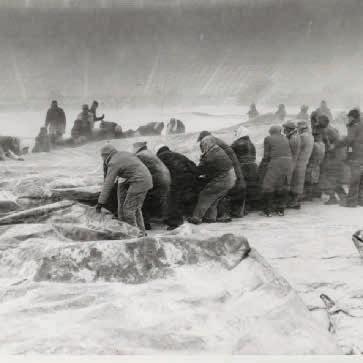
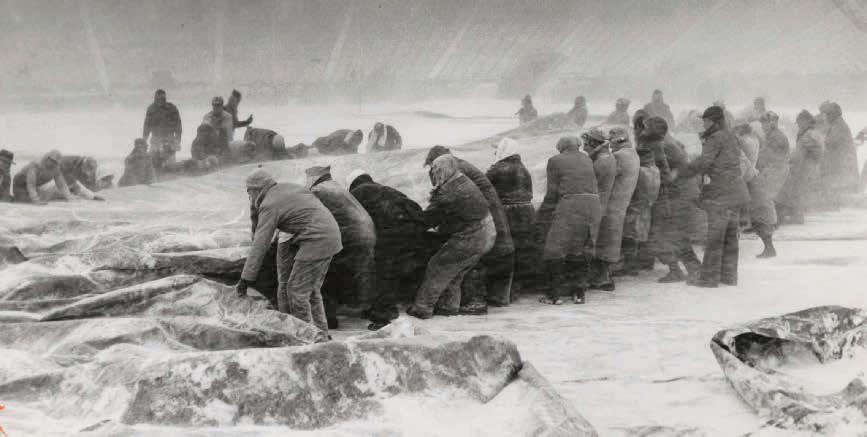
At noon, groundskeeper Ralph Guarasci started the tedious process of trying to remove the $3,000 tarp that covered the field. It was such slow-going that the P.A. announcer invited fans to come down from the stands to help haul the tarp off the field. Reports indicated that probably about 100 fans did. The new volunteer army helped clear the field of snow and move, as best they could, the tarp off the gridiron. The job consumed two hours and 20 minutes.
During the tarp removal, one of the Boy Scouts who had volunteered to help went missing and rumors flew that he had inadvertently been rolled up in the tarp or buried in the snow. The missing Scout, later identified as Roy Case, had indeed fallen, but one of his fellow Scouts had noticed and called to the others to stop; Case had managed to roll to the side and avoid a premature burial.
Fans work to uncover the field at Ohio Stadium for the Snow Bowl, a game between Michigan and Ohio State played in a winter storm on November 25, 1950.
Not everyone apparently saw his escape. There was a report in a Columbus newspaper the next day that workers had searched part of the tarp after the game for a Boy Scout thought to be missing. With such poor visibility, it isn’t hard to imagine that a Boy Scout could be turned into a Swiss roll without anyone noticing.
FINALLY, THE GAME
The temperature had hit a low of 5 degrees that morning, but was up to 10 by the time the two teams prepared for a scheduled 2 p.m. kickoff that would now be 21 minutes late.
The game kicked off with six-foot banks of snow behind each sideline, the result of all the shoveling. Some volunteers stayed on the sidelines for broom duty, to sweep the goal lines and yard markers as often as possible so the players would have some idea where they were on the field of play.
It quickly became clear that running or passing on the icy field was next to impossible, and the game turned into a punting contest, with both teams sometimes punting on first, second or third down to avoid fumbling. The game’s 45 punts were a Big Ten record. In a game that produced but three first downs—all by Ohio State—all of the scores were set up or accomplished by blocked punts.
After OSU blocked a punt early in the first quarter deep in Michigan territory, Vic Janowicz—in blinding snow and with the wind at his back—made a 38-yard field goal for Ohio State. The kick might have been the most impressive accomplishment of his season, if not his career.
“That was a pretty good kick,” Janowicz recalled, years later.
It depends on whom you ask, though.
“To this day, I do not think it was good,” Michigan’s Chuck Ortmann said in 1990. “I have nothing against Vic. But I was the one back there playing safety, with the best view. In those days, they didn’t have an official standing under the goal post as they do now.”
MICHIGAN GETS ON THE BOARD
Later in the first quarter, one of Ortmann’s punts— he punted an astounding 24 times!—rolled out of bounds at the OSU 4-yard line, and with the Buckeyes backed up, Janowicz was forced to punt from his own end zone. Michigan tackle Al Wahl blocked it and it rolled out of the end zone for a safety, cutting the Buckeyes’ lead to 3-2.
The punting exchange continued until the waning moments of the half, when an Ortmann punt rolled out of bounds at the OSU 9. Two plays gained four yards, and with a third and six at the OSU 13 and 47 seconds remaining in the half, Fesler made a decision that is still debated decades later, one that may have lost the game and probably his job. He sent Janowicz back to punt.
Future OSU football coach Earle Bruce was in the stands that day, and he loved to talk about what happened next.
“I was sitting behind an 80-year-old lady who was unbelievably smart,” Bruce said. “After they fired (Wes) Fesler, I would have hired her. The score was 3-2 in favor of Ohio State. There were 47 seconds left in the half. Third-and-6. ... This little old lady starts yelling, ‘Don’t you punt, Fesler. Don’t you dare punt.’
“She was the first person in the stadium who knew. Janowicz punted, they blocked it and scored a touchdown. And Fesler never coached another game for Ohio State. The old lady was right. She knew if he didn’t punt, we probably win the game 3-2.”
RUN ANOTHER PLAY!
A lot of people felt that way, including Ohio State tackle Bob Momsen, whose brother, Tony, blocked the punt and fell on it in the end zone for Michigan. Harry Allis kicked the extra point.
“If he would have elected to run one more play instead of punting on third down, the half might have ended before we would have had to punt,” Momsen said in 2000.
“Tony wouldn’t have blocked it and scored the touchdown, and we would have probably won the game.”
As Ortmann remembered it, most of the day was like that. He played all 60 minutes, at quarterback and safety.
“Twice, playing safety, I couldn’t see Vic in the backfield,” he said. “You looked up in the stands at the start, and you saw clusters of … people here and there, and even bonfires. There had been no tarp over the end zones, and there were snowbanks in each. I remember one of Vic’s punts went into the end zone, hit the bank and bounced back to the 2. That’s where they [referees] put it.”
STALEMATE
Conditions actually worsened in the second half, and neither team came close to scoring. Janowicz remembered the Buckeyes getting “thawed out and excited” in the locker room at halftime, but the feeling lasted only as long as it took them to get back on the field and get frozen again. In the second half, he said, “there was nothing left.”
Worsening conditions didn’t help. The blowing snow got so heavy that players on one sideline couldn’t see their counterparts on the other sideline. After each play, the broom patrol had to clear a spot to place the ball for the next play. Scoring became more and more unlikely. The blizzard seemed to hit its peak in the fourth quarter, but most of the fans were gone by then. Many of those who remained moved closer to the field, the only way they had a chance to see the players.
Some even moved from the seats to the sidelines. Tony Curcillo, who played quarterback in Ohio State’s single wing, later recalled catching a pass at the 35-yard line and sliding into the bench. A player was standing there, bundled up in a parka. When Curcillo took a closer look, he realized that the player’s girlfriend was huddled beneath the parka with him.
At the game’s end, Michigan—the winner—had 27 yards of offense, all on the ground, and no first downs. Ohio State completed three of 18 passes for 23 yards, had 16 yards on the ground and made three first downs.
Michigan head coach Bennie Oosterbaan seemed almost apologetic to have beaten the stronger team under these circumstances.
DRIVE HOME SAFELY!
The snow kept coming down after the game ended, and the fans’ journeys home became another ordeal.
The Snow Bowl eventually earned its own colorized postcard.
Some fans couldn’t get their snowbound cars out of the parking lots near the stadium. Some said it took them four hours to travel even two or three miles. Some didn’t try at all. Time magazine reported that 20,000 cars were stranded along Ohio highways because of the storm. The Marysville Evening Tribune reported that 500 fans were stranded in the town, 33 miles northwest of Columbus, after they found that they could go no farther.
After all the motels and tourist cabins were filled, many were lodged in church basements.
One eight-room house in Mt. Sterling, 24 miles southwest of the capital, reportedly lodged 92 people that night. Circleville, 29 miles south, was as far as many OSU fans got; one news report had 128 fans housed in an emergency shelter in the First Methodist Church there.
The trials and tribulations of the fans only added to the circumstances of this unforgettable game, so it isn’t surprising that there was already a name for it. What is surprising—at least to most fans today—is that it wasn’t at first called the Snow Bowl.
In 1950, the game was tagged as the Blizzard Bowl, a nice piece of alliteration if there ever was one. It was still being called that into the 1970s, but for some reason by the mid-1980s, the Blizzard Bowl had changed identities.
THE AGONY OF DEFEAT
Snow Bowl or Blizzard Bowl, some of the Ohio State players would rather have forgotten about it altogether. One was Janowicz, who punted 21 times for a 32.6-yard average, but had two of them blocked to give Michigan both of its scores.
“There is nothing to talk about in regard to 1950,” Janowicz told Ohio State’s The Lantern in 1990. “We lost the game. The cold only lasted a day. The defeat has lasted 40 years.”
Michigan fullback Don Dufek later said that the centers—Michigan’s Carl Kreager and Ohio State’s Bob Heid—were “really the heroes of the game” because both teams used the single wing, meaning that the snaps were taken deep in the backfield.
“It wasn’t like taking the ball from center,” Dufek said. “Vic was a great back and Ortmann was a great passer, but that was negated by the snow. It was very cold. We kept our hands under our armpits in the huddle. Our center (Kreager) didn’t wear any gloves. You couldn’t get up a head of steam for anything. It was bad news, period.”
Bob Hunter is the author of 11 books, including Saint Woody: The History and Fanaticism of Ohio State Football and Chic: The Extraordinary Rise of Ohio State Football and the Tragic Schoolboy Athlete Who Made It Happen. He has been a member of the board of trustees of the Columbus Historical Society since 2011.
LEARN MORE
LEARN MORE
Several authors have provided detailed accounts of the Snow Bowl, including Eric Kaelin in Buckeye Glory Days: The Most Memorable Games of Ohio State Football and Greg Emmanuel in The 100-Yard War: Inside the 100-Year-Old Michigan-Ohio State Football Rivalry. The sports staff of The Columbus Dispatch also wrote about the Snow Bowl in Game Changers: The Greatest Plays in Ohio State Football History.
Watch silent footage of the Snow Bowl synced with the Ohio State Radio Network broadcast of the game featuring Marv Homan at ohiohistory.org/learnmore.
Coke and Peanut Butter Crackers
Jerry Glick was 16 at the time of the Snow Bowl, and he attended the game in a group of six that included his mother, Thelma Glick, who oversaw the fraternities and sororities at Ohio State. Her car was parked behind University Hall, near her office, and that was as far as they got after the game.
“We barely made it up that hill,” Glick said. “With that much snow, nothing shoveled, and most people didn’t bring boots, it was hard to get any sort of traction. It was a wet snow, which is the worst, and just getting up that hill was about all you could manage, especially the older people in our group.
“We were hoping that they might get the roads clear, but they didn’t. We slept in her office. All we had to eat and drink that night were Coke and peanut butter crackers.”
NEWARK
Newark Arcade (1909) F 31 N. Third St.
| Howell & Thomas, Columbus, Architects | National Register of Historic Places
Preserving the Past with an Eye to the Future
DAYTON AND NEWARK REVIVE LANDMARK ARCADES
BY BRIAN WILLIAMS
As regional shopping malls vanish from suburban landscapes, a curious downtown countertrend has materialized in some Ohio cities.
The forerunners of those malls—European-style glass-roofed shopping arcades—flourished in American downtowns more than a century ago. But today, in Dayton and Newark, they are poised to thrive anew.
The 116-year-old Newark Arcade, just off the Courthouse Square, reopened in February after a five-year, $22 million facelift. Hundreds of visitors marveled at the restored concourse and shopped at the Canal Market District’s first winter farmers market. The structure includes 30 retail spaces and 19 apartments.
Rehabilitation of the Dayton Arcade, one of only a few in the world with a glass-domed rotunda, is nearly complete—with the rotunda as the focal point of an interconnected complex of nine buildings in the middle of downtown. (When the arcade first opened in 1904, it was linked to five buildings.)
Since 2019, Dayton Arcade Partners—a consortium of investors and developers—has been rehabbing not just the arcade and rotunda, but all the linked buildings as well. The result is a 93-room Hilton Garden Inn; 110 affordable apartments aimed at artists and entrepreneurs; 129,000 square feet of office space; and a University of Dayton entrepreneurial center along with classrooms for UD and Sinclair Community College.
The mix of uses is a key factor in the evolution of arcades.
IN THE BEGINNING
The first known arcade, the Galeries de Bois of the Palais-Royal, opened in Paris in 1786 and the idea caught on elsewhere in France and in much of Europe. By the early part of the 19th century, arcades became common in London, then throughout Britain.
ANOTHER PAIR
Across Euclid Avenue in Cleveland are two more arcades, both part of the 1898 Colonial Hotel. The hotel originally included the Colonial Arcade between Prospect and Euclid avenues. In 1911, another developer built the Euclid Arcade, connecting a new building on Euclid Avenue through the block to Prospect Avenue and the hotel. A few doors east, the Taylor Arcade spanned the block from 1907 until the mid-1930s, when a modernization removed the skylight and the former Taylor Arcade was absorbed into the adjoining Taylor’s Department Store.
When Toledo’s 10-story Spitzer Building—an early Chicago-style skyscraper—opened in 1896, it had a skylit shopping arcade on its ground floor. Soon after, an addition went up and the arcade was extended through the addition, too. Later, the Spitzer Arcade was connected through to the neighboring Lasalle & Koch Co. department store. When the Spitzer Arcade was remodeled many decades ago, a dropped ceiling covered its skylights, though it continued in use as an arcade until the Spitzer Building was vacated in 2013.
Arcades crossed the Atlantic in 1827, beginning with the Philadelphia Arcade. Not successful, it was razed in 1863. But the Westminster Arcade in Providence, Rhode Island, opened in 1828, is still going 197 years later. The Reynolds Arcade in Rochester, New York, opened in 1829 and lasted 103 years. Arcades in Bridgeport, Connecticut (1841), and Watertown, New York (1850) are still in business, too.
Arcades are believed to have first reached Ohio in 1877 when the Emery Arcade opened in Cincinnati, followed in 1883 by the Springfield Arcade. The Emery Arcade lasted until 1929, when it made way for the 49-story Carew Tower—which includes a groundfloor arcade without a skylight. The Springfield Arcade was demolished in 1988 after rehabilitation plans fell through.
In 1890, a 40-year boom in American arcades began in Cleveland. The Arcade, a five-level masterpiece, stretches 300 feet between two nine-story office towers that anchor a shopping galleria that’s considered one of the world’s grandest, on par with the Galleria Vittorio Emanuele II in Milan. The complex was rehabbed in 1980 and again in 2000 to house the Hyatt Regency Cleveland at The Arcade.
Across the street in Toledo, the 17-story Nicholas Building opened in 1906 with 15 stories of offices and an arcade of 42 shops on two levels opening into a marble Beaux Arts-style atrium with a skylight. The arcade was removed when the Nicholas Building was renovated in 1953.
A glass-roofed arcade opened in Wauseon, the Fulton County seat, in 1904. The Wauseon Arcade stood until 2002, when it was destroyed by fire.
The Columbus Arcade stood on the east side of North High Street south of Chestnut Street from 1913 to 1947.
The smallest Ohio town known to have boasted an arcade was Blanchester, on the border of Clinton and Warren counties, home to just 1,700 people when the Blanchester Arcade opened in the late 1890s. In 1918, its glass roof collapsed under the weight of an unusually heavy snow. But the building remained until it was razed in 1965. Ohio’s smallest arcade is believed to have been the Lind Arcade in Zanesville. Just half a block long, it opened in 1928, soon enough that it was in business before the 1877 Emery Arcade in Cincinnati—Ohio’s oldest arcade— was demolished in 1929.
Thus, for a matter of months near the close of the 1920s, Ohio had at least 14 glass-roofed arcades all at the same time, and there may have been more.
DAYTON
Rotunda, Dayton Arcade (1904) F 35 W. Fourth St. | Frank M. Andrews, Dayton, Architect | National Register of Historic Places
CINCINNATI
Emery Arcade (1877) F Vine Street to Race Street, between Fourth and Fifth Streets F Demolished 1929
Today, six are known to remain: The Arcade and the Colonial and Euclid arcades, all in Cleveland; Toledo’s Spitzer Arcade (although altered); the Dayton Arcade; and the Newark Arcade.
LOOKING AHEAD
Arcades are not museums. Despite their gilded history, renovations like those in Newark and Dayton are investments in the future. Urbanist Bruce Katz, in fact, described the work in Dayton as “the most transformative project in America.”
Transformative because it not only restores the buildings but reconsiders the role of downtowns today. It’s transformative also because, Katz hopes, its success will lead to less-onerous financing models for such important redevelopment.
The Dayton Arcade used $25 million in federal and state historic preservation tax credits. Katz notes that those were just part of 26 layers of financing—with 35
BLANCHESTER
Blanchester Arcade (Circa 1896) F South Broadway | Demolished 1965
ZANESVILLE
Lind Arcade (1928) F 48 N. Fifth St. | J.R. German, Zanesville, Architect | National Register of Historic Places | Demolished
lawyers at the closing—when Dayton Arcade Partners took ownership to kick off the rehabilitation.
“Urban regeneration should not be a heroic act,” Katz writes in his book, The New Localism: How Cities Can Thrive in the Age of Populism. He cites federal Opportunity Zones as one way to attract more private investment in strengthening the cores of American cities.
A Dayton investor consortium owns the property and buildings, while Cross Street Partners—a Baltimorebased firm focused on historic revitalization in core areas—is the developer and manager of the arcade complex.
The firm’s marketing and community manager, Megan Dunn Peters—a Daytonian to the core—seems to know everyone in the nine-building complex as she shows off some of the 110 new affordable apartments; 93 hotel rooms; dozens of small offices for startups, nonprofits and small businesses; new restaurants and art galleries; classrooms and labs; food processing and preparation kitchens; and event spaces.
Peters, one of Cross Street’s four Dayton leaders, says it’s all aimed at strengthening downtown as a whole—as well as, eventually, the surrounding neighborhoods.
FARMERS MARKET WINTER HOME
In Newark, current and former figures at the Canal Market District envisioned almost 10 years ago that a revitalized arcade would be a great spot for a winter farmers market. Indeed, the reopening of the arcade kicked off Feb. 7 with the first winter market.
Springfield Arcade (1883) F S.E. corner E. High St. and S. Fountain Ave. | Charles Cregar, Springfield, Architect | National Register of Historic Places | Demolished 1988
Newark Development Partners, a nonprofit development organization that works closely with the city on civic projects, bought the arcade in 2019 and oversaw the $22 million renovation. It will manage the facility for at least five years—a requirement for the $1.1 million in Ohio Historic Preservation Tax Credits. All in all, state and federal tax credits brought $6.5 million to the project. Remarkably, civic donations amounted to $12.5 million, more than half the total cost.
The arcade and the commercial buildings at each end encompass some 70,000 square feet and will include 19 small apartments, two of which will be short-term rentals.
Downtown Newark has had other recent investment—a growth in downtown population on the upper floors of shops, restoration of a 1914 bank building designed by famed Chicago architect Louis Sullivan and the 1876 Licking County Courthouse, and an addition to the Canal Market pavilion—but Mayor Jeff Hall says the revitalized arcade adds critical momentum to downtown.
“I love the social atmosphere,” Hall said as shoppers and gawkers mingled at the February market event. “This has been a long time coming.”
Brian Williams was a senior planner at the Mid-Ohio Regional Planning Commission from 2009 through 2020.
TOLEDO
Spitzer Arcade (1896) F Spitzer Building, 520 Madison Ave. | Bacon and Huber, Toledo, Architects | National Register of Historic Places
SPRINGFIELD
CLEVELAND
Colonial Arcade (1898) F 530 Euclid Ave. to Prospect Ave. | George H. Smith, Cleveland, Architect | National Register of Historic Places
LEARN MORE
Walter Benjamin—a German philosopher, essayist and culture critic—began his Arcades Project in Paris in 1927 and worked on it until his death in 1940. Harvard University Press describes The Arcades Project as “Walter Benjamin’s attempt to represent and critique the bourgeois experience of 19th century history and, in so doing, to liberate the suppressed ‘true history’ that underlay the ideological mask.” The book focuses on the glass-roofed shopping arcades of 19th-century Paris as sites for understanding the emergence of consumer culture—“a city, a world in miniature,” according to Benjamin, where “consumers begin to consider themselves a mass” and the arcades as “temples of commodity capital.”
Arcades: The History of a Building Type by Johann Friedrich Geist (MIT Press, 1982) is a classic work on the history and typology of arcades.
Visit PBS.org and search for The Dayton Arcade: Waking the Giant, a documentary in three half-hour segments, which follows the restoration of the arcade from its purchase in 2019 by a redevelopment coalition through its reopening in 2020 and 2021.
Arcadedayton.com provides a history of the Dayton Arcade from its founding through its reopening as well as updates on events at the arcade.
Watch a short television news story about the Newark Arcade at ohiohistory.org/learnmore.
Five of Ohio’s six known remaining historic glassroofed arcades welcome visitors, though before you travel, check websites for hours and to make sure they won’t be closed for special events when you plan to be there. The Dayton Arcade is at 35 W. Fourth St. in
downtown Dayton (arcadedayton.com), and the Newark Arcade is at 31 N. Third St., just north of Courthouse Square in downtown Newark (historicnewarkarcade. com). All three Cleveland arcades are near one another in downtown Cleveland. The Arcade, which also houses the Hyatt Regency Cleveland at the Arcade, is at 401 Euclid Ave. (theclevelandarcade.com). The Colonial Arcade and Euclid Arcade (jointly called the 5th Street Arcades) are at 530 Euclid Ave. and link to the Residence Inn by Marriott Cleveland in the 1898 Colonial Hotel (5thstreetarcades.com).
CLEVELAND
The Arcade (1890) F 401 Euclid Ave. to Superior Ave. | George H. Smith and John M. Eisenmann, Cleveland, Architects | National Historic Landmark
WATCH
Scan the QR code to see a short video about the history of arcades and the return of the Dayton Arcade in our newest episode of Echoes Extras.
LEARN MORE
DAYTON
North Arcade, Dayton Arcade (1904) F 35 W. Fourth St. | Frank M. Andrews, Dayton, Architect | National Register of Historic Places
Wauseon Arcade (1904) F N. Fulton Street | Destroyed by fire 2002
Nicholas Arcade (1906) F First Two Floors, Nicholas Building, 608 Madison Ave. | Bacon and Huber, Toledo, Architects | Removed in 1953 modernization (A cross-section of part of the arcade and its skylight is at lower right in this 1904 drawing.)
WAUSEON
TOLEDO
CLEVELAND
Euclid Arcade (1911) F 530 Euclid Ave. to Prospect Avenue | National Register of Historic Places
CLEVELAND
Taylor Arcade (1907) F About 630 Euclid Ave. to Prospect Avenue | Modernized and skylight removed, 1930s | Demolished 1960s
COLUMBUS
Columbus Arcade (1913) F 236 N. High St. | Stribling & Lum, Columbus, Architects | Demolished 1947
Newark Arcade (1909) F 31 N. Third St. | Howell & Thomas, Columbus, Architects | National Register of Historic Places
Tax Credits Foster Preservation
Efforts to preserve and rehabilitate the Dayton, Newark, Cleveland, Colonial and Euclid arcades have all made use of one or both of two income tax credits designed to foster private investment in rehabbing income-producing historic properties: the federal Rehabilitation Investment Tax Credit and similar Ohio Historic Preservation Tax Credit. Both are administered through the Ohio History Connection’s State Historic Preservation Office—the federal credit in cooperation with the National Park Service, and state credit in cooperation with the Ohio Department of Development. Learn more about state and federal tax credits for preserving incomeproducing historic properties at ohiohistory.org/taxincentives
How Many Are There?
In this story, we say that there were, at one time, “at least 14” glass-roofed shopping arcades in Ohio. That qualifier “at least” is key, because the truth is that we don’t really know how many arcades there are or were in Ohio. For decades, the number had held steady at 10. Then, while working on this story, we came across the Wauseon Arcade, Toledo’s Spitzer and Nicholas Arcades and the Columbus Arcade. The bottom line is that there’s a good chance that there are—or were—others out there, too. That’s where you come in. If you know of a vintage glassroofed shopping arcade that is—or was—in your community that isn’t in this story, we’d be interested to hear from you at echoes@ ohiohistory.org
NEWARK
Right: Glenna Wallace was elected chief of the Eastern Shawnee Tribe of Oklahoma in 2006. She is the first woman ever elected to the office. Top: Wallace, when crowned the Eastern Shawnee Tribe’s Senior Princess. Her crown, beaded by Tribal elder Kathern Ross, features the Tribal seal, with the panther, the swan and four feathers.
The Panther and the Swan
A PROFILE OF CHIEF GLENNA WALLACE BY JENNIFER AULTMAN
Ohio History Connection staff work with federally recognized Tribal Nations, including the Eastern Shawnee Tribe of Oklahoma, nearly every day. But this wasn’t always the case. Starting around 2006 when she first took office, Chief Glenna Wallace of the Eastern Shawnee Tribe started reaching out to then-Ohio History Connection Executive Director and CEO Bill Laidlaw to express that golfing was not appropriate at the Newark Earthworks (then home to Moundbuilders Country Club), and that the Ohio Historical Society (now the Ohio History Connection) needed to be working directly with federally recognized tribes.
After Laidlaw’s untimely passing in 2009, Chief Wallace and Laidlaw’s successor, Burt Logan, spent years building a relationship based on listening, mutual respect and sharing both hard truths and extraordinary vision. Today, Tribal relations and collaboration infuse the Ohio History Connection’s work, and Tribal representatives from approximately 50 Nations consult with the organization. Wallace continues today to carry the torch that lights our way together.
• b •
Touring Eastern Shawnee lands in a Tribal SUV in far northeast Oklahoma, I look at Chief Glenna Wallace behind the wheel and think to myself that she drives like she leads: with determination, purpose, vision, pride and abundant hospitality.
A handful of staff from the Ohio History Connection are visiting the area to meet with several Tribal Nations, including the Eastern Shawnee Tribe of Oklahoma, the Shawnee Tribe, the Wyandotte Nation and the Miami Nation, all forcibly removed from Ohio in the first half of the 19th century and now located near each other in this corner of Oklahoma.
Today, we are with Wallace for a tour highlighting many projects that the Nation has successfully executed under her leadership. Our tour starts at the Tribe’s majestic Indigo Sky Hotel and Casino, a beautiful and warm place that she helped design.
She is rightly proud of Indigo Sky, which has a distinctly Eastern Shawnee appearance: the Tribe’s seal is displayed prominently on each of the building’s two towers. The hotel and casino sit high upon a hill, so as guests approach it, the panther and the swan icons in the seal leap out above the treetops.
The message of this view is striking: Eastern Shawnee people are here, proud and successful, and they warmly welcome guests to their lands.
THE PANTHER AND THE SWAN
Coming around the bend and up the hill approaching the building, visitors see a majestic water feature. In it, a panther statue, strong and silent, prowls on a rock ledge above a pond. In the pond, swan statues skim the surface of the water with their powerful yet delicate wings outstretched. As we walk out of the lobby to begin our tour, Wallace stops at the water feature to explain the importance of the panther and the swan to Eastern Shawnee people, and to her as a leader.
“We balance the panther and the swan, who complement each other,” she shares. “Sometimes as a leader I have to draw on one or the other a bit more or less, as the situation requires. But it is always a balance, never all panther or all swan.”
Every time I visit northeast Oklahoma, Wallace has added a tour stop, highlighting a new project to benefit the people, so even though I’ve toured with her before, I don’t yet know where this tour will take us as we drive off. When she was elected as the Tribe’s first female chief in 2006, Indigo Sky didn’t exist. And yet, here it stands today, tall and proud.
Chief Wallace had been on the Tribe’s business committee for 18 years while also serving nearly four decades as a professor at Crowder College in Neosho, Missouri. The business committee is the federally recognized Nation’s legislative arm, overseeing business enterprises, Tribal committees, strategic planning, economic development and other activities.
Wallace knew from her work on the business committee that her Nation could continue to prosper with the right leadership. Making the leap to chief seems logical, but as she describes, running for chief wasn’t a slam dunk. “We had never had a woman chief, and some people told me that we never would. In fact, after I was elected, I told people to call me ‘Chief Glenna’ because that
seemed like it might be less threatening to people than calling me ‘Chief Wallace.’”
Today, she has been elected to five consecutive and very successful terms. She declares that she will retire in 2026, which means there’s a lot she wants to accomplish in the next 12 months. As we continue to tour, her driving parallels her leadership—speeding up, not slowing down, the closer we get to the end.
TRIBAL HEADQUARTERS
Pulling away from Indigo Sky, Wallace has the tour all planned out, moving from site to site and narrating every minute of the way. We crisscross the MissouriOklahoma state line more than once. Here is more land the Tribe recently bought. Here is the original allotment, only 58.19 acres even though the Tribe was collectively promised 60,000 acres in the 1831 treaty. Today, it owns 4,031 acres that it has purchased since 1987. Here is the cultural center, the new incomeproducing firing range. Here is the impressive new sprayground (water play area) and playground where Tribal children mingle with elders, learning Eastern Shawnee history through outdoor art, a Tribal history walking path and connection to older generations. Here is the site of the new Tribal headquarters, to replace the old one that keeps flooding. Here is the wellness center that will soon be expanded.
Everywhere, efforts are geared toward providing greater community connections and better lives for Eastern Shawnee citizens. As we careen down highways, paved roads and dirt roads, I scold myself: We who live in Ohio and work with Chief Glenna need to remember how much she needs to do at home in Oklahoma and to not ask too much of this incredibly generous leader.
When we ask her to come to Ohio to speak, to cut ribbons, to attend conferences and consultations, her
Left: Picking strawberries in Gresham, Oregon, about 1950 (from left are Vergie Crain Enyart, Buddy Joe Enyart, Shirley Crain, Dixie Enyart Martin, Jean Enyart Buxton, Jewel Dushane Crain, Sonny Crain, Charles Enyart, Glenna Wallace). Middle: Glenna Wallace talks about the history of the ceremonial peace pipe tomahawk that belonged to the Shawnee leader Tecumseh. Right: Chief Wallace was featured in the January 2024 issue of Show Me the Ozarks Magazine
work at home continues apace because she is the leader of a sovereign, federally recognized government. Her primary job is to take care of Eastern Shawnee people, and that is why she keeps showing up for us in Ohio—so her nation can connect with its homeland, its heritage and the incredible achievements of the ancestors in the land we now call Ohio.
GREAT TRAVELERS
Taking a mile-a-minute driving tour with Chief Wallace feels poetic because Shawnee people are known as great travelers. Primarily located in the middle Ohio River Valley prior to European contact, the Shawnee Tribes have documented connections to over half of the states in the U.S.
Today, all three federally recognized Shawnee Nations, located in Oklahoma, consult with organizations around the eastern U.S. about their far-reaching cultural heritage. This heritage includes Ohio’s Hopewell Ceremonial Earthworks, for which Wallace helped achieve UNESCO World Heritage List status, and Serpent Mound, where she has spoken many times for the summer solstice.
Wallace has always been a traveler herself. Her family left Oklahoma when she was young to pursue work in the Pacific Northwest as migrant farm laborers. She jokes that her family was among the first RVers, moving from place to place to follow the harvest.
Despite the joke, her stories make it clear that this life was often hard, moving from town to town.
“At one farm, we stayed in a barn. I got my own pigsty! I swept it out, cleaned it up and was so proud,” she shares.
Wallace also talks about her parents incentivizing her hard work by letting her keep some of her earnings, which, she says tongue-in-cheek, made her “the greediest little girl around!”
This life, however difficult, made her who she is today.
“Every time I moved to a new school,” she shares, “they put me in the bottom group, expecting little from me. And by the time I had to move on, I had worked my way to the top group, only to start over again at the bottom in the next school.”
Those of us who have the privilege to work with Chief Glenna today can see this young girl’s spirit in her elder version—never give up, always show up and push other people to do better by always giving your best.
After nearly two hours hopping in and out of the SUV to witness firsthand the thriving work of the Eastern
Shawnee Tribe, we round the bend and see Indigo Sky rise above the treetops. The panther and the swan appear again.
Thinking about all Chief Glenna has shown us today, I see the panther and swan in her in new ways. The panther told her to fight to be the first female chief, and the swan told her to show grace and step lightly as she moved into that uncharted territory. The panther helps her build a strong vision for the nation’s future, and the swan reminds her to forge lasting relationships to achieve that vision. Be strong and graceful at the same time. Be persistent but adaptable.
More than anything, I see through her eyes the immense pride she has in Eastern Shawnee people, who learn from this remarkable leader how to balance the panther and the swan so they can flourish for generations to come.
Jennifer Aultman is director of historic sites & museums for the Ohio History Connection.
LEARN MORE
LEARN MORE
Jane M. Mason, a Midwestern artist and art teacher, wrote a post on her blog in 2022 titled “The Day I Met an Indian Chief: Glenna Wallace, Chief of the Eastern Shawnee Tribe of Oklahoma.” You can read the warm and appreciative piece at ohiohistory.org/learnmore
The Eastern Shawnee Tribe of Oklahoma: Resilience Through Adversity, edited by Stephen Warren, is considered one of the best newer (2017) histories of the Tribe from the Shawnees’ own perspective. The collection of interviews with tribal elders and essays by leading and emerging scholars “focuses on the 19th and 20th century experiences of the Shawnee, presenting a new brand of tribal history made possible by the emergence of tribal communities’ own research centers and the resources afforded by the digital age.”
Chief Glenna Wallace visited Chillicothe to address guests at Ohio University-Chillicothe’s Bennett Hall Auditorium on March 28, 2022. Hear her talk about her Tribe at ohiohistory.org/learnmore.
Wallace highly recommends John Sugden’s Tecumseh: A Life, a biography of the revered Shawnee chief who created a confederation of Indian Tribes across the continent and kept Native American resistance alive following the Revolutionary War.
Top: Kool & the Gang performing live on Soul! Middle: Kool & the Gang’s self-titled debut album was released in December 1969. It peaked at No. 43 on Billboard’s R&B chart. Bottom: Kool & the Gang performed on Good Morning America in 2023 to promote the group’s 60th anniversary and a new album, People Just Want to Have Fun
Kool & the Gang’s Robert “Kool” Bell
Get Down on It
ROBERT “KOOL” BELL TURNS 75
BY JOHN PETKOVIC
As boxer Mike Tyson famously said, “Everyone has a plan until they get punched in the face.”
Robert “Kool” Bell came up with his plan after taking one too many punches.
The Youngstown native and co-founder of Kool & the Gang was on an early path into the boxing ring.
Long before he provided us with the distinctive bass lines that helped define 1970s funk, the writer of dance-floor classics Jungle Boogie, Ladies’ Night and Celebration was following his father and uncle into the arena as a practitioner of the sweet science.
It started in Youngstown in the 1950s and ’60s.
The city was a hotbed for boxing, and his father, Robert Sr., and uncle, Tommy, both Golden Gloves champs, were central to the sport in northeastern Ohio.
“Growing up in Youngstown was all about boxing and music,” says Bell from his home in Orlando, Florida, just back from a three-month European tour.
“It was a steel town, a tough town, and you were especially tough if you grew up on the South Side.”
A CULTURAL HUB
The South Side was the hub of Black culture in the city—because of its churches, yes, and gospel music, but also because of boxing and jazz.
The area attracted waves of Black residents during the Great Migration (1910 through 1970), lured by the promise of a better life and a bustling economy in the Mahoning Valley built on iron ore, coal and steel.
“People came to work and they were hard-working,” Bell says. “My grandfather was a mechanic, and I would go under the cars with him when I was little. I learned how to build a motorbike with a motor from a lawn mower.”
His upbringing nurtured a can-do attitude that has informed Bell’s life—one that would launch his unlikely career in music and still keeps him going hard at 75. (His birthday was Oct. 8.)
“Golden Gloves was big in Cleveland and Youngstown, and my dad started showing me how to box before I was even nine,” Bell says. “But I was like, ‘Do I really want to get punched in the face?’ So I chose music.”
LEARNING TO IMPROVISE
Melody and rhythm didn’t come easy. Neither he nor Ronald Bell, his younger brother and Kool & the Gang co-founder, had any musical education or even owned any instruments.
Kool & the Gang album covers
But, hey, no problem. They just started jamming— on paint cans.
The Bells would beat them like bongos, and the amount of paint in the cans determined the sounds they created.
“We came up with ideas for songs before we knew how to play instruments,” Bell says. “And we had a groove— and you know, it all starts with the groove. Playing those paint cans is how I developed my bass style.”
So, no boxing career for Bell. But the sport still managed to shape his path to stardom.
A TRAVELIN’ MAN
“My father was always a rolling stone and would go fight in Cuba,” Bell says. “Then he and Uncle Tommy moved to New York to train, and they found themselves in the middle of the jazz scene.”
Boxers and musicians held an exalted place in the ascendant Black culture of the 1940s and ’50s.
The boxing Bells became close friends with jazz pioneers Count Basie and Thelonious Monk. The latter lived in their apartment building and would become Bell’s godfather.
They also befriended Miles Davis—yes, that Miles Davis, the jazz great, who was also an aspiring boxer.
“Miles wanted to get in the ring with my dad,” Bell says. “But my dad told him, ‘I don’t want to hurt you; you still have to play that trumpet.’”
The friendships with musicians inspired Robert and Ronald Bell when the family moved from Youngstown to Jersey City, New Jersey, in 1960.
FORAY INTO JAZZ
By 1964, the brothers had started the earliest incarnation of Kool & the Gang with five of their schoolmates, calling themselves the Jazziacs.
Early gigs took place during jazz nights in local clubs on the East Coast, including the occasional show opening for bebop legends McCoy Tyner and Pharoah Sanders.
“We loved jazz, but we were also into R&B and soul and wanted to sound like a Motown band,” Bell says. “So we changed our name from the Jazziacs to the Soul Town Band and then to Kool & the Flames.”
Of course, the “Kool” referred to Robert Bell—who took the nickname from a fellow street-gang member.
“I was in a gang called the Imperial Lords,” Bell says. “I was president and went by the name Tamango—after the rebellious slave in the Dorothy Dandridge film.”
Tamango and the Flames? It didn’t quite have the right ring to it.
“There was a guy in our gang named Cool and I was like, ‘Well, I’d rather play music than be in a gang,’” Bell says. “But I liked that name, because it’s all about keeping your cool. Except I spell it ‘Kool.’”
The band also decided to swap “Flames” out and replace it with “Gang,” to avoid the wrath of James Brown and his Flames.
“We couldn’t have the Godfather mad at us,” he laughs.
THE GANG ARRIVES
By 1969, Kool & the Gang released its self-titled debut album and was on its way to selling more than 70 million albums and recording 21 Top 40 hits, all while navigating numerous musical trends over the decades.
“The key to our success was that we evolved with the times,” Bell says. “But we never lost sight of who we were.”
That included his roots in Youngstown—where Bell regularly returned to visit his grandmother and cousins over summers, even as the band was touring the country and playing arenas in support of its 1973 breakthrough album, Wild and Peaceful
In discussions before going into the studio for Wild and Peaceful, the band’s label—DeLite Records— suggested the gang record a cover song to land a breakout hit. Kool & the Gang stood tough and rejected the idea—and instead went to work.
In one day, the band wrote three horn- and groovedriven tracks that would cement its status as 1970s funk kings: Jungle Boogie, Funky Stuff and Hollywood Swinging.
On the strength of those three songs, Wild and Peaceful reached No. 6 on the Billboard R&B chart— where it remained for 36 weeks—and No. 33 on the Billboard Pop chart. Jungle Boogie and Hollywood Swinging went on to sell over a million copies each and were certified Gold by the Recording Industry Association of America.
KOOL INSPIRATION
A hit single recorded later in the 1970s was born out of a hunch.
“My wife and I used to hang out in Studio 54,” Bell says. “And one night, I saw all these ladies dancing and then I went back to the band and said, ‘I got a great idea for a song: Ladies’ Night.’”
The enduring hit single was re-recorded in 2003 in a collaboration with the English girl group Atomic Kitten for the Gang’s retrospective album, The Hits Reloaded Atomic Kitten was so thrilled with the results they asked if they could use the song on their third and final studio album, Ladies’ Night
Celebration, the band’s biggest hit and a standard at weddings, sporting events and just about any other joyous gathering, was inspired by the Bell brothers’ conversion to Islam.
Ronald Bell came up with the chords and the line, “Everyone around the world, come on / It’s a celebration.”
“We had no idea it would be that big; everyone knows the song, even if they don’t know the band,” Bell says. “It’s even the biggest song in outer space,” a reference to Celebration having been played for astronauts on the International Space Station in 2011.
Of course, generations of earthlings have admired Kool & the Gang—including Mike Tyson. Tyson approached Bell as a fan of the band—and of the family’s boxing legacy.
“Mike came up to me and said, ‘Your Uncle Tommy beat Sugar Ray Robinson in that fight, but they only gave it to Sugar Ray because he was the champ,’” says Bell, referring to a world welterweight title bout in 1946 that Tommy Bell lost by decision.
EARNED RESPECT
Changing musical trends ended many careers in the ’80s and ’90s. But Kool & the Gang enjoyed a resurgence with the appearance of Jungle Boogie in Quentin Tarantino’s iconic film Pulp Fiction
There was also a new wave of fame that blindsided the band.
Kool & the Gang is often called the most sampled act in music, with snippets and loops of grooves and riffs appearing in tracks by Madonna, Janet Jackson, Nas, Will Smith, Diddy, A Tribe Called Quest and Public Enemy.
“At that time, I was like, ‘They’re taking our music; how can they get away with that?” Bell says. “But then I saw it as a compliment and it made us relevant to new audiences, because we influenced so many people.”
One compliment evaded Kool & the Gang for decades— until 2024, when the band was inducted into the Rock & Roll Hall of Fame.
“It’s a great accomplishment, but also bittersweet,” Bell says. “My brother Ronald died five years ago, and all the original members have passed away, and here I am the last man standing.”
The induction ceremony in Cleveland reminded him of home—and how he has come full circle.
“Here I am, a kid who rode motorbikes and go-carts around Prospect Street and now I’m in the Rock Hall,” Bell says. “What a blessing it is to have come out of Youngstown and make it in a band.”
John Petkovic is a Cleveland-based journalist who has worked as a columnist, reporter and photographer for The Plain Dealer, and has written for Rolling Stone, Spin and Playboy. He is also a touring musician who has played in bands including Cobra Verde and Death of Samantha.
LEARN MORE
In 2023, the Chicago Review Press published Too Hot: Kool & the Gang & Me, in which the “drummer, keyboardist, and primary songwriter George Brown describes life in and out of the band, including a raucous life on the road as the band’s popularity grew. He weathered the ups and downs of his musical career and navigated many challenges, including prescription drug addiction and depression.”
Kool & the Gang: Videology, a DVD released by Universal Music Distribution, features video recordings of 24 songs including four filmed for the variety show Don Kirshner’s Rock Concert: Hollywood Swinging, Jungle Boogie, Spirit of the Boogie and Ladies’ Night. The audiovisual history of the band features other Kool hits including Jones vs. Jones, Hi De Hi, Hi De Ho and Joanna
Listen to Australian journalist Sandy Kaye interview Robert Bell on her podcast, A Breath of Fresh Air, at ohiohistory.org/learnmore.
LEARN MORE
Kool & the Gang (Robert Bell, far right) became the first celebrities honored on the Youngstown Walk of Fame, in July 2023.
I wish I’d been there on Nov. 21, 1965, in the cement hulk of the Cotton Bowl in Dallas, Texas. That’s when the Cleveland Browns’ Jim Brown, a runaway choice by the cognoscenti as the greatest running back ever, trampled the Dallas Cowboys for the 11th and last time as Cleveland’s 24–17 victory gave the Browns a 10–0–1 record against Dallas when he was in the lineup.
On the other side of the line of scrimmage was the Original Cowboy, Joseph Donald Meredith. That was the NFL iteration of the term anyway, although Western novelist Zane Grey had established the literary version with his tales of ridin’, ropin’ and wranglin’ in the purple sage in pursuit of maverick cattle.
WHAT’S A MAVERICK?
About those mavericks … technically, the word means unbranded cattle that belong to no farm or ranch and can be claimed by anyone. More broadly, it means a nonconformist or independent thinker. That was a perfect description of Meredith. He spurned Texas Christian University when coach Abe Martin struck a sour note on his recruiting visit to Meredith at Mount Vernon High School, roughly 100 miles from Dallas in the east Texas piney woods. Martin told Meredith he would be a perfect fit because the school was not pretentious, so he could wear blue jeans and T-shirts every day.
Meredith had worn such attire most of his life, but he wanted more.
And eventually he got it, starring on Monday Night Football’s threeman broadcast team consisting of play-by-play man Keith Jackson, the bloviating and polysyllabic analyst
Howard Cosell and Meredith’s droll putdowns of “Haard,” as he called Cosell in his Texas accent. Meredith later had a recurring role as an actor on the TV series Police Story.
A TRIPLE HALL OF FAMER
Jim Brown eventually was inducted into the College Football Hall of Fame, the Pro Football Hall of Fame and the Lacrosse Hall of Fame.
Meredith’s reputation as an excellent athlete came as early as his high school days, and was well-deserved. In high school, he excelled in football and basketball.
In 1954, Mount Vernon won the prestigious Dr Pepper High School Basketball Tournament in Dallas. Meredith scored 52 points in one game and led his Tigers to the championship over much larger Woodrow Wilson.
BOO BIRDS
In the Cowboys’ first home game in 1960, against Pittsburgh, the fans proved fluent in the strategy of the game and fiery about the combustible emotions it could spark. The Cowboys lost to Pittsburgh, 35–28, and the crowd took out its unhappiness on no less than Roy Rogers (nee Leonard Slye of Duck Run, Ohio) and his wife, Dale Evans, who were driven around the Cotton Bowl field while seated on the back of a convertible, giving the disappointed fans targets at which to fling ice cubes from their soft drink cups.
So much excitement had attended Southern Methodist University’s victory in the recruiting war for the Mount Vernon quarterback that it was occasionally called Southern Meredith University because of the dashing quarterback’s skills.
Only two-point losses to the Eagles and the Cardinals and a late-season 31–31 tie against the New York Giants lifted any spirits.
The Cowboys’ record was 0–11–1. The Rams beat them by 25, the Colts by 38 and, on a note of ominous foreshadowing, Cleveland rolled to a 48–7 rout.
Meredith had never been booed until he came to Dallas, which, he said, “made me wonder what happened to all of my friends in Dallas. Then I realized it wasn’t my friends booing me. It was a new kind of fan, a pro football fan.”
The problem, he felt, was that he followed closely the final SMU seasons of Doak Walker, who won the 1948 Heisman Trophy, and Kyle Rote, first pick in the 1951 NFL draft, who played 11 seasons for the New York Giants.
“Consciously or subconsciously, everyone was looking for me to be the next Walker or Rote and I wasn’t either of them,” he said. “I’m Meredith.”
If fans wanted him to morph into either of those players, they had a long wait. The Cowboys reached their first Super Bowl after the 1970 season, 10 seasons after Meredith turned pro.
BROWN’S DOMINANCE
But that was not the issue at hand on Nov. 21, 1965. In 206 career carries against the Cowboys, Jim Brown gained 1,053 yards, an average of 5.11 yards per carry.
On that day, he gained 99 yards and scored a touchdown on 19 carries in another bedeviling of the Cowboys’ defense, which had not yet been accorded the nickname of the “Doomsday Defense.”
No matter. Meredith would bring the doom, and the result of the play would provide the accompanying gloom.
The Browns were the defending conference champions, as usual, and would in fact win it again in 1965, but the Cowboys were making a game of it. Behind by a touchdown in the last quarter, the Cowboys drove to a first down at the Browns’ one-yard line. The huge crowd of 76,251, of which I was not part, knew their football. As the sportswriter and satirist Dan Jenkins said, “If you were from Texas and weren’t interested in football, they drowned you as a kid.”
SO CLOSE AND YET …
The crowd waited expectantly for one of the Dallas running backs to plunge into the end zone.
But Meredith almost unfathomably passed over the middle into a horde of Cleveland defenders, where a middle linebacker intercepted the ball. Actually, against the massed goal-line defense of the Browns, it was not that bad a call—provided Meredith “threw it to the blonde in the first row,” as future Browns’ coach Sam Rutigliano advised.
The Cowboys’ ready sheet of play calls listed only two choices—trying to wedge the ball into the end zone against a stacked defense, or a pass.
THE GREATEST SPORTS LEDE
Nevertheless, Meredith would have to subsume a part in the most memorable opening sentence in sports journalism history, Grantland Rice’s ”Four Horsemen of the Apocalypse” lede, written four decades earlier after Notre Dame’s 13–7 victory over Army on The Plain at West Point, a line which he had cribbed from a silent movie he had watched the night before the 1924 game.
To this day, the Four Horsemen are the most recognizable backfield quartet in football history. The interception had more of the effect of an “Apocollapse” than anything else, as all the fight went out of the Cowboys.
The Dallas Morning News sportswriter Gary Cartwright began his story: “Outlined against a gray November sky the Four Horsemen rode again. You remember them. Famine, Pestilence, Death and Meredith.”
Bill Livingston spent the final 34 years of his 47-year newspaper career at The Plain Dealer before retiring as senior sports columnist in 2018. He covered five Summer and two Winter Olympics, the Super Bowl, all four of golf’s majors, the U.S. Tennis Open, the
World Cup, the Final Four and the college football playoffs. His most recent book is The Promise of LeBron James: The Rise, Fall from Grace, and Redemption of Ohio’s Own.
LEARN MORE
LEARN MORE
Watch Jim Brown run roughshod over the Cowboys’ defense and Leroy Kelly return a punt 67 yards for a touchdown and, of course, Don Meredith’s fatal interception at ohiohistory.org/learnmore.
In nine NFL seasons and 104 games, Meredith passed for 17,199 yards and 135 touchdowns. Watch a selection of his highlights at ohiohistory. org/learnmore.
Read Mike Freeman’s Jim Brown: The Fierce Life of an American Hero, which “offers the first definitive portrait of the sports star. Based on interviews with Brown, his family, friends and colleagues, Jim Brown is an honest and complete picture of the man and his turbulent times.”
Dandy Don Meredith: The First Dallas Cowboy, by Dave Lieber, is billed as “the first full-length biography of Meredith,” in which “you’ll find out his remarkable journey overcoming polio to emerge as one of Texas’ most illustrious athletes.” Lieber also explores “the reasons behind his inability to lead the Dallas Cowboys to Super Bowl glory.”
Left: Don Meredith’s 1965 Topps NFL trading card. Center: Back of Meredith's 1965 trading card. Right: Jim Brown runs away from five Dallas Cowboy defenders in this photograph taken during the 1965 NFL season. In 11 games against the Cowboys, Brown rushed for an average of 95.7 yards per game, 5.11 yards per carry.
Young Eyes on the Past
EXCAVATING RIGHTS AND REMAINS—THE NATIVE AMERICAN GRAVES PROTECTION AND REPATRIATION ACT OF 1990
My National History Day topic was the Native American Graves Protection and Repatriation Act of 1990, or NAGPRA. I created a National History Day exhibit with the theme Rights and Responsibilities.
NAGPRA protects Native American rights to their burial sites and ensures that sacred artifacts are returned to tribes. In the past, collectors, archaeologists, museums and universities ignored the rights of Native Americans. Activists took responsibility by fighting for repatriation laws, which led to NAGPRA.
Any institution that receives government funding is subject to NAGPRA. The U.S. government is responsible for enforcing repatriation, but the process has been slow. Some scientists oppose NAGPRA because they want to be able to continue studying Native American remains and artifacts.
George H.W. Bush signs the Native American Graves Protection and Repatriation Act on Nov. 16, 1990. It became law the following day.
BY MIRA PATEL
COLLECTION AND LOOTING
The judges at the regional competition suggested that I include more historical context, and I learned about the sad history of collecting and the looting of Native American graves. I continued to find more information about my topic even after the state competition, which surprised me.
Native Americans were forced from their land, so their burial mounds were left unprotected. Many Native American burial mounds were looted, and some were even made into tourist attractions.
Thomas Jefferson had a burial mound near his home in Virginia excavated in 1784 that included more than 1,000 Native American remains. The New Deal created jobs through excavations of Native American burial mounds. Many museums and individual collectors stole thousands of Native American remains and artifacts. Anthropologists and scientists took Native American remains and artifacts to study.
DEMANDING RIGHTS
From 1968 through the 1970s, the American Indian Movement (AIM) demanded basic human rights for Native Americans. The occupation of Alcatraz Island, Trail of Broken Treaties, occupation of Wounded Knee and the Longest Walk are some of the AIM events that pushed for Native American rights and increased awareness of Native American issues.
I decided on NAGPRA as my History Day topic after reading about Maria Pearson (Running Moccasins), known as the Founding Mother of NAGPRA. I was amazed that one ordinary person could make such a huge difference in history.
Pearson learned that a nearby highway project reburied the remains of white people but sent Native American remains away for study. She convinced the governor of Iowa to have the Native American remains returned. This eventually led to the Iowa Burials Protection Act of 1976.
NAGPRA
President George H.W. Bush signed NAGPRA into law on November 16, 1990. NAGPRA has led to repatriation of 126,299 remains between 1990 and 2024. There have been 3,659,028 Native American funerary objects repatriated between 1990 and 2024. NAGPRA has restored Native American rights to their burial sites and sacred objects. Tribes are now consulted by museums before Native American funerary objects are put on display. NAGPRA has been successful, but it is criticized as being very slow. Some museums still hold thousands of Native American remains that have not been repatriated.
Mira Patel is a ninth-grade student at Hawken Upper School in Gates Mills. She participated in National History Day in seventh and eighth grade. She placed first for her exhibit at Ohio History Day and competed at National History Day in Maryland. She enjoys writing, art, playing electric guitar and gymnastics.
Native American burial sites were tourist attractions for much of the 20th century. The imagery and language on the billboard pictured on this 1959 postcard highlight how stereotypes of Native people were tragically woven together with the mistaken belief that Native graves were both subjects of study and fodder for entertainment. This postcard touted the Salina Burial Pit near Salina, Kansas. The pit was closed in 1990 under pressure from tribal activists.
Tribal activists also advocated for the Kansas Unmarked Human Burial and Skeletal Remains Protection Act, which became a cornerstone of the federal Native American Graves Protection and Repatriation Act.
To learn more about NAGPRA, visit the National Park Service website at ohiohistory.org/learnmore.
Grave Injustice: The American Indian Repatriation Movement and NAGPRA by anthropologist Kathleen S. Fine-Dare is “the powerful story of the ongoing struggle of Native Americans to repatriate the objects and remains of their ancestors that were appropriated, collected, manipulated, sold, and displayed by Europeans and Americans.” The book aims to be “a balanced introduction to a longstanding and complicated problem that continues to mobilize and threatens to divide Native Americans and the scholars who work with and write about them.”
For a more scholarly view of NAGPRA, read The Routledge Companion to
Indigenous Repatriation: Return, Reconcile, Renew, edited by Cressida Fforde, C. Timothy McKeown and Honor Keeler. The volume “brings together Indigenous and nonIndigenous repatriation practitioners and researchers to provide the reader with an international overview of the removal and return of Ancestral Remains.”
Watch the 22-minute film No Stone Unturned at ohiohistory. org/learnmore. The documentary, produced by the Choctaw Nation of Oklahoma, “highlights the Choctaw community’s long history of advocacy for our deceased loved ones and our dedication to advocate on their behalf since the passing of the Native American Graves Protection and Repatriation Act regulations” in 1990.
Young Eyes on the Past highlights work by Ohio students in grades 4–12 participating in regional, state and national History Day competitions organized annually by the Ohio History Connection and local sponsoring organizations statewide.
LEARN MORE
Reviews
Shop our Ohio History Store in person at the Ohio History Center or online at ohiohistorystore.com for this title and more.
Akron at 200: A Bicentennial History, edited by
BOOK by Karl Grismer, an 800-page history written for the city’s 125th anniversary in 1950.
David Lieberth—executive secretary of Akron’s Bicentennial Commission and president of the Akron History Center Inc.—has assembled 26 local history writers in Akron at 200, a collection of essays spanning the earliest days of the region’s history (“The Indigenous History of Akron”) to the present day (“Neighborhood Development in the Twenty-First Century”).
In his introduction to Akron at 200, Lieberth explains that this new volume owes a debt to various histories of the Rubber City that have come before it, including Historical Reminiscences of Summit County by Lucius V. Bierce (1854); William Henry Perrin’s History of Summit County (1881); Henry Howe’s Historical Collections of Ohio (1890); Samuel Lane’s Fifty Years and Over of Akron and Summit County (1892); and Oscar Olin’s Akron and Environs (1917).
It owes an even greater debt to books that celebrated Akron’s anniversaries in 1925, 1950 and 1975, including a 666-page anthology Olin compiled for the Summit County Historical Society in 1925 and Akron and Summit County
David Lieberth and Jon Miller
The latter book, according to Lieberth, “is superbly indexed and has remained a principal resource for anyone writing Akron history in the last seventy years.”
Archaeologist Eric Olson is the author of “The Indigenous History of Akron” essay of Akron at 200, in which we learn that “humans have been in North America for over twenty thousand years,” that the first peoples are referred to as “pre-Clovis” after artifacts found in 1932 near the town of Clovis, New Mexico, and that by the end of the Clovis period, “Lake Erie was roughly one-third of the size it is today.”
“As the ice melted, new streams of melted ice water began to cut through natural sediment dams, causing much of the Great Lakes to form rapidly in flood events,” he writes. He continues, interestingly, “Some archaeologists have suggested these rapid flooding events may be the impetus behind much of the flood creation stories common among Great Lakes Tribes.”
In “C.W. Howard and the Temperance Movement in Early Akron,” co-editor Jon Miller writes about the earliest days of the temperance movement after the city’s first election in 1836.
The water at that time was so dangerous to drink that, “Early city council meetings had (a) problem to address—the town was full of drunk people. The sober citizens wanted the town council to do something about it. Akron was full of places to get (an alcoholic) drink.”
In the Buzzard newspaper of Nov. 4, 1837, a correspondent wrote about one such tippler that he was a “poor old hardened wretch … so beastly drunk he could neither stand, sit, nor lie”! The council passed an ordinance to at least curb drinking in Akron’s grocery stores.
Akron at 200 includes chapters on several citizens of note, from “Our Own (Abolitionist) John Brown” to presidential candidate Wendell Willkie and African American violinist and composer Julia Perry, as well as star athletes such as tennis prodigy Shirley Fry, NBA star Nate Thurmond and allcity halfback Ara Parseghian, who later went on to fame as the head football coach of the Notre Dame Fighting Irish. Of particular interest are essays about more contemporary issues and historical events such as “The Rise and Fall of Howard Street as a Black Business District,” “The Failure of the Akron Innerbelt” and “Neighborhood Development in the Twenty-First Century.”
Charlotte Gintert, a cultural resources specialist for the Summit Metro Parks, writes about immigration into Akron in the 19th and 20th centuries in an essay aptly titled “An International City,” writing of the city’s first ethnic neighborhood, Dublin, which “sprang up in the Little Cuyahoga Valley along Furnace and Howard streets” and was filled with Irish canal workers, known as “canawlers.”
“By 1870,” she writes, “as much as 26 percent of Akron’s population was foreign-born and claimed mostly Irish or German ancestry,” including Michael O’Neil (of O’Neil’s department store) and “The Oatmeal King,” Erhard Steinbacher, who supplied the Union Army during the Civil War.
Ethnic societies and clubs have always played a central role in Akron, from the Ancient Order of Hibernians (established sometime in the 1870s) to the Sicilian Club, the Akron Jewish Center, the Hungarian Kozmuvelodesi Society, the Polish American Club and the Slovak Jednota Club.
—Bill Eichenberger, Echoes Magazine
Map of the Town Plat of Akron in Portage County, laid out on the (Ohio & Erie) Canal at the Portage Summit, 1825.
Opened in 1890, The Arcade links Euclid and Superior avenues in downtown Cleveland. Designated a National Historic Landmark in 1975 for its architectural and engineering significance, it is considered one of the world’s great arcades, on par with the Galleria Vittorio Emanuele II in Milan, Italy. See page 30.
800 E. 17th Ave.
Columbus, OH 43211-2474
ohiohistory.org
ADDRESS SERVICE REQUESTED
Use discount code HOLIDAY25 to get 20% OFF all new Ohio History Connection gift memberships!
Your gift also includes free admission to 50+ Ohio History Connection historic sites and museums across our state for the coming year. Explore all the benefits of membership at ohiohistory.org/join. 800.686.1545 • ohiohistory.org/join GET 20% OFF NEW
Delight someone with an Ohio History Connection gift membership, which includes a year of Echoes Magazine, our beautiful quarterly publication featuring Ohio history stories, events and activities and much more.