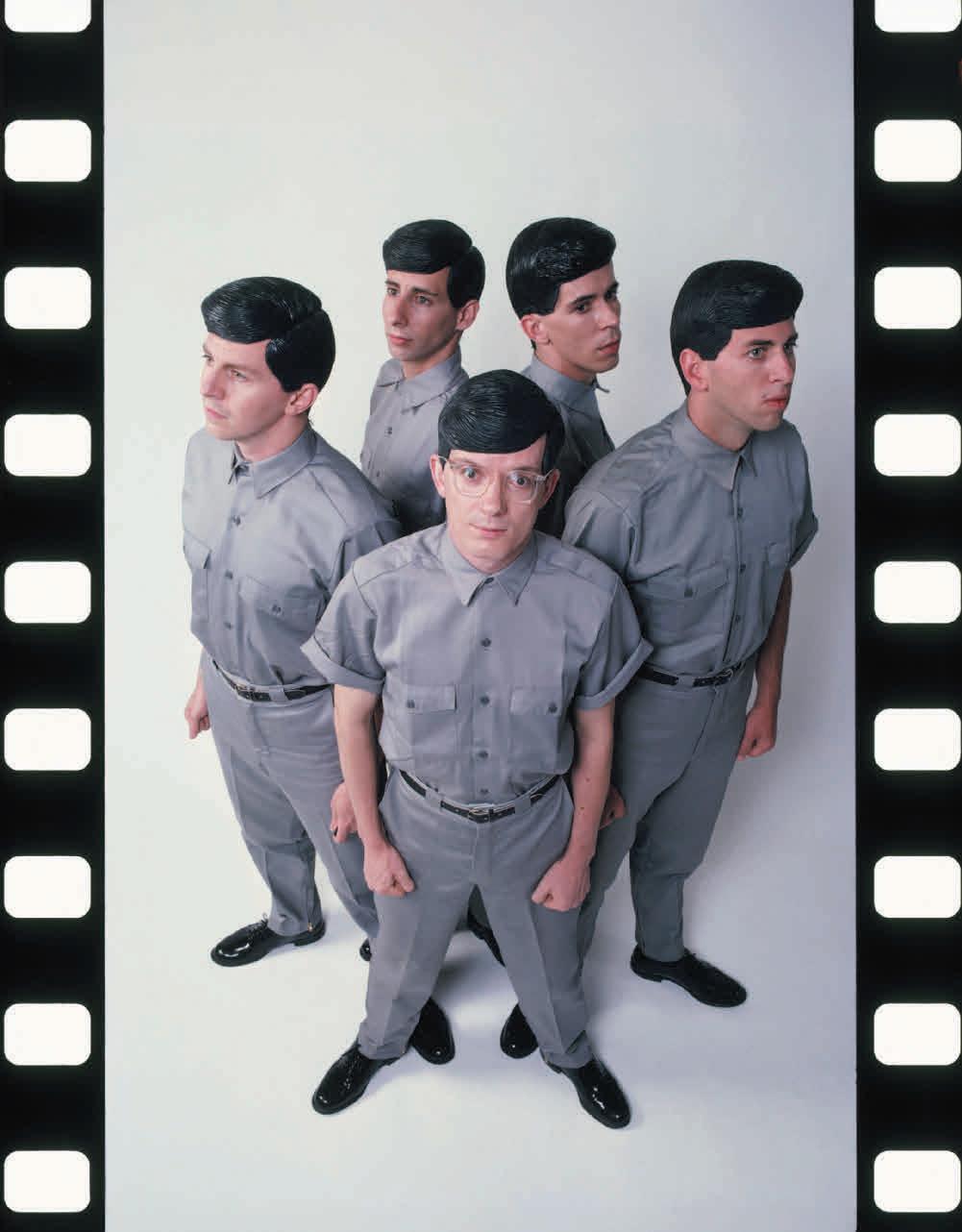
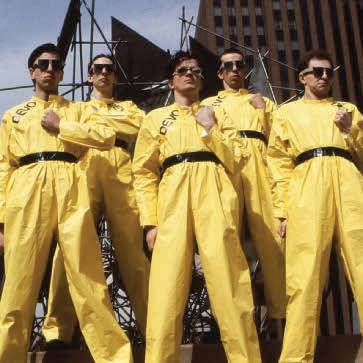
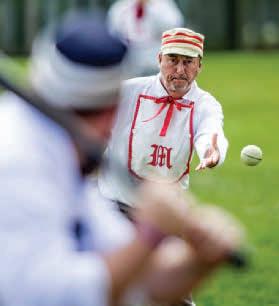
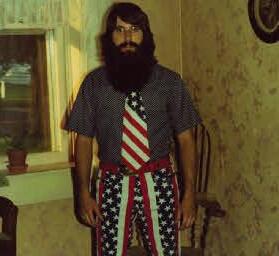
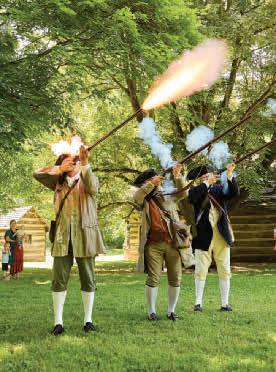
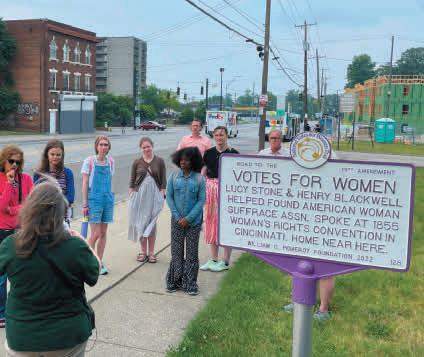
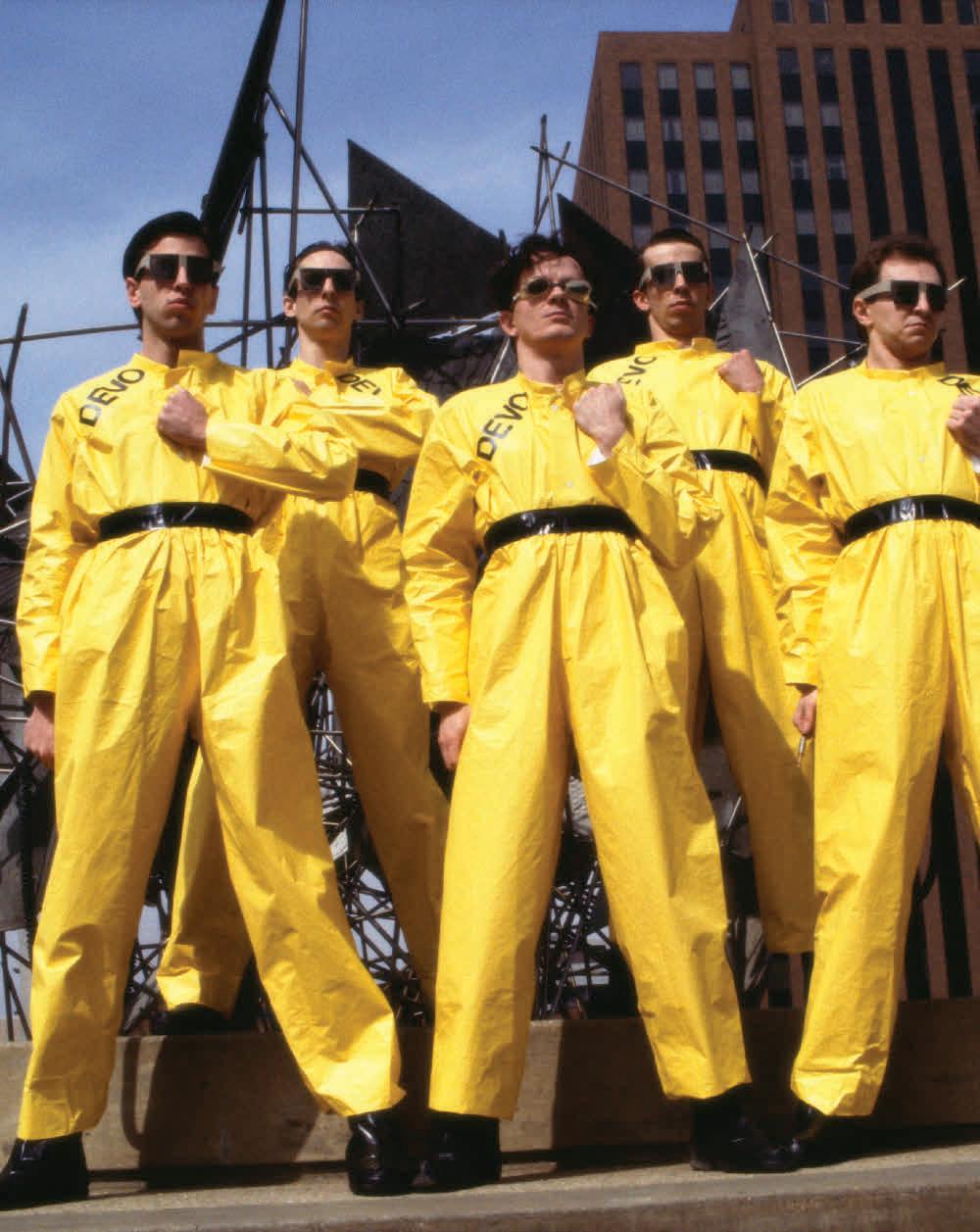
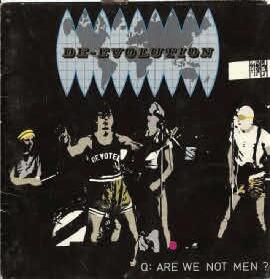
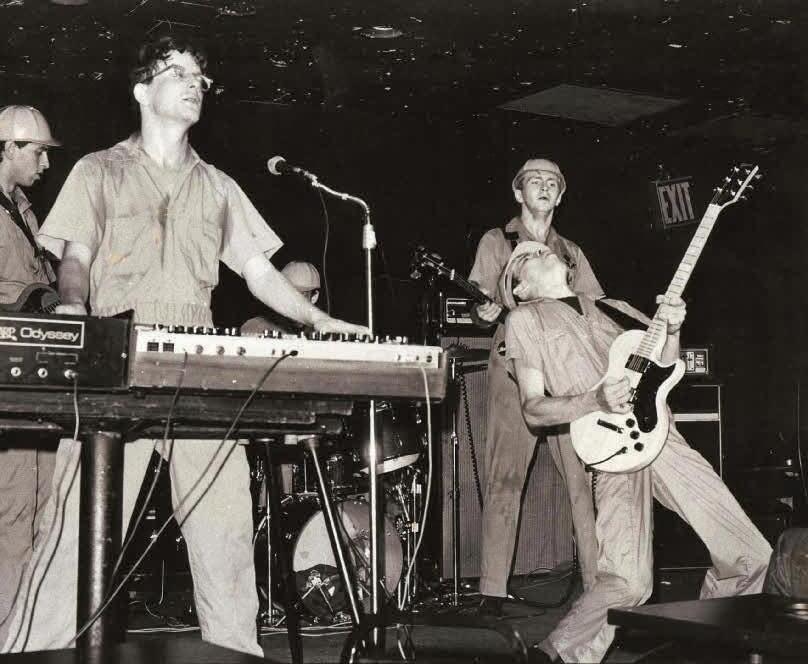
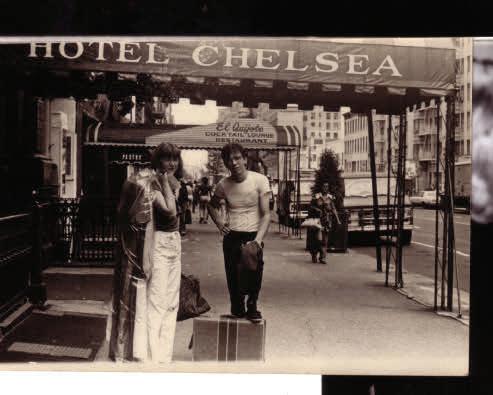
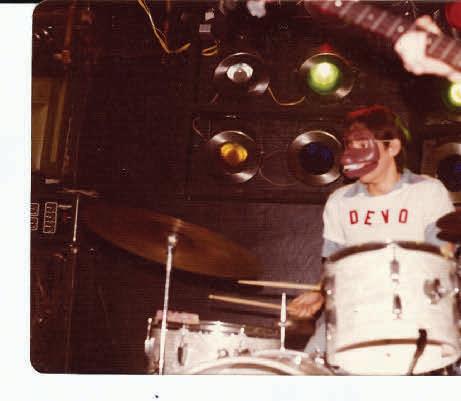
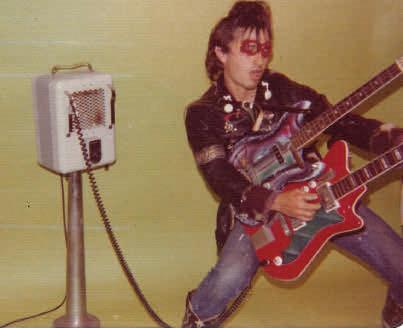
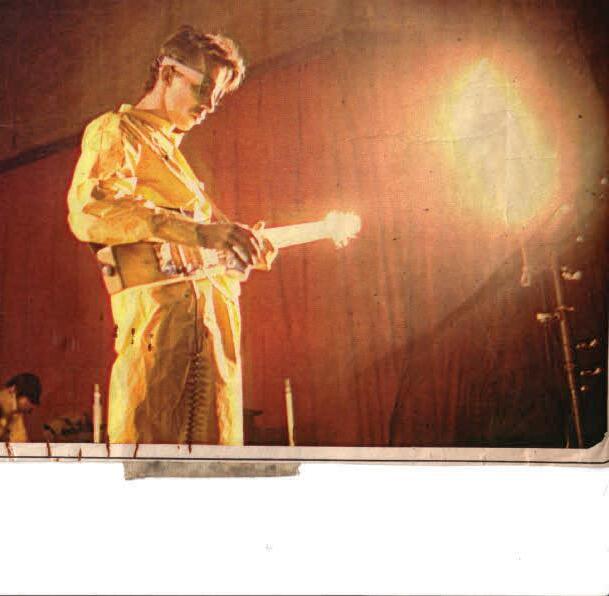
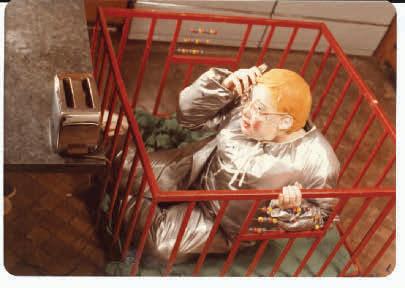
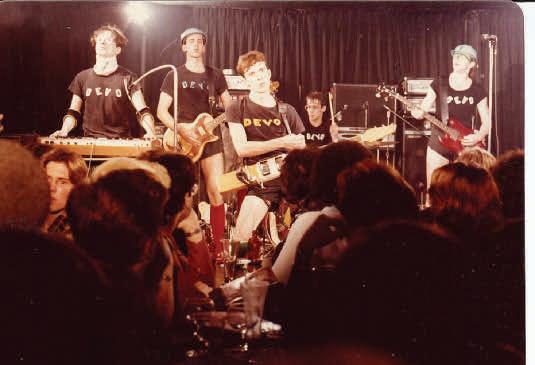
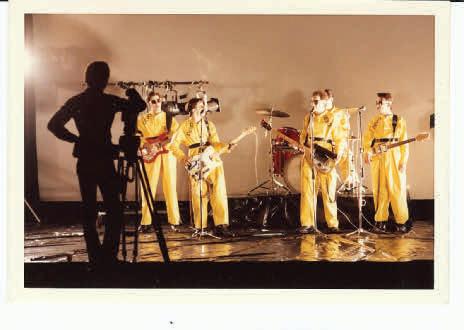
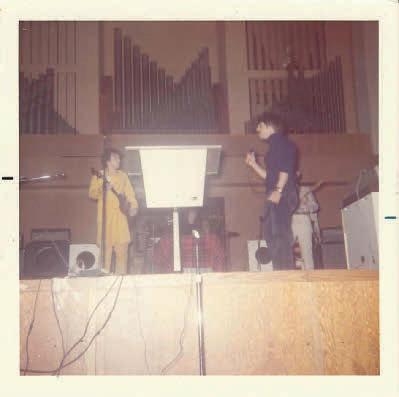
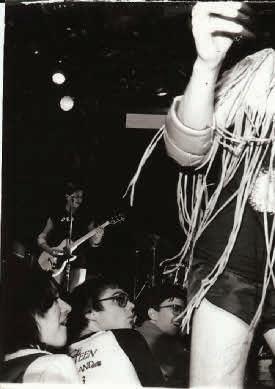
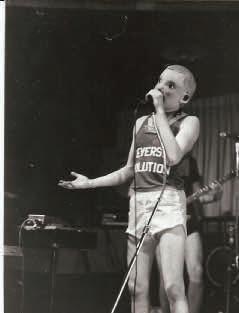
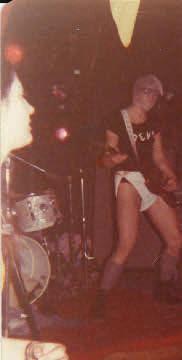
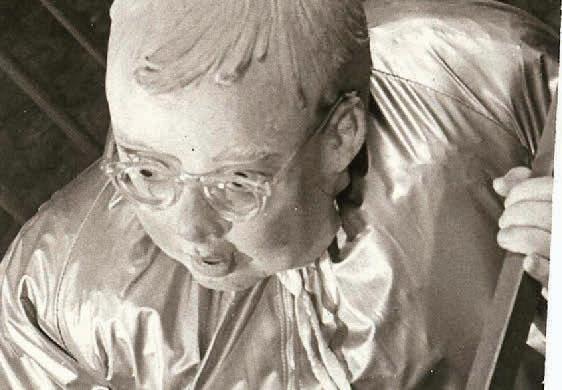
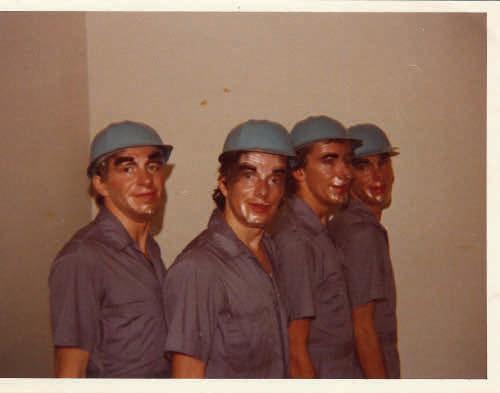
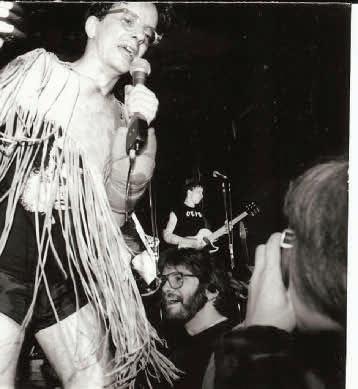
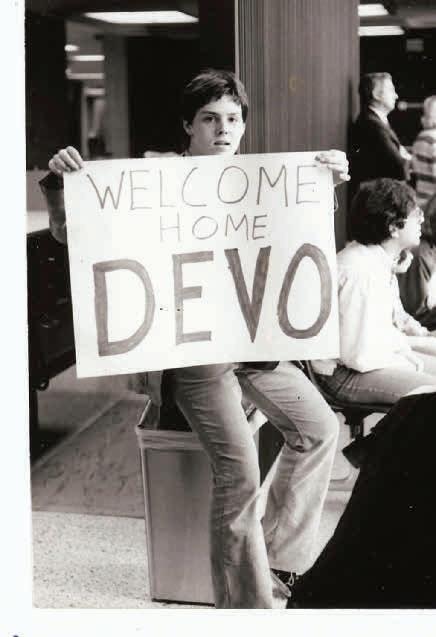
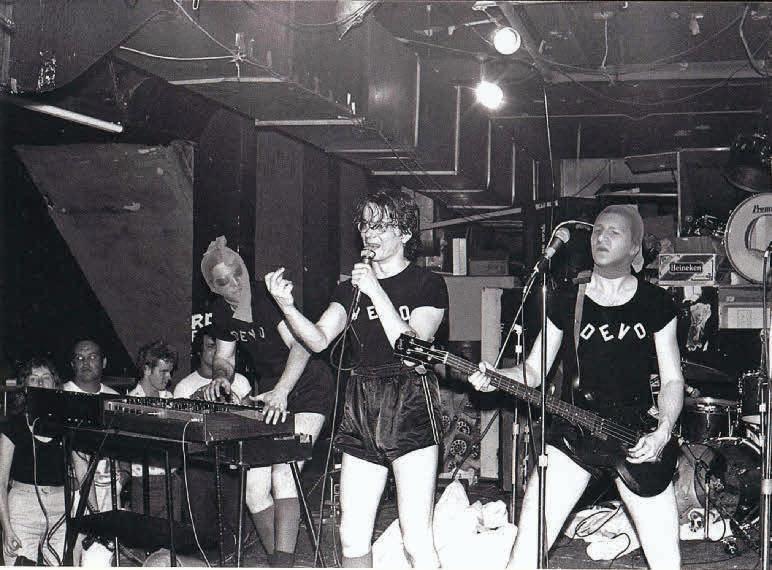
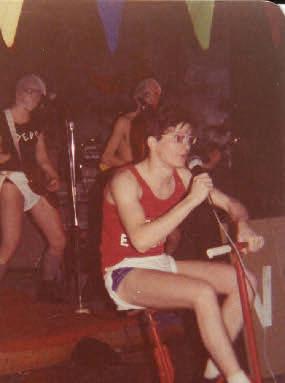
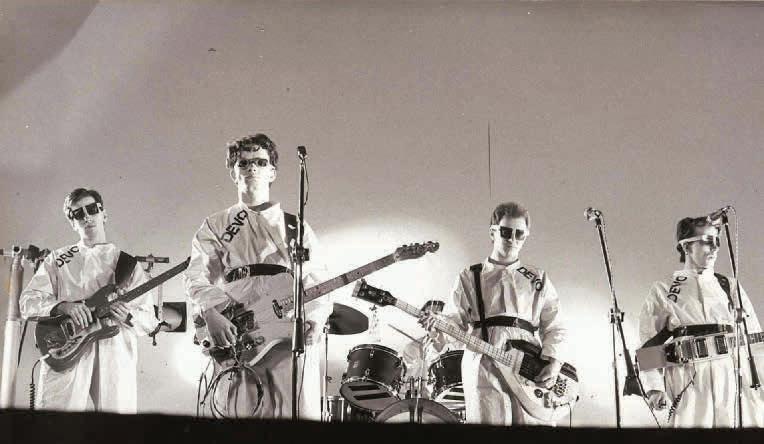
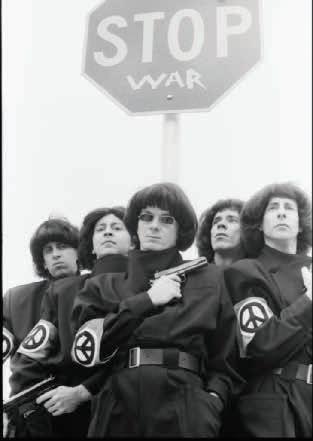
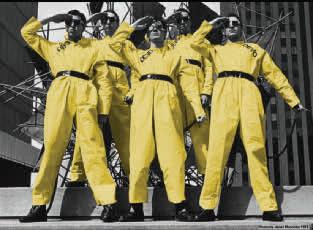
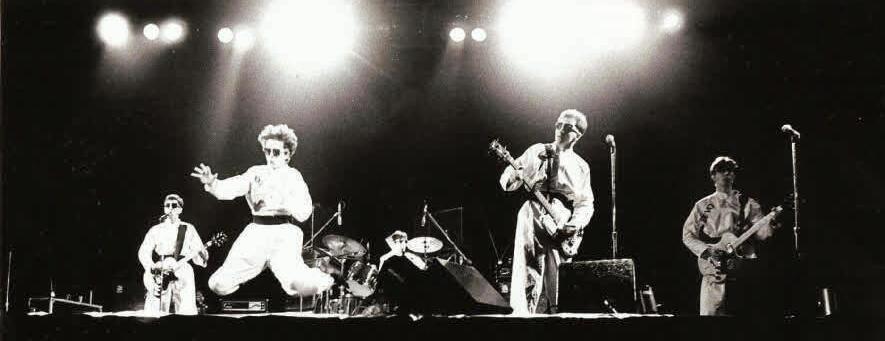
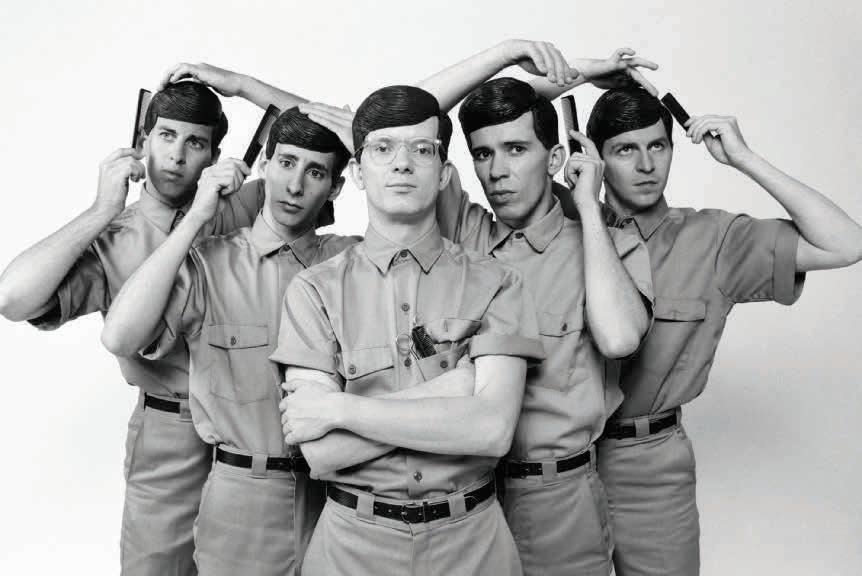
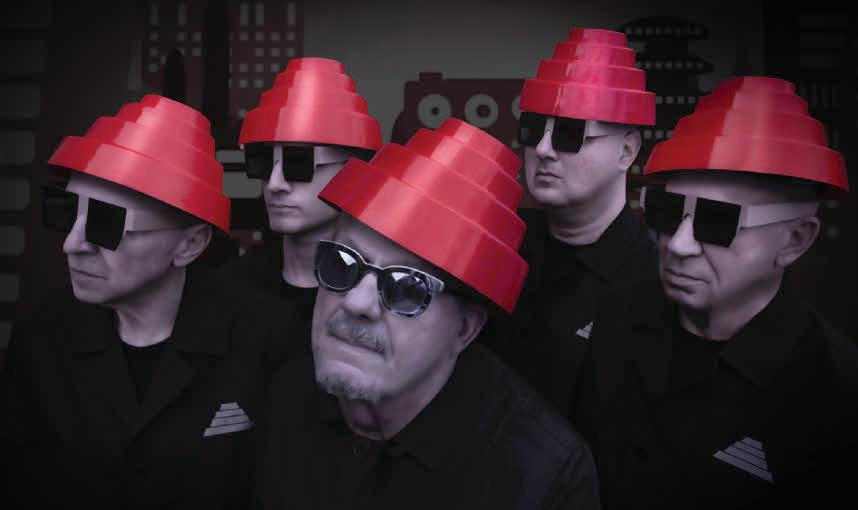
Cover: From the beginning, the Kent- and Akronbased band Devo set out to subvert conventional thinking. The approach was central to their 1981 album, New Traditionalists. Says Gerald Casale: “We became the New Traditionalists but turned it on its ear. We appropriated the idea of that, meaning we were going to provide you with new traditions to forget about the old ones.” See page 26.
Photo by Robert Matheu, courtesy Primary Wave
Vol. 64, No. 3
CHIEF MARKETING OFFICER
Jerry Dannemiller
EDITORS
Bill Eichenberger
Tom Wolf
CONTRIBUTORS
Traci Auerbach
John Petkovic
Grace Rogers
Tom Stafford
David Strittmatter
Jack Wright
DESIGN
Lydia Stutzman | Lydiary Design
ADVISORY BOARD
Donna DeBlasio
Youngstown State University
Nishani Frazier
Miami University
Robert Genheimer
Cincinnati Museum Center
Stephen George Ohio History Connection
Alex Hastie Ohio v. the World
George Ironstrack
Miami University
Chester Pach
Ohio University
Roger Pickenpaugh
Historian and Author
Daniel Rivers
The Ohio State University
Truda Shinker
Ohio History Connection
Echoes Magazine (ISSN 0012-933X ) is published bimonthly and distributed by the Ohio History Connection as a benefit of Ohio History Connection membership.
Editorial Offices: Ohio History Connection, Ohio History Center, 800 E. 17th Ave., Columbus, OH 43211-2474
Phone 844.836.0012
Email echoes@ohiohistory. org
Postmaster: Please send address changes to: Echoes Magazine, Ohio History Connection, Ohio History Center, 800 E. 17th Ave., Columbus, OH 43211-2474
Are We Not Men?— Devo Celebrates 50 Years on the Road
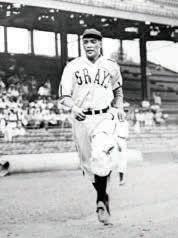
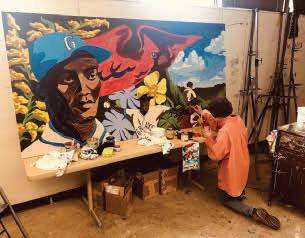
The Forgotten Baseball Star of Alger, Ohio— Negro Leagues Curveball Wizard Ray Brown
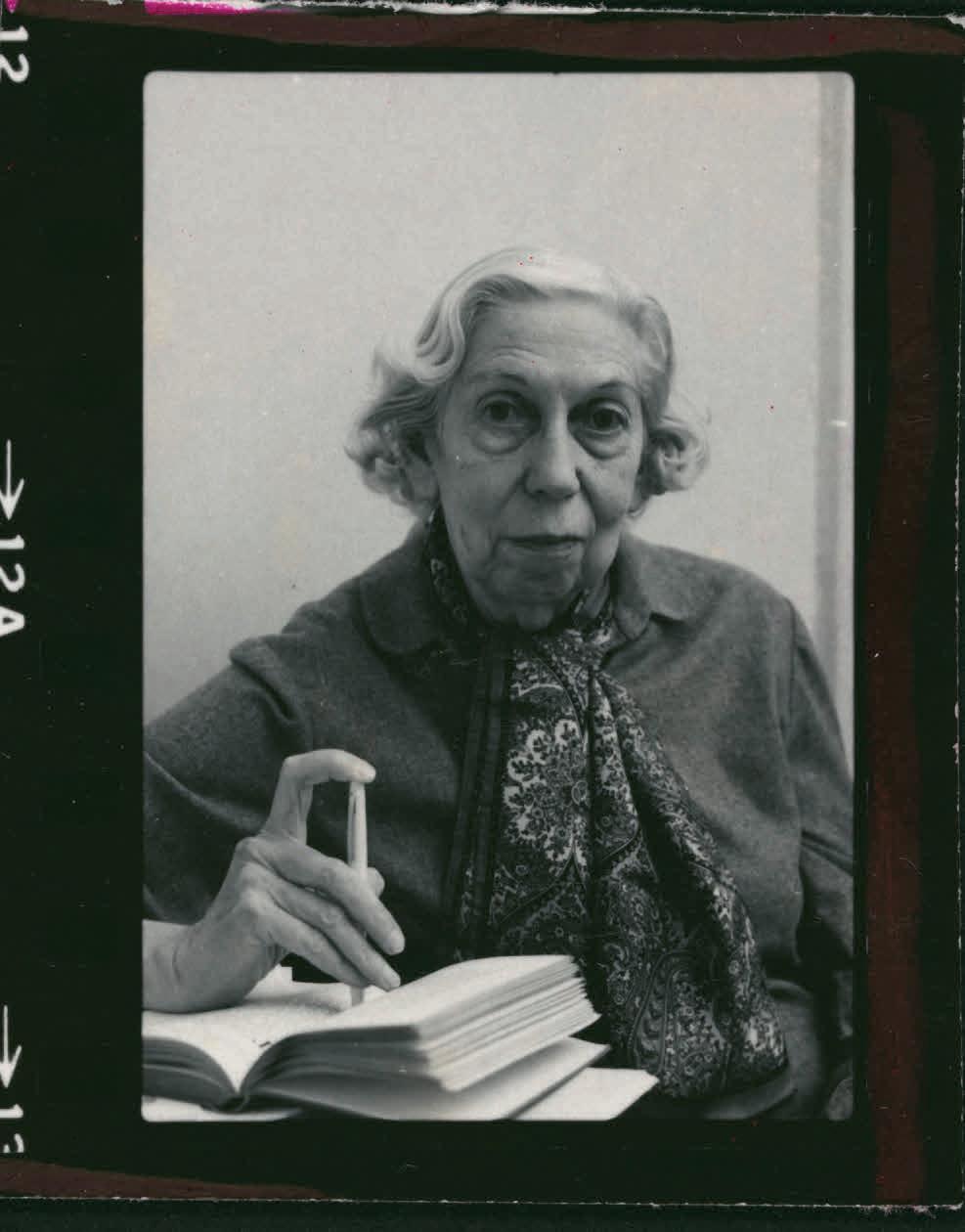
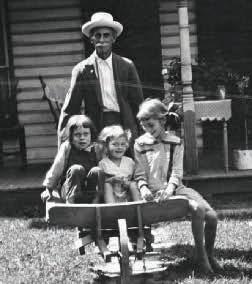
A Daughter of Appalachia— Uncovering Eudora Welty’s Southeast Ohio Roots
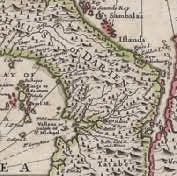
In Search of the Panama Canal— The Ill-Fated Darién Expedition of 1854
IN EACH ISSUE
Contents
From Our Editors What’s Your Story? In the News
From Our Director
Historic Sites & Museums
At the Ohio History Center & Ohio Village
Online Events
Featured Events & Exhibits I Wish I’d Been There Young Eyes on the Past
Are We Not Men?
DEVO CELEBRATES 50 YEARS ON THE ROAD
Welcome to Akron in the 1970s, where a collection of misfit art students created a concept to make sense of a world in decline—and, in the process, became one of America’s most influential bands. Between 1978 and 1982, Devo scored pop hits with irreverent, satirical songs, becoming the musical equivalent of Pop Art, with mass-market images, experimental sounds, wild get-ups and the anti-Darwinist concept that humanity was going through de-evolution.
The Forgotten Baseball Star of Alger, Ohio
NEGRO LEAGUES CURVEBALL WIZARD RAY BROWN
Before the integration of Major League Baseball, Ray Brown starred for the Homestead Grays of the Negro Leagues. For years, he was the equal of Satchel Paige. So why did Ray Brown and his accomplishments fall into obscurity? The answer will captivate the casual baseball fan. A project in his Hardin County hometown intends to rescue the memory of its too-long-forgotten son.
A Daughter of Appalachia
UNCOVERING EUDORA WELTY’S SOUTHEAST OHIO ROOTS
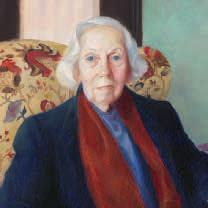
Jack Wright, who lives in the Appalachian foothills of southeast Ohio, had enjoyed Mississippi author Eudora Welty’s novels and short stories for years before discovering her book of autobiographical essays. From One Writer’s Beginnings, which sheds light on her Appalachian roots, he learned of her connection to Hocking County and set out to explore Welty family history in his Ohio backyard.
In Search of the Panama Canal
THE ILL-FATED DARIÉN EXPEDITION OF 1854
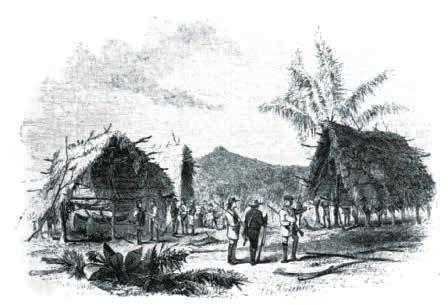
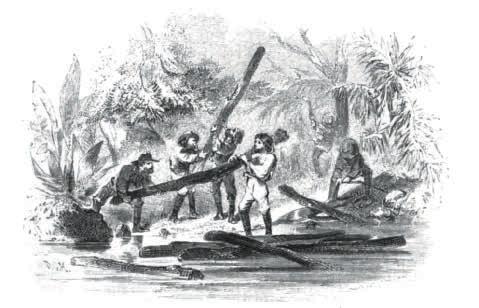
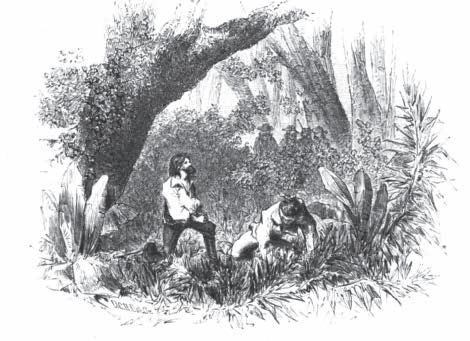
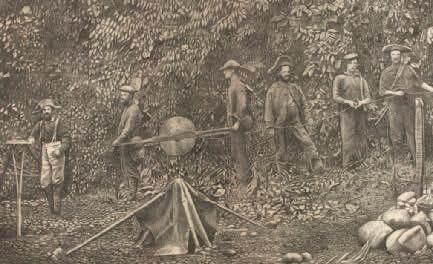
The Darién Gap, a narrow land bridge between Panama and South America, is “a corridor for drug trafficking and home to jaguars and venomous snakes” according to Pulitzer Prizewinning journalist Nadja Drost. Her accounts were published 166 years after Harper’s New Weekly Magazine featured similarly harrowing stories of a U.S. Navy team exploring the Darién in 1854, led by Lt. Isaac Strain of Springfield.
FROM OUR EDITORS
History isn’t only to be studied. We live in it every day. So did our parents, grandparents and great-grandparents. And though we don’t always notice it, history is all around us, if only we’ll take the time to see.
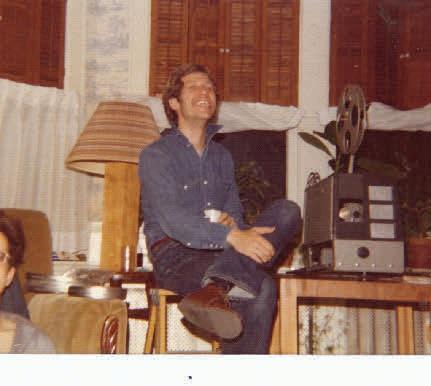
Jack Wright is a retired professor from the Ohio University School of Film, living in Athens. An admirer of the short stories and novels of Mississippi writer Eudora Welty, Wright was interested to learn that Welty’s grandparents lived in nearby Logan and that she had a deep connection to Appalachia. (See page 38.)
Welty spent summers visiting her grandparents in Ohio and West Virginia, and returned as an adult when she worked on the Works Progress Administration’s “America Eats” project and traveled Appalachia, interviewing people in rural areas and taking photographs for the Federal Writers’ Project.
In Welty’s essay “Place in Fiction,” she writes, “It is through place that we put our roots, wherever birth, change, fate, or our traveling selves set us down.” In her memoir, One Writer’s Beginnings, she also writes, “I think when my mother came to Jackson (Mississippi) she brought West Virginia with her. Of course, I brought some of it with me, too.”
F Momentous events are clearly historic. Even as we watched Neil Armstrong step onto the moon or the Space Shuttle Columbia explode, we knew that we were watching history as it happened. But how many kids watching Sextet Devo perform at Kent State University’s Creative Arts Festival on April 18, 1973, knew they were witnessing history? We’d wager not many.
Flash forward 52 years and read about the legacy of Akron’s New Wave/art-punk band Devo as the group embarks on its 50th— and last—year of touring. (See page 26.) Now that’s history.
Maybe you were there at Kent State or a couple of years later at the Crypt in Akron or the WHK Auditorium in Cleveland. Did you know we’d still be writing about the band now, in a popular history magazine, no less?
F Baseball has long been referred to as the National Pastime. And baseball fans have always had a sharp sense of history. (Hard-core fans have never met a statistic they didn’t love and/or memorize.)
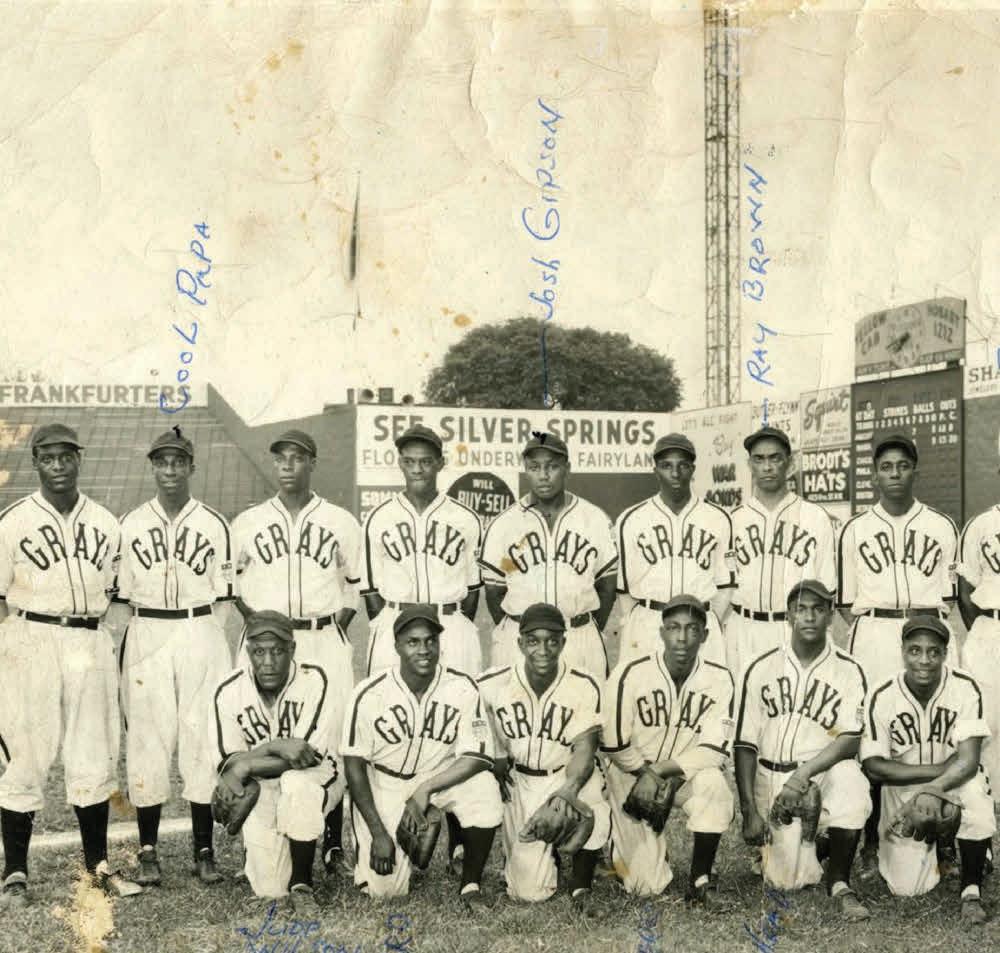
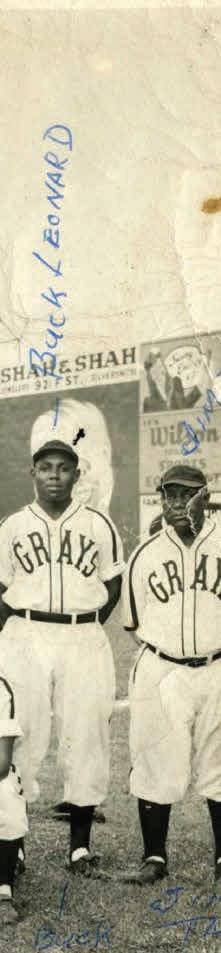
So maybe the folks flocking to see the Homestead Grays of the Negro Leagues play ball in Pittsburgh or Washington, DC, during the 1930s and 1940s knew they were seeing history unfold in real time when they watched Cool Papa Bell steal one of his career 285 bases, or Josh Gibson—the “Black Babe Ruth”—slug one of his 171 prodigious home runs.
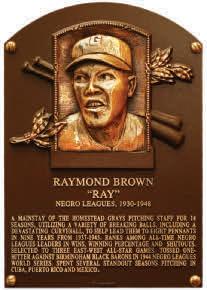
And maybe they knew they were in the presence of greatness when they watched Ray Brown toss one of his trademark curveballs for another of his 719 strikeouts. (See page 34.)
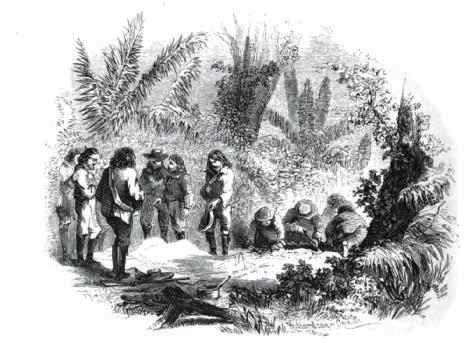
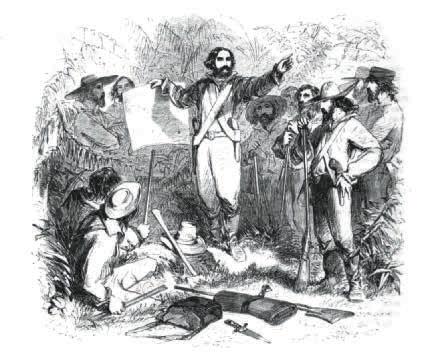
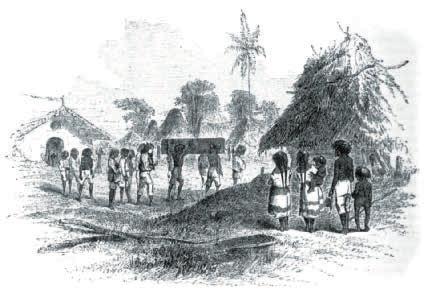
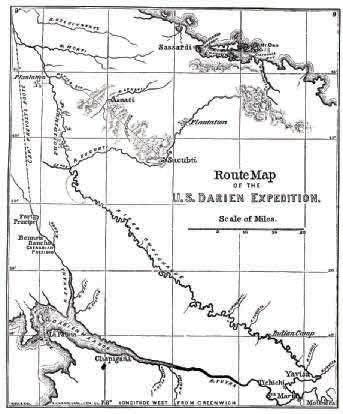
F The poor souls on the ill-fated Darién Expedition probably realized they were making history when nine of their party died in 1854 searching for a canal route from the Atlantic to the Pacific. (See page 42.)
What ’s “
In every issue of Echoes Magazine, we feature the stories of Ohio History Connection members and other Ohioans to stoke memories and shed light on our shared past.
For this issue, we asked, Tell us about an inventor from your community.”
Here are some of your responses:
AT THE DRIVE-IN
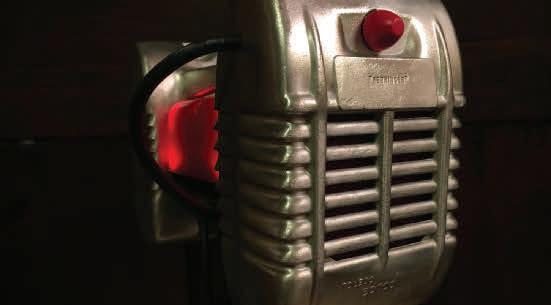
When northwest Ohioans think of industry, we often think first about Libbey-Owens-Ford and OwensIllinois and glass. Or Champion Spark Plug or the Willys-Overland. But fewer know of Toledo as a national center for the movie industry, mostly thanks to Angelo (Al) Boudouris, son of Greek immigrants.
Al, with just a high school-level education, was a pilot in World War II, and when the war was over, he started a fledgling business from his basement: manufacturing speakers for the new drive-in theatres. From that meager start, when he poured all his profits back into the company, the business grew to be EPRAD Inc. (Engineering Products Research and Development).
He expanded to a one-story factory near Ashland and Woodruff avenues where he invented, among other things, drive-in theatre in-a-car heaters, Dine-A-Mike audio-equipped menus for drive-in restaurants and the SWORD system that eventually was used to run an entire theatre, called a Cine-Mini, with just one employee. There was one at Woodville Mall.
EPRAD sold more than 90% of the drive-in theatre speakers and heaters
Your Story?
for decades. Al eventually owned the Scioto Breeze Drive-In Theatre in Lucasville, Ohio, was a private pilot and was honored by the Motion Picture Academy. (His wife, Mariana, was a supporting partner in this, and entrepreneurship was in the family, as his sister was married to Johnny Papademos, who owned the Chuck Wagon Grill and Diner. His cousin was Ted Voudouris, who owned Ted’s Hamburger Shop in downtown Toledo.)
—David Keck, Howard
CHEWING GUM
Since 1805, Mount Vernon has been a hub of creative artists and industrious dreamers. While others were preoccupied with the weighty matters of post-Civil War America in 1869, a dentist named William Finley Semple was chewing on an idea that would go down in history.
While he saw most patients for fillings or extractions, Dr. Semple spent his spare time envisioning a product that could promote oral hygiene to all. Dr. Semple’s office at the historic Woodward Opera House was his lab of trials and errors, as he tried many versions of what would become his version of chewing gum. His concoction of vegetable gums, chalk and licorice root was no mere confection; it was a dental aid, he believed.
On Dec. 28, 1869, his vision was solidified with patent number 98,304, granting him the first United States patent for chewing gum. While his initial formula differed greatly from the sugary treats of today, his patent laid the groundwork for a global phenomenon.
Dr. Semple, a man of his time, sought to create a product with purpose. Little did he know his invention would evolve into a cultural icon, a symbol of casual enjoyment and a multi-billion-dollar industry.
—Olivia Toth, Mount Vernon
LOCAL INVENTORS
BEEP! BEEP! BANG!
The first traffic accident involving an automobile occurred in 1891 in Ohio City. John William Lambert, a native of Champaign County, struck a tree root, swerved and hit a hitching post. Both he and his passenger, James Swoveland, were injured, though not seriously.
At the time of the accident, Lambert was driving a Buckeye Gasoline Buggy, a car of his own invention and the first gas-powered automobile to be available for sale. Lambert marketed his car, essentially a tricycle with a motor, for the price of $550 each. Unfortunately, Lambert was unable to make any sales, and the manufacture of the cars was discontinued.
Poor John William … he put his body on the line for his vehicle and didn’t sell a single one!
—Shannon Kupfer-Trausch, Galena
If you really love an Ohio History Connection site (see page 15) near your home, consider becoming a volunteer! Visit ohiohistory.org/ applytovolunteer to get started.
WHAT’S YOUR STORY?
We want to know your stories, so in every issue of Echoes Magazine we ask you a question, then run selected answers in the following issue. Here’s the question for July & August: Cincinnati’s Findlay Market— which opened for business in 1855—claims the honor of “oldest continuously operating public market in Ohio.” Before there were grocery stores, local and regional markets were a family shopping tradition. Tell us about your town’s public market. Did your grandparents or parents make a Saturday tradition of, say, the West Side Market in Cleveland, the Findlay Market in Cincinnati or another of Ohio's public markets? Did they buy meat and produce only available at the market?
Email your story responses (50 to 150 words) by May 15 to echoes@ohiohistory.org or, if you follow us on Facebook, send us a Facebook message.
Toledo's EPRAD Inc. made drive-in movie theatre speakers after World War II.
In the News
GROUNDBREAKING
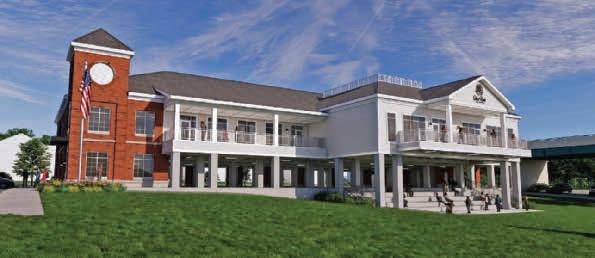
New Ohio River Museum Underway
A groundbreaking ceremony was held on April 11 for a new building to house the Ohio History Connection’s Ohio River Museum in Marietta. The rendering on this page shows the building now under construction on the same site overlooking the Muskingum River north of downtown Marietta where the previous museum stood. The new $14.3 million museum is expected to open in 2027.
SITES
New Exhibit Looks at President’s Love of Reading
Throughout his life, President Rutherford B. Hayes was a ravenous reader. He amassed more than 8,000 books in his personal library. As a young man, he was a founding member of the Cincinnati Literary Club.
From the tales of Charles Dickens and Mark Twain to the poetry
of Lord Byron, to the writings of Thomas Jefferson, Hayes pored over the pages of many genres.
Inside President Hayes’ Library, a new special exhibit at the Ohio History Connection’s Hayes Presidential Library & Museums in Fremont, explores the authors and titles that shaped and inspired him. Throughout the exhibit, see volumes Hayes himself held as he read through their pages. Books on display include his copies of Shakespeare, Charles Dickens novels and Don Quixote by Miguel de Cervantes.
“I today formed the purpose to study the Spanish language enough to read Don Quixote ,” Hayes wrote in his diary on Oct. 10, 1873. “Yesterday I bought of Mr. Curtis one hundred and sixty volumes for Birchard Library. He threw in a few Spanish books of small value. It occurs to me I can easily learn to translate.”
Other books cover issues of the day, such as slavery, Chinese immigration, tariffs and prison reform.
“If there was an issue, he voraciously read about it to figure it out,” says Kevin Moore, curator of artifacts for Hayes Presidential Library & Museums.
The exhibit also features the 19th president’s own words about these works. An essay about reading from his college years at Kenyon is on display, as well as correspondence he had with the Fireside Poets, a group of American poets who were popular in the mid-1800s—Henry Wadsworth Longfellow, William Cullen Bryant, John Greenleaf Whittier, Oliver Wendell Holmes Jr. and James Russell Lowell.
“Hayes corresponded with all of them,” Moore says. “He loved poetry.”
Additionally, the exhibit includes prints of portraits of authors that Hayes collected.
The exhibit, which continues through June 2026, is included with regular Hayes Museum admission. Ohio History Connection members enjoy free admission.
Hayes Presidential Library & Museums is located at Spiegel Grove, the 25-acre Hayes estate on Buckland Avenue in Fremont. For hours or more information, call 419.332.2081 or visit rbhayes.org
CAMPUS 2.OH!
Collections Care Center Earns LEED Certification
The Ohio History Connection’s new Collections Care Center in Columbus has officially been awarded LEED certification at the silver level. LEED (Leadership in Energy and Environmental Design), developed by the U.S. Green Building Council, is the most widely used green building rating system in the world and an international symbol of excellence. Some of the Collections Care Center’s features include energy-efficient mechanical systems with state-ofthe-art controls; a charging station
Rendering of the new Ohio River Museum now under construction in Marietta.
in the parking lot to promote use of electric vehicles; low-flow plumbing fixtures that use 19% less water than standard fixtures; and an abundance of natural light in working areas. This certification is the first in our Ohio History Connection site system and one of the first LEED-certified collections storage facilities in the nation. LEED certification ensures electricity cost savings, lower carbon emissions and healthier environments where people live, work, learn, play and worship. In the United States alone, buildings account for almost 40% of national carbon dioxide emissions. LEEDcertified buildings have lower carbon dioxide emissions, consume less energy and less water, and have diverted millions of tons of waste from landfills.
Create a Legacy
Passionate about preserving history for future generations?
Consider including the Ohio History Connection as a beneficiary in your estate plans. Our staff can help you choose options that best fit your needs.
FROM OUR DIRECTOR
On March 1, Ohio celebrated its 222nd birthday.
I had the privilege of spending the day at Thomas Worthington’s 1807 Chillicothe home, Adena, one of many sites in the city—Ohio’s first capital—that were offering admission-free experiences that day. Worthington (1773–1827) was a founding father of Ohio and our sixth governor.
Another important anniversary this year is the bicentennial of the groundbreaking for Ohio’s canal system. On July 4, 1825, in Heath near Newark, there was a ceremonial groundbreaking at Licking Summit for the Ohio and Erie Canal, and on July 21 of the same year in Middletown, ground was broken for the Miami and Erie Canal. When completed, this massive public works project made it possible to transport people and goods thousands of miles by water from the Hudson River all the way to the mouth of the Mississippi River.
At the Ohio History Connection’s Johnston Farm & Indian Agency, you can ride the General Harrison, a re-created 19th-century canal boat powered by two mules. The experience offers a sense of the time it would have taken to traverse the 363-mile Erie Canal across New York state, then move through Ohio’s canal system.
The canals represented an exponential shift in transportation technology, making it possible to move goods at speeds not possible with our underdeveloped road system. Between 1820 and 1840, Ohio’s population more than doubled, from 580,000 to 1.5 million. The canals brought the world to Ohio and Ohio to the world. Over the next few years, many organizations will be commemorating the building of the canal system. Find events and information at ohiocanals.com, where you can follow the progress of the canals’ construction from Cleveland down through Akron, including through the Cuyahoga Valley National Historical Park and along the Ohio to Erie Trail. The Miami and Erie Canal includes two Ohio History Connection sites, Lockington Locks and the Johnston Farm & Indian Agency. Events and programs related to this anniversary are using a shared logo.
We hope that this anniversary increases understanding and appreciation of the impact Ohio’s canals had on regional and national growth historically and their role in fostering healthier and more prosperous communities today.
Megan Wood | Executive Director & CEO, Ohio History Connection
OHIO HISTORY FUND
$170,960
in Grants Awarded
The Ohio History Connection has awarded Ohio History Fund grants totaling $170,960 to 12 community history and preservation organizations across the Buckeye State. This year’s recipients, announced during the annual Statehood Day observance at the Statehouse in Columbus, are:
CINCINNATI • BREWERY DISTRICT COMMUNITY URBAN REDEVELOPMENT CORPORATION
$12,546 for phase two of the Brewing Heritage Trail App, adding profiles of 32 more structures and sites in the city’s Over-theRhine Historic District to the app. A virtual extension of the Brewing Heritage Trail, the app offers a deeper dive into the district’s history, architecture and the people behind Cincinnati’s brewing legacy, featuring sites that are still standing as well as ones that aren’t.
CINCINNATI • CITY OF CINCINNATI
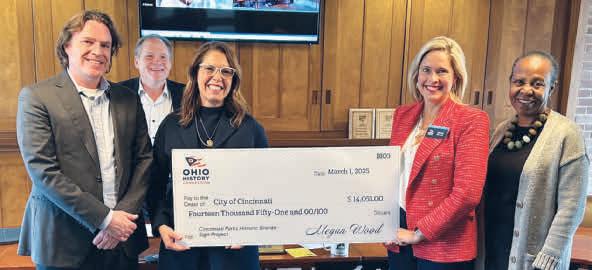
$14,051 for the Cincinnati Parks
Historic Bronze Sign Project. Cincinnati began marking its park entrances with bronze signs in 1929. With the addition of new parks since then, the style and materials have remained consistent. Over the years, some signs have been damaged and removed. This project will restore two, carrying through the 1929 design.
CLEVELAND • KARAMU HOUSE
$20,000 to help replace the roof of the education and administration building as part of a multi-year, full-campus renovation. Founded in 1915 and listed in the National Register, Karamu House is the home of the nation’s oldest Black theatre that develops and produces its own shows. It has a storied legacy of building community through the arts while pursuing racial equity for Black Americans through socially relevant programming, support for artists of color and celebrations of Black life and culture. (See Echoes Magazine, September & October 2022.)
CLEVELAND • WOMEN RELIGIOUS ARCHIVES COLLABORATIVE
$19,975 to assess and re-house oversize manuscript materials from 13 of about 40 collections that will be housed at the collaborative’s new Heritage Center in Cleveland, slated to open in 2026. Collections identified for the project belong to congregations that made significant contributions to Ohio’s history. The project will advance the group’s goal of making the materials and the historical information they contain available to the public.
COLUMBUS • GREEN LAWN ABBEY PRESERVATION ASSOCIATION
$8,100 to restore an original stained-glass window in the
building’s largest gathering space. Using experience gained from restoring 13 other windows, it will be removed, restored off premises, then reinstalled. The project will further long-term efforts to preserve Green Lawn Abbey, a 1927 community mausoleum listed in the National Register of Historic Places.
LAKESIDE • LAKESIDE HERITAGE
SOCIETY
$16,643 to restore floorboards in 150-year-old Heritage Hall and install compatible flooring in a 50-year-old addition. Built in 1875 as a modest wooden chapel, Heritage Hall is listed in the National Register of Historic Places as part of the Lakeside Historic District. Today it houses a museum on the history of Lakeside Chautauqua and the Marblehead Peninsula. The project is part of a larger effort to renovate the museum and restore Heritage Hall in honor of its 150th anniversary.
LORAIN • LORAIN HISTORICAL SOCIETY
$19,250 to aid in carrying out the society’s strategic plan by converting the 1906 Moore House from a traditional house museum into a place where it can more easily host public programs and better care for artifacts. With help from the grant, the society will buy supplies and equipment for the conversion: display cases, a smartboard, folding chairs, archival boxes, archival tissue paper and shelving.
MARIEMONT • MARIEMONT PRESERVATION FOUNDATION
$5,000 for masonry repairs to the Ferris House. Listed in the National Register, it is one of Hamilton County’s oldest brick buildings, built between 1801 and 1812. To prepare it to serve as the Mariemont Historical Museum, the foundation will employ an
Cincinnati Parks Historic Bronze Signs Project
experienced masonry contractor to make repairs—the first step in making the house safe for visitors and the museum’s contents.
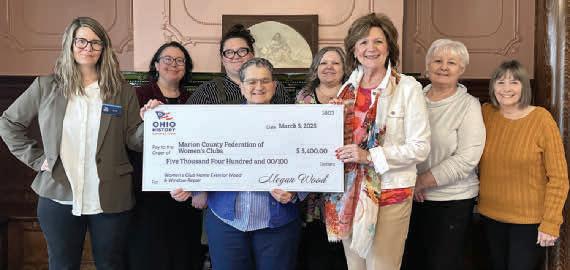
MARION • MARION COUNTY FEDERATION OF WOMEN’S CLUBS
$5,400 for exterior wood and window repairs at the Marion Women’s Club Home, listed in the National Register of Historic Places. Part of a long-term effort to restore the group’s historic headquarters, the repairs will stop wood deterioration and help return the Colonial Revival-style Women’s Club Home to its 1903 appearance.
URBANA • SALEM TOWNSHIP BOARD OF TRUSTEES
$18,819 to repair and restore three of 14 stained-glass windows in the 1881 Mount Tabor Methodist Episcopal Church. The brick church and its cemetery and grounds were entrusted to the care of the township trustees in 1939. The township trustees intend for the demonstration project to foster local support for restoring the remaining 11 windows.
WARREN • TRUMBULL COUNTY HISTORICAL SOCIETY
$20,000 to move 3,500 artifacts of the antislavery movement, Underground Railroad and early Warren from the Sutliff Museum at Warren-Trumbull County Public Library, where they have been housed since 1971, to the society’s climate-controlled Morgan History Center in Warren. Preserving donor Phebe Sutliff’s original vision of highlighting the antislavery movement, the society and members of a Sutliff committee will curate new exhibits. The project is expected to improve access to this significant collection.
WAVERLY • PIKE HERITAGE FOUNDATION
$11,176 to make restrooms at the Pike Heritage Museum
compliant with the Americans with Disabilities Act. Built in 1859 as Waverly Evangelical German Reformed Church, Pike Heritage Museum is listed in the National Register of Historic Places as part of the Waverly Canal Historic District. With the grant, the foundation will upgrade existing restrooms to make them accessible to visitors with disabilities, the final part of a yearlong effort to make the museum accessible to all.
ABOUT THE OHIO HISTORY FUND
The Ohio History Fund is a competitive matching grants program funded by Ohio taxpayers’ voluntary contributions through the “check-off” on state income tax forms. In 2006, creation of a tax check-off to fund a statewide grants program for history- and preservationrelated projects was identified as a priority by participants in the annual Statehood Day legislative advocacy event sponsored by the Ohio History Connection and nine partner organizations: Heritage Ohio, the Ohio Academy of History, Ohio Archaeological Council, Ohio Council for Social Studies, Ohio Genealogical Society, Ohio Historical Records Advisory Board, Ohio Local History Alliance, Preservation Ohio and the Society of Ohio Archivists.
It became a reality in 2011 when Gov. John R. Kasich signed Ohio’s two-year state budget into law. The tax check-off first appeared on state income tax forms in 2012 for tax year 2011, and the first grants were awarded to 11 recipients across the state in 2012. Since 2013, the Ohio History Fund has made 149 grants totaling more than $1.6 million in 41 counties.
YOUR HELP MAKES GRANTS POSSIBLE
When you make a voluntary gift to the Ohio History Fund through the check-off on your Ohio personal income tax form, you help make grants like these possible. The History Fund is also aided by sales of “mastodon” license plates and direct contributions to the Ohio History Connection for the Ohio History Fund.
Know of a worthy history- or preservation-related project that could benefit from an Ohio History Fund grant? Applications for 2026 Ohio History Fund grants are due Sept. 9, 2025. Find application forms and more information at ohiohistory. org/historyfund starting June 27 or call 800.686.6124 or 614.298.2000.
Questions? Contact Ohio History Fund Manager Andy Verhoff at 614.297.2341 or averhoff@ ohiohistory.org.
Exterior Wood and Window Repairs, 1903 Marion Women’s Club Home
HISTORIC PRESERVATION
Recent Ohio
Additions to the National Register of Historic Places
CINCINNATI • HAMILTON COUNTY
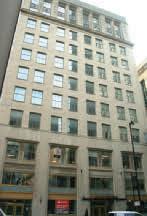
ATLAS NATIONAL BANK BUILDING
530 Walnut St.
This 10-story building was built for Atlas National Bank in 1924. Associated with the history of banking and commerce in the Queen City, Atlas National was described in 1914 as “one of the solid banking houses of Cincinnati.” Designed by local architects Tietig & Lee, the building is faced in smooth Bedford limestone and has Italian Renaissance-style features, including a two-level banking hall with polished marble floor, square marble-clad columns, a coffered plaster ceiling and a marble staircase leading to the basement-level vault.
CLEVELAND • CUYAHOGA COUNTY
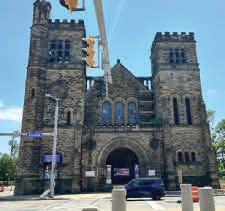
CALVARY PRESBYTERIAN CHURCH
7812 Euclid Ave.
Charles F. Schweinfurth, one of Cleveland’s most important and influential architects of the late 19th and early 20th centuries, designed this 1887 church. It was his first ecclesiastical building in the city. Clad in sandstone, with stained-glass windows created in the studios of Louis Comfort Tiffany and John La Farge, the church dominates the intersection of Euclid Avenue and East 79th Street. In addition to its architectural significance, Calvary Presbyterian was added to the National Register for its history of
association with the 20th-century civil rights movement, and its evolution into one of the city’s few integrated churches at the time. The steadfast community anchor stands as a testament to the quest for equality that began in the 1950s, when the congregation made a commitment to serving the neighborhood and engaged in the fight for fair housing. Pursuit of social justice for the community continues to be a core mission of the church to this day.
CLEVELAND • CUYAHOGA COUNTY
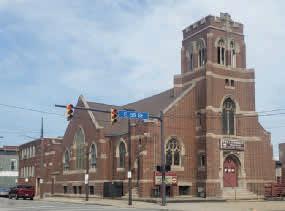
FELLOWSHIP MISSIONARY BAPTIST CHURCH
1754 E. 55th St. at Lexington Avenue
Fellowship Missionary Baptist Church has been added to the National Register for its role in local Black civil rights history from 1964, when members marched to their newly acquired building, to after the death of the Rev. A. Henson Jarmon in 1970. During the 1960s, Jarmon led the congregation to the forefront in addressing major issues facing African Americans. In 1967, Fellowship Missionary Baptist Church partnered with Dr. Martin Luther King Jr. to execute Operation Breadbasket. The well-preserved sanctuary, main office in the annex and former credit union in the basement reflect the history of the congregation and its active role in the civil rights movement.
HEATH • LICKING COUNTY
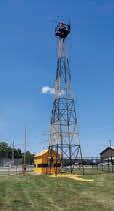
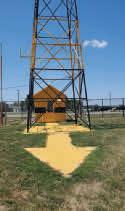
CONTRACT AIRMAIL ROUTE #34
COLUMBUS-PHILADELPHIA ROUTE
MARKER 2 (TRANSCONTINENTAL AIRWAY SYSTEM NAVIGATIONAL MARKER)
530 Heath Rd.
Airmail pilots crossing the country at night once relied on marker systems like this one to guide them. Located at Newark-Heath Airport’s Treneff Field, it has three parts: a large concrete arrow, a beacon tower and a generator shed, all built by the Army Air Corps in 1930 for the new Contract Airmail Route #34 from Columbus to Philadelphia. It’s significant at the state level as the last known airmail marker system remaining in Ohio with all its original components and is also the last one remaining on the Columbusto-Philadelphia route. It was decommissioned by the Department of Commerce in 1940.
MANSFIELD • RICHLAND COUNTY
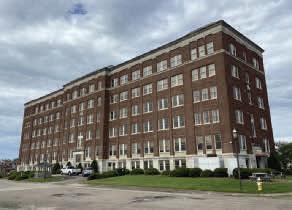
OHIO BRASS CO. OFFICE BUILDING
380 N. Main St.
Mansfield was an industrial powerhouse for much of the 20th century. This building housed offices of the Ohio Brass Co., a leading locally owned industry. Founded by Frank B. Black in 1888 as a manufacturer of harness rigs for carriages, wagons and plows, Ohio Brass evolved over the next few decades to become designers and engineers of equipment used in the operation of electric railways, mine haulage systems and overhead
transmission lines. Ohio Brass made tools, brackets, fittings, clamps, hangers, connectors, switches, third-rail insulators, car couplers, signal systems, headlights and other products used in building and operating trolley and railway systems that ran on overhead electric power lines. It also made a variety of glass and porcelain insulators and other components for the electric utility industry. The Ohio Brass Co. Office Building went up in 1928, during a decade of major growth in Mansfield that also brought new schools, hotels, churches, theatres, homes and expanded factories. Designed by Mansfield architects Althouse and Jones, the five-story Classical Revival building has walls of red brick veneer on a steel frame, with limestone details. It reflects the success of Ohio Brass, which influenced national design, engineering and research in the field of electrical power, as well as local development.
• Learn more about Mansfield’s industrial heritage at the North Central Ohio Industrial Museum. Plan your visit at ncoim.org
MARYSVILLE • UNION COUNTY
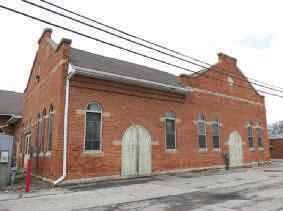
MARYSVILLE LIGHT AND WATER CO. PLANT
409 N. Main St.
The 1891 Marysville Light and Water Co. Plant is a Victorian industrial building of red brick and sandstone located half a mile north of downtown, along the north bank of Mill Creek. Marysville’s
first waterworks, it also served to generate electricity, replacing a previous plant south of downtown. The interior evokes the building’s industrial history, with exposed masonry walls, wood-clad ceilings and concrete floors, and rooms configured to facilitate its operation as a light and power plant from 1891 until 1923, when the company changed its original business model and stopped producing electricity.
MEDINA • MEDINA COUNTY
R.M. AND ELIZABETH McDOWELL HOUSE
205 S. Prospect St.
This Shingle Style house was completed in 1892 for Robert M. McDowell, a local business leader and president of Old Phoenix Bank, and his wife, Elizabeth Blake McDowell. Her father, Harrison Gray Otis Blake, founded Medina’s Old Phoenix Bank, served in the Ohio House and Senate and U.S. House of Representatives and was mayor of Medina. Architect George Nettleton (1860–1900), who designed the house, began his career in Medina and later became a respected Detroit architect. Shingle Style features include its irregular floor plan and massing, stone walls and shingle siding, beamed ceilings, stenciling, stained-glass windows and ornate mantels with decorative tiles. A wood-sided barn also stands on the two-acre site. The house is now Medina County Historical Society’s McDowell-Phillips House Museum. Plan your visit at medinacountyhistoricalsociety.com.
TOLEDO • LUCAS COUNTY
WEBSTER SCHOOL
424 E. Manhattan Blvd.
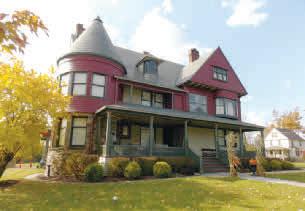
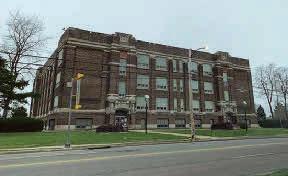
Associated with the 20th-century history of Toledo Public Schools, Webster School is in the Lagrange neighborhood. The Collegiate Gothic-style building was completed in 1921 to meet the needs of a growing school-age population. At its peak, the school served more than 1,100 students in kindergarten through eighth grade. However, by 1940, enrollment had declined to 450, and in 1942, Webster School was closed as a cost-saving measure. In 1948, it became the headquarters of the Toledo Board of Education. Renamed the Thurgood Marshall Building in 1993 to honor the first Black United States Supreme Court justice, it remained in use as district offices until 2015.
LAFAYETTE 200
Lafayette in Ohio
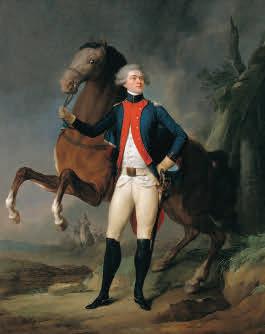
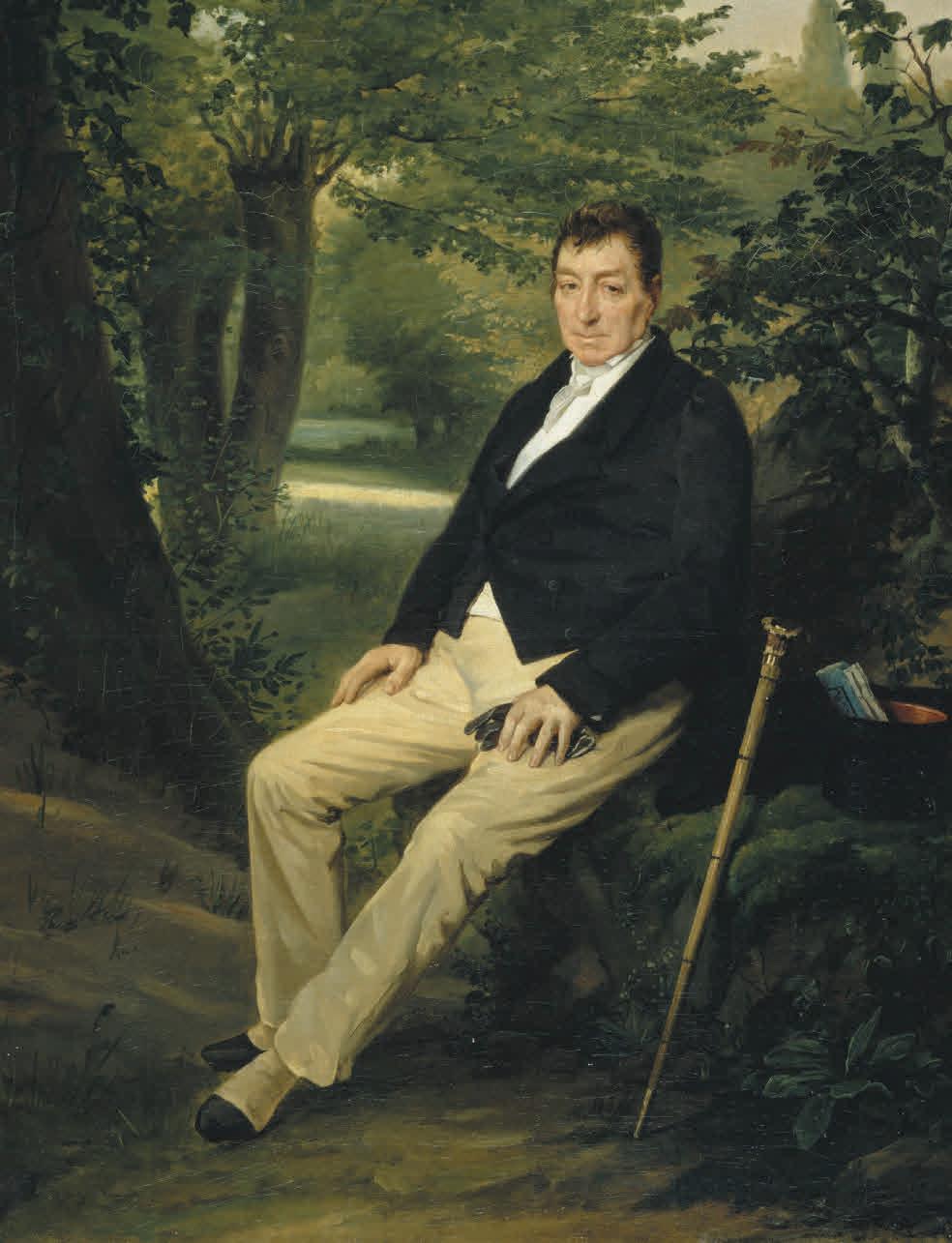
Marie Joseph Paul Yves Roch Gilbert du Motier (1757–1834) was better-known—for reasons that are probably apparent—as the Marquis de Lafayette. A French nobleman, Lafayette was a volunteer and general in the American Revolution who served in the Continental Army under George Washington. His leadership was instrumental in the fight for American independence.
After the American Revolution, Lafayette returned to France. In 1824—40 years after the war ended—President James Monroe invited him back to tour the United States as “The Nation’s Guest.” At age 66, Lafayette returned for a farewell tour of all 24 states, Ohio included.
MAY 19–20: CINCINNATI
Lafayette’s 13-month, 6,000-mile tour began in New York on Aug. 16, 1824. When he finally reached Ohio on May 19, 1825, his first stop was Cincinnati—already Queen of the West, with about 17,000 people. (Columbus had under 2,000, and Cleveland had fewer than 1,000.)
According to “Lafayette’s Visit to Ohio Valley States,” by C.B. Galbreath, published in the July 1920 Ohio History Journal, “Lafayette’s entry into the city of Cincinnati was most auspicious. … a great concourse of people was eagerly awaiting the signal that should announce the approach of the ‘Nation’s Guest.’ When this was given an elegant barge, prepared and manned for the occasion … crossed the river. …
“On the stern was painted, ‘Yorktown, Oct. 19, 1781.’ The star spangled banner floated proudly at her bow and stern and the barge was manned by young men who had volunteered to uniform themselves for the honor of conveying the General to the city. Never had Cincinnati witnessed a more impressive spectacle.
“The moment it commenced its return with Lafayette on board a salute was fired by the artillery and he approached the shores of Ohio ‘amidst the roar of cannon and the shouts of a joyful multitude that thronged the banks of the river.’”
Later, Lafayette appeared in front of the Cincinnati Hotel, where “‘The crowd of citizens was immense.
… an unbroken mass of freemen, anxiously looking for the object of their admiration, and occasionally rending the air with shouts of the most enthusiastic joy.’ Ladies thronged the doors, windows and balconies …. Handkerchiefs fluttered, flags waved, the crowd swayed, and the troops with military precision performed their evolutions as the General and his party mounted the platform. Here he was warmly greeted by a number of old revolutionary soldiers and prominent citizens of the state. …
“At the conclusion of these ceremonies the military retired and the General held an informal reception at the hotel. At five o’clock he attended the masonic lodge, which bore his name, which had been organized in anticipation of his visit, and of which he was made an honorary member. … Later in the evening he witnessed a ‘brilliant exhibition of fire works’ at the Globe Inn and on his return visited the Western Museum which was brilliantly illuminated in his honor as was the entire city.”
Lafayette left Cincinnati on the night of May 20 aboard the steamboat The
Portrait of Lafayette by LouisLéopold Boilly, 1788
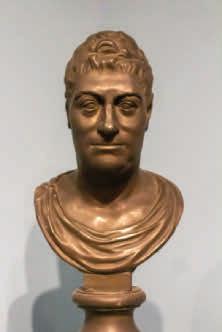
1825 plaster bust of Lafayette by Frederick Eckstein, Cincinnati Art Museum.
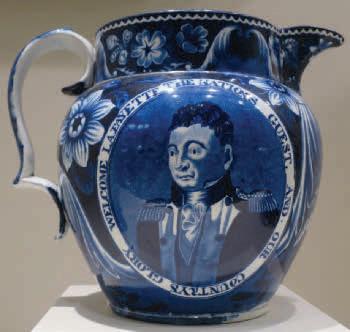
1820s Staffordshire pitcher by Joseph Stubbs reading "Welcome Lafayette, The Nation's Guest and Our Country's Glory," Dayton Art Institute.
Herald, visiting Maysville, Kentucky, on May 21.
MAY 22: GALLIPOLIS
Galbreath writes, “The General now hastened on his journey to the East. It was his intention originally … to proceed overland to Columbus and thence to Wheeling. His itinerary … included the state capital, Chillicothe, Lancaster and Zanesville. Preparations had been made at these points to welcome him, but finding the time at his disposal too short for the tour, he proceeded up the river, passing Portsmouth and making a short stop at Gallipolis.” (Learn more about Our House Tavern, where Lafayette was entertained in Gallipolis, on page 14.)
MAY 23: MARIETTA
“Leaving the town whose name is a constant reminder of its French founders, the General proceeded up the river. Passing the island that bears the name of the ill fated Blennerhassett and other spots famous in the pioneer history of America, they came on the morning of May 23rd to Marietta, where many years before revolutionary compatriots had laid the foundation for the first permanent settlement in Ohio. As the vessel came toward
the landing a gun was fired as a signal that Lafayette was on board; and a little later his name was seen in large letters across the bow. The news spread rapidly, and the people crowded the wharf to welcome the illustrious visitor. His coming was a surprise as it was generally understood that Marietta was not on the line of his tour through the state. Some of the citizens, however, seemed to anticipate the visit for a reception committee … had been appointed to act in such a contingency. A procession was quickly formed and Lafayette was escorted to Mr. Ward’s home. The cannon continued to thunder a welcome and bells rang. The schools were dismissed and the children came to welcome the hero of whom they had heard so much since his landing in America.
In Mr. Ward’s home the General was warmly greeted by many citizens, including a number of revolutionary soldiers. …
“After these ceremonies he stated informally that he was sorry so soon to part from the good people of Marietta, and was escorted by a large concourse of people to The Herald, on which he departed, while practically the whole population of Marietta cheered on the shore and
the artillery from the heights above roared a farewell salute that was echoed and re-echoed among the historic hills.”
LAFAYETTE REDUX
Cincinnati, Gallipolis and Marietta are all planning events in May to commemorate the 200th anniversary of Lafayette’s visit. Get details at Lafayette200.org/events, the website of the American Friends of Lafayette Bicentennial Committee, organizers of the national commemoration.
LEARN MORE
You can read (much) more of C.B. Galbreath’s account “Lafayette’s Visit to Ohio Valley States” in the July 1920 Ohio History Journal online at ohiohistory.org/lafayette200.
The Lafayette Trail Inc. has mapped Lafayette’s route through the then24 states and is erecting special historical markers made possible by the William G. Pomeroy Foundation. At lafayette2024.org, you can find a list of all the places Lafayette visited, explore an interactive map of his route, and read the journal his secretary, Auguste Levasseur, kept during their trip. Ohio—largely Cincinnati, recounted in detail—is on pages 172–179.
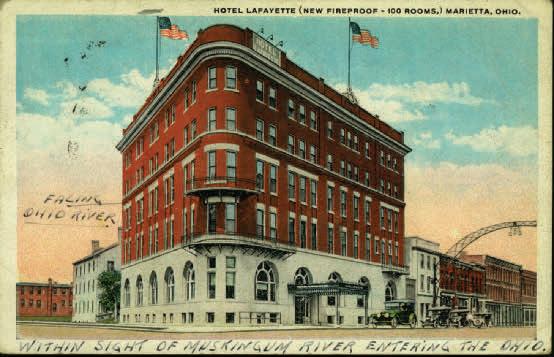
Marietta’s Hotel Lafayette, opened in 1918, stands near where Lafayette landed in 1825. Still in service, it is listed in the National Register of Historic Places.
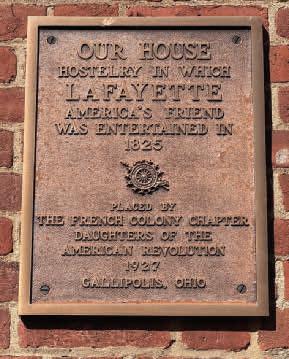
This marker commemorates Lafayette’s visit to Gallipolis in 1825.
Our House Tavern
Join me as I visit the sites in the Ohio History Connection network! This month’s trip took me to Our House Tavern in Gallipolis.
A beautiful example of Federal-style architecture, Our House Tavern was built in 1819 by Henry Cushing and his sister, Elizabeth, to serve as a tavern, inn and gathering place for locals in Gallipolis.
Today’s museum tells the story of the tavern, as well as the history of Gallipolis, which was settled in 1790 by the “French 500”—a group of French aristocrats, merchants and artisans fleeing the violence of the French Revolution.
Henry used to tell people to “come on over to our house,” and the name stuck. For many years, Our House was the center of the community’s social life. Prominent members of the town even entertained Gen. Lafayette at Our House when he stopped in Gallipolis during his tour of America in 1825. He famously left his jacket at the tavern—today it’s part of the museum’s collection. Today you can tour the tavern and explore exhibits and artifacts that share the story of Gallipolis from 1790 to 1890. The museum’s collection is eclectic and fascinating. You’ll see everything from a document signed by Thomas Jefferson and the coat belonging to Gen. Lafayette, to a piece of bread from 1810.
Address: Our House Tavern is located at 432 First Ave. in Gallipolis.
How much time: I’d budget about an hour to explore the museum.
Truda’s Tips: I have several tips to make your visit successful!
First, be sure to take advantage of the tours that the staff and volunteers provide. Their insights will bring the tavern to life.
Don't miss the summer kitchen, located in the lovely courtyard behind the tavern.
Our House Tavern is cash or check only, so plan ahead when visiting. As an Ohio History Connection member, you enjoy free admission, but you may want to bring cash or your checkbook to buy a souvenir.
You can park on the street in front of the museum.
The Ohio History Connection strives to meet Americans with Disabilities Act requirements for handicapped accessibility. However, historic structures like Our House Tavern provide challenges that make it difficult to provide complete access to all visitors. Please call the site with specific questions and concerns.
Kid-Friendly? Yes, for elementary school-aged kids and up. Our House Tavern has so much for kids to explore. I think they would love learning about tavern life and seeing the dolls, trinkets and old photographs. My kids would have loved scrambling up the stairs to visit each floor of the museum. I think younger kids’ little legs would have a hard time with the stairs. Also, the museum is definitely not strollerfriendly.
Lunch: Every good road trip includes a great lunch! While there isn’t a picnic area on-site, Our House Tavern is just down the street from Gallipolis City Park and the Gallipolis Riverfront Boat Access. Both would make great places to eat a packed lunch.
After consulting with the Our House staff, we decided to head to The Colony in downtown Gallipolis. It’s about a five-minute walk from Our House Tavern and is housed in a historic movie theatre. The menu features a variety of burgers, sandwiches, pizzas, salads and pasta, as well as daily specials. I had the buffalo chicken wrap special, which featured The Colony’s delicious dip wrapped in pizza dough. My colleagues had burgers, and fish and chips. The kitchen was accommodating of my co-worker’s food allergy. We all thoroughly enjoyed our meals and would heartily recommend The Colony, both for the food as well as the historic atmosphere.
For more information: Our House re-opens on Fri., May 23, for the summer travel season. (You can call 800.752.2618 to arrange a tour during the off-season.) For hours and more information about Our House Tavern, visit ohiohistory.org/ ourhouse.
Want to make a day of it? Our House Tavern is in Gallia County. Discover everything the area has to offer at visitgallia.com
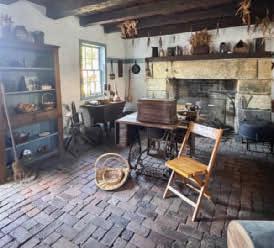
Our House Tavern’s summer kitchen.
OHIO HISTORY CONNECTION
Historic Sites & Museums
Ohio History Connection members enjoy free regular admission to these Ohio History Connection sites.
Before traveling, visit ohiohistory.org/ sites to confirm hours and any special requirements.
There are many other fascinating historyrelated museums and attractions in Ohio— far more than we can show you here.
Find more at ohio.org/things-to-do. Choose “Historic Attractions” or “Museums,” then get out and explore!
NORTHWEST OHIO
Armstrong Air & Space Museum
Cedar Bog Nature Preserve
Cooke-Dorn House
Fallen Timbers Battlefield Memorial Park
Fort Amanda Memorial Park
Fort Jefferson Memorial Park
Fort Meigs
Fort Recovery Museum & Monument
Hayes Presidential Library & Museums
Indian Mill
Inscription Rock Petroglyphs
Johnston Farm & Indian Agency
Lockington Locks
NORTHEAST OHIO
Custer Monument
Fort Laurens
McCook House
Museum of Ceramics
Quaker Yearly Meeting House (Open by Appointment) & Free Labor Store/Benjamin Lundy House (Preservation in Progress • Not Open)
Schoenbrunn Village
Shaker Historical Museum
Tallmadge Church
Youngstown Historical Center of Industry & Labor
Zoar Village
CENTRAL OHIO
Flint Ridge Ancient Quarries & Nature Preserve
Hanby House
Logan Elm
Newark Earthworks
Ohio History Center & Ohio Village
Poindexter Village Historic Site
SOUTHWEST OHIO
Adena Mansion
Davis Memorial Nature Preserve
Fort Ancient Earthworks & Nature Preserve
Fort Hill Earthworks & Nature Preserve
Harriet Beecher Stowe House
John Rankin House
Miamisburg Mound
National Afro-American
Museum & Cultural Center
Paul Laurence Dunbar House
Serpent Mound
(Preservation in Progress • Not Open)
Shrum Mound
Wahkeena Nature Preserve
Warren G. Harding Presidential Sites
Story Mound
U.S. Grant Birthplace
U.S. Grant Boyhood Home & Schoolhouse
William Henry Harrison Tomb
SOUTHEAST OHIO
Big Bottom Memorial Park
Buckeye Furnace
Buffington Island Battlefield Memorial Park
Campus Martius Museum
John & Annie Glenn Museum
Leo Petroglyphs & Nature Preserve
National Road & Zane Grey Museum
Ohio River Museum (Closed for Construction)
Our House Tavern
& Gardens
PROGRAMS & EXHIBITS AT THE
Ohio History Center
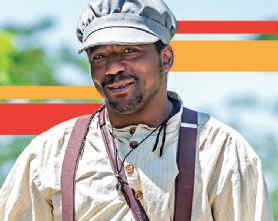
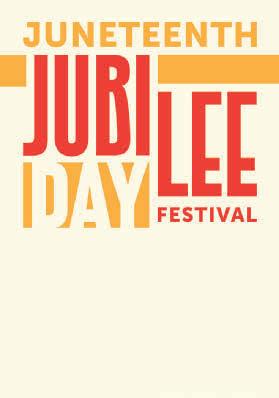
Juneteenth Jubilee Day Festival
THURS., JUNE 19 • NOON–4 P.M.
Ohio History Center, Columbus
The Jubilee Day Festival is a vibrant celebration that brings together a rich tapestry of culture, history and community spirit. This dynamic event will feature a variety of educational and uplifting performances, including thought-provoking reenactments that bring history to life. Enjoy tantalizing food demonstrations that highlight diverse culinary traditions, while live music, dance and captivating film screenings add to the festival’s lively atmosphere. Whether you’re learning something new, indulging in delicious flavors or enjoying the rhythm of dance and music, the Jubilee Festival promises an enriching experience for all ages, celebrating both the past and the present in a fun and interactive way. Free, with preregistration encouraged. 800.686.1541 or ohiohistory.org/ juneteenth
FEATURED EXHIBITS • • •
St. Clair’s Defeat Revisited— A New View of the Conflict
THROUGH SUN., AUG. 17
In this traveling exhibit by Ball State University anthropologists and 11 Tribal humanities scholars, discover the complex history of the 1791 Battle of the Wabash, or St. Clair’s Defeat, near Fort Recovery, Ohio, then explore its aftermath for the nine Tribal Nations that orchestrated what’s been called “the worst defeat of U.S. forces by Native Americans in U.S. history.”
Hide and Seek—Finding Young People in the Archives
ONGOING
In the third-floor Library Lobby Gallery, see items from our archival and history collections that are associated with young Ohioans over time, including original documents, toys and a Cozy Coupe car.
Indigenous Wonders of Our World—The Hopewell Ceremonial Earthworks
ONGOING
Learn about the eight 2,000-year-old Hopewell Earthworks in Ohio recently named World Heritage Sites by UNESCO, including mathematical similarities among them and their alignments to the solstices and the 18.6-year lunar cycle.
Making Ohio Home—Early Ohio Immigrant Experiences
ONGOING
Explore stories of seven representative immigrants who helped grow Ohio’s population from 45,365 in 1800 to more than 4.1 million in 1900.
1950s—Building the American Dream
ONGOING
Peek in the closets and snoop in the drawers of a real, fully furnished Lustron steel house made right here in Ohio. From the contents of the cupboards to the news on TV and the toys in the yard, this hands-on exhibit is a fascinating journey back in time.
World War I Display ONGOING
See equipment, weapons, uniforms and memorabilia.
Welcome Lobby Display Cases ONGOING
In the Welcome Lobby cases, see Dressing Ohio—From Workroom to Wardrobe, featuring garments from Ohio History Connection collections, and Columbus Women on the Move— Traveling the World in 1936–1937, with selected items from the Women’s Travel Collection. (See Echoes Magazine, March & April 2024, page 11.)
Ohio History Center Hours
Museum
OPEN WEDS.–SUN. 10 A.M.–5 P.M.
CLOSED MEMORIAL DAY, MON., MAY 26
CLOSED FOR CONSTRUCTION, TUES., MAY 27–FRI., MAY 30
OPEN JUNETEENTH, THURS., JUNE 19
CLOSED INDEPENDENCE DAY, FRI., JULY 4
Archives & Library
WEDS. 12:30–3 P.M.
THURS.–FRI. 10 A.M.–3 P.M.
SCHEDULE YOUR PERSONALIZED RESEARCH APPOINTMENT: ohiohistory.libcal.com
Plaza Cafe
TUES.–FRI. 9 A.M.–2 P.M.
SAT. 10 A.M.–3 P.M.
CLOSED SUN. & MON.
Ohio Village
CLOSED FOR CONSTRUCTION REOPENS IN 2026
ATTEND FROM ANYWHERE!
Online Events
Celebrate Historic Preservation Month!
VARIOUS DATES IN MAY NOON–1 P.M.
May is Historic Preservation Month. In these free lunchtime webinars presented by the Ohio History Connection’s State Historic Preservation Office staff, learn about various topics in historic preservation, including significant African American sites, energy conservation and sustainability, how the National Register of Historic Places works and how the Section 106 process helped find—and save—a lost African American cemetery. Free with required advance registration. Visit ohiohistory.org/hpmonthwebinars for more information and to register.
FAMILY HISTORY
Researching Italian Civil Records
SAT., MAY 10 • 11 A.M.–NOON Online—Attend From Anywhere!
Learn from Roslyn Torella how to find Italian civil records for birth, death and marriage on the Antenati Portale, a free website that has millions of Italian records beginning in the early 1800s. You don’t have to be fluent in Italian to find your ancestors using the tips and guides shared in this session. $25, $20/ Ohio History Connection member. 800.686.1541 or ohiohistory.org/ genealogyworkshop
Ohio History Connection Premiumlevel members: Enjoy one free genealogy workshop during your membership year. To redeem your free workshop, call 800.686.1545 or email membership@ohiohistory.org.
MEMBER VIP: Get to Know the National Register of Historic Places
TUES., MAY 20 • 3–4 P.M.
Online—Attend From Anywhere! Join Mary Rody of the Ohio History Connection’s State Historic Preservation Office and learn about the National Register of Historic Places— what it is and what it isn’t—including tips on how to prepare a National Register nomination. $10, Free/ Ohio History Connection member. 800.686.1545 or ohiohistory.org/ nationalreg
Presidential History Book Club
WEDS., MAY 28 & JUNE 25 NOON–1 P.M.
Hayes Presidential Library & Museums, Fremont, and Online—Attend From Anywhere! 4 Read and discuss books about the American presidency at this free book club open to all. MAY 28: First Lady of the Confederacy, by Joan Cashin, a continuation of April’s discussion. JUNE 25: Heirs of the Founders, by H.W. Brands. Attend in person or online. You’re welcome to bring your lunch. For online login information, email admin@rbhayes.org 800.998.7737 or rbhayes.org
LGBTQ Genealogy
SAT., JUNE 21 • 10–11 A.M.
Online—Attend From Anywhere! Contrary to assumptions, confirmed bachelors or spinster aunts may not have been single; they might have had partners, even if there’s no legal documentation or family acknowledgment. In this course with instructor Stewart Traiman, learn how to explore the presence of lesbian, gay, bisexual, trans and queer individuals in our family histories. We’ll investigate census records, newspapers, obituaries, military records, photographs, archives and more to uncover clues about LGBTQ ancestors. The class will also delve into LGBTQ history and stories,
providing context for available records. The class goal is to enrich family histories by discovering and including the stories of LGBTQ ancestors. $25, $20/Ohio History Connection member. Advance registration required. 800.686.1541 or ohiohistory.org/ genealogyworkshop
Ohio History Connection Premiumlevel members: Enjoy one free genealogy workshop during your membership year. To redeem your free workshop, call 800.686.1545 or email membership@ohiohistory.org.
MEMBER VIP: Get to Know the Ohio Historical Marker Program
TUES., JUNE 24 • 3–4 P.M.
Online—Attend From Anywhere!
Meet Laura Russell, Ohio History Connection historical markers program manager, and learn about the nearly 1,800 Ohio Historical Markers sharing unique stories of the people, places, things and events that helped shape our state and its communities. $10, Free/Ohio History Connection member. 800.686.1545 or ohiohistory.org/marker
THROUGH AUG. 17, OHIO HISTORY CENTER
Events & Exhibits
Many programs and events at Ohio
History Connection museums and attractions require advance registration. To register, call the number or visit the website listed with each program.
Our online calendar offers more up-to-date information about programs and events at Ohio History Connection museums and attractions. Find it at ohiohistory.org/calendar Questions? Call 800.840.6127
Ohio’s nearly 800 local historical societies, historic preservation groups and related organizations offer lots more opportunities to get out and explore places associated with national, state and local history in the Buckeye State. Find events online at ohio.org/festivals-and-events . Under “Category,” choose “History and Heritage.”
STATEWIDE
SAVE THE DATE
Midsummer at the Octagon
WEDS., JUNE 18 • 4–7 P.M.
Octagon Earthworks Visitors Center, Newark 4 It’s the Ohio History Connection’s annual members meeting and party, and you’re invited! See page 19. Preservation Awards Deadline
TUES., JULY 1
Each year, the Ohio History Connection’s State Historic Preservation Office presents awards in two categories: Public Education and Awareness, and Preservation Merit. Nominations are due July 1. For nomination forms and more information, visit ohiohistory.org/hpawards or call 614.298.2000
HISTORIC PRESERVATION
Application Deadline for Round 2 Certified Local Government Grants
THURS., AUG. 21
Certified Local Government grants help fund historic preservation projects in 79 Ohio cities and villages eligible to apply because they have certified historic preservation programs. To find out whether your community is one of the 79 and to learn more, visit ohiohistory. org/clg or call 614.298.2000.
2026 History Fund Grant
Application Deadline
TUES., SEPT. 9
The History Fund is a competitive matching grants program for nonprofits and local government entities in Ohio, like local historical societies, public libraries, genealogical societies, university archives and special collections, historic preservation groups, archaeological societies, county records management offices and incorporated “friends” groups of the above. Applications for History Fund grants to be awarded in 2026 are due Sept. 9. For details and application forms, visit ohiohistory.org/historyfund or call 614.298.2000 or 614.298.2341
CENTRAL OHIO
CENTRAL OHIO
VINTAGE BASE BALL DOUBLEHEADER
Ohio Village Muffins and Diamonds vs. Gahanna Bananas
SAT., MAY 17 • 11:30 A.M.
Jefferson Elementary, 136 Carpenter Rd., Gahanna 4 800.686.6124 or ohiohistory.org/muffins
VINTAGE BASE BALL
Ohio Village Muffins vs. Local Club
SAT., MAY 24 • 6 P.M.
Field of Heroes, 325 N. Cleveland Ave., Westerville 4 800.686.6124 or ohiohistory.org/muffins
Cemeteries and Veterans
SAT., MAY 31 • 1–4 P.M.
Hanby House, Westerville 4 In honor of Memorial Day, join us at Hanby House for a program about the history of Westerville-area cemeteries, with interesting facts about each one and stories of veterans buried there. 800.600.6843 or westervillehistory.org
VINTAGE BASE BALL
Ohio Village Muffins vs. Columbus Capitals
SUN., JUNE 1 • 2 P.M. Thompson Park, 4250 Woodbridge Rd., Columbus 4 800.686.6124 or ohiohistory.org/muffins
Kate Winter Hanby: Female Pioneers of Otterbein University
SAT., JUNE 14 • 1–4 P.M.
Hanby House, Westerville 4 Learn about Kate Winter Hanby and other female pioneers of higher education at Otterbein University from Otterbein archivist Stephen Grinch. Wife of Benjamin Hanby, in 1857 Kate was one of two women who were the first graduates of Otterbein. 800.600.6843 or westervillehistory.org
Fouse Family
SAT., JUNE 21 • 1–4 P.M.
Hanby House, Westerville 4 In honor of Juneteenth, Kathleen Kaslow of Westerville Public Library’s History Museum will share the story of the Fouse family and Hanby House. The Fouse family patriarch, Squire Fouse, was born into slavery, came to Westerville after the Civil War and eventually bought the Hanby House. His son, William Henry Fouse, was the first Black graduate of Westerville High School and of Otterbein University, and became an honored educator. 800.600.6843 or westervillehistory.org
First Siege
&
VINTAGE BASE BALL
Ohio Village Muffins vs. Mansfield Independents
SUN., JUNE 22 • 2 P.M.
Thompson Park, 4250 Woodbridge Rd., Columbus 4 800.686.6124 or ohiohistory.org/muffins
VINTAGE BASE BALL
Ohio Village Muffins vs. Champion City Reapers
SUN., JUNE 29 • 2 P.M.
Thompson Park, 4250 Woodbridge Rd., Columbus 4 800.686.6124 or ohiohistory.org/muffins
S’mores and History Stories
SAT., JULY 12 • 1–4 P.M.
Hanby House, Westerville
Join us on the lawn of the Hanby House to make your own s’more, then enjoy it while listening to Westerville history stories. 800.600.6843 or westervillehistory.org
VINTAGE BASE BALL
Ohio Village Muffins vs. German Village Hobnobbers
SUN., JULY 13 • TIME TBA
Schiller Park, German Village, Columbus 4 800.686.6124 or ohiohistory.org/muffins
NORTHEAST OHIO
NORTHEAST OHIO
Tour Historic Tallmadge Church ONGOING
Tallmadge Church, Tallmadge 4 Tour this 1825 Federal-style church by master builder Lemuel Porter. A landmark on Tallmadge Circle, it’s a reminder of northeast Ohio’s New England heritage. Tallmadge Historical Society is pleased to welcome visitors by appointment. Call 330.633.2420 to make a reservation. ohiohistory.org/tallmadge Maifest and German Car Show
AT THE
OHIO HISTORY CONNECTION’S ANNUAL MEMBERS’ MEETING & PARTY
Thurs., June 18
4–7:30 p.m.
OCTAGON EARTHWORKS, NEWARK
You must show your digital or physical membership card to enjoy free admission at our sites. Please call membership at 800.686.1545 if you’ve misplaced your card.
FRI., MAY 9 • 5:30–10 P.M. SAT., MAY 10 • 10 A.M.–5 P.M. Zoar Village, Zoar 4 Celebrate spring with a traditional German festival! Enjoy Cleveland Kraut, brats and German potato salad from Canal Tavern of Zoar, local craft beers, live German music, discounted museum tours and, of course, a maypole. A car show features a variety of antique German-made vehicles. Car owners can register the day of or can preregister by calling 330.874.3011 or by emailing zoarinfo@zca.org Registration is $10, and all proceeds benefit preservation and educational activities at historic Zoar Village. Maifest is free to all visitors. Guided tours of the village are available during Maifest for the discounted price of $5/person, Free/age 11 & under. 800.262.6195 or historiczoarvillage.com
Hear from Dr. Ray Hively, whose research on lunar and solar alignments of the Octagon shed light on tribal genius and Dr. Joe Stahlman, who’s leading visitor-experience planning across the Hopewell Ceremonial Earthworks.
After, enjoy bites, drinks and DJ Mazeppa on the patio, followed by a twilight tour of the Octagon Earthworks with Ohio History Connection archaeologist Dr. Brad Lepper.
Seating is limited. Free to Ohio History Connection members with RSVP until all seats are filled or through June 6.
ohiohistory.org/annualmeeting
800.686.6124
Maifest and German Car Show GroveFest
Fort Laurens Homeschool Day
FRI., MAY 30 • 9 A.M.–2 P.M.
Fort Laurens, Bolivar 4 Come to the Fort Laurens Museum at the site of our state’s only Revolutionary War fort and learn about 18th-century life on the Ohio frontier. Fourththrough eighth-graders will learn about the Revolutionary War and how early American settlers lived via stations and demonstrations that cover Revolutionary War history, local Ohio history, archaeology and more. This event is open to public schools, private schools and homeschoolers of all ages. All activities meet Ohio educational standards. Advance registration required: $7/student, Free/one adult per group, $7/ additional adult. 800.283.8914 or fortlaurensmuseum.org
Fort
Laurens Revolutionary War Reenactment
SAT., MAY 31–SUN., JUNE 1 10 A.M.–4 P.M.
Fort Laurens, Bolivar 4 Visit the site where Ohio’s only Revolutionary War fort once stood and see a mock skirmish for American independence featuring volunteer reenactors from the Brigade of the American Revolution. Learn about 18th-century life from Colonial and British soldiers and civilians and enjoy music, artillery, cooking and medical demonstrations plus kids’ games. $10, Free/age 12 & under. Proceeds benefit preservation and educational programs of Fort Laurens. 800.283.8914 or fortlaurensmuseum.org
Juneteenth Jubilee Day Festival
ZOAR FREE SPEAKER SERIES
Kathy Fernandez
SAT., JUNE 7 • 11 A.M.–1 P.M.
Zoar Village, Zoar 4 Hear guest speaker Kathy Fernandez share her latest research into the history of the Zoar Star, a symbol with special meaning to Zoar’s 19th-century communal Society of Separatists. The Speaker Series is free and open to the public, with free parking near the School House. 330.874.3011 or historiczoarvillage.com
LADIES TEA Purse-A-Nality
SAT., JUNE 14 • 10 A.M.–NOON
McCook House, Carrollton 4 Guest speaker Janet Weir Creighton of Canton has accumulated purses of the early 1900s to the present. View her outstanding collection and enjoy the fellowship. This event takes place outside on the covered patio behind the museum. Complimentary light refreshments will be served. Free with required advance registration. 800.600.7172 or ohiohistory.org/ mccook
Everyday Life in Schoenbrunn Village
SAT., JUNE 21 • 10 A.M.–4 P.M.
Schoenbrunn Village, New Philadelphia Step back in time and explore the fascinating history of this 1770s mission village on the Ohio frontier. Discover Moravian traditions through activities, demonstrations and hands-on learning. This event offers something for everyone, from history enthusiasts
to families looking for a fun day out. Included with general admission: $8, $6/age 60+, $4/age 7–17, Free/Ohio History Connection member or age 6 & under. 800.752.2711 or ohiohistory. org/schoenbrunn
Spanish-American War Program
SAT., JUNE 28 • 10 A.M.–4 P.M.
Fort Laurens, Bolivar 4 Learn what life was like for Americans during the 1898 Spanish-American War from a small group of reenactors specializing in that conflict who’ll be on hand for the day. 800.283.8914 or fortlaurensmuseum.org
Spinners and Weavers Activity
SAT., JULY 12 • 10 A.M.–1 P.M.
McCook House, Carrollton 4 See members of Algonquin Mill Spinners and Weavers Association demonstrate their craft. Quality handspun items will be available to examine and purchase. Kids age 5 and up can try their hand at spinning and a craft called Kumihimo. Free. 800.600.7172 or ohiohistory.org/ mccook
FREE SPEAKER EVENT
Ohio Genealogical Society
SAT., JULY 12 • 11 A.M.–1 P.M.
Fort Laurens, Bolivar 4 Hear a guest speaker from the Ohio Genealogical Society. Free. 800.283.8914 or fortlaurensmuseum.org
NORTHWEST OHIO
Observe the Sun Day
SAT., MAY 3 • 11 A.M.–3:30 P.M. (PRESENTATION 1 P.M. • MUSEUM TOUR 3 P.M.)
Armstrong Air & Space Museum, Wapakoneta 4 Enjoy your time in the sun at Armstrong Air & Space Museum! Museum educators will be outdoors observing the sun and discussing sunspots, weather permitting. In the STEM Inspiration Center, learn about solar power as an alternative form of energy, followed by a special activity for kids and a guided museum tour. Outdoor activities are free. STEM Inspiration Center program and museum tour included with museum admission: $13, $12/age 60+, $11/ veteran, $7.50/age 6–12, Free/Ohio History Connection member or age 5 & under. 800.860.0142 or ohiohistory. org/armstrong
WORKSHOP
The Economic Advantage of Historic Preservation
WEDS., MAY 7 • 8:30 A.M.–5 P.M.
Wassenberg Art Center, 214 S. Washington St., Van Wert 4 A community’s historic architecture and cultural heritage reflect its identity, setting it apart and providing an economic market advantage. In this workshop, gain a deeper understanding of the role of historic preservation in strengthening communities and driving economic success. Presenter Lisa Mullins Thompson of Main Street America has a background in historic preservation, strategic planning, public relations, small business and economic development. This Heritage Ohio program is made possible by support from the Ohio Department of Development and a grant from the U.S. Department of the Interior’s National Park Service, administered by the Ohio History Connection’s State Historic Preservation Office. 614.258.6200 or heritageohio.org
TALK AND TOUR
From Moon to Mars
THURS., MAY 15 • 2–4 P.M.
(PRESENTATION 2 P.M. • MUSEUM TOUR 3 P.M.)
Armstrong Air & Space Museum, Wapakoneta 4 Join our museum educator in the STEM Inspiration Center to dive into the Artemis program and learn about the four missions that will take the U.S. back to the moon. Hear how the journey will continue as the U.S. builds habitable bases or stops on the moon to lead to the goal of landing on Mars. Following the presentation, enjoy a guided museum tour. Included with museum admission: $13, $12/age 60+, $11/ veteran, $7.50/age 6–12, Free/Ohio History Connection member or age 5 & under. 800.860.0142 or ohiohistory. org/armstrong
Ulysses Grant Living History Program
FRI., MAY 16 • 6–7:30 P.M.
Hayes Presidential Library & Museums, Fremont 4 See premiere living-history presenter Dr. Curt Fields portray Ulysses S. Grant and discuss successes and failures of Grant’s two terms as president from 1869 to 1877. Fields will remain in character as Grant during a question-and-answer session that follows. Afterward he’ll join Rutherford B. Hayes, portrayed by living-history presenter Paolo DeMaria, for an informal chat and photo op on the verandah. Fields has portrayed Grant at Civil War sesquicentennial observances, including the 150th anniversary of Lee’s surrender to Grant at Appomattox Court House, Virginia. Advance tickets required. $15, $7/age 6–12, Free/age 5 & under. 800.998.7737 or rbhayes.org
Cedar Bog Nature Preserve, Urbana
SAT., MAY 17 • 10–11:30 A.M.
Hear Dave McShaffrey, co-author of A Naturalist’s Guide to the Odonata of Ohio, speak about dragonflies at Cedar Bog. $5, Free/Ohio History Connection member. 800.860.0147 or cedarbognp.org
Thurs., June 19 • Noon–4 p.m. Included with general admission. Free for members!
On exhibit through Aug. 17
OHIO HISTORY CENTER, COLUMBUS
Discover the complex history of the greatest defeat of the U S military by indigenous forces.
ohiohistor y.org/stclairdefeat 800 686 6124
NORTHWEST OHIO
GENEALOGY WORKSHOPS
Moth Night
SAT., MAY 17 • 8–10:30 P.M. SAT., JULY 12 • 8:30–10:30 P.M.
Cedar Bog Nature Preserve, Urbana Get ready to look for these fun nighttime critters. Bring your flashlights, cameras and bed sheets at dusk. Free. 800.860.0147 or cedarbognp.org
bloom, answer questions and help you take the best pictures. $5, Free/ Ohio History Connection member. 800.860.0147 or cedarbognp.org
Peatlands of Ohio
Researching Italian Civil Records
Sat., May 10 • 11 a.m.–Noon
LGBTQ Genealogy Sat., June 21 • 10–11 a.m. ONLINE—ATTEND FROM ANYWHERE!
PREMIUM-LEVEL MEMBERS:
Enjoy one free genealogy workshop during your membership year. To redeem your free workshop, call 800.686.1545 or email membership@ohiohistory.org.
Cost per session: $25, $20/member Advance registration required
Fort Meigs, Perrysburg 4 Hundreds of reenactors from all over North America will be on hand to commemorate and re-create the great battles that took place in northern Ohio during the War of 1812. This reenactment features War of 1812 military drill and dress, as well as music, battle re-creations, weapons and equipment demonstrations. Enjoy guided tours of the Fort Meigs site, plus other activities that are part of the full weekend. $15, $13/senior, $10/student, $3/Ohio History Connection member. 800.283.8916 or fortmeigs.org
Memorial Day
MON., MAY 26 • NOON–5 P.M.
Fort Meigs, Perrysburg 4 The site of Fort Meigs is a National Historic Landmark, and hundreds of veterans of the War of 1812 have their final resting place on the grounds. Join the uniformed staff of Fort Meigs in the parade of monuments to honor them and see other military demonstrations throughout the day. $12, $10/senior, $7/student, Free/Ohio History Connection member. 800.283.8916 or fortmeigs.org
Presidential History Book Club
WEDS., MAY 28 & JUNE 25
NOON–1 P.M.
Hayes Presidential Library & Museums, Fremont 4 See page 17.
Annual Orchid Walk
SAT., MAY 31 • NOON–2 P.M.
ohiohistory.org/muffins
800.686.6124
Cedar Bog Nature Preserve, Urbana Naturalists stationed along the boardwalk will point out orchids in
SAT., JUNE 7 • 10:30 A.M.–NOON Cedar Bog Nature Preserve, Urbana Learn about the different types of peatlands in Ohio from Guy L. Denny, former chief of the Ohio Department of Natural Resources Division of Natural Areas and Preserves, and president of the Ohio Natural Areas & Preserves Association. After, enjoy a guided walk on the boardwalk through the preserve. $5, Free/Ohio History Connection member. 800.860.0147 or cedarbognp.org
Verandah Concerts
WEDS., JUNE 11 & 25, JULY 9 & 23, AUG. 6 & 20 • 6:30–8 P.M. (FREE ICE CREAM SOCIAL 6:30 P.M. CONCERT 7 P.M.)
Hayes Presidential Library & Museums, Fremont 4 Bring a lawn chair or blanket and enjoy these free concerts on the lawn of the President Rutherford B. Hayes Home. JUNE 11: Matthew Ball, the Boogie Woogie Kid. JUNE 25: Bridge County Bluegrass Band. JULY 9: Irish music with Toraigh. JULY 23: Ragtime Rick & The Chefs of Dixieland. AUG. 6: Terra Brass Choir. AUG. 20: North Coast Big Band. If there are thunderstorms on concert night, the event will be canceled. 800.998.7737 or rbhayes.org
Crossbow to Cartridge
SAT., JUNE 14 • 9:30 A.M.–5 P.M. Fort Meigs, Perrysburg 4 Learn from living-history presenters of the 1400s to 1600s about the great changes in military tactics and technology across the world’s armies during that time, including the adoption of gunpowder. This event features reenactors, arms, clothing, camp life and entertainment of the 15th to 17th centuries, plus battlefield tours and demonstrations. $12, $10/senior, $7/student, Free/ Ohio History Connection member. 800.283.8916 or fortmeigs.org
Mineral, Rock and Fossil ID Workshop
SAT., JUNE 14 • 10:30 A.M.–1 P.M. Cedar Bog Nature Preserve, Urbana Have questions about rocks, minerals and fossils you’ve picked up and have stashed away at home? Bring them to
Cedar Bog! Garry Getz, senior geologist at Bowser-Morner Inc., will be on hand to assess and help ID your home collections. Free. 800.860.0147 or cedarbognp.org
FILM
Camp Delaware
TUES., JUNE 17 • 5:30–7:30 P.M.
Hayes Presidential Library & Museums, Fremont 4 See a film featuring the story of the 5th U.S. Colored Troops in the Civil War. Camp Delaware chronicles the recruitment, training, battles, bravery and service of the regiment. This recording of a stage production incorporates speeches of political figures of the day, letters from the soldiers and sounds of popular music of the era to bring the unit’s story to life. A question-and-answer session with the filmmakers will follow. $10. Proceeds benefit the Community Arts Network Performing Arts Scholarship. 800.998.7737 or rbhayes.org
TALK & TOUR
The James Webb Telescope
THURS., JUNE 19 • 2–4 P.M.
(PRESENTATION 2 P.M. • TOUR 3 P.M.)
Armstrong Air and Space Museum, Wapakoneta 4 Join our museum educator in the STEM Inspiration Center to learn about the history of the James Webb Telescope, then, through an origami craft, see firsthand how NASA combines art, math and science to put a telescope into space. After the presentation, enjoy a guided tour of the museum. Included with museum admission: $13, $12/age 60+, $11/veteran, $7.50/age 6–12, Free/ Ohio History Connection member or age 5 & under. 800.860.0142 or armstrongmuseum.org
GroveFest
SAT., JUNE 21 • 10 A.M.–2 P.M.
Hayes Presidential Library & Museums, Fremont 4 Enjoy free nature-related activities and crafts at booths hosted by regional nature organizations on the grounds of the Hayes estate, Spiegel Grove, which is also an arboretum. Ice cream, hot dogs and popcorn will be available. GroveFest celebrates the Hayes family’s love for the outdoors. The first lady’s favorite pastime was fishing, and her White House china pictured flora and fauna of the United
States, from deer and raccoons to fish and lobsters. Visitors with handicapped tags may park on the grounds. All other GroveFest parking is on the street and in ProMedica Memorial Hospital’s parking lots at Buildings A and B, 605 Third Ave. Hayes Presidential is a short walk east. 800.998.7737 or rbhayes.org
Independence Day Concert
FRI., JULY 4 • 2–3:30 P.M.
Hayes Presidential Library & Museums, Fremont 4 This free outdoor performance by the Toledo Concert Band features a variety of patriotic favorites, including Civil War reenactors firing cannons in sync to Tchaikovsky’s 1812 Overture. Bring a lawn chair or blanket. Food trucks will offer lunch and snacks for sale. Parking is on the grounds of the Hayes estate, weather permitting, with overflow parking on the street or in ProMedica Memorial Hospital’s parking lots at Buildings A and B, 605 Third Ave. Hayes Presidential is a short walk east. The Hayes Home and Museum will be open 9 a.m.–5 p.m. (Ohio History Connection members enjoy free admission.) The Hayes Library will be closed. 800.998.7737 or rbhayes.org
Butterflies
SAT., JULY 12 • 10 A.M.–NOON
Cedar Bog Nature Preserve, Urbana Hear a talk by Rob Liptak on Cedar Bog’s butterfly populations. Liptak, president of Ohio Lepidopterists, has run butterflymonitoring programs at Cedar Bog for years. Enjoy a guided walk on the boardwalk through the preserve after the presentation. $5, Free/Ohio History Connection member. 800.860.0147 or cedarbognp.org
VINTAGE BASE BALL DOUBLEHEADER Ohio Village Muffins and Diamonds vs. Mechanicsburg Indians
SAT., JULY 12 • 5 P.M.
Goshen Memorial Park, S. Parkview Rd., Mechanicsburg 4 800.686.6124 or ohiohistory.org/muffins
NORTHWEST FEATURED EXHIBITS
NEW!
Inside President Hayes’ Library THROUGH JUNE 2026
Hayes Presidential Library & Museums, Fremont 4 See page 6. Factions & Fraternalism— A History of America’s Presidential Parties THROUGH 2025
Hayes Presidential Library & Museums, Fremont 4 See campaign materials, political memorabilia and artifacts related to voting throughout American history, including campaign pins, handkerchiefs, ribbons and medallions. Also on display is a ballot box that Rutherford B. Hayes and his regiment used to vote in the field while serving in the Civil War, and the 1880 book Conspectus of American Politics, with a fold-out chart showing the evolution of American political parties to that time. Included with Hayes Museum admission. Ohio History Connection members enjoy free admission. 800.998.7737 or rbhayes.org
SOUTHEAST OHIO
SOUTHEAST OHIO
Discovering History— Lafayette and Human Rights FRI., MAY 2 • NOON–1 P.M. Campus Martius Museum, Marietta May 2025 marks the 200th anniversary of Lafayette’s visit to Marietta. Hear from speaker Alan Hoffman, president of the American Friends of Lafayette. An avid reader of early American history, he “discovered” Lafayette in 2002 and spent two years translating Lafayette in America in 1824 and 1825, the firsthand account of Lafayette’s farewell tour of America, written by Lafayette’s private secretary, Auguste Levasseur. Sponsored by Washington County Public Library. Free. 800.860.0145 or mariettamuseums.org
Many of our members change their membership levels as their lives and families change.
YOUR DAD DOESN’T NEED ANOTHER TIE FOR FATHER’S DAY.
Give him the gift of road trips & weekend adventures with an Ohio History Connection gift membership!
GET 20% OFF with discount code GIFT25 through June 17 and get Dad something he’ll use all year long.
Call 800.686.1545 or visit ohiohistory.org/join.
VINTAGE BASE BALL
Ohio Village Muffins vs. Local Club
SUN., MAY 4 • 2 P.M.
Lions Club Park, 108 Pearl St., Glenford 800.686.6124 or ohiohistory.org/ muffins
Lafayette 200
FRI., MAY 23 • 9 A.M.–10 P.M.
Campus Martius Museum, Marietta The Marquis de Lafayette arrived in Marietta by river 200 years ago today, on May 23, 1825. Events throughout the day will commemorate the bicentennial of his visit. Start with a brunch river cruise with Lafayette aboard the sternwheeler Valley Gem and be part of a cannon salute at the levee and the dedication of a new Lafayette Trail marker. Gather with the Sons of the American Revolution at Mound Cemetery and attend speaking events at Campus Martius Museum. End the day with music and dancing at the Lafayette Ball. Some events are free and open to all, and others are ticketed. Get details at mariettamuseums. org/lafayette-200. 800.860.0145 or mariettamuseums.org
Annual Raccoon Creek Vintage and Makers Market
SAT., JUNE 14 • 10 A.M.–4 P.M.
Buckeye Furnace, Wellston
Join us for the Vintage and Makers Market with more than 30 vendors, local musicians and food trucks. Vendor categories include vintage, vintageinspired, repurposed, jewelry, clothing, bath and body, home decor, artisan food and more. 800.860.0144 or buckeyefurnace.org
VINTAGE BASE BALL
Ohio Village Muffins vs. Local Club
SAT., JUNE 28 • 1:30 P.M. Blennerhassett Island, 137 Juliana St., Parkersburg, West Virginia 800.686.6124 or ohiohistory.org/ muffins
SOUTHWEST OHIO
SOUTHWEST OHIO
Leap In— Vernal Pond Exploration
SAT., MAY 3 • 11 A.M.–2 P.M.
Fort Ancient Earthworks & Nature Preserve, Oregonia, near Lebanon Vernal ponds—shallow pools that dry up in the summer and fall—are unique, important ecosystems where you’ll find distinctive plants and animals. Fort Ancient has more than 100 of them. Join wildlife biologist and wetland ecologist Tom Biebighauser for this family-friendly event that begins with an indoor presentation, then moves outdoors to examine the variety of frogs, toads and salamanders that live in Fort Ancient’s vernal ponds, with nets and guidebooks available for you to use. Wear rubber boots if you have them. (Otherwise, your shoes may get muddy.) Included with museum admission: $7, $6/age 6–17 or 60+, Free/Ohio History Connection member or age 5 & under. 800.283.8904 or ohiohistory.org/fortancient
WALKING TOUR
Abolitionists & African Americans in Walnut Hills
SAT., MAY 17 • 10 A.M.–NOON (RAIN DATE: SUN., MAY 18, 1–3 P.M.)
Harriet Beecher Stowe House, Cincinnati 4 Underground Railroad conductors, Olympic gold medalists, internationally famous authors and myriad small businesses have all thrived in Cincinnati’s Walnut Hills neighborhood throughout its history. Lace up your walking shoes and learn about those who built and invested in Walnut Hills over the past 200 years. This walk lasts just under two hours and covers about 1.3 miles, starting and ending at the Harriet Beecher Stowe House. $15, $7/Ohio History Connection member. 800.847.6075 or stowehousecincy.org
Take a road trip to our 50+ sites & create an original drawing for a chance to win great prizes!
Get all the details at ohiohistory.org/artcontest
Getting to the Root of the Matter SAT., MAY 17 • NOON–4 P.M. Fort Ancient Earthworks and Nature Preserve, Oregonia, near Lebanon
Discover the vast knowledge of American Indian peoples about how plants help humans. Did you know that red willow has the same natural compounds as an aspirin? Staghorn
Everyday Life in Schoenbrunn Village
Annual Orchid Walk
sumac and purple coneflower contain large amounts of vitamin C. In this informative study of medicinal plants around Fort Ancient that American Indians used, explore our medicinal garden and the surrounding woods to learn about nature’s bounty. Included with museum admission: $7, $6/ age 6–17 or 60+, Free/Ohio History Connection member or age 5 & under. 800.283.8904 or ohiohistory.org/ fortancient
WALKING TOUR
African American History Along the Cincinnati Riverfront
SAT., MAY 31 • 10 A.M.–NOON
(RAIN DATE: SUN., JUNE 1, 1–3 P.M.)
Hosted by Harriet Beecher Stowe House, Cincinnati 4 Begins at the John A. Roebling statue on Riverside Dr. in Covington, Kentucky, near the south end of the Roebling Bridge linking Cincinnati and Covington 4 Explore the deep significance of the Ohio River for Cincinnati’s African American history of resistance, achievement and leadership from the 1800s through the 20th century. Connect to the stories of key Queen City figures such as Margaret Garner, Marian Spencer, James Bradley and Cincinnati’s Black Brigade. Lasting just under two hours, this guided walking tour begins at the John A. Roebling statue on the Covington, Kentucky, side of the historic John A. Roebling Suspension Bridge over the Ohio River and ends in Smale Park on the Cincinnati side of the bridge. $15, $7/Ohio History Connection member. 800.847.6075 or stowehousecincy.org
Abolitionists & African Americans in Walnut Hills Walking Tour
VINTAGE BASE BALL
Ohio Village Muffins
vs. The Worthingtons
SAT., JUNE 7 • 2 P.M.
Adena Mansion & Gardens, Chillicothe 800.686.6124 or ohiohistory.org/muffins
Mask Making from Nature
SAT., JUNE 14 • 10:30 A.M.–NOON
Fort Ancient Earthworks & Nature Preserve, Oregonia, near Lebanon See examples, then combine various sizes, shapes and textures of objects found in nature to create a mask of your own. This creative, fun, hands-on activity is suitable for ages 8 through adult. A variety of materials will be provided, and you may bring your own, as well. $10 material fee + general site admission: $7, $6/age 6–17 or 60+, Free/Ohio History Connection member or age 5 & under. Advance registration required. 800.283.8904 or ohiohistory.org/fortancient Summer Solstice
SAT., JUNE 21 • 5:30–10 A.M. Fort Ancient Earthworks & Nature Preserve, Oregonia, near Lebanon Join us in welcoming the first day of summer by observing the sunrise as American Indians did 2,000 years ago. See the sun rise between two walls of earth when you’re aligned between the earthen wall and a stone-covered mound. Free until 10 a.m. 800.283.8904 or ohiohistory.org/fortancient
JUNETEENTH PROGRAMMING
Quilting in the African American Tradition
SAT., JUNE 21 • 1:30–3:30 P.M.
National Afro-American Museum &
Cultural Center, Wilberforce 4 Hear Dr. Renee Wormack-Keels trace the history of quilts, from those that enslaved African Americans created to 21st-century art quilts. Then create a quilt block of your own using African textiles and hand-dyed fabrics. Included with museum admission: $6, $5/ senior, $3/age 6–17, Free/Ohio History Connection member. 800.752.2603 or ohiohistory.org/naamcc
SOUTHWEST FEATURED EXHIBITS • • •
NEW!
Trailblazers of Innovation— African American Inventors Who Shaped America
ONGOING • WEDS.–SAT. 9 A.M.–4 P.M.
National Afro-American Museum & Cultural Center, Wilberforce
Discover the incredible stories of Black inventors from Ohio and beyond! This exhibit, designed with help from Wright State University public history graduate students and the National AfroAmerican Museum & Cultural Center curatorial staff, promises to educate and inspire. ALSO ON EXHIBIT: African Art—Form, Function and Fraught Histories, African Americans
Fighting for a Double Victory, Rhythm of Revolution and Queens of the Heartland, all included with museum admission: $6, $5/senior, $3/age 6–17, Free/Ohio History Connection member or age 5 & under. 800.752.2603 or ohiohistory.org/naamcc
JUNE 21, NEW PHILADELPHIA
MAY 31, CEDAR BOG NATURE PRESERVE, URBANA
MAY 17, HARRIET BEECHER STOWE HOUSE, CINCINNATI
Devo released its first single, Mongoloid, backed with Jocko Homo, on the band’s independent label Booji Boy, March 1977.
Are We Not Men?
DEVO CELEBRATES 50 YEARS ON THE ROAD BY JOHN PETKOVIC
History is a product of time and place and the response of those confronting both.
Welcome to the Rubber Capital of the World in the 1970s, where a collection of misfit art students created a concept to make sense of a world in decline—and, in the process, became one of America’s most influential bands.
Between 1978 and 1982, Devo scored pop hits with irreverent, satirical songs like Whip It, Uncontrollable Urge, Freedom of Choice, Peek-a-Boo and a demented cover of the Rolling Stones’ (I Can’t Get No) Satisfaction.
The quintet became the musical equivalent of Pop Art with its innovative embrace of mass-market images, experimental sounds, wild get-ups and, of course, its anti-Darwinist concept that humanity was going through deevolution. (The concept of de-evolution was introduced in the 19th century and argued that species could revert to more-primitive forms over time.)
Devo revolutionized music and made history by confronting time and a place.
“Devo was connected to Akron, and we were responding to what we saw and heard,” says Devo co-founder and guitarist Gerald Casale. “We had a subcult of about 25 people that gravitated toward us, and that was it. We didn’t fit in; it was us against the world.”
HALF-CENTURY OF DE-EVOLUTION
Devo is hitting the road this year to celebrate “50 Years of DeEvolution”—a North American tour that includes shows in Cleveland (May 11), Columbus (June 20) and Cincinnati (June 24).
Break out the yellow jumpsuits, red power domes and spud-boy antics— and, of course, the songs and sensibilities spawned in Rust Belt Ohio.
“We were a concept before we were a band,” Casale says. “We were visual artists attending Kent State University and had similar interests. I came from a blue-collar family and got to go to college on an art scholarship, so I was able to draw from the industrial landscape and cultural and social movements like Pop Art and Expressionism.”
Casale met future bandmate Mark Mothersbaugh by chance one day in 1970 at Kent State.
Left: Devo in downtown Akron, 1978. From left, Robert “Bob 2” Casale, Alan Myers, Mark Mothersbaugh, Robert “Bob 1” Mothersbaugh, Gerald Casale.
PHOTO BY JANET MACOSKA, COURTESY OF PRIMARY WAVE
Devo honed its stage show by performing more than two dozen shows in a matter of months in clubs like the Crypt in Akron and Pirate’s Cove in Cleveland between 1976 and 1977.
Photos by Bobbie Watson Whitaker, courtesy Gerald Casale
STICKERS MYSTERY
“I was influenced by the Dadaists, surrealists and futurists and fell in love with printmaking while attending Kent State,” Mothersbaugh says. “After school, other kids would go to their dorms or frats, but I would stay in the printing room and make these decals and stickers.”
One of them depicted astronauts standing on the moon holding potatoes. Mothersbaugh, already a provocateur, would put them up all around campus.
“I would put them on fire hydrants, glass doors of classrooms, bumpers on cars,” Mothersbaugh says. “And then one day this guy comes up to me and asks, ‘Are you the guy putting these stickers up everywhere?’”
Mothersbaugh sensed confrontation in the question and responded, “Yeah, what of it?” Then came the question that would forge a bond in music.
“He asked, ‘What do the potatoes mean to you?’” Mothersbaugh says. “And then he said, ‘We’re like potato people; we’re not asparagus or eggplant— because potatoes are proletariat, they’re dirty and asymmetrical and grow underground.’”
Right then and there, Mothersbaugh knew he had met a kindred spirit—Jerry Casale.
COLLECTIVE NERVOUS BREAKDOWN
A collaboration was born. Mothersbaugh helped Casale print up his senior thesis, then came May 4, 1970—the moment that spawned de-evolution.
“Everything changed after the Kent State shootings,” Casale says. “I saw it when it happened and two of my friends died that day—and it brought an existential urgency to what we were feeling. We used to talk about de-evolution as a philosophical theory, but that day was a collective nervous breakdown that made us see, firsthand, that Devo was real.”
That year, Casale and his Kent State comrade finetuned the Devo philosophy. Two years later, they founded the Art Devo movement.
By ’73, it was a budding musical project that debuted at the Kent State Creative Arts Festival under the moniker Sextet Devo. It was hardly the band the world would come to know: They wore regular clothes, but there were hints that something bigger was in order.
Mothersbaugh donned a gorilla mask to conceal his identity and Casale wore a yellow raincoat, a precursor to the yellow jumpsuits they would make famous. Mothersbaugh’s brother Bob and Alan Myers joined to fill out the lineup, which would eventually include Casale’s brother, Bob.
MUSIC MEETS ART
“We were basically just jamming and that’s when I felt that I had to become field marshal of the band,” Casale says. “I kept saying, ‘Let’s play better and write songs,’ and we spent three years working to become a better band—and we came to realize that we can break big if we’re original.”
Originality wasn’t defined by amazing, endless guitar solos. It came down to the concept.
“I was always attracted to concepts and liked Andy Warhol’s idea that art is less about technique and more about ideas,” Mothersbaugh says. “We applied art concepts to music.”
The process included shopping sprees in Akron discount and secondhand stores in search of outfits that reflected the Devo aesthetic. They needed a look to reflect the songs.
Or vice versa, says Harvey Gold, a contemporary musician from the beloved Akron band, Tin Huey.
“A band of music mavens thinks very differently than a band of art students,” Gold says. “Devo established parameters and everything they did, from the songs to the visuals, fit this sophisticated concept and vision.”
ECONOMIC COLLAPSE
Akron provided the perfect backdrop for the vision, he adds.
“The city experienced an economic downturn in the ’70s and it hit the rubber industry, which shaped Akron’s identity,” Gold says. “But there had been decades of prosperity, and working-class families encouraged their kids to go to college and, in Devo’s case, study art. They had intellectual backgrounds to observe the landscape and develop this concept in which they were industrial mutants.”
Most bands break out with songs. It’s no surprise that Devo’s path to success started with a film, In the Beginning Was the End: The Truth About DeEvolution. Shot in Akron and Cuyahoga Falls, the nine-minute 1976 film embraces not only industrial Akron, but also the sense that things were going awry.
1966–1970
Gerald “Jerry” Casale and Bob Lewis meet at Kent State, followed later by Mark Mothersbaugh. The band’s formative years are influenced by the “deevolution” theory and the events of May 4, 1970.
1972
Devo is officially formed in Akron by Gerald Casale and Bob Lewis, later joined by Mark Mothersbaugh, Bob Mothersbaugh and Alan Myers.
1973
First show at Kent State.
1976
The band and friend Chuck Statler release The Truth About De-Evolution, a short film that wins a prize at the Ann Arbor Film Festival in 1977 and attracts the attention of David Bowie, Iggy Pop and Brian Eno.
1977
Debut single, Mongoloid, backed with Jocko Homo, released on Devo’s Booji Boy imprint.
1978
Devo releases debut album, Q: Are We Not Men? A: We Are Devo!, then goes on to appear on Saturday Night Live.
1980
The band releases Freedom of Choice Whip It becomes an MTV hit. Devo dons red energy dome hats.
1981
New Traditionalists comes out and the band dons rubber pompadours based on the hairstyle of John F. Kennedy.
1982
Oh, No! It’s Devo comes out and the band dons white “Spud Ring” collars.
1984
Shout is released to negative reviews. Drummer Alan Myers leaves the band.
1988
Total Devo is released. The album falters commercially.
1990
The band goes on hiatus after the release of Smooth Noodle Maps Mark Mothersbaugh starts scoring music for films and TV.
1996–2000 s
Devo reunites sporadically for tours and one-off performances.
2010
Devo releases Something for Everybody, the first new album in 20 years.
2010 s–PRESENT
Devo continues occasional live shows.
2023
Devo embarks on a 50thanniversary tour.
2025
Devo announces its 50 Years of De-Evolution… Continued! tour.
It features the band in workmen’s suits, operating machinery in a factory—that is, until they jump into a car and drive away to perform at a bar (filmed in the old Kent bar, JB’s, on Water Street).
The film, shot by friend Chuck Statler, not only made the film festival circuit, but it also caught the eye of David Bowie and Iggy Pop—who lobbied to have them signed to Warner Bros.
By 1978, the band was flown to Cologne, Germany, to record with Mothersbaugh’s musical hero, Brian Eno.
THE SOUNDS OF AKRON
In October of that year, the band appeared in yellow jumpsuits and goggles on Saturday Night Live to perform Jocko Homo —a song whose blips and mechanical rhythms were inspired by the sounds Mothersbaugh would hear driving around Akron.
The performance was considered groundbreaking for the show, and the local band of industrial mutants was being hailed as the Next Big Thing, on the path to stardom.
The band has released nine albums, toured the world and become a template for music as art, and an artful response to society. De-evolution, meanwhile, has become a catch-all phrase for social degeneration—or simply put, things are messed up.
Devo belongs to the world now. But it was the pulse of Akron that defined the band and still does.
“There’s a lot of evidence in our DNA that we’re from Akron,” Mothersbaugh says. “I’ve always been attracted to environment sounds, like the sounds of a factory that Akron imprinted on me.”
John Petkovic is a Cleveland-based journalist who has worked as a columnist, reporter and photographer for The Plain Dealer, and has written for Rolling Stone, Spin and Playboy. He is also a touring musician who has played in bands including Cobra Verde and Death of Samantha.
LEARN MORE
Read about Devo’s vibrant early history in northeast Ohio and how the May 4, 1970, Kent State shootings influenced the band in The Beginning Was the End: Devo in Ohio, a book by Jade Dellinger and David Giffels.
Devo is considered a new-wave band—learn more about the musical subgenre and discover more new-wave artists in an article by MasterClass at ohiohistory.org/Devolution
Want to check out some of Devo’s music for yourself? On their YouTube channel, @DEVOvision, watch music videos and interviews, listen to playlists and more.
Devo performing for a video shoot in Akron.
LEARN MORE
PHOTO BY BOBBIE WATSON WHITAKER
Top: Devo’s “Pomp a Doured Hollywood” photo accompanied New Traditionalists, a 1981 album for which the band donned rubber pompadours based on the hairstyle of John F. Kennedy. Bottom: Devo, all grown up but still wearing the red energy dome hats, and heading out on a 50 Years of De-Evolution… Continued! tour that will bring the band to Cleveland, Columbus and Cincinnati.
JAY SPENCER
PHOTO BY ROBERT MATHEU, COURTESY OF PRIMARY WAVE
At some point in time, someone labeled some of
the stars of the 1943 Homestead Grays: center fielder Cool Papa Bell, catcher Josh Gibson, pitcher Ray Brown and first baseman Buck Leonard. Bell, Gibson and Leonard were inducted into the National Baseball Hall of Fame in Cooperstown in the 1970s. Brown was inducted in 2006.
The Forgotten Baseball Star of Alger, Ohio
NEGRO LEAGUES CURVEBALL WIZARD RAY BROWN
BY DAVID STRITTMATTER
There ought to be a story on Ray Brown, who died here the other day. There, my friend, was a pitcher.”
Promoter Elwood Parsons, who brought numerous Negro Leagues clubs to Dayton on barnstorming tours, spoke these words to longtime Dayton Daily News Sports Editor Si Burick in February 1965.
Before the integration of Major League Baseball, Brown starred for the Homestead Grays of the Negro Leagues. For years, he was the equal of Satchel Paige.
Then why did Raymond “Ray” Brown and his accomplishments fall into obscurity? The answer will captivate the casual baseball fan, and a current project in his Ohio hometown intends to rescue the memory of its toolong-forgotten son.
OHIO ROOTS
Brown’s family worked the onion fields of the Scioto Marsh in northwest Ohio. Born in the Hardin County village of Alger, he graduated from Alger High School in 1926. Brown briefly attended Wilberforce University but left before graduating to pursue baseball.
At 22, Brown played his first professional baseball season in 1930 for the independent Dayton Marcos. The following year, the righthander made his Negro Leagues debut with the Indianapolis ABCs.
After Brown spent the first half of 1932 with the Detroit Wolves, he joined the star-studded Homestead Grays, owned by Cumberland Posey Jr. In 1937, Brown married Posey’s eldest daughter, Ethel. (The marriage produced a son, Truman, but ended in divorce.)
BASEBALL FAME
Using a devastating curveball, Brown established himself as an all-time great during his 14 seasons with the Pittsburgh-based Grays. Playing home
plaque in
notes that the pitcher was the alltime Negro Leagues leader in wins, winning percentage and shutouts.
Brown's
the National Baseball Hall of Fame
At 22, Brown played his first professional season in 1930 for the independent Dayton Marcos. The following year, the right-hander made his Negro Leagues debut with the Indianapolis ABCs. Published here for the first time, this photograph is believed to be of the Alger village baseball team of 1926. Ray Brown appears in the back row, second from right.
games at Forbes Field, he led the Negro National League in wins on five occasions: 1935, 1937, 1938, 1940 and 1942.
Brown got the start in the East-West All-Star Game— Black baseball’s version of the All-Star classic—at Comiskey Park in 1935. His best year was perhaps 1938, when the right-hander won the pitching triple crown: Brown led the league in wins (with an unblemished 14–0 record), earned run average (1.88) and strikeouts (70).
In the nine seasons from 1937 to 1945, Brown pitched the Grays to eight National Negro League pennants. When the Negro Leagues World Series was reinstituted in 1942, Brown’s Homestead club competed four straight years, winning twice. In Game 3 of the 1944 Negro Leagues World Series, Brown threw a masterful one-hit shutout against the Birmingham Black Barons.
Like many Negro Leaguers, Brown played in barnstorming exhibitions in smaller cities to boost his income. Throughout his career, he headed to the Caribbean for the offseason. Brown played in various winter leagues in Cuba, Puerto Rico and Venezuela.
FAME FADES
Professional baseball players have long worked their way up to the highest level of baseball they could. In the days before salaries skyrocketed, they also played their way back down. Brown was no different. He spent four seasons in the integrated Mexican
Baseball League (1946–49) before concluding his career with three more in the Canadian Provincial League (1950–1951 and 1953). He pitched his final game at the age of 45.
During the latter stint, he married a French-Canadian woman. After his second marriage also ended in divorce, Brown returned to Dayton in 1958. There, he worked in the carton division at the Sunshine Biscuit Factory. He died at age 56 and was buried in an unmarked grave in Dayton’s New Greencastle Cemetery.
ALL BUT FORGOTTEN
How did Brown’s fame come to this?
For one, his baseball prime ended just prior to Jackie Robinson breaking the color line. Plenty of Negro Leagues stars got signed by Major League Baseball clubs, from Larry Doby and Monte Irvin to Roy Campanella and Don Newcombe. Brown never did.
His teammates’ abilities—Josh Gibson’s towering home runs and Cool Papa Bell’s speed on the basepaths— gained a mythical status that Brown’s breaking ball never did. And, of course, Brown’s pitching counterpart was none other than Satchel Paige, the incomparable showman who also jumped to the integrated majors.
Forty years after Brown’s death, the National Baseball Hall of Fame formed a special committee to consider overlooked Negro Leagues players. As a result, Brown was inducted into Cooperstown as part of a 17-member class in 2006. Following the Hall of Fame induction, some Daytonians raised funds to purchase a headstone that celebrated Brown’s achievements.
Yet, any memory of Brown was lacking in his hometown. No sign mentioned Brown along state Route 235 as the road wound through Alger. Brown’s name is not painted on the village water tower. A few years ago, local sportswriter Joe Schriner noted this glaring absence and sparked an idea to honor the Negro League star.
RAY BROWN MEMORIAL PARK
History students at Ohio Northern University drafted an Ohio Historical Marker application for Brown. The idea was that the marker would be installed at the local ball field. To do so, though, requires the permission of the property owner: the village of Alger near Ada.
Alger Village Administrator Paul Osborne liked the idea so much that he wondered if a marker might be the impetus for a larger ballpark redevelopment project. So Alger teamed up with the Ohio Northern University
history program and the Hardin County Historical Museums to complete the project.
The project, set to be completed this year, will memorialize Brown, beautify a public green space and provide an accessible health and wellness option for the community. Improvements include new entrance archways, a terrace for the historical marker, a new outfield fence and a walking path, among other amenities.
Those involved continue to gain momentum. In the past couple of years, the village secured two grants to improve ball field infrastructure. The village council voted to rename the local park Ray Brown Memorial Park.
The historical marker application was approved. An Ohio Northern University student painted a large two-panel mural of Brown in the park. Area newspapers started publishing stories about the multifaceted project.
While fundraising for the park project began slowly, two grant applications submitted by the Hardin County Historical Museums created a windfall. In June 2024, the Ohio General Assembly allocated $40,000 for the Alger park through the One-Time Strategic Community Investment Fund.
Then, this past winter, Forecast Public Art—a nonprofit organization based in St. Paul, Minnesota— offered a grant tailor-made for the Ray Brown project. The Midwest Memory Grant opportunity was open to rural communities that wanted to celebrate and preserve diverse stories.
The grant was intended to take an existing project to the next level. Indeed, it will. Twenty-three communities applied. Eight, including Alger, received $100,000 grants.
DID YOU KNOW?
In the 1940s, to boost attendance, the Grays split their home games between Pittsburgh and Griffith Stadium in Washington, DC.
As a result, the team was commonly known as the “Washington Homestead Grays” outside of Pittsburgh.
So, 60 years after his death, there ought to be a story on Ray Brown … or at least about a project to remember him.
David Strittmatter is an assistant professor of history at Ohio Northern University. A memory studies scholar, his research focuses on historic preservation and heritage tourism. In the 2024 fall semester, he taught a course titled Baseball in American Culture. Strittmatter also serves as president of the Ohio Academy of History and board vice president at the Hardin County Historical Museums.
LEARN MORE
For more on Ray Brown Memorial Park, visit the Hardin County Historical Museums website, hardinmuseums.org. Later this year, an event will unveil both the historical marker and the Ray Brown mural at the park.
Read more about the life of Brown in an article by a contributor from the Society for American Baseball Research at ohiohistory.org/Curveball
Interested in learning more about the Negro Leagues?
Watch The League, a documentary directed by Sam Pollard celebrating the dynamic journey of the Negro Leagues’ triumphs and challenges through the first half of the 20th century at theleaguedocumentary.com.
Take a road trip to Kansas City, Missouri, to visit the Negro Leagues Baseball Museum. Learn more at nlbm.com.
LEARN MORE
DAVID STRITTMATTER
Left: Ray Brown rounding third and heading for home. Right: Artist Aubrey Davis, currently a senior at Ohio Northern University, paints a mural panel in a campus studio. The mural will be installed at Alger’s Ray Brown Memorial Park later this year.
OF FAME
EUDORA WELTY “ ”
It took the mountaintop, it seems to me now, to give me the sensation of independence.
Eudora Welty, 1980.
Top: “Grandpa Jefferson Welty, on the farm near Logan, Ohio, with Edward, Walter, Eudora, in the wheelbarrow c. 1917.”
Bottom: “I loved banjos because my uncles in West Virginia played them.”
Reprinted courtesy of the Eudora Welty Collection, Mississippi Department of Archives and History, and Russell & Volkening as agents for the author’s estate
A Daughter of Appalachia
UNCOVERING EUDORA WELTY’S SOUTHEAST OHIO ROOTS
BY JACK WRIGHT
Eudora Welty (1909–2001) was one of the 20th century’s leading literary figures and a master of the novel and the short story. She won the Pulitzer Prize for Literature in 1973.
I had enjoyed Welty’s fiction for years before I discovered her book of autobiographical essays that shed light on her Appalachian roots. Of her 1984 book One Writer’s Beginnings she wrote, “This book belongs not only to myself, but to my family. I was born a first-generation Mississippian from families that went way back in different parts of the country [Ohio and West Virginia].”
As a native of Appalachian Virginia who had lived for decades in the Appalachian foothills of southeast Ohio, I decided it was time to explore the Welty family history that evidently lay in my own backyard. From One Writer’s Beginnings I learned of Welty’s strong connection to Hocking County, Ohio, through her father Christian Webb Welty, named after his grandfather, Christian Welty (1813–1897).
Christian Webb Welty grew up on the family’s 135-acre homeplace in Marion Township. Eudora Welty’s grandfather, Jefferson, had led the choir at the South Harvey United Methodist Church.
As I live in Athens County, Ohio, it would be an easy 40-minute drive to the county seat of Logan in neighboring Hocking County, where a side street even bears the Welty name. (I had visited Hocking County through the years but had never explored its back roads.)
My wife, Sharon, and I left home one sunny morning in search of the Methodist church on South Harvey Chapel Road. We found the church easily once we got on Harvey Chapel Road. The pristine, white-frame structure, like many of its kind, stood with a tall, simple but attractive bell tower in front. On the front of the tower was a diamond-shaped window, and below it the church sign read “Sunday Service 8:30 a.m.”
Among several Welty graves in the churchyard, we first came upon the marker of Eudora’s grandmother, Allie. She had died in 1886 at 30, when her only son, Eudora’s father, Christian, was 7. Inscribed in a small keepsake book given to him in childhood was a message of one sentence written in his mother’s hand from her deathbed: “My dearest Webbie: I want you to be a good boy and to meet me in heaven. Your loving Mother.” Eudora had saved the book.
Then we came upon the stone of Webbie’s grandfather, Christian Welty, and his second wife, Salome, standing chest-high. How fitting it seemed that they rested there next to the church where their son, Jefferson, had led the choir for all those years. Though Jefferson was not much of a talker, Eudora wrote, “I got to hear Grandpa’s voice on Sunday more than in all the rest of the week, because he sang in the choir; indeed, Grandpa led the choir.”
A CAREER IS LAUNCHED
Through further investigations, I soon learned that Hocking County was not the only connection Welty had to southeast Ohio. Her impressive publishing career began in the city of Athens.
John Rood and his wife, Mary Lawhead, through their Lawhead Press, sought to spotlight promising new writers in their brand-new literary magazine Manuscript, edited and published in Athens starting in 1934. Eudora was encouraged by her Jackson, Mississippi, writer friend Hubert Creekmore to submit work to the magazine. She was thrilled when she got a response about her work, “Death of a Traveling Salesman.” In accepting two stories she submitted in 1936, editor Rood wrote to her, “Without any hesitation, we can say that ‘Death of a Traveling Salesman’ is one of the best stories that has come to our attention—and one of the best stories we have ever read. It is superbly done.”
Welty later wrote, “That was a great day in my life because for the first time something was being looked at critically. This was from afar, an objective point of view, and they liked it and were going to print it. I didn’t care a hoot that they couldn’t, they didn’t, pay me anything. If they had paid me a million dollars it wouldn’t have made any difference. I wanted acceptance and publication.”
Soon her work began to appear in numerous small magazines such as the Southern Review. Eventually major periodicals like The New Yorker and The Atlantic Monthly picked up her work. Her readership grew steadily. Thus began one of the longest and most successful writing careers of one of the most admired writers of 20th-century American literature.
Though Welty never married, author Ann Waldron suggests she was “a tall, pleasant looking young woman, with brilliant blue eyes and a bit of a toothy smile, in love with language and ideas, and smitten by male classmates who shared those loves.”
LITERARY ACHIEVEMENT
During her lifetime, Welty received 38 honorary doctorate degrees and more than 40 major literary awards, including the Pulitzer Prize in 1973 for her novel The Optimist’s Daughter. The autobiographical One Writer’s Beginnings originated from a series of lectures she gave at Harvard in 1983.
Having grown up in the Deep South, Welty was well aware of racism, especially in her culture. She wrote against it in her stories, using a fictional voice to express her views. Even so, she was shocked by the assassination of Medgar Evers, the field secretary of the Mississippi NAACP, in their hometown of Jackson in 1963. Welty quickly wrote “Where Is the Voice Coming From?,” a devastating portrait of the racist mindset. Two weeks later, her story appeared in The New Yorker magazine.
Toni Morrison commented that Welty wrote “about Black people in a way that few white men have ever been able to write. It’s not patronizing, not romanticizing—it’s the way they should be written about.”
SALE OF THE WELTY FARM
A couple of days after finding the church, I turned up a 1948 newspaper ad announcing the sale of the Jefferson Welty farm, eight miles north of Logan on Harvey Chapel Road in Marion Township. I also learned that the elder Christian Welty had deeded part of his land for a school lot. I would need to search county land records to determine exactly where the home sat before I could identify if it were still standing. I was hopeful.
Welty herself had provided a clue in her writings. She had vivid memories of visiting her paternal grandparents at the Ohio home where her father had spent his childhood.
“The farm my father grew up on … in the rolling hills of Hocking County, was one of the neat, narrowporched, two-story farmhouses, painted white, of the Pennsylvania-German country. Across its front grew feathery cosmos and barrel-sized peony bushes with stripy heavy-scented blooms pushing out of the leaves.”
Spurred on by Welty’s description, my wife and I traveled to the Hocking County Recorder’s office in search of the Welty land records. We found the land had changed hands eight times. Surprisingly, the 135 acres had remained intact with each sale.
With a name and address gleaned from the records, I contacted the current owner. To my disappointment, he told me that the old house and barn had fallen to ruin.
One day I received an unexpected phone message. The Mississippi Department of Archives and History had followed up on a request I had made months earlier, to gain access to the recently digitized collection of Welty family photographs. Christian Welty was an avid and prolific snapshot taker—and the archive contained 598 photographs. I was hopeful that some of these images would perfectly illustrate the Welty family story.
ITEM NO. 538
Reviewing the images, I found the pot of gold at the end of the rainbow in item No. 583: A very young Welty and her two younger brothers sitting in a large wheelbarrow with her mustached grandfather Jefferson behind them, grinning broadly as he proudly pushed his precious cargo in the front yard of his home. The house that Welty had so vividly described in her writing was real at last.
The newfound images from her childhood inspired me to explore the maternal side of her Appalachian roots in West Virginia. Her mother, Chestina Andrews, was born and raised in Clay County just east of Charleston. Chestina’s father, Ned Andrews, had been the county’s youngest member of the bar and a talented orator. Her maternal grandfather, Carden, was a Baptist minister.
Welty’s parents met in 1903 when Christian Welty moved from Ohio to Elk River to take a job in the payroll office for a lumber company. He became smitten with Chestina, a schoolteacher. Soon after their marriage in 1904, they moved to Jackson, Mississippi, to find work. Eudora was born there in 1909, and two brothers eventually followed.
Despite living far from their birthplaces, Christian and Chestina kept in touch with their Northern relatives.
“When we set out in our five passenger Oakland touring car on our summer trip to Ohio and West Virginia to visit the two families, my mother was the navigator,” Welty recalled before describing the old West Virginia homeplace she visited as a girl.
“It was a low, gray-weathered wooden house with a broad hall through the middle of it with the light of day at each end.” The house that Ned Andrews, Chestina’s father, had was “built to stand on the very top of the highest mountain he could find.”
Welty’s numerous summer visits gave her a feeling of close connection to the mountains.
“It took the mountaintop, it seems to me now, to give me the sensation of independence. It was as if I’d discovered something I’d never tasted before in my short life. Or re-discovered it—for I associated it with the taste of the water that came out of the well. … “It thrilled me to drink from the common dipper. The coldness, the far, unseen, unheard springs of what was in my mouth now, the iron strength of its flavor that drew my cheeks in, its fern-laced smell, all said mountain mountain mountain as I swallowed. Every swallow was making me a part of being here, sealing me in place with my bare feet planted on the mountain and sprinkled with rapturous spills. What I felt I’d come here to do was something on my own.”
With determination, talent and her mother’s encouragement, Welty would go on to land that first short-story publication as a young woman. Though she lived in Jackson, Mississippi, most of her life, she never forgot the spiritual and creative aspects of the rural Appalachian landscapes of Ohio and West Virginia.
Jack Wright has explored and celebrated Appalachian life through music, theatre, film, writing and activism for nearly 50 years. He was a founding member of Appalshop in Whitesburg, Kentucky, and is a professor retired from the Ohio University School of Film.
LEARN MORE
LEARN MORE
Jack Wright recommends:
The PBS documentary Eudora (ohiohistory.org/ Eudora1 ).
Welty reading from her short story, “Why I Live at the P.O.” (ohiohistory.org/Eudora2 ).
Welty appearing on The Dick Cavett Show (ohiohistory.org/Eudora3 and ohiohistory.org/ Eudora4).
In 2014, literary critic Danny Heitman wrote “The Quiet Greatness of Eudora Welty” for Humanities magazine. The piece features some of her photography (ohiohistory.org/Eudora5).
Welty being interviewed in 1972 for the feature “The Art of Fiction” in The Paris Review (ohiohistory.org/Eudora6 ).
CAMP SCENE
FIRST AND LAST COUNCIL
BUILDING THE RAFT
LOMBARD AND PARKS AT PRAYER
BURIAL OF HOLMES
FUNERAL OF PARKS
In Search of the Panama Canal
THE ILL-FATED DARIÉN EXPEDITION OF 1854
BY TOM STAFFORD
War, famine, poverty and political chaos have driven human migration for millennia. In 2023 alone, they drove half a millionplus migrants from all over the planet through the gantlet of the Darién Gap, a narrow land bridge that links the Americas and what Pulitzer Prizewinning journalist Nadja Drost describes as “a corridor for drug trafficking and home to jaguars and venomous snakes.”
Drost’s 2020 stories of those bound for the Rio Grande were published 166 years after Harper’s New Weekly Magazine devoted a series of articles to the harrowing experiences of a U.S. Navy team exploring the Darién for a canal route in 1854, only to get hopelessly lost.
The team of 27 was led by Lt. Isaac Strain of Springfield, Ohio, and included his old high school friend, assistant engineer Andrew Boggs, who never made it to the wedding that was to have been the first milestone of his return to civilian life.
A BARDIC DRAMA
Published in 2003, Todd Balf’s definitive book on the Darién Expedition opens like the playbill of a Shakespeare tragedy—with a list of the dramatis personae. In addition to the Navy team that will be at stage center, players in The Darkest Jungle: The True Story of the Darién Expedition and America’s Ill-Fated Race to Connect the Seas include members of a competing British party that will heroically overcome national animosities to rescue their Yank counterparts; the successors of Charles Darwin, who were sailing across the world stage on their own scientific endeavors; and capitalists hoping to profit in the making of a canal that could knock 8,000 miles off the sailing distance from New York to California just after a gold rush that had made the trip more profitable.
The route map of the Darién Expedition that appeared in Harper's New Weekly Magazine in 1855.
Because the canal envisioned just south of today’s Panama Canal might have opened the entire Pacific to potential markets and colonies half a century sooner, all the world powers were focused on it. “If commerce was king,” writes Balf, “tiny Darién was potentially the most gilded terrain on the vast planetary map.”
PREQUEL: AN AGE OF DESTINIES
Isaac Strain seems to have been cast into a leading role by both his temperament and the times. The grandson of a Revolutionary War hero, he was born in 1821 in Roxbury, Pennsylvania, when America was beginning to consider its potential as a nation. A mysterious split between Strain’s parents in the early 1830s sent 12-year-old Isaac and his father west on the National Road to settle in Springfield, where construction had stalled. Four unsettling years later, his father was in the Springfield Burying Ground and the boy who had watched prairie schooners go west with farmers sought his own future on the schooners that traveled the oceans.
At 16, he joined the Navy and by 30 had distinguished himself for scientific and geographic explorations not on distant oceans but, as Darwin had, on their distant shores. A highlight was in early 1846—a three-month, 800-mile cross-continent trek on foot and horseback from Valparaíso, Chile, to Buenos Aires, Argentina. Balf tells us that while the “wealth of geographical and political facts” published three years later in Cordillera and Pampa, Mountain and Plain put him on the map, the stresses on Strain had left him “barely ambulatory.” Strain subsequently developed what Balf describes as an “intriguing obsession with those parts of the map that were emerald green,” to the extent
that by 1853 “there were no jungle explorers like him, and (at 30) he knew it.”
So did President Franklin Pierce, who summoned him to the White House that October. A military leader in a war against Mexico that had added half a million square miles of territory to the United States, Pierce was among those fully invested in his nation’s sense of Manifest Destiny. And he saw in the Darién Gap a great opportunity for developing a canal that, if realized, not only would link the country’s east and west coasts but thrust the former New World colony into a position to compete with the Old World empires for potential markets and colonies all across the Pacific.
A WILDLY INACCURATE MAP
A reliable map not only orients the path of an exploration but informs its expected time frame and calculation of provisions, including food. When Strain landed on the Darién’s Atlantic shores in January of 1854, the “state-of-the-art” maps in a book prepared by British engineer Lionel Gisborne indicated that Darién Gap had a “relatively flat terrain (a summit level of 150 feet) and that there was a distance of only 30 miles between tidal effects (of the two oceans).” Relying on Gisborne’s book, journalist J.T. Hadley wrote for Harper’s, “the party took only 10 days of provisions.”
As the Wilmington, Ohio, Clinton County Republican would report four months after Strain left the Atlantic’s Caledonia Harbor in search of the Pacific’s Darién Bay, the maps proved to be “a topographical delusion.” The maps did not show mountains that rose to 1,500 feet or brush-choked banks of dangerously swift and often flash-flooded rivers, nor did they indicate a journey so long and arduous that stretches of habitat bereft of game animals might reduce explorers to eating toads, iguanas and monkeys.
Numerous magazines have published features about the five to six days of hell endured by today’s immigrants as they travel north through the Darién. While Strain and a small advance party emerged from the jungles after 49 days, it took the rescue party he led 13 more days to return to the main party. By then, most of its members had survived in the Darién hell 52 days longer than the food supply they had set out with.
THE DARKEST JUNGLE
The party endured myriad agonies on its ill-fated journey, such as eating palm nuts that paralyzed internal organs; falling prey to vampire bats at night;
A work crew runs a telegraph line across the Isthmus of Darién during a second U.S. expedition undertaken in 1871.
stripping chiggers and ticks from their bodies; fending off jaguars by burning open fires dusk to dawn; developing fungal infections and circulatory problems in their feet from wading through rivers; and being bitten by botflies, a larval parasite transported by mosquitoes.
If all this were not enough, there was the hunger that led them to lunge for iguanas, to be eaten cooked or uncooked; woodpeckers devoured with their feathers still attached; and monkeys shot out of trees.
Strain and others escaped nightly into dreams of sumptuous dinners that they described to one another in their waking hours.
As the Harper’s series reported, others had a much darker response.
“After much persuasion, Mr. Truxton led (Seaman Edward) Lombard along, allowing him to throw (away) his blanket and other effects. Among other reasons for refusing (Lombard’s) request (to be left behind) was the fear that he would go back and dig up and eat the Grenadian commissioner (recently deceased).”
Those desperate moments took place after Feb. 13, the day Strain left the main group in hopes of finding a way out of the wild and returning with a rescue party. In the five weeks that followed, the larger party was reduced to a starving, disoriented cadre.
HEROIC STRENGTH
Balf captures Strain’s unbreakable spirit as leader and rescuer by recounting a tale that circulated about the lieutenant’s actions as he emerged from the jungle to prepare for the rescue.
“His wild blue eyes were sunk deep into cavernous sockets, a beard piling down … His skin, tight on bone in some places and flapping emptily in others, was a hieroglyph of rashes, boils and insect bites. He weighed 75 pounds, or about half the body weight he’d begun the expedition with.”
Strain nonetheless persisted.
“There was no physiological accounting for his stamina,” Balf writes. “The starvation, combined with disease and exposure, should have stopped him. But he never gave himself the choice.”
He returned to the jungle and rescued his party shortly before the death of his boyhood friend, Boggs, the expedition’s final fatality. Although Strain tried to revive him with talk of the impending nuptials, Boggs himself seemed aware that death would part him from his fiancée before that could happen.
After Strain’s death four years later, the New York Herald wrote this: “When all hope was lost, the gallant Strain infused confidence into the hearts of his companions, and his gun brought food to them; and when all appeasement of their hunger seemed impossible, Strain threatened to shoot the first man who hinted at an almost justifiable cannibalism. The salvation of the party in its final escape from the most fearful horrors are due alone to him.”
PROLOG AND EPILOG
As dire as their circumstances were, only five of the Strain party perished. One hundred-fifty years earlier—1698–1700—thousands died during the so-called “Darién Scheme,” Scotland’s attempt to establish a colony on the Isthmus of Panama to be named New Caledonia. More than 80% of the colonists died during two separate expeditions. Balf’s recounting of those two Scottish expeditions has the ring of prophesy. One imagines incantations whispered by witches gathered around a kettle on a befogged heath in a Shakespeare play: “In time, thousands of Scotch Presbyterians, following the trail of religious tolerance, once more took to boarding promise-filled ships, this time to America.”
Tom Stafford spent 35 years as a reporter for the Springfield News-Sun, 20 of those writing more than 1,000 local history stories for weekly publication. In retirement, he continues to write a Sunday column, does freelance writing, plays hockey and is a drummer in a band.
LEARN MORE
LEARN MORE
You can read The Darkest Jungle: The True Story of the Darien Expedition and America’s Ill-fated Race to Connect the Seas, by Todd Balf, a 2003 historical narrative that recounts Lt. Strain’s harrowing journey.
Read “Darien Exploring Expedition,” by Joel Tyler Headley, published in Harper’s New Monthly Magazine in March 1855 at ohiohistory.org/Darien
The Darién Gap is one of the most treacherous regions of the world to navigate, even today. Read an NPR transcript about Pulitzer Prize-winning Atlantic reporter Caitlin Dickerson’s modern-day exploration at ohiohistory.org/Darien2
I Wish I’d Been There
COLUMBUS’S GODMAN GUILD BY TRACI AUERBACH
In the late 1890s, Sunday school teacher Anna B. Keagle realized she couldn’t save young souls if those same souls were locked up in jail come Sunday morning.
It’s unclear just when the boys failed to show up for religious instruction, but by Feb. 12, 1898, The Columbus Dispatch was reporting that Keagle was to give a speech to the Chautauqua Literary and Scientific Circle the following week on the topic of “The Social System in Columbus.”
I wish I’d been there to see Keagle, with the help of several philanthropists, create what was initially called the First Neighborhood Guild Association later that year in Columbus’s poor, workingclass Flytown district.
Flytown was northwest of downtown Columbus, south and west of the neighborhood today called Victorian Village, in the shadow of the Ohio State Penitentiary and Union Station. An influx of immigrants arrived daily by train, looking for job opportunities. Factories such as the United States Pipe and Foundry Co., Indianapolis Paper Stock Co. and the Columbus Forge and Iron Co., along with several tanning factories and quarries, provided ideal opportunities for immigrants with few resources to begin their careers. Flytown was the perfect spot for poor families to try to break out of their poverty and create their own American dream.
Keagle reached out to The Ohio State University to ask for help supporting the children of her community. (The Ohio State College of Dentistry eventually provided free dental care for children and adults.) Mirroring the settlement houses starting to spring up across the country—popularized
by the success of Hull House in Chicago—she decided to create a settlement house at 468 W. Goodale St. in Flytown.
Not only did Keagle have a hand in running the organization and its programming, but she also was a natural networker. She got churches, universities and businesses involved in her mission to “establish and maintain a home to act as a residence for persons engaged in an effort to promote a higher life among the people in its vicinity.”
The first few years were busy for the guild’s social clubs, popular with mothers of young families. She organized the Mothers Club, which helped with lessons, child care instructions, sewing circles and domestic science classes, and managed the guild’s growing library, funded by donations from the community.
The First Neighborhood Guild Association changed its name to the Godman Guild after it received a $10,000 donation from Henry Godman, proprietor of the nearby Godman Shoe Factory, to build a community center on West Goodale Street, which opened in 1900.
The settlement house provided many amenities, such as a game room, a club room for women, a domestic science room and smoking and reading rooms. The facility also had a gymnasium, which allowed for larger classes and events. But the largest draw was the only public bath on Columbus’s north side. As very few Flytown homes had indoor plumbing, the baths were a great benefit to the community. The year the Godman Guild opened, it averaged around 60 baths a month, but by 1902, that
number had skyrocketed to 350 a month in the summertime.
But by 1900, the association’s funds had dwindled to $19. Keagle and her cohorts considered activity fees of 15 to 30 cents per month. That’s when Henry Godman returned to provide endowments totaling $45,000 in addition to his original $10,000 for the building. Part of that money was used in 1903 to purchase the lot next to the settlement house. It became the first supervised playground in Columbus and led to the establishment of additional playgrounds that resulted in the creation of the city Recreation Department in 1910.
In 1908, James W. Wheeler became the head resident of the Godman Guild, and his love for the great outdoors led to many physical and recreational programs. In 1910, he established the guild’s first camp program. Annetta Johnson SaintGaudens, a local artist who wanted to encourage the love of forestry, flowers and the creatures therein, donated 11 acres of land in the Flint Ridge area of Columbus for the program’s use.
Camp Johnson—with room for 450 guests—became so much more than an outdoor refuge for the city children to commune with nature. It also became known as a “health camp,” where families could access health care. (The camp would eventually become modern-day Camp Mary Orton, which still serves the community.)
When the First World War began to affect the price and availability of food around 1914, community gardens were encouraged as a
means of feeding the local residents. The guild began working with the Department of Public Recreation and was able to secure 40 acres west of the Olentangy River from the Olentangy Boulevard Co. to create large community gardens, which continued in use until 1957, when the freeway system moved in.
In 1956, the city’s Slum Clearance and Rehabilitation Commission report recommended tearing down areas like Flytown. So the area was largely demolished to make way for improvements to the neighborhood’s housing and recreational facilities. The Godman Guild no longer had a neighborhood to serve and, in 1963, moved into its new building at 321 W. Second Ave.
The next 60 years saw multiple moves, expansions of the well-baby clinics and preschool, and new programs to help feed children and the elderly. Various programs assisted with housing needs and rising energy costs.
Today, the Godman Guild still stands as an invaluable resource for people in need, serving up to 1,500 people a year across its various programs and preserving the legacy started by one impassioned woman, Anna Keagle.
Traci Auerbach is a dedicated mother, artist and strong advocate for the disadvantaged.
A graduate of Fort Hayes Metropolitan Education Center in Columbus and Capital University, she’s the administrative assistant for marketing and communications at the Ohio History Connection.
Above left: A group of boys poses on the steps of the Godman Guild House in Columbus. A sign at left advertises services including a free public library, free kindergarten, public baths and a district nurse.
Above right: A literacy or “English as a second language” class for women at the Godman Guild, a settlement house in Columbus, circa 1910–1930.
LEARN MORE
LEARN MORE
Learn more about the Godman Guild’s current programs and how to get involved or donate at godmanguild.org.
Read an article and watch a short WOSU video about the history of Flytown and Union Station, and what remains of them today at ohiohistory.org/Guild1 and ohiohistory.org/Guild2
Hear about the Flytown neighborhood from the perspective of some former residents in a video and accompanying article by WBNS10TV News at ohiohistory.org/ Guild3
Questions about your membership? Need to update your address? We’re happy to help!
Young Eyes on the Past
IT’S COMING—ELECTRICITY FOR YOU: THE RURAL ELECTRIFICATION ADMINISTRATION LIGHTS UP AMERICA BY GRACE ROGERS
In the 1930s, America was on the brink of collapse. The Great Depression, brought on by a stock market crash in 1929, had ravaged the economy and left many jobless and homeless.
To combat this, President Franklin D. Roosevelt created a series of government programs called the New Deal. Some New Deal programs, such as the Tennessee Valley Authority and the Civilian Conservation Corps, are taught in schools even today and are present in American memory.
Others, however, have faded to the background, becoming an esoteric relic of times gone by. What do we do when important parts of history are forgotten? Make National History Day exhibits about them, of course!
Last year, my exhibit examined the Rural Electrification Administration, or REA. The REA was a New Deal program that began with an executive order in 1935. As is evident
Morris L. Cooke, head of the Rural Electrification Administration, puts his approval on seven rural projects which provided electricity to about 7,000 farm homes at a cost of $1,274,000. This project served farmers in Indiana, Tennessee, Ohio, Texas, Iowa and Nebraska. About 1,125 miles of lines were eventually constructed.
from the name, the administration had the goal of providing power to rural areas. The need for this might be surprising, as the Roaring Twenties are often remembered as a blur of parties, alcohol and, notably, electric lights.
PROVIDING ELECTRICITY TO ALL
This history, though, only tells one story: an urban one. Even in 1935, less than 10% of the rural U.S. had access to electricity; yet in just 20 years, this number exceeded 90%. We can thank the REA for that.
The federal program featured an agency that promised government funds at a low, fixed interest rate (usually 2%) to help pay for electrification. These loans were given mostly to self-governed electric cooperatives made up of rural citizens and were incredibly successful, with a default rate of less than 1%. They could be used to finance the extension of power lines or, on occasion, the construction of power plants.
Beyond loans, REA engineers would help design systems, and administrators occasionally negotiated with private power companies. The administration also raised awareness and even hosted a touring “Electric Circus,” an event filled with lights and electric appliances to showcase the wonders of an electrified world.
(An aside: It was on this platform that a trailblazing woman, Louisan Mamer, worked her way up the almost entirely male administrative ladder despite the conservative gender roles upheld by the administration.)
PUBLIC VS. PRIVATE
The REA was not without opposition, however. Many private companies, despite rarely serving rural territories, were common challengers and brought lawsuits on many occasions. This contention grew as time went on and suburban power companies came into conflict with rural services. Despite this, the REA was successful and forever changed the face of rural America.
LET THERE BE LIGHT
Rural lives had always been marked by long, hard days. Mornings often began with manually milking cows at dawn and included laboriously taking care of crops and animals with antiquated machinery and techniques. By nightfall, workers returned to homes lit by candles and oil lamps, homes that often had meager heating and cooling capabilities.
The traditionally female role in a rural household was no more comfortable. Their equally long days included taxing manual cleaning of the home and clothes. Food had to be cooked on stoves powered by wood or coal, and young children had to be taken care of at the same time. Children often had to help on the farm.
With electricity, though, rural life was turned upside down. Automatic milking machines reduced time spent milking cows, and milk could be chilled, reducing spoilage. Heat lamps reduced chicken deaths and increased their sizes, and lighting reduced pig trampling deaths. At the end of the day, the home was lit by electric lights and could
accommodate heating and cooling. Mechanized cleaning helped those working in the home. Now clothes were spun by a washer, rather than a person having to spend hours hunched over a washboard. Electric stoves cooked food without using wood or coal.
Infant mortality was even 13% lower in electrified rural areas than in nonelectrified ones.
A MODEL MOVING FORWARD
By the 1950s, the REA had funded 1.4 million miles of electric lines and served 4.8 million citizens. The job was nearly done. Political challengers and private companies gained strength, and the REA was reduced and merged under the Department of Agriculture.
The REA, however, is no thing of the past. From providing a model for rural broadband expansion to current cooperatives serving rural areas, our future can run on the REA.
Grace Rogers is a junior at Anderson High School near Cincinnati. She has a deep appreciation for history, politics and the humanities. In addition to focusing on her academics, Grace is civic-minded and spends time volunteering for Ohio Youth Court and the League of Women Voters, leads Anderson High School's environmental club, participates in the Forest Hills School District mock trial team and student government, runs track and is constantly on the lookout for ways to improve her community. Also an equestrian, she is a member of Leg Up Equestrian Team and Pony Club.
LEARN MORE
LEARN MORE
Watch a documentary on livingnewdeal.org about rural electrification in Ohio at ohiohistory.org/Light1.
Check out the book High Tension: FDR’s Battle to Power America by John A. Riggs to delve further into Franklin Delano Roosevelt’s crusade to electrify the entire nation.
Learn about the community efforts it took to put the REA into action with this article from the National Museum of American History: ohiohistory.org/Light2.
Young Eyes on the Past highlights work by Ohio students in grades 4–12 participating in regional, state and national History Day competitions organized annually by the Ohio History Connection and local sponsoring organizations statewide.
The Rural Electrification Administration released a series of posters during the 1930s and beyond to encourage farmers to participate in the program.
Reviews
BOOK
Every village, town and city needs a Tedd Long, the person who falls madly in love with local history and conveys it to anyone interested in our shared past. In Forgotten Visitors, Long tells the stories of 23 of northwest Ohio’s “notable guests” spanning more than two centuries, from Zebulon Pike and William Clark in 1794 to Neil Young in 2004.
Anyone with a passing interest in history knows that Robert E. Lee led the Confederate army during the Civil War, but fewer know about his part in the “Toledo War” in 1835, when the Michigan Territory was petitioning for statehood and contesting its border with Ohio in the hopes of claiming Toledo.
President Andrew Jackson commissioned the Army Corps of Engineers to survey the disputed territory. “One of the men sent to the region to conduct the survey was an up-and-coming Virginian who graduated second in his class from West Point in 1828. 2nd Lt. Robert E. Lee,” Long writes.
Lee spent the summer of 1835 surveying the disputed border from his base on Turtle Island. In a letter to his superior, Lt. George Cullum, Lee wrote of his visit to nearby Pelee Island, on the Canadian side of Lake Erie: “Tell the Genl. (Brig. Gen. Charles Gratiot) that in my last communication I forgot to confess an act of indiscretion which I now beg leave to do through you.”
Lee and a companion had occasion to ascend the lighthouse on Pelee Island, where they encountered the
Shop our Ohio History Store in person at the Ohio History Center or online at ohiohistorystore.com for this title and more.
keeper, “irascible & full of venom.” An altercation ensued that “resulted in his (the keeper’s) death.”
“I hope it will not be considered that we have lopped from the Government a useful member, but on the contrary— to have done it some service, as the situation can now be more efficiently filled & we should advise the New Minister to make choice of a better subject than a d---d Canadian snake.”
The notion that Lee had murdered the poor Canadian keeper endured for more than a century, repeated and glossed over in journalist Douglas Southall Freeman’s R. E. Lee: A Biography.
It wasn’t until 1977, Long writes, that historian John Gignilliat laid “out how the story of the lighthouse keeper … was an example of young Robert E. Lee’s unique sense of humor.”
Forgotten Visitors abounds in similarly amusing vignettes, but it also includes much more serious pieces about distinguished guests such as Martin Luther King Jr. and Mother Teresa.
In 1967, King told a crowd of 3,500 at Scott High School in Toledo: “I am leery of a Congress that is so fast to pass a riot control bill and so slow to pass rat control bills, rent supplement bills, and a model cities program.”
At the Masonic Auditorium in Toledo, Mother Teresa told a crowd of 2,700 that “there is no need to go to Africa, India, the Middle East, or South Africa. Right here in your country there is the hungry one, the lonely one who you do not know. What I am doing you cannot do. What you are doing I cannot do, but together we can do something beautiful for God.”
—Bill Eichenberger, Echoes Magazine
Forgotten Visitors: Northwest Ohio’s Notable Guests by Tedd Long
Robert E. Lee as a young soldier, circa 1835.
Dr. Martin Luther King Jr.
Mother Teresa
Titled Portrait of Lafayette As An Old Man, this work by French painter Louise-Adéone Drölling depicts the Marquis de Lafayette in 1830, five years after he'd visited Cincinnati, Gallipolis and Marietta during his farewell tour of the United States. The portrait is in the collection of the Musée de l'Armée in Paris. See "Lafayette in Ohio," page 12.