
VIRTUAL BIDDER’S CONFERENCE
May 12, 2026
WELCOME TO THE ODDC BIDDER’S CONFERENCE
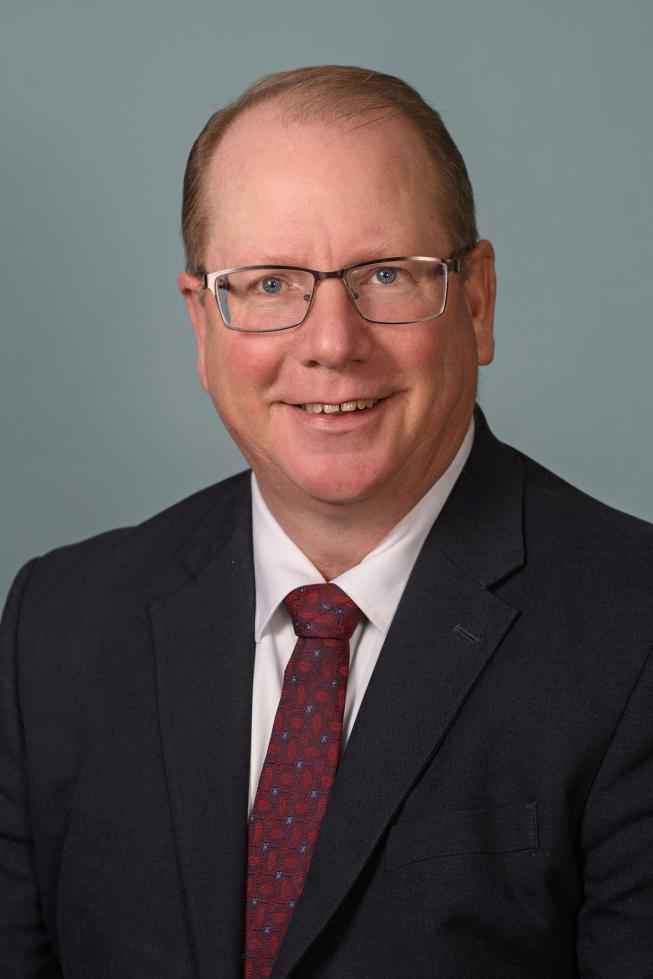
Executive Director
Paul Jarvis
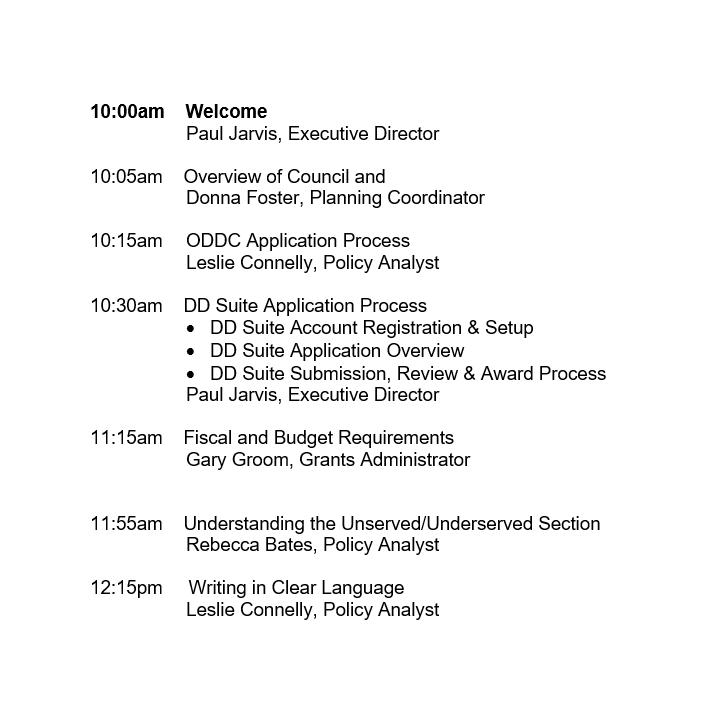
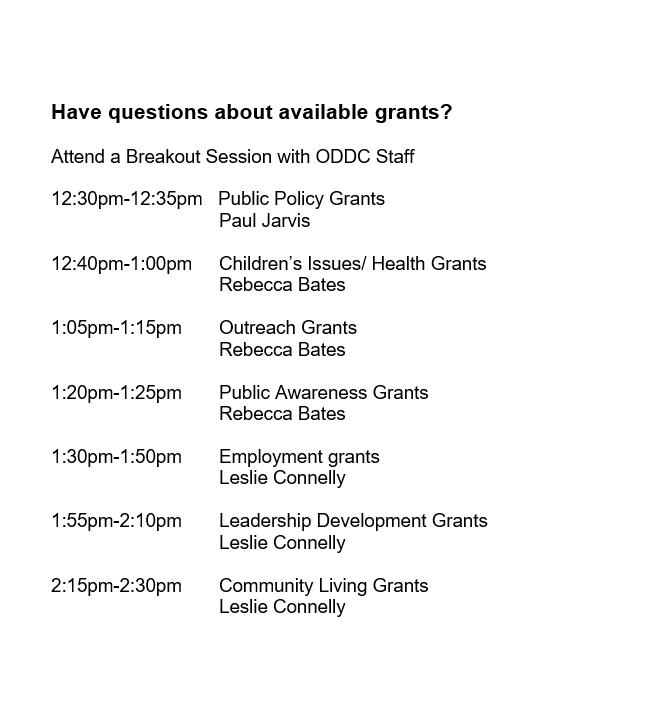
PREVIEW OF THE DAY
OHIO DD COUNCIL
• Authorized by federal law: The Developmental Disabilities Assistance and Bill of Rights Act (DD Act).
• 56 Councils, one in every state and territory
The DD Act gives Councils money to support:
OHIO DD COUNCIL
Advocacy
Capacity Building
Systems Change
WHO IS ON COUNCIL
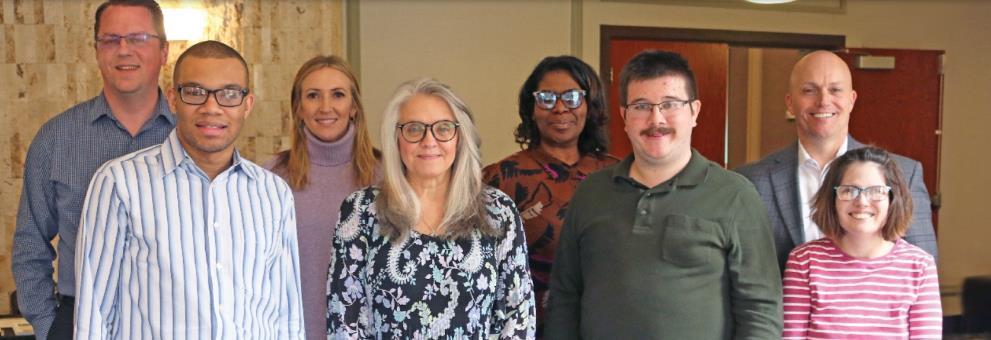
The Governor appoints at least 30 members. Members are:
• people with developmental disabilities,
• parents, guardians and family members,
• representatives from state agencies, and
• nonprofit organizations and local agencies providing services to people with DD.
HOW COUNCIL OPERATES
Carrying out the ODDC Mission
The Council develops and follows a 5year state plan, conducts advocacy and systems change activities, and funds projects
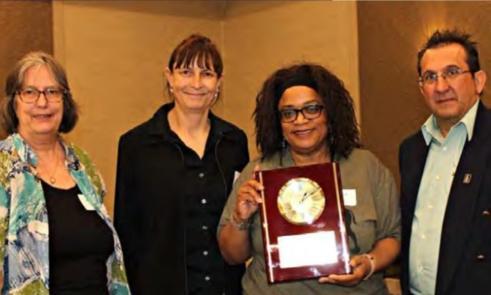
The Council’s 5-year State Plan:
• Is the ‘big picture’
FIVE YEAR STATE PLAN
• Provides guidance to the Council about how it spends its resources
• Identifies barriers
• Includes long term goals
• Includes measurable outcomes
• Current 5-year state plan
Current Grants
HOW COUNCIL OPERATES
• more than 29 projects (grants) that help improve services for people with disabilities
• help Council reach goals set in the 5-year state plan
• a list of all the projects is on the ODDC website.
•
• There are 16 new grants and 2 continuation grants
• Most grants are for 5 years
APPLYING FOR AN ODDC GRANT
• Funding is for EACH year
• Continuation depends upon:
Council receiving the Federal funds
•
Successful completion of the previous year
Applications must be submitted on DD Suite by 11:59 pm on Friday, July 10, 2026
APPLYING FOR AN ODDC GRANT
No applications will be accepted after this time. Applications will not be considered if not complete. You must fill out each section of the application.
Grant Review Panels will meet August 13-14, 2026 •
APPLYING FOR AN ODDC GRANT
Screening of Applications
Any determination made to eliminate an application from further consideration as a result of the screening process shall be made by the Executive Director.
The applicant will be notified if their application was removed from consideration and the justification for removal by August 21st .
Next Steps in Process
APPLYING FOR AN ODDC GRANT
Notification by August 21st
Phone call, letter or e-mail
All decisions made by the Grant Review Panel are final.
APPLYING FOR AN ODDC GRANT
Conditions Letter
If you are awarded the grant, you will receive a Conditions Letter. You must meet the Conditions in order to receive the grant Grants will begin on October 1, 2026
APPLYING FOR AN ODDC GRANT
Fill out all parts of the application on DD Suite which includes: Project Outline
• Executive Summary
• Qualifications
• Detailed Narrative
• Outreach
• Inclusion
Work Plan
Budget and Budget Justification
Write to the Project Description (or Plan Language) for the grant
APPLYING FOR AN ODDC GRANT
The Supporting Docs tab allows users to provide additional notes and to attach documents to their application.
Applications for competitive grants require:
• Signed Assurances
• Three (3) Letters of Recommendation
• Resume(s) of Project Director(s)
• Names and Address of Board Members (if applicable)
• Proof of non-profit status (if applicable)
Note: Users can attach each of these documents separately.
APPLYING FOR AN ODDC GRANT
DD Suite will not allow a project to be submitted if the application does not include, at a minimum, the following:
Name of Project Director, Financial Officer, and Organization Director (People tab)
Answers to all Outline Question (Outline tab)
At least one objective and one activity (Objective/Activity/Performance measure tabs) .
Project Description (Plan Language) includes:
Goal
Objective:
APPLYING FOR AN ODDC GRANT
Background, Rationale, and Scope of Project
Key Activities
Outputs
Short term outcomes
Long term outcomes
Funding Level
Seeking More than One Grant
• Council encourages funds to be distributed to a large number of grantees
APPLYING FOR AN ODDC GRANT
• Entities can have more than one grant.
• If the sum total of all grants exceeds $100,000 a vote of approval from ¾ of Council is required.
DD SUITE
FISCAL AND BUDGET REQUIREMENTS
Notice of Funds Available
Grant announcement
• Deadlines
• Project details
• Application/Submission information
• Requirements
• Staff contact information
ELIGIBILITY
Applicants
• No restrictions on entity type
Disqualifications
• Indebted to U.S. Government
• “Unresolved” findings for recovery
• Federal suspension/debarment
Requirements
System for Award Management
SAM.GOV
• Registration must be active
• Unique Entity Identifier (UEI)
• Replaced DUNS number in 2022
ATTACHMENTS
Requirements
• Budget Justification Form
• 3 Letters of recommendation
• Project director resume
• Board member names
• Proof of non-profit status
• Indirect Cost Rate Agreement
ATTACHMENTS Requirements
• Assurances
• Standard Affirmation and Disclosure Form
• Federal Funding Accountability and Transparency Act Certification
FUNDING RESTRICTIONS Requirements
• Prohibition on certain telecommunications and video surveillance services or equipment
• The Huawei Technologies / ZTE ban
• Special provisions for awards to forprofit organizations as recipients
• Prohibition against profit
Financial Plan
BUDGET Requirements
• Includes all estimated costs
• Includes all anticipated funding sources
Regulations
Uniform Administrative Requirements, Cost Principles, and Audit Requirements for Federal Awards
BUDGET
• 2 CFR Part 200
• Uniform Guidance
• https://www.ecfr.gov/current/title2/subtitle-A/chapter-II/part200?toc=1
Cost Principles
4 Tests of Allowability
BUDGET
• Necessary and reasonable
• Allocable
• Consistent
• Conform
Cost Principles
Allowable Costs
BUDGET
• Salaries and wages
• Contracted services
• Supplies
• Rentals
• Travel
Cost Principles
Unallowable Costs
BUDGET
• Alcoholic beverages
• Entertainment
• Fines and penalties
• Fundraising
• Gift cards
• Lobbying
Direct Costs
Easily identifiable to project
BUDGET
• Salaries and wages
• Contracted services
• Supplies
• Rentals
• Travel
Indirect Costs
Not easily identifiable to project
BUDGET
• Management salaries
• Administrative staff salaries
• Human resources
• Accounting
• Legal
Indirect Costs
Allowable costs
BUDGET
• Federally negotiated indirect cost rate agreement
• 15% de minimis rate
Indirect Costs
Things to remember
BUDGET
• Must be consistent
• If included in federally negotiated indirect cost rate agreement or de minimis rate, must not also be charged as direct cost
Match
Applicant’s share of costs
BUDGET
• Cost principles
• 4 Tests of allowability
• Necessary and reasonable
• Allocable
• Consistent
• Conform
Match
General - 25% of total project costs
BUDGET
Example: $75,000 grant award / 3 = $25,000 match requirement
$75,000 grant award + 25,000 match requirement
$100,000 total project costs
Match
Designated Poverty Areas - 10% of total project costs
BUDGET
Example: $75,000 grant award / 9 = $8,334 match requirement
$75,000 grant award + 8,334 match requirement
$83,334 total project costs
Match
Designated Poverty Areas
BUDGET
Match
Types of Match
BUDGET
• Cash
• Cash spent for project costs
• In-kind
• Fair market value of non-cash goods/services contributed to a project
Match
In-kind contributions
BUDGET
• Services
• Supplies
• Goods
• Volunteer time
• Must retain fair market value documentation
BUDGET
Wrap up
Match
• Cash or In-kind
• Volunteers
• Cannot be paid with federal funds
• Cannot be paid with funds used to match other federal projects
Justification
Budget Justification Form
BUDGET
• Sample & Instructions tab
• Explanation of all costs
• How were costs calculated?
• Must be attached to application
OUTREACH
Rebecca Bates
The Law and Our Commitment
• The Federal DD Act requires the Council to focus on people who are unserved and underserved.
OUTREACH
• We are legally committed to making sure no one is left behind.
What is our Goal?
▪ Create fairness (equity) and inclusion in everything we do.
▪ Reach the "unserved" and "underserved" populations.
OUTREACH
It is you, the grantee’s responsibility to make sure these groups can participate in your project
OUTREACH
The Importance of Community Voices
A Complete Picture: We need to hear from everyone to truly understand how to improve the system.
Valuing Lived Experience: The people who haven't been reached yet are the experts on what is missing.
Service for Everyone: This funding is a public resource; we want to ensure it reaches every corner of our community.
OUTREACH
Defining “Unserved and Underserved”
• Individuals from racial and ethnic minority background
• Racial and ethnic minority groups.
• People with limited English.
• People in rural or isolated urban areas.
• People who need assistive technology to communicate.
• People who are "isolated" from the mainstream community.
Types of Grant Projects
• Outreach Grants: These have a specific target group already chosen by the Council.
OUTREACH
• General Grants: You must declare exactly which population you will target.
• Requirement: All grants must show a clear plan for their chosen group
OUTREACH
Section 4: Required Questions
• Who is your group and Where are they?
• What are their Needs and Barriers?
• What Proactive steps will you take?
• Who are your Community Partners?
• How will you Measure and Sustain this work?
• How will you handle Unforeseen Barriers?
CLEAR LANGUAGE
• Council is using the term Clear Language to describe how it is making its materials easy to read and understand.
CLEAR LANGUAGE
• Other organizations, including the federal government, are starting to use clear language the purpose is to make information easier to read and understand.
• Makes sure all readers understand information quickly and correctly.
• Is not over simplified and does not talkdown to readers, and
CLEAR LANGUAGE
• Readers concentrate on what a message says, instead of trying to understand complicated words and writing.
CLEAR LANGUAGE
• Keep all words and body copy easy to read and understand.
• Write with accurate, simple words. Choose words you think your audiences understand. Eliminate acronyms and jargon unless you define them. Eliminate extra words.
• Use person first language
• Write in conversational style, as if you are talking with a person. Use pronouns.
• Write in active voice.
• Use complete, short sentences and paragraphs. Keep paragraphs to one main idea.
• Create clear headings and subheads to guide your readers through a document. Arrange your paragraphs in a logical order.
• Don’t use long words when a shorter word will do.
• Don’t write more than you need.
CLEAR LANGUAGE
For more information the ODDC has developed a Clear Language Handbook. It is available on Council’s website at: https://ddc.ohio.go v/pub-how-towrite-clearlanguage
Where to find ODDC
Mail location:
1810 Sullivant Ave., Columbus, OH 43222
Telephone: 614-466-5205
Toll Free: 800-766-7426
FAX: 614-466-0298
OHIO DD COUNCIL
Council’s social media sites can be found at:
• Website: http://ddc.ohio.gov
• Facebook: https://www.facebook.com/ohioddcouncil/
• Twitter: https://twitter.com/ohioddcouncil
• YouTube: https://www.youtube.com/channel/UCUFf5aQEfdHwfypf 6WTloAQ
OHIO DD COUNCIL Questions??
PUBLIC POLICY COMMITTEE GRANTS
PUBLIC POLICY PROJECTS
Statewide Legislative Advocacy Training and Engagement (SLATE)
Federal Advocacy Training and Engagement (FATE) (2028)
PUBLIC POLICY PROJECTS
March 24, 2027
CHILDREN AND HEALTH COMMITTEE GRANTS
ALL IN Play
CHILDREN AND HEALTH PROJECTS
Confidence in Action
RightFit Resources
WHAT WE’RE LOOKING FOR
Goal: Projects that change the system.
Our Pillars:
The Bottom Line: We want projects that last long after the grant money ends.
Innovation: New ways to solve old problems.
Inclusion: Making sure everyone is invited.
Impact: Real results that can grow across the state.
•Focus: Inclusive K–12 Sports.
•The Mission: Moving students from the sidelines to the starting lineup.
ALL IN PLAY
•Who it’s for: Students, teachers, coaches, and peer "buddies.“
•The Goal: Every student, regardless of their support needs, gets to be a teammate.
Key Activities:
Create a "Playbook" (training curriculum).
ALL IN PLAYTHE WORK
Train-the-Trainer sessions for school staff.
Build "Buddy Systems" for student peers.
Share what works with school districts statewide.
Total Investment: $76,000 ($57,000 Federal / $19,000 Match).
• Focus: Self-Defense & Personal Safety.
• The Mission: Building strength, safety, and independence.
CONFIDENCE IN ACTION
• Why it matters: Giving people the tools to feel safe and confident in their community.
• The Goal: A self-defense model that works for people with all types of disabilities.
CONFIDENCE IN ACTION: THE WORK
Key Activities:
o Research and design a custom safety curriculum.
o Train instructors who understand disability needs.
o Run "Pilot" classes to see what works best.
o Create a plan to grow the program across Ohio.
Total Investment: $70,666.67 ($53,000 Federal / $17,666.67 Match).
• Focus: Making Medical Equipment (DME) Easy to Get.
• The Mission: Cutting through the red tape of wheelchairs, walkers, and tools.
RIGHTFIT RESOURCES
• Why it matters: The process is confusing; we want to make it simple.
• The Goal: A "Plain Language" guide that tells families exactly what to do.
RIGHTFIT RESOURCES: THE WORK
Key Activities:
o Create a simple, step-by-step fact sheet.
o Translate the guide into multiple languages.
o Test it with families and SSAs to make sure it’s clear.
o Get the guide out to the public (digital and print).
Total Investment: $36,666.67 ($27,500 Federal / $9,166.67 Match).
Rebecca Bates
OUTREACH COMMITTEE GRANTS
OHIO COMPASS: GUIDANCE AT LIFE’S CROSSROADS
Supporting Youth & Young Adults (Ages 14–30).
o Goal: Smooth transitions from school to adult life.
o Focus: Reaching those who are currently "off the radar."
THE "TRANSITION GAP" (WHY THIS MATTERS)
School supports often "fall off a cliff" at graduation
Families in underserved areas face the biggest hurdles.
Our goal is to build a permanent bridge to jobs, housing, and community life.
MUST HAVES
Reach: Must cover multiple regions (Rural + Underserved).
Age: Must serve the full 14–30 range (Partnerships allowed!).
Diversity: Must include a Diversity Assurance Plan.
Partners: Must collaborate with County Boards of DD.
1. Finding People: Outreach to disconnected youth.
KEY ACTIVITIES (WHAT YOU’LL DO)
2. Getting Ready: Job training and education help.
3. Independence: Life skills and housing prep.
4. Mentorship: Peer-to-peer leadership.
SUCCESS BY THE NUMBERS (YEAR 1)
100 new people found and connected to help. 20% increase in service access.
75% jobreadiness success rate. 80% improvement in independent living skills.
LONG-TERM VISION
Higher success rates for students after they leave school.
Equal access to services across Ohio.
Stronger, more visible pathways for youth in the future.
THE INVESTMENT & PARTNERSHIPS
• Total Investment: $172,000 ($129k Federal / $43k Match).
• Structure: One single statewide competitive grant.
• Teamwork: Formal partnerships are encouraged to cover the full age range.
HOW TO WRITE A STRONG PROPOSAL
/ Q&A
• Be Proactive: Show us a real plan to find people.
• Be Inclusive: Use culturally responsive approaches.
• Be Clear: Use plain language and measurable data.
• Questions? ---
PUBLIC AWARENESS GRANTS
COUNCIL CONNECT: SHARING THE MESSAGE
Building a More Informed and Inclusive Ohio
CLOSING THE INFORMATION GAP
The Barrier: Many families simply don't know what help exists.
The Solution: A focus on education and outreach, not just "branding."
The Voice: Highlighting lived experiences and community success.
Social Media & Newsletters: Sharing stories, policy updates, and grant news.
Accessible Content: Creating videos and guides for underserved communities.
SPREADING THE WORD
Strategic Partnerships: Working with local agencies and advocacy groups.
Media Engagement: Partnering with news and digital outlets to amplify the message.
SUCCESS & OUTCOMES
Short-Term Goals:
•Higher engagement on social media and email.
•Finding people who have never been connected to the Council before.
Long-Term Vision:
•More inclusive attitudes across all Ohio communities.
•Permanent partnerships that keep information flowing.
•Better representation in leadership and advocacy.
INVESTMENT FOR COUNCIL CONNECT
•Federal Funds: $89,000.00
•Match Required: $29,666.67
•Total Investment: $118,666.67
•Method: Competitive Grant Process.
Questions?
EMPLOYMENT GRANTS
Leslie Connelly
MONEY AT WORK
The Ohio Developmental Disabilities Council (ODDC) will fund a project to increase and improve people with disabilities knowledge and use of the state and federal benefits available to them.
Financial literacy: Many people with disabilities have never managed a budget, opened a savings or checking account, used a Social Security Work Incentive, or built assets.
Resources to be invested: 2027- 2031
*Federal $ 35,000.00
Matching Funds: $ 11,666.67 $ 46,666.67
Understand Benefits: It is important for individuals to receive a financial education to improve their economic stability and support economic advancement while using state and federal benefits.
Remember: The state has invested in Ohio’s Disability Benefits 101 (www.oh.db101.org ) a comprehensive website that empowers people with disabilities to make informed decisions about making competitive integrated employment a part of their lives.
UNTAPPED POTENTIAL
Business associations in Ohio promote the growth and prosperity of a specific community, region, sector or function of business, by supporting businesses, attracting new investment, and creating jobs. They offer various services like networking opportunities, advocacy, and resources to help businesses grow and thrive within the community. They act as a voice for the region or community and work to improve the local economy. These can include Chambers of Commerce, economic development organizations, safety councils, manufacturing associations, Ohio Means Jobs Centers etc.
Resources to be invested: 2027- 2031
*Federal $ 50,000.00
Matching Funds: $ 16,666.66
$ 66,666.66
Business associations could be a valuable resource in reaching employers who are not aware of this untapped resource. The Ohio Developmental Disabilities Council (ODDC) will fund a project to reach business associations across Ohio to inform them of the benefits of hiring people with disabilities.
Key activities:
• Development of methods to reach business associations across Ohio to inform them of the benefits of hiring people with disabilities.
• Develop list of relevant Ohio organizations.
REGIONAL SELFEMPLOYMENT TEAMS
The Ohio Developmental Disabilities Council (ODDC) will support the efforts of the Ohio Department of Developmental Disabilities (DODD) by funding the development of Regional Self-Employment teams. The DODD has divided the state into regions to provide technical assistance. The same regions will be used for the Regional Self-Employment teams. These teams will be assisted by a community expert and support individuals to develop their businesses.
Key activities:
• Develop Regional Self-Employment teams in each of the DODD regions.
• Educate people with disabilities, those supporting them and other stakeholders of resources in the community.
• Support people with disabilities to progress in their self-employment.
The Plan Language includes resources to learn more about the DODD Iniatiative.
Resources to be invested: 2027- 2031
*Federal $ 65,000.00 Matching Funds: $ 21,666.67 $ 86,666.67
IMPORTANT
ODDC will support activities that build capacity and systemic change through:
• outreach,
• training,
• research,
• technical assistance,
• supporting and educating communities,
• interagency collaboration and coordination, demonstration of new approaches,
• informing policymakers and
• eliminating barriers, and
• system design and redesign.
ODDC will provide funding as outlined for each year of the project. Proposals should address, if necessary: transportation, accessibility, use of technology, replication, sustainability, if the project reaches entire state or a specific region, cross-disability, and cultural diversity.
SUPPLANTING
Key Aspects of the DD Act on Funds and Supplanting:
•Prohibition on Supplanting: Expenditure of funds that supplant state and local funds is strictly prohibited.
•Supplement Requirement: Allotments are designated to expand and enhance services, not to fill gaps left by reduced state or local funding, notes 45 CFR § 1326.21.
•Purpose of Funds: Funds must support council activities, such as advocacy, capacity building, and systemic change, as outlined in the approved state plan.
Supplement, not supplant is a federal grant requirement that prohibits using federal funds to replace (supplant) state and local funds that would otherwise be spent on the same programs or services.
This means federal money must add to or enhance existing state efforts, rather than replace funding that was previously available
WHY WILL PROJECTS BE
SCREENED FROM CONSIDERATION
DO NOT supplant:
Supplanting is a federal grant requirement that prohibits using federal funds to replace (supplant) state and local funds that would otherwise be spent on the same programs or services.
Your proposal has nothing to do with the plan language attached to the NOFA
Your proposal does not address or ignores a specific requirement of the plan language
You MUST submit these forms with your application
• Budget Justification Form
• Assurances
• FFAT
• Standard Affirmation and Disclosure Form
• 3 Letters of recommendation
• Project director resume
• Board member names
• Proof of non-profit status
• Indirect Cost Rate Agreement
Budget and financial questions:
Robin Shipp
Senior Financial Analyst (614) 644-5544 robin.shipp@dodd.ohio.gov
Gary Groom Financial Program Manager (614) 644-5541
gary.groom@dodd.ohio.gov
DD Suite questions or Issues:
Paul Jarvis Executive Director (614) 644-5545
Paul.Jarvis@dodd.ohio.gov
Program questions and all other questions until May 31: Leslie Connelly Policy Analyst (614) 644-5542 leslie.connelly@dodd.ohio.gov
After May 31 call (614) 466-5205
LEADERSHIP DEVELOPMENT COMMITTEE GRANTS
Leslie Connelly
LEADERSHIP IN ACTION
By passing Ohio H.B. 33, Ohio will increase the number of people with developmental disabilities serving as members of county boards of DD. In order to ensure members of county boards of DD have an understanding of the DD system and can meaningfully participate, the ODDC funded People First of Ohio to complete an assessment of the needs of current and past members (when available) that participated on executive boards, including County Boards of DD.
Key activities:
• Develop and implement a curriculum and/or tools for people with disabilities to increase their knowledge and meaningful participation on Executive Boards.
The Ohio Developmental Disabilities Council (ODDC) will fund a project to increase and improve the:
• knowledge and meaningful participation on Executive boards.
• opportunities for people with DD to serve on Executive boards
• the availability of training for those on Executive Boards.
• support applying for Executive Boards.
• People with disabilities will be involved with the development and implementation of curriculum and/or tools for people with disabilities to increase their knowledge and meaningful participation on Executive Boards.
Resources to be invested:
2027- 2031
*Federal $ 50,000.00 Matching Funds: $ 16,666.66 $ 66,666.66
STRENGTHENING ADVOCACY IN OHIO
. The DD Act, as reauthorized, includes a requirement that every Developmental Disabilities Council address these three areas:
• Each proposal should clearly state which area(s) of the DD Act requirements the proposal is addressing.
PROPOSALS THAT DO NOT ADDRESS ONE
OF THE
AREAS WILL NOT BE CONSIDERED FOR FUNDING.
(I) establish or strengthen a program for the direct funding of a State self-advocacy organization led by individuals with developmental disabilities; (II) support opportunities for individuals with developmental disabilities who are considered leaders to provide leadership training to individuals with developmental disabilities who may become leaders; and (III)support and expand participation of individuals with developmental disabilities in cross-disability and culturally diverse leadership.
• ODDC will provide funding for $10,000-$50,000 per project each year. DO NOT ASK FOR FUNDING OVER $50,000.
• Several five-year projects may be selected for funding to ensure the 3 areas are adequately addressed Resources to be
UPWARD FOR YOUTH: UNLOCKING POTENTIAL WITH ADVOCACY, RESOURCES AND DEVELOPMENT FOR YOUTH
Currently in Ohio, there are few programs for youth with disabilities to improve or learn self-advocacy skills and opportunities for youth to advocate for themselves and others.
The Ohio Developmental Disabilities Council (ODDC) will fund a project to increase and improve:
• support youth with DD to learn self-advocacy and leadership skills and put these skills into practice.
• opportunities for youth with DD to use their advocacy skills.
Resources to be invested: 2027- 2031
*Federal $50,000.00
Matching Funds: $16,666.66 $66,666.66
• self-advocacy and advocacy skills of youth with DD for them to advocate for themselves and others.
• self-advocacy skills of youth with DD for them to advocate for themselves at their ISP and IEP meetings.
• knowledge youth have about the legislative process and how the government works.
IMPORTANT
ODDC will support activities that build capacity and systemic change through:
• outreach,
• training,
• research,
• technical assistance,
• supporting and educating communities,
• interagency collaboration and coordination, demonstration of new approaches,
• informing policymakers and
• eliminating barriers, and
• system design and redesign.
ODDC will provide funding as outlined for each year of the project. Proposals should address, if necessary: transportation, accessibility, use of technology, replication, sustainability, if the project reaches entire state or a specific region, cross-disability, and cultural diversity.
SUPPLANTING
Key Aspects of the DD Act on Funds and Supplanting:
•Prohibition on Supplanting: Expenditure of funds that supplant state and local funds is strictly prohibited.
•Supplement Requirement: Allotments are designated to expand and enhance services, not to fill gaps left by reduced state or local funding, notes 45 CFR § 1326.21.
•Purpose of Funds: Funds must support council activities, such as advocacy, capacity building, and systemic change, as outlined in the approved state plan.
Supplement, not supplant is a federal grant requirement that prohibits using federal funds to replace (supplant) state and local funds that would otherwise be spent on the same programs or services.
This means federal money must add to or enhance existing state efforts, rather than replace funding that was previously available
WHY WILL PROJECTS BE
SCREENED FROM CONSIDERATION
DO NOT supplant:
Supplanting is a federal grant requirement that prohibits using federal funds to replace (supplant) state and local funds that would otherwise be spent on the same programs or services.
Your proposal has nothing to do with the plan language attached to the NOFA
Your proposal does not address or ignores a specific requirement of the plan language
You MUST submit these forms with your application
• Budget Justification Form
• Assurances
• FFAT
• Standard Affirmation and Disclosure Form
• 3 Letters of recommendation
• Project director resume
• Board member names
• Proof of non-profit status
• Indirect Cost Rate Agreement
Budget and financial questions:
Robin Shipp
Senior Financial Analyst (614) 644-5544 robin.shipp@dodd.ohio.gov
Gary Groom Financial Program Manager (614) 644-5541
gary.groom@dodd.ohio.gov
DD Suite questions or Issues:
Paul Jarvis Executive Director (614) 644-5545
Paul.Jarvis@dodd.ohio.gov
Program questions and all other questions until May 31: Leslie Connelly Policy Analyst (614) 644-5542 leslie.connelly@dodd.ohio.gov
After May 31 call (614) 466-5205
COMMUNITY LIVING COMMITTEE GRANTS
DSP WORKFORCE EXPANSION
IN EXCELLENCE
This project is intended to: increase the number of DSPs in Ohio by creating new, and expand existing, pipelines into the field of I/DD. develop approaches to increase and improve the training DSPs receive. determine methods to increase he retention of DSPs.
REMEMBER: DO NOT SUPPLANT
It is a federal grant requirement that prohibits using federal funds to replace (supplant) state and local funds that would otherwise be spent on the same programs or services.
Resources to be invested: 2027- 2031
*Federal $ 50,000.00
Matching Funds: $ 16,666.66 $ 66,666.66
EMPOWERING INDEPENDENT LIVING
Many people with disabilities desire to live independently yet have not lived independently from their family and are not aware of all the steps to make this a reality. Few resources are available to these individuals, and they do not have the experience and knowledge of living on their own. For example, often they have not had to manage a budget, open a savings or checking account, or take care of a home. Individuals may need support to live healthy lives in the community such as meeting people, working with a DSP, staying safe, exercising, cooking healthy meals and other life skills.
The Ohio Developmental Disabilities Council (ODDC) will fund a project to improve the support and resources for those living away from family for the first time.
Resources to be invested: 2027- 2031 *Federal $ 50,000.00 Matching Funds: $ 16,666.66 $ 66,666.66
EXPANSION OF TRANSPORTATION
The Ohio Developmental Disabilities Council (ODDC) will fund two (2) projects to increase and improve transportation options for people with disabilities, especially in rural areas. Maximum funding for each single project is $50,000 per year.
REMEMBER: DO NOT SUPPLANT
It is a federal grant requirement that prohibits using federal funds to replace (supplant) state and local funds that would otherwise be spent on the same programs or services.
ODDC will provide funding for $50,000 per project each year. DO NOT ASK FOR FUNDING OVER $50,000. Resources to be Invested: 2027- 2031
*Federal $ 100,000.00 (for all projects)
Matching Funds: $ 33,333.33 $ 133,333.33
PLANNING FOR A SUCCESSFUL FUTURE
Futureplanningforpeoplewithdevelopmental disabilitiesinvolvescreatingaguideforleadingthelife theychooseasindependentlyaspossible,especially whenaparentorcaregiverisnolongerabletoprovide support.Thisprocessincludesfinancialplanning, benefitsplanning,andexploringoptionsforhousing, employment,anddailyactivities.Italsoinvolves buildingasupportnetworkoffamily,friends,and professionalstoassistwithdecision-makingandother needs.
TheOhioDevelopmentalDisabilitiesCouncil(ODDC) willfundaprojecttoassistpeoplewithdisabilitiesand theirfamilymembersintheFuturePlanningprocessby increasingtheresourcesavailabletothem.
A key finding from this survey indicated many families have not begun planning for their child’s future or needed additional resources on topics including:
• Benefits including Medicaid, SSI, and SSDI,
• DD System
• Special Needs Trust,
• STABLE Accounts,
• Different types of guardianships,
• Supported Decision-Making,
• Finding professionals to help me,
• Simplifying the guardianship process,
• Aging caregiving,
• Estate planning.
66,666.66
IMPORTANT
ODDC will support activities that build capacity and systemic change through:
• outreach,
• training,
• research,
• technical assistance,
• supporting and educating communities,
• interagency collaboration and coordination, demonstration of new approaches,
• informing policymakers and
• eliminating barriers, and
• system design and redesign.
ODDC will provide funding as outlined for each year of the project. Proposals should address, if necessary: transportation, accessibility, use of technology, replication, sustainability, if the project reaches entire state or a specific region, cross-disability, and cultural diversity.
SUPPLANTING
Key Aspects of the DD Act on Funds and Supplanting:
•Prohibition on Supplanting: Expenditure of funds that supplant state and local funds is strictly prohibited.
•Supplement Requirement: Allotments are designated to expand and enhance services, not to fill gaps left by reduced state or local funding, notes 45 CFR § 1326.21.
•Purpose of Funds: Funds must support council activities, such as advocacy, capacity building, and systemic change, as outlined in the approved state plan.
Supplement, not supplant is a federal grant requirement that prohibits using federal funds to replace (supplant) state and local funds that would otherwise be spent on the same programs or services.
This means federal money must add to or enhance existing state efforts, rather than replace funding that was previously available
WHY WILL PROJECTS BE
SCREENED FROM CONSIDERATION
DO NOT supplant:
Supplanting is a federal grant requirement that prohibits using federal funds to replace (supplant) state and local funds that would otherwise be spent on the same programs or services.
Your proposal has nothing to do with the plan language attached to the NOFA
Your proposal does not address or ignores a specific requirement of the plan language
You MUST submit these forms with your application
• Budget Justification Form
• Assurances
• FFAT
• Standard Affirmation and Disclosure Form
• 3 Letters of recommendation
• Project director resume
• Board member names
• Proof of non-profit status
• Indirect Cost Rate Agreement
Budget and financial questions:
Robin Shipp
Senior Financial Analyst (614) 644-5544 robin.shipp@dodd.ohio.gov
Gary Groom Financial Program Manager (614) 644-5541
gary.groom@dodd.ohio.gov
DD Suite questions or Issues:
Paul Jarvis Executive Director (614) 644-5545
Paul.Jarvis@dodd.ohio.gov
Program questions and all other questions until May 31: Leslie Connelly Policy Analyst (614) 644-5542 leslie.connelly@dodd.ohio.gov
After May 31 call (614) 466-5205