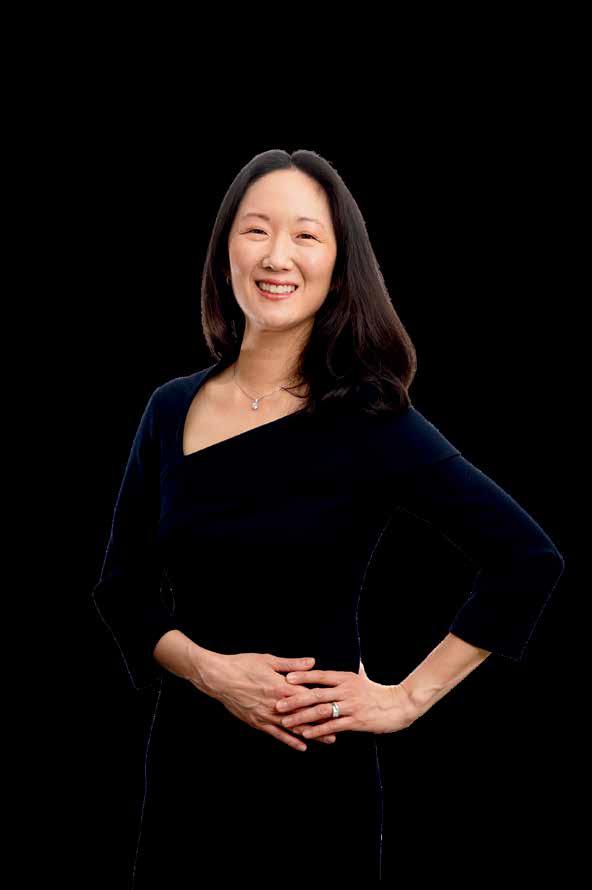
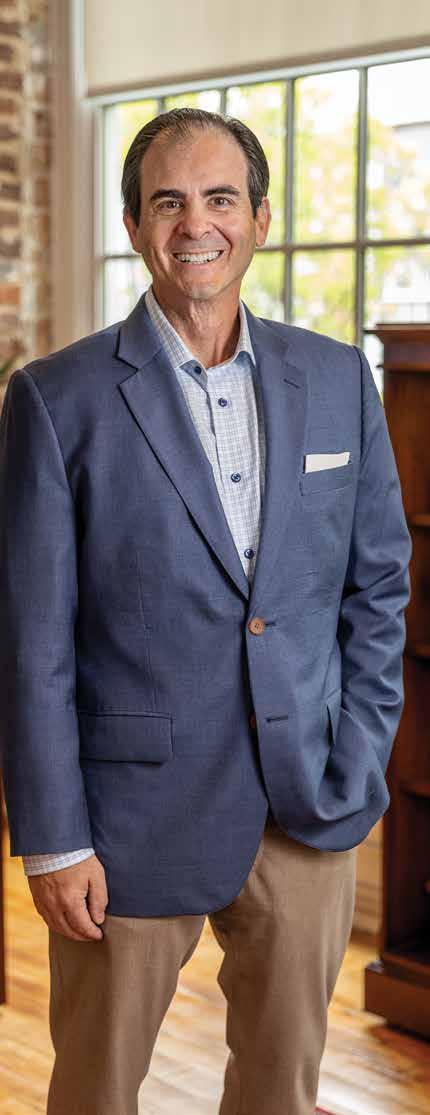
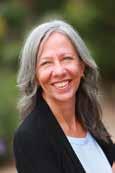
DR. CINDY WU DOUBLE BOARD-CERTIFIED PLASTIC SURGEON
WHERE PRECISION MEETS BEAUTY
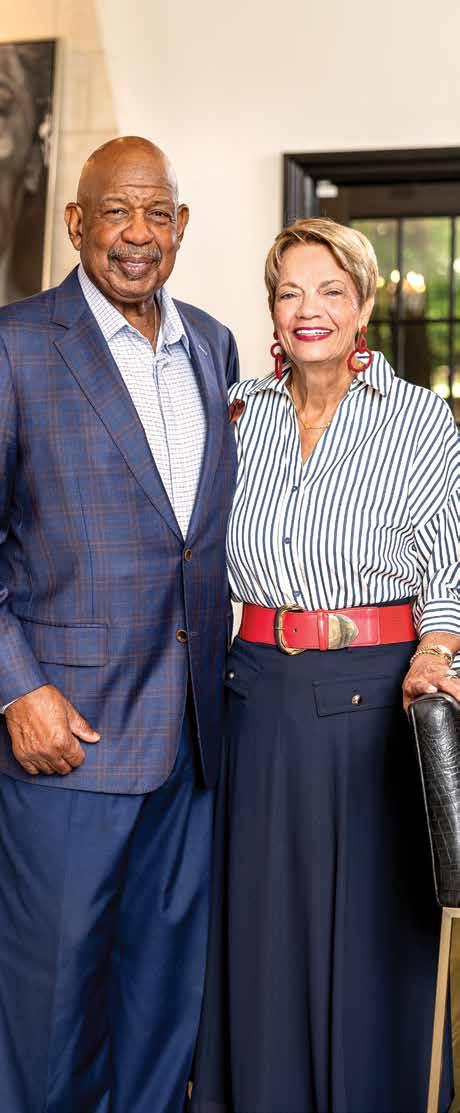
Together, Dr. Edward Gronet, a board-certified plastic surgeon and Dr. Cindy Wu, a double board-certified plastic surgeon, offer advanced plastic surgery at H/K/B Cosmetic Surgery in Greensboro. Alongside them, experienced Med Spa providers deliver a range of advanced, nonsurgical treatments. Under one trusted name, the practice provides refined treatments that restore balance, enhance natural beauty, and prioritize subtle, polished outcomes.
Robin Jenkins, RN Nurse Injector & Laser Specialist
August 2026
FEATURES
41 Day at the Beach Poem by Terri Kirby Erickson
42 Dear . . .
Clyde Edgerton
Daniel Wallace
Joseph Bathanti
Jill McCorkle
Jaki Shelton Green
Michael Parker
Shannon Ravenel
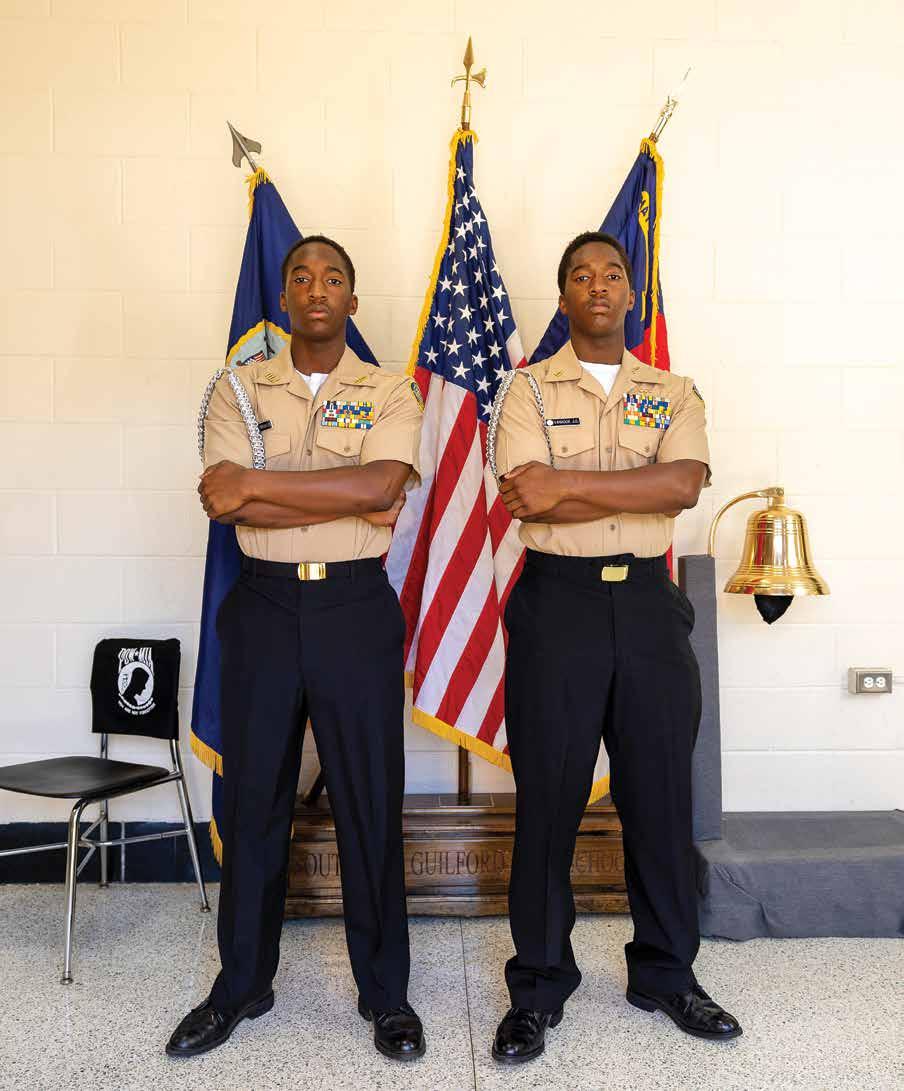
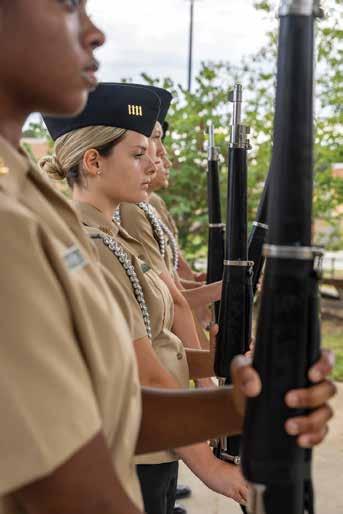
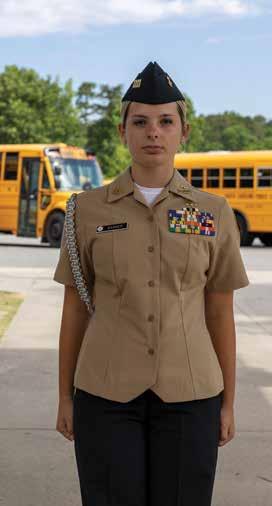
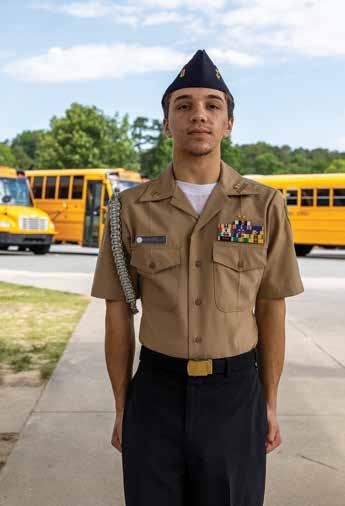
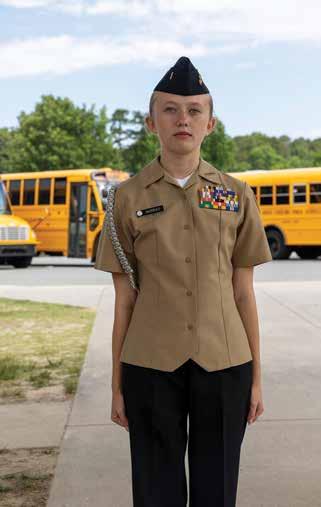
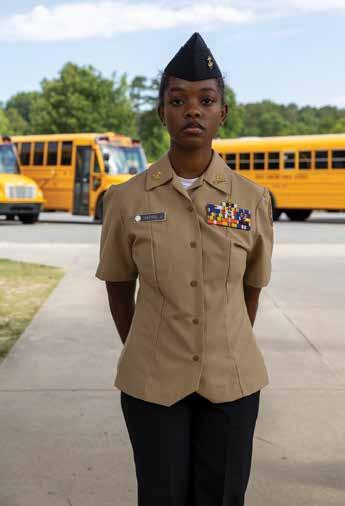
56 Class Act Cadets
Southeast Guilford High School’s NJROTC trains to the top By Billy Ingram
62 Playing to Their Strengths
A home-run reno for two former athletic stars By Cynthia Adams
71 August Almanac By Ashley Walshe
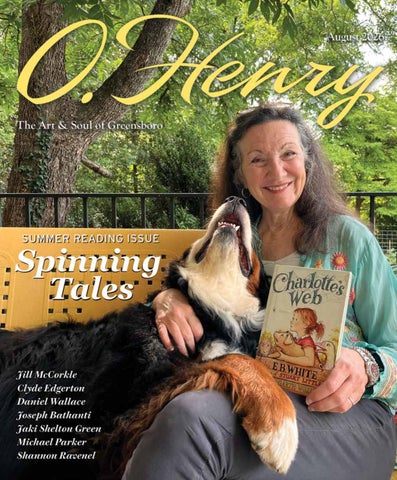
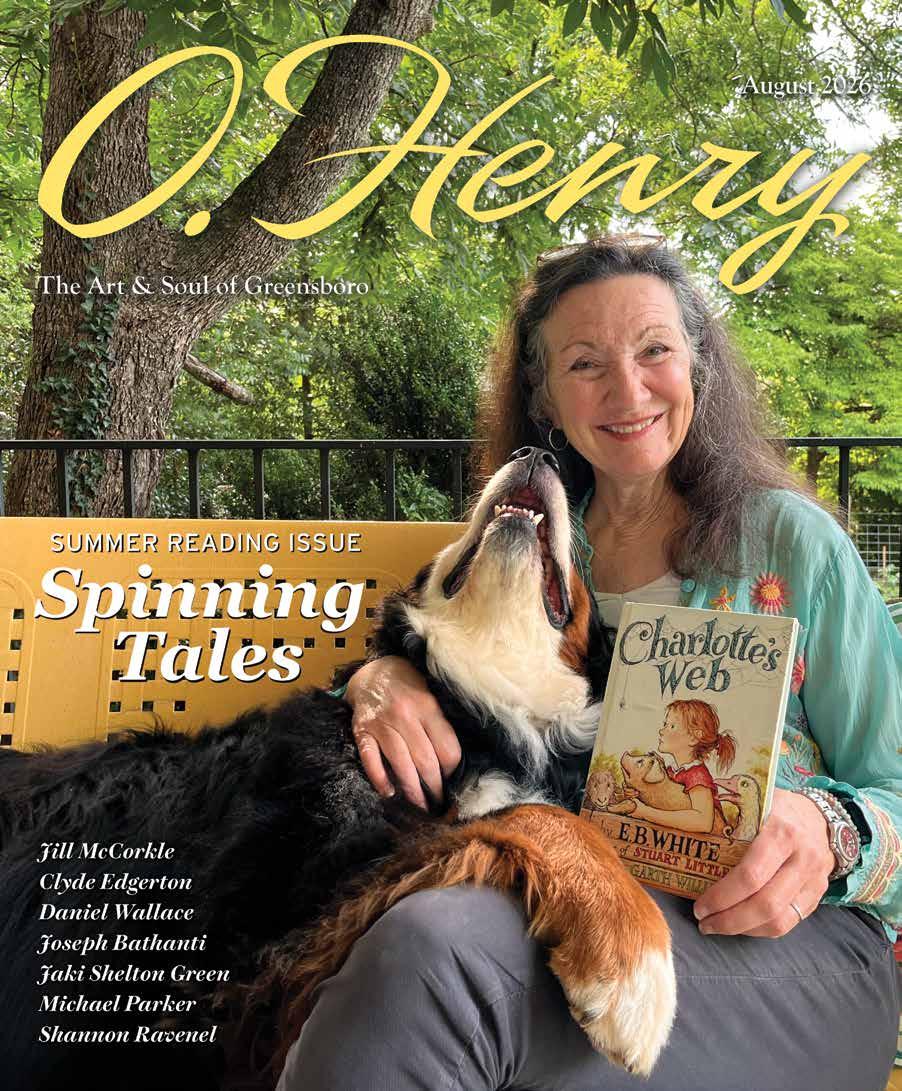
Cover photograph by Tom Rankin
Featuring Jill McCorkle with Lena
Photograph this page by Amy Freeman
DEPARTMENTS
9 Chaos Theory By Cassie Bustamante
11 Simple Life By Jim Dodson
14 Sazerac
19 Tea Leaf Astrologer By Zora Stellanova
21 Life’s Funny By Maria Johnson
24 Omnivorous Reader By Anne Blythe
26 State of Mind By Tommy Tomlinson
28 On the Ball By Ron Green Jr.
33 Home Grown By Cynthia Adams
35 Birdwatch By Susan Campbell
37 Wandering Billy By Billy Ingram
86 Outings
92 GreenScene
96 O.Henry Ending By David Spagnola
Volume 16, No. 8
“I have a fancy that every city has a voice.” www.ohenrymag.com
PUBLISHER
David Woronoff david@thepilot.com
Andie Rose, Creative Director andiesouthernpines@gmail.com
Cassie Bustamante, Editor cassie@ohenrymag.com
Joi Floyd, Assistant Editor joi@ohenrymag.com
Jim Dodson, Editor at Large jwdauthor@gmail.com
Keith Borshak, Senior Designer
Miranda Glyder, Senior Designer
CONTRIBUTING EDITORS
Cynthia Adams, David Claude Bailey, Maria Johnson
CONTRIBUTING PHOTOGRAPHERS
Betsy Blake, Lynn Donovan, Amy Freeman, Tom Rankin, Bert VanderVeen, Mark Wagoner
CONTRIBUTORS
Harry Blair, Anne Blythe, Susan Campbell, Ron Green Jr., Ross Howell Jr., Billy Ingram, Jim Moriarty, Gerry O’Neill, Gary Palmer, Campbell Pringle, David Spagnola, Zora Stellanova, Tommy Tomlinson, Ashley Walshe, Amberly Glitz Weber
ADVERTISING SALES
Lisa Allen
336.210.6921 • lisa@ohenrymag.com
Amy Grove
336.456.0827 • amy@ohenrymag.com
Brad Beard, Graphic Designer
Jennifer Bunting, Advertising Coordinator ohenrymag@ohenrymag.com
Three-time Academy Award nominee and star of “Wicked,” she captivates audiences while serving as a fearless voice for women and people of color and setting new standards for diversity across the arts.
october 21, 2026
KEN BURNS
Recipient of 17 Emmy Awards and two Grammy Awards, he has directed and produced some of the most acclaimed historical documentaries ever made, including “The Civil War,” “Baseball,” “The Vietnam War” and, most recently, “The American Revolution.”
december 3, 2026
MICHAEL SCHUR
Award-winning television writer, producer, director and actor who was a writer and executive producer for “The Office” and created or co-created such shows as “Parks and Recreation,” “The Good Place” and more. Presented in partnership with the Program for Leadership and Character.
february 25, 2027
JOSÉ ANDRÉS
A renowned chef, Emmy Award-winning television personality and founder of World Central Kitchen, an organization that is often first on the frontlines, providing meals in response to humanitarian, climate and community crises.
april 20, 2027
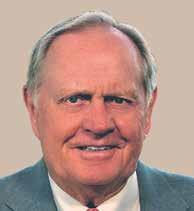
JACK NICKLAUS
Named one of the 10 greatest athletes of the 20th century by ESPN, he boasts 120 professional tournament victories, including a record 18 major-championship titles. In addition, he has designed close to 325 golf courses and is a tireless philanthropist, particularly in the area of children’s health.
Season subscriptions on sale now. Single tickets on sale August 1. facetoface.wfu.edu
CHILL AT THE MILL
Casual and Elevated Dining. Tap Room. Speakeasy. Juice & Smoothies. Coffee bar. Shops. Services. Events. Art Galleries. History exhibits.
By Cassie Bustama Nte
Time on Our Hands
From dimples to wrinkles, it’s the best gift of all
Earlier this year, we jumped on the social media trend of sharing baby and childhood photos of our team, each with a unique cutline. Mine? “This is who overthinks every comma.” (Never has a truer word been uttered.) In the photo, 2-yearold me is sporting a pink gingham dress with smocking, my blonde hair is in that toddler mullet that results from uneven growth, and my babysoft face screams exasperation. One of our contributors emailed me the following morning to tell me she’d looked at the photos several times. “Your little fingers and thoughtful expression in that frozen moment just slay me.” She went on to write, “That is the most touching thing — who knew those same fingers would be pounding the keys as they do?”
Her comment got me thinking about the hands of my own children. This month, I’ll turn 48 on the very same day my oldest child, if I can still call Sawyer a child, reaches our nation’s legal drinking age. When he was just a toddler, I’d stare at his dimpled hands in wonder as he clutched his apple juice cup, thinking about how the passage of time would mark itself on those little hands in a myriad of ways. The saddest of which, I knew, would be the emergence of bony knuckles and the disappearance of those adorable, squishy dimples. It would happen so slowly that I wouldn’t notice, until one day I’d just realize that they were gone. When I was a child, my mom’s hands were always soft, amazingly so since she was constantly using them — crafting, sewing, gardening, DIY-ing, cooking, cleaning or serving up dishes at a local Italian restaurant. It might have been thanks to the Crabtree & Evelyn Gardeners Hand Therapy cream that was a permanent fixture by the kitchen sink of our Western Massachusetts Colonial home. She took care of her hands, her fingernails always gleaming in some shade of rose or mauve. At 70, her hands, still meticulously manicured, continue to keep her
busy and can often be found holding a book. Debbie, my mom’s younger sister who missed being her Irish twin by just a couple weeks, had bony, vascular hands. She rode her bike everywhere, swam in her pool regularly and worked in a demanding job as a nurse, thus constantly scrubbing her hands. She’d sometimes whisk me away for a weekend of shopping in Boston, or perusing charming New England storefronts, peeking into the Norman Rockwell Museum and dining at the Red Lion Inn in the Berkshires. I remember those sturdy, ropy hands gripping the steering wheel and popping Gloria Estefan’s Into the Light into the cassette player as we careened down the Massachusetts Turnpike. I hope my hands end up like Mom’s, I thought to myself. My senior year of high school, Debbie used her hands in one final act, taking her own life.
Now, my hands more strongly resemble hers than my mother’s. For starters, I don’t use hand lotion regularly — sorry, Mom! My fingers have always been long and slender, but now the veins and tendons protrude like Debbie’s did. Her hands remain frozen in time, locked away safely in my memory. They never saw age spots or arthritic knuckles. As of now, my hands already have nine years on hers. And I sure hope they still have miles to go.
Yes, these days, my hands spend hours clacking away at my laptop. But they also lift weights so that I can carry my youngest, 8-year-old Wilder, when he’s sleepy, or schlep the many decorations down from our attic each Christmas. They leash up my dogs, 10-year-old Snowball and 4-year-old Cider, so we can go for our morning walks together. They hold my phone so I can FaceTime my daughter when she’s away at college. They sink into the perfect combination of homemade sourdough starter, flour and water plus a dash of sugar so that I can make the family bagels each weekend.
Later this month, my husband, Chris, and I will likely hit a local pub with Sawyer to celebrate his milestone birthday. As our son’s slender fingers curve around a tall, cool beverage, I’ll be picturing those same hands, once tiny and dimpled, holding his juice cup tightly. And I will try not to cry about the passage of time — because time may be a thief, but it is also a gift. OH
Cassie Bustamante is editor of O.Henry magazine.
Life in Rabbit Land Hare,
There and Everywhere
By Jim DoDsoN
Is there anything nicer than a summer evening after a surprise rain shower cools off the world?
I think not. Of course, being in the “evening of life” myself, I am perhaps not an entirely objective source on the matter.
On the other hand, Homer’s grandkids seem to agree with me. Homer is the rabbit that has made my yard his home for several years. Or, at least, that’s what I nicknamed him.
I was sitting here quietly by myself moments ago beneath Old George, our elderly maple tree at the garden’s edge, enjoying the cooler air and an evening drink, when they suddenly appeared — three young rabbits racing directly past me into the front yard, chasing, tumbling and hopping joyfully over each other like a circus troupe of acrobats entering the center ring. I watched them race around until they settled down to nibble grass in the newest section of the yard.
of attractive suburban houses. Fortunately, it still retains some of its character as an urban forest of mighty oaks and maples, and remains one of the oldest and most popular neighborhoods in the city.
Growing up in Starmount, I have a keen boyhood memory of the abundant rabbits in the yards and gardens of the neighborhood half a century ago. They clearly preceded humans in lovely Starmount Forest. And will likely outlive us all.
My mom, a dedicated gardener, liked to say that we were the “newcomers to Rabbit Land,” hence their natural “nibbling rights” in a special section of her backyard garden she set aside for them. She planted things rabbits love to eat — snapdragons, morning glories, daisies and black-eyed Susans — thereby keeping them away from her beloved peony border and roses. Decades later, I adopted a version of her strategy when I built a large woodland garden in Maine and included a huge patch of hosta plants at the back of our property, designed to keep the whitetail deer out of my flower beds. It worked like a charm.
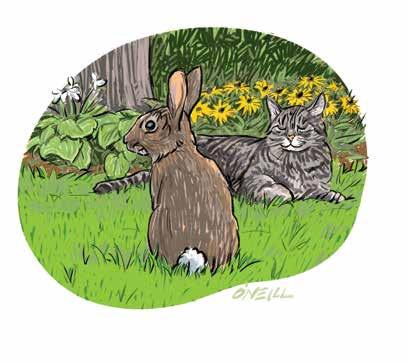
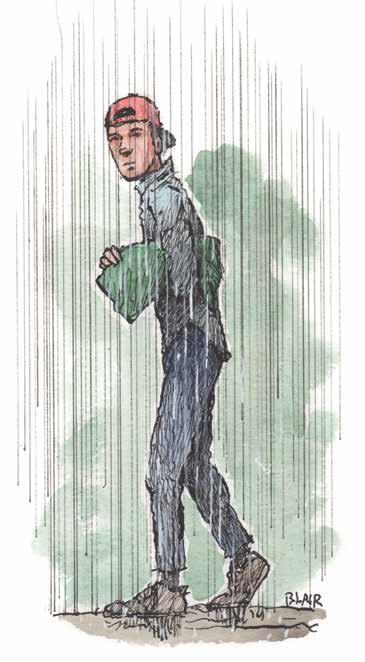
I call them Homer’s grandkids because young kits appear every spring from the burrow where they reside beneath an ancient oak stump near my east garden gate, a well-protected enclave. I have no idea if Homer was the original patriarch (or, for that matter, matriarch) of the burrow, but a decade or so ago he captured our affections by showing up every morning and evening like clockwork to hang out with our old, gray tiger cat, Boo Radley. The two would often sit together in the garden as evening fell, just watching the day’s peaceful end. Theirs was an improbable “friendship” that went on for several years until Boo passed on and Homer went, well, wherever aging eastern cottontail rabbits go. I was inspired to write a whimsical book for my own grandkids, wondering at the time if I would ever have some. My artist friend, Harry Blair, drew the illustrations.
We live in Starmount Forest, so-named because its former wealthy owner was determined to keep the old-growth hardwoods intact — until he built a country club in the middle of it and passed the forest on to other owners, whose heirs — legend holds — began turning the forest into a postwar neighborhood
Like my mom, I find something comforting and even magical about our neighborhood rabbits. They’re all around us and simply part of daily life here, a reminder that nature is never far away. On an average morning or evening walk around the block, you’re liable see at least a couple dozen of them feeding peacefully in yards or resting under shrubs from the heat of a long summer day.
I’m sure part of my affection for them stems from growing up in a generation of kids weaned on Beatrix Potter’s beloved Tale of Peter Rabbit, the classic 1902 children’s book about a mischievous young rabbit who disobeys his mother and gets into big trouble in Mr. McGregor’s vegetable garden. It ends with Peter making a wild escape during which he loses his clothes and is put to bed with chamomile tea while his sisters, Flopsy, Mopsy and Cottontail, enjoy a nice supper. It was a fable meant to remind young ones to always mind their mama. I still own my childhood copy of the book, which I plan to soon pass along to my new granddaughter, June Bug. The wee book on Homer and Boo will soon follow.
Another book that will wend its way to her is a beautifully illustrated first edition of Richard Adams’ Watership Down, an
allegorical adventure story about a group of brave rabbits who set off to find a safe haven after their rural Hampshire warren is slated for destruction and development — a tale that holds echoes of today’s headlines about immigrants.
Critics uniformly hailed Watership Down as a modern classic by comparing its epic motifs of spiritual faith, flight and survival to Homer’s Odyssey and Virgil’s The Aeneid. Adams himself described it merely as simple tales he improvised during a long family road trip to entertain his young daughters, Juliet and Rosamund. They pestered him to write down the story, which he eventually did, reading each bit as he finished it to his daughters. Rejected by seven major publishing houses before London-based, independent press Rex Collings published it in 1972, Watership Down quickly became a runaway bestseller in both Britain and America.
I read it the summer before my sophomore year in college and still rank it among my favorite books.
•
It’s no surprise that rabbits have a magical presence across mythology and human culture. The science, lore, mystery and magic of what some believe to be the world’s most misunderstood herbivore have been an integral part of our own evolution as a species. Rabbits, either hunted or raised domestically, have been revered for ages for their meat and fur. They are also held in high regard for their prodigious reproductive abilities — averaging four
to 12 kits per year. Rabbits reportedly flourish on every continent save for Antarctica.
Seen around the world as symbols of fertility, cunning and innocence, they also appear in the mythology of nearly every human society, from ancient Aztec to Asian. Native American peoples regarded the “Great Rabbit” to be the creator of the world. The rabbit is also one of the 12 celestial animals of the Chinese zodiac, where it is the symbol of longevity, peace and prosperity. Someone born under the sign of the rabbit is believed to be vigilant, witty, quick-minded and ingenious.
In Western society, the Easter Bunny evolved from German folklore. It joins Br’er Rabbit, Alice’s White Rabbit and the immortal Bugs Bunny as iconic figures in our narrative lore. In his unpublished memoirs, Bugs’ creator, Friz Freleng, claimed to have modeled Bugs Bunny on Clark Gable’s wily, fast-talking character in the 1934 hit comedy film It Happened One Night.
This may explain why my neighbors in the old Starmount Forest seem to share my affinity for our ever-present rabbits.
Life in Rabbit Land is good.
In a current world that lately seems out of balance and frequently beyond our daily comprehension, the presence of peaceful cottontails at dawn and dusk reminds us of life’s beauty, brevity and sweet hope of renewal. OH
Jim Dodson is founding editor of O.Henry. Wed - Fri / 9:30a - 5:00p Sat / 9:30a - 4:30p
SAZERAC
"A
spirited forum of Gate City food, drink, history, art, events, rumors and eccentrics worthy of our famous namesake"
Unsolicited Advice
Lately, avid readers have been ditching big-box book retailers and instead hitting up independent bookstores, and — luckily for us — Greensboro has volumes of them. With collections curated for the community, these bookstores are writing their own stories. This month, we dare you to support locally owned bookstores by gobbling up novels, nonfiction or even children’s literature handpicked specifically for Greensboro, by Greensboro, and see what stories speak to you.
Newly opened in June, Unfettered Books is breaking the bindings of big businesses one book at a time. With new and used books to choose from, and a variety of different genres compiled for the people of the city, there’s no better feeling than being a supporting character to their maincharacter energy.
Reading doesn’t always have to be a solo activity, sometimes it takes a village.
Scuppernong Books is an independent bookstore that’s been making waves in Greensboro for 12 years. Bringing together residents with events ranging from book clubs — even hosting a monthly silent book club — to poetry open-mic nights, they’ve shown time and again that community is what keeps the bookworms biting.
Good things come in small packages and the shelves of Modern Monk Books are stuffed to the binds with tomes perfect for those with a soul-searching side quest. Created in September 2025 and located inside Awoo Coffee, they specialize in classical theology, philosophy, culture and history, and is spot-on for inquisitive thinkers — and coffee drinkers. So next time you decide to wander, take a look, it’s in a bookstore.
If you’re itching to venture beyond
Window on the Past
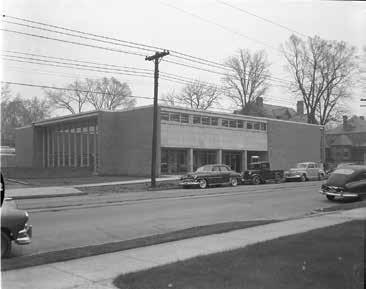
This year, the High Point Library, seen here in 1954, turns the page on a new century. Celebrating 100 years since its 1926 founding, which was greatly supported by the Woman’s Club of High Point, the library invites you and your book-loving fam to several free, funfilled events. Info: highpointnc.gov/3196/ High-Point-Public-Library-at-100-Years
Greensboro in search of your next great read, we’ve got a couple of indie gems worth the trip. Main & Mountain Bookstore in Kernersville is packed with stories from indie and local authors — proof that a good story can be close to home. And the shelves of Book LOVE in Jamestown are brimming with every genre imaginable, all with a cozy and loving atmosphere — it’s all in the name. And, if you head to the Sandhills, pop into an O.Henry favorite, The Country Bookshop.
Staying focused on film: “It was kind of senseless, but it was something I felt compelled to do,” says Angus MacLachlan, indie filmmaker, North Carolina native and University of North Carolina School of the Arts alum. MacLachlan’s latest, A Little Prayer, isn’t just a movie made in North Carolina, it represents the state. It explores the unlikely bond between a young woman, Tammy, and her father-in-law, Bill, determined to protect her from the hard truth of his son David’s affair. After its premiere at the 2023 Sundance Film festival, A Little Prayer made all the buzz and was soon picked up by a distributor to be released publicly in August 2025. Filming in his hometown, Winston-Salem, MacLachlan decided the best neighborhood to use was
Indie Scene
Konnoak Hills, where a few of his childhood friends grew up. “When I imagined the film, I just somehow imagined it being there,” he says. Other hotspots shown in the film include both Reynolda House and Old Salem Museums & Gardens, two Winston-Salem landmarks.
“I believed in it. Then once we really started going and I got actors at the caliber of David Strathairn and Celia Weston saying, ‘Yes, we’d like to be involved,’ it gave me courage to keep going.” Yes, you read it right, the cast includes both David Strathairn and fellow UNCSA alum Celia Weston along with Anna Camp, Will Pullen and Jane Levy, who received an Independent Spirit Award nomination for Best Supporting Actress for her role as Tammy. “If you’re from or spent time in the South then you know these characters and these types of people,” says MacLachlan. From quietly snoopy David to untamed Patti, you’ll likely find these personalities wandering around town.
Though the Tar Heel State embraced
2026 Essay Contest
Time’s a-ticking on your PTO — and our annual essay contest! Remember the elementary school assignment about how you spent your summer vacation? Well, we’re reviving it — vacay or staycay? Tell us about a true tale as remembered by you about a trip to the beach or about the time you took a week off to meditate for hours a day wearing nothing but your socks and a bedsheet. As always, there are ground rules:
• Submit no more than 600 words in conventional form — a PDF, Google document, or a word or pages file works well. Please no secret code that requires a decoder ring. We’ve misplaced said ring. Email entries to cassie@ohenrymag. com.
• One entry per writer.
• Deadline to enter is September 30, 2026.
A Little Prayer, it also received national praise including from IndieWire and USA Today. But it was a hard road to get there. From raising the film’s funding to MacLachlan’s unexpected diagnosis of Stage 4 cancer to the COVID-19 pandemic, he could’ve dropped A Little Prayer, but he didn’t. Instead, with a wing and a prayer, he prevailed. With an eight-week run, the movie turned out to become one of the most played films in 2025 at a/perture cinema, WinstonSalem’s locally owned art house theatre.
Like most people, you’re probably wondering where the title came from. Well, that’s just another Southern touch as well. “I had a lot of different titles but when I’m worried I say ‘Oh well, say a little prayer,” explains MacLachlan. Turns out, he need not worry. Some projects just take gumption, grit, time — and maybe a little prayer.
For those eager to feast your eyes on A Little Prayer, it’s streaming now on Amazon Prime Video, Apple TV or Fandango at Home.
Top three winners will be contacted via email, awarded a monetary prize and their essay printed in a forthcoming issue of O.Henry.
JOI DE VIVRE
SCHOOL BASH BACK
Summer, not-so-bummer reading: Growing up, reading was always a requirement in our household. “You need to have a summer book,” my mom would say, immediately followed by a groan from both my sister and me. We didn’t hate reading. We actually loved it, but we loved running outside and jumping on our trampoline more — typical kid behavior. After a trip to the library and a few pages into our choice of book, the complaining ceased. My sister’s readings were always young adult and my brother’s, car related, but dark academia and historical fiction always took my heart and still do. I remember one summer choosing The Secret History by Donna Tartt and The Women by Kristin Hannah and being completely bedridden with book fever for a few weeks. The words completely engulfed me. One page led to another and, before July heat even hit, I had finished both books and completed my summer reading. Being the young, energetic kid I was, I was eager to be back outside, but I never forgot how calm and relaxed a good book kept me. Now, as a 23-year-old, whenever I need to calm my mind, I just find a new book and dive in. Between you and me, I guess you could say my mother was right — just don’t let her know that I said that.
• O.Henry LIVE Jazz! Every Thursday from 6-9 PM and Select Saturdays from 7-10 PM in the Social Lobby. See the schedule at ohenryhotel.com
• LIVE Music Every Wednesday at Lucky 32! The Olsons (Jessica Mashburn Olson & Evan Olson) 6-9 PM lucky32.com
• Summer Romance Packages at O.Henry & Proximity Book online at ohenryhotel.com or proximityhotel.com
• Artist-in-Residence Chip Holton at L32! Stop by and see Chip’s work that adorn the walls at L32. lucky32.com
• Weddings | Meetings | Retreats | Events | Group Accommodations Learn more ohenryhotel.com or proximityhotel.com
LEO
(JULY 23 –AUGUST 22)
Well, you’re gonna love this. This month, the solar eclipse in your sign spells all eyes on you. Imagine starring in your own sitcom, navigating plot twists and obstacles with charm, wit and flawless hair. Everyone notices. Dream come true, right? But here’s the kicker: You must drop the performance. It’s raw or nothing, baby. As for the lunar eclipse at month’s end, ask yourself this: Is it retail therapy or a shopping addiction?
Tea leaf “fortunes” for the rest of you:
Virgo (August 23 – September 22)
Two words: early bird.
Libra (September 23 – October 22)
Think of it as an initiation.
Scorpio (October 23 – November 21)
Stock up on chocolate.
Sagittarius (November 22 – December 21)
Stretch those hip flexors.
Capricorn (December 22 – January 19)
You don’t have to do it alone.
Aquarius (January 20 – February 18)
Bring a hammock.
Pisces (February 19 – March 20)
You’re in the weeds, darling.
Aries (March 21 – April 19)
Pause before texting back.
Taurus (April 20 – May 20)
Freeze your pesto.
Gemini (May 21 – June 20)
Bookmark the recipe.
Cancer (June 21 – July 22)
Trust your body’s wisdom. OH
Zora Stellanova lives in the N.C. mountains with her wolfdogs, Venus and Lilith. Although she prefers divining with loose-leaf puerh, she recommends a mugwort and passionflower blend for those seeking wisdom and clarity from the dream realm.
Once Upon a Time
An adult finds a secret garden in children’s books
By maria Joh NsoN
Sometimes, when I’m looking for a soft and easy peace on a sleepless night, I’ll crook a finger and hook the spine of a children’s book, sweet shelved reminders of my boys’ younger years.
Maybe I’ll sink into the touching and funny Charlotte’s Web by the great E.B. White.
Or loll in the witty wordplay of Where the Sidewalk Ends by Shel Silverstein.
Or delight in A Child’s Calendar by John Updike, who was acclaimed — as in, he won two Pulitzer Prizes — for his serious adult fiction but clearly enjoyed tickling himself and his readers with simple reflections on every month of the year.
Here’s how he begins his ode to August:
The sprinkler twirls.
The summer wanes.
The pavement wears popsicle stains.
Popsicle stains. Can’t you just see the red blotches on asphalt? He ends with this:
The trees are bored
With being green.
Some people leave the local scene
And go to seaside
Bungalows
And take off nearly
All their clothes.
The verse is paired with an illustration of a bare-butt, palecheeked child on the beach. Every time I see that, I smile because, you know, butts.
I felt so validated when I read recently that another of my favorite writers, Ann Patchett, recommended reading young-adult books — the non-upsetting kind— if you want to fall asleep and stay asleep.
You bet your sweet Life of Pi.
And I’ll go even further down the literary food chain. I’ve been known to seek the soothing, mantra-like effect of word and rhythm in a toddler’s board book. And I swear on a stack of Dr. Seuss, if you say one word against the brilliant Margaret Wise Brown, author of Goodnight Moon, I will barge into your great green room and personally pop your red balloon.
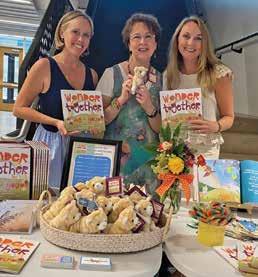
So I surprised myself the first time I watched the YouTube video of Wonder Together: You & Me, the singalong version of a children’s story published a few months ago by three Greensboro Day School teachers.
One of them, lower-school music teacher Jill Hare, performs the song over a tinkly keyboard tune. She sings the lyrics that upper-school art teacher Carey JacksonAdams originally wrote as a poem. Illustrations by lower-school art teacher Michelle Osborne flash in the background.
Have you ever counted all the drops in the sea?
Or climbed to the top of a redwood tree?
Have you seen the sky after a cool summer rain?
Or felt the roar of a mighty freight train?
Have you ever tasted a sun-sweetened fruit?
Or pet a new kitten, all fuzzy and cute?
Have you felt someone’s love when they hug you so tight?
Or smelled cookies baking and just wanted a bite?
My grown-up brain had questions — I mean who, really, has ever climbed to the top of a redwood tree? And shouldn’t it be “petted” a new kitten? — but at the same time, my kid brain smelled those cookies and cradled that fuzzy kitten.
I felt the pinpricks of tiny claws, the cool wetness of a small, pink nose, and the rasp of a sandpaper tongue licking my hand. I heard a scratchy little mew.
I felt myself smile and relax. It was just a whisker of relief, but it was as real as the spray of white bristles on a kitten’s face.
What the Responsible Adult Heck?
These teachers were onto something. A few conversations later, the story of the book emerged.
It started about two years ago, when Jackson-Adams, a veteran art teacher, woke up thinking about the sights, sounds,
Michelle Osborne, Cary Jackson-Adams, Jill Hare
Exceptional Care
smells and feelings that surround us every day — a veritable banquet of beauty.
She doesn’t think of herself as a writer, but she picked up a pencil and jotted down some small wonders.
“With so many weird things going on in our world, people arguing, so much negativity and divisiveness everywhere, I think it’s important for everybody to take a deep breath,” she says. “Smell the roses, walk your dog, pet a cozy, little kitten, smell cookies baking and, you know, just take time to be grateful.”
As she wrote, a cadence emerged. She showed the words to her friend, Hare, an experienced composer.
A few months later, Hare shared a couple of tunes that she thought would hook the 4-to-8-year-old crowd. She suggested that their mutual friend, Osborne, illustrate the poem and that they turn it into a book.
“Kids do best when they’re engaged with multiple senses,” Hare says. “So having something visual to pair with the tune helps their longterm memory and overall engagement.”
Hare was recalling the book-song combos — especially Sandra Boynton’s works — that she’d shared with her daughters, now 16 and 18.
“I just gave Boynton’s book Ooo, Baby Baby! to my oldest for her high school graduation,” says Hare, 49. “Children’s books, good ones, often seem simple but can have a very personal and deep meaning.”
Osborne, 43, was a fan of Sandra Boynton, too. She smiles at the thought of Your Personal Penguin; she used to sing the book’s companion song — by Davy Jones, formerly of The Monkees — to her daughter.
She still entertains her daughter, now 19, with silly songs. “She doesn’t enjoy it as much as she used to,” Osborne admits with a laugh.
The artwork and messages in children’s books always impressed Jackson-Adams, 63. Her childhood favorites included Homer Price by Robert McCloskey, A Pickle for a Nickel by Lilian Moore and The Tar Beach by Faith Ringgold.
“There’s a lightness about them, you
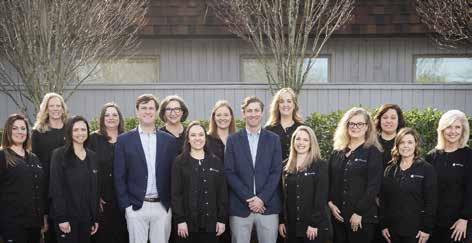
Annie McLennon, DDS, Graham E. Farless, DDS, Bill Blaylock, DDS
know?” she says.
Osborne created eye-catching illustrations for Wonder Together with watercolors and paper collages. She dug out wallpaper sample books, given to her by an interior designer friend, and started snipping. She used her orange cat, Daniel, as a model for the kitten page.
Jackson-Adams’ niece, the graphic designer Anna Landewe of Saugerties, N.Y., joined the team, contributing her layout and design skills, along with guidance on how to line up an International Standard Book Number (ISBN) and other bookselling minutiae.
To market the book and music, Osborne created an Instagram page and website for the group, who call themselves The Wonder Collective. She included free, downloadable coloring pages and matching games.
As much as the book leans on technology and social media, the GDS teachers hope the upshot will be more screen-free interactions between adults and children — and between children and the real world.
“In my early days of teaching, we didn’t have screens,” says Osborne. “Kids might have played Nintendo or whatever when they got home, but it wasn’t as . . . ”
Jackson-Adams finishes the thought: “Every day, all day.”
So far, the project hasn’t turned a profit for the creators, who paid production costs out of their own pockets. But they have been rewarded in other ways. The day school’s first and second graders performed the song at their end-of-year concert for their families.
“I just sat there crying the whole time,” says Jackson-Adams.
“There were lots of people crying,” says Osborne.
I wondered how that must’ve sounded, an auditorium illuminated by little voices asking people if they had noticed other small things in life, too.
“Their young voices perfectly captured the essence of the song,” says Hare. OH
Maria Johnson is a contributing editor of O.Henry. Email her at ohenrymaria@ gmail.com.
The Ryan Express
Will we see his like again?
By A nne Blythe
AsMajor League Baseball enters its stretch run, separating pretenders from true contenders for post-season play, Raleigh-based sportswriter Tim Brown has a new book that diamond purists will want to tuck into.
Although you can’t write a comprehensive Nolan Ryan life story without mentioning the record 5,714 career strikeouts and seven no-hitters, Brown chases a different plotline. In his biography Nolan: The Singular Life of an American Original, Brown goes beyond the box scores that detail the feats of the Hall of Famer with the longest playing career in MLB history. He takes his readers down to Alvin, Texas, the gritty, close-knit small town that shaped the ethos of the league’s ultimate power pitcher whose unparalleled longevity spanned 27 years.
threw on Chicago White Sox batter Robin Ventura in a 1993 game when the third baseman rushed the mound after a fast ball struck him on the arm. Brown dedicates a whole chapter to that legendary scene and one of the most replayed baseball clips of all time. Through interviews with people who grew up with Ryan and knew his whole family as well as his wife, Ruth — Nolan’s high school sweetheart — Brown delivers much more than a baseball book. It’s a story of a family, a state and a way of life that led to a relentless work ethic. Brown’s profile of a man who has been the subject of dozens of books also embodies a good bit of myth-busting, while creating a few of its own.
“I think the essence of Nolan Ryan is here, in Alvin” Brown told a contemporary of the pitcher at a senior center Bingo game. “These are the towns that make men like him.”
Alvin doesn’t hide its pride. It has a statue of Ryan, a museum room dedicated to him, and a high school baseball field, junior high and community center named for him. Restaurants proudly display photos of the famous (infamous) headlock that Ryan
With the gift of vivid storytelling that often sets sportswriters apart from the pack, Brown shows you the young boy pedaling his bike down narrow roads to “dusty ballfields.” You can almost hear the Texas drawl of the longtime Alvin residents swapping their Ryan stories that often have only a tangential connection to the development of the hometown boy’s famous pitching arm.
“Undertake a retelling of Nolan Ryan’s life through the prism of time and discover that the stories of cowboys far outnumber the actual cowboys, which doesn’t make them any less entertaining,” Brown writes. “In real life, we’ve moved on to the drugstore kind, to keyboard outlaws and Fortnite addicts and snowplow parents and participation trophies and cars that drive
themselves. Starting pitchers who beg out after five innings and then get handshakes for it.
“Call it evolution if you must,” Brown continues. “What survives in the witnesses is the gooey insides of old age, the pixelfree highlights, and the romantic version of a game played on the last tendril of an ulnar collateral ligament.”
Ryan, the youngest of six children born to Martha Lee (Hancock) Ryan and Lynn Nolan Ryan Sr., was initiated into a tireless work ethic at a young age. He was up before dawn, rolling and delivering the now defunct Houston Post with his father, who also worked in the oil fields. He was steeped in the ranching culture, and grew up in a world where men were taught to do the work and own the outcome, no excuses. They were taught to speak only when necessary and stand by their word.
Brown acknowledges the adversity that Ryan faced in his career — his boom-or-bust years with the Mets, and the lingering feeling that he was unable to live up to his potential coming out of high school as a skinny kid with a triple-digit fastball. And it’s no secret that Ryan’s all-or-nothing pitching style — likely influenced by the Alvin mindset baked into him — led to a high number of free tickets to first base for the batters at the other end of his fast balls. Like another pitcher of his era — we’re thinking Bob Gibson — taking the mound was nothing less than taking charge. Pitcher and hitter were mano a mano.
In an interview incorporated in the prologue of Brown’s
book, Ryan takes us to where he is now and the evolution of the sport that has made him an unmatched statistical anomaly and a seemingly untouchable benchmark for pitching durability. Surrounded “by the reminders of a life — not just a career, but a life — built on the ideal of finishing what he’d started,” Brown writes, Ryan leans back in his leather chair, hoists a leg on the edge of the desk and says, simply, “The game has changed.”
“Not mad. Not put out. Just saying,” Brown writes.
Then Brown offers something for the purists to ponder as modern baseball bullpens rely on a parade of specialized relievers for the starters who rarely, if ever, stay on the mound for an entire game.
“Going on six decades after he arrived, that something like a Nolan Ryan happened in the same game that is today’s version is almost inconceivable,” Brown writes. “That it might again is unthinkable. Then, it’s fair to wonder if the game has changed all that much. Or if the men who play it have. That’ll have to work itself out.” OH
Anne Blythe has been a reporter in North Carolina for more than three decades covering city halls, higher education, the courts, crime, hurricanes, ice storms, droughts, floods, college sports, health care and many wonderful characters who make this state such an interesting place.
Where Every Detail Tells a Story
Once home to North Carolina’s textile legacy, The Colonnade now tells a new story — yours. Light-filled spaces, timeless architecture, and seamless planning come together to create a special event that feels beautiful, personal, and effortless.
Out of Bounds
The good, the bad and the laughable
By tommy tomlinson
This time of year provides one of the great pleasures in life: the golf nap.
I’m not much of a fan of watching golf on TV. I’m a huge fan of falling asleep in the middle of the final round of the Zero Turn Radius Lawn Mower Open or whatever the PGA Tour happens to be running on a given weekend.
The long stretches of quiet . . . the reverent tones of the announcers . . . the polite applause from the crowd . . . they’re better than melatonin washed down with warm milk. When I go down for a golf nap, sometimes I dream of my real-life golf adventures. Not that I was a good golfer. Never broke 100 in my life. But I do have a few stories.
I’m just going to come right out and say this one, even though it will sting every real golf lover like a chest hair wax: I played Augusta National, home of the Masters.
If you are not a golf fan, this is sort of like saying I stowed away in an Apollo capsule and walked around on the moon. Mortals are not supposed to do such things. You basically don’t get to play Augusta National unless you are: 1. a pro golfer; 2. a billionaire; or 3. you know a 1 or a 2.
Except . . . every year the club has a media day — or used to — where the shlubs who cover the tournament get to play. I’m told it’s a lot tougher to get an invitation now. But in the mid’80s, if you worked for the Augusta paper — which I did — you got one.
Here are the lights, high and low:
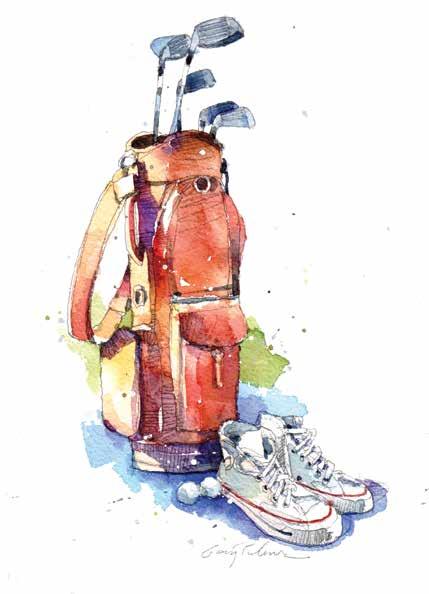
• I played with a set of mismatched clubs and wore a pair of Converse high-tops.
• Our playing partners accidentally put their cart into a power slide on a wet patch of grass on No. 10. If the course superintendent had spotted them, we might still be serving time.
• I carded a tidy 13 on No. 12, the short par-3 famously known as one of the thorniest holes in golf. You know one way to make it thorny? Knock four balls into Rae’s Creek.
• My final score was 118, a tidy 46-over.
• However! I parred No. 16, the par-3 where Tiger Woods
holed his famous chip in 2005. Almost birdied it myself. (I told you there was a highlight.)
Believe it or not, that was not my most stressful day of golf. My most stressful day of golf was a few years later, in 1992, when I followed through on a pitch I made to my editors at the Charlotte Observer: What if I played all the miniature golf courses in Myrtle Beach in one day?
It soon became clear that, barring teleportation, there was no way to play all the courses in the Myrtle Beach area in a day — there were more than 60 back then. So I restricted my playing area to within 10 miles of the old Myrtle Beach Pavilion. That still left 16 sites, some with more than one course. It took 14 hours — which included drive time between the courses, occasional pee breaks, and waiting for two preteen boys who were in front of me at one course and argued after every single hole. Not that I still think about them or anything.
I played 369 holes in 851 strokes. On the last course I ended up playing with three French tourists. There was no possible way I could explain to them what I was doing.
I had a few other notable moments in my golfing life. I snap-hooked a drive onto a cart path one time and the ball rolled halfway to the next county, a good 500 yards, like that scene in Don Johnson wins Kevin Costner’s car. I had to shake hands on the first tee of a tournament with a guy who, for reasons too convoluted to go into here, I was pretty sure was going to punch me. (He didn’t.) I watched a friend get so mad he threw his 5-iron up in a tree, then got his 6-iron stuck up there trying to knock it out.
But my playing career ended on a mid week morning at the old Renaissance Park course in Charlotte, now called the Harry L. Jones Sr. Golf Course. I was playing with some friends who were way better than me. Their drives found the fairway. My drives found the rough and the woods and the out-of-bounds markers. At one point I drove my cart across the fairway to track down a wayward shot, and a groundskee per on a tractor roared over to yell at me for driving off the cart path. (Some courses let you stray from the path, others don’t; I hadn’t known the rules for this course.) He said he had a good mind to throw me out. I have enough stress in my life. I don’t need to get hollered at on a golf course by a guy in a John Deere hat on a John Deere.
A few holes later, I hit my best drive of the day — right down the middle. I don’t think I mentioned that one of the features of this particular course is the large boulders in some of the fairways. My shot hit one of those boulders as square as if I’d aimed it there. The ball rolled halfway back to me. My friends tried, and failed, not to laugh.
In that moment I could hear the golf gods speaking.
Put down the clubs, they said. Go home and have a nap. OH
Tommy Tomlinson is the author of two books, The Elephant in the Room and Dogland. He was a longtime columnist for the Charlotte Observer and has written for Esquire, The Atlantic, ESPN the Magazine and many other publications. His online newsletter is called The Writing Shed. He lives in Charlotte with his wife, Alix Felsing.
Coasting Through Courses
Local golfer Alex Smalley rides the waves
By Ron GR een JR.
AlexSmalley doesn’t seek the spotlight, but occasionally it finds him.
That was the case at the PGA Championship at Aronimink Golf Club outside Philadelphia in May when Smalley, who lives in Jamestown, found himself the center of attention. In the sixth year of a solid PGA Tour career, Smalley owned a two-stroke lead entering the final round of the year’s second major, putting him 18 holes away from a career-altering victory in a major championship.
It was an unlikely place for Smalley and his Sunday playing partner, Matti Schmid, considering that between them they had zero PGA Tour victories and a minimal number of top-five finishes, few enough that they wouldn’t require the standard number of fingers and toes to count them all.
But golf can be funny that way.
And though Smalley ultimately finished tied for second, three strokes behind winner Aaron Rai, the experience helped redefine the career of the understated 29-year-old, who is a member at Sedgefield Country Club, site of the Wyndham Championship.
Despite the fact that he shared the lead with 18 holes remaining in a national championship, Smalley did his best to make it a Saturday night like any other.
“I was in the final group at the John Deere [Classic] a few years ago and it was the first time, so the thoughts were running through my head and I didn’t sleep great,” Smalley says.
“This felt like a pretty standard Saturday night.”
That meant a quiet evening with Smalley studying his yardage book, a hockey game on in the background and trying his best
to sleep through the night. Two out of the three came easily, the sleep not so much.
On Sunday, Smalley shot 70 to finish tied for second with Jon Rahm, and though Smalley didn’t win the Wanamaker Trophy, the week reinforced his belief that he belonged in the spot where he found himself — near the top of the leaderboard.
“I didn’t get off to the best start Saturday or Sunday, but I was able to fight my way back both days and have decent finishes to both rounds. It just goes to show that even when I have a bad start I can hang in there and fight and claw my way back. That was a good realization to have,” Smalley says.
Back home the next week, Smalley was congratulated by some Sedgefield Country Club members who recognized him.
“I told them it still doesn’t feel real, like it almost didn’t happen but it did,” he says.
Smalley grew up in Wake Forest (the town, not the university), about a 90-minute drive from Jamestown where his family moved in the summer of 2017, between his sophomore and junior years at Duke University.
Once Smalley graduated, he decided to stick around and now lives close to his parents. When he’s not on the road, Smalley tends to stay close to home, so close that when he’s asked if he has a favorite dinner spot or two, nothing comes immediately to mind.
“My parents don’t live far away so I go there pretty frequently,” he says.
And when Smalley is on the road playing tournament golf, his mother, Maria, is rarely far behind. Early in his career, his mother caddied for him, but as he has settled into his PGA Tour life, Maria is there to document her son’s performance, us-
ing it as a foundational piece.
She walks every round her son plays, takes detailed notes on every hole down to the yardage, which direction the wind was blowing and any other pertinent details, often capturing shots with her cellphone.
It’s their version of analytics, accentuating the detailed data available through the PGA Tour’s ShotLink system. The information and the videos go back years and, in the broader sense, document Smalley’s steady progression as a player.
Smalley’s mother worked in chemical analysis after graduating from Duke with a PhD and his father, Terry, is an assistant professor of biochemistry at Wake Forest University after spending more than two decades in the pharmaceutical business.
Smalley turned pro in 2019 after graduating from Duke, where he won three college tournaments and played on the 2019 United States Walker Cup team, posting a 3–1 record.
He won consecutive Sunnehanna Amateurs in 2018–19, becoming the first player since Rickie Fowler to win the prestigious event two years in a row.
On the PGA Tour since 2021, Smalley has been a consistent performer, blossoming this spring with the best run of his pro career, a stretch that included a pair of runner-up finishes, a tie for third and a tie for seventh in five events.
“Golf is like a roller coaster. When you’re playing well you’re at a peak, you want to stay at that peak for as long as you can. And then inevitably there will be valleys and you want to get out of those as quickly as you can,” Smalley says after having just tied for third at the Charles Schwab Challenge at Colonial Country Club. “Obviously, I’ve been playing decently well the last few weeks and good golf is fun golf, I guess. Just trying to ride the wave as long as I can.” OH
Ron Green Jr. has been writing about golf for more than 40 years and is senior writer for Global Golf Post magazine. The first golf tournament he ever attended was the 1965 Greater Greensboro Open at Sedgefield Country Club.
Farm-Fresh and Flavorful
A miso ginger stir-fry
stoRy A nd P hotoGRAPh By JAsmine ComeR
The other day, I found myself perusing the meat section at the grocery store when a label caught my eye and left me scratching my head: Since when does beef need added “natural flavors”?
This isn’t a lecture on what you should and shouldn’t eat — that’s entirely up to you. But that grocery store moment made me realize just how lucky we are to have incredible alternatives right down the road. Our area is home to so many dedicated farmers and food purveyors who pour their hearts and souls into producing on a scale that’s more intimate than industrial.
For me, a trip to the farmers market is an instant mood booster. There is an unmistakable energy in walking into a space where everyone — from the purveyors behind the tables to the shoppers stuffing their totes — shares the exact same passion: real, local food.
There’s something special about knowing exactly where your
food comes from and backing your neighbors who spend their lives growing and nurturing it. Because it hasn’t traveled 1,000 miles to land in your kitchen, it arrives fresh, handled with care and bursting with the kind of flavor that factory-farmed food just can't replicate.
Right now, summer is putting on a show. Market tables are practically overflowing with peak-season squash, zucchini, sweet onions, tomatoes, corn, potatoes and vibrant heads of broccoli. Let’s not forget the incredible selection of sustainably-raised, local meats. On a trip earlier this summer, I came home with a haul of chicken, broccoli, zucchini, squash and onions to build a dish that lets that freshness shine. If broccoli is out of season by the time you’re reading this, you can easily substitute with more squash and/or zucchini.
The play here is simple but elevated: Crisp vegetables and tender chicken are quick-sautéed and tossed in a delicate, but rich miso-ginger sauce. The vibrant crunch of the mid-summer produce combined with the deep, savory umami of the miso turns a few simple market finds into an absolute knockout, no flavor enhancements needed. OH
INGREDIENTS
Stir-Fry Ingredients
2 tablespoons olive oil
1 pound boneless skinless chicken thighs, cut into bite-sized pieces
1 cup broccoli, chopped into bite-sized pieces
1 zucchini, sliced ¼ inch thick
½ onion, sliced
2 pattypan squash, sliced ¼ inch thick
Miso Ginger Sauce
2 garlic cloves, grated
1 teaspoon fresh ginger, grated
Miso Stir-Fry
1 tablespoon rice vinegar
1 tablespoon white miso
1 teaspoon sesame oil
1 tablespoon soy sauce
1 teaspoon chili garlic sauce (optional)
2–3 tablespoons brown sugar
2 tablespoons water
DIRECTIONS
In a large skillet, heat olive oil over medium heat. Add chicken pieces and cook for 5-6 minutes or until browned, stirring occasionally. It’s OK if they are not cooked all the way through.
While the chicken is cooking, stir together the ingredients for the sauce and set aside.
Once the chicken is browned, remove from the skillet and add the broccoli. Sauté just until barely fork tender, stirring occasionally. Pour sauce into skillet, add chicken, zucchini, squash and onions and simmer until sauce thickens, approximately 6–7 minutes.
Remove from heat immediately, and serve over rice if desired.
By C ynthi A A dA ms
As soon as I could read, I stripped the Campbell’s soup labels off to send in for prizes, such as membership in the Lassie fan club. Becoming a Lassie fan clubber in good standing — one who adored the TV dog along with countless others — was irresistible.
Sea-Monkey Business
From soup to what?
So what if my poor mother never knew what soup she was opening? Off went the requisite labels, a dollar and my carefully printed order form.
From the moment it arrived, I kept my cherished Lassie’s picture in my special Lassie fan club wallet. And pined for such a pet one day. Alas, Mama did not think house pets were hygienic.
Briefly, we had Pete, a family parakeet. Although a chipper little bird, he was short lived. Unlike Lassie, Peter never solved a crime or conundrum.
Lassie, the rough collie, died in June 1958 in his Hollywood home at age 18. His son replaced him on the show.
Still, I held a solemn funeral for Pete when he went claws up.
Then, on a Bazooka bubble gum wrapper, I discovered Sea-Monkeys.
Sea-Monkeys, also advertised on the rear cover of comic books, captivated me. The ad made them look like merrily cavorting miniature sea horses, which I could own myself!
“Just add live sea-monkey eggs . . . and grow the most ADORABLE AND ENTERTAINING PETS.”
Dollars never idled an instant in my Lassie wallet. Packaging up the requisite bubble-gum wrappers with the order form and cash, I proudly ordered my very own Sea-Monkeys without a word to my mother. She might object to my keeping real pet monkeys in my room, I reasoned, but Sea-Monkeys were probably quiet and unobtrusive. They would be a bother to no one, confined to a small tank I would have to procure somehow. Surely, once Mama saw them frolicking as the ad depicted, she would fall in love.
My tiny fingers trembled with excitement as I carefully opened the much-anticipated package. But soon, that was replaced by concern. The Sea-Monkeys, as received, were minute, worrisome and mystifying, looking nothing like any monkey I’d ever seen. More like dried herbs in a cellophane packet. Skimming the scant information, I read these were eggs, not actual Sea-Monkeys.
Dutifully following instructions, I placed them with tap water in a large, clean mayonnaise jar. Wait and watch them grow, the ads said. I waited. I watched.
And waited some more. Whatever it was I was supposed to be watching for didn’t seem to be happening.
Meanwhile, I told my friends about my pet Sea-Monkeys growing at home. But in actuality the doubts sown the moment I opened the cellophane packet were the only things actually growing.
What children have in direct proportion to imagination is a lack of patience. It seemed I waited weeks — perhaps it was only days. But the water grew murkier. No tiny Sea-Monkey faces appeared, pressed against the jar, twee features I knew I’d adore upon sight.
What the desiccated Sea-Monkeys actually are, dear readers, are brine shrimp.
Pouring the smelly water down the bathroom drain, I suppose the Sea-Monkeys got a burial at sea, minus fanfare.
Sea-Monkey sales continue today, a big ruse netting big dollars for the company that markets them.
The Sea-Monkey scam made me more devoted to the honest Campbell’s soup folks and Lassie. I lapped up bowls upon bowls of alphabet soup.
Bazooka, hawkers of Sea-Monkeys, mostly lost my approval. Though I still ruefully bought it on occasion. For as savvy marketers know, little children, even those with long memories, make for poor cynics. OH
Cynthia Adams is a contributing editor to O.Henry magazine.
Late Summer’s Song
The sound of the mourning dove
By susA n CA mPBell
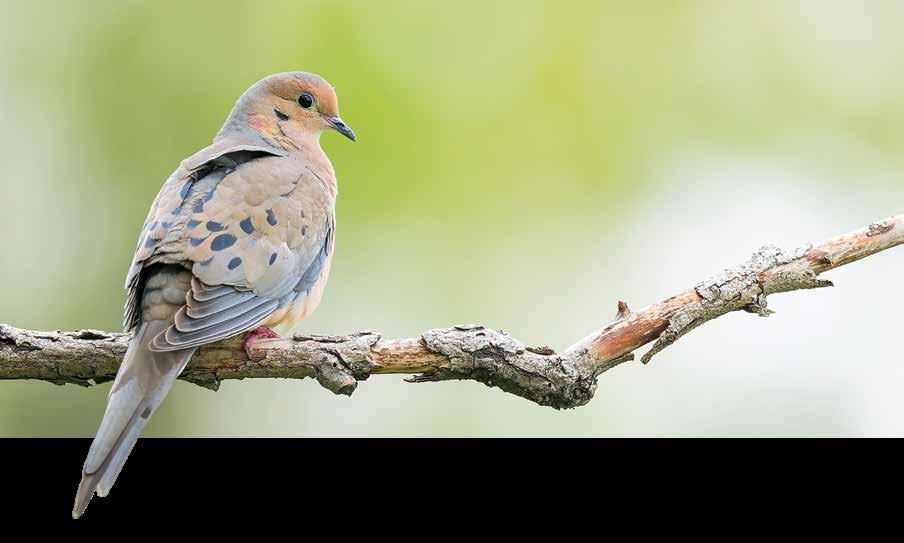
The beauty of doves is taken for granted. They are numerous, even abundant, everywhere we look. Their cryptic coloration and still habits make them easy to overlook. Mourning doves are the most familiar of the group statewide. Of course, we also have plenty of rock doves (aka pigeons) and increasing numbers of Eurasian collared doves here as well. However, it is the mourning dove that deserves our attention.
The species has a sleek, medium-sized light brown body and wings that are splotched with black. It also has a small head, a pale bluish crown and eye ring as well as a long wedge-shaped tail that is edged in white. At close range, a rosy sheen can be seen on the breast feathers of the males. The mourning dove’s name originates from its plaintive song. The hooting quality of the notes has been known to fool people into thinking they are hearing an owl. By late summer, doves are flocking in large numbers, in and around big fields. They feed busily on the ground, swallowing a variety of seeds as they fatten up prior to migration. All doves will consume large amounts of whole seeds in their crop and then perch in a safe spot to digest. Where and how far they may fly depends on weather and food availability. Most do not move long distances but rather seek out areas that will hold a diversity of grains for weeks at a time. Flocks of hundreds of birds can be found perched on wires or in snags adjacent to good foraging habitat.
Young of the year blend in well with the adults very soon after fledging. Their tails may not be quite as long, nor will their heads be as distinctly patterned, but these are field marks that are only visible at very close range. Three to five clutches of two is not unexpected in a season. With the moderate climate in North Carolina, especially along our coast, mourning doves have been found breeding in every month of the year.
There is no better time for individual mourning doves to seek safety in numbers than early September. Labor Day weekend marks the beginning of hunting season, and doves are the first on the calendar. Their robust population handles the harvest nationwide. This is due, at least in part, to their fast and erratic flight behavior that makes the birds a challenging target.
Dove hunting has a rich cultural history in the South. It is a time to bond with family and friends, enjoy the waning days of summer afield and perhaps even bring home enough plump breasts for a hearty meal — or at least some tasty hors d’oeuvres. Scouting out the right spot is the key. Hunters will survey different known locations looking for the best variety of seed-bearing cover crops, strategic perching sites and hopefully at least a few doves hanging around. For those who do not have access to suitable private land for hunting doves, the State Game Lands (Sandhills, Caswell, Jordan and others) offer opportunities. Both manage habitat specifically for mourning doves year-round. But even if you do not hunt, take some time out and look for these attractive birds — no binoculars are required. OH
Susan Campbell would love to receive your wildlife sightings and photos. She can be contacted by email at susan@ncaves.com.
A Soulful Saturday and Sunday in September
Beat the heat at the John Coltrane International Jazz & Blues Festival
By Billy inGRAm
“I start in the middle of a sentence and move both directions at once.” — John Coltrane
The John Coltrane International Jazz & Blues Festival celebrates its 15th anniversary next month, though it’s been 20 years since festival founder and organizer Joe Williams arranged for a statue of Coltrane to be erected at High Point City Hall. A Philadelphia transplant, Williams was shocked to discover the peerless saxophonist-composer was a Furniture Capital native and resolved to rectify that slight. “I just couldn't believe that I didn't see pictures and [announcements] all over the place saying ‘Home of John Coltrane.’ He's a real big deal all around the world.”
The jazz world went cold after Coltrane left the station in 1967 at age 40. He didn’t just play an instrument — he inhabited that sax, imbued it with his essence, became one with it, transcended from this earthly realm when astride it. Words as a means of describing Coltrane’s seductive musicality are lacking; no alphabetic assemblage can ever soar to such heavenly heights, his albums being the shortest distance between that tentative first kiss and soon to be disheveled bedsheets.
Williams’ yearly music festival bearing Coltrane’s name has attracted a roster of rhythmic royalty: Stanley Clarke, Snarky Puppy, Kenny G, George Duke and Blood, Sweat & Tears come to mind. This year’s lineup over the first September weekend is no exception. Here are a few highlights:
Born two years before his father’s death, Ravi Coltrane picked up his dad’s mantle, and a saxophone, to carve a successful career for himself as a highly sought-after, Grammy-nominated recording and touring artist. He’ll grace the festival stage for the third time this year. Another sax savant, Mike Phillips is stylistically a mashup of the traditional jazz masters he studied — Coltrane, Charlie Parker, Sonny Rollins — and the hard-edged, rhythmic energy of ’90s hip-hop. He was the first musician signed by Michael Jordan
to the Nike Jordan Brand, and the only musician (and soloist) who toured with Michael Jackson, Prince and Stevie Wonder.
Equal parts sayin’ and sass, French chanteuse Cyrille Aimée blends vibrant Caribbean rhythmic undertones with more traditional jazz notes. Her accomplished combo applies fresh polish on a pleasing playlist peppered with snappy show tunes and 20thcentury gems such as “Young At Heart,” “It’s a Good Day” and “La Vie en rose.” Don’t miss this one!
Recently completing a European tour, Victor Wooten and the Wooten Brothers have sent audiences swinging and swaying to their funky bluegrass infused beats since the 1960s. “On Sunday, they will hold a masterclass following Saturday’s concert,” Williams points out. It’s a rare opportunity to get up close and personal with Victor Wooten, Béla Fleck’s sideman who Rolling Stone readers voted one of the Top 10 Bass Players of All Time in 2011. “Bringing in that level of talent to not only teach but talk with people that have a love of the industry, who are trying to accomplish something. Last year I had Snarky Puppy for the first Masterclass. This time Victor Wooten came to mind and, with his brothers, you get the whole family.”
This year’s high point, if you will, might be singer-songwriter Ledisi, whose 2025 soulfully silky 12th album, The Crown, caresses the ear like those occasional dreamy LPs from the 1970s. Carefully crafted by way of unadorned arrangements focusing on that silky soulful voice, what emerges is a symphonious intimacy in the tradition of Janis Ian, Melissa Manchester, Roberta Flack, Nancy Wilson, Dorothy Moore and Marvin Gaye, minus that era’s de rigueur vocal histrionics. With the exception of
Moore and Gaye, those artists never produced a flawless, pitch-perfect album on par with this one.
Ledisi’s first release on Verve Forecast in 2007 (“Lost and Found”), and subsequent saucy Newport Jazz Festival performance that same year, established this New Orleans-born crooner as a powerhouse entertainer who continues to blossom in unexpected directions within every lush garden she cultivates. Inspired by immortal song stylists that came before her, in 2021 Ledisi released a collection of songs made famous by Nina Simone (Ledisi Sings Nina), then, just last October, devoted an entire album (For Dinah) to the Queen of the Blues, Dinah Washington. Vocally, she more than equates herself with a sultry rendition of “What a Difference a Day Makes” and an exuberantly bubbly duet with Gregory Porter on “You’ve Got What it Takes.”
DOG DAYS OF SUMMER
An aside: I once asked blues legend Johnny Otis (“Hand Jive”) about Dinah Washington since they were close. He told me about Ms. Washington taking Little Eva (“The Loco-motion”), a freshlyminted, 19-year-old pop star from coastal North Carolina, on a shopping excursion in Los Angeles. Washington was a notorious hard-partier, Otis told me, so he was reticent to allow innocent Eva to possibly be led astray but figured, what the heck, it’s just a couple of hours. When the two chart-toppers returned, Eva’s face, he said, was painted up like a hooker, decked out like a $2-tramp. As for Washington, she was laughing hysterically at Otis’ dismay.
With any luck, Ledisi might slip into Dinah Washington’s extensive songbook when she rarifies our air with melodic ardor on Sunday, September 6, at Oak Hollow Festival Park.
This is a prestige event for our sister city. “Not just for High Point, but for North Carolina,” Williams insists. “With audiences traveling from all over, from 25 different states, tons of people coming in from Charlotte, Raleigh, the mountain areas of North Carolina.” With five or six truly remarkable performances by seminal artists each day, “we try to keep the price very reasonable compared to what you get.”
Serving the Triad with quality
Plus, a portion of festival proceeds goes to purchasing instruments for musically inclined youngsters who can’t afford them. The lucky recipients are selected based on written essay submissions. “Being in the music entertainment business and seeing young people from all walks of life, it's their ticket, their way out,” Williams says. “If a child never gets an instrument, they can never go any further. That’s their starting point.” Williams often uses his industry connections to acquire otherwise prohibitively expensive or custom-made instruments for worthy budding musicians, and who knows? “Hopefully, they will develop into the next Coltrane.” Explore more at ColtraneJazzFest.com.
While I have you here . . . Acclaimed theater and screen actor Shannon Cochran, Page High School Class of ’76 grad, is making her Broadway debut this month in Paranormal Activity, a suspenseful drama the L.A. Times calls “The year’s best staged production.” She’s no stranger to the horror genre, having already terrified moviegoers as Anna Morgan’s sinister spirit in The Ring and its creepy sequel. You may recall reading about Cochran in my April 2023 Wandering Billy column. But you knew that, dintcha?
“The response to this play is unlike anything I’ve ever done,” Ms. Cochran (she’s a Broadway star now!) told me before embarking for The Great White Way. “People just want to gather together in the dark, scream at what they know isn’t real but seems to be magic, laugh at each other for screaming, then clutch their date for dear life.” Enjoying boffo box office this year in four major cities, she reveals that Paranormal Activity consistently attracts masses that aren’t normally playgoers. “And that’s worth everything!” Could a Broadway run lead to Tony Awards next summer? Stay tuned . . . OH
Billy Ingram contributes weekly to O.Hey, an email newsletter companion to O.Henry magazine, and can be reached at: tvparty@ bellsouth.net. And you can subscribe to O.Hey by visiting ohenrymag.com and clicking on the light blue box.
I’d like to feel again, my six-year-old self skimming a long, sea oat-surrounded trail to the ocean like a skipping stone, the wind in my dark hair, legs pumping like pistons. And oh, that first plunge into the water, the squealing — how it felt to be hit by a wave and tumble to the shore, as light as a shell. Now, it’s hard to walk the trails to the beach. Each step works my calf muscles, my bare feet sinking deep into hot sand. And the sun is like a blowtorch, not the gentle source of warmth that I remember, the ocean rife with dangers I knew nothing about as a child. So I settle into a folding chair with a book, my aging body slathered with the highest SPF, and watch a couple of kids scoop wet sand into bright plastic buckets while others splash in shallow pools, their faces the definition of delight. If only I could snap my fingers, step out of a body that has become too weary and cumbersome, and run to the water like I used to — limbs weightless as a plover, my thoughts no heavier than a beach ball, a paper kite rising.
— Terri Kirby Erickson
Terri Kirby Erickson is the award-winning author of eight collections of poetry.
The 2026 induction ceremony for the North Carolina Literary Hall of Fame takes place in October at the Weymouth Center for the Arts & Humanities. Could there be a better time to devote our Summer Reading issue to the current and soon-to-be members of that exclusive club than now? We’ve asked three members of the class of 2026 to write a letter to one of their favorite fictional characters and, to round out the field, we’ve surrounded them with four current enshrinees. The rules were simple: Pick a character you love, or hate, or even love to hate, and go from there.
And we think you’ll agree, the places they went are extraordinary.
Illustrat Ions by Campbell p r I ngle
FROM: Clyde Edgerton
To: Manley Pointer, the Bible salesman in “Good
Country People,” by
Flannery O’Connor
Dear Manley (if I may),
I got your penitentiary address from Henry Dampier, a character of mine who also sells Bibles. He knows you and I assume you know him.
A few days ago, Henry told me about your recent criminal activities, including getting caught again — stealing boxes of Gideon Bibles and then razoring out the title page (referencing “Gideon”).
I’ve not read the story “Good Country People” in a good while but I remember being drawn to your cleverness in that story, and also, aspects of your appearance — especially your yellow socks rolled down “to your ankles” or something like that. Images get stuck in your head, you know?
I am sending you this letter to let you know that you have been an inspiration to me in at least a couple of ways:
1. I sometimes go to bed at night happily anticipating the next morning’s completion of a scene I’m writing. On the second or third reading of “Good Country People,” when I was still a young writer, I came to realize that heaven for me would be the opportunity to write the last half or so of “Good Country People” — the part that would include your second visit to Hulga’s mother’s house. I realized that to know you were going back to visit again, and that I could write out what then happened, would be a kind of delightful heaven on earth for me. All this (including reading about your relationship to Hulga) fell onto me as I was learning to write fiction.
2. A couple of writers got in touch with me early in this century, saying they were hoping to publish a book-length tribute to Flannery O’Connor, written by different writers — would I contribute? Of course.
I decided to contribute a short story that included my character, a Bible salesman who was not you (but who knew you). I also wanted to include a “misfit” in my story — one who knew Miss O’Connor’s famous character, The Misfit. I wondered if the writers hoping to publish the O’Connor tribute book would accept a story rather than an essay. I was afraid they’d say no, so I didn’t ask, I just wrote the story, and I liked it so much I eventually made it into a novel: The Bible Salesman. I never heard from the writer/editors again, but was very happy, of course, that they — and you — helped me write a novel.
Thank you for your inspirations and best of luck in your post-prison endeavours. I wish for you the very best in all things. I read that you recently said that you were “going straight” now. Have you ever thought about entering politics?
Please write back.
Sincerely,
From: Daniel Wallace
To: Neddy Merrill in “The Swimmer,”
by John Cheever
Dear Ned Merrill,
This is the last time I’ll write to you. All the other letters have been returned to me, the sole response stamped on the unopened envelope by some heartless machine: OCCUPANT UNKNOWN. MOVED. VACANT. NO FORWARDING ADDRESS. Why do I keep hoping that somehow you will have returned to the house in Bullet Park, and that you will get my letter (the 5th? 6th?) and write back with an upbeat apology, explaining where you’ve been and what happened to you? I wonder if you even know.
I’m a fan, Ned. Maybe not a fan of yours but a fan of your incredible plan — to swim that Sunday morning the eight miles from the Westerhazy’s pool to your own home, realizing you could make it almost the entire way pool to backyard pool. You were not a young man, either, when the idea came to you, and perhaps that’s why you did it: a younger man would not have felt the need to prove to himself (and to all the lesser mortals) that something so incidental could be done, and certainly not with the same heedless and drunken joie de vivre. Only a man who had nothing to lose would do it, precisely because (whether he knew it or not) he had lost everything already. The old man’s still got it I can hear you telling yourself, over and over again, in those pools before the rains came.
You remind me of my father. You were more his generation than mine. I think you would have liked him. So many of the poolside scenes you swim through remind me of those “midsummer Sundays” at our own home, the kind when everyone sits around saying, “I drank too much last night.” I didn’t drink — I was just a kid — but my parents did. This is after we moved from Homewood to Mountain Brook, when my father started making real money and we had the pool in our backyard; in Homewood, we just had grass.
Those were the Sunday mornings the Hurleys would come over. Jack and Mary. They brought the V8 juice and the celery; my parents supplied the vodka, Worcestershire sauce, and Tabasco. By the pool they would shine themselves up with Baby Oil and sip on their Bloody Marys well into the afternoon, as the Alabama sun beat down on them. The Wallaces and the Hurleys drank, laughed, smoked, swam, all at the same time, too, sometimes, ashtrays and glasses balanced on a long yellow float.
As it was with you (there’s a bar beside almost every pool you swim through on your journey home) those Sunday mornings were just as much about drinking as the party the night before may have been. Drinking was assumed. An expectation. No matter how many Sunday morning Bloody Marys they had though (and it was impossible to say how many, because they came to the poolside in a gigantic pitcher) they were never drunken, or even tipsy. They were relaxed. “This is so relaxing,” they said, eyes closed behind their porthole-sized sunglasses. And the sun baked them lobster red. They all seemed so old to me then, years beyond counting. But no: in 1970 I was 11 and my father was a mere 40 years old. The hair on his arms was going gray though and he wasn’t in the best of shape. Still, he would race me in the pool and win going away. And, like you, Neddy, he had a “simple contempt” for people who did not hurl themselves into pools, and pull themselves out of them by the
curb — no ladder for him. He still had it! At 40 he was at the top of his game. That’s what it looked like anyway.
I imagine you were about 40, too, when your story takes place, when you almost seem to figure out how lost you were, and how much you’d lost.
Which brings me to why I’ve been writing to you.
My father died in 1997. He was 67, same age as I am now. And I can’t ask him, obviously, so I’m writing you to ask: When you swam back home, through almost a dozen pools, having a drink at as many of them as you possibly could, and when you made it back home and found that everything you had taken for granted wasn’t there anymore, when you caught up with yourself and the reality of your world — what did you do next? I can ask you that, right? Just because one story ends doesn’t mean they all do. When you finally don’t have it anymore, what do you have? How long can you keep on swimming? That’s what I want to know. That’s what I need to know. Sooner the better too, because summer is almost over. That’s how it feels, anyway.
Thanks, and I hope all is well,
From: Joseph Bathanti
To: Colin Smith, the main character and narrator in “The
Loneliness of the Long Distance Runner,” by Alan Sillitoe
Dear Smith (Colin, if I may):
I recently reread Alan Sillitoe's brilliant novella, The Loneliness of the Long Distance Runner, in which you, the inimitable first-person narrator, claim to have authored the tale. Thus, the novella becomes a pedigree of metafiction. Most interesting — and I wish I had Sillitoe to consult on the matter. Is it he who brings you to life? Or are you the agent of that feat? And please stop me, if this gets to sounding like some puffed-up, egghead scholarly treatise.
Your voice is unforgettable. I’ve always had a soft spot for the cheeky and you have a gift for smartassery that would have been cherished in the working-class Little Italy of Pittsburgh in which I grew up, where the art of biting off your nose to spite your face has been empirically perfected. Tough kids with El Doradosized, Marxist chips on their shoulders and a viral antipathy for authority to match yours — and not a scrap of remorse among them. In truth, Colin, you’re a revolutionary; the authorities like to keep your sort in stir. You scare the bloody hell out of them. You even allude to Hungary and what I presume is the Hungarian Revolution of 1956; and there’s also the mention of “a big boot . . . likely to smash any nice picnic [you] might . . . make for [yourself].” It seems you’ve studied your fellow Englishman, Orwell: “If you want a picture of the future, imagine a boot stamping on a human face — forever.” You are a prole, one of the fellaheen, among those the “whip-hand” aims to force to their knees.
But you can take a punch as well as deal one. You throw the big race — the Blue-Ribbon Prize Cup for Long Distance Cross Country Running — so coveted by the “governor,” the borstal warden, a “pot-bellied pop-eyed, bastard” as you dub him — even though you’re meters and meters ahead of your closest competitor and the finish line’s in sight. Like a convict, mere hours from parole, who jumps the fence. Rather than curry favor, you symbolically spit in the governor’s eye, which fetches you his outrage and a goodly dollop of additional hardship in borstal. More than anything, you exemplify so gloriously Albert Camus’ famous injunction from “The Myth of Sisyphus”: “There is no fate that can not be surmounted by scorn.” It’s the gesture, the gorgeous immemorable flourish, that seems precious, near sacramental, to you — that piss-oneverything mentality. It recalls Marlon Brando as he dies in Last Tango in Paris: removing the chewing gum
from his mouth and fixing it to the underside of the balcony railing before collapsing. How I admire your flare for self-immolation — Bravo! — though I don’t possess your threshold nor stamina for Purgatory.
But, of course, there’s more to it than that. Isn’t there always? You hail from a withered home where the only things in abundance are neglect, ennui and not enough dollars — and let’s not even broach the subject of love, though it’s there, but in the guise of yearning and desperation; nor should we mention your philandering mam; and your dad, whom you find dead, “ . . . like a skinned rabbit . . . lino and carpet” soaked in his blood. A tram-load of dysfunction. Trauma. Post traumatic stress.
You’ve a heart, Colin Smith, and a capacious one, though you purposefully secrete it beneath the bilious Eiderdown of regret and cynicism. After all, you’ve been — what we call here in North Carolina — stateraised, first in Remand Homes, now in borstal — one joint after another — plotting your next lame caper and committed to the life of a lammist. You’re only seventeen, already “institutionalized.” Your name, Colin, means “whelp” or “young hound.” There it is: the childhood state in which you’re forever immured. Of course, all that’s left to you is scorn. Blessed searing scorn.
I actually have run from the “coppers” a few times and have found myself, along with a gaggle of my mates, in the backseat of a police car — but, just to be clear, for the most innocuous empty-headed schoolboy pranks, and we were released with barked threats of juvie and the legendary rubber hose designed to put would-be juvenile delinquents on the straight. Nothing even close to robbing a bakery and stashing the lolly in a drainpipe where it flows from the spout in a downpour and damningly presents itself at the feet of the suspicious copper at your door. I’ve not the sand for a life of crime and I had the tireless love and guidance of hard-working parents. They dreamt a better life for me long before I figured out how to dream that dream myself — and I continually remind myself of the advice dispended to Nick Carraway from his father in the second sentence of The Great Gatsby: “Whenever you feel like criticizing anyone . . . just remember that all the people in this world haven’t had the advantages you’ve had.” Again, there it is. More to the point, I’ve never been incarcerated — Grace of God, and all that — though, over the years, I’ve spent considerable time in prisons as a writing teacher. I’ve also been a long-distance runner, though with nary a jot of your virtuoso clout.
Thus, I’ve now twigged you coming and going; and, make no mistake, I strangely love you and your ilk, taking my place in the cellblock, shackled to a prison cot. And I know enough to declare you a poet and contemplative. You offer not only a lyric tutorial on running — I’ve never read a more convincing account of the fabled “runner’s high” — but your metaphysical riff on being the first and last man on earth simultaneously, as you run the dawn “frozen fields,” is the stuff of magic, clearly rooted in holy writ.
So, my iconoclastic falling-down funny brother-comrade, I look forward to your next book, and I pray you’re on the free side of concertina when you pen it. Please: never stop running; that’s how I imagine you — and weeping, perhaps as Jesus wept at the death of Lazarus.
Fingers crossed this missive makes it to you. Penitentiary mail is notoriously unreliable, and I hope this passes the grubby-handed censors.
In peace and solidarity,
From: Jill McCorkle
To: Charlotte, the barn spider in Charlotte’s Web, by E.B. White
Dear Charlotte,
Salutations! I have loved and admired you for 60 years and never glimpse the shining threads of a web that I don’t think of you. For almost 75 years, you have taught children — young and old — about friendship and the seasons and cycle of life. You have shown us the best and the worst of humanity, from fat greedy rats to innocent humble souls like Wilbur, forever loyal in his love and devotion. Your voice is one of reality and acceptance of life’s journey — a wise observation of grief — and what an individual leaves behind for future generations.
Here in the state of North Carolina, there are 8.2 million of Wilbur’s kind, not counting the additional wild ones roaming and rooting. Imagine the many webs it would take to save them! And especially at a time when there is so much talk about bacon products — soda, toothpaste, lollipops and cologne! — to name a few. I suspect the desire some have for bacon is not unlike what you felt about the many flies you devoured. But still, it is always hard not to think of Wilbur when pork products are discussed. And he was Some Pig; he was Terrific, in fact! And what a lucky guy he was to have you and Fern and your many descendants in his life.
We could use your wisdom these days, Charlotte. You said: People are very gullible. They’ll believe anything they see in print. And oh, what an understatement that is. You would not even believe what people are believing! And it goes beyond print — made-up photos and videos, manufactured voices. There is a widespread struggle for truth. And there are those who make Templeton the fat rat look like Gandhi. Some even tried to use your name as code for a cruel, coldblooded operation designed to harm innocent people. You will be pleased to know that there was great public outrage over the use of your good name. After all, you taught the opposite. When Wilbur asked why you had been so kind to him, you said: By helping you, perhaps I was trying to lift up my life a trifle. Heaven knows anyone’s life can stand a little of that.
Are there enough webs? Enough words? I like to believe that wisdom such as yours will always be repeated and if said and seen enough, will continue to hatch and grow. Your words to Wilbur are always worth repeating and you, dear Charlotte, are my reason for allowing discrete cobwebs in corners and the eaves of the porch (thank you), and you remain a reminder to stop and admire the intricate and beautiful artwork of nature and declare it a miracle and rightly so.
Sometimes your voice comes to me in the cadence of an elementary school teacher’s voice, reminiscent of all those times after lunch we were told we could rest our heads on our desks and just close our eyes and listen while chapter by chapter, the teacher’s voice would lull us into your world and your final day with Wilbur: These autumn days will shorten and grow cold . . . Winter will pass, the days will lengthen, the ice will melt in the pas-
ture pond. The song sparrow will return and sing, the frogs will awake, the warm wind will blow again. All these sights and sounds and smells will be yours to enjoy, Wilbur — this lovely world, these precious days . . .
Your story left me crying and grieving too many times to count, Charlotte. I didn’t want Fern to grow up and choose time with a boy over time with Wilbur. And I didn’t want you to die. How could you die?! But then I learned something incredibly valuable. I could read your book all over again, and suddenly there you were — salutations! — and even knowing what was coming, I could once again get lost as I feared for Wilbur’s safety, marveled at your messages and hoped that Templeton — fat rat that he is — might have a change of heart. In addition to all else, you taught me the power of words on the page.
Thank you for all you have given to millions of readers (no exaggeration), and may your book always grace the shelves of schools and libraries as it finds its way into young hands and changes their lives in wonderful ways.
From: Jaki Shelton Green
To: Celie, the protagonist and narrator in The Color Purple, by
Alice Walker
Dear Celie,
My mother taught me that the color purple was associated with royalty, luxury, power, spirituality, mystery and creativity, but your story taught me that purple was often a bruise, a dictionary version of a common contusion that happens when blood vessels under the skin break from an impact, leaking blood into the surrounding tissue. I became obsessed with the color purple in the 1970s and curated my second wedding in 1979 around shades of lavender, violet, grape, lilac, wisteria, magenta, fuchsia, mauve and plum . . . all juicy luxurious colors not knowing that within a year those lush sensual shades would be prickly stains on my broken heart. When I met you in 1982 after my “royal purple marriage” withered away, your definition of purple seemed to make so much more sense to me. Thank you for daring me to turn all the wounded flower petals upside down and crawl inside them to explore the other side of breaking skin and ruptured voice.
Thank you for your lessons about reclamation, fulfillment and independence. In the 1980s your presence in the world became a map for many women who were struggling with granting themselves the urgent and necessary permissions they needed in order to begin unraveling the expectations enforced and placed upon us by society, whether it originates from our
Our Southern lives are not too far apart. We both grew up in a time period with gender inequality and racial division. We both grappled with expectations placed upon us by male authority figures in our lives, taking on the responsibilities which come with expectations, while our own dreams and desires are muted, invisible, and erased.
Like you, Celie, I broke the bonds of betrayal, emotional impoverishment, self-hate,
and began carving a pathway for the self that remembered to remember who she is and who she truly belongs to while re-embracing the color purple inside my gardens. Tiny purple blooms run rampant as groundcover almost choking out the other plants and my thoughts return to your words, “I don’t know how to fight. All I know how to do is stay alive.” So I allow them to make their own choices about survival and the other plants manage to keep on living.
And like the purple groundcover, you reminded us that we were never the bruises or the myths that someone tried to convince us that we were. Thank you, Celie, for demonstrating how you transformed from a silenced, abused victim to an independent, self-actualized woman. Thank you for demonstrating that female solidarity and “womanist” love are essential for overcoming both racial and patriarchal oppression.
Dearest Celie, you taught so many of us to sing out loud in fields of lavender declaring that we are a full embodiment of spiritual wholeness . . . celebrating how our relationships with other women can heal us and help us embrace the power to reject male supremacy, find our voices, reclaim our bodies, sexuality and cultural identity.
Celie, you may not remember, but my mother and my teenage daughter met you at the same time I met you. One paperback copy of Alice Walker’s The Color Purple was passed back and forth between the three of us. We were three generations in a matriarchal household daily discussing your identity search, racism, sexism and sensitive, often contrasting, generational perceptions about self-worth and double consciousness.
Thank you for being the character that my mother cheered on knowing you would not perish. Thank you for all the questions your character served nightly at our dinner table.
Thank you, Celie, for the uplifting lessons that my daughter and I taught each other about the power of intuitiveness, the power of utterance, the power of silence and witness, and all the grace that we granted each other in order to agree to disagree about your journey to liberation.
I am truly grateful for you allowing the ink’s breath to dream you awake.
With deep respect and admiration,
From: Michael Parker
To:
Darl Bundren, a character in As I Lay Dying,
by William Faulkner
Darl Bundren
Mississippi State Asylum Jackson, Mississippi
Alright now, Darl,
I thought of you the other day. I went for a long drive, trying to find some open country. I had to pass by all sorts of places you never, thank God, got to see: storage units, used car dealers, Korean barbecue, nails, nails, nails. I was in search of a landscape you would have encountered on the way to Jefferson with your family. On a backroad that dipped through a stand of pine down to a sudsy river I pulled over and felt, suddenly, your presence. I remembered how, when I first met you many years ago, in college, I didn’t understand you because the professor said I had to. He wanted me to understand his version of you. He wrote on the board some of the things you said: “The hallway looks like a searchlight turned into rain.” He said what the hallway represented and the searchlight and the rain. All of a sudden it was Psych 101.
He barely mentioned the passage that spoke to me the most, the one that, if I had to sum you up (and why should I, how could I, though that’s the sort of thing we did in classes back then, pick a line and slim you down to fit it): “In a strange room you must empty yourself for sleep. And before you are emptied for sleep, what are you. And when you are emptied for sleep, you are not. And when you are filled with sleep, you never were. I don’t know what I am. I don’t know if I am or not.”
It wasn’t just because I had a hard time sleeping, then and now, or because, around the time when everyone else’s mind shuts down, mine ramps up. The way that second sentence ended in a period instead of a question mark opened something up for me: how a little squiggle of punctuation makes a question more desperate than the way you wrote it, which is just as much statement. But not. That’s what I liked. It is, but not. I didn’t know what I was, I didn’t even know if I was or not. Most days that is still the half-statement, half-question, Darl. See, you stuck with me, even though it’s been forty years now.
This kid who sat beside me in class said, “This mess is harder to understand than calculus if you ask me.” I had not asked him and had no idea how to even spell calculus, but I wanted to say, it’s not that bad if you listen hard and also maybe it’s just hard in a different way.
I do get that some of the things you said took a while to hear, though. You said you heard teeth in your brother Jewel’s breath. And, “In sunset we fall into furious attitudes, dead gesture of dolls.” That one went right over my head. But in that same chapter you said, “If we could just ravel out into time. That would be nice. It would be nice if you could just ravel out in time.” I never heard anyone say “ravel,” always “unravel,” and I too wanted to untwist into time. If I could just. Instead, I got more twisted up. I never forgot to wonder how nice it would be to ravel out. You taught me that also, Darl.
I wrote a term paper on you. I compared you to Hamlet, because, see, I don’t think you were
as crazy as everyone claimed. I believe you were faking it sometimes, because faking crazy is a way out of just going along. You never did just go along. The people in Jefferson called you “queer.” They meant odd. I read up on you recently and found a few professors saying you liked men. They said you were queer, as in “a queer,” like people used to say back in high school. Queer was a slur, but over time it has become an umbrella term classifying all kinds of sexual configurations. I like how that word has changed meaning, how it went from the worst thing you might get called in high school to a word people nowadays use with pride. I get a kick out of the professors who don’t understand the original meaning of the word. He’s a queer one, I heard people say about some fellow when I was growing up, but the next time they would say he was peculiar. The professors seemed to believe you were confused about everything; therefore, you must be confused about what you like and who you like to do it with. “I don’t know if I am or not” does not mean you are confused. It means you know way more than the rest of us and are too smart to claim that such things can be figured out one way or another.
A hillbilly Hamlet! Wrote the professor at the end of my term paper. He gave me a B minus. To get an A on any term paper about you (as if our connection had any kind of term limit; as if I didn’t believe you when you said, “it is as though time, running straight before us in a diminutive line, now runs parallel between us like a looping string, the distance being the doubling accretion of the thread and not the interval between”) would have bummed me out big time. I’d as soon my GPA suffer than agree with the professor and confine you to what struck me as another life sentence in the state asylum up in Jackson, where they shamefully sent you. I ran into the kid who said he preferred calculus on the quad one day. Fuck a bunch of Faulkner, he said. I’m going to see if I can’t take that class pass/ fail. I was reminded of what you said about your brother: “Jewel knows who he is because he does not know that he does not know whether he is or not.” Though I liked that kid. I like people like him, for they make me question how they know what I don’t know and whether I even know it.
You don’t have to write back. I like writing to you, Darl. I feel myself raveling right out.
From: Shannon Ravenel
To:
Johnny,
a character in “Boy and Dog,” from Facing the Music, Stories, by Larry Brown
Dear Johnny —
There are many reasons to ponder this story about the death of your beloved dog, Bozo. You loved him so much. He was eleven and you are only eight. He must have seemed almost like your big brother. It is very, very sad to think of you finding his dead body run over by a 1965 Mustang driven by a guy who returned to the place where he’d hit Bozo, not to see if Bozo was OK, but to find his car’s hubcap. He didn’t care about having killed your dog. And so you killed him, with a yellow brick. And all hell broke loose after that, which you describe in your unusual literary format (293 one-sentence paragraphs, each sentence in five words), obviously a story emerging from the terrible grief of losing a beloved pet dog.
The double viewpoint — the boy’s and the author’s — captures my attention and makes me wonder. Could an eight-year-old really throw a brick hard enough to kill a grown man in his car? Could a boy that age really cause the hugely explosive scene, observe it, and outwait its end in order to retrieve his beloved dog’s body?
Or could that boy have had an extraordinary imagination? Could he have grown up to be an author? I think I know the answers.
Love,
Clyde Edgerton was inducted into the North Carolina Literary Hall of Fame in 2016. He is the author of 10 novels, a book of advice, a memoir, short stories and essays. He has received a Guggenheim Fellowship and, most recently, a 2025 O. Henry short story award. He lives in Wilmington, N.C.
Jill McCorkle was inducted into the North Carolina Literary Hall of Fame in 2018. Her first two novels were published simultaneously in 1984 by the newly launched Algonquin Books of Chapel Hill. The author of seven novels and five short-story collections, her many accolades include the John Dos Passos Prize for Excellence in Literature and the North Carolina Award for Literature.
Daniel Wallace will be inducted into the North Carolina Literary Hall of Fame in 2026. He is the author of six novels, a memoir, a short story collection and a children’s book. Wallace is the J. Ross MacDonald Distinguished Professor of English at the University of North Carolina at Chapel Hill, his alma mater.
Michael Parker will be inducted into the North Carolina Literary Hall of Fame in 2026. He is the author of eight novels and three collections of short stories. He has received fellowships in fiction from the North Carolina Arts Council and the National Endowment for the Arts, as well as the Hobson Award for Arts and Letters, the North Carolina Award for Literature, and the 2020 Thomas Wolfe Prize.
Joseph Bathanti was inducted into the North Carolina Literary Hall of Fame in 2024. Among his many awards are the Sam Ragan Fine Arts Award, the Sherwood Anderson Award and the North Carolina Award for Literature. He is the author of over 20 books, including poetry, novels, short stories and nonfiction. He was North Carolina’s poet laureate from 2012-14 and joined the faculty of Appalachian State University in 2001.
Jaki Shelton Green was inducted into the North Carolina Literary Hall of Fame in 2014 and is the ninth and current poet laureate of North Carolina. Her honors include receiving the North Carolina Award for Literature in 2003 and the North Carolina State University 2026 Honorary Doctorate of Humane Letters. Author of 10 books of poetry, an LP and two audio collections, she serves as poetry editor for Walter magazine and is a professor of Documentary Poetry at Duke University.
Shannon Ravenel will be inducted into the North Carolina Literary Hall of Fame in 2026. Born and raised in Charleston, South Carolina, she was editor of the Best American Short Stories series for 13 years and one of the founders of Algonquin Books of Chapel Hill. In 1986 she introduced the annual anthology New Stories from the South. During her time at Algonquin, Ravenel nurtured and advanced the work of numerous writers from the American South, including Clyde Edgerton and Jill McCorkle. OH
CLASS ACT CADETS
SOUTHEAST GUILFORD HIGH SCHOOL’S NJROTC TRAINS TO THE TOP
By Billy ingram
Photogra Phs By Bert
VanderVeen
This past May, I attended one of the most impressive ceremonies it has been my privilege to witness, the graduating and upcoming senior class honors assembly for Southeast Guilford High School’s Naval Junior Reserve Officers’ Training Corps (NJROTC). Snapped-to-attention teens resplendent in military dress blues and crisp khakis were on deck to accept dozens of awards for distinguished service to their community, academic excellence and individual achievement earned over the school year.
A highlight that evening was the women’s drill team executing the precision routine that solidified their standing in 2026 as one of the finest in the nation. Weaving rhythmically through a cascading series of formations with intense precision reminded me (archaic pop-culture references incoming) of a 1930s Busby Berkeley musical or the June Taylor Dancers from a mid-century episode of The Jackie Gleason Show. In other words, top-tier showmanship.
As the ceremony culminated with the coronation of the unit’s new Commanding Officer, a nattily-attired lady behind me politely — but firmly — nudged me out of the way. “That’s my son,” she exclaimed with pride, moving in closer to get a better photo.
That son being junior Jonathan Vanhook. I couldn’t help noticing that he and his twin brother, Joshua, were frequently called forward that night to receive recognition, advanced rankings and commendations. They, along with Torrie Shaw and Genevieve Canupp, were canonized as 2025–26 Color Guard champions, best in the nation at the ritualistic presentation of flags, accompanied by firearm acrobatics, often reverentially performed at military funerals and formal public gatherings.
When asked about his reason for joining NJROTC, Jonathan recalls gazing behind the middle school cafeteria window. “I would see the male drill team out there spinning their rifles, doing drills, and how structured it was, how disciplined it was. Everything they did was with structure, with intensity and effort.” What he saw was individuals moving together as one. “I wanted to be a part of it simply because I see that everyone here gives everything.”
Brother Joshua insists, “I would have definitely done this even if [Jonathan] didn’t.” He too was magnetically drawn to the curriculum’s exacting standards. “This is going to set me up for a career in general. We have fun and that's really what I like about NJROTC.” Jonathan agrees: “You put in work and you get a lot out of it. This is a very give-and-take organization.”
Southeast Guilford engaged in competitive skirmishes all around the country, including North Augusta, Georgia, Washington, D.C., and Sacramento, California. Cadets are expected to arrange financing for these excursions. “I wouldn't call it a problem, it’s just something we have to do,” says Jonathan. “The communities around
us help fund things we do, [GCS] has also helped us out.”
While school days commence at 9:30 a.m., JROTC cadets are expected to arrive for practice at 8. But, Joshua attests, “They really mean 7:45.” Weeks leading up to drill league competitions, squads might assemble as early as 2 a.m.
Fortitude and fastidiousness rarely go unnoticed beyond school grounds as Jonathan notes. “I was at my job and they were looking at me funny.” Mannered and exceptionally well-spoken, JROTC students naturally attract attention, desired or not. “So I had to explain to them what ROTC was, where I was in it, how good our school is. They call me ‘Commander’ at work now. It's just a little awkward but really, it just tells people that they can depend on you.”
Both brothers credit an uncompromising upbringing for their dedication to service, an environment that was, “structured, a very organized household. Our mother brought us up in a way that says, ‘You can do anything you want to do if you put yourself up to it.’”
I later caught up with that proud (if a bit nudge-y) mother, Queen E. Sweeper, who told me about finding herself 41 and pregnant with twins 18 years ago, gripped with the realization that “as an African American mom, I’ll be raising them by myself.” She had her hands full. “I had to keep these young
boys under control. I couldn't take them a lot of places because they were off the chain.” A veteran herself, she issued a royal decree before her hellcats entered elementary school: “You’ll go into the military when you graduate high school, not college.” What if they didn’t wish to enlist? "My answer was, ‘You don't have a choice!’” This Queen rules.
The Vanhooks could have easily been redirected into athletics. “They played football, baseball, they've wrestled, they've done it,” Sweeper says. But she had mentally mapped for uneven terrain ahead, swept for cultural minefields torpedoing Black youth, determined to avoid a rudderless voyage for her offspring “because we can still raise excellent young men. And mine have followed that path and look at where we are.”
The National Defense Act of 1916 established JROTC in our nation’s high schools. These days it boasts a curriculum tailored to every branch of the military.
Southeast Guilford’s program is administered by Capt. Frank Shearin (who retired in June of 2026) but most especially under the commanding presence of 1st Sgt. Thomas Hilliard, entering his 20th year teaching NJROTC at Southeast after two decades of service in the United States Marine Corps. The mission? Excavating authentic selves from cadets before life’s gale force winds trim their sails, unlocking unrecognized potential and releasing powerful capabilities and outstanding aptitudes that otherwise might become submerged under superficial peer pressure and society’s suffocating hum of low expectations.
When it comes to JROTC, Southeast Guilford is far and away Guilford County School System’s winningest organization: Distinguished Unit for 17 consecutive years, NJROTC Academic, Athletic and Drill champs for the last three years and, for 2025–26, overall champions in Area 6, which encompasses 30 schools in North and South Carolina and a portion of Georgia. They were last year’s Area 6 winning academic team, securing 13th in the nation in a competition similar to Jeopardy!
“Under 1st Sgt. Thomas Hilliard’s leadership, we were fifth in the nation for our drill team,” Shearin points out. Plus, third place overall best NJROTC team in the nation for 2019–20, placing top five for 2025–26, beating out over 630 competing units. That’s just skimming the surface of the numerous accolades Southeast Guilford earned during just this most recent academic term.
“The Department of Defense has sanctioned Junior Reserve Officer Training Corps for high schoolers and Reserve Officers’ Training Corps in college,” Capt. Shearin explains. “ROTC obligates you to go into the military — Junior does not.” Courses for eighth graders through 12th graders emphasize character development and citizenship. While most units around the nation concentrate on one or two skill sets, “We have full curriculum: a drill team, academic team, orienteering, marksmanship, physical training, cyber patriot information technology and an aviation drone team. There are a number of different teams that kids can be a part of, actually more than anyone could ever take advantage of.”
During the 2025–26 academic year, Southeast’s 133 NJROTC cadets performed 6,875 community service hours. “About 51 community service hours for each student,” Shearin emphasizes. These hours encompass everything from picking up highway litter, doling out meals at churches, stocking food pantries, placing Memorial Day flags and marching in Veteran’s Day parades. Seniors mentor elementary school kids and visit local nursing homes. “We are trying to train young people to care about others, to be good citizens.”
Uniforms provided provisionally are worn at least once a week on campus. You might imagine such sharp-edge students marching through their lives with sticks inserted you-know-where. Not at all. When time comes to rise to the occasion, they’re fully committed but, “out of character,” so to speak, laughing and sly-aside roasting.
That juxtaposition of duty and revelry was exhibited by one of those individuals posing for our spring photo shoot. Lieutenant Commander Barker, class of ’27, is an incoming XO (Executive Officer), meaning, “I am over all of the officers in the unit. I just make sure they're doing what we're supposed to be doing. If they're not, then it's on me. If they are, it's on me.” Thriving on that sense of dead certainty “gives me a chance to lead people and it'll help me for what I want to do, which is enlist in the Marine Corps.”
Following graduation in 2027, both Vanhook brothers anticipate entering the Army, Jonathan aspiring to “aircraft or diesel and gas mechanic,” while Joshua sets his sights on becoming a,
“heavy equipment operator, which will be like 12 November” — confusing to me but military speak for horizontal construction engineer. Cadets are required to memorize catalogs of these terms.
NJROTC training doesn’t cease with summer — it’s a year-long stint. While you’ve been sunning and funning, cadets attended a leadership academy and commanding officer courses followed by a four-day-long drill camp, while those rising into uppermost positions recently completed the Capstone Leadership Course. The women’s Drill Team is well under way developing fresh choreography, perfected over months of rigorous rehearsal. Orientation for rising freshmen got underway in July. Given last year’s triumphs, they’ll have big boots to fill.
Principal Christopher Scott, career educator and administrator, is prepping for his fifth scholastic session at Southeast. NJROTC is just one example of the exemplary extracurricular activities this academy offers, but one that carries with it tremendous pride. “It definitely brings out leadership skills that kids didn't know they had to have or that they even possessed — also the idea that not every leader is the person standing in front of the room.” Scott exudes a genuine enthusiasm for what is undoubtedly a daunting task, “I love our kids. I love our families, our staff, we kind of have a perfect socioeconomic and racial diversity. I think when you believe in students, good things will happen.”
You’ve heard the scuttlebutt: “Today’s young people are our future leaders? This country is so screwed!” Clichéd shade I’ve shamelessly thrown about, but that was before being introduced to this commanding clique of sentient pupils whose eyes are wide open to the challenges and possibilities associated with entering adulthood under choppy waters, yet emerging with leadership authority, armored with discipline, decisiveness, perseverance and accomplishment, all characteristics embedded in the cadets enrolled in Guilford County’s high school JROTC program. Bravo Zulu! OH
Playing to Their Strengths
A home-run reno for two former athletic stars
By C ynthia a dams • Photogra Phs By a my Freeman
Houston and Emily Summers share a formidable drive. After playing pro baseball with the Arizona Diamondbacks, he started his own business. She earned All-ACC honors 12 times and is about to complete medical school.
They’re only in their 30s. And they’re new parents.
Whether coping with the pressures of athletics or professional competition, they both excel, also proving a sunny-natured resilience.
There is also mutual modesty.
Inside Emily’s study in the couple’s restored vintage North Elm Street bungalow are trophies — numerous ones — clues to the remarkable lives the young couple have already led. Houston proudly points to some she won back in high school in West Virginia, where she was a record-smashing track-and-field athlete of the year in Buckhannon.
He is no less remarkable.
As a track star who also played on the baseball field as pitcher and catcher at Northeast Guilford High School, recruiters noted Houston’s athleticism.
After graduation, he became the youngest American-born baseball player drafted by the Arizona Diamondbacks, signing three months shy of his 18th birthday. Too young to rent an apartment, he initially lived with a host family.
Houston’s contract stipulated that the Diamondbacks pay for his undergraduate education. Carolina, he says, was always in mind.
Eight years later, Houston left professional baseball after seven seasons to attend UNC-Chapel Hill, long determined to get into “the best school in North Carolina I could.”
From being a notably young ball player, Houston had become a 25-year-old college freshman eager to pursue a medical degree, a goal since weathering his own medical trauma. At age 11, he developed a non-malignant tumor in his right brain diagnosed as a juvenile nasopharyngeal angiofibroma.
“It’s a pretty rare tumor,” he explains, and a highly vascular one causing headaches and blurred vision.
“I couldn’t smell, couldn’t taste, couldn’t really hear out of my right ear.” Ironically, the benign tumor had grown swiftly to the size of a baseball. He minimizes this, saying, “It wasn’t horrible, horrible.”
At age 13, Houston underwent an 18-hour-long surgery. Today, a long scar on the right side of his skull is well concealed by clipped hair. Even up close, it is nearly invisible.
He determinedly mounted a full recovery, ignoring doctors' orders to
rest. In fact, because he didn’t listen, he suffered an accident that Houston says left him with a slight indentation in his skull. He laughs it off. Yet the harrowing experience had an impact.
“That sparked my interest in medicine.”
At Carolina, Houston tried out for the track-and-field team, but a coach redirected him. Former ball players, the coach reasoned, had an easier time becoming proficient in javelin throwing.
The sports-minded new college student “still wanted to compete.”
In his sophomore year, Emily caught Houston’s eye when attending a track-and-field picnic for the team and its incoming members. She was an 18-year-old athletic star focused on the heptathlon and high jump. “She is just very modest, but multipletime West Virginia Gatorade Player of the Year. Junior Olympic champion.” He calls her “the real athlete.”
He recalls chatting with Emily, who asked him, “Well, how old are you?” Avoiding giving her a number, he coyly replied, “I’m a sophomore.” He laughs at the memory. “Like that was it, period.”
Meanwhile, Houston doggedly worked to prove himself in javelin. He became an honor student and earned All-Atlantic
Coast Conference honors in the javelin.
Emily demurs, stressing that javelin was not her best sport, as she scoops up their smiling and gurgling baby, Julia, just waking from a nap.
A Tar Heel student-athlete, Emily earned All-ACC honors 12 times. In 2016, Emily and Houston were both named to the Capital One Academic All-District 3 teams. She was a junior (named for the second year). Houston, who served as a student body president, finished a degree in psychology.
In 2018, Emily was selected as a Chancellor's Fellow, the first student-athlete to do so, after earning a degree in business. The University quipped in a media release that she jumped at the opportunity.
While a fellow, Emily applied to medical school. “It was interesting because I thought I was going to do consulting, then I wanted healthcare,” says Emily. Her mother, she points out, was a nurse. So was Houston’s.
Funnily enough, Houston was the one to wind up in consulting, working with Deloitte for a couple of years. Then, on July 7, 2018, the couple wed.
He and a partner acquired Sasser Restoration in nearby Whitsett. Houston says they work “in the eye of the storm,” mitigating fire, flood and mold damage for commercial businesses.
In 2023, he found a promising listing on Zillow within blocks of Cone Health System, where Emily, now a fourth-year UNC medical student, was doing a specialized rotation. The Summerses purchased that listing in April that year.
Houston’s family was conveniently nearby in Summerfield. Emily had a sister living in Burlington.
The house offered ample square footage at 2,550 square feet, even before Julia was born. Baby’s arrival made four; the Summerses owned a sweetly natured brown-and-white Newfoundland-poodle mix named Oliver.
While the bungalow looked great, their “new” one-story home was 90 years old. As their first home, they were keen to know its back story.
Neighbors believed the house was built for one of two sisters who lived side-by-side and shared a driveway. They didn’t have particulars, nor names, but dated the house to 1935–1939.
No records could be found to support the winsome
story about the sisters. The address first appeared in Hill’s Greensboro City Directory by 1936, with Henry Wiseman Kendall listed as owner. (He is likely the same distinguished journalist and newspaper editor who later won multiple honors for journalism.)
A previous renovation had gutted and replaced the kitchen, giving it handsome maple cupboards, double ovens, and a large center island. The original red-oak flooring was restored to a gleaming finish.
They thoughtfully began to make it their own.
Just one look at the home’s curb appeal suggests they intuitively understood exactly how to play to its strengths. With white clapboard replacing aluminum siding, shaker shingles and copper gutters, it has all the elements of a historic bungalow’s best.
Since the Summerses took ownership, the home’s stylish evolution on one of Greensboro’s oldest streets has become obvious.
“It’s eye-catching,” says a business owner who passes by daily and enjoys watching each tweak and improvement.
“But, you know, it's a 1930s home,” says Houston, who points out that as great as the house looks now, there were also draw-
backs. “There's no insulation in the exterior walls. There are original windows.”
And that fed other concerns.
In the summertime, their air conditioning is constantly running; in the winter, it’s the heat. Apart from the kitchen, the Summerses have scrutinized almost every other square inch. “We’ve done everything else, like [refining] built-ins and changes to the fireplace.”
Houston points out style details that elevated the front room. He changed the red brick fireplace, creating a neutral, soft-white, plaster-like finish of his own design for the mantle, overmantel and surround. He installed neutral tile to define the hearth.
Original features were kept but enhanced by modifications Houston designed himself. The built-in bookcases in the living room were extended to the ceiling to surround the windows, with added doors below.
Houston does a walk-through from the living room towards the back of the house. He mentions swinging doors that once closed the living room off from the connecting dining room. At some point, those were removed.
“But everything else [remaining] is original to the home . . . We took the mentality of, ‘I don't know what it looked like in 1935 when it was built, but let's imagine what it would look like if we were in 1935 and building.’ What might it have been?”
As with any older home, mysteries presented themselves.
“There used to be a walkway to the front door,” he says. “We believe the front door of the house used to be where the master bathroom is now.” During the main bathroom remodel this year, Houston unearthed signs of a second front doorway, long boarded over. Was it for a separate business entrance for a home office, as was a common practice at that time? Both doctors and lawyers often separated public and private entrances.
He is puzzled, but shrugs.
“So, there's definitely been some changes to this home over the last almost 100 years.”
Houston and Emily wanted to incorporate the aesthetics of California designer Rose Tarlow and Steve and Brooke Giannetti, an architect/designer couple now based in Tennessee.
“I really feel like our style — we really don't talk about it — it’s just kind of we have a natural alignment with what we like or
what we think,” says Houston. “It can be a little different, a little quirky, but it's really this clean, more neutral tone, maybe a little bit of modern, but also of a tie to some classical stuff. It's just this organic blend.”
Houston took the lead in planning refurbishments as Emily focused upon medical studies and her pregnancy last summer. “But,” she confirms his thoughts, “we complemented each other. We have similar tastes.”
Houston volunteers that beyond style, durability and comfort mattered to both. Especially in home furnishings. And he didn’t mind imperfections. He brakes for antique and consignment stores, scoring a distressed-leather Ralph Lauren Chesterfield-style sofa — that would retail for thousands — for the sunporch for $220.
“Oliver loves sleeping on it every night,” Emily says.
Just off the sunporch, there’s a favorite sunny spot for early mornings with a hot cuppa or cold drink. A built-in niche was designed with space for a comfy chair, coffee maker and an ice machine.
And there were additional built-ins in the office/study, which Houston spiffed up with lower doors and contrasting paint.
The bungalow’s corner lot received upgrades, too, with landscaping reworked to boost its considerable cottage appeal. Hydrangeas and boxwoods, plus a new brick walkway leading to a covered porch with seating and wooden planters, upped the Southern charm factor. A white picket fence, soon to be replaced
with a more period-appropriate style, cements the storybook cottage impression.
Meanwhile, as he feathered their nest, Julia was set to make her debut early this year. Houston sped to complete the bathroom redo after a plumbing snag caused flooding. He describes racing barefoot down Elm Street in the dead of winter trying to isolate the main water cutoff, finding a City water and sewer crew working nearby, a story that is only funny in hindsight.
Emily, former athletic star, laughingly recalls how she no longer raced anywhere — having regressed from running to walking with Oliver as the pregnancy advanced and her center of gravity shifted dramatically.
She approached the pregnancy experience with complete calm, says Houston.
In fact, she is steadfast in the face of new motherhood, too. Emily bounces Julia, whose eyes widen into circles as Oliver sits patiently at Mom’s feet. In March 2027, Emily learns where she will be matched for the next step, her medical residency, on what is called the “match date.”
The unknowable future — either the stuff of concern or celebration — always depends upon perspective.
The Summerses gamely anticipate what comes next. Their penchant for clearing hurdles is simply part of the fun. OH
ALMANAC
August
By ashley Walshe
August is a sunflower labyrinth; constellations of black-eyed Susans; the first yellow leaf, descending.
Summer fades like fawn spots: subtly. It’s hard to notice when you’re in the thick of it. When earth bursts with coneflower and primrose. When the forest floor is flush with chanterelles and electric redorange cinnabars.
We are cradled by lushness.
Wasn’t it yesterday that we were weaving among wild bramble, plucking warm berries, enlivened by the prickly kiss of thorn? Weren’t the fireflies just twinkling, making magic of these balmy nights? Honeysuckle lingers in the sultry air. Bumblebees bustle as if summer, too, were gaining speed.
The garden continues its wild giving. Thistle goes to seed. Apples begin knocking upon the sweetly turning earth.
Back when the fields were soft with daisies, spotted fawns hid in plain sight, silent as dappled sunlight. Then, they knew only mother’s milk and stillness. Now, they know of woody browse, wildflowers, movement.
Hummingbirds flit among cardinal flowers. The carnival of butterflies delight in all directions. A golden leaf slow-dances toward the forest bed.
In our nectar-drunken state, we are living beyond time. Dreaming, almost. Lulled by the hum of bees and a purple blur of blazing star.
Summer holds us to her chest. We want for nothing. But something is shifting in the soil that we can’t yet name.
Perhaps it’s the tender ache of being weaned. Of sensing the inevitable. Of letting yourself get swept up in the dreamlike wonder of a seemingly end less summer.
Homemade Ice Cream
Watermelon ice cream. Nothing says late summer magic quite like it. Especially when you make it yourself.
And it can be simple.
A quick internet search unearths recipes that require as few as two ingredients: frozen watermelon plus (coconut, almond or sweetened condensed) milk or yogurt. Add a pinch of salt for an added pop. Got a blender? Fresh ice cream in no time.
It’s sweet. It’s refreshing And, c’mon, it’s pink. Serve with a sprig of fresh mint to take it to the next level.
August was nearly over — the month of apples and falling stars, the last care-free month for the school children. The days were not hot, but sunny and limpidly clear — the first sign of advancing autumn.
— Victor Nekrasov
The Big Squeeze
How to get the biggest squeeze of summer: Freeze your pesto. Pickle something. Make honeysuckle sun tea. Slice a tomato, straight off the vine. Drift among flowers as a butterfly. Listen for the whippoorwill at twilight. Let the field crickets lull you to sleep. Wake up and smell the ginger lily. Watch the clouds reshape themselves. Arrange a bouquet of wildflowers. Dip your feet in a tinkling creek. Nap in a hammock. OH
OH PROfiles
The People & Businesses That Make the Triad a More Vibrant Place to Live and Work!
Blue Denim Real Estate | Community Foundation of Greater Greensboro
The Curated Aesthetic | Diagnostic Radiology & Imaging
Five Star Painting | Hallmark Homecare Humane Society of the Piedmont
Jewelry Authority | Know a Guy Heating & Cooling
Seabolt Upholstery | Stifel
Triad Foot & Ankle Center | Weeks Hardwood Flooring
SPONSORED SECTION AUGUST 2026
Written by Danielle Rotella Guerrieri
by Bert VanderVeen & Betsy Blake
Photographs
Mark & Kim Littrell
Blue Denim Real Estate
Husband-and-wife team Mark and Kim Littrell launched Blue Denim Real Estate in early 2020, just as the COVID pandemic was beginning. Over the next six years, the couple grew their boutique real estate firm, recently adding four experienced agents. While working with countless clients, they’ve maintained an unwavering commitment to exceptional service, turning each transaction into a hands-on, personal experience.
Blue Denim Real Estate’s main focus is helping clients find the right home for every stage of life — from small, starter homes to homes families can grow into. Locally owned and managed, Blue Denim’s agents offer expert guidance and unparalleled service before, during and after each property sale. Because buying and selling a home can be stressful, Blue Denim Real Estate strives to make each stage of the journey as easy as putting on your favorite pair of jeans. Plus, their expertise is custom-fit for all sizes, just like premium denim.
When they aren’t helping clients, Mark and Kim enjoy spending time with their three grown daughters and six grandchildren, all North Carolina Residents. There’s also a new 18-month-old taking up residence in their hearts — their Great Dane, Lily. With a commitment to the community they serve, you may also find Mark at Gate City Rotary Club, where he is an active member. Kim, for the past 20 years, has volunteered with both the Greensboro Symphony Orchestra and the Greensboro Symphony Guild. For fun, the Littrells, who first met on an airplane, love to travel or play tennis. But their greatest accomplishments, they say, are yet to come.
Thomas Seabolt Seabolt Upholstery
Thomas Seabolt always knew he wanted to work with his hands for a living. A former hockey player, he’d hoped it would be on the ice with gloves and a stick. Instead, he put his dexterity to use in an upholstery shop, where he began with removal and prep work before mastering fine furniture restoration and the craft of upholstery.
In 2008, Seabolt began his business in a backyard shed. The company has grown to include 10 employees, whose focus is customer satisfaction. “I have to mention the team at Seabolt Upholstery,” Thomas says. “In reality, without them this business isn’t possible. Plus they are all a joy to work with.”
With a desire to be a good steward for what God has blessed him with — wife, kids and a business he loves — Seabolt provides his customers with thousands of fabrics to choose from as well as leathers, vinyls and specialized treatments to protect their investment. With client satisfaction its top priority, Seabolt Upholstery has the ability to custom-make upholstered sofas, beds, chairs, outdoor cushions and furnishings — you name it.
Few individuals have shaped Greensboro as remarkably as Steve Bowden and his wife, Carlyn. For more than four decades, the Bowdens have generously dedicated themselves to helping the community, earning them the inaugural 2026 Nettie Coad and Linda Jones Community Impact Award.
As Community Foundation of Greater Greensboro President and CEO Walker Sanders says, “Steve and Carlyn Bowden may not seek the spotlight, but their quiet, unwavering commitment has helped make transformational change possible in Greensboro.”
Steve founded R. Steve Bowden & Associates law office in 1984, where he built a distinguished legal career with a reputation for deep integrity and commitment to advocacy and public service. He has offered his service to the UNC Board of Governors, N.C. A&T State University, the Greensboro Chamber of Commerce and the Community Foundation of Greater Greensboro. He is also a recipient of the Order of the Long Leaf Pine and currently serves as chair of the George Simkins Jr. Political Action Committee as well as advisor to the George Simkins Gate City Golf Fund held at the Community Foundation.
Carlyn’s lifelong commitment to Greensboro is equally commendable. A Burlington native, she has served on numerous boards, including the United Way, Family Service of the Piedmont and the Wake Forest University Board of Trustees. Carlyn has also worked alongside Steve at the Bowden law firm since its founding. Through their service, philanthropy and leadership, this dynamic couple has helped make Greensboro the welcoming community it is today.
301 North Elm St., Suite 100, Greensboro 336-379-9100 | cfgg.org
The Curated Aesthetic
Helping patients connect with their unique, natural features has been English Black’s mission since she launched The Curated Aesthetic in 2022. English, who previously worked as a physician assistant in emergency medicine and dermatology for nearly 25 years, believes aesthetic work sits at the intersection of medicine, artistry and psychology. “At its heart, my work is about helping people reconnect with their confidence while remembering that their worth was never dependent on their appearance in the first place.”
As facial rejuvenation experts, The Curated Aesthetic providers are highly trained and trusted, with more than 55 years of combined experience in aesthetics and dermatology, and use noninvasive techniques to help patients look as good on the outside as they feel on the inside. Aesthetics, says English, are never really about treating wrinkles or restoring volume. “The most meaningful transformations happen when women feel seen, heard and more like themselves again.”
Taking a holistic approach to facial harmony and overall skin health, The Curated Aesthetic providers listen. Each patient receives a personalized treatment plan using medical-grade skincare and advanced, in-office procedures,
including Botox, Dysport and Kybella treatments, injectable fillers, microneedling, microneedling with radio frequency, red light therapy and advanced laser procedures. Utilizing the latest technologies and evidence-based treatments to provide effective, non-surgical solutions, The Curated Aesthetic offers a seamless experience, starting with simple online appointments.
Away from work, English enjoys exercising, writing and spending time with her three greatest accomplishments, her daughters: Rowan, Emerson and Saylor.
500 E Cornwallis Dr Suite F, Greensboro 336-676-5583 | thecuratedaesthetic.com
Mo Risheq
Know A Guy Heating and Air Conditioning
Born and raised in Greensboro, Mo Risheq founded Know A Guy Heating and Air Conditioning in 2024, quickly earning a reputation for dependable workmanship, trustworthy recommendations and transparent pricing. With decades of experience at large HVAC companies, Mo grew tired of watching homeowners get pressured into buying unnecessary parts and repairs for their heating and cooling systems. With a mission to improve the HVAC customer experience, Mo launched Know A Guy, focusing on honest work and fair prices, and assembled a team of experienced, skilled technicians who solve problems rather than selling new systems.
Specializing in heating and cooling repairs, furnace and heat pump service, seasonal maintenance, thermostat upgrades and HVAC system installations and replacements, Know A Guy is committed to delivering year-round comfort with technical excellence from a team customers trust. Constructing a proper system is most important to Mo, who enjoys designing a longlasting system tailored for each customer. “The industry tends to sell high-efficiency systems even when the ductwork doesn’t support it. I’d rather sell a basic system with a brand-new duct system than put a high-efficiency unit on old ductwork.”
Fluent in Arabic and an expert cook, Mo has a gift for making anyone laugh or smile, and strangers become friends wherever he goes. He’s also proud that his live Christmas tree, which he calls Helga, has been thriving for a year. Away from work, he enjoys listening to music, fishing and spending time with his cat, Cruiser, named after “the world’s most reliable car, the Land Cruiser.”
307 S. Swing St.. Greensboro 743-222-5003 | knowaguyhvac.com
Stephanie & Jeremy Deaver
Hallmark Homecare
Stephanie and Jeremy Deaver know firsthand what it takes to find the right caregiver for your loved one, having navigated that path themselves. After his mom suffered a stroke and his dad broke his hip, Jeremy found himself taking care of both of his parents before searching for help. “I was struck by how hard finding care was, and then how disappointing the quality of those services was,” he says. With Stephanie’s many years in social work and mental health therapy experience and Jeremy’s extensive health care administration expertise, the couple launched Hallmark Homecare in 2023.
Putting people first, Hallmark Homecare helps seniors and their families navigate complex care, enabling seniors to stay in their own home with a responsible caregiver’s support. The caregivers in their registry, who have been selected from the top 2% of applicants and have at minimum six years of professional paid caregiving experience, safely supervise seniors, assisting with bathing, meal prep, light housekeeping, toileting, transportation, medication assistance, wound care and beyond.
Offering services throughout the Triad, Hallmark Homecare recently expanded into Winston-Salem and Burlington this year. With an administrative team of six, they have an extensive registry containing over 200 qualified caregivers, which allows them to respond to unscheduled help in four hours or less.
When they aren’t supporting seniors, the Deavers are busy with their four kids, who make Stephanie and Jeremy incredibly proud. “They’re good kids, they’re responsible, they all have strong faith and all four have been fortunate enough to have been accepted into the advanced magnet program at Brown Summit Middle School,” adds Jeremy. Often, the family can be found on the volleyball, basketball or tennis court.
Humane Society of the Piedmont
With compassion for animals and the people who love them, the Humane Society of the Piedmont (HSP) is committed to improving the lives of animals in our community by providing affordable, full-service medical care, education and advocacy. Founded in 1953, this nonprofit organization is dedicated to reducing pet overpopulation, assisting pet owners in need and reducing unnecessary euthanasia in local animal shelters. Centrally located in Greensboro, the HSP is strategically positioned to support pets throughout the Triad, thanks to supporters and donors.
The team at HSP is focused on adapting to the changing needs of animals in our community, expanding services beyond basic spay-and-neuter surgeries and wellness visits. Staffed with caring and knowledgeable professionals, the HSP’s wide range of affordable veterinary care includes vaccines, dental care, X-rays, microchip placement, in-house laboratory capabilities, pet pregnancy care and specialized surgeries — all performed in state-of-the-art facilities.
Through its Fill the Bowl Food Assistance Program, the HSP ensures that pets do not go hungry when their owners face tough financial times, providing food and basic pet
care supplies. The goal? To keep furry friends safely with the families who love them and out of shelters. Plus, pet parents can also pick up gently used and new items from the “Share Shelf” such as leashes, collars, bowls, pee pads and treats.
When asked what makes Greensboro so special, Kovacs says, “Friendly neighbors and a strong network of animal advocates.” Open Monday through Friday and many Saturdays, the HSP remains committed to making a lasting difference in the community for years to come.
4527 West Wendover Ave., Greensboro 336-299-3060 | hspiedmont.org
Kelly Kovacs, Executive Director; Madison Baker, Clinic Manager; Sydney Nixon, Office Manager; Nicole Harrington, DVM , Medical Director
Nathan Cashwell
Five Star Painting of Greensboro
After purchasing an older home that required significant painting and renovation, Nathan Cashwell struggled to find reliable, professional service providers. So, armed with 12 years of design and construction experience himself, he took a leap, launching Five Star Painting of Greensboro. Client-focused and quality-driven, Five Star Painting began as a residential and commercial interior and exterior painting company in 2016 and has since expanded to include high-caliber home renovations, remodeling everything from bathrooms and kitchens to man caves and decks. “That stemmed from our clients reaching out, wanting us to perform these services since they trusted us from the painting projects we helped them with,” says Nathan.
With experienced craftspeople and project managers on staff, Five Star Painting offers a professional, low-stress, high-quality experience, bringing their clients’ visions to life with each project. As Five Star Painting continues to grow, Nathan aims to add additional painters, carpenters, plumbers, electricians and roofers, plus gutter, tile and stone experts to their team of trusted professionals.
Even at home, you can find Nathan working on a project. “I have gotten into woodworking, which is great, fun, challenging and allows my creative side an outlet,” he remarks. Living near the Atlantic and Yadkin Greenway allows his family to explore the local, natural beauty, though they enjoy sometimes venturing out to the mountains or the beach. “North Carolina has almost every type of landscape all wrapped up into one state, and Greensboro and the Triad are in the middle of it all. But let’s keep it our little secret!”
Weeks Hardwood Flooring, Inc.
New flooring can quickly transform a home, taking it from outdated to outstanding. Since 1979, Weeks Hardwood Flooring has been adding lasting value to homes throughout the Triad with top-quality hardwood, tile, plank, laminate and carpet flooring, all installed by local flooring experts.
Founded by James Weeks, a carpenter who began installing hardwood flooring as a side job, Weeks Hardwood Flooring is now led by the second generation and employs more than 30 full-time flooring professionals.
What sets Weeks Hardwood Flooring apart is its commitment to quality and customer service, which includes a one-year labor warranty. With his experience as a frame carpenter, James emphasizes that his knowledge goes well beyond surface level: “I understand what is going on underneath the hardwood floor.” Each installation ensures a seamless fit and finish, providing each customer with a refined, sophisticated space that showcases timeless, enduring craftsmanship. As the largest and longest-running full-service flooring company in the Triad, Weeks has completed more than 44,000 floors for happy customers who count on Weeks’ experts time and time again.
For design and style ideas, customers can explore the Weeks Hardwood Flooring showroom, which opened just last year, at 7901 Thorndike Road in Greensboro. Hundreds of flooring samples are on display and friendly professionals are available to answer every flooring question. Whether making a design statement or updating worn flooring, Weeks prioritizes each customer’s needs to ensure the process is as seamless as possible, delivered ahead of schedule and on budget. When James isn’t focused on flooring, he enjoys traveling, boating, and spending time with his family.
Dr. Matthew Wagoner, DPM
Triad Foot & Ankle Center & Breakthrough T1D
For people living with type 1 diabetes (T1D), the disease affects far more than blood sugar. It can have a lasting impact on foot health, mobility and quality of life. Those are challenges Dr. Matthew Wagoner and the physicians at Triad Foot & Ankle Center see every day, making their partnership with Breakthrough T1D a natural extension of the care they provide.
Inspired by those experiences, Dr. Wagoner has become a longtime supporter of Breakthrough T1D. Working alongside Senior Chapter Director Eleanor Schaffner-Mosh for the Piedmont Triad, Dr. Wagoner supports their mission to advance research, advocacy and education. As co-chair of the 2026 Breakthrough T1D Walk (October 31, Triad Park in Kernersville), he is helping lead one of the region’s largest community efforts to raise awareness and funding for treatments and a cure.
Schaffner-Mosh is grateful for Dr. Wagoner’s and Triad Foot & Ankle Center’s longstanding commitment. “The first Breakthrough T1D Walk in Greensboro took place in 1995,” she says. “Triad Foot & Ankle Center was with us that day and has led the way ever since. Their support has made a tremendous difference in our community and has propelled us closer to curing this disease.”
As part of Triad Foot & Ankle Center’s team of boardcertified physicians and surgeons, Dr. Wagoner provides specialized podiatric and surgical care. From heel pain, sports injuries, bunions, hammertoes and ingrown toenails to diabetic foot management and advanced foot and ankle surgery, the practice helps patients preserve mobility and improve quality of life through personalized, evidence-based care. With offices in Greensboro, Burlington, Asheboro, and High Point (opening September 2026), Triad Foot & Ankle Center continues expanding access to expert foot and ankle care while supporting the communities.
2001 N. Church Street, Greensboro, 336-375-6990 | Triadfoot.com
Eleanor Schaffner-Mosh
Frank Manole, DNP, MSN, MBA, FAANP
Diagnostic Radiology & Imaging (DRI)
With more than two decades of operational leadership and clinical health care expertise, Frank Manole became the first chief executive officer of Diagnostic Radiology & Imaging (DRI) in early 2026. Driven by a lifelong commitment to serving others, Frank chose a career that allows him to make a meaningful difference in patients’ lives. “That calling to care for others continues to shape both my career and my leadership philosophy,” said Frank.
Frank’s extensive educational background reflects both his clinical expertise and leadership acumen. He earned a Bachelor of Science and a Master of Science in Nursing, and a Doctor of Nursing Practice degree before completing an MBA. His unique combination of healthcare and business education, coupled with his certifications as a nurse and nurse practitioner, enables him to lead with both compassion and strategic vision.
As the healthcare landscape continues to evolve, Frank is focused on positioning DRI for long-term growth while meeting the changing needs of the Greensboro community. Patients have long trusted DRI for exceptional imaging and radiology procedures that provide critical answers when they matter most. These comprehensive services include mammography, advanced MRI and spine imaging, ultrasound, virtual colonoscopy, and proactive health-screening technologies. Looking to the future, DRI is making strategic investments in key areas such as women’s health and interventional radiology, an advanced subspecialty that is transforming patient care.
Outside of work, Frank enjoys staying active through sports, attending sporting events (Go Canes!), traveling and spending time with his wife, Gisele, their children, Charlie, Elise and Gabe, and their dog, Axel.
315 West Wendover Ave., Greensboro 336-433-5000 | drihealthgroup.com
Roger Wilson
Jewelry Authority
Jewelry Authority owner Roger Wilson’s love of antiques and fine jewelry began when he spent weekends scouring Super Flea for hard-to-find collectibles with his grandmother and great-aunt. Later, in the late 1990s, he started buying and selling jewelry online, eventually making it his full-time career. “I continue to enjoy visiting antique shops when traveling and now exhibit and buy at major jewelry shows across the country.” In 2014, Roger purchased Mark Holder’s jewelry store then founded Jewelry Authority a few years later. With two locations, a third coming soon at the former Carlyle & Co. storefront, a strong online presence and more than 30 employees, Jewelry Authority offers a premier shopping experience built on transparency and honesty.
Beyond precious metals and gemstones, Jewelry Authority offers vintage, estate and fine jewelry, including watches, rings, earrings, necklaces, bracelets, pendants, charms, loose stones and lab diamonds. “While one person can’t be an expert at everything, a team of experts can, which is why the professional team at Jewelry Authority is so valuable,” says Roger. He’s curated a team that is always on hand to
help customers and includes two GIA graduate gemologists who grade diamonds and color gemstones, a watch expert, an online jewelry expert, a coin specialist who evaluates collections, a custom 3D CAD designer, plus friendly sales professionals. No matter what the customer needs, Roger says, “We take great pleasure in listening and then delivering.”
Roger, who was born and raised in Greensboro, says, “The beautiful landscape, lifelong relationships and people really make the city.”
7804 National Service Rd, 211-A State St., Greensboro 336-886-4653 | jewelryauthority.com
Stifel’s Presence in Greensboro
Stifel provides individuals and families with personalized wealth management strategies grounded in experience, continuity, and a strong connection to the local community. Founded in 1890 in St. Louis, Missouri, Stifel has grown from a regional brokerage into a nationally recognized, full-service wealth management and investment banking firm. Throughout its history, Stifel has remained focused on long-term client relationships and community involvement.
Opening its doors locally in 2014, the Greensboro branch is home to a team of experienced financial advisors including Paul A. Vidovich, CFP®, Branch Manager, First Vice President/ Investments, Portfolio Manager – Solutions Program; Christopher Barbee, CFP®, Senior Vice President/Investments; Karla Johnson, CFP®, Vice President/Investments; John Scott, CFP®, Senior Vice President/Investments; Jacqueline T. Wieland, AIF®, Senior Vice President/Investments; Phil Joyce, Vice President/Investments; Allen Hammonds, Vice President/ Investments; Chip Pegram, First Vice President/Investments, Portfolio Manager – Solutions Program; Gregory Gonzales, Senior Vice President/Investments; Justin Vidovich, Financial Advisor; and Grant Gillespie, Financial Advisor.
Together, the team offers guidance across estate planning strategies, retirement income strategies, tax-effecient investment strategies, insurance reviews, legacy planning and asset management. A key distinction of the office is its blend of deep, local roots and generational perspective. Long-standing advisors provide continuity and trusted relationships, while newer financial advisors contribute fresh ideas and modern-day insight.
Many financial advisors actively serve on boards of local nonprofit and educational organizations while several Stifel team members were raised in Greensboro and continue to build their lives here, pouring into the community they call home.
Front Row: Karla D. Johnson, CFP®, Vice President/Investments; Allen Hammonds, Vice President/Investments; Chip Pegram First Vice President/Investments, Portfolio Manager – Solutions Program; Phillip H. Joyce Vice President/Investments; Jacqueline T. Wieland, AIF®, Senior Vice President/Investments.
Back Row: Grant Gillespie, Financial Advisor; Paul A. Vidovich, CFP®, Branch Manager, First Vice President/Investments; Christopher T. Barbee, CFP®, Senior Vice President/Investments; Justin P. Vidovich, Financial Advisor; Gregory E. Gonzales Senior Vice President/Investments; J. Scott, CFP® Senior Vice President/Investments
August 2026 OUTINGS
AUGUST
4
THE SUNSHINE BAND. 8 p.m.
That easy, breezy Florida energy blows into North Carolina. Heard of Easy Street? Maybe not, but it’s the newest album of the 502s, known as “the happiest band on Earth.” Experience the magic and joy of their upbeat performance live. With fun, energetic folk music, this band serves some of that hot, sizzling heat from the Sunshine State, matching the rising Greensboro temperature. Get your tickets while they’re hot. Tickets: $32. The Pyrle, 232 S. Elm St., Greensboro. Info: thepyrle.com.
AUGUST 6, 13, 20, 27
THEY WANT YOU. 6–8 p.m.
Ready to answer the call? The Junior Reserve Officers’ Training Corps invites children 6–18 to their weekly parade and drill, where leadership, teamwork and discipline take center stage. Every Thursday, cadets fall in for an opportunity to build confidence, sharpen skills and learn what it means to lead from the front. Think you have what it takes? Sir, yes, sir. Free. Peeler Recreation Center, 1300 Sykes Ave. Greensboro. Info: greensboro-nc.gov/ government/city-news/city-calendar.
AUGUST 7–9
SAY THAT SHAKESPEARE LINE.
6–8:30 p.m.
Parting is such sweet sorrow — unless you’re leaving to get to Sonnet Fest, the annual production of Creative Greensboro, in partnership with Little Independent Theatre, Scrapmettle and Shared Radiance Performance Arts. Join a cast of Shakespeare devotees as they bring Sonnets 51–103 to life with wit, passion and a touch of theatrical flair. Think this is your kind of revelry? To be or not to be there — that shouldn’t be much of a question. Free. West side of Downtown Greenway, Greensboro. Info: greensboronc.gov/departments/creative-greensboro/ arts-and-culture-calendar.
AUGUST 7–31
BIG, BIGGER, BIGGEST. Some art pieces make a statement, others practically shout. Catch the Center for Visual Artists’ Scaled Up exhibit and see why bigger really can be better. Witness Greensboro’s vibrant art scene on a grand scale, featuring larger-than-life works by North Carolina artists. From bold abstracts to striking
In need of a night out on the town? We’re highlighting some of our picks so you can immerse yourself in the growing and evolving Greensboro arts-and-culture scene. Before attending any event, it’s best to check times, costs, status and location. Although we conscientiously use the most accurate and up-to-date information, the world is subject to change and errors occur!
Sonnet Fest
Center for Visual Artists’ Scaled Up exhibit
figurative pieces, these oversized creations stretch the imagination as far as the canvas can reach. Pop in for an opening reception on Friday, August 7, from 6–9 p.m., and see what happens when local artists think outside the shadow box. Free. Greensboro Cultural Center, 200 N. Davie St., Greensboro. Info: mycvagreensboro.org/calendar.
The 502s
AUGUST 8
STRUM THAT GUITAR. 3 p.m.
Prepare your ears — you’re in for a treat. Experience the captivating sound of Japanese-born fingerstyle guitarist Hiroya Tsukamoto as he brings his unique artistry to Greensboro. Known for his dazzling technique, Tsukamoto delivers a performance that’s as mesmerizing as it is masterful. Whether you’re a lifelong acoustic guitar enthusiast or simply looking for an unforgettable night of live music, this is a show worth catching. Tickets: $22.60+. Flat Iron, 221 Summit Ave., Greensboro. Info: flatirongso.com/events.
MANGA MAYHEM. 10 a.m.–5 p.m.
Anime, manga, video games and Asian pop culture. If you’ve been looking for an excuse to break out your favorite cosplay ’fit, fret not. Grab a friend, suit up as your favorite character and head to the Greensboro Public Library’s Anime Con — a celebration packed with fandom and creativity — oh, and anime. Meet a lineup of special guests, including music theorist Dr. Clair Nguyen, Japanese language instructor Jesi Routh and professional manga letterer Brandon Bovia. Whether you’re eager to learn from industry experts, connect with fellow fans or simply show off your latest themed costume, this mini convention has something for anime lovers of every level. Free. Central Library, 219 N.
Church St., Greensboro. Info: greensboronc.gov/departments/creative-greensboro/ arts-and-culture-calendar.
AUGUST 9
MUSEP. 6–8 p.m.
Need a weekend closer to satisfy your musical appetite before the long work week? Spice things up with Music for a Sunday Evening in the Park (MUSEP), featuring smooth, rich salsa. This month, WinstonSalem’s own West End Mambo brings an energetic mix of classic salsa and other Latin rhythms guaranteed to get your feet moving. Grab a bite from local food vendors and enjoy the summer sunset as you let the vibrant sounds of live salsa carry you into the new week. Free. Hester Park, 3615 Deutzia St., Greensboro. Info: greensboronc.gov/departments/creative-greensboro/ arts-and-culture-calendar.
AUGUST 10
COPA, COPACABANA. 7 p.m.
Ready to take a trip to the Copacabana without leaving town? Whether you know every word to “Mandy” or simply appreciate a night of timeless pop classics, Grammy, Tony and Emmy Award-winning performer Barry Manilow’s showstopping — and final Greensboro — performance promises an evening packed with nostalgia. So warm up those vocal cords, embrace the nostalgia and get ready for a concert that’ll have you singing all the way home. Tickets: $39.05+. First Horizon Coliseum, 1921 W. Gate City
To honor late jazz icon Wayne Shorter’s birthday, take a dive into his music with Daredevil:
The Music of Wayne, featuring saxophonist Chad Eby. With a deep appreciation for Shorter’s swingin’ compositions, Eby brings fresh energy to the works of a true jazz visionary. Brace yourself for an evening of bold, brass melodies, unexpected turns and the kind of musical exploration that keeps Wayne Shorter’s legacy strong. Tickets: $12. Carolina Theatre, 310 S. Greene St., Greensboro. Info: carolinatheatre.com/events.
AUGUST 22
DAY OF PLAY. 10 a.m. –2 p.m.
If Toy Story 5 taught us anything, it’s that it’s time to put down the screens, pick up the chalk and prepare to play. Family Fun Day defines the word “fun” with historic games, sidewalk chalk creations and a playground of possibilities. Whether you’re competing in a classic challenge, creating colorful masterpieces or simply enjoying time together, this celebration of play is the perfect excuse to make new memories the old-fashioned way.
Family Fun Day 08.22
Hiroya Tsukamoto 08.08
Free. Historical Park at High Point Museum, 1859 E. Lexington Ave., High Point. Info: highpointmuseum.org.
AUGUST 25
A STORY OF THE SOUTH. 10 a.m. –11 p.m. From front porches to backroads, Southern stories have a way of bringing folks together. Catch the Southern Lit Book Discussion on the fourth Tuesday of each month, filled with lively conversation surrounding books by Southern authors. Each selection offers a chance to explore unforgettable characters, rich traditions and the voices that make Southern literature as classic as sweet tea. Free. Glenn McNairy Branch Library, 4860 Lake Jeanette Road, Greensboro. Info: greensboro-nc.gov/departments/ creative-greensboro/arts-and-culture-calendar.
AUGUST 29
DRAW ME A DOLLAR SIGN. 2–7 p.m. Who says coloring is just for kids? The Color
for Cash Tour is bringing a splash of ingenuity, entrepreneurship and empowerment to Greensboro. This experience invites women to tap into their creativity while learning how to turn artistic ideas into business opportunities. Dive into hands-on workshops, shop from vendors, connect with fellow creatives, savor lunch and dance along with a live DJ. VIP guests will receive an elevated experience featuring a professional photoshoot, gift bag and lunch. The event isn’t just about coloring outside the lines — it’s about creating new ones. Free, VIP: $47; register through Aug. 28. Hyatt Hotel, 1619 Stanley Road, Greensboro. Info: eventbrite.com/e/color-for-cash-course-greensborotickets-1979336833752.
AUGUST 31
HISTORY IN THE MAKING. 6–7:30 p.m.
History is calling and this is one lesson you won’t want to skip. The Greensboro History Museum welcomes Pulitzer Prizewinning historian Kathleen DuVal for its annual Wicker Endowment Lecture. Author of Native Nations: A Millennium in North America and Independence Lost: Lives on the Edge of the American Revolution, DuVal will uncover the stories, surprises and forgotten chapters that shaped North America. Don’t let this event become ancient history. Free, registration recommended. Greensboro History Museum, 130 Summit Ave., Greensboro. Info: greensborohistory.org/events. OH
LADIES CLOTHING, GIFTS, BABY, JEWELRY, GIFTS FOR THE HOME, TABLEWARE, DELICIOUS FOOD
GreenScene
Restoration Runway
Benefitting Restoration Place Counseling Greensboro Country Club
Thursday, March 26, 2026
Photographs by Jon Eric Johnson, Aura Lake Photography, Robert Ross Photography
Tracy Dixon, Stacy Richburg
Tammy Nix and Judy Miller
Robert Stoner
Cindy Seferian, Susan Woods, Mary Mondello, Cindy Mondello, Lora Prisock, Dolly Hader
Mattie Bird, Dolores Lawson, Meg Strader, Julie Tesh-Clark, Laurie Tesh
Kim Wilson, Maddie Lawson, Meg Strader Kim Mathis
Mary Cole, Cindy Griffie
Andrea Pollina, Julie Ross, Jennifer Jacobs
Patti & Woody Burkhead
AUGUST & SEPT.
& SEPT.
AUGUST & SEPT.
AUGUST & SEPT.
GreenScene
Women to Women Gala
Cadillac Service Garage
Saturday, March 21, 2026
Photographs by Andrew Augustyn, Glasbear Video Productions
Amber Smith, Kabrina Shamburger
Precious Bradley, Whitney Haddix
Erin Pearce, Jenna Gilfillan, Lindsay Fricke
Bart & Elaine Boyer, Tracy & Chris Clark
Cynthia Styers, Rita Bartlett, Cathy Knowles, Brittany Hicks, Kim Richey, Sona Isharani, Eileen Gillis, Shelly Penumalli, Katie Crow,Soumya Iyer
Jeff & Andi Gorree Rachel Azam, Cassie Bustamante
Nancy Gillespie, Tynisha Dawkins Wilcox, Dawn Roberts, Bobbie Victory, Shannon Jackson, Julia Howell
Will & Ellie Yearns
Afi Johnson-Parris & Steven Paris
Melanie & Brian Graham
Summer Joy Wells, Jordan Lacenski, Erin Ward, Allison Ball, Tracy Clark, Emily Thompson, Hannah Miller
Talyn Jones, Carolyn Boston Jordan Lacenski, Allison Ball Sarah Roethinger, Jen Hamilton, Ashley Weeks
By DaviD Spagnola
The Student Teacher
A
young stranger imparts a universal lesson
Pulling my warm, professionally-detailed BMW M5 out of the garage into a freezing storm, I drive down Cone Boulevard past a young man carrying some sort of bundle. It’s gloomydark and his back is to me and to traffic. For the life of me, I don’t understand how he made it this far without being run down. Hazard lights on, I roll the window down and say, “Hey.”
He gives me a nonchalant, “What’s up, man.”
I lower the window and ask him if he wants a ride. He leans in and looks around like it’s a spring day and says, “I’m all wet.” I reach across and open the door with an, “It’s just a car. Get in.”
He does.
“Where to?” I ask.
“School,” he says. “Page.”
He’s soaked to the skin.
“Don’t you have a raincoat or anything?” I ask.
“I do,” he says. “I used it to wrap up my books.” I look incredulous and when he sees it, he says something that maybe he’d been waiting all his life to say: “Man, education is everything. You ain’t nothing without an education.”
I don’t need to be told that. At 19, I had become a steel worker. The job was OK and the pay was great, but I soon realized what
an education would lead to, which it did: being a street cop, then a homicide detective, now a business owner.
I drop him off and tell him that I bet the principal can find him some clothes to wear the rest of the day. Maybe not exactly in his style, but they’d be dry. He smiles and tells me to have a good day. I do.
The universe has a lot to teach us, but I am left wondering, “Who are the teachers, and who are the students?” At 70, just when I think I know it all, I meet a guy who, at 15, teaches me something that I didn’t even see coming till he was gone.
For the next couple hours as I watch my passenger seat dry off, I feel the karma a career cop gets from helping someone, especially someone who wants to get to school. But it’s not about that at all.
When it hits, I realize it is about a 15-year-old kid reminding me that young people will be replacing us some day. And they are already on the job, preparing through thick or thin, whatever it takes, because, hey man, education is everything. OH
Originally from Youngstown, Ohio, David Spagnola moved to Greensboro to join the police department, where he served for 30 years, 22 of those as a sex crime and homicide detective. He earned his degree in criminal justice from Guilford College. These days, he is a women’s self-defense trainer and consultant. Email him at davespag@gmail.com.