SEPTEMBER 2026 EDITION 5
CONNECT
CAREER: the career development value of conferences
Building pathways & protecting smiles: First Nations oral health initiatives
Illuminating Culture & Equity
PERSPECTIVE SHIFT Practising lefthanded: an invisible equity challenge
Contents 3
CEO WELCOME Nathan Clarke
28
Practising Left-Handed: An Invisible Equity Challenge
5
Why Equitable Care Demands Inclusive Communication
30
TEPE CORPORATE MEMBER FEATURE - How to Make Interdental Cleaning a Habit For a Lifetime
9
Building Pathways and Connecting Smiles: First Nations Oral Health Initiatives
33
INTRODUCING Your OHAA Special Care Special Interest Group
36
SPECIAL CARE FEATURE From Supported Living to Supporting Healthy Smiles
12
OHAA STRATEGIC PLAN UPDATE - Delivering on Our Vision
14
WELLBEING - Culture and Equity Begin at the Chairside
17
CURTIN UNIVERSITY CORPORATE MEMBER FEATURE - Beyond Access: What Neurodiversity Can Teach Us About Equity in Oral Health
OHAA CONNECT SEPTEMBER 2026 CREDITS Special thanks to the OHAA Publication Committee and all edition contributors for your time, expertise and commitment. EDITOR’S NOTE Articles in this edition explore innovative perspectives in practice and understanding. They are intended to provoke thought and dialogue, not to replace clinical guidelines or interdisciplinary care pathways.
19
Introducing the OHAA Aged Care Community
21
Generational Equity in Dental Practice: Wisdom and Workflow
23
CAREER - Beyond CPD: The Career Development Value of Conferences
OHAA CONNECT DESIGNER & PRODUCER Maxine Davis
26
OHAA Receives IFDH Impact Award at the ISDH 2026
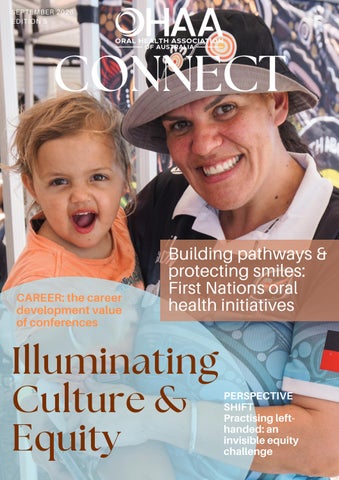
FRONT COVER IMAGE Oral Health Therapist Erin Taylor and her child.
OHAA CONNECT EDITOR Kailey Paterson
CEO’s Welcome You can also read an update on the strong progress being made against OHAA’s Strategic Plan. From our investment in new member platforms and professional development to advocacy and initiatives supporting better oral health outcomes, there is a great deal happening across the Association. Importantly, this work is being shaped by the knowledge, experience and enthusiasm of our members.
Welcome to the September 2026 edition of OHAA Connect. This edition explores culture and equity, but what struck me most while reading it was the importance of human connection. Whether we are communicating with a patient, supporting a student, learning from a colleague or adapting care to meet someone’s individual needs, meaningful progress often begins by taking the time to listen and understand. Across these pages, you will find practical and thoughtprovoking perspectives on inclusive communication, Aboriginal and Torres Strait Islander oral health initiatives, neurodiversity, generational equity and the challenges faced by left-handed practitioners. We also introduce the OHAA Aged Care Community and our Special Care Special Interest Group, both of which create new opportunities for members to share knowledge, build confidence and work together to improve access to oral healthcare.
Of course, connection is even better when it happens face to face, which brings me to the upcoming OHAA Oral Health Congress in Hobart, Tasmania, from 15 to 17 October 2026. This year’s Congress will celebrate 60 years of dental therapy and 30 years of oral health therapy, while bringing our profession together for learning, conversation and plenty of opportunities to reconnect. One of my personal goals for Congress is simple: to meet and speak with as many members as possible. If you see me during a session break, at an exhibition stand, over coffee or at one of the social events, please come and say hello. Tell me what is working well, what OHAA could do better, or simply introduce yourself. I will be the person doing my best to remember everyone’s name, probably with varying degrees of success! As the article on the career development value of conferences reminds us, some of the most valuable insights and professional connections begin through informal conversations. That is exactly the spirit I hope we create in Hobart. Thank you to our contributors, Publication Committee and everyone involved in producing this edition. I hope you enjoy it, and I look forward to seeing many of you under the southern skies in October. NATHAN CLARKE OHAA CHIEF EXECUTIVE OFFICER
OHAA CONNECT SEPTEMBER 2026
3
Oral Health Congress 15-17 October 2026 Hobart, Tasmania
Illuminating Oral Health Under Southern Skies oralhealthcongress.com.au
CELEBRATE 60 YEARS OF DENTAL THERAPY AND 30 YEARS OF ORAL HEALTH THERAPY WITH US DESTINATION SPONSOR
4
Why equitable care demands inclusive communication
Have you ever explained an oral health issue or treatment plan to a patient and wondered whether they truly understood? In a typical day you could communicate with patients with a range of ages, cultures, educational backgrounds, and life experiences. Communicating oral health information in a way that is clear, accessible and meaningful for every patient can sometimes be challenging. When patients don’t fully understand their condition, treatment plan or consent process, the result can have negative consequences. Confusion, reduced adherence to treatment recommendations, complaints and potentially allegations of negligence or poor professional performance could be a result. Actively adapting communication styles to reflect a patient’s needs, not only provides patients with positive patient care, but it can also act as a proactive risk management strategy. By ensuring clinical interactions are inclusive, the communication gaps that can frequently trigger patient frustration, complaints and even professional indemnity claims, could be reduced or even eliminated.
Case study Scott Shelly, Principal and Alexander Sheridan, Senior Associate at health law firm Barry Nilsson, recalls a case where the firm recently assisted an oral health practitioner with a complaint made to the Dental Council of New South Wales (NSW). In short, the complainant alleged she had received treatment which she did not consent to and she was subsequently unhappy with the outcome of the treatment. Although the oral health practitioner thought they had obtained consent from the patient by discussing what treatment was to be provided, the patient nonetheless felt as though she had not appropriately consented to the treatment. In their report, the Dental Council of NSW discussed the importance of adequately explaining the risks and benefits of any treatment, not just what the treatment may involve, to ensure informed consent is obtained. The report also discussed context specific tips to ensure consent is obtained during the course of treatment, for example, the patient could have been permitted to sit up to review the progress of the treatment, so that she was aware and continued to consent, to the treatment continuing. OHAA CONNECT SEPTEMBER 2026
5
Tailoring approach to audience The Australian Health Practitioner Regulation Agency (Ahpra), Shared Code of Conduct (Code), outlines the importance of respectful and culturally safe communication and supporting patients in understanding, participating in and making informed decisions about their care. The Code sets out that informed consent requires a practitioner to, amongst other things: provide information to patients in a way they can understand before asking for their consent. give the patient enough time to ask questions and make informed decisions. act according to the patient’s capacity for decision-making and consent. Consider your audience and their unique circumstances including the below:
Language barriers and cultural awareness Effective communication requires practitioners to consider their audience and whether language or cultural barriers may exist which impact on effective communication. Working in a multicultural country like Australia, you may meet patients who speak multiple languages and/or with English as a second language. Assessing a patient’s language ability is essential in communicating clearly. Effective communication requires the practitioner to: consider the age, maturity and intellectual capacity of people that may have additional needs, and provide information in a way that they can understand. be aware of health literacy issues and take health literacy into account when communicating with people. take all practical steps to meet the specific language, cultural, and communication needs of patients and their families, including using translation and interpreting services where necessary, and being aware of how these needs affect understanding. endeavour to confirm a patient understands any information communicated to them. Specifically, where practitioners may provide treatment to Aboriginal and Torres Strait Islander Peoples, the Code requires practitioners to, amongst other things: acknowledge colonisation and systemic racism, social, cultural, behavioural and economic factors which impact individual and community health. acknowledge and address individual racism, your own biases, assumptions, stereotypes and prejudices and provide care that is holistic, free of bias and racism. recognise the importance of self-determined decision-making, partnership and collaboration in healthcare which is driven by the individual, family and community.
OHAA CONNECT SEPTEMBER 2026
6
The clinical environment Creating an inclusive and supportive experience can help your patients feel more confident in their care and be better equipped to make informed decisions about their oral health. Consider these scenarios: Treating young children who may not have been to an oral health clinic before and might find the machinery overwhelming. Patients who may be sensitive to loud or stimulating environments. Older patients who may have trouble hearing over buzzing equipment or competing sounds. Patients who are provided written information which is not in a language they are proficient in. Whether your clinic is approachable and culturally safe for patients who may not have attended previously.
Effective communication checklist There are many things you can put into action today to help you give your patients a positive treatment experience and for you to avoid risk. SPEAK IN PLAIN LANGUAGE
CONSIDER NON-VERBAL COMMUNICATION
Don’t use jargon and be considerate of the words used around specific patient groups.
Review your proximity to the patient when communicating.
Familiarise yourself with the Code and the requirements for informed consent and effective communication.
Tailor your communications to the specific patient and be cognisant that your communication style may need to change depending on the patient in front of you.
Consider when and how touch is used and explanation of the touch reasoning.
Consider how you might communicate both verbal and written information to a person who speaks English as a second language.
Use an interpreter when necessary.
Consider implications of speaking with back turned or whilst looking at screen and not at patient.
Consider whether you should undertake further education and training on cultural safety.
Seek confirmation from the patient that they have understood the treatment and the risks and benefits.
Consider what the patient’s body language is telling you about their understanding and comfort level within the clinical environment.
Consider how your initial intake procedures will appropriately record cultural, health literacy, communication or other issues relevant to your patient.
GENERAL TIPS
Provide the patient with opportunities to ask questions.
Provide both written and verbal communication methods. This article is written by BMS Risk Solutions Pty Ltd (BMS) AFSL 461594, ABN 45161187980, the OHAA insurance partner, and Scott Shelly and Alexander Sheridan of health law firm Barry Nilsson. Barry Nilsson and BMS communications are intended to provide commentary and general information. They should not be relied upon as legal advice. Formal legal advice should be sought in particular transactions or on matters of interest arising from this communication.
OHAA CONNECT SEPTEMBER 2026
7
Building pathways and protecting smiles: First Nations oral health initiatives From supporting First Nations students entering the oral health workforce to delivering dental trauma prevention initiatives in community sport, Erin Taylor is leading programs that strengthen education, improve health outcomes and create lasting pathways for future generations.
Yaama (Hello) My name is Erin Taylor, and I am a proud Gamilaraay woman from Quirindi, NSW. I graduated from the University of Newcastle with a Bachelor of Health in 2012 and a Graduate Diploma of Dental Therapy in 2013. Throughout my career, I have been passionate about improving First Nations oral health outcomes and empowering the next generation of Aboriginal and Torres Strait Islander oral health practitioners. A significant focus of my work is supporting First Nations students to explore educational and career opportunities within oral health. I am actively involved in initiatives that create culturally safe learning environments and encourage learners to pursue further study and meaningful employment pathways. OHAA CONNECT SEPTEMBER 2026
9
Indigenous Dental Assistant III and IV Pathway Program The Indigenous Dental Assistant Certificate III and IV Pathway Program was developed through a partnership between The University of Sydney and TAFE NSW in 2023, to create a culturally safe and supported educational pathway for Aboriginal and Torres Strait Islander students interested in pursuing careers in oral health and dentistry. The primary aim of the program is to increase Indigenous representation within the oral health workforce by providing students with the knowledge, skills, confidence, and academic preparation required to succeed in both vocational and higher education settings. Through completion of the Certificate III and Certificate IV qualifications, students gain practical industry experience while building a strong foundation for progression into university programs such as the Bachelor of Oral Health (BOH) and Doctor of Dental Medicine (DMD).
Central to the program is a strong focus on cultural support and student wellbeing. Students are supported by a dedicated team of Indigenous staff, educators, mentors, and academic advisors who understand the challenges that can arise when balancing study, work, family, and community commitments. This culturally responsive approach fosters a sense of belonging and connection, enabling students to develop confidence in their abilities while maintaining strong cultural identities throughout their educational journey. The Indigenous Dental Assistants program is delivered through a blended learning model, making education more accessible for students living in regional, rural, and remote communities across New South Wales. Students participate in weekly online classes, allowing them to engage with course content, teachers, and peers from their home communities. This flexible delivery model reduces barriers to participation while maintaining regular academic support and engagement. Complementing the online learning component are four intensive block placements in Sydney, where students travel to Sydney for face-to-face learning and practical clinical experiences. These block placements provide opportunities for hands-on skills development, simulation activities, professional networking and cultural connection. Students engage with oral health and dental professionals, develop clinical competencies, and gain firsthand insight into the pathways available within the dental profession. By combining vocational training, cultural support, flexible online education, and immersive university experiences , the Indigenous Dental Assistant Certificate III and IV Pathway Program empowers Aboriginal and Torres Strait Islander students to achieve their educational and career aspirations. Ultimately, the program contributes to the development of a stronger Indigenous oral health workforce, helping to improve oral health outcomes and create future leaders who can make a positive impact within their communities.
OHAA CONNECT SEPTEMBER 2026
10
Get Your Guards On (GYGO) Mouthguard Program In 2024 I developed the Get Your Guards On (GYGO) Mouthguard Program, an initiative promoting oral health education and dental trauma prevention among First Nations adults and children participating in rugby league at the annual NSW Koori Knockout. Funded by the Ministry of Health’s Centre of Oral Health Strategy, the program brings together 50 student volunteers from the Sydney Dental School, volunteer Prosthodontist Ish Larney and staff from Tamworth Aboriginal Medical (TAMS). The program provides dental students with hands-on experience fabricating custom fitted mouthguards whilst creating opportunities to engage with First Nations communities in rural and remote areas.
Last year, the students produced 400 mouthguards over a four-day period, a HUGE achievement that represented an estimated $80,000 value returned to First Nations communities. By taking the students out to work within the rural communities at a grassroot level, the program gives them exposure to life and work outside major cities, with the hope of encouraging graduates to consider practising in regional and rural communities. Through community engagement, education, and access to custom-fitted mouthguards, the program supports healthier outcomes while encouraging participation in sport and positive oral health behaviours. This year, the event will be held at Raymond Terrace, NSW, and is set to be the biggest event yet, with the program also supporting research for my master's degree ‘Exploring Attitudes, Barriers, and the Effectiveness of Mouthguard Use in Contact Sports within First Nations Communities in Australia’.
My goal is to inspire and support more Aboriginal and Torres Strait Islander people to pursue careers in oral health and become leaders within their communities. Together, these initiatives reflect my commitment to strengthening First Nations health outcomes through education, workforce development, community engagement, and culturally responsive oral health promotion. ERIN TAYLOR ORAL HEALTH THERAPIST OHAA CONNECT SEPTEMBER 2026
11
Delivering on our vision:
Strong progress against the OHAA Strategic Plan As we move through the second year of our 2025-2027 Strategic Plan, OHAA continues to make significant progress across all five strategic priority areas. What began as an ambitious roadmap for a newly established national association is now delivering tangible results for members, the profession, and the broader community.
Building a Sustainable Organisation OHAA has strengthened its financial position and made a strong surplus in the 2025/26 year, significantly exceeding original forecasts. Revenue diversification has also accelerated, with strong contributions from our congress, events, professional indemnity insurance, sponsorship, and other member services. Sponsorship performance at both the 2025 and 2026 Congresses has exceeded expectations, reflecting growing confidence in OHAA's direction and long-term sustainability.
Enhancing the Membership Experience Improving member value remains a central focus of the Strategic Plan, and significant investments have been made to enhance the member experience. Over the past year, OHAA has launched the My OHAA app, implemented a dedicated Learning Management System, introduced a community engagement platform, and delivered a completely refreshed website and Member Portal. Together, these initiatives have transformed how members access services, connect with colleagues, and engage with the Association. Professional development continues to be a key area of growth. More than 30 CPD events have been delivered, attracting more than 5,000 registrations. The inaugural OHAA Congress also exceeded attendance and revenue targets, highlighting the profession's strong commitment to learning, networking, and collaboration.
OHAA CONNECT SEPTEMBER 2026
VIEW OUR STRATEGIC PLAN 12
Advocating for Oral Health OHAA has quickly established itself as a credible and influential voice for oral health practitioners. Through extensive advocacy and stakeholder engagement, the Association has contributed to key policy discussions relating to workforce recognition, accreditation standards, Medicare access, and regulatory reform. Early achievements include supporting access to DVA funding for oral health practitioners, influencing legislative reforms, improving private health claiming processes, and participating in global policy discussions on dental amalgam.
Dentists on the Hill Parliamentary Breakfast 11 August 2026, Canberra ACT - Dr Kelly Hennessy - ADQ President/Board Chair, Dr Martin Webb, Dr Paul Dever- ADAQ Deputy Chair, Dr Norah Ayad, Dr Sophie Scamps MP and OHAA Policy Officer Aneta Zielinski.
Improving oral health outcomes OHAA has also progressed initiatives aimed at improving oral health outcomes, particularly for priority populations. The Oral Health Promoter Program continues to expand, equipping community workers and non-dental professionals with the skills to support oral health in everyday settings. At the same time, work is progressing on the establishment of the Oral Health Foundation of Australia, which will support future research, education, and community-based programs aimed at reducing oral health inequities.
Looking ahead The progress achieved to date demonstrates that OHAA is well on track to deliver the ambitions outlined in the 2025-2027 Strategic Plan. From financial sustainability and digital transformation to advocacy, research, leadership, and oral health improvement initiatives, the Association continues to build strong foundations for the future. Together, we are creating a stronger profession, a stronger association, and better oral health outcomes for all Australians. OHAA Leadership Forum 28 March 2026, Sydney NSW OHAA Board Directors, Regional Committee Chairs, Special Interest Group Chairs and select staff.
OHAA CONNECT SEPTEMBER 2026
13
Culture and equity begin at the chairside Within our chosen career in oral health, the pressure to meet all our responsibilities, both professional and personal, can often crowd out what our work is about: human connection. In recent years, our profession's governing bodies and educational frameworks, from Ahpra's Cultural Safety Strategy to national curriculum reforms, have placed a clear and necessary focus on culture, diversity and health equity. For many practising clinicians, though, these directives can feel abstract, or like another item added to an already full plate. When you're managing complex clinical cases, tight appointment times and the everyday pressures of practice, "achieving equity" can feel like a task that belongs somewhere outside the surgery door. How do we bridge the gap between high-level policy and the realities of daily practice?
Catching ourselves In my years as a clinician and practice owner, now speaking with practices across the country and watching new graduates find their feet in the profession, I've come to know this space well. There's the strain of trying to communicate across a language or cultural barrier while the clock keeps ticking, and the feeling of helplessness when a patient needs care they simply can't afford. And sometimes it's quieter than that, the moment you catch yourself on autopilot, moving fast to clear the appointment book instead of truly connecting with the person in the chair. Think about it like this: When we are functioning on autopilot, our brains default to shortcuts, unconscious bias, and old, automatic reactions.
Under time pressure or stress, we bring assumptions from the past into a new interaction where they simply don’t belong. Real equity isn't built by memorising a list of cultural facts or reciting a textbook definition. It begins with critical self-reflection, a practice ancient wisdom has championed for centuries and that modern cognitive science now backs. As we mentor the next generation of oral health practitioners, one message becomes clear: cultural safety and equitable care don't require extra hours in the day. They do, however, require presence in the moment.
The power of the mindful pause When we take a mindful pause, one conscious breath before we step into a room or pick up the mirror, we create a buffer between stimulus and response. In that small moment of stillness, we reset and create options.
OHAA CONNECT SEPTEMBER 2026
14
We make space to see the individual in front of us, rather than viewing them through a lens of time pressure, stereotype or systemic barrier, and we shift from reacting to responding. We listen with intent, communicate with clarity and shape our care around their lived experience, not our assumptions about it.
Grounding equity through the GEM framework I've written before about The Resilience Project's GEM framework, Gratitude, Empathy and Mindfulness, and it holds just as true at the chairside. Gratitude begins with appreciating the trust a patient places in us. Many arrive carrying anxiety that extends beyond the dental chair, whether from dental phobia, past healthcare experiences, trauma, or a lifetime of simply not feeling heard. Acknowledging the effort it took to attend, particularly when anxiety is involved, can shift the dynamic from authority and compliance towards partnership and trust. Empathy means stepping into a patient's world long enough to understand the circumstances shaping their health. One of my favourite reminders comes from Stephen Covey's The Seven Habits of Highly Effective People: listen to understand, not to reply. Instead of viewing a missed appointment as a lack of commitment, empathy asks a different question: what might this person be navigating outside these walls? Financial pressures, transport challenges, family responsibilities and cultural considerations all influence how people access and engage with care. Mindfulness is noticing our own stress, assumptions and judgements without turning them into selfcriticism. Self-compassion researcher Kristin Neff reminds us that we can respond to ourselves with the same kindness we extend to patients. When we're running late or a consultation feels difficult, a simple pause and one grounding breath can help us reset, refocus and return our attention to the person in front of us.
OHAA CONNECT SEPTEMBER 2026
In the room None of this requires an overhaul of your day. Try this: Before you step out to greet your next patient, pause for three seconds. Breathe in, let go of the last appointment, and walk in with a clean slate. The same shift works in conversation. Swap an assumption for curiosity: Instead of assuming why someone missed their last appointment, ask what's made it hard to get here.
You can't solve every systemic inequity your patients face. But you can offer safety, dignity and good care in the time you have with them. By staying present and anchored in the here and now, we can bring some clarity to our clinical care, build genuine rapport across diverse communities, and model something worth passing on to the colleagues we mentor. One present moment at a time - that's how we turn policy into practice, and practice into what it was always meant to be…human connection.
LYN CARMAN OHAA RURAL & REMOTE SIG CHAIR, ORAL HEALTH PROMOTION COMMITTEE MEMBER AND PUBLICATION COMMITTEE MEMBER
15
Beyond access: what neurodiversity can teach us about equity in oral health Equity in oral health extends beyond appointment availability and affordability. By considering neurodiversity and sensory needs, oral health practitioners can create environments that support participation, trust, and positive care experiences for a broader range of patients. When we think about equity in oral health, conversations often focus on increasing access — more appointments, reduced costs, and reaching communities that experience barriers to care. However, access alone does not always lead to participation. As oral health practitioners, we know that for patients, attending an appointment is only one part of receiving care. Feeling safe, understanding what is happening, being heard, and being able to engage with treatment all influence whether an experience feels positive or becomes something to avoid in future. This becomes especially relevant when considering neurodiversity. Dental environments can be highly stimulating places. Bright lights, unfamiliar smells, unpredictable sounds, personal space considerations, multiple people speaking, and additional demands to regular routines can be challenging for neurodiverse patients. These factors and more can become barriers before treatment even begins. When patients appear reluctant, distressed, unable to tolerate treatment, or repeatedly fail to attend, it can be easy to attribute this to anxiety alone.
Yet sometimes the challenge is not the person — it is the environment. Some clinics are beginning to build sensory-aware approaches into routine care. This may include sending simple appointment information beforehand with photos of the clinic, directions, expected duration, parking information, and what to expect on arrival.
OHAA CONNECT SEPTEMBER 2026
17
Within the appointment itself, clinicians might consider reducing unnecessary background noise, minimising interruptions, reducing visual clutter, or adjusting lighting where clinically appropriate. Previewing sensations that patients may experience and avoiding sudden changes can help create predictability. Small environmental and communication adjustments can also influence the patient experience. Agreeing on a stop signal, allowing short breaks, checking communication preferences, using visual supports, or involving patients in simple decisions such as positioning or pacing can help build trust and comfort. Scheduling appointments at quieter times of day, allowing additional settling time where possible, creating lower-stimulation waiting options, or having simple sensory supports available — such as sunglasses, fidget tools, headphones, or alternative oral hygiene products — may support engagement without significantly changing workflow.
These principles are increasingly being explored in practice settings. At Curtin University’s Oral Health Familiarisation Clinic, delivered in partnership with Autism Association of Western Australia, familiarisation approaches have been incorporated into oral health services to support individuals who may benefit from additional preparation, predictability, and flexibility. The clinic environment and patient journey place emphasis on communication, sensory awareness, and creating opportunities for patients to engage at a pace that feels manageable. This work has been supported through the ADHF Healthier Smiles Community Grant and recognised through the Excellence in Innovation award at the WA Disability Support Awards, highlighting growing recognition that inclusive care can improve experiences without changing the fundamentals of good oral healthcare. Importantly, these approaches are not limited to neurodivergent patients. Many of the adjustments that support autistic individuals can also improve experiences for patients experiencing dental anxiety, communication differences, disability, previous negative healthcare experiences, or uncertainty around treatment.
Inclusion does not always begin with major redesign or specialised equipment. Sometimes it begins with turning down the noise, slowing down the explanation, and creating enough space for patients to experience care in their own way. DR AMANDA TAN GENERAL DENTIST Author Biography Dr Amanda Tan is an experienced general dentist and owner-operator of a female-led private practice in Western Australia, established in 2013. She is known for her refined approach to patient communication and her commitment to delivering high-quality, patient-centred care. Her clinical interests include preventative and minimal intervention dentistry, the management of patients with dental anxiety, and teeth whitening. Alongside her clinical work, Amanda has been a lecturer at Curtin University since 2023, where she serves as final-year clinical coordinator and clinical lead for several outreach programs. She is a recipient of the ADHF Healthier Smiles Community Grant for her work supporting autistic individuals in dental settings. This work was recently honoured with the ‘Excellence in Innovation’ award at the WA Disability Support Awards.
OHAA CONNECT SEPTEMBER 2026
18
Introducing the Aged Care Community:
A new era of connection, collaboration and professional growth We’re proud to announce the launch of the OHAA Community - a new online member platform designed to bring oral health practitioners together through shared interests, knowledge exchange, and professional collaboration. Created to support connection across our membership, the OHAA Community platform provides dedicated spaces where members can network with peers, access valuable resources, participate in discussions, and contribute their own expertise. Each Community will feature a searchable Community Library and direct access to the new OHAA Learning Hub, making professional development and knowledge sharing easier than ever.
OHAA Aged Care Community The Aged Care Community is the first community we’ve launched. This Community is a supportive network committed to improving oral health and wellbeing outcomes for older Australians. Bringing together colleagues working across aged care, health, education, research, and clinical practice, the Community provides a space to connect, collaborate and learn from one another. Members can access specialised resources, downloadable templates and tools in the Community Library, participate in professional discussions, and share experiences that help strengthen practice and service delivery in aged care settings. Most importantly, the Community creates opportunities to turn conversations into action by building professional confidence, supporting advocacy, encouraging service development, and contributing to better oral health outcomes for older Australians.
Together, we can strengthen prevention, collaboration, and access to high-quality oral health care for older Australians. OHAA CONNECT SEPTEMBER 2026
19
Who should join? The Aged Care Community Membership (ACCM) is ideal for oral health practitioners who are currently working in aged care, as well as those interested in expanding their services or developing a business within this growing sector.
How to purchase and join OHAA members can purchase the ACCM subscription at any time throughout the year for $200 annually. Alternatively, if you’re a new member, you can add the ACCM subscription to your membership at the time of joining.
Aged Care Training Program Joining the Aged Care Community includes access to the Aged Care Training Program. Featuring a variety of experts, this program is currently being refreshed and transitioned to the OHAA Learning Hub, where it will provide ACCM members with accessible, self-paced learning designed to support excellence in aged care oral health practice. The revitalised program is expected to be available later this year.
What’s next? The launch of the OHAA Community platform marks the beginning of an exciting new chapter in member engagement and professional collaboration. Additional Communities are planned for later this year, including dedicated spaces for Rural & Remote, Special Care, and Student members. As the platform grows, members can look forward to even more opportunities to connect, learn, share experiences, and strengthen the oral health profession together. We invite members to explore the new OHAA Community platform and become part of a growing network committed to supporting professional excellence and improving oral health outcomes across Australia.
For more information, and to add the ACCM subscription to your membership, please visit: ohaa.com.au/aged-care-cm. If you would like assistance or have questions, please email us at admin@ohaa.com.au. AMANDA WHITTINGHAM OHAA PROJECT OFFICER OHAA CONNECT SEPTEMBER 2026
20
Generational equity in dental practice: wisdom and workflow As Australia’s dental workforce evolves, practices are becoming increasingly multigenerational with Gen Z, Millennials, Gen X and Baby Boomers working alongside one another in patient care. The Australian dental workforce is becoming increasingly diverse, not only culturally, but generationally. Gen Z and young Millennial practitioners are entering a profession shaped by Millennials, Generation X clinicians and, in some cases, Baby Boomers who continue to contribute their expertise to patient care. These different generations often bring different expectations, communication styles, and approaches to technology. Yet they also bring complementary strengths that can enrich the workplace and improve patient outcomes. As a new generation of practitioners enters the profession, they are reshaping the culture expectations, and everyday dynamics of clinical practice. Young practitioners have stepped into this landscape with curiosity and flexibility toward newer dental products, digital workflows, and structured communication training. More experienced clinicians, meanwhile, bring equally valuable strengths to the profession. Their practice style is shaped by years of clinical experience, enduring patient relationships, and a deep understanding of systems and approaches that have consistently delivered positive outcomes. These differences can create tension, but they also provide an opportunity to strengthen equity within dental practice by recognising the value each generation brings.
Understanding generational dynamics in dental practice Awareness sits at the heart of effective oral health care; awareness of our patients, their concerns, their emotional wellbeing, and awareness of our own clinical strengths and limitations. Yet one dimension of awareness is often overlooked - the influence of generational group dynamics within a dental clinic. Dental clinics are small ecosystems, and the mix of personalities, generations, cultures and backgrounds can influence everything from workflow to patient experience. In this article, I want to illuminate this often-overlooked dimension of dental practices. By exploring how our differences, mindsets, and approaches intersect, we can better understand how to build a workplace that is not only equitable, but where diverse perspectives and experiences are recognised as strengths. OHAA CONNECT SEPTEMBER 2026
21
Technology: a bridge to connect the generational gap For the tech-savvy oral health practitioners, digital tools feel intuitive and help streamline tasks that would otherwise be slow or manual. For others, these same tools can reinforce long‑trusted protocols by adding consistency, and efficiency. Generational differences sometimes cause friction. Technology therefore serves not only as a valuable diagnostic and administrative tool, but also as a bridge that helps connect generations within the workforce. It has the potential to preserve the wisdom gained through experience while supporting more collaborative, equitable and efficient ways of working. Younger clinicians might intuitively prefer digital tools, while experienced clinicians may be more inclined to rely on methods that have served them well for decades. However, these differences also demonstrate how much we can learn from each other. In the past decade, dentistry has undergone a wave of technological and clinical innovation. From CAD/CAM systems, 3D dental imaging, digital workflows, and streamlined administrative systems, the list truly goes on. While many experienced oral health practitioners have embraced aspects of this evolution, some remain understandably cautious about changing protocols that have been refined through years of clinical practice and patient care. These established approaches often provide consistency, continuity of care and familiarity for both clinicians and patients. However, in some settings, manual systems and limited digital integration can add administrative burden and place pressure on busy clinical teams. Just as experienced clinicians mentor those entering the profession, emerging practitioners can also share knowledge about new technologies and contemporary workflows, creating opportunities for mutual learning.
Technology acts as a powerful connector between practitioners at different career stages because it does not belong to any one generation. It simply enhances what each clinician already does well. OHAA CONNECT SEPTEMBER 2026
When clinicians engage with technology together, it creates a shared workflow that helps teams better understand each other’s perspectives, while improving communication and clinical decision-making. One example is the emergence of AI scribe technologies that automatically capture clinical notes, treatment discussions, consent conversations and follow-up instructions, reducing the burden of manual documentation. Technology can help ease pressure on both sides by making tasks clearer, faster and more consistent, creating opportunities for collaboration rather than division. Ultimately, equity is not achieved when one generation adapts to another, but when both recognise the value each brings to patient care and the profession, blending wisdom with workflow to create stronger teams, better outcomes and a more future-ready profession. JASH THAKKAR ORAL HEALTH THERAPIST AND PUBLICATION COMMITTEE MEMBER
22
Beyond CPD: the career development value of conferences When we think about professional conferences, it is easy to focus on the tangible outcomes: the CPD hours earned, new clinical knowledge gained, or research findings presented. Yet as I reflected on my recent attendance at the International Symposium on Dental Hygiene (ISDH), I was reminded that the value of conferences extends far beyond education alone. They can be powerful catalysts for career development, professional growth, and renewed purpose. For many oral health practitioners, day-to-day work can be busy and highly focused on immediate responsibilities. Conferences offer a rare opportunity to step back and view our profession from a broader perspective. Surrounded by colleagues from around the world, I was able to explore emerging trends, innovative practices, and diverse approaches to oral health promotion and education.
OHAA CONNECT SEPTEMBER 2026
For me, a session on integrating social determinants of health screening into patient care was particularly impactful. It highlighted how factors such as financial stress, housing instability, and limited access to transport can significantly influence oral health outcomes and a patient's ability to engage with care. The session reinforced the importance of a holistic approach to patient care and inspired me to consider how we can better support students to develop empathy and understanding of the challenges patients face beyond the clinical setting. One of the most significant career development benefits of conferences is the opportunity to build and strengthen professional networks. While keynote presentations and workshops provide valuable learning, some of the most meaningful insights often emerge through informal conversations. A discussion over coffee, a connection made after a presentation, or a chance meeting with a colleague can lead to new collaborations, mentorship opportunities, or entirely new ways of thinking about our work.
23
As careers evolve, professional growth often occurs through relationships as much as through formal learning. Conferences provide a unique environment where these connections can flourish.
Conferences can also strengthen our professional identity. Hearing the experiences of practitioners, researchers, educators, and leaders helps us recognise the many pathways available within our profession. Whether we aspire to leadership, research, education, advocacy, or advanced clinical practice, exposure to the journeys of others can help us envision possibilities for our own careers. For me, one of the most valuable aspects of ISDH was the opportunity to reflect on where our profession is heading and how each of us can contribute to its future. Serving as a poster jury chair at ISDH was an inspiring reminder of how our profession is evolving. I was impressed by the quality and diversity of research being undertaken by dental hygienists and oral health therapists from around the world.
Pictured left: Dr Lauren Church, Oral Health Therapist
A colleague’s perspective – Dr Lauren Church, Oral Health Therapist
It was particularly encouraging to see so many colleagues pursuing postgraduate study and contributing to the evidence that informs our practice. Their work highlighted the growing influence of our profession in research, education, public health, and policy. The experience left me optimistic about the future of oral health, knowing that OHPs are not only adapting to change but actively shaping it from within the profession.
Attending ISDH in Milan was a turning point in how I see my practice and my place in the wider profession. Meeting like-minded people working in the digital oral health space was the highlight, and I have come away with several conversations I hope will grow into international collaborations. There is something powerful about having colleagues from across the globe in one room, all talking about oral hygiene and the way it touches every facet of life, from general health to confidence and quality of life. It has sharpened my ambitions for where I want to take my own work, particularly in prevention and digital education, and reminded me how much reach our profession has and needs to be expanded outside the oral health silo. I am already looking forward to the next one!
OHAA CONNECT SEPTEMBER 2026
ISDH26 Milan, Italy - Dr Lauren Church, Teona Petreska and Ashleigh Ayo
24
Ultimately, the true value of a conference is not measured by the number of sessions attended or notes taken. Rather, it lies in what happens afterwards: the new ideas implemented, the connections maintained, the confidence gained, and the opportunities pursued.
ISDH26 - A/Prof Melanie Aley and Teona Petreska, Oral Health Therapist & Honours Graduate
Another perspective from ISDH: Teona Petreska, Oral Health Therapist and Honours Graduate Presenting my Honours research at the International Symposium on Dental Hygiene 2026 in Milan was a formative first conference experience and a valuable step in my early career. Delivering findings to an international audience strengthened my ability to communicate complex research clearly and respond to critical questioning under pressure. Beyond the presentation itself, observing how research is discussed, debated, and translated into practice underscored the broader professional value of conference participation, giving me a far richer understanding of the academic and clinical landscape.
My experience at ISDH reinforced that career development is rarely a single event or achievement. Instead, it is an ongoing journey shaped by experiences that encourage us to learn, connect, reflect, and grow. Conferences provide a unique space for all four. Whether you are a student, early-career practitioner, or experienced professional, investing in these opportunities may help shape the next chapter of your career in ways you never anticipated. I encourage all oral health professionals to take advantage of these opportunities closer to home by joining colleagues at the OHAA National Congress in Hobart on 15-17 October 2026. With an exciting program of speakers, research, and networking opportunities, it promises to be an inspiring event that will help shape the future of our profession and strengthen our collective impact on oral health outcomes. ASSOCIATE PROFESSOR MELANIE ALEY
Engaging directly with academics, researchers, and clinicians from diverse settings expanded my professional network and exposed me to perspectives I hadn't previously considered. These conversations sharpened my interest in nontraditional models of dental care, particularly how oral health services can be better designed to reach vulnerable populations who are often underserved by standard practice models. Rather than viewing my Honours project as a one-off undertaking, this experience has clarified my longer-term direction toward research and academia, and I'm keen to continue building on it.
OHAA CONNECT SEPTEMBER 2026
25
ISDH 2026, Milan Italy - OHAA Board Director Jinous Eighani-Roushani, OHAA President Cheryl Dey and IFDH President Jill Rethman (now Immediate Past President).
OHAA receives IFDH Impact Award at the International Symposium on Dental Hygiene 2026 We’re thrilled to have received an IFDH Impact Award at the International Symposium on Dental Hygiene (ISDH) 2026 in Italy for best organisation programs. It’s an incredible honour to be recognised on the world stage for our program “Bridging the Gap: Oral Health Promotion for New Migrants, Refugees and People Seeking Asylum in Australia”, which provides essential knowledge and resources to those who need it most. This initiative builds lasting relationships between the dental profession and the community, creating a foundation for sustained oral health improvement. Thank you International Federation of Dental Hygienists (IFDH) for this award and congratulations to our fellow Impact Award recipients Slovakia and United States.
OHAA CONNECT SEPTEMBER 2026
26
Practising left-handed: an invisible equity challenge For decades, left-handed oral health practitioners have adapted to workplaces, equipment and training systems designed primarily for right-handed operators. Wendy Sih reflects on the challenges and the progress she has witnessed throughout her career. Having been left-handed all my life, I never really viewed the challenges I experienced through the lens of equity. While being left-handed is rarely discussed in those terms, many of the practical challenges I encountered arose not from individual limitations, but from workplaces, equipment and educational systems designed with right-handed operators in mind. These barriers were often invisible to my right-handed colleagues because they had never experienced the need to adapt to a clinical environment that wasn’t built for them. My dental career began as a sixteen-year-old dental assistant and I was delighted to discover that it was an ergonomic advantage to be “cacky handed” when working for a right-handed dentist. Holding the suction in your left hand allowed better visual access to the mouth with less twisting of your body. However, the advantage didn’t translate to reception tasks, as I discovered while writing a receipt for a patient by hand. In this pre-computer era, the receipt books were thick and narrow with three receipts placed vertically on each page. It was an acrobatic task to hold the pages and carbon sheet back with the right hand, whilst trying to access the correct line near the spine of the book, with the left hand. It looked so obviously awkward that the patient exclaimed in a shocked manner:
“You’re left-handed! How on earth did you get your job?”
OHAA CONNECT SEPTEMBER 2026
Navigating a right-handed profession Competition was fierce for the ten places available in the 1976 Dental Hygiene Course. I knew staff found it cumbersome to adjust the units for left-handed operators, and I worried that this would influence my admission into the course. So I used my right hand during the interview. While I was accepted into the program, the righthanded clinic tutors struggled to teach me instrumentation and, as a result, largely avoided working with me.
It took another left-handed practitioner to recognise the barriers I was encountering. An overseas-trained practitioner saw the challenges I faced and generously stepped in to provide informal lunchtime tutoring. Her support made an enormous difference to my development, and I was so grateful that I named my first daughter after her! 28
Training had revealed some of the challenges of being left-handed in the dental world, but entering the workforce exposed just how much clinical environments and equipment were designed with right-handed operators in mind. My former employer was keen to employ me until we realised that his dental unit was unsuitable for me.
This arrangement solved many of my day-to-day challenges, leaving only a slight tension on the slow handpiece during prophylaxis. Access to high-speed handpieces and piezo ultrasonics remained out of reach, however, and the additional cords occasionally created a tripping hazard for both myself and those working around me.
Finding a surgery I could comfortably work in was often a challenge. I frequently had to rely on separate chair and cart systems, provided there was enough room on the left side and the floor attachments didn't get in the way. Many surgeries were designed with so little spare space that fitting anything beyond a dental assistant's chair was difficult. For employers juggling part-time Dental Hygienists across multiple practices, accommodating a left-handed operator was often seen as more trouble than it was worth.
Interestingly, ergonomics were rarely an issue when I had enough room to move. Working without a dental assistant allowed me to change positions frequently, moving between the 3 and 9 o'clock positions as needed. An ergonomics physiotherapist who observed the five OHPs in our practice commented that this variety of movement was likely better for preventing muscle fatigue than remaining in the largely static 12 o'clock position commonly taught today. After all, our bodies were designed to move, not stay in one position for hours at a time. Another misconception is that left-handed instrumentation is simply the mirror image of righthanded technique. In reality, it requires subtle adjustments. Right-handed tutors need to be aware of their own positioning on the opposite side, then; observing the left hander’s placement, adjust the angle slightly to engage the blade correctly. Many “leftys”are at least partially ambidextrous as our brains are wired differently. Adaptability has certainly been a recurring theme throughout my own career.
Overhead units are designed for use on either side but frequently couldn’t be altered due to lack of left side space. Placing this unit above the patient’s head is discouraged so left handers often experience a greater level of tension on the cords, causing both fatigue and the risk of dropping the handpiece.
Fortunately, attitudes towards left-handedness have changed considerably since I entered the profession. The growing number of left-handed oral health practitioners has helped increase awareness of the practical challenges we face and, in turn, encouraged improvements in equipment design, surgery layouts and clinical education. While there is still room for progress, today's left-handed practitioners are entering a profession that is far more accommodating than the one I joined almost fifty years ago.
Looking forward To overcome some of these challenges, I purchased my own portable Cavitron with a removable water reservoir that could be used across multiple surgeries. Depending on the setup, I could either connect it to the unit's water supply or operate it independently from a water well on the benchtop.
OHAA CONNECT SEPTEMBER 2026
WENDY SIH DENTAL HYGIENIST AND OHAA LIFE MEMBER
29
How to make interdental cleaning a habit for a lifetime Effective plaque removal is still essential to prevent both oral and systemic diseases. Toothbrushing plays a key role here, although it cannot remove all plaque on its own. A toothbrush cleans mainly the easily accessible surfaces, leaving plaque behind – particularly in the nooks and crannies between the 1 teeth where it is hardest to reach. So, how do we support patients in building lifelong interdental cleaning habits? Which products are recommended? Here are valuable insights and tips to help your patients.
Interdental cleaning – from recommendation to daily habit Periodontal diseases most commonly originate between teeth. But it’s important to remember that the early stage of gingivitis can be both prevented and reversed. In addition, there is a link between periodontal disease and systemic conditions such as heart disease and diabetes. This highlights the importance of effective daily interdental cleaning as part of preventive healthcare.1 However, many people find it challenging to stick to the habit of cleaning in between the teeth, despite strong clinical evidence. Some common reasons include difficulty forming a routine, discomfort, and uncertainty about which products to choose. For optimal oral health, the combination of toothbrushing and interdental cleaning is considered the gold standard. Interdental brushes, particularly cylindrical versions such as TePe Original, remain the most effective method for plaque removal in accessible interdental spaces and are widely regarded as the firstchoice device.1, 2 Since many patients struggle to adopt interdental brushes as part of their daily routine, there is a need for simple, entry-level solutions to help them initiate and maintain the habit of cleaning between their teeth.
OHAA CONNECT SEPTEMBER 2026
30
TePe EasyPick™ - for easy cleaning on the go TePe EasyPick™ is a flexible toothpick designed to provide a simple, comfortable and effective cleaning solution. It combines a stable core with a silicone coating featuring lamellae that provide a gentle yet effective cleaning action.
Product benefits Flexible, comfortable and durable. Long length and large contact surface for effective plaque removal. Non-slip grip for ease of use. Available in three sizes (XS/S-orange, M/L-blue, XLpurple) to suit different needs. Available with a pocket case to bring them along easily.
Who is it for? TePe EasyPick™ is particularly suitable for: Those with healthy gums and interdental spaces. Those with gingivitis as an alternative or complement to other interdental aids. People who want to bring it along on the go. For most people with braces and prosthetic restorations. An introduction to interdental cleaning for patients with low motivation. It’s worth noting there is no scientific support for toothpicks (e.g rubber picks, dental sticks) as the primary cleaning tool for people with periodontitis or implants.2,4
Clinical positioning TePe EasyPick™ is ideal as an on-the-go cleaning tool, a convenient option that supports daily cleaning habits outside the home environment. While appreciated for their comfort and ease of use, it’s worth mentioning that interdental brushes achieve superior cleaning efficacy compared to toothpicks. 2,4
TePe EasyFit™ – lowering the threshold to interdental brushing TePe EasyFit™ is a tapered interdental brush that simplifies the transition to daily interdental cleaning. It addresses common barriers such as discomfort, uncertainty about sizing, and lack of motivation to clean between teeth.
Product benefits One brush fits many gap sizes/interdental spaces. Long brush for effective plaque removal. Softer bristles at the top for improved comfort and easier insertion. Simplified sizing: S/M (small and medium gaps).
Who is it for? TePe EasyFit™ is particularly suitable for those who: Are new to interdental cleaning. Perceive interdental brushes as difficult or uncomfortable. Have gingivitis or generally healthy periodontal conditions.
Pictured: TePe EasyFit™
Making healthy oral care habits an easy fit Habit formation is the key challenge in preventing oral diseases. TePe EasyFit™ has been specifically designed to reduce both practical and psychological barriers, making it easier for patients to start cleaning between their teeth daily. By offering a comfortable, easy-to-use solution with simplified sizing, TePe EasyFit™ can serve as an entry product, helping people new to interdental cleaning build confidence and consistency. Over time, one can 2 transition to cylindrical interdental brushes such as TePe Original for optimal cleaning efficacy.
The role of the gold standard of interdental cleaning While TePe EasyPick™ and TePe EasyFit™ play important roles in improving patient compliance, it is important to remember that cylindrical interdental brushes remain the gold standard for plaque removal in interdental spaces. TePe Interdental Brush Original, available in a full range of nine ISO sizes, lets people clean between their teeth effectively with a precise fit, when used correctly. 1,2
Clinical implications – supporting behavioural change The introduction of simplified and comfortable interdental products reflects a shift towards behaviour-focused preventive care. By meeting patients where they are, whether at the beginning of their oral hygiene journey or in need of reinforcement, dental professionals can improve long-term oral health outcomes.
OHAA CONNECT SEPTEMBER 2026
31
Tips to bring into the practice Want to improve oral health outcomes and encourage little habits that last a lifetime? Here are some practical tips to help: Start simple: Recommend TePe EasyFit™ for patients who are new to interdental cleaning or hesitant to use traditional brushes. Promote routine: Help patients build interdental cleaning into their daily habits by pairing it with something they already do (e.g. brushing teeth in the evening). Guide them in creating a simple plan. Recommend the right tool: Encourage habit formation with TePe EasyFit™ or TePe EasyPick™, and gradually guide patients – especially those with larger interdental spaces or disease – towards cylindrical interdental brushes for optimal efficacy.2 Recommend TePe EasyPick™ the right way: Suggest it as a convenient “on-the-go” complement, 2, 4 not a replacement for daily interdental brushing. Demonstrate technique: Hands-on instruction significantly increases patient confidence and compliance. Individualise recommendations: Adapt product selection based on periodontal status, anatomy, and patient preference. Reinforce consistently: Revisit interdental cleaning at every recall visit to support long-term habit formation.
Author Biography - Dr Michaela von Geijer Dr von Geijer works part-time at a private dental office in Sweden and TePe HQ in Sweden as a senior clinical and education advisor. She has long clinical experience and is particularly interested in prevention and oral health. She has always placed a high value on working with preventive care. Dr von Geijer has held temporary preclinical positions as amanuensis at the University of Lund, including basic research and assistance with education/training at the medical and dental schools. She also has experience lecturing to professionals when employed by pharmaceutical companies and companies within the dental industry.
Conclusion Interdental cleaning is a cornerstone of preventive dentistry and essential for maintaining healthy gum, yet remains underutilised in daily practice and in everyday oral care. By introducing accessible and user-friendly tools such as TePe EasyPick™ and TePe EasyFit™, dental professionals can help overcome barriers to compliance and support patients in developing sustainable oral hygiene habits. Encouraging this change in habits not only boosts oral health but contributes to overall systemic wellbeing.1 OHAA CONNECT SEPTEMBER 2026
Since 2015 Dr von Geijer has been employed by TePe and a lecturer at universities and congresses worldwide.
REFERENCES 1.Chapple ILC, Van der Weijden F, Doerfer C, et al. Primary prevention of periodontitis: managing gingivitis. Journal of Clinical Periodontology. 2015;42(Suppl 16):S71–S76. 2.Graetz C, Bielfeldt J, Wolff L, et al. In vitro comparison of cleaning efficacy and force of cylindrical interdental brushes versus interdental rubber picks. Clinical Oral Investigations. 2021. 3.Hennequin-Hoenderdos NL, Slot DE, Van der Weijden GA. The effectiveness of rubber bristle interdental cleaners on parameters of oral soft tissue inflammation: a systematic review. International Journal of Dental Hygiene. 2018. 4.Yost KG, Mallatt ME, Liebman J. The clinical efficacy of a dental pick in plaque removal. Journal of Clinical Dentistry. 2006
32
Introducing your Special Care Special Interest Group (SIG) The Special Care Special Interest Group (SIG) brings together the OHAA members who are passionate about improving oral healthcare access and outcomes for people with additional and complex needs. Originally established within the former Dental Hygienists Association of Australia (DHAA), the Special Care SIG has grown into a valued professional network that promotes advocacy, education, and collaboration in special care oral health. For many years, the group was shaped by the dedicated leadership of Margie Steffens, whose vision and commitment fostered a strong and supportive community. As the inaugural Chair of the Special Care SIG, Margie played a significant role in establishing its purpose and ensuring special care remained an important focus within our profession. It is an honour to continue building on the foundation she created. The theme of this edition, Illuminating Culture and Equity, reflects the essence of special care oral health. Our members work with individuals whose oral health is influenced by disability, ageing, culture, mental and general health, and social circumstances. We recognise that achieving equity requires more than clinical expertise. It requires listening, understanding, adaptability, and a commitment to reducing barriers to care. The Special Care SIG is pleased to feature an article from member Michael Rossi, who shares his journey from disability support work to oral health therapy. His story highlights the importance of patient-centred care, the influence of lived experience on professional practice, and the profound difference oral health practitioners can make in the lives of vulnerable communities. Michael's reflections embody the values of the Special Care SIG and remind us why equitable and inclusive oral healthcare matters.
JANE WHITAKER Location: Tamworth NSW Role: OHAA Special Care SIG Chair, Clinical Lead Oral Health Therapist with Hunter New England Local Health District (NSW Health), and Oral Health Therapist in a specialist periodontist practice. Experience: Public sector oral health; specialist periodontist practice; mobile dental services; oral health promotion; and student education through a conjoint appointment with the University of Newcastle. Motivation: As a country girl, I have seen firsthand the challenges rural communities face in accessing healthcare, particularly people with additional or complex needs. Contributing to more inclusive and accessible oral healthcare, while giving back to a profession that has provided me with many opportunities, continues to motivate my involvement.
OHAA CONNECT SEPTEMBER 2026
33
OHAA Special Care SIG Members JESSICA PENNAY Location: Hobart TAS Role: Oral Health Therapist (Adult Scope), OHAA Board Director, OHAA Congress 2026 Chair, ADOHTA Immediate Past President and OHAA Life Member Experience: Public sector oral health practitioner with qualifications including a BOH, BOHT, and Master of Public Health (Distinction). Motivation: Improving the oral health and wellbeing of individuals and communities across Australia. I believe prevention is the foundation of lifelong oral health and am passionate about education, early intervention, person-centred care, and equitable access to services for people with additional needs. JULIE BARKER Location: Hobart TAS Role: Dental Therapist with area of interest in children with additional needs. Experience: Over 40 years as DT working in public sector in both Qld and Tas Motivation: Everyone deserves to have good oral health. I want to make life better for those who find good oral health challenging.
YVONNE ZHANG Location: Melbourne VIC Role: Academic at The University of Melbourne and Oral Health Therapist in private practice. Experience: Experience across public hospitals, community health, rural settings, oncology care, and private general and specialist dental practices. Motivation: Passionate about advancing oral health through education, collaboration, and improving access to high-quality, inclusive care for all members of the community.
MICHAEL (MIKE) ROSSI Location: North-West TAS Role: Oral Health Therapist, Oral Health Services TAS Experience: 6 months (graduated December 2025) Motivation: To provide accessible and effective oral healthcare to all individuals, with emphasis on disadvantaged and marginalised populations.
LILY THIRD Location: Port Macquarie NSW Role: Oral Health Therapist Experience: Oral Health Therapist Motivation: I am passionate about providing inclusive, patient-centred care and supporting people with additional needs. I joined the Special Needs Interest Group to advocate for equitable oral healthcare, contribute to education within the profession, and collaborate with colleagues who share these values.
OHAA CONNECT SEPTEMBER 2026
34
OHAA Special Care SIG Members (continued) ANETA ZIELINSKI Location: Brisbane QLD Role: OHAA Policy Officer and Oral Health Practitioner Experience: 24 years across all areas of oral health, with several years dedicated to special care in a mobile dental practice. Motivation: I am committed to advancing inclusive and equitable dental care that ensures every individual can access oral health services with dignity, compassion, and respect. Advocating for and working with individuals particularly with additional support needs and those experiencing barriers to care to enable improved quality of life. REBEKAH (BEK) KURONEN Location: Adelaide SA Role: Dental Hygienist with South Australia Dental Service (SADS) Special Needs Unit Experience: Six years' experience in special needs dentistry, beginning as a Dental Assistant before progressing into a dental hygiene role. Motivation: I enjoy working with people to help improve their oral comfort and support them to work through and overcome dental anxiety.
DAMIAN SIDERIDES Location: Broome WA Role: Medical Student and Oral Health Therapist Experience: Private general and specialist practice; volunteering across NSW and the Kimberley; clinical education; advocacy; public dental health; early career research; oral health promotion; professional leadership; article authorship; and peer mentoring. Motivation: We all have special care needs patients who would benefit from clinicians collaborating to improve their care, knowledge, skills and understanding of the discipline, and I am excited for OHAA’s future in supporting this important part of practice. ANGIE IOANNIDIS Location: Melbourne VIC Role: Clinical Educator at La Trobe University and Dental Hygienist in the public health sector. Experience: Over 20 years of clinical education experience; more than nine years with the Australian Dental Council as an examiner, assessment writer, and accreditation assessor; alongside curriculum development; and professional committee leadership. Motivation: I’m passionate about advancing oral health education, supporting future practitioners, and improving patient outcomes through evidence-based practice and collaboration.
Other OHAA Special Care SIG Members: Jinky Marsh, Jude Ottaway, Margie Steffens, Pascal Mehanna and Victoria Perchyonok.
OHAA CONNECT SEPTEMBER 2026
35
From supported living to supporting healthy smiles How five years working in disability support inspired a young clinician's journey into oral health and a commitment to improving access to dental care for vulnerable communities. After finishing high school in 2020, I came across an employment opportunity with a disability support organisation in north-west Sydney. At the time, I had never considered working in the disability sector and honestly didn’t think I was suited to that kind of work. The first week was challenging, and I seriously considered quitting at least a dozen times. However, I decided to return and looking back now, I am incredibly grateful that I did. Over the next five years, disability support work taught me far more than I ever expected. While the role was challenging at times, it provided a constant reminder that meaningful work is not measured by financial wealth, but by the positive impact we have on the lives of others. The gratitude, resilience and trust shown by the people I supported helped shape both my personal values and my future career aspirations.
“Meaningful work is not measured by financial wealth, but by the positive impact we have on the lives of others.” One aspect of support work involved assisting individuals with personal and oral care. I distinctly remember supporting a participant with toothbrushing and noticing inflamed, bleeding gums before the toothbrush had even touched their mouth. That moment highlighted how people living with disabilities can often experience barriers to accessing healthcare, including oral healthcare, through no fault of their own. The experience played a significant role in my decision to pursue a career in Oral Health Therapy at the University of Sydney, with the goal of helping vulnerable populations access safe, effective and patient-centred dental care. During my second year of university, I had the opportunity to treat my first neurodiverse patient in the paediatric student clinic at Nepean Hospital. Despite my previous experience in disability support, I still felt apprehensive and worried about seeing this little patient. I wondered whether I would communicate effectively, build rapport and provide the care the patient deserved. Those concerns quickly disappeared when I met the patient and their family. Although the patient was initially hesitant, we gradually built trust over multiple appointments. OHAA CONNECT SEPTEMBER 2026
36
The treatment itself was relatively straightforward, involving fissure sealants, but the experience reinforced something much larger. The gratitude expressed by the patient's mother, along with a handmade card the patient made for me, reminded me that even seemingly small interventions can have a profound impact on patients and their families.
“Even seemingly small interventions can have a profound impact on patients and their families.”
Bringing care to rural communities In February 2026, I relocated to north-west Tasmania to commence a graduate position with Tasmanian Health Service. Since then, I have had the privilege of working across rural and low-socioeconomic communities where access to dental care has historically been limited. Working with neurodiverse children and adolescents continues to be one of the most rewarding aspects of my practice. While appointments can involve complex medical histories, challenging treatment planning and varying levels of cooperation, they also provide some of the most meaningful professional experiences. I will never forget the gratitude expressed by parents and caregivers who have struggled to help their child tolerate even basic oral hygiene routines. In these situations, success is rarely defined by completing every single procedure. Instead, it is measured by the small steps, taken at a pace that is comfortable and achievable for the patient. Although my career is only just beginning, I am excited about the opportunities ahead and the lessons still to be learned. I am thrilled to be part of this special interest group, learning from experienced clinicians, sharing ideas and contributing to ongoing efforts to improve oral healthcare outcomes for all.
MICHAEL ROSSI ORAL HEALTH THERAPIST AND OHAA SPECIAL CARE SIG MEMBER OHAA CONNECT SEPTEMBER 2026
37
ohaa.com.au
OHAA Connect September 2026 Oral Health Association of Australia (OHAA) © 2026