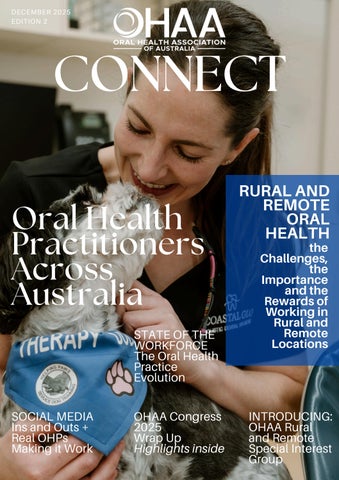
DECEMBER 2025 EDITION 2
CONNECT Oral Health Practitioners Across Australia STATE OF THE WORKFORCE The Oral Health Practice Evolution SOCIAL MEDIA Ins and Outs + Real OHPs Making it Work
OHAA Congress 2025 Wrap Up Highlights inside
RURAL AND REMOTE ORAL HEALTH the Challenges, the Importance and the Rewards of Working in Rural and Remote Locations
INTRODUCING: OHAA Rural and Remote Special Interest Group
Contents 3
EDITOR’S WELCOME Kailey Paterson
26
SOCIAL MEDIA: Posting With Purpose
5
OHAA CONGRESS 2026 DESTINATION ANNOUNCED
31
UPCOMING OHAA EVENTS 2026 Online & In Person CPD
7
OHAA MEMBER INSURANCE PROGRAM: Cover for every stage in your career
32
OHAA FEATURE: Introducing your Rural & Remote Special Interest Group
9
STAYING CONNECTED: OHAA’s New Member App Coming in 2026
37
OUT OF REACH: The Vital Role of Oral Health Practitioners in Rural and Remote Care
11
CONGRESS 2025 WRAP UP - A Celebration of Learning, Connection and Legacy
40
OHAA STRATEGIC PLAN 2025-2027 FINALISED
16
ORAL HEALTH IN THE RURAL SETTING
41
19
CPD ARTICLES Supporting your Professional Path
PERSONALISING INTERDENTAL BRUSH RECOMMENDATIONS: When You Pick it You’re More Likely to Stick to it
20 22 24
CELEBRATING NEW OHAA LIFE MEMBERS CAREER - The Evolving Landscape of Oral Health Practice in Australia PRECISION IN PRACTICE: How Specific Recommendations Strengthen Patient Trust and Outcomes
OHAA CONNECT DECEMBER 2025
OHAA Connect December 2025 Credits Special thanks to all contributors for your time, expertise and commitment. OHAA CONNECT EDITOR Kailey Paterson OHAA CONNECT DESIGNER & PRODUCER Maxine Davis 2
Editor’s Welcome Hello and welcome to the December edition of OHAA Connect! As the editor of OHAA Connect I’m delighted to introduce you to this edition, themed “Oral Health Practitioners Across Australia”. This edition features stories from oral health practitioners across the country highlighting the value of different perspectives and interests within the profession, including the celebration of our newest OHAA Life Members. We’ll introduce you to our OHAA Rural & Remote Special Interest Group (RRSIG) and hear the perspective of serving communities and collaboration across this vast continent. The collaboration of members is such an integral part of our profession and association; we come from so many backgrounds and work in such a variety of environments, both geographically and professionally. I was fortunate to meet some of our incredible community at the inaugural OHAA Congress at the Gold Coast in October and connect with members from every specialty, location and stage in their professional life.
Having just returned to clinical work after the birth of my second child, I’m reminded of the importance of connection, community and compassion. Creating meaningful connections involves a certain amount of vulnerability, be it a boogie on the dancefloor or a quiet confession of imposter syndrome.
Building a community to support and boost one another is integral to the success of us all - not only as oral health practitioners, but also as human beings experiencing the push and pull of responsibility and desire; the desire to be more and do more. Compassion for ourselves, each other and our families as we learn to navigate work-life balance, whether it’s as we enter the workplace for the first time as a new graduate, return to work or start to relax a grasp on a successful and inspired career.
Our time is so valuable - it would be disingenuous to invest in anything less than creating a sense of belonging and understanding. As we transition into the end of the year, I hope you’ll take the opportunity to reflect on what 2025 has brought you. Feel the connection to your peers and families, notice the value you bring to your community and offer yourself the compassion to rest and soak in the summer. KAILEY PATERSON OHAA CONNECT EDITOR AND OHAA PUBLICATION COMMITTEE CHAIR
OHAA CONNECT DECEMBER 2025
3
OHAA Announces Hobart as the Host City for Congress 2026 The Oral Health Association of Australia (OHAA) is delighted to announce the next OHAA Congress will take place in Hobart, Tasmania on 15 - 17 October 2026. This eagerly anticipated event will be hosted at the renowned Wrest Point Hotel, offering delegates a beautiful waterfront setting overlooking the River Derwent. The 2026 Congress (OC26) promises to bring together oral health practitioners, educators, and researchers from across the country for three days of learning, collaboration, and inspiration. Set against the backdrop of Tasmania’s vibrant capital, attendees can look forward to worldclass presentations, hands-on workshops, and opportunities to connect with colleagues in a relaxed and scenic environment. Now is the perfect time to save the date and start planning your Tassie getaway. With its unique mix of culture, history, fine dining, and natural beauty, Hobart offers the ideal destination to combine professional development with personal enjoyment. We can’t wait to welcome you to Hobart in October 2026 for what promises to be an unforgettable OHAA Congress experience.
OHAA CONNECT DECEMBER 2025
5
OHAA Member Insurance Program: Cover for every stage in your career The OHAA Member Insurance Program has been designed to offer you the cover you might need at varying stages of your career. Whether you’re a student just starting out in the profession, taking parental leave or starting a clinic of your own – the Program offers insurance to cover you. Unsure what cover you might need? Contact the BMS team to assist.
Cover for Public Sector When choosing insurance partners for the OHAA Member Insurance Program, finding an offering that would suit both private and public sector practitioners was paramount. That’s why the Professional Indemnity Insurance available with OHAA membership gives you cover for a range of settings and employment types including public and private, full time or part time practitioners.
Cover whilst on parental leave A professional indemnity claim can occur at any time, even while on parental leave. To avoid facing a claim uninsured, you can remain covered via the Program by renewing your policy at renewal time.
Cover for sole traders Unfortunately, claims are sometimes made not only against a practitioner but also against the business name (entity). If you’re a sole trader operating under your own business name, you can add entity insurance to your professional indemnity insurance under the OHAA Member Insurance Program. Simply add your business name when purchasing or renewing cover or contact BMS to assist. OHAA CONNECT DECEMBER 2025
7
Cover for Students It can be daunting starting your career as an oral health professional. Your OHAA Membership gives you access to complimentary professional indemnity insurance so you can rest assured when starting placement and other activities. To benefit from cover, you will need to activate cover in the BMS Portal.
Cover for New Members You can add cover at any time throughout the year regardless of when you join OHAA. If purchasing professional indemnity insurance, your policy will share the same expiry as your OHAA membership making it easy come renewal time. To purchase cover, simple create an account in the BMS Portal and get a quote for the cover you need.
Cover for Business Owners The Program offers various covers, from Entity Insurance to Cyber Liability Insurance. Explore the cover available for purchase in the BMS Portal.
GET COVERED For more information, speak to BMS at ohaa@bmsgroup.com or call 1800 940 762. DISCLAIMER You must be a current Oral Health Association of Australia (OHAA) member to be eligible to register for the OHAA Member Insurance Program. You must be part of the OHAA Member Insurance program in order to access additional cover. If your membership ceases you will not be offered renewal when your policy expires. In offering this insurance to our members OHAA is a distributor of BMS Risk Solutions Pty Ltd (BMS) AFSL 461594, ABN 45161187980. The insurance policies are arranged by BMS under binder with the insurer. When acting under a binder BMS acts as agent for the insurer and not as your agent. This is general advice only and BMS has not considered whether it was suitable for your personal circumstances, current objectives, needs or financial situation. Please read the Policy Wording/Product Disclosure Statement and the BMS Terms of Engagement which contains the Financial Services Guide before making a decision about purchasing this policy. As a distributor, OHAA may receive a percentage of the commission paid to BMS by the insurer and/or a fee per policy in offering this insurance to members.
OHAA CONNECT DECEMBER 2025
8
Staying Connected: OHAA’s New Member App Coming in 2026 The Oral Health Association of Australia (OHAA) Board is thrilled to announce the launch of a brand-new member app, set to debut in early 2026. Designed to make member engagement easier, smarter, and more accessible, this app will serve as an all-in-one digital hub for professionals across the oral health community.
At the heart of the app is the Member Hub - a mobile-friendly space where members can quickly find everything they need, wherever they are. Members will be able to access, share, and even download materials for offline use, ensuring their member benefits are always just a tap away. Powered by Clowder, a platform specifically built for membership-based organisations, the new OHAA app introduces a dynamic, social-media-style experience that encourages real-time connection and collaboration. From participating in polls about future initiatives to sharing event photos and professional highlights, members will be able to engage with the association and each other in fresh, interactive ways. Personalisation is a key feature of the new platform. Through integration with OHAA’s existing system, the app delivers tailored updates, event alerts, and resource suggestions that align with your unique member profile. Whether you’re in a specific committee or region, you’ll receive content that is relevant to you and the way you engage. With the upcoming launch, OHAA continues to build value and connection for its members - creating a smoother, more modern experience that supports professional growth and community engagement. More updates on the rollout and member access details will be shared in the coming months, so stay tuned.
OHAA CONNECT DECEMBER 2025
9
The OHAA member app your hub, your network, your community - in the palm of your hand.
OHAA CONGRESS 2025 WRAP UP
Opening Horizons Across Australia A Celebration of Connection, Learning and Legacy The OHAA 2025 National Congress on the stunning Gold Coast was a true celebration of our shared purpose – Opening Horizons Across Australia. Over three dynamic days, nearly 500 delegates from every corner of the country came together to explore new ideas, expand professional horizons, and strengthen the bonds that make our oral health community so special.
Sessions such as Advanced Periodontal Instrumentation for Oral Health Therapists with Sarah Laing, Local Anaesthesia Update and Upskill with Associate Professors Cathy Snelling and Sophie Karanicolas, and Communicate, Motivate and Measure with Dr Troy McGowan provided practical, high-value learning experiences that delegates could take straight back into practice.
Inspiration at Every Turn
The Thursday program also featured sessions on Class II and Complex Restorations with Dr RL Halili-Castillo, Oral Mucosal Health and Disease with Dr Benjamin Gad, and Whitening – More Than Just White with Professor Laurence Walsh AO, all of which inspired practitioners to broaden their clinical horizons and embrace innovation in everyday care.
This year’s program reflected the breadth and vitality of our profession. From the opening plenary to the final sessions, delegates were inspired by world-class speakers, practical workshops, and insightful abstract presentations that sparked new ways of thinking about clinical practice, prevention, and patient care. Our hands-on workshops were a highlight, giving delegates the opportunity to refine and expand their clinical skills.
OHAA CONNECT DECEMBER 2025
From there, delegates delved into the program proper: plenaries, student workshops, and concurrent sessions addressing everything from innovation and clinical practice to collaborative models of care and student engagement.
11
Afternoon tracks addressing culturally safe care, business development for practice, ageing and oral health (bridging neurodegenerative conditions, periodontal disease and minimal intervention in aged care), dental trauma management, industrial relations, and restorative dentistry. The final day of the Congress began early, with powerful industry-partner sessions – for example, the “What’s new in fluorides?” breakfast from Colgate representatives (Amelia Seselja, Cathryn Carboon, Marcelle Sayer) on Saturday morning. Finishing strong with sessions such as “Evidence Based Dental Implant Protocols” (Tabitha Acret) and “Integrating Medicinal Herbs in Oral Care: An Oral Medicine Perspective” (Associate Professor Ramesh Balasubramaniam OAM). These sessions offered a strong balance of clinical skill-building, evidencebased practice, innovation, and collaborative care models. A heartfelt thank you to all our keynote speakers, presenters, and abstract contributors. Your expertise and enthusiasm brought the Congress theme to life – encouraging us all to look beyond boundaries and embrace innovation in the pursuit of better oral health outcomes for all Australians.
Innovation and Industry Partnerships Our trade exhibitors and sponsors were instrumental in helping us open those new horizons. The exhibition hall was alive with conversation and discovery as delegates explored the latest advancements, technologies, and tools that are shaping the future of oral health care. We extend our sincere appreciation to every sponsor and exhibitor for your ongoing support and collaboration – your partnership helps us continue to deliver events of this calibre each year.
PLATINUM SPONSOR
GOLD SPONSORS
VIEW OUR 2025 SPONSORS & EXHIBITORS OHAA CONNECT DECEMBER 2025
12
A Night to Remember - Celebrating Excellence and Dedication The Gala Dinner was a fitting night to a Golden Congress. Against the backdrop of the glittering Gold Coast, members gathered to celebrate friendship, achievement, and the collective spirit of our profession Golden Gatsby style. The evening shone a spotlight on excellence as we honoured recipients of the OHAA Excellence Awards, recognising those who have made outstanding contributions to oral health education, advocacy, and clinical practice. We also proudly welcomed new Life Members into the OHAA community – remarkable individuals whose enduring commitment and leadership have shaped the profession and inspired so many. Their legacies remind us how far we’ve come and the bright future still ahead.
With Thanks and Gratitude The success of the 2025 Congress is the result of many dedicated hands and generous hearts. Our deepest thanks go to the OHAA Congress Organising Committee for their vision and hard work, and to our volunteers, speakers, sponsors, and exhibitors for helping make this event such a success. And most importantly – thank you to every delegate who joined us in opening new horizons together. Your engagement, enthusiasm, and commitment to lifelong learning continue to drive our profession forward.
As the Sun Sets on the Gold Coast... As the sun sets on this year’s Congress, we reflect with pride on the connections made, the ideas shared, and the inspiration gained. But while the Gold Coast horizon fades, a new one rises – and we turn our sights to Hobart 2026. Join us next year as we set a course to deepen the impact across Australia exploring fresh perspectives, celebrating innovation, and strengthening our shared commitment to advancing oral health. We can’t wait to see you in Hobart. TYLEN BURT OHAA CONGRESS 2025 COMMITTEE CHAIR AND OHAA BOARD DIRECTOR OHAA CONNECT DECEMBER 2025
13
Oral Health in the Rural Setting Oral health is a critical component of overall wellbeing, yet for many Australians living in rural and remote communities, accessing dental care remains a significant challenge. The disparity in oral health outcomes between urban and rural populations highlights the urgent need for improved healthcare infrastructure, increased workforce availability, and culturally appropriate care models¹. Addressing these challenges is essential to ensuring equitable oral health outcomes for all Australians, regardless of their geographic location.
Challenges in Rural Oral Health Care One of the major challenges faced by rural Australians is the limited availability of dental professionals. According to research, rural and remote areas have significantly fewer dentists per capita than metropolitan regions. This shortage means that residents must often travel long distances to receive dental care, leading to delayed or infrequent check-ups and treatments. In some cases, individuals may forego dental care altogether due to the logistical and financial burdens involved².
Another barrier to adequate oral health in rural areas is the higher cost of dental services. The lack of bulk-billing dental clinics and limited public dental services mean that many rural Australians must rely on private practitioners, which can be prohibitively expensive. Additionally, lower socioeconomic status in many rural communities further exacerbates the issue, as individuals prioritise other essential expenses over dental care³. Limited access to fluoridated water is also a contributing factor to poor oral health outcomes in rural communities. While most urban areas benefit from water fluoridation, some remote locations do not have fluoridated drinking water, increasing the risk of tooth decay and other oral health issues.
OHAA CONNECT DECEMBER 2025
16
Impact on Indigenous Communities Aboriginal and Torres Strait Islander populations, many of whom live in rural and remote settings, experience even greater oral health disparities⁴. Studies show that Indigenous Australians have higher rates of tooth decay, gum disease, and tooth loss compared to nonIndigenous Australians. Factors such as historical marginalisation, lack of culturally appropriate dental services, and limited health education contribute to these disparities. A key issue is the need for culturally safe oral health care. Many Indigenous Australians feel uncomfortable seeking treatment due to past negative experiences or a lack of trust in the healthcare system⁵. Increasing Indigenous representation in the dental workforce and incorporating community-led health initiatives can help bridge this gap and improve oral health outcomes⁵.
Strategies for Improvement To address these issues, several strategies can be implemented to enhance oral health care in rural Australia: 1. Expanding Tele-Dentistry Services: Digital healthcare solutions, such as tele-dentistry, can help provide remote consultations, early diagnoses, and referrals, reducing the need for long-distance travel. 2. Increasing Workforce Distribution: Incentive programs for dental professionals to work in rural areas, such as scholarships, financial bonuses, and rural placement opportunities, can help bridge the workforce gap. 3. Enhancing Preventative Care Programs: Mobile dental clinics and school-based oral health programs can provide much-needed preventative care and education to rural communities.
Conclusion Improving oral health in rural Australia requires a multifaceted approach that addresses workforce shortages, financial barriers, and cultural considerations. By implementing strategic policies and investing in community-led initiatives, Australia can work towards reducing oral health disparities and ensuring that all Australians, regardless of their location, have access to quality dental care. DR LATISHA SYKORA COLGATE ADVOCATE FOR ORAL HEALTH
4. Improving Water Fluoridation Access: Ensuring that more remote areas have access to fluoridated water can help reduce tooth decay rates. 5. Promoting Indigenous-Led Oral Health Initiatives: Encouraging Indigenous-led health programs and increasing Indigenous representation in the dental workforce can help ensure culturally appropriate and effective care.
OHAA CONNECT DECEMBER 2025
17
References [1] Jamieson, L, Wu, B, Chrisopoulos, S, Luzzi, L, Mejia, G & Ju, X, 2024, ‘Oral health inequalities over time among older adults of different racial/ethnic backgrounds: a comparative decomposition analysis across Australia and the United States’, BMC Geriatrics, doi: 10.1186/s12877-024-05525-w. [2] Deerain, M & Connolly, M, 2023, ‘Rural access to dental and oral health services’, The Australian Journal of Rural Health’, doi: 10.1111/ajr.13050. [3] Watt, RG, Daly, B, Allison, P, Macpherson, LMD, Venturelli, R, Listl, S, Weyant, RJ, Mathur, MR, Guarnizo-Herreno, CC, Celeste, RK, Peres, MA, Kerns, C & Benzian, H, 2019, ‘Ending the neglect of global oral health: time for radical action’, Lancet, doi: 10.1016/S0140-6736(19)31133-X. [4] Parker, EJ, Mills, H, Spencer, AJ, Mejia, GC, Roberts-Thomson, KF & Jamieson, LM, 2016, ‘Oral Health Impact among Rural-dwelling Indigenous Adults in South Australia’, Journal of Health Care of the Poor and Underserved, doi: 10.1353/hpu.2016.0033. [5] Jamieson, L, Peres, MA, Guarnizo-Herreno, CC & Bastos, JL, 2021, ‘Racism and oral health inequalities; An overview’, EClinical Medicine, vol. 34, issue 100827.
Author Biography - Dr Latisha Sykora Dr Latisha Sykora is a new graduate dentist, having studied a Bachelor of Dental Surgery at the University of Adelaide. As a proud Mudburra-Jingili woman, she possesses great desire and commitment to elevate Indigenous oral health outcomes by promoting leadership and preventive measures.
T h e C o lg a t e A d v o c a t e s fo r O r al H e al th a r e a g r o u p o f d e n t a l a n d o r a l h ea lt h p r o fe s s i o n a ls d e d i c a t e d t o p ro m ot in g p r e v e n t i v e o r a l h e a lt h p r a c t i c es .
Latisha’s journey in dentistry began in 2012, completing a school-based traineeship in dental assisting, an experience that fuelled her interest in oral disease, particularly in rural and remote communities. Her determination led to becoming a graduate Oral Health Therapist in 2019.
COLGATE ADVOCATES FOR ORAL HEALTH
Currently, she serves as a supporting clinician at the Indigenous Oral Health Unit (IOHU) at the University of Adelaide, while also devoting time to work in private practice. For Latisha, early intervention and education hold the key to achieving excellence in oral health. She actively demonstrates this belief by mentoring Indigenous students and serving as a Director of the Indigenous Dental Association Australia (IDAA). In 2022, she was awarded the Student Leadership Award for Indigenous Allied Health Australia (IAHA). Through her inspiring work and leadership, Latisha joins the Colgate Advocates for Oral Health community ready to embody a lasting impact on Indigenous oral health and create a brighter, healthier future for her community.
OHAA CONNECT DECEMBER 2025
18
CPD Articles 1.
CONTINUING PROFESSIONAL DEVELOPMENT
Importance of Psychosocial Impacts of Malocclusion in Determining Orthodontic Treatment Needs in Adolescents: A Rapid Systemic Literature Review ANZJDOHT VOLUME 13, ISSUE 1 2025, PAGE 8
Oral health is an important part of overall health and wellbeing, with the teeth and the mouth serving as fundamental features of personal identity (Peres et al., 2019). The appearance of one’s teeth holds profound significance in both self-perception and social interactions (Alley, 2016). Dental aesthetics, often overlooked in the broader context of oral health, have the power to shape judgements about an individual’s personality and intelligence, ultimately influencing how we feel, perceive, and interact with one another (De Paula, Júnior et al., 2009). Two systematic reviews have provided evidence that malocclusion and orthodontic treatment need is associated with quality of life (Liu et al., 2009; Zhou et al., 2014). CPD 0.5hrs
2.
Oral Health Practitioners’ Knowledge, Perceptions, and Practices Relating to e-cigarettes ANZJDOHT VOLUME 13, ISSUE 1 2025, PAGE 22
The last decade has seen significant global increases in the use of e-cigarettes (also known as vaping) [1]. In Australia, the context of the present study, the proportion of those aged 14+ years reporting current use of e-cigarettes increased from 1.2 % in 2016 to 7.0 % in 2022/23 [2]. Increases in prevalence were most marked among younger age groups, with 9.7 % of adolescents and 20.6 % of young adults reporting current use in 2022/23, compared to just 0.9 % and 2.8 % in 2016 [2]. By contrast, the proportion of Australians who smoke tobacco cigarettes daily continued to decline over the same time period (12.2 % in 2016 to 8.3 % in 2022/23) [2]. CPD 0.5hrs
3.
A Social Justice Framework for Oral Health Education: a Content Analysis of Australian Oral Health Therapy Online Learning Outcomes ANZJDOHT VOLUME 13, ISSUE 1 2025, PAGE 17
In the Australian context, considerable oral health disparities have divided levels of well-being between Indigenous Australians and non-Indigenous Australians for at least the past twenty years. The 20042006 National Survey of Adult Oral Health (NSAOH) reported that Indigenous Australian adults had 2.3 times more untreated dental caries than their non-Indigenous adult counterparts (Australian Institute of Health and Welfare. (2008). It is only in recent literature that authors such as Krichauff et al. (2020) and Jamieson et al. (2021) that attention has been drawn to the importance of focusing on socially excluded members of the Australian community when they identified an inability to access culturally safe, and appropriate dental care as a factor contributing to prevailing poor oral health outcomes for Indigenous Australians. CPD 0.5hrs OHAA CONNECT DECEMBER 2025
19
Celebrating New OHAA Life Members At the recent OHAA Congress on the Gold Coast, five remarkable individuals—Dr Jennifer Gray, Tylen Burt, Beth Doyle, Dr Ron Knevel and Robbern White—were awarded OHAA Life Membership in recognition of their outstanding dedication and impact on the Australian oral health profession. Each has made unique and lasting contributions through leadership, advocacy, education, and commitment to excellence. Dr Jennifer Gray Dr Jennifer Gray has been a trailblazer in dental and oral health, where she has led the creation of a research application process, strengthened ethics and privacy standards, championed student representation, and elevated support for high-quality research. As an educator, Dr Gray shaped generations of oral health professionals through her longstanding roles at the University of Adelaide, where she was the inaugural Program Coordinator and Senior Lecturer for the Bachelor of Oral Health. Dr Gray’s service as a board member, conference organiser, and mentor, coupled with her advocacy for public oral health, has left a profound legacy for the profession.
Tylen Burt Tylen Burt has held numerous executive positions in oral health, and his advocacy has led to significant regulatory advancements, including improved practice rights for dental and oral health professionals and national recognition of oral health practitioners as independent providers. His educational impact is widely felt via his mentorship, university teaching, championing of continuing professional development, and community outreach—particularly through oral health promotion in kindergartens and aged care, and outreach programs serving Indigenous communities. Tylen’s leadership in policy submissions, curriculum development, and as a frequent presenter at congresses underscores his dedication to both professional advancement and societal oral health.
Elizabeth Doyle Beth Doyle’s commitment spans decades of dedicated service to the oral health community. Her advocacy included constitutional reforms, addressing complex membership eligibility issues, and leading public engagement and awareness campaigns. Beth’s influential submissions to regulatory reviews, her leadership of commemorative initiatives, and her oral health work within ACT Health have contributed to professional development and policy progress. Her meticulous historical documentation and celebration of the profession’s milestones underscore a tireless commitment to recognition and unity in oral health. OHAA CONNECT DECEMBER 2025
20
Dr Ron Knevel As Discipline Lead for Oral Health at La Trobe University, Dr Knevel has shaped curriculum and inspired students since 2009, helping to elevate the standards of oral health practice and education nationally. Dr Knevel’s mentorship of colleagues and students have cemented his legacy as a passionate advocate for oral health. His Life Membership uniquely acknowledges a career devoted to expanding access, improving education, and innovating in both Australian and international oral health settings. Internationally, Dr Knevel is celebrated for his work supporting the establishment and advancement of dental hygiene education in Nepal, acting as a curriculum advisor and providing comprehensive didactic training to build local capacity. Dr Knevel’s scholarly impact includes research on oral health workforce planning, intercultural competency, and public health, which has been widely published and cited in the field.
Robbern White Robbern’s commitment to professional development is evident through years of involvement in continuing education initiatives and active participation in national and state-level oral health forums. As an advocate for oral health equity, Robbern has championed initiatives to improve access to care for underserved communities, while also supporting cross-sector collaboration within the broader dental workforce. Notably, Robbern’s leadership has fostered innovation in practice standards and policy development, ensuring that the next generation of oral health professionals benefit from a foundation of excellence and inclusivity. The award of Life Membership fittingly celebrates Robbern White’s legacy as a respected mentor, collaborator, and advocate, whose influence continues to shape the profession across Australia.
The life memberships of Dr Jennifer Gray, Tylen Burt, Beth Doyle, Dr Ron Knevel and Robbern White stand as fitting tributes to their exceptional contributions. Their achievements continue to shape and inspire the future of the OHAA and the oral health profession across Australia.
OHAA CONNECT DECEMBER 2025
21
The Evolving Landscape of Oral Health Practice in Australia As 2025 draws to a close, oral health practitioners across Australia are navigating a profession that is both stable and evolving. The Australian Oral Health Workforce Cohort Study (Second Edition) offers a timely snapshot of who we are, where we work, and where we might be headed. For oral health professionals, these insights are more than statistics — they’re signposts for career reflection, planning, and advocacy. I’m grateful to my colleague William Carlson-Jones (CJ) for generously sharing his expertise and insights as a contributor on the study.
Where We Work Most OHPs are employed in the private sector (57%), with 20% in public roles. OHTs are more evenly distributed across sectors, while DHs are primarily in private practice and DTs in public settings, a reflection of historical training pathways and scope-of-practice regulations. Geographically, the distribution of OHPs is relatively even across major cities and regional areas, but Tasmania and New South Wales have the lowest practitioner-topopulation ratios. This raises questions about access and equity in oral health services.
Who We Are In 2023, there were 5,405 registered oral health practitioners (OHPs) in Australia, including dental hygienists (DHs), dental therapists (DTs), and oral health therapists (OHTs). The workforce is predominantly female (91.4%) and young, with 60.9% under the age of 40. This demographic profile suggests a vibrant profession with many practitioners still in the early stages of their careers.
What the Data Suggests About the Future The study reveals that half of current practitioners expect to retire in 19 years, with DTs in outer regional areas facing the most imminent exits. This poses a challenge for workforce sustainability, particularly in public sector roles and remote communities.
“The age distribution is skewed toward younger practitioners, particularly OHTs,” notes CJ. “This presents both opportunities and challenges for workforce sustainability, especially in regional areas.” OHAA CONNECT DECEMBER 2025
At the same time, OHTs (now the largest group) are younger and more likely to seek career progression, additional work, or transitions into non-clinical roles. This signals a profession in flux, with practitioners exploring diverse pathways in education, management, and research.
22
“We’re seeing a shift in career intentions,” says CJ. “OHTs are actively seeking promotions and additional roles, while DTs are more likely to be reducing hours or considering retirement. This generational transition needs to be supported with targeted workforce planning.” Practical Takeaways for Practitioners For oral health practitioners reading this, the workforce data offers a valuable opportunity to reflect on your own career path and professional goals. If you're early in your career, consider how your skills might be applied beyond clinical practice. The study shows that many OHTs, in particular, are exploring roles in education, research, and management - a sign that the profession is diversifying and that there are opportunities to shape your own trajectory. For those approaching retirement, the data highlights the importance of planning for transitions. Mentoring younger colleagues, contributing to professional networks, or engaging in part-time or advisory roles can be meaningful ways to stay connected and pass on valuable experience. With DTs expected to retire in significant numbers over the next decade, especially in regional areas, there’s a real opportunity to support workforce renewal through knowledge-sharing and advocacy.
LOOKING AHEAD The oral health workforce in Australia is skilled, adaptable, and increasingly self-directed. But sustaining this momentum will require thoughtful planning, investment in education, and support for career development across all regions and sectors. “We need to ensure that younger practitioners are supported to step into the roles being vacated,” CJ adds. “That means more permanent positions, better incentives for regional work, and clearer career pathways.” As we move into 2026 and beyond, let’s ensure that every practitioner, whether in a metro clinic or a remote outreach program, feels valued, empowered, and equipped to thrive. Please note the current wave of the Australian Oral Health Workforce Cohort Study is currently open – please do participate so researchers can learn about how our profession’s work practices are changing over time! https://uniofqueensland.syd1.qualtrics.com/jfe/form/S V_cLO67mXtfbRBMvI
If you're working in a metropolitan area, you might also consider how your skills could support underserved communities. The uneven distribution of practitioners across states and regions, particularly in Tasmania and parts of NSW, suggests that locum work, outreach programs, or even remote mentoring could make a tangible difference. It’s also worth staying informed about changes to scope of practice and professional autonomy. Since 2020, OHPs have been recognised as independent practitioners, which opens up new possibilities for practice ownership, leadership, and participation in Commonwealth-funded schemes. Understanding these changes can help you make informed decisions about your career direction. Finally, the study shows that many practitioners are actively considering career changes, seeking promotions, or looking for more work. If that resonates with you, know that you’re not alone. Career dynamism is a healthy sign of a profession that’s growing and adapting. Whether you're seeking stability or new challenges, now is a good time to reflect, plan, and take steps toward the future you want. OHAA CONNECT DECEMBER 2025
ASSOCIATE PROFESSOR MELANIE ALEY
References: Stormon, Nicole, Do, Loc, and Sexton, Christopher (2025). Australian Oral Health Workforce: The Australian Oral Health Workforce Cohort Study. Second Edition. Brisbane, Australia: The University of Queensland.
AUSTRALIAN ORAL HEALTH WORKFORCE COHORT STUDY - WAVE 2 OPEN
23
Precision in Practice: How Specific Recommendations Strengthen Patient Trust and Outcomes My Hairdresser I love my hairdresser. Whenever I visit Nella, she will take the time to look at the health of my hair. This often results in questions (are you swimming in chlorinated pools? Are you spending too long in the sun?) and recommendations on how to protect my hair from damage. Nella will also consider my shampoo and conditioner and tell me exactly what to use. Every couple of years she will change her recommendation as new products come out or as my hair changes. And I follow her advice religiously. There are so many things I love about being told what hair products to use. I love that I don’t have to think about it. Buying hair products was a chore and I never really knew if what I was getting was any good or if it was right for me. But not only is it easier to buy the products now that I know exactly what to get, it is also reassuring. I find it comforting that I am following advice and that the product is right for me. I also find it comforting that Nella takes the time to consider my specific needs. It shows that she cares about the health of my hair, not just the cut and colour. You can probably tell that I am extremely loyal to Nella. And yes, I have recommended her to so many of my friends. Market research shows that I’m not the only person who loves a recommendation from a trusted professional. Dental patients say the same thing. In fact, over 65% say that they prefer a specific, branded recommendation over generic advice.
How to Keep Teeth Clean and Choose the Right Products Too much choice can be confronting. That wall of toothpastes at the supermarket? Intimidating. A quick browse online shows hundreds of options; over 300 toothpastes and even more toothbrushes. And just when you think you've narrowed it down, the pharmacy throws in a whole different lineup. Is it any wonder that some patients report decision paralysis? OHAA CONNECT DECEMBER 2025
24
In these circumstances, patients tend to default making a decision based on price, or called-out benefit, or choosing a recognised brand. A specific recommendation from a dental professional doesn’t just save shopping time. Knowing what to buy makes buying a product such as toothbrush less of a chore and increases the purchase pleasure.
These same patients reported being 12% more likely to recommend a dental professional to their family or friends if they had received a tailored recommendation. These results highlighted that advice can be a real practice builder.
Get Involved Finally, the recommendation power play: being invested in the results. Making specific recommendations will increase compliance, but to really drive compliance, make sure patients know that you care about the results.
A specific recommendation also increases the pleasure of using the product. Patients feel empowered when they use the product, safe in the knowledge that they are doing the right thing for their oral health. Consider that specific recommendations increase compliance. A toothbrush or toothpaste might have been recommended for a specific benefit, such as gum health. At the same time, the dental professional may have recommended interdental cleaning. When a patient uses the toothbrush, their memory is triggered to remember the next step in their gum health regime: to use floss. This is commonly known as behaviour stacking, as popularised by James Clear in the bestseller Atomic Habits. As well as increasing compliance, a specific recommendation increases a patient’s trust of you their oral health practitioner. Specific advice makes a patient feel seen. It makes a patient feel valued. And it makes a patient feel cared for. In fact, market research demonstrated that patients were 23% more likely to recognise that their dentist had improved their oral hygiene after getting a specific, branded recommendation.
This could be as simple as letting them know that you will ask about the changes next time. Better still, let the patient know that you will be measuring the impact of the changes when they return. And to really motivate patients, let them know that you will ask them about their experience as well. Patients love to know that we are learning from them and that we are on the same team.
Just as I trust Nella to guide me toward the best choices for my hair, our patients look to us for trusted guidance in caring for their oral health. When we take the time to make specific, thoughtful recommendations—and then follow up on them—we strengthen the partnership between clinician and patient. The result is not just better compliance, but deeper trust, improved outcomes, and a sense of shared purpose. Like any good relationship, it’s built on care, attention, and the confidence that we truly have our patient’s best interests at heart. DR ELIZABETH MILFORD ORAL-B ANZ PROFESSIONAL & SCIENTIFIC RELATIONS CONSULTANT
Market research has demonstrated the power of the recommendation. One survey showed that patients were 18% more likely to feel that they had a long-lasting relationship with their dental professional when they had received a specific homecare recommendation. A longer relationship means more recall visits. OHAA CONNECT DECEMBER 2025
25
Social Media: Posting with Purpose While flossing remains non-negotiable, posting and sharing have become the newest instrument in an oral health practitioner’s (OHPs) toolkit. We’re using it to engage, connect with each other (and to our patients), and join conversations about important issues affecting us as OHPs and our profession more than ever before. We’re utilising it to project professional values to patients or colleagues, and to promote a point of difference for our practices or brands. Our profession is filled with clever, creative minds who are using social media to grow their brands and businesses while inspiring patients to hold oral health at a higher priority in their lives. They’re tapping into this unique opportunity to access patients in their everyday lives to influence oral health. Or maybe by putting themselves out there, these individuals are inspiring their colleagues to take an interest in expanding their own learning, seeing the possibilities and the potential reach that a dental practitioner has in this age of social media. Social media is excellent at facilitating discovery with new products, new research, new learning opportunities all at our fingertips. This access allows us to diversify; to see what’s out there! New research being translated into viewable content can inspire us. The outdated way of recommending product A or B to patients because it’s accessible no longer feels appropriate. Patients have access to a vast amount of information and marketing - it’s probably just as likely that you’ll be recommending a product or a treatment as it is that a patient will ask you. The flip side is we’re responsible for what we put out there in the digital world, and the lines can feel blurry. The Dental Board of Australia (DBA) guidelines are available to inform online interactions whilst maintaining professional obligations to evidence-based information, commitment to fairness, and patient confidentiality and safety. Protecting the integrity of OHPs is important for fostering and maintaining public trust and it’s the responsibility of us all to uphold this.
OHAA CONNECT DECEMBER 2025
26
Consider this when you post:
P
Protect Privacy Never share patient information or images without written consent.
O
Observe Professionalism Maintain respectful, appropriate, and ethical communication at all times.
S
Stay Accurate Ensure all shared content is truthful, evidence-based, and not misleading.
T
Think Before You Share Pause and reflect on whether your post aligns with professional standards and public expectations.
Whether you’re creating, or engaging with content, it’s important to do so with intention. Extending these professional guidelines to our social media connections with our colleagues is a great way to support one another. On that note – the OHAA is here to support you. Please reach out for any queries relating to practicing as a dental hygienist, dental therapist or oral health therapist and the association will help you feel informed and supported with the right answers for your situation. KAILEY PATERSON OHAA CONNECT EDITOR AND OHAA PUBLICATION COMMITTEE CHAIR
2026 SOCIAL MEDIA IN vs OUT IN
OUT
Evidence-based information
Trends without evidence
Inspiring possibilities
Feeling boxed in
Realising prevention is a superpower
“Just doing hygiene”
Sharing wins & challenges
Struggling silently
Leaning into learning opportunities
Staying in your lane
Peer mentorship
Feeling like you’re on your own
Supportive colleague feedback
Criticism and judgment
OHAA CONNECT DECEMBER 2025
In this feature, we sit down with three OHPs who’ve embraced the digital space in their own ways. From building trust online to sparking conversations about oral health, their experiences show how creativity and expertise can make a real impact.
READ THE FEATURE FROM PAGE 28 27
Rachelle Johnson - Coastal Glo ULVERSTONE, TAS - @COASTAL_GLO My social media motivation was to have visibility and get my name out there as Tasmania’s first independent dental hygienist. In those early days, I wasn’t setting any formal goals, I was just winging it! Over time I realised there’s actually a real strategy behind social media; you don’t know what you don’t know! Since mid-2024, I’ve invested in a dental business coach (Jamie-Lee Spencer) and I’ve learned so much! I’ve learned to be confident in myself and the services I offer. Once you understand your niche and who you’re trying to reach, you can communicate your message clearly and authentically to your community. Social media is definitely about taking risks, trial and error and learning along the way. All while maintaining awareness of Ahpra’s social media guidelines to ensure everything stays compliant and professional. Social media has become a creative outlet for me, something very different from the structured, clinical nature of our profession. I enjoy creating content because it allows me to express my personality and share education in my own way, on my own terms. I’ve also come to appreciate our transferrable skills overlap between both worlds - clear communication, patient
Rachelle Johnson with her therapy dog Col (short for Colgate!)
education, empathy, consistency and professionalism. The same qualities that make us a great clinician are also what builds trust and connection online.
The most surprising feedback I get is how often people ask who does my social media - I do! It’s not outsourced (yet). The biggest challenge and shift has been overcoming criticism and judgment from others who are watching along. Putting yourself out there authentically takes courage and I remind myself that my intentions are good, to educate and connect. It’s been rewarding to see how it’s helped people understand the why behind oral health and inspired more meaningful conversations around prevention and wellbeing.
OHAA CONNECT DECEMBER 2025
28
Victoria - The Tooth Studio WAGGA WAGGA NSW - @THE_TOOTH_ENTHUSIAST_OHT After launching our practice, we collaborated with our designer, Minta Viski, and began exploring the visual identity behind our brand. This process naturally led to creating cohesive templates for our social media presence. Recognising how powerful social media can be, we wanted to ensure our online presence stood out and reflected our unique identity. To help us achieve this, we enlisted the support of Tempe’s talented sister, Millie, who now assists us in managing and growing our online space. Initially, our goal was to connect with people and show that our clinic offers a different kind of dental experience - calm, relaxed, and far from the traditional clinical feel. We wanted patients to be able to visualise our environment and feel reassured, even before stepping through the door. We also wanted to share helpful dental tips, success stories, and a glimpse of our team’s caring approach. Over time, we’ve seen these goals realised through positive comments, new patients who discovered us online, and the growing sense of trust within our community. We’ve been surprised by how many patients have said our social media helped them feel calm before arriving; seeing our space and team online eased their nerves.
Victoria, Oral Health Therapist (right) and business partner Tempe, Oral Health Therapist (left)
The biggest lesson we’ve learned is that authenticity and consistency are key. Social media marketing isn’t just about promoting dental services - it’s about showing who you really are, and this requires being vulnerable, which can be tricky! Patients connect with honesty and warmth more than polished advertising. Setting healthy boundaries has been an unexpected challenge. Receiving messages and enquiries after hours makes it difficult to switch off, we truly want to help everyone. We’ve worked to find a balance to ensure we can continue provide the best care and communication during working hours without burning out.
OHAA CONNECT DECEMBER 2025
29
Kate - The Dental Hygienist MT ELIZA, VIC - @KATETHEDENTALHYGIENIST I’d always imagined opening my own dental hygiene studio - a space built on trust, education, and genuine connection. In 2021, when our profession gained independence from the “structured professional relationship” requirement, I felt inspired to explore what that freedom could mean for me. A dear friend, mentor, and advocate for this change, Paulette Smith, had created a course focused on independent practice and during COVID lockdowns, I finally had time to learn and dream. During that time, I started building my brand by offering customised and mailable LED teeth whitening kits. While whitening is the service I offer, my true passion lies in educating others about how oral health connects to overall wellbeing. The heart of my work was about more than just making whitening accessible, so I focused on creating a trusted presence and slowly building a community that feels empowered and informed.
Kate, The Dental Hygienist
Stepping into the online space was a whole new world. As dental practitioners, we’re used to a clinical environment - structured and precise. Social media, on the other hand, is fluid and ever changing. It asks you to show your personality, be vulnerable, and share your story, something that felt foreign at first. I’ve realised it’s not about being perfect, it’s about being real. One of the most rewarding parts of this journey has been having others reach out to ask how I got started. Being able to share ideas, inspire, and help likeminded colleagues find their own niche truly lights me up.
Self-doubt still sneaks in and showing up online can be daunting - fear of failure almost held me back. Instead, I chose to show up anyway, and I’ve learned that confidence is everything. You have to back yourself, because patients can sense when you truly believe in what you do.
OHAA CONNECT DECEMBER 2025
30
2026 Events
ohaa.com.au/events
FEB 3-10
ONLINE TRAINING Mental Health First Aid
MAR 27
SA The Roar of Innovation: Oral Health Professionals Update
FEB 11
WEBINAR Nooks and Crannies: Anatomical Variances and Oral Hygiene
APR 23
WEBINAR Yoga and its Benefits for the Dental Team
FEB 26
WEBINAR Special Needs Dentistry - Oral Reactions to Drugs
MAY 5-12
ONLINE TRAINING Mental Health First Aid
MAR 7
WA Half Day Breakfast CPD Event
JUN 6
DESTINATION EVENT OHAA in Bali
MAR 11
WEBINAR Prevention to the Next Level: Modern Communication for Better Oral Health
JUN 25
WEBINAR Tooth and Claw: The Wild Side of Dental Care
MAR 14
NSW Bite, Balance and Beyond
JUL 21-28
ONLINE TRAINING Mental Health First Aid
Introducing your Rural & Remote Special Interest Group (RRSIG) I'm excited to introduce the Rural & Remote Special Interest Group (RRSIG)! A group close to my heart, and one I am very honoured to Chair. As many of you know, working in Australia's country, regional, and remote communities comes with unique challenges and incredible opportunities. That's precisely why we have this dedicated group—to be the voice and driving force for equitable access to oral health care outside metro areas. Our core purpose is to address the unique challenges and opportunities in oral health care delivery across these communities.
Our RRSIG exists to address the unique issues we face. We're a hands-on group that supports the OHAA Board in these key areas: Identifying systemic barriers - We will explore issues such as workforce shortages, infrastructure gaps, and cultural challenges, and propose practical solutions. Influencing policy - We plan to collaborate with the Advocacy Committee to develop evidence-based submissions to government, regulatory bodies, and stakeholders to influence rural/remote health policy. Building connections - promoting collaboration with regional health services, Indigenous communities, educational institutions, and other stakeholders. Supporting our members - work on connection, professional development and retention strategies for oral health practitioners (OHPs) to help them thrive in rural settings. Advising on priorities – we will inform the OHAA Board on policy, advocacy, and program priorities specific to rural and remote oral health. Sharing knowledge & resources - We will share research and resources tailored to the needs of practitioners and communities in non-metropolitan regions.
The RRSIG defines 'rural and remote' using the Modified Monash Model (MMM) 3–7 classification and has identified over 500 of our members working in these areas. MMM3 - 68 members MMM4 - 13 members MMM5 - 341 members MMM6 - 54 members MMM7 - 28 members
OHAA CONNECT DECEMBER 2025
MMM6 10.7%
MMM7 5.6%
MMM3 13.5% MMM4 2.6%
MMM5 67.7% 32
I'm delighted to report on our initial progress: Established corporate membership with SARRAH (Services for Australian Rural and Remote Health). Initiated communication emails direct to our MMM 3–7 membership base. Increased our RRSIG members to bring in a fantastic mix of skills. Crucially, we have Board approval to proceed with the development of a Rural and Remote Training Program —a significant step forward for OHP support! Thank you for taking the time to learn about the RRSIG! We’re dedicated to making a real difference in rural and remote oral health. LYN CARMAN OHAA RURAL & REMOTE SPECIAL INTEREST GROUP CHAIR
I'm so grateful for the dedication of our RRSIG members: TAYGAN TUCKER Location: Nhulunbuy, NT Role: Dental Therapist with Adult Scope Experience: 33 years in the oral health industry, public sector and travel to remote Indigenous communities across East Arnhem Land. Motivation: I have a deep commitment to rural/remote, specifically Indigenous health. Focus: future workforce and capacity building. I hope to advocate, supporting high-quality, sustainable oral health care by connecting with passionate peers. DAMIAN SIDERIDES Location: Broome, WA Role: Oral Health Therapist (University of Sydney, 2018), Clinical Educator (University of Newcastle), studying medicine at University of Notre Dame. Experience: Private practice in eastern NSW, relocated in 2025. Motivation: I joined the RRSIG to contribute my inter-professional and multisectorial perspective for the betterment of our profession. BRITTNEY WHITTINGTON Location: Mackay, Queensland Role: Oral Health Therapist (2021) Experience: Private sector, active in visiting local schools and kindergartens. Motivation: I joined the RRSIG as I have experienced first hand how isolating it can be working as a new grad OHT outside of a major city, as most clinics don't have any other OHTs, DT or DH - so making connections with other likeminded professionals is a big goal of mine.
OHAA CONNECT DECEMBER 2025
33
ANDREA BRADLEY Location: Atherton Tablelands and Mareeba Shire, FNQ Role: Oral Health Therapist (University of Melbourne, 2007) Experience: Worked in rural Victoria and remote Indigenous communities in NT; now public and private practice in FNQ. Motivation: I joined the RRSIG to represent the rural workforce facing unique needs and challenges - to voice concerns; to support others in supporting our communities; and to overcome the challenges associated with distance and isolation. INGE POTTER Location: Mount Gambier, SA Role: Oral Health Therapist, practice owner Experience: 20 years (public, private, city and regional) Motivation: I joined the RRSIG to share support with others in similar settings.
LAUREN HAWLEY Location: Ballina, Northern NSW Role: Oral Health Therapist (adult scope) Experience: 13 years of practice, Northern NSW Local Health District. Motivation: I grew up in rural areas and access to the dentist was difficult, I'm passionate about bringing dental services to areas where location and access to a dentist can be a barrier to care. I've joined the RRSIG to connect with like-minded people and share our challenges and successes. ELLA DALGLEISH Location: Brigalow, QLD Role: Oral Health Therapist (2025 Grad, Bachelor of Oral Health adult scope, CQU). Experience: Set to start role as OHT in Roma (2025), public sector. Motivation: I am passionate about rural and remote healthcare and joined SIG to be surrounded by others with the same drive. RACHEL TERRY-KING Location: Ballina, NSW Role: Oral Health Therapist (B Appl HSc Oral Health, UQ 2004) Experience: Private practice at North Coast Dental. Motivation: I joined the RRSIG to be able to give back to our Oral Health community. After over 10 years living outside of a city, I appreciate the challenges of accessing support, connection and education. OHAA CONNECT DECEMBER 2025
34
JEMMA LANG Location: Regional Central Victoria Role: Oral Health Therapist (Bachelor of Oral Health Science, La Trobe University, 2019) Experience: Public practice in Bendigo; Lead Regional Oral Health Therapist in Smile Squad Program since 2022; worked in remote communities and flood-affected areas. Motivation: Passionate about providing mentorship and support to colleagues in provision of minimal intervention dentistry, particularly in paediatric dental. Passionate about development of soft skills in clinical practice. JAIME BYRNE Location: Currently UK (grew up rural South Australia) Role: Oral Health Therapist (Bendigo, 2013), policy role at General Dental Council. Experience: Public sector in rural/regional VIC and NT; now working in policy. Motivation: I remain committed to oral health equity in rural and remote Australia, currently wrapping up legal thesis on how the introduction of a human rights act in SA might improve health outcomes for rural and remote South Australians. PENNY HUNSTOCK Location: Christmas Island and Cocos (Keeling) Islands Role: Dental Therapist with adult scope Experience: 35 years (private sector in general and paediatric specialist practice; government role for 8+ years). Motivation: I enjoy working with children and am striving to promote better oral education and reduce caries incidence through health promotion activities. I have completed the Adult Scope which allows me to treat patients when the dentist is unavailable, an important skill to have in a remote setting. JO-ANNE PURSSEY Location: Central Queensland Role: Oral Health Therapist Experience: 25 years in private practice; public service; University teaching University of Queensland; Latrobe University; Sydney University - working in QLD, VIC and NSW. Long term relationship with DHAA/OHAA - previous roles include - QLD President; National Vice President; National Councillor; IFDH representative. Motivation: Joined the RRSIG to identify concerns and provide support for health professionals and communities in rural and remote communities. OHAA CONNECT DECEMBER 2025
35
ERICA MISKOVITS Location: Darwin, NT Role: OHT Experience: Private and public practice primarily in Darwin, and central QLD. Motivation: Interest in population health and making efforts to afford regional practitioners and patients the same benefits as those in major cities.
LYN CARMAN (RRSIG CHAIR) Location: Adelaide, SA Role: Dental Hygienist Experience: 40 years in dental, private, practice/business owner, recruitment. Motivation: Driven to improve underserved rural and remote communities, build oral health awareness and access and support the workforce who choose the amazing opportunity to work rural. OTHER RRSIG MEMBERS: ALICIA JUBB Location: NT TORI TANSWELL Location: VIC
OHAA CONNECT DECEMBER 2025
36
Out of Reach: The Vital Role of Oral Health Practitioners in Rural and Remote Care Rural and remote Australians are facing a devastating and complex reality. They experience higher rates of dental caries, which often goes untreated, leaving them worse off than their metropolitan counterparts. For First Nations people, systemic exclusion and remote living have contributed to barriers accessing health and oral health services leading to a higher prevalence of dental caries, periodontal disease, and emergency treatment needs in these communities1. However, geographical location is just one significant barrier to accessing oral health services. The disparity is not a matter of choice, but a consequence of deeply entrenched, multifaceted barriers that disproportionately affects their lives2. Oral health practitioners understand that maintaining good oral health is closely linked to the prevention of several chronic diseases. However, this disproportionate crisis continues to unfold across regional, remote, and very remote Australia.
Classification of Remoteness The Modified Monash Model (MMM) is a geographical classification system in Australia that categorises areas into seven remoteness categories. The system was developed to better target health workforce programs by classifying metropolitan, regional, rural, and remote areas based on geographical remoteness. The MMM categories range from MM1 - major city to MM7 - very remote. Concentrated along the southeastern, southern, and eastern coastlines are MM1 metropolitan areas. MM2 to MM5 are regional and rural towns. These areas form concentric bands outward from the major cities, covering much of the more populated coastal and near-coastal regions. MM6 and MM7 are considered remote and very remote communities. These categories cover most of the Australian interior country. OHAA CONNECT DECEMBER 2025
37
My Experience My career journey began over 33 years ago in Dental Assisting, then moving into Enrolled Nursing. This diverse background proved invaluable, but I ultimately found that Dental Therapy was unique and offered a greater professional satisfaction within the health sector. A pivotal moment was taking my first role as a new graduate with the Aboriginal Medical Service in Redfern, NSW. An experience that changed my life! I saw how meaningful it was to work within a culturally safe, primary health care service alongside other medical and allied health professionals. Being trusted by communities and making real, holistic differences to people's lives cemented my passion for Indigenous health. That drive has never left me; it continues to grow and over the decades has taken me to several states and territories practicing rural and remote dentistry. I have been supported throughout this journey by the wider health profession and have learnt that integrating with the broader primary health care network is crucial for addressing the significant oral health disparities faced by these cohorts.
Many factors can influence recruitment and retention for dental practitioners' decisions to work and stay within these regions3. There are several benefits to rural and remote employment including: Challenging clinical work and wide range of clinical exposures. Accelerated clinical skill development by working in underserved areas. Rural lifestyle and community enjoyment of successful integration into the community, the individual and their family. Support networks which are close in the social context and extend to numerous professional support relationships. Appropriate salary and remuneration. The most challenging aspects of rural and remote practice can include: Social and professional isolation. Limited access to facilities and activities. Increased workload and inadequate time off. Professional development with limited access to further education and opportunities. Limited professional opportunities for a partner or limited access to education choices for children. Community integration and difficulty successfully immersing in the rural community or lifestyle.
Working in Rural and Remote Regions Working in rural and remote dental practice is more than just a temporary situation – it's mutually beneficial to both practitioners and the communities they serve. It supports local and timely access to oral health care and improved health outcomes to the community, reducing emergency and relieving pain presentations. Preventative strategies can be implemented with a stable workforce and will assist long term community health, reduction of acute care provided by primary health care providers, GP’s, pharmacists and ED departments. Ultimately, this will help strengthen collaborative care by improving communication and referral pathways between health professionals. OHAA CONNECT DECEMBER 2025
38
As a dental practitioner, an evolving role is a huge benefit to working outside of urban areas. The OHAA RRSIG are looking forward to working in this space to support your clinical experience and challenges that rural and remote practitioners may face. Mentoring, supporting and ensuring that OHPs are utilising their full scope of practice independently to meet the demands of underserved communities. This approach aims to maintain a sustainable workforce for these regions, providing a mix of effective care models in the public and private sectors. There are many personal and lifestyle factors that provide satisfaction and enjoyment working in these locations and regions - a strong sense of community, lower cost of living, slower pace of life, smaller commutes. Delivering care in an environment that requires a high degree of autonomy and cultural adaptation is not always easy and requires commitment. It's profoundly rewarding to be a specialist resource in your profession and integration into the wider professional support networks which ensures measurable improvements to those that would otherwise face immense barriers to accessing oral health care. TAYGAN TUCKER OHAA RURAL & REMOTE SIG MEMBER
References [1] Tynan, Anna, et al. “Factors Influencing the Perceived Importance of Oral Health within a Rural Aboriginal and Torres Strait Islander Community in Australia.” BMC Public Health, vol. 20, no. 1, 17 Apr. 2020, pp. 1–9, bmcpublichealth.biomedcentral.com/articles/10.1186/s12889-020-08673-x, https://doi.org/10.1186/s12889-020-08673-x. [2] Australian Institute of Health and Welfare. “Oral Health and Dental Care in Australia, Summary.” Australian Institute of Health and Welfare, 2022, www.aihw.gov.au/reports/dental-oral-health/oral-health-and-dental-care-in-australia/contents/summary. [3] Barnett, Tony, et al. “The Relationship of Primary Care Providers to Dental Practitioners in Rural and Remote Australia.” BMC Health Services Research, vol. 17, no. 1, 1 Aug. 2017, https://doi.org/10.1186/s12913-017-2473-z. Department of Health and Aged Care. “Modified Monash Model.” Australian Government Department of Health and Aged Care, 10 Apr. 2025, www.health.gov.au/topics/rural-health-workforce/classifications/mmm. Godwin, Diana, et al. “Dental Practitioner Rural Work Movements: A Systematic Review.” Rural and Remote Health, vol. 14, no. 3, 29 July 2014, https://doi.org/10.22605/rrh2825. Tadakamadla, Santosh Kumar, et al. “Determinants of Rural Practice among a Cohort of Dental Professionals in Australia.” BMC Medical Education, vol. 25, no. 1, 29 Jan. 2025, link.gale.com/apps/doc/A825448464/AONE?u=j071901002&sid=bookmark-AONE&xid=1499d7a1, https://doi.org/10.1186/s12909025-06681-2. Accessed 3 Feb. 2025.
OHAA CONNECT DECEMBER 2025
39
OHAA Strategic Plan 2025-2027 Finalised The Board of the Oral Health Association of Australia (OHAA) is proud to present our 2025– 2027 Strategic Plan, a forward-focused roadmap designed to strengthen our profession, advance oral health for all Australians, and ensure our Association’s long-term sustainability. This Strategic Plan sets out our collective vision, priorities, and key actions for the next two years. It reflects OHAA’s commitment to being the leading national voice for oral health and oral health professionals, embedding oral health as an essential component of overall health. Our plan is built on five strategic priorities: 1. Building a sustainable organisation — through diversified income, grants, sponsorship, and eco-conscious practices. 2. Enhancing the membership experience — by delivering impactful CPD opportunities, resources, and member engagement. 3. Advocating for oral health — ensuring oral health professionals are recognised as part of Australia’s primary healthcare team. 4. Improving oral health outcomes — through evidence-based, equitable programs and education. 5. Working together — fostering a collaborative, united culture across our members, Board, staff, and partners.
OHAA Board Directors at the OHAA Congress 2025, The Star Grand, Gold Coast QLD - 18 October 2025
ACCESS THE OHAA STRATEGIC PLAN 2025-2027 HERE
Together, these priorities guide our efforts to deliver greater value to members and drive improvements in oral health across communities nationwide. Thank you for your continued support and commitment to shaping the future of oral health in Australia.
OHAA CONNECT DECEMBER 2025
40
When You Pick it, You’re More Likely to Stick to it Personalising Interdental Brush Recommendations
Interdental brushes are the most effective tools for cleaning between teeth, especially for patients with spaces or periodontal disease. By sharing your knowledge with your patients and offering different interdental brush options to try, you can encourage patients to choose a style that suits them. TePe offers a wide range of interdental brushes, all of which carry the ADA seal of approval. Interdental brushes have been identified as the most effective tool for removing plaque between teeth and improving gingival health. The systematic review and network meta-analysis conducted by Slot et al. (2020) emphasised the superiority of interdental brushes over other interdental cleaning devices, such as dental floss and toothpicks. The study found that interdental brushes significantly reduced plaque and gingivitis, making them indispensable in preventive and supportive periodontal therapy. Clinical success depends on proper technique and patient education. Dental professionals should demonstrate correct usage and offer tailored recommendations. Involving patients in selecting interdental brushes empowers patients to adhere to improved dental hygiene routines and balances comfort with clinical needs to increase compliance. Beyond efficacy, interdental brushes offer advantages in cost-effectiveness, safety, and sustainability. Unlike floss, which demands fine motor skills and motivation, brushes are intuitive and reusable. Interdental brushes come in various sizes to accommodate diverse morphologies and different interdental spaces.
OHAA CONNECT DECEMBER 2025
41
TePe’s Interdental Brushes TePe offers a range of interdental brushes designed to fit different clinical situations and patient preferences. TePe's range includes TePe Interdental Brush Original, TePe Interdental Brush Extra Soft and TePe Angle, each with unique features to cater to various needs. TePe's interdental brushes have many key features, such as: Optimal filament coverage of the wire and plasticcoated wire for safety and comfort. Ergonomic handle for a stable grip and good control for the back-and-forth movements. Flexible neck on the smaller sizes (ISO 0-3) to allow for increased durability and access to posterior teeth. Thicker bendable wire on the larger sizes (ISO 4-7) allows for easy access between the back teeth. Handle and cap are made with renewable materials (via the mass balance approach ISCC PLUS certified). Nearly all products from TePe are produced in Malmö, Sweden. The production is powered by 100% renewable energy, and all handles for the TePe toothbrushes and interdental brushes are made with renewable or mass balanced materials.* *TePe sources 100% raw materials for the toothbrush- and interdental brush handles, as well as the flosser, tongue cleaner, travel case, cap and extra grip, from either renewable raw materials or certified renewable raw materials via the mass balance approach, the latter independently certified by the International Sustainability and Carbon Certificate PLUS (ISCC PLUS).
TePe Angle has an angled brush head for easier access, especially when cleaning between posterior teeth. For some patients, it is easier to clean from the buccal side using the pre-angled brush head. TePe Angle is also suitable for cleaning from the lingual/palatal side, as the posterior proximal spaces have wider lingual embrasures. The longer handle is easier for some patients to hold, making TePe Angle a great product for elderly or hospital care, as it is easier to clean between someone else's teeth with a longer handle.
The angled brush head of TePe Angle facilitates cleaning of posterior teeth.
TePe Interdental Brush Extra Soft (ISO size 1-6) is designed for gentle cleaning. It is suitable for example in patients with sensitive teeth, implants installed in tissue with less keratinised mucosa, sore gingiva, dry mouth, or those who prefer a softer range. The colours are the same as the original, but paler.
TePe Angle & Extra Soft – Interdental Cleaning for Every Need TePe Original Interdental Brush comes in all nine ISO sizes (0-8). TePe Interdental Brush Extra Soft is available in six ISO sizes (1-6), and TePe Angle is available in six ISO sizes (0-5).
Healthy gums, proximal spaces cleaned with TePe Original. OHAA CONNECT DECEMBER 2025
Elderly with less saliva using TePe Extra soft. The cap is used to extend the handle.
Dental professionals play a pivotal role in ensuring successful adoption of interdental brushes. Hands-on demonstrations, personalised sizing recommendations, and trials of different textures and handle designs can significantly improve patient confidence and compliance.
42
Routine monitoring during maintenance visits allows clinicians to reassess technique, adjust brush size, and reinforce the importance of daily interdental cleaning. Encouraging interdental brushes be a part of the daily oral hygiene routine is important for maintaining a healthy mouth and preventing periodontal diseases. The clinical evidence supporting interdental brushes is strong and patient acceptance is high. TePe’s commitment to quality, patientcentred design, and sustainability makes their brushes a reliable choice for practitioners aiming to elevate oral hygiene outcomes. Offering a selection of interdental brushes and providing personalised recommendations, dental professionals can help patients maintain a healthy mouth and prevent the progression of periodontal diseases. The integration of interdental brushes into daily oral hygiene routines is a simple yet powerful step towards achieving long-term oral health. Empowering patients to choose tools that suit their anatomy and preferences, dental professionals are instrumental in inspiring patients and championing the use of these tools, guiding them towards optimal oral health outcomes ensuring interdental cleaning becomes a habit, not a hurdle. References [1] Slot, D. E., Valkenburg, C., & Van der Weijden, G. A. (2020). Mechanical plaque removal of periodontal maintenance patients: A systematic review and network meta-analysis. Journal of Clinical Periodontology.
TePe Interdental brush cleaning an implant.
Author Biography - Dr Michaela von Geijer, TePe Global Senior Oral Health Advisor Dr von Geijer works part-time at a private dental office in Sweden and TePe HQ in Malmö, Sweden. She has long clinical experience and is particularly interested in prevention and oral health. She has always placed a high value on working with preventive care. Dr von Geijer has held temporary preclinical positions as amanuensis at the University of Lund, including basic research and assistance with education/training at the medical and dental schools. She also has experience lecturing to professionals when employed by pharmaceutical companies and companies within the dental industry. Since 2015 Dr von Geijer has been employed by TePe and a lecturer at universities worldwide.
OHAA CONNECT DECEMBER 2025
43
ohaa.com.au
OHAA Connect December 2025 Oral Health Association of Australia (OHAA) © 2025