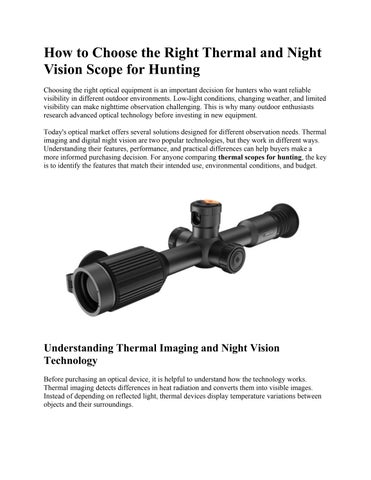
How to Choose the Right Thermal and Night Vision Scope for Hunting Choosing the right optical equipment is an important decision for hunters who want reliable visibility in different outdoor environments. Low-light conditions, changing weather, and limited visibility can make nighttime observation challenging. This is why many outdoor enthusiasts research advanced optical technology before investing in new equipment. Today's optical market offers several solutions designed for different observation needs. Thermal imaging and digital night vision are two popular technologies, but they work in different ways. Understanding their features, performance, and practical differences can help buyers make a more informed purchasing decision. For anyone comparing thermal scopes for hunting, the key is to identify the features that match their intended use, environmental conditions, and budget.
Understanding Thermal Imaging and Night Vision Technology Before purchasing an optical device, it is helpful to understand how the technology works. Thermal imaging detects differences in heat radiation and converts them into visible images. Instead of depending on reflected light, thermal devices display temperature variations between objects and their surroundings.
Night vision technology generally works by collecting available light and amplifying it or using digital sensors and infrared illumination to produce a visible image. This makes it useful in lowlight environments where ordinary optical equipment may not provide sufficient visibility. Both technologies have different strengths. Thermal imaging is particularly useful when identifying temperature differences, while night vision can provide more recognizable visual details when sufficient illumination is available.
Why Buyers Consider Thermal Scopes for Hunting Thermal technology has become an important consideration for outdoor enthusiasts looking for advanced imaging capabilities. Its ability to detect heat signatures makes it different from conventional optical equipment. Some features buyers commonly evaluate include:
Thermal sensitivity: The ability to distinguish small temperature differences. Image resolution: Higher resolution can provide a clearer displayed image. Display quality: A comfortable, readable display improves the viewing experience. Battery performance: Operating time matters during extended outdoor activities. Weather resistance: Outdoor equipment should be appropriate for its intended environmental conditions. Device durability: Construction quality can influence long-term reliability.
Rather than choosing a product based on specifications alone, buyers should consider how these features work together.
Thermal Imaging Riflescopes: Important Features to Compare When researching advanced optical products, understanding the available features can make the buying process easier. Thermal imaging riflescopes combine thermal sensors, image-processing technology, and display systems into specialized optical equipment. Different models may offer different sensor resolutions, refresh rates, image palettes, and adjustment options. These specifications influence the viewing experience and should be compared carefully.
Sensor Resolution and Image Quality Sensor resolution is one of the most important specifications to review. A higher-resolution thermal sensor can provide more image information, although the final viewing experience also depends on image processing and display quality.
Buyers should compare the sensor specifications alongside the manufacturer's stated detection and identification capabilities.
Refresh Rate and Display Performance Refresh rate describes how frequently the displayed image updates. It can influence how smoothly the image appears when viewing changing scenes. Display quality also matters. Screen clarity, brightness adjustment, and viewing comfort can make a difference during extended use.
Battery Life and Power Management Battery performance is another important consideration. Buyers should check the manufacturer's stated operating time and understand whether features such as wireless connectivity, recording, and display brightness affect power consumption. A practical power-management system can make outdoor equipment more convenient.
Construction and Environmental Protection Outdoor optical equipment may be exposed to dust, moisture, temperature changes, and physical movement. Checking the manufacturer's specifications for water resistance, operating temperature, and construction materials can help buyers assess whether a device is appropriate for their environment.
Night Vision Scopes: What Should Buyers Look For? Thermal imaging is not the only technology worth considering. Digital night vision provides another approach to low-light observation. Modern devices may include digital sensors, infrared illumination, image recording, and electronic displays. These features can make night vision equipment attractive to people who want more detailed visual information in suitable lighting conditions. When comparing products, buyers should pay attention to:
Digital sensor resolution. Display resolution and viewing comfort. Infrared illumination specifications. Recording and connectivity options. Battery capacity. Overall construction quality.
The right combination depends on the buyer's requirements rather than simply selecting the device with the longest specification list.
Comparing Thermal Imaging and Digital Night Vision Understanding the difference between these technologies is essential before making a purchase. Thermal imaging detects temperature differences, whereas digital night vision uses available light or infrared illumination to produce an image. This fundamental difference affects how each technology performs in different environments. Thermal devices can display heat contrasts even when visible-light conditions are poor. Digital night vision, meanwhile, can offer recognizable visual details when suitable illumination is available. Neither technology is automatically the best choice in every situation. Buyers should compare their intended applications, image requirements, environmental conditions, and product specifications.
Where to Find Night Vision Riflescopes
Finding a suitable product involves more than comparing prices. Buyers should also consider product information, manufacturer support, specifications, and the availability of relevant accessories. Exploring the Night Vision Riflescopes category is a useful starting point for comparing available models and understanding the different options offered in this product segment. Before purchasing, review the individual product descriptions carefully. Check the sensor information, display specifications, power requirements, physical dimensions, and included accessories. Clear product information helps reduce uncertainty and makes comparisons more straightforward. It is also worth checking warranty coverage, return policies, shipping arrangements, and customer support availability before completing an order.
How to Evaluate Hunting Optics Before Buying A good purchasing decision starts with a clear understanding of what matters most. Not every buyer needs the same combination of features, and the most expensive model is not necessarily the most appropriate option. Here are several factors worth considering.
1. Establish Your Budget Set a realistic budget before exploring different models. Compare products within a similar price range and consider the features included in each package. Remember to account for additional costs, such as compatible accessories, batteries, protective cases, and maintenance.
2. Compare Technical Specifications Read the specifications rather than relying entirely on promotional descriptions. Pay attention to sensor resolution, display quality, battery performance, construction, and manufacturer documentation. If a specification is unclear, consult the manufacturer's product information before making a decision.
3. Check Product Compatibility Compatibility is an essential consideration for specialized optical equipment. Buyers should verify mounting requirements, dimensions, supported accessories, and any manufacturer-specific limitations.
Never assume that two products are compatible simply because they appear similar.
4. Research the Manufacturer A manufacturer's reputation and customer support can influence the overall purchasing experience. Look for detailed product documentation, transparent warranty information, accessible support channels, and clear company policies. Established product information makes it easier to understand what you are buying and what assistance is available after purchase.
5. Review Local Laws and Regulations Regulations concerning thermal imaging equipment, night vision devices, and their use can vary between countries and regions. Before purchasing or using specialized equipment, check applicable local laws and relevant restrictions. Responsible ownership also means following all applicable hunting, wildlife protection, and firearm safety regulations.
Why Product Information and After-Sales Support Matter Advanced optical equipment is a considerable purchase for many buyers. Product quality matters, but the overall buying experience also deserves attention. Detailed specifications help customers understand the product's capabilities. Warranty information provides clarity about available support, while responsive customer service can help answer questions about compatibility, operation, and maintenance. Buyers should also look for accurate product photographs, clear descriptions, realistic performance information, and transparent purchasing policies. These details can make the difference between a confident purchase and an uncertain buying experience.
Explore RIX Optics for Advanced Optical Solutions When researching specialized outdoor optical equipment, exploring a dedicated optics supplier can help buyers discover different product categories and compare available solutions. RIX Optics offers an online destination for people researching thermal imaging and night vision products. Its website provides an opportunity to explore optical equipment, review product information, and learn more about available technologies.
Visitors can browse the company's thermal and night vision categories to understand the available product range. Taking time to compare individual models and their specifications is a sensible step before choosing equipment. The best purchasing decision should always be based on verified product information, individual requirements, and responsible use.
Final Thoughts: Make an Informed Optical Equipment Purchase Buying advanced optical equipment requires more than choosing a product with attractive specifications. Understanding the differences between thermal imaging and digital night vision, comparing image quality, checking battery performance, and reviewing construction standards can help buyers make a better-informed decision. Whether researching thermal imaging technology or exploring digital night vision products, take time to evaluate the available options. Check manufacturer documentation, confirm compatibility, review warranty conditions, and understand local regulations before purchasing. For anyone comparing hunting optics, a careful approach to research can lead to a more suitable investment. Explore the available products at RIX Optics, compare their features, and choose equipment that meets your requirements with confidence.