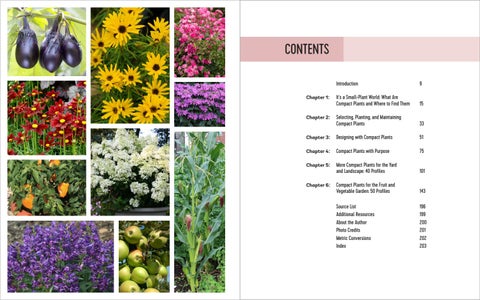
CONTENTS Introduction Chapter 1: It’s a Small-Plant World: What Are
Compact Plants and Where to Find Them
Chapter 2: Selecting, Planting, and Maintaining
9 15
Compact Plants
33
Chapter 3: Designing with Compact Plants
51
Chapter 4: Compact Plants with Purpose
75
Chapter 5: More Compact Plants for the Yard
and Landscape: 40 Profiles
Chapter 6: Compact Plants for the Fruit and
Vegetable Garden: 50 Profiles
101 143
Source List 196 Additional Resources 199 About the Author 200 Photo Credits 201 Metric Conversions 202 Index 203
INTRODUCTION Gardening is a lot different today than it was a few generations ago. While our grandparents and great-grandparents focused on building victory gardens and feeding a houseful of children from an extensive backyard veggie patch, today’s smaller families see gardening in a very different light. It’s become a way to beautify our outdoor living spaces, satisfy our health-conscious appetites, and rejuvenate our work- and mediaworn bodies and minds. Plants have become a symbol of calm in the hectic, digital lives of the millennial generation. Houseplants are having a renaissance, of sorts, and the presence of an incredible array of succulents on scores of windowsills, patios, and balconies is a sure sign that plants are still an important part of people’s lives. The way people garden and their reasons for doing it, however, have definitely changed. Not only have our gardening motivations evolved; so too have our gardens themselves. Today’s gardens are vastly different from those of previous generations. While a 1/2-acre suburban lot with a modest house and a good-sized garden was the norm for many newly married baby boomers, today’s young families are more likely to reside in big houses sandwiched onto ever-shrinking lots. Or, they live in urban environments where homes are close together, or in apartments, duplexes, townhomes, or condos with tiny yards or no yards at all. All this means that most modern gardeners have less room to grow. Couple that with our desire to nurture something beautiful and green (and our busy lives that are all too short on free time) and you have the perfect recipe for a new gardening niche—a niche that happens to be the very topic of this book: compact plants for small gardens.
9
1 IT’S A SMALL-PLANT WORLD What Are Compact Plants and Where to Find Them
Before introducing you to some of the best small-plant varieties for your landscape and discussing how to plant and care for them, it’s important to understand what makes a particular plant fit into the category of “compact.” What traits must it have to be considered small when compared to its relatives? And where do these plants come from in the first place?
WHAT EXACTLY IS A COMPACT PLANT? As with people, plants come in a wide array of shapes and sizes. While some landscapes are large enough to handle a tree that grows 60 feet tall or a shrub that spreads 12 feet wide, lots of backyards don’t have enough space for such a substantial specimen. Not to mention the fact that many homeowners aren’t interested or able to be constantly pruning their plants to make them fit into a smaller yard. Thankfully, the nursery industry has taken notice of all of this, and it continues to develop and select plants with a restricted size for these smaller yards and gardens (more on this process in a bit). Exactly which plants can be called compact is certainly debatable, but basically, when a particular plant variety exhibits a substantially reduced size when compared to other normal plants of the same species, that particular variety can be considered compact (sometimes also called dwarf ). This size reduction can be exhibited in either the plant’s height or width—or, often, both. While the limited stature of these plants doesn’t necessarily make them miniatures (which is a whole other category of
15
2 SELECTING, PLANTING, AND MAINTAINING COMPACT PLANTS Walking into a garden center filled to the brim with plants may seem a little intimidating, especially for those new to gardening. But, if you take some time to ask yourself a few questions before you walk in the door, you’ll be better prepared for a successful shopping trip.
SELECTING THE BEST COMPACT PLANTS FOR YOUR GARDEN There are many things to consider when deciding which compact plants to include in your landscape. Here’s a simple step-by-step process to follow, whether you’re planting a whole new garden area or adding new plants to an existing one.
STEP 1: START BY THINKING ABOUT THE SPECIFICS OF THE GARDEN AREA YOU WANT TO PLANT IN. Site conditions and purpose dictate plant choices in a big way. If your objective is to spruce up the foundation plantings around your house, you’ll be using different compact plants than you would use if you were putting in your first vegetable garden. This step involves looking at not just the area itself but also its purpose. Are you planting an edible garden, one that appeals to pollinators, a border for a children’s play area, or a patio planting that’s especially appealing at night?
33
Task #7: Yearly garden clean-up
If your garden contains a lot of perennials, an annual garden cleanup keeps things tidy. While it was once thought that the best time to do this chore was in the autumn, recent research shows that spring cleanups are best. Leave perennials and other plants standing in the garden for the winter to provide habitat for native bees, butterflies, and other beneficial insects, as well as birds and other wildlife. Cut back perennials and clean out garden beds as soon as the daytime temperatures are regularly in the 50s each spring. Compost the trimmings and shred the leaves to use them as mulch in your planting beds. For compact shrub and tree plantings, a spring garden cleanup primarily consists of raking out any autumn leaves that haven’t blown over to the neighbor’s house during the winter. That’s it. Though it might sound like a long list of gardening tasks to be done, keep in mind that ignoring or forgetting them from time to time does not spell certain death for your compact plants (with the exception of watering, of course). With time, you’ll come to see that the limited maintenance needs of these small-statured plants definitely make a gardener’s job easier. As always, it’s important to be aware of your plants’ health and what you might be able to do to improve it. Now it’s time to dive into the more creative aspects of gardening Winter is an important time for the wildlife living in your with compact plants and learn garden. Hold off on doing garden clean ups until the spring to provide habitat and shelter to bees, butterflies, beetles, and other some great ways to include these beneficial insects. plants in your own garden through design tips and landscape plans.
48
SELECTING, PLANTING, AND MAINTAINING COMPACT PLANTS 49
Backdoor cocktail garden By Jennifer R. Bartley
12
Cocktail gardens are a place to sit, relax, and unwind—especially during the evening hours—but they can also include plants used to make or embellish a beverage. This unique backdoor cocktail garden includes a nook near the house to sit and sip as well as a circular stone overlook with a seatwall for socializing with friends and family. This large design is filled with woodland plants that include many North American natives and edible plants such as pawpaw, elderberry, gooseberry, clove currant, and pink currant. The space measures 56' × 48', but it can easily be scaled down for smaller backyards. All of the plants found in this design are winter hardy down to at least –20°F.
1. 1 Amelanchier lamarckii (Juneberry)
16. 4 Aralia racemosa (American spikenard)
2. 1 Aronia melanocarpa ‘Autumn Magic’ (black chokeberry)
17. 11 Aruncus dioicus ‘Kneiffii’ (dwarf goatsbeard)
3. 1 Asimina triloba ‘Sweet Alice’ (pawpaw)
19. 11 Carex pensylvanica (Pennsylvania sedge)
4. 1 Asimina triloba ‘Wells’ (Wells pawpaw) 5. 3 Ceanothus americanus (New Jersey tea)
20. 10 Dryopteris erythrosora ‘Brilliance’ (autumn fern)
6. 3 Cornus florida ‘Cherokee Brave’ (dogwood)
21. 12 Galium odoratum (sweet woodruff)
7. 1 Hamamelis virginiana ‘Champlin’s Red’ (witch hazel)
22. 16 Geranium maculatum (wild geranium)
8. 3 Hydrangea quercifolia ‘Pee Wee’ (dwarf oakleaf hydrangea)
24. 4 Hosta ‘Halcyon’ (compact blue hosta)
18. 15 Asarum canadense (wild ginger)
14
21
2
6
25. 1 Lamprocapnos spectabilis ‘Alba’ (white bleeding heart)
10. 1 Ptelea trifoliata (hop tree)
26. 6 Matteuccia struthiopteris (ostrich fern)
11. 1 Ribes ‘Poorman’ (gooseberry)
27. 6 Panax quinquefolius (American ginseng)
12. 2 Ribes odoratum ‘Crandall’ (American clove currant)
28. 10 Phlox divaricata (woodland phlox)
13. 2 Ribes rubrum ‘Gloire des Sablons’ (compact pink currant)
30. 15 Polygonatum biflorum (Solomon’s seal)
17
22
16
9 26
23
20
21 8
16 30
25
24
10
5
20
16
6
27 5
5
23
29. 7 Podophyllum peltatum (mayapple) 31. 3 Polystichum acrostichoides (Christmas fern)
31
7
24
21
17
31 31
23. 10 Helleborus orientalis (Lenten rose)
9. 3 Lindera benzoin (spicebush)
15. 1 Sambucus canadensis ‘York’ (American elderberry)
30
13
PLANT LIST
14. 1 Sambucus canadensis ‘Nova’ (American elderberry)
15
11
30
1
16 29
32. 10 Rhus aromatica ‘Gro-Low’ (dwarf fragrant sumac)
3
30 6 17
Jennifer R. Bartley traveled extensively throughout France to study traditional potagers (kitchen gardens) and has created her own versions for American chefs and gardeners. Emphasizing functionality and design in her work, Jennifer seeks to create beautiful, vibrant gardens that embrace a simpler life. A landscape architect in Granville, Ohio, Jennifer is also the author of Designing the New Kitchen Garden and The Kitchen Gardener’s Handbook. Find her online at www.americanpotager.com.
GUIDE TO COMPACT PLANTS 66 GARDENER’S
19
32
30
4 28
SHRUBS
108
Elsdancer Tiny Dancer™ Lilac
Sugar Plum Fairy® Lilac
COMMON NAME: Elsdancer Tiny Dancer™ Lilac
COMMON NAME: Sugar Plum Fairy® Lilac
BOTANICAL NAME: Syringa vulgaris ‘Elsdancer’
BOTANICAL NAME: Syringa vulgaris ‘Bailsugar’
PLANT TYPE: Flowering shrub; deciduous
PLANT TYPE: Flowering shrub; deciduous
MATURE DIMENSIONS: 4 to 5 feet tall; 3 to 4 feet wide
MATURE DIMENSIONS: 4 feet tall and 5 feet wide
HARDINESS: Winter hardy down to –30°F (USDA Zones 4–8)
HARDINESS: Winter hardy down to –40°F (USDA Zones 3–8)
IDEAL SUN CONDITIONS: Full to partial sun
IDEAL SUN CONDITIONS: Full to partial sun
PHYSICAL APPEARANCE: Few things rival the fragrance of a spring lilac bloom. This compact variety produces intensely fragrant, lavender-blue flower clusters in May and June that are 4 to 5 inches long and very full. The large, heart-shaped leaves are a great backdrop for the blooms. This is a great plant for foundations, flower borders, and shrub beds. It also makes an excellent cut flower.
PHYSICAL APPEARANCE: Smothered in frothy, rosy-pink flowers in late spring through early summer, Sugar Plum Fairy® not only looks good in foundation and flower beds, but it also makes a stunning hedge. The spicy, sweet fragrance of the blooms lures in hummingbirds, butterflies, and other pollinators. This lilac’s leaf shade is medium green, and its growth habit is a loose mound.
CARE REQUIREMENTS: Tiny Dancer™ lilac prefers moist, but well-drained soil with average fertility. It’s remarkably heat tolerant. Requiring minimum care, this dwarf lilac blooms on old wood, so prune only after flowering.
CARE REQUIREMENTS: Plan to irrigate this compact shrub during dry periods, but other than that, it’s fairly bulletproof. Avoid planting in waterlogged areas, as it can lead to root rot. Prune immediately after flowering, if any pruning is required at all. Disease resistant.
EXTRA INFO: As an added bonus, this lilac is both powdery mildew resistant and heat tolerant, making it a good choice for southern regions where most lilacs won’t grow well.
EXTRA INFO: Sugar Plum Fairy® is one in a series of lilacs known as the Fairytale series. This is the smallest-statured one.
GARDENER’S GUIDE TO COMPACT PLANTS
109