340929 - Home Hydroponics_001-031.indd 6 340929 - Home Hydroponics_001-031.indd 6
Text
Title: 340929 - Home Hydroponics Page:6
5/5/21 2:02 PM 10/5/21 12:42 PM
Introduction MOST HYDROPONIC GARDENS are large contraptions with a maze of PVC pipes and
lots of shiny plastic surfaces. My previous book, DIY Hydroponic Gardens, includes many designs that fit that description well. These traditional hydroponic garden designs prioritize functionality over aesthetics. In this book I approach the design process with the goal of creating functional artwork, sacrificing neither functionality nor aesthetics of a hydroponic garden.
After living in a very small recreational vehicle (RV) for many years, I grew to despise clutter and began to prioritize owning items that serve many purposes. A home hydroponic garden should not be “clutter” that solely grows plants: a home hydroponic garden should look great, smell great, grow plants and be a unique expression of you and your life! Some of the gardens in this book are made from vintage whiskey boxes and redwood planks salvaged from a 150-year-old grain silo on a farm near my home. There are so many ways to incorporate unique items into a garden design to create a functional piece of artwork with a story you’ll love to share. In the first section of this book, I introduce you to the many benefits of gardening hydroponically and fill you in on the maintenance requirements and location needs of your garden. From there, we’ll take a look at the light, climate, and nutritional fundamentals for home hydroponic growing as well as how to select the best plants to grow. In section 3 you’ll find step-by-step instructions for building 15 attractive and functional hydroponic gardens for every area of your home, from the living room and kitchen to the bar and bathroom. Section 4 then shares all the practical details of growing effectively and efficiently. You’ll get the low-down on system operation components, including how to start your plants, fertilize, clean your system, and troubleshoot issues should any arise. Throughout this book,
you’ll also find URLs to pages on my website where you’ll be able to find more information about various aspects of hydroponic growing. Home Hydroponics has everything you need to build aesthetically pleasing hydroponic gardens to help feed you and your family year-round. If feel inspired to share your projects, please send me photos of your completed home hydroponic garden. Gardening can sometimes feel like a solitary activity but sharing your garden, building a group of fellow plant enthusiasts and learning from others can allow you to get so much more enjoyment out of gardening!
CONNECT WITH FARMER TYLER: www.FarmerTyler.com www.youtube.com/TheFarmerTyler www.facebook.com/TheFarmerTyler www.instagram.com/TheFarmerTyler www.twitter.com/TheFarmerTyler
| 7
340929 - Home Hydroponics_001-031.indd 7 340929 - Home Hydroponics_001-031.indd 7
Text
Title: 340929 - Home Hydroponics Page:7
5/5/21 2:02 PM 5/5/21 3:33 PM
340929 - Home Hydroponics_001-031.indd 8 340929 - Home Hydroponics_001-031.indd 8
Text
Title: 340929 - Home Hydroponics Page:8
5/5/21 2:02 PM 10/5/21 12:43 PM
Section 1
Considerations for Selecting a Garden Design Hydroponic or Traditional Garden? I’LL START WITH THIS: no matter how excited you are to learn how to grow hydro-
ponically, a hydroponic garden may not always be the best option. A traditional, soil-based garden has many benefits and may be better suited for your indoor garden. It is important to consider the pros and cons of both methods. Many of the systems in this book can be modified to use a soil-based potting mix and operate like a traditional garden. A note on the feasibility of a soil option is provided with each of the building plans found in section 3. Let’s look at some of the factors you should consider before diving into building your first hydroponic garden.
AESTHETICS If a garden is going to be placed in a very visible location it should be subjected to the same stylistic scrutiny that would be applied to any piece of furniture or appliance in a home. I generally think of hydroponic gardens as having a modern, clean look while traditional gardens have a classic, comforting feel. These traits obviously depend on the specific design and personal opinion, but it is important to think if the indoor space already has a decorative theme that would mesh well with a hydroponic or traditional garden. COST The startup and maintenance costs of most hydroponic systems are higher than a similarly sized traditional garden. There are some hydroponic system designs that are inexpensive,
several of which are highlighted in section 3, but the advanced hydroponic garden designs with powerful grow lights and pumps are generally more expensive to build and operate. FORM FACTOR It is possible to get very creative with the designs of both hydroponic and traditional gardens. Wall gardens, cascading channels of plants, Ferris wheels . . . there are so many ways to grow a plant, but some system form factors favor either a hydroponic or traditional soil-based garden. A tower garden (see the Bar Tower or Lettuce Locker gardens in section 3 on pages 66 and 140) can be hydroponic or soil-based, but system operation is significantly easier and cleaner using a hydroponic design.
| 9
340929 - Home Hydroponics_001-031.indd 9 340929 - Home Hydroponics_001-031.indd 9
Text
Title: 340929 - Home Hydroponics Page:9
5/5/21 2:02 PM 5/5/21 3:33 PM
In CROP OPTIONS A hydroponic garden can be designed to grow any plant but that doesn’t mean it should be. To take full advantage of a hydroponic system it is best to select crops that excel in hydroponics. The “Crop Selection Charts” in the appendix on page 177 provide recommended crop types and specific varieties that grow well in a hydroponic garden. YIELD Hydroponics has the potential to create growing conditions that maximize the yield of a crop. It’s possible to do this with a traditional garden as well, but I’ve personally struggled to match the crop performance I see in hydroponics. Keeping fertility, pH, root temperature, moisture levels, and root zone oxygen levels within an optimal range are much easier in a hydroponic garden.
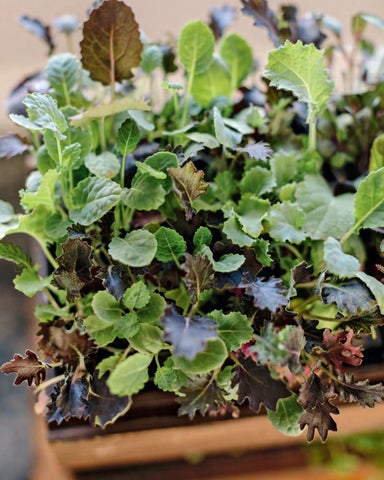
Crop yield from a small corner-shelf hydroponic garden is shown 25 days after transplanting seedlings.
CLEANLINESS This won’t come as a surprise, but soil can be messy. Hydroponics is not completely clean either, but I think hydroponics generally comes out ahead in the cleanliness category. Soil-based gardens are often messier to build, maintain, and clean. There are many reasons to clean a garden such as bugs, bad smells or simply wanting new plants, but the process in a traditional garden usually involves removing soil and starting over. In a hydroponic garden it is often possible to replace the nutrient water or replace individual plants without resetting the full garden and making a big mess.
DIFFICULTY A common misconception about hydroponics is that it is more difficult than traditional gardening. Some hydroponic garden designs are indeed difficult to manage but other designs, such as the Stream of Greens garden in section 3 on page 54, simply involve filling up the reservoir with water, mixing in some fertilizer, adding some seeds, and then returning two to four weeks later to harvest. Cleaning and restarting the garden can also be much easier! Hydroponic gardens that are designed to be easy can be far easier than any traditional soil-based garden.
10 | HOME HYDROPONICS
340929 - Home Hydroponics_001-031.indd 10 340929 - Home Hydroponics_001-031.indd 10
Text
Title: 340929 - Home Hydroponics Page:10
5/5/21 2:02 PM 5/5/21 3:33 PM
Indoor Garden Locations Selecting the appropriate location for a hydroponic indoor garden is critical to its success. Access to light, water, appropriate temperatures, and ease of access are all important considerations. WINDOWS AND NATURAL LIGHT All plants need light but not all indoor hydroponic gardens require electricity to provide that light. Placing a garden by a window is a great way to simplify an indoor garden by potentially eliminating the need for a grow light. Unfortunately, not all windows are well suited. In the northern hemisphere the preferred windows for a garden face east, west, or south. In the southern hemisphere the preferred windows for a garden face east, west, or north. A window may only have direct or shaded light for a couple hours per day, which is insufficient for robust plant growth but may be sufficient if the window garden is only used to keep store-bought living herbs alive or grow plants with very low light requirements such as microgreens. See Light in section 2 on page 17 to learn how to measure light levels and see the Crop Selection Charts in the appendix on page 177 for target light levels for popular hydroponic crops. The other important consideration with window gardens is temperature. The area around a window can get much hotter or colder than other areas in a home. Poorly insulated windows can get very cold in the winter and may create a damaging environment for herbs that prefer warm environments. Periods of intense heat can also be very stressful on plants in a window garden. SELF-CONTAINED GARDENS: CABINETS, ARMOIRES, AND CLOSETS A self-contained location such as a cabinet, armoire, pantry, drawer, or locker is great for minimizing the light pollution of a grow light in a living space, but these closed environments create
climate management challenges. Self-contained gardens generally require an exhaust fan and depending on the specific fan used, it may generate a lot of noise. The Lettuce Locker and the Cabinet Farm gardens in section 3 on pages 132 and 140 require nearly constant use of an exhaust fan. This noise to some may be a comforting white noise but to others it may be quite annoying. A little humming noise in a kitchen does not bother me much, but I would not want that persistent humming noise in my bedroom when I’m trying to sleep. The air temperature in a self-contained garden will almost always be warmer than the general indoor air temperature due to the heat generated from grow lights. Even with energy-efficient LED grow lights and a powerful exhaust fan, the temperature will likely still be a little warmer in a self-contained garden. This temperature difference can create a challenge for gardeners with homes in warm climates. High temperatures limit the viable crop options for a hydroponic garden. For gardeners in cold climates, a self-contained garden running slightly warmer than inside temperatures may be beneficial.
DIY or PreManufactured? I am a big fan of growing hydroponically whether it is using a DIY or pre-manufactured hydroponic garden. This book focuses on DIY options but for some gardeners the best option may be a pre-manufactured garden. However, DIY hydroponic gardens are the clear winner when it comes to customization. The ability to repurpose items such as tables, scrap wood, and porcelain bowls into beautiful DIY hydroponic gardens enables a level of customization and personalization that a pre-manufactured garden cannot match.
CONSIDERATIONS FOR SELECTING A GARDEN DESIGN | 11
340929 - Home Hydroponics_001-031.indd 11 340929 - Home Hydroponics_001-031.indd 11
Text
Title: 340929 - Home Hydroponics Page:11
5/5/21 2:02 PM 5/5/21 3:33 PM
FUNCTIONAL SURFACES: TABLETOPS, COUNTERS, AND DESKS Under the category of functional surfaces I include tabletops, kitchen counters, and desk surfaces. These surfaces are used for food preparation, eating, working, or some task that requires the space be versatile. Placing a large garden on a functional surface can significantly reduce the versatility of that surface. This tradeoff should not be ignored when selecting a location for an indoor garden. The Stream of Greens garden in section 3 on page 54 takes up a significant amount of kitchen counter space but it is capable of yielding several salads per week. In general, I prefer that gardens designed for these functional surfaces be mobile or can be used as a functional surface themselves. For example, the Dinner Table garden in section 3 on page 76 has a large flat-top surface that can be used to hold condiments, drinks, or dinner table decorations.
BELOW TABLES Placing a garden below a functional surface is a great way to preserve that surface space while taking advantage of the underutilized space below. One of my favorite places for a “below table” garden is an end table in a living room. The open space under an end table is often used to store television remotes and books, both of which can be easily stored in another location to frees up that space for a garden. Finding another spot for a television remote is a small tradeoff but there are bigger tradeoffs to consider when placing a garden under a dining table or coffee table. The benefit of open space under a coffee table may not seem immediately evident but after kicking the base of a garden under a table enough times, you’ll start to remember why many tables have open space underneath. The Lift Top Coffee Table described in section 3 on page 108 is one of my favorite gardens, and the tradeoff of reduced under-table space in exchange for a coffee table garden is well worth it to me. But I think it is very important gardeners know the tradeoffs involved before building a garden under a table. BATHROOMS A bathroom is one of the best locations for a hydroponic garden. Bathrooms already have convenient sources of water and drains to flush out spent nutrient solution. The periods of high humidity when someone takes a hot shower or bath are generally harmless to the garden, if not beneficial at times, and most bathrooms are well ventilated to remove humidity. Bathrooms are also frequently trafficked, which means the garden will likely get a lot of attention and care. The only downside of a garden in a bathroom is the potential food safety concerns of growing edible produce in a bathroom. The Bathroom Flower Garden shown in the section 3 build guides on page 150 is used to grow flowers and scented herbs, neither of which are intended for consumption. For homeowners with a spare
12 | HOME HYDROPONICS
340929 - Home Hydroponics_001-031.indd 12 340929 - Home Hydroponics_001-031.indd 12
Text
Title: 340929 - Home Hydroponics Page:12
5/5/21 2:02 PM 5/5/21 3:33 PM