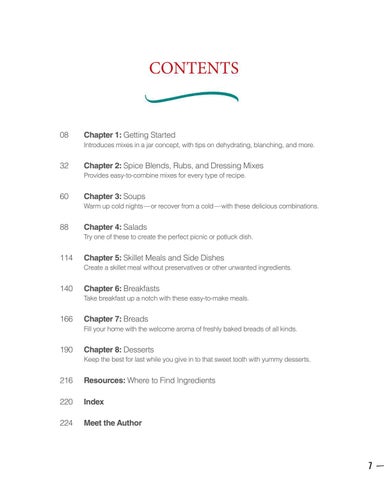
CONTENTS
R 08
Chapter 1: Getting Started
Introduces mixes in a jar concept, with tips on dehydrating, blanching, and more.
32
Chapter 2: Spice Blends, Rubs, and Dressing Mixes
Provides easy-to-combine mixes for every type of recipe.
60
Chapter 3: Soups
Warm up cold nights — or recover from a cold — with these delicious combinations.
88
Chapter 4: Salads
Try one of these to create the perfect picnic or potluck dish.
114
Chapter 5: Skillet Meals and Side Dishes
Create a skillet meal without preservatives or other unwanted ingredients.
140
Chapter 6: Breakfasts
Take breakfast up a notch with these easy-to-make meals.
166
Chapter 7: Breads
Fill your home with the welcome aroma of freshly baked breads of all kinds.
190
Chapter 8: Desserts
Keep the best for last while you give in to that sweet tooth with yummy desserts.
216
Resources: Where to Find Ingredients
220
Index
224
Meet the Author
7
z
CAN WE SKIP THE BLANCHING STEP? Yes. You will still have a safe product, assuming you follow safety guidelines. However, vegetables lose quality during the drying process. Potatoes, winter squash, corn, and other light-colored vegetables turn a brownish color if the blanching step is skipped, and they may turn out mushy when cooked. Thus, most people find the blanching step is worth the little extra work.
WHY DON’T WE BLANCH FRUIT? If you have ever lowered peaches into a boiling bath and then ice water so that the peel will slip off, you are blanching in a sense. Fruit doesn’t get the same vegetable blanching treatment because it adversely affects texture and isn’t necessary. We pretreat most fruit, and we blanch most vegetables.
GETTING STARTED
21
z
Corn Chowder Yield: 1-pint jar
The first corn chowder recipe published in the United States was in the famous Boston Cooking School Cook Book in 1884, but I suspect corn chowder was an old favorite long before then. It is basically a non-seafood version of New England clam chowder, and no doubt used up the ingredients that were stored through long winters, like dried corn and onions. Corn chowder may seem old-fashioned, but it is still a welcome meal today. White corn will taste fine here, though yellow varieties are more eye-catching. I usually break dried potato slices into pieces for this mix; you could use dried potato flakes for a thicker final product. Not too heavy, but filling nonetheless, corn chowder can be made even richer by adding smoked salmon to each bowl. 1/4
cup dried corn kernels
1
tablespoon instant minced onion
1
tablespoon dried bell pepper
3/4
cup dried potatoes pieces
1/2
cup non-fat milk powder
1
tablespoon chicken bouillon powder
3
tablespoons sour cream powder
Label the container:
Corn Chowder You will need: 41⁄2 cups water, divided Remove bag from jar and set aside. Add vegetables to a large saucepan with 4 cups water. Bring to a boil. Reduce heat and simmer for 10 minutes. Combine remaining ingredients with remaining 1/2 cup water, stir to mix. Add this mixture to the saucepan. Cook for another 20–25 minutes, stirring occasionally so the mixture does not boil over. Serves 3–4. Optional ingredients: Add smoked salmon to chowder, if desired.
Dash cayenne powder 1
teaspoon all-purpose flour
1. Layer corn, onion, bell pepper, and potatoes in a 1-pint jar. 2. Place remaining ingredients in a small zip-top bag and place on top of the vegetables.
SOUPS
75
z
z 94
WHAT IS COCONUT CREAM POWDER? Coconut cream powder is a dense, powdered form of velvety coconut cream. It is thicker than coconut milk powder, which is the dehydrated version of coconut milk, and creamier than coconut flour, which is the powdered version of dried coconut meat. Find coconut cream powder at your local health food shop or online. Instead of coconut cream powder in this recipe, substitute 4 tablespoons coconut milk powder, or 2 tablespoons coconut flour, or 3 tablespoons finely grated, unsweetened coconut meat.
MIXES IN A JAR
Sun-Dried Tomato Mac & Cheese Yield: 3- to 4-cup jar or bag
Say the words “comfort food” and nine out of 10 people will think “mac and cheese, please!” We never outgrow macaroni and cheese, but our tastes do become more discriminating. At some point, the standard grocery store mix no longer satisfies. This is the grown-up version of that popular blue box. It still makes its own sauce right in the pot, but it has gone upscale with sweet and tangy sun-dried tomatoes. Don’t be tempted to omit the red pepper flakes as red pepper enhances the cheesy flavor without making the dish too spicy. Use cayenne or hot sauce at the table instead if you prefer.
Label the container:
Sun-Dried Tomato Mac & Cheese You will need: 2 tablespoons butter 3 cups water
1/4
cup dry milk
2
tablespoons sour cream powder
Add all ingredients, including butter and water, to a large saucepan. Bring to a boil. Reduce heat and simmer for 8 minutes, or until pasta is tender, adding more water if necessary. Stir occasionally to prevent sticking. Let sit 3 minutes before serving.
2
teaspoons cornstarch
Serves 3–4
1/2
cup cheese powder
11/2
cups mini farfalle or other small pasta
1/4
cup dried tomato bits
1/4
teaspoon red pepper flakes
Serve with crunchy roasted broccoli, lightly steamed asparagus, or an arugula salad for a light dinner. Serve with glazed salmon, grilled tempeh, or your favorite steak.
Layer ingredients in a 3- to 4-cup jar or bag in order given.
SKILLET MEALS & SIDE DISHES
119
z
z 194
MIXES IN A JAR