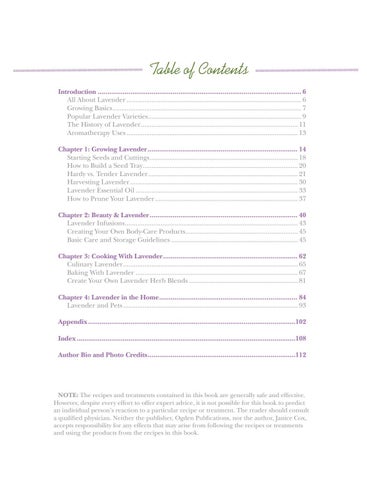
Table of Contents Introduction .......................................................................................................... 6 All About Lavender .................................................................................................. 6 Growing Basics .......................................................................................................... 7 Popular Lavender Varieties...................................................................................... 9 The History of Lavender ........................................................................................ 11 Aromatherapy Uses ................................................................................................ 13 Chapter 1: Growing Lavender .............................................................................. 14 Starting Seeds and Cuttings ................................................................................... 18 How to Build a Seed Tray....................................................................................... 20 Hardy vs. Tender Lavender .................................................................................... 21 Harvesting Lavender .............................................................................................. 30 Lavender Essential Oil ........................................................................................... 33 How to Prune Your Lavender ................................................................................ 37 Chapter 2: Beauty & Lavender ............................................................................. 40 Lavender Infusions ................................................................................................. 43 Creating Your Own Body-Care Products ............................................................... 45 Basic Care and Storage Guidelines ....................................................................... 45 Chapter 3: Cooking With Lavender ...................................................................... 62 Culinary Lavender .................................................................................................. 65 Baking With Lavender ........................................................................................... 67 Create Your Own Lavender Herb Blends ............................................................. 81 Chapter 4: Lavender in the Home ........................................................................ 84 Lavender and Pets .................................................................................................. 93 Appendix ............................................................................................................102 Index ..................................................................................................................108 Author Bio and Photo Credits .............................................................................112
NOTE: The recipes and treatments contained in this book are generally safe and effective. However, despite every effort to offer expert advice, it is not possible for this book to predict an individual person’s reaction to a particular recipe or treatment. The reader should consult a qualified physician. Neither the publisher, Ogden Publications, nor the author, Janice Cox, accepts responsibility for any effects that may arise from following the recipes or treatments and using the products from the recipes in this book.
14
Beautiful Lavender
Propagation in Water
A quick method of propagating a lavender start is to place it in a jar of water as you would with mint. Cut a few healthy stems and remove the leaves from the lower section; place in the jar. Change the water every day and leave the jar in a well-lit northern- or eastern-facing window. In about 6 to 8 weeks you should see tiny roots begin to form. Then, plant your rooted cuttings in small pots full of clean potting soil. Keep the soil moist, but not too wet, and your new plants should be ready for transplant in a few months. success. So experiment with your own plants. The length of your cutting should be about 6 inches. Use clippers, though I have heard it is better to break or tear the section off the main plant. Remove several of the lower leaves, halfway up the cutting. Using a small stick or skewer, make a small hole in a pot filled with soil or in the ground, and place the cutting inside. Water your cutting and keep the soil moist, but not too wet, as the young start develops roots. This should take about six to eight weeks. You should notice it begin to green up and grow. Some people like to use rooting hormone powder or liquid before planting their cuttings. I have done both and had about equal success. I feel it really is the quality of the cutting that makes the difference. Also, I should note, not all of your cuttings will take. I often have some that just will not grow. This is why it is a good idea to start more cuttings than you will really need. These cuttings are basically free plants, so having a few extra will ensure you end up with ones you can plant, sell, or give to friends. Another way to source new lavender plants is to simply purchase
them from a farm or good nursery. Usually these plants are a few years old, and you can instantly add them to your garden or yard and harvest blooms the first year.
Hardy vs. Tender Lavender
Lavender varieties are described as either hardy or tender. Read plant descriptions and know your USDA Plant Hardiness Zone (see map on Page 23) to determine the best varieties for your area. Some varieties can withstand a heavy frost and will come back year after year. Visit your local agriculture extension office; the agents are knowledgeable about the area’s hardiness zones, soil testing, pests, diseases, and plant sources. Doing a bit of homework is time well spent. I have made the mistake of buying the first lavenders I see at the home supply stores only to have them wilt and die after the first year. Knowing whether you have a hardy plant or a tender one will make all the difference, especially if you live in a cold weather zone. Take the time to observe your yard, making sure to not plant them in a wet or shady spot. Lavender is also a drought-tolerant 21
Chapter 2: Beauty & Lavender
T
he smell of lavender is one of my earliest childhood memories. My grandmother made several of her own creams, bath products, and home remedies, and she also saved all the free product samples for me when I visited. She was particularly fond of gardenia, rose, and lavender. They all found a place on her bathroom shelf, though it was lavender that took up the most space. I would take long bubble baths at her house and use up all of her English lavender bath tablets. Whenever I returned to her house, I’d find a new box of tablets had appeared in the cupboard. While she had so many different soaps and lotions, I remember those tablets the best. It was not until later in life that I truly understood how the scent of lavender could be used to calm the body and the mind. Today, lavender is a key ingredient in almost every type of body-care product on the market, from facial toners to bath products. The easily recognizable scent is both calming and cleansing, and perfect for all skin types. Lavender is one 42
Beautiful Lavender
of the most fragrant and versatile herbs, especially when it comes to body-care products. Lavender also has anti-bacterial and anti-inflammatory properties. If you have a troubled complexion, use lavender to calm and cleanse it. As a hair-care product, lavender will deeply cleanse your scalp. Healthy hair results from a healthy scalp. Lavender and lavender essential oil are useful in boosting hair growth and healing your skin. Just a dab of lavender oil on a small cut, scrape, or burn will help you heal. My husband carries a small roller bottle filled with lavender oil in his backpack and uses it as a skin “cure-all” when he travels. The scent also helps him sleep. If you get a bad sunburn, a strong infusion of lavender oil or lavender tea can help with some of the discomfort. Simply spray it on your scorched skin, or soak cotton fabric in a lavender solution and apply to your skin. Here are some of my favorite DIY beauty recipes and treatments using this fragrant and skin-soothing plant.
Flaxseeds Natural fabric such as linen, cotton, or silk 1 to 2 tablespoons dried lavender buds
Upcycled Supplies
Shopping at yard sales and thrift stores will save you money, and they are great places to find reusable items. I look through my own kitchen cupboards, as well, for older pans, tins, and other kitchen equipment. The items may be past their prime for cooking, making them perfect for creating bodycare products. Old cheese graters work on beeswax. Use saucepans, metal pitchers, and Pyrex measuring cups to create warm water baths to melt soap bases, waxes, and oils. Use old clothes and table linens made of natural fabrics to create lavender sachets, warming pads, and bath bags. And canning jar collections are great for storing products.
60
Beautiful Lavender
Cut out two pieces of fabric in either a rectangle or eye mask shape (see pattern on Page 105). With right sides together, stitch around the shape, leaving a 1- to 2-inch opening. Turn inside out. Add enough flaxseed to loosely fill the pillow. Add the lavender and shake gently to mix. Stitch up the open end. To use: Shake the pillow gently to release the lavender scent. Place over your eyes or behind your neck. Close your eyes and relax, focusing on the fragrance.
Easy Lavender Jam
An easy and quick recipe for creating a really yummy jam adds a delightful touch to toast and scones, when served with a cheese board, or as a topping for vanilla ice cream. Heat a cup of your favorite jam. I use peach or apricot, though any fruit jam or marmalade will work. Add 1 teaspoon dried lavender buds, and stir well. Heat the jam until it just starts to bubble; don’t boil. Cover and let it sit for a few hours, the longer the better. 80
Beautiful Lavender
8 ounces cream cheese, softened 1 tablespoon lavender-infused apricot jam 1 tablespoon chopped dried apricots 1 ⁄2 cup + 1 tablespoon chopped walnuts or pecans, divided 1 teaspoon dried lavender In a small bowl, mix together the cream cheese, jam, dried apricots, and 1 tablespoon nuts. Mix well, and spoon into a small bowl lined with parchment paper or plastic wrap. Place in the refrigerator until firm, about 30 minutes. In a glass pie pan or dish, place the 1⁄2 cup chopped walnuts and sprinkle with the dried lavender. Remove the cheese mixture from the refrigerator and shape into a ball. Roll the ball in the chopped nuts and lavender to coat. Return to the refrigerator for several hours. Serve with sliced apples or crackers.
Herbes De Provence
This classic herbal blend originates from the Provence region of southeast France, well-known for its lavender fields. Several recipes can be found online, as well as herb blends for sale. Some variations use up to 11 ingredients. I like this recipe because it uses common herbs most of us can grow or purchase at a local market. It makes a nice seasoning alternative to