Magazine of the Corps of Royal Electrical and Mechanical Engineers
In 2020, REME launched the Lifting the Decks initiative, with a focus on the mental wellbeing of serving REME personnel and veterans.
We are in the process of re昀ning Lifting the Decks, increasing accessibility with an added emphasis on reminding our REME Family to speak out about ‘what’s on their mind’ and that, whatever stage in their life, we will always be here to listen to and support them.
If there is something on your mind troubling you, big or small, whatever the cause, we are here to listen and to help. If you wish to get in touch regarding yourself or concern for someone else, please don’t hesitate to contact woym@remecharity.org
Editor: Mrs Sarah Eden + Corporate Communications Officer
RHQ REME, The Prince Philip Barracks, Lyneham, CHIPPENHAM, SN15 4XX
TEXT: should be submitted in MS Word and name saved as per the article. No formatting, columns, power point etc. Articles to be cleared by CO/OC/EME or appropriate REME CoC, or nominated substitute and should be submitted as soon as possible.
PHOTOGRAPHS: MUST be submitted separately, in jpeg format and be at least 500kb preferably 1mb or more. Only photos over 3mb can be considered for the front/back covers and please remember captions.
FILESHARE: websites, such as dropbox are ideal for submitting larger files.
EMAIL: The ONLY email address which should be used is: craftsmaneditor@reme-rhq.org.uk. Not MODnet. Please use the article title not ‘Craftsman Article’ as the email title.
TIMINGS: The latest submission date is the first day of the month prior to publication. This does not guarantee the article will be published in that specific edition.
Births, Engagements, Marriages and Deaths: These will be inserted free to all past and present members of the Corps.
Contents:
The contents of The Craftsman are strictly copyright and all rights are expressly reserved. The views expressed herein do not necessarily reflect the policy and views, official or otherwise, of the Editor, the Corps or the MOD, therefore no responsibility for these will be accepted. Whilst including an advertisement we are not necessarily endorsing the product and as a result, the publisher and its agents do not accept responsibility for any transaction between the reader and the advertiser. Whilst we take all precautions with regard to advertising, readers are advised to take professional advice before entering into any commitments. Letters concerning reproduction, contributions or any other matter should be addressed to the Editor.
Advertising All communications regarding commercial advertising rates should be made direct to the Editor.
Sustainably produced on paper sourced from responsible sources using vegetable based inks. Jamprint Design & Printing Ltd www.jamprint.co.uk info@jamprint.co.uk 01249 823 950
General Handling: This publication contains official information and should be treated with discretion.
A Corps in Safe Hands: Reflections on 38 Years of Service
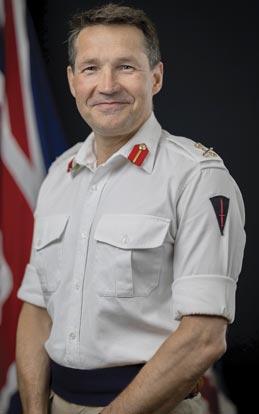
Scribe: Lt Gen Sir David Eastman KBE BEng (Hons) MSc CEng FIMechE psc(j) ae
Deputy Chief of the General Staff and Master General REME (Outgoing)
Somewhat strangely, I started my military journey in 1986 by following in my Father’s footsteps on the path towards becoming a Musician with the 17th/21st Lancers Regimental Band, through Junior Leaders Bovington. My career took an early, very unexpected and profound detour, however, with a late notice offer to attend Welbeck College that year instead, followed by a place at the Royal Military Academy Sandhurst in 1988 and a commission into the Corps of Royal Electrical and Mechanical Engineers in 1989.
I chose to join the REME over the other technical Corps because of the vital role that we play and because of the inspirational people that I met during the Sandhurst Regimental selection process. I can honestly say that, although this was an unplanned and unexpected turn of events, it has been a real privilege and an honour to serve with the Corps ever since. I have worked with some amazing people over the years, and I know that I have only reached the positions of Deputy Chief of the General Staff and Master General REME through the great work of the people that I have been working alongside.
Serving as the Master General has been the pinnacle of my career and has been a great honour, not only because of the responsibility it carries, but because leading a Corps of such talent and professionalism has been a source of immense pride.
What the Corps Gave Me
The REME gave me opportunities I never expected: the chance to earn two degrees, to see the world (my first posting as a 2Lt was 50 (Hong Kong) Workshop!), to play Rugby, Hockey and Cricket, learn to ski and to grow into the independence and confidence demanded of a young Engineering Officer able to operate in a variety of fields ranging from armour and aviation to light role airborne and Commando. Most importantly, it allowed me to lead talented, determined soldiers - people whose innovation, drive, and professionalism exemplify what Defence requires today. Those individuals ignited my passion for leadership and shaped the problem-solving approach that has guided me ever since.
The Corps system allows us to benefit from the strength of working with, and understanding, all of the elements required to deliver operational effect at the tactical level across the Army, whilst also enabling us to take advantage of the delivery of mass effect through our own Battalions. I think this gives our people a level of knowledge and experience that is hard to replicate anywhere else in the Army.
REME officers continue to be represented at the highest levels of the British Army - currently holding around 8% of its 2-star officers and nearly 30% of its 3-stars. That is not luck. It is the product of a Corps that develops adaptable, analytical leaders who understand people, technology, and capability. When I took over as DCGS, all of the single Service deputy chiefs were Engineers and, of course, the current Chief of
Defence Staff is also an Engineer. I don’t think that this is a coincidence.
Looking at today’s soldiers and JNCOs - technically astute, agile in thought, and ready for the challenges of modern conflict - I am confident that the Corps’ future is even stronger than its past, and I know that we are in safe hands as we navigate the fast-paced, changing Defence and technological context that we are operating in now. On-going operations across the globe are demonstrating daily that the Technician is as important to the delivery of operational effect nowadays as the tactician.
Modernisation – Then and Now
Throughout my career, I have witnessed the Army modernise repeatedly - from the operational demands of Iraq and Afghanistan to the sweeping technological and conceptual transformation now underway. The Corps has never simply
adapted to change; it has enabled it.
As I leave, I am almost envious of what lies ahead. The next decade promises a scale of transformation that we have not seen in a generation. Many of you, whether at Lyneham, in a Battalion, Workshop, LAD, or deployed overseas, will soon experience the opportunities this brings.
Uncrewed systems, new land platforms, and digitally enabled support will redefine engineering in the Field Army. The award of the Land Rover replacement contract will be a symbolic and practical milestone. After more than 70 years of faithful service, its successor will not just introduce a new vehicle - it will reshape mobility, modularity, and industrial resilience across Defence.
Alongside Apache, AJAX, BOXER and CHALLENGER 3, and the uncrewed and one way effector technologies that they will eventually enable, we will see a sea-change in the Army’s capabilities. But all of these capabilities need the Corps to keep them in the fight.
As CGS has rightly emphasised: without credible commercial partnerships, visible manufacturing, and a strong UK industrial base, we will not be taken seriously. The REME will be central to integrating, sustaining, and exploiting this next generation of equipment.
The Future – Why You Matter
The character of conflict is changing fast. Ukraine and the Middle East demonstrate how drones, autonomous systems, distributed logistics, and industry-integrated support are now decisive elements of warfare. In this environment, engineering is not a supporting function. It is operationally critical.
The Army of the future will depend on those who can diagnose, adapt, prototype, integrate, and sustain complex systems under pressure. That is the REME’s DNA - and it will be you, the next generation, who drive this forward.
Your careers will take you into areas that barely existed five years ago. You will collaborate with industry in real time, build new repair concepts, and ensure the British Army remains ready, relevant, and credible in an increasingly complex world.
A Corps in Safe Hands
As I pass the baton to Lieutenant General Simon Hamilton, I do so with absolute confidence. His leadership at DE&S has given him unparalleled insight into equipment, support, and modernisation. At a time when the Army is re-equipping at pace, there is no one better placed to guide the Corps through the next era of transformation.
The Corps is in the safest of hands.
Closing Reflections
As I step away after nearly four decades, I do so with immense pride. Pride in the Corps that shaped me, pride in the people I have served with, and pride in seeing the next generation already driving innovation with an energy and professionalism that bodes well for the future of Defence.
Thank you for giving me a home for 38 years. Thank you for the opportunities, the challenges, the camaraderie, and the memories.
The future is bright, the Corps is strong, and it is - without doubt - in safe hands.
Arte et Marte.
The REME Shop carries a varied range of items from branded clothing, gifts, statuettes, accessories, military uniform items and bespoke personalized products on request. The Corps shop is located within the REME Museum and offers a collection service. The REME Trading Company (of which the shop is a part of) is a ‘not for profit’ and runs in support of The REME Charity for The REME Family.
REME Briefing Notes: Key Developments Shaping REME in 2026
Scribe: RHQ REME
REME Briefing Notes (RBNs) are being introduced as the Corps’ formal mechanism for communicating changes and updates to Corps policy. This will ensure that information is disseminated quickly, clearly, and consistently across the REME Functional Chain of Command; reducing the risk of mixed messages or the circulation of outdated guidance.
A series of major policy updates, leadership changes, professional recognition opportunities, and improvements to career management collectively demonstrate the Corps’ continued evolution within a rapidly modernising Army. These developments highlight Defence’s increasing reliance on technical expertise, advanced engineering capability, and highly trained personnel able to sustain complex equipment across all domains.
RBN_05_26 - Quinquennial Review 2026: A Landmark Result for REME
The 2026 Quinquennial Review (QQR26), is a comprehensive assessment conducted every five years and has delivered a strong outcome for the Corps. QQR26 evaluates every military trade according to technical complexity, responsibility, career long training burden and market demand. The results directly influence the Trade Supplement (TS) pay model, ensuring trades are fairly remunerated based on the level of skill the Army requires.
For REME, the outcome is exceptional. Four trades have moved up a supplement: Artificers (Land and Air) now sit in TS4; Armourers and Metalsmiths rise to TS3; and Technical Support Specialists move into TS2. No REME trade has moved down, and for the first time in Corps history, every CEG is now positioned in TS2 or above. This marks a turning point for technical recognition across Defence and reflects the Army’s renewed commitment to valuing specialist engineering expertise.
QR Code – Corps Col VLOG for Trade Supplement Pay
The uplift also reinforces the Corps’ strategic importance as Defence adopts increasingly complex, software driven and digitally enabled platforms.
REME’s role in supporting future Army capabilities from autonomous systems to hybrid powertrains has been a decisive factor in the review.
Full Defence communications will follow, but Units are already directed to brief all personnel through Routine Orders.
RBN_04_26 - A New Master General for the Corps
A significant leadership transition takes place this year, with Lieutenant General S P Hamilton CBE assuming the role of Master General REME on 1 April 2026. His Majesty The King approved the appointment in December 2025. Lt Gen Hamilton brings substantial experience across operational command, technical delivery, and senior Defence leadership.
The Master General is the Corps’ senior figure, responsible for strategic direction, long�term development, and professional oversight. He succeeds Lieutenant General Sir D J Eastman KBE, whose tenure has been marked by strong advocacy for engineering talent and investment in technical capability. The appointment represents continuity and momentum for the Corps as it strengthens its place within the Army of the future.
RBN_03_26 - Churchill Medal 2026: Celebrating Engineering Excellence
The Churchill Medal remains the highest professional engineering accolade within Defence, awarded annually by the Professional Engineering Institutions (PEIs). The 2026 nomination window is open, offering REME personnel another opportunity to showcase engineering excellence across the Army.
The award is open to individuals and small teams of up to ten personnel, the majority of whom must be serving military Engineers. Eligible work must be delivered between 1 April 2025 and 31 March 2026. Judges expect evidence of operational impact, innovation, technical challenge, safety improvements, and efficiency gains.
REME units are strongly encouraged to submit nominations, especially for projects or individuals not captured in the REME Engineering Awards. The Churchill Medal provides visibility across Defence and reinforces the Corps’ reputation as a centre of engineering innovation. Finalists will be notified in August, with the ceremony taking place at the IET’s Maxwell Library in London on 20 November 2026.
RBN_02_26 - Career Management Update: Extension in Tenure (EiT) and Posting Preference Proforma (PPP)
RHQ REME has implemented an important update to Corps Instruction E6, clarifying the rules and expectations for Extension in Tenure (EiT) and the Posting Preference Proforma (ePPP). These changes help ensure fair, transparent career management across the Corps and improve workforce planning as demand for technical talent continues to grow.
Key updates include: EiT requests must be submitted to
the REME Soldier Wing with Chain of Command support. Initial EiT approvals can be granted for up to 24 months, with further extensions considered by the Appointment Board. E1 and unspec ePPPs must include a minimum of 15 preferences taken from the REME Jobs List, ensuring personnel remain flexible across the full range of Corps opportunities. E2 ePPPs, however, must list only the specific E2 roles the soldier intends to apply for. Reductions in Tenure (RiT) now require at least one current SJAR from the soldier’s existing unit.
This update reinforces consistency, strengthens transparency, and ensures the Corps continues to deploy its technical workforce effectively.
Enhancing the RMAS Instructor Pathway
A further update to Corps Instruction E6 introduces a fully defined policy line for the Royal Military Academy
Sandhurst (RMAS) Military Instructor pathway. The RMAS Instructor role has long been regarded as one of the most prestigious appointments available to REME SNCOs, and the updated policy now recognises this formally.
From 2026 onwards, REME soldiers who meet the selection criteria, pass the Sandhurst Instructor Aptitude Course (SIAC) and are chosen for an RMAS Instructor post will be promoted to substantive Staff Sergeant upon taking up the appointment. This accelerated progression reflects the high impact REME SNCOs have in shaping the next generation of Army officers.
The update also clarifies eligibility, prerequisites, and alignment with SIAC standards. It strengthens the career pathway for Military Instructors, ensuring recognition is consistent with the high levels of professionalism and instructional excellence demanded by RMAS.
The Corps Communications Team
REME Apprenticeships: Getting Back on Track, Together
Scribe: Lt Col Alan Jobes, SO1 Apprenticeships (REME)
The REME Apprenticeship Programme remains a Corps priority and a central element of the REME Offer to our soldiers and potential recruits. It underpins professional competence, supports Whole Life Development, and, when delivered well, acts as a strong retention lever, giving our people nationally recognised qualifications, feeding professional engineering status, and confidence in their future both in and out of the Army.
Over the last year we have taken a hard, honest look at how the programme is performing, where it has fallen short, and what we must do, together, to return it to a position of stability, credibility, and excellence. This has reinforced a clear message: apprenticeships are not an additional burden placed on units or individuals; they are a core investment in REME’s people and its future capability.
There are two areas that demand immediate and sustained focus from the Chain of Command (CoC), the Service Provider (Babcock) and the Apprentices: 1. Soldiers who are Passed their Planned End Date (PPED).
2. Soldiers who have missed two or more progress reviews.
These are not abstract metrics. They are the clearest indicators of where learning has stalled, where support has broken down, and where intervention is required. For those soldiers, apprenticeships must be treated as the priority activity until apprenticeship completion is met or learning momentum is restored with assured on track progress.
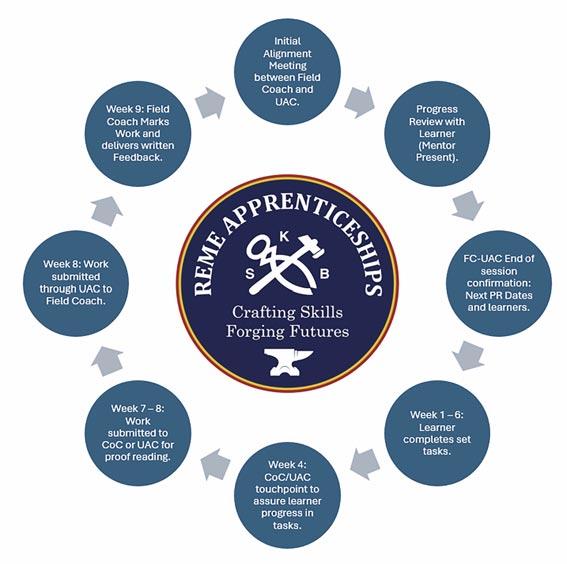
At the heart of this sits the Progress Review Cycle. It is the single most important mechanism in the programme. Progress reviews must be attended on time, well-prepared for, and with completed work submitted in advance. The cycle only works when Apprentices complete the tasks set, CoC and/or Mentors proof-read and support, and Field Coaches are able to timely mark and feedback meaningfully. Late or incomplete submissions break the cycle and rapidly lead to missed reviews, PPED, and degraded outcomes.
The following model covers the minimum requirements: Who Owns the Apprenticeship?
The following striking question was presented to me at the recent Electronic Technician’s trade symposium, and it is an important one, fundamental to success:
At what point does the ownership of apprenticeship completion go to the tradesman rather than the CoC, in your opinion?
The answer is clear and unequivocal:
At no point does sole ownership of an apprenticeship transfer to the soldier.
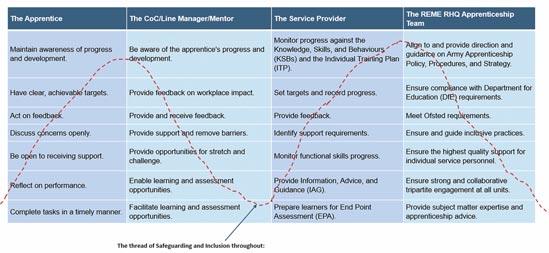
An apprenticeship, by definition, is a structured period of employment in which an individual earns while learning under the guidance of their masters. Our Apprenticeships employ the collaborative tripartite model; a relationship between the CoC, the Babcock Field Coach, and the Apprentice that underpins success. Apprentices are rightly expected to adopt a mature, professional approach to their learning from day one; engaging fully, completing work to the required standard, submitting evidence on time, and preparing properly for progress reviews and assessments. However, responsibility sits within the system; it does not replace it.
The Corps does not, and must not, step away from its responsibilities at any point. The CoC retains accountability throughout the entire apprenticeship journey; including Gateway and End Point Assessment (EPA). This accountability is exercised through ensuring that Apprentices are given the time, opportunity, task exposure, mentorship, and structured oversight required to succeed.
The 10-week Progress Review Cycle is deliberately designed to enforce a shared ownership, but CoC led. It keeps learning activity visible, disciplined, and embedded within the unit battle rhythm, ensuring that Apprentices are neither left to drift nor forced to cope alone. Through this cycle, the CoC leads, mentors support, Field Coaches coach and assure, and Apprentices learn and develop in a controlled, supported environment.
For these reasons, apprenticeship success is a shared responsibility throughout, deliberately constructed as such. The Corps must never allow it to devolve into an individual burden carried solely by the soldier
How the Progress Review Cycle works:
1. Field Coach and Unit Apprenticeship Coordinator (UAC) Alignment: Prior to learner engagement, Field Coaches and UACs confirm learners to be seen, safeguarding considerations, barriers to learning, platform access and foreseeable unit constraints.
2. Progress Review with Learner: The Field Coach conducts a structured review covering feedback, SMART tasks, assessment opportunities, stretch and challenge, and learner voice.
3. Field Coach and UAC Confirmation: Review outcomes are confirmed, next review dates set, and any risks, delays or safeguarding concerns shared.
4. Learning Phase (Weeks 1-6): Learners complete
agreed work with mentor support.
5. Week 4 Assurance Touchpoint: UAC/CoC checks progress and engagement.
6. Quality Gate (Weeks 7-8): Work is proofread by the UAC/CoC to improve standards and reduce likelihood of re-work.
7. Submission (Week 8): Work is submitted to the Field Coach.
8. Assessment & Feedback (Weeks 9-10): The Field Coach marks work and provides written feedback via the UAC.
9. Next Review: Feedback informs the next progress review, continuing the cycle.
Your part in the Progress Review Cycle:
10. The Field Coach is to be available throughout the cycle to provide learning support when required.
What Happened in the Deep Dive?
In late 2025, the REME Apprenticeship Programme underwent a formal Deep Dive assurance activity, focusing initially on the Vehicle Mechanic apprenticeship but identifying issues common across our other trades. The findings were clear and uncomfortable:
• The programme was under-resourced; too few Field Coaches, limited specific REME Apprenticeship support staff, a lack of learner IT, and a lack of electronic supporting structures/systems.
• Too many soldiers had passed their Planned End Date.
• Too many learners were not having progress reviews and effectively falling out of the learning cycle.
• Apprenticeship activity had not been consistently delivered or supported; a lack of Service Provider Field Coach support.
• Learning was too often paused for deployments and exercises instead of being exploited.
• Oversight of learner journeys was inconsistent, with a failing in tracking accurate learning progress, compounded by a lack of electronic portfolio system.
• Remote or resource-constrained units were not being
supported inclusively.
• Apprenticeships had fallen away from unit key Battle rhythm Ways of Working.
Most importantly, the Deep Dive did not identify a lack of effort or commitment from units nor other stakeholders. Rather, it revealed an under-resourced programme, gaps in Field Coach support, with rising occupancy and escalating caseload pressures. This led to a lowering of understanding, frustrations, a decline in prioritisation and accountability, reduced motivation and discipline, and a compromised ability to effectively execute the Progress Review Cycle; ultimately stalling learning progress across
The thread of Safeguarding and Inclusion throughout
the programme, which continued to compound.
What Are We Doing About It?
Increased Staffing for RHQ REME and Babcock:
Significant progress has been made in increasing staffing levels across both RHQ REME Apprenticeships and the Service Provider, Babcock.
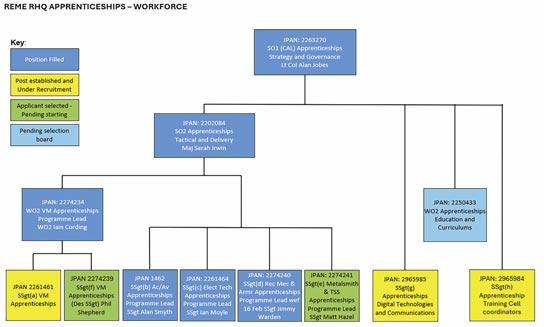
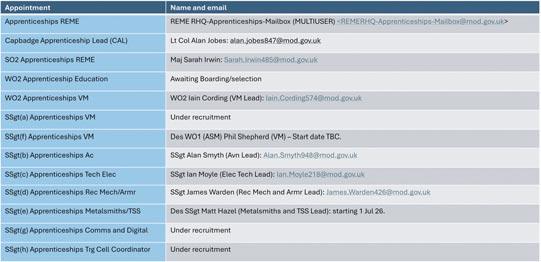
On the REME side, a dedicated Apprenticeship Team structure has now been established and is approaching full operating capability. This includes myself as SO1 overseeing the programme and Maj Sarah Irwin as the SO2 leading on Field Force delivery with a team of tradealigned WO and SNCOs leads. Additional posts focus on education and assurance, training coordination, communications and digital delivery. This expanded team, of twelve posts, is enabling far closer engagement with units, improved oversight of priority cohorts (PPED, missed reviews, and those approaching Class 1), and a stronger link between policy, strategy, and delivery in the Field Force.
In parallel, Babcock has significantly increased its workforce. Field Coach numbers, quality assurance staff, and business support capacity have all expanded; reducing caseload pressure, improving responsiveness, and strengthening marking and feedback timelines. Trade teams have been restructured where necessary to provide clearer ownership and better geographic coverage, particularly in areas that previously experienced gaps. Together, this increased capacity is restoring resilience to the system, strengthening the critical tripartite relationship, and allowing Coaches and Commanders to focus on quality learning rather than firefighting. Introducing OneFile, Improving Visibility and Control:
Alongside increased staffing, the programme is introducing OneFile, a digital e-portfolio and progress tracking system that will replace the labour intensive and often inaccurate spreadsheet-based approach.
OneFile will provide a single source of truth for apprenticeship activity. Apprentices, Mentors, Field Coaches, and the Chain of Command will have clearer visibility of:
• Progress against the apprenticeship Knowledge, Skills and Behaviours (KSBs).
• Tasks set and completed within each 10-week Progress Review Cycle.
• Evidence submitted, marked, and outstanding.
• Areas of strength, risk, or stalled progression. This increased transparency directly supports the intent of: fewer missed reviews, earlier intervention, and a reduction in PPED soldiers.
For Apprentices, OneFile simplifies evidence capture and submission, making expectations clearer and reducing rework. For Field Coaches, it enables structured marking, feedback, and curriculum-aligned (SMART) tasking. For the CoC it provides insight into whether learning activity is genuinely progressing and strengthens oversight and assurance. For the tripartite collaboration it will improve communications.
Fielding of OneFile will continue take place over the next couple of months. While full adoption will take time, OneFile will be a critical enabler in moving the programme from recovery to controlled, predictable delivery.
Why these matter:
Increased staffing provides the capacity to coach, support, and intervene.
OneFile provides the visibility to see what is happening, when, and where.
Together, they directly address the root causes highlighted by the Deep Dive and reinforce a programme where:
• Apprentices know what is expected of them.
• Mentors can support and CoCs can lead effectively.
• Field Coaches can focus on delivery quality, not administration of soldiers.
• Progress is visible to all, highlight issues early, assuring progress and sustained programme performance. This investment in people is essential to restoring confidence, improving outcomes, and ensuring the REME Apprenticeship Programme remains a credible, professional, and an effective part of the REME Offer.
The Apprenticeship Strategy and Quality Improvements.
The Deep Dive directly informed a REME Apprenticeship Strategy and a live Action Plan that is handrailing the programme through a 12-18 month improvement period. This will then migrate to form a Quality Improvements Plan that will be embedded in the programme’s daily battle rhythm to provide continuous improvement and ensure the programme remains current. Key actions underway now include:
• Prioritising PPED soldiers: Any Apprentice who is past PPED must now prioritise learning above all other activities through to completion.
• Targeted learner lists: PPED, missed reviews, Break in Learning (BiL), and those under consideration for Class 1 loading are now actively managed through focused working groups.
• Concentration events and workshops: Bringing learners together to rebuild portfolios, confidence, and momentum.
• Tighter control of BiL: Deployments at trade are no longer a default reason to pause learning. Evidence capture must continue wherever possible.
• Reinforcement of the Progress Review Cycle: Reviews are now scrutinised for timeliness, quality, and meaningful tasking.
These measures are already enhancing visibility, reinforcing accountability, and improving progression across the programme; however, we must maintain momentum. Soldiers from all trades are now successfully passing the End Point Assessments, but the monthly number of achievements must increase further to reverse the rising numbers of PPED soldiers and growing occupancy.
Digital Enablers: VDS Explained
One of the key barriers identified during the Deep Dive was access to IT. This can be addressed through Virtual Desktop Services (VDS), also known as MOVD. REME Apprenticeships are keen for all Apprentices to exploit this service.
VDS allows Apprentices to securely access MODNET Official from a non-MODNET personal device, anywhere in the UK. This includes access to core M365 applications such
as Outlook, Teams, OneDrive, SharePoint, and other MOD systems required to complete apprenticeship work.
VDS is a game-changer. It enables learning to continue regardless of location, removes reliance on shared unit terminals, and allows Apprentices to write up evidence, submit work, and communicate with Field Coaches efficiently. Units and Unit Apprenticeship Coordinators (UACs) are strongly encouraged to exploit VDS for their Apprentices.
Additional information and guidance on this can be found through the REME Apprenticeship DC Page. No Laptop? There Is a Solution:
For soldiers who do not have access to a personal laptop, units can procure devices using the Short Tail Spend Solution fund. This is a simple and effective route to ensure Apprentices have the basic equipment needed to engage with learning.
A laptop combined with VDS gives Apprentices the tools they need to stay in learning, submit work on time, and prepare properly for progress reviews and EPA. Lack of a device is no longer an acceptable barrier.
Apprenticeship Changes:
Why the Mechatronics Maintenance Technician Path Matters to You (SSgt Ian Moyle, Mil Lead Elec Tech Apprenticeships):
As a REME Electronics Technician, you already operate at the sharp end of engineering, keeping the Army moving, communicating, and fighting. But the modern battlespace is evolving fast, and so is industry. That’s where the Mechatronics Maintenance Technician Level 3 apprenticeship becomes a powerful asset for your future. Across aerospace, defence, automotive, logistics, and advanced manufacturing, employers are crying out for Technicians who can work confidently across electrical, electronic, mechanical, co ntrol and fluid-power systems. Sound familiar? It should. This is the same multi-discipline mindset you use daily on armoured vehicles, comms systems, generators, and weapon platforms.
The role centres on ensuring complex automated equipment performs safely, reliably and efficiently, whether that’s diagnosing faults, installing systems, carrying out planned maintenance, or working under pressure to get critical kit back online. You already thrive in those conditions. The apprenticeship simply sharpens that capability and translates it into a nationally recognised qualification.
Your end point apprenticeship assessment, observation, interview and portfolio prove your competence to an independent assessor. Pass it, and you earn not just the apprenticeship certificate but professional recognition aligned with the Institution of Engineering and Technology (IET) at EngTech level.
Why do it? Because it validates the skills you use every day in uniform and opens doors across some of the UK’s most advanced engineering sectors. What do you get out of it? Credibility, employability, and a clear pathway to a technical career long after you hang up your beret. Who’s here to help? The apprenticeship team are here to help and as the Tech Elec programme lead it’s my job to help make the journey as smooth as possible in partnership with the Babcock Field Coaches. For any
advice, assistance or general queries then please get in touch @ REME RHQ-Apprenticeships-Mailbox (MULTIUSER)
Take a look at the Apprenticeship here: Mechatronics maintenance technician / Skills England Heavy Vehicle Service and Maintenance Technician (HVSMT) Apprenticeship – A Better Fit for VMs (WO2 Iain Cording, Mil Lead VM Apprenticeships):
Vehicle Mechanics have now transitioned onto the Heavy Vehicle Service and Maintenance Technician (HVSMT) Level 3 Apprenticeship, marking a significant step forward in how VM apprenticeships align with the reality of the trade.
This apprenticeship is a much closer match to what VMs do day to day. The knowledge, skills and behaviours focus directly on inspection, servicing, fault diagnosis, repair, and maintenance of heavy vehicles, the core business of REME VMs in barracks, on exercise, and on operations. Because the standard mirrors routine VM employment, Apprentices can capture evidence naturally from real time work, rather than trying to manufacture evidence that only loosely fits the standard.
As a result, it is far easier to set SMART, achievable tasks during each 10-week Progress Review Cycle. Tasks can be drawn directly from real jobs: major services, inspections, rectification of defects, fault-finding under pressure, and compliance with technical and safety standards. This improves evidence quality, reduces re-work, and keeps Apprentices in active learning, supporting timely completion and reducing PPED risk.
Crucially, the HVSMT apprenticeship also strengthens the pipeline towards inspection and assurance roles. The standard supports learning that underpins future Vehicle Inspector (VI) training, helping Apprentices develop the technical judgement, documentation discipline and inspection mindset required before progressing further. On completion, the apprenticeship is professionally accredited, enabling soldiers to apply for Engineering Technician (EngTech) registration through recognised Professional Engineering Institutions (PEIs). In addition, the qualification is recognised by the Driver Vehicle Standards Agency (DVSA) as a pre-qualification requirement to become a Vehicle Inspector; needed for the VM Class 1 Course.
Put simply, the HVSMT apprenticeship delivers relevance, credibility and progression, improving learning outcomes today while preparing VMs for the demanding inspection roles of tomorrow.
Take a look at the Apprenticeship here: Heavy vehicle service and maintenance technician / Skills England Final Word:
Apprenticeships are not optional. They are mandated, professionally valuable, and essential to REME’s future. The Deep Dive was not about failure, it was about learning, correcting course, and building a stronger, more inclusive programme.
• If you are an Apprentice: engage, complete your work, attend your progress reviews prepared.
• If you are in the Chain of Command: own the process, protect the time, and ensure our Apprentice tradesmen are mentored.
When we do this together, the system works, and REME continues to deliver world-class Engineers.
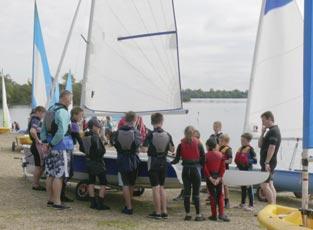
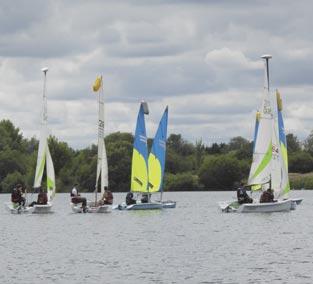
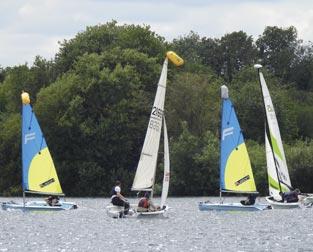
The REME Sailing Club are providing an opportunity for REME families to learn or develop their skills at dinghy sailing. No prior sailing experience is required but there is a minimum age of 8 years old. There is also opportunity for adults (serving or families) to learn to sail to enable sailing as a family group.
The course will be held at South Cerney Sailing Club (SCSC) near Swindon, the home of REME water sports with an excellent sized lake and clubhouse with galley and showers. Camping on site is permitted for those who wish to.
Costs: £100 per person.
To register interest please complete the form available via the QR code. Please direct any questions to Paul.Isitt696@mod.gov.uk
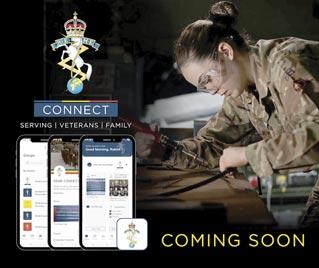
REME Connect App Coming Soon
Exciting news! The new REME CONNECT App will launch in early June 2026! REME CONNECT will be open to all our serving personnel, veterans, and their families.
It will be available via a mobile app as well as through a website and will transform the way we can connect as a wider Corps Family as a one stop shop for all UNCLASSIFIED REME information.
More details to follow in the June edition of The Craftsman Magazine.
COMING SOON
Reserves
Lived Experience –Regular to Reserves
Scribe: SSgt Todd
Many Regulars have transferred to the Reserves however, very rarely do we hear their story and reflections. For me, it began with a quick email to the Regimental Operations Support Officer (ROSO) confirming my intention to join the Army Reserves. Using the Digital Transfer App, I clicked a few buttons and the process began. Once initiated, although there was a bit of chasing around OC’s at my Regular unit for their completion of their part in the transfer process. Once completed there was plenty of support from the Regimental Mentoring Support Officer (ReMSO) at 102 Bn REME all the way to the day I re-attested into the Army Reserves.
I found the first few days in the Army Reserves familiar to
me because of coming straight out of the Regular Army and into the Army Reserves. It also helped that I knew a few old faces from past units to break the ice. I was lucky to go into the same job role as I left my final unit in the Regulars as CQMS. The job descriptions were similar but came with the flexibility to choose when you wanted to attend and less pressure due to the incentive of Regular to Reserve transferees able to conduct a minimum of 19 Reserve Service Days (RSD) and a minimum amount of Individual Training Requirements (ITR’s) during the first 3 years.
I enjoy the familiarity between Regular and Reserve service, as this has helped with the transition from leaving the Regular Army after 23 years. Since departing the Regular Army I have managed to commit 19-25 RSD’s a year for the first 3 years although in the future I would like to be more available instead of completing the minimum RSD’s a year, and I still aspire to promote within the Reserves. I have enjoyed being part of the annual Remembrance day celebrations and have also managed quite a bit of Adventurous training which I hope to do more of in the future.
I have made many new friends and met some old ones too. Everyone has been very warm and welcoming; it’s great to be able to keep the Army Banter going which I would have missed sticking to just a civilian job. I enjoy being a Reservist and it is very interesting to hear what other colleagues do in their day-today civilian work and to see how they use their knowledge to better their roles they have taken.
Still doing my part for Remembrance
FORGING THE FUTURE – How REME Is Powering Up Its Outreach to Inspire Tomorrow’s Engineers
Scribe: Colonel Iain Wallace, Colonel REME
INTRODUCTION
Over the past year, the Corps has been hard at work – not just repairing equipment and supporting operations worldwide, but laying the foundations for the next generation of REME engineers. Under Op INVECTOR, REME’s engagement and outreach efforts have surged forward, reshaped for a new era, and already producing strong inflow results.
Put simply: We are more visible, more engaging, and more effective than ever at attracting talented young engineers.
MEETING YOUNG ENGINEERS WHERE THEY ARE
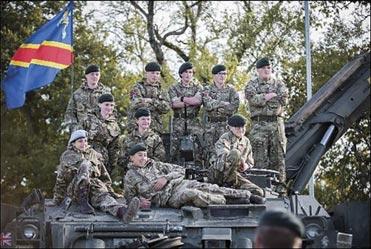
Science, Technology, Engineering & Mathematics (STEM) Challenge 2025. More than 300 cadets took part in a weeklong engineering challenge that showcased robotics, vehicle mechanics, and hands-on problem solving. REME has now been confirmed as lead Corps for STEM Challenge Camp 2026; building on the last STEM camps huge success.
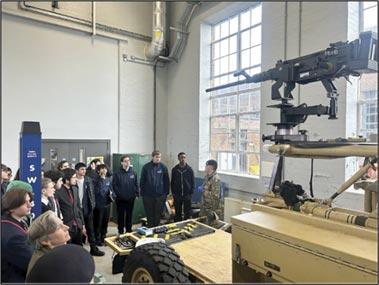
The REME Engineering Cup. Eight technical colleges and 148 engineering students took on mechanical challenges aligned to real industry standards. This flagship outreach event has become a highlight for students exploring engineering careers. Schools, Colleges & wider academic engagement. Visits across the country have brought REME Engineers face-to-face with young talent. These sessions allow students to experience the Corps’ technical spirit firsthand.
MODERN TOOLS FOR A MODERN CORPS
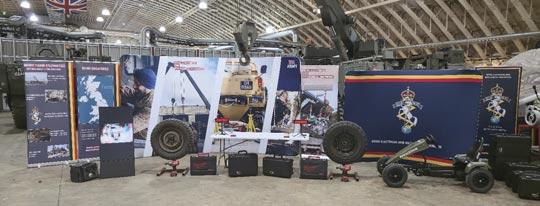
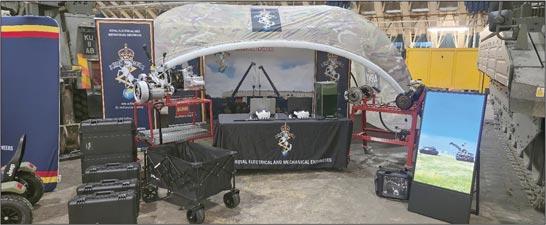
A major £100k investment has transformed the Corps Engagement Team (CET) into one of the most modern attraction units in the British Army. Highlights Include:
• VR headsets with immersive engineering challenges
• Interactive gearboxes and brake systems
• Timed wheel-change race station (a crowd favourite!)
• Battery powered go-kart for assembly/disassembly challenges
• Fresh, dynamic digital branding across all displays
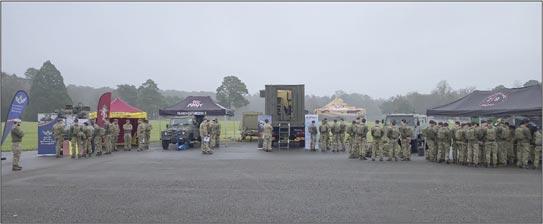
These tools are now a regular feature at RMAS, University Officer Training Corps (UOTCs), schools, Army Insight Days, and major public events – and they’re making a real impact.
REINFORCING THE OFFICER & SOLDIER PIPELINES
Officers. Despite the closure of Welbeck and pressures on national recruiting, REME once again hit its annual officer inflow target. Key factors include:
• 33 RMAS engagements per year
• Strengthened partnerships with UOTCs
• Exercises such as Ex MECHANICAL ENDEAVOUR and Ex FIRST LOOK
• Improved Defence STEM Undergraduate Sponsorship (DSUS) messaging for potential officers and their parents Soldiers. Soldier inflow reached 97% of target, bolstered by:
• The modernised CET display suite
• Increased technical college outreach
• Clearer, more consistent messaging at unit level
• Stronger presence at major attraction events REME continues to be one of the most attractive routes for apprenticeships and technical qualifications within the Army.
RESERVES & LATERAL ENTRY: BROADENING THE GATEWAYS
The Reserve recruiting picture is improving thanks to targeted, practical initiatives such as:
• Cornwall College Pilot
• Nineteen Reservists undertook IMI Level 2/3 qualifications – an innovative model that offers clear technical progression and boosts Reserve capability. New Lateral Entry Routes. In a pilot being developed by RHQ, qualified civilian Vehicle Mechanics could be able to join the Corps as a JNCO and above base Class, recognising their professional experience and allowing REME to strengthen trained technical manpower quickly and effectively.
STRONGER COMMUNICATION, STRONGER CONNECTIONS
The Corps has sharpened its communication game:
• A structured social media plan
• Wider contributor base
• Higher quality visual output
• Improved highlighting of events, success stories, and rejoiner pathways
This helps families, Veterans, potential recruits and the wider Army understand the value, professionalism and vibrancy of REME.
LOOKING AHEAD TO 26/27
• Launch of the new REME Connect App – watch this space!
• Lead delivery of STEM Challenge Camp 2026
• Proposed “STEM to Track” motorsport-based engineering initiative
• Fully embedding the new Applicant Nurture Tool
• Strengthened UOTC and DSUS outreach
• Continued modernisation of engagement equipment
FINAL THOUGHTS
The Corps has delivered a year of genuine momentum.
AIRBORNE REME
THEN 16 AIR ASSAULT BCT WANTS YOU!
Across schools, colleges, Cadet units, universities and military academies, REME’s outreach presence is the strongest it has been in years – and growing. Through engaging events, cutting-edge tools, and a proactive communications strategy, we are inspiring the next generation of REME soldiers and officers.
The Corps is not just maintaining Army equipment: We’re building the Army’s future engineers.
Arte et Marte
•
•
TO EARN AIRBORNE STATUS? We’re actively seeking motivated REME soldiers who want to take on the challenge of PCoy and earn the coveted maroon beret Pre-Conditioning Programme (PCP): SP may be considered to complete the PCP remotely at their own unit, subject to HQ 16X approval. This provides flexibility while still maintaining the
physical standards expected of Airborne soldiers.
Exercise MAPLE FREEFALL
Scribe – Cfn Noah Roach
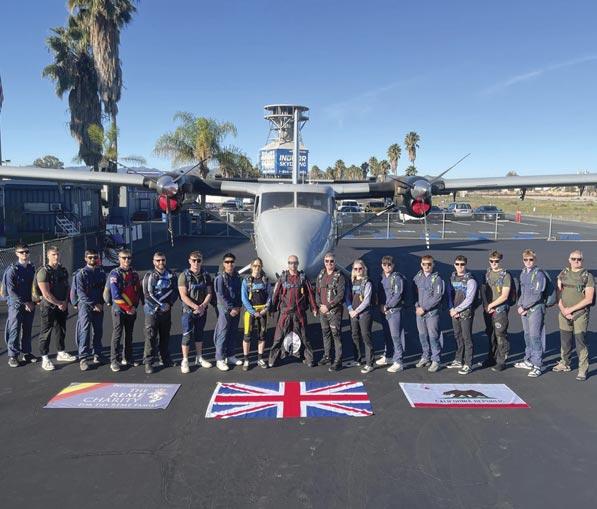
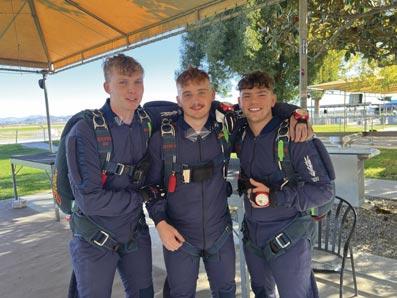
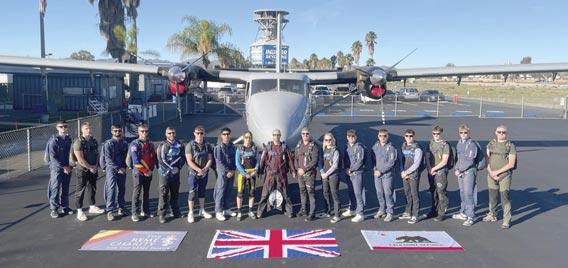
From the 1st – 18th December, Ex MAPLE FREEFALL brought 18 Skydivers, both new and experienced, to the skies of California. The group was made up of students, experienced jumpers, and instructors, and was run for 4Bn REME.
Students would be aiming to complete their British Skydiving (BS) A License (8 levels followed by 10 consolidation jumps) with the help of the instructors, whilst the
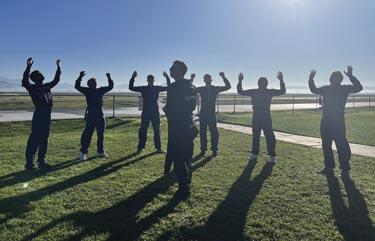
experienced among them would all be aiming to achieve new individual milestones and improve in various disciplines. Day one of the expedition was exciting as it was the first time we got to meet all the amazing people who had signed up for this trip, before being issued the kit we would be using for the rest of our student training. Learning how modern and valuable some of this kit certainly seemed to calm some nerves. We were then introduced to the fundamentals of Skydiving and learnt the drills that would keep us safe in the sky.
Day two consisted of further ground training at Netheravon Airfield where we covered more in depth skills such as the PLF (Parachute Landing Fall), reserve drills, and rehearsed in a hanging harness, all of which formed the structure of what would be our very first Skydive. Finally, we were released to get a good night’s sleep before an early drive to London Heathrow the next morning.
After a long day of travelling over to the USA and settling into our hotel, on day four we headed to Skydive Perris and covered orientation of the Drop Zone and got to meet all the wonderful staff.
Day five would be our first jumping day and
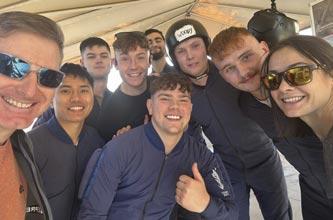
All the students with the instructors and cameraman Ryan
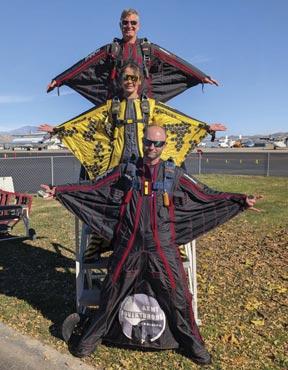
Instructors and ExOIC going wingsuiting
3-way freefall
thankfully we had left the British weather at home and were blessed with clear sunny skies. This day saw all 6 students completing their level 1 Skydive and giving others a chance to begin their level 2 jumps.
Days six and seven continued to progress smoothly, and as we smashed through the levels our instructors decided it would be great to take the opportunity for us to make use of the wind tunnel to work on our basic body position and slowly progress into starting and stopping controlled turns. The overwhelming response from the students was that this tunnel time dramatically increased confidence when in the air, and we even began to spot a couple of naturals amongst the group.
A mandatory stand down day allowed us to take a short break from jumping and make plans of our own. Some people travelled to Los Angeles, others spent the day shopping in a local mall, and a few enjoyed a sunny day around the pool.
Upon returning to the Drop Zone we had a busy few days of briefs, training, and jumping. Students were nearing the end of their levels and before long they would be on their consolidation jumps (10 solo jumps unaccompanied by an instructor). By this point we were completing left, right and 360° turns, back loops and practicing our dive exits. As the jump programme was on track, we were afforded a second stand down day and took the opportunity for a team meal, followed by a night out in the historic city of Temecula.
By day 15 we now had most of the students onto their consolidation jumps, meaning they were now able to go up together and jump individually without an instructor following them out the door. This freedom was exciting as it meant we had to rely on our own ability to successfully complete the jumps. Several students noticed that this stage is where things seemed to settle and feel the most natural. We were Skydivers now! Over the final few jumping days several times we saw as many as 7 students in the sky each time the plane went up and everyone was beginning to
3 students ready for the next jump
Enjoying the sunset in a wingsuit
The Twin Otter aircraft – Shark
experiment and refine the skills they had learnt.
In just two weeks we had gone from our very first jump, to hopping out the side of a twin otter, or diving out the back of a Skyvan. In these final days we saw all but one student achieve their required jumps and receive their British Skydiving A license. We’d done it!
With a very successful trip we now had 7 newly licensed Skydivers, 1 with a couple more jumps to go. Amongst the already licensed Skydivers a lot of progress was made in various disciplines, including wingsuiting. Some notable achievements: LCpl Ryan 100 jumps & CT2, Sgt Titcomb 200 jumps and BS C license, Cpl Hughes 400 jumps & coaching experience, LCpl Rickards TR1, Sgt Williams 650 jumps, to name a few.
An excellent experience, all of which made possible by our wonderful Instructors, Amii & Doug.
Thank you to Ryan too for the beautiful camera work, the staff at Skydive Perris, and of course Sgt Williams for organizing an amazing expedition on behalf of the Bn.
Special thanks must go to the following sponsors without which this trip wouldn’t have been possible: The REME Charity, the Army Sports Lottery, BIBMTF (Berlin Infantry Memorial Trust Fund), HQ ATG(A), 162 Reg RLC and 101 OSB. With your support we have introduced 8 new Skydivers to the sport and made countless memories. Thank you for making it all possible.
Refresher training in the Californian sunshine
Last jump of the expedition
All expedition members in front of a Twin Otter
The delayed 2025 REME Badminton Championships
Scribe: Sgt Laura Hodgson
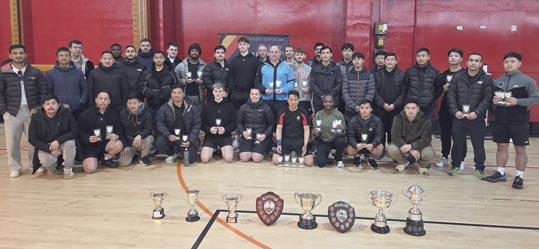
The week of the 16 February 2026 saw the delayed 2025 Badminton Championships held at ATR Grantham. From complete beginners to selected Army players, the week of play had it all.
The novice competition brought lots of enthusiastic new faces to the sport including LCpl Zamorona Tracey, 3 AAC, who said: “At first, I didn’t really have the experience but through each game I gained more and became really interested in the sport.
It was an amazing week, and I see myself continuing my new Badminton journey and hope to one day make the Corps team”.
In the novice final, Cfn Thomas came a close second to Cpl Watson and, in a twist of fortune, the novice winner came runner up to Cfn Pun in the singles plate final.
There was also fierce competition in the unit doubles which ended with a heated final between 5 REME and 5 AAC. This was a close game but ultimately 5 AAC held the upper hand to take the win.
Some of the ‘more experienced’ players, saw action in the Veterans doubles with Army Badminton Chairperson, Major Daley, paired with REME Badminton Chairperson, Major Bass, beating two other REME Badminton committee members; SSgt Ninglekhu and SSgt Subba in a hard fought final.
Wangeci
LCpl Thulang Rai, SSgt Subba
SSgt Subba, SSgt Ninglekhu Major Daley, Major Bass
Novice Singles
Men’s Plate
Cfn Thomas
Cpl Watson
Men’s Singles Sgt Rana
Cpl Watson
Cfn Pun
LCpl Thulung Rai
LCpl Tracey, Cfn Thomas Most
Cfn Wangeci
REME Badminton Championships 2026
Discover Your Future Role Within the Army
ARMY Jobs Fair 15/05
• Date:Fri 15 May 2026
• Time:0900–1400 hrs
• Location:Aldershot Garrison Sports Centre
• Dress:MTP for serving personnel
• Complete QR Code for registration
Supporting Veterans who are considering in re-joining the Army by showing what the Army has to offer and how to Re-join the British Army
Adventurous Training
Ex WYVERN STORM 26
OScribe: Captain George Mair, RHQ REME
n Friday 3rd April, staff from RHQ REME hosted 24 Officer Cadets (OCdts) and 11 members of enabling staff in the Princess Marina Officers’ Mess to begin pre-deployment admin for Ex WYVERN STORM 26.
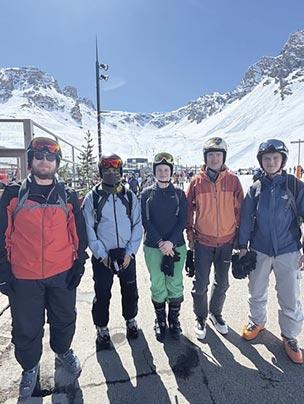
Ex WYVERN STORM is the annual REME Ski trip, a proven engagement event established to identify potential REME officers from across the University Officer Training Corps (UOTCs). It allows the RHQ REME Officer Engagement Team identify the Corps future leaders before they step foot through the doors of the Royal Military Academy Sandhurst (RMAS).
Those who have learned to ski or snowboard on a military AT package will understand the physical and psychological challenges. Very few sports can match the fear and fatigue for a beginner. Equipment is strange and uncomfortable, and the arduous mountain environment offers its own unpredictable challenges. Preparation is key, and resilience is tested.
For the last few iterations, the exercise has been held in Tignes, France which provides students the opportunity to gain both SF1 and SF2 Ski qualifications. Tignes is a well-trodden location for both military and civilian Ski expeditions alike, and strikes the right balance between accessibility, social and instructional opportunities.
Early April is not traditionally the best time to conduct Ski training in the Alps, but fortunately the weather was glorious, and the snow held throughout the week, facilitating valuable training for all involved. As with most military Ski expeditions, the first day was used for assessing the competence levels of the students. A good mix of abilities saw three SF1 groups and two SF2s with Instructor ratios a healthy 1:6. Once firmly out on the slopes, the first day saw the usual admin issues – ill-fitting boots, broken contact lenses and realising the importance of layering and
OCdts midway through Ex WYVERN STORM enjoying the weather
OCdts at the #TIGNES sign on day two of Ex WYVERN STORM
at the Val d’Isere sign on day three of
suncream! The support minibus earned its keep on this first day alone, providing the flexibility needed to transport OCdts to Val d ’Isere when solutions couldn’t be found in the much smaller Tignes.
The pattern of morning safety briefs, welfare checks and group breakfasts continued throughout the week, and I’m pleased to report that the glorious weather also stayed. With highs of 16°c daytime, and lows of 8°c, we really were lucky, especially as heavy rain was forecast the day after our departure. Day two saw all groups break away from the training slopes and head onto the green and blue routes to further develop their skills. The SF2s began touring and understanding what it takes to not only ensure the safety of their own team, but also others around them. As the week progressed, the development of all students was clear. A fantastic spread of Instructors enabled most of the SF1s to confidently approach blue routes, whilst the more experienced comfortably tackled reds and blacks throughout the week.
Upon departing Tignes, the benefits of the exercise were obvious. Morale was high as not only was the exercise hugely successful from an engagement event, but the skiing abilities of the groups clearly improved throughout the week. The returners who did not gain SF1 on Ex WYVERN STORM 25 achieved their SF1 this time around and all SF2 students were also successful.
Another Ex WYVERN STORM completed without any glitches, this tried and tested exercise really has grown into a well-respected, successful activity which I encourage you to support if you hold Ski Instructor qualifications. A huge thank you goes out to the supporting UOTCs, all military personnel involved, (especially to our Reserve colleagues who provided the coach and driver all the way from Scotland) and finally the RHQ REME staff who’s meticulous planning once again, ensured a fun, safe and hugely successful exercise. Ex WYVERN STORM will return in April 2027 and as mentioned, if you hold Ski Instructor qualifications, do reach out to the undersigned if you are able to offer your support. George.Mair100@mod.gov.uk
OCdts
Ex WYVERN STORM
Getting the basics right during SF1
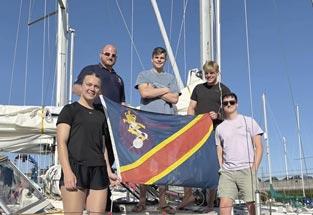
REME Sailing 2026
Scribe: Lieutenant Colonel Paul Isitt
The REME Sailing Club exists to provide opportunities for the REME Family to experience and participate in Sailing across the disciplines of Offshore, Dinghy, Windsurfing and Kitesurfing.
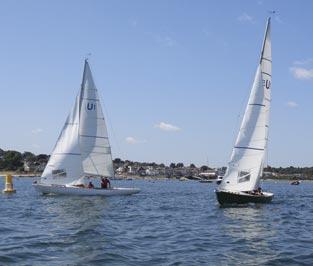
Generously supported by the REME Charity, the Club has some excellent facilities and equipment to help deliver on its aim, including two Hallberg-Rassy yachts and an excellent dinghy centre at South Cerney (approximately 20 mins from Lyneham). We have developed a strong cadre of Instructors to enhance and develop new Sailors, and all instruction is completed under the Royal Yachting Association (RYA) framework for teaching.
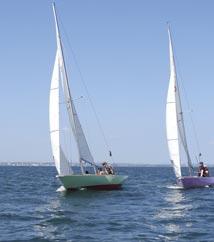
The Club has ambitious plans for 2026 which you can read about below. Highlights will again be the Keelboat Regatta at Seaview Yacht Club on the Isle of Wight, this year held on 10th June 2026, and the Dinghy Regatta held on 25th and 26th June 2026 at South Cerney.
Offshore
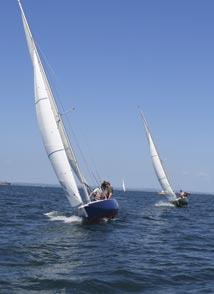
2025 was a great year for REME offshore sailing with more soldiers and officers on the water than ever. REME won the Army Offshore Regatta for the third year in a row and ran the first REME sailing AT expedition for some years.
2026 will build on this with hopes of retaining the title at the Army Offshore Regatta over 12th -
16th May 2026, while also competing on the civilian offshore circuit. Ex SEAHORSE EXPLORER will return giving REME soldiers the opportunity to conduct Sailing AT over legs to Plymouth and the Channel Islands.
Dinghy
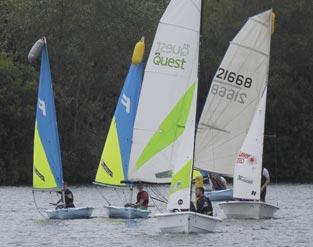
The 2026 season will begin with an Open Day at South Cerney on 15th April 2026. Open to all, this is an opportunity to come and see the excellent REME facilities at South Cerney Sailing Club and have a go at dinghy sailing – no experience needed. Returning Sailors are also welcome with refresher training on offer to help get back into the swing of things. For those keen to learn more and get a formal RYA qualification, we will be running a Level 2 Start Sailing course at South Cerney 5th – 8th May 2026. Instructor supported Wednesday afternoon sailing will take place at South Cerney over the summer months with individuals and units welcome to join during their sports afternoons. This will be excellent preparation for the REME Dinghy Regatta which will be held at South Cerney over 25th – 26th June 2026. The Dinghy
Key Dates
team will also be looking to address a poor run of form in the inter-Corps competition which will be held at Thorney Island 6th – 9th October 2026.
Families
Each summer REME Sailing runs a dinghy sailing course for REME families where we teach RYA youth and adult sailing courses. The course dates this year will be Monday 27th Jul to Friday 31st Jul 26. The course will follow the RYA sailing scheme which teaches the skills, knowledge, and training for effective sailing. No prior sailing experience is necessary to attend but there is a minimum age of 8 years old. There is also opportunity for adults to learn to sail to enable sailing as a family group. Camping will be available at the sailing club for the week.
Summary
Please make the most of the opportunities to get involved in one of the many REME sailing events this year; these are delivered for you and despite the busy commitments we face as a Corps, I encourage you to make the effort to come along – I promise you will enjoy it and the time away from the stresses of the daily routine will be invaluable. Please use the QR code or reach out to any of the contacts below. All disciplines are always keen to have new participants from someone just wanting to give Sailing a try though to those able to help run events. Running events is a great way to develop leadership and planning, with full support and mentoring available from an experienced committee. If you are interested, please do get in touch.
I’d like to end by publicly thanking the Sailing Committee and everyone who contributes to REME Sailing, the REME Charity and Corps Sports Committee, without whom none of what we do would be possible – thank you.
REME go for Gold at Army Nordic Ski Championships
Scribe: Lt Bywater
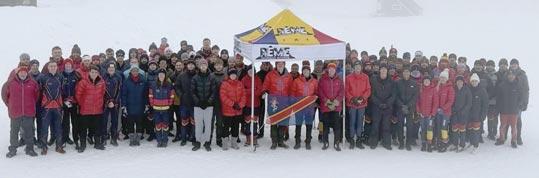
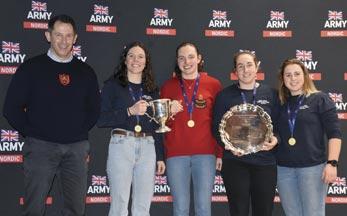
2025/2026 has been an exceptional year for REME Nordic Ski. After all, but two of the REME Battalions, completed preparatory training in Norway, five teams progressed to the Qualifying Championships, with three earning their place at the Army Championships. Most notably - and for the first time in our history - Lt Lizzie Bywater and the REME Female Team were crowned Army Nordic Champions 2026.
But Nordic skiing is about far more than the podium. It is an operational capability. The demanding conditions faced in Eastern Europe require soldiers who can operate with endurance, precision and independence. Nordic Skiing and Biathlon develop exactly these attributes: small teams operating at reach; young officers leading away from headquarters; soldiers pushing themselves to their physical limits; and the delivery of accurate marksmanship in subzero environments.
This season’s achievements are the result of rigorous year-round preparation, beginning long before teams arrive in Norway and culminating in one of the Corps’ most successful Nordic seasons to date.
Maj Phill Birkett
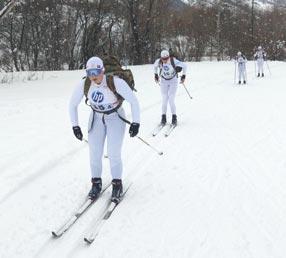
The Nordic Ski season does not just begin when teams arrive on the snow in Norway, athletes prepare throughout the spring and summer months by running, cycling and rollerskiing. To support preparation, the REME’s summer training camp saw Bn teams roller Ski on the airfield and shoot .22 Biathlon rifles on the 25m range at MOD Lyneham. It was a great refresher for returning skiers and introduction for novices; testing their balance, cardio and coordination before hitting the snow.
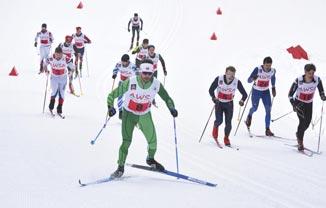
Ex NORDIC BLUEBELL is the REME’s fourweek Corps training camp, held in Sjusjøen, Norway. This year, 83 REME personnel took part, supported by 21 REME Instructors. Most attendees were novices. The rigorous camp sees teams train twice a day, learning the skate and classical techniques of crosscountry skiing. Skate is combined with shooting to form Biathlon, which is a major focus for the camp. Athletes spend mornings on the world-class Sjusjøen Arena range, often in freezing conditions. Temperatures can reach lows of -20 degrees, but you’ll see skiers in no more than a few thin layers –skiing uphill is hard work! But the camp isn’t all work – teams get to relax and recover in their cabins’ saunas and were even treated to a northern lights spectacle this year.
The camp culminated in the REME Corps Championships, designed to prepare teams heading onwards to the Army Qualifying Championships. This year saw five races decide the Corps Champions, with 4REME taking the major unit crown and 9REME winning the minor unit title. A mixture of not enough snow swiftly followed by too much snow during race week made the races extra challenging.
What is Biathlon?
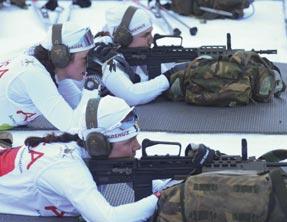
You may have seen snippets of it in the Olympics coverage earlier this year. Biathlon is cross country skiing using skate technique (on skis about 5cm wide and 15cm taller than your height) whilst carrying a .22 calibre Biathlon rifle on your back. With a wooden or 3D printed stock, the rifle weighs about 4kg. Biathletes will Ski a loop, typically 2-3km depending on the type of race, Ski into the range and fire five rounds at five circular targets. In prone at 50m, the Biathlete is aiming at a golf ball sized target. In stand at 50m, the target is the size of a CD. After the shoot, the Biathlete will Ski another loop and repeat, having to complete a 150m penalty loop for every missed shot. Races include two or four shoots. Biathletes must understand and control their bodies during a race – heart rate too high and they’ll miss the targets. Pacing is key in Biathlon. Cross country skiers consistently rank among the highest VO2 Max Athletes ever recorded.
After a short break for Christmas and New Year, the REME’s selected Corps teams – 4REME, 9REME and REME Ladies –drove to the French Alps for the Corps’ elite training camp. It was a valuable chance to hone Ski technique and practice marksmanship.
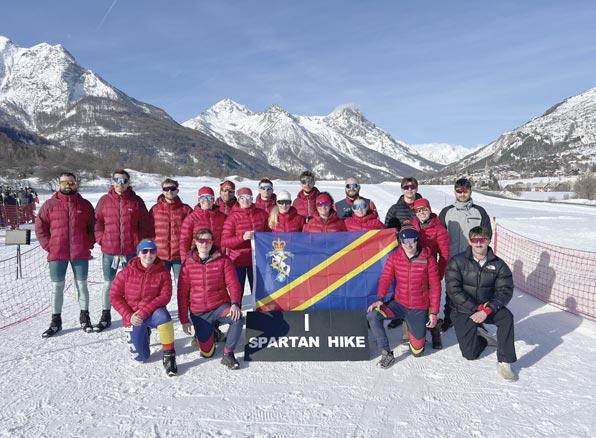
This led straight into the Qualifying Championships (QCs): Ex SPARTAN HIKE and Ex PIPEDOWN. Set over two different resorts in the Alps, five REME teams competed against over 30 other teams from across the Army. Teams raced Biathlon and classical technique over two relays, two individual races and one military patrol race. The races varied in distance from 5km to 20km, each demanding the very most of the Athletes.
The teams set themselves up for success at QCs, with 4REME, 9REME and REME Ladies qualifying for the Army
Championships. Notable QCs overall results:
• SPARTAN HIKE 1st Place Female Team – REME Ladies
• SPARTAN HIKE 1st Place Female – Sgt D Smith 47 RA Wksp
• SPARTAN HIKE 1st Place Male Novice – Cpl J Brown 9REME
• SPARTAN HIKE 1st Place Female Novice – Cfn E Hutton 6REME
• PIPEDOWN 2nd Place Unit Team – 4REME
• PIPEDOWN 4th Place Male – Sgt Z Mercer 4REME
The QCs prizegiving ceremonies were quickly followed by a
10 hour drive from the Alps to Ruhpolding in Bavaria, Germany. The British Armed Forces have been running the Army, Inter-Services and British Biathlon Championships in Ruhpolding for almost 30 years. Chiemgau Arena is a world-class venue for Biathlon, hosting the BMW International Biathlon Union (IBU) Biathlon World Cup just the week before the Army arrived.
After 180 Athletes from the Army, Navy and RAF descended upon Ruhpolding, racing began. Nine races in total, the Biathlon kicked the Championships off. The standard was extremely high, with Athletes competing in sprint, mass start, individual, relay and eliminator races.
Teams spent their spare time on the range, conducting course walks for subsequent races, waxing skis, testing wax and cleaning rifles. Equipment care and preparation is paramount in Nordic Skiing. The classic races followed Biathlon, a wholly different skiing technique with different skis and poles. Everyone has their preferred technique (sometimes depending on how good a shot you are!).
In recent years, warm temperatures meant snow conditions in Ruhpolding have been challenging. But this year teams were greeted with sub-zero temperatures and generous snow coverage. This is particularly important for the 30km military
patrol race, where teams Ski out of the Arena on local tracks.
The Military Patrol Race
The flagship race of the Army winter sports calendar, the Military Patrol Race combines cross country skiing with a test of military skill and endurance. Teams comprise of a WO/Officer, SNCO and two junior soldiers. The race begins with an inspection, where officials check the team is carrying the required 40kg, four converted SA80s, and other mandated kit. Each team member is judged on turnout and questioned on the FragO and rules of the race by the inspecting officer, who this year was Lt Gen Simon Hamilton CBE, late REME. The race was a gruelling 32km route in and around Chiemgau Arena with over 500m of elevation, including two shoots and three command tasks. Teams get time penalties for missed shots and mistakes in the inspection. Teamwork is essential to success in the patrol race. Each team of four is only as fast as its slowest member. The REME Ladies team performed exceptionally well, finishing with the fourth fastest ski time before penalties out of 23 male and female teams.
The Army Championships were a triumph for the REME, with 4REME consistently contending for podium positions and REME Ladies winning every team race. Sgt Z Mercer 4REME and Sgt D Smith 47 RA Wksp earned their Army Colours for Biathlon and cross country as part of the named team of four for the Inter-Services relays.
• Female Champions – REME Ladies
• 1st Place Female – Sgt D Smith 47 RA Wksp
• Patrol Race Female Team Winners –REME Ladies
Lt Lizzie Bywater
The officers and soldiers of REME Nordic should be immensely proud of their achievements this season. They have represented the Corps at the most demanding competition in the British Army and delivered exceptional results throughout. Across the year, soldiers have undertaken this arduous training, returning to their units as fitter, more resilient and more lethal fieldforce soldiers.
But the work does not end here. The next season begins now. Through sustained fitness training, roller-skiing and marksmanship development, the intent is for REME Nordic to continue training year-round and build on the momentum of this outstanding year.
Maj Phill Birkett
A welcome of Essex ACF Detachments to the REME Family
Scribe: WO2 (AQMS) Betts
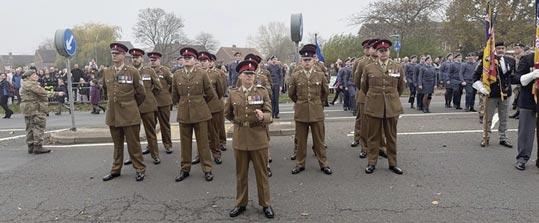
On 1 April 2026, the Shoeburyness, Canvey Island, Rayleigh, and Leigh-on-Sea Army Cadet Force detachments formally re-affiliated with the Corps of Royal Electrical and Mechanical Engineers during a landmark event held at the REME Museum. Bringing together 65 Cadets and their Instructors, the day celebrated the strengthening of ties between the Corps and the next generation of potential Engineers, leaders, and Technicians.
The Corps Colonel presided over the ceremony, where each of the 65 Cadets received their new REME cap badge. This personal presentation reinforced the Corps’ deep commitment to youth engagement and highlighted the long-standing relationship between REME and the ACF.
Following the parade, the Cadets received a concise but engaging overview of the Corps’ history by the Corps Colonel. He spoke about the Corps formation in 1942, its evolution into the Army’s leading technical arm, and the pivotal role REME trades continue to play in supporting modern equipment around the world. He also emphasised how youth organisations such as the ACF contribute to the future of Army engineering; particularly through initiatives like the REME STEM Challenge.
The highlight for many Cadets came during the handson STEM activities, delivered by the REME Museum’s education team and the REME CET, to give them a flavour of technical problem-solving within the Corps. Working in small groups, Cadets tackled engineering mini-challenges involving mechanical assembly, electrical problem-solving, and teamwork-based tasks designed to mirror real REME
scenarios. These activities not only tested their creativity and resilience but also demonstrated how engineering is at the heart of everything the Corps does.
The Cadets then had the opportunity to take part in an open Q&A session with the CET, who provided a genuine insight into life as a REME soldier, careers, and the wide range of opportunities across the Corps. Cadets asked questions about trades, deployments, day-to-day life, and what skills the REME look for in future soldiers.
Afterwards, museum staff led Cadets through the REME Museum’s galleries, allowing them to explore the Corps’ heritage in greater depth. From historic recovery vehicles and workshop tools to modern equipment used on today’s platforms, the tour brought REME’s story to life and helped connect the Cadets’ new cap badge to the proud history it represents.
From the Corps’ perspective, the re-affiliation is an important step in strengthening the relationship with local youth detachments and in investing in young people with an interest in engineering, mechanics, and problemsolving. These Cadets represent the next generation of potential REME soldiers, Apprentices, and leaders. Supporting them ensures the Corps continues to attract talented and motivated individuals.
For the Cadets, the event marked far more than a ceremonial change. It provided inspiration, practical experience, and a sense of belonging to an engineering family with a rich heritage and an exciting future. Wearing the REME cap badge gives them increased opportunities for STEM engagement, Corps-linked events, and mentorship from serving soldiers.
The re-affiliation marks the beginning of a renewed chapter of opportunity, learning, and connection for the detachments of Shoeburyness, Canvey Island, Rayleigh, and Leigh-on-Sea. For both the Corps and the Cadets, it is a proud reminder of the shared commitment to engineering excellence, personal development, and the future of the REME Family.
The REME has a long history working with Cadet Forces in the UK with many of our current and serving members, both Regular and Reserve, work as Cadet Force Adult Volunteers (CFAVs). Without them, the ACF simply would not function. They also act as
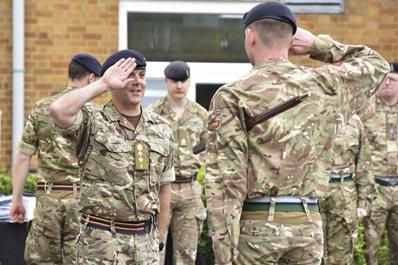
Cadet CSM hands over the parade to the Corps Col
valuable advocates and ambassadors for the Corps; able to provide advice and insight for those Cadets interested in a future career in the forces. If you, or your child has ever been a member then you will know first-hand the value of these organisations. If you wish to volunteer your time or know someone who might, you can discover more by visiting armycadets.com.
Finally, please be aware that the new Corps Instruction A5 – REME Support to Cadet Forces has been published on the RHQ Sharepoint page. This is a step-change from the previous policy designed to reinforce current support whilst also providing a new package of STEM related education programmes aligned to REME engineering skills.
Units with ACF or CCF sponsorship responsibilities should familiarise themselves with the new policy and communicate the changes with their Cadet Forces.
Open Tuesday to Sunday 9.30am to 15.00pm
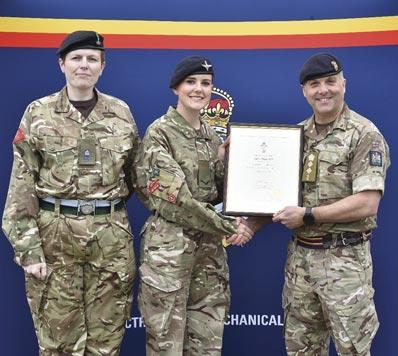
Detachments receiving affiliation certificates
REME Charity.
The 47th Broxhead Club Annual Dinner
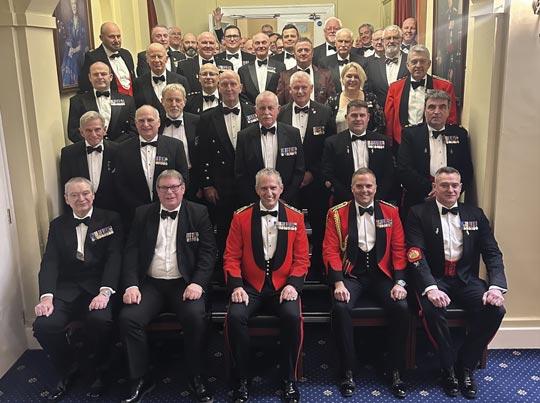
On 28th March this year, the Broxhead Club held its 47th annual dinner night in the Officers’ Mess of Prince William of Gloucester Barracks, Grantham. The evening was well attended by over 50 members and guests; including Colonel REME, at what are familiar surroundings for the Club.
The Club Chairman, Colonel Lex Agathangelou VR, also currently serving as Deputy Colonel REME, gave the members his final state of the nation address before dinner, as from June 2026 this prestigious task will fall to his successor, Deputy Colonel REME Designate, Lt Col Chris Morgan.
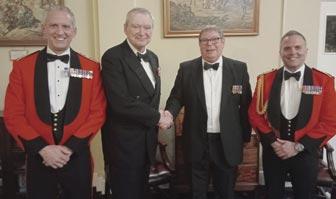
The outgoing Club President, Colonel Kevin Hearty QVRM VR, spoke briefly at the dinner to update the membership in attendance and formally hand over the role of Club President to Colonel Paul Mitchell. The Club would like to take this opportunity to thank Colonel Kevin for his sound mentorship and advice over his extended tenure as Club President and welcome Colonel Paul to his new role.
During the annual dinner, it is customary for the Broxhead Club to hold a collection for the REME Charity, and the 2026 dinner raised over £780. After the dinner the bar was opened to continue the socialising and networking; and another great evening was had by all.
The Broxhead Club committee continues to seek attractive opportunities for Club members to meet and engage. In October 2026, following on from the success of last year’s dinner at Windsor Castle, the Club will be holding a reception at the Tower of London; including a private attendance at the Ceremony of the Keys. This event is open to all members and their guests.
What is the Broxhead Club?
The Broxhead Club exists to bring together serving and retired Reserve Officers and Warrant Officers, and affiliated friends, in a friendly, social environment. Its principal
The Broxhead Club 2026 dinner attendees
Scribe: Colonel Lex Agathangelou VR, Deputy Colonel REME & Chairman of the Broxhead Club
objective is to provide an annual dinner, normally held each spring, with a view to circulate the dinners around the UK. Senior serving Officers and Warrant Officers of the Corps are customarily invited as our guests.
The Broxhead Club was founded in 1975 as a dining club for retired REME TA Officers. The Club took its name from Broxhead House at Bordon in Hampshire, which had served successively as Headquarters Army Emergency Reserve REME and Central Volunteer Headquarters REME for many years. The lion rampant and “1877” date symbols which adorned the façade of the house are incorporated in the design of the Club tie and lapel badge. The inaugural Dinner was held in the old SEME Officers’ Mess, Bordon, on 17th February 1978 and this year was the Club’s 47th dinner. The 50 founder members had served in the Army Emergency Reserve (AER), the pre1967 Territorial Army (TA), or the Territorial and Army Volunteer Reserve (T&AVR).
A significant recent development for the Club has been the expansion a few years ago of its membership base to include REME Warrant Officers. Membership of the Broxhead Club is free and so relies on events being funded by those attending. The Club itself welcomes both Regular and Reservist Officers and Warrant Officers (either serving or retired) who have
Adventurous Training
served in or with REME Reserve units and Reservists. The club has a membership in excess of 230 with the ratio of Officer to Warrant Officers in the region of 3:1 and it is part of the REME Association. New members are encouraged and welcomed by the committee; anyone interested in joining the Broxhead Club should contact the Hon Sec, Maj (Ret’d) Pat Spence, email: BroxheadClub.HonSec@outlook.com.
Ex ROTARY WING SKI 2026
Scribe: Lt Cdr McEwen
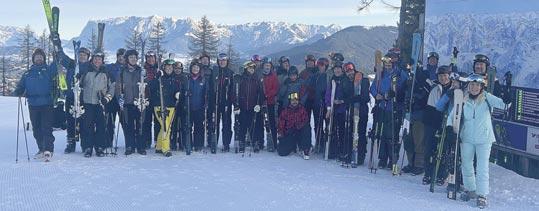
Personnel from across the Rotary Wing Enterprise travelled to Alpendorf, Austria, for Ex ROTARY WING SKI 2026, a key Adventurous Training exercise designed to develop leadership, confidence, and winter skills across Defence.
The activity brought together colleagues from the Royal Navy, British Army, Royal Air Force and Civil Service; reinforcing the strong collaborative culture that supports the Rotary Wing community.
Throughout the week, participants followed a structured Ski-training programme tailored to a range of abilities. A
major achievement this year was the successful completion of Ski Foundation 1 and Ski Foundation 2 by seven personnel, while others finessed their Skiing and assisted with lessons, with a view to becoming future winter AT leaders.
DE&S Civil Service colleagues also developed technical skills aligned to BASI Level 2 instruction standards, demonstrating the organisation’s continued commitment to integrated learning and professional growth.
The group photograph below shows the team assembled on the mountain at the start of a day of progressive Skiing, marking a successful and rewarding week for all involved.
The Broxhead Club President handover: L to R – Col Lex Agathangelou, Col Paul Mitchell, Col Kevin Hearty, Col Iain Wallace
REME’s Ceremonial Role: Public Duties
Scribe: Lucy Brown, Social Media and Digital Marketing Officer
The REME motto ‘Arte et Marte’ (By Skill and By Fighting) encompasses the dual role of the REME soldier as combat soldiers and skilled craftsmen. Yet there is another role undertaken by REME that is often overlookedthat of ceremonial duties.
All units of the British Armed Forces have a ceremonial role, upholding traditions and providing support for larger occasions of state. Public Duties, traditionally undertaken by the Household Division, often known collectively as ‘the Guards’, include the King or Queen’s Guard at St James’s Palace and Buckingham Palace, and the distinct Windsor Castle Guard and Tower of London Guard.
From time to time, this honour is extended to other units of the British Armed Forces. 2026 marks 40 years since the first time REME personnel assumed public duties.
The first REME Windsor Castle Guard, 1986
For the first time ever, the Windsor Castle Guard was made up of REME personnel in September 1986.
Due to the Household Division’s operational commitments in Germany and Northern Ireland at the time, a request was sent to Headquarters UK Land Forces (HQ UKLF) to find another unit capable of fulfilling the role. Noting the rare opportunity, DGEME Major General Palmer volunteered REME for the month of September.
The honour was afforded to Training Battalion and Depot REME in Arborfield, though volunteers represented many different REME units. The full strength of the guard was further bolstered by Borneo and Imjin Platoons, who had recently completed basic training, and Non-Commissioned Officers (NCOs) from Senior Military Course No 172.
On 26 June, the guard contingent gathered for a tailoring parade and briefings, following which all personnel received their tailored No 2 Service Dress, a pair of ammunition boots (often referred to as ‘ammo boots’) and a great coat.
Ceremonial drill training began on 3 August for four weeks, with the first two weeks overseen by Company Sergeant Major (CSM) McIllmurray and the final preparations assisted by CSM Montgomery of the Irish Guards. According to a souvenir programme produced to commemorate REME’s Public Duties, a motto assumed was:
“If you are going to do a job, do it properly”
On Tuesday 2 September 1986, REME took over from 1st Battalion Irish Guards and assumed the duties of the Windsor Castle Guard.
According to The Craftsmen of the Army, Vol II, there was a
The New Guard marching through the King Henry VIII Gate at Windsor Castle, September 1986. E:09.0784.013
Craftsman (Cfn) Coen is relieved by Cfn Bowers at No 1 Post outside the guardroom, Corporal Parsons posts the sentries. E:09.0784.005
security breach one night in which a REME sentry on duty met the intruders and assisted police officers to make arrests. This was seen to have demonstrated that the duty of the military guard is as much about security as it is ceremonial tradition.
A REME Queen’s Guard, 1992
Just six years later, REME assumed Public Duties again from 14 February – 15 March 1992. This time, the Queen’s Guard Company served at Buckingham Palace, the Tower of London and St James’s Palace.
Personnel completed training over a total period of nine weeks, a period that was noted in the Post Exercise Report to have been longer than necessary, recommending five weeks. Basic drill training started at the School of Electrical and Mechanical Engineering (SEME) Bordon on 17 November 1991. Following Christmas leave, specialist drill training was accompanied by visits to the London Palaces to witness the Guards ‘in action’.
The Queen’s Guard again wore No 2 Dress, which required extra tailoring, with white webbing, great coats and white gloves. This time, however, combat boots were worn as ammo boots could not be provided.
REME Returns to Public Duties, 2021
In September 2021, REME returned to Public Duties for the first time in three decades.
Troops from 4 Armoured Close Support Battalion REME were given five weeks of bespoke drill training to prepare for their duties (whether this was as a direct result of the recommendations following 1992’s Queen’s Guard is unclear). Training was provided by their own Drill Instructors as well as those from the Household Division. In early September, the soldiers went on
The Old Guard forming up at Buckingham Palace, awaiting arrival of the New Guard. E:06.0491.012
The Tower of London Guard presents arms to the Keys. E:06.0491.032
parade at Wellington Barracks, London, to prove their readiness to perform public duties. Having been declared fit, 4 Battalion’s first Queen’s Guard took up their duty at Buckingham Palace on Monday 13 September.
In total, the REME complement was made up of 93 personnel from 3, 4 and 6 Battalion REME, who guarded the royal residences in London and Windsor over a period of two and a half months.
For the occasion, REME personnel were issued No 1 Ceremonial Dress, often referred to as ‘Blues’.
Information in this article was taken from E:07.0699.24, E:07.0735.27, The Craftsmen of the Army, Vol II and several past issues of The Craftsman Magazine
Cfn Bolger on sentry duty at the Tower of London. E:06.0491.041
Plaque commemorating REME Public Duties at Windsor Castle.1986.3046
Potteries & District REME Association
Scribe: Maurice Hope
Our REME monthly Breakfast Club met on the usual first Saturday of the month, 7th March at ‘The Hungry Horse’, part of The Weathervane Hotel in Meir. With only seven persons present and with seven raffle prizes up for grabs, it was only fair that we all won something (ensuring that you didn’t win the prize you had supplied). Raising £35 towards our annual donation to the REME Charity, we are steadily building this and hope to again meet, or exceed, the whopping £600 donation made last year.
Our April breakfast date has had to go back a week due to the first Saturday being Easter weekend so will now be on the 11th.
Our monthly branch lunch event this month was held at the Festival Park venue The Brindley Farm pub, which we had not visited for many months.
In 1986 the National Garden Festival in Stoke-onTrent was on a 180 acre site opened by The late Queen on a reclaimed former Steelworks site, successfully transforming the derelict Shelton Bar into a Commercial and Leisure hub known as Festival Park.
Thirteen members attended and enjoyed a very good carvery, also raising £50 from our in-house raffle to go towards the cost of our Summer Dinner.
Later in the month on Tuesday 24th we had our usual branch meeting. Considering the wind and rain we did well to have thirteen members attend. It was our last chance to see The Vincent Metcalfe Trophy before it gets returned to RHQ. We had looked forward to having a small group attend from our Regular Army twinned units from Beacon Bks in Stafford but sadly the weather and duties prevented it from happening.
The main items for debate were preparing to nominate the Branch Officers for the elections as part of the AGM in April and suggestions for branch events and proposed visits throughout the coming year. Our in-house bottle raffle still raised £28.05p and was won by our outgoing branch Chairman Ian Webb who is to be elevated to the appointment of branch Vice President.
Already penciled into the diary is the branch Summer Dinner, being held again this year in the Sir Stanley Matthews Suite at the bet 365 Stadium of Stoke City, to be held on Saturday 25th of July before
the league season gets under way.
Now the hard work commences when we start getting the names of those wishing to attend, anyone who has organised a similar event will have gone through the exercise of who wants to be seated with who and also the flip side of the coin, who doesn’t want to be seated with who.
The offer to join us is open to anyone from the North Staffordshire and South Cheshire catchment areas who would like to become part of the branch. We understand it is not always easy to attend weeknight meetings but it would give you a route to stay abreast of what is going on locally and also in the Corps at large. You would be made more than welcome.
Members at The Brindley Farm meal
Four more members at lunch
Ray Whale boasting how big his fish was!!
Last Photo with the Vincent Metcalfe Trophy
Obituaries
WO2 (Retired) John Simon Maund 3/2/1969 – 28/01/2026
Scribe: WO2 (Retired) Paul Simpson MBE
John was born and raised in Stoke-on-Trent in the lovely village of Trentham by his Mother Elvira and late Father Cecil. John was the youngest Brother of Angela, the late Steve (ex REME) and the late Russell. He was a proud Father to Jessica and Jake, an Uncle, Great Uncle and would have soon become a Grandad.
I first met John in the Army Careers Office in Hanley where we both signed up together and became recruits of intake 86A at PMC on the 13th January 1986 as Vehicle Mechanics. Both of our Dads waved us off at Stoke Station.
After Bordon John served in Germany, UK, the Falkland Islands and he completed the Artificer Course. John deployed on several Operational Tours of Iraq, Afghanistan and the Balkans.
After retiring from the Army, John and his family moved to Australia for a while as he secured employment with a Crane Company. Later they returned to the UK where John undertook work contracting in vehicle engineering.
John passed peacefully in Salisbury District Hospital following ongoing health problems. The funeral took place at West Wilts Crematorium Semington on Friday 27th February and was well attended. There were 5 of us from 86A and other REME Veteran friends from John’s past in attendance in support of John’s family and friends. We Veterans formed a Guard of Honour and saluted as the hearse and family car passed. The coffin
was topped with the Potteries & District REME Association drape, which gave a nod to his birthplace and John’s Beret and medals sat proudly on it. The coffin was carried by 6 of us as the family requested. The celebrant perfectly guided the service, which included John’s kind of music with a montage of photographs on screens showing the happier times. This was followed by a very emotional reflection of memories read by Jessica and Jake.
The Service concluded with a perfect last post and reveille from a Rifles Regt Bugler James Howard and the flawless actions of Ron with the RBL Standard from the Potterne branch which was very moving.
A wake took place after at Devizes Town Football Club where a 6th member of PMC 86A joined us as we all shared our memories of John with family and friends. John will be sadly missed by many. Rest in peace Brother, Arte et Marte.
Service History of Major (Retired)
Peter H Kennett REME MBE
Peter Kennett was one of the founder members of REME Aviation. The current Army Air Corps was formed in 1957, but it took a year for REME to take on responsibility for repair and maintenance of Army aircraft. During that time Artificers from other trades were selected to be trained by the RAF as Aircraft Artificers, responsible for all aspects of aircraft maintenance. Peter was one of these pioneers. From this standing start, Peter became one of the most experienced REME Aviation officers, seeing changes in equipment and procedures leading to the current level of equipment and engineering standards as reported in The Craftsman over the past months.
Peter’s Army life started in 1946 at age 15 years 8 months at the Army Technical School (boys), Chepstow where he trained as a Vehicle Mechanic. After tours in UK at Base and Central workshops he was at 3 Div Sigs Regt LAD REME, in Colchester, Essex in 1951 when he was selected for Artificer training at the age of only 21.
In 1953, after completing Artificer Vehicle Course No 64, he was posted to Malta returning to UK in 1956 to 1 Infantry Workshop REME, Tidworth, Hampshire. He was en-route to Suez as Senior Artificer to maintain tanks on board LST Empire Petrel, calling at Gibraltar, Algiers and Malta to off load tanks as the LST was required for evacuation of troops and equipment from the Suez operation. He then went on to Cyprus to join 1 Infantry Workshop REME.
Back in UK at 20 Infantry Workshop REME, Tidworth in 1957, he was selected to start his REME Aviation career at No10 School of Technical Training RAF Kirkham, Lancashire where he converted to Artificer Aircraft. A posting in 1958 to 12 Liaison Flight AAC RAF Wildenrath, Germany as Artificer i/c Flight Workshop saw him rise to Warrant Officer 1 (ASM) and he was awarded the MBE.
Scribe: Colonel (Retired) Mike Crabbe
THE REME CRAFTSMANS’ CUP 2026 24 & 25 June
(REME Festival of Sport)
In 1962 he was selected for Commission and posted to 15 Infantry Workshop REME, Paderborn as Workshop Officer moving back to Aviation in 1964 at 653 Sqn AAC Workshop REME, Aden. His next tours took him to 70 Aircraft Workshop REME, AAC Centre Middle Wallop as OC First Line Servicing and then HQ Northern Ireland as Aircraft Engineer, Northern Ireland. In 1972 he moved to HMS Daedalus, Lee-On-Solent as Staff Officer to Flag Officer Naval Air Command (as TriService Aero Engine Controller) and then to Aircraft Engineering Training Wing REME, Middle Wallop as OC Aeronautical Training Group in 1974. From 19771981 he served at HQ 1 (BR) Corps, Germany on the staff of HQ AAC as Aircraft Engineer covering BAOR, Berlin and BATUS, Canada.
His final appointment was at Logistic Executive (Army) HQ DEME EME9, Andover as Desk Officer for the LYNX helicopter. In this post his knowledge and experience meant that his career was extended to age 60, finally retiring on 25th June 1991 after 45 years, 4 months, 4 days of service.
Death Notices
BROOKS – Major George Carnegie Brooks (retired) passed away on 25 February 2026 aged 95 years. Served from September 1945 to 1971.
CARUS – Former L/Cpl James Peter Carus passed away on 9th March 2026, aged 45. Dates of service 1997-2006. Funeral 10/04/26 Chesterfield Crematorium.
FLETCHER – Former Private Peter Fletcher passed away on 13th February 2026 aged 90 years. He served with the Corps between 1953-1955.
KENNETT – Major (ret’d) Peter Harold Kennett MBEpassed away on 14th February 2026 aged 94 at Harrier Grange in Andover. Dates of service 1946-1991.
VINEY – Former WO1 Neil Antony Viney passed away on 26th March 2026, aged 63. Served with the Corps between 1978-2005.
WELLINGS – Edward Charles Wellings, DOB: 25th April 1944. Joined the REME as a boy soldier in September of 1959 (Junior Leaders Regiment) became permanent staff (Gymnasium) until 1965 until transfer to the APTC (now RAPTC). Passed away 11th February, aged 81.
Death Notice Requirements
It cannot be underestimated the impact that Officers and Artificers of Peter’s generation had on the development of REME Aviation. Starting from piston engined Skeeters and Austers to the dawn of the Apache and Wildcat required an increasing flexibility to cope with new technology and airworthiness considerations that formed the basis for the high professional standards that REME Aviation enjoys today. Event Lead: Capt Manjit Jhajj / 07801 990284 Manjit.jhajj809@mod.gov.uk
In order to publish a death notice we require the following information: Surname, first name, rank, full date of death, ages and dates of service. An obituary with additional career and life information is welcome. To inform us of the death, please contact Pamela Bailey-Yates, Corps Welfare Assistant, Email: welfare@remecharity.org
London Gazette
03 March 26
The following have been awarded the Long Service and Good Conduct Medal (Military)
SGT, J. P. ADAMSON, REME, 25226779
LCPL, G. R. BARNES, REME, 30134506
WO2, N. J. B. BILLINGTON, REME, 25220508
SGT, B. S. BOWDEN, REME, 30130661
MAJ, R. G. DUFFIELD, REME, 25230347
SSGT, D. E. D. EVANS, REME, 25136436
MAJ, R. FRANCIS, REME, 30123589
SGT, E. W. GRAHAM, REME, 30133471
CPL, C. GURUNG, REME, 30142400
CPL, P. GURUNG, REME, 30142339
CPL, S. GURUNG, REME, 30142407
CPL, S. GURUNG, REME, 30142369
LCPL, S. GURUNG, REME, 30142342
SGT, D. M. HAMMOND, REME, 25079712
MAJ, J. A. KENNY, REME, 30076268
SGT, D. KHADKA, REME, 30142347
CPL, N. LAMICHHANE, REME, 30141877
CPL, L. M. E. LAWRENCE, REME, 30136351
LCPL, B. B. LIMBU, REME, 30141936
SSGT, A. H. McCLURG, REME, 30133473
CPL, S. P. MILLINS, REME, 30135453
CPL, A. RAI, REME, 30141923
LCPL, Y. RAI, REME, 30141899
LCPL, Y. RAI, REME, 30141906
LCPL, S. RANA MAGAR, REME, 30142403
LCPL, A. SHRESTHA, REME, 30142349
CPL, C. M. SNEAD, REME, 30130788
CPL, B. B. THAPA, REME, 30142358
CPL, J. P. TODD, REME, 30136750
SGT, R. WALLIS, REME, 24217365
The following have been awarded the 1st Clasp to the Long Service and Good Conduct Medal (Military)
SSGT, M. G. W. BLOWER, REME, 25084857
WO1, A. N. CRAMPTON, REME, 25127102
MAJ, S. J. DUNCAN, REME, 25068077
LT COL, L. K. ELLIS, REME, 553262
WO2, G. J. GOODALL, REME, 24780324
LT COL, J. P. LIVELY, REME, 2649951T
CAPT, S. T. McNAMEE, REME, 25123547
SSGT, R. G. MURRAY, REME, 25076937
SGT, K. RAI, REME, 21170488
WO1, R. A. STRYDOM, REME, 25126978
CAPT, K. R. TIKO, REME, W1042567
SSGT, O. TILIJA, REME, 21170437
WO1, C. J. TRANQUIR, REME, 25127504
The following have been awarded the 2nd Clasp to the Long Service and Good Conduct Medal (Military)
MAJ, D. A. BARBIERI, REME, 24906338
MAJ, P. L. CROSS, REME, 24900596
MAJ, M. G. MASON, REME, 24906171
MAJ, E. J. SHRIMPTON, REME, 24912676
10 March 26
M. S. BAGSHAW MBE 25197724
R. E. BATE 25127442
A. J. KING 558753
H. R. MORSE 25197716
S. D. NEL 25172300
S. C. THOMPSON 30011002
M. E. WARRENER 564056
C. J. WATSON 561099
C. J. WOODS MBE W1055652
S. R. WOODS 25166166
P. W. YOUNG MBE 25197733
Group A
24 March 26
ARMY RESERVE
Officer Cadet Callum John MCKENZIE 30297661 to be Second Lieutenant (on probation) 22 February 2022 (Belated Entry)
The following Army personnel have been awarded the Meritorious Service Medal
WO1, M. BAVINGTON, REME, 25140192
WO1, M. COLLINS, REME, 25160846
WO1, N. R. MAYS, REME, 25162791
WO1, S. E. PATON, REME, W1053537
WO1, S. THOMAS, REME, 25100184
SGT, P. J. WOMERSLEY, REME, 25191427
WO2, S. I. WOODS, REME, 25180787
31 March 26
ARMY RESERVE
Group A
Second Lieutenant (on probation) C. J. MCKENZIE 30297661 is confirmed as Second Lieutenant 4 March 2022 (Belated Entry)
Officer Cadet Selina Shuk Ying LEUNG 30300034 to be Second Lieutenant 23 March 2020 (Belated Entry)
Warrant Officer Class 1 Michael SMITH 25106804 to be Lieutenant 16 November 2024 (Belated Entry)
Warrant Officer Class 2 Thomas Henry WARREN 25115120 to be Lieutenant 10 November 2023 (Belated Entry)
Sergeant John William WOODMAN 30026014 to be Lieutenant 27 January 2023 (Belated Entry)
The following have been awarded the 1st and 2nd Clasp to the Long Service and Good Conduct Medal (Military)
WO2, M. E. FELLOWS, REME, 24865209
The following have been awarded the 2nd Clasp to the Long Service and Good Conduct Medal (Military)
LT COL, L. KINGHORN, REME, W0817482
The following have been awarded the 1st Clasp to the Long Service and Good Conduct Medal (Military)
WO2, A. F. M. BLACK, REME, 25017982
SGT, E. K. FISHER, REME, 25130019
A Huge Thank You from
A huge thank you from The REME Charity! We’re incredibly grateful for the generous dona琀ons received lately, and we especially want to highlight the con琀nued support from our serving Ocers, Soldiers, and re琀red REME Ins琀tu琀on and Associa琀on members. Your commitment keeps us moving forward.
In March 2026 we received over £6000 in very generous dona琀ons, including:
Susan Parsons £1000 - A bequeathed gi昀 from Lt Col Ian Parsons REME Retd. Gave so much to everyone he met. So deeply missed.
Keith Harkness £100
Other notable dona琀ons:
Capt T Terkpetey, Mathew Fiddy, BD Lamont, Derrick Edgerton, Nicolas Avraamides, Ellis Olechnowicz, Mark Tucker.
For all fundraising queries please email Hugh McNulty via fundraising@remecharity.org
For all fundraising queries please email Hugh McNulty via fundraising@remecharity.org
Need a hand? We’re here for you. Whether you’re currently serving or a veteran, The REME Charity is here to support you during tough 琀mes. Reach out directly at WOYM@remecharity.org for fully con昀den琀al advice and support. S琀ll serving? You can also speak to your Unit Welfare POC for guidance.
Leave a las琀ng legacy with The REME Charity. If you’d like to support our work through a gi昀 in your will, you can do so by adding a codicil. As a registered charity (No. 1165868), dona琀ons are exempt from inheritance tax— helping your legacy go even further for REME personnel and veterans.
Social Media. If you’d like to support our work, or adver琀se your REME Charity events through social media feel free to tag us in your posts and use the following hashtags #REMECharity #OnceREMEAlwaysREME. You can also email communica琀ons@remecharity.org for help spreading awareness of your fundraising across The REME Charity social media channels, or on REME Connect.
Corps Calendar 2026
More information regarding Corps Mess Functions can found by scanning the QR Code, or by accessing the ‘REME Connect’ website or alternatively email; REMERHQ-0Mailbox@mod.gov.uk for all general enquiries. All dates correct at time of printing, please check your monthly Craftsman magazine for amendments.
Leaving the Regular REME?
Why not join the
Reserve?
Security Clearance
Holding SC can give you access to higher paid roles with some companies. As a reservist you maintain this accreditation.
On satisfactory completion of your annual training, you receive a tax-free bounty of over £2k!!!
Pension abatement
No pension abatement for Reservists on RSDs. You receive all your pension; your Reserve pay; and contributions to your Reserve pension.
Your
It makes financial sense. Get an annual tax-free bounty, plus pay, plus pension contributions. Supplement your salary or take the family on holiday.
Changing careers is scary.
Shared experience builds bonds and friendships like nothing else, it’s worth keeping hold of for when you need it most.
Your option to return (should you need)
Miss your old life?
It could take you 6-12mths to rejoin but as a Reservist, it’s a simple transfer form.
What’s in it for me?
Sport & AT
Whether you love sailing or skiing, as a reservist you get paid to participate in Regular Army sport and AT events.
Holiday pay
Sounds strange, but Reservists get holiday pay too (1 RSD for every 10 trg days).
Rail card
Reservists get the Forces Railcard (1/3 off travel)
Pay
Either ¼ (2hrs) ½ (4hrs) ¾ (6hrs) or full (8hrs) Reserve Service Days (RSDs) pay @ rank and includes 5% X Factor
Career progression
As a Reservist, you also get annual appraisals, so career progression is still possible including SSE commissions.
Home to Duty Travel
Get your mileage paid for by the Army to attend all training nights and weekends (up to 50miles@MMA rates)
Rank
Pte-SSgt and 2Lt-Capts can normally transfer and keep their rank. WOs might be asked to revert (dependant on available PIDs).
Mobilised service
Between jobs? That’s ok because you can volunteer to be mobilised for overseas deployments and operations on the same pay and allowances as a Regular.
Keep learning
Reservists get access to SLC credits and DLE. Keep growing and learn new skills to support your new career ambitions.
Only 19 days each year
To qualify for your tax-free bounty, your annual commitment is19 days for your first 3 years (only 27 days afterwards).
Reduced ITRs
To qualify for your tax-free bounty each year, you only complete an SCR, ITR Behaviour’s and no annual camp (first 3 years only).