Magazine of the Corps of Royal Electrical and Mechanical Engineers
In 2020, REME launched the Lifting the Decks initiative, with a focus on the mental wellbeing of serving REME personnel and veterans.
We are in the process of re昀ning Lifting the Decks, increasing accessibility with an added emphasis on reminding our REME Family to speak out about ‘what’s on their mind’ and that, whatever stage in their life, we will always be here to listen to and support them.
If there is something on your mind troubling you, big or small, whatever the cause, we are here to listen and to help. If you wish to get in touch regarding yourself or concern for someone else, please don’t hesitate to contact woym@remecharity.org
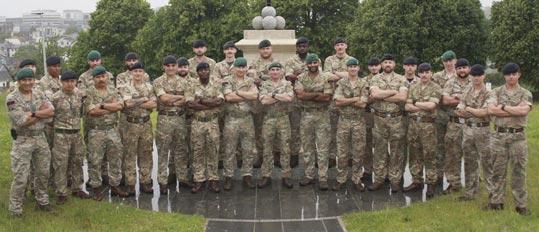
the 85th Anniversary of The Dutch Regiment of Technische Troepen with the
Editor: Mrs Sarah Eden + Corporate Communications Officer
RHQ REME, The Prince Philip Barracks, Lyneham, CHIPPENHAM, SN15 4XX
TEXT: should be submitted in MS Word and name saved as per the article. No formatting, columns, power point etc. Articles to be cleared by CO/OC/EME or appropriate REME CoC, or nominated substitute and should be submitted as soon as possible.
PHOTOGRAPHS: MUST be submitted separately, in jpeg format and be at least 500kb preferably 1mb or more. Only photos over 3mb can be considered for the front/back covers and please remember captions.
FILESHARE: websites, such as dropbox are ideal for submitting larger files.
EMAIL: The ONLY email address which should be used is: craftsmaneditor@reme-rhq.org.uk. Not MODnet. Please use the article title not ‘Craftsman Article’ as the email title.
TIMINGS: The latest submission date is the first day of the month prior to publication. This does not guarantee the article will be published in that specific edition.
Births, Engagements, Marriages and Deaths: These will be inserted free to all past and present members of the Corps.
Contents:
The contents of The Craftsman are strictly copyright and all rights are expressly reserved. The views expressed herein do not necessarily reflect the policy and views, official or otherwise, of the Editor, the Corps or the MOD, therefore no responsibility for these will be accepted. Whilst including an advertisement we are not necessarily endorsing the product and as a result, the publisher and its agents do not accept responsibility for any transaction between the reader and the advertiser. Whilst we take all precautions with regard to advertising, readers are advised to take professional advice before entering into any commitments. Letters concerning reproduction, contributions or any other matter should be addressed to the Editor.
General Handling: This publication contains official information and should be treated with discretion.
Future Equipment Support Capability
Scribe: Colonel Martyn Jones, Assistant Head Combat Service Support - Military Capability Plans
The newly reformed Army Headquarters is busy designing the overarching approach to how the Army will fight as part of an integrated force, in an evolving, complex battle space. This requires the Army to rapidly modernise. The CGS’ 20:40:40 capability split (20% Survivable, 40% Attributable & 40% Consumable) is rapidly becoming our blueprint for that modernisation. It marks the shift from an Army built around survivable platforms to a networked combat system which combines modern sensors and effectors with our small number of expensive, crewed platforms. This, alongside the conceptual framework laid out in the Land Operating Concept drives the capabilities the Army is working hard to develop and will enable the National Armaments Director to deliver.
The Capability Directorate (formally Army Futures) does this by advancing concepts, methods, and military technology. My team and I lead the development, direction and assurance of new capabilities across Logistics, Equipment Support, Medical, Military Working Animals, Operational Energy and we even dip our toes into Military Policing. Importantly, this includes securing the resources to implement new capabilities – a task easier said than done!
So What? The modern battlefield will be dominated by new technologies and new equipment. Often these capabilities will have short lifespans, be updated, iterated, replaced frequently and will be delivered without adequate support
solutions or training packages. This reinforces the need for a Corps of professional highly trained Engineers and Technicians who can apply engineering principles to keep ‘any’ fit equipment in the hands of the user. But to do this we must provide you with the very best Equipment Support Capabilities.
Over the past year, Maj Rich Cummings and Maj Liam Bridge have worked flat out to build a sound Equipment Support capability plan to make the argument for future investment. There are four component parts:
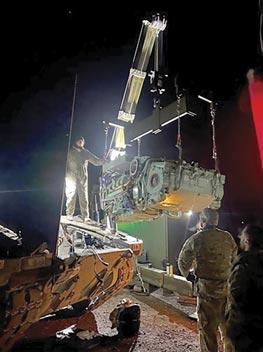
1. Deployable Technical Infrastructure (DTI). The need for modernised deployable infrastructure has never been greater. From 2028, the Army has allocated £210M to deliver an Army wide capability of which REME will be the biggest beneficiaries. The plan has been reviewed, simplified and is now deliverable – many of you have already benefited from delivery of the Forward Repair System NATO (FRSN) and more will arrive in the coming months. Hydraulic Repair, Wheel Repair and Technical Storage are next on the agenda. Critically, PPRF and how the Army does E&MA replacement, movement and regeneration has been a key work strand of this refresh.
2. Recovery as a Capability. The development of the Strategic Reserve Corps and Army modernisation in the context of resource constraints requires a shift from the historical bespoke-to-platform recovery variants to a force multiplying capability-based recovery strategy. What does this mean to you? There will be fewer variants with more
6 REME on Ex IRON TITAN replacing an AJAX PP with a FRSN
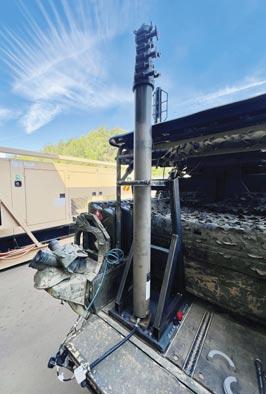
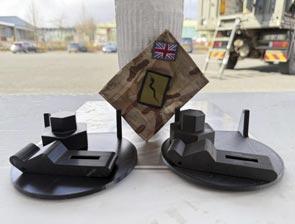
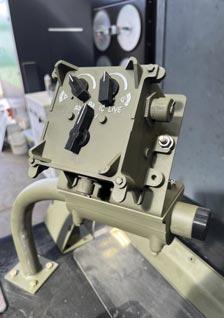
JACKAL mast trial support – Pj VANAHEIM
commonality between them, designed to be specialist recovery capabilities rather than retrofitted platforms. To manage this, recovery capabilities will be delivered in banded categories to match requisite weight and mobility requirements across light, medium, and heavy equipment casualties. The first capability in this pipeline is the development and delivery of a Heavy Wheeled Recovery and Repair vehicle (HWRRV) to support Boxer, Archer, Bridging assets and Aviation.
3. Repair as a Capability. Traditionally tooling, ST&E and Mechanical Lift have been a second thought; and often only thought of as equipment or as a consumable item. We now want to move to a capability approach – e.g. a Dismounted Vehicle Mechanic capability needs a person, tools, training, access to information etc. A new General Toolbox is now being delivered, in tandem with the development of updated trade and ‘Tiffy’ toolboxes to match the demand of our modernised equipment. Requirements are also being developed to deliver an agile, mobile repair capability – the ‘Future Flying Fitter’. At the larger end of the scale, the FRSN provides more highquality tooling, a 7T crane, air lines, welding system, and power - all transportable within an ISO footprint. It has been delivered to Op CABRIT and many REME battalions - more systems will be delivered this year. This new capability is scalable and bridges the gap between fixed infrastructure and special to role vehicles, so enables us to deliver maintenance effectively in the Corps Warfighting System. On top of this, we continue to develop tools and equipment to enable credible repair by repair and expedient repair. The scale of Advanced Manufacturing capability across the Corps also continues to grow - with an increase in 3D printing machines as well as laser and water jet cutting capability, and we are now working hard to field this as a core capability.
4. Engineering Data. We must think beyond Health and Usage Monitoring Systems (HUMS) and availability management. There is work ongoing within the REME strategy team, Director Support and the wider CSS community to understand what decisions we make, and how using data can enhance that decision making. This will prioritise data capture and refine access requirements to normalise usage. This requires the rapid digitisation of ES information, and we are working to cohere the interfaces between defence owned ES IS (DEEAMS, MJDI, DLIS etc.) and future Land combat decision-making tools.
Project ELIGIUS (the Army’s ES AI agent that can cohere and improve ES decisions) inspired and delivered by 6REME, is highlighting how we can use AI to assist with decision making. We are hoping to give you all more access to ELIGIUS soon so you can test what it can really do!
Additionally, the QRH LAD is now supporting the National Armaments Group to digitise the first set of AESPs to enable Small Language Models like ELIGIUS to interrogate and exploit these documents.
Challenges. There is a lot of great work going on to support you, but we must be upfront about the challenges we face. Resources are tight – workforce and money. The
International Collab – part repeated around the globe within 24 hours
impact of the approaching Out of Service Dates for many ES platforms (WR 512/513) and those remaining platforms critical to our output are aging and becoming more difficult to maintain (SVR). Whilst we are working closely with the programme delivery teams to support and mitigate potential capacity gaps, there are going to be difficult times ahead. Balancing the demands of fight tonight with investing in our future capabilities is going to remain critical.
What can you do to help? While most of my effort is focused on developing future capabilities, I recognise the pressure on the field force to optimise current equipment to ‘fight tonight’. Your insights and lessons are essential to shaping what comes next and I therefore encourage you to remain engaged through the following forums:
• Defence Ideas Platform. Open to all for giving challenges, ideas, and solutions. Submissions are reviewed by Maj Liam Bridge (SO2 Capability Development).
• REME Strategy Team. Offers opportunities to contribute to ongoing initiatives. Engagement is welcome across areas such as future REME capability, data exploitation, workforce, and professional standards. Contact Maj Jas Hunjan (REME Strategy co-ord).
• ES Functional Capability Working Group. Convened quarterly and chaired by Lt Col Dougie Buchanan who has recently joined the team; this more traditional forum captures capability issues, risks, and lessons to inform our outputs. Please engage via your formation ES staff to escalate your feedback.
What will we deliver next? We will focus over the next 12 months on working with the Corps, LWC and formations to refresh the ES Handbook and ConOps. There is also plenty of work to be done in building a detailed training needs analysis that will provide a roadmap for DSEME and DSAE to enable training and upskilling of our workforce and make us ready for the next war. Alongside the Army’s Support and Digital Directorates, we will also be focusing on building the architectures and processes that will allow us build Sustainment and specifically Engineering Data into our collective sustainment decision making.
JACKAL Comms Bracket being trialled with Scots DG
REME and Corps Operations Shooting Competition 2026 Post Competition Report
Scribe: Maj Jon Griffiths
“Operational Shooting is about more than just accuracy – it’s about staying calm under pressure, reacting quickly, and performing physically, including dynamic movement, and running down range. It’s a true test of both mental and physical resilience.”
Regular Corps OSC 26 Apr – 1 May 2026 Corps OSC Overview
It was the turn of the REME to deliver the Corps Operational Shooting Competition 2026 at Hythe range complex, and it proved to be an overwhelming success. 41 Teams totalling 307 Regular firers met to compete against each other to determine the British Army’s Corps OSC 2026 Champion of Arms. Maj Gen Lizzie Faithfull-Davies, and the Corps Colonel, Colonel Iain Wallace, presented the winners their trophies and prizes at the Corps OSC presentation parade. The number of teams and firers that returned to compete this year sees the Corps OSC back to its pre-COVID numbers in attendance. This year saw the Corps OSC move from its traditional home firing on Pirbright ranges, and being accommodated within Brunswick training camp, to firing in pastures new at the Hythe range complex and being accommodated an administered from Lydd Training Camp. The risk of disruption to the competition due to firing on unfamiliar ranges and being located and administered from a
new Training Camp were at the forefront of the OSC Committee’s minds during the OSC planning phases. However, the OSC committee led by, Lt Col Dan Couldridge, of 5 Bn REME and supported by his steadfast QM, planned and delivered a fantastic event which was not impacted by the ranges location change or being administered from new facilities and accommodation.
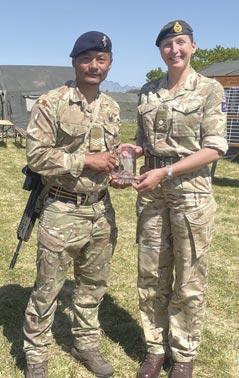
Corps OSC 2026 Unit Winners –Gurkha ARRC Support Battalion
This has been a thrilling and exciting year for the British Army’s Corps OSC. Action-packed until the very end as teams and individual firers got to grips with Hythe range complex. The team scores from the top of the leader table demonstrated the amount of significant individual effort and team training which had been completed prior to arrival at Corps OSC 2026. Gurkha ARRC Sp Bn winning the overall unit competition scoring 6,686 closely followed by 10 QOGLR with a score of 6,456 points.
Corps OSC 2026
Individual Winner –
Pte Sajesh 888, Gurkha ARRC
Support Battalion
Corps OSC 2026 has been an extraordinary year for the individual competition at the top of the leadership table. Not only this year did Gurkha ARRC Sp Bn win as the Corps OSC 2026-unit winner, but they clinched the top individual firer, and the top four individual finishing spots of the leadership table. Positions one, two, three and four were all individuals from the Gurkha ARRC Sp Bn; which demonstrates an extraordinary effort by the unit to clinch all of the top spots at Corps OSC 2026. If Gurkha ARRC Sp Bn maintain this level of effort, then all the other CSS units will need to significantly up their game to challenge Gurkha ARRC Sp Bn, looking ahead to Corps OSC 2027. Well done to Corps OSC Champion of Arms 2026 Pte Sajesh 888, Gurkha ARRC Sp Bn.
REME OSC 2026 Overview
The REME OSC was attended by 12 Regular REME teams, of the 12 Regular teams three consisted of minor units which were Workshops or LADs. The majority of all the REME teams in attendance had conducted some pretraining for the competition, which was either individual unit training or by attending the REME OSC training camp in March 26. Each REME unit and REME competitor competed against each other during the competition week until finally we had a REME major unit winner and REME Champion of Arms.
REME OSC 2026 Major Unit
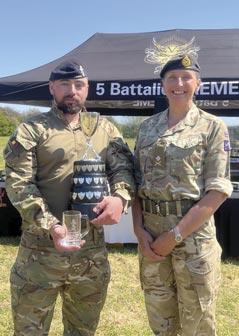
Winners – 3 Bn REME
3 Bn REME clinched the win, against 9 Bn REME, scoring 4,802 points and finishing 12th overall in the Corps OSC. 9 Bn REME placing a respectable second place in the REME OSC, and finished 18th in the overall Corps OSC with a score of 4,364. 3 Bn REME are now the REME Corps champions for 2026; stripping the title from the defending champions 5 Bn REME who have been REME major unit champions for the previous two years. We will have to wait for Corps OSC 2027 to see if the 5 Bn REME Dragon re-emerges breathing fire and comes out roaring to win back its title, or if 3 Bn REME continue to lead our REME Battalions as the leaders of REME Corps marksmanship.
REME OSC 2026 Champion Skill at Arms – Sgt Saroj Thapa, LEA Team SE
The REME individual Champion Skill of Arms has been a prestigious award which has been given to the individual REME Soldier who was fired their way to the top of the REME individual leaderboard for both their rifle and pistol scores since 1946. This year the individual scores leaderboard was close and even on the morning of the final shoot of the top six of the Corps, the REME position of Champion Skill at Arms was still undecided. It was only after the final shoot that the REME Champion Skill at Arms was identified, and there was only 32 points which separated the Champion and the runner up, Sgt Dan Binding, 3 Bn REME.
REME OSC 2026 Minor Unit
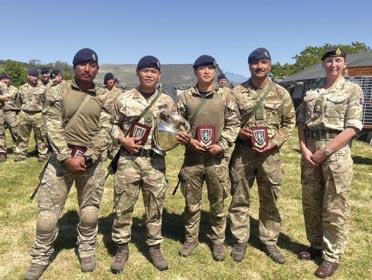
Winners – 10 QOGLR LAD
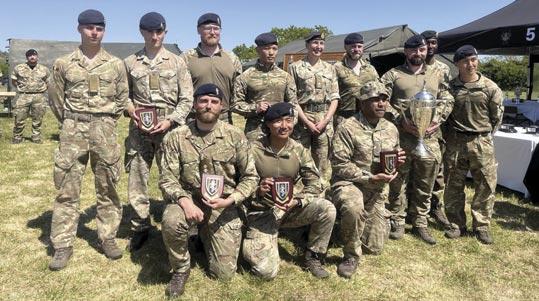
Minor units entering Corps OSC 2026 have historically always been a challenge, especially for those Workshop’s or LAD’s with low numbers of personnel. Indeed, this year has only seen three minor units able to join Corps OSC 2026. 10 QOGLR LAD swept the floor with the other minor unit challengers, this year scoring 2,464 to beat the runners up 36 Engr LAD by a strong margin. 29 EOD Workshop we’re close behind finishing in 3rd place with a strong effort to try and get ahead of 36 Engr LAD.
The REME Permanent Range Team
Thanks’ must be given to the REME permanent range team. The REME range team host the advance to contact and section attack matches
REME individual winner Sgt Thapa
Individual runner-up Sgt Dan Binding
on the REME designated range. These matches are amongst the most active of the Corps OSC matches. 14 REME personnel volunteered to operate the REME range and completed the task in a very professional manner. Particular thanks go to SSgt Awashesh Gurung (8 Bn REME) and Cpl Michael Llewellyn (22 MMR LAD) who were the Range Conducting Officers (RCO) for the REME range. Cpl Michael Llewellyn, who was wearing a wrist GPS tracker, reported completing 55.9 miles during the regular week as he traversed up and down the range as the RCO, bringing a new meaning to the phrase “free phys”!
Summary
2026 has been an exciting and thrilling year for Corps OSC firing. The REME was charged with the responsibility of delivering Corps OSC 2026, and taking on the challenge of moving the Corps OSC from Pirbright ranges and Brunswick training camp to Hythe ranges and Lydd training camp. The REME have made an absolute success of delivering Corps OSC 2026 and set the standard for the RLC to follow in Corps OSC 2027. Congratulations should go to Lt Col Dan Couldridge, 5 Bn REME, for delivering a fantastic event which had, at its heart, the highest degree of competitive marksmanship spirit that has been experienced in recent years, and has highlighted Corps OSC as the premier operational shooting competition in the British Army for 2026. The REME Rifle Association will continue to place all its efforts into increasing the number of teams and REME personnel entering Corps OSC 2027. This will be achieved by continuing to market Corps OSC and with the support of 8 Bn REME to deliver a REME operational shooting competition training camp in March 2027 the aspiration is to increase the number minor unit workshops and LADs into Corps OSC.
Corps OSC 2027
The torch for Corps OSC has been handed from the REME to the RLC for Corps OSC 2027. Currently it is expected that 10 QOGLR will lead the organisation of the event supported by the Corps OSC Committee Secretaries. Details to follow toward the end of the year, which will be disseminated through RHQ REME and formation HQs.
! \)*$+9V++T !+:+$+98 O %@='2-$I Q'<<--'I9*'CS) &=BA@7+ )EE&B&"A'+?+=$'#I)$) F&$I'"AA'6&9V)9=+'(U4U "$$+=7++*K
Best minor Unit 10 QOGLR LAD
From Posting Order to P Company
Scribe: Cfn Huggins
While still in trade training at Lyneham, I received my first posting order to 23 Parachute Engineer Regiment, REME Workshop. At the time, I was a newly qualified Class 3 Vehicle Mechanic, and my expectation was that I would spend a period settling into unit life before any operational commitments. However, that assumption quickly proved incorrect.
Shortly after receiving my posting order, the REME Workshop Artificer made contact with me and placed me in communication with the Fitter Section IC. During this initial engagement, I was informed that I would be deploying on Exercise SAILFISH to Belize almost immediately upon arriving at unit. The Section staff were proactive in ensuring I was fully prepared, assisting with the sorting and issuing of kit and equipment required for deployment. This early support significantly reduced the pressure of transitioning to the unit and allowed me to focus on preparing mentally and professionally for what would be my first-ever overseas deployment.
I reported to 23 Parachute Engineer Regiment on 30 June, and less than two months later, on 25 August, I deployed to Belize as part of 9 Parachute Squadron’s Fitter Section. Given how recently I had completed training, deploying overseas at such an early stage of my career was unexpected. As a Class 3 Vehicle Mechanic, I had assumed I would not be eligible for such opportunities so soon; however, this deployment proved to be an invaluable experience both technically and personally.
Throughout the three-month exercise, I worked closely alongside my Section providing mechanical support to 9 Parachute Squadron, maintaining B-Fleet vehicles and plant equipment in a demanding tropical environment. The conditions were challenging, but they provided a steep
learning curve and significantly enhanced my practical competence, fault-finding ability, and confidence as a developing tradesman.
While deployed, I made full use of the opportunities available to me and successfully completed the majority, and ultimately all, of my Class 3-2 trade workbook. In addition to my REME duties, I also completed a full day of jungle training alongside personnel from 216 Parachute Signals Squadron, further developing my fieldcraft, adaptability, and understanding of operating in austere and unfamiliar environments.
Following the completion of Exercise SAILFISH, I returned to the UK and proceeded on post-deployment leave. On returning from leave, I delivered my Class 3-2 trade presentation, successfully gaining Class 2 status. This marked a significant professional milestone, particularly given that the majority of the work had been completed while deployed.
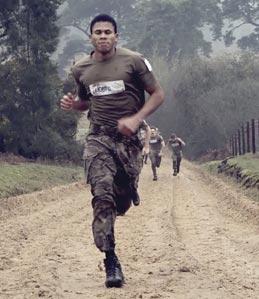
Shortly afterwards, I was loaded onto the Unit Conditioning Course (UCC). Over eight weeks of physically demanding and structured conditioning, the course developed my fitness to the level required for All Arms Pre-Parachute Selection (AAPPS). Initially I was apprehensive, largely due to not knowing what to expect, however, the course progressively built my confidence, resilience, and physical robustness.
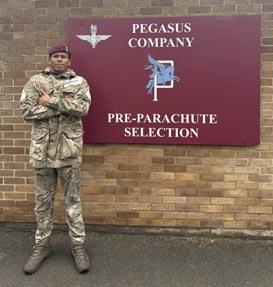
Upon completion of UCC and successfully passing P Company, I earned the coveted Maroon Beret. This achievement marked my full integration into airborne forces life, embracing the 16 Air Assault Brigade ethos and the values symbolised by the Pegasus.
From receiving my posting order during trade training, to deploying almost immediately, gaining Class 2 status, and ultimately passing P Company, this period represented a rapid and demanding start to my career; one that tested adaptability, professionalism, and determination, and laid a strong foundation for future service.
Exercise SAILFISH 23 Para Engr Regt Wksp REME
EScribe: Cpl Begg
xercise SAILFISH is a vital construction training exercise designed to enhance and test the diverse trade skills within the Royal Engineers. For the TDS Fitter Section, the primary aim was to restore the engineer vehicle fleet to a fully serviceable state; ensuring it could support engineer taskings ahead of the arrival of 9 Parachute Squadron.
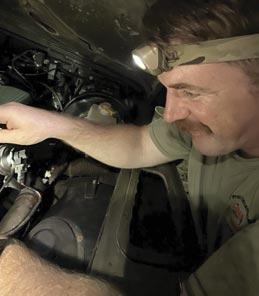
Preparation for the Exercise began early in the year with a formal handover from 39 Engineer Regiment. At that point, much of the fleet had been left exposed to the harsh Belizean environment for almost four months without maintenance. The combination of extreme heat, humidity, and seasonal rainfall presented a significant technical challenge. With no maintenance support between rotations, responsibility for the fleet rested solely with the deploying unit. As a result, the team developed a comprehensive recovery plan to repair, service, and revitalise the vehicles and plant equipment.
This planning also had to account for the logistical challenges of sourcing spare parts from the UK, often from halfway across the world, while making effective use of local contractors where possible to reduce delays.
Stepping up into the role of Acting Sergeant, and leading the fitter team, provided a challenging but rewarding opportunity. With limited workforce available at the outset, there was a strong requirement for flexibility. The team focused initially on priority plant equipment essential to the engineer taskings, including significant repairs to Bomag rollers and JCB 4CX machines. Due to the small team size, all personnel were required to assist across multiple task areas, often outside their usual remit, including MT-related tasks.
As is common in austere environments, initial repairs frequently revealed secondary faults. One notable example saw the team replace four hydraulic rams in quick succession after heat-damaged seals failed. Even local CAT contractors commented that they had never witnessed such a high rate of seal failure in such a short period; highlighting the punishing effect of the climate on mechanical equipment and reinforcing the
complexity of the task being undertaken.
Upon the arrival of 9 Parachute Squadron, the Fitter Section split to support taskings both at the 1963 track project and Price Barracks. Operating from remote locations meant that personnel were often required to conduct Battle Damage Repair (BDR) and fault rectification without immediate access to spare parts. This environment forced rapid problem-solving and innovation; significantly developing the team’s competence. Over the course of the deployment, the Fitter Section progressed from having limited plant experience to becoming highly capable across C-Fleet; having been thoroughly tested in demanding circumstances.
Despite the workload, downtime was used effectively to maintain morale and personal development through Adventurous Training. Activities undertaken included kayaking, abseiling, and caving. On a personal level, I completed an open water diving qualification on one of the world’s most renowned coral reefs; achieving long-held ambitions such as swimming with Turtles and Stingrays. I also had the opportunity to train Brazilian Jiu-Jitsu at Caye Caulker, where local practitioners welcomed me into their club; providing a unique cultural and sporting experience.
Coming from 23 Parachute Engineer Regiment, where the operational tempo is consistently high, the Fitter Section was eager to prove itself. This shared mindset fostered a motivated, professional, and cohesive Fitter Section team that was a genuine pleasure to lead and work alongside.
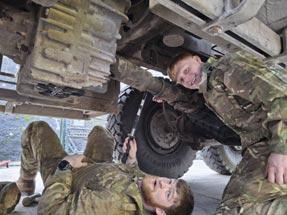
LCpl Wilcock-Newman – Section Perspective Deploying to Belize with 9 Fitter Section REME in support of 9 Support Troop was a demanding but highly rewarding experience. The environment proved unlike anything previously encountered, with extreme heat, high humidity, constant mud, and heavy rainfall creating daily challenges.
The Fitter Section’s primary role was to maintain a wide range of vehicles and equipment in support of the 1963 track build. As Vehicle Mechanics by trade, responsibilities extended beyond fleet maintenance and included generators for the field kitchen, lighting towers critical for extended servicing hours, and camp infrastructure essential for sustaining operations.
Keeping this equipment running was vital to maintaining momentum on the construction task and ensuring the camp functioned effectively.
Operating as a small, fast-paced team required strong teamwork, adaptability, and the ability to think on our feet. Everyone in the Fitter Section stepped up and took ownership of their role, and the deployment provided valuable exposure to working directly alongside the Squadron; demonstrating the full capability of our REME Fitter Section.
The deployment tested both technical ability and resilience, but it also strengthened team cohesion and delivered a strong sense of shared achievement by the end of the exercise.
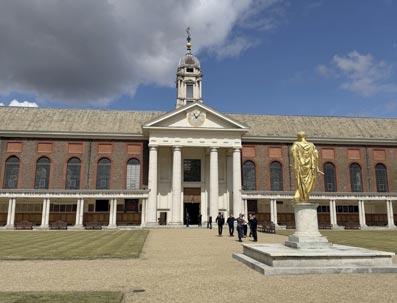
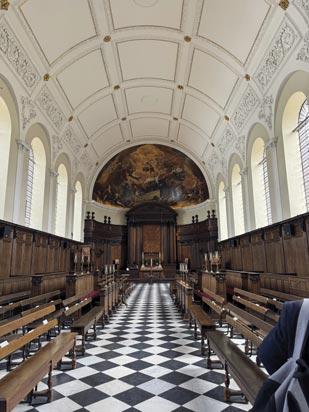
Exercise SCARLETT COAT 26: Cultural Engagement and Veteran Support at the Royal Hospital Chelsea
OScribe: SSgt Darren Hallett
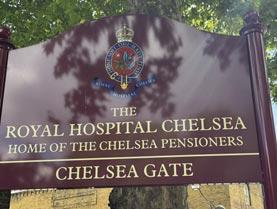
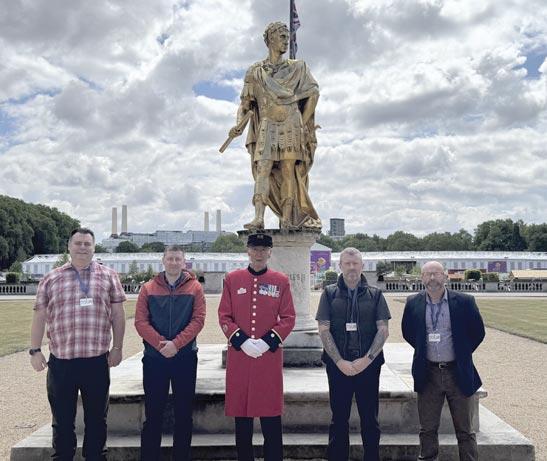
n Thursday 14 May, members of the Light & Littoral Tracks Team (LLT) undertook Exercise SCARLETT COAT 26, deploying from Bristol to London to participate in a cultural engagement visit and volunteering activity at the prestigious Royal Hospital Chelsea. The visit formed part of a wider initiative to strengthen understanding of military heritage whilst reinforcing the Army’s enduring relationship with its Veteran community.
Departing Bristol in the early hours, the team began the day at 0615, demonstrating commitment and professionalism from the outset. Following transit to London, the group arrived at the Royal Hospital Chelsea shortly after a site-wide fire alarm evacuation had concluded. Despite this initial disruption, the visit commenced seamlessly, with the team welcomed by the
Visitor Experience Assistant Manager, ensuring effective coordination and a prompt transition into the planned programme.
The group was introduced to Malcolm, a Chelsea Pensioner who served as the guide throughout the visit. Notably, Malcolm’s prior service in the Royal Electrical and Mechanical Engineers (REME) immediately established rapport with the team, reinforcing shared professional identity and values. The tour proceeded as an indepth exploration of the Hospital’s historic grounds, delivering a compelling narrative of its legacy. Through engaging storytelling and personal insight, Malcolm provided a rich and authentic perspective on the institution, significantly enhancing the team’s understanding of both its heritage and continued relevance.
Following the guided tour, the team transitioned into a short but meaningful volunteering activity, supporting the final phase of a Veteran Outreach coffee morning. This involved assisting with clear-down activities and, more
importantly, engaging directly with attending Veterans. These conversations offered valuable insight into the lived experiences of former Service Personnel, reinforcing the importance of continued engagement and support to the Veteran community. The opportunity to interact informally fostered mutual respect and strengthened the connection between Serving Personnel and Veterans.
Overall, Exercise Scarlett Coat 26 delivered a highly effective and professionally rewarding experience. The visit not only expanded the team’s knowledge of the Royal Hospital Chelsea and its role within the Military community, but also reinforced the importance of heritage, service, and lifelong support to those who have served.
The combination of cultural immersion and practical volunteering provided a balanced and impactful activity, leaving all participants with a greater appreciation of the Chelsea Pensioners and the enduring legacy they represent.
29 Commando Workshop RA –Engineering Commandos in Action
Scribe: Sgt Warren and Sgt Thomson 29 Commando RA Workshop
Within 29 Commando (29 Cdo) Regiment Royal Artillery, the REME Workshop continue to demonstrate that technical excellence and Commando ethos go hand in hand. Over the past year, the unit has delivered operationally, competed fiercely, developed future leaders, and strengthened links both within the Brigade and the local community; all while maintaining the high standards expected of Commando soldiers.
The Coveted Green Beret
A major highlight this year was the successful completion of the All-Arms Commando Course (AACC) by WO1 Payne, Sgt Hannan, Sgt Bailey, Cpl Byford, LCpl Swann, LCpl Hanson-Smith, and Cfn Phillips. Each passed the demanding course and earned the coveted green beret. The Commando Course tests endurance, resilience, teamwork, and leadership under extreme physical and mental pressure. For REME personnel, it signifies the ability to operate not only as expert tradesmen, but as fully integrated members of a high readiness fighting force. Their achievement reinforces the Workshop’s commitment to maintaining Commando credibility at every level.
Building Cohesion Through Competition
Strengthening relationships across the Brigade remains vital. This year, 24 Commando Regiment Royal Engineers Workshop visited 29 Cdo Workshop for an engineering cultural exchange. The visit promoted professional dialogue, shared learning, and mutual understanding of roles within the Commando environment. The event culminated in a demanding inter-department fitness competition. Designed around tasks directly relevant to the physical demands of the unit, the competition
challenged strength, endurance, and teamwork in a controlled yet arduous setting. The aim was simple: to increase cohesion while reinforcing the physical standards required of Commando soldiers. 29 Cdo Workshop emerged victorious, but the true success lay in the strengthened relationships and shared professional respect between units.
Delivering on Operations and Exercise
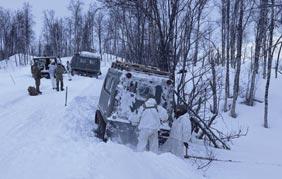
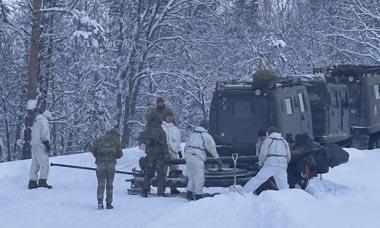
Operational output remains the core function of the Workshop. Across Exercises IRON SHIELD, SPHINX CANNON, and IRON TITAN, as well as deployments to Norway, REME personnel ensured the Regiment’s equipment remained serviceable and combat-ready. From ES vehicles to L118 Light Guns and associated equipment, the Workshop provided consistent engineering support in varied and often austere conditions. Norway tested both soldiers and equipment, demanding adaptability in cold-weather environments. Through preventative maintenance, rapid fault diagnosis, and effective repair, the Workshop ensured equipment availability remained high and the Regiment retained full operational capability. Wherever the guns deploy, REME support follows; reliable, responsive, and ready.
opportunities within REME and the Armed Forces more broadly. Encouraging young people to consider careers in engineering helps ensure the Corps continues to attract capable and motivated future talent. Representatives also attend the Officers’ Open Day to showcase the opportunities available within the Commando Brigade.
Fighting Spirit
Developing Future Technical Leaders
Investment in professional development continues within the unit. Cpl Levy and Cpl Perraton delivered a REME Potential Leadership Assessment (RPLA) insight day, providing soldiers with exposure to the demands of the Artificer pathway. Through leadership tasks and technical dilemmas, attendees gained a clearer understanding of the standards expected and the mindset required. The initiative offered mentorship, guidance, and encouragement to those considering further progression, reinforcing a culture that values ambition and continuous development.
Inspiring the Next Generation
Community engagement remains equally important. As a STEM ambassador, Sgt Thomson represented REME at Devonport High School for Girls during their STEM Day, supporting the nationally recognised Faraday Challenge. The event introduced students to engineering-based problem-solving and highlighted the breadth of STEM careers available. By demonstrating how military engineering combines technical expertise with leadership and teamwork, the engagement showcased the diverse
The 29 Cdo inter-sub-unit Boxing competition provided another platform for Workshop soldiers to demonstrate resilience and determination. Cpl Macdonald, LCpl HansonSmith, and SSgt Carr represented the Workshop in the ring, embodying controlled aggression and personal courage. Boxing within the Regiment is more than sport; it reinforces
discipline, mental robustness, and the ability to perform under pressure; qualities equally valuable in the engineering environment.
Representation Beyond the Regiment
Sport continues to be a cornerstone of morale and excellence within the Workshop. Sgt Thomson and Cpl Ratukadreu have represented REME, the Army and UKAF in Football and Rugby respectively, demonstrating commitment beyond their primary roles. Cpl Ratukadreu notably represented the Army in the Coral Coast Sevens with the British Army 7s team and continues to compete for Plymouth Albion RFC. Competing at this level reflects both individual dedication and the broader culture of high performance fostered within the unit.
Cohesion Outside the Workplace
The year concluded with the annual summer function at Adrenaline Quarry Aquapark. The event provided soldiers and
families with a valuable opportunity to strengthen bonds outside of work. In a high-readiness environment, fostering strong personal relationships and maintaining morale is essential to sustaining operational effectiveness.
Conclusion: From earning green berets to sustaining equipment in Norway, mentoring future Artificers, and representing the Corps in sport, 29 Cdo Workshop continue to exemplify what it means to be REME within a Commando Regiment. Technically proficient, physically robust, and fully embedded within the fighting force, the Workshop remain ready to deliver - fit to fix and ready to fight.
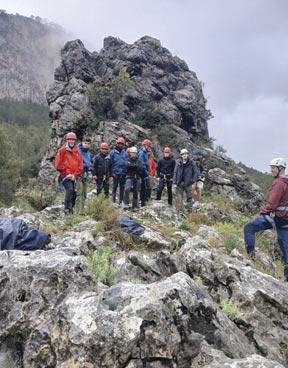
Exercise DRAGON ROCK, 5Bn REME, Rock Climbing AT Expedition
Scribe: 2Lt Elliot Routier
Exercise DRAGON ROCK saw 5 Bn deploy to Alicante, Spain, for a week of rock climbing as part of an Adventure Training (AT) package. Preparation for the exercise began days earlier than most of the team realised. Ahead of the main body’s arrival, the Advance Party, ASM Grant and WO1 White, deployed early, spending two full days recce-ing crags across the Costa Blanca. Despite persistent rain and poor forecasts, multiple crags were assessed and confirmed suitable.
The exercise kicked off at approximately 0355hrs with the question no one expected to ask:
“Where is he?”
As the transport prepared to roll at 0400hrs sharp, one member of the climbing team was conspicuous by his absence. Contact was eventually made, at which point the missing soldier confidently outlined what can only be described as an ambitious sleep management strategy. Nonetheless, through the Army’s deeply ingrained reluctance to leave anyone behind if it can be avoided, the team eventually moved off in full, and breakfast at Bristol Airport was a small morale win following the early start; though any hopes of rest on the outbound flight were quickly dashed by the presence of a particularly enthusiastic stag and hen party; exercise DRAGON ROCK was well underway.
Arrival and Preparation
The team landed safely in Alicante and were quickly reminded why Spain is a popular destination. Clear skies, warm air, and limestone ridgelines rising out of the landscape promised a perfect week of climbing. The team arrived safely at Casa Ambar, the team’s accommodation for the week, where it became clear just how much unseen work had gone into the deployment by ASM Grant and WO1 White.
That evening was spent conducting safety briefs that covered climbing systems and personal safety, environmental considerations, standard
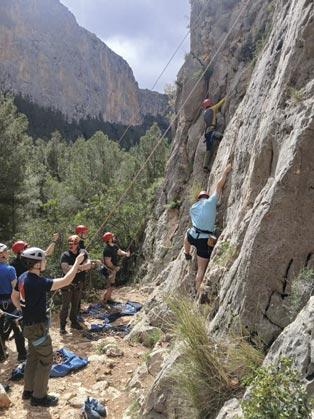
The team’s very first climb of the week, attacking a 4A route focusing on the basic mechanics of climbing
operating procedures at the crag, and clear behavioural expectations. For many, it was their first exposure to outdoor sport climbing, and the emphasis on education, discipline and student participation set a professional tone for the week ahead.
On the Rock
Before anyone touched limestone, the first full day was deliberately spent consolidating theory. Harness fitting, knot tying, belay devices, partner checks, and standard drills were repeatedly practised; initially in controlled conditions and later outdoors as the weather allowed. Only once Instructors were satisfied with safety standards did the group move onto real climbs.
The first outdoor climbing took place at Tarbena, with routes selected to build confidence while reinforcing correct technique. Over the following week, the team climbed every day, moving between a number of iconic crags in the Alicante region. Routes ranged from friendly introductory lines graded 4C, through to more technical sport climbs pushing 6B; ensuring that everyone, from beginners to experienced climbers were tested appropriately.
Locations included Sierra de Toix, overlooking the Mediterranean, and Olta, where routes wound their way up sunlit limestone with uninterrupted views of the coast. Crowded crags at times forced flexibility and intelligent route management, but also provided exposure to civilian climbing culture and reinforced the need for awareness and professionalism in shared environments.
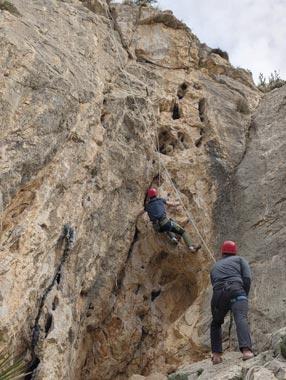
Harder routes introduced overhanging sections and more demanding sequences, forcing climbers to think economically rather than rely purely on strength. Some succeeded cleanly, others fell off spectacularly, but all walked away better educated.
Weather: Spain Remembers It Can Rain Too
Most days delivered classic Spanish conditions, temperatures climbing above 20 degrees and sunscreen becoming as essential as chalk. Early starts saw the team chasing the rising sun across crag faces, and days only finishing as the sun dipped towards the horizon. The team enjoyed consistently outstanding evening meals, as SSgt Francis was appointed BBQ IC. These evenings did as much for team cohesion as any climb.
Naturally, no military deployment would be complete without the weather attempting to intervene.
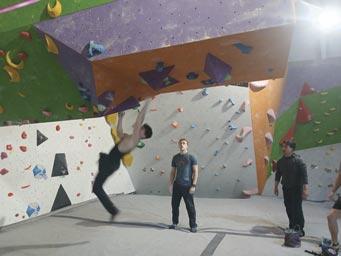
Certain days reminded the team that even the Costa Blanca is not immune to meteorological ambition. Midway through the week, a recordbreaking national rainfall event engulfed the coastline, limestone faces turned unclimbable and access paths became hazardous. Rather than writing the day off, the team relocated to an indoor climbing facility in Alicante, maintaining momentum and training value. Here, the team received instruction from Cfn Blacklock, a member of the Army Bouldering
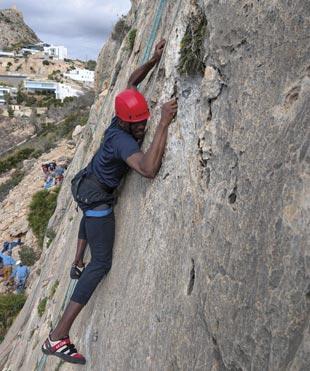
Sgt Stevens completing a gnarly route
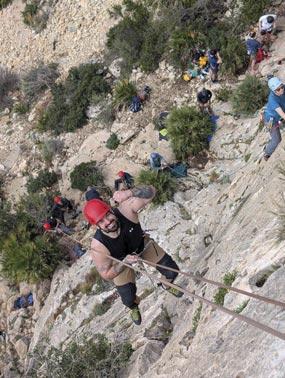
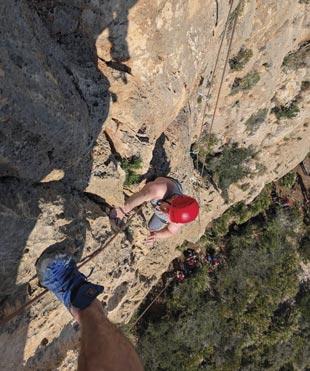
2Lt Routier inverting on the climb down Spiderman style
Team, who demonstrated exactly how climbing is meant to look when done properly.
His apparent disregard for gravity was both inspiring and mildly irritating in equal measure. Nevertheless, the indoor day provided valuable consolidation of skills, allowed climbers to push technical grades in a controlled environment, and reinforced the fundamentals that would pay dividends once the rock dried.
The wetter days were also used to introduce and practise Abseiling, giving the team exposure to additional rope systems and further expanding confidence at height.
Descending vertical faces under control proved to be a different challenge entirely: one that many did not appreciate.
Outcomes and Reflections
Alas, all good things must come to an end, and the final climb carried a sense of achievement tempered by reluctant acceptance that the week was over. The return journey mirrored the deployment in spiritadministrative friction, distant transport, and long waits - but morale remained high. By the end of the week, Exercise DRAGON ROCK had delivered exactly what it set out to achieve. Soldiers were taken outside their comfort zones, sometimes literally hanging from them, and encouraged to persevere, problem solve, and lead under pressure. Confidence grew, not through empty reassurance, but through tangible achievement on the rock.
Exercise DRAGON ROCK may have started with a questionable sleep plan, but it ended as a resounding success.
The team returned sharper, closer, and with a shared set of experiences that will be talked about long after the chalk has washed off and the rope burns have faded.
Cfn Samuel leveraging his height advantage to skip most of a climb
Capt McMillan taking his time on a complex route
Cfn Taylor attempting an overhang section from the indoor climbing day
From TQMS to Jack Sparrow: A REME Sailor’s Test on EX TIGER SEAHORSE EXPLORER 26
Scribe: SSgt George Perkes
Plymouth to Gosport | 12–19 April 2026
The sea has a ruthless way of reminding you who is really in charge, and during EX TIGER SEAHORSE EXPLORER 26, it made that message clear early on. What began in calm conditions soon developed into a demanding passage that tested judgement, endurance, and teamwork; qualities familiar to any REME soldier.
Our journey aboard Seahorse, [one of the Corps’ two Hallberg Rassy 342 yachts] began in Plymouth with warm welcomes and an easy ice-breaker, wandering the marina and settling into life onboard. The following morning, we slipped our lines and headed for Salcombe Bay. Conditions were near perfect: calm seas, clear skies, and effortless sailing. Confidence grew quickly, although a few of the crew discovered the sea has little sympathy for stomachs, where seasickness made a brief but memorable appearance.
The tone changed during the next leg to Brixham. Winds built steadily to around 25 knots, gusting and shifting, causing the yacht to heel heavily and making the passage increasingly uncomfortable. Even so, progress continued, and at one point I found myself on the helm feeling less like an experienced Sailor and more like Jack Sparrow, wrestling the Tiller as the Yacht demanded constant attention. By the following morning, conditions had worsened again. Gusts peaked at around 35 knots and the swell rose into rolling hills. Sensible seamanship prevailed, and we remained in harbour, a timely reminder that knowing when not to push on is just as important as pressing forward. When winds eased to around 23 knots, we departed once more. The sailing was lively but controlled, with enough heel to keep everyone alert. The real test followed shortly after a 90mile passage from Brixham to Lymington. Alarms sounded at 0300, and the day ahead promised up to 14 hours underway.
Helm duties were rotated throughout to manage fatigue. Holding a steady compass course of 090 degrees proved
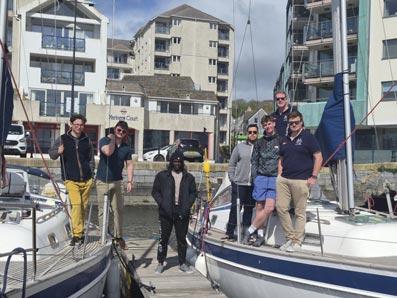
SEAHORSE EXPLORER 26 Leg 1 Crew in Plymouth
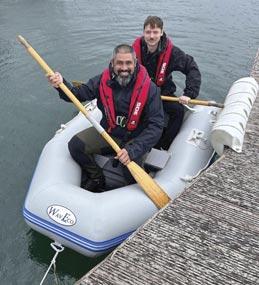
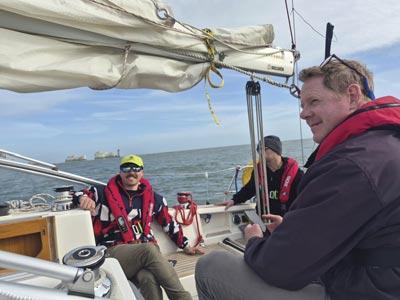
Learning to row in the rain on Ex SEAHORSE EXPLORER 26
harder than expected, and small deviations added up to a few unplanned ‘bonus miles’. Despite this, teamwork remained strong, and the crew adapted as the hours ticked by.
Lymington was a welcome sight. The harbour, lined with yachts worth more than most houses, felt like another world after days of challenging conditions. Once alongside, we put Seahorse to bed, securing sails, stowing lines, and replenishing tanks before heading ashore.
Dinner was fish and chips, though at £25 a head it must have been one exceptional catch. A short wander through the town and a light refreshment followed before we turned in, ready for rest.
Friday brought a change in fortune with a sail across to the Isle of Wight. Conditions were near perfect: steady wind, smooth seas, and effortless progress. We even managed to raise the spinnaker, proudly displaying the REME flash, a small moment of pride before preparations began to come alongside in Cowes for lunch.
Later, we continued on to Hamble, a small town with cobbled streets and excellent atmosphere. A reasonably priced meal and a visit to several local bars followed, including The Victory, whose interior fittingly reflected its famous namesake. An early night rounded off the day, with the final leg still ahead.
Saturday began quietly. Bacon went into the oven as plans were made to sail for Portsmouth, but the wind disappeared entirely. The sea lay flat and glasslike, reflecting the morning sun. With no breeze to drive the sails, the final leg became an engine passage, returning us to Portsmouth in just under six hours.
Looking back, EX TIGER SEAHORSE EXPLORER 26 was challenging, rewarding, and memorable. From helming in heavy weather to raising sails, cooking onboard, and getting thoroughly soaked, every part demanded teamwork and resilience. Seeing Dolphins alongside during the passage was the perfect reminder of why experiences like this stay with you long after stepping ashore.
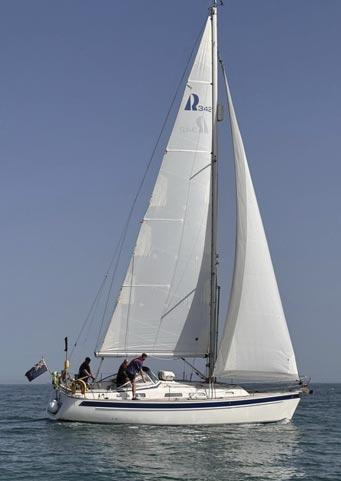
SEAHORSE under full sail on Ex SEAHORSE EXPLORER 26
REME Sailing Club Insta page
Sailing past the Needles during Ex SEAHORSE EXPLORER 26
TThe Shaw Cup 2026
Scribe – WO2(AQMS) Chris McKendry, REME Boxing Secretary
A New Era for REME Boxing in Northern Ireland
he inaugural Shaw Cup Army Boxing Gala marked a significant milestone for REME Sport, delivering a night of elite Boxing, Corps pride and community connection in Northern Ireland. Rooted in the values of progress, resilience and unity, the event established what is already shaping up to be a flagship fixture in the REME sporting calendar; blending competitive excellence with heritage and purpose.
Staged through a partnership between the REME Boxing Team, Connect Through Service, Cherton Secure and a broad network of defence-aligned organisations, the Shaw Cup brought together serving personnel, Veterans, senior leaders and civic guests for a showcase of Army Boxing at its very best. The Gala honoured the legacy of Captain John Shaw, while firmly representing the modern professionalism and resilience of today’s soldiers.
Setting the Tone
Proceedings opened with an address from Brigadier Doyle, President REME Boxing, who highlighted the enduring value of sport in developing leadership, resilience and camaraderie across the Corps. His remarks framed the evening as more than a series of bouts – it was a reflection of REME values, spirit and teamwork; reinforced through competitive excellence.
REME v RIFLES – Boxing at Its Best
The centrepiece of the evening was the Boxing contest between REME and The Rifles, contested across seven high intensity bouts. Both teams entered the ring with discipline and determination, delivering a standard of Boxing that was technical, courageous and relentlessly competitive. After a hard-fought contest, REME emerged victorious,
winning the inaugural Shaw Cup 5 bouts to 2. The performance was a fitting demonstration of the Corps ethos –By Skill and By Fighting – and a proud moment for all involved.
Honouring Achievement
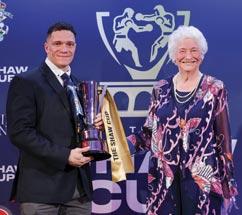
The presentation of the Shaw Cup was led by Lady Mary Peters DBE, a sporting icon synonymous with excellence and Northern Ireland’s athletic heritage. She awarded the trophy to Sergeant Mason Small, REME Boxing Team Captain of 1 RRF LAD, marking a moment that perfectly captured the Gala’s blend of military achievement and civic recognition.
The Best Boxer award of the evening was presented to Lance Corporal Fisher (16RA Wksp) by Major General King CBE, recognising an outstanding individual performance amid a highly competitive card.
Action from the night including LCpl O’Gara and Sgt Small
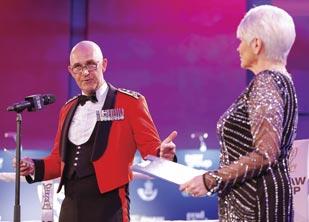
Brig Doyle giving opening address
Lady Mary Peters’ presence underscored the wider ambition of the Shaw Cup, to strengthen the bridge between the Armed Forces and the local community by celebrating shared values of discipline, courage and unity.
Supporting the REME Family
In keeping with its values, the Shaw Cup will deliver charitable sponsorship donations of £16,000 split between both the REME Charity and The Rifles Charity, ensuring the impact of the event extends well beyond the ring. These contributions support serving personnel, Veterans and families, reinforcing the strong welfare focus that underpins REME sport and Corps activity more broadly.
Delivered Through Partnership
The success of the Gala was made possible through the commitment of Northern Ireland based partners including
Weir Events, Cherton Secure, and Connect Through Service. Their support helped elevate the event from competition to occasion, ensuring a professional platform worthy of the Athletes involved. Further details of event partners can be found at www.theshawcup.com.
A Tradition Begins
As the final bell sounded and the audience departed, there was a clear sense that the Shaw Cup is more than a one-off event; it is a tradition in the making. Rooted in heritage, driven by modern professionalism and powered by partnership, the Shaw Cup has established itself as a new focal point for REME Boxing in Northern Ireland.
With plans already in motion, attention now turns to 2027, where the Shaw Cup will return stronger, larger and with even greater ambition, as it continues to honour legacy, champion Corps sport and inspire the next generation of REME Boxers.
Lady Mary Peters DBE presenting the Shaw Cup to REME Team Captain, Sgt Small
REME Boxing joined by senior officers there in support
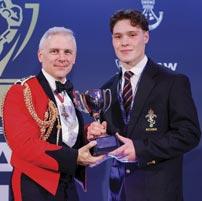
Maj Gen King CBE presenting The Best Boxer trophy to LCpl Fisher
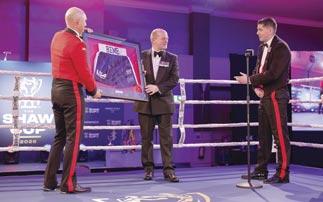
Mr Graham Given, Director of Cherton Secure and Connect Through Service receiving a set of framed REME Boxing Shorts in recognition of thanks
Freedom of Hungerford Parade
– 6 Armoured Close Support Battalion REME Granted the Freedom of the Town of Hungerford
OScribe: Sgt Raughter
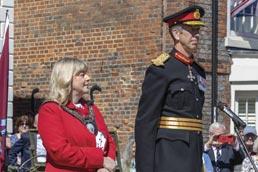
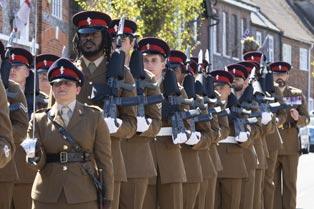
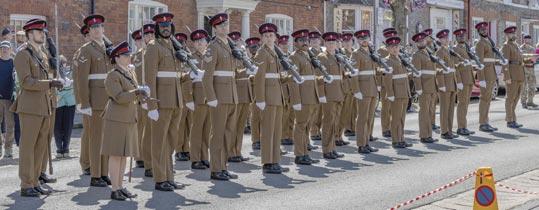
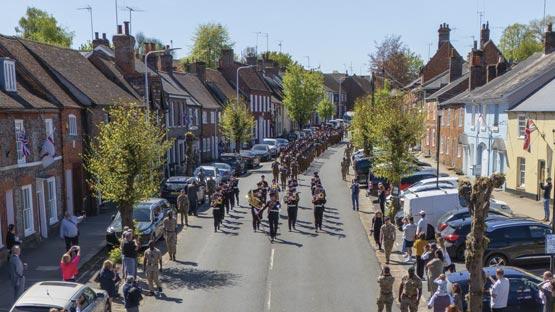
n 25 April 2026, history, heritage, and military pride converged in the heart of Berkshire as soldiers of 6 Armoured Close Support Battalion REME were formally granted the Freedom of the Town of Hungerford. In a parade rich with symbolism and tradition, the Battalion marched through the town’s historic streets, demonstrating not only impeccable soldiering standards, but also the deep and enduring bond between the Battalion and the local community. The granting of the Freedom of Hungerford bestows upon the Battalion the right, title, privilege, honour and distinction of marching through the streets of Hungerford on ceremonial occasions with drums beating, band playing, bayonets fixed and swords drawn. This ancient civic honour is a privilege granted in recognition of the strong and enduring relationship between the Battalion and the town - a bond reinforced through regular engagement, including annual Remembrance events and civic participation. Located close to the Tidworth, Netheravon, and Bulford Garrison area, Hungerford is home to many Serving Personnel, Veterans, and military families; making the event particularly meaningful for both soldier and resident alike.
The parade was attended by a distinguished assembly of guests, including the Mayor of Hungerford, civic dignitaries, and Major General Brown CBE, General Officer Commanding 3rd (UK) Division. Leading the Battalion with pride and distinction was Lieutenant Colonel Rob Ashton,
Courtesy of Lee Sainsbury, Oxygen Photography
Courtesy of Lee Sainsbury, Oxygen Photography
Courtesy of Lee Sainsbury, Oxygen Photography
Commanding Officer 6 Armoured Close Support Battalion REME.
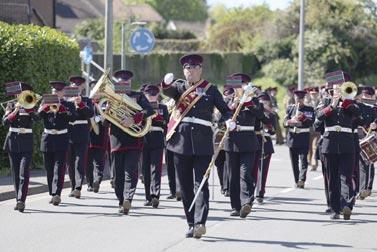
Formed up in Service Dress with bayonets fixed, swords drawn and supported by the Band of Royal Army Medical Services, the Battalion marched through Hungerford town centre, drawing large crowds who lined the route with applause to show their support. The sight of REME Soldiers parading and being granted the Freedom of the Town served as a powerful reminder of the heritage, trust, and mutual respect that exists between the Armed Forces and the communities they serve.
Behind the scenes, weeks of meticulous planning and rehearsal ensured the parade was executed to the highest
standard. Company Sergeant Majors, supported by the Regimental Sergeant Major, Warrant Officer Class One John Kittle, maintained exceptional standards of drill, turnout, and bearing. The event was delivered smoothly through close cooperation with local authorities, police, and medical support.
The Freedom of the Town Parade stands as a defining moment in the Battalion’s history. It reinforced pride, discipline, and identity within 6 Armoured Close Support Battalion REME, while reaffirming its role not only as soldiers and Technicians, but as Ambassadors of the Corps of Royal Electrical and Mechanical Engineers.
Arte et Marte.
Courtesy of Lee Sainsbury, Oxygen Photography
Courtesy of Atalya, Nyra Media
Presentation piece courtesy of Atalya, Nyra Media
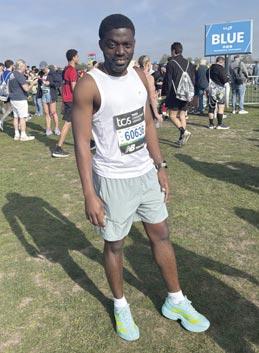
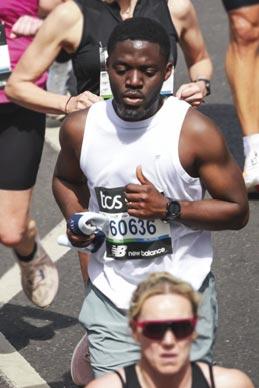
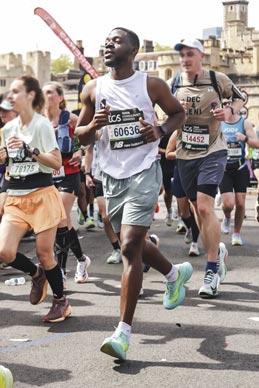
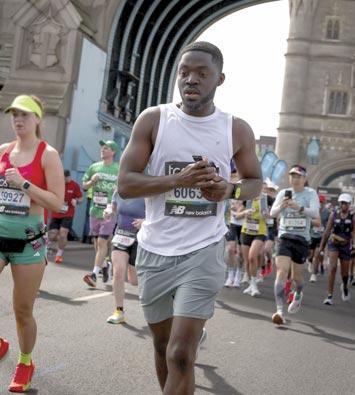
My London Marathon Journey
Scribe: Craftsman Samson Noble Nartey
On 26 April 2026, I stood at the start line of the prestigious London Marathon feeling nervous and tremendously proud, but above all I was happy with the training, the fundraising, and the purpose behind every mile I was about to put my body through. Now, having crossed that finish line, I can say that the experience was far more powerful, humbling, and transformative than I ever imagined.
When I began this journey, running was not something I naturally gravitated toward. As I wrote before the race, “running was never something I had much interest in, but I had to force myself to move simply to meet the required standard.” But somewhere along the way, running became more than a requirement. It became a teacher, a companion, and eventually a passion. The marathon brought it all full circle.
Before the race
Mid race
Nothing truly prepares you for the atmosphere on marathon day. The noise, the colours, the crowds, the emotion all hit you instantaneously. Every runner around me carried their own story, just as I carried mine. I remembered writing on the fundraising page that each person had “their own struggle and their own reason for being there.” Being part of that collective energy was overwhelming, in the best possible way.
The miles were not easy. A good friend told me, “Running a marathon starts after 20 miles. That’s when the body starts to fight you.” After 23 miles, my legs felt heavy, and fatigue whispered doubts. But just as I had done throughout training, I reminded myself of the purpose behind every step. I thought of the REME Charity and its purpose of supporting Serving Personnel, Families, Veterans, and those in need. This objective carried me when my strength wavered.
In my pre-race reflection, I wrote that on difficult days, thinking about the people who would benefit from the donations, made the run feel worth fighting for. That remained true on race day. Running for something bigger than myself transformed the marathon from a physical and mental test into a mission. It gave every mile weight and every mile value.
Crossing the finish line represented months of discipline, sacrifice, generosity, and unwavering support. Standing there at the end, medal around my neck, I realised just how true that was.
It wasn’t just 26.2 miles. It was early mornings, long evenings, sore muscles, and mental battles. It was the encouragement of friends, colleagues, and strangers who believed in the cause. It was the generosity of everyone who donated. It was the journey of a Ghanaian soldier who once forced himself to run, now completing one of the world’s greatest races.
To everyone who supported me, thank you. You turned this challenge into something meaningful and helped transform every step into impact. You stood behind the REME Charity and me, and I carried that support with me from the first mile to the last.
The marathon has changed me. It has strengthened my belief in what the mind and body can accomplish when driven by purpose. It has deepened my connection to the REME community, and it has ignited a passion for running I never expected to find.
This journey doesn’t end here. It continues one mile, one challenge, one act of purpose at a time.
If you would like to add to my donation page, please see the link below:
The REME Charity: My London Marathon Journey – Cfn Samson Noble Nartey via REME Connect.
Mid race, on Tower Bridge
After crossing the finish line
Leaving the Regular REME?
Why not join the REME Reserve?
Security Clearance
Holding SC can give you access to higher paid roles with some companies. As a reservist you maintain this accreditation.
Tax-free bounty
On satisfactory completion of your annual training, you receive a tax-free bounty of over £2k!!!
Your financial security
It makes financial sense.
Get an annual tax-free bounty, plus pay, plus pension contributions. Supplement your salary or take the family on holiday.
Your support network
Changing careers is scary.
Shared experience builds bonds and friendships like nothing else, it’s worth keeping hold of for when you need it most.
Your option to return (should you need) Miss your old life?
It could take you 6-12mths to rejoin but as a Reservist, it’s a simple transfer form.
What’s in it for me?
Sport & AT
Whether you love sailing or skiing, as a reservist you get paid to participate in Regular Army sport and AT events.
Holiday pay
Sounds strange, but Reservists get holiday pay too (1 RSD for every 10 trg days).
Get early access to jobs not advertised to civies through the RAJA jobs website, REME only! Wellbeing Settled to a new area? Reconnect with old Army friends or meet some new. We all need good people in our lives.
Pension abatement
No pension abatement for Reservists on RSDs. You receive all your pension; your Reserve pay; and contributions to your Reserve pension.
Keep learning Reservists get access to SLC credits and DLE. Keep growing and learn new skills to support your new career ambitions.
How do I transfer?
Scan
Rail card
Reservists get the Forces Railcard (1/3 off travel)
Pay
Either ¼ (2hrs) ½ (4hrs) ¾ (6hrs) or full (8hrs) Reserve Service Days (RSDs) pay @ rank and includes 5% X Factor
Career progression
As a Reservist, you also get annual appraisals, so career progression is still possible including SSE commissions.
Home to Duty Travel
Get your mileage paid for by the Army to attend all training nights and weekends (up to 50miles@MMA rates)
Rank
Pte-SSgt and 2Lt-Capts can normally transfer and keep their rank. WOs might be asked to revert (dependant on available PIDs).
Mobilised service
Between jobs? That’s ok because you can volunteer to be mobilised for overseas deployments and operations on the same pay and allowances as a Regular.
Only 19 days each year
To qualify for your tax-free bounty, your annual commitment is19 days for your first 3 years (only 27 days afterwards).
Reduced ITRs
To qualify for your tax-free bounty each year, you only complete an SCR, ITR Behaviour’s and no annual camp (first 3 years only).
Go for it. You can find vacancies and apply for your transfer via the Digital Transfer App on Defence Gateway.
Adventurous Training
Ex FROZEN ANVIL
Scribe: Captain McMillan
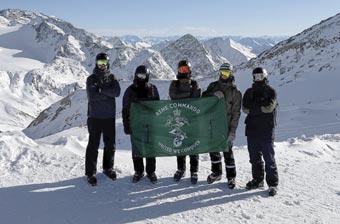
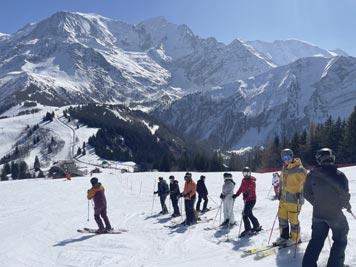
March saw the return of the unit’s annual ski expedition to Chamonix, France – a two-week expedition set against the dramatic backdrop of the Mont Blanc massif. Coming straight off the back of the demanding TITAN STORM exercise, the deployment marked a welcome shift from exercise conditions to alpine snow.
An advance party departed by road on 13 March, ensuring equipment, lift passes and accommodation were ready for the main body. The remainder of the Team deployed by air on 14 March. 16 students attended each week for a total of 32 students, supported by three Instructors and the Expedition Leader, all of whom were instrumental in delivering safe, structured and progressive training.
Chamonix delivered a full spectrum of spring alpine conditions. The expedition opened with significant snowfall, transforming the valley into a fresh powder playground. As the days progressed, warm spring sunshine softened the pistes and made for relaxed, confidence-building skiing. The hot conditions were a trial by fire for the students conducting Ski Touring for the first time, they pushed through and thoroughly earned their end of day refreshments.
The final 2 days closed with another heavy snowfall – a reminder of the mountain’s unpredictability and a dramatic
bookend to the deployment with the newly skilled students thoroughly enjoying their first taste of deep powder. Every student successfully completed either Ski Foundation Level 1 or Ski Foundation Level 2, building directly on the qualifications and experience gained during last year’s expedition and the instructors reported exceptional enthusiasm from all participants.
For many this was an opportunity to visit an environment different to any they had experienced before. They embraced this, attending a local Ice hockey game and thoroughly embedded themselves in local culture, extracting the most from what Chamonix had to offer.
For a unit emerging from the intensity of TITAN STORM, the change of environment offered not only physical challenge but also mental reset – a chance to regroup, refocus and return stronger.
LCpl Wingrove making the most of the fresh snow
Lt Mair and SSgt Mason practicing ski touring in challenging conditions
SF1 group conducting training in the spring sun
‘Ride To The Wall’ rides to the REME Museum
Scribe: Lucy Brown, REME Museum
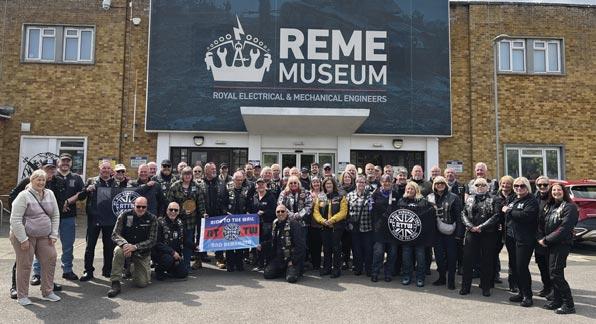
On 8 May 2026, on the 81st anniversary of VE Day, motorcyclists with Ride To The Wall (RTTW) visited the REME Museum.
RTTW is a bikers’ charitable organisation that rides to remember members of the Armed Forces who gave their lives in the service of their country and to raise funds for the National Memorial Arboretum (NMA). It started as an opportunity for an organised group to ride together to pay their respects at The Wall of the Armed Forces Memorial at the NMA, Staffordshire. Since 2008, the organisation has raised a total of £1.83 million for the NMA.
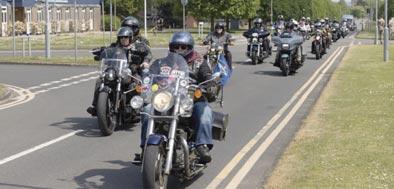
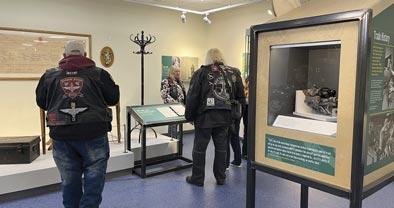
Throughout the year, some gather for additional rides of remembrance. This year, a ride was organised for over 50 bikers, coming from various starting points as far as Carlisle, to visit the home of REME in Lyneham. The group had the opportunity to be shown around some of the training areas at MOD Lyneham; including the School of Army Aeronautical Engineering (SAAE), as well as to look
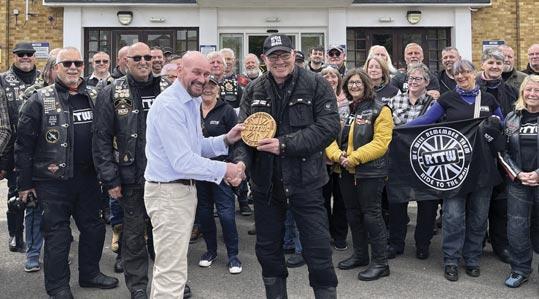
The group gathered for a photo in front of the museum
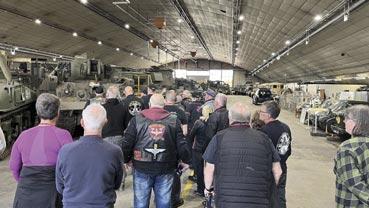
Touring the Reserve Vehicle Collection, which also includes ceremonial vehicles modified and or used by REME personnel
around the REME Museum.
After enjoying a self-led visit to the museum galleries, the group of bikers rode through MOD Lyneham to The Roger Jones MBE Vehicle Hangar for a tour of our Reserve Vehicle Collection.
The collection includes repair and recovery vehicles used, modified and maintained by REME personnel all over the world. The hangar is named after our late colleague and friend, Staff Sergeant Kelvin ‘Roger’ Jones MBE, who looked after our vehicle collection until his passing in 2020. We offer guided tours of the reserve collection to the public throughout the year; check our website events page for dates.
In attendance was Patron of the charity and former Master General REME, Lieutenant General (Retired) Paul William Jaques CB CBE, who presented a plaque on behalf of the group to the Museum’s Director, Major (Retired) Rick Henderson. We plan to put the one-of-a-kind plaque up in one of our corridors in the near future.
Riding through the base at MOD Lyneham. Credit DSEME
Enjoying the displays in the Trades Gallery
The presentation of the plaque outside the museum entrance
Three Ultras. Three Coasts. Once Cause
Scribe: Capt James Harris REME
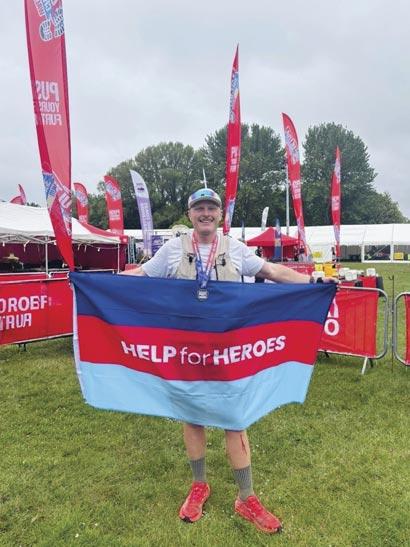
On 16 May I completed the first event of my 2026 ultra endurance fundraising campaign in support of Help for Heroes, taking on the Jurassic Coast Ultra along the Dorset coastline.
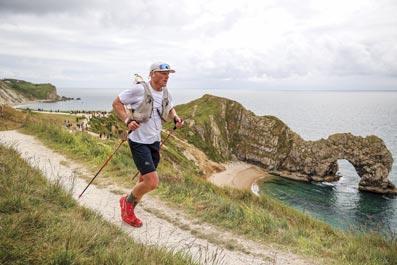
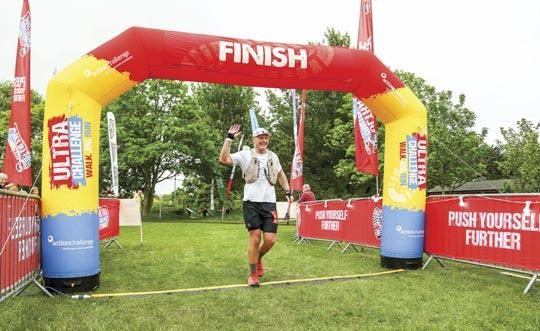
The route covered 59km and approximately 1,800m of elevation, starting at Corfe Castle and finishing in Weymouth. I completed the course in 6hrs, 53mins, 31 Secs; placing 8th overall out of 518 competitors. Going into the event I knew it would be difficult, but it still managed to exceed expectations. The early stages were fast and runnable, however beyond the midway point the course became increasingly technical and physically demanding. The climbs
around Durdle Door, infamously known by runners as “the roller coaster”, quickly turned the event into a battle of endurance rather than pace.
There were definitely moments where doubt started creeping in. The combination of heat, steep ascents, descending under fatigue and the cumulative load on the legs over nearly seven hours began to take its toll. At several points the temptation to back off was very real. What carried me through those moments was the atmosphere around the event and the support from family, friends and complete strangers across the route. Seeing familiar faces at checkpoints and along the coastline genuinely lifted me at points where I needed it most.
I am undertaking the campaign in support of Help for Heroes, a charity that means a great deal to me personally. My uncle suffered with PTSD following his service as a Company Commander on Operation HERRICK and received support through forces charities afterwards. Seeing both the long-term impact service can have on individuals and the importance of the support available to them and their families is a major reason why this campaign matters to me.
Throughout my own career I have also seen the effect that injury, medical discharge and operational service can have on people long after deployments end. The campaign is my own way of trying to reflect, in a small way, the resilience and persistence required of those rebuilding their lives after service.
Originally, I set myself a fundraising target of £2,000. Thanks to the generosity of family, friends, colleagues and sponsors, I was fortunate enough to exceed that figure before the first event had even begun. Following the support received so far, I have now extended the target to £3,000.
There are still two significant challenges remaining.
On 13 June I will take on The Wall Ultramarathon, covering 114km along Hadrian’s Wall
from Carlisle to Gateshead. The final event will take place on 12 September, where I intend to complete the renowned Poole to Lympstone route solo in one continuous effort. The route, commonly undertaken in relay pairs alternating approximately every 42km, covers around 141km and over 5,500m of elevation along the South West Coast Path.
My intention is to complete the route independently in a single push, likely involving more than two days of continuous movement including overnight running without sleep.
Completing the Jurassic Coast Ultra has reinforced just how serious the remaining challenges are going to be. At the same time, it has also shown me that with enough preparation, discipline and support around you, seemingly impossible things can gradually become achievable.
Anyone wishing to support the campaign can do so via: https://www.justgiving.com/page/james-harris-2
Celebrating the 85th Anniversary of The Dutch Regiment of Technische Troepen (RTT) with the Corps
OPart 1 – Off to the Netherlands, 17th March 26
Scribe: Chris Zeil
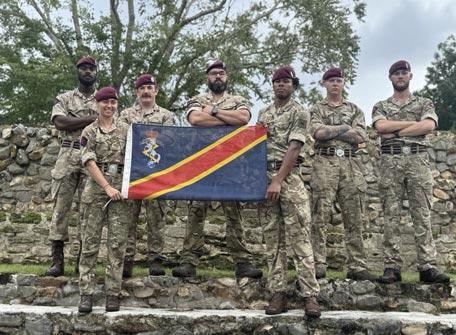
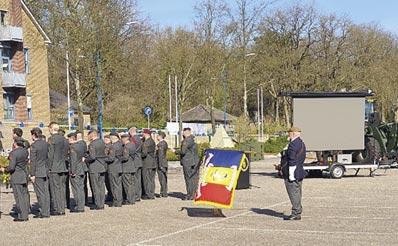
n the 14th August 2024 the Recovery Mechanics Branch received an invite from WO (Retd) Peter De Jong, a Dutch Veteran Recovery Mechanic, who is a member of our Branch. The invite was to attend the Dutch Regiment Technische Troepen (RTT) Remembrance Parade in the Netherlands, along with Serving REME members from the Corps. This invite came from Lt Col Dion Dols, Commander Technische Troepen Training School, Soesterberg and their Regimental Commander (Corps Col), to celebrate their 85th Anniversary over the period of the 18/19 March 2026.
The RTT is our equivalent in the Dutch Army and was formed on the 20th of March 1941 as a Light Aid Detachment as part of the Dutch Princess Irene Brigade and consisted only of an Independent Recovery Company, stationed in Congleton, Cheshire.
The original number invited was in the region of 15/16 individuals, a mixture of Veterans and Serving members. Due to various commitments and circumstances beyond our control the Serving and Veterans final number was reduced to 8. On the 17th March the Recovery Mechanics Branch, Andy Gray and myself and five serving REME Recovery Mechanics from Lyneham (DSEME), Capt. Joe Williams, WOI (ASM) Dan Martin, SSgt Story, Sgt Grey & Sgt Bates, rendezvoused at the Army Reserve Centre 103 Force Support Battalion REME, 133 Divisional Recovery Company, Ashford, Kent and set off in a minibus to the Netherlands. One other Branch member, Bob Fullbrook, flew to the Netherlands. We set sail from Dover for Calais and arrived at Du Moulin Barracks, Soesterberg. Where we were met by our chaperone’s Lt Col (Retd) Peter Voermans and WO (Retd) Peter De Jong. We then went on to meet
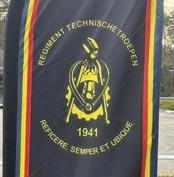
The 85th Anniversary RTT Regimental flag
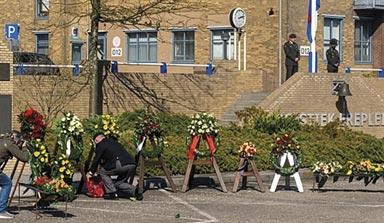
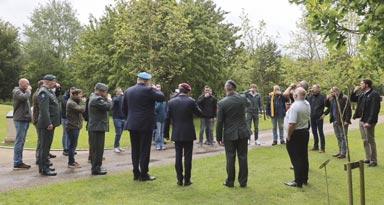
Chris Zeil laying a wreath on behalf of the branch
Regimental Col Dion Dols and Regimental Adjutant (RSM) Eelco Mulder for refreshments at the school’s bar. Later that evening we departed to Oranje Barracks, Arnhem which was approximately a 50-minute drive away to our accommodation.
On 18th March 2026 we dressed in Veterans Dress and suits ready for the Remembrance Parade. We had breakfast in the Cookhouse and left for Du Moulin Barracks where the Parade would take place. On arrival we had coffee and cakes with Dutch Veterans, followed by a visit to their Regimental Museum and a guided tour by a retired Lt Col. Then back to the Parade ground for a rehearsal. I was laying a wreath on behalf of our Branch and Bob Fullbrook was our Standard Bearer on the Parade. The Parade was at 12:45 hrs and all went well and afterwards we all retired to a dining room for a late dinner provided for all parade attendees. Later that evening we returned to Oranje Barracks, changed into casual clothes and we all went into Arnhem as we had been invited to the home of the Regimental Recruiter WO Jordy for drinks and a tour of the local hostelries; most of which had a lot of WWII Airbourne memorabilia on their walls.
the evening with a free BBQ and beers, two live rock bands and a bonfire.
The following morning, 19th March it was breakfast again in the cookhouse. Then all on the minibus for the Market Garden Battlefield tour, which was given by a Regimental Veteran, Roel Dekker. We visited all the major Airborne landing sites and the major skirmish site. We then stopped for lunch at a local restaurant before heading to Arnhem and of course Arnhem Bridge, now called The John Frost Bridge. From there it was back to Oranje Barracks for the Regiment’s Sports Day. The teams consisted of 11 Repair Company, in Schaarsbergen, 13 Repair Company in Oirschot, 43 Repair Company, in Havelte, Explosive Ordnance Disposal (EODD), Soesterberg and Regimental Staff from the School, Soesterberg. All the teams had to construct a soapbox and race it down a straight hill to see who got the furthest, the drivers were all Lt Cols. There was a contest to build a Trebuchet and see who could throw a tennis ball the furthest. The festivities went on into
The 20th March was our last breakfast in the cookhouse. After that it was back on the minibus and our journey to Calais and sail to Dover. Then to Ashford and back home after a very eventful three days with the Dutch REME, as they like to call themselves.
Lastly but by no means least, a huge thank you to the two Peters who looked after us the whole time we were there and Col Dion Dols who gave the Branch and serving members the opportunity and honour to attend such celebrations.
Happy Birthday Regiment Technische Troepen (RTT).
Part 2 – The Dutch Invasion, 18th May 26
Scribe: John Sibley
As part of their celebrations the RTT wanted to bring a study group to the UK and see how our Corps trained its soldiers. So, it was on a wet and miserable Monday that the Dutch landed on our shores in tactical minibuses and white fleet cars. The party was 26 strong and included the Regimental Commander and his RSM, several Veterans and a
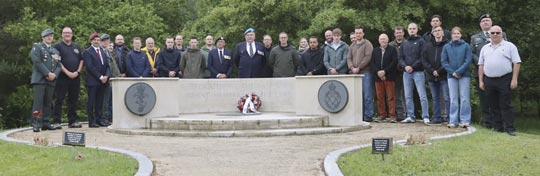
The RTT contingent at the Corps Memorial
Bob Fullbrook on parade with the branch standard
mix of ranks from JNCO to Officers. They headed inland for the pre-arranged RV at MOD Lyneham where they were greeted by WO1 (ASM) Dan Martin, who got them squared away. That evening they took the opportunity to sample British hospitality before hitting the hay ready for an early start the next day.
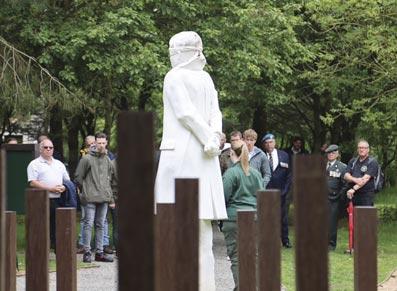
After an early reveille and breakfast, they mounted up and moved North to RV with members of the REME Association, Recovery Mechanic Branch cunningly disguised as guides at the National Memorial Arboretum. After a very quick briefing, where route cards and notes were handed out, a slow coffee and numerous trips to the facilities we were ready to set off on our yomp around the 150-acre site. The weather was looking particularly bleak for the day, but someone was smiling down on us as the rain stopped just before we headed out, although some were still carrying umbrellas, Recy Mechs, ever the pessimists!! The tour route took in over 14 of the most pertinent and poignant memorials to our visitors, all
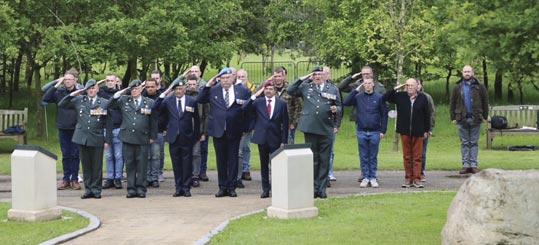
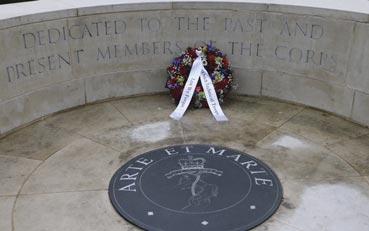
described in the notes and by our unofficial tour guide on route. We made a stop at the Corps Memorial where the RTT laid a wreath, a minute’s silence was observed after which, as if by magic the port appeared and we toasted “Absent Friends”. By the time we had made it back to the café we had covered over 2.5 miles and were ready for a brew and quick bite to eat before heading back to Lyneham. That evening Col REME hosted our visitors in the Officers’ Mess, who were treated to a slap-up meal. Speeches made, we all retired for refreshments.
On Wednesday morning we were hosted by DSEME Instructors as we toured the delights of Lyneham’s training facilities. Much excitement ensued as we jumped from the Metalsmiths to Helicopters, then to vehicles and finally weapons. Our visitors were wholly impressed by all they saw but like all Mechanics (Vehicle and Recovery) they got very excited at the sight of large, tracked vehicles. Tour over, it was time for the main event - cue the Recovery Training Wing. Hosted by the ASM, our friends witnessed firsthand CRARRV at its best, recovering heavy armour from deep holes with all the noise and ground shaking that comes with it, wonderful stuff. Then it was off to see the SV(R) in action, roadside, trailers, winching, was there no end to this joy? Sadly, yes there was, after a quick tour of the training hanger it was time for lunch. The RTW had laid on a barbeque which was enjoyed by all, including a visit from the 8 Bn CO, 2IC and acting RSM. Following a robust sports afternoon, our visitors were hosted in the WO & Sgts Mess for an evening of poetry recitals and choir practice or maybe just funny tales and karaoke! Whichever it was, everyone thoroughly enjoyed the hospitality and camaraderie of the evening.
Due to the previous long day, it was felt that perhaps our guests should be allowed to catch up on some well-deserved rest. So, a late start was the first order of business for Thursday. Then it was off to the REME Museum for a guided tour through the halls, this time the guide was official and really brought the collection to life with his knowledge and witty repartee. No time to lose, it was straight over to A Site for a tour of the Historic Vehicles in the Roger Jones MBE hanger. Everyone was suitably impressed with the whole day but sadly it was time to wrap things up with final briefings and goodbyes. They had a last taste of British hospitality that evening and the following morning headed back to the channel and home.
It was an honour to have been able to help the RTT to celebrate their landmark anniversary both in the UK and most especially in the Netherlands. We have all made new friends and continued to build on a long-standing relationship between the Corps and the RTT. There are already plans afoot to do this all
Shot at Dawn
The RTT Wreath
again next year and try to make it an annual event in both our calendars.
For the Recovery Mechanic Branch, it has been a particular honour to be included by the RTT and Corps, one which we have embraced and enjoyed to the full. We have the distinct privilege to now include another 3 of our Dutch friends as Honorary members of our branch, including the Regimental Colonel and the RSM of the RTT. We hope to see them at a Branch event in the near future, maybe they can join us when we tour the Normandy beaches in 2027?
For more information on that trip see our website, Facebook page or the REME App
AIRBORNE REME
ARE YOU READY TO PUSH YOUR LIMITS? DO YOU WANT TO BE PART OF THE ARMY’S GLOBAL RAPID REACTION FORCE?
THEN 16 AIR ASSAULT BCT WANTS YOU!
BE PART OF THE UK’S AIRBORNE TASK
• SUPPORT HIGH-TEMPO
• GAIN EXPOSURE TO CHALLENGING ENVIRONMENTS AND REAL-WORLD
• DEVELOP YOUR LEADERSHIP, RESILIENCE, AND TECHNICAL SKILLS IN
Absent Friends
Potteries & District REME Association
Scribe: Maurice Hope
The month got off to a fine start on Saturday 2nd with eleven persons attending the North Staff’s REME Breakfast Club function at The Hungry Horse; part of The Weathervane Hotel in Meir. A not so mean £50.00 was raised in our “in house” raffle, taking the total so far this year to £180.00 for the end of year donation to the REME Charity. We hope to equal if not surpass the £600.00 total that we achieved last year.
The venue for our monthly lunch event on Tuesday 12th was a return to The Royal Oak in Dilhorne, a village in the Staffordshire Moorlands, with a good turnout of sixteen persons enjoying excellent food from the menu (If ever you
are in that area the Beef & Mushroom Pie is a must). Our “in house” raffle raised a good sum of £60.00 to go towards offsetting the costs at our Summer Dinner in July at the bet365 Stadium (Home of Stoke City).
Ever wondered why so many pubs are named The Royal Oak? It originates from a specific English Oak tree at Boscobet House in Shropshire, where King Charles 2nd hid for a whole day in 1651 to escape the Parliamentary Forces during The English Civil War. The tree became a symbol of Loyalty, which led to the name being used on hundreds of English Pubs as well as eight British Royal Navy Ships.
Our monthly branch meeting was held on Tuesday 26th
Members at Royal Oak
Branch President Mo Hope wins a bottle
Peter Tighe and John Wright who wins a scented candle
Mo Hope and John Edwards
Kevin Spruce checking his menu choices
following a record-breaking sunny day. With only nine members attending we just crept above the minimum of eight required by our branch constitution to be termed a meeting (eight and below is termed a social get together!),
It coincided with school half term holiday, which usually means members on Grandad watch, limiting their freedom to attend the branch meeting.
The charity chosen by our hosts at The Weathervane Hotel is The MacMillan Cancer Support, and so we handed over a £100.00 donation as a thank you for allowing us free use of the conference room for our monthly branch meetings. A photo was taken by our branch Vice-President and Secretary Lt Col John Edwards OBE at the presentation. A similar amount of £100.00 was also donated to the Corps Charity.
Contact has been renewed with the new powers that be in our twinned Regular unit of 16 Signals Regt’s LAD at Beacon Bks Stafford, hopefully continuing the bond through the new
OC, Capt Mark Felton, and ASM Mike Colbert. Hopefully they can find a way to join us at the bet365 Stadium for our branch Summer Dinner on Sat July 25th.
President Mo Hope. Treasurer Alan Gough and Chairman Adrian Walker
REME Trades – Shipwrights
Scribe: Zoe Tolman, Museum Archivist
In her ongoing series, our previous archivist, Celia, covered how the eight current trades in REME are represented in the archives. However , when covering the Metalsmiths, she did always promise to come back to the Shipwright trade separately, as it was both an interesting and fairly recent amalgamation to the trade from one which had otherwise continued untouched from 1951. As she has now sadly left the museum team, I’ve taken up the mantle.
Normally when people talk about military ships, people assume the Royal Navy. However, the Army has kept a small fleet of various ships and craft itself since the early 30s, operated by the Royal Corps of Transport (now amalgamated into the Royal Logistics Corps). These vessels are used for a variety of reasons including Combat Support, to maintain supplies to difficult places (such as the tracking station on St Kilda), as range safety for the coastal gunnery ranges, for general transportation of vehicles and stores, or for lighterage operations (the transfer of cargo between vessels, often done to allow a larger ship to use shallow ports it couldn’t access if fully laden).
Although scheduled repairs and refits are considered a Navy responsibility, ‘much of the technical work is carried out by the Army’ and indeed the ‘main bulk of specialised engineering support [for Army marine craft] is provided by the REME Shipwright’.
Not only experts with wood and metal, Shipwrights are expected to have a sound knowledge of glass reinforced plastics, naval architecture, and general marine craft operations. They are also the ones responsible for assessing if a craft is seaworthy or not. Marine craft are particularly vulnerable to environmental damage should something go wrong, and also run the risk of being incredibly inaccessible for repairs, so, similar to with aircraft, there is a certain emphasis on ‘safety during operation’.
Assumedly because the majority of Shipwrights have been stationed
Propeller repairs
Working with fibreglass
there, the majority of our material comes from 17 Port and Maritime Workshop, also affectionately known as 17 Sports and Pastimes. Shipwrights did however enjoy regular postings to Belize, as well as some to the Falklands, Cyprus, and various other locales, while more recent ones include hurricane relief aid via North Atlantic Patrol Tasking and Equipment Support training for the Nigerian Navy at the Joint Maritime Security Training Centre.
As well as repair and maintenance, REME Shipwrights have been known to design or convert vessels. One particularly well-known example is the REME yacht, Master Craftsman, which was stripped down and refitted from the yacht Dual Capacity. The yacht was sailed by many members of the Corps in 1992 during Exercise MASTER CRAFTSMAN, part of the REME 50 celebrations, which took the form of a relay to Canada and back with a variety of transportation methods.
Despite its longevity, Shipwright was a niche trade, with numbers averaging only in the 20s or 30s for several decades. It makes sense then that less material has made its way into the archives about them. The information above was mainly taken from a speech given as an introduction to Marchwood, home to a 17 Port Workshop and the main training site for Shipwrights, and from an article in the Journal of Naval Engineering written by Alan Blight who worked at Maritime Branch REME. We also hold a couple of job specifications and recruiting pamphlets, but the rest of our material is very pictorial instead. As such, if you were a former Shipwright, or indeed a current one within the Metalsmith trade, and want to help fill out the archives’ knowledge with a memoir of sorts, we’d be very happy to hear from you!
Part of the Master Craftsman refit
Checking for suspected propeller damage
REME Shipwrights of 17 Port Wksp hard at work November 1979 - Shoring up Endeavour I
Major (Retired) D G Watkin-Rees
Scribe: Raefe Watkin-Rees
It is with great sadness that we report the death of Major Gavin Watkin-Rees who died at the age of 95 on 23rd April 2026.
Gavin was born in Ammanford, South Wales, and educated at St Michael’s School, Llanelli and Epsom College. After reading Pure Science at Swansea University, he enlisted in the Royal Artillery in July 1952 and was commissioned from Mons Officer Cadet School in March 1953. He was posted to 55 Training Regiment RA, Tonfanau, after which he took up a Regular Commission in the gunners and attended 10 Degree Course at RMCS, Shrivenham.
After the completion of his Mechanical Engineering Degree he attended a Change of Category Course (from AA to Field Artillery) at the School Artillery, Larkhill, and was posted to 21 Medium Regiment RA at Edinburgh. The Regiment subsequently moved to Hereford from whence Gavin transferred to REME in August 1958.
In April 1961 he took up his first REME appointment in BAOR as LAD Commander of 49 Regiment RA at Lippstadt. In June 1962 he was appointed Workshop Officer/2IC of 5 Infantry Workshop REME at Dortmund.
In May 1964 he was posted on accelerated promotion to Major to the Military Wing of REME Officers’ School, Arborfield, where he assumed the post of A1 on the Directing Staff.
In May 1967 he was posted as OC 8 Infantry Workshop (Airportable) REME as part of 19 Infantry Brigade Group, based at Colchester.
Gavin, following his career in REME, retired from the Army in July 1968 and took up employment with British Leyland Truck Division. Gavin oversaw the recruitment and training of Graduates and Apprentices across the numerous plants in Truck & Bus, Specialist Car, Construction Equipment and Foundries & General Engineering Divisions. Gavin then moved into Management Training in 1973; during which he was a member of the National Advisory Council on Education for Industry and Commerce quango, and the Industry/University Liaison Forum.
In August 1975 he moved to the Leyland Vehicles Parts Division and was responsible for planning and implementing the construction of the “Multipart International Distribution Centre” which, at the time, was the largest and technologically most advanced
Commercial Vehicle Parts Centre in Europe. The complex programme was completed on time and within budget.
In 1983 after completion of the project, Gavin took up the appointment of Head of Quality of the new Multipart Distribution Centre. He established a Supplier Quality Assurance System covering over 2,000 supplier organisations, to ensure conformity with national and industry best practice.
After retiring from Chorley in 1987 Gavin spent two years at Lancaster University running courses for industry. Following that he set up his own consultancy firm operating in the Automotive and Aerospace sectors as well as the NHS and University sectors. During this period, he also ran the “Business and Industrial Law” Module at the Warwick University for the “Masters Degree Programme for Industrial Managers” for four years. He was also an external examiner in Management subjects at Liverpool Hope University.
On the sporting front, Gavin was involved with the Army Boxing and Football Teams. He was a qualified Association Football Referee. At Shrivenham he played Rugby and captained one of the college teams. After retiring from playing, he took up Rugby refereeing; which continued after he left the Army and he was a member of the Manchester Society of Referees.
A devoted husband, Father and grandparent, Gavin had been married to Florence for 68 years and they were blessed with two Sons, Raefe and Tim, Gavin in his latter days spent his time reading, watching TV (especially sport) and following the exploits of his three adult grandchildren, Juliet, Jonty and Jamie. He will be greatly missed by all his family.
Major (Retired) Guillaume J P ALLEN (Bill)
Scribe: Mrs Patricia Allen (Wife of Major (Retired) Guillaume (Bill) Allen)
Major (Retired) Guillaume J P ALLEN (Bill) Aged 84, passed away peacefully on 11th May 2026 at Salisbury Manor Care Home.
Bill joined the Army Apprentice School in Chepstow in 1958 (58A intake) aged 17. On completion of training and passing out parade at Arborfield, he was very proud to be Craftsman Bill Allen. His first posting was to 5 Infantry Workshop REME, Dortmund circa 1960, followed by Osnabruck. From 1963 – 1966 he served with 16/5th Queens
Royal Lancers in Aden and Tidworth.
During the Aden deployment he managed to get a RAF indulgence flight to Singapore to marry his fiancée Pat. After 2 weeks he flew back to duty in Aden to complete the tour. The Regiment then returned to Tidworth.
In 1967 he was selected for the Artificer training at the SEME Bordon passing out in the rank of S/Sgt and posted to Singapore. In 1971 he returned to BAOR Lippstadt with 22 Signal Regt LAD and then back to Bordon SEME. By now he had achieved WO1 (ASM). The family then had the great experience of a posting in Canada Alberta, Bill as ASM Suffield BATUS.
We returned to Detmold where Bill was commissioned and posted to Belfast Holywood NI. Then 1980/83 West Berlin – before the wall came down and the reunification of Germany. Bill’s last posting was with the AMFL at Bulford.
He reached the rank of Major and made the decision to retire from his amazing career in the REME - well not quite - he continued in a different way working at Technical Support Services, Andover.
The last 40 years, the family lived in Salisbury. He was a dedicated loyal soldier but even more than that he was a wonderful husband, the best dad to his 4 Daughters, super grandad to 11 Grandchildren and 2 great Grandchildren. He will be deeply missed by all who knew him.
Major (Retired) David (Steve) CampbellStièvenard - 10th February 1933 – 21st December 2025
Scribe: Teresa Campbell- Stièvenard
Steve started his Army career as a ‘Boy Soldier’ in 48B Company at the Army Apprentice College in Chepstow in 1948. On leaving Chepstow, Steve joined the Royal Electrical Mechanical Engineers (REME).
He was fortunate to have some wonderful postings. His first posting was to Accra, Ghana, followed by two postings to Germany (Delmenhorst / Osnabrück) and two postings to Malaysia (Tampin / Kuala Lumpur).
He was commissioned as an officer at the age of 32 and by the time he retired from the Army he held the rank of Major.
Steve was extremely proud of his progression from ‘Boy Soldier’ to Major.
His last posting was to the REME Officers School in Arborfield, where he lectured in People Management Skills. On retirement he continued working at the school as Senior Lecturer for twenty years.
Steve died at home on 21st December 2025 and is sadly missed by his Wife of 70 years, Pamela, and his two children, Teresa and David.
Neil Anthony Viney 1962-2026
Scribe: Colonel (Retired) Mark Simpson QVRM TD VR It is with great sadness I advise the Corps of the passing of WO1 (ASM) Neil Viney on 26th March 2026.
Neil was born in Gosport in 1962, his Father was an NCO in the RAF, and Neil grew up in places you’d expect of an RAF ‘pad brat’, the UK, Cyprus, Germany ... and The Shetlands!! Neil intended, and was destined, to follow his Father into the RAF, however, due to a fear of heights, the RAF’s loss became REME’s gain, and on 17th August 1978, Neil enlisted into the Army in Wildenwrath in Germany (ironic or what!).
On completion of his basic training (also, we understand conducted in Germany), Neil moved on to the delights of ‘the sheds’ in Bordon and qualified as a VM(A). In the 80’s there then followed the postings to (mainly) Armoured units in Germany, Canada and the UK. It was during this time, he also met up with Frankie Flood, and George Crook, who were to become lifelong friends, and ‘partners in crime’. Into the 90s, Neil saw active service on OP GRANBY in 1991, and successfully qualified as an Artificer in 1994. He went on to do further, tours of Bosnia later in the decade. In 1998, Neil (and his dog Ben!) had his first encounter with the TA, posted to 73 Engineer Regiment Worksop in Nottingham, the city that would go on to be he his forever home, as a Permanent Staff Instructor. Here his training and teaching skills were well tested, as he shaped the part timers ... as best he could! Staying in Nottingham, Neil finished his career with 49 Bde, as the Brigade Artificer, and ‘marched out’ to civvy street in 2005.
Neil’s skills and experience as an exemplary teacher and trainer were to be put to good use, as he embarked on a civilian career, first with Toyota in Derby, then Network Rail, all in Training and Development roles .... a very square peg, in a square hole. Neil most recently worked for Incora, again in a training role.
Whilst serving in Nottingham, in 2002, Neil met Ann, who was to become his much loved partner for life ... and also a very good reason to stay in Nottingham!! They moved into their ‘forever and happy place’ in 2011, where Neil loved nothing more, than spending time making cups of tea (a mandatory one per hour!!), and watching football, particularly, his beloved West Ham –well someone has to! Neil was surrounded by a large family, his children Paul, Gemma and Natalie, as did Ann’s children gave him a good ‘sections’ worth’ of Grandchildren, and Neil loved nothing more than spending time playing with them, given the big kid he was!!!, and the big heart he had, on the special times they visited.
After a short, but indomitable battle with ‘the big C’, Neil slipped away very quietly late on Thursday 26th March 2026, with his beloved Ann, and family by his side. His send off was very memorable, where for the final time he was surrounded by many of his friends and family who were able to say goodbye, and good to see so many of his REME friends he had made there also, to say farewell to a great colleague.
Neil will be terribly missed by all of his friends and family, but especially by his beloved Ann.
24307885 David JP Elson (Ex WO1, ASM)
16 August 1958 - 24 April 2026
Scribe: Sgt (Retired) Nigel Grant David “Mouse” Elson, passed away suddenly on Friday, April 24, 2026, at the age of 67. Dave was born in Taunton, Somerset. He joined REME as an Apprentice Vehicle Mechanic in Arborfield in August 1974. He then went to Bordon to complete trade training before joining 13/18 Hussars in Hohne. He stayed in Hohne when the Regiment moved and then served with 14/20 Hussars. During this time, he completed a NI tour and also a posting with Berlin Armoured Squadron.
On completion of posting Dave returned to Bordon to attend Class 1 training before being posted to 12 Armd Wksp, Osnabruck. It was after this he was posted to BATUS Wksp where he honed his skills as an FIE room operator. During his posting to Canada, he made the most of the opportunity to travel, vacationing in Hawaii, skiing in the Rockies and also completing exercise Arctic Roller, driving Land Rovers to the Arctic Circle.
On leaving BATUS, Dave attended Artificer training, after which he was posted to the Household Cavalry (Lifeguards) Windsor. He also served with 1 Wessex (TA) Devizes, 3 Fd Wksp and ended his army career with TDT SEME in 1999.
Dave and his family then emigrated to Canada where he proceeded to work in BATUS Wksp for the next 22 years before retirement. Dave taught many a tradesmen during this time, working on Warrior, Shielder, Bulldog, AS90 and HMT trailers. His reputation preceded him for being a stickler for perfection. All those working with Dave left being a far better mechanics than when they arrived. Dave served REME for a total of 47 years as a soldier and then as a civilian at BATUS Wksp.
Dave during retirement continued to be busy, an avid model railway enthusiast and lover of trains in general.
He volunteered at the Woman’s shelter and also at the Canadian Legion in Redcliff. He would help anyone in need, fixing cars, lawnmowers and anything which presented a challenge. He always had a full agenda. He will be sadly missed by many who he left an impression on.
Dave is survived by his loving wife Donna, his six children Christine (Matt), Mark (Madi), Tyler (Paige), Amanda (Dustin), Coltyn, and Kennady; three grandchildren, Madelyn, Emerson and Tatum; one sister, Trish (Chris); two brothers, Steve (Sue) and Brendan (Carole).
Death Notices
STANFORD – Maj (Ret’d) David Henry John Stanford passed away on 6th – May 2026, aged 84. He served with the Corps between 1956-1958.
SMITH – Former WO2 Tom Smith passed away on 24th – May 2026, aged 60. Served with the Corps between 1981-2005.
Death Notice Requirements
In order to publish a death notice we require the following information: Surname, first name, rank, full date of death, ages and dates of service. An obituary with additional career and life information is welcome. To inform us of the death, please contact Pamela Bailey-Yates, Corps Welfare Assistant, Email: welfare@remecharity.org
05 May
No entries
12 May
ARMY RESERVE
Group A
Lieutenant (Acting Captain) M. SMITH 25106804 to be Captain 8 February 2026 with seniority 16 November 2024
19 May
The following have been awarded the 1st Clasp to the Long Service and Good Conduct Medal (Military)
SGT, I. M. BROOKES, REME, 25125377
WO1, D. S. GRANT, REME, 25122050
CAPT, J. R. MARKS, REME, 25130686
SSGT, B. MOONEY, REME, 25010267
WO2, D. WOOD, REME, 25116001
CPL, K. T. C. AGOMBAR, REME, 30139527
WO2, J. M. J. BIBBY, REME, 25221771
CPL, A. BUTLER, REME, 30140402
SGT, T. DAVIES, REME, 30135714
SGT, C. M. FERRY, REME, 30135752
SGT, S. J. GARBETT, REME, 30135648
SGT, S. GLOVER, REME, 24217139
SGT, J. HAMER, REME, 30135608
SGT, L. T. HANNAN, REME, 30140129
CPL, A. L. P. HUGHES, REME, 30135615
SGT, G. C. MILLS, REME, 30032633
SGT, L. MUZAVAZI, REME, 25187513
CPL, C. S. NICHOLSON, REME, 30135649
SSGT, D. W. PERRY, REME, 30135619
WO2, K. J. SHAKESPEARE, REME, 25156404
SGT, P. SINGH, REME, 30103862
SGT, K. J. SOWTER, REME, 30143448
SGT, R. P. WALKER, REME, 30139806
26 May REGULAR ARMY
Short Service Commissions
Officer Cadet Andrew Alan BLESER 30253899 from The Royal Military Academy Sandhurst to be Second Lieutenant 11 April 2026
Officer Cadet James Andrew BUTLER 30248789 from The Royal Military Academy Sandhurst to be Second Lieutenant 11 April 2026
Officer Cadet Archie George FAULKNER 30443128 from The Royal Military Academy Sandhurst to be Second Lieutenant 11 April 2026
Officer Cadet Cara Cecilia MARTIN 30372168 from The Royal Military Academy Sandhurst to be Second Lieutenant 11 April 2026
Officer Cadet Robert William Frean RICHARDS 30441042 from The Royal Military Academy Sandhurst to be Second Lieutenant 11 April 2026
Open Tuesday to Sunday 9.30am to 15.00pm
Not-for-profit cafe at the REME Museum. All proceeds support the REME Charity.
A Huge Thank You from
We’re incredibly grateful for the generous dona琀ons received lately, and we especially want to highlight the con琀nued support from our serving Ocers, Soldiers, and re琀red REME Ins琀tu琀on and Associa琀on members. Your commitment keeps us moving forward.
In May we collected in excess of £12000 including very generous dona琀ons from:
The Worshipful Company of Turners £1000
Oliver Morgan £559 – Oli thank you so much for equa琀ng an annual dona琀on to your Days Pay Scheme despite leaving the Service, incredibly kind gesture.
Gill Cook £500 – Bequeathed in memory of her late husband SSgt John Cook (1965-1986) and kindly donated to The REME Charity by Rebecca Cook.
REME Associa琀on Po琀eries and District Branch £100 – Thank you to all the Members for the con琀nued support.
Richard Whitehead £50
Heather Cleghorn £50
Swaroop Patel £50
For all fundraising queries please email Hugh McNulty via fundraising@remecharity.org
Need a hand? We’re here for you. Whether you’re currently serving or a veteran, The REME Charity is here to support you during tough 琀mes. Reach out directly at WOYM@remecharity.org for fully con昀den琀al advice and support. S琀ll serving? You can also speak to your Unit Welfare POC for guidance.
Leave a las琀ng legacy with The REME Charity. If you’d like to support our work through a gi昀 in your will, you can do so by adding a codicil. As a registered charity (No. 1165868), dona琀ons are exempt from inheritance tax— helping your legacy go even further for REME personnel and veterans.
Social Media. If you’d like to support our work, or adver琀se your REME Charity events through social media feel free to tag us in your posts and use the following hashtags #REMECharity #OnceREMEAlwaysREME. You can also email communica琀ons@remecharity.org for help spreading awareness of your fundraising across The REME Charity social media channels, or on REME Connect.
Corps Calendar 2026
More information regarding Corps Mess Functions can found by scanning the QR Code, or by accessing the ‘REME Connect’ website or alternatively email; REMERHQ-0Mailbox@mod.gov.uk for all general enquiries. All dates correct at time of printing, please check your monthly Craftsman magazine for amendments.