Mediterranean Diet: A Complete Guide for Beginners The Mediterranean diet is one of the most popular healthy eating patterns in the world. Inspired by traditional eating habits in Mediterranean countries, it focuses on vegetables, fruits, whole grains, beans, nuts, seeds, olive oil, and moderate amounts of fish and other protein sources. Unlike restrictive diets, the Mediterranean diet is more about building sustainable eating habits and enjoying fresh, nutritious foods. Whether your goal is better heart health, weight management, or simply a healthier lifestyle, this guide will help you understand how to get started. Explore more healthy food ideas on Offerszy Food & Recipes. What Is the Mediterranean Diet? The Mediterranean diet is an eating pattern based largely on traditional foods commonly associated with countries surrounding the Mediterranean Sea.
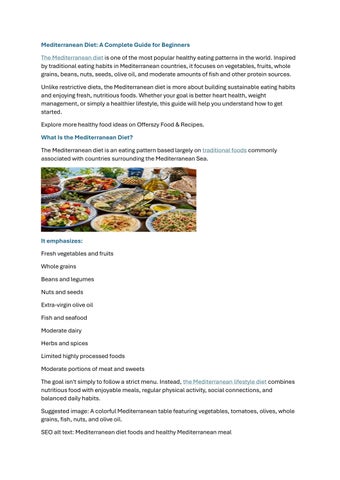
It emphasizes: Fresh vegetables and fruits Whole grains Beans and legumes Nuts and seeds Extra-virgin olive oil Fish and seafood Moderate dairy Herbs and spices Limited highly processed foods Moderate portions of meat and sweets The goal isn't simply to follow a strict menu. Instead, the Mediterranean lifestyle diet combines nutritious food with enjoyable meals, regular physical activity, social connections, and balanced daily habits. Suggested image: A colorful Mediterranean table featuring vegetables, tomatoes, olives, whole grains, fish, nuts, and olive oil. SEO alt text: Mediterranean diet foods and healthy Mediterranean meal
Mediterranean Diet Benefits There are several reasons the Mediterranean diet has become widely recognized as a healthy eating pattern. 1. Supports Heart Health A heart healthy Mediterranean diet includes foods such as vegetables, fruits, whole grains, nuts, fish, and olive oil. These foods can be part of an overall eating pattern that supports cardiovascular health. 2. Encourages Nutrient-Rich Foods Instead of relying heavily on processed foods, the diet encourages naturally nutrient-rich ingredients. Vegetables, fruits, legumes, nuts, and whole grains provide important vitamins, minerals, fiber, and other nutrients. 3. May Support Healthy Weight Management The Mediterranean diet can be useful for people looking for a sustainable approach to eating. Meals based around vegetables, protein, whole grains, and healthy fats can help create satisfying meals without relying heavily on highly processed foods. 4. Promotes Long-Term Healthy Habits One of the biggest advantages is flexibility. You can enjoy a variety of foods while focusing on balance and portion awareness. Why Is the Mediterranean Diet Healthy? So, why is the Mediterranean diet healthy? A major reason is its emphasis on minimally processed foods and plant-based ingredients. It also encourages healthy fats, particularly olive oil, while limiting foods that are high in added sugars and heavily processed ingredients. The diet provides a combination of fiber, unsaturated fats, plant foods, and quality protein. These characteristics make it a practical eating pattern for many people. However, no single diet is automatically the healthiest choice for everyone. Individual nutritional needs, allergies, medical conditions, and personal preferences should always be considered. Mediterranean Diet Food List If you're wondering what foods to eat on the Mediterranean diet, start with these basics. Foods to Eat on Mediterranean Diet Vegetables Tomatoes Spinach Broccoli Bell peppers
Cucumbers Eggplant Leafy greens Fruits Apples Oranges Berries Grapes Melons Pomegranates Whole Grains Oats Brown rice Whole-grain bread Barley Whole-wheat pasta Protein Sources Fish Seafood Beans Lentils Chickpeas Eggs Moderate amounts of poultry Healthy Fats Extra-virgin olive oil Avocados Almonds Walnuts Seeds Other Foods
Yogurt Moderate amounts of cheese Herbs and spices Image 2 — Mediterranean Diet Food List
Suggested image: A flat-lay arrangement of Mediterranean diet staples separated into vegetables, fruits, grains, legumes, fish, nuts, and olive oil. SEO alt text: Mediterranean diet food list for beginners Mediterranean Diet for Beginners Starting a new eating pattern doesn't have to be complicated. Begin by making a few simple changes: Add more vegetables to lunch and dinner. Replace refined grains with whole grains. Choose olive oil instead of some highly processed fats. Eat beans or lentils regularly. Include fish when it fits your diet. Keep nuts and seeds available for nutritious snacks. Reduce heavily processed foods and sugary treats. Drink water regularly throughout the day. The key is consistency rather than perfection. Mediterranean Diet Meal Plan Here's a simple example of a Mediterranean diet meal plan for beginners. Meal
Example
Breakfast
Greek yogurt, berries, oats and walnuts
Morning Snack Apple with a small handful of almonds Lunch Chickpea and vegetable salad with olive oil Afternoon Snack
Fresh fruit or yogurt
Dinner Grilled fish, roasted vegetables and whole grains Drink Water or unsweetened tea You can adjust this meal plan according to your preferences, dietary requirements, and calorie needs.
• Suggested image: A healthy breakfast, colorful lunch salad, and grilled fish dinner arranged together as a daily meal plan. SEO alt text: Mediterranean diet meal plan for beginners Mediterranean Diet Recipes One of the best things about the Mediterranean diet is that healthy food doesn't have to be boring. Try simple recipes such as: Mediterranean chickpea salad Greek-style vegetable bowls Grilled fish with roasted vegetables Lentil and tomato soup Whole-grain pasta with vegetables Greek yogurt with berries and nuts Hummus with fresh vegetables Tomato, cucumber and olive salad For more recipe inspiration, visit the Offerszy Food & Recipes category. Mediterranean Diet for Weight Loss Plaan
Meal
Mediterranean-style option
🌅 Breakfast
Greek yogurt + berries + oats + walnuts
🍎 Morning Snack
Apple + almonds
🥗 Lunch
Chickpea & vegetable salad + olive oil
🫐 Afternoon Snack Fresh fruit or yogurt 🐟 Dinner
Grilled fish + roasted vegetables + whole grains
💧 Drink
Water or unsweetened tea
Can the Mediterranean diet help with weight loss? It can be a useful approach for people trying to manage their weight because it emphasizes vegetables, fruits, legumes, whole grains, and satisfying sources of protein and healthy fats. However, weight loss depends on many factors, including overall calorie intake, activity level, sleep, genetics, and individual health. Instead of focusing only on rapid weight loss, consider building habits that you can maintain over the long term. Is Mediterranean Diet the Healthiest Diet in the World ? the The Mediterranean diet is often described as one of the healthiest eating patterns because of its emphasis on whole and minimally processed foods. But calling one diet the healthiest diet in the world is an oversimplification. A healthy diet should fit an individual's nutritional needs, culture, preferences, budget, and lifestyle. The best eating pattern is usually one that provides adequate nutrition and can realistically be maintained over time. Mediterranean Diet 2026: What's New? The Mediterranean diet 2026 continues to fit well with modern interest in balanced nutrition, whole foods, sustainable eating, and practical meal planning. Today, you don't need to recreate traditional Mediterranean meals exactly. You can apply the basic principles to foods you already enjoy. For example, Indian, Asian, or other regional cuisines can incorporate Mediterranean-style principles by increasing vegetables, legumes, whole grains, nuts, seeds, and healthy fats while reducing heavily processed ingredients. Suggested image: A modern healthy kitchen with fresh vegetables, olive oil, whole grains, fruit, and a family enjoying a balanced meal. SEO alt text: Mediterranean lifestyle diet and healthy eating in 2026
Mediterranean Lifestyle Diet The Mediterranean approach goes beyond food. The Mediterranean lifestyle diet encourages enjoying meals, staying physically active, spending time with others, and creating sustainable daily routines. Simple lifestyle habits can include: Walking regularly Cooking more meals at home Eating meals mindfully Enjoying meals with family or friends Choosing seasonal foods Getting enough sleep Staying physically active These habits can make healthy eating feel less like a short-term diet and more like a lifestyle. Frequently Asked Questions What is the Mediterranean diet? The Mediterranean diet is a flexible eating pattern emphasizing vegetables, fruits, whole grains, legumes, nuts, seeds, olive oil, fish, and minimally processed foods. What foods can I eat on the Mediterranean diet? Vegetables, fruits, legumes, whole grains, nuts, seeds, olive oil, fish, seafood, and moderate amounts of dairy and poultry can all fit into the eating pattern. Is the Mediterranean diet good for beginners? Yes. Its flexible approach makes it relatively easy to start gradually by adding more whole foods and reducing highly processed foods. Can I follow the Mediterranean diet for weight loss? It can support healthy weight management when combined with an appropriate overall calorie intake and regular physical activity. Is the Mediterranean diet healthy for the heart? Its emphasis on vegetables, fruits, whole grains, legumes, fish, nuts, and unsaturated fats makes it a heart-friendly eating pattern for many people. Final Thoughts The Mediterranean diet is less about following strict rules and more about creating a balanced relationship with food. By emphasizing vegetables, fruits, whole grains, legumes, nuts, fish, olive oil, and other minimally processed foods, you can create nutritious and enjoyable meals.
Whether you're a beginner, interested in weight management, or simply looking for a heart healthy Mediterranean diet, start with small changes and build sustainable habits. For more ideas, recipes, and healthy food inspiration, explore Offerszy Food & Recipes.