OERLive.com @omaneconomicreview / OER_Oman
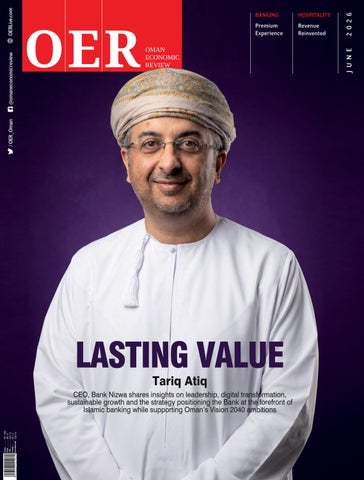
LASTING VALUE Tariq Atiq
CEO, Bank Nizwa shares insights on leadership, digital transformation, sustainable growth and the strategy positioning the Bank at the forefront of Islamic banking while supporting Oman’s Vision 2040 ambitions
No. 308 June, 2026
EDITOR’S DESK
Executive edge OER’s annual listing of the 100 Most Influential CEOs in Oman celebrates visionary leaders driving business growth through resilience, innovation, and strategic leadership.
EDITORIAL Editor-in-chief Said Masoud Almashani Executive Vice President and Group Editor Mayank Singh Editor Oommen John P DESIGN Assistant Art Director Khoula Rashid Al Wahaiby Chief Photographer Rajesh Rajan Cover concept Rakesh Radhakrishnan
MARKETING Associate Advertising Director Shivkumar Gaitonde Business Manager Dhanish Pillai CORPORATE Chief Executive Officer Atulya Sharma
Distribution United Media Services LLC Published by United Press & Publishing LLC PO Box 3305, Ruwi, Postal Code - 112 Muscat, Sultanate of Oman Tel: (968) 24700896, Fax: (968) 24707939 Website: www.umsoman.com All rights reserved. No part of this publication may be reproduced without the written permission of the publisher. The publisher does not accept responsibility for any loss occasioned to any person or organisation acting or refraining as a result of material in this publication. OER accepts no responsibility for advertising content.
This year’s edition comes at a time of growing uncertainty. According to PwC’s 29th Global CEO Survey, CEO confidence in revenue growth has fallen to a fiveyear low, with only three-in-ten (30 per cent) CEOs say they are confident about revenue growth over the next 12 months—down from 38 per cent in 2025 and 56 per cent in 2022. The findings suggest that as CEOs navigate a complex operating environment shaped by rapid technological change, geopolitical uncertainty, and economic pressure, many companies have yet to translate investment into consistent financial gains. The survey is based on responses from 4,454 CEOs across 95 countries and territories. The biggest question on CEOs’ minds is whether they are transforming fast enough to keep pace with technological change, including AI. Forty-two percent cite this as their top concern—well ahead of worries about innovation capability or medium to long-term viability (both 29 per cent). Despite widespread experimentation, only one-in-eight (12 per cent) CEOs say AI has delivered both cost and revenue benefits. Overall, 33 per cent report gains in either cost or revenue, while 56 per cent say they have seen no significant financial benefit to date. The survey points to a growing divide between companies piloting AI and those deploying it at scale. CEOs reporting both cost and revenue gains are two to three times more likely to say they have embedded AI extensively across products and services, demand generation, and strategic decision-making. The most influential CEOs combine long-term vision with disciplined execution, adapting quickly to evolving market conditions while staying focused on sustainable growth and lasting impact. The selection process for the top 100 CEOs was thorough, involving months of research and due diligence by the OER team. While not exhaustive, the list recognises leaders making a significant impact on Oman’s business landscape.
OommenJohn
Oommen John Sign up for OERLive's daily WhatsApp updates on economy, lifestyle, and technology. Send us a WhatsApp message with the word “OERLIVE” on
Copyright © 2026 United Press & Publishing LLC Printed by Oman Printers & Stationers Ltd. Co. S.P.C. Correspondence should be sent to: Oman Economic Review United Media Services PO Box 3305, Ruwi 112, Sultanate of Oman Fax: (968)24707939 Website: www.oerlive.com For editorial enquiries: 99884854 For advertising enquiries: 99267159
91242930
@oerlive
DRIVING GROWTH Your May cover story made for an impressive read. The performance of the Oman’s Top 20 companies reflects the growing resilience and maturity of Oman’s corporate sector. A 6 per cent rise in revenues, an 18 per cent increase in profits, and a 21 per cent jump in market capitalisation by the end of 2025 underscore the strength of listed companies in creating sustainable value. Equally encouraging is the Muscat Stock Exchange’s 28.2 per cent surge, the strongest among GCC markets in 2025, highlighting rising investor confidence and the positive impact of economic reforms. With the Top 20 accounting for 38 per cent of the exchange’s market capitalisation and maintaining a reasonable average P/E ratio of around 11, these companies will continue to offer an attractive investment proposition. Sustaining this momentum will require continued focus on innovation, diversification, and sound corporate governance. The achievements of 2025 will certainly provide a strong foundation for Oman to attract greater domestic and international investment in the years ahead. Johnson Charles MQ
FUTURE READY Infrastructure push is emerging as a key driver of economic growth and long-term national development, particularly as governments and private sectors increase investment in largescale projects. From transportation networks and smart cities to energy systems and digital infrastructure, this focused investment is designed to strengthen connectivity, improve efficiency, and support expanding populations and industries. By modernising core infrastructure, countries aim to unlock productivity, attract foreign investment, and create a more resilient foundation for future growth. A major aspect of the infrastructure push is the development of advanced transportation systems, including highways, rail networks, ports, and airports. These projects not only enhance mobility but also reduce logistics costs and improve trade efficiency. At the same time, urban infrastructure is being reimagined through smart city initiatives that integrate technology into utilities, traffic management, and public services, creating more sustainable and liveable urban environments. Energy infrastructure is also receiving significant attention, with increased focus on renewable energy projects, grid modernisation, and efficient power distribution systems. As the global shift toward sustainability accelerates, investments in solar, wind, and clean energy infrastructure are becoming central to national strategies. This transition supports both environmental goals and long-term energy security. In parallel, digital infrastructure is playing a critical role in enabling modern economies. High-speed connectivity, data centres, and advanced communication networks are forming the backbone of digital transformation across industries. Together, these developments highlight how the infrastructure push is not just about physical construction, but about building integrated systems that support economic resilience, technological advancement, and future-ready societies. Sadaf Al Zadjali, Muscat
INSIDE
15 COVER STORY
8
100 MOST INFLUENTIAL CEOs IN OMAN
INTERVIEW
LEADING TRANSFORMATION
Strong financial performance, accelerated digital transformation and a steadfast commitment to sustainability continue to shape Bank Nizwa’s growth trajectory. Guided by a clear strategic vision, the Bank is strengthening its leadership in Islamic banking while supporting Oman’s economic diversification agenda, says CEO Tariq Atiq
54 HOSPITALITY
REVENUE REINVENTED
Justin Jacob, Director of Revenue at Grand Millennium Muscat, shares how strategic innovation, team empowerment and data-led decisionmaking drove exceptional revenue growth and commercial success
50 BANKING
PREMIUM EXPERIENCE
Bank Muscat Private Banking: Elevating customer experience through global investment solutions
Editorial ...................... 1
ECONOMY
Infrastructure............. 13
TECHNOLOGY
LIFESTYLE
LEADERSPEAK
LISTINGS
VIDEO
Crowdfunding raises RO29.5m towards 355 projects in 2025 Recently released figures from the Financial Services Authority (FSA) revealed significant growth in crowdfunding platforms in the Sultanate of Oman during 2025, driven by the increasing reliance on alternative financing tools and their role in supporting projects and boosting economic activity
Trade........................... 56
Oman’s Aviation future begins: 100kg medical drone trial marks major AAM milestone The Sultanate of Oman continues to enhance its orientation toward the future of aviation by adopting Advanced Air Mobility (AAM) technologies
Automotive.................. 60
Why are Tech stocks rising again – and is it too late to invest in them? Technology stocks around the world are rising again, but this is not a simple repeat of the old “tech is the future” trade
OMAN
STRATEGIC MILESTONE
Oman and France elevated their partnership with the signing of 12 agreements, MoUs and declarations of intent across key sectors during His Majesty Sultan Haitham bin Tarik’s official visit to France. The landmark deals span healthcare, investment, transport, renewable energy, space, education and innovation, reinforcing long-term bilateral cooperation and economic growth
H
is Majesty Sultan Haitham bin Tarik and His Excellency President Emmanuel Macron, President of the French Republic, witnessed the signing of 12 agreements, memoranda of understanding and declarations of intent between the Sultanate of Oman and the French Republic at the Élysée Palace in Paris. An agreement was signed between the Ministry of Health and the 66
June 2026
Ministry of Europe and Foreign Affairs of the French Republic to train Omani specialist doctors. It was signed on the Omani side by His Excellency Badr bin Hamad Al Busaidi, Minister of Foreign Affairs, and on the French side by His Excellency Jean-Noël Barrot, Minister of Europe and Foreign Affairs.
Communications and Information Technology and the French Ministry of Transport. It was signed on the Omani side by His Excellency Anwar bin Hilal Al Jabri, Minister of Commerce, Industry and Investment Promotion, and on the French side by His Excellency Philippe Tabroux, Minister of Transport.
A memorandum of understanding in the field of logistics, ports and Muscat Metro was also signed between the Ministry of Transport,
In the context of strengthening economic cooperation, a memorandum of understanding in the field of investment promotion
was signed between the Ministry of Commerce, Industry and Investment Promotion and the French Ministry in charge of Foreign Trade and Attractiveness. It was signed on the Omani side by His Excellency Anwar bin Hilal Al Jabri, Minister of Commerce, Industry and Investment Promotion, and on the French side by His Excellency Nicolas Fourisier, Minister in charge of Foreign Trade and Attractiveness. In the civil aviation sector, a memorandum of understanding in the field of air transport was signed between the Civil Aviation Authority and the French Ministry of Transport. It was signed on the Omani side by His Excellency Anwar bin Hilal Al Jabri, Minister of Trade, Industry and Investment Promotion, and on the French side by His Excellency Philippe Tabroux, Minister of Transport. The two sides also signed a declaration of intent for cooperation in the field of space between the Ministry of Foreign Affairs and the Ministry for Europe and Foreign Affairs of the French Republic. It was signed on the Omani side by His Excellency Badr bin Hamad Al Busaidi, Minister of Foreign Affairs, and on the French side by His Excellency Jean-Noël Barrot, Minister for Europe and Foreign Affairs. In the cultural field, a declaration of intent regarding the ‘House of France’ was signed between the Ministry of Heritage and Tourism and the French Ministry of Europe and Foreign Affairs. It was signed on the Omani side by His Excellency Badr bin Hamad Al Busaidi, Minister of Foreign Affairs, and on the French side by His Excellency Jean-Noël Barrot, Minister of Europe and Foreign Affairs. In the education sector, a declaration of intent regarding the teaching of the French language was signed. It was signed on the Omani side by His Excellency Badr bin Hamad Al Busaidi, Minister of Foreign Affairs, and on the French side by His Excellency Jean-Noël Barrot, Minister for Europe and Foreign Affairs.
In the water sector, an agreement was signed to manage water networks in the governorates of Muscat, South Al Sharqiyah and North Al Sharqiyah between the Oman Investment Authority, Nama Water Services Company and the National Energy Center on the Omani side, and the Suez Group and the National Trading Company on the French side. It was signed on the Omani side by Qais bin Saud Al Zakwani, CEO of Nama Water Services Company and Abdullah bin Rashid Al Badi, CEO of the National Energy Center, and on the French side by Xavier Guerre, CEO of the Suez Group and Tony Georgiou, CEO of the National Trading Company. In the field of transport and logistics, the main terms agreement for a joint project to develop and operate a multi-purpose terminal was signed between Asyad Group and the French CMA CGM Group. It was signed on the Omani side by Abdul Rahman bin Salem Al Hatmi, CEO of Asyad Group, and on the French side by Rodolphe Saadi, CEO of CMA CGM Group. A contract was also signed for the first phase of the 500 MW Al Kamil and Al Wafi solar power plant project between Nama Power and Water Procurement Company and the French company EDF Energy Solutions. It was signed on the Omani side by Ahmed bin Salem Al Abri, CEO of Nama Power and Water Procurement Company, and on the French side by Beatrice Buffon, CEO of EDF Energy Solutions.
As part of the move towards renewable energy projects, an agreement was signed for the Wadi Dayqah Dam project for storing hydroelectric power between the Public Services Regulatory Authority and the French EDF Group. It was signed on the Omani side by His Excellency Abdul Salam bin Mohammed Al Murshidi, Chairman of the Oman Investment Authority, and on the French side by Beatrice Buffon, CEO of the EDF Group for Energy Solutions. The signing ceremony concluded with the signing of a strategic partnership agreement between the Oman Investment Authority, Station 11 and Station F, to launch a program that enables Omani startups to explore and expand into French and European markets. The agreement was signed on the Omani side by Al-Mu’tasim bin Salim Al-Sariri, Chairman of the Board of Directors of Station 11, and on the French side by Eloic Perrache, Dean of HEC Paris, and Roxane Vazra, General Manager of Station F. These agreements, memoranda of understanding and declarations of intent come within the framework of the official visit of His Majesty Sultan Haitham bin Tarik to the French Republic, reflecting the strength of Omani-French relations and enhancing the paths of cooperation and partnership between the two friendly countries in various fields.
INTERVIEW
LEADING TRANSFORMATION Strong financial performance, accelerated digital transformation and a steadfast commitment to sustainability continue to shape Bank Nizwa’s growth trajectory. Guided by a clear strategic vision, the Bank is strengthening its leadership in Islamic banking while supporting Oman’s economic diversification agenda, says CEO Tariq Atiq in an interview 88
June 2026
Looking back on your professional journey in the banking industry, which achievements stand out as defining milestones in your career? How have these accomplishments contributed to advancing the banking sector and supporting Oman’s economic development? When I reflect on my professional journey in the banking sector, there are many achievements that I am proud of. However, two areas stand out as particularly meaningful because of their lasting impact on both the industry and the people who have been part of that journey. The first is the development of future leaders and talent. Throughout my career, I have had the privilege of working with and mentoring many talented professionals across different disciplines. One of my greatest sources of pride is seeing individuals who were once part of my teams grow into leadership positions and become influential contributors within their organisations and industries. Beyond technical expertise, we focused on developing the mindset, values, and behavioural competencies required to lead effectively, embrace change, and deliver sustainable results. Knowing that I have played a role in shaping leaders who are today contributing to the growth and success of institutions across Oman is an achievement that I value immensely. The second area is my contribution to the digital transformation of the banking industry. I have been fortunate to participate in several pioneering initiatives that helped redefine how banking services are delivered to customers. One notable milestone was the introduction of early mobile banking solutions at a time when digital banking was still a new concept and many questioned whether customers would trust and adopt such services. Today, mobile banking has become an integral part of everyday life, enabling customers to access financial services securely and conveniently anytime and anywhere. Similarly, on the corporate banking side, I was involved in the development and launch of some of the first digital
transaction banking solutions that connected businesses directly with their banks. These platforms enabled corporate customers to manage payments, collections, liquidity, account services, and trade-related transactions through integrated digital channels, significantly enhancing efficiency and supporting business growth. These achievements are important not only because they introduced new technologies, but because they contributed to changing behaviours, accelerating digital adoption, and creating a more efficient and accessible banking ecosystem. In doing so, they supported the competitiveness of Oman’s financial sector and aligned with the nation’s broader aspirations for digital transformation and economic diversification. Leadership plays a pivotal role in navigating change and driving sustainable growth. What leadership principles have shaped your career, and how are they reflected in your vision for leading Bank Nizwa towards its long-term strategic ambitions? Leadership has been one of the most important learning journeys throughout my career. Over the years, I have come to appreciate that there is no single leadership style that is effective in every situation. The most successful leaders are those who can adapt their approach to the circumstances, the challenges they face, and the needs of their teams while remaining guided by a consistent set of values. For me, leadership begins with integrity, honesty, fairness, and trust. Technical and professional skills can be acquired and enhanced over time, but character is what ultimately determines a leader’s ability to inspire confidence and earn the respect of others. People follow leaders whom they trust, and trust is built through transparency, consistency, and a genuine commitment to doing what is right. I also believe that effective leaders must be able to communicate a clear vision, establish priorities, and create alignment across the organization. In an increasingly complex and rapidly
changing business environment, clarity of purpose is essential to ensure that teams remain focused on common objectives and are empowered to contribute meaningfully towards achieving them. While leadership sometimes requires decisive and authoritative action, particularly during periods of uncertainty or rapid change, my preferred approach is one that is democratic, inclusive and collaborative. I strongly believe in engaging people, listening to diverse perspectives, and fostering a culture where individuals feel valued and empowered to contribute. In my experience, organisations achieve their best outcomes when employees are not merely executing tasks but are fully aligned with the institution’s vision and purpose. Another principle that has shaped my leadership philosophy is the importance of coaching and mentoring. Leadership is not only about delivering results today; it is about developing the next generation of leaders who will deliver results tomorrow. Throughout my career, I have invested significant time in supporting the growth of individuals and helping them unlock their potential. Seeing people develop, succeed, and assume leadership positions is one of the most rewarding aspects of my professional journey. I have also been guided by a belief that knowledge carries a responsibility. One of the valuable lessons, I learned through executive education is that expertise should not be retained but shared. This philosophy has encouraged me to actively contribute to many national initiatives aimed within Oman and beyond. At Bank Nizwa, these principles are reflected in our long-term vision and strategic ambitions. We are focused on building a high-performance, customer-centric, and innovationdriven organisation that remains true to the values of Islamic banking while embracing the opportunities presented by digital transformation. Our goal is not only to achieve sustainable growth
INTERVIEW
but also to create lasting value for our customers, employees, shareholders, and the wider community. By fostering a culture of trust, collaboration, continuous learning, and innovation, we are positioning Bank Nizwa to remain at the forefront of the industry and contribute meaningfully to the aspirations of Oman Vision 2040. Islamic finance has become an important pillar of Oman’s financial sector. How do you assess the sector’s growth, and what significance does the Central Bank of Oman’s decision to enhance the independence of Islamic banking windows hold for its future development? There is no doubt that Islamic finance has become one of the key growth drivers of Oman’s financial sector, supported by the Central Bank of Oman’s forward-looking regulatory framework and the growing demand for Shariah-compliant financial solutions. This has translated into sustained growth across the industry, with the combined assets of Islamic banks and banking windows reaching approximately RO97bn by the end of March 2026, representing around 20 per cent of the Sultanate’s total banking sector assets. These achievements underscore the increasingly important role of Islamic finance in funding national development projects, promoting financial inclusion, and supporting the objectives of Oman Vision 2040. With regard to the Central Bank of Oman’s decision to enhance the operational independence of Islamic banking windows, I would like to begin by expressing my sincere appreciation to the Central Bank of Oman for its unwavering commitment to advancing the Islamic banking industry in the Sultanate. This landmark decision reflects the Central Bank’s deep understanding of the sector’s evolution and its forward-looking vision for fostering a more dynamic and resilient Islamic financial ecosystem. Equally important, the decision underscores the confidence that the Islamic banking sector has earned through its proven ability 10 10
June 2026
to contribute meaningfully to the development of Oman’s banking industry and the national economy. It represents a natural progression in the sector’s maturity and reinforces the Central Bank’s commitment to creating an enabling regulatory environment that supports sustainable growth, innovation, and long-term competitiveness. From a strategic perspective, this regulatory development is expected to further enhance the competitiveness of Oman’s Islamic banking industry by fostering innovation, expanding the range of Shariah-compliant financial solutions, and enabling institutions to respond more effectively to evolving market needs. It will also reinforce the sector’s role in financing economic development, supporting the growth of the Islamic capital market, and advancing the objectives of Oman Vision 2040, while further strengthening the Sultanate’s position as a leading regional hub for Islamic finance. As the Islamic banking sector continues to evolve and expand, how is Bank Nizwa positioning itself to sustain its leadership, drive future growth, and create long-term value for its customers and stakeholders? As the first full-fledged Islamic bank in Oman, Bank Nizwa has played a pivotal role in shaping the Islamic banking landscape in the Sultanate over the past decade. Today, as the sector enters a new phase of maturity and competition, our focus is not simply on maintaining our position but on reinforcing our leadership and setting new benchmarks for the industry. Our ambition is to grow total assets while delivering sustainable profitability, enhancing shareholder value, and further expanding our market presence. Achieving this will require disciplined execution across several strategic priorities, including customer centricity, digital transformation, balance sheet growth, human capital development, infrastructure modernization, and brand leadership. At the heart of our strategy is a relentless focus on customers. We aim to significantly expand our customer base while maintaining industry-leading service
standards and customer satisfaction levels. We believe that leadership in Islamic banking is not defined solely by size, but by the ability to deliver meaningful value, exceptional experiences, and trusted long-term relationships. How is the Bank aligning its strategy with Oman Vision 2040 and supporting the country’s economic diversification? Bank Nizwa’s strategy is closely aligned with the aspirations of Oman Vision 2040, particularly in supporting economic diversification, fostering private sector growth, promoting innovation, and contributing to the development of a sustainable and resilient economy. As the leading and most trusted Islamic bank in Oman, we recognise our responsibility to play an active role in financing growth sectors and supporting initiatives that contribute to the Sultanate’s long-term economic transformation. Our approach extends beyond traditional banking services to encompass sustainable finance, entrepreneurship development, financial inclusion, and human capital development. A key pillar of our strategy is supporting the SME sector, which remains one of the primary engines of economic growth, innovation, and job creation. Through tailored financing solutions, advisory support, and strategic partnerships, we are helping entrepreneurs and business owners expand their operations and contribute to the growth of non-oil sectors. Our collaboration with the SME Development Authority is a good example of this commitment, where we work together to strengthen institutional capabilities and support the development of a thriving entrepreneurial ecosystem. At the same time, we are actively aligning our financing activities with the priority sectors identified under Oman Vision 2040 and the Eleventh Five-Year Development Plan. These include manufacturing, the digital economy, education, healthcare, transport and logistics, renewable energy, food security, mining, and tourism. By directing capital towards these
strategic sectors, we are supporting economic diversification while creating opportunities for sustainable growth and long-term value creation. What role does Bank Nizwa play in supporting government initiatives and advancing Oman’s Islamic capital market, and how does this contribute to the Bank’s role in supporting the national economy? At Bank Nizwa, we believe that our role extends beyond providing traditional banking products and services. We are committed to contributing meaningfully to the national economy by addressing the financing and investment needs of individuals, corporates, and government entities through innovative and Shariahcompliant financial solutions. As part of this commitment, we strive to be a strategic partner in national initiatives that support financial sustainability and the continued development of Oman’s Islamic capital market. In line with this vision, Bank Nizwa has played an active role in supporting recent government-led initiatives aimed at strengthening liquidity and enhancing the depth of the financial market. This includes our participation as a Joint Issue Manager for the 11th Series of Oman’s sovereign Sukuk issuance. Working closely with the Ministry of Finance and fellow Issue Managers, we contributed to the successful execution of the issuance, which attracted subscription orders exceeding RO250mn, representing 2.5 times the initial issuance size of RO100mn. This strong investor demand enabled the Ministry of Finance to exercise the Green Shoe option, increasing the total issuance size to RO120mn, reflecting the strong confidence investors place in Oman’s sovereign Sukuk market. Notably, Bank Nizwa achieved the highest level of participation from individual investors, accounting for 56 per cent of the total orders received through the Bank. Further demonstrating Bank Nizwa’s growing capabilities and expertise in Islamic capital markets, the Bank was recently appointed as a Primary Dealer for the International Islamic Liquidity Management Corporation (IILM) Sukuk.
As a multilateral institution established to develop short-term Shariahcompliant liquidity management instruments, the IILM plays a key role in supporting Islamic financial institutions globally. This appointment positions Bank Nizwa among the approved financial institutions eligible to participate directly in IILM Sukuk issuances, strengthening our presence in global Sukuk markets, expanding our institutional relationships, and creating new opportunities across trading and investment activities. It will also support our liquidity management capabilities through enhanced holdings of highquality liquid assets (HQLA), further strengthening the resilience of our balance sheet. At Bank Nizwa, we are proud to be part of Oman’s financial ecosystem and remain committed to leveraging our Islamic banking expertise and capital market capabilities to support government initiatives, provide innovative financing and investment solutions, and contribute to financial stability, broader investor participation, and the objectives of Oman Vision 2040. Through these efforts, we aim to further strengthen Oman’s position as a leading regional hub for Islamic finance. Digital transformation is a key focus area. How is technology reshaping the Bank’s customer experience and operational efficiency? Our digital strategy is centered around enhancing accessibility to banking services, improving operational efficiency, strengthening our cybersecurity framework, and building a future-ready banking platform capable of meeting the evolving needs of individuals, SMEs, and corporates. To achieve this, we continue to invest in modernising our technology infrastructure, automating processes, enhancing our data analytics capabilities, and leveraging emerging technologies to improve decisionmaking and service delivery. One of our key recent initiatives has been the digitalisation of the retail account opening process across our branches. This initiative aims to simplify the customer journey
Bank Nizwa has played a pivotal role in shaping the Islamic banking landscape in the Sultanate over the past decade. Today, as the sector enters a new phase of maturity and competition, our focus is not simply on maintaining our position but on reinforcing our leadership and setting new benchmarks for the industry by reducing processing time and eliminating paper-based procedures, improving turnaround time by up to 50 per cent, while also supporting our environmental, social, and governance (ESG) commitments through reducing paper consumption by more than 200,000 sheets annually. This initiative enhances operational efficiency while delivering a more convenient and seamless experience for our customers. In parallel, the development of our Transaction Banking capabilities represents a key milestone in our digital transformation journey, as we view it as the backbone of corporate financial operations. Our recently launched platform, built on advanced Oracle technology architecture, provides an integrated, secure, and Shariahcompliant solution for managing payments, collections, liquidity, reporting, and electronic connectivity.
INTERVIEW
The platform also provides real-time visibility into financial operations through advanced dashboards and reporting capabilities, while enabling seamless integration with Enterprise Resource Planning (ERP) systems through Application Programming Interfaces (APIs). This significantly enhances operational efficiency, improves transparency, and reduces manual intervention. As we continue to accelerate our digital transformation journey, we remain focused on strengthening Bank Nizwa’s position as one of Oman’s leading digital Islamic banks. Our commitment to innovation, technology, and customer-centric solutions will continue to shape the future of banking and support our ambition to deliver sustainable value to our customers, shareholders, and the wider economy. Bank Nizwa has been active in sustainability and green financing. How are ESG initiatives influencing your strategy and offerings? At Bank Nizwa, ESG is not treated as a standalone initiative; it is embedded within our corporate strategy, business model, and decision-making processes. As an Islamic bank, many ESG principles naturally align with our values of responsible finance, ethical business practices, transparency, and creating positive impact for society. To ensure ESG is implemented in a measurable and scalable manner, we have established a comprehensive sustainability roadmap built around four strategic pillars: Responsible Leadership, Responsible Banking, Prosperous Lives, and Environmental Stewardship. These pillars guide how we govern the Bank, develop products and services, support our communities, empower our employees, and manage our environmental footprint. We have also recently released our 2025 Sustainability Report, which highlights the significant progress we have made in embedding ESG principles across our operations and business activities. The report outlines a number of key milestones achieved during the year, from a business perspective, ESG is increasingly influencing the way we 12 12
June 2026
create value for customers and support Oman’s economic transformation. One notable example is our investment of $13mn in Oman’s first green sukuk issued by OETC, which supports renewable energy infrastructure and contributes to the Sultanate’s Net Zero 2050 ambitions. This milestone reflects our commitment to advancing sustainable finance and supporting projects that deliver long-term economic and environmental benefits. We are also leveraging digital transformation to enhance sustainability outcomes. During 2025, the Bank facilitated more than 2.5 million digital transactions, contributing to a significant reduction in paper consumption while improving customer convenience and operational efficiency. Mobile banking adoption continued to grow, reflecting customers’ increasing preference for sustainable and digital-first banking solutions. Beyond financing, ESG also shapes how we engage with society and our stakeholders. In 2025, we invested more than RO250,000 in community initiatives focused on financial literacy, youth empowerment, entrepreneurship, and social development. Our financial literacy programmes alone reached over 20,000 beneficiaries across Oman, reinforcing our commitment to financial inclusion and economic empowerment. Internally, we continue to invest heavily in our people. We maintain a 91 per
cent Omanisation rate, one of the highest in the banking sector, while also promoting diversity, equal opportunity, leadership development, and employee wellbeing. Governance remains a cornerstone of our ESG approach. We continue to uphold the highest standards of transparency, ethics, and risk management, recording zero corruption incidents for the fourth consecutive year and maintaining a strong cybersecurity framework, supported by ISO/IEC 27001:2022 certification. We believe that ESG is not only about responsible business practices—it is also a driver of long-term value creation. By integrating sustainability into our strategy, operations, and offerings, we are strengthening our resilience, enhancing stakeholder trust, supporting Oman’s sustainable development agenda, and creating lasting value for our customers, shareholders, employees, and the wider community. In recognition of the Bank’s ongoing efforts and commitment in this area, Bank Nizwa was recently honoured at the Oman Sustainability Week Awards, where it received the Silver Award in the Medium-Sized Organisations category. This recognition reflects the tangible progress we have made in embedding sustainability principles across our operations and reinforces our commitment to creating long-term value for our stakeholders and the wider community.
INFRASTRUCTURE
EXPANDING HORIZONS IHE and Sayarti inaugurate new joint branch in Duqm International Heavy Equipment (IHE), in collaboration with Sayarti, inaugurated their new joint branch in Duqm during a ceremony held under the patronage of His Excellency Sheikh Bader bin Nasser Al Farsi, Wali of Duqm. The event brought together several officials, representatives from the public and private sectors, key stakeholders, and business partners. The opening marks an important milestone in the continued growth of both organisations and reflects their shared commitment to strengthening their footprint across the Sultanate. Strategically located in Duqm, one of Oman’s fastest-growing economic and industrial hubs, the new branch is positioned to meet increasing demand for reliable automotive and heavy equipment solutions while enhancing accessibility and service capabilities for customers in the region. Commenting on the occasion, Sohraab Hasnain, General Manager of IHE & Sayarti, said, “The opening of our joint branch in Duqm represents more than an expansion of our physical presence; it reflects our continued commitment to investing in regions that are playing an increasingly important role in Oman’s economic development. Duqm has emerged as a strategic destination with significant growth potential across the industrial, logistics, construction, and infrastructure sectors, creating opportunities for businesses and communities alike. As customer needs continue to evolve, it is essential that we strengthen our accessibility and ensure direct access to trusted solutions, quality products, and reliable support. “At IHE, our focus extends beyond delivering products and services. We strive to build long-term relationships that create value and support our customers’ ambitions at every stage of their journey. Through this collaboration with Sayarti, we are
combining complementary strengths to provide a seamless customer experience and enhance our ability to serve a rapidly developing market. We look forward to contributing to Duqm’s continued growth and supporting the wider development of the Sultanate through solutions that drive operational excellence and sustainable progress.” As Duqm continues to attract major investments and largescale infrastructure and industrial developments, demand for dependable mobility and equipment solutions continues to grow. Through this expansion, IHE and Sayarti will offer a comprehensive portfolio of products and services tailored to the needs of businesses, contractors, fleet operators, and individual customers, supported by responsive after-sales services and customer-centric solutions.
The new branch reinforces both companies’ long-term commitment to remaining close to customers and building stronger connections with the communities and industries they serve. By expanding into key growth markets, IHE and Sayarti continue to align their operations with Oman’s broader economic ambitions and the development of strategic sectors that are shaping the country’s future. The inauguration reflects both companies’ confidence in Duqm’s future growth prospects and their shared ambition to support the region’s expanding business landscape. With enhanced accessibility and service capabilities, the new branch is expected to play an important role in supporting customers while contributing to the continued advancement of Oman’s industrial and economic ecosystem.
COVER STORY
AbdulAziz Mohammed Al Balushi
Group CEO, Oman International Development and Investment Company (Ominvest)
AbdulAziz Mohammed Al Balushi serves as the Group CEO of Oman International Development and Investment Company SAOG (Ominvest). With over 39 years of professional experience in financial services sector, he possesses a profound understanding of global market dynamics. Since joining Ominvest in 2014, AbdulAziz and his management team have successfully implemented a transformative vision articulated by the Board of Directors, reshaping the company’s culture, structure and policies. Under his leadership, the team executed the merger between Ominvest and ONIC Holding, establishing Oman’s largest publicly listed investment company. His tenure also saw several significant initiatives, including the IPO of its flagship insurance company National Life, the development of the Ominvest Business Centre, and the merger of National Finance and Orix Leasing Company. Furthermore, he spearheaded capital-raising efforts, including a perpetual bond issuance, and played a vital role in the merger of Oman Arab Bank with Alizz Islamic Bank, which facilitated Oman Arab Bank’s listing on the Muscat Stock Exchange as an SAOG. AbdulAziz also led NLGIC’s acquisition of RSA Middle East, positioning NLGIC among the top ten insurance companies in the region. Currently, he holds the position of Chairman of Ubhar Capital, Chairman of Oman Real Estate investment and services LLC, Deputy Chairman of Jabreen International Investment Company SAOC. Additionally, he is a board member of Oman Arab Bank SAOG, National Finance Company SAOG, and LIVA SAOG Bahrain, as well as Injaz Oman.
Abdullah Zahran Al Hinai CEO, National Bank of Oman
Abdullah Zahran Al Hinai is the CEO of NBO. Having held a number of senior management positions in the banking sector, he is an industry veteran with over two decades of experience. Prior to his current role, he was the Chief Wholesale Banking and Strategic Growth Officer at a leading financial institution, and was credited for setting up the organisation’s Strategic Growth function and architecting a number of ground-breaking transactions in both investment and commercial banking. Al Hinai serves as a Board Member of Oman Banks Association. He has also held several board memberships across various industries including manufacturing, investment and urban development. Al Hinai holds an Executive Masters in Business Administration from the International Institute for Management Development (IMD) in Lausanne, Switzerland, a Postgraduate Diploma from Manchester Business School, UK, and a B.Sc. in Business Administration from Boston University, USA. He also attended the Advanced Management Program (AMP) at INSEAD, Fontainebleau, France, the General Management Program (GMP) at Harvard Business School, Boston, MA, USA, and is a holder of Chartered Financial Analyst designation as well as being a Certified Public Accountant (USA).
Abdulrahman Salim Al Hatmi Group CEO, Asyad
Abdulrahman Salim Al Hatmi is the Group CEO of ASYAD, Oman’s flagship logistics and supply chain group, offering end-to-end solutions from ports, free zones, maritime shipping and last-mile express delivery. Abdulrahman is a logistics pioneer and a business-growth leader; building startups, establishing competitive businesses and advancing homegrown companies to become global brands. Al Hatmi was a key player in the development of Oman’s National Logistics Strategy 2040 – now overseeing its implementation and spearheading the sector’s economic growth through his current role. He led the inception of ASYAD Group, consisting of 16 companies and spanning three major Ports with their associated Freezones, as well as Oman Shipping, Oman Post, Oman Dry Dock and Transport companies including Oman Rail, the latter was established by Al Hatmi to direct and manage the development of the GCC and national rail project in Oman. As a mechanical engineer, Al Hatmi’s worked in the oil and gas industry for 14 years, subsequently, he founded two successful start-ups, winning market share in a highly competitive business environment and delivering double-digit EBITDA growth.
Abdulwahid Mohamed Al Murshidi CEO, Sohar International
Abdulwahid Mohamed Al Murshidi has been a driving force at Sohar International since July 2019, steering the bank through a period of accelerated growth, transformation, and strategic repositioning. Under his leadership, the bank has emerged as one of Oman’s fastestgrowing financial institutions and a trusted national strategic partner, contributing to the ambitions of Oman Vision 2040. His leadership is anchored in a clear long-term vision focused on sustainable value creation, innovation-led growth, and institutional excellence, while strengthening resilience, advancing digital transformation, and fostering a performance-driven culture that consistently delivers value. With more than 22 years of experience across core banking disciplines- including Audit, Finance, Investment, and Islamic Banking—Al Murshidi brings a holistic and forward-looking perspective to leadership. Prior to joining Sohar International, he held senior executive roles where he reinforced governance frameworks, built institutional capabilities, and advanced customer-centric models. He holds an Executive MBA from London Business School and a Bachelor of Science from Sultan Qaboos University, reflecting a strong academic foundation that underpins his strategic thinking and leadership philosophy, with a continued focus on global best practices and purpose-driven growth. 16 16
June 2026
Abdullah Nasser Al Hadhrami CEO, Gulf Mushroom Products Company
Abdullah Nasser Al Hadhrami is the CEO of Gulf Mushroom Products Company. He has served over 30 years in the government and private sector in Oman. He has travelled extensively across the globe and attended numerous seminars and workshops for senior corporate executives on industry, business and management practices and corporate governance. He has a Master’s degree in Science from University of New Haven, USA. The Gulf Mushroom Products Company is an Omani public company listed on the Muscat Stock Exchange. Established in 1997, it has its head office and flagship mushroom farm in Barka besides a state-of-art compost factory in Thumrait and a branch in UAE. The company is largely export oriented and moves about 90 per cent of its production to markets outside Oman.
Adrian Hamilton-Manns CEO, SalamAir
Adrian Hamilton-Manns is the CEO of Oman’s budget airline SalamAir. With a career spanning over eight years as a CEO in the aviation sector, Hamilton-Manns brings a wealth of experience and a fresh strategic vision to the airline. Hamilton-Manns’ appointment marks a significant phase for SalamAir, as the airline seeks to expand its horizons and enhance operational efficiencies. His career spans 28 years in aviation executive management, with a notable 14 years dedicated to the low-cost airline industry. His previous roles at renowned airlines such as South African Airways, Virgin Australia and FlyArystan highlight his capability to drive significant growth in challenging market environments.
Andrew Dawson CEO, Renaissance Services
Andrew Dawson is the CEO of Renaissance Services, having assumed the role on July 1, 2025. Dawson brings over three decades of global Integrated Facilities Management experience to the Muscat-headquartered company. Adept at developing and executing business growth strategies, innovating market processes and securing strategic acquisitions across culturally-diverse markets, he has served in senior multinational executive roles at Sodexo and CBRE in the Far East and Asia-Pacific regions.
Dr. Aflah Al Hadhrami
Managing Director, Petroleum Development Oman (PDO) Dr Aflah al Hadhrami, managing director of Petroleum Development Oman (PDO), is the first Omani national to head the company. Dr Aflah has been working in the Oil and Gas sector for almost three decades starting in the early 1990s and has excelled in executive, operational and commercial roles, in multinationals and government. Prior to his appointment at PDO, he served as the CEO of Integrated Gas Company (IGC). He also served as the CEO of Alshawamikh Oil Services, where he drove exponential business growth. His professional career started with Petroleum Development of Oman (PDO), and thereafter followed increasingly important and senior leadership roles at various oil and gas organisations namely in senior supply chain management positions at Oman Refinery LLC, Schlumberger Overseas S.A, and Occidental Oil and Gas Corporation where he was VP of Middle East Supply Chain Management (VP ME SCM). Dr. Aflah also worked in BP, managing the Middle East Region as Regional Director for BP Exploration Middle East. He holds a PhD from the University of Liverpool (UK) in Business Management. He is also a member of the Royal Chartered Institute (MCIPS UK) and CILT. In addition to his work in Oil and Gas, he lectured for 5 years at Sultan Qaboos University as an adjunct lecturer at the College of Economy and Political Science.
COVER STORY
Aftab Patel
CEO, Al Omaniya Financial Services
Aftab Patel is the founding member, promoter, and CEO of Al Omaniya Financial Services, the premier non-banking financial institution in the Sultanate. Al Omaniya has evolved from a humble beginning in 1997 to a pioneer and unequivocal leader in its industry. Aftab Patel is a commerce graduate and a chartered accountant. He started his career with AF Ferguson and Co in Mumbai and then moved to Associated Cement Company. He moved to Muscat in 1984 and was with Omar Zawawi Establishment (OMZEST). In 1990, he was appointed profit centre head for Bank Muscat. In 1997, he helped found Al Omaniya along with a group of investment bankers and pension funds. Patel was listed among 50 best CEOs in the GCC in a ranking by INSEAD Business School and Deloitte for the year 2016, and was conferred with Lifetime Achievement Award at the GCC Banking Summit in 2016. Under his stewardship and vision, the company has been rated as the number one Non-Banking Financial Institution by Ernst & Young in 2006, 2008, 2010, 2011 and 2012. The company has also been rated as number one Non-Banking Financial Institution by OER and GBCM, when they first instituted this award in the year 2012. Patel is on the board of directors of Dhofar Cattle Feed SAOG and also chairs the board Audit Committee. He is a board member of Oman India Friendship association since its inception in 2020 and has also been nominated as the Board member of Indo Gulf chamber of Commerce Oman Chapter (under formation).
Ahmed Al Esry Managing Partner, EY Muscat
Ahmed Al Esry is the Managing Partner of EY Muscat office. Ahmed’s experience spans across servicing oil and gas, construction, manufacturing and financial services industries where he has led tax advisory, audit, and consulting assignments across the region. He has assisted with the acquisition of new businesses for both local and multinational companies, leading on multi country tax due diligence projects. Ahmed was actively involved in introducing Islamic Banking in Oman, working closely with the banking industry and Central Bank of Oman. He joined EY over 20 years ago from Petroleum Development Oman, the national oil company of Oman. Ahmed holds a Bachelor of Commerce Degree from the University of Nairobi, Kenya. He is also a member of the ACCA, UK.
Ahmed Al Mahrizi Group CEO, Nama Group
Ahmed Al Mahrizi currently holds the position of Group CEO of Nama Group. He earlier held the position of acting Vice President at Nama Holding, with the key responsibility to spearhead the implementation of a nationwide programme of reforming the water and wastewater sector in the Sultanate of Oman. Additionally, he was responsible for executing the initiative of privatisation of the electricity companies within Nama Group. Prior to this, Ahmed held various management positions in the telecom arena. Notably, a 10-year tenure as Vice President at Virgin Mobile Middle East and Africa, in which Ahmed played a key role in starting up new telecom businesses in multiple geographies including Oman, UAE, KSA, Jordan, Malaysia, and South Africa. Ahmed completed his bachelor’s degree in Commerce and Economics from Sultan Qaboos University, Muscat, Oman. He has also attended executive leadership courses at IMD and other renowned institutes.
Ahmed Barwani CEO, Muna Noor
Ahmed Barwani is the CEO of Muna Noor, a leading Omani manufacturing company specialising in advanced piping systems and innovative water solutions. With a strong engineering and business administration background, Ahmed has spearheaded numerous initiatives to enhance sustainability and efficiency within the industry. Under his leadership, Muna Noor has expanded its market reach, embracing cutting-edge technologies and fostering a culture of continuous improvement. Ahmed’s vision and strategic acumen have positioned the company as a key player in the region’s infrastructure development, driving progress and contributing to the economic growth of Oman.
18 18
June 2026
Ahmed bin Salim Al Abri CEO, Nama Power and Water Procurement
Ahmed bin Salim Al Abri is the CEO of Nama Power and Water Procurement Company, the exclusive procurer of all electricity and desalination projects in Oman. He previously served as the General Counsel for the same company. His background includes extensive experience in corporate and commercial legal work, as well as expertise in various areas like contract drafting, negotiation, and litigation. He holds a Master’s degree in International Business Law and a Bachelor’s degree in Law. Ahmed has been actively involved in discussions and initiatives related to Oman’s sustainability agenda and the development of renewable energy.
Aladdin Bait Fadhil
CEO, Omantel
Aladdin bin Abdullah Bait Fadhil is the CEO of Oman Telecommunications Company (Omantel). Prior to this appointment, Fadhil served as Omantel’s Chief Commercial Officer, where he played a key role in shaping the company’s commercial strategy, driving digital transformation, and strengthening its position as a leading integrated telecommunications provider in the region. With over 20 years of experience in the telecom sector, Fadhil has extensive industry knowledge, strategic insight, and a deep understanding of market dynamics. He has contributed to expanding Omantel’s enterprise and wholesale portfolios, enhancing customer experience, and forging key partnerships that support the Sultanate’s digital economy ambitions.
Ali Issa Shammas CEO, Nama Dhofar Services
Ali Issa Shammas is the CEO of Nama Dhofar Services Company. He has vast experience in the industry and his previous roles include CEO of Dhofar Power Company and General Manager, General Cargo Terminal at Port of Salalah. In the electricity sector, Nama Dhofar has undertaken several projects, which include the construction of primary substations and the expansion of the distribution network. The company has also activated several new electricity distribution projects for a reliable and uninterrupted supply of electricity during the Khareef season.
Ali Kashoob
Group CEO, Salalah Mills Group SAOG Eng. Ali Bakhit Hassan Kashoob is the Group CEO of the group. He has about 20 years of experience in strategic management, growth planning, and management of change, Strategic marketing and corporate communications. Prior to joining the group, Eng. Kashoob was the CEO of Atyab Food Industries. Eng. Kashoob has a Master’s degree in Business Management from Strathclyde Business School in the UK. He also has a Bachelor of Science degree from Sultan Qaboos University. In addition, he graduated the CEOs Programmes from IMD Institute in Switzerland. In his capacity as the CEO of Salalah Mills Group, Eng. Kashoob aspires to lead the group to a new phase of innovation, operative excellence, and strategic expansion and to further its role in supporting food security and industrial progress in Oman.
COVER STORY
Ali Al Mani
CEO, Alizz Islamic Bank
Ali Al Mani is the CEO of Alizz Islamic Bank and a visionary leader and dynamic strategist with more than two decades of experience in the banking and financial industry. Under his leadership, organisations were transformed into agile and high performing businesses through innovation, operational excellence and sustainable growth. He has been instrumental in aligning strategic vision and fostering inclusive economic opportunities. Al Mani has a proven track record of steering organisations through digital transformation, market expansion, work culture transformation and remains committed to creating a lasting impact towards customers, employees and partners. Ali holds a Master’s of Science in Innovation, Leadership and Management from the University of York, UK. He also holds a Bachelor of Arts with Honours in Computer and Internet Applications from the University of Bedfordshire, UK. Al Mani has been recognised and awarded for his contribution towards the industry and is a regular speaker in thought leadership forums. He is also the Chairman of the Board at Takaful Oman SAOG, a board member of the Oman Banks Association (OBA) and a board member of INJAZ Oman.
Anacin Kum
CEO, Hutchison Ports Sohar With an impressive work history and knowledge of three decades in the maritime logistics industry, Anacin Kum started his career in the shipping business and held various senior executive positions in P&O Nedlloyd before joining Hutchison Ports in 1998. Kum was assigned to its investment in the Sultanate of Oman as the CEO of Hutchison Ports Sohar since 2018, overseeing the container terminal business. Prior to Sohar Port, Kum held various CEO and senior management positions of Hutchison Ports’ investments in the Middle East and Africa region including Saqr Port of Ras Al Khaimah in the United Arab of Emirates, Dar es Salaam Port in Tanzania and the world busiest ports in Shanghai, Yantian & Hong Kong in China. Hutchison Ports is the port and related services division of CK Hutchison Holdings Limited (CK Hutchison). Hutchison Ports is the world’s leading port investor, developer and operator with a network of port operations in 52 ports spanning 26 countries throughout Asia, the Middle East, Africa, Europe, the Americas and Australasia.
Ashraf Hamed Al Mamari Group CEO, OQ
Ashraf Al Mamari has over 19 years of experience in various organisational leadership roles, including Human Resources, Corporate Affairs, and Strategic Management. He holds a Bachelor’s degree in General Management from Sultan Qaboos University and is currently enrolled in a Doctor of Business Administration (DBA) programme with Coventry University. Al Mamari has held multiple leadership positions in the energy sector in Oman and abroad. He joined OQ in 2013 as a Learning and Development Manager in one of the Company’s legacy companies, Takatuf Oman. He then worked in OQ Exploration and Production and OQ Chemicals in Germany before leading the People, Technology and Culture function of OQ. He is also a member of the Board of Directors of Abraj since 2017 and a member of the Board of Directors of Marafiq since 2023. He was previously a member of the Board of Directors of OPAL and InstOG.
Ayad Ali Al Balushi CEO, Omran
Ayad Ali Al Balushi is the CEO of Omran Group, a leading tourism development and investment company in Oman. Al Balushi has around 25 years of leadership experience across Oman’s energy, technology, and financial services sectors. He most recently served as Chief Financial Officer at the Oman Investment Authority for over five years. He has also held senior roles with OQ as Integration Chief and CEO of Alternative Energy, Oman Oil Company Exploration & Production as CFO, and SLB in financial and risk management positions. Al Balushi began his career as an engineer at Petroleum Development Oman after earning a Bachelor of Science in Mechanical Engineering from the University of Nottingham.
20 20
June 2026
Azzan Moghrob Al Asmy
Group Managing Director, Hema Energy Group
Azzan Moghrob Al Asmy is an Omani energy professional, strategic business leader, and sustainability advocate recognized for advancing innovation and responsible growth within the energy sector. Through his role with Hema Energy Group, he focuses on building strategic partnerships, introducing advanced technologies, and driving solutions that enhance operational performance across the oil and gas value chain. Azzan has been actively involved in facilitating the deployment of cutting-edge oilfield technologies designed to address complex production challenges, including sand management, well performance optimization, and production sustainability. His work centres on connecting global technology providers with regional operators, helping bring practical and proven solutions to the field while supporting the long-term efficiency of energy operations. In parallel with his work in the energy industry, Azzan is a strong advocate for environmental responsibility and circular economy initiatives. Through Wakud UCO, he promotes sustainable waste management solutions by transforming used cooking oil into valuable resources, supporting cleaner energy alternatives and contributing to environmental protection in Oman. Azzan is an active participant in global industry platforms including Society of Petroleum Engineers, where he contributes to knowledge exchange, technical dialogue, and collaboration among energy professionals. His work reflects a broader vision of aligning energy development with sustainability, innovation, and economic diversification.
Bader Al Zidi CEO, Vodafone Oman
Bader Al Zidi was appointed CEO of Vodafone in Oman in October 2021, with almost two decades of experience working in ICT. His business and strategic acumen, coupled with a forward-thinking digital perspective, helped him navigate the successful set-up and launch of the third telecom operator in the Sultanate of Oman. Al Zidi’s career started with Omantel, before moving to Oman Broadband, where he ascended to become CEO in 2020. Under his leadership, the company surpassed targets and achieved several operational milestones, including the introduction of new products such as Leased Capacity services; significant growth of its annual revenues to more than RO18mn; and increased sales volumes to more than 150,000 active broadband connections across Oman, in line with the Sultanate’s National Broadband Strategy. During his time at Oman Broadband, he represented the company as a Board Member in the FTTH MENA council and chaired the Policy and Regulation Committee. Al Zidi holds a Bachelor of Applied Science (BASc) and a Master’s (MBA) in Business Administration and Management from the University of Strathclyde, UK. In addition, he has a certification in Corporate Finance and Strategy from London School of Economics, UK, and a Master of Program Management from George Washington University, United States.
Badar Mohammed Al Nadabi CEO, Mwasalat
Badar Mohammed Al Nadabi is the CEO of Mwasalat, Oman’s national transport company. He has experience that spans over 26 years in senior leadership positions, including Marketing, Technology, Finance, Human Resources, Supply Chain & Corporate Affairs. He also has extensive experience in developing corporate culture and driving change & digital transformation projects. Oman National Transport Company “Mwasalat,” a member of ASYAD Group, has been engaged in offering a modern and efficient public transport system. Mwasalat is reshaping its business units to ensure they are equipped to take advantage of emerging trends in public service sector. These steps are targetted at making Mwasalat more agile, cost-efficient with the focus to improving safety, reliability, and quality of public transport services. Mwasalat has invested in developing intelligent transportation system, with the aim of creating additional values and enhancing customer satisfaction and is working on a daily basis with its stakeholders to provide a World-Class Public Transport service.
Con Korfiatis CEO, Oman Air
Con Korfiatis is the CEO of Oman Air. He has extensive aviation experience, including leadership roles across Asia Pacific and the Middle East. A highly accomplished leader with over 30 years of experience in the aviation industry, he is set to steer Oman Air’s ongoing transformation, which aims to turn the airline’s financial operations around. His three-decade-long career includes numerous CEO appointments across Asia-Pacific and the Middle East, with notable accomplishments including founding four start-up initiatives in Saudi Arabia, Indonesia, Singapore and China. He has also held a string of other executive management roles in finance, strategy, commercial, alliances, operations, network, branding and marketing, across some of the world’s most successful airlines.
COVER STORY
Dawood bin Salim Al Hadabi CEO, Madayn
Eng. Dawood bin Salim Al Hadabi is the CEO of Madayn. With his Master in Business Administration and Information Technology from Coventry University and Bachelor of Science in Civil Engineering from Glasgow Caledonian University, Eng. Dawood Al Hadabi has over 24 years of expertise and fruitful track record in various fields. Al Hadabi served as the Director General of Samail Industrial City during the period from 2010 to 2023, and as the Director of Technical Affairs and Acting Director General of Al Rusayl Industrial City during the period from 2008 to 2010.
Devaki Gulabsi Khimji Managing Director, Al Tasnim Enterprises
A modern architect of transformation, Devaki Gulabsi Khimji has redefined leadership at Al Tasnim Group through a bold blend of innovation, purpose-driven strategy, and operational excellence. Since joining the Group in 2012, she has been instrumental in driving structural reforms across the organisation — streamlining business processes and enhancing administrative frameworks with a strong focus on technology-driven transformation. She has championed the integration of AI and digital tools into essential functions, particularly Health, Safety, and Environment (HSE), delivering measurable gains in productivity and performance tracking. Flagship initiatives such as the Integrated Logistics Management System (iLMS) and HR digitisation reflect her commitment to building a more agile, accountable, and people-focused organisation. Equally invested in purpose as in performance, she has fostered talent development, employee wellbeing, and community upliftment, strengthening internal culture while building enduring relationships with clients and partners. Blending entrepreneurial agility with structured execution, Khimji has positioned Al Tasnim as a dynamic force in Oman’s Construction, Infrastructure, and Mining sectors — one built on integrity, inclusivity and impact.
S Durgaprasad
Group CEO, Bahwan CyberTek Group
S. Durgaprasad is the co-founder, director and group CEO of the Bahwan CyberTek Group, a global provider of digital transformation solutions. In his experience, spanning over 30 years, he has led several organizations in their growth journeys making them strategic business partners. A people-centric leader, Durgaprasad brings a unique combination of intense focus on value delivery, business acumen, and hyper customer centricity that have been instrumental in elevating Bahwan CyberTek Group’s standing in the global IT landscape. His hands-on leadership has carried the organisation from strength to strength, facilitating its growth and today stands tall as a 4000+ member-strong organisation, catering to over 1,000 global customers. Durgaprasad’s deep understanding of the market and his passion for creating a world-class IP-driven organisation have led to the launch of BCT’s flagship product suites, joint ventures and multiple global business initiatives. Based on the growth and evolution of BCT, the company was featured in two case studies by Stanford University making Bahwan CyberTek the only organisation from the region to be featured by Stanford University. An Engineer from College of Engineering (Anna University), Chennai, DP did his management development programme at Kellogg and XLRI.
Dharmendra Sharma CEO, Al Arkan Construction LLC
Dharmendra Sharma is the CEO of Al Arkan Construction LLC, Oman, with over three decades of leadership experience in construction, infrastructure, and business transformation. He began his career with Unitech Ltd followed by Skanska Cementation International, before taking on senior leadership roles at Hindustan Construction Company (HCC)and Lavasa Corporation, where he successfully managed largescale residential, commercial, hospitality, and infrastructure developments across India. In 2015, he relocated to Oman to build Al Arkan Construction from the ground up. Under his leadership, the company has grown into one of *Oman’s fastest-growing engineering and construction companies, securing and delivering projects valued at over RO100mn. Al Arkan has successfully executed projects across a diverse range of sectors, including hospitality, hotels, integrated townships, residential and commercial developments, luxury villas, villa communities, shopping malls, healthcare facilities, educational institutions, and data center. The company’s fully integrated in-house Mechanical, Electrical and Plumbing (MEP) division enables seamless project execution, providing clients with comprehensive construction solutions. Demonstrating his entrepreneurial vision, Dharmendra also established Citadel Metals Trading LLC, specialising in aluminium fabrication, glazing, curtain wall, and façade solutions. He has been featured by leading international business publications, including CEO Insights and The Business Year, in recognition of his leadership and contribution to Oman’s construction industry. Renowned for his strategic vision, entrepreneurial mindset, and operational excellence, he continues to drive sustainable growth, innovation, and value creation, strengthening Al Arkan’s position as one of the region’s most respected engineering and construction companies.
22 22
June 2026
Emile Hoogsteden CEO, SOHAR Port
Emile Hoogsteden is the CEO of SOHAR Port, a joint venture of the Port of Rotterdam Authority and ASYAD Group. Emile has worked for the Port of Rotterdam Authority for 15 years and served as Vice-President Commercial. Emile brings a solid track record of building and managing robust business strategies in the global logistics’ industry. His stellar background will continue to pave the way for more growth opportunities for the port and tenants at SOHAR. Under this new leadership, SOHAR will continue to be one of the fastest-growing Port and Freezone complexes in the world. To date, the company has attracted close to $30bn in investments by serving diverse industries including metals, raw materials, and plastics to name a few. As a future-ready port capable of welcoming the world’s largest container vessels, SOHAR will take a leading role in achieving the national economic priorities within the Oman 2040 Vision.
Erkan Aydogdu CEO, Oman Cables Industry
Erkan Aydogdu is the CEO of Oman Cables Industry. Aydogdu, coming from his recent position as the CEO of Oceania and Southeast Asia at the Prysmian Group, brings a wealth of experience from his various roles within the Prysmian Group. He holds a Global Executive MBA from SDA Bocconi University in Milan, earned between 2015 and 2017. Oman Cables Industry holds a prominent position among the top 100 global wire and cable producers. It is recognised for its advanced facilities and outstanding services, offering a comprehensive range of electrical products. These products include medium voltage power cables, low voltage power and control cables, instrumentation cables, pilot cables, overhead power transmission line conductors, and building wires. Aydogdu has strong capabilities in areas including logistics, continuous improvement, research and development, quality assurance, and management.
Karumathil Gopakumar Acting CEO, BankDhofar
Karumathil Gopakumar is the Acting CEO of BankDhofar. He joined BankDhofar as Deputy CEO in November 2021. He is a veteran finance professional with more than 31 years of experience in various leadership roles in Wholesale Banking, Retail Banking, Treasury & FI, Investment Banking, Asset Management, Private Banking, Financial Control and Operations with renowned financial institutions. Prior to joining BankDhofar, Gopakumar held several leadership positions at banks in Oman. He is a Chartered Accountant, Cost Accountant and Company Secretary from India, a member of the Chartered Institute of Management Accountants, London, Member of the ACI - The Financial Markets Association, London and a Member of the Corporate Treasurers, London. He also holds an MBA from IMD Lausanne, Switzerland.
Hamed Al-Ghabshi CEO, Infoline
Hamed Al-Ghabshi is a seasoned executive leader with over 20 years of experience in telecommunications, customer experience, and business operations. Currently serving as Chief Executive Officer at Infoline, he has held several senior leadership roles at Omantel, including General Manager of Sales, General Manager Customer Excellence, and General Manager Network Infrastructure Implementation & Service Delivery. Throughout his career, he has successfully led large-scale contact center operations, customer service transformation, workforce optimisation, and performance management initiatives, with expertise spanning sales leadership, service delivery, operational excellence, and customer experience management. He holds an MBA from the University of Bedfordshire and is recognized for driving high-performing teams and delivering sustainable business growth.
COVER STORY
Haitham Mohamed Ali Al Fannah CEO, Oman Flour Mills
Haitham Mohamed Al Fannah was appointed as CEO of Oman Flour Mills (OFM) in April 2018. Prior to joining OFM, Al Fannah spent 17 years at Al-Sulaimi Group, and had been CEO of the company since March 2016. He was earlier the chief operations officer. Al Fannah received a bachelor’s degree in business administration from the University of Missouri, St Louis, USA, and a master’s degree in business administration from the University of Strathclyde, UK. Oman Flour Mills is engaged in the milling and food processing sector. The company’s primary activities are milling of wheat and other cereals, flour sales, and the processing and sale of animal feed. The company’s flour products are sold under the Dahabi brand, while its feed products are marketed under the Barakat brand.
Hamed Al Naamany CEO, Oman LNG
Hamed Al Naamany is the CEO of Oman LNG. Hamed assumed charge at a time when Oman LNG embarked on a two-pronged strategy designed, on one hand, to boost output through a major debottlenecking exercise coupled with the power project to reduce Greenhouse Gases (GHG) footprint; and on the other, to extend the life of the LNG business well beyond its current concession that expires in 2025. He has over 20 years in the industry, including working at Oman LNG and international roles in LNG Ventures in Europe, the United States and Canada. During his tenure, Hamed held diverse roles in Technical Operations, Production and Project Management, and Business Development. In 2016, Hamed returned to Oman LNG from international assignment to lead the LNG plant rejuvenation, Power Project and the Debottlenecking Project prior to his appointment as Oman LNG’s Chief Strategy and Transformation Officer.
Hamed bin Salim al Maghdri CEO, Al Maha Petroleum Products Marketing Company
Hamed bin Salim al Maghdri is the CEO of Al Maha Petroleum Products Marketing Company. Since joining, Al Maghdri has been utilising his significant oil and gas experience to strengthen the company’s foundations and grow sales revenues and profits, while delivering a high-value added service to its primary customers throughout Oman. Al Maha supplies high-quality fuel and petroleum-based products to the retail, industrial and aviation markets. Its network of over 195 service stations is supported by an effective and efficient distribution organisation. As one of the three major petroleum products marketing companies operating in the Sultanate, Al Maha offers first-class customer service while providing value for money. The company strives to continually develop and improve its products and services.
Hamoud Sultan Saif Al Hosni CEO, Muscat Bay
Sheikh Hamood Sultan Saif Al Hosni is the CEO of Muscat Bay, a luxury community nestled in a picturesque natural cove at the foot of the Al Hajar mountains. Muscat Bay, previously known as Saraya Bandar Jissah, was formed in 2008 through a partnership between Saraya Oman Holdings and the Government of Oman’s tourism development and investment arm, Omran. In his current role, Al Hosni provides direction and guidance in the strategic development and execution of the project, as well as building and enhancing relationships with regulatory bodies, government agencies, industry specialists, key account clients, and the public at large. In addition, Al Hosni oversees all matters related to marketing and sales, financial modelling and project finance, and nurtures a work culture that places integrity and personal growth at the centre of its ethos. Al Hosni began his career in 1994 as a civil engineer at Muscat Municipality, where he went on to become director general of technical affairs in 2007. He graduated with a Bachelor of Science in civil engineering from Sultan Qaboos University in 1994.
24 24
June 2026
Dr. Hammoud bin Rashid Al Tobi CEO, Galfar Engineering and Contracting Company
Dr. Hammoud bin Rashid Al Tobi is the CEO of Galfar Engineering and Contracting Company. Dr. Al Tobi is an accomplished CEO with a track record of working or complex assignments and leading organisational transformations. Al Tobi has spent over 16 years working within the oil and gas industry, having served with Petroleum Development Oman (PDO) and Royal Dutch Shell. Over the past six years, Al Tobi had been spearheading Al Shawamikh OiI Services as CEO, making significant achievements and reforms during his tenure.
Hanaa Al Hinai CEO, Liva Insurance
Hanaa Al Hinai is the CEO of Liva Insurance, one of the leading insurance players in Oman. She began her career over two decades ago in the banking industry in one of Australia’s largest banks, Westpac, in the field of Financial Advisory for a couple of years, followed by 16 years in the banking sector in Oman. This diverse background provided a strong foundation in retail banking, investments, digital transformation, strategy implementations, product innovation, and understanding of regulatory frameworks. In 2021, she joined RSA Middle East as the Deputy CEO for UAE and Bahrain operations before joining Al Ahlia Insurance in Oman as the CEO. She has participated in numerous leadership programmes, including the Oman National CEO programme with IMD, London Business School, Queen University to name a few. These educational and leadership trainings have been instrumental in shaping her strategic vision and contributed to receiving awards such as the ‘Premium Insurtech CEO of the Year’ and ‘Insurance CEO of the Year’ and “Woman of the Year.” A significant milestone in her career was overseeing the successful integration of NLGIC and Al Ahlia Insurance.
Harssha Shetty CEO, Jindal Steel, Oman
Harssha Shetty is the Chief Executive Officer of Jindal Steel Oman. Located in Oman and with a capacity of 2.4 million tons per annum, the company is one of the largest integrated steel producers in the Gulf of Arabia, and has one of the lowest carbon footprints in the international steel industry. Harssha has 20 plus years of diversified leadership experience in Aluminium, Zinc and Steel industries. His past leadership roles include Chief Marketing Officer with Jindal Steel & Power Ltd India, Chief Marketing Officer-Aluminium business (BALCO & Vedanta Aluminium) and Chief Marketing Officer- Hindustan Zinc Ltd (Vedanta Group) and member of the Executive Committees in the Vedanta group companies.
Hassan Mohammed Juma Chairman and Managing Director, Al Osool Group
Hassan Mohammed Juma is the Chairman & Managing Director of Al Osool Group. With over 25 years of leadership experience in various aspects of business management, including real estate, industry, project management, banking, and business development; he oversees the Group’s strategic direction and continual growth. He has also chaired Oman Real Estate Association in the past and has acted as a Mentor in the Public Authority for SME Development (Riyada). He is also a member of the Entrepreneurs Organisation, as well as a Member of the International Real Estate Federation for Arab Countries (FIABCI). Additionally, he was awarded Business Leader of the Year of 2018.
COVER STORY
Hasan Yaseen Al-Lawati CEO, Oman Qatar Insurance Company (OQIC)
Hasan Yaseen Al-Lawati is a prominent figure in the insurance industry, serving as the CEO of Oman Qatar Insurance Company (OQIC) since 2020. His leadership has been instrumental in shaping the company’s success. Under his guidance, OQIC seamlessly integrated its operations with Vision Insurance, solidifying its market presence and showcasing Hasan’s strategic vision and ability to navigate complex business environments. This achievement earned him recognition as one of the top 100 CEOs in the Middle East, highlighting his exceptional leadership and impact on the industry. Hasan’s academic background and professional experience highlight his commitment to achieving exceptional results. He possesses a Bachelor’s degree in Banking and Finance and Institutional Risk Management from Monash University. Further demonstrating his dedication to continuous learning, he has pursued certifications from renowned institutions, including Strategic Decision Making and Risk Management from Stanford University USA, ACII from the British Insurance Institute, and Institutional Innovation Certificate from Stanford University USA. Hasan actively contributes to the industry’s governance through his board positions. He serves as a Director for the Oman Insurance Association and a Vice Chairman for the Board of Directors of Omani Unified Bureau of the Orange Card. Hasan combined expertise, strategic thinking, and leadership have positioned him as a driving force shaping the future of the insurance industry.
Hemant Murkoth
Director and CEO, Business Gateways International LLC (BGI) Hemant is actively involved in the IT Industry for over 30 years, having extensive background in implementing and overseeing National level IT-related Projects. As a seasoned Management and IT Professional, he has varied experience in multiple development platforms. Hemant has led several teams on Local Content (ICV), Procurement, Subsidy Deployment and FDI Implementation Strategies in Oman. He is one of the Founders of BGI that he helped establish in 2010. As the Chief Architect of the award-winning Portal www.businessgateways.com, Hemant has also consistently played significant roles in successfully implementing multiple Governmental IT Platforms in Oman.Hemant currently leads BGI as its Director & CEO, with operating offices in Oman and India. As an IT Platforms specialist company, BGI operates important IT projects in Oman, in line with Government of Oman’s strategic objectives. Hemant is a passionate champion of Local Content and is a sought-after Panel Speaker around the world on various IT and Governance related topics. With Hemant at the helm, BGI is also architecting two major platforms of global impact related to Trade Corridors and Net Zero enablement.
Himansu Mohapatra
Group General Manager, Al Tamman Investments LLC
Himansu Mohapatra is the Group General Manager of Al Tamman Investments LLC, which is primarily engaged in investment activities including security portfolio and other businesses through the subsidiaries and associate companies. Himansu has over 18 years’ experience that spans into investment banking, portfolio management, private equity, real estate development, strategic management and organisational development. He has set up, acquired and managed multiple new businesses and projects for the Group in real estate, education, healthcare, industrial, aquaculture, media & communication, entertainment and hospitality sector. He holds directorship in several companies including Gulf Investment Services Company SAOG, Deepak Oman LLC, Al Tamman Group Limited, MOG Holding Limited and English Education Management Company LLC. He is also a member of the Executive Committee of Muscat Overseas Group Companies. His key fortes are investment evaluation, fund raising, deal structuring and negotiation, strategic tie-ups, setting up new ventures and executing exit strategies. He holds a Master Degree in Commerce (Advance Accountancy) and a Post Graduate Diploma in Business Management (Finance).
Hussein Ali Al Lawati CEO, Development Bank
Hussain Al Lawati has been serving as CEO of Development Bank since February 2024. He brings more than 20 years of experience in banking and financial leadership, with a focus on sustainable economic development. In his role, he leads strategic initiatives aligned with Oman Vision 2040, emphasising sustainability, development impact and credit quality. His work supports the bank’s mandate to empower diverse sectors, strengthen stakeholder value and contribute to Oman’s long-term economic ambitions. Under his stewardship, the bank’s loan book grew by 49 per cent between 2023 and 2025.
26 26
June 2026
Dr. Ibrahim Al Nadhairi CEO, Asyad Shipping Company
Dr Ibrahim Al Nadhairi is a scalability leader, having played a key role in transforming Asyad Shipping from a boutique asset owner into one of the world’s largest and most diversified providers of shipping and maritime solutions. Starting as a technical superintendent in 2006, Dr Al Nadhairi steadily rose through the ranks to become CEO in 2020, showcasing his exceptional leadership and ability to drive growth at every level. Under his guidance, Asyad Shipping expanded its fleet to over 90 owned and operated vessels, positioning the company as a leading player in Oman’s integrated logistics strategy. Dr Ibrahim’s impact extends beyond fleet expansion. He successfully turned Oman Drydock into a highly profitable business, elevating its reputation for world-class ship repair and maintenance services. He also pioneered sustainability as a core part of the business, championing investments in energy-efficient vessels that align with Oman’s vision and the company’s goals for both operational excellence and environmental responsibility.
Khalid Al Barwani CEO, QNB Oman
Khalid Al Barwani is a seasoned banking professional with over 22 years of diverse experience across international, regional, and local banks. His expertise covers Corporate and Institutional Banking, Investment Banking, Treasury, and Islamic Banking. Khalid holds a Master’s degree in Economic and Business Policy from the United Kingdom and has completed several prestigious executive leadership programs, including University of Cambridge and Wharton Business School. Khalid currently serves as the CEO of QNB Oman where he is spearheading the bank’s growth strategy. His strong leadership, in-depth market knowledge, and commitment to excellence have positioned him as a trusted leader in the banking sector, driving growth and innovation across multiple financial disciplines.
Khalid Al-Araimi,
Country Manager, Future Pipe Industries
Khalid Al-Araimi is an experienced top-level executive who has made a significant and lasting contribution to business operations management. Boasting over 24 years of experience in the energy sector, his skills and knowledge are in high demand by notable local and international organisations, serving regions across the MENA, Southern Asia, Africa, GCC, and the UK. Al-Araimi’s strategic approach to business has consistently resulted in increased revenue generation, showcasing his adeptness at seizing strategic opportunities and implementing high-value business strategies. His leadership roles in companies such as Future Pipe Industry, Zenith Oilfield Technology, MI-SWACO, and Gulf Energy SAOC have been pivotal in driving business transformation and restructuring. Al-Araimi’s accomplishments extend beyond business operations, with a robust academic background that includes an MBA from Hull University and a Post-Graduate Diploma in Innovation & Design Thinking from MIT. Al-Araimi’s blend of strategic acumen, leadership, and commitment to innovation continues to set him apart. Throughout his career, Al-Araimi has been instrumental in the formation of several startups. This experience has developed his entrepreneurial skills and given him a deep understanding of the venture capital landscape. His involvement in these startups has equipped him with the ability to identify promising opportunities, secure funding, and drive business growth. This hands-on experience in the startup ecosystem has been invaluable in strengthening his strategic decision-making and leadership abilities.
Khalid Al Asmi CEO, OQ Base Industries
Khalid Al Asmi has over 20 years of extensive experience in the oil and energy industry. Prior to his current position, Khalid held various senior roles at OQ, including Vice President of Downstream Technical Services, Vice President of Downstream Maintenance and Operations General Manager of the Aromatics Complex for OQ Refineries and Petroleum Industries LLC, as well as Vice Chairman of Major Tender Board, Chairman of Minor Tender Board, Member of Downstream Talent Board, Chairman of OQ Logistics LLC and Quick Wins Lead for the Integration Management Office. He has also previously served as board member of Bharat Oman Refinery Limited and Operations Manager Area-1 of Sohar Refinery for Oman Oil Refineries and Petroleum Industries Company. Khalid started his career at Sohar Refinery Company and PDO. Khalid holds a Bachelor of Science (BSc) degree and a Master of Science (MSc) in Chemical Engineering from the University of Nottingham (UK). He holds a CMI Level 5 Certificate in Operations and Maintenance.
COVER STORY
Sheikh Khalil Al Harthy CEO, Taageer Finance
Sheikh Khalil Al Harthy is the CEO of Taageer Finance. A seasoned financial professional, he has nearly 30 years of experience in Oman’s finance, insurance, and investment sectors. He holds a bachelor’s degree in Finance and Information Systems, along with a diploma in Financial and Banking Sciences. Prior to this appointment, Sheikh Khalil served as the CEO of Credit Oman Company, and has held senior leadership roles in the insurance and investment management sectors. He has also served on the boards of several closely held and public joint stock companies across energy, insurance, and finance industries in Oman.
Krishnadas K T
Co-Founder & Partner, Securado Krishnadas K T is a cybersecurity technology evangelist and visionary leader with over 17 years of experience in building advanced digital security platforms. As Co-Founder and Partner at Securado, an Oman-based cybersecurity firm, he has played a pivotal role in shaping the company’s mission to deliver enterprise-grade cybersecurity solutions tailored to the needs of businesses within the Sultanate. Under his leadership, Securado has become a trusted name in Oman’s cybersecurity landscape, known for its innovation, affordability, and commitment to protecting digital assets. Krishnadas’s strategic insight and technical expertise have enabled the development of scalable, secure, and cost-effective solutions that empower Omani organizations to navigate the evolving digital threat landscape with confidence. His work continues to influence the growth of cybersecurity awareness and resilience in Oman, positioning Securado as a key player in the nation’s digital transformation journey.
Majid Al Amri CEO, Thawani Technologies
From his early years, Majid Al Amri was inspired by the limitless possibilities offered by computers, innovative software platforms and emerging technologies. Guided by his spirit of innovation, Majid enrolled with Sultan Qaboos University and graduated as a Computer Engineer in 2003. He has since been using technology to augment and improve every facet of his daily life, be it personal or in the workplace. An individual with deep experience gained in roles across numerous sectors, Majid has been involved in the start-up and establishment of few businesses in the past prior to setting up Thawani as the first Omani Mobile Payment Platform in Oman and one of the few in the region and taking up his position as Chief Executive Officer at the company. Finally, after 10 years spent planning, Thawani Technologies LLC was established in March 2016 and app released in March 2018. Since then, it has been successfully providing smart innovative payment solutions through mobile phones and other electronic channels. The system has been tailored to meet local market requirements and comply with local and global regulations and standards such as PCI-DSST for ensuring a secure environment for the system and the work environment.
Mazin Al Lamki
CEO, Energy Development Oman (EDO) Mazin al Lamki is the CEO of Energy Development Oman (EDO) – the newly established state-owned energy firm to fund the expansion of the Petroleum Development Oman operated Block 6 concession area and the Sultanate’s energy offerings, including renewables. Lamki, who was serving as the chief operating officer of Mubadala Petroleum earlier started his tenure as the CEO of EDO in the first quarter of 2022. Lamki has over 22 years of global experience in diverse technical, managerial and operational roles in the oil and gas industry. He holds a Bachelor’s Degree in Mechanical Engineering from the University of Manchester, Institute of Science and Technology, UK.
28 28
June 2026
Eng. Mahmoud Abdullah Al Hashmi CEO, OQEP
Eng. Mahmoud Abdullah Al Hashmi is the CEO of OQEP. Al Hashmi stepped into the permanent role after previously serving as the company’s Chief Operating Officer and Acting CEO. He brings over 27 years of industry experience to the position and was instrumental in executing OQEP’s major initial public offering (IPO) on the Muscat Stock Exchange (MSX). Throughout his career, Mahmoud has held several senior leadership positions, including Chief Operating Officer, Vice President Operated Assets, Managing Director of Musandam Oil & Gas Company, in addition to several senior leadership and technical roles across operations, productions, and technical functions.
Maqbool Al-Wahaibi Acting CEO, Otech
Eng. Maqbool Al Wahaibi, is the Acting CEO of Otech. Eng. Maqbool has over 20 years of IT leadership and was instrumental in establishing Otech as Oman’s National Catalyst for Digital Transformation. An award-winning executive, he specialises in developing tailored technology strategies for the government, oil and gas, and financial sectors. Maqbool has excelled in positions such as CEO of Oman Data Park. He joined ODP as deputy general manager in 2012 and was part of the executive management and founding team of the company. Prior to joining ODP, he worked with the government of Oman for over 20 years on strategic national IT initiatives and projects in the area of information security. Al- Wahaibi holds a Master’s degree in computer software engineering from the University of York. After graduating in 2003, he worked in the government sector as a project manager and provided consultancy to organisations in the public sector such as the Information Technology Authority (ITA), Royal Oman Police and Ministry of Justice.
Mansoor Al Abdali CEO, OQGN
Mansoor Al Abdali has close to 30 years of experience in operations, maintenance, and engineering of oil and gas facilities, with skills in pipeline management. Before joining OQGN in 2009, he spent 15 years at PDO, overseeing the inspection and maintenance of all PDO assets and operational sites, including oil and gas pipelines and terminal facilities. As its CEO, Al Abdali has led OQGN’s asset acquisitions of PDO and Madayn (PEIE). He has a Bachelor’s degree in Mechanical Engineering from the University of Manchester Institute of Science & Technology, UK.
Mehdi Al Harthy
General Manager and Head of Partnerships at GIG Gulf – Oman Mehdi Salim Al Harthy is a senior insurance executive and country leader with over 25 years of experience across Oman’s insurance sector. He currently serves as General Manager and Head of Partnerships at GIG Gulf – Oman, where he holds full accountability for strategy, profitability, operations, partnerships, and regulatory engagement. Throughout his career, Mehdi has built a strong track record in restoring underwriting profitability, driving operational transformation, and scaling multi-channel distribution models, including direct retail and partnerships e.g. brokers, agents, banks. He is recognised for leading complex change in highly regulated environments, strengthening governance frameworks, and delivering sustainable financial performance. Since joining GIG Gulf, Mehdi has led a comprehensive organisational and operational transformation, including the establishment of a fully localised Oman call centre, enhancement of omni-channel distribution, and reinforcement of underwriting discipline. Under his leadership, the company achieved above-target underwriting contribution, accelerated broker channel growth, and secured the Oman Health Insurance License, positioning GIG as the first approved insurer in the market. He is also actively engaged with regulators and market bodies, contributing to industry-wide initiatives and policy dialogue at a national level. Mehdi currently serves as a Board Director at the Oman Insurance Association and represents the insurance industry on key national platform, contributing to the development and resilience of the insurance sector in Oman.
COVER STORY
Marco Parsiegla CEO, Amouage
Marco Parsiegla was appointed as CEO of Amouage in 2019, marking a new chapter in the brand’s acclaimed legacy. With a vision of global expansion, Parsiegla is transforming the business model ensuring that Amouage’s passion for beautiful creations can be experienced around the world. Not too long after his appointment, Marco had to face what has proved to be one of the most challenging times for people and businesses all over the world, COVID-19. Yet under his leadership, Amouage was able to navigate the new normal where many companies faltered, launching several highly successful products and adapting its services to cater to the ever-increasing demands for online service. With over two decades of experience in the fragrance and cosmetics industry, Parsiegla has a track record that spans marketing, sales and strategy across the luxury market. Parsiegla holds a Swiss and German nationality and has been living in various countries across Europe, in the Unites States and Australia before relocating to Oman. He holds a Master’s degree in Industrial Engineering and Economics from the Technical University Karlsruhe, Germany, and is a graduate of the Harvard Business School.
Mattar bin Salim Al Badi CEO, Minerals Development Oman (MDO)
Mattar Al Badi is the CEO of Minerals Development Oman (MDO), where he leads the company’s strategy, operations, and growth to unlock Oman’s mineral wealth. With a focus on sustainable development, Mattar oversees exploration, investment attraction, and the execution of large-scale projects—ensuring value creation for stakeholders and fostering positive community impact. Prior to joining MDO, Mattar spent over 15 years with Vale, rising through key leadership roles including Chief Operating Officer, Chief Pelletizing Operations, and Chief of Port Operations. Mattar holds an EMBA from HEC Paris and executive certifications from Babson College and the Shingo Institute, with a strong foundation in mechatronics engineering. He is recognized for driving continuous improvement, system design, and cultivating a culture of operational excellence. With a proven track record in both public and private sectors, Mattar Al Badi is dedicated to advancing Oman’s mining industry while prioritising sustainability, innovation, and community development.
Mohamed Al Habsi CEO, Oman Investment Bank
Mohamed Al Habsi is a seasoned banking and finance professional with over 18 years of experience across corporate banking, trade finance, investment banking, and strategic planning in the GCC region. He was appointed the CEO of Oman Investment Bank in 2026, following a year in which he led the Bank as Acting CEO. Mohamed brings with him a deep understanding of institutional banking, stakeholder engagement, and cross-border financial strategy. Prior to joining Oman Investment Bank, Mohamed served as Chief Representative Officer for the UAE office of Bank Muscat, where he led strategic relationship development with regulatory authorities, sovereign entities and corporate clients. His leadership was instrumental in identifying trade and syndication opportunities across Oman, Saudi Arabia and the UAE. Throughout his career, Mohamed has held senior roles in global trade finance, investment banking and research and business initiatives. He led syndicated transactions, supported IPOs exceeding $3.5bn in Oman’s power sector, and played a key role in private placements for infrastructure and telecom projects. His contributions span portfolio management, corporate advisory, capital market deals and structured solutions, with a focus on compliance, cost optimisation, and sustainable growth.
Muhammad Rafique Chaudhry CEO, A’Saffa Foods SAOG
Muhammad Rafique Chaudhry is the Chief Executive Officer of A’Saffa Foods SAOG, Oman’s largest fully integrated poultry producers. He leads the Company’s strategic direction with a strong focus on food security, sustainable growth, operational excellence, technological advancement and long-term value creation. With more than three decades of leadership experience in finance, corporate management and business operations, Chaudhry has played a pivotal role in strengthening A’Saffa’s financial performance, expanding its production capacity and enhancing organisational resilience. Prior to his appointment as Chief Executive Officer, he served as the Company’s Chief Financial Officer, where he successfully led its financial strategy, corporate governance and performance management while supporting the Company’s continued growth and expansion. A Fellow Member of the Institute of Cost and Management Accountants of Pakistan (ICMAP), Chaudhry combines deep financial expertise with strategic business leadership. His professional experience spans corporate strategy, financial management, operational excellence, business transformation, supply chain optimization and investment planning. Under his leadership, A’Saffa continues to invest in advanced technologies, strengthen food safety, support Oman’s food security objectives and create sustainable value for its consumers, shareholders and the nation.
30 30
June 2026
Mohsin Hani Al Bahrani
CEO, Automotive, Construction Equipment & Renewable Energy (ACERE) MHD
Mohsin Hani Al Bahrani, is the CEO of Mohsin Haider Darwish LLC’s automotive division, which has been integrated with various other functions and named as ACERE (Automotive, Construction Equipment and Renewable Energy). A business management graduate from Brunel University, London, Mohsin Hani Al Bahrani was the Director of MHD’s Automotive and Commercial Vehicles Division, before being named as the CEO of MHD ACERE. MHD is the sole distributor of brands Jaguar, Land Rover, McLaren, MG Motor, Ashok Leyland, Ford Trucks, CMC, Jetour, Hongqi, Michelin, BF Goodrich, Riken, Terex Finlay, XCMG, Mitsubishi Forklift Trucks, Abus, and Drager in Oman. He completed his Masters of Arts in ‘Middle Eastern Studies’, achieving a distinction, at Kings College London; and has learnt the nuances of the automotive industry, by working with various stakeholders in order to bring synergies for operational efficiencies. Mohsin is also the founder of MHD Leasing LLC, which targets the tourism sector and AutoExpert, providing a range of car accessories to auto enthusiast in Oman. He has set up 13 new sales facilities in Oman and expanded after-sales from three facilities in 2019 to 11 in 2022, which has led to MG securing the third position in car sales volume in Oman as per MEAC report. He has overseen the newly-formed HospiCare division of MHD ACERE bringing world-class medical instruments. Mohsin is the youngest person to ever chair a Sports club in Oman.
Dr. Mohammed Al Balushi CEO, Shell Oman Marketing Company
Dr Mohammed Mahmood Al Balushi, CEO of Shell Oman Marketing Company SAOG, brings over 32 years of leadership experience across various sectors. He comes with a diverse expertise in corporate banking, equity financing, projects management, social investment, government relations in addition to energy sector. He is also currently serving as a board director in Shell Pakistan Limited, and was serving as an executive board member in Shell Oman Marketing, representing Global Shell Gas BV, as well as several government advisory boards and executive committees. Before becoming CEO, he was Shell Retail Country Manager and Senior Management Team member. Dr. Al Balushi has been pivotal in driving Shell Oman’s growth and innovation in downstream technologies, while upholding the highest standards of HSSE, ethics, compliance, and sustainable ICV practices. He has led the company’s energy transition strategy, focusing on reducing carbon emissions and investing in renewable energy. His leadership aims for a sustainable energy future, balancing economic goals with environmental stewardship. Through the Powering Progress strategy, which is aligned with the country’s net zero emissions goal by 2050, his initiatives include the first solar-powered fuel station, the first EV chargers at service stations, and the introduction of carbon-neutral lubricants. He is spearheading the launch of the first green hydrogen fuel service station in Oman, which will be the first of its kind in the Middle East. His leadership has been key in the profitability of Shell Oman while navigating through different challenges, regulatory changes, internal restructuring and change programmes. Dr. Al Balushi has Doctorate in Business Administration from the UK, where he also received his MBA and a diploma in management. Additionally, he holds degrees in industrial credit and banking and financial studies. Dr. Mohammed Al Balushi has been honoured with numerous awards, including The Exemplary Leadership Award in Oman Business Excellence Award (2020), Top Middle East CEO Award by INSEAD Business School (2019), the Best Arabian CEO in the sector by Arab Best Awards in 2018, Named among the top 50 CEOs in Oman (2018) and was awarded Shell Retail Global EVP Award in operation Excellence (2009).
Mohammed Al Shuaili CEO, Phoenix Power Company
Mohammed Said Al Shuaili serves as the CEO of Phoenix Power Company since April 2022. He has over 15 years of experience in the field of electricity and water production. Mohammed has worked extensively in the Oman electricity generation and water desalination sector, most recently as the PGM of the Ibri I IPP project and Ibri II Solar PV IPP Project. Mohammed holds a Bachelor’s degree from Sultan Qaboos University in Mechanical Engineering and a Master’s degree in Maintenance Management from Caledonian Engineering University.
COVER STORY
Mohammed Ajmal Basha CEO, Voltamp Energy
With over 29 years of experience in various business operations across India and the GCC region, Mohammed has spent more than 16 years working in Saudi Arabia and Oman. He has been associated with reputed multinational companies. His responsibilities ranged from business operations, project management, quality, testing, manufacturing, and customer services, progressing from engineering roles to leadership positions. Starting his career in the GCC region as a General Manager, Mohammed has established a distribution transformer facility in Saudi Arabia and later advanced to become the Assistant Vice President leading the transformer and switchgear businesses. Mohammed also served as a director in multiple joint ventures. In 2019, Mohammed joined Voltamp Energy SAOG as General Manager for the Power Transformer Unit in Sohar. He progressively took on roles such as Chief Operating Officer and Acting Chief Executive Officer, eventually becoming CEO on January 1, 2023. In this role, he reports to the board and oversees the entire business operations and profitability of the company as an authorised leader from the management team. Mohammed has a background in founding and developing companies, introducing new technologies, turning around businesses, and engaging in mergers, acquisitions, and the localisation of business entities.
Moosa Al Jadidi CEO, Oman Housing Bank
Moosa Al Jadidi is the CEO of Oman Housing Bank. Al Jadidi is a seasoned banker with extensive industry knowledge armed with more than two decades of experience in the banking and financial industry across the Sultanate of Oman and the GCC. As an award-winning banker, he is renowned for having expert knowledge of both conventional and Islamic Banking, notably retail banking, corporate credit, wealth management and private banking investments coupled with his focus on continuous improvement and exemplary performance. He is also an expert in digital customer experience and strategic operational management and planning. Prior to joining Oman Housing Bank, Moosa Al Jadidi was the Chief Operating Officer of Alizz Islamic Bank. Al Jadidi has extensive international and regional banking experience as he previously worked for the Royal Bank of Canada, the European Financial Group Bank as Vice President – Global Private Banking, Dubai Bank as Vice President – International Business Development and several local banks such as Bank Muscat and National Bank of Oman (NBO). Al Jadidi has a Master’s degree in Business Administration from the University of Bedfordshire and is a graduate of the Senior Executive Program from London Business School in the UK. He is also an associate of the Canadian Institute of Bankers and a certified private banker.
Musallam Al Maashani CEO, Al Baraka Oilfield Services
Eng. Musallam Al Maashani is a safety-conscious veteran of the oil and gas industry who easily earns the confidence and respect of engineering teams, project crews, drilling contractors, service company representatives, peers, and key decision-makers. Musallam has executive experience in both start-up and growing organisations, with a proven track record of successfully leading project operations from start to finish, both technically and commercially. He possesses extensive knowledge of current economic, social, and regulatory issues in Oman. Eng. Musallam has been the CEO of Al Baraka Oilfield Services, SAOC, Oman since January 2016. Single-handedly, he has been responsible through his dedication and hard work to have fueled the growth of the company over the last decade from fledgling pipeline maintenance and conventional workover rigs into one of Oman’s most respected oilfield services contractors today running elaborate pipeline/flowline erection, construction, commissioning activities along with EPC projects whilst managing a ten-strong fleet of workover Hoists in the southern oilfields in the PDO concession area.
Mustafa Ahmed Salman Chairman and CEO, United Securities
Mustafa Ahmed Salman is the Chairman and CEO of United Securities. He is also the director of Muscat Depository and Securities Registration Co., Oman Chamber of Commerce and Industry and Oman United Insurance Company as well as a committee member of Oman Kuwait Investment Company. Salman holds an advanced diploma in accounting, and is a holder of the International Capital Markets Qualification from the Securities Institute of London. He is also a registered broker with advisory license from MSM. He has close to three decades of experience in finance-related activities, of which nine years have been in government service in positions responsible for financial activities and 20 years in the Omani capital market. United Securities initiated operations with just four employees in 1994 as a limited liability company, offering local brokerage services. Currently, the company provides a full spectrum of investment services in the local and regional markets.
32 32
June 2026
Najla Al Jamali President, bp Oman
Najla Zuhair Al Jamali is the President, bp Oman. She joined bp from OQ where she served as chief executive, OQ Alternative Energy. Al Jamali started her global career as a reservoir engineer in Oman and brings over two decades of energy sector experience to bp. Her career spans upstream, downstream and commercial roles across companies including Shell, Schlumberger and Takamul Investment Company (a subsidiary of what was Oman Oil Company). Al Jamali is the first woman to serve in the role. Najla holds a Bachelor of Science degree with honours in Mathematics with Applied Mathematics/Mathematical Physics from Imperial College, London, and attained a Master of Science degree in Financial Management from the University of London and participated in Schlumberger’s leadership programme at INSEAD, in France.
Nasser Al Sharji, Acting CEO, Oman Airports
Nasser Al Sharji is the Acting CEO of Oman Airports in addition to his and existing responsibility of chief executive of Oman Ground Handling Company (Transom). Nasser brings with his over 25 years of distinguished executive leadership, operational excellence, and business transformation experience across key sectors, including aviation, logistics, and government services. He has held senior leadership positions in prominent organizations such as ASYAD Group, OQ and Nama Water Services, where he successfully spearheaded major national projects and organizational transformations. He holds an Executive Master of Business Administration (EMBA) and has specialised professional qualifications in supply chain management and procurement. Al Sharji has also served on multiple boards of directors and chaired a number of committees across different sectors.
Nasser Al Rashdi CEO, United Finance Company
Nasser Al Rashdi is the CEO of United Finance Company SAOG and a driving force behind its strategic transformation. With extensive experience in the financial sector and deep expertise in credit, risk management, and corporate strategy, Nasser has led the company into a new era of growth and innovation. Under his leadership, UFC has embraced a bold, customer-first vision rooted in digital enablement, operational excellence, and sustainability. Known for his decisive leadership and forward-thinking approach, Nasser has successfully aligned business execution with long-term value creation. His ability to anticipate market shifts and implement agile strategies has not only strengthened UFC’s market position but also earned him wide respect across the industry. As a dynamic leader with a clear vision, Nasser continues to shape the future of financial services in Oman and beyond.
Neelmani Bhardwaj CEO, Takaful Oman Insurance
Neelmani Bhardwaj is the CEO of Takaful Oman Insurance SAOG. He is a senior general insurance professional with 25 plus years of extensive international experience in the Financial Services industry of which 18 years were with American International Group (AIG) in varied roles and geographies across South Asia, GCC, Africa, Russia and Europe. Prior to joining Takaful Oman, Neelmani was the Business Executive Officer (Insurance) at Ominvest. Bhardwaj has successful experience at startups, scaling up businesses and is now leading the charge of turnaround of Takaful Oman, He has been highly successful in building a collaborative and effective working environment across culturally diverse teams and geographies. He has been effective in leading teams to high performance amidst a rapidly changing external and internal environment. He is an MBA Masters in Business Management from Amity Business School, India. Bhardwaj has served on various boards including Director of National Life and General Insurance Company SAOG and a Member of the Overseas Security Advisory Council, Oman and has also served on the Development committee as Oman American Business Council.
COVER STORY
Niels Bormans
Group CEO, The Zubair Corporation
Niels Bormans is the Group CEO of The Zubair Corporation. Niels had earlier served as Deputy Group CEO at Ghobash Group and CEO of Aban Investment. Bormans, originally from the Netherlands had been working in the region for the past five and a half years. Bormans is responsible for each of the Corporation’s subsidiaries and has been tasked with future proofing the business in its entirety. The Zubair Corporation is one of the leading business groups in the Sultanate. Grown from the humblest of beginnings, with a small office run by Mohammad Al Zubair in Muttrah Souq, the corporation today is one of Oman’s foremost family enterprises.
Omar bin Mahmood Al Mahrizi CEO, ASYAD Ports and FreeZones
Omar bin Mahmood Al Mahrizi is the CEO of ASYAD Ports, a subsidiary of ASYAD Group. Al Mahrizi brings experience from previous roles at SOHAR Port and Freezone, ASYAD Group, RSA and Oman Refineries and Petrochemicals Company LLC. With a robust skill set that includes Software Solutions, Change Management, Performance Management, Organizational Development and more, he leads the company in a new chapter of growth and prosperity, building upon the success of ASYAD Ports’ operational efficiency and supply chain optimisation.
Omar Ahmed Salim Qatan CEO, Techno Plastic Industry
Eng. Omar Ahmed Salim Qatan, is a well-known name in the business sector. A skilled Omani business leader who works with a clear vision and values. He had the honour of receiving the prestigious “Dahabeeyah” Gold medal and certificate signed by His Late Majesty Sultan Qaboos on the National Day Celebration in 1985. Eng.Omar Qatan has 20 years of Board experience. Currently he is the CEO of Techno Plastic Industry and the Chairman of Muscat Gases Company SAOG. Omar Ahmed Salim Qatan holds MSC (Eng.) Tropical Public Health, University of Leeds, BSC in Civil Engineering, University of California – Davis, and an International Board Director from INSEAD, France. Engineer Omar Qatan has 32 years of working experience, as he worked as CEO of Oman Oil Marketing Co. SAOG, GM of Gulf Stone SAOG, GM of Dhofar Vegetable SAOG, Senior Manager of Projects Galfar Engineering, and Senior Manager with Royal Oman Police for 11 years. Through his journey of success as the former CEO of Oman Oil Marketing Co., he was awarded ‘CEO of the Year’ in 2014.
Qais Saud Al Zakwani CEO, Nama Water Services
Qais is the CEO of Nama Water services. With more than 18 years of experience, Zakwani brings a unique set of skills and utility sector knowledge, most notably in the implementation of the electricity sector restructuring and leading the Authority for Electricity Regulation as the executive director and member for six years. Zakwani has been involved with the water-restructuring project since 2016 as a member of the water and wastewater restructuring steering committee. He started his career as an Economist at the Telecommunications Regulatory Authority before joining the Authority for Electricity Regulation as a Regulatory Advisor in the Office of the Executive Director in 2007. He graduated from the University of Oxford’s Said Business School with a Master’s in major programme management and holds a second Master’s degree in utility regulation from the London School of Economics.
34 34
June 2026
Rashad Al Shaikh
CEO, Muscat Finance
Rashad Al Shaikh has over 27 years of professional experience in the banking and finance sector, with extensive exposure to both retail and corporate banking. Throughout his career, he has held several senior leadership roles, where he has been responsible for managing business growth, strengthening customer relationships, leading high-performing teams, and supporting the development of sustainable financial strategies. He is an industry veteran with deep knowledge of banking operations, credit, customer relationship management, business development, and financial services governance. His long-standing experience has enabled him to successfully guide teams through changing market conditions, enhance operational performance, and contribute to sustainable institutional growth. Al Shaikh has built a strong track record in driving business performance while maintaining prudent risk awareness and customer-focused service delivery. His leadership approach combines strategic vision, practical industry insight, and a strong understanding of the financial services landscape. He holds a Bachelor’s degree in Business Administration, majoring in Finance, from the University of Central Florida, USA.
Romel Tabaja
CEO, Oman Reinsurance Company SAOG (Oman Re) Romel Tabaja serves as the CEO of Oman Re, a position he has held since 2016. Under his leadership, Oman Re has expanded its presence across key regional and international markets, reinforcing its reputation as a reliable and forward-looking reinsurer. With over 26 years of diverse experience in the reinsurance industry, Romel brings a wealth of knowledge and strategic insight to the organization. His professional journey spans a wide spectrum of roles – including underwriting, portfolio management, marketing, and general management – each contributing to his well-rounded expertise in the field. Prior to joining Oman Re, he was Deputy CEO at Trust Re for five years, where he played a pivotal role in shaping business strategy and driving growth.Romel’s educational credentials include a Bachelor of Science in Banking and Finance from the Lebanese American University in Beirut. He also holds the Advanced Diploma in Insurance and is a graduate of the prestigious Executive Management Program at INSEAD Business School, France.
Reggy Vermeulen CEO, Port of Duqm
Reggy Vermeulen is the CEO of the Port of Duqm. He joined the port in 2012 and served as the commercial director for three years before being appointed as the CEO. Prior to coming to Oman, he was the CEO of the Port and Industrial Zone of Haiphong in Vietnam. The Port and Industrial Zone of Haiphong attracted over $1.5bn of investment on his watch and was elected among the top five companies in Vietnam. Vermeulen was also positioned in Nigeria for launching the port and industrial zone of “OK Free trade zone” next to Lagos. Vermeulen started his career as a consultant at Deloitte Consulting with a specialization in supply chain optimisation and companies restructuring. Situated on the southeastern seaboard of the Sultanate of Oman, overlooking the Arabian Sea and the Indian Ocean beyond, Port of Duqm is fast becoming an important reality of the Middle East region’s rapidly transforming maritime landscape.
Said Abdullah Al Hatmi CEO, ahlibank
Assuming the role of CEO in June 2018, Said Abdullah Al Hatmi has taken leaps and overcome hurdles on his path to attain ahlibank unprecedented success. His legacy and forward-thinking vision underscore his talent as an exceptional leader whose unwavering commitment is showcased in his illustrious career as a driving force in the Sultanate of Oman’s banking sector. Al Hatmi ascended multiple senior management positions, gaining expertise in corporate banking, risk management, finance, and banking operations, equipping him with a stout foundation that steered ahlibank towards several remarkable achievements. Al Hatmi won the ‘CEO of the Year’ at the Banking and Finance Awards 2023; one of the many substantial accolades he has received over the years as the harbinger of a new age at the helm of ahlibank. Al Hatmi embodies a leadership style that encourages collective decision-making, fostering a critical thinking team and empowering individuals to shape the bank’s future. His approach ushered a collaborative, inclusive, and transparent work environment, developing the skills of ahlibank’s team members and nurturing future leaders capable of driving holistic change.At the core, Said Abdullah Al Hatmi plays an instrumental role that exemplifies his prowess as a true leader. Under his guidance, ahlibank adapted to market shifts and set industry standards, thus embodying the values of forward-thinking leadership, customer-centricity, and technological innovation.
COVER STORY
Said Ahmed Safrar
CEO, Dhofar International Development & Investment Co. SAOG (DIDIC)
Said Ahmed Safrar is the CEO of Dhofar International Development & Investment Co. SAOG (DIDIC). With more than 28 years of leadership experience spanning the banking, telecommunications, and investment sectors, Safrar brings fresh strategic direction to one of Oman’s most diversified investment holding companies. Prior to this appointment, Safrar served as the CEO of Oman Investment & Finance Co., where he was instrumental in driving digital transformation and strengthening the company’s flagship payments platform, “Khedmah.” His career also includes senior leadership roles at Ooredoo (Omani Qatari Telecommunications Company SAOG), where he held the position of Chief Customer Experience Officer, spearheading initiatives to enhance customer engagement and service quality. Safrar holds a Master of Business Administration from the University of Hull in the United Kingdom and has completed an executive leadership program at Harvard Business School, credentials that complement his wide-ranging professional expertise.
Said Mohammed Al Masoudi CEO, Sohar Aluminium Company
Said Mohammed Al Masoudi is the CEO of Sohar Aluminium Company since February 2011. Prior to joining Sohar Aluminium, he was the head of business development at Oman Oil Company (OOC) and led three key investment sectors namely infrastructure, power and shipping as part of OOC’s growth strategy. Al Masoudi has also held the post of director of resources and energy sectors development at the Ministry of National Economy and was responsible for oil, natural gas and minerals development planning. Al Masoudi graduated in 1991 from the Sultan Qaboos University, Oman, with BSc in Petroleum and Minerals Engineering. In 2001, he completed his MSc in Energy Studies from the University of Dundee, Scotland, UK. His strengths lie in his business acumen marked by the significant results attained by the business under his leadership. Sohar Aluminium is a 380,000 tonnes per annum aluminium smelter situated in Sohar, the industrial hub of the Sultanate.
Saoud Al Riyami CEO, Ooredoo Oman
Saoud Al Riyami is the CEO of Ooredoo Oman. Al Riyami, had served as Ooredoo Oman’s Chief Business and Wholesale Officer, prior to assuming the role of Acting CEO. He has over 18 years of industry experience and has been an integral part of Ooredoo Oman since 2009. Over the years, he has held key leadership positions, including Head of Business Sales and Director of Business Sales and ICT Solutions, before being appointed to his current role. A seasoned professional in the telecommunications sector, he has a strong background in business strategies, sales planning, and wholesale operations. His expertise spans direct and indirect sales channels, account management, and market data analysis. He also holds a Bachelor’s degree in Education from Sultan Qaboos University and an ILM Diploma in Leadership.
Said Al Rashdi CEO, BIMA Insurance
Said Nasser Al Rashdi is the founder and CEO of Bima, Oman’s pioneering online insurance platform. With a Master’s degree in Information Engineering and E-Business Technology from the UK, he has led Bima since 2019, transforming the insurance industry through digital innovation. Said is also the Chairman of the Board at VentureOne and Al Nasr Investment and Development Company, Deputy Chairman at Infoline LLC, and a member of the Digital Economy Committee at the Oman Chamber of Commerce and Industry. His previous roles include CEO of Sandan Development and the Omani Industrialists Association, showcasing his leadership across various sectors.
36 36
June 2026
Said Salim Al Shanfari CEO, Oman Convention & Exhibition Centre
Eng. Said Al Shanfari is the CEO of Oman Convention and Exhibition Centre, the Sultanate premier events venue. An expert in the business event industry, Al Shanfari also represents the wider region as Chairman of the Global Association of the Exhibition Industry (UFI) for the Middle East and Africa chapter. This regional perspective along with his achievements at the OCEC led him to be recognised by Forbes Middle East as one of the Top 100 Travel and Tourism Leaders in 2024. With over ten years in senior management roles, Al Shanfari started his career in the telecommunication sector, managing large marketing projects for Omantel and Oreedoo. In 2017, Al Shanfari completed Oman’s National CEO Programme which prepared Oman’s brightest talent to compete in the global marketplace with an aim to build the next generation of Omani leaders. A leading voice in Oman, Al Shanfari was selected as one of the Top 100 Most Influential CEOs in Oman & OER Innovative CEO of the year in 2023. Al Shanfari holds a Master of Business Administration from the University of Hull and a double Bachelor’s from Southern Illinois University Edwardsville, in Computer Management and Information Systems, as well as Business Administration and International Business. He has completed additional leadership and management courses from the London Business School and the IMD Business School and is a qualified Associate Certified Coach with the International Coaching Federation
Saif Al Hamhami CEO, Abraj Energy Services
Saif Said Al Hamhami is the CEO of Abraj Energy Services, where he is responsible for implementing the company’s robust growth strategy and reinforcing its position as a leading oilfield and gas services provider. Al Hamhami is a well-rounded leader with more than two decades of experience in the energy sector, covering end-to-end processes in production, drilling, contracts, procurement, technology, and innovation. Prior to joining Abraj, Al Hamhami held senior positions in Petroleum Development Oman (PDO), where he played an instrumental role in the development and implementation of the company’s strategic projects. Throughout his distinguished career, Al Hamhami has led several business development mandates, with particular focus on bottom-line cost optimization and complex organizational efficiency.
Salim Al Thuhli CEO, Khazaen Economic City
Eng Salim Al Thuhli is the CEO of Khazaen Economic City. He has 25 years of experience working in diverse institutions. Prior to joining OIC Group in 2018, he worked with a number of reputed institutions including the Ministry of Regional Municipalities and Water Resources, Petroleum Development Oman (PDO) and Oman Tourism Development Company (Omran). He is a graduate of the Oman’s National CEO Program. Eng. Salim holds training certificates in leadership from the London Business School, the Japanese Haida Center and Singapore’s Youyoing University.
Salem Nasser Al-Bortmany CEO, Areej Vegetable Oils and Derivatives
Salem Nasser Al-Bortmany joined Areej Vegetable Oils and Derivatives SAOG (AVOD) in 1996, as an Executive Engineer, where he worked closely along with International Consultant Firm, USA to implement business rationalisation programme, process optimisation and overall lean management. He became Business Development Manager in 2000 and was handling international and export markets, product development, overall business development and monitoring overall competitiveness. Additional responsibilities were given to him thereafter, to develop sustainability, business growth, supply chain and logistics when he became an Executive Director. As a CEO, Salem aims to identify, develop and implement AVOD’s Corporate Strategy with major function in implementing the best business practices in order to achieve AVOD’s vision and objectives of utilising capacity, profitable growth and overall business sustainability. He has contributed immensely to the manufacturing sector in Oman for the past 20 years. He was a Chairman of Export Development Working Group of Ithraa and contributed to promote Oman products outside Oman through Oman Product Exhibition (OPEX). Salem Nasser Al-Bortmany graduated from the United Kingdom with BEng in Chemical Engineering and obtained his MBA from UK. He further attended the Senior Executive Programme at HBS, USA.
COVER STORY
Sayyid Nassir bin Salim Al Busaidi Chief Management Executive (CME), Oman United Insurance Company
Sayyid Nassir Bin Salim Al Busaidi serves as the Company’s Chief Management Executive (CME). He has been with Oman United Insurance Company (OUIC) since 1997. Nassir holds a Master of Public Administration degree from Carnegie Mellon University. With an enterprising mindset, he embraces challenges and has fostered strong, dependable relationships with regulators, clients, and shareholders—grounded in personal engagement and sharp business acumen. As a leading and trusted name in Oman’s insurance sector, OUIC provides a wide range of individually and corporately tailored insurance policies designed to meet customers’ specific needs.
Shaun Michael CEO, Mercedes-Benz Oman
Appointed as Chief Executive Officer of Mercedes-Benz Oman in early 2020, Shaun Michael has taken on the mammoth task of guiding the company’s next phase of strategic direction, building upon the long-established partnership between ZTC and Daimler whilst fulfilling the customer satisfaction objectives across the sales, service and parts operations. An experienced executive with over 28 years premium brand automotive retail experience in Mercedes-Benz, and other luxury automotive brands such as BMW and Audi, Shaun has held a variety of roles throughout the industry, from entry-level to the highest levels of senior management. Prior to joining Mercedes-Benz Oman, he was Chief Operating Officer at Sandown Motors Mercedes-Benz in South Africa. During his career, he has been credited with a number of professional awards and has been recognised for his ability to rise to new challenges and the ever-changing trends of demanding market conditions. His diverse experience and track record have earned him, among many others, the Mercedes-Benz SA Dealer of the Year Chairman’s Award and the Mercedes-Benz SA Best Performing Sales Large Volume, both in 2019. He holds a Business Management Diploma (MAP) from WITS Business School, University of Witwatersrand.
Sheikh Salah Bin Hilal Al Maawali CEO, SME Development Fund (Inma)
Sheikh Salah Bin Hilal Al Maawali is the CEO of SME Development Fund (Inma). He has more than two decades of work experience in the government and private sectors. He has served as the Director General for the Development of SMEs (DGSME), at the Ministry of Commerce & Industry (MOCI). He was also the Advisor for the Board of Public Authority of SME Development (RIYADA). The SME Development Fund (Inma) has been established with the objective of developing entrepreneurship and financing small and medium enterprises in the Sultanate. Inma provides various kinds of financial facilities to the SME customers across the Sultanate. Al Maawali received his master’s in international business and management from Sheffield Hallam University (UK) and his bachelor’s in business administration from Arkansas State University (US).
Steven Yoogalingam CEO, Port of Salalah
Steven Yoogalingam is the CEO of Port of Salalah Services. Steven comes from the position of Managing Director of the Suez Canal Container Terminal (SCCT), Port Said, Egypt. Prior to his appointment with SCCT, Steven worked with APM Terminals in Aqaba Container Terminal, Jordan and Port of Tanjung Pelepas, Malaysia. He also has previous international experience working with ports in Jebel Ali, Dubai and Busan, South Korea. Steven is a Malaysian National and graduated with a bachelor’s degree in law from King’s College London. He has completed several executive management programs with APM Terminals.
Sulaiman Al Harthi CEO, Oman Arab Bank
Sulaiman Hamed Al Harthi is the CEO of Oman Arab Bank. He has over 35 years of banking experience with board level expertise and a proven track record to develop robust and sustainable business models, creating an environment where creativity is unleashed, talent is nurtured and energy of the workforce is harnessed. Sulaiman has occupied several leadership roles at major local banks. He has demonstrated exceptional capabilities and has been a key contributor to the various organizations he has served. Sulaiman has an MBA in Finance from University of Leicester. 38 38
June 2026
Sunil Kohli
CEO, Dhofar Insurance
Sunil Kohli is the CEO of Dhofar Insurance since April 2019. With experience of more than 29 years, Sunil has in-depth knowledge of global insurance and reinsurance industry. At Dhofar Insurance, he is spearheading the transformation initiative to digitise processes, customer centricity, optimising resources and creating value for all stakeholders. Under his leadership, Dhofar Insurance has been awarded the following awards- “Most Innovative Insurer in Oman,” “Most Trusted Brand,” and “Excellence in Insurance.” Prior to joining Dhofar Insurance, Sunil was Head of Reinsurance and Liability underwriting at Reliance General Insurance from 2015 to 2018 and was instrumental in developing large risk portfolio to pitch fork Reliance as a leader in Commercial lines insurance in India. Sunil Kohli holds a Master of Business Administration in Finance from the University Business School, Punjab University, Chandigarh, Bachelor of Engineering (Electronics and Communication) from National Institute of Technology, Durgapur and a Fellow of Insurance Institute of India.
Tariq Al Farsi CEO, National Finance
A leader par excellence, Tariq bin Sulaiman Al Farsi is a distinguished figure in the Banking, Financial Services, and Insurance (BFSI) sector in the Sultanate of Oman. Since becoming CEO of National Finance in 2021, he has led the company to exceptional achievements, solidifying its position as a leading finance company in the Sultanate. Over a career spanning 21 years, Al Farsi has held key positions in top governmental organisations, including CEO of Al Raff’d Fund and board member of the Public Authority for SME Development. He has also chaired Riyada, the Tender Committee for SME Authority and Entrepreneurship Award, and served as the Deputy Chairman of Omanisation in the Finance and Banking Sector Committee in the Ministry of Manpower. Furthermore, he has been instrumental in the establishment of Islamic banks such as Noor Bank in Dubai, Al Hilal Bank in Abu Dhabi, and Bank Nizwa in Oman. Al Farsi holds leadership qualifications from Harvard University, INSEAD, and the Sheikh Mohammed bin Rashid Center for Leadership Development. He earned his Bachelor’s degree in Business Administration and Hotel Studies from The Arab Academy for Science, Technology & Maritime Transport and is a certified Chartered Financial Analyst. As an award-winning business luminary, Al Farsi has made a significant impact on the country’s business landscape, continuing to propel National Finance to new heights and inspiring future leaders.
Tariq Atiq CEO, Bank Nizwa
Tariq Atiq is the CEO of Bank Nizwa. Tariq has over 25 years of hands-on banking experience, with a distinguished track record of success across retail banking, corporate banking, SMEs, cards, and digital banking. He is widely recognised for his leadership in driving major transformation programs and delivering innovative digital solutions that have enhanced operational performance and elevated customer experience. He has played a pivotal role in advancing landmark national and industry-first initiatives such as cashless government dealings and the development of the Sultanate’s first e-Commerce gateway and the implementation of advanced digital platforms. His leadership has consistently contributed to business growth, improved operational efficiency, and the adoption of innovative banking solutions aligned with evolving market trends. Tariq bin Atiq holds a Bachelor of Science in Business Administration from United State of America, and an Executive MBA in Leading Digital Transformation from HEC Paris. He has also completed a range of executive education programs from globally renowned institutions, such as Harvard Business School (USA) and INSEAD (France) and other professional certifications from internationally-recognised academic institutions, further strengthening his strategic and leadership capabilities.
Tarik Mohammed Al Junaidi CEO, OOMCO
Tariq Mohammed Al Junaidi is the CEO of Oman Oil Marketing Company (OOMCO). He brings 22 years of progressive experience in different fields. His earlier stints include Deputy CEO of Oman Shipping Company and subsequently CEO. Prior to joining OSC, he worked for HSBC and before that at Global Enterprise looking after sales and marketing. In 2013, he completed an Executive MBA in shipping, finance, and offshore from BI Management School in Norway and Nanyang Technological University in Singapore. In 2004, he completed an MBA from The University of Western Australia. He also holds a BSc. in international business and marketing from Florida Atlantic University, US.
COVER STORY
Usama Al Barwani CEO, Al Madina Takaful
Usama Al Barwani is the CEO, Al Madina Takaful. He holds an Executive Diploma in Strategic Management & Leadership (CMI, U.K.), a Postgraduate Diploma in Human Resource Management (CABA, Canada), a Professional Diploma Certificate in TQM (Kaizen Institute, Japan), as well as diplomas in Information & Systems Management and Education. He is also a Certified Islamic Specialist in Islamic Insurance (CIBAFI) and a Certified Compliance Officer (AAFM). He has 34 years of experience in H.R., Education, and Management. He has played a vital role in Shariah consulting services to transform the Company’s activities into Takaful based insurance.
Venkat A N
CEO, Al Jazeera Steel Products Company Venkat is an engineering graduate in Metallurgy from IIT- Roorkee, India, with additional management and financial qualification from Xavier School of Management (XLRI), Jamshedpur, India. Venkat has more than 30 years of experience in the international steel industry at various management levels across the globe, with a special focus on GCC, the Middle East, and India. In his previous engagement, he worked as Vice President – Sales at Emirates Steel Company, Abu Dhabi, the UAE. As a part of the Emirates Steel executive management committee, he was instrumental in overseeing the company’s growth into a 3.5 million tonnes completely integrated steel facility. Prior to joining Emirates Steel, Venkat was the Managing Director of Arcelor International. His experience spans across geographies, markets, and product segments in the steel industry, which lends him a unique blend of product & market knowledge. Al Jazeera Steel Products Company is an Oman-based manufacturer of steel products. The company located close to Sohar Port, operates through two business divisions namely tube mill and merchant bar mill. They manufacture and markets various types of steel products, including black pipes, galvanised pipes, hollow sections, merchant bar mill products and rebars. Its new merchant bar mill has a production capacity of 300,000 metric tonnes per annum. Apart from Oman, the company’s key markets include the UAE, Saudi Arabia, and other export markets.
Sheikh Waleed K. Al Hashar CEO, Bank Muscat
Sheikh Waleed K. Al Hashar is the CEO of Bank Muscat. He is a member of the Board of Directors of the Oman Center for Governance and Sustainability, and the College of Banking and Financial Studies. His experience over the past 28 years spans in Banking as well as the Oil and Gas sectors. Before joining Bank Muscat, he held senior positions in a number of leading corporates including Petroleum Development Oman and HSBC Bank Middle East. Sheikh Waleed K. Al Hashar joined Bank Muscat in 2004 and has since held various senior positions including Group General Manager – Corporate Services and Deputy Chief Executive Officer. He assumed the role of Chief Executive Officer of the bank in January 2019. He holds a postgraduate diploma in General Management from Harvard Business School as well as a BSc and Masters in Business Administration from California State University in Sacramento, USA.
Youssef Ezzikhe CEO, Oman Refreshment Co
Youssef Ezzikhe is the CEO of Oman Refreshment Company. A dynamic and an entrepreneurial executive with 20 plus years of service, Ezzikhe has demonstrated success, driving multimillion-dollar sales growth while providing award-winning leadership in highly competitive markets. Ranked 270 of the listed companies in the 2014 Mena Forbes 500, and with annual revenue of $170mn, ORC is among the top 20 private companies in Oman. The company is listed in the Muscat Stock Exchange. Currently having two business categories (beverages and snacks) representing 1000 employees, ORC markets leading brands such as Pepsi, mountain Dew, 7up, Lays, Doritos. ORC’s vision is to be the leading player in the four categories where it operates (CSD, Water, Juice and Snacks). Over the past few years, ORC has been growing steadily on all fronts, revenues, volumes and shares. The company is dominating a record high market share of over 90 per cent in the carbonated soft drink segment, thanks to the trust of consumers and customers in the products quality and image.
40 40
June 2026
How we did it The UMS editorial board selected 100 most influential CEOs in Oman based on the following criteria:
Influence: The influence that a person wields within his company and the business community at large. Size: The turnover of a company or the number of people employed by it has been taken as a measure of influence of the person at the helm. Finances: The financial performance of the company over the years. Leadership: The stature of a person based on his contribution to the development of his industry or the overall economy. Larger good: The mentorship and encouragement provided by a person to a large workforce including young Omanis.
Vision: The vision and foresight exhibited by a leader. Entrepreneurship: An ability to lead and grow a business conglomerate. Honorary role: Honorary positions held by a person in government, public sector or other organisations based on his statesmanship abilities. Years in business and expansion abilities: The number of years spent by a person in business and his ability to take the organisation beyond Oman.
COVER STORY
DIGITAL EDGE
As customer expectations and technology reshape the insurance landscape, insurers are redefining their role beyond traditional risk protection. Liva Insurance is investing in digital capabilities, AI and data to build a more proactive and customer-centric future, says Hanaa Al Hinai, CEO, Liva Insurance in an interview 42 42
June 2026
What emerging trends will have the biggest impact on the insurance industry over the next five years, and how is Liva Insurance preparing for it? The insurance industry is entering a period of significant transformation. Customers no longer compare insurers only with other insurance companies, they compare every experience with the best digital experiences they have anywhere. At the same time, healthcare is moving towards prevention, data is becoming more intelligent, and customer expectations continue to rise. These shifts are changing the role of insurance. It is no longer enough to simply provide financial protection after something happens. Insurers must become proactive partners that help customers prevent risks, stay healthier, and make better decisions before problems occur.
At Liva Insurance, we are preparing for that future by investing in digital capabilities, AI, intelligent automation, and data-driven insights to make insurance simpler, faster, and more personalised. At the same time, we continue to evolve our products, services, and customer journeys to ensure they remain relevant to our customers’ changing needs. Ultimately, our goal is simple: to build an insurance company that customers don’t just rely on when they need to make a claim, but one they value throughout every stage of their lives. How is Liva Insurance leveraging AI and technology to make insurance simpler, faster and more personal? Technology should never replace relationships; it should strengthen them. At Liva Insurance, we see AI as an enabler that empowers our people to focus on what matters most—our customers. By automating routine tasks, streamlining claims processing, and using data intelligently, we can respond faster, deliver more personalised experiences, and make insurance easier to navigate. We are already putting this into practice in meaningful ways. Our AI-powered motor pricing capabilities
provide faster, more accurate quotations, while Optical Character Recognition (OCR) technology at our border kiosks automatically processes documents, reducing manual data entry and speeding up the customer journey. We are also introducing AI-supported medical claims adjudication to assess routine claims more quickly, enabling faster decisions while allowing our teams to focus on more complex cases. Customers today have different preferences, some prefer fully digital journeys completed in minutes, while others value face-to-face interaction in a branch. We believe customers should have the freedom to choose. Whether online or in-branch, every customer should receive the same professionalism, empathy, efficiency, and care. The channel may change, but the quality of the experience should never change. What innovation has had the greatest impact on Liva Insurance’s customer experience? If I had to choose one innovation, it wouldn’t be a single piece of technology, it would be the culture of continuous improvement we’ve built across the organisation. Rather than chasing one breakthrough idea, we constantly ask ourselves, “How can we make this experience just a little easier for our customers?” Sometimes that means redesigning a digital journey. Sometimes it’s simplifying a claims process. Sometimes it’s empowering our frontline teams to solve problems faster or improving how we communicate with customers and refining our existing products. Technology enables innovation, but culture sustains it. When every employee is committed to making tomorrow’s experience better than today’s, customers feel the difference in every interaction. Beyond financial growth, what does success for Liva Insurance in Oman look like over the next two years? I have always believed that financial growth is a by-product, not the goal.
sustainable growth is built by investing in people and earning customers’ trust. For us, success means creating an organisation where our people continue to develop, feel empowered, and take pride in making a meaningful difference every day. It also means delivering experiences that give our customers confidence, peace of mind, and the reassurance that we’re there whenever they need us. If, over the next two years, we’ve played even a small part in making people’s lives happier, healthier, and more fulfilling, while contributing positively to Oman and the communities we serve, then I would consider that our greatest success. What customer insights have most influenced the way Liva Insurance designs its products and services? One lesson we have learned is that customers don’t always tell you what product they want, but they will always tell you how they want to feel. They want clarity instead of complexity. They want confidence instead of uncertainty. They want speed without sacrificing trust and security. Those insights influence almost every decision we make at Liva Insurance. We continuously gather customer feedback, analyse behavioural data, and listen carefully to what customers tell us through every interaction. Often, it’s the minor details they share that lead to our biggest improvements. We have also seen that customers increasingly expect more than financial protection. They want an insurer that supports their wellbeing, encourages healthier lifestyles, and delivers value beyond the policy itself. That’s why we continue investing in services, wellness initiatives, preventive healthcare programmes, reward programs, and education. For us, designing products and services doesn’t begin with asking, ‘What can we sell?’ It begins with asking, ‘What problem can we solve for our customers?
COVER STORY
SCALING SUCCESS A’Saffa Foods SAOG is accelerating growth through strategic expansion, operational excellence and a steadfast commitment to Oman’s food security, says CEO, Muhammad Rafique Chaudhry in an interview. An OER Report A’Saffa Foods is increasing annual production capacity from 48 million to 60 million birds. Beyond higher volumes, what strategic priorities will ensure this expansion translates into stronger profitability and market share? 44 44
June 2026
Since commencing commercial operations in 2004, A’Saffa Foods has grown with a clear vision, to strengthen Oman’s food security by providing consumers with safe, high-quality, locally produced poultry products. From
an initial production capacity of approximately 20,000 birds per day, the Company will reach around 200,000 birds per day, or 60 million birds annually, upon completion of our current expansion project in the third quarter of 2026.
A’Saffa’s expansion projects are not simply about increasing production volumes. They are strategic investments in advanced technology, automation, operational efficiency and long-term sustainability. By integrating modern processing systems, enhanced quality assurance and greater automation, we are optimising production costs, improving productivity and strengthening food safety across our operations. Ultimately, our objective is to build a more resilient, technology-driven and sustainable poultry business that delivers superior value to consumers, shareholders and the nation while expanding our market share. Food security remains a national priority for Oman. How do you see A’Saffa contributing to the country’s efforts to reduce reliance on imported poultry over the next five years? Food security has always been the foundation of A’Saffa’s long-term strategy. Every investment we make is aimed at strengthening Oman’s capability to meet its growing demand through safe, locally produced poultry. The completion of our expansion project will significantly increase domestic production capacity, helping reduce reliance on imports while enhancing national food resilience. Alongside capacity growth, we continue investing in advanced food safety systems, biosecurity, automation and sustainable farming practices to ensure consumers receive fresh, nutritious and reliable products. Our investment strategy aligns closely with Oman Vision 2040 by strengthening domestic food production, supporting industrial development and creating opportunities for Omani talent. The company’s expansion project is scheduled for completion in Q3 2026. When do you expect it to begin contributing meaningfully to revenue and earnings, and what impact could it have on A’Saffa’s market position? The project is progressing according to schedule and is expected to be completed during the third quarter of 2026, with commercial production commencing shortly thereafter.
At A’Saffa, every investment we make is measured not only by financial returns but by how much it strengthens Oman’s food security, consumer confidence and longterm sustainability The expanded facilities will begin contributing to revenue immediately following commissioning, while profitability is expected to improve progressively as production ramps up and economies of scale are realised. Strategically, the project strengthens our leadership position through higher efficiency, improved product availability, enhanced customer service and increased competitiveness, while supporting Oman’s long-term food security objectives. The company’s revenue declined by 8.5 per cent in 2025, yet net profit rose by nearly 13 per cent. What were the key drivers behind this performance, and do you expect those trends to continue? Although revenue reflected a challenging year-on-year comparison, our disciplined focus on operational excellence enabled A’Saffa to increase net profit by nearly 13 per cent. This performance was driven by disciplined cost management, production cost optimisation, improved resource utilisation and stronger performance from our associated investments. Our focus has consistently been on operational excellence and sustainable value creation rather than pursuing growth at any cost. With the commissioning of our expansion project, we expect additional economies of scale, further efficiency gains and stronger revenue growth, supporting improved profitability in the coming years. Competition in the GCC poultry sector is intensifying. What gives A’Saffa a competitive edge, and where do you see the most promising opportunities for regional growth? Healthy competition encourages
innovation and higher standards across the industry. Our competitive advantage is built on a trusted brand, vertically integrated operations, advanced technology, stringent food safety standards and an efficient distribution network developed over two decades. The current expansion further enhances these strengths by improving efficiency, reducing production costs and enabling us to respond more effectively to changing consumer demand. While our primary focus remains the Omani market, we also see selective opportunities across the GCC as demand continues to grow for premium, safe and locally trusted poultry products. What is the outlook for the poultry industry in Oman and the GCC over the next 12–18 months, particularly in terms of demand, pricing, feed costs and investment trends? We remain optimistic about the industry’s outlook. Population growth, changing consumer preferences towards fresh locally produced poultry and continued government support for food security provide a strong foundation for sustained demand. While feed costs and global commodity prices will continue to influence profitability, companies that invest in technology, automation, integrated operations and operational excellence will be best positioned to remain competitive. Recent global supply chain challenges have reinforced the strategic importance of domestic food production. At A’Saffa, we will continue investing in innovation, sustainability and people to strengthen consumer trust, create long-term shareholder value and contribute meaningfully to Oman’s food security.
COVER STORY
DATA FIRST
Leading secure AI Transformation: Why Data Governance must come before Artificial Intelligence
A
rtificial Intelligence has moved beyond being a technology trend—it is rapidly becoming the foundation of how governments, enterprises, and societies will operate over the coming decade. Across Oman, organisations are accelerating their AI transformation journeys, driven by the ambitions of Vision 2040 and the desire to become more efficient, data-driven, and innovative.
Krishnadas KT Founder & CEO, Securado
While this momentum is encouraging, I believe there is one critical conversation that deserves far more attention. Before organisations transform with AI, they must first transform the way they govern and secure their data.
AI Governance starts with Data, not models Today, many organisations are focusing on AI applications, automation, and digital transformation. However, AI is only as intelligent as the data it learns from. The real challenge is not deploying AI—it is ensuring that data is unified, governed, secured, and compliant before it is consumed by AI systems. Across the region, organizations still face fragmented data environments spread across multiple applications, departments, and cloud platforms. Without proper governance, AI can unintentionally amplify existing security, privacy, and compliance issues. Another important consideration is data sovereignty. As organisations increasingly consume cloud-based AI services, they must understand where their information resides, how it is processed, and who ultimately controls it. These questions are becoming increasingly important for both public and private sector organisations. The 46 46
June 2026
future of AI in Oman should therefore begin with a secure data foundation, where governance, privacy, and security are embedded into every stage of the AI lifecycle.
Vision 2040 makes cybersecurity more important than ever Oman’s Vision 2040 is creating an exciting digital economy where government services, healthcare, financial institutions, energy providers, and critical infrastructure will become increasingly connected and intelligent. This digital evolution naturally increases cyber risk. In my view, the greatest cybersecurity challenge over the next decade will not simply be malware or ransomware—it will be the protection of data itself. Citizen information, healthcare records, financial transactions, operational intelligence, and government datasets will become some of the nation’s most valuable assets. Protecting how this information is collected, processed, shared, and used by AI systems will define the next generation of cybersecurity. This is precisely where organizations must shift their thinking—from protecting infrastructure alone to protecting data throughout its entire lifecycle. At Securado, our strategy has always been built around proactive cyber resilience rather than reactive security. Through continuous monitoring, real-time risk assessment, AI-assisted detection, and managed security operations, we help organizations identify threats before they become business disruptions.
PDPL is more than compliance—it is a cultural shift Oman’s Personal Data Protection Law (PDPL) has arrived at exactly the right moment. As AI adoption
accelerates, establishing strong legal foundations for privacy and responsible data usage becomes essential. However, technology alone cannot achieve compliance. One of the biggest challenges I observe today is awareness. Many organizations are still learning what the legislation actually requires and, more importantly, the consequences of mishandling personal information. Data ownership is no longer a technical discussion. It has become a matter of corporate governance, customer trust, and executive accountability. PDPL encourages organizations to rethink how data is collected, stored, processed, retained, and shared. That shift in mindset will ultimately strengthen both cybersecurity and customer confidence across Oman.
Compliance should never be the end goal Many organisations still approach cybersecurity with a compliance-first mindset. Compliance is important—but it represents the minimum acceptable standard, not the ultimate objective. Cybersecurity investments should always be driven by business risk. At Securado, this philosophy has guided us since our inception. Our real-time risk assessment methodology, supported by our Adora platform, helps organizations understand where their greatest risks exist before deciding which technologies to deploy. No technology can eliminate every cyber threat. The right security investment depends entirely on the organization’s unique risk profile, business objectives, operational environment, and threat exposure. This risk-based approach allows businesses to invest smarter rather than simply investing more.
The future Cybersecurity Professional will
work alongside AI Artificial Intelligence is changing every profession, and cybersecurity is no exception. For years, we believed technology would simply support security analysts. Today, AI is becoming an active member of the security team. I often describe the future workforce using a simple observation. Previously, people would say: “I may be replaceable, but it would probably take four people to replace me.” Today, the conversation has changed. “I may be replaceable by one highly skilled professional working alongside several AI agents.” That reality is already here. The next generation of cybersecurity professionals will not compete against AI—they will collaborate with it. Skills such as AI governance, prompt engineering, threat intelligence, security automation, adversarial AI, and critical decision-making will become just as valuable as traditional cybersecurity expertise. At Securado, we are already evolving our Security Operations Centre (SOC) in this direction. Routine Level-1 investigations are increasingly handled through AI-assisted workflows, allowing our analysts to focus on complex investigations, advanced threat hunting, incident response, and strategic decision-making. The future belongs to professionals who understand both cybersecurity and artificial intelligence.
AI will redefine Cybersecurity over the next five years Modern Managed Security Service Providers process thousands of security events every day. A large security operation may investigate more than 5,000 incidents daily, with each incident traditionally requiring
valuable analyst time. Scaling purely through human resources is no longer practical. Beyond operational costs, organisations also face another challenge—maintaining consistent analytical quality across hundreds of security professionals. This is exactly where AI creates transformational value. Rather than replacing cybersecurity experts, AI enables them to operate faster, more consistently, and with greater intelligence. At Securado, we have integrated AI across our cybersecurity ecosystem—from intelligent detection and automated investigation to security orchestration and decision support. We are also investing in our own Large Language Models and AI capabilities to enhance our Security Operations Centre, support threat detection, strengthen red and blue team engagements, and improve cyber resilience for our customers. I firmly believe that cybersecurity will be one of the first industries to fully realise the value of responsible AI adoption.
A final thought Artificial Intelligence will undoubtedly redefine how businesses operate. However, the organisations that succeed will not necessarily be those that adopt AI the fastest. They will be the ones that build the strongest foundations—secure data, responsible governance, risk-based decision-making, and a workforce empowered by AI rather than threatened by it. For Oman, this is an extraordinary opportunity. Vision 2040 provides the ambition. PDPL provides the governance. AI provides the capability. Our collective responsibility is to ensure that trust, security, and resilience remain at the centre of this transformation.
COVER STORY
FUTURE FOCUSSED With rising production and evolving consumer preferences, A’Saffa Foods is sharpening its commercial strategy to capture new opportunities. Quality, convenience and resilience continue to define its growth journey, says Chief Commercial Officer, Hamdoon Abdullah Said Al Suqri in an interview with Oommen John With production set to increase by 20 per cent, how is A’Saffa Foods preparing its sales, distribution, and retail networks to ensure the additional volumes is absorbed efficiently? The planned 20 per cent increase 48 48
June 2026
in production is primarily aimed at supporting Oman’s food security objectives by increasing the availability of locally produced poultry. Most of the additional output will be absorbed by the domestic market, where demand remains
strong, while the remaining volumes will serve customers across the GCC. This expansion is the latest in a series of capacity increases A’Saffa has undertaken over the past two decades. Unlike previous expansions, which doubled production capacity,
the current project will increase output by around 20 per cent. It is now in its final stages, and we expect to complete it soon, after which we will make an official announcement. The expansion was driven by the need to address supply shortages in the local market and strengthen Oman’s food security. The country is currently around 62 per cent self-sufficient in poultry and this additional capacity will help improve that level by increasing the supply of fresh and frozen poultry products. While our priority is to meet domestic demand, the expansion will also enable us to strengthen our presence across GCC markets, where demand continues to outpace our current production capacity. We already supply Yemen regularly and are in the process of entering the Saudi market. Demand remains exceptionally strong, driven in part by the recent geopolitical environment. At present, we are unable to fully meet demand in Oman or other GCC markets, making this expansion an important step in addressing both local and regional supply requirements. As consumer preferences evolve, which segments—fresh poultry, processed products or value-added offerings—are expected to be the main growth drivers for A’Saffa? Consumer preferences are evolving towards greater convenience, quality and variety, creating opportunities across our product portfolio. While fresh poultry remains our largest segment and continues to see the strongest growth, demand for processed and value-added products is also increasing as consumers seek convenient, ready-to-cook and ready-to-eat options. In response, we continue to expand and diversify our product range in line with our commercial strategy, introducing new SKUs and products that are not yet widely available in Oman to address gaps in the market. As a trusted protein brand, our products serve the needs of the entire family rather than a specific age group or consumer segment. Our focus remains on delivering high-quality, reliable products that consumers can depend on.
What differentiates A’Saffa’s commercial approach from competitors in an increasingly competitive poultry market? Our competitive advantage is built on quality, reliability and a deep understanding of our customers’ needs. Since day one, A’Saffa has focused on delivering a differentiated product rather than competing on price alone, maintaining the highest standards of quality, food safety and guaranteed halal production. As a trusted local producer, we provide a dependable supply that supports Oman’s food security while building strong relationships with retailers, distributors and food service partners. Combined with our focus on operational excellence, customer service, and ongoing product innovation, this enables us to respond quickly to changing market needs while ensuring consumers across Oman have consistent access to highquality products they can trust. How are digital tools, data analytics and consumer insights shaping your commercial strategy and helping strengthen customer loyalty? Digital capabilities have become an integral part of our commercial strategy, enabling us to better understand evolving customer needs, anticipate market trends, and make faster, data-driven decisions. These insights help us develop more relevant products, deliver personalised experiences, and strengthen customer engagement across multiple channels. Digital and social media platforms also play a vital role in our communication strategy. They allow us to engage directly with consumers and trade partners, gather valuable feedback, understand changing preferences, and share product information and marketing campaigns. As we continue our digital transformation, we are enhancing our commercial capabilities to support sustainable growth, strengthen brand loyalty, and reinforce our competitive position. What are the biggest commercial challenges facing the poultry industry today—from pricing
pressures to changing consumer behaviour—and how is A’Saffa positioning itself to respond to them? We continue to operate in a challenging environment shaped by regional geopolitical developments, volatile raw material prices, rising logistics costs, and ongoing disruptions to global supply chains. As a business that relies on imported raw materials, securing a consistent supply remains one of our biggest operational challenges, with availability often affected by seasonal factors, weather events, global demand and international crises. Despite these pressures, our priority has remained unchanged: ensuring a stable supply of high-quality products to the local market. We have also maintained stable prices, absorbing a significant share of the increased costs rather than passing them on to consumers. This reflects our commitment to supporting customers, maintaining market stability and contributing to Oman’s food security objectives. The market continues to present significant opportunities for local producers, as demand exceeds domestic supply in several categories that are currently served by imports. While expanding capacity is important, maintaining consistent quality and meeting consumer expectations remain equally critical. Our focus is not only on increasing availability but also on delivering products that consumers trust. In addition to fresh poultry, A’Saffa offers a broad portfolio of valueadded products, including nuggets, burgers and other further processed items, giving consumers greater choice. We will continue to expand our product range in line with market demand, emerging trends and evolving consumer preferences. Over the past two decades, A’Saffa has consistently invested in growth, expanding production capacity every three to four years. Previous expansions increased capacity by 50 per cent and 100 per cent, while the current project will add a further 20 per cent to support future demand.
BANKING
PREMIUM EXPERIENCE
Bank Muscat Private Banking: Elevating customer experience through global investment solutions
Bank Muscat, the leading financial services provider in the Sultanate of Oman, continues to redefine the private banking experience by offering a comprehensive suite of investment solutions tailored to the evolving needs of high-net-worth individuals. Combining personalized service, global investment expertise, and innovative financial solutions, Bank Muscat Private Banking has established itself as a trusted partner for customers seeking long-term wealth preservation, growth, and diversification. The Bank’s commitment to excellence is reflected in its dedicated Private Banking infrastructure, which includes an exclusive Private Banking branch at the Head Office in Airport Heights, as well as specialized Private Banking lounges at the Madinat Sultan Qaboos branch, Azaiba 18th November Street branch, and Sohar Mega Branch in Al Batinah North Governorate. Equipped with state-of-the-art technologies and 50 50
June 2026
designed to deliver a seamless banking experience, these facilities provide customers with a highly personalized environment supported by dedicated relationship managers who ensure exceptional service and convenience. At the heart of Bank Muscat Private Banking lies a robust wealth management platform offering access to a broad range of investment opportunities across global markets. customers benefit from professionally curated investment solutions that include Mutual Funds, Fixed Income instruments, Equities, Structured Products, Real Estate Funds, and Alternative Investments, including Private Credit Funds. These offerings are developed by Bank Muscat’s Asset Management Unit in collaboration with leading international investment partners, ensuring access to world-class expertise and diversified investment strategies across major asset classes.
Beyond investment solutions, Bank Muscat Private Banking delivers a comprehensive range of banking services, including conventional accounts, term deposits, foreign exchange services, domestic and international transfers, digital banking solutions, and ongoing portfolio monitoring. Customers also enjoy highly competitive rates on deposits, lending facilities, and foreign exchange transactions, complemented by an exclusive portfolio of lifestyle and travel privileges. Private Banking customers have access to premium payment solutions through the Visa Platinum Debit Card and the Private Banking Visa Infinite Credit Card. The Visa Infinite Credit Card offers a range of distinguished benefits, including unlimited access to more than 1,000 airport lounges worldwide, complimentary chauffeur services to and from Muscat and Salalah International Airports, privileged offers at over 900 luxury hotels globally, multi-
trip travel insurance, and a dedicated Global Concierge Service. Through its unwavering focus on customer-centric innovation, global investment access, and premium service delivery, Bank Muscat Private Banking continues to set new benchmarks in wealth management, empowering customers to achieve their financial aspirations while preserving and growing their wealth across generations.
Unlocking Global Opportunities Through Strategic Investment Funds
In today’s dynamic investment landscape, successful wealth creation requires access to carefully selected opportunities that combine diversification, professional management, and long-term growth potential. As part of its comprehensive wealth management offering, Bank Muscat Private Banking provides customers with access to a curated range of investment funds designed to meet varying risk appetites, investment objectives, and market outlooks. Through strategic partnerships with leading global asset managers and a disciplined investment approach, these funds enable clients to participate in opportunities across international markets while benefiting from expert portfolio management and rigorous investment oversight.
1. Allianz Income and Growth Fund
The Allianz Income and Growth Fund is a globally recognized multiasset investment strategy designed to deliver a combination of regular income and long-term capital growth. With total assets under management of approximately $56.78bn, the fund adopts a diversified approach by investing primarily in U.S. and Canadian corporate debt securities and equities. Its objective is to provide investors with an attractive monthly income stream while simultaneously capturing growth opportunities across different market environments. The fund’s portfolio is strategically allocated across high-yield bonds (32.2 per cent), convertible bonds (31.0 per cent), and equities (30.7 per cent), complemented
by a prudent cash allocation of 6.1 per cent. This balanced structure allows the fund to benefit from the income-generating characteristics of fixed-income securities while maintaining exposure to equity markets for potential capital appreciation. The inclusion of convertible bonds further enhances diversification by offering a blend of defensive and growth-oriented investment features. The strategy has demonstrated strong performance, reflecting its ability to navigate evolving market conditions and identify attractive opportunities across asset classes. As of April 30, 2026, the fund delivered returns of 7.24 per cent over one month, 2.39 per cent over three months, and an impressive 18.67 per cent over one year. Longerterm performance remains equally compelling, with annualized returns of 12.26 per cent over three years and 4.78 per cent over five years. Through its disciplined multi-asset approach, the Allianz Income and Growth Fund continues to serve as a compelling solution for investors seeking a balanced combination of income, diversification, and long-term wealth creation.
2. Franklin Income Fund
The Franklin Income Fund is a wellestablished multi-asset strategy designed to provide investors with a balanced combination of consistent income generation and long-term capital appreciation. With assets under management of approximately $12.32bn, the fund seeks to maximize income while maintaining growth potential through a diversified portfolio of U.S. equities, corporate bonds, and government
securities. The strategy is particularly attractive to investors seeking regular monthly dividend distributions alongside exposure to a broad spectrum of incomeproducing assets. The fund employs a diversified asset allocation approach, with 42.23 per cent invested in fixed-income securities, 27.86 per cent in equities, and 25.30 per cent in convertibles and equity-linked notes, complemented by a 4.62 per cent allocation to cash and cash equivalents. This blend of asset classes enables the fund to generate stable income while participating in equity market upside opportunities. The allocation to convertible and equity-linked instruments further enhances portfolio flexibility by offering a balance between income, capital preservation, and growth potential. The fund has continued to demonstrate resilience across varying market conditions, delivering competitive returns while maintaining its incomefocused mandate. As of April 30, 2026, the fund recorded returns of 2.52 per cent over one month, 2.24 per cent over three months, and 16.52 per cent over one year. Its longer-term track record highlights the effectiveness of its diversified investment strategy, generating annualized returns of 8.31 per cent over three years and 5.28 per cent over five years. Through its disciplined portfolio construction and emphasis on income generation, the Franklin Income Fund remains a compelling investment solution for clients seeking a blend of stability, diversification, and sustainable wealth accumulation.
BANKING
participate in the growth potential of global economies and industryleading companies while maintaining adherence to ethical and Sharia’acompliant investment principles.
3. Aditum HCM MultiAsset Moderate Fund
The Aditum HCM Multi-Asset Moderate Fund offers investors a strategically diversified approach to wealth creation through a fund-of-funds (FOF) structure. Designed for investors seeking a medium-risk investment profile, the strategy aims to generate attractive total returns by allocating capital across a broad range of asset classes, including equities, fixed income, alternative investments, and cash. With total assets of approximately $290mn, the fund adopts a balanced investment philosophy that seeks to capture long-term growth opportunities while managing market volatility through diversification. A key feature of the strategy is its flexible asset allocation framework, which maintains equity exposure within a range of 40 per cent to 75 per cent of portfolio assets, with a neutral target allocation of 60 per cent. As of June 11, 2026, the portfolio was allocated 62.14 per cent to equities, 26.84 per cent to fixed income securities, 6.37 per cent to alternative investments, and 4.65 per cent to cash and cash equivalents. This diversified structure enables the fund to participate in global equity market growth while benefiting from the stabilizing characteristics of fixed income and alternative assets. The fund’s performance reflects the effectiveness of its multi-asset approach in navigating evolving market conditions. As of June 11, 2026, the strategy delivered a return of 4.42 per cent over three months and 16.93 per cent over one year. While shortterm market fluctuations resulted in a one-month return of -3.10 per cent, 52 52
June 2026
the fund remains focused on achieving sustainable long-term outcomes through disciplined asset allocation and active portfolio management. For investors seeking a balanced investment solution that combines growth potential with prudent risk management, the Aditum HCM Multi-Asset Moderate Fund represents a compelling addition to a diversified wealth portfolio.
4. HSBC Islamic Global Equity Index Fund
The HSBC Islamic Global Equity Index Fund provides investors with a transparent and cost-efficient way to access global equity markets while adhering to Sharia’a principles. Structured as an index fund, the strategy seeks to closely replicate the performance of the Dow Jones Islamic Market Titans 100 Index, a benchmark comprising leading Sharia’a-compliant companies from both developed and emerging markets worldwide. With total assets under management of approximately $2.99bn, the fund offers broad international diversification and exposure to some of the world’s most prominent corporations, while ensuring full compliance with Islamic investment guidelines as approved by the relevant Sharia’a Committee. The fund’s geographical allocation reflects the global nature of its investment universe, with a significant weighting towards the United States, which represents 79.23 per cent of the portfolio. Additional exposure is diversified across key international markets, including South Korea (3.81 per cent), Japan (3.15 per cent), the United Kingdom (2.21 per cent), and Switzerland (2.01 per cent). This allocation enables investors to
The strategy has delivered strong performance, benefiting from its exposure to high-quality global equities and long-term structural growth trends. As of 11th June 2026, the fund generated returns*** of 10.70 per cent over three months and 29.45 per cent over one year. Its longer-term track record is equally noteworthy, with annualized returns of 22.25 per cent over three years and 13.51 per cent over five years, demonstrating the strength of global equity markets and the effectiveness of the index-tracking approach. The HSBC Islamic Global Equity Index Fund represents a compelling investment opportunity for investors seeking a Sharia’a-compliant solution that combines global diversification, transparency, and long-term growth potential.
A Legacy of Excellence and a Vision for the Future
Bank Muscat Private Banking’s commitment to delivering exceptional wealth management solutions and superior customer service has earned widespread recognition both regionally and internationally. Reflecting its leadership position within the Sultanate’s banking sector, the Bank has received numerous prestigious accolades over the years, including multiple “Best Private Bank in Oman” awards from renowned global institutions such as Euromoney, EMEA Finance, and The Banker. Further underscoring its strength and market leadership, Bank Muscat was also ranked among Forbes Middle East’s 30 Most Valuable Institutions. Building on this strong foundation, Bank Muscat will continue its journey of enhancing the customer experience through innovative banking and wealth management solutions, guided by its vision of delivering world-class financial services and creating lasting value for its customers across generations. *** Past performance is not an indicator or guarantee of future performance.
Recognising
14
trailblazers in the construction & infrastructure sector
th
Edition
The best of the best within construction, infrastructure, projects, civil engineering, real estate, design engineering and construction materials industry in Oman will be felicitated at Dossier Construction Awards.
2026
Themes • • • • •
Mega projects - Infrastructure & Power & Utilities Logistics Infrastructure & Industrial Growth Smart Cities and Future Urban Development Energy & Renewables Construction Technology & Digital Tranaformation
Event Key Highlights • • • •
Focus - Real Estate Date: September 30, 2026 Venue: Sheraton Oman Hotel
Awards to key industry projects, companies and personalities Presentation on an upcoming large iconic project Attendance of over 200 industry leaders Networking with industry peers
Award Categories
• Best Construction Safety Initiative • Best MEP Contractor • Best EPC Contractor • Best Construction Contractor • Best Manufacturing Company • Global Omani Company of the Year • Commercial Vehicle of the Year • Excellence in IFM Services • Best MEP Supplier • Best Interior Design • Best Project Design • Best Architect • Best Engineer • Best Engineering Consultant STRAT EG I C PART N E R
2025
• Best Project Management Consultant • Market Leader of the Year - Paints • Claims Management Consultant of the Year • Real Estate Services Company of the Year • Best Real Estate Project • Best Real Estate Consultant • Best Project Developer of the Year • Best Sustainable Project • Best Renewable Energy Project • Best Industrial Project • CEO of the Year • Business Leader of the Year • Business Icon of the Year
AS S OCI ATE PARTNER
ME D I A
D I G I TA L
OR GANI SED
PA RTN E R S
PA RT N E R
BY
digital
For more information, contact SHIVKUMAR on 99267159, shivkumar@umsoman.com OR DHANISH on 92637189, dhanish@umsoman.com
HOSPITALITY
REVENUE REINVENTED Justin Jacob, Director of Revenue at Grand Millennium Muscat, shares how strategic innovation, team empowerment and data-led decision-making drove exceptional revenue growth and commercial success. Oommen John reports
Can you elaborate on specific strategies that you implemented that led to the 26 per cent RevPAR growth? The first and foremost thing we did was establish communication channels through which every team member of our commercial team was informed about the goals and their daily contributions to achieving them. I never believed that a single set of activations would work in every type of hotel. While the discipline is the same, the crucial aspect is the determination to try again and learn from failures. Building confidence is essential in finding the right solution. During my certification days, I was impacted by a statement that emphasised the importance of 54 54
June 2026
measuring to improve an organisation. So, our second step was to measure and communicate effectively at the right time. We prioritised team progression over perfection. Third, we empowered the team to think differently and provided them with a work place where they can work without fear of making mistakes. There’s no better way to learn than by trying new things. We created new packages, sought feedback and executed them. As a result, we witnessed a consistent uplift in our team members’ contributions, which helped build a strong reputation for the hotel and consistently drive sales. You turned a double-digit budget deficit into a surplus shortly after
joining Grand Millennium, Muscat. What were the most significant obstacles you faced during this turnaround? One of the most rewarding aspects of my job is the joy of problem-solving. My career journey is a testament to thriving in challenging environment. The awards I have been honoured with are a direct result of tackling the most demanding assignments in my region. In my current assignment, the primary obstacle was transforming our team into a highly efficient and productive unit without incurring excessive payroll costs. To achieve this, we invested in cutting-edge software solutions that streamlined our processes and reduced time consumption. Additionally, we
leveraged machine learning and AI to gain a deeper understanding of market dynamics, enabling us to make informed decisions. Transforming a decade-old property from a modest revenue generator to a trailblazer in revenue growth is no small feat. It requires building trust and fostering collaboration among team members to achieve a common objective. Instead of being a typical property located in the city center, selling a perishable product, we capitalised on our improved tools to save time. We dedicated our time to engaging with our audience and curating more relatable packages that catered to the needs of families. The experiences offered in our pool villa are meticulously crafted and priced based on the value they deliver to our target audiences. This approach ensures that personalisation and service excellence are enhanced in an efficient manner, surpassing our previous standards. The hospitality industry is quite often affected by external shocks such as the pandemic? How do you prepare your revenue management strategies to be resilient in the face of such uncertainties? First and foremost, it’s crucial to carefully observe your surroundings without panicking. Instead, make informed decisions by analysing the four Ps: Product, Price, Place, and Promotion. Identify relevant opportunities and navigate based on relatability. Positivity is contagious, so instead of panicking, build confidence and lead from the front to face challenges head-on. Sometimes, things are beyond our control, but trying new things can make us realise it might be time to go back to basics or invest in learning and making the team agile when the demand generators resume normal operations. During the last pandemic, I pursued four certifications, which helped me position Novotel Muscat as the leading hotel in Muscat. In 2021, I was honored with the award of Best Revenue Professional of the Middle East by HSMAI. Human emotions are
irreplaceable. Making people feel better is the cornerstone of hospitality, and this emotion cannot be substituted. People travel in search of purpose, reflection, and an emotional journey. As we look at the world, we can see that rapid progress has been driven by the ability to travel faster. Travel and tourism contribute 10 per cent of the global GDP and are projected to grow to 11 per cent by 2034. A key personal takeaway from the pandemic is that there is always a comeback, and opportunities exist even amidst difficulties. Domestic demand rebounds faster than international travel, fostering a sense of community and closeness. What strategies do you put in place to ensure that growth does not come at the expense of customer experience or employee satisfaction? Coming from a family of hoteliers, who had the privilege of working with renowned brands like Taj, Ramada, and Al Habtoor, my father, a wise mentor, advised me to join Oberoi Hotels and Resorts immediately after my graduation. One invaluable lesson I learned during my tenure there is the concept of “Dharma,” which serves as our guiding principles. My Dharma is to transcend conventional paradigms of merely working harder with a short-term focus. Instead, we should embrace bold and strategic initiatives. By working smarter, prioritising the voice of the customer, and considering process innovation as a strategic objective, we can position ourselves as stewards of operational excellence and stand out in a competitive landscape. Reflecting on your journey, what has been the most significant learning experience for you in your career, and how has it shaped your approach to leadership and revenue management? For a long time, I believed that commanding respect through titles was the way to go. However, through my learning journey, I realised that this is the most superficial form of respect. True respect is earned, and it goes beyond titles. During my General Manager training in my previous organization, I learned that building
executive presence is not about changing others but about changing oneself. It’s about learning how to make others feel important in the same room. Here are three things that I follow to achieve this: Show passion for my purpose and constantly drive interest in it; Build trust in the people around me; Demonstrate confidence. What trends do you foresee impacting the future of revenue management in hospitality over the next five years? Revenue management has never been more crucial than it is today. My father, in the 1970s, was unaware of this discipline, yet its significance continues to grow. It is a vital component of the commercial success of any organisation focused on maximising owners’ return on investment. I frequently receive invitations to speak on this topic, and many students reach out to me for guidance. This positive shift in educational institutions reflects a growing emphasis on industry needs, rather than solely operational disciplines. Technology is advancing at an incredible pace. A decade ago, while working in Bengaluru, I hesitated to pursue a career in revenue management due to the overwhelming number of manual reports and pricing updates, along with the challenges posed by market shifts. Today, my reports are ready for me by morning, thanks to AI, which understands market demand and makes decisions on my behalf. This allows me to concentrate on more strategic tasks like action planning, team development, and community building. In the next five years, I anticipate systems will become realtime, moving beyond interval-based updates. Mobile apps will become more user-friendly, ecosystems will evolve, and brands will gain immense power by offering direct business opportunities, reducing reliance on third-party intermediaries. Instead of standard check-in and checkout times, rooms may be available at hourly rates, and room pooling could become a reality.
TRADE
T
he India–Canada CEPA has potential to significantly deepen bilateral economic ties by leveraging complementarities across trade, energy, technology, and innovation. With a target to raise bilateral trade to $50bn by 2030, the agreement can drive investment, technology partnerships, economic resilience, and long-term strategic growth for both nations. The economic relations between India 56 56
June 2026
and Canada are entering a new and promising phase. Both nations are demonstrating renewed commitment to building a stronger, more resilient, and future-oriented partnership. The proposed India–Canada Comprehensive Economic Partnership Agreement (CEPA) is expected to serve as a strategic framework to transform bilateral trade, investment, technology cooperation, and people-to-people ties. Both countries recently committed to concluding a balanced and mutually beneficial CEPA by the end of 2026,
highlighting a shared understanding that India and Canada are not merely trading partners but natural economic complements capable of contributing significantly to each other’s growth and prosperity. Rebuilding trust, renewing momentum India and Canada share deep democratic values, multicultural societies, strong educational ties, and a vibrant Indian diaspora of more than two million people. The
intellectual property, government procurement, regulatory cooperation, and emerging technologies. In an increasingly uncertain global environment marked by geopolitical tensions, supply chain disruptions, and rising protectionism, CEPA offers both countries an opportunity to strengthen economic resilience and diversify their strategic partnerships.
STRATEGIC
SYNERGY India–Canada CEPA: A partnership for shared prosperity, strategic growth and mutual progress
economic fundamentals of their bilateral relations have remained robust, providing a solid foundation for sustained engagement. The signing of the Terms of Reference for CEPA between the two nations and the successful completion of multiple rounds of negotiations demonstrate a clear commitment by both governments to translate political goodwill into tangible economic outcomes. Canadian Prime Minister Carney’s description of CEPA as a “game changer” underscores the
For India, the agreement promises enhanced access to one of the world’s most advanced economies, greater export opportunities, increased long-term capital inflows, and deeper integration into global value chains. For Canada, CEPA opens the door to one of the fastest-growing major economies, a rapidly expanding consumer market, and a global hub for innovation, manufacturing, and digital services. The agreement, therefore, represents not only an economic opportunity but also a strategic partnership that supports long-term growth and competitiveness. Unlocking the potential of bilateral trade Despite strong complementarities, bilateral trade between India and Canada remains well below its potential. India-Canada merchandise trade was estimated at $8bn in 202526, with India’s exports to Canada at $4.7bn and imports at $3.3bn.
agreement’s strategic importance, while the revised target to conclude negotiations by November 2026 underscores the seriousness and urgency with which both sides are approaching the process.
Services trade between the two countries is around $19.7bn (2025), with a trade balance largely in Canada’s favour. Going ahead, both nations are poised to achieve $50bn in bilateral trade, including merchandise and services. The signing of CEPA between India and Canada is expected to significantly enhance bilateral trade. Recognising the untapped opportunities, both governments have set an ambitious target to increase bilateral trade to $50bn by 2030.
CEPA: More than just a trade agreement The India–Canada CEPA is far more than a conventional trade pact. It is envisioned as a comprehensive framework covering trade in goods and services, investment facilitation,
Achieving a higher trajectory in bilateral trade will require tariff reductions, improved market access, streamlined customs procedures, and stronger business-to-business engagement. India’s exports to Canada include pharmaceuticals, engineering
TRADE
goods, textiles, chemicals, information technology services, and processed foods. In turn, Canada exports agricultural commodities, fertilisers, minerals, energy products, wood products, and advanced industrial goods to India. These trade patterns are largely complementary rather than competitive, providing a strong foundation for sustained expansion and deeper economic integration. Investment Partnerships: Fuelling long-term growth One of CEPA’s most promising dimensions is investment cooperation. Canada is home to some of the world’s largest pension funds and institutional investors, many of which have already established a significant presence in India. Canadian investors have shown growing interest in sectors such as infrastructure, renewable energy, logistics, transportation, healthcare, financial services, real estate, and digital infrastructure. India’s rapidly expanding economy, improving business environment, and vast infrastructure needs make it an attractive destination for long-term capital. Critical Minerals: Building strategic supply chains Many sectors, beyond critical minerals, demonstrate the complementarity between India and Canada. As India advances its ambitions in electric vehicles, renewable energy, semiconductors, defence manufacturing, and advanced electronics, securing reliable access to critical minerals has become a strategic imperative. Canada has substantial reserves of lithium, cobalt, nickel, uranium, and rare earth elements, which are essential to modern industrial and technological development. A comprehensive CEPA could facilitate long-term supply agreements, joint ventures, and investment partnerships across mineral extraction and processing. Such cooperation would strengthen supply-chain resilience, reduce dependence on concentrated sources of strategic resources, and support both countries’ industrial 58 58
June 2026
ambitions. Innovation, technology and the knowledge economy India and Canada are increasingly positioning themselves as innovationdriven economies, characterised by robust research ecosystems, vibrant startup communities, and globally recognised talent pools. This shared focus on innovation presents significant opportunities for collaboration across emerging technologies and knowledgeintensive industries. The focus on artificial intelligence, quantum computing, deep technology, and startup collaboration reflects a shared vision for future growth. The proposed India–Canada Startup Bridge is particularly significant, as it aims to establish institutional mechanisms to enable innovation partnerships, technology transfer, and entrepreneurial collaboration. India’s strengths in software development, digital public infrastructure, and technology services complement Canada’s expertise in advanced research, artificial intelligence, clean technologies, and innovation financing. Together, the two countries can build innovation corridors that drive technological advancement, create jobs, and enhance global competitiveness. Strengthening food security and agricultural cooperation Agriculture remains a key pillar of the India–Canada economic relationship. Canada is a major supplier of pulses, potash, and agricultural inputs, which significantly bolster India’s food security and agricultural productivity. At the same time, India has developed considerable strengths in food processing, agricultural innovation, and value-added agricultural exports. Enhanced cooperation in agri-technology, sustainable farming practices, food processing, and supply-chain management can yield substantial benefits for producers and consumers in both countries. Such collaboration can boost farm productivity, strengthen food security, and support rural livelihoods.
People-to-People Ties: The human capital advantage One of the greatest strengths of the India–Canada relations is its peopleto-people ties. Canada remains a preferred destination for Indian students, professionals, entrepreneurs, and skilled workers, while the large Indian diaspora serves as a powerful bridge linking businesses, institutions, and communities across both nations. Human capital mobility directly contributes to innovation, trade, investment, and cultural understanding. It also plays a crucial role in strengthening the services sector, which is expected to be a major component of CEPA. Facilitating smoother mobility pathways, streamlining visa processes, supporting professional recognition arrangements, and expanding educational partnerships can significantly deepen economic integration. From Potential to Performance: The road ahead The India–Canada CEPA’s significance extends far beyond trade figures and investment flows. It embodies a broader vision of cooperation between two democratic, multicultural, and innovation-driven economies seeking sustainable growth in an increasingly uncertain world. Canada offers India access to capital, technology, critical minerals, educational excellence, and advanced industrial capabilities. In turn, India offers Canada scale, growth, talent, innovation, and one of the world’s most dynamic consumer markets. In a nutshell, CEPA has the potential to become one of the most consequential economic agreements for both nations in the coming decade, transforming India–Canada relations from a partnership of potential to one of performance. In an era marked by geopolitical uncertainty and economic fragmentation, India and Canada have a unique opportunity to demonstrate how cooperation, openness, and mutual trust can foster shared prosperity.
END OR SE D BY END OR SED B Y
OMAN OMAN The Digital Transformation Conference
13 O c t o b e r 2 0 2 6
The Digital Transformation Conference
1 3 Intercity O c t o b e Hotel,Al r 2 0 2 6 Khuwair
Intercity Hotel,Al Khuwair
Is Your Business on the Brink of Extinction? Ignore change, and your business is already obsolete.
KEY FOCUS AREAS
SECTORS IN FOCUS
Artificial Intelligence
Oil & Gas
Computing
Banking & Finance
Core Banking
ICT Companies
Cybersecurity
Healthcare
Big Data
Ai & Computing
Super Apps
Manufacturing
At OERLive DX Oman, discover the technologies and strategies that keep you alive in the age of disruption.
Internet of Things
It’s time to be ahead or become history; the choice is yours.
Logistics
Digital Governance
Construction
STR AT E GI C PART NE R
A R A B I C ME DI A PART NE R
AUTO M OT I V E PA RT N E R
D I G I TA L PA RT N E R
O R G A N I S E D BY
digital
For more information, contact SHIVKUMAR on 99367159, shivkumar@umsoman.com OR DHANISH on 92637189, dhanish@umsoman.com
AUTOMOTIVE
IMMERSIVE JOURNEY MHD Automobiles inaugurates JETOUR’s first Customer Experiential Centre in the GCC at Mall of Oman
M
HD Automobiles LLC announced the official inauguration of the first JETOUR Customer Experiential Centre in the GCC at Mall of Oman, marking a significant milestone in the brand’s regional expansion and customer experience journey. This Experiential Centre, the first of its kind in the GCC, redefines automotive retail through an immersive, premium, and customer-centric environment. The centre has been designed to offer visitors a new way to experience JETOUR, allowing them to explore the brand’s latest models in an interactive showroom setting that brings customers closer to the brand’s design, technology, comfort, and performance-led SUV range. Located at Mall of Oman, Level 1, Zone C/D, the centre reflects JETOUR’s commitment to strengthening its presence in the Sultanate while offering a modern retail concept that enhances customer engagement and brand experience. The official inauguration was held in the presence of senior leaders from JETOUR International and MHD ACERE. The event was attended by Alex Tan, Vice President, JETOUR International; Finn Luan, JETOUR Deputy General Manager, Middle East and Jin Kai, JETOUR Sales Director, Middle East, along with Mohsin Hani Al Bahrani, CEO, MHD ACERE. Speaking on the occasion, Mohsin Hani Al Bahrani, said “The inauguration of the first JETOUR Customer Experiential Centre in the GCC at Mall of Oman is a proud milestone for MHD Automobiles and a clear testament to our commitment to delivering world-class automotive experiences to customers in Oman. This premium and interactive centre offers customers a new and engaging way to discover JETOUR, explore its latest models, and connect with the brand in 60 60
June 2026
an environment built around comfort, innovation, and customer engagement. We look forward to further strengthening JETOUR’s presence across Oman.” Strategically located within a vibrant lifestyle and retail destination, the centre places JETOUR in a setting that is frequently visited by families, professionals, and automotive enthusiasts, enhancing accessibility, visibility, and customer engagement. Through this customer-centric approach, JETOUR aims to create more meaningful interactions with consumers while
making it easier for them to experience the brand and its products firsthand. MHD Automobiles continues to expand JETOUR’s footprint across Oman through its network in Azaiba, Mabela, Mall of Oman, Salalah, Sohar, Buraimi, and Barka, supported by dedicated sales and service channels. The new JETOUR Customer Experiential Centre at Mall of Oman stands as a key milestone in the brand’s GCC journey and reinforces MHD Automobiles’ commitment to delivering innovative, customer-centric mobility experiences in the Sultanate.
NATIONAL TRAVEL OPERATOR
INVESTMENT PROMOTION PARTNER
OFFICIAL STRATEGIC SPONSOR
OFFICIAL CUSTOMS & TRADE FACILITATION PARTNER
8- 9 PIONEERING
OMAN'S PATH TO A GLOBAL
LOGISTIC HUB
HOSTED BY
DECEMBER 2026
OMAN CONVENTION & EXHIBITION CENTRE