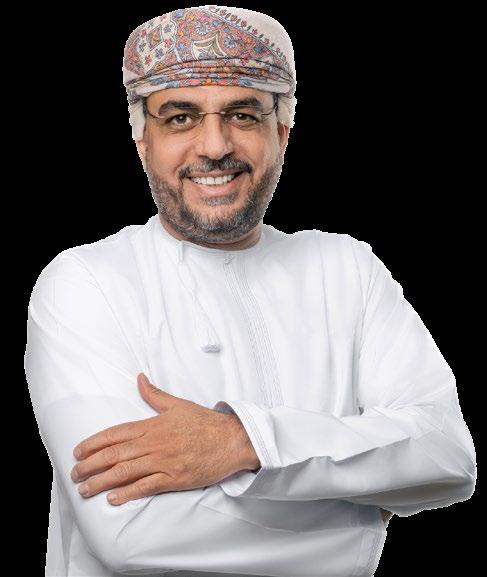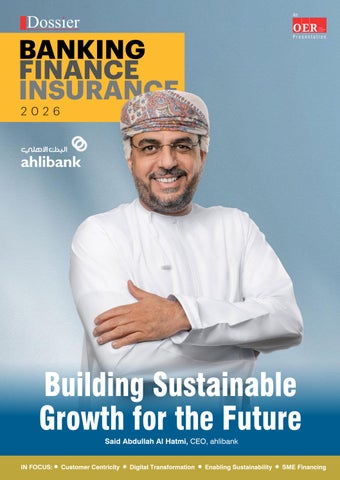

Building Sustainable Growth for the Future
Said Abdullah Al Hatmi, CEO, ahlibank


EDITORIAL
Mayank Singh
Khalfan Al Rahbi
Ghalib Al Fori
Oommen John P
Alvin Thomas
Radhiya Alhashmi
DESIGN
Senior Production ManagerPrint & Digital
Ramesh Govindraj
Chief Photographer
Rajesh Rajan
SALES
Business Manager
Dhanish Gaitonde
CORPORATE
Chief Executive Officer
Atulya Sharma
Deputy CEO
Said Masoud Almashani
PO Box 3305, Ruwi, Postal Code - 112 Muscat, Sultanate of Oman
Tel: (968) 24700896
Fax: (968) 24707939
Navigating Transformation Resiliently
Oman’s banking and financial services industry stands at a defining juncture and is being shaped by economic diversification, digital transformation, and evolving customer expectations. As the Sultanate advances steadily toward its long-term development goals under Vision 2040, the financial sector is not merely supporting this transition; it is actively driving it.
Over the past decade, Oman’s banking sector has demonstrated remarkable resilience. Despite global economic headwinds, fluctuating oil prices, and geopolitical uncertainties, the industry has maintained stability, supported by prudent regulation, strong capitalisation, and a forward-looking monetary policy framework. Today, Omani banks are well positioned to serve as catalysts for sustainable economic growth.
At the core of Oman’s financial ecosystem lies a robust regulatory environment that has ensured stability and investor confidence. The Central Bank of Oman’s proactive approach of balancing risk management with innovation has enabled banks to navigate challenging cycles without compromising asset quality or liquidity.
Omani banks continue to exhibit healthy capital adequacy ratios and disciplined lending practices. This financial strength has allowed them to extend credit to key sectors such as infrastructure, manufacturing, tourism, and SMEs - sectors that are central to the country’s diversification agenda.
Perhaps the most profound shift in Oman’s banking landscape is the rapid pace of digitalisation. Financial institutions are embracing technology not just as an enabler but also as a strategic imperative. From mobile banking apps and AI-driven customer service to blockchain experimentation and fintech collaborations, the sector is undergoing a comprehensive digital overhaul.
Customers today demand convenience, speed and personalization and banks are responding with innovative solutions that enhance user experience. The rise of digital wallets, contactless payments, and open banking frameworks are reshaping how financial services are accessed and delivered.
At the same time, cybersecurity and data privacy have become critical priorities. As digital adoption accelerates, banks must invest continuously in robust security infrastructure to safeguard customer trust.
Small and medium enterprises (SMEs) are the backbone of Oman’s non-oil economy, and the banking sector plays a vital role in their development. Financial institutions are increasingly designing tailored products, advisory services, and funding solutions to support entrepreneurs.
Similarly, sustainability is no longer a peripheral concern but central to the future of finance. Omani banks are gradually integrating environmental, social, and governance (ESG) principles into their strategies, aligning with global trends and national priorities.
Green financing initiatives, including funding for renewable energy projects and sustainable infrastructure, are gaining traction. As Oman advances its energy transition goals, the financial sector will play a crucial role in mobilizing capital for sustainable development.
The future of Oman’s banking and financial services industry is one of opportunity and transformation. With a strong foundation, a clear national vision, and a willingness to innovate, the sector is well equipped to meet the demands of a rapidly changing global economy.





INNOVATIVE RESILIENCE
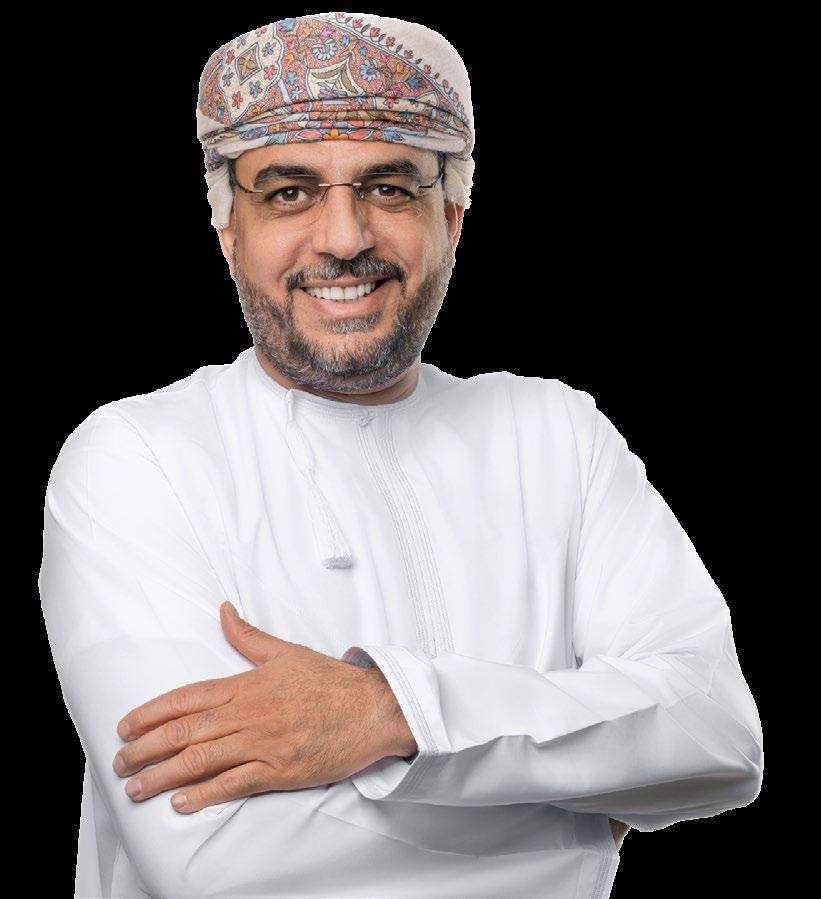
“EXCELLENCE IS NOT A MILESTONE, BUT A STANDARD WHICH WE UPHOLD IN EVERY DECISION. THIS BELIEF CONTINUES TO SHAPE AHLIBANK’S ROLE IN BUILDING A TRUSTED AND FORWARD-LOOKING BANKING INSTITUTION FOR OMAN.”
SAID ABDULLAH AL HATMI CEO, AHLIBANK
Oman’s banking sector is operating from a position of greater maturity, shaped by a modernised regulatory environment led by the Central Bank of Oman, accelerating digital progression, and the steady national momentum of Oman Vision 2040. Clearer supervisory expectations and rising sustainability requirements have reinforced a sector-wide emphasis on governance, resilience, and long-term value creation.
Within this environment, banks are being challenged not simply to modernize, but to make deliberate choices about how they grow, innovate, and allocate capital. In 2025, ahlibank approached this moment with a clear sense of intent. Rather than pursuing transformation in isolation, the bank focused on strengthening its foundations, sharpening strategic priorities, and advancing capabilities that support responsible scale and institutional durability.
This philosophy reflects ahlibank’s view that progress must be anchored in discipline, alignment, and accountability. As Oman’s financial landscape continues to evolve, the bank’s actions during the year illustrate a commitment to building strength with purpose, ensuring that innovation, sustainability, and growth are closely aligned with the country’s long-term economic direction.
STRENGTHENING THE FOUNDATIONS FOR SUSTAINABLE GROWTH
In 2025, ahlibank translated its long-term intent into disciplined execution through balanced growth and prudent decision-making. Throughout the year, priorities centered on reinforcing capital strength, maintaining portfolio balance, and ensuring that governance, risk management, and execution evolved together.
The successful completion of an oversubscribed rights issue was a significant milestone during the year. Beyond strengthening the bank’s capital base, it
2025 Highlights
Capital base reinforced through disciplined execution, marked by the successful completion of an oversubscribed 50 million rights issue
Built a scalable, connected digital foundation through system modernization, automation, and launch of an API Gateway
Transformed everyday banking through digital-first access, delivering an upgraded mobile platform with 80+ services
Extended digital enablement across the wider economy, strengthening payment gateways, POS and soft-POS solutions
Strengthened ESG integration across governance and operations, aligned with CBO’s Sustainable Finance guidelines
Invested in national talent and future leadership, advancing structured development programmes that build capability across the workforce
Embedded community impact into business purpose, delivering sustained CSR initiatives
reflected confidence in ahlibank’s strategic direction and provided greater capacity to support customers, businesses, and national priorities with resilience and flexibility. This strengthened foundation allows the bank
to pursue opportunities selectively, while remaining well positioned to navigate periods of external volatility.
Across retail, corporate, and SME banking,
BANKING
growth remained closely aligned with the needs of the real economy. Financing activity supported entrepreneurship, private-sector expansion, and investment across priority sectors, while preserving prudent risk discipline and portfolio diversification. Rather than prioritizing scale alone, the bank focused on building long-term relationships that generate sustainable value over time.
This philosophy also guided ahlibank’s approach to its physical network. While digital channels continue to play a growing role in service delivery, the bank remains committed to maintaining a meaningful physical presence across Oman. Branch enhancements and selective expansions during the year were guided by customer relevance and geographic need. Branches increasingly serve as advisory and relationship-focused environments, supported by digital platforms and self-service
channels that deliver convenience, speed, and accessibility.
ADVANCING DIGITAL CAPABILITY AND EVERYDAY BANKING EXPERIENCES
Digital transformation in banking has moved well beyond the introduction of new tools. The real measure of progress today lies in how reliably systems perform, how seamlessly services connect, and how effectively technology supports customers in their daily financial lives. In 2025, ahlibank’s digital agenda was shaped by a clear understanding that technology alone does not transform institutions. Progress comes when technology, processes, data, and people evolve together in a way that strengthens resilience and delivers meaningful everyday value.
A significant focus during the year was placed on reinforcing the Bank’s digital, data, and operational foundations. Targeted investments in system modernization, automation, and enterprise platforms strengthened processing capacity, improved turnaround time, and enhanced governance and control across the organisation. While much of this progress operates behind the scenes, it forms the backbone of the bank’s ability to deliver dependable services, introduce new capabilities efficiently, and support growth without compromising performance or security. These enhancements positioned ahlibank to move more decisively toward a connected banking model that supports faster product development, smoother integrations, and more cohesive customer journeys.
An important milestone in this evolution was the introduction of the API Gateway platform, which formally ushered ahlibank into the open banking era. By consolidating the application landscape and enabling structured integration with fintechs, third-party platforms, and institutional partners, the Bank expanded its ability to collaborate, innovate, and embed services more naturally within customer and business ecosystems. This capability shortens time to market, reduces integration complexity, and supports a more agile response to ecosystem-driven innovation.
Equally significant was the progress achieved in data and analytics. Through the establishment of a robust enterprise data foundation, the Bank strengthened its ability to generate insight, support intelligent decision-making, and improve business responsiveness. This shift from data awareness toward data maturity enhances how customer needs are understood, how risks are anticipated, and how opportunities are identified. Over time, this capability will play a central role in enabling more personalised engagement, predictive servicing, and smarter automation across the organisation.
BRANCH EXPANSION
These strengthened foundations translated into tangible improvements in customer experience. Digital engagement continued to accelerate as mobile banking became the primary touchpoint for many customers. The upgraded mobile banking platform, now offering more than 80 integrated services, reflects a deliberate shift toward banking that supports everyday decision-making rather than simple transactions. Customers are able to engage
SIMPLIFYING ACCESS ACROSS THE CUSTOMER JOURNEY
more intuitively with their finances, gain clearer visibility into spending behaviour, and manage both routine and non-routine needs through streamlined digital journeys.
Reducing friction at critical moments in the customer lifecycle remained a priority. The introduction of digital debit cards enabled customers to access card details securely
within the Bank’s digital channels and transact online immediately after account setup, enhancing flexibility and control in an increasingly digital payments environment. In parallel, the launch of instant card issuance allowed customers to receive and activate physical debit cards immediately at the branch, eliminating traditional waiting periods. By addressing both digital and physical access,
these initiatives simplify onboarding, accelerate service delivery, and reinforce a more responsive and customer-focused banking experience.
Physical self-service channels continued to play an important complementary role. During the year, ahliExpress kiosks were expanded to support twelve essential banking services,
onboarding
SUPPORTING PRODUCTIVITY, SCALABILITY, AND GROWTH ACROSS THE BUSINESS ECOSYSTEM
• Payment Gateways
• Acquiring & POS
• Soft-POS
• Merchant Applications
(Corporate, SME, Merchant)
extending access beyond branch hours and reducing dependency on traditional counters. This expansion reinforces a hybrid service model in which customers can choose how, when, and where they interact with the Bank, while experiencing consistency across physical and digital touchpoints.
Digital progress at ahlibank also extended well beyond retail banking. In corporate and SME segments, the focus was on enabling productivity, efficiency, and scalability. The Bank strengthened its payment gateways, acquiring services and merchant solutions, supporting businesses across sectors with secure and reliable transaction processing. These capabilities allow corporate clients, SMEs, and merchants to accept payments seamlessly, manage cash flows more effectively, and integrate banking services directly into their operations.
For SMEs in particular, the expansion of POS acquiring, soft-POS solutions, and merchant applications, combined with POS-linked financing, provides practical tools that lower barriers to entry and support day-today business growth. These offerings are positioned not as standalone products, but as part of a broader ecosystem designed to help enterprises operate more efficiently and
participate more fully in the digital economy.
Longer-term financial engagement also remained a key priority. Through integrated digital wealth management solutions and systematic investment capabilities, customers are supported in building financial resilience over time. These services are embedded within
Bank in Oman to launch
• Seamless Payments
• Improved Cash Flow
• Scalable Operations
• Digital Integration
the wider banking ecosystem, reinforcing ahlibank’s belief that digital banking should support both immediate needs and long-term aspirations.
A defining milestone of the year was the launch of ahlinext, a child-focused digital banking application designed to promote early financial awareness within a secure, parentcontrolled environment. More than a product, ahlinext reflects a long-term view of digital responsibility, inclusion, and national capability building. By introducing financial education at an early stage, ahlibank contributes to shaping a generation that is better prepared to engage confidently with the financial system.
Taken together, these developments illustrate ahlibank’s evolution toward a connected digital environment that links retail, corporate, and SME banking, aligns physical and digital channels, and delivers reliability and relevance in everyday financial life.
EMBEDDING SUSTAINABILITY INTO LONG-TERM VALUE CREATION
Across Oman’s banking sector, the integration of Environmental, Social, and Governance
principles has moved beyond aspiration to become a core dimension of institutional responsibility. ESG considerations are increasingly shaping how banks assess risk, guide strategy, and align with national priorities, reflecting a broader recognition that sustainable finance is essential to long-term economic resilience and credibility. This evolution positions financial institutions not only as intermediaries of capital, but also as active contributors to Oman’s transition toward a more responsible and future-oriented growth model.
ahlibank has continued to strengthen its ESG posture through close regulatory alignment and forward-looking preparedness. The bank is guided by sustainable finance requirements issued by the Central Bank of Oman, which call for the systematic integration of climate considerations into governance frameworks and risk management practices. In parallel, ahlibank is preparing for the implementation of climaterisk plans and climate-related disclosures scheduled to become mandatory from the 2026 financial year, reinforcing its commitment to disciplined, transparent, and future-ready ESG integration.
Environmental responsibility has also been reflected in ahlibank’s internal operations through practical, targeted initiatives. During the year, the bank completed a solar car-
parking structure at its head office, a project designed to reduce reliance on conventional energy sources while supporting cleaner, more efficient power use. This initiative underscores ahlibank’s approach to sustainability as an operational priority, translating environmental commitments into tangible action that align with Oman’s broader objectives.
Beyond internal operations, ahlibank’s contribution to sustainable development extends into advisory and financing roles that support transformational national projects. Through its Islamic banking window, ahli Islamic served as lead financial advisor for
The Sustainable City – Yiti, Oman’s first netzero energy city. This landmark initiative reflects the bank’s capacity to structure and support complex, sustainability-led developments that align environmental ambition with economic viability.
INVESTING IN PEOPLE AND COMMUNITY
At its core, a bank’s strength is defined by the people who shape its decisions, deliver its services, and carry its values into the communities it serves. In 2025, ahlibank continued to invest deliberately in its people,
BANKING
recognising human capital not only as an operational requirement, but as a strategic differentiator and a foundation for long-term sustainability.
ahlibank’s commitment to developing Omani talent is closely aligned with the national objectives of Oman Vision 2040. Through structured programs such as Himam, iGeneration, and the Business Graduates Program, the Bank continues to prepare young professionals for meaningful careers and future leadership roles. These initiatives are designed not simply to create employment, but to build capability, confidence, and long-term readiness in areas that will define the future of banking. The result is a workforce that reflects both national representation and diversity, with strong participation of women across roles and leadership levels, and Omanisation levels that consistently exceed national targets.
Learning and development play a vital role in sustaining this momentum. In 2025, the Bank expanded access to training, professional certifications, and digital learning platforms, reinforcing a culture of continuous learning and innovation. Investments in leadership development, emerging technologies, data, ESG, and customer-centric skills ensure that transformation is driven from within and that institutional knowledge continues to deepen over time. By empowering employees with future-ready skills, ahlibank strengthens its ability to adapt, innovate, and execute with confidence.
This sense of responsibility extends naturally into the Bank’s approach to corporate social responsibility. At ahlibank, social impact is embedded into business strategy and guided by national priorities and the United Nations Sustainable Development Goals. Through
the ahli Cares program and strong employee volunteer engagement, CSR initiatives focus on inclusion, empowerment, and resilience rather than short-term intervention.
During 2025, ahlibank supported a wide range of community initiatives aimed at improving the quality of life and expanding access to opportunity. These included education and back-to-school programs, support for underprivileged families, healthcare-related assistance, and initiatives focused on food security during the holy month of Ramadan. The Bank also advanced inclusion through financial literacy training and educational support for the visually impaired, while partnerships supporting women-led production groups helped promote economic participation, preserve traditional craftsmanship, and enable sustainable income generation.
Entrepreneurship and SME development remained an important pillar of social and economic impact. Platforms such as the ahlibank Ramadan Souq and ahliExpo provided small businesses with opportunities to showcase their products, connect with wider markets, and build networks that support longterm growth. These initiatives reflect the Bank’s belief that inclusive economic participation is essential to national resilience and sustainable development.
Across all these efforts, employee volunteering played a central role, reinforcing a culture of shared responsibility and active citizenship. By engaging employees directly in community initiatives, ahlibank strengthens the connection between institutional purpose and everyday action, ensuring that social responsibility is lived as well as stated.
Together, the Bank’s investment in people and community reflects a consistent philosophy, one that recognises long-term success is built not only on financial performance, but on trust, capability, and contribution to the society in which the Bank operates.
CORPORATE SOCIAL RESPONSIBILITY WITH LASTING IMPACT
Supporting students from low-income families Ramadan initiatives to support low-income families
SHAPING THE FUTURE OF BANKING
The future of banking will be defined by institutions that can balance innovation with responsibility, progress with trust, and ambition with long-term value. Technology will continue to reshape how banking is delivered, expectations will continue to rise, and the role of banks in economic and social development will become even more central. In this environment, leadership will be measured not only by performance, but by clarity of vision and strength of values.
At ahlibank, our view of the future is guided by a clear belief in excellence as a way of working and a standard we hold ourselves to in everything we do. Our commitment to integrity, innovation, responsibility, and sustainability shapes how we serve our customers, empower our people, and contribute to the communities
Supporting visually impaired communities with educational tools
around us. As banking becomes more connected, more digital, and more inclusive, we remain focused on delivering experiences that are simple, trusted, and built around real needs.
Our ambition is to continue shaping a bank that is resilient, forward-looking, and deeply aligned with Oman’s long-term aspirations. By investing in people, advancing digital capability with purpose, and upholding our values in every decision, we are building an institution that is prepared not only for the future of banking, but for the responsibility that comes with it. With confidence in our direction and pride in what we stand for, we move forward committed to excellence and to creating lasting value for generations to come.
WAY FORWARD
As ahlibank looks ahead, the emphasis is on execution and continuity. The focus is
Women empowerment through different sustainable initiatives
on consolidating the progress achieved, maintaining disciplined growth, and ensuring that scale is supported by strong operational control and balance sheet resilience. Our priorities include refining digital and data capabilities to enhance efficiency and decision quality, strengthening governance and risk frameworks in line with expanding activity, and investing in leadership depth and national talent to sustain institutional capability over time.
Alongside this, the bank will continue aligning its operating model with national economic priorities, ensuring that sustainability considerations, customer outcomes, and community engagement remain integrated into day-to-day decision-making. The way forward is defined by consistency rather than reinvention, and by a steady commitment to delivering value through clarity, control, and long-term focus.

Prudent Growth
OMAN’S BANKING AND FINANCE SECTOR REMAIN A PILLAR OF ECONOMIC RESILIENCE AND DIGITAL TRANSFORMATION

Oman’s banking and finance sector stands as a bedrock of the Sultanate’s economy, demonstrating remarkable resilience, stability, and a proactive embrace of digital transformation, all within the framework of the ambitious Oman Vision 2040. Regulated by the Central Bank of Oman (CBO) and the Financial Services Authority (FSA), the sector has consistently matured, contributing significantly to macroeconomic stability, diversification efforts, and financial inclusion.
Recent years have seen the sector record solid growth, reinforce its capital and liquidity buffers, and launch key initiatives that position it for a future-ready, non-hydrocarbondependent economy. Total outstanding credit extended by Oman’s banking sector grew by 8.0 per cent year-on-year to reach RO34.5bn at the end of September 2025, while banking sector deposits rose by 4.7 per cent over the same period, according to the latest data released by the Central Bank of Oman (CBO).
Of the total, credit to the private sector increased by 5.7 per cent year-on-year to RO28.2bn. Within the private sector, nonfinancial corporations accounted for the largest share at 46.7 per cent, followed by households at 44.7 per cent. Financial corporations represented 5.8 per cent, while other sectors made up the remaining 2.8 per cent.
Both conventional banks and Islamic banking entities supported growth in overall lending. The combined balance sheet of conventional banks recorded a 7.3 per cent year-on-year increase in total outstanding credit as of endSeptember 2025.
Credit to the private sector by conventional banks rose by 4.2 per cent to RO21.5bn, while their total investments in securities grew by 15.4 per cent to RO6.5bn. Investment in government development bonds climbed 5.7 per cent to RO2.0bn, whereas investments in foreign securities surged 21.6 per cent to RO2.6bn.
Meanwhile, Oman’s Islamic banking industry continued to demonstrate robust growth in 2025. Islamic banking entities provided total financing of RO7.4bn at the end of September, up 10.8 per cent compared with a year earlier.
The total assets of Islamic banks and windows rose by 12.2 per cent year-on-year to RO9.2bn, representing about 19.7 per cent of the banking system’s total assets at end-September 2025.
According to CBO data, total deposits held with the banking sector increased by 4.7 per cent year-on-year to RO33.1bn at the end of September 2025. Private sector deposits rose by 7.5 per cent to RO22.3bn. Within private sector deposits, households accounted for 50 per cent, followed by non-financial corporations at 30.5 per cent, financial corporations at 17.3 per cent, and other sectors at 2.2 per cent.
Aggregate deposits with conventional banks grew by 3.2 per cent year-on-year to RO25.8bn at end-September. Government deposits with conventional banks increased by 8.9 per cent to RO5.9bn, while public enterprise deposits declined by 29.3 per cent to RO1.7bn.
Private sector deposits, which accounted for 67.2 per cent of total deposits with conventional banks, rose by 6.9 per cent to RO17.3bn. Deposits with Islamic banks and windows surged by 10.5 per cent year-on-year to RO7.3bn at the end of September 2025.
CENTRAL BANK OF OMAN’S REGULATORY STRIDES
As the apex financial institution, the CBO is the primary driver of monetary policy and banking supervision, with its initiatives sharply focused on enhancing financial stability, promoting digital innovation, and fostering financial inclusion in line with Oman Vision 2040. IT has taken a number of measures to strengthen the sector.
The CBO is strategically restructuring the financial landscape through digitization, a cornerstone of the national Financial Transformation Strategy 2021–2025.
Oman has taken a major step toward building a unified, low-cost national payments ecosystem with the Central Bank of Oman’s newly approved fee structure for the “Maal” consumer debit and prepaid card. The framework eliminates key fees for users and service providers, lowers acceptance costs
BANKING

for merchants, and prepares the ground for a nationwide rollout following the card’s pilot launch on November 20, coinciding with National Day.
The “Maal” card is Oman’s national consumer payment card introduced by the Central Bank of Oman to support a uniform, domestically managed digital payments system. It is issued in both debit and prepaid forms and is designed to offer individuals a secure, low-cost way to make electronic payments within the Sultanate. The card is provided without any issuance, reissuance, or annual fees, making it a zero-cost option for users.
Operated through the OmanNet network, the “Maal” card enables payments across ATMs, point-of-sale terminals, and e-commerce platforms, and forms a key component of the country’s long-term strategy to localize and strengthen national payment infrastructure. The Central Bank of Oman (CBO) has finalized the fee framework that governs the “Maal” debit and prepaid card as part of its broader plan to build an efficient, nationally operated payments
ecosystem. By removing financial barriers and streamlining digital payment access, the initiative supports individuals, merchants, government entities, and financial service providers.
Consumers will receive the card with no fees for issuance, reissuance, or annual maintenance, ensuring that both debit and prepaid versions remain cost-free. Existing CBO regulations will continue to determine fees for ATM cash withdrawals and related services.
This structure supports CBO’s mission to give residents a secure, low-cost digital payment tool that can be used easily within Oman, while also expanding financial inclusion across the country.
The CBO has issued the Open Banking Regulatory Framework to facilitate data sharing between banks and third-party financial service providers (FinTechs) securely. This aims to spur innovation, create new services, and enhance competition, ultimately benefiting the consumer.
The establishment of a Regulatory Sandbox provides a safe, controlled environment for FinTech firms to test innovative products and services before a full market launch. This derisks innovation and accelerates the adoption of emerging technologies.
The CBO continuously updates its regulatory framework to align with international best practices and ensure the resilience of the banking sector.
New Banking Law (Royal Decree No. 2/2025): The issuance of a new, updated Banking Law strengthens the regulatory and supervisory framework, enhancing the sector’s transparency and competitiveness.
Sectoral Lending/Financing Targets: To support economic diversification, the CBO has mandated banks to allocate a portion of their credit and financing to priority economic sectors. These sectors include agriculture, fisheries, mining, logistics, tourism, and renewable energy, ensuring the banking sector actively fuels non-oil economic growth.
Bank Resolution Framework and Deposit Insurance: The CBO has implemented a robust Bank Resolution Framework and a Bank Deposits Insurance Scheme to safeguard depositors and maintain systemic stability in the event of a bank failure.18
THE FINANCIAL SERVICES AUTHORITY’S INITIATIVES
The Financial Services Authority (FSA), which succeeded the Capital Market Authority (CMA) by Royal Decree 20/2024, is the regulator and supervisor of the non-banking financial sector. Its mandate covers the capital market, insurance, credit rating agencies, and the accounting and auditing profession. The FSA’s core objective is to maximise investor and policyholder confidence, diversify products, and promote transparency.
The FSA plays a pivotal role in deepening the local capital market, which is crucial for funding long-term national development projects.
• Incentive Program for the Capital Market: The FSA actively promotes the capital market through incentive programs to encourage listings, trading activity, and the introduction of
new financial instruments.
• Electronic-IPO (E-IPO) Platform: The FSA has facilitated digital access to initial public offerings (IPOs), making it easier for local and foreign investors to participate. The success of major IPOs, with high percentages of subscriptions completed digitally, underscores this achievement.
• Fixed-Income Market Development: The FSA is working to improve the liquidity of the local currency bond markets by collaborating on the development of a benchmark yield curve and exploring the introduction of a market maker system.
The FSA is focused on regulatory upgrades to modernise the insurance industry, particularly in the realm of health insurance through its initiatives such as:
• ‘Dhamani’ - The National Health Insurance Platform: This key initiative is a centralized electronic platform designed to implement and manage mandatory health insurance. It aims to streamline operations, enhance policyholder protection, and ensure the financial sustainability of the sector.
• Electronic Insurance Operations Regulation:
The FSA has issued regulations to govern and facilitate electronic insurance operations, thereby boosting digital adoption and efficiency within the industry.
Protecting investors and ensuring sound governance are central to the FSA’s mandate and it has taken a number of measures in this direction.
• Investor Protection Portal and Whistleblower Service: The FSA operates a dedicated Investor Protection Portal and a Whistleblower Service to enhance public trust and provide channels for reporting misconduct, thereby ensuring market integrity.
• Governance Regulation: By issuing clear governance regulations for institutions under its purview, the FSA ensures adherence to high standards of corporate conduct, transparency, and accountability, aligning with international best practices.
Oman’s banking and finance sector is charting a course fully aligned with the national development blueprint, Oman Vision 2040. The future trajectory is marked by a deepening commitment to digital-first solutions and a diversified financial structure.


Growth Catal yst
FOREIGN DIRECT INVESTMENT SAW A SUBSTANTIAL RISE IN 2025
Oman’s capital markets have demonstrated a strong overall performance and significant growth in 2025, highlighted by the Muscat Stock Exchange (MSX) index surpassing the 5,000-point threshold for the first time in nearly eight years, accompanied by notably increased liquidity and trading volume.
Key performance indicators reveal that the MSX 30 Index has experienced robust growth throughout the year, achieving year-to-date gains of 22.6 per cent by the end of October, making it the second-best performing market in the GCC region, with the index closing at approximately 5,720 points in November. In terms of trading activity, 2025 saw a surge in annual trading volume, which reached over RO3.25bn during the first ten months—an impressive fivefold increase from 2021 levels. Notably, trading value in Q1 2025 alone surpassed $1 billion, reflecting increased liquidity driven by strategic reforms from the Oman Investment Authority (OIA).
Market capitalisation also witnessed significant growth, soaring by 51 per cent from 2020 to approximately RO30.53bn by October 2025. Foreign direct investment (FDI) marked a substantial rise, reaching around RO30.61bn by the end of Q1 2025, which reflects a 20.59 per cent increase, primarily funnelled into the oil and gas extraction sector. The positive performance can be largely attributed to a comprehensive array of reforms and strategic initiatives spearheaded by the OIA to revitalise the market in alignment with Oman Vision 2040. The transformation of the Muscat Securities Market into a wholly-owned closed joint stock company by the OIA has laid the groundwork for clear measures, including an IPO program and liquidity injection plans. This strategic exit has allowed for a steady flow of large initial public offerings (IPOs) such as OQ Exploration and Production, which have attracted significant investor interest and enhanced market depth.
In the broader economic context, Oman’s real GDP is projected to grow by 2.9 per cent in 2025, bolstered by easing OPEC+ production cuts and strong investments in the nonhydrocarbon sector. This environment provides a favourable macroeconomic backdrop for capital markets. Furthermore, the successful execution of large-scale listings has drawn major international investors, including those backed by Saudi Arabia’s Public Investment Fund and the Qatar Investment Authority,
reflecting global confidence in Oman’s market. Despite a decline in oil and gas revenues in Q1 2025, the market’s performance remained robust, supported by the country’s ongoing fiscal discipline and a stable credit outlook from rating agencies such as Standard & Poor’s.
The Financial Services Authority (FSA) has taken a significant step in transforming the country’s capital markets with the issuance of Decision No. 28/2025 (the Regulation), which establishes the regulatory framework for the Alternative Investment Market (AIM). This regulation, part of Royal Decree No. 18/2025, is a crucial development in Oman’s economic diversification strategy and aims to create opportunities for small and medium enterprises, startups, and private companies seeking access to capital markets. The AIM highlights Oman’s commitment to fostering a more dynamic and accessible investment environment. This initiative focuses on several strategic objectives, including upgrading the Muscat Stock Exchange (MSX) to emerging market status, expanding the investor base, enhancing market liquidity, and providing alternative financing options for companies that do not yet meet the stringent requirements of the main market.
From a legal and regulatory standpoint, the AIM introduces a tiered capital market structure that accommodates businesses at various stages of their growth. The Regulation creates two distinct listing pathways, tailored to different company profiles and capital needs. The direct listing route is designed for established, profitable companies looking for market access without needing immediate capital. These companies must demonstrate consistent profitability over three years, maintain an annual revenue growth rate of at least 14.4 per cent, and have a minimum of 20 shareholders. Conversely, the indirect listing pathway supports emerging businesses in raising capital and offers greater flexibility. This route requires companies to place at least 20 per cent of their capital through private placements while maintaining a limited operational history of just two years. The Regulation includes an innovative provision allowing companies still in the establishment phase to access the capital market without meeting standard performance criteria, as long as other regulatory conditions are satisfied. This provision permits new, pre-revenue companies to raise capital through public
markets, broadening access for business ventures.
The Financial Services Authority (FSA), regulator of Oman’s capital market and insurance sector, has revealed that crowdfunding platforms in the Sultanate of Oman have collectively raised approximately RO14.9mn since this non-bank financing channel was introduced in 2022. This achievement reflects not only the appetite of start-ups for alternative financing but also the confidence of investors in these digital platforms as credible and regulated channels for capital raising.
During the second quarter of 2025, statistics show that 43 projects were financed through crowdfunding platforms, with total funding amounting to RO2.28 million, an 81 per cent increase compared with the same period in 2024. The growth reflects the increasing role of crowdfunding in supporting start-ups and small and medium enterprises (SMEs) in the Sultanate of Oman. The steady rise in volumes highlights the strong momentum of the sector and the increasing willingness of both entrepreneurs and investors to embrace crowdfunding as a viable complement to traditional financing options.
Crowdfunding platforms in the Sultanate of Oman continue to show steady growth, reflecting their rising importance as alternative financing channels for SMEs and entrepreneurs. The latest figures represent significant progress, underlining stronger investor participation and the effectiveness of the FSA’s regulatory framework in fostering a transparent, innovative and resilient financing environment.
Since 2021, MSX has undergone a profound transformation; one that reinforced its position among the region’s most successful markets. Oman has thus reached new levels of liquidity and listings, emerging as a dynamic, multisector financial platform with record trading volumes and a doubled market capitalisation, attracting both local and international capital. This national journey reflects OIA’s commitment to transforming challenges into opportunities and empowering Omani citizens to become active partners in the ownership of national assets, in line with the long-term objectives of Oman Vision 2040 which considers the capital market as a key driver of sustainable economic growth.

Stellar performance
KEY SEGMENTS SUCH AS HEALTH AND MOTOR INSURANCE PERFORMED PARTICULARLY WELL IN 2025
Oman’s insurance sector experienced robust growth in 2025, with revenue rising by approximately 11 per cent in the first half of the year and a 13 per cent increase for listed companies over the first three quarters. This expansion was fueled by enhanced profitability, stricter underwriting practices, reduced service costs, and improved efficiency, allowing the sector to transition from a loss to a profit in the first half of the year. Key segments such as health and motor insurance performed particularly well, and ongoing growth is anticipated due to heightened awareness and demand for financial protection.
In terms of performance highlights for 2025, total insurance revenue climbed by 11 per cent to around RO372mn in the first half, with listed companies seeing a 13 per cent revenue increase in the first three quarters. Profitability improved significantly, as the sector evolved from a loss of RO10.3mn in the first half of 2024 to a profit of RO18.6mn in the same period of 2025. Efficiency metrics also showed considerable improvement, with the combined ratio decreasing from 98 per cent to 71 per cent, and return on equity rising from 3 per cent to 43 per cent. This positive turnaround was driven by stronger underwriting discipline, a 19 per cent reduction in service expenses, and advancements among leading insurers. Both conventional and takaful (Islamic insurance) players contributed to this growth, with health and motor insurance remaining dominant, accounting for a substantial portion of the gross written premium.
Insurance has become one of the mainstays on which the individuals and enterprises depend to remain in strong financial position as an efficient tool for management of potential risks. The audited financial statements of the year 2024 showed increase in the direct underwritten premiums inside the Sultanate of
Oman by 11 per cent to RO 501.7mn at the end of 2024 compared to RO451.9mn at the end of the previous year. Gross direct premiums underwritten inside and outside the Sultanate of Oman witnessed decline in performance compared to the previous years. Gross direct premiums of the sector were RO506.6mn compared to RO565.5mn in 2023, which resulted in drop in the sector’s contribution to the GDP to 1.22 per cent compared to 1.35 in the previous year.
The figures show that health insurance accounted for 22.3 per cent of the gross direct underwritten premiums while motor vehicle insurance (comprehensive and third-party insurance) comprised 23.3 per cent of the total volume of premiums. The data showed that the premiums of Takaful insurance grew by 19.3 per cent whereas the gross direct Takaful premiums reached RO 91.70mn. Takaful insurance accounted for 18.1 per cent of the gross direct premiums for the year.
FSA also established a platform for health insurance claims for the Ministry of Health to collect treatment amounts for Omanis who have health insurance and receive the treatment service in government health institutions. The FSA continued its efforts with regard to e-transformation in the insurance sector.
FSA developed a system for indices of motor insurance performance and made some amendments on it to be more precise and comprehensive. The system for investing the assets of insurance and Takaful companies was also launched. Motor vehicle insurance prices page was created on the FSA’s website. In addition, the electronic complaints management system was updated and developed, and the complaints follow-up system was launched.

FSA also updated and developed many systems that facilitate and accelerate the process of regulating and licensing services, such as appointments, agent cancellation applications and the service of adding branches for insurance companies. An electronic system was created to approve electronic insurance platforms as well as some updates to the insurance products system and a complete system was created for applications to renew and cancel health insurance claims revenue cycle management licenses.
Oman’s insurance industry is projected to grow at an annualized rate of 4.5 percent, reaching $1.8bn in 2028, according to the UAE-based investment banking advisory firm Alpen Capital. The gross written premium is expected to grow annually at a rate of 6.39 per cent (CAGR 2024-2029), resulting in a market volume of $434.80m by 2029.
Looking ahead, the market is expected to maintain its growth trajectory, partly due to rising awareness of the importance of long-term financial planning and protection. Emerging sectors, such as legal insurance—which includes coverage for cyber law and intellectual property—are also anticipated to grow as individuals and businesses become more conscious of legal risks. Furthermore, Oman’s efforts in economic diversification and the promotion of foreign investment are increasing the need for a wider range of insurance products.
The audited financial statements of the year 2024 show increase
BLURB: Oman’s efforts in economic diversification and the promotion of foreign investment are increasing the need for a wider range of insurance products
FINTECH
Fintech led transformation
FINTECHS ARE RESHAPING CUSTOMER EXPECTATIONS AND INSTITUTIONAL CAPABILITIES, PUSHING BANKS TOWARD DIGITAL TRANSFORMATION WHILE ENABLING NEW FORMS OF FINANCIAL ACCESS
Fintech — short for financial technology — refers to the use of digital technologies to innovate, streamline, and disrupt traditional financial services. Over the past decade, Fintech companies have transformed how individuals save, borrow, pay, invest, and manage money. Innovations span digital banking, mobile payments, blockchain technologies, artificial intelligence (AI), and more — reshaping the fundamentals of financial systems around the world.
In 2025, the fintech industry continues to grow rapidly, with outputs far outpacing traditional financial services, reshaping both customer expectations and the structural mechanics of banking itself.
THE IMPACT OF FINTECH ON THE GLOBAL BANKING SECTOR
1. Digital Payments and Financial Inclusion
One of the most visible impacts of fintech is the dramatic expansion of digital payments. Mobile wallets, peer-to-peer (P2P) payment apps, and digital transfer networks have replaced cumbersome legacy systems, particularly in regions where banking infrastructure was limited or underdeveloped.
Fintech platforms enable faster, cheaper, and more convenient transactions — whether for everyday purchases or international remittances. For the underbanked or
unbanked populations, these platforms offer a gateway into formal financial systems without requiring traditional bank accounts.
2. Enhanced Efficiency and Lower Costs
Fintech technologies help banks reduce operational costs and improve efficiency. Tools such as AI for fraud detection, automation for customer service, and data analytics for credit scoring enable financial institutions to streamline processes and make quicker decisions. AI and machine learning effectively cut costs while enhancing security and customer experience.
Moreover, distributed ledger technologies such as blockchain are reducing settlement times and costs for international payments, previously reliant on slow and expensive systems like SWIFT.
3. Competitive Dynamics and Collaboration
Fintech has redefined competitive dynamics in financial services. Challenger banks (neobanks) and non-bank fintech firms compete directly with traditional banks on user experience, responsiveness, and cost, forcing incumbents to innovate or risk losing market share. Partnership models have gained popularity — one example is the strategic acquisition announcements by major banks integrating fintech capabilities directly into their offerings.


Meanwhile, global fintech firms like Revolut continue expanding into new markets — including applying for full banking licenses in countries like Peru — highlighting the broader trend of fintechs bridging gaps between banking and everyday finance.
4. Innovation in Credit and Lending
Fintech companies have made significant inroads in credit and alternative lending. Peer-to-peer platforms, digital credit scoring, and algorithmic underwriting enable access to loans for consumers and small businesses that might have been rejected under traditional banking protocols. Notably, fintech in India extended formal credit to millions through digital platforms in FY 2024–25, underscoring fintech’s role in expanding credit accessibility.
5. The Shift toward Open Banking and DataDriven Services
Open banking — where users can share financial data securely with third parties — has unlocked a wave of service innovation. Fintech firms can build personalized financial products, from budgeting tools
FINTECH
to tailored investment advice, using data securely shared via APIs. Trends like generative AI, decentralized finance (DeFi), and enhanced digital identity systems are shaping the next wave of service delivery.
KEY TECHNOLOGIES DRIVING FINTECH INNOVATIONS
• Artificial Intelligence (AI) and Machine Learning
AI is at the forefront of fintech advancements. Banks and fintechs use AI for predictive analytics, fraud detection, credit risk assessment, and personalized customer interaction via chatbots and virtual assistants. These technologies not only enhance operations but also elevate user experience and reduce fraud.
• Blockchain and Distributed Ledger Technology
Blockchains offer secure, transparent, and decentralised transaction records, making cross-border transfers faster and cheaper, while facilitating innovations like smart
contracts and tokenized assets. Blockchain’s applications extend into settlement systems and cross-institutional data sharing.
• Cloud Computing and Mobile Technologies
Cloud platforms provide scalable and cost-effective infrastructure for fintech services. Coupled with widespread mobile adoption, cloud technologies underpin the accessibility of digital wallets, mobile banking apps, and on-the-go financial services.
CHALLENGES AND RISKS IN FINTECH INTEGRATION
Despite its benefits, fintech also introduces risks and challenges:
• Cybersecurity and Data Privacy: With digital services handling sensitive financial data, robust cybersecurity is essential to protect users and maintain trust.
• Regulatory Oversight and Compliance: Fintech’s innovations sometimes outpace

regulatory frameworks, prompting central banks to revise rules for consumer protection, anti-money-laundering, and systemic risk management.
• Operational and Adoption Barriers: In many markets, digital literacy gaps and legacy infrastructure can slow adoption, particularly among older or rural populations.
Oman’s Fintech Evolution: Turning Vision into Reality
While much of the global conversation focuses on major markets, economies like Oman are accelerating their fintech journeys — aligning with national development strategies such as Vision 2040.
RAPID GROWTH AND MARKET SIZE
Oman’s fintech ecosystem is growing robustly. The country’s fintech market is projected to reach about OMR 1.1 billion by 2025, reflecting both investment and adoption momentum.
Regulatory action has been a major catalyst. The Central Bank of Oman (CBO) established an Innovation Acceleration Programme and a regulatory sandbox, which allows fintech startups to test solutions in controlled environments. This innovation-friendly approach has expanded the number of licensed fintech firms from 26 to 42 in just one year — with 16 licenses granted in 2025 alone and dozens more under review.
BREADTH OF FINTECH SERVICES IN OMAN
Oman’s fintech landscape reflects global trends, with firms focusing on:
• Digital payments and wallets — streamlining everyday transactions.
• Personal finance and wealth tools — offering consumers more choice in savings and investment.
• Crowdfunding and alternative finance — facilitating SME access to capital.
Crowdfunding platforms registered strong

growth between 2024 and 2025, financing RO14.9 million and climbing by over 80% in that period — showcasing how fintech complements traditional banking credit to support small businesses.
REGIONAL RECOGNITION AND STARTUP SUCCESS
Several Omani fintech startups are gaining regional attention. For example, Thawani Technologies, a local fintech firm, was ranked among Forbes Middle East’s Top 50 Fintech Companies in the region for 2025, climbing the list year-over-year due to digital transaction volumes, user adoption, and innovation impact.
AI, CLOUD AND FUTURE CAPABILITIES
Fintech innovators in Oman are also adopting advanced technologies such as AI and cloud computing to enhance services like predictive analytics, digital customer support, and secure platforms — putting Oman’s ecosystem on par with global competitors.
REGULATORY SUPPORT AND NATIONAL STRATEGY
Oman’s proactive regulatory stance includes digital banking roadmaps, capital
requirement tiers for new fintech entrants, and promoting the National AI strategy, ensuring technological integration aligns with ethical and economic goals.
These policies are crucial in creating an environment where fintech can flourish while maintaining financial stability and consumer protection.
THE FUTURE: FINTECH AND BANKING IN HARMONY
As fintech continues to mature, its relationship with traditional banking is shifting from competition toward cooperation. Banks are increasingly partnering with fintechs to enhance digital offerings, reduce costs, and expand customer reach.
For Oman, this evolution translates into sustainable economic growth, enhanced financial inclusion, and diversified financial services that support Vision 2040 objectives.
Across the world, fintech is reshaping customer expectations and institutional capabilities, pushing banks toward digital transformation while enabling new forms of financial access. The combined forces of AI, blockchain, cloud technologies, and forward-looking governance promise a future in which finance is more inclusive, efficient, and resilient than ever before.

A year of resilience and strategic transition
THE
GCC BANKING SECTOR’S PERFORMANCE IN 2025 DEMONSTRATES RESILIENCE AND ADAPTABILITY IN A COMPLEX GLOBAL AND REGIONAL ENVIRONMENT

The banking sector across the Gulf Cooperation Council (GCC) — comprising Saudi Arabia, the United Arab Emirates, Qatar, Kuwait, Bahrain, and Oman — delivered a robust performance in 2025, driven by resilient economic fundamentals, diversified revenue streams, and ongoing digital transformation. Despite global economic headwinds and tighter liquidity conditions, regional banks demonstrated strong capital positions, profitability and adaptability, setting a solid foundation for the year ahead.
MACRO ENVIRONMENT: THE FOUNDATION OF BANKING RESILIENCE
GCC economies continued to benefit from economic diversification, investment in non-oil sectors, and stable fiscal policies in 2025. According to the World Bank’s Gulf Economic Update, the region’s GDP growth for 2025 is forecast at around 3.2%, supported by structural reforms, non-oil sector strength, and advancing digital transformation — with individual growth rates ranging from 2.7% in Kuwait to 4.8% in the United Arab Emirates. The outlook for 2026 is even more positive, with expected acceleration to roughly 4.5% regional GDP growth.
These macro trends have enhanced confidence in the banking sector’s ability to lend, invest, and support the private sector.
In 2025, GCC banks collectively recorded significant profitability, reflecting robust lending activity and diversified income sources:
• Net profits reached record highs of over $15.6 billion in Q1 and approximately $16.2 billion in Q2, marking double-digit year-on-year growth supported by credit expansion and revenue diversification.
• Non-interest income — driven by fees, commissions, and trading gains — helped mitigate pressure from narrowing net interest margins.
• Asset quality remained strong, with provisions moderating significantly in the first half of 2025 compared to prior periods.
• Overall loan-to-deposit ratios stayed above 80%, indicating healthy asset utilization amid evolving rate environments.
Across the GCC, banks maintained robust capital adequacy ratios, strong liquidity buffers, and improving cost efficiency, as institutions adopted digital platforms and automated solutions to reduce operating costs and enhance service delivery.
COUNTRY-WISE BANKING SECTOR ANALYSIS
SAUDI ARABIA: LARGEST MARKET WITH STRATEGIC CREDIT EXPANSION
Saudi Arabia’s banking sector remained the GCC’s largest and most dynamic in 2025:
• Saudi banks reported strong credit growth, driven by Vision 2030–related investments in infrastructure, real estate, and private sector activities.
• Despite high credit growth, liquidity tightened, prompting banks to borrow abroad more aggressively — with overseas borrowings reaching record levels of around $33 billion — to support lending demand and fund large-scale projects.
• Deposits in Saudi banks declined slightly in mid-2025, reflecting the impact of credit-led growth and competitive funding dynamics.
• S&P Global Ratings noted potential risks related to increased use of hybrid capital instruments, which may affect capital quality despite overall strong capital positions.
Saudi banks are expected to continue supporting large economies and private sector financing, though margins may compress further if interest rate easing persists. Continued reforms, such as improved foreign ownership frameworks and enhanced regulatory guidance, should support stability and attract investment.
UNITED ARAB EMIRATES: DIGITAL LEADER AND PROFIT ENGINE
The UAE banking sector was a major driver of GCC growth in 2025:
• UAE banks posted among the largest absolute increases in net profits, with diversified revenues and strong lending growth across retail and corporate segments.
• The country’s economic growth rate was the highest in the GCC, at around 4.8% in 2025, driven by strong non-oil sectors like tourism, logistics, and trade.
• Deposit growth outpaced credit demand in several quarters, bolstering liquidity and supporting robust balance sheets.
• UAE banks continued their push into digital banking, AI integration, and open banking initiatives, reflecting a strategic focus on futureready financial services.
Sector Outlook for 2026: With a strong economic base and digital transformation agenda (including AI-driven services and digital
GCC BANKING
regulatory frameworks), UAE banks are expected to sustain growth in fee income, digital products, and cross-border services.
QATAR: OPERATIONAL EFFICIENCY AND STABILITY
Qatar’s banking system continued its steady performance:
• Qatari banks were noted for high operational efficiency, with cost-to-income ratios among the lowest in the GCC during Q2 2025.
• Continued strength in LNG exports and non-oil sectors supported credit demand, particularly among corporate and project finance lines.
• Qatar’s financial institutions maintained strong capital buffers and stable funding sources, reflecting prudent balance sheet management.
Sector Outlook for 2026: Qatar’s banks should benefit from ongoing energy sector investments and infrastructure development. Efficiency gains and digital transformation will be key to growing profitability as interest margins adjust.
KUWAIT: HIGH RETURNS AND MARKET RESILIENCE
Kuwait posted strong financial market and banking sector performance in 2025:
• The Kuwait All Share Index rose around 21%, with the banking index contributing significantly — driven by strong corporate earnings and investor interest.
• Leading banks such as Warba Bank and Kuwait International Bank delivered substantial profit growth — Warba reporting net profit growth of over 150% year-on-year for nine months of 2025.
• Loan growth supported balance sheet expansion, while interest rate adjustments boosted credit appetite.
Sector Outlook for 2026: Continued banking sector resilience is expected, underpinned by reform momentum, improved credit conditions, and potentially stronger foreign investor engagement.
BAHRAIN: FOCUS ON DIVERSIFICATION AND FINANCIAL SERVICES GROWTH
Bahrain’s banking sector showed mixed performance in 2025:
• Although the country recorded slower deposit growth than peers, non-oil sector expansion, particularly in financial services and fintech, underpinned credit demand and bank revenue diversification.
• Bahrain’s economy is supported by investments in logistics, gas, and tourism — sectors that complement banking services.
Sector Outlook for 2026: Digital banking adoption, fintech partnerships, and financial market initiatives are expected to strengthen Bahrain’s banking competitiveness. Efforts to attract international capital and drive inclusive banking will be critical components.
OMAN: STEADY CREDIT GROWTH AND DIVERSIFICATION SUPPORT
Oman’s banking sector continued to benefit from gradual economic expansion and diversification under Vision 2040:
• Banks in Oman recorded credit growth aligned with non-oil economic activity, supported by business and project financing needs.
• Deposit growth was modest but steady, while capital adequacy remained sound.
• Digital transformation and financial inclusion efforts helped broaden retail banking reach.
Sector Outlook for 2026: Omani banks are well-positioned for continued growth as non-oil sectors expand and credit profiles diversify further. Enhancing digital service offerings and fintech collaboration will be key strategic priorities.
CROSS-CUTTING TRENDS SHAPING GCC BANKING
1. Technology and Digital Banking
Across the region, fintech integration and digital

transformation have been central to strategic planning:
• Adoption of AI, mobile banking, and digital payments is reducing costs and improving customer service.
• Banks are expanding partnerships with fintech startups, enabling innovation in payments, lending, and financial analytics.
2. Diversification and Non-Oil Sector Support
The underlying push for economic diversification in GCC Vision plans has broadened credit opportunities:
• Sectors like logistics, tourism, technology, and renewable energy are driving new lending and investment demand.
• Banking products tailored to SMEs, infrastructure projects, and specialized financing are gaining traction.
3. Regulatory and Capital Strength
Strong regulatory oversight and capital frameworks — including robust Tier-1 and capital adequacy ratios — have ensured that banks remain resilient to shocks and maintain investor confidence.
OUTLOOK FOR 2026: STABILITY AND STRATEGIC GROWTH
Economic Growth Supporting Banking Expansion
With projected GDP growth accelerating in 2026 — estimated near 4.5% region-wide — the banking sector is positioned to benefit from stronger economic activity, higher investment flows, and continued credit demand.
PROFITABILITY AND MARGIN OUTLOOK
• Net interest margins may continue to face pressure if central banks maintain accommodative stances aligned with global monetary easing.
• However, non-interest income sources, including fees, commissions, wealth management, and investment banking services, are expected to become increasingly significant.
LIQUIDITY AND FUNDING DYNAMICS
• Liquidity management will remain a focus, especially in markets where credit growth pressures deposits - such as Saudi Arabiaprompting banks to explore diversified funding channels and cost-effective capital solutions.
RISK AND GOVERNANCE
• Continued emphasis on risk management, compliance with global standards, and enhanced technology governance will underpin sector stability.
• Expansion in fintech regulation, open banking frameworks, and digital risk controls will shape competitive dynamics.
CONCLUSION: GCC BANKING MOVES FORWARD WITH STRENGTH AND STRATEGY
The GCC banking sector’s performance in 2025 demonstrates resilience and adaptability in a complex global and regional environment. With strong profitability, healthy capital positions, and growing digital capabilities, GCC banks have laid the groundwork for stable and strategic growth in 2026 and beyond.
While challenges such as liquidity pressures, margin compression, and external uncertainties remain, the region’s banks are well-positioned to harness economic diversification, digital transformation, and innovative financial solutions — making them a central driver of future economic progress across the Gulf.

A Roadmap for Sustainable Finance
WITH THE CENTRAL
BANK OF
OMAN’S NEW ESG GUIDELINES, BANKS ARE TRANSITIONING FROM AD-HOC GREEN INITIATIVES TO SYSTEMATIC INTEGRATION OF ENVIRONMENTAL, SOCIAL, AND GOVERNANCE CONSIDERATIONS IN THEIR CORE BUSINESS

As the global economy shifts toward more sustainable and inclusive growth models, Oman’s financial sector is increasingly aligning with Environmental, Social, and Governance (ESG) principles. Central to this transition is the Central Bank of Oman (CBO), which has introduced a series of regulatory reforms and guidelines to embed sustainability into the operations of banks and financial institutions across the Sultanate. These efforts are essential in helping Oman meet its Vision 2040 objectives and align with international climate commitments.
THE CBO’S NEW ESG REGULATORY FRAMEWORK
In 2024, the Central Bank of Oman issued a circular titled “Promoting Sustainable and Green Financial Practices”, marking a milestone in sustainable finance regulation within the country’s banking sector. This framework moves beyond voluntary ‘green finance’ rhetoric to establish concrete expectations for banks to address climaterelated and broader ESG risks.
KEY REQUIREMENTS OF THE NEW ESG FRAMEWORK
1. Integration of climate risk into governance and strategy
• Banks are expected to integrate climate risk assessments into governance structures, strategic planning, and overall risk management frameworks. Board and senior management oversight of climate-related risks is emphasised as a core requirement.
2. Risk management and disclosure obligations
• The CBO mandates that all banks identify and manage physical and transition climate risks—from extreme weather to regulatory shifts in global decarbonisation efforts—and incorporate them into risk assessments.
• Banks must begin disclosing climaterelated risks and risk management practices within their financial reporting for FY 2026, boosting transparency and accountability.
3. Implementation plans and board
approval
• All banks—local, specialised, Islamic, and foreign branches operating in Oman—must perform a baseline assessment of current practices against the guideline, and submit detailed board-approved implementation plans with timelines and milestones.
4. Sustainability claims and integrity
• Provisions related to the accuracy and integrity of sustainability claims take immediate effect, prompting firms to ensure transparency in ESG communications.
5. Phased Implementation
• Key governance, strategy, risk management, and broader ESG recommendations will take effect from July 1, 2026, with climate and other ESG disclosure requirements applying to fiscal reports from 2026 onward.
6. Encouragement of broader ESG
GREEN FINANCE
integration
• Beyond climate risk, banks are encouraged to consider a wider spectrum of ESG risks— such as social impacts and governance practices—and to enhance internal capacity building, customer awareness, and sustainable product offerings.
2. Why the CBO is prioritising ESG
The CBO’s push for sustainable finance stems from the recognition that climate change and ESG risks are material to financial stability. Oman’s economy, like other GCC countries, has exposure to climate-related hazards (e.g., high temperatures and flash floods) and transition risks (e.g., asset repricing due to decarbonisation policies). Integrating risk assessment and disclosure into regulatory practice enhances resilience and aligns the banking system with global best practices and investor expectations.
Furthermore, the CBO has also joined global initiatives such as the Network for Greening
the Financial System (NGFS), reinforcing its commitment to sustainable finance in cooperation with international peers.
3. How Omani Banks Are Responding
In response to these regulatory shifts, Omani banks are actively reshaping strategies and introducing ESG-aligned offerings:
A. Embedding ESG into Core Operations
Many banks are aligning internal governance processes with ESG expectations by appointing ESG committees, updating policies, and integrating sustainability into risk assessment frameworks.
B. Developing Green and Sustainable Financial Products
Banks are launching tailored products that directly support sustainability outcomes. These include:
• Green loans and finance products for


renewable energy and energy-efficient investments;
• Sustainable bonds or sukuk to finance environmental projects;
• SDG-linked financial instruments to incentivise social outcomes.
C. Training and Capacity Building
To meet CBO’s expectations on capability development, banks are investing in training programmes for staff to enhance their understanding of climate-related risk and sustainable finance principles. These trainings aim to build the technical skills necessary to embed ESG at the operational level.
D. Raising Public and Client Awareness
Financial institutions are also engaging with customers and the public to raise awareness about sustainable finance, encouraging adoption of green products and adherence to
responsible consumption practices.
CHALLENGES
Implementing ESG frameworks requires significant shifts in data capabilities, risk models, and organisational culture. Banks must invest in:
• Climate risk modelling and scenario analysis;
• Comprehensive ESG data systems;
• Skills development across the workforce.
Additionally, smaller banks may face resource constraints as they adapt.
OPPORTUNITIES
Despite these challenges, the transition offers several long-term benefits:
• Enhanced risk management and resilience to environmental shocks;
• Access to diversified capital, as
sustainability-focused investors seek ESGaligned financial institutions;
• Competitive differentiation through innovative green financial services.
By aligning ESG strategies with national policy and global standards, Omani banks can contribute to a more resilient, inclusive, and sustainable financial ecosystem.
Oman’s financial sector is at a pivotal moment in its sustainability journey. With the Central Bank of Oman’s new ESG guidelines, banks are transitioning from ad-hoc green initiatives to systematic integration of environmental, social, and governance considerations in their core business. As implementation plans take shape and disclosure standards become operational, Oman’s banking industry is positioning itself as a regional leader in sustainable finance, supporting national goals and contributing to broader global efforts toward long-term sustainable development.

The Rise of Digital-First Banking Services
EXPLORING THE ACCELERATING SHIFT FROM TRADITIONAL BRANCHES TO DIGITAL CHANNELS AND HOW LOCAL BANKS ARE ADAPTING TO THE CHANGE

The banking landscape in the Gulf Cooperation Council (GCC)—encompassing Bahrain, Kuwait, Oman, Qatar, Saudi Arabia, and the United Arab Emirates, is undergoing a rapid transformation. Across the region, traditional brick-and-mortar banking is giving way to digital-first services powered by mobile apps, online platforms, and fintech partnerships. This shift reflects evolving customer expectations, technological advances, and strategic responses by banks to stay competitive in a digital age.
DRIVERS OF THE DIGITAL BANKING BOOM
1. Changing Customer Behavior
Customers across the GCC increasingly prefer digital channels for convenience, speed, and accessibility. Smartphones and high-speed internet have unlocked 24/7 access to financial services such as payments, transfers, lending, and investments. In the UAE, for example, more than 95% of transactions among leading banks are conducted digitally, and over 90% of services are accessed via mobile apps—among the highest rates globally.
2. Post-Pandemic Acceleration
The COVID-19 pandemic served as a catalyst for digital adoption. Lockdowns and social-distancing requirements nudged customers toward online banking and encouraged banks to fast-track digital offerings. Across the GCC, this trend has persisted well into 2025 as banks build robust digital ecosystems.
3. Tech-Savvy Populations and Fintech Growth
With relatively youthful and tech-oriented populations, GCC markets are fertile ground for digital innovation. Fintech startups and digital banks (sometimes known as “neobanks”) are emerging to challenge legacy-banking models with streamlined, user-centric offerings. These new players are pushing traditional banks to respond with their own digital enhancements.
DIGITAL-FIRST SERVICES ON OFFER
A. Seamless Digital Onboarding and Transactions
Customers can now open accounts digitally, often in minutes, without stepping into a branch. Technologies such as biometric verification and real-time identity checks simplify onboarding—examples already seen in Bahrain and the wider region.
B. Mobile Banking as the Primary Channel
Mobile apps have become the core platform for everyday banking. They allow users to:
• Transfer funds,
• Pay bills,
• Manage accounts,
• Receive insights and alerts,
• Access customer support.
Enhancements such as AI-powered chatbots and personalized dashboards are improving engagement and customer satisfaction.
DIGITAL BANKING

C. Integration with Broader Services
Banks are partnering with fintechs and nonbank platforms to embed banking into wider digital ecosystems—such as e-commerce, insurance, and payments—thus extending their reach and relevance. This trend also enables banks to cross-sell services and create richer customer experiences.
HOW TRADITIONAL BANKS ARE ADAPTING
1. Omni-channel Customer Engagement
Rather than abandoning branches entirely, many GCC banks are redesigning them as part of an omnichannel strategy—where physical locations complement digital channels. Branches may focus more on advisory services, complex products, and relationship building, while routine transactions move online.
2. Investments in Technology
Banks are investing heavily in infrastructure upgrades, cloud computing, data analytics, AI, and cybersecurity to support digital offerings. This includes:
• Core system modernization,
• Real-time transaction processing,
• Personalized digital experiences,
• Secure identity management.
These investments help banks scale services
efficiently and respond to competitive pressure from digital entrants.
3. Strategic Fintech Partnerships
Banks are increasingly collaborating with fintech firms to accelerate innovation. Partnerships allow banks to access cuttingedge technologies—such as open banking APIs, digital wallets, and automated advisory tools—without building everything in-house. These collaborations also help meet evolving customer demands quickly.
REGIONAL LEADERS AND INNOVATION HUBS
UNITED ARAB EMIRATES
The UAE stands out within the GCC for its high adoption of digital tools and innovation leadership. With infrastructure that supports mobile-first services and advanced backend systems, the UAE’s banks lead in integrating technologies such as blockchain and AI into everyday banking.
SAUDI ARABIA
Saudi Arabia has been actively licensing digital banks and supporting digital transformation as part of broader economic diversification efforts, aligning with Vision 2030 goals. These initiatives reflect a strategic push to modernize financial services and broaden financial inclusion.
BAHRAIN
Bahrain’s banking sector has embraced digital transformation with notable success stories in cloud migration and fast digital
onboarding. Some banks in Bahrain now offer digital accounts accessible across borders, underscoring the region’s potential to export digital banking solutions.
CHALLENGES ON THE DIGITAL PATH
While the momentum is strong, digital banking adoption in the GCC still faces challenges:
• Regulatory Harmonization: Ensuring that digital financial services comply with evolving regulations across different markets.
• Cybersecurity Risks: As digital channels expand, so do associated threats, pushing banks to invest in robust security measures.
• Financial Inclusion: Ensuring that older and less-tech-savvy customers are not left behind in the push toward digital services.
Addressing these challenges requires coordinated efforts between regulators, banks, and technology partners, as well as ongoing customer education and support.
The rise of digital-first banking in the GCC is not just a technological evolution—it represents a fundamental shift in how consumers interact with financial services. Traditional branches are being reimagined, digital tools are becoming primary touchpoints, and banks are positioning themselves as platforms that go beyond core finance to deliver value-added services across customers’ lives. As investments continue and consumer expectations evolve, the GCC is poised to become a global hub for innovative, digitally enabled banking.
Bank Muscat and Muscat Finance announce partnership to activate e-mandate service
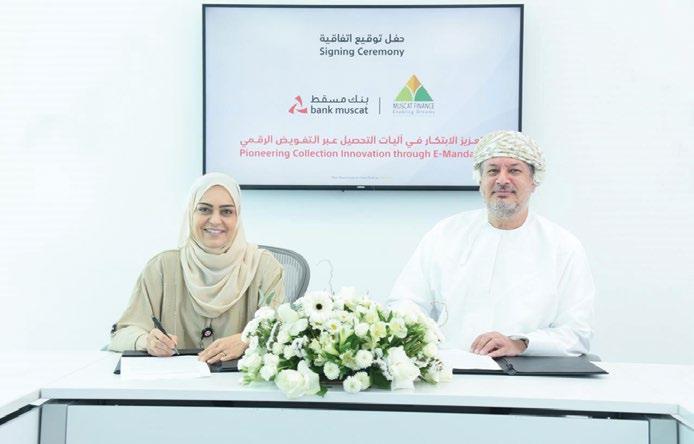
Bank Muscat, the leading financial services provider in the Sultanate of Oman, and Muscat Finance have announced a strategic partnership to activate the e-mandate service through Bank Muscat’s Application Programming Interface (API) platform. The initiative aims to support the digitalisation of financial collection processes and enhance the efficiency of recurring payment management for institutions and customers. This step reflects the vision of both institutions to support secure financial solutions aligned with future developments.
This
adopting advanced digital services to enhance operational efficiency, ease of transactions and customer experience, in line with the objectives of Oman Vision 2040 to strengthen the digital economy and drive transformation in financial services. The e-mandate service is one of the digital tools that enables companies to collect dues from customers securely and quickly without the need for traditional paper-based procedures, thereby enhancing institutions’ ability to manage their resources more efficiently. On this occasion, Ilham Murtadha Al Hamaid, General Manager of Corporate Banking at Bank Muscat stated:
“We are proud to expand our network of digital service partners through the activation of the e-mandate service with Muscat Finance. This service represents a qualitative addition to the solutions we offer our corporate and institutional customers, reflecting our commitment to providing innovative digital tools that support collection processes and facilitate the management of recurring payments in a flexible and secure manner. This step underscores the Bank’s ongoing efforts to develop its digital services, support partners in both the public and private sectors and reflect its commitment to delivering advanced digital banking solutions that support the comprehensive digital transformation of the national economy, fostering an efficient business environment.”
Rashad Al Shaikh, CEO, Muscat Finance, highlighted the value of the partnership for customers, “Our collaboration with Bank Muscat enables us to implement direct debit services more efficiently and provide customers with a simpler and more convenient payment experience. The e-mandate service supports the growing demand for digital financial solutions and will help streamline our payment and collection processes.”
NBO launches Ramadan and Eid Card campaign with cashback and lifestyle offers
The National Bank of Oman (NBO) has launched a Ramadan campaign offering customers cashback rewards and exclusive discounts on everyday spending categories. Running during the last week of Ramadan, Eid Al Fitr, and beyond, the campaign encourages the use of NBO Credit Cards, Debit Cards, and Badeel Prepaid Cards through various offers across dining, fuel, lifestyle, and e-commerce. Maha Saud Al Raisi, Assistant General Manager & Head of Products at the NBO, commented on the campaign, “Ramadan sees a natural rise in consumer activity across dining, retail, and more, making it the perfect moment to offer our customers something meaningful. These cashback rewards and discounts, delivered through partnerships with leading service
providers, are a direct reflection of NBO’s commitment to making everyday banking more rewarding, particularly during moments that are valuable to our customers.”
As part of the promotion, customers can also benefit from up to 75 per cent discount on talabat food orders with their credit cards and 25 per cent cashback on fuel spends at Oman Oil service stations, both available throughout the campaign period from March 15 to 22, 2026. Customers can also enjoy 20 per cent cashback on beauty salon services from March 18 to 21, 2026, and 10 per cent cashback on Easy Payment Plan (EPP) credit card conversions made through the NBO app from March 15 to 22, 2026. These offers are designed to reward customers for their
everyday spending while making it easier to manage purchases through flexible payment options. Customers can explore the full range of Ramadan offers and conveniently manage their cards through the NBO app.

announcement comes at a time when
Sohar International expands its network with the opening of its 59th branch in Al Mouj
Reaffirming its commitment to strengthening customer proximity and supporting Oman’s evolving economic landscape, Sohar International has officially opened its new branch in Al Mouj, one of the Sultanate’s most prominent residential and commercial destinations. Strategically located within Al Mouj Walk, the branch was officially inaugurated by HE Halima bint Rashid Al Zarriyah, Chairperson of the Authority for Small and Medium Enterprises Development (ASMED), in the presence of Sohar International’s Chairman, Said Mohamed Al-Aufi, Chief Executive Officer Abdulwahid Mohamed Al Murshidi, and members of the Executive Management. The official opening took place on the sidelines of the Sohar International Souq – Layali Al Mouj, which was also launched on the same day, further positioning the bank at the heart of a vibrant lifestyle and commercial hub.
Commenting on the branch opening, Abdul Qadir Al Sumali, Chief Retail and Premier Banking Officer at Sohar International, said: “While digital banking continues to
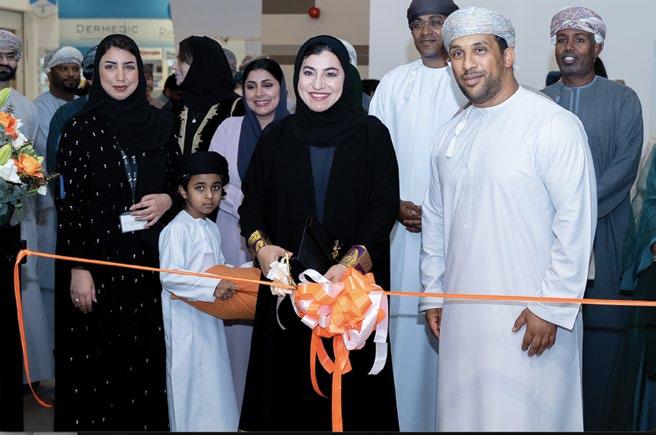
long-term relationships. Our presence in Al Mouj reflects a deliberate and datadriven approach to network expansion— positioning our services within integrated communities where residential living, commerce, and economic activity converge.
individuals and businesses as they navigate also aligns with our broader commitment to supporting Oman’s economic development priorities and the objectives of Oman Vision 2040, by maintaining a balanced banking model that integrates advanced digital capabilities with meaningful in-person
Bank Nizwa reinforces its leadership with the appointment of Tariq Atiq as Acting CEO
In line with its commitment to empowering Omani talent and leadership, and fostering continuous advancement within the Islamic banking sector, Bank Nizwa, the leading and most trusted Islamic bank in Oman, has announced the appointment of Tariq Atiq as Acting Chief Executive Officer. This strategic leadership transition reflects the bank’s forward-looking strategy and underscores its confidence in a seamless succession that upholds institutional stability, ensures continuity, and supports the delivery of longterm value to all stakeholders.
Tariq brings over 25 years of hands-on banking experience, with a distinguished track record of success across retail banking, corporate banking, SMEs, cards, and digital banking. He is widely recognised for his leadership in driving major transformation programs and delivering innovative digital
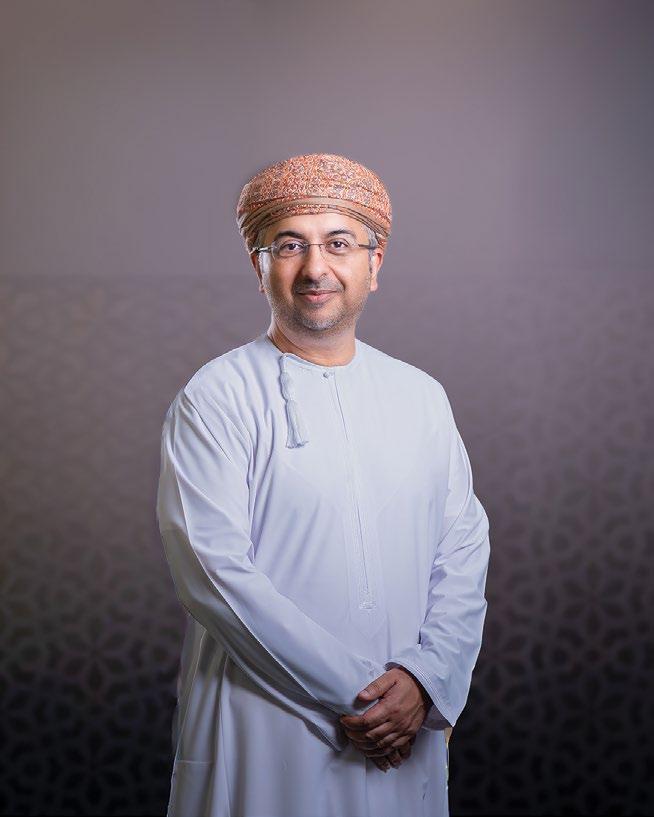
efficiency, and the adoption of innovative banking solutions aligned with evolving
In this context, Tariq stated, “I would like to extend my sincere appreciation and gratitude to the Board of Directors for their trust. I am honoured to assume this role at this important stage in the bank’s journey, as it continues to strengthen its position as a leading institution in the Islamic banking sector. I look forward to building on the achievements accomplished to date and to advancing innovation while delivering Sharia-compliant banking solutions that meet our customers’ aspirations and keep pace with evolving market dynamics. We will also continue to focus on enhancing customer experience, empowering national talent, and achieving sustainable growth that creates long-term value for all stakeholders.”