CONTENTS
Passed with fl ying colours – Certi fi cation for Oil Analysis Specialists ..........P. 3 New in the laboratory - A robot specially developed for OELCHECK ............P. 3
UPS – Return shipment of oil specimens in Germany and abroad ...............P. 3
Hot topics:
The elements of a lubricant check III
– Wear, contaminants or additives
– Engine oils and their characteristic limit values for elements ...............P. 4-5
News from China – Before the light goes out on the drilling rig ...................P. 6 New oil – Problems despite perfect preparation.........................................P. 7
Enquiry – Comparability and reproducibility of analyses .............................P. 8



Hoyer – more than
sinc D ownload www.oelcheck.de /news-dow
Circulation: 9,500; three issues a year since 1998 Download at www.oelcheck.de/news-downloads
tailor-made gas engine oils
Gas engine oils with know-how
A family business since 1924 and today one of the largest middle-class enterprises in the fi eld of energy supply in northern Germany – that‘s Hoyer!
More than 1,300 employees work every day to supply more than 200,000 customers with fuels, fuel oil, lique fi ed petroleum gas and lubricants in their catchment area. With currently 21 branches and 60 sales of fi ces Hoyer is the local energy supplier. Lu-

bricants have been part of the product range since the company was founded, but it is only since 2002, when the essential operating parts of the Finke mineral oil factory and the rights to its Aviaticon trade mark were taken over, that Hoyer has also established itself as a well-known lubricant manufacturer.
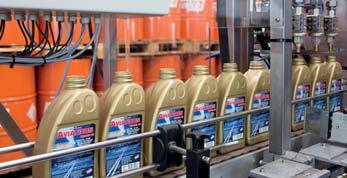
The Aviaticon lubricants have been developed and produced at the newly built Finke mineral oil factory in Visselhövede since 2003.

Gas engine oils, as they are developed at Finke, are a typical example of lubricants that need modern know-how for their formulation. The lubrication of biogas motors presents particular challenges. The composition of the gas often varies. In addition, some impurities in biogas, most importantly hydrogen sulphide, react extremely aggressively and release acids during combustion, which can damage the motor. This is exactly where the oils authorised by the gas engine manufacturers attack. With their balanced alkaline reserve they keep the acids in check over a long period. Where necessary they also protect motors with a low-ash additive, which ensures ef fi cient system operation. Nevertheless, each engine manufacturer designs their motors differently, each motor is operating in individual conditions and each biogas plant produces a different gas. For that reason our gas engine oils are available in a variety of formulations.
A comprehensive check before every conversion
A thorough appraisal of all parameters is carried out before an individual product recommendation is made. Technically trained sales advisers collect data on the motors, learn about the oil used to date and clarify the details of the speci fi c operating conditions, such as, for example, high thermal stresses
SUMMER 2015
2
The production facilities at the Finke refinery at Visselhövede are state of the art.
Adream company - do they even exist? Who would not like to work in a dream company? And which company owner would not like to have dream employees? Perhaps you believe in such a beautiful dream, but in reality you have known such a firm for many years!
Our OELCHECK GmbH was awarded the TRAUMFIRMA [Dream Company] award for the fi fteenth year in a row in 2015. This is awarded to firms, which are distinguished by a particularly employee-friendly and appreciative business culture. The TRAUMFIRMA award was conferred upon OELCHECK by Mr Paulus after a completely anonymous survey of our employees. They are the best judges of whether they work in a dream company. The survey covered, among other things: Communication and co-operation, the competency and attitude of our managers, the workplace environment, social bene fi ts, further education and much, much more. The award (www.traum firma.de) cannot be bought, but rather the title must be earned. It is based on strict criteria, which relate to a pioneering corporate culture. OELCHECK was profiled together with other prize winners for the first time in 2010 in the „Traum firma“/[Dream Company] book.
It is not only management who are responsible for the development of a dream company. Personal responsibility was and is asked of everyone! Everyone shapes his or her own dream company now and in the future. We have all actively worked towards making OELCHECK a dream company. Both for those who work there and for those who use our services - our customers!
We would also like to continue to expand and improve our services for you, not least our large customer portal www.lab.report. But to do so we rely on your help. In Autumn 2015 we will carry out our next major customer survey. Constructive criticism is especially welcome! We are already looking forward to your ideas!
or particularly corrosive gas components. In addition, an analysis of the used oil for the product used to date is carried out in our OELCHECK laboratory before converting to a new gas engine oil. Only after detailed analysis of the laboratory report, taking into consideration the usage time and supplementary information on the gas type, will Hoyer Applications Engineering recommend the most suitable oil for the biogas motor.
OELCHECK lubricant analyses also provide support in their use

Frank Schulze is one of the key account managers for lubricants in the Hoyer business group. When it is a question of gas engine oils, it all comes together with Frank and his colleagues Markus Schulz and Oliver Reinhardt. Frank knows: The initial test of the existing oil in a lubricant analysis is only the start of the long-term monitoring of the gas engine oil and the lubricated motor.
Depending on the engine manufacturer and type, the type of gas and its composition, the operating
parameters and the service conditions, as well as the results of the preliminary investigation, the right engine oil and the first intervals for the oil tests are recommended. Based on the results of the OELCHECK lubricant analyses after the oil change, the oil change interval is then adapted individually. These intervals are normally longer and, therefore, more economical than before. They can, however, also be shorter in rare cases, especially where the gas composition varies. Ultimately the safety of the motor always takes first priority.
The operators of the gas motors send the oil samples in the analysis sets, which are supplied together with the oil, directly to OELCHECK. However, the commented laboratory reports are not sent directly by the laboratory to the customer, but are sent via the internet portal www.lab.report after an appraisal by the oil manufacturer. Then, in addition to the diagnosis, the application technicians can, based on the values determined and thanks to their years of experience, advise their clients precisely when the oil should next be changed or analysed.
Important laboratory reports, that is those marked with yellow or red by OELCHECK, are processed with the highest priority and are mailed to colleagues on site with the clients with relevant recommendations, so that these can be acted upon immediately.
The application technicians at Hoyer have used the OELCHECK lubricant analyses and the internet
portal for many years. In that way a comprehensive database of almost 10,000 samples has been created. With their help, trends can be recognized with the highest accuracy and individual oil change intervals can be set. In addition, the data also provides important information to the Research and Development department at Fink Re finery regarding the long-term behaviour of gas engine oils in a range of different operating conditions. This knowledge naturally in fluences the further development of the products.
The state of the gas engine oil and the motor is checked and commented on in each laboratory report. Any impurities and wear processes, especially oxidation and „acidi fi cation“ of the oil, are evaluated in detail. Aviaticon gas engine oils do provide an optimised alkaline reserve, but during use they must remove the aggressively acidic products of combustion from the biogas and protect the motor from corrosive wear. Consequently the usage time is limited for even the best oils. With each lubricant analysis the acid-base balance of the used oil is tested. The acid value AN (Acid Number) shows the degree of acidi fi cation of the oil, while the base value BN (Base Number) shows the amount of base additive still available, which can work to neutralise the acids. Consequently the base value of an oil should always be higher than its acid value. If the value or the AN exceeds the BN, the engine oil should be changed promptly according to the guidelines from the engine manufacturers and insurance companies. However, since the base value does not show the neutralising capability of an oil for all acidic reacting compounds, which can occur in the oil during operation of gas motors with landfill or digester gases, the i-pH value is also always determined. This provides decisive additional information regarding the loading of the used oil with corrosive acids.
Frank Schulze: „We have used the OELCHECK analyses for years. We particularly value their speed, the quality of the assessment and the fact that a contact person is always available where we have a question.“

On-site training is important
The power generation and secure operation of biogas motors depend on the entire system. Their perfect lubrication is, however, not easy to master. For that reason Hoyer application technicians train the employees and operators of the systems in regular further training events. In this way they get to know the world of lubricants and the interpretation of laboratory results even better and are familiarised with the optimal lubrication of gas engines.
www.finke-oil.de www.hoyer-energie.de
2
Yo Yoururss, , B ar arbabara ra Weieismsmanann
Small container filling in seconds at Finke
OELCHECK
Team event – a super jamboree with some thrills



On Friday 19 June, after work was carried out near the state of Salzburg, the OELCHECK team set out for Bad Vigaun and held a proper mountain-lodge party there. They did not spend too long being charmed by the scenery, though, as at 9.00am the following morning they set out for an off-road site. Six teams were formed on the spot and then set out on the first part of the off-road course on fast quad-bikes and completed many dif fi cult challenges. Not even the adverse weather conditions, with cold, wind and torrential rain, were able to spoil the good spirits of the highly motivated teams.
After a generous lunch break at Simmerlwirt they continued on to Hohenwerfen Castle, with its imposing mountain backdrop. For 900 years this castle has stood on a

steep, jutting rock high over the Salzach valley. Luckily we had fortified ourselves well in advance, as we joined in with the knight‘s games. Here an absolute test of courage was also on the programme! Personal limits were overcome when abseiling down from the castle. After so much effort from everyone there was an award ceremony and a huge knight‘s feast in the knight‘s hall in the castle. On Sunday, Segways were waiting ready for us for the second stage of the off-road course, which, of course, we had to try out. At noon we had a pleasant lunch break and then headed out on the way home!
Passed with flying colours - our congratulations!
What commitment! For 25 weeks, the OELCHECK laboratory assistants have prepared themselves in their free time for the „Oil Analysis Specialist Certi fi cate“ (MLA II) test. And they passed with merit!
The laboratory assistants in the OELCHECK laboratory are simply the best! Before the MLA II test
they had already passed the Certi fi cation for Laboratory Lubricant Analysts I in 2014, according to ISO 18436-5.
Our sincere congratulations also to the OELCHECK engineers, who have again successfully completed their re-certi fi cation as CLS „Certi fi ed Lubrication Specialists“ with the American Society of Tribologists and Lubrication Engineers (STLE).
Our new colleague has six motors!
Before the new colleague takes matters in hand, the sample containers are placed on the header for 30 minutes at ambient temperature. By doing so the larger and relatively heavy particles sink to the inner side of the cover. Then the PQ index is checked through the plastic cover, which provides information about the proportion of magnetised iron particles in the test sample.
The determination of the PQ index, the visual assessment of the oil sample and a first quick check for possible contamination with water are the starting points for every analysis. Up to now this involved the many time-consuming movements. Now, however, a new colleague has taken over these tasks: A highly agile robot with six motors, developed especially for OELCHECK!
The robot is then activated. It takes the sample container with its arm, which is located in the sample tray over its head, and brings it to a clamp. This holds the specimen and rotates it 180°. Now the robot opens the cover and rotates the white surface upwards. The impurities and larger particles have deposited on it while it was standing on the header. The robot takes the cover to a camera with its gripper. It produces a high-resolution photograph of the deposits

UPS – Return of your oil samples
UPS includes a return voucher with the OELCHECK analysis sets. These entitle you to free dispatch of your specimens to our laboratory in Brannenburg.
Of course his only applies to dispatch within Germany!


If however a UPS supplied return voucher for use once within Germany is used by mistake to send a sample from abroad, this will lead to a post-calculation of higher transport costs!
Our tip for returning samples from abroad: Ask us for the relevant prices: akv@oelcheck.de, tel. +49 8034-9047-250!

on the inner side of the cover and then prepares an image of the edge of the sample container. Next comes the crackle test. To carry this out, the robot extracts a precisely de fined quantity of oil with a pipette from the sample container and drips it onto a sloped hotplate. If there is water in the sample, bubbles of vapour form even at a relatively low water content of more than 0.12% on the plate heated to approx. 160°C. Where the water content is more than approx. 0.15%, in addition to the formation of bubbles in the oil droplets, a crackling noise can also be heard. This occurs when the water vaporises all of a sudden. While the oil runs down the sloping hotplate a further camera documents the behaviour of the oil.
All of the photos are available in the OELCHECK database immediately after they are taken. The laboratory assistants and diagnosis engineers, as well as those customers, who have access to www.lab.report, can use them to more precisely visually evaluate the samples. All of the images are always taken under identical lighting conditions. The photos can be zoomed in several times on the screen. That way any impurities, the colour, any clouding or phase formation can be observed much more easily. With the help of the images from the crackle test the number of bubbles can also be determined, which makes a quantitative assessment of the water content possible.
3
OELCHECK INSIDER-INFO
voucher with sissetsTheseentitleyou to
Engine oils – Typical constitu well as warning values
motorGas engine
mobile stationary stationary
12-555-20 Fe, Cu, Zn, Si Aluminium pistons, oil-pump housings, oil coolers, transducer parts, turbochargers, guide bushes, bearings. As Al-Si: Cylinder block on a fully aluminium motor. AntimonySb 1-323 Pb, Sn In connection with lead or tin from bearing alloys. Sealing strip in a Wankel engine. BariumBa1-32 Pb, Ni Bearings with lead alloys, spark plugs in connection with nickel.
BerylliumBe1-33 Cu From CuBe valves and valve seats, from sintered bearings.
LeadPb10-3010-20 Sn, Cu, Al, Fe Connecting-rod bearings, nearly all running surfaces on plain bearings. With Sn: soldered connections.
With Al: bearing shells. With Al and Fe: Bearing shells, crankshafts.
a typical wear element in motors.
Components of bearings exposed to corrosion.
a typical wear element in motors.
ChromeCr4-285-10 Si, Sn, Ni Piston rings, crankshaft bearings, piston pins, exhaust valves, gaskets, guide bushes, chrome-plated parts and gearwheels.
With Sn: Rolling bearings, valve tappet, compressor, water pump.
IronFe80-18015-30 Si, Cr, Al Cylinder block, cylinder head, timing wheels and timing chains, valves, valve tappets and guides, crankshaft, camshaft, rocker arm shaft, piston pins, roller bearings, oil pumps. With Cr: Rolling bearings.
With Cr and Al: Pistons, piston rings, cylinder liners.
in
Rare alloy constituent in alloys with beryllium, yttrium, vanadium.
constituent in high-strength steels
Pb, Al Main constituent of brass and bronze. As wear metal from oil pumps, connecting-rod bearings, piston pin bearings, rocker arm shaft bearings, bronze worm gears, and sintered brake and clutch discs. With Pb and soot, also turbocharger bearing.
constituent of bearings in rail traction motors.
of die casting.
From steel/alloys used in valves, roller bearings, gearwheels or shafts.
rings in gears, piston rings, heat resistant steels.
of Al-Si alloys.
valves, valve guides, turbochargers. Higher warning values for aircraft engines with nicasil coated components.
Not a typical wear element in motors.
Not a typical wear element in motors.
Silver-plated running surfaces on highly loaded plain bearings, such as in locomotive engines.
From aluminium alloys (fully aluminium motor).
Alloy constituent in springs and valves, from ceramic parts.
As a constituent of chrome-vanadium steel alloys in valves and valve springs.
TungstenW1-3 Rare. Alloy constituent in steel to improve hardness and corrosion resistance.
ZincZn4-20 Al, Cu, Pb Components of die casting or brass, galvanised components and filter supporting core. to20000-700 P, S, Ca
TinSn12-245-10 Cu, Pb, Al Running surface on a connecting rod, valve rocker shaft and piston pin bearings. With lead: mostly from white metal bearings. With copper: from chrome-plated parts.
The informative value of the results depends on the motor type, its oil capacity, the oil type and the usage time of the oil (mileage, hours of operation). Exceeding an individual warning value does not automatically mean that oil must be changed.
A comparison of the trend observed with previous specimens from the same motor is crucial to the informative value of the warning values
This applies fundamentally to engine oils:
Wear indices must be set lower: The greater the oil volume, the briefer the oil usage period, the lower the rotation speed, the lower the load.
Additives and their resulting changes must always be scrutinized critically for blending or additive breakdown.

Warning values for impurities apply independently of the service life, oil quantity and service conditions.

WearAdditives/co Element mg/kgwarningvaluemostlyin
Possiblecauses typicalrangemostlyin connection with
Petrol/diesel motorGas engine
mobilestationary stationary AluminiumAl
80
connection with
Petrol/diesel
BoronB Not
10-500150 P, Zn, Ca
CadmiumCd2
ChlorineCl
50
Not
PotassiumK Not a typical
motors. 656525 Na CalciumCa1-3
600–50005003500 CobaltCo2 Alloy
Sn,
LithiumLi2 Al, Mg
MagnesiumMg4-82-6 Al, Zn
100–15000-50 ManganeseMn1-3 Fe
MolybdenumMo4-204-2015 Synchronous
0-500 SodiumNa2 Al, Si Constituent
202020 NickelNi1-5 Fe Bleeder
PhosphorusP
600-20000-500 Zn SulphurS
500-60005009500 Ca, Zn SilverAg1-38
SiliconSi10
20 TitaniumTi1-3
35 VanadiumV1-3
wear element
CopperCu25-6010-25
Alloy
Components
Al
Cr
uent elements in fresh oils as for impurities and wear

Possiblecauses
mg/kgwarningvaluemostlyin
No
Included as antimony oxide in some lubricating greases as an EP additive.
For improving EP characteristics. However, not a standard additive in engine oils. Possibly also due to contamination, e.g. by automatic transmission oil.
15 Fe, SiContamination from loam and clay soils. Bauxite dust (Aluminium Oxide).

1-310
Can be included in landfill gases as a contaminant in the gas. Constituent of solder, soldered connections.
Ca Friction coefficient modifier from ATF‘s. As barium-complex soap, a component of high temperature greases or assembly pastes.
Components in sintered ceramic components or in jet engine oils.
In aircraft engine oils which are operated with AVGAS (leaded super for aircraft).
Na, KComponent of glycol antifreeze and corrosion protection media. Water supplement in high pressure cleaners.
Possibly as a deep red pigment in plastics and paints.
800 Contamination from gas when operating with special gases.
Dye pigments from primers (zinc chromate).
No typical additive components for motor oil
Not typical, sometimes together with sodium as an alternative to calcium and/or magnesium compounds. 2-305-10
Detergent-dispersant-oil additive. Improves cleaning and dispersion capacity as well as heat resistance.
No typical additive components for motor oil 1-3
No typical additive components for motor oil
No typical additive components for motor oil
Improves the corrosion protection, thermal stability and dispersion capacity of motor oils. Increases the alkali reserve (BN).
Very rarely as an additive. It individual cases can be used outside of Europe as a fuel additive in petrol.
Wear reducing friction modifier and oxidation inhibitor in modern multigrade oils, today only rarely as MoS2 pigments.
Rare additive component. In some motor oils as a substitute for calcium or magnesium compounds.
2-10
1-3
20
5-3020-30
Deposit from unburned diesel fuel additives (ferrocene).
Na, BAdditive in aqueous media such as glycol antifreeze or cooling water. Mineral salt in road salt or tap water. Saline bearing air.

Concrete dust containing lime, curing accelerator, hardness creator in tap water, filling material for paper or PVC (chalk).
From blue dye pigments.
Corrosion of oil coolers and oil ducts made from copper. Constituent of assembly pastes.
P, ZnIndication of contamination by lithium soap grease or assembly pastes. Constituent of multipurpose greases (thickener).

Ca, NaHardening agent in tap water or cooling water.
Si Rare. In combination with silicon contamination in manganese mines. (In vehicles from North America possibly also from corresponding petrol additives.)
SResidue from MoS2-based assembly pastes or sealing materials, oil supplement containing MoS2.
K, BAdditive in glycol antifreeze or cooling water. Road salt, tap water or wastewater, salty intake air. Thickener in lubricating greases.
No typical additive components for motor oil Assembly paste containing nickel (Neverseeze).
It optimises the EP characteristics as ZnDTP (zinc dithiophosphate). Wear, oxidation and corrosion protection. Reduces friction, deactivates metal surfaces. Can, however, act as „catalyst poison“.
Constituent of (mostly mineral oil based) base oil. Wear and corrosion protection, mostly in combination with phosphorus or zinc. Can act as „catalyst poison“.
No typical additive components for motor oil
Anti-foam additive.
Marker in additive compounds.
No typical additive components for motor oil
No typical additive components for motor oil
It mostly improves the wear protection and oxidation stability in combination with other additive elements.
No typical additive components for motor oil
From the 29 elements in this table, we record in the laboratory report 18 as standard. The remaining ones are only mentioned where more than 1 mg/kg. In this case, we designate elements as too rare or dif fi cult to determine. The limit values listed are based on data from over 500,000 samples of used oil from motors of various types, which were examined by us.
1-3
15-3015-30/ 200-300*
1-3
1-3
Artifi cial fertiliser (dust).
Abrasion of rubber mixtures, artifi cial fertilizer.
Sn Deposits of silver solder.
Dust from intake air, abrasion of seals containing silicone, deposits from mould release agents and silicon greases. *With gas engines: organic compounds (silanes/siloxanes) from special gases.
Oil level indicator (fl oat). As white titanium oxide in plastics or paints.
Unusual as a contaminant.
Tool steel residue from manufacturing; Electro-scrap, e.g. Incandescent lamps – as impurities in landfill gases.

CrZinc-based dye pigments (zinc chromate).

Pb, Si
The limit values given here and tolerance ranges should only be used as a general guideline for the service life and oil charge quantity that is typical of the use case in question.
Diagnoses of the highest accuracy can only be generated by our engineers, who take all values into account in combination with con-
Main component of tin-lead solder (up to 95%), from PVC abrasion.
sideration the individual conditions of use.
We conclude our series with the typical engine oil warning values. We have published the values for hydraulic oils in the Winter 2014 and for transmission oils in Spring 2015. All of the files are available in the download area at www.oelcheck.de.
55 o
nstituentelementsinfreshoilContaminant
connection with Possiblecauses Petrol/diesel motorGas engine mobilestationarystationary
typical additive components for motor oil
No typical additive components for motor oil
1-3
No typical additive components for motor oil (3000)
Cleaning and wear protection.
typical additive components for motor oil
No
1-3
No typical additive components for motor oil
No typical additive components for motor oil
Before the light goes out on the drilling rig!
CNOOC – behind this abbreviation, largely unknown in the western world, stands a giant, the China National Offshore Oil Corporation. CNOOC is part of the globally largest suppliers of natural gas and crude oil in the offshore drilling fi eld.

The most important places where the CNOOC produces oil and gas are located in the Bohai Bay, as well as in the southwest and southeast China sea. In addition, CNOOC drilling rigs also operate of the coasts of Africa and Australia, and also in the North Sea. At the end of 2014 the CNOOC group rig „Golden Eagle“ started work off the English coast.
In fl at water drilling platforms with telescopic legs are used, while in deep water the platforms stand on scaffolds, which are anchored to the seabed. From there onwards pipes are driven into the seabed, through which the gas and crude oil then fl ow upwards, mostly under high pressure. After the borehole hole has been exploited it is locked and the platform is moved to the next deployment location. With its different sections the drilling rig functions as a small, autonomous factory. The supply of electrical power is extremely important in this case. On most drilling rigs it is produced with large gas turbines. If a borehole is running, there is gas as fuel for the turbine directly on site in abundance. On one of the large CNOOC platforms in the China Sea a 26 MW class turbine generates electric power. This type of turbine has proven to be very effective and is in use on many drilling rigs. It is very robust and is designed for a long service life, as well as the simplest maintenance possible. The turbine oil used by the CNOOC was turbine lubrication contains mild EP supplements, in addition to oxidation inhibitors. From the crude oil side it is designed especially for high temperatures, which
are usually the norm with gas turbines. Nevertheless during their extremely long lifetime, often more than 10,000 hours, turbine oil problems occur again and again. In addition, on drilling platform the oil is exposed directly to extremely hostile operating conditions. These include, in addition to the damp and salty air, acidic components produced from the largely unpuri fi ed gas emerging from the borehole. But one of the greatest hazards for the oil and the turbines is the formation of deposits, which come from the turbine oil itself, from its aging products, the breakdown of additives or impurities in the system.
To be able to estimate the potential risk, the turbine oil for this gasturbine was regularly analysed in the OELCHECK laboratory in China using Set 9 for the analysis of turbine oils. The remaining service life of the oil can be estimated from the trend data where the operating conditions are maintained. In addition to the breakdown of antioxidants in the oil, additional contaminants are detected at an early stage. This is important because all contaminants can adversely affect oil ageing, air release characteristics, wear protection and/or foaming characteristics. Data for the turbine-speci fi c parameters is provided on customised turbine test data sheets. Turbine oil sets also include larger sample containers (up to 1 litre), because certain test procedures, such as water and air separation characteristics, or foam release characteristics, require a fairly large amount of oil.
The first oil samples analysed in 2013 from the gas turbine on the drilling platform were unremarkable. But at the end of 2014 the diagnose engineers at OELCHECK had to ring the alarm. The Analysis Sets 9 contain, among other things, the MPC test, the index for which had suddenly climbed rapidly. The Membrane Patch Colorimetry (MPC) test is the only

test in the world that can show the potential of the oil to form deposits. The higher the MPC factor is, the more soft particles are present in the oil. If they clump together, due to their strong polarity they can easily form deposits on all lubricated components in the system. In this way they can bond valves and impede the oil-based regulation of the turbine. As a further indicator of impurities a clear worsening of the foaming behaviour was observed.
In consultation with the CNOOC it was established by OELCHECK staff in our laboratory in Guangzhou that: the turbine had problems not only due to strong vibrations, but also due to increased storage temperatures. To come to grips with the threat posed by the deposits the approx. 5,000 litres of turbine oil was changed immediately. Nevertheless this measure could only solve the problem in the short term. After only 500 hours the freshly changed oil was already burdened with deposits again. The whole system had to be already filled with deposits. Sooner or later that would have threatened the turbine and as a result the power supply for the drilling rig with a shutdown. A disaster, because without power, it is not only the light that goes out here!
Following a recommendation from OELCHECK a team from Fluitec, one of the specialists in removing impurities in turbines and oil circulation systems during operation using electrostatic filters, now works on the drilling rig. The problem-free operation of the turbine could soon be ensured once more.
6 在做什么 NEWS FROM CHINA 在做什么
MPC-Test – Filter evaluation with a colorimeter.
Drilling rig in the South Chinese Sea. The power is supplied by a 26 MW gas turbine.
The new inst allation is prepared per fectly – nev-
You have prepared the installation perfectly, followed all of the manufacturer‘s guidelines meticulously and filled the oil fed through the filter. At last the new system begins to operate. At first everything goes well, but suddenly something lets you down. The lubricant analysis carried out after a short period due to the problems shows changes in the additive elements or blending in the IR spectrum. This paradox can occur with a new hydraulic system or a newly supplied gearbox, but in practice these problems unfortunately occur more and more often.
If the oil foams in a new hydraulic system or gearbox, decomposition products condense out, the colour or lubrication properties change markedly, the viscosity reduces, the operating temperature climbs or after a short period wear particles appear in the filter, then it can be a case of strong contamination or a mixing of two lubricants, which are often still incompatible with one another.
In some cases these problems are in-house, but they are also imported more and more often! In most cases poor communication and inadequate know-how are the causes.
Flush before starting!
Most gearbox and hydraulics manufacturers prescribe at least one, but usually several flushes before commencing service. In this way contaminants such as dust and fine metal particles from the treatment process, but also residues from corrosion protection materials and metal working fluids, as well as surplus assembly aids, such as pastes or lubricating greases, are eliminated. The system is flushed with a lower viscosity version of the oil used later in operation. Alternatively a lowcost, low-viscosity flushing oil is often used. However, you should take into account that between 5 and 10% of it will remain in the system long after it is drained. A report on the residual amount remaining is prepared in the OELCHECK laboratory.
Nevertheless the lubricant fails
If problems occur in spite of following correct procedure with fresh lubricant, a lubricant analysis should be carried out promptly for clari fi cation. It starts with detective work!
Contaminants
If the values in the oil sample measured in the laboratory for individual additive elements (e.g. phosphorus, zinc, calcium, barium) vary markedly, this points to contamination by assembly pastes or greases, sealing compounds, soldering agents, coats of paint, deposits from metal working fluids, welding or even simply dust. This is often a sign that the system was not flushed or not correctly flushed.
Blending oils
However, if an admixture with another oil is established in the laboratory using infra red spectroscopy or a change in the viscosity, the focus of the investigation must be expanded.
Has too much „thin“ flushing oil remained in the system and has the viscosity fallen as a result?
Has the anti-corrosion material or testing oil been drained by the manufacturer, but there are some residues that are incompatible with the operating oil?


An example of this: When smear-forming glycol components were discovered by the OELCHECK laboratory in a synthetic operating oil based on polyalfaolefin
Oil impurities before and during assembly
Contaminant Detectable in the laboratory by Visually detectable byTips for problem solving
Assembly pasteZinc, barium, aluminium
Lubricating greaseCalcium, zinc, phosphorus, lithium

Dark, muddy particles are suspended in the oil
Use less, use another type of paste
Transparent film on the oil surfaceDo not overfill stock with grease gun
Component cleanerBoron, waterTurbid oilChange cleaning bath more often
Flushing oilLow viscosity, IROil too thinImprove flushing process, remove oil completely
Wrong flushing oil typeViscosity, IRStreaks, cloudinessUse the same oil type
Soldering agent (cooler joints) Silver, antimony, lead, copper
Increase in AN/NZ, foamDeactivate joints better
Coats of paintZinc, titanium, beryllium Sludge deposits on the bottomTest paint coat compatibility
Other oil typeChanged additives, IR Too much air in the oil, oil remains compressible
Sealing compounds, seals Mostly silicon, increase in the AN/NZ
Cutting fluids, lapping pastes Change in additives and IR
Oil foams, corrosion after a short time
(PAO), it was immediately clear why the new drive motors on a conveyor system were stuck.
Glycol basic synthetic oils are completely incompatible with other synthetic or mineral oils! In this case the gearbox manufacturer had used a glycol testing oil. A residue of over 10% of this oil remained in the drives reinforced with ribs. With the PAO operating oil that was added by the end user and was otherwise unproblematic a blackening of the oil and massive wear occurred within a few hours of operation. When the gear was exported the communication regarding the oil received special attention! If the glycol had been reduced to less than 1% by rinsing with PAO oil and a check for same in the OELCHECK laboratory, the problem could have been avoided.
Communication instead of puzzle solving
It often becomes really tricky, if a manufacturer has purchased additional components. The delivery personnel are often not informed about assembly aids or anti-corrosion materials. Before assembly the supplied components are normally „washed“, but the cleaning material often includes wash-active substances, usually in the form of tensides. When interpreting the analysis results we are confronted then not only with anti-corrosion products or test oils, but also with cleaners. These usually water-based cleaners containing boron are almost always poison for any oil and must be removed completely from the system before start-up. If it is not passed on, which preservatives, partial cleaners and/or testing oils are used, these can not be dealt with accordingly on site. Then even with the best preparation it always comes down to unpleasant surprises.
Use same oil type (e.g. zinc free hydraulic oil)
Use less or other material, rinse more thoroughly
Sludge on the bottom, foamClean and rinse more thoroughly
Lastly it is not always worked out in advance as, for example, during production of large gearboxes for wind power plants. These gearboxes usually pass a test run with the oil type, with which they should work later on in practice. In this case not only is a performance pro file generated, but the purity of the oil and system is also documented with an oil analysis. As a rule approximately 5% of the drained testing oil remains in the unit, this is more reason to use an oil type identical to that used in operation..
7 TECHNOLOGY FOCUS
The new installation is perfectly – never theless there are problems with the lubricant! ertheless there are problems with the lubricant!
Our presses are in use globally. In our operating manual, we recommend semi-annual trend analyses for hydraulic and transmission oils. One of our service technicians has had a hydraulic oil tested in our laboratory in the USA. We have now also sent the sample to OELCHECK. In both laboratory reports some values differ marginally, but the wear element iron can be seen clearly in both of them. What could have caused this?
OELCHECK:
Even if a sample is analysed repeatedly in a laboratory, the results can quite differ a little from each other.
First we assume that the testing laboratory is accredited and has carried out the test correctly. Unfortunately, this is not self-evident in the USA. For OELCHECK, as the leading laboratory for lubricant analysis, not only the certi fi cation according to ISO 9001 but also the accreditation of selected testing procedures in accordance with DIN EN ISO 17025 is an absolute must. DIN EN ISO 17025 describes the competence of the employees, the testing methods, the equipment, the quality of the measurements and the preparation of test reports. During the accreditation, the performance of the testing methods is also closely examined.
Even if the external laboratory should be accredited according to DIN EN ISO 17025, it is not guaranteed that the laboratories determine the parameters according to the same standards. In Germany DIN techniques are applied and in most other countries those of the ASTM (American Society for Testing and Materials). The latter can differ in details from DIN guidelines.
Every testing standard includes speci fi cations for the precision of the values determined, a measure of its tolerated dispersion or, in everyday terms, its „standard deviation“.
The precision in the analytics is de fined in even more detail:
- For the reproducibility the same sample is analysed by the same employee with the same device in the same laboratory immediately after the previous measurement. The tolerated deviation relates to the difference between the two measurements relative to their mean.

- For the comparability the same sample is analysed in different laboratories where devices in use are mostly from different suppliers. Even if the representative sample for a specimen is re-measured in the same laboratory days or weeks later, the permitted tolerances apply when assessing this comparability. The tolerated deviation relates again to the difference between the two measurements relative to their mean, but is always larger than in the conditions for reproducibility.
OelChecker – an OELCHECK GmbH magazine Kerschelweg 28 - 83098 Brannenburg · Germany info@oelcheck.de · www.oelcheck.de

All rights reserved Reproduction is only permitted after receiving our approval.
Concept and text: Astrid Hackländer, Marketing & PR, A-4600 Thalheim www.astridhacklaender.com
Layout and design: Agentur Segel Setzen, Petra Bots, www.segel-setzen.com
Photos: OELCHECK GmbH ·Hoyer · fotolia - S. Serdyuk (p. 6)
When they are processed in the USA they are not only processed according to different standards, but also in terms of comparability, not reproducibility.
Reproducibility and comparability are often, depending on the value measured, dependent on the concentration or, in the case of element determination, also on the element in question. The results are more scattered when analysing comparability than for reproducibility and again at low concentrations more than for high concentrations. In the DIN this is illustrated for the element iron as an example: At a concentration in the range of 1-10 mg/kg fluctuations in the results of 15% from the mean value for reproducibility (in the same laboratory) and deviations of 60% from the mean value for comparability (different laboratories) are tolerable. At higher concentrations, from 101,000 mg/kg, the results for reproducibility may only vary by 5% and those for comparability by 25%. The numbers show that with a mean value of 50 mg/kg, values of 44 mg/kg and 56 mg/kg are considered to be valid, if the results from two different laboratories are compared.
Conclusion: If a particular sample is analysed in different laboratories, it is a question of a comparable, but not reproducible process. Also comparable values determined according to a standard can in part differ considerably from each other. The OELCHECK laboratories in Germany and China have markedly improved the tolerance range for comparability, because in both locations analysis is carried out with identical standards, equipment types and calibration standards. In that way the values are of the same standard as they would be if they were within the narrow range for reproducibility.
By the way: In case of doubts regarding a diagnosis by an external laboratory you can, for a small fee, have the diagnosis compiled by OELCHECK diagnostic engineers.
If you have questions about tribology or lubricant analysis, OELCHECK can answer them. Send us your questions by e-mail (info@oelcheck.de) or by fax (+49 8034-9047-47).

IMPRINT 8 SUMMER 2015
Q & A Examples of precision specifications ParameterStandard Comparability Measurement resultPossible range of values OELCHECK External laboratory fromto Iron (mg/kg) E DIN 51399-10.25* mean value 43 3545 ASTM D51850.52* mean value 0.80 36 Phosphorus (mg/kg) E DIN 51399-10.20* mean value 386 361447 ASTM D51854.3* mean value 0.50 422 Zinc (mg/kg) E DIN 51399-10.15* mean value 193 192223 ASTM D51850.083* mean value1.1 221 Acid value (mgKOH/g) DIN 515580.15* mean value 0.88 0.861.14 ASTM D6640.141* (mean value+1) 1.12 Water content (ppm) DIN EN ISO 129370.06877* mean value 0.5 140 120200 ASTM D63040.4243* mean value 0.6 180
