OECD Survey on Drivers of Trust in Public Institutions - Results 2026
Navigating rising expectations and new horizons
Elsa Pilichowski
Director, OECD Public Governance
29 June 2026

Elsa Pilichowski
Director, OECD Public Governance
29 June 2026
• Today’s results come from the third wave of the OECD Trust Survey, following 2021 (22 OECD countries) and 2023 (30 OECD countries)
• Around 77 000 respondents, generally representative of their countries’ adult population, completed the survey.
• Data were collected in September to November 2025 (OECD and European OECD accession countries) and May to June 2025 (Brazil and Peru).
33 OECD countries

Australia
Austria
Belgium
Canada
Chile
Colombia
Costa Rica
Denmark Estonia
Finland France Germany Greece
Iceland
Ireland Italy Korea Japan Latvia Lithuania Luxembourg
5 OECD accession candidate countries
Brazil Bulgaria
Mexico1
Netherlands
New Zealand
Norway
Poland Portugal Slovak Republic
Slovenia
Spain
Sweden
Switzerland
United
Kingdom
Croatia Peru
Romania


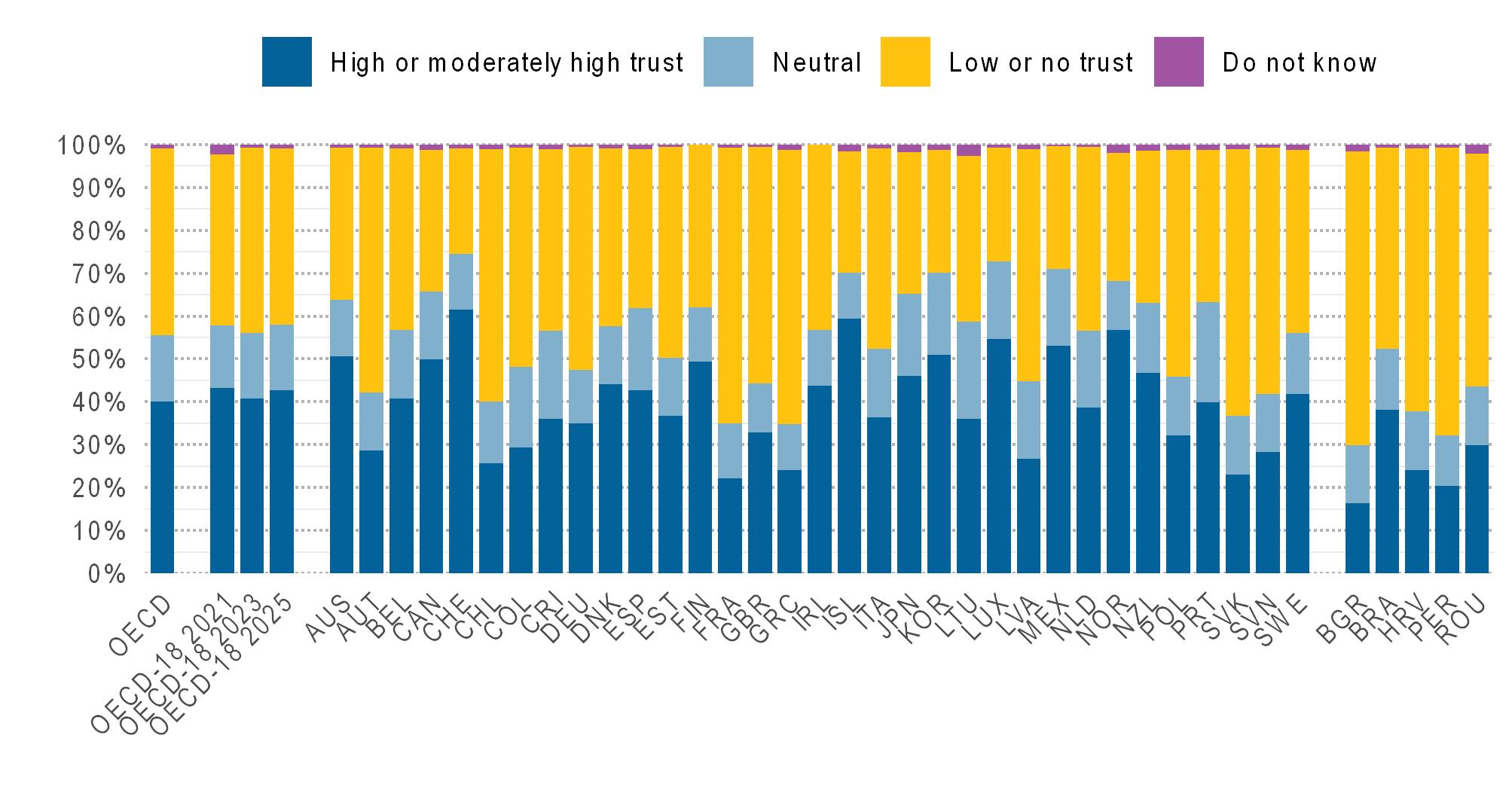
On average in OECD countries, more people have low or no trust than high or moderately high trust, but trust has recently stabilised
Distribution of trust levels in national government, 2025
Across OECD countries:
• 40% report high to moderately high trust in national government
• 43% report low or no trust.
Across 18 countries, trust has stabilised after a drop.
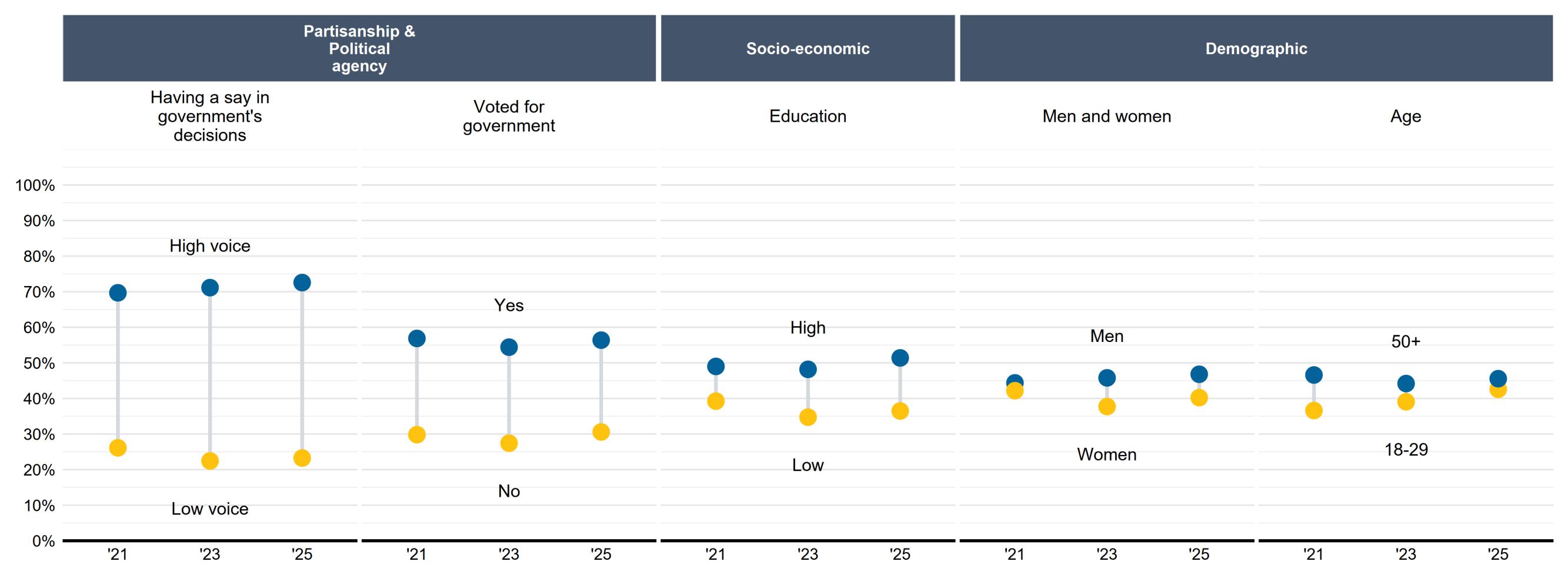
Perceived political agency continues to play a larger role in shaping trust in national government, while the influence of education is increasing and that of age declining % with high or moderately high trust in national government by respondents’ characteristics, OECD-18, 2021-2025
Share of population with high or moderately high trust in the public institution and media, OECD, 2025
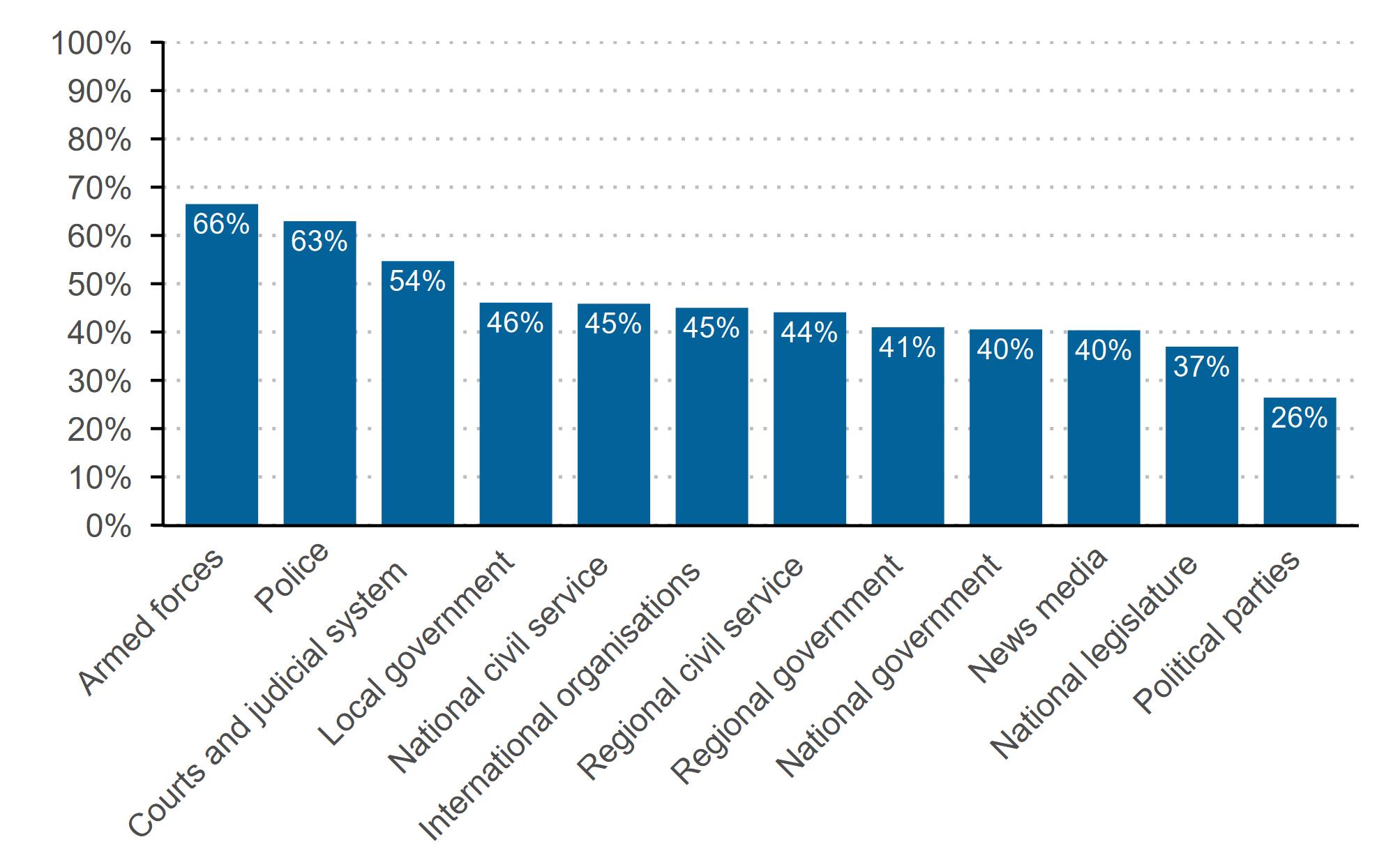
Trust in the different public institutions shows a clear and stable pattern over time:
• Security and lawenforcement institutions are trusted most.
• Institutions that are more political in nature, especially political parties, are trusted least.
• Local government and the civil service sit in between, reflecting proximity and more frequent day-to-day contact.
though new evidence reveals additional influential aspects
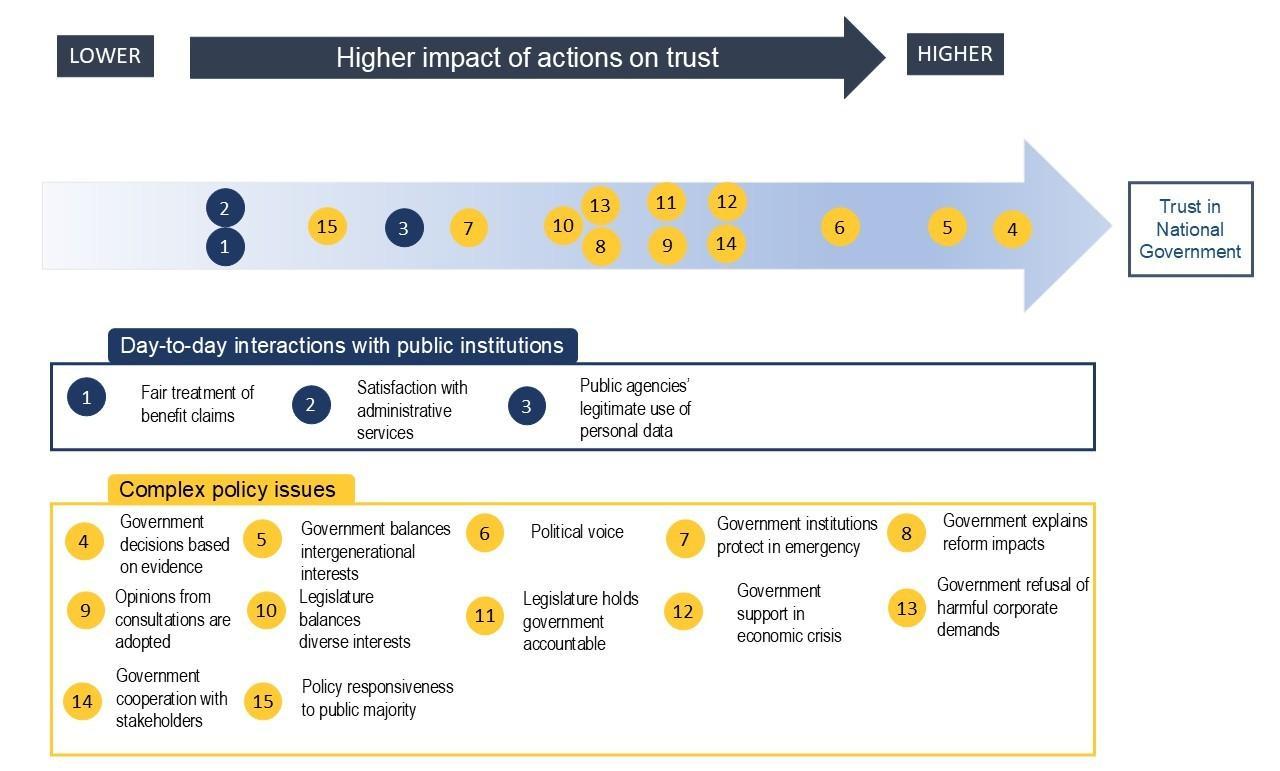
• Perceptions on decision making on complex policy issues continue to play biggest role in shaping trust in national government
>
• Evidence-informed decision making, intergenerational fairness and political voice stand out
• New evidence: Perception of stakeholder involvement also plays role
>
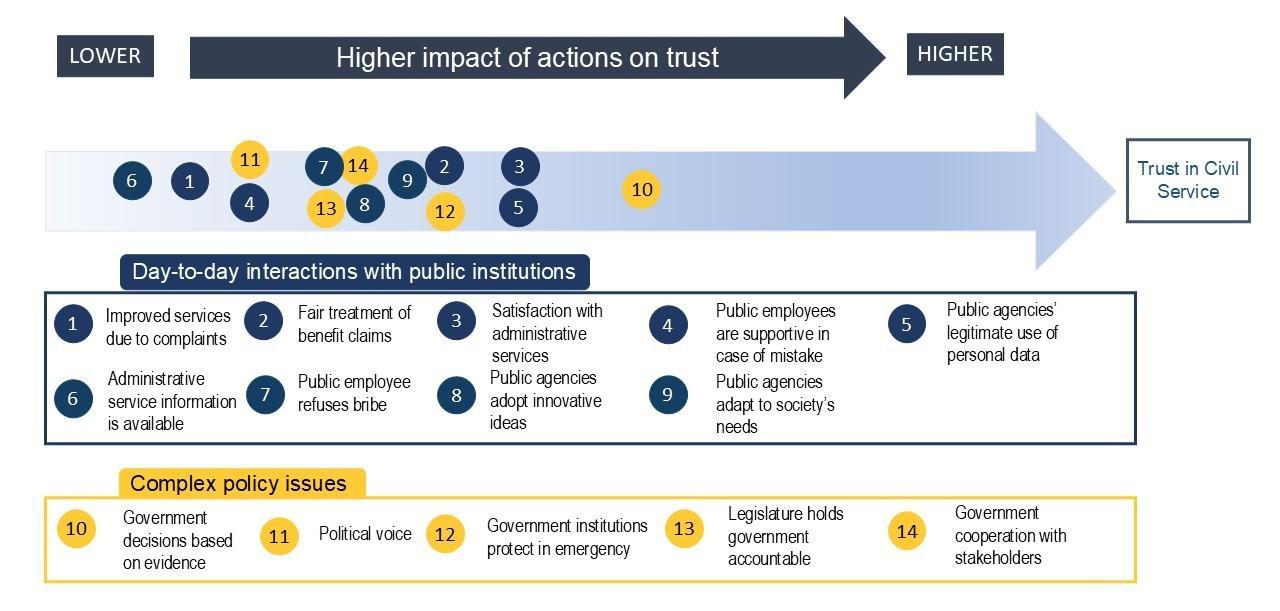
• 45% overall high or moderately high trust
• Trust in the civil service is related strongly to perceptions of day-today interactions
• Increasing satisfaction with administrative services, protection of personal data and evidence-informed decision making could strengthen trust
• New evidence: Services adapting to changing societal needs also counts for trust in civil service
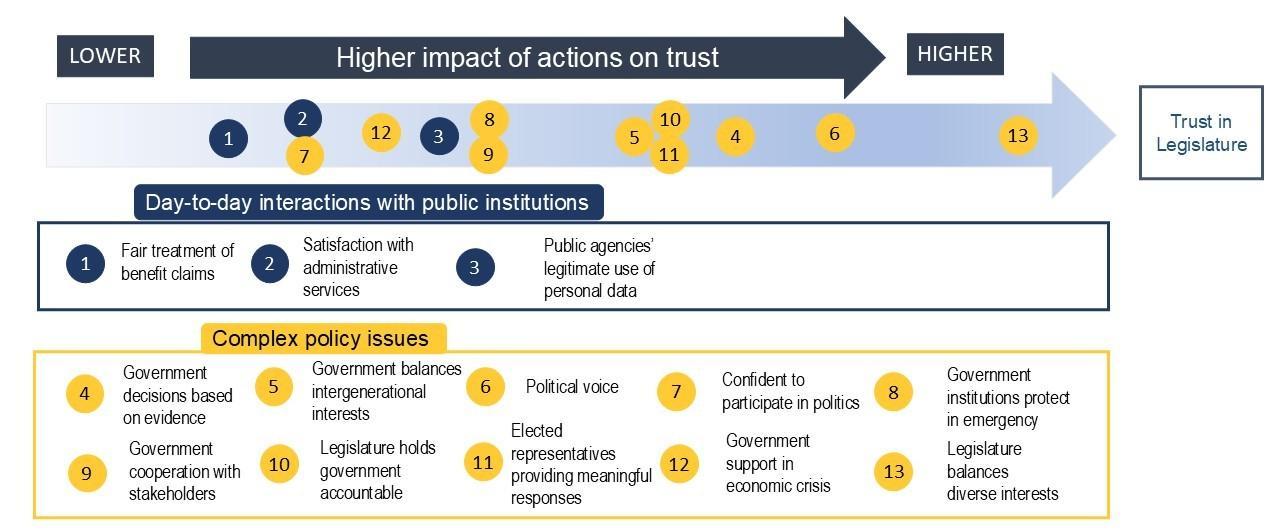
• 37% high or moderately high trust
• Perceptions of decision making on complex issues shapes trust in national legislature
• Views on how legislatures fulfil core functionalities such as balancing diverse interests and holding government accountable are important
• New evidence: Representatives’ responsiveness and support in economic crisis play role
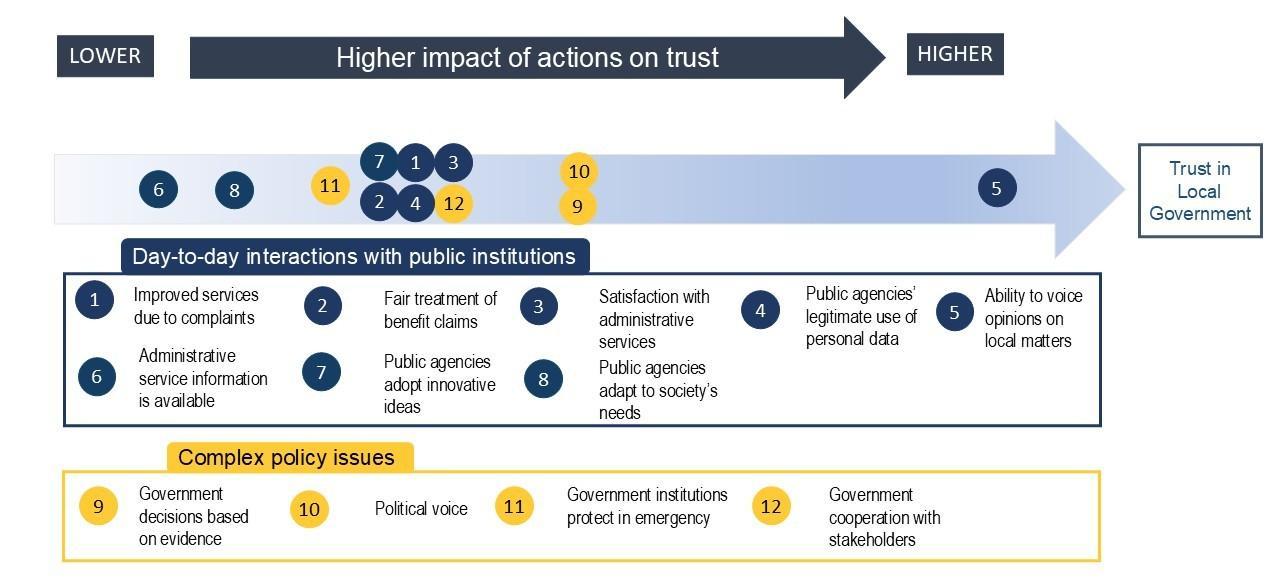
• 46% high or moderately high trust
• As in prior years, people’s perception that they are able to voice their opinion on matters that affect their local community is far and above the most important driver of trust in local government today
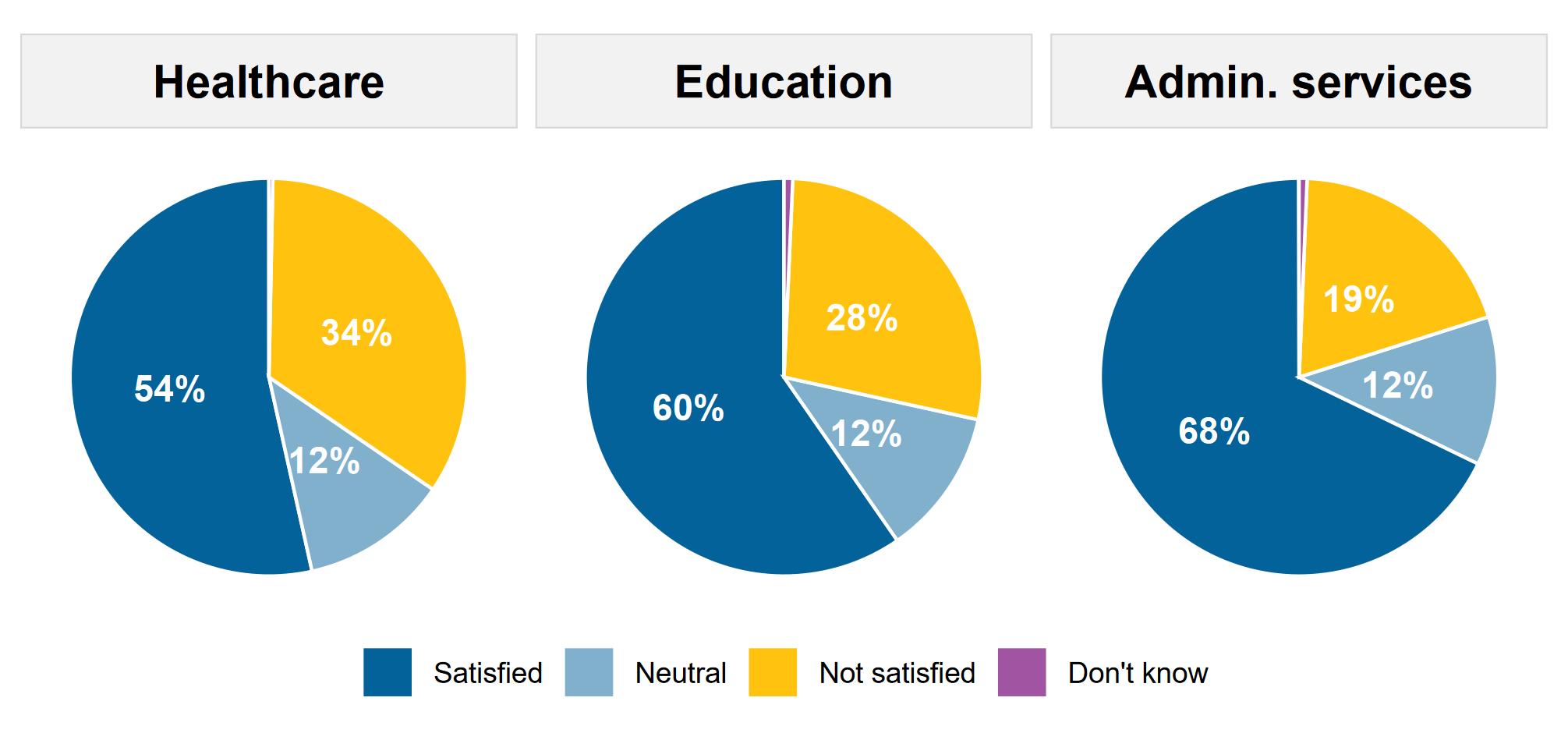
Among recent users in OECD countries, a majority is satisfied with essential public services
Satisfaction rates have risen since 2023:
• Education: +4 p.p.
• Health: + 3 p.p.
• Administrative services: +2 p.p.
% population reporting different levels of confidence in achieving stated policy objective, OECD, 2025
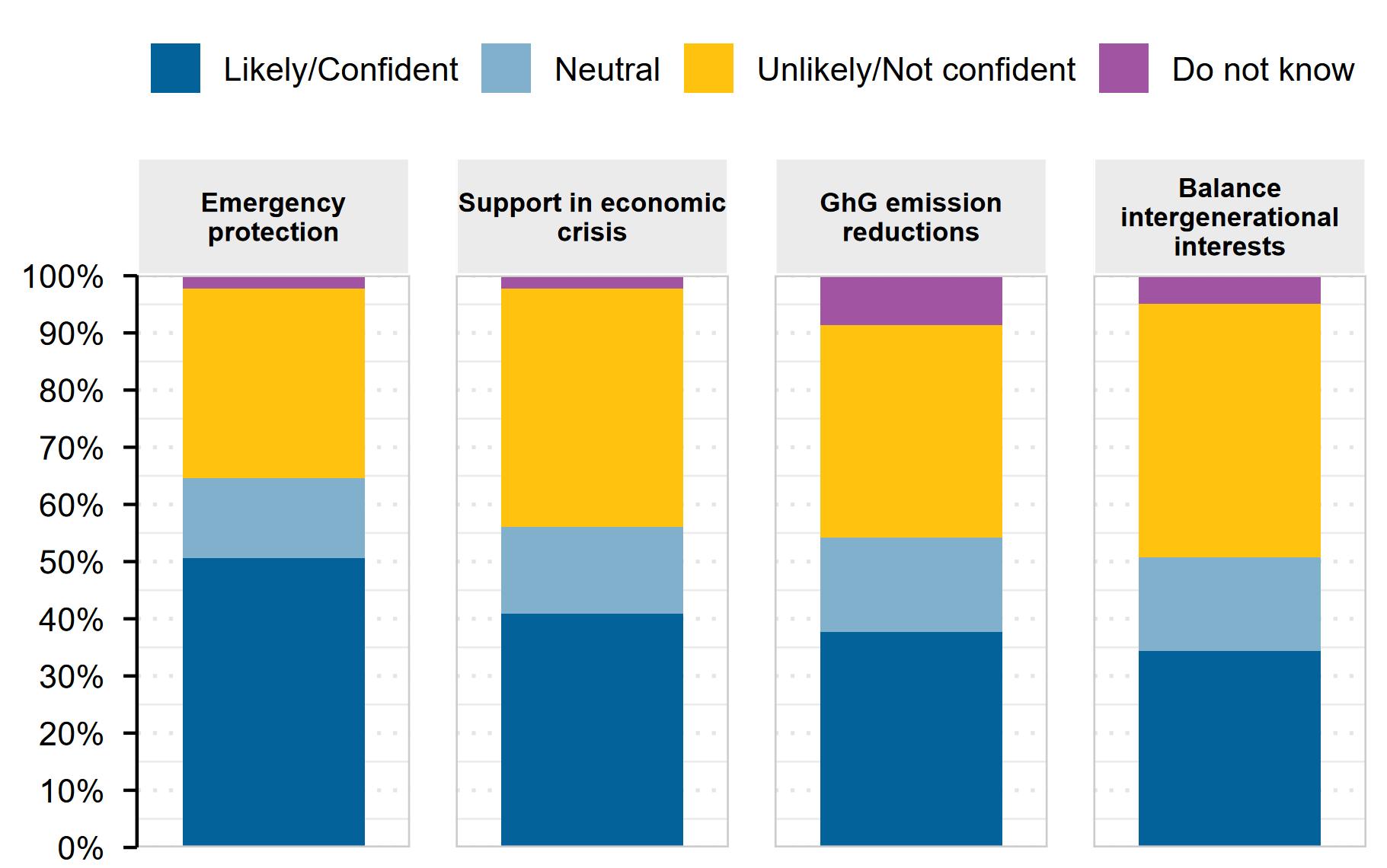
• 51% feel institutions are prepared to protect lives in an emergency.
•41% expect appropriate support in economic crisis.
•38% are confident their country will reduce GhG emissions.
• 34% feel government balances different generations’ interests well.
Share who find named outcome likely, OECD, 2021-2025
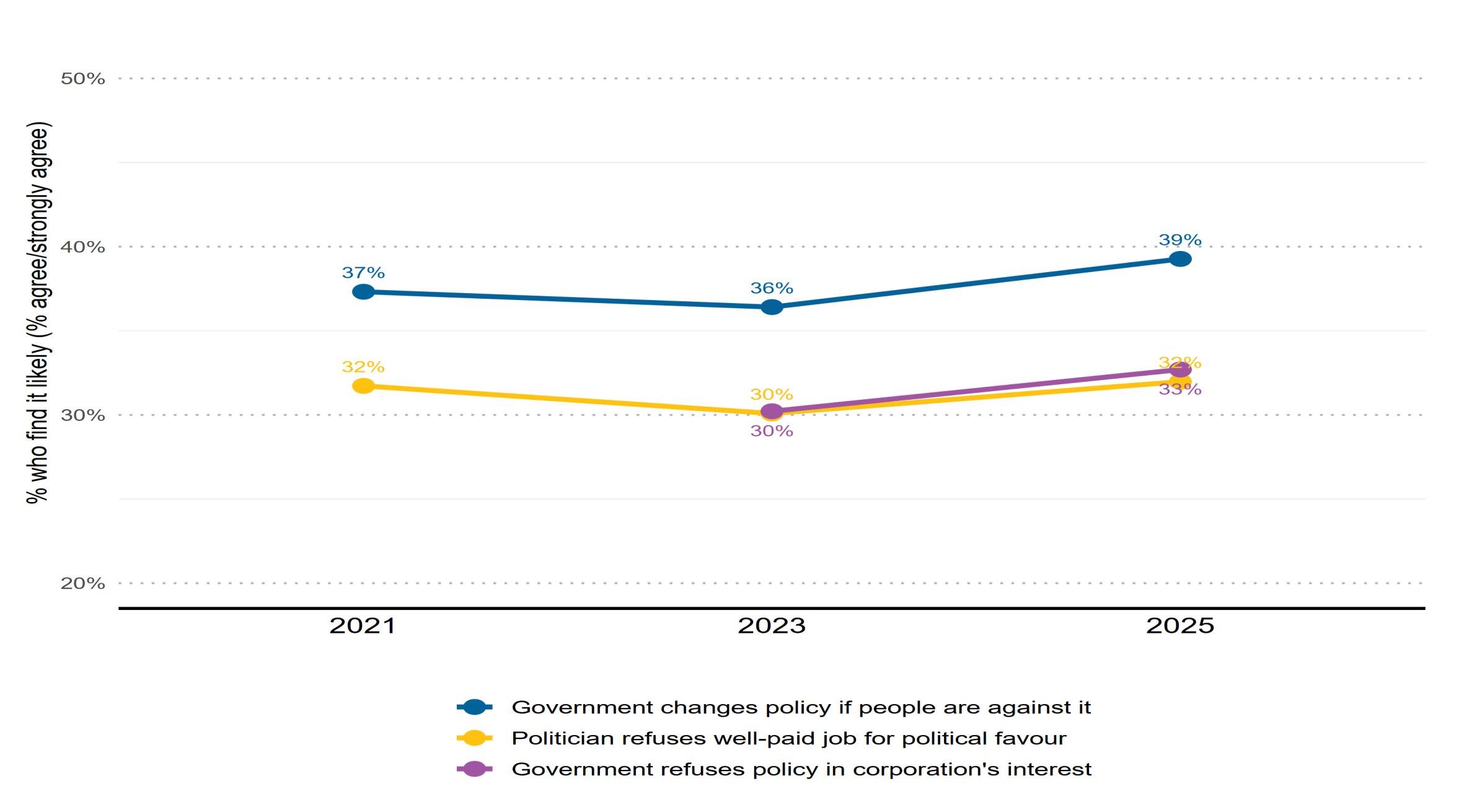
• 39% say a policy would likely change if most people oppose it
• 32% that a politician would refuse a private-sector job for political favour and government a policy against public interest
• In countries surveyed across all waves with these questions, these shares have increased.
Even though two thirds across the OECD view elections as influential, the share who think they have political voice remains below one third, a critical driver of trust
% population who believe voting has moderate or significant influence on what government does and who are confident that the political system allows people like them to have a say, OECD, 2025
• 68% believe elections influence what government does
Voting seen as having moderate or significant influence on what government does
Confident political system allows people like them to have a say on what government does
• 31% believe the political system allows people like them to have a say
Around four in ten believe government AI use will lead to improved services, but fewer are confident that values such as fairness and transparency will be maintained
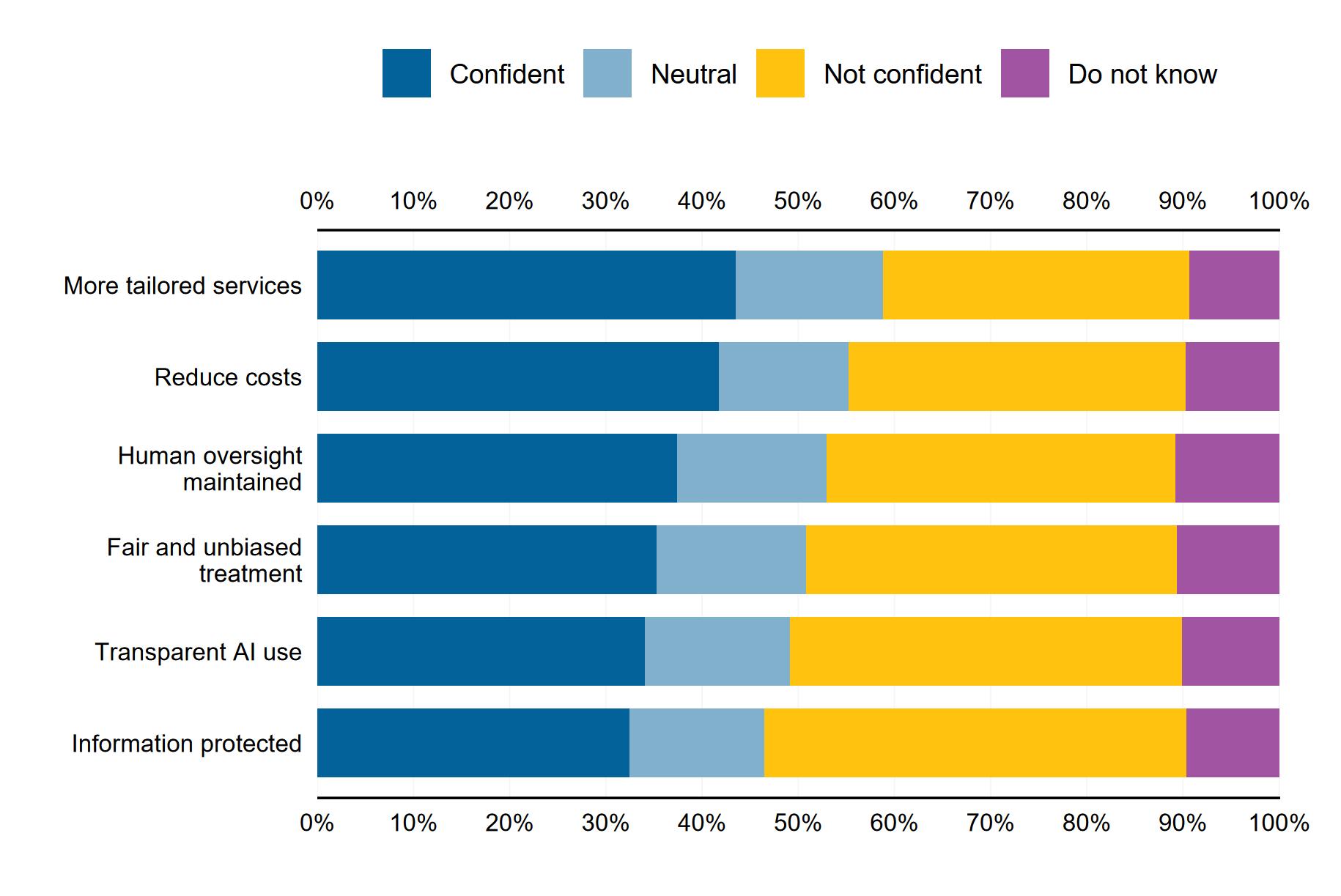
• 43% are confident government AI use will entail service more tailored services
• 32% personal information will be protected.
• Greater AI familiarity correlates with more positive views of AI in the public sector, more so than for example age.
Focus on high-impact drivers for each institution, targeting areas with the strongest links to trust and most room to improve.
Recognise that some perceptions of the capacity of governments to make the right decisions on long term and complex policy challenges can shift quickly: investments in people and stakeholder engagement, transparency, evidence and communication matter.

Embrace the use of new technologies such as AI in government with care to ensure ethical principles, and pay attention to communication on valueadded and how risks are handled.
Invest in renewed democratic governance to address persistently large share of people who do not feel heard, including through effective engagement mechanisms that complement representative processes.