Case Prioritisation and Prosecutorial Discretion
Overview of Secretariat Paper
Richard May OECD Competition Division







Richard May OECD Competition Division
What to pursue and how?
On-going process
Linkage to highlevel priorities Requires discretion, balanced with transparency and accountability
Value or impact of the case
Size or focus on sector
Likelihood of success
Harm, remediation potential and alternatives
Deterrence or legal clarity
Cost factors
Scale and scope
Complexity
Risks
Many other relevant factors
Shine a light
Political or strategic factors
Diversifying portfolios
Others

Range of approaches – not one-size fits all
Dedicated teams may be useful
Consider internal and/or external guidelines
Necessary but not sufficient for success
Case pipelines important
Value of ex-post and impact assessment
Launched February 2026
To what extent do you have discretion to choose whether to investigate a complaint or allegation of a breach of competition law that is brought to your attention?
Do you publish written guidelines for how you take decisions on case prioritisation?
Yes No, but internal guidelines No explicit guidelines
Somewhat unlikely Neither likely/unlikely Somewhat likely Very likely
How likely is a typical individual case prioritisation decision to be influenced by high-level priorities set for the organisation such as focussing on an industry or type of conduct?
Regular intervals Specific decision points
Informal decisions
Other
Does your organisation have formal decision points for investigations on whether to continue to prioritise them after being initiated?
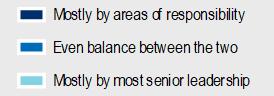
Mostly by areas of responsibility
Even balance between the two
Mostly by most senior leadership
For a typical case prioritisation decision, are decisions mostly made by areas of responsibility (i.e. driven by the leader of the cartels team) or by the most senior leadership of the organisation (i.e. taken by executive leadership or the board?
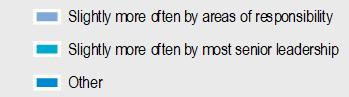
Slightly more often by areas of responsibility
Slightly more often by most senior leadership
Other