How demanding are activation requirements for benefit recipients?
• What are activity-related eligibility conditions for benefit recipients?
– Mandatory activity-related criteria that individuals receiving unemployment benefits and related income support must fulfill to maintain their benefit eligibility.
• Project Background:
– Policy library and quantitative indicator of the strictness of policy rules.
– Developed in 2012 and updated in 2014, 2017, 2020, 2022 and 2024.
The role of activation requirements
Advantages
Promote labour market participation
Encourage long-term self-sufficiency and financial independence
Contribute to efficient public expenditure and reduce benefit dependency
Disadvantages
Potential to create low-wage traps and contribute to skill degradation
Can increase strain on benefit recipients, discourage or delay benefit applications
Harsh sanctions may exacerbate financial hardships
The OECD policy database on activation requirements
Database describing the activity-related eligibility conditions for unemployment benefit recipients in a total of 40 EU and OECD countries, includes information on:
First-tier unemployment benefits
Two-tiers of unemployment assistance and/or minimum income benefit programmes
Policy dimensions covered: availability requirements in activation measures, job-search requirements and monitoring procedures, and sanction regimes for non-compliance.
Data Source: National Authorities responsible for the administration of Unemployment Benefits.
The strictness of activation requirements for benefit recipients
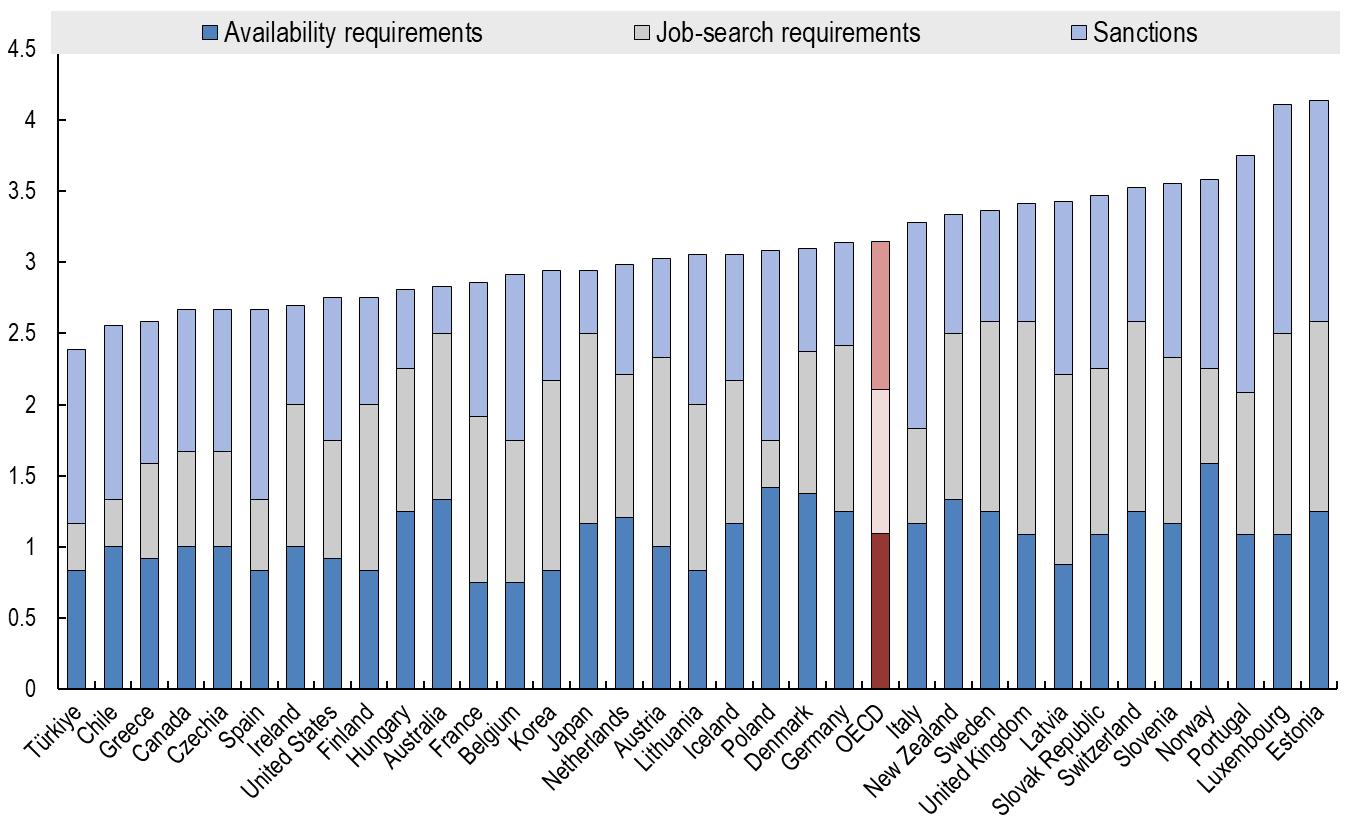
Quantitative policy indicator on the strictness of statutory benefit eligibility rules. Enables accurate international comparisons of complex national rules by scoring eleven eligibility criteria on numerical scales across three sub-indicators.
Overall strictness of activation requirements for tier-1 benefits in 2024
Note: The figure presents the 2024 strictness scores for OECD countries broken down by sub-indicator.
Source: Strictness of activation requirements for benefit recipients | OECD Data Explorer.
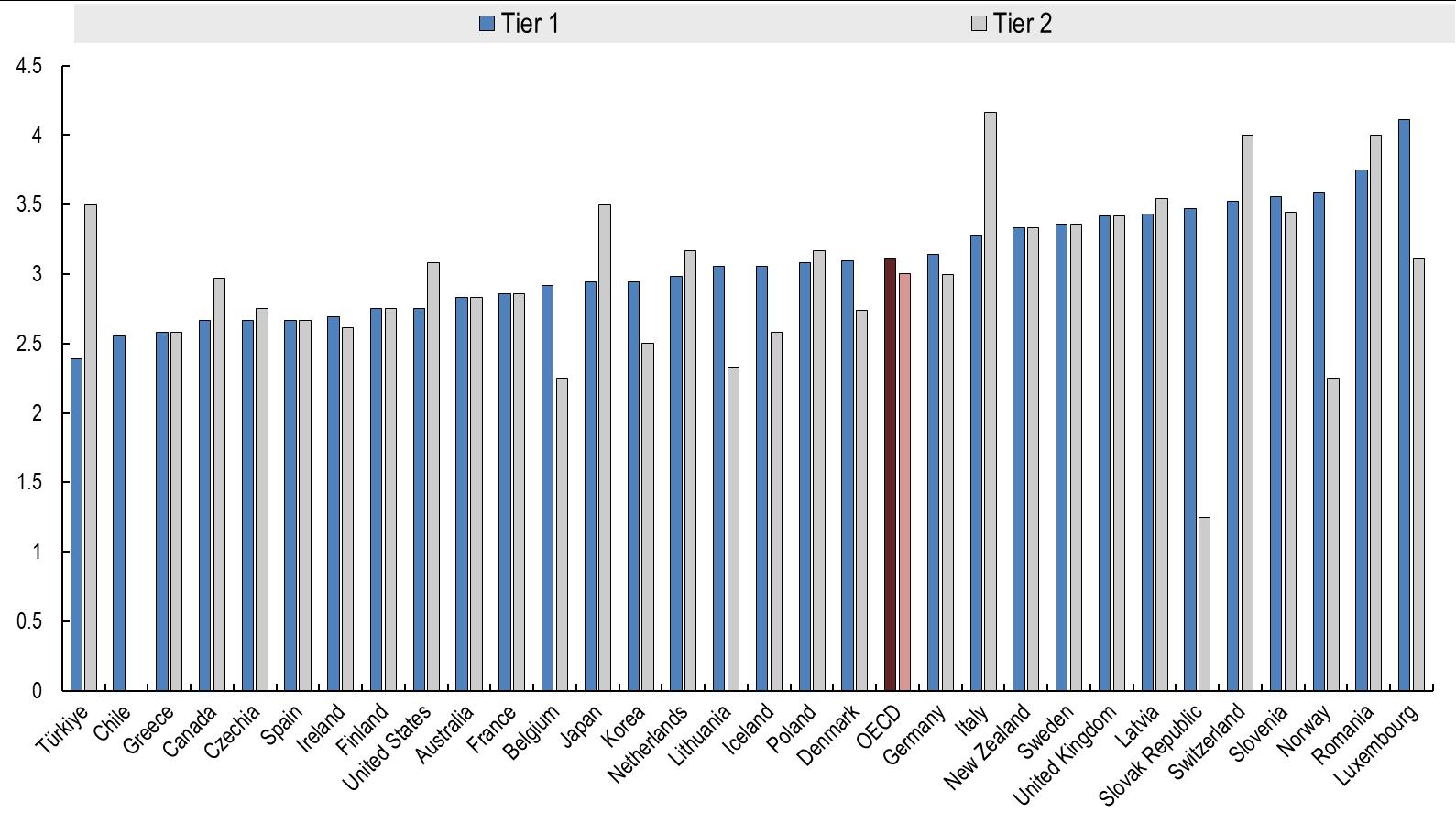
Strictness of activation requirements for tier-2 programmes compared to tier-1
Note: The figure presents the 2024 strictness scores for OECD countries for tier-1 benefits in comparison to tier-2 benefits.
Source: Strictness of activation requirements for benefit recipients | OECD Data Explorer.
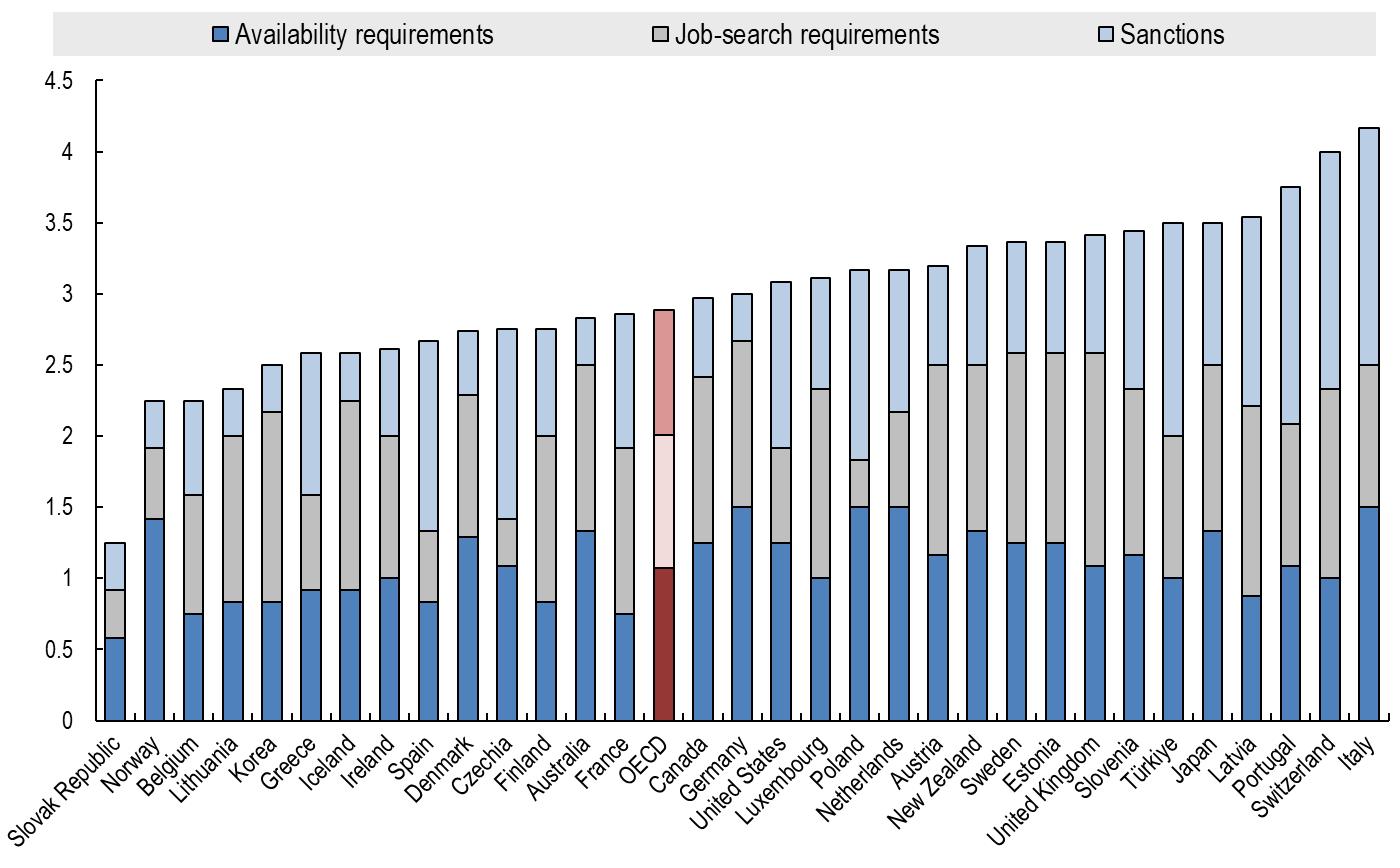
Overall strictness of activation requirements for tier-2 benefits in 2024
Note: The figure presents the 2024 strictness scores for OECD countries broken down by sub-indicator.
Source: Strictness of activation requirements for benefit recipients | OECD Data Explorer.
Changes in the strictness of activity related eligibility conditions for tier-1 benefits (2022-2024)
Relative changes in strictness scores for each sub-item of the strictness indicator for tier-1 unemployment benefits between 2022 and 2024. A positive change results in a stricter activation requirement, whereas a negative result is more lenient.
Note: Only OECD countries which had significant changes to the strictness score for one or more item between the current (2024) and previous data collection (2022) are displayed in the table. Sub-indicator
Changes in the strictness of activity related eligibility conditions for tier-2 benefits (2022-2024)
Relative changes in strictness scores for each sub-item of the strictness indicator for tier-2 unemployment benefits between 2022 and 2024. A positive change results in a stricter activation requirement, whereas a negative result is more lenient.
Note: Only OECD countries which had significant changes to the strictness score for one or more item between the current (2024) and previous data collection (2022) are displayed in the table. Sub-indicator
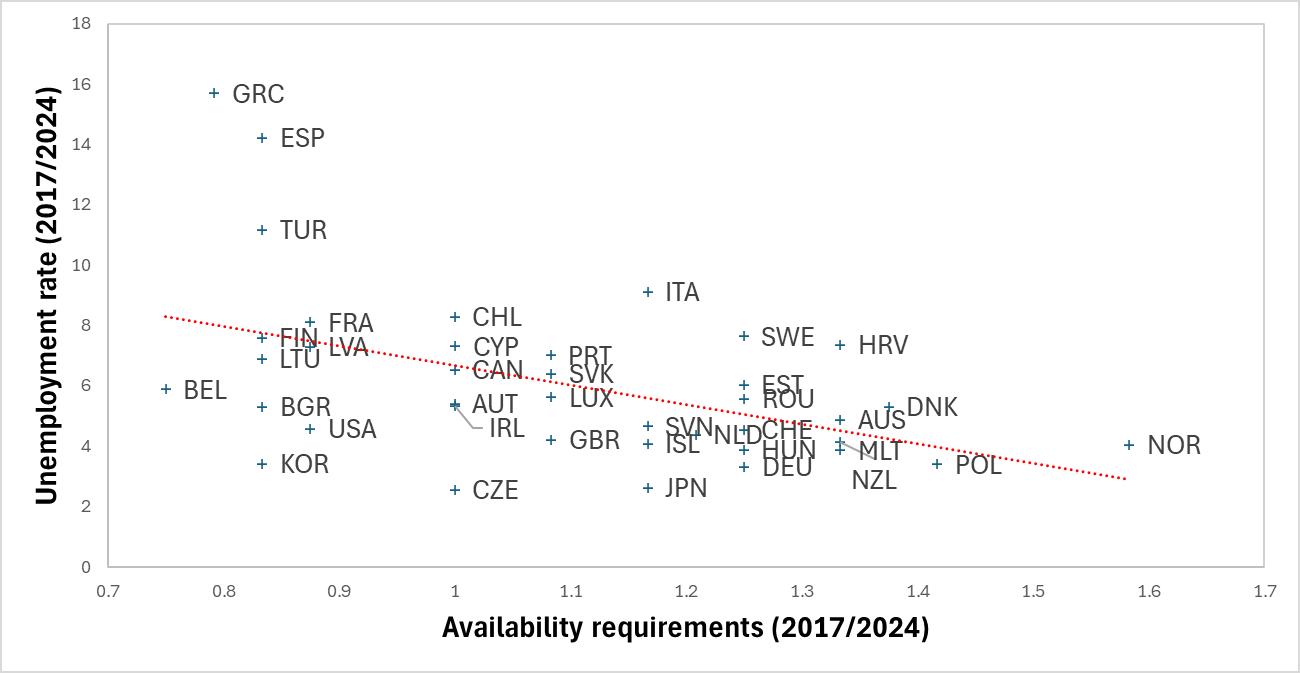
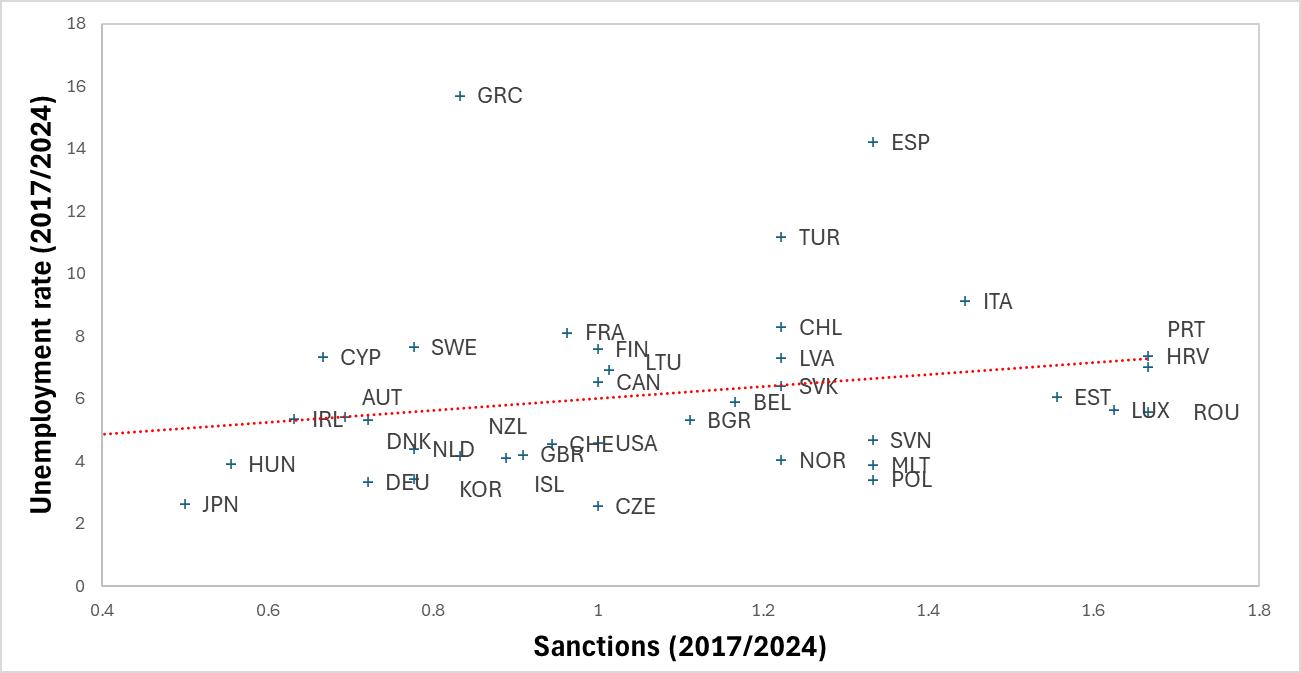
Stricter rules, better outcomes?
Strict availability and job-search requirements strengthen benefit recipients' incentives to find work quickly.
Stricter sanctions can push people into jobs more quickly, but often into less stable or lower-quality employment, increasing the likelihood of repeated claims
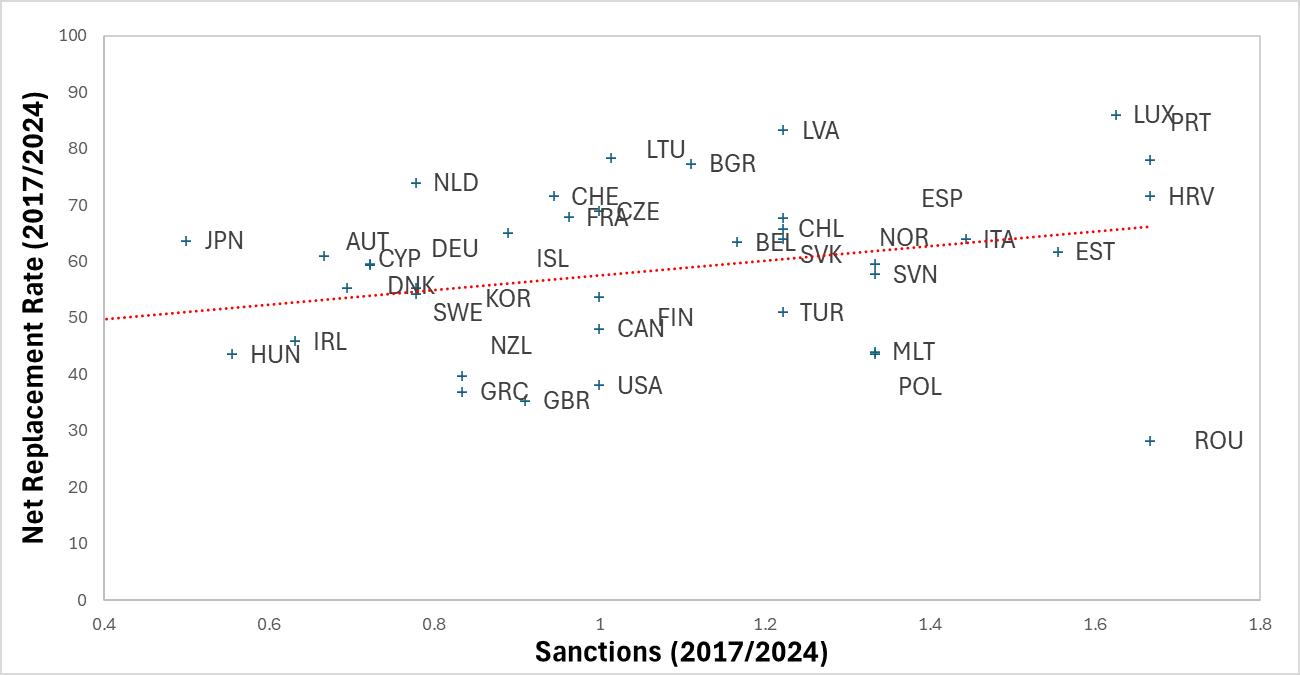
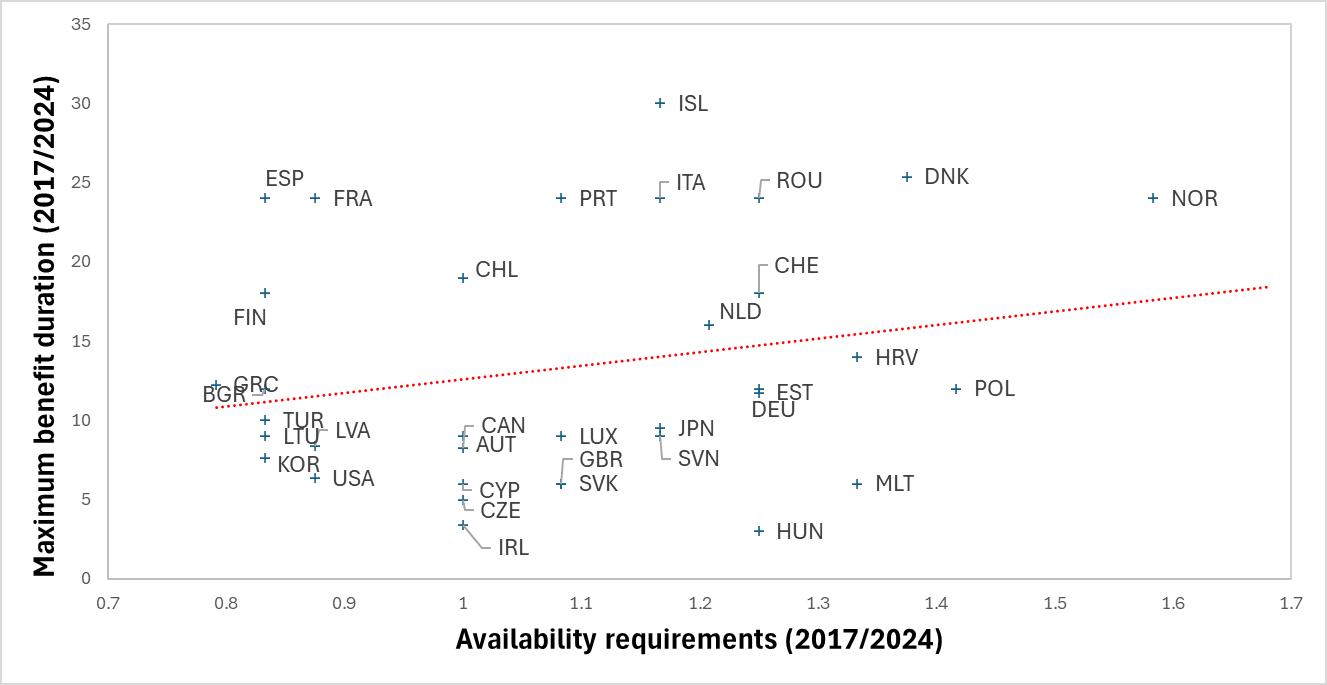
How do activation requirements interact with benefit design features?
Countries counterbalance more generous benefits and longer entitlements with stricter penalties for non-compliance and reinforced availability requirements
Conclusions
Differences in how countries balance the various features of activation requirements (availability requirements, job-search requirements and monitoring procedures, and sanctions).
Overall increase in the strictness of activation requirements 2022 - 2024.
The design of activation requirements for benefit recipients is associated with other benefit design features (benefit generosity and maximum benefit duration) and labour market outcomes
Further research needed to understand (1) the enforcement mechanisms of activation requirements and (2) the behavioural impacts of activation requirements on work incentives.