FÓRSA RESEARCH REVEALS REMOTE WORKERS PERFORM BETTER
EU AGENCY EMPLOYEES TO CONNECT WITH KARA ON MENTAL HEALTH SUPPORT SERVICES
HSA CAMPAIGN HIGHLIGHTS NEED TO PROTECT OUTDOOR WORKERS AGAINST SUN EXPOSURE
HEALTH AND SOCIAL CARE SERVICES STUDY SURVEYS STAFF UNDER EXTREME PRESSURE
Republic of Ireland residents can gain rapid access to cross border surgeries at Kingsbridge Private Hospitals in Belfast, Derry and Newry with costs reimbursed by the HSE.*
Benefits include:
✔ Skip long waiting lists for surgery*
✔ Consultations typically within 7 days
✔ Rapid access to world-class medical treatment and hospitality at our 5-star facilities
✔ Personalised one-to-one support from our expert cross border team
✔ Stay close to home - no need to travel abroad
Call 01 968 2000 or learn more at kingsbridgeprivatehospital.ie/crossborder
*T&C’s Apply. You don’t need to be on a waiting list to access Cross Border Healthcare.
- Hip Replacement - Dublin
4 NEWS UPDATE
* Irish and UK trade unions condemn ‘repugnant acts of hate on the streets’.
* Outdoor events take centre stage during summer inspection campaign.
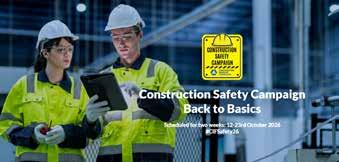
* ‘Back to Basics with Construction Safety Campaign 2026 (12-23 October).
* National workplace study on health and wellbeing is a first for Ireland.
* Workers’ Memorial Day is Annual Call to Responsibility.
* Embedding the Principles of Healthy Workplaces Framework.
10
ALL-IRELAND QUIZ FINAL
This year’s All-Ireland Safety Quiz Final was won by teams from the west and and the south with Mayo’s ShareRidge Ltd taking top honours in the Previous Entrants Category, while BioMarin from Cork took home the trophy in the Novice Category. activities.
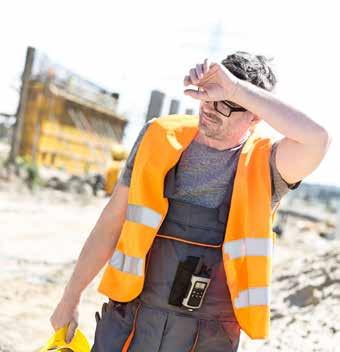
13 SUN EXPOSURE CAMPAIGN
Skin cancer is the most common cancer in Ireland, with over 11,000 new cases diagnosed each year. To address the situation, the Health and Safety Authority’s latest campaign aims to protect outdoor workers from harmful effects of ultraviolet radiation from the sun, by improving
compliance, increasing awareness and preventing long-term harm among these workers.
16
REMOTE WORKING LEGISLATION
Employees are performing better in remote work environments, according to the findings of new research presented by Fórsa to the National Economic and Social Council, with strong evidence from both workers and managers to suggest that flexible working arrangements are delivering improved outcomes.
23 MENTAL HEALTH SUPPORT
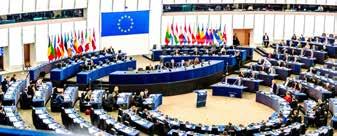
The EU has awarded a landmark €2.7m four-year contract to Kara Connect (the Nordic workplace wellbeing company whose HQ is in Dublin) as the sole provider of mental health and wellbeing support services to over 20,000 employees working across a network of EU agencies.
HEALTH SAFETY TIMES
29 HEALTH SERVICES SURVEY
A major new study on Ireland’s health and social care services has revealed a growing staff retention crisis, resulting in systemic understaffing, poor communications and low staff morale, with three-quarters of workers regularly considering leaving their role, and 67% of health workers now ‘actively’ considering leaving their jobs.
33
EU ROAD SAFETY REPORT
Road deaths across the European Union are falling at barely half the rate required to meet the EU’s target of halving deaths by 2030, according to the European Transport Safety Council (ETSC) in its latest Road Safety Performance Index (PIN) report for 2026.
39
OCCUPATIONAL HAZARDS
A three-month all island inspection campaign, focusing on the risks associated with exposure to silica dust in the construction sector, has been jointly launched by the Health and Safety Authority (HSA) and the Health and Safety Executive Northern Ireland (HSENI).
41 QUARRY SAFETY CAMPAIGN
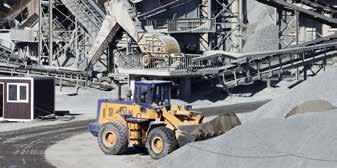
The Health and Safety Authority and the Health and Safety Executive Northern Ireland jointly launched an All Island Concrete Block Making Safety Inspection Campaign in May, to raise awareness and address risks in the manufacturing of concrete blocks.
42
CONSTRUCTION ACTION PLAN
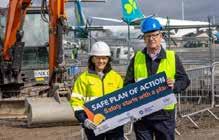
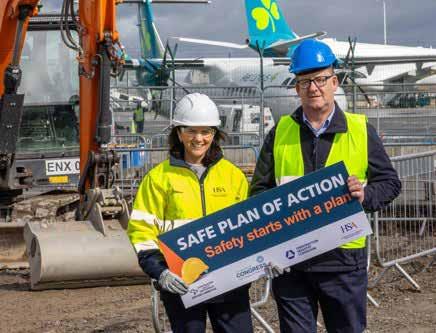
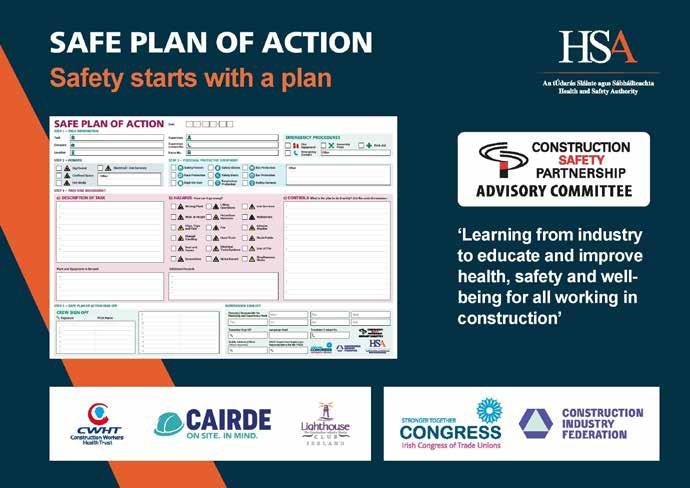
The Construction Safety Partnership Advisory Committee has collaborated with the Health and Safety Authority to produce
Editor Grace Heneghan
Managing Director Patrick Aylward
Graphic Designer Niall McHugh
Circulation: admin@healthandsafetytimes.ie
Advertising Co-ordinator: Audrey Fitzgerald
a Safe Plan of Action for the industry. This practical planning tool has been designed to help any construction crew prepare to work safely on site and prevent incidents before they happen.
44
ARTIFICIAL INTELLIGENCE
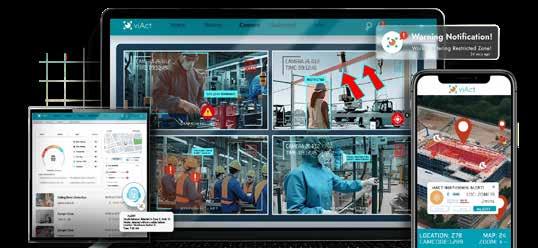
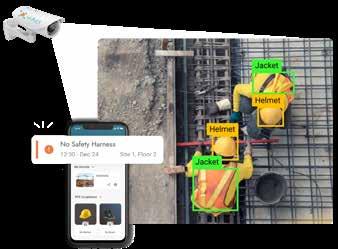
Using health and safety data through AI is transforming workplace safety and monitoring practices, helping organisations to spot hazards before they become accidents and empowering employees to work with a greater peace of mind, according to Gary Ng, CEO and co-founder of viAct.
46
EUROFOUND WORKING SURVEY
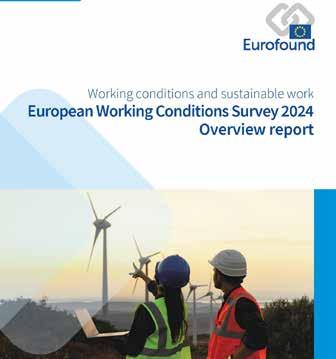
Technology is more likely to create new tasks than remove existing ones, according to the pan-European Working Conditions Survey. It found that primary challenges facing the EU workforce as digitalisation transforms the European labour market, are shifting towards skills mismatches, generational divides, and worker autonomy.
47
FAIR WORK AGENCY
The Fair Work Agency has been set up in the UK with an immediate priority “to ensure continued delivery and improvement” for workers in a labour market where many of them still are not
paid the minimum wage, they’re denied holiday pay while tribunal awards may remain unpaid.
48
SAFETY TRAINING
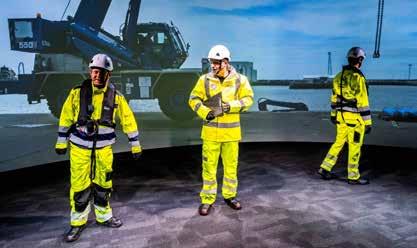
SSE has opened the doors of its safety leadership training centre in Scotland to organisations across the UK as part of a commitment to strengthen safety culture in the high-risk sectors.
Health & Safety Times has no connection with the Health and Safety Authority, which is also known as the National Authority for Occupational Safety and Health.
Whilst every effort has been made to ensure that the information published is correct, the publisher cannot accept responsibility for errors, omissions or discrepancies. The views expressed are not necessarily those of the publisher. All rights reserved. Health & Safety Times @2026
IRISH & BRITISH UNIONS CONDEMN “REPUGNANT ACTS OF HATE ON OUR STREETS”
In the wake of the far-right violence in Ireland and the UK, the European Trade Union Confederation (ETUC) is convening unions in Dublin to discuss a plan to develop trade union capacity in conflict resolution and peacebuilding..
The Irish Congress of Trade Unions (ICTU) and the UK’s Trades Union Congress (TUC) have condemned the violence and those that incite it. Both unions have committed to “stand against hate and bring working people together in solidarity”.
In a joint statement, Owen Reidy, ICTU General Secretary, and Paul Nowak, TUC General Secretary, have said: “After the horrendous knife attack in Belfast and the murder of Henry Nowak in Southampton, we stand with the victims’ families in urging calm and reconciliation. It is disgraceful that rather than honour their wishes, some have chosen to capitalise on these tragedies to sow division and fuel violence.
The Irish Congress of Trade Unions and the UK’s Trades Union Congress have jointly condemned street violence and those that incite it.
“From Belfast to Glasgow to Southampton, we have seen repugnant acts of hate on our streets. Families burnt out of homes. Violent mobs forcing communities to shelter in their places of worship. Gangs of men trying to stop nurses from going to work simply because of the colour of their skin.
“We need to call this out for what it is – pure racist thuggery, which has no place in modern Britain and Ireland. Politicians must take responsibility for their words too. Nigel Farage has a huge social media following. He and other politicians have a responsibility to think about the language they use.
“We need leaders who want to bring this country together – not tear it apart. When you call for ‘cold hard rage’ you have to understand that this is where it leads. Politicians whip up division and communities are left to pick up the pieces.
“We need leaders willing to take a proper stand against ‘social media plutocrats’ such as Elon Musk who stoke the flames and encourage civil unrest. Trade unions across Europe have met to discuss peacebuilding. In conflict after conflict, malignant actors have preyed on desperation,
turning people to violence when they feel they have no stake in society.”
Both union leaders said that working class people of all backgrounds have more in common than that which divides them. “Trade unions need to do what we have always done: stand against hate and bring working people together in solidarity,” they noted.
CONCERTS AND FESTIVALS TAKE CENTRE STAGE IN SUMMER INSPECTION CAMPAIGN
The Health and Safety Authority (HSA) has launched a nationwide summer inspection campaign targeting major outdoor events, including concerts and festivals, as activity across the sector increases over the coming weeks.
The HSA is engaging with event organisers and contractors to assess safety standards and drive improvements in occupational safety and health compliance. HSA inspectors will assess key safety areas, including work at height, traffic management, electrical safety, contractor supervision and the safe use of work equipment.
Deirdre Sinnott, HSA Senior Inspector, said that this sector presents unique safety challenges due to the temporary nature of work and the high number of workers involved in setting up and taking down events.
“Our focus is to raise awareness of key hazards, help understand the required safety standards and ensure that appropriate controls are in place to prevent injury. Where unsafe work activities are identified, we will take action to ensure workers are protected,” she added.
The events industry employs large numbers of outdoor workers and contractors, particularly during the build-up and dismantling phases. These ‘load-in’ and ‘load-out’ activities can involve significant risks, carried out under time pressure in fast moving working environments and often in poor weather conditions.
A further complicating factor is that much of the work can take place adjacent to event attendees and members of the public, increasing the need for robust planning, supervision and risk management.
Sinnott added, “While event goers enjoy a wide range of performances, displays and exhibits, a significant volume of high-risk work is taking place behind the scenes. This campaign is focused on ensuring that work activities are properly planned and managed so that events can be delivered safely for everyone involved.”
While event goers are enjoying a wide range of performances a significant volume of high-risk work is taking place behind the scenes.
EAGLE STREET
PAN - EUROPEAN REAL ESTATE INVESTMENT AND ASSET MANAGER
Eagle Street is a fully integrated asset management platform, primarily focused on value-add, platform creation strategies in the UK and Ireland which accord with our investment themes.
Founded in 2020 by Justin Bickle and Shane Scully, the combined management team has extensive experience investing and building businesses across the cycle.
Unique combination of entrepreneurial ethos and access to off -market opportunities with a private equity mindset, institutional management pedigree and ESG focus.
Targeted approach to four high conviction strategies: Residential, Life Sciences, Commercial Offices and Credit.
Excellent track record of deployment and value creation over the past 10 years. Eagle Street partners with institutional investors and asset managers across each of the sectors in which it is active.
Eagle Street has assembled a value add office portfolio in Ireland and the UK, with blue chip tenants including Accenture, Santander and GSK. •
RESIDENT SPACE
Resident Space launched in November 2021 with the acquisition of a 702unit PRS development in Dublin, backed by pension funds and institutional capital
In May 2022, Eagle Street acquired a 554 unit PRS development with Harrison Street Real Estate.
Development works are underway on the active sites, while pipeline sites are being appraised.
Upon completion in 2025, the East Road and Castleforbes sites will create one of the largest BTR platforms in Dublin.
Resident Space continues to seek both opportunities with full planning permission and subject to planning opportunities as part of its growth strategy.
Resident Space aims to create one of Ireland’s leading Residential Platforms, with a target portfolio of 5,000 Units – located in areas of high employment and close to mass transit
NISO 62 ND HEALTH & SAFETY CONFERENCE IN KERRY
‘Health and Safety in the Digital Age’ is the theme of NISO’s 62nd Annual Health and Safety Conference and Trade Exhibition, which will take place in the Great Southern Killarney, Co. Kerry on 9 October.
The Health and Safety Exhibition of safety products and services will also provide an opportunity for the leading manufacturers and sellers of health and safety products and services to showcase their latest products and services.
Organisations that have submitted their entries to the All-Ireland Occupational Safety Awards will be notified in late September or early October as to which category their awards are best suited. The winners will be invited to attend the presentation dinner to collect their awards.
The safety awards presentation, which will be hosted in association with the Northern Ireland Safety Group (NISG), will take place in the evening, following the conference at the Great Southern Killarney.
During the two-week campaign, the Construction Industry Federation (CIF) is asking companies across the construction sector to step back, examine their safety management systems, and, most importantly, talk to their teams.
“At its heart, safety is not about new rules or complex systems. It is about leadership, culture, and people. Honest conversations, reflective feedback, and an openness to listen can reveal far more than any report. Safety is lived on the ground, and the people delivering our projects often see the risks most clearly,” the CIF has noted.
FIRST NATIONAL WORKPLACE STUDY STRESSES THE NEED FOR TARGETED INTERVENTIONS
Ireland’s first national study on worker health and wellbeing has pointed to a need for targeted interventions, including stress management and mental health promotion, and ongoing research.
The study by Healthy Ireland has found that while most workers are broadly satisfied with work-life balance, physical working conditions, and general organisational culture, significant issues remain particularly in relation to stress, mental health, discrimination, and equity in access to wellbeing supports.
Conducted in late 2024, it examined worker wellbeing across several key areas, and the findings will inform future health and wellbeing policy in the workplace. The data was collected using telephone interviews across a sample of 2,000 workers aged 18 and over.
Core Statistics & Employee Feedback
• General Health: Three out of five workers rate their health as good or very good. Conversely, 1 in 10 report poor health.
• Job Satisfaction: 62% of the workforce are satisfied with their current job.
• Work-Life Balance: Over half (52%) feel their job negatively impacts their home life.
• Presenteeism: Nearly half of the respondents report attending work while sick or working outside of their designated hours.
Mental
Health & Workplace Culture
CONSTRUCTION SAFETY CAMPAIGN 2026 GETS ‘BACK TO BASICS’
This year’s CIF Construction Safety Campaign will run from 12 to 23 October. The campaign’s theme ‘Back to Basics’ will continue during 2026.
For more information, visit https://safetyawards.ie/ https://cif.ie/safetycampaign/ or email any queries to csc@cif.ie
• Organisational Support: About half (52%) of respondents feel their organisation continuously tries to support a healthy lifestyle.
The study has found that significant issues remain particularly in relation to stress, mental health, discrimination, and equity in access to wellbeing supports.
• Management Gaps: Around 26% of employees believe their company does not show an interest in staff health and wellbeing.
• Stressors: Major drivers of workplace stress are tied to work-climate, information flow, and line manager attitudes rather than just the physical workload.
Inclusivity, Discrimination, and Harassment
• Discrimination: 13% of employees experienced discrimination at work. Of these, 32% attributed it to gender, 27% to race, and 26% to age.
• Bullying: More than one in ten respondents experienced ongoing bullying and harassment.
Healthy Ireland’s study, commissioned by the Department of Health, will act as a benchmark for future research and to inform the development of interventions to promote health and wellbeing in the workplace.
Visit www.gov.ie/en/healthy-ireland/publications/healthyworkplace-framework/ for details.
REWARDS FOR EMBEDDING PRINCIPLES OF IRELAND’S HEALTHY WORKPLACE FRAMEWORK
Workplaces ranging from hospitals and healthcare centres to enterprise centres and commercial organisations who were involved in the first phase of the Healthy Workplace Programme have received their healthy workplace awards.
Each of the 23 companies and organisations completed the process of becoming a Healthy Workplace as part of the Healthy Workplace Programme, which started in early 2025 and is an element of the implementation of the Healthy Workplace Framework.
The ‘Healthy Ireland – Healthy Workplace’ national mark of distinction is awarded to organisations that have demonstrated a strategic and evidence-informed commitment to employee health and wellbeing.
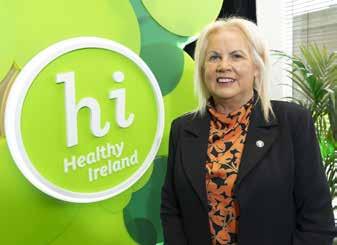
Minister for Public Health, Wellbeing and the National Drugs Strategy, Jennifer Murnane O’Connor TD, presented the awards at the Department of Health in April. She said that it is widely acknowledged that workplaces are ideal settings to promote employee health and wellbeing.
“We all spend a significant part of our life in the workplace and while being employed is a protective factor for wellbeing,
we all need the skills and supports to deal with everyday challenges, and the stresses of work and family life,” the Minister noted.
The awards recognise employers who have embedded the Healthy Workplace Framework principes and who participated in the Healthy Workplace Programme 2024-2026.
Comprising of five key pillars – leadership, assessment, planning, implementation and evaluation – the programme signals that these organisations are not only investing in its people but also contributing to Ireland’s wider public health and sustainability goals.
The Minister acknowledged leadership and commitment demonstrated by many senior managers and the significant work undertaken by workplaces in following the steps to become healthy workplaces and overcoming the challenges encountered along the way.
WORKERS’ MEMORIAL DAY – A CALL TO RESPONSIBILITY
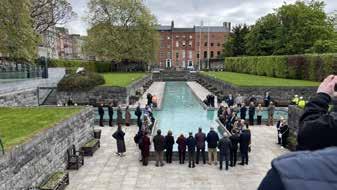
The Irish Congress of Trade Unions and the Health and Safety Authority, along with colleagues from NISO, IBEC and the Construction Industry Federation, gathered at the Garden of Remembrance in Dublin city centre to mark Workers’ Memorial Day 2026.
The event is held every year on 28 April as a national day to remember those who have died, been injured or made seriously ill because of work. Across the ten-year period (2016 to 2025), 456 people in Ireland died in work-related incidents.
Many more suffered life changing injuries or occupational illness. In 2025 alone, 63 people died in workplace incidents, a 75% increase on the 36 people who lost their lives in 2024.
Fergal McKevitt, NISO President, described it as important opportunity to remember those who have lost their lives or been impacted by work-related incidents. “It also reminds us of the need to keep safety and health at the forefront in every workplace. Continued focus on the basics and working together remains key to preventing incidents and protecting workers,” he added.
Minister of State for Employment, Small Business and Retail, Alan Dillon TD, said that the day of remembrance also acts as a call to responsibility. “It calls on the government, employers, workers, and society as a whole to reflect on proactive measures taken and what more we can do to prevent tragedy and protect lives.
“If we are to truly honour those we have lost, we must do so not only with words, but with action. We must continue to strengthen our commitment to workplace safety. We must ensure that protections are not just written into policy, but lived out in practice, every single day, in every workplace,” Minister Dillon told all those present.
Minister Jennifer Murnane O’Connor.
Workers’ Memorial Day 2026 at the Garden of Remembrance in Dublin.
CORK AND MAYO TEAMS WIN ALL-IRELAND SAFETY QUIZ FINAL
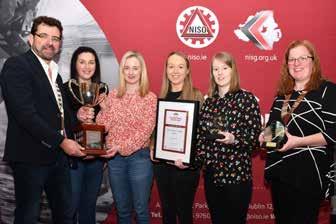
This year’s All-Ireland Safety Quiz Final was won by teams from the west and the south with Mayo’s ShareRidge Ltd taking top honours in the Previous Entrants Category, while BioMarin from Cork took home the trophy in the Novice Category.
This year’s All-Ireland Safety Quiz Final, which took place at the Cavan Crystal Hotel, Co. Cavan on 18 April, drew great support for the participating teams from their co-workers.
A total of 15 teams competed from all parts of the island of Ireland for the final, jointly run by the National Irish Safety Organisation (NISO) and the Northern Ireland Safety Group (NISG).
The results in the Previous Entrants Category finals were very close with the two top scoring teams battling it out for first place in a tie-break round. Bord na Móna (BnM), Co. Offaly and ShareRidge, Co. Mayo, both finished with 109 points each [out of a maximum of 128 marks].
ShareRidge Ltd won the tie-break round to claim the title of All-Ireland Safety Quiz Champions in the Previous Entrants category. The other seven teams in this category also performed strongly.
The results in the Novice Category finals were similarly close with BioMarin, Co Cork, emerging as this year’s winning team with a total of 87 points [out of a maximum of 96 points].
The Runner-Up prize was closely contested with two tiebreaker rounds after GRETB, Co Galway and MSD Brinny, Cork, both finished with 83 points. GRETB won the second tie-break round to claim the Runner-Up spot in the Novice Category.
Fergal McKevitt, NISO President, and Wendy Moore, NISG Chair, presented the awards and trophies at a special prize-giving dinner at Cavan Crystal Hotel. McKevitt said that all participants should be proud of their efforts to improve occupational health and safety.
Congratulating participants and commending the workload undertaken by the teams for the safety quiz finals, Wendy Moore noted the importance of the safety events held jointly by NISO and NISG to help further the promotion of health and safety on the island of Ireland.
DATE FOR QUIZ DIARY: The Regional Heats for the 52 nd All Ireland Safety Quiz 2027 will commence nationwide and online in spring 2027.
Fergal McKevitt (left), NISO President, and Wendy Moore (right), NISG Chair, present prizes and trophies to the All-Ireland Safety Quiz Previous Entrant Category Winners – ShareRidge Ltd.
Previous Entrants Category Winners
1st Place: ShareRidge Ltd. (Southern Region*)
2nd Place: BnM (Midland Region*)
3rd Place: Masonite Ireland (North-West Region*)
Novice Category Winners
1st Place: BioMarin (Southern Region*)
2nd Place: GRETB (Western Region*)
3rd Place: MSD Brinny (Southern Region*)
Other Finalists
Abbott Nutrition Cootehill (North Eastern Region*) PE Category
BioMarin (Southern Region*) PE Category
Designer Group (Eastern Region*) PE Category
Energia Group (Northern Ireland*) Novice Category
Ensto Renley (North Eastern Region*) PE Category
JJ Rhatigan (Midland Region*) Novice
STERIS Tullamore (Midland Region*) PE Category
Ulster University (Northern Ireland*) Novice Category
Ulster University (Northern Ireland*) PE Category
* East (Dublin, Kildare, Wicklow)
* Midland (Laois, Offaly, Longford, Westmeath)
* North-West (Donegal, Leitrim, Sligo); South (Cork, Kerry)
NISO President Fergal McKevitt (centre) holds the trophy, as Wendy Moore, NISG Chair, presents the prizes and trophies to the AllIreland Safety Quiz Novice Category Winners – BioMarin.
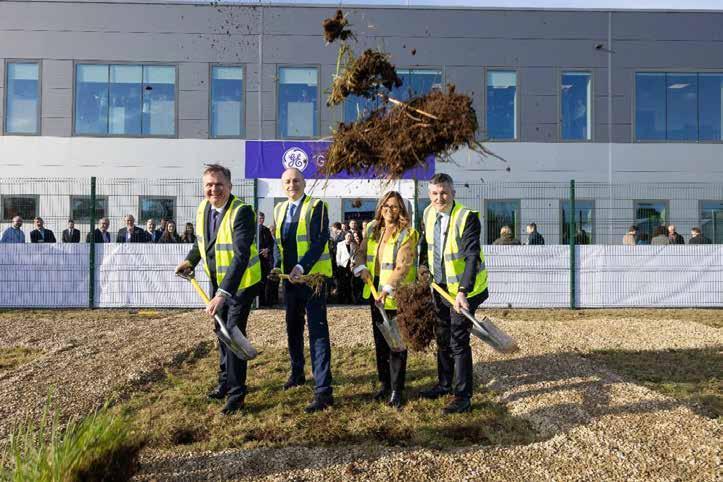
On 31st of January 2025, GE HealthCare, Cork announced a €132 million investment to expand their fill and finish production site. Global demand for contrast media, injectable pharmaceuticals used every day around the world to enhance and enable medical imaging procedures, is expected to double over the next ten years.
This investment will allow the Cork site to produce an additional 25 million patient doses of contrast media annually. An Taoiseach Micheál Martin, Kevin O’Neill, President & CEO, Pharmaceutical diagnostics (PDx) and Michael Lohan, Chief Executive Officer, IDA, helped turn the sod ahead of the new facility construction.
Eugene Barrett, Site Leader and Managing Director, GE HealthCare Ireland, said: “This expansion strengthens our longstanding presence in Cork, where we have a highly skilled team, access to leading talent in the pharmaceutical industry, strong distribution links around the world and a great partnership with IDA Ireland. First doses from our new facility are expected by the end of 2027 and we are proud of the impact our site will continue to make for patients around the world.”
HSA CAMPAIGN HIGHLIGHTS NEED
TO PROTECT OUTDOOR WORKERS AGAINST SUN EXPOSURE
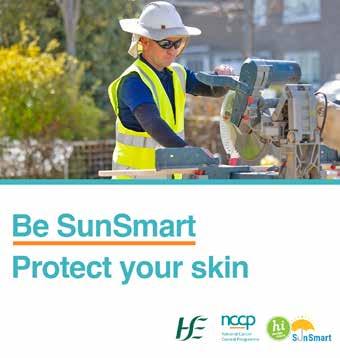
In Ireland, over 11,000 new cases of skin cancer are diagnosed each year, as incident rates continue to rise. The Health and Safety Authority’s Sun Exposure Campaign aims to protect outdoor workers from the harmful effects of ultraviolet radiation from the sun, by improving compliance, increasing awareness and preventing long term harm among these workers.
The Health and Safety Authority (HSA) campaign for 2026, which runs from May to September, will combine national awareness raising activities with a targeted inspection programme.
The HSA is urging employers to ensure practical protective measures are in place for workers who are exposed to ultraviolet (UV) radiation from the sunlight as part of their job, even on cloudy days or when overcast.
Outdoor workers, including those in construction, agriculture, quarries, utilities, transport and similar
The annual SunSmart campaign is run by the HSE’s National Cancer Control Programme (NCCP), in collaboration with Healthy Ireland and cross-sectoral partners.
Outdoor workers, including those in construction, agriculture, quarries, utilities, transport and similar sectors, can be exposed to two to three times more UV radiation than indoor workers.
sectors, can be exposed to two to three times more UV radiation than indoor workers, particularly from now until the autumn when UV levels are highest.
Dr Adrienne Duff, Assistant Chief Executive, Occupational Health Division at the HSA, said that ultraviolet exposure represents a significant occupational health risk for many outdoor workers in Ireland, adding that it is one that employers are required to manage.
EMPLOYERS’ DUTY OF CARE
“Through our Sun Exposure Campaign, the HSA is reminding employers that they have a duty to assess UV exposure risks and put practical measures in place. Our inspectors will be looking for evidence that these risks are being managed effectively, including, planning the work, monitoring the UV Index and taking appropriate protective measures when it reaches three or above,” she pointed out.
“This includes providing outdoor workers with access to shade, water, protective clothing and sunscreen, and making sure they are are informed. By taking simple, practical steps, employers can play a vital role in protecting workers’ health now and in the future.”
HSA Inspectors will assess whether employers have:
• Considered UV exposure as part of their risk assessments.
• Taken steps to reduce exposure during peak UV times.
• Provided appropriate information, training and protective measures for workers.
Maria McEnery, Cancer Prevention Officer from the HSE’s National Cancer Control Programme (NCCP) outlined that the risk of skin cancer increases with cumulative UV radiation exposure over time.
“Outdoor workers are, therefore, at particular risk due to the nature of their work and the extended periods they spend outdoors, especially during the summer months when UV levels are highest.”
DANGERS OF HIGH UV LEVELS
McEnery added, “The increased UV levels can lead to sunburn, eye damage, and long-term risks such as skin cancer. Implementation of SunSmart measures in the workplace is a critical component in protecting outdoor workers’ long term health.
“We are calling on all organisations with outdoor workers to prioritise UV protection as part of their employee safety and wellbeing policies. Resources are available to assist employers, including recently published guidance for outdoor workers who are drivers.”
Skin cancer is the most common cancer in Ireland, with over 11,000 new cases diagnosed each year and incident rates continue to rise, according to the National Cancer Registry of Ireland. Prolonged or unprotected exposure to UV radiation is the main risk factor.
UV radiation is measured using the UV Index, which indicates the risk of skin and eye damage. When the UV Index is three or above, protective measures should be taken, including wearing covering clothing, using sunscreen on uncovered skin, and seeking shade.
During the summer months in Ireland, UV levels
frequently exceed this threshold, particularly between 11am and 3pm, especially from April to September.
For further information visit www.hsa.ie and www.healthpromotion.ie for sun safety guidance documents.
“Our
inspectors will look for evidence that risks are being managed effectively, including, planning the work, monitoring the UV Index and taking appropriate protective measures when it reaches three or above” –
Dr Adrienne
Duff, Assistant Chief Executive, Occupational Health Division at the HSA
Prolonged or unprotected exposure to UV radiation is the main risk factor for skin cancer, which is the most common cancer in Ireland, with over 11,000 new cases diagnosed each year and incident rates continue to rise.
The National Cancer Registry of Ireland
FÓRSA RESEARCH REVEALS REMOTE WORKERS PERFORM BETTER
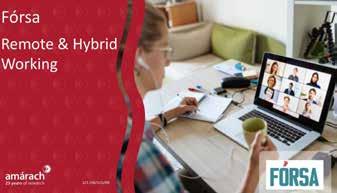
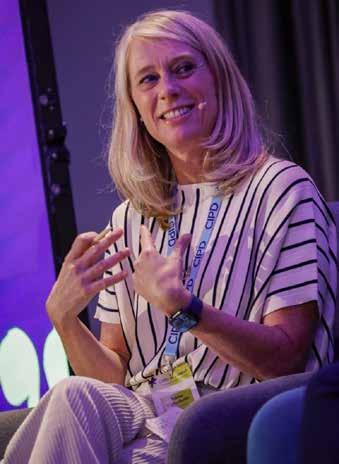
Employees are performing better in remote work environments, according to the findings of new research presented by Fórsa to the National Economic and Social Council (NESC), with strong evidence from both workers and managers to suggest that flexible working arrangements are delivering improved outcomes.
The findings, which have drawn on Ireland’s largest study of remote and hybrid work to date, was commissioned by Fórsa, Ireland’s largest public service trade union. The findings were initially presented at the union’s conference in May.
The research has combined survey data from Amárach Research covering close to 20,000 public service workers, including more than 5,000 managers, alongside survey and focus group research by ‘Ireland Thinks’.
It examines current and preferred working arrangements and their impact on day-to-day operations, workplace culture, career development and work-life balance. It has found that flexibility with remote working eases pressure on housing, transport and childcare.
GAINS IN PRODUCTIVITY
Fórsa’s Director of Campaigns Kevin Donoghue has said the findings provide clear, independent validation of
productivity gains. “Six years on from the shift to remote working, which was a huge overnight experiment, the evidence is consistent. People are getting more done and working in ways that are more sustainable for them,” he noted.
“We see a marked difference between the experience of our members in health and education, where fully on-site work is more the established norm, compared to civil service and local government sectors where there is greater access to flexible work.”
He said that there’s an observable difference between workers’ experience in the office compared to remote working. “Remote workers are far less likely to miss deadlines, while they also find it easier to collaborate and have a better overall work life balance.
“Hybrid stands out as the most common arrangement and probably the model that works best. Notably, most respondents said that even one day of remote work per
week makes a meaningful difference.
“It gives people balance, and it allows organisations to maintain performance and collaborative opportunities, as well as fostering a positive workplace culture, while improving how work fits into people’s lives. In that context our research aligns with similar findings in other independent studies,” Donoghue pointed out.
WORK-LIFE BALANCE
‘Ireland Thinks’ research participants (1,200 survey respondents and 24 interviews) reported significantly higher satisfaction with work-life balance, with up to nine in ten workers in mainly or fully remote roles describing themselves as satisfied.
These arrangements bring practical benefits, including reduced commuting time and lower fuel costs. Workers who are fully on-site report longer, more exhausting commutes, greater financial pressure, and less time and energy outside of work.
Almost half the number of respondents claim that flexible work reduces their care costs, pointing to a real cost-of-living benefit. Flexible working is also seen as critical to the recruitment and retention of staff and maintaining the competitiveness of the public service as an employer.
Many respondents express concern that reducing access to flexibility could lead to the loss of experienced and specialised staff. Managers are broadly supportive of remote and hybrid arrangements, while acknowledging the challenges of managing blended teams. However, many day-to-day workplace issues are reported to be more acute on-site.
“Six
Satisfaction with communication, collaboration and meetings all scores higher among those working remotely or in hybrid arrangements. While some workers report feelings of isolation, experiences are mixed.
FLEXIBLE WORK SOLUTIONS
Overall, the direction is clear, noted Fórsa’s Campaigns Director. “Flexible working is improving performance, enhancing quality of life, and helping to ease wider infrastructural pressures like housing, transport, childcare and the cost of living.
“Flexible work arrangements give workers the option of living far from the office without the life-sapping experience of long and pointless commutes. These findings provide a strong evidence base for policymakers. We’re not talking about a short-term shift; it’s a long-term change in how work is organised.
“If we’re serious about addressing infrastructure pressures and building a more sustainable workforce, flexible work has to be part of the solution,” Donoghue concluded.
Amárach Research covered close to 20,000 public service workers, including over 5,000 managers.
KEY FINDINGS OF FÓRSA RESEARCH
• Drivers of Preference: Reduced commuting time (78%), greater productivity (69%) and lower workrelated expenses (68%).
• Performance: Only 6% of managers have reported deadline challenges in remote settings, compared with 23% in fully on-site environments. Managers also report higher satisfaction with communication, collaboration and meetings among remote/hybrid teams.
• Time Dividend: Almost half (45%) of respondents said reduced commuting time gains them three or more hours per week, while 15% gain over six hours. Of that time, 48% of respondents said it goes on household responsibilities, with 30% reporting more time spent with children, while 28% use the time to do more work.
• Cost-of-Living: Almost half say flexible work reduces overall care costs, most notably on childcare, while many report lower fuel and transport costs.
• Talent: Flexibility is seen as critical to recruitment and retention across the public service.
years on from the shift to remote working, which was a huge overnight experiment, the evidence is consistent. People are getting more done and working in ways that are more sustainable for them”
– Fórsa’s Director of Campaigns Kevin Donoghue
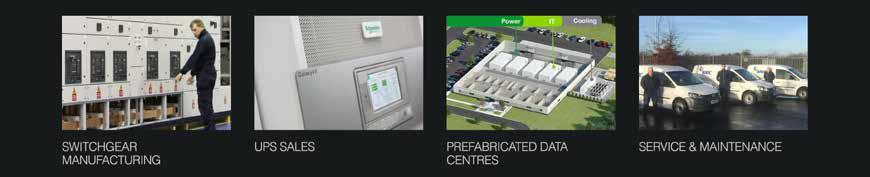
BMC Manufacturing has been manufacturing LV switchgear since 1991 for both home and export markets. We are now firmly established as one of the market leaders in this area.
Operating from our 20,000sq. ft production facility in Ashbourne, manufacturing Low Voltage switchgear and Motor Control Centres, BMC Manufacturing recognises the necessity to keep up with developing technology, with this in mind it utilises sophisticated computer-based estimating, design, project management.
BMC Manufacturing’s mission statement is “To give our customers what they want when they want it”
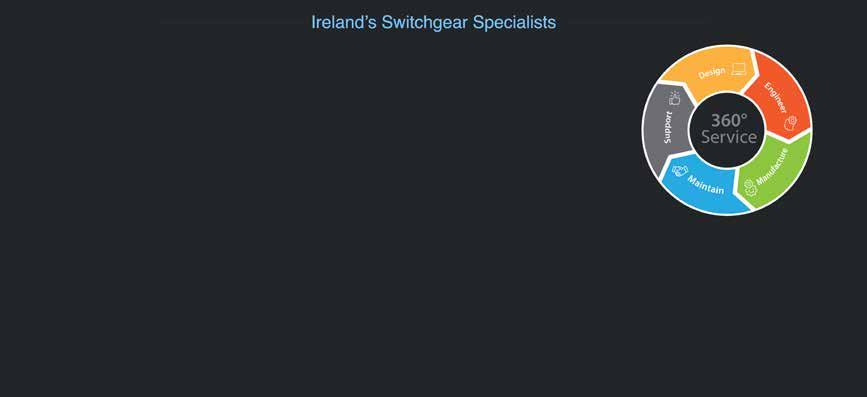
TO DELIVER ON THIS PROMISE WE ADOPT A 360˚ APPROACH TO EVERY PROJECT AND EACH CUSTOMER ENGAGEMENT, THIS INVOLVES FIVE DEFINED ELEMENTS.
1. Initial design and concept
2. Engineering the design into a fit for purpose solution
3. Manufacturing the equipment to this engineered design and modifying if required due to, changing customer requirements and or site restrictions.
4. Maintaining the equipment once operational to extend its life cycle and get best value for the end user.
5. Supporting the customer and end user to ensure the equipment delivers as per their requirements and hopefully starting the process again when they have new requirements for the products and services we offer.
CODE OF PRACTICE
The Minister for Enterprise, Tourism and Employment, Peter Burke, requested the Workplace Relations Commission (WRC) under Section 20 of the Workplace Relations Act 2015, to prepare the Code of Practice for Employers and Employees Right to Request Flexible Working and Right to Request Remote Working.
The WRC prepared this Code of Practice for Employers and Employees on the Right to Request Flexible Working and the Right to Request Remote Working, as required by Part 4, Section 31, of the Work Life Balance and Miscellaneous Provisions Act 2023. When preparing the Code, the WRC sought representations from trade unions and employer representative bodies and the Irish Human Rights and Equality Commission.
The purpose of the Code is to provide practical guidance to employers, employees and any other persons as to the steps that may be taken for complying with one or more provisions of Part 3 of Work Life Balance and Miscellaneous Provisions Act 2023 Act, which includes provisions regarding requests for remote working arrangements, and also with Part IIA of the Parental Act 1998-2023, which includes provisions regarding requests for flexible working arrangements for caring purposes.
As set out by Part 4, Section 31, of the Work Life Balance and Miscellaneous Provisions Act 2023, the Code of Practice is admissible in evidence in proceedings before a court, the Labour Court or an adjudication officer appointed under Section 40 of the Workplace Relations Act 2015.
Remote working in Ireland is governed primarily by the Work Life Balance and Miscellaneous Provisions Act 2023. While it does not guarantee an automatic right to work remotely, it gives all employees the legal right to formally request remote working arrangements from their employer.
KEY LEGAL PROVISIONS
• Eligibility: All employees can request remote working from their first day of employment. However, to commence an approved remote work arrangement, an employee must have completed at least six months of continuous service.
• Request Process: Requests must be submitted in writing or via an online application at least eight weeks prior to the proposed start date.
• Employer Obligations: Employers are legally required to consider the request fairly, considering the needs of the business and the employee’s needs. If an employer declines or proposes changes, they must provide transparent, written reasons.
• Code of Practice: Rules and procedures for how employers and employees navigate this process are detailed in the official Workplace Relations Commission Code of Practice.
Disputing Decisions: If an employer refuses a remote work request without valid reasoning, or fails to adhere to the legislative procedures, employees have the right to refer the dispute to the WRC. Adjudication officers can review decisions and award compensation if the employer has failed in their duties under the Act.
Current Review Status: Following a comprehensive statutory review, the Government concluded that the legislation operates effectively. Over 90% of requests are granted in full or in part. The WRC provides specific guidance and resources for making an application on the Citizens Information Right to Request Remote Working page.
The findings provide clear, independent validation of productivity gains, according to Fórsa’s Campaigns Director Kevin
Donoghue.
OUR SAFETY MESSAGE IS SIMPLE
DETECT
unsafe behavior and conditions
NOTIFY the relevant people promptly ACT take steps to resolve the issue
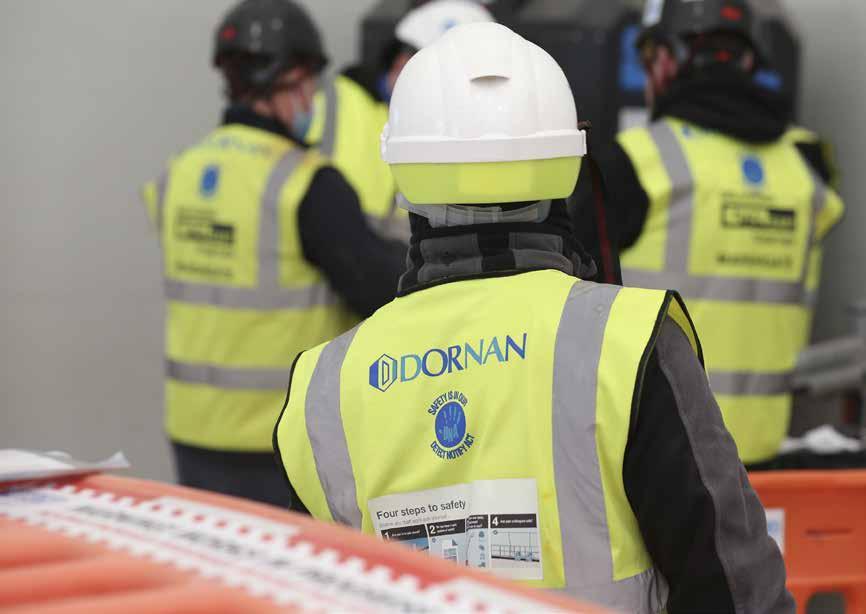
At Dornan Group , safety is a shared responsibility. We empower everyone, from apprentices to management, to speak up and take action. Our proactive approach to Environmental, Health & Safety ensures every voice contributes to a safer, more accountable workplace.
SAFETY IS EVERYONE’S RESPONSIBILITY
REVIEW OF LEGISLATION
A public consultation was launched in November 2025 as part of a review of the statutory right to request a remote working arrangement. The right to request a remote working arrangement under the Work Life Balance and Miscellaneous Provisions Act 2023 came into force for all employees in March 2024.
The Act required a legislative review of the operation of the remote working provisions not earlier than one year and not later than two years following the roll out of the legislation. As part of the review, a public consultation sought the views of members of the public, employers and other interested parties.
In March 2026, Minister for Enterprise, Tourism and Employment Peter Burke TD, and Minister for Small Business, Retail and Employment Alan Dillon TD, published the statutory review of Ireland’s remote work request provisions.
This review shows that, when used, the legislation works effectively in practice, with 94% of employees’ requests approved, either fully or in part. Employers report minimal administrative burden operating the system.
Key findings in the review:
1. 94% approval rate for remote working requests
2. Low administrative burden reported by employers across all sectors
3. Low use and awareness of the legislation, particularly among those living in rural communities
4. The legislation is functioning as intended, with no amendments being made at this time
Minister Burke said, “The review shows that when employees and employers engage with the legislative framework, it works – supporting flexibility and improved work life balance. Remote work has the potential to open up opportunities far beyond our major cities, and it is vital that people in every part of the country understand the rights available to them.
“The recommendations within the report will ensure that the right to request remote work is transparent and understood by both employers and employees, contributing to an attractive labour market and a competitive, future focused business environment.”
Ireland was one of the first EU countries to introduce a legal right to request remote work, supported by the Codes of Practice on the Right to Disconnect and on Flexible and Remote Work. Among other initiatives, the next steps include a targeted National Information Campaign, to begin this year to ensure employees and employers understand the right to request remote work and how the process operates.
Minister Dillon stated, “Remote working is now a fundamental part of how Ireland works. This review clearly shows that when employees use their right to request remote working, it delivers, with over 90% of requests approved in full or in part. This is the kind of balanced, practical flexibility that we want to see nationwide.
“However, it also tells us that too many people are still not aware that the right exists. A national awareness campaign will help ensure workers and employers across the country to become aware and understand that the right exists.”
Minister Alan Dillon said that a national awareness campaign will help ensure employees and employers across the country become aware and understand that the right to remotely work exists.
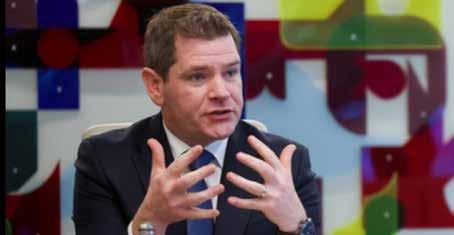
Remote work has the potential to “open up opportunities far beyond our major cities”, noted Minister for Enterprise, Tourism and Employment Peter Burke TD.
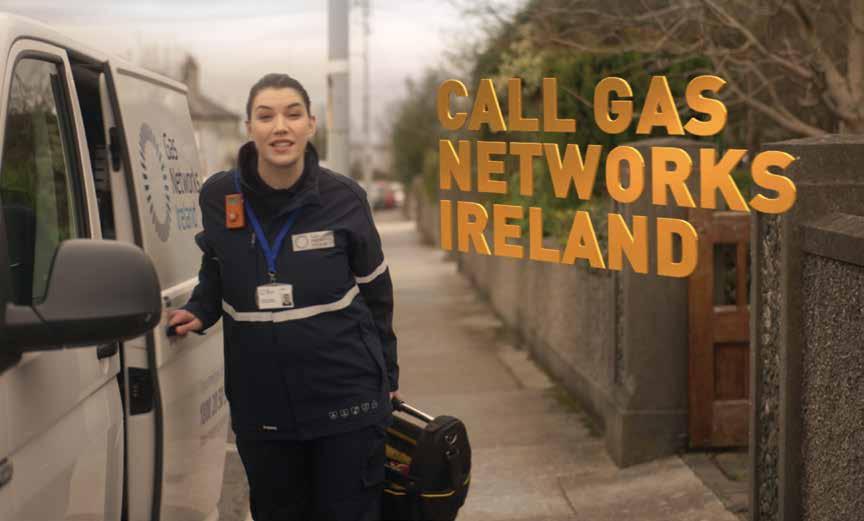
If you smell gas at home or on the street, call Gas Networks Ireland on:
• Open windows and doors
• Don’t smoke, vape or use a naked flame
• Don’t unplug or switch anything electrical on or off
• Turn off the gas at the meter
• Then, no matter who your gas supplier is, call our 24 hour emergency service.
Don’t use a phone in the immediate area of the leak, use a neighbour’s or call from outside.
If you can’t get through, call 999 or 112. In the interests of public safety all emergency calls are recorded.
EU AGENCY EMPLOYEES TO CONNECT WITH KARA
FOR WELLBEING SUPPORT SERVICES ONLINE
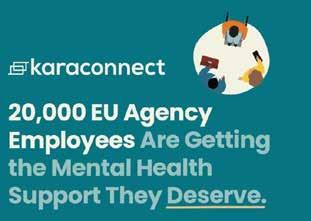
Kara Connect has been awarded a landmark €2.7m four-year contract by the European Union as the sole provider of mental health and wellbeing support services to over 20,000 employees working across a network of EU agencies. This service will be provided as an alternative to the Employee Assistance Programmes.
Eurofound, the European Agency for Working Conditions based in Dublin, led the public tender which will see the network of 31 EU agencies roll out a modern wellbeing support service. This will give EU agency employees access to high-quality, personalised care around the clock through Kara Connect.
The 20,000 employees and their eligible dependents across the network of agencies will now have access to human therapists online, with no triage barrier, through Kara Connect.
This service will be provided by the mental health and wellbeing platform as an alternative to the Employee Assistance Programmes (EAPs) which have encountered low usage levels.
All EU agency employees will be able to choose their own practitioner via customised Wellbeing Hubs within 48 hours, to access high - quality,
The service allows employees to choose their own one-to-one licensed therapists, without requiring middle management approval or long wait times.
Kara Connect provides direct online access to personalised, professional help for mental, physical, and financial health, as well as advice on relationships and careers.
Unit 5, Kilcullen Business Campus, Kilcullen, Co. Kildare, R56 W244
T 045 484484
F 045 484485
E info@johncradock.ie
W www.johncradock.ie
Follow us on
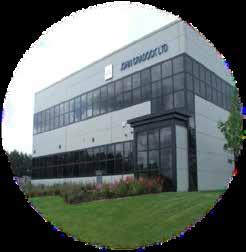
John Cradock Ltd. have operated in the Irish Construction Industry for nearly 40 years and have developed into one of the country’s leading Civil Engineering and Building Contractors, offering solutions to a wide variety of Clients, and delivering projects safely, co-operatively and to the highest quality
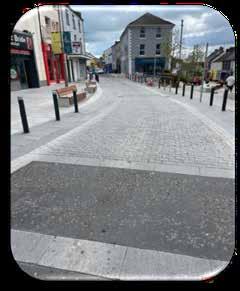
Athlone Town Centre Public Realm Enhancement
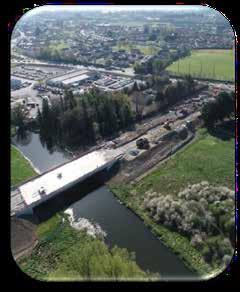
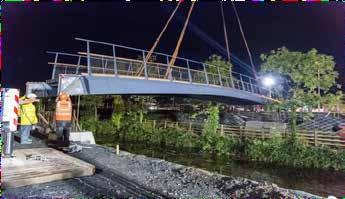
Bridge Lift on Grand Canal Greenway Phase 1 Sallins, Co. Kildare
N22 Macroom to Ballyvourney Bypass, Cork
Local Distributor Road (LDR4), Navan
Balbriggan Quay Street & Environs, Dublin
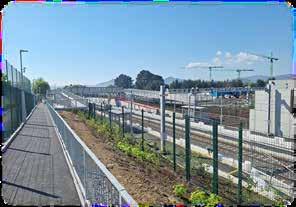
Irish Rail – Woodbrook Dart Station Construction Works
personalised care across issues including mental and physical health, financial health, relationships and careers. All practitioners are fully vetted and fairly compensated, a key requirement for the EU agencies. Security has been an equally non - negotiable requirement with Kara Connect storing and processing all data exclusively within the EU/EEA – and fully compliant under the General Data Protection Regulation (GDPR).
The company’s privacy - by - design model means that each employee’s data is never exposed, unlike the call centre model which has left traditional EAPs facing serious questions over confidentiality.
Key Aspects of the EU Partnership
• The Tender: Kara Connect secured the agreement, following a competitive EU tender led by Eurofound.
• Target Audience: 20,000 EU agency employees and their eligible dependants now have streamlined access to high-quality psychological support.
• Platform Features: The service operates differently than the traditional EAPs by allowing employees to immediately choose their own one-to-one licensed therapists, without requiring middle management approval or long wait times.
SUPPORT WITHOUT
STIGMA
Kara Connect typically sees 32% of an organisation’s employees using the service, which the company says reflects how willingly people will engage with professional support when it is offered without triage or stigma.
Sources:
• EAP average usage rate of 3-8% (UK EAPA / REBA. EAP Utilisation Benchmarking, 2024)
• One in five adults now experience a diagnosable mental health condition each year (Mental Health Foundation. Fundamental Facts About Mental Health, UK)
• Mental health has overtaken cancer as world’s top health concern (Ipsos Health Service Report 2024)
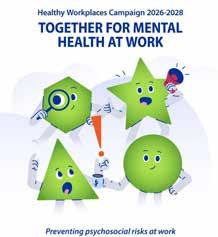
About EU-OSHA: The European Agency for Safety and Health at Work (EU-OSHA) runs the flagship Healthy Workplaces Campaigns. The next 2026-2028 campaign is themed ‘Together for Mental Health at Work’. For further information visit https://osha.europa.eu/en
About Kara Connect: Kara Connect – the mental health and wellbeing platform – was founded in Iceland in 2014 by Tobba Vigfusdóttir. It currently employs a team of 25 across Ireland, the UK and Iceland, and represents 3,000+ practitioners across over 60 specialities and 30 languages. For further information visit www.karaconnect.com
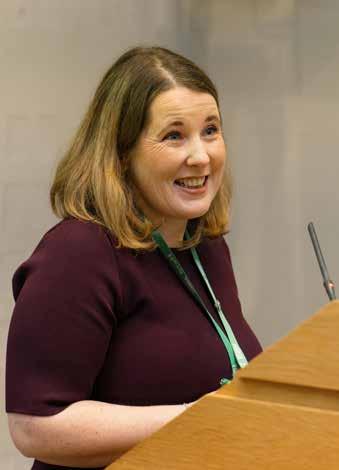
Mental health is now one of the biggest concerns for employers in the workplace, according to Tobba Vigfusdottir, Founder and CEO of Kara Connect.
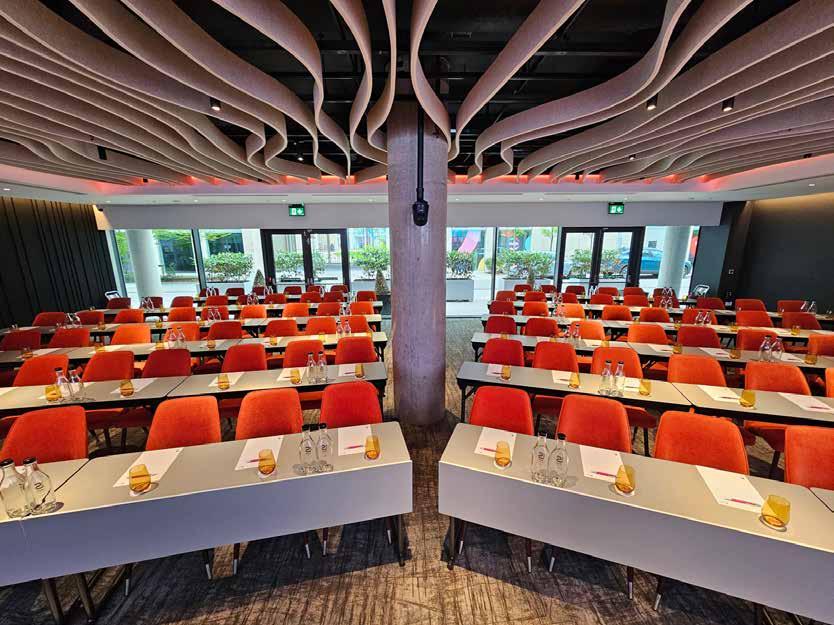
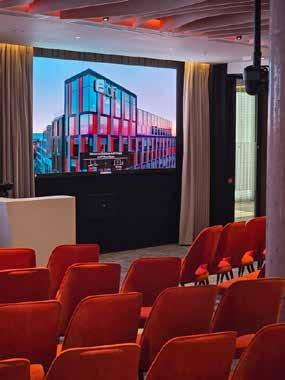
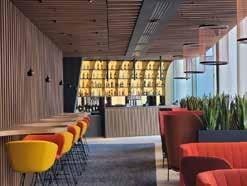
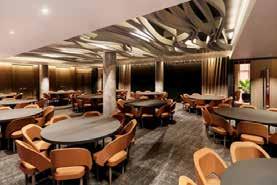
Aloft Dublin City Hotel
Liberties Suite
Where Innovation Meets Inspiration
At Aloft Dublin City, we redefine the event experience by offering a dynamic and modern venue that stands out from the crowd. Our vibrant events space is more than just a room it's a hub of creativity and innovation, designed to inspire and energize your guests With cutting-edge technology, flexible setups, and a prime location in the heart of Dublin, the Liberties; we provide everything you need to host a seamless and memorable event Plus, our dedicated team is committed to bringing your vision to life, ensuring every detail is perfect from start to finish.
Our Facilities:
High-speed Wi-Fi
AV Technology
Flexible Seating Layouts
On-site Catering
Modern 146 sq meter space
180 Guests Capacity
2 7 meter Ceiling
In comparison, EAPs are heavily under- utilised. Typical usage ranges from 3-8%, with many large employers reporting rates closer to 2%, even though one in five adults are now experiencing a diagnosable mental health condition each year.
Employees are often reluctant to seek help, as access involves phone-line gatekeeping and triage, with support triggered only when problems are deemed serious enough to escalate. What’s more, it can take several weeks, often months, from enquiry to receiving an appointment.
"Mental health is now one of the biggest concerns for employers in the workplace. Behind that number is a person waiting months for help that may never reach them. Most employers’ answer is still a check-in-thebox EAP, a service as few as 3% of staff now use,” according to Tobba Vigfusdottir, Founder and CEO of Kara Connect.
She adds that a benefit that this doesn’t protect a company but rather exposes it. “And that exposure shows up where the chief financial officer feels it – in absence rates, in attrition, and increasingly in insurance premiums.”
DIRECT ACCESS TO HELP
Kara Connect, which originated in Iceland and is now headquartered in Dublin, is a Nordic employee mental health and wellbeing platform that provides direct access to personalised, professional help for mental, physical, and
European Foundation for the Improvement of Living & Working Conditions
financial health, as well as advice on relationships and careers.
It currently employs a team of 25 across Ireland, the UK and Iceland. The company offers around 3,000 practitioners delivering services to over 25,000 employees across companies which include Mercury, Vodafone, KPMG, The Blue Lagoon, Deloitte, Grundon and Iceland University.
Over 90 companies have launched their own Wellbeing Hub, a customised platform giving employees access to one-to-one mental health and wellbeing sessions.
Eurofound Ireland (Dublin) Social & Labour Policy
Fusion for Energy F4E Spain (Barcelona) Energy (Nuclear)
Authority for Anti-Money Laundering AMLA Germany (Frankfurt) Financial Regulation
European Banking Authority
EBA France (Paris) Financial Regulation
Agency for the Space Programme EUSPA Czech Republic (Prague) Space & Innovation
European Training Foundation ETF Italy (Turin) Education & Skills
European Union Drugs Agency EUDA Portugal (Lisbon) Public Health
Agency for Criminal Justice
European Investment Bank
EUROJUST Netherlands (The Hague) Justice & Law
EIB Luxembourg Banking & Finance
European Fisheries Control Agency EFCA Spain (Vigo) Fisheries & Maritime
Clean Aviation Joint Undertaking CAJU Belgium (Brussels) Transport (Aviation)
Single Resolution Board SRB Belgium (Brussels) Financial Regulation
Cybersecurity Competence Centre ECCC Romania (Bucharest) Digital Security
Chips Joint Undertaking Chips JU Belgium (Brussels) Digital (Semicon)
Large-scale IT systems
Maritime Safety Agency
Europe’s Rail Joint Undertaking
European Insurance & Pensions Auth.
Innovation & SMEs Agency
Translation Centre
eu-LISA Estonia (Tallinn) Digital Security
EMSA Portugal (Lisbon) Transport (Maritime)
EU-Rail Belgium (Brussels) Transport (Rail)
EIOPA Germany (Frankfurt) Financial Regulation
EISMEA Belgium (Brussels) Innovation / Business
CdT Luxembourg Language Services EU Agency for Railways
The network of EU 31 agencies set to benefit from the new mental health service:
HEALTH AND SOCIAL CARE SERVICES STUDY
SURVEYS STAFF UNDER EXTREME PRESSURE
A major new study on Ireland’s health and social care services has revealed a growing staff retention crisis, resulting in systemic understaffing, poor communications and low staff morale, with three-quarters of workers regularly considering leaving their role, and 67% of health workers ‘actively’ considering leaving their jobs.
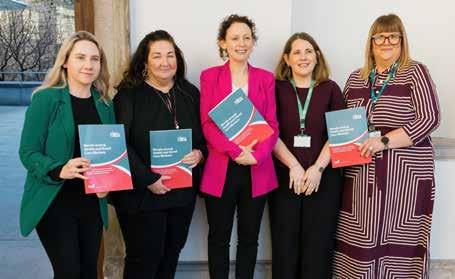
The research study, which was conducted by think-tank TASC, on behalf of Fórsa’s Health and Welfare Division, describes a workforce dealing with low morale and working under extreme pressure across Ireland’s health and social care services.
The study (presented earlier this year to Oireachtas members) was commissioned by Fórsa’s Health and Welfare Division. This division of Fórsa represents more than 32,000 health and social care staff members, including clerical and administrative staff, health and social care professionals, in addition to pharmacy staff.
The research surveyed 3,775 union members, across the HSE, Tusla, Section 38 and voluntary
organisations, in addition to nationwide focus groups. It identified chronic understaffing, ‘top-down’ decision-making, and a failure to meaningfully engage frontline workers against eroding health, staff morale and undermining the delivery of essential services.
Fórsa has said the findings “paint a stark picture of a sector struggling to meet demand, while carrying the legacy of long-term underinvestment and recent policy decisions that have capped staffing and abolished vacant posts”.
LOW MORALE ERODES TEAMWORK
Head of Fórsa’s Health & Welfare Division, Ashley Connolly, said that low morale is now eroding teamwork, retention, and patient care, which
The TASC study was presented to members of the Oireachtas earlier this year. Pictured (l-r): Senator Laura Harmon, Fórsa member and health worker Mary Kearney (Fórsa Clare Health & Local Government Branch), Marie Sherlock TD, Linda Kelly, Fórsa National Secretary, and Ashley Connolly, Head of Fórsa’s Health & Welfare Division.
had been envisioned by the Government’s Sláintecare programme.
This programme was designed to create a communitycentred model of provision. However, she noted that the lived reality for the union’s health and welfare members is long waiting lists, reduced access to community services, and local networks closing or shrinking.
“Sláintecare intended to deliver universal, communitybased care, but staff do not believe the system is staffed or supported to achieve that. Their experience must be taken seriously by the Government and the Department of Health,” noted Ashley Connolly.
Fórsa’s National Secretary Linda Kelly said that morale is central to delivering real and sustainable healthcare reform, adding that if workers do not have the resources or support to maintain services, any efforts at reform are undermined.
“We need evidence-based staffing, fair pay, most especially in the voluntary sector, as well as enhanced retention strategies, and a stronger worker voice in policy decisions. Unless these root causes of demoralisation are addressed, the workforce crisis will threaten staff wellbeing and the future of Sláintecare itself,” she said.
according to Linda Kelly, Fórsa National Secretary.
RESEARCH STUDY HIGHLIGHTS SIX MAIN FACTORS
The study identifies six central pressures driving low morale and threatening service delivery:
• Severe understaffing and escalating workload pressures: Almost half the number of respondents reported feeling burnt out “often” or “always.” Workers attributed these pressures largely to inadequate staffing levels and the 2024 ‘Pay and Numbers’ strategy. The report calls for workforce planning based on local needs rather than arbitrary staffing caps.
• Disconnect between senior management and frontline realities: Participants described a topheavy system characterised by one-way, top-down communication that leaves workers feeling unheard and undervalued.
• ‘Vicious circle’ of low morale and poor retention: The risk of losing staff remains high, reflected in the high number (67%) of those ‘actively’ considering leaving their role, while the loss of experienced staff increases pressure on those who remain, placing patient care and service stability at risk.
Direct negative impacts on service quality: Understaffing is leading to longer waiting lists, reduced access to local services, and an increased reliance on private providers. Workers reported that these delays undermine preventative care, worsen outcomes, and demoralise staff who feel they are delivering care far below acceptable standards.
• Clear risks to the delivery of Sláintecare: Workers strongly believe (78%) that staffing levels are far below what is required to deliver the promised shift to universal, community-based care. More than half the number of workers said they did not feel supported or confident in delivering the changes demanded.
• Urgent lessons for decision-makers: The report calls for evidence-based staffing levels, improved retention strategies, continued progress on pay equity in the voluntary sector, and a stronger worker voice to ensure policy is informed by frontline experience.
“Unless the root causes of demoralisation are addressed, the workforce crisis will threaten staff wellbeing and the future of Sláintecare itself,”
FEWER EU COUNTRIES NOW ON COURSE TO HALVE ROAD DEATHS
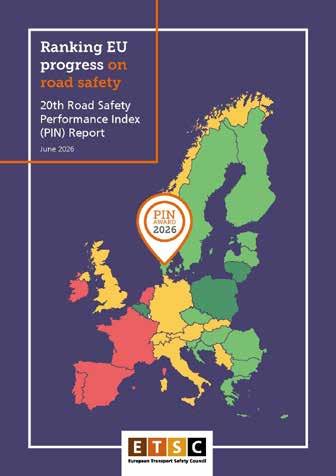
Road deaths across the European Union are falling at barely half the rate required to meet the EU’s target of halving deaths by 2030, according to the European Transport Safety Council (ETSC) in its latest Road Safety Performance Index (PIN) report for 2026.
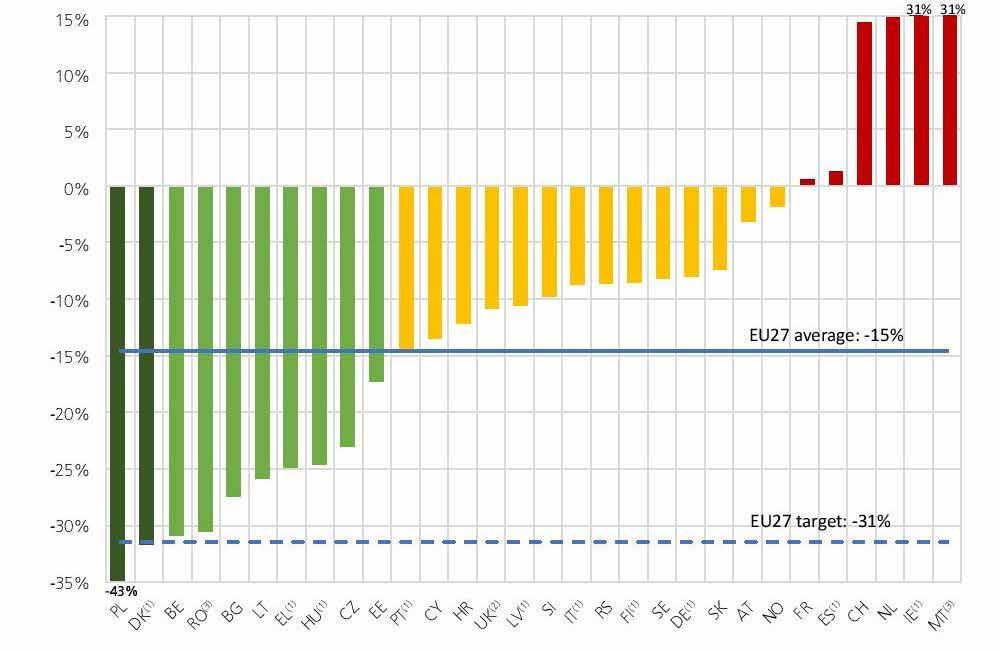
In 2025, around 19,500 people were killed on EU roads and more than 100,000 were seriously injured. At the halfway point of the 2020–2030 decade in which the EU has pledged to halve road deaths, road deaths are down just 15% from the pre-pandemic 2019 baselinewhen a 31% reduction was needed to stay on course. Deaths fell by only 2% last year.
“This report shows a Europe moving at two speeds. Some countries are on course to halve road deaths by the end of the decade; most are falling behind, and the EU as a whole is well off course. None of this is inevitable – it reflects the choices governments make,” noted Jenny Carson, co-author of the report.
Halving deaths by 2030 would have meant average annual cuts of 6.1% from 2019; but with Europe now well behind schedule, the required pace needs to rise to around 10% a year for the rest of the decade – roughly five times the current rate of progress.
The Road Safety Performance Index (PIN) covers 31 countries – the 27 EU Member States bound by the 2030 target, alongside the non-EU countries (Norway, Switzerland, the UK and Serbia). The overall pace of progress is far too slow, but it is not slow everywhere: the countries moving fastest since 2019 show the 2030 target is still achievable.
Denmark received the 2026 PIN Award for its long-term road safety performance at the ETSC PIN Annual Conference in Brussels on 23 June.
IRRESISTIBLY SQUEEZY
Figures for Road Deaths (2019-2025) - Ireland ranked second last.
Some of the biggest gains have come from countries once ranked among Europe’s least safe. Since 2019, Poland has cut road deaths by 43%, which is the largest reduction of any country in the report.
Established front-runners are pulling further ahead. Belgium has reduced deaths by 31% since 2019 and is on track for the 2030 target, while in Denmark (already among the safest countries in Europe) road deaths are down 32%.
Norway and Sweden remain the safest of the countries studied, at 19 road deaths per million inhabitants, against an EU average of 43 per million.
ETSC is calling on:
• National governments to adopt the ‘Safe System’ approach in full, to step up proven traffic enforcement, properly fund road safety, and fast-track collection of EU Key Performance Indicator (PIN) data.
• The EU to halt the current weakening of vehicle safety standards and to prepare to strengthen them at the 2027 review of EU vehicle safety rules, and to recommend safe speed limits: 30 km/h in towns, 70 km/h on undivided rural roads, and no more than 120 km/h on motorways.
ABOUT THE ETSC: The Brussels-based independent non-profit organisation is dedicated to reducing the numbers of deaths and injuries in transport in Europe. Founded in 1993, ETSC provides an impartial source of expert advice on transport safety matters to the European Commission, the European Parliament, and Member States.
It maintains its independence through funding from a variety of sources including membership subscriptions, the European Commission, and public and private sector support for various activities. ETSC seeks to identify and promote effective measures based on international scientific research and best practice in areas which offer the greatest potential for a reduction in transport crashes and casualties.
ETSC provides scientific reports, fact sheets and newsletters in support of high safety standards in EU harmonisation, and the take-up of best practice and transport safety research. Since 1993, the organisation has gathered over 200 internationally renowned transport safety experts from across the EU. ETSC’s work is financed by its members, through projects co-funded by the European Commission, in addition to public and private sector sponsorship.
The latest report by the ETSC also highlights some of the key challenges that remain. In the Netherlands, the number of road deaths per million people is now higher than a decade ago – the only country in Europe where that is the case. With some of the highest cycling levels in Europe, keeping vulnerable road users’ safe demands greater road safety effort than elsewhere, and these figures suggest that effort is not yet being made.
Progress on serious injuries in Europe, meanwhile, has lagged far behind the fall in deaths, leaving an estimated 100,000 people seriously hurt on EU roads each year. ETSC warns that hardwon gains are now at risk from moves to weaken existing rules.
Proposals on the table would freeze the safety requirements for a new class of small electric cars for a decade, exempt electric vans from speed limiters, and enable thousands longer and heavier lorries to operate across borders.
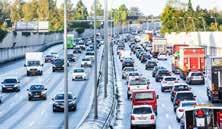
15% DROP IN EU ROAD DEATHS SINCE 2019
Collectively, across all EU member states road deaths decreased by 15% in 2025 relative to 2019. However, to meet the EU’s road safety target for 2030, a reduction of at least 31% is necessary, the report has noted. Among 303 countries in the PIN programme, 24 showed a reduction in road deaths in 2025 compared to 2019 (illustrated in figure). Poland
leads the ranking with a decrease of 43%. Denmark registered a reduction of 32%, followed by Belgium with a 31% reduction and Romania with a 30% reduction.
Meanwhile, road deaths in France and Spain stagnated. Conversely, an increase in road deaths was observed in four countries over the same period. Notably, Ireland and Malta experienced a 31% increase, while the Netherlands saw an increase of 15% with Switzerland at 14%.
suppOrt GraphICs
WATER IS OUR PASSION for Pharma & Biotech
BWT Pharma & Biotech Ltd
The Cloud Device
BW T is t h e p e r fe c t p ar t n e r fo r c r i t i c al ul t r a - p ur e m e dia fo r m o r e
t han fi ve d e c ad e s lf t h e e nd pro du c t and pro du c t i o n d e
ge n e r at i o n of s uf fici e nt w ate r of t h e re quire d quali t y, BW T uni t s and s e r vi ce s ar e t h e r i ght c h oi ce A ll ove r t h e w o r ld, s al e s , co ns ul t in g,
e r vi ce and af te
s at is f a c t i o n Fo r t his p ur p o s e BW T has t hr e e o w n pro du c t i o n si te s in Sw i t ze r land, Uni te d St ate s and C hina, a gr e at o r ganis at i o n w i t h m any e x p e r i e n ce d sp e c ialis t s and a s t r o n g gl o b al n e t w o rk
The LL Brand uses a graphic cloud device to build a unique and recognisable style across all applications. The device can be used to house an image, heading or to isolate the logo. For examples of the cloud device in use, see The Brand in Action Section page 10.
The comprehensive range ex tends from the potable water inlet to the point of use Generators for Purified Water, Water for Injection, and Pure Steam in line with the European Pharmacopoeia, United States Pharmacopoeia, and Chinese Pharmacopoeia are the hear t of our business lt is rounded off with systems for monitoring, storing, and distributing the media as well as periodic or continuous sanitization of storage and distribution system Suitable unit s are available for pretreatment through filtration for maximum reliabilit y in dif ficult feed water conditions Full suppor t is indispensable for maximum ser vice life and consistently high qualit y
In Af ter Sales & Ser vice, BW T's specialist s ensure the long-term availabilit y of systems worldwide This is through scheduled maintenance, modifications, spare par t s management, and rapid assistance
Address: 34 Duleek Business Park
Duleek, Co. Meath, Ireland
Eir Code: A92 DYY2
Help us make the most of short and precious lives
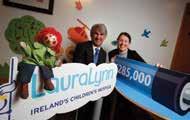
LauraLynn is Ireland’s ONLY children’s hospice. We provide palliative care and support to children with life-limiting conditions and their families.
Choose LauraLynn as your charity partner: Make a difference
Build your brand by partnering with a unique charity
Enhanced staff morale
Tailored support from our corporate team
Engage in exciting fundraising teambuilding events
For use in inhouse
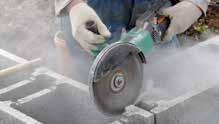
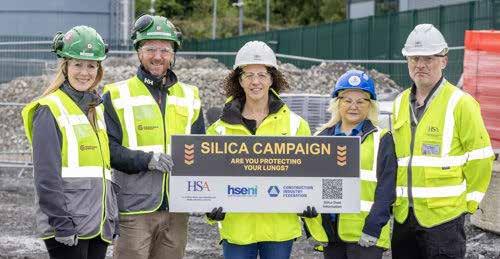
ALL ISLAND CAMPAIGN TARGETS RISKS OF EXPOSURE TO SILICA DUST
A three-month all island inspection campaign, focusing on the risks associated with exposure to silica dust in the construction sector, has been jointly launched by the Health and Safety Authority (HSA) and the Health and Safety Executive Northern Ireland (HSENI).
Inspectors from both organisations are now carrying out co-ordinated inspections across the island of Ireland during the campaign, which runs until the end of August.
The joint initiative will highlight the serious health risks associated with exposure to silica dust when working with concrete, stone, brick and other sand based materials.
Joan Flynn, Senior Inspector with the HSA, said the campaign reflects the Authority’s shared commitment with HSENI to address serious occupational health risks in the construction sector.
“Exposure to silica dust can have devastating longterm consequences for workers’ health. Through coordinated inspections over the summer period, we aim to raise awareness around elimination or substitution and ensure that effective control measures are consistently in place to protect workers across the island. Where stringent control measures are implemented, we can reduce the number of deaths in relation to occupational diseases.”
“By working collaboratively with the HSA, we are reinforcing the importance of prevention, control and ongoing vigilance in managing dust exposure risks,” noted Julian Richmond, HSENI Principal Inspector.
He said that silica dust remains a significant health hazard within the construction industry with HSENI figures showing an estimated 20 people die each year in Northern Ireland from lung cancer due to exposure to silica dust.
“Employers must take responsibility for implementing appropriate controls by providing appropriate equipment and training and ensuring that workers are protected from harm at all times,” he added.
Exposure to silica dust can cause severe and often irreversible illnesses, including silicosis, lung cancer, and chronic obstructive pulmonary disease (COPD). Silicosis is an incurable lung disease caused by inhaling fine dust particles that damage lung tissue over time.
Symptoms include persistent coughing, shortness of breath, fatigue and increased susceptibility to respiratory infections. As with other occupational health risks, the long-term effects may not be immediately visible but
results in reduced quality of life and increased likelihood of premature death.
HIGH-RISK
CONSTRUCTION ACTIVITIES
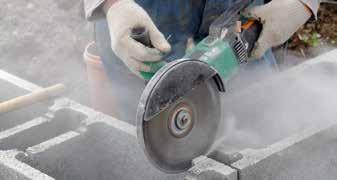
During the campaign, inspectors from both jurisdictions will focus on high risk construction activities such as cutting, grinding, drilling and demolition, which are known to generate hazardous silica dust if not properly controlled.
They will assess whether the following appropriate control measures are in place to eliminate or reduce exposure:
• Water suppression systems
• On tool dust extraction
• Containment and isolation methods
• Appropriate use of respiratory protective equipment (RPE) and personal protective equipment (PPE)
Adequate training and health surveillance for workers
Occupations with potentially high levels of exposure to RCS include:
• Quarrying
• Slate works
• Foundries
• Potteries
• Stonemasonry
• Construction (when cutting or breaking stone, concrete or brick)
• Industries using silica flour to manufacture goods
Employers are reminded that the most effective way to protect workers is to eliminate exposure where possible. Where elimination is not feasible, exposure must be reduced through engineering controls, safe systems of work, appropriate equipment and ongoing health monitoring.
Both the HSA and HSENI are urging employers and workers to use this campaign as an opportunity to review current practices and ensure compliance with health and safety requirements.
For further information: www.hseni.gov.uk/topics/silica-dust www.hsa.ie/your_industry/construction/silica-dust/
The all-island campaign, which launched in early June, sees the HSA and HSENI co-ordinate inspections across the island of Ireland over the summer period.
ARTIFICIAL INTELLIGENCE IS OUT OF CONTROL IN WORKPLACES – ETUC
Artificial intelligence is now being abused by bosses to carry out ‘Orwellian’ surveillance of workers and AI must now be regulated to ensure it respects workers’ rights, according to the European Trade Union Confederation (ETUC).
Speaking at a recent European Parliament hearing on digitalisation at the workplace, ETUC Confederal Secretary Giulio Romani said that the risks linked with artificial intelligence (AI) are already widespread and contributing to Europe’s escalating stress epidemic.
He cited the examples of call centre workers whose tone of voice is now monitored by AI, and warehouse workers are put at risk as they struggle to keep up with automated productivity targets.
“Algorithmic systems determine work pace and track every movement, leading to increased stress, fatigue, and even higher injury rates," he warned MEPs.
The ETUC has called for binding legislation to protect workers against psychosocial risks to be included in the forthcoming Quality Jobs Act, along with an ‘AI at Work Act’.
The ETUC says this should ensure the following factors:
* The human in command principle, including the right for workers to challenge and overturn automated decisions.
* Transparency and explainability, including information on the use, logic and impacts of AI systems, and access to relevant data for trade unions and workers’ representatives:
* Stronger collective rights, with mandatory involvement of trade unions and enforcement of information, consultation, participation and training rights.
* A ban on intrusive practices, such as the processing of non-work-related personal or psychological data.
* Protection of health and safety, with mandatory risk assessments before deployment and accountability for harm caused by AI systems.
Giulio Romani said: “Digital technologies, including artificial intelligence and algorithmic management, are transforming the workplace at an unprecedented pace. While they offer opportunities, such as increased flexibility and improved productivity, he noted they are also creating new and significant risks for workers’ mental health and well-being.
“The current EU framework remains insufficient. Guidance alone is not enough. Psychosocial risks are still too often treated as an individual issue rather than a structural one linked to work organisation.
“This is why the ETUC calls for a stronger European approach. We need binding legislation to address psychosocial risks in the context of digitalisation, with clear employer responsibilities, mandatory risk assessments, and stronger rights for workers’ information, consultation and participation.
“Digitalisation must not come at the expense of workers’ health. With the right rules and governance, it can improve working conditions. Without them, it risks deepening inequalities and undermining well-being.”
*The ETUC represents 45 million members from 93 trade union organisations across 41 European countries, plus 10 European Trade Union Federations. For more information visit www.etuc.org/en
The risks linked with artificial intelligence (AI) are already widespread and contributing to Europe’s escalating stress epidemic, according to the ETUC.
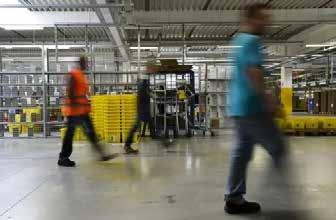
Amazon workers at a warehouse in Germany. (Pic: EU/Guenter Schiffmann)
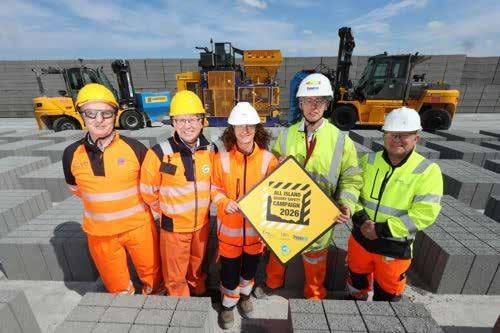
HIGH RISK QUARRY INDUSTRY IS TARGET OF HSA-HSENI CAMPAIGN
The Health and Safety Authority (HSA) and the Health and Safety Executive Northern Ireland (HSENI) joined forces to launch an All Island Concrete Block Making Safety Inspection Campaign in May, to raise awareness and address risks in the manufacturing of concrete blocks.
The campaign, which ran from 11-25 May and marked the first joint quarry safety initiative undertaken by the HSA and HSENI, focused on block making operations and associated activities. Inspectors from both jurisdictions carried out co-ordinated inspections across the island of Ireland.
The objective of the campaign was to promote safer working practices in the manufacturing of concrete blocks using mobile block making plant, which can present significant risks due to the routine use of large and powerful machinery.
Hilary Byrne, Senior Inspector with the HSA, “Block making operations can be particularly hazardous workplaces, given the scale and power of the machinery involved.
Employers must actively carry out suitable risk assessments and implement appropriate control measures, including safe systems of work, to ensure the safety of employees, contractors and visitors to these sites.”
During the campaign, HSA and HSENI Inspectors sought evidence of effective controls and compliance in the following key areas:
• Vehicle safety, including pedestrian-vehicle segregation.
• Appropriate training for drivers of loading shovels and industrial trucks/fork lift trucks.
• Safe systems of work for concrete manufacturing, block making and strapping processes.
• Adequate isolation and Lock Out, Tag Out, Try Out (LOTOTO) procedures during cleaning and maintenance activities.
• Suitable guarding of machinery and conveyors.
• Functional and effective safety devices.
• Safe use of chemicals involved in the block making process.
Over the five year period 2021–2025, quarrying and associated manufacturing activities accounted for five work related fatalities in the Republic of Ireland, with three fatalities in Northern Ireland.
Brian Pryce, HSENI Principal Inspector, added, “This joint campaign highlights the serious risks present in block making operations, particularly from vehicle movements and unguarded machinery. Through co-ordinated inspections, the aim is to reinforce the absolute necessity for robust safety systems, effective isolation procedures and proper control of high risk maintenance activities across the sector.”
A significant proportion of serious and fatal incidents within the sector arise from pedestrian-vehicle interactions and from unguarded machinery, including conveyor systems. Maintenance activities involving fixed and mobile machinery also present a high level of risk and must be effectively managed through adequate isolation and control procedures.
Gerry Farrell, Chief Executive of the Irish Concrete Federation, said his federation strongly supported this all island inspection campaign and encouraged all members to engage positively with it.
“Safety is a shared responsibility and strong standards in block making operations are essential to protecting workers fostering a proactive safety culture and enhancing operational efficiency.”
Gordon Best, Regional Director, Mineral Products Association (Northern Ireland) added, “This campaign provides an important opportunity to reinforce best practice in quarry block making across the island. Our members recognise that effective training, safe systems of work and well maintained guarding and safety devices are critical to preventing serious incidents.”
CONSTRUCTION SAFETY STARTS WITH A PLAN OF ACTION
The Health and Safety Authority, in collaboration with the Construction Safety Partnership Advisory Committee, has launched Safe Plan of Action — a practical, one-page planning tool designed to help any construction crew prepare to work safely on site and prevent incidents before they happen.
Built on the principle that “safety starts with a plan”, the Safe Plan of Action (SPA) supports workers, contractors and supervisors in translating high-level safety documentation into clear, actionable steps on site.
Eibhlín O’Leary, Assistant Chief Executive with the Health and Safety Authority (HSA), said that planning work safely is a core requirement under health and safety legislation.
Speaking at the launch of the Safe Plan of Action at Dublin Airport, she said that the plan is designed to support construction teams identify hazards, agree control measures and clearly set out how work will be carried out before it begins.
“By focusing on how individual tasks are carried out, the SPA will help to prevent incidents and support safer working practices across construction sites,” O’Leary noted.
The SPA is a site ready template that any crew can complete before work starts. It enables teams to agree the task, identify hazards, specify required controls, list necessary permits and PPE and record a team briefing.
Each SPA includes a dedicated space for supervisor, translator and crew signatures, reinforcing the obligation to communicate health and safety information in a form and language that every worker understands.
Designed as a practical, A3, one page document, the SPA can be filled out quickly at the start of each day or week. It sits alongside existing Risk Assessment Method Statement (RAMS) and helps turn them into clear actions on the ground, supporting
the Project Supervisor Construction Stage (PSCS) in carrying out their duty to coordinate health and safety during the construction phase.
Eamonn Stapleton, Co-Chair of the Construction Safety Partnership
Advisory Committee (CSPAC), added that employers need safety tools that are clear and workable on live construction sites.
“The Safe Plan of Action provides a practical structure for planning
The Safe Plan of Action is designed to support construction teams identify hazards, agree control measures and clearly set out how work will be carried out before it begins.
work at task level, helping contractors identify hazards and controls without excessive paperwork. It is a proportionate tool that can be applied across projects of different sizes and supports safer, more organised site operations.”
The SPA guides users through:
• Task steps and required resources.
• Common construction hazards, such as moving plant, work at height and live services.
• Permits and authorisations needed before work starts.
• Control measures to eliminate or reduce risks.
John Murphy, Co-Chair of the CSPAC, said that from a worker perspective, effective safety begins with clear information that people can understand and apply to the work in front of them. “The Safe Plan of Action supports clearer briefings and better understanding at crew level. This is particularly important on busy and multilingual sites, where clear communication is essential to preventing injury and ill health,” he added. By encouraging crews to plan together, the SPA will improve co-ordination, reduce downtime and help to prevent rework or delays caused by unexpected hazards. It also offers better compliance support for micro and small contractors, who often seek simple, low paper tools to help meet their legal duties.
The SPA is particularly beneficial for diverse or multilingual sites, with dedicated space for keeping an account of languages used in briefings, supporting interpreters and confirming that all workers have understood the safety information provided. The new SPA template is available to download at www.hsa.ie
Eibhlín O’Leary, Assistant Chief Executive with the HSA and John Murphy, Co-Chair of the CSPAC, pictured at the launch of the SPA at Dublin Airport at the end of April.
HOW DATA IS TRANSFORMING WORKPLACE SAFETY IN THE UK
Using health and safety data through Artificial Intelligence (AI) is transforming workplace safety and monitoring practices, helping organisations to spot hazards before they become accidents and empowering employees to work with a greater peace of mind, writes Gary Ng, CEO and Co-founder of viAct
Every worker in a high-risk sector remembers that moment of hesitation – stepping onto a wet floor, climbing scaffolding, or navigating a busy warehouse – and thinking, “I hope nothing goes wrong”. However, UK-based companies are now turning that uncertainty into confidence.
From construction sites in London to offshore rigs in Aberdeen, and factories across the Midlands, high-risk industries are harnessing technology to predict risks, prevent injuries, and create workplaces where safety is second nature. Every alert, every sensor reading, and every report now tells a story that helps organisations act smarter and faster.
DATA: THE SAFETY COMPASS
Safety at workplaces has long been about following rules and marking checklists. According to the Health and Safety Executive (HSE), 124 workers suffered fatal injuries from
2024 to 2025 alone in Great Britain. These involve the highest account of falls from height, struck by moving object or vehicle and overturning.
Such high-risk sectors in the UK share similar safety challenges across Europe, although the legal frameworks may differ. According to the report by the EU Occupational Safety and Health Administration (EU-OSHA) in 2025, the levels of fatigue among workers in these sectors are very high, which directly impacts on their safety at workplace.
AI-powered safety tools now provide a constant pulse on workplace conditions – ranging from AI CCTVs located across the facilities, Internet-of-Things (IoT) based wearables on workers. This also includes drones monitoring from above, real-time information that alerts Environmental, Health, and Safety (EHS) managers and supervisors to unsafe behaviours, potential equipment failures, or environmental hazards.
One initiative came from an innovation agency in the UK government when it funded the development of a real-time video analysis platform to effectively monitor the entries and exits of industrial sites. This shows the active recipient of AI as a solution to increasing health and safety risks in industrial sites.
Such AI-based safety interventions can help safety managers detect workers entering high-risk zones without appropriate personal protective equipment (PPE), monitor operator fatigue, posture, and movement near heavy machinery or provide early warning for hazardous conditions.
NEAR-MISSES TO KNOWLEDGE BASES
As per the HSE, the total number of workers sustaining non-fatal injuries in 2023 to 2024 in Great Britain stands at 604,000 majorly due to slips, trips and falls, during lifting tasks or through acts of violence.
Every such instance leading to an incident or even the ones missed to transition, carries valuable lessons. Organisations across high-risk industries are now capturing and analysing these near misses to turn them into actionable safety insights.
In sectors such as construction, manufacturing, mining, and logistics, AI-driven systems can minutely detect patterns from the near-miss events, unsafe behaviours around them, or equipment malfunctions.
By integrating machine data, sensor readings, and operator feedback, project managers can predict potential risks, optimise workflows, and implement targeted training. Over time, this approach transforms into a proactive framework, reducing incidents and developing a safety culture of continuous improvement.
While turning near-misses into knowledge is a powerful step towards safer workplaces. However, in highly sensitive industries, the levels of prevention must go further. Every entry, every transition, and every action need to be visible in real-time. This is where intelligent, vision-based systems move beyond analysing past incidents to delivering real-time, precision-focused oversight.
A UK PHARMA STORY
In the high-stakes world of sterile pharmaceutical production, even a small lapse can have serious consequences.
A leading UK manufacturer of sterile injectables faced such persistent challenges in the form of tailgating during shift changes, unauthorised entries into sterile zones, and unsafe cross-zone movements between chemical handling and packaging areas occurred. Manual monitoring and paper-based access logs often left blind spots, creating hidden contamination risks.
To undertake these challenges head on, the company deployed an advanced AI-powered access and movement monitoring solution.
With
The solution combined AI-based features such as face-authenticated entry, tailgating detection, and crosszone movement monitoring to provide real-time oversight of every transition to the safety managers on site. Within a month, the cross-zone violations fell by 75 per cent with recurring tailgating incidents were eliminated.
A VISION FOR TOMORROW
In the UK, the integration of AI and data-based solutions in workplace safety is reshaping how heavy industries operate. Today’s technologies, whether from real-time monitoring to predictive analytics, are helping companies anticipate risks, prevent accidents, and create a safer and more efficient work environment. Safety enables speed. This includes product safety, information safety, psychological safety, health and wellness, reputation safety, and yes, physical safety. When people feel safe, they can move faster and more confidently.
By turning data into actionable insights, EHS leaders can spot patterns, reduce near-misses, and respond to hazards before
they escalate. This approach not only protects employees but also strengthens operational efficiency, compliance, and overall workforce confidence.
Looking forward, high-risk workplaces where safety is embedded into every process will become the standard rather than the exception. With AI as a partner, organisations can move beyond reactive measures, creating environments where employees feel secure, operations run smoothly, and innovation is accelerated.
ABOUT THE AUTHOR: Gary Ng, CEO and Co-Founder of viAct (an AI + video analytics company focused on enhancing safety and compliance across construction and other highrisk industries). With a background in building engineering, he became an ‘AIpreneur’ with the inception of viAct in 2016. He has over 10 years’ experience in implementing technological innovations in construction industry.
its deployment facility on the premises, the sensitive production data stayed secure.
NEW TECHNOLOGIES RESHAPING WORK, NOT DESTROYING JOBS
Technology is more likely to create new tasks than remove existing ones, according to the findings from the pan-European Working Conditions Survey. Rather than widespread destruction, the Eurofound survey found that the primary challenges facing the EU workforce as digitalisation transforms the European labour market, are shifting towards skills mismatches, generational divides, and worker autonomy.
The European Working Conditions Survey 2024 provides a comprehensive overview of working life in Europe.
The findings are based on 36,644 in-depth, face-toface interviews conducted across 35 countries. The survey examines seven dimensions of job quality, ranging from the physical environment to earnings and prospects, the survey, providing policymakers with a unique, evidence based deep dive into the state of work in Europe.
The data highlights a huge surge in digital collaboration over the past five years. Around 40% of EU workers are now using online meeting tools while 35% are utilising electronic collaboration platforms.
This shift is not only changing how work is done, but also where work takes place: only four in ten workers in the EU work exclusively from one location, and almost 3 out of 10 employees telework from home, on a full-time, regular or occasional basis.
While hardware such as collaborative robots remains concentrated in the industrial sector, used by only 3% of the workforce, software-based innovation is spreading rapidly.
To read the report visit www.eurofound.europa.eu/en/publications/
As of 2024, 12% of EU workers report using generative AI tools.
Behind these changes, a clear digital divide is emerging. Men are more likely than women to use emerging technologies like generative AI and wearables, and they report a greater impact of technology on their daily tasks.
Younger workers and those in higher-skilled occupations also exhibit much higher familiarity and positive sentiment toward these tools compared to their older counterparts. This trend suggests that while jobs are not disappearing, the nature of the work is changing in ways that may leave certain groups behind without targeted support.
A significant point of concern is worker autonomy and skills use. Currently, 30% of workers believe they are overskilled for their roles, and 21% of employees have no formal way to express their views at work. For these workers, the rise of algorithmic management, where software handles task allocation and monitoring, can reduce their sense of agency rather than improving efficiency.
At the same time, the report highlights that the use of generative AI is associated with lower levels of monotonous tasks and a greater likelihood that workers will assess the quality of their own work, particularly among professionals and managers.
Responding to the findings, Eurofound Executive Director Ivailo Kalfin said, “Given the scale of the changes that we are witnessing, it is important to closely monitor the impacts of new technologies on working conditions and its effects on workplace inequalities. For policymakers, this means putting workers first and ensuring that efficiency and productivity gains go hand in hand with improvements in job quality.”
Around 40% of EU workers now use online meeting tools, such as the Microsoft Teams platform.
FAIR WORK AGENCY IS FRESH START FOR WORKPLACE ENFORCEMENT
A new agency has been launched into the UK labourmarket where many workers still are not paid the minimum wage, holiday pay is denied to them and even tribunal awards remain unpaid. The Fair Work Agency’s immediate priority is “to ensure continued delivery and improvement”.
The Fair Work Agency (FWA) was established by the Employment Rights Act 2025 (ERA) as the headline reform to the labour market enforcement system. This is the first phase of the changes, bringing together existing enforcement bodies (Gangmasters and Labour Abuse Authority, Employment Agency Standards and the Office for Director of Labour Market Enforcement).
National Minimum Wage enforcement (which will be delivered under contract to the FWA by HMRC during 2026/27) is expected to be fully integrated within the FWA by 2027. The agency has stated that its immediate priority is “to ensure continued delivery and improvement”.
For now, the enforcement remit will continue to regulate the recruitment agency sector, tackling serious labour abuse and modern slavery, and National Minimum Wage enforcement (via HMRC until 2027).
The FWA has set out its priorities in the Strategic Steer from the Secretary of State for Business and Trade – the strategy will be published in April 2027.
Over the next year, the FWA will set out how it will address new areas of responsibility (such as holiday pay) and new powers as they come into scope. The FWA is also expected to enforce statutory sick pay and regulate exploitative umbrella companies, which are often used by employment agencies to pay and employ workers, in the near future.
Importantly, the ERA set out that the new FWA must have an Advisory Board to provide advice to the Secretary of State on labour market enforcement issues. The board has nine members, including three trade union representatives.
The FWA is also committed to establishing a Fair Work Agency Assembly to bring stakeholders together to shape, discuss and shape information to tackle the key challenges in the labour market, which could provide another opportunity for union representatives and officers to engage with the FWA.
OPPORTUNITIES AND CHALLENGES
According to the Trades Union Congress (TUC), the creation of the FWA provides a unique opportunity to address systemic issues, which the unions will continue to challenge and prioritise going forward:
• Fresh approach to existing enforcement responsibilities , where there are staggering levels of non-compliance such as refusal to pay employment tribunal awards.
• Ensuring an effective firewall between the FWA and immigration enforcement , to protect vulnerable migrant workers and avoid undermining trust in the new system.
• Ensuring that future strategies have a clear focus on improving enforcement outcomes for workers , including benchmarking and clear performance metrics.
• Ensuring that the FWA is adequately funded . The FWA has a budget of £60.1m, an increase on the combined budget of £47.4m for previous bodies in 2025/26. The FWA should also trigger and utilise its new power to recoup investigation costs from employers who breach the law.
For further information visit www.gov.uk/government/ organisations/fair-work-agency
SAFETY TRAINING CENTRE TO SUPPORT STRONGER SAFETY CULTURE
SSE is opening the doors of its Faskally Safety Leadership Centre to organisations across Scotland and Great Britain as part of its commitment to strengthening safety culture across high-risk sectors.
The multi-million-pound facility offers an immersive safety training experience, delivered by Active Training Team (ATT), that blends film and live action to help participants build the leadership skills needed to improve decision-making, influence behaviours, and reduce risk in the workplace.
Since opening in 2024, the centre has hosted nearly 9,000 SSE employees and contract partners. SSE is now making the facility available more widely to support businesses across Scotland and the UK that are looking to develop more robust safety cultures within their own organisations.
The move reflects SSE's belief that safety leadership should be shared across industry, particularly in sectors where people undertake high-risk operations every day. By opening the centre to other organisations, SSE aims to support wider collaboration and help raise standards beyond its own operations.
The immersive training is designed to embed behavioural change over time rather than treat safety as a one-off classroom exercise. This includes a newly launched modular approach focused on managing self, influencing others, and leading others, helping participants apply learning in real-world environments between sessions.
Mark Patterson, Group Safety, Health and Environment Director at SSE, said: “We carry out thousands of highrisk operations every day across the UK, Ireland and beyond. Our challenge is to make every task safe for every person including our employees, our partners, and the communities we serve.
“Through ATT's immersive training programme and the Faskally Centre, we've supported thousands of people to develop the safety leadership skills our industry needs. By opening the doors to organisations across the sector, including our peers, we want to
share that learning more widely and help strengthen safety culture right across the industry.”
Dermot Kerrigan, Director at Active Training Team, said: “Safety leadership and safety culture cannot be taught in a classroom; they must be lived repeatedly, reinforced, and embedded into daily practice. We're proud to support SSE in extending the reach of the Faskally Safety Leadership Centre so that more organisations may benefit from immersive training that helps create lasting behavioural change.”
SSE hosted a showcase event the Faskally Safety Leadership Centre to organisations from across the sector at an event in May, bringing together professionals working in health and safety, HR, and operational leadership roles within high-risk industries.
About SSE: SSE is a leading generator of renewables and flexible energy in the UK and Ireland markets, and one of the world’s fastest-growing electricity networks companies. This includes onshore and offshore wind farms, hydro, electricity transmission and distribution networks, power stations, carbon capture and hydrogen, solar and batteries, as well as providing energy products and services for businesses and other customers.
About ATT: Active Training Team (ATT) is team of professional writers, trainers, facilitators, actors, psychologists and digital learning specialists, working across the construction, transport and energy sectors, delivering safety leadership programmes for major infrastructure projects. Partners include SSE, Tideway, Trans-Pennine Route Upgrade and Ørsted.
SSE Faskally Centre Briefing.
Faskally Immersive Safety Training Centre in Perth, Scotland.
HSE URGES CONSTRUCTION COMPANIES TO STRENGTHEN SITE SECURITY
The Health and Safety Executive (HSE) is calling on the construction industry to prevent children from accessing construction sites during the school holiday period, to stop children being injured or worse, in pursuit of innocent fun and curiosity.
Britain’s national regulator for workplace health and safety is reminding construction site controllers that they have a duty to do everything possible to keep children out of the sites and away from danger.
The HSE outlines the following specific steps particularly relevant to child safety:
• Where necessary, reflect the nature of the site and the surrounding area, ensure suitable perimeter fencing or hoarding is erected.
• Regularly check and review site security to ensure fencing or hoarding is maintained and kept in good order.
• Secure sites adequately when finishing work for the day.
• Barrier off or cover over excavations and pits.
• Isolate and immobilise vehicles and plant and if possible, lock them in a compound.
• Store building materials (e.g. pipes, manhole rings, and cement bags) so that they cannot topple or roll over.
• Remove access ladders from excavations and scaffolds.
• Lock away hazardous substances.
The school holiday period serves as a timely reminder that site security is not only a legal responsibility but a vital part of protecting local communities, especially when schools are closed and children have more free time to be outside.
The HSE’s Head of Construction Sector, Mike Thomas,
said: “Construction site managers should check their sites are secure, and in areas where children live and play, they should remain vigilant and ensure that the risks to children are properly controlled.
“Construction sites are places of work and contain numerous hazards, all of which can pose a dangerous threat to anyone entering without permission. Clients and contractors must ensure that unauthorised access onto sites is prevented, both during and outside working hours.”
FIRST EVER JOINT INDUSTRY GUIDANCE FOR COLLABORATIVE ROBOTICS IN THE WORKPLACE
The Health and Safety Executive (HSE) and the Regulatory Innovation Office (RIO) are working together, along with government and industry, to support the safe and responsible adoption of robotics in the workplace.
The project, launched at London Tech Week in June, has been co-designed with industry to give companies clarity on regulatory requirements, and support businesses to increase the use of robotics.
The HSE will partner with Automate UK and the Manufacturing Technology Centre (MTC) to create practical guidance on how collaborative robots (cobots) can safely work alongside humans – combining industry good practice with HSE regulatory expertise.
The first stage, which will be launched this summer, will deliver regulatory clarity for ‘cobots’. It will give industry confidence in how they can ensure robots can work safely alongside humans.
Andrew Curran CBE, HSE’s Director of Science and Chief Scientific Adviser, said that guidance and advice can give employers the confidence to innovate safely and provide a platform for new technology to improve productivity and enable growth.
“We understand that despite there being no barrier to adoption in health and safety law there is a fear of noncompliance, which is limiting adoption. Therefore, we’re committed to working with the Regulatory Innovation Office and industry partners to deliver the first joint HSE and industry guidance on the use of ‘cobots’ to address this barrier and improve business confidence.”
The project, launched on 16 June during London Tech Week, has been designed in supporting businesses to increase the use of robotics in the workplace.
EMPLOYERS MUST KEEP WORKERS SAFE DURING SUMMER HEATWAVE – TUC
The Trades Union Congress (TUC) is calling for a maximum working temperature to protect workers in the wake of Britain’s first heatwave of the year, which started in May, as amber heat health alerts had been issued for some areas.
Working in hot weather can lead to dehydration, tiredness, muscle cramps, fainting, and – in the most extreme cases –loss of consciousness. Workers who are outdoors for long periods in a heat wave are at serious risk of sunstroke, heat stress and even skin cancer, according to the TUC.
Unlike other countries, Britain does not have maximum legal working temperatures.
However, there are minimum working temperatures, with the HSE’s Code of Practice setting out that the temperature in a workplace should normally be at least 16 degrees Celsius. The need for maximum temperature regulations for workplaces was recently backed by the Climate Change Committee in their recommendations to government.
TUC General Secretary Paul Nowak said that indoor workplaces should be kept at comfortable temperatures, with relaxed dress codes and flexible working to make use of the coolest hours of the day.
“Employers must ensure that outdoor workers are protected with regular breaks, lots of fluids, plenty of sunscreen and the right protective clothing. With heatwaves becoming more common, we need to adapt. We need new laws on maximum working temperatures, improvements to workplaces to keep them cool, and climate action to reduce global heating.”
The government has committed to “modernise health and safety guidance with reference to extreme temperatures” as part of their ‘Make Work Pay’ policy programme.
The TUC calls for the HSE to urgently review and update guidance to deliver on this commitment.
The union says that guidelines for maximum workplace temperatures should be introduced to ensure that employers may take steps to reduce temperatures if they get above 24°C and workers feel uncomfortable. Workers should also be able to stop working above a maximum temperature of 30°C, or 27°C for those doing strenuous jobs.
The TUC is also calling on ministers to make sure British workplaces are fit for a hotter climate. Public and private investment is needed to upgrade our buildings and infrastructure, so that they remain functional during heatwaves.
UK
ACCIDENT RATES HAVE RISEN SHARPLY OVER THE LAST DECADE – ROSPA
The Royal Society for the Prevention of Accidents (RoSPA) is calling on the UK Government to implement a comprehensive, cross-departmental National Accident Prevention Strategy to reduce the rising number of accidental deaths.
RoSPA’s ‘Safer Lives, Stronger Nation’ report has highlighted an escalating crisis of preventable deaths and injuries across the UK. According to Becky Hickman, RoSPA’s CEO, accidents claim over 20,000 lives annually, making them the leading cause of preventable deaths in young adults.
“This crisis costs billions in lost output and strains the NHS. For years, successive governments have overlooked this problem, meaning it is getting worse. Now, we urgently need the government to recognise the issue and adopt a strategy to deal with it. We will not stop until this happens,” she noted.
Key Details of the Campaign
• Currently, accident prevention responsibilities are highly fragmented across various government departments and healthcare sectors, leading to overlapping efforts and missed opportunities to save lives.
• The strategy calls for coordinated national leadership to streamline data collection, educate the public, target those most at risk (such as the elderly), and reduce the massive human and economic costs of preventable accidents.
• In addition to public health, this push directly affects businesses – such as construction and logistics firms – making it increasingly vital for companies to adopt robust safety, training, and emergency response frameworks.
RoSPA’s report draws on research conducted by Dr James Broun, Research Manager at RoSPA. Dr Broun has built up a unique dataset, bringing together 20 years of accident data from all four nations for the first time.
The report outlines the scale of the problem and the solutions we need to reverse rising accident figures. RoSPA wants accidents to be treated as a national crisis and claims that the government needs to understand the issue and adopt a strategy to deal with it.
EUROPEAN DAY FOR VICTIMS OF WORKPLACE ACCIDENTS ON THE CARDS
The European Parliament has adopted a resolution calling for the creation of a ‘European Day in Memory of Victims of Accidents at Work and for the Protection and Dignity of Workers’ to be observed on August 8.
This date refers to the Bois du Cazier disaster (Belgium) where, on 8 August 1956, 262 miners from 10 European countries lost their lives. The aim is to raise awareness of prevention and workplace safety in all sectors.
The text was approved with 395 votes in favour, 12 against, and 41 abstentions. Members of Parliament believe this day could encourage prevention initiatives in schools, businesses, and public institutions.
Within the context where the EU recorded 3,298 fatal accidents and 2.8 million non-fatal accidents in 2023, this resolution also calls on the European Commission to assess the occupational risks linked to artificial intelligence and algorithmic management systems.
Furthermore, members of the European Parliament are calling for a risk analysis related to extreme heat, heat stress, and meteorological phenomena to better identify extreme risks and provide greater protection for workers.
To ensure safe working environments, the Parliament stresses the essential role of labour inspections. It calls on all
EU Member States to strengthen their inspection services by giving them more resources, staff and independence.
“We must transform our tribute to the victims of workplace accidents into a concrete commitment to their prevention. Our resolution supports the ‘Vision Zero’ objective: zero deaths at work,” noted rapporteur Chiara Gemma (ECR, Italy).
This request from the European Parliament could now be taken up by the European Commission in order to achieve official recognition of 8 August as European Day for Victims of Workplace Accidents.
of Accidents at Work’
EU-OSHA RESEARCH ON PSYCHOSOCIAL RISKS AND MENTAL HEALTH
Research undertaken by the European Agency for Occupational Safety and Health at Work (EU-OSHA) will lead into the Agency’s Healthy Workplaces Campaign 2026-2028 which focuses on mental health and psychosocial risks at work in new and overlooked occupational groups, sectors and areas.
Building upon previous activities on psychosocial risks, relevant projects on digitalisation and musculoskeletal disorders, EU-OSHA has run the three-year research project (2022-2025) to provide insights into work-related psychosocial risks and mental health at work for policy, prevention, awareness-raising and practice.
The work supports the European Commission’s action on a comprehensive approach to mental health. The activity’s objectives are:
• to use existing research and new data to improve understanding of the underlying causes of psychosocial risks and effective prevention practices in various sectors, occupations and groups.
• to identify successful initiatives to prevent and manage workrelated psychosocial risks and promote mental health at work among a wide audience.
to improve knowledge and stimulate discussion on nationallevel policy and preventive measures among policymakers and occupational safety and health (OSH) professionals.
The research tasks include literature reviews, collecting and analysing data, identifying best practices, case studies, practical tools and awareness-raising materials.
The 2026-2028 Healthy Workplaces Campaign ‘Together for mental health at work’ aims to raise awareness about the impact of psychosocial risks and promote the creation of supportive, inclusive, and mentally healthy work environments across all sectors.
The campaign supports the European Commission’s wider Strategic Framework on Safety and Health at Work 2021-2027. This topic is of growing importance as data shows a general decline in European’s mental health, with 37% of workers experiencing overall fatigue and 29 % experiencing stress, depression or anxiety, according to the OSH Pulse Survey 2025.
For more information visit https://healthy-workplaces.osha. europa.eu/en
The European Parliament has adopted a resolution calling for the creation of a ‘European Day in Memory of Victims
SPAIN DEVELOPS NEW DIGITAL TOOL TO HELP PREVENT HEAT-RELATED RISKS
Faced with rising temperatures and the risk of exposure to ultraviolet radiation in the workplace, the Spanish National Institute for Occupational Safety and Health (INSST) and the State Meteorological Agency (AEMET) have joined forces in a new research project.
The project, which was presented in May at a conference dedicated to heat stress in Madrid, aims to develop a tool to predict the WBGT (Wet Bulb Globe Temperature ) index from meteorological data.
While widely used today to measure environmental conditions in the field such as temperature, humidity, radiation and wind, the WBGT index remains limited for outdoor professional activities where indicators change rapidly.
This new tool would allow for forecasting environmental conditions to anticipate situations of heat stress and prevent associated occupational risks such as heatstroke and dehydration.
“Extreme heat waves are no longer limited to a few days a year, and intense sun exposure is no longer an isolated phenomenon. It is now necessary to move from a reactive approach to preventive management that anticipates and adapts to these risks. This requires a science-based approach, technical rigor, and institutional and social dialogue,” notes Aitana Garí Pérez, Director of the INSST.
This initiative forms part of the Spanish Strategy for Occupational Safety and Health 2023-2027 which recognises
the need to improve protection against increasingly extreme weather conditions and to promote specific tools facilitating preventive management.
The INSST points out that workplace accidents increase by 17.4% during heat waves. Between 16 May and 30 September 2025, over 3,830 deaths related to high temperatures were recorded in the general Spanish population – an 87.6% increase compared to 2024, according to estimates from the Spanish Daily Mortality Surveillance System – MoMo.
This new tool would allow for forecasting environmental conditions to anticipate situations of heat stress and prevent associated occupational risks such as heatstroke and dehydration.
FRANCE UNVEILS 2026-2030 OCCUPATIONAL HEALTH PLAN
The 2026-2030 Plan for Occupational Health (PST) for Franch was presented to the National Council for the Orientation of Working Conditions by the French Minister of Labour and Solidarity on 5 June.
In addition to preventing occupational risks and promoting a healthy work culture, the PST (Plan for Occupational Health) places particular emphasis on preserving health throughout working life. One of the plan’s objectives is to better support workers facing the risks of job loss or burnout.
This would be achieved through a series of actions, such as prescribing therapeutic part-time work to promote the continued employment of employees with chronic illnesses; or using a risk assessment index for job loss (IRDP).
This new roadmap reflects the Franch government’s five main priorities in this area, namely:
1. The prevention of serious and fatal workplace accidents – particularly among young people and temporary workers – through initial and continuing training in occupational health and strengthening their induction into companies;
2. Promoting women’s health at work, in particular through genderdifferentiated occupational risk assessment, adapting personal protective equipment and combating sexual and gender-based violence at work;
3. Taking into account emerging issues in occupational health, by providing employers and occupational health and safety services with the tools to deal with the risks associated with climate change and addictive behaviors;
4. Preventing absenteeism through prevention and support for stakeholders;
5. Promoting mental health and preventing psychosocial risks, by strengthening mental health
first aid training in the workplace and deploying the charter of commitments launched in 2025.
Anticipating and managing crises and emerging risks is also a key focus of this new plan. Improving monitoring, alert, and crisis management systems in the workplace would involve strengthening the national network for vigilance and prevention of occupational and environmental illnesses (RNV3PE).
This new strategic plan also emphasises academic research and supports the development of regional university chairs specialising in occupational health and safety.
“Ensuring good working conditions, especially during times of major transformation, is an undeniable achievement and prerequisite. This means going further in terms of prevention and broadening the range of occupational risks to be considered,” noted Jean-Pierre Farandou, Minister of Labour and Solidarity, in the 2026-2030 Strategic Plan.
He said, in this regard, that he is mainly thinking of mental health at work, women’s health – including the issue of combating gender-based and sexual violence in the workplace – “and the protection of new employees, particularly young people who are by definition more exposed to the risk of accidents”.
Louth Meath Education and Training Board (LMETB) stands tall as the largest education and training provider in the Northeast region. As one of the largest ETBs in the country, it employs over 2,500 staff and provides education to over 30,000 students and learners annually across Primary, Post Primary and Further Education and Training (FET). Its diverse FET provision offers full-time and part-time education and training opportunities, both accredited and non-accredited, for school leavers and adult learners across a variety of centres, colleges and outreach locations across Louth and Meath.
LMETB is ideally positioned, in a strategically important economic area, to be the education and training provider of choice for workforce upskilling. Part-time programmes to support local employees in Louth and Meath are provided through the national SOLAS- funded Skills to Advance Initiative. Certified training can be provided in soft skills development such as customer service, as well as in technical, practical and ICT skills. Many courses are highly subsidised and offered at flexible times and locations, whether that be in the workplace, online or in an LMETB FET Centre.
Through its Advanced Manufacturing Training Centre of Excellence, LMETB is a leading provider of training programmes in new and emerging technologies for use in industry.
A subsidised training programme has been developed in association with Harcourt Technologies Ltd. to upskill participants on the fundamentals of 3D construction printing, using LMETB’s own 3D concrete printer. This hands-on experiential training covers 3DCP fundamentals to include material importance, printing processes, global applications, business potential, design principles and sustainability implications and is available also under LMETB’s Skills to Advance Initiative.
LMETB currently oversees €450 million worth of Capital Projects across its administrative buildings, schools and centres. It plays a strategic role in Estates Management and aims to modernise facilities, optimise space utilisation, create inclusive, accessible environments that foster innovation and learning and adapt to changing educational demands.
Climate and Sustainability is a key focus for LMETB and implementing energy-efficient practices, reducing the environmental impact of buildings, and promoting sustainable construction methods are integral to its operations.
Arna chomhchistiú ag Rialtas na hÉireann agus ag an Aontas Eorpach Co-funded by the Government of Ireland and the European Union
LMETB is proud to have a diverse and inclusive workforce. It offers a wide range of employment opportunities to suit school leavers, college graduates and professionals of all levels of skills and experience. With options available for career progression and professional development, employees can help shape the future of education and training in the region.
For more information on LMETB’s FET provision, see www.lmetb.ie/fet contact LMETB’s Adult Education Guidance Service on 1800 991 898 or email adultguidance @lmetb.ie.
For more information on Careers with LMETB, see http://careers.lmetb.ie contact LMETB Recruitment at 046 906 8200 or email recruitment@lmetb.ie