
Former SDHS teacher case draws renewed scrutiny amid questions over past WCPS leadership
By Santino Guido ROC Edition Editor
The criminal case involving former Stephen Decatur High School music teacher Ronald Lee Davis continues to draw attention to how allegations involving student safety were handled during the early 1990s and the actions taken after concerns became known.
Davis, 64, of Salisbury, was charged in Worcester County Circuit Court in 2023 with child abuse by a custodian related to allegations involving a former student during the 1991-1992 school year at
Stephen Decatur High School.
The allegations became public following reporting in the Feb. 22, 2024 edition of the Bayside Gazette and after the implementation of Maryland’s Child Victims Act of 2023, which removed the statute of limitations for certain child sexual abuse cases.
According to charging documents referenced in published reports, the alleged victim told investigators she had been involved in an inappropriate relationship with Davis while she was a student at Stephen Decatur High School. Court records cited in the reporting alleged that
sexual encounters occurred on school grounds, including within the school’s band area.
The case has received increased public attention because of both the allegations themselves and statements regarding how the matter was handled at the time.
According to charging documents cited in the 2024 Bayside Gazette article, Lou Taylor, who served as vice principal at Stephen Decatur High School during that period and was later promoted to superintendent of Worcester County Public Schools before retiring, told

Concerns raised over cable infrastructure disturbing historical African American cemetery
By Santino Guido ROC Edition Editor
Participating in an informational town hall meeting at Stephen Decatur High School, officials from Globalinx, a company that is proposing the construction of a cable landing station near Ocean City, were confronted with concerns that the company’s project may pose a threat to a historical African American cemetery.
Part of a broader initiative to increase global connectivity, Globalinx’s 24,000 square-foot cable landing station would connect up
to four transatlantic internet cables, all owned by Amazon Web Services, to land-based networks, effectively turning a “wet cable” into a “dry cable,” according to a Globalinx representative.
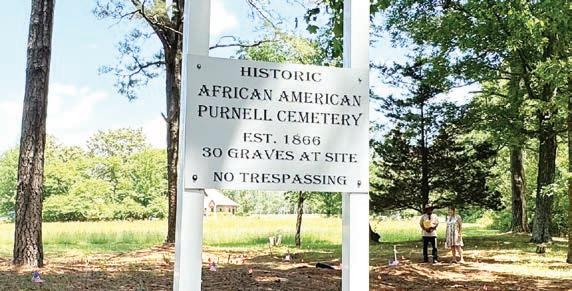
While being strategically located near the Ocean City Municipal Airport, the station’s prospective lot has recently come under scrutiny for being adjacent to a 19th-century African American cemetery associated with the Purnell family. Some worry that the facility’s proximity could disturb the site.
Addressing Globalinx officials on See CABLE CONCERNS page 5

OCEAN PINES • WEST OCEAN CITY • BERLIN MD
ROC Edition • Somerset County Schools Facebook FORMER MUSIC TEACHER RONALD LEE DAVIS
ROC Edition • Sherrie Clifford, Publisher
Proposed Globalinx cable project faces scrutiny over its proximity to the historic Purnell Family Cemetery.
Ocean Pines board moves to retain General Manager John Viola through 2031
By Sherrie Clifford ROC Edition Publisher
The Ocean Pines Association Board of Directors unanimously approved a motion to provide General Manager John Viola with options to extend his employment agreement through June 30, 2031, citing his leadership, financial management and long-term vision for the community. The motion authorizes the board president to execute an amendment to Viola’s existing contract granting him two additional one-year renewal extension options. Viola’s current contract extends through June 30, 2028, but due to Viola already having an option to extend his contract to June 30, 2029, the additional options would allow him to remain in the position for up to three more years.
According to the motion presented during the May 30 board meeting, the extension options were proposed based on Viola’s “continued strong performance results and leadership” and are intended to provide him with the opportunity to extend his tenure through June 30, 2031.
Director Jeff Heavner strongly supported the motion, praising both Viola and his management team. He said Ocean Pines is in the strongest financial position in its history and credited Viola’s leadership for significant improvements throughout the association. Heavner pointed to both the community’s financial health and the condition of its facilities, saying maintenance and operations have never been stronger. He also highlighted Viola’s leadership style, describing him as a manager focused on long-term success rather than short-term decisions.
“John brings with him such experience, integrity, promises made, promises kept,” Heavner said. “John has an eye for the long game. This isn’t a short game thing that we play here.”
He further praised Viola’s financial oversight and forecasting
abilities, stating that management carefully accounts for association resources and consistently provides reliable projections to the board.
Director Elaine Brady also voiced support for the extension, focusing on what she described as one of Viola’s greatest strengths: mentoring future leaders within the organization. Brady said she has watched department directors and managers become increasingly capable under Viola’s leadership and believes his commitment to staff development will continue benefiting the association well into the future. She noted that building a strong management team is critical for long-term organizational success and praised Viola for preparing the next generation of leadership.
“One of the things that I have just really watched John do amazingly is to mentor his staff,” Brady said. “If you look at all of the different departments and what they are all doing and how capable they are, he’s mentoring them as they come along.”
Viola was hired as general manager in 2019, bringing with him extensive experience in accounting, finance and large-scale organizational management. A certified public accountant, he holds an MBA from Pace University specializing in management and tax management, as well as a Bachelor of Science degree from Manhattan College. Prior to joining Ocean Pines, Viola spent more than 25 years in the financial sector, including leadership positions with Avon and Elizabeth Arden, where he served as director of finance and assistant global controller. His background provided experience in financial systems, internal controls, longrange planning and organizational management, skills that have proven valuable in overseeing one of the largest homeowner associations on Maryland’s Eastern Shore.
Since arriving in Ocean Pines, Viola has emphasized organization, financial discipline, long-term
planning and operational consistency. Under his leadership, the association has reported several years of positive financial performance while advancing major capital projects, infrastructure improvements, amenity upgrades and long-range planning initiatives. His approach has focused on balancing reinvestment in community assets with careful budget oversight, reserve planning and long-term sustainability. Board members noted that those efforts have helped strengthen the association’s financial position while maintaining focus on future capital needs and community priorities. Following discussion, the motion passed unanimously. The approval provides leadership continuity at a time when Ocean Pines continues to invest in major projects and long-range planning initiatives. By extending the option for Viola to remain in his role through 2031, the board signaled confidence in both his leadership and the management team he has developed. If the extension options are exercised,

Viola could continue leading Ocean Pines through the end of the decade, providing stability and continuity for the association as it manages future growth, infrastructure needs and financial challenges.


Five candidates vie for three Ocean Pines board of directors seats
By Cindy Hoffman Contributing Writer
Five candidates will compete for three seats on the Ocean Pines Board of Directors this summer as the association’s 2026 election season gets underway.
Election Committee Liaison
Director Jeff Heavner provided an update during the most recent board of directors meeting, outlining the timeline leading up to the August election and encouraging homeowners to stay informed and participate in the voting process.
The official candidate draw was held May 26. Using a series of playing cards to randomly determine ballot order, the Elections Committee established the order candidates will appear on the ballot and the order in which they will be seated during the candidate forum.
The ballot order for the 2026 Ocean Pines Association Board of Directors election, as determined during the May 26 candidate draw, is:
Amy Peck – Returning to the ballot and a former appointed member of the Ocean Pines Board of Directors.
John Latham – Current board president seeking reelection to a





second term.
Bill Pickett – Challenger candidate seeking election to the board for the first time.
Pat Lehnerd – Appointed to complete the remainder of former Director Steve Jacobs’ term and now seeking election to retain the seat.
Elaine Brady – Seeking reelection to a second term on the board.
Three seats on the seven-member volunteer board of directors will be filled during this year’s election, with the five candidates competing for the available positions.
One of the next major events on the election calendar will be the candidate forum, scheduled for Saturday, June 13, from 10 a.m. to noon in the Ocean Pines Clubhouse Meeting Room. The forum will provide residents with an
opportunity to hear directly from candidates, learn about their positions on community issues and ask questions before voting begins.
Ballots are scheduled to be mailed and emailed beginning June 22. Homeowners are encouraged to verify that their mailing address, email address and membership information are current to ensure they receive election materials without delay.
The final voter eligibility deadline is July 1. Heavner noted that homeowners who resolve eligibility issues before that deadline will receive updated ballots and voting materials shortly thereafter.
Voting will remain open until noon on Wednesday, Aug. 5, a change from previous years. Ballots collected at the Administration

Building will then be overnighted to MK Elections for tabulation.
Vote counting is scheduled for Friday, Aug. 7, and will again be administered by MK Elections, followed by the association’s annual meeting on Saturday, Aug. 8.
Association officials said election information has been communicated through electronic message boards, This Week in Ocean Pines, news releases and other communication channels. Homeowners are encouraged to review the election schedule carefully and participate in both the candidate forum and the election itself.
Residents with election-related questions may contact the Elections Committee by emailing elections@oceanpines.org

ROC Edition • Ocean Pines Association
Pictured (L-R), candidates running for Ocean Pines Association include Amy Peck, John Latham, Bill Pickett, Pat Lehnerd and Elaine Brady.

RENEWED SCRUTINY
Continued from page 1
investigators that Davis approached him in 1992 and admitted to having an inappropriate relationship with a student.
The published report states Taylor told investigators, “Mr. Taylor didn’t believe the relationship was a long relationship. It sounded to him like it was a couple months. Mr. Taylor did not ask for a timeframe.”
The report further stated, “Mr. Davis resigned, amicably, and went to Somerset County to teach middle school band.”
Davis remained employed within Somerset County Public Schools for nearly 30 years before the allegations became public in 2024.
The case has focused attention on why Davis was allowed to continue working in another school system following the alleged admission and whether outside agencies, law enforcement or state education officials were notified at the time.
Additional questions have centered on whether stronger intervention or safeguards at the time could have prevented Davis from continuing to work around students for decades afterward.
The case has also renewed focus on mandated reporting laws and the responsibilities of educators and administrators when allegations involving students become known.
Maryland law today requires certain professionals, including
school personnel, to report suspected child abuse or neglect. Reporting requirements and procedures, however, have changed significantly over the past several decades.
According to court records, Davis received a six-month suspended sentence and was placed on supervised probation beginning July 15, 2024, for a term of three years.
Additional information published July 19, 2024, on the website of the law firm Andreozzi + Foote questioned why school officials did not alert authorities or other school systems after Davis allegedly admitted to having an inappropriate relationship with a student before continuing to teach in Somerset County for decades afterward.
The published statement also referenced testimony from the victim, who stated in court, “What Mr. Davis has done has left me with a lifetime of trauma.”
In its published statement, the law firm additionally wrote that because Davis continued teaching for more than three decades afterward, “it is realistic to believe that more victims exist,” while encouraging anyone with additional information to come forward.
The case continues to raise questions regarding accountability, reporting procedures and the responsibilities of school leadership when allegations involving student safety arise.

CABLE CONCERNS
Continued from page 1
this issue at the May 14 town hall, Bobby Purnell — who has ancestors buried at the graveyard and maintains the site with his cousin, Alavontine Showell — described the decades-long struggle he and his cousin have experienced in their effort to preserve the graveyard. Over the years and with different property owners, the family had thoughtfully maintained the cemetery when, in 2005 under a previous owner, Showell found the cemetery desecrated, with all of the markers and monuments removed, save for one footstone. Another member of the Purnell family, Patrick Purnell, recalled in a Facebook post that the previous owner wished to build a self-storage business on that land. This plan ultimately fell through, however, only for the owner to try again in 2017 by attempting to cover dirt over the site. Police intervention put an end to that. Later, in 2025, Purnell had an archaeologist use radar technology to scan the site to find the burials so that they could be marked. The scans found a total of 53 people, 21 more than previously thought to be there and many of whom were
born before 1865, enslaved.
“I’m doing the best I can to keep the place up. I need help to clear it off, to restore it,” said Purnell to the representatives of the company that now owns the property.
Greg Twitt, CEO of Globalinx, assured Purnell and other family members present that they intend to keep in touch with them throughout the process and to properly maintain the cemetery along with a path for easy access.
“Our whole aim was to put a nice picket fence around it so that it was protected on our side … In terms of the path going into it, we were talking to the neighbors about improving the gravel road,” said Twitt, stating that he is open to any additional suggestions from the family.
Also expressing concern with the facility’s location was professional archaeologist Aaron Levinthal, one of the scientists who helped scan the cemetery for the Purnell family. He explained that aerial photographs of the cemetery dating back to the 1930s show fencing around a larger area than what is shown on current plats, and that, while the graveyard has been scanned for human remains, the rest of the property has not. With the plan’s line of
disturbance being only feet away from the cemetery, the possibility of the cemetery’s boundary not fully capturing the grounds could mean there are additional burials located where the company intends to build, he said.
To this, a representative of Globalinx stated that the company is comfortable with the line of disturbance being close to the cemetery’s boundary, but that they would be willing to scan the lot with radar to ensure there are no other burials. The company did not indicate whether they have an “unanticipated discovery plan” for human remains, which was a question the archaeologist had; however, officials acknowledged that local law states that construction would have to halt if archaeological resources or burials are discovered.
Roxie Dennis, who is running for Worcester County commissioners in District 2 and is a Purnell herself, delivered a speech also discussing the graveyard. She was concerned whether the cables would route through or adjacent to the burial areas, whether the Maryland Historical Trust had been consulted regarding the cemetery and whether a study will be conducted addressing the unmarked graves. She also
requested that the missing gravestones be replaced with new ones.
Globalinx officials only reemphasized that they plan to work with the Purnells, believing that the family should have the final say. They also pointed out that the cemetery is defined as an easement and therefore cannot legally be disturbed.
At the end, once all concerns were stated, County Commissioner Eric Fiori said that county officials will ensure the Purnell family is put in contact with Globalinx so that the company can properly honor the cemetery.
Fiori, who opposes the project, reiterated that the cable landing station has not been given final county approval, as the project still has several rungs to climb before reaching that level.
A few days before the publication of this issue, Bobby Purnell confirmed that Globalinx has indeed contacted the family.


Ocean Pines Association maintains strict rules on campaign activities and political signage
By Sherrie Clifford ROC Edition Publisher
As election season approaches in Ocean Pines, residents and candidates are again being reminded that the Ocean Pines Association maintains strict rules governing political signs, campaign activities and election-related materials throughout the community.
The restrictions apply not only to Ocean Pines Board of Directors elections, but also to county, state and federal political campaigns and ballot-related activities occurring within the community.
Under existing Ocean Pines Association rules and Architectural Review Committee guidelines, campaign signs and political activities are significantly restricted on association-owned property and within common areas.
OPA rules generally prohibit candidates and supporters from placing signs, setting up campaign booths or distributing campaign literature within common areas, medians and association-owned
amenities. This includes areas such as parks, pools, the golf course, the Yacht Club and other OPA-owned facilities.
The restrictions are intended to prevent common areas and community amenities from becoming locations for political campaigning while maintaining consistency throughout the community.
The only authorized political events permitted on OPA property are official candidate forums organized or supervised by the Ocean Pines Elections Committee.
Political signs are permitted on private property, such as individual residential lots, but those signs are also subject to specific guidelines and restrictions under OPA’s ARC rules. Current guidelines generally limit homeowners to one sign per candidate per property. Signs are also prohibited from being placed within road easements, drainage ditches or swales.
Candidates running for the Ocean Pines Board of Directors, as well as individuals campaigning for county, state or federal office or supporting
local ballot questions or community issues, must therefore rely primarily on private property permissions, social media, independent campaign efforts and approved communitysponsored forums to communicate with residents.
Questions regarding campaign activity and enforcement occasionally arise during election season, particularly involving signs, campaign materials or political apparel displayed within common areas or at community events held on association-owned property.
Under current OPA rules, campaign literature and political activities are generally prohibited within association-owned parks and common areas except during officially authorized Elections Committee forums.
Questions regarding enforcement and consistency of the rules have continued to generate discussion among some residents as election activity increases throughout the community.
OPA’s Compliance, Permits and Inspections Department is
responsible for oversight and enforcement involving sign restrictions and community compliance issues.
Residents or candidates seeking additional clarification regarding campaign activities, political signage rules or ARC restrictions may contact the OPA Compliance, Permits and Inspections Department at 410-641-7425. Questions regarding official candidate forums or Elections Committee activities may also be directed to the Ocean Pines Elections Committee at elections@oceanpines.org


Worcester County water and sewer fees continue to impact Ocean Pines budget
By Sherrie Clifford ROC Edition Publisher
Senior Director of Finance and Controller Steve Phillips recently provided Ocean Pines homeowners with a detailed breakdown of the significant increases in Worcester County water and sewer charges and the impact those costs are having on the association’s budget.
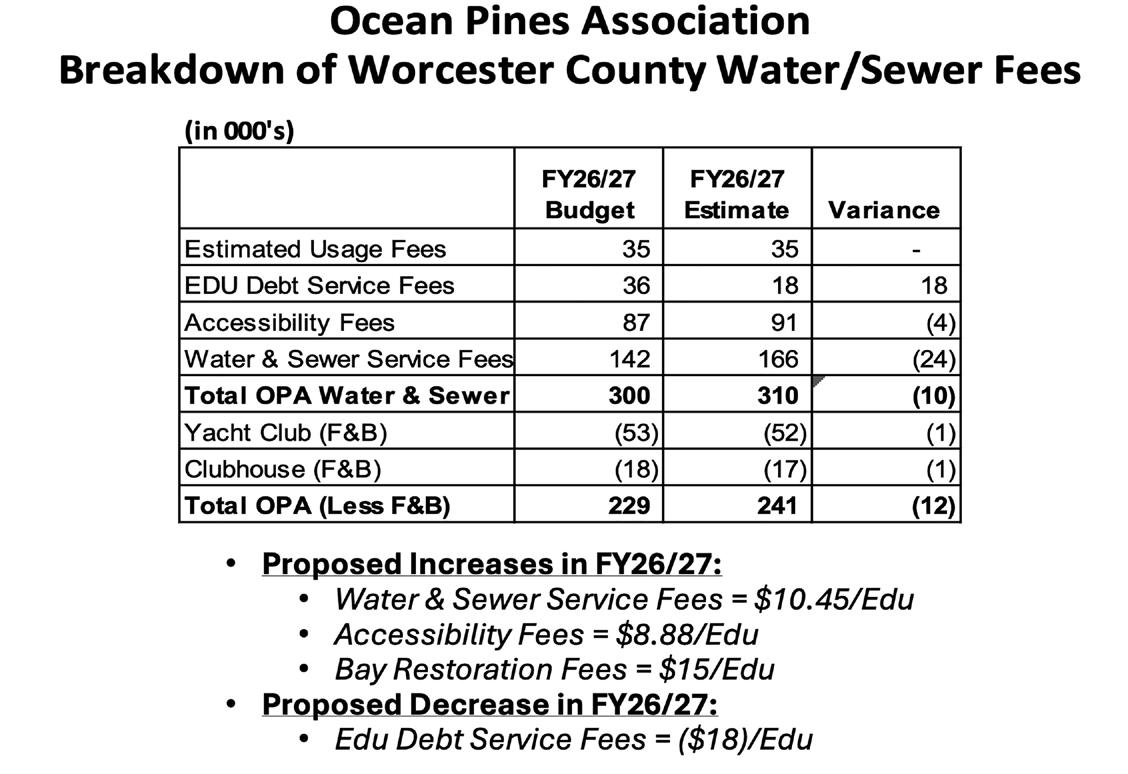
During the budget presentation, Phillips explained that Ocean Pines historically spent approximately $90,000 annually on water and sewer expenses. That changed dramatically, however, during the past fiscal year when costs increased to approximately $263,000. For the fiscal year 2026-27 budget, Ocean Pines has budgeted $300,000 for water and sewer expenses, representing more than three times the historical cost.
Phillips noted that the increase is not the result of significantly higher water usage by Ocean Pines. Actual usage fees remain relatively stable at approximately $35,000 annually. Instead, the majority of the increase comes from new and higher fees imposed by Worcester County.
The largest expense is now the Water and Sewer Service Fee.
According to Phillips, the county increased the rate to $209 per equivalent dwelling unit, a unit of measure for water consumption.
Ocean Pines is responsible for approximately 287 EDUs, resulting in a projected expense of $142,000 in the current budget and an estimated $166,000 based on proposed county increases.
Another major expense is the Accessibility Fee, which is charged on certain unconnected lots and mailbox lots throughout
the community. That fee currently accounts for approximately $87,000 annually and is projected to increase to roughly $91,000 under the county’s proposed fee structure.
Phillips told homeowners that while some relief may be coming through a reduction in EDU debt service fees, which are expected to decrease from $36 per EDU to $18 per EDU, the savings are largely offset by increases in other categories.
In addition to the higher service and accessibility fees, Worcester County is proposing a Bay Restoration Fee of $15 per EDU. Phillips estimated that charge alone could add approximately $17,000 annually to Ocean Pines’ water and sewer costs.
When all charges are combined, Phillips estimates the total water and sewer expense for Ocean
Pines could reach approximately $310,000 during FY26-27, about $10,000 higher than the amount currently budgeted.
General Manager John Viola noted that the FY26-27 assessment increase included approximately $15 per homeowner to help offset the county’s water and sewer fee increases. While some of the additional costs were absorbed through operational savings and increased revenue, he said the fee increases were largely outside the association’s control.
The presentation provided homeowners with a clearer understanding of how Worcester County’s changing fee structure is affecting Ocean Pines finances and why water and sewer costs have become an increasingly significant component of the association’s annual budget.
Ocean Pines safety program earns recognition and $30,291 financial reward
By Sherrie Clifford ROC Edition Publisher
The Ocean Pines Association has been recognized for its commitment to workplace safety, receiving the 2026 Premier Workplace Safety Award from Chesapeake Employers Insurance for the second consecutive year while also earning a dividend check of $30,291 based on its safety performance.
According to information released by Chesapeake Employers Insurance and Deeley Insurance Group, the award recognizes organizations that demonstrate strong workplace safety practices and maintain a culture focused on reducing accidents and protecting employees. Ocean Pines Association officials accepted the award during a recent presentation attended by representatives from Chesapeake Employers Insurance, Deeley Insurance Group and Ocean Pines leadership.
Pictured receiving the recognition were Steve Phillips, Director of Finance for Ocean Pines, and John Viola, General Manager of the Ocean Pines Association. In addition to the safety award, Ocean Pines received
a dividend payment of $30,291 through Chesapeake Employers Insurance’s policyholder dividend program, which rewards qualifying organizations for maintaining strong safety records and helping reduce workplace injuries and claims.
Chesapeake Employers Insurance announced that it is returning a record $60 million in policyholder dividends to eligible Maryland businesses and organizations in 2026. The company states that dividends are awarded to policyholders who contribute to the organization’s financial success through positive safety performance and loss prevention efforts. As Maryland’s nonprofit workers’ compensation insurer, Chesapeake Employers returns a portion of its profits to qualifying policyholders when financial results allow.
For Ocean Pines, the recognition highlights the importance of maintaining safe working conditions across its operations, which include public works, golf, recreation, police, administration and other departments serving one of Maryland’s largest homeowner associations. Workplace safety programs not only help protect employees from injury

Pictured (L-R) Deeley Client Relations Agent, Amy Bennetta; Deeley Senior Client Advisor, Megan Bren Muller; CEI Senior Safety Management Consultant, Robert Atkinson; Director of Finance for Ocean Pines, Steve Phillips; General Manager of Ocean Pines Association, John Viola; CEI Senior Account Executive, Jackie Gerry Rawl Siejack; and President of Deeley Insurance Group, Laura Deeley Bren.
but can also lead to lower insurance costs and dividend returns that benefit the association’s overall financial position.
While the funds awarded to Ocean Pines are not restricted to safety-related expenses, the dividend reflects the value of ongoing efforts to create a safer work environment for employees across the association.
The 2026 Premier Workplace Safety Award serves as an
acknowledgment of those efforts, while the $30,291 dividend provides a direct financial return tied to the organization’s safety performance. Association officials and insurance representatives described the recognition as a reflection of the teamwork and commitment shown by Ocean Pines employees in making workplace safety a priority across all departments.

113 homeowners seek review of tree-clearing practices as Ocean Pines launches environmental task force
By Sherrie Clifford ROC Edition Publisher
More than 100 Ocean Pines homeowners are calling for a review of tree-clearing practices they believe are changing the community’s wooded character, while association leaders move forward with a new environmental task force focused on conservation, restoration and community engagement projects.
During the most recent Ocean Pines Association Board of Directors meeting, Director Patrick Lehnerd announced plans to establish a community task force that will pursue grant opportunities through the Chesapeake Bay Trust, a nonprofit organization dedicated to improving bays, streams, rivers, forests, parks and other natural resources. Lehnerd said the board became aware of the opportunity through a community member and believes it could provide a meaningful way to engage residents in projects that benefit Ocean Pines’ natural environment. He will serve as board liaison to the task force and
said interested residents are encouraged to participate in developing project ideas and assisting with future implementation efforts.
According to Lehnerd, the Chesapeake Bay Trust grant program focuses on community engagement and environmental restoration. Grants of up to $5,000 are available for qualifying projects that raise public awareness and encourage participation in natural resource issues. Lehnerd said the task force will be charged with developing project concepts, presenting recommendations to the board and working with Ocean Pines operations to complete the grant application process. The ultimate goal, he said, is to bring residents together to improve the community’s natural resources while encouraging greater outdoor involvement and appreciation for the environment.
The discussion comes as residents continue to express concern about what they describe as increasing clear-cutting of residential lots throughout Ocean Pines. During public comments, resident Tim Peck presented a statement signed by
113 homeowners and submitted to Ocean Pines administration, the Compliance, Permits and Inspections department (CPI) and the Architectural Review Committee (ARC). Peck began by expressing support for the board’s environmental efforts, noting that Maryland’s 5 Million Trees Initiative could provide opportunities to plant additional trees throughout Ocean Pines parks and common areas. He said such efforts could improve water quality in local waterways, enhance outdoor spaces and contribute to cleaner air while helping restore portions of the community’s tree canopy.
The primary focus of the homeowners’ statement, however, was concern over the removal of mature trees on lots slated for new home construction. According to the petition, what residents describe as systemic clear-cutting has increased significantly since 2020 and conflicts with both the mission of Ocean Pines and the intent of existing governing documents. Petitioners argue that the current pattern of clear-cutting is permanently altering the woodland
character that has defined Ocean Pines since its founding more than 50 years ago and is gradually changing the appearance of a community long known for its natural setting and mature pine trees.
The statement specifically cites Section 8(A)(q) of the Ocean Pines Declaration of Restrictions, which prohibits the removal of trees greater than six inches in diameter without ARC or CPI approval. It also references several sections of the ARC guidelines that emphasize preserving natural beauty, protecting native trees and preventing indiscriminate clearing of property. According to the homeowners, preservation of native trees has historically been a primary objective of the community’s landscaping standards. The petition further points to language within the guidelines that allows CPI to deny certain construction plans if they involve excessive removal of healthy trees that contribute to a property’s natural character.
Another issue raised by the homeowners involves what they describe as confusion regarding See TREE-CLEARING page 13

Ocean Pines Police Chief Tim Robinson announces retirement after nearly three years leading department
By Sherrie Clifford ROC Edition Publisher
Ocean Pines Police Chief Tim Robinson will retire June 12, ending a law enforcement career spanning more than three decades and nearly three years leading the Ocean Pines Police Department.
The Ocean Pines Association announced Robinson’s retirement earlier this month, with General Manager John Viola thanking Robinson for his service to the community and his leadership of the department.
Robinson was officially introduced as Ocean Pines’ new chief of police in July 2023, following a lengthy law enforcement career that included service with the Rehoboth Beach Police Department, the Delmar Police Department and the Wicomico County Sheriff’s Office.
At the time of his hiring, the Ocean Pines Association stated Robinson would oversee department operations, ensure the safety and security of Ocean Pines residents and foster positive relationships within the community.
“We are excited to welcome Tim as our new chief of police. His extensive background in law enforcement, leadership skills and dedication to public safety makes him the ideal candidate for this important role,” Viola said in the July 21, 2023 announcement. “We have full
confidence in his ability to lead our police department with professionalism, integrity and a strong focus on community involvement.”
Robinson brought more than 30 years of law enforcement experience to Ocean Pines. Prior to joining the department, he served nearly 27 years with the Wicomico County Sheriff’s Office, where he rose to the rank of captain. His career included assignments involving patrol, investigations, judicial protection, school safety and administration.
Before joining the sheriff’s office in 1997, Robinson also served as a police officer with the Delmar Police Department from 1993 through 1997 and with the Rehoboth Beach Police Department from 1992 through 1993.
In addition to his law enforcement career, Robinson serves on the faculty at Salisbury University, where he teaches history courses as an adjunct faculty member. His teaching focus has included American history and public service-related topics, bringing both academic and realworld experience into the classroom. He also previously served as president of the university’s Adjunct Faculty Caucus.
Robinson earned both his bachelor’s and master’s degrees from Salisbury University and also graduated from Northwestern University’s School of Police Staff and Command, a nationally recognized leadership
program for law enforcement professionals.
In accepting the position in Ocean Pines, Robinson said he viewed the opportunity as a continuation of public service.
“I have been able to serve my community for over 30 years, and I cannot imagine a better place to continue that service than Ocean Pines,” Robinson said at the time of his hiring. “The association of Ocean Pines is a vibrant and exciting community to work with, and I am both incredibly honored and excited to have been selected to lead the Ocean Pines Police Department.”
Robinson officially assumed leadership of the department on Aug. 1, 2023, following a period of transition within the Ocean Pines Police Department after the departure of former Police Chief Leo Ehrisman.
During Robinson’s tenure, the department focused on community policing, visibility and public outreach. Programs such as Coffee with a Cop, National Night Out and additional resident engagement became visible parts of the department’s outreach efforts.
Robinson also emphasized officer recruitment, retention and modernization efforts while working to strengthen relationships between officers and the community.
In public interviews during his tenure, Robinson often stressed the importance of visibility and

accessibility in law enforcement leadership, saying police leadership should remain active within the community rather than isolated behind administrative offices.
Robinson’s departure comes at a time when public safety, department leadership and staffing remain important issues within Ocean Pines as the community continues to grow. No formal announcement has yet been made regarding the timeline or process for selecting the next chief of police for the Ocean Pines Police Department.
Residents propose property de-annexation from Berlin; mayor and council open to proposition
By Giovanni Guido Contributing Writer
The possibility of the de-annexation of a property on the north end of the Town of Berlin was discussed at the most recent mayor and council meeting. Elected officials expressed that they were open to the idea. However, no motion was put forth to make the proposition official.
Kathy and Michael Cluster are the owners of 9930 Deer Park Drive at the northern border of Berlin off Route 113. The two got in contact with the town administrator, Mary Bohlen, to raise a proposition for
the de-annexation of their property from the town back into Worcester County, listing their reasons for such a request. In the email to Bohlen, Mrs. Cluster explained that ever since they purchased the property in 2016, they have not received services from the town, such as water, electricity and trash pickup, instead having to receive such services from another party. Despite this, the couple still pays taxes to the town.
“This is taxation without representation,” Mrs. Cluster declared in her email.
The event that spurred the Clusters to make such a proposition
to the town government after a decade was the significant increase in their tax bill from 2024 to 2025. Mrs. Cluster touched on this in the council meeting on May 26, explaining that their bill had increased from $1,400 annually to $6,700 annually because their son had constructed a house on the property. She stated that a large chunk of that bill is attributed to Berlin.
“Over 3,000 of that is going to the Town of Berlin, and we’re not getting any services at all,” she said.
During the meeting, Town Attorney David Gaskill described the origins of the property as it pertains
to Berlin. According to the official, the property was integrated into the town as part of a large annexation in 2000. And for as long as it has been part of the town, it has never been serviced by it. The usual services, though, were originally supposed to be rendered to the property because there were plans for a housing development to be constructed close by. For that development to receive services, it would need to access the town’s facilities through the Cluster’s property. With this, the property would also be serviced by the town. However, this project was never developed, leading the Clusters to
See DE-ANNEXATION page13
ROC Edition • Ocean Pines Association
OCEAN PINES POLICE CHIEF TIM ROBINSON
TREE-CLEARING
Continued from page 11
the relationship between Worcester County regulations and Ocean Pines standards. The petition references a February 2023 response to the former Environment and Natural Assets Advisory Committee in which county landscape requirements were described as superseding Ocean Pines guidelines. Petitioners dispute that interpretation, arguing that while county regulations establish minimum requirements, Ocean Pines covenants and architectural standards may impose more restrictive requirements that remain enforceable within the association. They contend that Ocean Pines has the authority to require a higher level of tree preservation than what may otherwise be permitted under county regulations.
The homeowners are requesting what they describe as a return to the pre-2020 interpretation of tree preservation requirements and a reevaluation of current practices related to new home construction. They are also seeking greater transparency regarding what they characterize as an administrative shift
DE-ANNEXATION
Continued from page 12
purchase services elsewhere.
“We paid over $35000.00 to have water on the property when building the house. We had DP&L run electric to the property at a substantial cost to us. We also pay monthly, approx. $120.00 to have our trash picked up,” Mrs. Cluster explained in her email.
Something that was touched on in the meeting was the fact that the property was allowed to have its own private well and septic system. This is not typical of town properties, but an exception was made for the Clusters given their circumstance. In 2016, a resolution was passed by the then mayor and council to accommodate their unique case, leading to the installation of the system in 2025. According to Mayor Zack Tyndall, this fact could help with the Clusters’ case to get their property retroceded into the county.
Additionally, when asked whether the town has any plans to go about providing the usual services to the property, Tyndall stated that he does not believe there are. Bohlen chimed in to say that “the existing town services are a considerable distance away, and it just would
in policy interpretation and want homeowners informed about any changes in how the Declaration of Restrictions and ARC Guidelines are being applied.
Among those supporting the petition is Ocean Pines resident Cindy Hoffman, who addressed the board during the same meeting. Hoffman said she has lived in Ocean Pines either part-time or full-time for more than 20 years and was originally drawn to the community because of its wooded setting. She told board members that she has owned two homes in Ocean Pines, both built during the 1990s and both containing more than 20 mature trees. According to Hoffman, builders at that time were able to construct homes while preserving much of the existing tree canopy, demonstrating that development and preservation can coexist.
Hoffman expressed concern that some newer residential lots are being almost completely cleared prior to construction despite what she believes is sufficient space to preserve some existing trees. While replacement landscaping is often required, she argued that ornamental plantings cannot replicate
the environmental and aesthetic value of mature native trees.
“Crepe myrtles and knockout roses are no replacement for the majestic pines and other native trees that make Ocean Pines unique and special,” Hoffman told the board.
Supporters of stronger preservation measures argue that the issue extends beyond individual building lots. Mature trees provide benefits that cannot be immediately replaced through new plantings, including stormwater absorption, wildlife habitat, shade, improved air quality and protection of local waterways. Residents also point to the role mature trees play in maintaining property values and preserving the distinctive appearance that has characterized Ocean Pines since its founding more than five decades ago.
The homeowners’ statement also notes that preserving native trees, particularly on waterfront properties, may help reduce mitigation requirements associated with certain county Critical Area regulations. Petitioners argue that retaining existing trees where practical can provide environmental benefits
while reducing the need for replacement plantings and other mitigation measures.
In their concluding remarks, the homeowners wrote that “every few months another piece of the natural assets of Ocean Pines is destroyed,” urging the association to recommit itself to preserving the community’s tree canopy for future generations. They asked association leaders, ARC members and CPI officials to ensure that existing guidelines are applied consistently and that future development reflects the vision of Ocean Pines as a wooded residential community.
As the association moves forward with its new environmental task force and explores grant opportunities for future conservation projects, many residents hope the discussion will focus not only on planting new trees but also on preserving the mature tree canopy that remains one of Ocean Pines’ most recognizable and valued assets. The issue is likely to remain a topic of discussion as homeowners, association leadership and environmental advocates continue exploring ways to balance growth, development and preservation within the community.
not make sense to plan to.”
The question of how de-annexation would be carried out was also raised during the meeting. Gaskill stated that, given the irregular nature of the proposition, more research is necessary before he is certain on what legal processes must be fulfilled to complete the de-annexation. He did, however, look to the usual process of annexation to get an idea of what steps might need to be taken. One step he was somewhat certain on was the need to amend the town charter. The town attorney explained that whenever new property is added to the town, Berlin’s charter must be amended to reflect the new addition. Going off this, Gaskill stated that an amendment was likely needed to reflect the subtraction of property as well. He further emphasized that more research must be done before the process is definitively known.
Bohlen gave additional insight into the matter by explaining more of the annexation process. If the de-annexation process is any similar to its counterpart, then a resolution must be made, advertising must be done and a public hearing must be held. Due to this, Bohlen told the Clusters that the town cannot guarantee the de-annexation will occur at the next mayor and council
meeting, but that she believes a motion could certainly be held by the second meeting in June.
Addressing both Kathy and Michael Cluster, Tyndall stated that he and the council are “open to the idea of de-annexation, but we need more information from the legal side of how to do that.”
No motion was made during the meeting to make the de-annexation official, but the town staff agreed to go forward with researching the correct process for such a request.

Restoration effort planned to address flooding and stream restoration in Berlin
By Cindy Hoffman Contributing Writer
Thirty residents gathered at the Town of Berlin Library on April 29 to learn about the planned restoration effort for Hudson Branch along Bottle Branch Road, a stream that carries stormwater from Berlin into Newport Bay.
“The goal of this stream restoration project is to reduce the flood risk in the Flower and Bay street neighborhoods and improve the health of water flowing from Berlin into the Newport Bay watershed,” the Newport Bay Project Coordinator Jessica McIntosh said.
This is one of a number of restoration efforts along feeder streams into the Newport Bay watershed to address flooding issues, improve water quality, restore natural habitats and strengthen the overall health of the watershed for the future.
“Newport Bay is one of five bays on Maryland’s coast and the least healthy,” McIntosh said. Newport Bay’s overall health was given a Con the Maryland Coastal Bays 2023 Annual Report Card due to the very poor levels of seagrass and hard clams, indicator species that reflect the health of the bay.
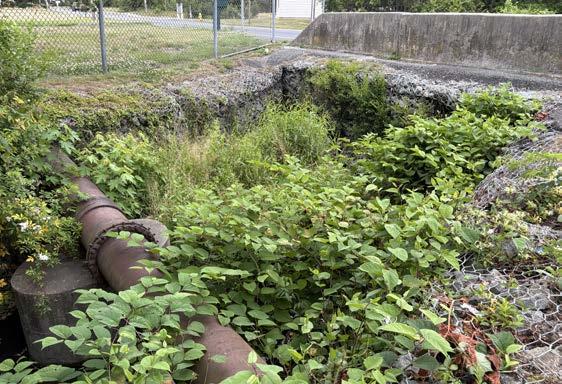
In the past, the stream has been modified through construction of large dual culverts under Assateague Road, the residential development to the west and the Town of Berlin water treatment facility to the east. Impervious surface, such as asphalt and cement, has increased as the Town of Berlin has grown. This in turn increases the volume and rate of stormwater discharge entering Hudson Branch. This is especially true during large rain events. More water moving quickly through the stream has caused the stream channel to become unnaturally deep, destabilized the stream banks and reduced connection to its natural floodplain.
“Over the next few months, our plan is to re-establish a more natural stream channel and floodplain through elevating and widening the stream. This will create a more natural flow to absorb and slow stormwater, reducing flood risks and filtering stormwater from the streets and yards, taking out pollution and sediment, on its way to the bay.”
Lowering the adjacent floodplain and designing banks with a lower slope will reduce erosive impacts to the banks. The current erosion patterns show that the stream is trying to return to a more sinuous
and natural pattern, according to McIntoch. A more natural stream will support a wider array of aquatic life, slow down storm flows and reduce erosive impacts of higher flows.
The public meeting is a requirement for the permit process. The permitting process will take approximately 60 to 90 days. Residents were welcome to ask questions and make statements about the project. The expectation is that, once the permitting is approved, construction can begin this winter and will last six to nine months.
Steven LaMasters, an engineer on the project from EA Engineering, Science and Technology was in attendance to respond to any questions from the audience.
Residents asked questions about the removal of trees and other plants from the area. LaMasters informed attendees that the tree line between the stream and Decatur Farms will remain intact. Removal of trees and other shrubs and invasive plants will occur on the street side of the stream along Bottle Branch Road.
A survey conducted of the site found 12 large old-growth trees. Two of these trees, both tulip poplars, will be removed for the project, which would not survive the wetter conditions that will be present after the stream is widened.
There are several areas between Hudson Branch and Bottle Branch Road that are dominated by invasive plant species. The design has targeted areas with high invasive species concentrations and avoids healthy stands of trees as much as possible. Areas with high invasive species concentrations will be used as staging and stockpile areas and for access paths throughout the site.
The logs and other material that are being removed will be reused either as structural logs within the stream or as mulch materials to support construction activities and comply with erosion and sediment control requirements.
Part of the restoration effort will include planting 300 native trees and 400 native shrubs in the newly developed floodplain. Planting with native species will create a more diverse wetland and help stabilize the stream banks and provide vital cooling shade for animals living in the stream. Deeper pools will be created to provide habitat for fish and other aquatic life. The trees and shrubs proposed are local, native plants that are commonly found locally within the Eastern Shore of Maryland. The shrubs are expected
to be fully mature within a 10-year time period. Trees take considerably longer to fully mature.
Residents raised concerns about traffic, dust and construction debris. LeMasters clarified the majority of the construction traffic, including dump trucks, will be on Bottle Branch out to Assateague Road and Route 113. The Decatur Farms community will not be impacted by the construction traffic. Emergency vehicles will have access to homes and the construction site throughout the project. There could be dust because of the earth work, but there are requirements for airborne dust control to keep it onsite, including wetting the site down with water, and debris will be contained to the construction area. Berlin limits construction to daylight hours.
This project is part of the Newport Bay Partnership which will implement water quality improvement projects throughout the
watershed. This is the first major restoration project of the partnership which is currently funded for five years. In future years, projects will be implemented in other areas of the watershed, including septic-tosewer conversion projects, working with rural landowners to implement best management practices, implementing salt marsh restoration and many more. Ten million dollars has been allocated by the State of Maryland through the Whole Watershed Program to support work in the Newport Bay Watershed.
The Newport Bay Partnership is a unique coalition of environmental organizations led by Maryland Coastal Bays Program that includes the Lower Shore Land Trust and Assateague Coastal Trust, partnering with the Town of Berlin and Worcester County.
ROC Edition • Cindy Hoffman
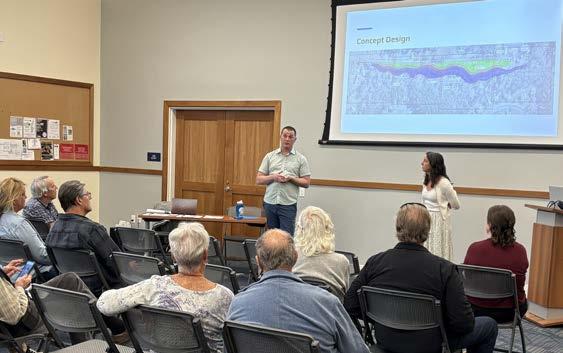
Steven Lemasters of EA Engineering and Jessica McIntosh of Maryland Coastal Bays spoke to residents of the Town of Berlin about plans to restore the Hudson Branch stream as part of a larger effort to address flooding in the community and improve the health of the Newport Bay watershed on April 29.
Commissioner candidates hit the campaign trail as early voting approaches

By Sherrie Clifford ROC Edition Publisher
Candidates seeking seats on the Worcester County Board of Commissioners are entering the final days before early voting begins and are increasingly visible on the campaign trail as the 2026 election season gains momentum.
Early voting for Maryland’s primary election will take place June 11 through June 18 at the Ocean Pines Community Center. Primary Election Day is June 23, when voters may cast their ballots at their designated polling locations from 7:00am - 8:00pm. During the primary election, Republican and Democratic voters will select their party nominees in contested commissioner races before advancing to the general election later this year.
The following candidates have filed and remain active as of publication:
COMMISSIONER DISTRICT 1
Caryn Abbott (Republican) – Incumbent
Laura Gladding Morrison (Republican)
Shaun W. Shockley (Republican)
COMMISSIONER DISTRICT 2
Roxie V. Dennis (Democratic)
Diana Purnell (Democratic) – Incumbent
COMMISSIONER DISTRICT 3
Eric Fiori (Republican) – Incumbent
Tim VanVonno (Republican)
COMMISSIONER DISTRICT 4
Theodore “Ted” Elder (Republican) – Incumbent
Steve Green (Republican)
Virgil L. Shockley (Republican)
COMMISSIONER DISTRICT 5
Vicky A. Wallace (Democratic)
Chip Bertino (Republican) – Incumbent
Joe Schanno (Republican)
COMMISSIONER DISTRICT 6
Sherrie Clifford (Republican)
Lou H. Taylor (Republican)
COMMISSIONER DISTRICT 7
Joseph M. Mitrecic (Republican) – Incumbent
Several commissioner races are contested heading into the primary election, while others currently feature a single candidate or an unopposed party nominee. Districts 1 and 4 currently have the largest candidate fields, while Districts 2, 3, 5 and 6 each feature contested races. District 7 currently has a single candidate running.
As early voting approaches, candidates across Worcester County are increasing campaign activities, attending public events, meeting with voters and sharing their positions on issues affecting county residents. Voters are encouraged to familiarize themselves with the candidates and election deadlines before casting their ballots.




Series by Sherrie Clifford, Candidate for Worcester County Commissioner, District 6
#5. Because You Asked: How do you feel about an older case coming to light in 2024 where a teacher moved from Worcester County to Somerset County after admitting to an inappropriate relationship with a student?
Cases like this are deeply concerning, regardless of when they occurred. When a teacher admits to inappropriate conduct with a student, that is a clear breach of trust and responsibility. The passage of time does not lessen the
seriousness of that conduct or its impact.
This situation underscores the importance of what happens after that admission is made. There must be clear reporting, documentation and accountability, with safeguards in place to ensure that serious misconduct does not lead to continued access to students in another jurisdiction.
This is why consistent oversight and communication between school systems matter. Policies must be in place to protect students first and ensure that individuals who engage in inappropriate conduct are not permitted to continue working in a school setting.
As a county commissioner, I respect the role of the board of education in managing school operations. My responsibility is to ensure that funding is allocated responsibly, that oversight is strong and that accountability is clear. That means supporting safe schools, ensuring our teachers are well supported and properly resourced, protecting taxpayer dollars and keeping the safety and well-being of our children a top priority.
#6. Because You Asked: Are you in favor of increasing the Sheriff’s Department budget to provide badly needed raises and make salaries competitive?
Yes. Public safety starts with the people who protect our community every day. Retaining experienced deputies and attracting qualified new officers requires competitive pay, especially as surrounding areas continue to increase their salaries.
At the same time, any increases must be done responsibly, with a clear understanding of the budget and long-term sustainability.
See YOU ASKED page 17
YOU ASKED
Continued from page 16
Supporting our deputies and protecting taxpayers go hand in hand. With the right oversight, we can ensure law enforcement has the resources they need while maintaining financial discipline.
#7. Because You Asked: What is your position on collective bargaining for police and fire departments?
Yes, I support collective bargaining for law enforcement and fire department personnel because the men and women who protect our communities deserve a fair voice when it comes to pay, benefits, working conditions, safety concerns and retention.
In an at-will employment state, where employees can often be terminated without the level of protection many people assume exists, collective bargaining can provide structure, fairness and a clear process. For police officers,
deputies, firefighters and emergency responders, that matters. These are the people who answer when we call for help, walk into dangerous situations and carry responsibilities most of us will never face.
Collective bargaining does not mean ignoring fiscal responsibility. It means reviewing the facts, understanding the costs and creating agreements that are fair, transparent and responsible for both employees and taxpayers. With proper oversight, clear policies and strong procedures, collective bargaining can strengthen communication, improve morale and help Worcester County remain competitive in recruiting and retaining qualified public safety personnel.
Supporting those who serve is not just about words. It is about creating a county government that values professionalism, accountability and the people who protect our families every day.
Public safety depends on people and strong communities depend on strong public safety professionals.
#8. Because You Asked:
What is your position on the Blueprint for Education and how do you view the holding of the school budget?
The Blueprint for Maryland’s Future is a long-term statewide education plan focused on improving public education through better teacher pay, stronger student support systems, expanded programs and increased investment in our schools. Its goal is to help attract and retain highly qualified teachers while giving students the resources and opportunities they need to succeed.
I strongly support public education and fully funding our school budget so Worcester County can continue attracting and retaining quality teachers while providing ALL students with the support they need to succeed. I also believe strong schools require responsible leadership, accountability and proper oversight to ensure taxpayer dollars are being used effectively and where they are needed most.
I have been following the commissioners meetings very closely regarding these issues and agree that the independent audit needs to move forward and continue to be followed closely after the school budget is approved. Supporting education and protecting taxpayers should go hand in hand, and I believe Worcester County can and should do both.
Most importantly, I believe the focus should be on understanding what went wrong, where oversight failed and where policies and procedures broke down within the system. Accountability matters at every level, especially when it involves our schools and the protection of children. Strong leadership means recognizing problems early, ensuring proper oversight and taking responsibility when systems fail.
**Questions asked to the candidate may be used in this series, in print and online, to address topics of community interest without identifying the individual.

Understanding mandated reporting: How responsibilities have changed from the 1990s through 2026
By Sherrie Clifford ROC Edition Publisher
At what point did leadership and oversight fail the victim in the former SDHS band teacher case?
The term “mandated reporter” has become increasingly important in public discussions involving schools, child safety, healthcare and institutional accountability. While many people hear the phrase during criminal investigations or high-profile abuse cases, fewer fully understand what the role actually means, how reporting requirements have evolved over time and why mandated reporting laws exist in the first place.
At its core, a mandated reporter is an individual legally required to report suspected abuse, neglect or exploitation involving children or vulnerable individuals to the appropriate authorities.
Today, mandated reporting laws apply broadly across the United States, including Maryland and typically include teachers, school administrators, counselors, healthcare workers, law enforcement officers, social workers and other professionals who work closely with children.
WHAT MANDATED REPORTING MEANT IN THE 1990s
During the early 1990s, mandated reporting laws already existed in Maryland and many other states and professionals working with children still carried legal and ethical responsibilities to report suspected abuse or neglect.
However, reporting systems, training requirements and enforcement standards were far less structured than they are today. Many organizations lacked the formalized reporting procedures, annual training requirements and strict compliance oversight now common within schools and public institutions.
In some situations, allegations involving inappropriate conduct were handled internally through administrative discussions, resignations or personnel actions rather than immediate involvement of outside agencies or law enforcement.
Public understanding of grooming behaviors, institutional liability and the long-term trauma associated with child abuse was also far less developed than it is today. Communication between agencies and school systems was slower,
documentation systems were limited and public access to information was far more restricted.
Still, the core responsibility remained the same: When credible concerns involving children arose, mandated reporters were expected to act.
REPORTING TO A SUPERVISOR WAS NOT ALWAYS ENOUGH
One of the questions that continues to surface in historical abuse cases is whether simply notifying a supervisor was considered sufficient action by a mandated reporter.
In many organizations decades ago, employees often relied heavily on administrative chains of command. Teachers, counselors, coaches or staff members who became aware of concerns sometimes believed their responsibility ended after notifying a principal, superintendent or another supervisor.
However, mandated reporting laws were intended to ensure suspected abuse reached the proper outside authorities, not simply remain within internal administrative discussions.
Modern reporting standards now place far greater emphasis on direct reporting, documentation, escalation and follow-up responsibilities.
Today, mandated reporters are generally expected to personally ensure a report is made to law enforcement, child protective services or the appropriate designated agency. Simply assuming someone else handled the matter may not satisfy legal reporting obligations under current standards.
An even more serious question arises when an individual allegedly confesses or admits to inappropriate conduct involving a child. In those situations, questions naturally follow regarding how much responsibility rested with the individual receiving that information and whether additional action should have been taken to ensure authorities were notified and protective measures were implemented.
Many historical cases being revisited today continue raising questions about whether supervisory personnel exercised sufficient diligence once concerns became known and whether reasonable steps were taken to ensure the information reached the proper investigative agencies.
The larger issue is not simply whether someone informed a supervisor, but whether appropriate action
was taken to protect children and prevent additional harm.
EXPANDING CONVERSATIONS AROUND POWER AND INFLUENCE
In recent years, public discussion surrounding grooming behaviors and institutional accountability has expanded beyond child abuse cases alone and into broader conversations involving power imbalance, authority and organizational influence.
While grooming is most commonly associated with child exploitation cases, experts increasingly discuss how patterns of
manipulation, favoritism, coercive influence and inappropriate conduct can also develop within workplace environments involving supervisors and subordinates.
Discussions involving professional boundaries, abuse of authority and organizational culture are becoming more common within schools, government agencies and other institutions where individuals hold positions of influence over employees, students or staff.
Questions often arise when individuals in leadership positions develop patterns of inappropriate workplace relationships, show
MANDATED REPORTING page 19



MANDATED REPORTING
Continued from page 18
favoritism or use authority in ways that may compromise professional judgment, workplace fairness or organizational integrity.
Modern workplace policies increasingly emphasize ethical leadership, professional boundaries, accountability and the importance of preventing situations where authority or influence may negatively affect decision-making, employee protections or public trust within an organization.
HOW MANDATED REPORTING HAS CHANGED
Over the past 30 years, mandated reporting laws and procedures have become significantly stricter, more detailed and more publicly scrutinized.
Today, mandated reporters are generally expected to immediately report suspected abuse or neglect directly to law enforcement, child protective services or designated state agencies rather than relying solely on internal reporting channels.
Modern reporting laws place increased emphasis on immediate action, written documentation,
annual training requirements, institutional accountability and legal consequences for failing to report.
Many states, including Maryland, now require annual training for school personnel and administrators regarding child abuse prevention, grooming behaviors and reporting obligations.
The implementation of Maryland’s Child Victims Act of 2023 further increased public attention on historical abuse cases by removing the statute of limitations for certain child sexual abuse claims. That law opened the door for older allegations to be revisited both criminally and civilly, renewing public discussion surrounding how institutions handled allegations decades earlier.
Modern expectations surrounding child protection have also changed significantly. Today, the public generally expects immediate reporting, transparency, documentation and involvement of outside authorities whenever credible allegations involving children arise.
WHAT A MANDATED REPORTER IS EXPECTED TO DO
A mandated reporter is not expected to personally investigate allegations or determine guilt. Their responsibility is to report reasonable

suspicion of abuse or neglect to the appropriate authorities.
That distinction is important because mandated reporting laws generally focus on whether a reasonable concern existed that should have triggered a report, not whether criminal charges were ultimately filed or proven in court.
In school settings, mandated reporters may include teachers, principals, vice principals, coaches, counselors, nurses, school resource officers and other school employees. Failure to report suspected abuse can carry criminal penalties, professional discipline, civil liability or administrative consequences depending on state law and the circumstances involved.
THE CONTINUING IMPORTANCE OF REPORTING
Mandated reporting laws exist for one central reason: protecting children.
The laws are designed to ensure concerns involving abuse or neglect are brought forward early, investigated by proper authorities and addressed before additional harm can occur.
While laws, procedures and enforcement standards have evolved considerably since the 1990s, the
importance of reporting concerns involving child safety has not diminished. If anything, modern expectations now place even greater responsibility on individuals and institutions to act decisively, document concerns thoroughly and ensure allegations are not minimized, ignored or quietly handled internally.
The core principle remains unchanged: Individuals entrusted with the care, supervision and education of children carry a serious responsibility to act when concerns involving child safety arise.
Editor’s Note: Information referenced in this article is based on Maryland mandated reporting laws, public child protection guidance and publicly available educational and legal resources regarding reporting responsibilities and institutional oversight.


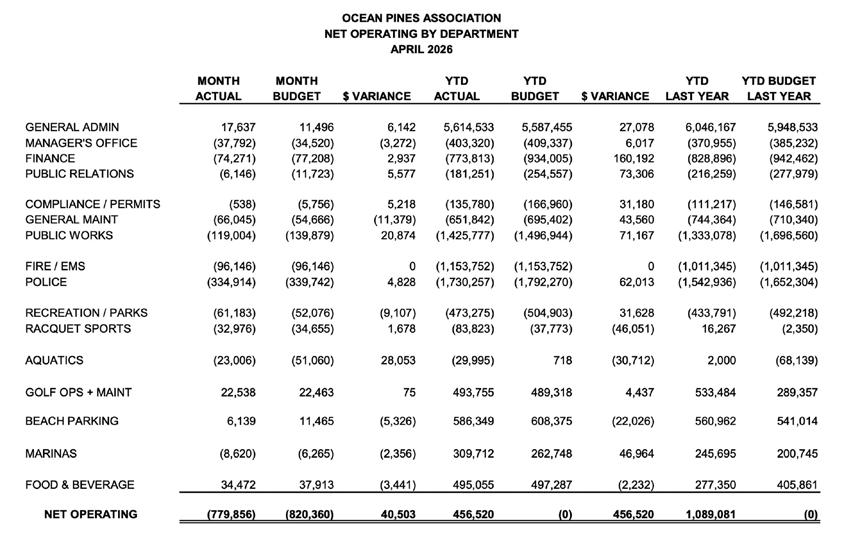
Ocean Pines closes fiscal year with $456,520 operating surplus, nearly $3 million in retained earnings
By Sherrie Clifford ROC Edition Publisher
Strong revenues, controlled expenses and positive performance across most departments helped the Ocean Pines Association close fiscal year 2025-26 with a favorable operating variance of $456,520. The association also reported approximately $2.93 million in retained earnings and $6.4 million in reserves, according to preliminary year-end financial results presented to the board of directors. Final audited financial statements are expected later this summer following review by the association’s independent auditors.
ROC Ledger ROC Tribute
Recreation and Parks ended the year $31,628 ahead of budget. General Administration also exceeded budget expectations by $27,078.
In budget reporting, a favorable variance does not necessarily mean additional profit. Rather, it means actual results finished better than budget projections, either through higher revenues, lower expenses or a combination of both.
MONTHLY OVERVIEW
For the month of April, Ocean Pines reported a favorable operating variance of $40,503. Revenues exceeded budget by $49,178, while expenses finished $8,675 over budget. Viola noted that the association finished favorably in 11 of the 12 months during the fiscal year, reflecting consistent financial performance across departments.
During his financial report to the board of directors, General Manager John Viola explained that management intentionally takes additional time at fiscal year-end to ensure invoices, expenses and accruals are properly recorded before the annual audit begins.
“We do take a little more time in April so that we can get all the invoices and everything in there so that it’s less work during the audit,” Viola said.
Viola noted that over the past seven years, very few audit adjustments have been required and those that did occur were generally related to timing differences involving invoices received after year-end.
DEPARTMENT PERFORMANCE
Department results generally finished ahead of budget expectations. Finance ended the year approximately $160,000 better than budget projections, followed by Public Relations at $73,306, Public Works at $71,167 and Police at $62,013. Marinas finished $46,964 ahead of budget projections, while
Looking beyond budget comparisons, several departments also showed significant improvement over the prior fiscal year. Finance improved by approximately $55,000 compared to FY24-25, while Public Relations improved by roughly $35,000. Marinas generated $309,712 in net operating income compared to $245,695 the previous year, an increase of more than $64,000. Beach Parking finished below budget expectations but still exceeded the prior year’s performance by more than $25,000.
Food and Beverage delivered one of the strongest year-over-year improvements among all departments as Touch of Italy completed its first full year operating Ocean Pines dining venues. The department generated $495,055 in net operating
income during FY25-26, compared to $277,350 the previous year, an increase of approximately $217,705 or nearly 79%. The results reflect strong patron support and increased utilization of Ocean Pines dining facilities during the first year of the partnership.
Some departments finished below budget projections: Racquet Sports ended the fiscal year $46,051 below budget expectations and reported a year-end operating loss of $83,823, compared to a positive $16,267 the previous year. Aquatics finished approximately $30,712 below budget and ended the year with a loss of $29,995, compared to a positive $2,000 during FY24-25. Beach Parking also finished below budget expectations despite producing one of the strongest net operating income totals among all amenity departments.
Several operational departments reported higher expenses than the prior year, reflecting increased staffing, compensation, maintenance and project activity throughout the community. Public Works, for example, absorbed costs associated with winter storm cleanup, infrastructure maintenance and
preparation work related to the South Fire Station project while still finishing more than $71,000 ahead of budget projections.
REVENUE-PRODUCING AMENITIES
Revenue-producing amenities continued to play a significant role in the association’s overall financial performance. Beach Parking generated $586,349 in year-to-date net operating income, while Food and Beverage contributed $495,055. Golf Operations and Maintenance produced $493,755 in net operating income and Marinas added $309,712.
Golf remained one of the association’s strongest-performing amenities. Although the department finished only slightly ahead of budget, it generated nearly half a million dollars in net operating income and continues to perform significantly above levels seen several years ago. Management noted that golf budgets have become more aggressive as participation and revenues continue to grow.
Combined with strong marina performance and steady beach
Cash and investments remain strong at fiscal year-end
By Sherrie Clifford ROC Edition Publisher
As part of the April 30 fiscal year-end financial presentation, Ocean Pines officials reported that the association maintained approximately $17.3 million in cash and short-term investments, reflecting a strong liquidity position as fiscal year 2025-26 came to a close.
According to figures presented by management, cash balances increased by approximately $3.2 million during April compared to March 2026. While cash on hand was approximately $400,000 lower than the same period one year ago, the difference represents less than 3% of the association’s overall cash and investment portfolio, which remained at approximately $17.3 million at fiscal year-end.
A significant portion of the association’s cash reserves, approximately $9.5 million, is invested in Certificates of Deposit Account Registry Service (CDARS) accounts. CDARS allows large deposits to be distributed among participating financial institutions while maintaining FDIC insurance protection.
The remaining $7.8 million is held in insured cash sweep accounts,
FINANCIALS
Continued from page 20
parking revenues, these amenities continue to provide important support for the association’s overall financial position while helping fund operations and future capital needs.
YEAR-TO-DATE PERFORMANCE
Ocean Pines finished FY25-26 with a favorable operating fund variance of $456,520.
Revenues finished $192,191 above budget, while expenses came in $264,329 below budget, combining to produce the positive year-end result. Viola said the surplus closely matched forecasts management had been providing to the board throughout the year through regular financial updates and board meetings.
The association absorbed several unexpected costs during the year, including increased wastewater expenses and substantial cleanup costs associated with the winter blizzard. Despite those challenges, strong revenues and disciplined expense management enabled Ocean Pines to finish the year significantly ahead of budget.
The year-end operating surplus will be transferred into retained
U.S. Treasury bills, money market accounts and other operating accounts. Management reported that these funds are diversified between two local banking institutions, providing both security and ready access to cash for operating expenses, capital projects and reserve obligations.
Ocean Pines also benefited from interest income generated through its investment strategy. The association recognized approximately $39,000 in interest income during April alone, helping generate additional revenue while preserving principal and maintaining liquidity.
The cash position complements the association’s reserve balances and operating funds, providing flexibility to meet both short-term operating needs and long-term capital commitments. Management has increasingly emphasized diversification and conservative investment practices in recent years, utilizing insured and low-risk investment vehicles designed to protect association assets while generating reasonable returns.
INVESTMENT STRATEGY
Association officials reported that the current investment approach
earnings and carried forward into future budget cycles.
RESERVES AND FINANCIAL POSITION
Management estimates retained earnings will finish the fiscal year at approximately $2.93 million. Viola emphasized the significance of that figure when compared to the association’s financial position seven years ago.
“Seven years ago, we were at a negative $1.6 million,” Viola said.
The improvement represents a substantial turnaround in the association’s financial position while continuing to invest in facilities, amenities, infrastructure projects and reserve funding. Association officials credited homeowners, board members and staff for helping strengthen the organization’s financial foundation while maintaining investments throughout the community. The positive financial position has been achieved without postponing major capital improvements or maintenance projects.
Ocean Pines also ended the fiscal year with approximately $6.4 million in reserve funds. According to Viola, that balance is consistent with forecasts presented throughout the year and aligns closely with projections

focuses on preserving principal, maintaining liquidity and maximizing available interest income within acceptable risk levels. By spreading funds among CDARS accounts, Treasury bills, money market accounts and insured cash sweep programs, Ocean Pines is able to maintain access to funds while ensuring deposits remain protected and continue generating income for the association.
contained in the recently completed DMA reserve study.
The reserve funds are designated for future capital projects, repairs and replacement of major association assets. Additional reserve contributions are planned in future budgets, while expenditures will continue to be reviewed through the budget process and approved by the board of directors.
Viola described the reserve balance as healthy, particularly given the number of projects completed and planned in recent years. He noted that while some larger reserve spending cycles are anticipated in future years, management is already planning for those needs.
The reserve balance is particularly noteworthy considering the significant investments made in recent years, including facility improvements, infrastructure projects and preparation for future capital needs. Management noted that reserve funding levels remain generally consistent with projections outlined in the DMA study and are expected to continue growing through future budget contributions.
BOTTOM LINE
While final audited results are expected later this summer,
The strategy reflects a balance between safety and performance. Rather than leaving funds idle in traditional operating accounts, Ocean Pines utilizes a diversified portfolio of insured and low-risk investment vehicles that allow the association to earn interest income while preserving flexibility to fund daily operations, capital projects and future reserve obligations.
preliminary year-end figures indicate Ocean Pines closed FY25-26 in a strong financial position. The association finished approximately $456,520 ahead of budget projections, with the resulting surplus expected to be added to retained earnings. Management estimates retained earnings of approximately $2.93 million and reserve balances of roughly $6.4 million.
Just as important, several key departments improved significantly over the prior fiscal year, most notably Food and Beverage, Marinas, Finance and Public Relations. Those gains helped offset increased costs associated with wastewater expenses, winter storm cleanup, staffing and infrastructure investments.
The results provide a solid foundation as the association moves into the new fiscal year with major capital projects, infrastructure needs and reserve funding obligations already planned. With nearly $3 million in retained earnings, more than $6 million in reserves and another year of positive operating performance, Ocean Pines enters FY26-27 in a financially stable position while continuing to invest in the community’s long-term future.
Fire station progress, rising utility costs and community improvements highlight GM report
By Sherrie Clifford ROC Edition Publisher
Ocean Pines General Manager
John Viola used his monthly report to update the board of directors and homeowners on several major initiatives underway throughout the community, including progress on the South Fire Station project, improvements at the Yacht Club and upcoming discussions regarding water and sewer costs.
VETERANS MEMORIAL REFLECTS COMMUNITY VALUES
Viola opened his report by highlighting the importance of the Ocean Pines Veterans Memorial, describing it as a project that carries personal meaning as well as significance for the community.
He shared that when he first moved to Ocean Pines, his father, a veteran who served in Okinawa and China during World War II, was impressed by the memorial and immediately recognized the community’s commitment to honoring those who served. Viola said the memorial represents more than a physical structure and reflects the values that make Ocean Pines unique.
He noted that Ocean Pines has accomplished a great deal over the past seven years and emphasized the importance of continuing to build upon that success through long-term planning and community investment.
WATER AND SEWER COSTS CONTINUE TO IMPACT BUDGET
Viola introduced Senior Director of Finance and Controller Steve Phillips, who provided a detailed presentation regarding recent increases in water and sewer costs and their impact on both homeowners and the association’s operating budget.
Viola said board members and management have received numerous questions from residents regarding rising utility expenses. He noted that the numbers are significant and represent a reality that must be addressed as part of future budget planning.
The presentation was intended to provide additional perspective on how increased utility costs are affecting association operations and long-term financial planning.
GOLF PAVILION PROJECT REMAINS ON HOLD
Addressing questions received from homeowners, Viola reiterated that plans for the proposed Golf Pavilion remain on hold.
He said it is important to continue communicating that status because the association continues to receive inquiries about the project. While the pavilion itself is not moving forward at this time, Viola noted that Touch of Italy is expected to make improvements to the existing bar area during the winter months.
Because Touch of Italy leases the space, any modifications will be coordinated with association approval. Viola indicated that discussions regarding improvements are ongoing.
SOUTH FIRE STATION SITE WORK ADVANCES
Viola provided an update on construction preparations for the future South Fire Station, describing recent activity as the “Big Dig.”
Following demolition of the former building, additional site testing identified areas requiring remediation before construction could proceed. Viola explained that soil compaction concerns were discovered during the process, requiring substantially more work than originally anticipated.
Initial estimates suggested that approximately 10 to 20 truckloads of material might need to be removed and replaced. However, the final scope required more than 100 truckloads to ensure proper site preparation and compaction.
Viola stressed that the work has been completed and remains within the overall site preparation budget established for the project.
He also credited Ocean Pines Public Works employees for helping reduce costs through a hybrid approach that combined association labor with rented heavy equipment. Approximately $10,000 in equipment was leased, allowing staff to perform significant portions of the work in-house.
While the additional site work increased costs, Viola said establishing a solid foundation is essential to ensuring the long-term success of the project.
“We’re going to make sure this is the building that we’ve talked about,” he said.
NEW YACHT CLUB TIKI KITCHEN OPENS
Viola also highlighted the opening of the new Tiki Kitchen at the Yacht Club.
According to Viola, early attendance and revenue numbers showed a significant increase compared to the same period last year. He said the facility was busy throughout its opening day and received positive feedback from patrons.
The new outdoor kitchen features far more than a pizza oven, he said, describing it as a fully operational commercial kitchen capable of supporting expanded food service operations at the Yacht Club.
Viola noted that Touch of Italy invested more than $150,000 of its own funds into the project, while the association constructed the supporting structure. He praised the finished product and said management will continue monitoring how the new facility performs throughout the summer season.
“That whole kitchen is one of the best kitchens I’ve ever been in,” Viola said.
ASSESSMENT INCREASE DRIVEN BY FIRE STATION AND UTILITY COSTS
Viola addressed recent assessment increases and explained the factors that contributed to the adjustment approved for the current fiscal year. He noted that the previous annual assessment was $875 and included an increase of $25 to support future replacement needs associated with the South Fire Station.
In addition, homeowners saw a $15 increase related to rising water and sewer costs that have impacted both residents and association operations. Viola said the utility increases were not anticipated and have affected multiple departments, including Food and Beverage operations.
Senior Director of Finance Steve Phillips explained that management was able to offset a portion of the increase through operational savings and additional revenue sources. However, Viola stressed that the costs are real and will continue to be a factor during future budget discussions.
“We just want to put it in perspective,” Viola said, noting that management has received numerous emails from residents regarding the increases.
VETERANS MEMORIAL IMPROVEMENTS COMPLETED
Viola provided an update on recent improvements to the Ocean Pines Veterans Memorial, many of which were completed in coordination with the Ocean Pines Veterans Memorial Foundation.
Public Works crews removed landscaping, plants, decorative stone and benches to facilitate construction activities associated with a new memorial wall. Staff also installed new landscaping, repaired irrigation systems, replaced landscape fabric and assisted with installation of lettering on the newly completed Space Force wall.
Additional work included repairs to electrical conduit damaged during construction and replacement of two flagpole lights.
Rick Farr, who is both a board director and the veterans memorial foundation president, publicly thanked Ocean Pines Public Works for its efforts and said the foundation invested approximately $50,000 toward improvements to the memorial.
“I’ve got nothing but rave feedback on how the memorial looks now,” Farr said. “The meticulous work has really paid off.”
Farr said the foundation intends to continue investing in landscaping and beautification efforts to ensure the memorial remains a fitting tribute to veterans and their families.
SWIM AND RACQUET CLUB BATHROOM RENOVATIONS COMPLETED
Senior Director of Administration Linda Martin reported that renovation work has been completed on the bathrooms at the Swim and Racquet Club.
The project included installation of new partitions, floor mats and flooring upgrades. The work originated from concerns raised by members and recommendations made through the former Aquatics Committee regarding the condition of the facilities.
Management said the improvements are part of ongoing efforts to maintain and upgrade association amenities.
STORM CLEANUP EFFORT CONCLUDES
The extensive cleanup effort following the “Great Blizzard” in February has now been completed. See GM REPORT page 23
Continued from page 22
Management reported that Public Works hauled 181 loads of storm debris, mulch and other materials from the Public Works yard and White Horse Park. The large volume of material required temporary use of White Horse Park as an additional staging area while crews worked to process and remove debris.
As a result, the Public Works yard remains temporarily closed to the public due to safety concerns associated with heavy equipment, trucks and stockpiled materials. Linda Martin said the association will announce when the facility is safe to reopen.
She also clarified that expanded yard access for homeowners is a relatively recent program. Saturday drop-off service began in 2018, while year-round Wednesday access was added only last year.
Viola estimated the combined cost of storm-related cleanup activities approached $100,000.
BEAUTIFICATION PROJECTS CONTINUE THROUGHOUT COMMUNITY
Public Works continues seasonal beautification efforts throughout Ocean Pines, including new
landscaping installations at the Clubhouse, Yacht Club and Beach Club.
Linda Martin praised the staff for their work maintaining community appearance and noted that palm trees were once again installed at the Beach Club and Yacht Club as part of the summer beautification program.
The total cost for this year’s seasonal landscaping and palm tree installations was approximately $9,805.
BRIDGE DAMAGE BEING ADDRESSED THROUGH INSURANCE CLAIM
Management reported that a bridge near the Police Department sustained damage after being struck by a truck on May 9.
Viola said the responsible party came forward following the incident, allowing the association to work with insurance representatives regarding repairs. Management is exploring the possibility of completing some of the repair work in-house while seeking reimbursement through insurance.
SINKHOLE REPAIR COMPLETED ON OCEAN PARKWAY
An emergency repair project on Ocean Parkway has been completed following the appearance of a

sinkhole near the Cathell Road area.
Viola said Public Works brought in Deppe Brothers, a contractor that has previously performed similar work for the association. The company completed the repair in approximately a day and a half before asphalt crews restored the roadway surface.
The total cost of the repair was approximately $27,000.
Regarding a damaged drainage pipe, Viola noted that it had already been scheduled for rehabilitation through the association’s ongoing pipe lining program. Additional lining work remains planned and is expected to extend the service life of the infrastructure for decades.
WORK GROUPS CONTINUE TO GENERATE IDEAS
Viola highlighted the success of the association’s work group approach, which brings together residents with expertise and interest in specific areas to develop recommendations and identify improvement opportunities.
He said the recently completed Golf Work Group generated numerous ideas and recommendations, many of which are already being reviewed or implemented by staff.
Following that effort, the association is preparing to establish similar work groups focused on aquatics and recreation.
Viola said bringing constructive and knowledgeable people together often leads to productive solutions and positive results for the community.
POLICE DEPARTMENT STAFFING CONTINUES TO IMPROVE
Management reported continued progress in rebuilding the Ocean Pines Police Department.
Three years ago, the department operated with only eight officers. Today, staffing continues to remain at that number, with several recent departures having been offset by new recruits. Management is currently conducting a salary study to compare Ocean Pines compensation levels with neighboring law enforcement agencies and identify opportunities to remain competitive.
Association officials credited Lieutenant Bailey, Lieutenant Schoepf and Sergeant Martin for helping stabilize the department during a challenging period.
The association has also continued its partnership with the Worcester County Sheriff’s Office, which provides assistance covering certain overnight shifts when needed.
Viola thanked Chief Tim Robinson for his three years of service and said management expects to present staffing and compensation recommendations to the board in the near future.
OCEAN PINES EARNS SECOND CONSECUTIVE WORKPLACE SAFETY AWARD
Closing the report, Management announced that Ocean Pines has received its second consecutive workplace safety recognition from Chesapeake Employers Insurance.
The association earned the Premier Workplace Safety Award for safety performance and workplace practices. The recognition follows the recent announcement that Ocean Pines also received a dividend payment tied to its workers’ compensation safety record.
Viola congratulated employees across the organization for their continued commitment to workplace safety and risk management.

Linda Martin: The journey of Ocean Pines’ senior director of administration
By Santino Guido ROC Edition Editor
The year 2006 found Linda Martin in need of a job.
Having left her corporate life on Maryland’s western shore a few months prior, the former executive assistant packed her bags and relocated nearer to the ocean, to the state of Delaware.
Though a few credit hours short of an accounting degree, Martin nevertheless made for a compelling applicant, with her track record of turning workplaces into welloiled machines. It was a skill she attained early on from working in the fast-paced environment of the western shore.
Applying to several organizations in the nearby region, she heard back from a place that sounded promising: Public Works, Ocean Pines Association.
Martin, at that time, had only heard about Ocean Pines in passing, as her husband once considered purchasing property there. Her knowledge went no further than that, however.
As for Public Works, she reasoned that it was the association’s public information department, a domain she was experienced in.
Martin therefore emailed back the hiring manager, a person named Kerry, and they set up a time for an interview.
Clad in her usual business attire, the prospective employee arrived at the building where she was directed and found that three things immediately stuck out to her: The “public information” department’s office was a warehouse; all of the employees wore jeans and short-sleeves; and Kerry, whom Martin presumed to be a woman due to the name, was actually a man.
Over the course of that interview, she would realize that the job of Public Works was more along the lines of digging ditches rather than disseminating information.
“That’s where the culture change hit me,” Martin later said of the experience. “I wasn’t disappointed. I think I was more or less shocked.”
This event, along with its initial surprises, was the start of her long career in Ocean Pines. The day after, Kerry offered her the position, administrative assistant to Public Works, and she accepted.
The duties accompanying the position were quite familiar due to her past experiences working in
customer service roles and communicating with contractors. As her work environment evolved, though, so did those duties.
At nearly the same time, both the compliance coordinator and the other Public Works assistant moved out, leading Martin to take their positions. Under that arrangement, she was in charge of both the CPI and Public Works departments, handling their budgets, invoices, work orders, supply orders, permits and all the rest.
Martin found that adapting to the new work environment was aided by the friendly people she worked alongside. To this day, she considers many of her first coworkers at Public Works to be family.
For 11 years, Martin climbed the hierarchical ladder in the Ocean Pines Association, assuming more and more responsibility until finally obtaining the title of office coordinator. After that, the year was 2017 and a unique opportunity lined up for her in the Town of Fenwick Island. She became town clerk of the Delaware municipality.
In that role, she performed notary duties, distributed yearly property tax bills, maintained office records, among other things. That all changed, however, in September of 2020, when she received a phone call from the assistant of Ocean Pines’ recently appointed general manager. Apparently, the GM, John Viola, wanted to meet with the town clerk. She agreed to go.
At the meeting, Viola explained to her that there were a few issues with Public Works and CPI in Ocean Pines. Since he had heard of how efficiently those departments were operating when she was there, he asked her to come back to the association in the role of office manager. Martin accepted the offer and, after resuming the helm, the departments began running as normal again.
From being the inspector of those two departments, she advanced to managing the inspectors. Eventually, she also started participating in the presentations at the association’s monthly board of directors meetings and, later, when the assistant to the general manager left in 2022, she assumed that role as well.
To better fit the volume of work Martin was engaged in, her title was then changed to executive assistant. This title, however, later evolved into director of business administration, which then became senior director of administration, her current rank.
According to her, she now does “a little bit of everything.”
“There’s never a boring day,” said Martin. “It’s a great atmosphere. It’s a great work environment. It makes me proud to be in Ocean Pines.”
When reflecting on her career progression over the years, Martin credits the general manager with being one of her greatest professional mentors. It was due to his persistent encouragement that she decided to go back to college and complete her degree in 2024, earning placement on the President’s list for maintaining a greater than 3.7 GPA.
“He’s very supportive,” said Martin. “I just love seeing everything that John has done to this development since he’s been here. I love coming here everyday and seeing everything around here and what has become of Ocean Pines.”
This year marks 20 years since she first accepted that “public

information” job offer, a decision that has changed both her life and the life of the community for the better.

ROC Edition • Ocean Pines Association
LINDA MARTIN
Leadership

Communities function best when leadership is grounded in accountability, transparency and public trust. Those principles are not optional, nor should they apply only when convenient. They are the foundation of effective government, responsible organizations and healthy communities.
Positions of authority come with responsibility. Leadership requires far more than public appearances, titles or influence. True leadership requires sound judgment, consistent standards and the willingness to address problems directly when they arise. Leadership is tested during difficult moments, not during ribbon cuttings, ceremonies or campaign season.
Public confidence weakens when accountability appears selective or when difficult questions are discouraged instead of addressed openly. Trust is strengthened when leadership welcomes transparency, communicates honestly and demonstrates that standards apply equally to everyone regardless of position, influence or personal relationships.
Strong organizations depend on oversight, independent review and informed public participation. Systems function best when there are checks and balances in place and when concerns are addressed early before small problems become much larger failures. Oversight is not an attack on leadership. Oversight is part of responsible leadership.
Responsible leadership should welcome forensic deep-dive audits when serious concerns arise. Thorough reviews help determine what happened, identify weaknesses within systems and establish whether policies, procedures or internal controls failed. Just as importantly, leadership must ensure corrective action and follow-up measures are implemented so the same failures do not happen again.
When laws have been broken or public trust has been violated, communities also expect leadership to support appropriate legal action where necessary. Accountability loses meaning if serious misconduct results only in explanations, excuses or temporary public attention without meaningful consequences or reform.
Residents and stakeholders should never feel intimidated for asking
questions involving finances, governance, policy decisions or public safety
Constructive scrutiny is essential to maintaining credibility and public trust. Healthy organizations should never fear transparency.
Leadership also requires consistency. Communities cannot operate effectively when one standard applies to some individuals while different standards apply to others. Accountability loses meaning when enforcement depends on popularity, influence or personal connections. The public expects fairness, honesty and consistency from those entrusted with responsibility.
Another important part of leadership is recognizing warning signs early and taking concerns seriously before systems begin to fail. Problems involving finances, oversight or public trust rarely appear overnight. Effective leadership requires the willingness to ask difficult questions, review information carefully and address concerns directly rather than avoiding uncomfortable conversations.
Communities themselves also share responsibility. Public trust depends not only on leadership, but also on engaged citizens willing to remain informed and involved. Apathy allows problems to grow unchecked, while informed participation strengthens accountability and transparency.
Healthy communities require participation. They require residents willing to attend meetings, review information, ask respectful but difficult questions and remain engaged in issues affecting their schools, neighborhoods and local government. Public involvement should never be viewed as a problem. It is part of the solution.
Leadership is not about avoiding criticism or protecting reputations. It is about earning trust through honesty, transparency and responsible decision-making. Public trust is difficult to build and very easy to lose.
In the end, accountability must apply equally to everyone. Healthy communities are built on facts, oversight, responsibility and trust. Those principles should never become optional.
Sherrie Clifford Publisher, ROC Edition
The ROC Staff
Sherrie Clifford Publisher/Editor 443-754-7907 sclifford@oceanpinesroc.com
Santino Guido Executive Editor editor@oceanpinesroc.com
Roger Marino Columnist marino.roger@aol.com
Cindy Hoffman Contributing Writer cynthiamhoffman013@gmail.com
Katie Conforti Advertising Manager 443-235-9502 info@OceanPinesROC.com
Sherrie Clifford, Publisher
COMMENTARY
How much are we willing to overlook before accountability returns to leadership?
There was a time when leadership, accountability and public trust mattered without question. Today, serious concerns are too often minimized, explained away or ignored depending on who is involved, who holds influence or who people are connected to personally or professionally.
At what point do residents stop and ask themselves what is truly acceptable anymore?
When did accountability become optional for those in positions of responsibility? When did protecting reputations become more important than protecting people and communities?
Questions involving oversight have resurfaced in Worcester County following both recent embezzlement concerns within Worcester County Public Schools and renewed attention surrounding the Ronald Davis child abuse case. In both situations, questions have centered on leadership, oversight and the responsibilities of those supervising employees directly under them.
The criminal case involving former Stephen Decatur High School music teacher Ronald Lee Davis brought renewed public attention to how allegations involving student safety were handled during the early 1990s and why Davis later continued teaching in another school system for nearly 30 years after allegedly
admitting to an inappropriate relationship with a student.
At the same time, recent embezzlement concerns within the school system have generated additional questions regarding financial oversight, internal controls and accountability within public institutions entrusted with taxpayer dollars and the protection of children.
At what point does responsibility return to leadership? When serious issues arise involving direct reports, whether financial misconduct or allegations involving student safety, residents have the right to ask what leadership knew, what actions were taken and whether stronger oversight should have existed sooner.
Those are not political questions. They are questions involving ethics, judgment, responsibility and leadership.
Most importantly, when issues involving the protection of children arise, there should never be excuses, silence or attempts to shift responsibility elsewhere. If misconduct involving school employees or individuals who may place children at risk becomes known, the public has every right to ask whether enough was done to protect students and whether warning signs were overlooked or minimized.
Financial oversight failures and embezzlement concerns also deserve serious scrutiny. Oversight is not
ROC Edition Political Advertising Policy
ROC Edition accepts paid political advertising from candidates, campaigns and issue-based organizations.
All political advertisements must clearly include a “paid for by” disclaimer identifying the sponsoring committee or organization, as required by applicable law.
The publication of political advertising does not constitute endorsement by ROC Edition, its ownership or its staff. ROC Edition remains committed to providing independent, factual reporting and does not endorse candidates or political positions.
All political advertisements are clearly identified as paid content and are presented separately from editorial material.
ROC Edition reserves the right to accept or reject any advertisement at its discretion.
simply about balancing numbers on paper. It is about trust, responsibility and ensuring systems are functioning properly before problems grow larger.
But perhaps one of the biggest problems facing communities today is not just misconduct or failed oversight. It is apathy.
Apathy develops when people stop paying attention because they feel their voice no longer matters, assume someone else will handle the problem or simply grow tired of hearing about the same issues repeatedly. Over time, questionable behavior becomes normalized because too few people are willing to challenge it.
Too many people have become comfortable looking the other way because the issue does not directly impact them personally, at least not yet. Others assume someone else will speak up, investigate or ask the difficult questions. Meanwhile, systems continue operating with little scrutiny and the same patterns continue repeating themselves.
Many communities operate with what feels like an 85%-10%-5% reality. Roughly 85% of residents are busy living their daily lives and are often unaware of what is happening around them. About 10% are trying to ask questions, review documents, attend meetings and bring concerns into the open. Then there is another
5% actively working to discourage scrutiny or minimize concerns.
Whether those exact numbers are accurate or not, the message behind them reflects what many communities are experiencing today. A small number of people continue asking difficult questions while others portray accountability itself as the problem.
Communities function best when residents remain informed, engaged and willing to ask difficult questions. Accountability should never depend on popularity, influence or who someone knows. Standards should apply equally to everyone.
The public should never feel intimidated into silence or made to feel that asking questions is somehow inappropriate. Informed residents asking questions is not the problem. It is part of the solution. Because accountability only exists when people are willing to demand it.
Sherrie Clifford Publisher,
ROC Edition
Editor’s Note: This commentary reflects the opinions, observations and concerns of the publisher based on publicly discussed matters, public records, published reports and community conversations. Its purpose is to encourage public awareness, accountability and discussion on issues affecting Worcester County residents.
ROC Edition publishes obituaries as a community service.
Obituaries appearing in ROC Edition are prepared in coordination with Burbage Funeral Home and submitted on behalf of families they serve.
All obituary content is reviewed and written in standard newspaper style.
Photographs are welcome.
LETTER TO THE EDITOR
If
one
WCPS employee stole
Date: Tue, May 5, 2026
Public Comments
Dear Worcester County commissioners,
Please enter my comments below into public record for tonight’s budget hearing, if possible, as I am unable to attend in person.
As a homeowner and taxpayer in our county for over 21 years, I was shocked (and then angry) to hear about the fraud and embezzlement by one of our board of education senior administrators, Ms. Shorts, that was happening undetected for a minimum of 6 years. The only reason that fraud and embezzlement were found (wasn’t because of any internal safety measures) but because an external financial audit was conducted. An audit that almost didn’t happen if the superintendent, Lou Taylor, had gotten what he requested, which was an audit
for years, what else has been missed?
waiver until 2032. I’m so thankful to all of you county commissioners, as you were not OK with that, and the waiver was denied.
I have real concerns questioning Mr. Taylor’s odd request to skip the audit while one of his direct reports was stealing from our taxpayers and our schools. That is something someone would do if they were complicit in some way or wanted to ensure a coverup, but I’ll leave that for another day.
What is seriously concerning to me right now is how the board of education (led by Mr. Ferrante) and the current superintendent, Ms. Wallace, are publicly handling this crime. One was recently quoted stating that this embezzlement is an “isolated” incident … Problem is that they cannot possibly know that at this early stage. The assistant superintendent, Ms. Shorts, was not the only employee with a school-issued credit card. There are many
others with those cards. If Ms. Shorts was able to steal $118,000 by simply doctoring her receipts — with NO ONE internally noticing there was nothing to show for it — then others could too.
The way I see it, the board of education’s top priority right now is to restore public trust. And while implementing more stringent protocols moving forward is needed, yes – THAT DOES NOT solve the bigger question. What other waste, fraud or abuse has been happening, past tense — up to this point? THE ONLY WAY to find that out (and to show how serious they are about safeguarding the public resources they have been entrusted with) is to launch a more thorough external FORENSIC AUDIT, as I believe that only the tip of the iceberg has been revealed so far that now begs a deeper dive.
I want to formally and publicly go on record strongly requesting the
Questions ignored, tax dollars lost at WCPS
Dear Editor:
As I read the local papers and listen to the local news, I feel such a sadness and anger. How could anyone steal money from our Worcester County Public Schools (WCPS) and our children and teachers? We entrusted our district’s finances to her and many others in the district, including the school board, the finance administrator and the superintendent. They all let us down.
Denise Shorts allegedly embezzled over $100,000 from WCPS. This money came from our taxes and was meant for the children, schools, and teachers of Worcester County. I hope that if she did do this selfish crime, that she has to return this money to the county and that she spends a significant time in prison. Maybe others will think twice before they do a similar crime. I also hope and pray that there are no other members of WCPS that are also doing this crime currently or in the past. I think in order to assure our taxpayers that this is not happening, an intensive audit should be done of WCPS and each department. This would make county taxpayers more confident in how their hard-earned tax dollars are being spent by WCPS. We need to remember that this happened under Lou Taylor’s watch,
who is currently running for county commissioner. I remember during a previous board budget discussion, Katie Addis (the only member of the board who did) asked several questions about the budget. After a few questions, Superintendent Taylor, red in the face, raised his voice and said her questions were insulting to all the hard work his staff had done. He was very offended by her asking questions, which, incidentally, was part of her job. I also remember, as I ran for school board at the last election, that I was called a liar, among other names, for questioning the budget and its lack of detail and criticizing the fact that no one on the board asked any questions or clarifications except Katie Addis whenever the budget was presented. It even went so far as my opponent said she knew science, not finance, and had to trust the budget to be accurate. (This event can be found in the WCPS board meeting videos.) As it turned out, Katie’s questions were asked by the commissioners, and after much pushback from Lou Taylor, the answers were required before the commissioners made a decision of what WCPS would be given from the county.
I think Katie and I and any other person that challenged spending and tax dollars for WCPS deserve an apology from Lou Taylor and the
commissioners demand a FORENSIC audit as soon as possible. I do not trust that this was an isolated incident when accountability was so terribly lacking, along with weak protocols that set the stage for such rampant fraud.
Please know that us taxpayers do NOT want to be on the hook paying for either “paid leave” or “pensions” of any hired staff who have been stealing from us in our county. Is there anything you can do to demand a forensic audit before any board of education budget for this next year is fortified, as well as demand that pensions would be terminated (and any paid leave be reimbursed) by anyone found guilty of fraud and/or embezzlement?
Thank you for your attention to this matter,
Kate McCloskey Ocean Pines, Md.
board. They should all be ashamed for allowing this to happen because they did not do their job.
Another thing to think about as election season gets closer is that this happened while Lou Taylor was superintendent. If he cannot manage WCPS and our money, perhaps he is not a good choice to manage the county budget and our money. As superintendent, the budget and financial expenditures were a huge part of his responsibility.
It appears that the public must also be diligent about how money is spent in WCPS and ask questions and demand detailed budget explanations at WCPS board meetings and not allow any pushback from administrations to stop us from asking questions and asking for proof. I also hope the WCPS board members will take budget meetings and discussions more seriously and ask questions and not just “trust.”
A thank-you needs to go out to the state of Maryland for finding this crime and making it public. Thank you for your investigation. I just wish that the WCPS board and superintendent would have policed their own. After all, that was THEIR job.
Dorothy Shelton Ocean Pines, Md.

Thank you Ocean Pines EMS for a quick response
Yesterday, at dinner time, I suddenly had serious trouble breathing. We dialed 911, and it was absolutely amazing how quickly two ambulances arrived and how professional, knowledgeable, efficient and reassuring the four uniformed EMTs/paramedics were. They took their time, asking me several pertinent questions and took vitals, and they did not leave until they were completely reassured I was breathing normally again, and when specifically questioned, said no, that I didn’t feel I needed to go to a hospital emergency room. Thanks again, Ocean Pines Emergency Medical Services, thanks again,
Dear Editor:
Ralph J. Ferrusi Ocean Pines, Md.

Thankful for the call-keeper STANDING Room Only
“Hello, this is the doctor’s office. What is your birth date, name and how can I help you?” Followed by, “Thank you Mr. Marino. I will connect you with the doctor, or the doctor will get back to you before the end of the day.”
There is nothing more welcome and satisfying than those refreshing words. That is, if you do hear from a doctor in the prescribed time the person on the opposite end of the hurried call promised.
In my opinion, the timely call for medical help is as critical to the homeowner as it is to a quickthinking astronaut steering down from a long exploration trek around the moon. We are a fast-growing portion of the planet with Delmarva, Md., Del. and Va., accounting for one million humans needing medical attention, some more critically than others.
Medical buildings, tech centers, hospitals, doctors, nurses, radiation technicians, eye specialists, cancer and pain specialists, walk-in clinics, foot doctors and a physician for every ailment that creeks the human organs. We often forget the kindness of a person who hopefully steps into action when a special need arises. The person who answers the phone when we dial H For help. The male or female who takes your needing call may not have professional medical expertise as they field dozens of harried calls during a normal business day. The caller needs help and anxiously hopes to get quick answers from their person with the stethoscope.
I recently called for help when my garage door was stuck, and the phone person taking the call sent someone over immediately. My thanks to her for a quick response. When I needed an electrician, I called a number on my phone and problem fixed. Thanks to the cell
STANDING Room Only
STANDING Room Only
By Roger Marino
By Roger Marino
By Roger Marino
phone technician who got me help. My car failed me twice this winter. AAA responded to the call same day and problem fixed. My gratitude to the alert person who saw my call for help. This winter a brutal storm blew out a few windowpanes on my porch; called for help and a technician came out to diagnose my windy problem.
PLENTY OF THANKS TO BE DISTRIBUTED IN A MEDICAL OFFICE
What a pleasure to walk into a medical office, up to the counter and feel satisfied you are in good hands from the smiling person behind the counter. What a disappointment when you make a hurried call to the physician’s office and the person taking the call forgot to transfer your request in a timely manner to the only person in your mind that can give you resolution to a painful problem. Fortunately, and hopefully, it doesn’t happen often.
Thank a doctor, tell him or her that you enjoy the person behind the counter, on the phone, or aiding the physician as she attempts to fix your problem.
Thankfully I learned to handle problems in my youth, so I was better able to adjust to them later in life.
Eight years ago, I was diagnosed with cancer. Following visits to a local oncologist, friends and other people told me to get more diagnosis from other medical personnel before entering the hospital for critical treatment. I took their referrals under advisement, heard my doctor’s analysis and in his opinion the cancer was at a critical stage. He described the treatment that needed to be done at that time. I looked him in the eyes and said these words: “Doctor, I have been advised by many people in the past
I still attend physical therapy with professionals I call my friends. During workout sessions, we laugh, sing and I struggle. And I leave them at session end with a loud, “Thank you!”
few weeks to get several opinions before committing to your diagnosis. My opinion at this time is to go with you and thank you when it is done.” Bold and final.
It was a comprehensive treatment involving medication and radiation which lasted for months. And concluded with a great big “Thank you.” He completed the task at hand perfectly. As of this time, I continue to thank the doctor, his PA and the joyful person who took my anxious calls when I was in need during those months of medical concern.
MEMORIES ARE THE CROSSROADS OF LIFE
Will Rogers is quoted as saying, “Good judgement comes from experience and a lot of the experience comes from bad judgement.”
Shortly after my cancer success story, I tripped over a rock and crashed headfirst onto the cement pavement, breaking my neck and smashing my nose and forehead in my own driveway. It was the Ocean City paramedics who quickly came to my home, skillfully transported me to Atlantic General Hospital and within minutes I was looking into the eyes of the helicopter nurse and pilot who reassured me in flight transport that all would be well, as we glided across two states to Christiana Hospital, the only facility that could accommodate that critical break. I can still hear my words “thank you all,” as they transferred me from the aircraft onto a gurney
and into the hospital emergency quarters.
Regardless of how much pain I was in, the hospital personnel at all levels were daily cheerful and encouraging to my ears and with their touch.
During my days at the rehab center in Salisbury, all personnel were encouraging and proficient at their tasks. One very early morning when it was time to take my meds, I felt a face next to me and these words: “Mr. Marino, you have been so helpful to me and my family and so many others in need. It is time we returned the kindness.” I later discovered I had helped this lady, who was now my nurse, and her two infant children with food, shelter and a new beginning in life. Learning that, my life couldn’t have been any better in rehab throughout the days and long nights.
I still attend physical therapy with professionals I call my friends. During workout sessions, we laugh, sing and I struggle. And I leave them at session end with a loud, “Thank you!”
In my life, I’ve travelled a long way, and some of the roads weren’t paved. That’s where I learned that one must wait until evening to see how splendid the day has been.
Thanks for the memories. Blood is kin, love is family!

ROC Tribute
Remembering Godfrey “Sandy” Saunders
By Sherrie Clifford ROC Edition Publisher
Ocean Pines and the law enforcement community recently lost a familiar face with the passing of Godfrey “Sandy” Saunders, who died May 24, 2026, at the age of 95.
While many knew Saunders as a longtime resident, fisherman, bread baker and friend, he also dedicated decades of service to public safety. After serving his country during the Korean War, Saunders joined the Haworth Police Department in New Jersey, where he served for 25 years before retiring as a sergeant.
Following his retirement from Haworth, Saunders continued his commitment to law enforcement by joining the Ocean Pines Police Department as a dispatcher. He served the department from June 1988 through 2000, spending 12 years assisting officers and helping
keep the community safe.
Born Sept. 4, 1930, in the Bronx, New York, Saunders was the son of the late Godfrey and Dorothy Saunders. As a child, he often helped his father bake bread at a local A&P grocery store, a skill and passion he carried throughout his life.
Friends and family remember Saunders as a man who enjoyed fishing, crabbing, creating stainedglass artwork and baking bread. His baking skills became well known throughout the region, earning several ribbons at the Delaware State Fair. He was also a familiar presence at the local Senior Center, where he enjoyed sharing stories from his Army service, swapping recipes and spending time with friends.
Saunders was predeceased by his beloved wife, Theresa Saunders. He is survived by his daughter, Laurel Pastor and grandchildren Megan
Remembering Jerry Murphy
By Sherrie Clifford ROC Edition Publisher
Ocean Pines recently lost one of its longtime residents and community advocates with the passing of Jerry Murphy, a man whose impact on the community can still be seen today.
Many residents know Murphy as the builder of the distinctive round homes scattered throughout Ocean Pines. Arriving in the community in the early 1970s as a builder, he helped shape part of the neighborhood’s character during its formative years. What began as a business venture eventually became home, as Murphy became a full-time Ocean Pines resident in the 1990s and remained dedicated to the community for more than five decades.
Murphy’s connection to Ocean Pines extended well beyond construction. His family purchased the former Boise Cascade office on Widows Watch Court and in 1990 he took full ownership of the property.
A successful entrepreneur, Murphy founded Shamrock Marketing Incorporated while living
in Washington, D.C. After building the company, he sold the business in 2006 and partnered with his wife, Julie Canard, in the real estate industry. Together they became top-producing agents with Long & Foster’s Bethesda Gateway office, earning recognition for their work throughout Baltimore, the Eastern Shore, Ocean Pines and surrounding areas. He continued selling real estate in Maryland, Delaware and Virginia throughout his later years.
Murphy also dedicated significant time to public service and community leadership. He served for eight years on the board of directors of the Washington Park Company, helping oversee the financial stability and maintenance of a historic Baltimore property. He also served on Baltimore’s liquor board representing the Mount Vernon Belvedere Association.
In Ocean Pines, Murphy became increasingly involved in community affairs. He ran for the Ocean Pines Association Board of Directors in 2023 and again in 2024, motivated by what he described as a desire to give back to the community he
and Michael Pastor; his son, Jeffrey Saunders and daughter-in-law Leslie Saunders; grandchildren Godfrey and Valance Saunders; and great-granddaughter Hadley Saunders.
His life reflected a commitment to service, family and community. From his military service during the Korean War, to his years in law enforcement in New Jersey and Ocean Pines, Saunders dedicated much of his life to helping others. Those who knew him will remember not only his service, but also his warm personality, craftsmanship and love of sharing a freshly baked loaf of bread with family and friends.
Services were held at Rogers Hovatter Funeral Home in Milford, with interment at the Delaware Veterans Cemetery in Millsboro.
The Ocean Pines community extends its condolences to the Saunders family and joins them in

remembering a man whose life was marked by service, dedication and kindness.
Obituary information courtesy of Rogers Hovatter Funeral Home, 301 Lakeview Ave., Milford, DE 19963
loved. While he was not elected, he remained actively involved and continued working on behalf of Ocean Pines through service on the Strategic Planning Advisory Committee.
Throughout his involvement in Ocean Pines, Murphy advocated for community safety, police recruitment, support for the Ocean Pines Volunteer Fire Department, drainage improvements and the proposed South Fire Station. He believed in maintaining the community’s amenities, strengthening its infrastructure and planning responsibly for the future.
Perhaps most importantly, Murphy remained optimistic about Ocean Pines and its future. Even after falling short in his first board election, he stayed engaged, volunteered his time and continued working to improve the community. His commitment reflected a genuine desire to serve rather than simply hold a position.
Jerry Murphy leaves behind a legacy of craftsmanship, business success, volunteer service and community pride. His round

homes remain a distinctive part of the Ocean Pines landscape, while his dedication to civic involvement serves as a reminder of the difference one person can make through years of commitment and service.
As Ocean Pines remembers Jerry Murphy, residents can look around the community and see lasting reminders of a man who helped build it, cared deeply about it and worked to make it stronger for future generations.
ROC Edition • Facebook
JERRY MURPHY
ROC Edition • Rogers-Hovatter Funeral Home
GODFREY “SANDY” SAUNDERS
ROC Life
Sacred ground and family legacy: The story of the Purnell Family Cemetery
By Sherrie Clifford ROC Edition Publisher
Hidden among the trees near Route 611 outside Berlin sits a small cemetery that, for generations, quietly held the remains of African American families whose roots in Worcester County date back to the years of slavery. Today, thanks to the efforts of descendants and preservation advocates, that cemetery is once again receiving attention, revealing a story of family, land ownership, resilience and remembrance.
During a recent site visit and interview, Bobby Purnell, who has ancestors buried at the graveyard and helps maintain the site, shared family records, deeds, census records, death certificates and personal research that help trace the history of what is now known as the Purnell Family Cemetery. His work has brought together decades of scattered information and helped uncover a deeper understanding of the people buried there and their connection to the surrounding land.
Containing graves from as far back as 1813, the approximately 16,000-square-foot site has braved multiple existential threats over its history, the cumulative effect of which have left its condition worse for wear: During the site visit, Purnell pointed to an exposed grave where a burial vault had collapsed, leaving a visible opening in the ground.
According to the descendant, the damage occurred in 2005 when the previous property owner brought in heavy equipment to illegally remove all of the cemetery’s tombstones with the hope of building a self-storage business on top. Purnell said fill dirt, stone and other materials were brought into the area and believes the weight and pressure from machinery contributed to the failure of the vault structure below.
Today, the exposed grave remains a stark reminder of the vulnerability of historic cemeteries when burial locations are not properly identified, protected and preserved.
Purnell also explained that archaeologists who later examined the cemetery in 2022 and 2025
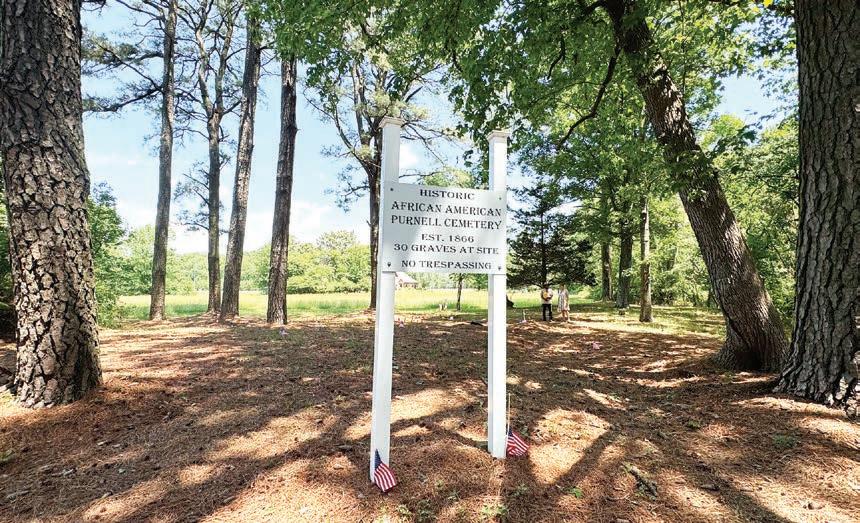
ROC Edition • Sherrie Clifford, Publisher
Dating back to the 19th century, the Purnell Family Cemetery serves as a lasting record of generations of African American families whose lives helped shape Worcester County. Pictured to the right is one of the burial vaults that collapsed during a 2005 desecration.
conducted a study, using radar technology, that found a total of 53 burials, 21 more than previously documented. The discovery confirmed what family members had long suspected: The cemetery was larger than surviving records suggested.
Today, small markers identify the locations discovered through the study, creating a map of burials that had become invisible over time.
The radar survey also documented the traditional layout of the burials. According to Purnell, the graves are oriented in the customary Christian manner, with the deceased buried facing east. The mapping and digital documentation completed by archaeologists and volunteers have created a permanent record of the burial locations, ensuring that future generations will know where the graves are located even if surface
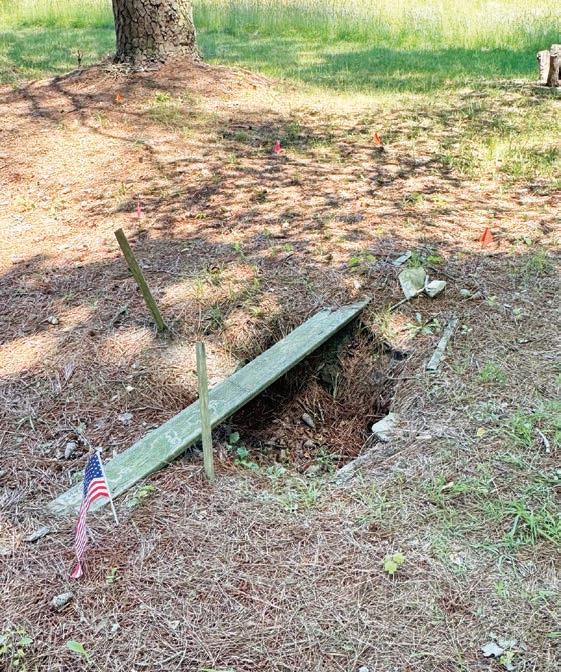
FAMILY LEGACY
Continued from page 32
markers are lost.
One of the greatest challenges that descendants continue to face, however, is simply matching names to individual graves. With the original headstones having been removed in the 2005 desecration, it makes the process significantly more difficult. As a result, many of the stories connected to the cemetery must now be reconstructed through historical records and family research.
That research begins with one of the earliest individuals connected to the site.
According to available records, a man named Littleton Allen, Purnell’s great-great-great-grandfather, appears to be among the earliest documented family members associated with the property. Born around 1817, Allen lived during a period when recordkeeping for enslaved individuals was often incomplete or inconsistent.
Purnell’s research suggests that around the time of emancipation, Allen adopted the surname Purnell. Such name changes were not uncommon among formerly enslaved individuals as they established their identities and family histories during Reconstruction.
One of the most significant documents in Purnell’s collection is a deed regarding Littleton Allen, later identified as Littleton Purnell, and the graveyard. Signed on June 2, 1866, the deed granted him ownership of the parcel of land containing his family’s cemetery.
“Littleton Allen has, since the death of (the former owner John C. Derickson), completed the payment of the purchase money of said land,” stated the 1866 document. “In consideration of the above recited facts … James B. Derickson, executor of John C. Derickson, should execute a deed to the said Littleton Allen for the parcel of land.”
In addition to this, the historical record documents Purnell’s family tree for generations after his great-great-great-grandfather.
In the census records are shown people named William Purnell and Levin Purnell, identified as sons of Littleton Purnell and his wife, Mahala Predo, whose surname appears with varying spellings in historical documents.
An 1880 census reviewed during the interview lists members of both family branches, including spouses and children. Those records provide a snapshot of a growing family just 15 years after the end of the Civil War.
Death certificates and other records reviewed by Purnell
help connect those names across generations.
One descendant identified through the records is John Wesley Purnell, whom Bobby Purnell identified as his great-grandfather. Through these documents, a picture begins to emerge of a family that lived, worked and raised children on that parcel of land.
While being named after the Purnells, the cemetery contains other families as well.
According to burial records, surnames represented among the known burials include Purnell, Davis, Showell, Dennis, Bell, Fooks, Brittingham, Spence, Thomas and Fassett. Together, these families form part of the larger African American history of Worcester County and the communities that developed after emancipation.
Many descendants remain in the area today, while others have moved throughout Maryland and beyond.
Purnell believes additional family members can still be identified through further genealogical research. One avenue he hopes to explore is the extensive genealogical database maintained by The Church of Jesus Christ of Latter-day Saints. During the interview, he expressed interest in using those resources to trace earlier generations and potentially identify relatives who remain unknown.
Also of historical interest to descendants is the fact that a family home once stood on the land, according to Purnell. Although the house was eventually destroyed by fire, documentation indicates that family members continued to maintain financial ties to the property.
Among the records he reviewed was evidence that his father, Owen Purnell, and grandmother, Eleanor “Ella” White Purnell, paid off the remaining mortgage on the property in November 1950. Yet, like many family properties passed down through multiple generations, the land was lost through legal complications.
The result was the end of direct family ownership of land that had been associated with the Purnell family for decades.
From there, ownership changed hands multiple times.
Purnell’s research traces a succession of owners that eventually included developers and investment entities before the property was ultimately sold to the company associated with the proposed cable landing station project, referred to by many as a data center, despite the company saying it is not.
That brings us to the modern age. For years, Purnell, along with his cousin Alavontine Showell, has worked to maintain the site, clear
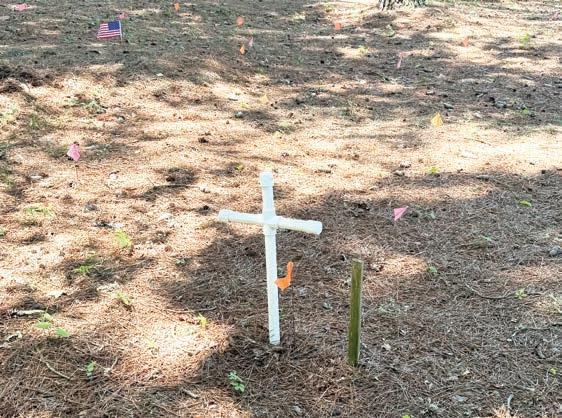
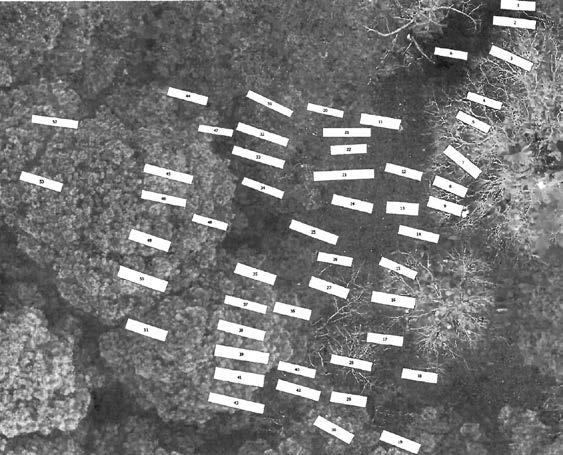
overgrowth and gather documentation related to the cemetery’s history.
As mentioned before, his efforts eventually attracted the attention of historians, archaeologists and community members interested in preserving African American burial grounds.
The cemetery was surveyed, digitally mapped and documented to ensure that burial locations would not be lost again.
The digital mapping effort now serves as a permanent record of the graves that have been identified.
Purnell and volunteers are also working to create replacement markers for the graves located through the radar survey. Because many original headstones no longer exist, the markers are intended to ensure that each burial location is visibly recognized and remembered.
In addition to maintaining the cemetery, Purnell has organized fundraising efforts and established a
nonprofit organization dedicated to preserving African American cemeteries and the history they represent.
Throughout the interview, one theme surfaced repeatedly.
For Purnell, the cemetery is not simply a collection of graves. It represents generations of people whose lives contributed to the history of Worcester County.
The records he has assembled tell a story that stretches from the years immediately following slavery through Reconstruction, family land ownership, changing generations and modern preservation efforts.
Through the efforts of descendants like Bobby Purnell, the stories of those buried will continue to be preserved so that future generations will know not only where their ancestors were laid to rest, but who they were and why their lives mattered.
ROC Edition • Submitted
In 2025, professional archaeologists were brought in to scan the historic cemetery with radar technology. They detected a total of 53 graves, 21 more than previously recorded and many of whom were born before emancipation.
Worcester County Veterans Memorial hosts patriotic ceremony honoring veterans

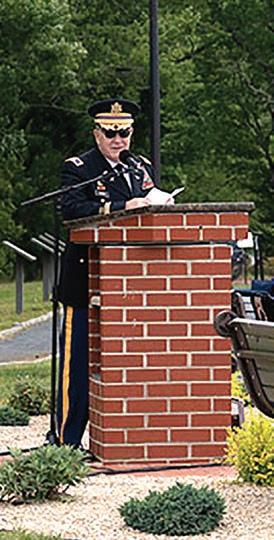
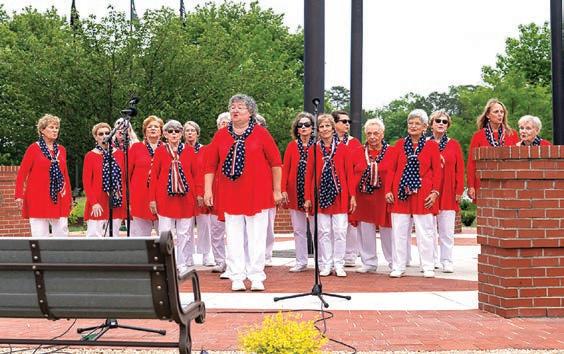


ROC Edition • Ocean Pines Association
Memorial Day ceremonies hosted at the Worcester County Veterans Memorial saw massive attendance, with local choral groups, uniformed veterans and speech givers honoring the country’s bravest.