Sven Vandeputte, Managing Director OCAS, Pres. J.F. Kennedylaan 3, 9060 Zelzate - Belgium
DISCLAIMER
Although care has been taken to ensure that the information contained in the activity report 2016-2017 is meticulous, correct and complete, OCAS nv cannot give any guarantee, either explicitly or implied, as regards to the accuracy, precision and/or the completeness of the aforementioned information. OCAS nv as well as it directors, management, employees and appointees in the broadest sense possible, therefore assume no responsibility, and shall in no event be held liable, for any direct, indirect, special or incidental damage resulting from, arising out of or in connection with the use of this information, nor for any infringement of third party intellectual property rights which may result from its use.
1
3 ENVIRONMENT 4 COMBINATORIAL RESEARCH
5 PARTNERSHIPS
OCAS LOOKING FORWARD WITH A CLEAR VISION TO 2025
The years 2016 and 2017 propelled OCAS forward, building on its 25-year milestone of leveraging industrial pragmatism to continuously grow in expertise, scope and societal impact.
As we review the activities and accomplishments of 2016-2017, we proudly report our progress in combinatorial research, durability & lifetime prediction of metallic components and structures, delivering services to the energy industries, and product development for environmental sustainability. With ‘Safety First’ as our ongoing baseline principle in all that we do, we are investing further in knowledge and equipment to pursue these focuses into the near future.
As a compass along the road ahead, the OCAS vision (see box) guides us through the years to 2025. Our vision statement contains key aspirational elements that are crucial to executing our strategy and reaching our goals. This foreword to OCAS’s Activity Review 2018 outlines these elements.
OCAS Vision 2025:
In 2025, OCAS wants to be a top-of-mind R&D centre for ArcelorMittal and metal-based industries worldwide, by offering its customers highly effective alloy and coating development services and related application testing, accelerating their R&D output using OCAS’s unique testing, processing infrastructure and competencies.
ACCELERATING OUR CUSTOMERS’
R&D OUTPUT
OCAS’s true added value − indeed, our core capability − is our ability to accelerate our customers’ R&D output. We do this for the ArcelorMittal Group itself and for more than 100 customers worldwide, and this is a major reason our customer satisfaction keeps growing year-on-year.
How do we do this? We offer our competencies, know-how, equipment and methodologies to our worldwide customers − facilitating, and helping them succeed in, their R&D journeys. The result is quicker validation of breakthrough concepts and accelerated results from exploratory research.
We differentiate ourselves by engineering equipment, methodologies, and testing and processing infrastructures that answer, and anticipate, our customers’ needs. Far beyond traditional testing, we approximate the real-life conditions and behaviours of the steels or metal alloys that we are testing.
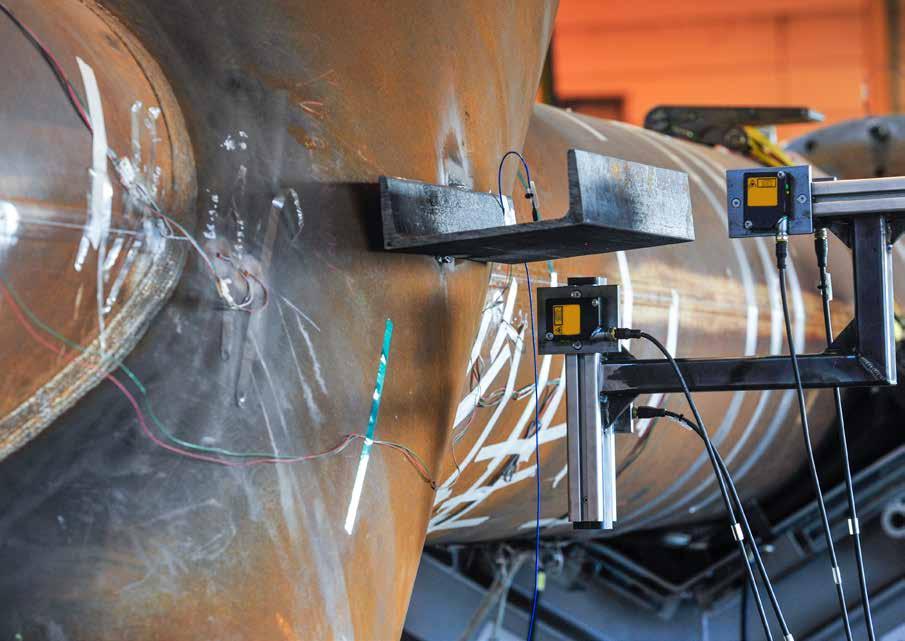
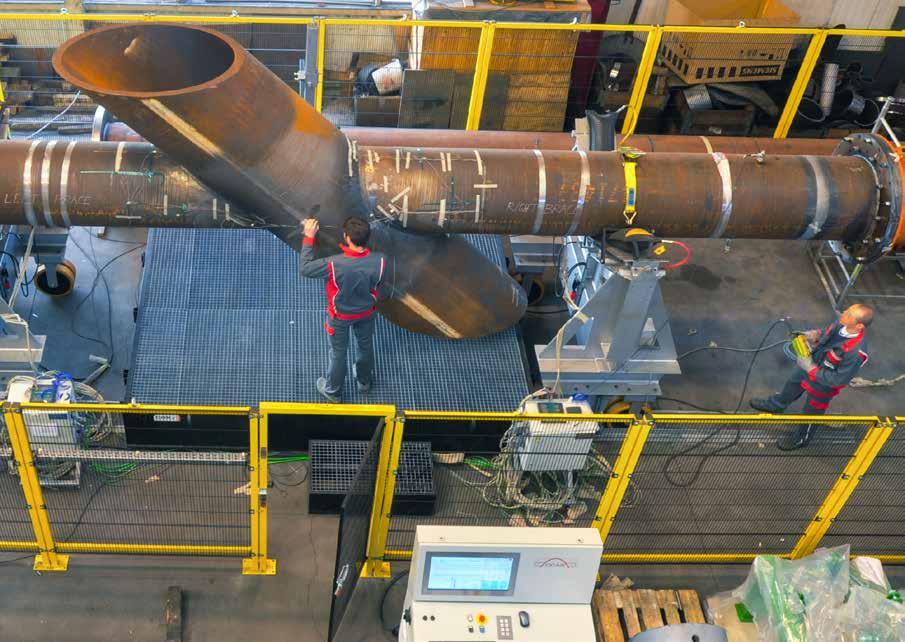
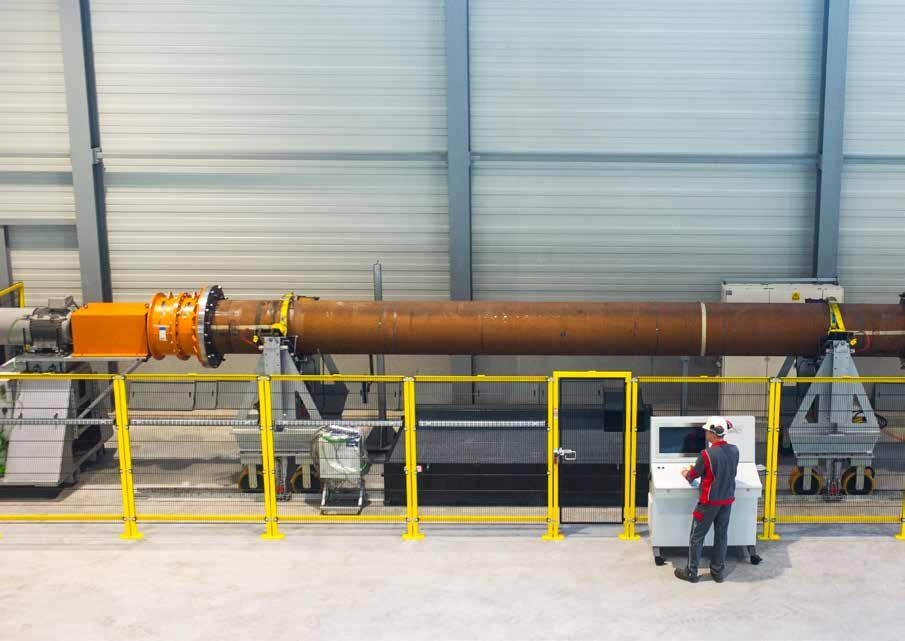
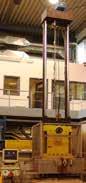
To take one example: we have designed and engineered unique equipment to test the fatigue performance of offshore windmill jacket foundations. We are able to bring welded tubular nodes of these constructions (which weigh up to 10 tonnes) into resonance to test their fatigue behaviour. Fatigue tests using conventional methods run for weeks; our accelerated method can perform 1 million fatigue cycles in less than a day.
OPERATING FOR OUR CUSTOMERS WORLDWIDE
As our customer satisfaction ratings show numbers above ‘fully meeting expectations’, we are happy we can solve our customer’s
problems and bring them added value. This is also proven by the recurrent character of our client portfolio and the growing number of customers worldwide that call on us to accelerate their R&D.
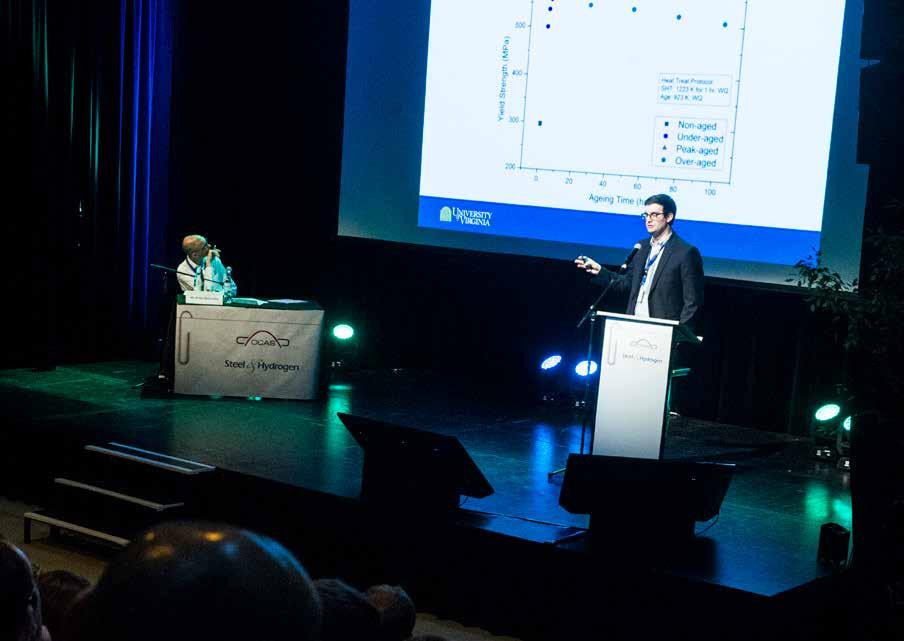
In the past two years, we’ve employed tools to deepen our advanced capabilities in steel/metal R&D − for example, by bringing industry and academia together to grow in expertise, scope and societal impact. OCAS has organised a number of seminars − some with worldwide scope − like our third SteelyHydrogen conference, which was held in May 2018 and has expanded to other metals. This conference focuses on hydrogen embrittlement of metals with a targeted balance between fundamental and industrial aspects.
To provide customised services and recommendations, we need experienced staff. It is therefore crucial that OCAS attracts top talent from around the world. Looking to the many recent recruitments, and the high number of international
candidates who apply, it is clear we are being recognised in this respect by excellent researchers. Other R&D groups are keenly aware of our specific competencies, infrastructure and flexibility. We’re also increasing our geographical footprint − within and outside ArcelorMittal − as we establish more projects and partnerships with prominent companies worldwide.
An excellent example: a global player in the energy field is outsourcing to OCAS for key competencies in specialised hydrogen studies.
COMBINATORIAL METHODOLOGY
In our pursuit of ever-greater efficiency and effectiveness, OCAS employs a combinatorial, multi-competency experimental methodology. This applies to testing procedures as well as to product and material development. For example, we have the capability to screen new alloy compositions or coatings very rapidly to quickly discover the ones that will not work. This means that we can discard dead-ends early in the process, in order to concentrate on the promising possibilities, without wasting valuable human and equipment resource time.
We leverage our multi-competency approach by bringing together people in alloy development with people active in surfaces, and with people working on fatigue, wear or corrosion, with specialists in in-depth material characterisation − creating rich synergies and accelerations. This combinatorial methodology has yielded good results these last two years, and we will further embrace this fruitful approach as we move forward.
DURABILITY AND LIFETIME
PREDICTION OF MATERIALS, COMPONENTS AND STRUCTURES
Many structures and components are used longer than their design life, or operate in conditions different from what was originally expected. Even the best products are only acceptable as long as they are appropriate, and of a necessary standard, for their intended use. For material-driven innovations in asset-intensive industries − such as, for example, deep-sea offshore structures and renewable power generation − durability and lifetime prediction are of utmost importance. OCAS’s roadmap in this domain integrates topics on durability and non-standard testing (with regard to degradation mechanisms of fatigue, wear,
corrosion, hydrogen embrittlement, and their interplay) with fit-for-purpose and lifetime prediction/estimation goals, as the latter is the final target from a customer’s viewpoint. Our (accelerated) durability testing provides crucial input to that aim. The new 1800 m2 OCAS XT building (which you can read as both extreme or extended testing) was put into operation in Q4 2017 and is now fully facilitating this strategic axis. OCAS's unique range of customised, non-standard testing equipment, in combination with expertise in numerical modelling, enables us to even better reflect in-service conditions during lab testing.
COMBINING FOCUS & FLEXIBILITY
The OCAS vision 2025 led to a number of roadmaps for the different key axes we want to excel in. One of our strengths is the ability to remain focused on long-term objectives while staying flexible to solve day-to-day problems − and recognise new opportunities.
This flexibility is in OCAS’s DNA. It informs our strategic orientations towards relevant societal trends, including: CO2 reduction, electrification (applying electrical steels to the advent of electric vehicles), the importance of durability and environmental
sustainability in the growing wind energy field, and hydrogen storage in energy applications.
So, as we progress in our fields of key expertise, we keep our eyes open to embracing new chances and establishing links with complementary partners. For example, in the framework of Industry 4.0, our lifetime prediction capabilities based on in-depth material know-how and component testing open new doors for predictive maintenance of existing (ageing) assets when combined with new sensing and monitoring techniques that enable ‘recording’ the real-life use conditions experienced by the asset.
The strong partnership and intensive collaboration that we enjoy with our investment & sister company FININDUS bring even more additional opportunities.
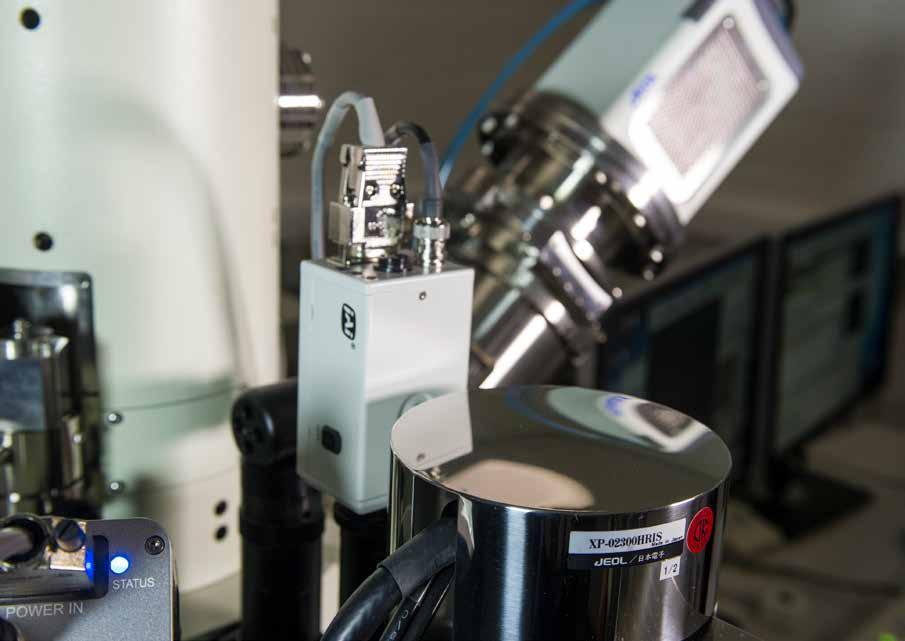
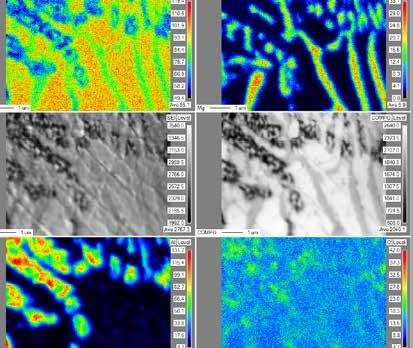
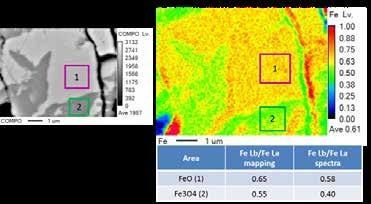
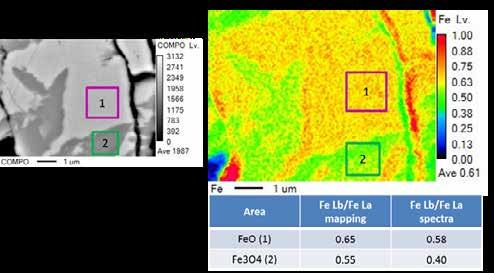
A further asset is our continual investment in advanced (chemical) characterisation techniques. In addition to our new inhouse FEG-EPMA with soft X-ray emission spectrometer, OCAS also has easy access to unique large-scale research infrastructure via the Flanders Hercules Foundation: Atom Probe Tomography and Time-of-Flight Secondary Ion Mass Spectrometry have
Serge Claessens, Chief Technology Officer
Sven Vandeputte, Managing Director
already provided answers to complex material problems.
To conclude: our ambitions are multiple, but they are underpinned with a strong vision, clear views based on technical roadmaps supported by market evolutions and customer needs, and, last but not least, an excellent track record over the years. Starting from this sound base, we are looking forward with enthusiasm to realising our challenging goals.
1 ENERGY
WHERE ON EARTH DO WE FIND THE ENERGY?
If there’s anything on our planet that is really stable, it’s the steadily increasing demand for primary energy: forecasts predict an increase of nearly 30% by 2040. Like it or not, it will be impossible to reverse this trend, because the world’s population will keep on growing during the coming decades, and people all over the world will legitimately seek to improve their standard of living.
Currently, more than 80% of the global energy supply is based on fossil fuels, which release CO2 during combustion, with the consequences for the world’s climate that we are witnessing. Still, we can observe at least one encouraging trend: our world is undergoing an increasingly rapid energy transition, whereby coal and oil will be phased out to be replaced by gas and renewables. Phasing out coal and oil can be regarded as an improvement, while the use of renewables avoids the emission of greenhouse gasses.
Undoubtedly, it will take several generations before a carbon-free economy becomes reality. In the meantime, we are trying to use energy consciously and sparingly − both on a large scale in industry, and on a small
scale as individuals. Using electricity as efficiently as possible is one of the main concerns − particularly in view of the progressive electrification of mobility, as we are observing in the automotive sector.
OCAS has an important place in our energy-driven world. For many years now, we have been supporting ArcelorMittal in providing steel for the energy market in a variety of product forms, such as coil, plate and hollow sections. The largest steel producer in the world relies on us for the development and industrialisation of new steel grades with ever-increasing demands regarding mechanical or electromagnetic properties. In order to preserve or improve ArcelorMittal’s competitiveness in the market, we are committed to reducing the production cost of the steels. And not to forget: thanks to advanced modelling of the evolution of the steel’s microstructure during processing, we’ve been able to reduce the development time of a significant range of products, which is greatly appreciated by plants spread over three continents.
The success of OCAS and, ultimately, its worldwide recognition in the energy market is not only based on our expertise in product
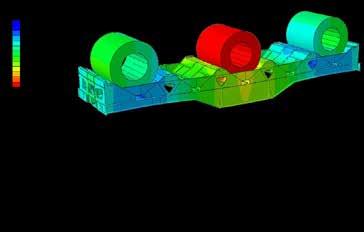
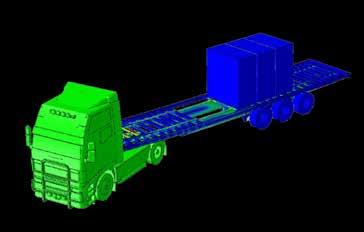
development and support, but also on a deep understanding of the end-users’ needs and wishes. The main keywords in this context are safety and cost – or, in industry terminology: structural integrity and life-cycle cost – which are closely related in many cases. We are addressing these concerns, often in collaboration with stakeholders from conventional or renewable energy, for example by developing and installing tailored testing methodologies that provide designers with more conclusive information about a material’s or a welded structure’s response to specific environments or load cases. The information that’s collected helps assess the risk of catastrophic failure and predict behaviour over the product’s lifetime. Another important example, where our numerical modelling team routinely comes into action, is the prediction of structural behaviour through finite element modelling. When this is done up front during the design phase, we are able to suggest suitable steel solutions that the designers have not yet considered.
A striking illustration in the context of life-cycle cost is the maintenance of
large offshore structures (involving periodic inspection and repainting), which is quite costly. With the goal of extending the maintenance intervals, OCAS has initiated, and is leading, two parallel development tracks to remedy the accelerated corrosion rate in a saline environment. In the first track, we are developing new metallic coatings with improved corrosion protection properties; and in the second, we are seeking a cost-effective corrosion-resistant steel substrate, which would in fact need no coating at all.
OCAS is involved in a large number of challenging projects impacting one of society’s main challenges. Contributing to a safer and cleaner world − the more so when contributing to cost-savings as well − is a major motivation and draws the best from us.
And that’s where we source our energy!
– Martin Liebeherr
This methodology makes it possible to improve the overall accuracy of the total loss prediction, which enables more accurate design and reduces the number of expensive prototypes required.
Jan Rens
Modelling electrical steel grades
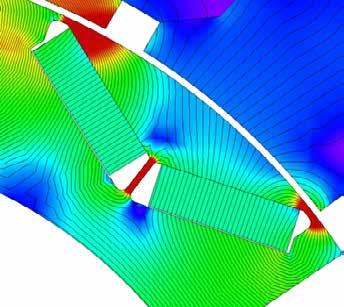
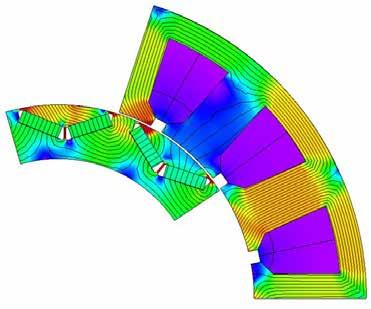
Producers of electrical motors, generators and transformers are continuously striving to improve the efficiency, power density, and cost of their products. To succeed in this, in-depth knowledge of the properties and behaviour of the electrical steel in a final product − under real loading conditions and taking manufacturing effects into account − is essential.
OCAS has a proven track record of successful collaboration with both automotive and industrial customers to help their designers increase the performance, and/or reduce the costs, of their machines. OCAS’s expertise in this field is unique, as it combines our in-depth material knowledge, the availability of an advanced laboratory that is well equipped for advanced magnetic and electrical characterisation of electrical steel, and our strong modelling capability. As the numerical models are specifically fine-tuned to include measured characteristics of electrical steel − in its as-delivered state, but also considering the effects of machine production processes − high-performance descriptions of the machine can be obtained.
IMPROVEMENTS IN IRON LOSS MODELLING
OCAS has derived formulations for the prediction of core losses in electrical motors under real operating conditions and taking into
account various production processes such as punching and stacking. For a recent study with an automotive customer, the improved methodology was applied to compute the iron losses in a permanent magnet synchronous motor (PMSM) traction machine, including the local magnetic degradation due to laser cutting. The simulations, which were based on extensive laboratory characterisation of the cutting effect on permeability and losses, showed a very nice agreement with measured loss values on the machine, and demonstrated that the laser-cutting effect increases core losses by 25% to 60% depending on the operating conditions. The methodology makes it possible to improve the overall accuracy of the total loss prediction, which enables more accurate design and reduces the number of expensive prototypes required.
PREDICTION OF MECHANICAL VIBRATIONS
Transformers typically emit a low-frequency
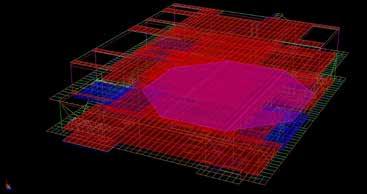
humming noise, which can be a major obstacle to their use in urban areas. This humming noise is caused by mechanical vibrations of the transformer’s magnetic core, as a result of magnetostriction in the electrical steel laminations and magnetic attraction forces between the laminations in the corner joints. To predict the level of vibration, OCAS developed detailed 3D electromagnetic and mechanical finite element models of the transformer. The models use measured material parameters such as magnetostriction and are able to predict the forces between individual laminations. The simulations focused on comparing different transformer stacking techniques that are currently found in industry, and comparisons with measurements on a number of transformers were made. The results allow us to predict the relative effects of magnetic and magnetostrictive forces on the overall vibration level − and, ultimately, the consequences of assembling techniques.
These are exciting times for OCAS because of the rising worldwide demand for Electric Vehicles − and the fact that we have developed a very wide best-in-class product range on the European market!
Wahib Saikaly
We CARe about the environment!
A steel that is environment-friendly? Sure! Many grades of the new generation of steels, such as those that enable vehicle weight reduction, are driven by environment-friendliness principles. The family of Electrical Steels is a perfect example of innovative solutions that are essential for the preservation and well-being of our environment. Indeed, these electrical steels are the back-bone of the increasingly indispensable electric vehicles that are strongly on the rise worldwide.
The ArcelorMittal iCARe range of electrical steels offers advanced products to the automotive market, helping car manufacturers create environment-friendly mobility solutions for a cleaner world.
Within ArcelorMittal Global R&D, OCAS is the dedicated research centre for the development of electrical steels.
A WHOLE RANGE OF ES
TWO STRONG ASSETS
Thanks to two strong assets, OCAS and ArcelorMittal have been able to develop and industrialise best-of-class products on the European market. The first asset is our very
As electrical steel is used to make e-motors, it must include several functionalities. It needs to have high permeability to be able to generate enough torque in a short period of time. It also needs to have low iron losses for efficiency, high mechanical strength for compactness, and good thermal conductivity to avoid overheating. Moreover, these functionalities need to be optimised as a function of the driving conditions. And that’s why ArcelorMittal is developing a whole range of electrical steels: iCARe Save to reduce iron losses as far as possible, iCARe Torque to achieve a high level of mechanical power output, and iCARe Speed to make compact machines with high power density.
close contact with the customers. Indeed, meetings and customer visits are conducted regularly, which ensures that the customer’s needs are clearly identified and satisfied. The second strong asset is the level of expertise and equipment available at OCAS, which helps reduce development time. Lab experiments are carried out to reproduce every single step of the industrial process and to identify key parameters precisely. Thus, industrialisation becomes easier and only some fine tuning is required at the industrial plants before a product can be commercialised. Our customers are looking for that kind of reactivity − and that’s exactly what we strive to deliver!
OCAS continues to focus on accelerating its customers’ R&D developments.
Marc Vanderschueren
Holistic overview of OCAS’s services to the wind energy sector
Building limitations onshore, and better wind conditions offshore, have triggered notable growth of offshore wind projects over the past few years. However, as moving to deeper waters requires larger wind turbines, the diameter, wall thickness and weight of components have increased significantly, leading to capacity constraints upon installation. At the same time, the number of installations needs to ramp up while government subsidies decrease − which is why operators are demanding cost reductions to maintain their business case.
It’s not surprising that the perceived conservatism in the current codes is being challenged, and the real limits of the material in the structure are being recalculated. Offshore constructions operate in special conditions in which fatigue, and the combination of corrosion and fatigue, are the main drivers for structural performance.
A SOLID HISTORY IN THE WELDED TOWER AND FOUNDATION
Whereas most of the turbine manufacturers’ attention is focused on the nacelle and its power output, OCAS has a solid history regarding the welded tower and foundation. We’ve pre-qualified plate for offshore towers and foundations to the most stringent standards. We have even gone beyond the standard approach and have been optimising welding procedures to improve their fatigue performance. In addition, we have investigated the corrosion degradation of different steel grades in the marine environment and ranked their performance. We’ve been testing combined corrosion-fatigue
aspects of base and welded material vs. current standards on monopiles. And we have also investigated embrittlement mechanisms of high-strength bolts exposed to the marine environment.
ACCELERATING R&D
One of the issues we face in this R&D work is the time it takes to produce results. Fatigue is a slow process, but statistical relevance requires a substantial number of fatigue data points. So, OCAS has gone a step further and developed a bench capable of running a complete fatigue life on a full-size jacket node in only 2 weeks − 20 times faster than traditional systems. The new approach enables us to quickly obtain a large set of fatigue data points and to screen welding and finishing methodologies on their real fatigue performance. Furthermore, this data provides valuable input for our in-house-developed numerical simulation models, which are used to predict weld failure.
The whole OCAS team is keen to bring this innovative project forward together with the developers and the supply chain to bring value to the implementations of offshore wind jacket foundations.
Marc Vanderschueren and Philippe Thibaux
OCAS’s unique fatigue testing technique drives new Carbon Trust JIP
In early 2017, the Offshore Wind Accelerator programme of the Carbon Trust gave OCAS the go-ahead to start up an ambitious project: ‘Improved fatigue life of welded jacket connections’ (JaCo). Together with developers ØRSTED, VATTENFALL, EQUINOR, IBERDROLA, ENBW and SIEMENS GAMESA, OCAS is looking to further cut the cost of offshore wind energy by optimising jacket design.
APPROACH OF THE JACO PROJECT
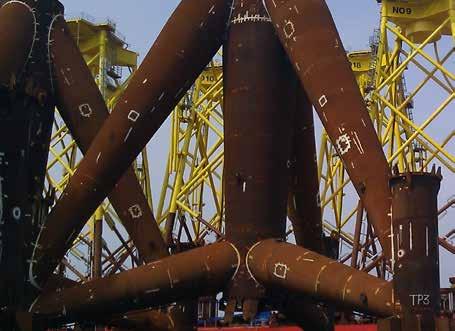
Jacket foundation technology consists primarily of welded tubular space frames fabricated in carbon steel. Each welded connection point is called a node. Fatigue at these welds is an important design consideration that often proves to be the limiting factor. All of the participants in the JaCo project agreed the following points in the approach: An improvement and update of S-N curves and fatigue classes for welded jacket nodes through extensive stress testing
Validation of robotic vs. manual welding Industrialisation of jacket fabrication and enhancement of reproducible quality by automated processes
Validation of OCAS’s fast testing method using resonance rather than hydraulic processes.
BACKGROUND OF THE JACO PROJECT
Several observations have led to the proposed approach:
The current group of fatigue classes used in most design standards were originally developed in the 1970s and 1980s. Therefore, they may not necessarily reflect advances and improvements in new welding methods, inspection techniques, quality standards and improved materials.
Postulation that a weight reduction of 10% can be achieved, if fatigue resistance (strength) is enhanced by 10-20% through optimised design.
The fact that lower weight also means lower CAPEX and installation costs.
Based on the above background and approach, the project plan is to use full-size jacket nodes, fabricated using both manual and automated welding techniques. These nodes will undergo fatigue tests comparing conventional (hydraulic) and innovative (resonant) testing techniques. Project results will be validated by an independent technical review panel with representatives from BAM, DNV-GL and Bureau Veritas. This team will verify the possible application of the results for the design and construction of jacket structures for wind energy. Based on the results obtained, appropriate fatigue curves will be redefined.
The JaCo project will run over a 3-year period and will help drive the use of jackets as one of the leading fixed offshore wind foundation types in the future.
Although easily overlooked, the weld cross-section geometry and microstructure requirements are very specific. OCAS has the knowledge and expertise to adhere to them.
Christoph Gerritsen
Welding on the cutting edge
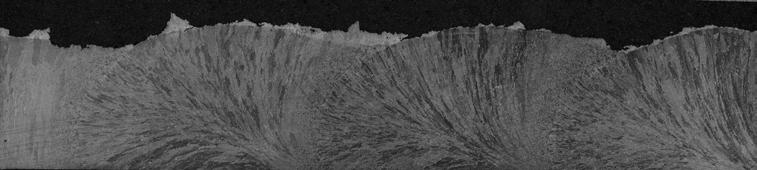
Welding pre-qualification for offshore steels aims to demonstrate their inherent suitability for manufacturing and assembly using welding. To do this, large samples need to be welded for destructive testing, using prescribed heat input and pre-heating/interpass combinations that are far from normal welding practice. In addition, there are strict requirements on the resulting cross-section geometry of the weld. On the one hand, a fusion line as straight as possible should be created to allow the kerf for Charpy impact (CVN) and crack tip opening displacement (CTOD) testing to be placed exactly in the zone of interest over the full thickness of the sample. On the other hand, the tempering effect that the weld passes experience from subsequent passes needs to be limited, leaving unrefined grain-coarsened micro-structure in the heat-affected zone (HAZ), as this is expected to be the worst performing microstructure.
STRICT REQUIREMENTS FOR OFFSHORE WELDING PRE-QUALIFICATION
The last requirement in particular is far from normal practice, which generally encourages refinement by subsequent weld passes in a multi-pass weld. In addition, this pre-qualification requirement is being overlooked by test houses and job shops, as the people originally skilled in this art retire. Nonetheless, particularly the American API RP2Z, which describes the requirements for offshore welding pre-qualification, is very strict and specifies exactly the minimum amount of unrefined microstructure required. If this amount – to be shown by special cross-sections taken from the CTOD samples after testing − is not reached, the CTOD test is considered invalid and needs to be redone. Hence, non-conformity with the requirement can have severe consequences: the entire pre-qualification can be invalidated, either immediately during the
campaign, or even years later by a critical customer. The European offshore pre-qualification standards EN10225 and NORSOK M-120 are less stringent, although they are the same in spirit.
CONSIDERABLE EXPERTISE REQUIRED
Considerable expertise is required to meet both the fusion line straightness and the unrefined microstructure requirements, as what promotes the one tends to reduce the other. Therefore, OCAS has made numerous trial welds, honing the welding procedure to yield the weld geometry and microstructure required while using the prescribed welding heat input. The main variables were the bevel preparation and the bead placement. In the end, OCAS developed a procedure yielding welds of the required microstructure and fusion line straightness, guaranteeing adherence to all standards.
Both the challenges and the opportunities are of a different order for these applications!
John Vande Voorde
Powering up − and enhancing − offshore platforms
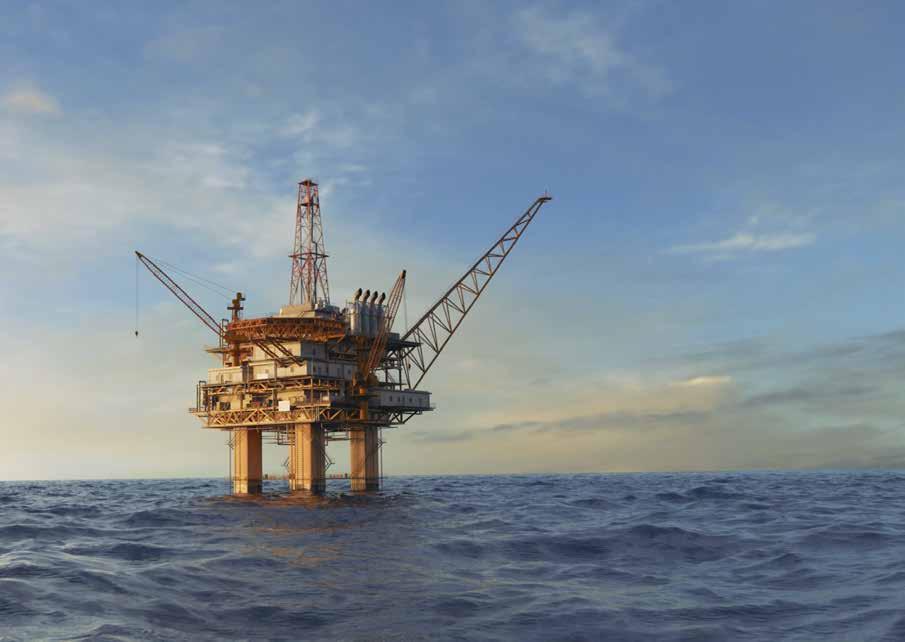
In the oil & gas sector, innovations and new co-operations leading to cost reductions are important for the sector’s transformation in the 21st century. To contribute to cost-effectiveness while maintaining safety, OCAS has developed special expertise in the market of offshore platforms. Novel testing methods and large-scale test set-ups provide valuable information for ensuring the safe and reliable operation of offshore structures for OCAS’s customers.
STRONGER AND SAFER OFFSHORE STRUCTURES
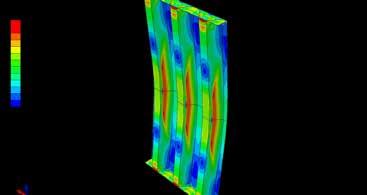
The massive and expensive offshore structures offer a lot of opportunities for a range of domains. OCAS is well placed to engage the requirements, be it on the level of a complete platform with dedicated structural simulation software, or examining specific components − such as riser guards or corrugated blast walls − with a sharp focus. Recently, the OCAS modelling team evaluated different design options to optimise the structural response of corrugated blast panels for enhanced safety on offshore structures.
And structural and dynamic simulations are only part of the story. OCAS also has a lot to offer in the areas of high-temperature behaviour in the event of fire, as well as protection against corrosion with, for instance, research on the performance of Magnelis®coated steel in offshore conditions.
The development of this offshore product requires a true multidisciplinary approach to fullfil the mechanical, welding and corrosion requirements.
Krista Van den Bergh
Enhancing corrosion resistance in atmospheric marine/saline weathering conditions
Offshore applications require excellent corrosion resistance in atmospheric marine/saline weathering conditions. Today’s weathering steels are mild low-alloy steels with a carbon content of less than 0.2 wt%, to which alloying elements are added totalling a few percent maximum. The enhanced corrosion resistance of weathering steel is attributed to the formation of a dense and well-adhering corrosion product layer known as the patina. Depending on the application and environmental conditions, weathering steel is used in either unpainted or painted state. Offshore applications, such as topside painted steel structures for fixed and floating platforms, would benefit from enhanced corrosion-resistant plate steel. Other applications that could also benefit are offshore wind towers, substations and water ballast tanks.
CORROSION-RESISTANT STEEL GRADE FOR OFFSHORE REQUIREMENTS
Most offshore structures installed today have a design lifetime of 25 years, which is impossible to achieve without regular maintenance. Due to application errors, improper design, transport damage, etc., corrosion can already be observed during the first years of exposure, which leads to extremely high operating costs, as offshore touch-up is 10-100 times more expensive than factory painting. Therefore, the oil & gas industry is calling for a more corrosionresistant steel. Over the last several decades, several weathering steels have been developed for certain environments. However, no real solution for offshore is commercially available today. The main challenge here is to develop a corrosion-resistant steel grade that meets the stringent offshore welding and toughness requirements. Although, certification bodies may have a conservative attitude towards new material developments, the objective of this project is
to develop an offshore steel grade with enhanced corrosion properties when painted with conventional offshore paint systems. The development started from former steel grades developed at OCAS 10 years ago. Adding low amounts of alloying elements promotes the formation of a protective patina layer.
MULTIDISCIPLINARY APPROACH
A multidisciplinary approach is needed to develop an offshore product that fullfils the mechanical, welding and corrosion requirements. OCAS has performed a screening of various metallurgical concepts. Dip-dry tests in simulated ocean water were deployed to evaluate the corrosion performance at lab scale. Further testing and analysis of rust scale is required to better understand the corrosion behaviour of those steels and to identify the main prerequisites for stable patina formation.
By using the real material properties, and looking beyond the standard, we managed to keep our customer’s process running and avoid huge implied costs.
Philippe Thibaux
Engineering Critical Assessment − a case study
An oil & gas pipe laying contractor was confronted with the fact that a new pipeline he had put in place on the seabed had been struck by an anchor, which moved it out of its position and deformed it. Another difficulty was that the pipeline had to carry rather sour natural gas and was therefore safety critical. Several remedial measures were considered − the easiest was to drag the pipeline partially back into place. Because this would cause a supplementary deformation of the pipeline in the reverse direction, it was necessary to assess the safety of the pipeline when submitted to a reversible plastic deformation. The characterization had to include the base material and weld metal.
JOINT APPROACH
OCAS adopted a joint approach with Ghent University’s Soete Laboratory and the Belgian Welding Institute. They performed a careful selection of mechanical tests to pre-deform the material, age it, and then evaluate the base material properties. To determine its resistance to ductile tearing, fracture mechanics tests were conducted on both the weld metal and the heat-affected zone. Coupon tests − including a girth weld with an artificial defect − were performed to simulate the displacement/repositioning of the pipeline. It was
observed that the artificial defect did not extend during the reversible loading, which led to an acceptance criterion for the defect size in the girth weld. Finally, sour testing was carried out in the lab to confirm the performance of the material.
OUTCOME
The engineering critical assessment was validated with a maximum defect size. On the basis of the observed findings, the pipeline has been dragged back into place.
This custom-built machine allows us to study the crack propagation behaviour of materials on full-thickness samples in tensile mode. Standard tests and equipment are often limited to bending mode and therefore do not fully reflect in-service conditions.
Dennis van Hoecke & Koen Bracke
Custom-built dynamic tear test better reflects in-service conditions
The structural integrity of industrial structures is usually ensured by preventing the initiation of cracks. However, in the pipeline industries, the problem of fast crack propagation and crack arrest is of paramount importance and has led to extensive studies.
To study dynamic ductile crack propagation over long distances under conditions as close as possible to in-service conditions, OCAS studies this phenomenon in full-thickness plates at high crack speeds over a length of 180 mm using an experimental dynamic tear test (DTT) set-up. This dynamic tear testing approach is used to address challenges such as the limitation of specimen size and inverse fracture associated with Charpy V-notch (CVN) and/or drop weight tear test (DWTT) experiments.
SAMPLES IN TENSILE MODE
Whereas standard test equipment is often limited to bending mode and therefore not fully representative of in-service conditions,
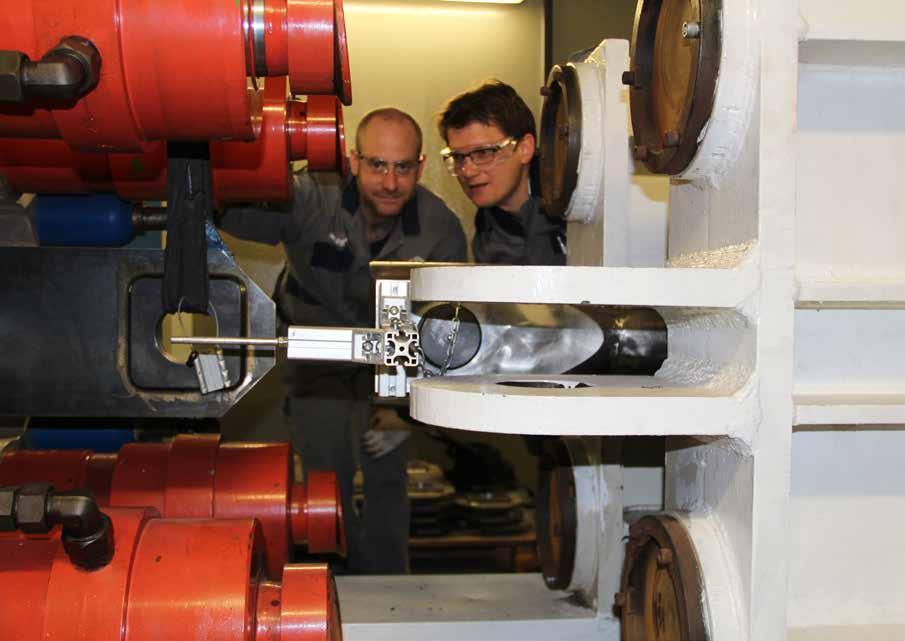
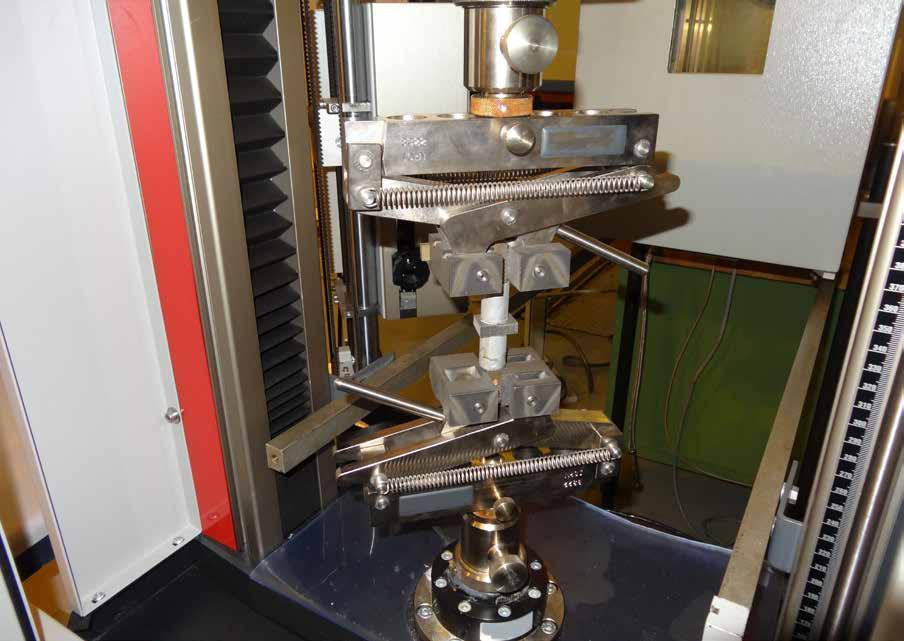
OCAS’s custom-built machine enables us to study the crack propagation behaviour of materials in tensile mode. The OCAS dynamic tear testing machine capacity is large enough to test full-thickness plates. Once the force reaches a critical level, the crack starts to propagate and the specimen is fractured within milliseconds. OCAS’s dynamic tear tester employs a mechanical spring whose stiffness can be attuned to the test material. Both machine and sample are instrumented to fully capture the material’s resistance to crack propagation. This dynamic tear testing equipment was used in the framework of the European FP7 funded research programme CO2QUEST. The fracture surface of the dynamic tear test
can show a ductile, brittle or mixed mode fracture aspect. The ductile fracture surface observed in this test reproduces the real scale slant fracture associated with steel pipeline failure phenomena. The next step: the test temperature range will be extended to lower temperatures, so that we can better compare mixed mode fracture surfaces of modern pipeline steels from this (more realistic) test with the fracture observed in different variants of drop weight tear tests commonly used as quality control in industry.
Although experimental campaigns are essential for material characterisation, it’s not easy to evaluate the fracture behaviour of large-scale components, such as steel pipelines, experimentally. For such large components, finite element modelling can be a competitive alternative for characterising the fracture behaviour.”
Steven Cooreman
Computer simulation of pipeline burst fracture helps prevent catastrophic events
Several technologies are being explored to reduce the impact of global warming − one of them is Carbon Capture and Sequestration (CCS). CCS involves capturing CO2 from fossil fuel power plants and transporting it to a suitable location for sub-surface geological storage. As such, CCS helps reduce atmospheric CO2 emissions. For large-scale applications, transporting CO2 using pressurised pipelines has been found to be the most practical and economic method. However, in cases where such pipelines pass close to residential areas, safety becomes a primary concern for the pipeline design, as it must minimise risks posed by the exessive release of harmful CO2.
CONTROLLING CRACK PROPAGATION
A long running pipeline fracture − causing a huge amount of gas to be released − is a failure scenario that must definitely be avoided. Therefore, crack propagation control is an important aspect of pipeline design. Evaluating the fracture behaviour of pipelines by means of large-scale tests is not an easy task and is very costly and time consuming. Finite Element (FE) modelling can be a competitive alternative, although predicting fractures is also a challenging task, as it requires accurate knowledge of the material’s failure behaviour and the dynamic forces that drive crack growth (i.e. the gas decompression behaviour). The effect of the surrounding soil should be considered as well.
CHARACTERISING FRACTURE BEHAVIOUR
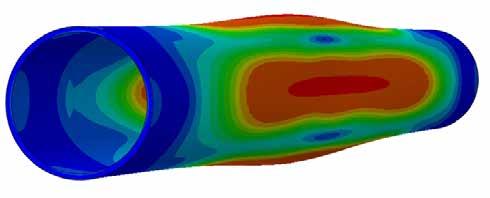
Within the framework of the European FP7 project CO2QUEST, OCAS has developed a fluid-structure interaction model in
collaboration with University College London (UCL) in which a one-dimensional computational fluid dynamics model, has been used to describe gas decompression. The predicted temperature and pressure distributions were then applied to a structural model, which was developed in the commercial FE software Abaqus and was used to simulate the pipeline’s deformation and fracture behaviour. Then, a quite complex damage model, capable of describing both brittle and ductile failure, was implemented. The fluid-structure interaction model was validated against a full-scale burst test performed by British Gas Company, in which a 50 m long X70 pipeline, with an outer diameter of 1.2 m and a wall thickness of 18 mm was tested. The model was later used to study the effect of different CO2 stream impurities (such as N2, H2, CH4 and Ar) on ductile crack propagation and crack arrest in high-pressure CO2 transmission pipelines.
Once again, our metal processing lab facilities have proven to be a great asset. After the successful development of the metallurgical concept for X80, we used our lab facilities to screen for leaner yet robust compositions, before industrial implementation.
In view of the ever-increasing pipeline lengths and operating pressures, the development of high-strength linepipe grades is making a significant contribution to reducing costs in pipeline projects. Thanks to the improved material properties, the pipes’ wall thickness can be reduced, lowering material quantity and transport and welding costs. Furthermore, high-strength linepipe grades make it possible to operate pipelines under high pressure, thus conveying larger quantities of gas. Linepipe qualities such as X80 help customers reduce weight and pipe-laying costs.
To further promote ArcelorMittal’s linepipe grade offer, OCAS researchers have worked on optimising the costs of current industrial solutions. One recent example is the X80 linepipe grade, for which alternative compositions were investigated in the laboratory for thicknesses ranging from 10 to 18 mm, and upward.
SCREENING TO ENHANCE COMPETITIVENESS
The work consisted in reviewing the industrialised concepts for different gauges and
designing leaner compositions with reduced alloying costs. For the screening of these new compositions, processing was carried out in OCAS’s advanced pilot scale facilities, which have proven to be representative of industrial processing and have led to successful industrialisations in previous studies.
Pilot scale studies allowed for full-scale testing of this grade’s critical properties (strength and drop weight toughness). The outcome of this work was the definition of several concepts meeting X80 requirements
while enabling significant cost reductions. These new concepts are to be validated at industrial scale. The better balance between properties and alloying cost of these leaner compositions is expected to increase ArcelorMittal’s competitiveness in the market of hot-rolled coils for energy applications.
Current know-how and capabilities for microstructure investigation will allow us to develop a state-of-the-art micromechanical model based on actual observations
Ulrike Lorenz
Understanding microstructure development during intercritical rolling
The microstructural evolution of heavy-gauge steel during processing needs to be better understood to improve the steel’s mechanical properties. To maintain strength, or because of the temperature gradient across the plate thickness, heavy-gauge steel plates are often rolled (at least partially) in the two-phase region. However, strength and toughness are not necessarily directly proportional.
Intercritical rolling − the rolling in the austenite-ferrite temperature region − produces a bimodal distribution of ferrite grain size and is known to be detrimental to impact toughness. However, the exact effect of the rolling process parameters on strength and toughness remain unclear. A stable process window can only be achieved through a more profound understanding of the development of the microstructure during intercritical rolling and its relationship to the final microstructure and properties.
TOWARDS A STABLE PROCESS WINDOW
Together with the partners of the Europeanfunded INCROHSS project, OCAS is studying the impact of two-phase region rolling on the microstructure and the distribution of properties in heavy-gauge steel plates. By means of recently developed microstructure investigation techniques and modelling, the relation between the temperature gradient, ferrite-austenite balance at high temperature, strain partitioning between phases and subsequent transformation are
being studied in detail. The results will be linked with the final mechanical properties in order to define a stable process window for applying intercritical rolling. This project uses a clear strategy to assess the potential opportunities and risks for the implementation and consequences of intercritical rolling in an actual industrial product. By employing a systematic approach that combines mapping the behaviour of each phase separately with looking at the global mechanical properties, a correlation will be developed to improve processing conditions for this type of product.
Our efforts to use tools offering good numerical predictions allow our customers to save lots of time in trial and error experiments.
Nuria Sanchez
Speeding up industrialisation of heavy-gauge hot-rolled coils for oil & gas pipes
Steel pipelines are used to transport oil and gas from production sites to consumers. The steel dedicated to these pipes needs to be thick and strong to contain gas under high pressure; and at the same time, it needs to be tough to avoid catastrophic failure.
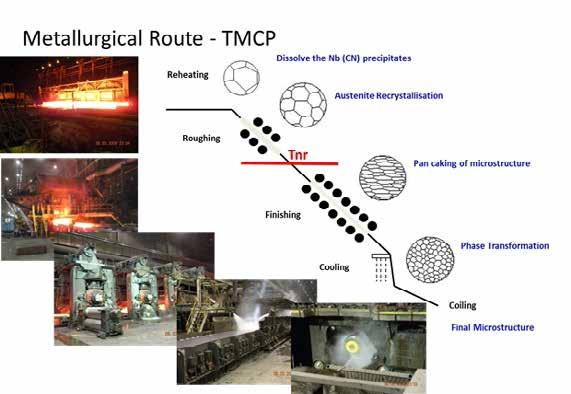
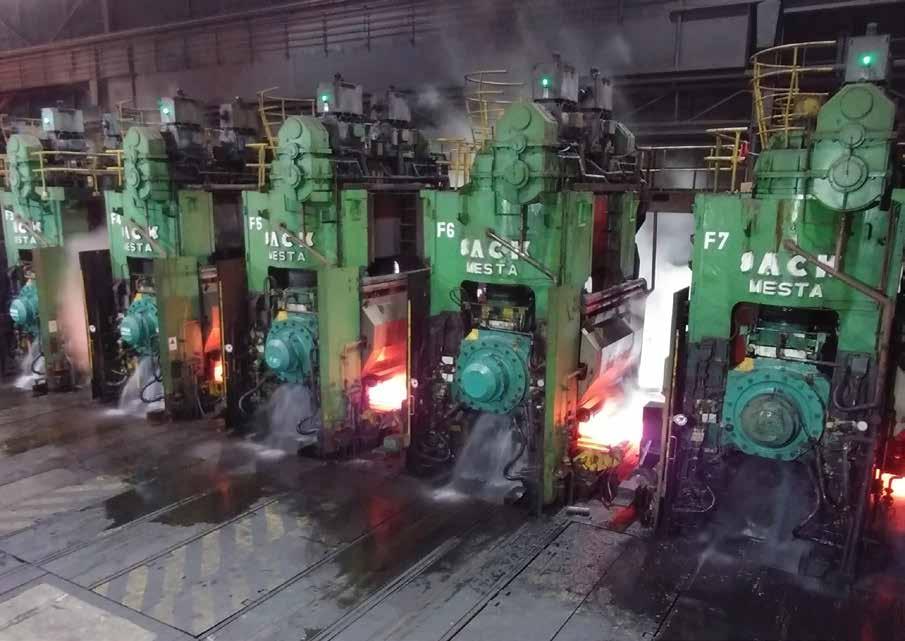
Hot-rolled coils with high thickness dedicated to pipelines are produced primarily by a thermomechanical controlled process, consisting of austenite conditioning during hot rolling followed by accelerated cooling.
OCAS LENDS A HAND
Several ArcelorMittal production sites are capable of producing coils for pipes. However, not all of them are able to reach the highest thickness, strength or toughness. So, OCAS helps the production sites adjust the process window for each plant configuration and steel composition.
BENEFITS OF NUMERICAL SIMULATION
To optimise the production parameters, every industrial trial is first reproduced numerically using rolling and metallurgical models developed within ArcelorMittal Global R&D and its partners. Thanks to this approach, the number of industrial trials needed to fine-tune the processing window is significantly reduced. In most cases, the target results are already achieved after only one or two trials. For instance, at the beginning of 2017, a production site had problems producing the quality required for the X70M grade in 14 mm. By October, they were already delivering several thousand tonnes in 16 and 18 mm with the correct properties to their customers.
Although implementing and calibrating advanced constitutive models is very challenging, it’s worth the effort, as we further improve our understanding of the complex mechanical behaviour of today’s high strength grades.
Steven Cooreman
Tensile testing of flattened full thickness and non-flattened round bar samples
Spiral pipe forming
Mechanical testing after pipe forming
Ring expansion testing
Pipe tensile property prediction – refining the numerical model
Large diameter welded pipes, which are produced from either plate or coil, are amongst the most cost-effective conduits for transporting oil and gas. While the steelmaker guarantees certain properties on coil/plate, the pipe manufacturer must guarantee properties on pipe. However, as pipe forming involves several cold forming steps − such as (cyclic) bending and (mechanical) expansion − the mechanical properties will necessarily change. Therefore, both steel and pipe mills have a strong interest in predicting pipe properties from coil/plate properties.
PRODUCING PIPES
Longitudinally welded (LSAW) pipes are produced from plate by means of UOE or JCO forming. In both cases, the plate is bent to the desired diameter, after which the pipe is welded and mechanically expanded. The latter forming step improves the roundness and reduces the residual stresses. Spirally welded (HSAW) pipes are produced from coil − in this case, the coil is first de-coiled and levelled, after which it is formed into a spiral pipe by 3-roll forming. The pipe diameter is determined by the coil diameter and the forming angle. During 3-roll forming, the pipe is welded, first inside and then outside.
PREDICTING PIPE PROPERTIES
Over the past few years, OCAS has been developing an efficient numerical/finite
element model that is capable of simulating different pipe forming processes, whereby the overall goal has been to predict pipe properties from coil/plate properties. Initially, the focus was on the pipe’s transverse direction, as the specifications listed in the International and American standards (e.g. API 5L and ISO3183) apply to this direction. An important phenomenon which should be considered in this respect is the Bauschinger effect, a phenomenon that manifests itself as a reduction in yield strength after load reversal.
When comparing the model predictions to experimental data, it was observed that the model provides accurate predictions for the transverse direction, but significantly underestimates the strength in the longitudinal direction. Therefore, a more advanced
phenomenological model, capable of describing both the Bauschinger effect and the cross-hardening phenomenon, was implemented through a user sub-routine and is currently being validated against experimental data.
At a later stage, this model will also help predict the overall mechanical performance of pipes (e.g. during installation) more accurately. Furthermore, a postdoctoral project has been launched with KULeuven to develop a physically sound material modelling approach with direct links to the material’s microstructure. Such a model will help assess the effect of several physical phenomena (such as yield point elongation) and can serve to calibrate more efficient, phenomenological models.
Thanks to its profound knowledge of metallurgy, OCAS was able to develop a new high-end grade and industrialise it in only one year!
Zinedine Zermout
It’s hard to stay (sour-service) resistant when you’re getting thicker
Increased demand for energy has pushed the oil & gas sector to shift activities to deeper and harsher production environments. These environments often contain hydrogen sulphide (H2S), making them ‘sour service’ environments. In addition, when drilling at great depth, elevated temperature and high pressure require impractically thick and heavy seamless (SMLS) oil country tubular goods (OCTG) products.
RESISTING SOURNESS AND BECOMING HARDER
Deeper wells call for higher strength grades that resist sour-service environments.
Strength levels of 650-800 MPa and beyond are becoming mandatory. Although not many players are active in this field, these products − known as T95 and C110 − are currently under industrialisation at ArcelorMittal. A specific challenge is to achieve the target sour-service resistance on heavy gauge.
Between 2012 and 2014, OCAS performed a large number of lab trials to determine the best metallurgical concepts and define the corresponding process windows for heat-treatments for different grades and
thicknesses. The successful jump to industrialisation was made in 2015 and 2016 at the ArcelorMittal Jubail seamless pipe plant in Saudi Arabia. More precisely, it was possible to reach all the properties (hardenability, mechanical properties, and sour-service resistance) required for T95 and C110 up to a product thickness of 20 mm. Above that level, however, the hardenability requirement (95% martensite) was not met.
BETTER SOUR-SERVICE RESISTANCE FOR THICK GAUGES
Consequently, a new concept with increased hardenability was developed in 2016 − taking the installed quenching capacity into account, which was unknown when
the first concepts were developed. However, the biggest challenge is to maintain the sour-service resistance, because the prior austenite grain size (PAGS) increases with the product’s thickness.
After laboratory trials (castings, hot rolling, heat treatment) and the related characterisations (Jominy tests, mechanical properties, (PAGS), sour-service resistance), the successful concept was industrially cast and processed in 2017. The outcome of the industrial trials was successful as it was proven that T95SS (a proprietary grade with better sour-service resistance than T95) was achievable for thick gauges.
By gathering process data and results of in-line measurements, we will try to establish a high collapse guarantee to identify the most critical pipe to test.
Maarten Van Poucke
Collapse test modelling
Oil extraction and drilling is currently taking place in increasingly deeper wells, whereby the external pressure is getting more and more important in pipe acceptance tests. High collapse steel grades are API steel grades showing an improved performance and will in the future become the only option.
OCAS provided technical assistance to ArcelorMittal Jubail, a stateof-the-art seamless pipe mill located in Saudi Arabia. About two thirds of its capacity is used for oil country tubular goods (OCTG). The objective was to investigate the influence of ovality, eccentricity (wall thickness anisotropy) and residual stress on the collapse pressure of pipes when subjected to external pressure.
MODELLING GEOMETRIC IMPERFECTIONS
Using finite element modelling for this parametric study, OCAS demonstrated that geometrical imperfections and residual stress do have a notable impact on the collapse pressure. In this, the ratio between the pipe outside diameter and its wall thickness is a determining factor. The customer can now better anticipate and adjust
the production process to reach a higher collapse resistance for a specific ratio outside diameter/wall thickness.
PREDICTING CRITICAL COLLAPSE PRESSURE
In addition, OCAS created a simulation model of the collapse tester of ArcelorMittal Jubail. First, it was used to validate the parameter study results. The model enables to more precisely predict critical collapse pressure on different experimental tested pipes with various outside diameter and wall thickness. By providing the mill with recommendations on experimental tests to build up a collapse pressure database, OCAS is working on the creation of a robust engineering tool for the future to predict the critical collapse pressure based on the pipe’s exact dimensions.
Working together with end-users, even during the conception phase, makes this research very specific and clearly illustrates the relevance of developing this product range.
Translating metallurgical routes from plate material to hot strip mill is not always straightforward. OCAS has the necessary equipment and experience to support dedicated lab trials.
Elke Leunis
Lieven Bracke
Extending the cryogenic offer
In the growing LNG (Liquefied Natural Gas) market, there is an increasing need for cryogenic materials. Cryogenic tubes are being used in all steps of the LNG process stream: in liquefaction and gasification installations, during loading and unloading of transport tankers, and in storage tanks. LNG fuel is often used in the ship building industry as well, and cryogenic materials are required for pipe-in-pipe ship fuelling lines and membrane tanks.
OCAS has worked on the development of a new class of materials that are suitable for thin gauge cryogenic applications in membrane technology for LNG & LPG (Liquefied Petroleum Gas) transportation and storage. Although, ArcelorMittal is already a major player on cryogenic plate product (>5 mm), coiled cryogenic steel grades are not yet available on the market. But they could provide a cost-effective alternative for the currently used materials solution.
LNG
Cryogenic conditions for LNG can be defined as very low temperature conditions: typically below -150°C. For these applications, OCAS − together with the industrial plants − prepared an industrial trial using existing plate
metallurgies on hot and cold strip mills. The final properties are obtained after a specific heat treatment on the coil or on the shaped product. To limit the risks in the different steps of the processing, OCAS has supported the plants performing dedicated lab trials, taking into account the technical capacities of the industrial line considered.
LPG
For LPG, the temperature requirements (-55°C) are less demanding. In this framework, OCAS has a collaboration running with an engineering company designing cryogenic transport and storage vessels. Next to high toughness at low temperatures and a relatively low thermal expansion coefficient, OCAS has tested new steel metal-
lurgies offering high-strength properties for their specific structural requirements while being cost-competitive compared to current material solutions.
For both LNG and LPG compatible materials, OCAS is working on expanding the dimensional feasibilities of ArcelorMittal’s plants by reducing thicknesses. In a first approach, this is being applied to existing metallurgical concepts with a proven track record in cryogenic applications, typically high Ni steels. In addition to that, new metallurgical concepts based on lean alloying are being developed as well, optimizing the cost-performance balance for specific needs formulated by ArcelorMittal customers.
2 DURABILITY & LIFETIME PREDICTION
DURABILITY & LIFETIME PREDICTION
The industrialised world is facing huge challenges in the coming decades − whereby the scarcity of resources and global warming are driving us towards better implementation of the circular economy principles. Steel turns out to be an excellent candidate on this quest, as it is almost 100% recyclable and always scores very well against competitive materials in a full Life Cycle Assessment. On top of this, inuse steel performance is expected to reach outstanding new highs for many application fields in the future − whether it concerns wear performance, fatigue behaviour improvement, corrosion performance, high temperature or fire resistance, or a complex combination of these qualities. In this way, steel innovation not only contributes positively to resource scarcity, but also to the extension of the lifetime of the current ageing infrastructure.
OCAS continues to contribute to the search for improved durability in multiple ways: by developing new steel alloys, microstructures and coating solutions, by optimising the design of applications, and by developing lifetime prediction tools and models.
In the domain of wear and abrasion, OCAS has continued to develop and improve relevant test methodologies and link them to real wear behaviour for certain applications. These tests allow us to rank a whole new series of new metallurgies and identify the key domains for optimised use. We continue to develop unique semi-component test setups to investigate fatigue and highpressure performance. These initiatives are enabling us to refine our fundamental metallurgical know-how regarding fatigue and to apply it to improving off-shore structures and components.
Our corrosion work is inspired by the very successful industrialisation and ramp-up of our Zinc-Aluminium-Magnesium coating Magnelis®. This continues to be an important axis of activity for OCAS, demonstrating outstanding performance in a variety of domains − such as farms, safety barriers, lighting poles, acoustic walls, and many more − which require accurate and relevant accelerated corrosion protection test methods. We are exploring − and identifying new candidates for − next-generation metallic coatings with even stronger protection, better appearance or lower cost.
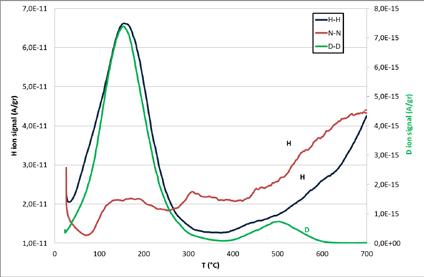
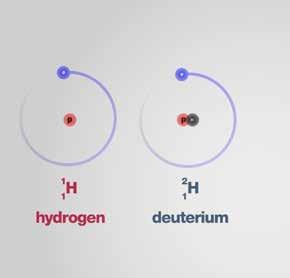
Also, in the domain of hydrogen and H2S, we are constantly increasing our competence and expertise by combining state-of-the-art equipment and innovative ideas. The use of deuterium for the fundamental understanding of hydrogen trapping in steels is a good example of this.
Finally, with regard to powerful and accurate lifetime prediction tools: OCAS continues to develop, in close collaboration with its partners, the idea of digital twins, in which data collection and analysis by means of on-site sensors and realistic off-line testing can be combined with accurate data-driven failure models.
–
Tom Waterschoot & Joachim Antonissen
The benefits of new wear-resistant steels have been proven industrially –now the mission is to turn this promise into a product!
Lieven Bracke
Developing wear-resistant steels for today and tomorrow
The current market expectation for wear-resistant steels is that they extend the lifetime of heavy-duty equipment as long as possible. In addition, there is the continuing need to reduce the weight of all types of moving vehicles. In the case of vehicles subjected to abrasive wear − e.g. for the transport of rocks, stones, sand, etc. − thin-gauge steels with high strength are required. Lighter construction results in either lower fuel consumption or a higher payload per movement. The conventional way to achieve this is by increasing the material’s hardness.
MEETING TODAY’S REQUIREMENTS
To fullfil the market’s requirements in the short-term, OCAS and ArcelorMittal production plants have developed, and are continuing to develop, thin-gauge, hot-rolled abrasion-resistant steels, with very high hardness, using conventional metallurgical concepts. The innovation in developing these products is not so much in the product properties that are obtained, but in optimising cost and expanding the dimensional feasibility in comparison with the well-known quenched-plate products. Although several hot-rolled martensitic steels have been successfully introduced over the past few years, options for further
improving their performance using these conventional metallurgies are limited. The reason, of course, is that increasing the hardness of these steels reduces their formability and toughness, which eventually leads to grades that are difficult for our customers to process.
STEELS FOR TOMORROW
To overcome this negative correlation between strength and hardness on the one hand and formability and toughness on the other, a new metallurgical concept is being industrialised. Instead of using a fully martensitic steel, newly developed wear-resistant steels are based on new annealing cycles combined with specific alloying
concepts. These concepts were originally optimised for cold-rolled automotive steels. Now, they are being adapted to fit hot-rolled processing conditions, taking into account the specific needs of the next generation of wear-resistant steels. Despite many remaining challenges, the first industrial assessments of these steels have shown very promising results. So, the expected benefits of new wear-resistant over martensitic steels have been confirmed, which has convinced the OCAS product development team that the choices that were made were the right ones and that exciting new products will result from this in the next several years.
The complexity of material design for wear requires combining microstructure-based modelling and characterisation techniques to understand the link between the failure mechanism and the microstructural features.
Haithem Ben Hamouda
What can a wear defect contribute to material design?
Wear is a material performance rather than a material property. However, understanding the role that the material property and microstructure play on wear performance is a key factor in modern material design. This target requires expertise in combining numerical and experimental tools at different scales. Today’s modern multi-scale approaches, such as PSPP, are providing the most complete answer to material design − such methods not only use advanced data processing algorithms for defect tolerances but they also apply multi-scale modelling and characterisation tools for defect engineering.
PSPP MODELLING APPROACH
The PSPP (processing-structure-properties-performance) methodology was first developed by G.B. Olson in 2000. This approach relies on a hierarchical arrangement of models at different scales to link performance to process via material properties and microstructure. In this concept, 4 essential elements of materials science are proposed: processing, structure, properties and technological performance. Linking these 4 elements produces a 3-link chain that represents the versatile materials paradigm. In this model, the deductive cause/effect logic − also known as the defect tolerance approach − flows from processing to performance. In general, such a deductive
approach leads to a large database comprising different sets of processing parameters (e.g. composition, processing temperature, etc.). The opposite way − known as the defect engineering approach – employs the inductive logic of system engineering that flows from performance to processing and, thus, enables material designers to arrive at a specific procedure for creating material with a desired set of properties and performance. OCAS is working on both approaches, using modern datamining algorithms and multi-scale modelling and characterisation tools.
FULL CONNECTION TO END-USERS
The PSPP approach applied on a laboratory
scale is contributing significantly to new materials design and deeper understanding of the wear conditions involved. Once the material wear performance is validated using the different in-house wear tests, the potential application is selected and endusers are contacted for an in-field test. OCAS is working on building a potential end-users (mining, dredging and transport) database for the trials of the newly designed steel grades. To ensure the quality of the in-field results, and to guarantee a neutral evaluation of the tested products, OCAS provides its wear expertise − equipped with advanced wear monitoring tools − to continuously monitor the component’s wear evolution during its lifetime.
If you want to hit it, and hit it hard: use austenitic FeMn steel. It won’t break.
Lieven Bracke
Austenitic FeMn steel can take a punch
Extreme applications require extreme solutions. Austenitic steels with high manganese and carbon content display a unique mechanical behaviour, combining high strength and an energy absorption capacity at both high and low impact speeds. Heavy impact only makes this material better!
Compared to conventional steel, austenitic wear-resistant grades have a high alloying content. This makes them quite difficult to produce, starting from liquid steelmaking, all the way down to hot rolling. Until recently, the only way to produce these steels as a flat product was through a quarto plate rolling process, followed by an annealing treatment. Quarto plate rolling, however, becomes very expensive for thicknesses less than 12 mm, and it is technically limited to a minimum of 4 mm.
HIGH EXPECTATIONS FOR NEW PROCESS
To overcome this limit in dimensional feasibility in a cost-effective way, OCAS and ArcelorMittal are developing a new processing route, pushing the use of existing equipment into unknown territory. First results of this new process are very encouraging − and expectations are high in terms of launching this type of steel product in thin gauges for demanding applications, such as sand blasting cabins, scrap buckets and mining
equipment, were sliding wear resistance and energy absorption from impact are crucial material characteristics.
On lab scale, improved concepts of this type of material are under investigation as well. The main goal is to increase the steel’s capacity to absorb energy in order to further extend the in-service time of components made of this extraordinary steel.
We are able to fully control the internal cleanliness in these hot-rolled quenchable boron steel grades − which is important for guaranteeing the excellent quality of the end-product.
Laura Moli Sanchez
Hot-rolled quenchable boron steel grades stand up to the most abrasive wear
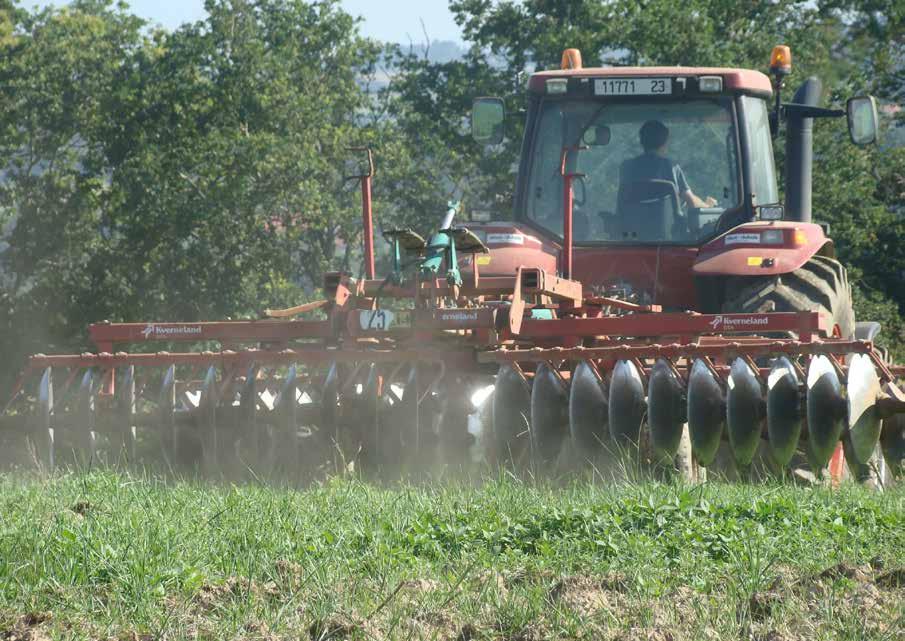
Boron steels are typically used in applications that require high wear or abrasion resistance. Although they are often used to form agricultural equipment parts (such as plough discs), boron steels also have applications in mining, concrete mixers, and automotive stabilising bars, cam, drive and gear shafts.
Compared to customary grades intended for hardening and tempering, the ArcelorMittal range of hot-rolled quenchable boron steels represent a real technology breakthrough in durable steels and are a cost-effective solution for prolonging the life of final products. The OCAS metallurgy team has optimised the chemical composition of these grades, whilst ensuring that very high hardness levels can be obtained after quenching. The high hardness of quenched boron steels makes them highly resistant to abrasive wear and fatigue. However, even the as-de -
livered pearlitic-ferritic structure in the hotrolled condition offers significant resistance to abrasive wear.
TOWARDS EVEN BETTER PERFORMANCE
To ensure high reproducibility, OCAS continues its technical support to the ArcelorMittal plants. Furthermore, OCAS characterises the industrial products on microstructure, mechanical properties and assessment for heat treatment. The OCAS team helps define the conditions
for heat-treatment at the customer and checks wear performance. Finally, the team investigates and proposes the future boron grades that will meet the customer’s future requests.
Together with ArcelorMittal Tubular
Products, new grades have been processed to tubes and OCAS has performed a benchmark. Results show that the hot-rolled quenchable boron grade tubes clearly outperform today’s commercially available grades.
We feel confident that the use of this test rig will provide us with the necessary data to upgrade current conservative fatigue curves.
Jeroen Van Wittenberghe
Efficient fatigue testing of large-scale welded structures
The shift to deeper waters and larger wind turbine generators requires optimised jacket foundations. Through a better understanding and accelerated testing of a large number of manual and automatic welded nodes under simulated industrial conditions, the objective is to upgrade the fatigue curves for offshore jacket structures − reducing weight, CAPEX and installation costs.
OCAS is using a unique, in-house developed technique to test the fatigue performance of full-scale jacket node geometries, manufactured using different welding methods, in an accelerated and efficient way that allows rapid interpretation of results.
SPEEDING UP FATIGUE TESTING
In offshore wind applications, there is an increasing trend for taller wind turbines with greater installed power. As a consequence, the dynamic loads transmitted by the wind towers to the sub-sea supporting structures are becoming more severe. To validate the designs and welding methods for offshore structures, full-scale fatigue tests are required. During these tests a full-scale welded node is subjected to a number of cycles (typically several hundreds of thousands,
up to millions of cycles). Using conventional testing methods with hydraulically actuated machines, tests can be carried out at 1 cycle per second or longer, resulting in fatigue tests that run for weeks.
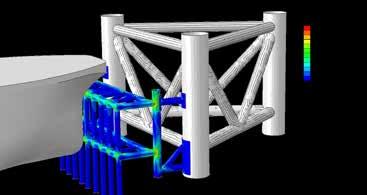
The accelerated loading is obtained by using resonant fatigue principles in a patented test rig called CRONOS (Continuous Resonant Oscillating NOde test Set-up). In this test rig, the welded node is vibrated using an eccentrically rotating mass. When the rotational speed of the mass is brought close to the resonance frequency of the welded node, it will come into resonance.
This new testing method requires up-front optimisation of the test specimen so that it has the desired resonance properties − which is exactly where the combined numerical-experimental expertise of OCAS comes into play.
OCAS’S NOVEL TESTING TECHNIQUE DRIVES NEW CARBON TRUST JIP
The Carbon Trust’s Offshore Wind Accelerator has launched the ‘Improved Fatigue Life of Welded Jacket Connections (JaCo)’ project, which aims to cut the cost of offshore wind. As project coordinator, the Carbon Trust is working with OCAS and industry partners to ensure programme delivery, including the accelerated testing, numerical analysis and sourcing of nodes. The 3-year JaCo project will help drive the use of jackets as one of the leading fixed offshore wind foundation types in the future. Meanwhile, OCAS is also participating in the European RFCS project ‘JaBaCo’ to develop a modular jacket concept, made of components of pre-qualified quality, to reduce the cost of offshore wind farms.
The
infrared thermography technique allows us to learn more about crack initiation and propagation mechanisms under low-cycle fatigue loading conditions of deformed structures.
Strain Range Variation
Dennis van Hoecke
Thermography shines light on fatigue
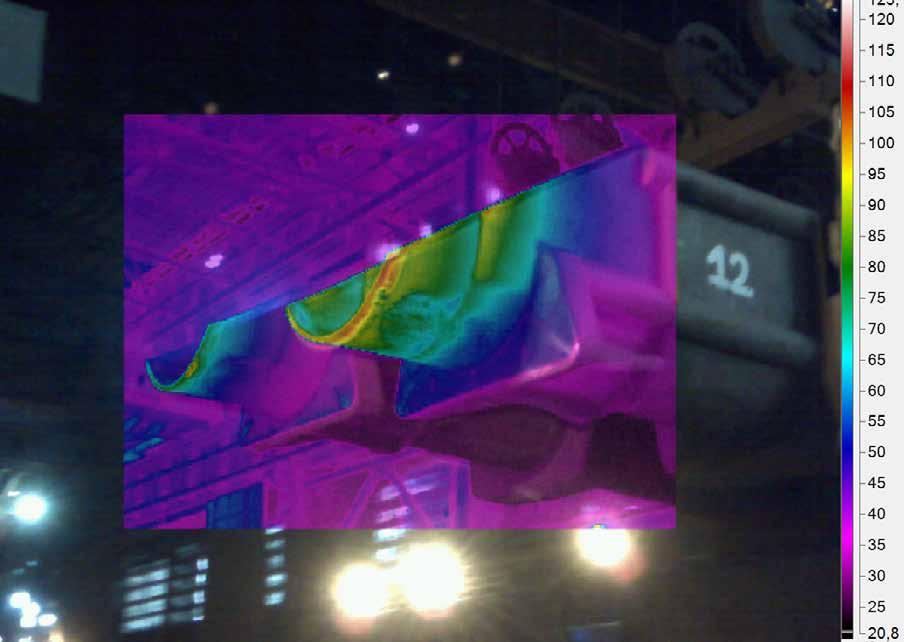
Stretch formability and bendability of high-strength steels are important for many structural components. When these formed components are subjected to dynamic loading conditions, fatigue failure occurs at critical areas (such as the inner side of a bent region), in which the stress state is multiaxial. This study proposes a new experimental approach to monitor fatigue behaviour of bent specimens by thermography investigations. The thermal increments during low-cycle fatigue of bent samples are monitored and correlated to fatigue crack initiation and propagation lifetime.
INFRARED
THERMOGRAPHY APPROACH
An infrared camera was used to study the possibility of detecting micro initial crack length during fatigue loading. The surfaces of all specimens were covered with a uniform, thin black coating to prevent reflections and to enhance thermal contrast. An infrared camera was positioned in front of the fatigue sample, and thermographic images were acquired every cycle. Thermal CAM research software was used to post-process the images obtained. The fatigue tests
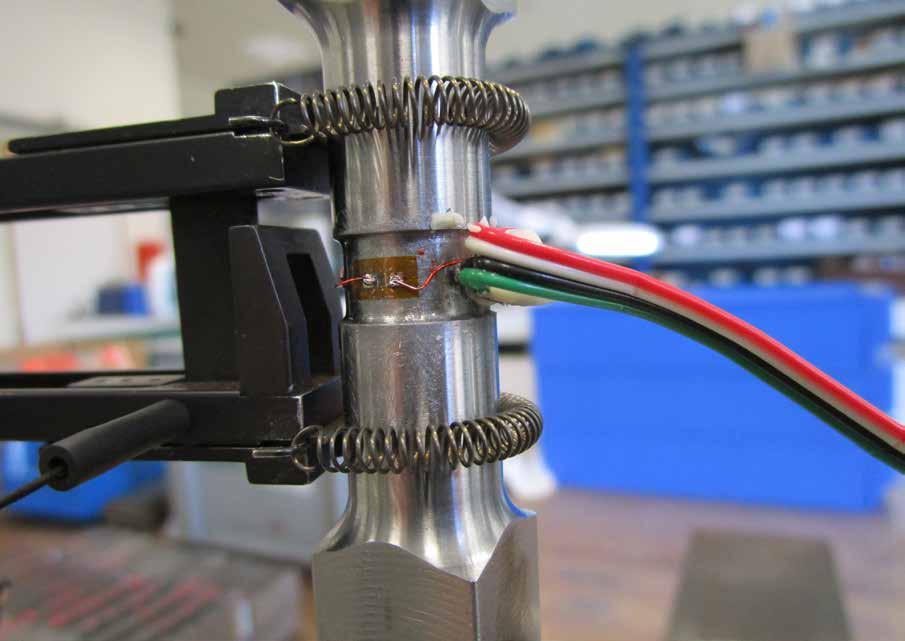
of pre-deformed samples were performed under force controlled conditions, using the IR camera to monitor the evolution of temperature inside the bending area. Strain gauges measured strain variations during the load controlled fatigue test. The test results show that the temperature range (which is defined as the difference between the maximum and the minimum temperatures during a cycle) of the surface rises non-linearly and quickly in the initial phase (phase 1); then reaches a stabilised asymptotic value (phase 2); finally, this asymptote
is left with a significant temperature range drop, which soon leads to failure after a few cycles (phase 3). In the first two phases the crack initiation process is taking place, the last phase consists of crack propagation. Experiments have confirmed that the variation of the back-strain range follows the same trend as the average temperature range. The onset of crack initiation can be detected at the sudden drop in back-strain range, which is in relatively good agreement with the onset of the temperature range drop.
OCAS is equipped to submit large components to extreme testing conditions without compromising on safety.
Jeroen Van Wittenberghe
Keeping extreme testing conditions safe
Pressure-containing equipment − such as pipelines, risers, valves, fittings and pressure vessels − are often subject to complex loading conditions during their service life. Extreme testing conditions are required to accurately reproduce these operating conditions. However, to predict the behaviour of large components, small-scale test results can be extrapolated only to some extent. Moreover, extrapolation usually doesn’t comply with the safety requirements for critical pressure applications. In these cases, full-scale testing provides the optimal level of assurance.
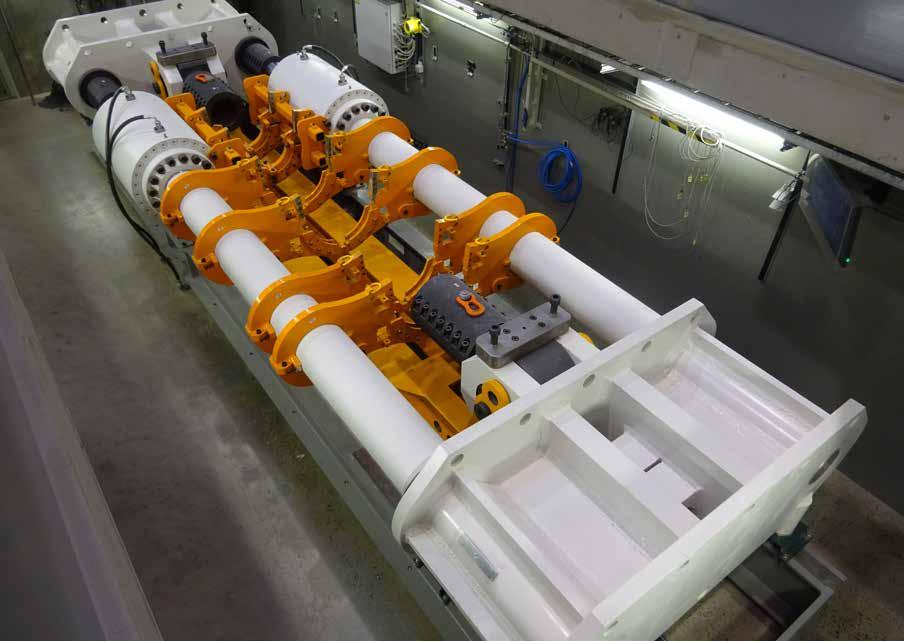
OCAS is expanding its high-pressure testing capabilities for large components. As part of the OCAS XT (Extreme Testing) facility, 2 new testing pits have been designed and built, making a total of 4 testing pits at OCAS. The largest is 16.5 m long and 4.5 m wide. They are designed to be blast-resistant and able to contain fragments and pressure to allow burst tests without hazard to the operators outside the test pit. The most advanced testing pit has an automated explosion-resistant cover and is fully equipped with a dynamic camera system to monitor test progress remotely.
TURNING ON THE PRESSURE
Inside the pits, large components can be subjected to high internal and/or external pressure in combination with axial loading, bending, elevated temperature, fatigue and dynamic tearing, simulating extreme testing conditions typical for high pressure/high temperature (HPHT) applications, leak tightness tests, and proof of concept tests in a contained environment. Pressure can be applied
with either liquid or gas as pressurisation media, and pressures of up to 3000 bar can be applied in combination with loads of up to 1600 tonnes.
OCAS has a range of modular pressure equipment to accommodate custom purpose-built testing set-ups as well as standardised pressure testing. In addition, OCAS is expanding its testing capabilities to include resonant fatigue testing of large-scale welded nodes for offshore jackets. As part of this service offering, a resonant bending set-up has been developed that is suitable for testing under high internal pressure. Components such as pipeline sections, risers and pressure vessels with a length of up to 12.5 m can be tested. The facilities are served by two overhead cranes with a capacity of 12.5 tonnes, so components up to a total weight of 25 tonnes can be handled and tested. An experienced team of skilled technicians is preparing test material and performing both standardised and customised testing programmes.
By performing advanced testing to validate novel materials and developing enhanced predictive models for combined conditions, MaDurOS is meeting society’s needs.
Joachim Antonissen
MaDurOS
MaDurOs is a public-private partnership for material durability breakthroughs in challenging operational conditions. The offshore environment puts severe durability requirements on materials. One of its main inherent characteristics is that material is often exposed to several environmental conditions simultaneously: a corrosive environment, fatigue loading, abrasive conditions, and more. This is especially true for the support structures of offshore wind turbines, which represent 30% of the wind turbine’s cost. Furthermore, the equipment used in offshore constructions, such as dredging ships, also suffers under these combined and harsh conditions.
IMPROVED MATERIALS CALL FOR ADVANCED TESTING
OCAS created a regional network between industry and academia to develop the vertical SIM (Strategic Initiative Materials) R&D programme − called MaDurOS − to explore the topic of ‘Material Durability for OffShore’. New, lighter and more resistant materials will enable cheaper constructions to be built while ensuring longer operational lifetimes. Safe use of existing materials in more extreme environments would also represent a huge improvement. So, an advanced testing infrastructure to validate materials for use in certain conditions is being developed − which has already resulted in a dedicated corrosion-fatigue test set-up that accommodates variable amplitude loading conditions and temperature effects as well as the use of real seawater.
Another example is the corrosion-abrasion test set-up, which is currently being commissioned and will enable the researchers to enforce a corrosion potential on the samples during either single or multiple asperity testing. Additionally, a profound understanding of how the combined damage mechanisms work is a requirement for designing optimal test set-ups as well as for generating tools to understand and extrapolate the test results that are generated.
PREDICTIVE MODELS FOR COMBINED CONDITIONS
These accomplishments have already resulted in advanced constitutional material models that will enable prediction of the fatigue, abrasion and corrosion behaviour of a ‘virtual material’ starting from a 3D
microstructure representation. Moreover, an innovative approach towards simulating the phase transformations, and resulting distortions, during welding has also been developed. Aiming to gain deeper insight into material behaviour under combined durability conditions, the programme is also providing medium- and large-scale combined loading testing facilities to allow for material screening or development. Ultimately, MaDurOS will facilitate the development of new or improved materials, material processing techniques, and material applications or monitoring techniques to meet the needs voiced by industry and strengthen the long-term competitive position of our partners.
OCAS is pleased to provide this forum for its customers and proud to have contributed to the establishment of a European community on structural integrity.
Marc Vanderschueren
Structural integrity seminars: past and future
Nearly a decade ago, the Belgian Welding Institute, Soete Laboratory of Ghent University, and OCAS committed to a long-term cooperation by setting up the Metal Structures Centre or MSC consortium. Whereas the collaboration initially addressed R&D projects and services in the field of structural integrity, in 2016 the partners decided to provide a forum on structural integrity and engineering critical assessment.
In previous years, the MSC consortium successfully carried out various projects together. However, these projects were usually part of a specific framework, such as publicly-funded projects or bilateral collaborations. Furthermore, the partners of the consortium realised that the techniques employed for a wide range of sectors − offshore oil & gas, offshore wind, thermal power plants, pipelines, dredging, industrial applications, etc. − were significantly different, whilst the problems encountered were fundamentally similar. Therefore, the MSC consortium decided to organise a second ‘Structural integrity seminar’ in 2017.
The objective of the seminar is that professionals from different sectors explain the challenges they are facing in order to receive inspi-
ration from other sectors about the way to handle the challenges. Practical cases are discussed: stating the problem, presenting the chosen approach, and then showcasing the benefits of the solution.
THE IMPORTANCE OF KNOWLEDGE-SHARING
Meanwhile, we have just finished the 3rd edition of this successful seminar, whose topic was ‘fitness-for-purpose’. Applications presented in the past include pipelines, railway, cranes, shipbuilding, offshore wind substructures, etc. Both the content and the compact format of the seminar have convinced participants to join in − and the feedback we get from the participants points out the importance of sharing knowledge in the field of structural integrity.
The scanning flow cell is the perfect tool for high-throughput analysis of metallic surfaces to determine both their local electrochemical as well as their dissolution properties.
Veerle Devulder
Quickly screening metal surfaces for corrosion protection
Corrosion protection is of utmost importance for steel research. This protection is commonly obtained by coating the steel − but due to the complexity of the passivation and dissolution processes that occur at the surface of metallic coatings, an ever-increasing number of experiments are required to study the sample’s sensitivity to various parameters, such as electrolyte composition and pH.
HIGH-THROUGHPUT SCREENING
OCAS’s micro-scanning flow cell allows high-throughput screening of coatings and/ or metals for their electrochemical properties as well as dissolution properties. This scanning flow cell − including a dynamic electrolyte exchange system − is fully computer controlled and obtains high lateral resolution (down to 0.4 µm diameter). These features enable us to either vary the measurement parameter on a homogene -
ous substrate or to perform electrochemical screening along a heterogeneous substrate.
SCANNING FLOW CELL COUPLED WITH ICP-MS
Previously, the OCAS scanning flow cell was coupled with UV-VS, which enabled online monitoring of Zn dissolution. Recently, the scanning flow cell has been coupled with ICP-MS, turning it into a versatile tool for monitoring virtually all elements of
interest! Concentration profiles of various elements are easily recorded as a function of time during OCP (open circuit potential) measurements, or elemental profiles are recorded during cyclic voltammetry measurements.
The OCAS scanning flow cell is thus the ideal tool for high-throughput screening of coatings and/or metals for their electrochemical and dissolution properties.
Using deuterium as hydrogen tracer is a powerful technique for assessing hydrogen pick-up during industrial processes, so that we can find ways to lower this uptake.
Laura Moli Sanchez
Deuterated sample
Due to low/inexistent D background a peak at high T is observed
A premiere: deuterium assesses hydrogen trapping
For more than a decade, OCAS has been building up hydrogen research competence to serve the needs related to modern technological developments − e.g. future use of hydrogen as energy vector, and the industrialisation of ultra-high-strength metals. Therefore, the OCAS test facilities include an in-house hydrogen lab to characterise hydrogen solubility, diffusivity and trapping, as well as a dedicated sour service lab.
Numerous studies have been performed to assess hydrogen absorption during manufacturing and/or press hardening processes of coated ultra-high-strength steel grades. Hypotheses have been formulated on the effect of thermal annealing cycles and microstructure on hydrogen trapping. With these developments in mind, OCAS decided to start using deuterium (D – an isotope of hydrogen) for its hydrogen-related research. The major advantage of using deuterium over hydrogen is the absence of background noise when measuring. The combination of the existing metallurgical lab simulation capabilities, and the use of deuterium in liquid (heavy water) or gas, allows OCAS to simulate various treatments (such as thermal treatment or electrochemical treatment), in which deuterium
instead of hydrogen is introduced into the material. This methodology allows OCAS to conduct fundamental studies by reproducing the full material process cycle under deuterium.
Last year, for the first time, OCAS used a gas annealing atmosphere containing deuterium in a hot dip coating simulator to study trapping in ultra-high-strength steel.
This breakthrough study provides OCAS with key knowledge on the hydrogen absorption behaviour of ultra-high-strength grades.
DEUTERIUM AS HYDROGEN TRACER
Thermal desorption spectroscopy is a powerful technique for obtaining quantitative and qualitative information about the nature of the hydrogen trapping sites present
in the microstructure. By using deuterium as hydrogen tracer, the limitations of standard thermal desorption analysis techniques − which do not always reveal all active trapping sites clearly − can be overcome. Furthermore, it’s important to clearly distinguish between the hydrogen introduced into the material on purpose, and the hydrogen associated with the processing of the steel. In addition, the surface preparation strongly modifies the hydrogen background. To avoid these artefacts, OCAS now uses deuterium as hydrogen tracer to obtain a clear and unequivocal determination of irreversible trapping peaks by thermal mass spectroscopy. As both deuterium and hydrogen show the same trapping characteristics (binding energy between the trap and D or H), no isotopic effects are observed.
We’re conducting permeation under tension to understand the combined effect of sour conditions and applied stress.
Krista Van den Bergh & Laura Moli Sanchez
Understanding H2S testing
Increased demand for energy has compelled the oil & gas sector to shift activities to deeper and harsher production environments. Now, an increasing number of wells contain considerable amounts of hydrogen sulphide (H2S) − making them ‘sour service’ environments. This causes the steel to be more susceptible to cracking phenomena, such as hydrogen-induced cracking (HIC) and sulphide-stress cracking (SSC).
ADDING SSC TO HIC COMPLICATES COMPREHENSIVE UNDERSTANDING
In the past, oil & gas end-users were primarily concerned with HIC failure. Today, endusers insist on adding the SSC requirement to the existing HIC requirement. Although both are hydrogen-cracking phenomena in steel, the microstructural parameters that control HIC are different from those that control SSC due to the superimposed stress. Some metallurgical features are known to contribute to sour resistance, but a comprehensive understanding of the mechanism is still missing. So, OCAS has launched a project to review the main specificities of SSC testing linked to hydrogen embrittlement. By installing a test set-up for fast extraction of specimens immersed in H2S-containing environments, OCAS can quantify hydrogen pick-up, and there is no risk of losing hydrogen while transferring the sample to the measuring device.
STUDYING HYDROGEN PERMEATION AND SSC
Hydrogen permeability is being studied through a metallic membrane by an electrochemical technique. A range of H2S permeation test set-ups have been installed in OCAS’s dedicated sour service testing lab. The influence of the environmental parameters on sulphide-stress cracking (SSC) is being studied. It is seen that the SSC severity, as a function of the hydrogen sulphide partial pressure and pH at the interface, influences the hydrogen permeation process. In addition, the formation of ferrous sulphide corrosion products on the steel’s surface also changes the hydrogen permeation rates. The type of corrosion products formed influences the degree of hydrogen absorption and hydrogen permeation through the steel. The influence of the steelmaking process on the SSC behaviour of the steels is also being evaluated. The SSC performance can be improved by changing steps in the steelmaking process for steels with the same
chemistry. It has also been shown that the electrochemical permeation method can reveal quantitatively the influence of microstructure on the hydrogen diffusion process. To understand the combined effect of sour conditions and applied stress, permeation under tension tests are being carried out. Double cantilever beam (DCB) testing in an H2S environment is often used to study the sour resistance. The DCB method gives a numerical rating of a product’s resistance to SSC in the form of KIssc. This enables the OCTG manufacturer to quantitatively assess the effects on SSC resistance of alloy chemistry and processing. A finite element method (FEM) model describing the hydrogen diffusion with realistic boundary conditions has been developed. It is also possible to take advantage of the fracture mechanics basis of this method to assure a safe well design, once the minimum detectable flaw size is known. This is why major oil & gas producers are requesting this method more and more frequently.
The 2018 conference has now taken place − and it was a great success! We received more than 100 scientific contributions on a variety of metals and applications. Participation exceeded 170 participants − with significant presence from Asia and US/Canada − and numerous companies and institutes working on Ti, Ni or Al joined the event.
Lode Duprez
Towards a successful 2018 SteelyHydrogen conference
For more than a decade, OCAS has been continuously extending its hydrogenrelated competences and capabilities. Today, we are an internationally respected research centre in that field. At the same time, in view of building a large network in this domain, OCAS has organised two successful conferences (in 2011 and 2014), both attracting an attendance of more than 100 participants.
A third edition of the ‘SteelyHydrogen’ conference was planned for 2018, and preparations for this edition − conference announcement, website, call for papers, selection of venue, etc. − started in 2017. In order to further extend the OCAS network, and to obtain initial insights into other hydrogen-related problematics in applications that are new to OCAS, we decided to open up the scope of the conference to introduce other metals.
AN INTERNATIONAL FORUM ON ‘HYDROGEN & METALS’
With this challenging target in mind, a number of companies, institutes and universities were contacted pro-actively to inquire about their interest. This exercise received the response that was hoped for − and, in the end, resulted in dedicated sessions on Ni-alloys, Al-alloys and Ti-alloys. As such, the final conference programme attained a
next level of maturity: in other words, the SteelyHydrogen conference has become an international scientific forum for presenting and debating research on the interaction between ‘Hydrogen & Metals’. Proof of it are the 177 participants travelling from 27 countries to attend the 3rd edition.
There are so many different types of soil, and each soil texture has a different corrosivity. It’s as amazing as it is challenging!
Philippe Verpoort
Magnelis® covers more markets & more customers
Following the successful industrialisation and market introduction, Magnelis® volumes are ramping up as ever more customers are impressed by its outstanding corrosion resistance. The specific composition of Magnelis® (3% Mg and 3.5% Al) is crucial as it leads to the formation of a very dense, stable, and durable protective layer − preventing the underlying steel from coming into contact with the ambient environment and thus serving as a barrier to corrosion. The result is highly effective corrosion protection, even in the harshest environments.
MORE MAGNELIS®
With volumes rising, ArcelorMittal needed to introduce Magnelis® production in an increasing number of its galvanising lines. So, OCAS teamed up with the ArcelorMittal Global R&D Maizières team to tackle this challenge. Thanks to the expertise of the R&D teams, and excellent collaboration with the local production teams, multiple projects have been successfully carried out within the planned timeframes at several European ArcelorMittal sites.
MORE MARKETS
As Magnelis® outperforms galvanised steel in all types of environments, its application is also steadily growing and expanding to new markets: from pre-coated welded tubes and solar structures, to animal housing and
agricultural silos, to safety barriers, lighting poles, acoustic walls, and more. At OCAS, we take pride in providing customer support for these new applications. As steel structures are often in contact with, or even buried in, soil, a lot of customers have been interested in this new product’s soil corrosion behaviour. Looking for test sites, it soon became clear that OCAS needed infrastructure that included different soils. Most soils in the world are silt-based, but the few available existing test sites only report on sand – or clay-based soils − so OCAS would also need more than one soil composition.
MAGNELIS®
VERSUS GALVANISED PRODUCTS
The excavated pits at OCAS are large enough
for experiments with varying geometries, such as poles, profiles, flat samples and wires. Field exposure started in September 2016. The corrosion rates are monitored by weight loss, coating thickness and corrosion product analysis. Our outdoor soil exposure site is used to compare the performance of coatings, such as Magnelis®, with other hot dip galvanised or batch galvanised products.
Conducting these experiments in parallel with accelerated lab soil corrosion testing will result in deeper understanding of the soil corrosion mechanisms and more accurate lifetime predictions of metallic coatings in different soil environments.
This programme has set a highly ambitious target and requires a whole new approach to metallic coating. We need to think out-of-the-box!
Beril Corlu
Development with IMpACT
Triggered by society’s needs, market trends and environmental regulations, the product range of metallic coatings has been extended considerably over the past decade. OCAS has launched several incremental evolutions and new developments onto the market, which are much appreciated by our customers.
A FUTURE GENERATION OF METAL-COATED PRODUCTS
Therefore, OCAS is currently preparing a future generation of metal-coated products. The major drivers are: ecology, durability and efficiency. In addition to being REACH compliant, future products must comply with the circular economy, their protection must be strong, their appearance excellent and long-lasting, and furthermore unique properties should be combined in a single coating. OCAS’s coating team is investigating all of these things in the effort
to achieve true breakthrough novelties, far beyond any incremental evolution in industrial sectors. This ambitious R&D programme is called ‘Innovative metallic coating platform’ or IMpACT.
PROMISING LAB RESULTS
OCAS has a long track record of sample making. This know-how has already produced promising lab results. Their upscaling potential is currently being evaluated.
Although we’re currently targeting offshore wind towers, the new solutions also seem promising for other offshore applications and even other markets as well.
Eva Diaz Gonzales & Philippe Legros
Protecting offshore wind towers with thermal spray coatings
Over the past few years, building limitations onshore and better wind conditions offshore have triggered significant growth in offshore wind projects. The manufacturing of towers for wind turbines is a major heavy plate application in this burgeoning sector.
HARSH ENVIRONMENT CALLS FOR EXCELLENT CORROSION PERFORMANCE
Due to the harsh environment in which these structures are installed, corrosion protection is a critical aspect of their design. Increasingly, the trend is to protect the steel against corrosion by metallisation using thermal spray, alone or in combination with a number of layers of organic coatings. As adhesion is key in this process, in a first step OCAS tests the coated samples according to ASTM C633 or the ‘pull-off method’ (the standard test method for the adhesion or cohesion strength of thermal spray coatings). This test is very useful for the optimisation of the system parameters: steel grade, surface treatment, composition of metallic coating and spray techniques.
NEW SOLUTIONS AND PRODUCTS
OCAS is developing new solutions and products for the protection of offshore wind towers based on thermal spray metallic coatings with improved properties such as excellent adhesion and minimum porosity. Furthermore, OCAS has developed new testing methods for evaluating the performance of these new solutions. This will result in easier processing of steel plates for the customers, extended lifetime of the structures, and savings on the final cost of the corrosion protection system due to a tailor made protection system.
This new family of steels really opens up an entirely new realm of possibilities in terms of product development for grades with exceptional property combinations!
Xavier Veys
New alloys for high energy-absorbing applications
Advanced lightweight high-strength steels are attracting the attention of several demanding market applications that require a combination of very high strength, high toughness and low weight. Thanks to the addition of large amounts of aluminium, high energy-absorbing steel grades with up to 15% lower density can be achieved.
LIGHT, STRONG AND TOUGH!
In several industries, there is a growing need to decrease the weight of the part or structure to improve fuel economy or efficiency. With regard to steel, parts can be made lighter by reducing the steel’s thickness. However, buckling constraints limit how thin you can go. Alternatively, the weight of the part can be reduced by decreasing the inherent density of the steel, provided that the lower density alloy still provides all of the properties the part requires. The trend to lower the density originates primarily from the automotive market of cold rolled steels. Customers in the hot
rolled thick gauge market are now also indicating the need to reduce the weight of their designs.
STILL LIGHTER, AND EVEN STRONGER…
That’s why OCAS is developing steels grades using high quantities of aluminium to reduce the density by as much as 15-20%. As large additions of aluminium also trigger the formation of nano-sized particles dispersed throughout the steel, the hardness and strength of the steel is vastly enhanced. This results in a beneficial synergetic effect in creating a lighter yet stronger steel grade.
However, these significant quantities of aluminium also tend to embrittle the steel. To prevent this embrittlement, OCAS is investigating new and creative metallurgies with more exotic compositions. These low-density austenitic grades naturally have a high toughness, giving the steel its unique ability to absorb large amounts of energy, even at low temperatures. This unique balance of elements provides the alloy with its excellent toughness, very high strength and low density, all at the same time.
The shipbuilding market is often seen as a conservative, traditional market. However, many things are moving there, particularly for the complex ships still being built in Europe. OCAS is ideally placed to support this market with new products and innovations.
Christoph Gerritsen
All aboard!
Although the shipbuilding industry has moved progressively eastwards, Europe is still the main producer of complex, high value-added ships, such as cruise vessels. These floating cities − accommodating several thousand passengers and crew at a time − are designed and built by a handful of yards in Europe. ArcelorMittal is a supplier to most of them, and the exclusive steel supplier to one. So, we follow the market and its developments closely.
Our support to the shipbuilding market and the mills supplying it takes many forms. For example, homologated steels are in demand. Such homologations entail the welding and testing of steel assemblies using the conditions specified in the classification societies’ rules. Although, in general, these rules are similar to those for offshore pre-qualification, the differences are in the details. While most mills perform their shipbuilding homologation directly with the classification societies, last year ArcelorMittal Global R&D was asked to perform the welding homologation of
an ArcelorMittal steel grade according to DNVGL rules − and did so with success.
MORE SUPPORT FROM R&D
In addition to steel homologation, R&D provides support through other means, including education and training for shipbuilding engineers, as well as novel steel solutions. Examples of the latter are the matrix panels, which are all-welded stiffened panels invented by OCAS and patented. The matrix panels provide a relatively lightweight and stiff solution that enables the manufacture of larger spans and overhangs, for example,
as well as the use of these structures higher up in the ship. Another example is the investigation of laser welding of sheets, in order to supply wider sheets and thus reduce the amount of welding that needs to be done in the yard. In fact, with more and more shipyards in Europe employing laser and laser-arc hybrid welding on their panel lines to reduce distortion, the knowledge we’ve amassed in this area over the past few years comes in very handy, indeed.
TOOLKIT
aims to develop a simulation toolbox to enable us to design tailor-made microstructures, starting from the targeted performance of large-scale structures.
Steven Cooreman
Reference: D. Ormston, F. Kaczynski, S. Cobo and G. Herman, “Metallurgy of Thick Plate Rolling: Methodology for Laboratory Research,” Arcelor report, Ref. IRD/AUP/2006/3050, 2006.
TOOLKIT − helping us think out-of-the-box
The properties of steel must be continuously improved to perform well in the challenging competition with other materials and to fulfil today’s requirements in terms of greater safety, reduced weight and sustainability. New steel grades are typically designed using the so-called cause-effect approach, whereby a certain microstructure is developed and then its performance is evaluated for wear, strength, fatigue, etc. through lab-scale testing. Now, the Research Fund for Coal and Steel (RFCS) TOOLKIT project is developing a computer-assisted design platform that allows new steel grades to be developed starting from the desired component performance.
VIRTUAL STEEL MILL
To achieve this goal, a set of FEM (Finite Element Modelling) based simulation tools is being developed to simulate steel processing and link component performance to microstructure. Furthermore, constitutive models, capable of describing the mechanical material behaviour at different length scales, are being implemented. In a first step, the project is evaluating which macroscopic properties (e.g. hardening behaviour) are required to obtain the desired performance on the component level. Next, these requirements are translated into optimised microstructural configurations by means of parametric studies involving numerical simulations on artificially generated microstructures. At this stage, advanced
crystal plasticity models are applied. Finally, suitable processing routes, through which these optimised microstructures can be produced, will be identified, again via numerical simulations. Thus, TOOLKIT aims at developing a virtual steel mill for designing tailor-made microstructures, starting from the desired performance of large-scale structures. This will definitely improve our understanding of the relationship between microstructure and macroscopic mechanical behaviour and help us think out-of-the-box.
AIMING FOR 15% PERFORMANCE IMPROVEMENT
The project is also considering two applications relating to damage − namely,
ductile crack arrest in oil and gas transporting pipelines, and energy absorption in automotive crash boxes. The goal for both applications is to improve the performance of an existing grade by 15%. For the crash box application, the goal is to increase the energy absorption, with a DP1000 grade serving as reference. In the case of the pipeline application, an X70 grade from coil is being used as reference, as this grade is most often applied in today’s major linepipe projects. The goal is to increase the energy absorbed during ductile crack propagation (this property will be evaluated by means of the Battelle Drop Weight Tear Test) and/ or to lower the ductile to brittle transition temperature.
ENVIRONMENT
RESPONSIBILITIES AS STRONG DRIVERS
Today’s steel production is subject to all kinds of stringent environmental regulations, such as C02 and toxic gas emissions or the prohibition of the use of carcinogenic products like hexavalent chromium for surface protection. Such regulations are pushing the industry to continuously reinvent itself. Moreover, OCAS views its environmental responsibilities not merely as obligations but as strong drivers for new steel and coating developments and process innovations.
‘Lightweight’ is a continuously strong driver for all transport and mobile applications, as it leads to more efficient use or less energy consumption. In the last decade, OCAS has been involved in the development of several series of new and ever-stronger and higher-performance steel products for ArcelorMittal: from high-strength cold-rolled and galvanised micro-alloyed grades for seat components, racking systems and solar panel structures, to the hot-rolled micro-alloyed Armstrong® range for trucks and tippers, to a new series of martensitic, tempered martensitic and quenchable hotrolled products for mobile crane-booms, lifting equipment, agricultural goods and small precision tubes.
As a leading innovative company, we even take it one step further by calculating the potential gains of future breakthrough products. A series of reverse engineering exercises for well-known applications clearly revealed the future potential of very high-yield stress, high-elasticity modulus, or low-density steels, and highlighted the strong interest in a combination of these.
OCAS also continues to be actively involved in developing environmentally-friendly surface-finishing solutions. This driver takes us from improved surface quality for hot-rolled products, leading to more efficient laser cutting and cleaner workshops, to environmentally-friendly e-passivation systems and ‘ready-to’ solutions, such as ‘ready to paint’ and ‘ready to enamel’ surface treatments. Raising the bar to the next level, we are actively working on a revolutionary process for hard chrome plating based on ionic liquids as electrolyte, which could relegate the use of hexavalent chromium to the history books.
– Tom Waterschoot
Pushing the envelope with nextgeneration steel grades will allow to further reduce the weight of applications in all kinds of industry markets, including those hitherto untapped.
John Vande Voorde
Pushing the weight envelope with next-generation steel grades
All kinds of industries are calling for ever-lighter steels that still retain superstrength. From trailer chassis to railroad cars, lighter weights have positive effects on everything from transport costs to sustainability.
REVERSE ENGINEERING FOR POTENTIAL GAINS
OCAS is researching next-generation steel grades with ultra-high strength and/or increased elasticity modulus. To assess the potential gains for a variety of markets, OCAS is conducting reverse engineering exercises for specific applications. As a result, we can show a further lightweighting potential for markets already using sophisticated steel grades. For example, a potential further weight reduction of up to 20% beyond what is currently possible is being
demonstrated for crane-booms using UHSS and for trailer chassis using a good combination of UHSS and high-elasticity grades. And beyond that, OCAS is also studying applications that are still using mild steel grades due to stiffness constraints. A prime example is railroad cars − here as well, first results indicate a potential weight reduction using next-generation steel grades.
We’ve pushed the strength of our steels to a level where increased stiffness must be achieved by the component’s design. To make this possible, we’re developing a new class of materials.
Lieven Bracke
Next-generation high-strength structural steels: lightweight without compromise
Reducing the weight of a structure without compromising its integrity in terms of strength and stiffness is a major objective for many steel-based applications. The best-known example is the use of advanced thin-gauge high-strength steels for automobiles in order to reduce fuel consumption.
INDUSTRIAL EXAMPLES
For non-automotive applications, the benefits of ‘lightweighing’ are more diverse. For transport vehicles, such as trucks and trailers, the use of stronger steels in lighter constructions results in either lower fuel consumption for a given payload or a larger payload for a given total weight. As such, both ecological and economical optimisations are possible.
There is also a need for lighter constructions in the agricultural sector too. The evolution towards ever-larger equipment risks making these machines excessively heavy, which can damage the soil. This size and weight evolution can only be countered by using higher strength materials in thinner gauges. Yet another example is the use of ultra-highstrength steels in crane-booms to enable the
construction of cranes with a longer reach and a higher allowable lifting weight.
In recent years, OCAS has developed several ultra-high-strength strip steels, which have been homologated at several customers and are ready to go ahead for full commercial success.
THE NEXT STEP
As we make optimum use of these recently developed ultra-high-strength steels, the design of structures and components will no longer be limited by the strength of the material, but by its stiffness. Today, for example, insufficient stiffness can make long, thin structures susceptible to buckling or excessive elastic deformation. Therefore, as OCAS pursues further advances in lightweighing, the shape of the com-
ponent itself is being designed to increase stiffness. However, the degree of freedom required to allow for new designs imposes formability requirements that cannot be met by using current metallurgical concepts. So, new metallurgical solutions are being examined. First results indicate that, by optimising the composition and the processing, a new window of opportunity can be opened to combine good formability with extremely high strength. Still, in order to use these steels for wear applications, a lot of challenges need to be overcome to turn these initial results into a new product family. But OCAS’s product development team is confident that these steels can be industrialised within a couple of years.
Exisiting concepts are reaching their limits when dealing with ever-increasing thickness in combination with high strength and toughness. So, by being creative and using alternative processing, OCAS’s metallurgy team has obtained the targeted properties in very heavy-gauge materials.
Koenraad Theuwissen
Thick sheet meets plate properties
For structural applications such as truck-mounted cranes, or the frames of trailers and mining vehicles, heavy-gauge high-strength steels are typically used as quenched and tempered plates. But by capitalising on the inherently lower costs of hot strip mill production, cut-to-length sheets with the right properties can provide customers with a cost-effective alternative to this traditional type of plate.
STRIP PRODUCTS
GUARANTEEING PLATE PROPERTIES
OCAS metallurgists have thus been striving to develop strip products that guarantee plate properties − which means strength and low temperature toughness in both directions − with further benefits such as better formability, weldability and surface quality. This has resulted in the successful industrialisation of new products in recent years. Thanks to powerful hot strip mills, development efforts are making higher thicknesses and widths feasible.
ALTERNATIVE PROCESSING
New laboratory work on optimising composition and microstructure by alternative processing has demonstrated the possibility of developing very heavy-gauge strip products with extreme properties that take full advantage of our industrial assets.
It’s clear that the thin glass coating concept can re-energise existing markets and open up new markets.
Marc Leveaux
Green enamelling solutions
Vitreous enamelling has been acknowledged for centuries as one of the most durable ways to protect metals against abrasion, temperature and corrosion. In recent years, driven by ever-stricter environmental legislation, the enamelling industry has evolved by limiting the use of hazardous compounds, or avoiding them altogether.
So, recent changes have significantly reduced the environmental footprint of enamelled steel, but this is not enough. We need to increase the lifetime of manufactured products, improve their recyclability, and reduce their consumption of raw materials and energy.
PEAK LIFE CYCLE ASSESSMENT (LCA) PERFORMANCE
In order to solve drawbacks, technical and environmental as well as economical, OCAS has launched a ‘green enamelling’ project. The goal: to propose a new enamelling process for the enamelled steel of the future, without compromising on performance. Today, OCAS proudly presents its thin glass coating, reconciling the durability of an enamel layer with the formability of thin steel sheet. This game-changing solution enamels metallic-coated steel at a temperature slightly above 700°C − instead of the traditional 830°C − which limits the risk of fish-scale formation and ensures excellent adhesion without the need of heavy metals such as Co, Ni, and Sb.
EXPANDING THE CONCEPT
The concept − first developed on one metallic-coated steel (Alusi®) − has been extended to other metallic coatings and, to facilitate market introduction, adapted to propose a direct solution to enamellers for the traditional 2 coat/2 fire enamelling process. To ensure a good surface quality for the new enamelled products − equivalent to the one obtained using cold rolled steel − new metallurgical routes must be defined for all metallic-coated steels. Emphasis is being put on the surface aspect of the metallic coating and the hydrogen content of the steel.
As new regulations on drinking water enforce a reduction of the cobalt content in enamels, a new track has been opened to investigate solutions for hot rolled steel. In this case, the glassto-metal link might be obtained after designing the surface of the steel. The possibility of using high-strength steel grades is also being considered.
Thanks to our expertise in corrosion protection, we were able to pro-actively adapt both the E-Passivation® as well as the Easyfilm® formulations in accordance with future regulations.
Nathalie Van den Bossche
Global-E
The essential role of chemical passivation is to provide corrosion protection (resistance to metallic coating oxidation) during normal handling, transport and storage of metal-coated products. In addition to chemical passivation, thin organic coatings (TOC) are also used to protect electrogalvanised or hot dip coated steel products.
EUROPEAN LEGISLATION
Over the past decade, OCAS supported ArcelorMittal in achieving compliance with future European REACH legislation − the Restriction of the Use of Certain Hazardous Substances in Electrical and Electronic Equipment, and the End-of-Life Vehicles directives − that bans the use of hazardous substances such as hexavalent chromium.
In the field of chemical passivation, environmentally-friendly E-Passivation® solutions were developed for the full ArcelorMittal product range. After fine-tuning the E-Passivation® solutions for all varieties
of coated substrates, OCAS supported the roll-out in all production lines worldwide, and continues to provide support for its global customers. A number of ArcelorMittal production lines also offer Easyfilm® thin organic coating protection on their products.
NATIONAL LEGISLATION
In addition to the European REACH regulations, some countries added further constraints at the national level. The combination of these new environmental constraints with all of the existing required performances significantly increases the complexity of the Easyfilm® solution.
And this is where OCAS came in. The coating team used its know-how to develop adapted Easyfilm® formulations. Then, OCAS thoroughly tested the in-use properties of these Easyfilm® solutions to guarantee their performance and assisted in the upscaling of these products onto the respective production lines.
Today, OCAS continues to provide technical support after industrial introduction and ramping-up.
We have now reached the next Technology Readiness Level with an innovative REACH-compliant hard chrome plating technology.
Ansbert De Cleene
Prototyping with a hard chrome plating technology based on ionic liquid technology
Back in 2012, driven by the need for REACH-compliant alternatives, OCAS initiated a project on hexavalent chromium-free hard chrome plating from ionic liquids. Thanks to OCAS’s research & development efforts since then, this technology has now matured to the prototyping stage in several applications. Partnering is one of the key factors for success in this development.
TUNING THE IONIC LIQUID FOR MORE FLEXIBLE UPSCALING
Together with partners, OCAS has coated different prototypes and evaluated in-use properties. Passing through all these substrates and shapes taught us that the process window was accurate but narrow. So, the ionic liquid formulation was fine-tuned to increase flexibility and more closely approach the requirements for upscaling to the industrial level.
The bath monitoring methodology, which was set up in the previous phase, enabled us to progress more quickly to reproducible and homogeneous in-use properties like hardness, roughness and adhesion. Different surface treatment procedures were optimised to improve the adhesion on substrates, varying from low- to high-alloyed carbon steels.
REFINING EXPERIMENTS FOR MORE PERFORMANCE
By implementing advanced finite element plating reactor models, taking fluid dynamics and electrochemical deposition kinetics into account, experiments could be designed more straight-forwardly, resulting in a faster deposition of performing layers on various prototype shapes and alloys.
OCAS’s semi-industrial plating unit has not only been used to prototype hard chrome in different applications but also to prepare new ionic liquids at tonne scale.
Customers very much appreciate this improved surface quality.
Eva Diaz Gonzalez
MASC (Micro-Adhesive Scale) improves surface for hot-rolled products
The modern metal processing market is demanding improved surface finish for hot-rolled products. Customers see a homogeneous surface − with no rust or loose scale − as a sign of overall quality.
MASC CONCEPT TO THE RESCUE
Specific metallurgical routes have been implemented to achieve an improved surface quality, with no variations in chemistries and ensuring the final mechanical properties of each grade. Thanks to the MASC (Micro-Adhesive Scale) concept, the surface quality of the hot-rolled black material from a variety of ArcelorMittal mills has been improved.
SMOOTH AND SHINY
Increased surface cleanliness and better scale adhesion result in a smooth and shiny finish and a certain temporary corrosion protection as well.
BENEFITS FOR THE CUSTOMER
Customers very much appreciate this improved surface quality. The absence of powdery scale results in cleaner facilities and tools after processing the steel. Furthermore, a homogeneous, cohesive and adhesive scale also results in higher laser cutting speeds and cut edges with excellent quality and a minimum of striations. Typical applications for the steel grades with improved surface quality are excavation and agricultural machinery, truck and trailer parts, and machine and constructing profiles.
Customers need steels that are ever stronger and thinner without compromising their formability. In OCAS, we are making that a reality.
Following the successful introduction and positive customer feedback of ArcelorMittal’s HC500LA cold-rolled highstrength steel grades, industry manufacturers are asking for even higher performing steel products: lighter, thinner, reliable and sustainable products to build strong and long-lasting structures more economically. At the same time, market interest is shifting more towards coated grades for applications that require additional corrosion resistance (such as housing and solar frames, roofing and cladding). In particular, there is huge potential in the construction market for highstrength low-alloyed (HSLA) cold-rolled steel grades − both bare and coated − that could extend the ArcelorMittal coldrolled product offer above 500 MPa.
EVER-STRONGER, YET DUCTILE
OCAS is developing an extended family of ever-stronger, yet ductile, cold-rolled micro-alloyed high-strength steel grades by using robust and flexible metallurgical concepts. Through collaboration between OCAS and various ArcelorMittal cold rolling, annealing and galvanising lines across Europe, the lab concepts have been realised industrially, and high-strength steels with yield strength ranging up to 550 MPa (coated) and 850 MPa (bare) are now industrially feasible. These new cold-rolled grades have a tightly controlled chemical composition and microstructure that enables reliable performance. The high level of yield strength is a result of the addition of micro-alloying elements,
contributing to fine carbide precipitations, substitutional and interstitial strengthening and grain refinement. These grades are perfectly suited for cold forming such as bending, tubing and roll-forming. They provide very high strength while maintaining high formability. Such grades enable thickness and weight to be reduced, and they provide a smart solution for sustainable development: environmentally-friendly, light, durable, and cost-effective. These grades have several uses for the manufacture of automotive components such as seat frame structures, pedal systems and windscreen wipers. Other typical applications are in mechanical engineering, racks, poles, tubes, transportation (trucks, wagons, and chassis), and indus-
trial or agricultural equipment. In addition, by reducing the carbon footprint for a structure’s life cycle, the use of advanced HSLA steels has a positive environmental impact.
FUTURE
OCAS is currently optimising the metallurgical route for the coated grades in several ArcelorMittal galvanising lines. Each galvanising line is different in terms of parameters that influence the microstructure, and thus the in-use properties, which adds a new layer of challenges to this development. The goal is to offer sufficient flexibility to the galvanising plants combined with a rational cold-rolled product offer for the whole ArcelorMittal group.
COMBINATORIAL RESEARCH
Combinatorial research, also known as highthroughput screening is an experimental method to conduct a large number of tests using robotics, specialized screening methodologies and data processing. It gives the possibility to rapidly identify promising compounds which provide a starting point for further research.
Classically combinatorial research is known from the pharmaceutical industry where it is used for drug discovery. Looking into the history books reveals that already in the beginning of the 20th century combinatorial set-ups were used in materials discovery. Examples are Thomas Edison (finding the right material for the filament of his light bulbs), Alwyn Mittasch (finding the catalyst for ammonia synthesis) and Edouard Guillaume (discovering Invar).
The classical promise of combinatorial research is being faster, better and cheaper. The reality is however that combinatorial research is only useful in specific cases. Combinatorial testing allows for a better screening before starting the testing on larger samples to make better decisions and avoid (costly) iterations. As such combinatorial development is not more efficient but it is always more effective and
in the end, it has the possibility of saving money and time.
Metallurgy is the oldest branch of physical science − over millennia, it has evolved to become a highly sophisticated research field that influences almost all the sectors of industry. To maintain this strategic industrial strength, it is imperative that the scientific and industrial communities continue to make new metallurgical discoveries. OCAS currently has some running projects demonstrating that combinatorial methodologies significantly accelerate the pace of material discovery and optimisation.
The sophisticated research field of metal synthesis using combinatorial principles results in extremely valuable input for breakthrough projects. OCAS believes that this disruptive methodology will lead to the accelerated discovery of novel higherperformance alloy formulations.
OCAS has a proven track record in the experimental part of this type of miniaturised metallurgy research. OCAS’s developed and validated methodologies for small scale bulk metal processing via casting, rolling and heat-treatment
have huge potential. We furthermore succeeded in finding rapid first characterisation methods to narrow down the huge number of potential compositions of interest. Only the alloys with potential are then further characterised in detail.
For breakthrough product developments where limited reference data are available, a massive number of compositional ranges need screening prior to selecting the interesting chemistries. Therefore, combinatorial methodologies including combinatorial set-ups and datamining significantly accelerate the pace of material discovery and optimisation.
– Nele Van Steenberge
It’s exciting how this disruptive breakthrough in high throughput methodology accelerates bridging the gap from knowledge to market in the field of metallurgy
Lode Duprez
Combinatorial metallurgy
A metal’s structural properties and performance are governed by its microstructure and not solely by its composition. This means that thin film gradient techniques or techniques based on diffusion couples, which are relatively widespread in combinatorial materials development, do not offer a real solution for engineering materials. For this reason, over the past few years, OCAS has developed the ability to integrate thermo-mechanical controlled processing in the combinatorial workflows.
OCAS can roll a library of samples in one stage, making high-throughput and reproducible thermo-mechanical processing possible. Also, small-scale heat treatments − even in protective or reactive atmospheres − are possible with an acceptable homogeneity.
A 3-WAVE APPROACH
A typical combinatorial development approach consists of:
A first wave, during which a rough first screening of an alloy system is performed − typically, ~100 compositions to identify hot spots. Usually, only one (microstructural) condition is tested per composition and the characterisation techniques are basic. The representation of data in a hotspot map does not mean that the optimal solution is in the hotspot − rather, it means that the data points far away from the hotspot are unlikely to give the solution.
A second wave, during which the screening is refined around hot spots (~50 compositions) with different thermo-mechanical treatments. Now, the characterisation techniques become more advanced in terms of their relationship to final performance.
A third wave, during which performance is tested on larger scale samples.
The characterisation methodologies are a key part of combinatorial development. The characterisation should be simple but still have an acceptable correlation with final performance. In a first approach, the hardness, toughness and corrosion properties are already integrated in the combinatorial flow, while optical microscopy and X-ray diffraction are used for microstructure characterisation.
NEW METHODOLOGIES ARE UNDER DEVELOPMENT
Two case studies have confirmed the potential of the combinatorial work flow: accelerated screening of the quaternary Fe-Mn-Al-C phase diagram for lightweight hot-rolled steels with improved toughness, and the accelerated screening of lean intermetallic composite alloys.
Several new methodologies are already under development to broaden our offer. On the synthesis side, the investment in a (small-scale) vacuum arc melter offers the possibility to broaden towards refractory metals and combinatorial development of alloys for bars and wires. With regard to characterisation, other properties like density, stiffness, wear, and so on, are being considered to further enhance the link with the final performance. In-situ techniques like high temperature XRD and hardness are being explored to go one step further in combining a processing step with a characterisation step. Finally, capturing the link between processing, microstructure and properties is absolutely necessary to apply combinatorial research techniques to material science. However, the problem is that, contrary to processing data and measured properties, microstructures are not numerical. Therefore, OCAS has launched collaborations to go a step further in this matter.
The lightweight FeMnAlC steel family is entirely new, and these alloys behave so differently from ‘regular’ steels. Thanks to the combinatorial approach, we can quickly learn a lot more than through traditional product development.
Xavier Veys
Accelerating research towards new lightweight tough steels
By using the combinatorial high-throughput methodology developed at OCAS, a large number of materials can be produced and analysed in record time. This acceleration in product development enables us to quickly gain knowledge on new and more exotic alloys.
To understand the alloy system in which future lightweight products will be developed, and how alloying elements affect the mechanical properties and microstructure, there was a need to perform a structural exploration of the quaternary FeMnAlC alloy system. Therefore, a combinatorial study was launched within the framework of a European-funded RFCS project called LIGHTOUGH, in which a large composition space of FeMnAlC alloys will be evaluated.
OCAS’S INVOLVEMENT IN RFCS LIGHTOUGH
To conduct this project, a consortium was formed with representatives from OCAS and other top European institutes with
complementary fields of expertise. OCAS is involved in the investigation of the material properties as a function of the chemical composition. Around 200 different compositions will be synthesised, processed under different conditions, and evaluated in a high-throughput manner on hardness, toughness and density. To obtain a more profound understanding of the phase balance and complex order/disorder reactions that can occur in these steels, XRD measurements will also be performed.
For this, the methodology for bulk synthesis and accelerating toughness testing methods first needed to be developed as well. Multiple iterations (or loops) were performed for stepwise refinement of the investigated
compositions and processing routes. The database of results generated from the large screening is portrayed visually through heat maps, which enables the ‘hot spots’ of interesting property combinations to be easily identified. By focusing on the hot spots in which optimal combinations of properties were found, interesting alloys can be selected for further in-depth investigation.
In addition to the combinatorial bulk synthesis and analysis of the materials, thermodynamic models were built to better predict the equilibrium phases found at high temperature. Furthermore, experimental validation of this model was also performed by in-situ high-temperature XRD measurements on a selection of materials.
This in-house built automated annealing system perfectly complements our range of high-throughput processing equipment.
Nele Van Steenberge
Accelerated annealing
Over the past decade, OCAS has invested in new methodologies and equipment for processing and characterising miniaturised samples. For accelerated heat treatments, OCAS can rely on several furnaces. Recently, the available equipment for high-throughput annealing was complemented with an automated thermal treatment device.
Box furnaces are the first type of furnace typically used in combinatorial development. They have the advantage that they are very flexible with regard to the time and temperature ranges that can be applied. Batches of about 20 samples are possible. The second furnace with strong potential in combinatorial development is the Reactive Annealing Process Simulator (RAPS), which can be advantageous in projects where very specific atmospheres are mandatory. Its suitability in combinatorial research is, in fact, twofold. As a temperature gradient can be applied on a sheet, 3 different temperature conditions can be tested in a single run. Alternatively, tests have been run with a
single sheet, consisting up to 4 different materials. Different emissivities introduce an extra layer of complexity, but the performed homogeneity tests have been more than acceptable for screening purposes. Finally, OCAS’s EMTEC team refurbished an old galvanising simulator to turn it into a completely robotised annealing simulator. 12 rod-shaped samples (suited for larger mechanical tests, like toughness or tensile tests) can be tested in one run. This will help broaden our offer of accelerated characterisation techniques with a closer link to the final performance.
The use of artificial neural network models truly maximises the output of combinatorial lab research and is likely to accelerate our research.
Laura Moli Sanchez
Maximising the output of combinatorial lab research
Artificial neural network modelling is a non-linear statistical analysis technique that links input data to output data using a particular set of non-linear functions. Especially for alloys that have no explicit physical model describing qualitatively the relationships between alloy composition, processing parameters and the final properties, a model based on an artificial neural network can easily be created with the existing data. For this, very little or no prior knowledge of the physical background of the relationships is needed … perfect for exploratory research.
Artificial neural network modelling provides a way of using examples of a target function to find the coefficients that make a certain mapping function approximate the target function as closely as possible. Understanding the correlations between alloy composition, processing parameters, microstructures and their final properties is of great importance for alloy development, since these relations govern the alloy design and production.
OCAS has developed a model to predict the hardness of new alloys based on the artificial neural network approach. This model will support the development of future alloys by optimising composition design
and processing. Based only on the input parameters − the concentration of 13 elements − and the ageing treatment (temperature and time), the model is able to predict the hardness of these alloys.
MODEL PERFORMANCE & ASSESSMENT
The performance of the model − comparison between the actual and the predicted hardness − shows a regression coefficient >0.9.
To experimentally check the performance of the artificial neural network model, 20 new compositions were processed. Two groups of compositions were selected: alloys with compositions close to the ones on the
database, and alloys with additions of other elements or outside the database range. The alloys with a composition close to the ones in the database show a good correlation between the calculated hardness and the experimental value. This supports the use of the artificial neural network as a powerful tool for fine-tuning the chemical compositions and heat treatments for compositions close to the ones in the database. On the other hand, the artificial neural network model proves to be less useful when predicting the hardness for alloys out of the database ranges.
It is very gratifying to see the growing awareness of the benefit high throughput can bring to metallurgical developments.
Nele Van Steenberge
COMMET − thumbs up for high-throughput methodologies
The sophisticated research field of metal synthesis using combinatorial principles delivers extremely valuable input for breakthrough projects. For breakthrough product developments, where limited reference data are available, a massive number of compositional ranges need to be screened prior to selecting the interesting chemistries. Therefore, combinatorial set-ups and datamining significantly accelerate the pace of material discovery and optimisation.
Both OCAS and its partner Flamac strongly believe in the potential of high-throughput methodologies and experimentation.
In order to exchange knowledge in this field, OCAS and Flamac jointly organised the first international symposium − called ‘COMMET: Accelerated exploring of novel metal systems’ − which was held in Ghent on 26-27 September 2017. This 2-day seminar consisted of 11 presentations dedicated to combinatorial research in the field of metal-
lurgy, which were given by various European institutes that are active in combinatorial synthesis, accelerated characterisation and/ or computational research.
The 50+ participants all gave positive feedback and confirm the high potential of this combinatorial metallurgy.
PARTNERSHIPS, BUSINESS DEVELOPMENT & NEW INITIATIVES
OCAS is constantly developing new competences, techniques and tools that are needed to support the research projects of our customers. In view of the importance of this activity, we continuously strive to improve the quality of this service and increase its output. Thus, a first successful ISO 17025 accreditation effort on a series of chemical analysis and corrosion tests will in the near future be extended to small and large scale mechanical testing and electromagnetic measurements.
To maximise value creation for our customers, we encourage being involved in an early stage − this enables us to ‘think together’ instead of merely deploying a testing programme. E.g. our recently developed state-of-the-art capability to produce wire rods on lab scale has launched new exciting projects in the world of welding, additive manufacturing and 3D metal-based printing. Therefore, a rewarding business development approach as done e.g. for the wind energy segment is now rolled out to other markets where key expertise of OCAS has an added value.
Striving for partnerships is part of OCAS’s genome already for more than 25 years. In our vision 2025 we explicitly aim at taking
this to a next level. A number of additional international collaborations is being set up in this respect, both with customers as well as with knowledge and technology providers. With the assistance of the Finindus investment fund, OCAS further explores new opportunities for spin-offs and jointventures to valorise its know-how and expertise.
Last but not least, another ‘historical’ expertise field of OCAS is advanced material characterisation. Therefore, we further invested in differentiating top level equipment and methodologies, both in house as well as through the Hercules foundation together with Flemish universities and research institutes. In-depth analysis of alloys and surfaces allows a good understanding for further optimisation and development. Thus, advanced characterisation techniques are key to remain successful in the upcoming years.
– Sven Vandeputte
Accreditation has also helped us push our performance to a higher level. As we did not limit the implementation of accreditation principles to the tests listed, we are continually improving data quality and laboratory effectiveness, which results in leaner processes to our customers’ benefit. Generally speaking, quality awareness has become even more important, and our processes are now described in much more detail.
Roger Hubert
Accreditation: another asset for our customers
In 2013, OCAS initiated the Compliance project to be able to answer specific customer requests concerning accredited testing. The project was two-fold: renewing our ISO9001 certification, and applying for ISO17025 certification. Accreditation means that we guarantee the quality of test results and that we become liable for test results.
In 2014, we completely redesigned our management system for quality and occupational health & safety by introducing the paperless ‘Excellence Wiki’, which fullfilled all requirements of ISO9001 and OHSAS18001.
PREPARING THE ACCREDITATION
During 2015-2016, we modified our testing procedures to make them foolproof, and we transformed our lab management system ‘JobManager’ into a comprehensive LIMS (laboratory integrated management system) by adding functionalities to describe our testing offer and to register testing results in the database. This result database is the keystone for further developments including ‘Big Data Analysis’. In a few years, we will be able to use all test data at all times and to re-analyse them to help finding new alloys
with minimal lab experiments (the virtual metallurgy concept).
We applied for accreditation in August 2016, and we successfully passed the ISO17025 external audit by BELAC (the Belgian accreditation authority) in March 2017. As a matter of fact, such an audit is two-fold: a system audit to verify compliance with the standard, and a technical audit to validate the testing methods put in place.
We opted to start accreditation in our expertise areas of analytical chemistry and corrosion. In addition to the Salt Spray Test according to ASTM B117, we also submitted a range of lab-developed tests in the field of chemical analysis:
Determination of carbon, sulphur, nitrogen, oxygen and hydrogen by combustion analysis; Spark source optical emission spectrometry (SS-OES) of low carbon steel; Energy and wavelength dispersive X-ray fluorescence spectrometry (ED-XRF and WD-XRF) of high alloyed steels.
PREPARING THE FUTURE
In August 2017, we received the official ISO17025 certificate, confirming our accreditation for the 7 above-mentioned tests. The fact that OCAS is an accredited laboratory is an asset for our customers. Furthermore, from 2019 on, new tests will be added in the fields of small- and large-scale mechanical testing and electromagnetic measurements for electrical steels.
Working in partnership is not easy and it means you lose a bit of your own control. Still, we are convinced that carefully selected partners are absolutely crucial: their participation reduces our risk, and their critical attitude keeps us sharp as we make our next move. And in the end, by showing we have listened to their challenge, we take better decisions, achieve results faster and gain more support.
Marc Vanderschueren and Nico De Wispelaere
Benefits of joining forces
OCAS supports various types of customer requests. Clearly defined requests for characterisation, metallurgical processing and problem solving are directly supported by our Technical Support and Services Team. Questions and projects linked to improving customer products and processes by challenging the standards or current practices, and the introduction of new ideas or concepts are being handled by a separate group of experienced researchers working in a transversal way throughout the organisation. This method of operating assists in the evolution of our customer portfolio, whose projects continuously grow larger and increase in complexity and multi-disciplinary scope. At the same time this approach also often allows Finindus portfolio companies to leverage on their own strengths by pursuing projects together with OCAS, benefiting from its deep-rooted connections in the steel industry and thereby accelerating their development.
JOINT INDUSTRY PROJECTS
As OCAS has the mission to accelerate our customers’ R&D processes, we focus primarily on the R&D departments of larger industrial companies. The R&D work we propose is quite often novel and unique in its approach and addresses key issues in a certain market segment. In several cases, the proposed work programmes incorporate an important section of validation procedures by large-scale testing on a bigger set of real-size components. This often goes beyond the bearing power of one operator only, whilst the outcome is applicable to several industry players at the same time. That’s why we are exerting more effort in bringing together different operators, developers and other types of asset owners, with their supply chain, to set up Joint Industry Projects (JIP). Often, OCAS works with external organisations to organise funding and help give shape to the consortia and stress the local impact of the proposal. This greatly strengthens the contents of the project and increases its chances of success.
TANGIBLE BENEFITS
In all cases, we try to engage with the potential partners as early as possible so that they can have an impact on the project scope and priorities. Their input is often not only a technical one but also aims to reduce their own project risk versus a classical research approach. Whilst we make sure that the R&D work can be carried out in depth, we also strive to prove new methodologies within the JIP. This brings tangible benefit to the participating companies because it greatly reduces the risk of non-conformities being discovered once the project is finished. By also involving the certification bodies as well as influencers, we ensure that the project results can be directly used by our partners in their live projects and that the outcome is broadly supported by the industry. At the same time, this also allows OCAS to reduce its own R&D investment risk in new testing methods, whilst we gain credibility with trendsetting companies and their decision makers.
Although long-term and short-term projects require different management approaches, OCAS is organised for handling both.
Nico De Wispelaere
When customers start becoming R&D partners
Following the in-house development and implementation of new competences and techniques, we have succeeded in introducing these new skills in various projects for our customers. From high-throughput corrosion studies − using our fully automated scanning flow cell − up to bar rolling of exotic steel alloys, these techniques have been, or are being, applied in multi-year projects. In each case, OCAS works within its area of expertise in a complementary role to the customer’s own R&D team. Such intertwined collaborations, with open and intensive communication, automatically result in a customer intimacy level that ensures that these customers often come back with new requests.
Regardless of whether the major part of our sales activities is related to our traditional or our new competences and techniques, OCAS remains open to further developing new methodologies with our customers. When needed, we can develop new methods − or even design and build customised test set-ups − that allow us and our customers (which are regarded as partners in these cases) to perform specialised, non-standard R&D activities.
THE LONG AND THE SHORT OF IT
As the scope of our projects grows, their lead times and durations also grow, making them more visible and plannable. When funding for these projects is applied for, OCAS is being added to the project proposals as a partner or subcontractor, which can strengthen the proposal and thus increase its chances of approval. These projects have a welldefined, longer-term schedule, making them easier to handle operationally.
Short-term projects, which are more difficult to manage individually, become a quite constant and robust workload when they are sufficient in number and when they can be handled by an experienced, flexible team.
From the start, we were impressed by Finindus’s knowledge of the industry and the opportunity for collaboration. Within a few months of closing the investment, we are already pursuing several potential projects together with ArcelorMittal and OCAS. The Finindus team has been great to work with, and the deep knowledge of and connections within the steel industry have been extremely valuable in accelerating our company’s development. Eric Smith (CEO Keystone Tower Systems, US)
FININDUS GOES DIGITAL …
FININDUS GOES DIGITAL …
Finindus is an investment company backed by ArcelorMittal and the Flemish region. Finindus invests in early stage and growth companies at the forefront of innovation in materials, materials processing, sustainable manufacturing. Since 2016, Finindus has broadened its investment scope in by adding industry 4.0. Digital technologies are transforming in a rapid pace materials research, manufacturing processes, maintenance, supply chains … The steel and metals industry are no exception to that.
Finindus is an investment company backed by ArcelorMittal and the Flemish region. Finindus invests in early stage and growth companies at the forefront of innovation in materials, materials processing, sustainable manufacturing. Since 2016, Finindus has broadened its investment scope by adding industry 4.0. Digital technologies are transforming in a rapid pace materials research, manufacturing processes, maintenance, supply chains … The steel and metals industry are no exception to that.
The core business of Finindus is investing, building and exiting companies. The experience, hands-on attitude and industrial mindset make Finindus a valuable partner for both the entrepreneurs and co-investors. Finindus has a unique and valuable access to industry experts, research infrastructure and a strong international industrial network by working together with OCAS, its sister company and ArcelorMittal. In return OCAS and ArcelorMittal get a front-row view on innovation in emerging companies and the markets of tomorrow as well as the possibility to connect and work with these young technology companies.
Connect and follow us on: www .finindus .be and https://www .linkedin .com/company/finindus
The core business of Finindus is investing, building and exiting companies. The experience, hands-on attitude and industrial mindset make Finindus a valuable partner for both the entrepreneurs and coinvestors. Finindus has a unique and valuable access to industry experts, research infrastructure and a strong international industrial network by working together with OCAS, its sister company and ArcelorMittal. In return OCAS and ArcelorMittal get a front-row view on innovation in emerging companies and the markets of tomorrow and the possibility to connect and work with these young technology companies.
INVESTMENT PORTFOLIO
BORIT (BE, 2010) manufactures high precision metal components and assemblies using a proprietary hydroforming technology offering quality and accuracy at the productivity of deep drawing technologies. BORIT has developed into a worldwide leading one-stop-shop for metal bipolar plates for fuel cells and electrolyzers and has a mature production platform. www.borit.be
CALYOS (BE, 2012) develops and manufactures capillary loop heat pipes, two-phase passive heat transfer systems. CALYOS has developed two product platforms: a platform for cooling power electronics and a platform for cooling processors. www.calyos-tm.com
EUROPEM (BE, 2016) is an engineering and technology company offering proprietary technologies in energy production, product recovery, safety and environmental protection. www.europem.net
EXPANITE (DK, 2014) is a spin-off of DTU and offers surface hardening technologies for stainless steel and titanium based on a proprietary gas phase process. EXPANITE operates its own service centers and licenses as well its technology to be integrated in its customers manufacturing operations. www.expanite.com
INNECS (NL, 2016) offers innovative power conversion solutions linked to steam production consisting of a low NOx swirl burner, a SteamExpander and PowerBurner. The three technologies can also be combined in a miniSTEG (500kWe).
www.innecs.nl
KEYSTONE TOWER SYSTEMS (US, 2017) is a spin-off from MIT. KEYSTONE has developed a technology to design and produce in an automated way tapered, spiral welded windmill towers. KEYSTONE’s technology can be deployed in-plant as in-field and leads to a lower cost and/or new (higher) tower designs.
www.keystonetowersystems.com
POWERCELL SWEDEN AB (SE, 2009) is a spin-off of VOLVO AB. POWERCELL is a leading European producer of fuel cell stacks and fuel cell systems for stationary and mobile applications. POWERCELL is listed on Nasdaq First North (2014). www.powercell.se
REIN4CED (BE, 2017) has invented a new type of hybrid composite material by combining a small amount of metal fibers with carbon fiber reinforced thermoplastics. REIN4CED aims using this material to manufacture safer and more durable lightweight bike frames.
www.rein4ced.com
SENTEA (BE,2018) develops interrogators for fibre optic sensors (a.o. fibre bragg grating sensors). By integrating the optic fiber directly on a chip, and using existing fabs, the interrogator can be made more robust and more reliable and be offered at a substantially lower cost. SENTEA enables condition monitoring to become the default. www.sentea.com
By having this flexible lab capacity for producing customised lab wire with optimised and tailored composition, we can offer our customers access to an unlimited offer of bar or wire rod in small quantities for their new developments. Also for wire based additive manufacturing (WAAM) this tool will offer tremendous opportunities.
Elke Leunis
Extending the offer from flat rolling to bar rolling
Users of rod products are often restricted to commercial grades and volumes for new product developments. R&D work typically needs only a few dozen metres for screening wires with optimised and tailored chemistry, microstructures or surfaces. Having the lab capacity to produce ‘customised’ lab wire opens a new window of possibilities.
UNDERSTANDING THE PROCESS
Rolling of bars is a complex process, affected by dozens of parameters such as material properties, the bar’s temperature, the velocity of deformation and tribology at the interface with the rolls.
The lab bar rolling process, in operation at OCAS since 2015, was analysed by means of finite element simulations to define the most relevant process parameters and material properties. This allows us to comprehend their effect on actual forming behaviour.
A full 3D-model of the rolling process has been set up for this. Finite element analysis helps reduce development time while keeping technical and budgetary risks low. The acquired
know-how for modelling rolling processes allows us to anticipate difficulties or process modifications that can be expected when new chemistries need to be processed.
TAILORED PRODUCTS
Straight round bars of 5.5 mm diameter with good ovality and up to 4 m length are obtained starting from 30 mm or 10 mm square sections. Depending on the rolling process and chemistry, smooth, slightly oxidised surfaces are obtained.
The reversible lab bar rolling is compatible with the typical lab casts shapes, which are cut into smaller blocks for rolling. As such, the composition of the bars can be tailored to the client’s needs. Depending on the
application, the wire rods can be further cold drawn (typically ~30 m length for 1 mm wire) or coated.
Next to steel, several non-ferrous alloys have been rolled to round bars of 5.5 mm diameter without issues. This might well be useful, for example, for producing small quantities of feedstock for thermal spray wire or wire arc additive manufacturing (WAAM). For the latter OCAS has developed, together with its partners, unique predictive simulation tools which will contribute to achieving first time right production of both geometrically and metallurgically complex parts, which is believed to become a critical feature when industrially adopting WAAM for e.g. the production of spare parts.
Lab-scale wire processing will certainly open new opportunities for developing steel grades with new metallurgies and corresponding dedicated welding wires.
Without doubt, tailored welding solutions will also bring added value to new applications using existing steel grades.
Özlem Esma Ayas Güngör
Elke Leunis
Filling the gap, using 100% lab-produced welding wire
In different research portfolios, new high-strength steel metallurgies are under development and they often require compatible welding wire compositions. Although these compositions are new and not yet commercially available, OCAS can today produce customised wire in small quantities for these R&D purposes.
OCAS, in cooperation with ArcelorMittal R&D Bars and Wire and ArcelorMittal Wire Solutions, tested the feasibility of making tailored welding wire via casting, wire rod rolling, drawing and plating on lab scale.
WIRE PRODUCTION ON LAB SCALE
Lab casting and wire rod rolling has been performed at OCAS, and several 5.5 mm straight round bars up to 3 m long were obtained. These wires were pickled and coated. To obtain sufficient final length for wire drawing, several wire rods were welded end-to-end and drawn down to 4 mm diameter without issues. Spools of uncoated welding wire have successfully been used for welding at OCAS and will now further be benchmarked as to final weld characteristics with industrial welding wire.
IMPROVED WIRE PERFORMANCE
For an optimum performance of the wire during welding, a Cucoating is most often applied. This Cu-plating process on wire has been implemented at OCAS. The pre-treatment was optimised and the plating process was up-scaled for the OCAS plating pilot line. The fluid dynamics of the bath were studied to obtain homogeneously coated wires fit for research purposes.
Masters of surface pre-treatment as well as plating, OCAS’s experts provide coating solutions for different types of wire. Prototype samples can easily be made in OCAS’s small-scale in-house built plating cells or pilot line.
The collaboration with our external partners is a great initiative − delivering a quick win for both parties!
Nele Van Steenberge
New arc melter completes range of small-scale lab casters
To expand OCAS’s ability to reach higher melting points, and to broaden our offer to customers, a new vacuum arc melter was installed in early 2017. For small-scale casting operations, OCAS now has a 1 kg smallscale induction melter (levitation casting possible), a 50 g small-scale induction melter (levitation casting possible), and a 1000A arc melter (suction casting possible).
HIGH TEMPERATURE, LOW PRESSURE
Extensive experimental testing programmes using this new arc melter have enabled OCAS to build metallurgical and technical knowledge on arc melting, especially in the field of refractory alloys. Thanks to collaboration with external partners, OCAS has gained experience with interesting W-, Cr-, Zr-, and V-containing alloys. Meanwhile, the know-how regarding melting and alloying of pure elements has been validated by successful reproduction of well-known existing compositions.
In an ongoing screening programme, OCAS is currently checking the required vacuum level (up to 10 -5 mbar) for all elements.
GETTING IN SHAPE
Typically, the microstructure obtained in a lab arc melter is very heterogeneous, with large elongated grains. However, the standard shape of the arc-melted ‘ingot’ is not very suitable for further deformation. Using the suction caster option results in more useful geometries, which OCAS can further shape by its small-scale rolling procedure, which was established for combinatorial research.
In 2018, OCAS plans to further optimise mould design to extend the possibilities of the arc melter’s casting and shaping abilities. The next focus will be to further hot-deform the samples to refine the grains. At the Thermec 2018 conference, OCAS was invited to give an oral presentation in the session on refractory materials.
Our leading-edge characterisation instruments and expertise allow us to support our internal & external customers with their most stringent analysis demands.
Scheers
Jan
Zoom on advanced material characterisation
Controlling of microstructure and surface conditions in the (sub) nanometer range is becoming more complicated. At the same time, it is ever more important in the development and successful deployment of new steel grades, metal alloys and associated coatings or surface technologies.
As such, advanced material characterisation techniques, with very demanding analytical specifications – spatial resolution in nm range or even smaller, ppb sensitivity or even lower detection limits – are essential to characterise the smallest building blocks that govern material properties.
In the past decade, analysis technology progressed a lot.
Therefore, OCAS recently further invested in high-end equipment, methodology and skilled, experienced researchers to allow:
Effective characterisation to accelerate your product development (with increased characterisation throughput)
Access to innovative, state-of-the-art equipment, leading to technical advances in analytical performance
Complementarity with other available OCAS characterisation resources
The figure right shows an overview of analytical techniques as a function of sensitivity and lateral resolution, and availability at OCAS.
Overview of analytical techniques as a function of sensitivity and lateral resolution
Source: adapted from AMMRF, “Introduction to Microanalysis,” 2016
OCAS recently acquired a new FEG-EPMA with SXES detector, WD-XRF for optimised chemical analysis of metal alloys or coatings, high temperature stage for nonambient XRD analysis and realised direct access, thanks to the Hercules Foundation, to most advanced APT, HR-STEM and TOFSIMS facilities. These innovative, high-end instruments, in combination with our other complementary characterisation tools and optimized methods, allow our experts to tackle the most stringent characterisation demands of our customers.
Spatially resolved detection and quantification of light alloying elements in steel or metal alloys remains a challenge. OCAS’s new field emission gun electron probe microanalyser (FEG-EPMA) improves our micro-area analysis capability to obtain highly accurate element analyses from (sub) micro-size areas. The field emission gun (FEG) can achieve a much smaller probe size at lower accelerating voltages and high probe currents over a traditional EPMA with tungsten source, allowing very high X-ray spatial resolution (down to 0.1 µm) in combination with superb image quality. The new FEG-EPMA is additionally equipped with a soft X-ray emission spectrometer (SXES) for even better detection limits. With this SXES detector, light elements
Element mapping across metallic coating Top: tungsten EPMA Bottum: FEG-EPMA
with trace concentrations below 0.01 m% can be detected. Moreover, SXES is very suitable for studying chemical environment of atoms rather than just their elemental identification.
FEG-EPMA is being widely used for our customer’s needs such as studying surface defects, coatings (organic and inorganic), corrosion studies, inclusions and segregation, elemental distribution (mapping) in general.
The analysis of metallic coatings is a good example of the added value of our FEGEPMA. The development of these coatings deals with altering their microstructure. The picture utmost left clearly indicates only a new EPMA can tackle this issue.
A second added value of EPMA is the use of wavelength dispersive X-ray spectroscopy (WDX) detectors with enhanced spectral resolution compared to traditional (energy dispersive) EDX. The mapping left shows the distribution of various iron oxide species, rather than just the element Fe. This tells us exactly where the different oxides are formed in the scale layer, and helps to understand the formation of good adherent scales.
Composite mapping where intensity is related to Fe oxidation state
Spectacular calibration line for nitrogen in steel
Thirdly, soft X-ray analysis (SXES) is being used for local quantitative analysis of boron, nitrogen and carbon and to study of chemical bonding in precipitates, corrosion products…
Even with the best WDX crystals, the detection limit of nitrogen in steel is 700 ppm. In studying nitride steels this is far too high. With SXES, a detection limit of a few tens of ppm is reached. This enables us to quantify the enriched nitrogen surface layer, and couple this to enhanced hardness.
materials to atomic resolution. It clearly shows how different types of atoms are arranged with each other, based on different crystallographic structure (Figure left).
It is great to combine highend equipment. They all add a piece to the puzzle and together they solve customers’ problems.
The new high resolution scanning transmission electron microscope (HRSTEM), equipped with a field emission gun (FEG) and a spherical aberration corrector (Cs), enhances the spatial resolution from 1 nm to less than 0.1 nm, allowing to analyse material structures down to the sub nanoscale. Moreover, this device is equipped with a new generation EDX detector, with a large solid angle, for ultra-fast chemical (elemental) mapping. This accelerates elemental mapping with improved element detection sensitivity, making even atomic EDX mapping possible.
Atom Probe Tomography (APT) is the most appropriate technique for 3D-nanometrology, i.e. the characterisation of both nanoscale structures, down to atom-size resolution, and their chemical composition in real 3D-space. Hence, APT helps us to understand phase formation and transformations, precipitation behaviour or nano clustering, segregation of non-metallic alloying elements at interfaces, all essential in the development of new high-grade steels or metal alloys. A dedicated lift-out sample preparation method, using our focused ion beam FIB for nano/micro-machining, has been developed to prepare the needleshaped specimens (“APT tips”) at the appropriate region of interest.
APT is the only technique which can illustrate the 3D arrangements of different type of atoms to atomic resolution. The concentration profile of different elements along selected directions can be extracted by data processing.
Ann De Vyt
Atomic EDX mapping with STEM is the only technique to link the chemical information to crystallographic properties of the
3D-nanochemical analysis is the gateway towards understanding materials and buried interfacial chemistry in mixed
HAADF STEM image and atomic EDX mapping of the Fe2 (Ti, Ni) phase in maraging steel
APT (a) C atom distribution and 13 at % C iso-concentration surface showing carbides in TWIP steel The blue cylinder shows the selected region of interest (ROI) (b) 1D concentration profile along the long axis of the cylinder in the ROI shown in (a) inorganic-organic systems. Time of Flight Secondary Ions Mass Spectroscopy (TOFSIMS) is a surface sensitive analytical method that provides molecular information of a solid sample with high mass resolution, high spatial resolution and high sensitivity in the ppm range.
The TOF-SIMS facility is equipped with the latest generation of ion sources for depth profiling and an analytical mass spectrometer with high spatial resolution for imaging. Moreover, the equipment is enhanced by an “in-situ” Atomic Force Microscope (AFM) module. Through the combination of these two techniques (TOFSIMS and AFM) true in-situ 3D-chemical imaging becomes possible.
Combined TOF-SIMS – AFM analysis allows us to better understand the interaction of pre-treatment systems or coatings (i.e. their functional groups) with the metaloxide interface of the substrate. Hence, it is an essential tool to characterise adhesion properties and corrosion protection mechanisms, to study the buried interface between organic coatings and metal substrates, oil and emulsion residues on metal substrates and their impact on conversion layer formation, coating coverage and “defectology” in general.
At OCAS, we have always been fortunate to have a well-equipped lab. However, time is not gentle with old equipment, and products become more demanding in their characterisation. With our recent evolution of W-EPMA to FEG-EPMA (+SXES), of TEM to HR-STEM and the gain of WD-XRF, nonambient XRD, APT and TOF-SIMS, we can determine our materials’ structure and chemistry from atomic to millimetre scale, to better address the requirements of the future.
These are only a few examples of the recent achievements in knowledge building, that will serve as a key support towards the product development projects in the various portfolios.
Lode Duprez
Knowledge building
OCAS’ core business and major activity is clearly product & solution development related. However, to ensure long-term continuity in those developments, the necessary competences must be acquired and basic understanding must be obtained in parallel to those developments. As such, knowledge building activities are of key importance to guarantee the future realisation of the lab objectives.
Knowledge acquisition is also the driving force behind pre-competitive research: larger projects, often supported by PhD theses, are carried out in the framework of the ‘knowledge building’ programme, which also hosts projects in collaboration with third parties. Sharing knowledge on generic themes proves to have an important leverage effect. The results obtained – which are accessible to all participating members – can be turned into valuable new applications for smart product development and can even lead to patents. Furthermore, from our knowledge building, ideas arise for portfolio renewal.
In 2016-2017, significant progress has been achieved in the multiple research domains of the knowledge building programmes. Over the whole of surface, metallurgy and
application related research, activities were concentrated around about 10 core domains, i.e. wear, formability, welding, corrosion, phase transformation, toughness, hydrogen embrittlement, modelling, metallic coatings and advanced investigations of microstructural evolution during thermomechanical processing.
Some examples of the numerous realisations:
The advanced monitoring of microstructural constituents in Al-based metallic coatings and understanding the link with corrosion behaviour
Advanced imaging of Sn-segregation in Fe-Si steels to understand the link with magnetic properties in steels for future electrical vehicles
Building corrosion knowledge in real life
conditions by in field corrosion testing of Zn-Al-Mg alloys
Development of an advanced constitutive model, accounting for isotropic, kinematic and distortional hardening, to obtain more accurate predictions of the final mechanical properties on pipe. First steps in the use of modern machine learning tools in an attempt to obtain more information from microstructural images in complex high strength steels
Integrated material modelling for abrasion resistant steels which combines advanced integrative computational materials engineering (ICME) for mechanical behavior and damage, with structural integrity methods in order to broaden knowledge on abrasion processes.
FACT
SHEET
evolution of turnover of OCAS (M€)
evolution of staff (FTE)
OCAS PROVIDES WORKSHOPS TO SUPPORT STEM ACTIVITIES
OCAS RECEIVES EMPLOYER AWARD AT IAESTE ANNUAL CONFERENCE
“OCAS was granted the Employer Award at the IAESTE Annual Conference for its 15+ years of collaboration with the International Association for the Exchange of Students for Technical Experience. IAESTE is an association of national committees representing academic, industrial and student interests.
IAESTE serves 4000 students, 3000 employers and 1000 academic institutions through career-focused professional internships abroad, social and intercultural reception programmes, international networking and other career and employer branding activities in more than 80 countries worldwide.
OCAS collaborates with IAESTE to attract talented science and engineering undergraduates from around the world for internships. In turn, OCAS offers interesting work experience in a well-equipped research lab.”
PAPERS PUBLISHED IN SCIENTIFIC JOURNALS
Publication Title
Transferring Nanoscale Bainite
Concept to Lower C Contents: A Perspective
Author(s) Journal Reference
Carlos Garcia-Mateo, Georg Paul, Mahesh C. Somani,
David A. Porter, Lieven Bracke, Andreas Latz, Carlos Garcia De Andres and Francisca G.
Caballero
Numerical measures of nonproportionality degree in incomplete contact subjected to fretting fatigue loading
Experimental and numerical study on effect of forming process on low cycle fatigue behavior of high strength steel
Alternative method for the identification of the strain hardening behaviour along the rolling direction of coil
Advanced Plasticity Modeling for Ultra-Low-Cycle-Fatigue
Simulation of Steel Pipe
Finite element simulation of the dynamic behaviour of deep drawn
Reza Hojjati Talemi
Reza Hojjati Talemi, S. Chhith & W. De Waele
Theoretical and Applied Fracture Mechanics
Vol. 7 (2017) pp. 159
Kristof Denys, Sam Coppieters, Steven Cooreman, Dimitri Debruyne
Rongting Li, Philip Eyckens, Daxin E, Jerzy Gawad, Maarten Van Poucke, Steven Cooreman, Albert Van Bael
F. Greco, E. Deckers,J.
Stroobants, S. Van Poppel, K. Linck, W. Desmet
Fatigue and Fracture of Engineering Materials and Structure
Vol. 90 (2017) pp. 33-42
Vol. 40 (2017) pp. 2050-67
(2017) pp. DOI: 10.1111/str.12231
Vol. 7(4) (2017) pp. 140
Finite Elements In Analysis and Design Vol. 138 (2017) pp. 12-20
Development of Direct Quenched Hot Rolled Martensitic Strip Steels
Quantitative Determination of Carbon Concentration Profiles by Glow Discharge Optical Emission Spectroscopy Applied for the Study of Decarburization
Structure of graphite precipitates in cast iron
A Multiple-Action Self-Healing Coating
Finite element simulation of dynamic brittle fracture in pipeline steel: A XFEM-based cohesive zone approach
Lieven Bracke, Dorien De Knijf, Christoph Gerritsen, Reza Hojjati Talemi
Alvarenga, H.D.; Van Steenberge, N.; Xhoffer, C.; Steegstra, P.; Sietsma, J.; Terryn, H.
Metals
Vol. 7 (2017) pp. 326-336
K.Theuwissen, J. Lacaze, L. Laffont
Alexander Lutz,Otto van den Berg, Jan Wielant, Iris De Graeve and Herman Terryn
Reza Hojjati-Talemi, Steven Cooreman, Dennis Van Hoecke
Surface and Interface Analysis Vol. 48 (2016) pp. 73-81
A hybrid fluid-structure interaction modelling of dynamic brittle fracture in pipeline steel transporting CO2 streams
Techno-economic assessment of CO2 quality effect on its storage and transport: CO2QUEST: An overview of aims, objectives and main findings
Reza H. Talemi, Solomon Brownb,, Sergey Martynov, Haroun Mahgerefteh
Carbon Vol. 96 (2016) pp. 1120-1128
Frontiers in Materials (2016) pp. DOI: https://doi. org/10.3389/fmats.2015.00073
Proceedings of The Institution of Mechanical Engineers Part LJournal of Materials-Design and Applications (2016) pp. DOI: https:// doi.g/10.1177/1464420715627379
International Journal of Greenhouse Gas Control
Vol. 54 (2016) pp. 702-715
Richard T.J. Porter, Reza H. Talemi and 38 others
International Journal of Greenhouse Gas Control Vol. 54 (2016) pp. 662-681
An approach to microstructure quantification interms of impact properties of HSLA pipeline steels
Investigations on the fretting fatigue failure mechanism of bolted joints in high strength steel subjected to different levels of pre-tension
Atom probe tomography of intermetallic phases and interfaces formed in dissimilar joining between Al alloys and steel
Corrosie modelling tool en high throughput aanpak accelereren het slimme design en testen van nieuwe metallische coatings
Alexey Gervasyev, Victor
Carretero, Jurij Sidor, Nuria
Sanchez, Leo A.I. Kestens, Roumen H. Petrov
Carlos Jiménez-Peña, Reza H. Talemi, Barbara Rossi, Dimitri Debruyne
Materials Science and Engineering - A - Structural Materials
Vol. 677 (2016) pp. 163-170
B. Lemmens, H. Springer, M.J.
Duartec, I. De Graeve, J. De Strycker, D. Raabe, K. Verbeken
Tribology International Vol. 108 (2016) pp. 128-140
Krista Van den Bergh, Joost De Strycker, Rob van de Coevering
Materials Characterization Vol. 120 (2016) pp. 268-272
VOM Info
Vol. 9 (2016) pp. 23-26
PAPERS PUBLISHED IN CONFERENCE PROCEEDINGS
Publication Title
The behaviour of austenite during bar rolling
Form removal aspects on the waviness parameters for steel sheet in automotive applications ...
Finite element simulation of cleavage fracture propagation in pipeline steels using XFEM-cohesive segment technique
Numerical study on influence of nonproportional stressing on fretting fatigue life assessment
Ductile Tearing Of Welds In Pipe Submitted To Cyclic Loading
On Complete Solutions for the Problem of Diffuse Necking in Sheet Metal
Dynamic fracture behavior of high strength pipeline steel
Author(s)
Elke Leunis, Kris Hertschap, Nuria Sanchez Mourino
Vermeulen Michel, Balabane Mikhael and Mallé Céline
Reza Hojjati Talmei
Reza Hojjati Talemi
Philippe Thibaux, Steven Cooreman, Antonio Carlucci, Johan Vekeman, Koen Van Minnebruggen, Wim De Waele
Sam Coppieters, J.-H. Kim, Kristof Denys, Steven Cooreman, Dimitri Debruyne
Sarath Chandran, Patricia Verleysen, Junhe Lian, Wenqi Liu, Steven Cooreman, Sebastian Münstermann
Conference
2017/03/15 - Freiberg, Germany - MEFORM 2017“Bar and wire rolling”
2017/01/30 - Chemnitz, Germany - XIV. International Colloquium on Surfaces Chemnitz 30 Jan- February 1, 2017
2017/06/18 - Rhodes, Greece - 14th International Conference on Fracture
2017/07/03 - Cambridge, United Kingdom - Fatigue 2017
2017/06/25 - Trondheim, Norway - OMAE
2017/09/17 - Cambridge, United KingdomInternational Conference on the Technology of Plasticity - ICTP 2017
2016/10/03 - Dusseldorf, Germany - Ab initio Description of Iron and Steel (ADIS2016)
2016/09/04 - lausanne, Switzerland - ICEM2016
ocas
OCAS is an advanced R&D centre active in metallurgy, coating and application development and providing metal based products and services. OCAS speeds up the R&D processes of its customers through a specialised multi-disciplinary approach combined with innovative testing methodologies.
www.ocas.be | services@ocas.be
OCAS is part of the FINOCAS holding which is a joint venture between ArcelorMittal and the Flemish Region.