




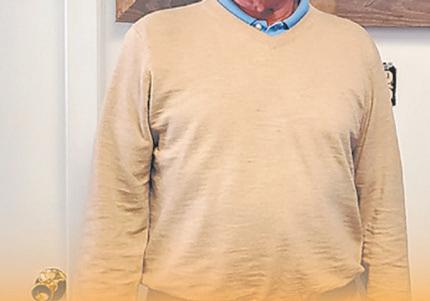
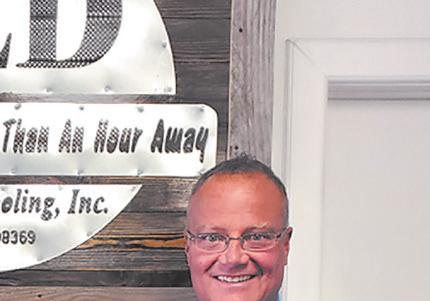











































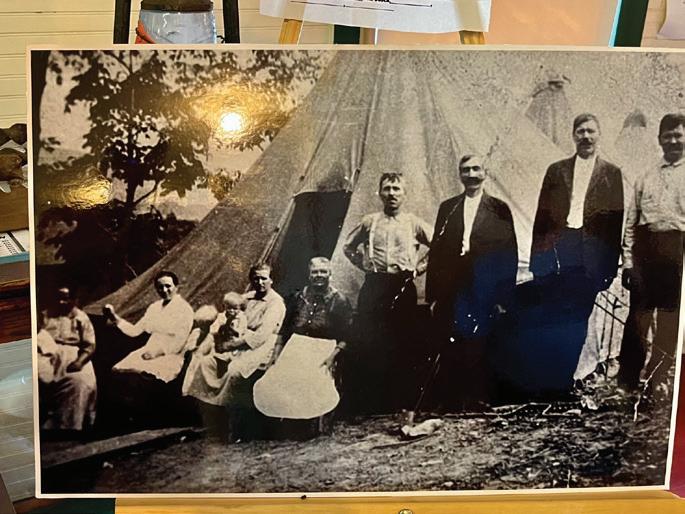
Drive through the tiny hamlet of Smock, and you just might miss what once served as the coal mining town’s company store. The white-frame, two-story building not only made history but, as the home of the Smock Historical Society Museum, also holds hundreds of historical artifacts donated mainly by relatives of the miners and their families who once lived and worked there.
Long-time resident, Nadine Sethman, president of the Smock Historical Society, seems to know as much about the museum and town as anyone else. If you’re fortunate, she, or one of her volunteers, will be on hand to guide you through the maze of displays that focus on the town and area’s history.
“When the mine closed in 1958, many of the younger residents moved away,” she said. “After their parents died, they often came back to clear out their houses and found items they were reluctant to part with.”
Soon after the museum, also known as the Smock Coal and Coke Museum, opened in 1995, people began donating items to the museum.
“We’d even sometimes find things left outside our door with no name or information attached when we came in to open,” Sethman said.
The museum is located on the second floor of the former company store. According to Sethman, the building is the third of three that mine owner
Henry Clay Frick con-

structed after the previous two burned.
“This one was built close to Redstone Creek, maybe to be close to a water source in case of another fire,” Sethman joked.
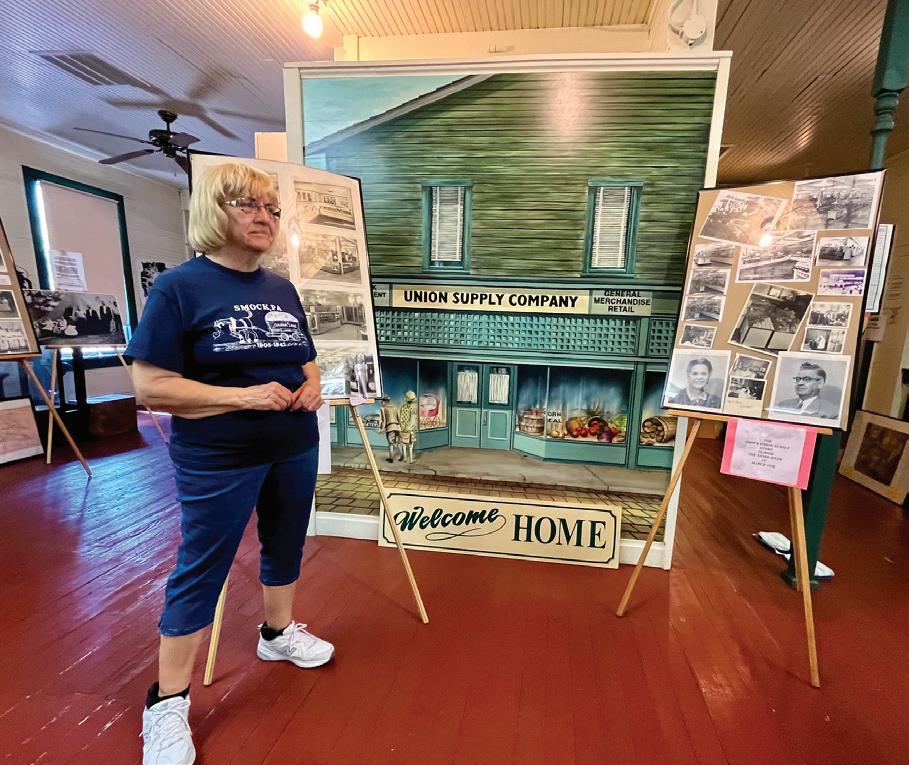
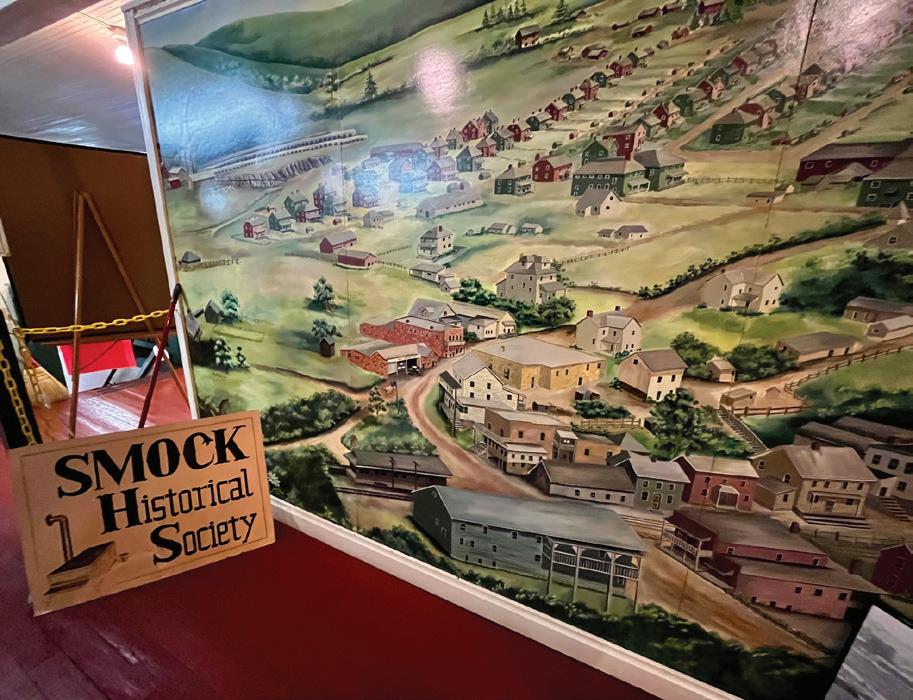
At the top of the second-floor landing, the first thing visitors see is a colorful mural of the town, painted by Mary Ann Zuzak Hovanic from a photo she took as a reference. According to Sethman, Frick supplied the townsfolk with paint of various colors to paint their homes, which accounts for the various hues on the houses shown in the mural.
Currently, Smock is a historic district on the National Register of Historic Places, most notably for its coal patch town architecture.
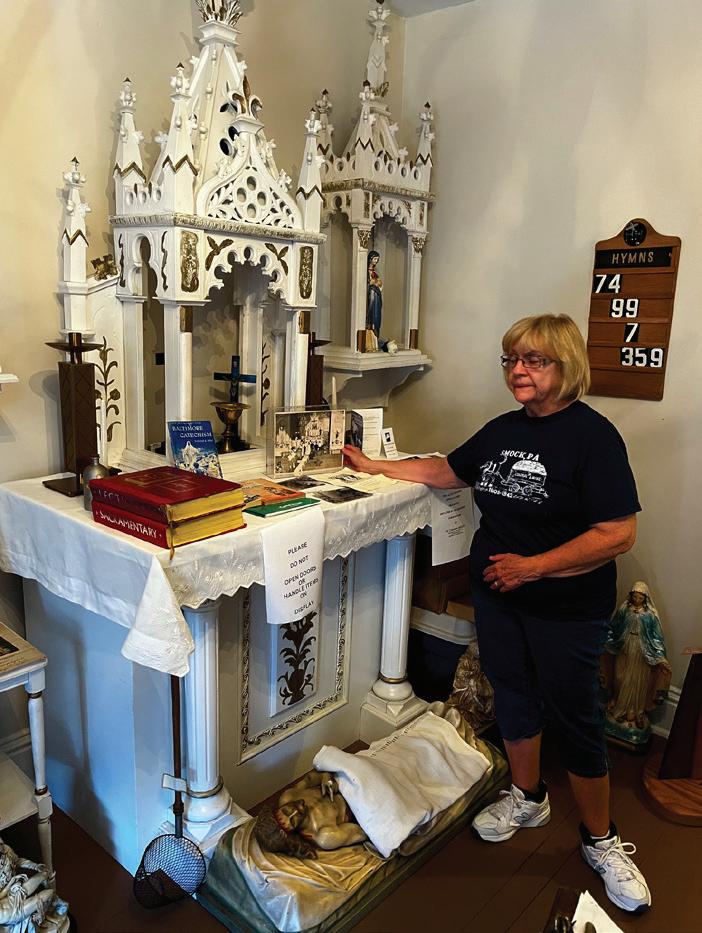
Museum visitors get a real taste of what it was like to live in the mining town in its heyday. One section holds artifacts from some of the four religious denominations in or near town. Part of an altar, a chalice, cross and candlesticks are from St. Casimir in Keisterville. Nick Bozek assembled the display as an Eagle Scout project in 2006.
Other religious items on display are a huge wooden rosary from Italy and a communion plate from Pleasant View Presbyterian Church.
One of Sethman’s most gripping tales comes from the 1930s mining strike era and concerns an item in the museum’s simulated Union Tavern.
Then owner Julio Cicconi, who also operated the town’s Colonial Cleaners, was sympathetic to the miners and let

them meet there to discuss their strikes.
One evening, during a strike, a truck drove by and shot up the bar. While glass was shattered and bullets flew, no one was injured. However, a portrait of Franklin Roosevelt that hung high on a wall did show a bullet hole in the photo where his heart would have been. The photo is on display along with original graffiti carved into the bar and other Cicconi items.
Like vintage barber shops? You’ll find one at the museum that recalls Uncle Ray Spooner’s, complete with his barber chair, barber equipment and even a Sears and Roebuck home permanent kit.
“You’ll never know what you’ll find here,” said Jennifer Chaikcic, Sethman’s niece and museum secretary.
What she may have been referring to is Charlie Peskie’s Candy Counter, rescued from a momand-pop store on Front Street. Or

the huge plastic egg that advertised Constantine Farms, a family-run poultry farm in business in Smock for over 40 years.
“Chuck Tanner, former manager of the Pittsburgh Pirates, was a friend of one of the Constantine brothers and had many of the players autograph the egg,” Sethman said. The egg and other Pirate artifacts sit in the museum’s sports section.
Visitors can get a real feel for what the miners’ homes looked like during the coal era. Separate museum rooms are devoted to and filled with items found in a typical living room, kitchen and bedroom. The living room, for instance, was created by Edward Peskie as an Eagle Scout project and holds his grandparents’ couch, actually bought at the company store, and a still-working Victrola.
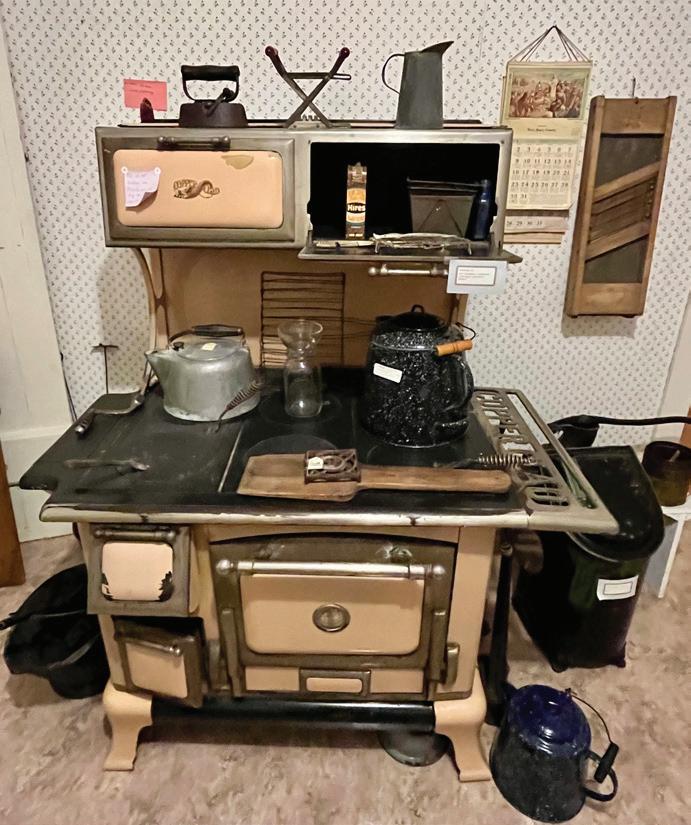
The kitchen is a trove of artifacts where visitors will find an old coal stove, an ice box — when such things were used to keep things cool before the days of refrigeration — and a crock that holds an antique wooden sauerkraut tamper.
“My mother used a coal stove to make bread and kolache until 1991,” Sethman said. “Both Mom and Dad said they just

didn’t taste as good as when they were made in the coal stove.”
Interestingly, the historical society sells homemade kolaches as a fundraiser around Christmas and Easter each year. Just before the holidays, a local woman and her family make them starting on a Thursday and deliver them to the museum the following Saturday morning. Those interested in placing an order should phone 724-550-4840 at least three weeks before pick up.
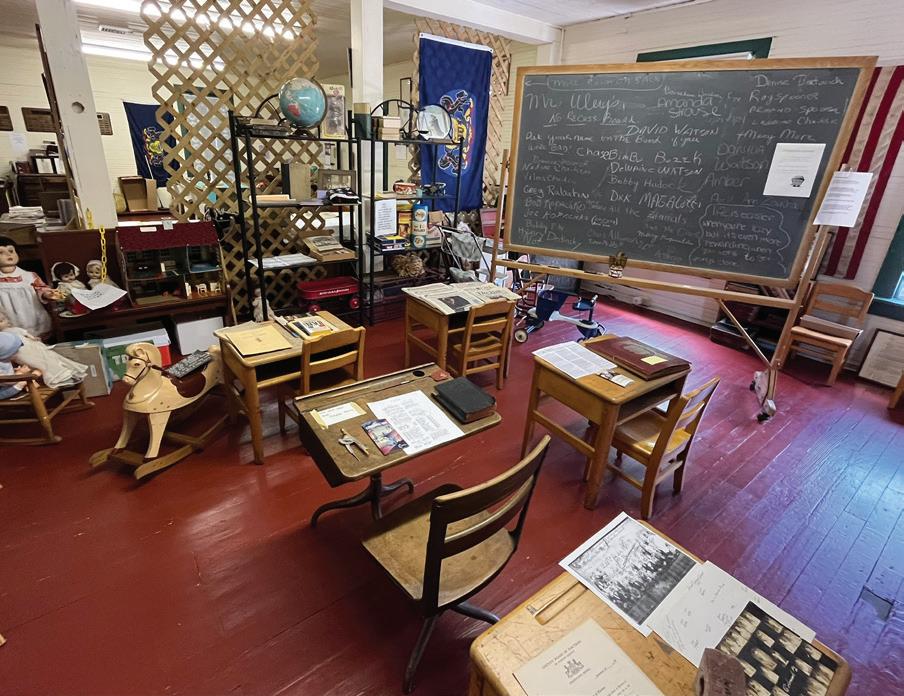
During my tour, Sethman peppered her narrative with stories like the time George Washington came through the area on his way from Pittsburgh to Fort Necessity and the tale of a local schoolteacher whose presence can still be felt in the museum schoolroom, now filled with old desks, chalkboard and other educational material from the 1940s.
According to Sethman, schoolteacher Helen Ulery would have any child she caught doing things like chewing gum, not doing their homework or talking in class write their name on the board. As a punishment, those listed were not allowed outside during recess.
In the school room, you can spot Ulery, a more than 32-year veteran teacher at the Smock Grade School, in a photo mounted just above a paddle used to discipline errant students.
Every two years, starting in 1979, the town and museum stage a homecoming for former and current residents, their families and the public. This year, the homecoming is scheduled for July 25. As to the future, Sethman would like to see more volunteers help out at the museum, especially guides, a history writer and an Internet guru who could work on the museum’s website and social media posts.
From June through mid-October, the museum, located at 103 Main St. in Smock, is open from 11 a.m. to 3 p.m. on Saturdays or by appointment. Admission is by donation. Phone 724-550-4840 for more information.
Story by Dave Zuchowski
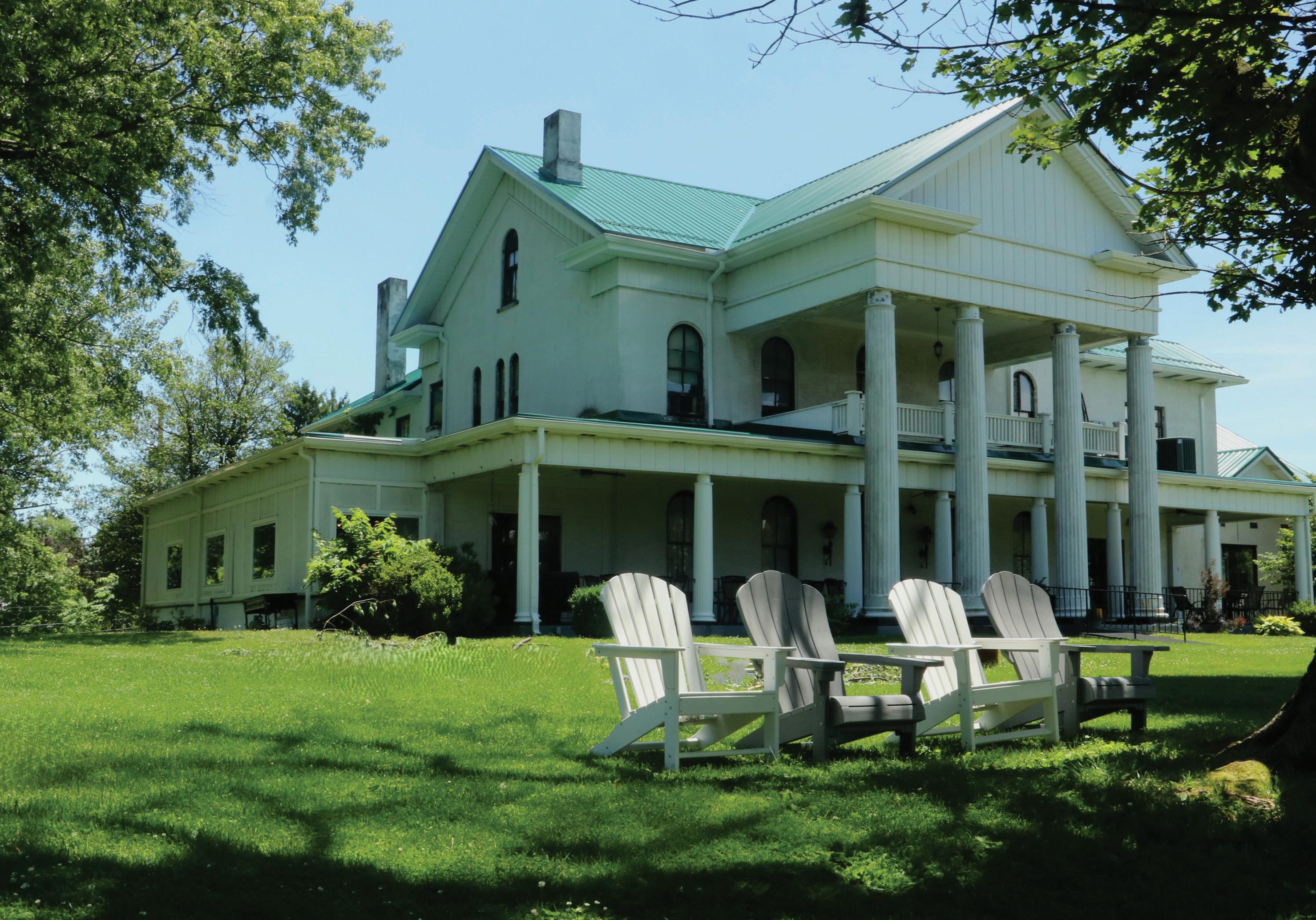
People who drive past the handsome clubhouse of the Mon Valley Country Club might be surprised to learn that its structure includes an old farmhouse believed to date to circa 1870.
When the initial members of the club bought the property in 1919, it encompassed 136 acres: 116 from the Vanderslice farm, 16 from the Robert Haggerty farm and 4 from the T. P. Warren farm. It also included the Vanderslice farmhouse.
One hundred seven years later, the country club is currently a semi-private, nine-hole golf course on 117.6 acres with par threes reputed to be among the best in southwestern Pa., and superior lightning-fast greens. Due to its unique two-tee configurations, golfers can actually play 18 holes of golf, starting from different vantage points at each hole.
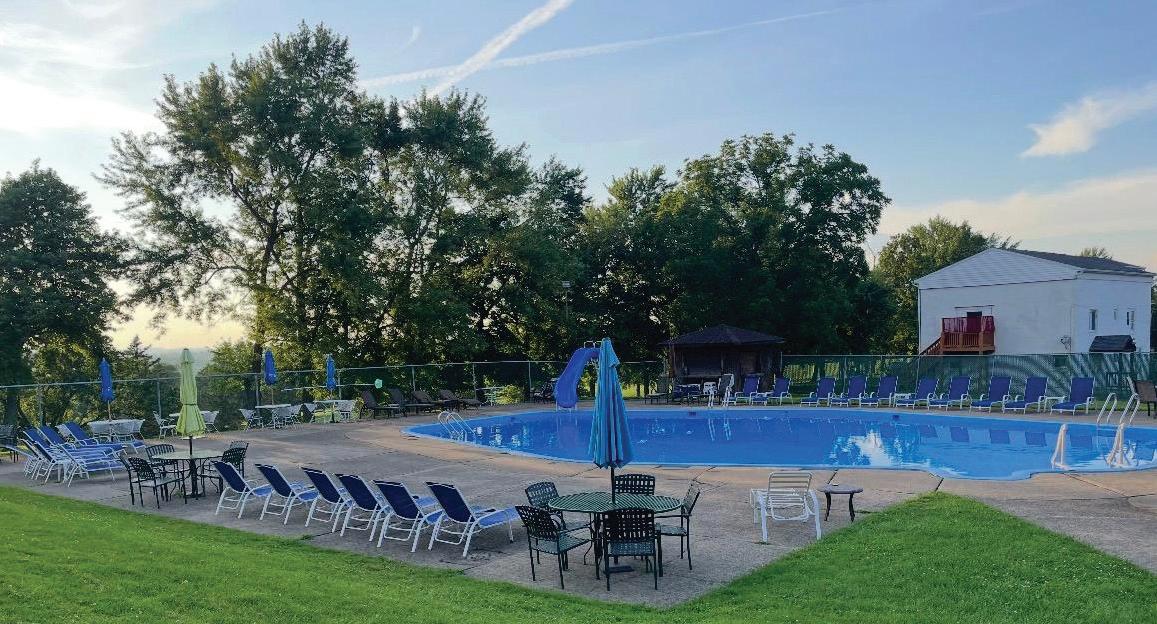
The country club in Monongahela (Carroll Township) also has a fully equipped pro shop, an outdoor swimming pool, a grass tee driving range and professional golf instruction for all age ranges.
In January, the club initiated a $150,000 renovation project that updated and modernized the entire clubhouse, including the bar, ballroom, bathrooms, dining room, back dining room (sun porch) and porch. The project also included updates to the golf course equipment and playing area.
“It was a major undertaking,” said Eric Phillippi, club president and 18-year member.
The renovation included repainting the entire clubhouse, refinishing the ballroom floors, installing a new ceiling in the back dining room and bar area and expanding the area.
Member volunteers constructed the bar and also installed new
fixtures in the bathrooms, such as vanities and toilets. Outside contractors also completed a portion of the renovation.
“There were many members that were involved directly in the renovations at the club, too many to list in this article,” Phillippi said.
“However, I would like to mention that Kevin Marraccini, board vice president and chairman of our golf committee, and Jim Davies, board member and chairman of our capital improvement committee, were instrumental in developing and executing our plan.”
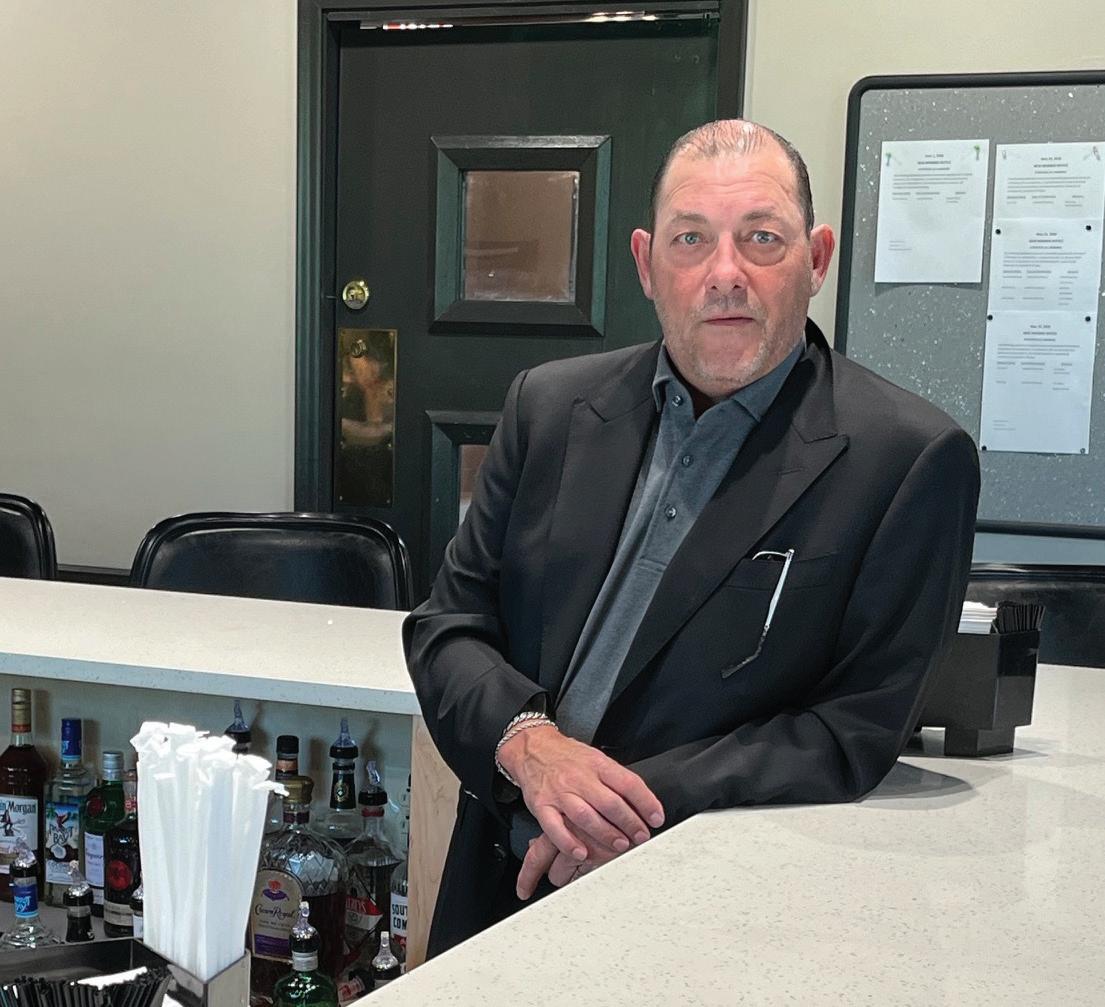
One major component of the project was the conversion of the bar area into a sports bar, which now boasts 12 large-screen televisions suspended from the ceiling.
“I don’t think you’ll find another country club in the area with a sports bar like ours,” Phillippi said.
Outside, ground improvements and renovations included trimming trees, removing those uprooted by recent windstorms and removing brush.
“The renovation has completely transformed the look and feel of the club,” Phillippi said. “Part of our goal was to increase membership, and, since the renovations were completed in April, membership has grown tremendously.”
The club offers a variety of membership levels, depending on the new member’s preferences and level of interest. They range from full club memberships to social and clubhouse memberships, with several levels in between. Currently, the club has 238 members.
Since the renovation, the club has rebranded itself as a less formal, more relaxed country club than is traditional. The dress code is also more relaxed.
“The sports bar is an essential part of our rebranding effort to increase our membership,” Phillippi said. “We wanted to create a space that was welcoming to everybody.”
Food service at the club is provided by J & D Fork and Spoon, owned by food concessionaire Jessica Kevech. Ballroom seating for outdoor events is available for rental to both members and non-members. For large events, the ballroom seats up to 150 people with room to expand outdoors in the spring, summer and early fall. Grill room and bar seating is for members and their guests only.
“During golf season, we’re open every day but Monday,” said Kevech, who’s been operating the food service component for the club for over four years. “We have an eclectic menu of everything from appetizers, salads, soups, sandwiches and wraps. We also offer steak nights and daily specials.”
In the winter months, when golf is on the back burner, the club is open for holiday parties and events.
“In winter, we schedule activities such as steak, trivia, karaoke, bar bingo nights and euchre tourna-


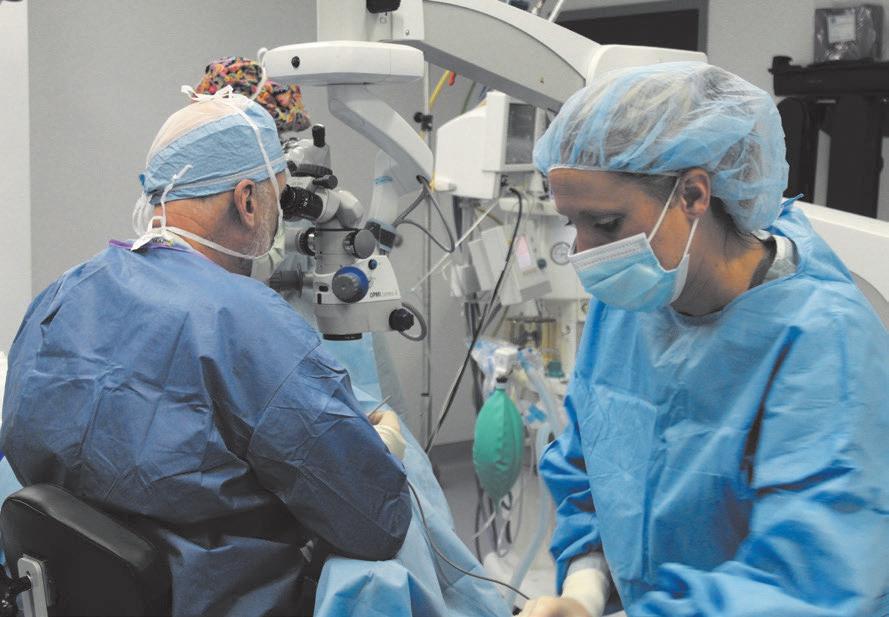
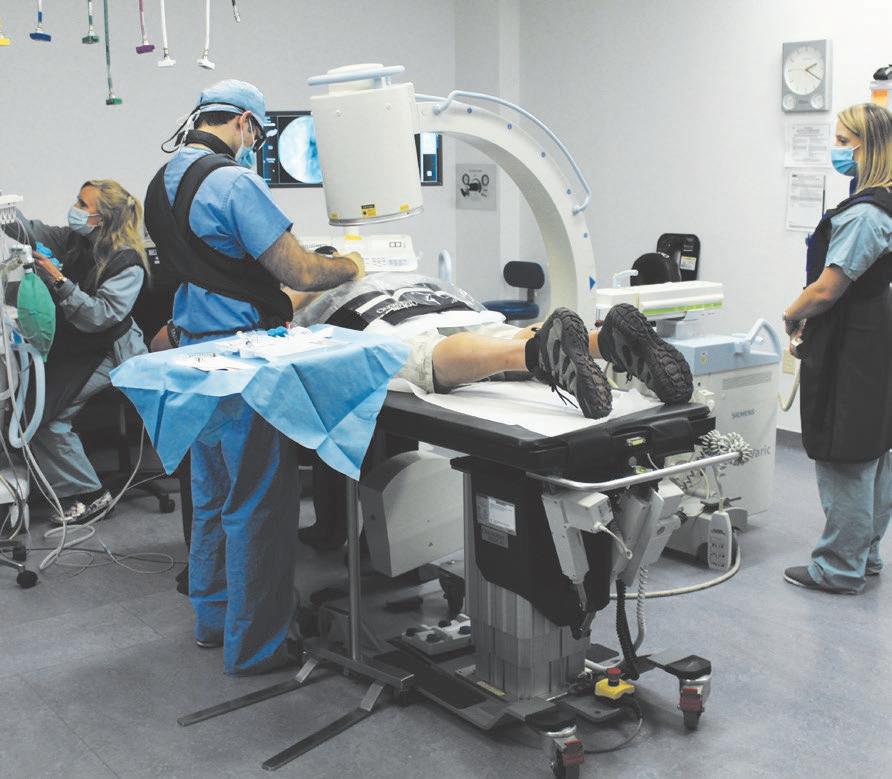
Serving the Mon Valley since 2005, Spartan Health Surgicenter is a freestanding, Medicare certified, Joint Commission accredited, ambulatory surgery center located off of Coyle Curtain Road in Carroll Township.
Spartan strengthens the convenience of health care in the Mon Valley Community by providing greater comfort, more privacy and a relaxed environment for outpatient surgery center patients.
Podiatry: Khoi Vo, DPM
Colon/Rectal: Steven Esser, MD
Orthopedic/Spine
Jocelyn Idema, DO
• Easily accessible from Toll Hwy 43, I-70 & Route 88
• Accept Medicare and most insurances
• Experienced physicians, nurses and anesthesiology staff
• State-of-the-art equipment and procedures
• Joint Commission Accredited
• FREE and convenient parking
• Comfortable waiting area for families
• Ophthalmology (Cataract, Glaucoma, Corneal)
• Pain Management • Gastroenterology
• Orthopaedics • General Surgery • Podiatry
Patrick Garman, M.H.A. Executive Administrator
Jamie Farmer, R.N. Director of Nursing
Vincent Ripepi, D.O. Medical Director
Orthopaedic Surgery:
Derrick Fluhme, MD
Greg Habib, DO
Patrick McCullough, MD
Anthony Mustovish, DO
Ari Pressman, MD
Vince Ripepi, DO
Ophthalmology: Aaron Wang, MD
Thomas Findlan, DO
Angela Gauthier, MD
Nisha Dhawlikar Gosai, MD
Anagha Medsinge, MD
Julia Polat, MD
General Surgery: Prakorb Isariyawongse, MD
Pain Management: Anthony Cuneo, MD
Gastroenterology: Nicholas Bellicini, DO
Mark Cedar, MD
Bridger Clarke, MD
Jungmin Lee, MD
Lisa Oliva, DO
Theresa Schuerle, DO

Jungmin L. Lee, M.D.
If you’ve been experiencing any of these symptoms, EGD could be the key to uncovering the cause and finding relief.

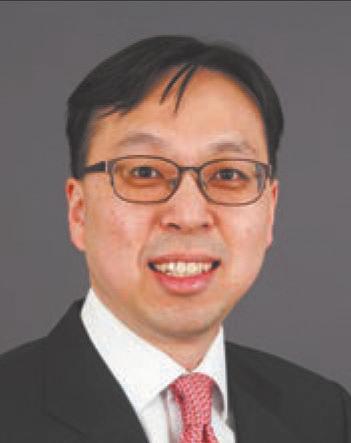
M.D. Gastroenterologist, Pittsburgh Gastroenterology Associates
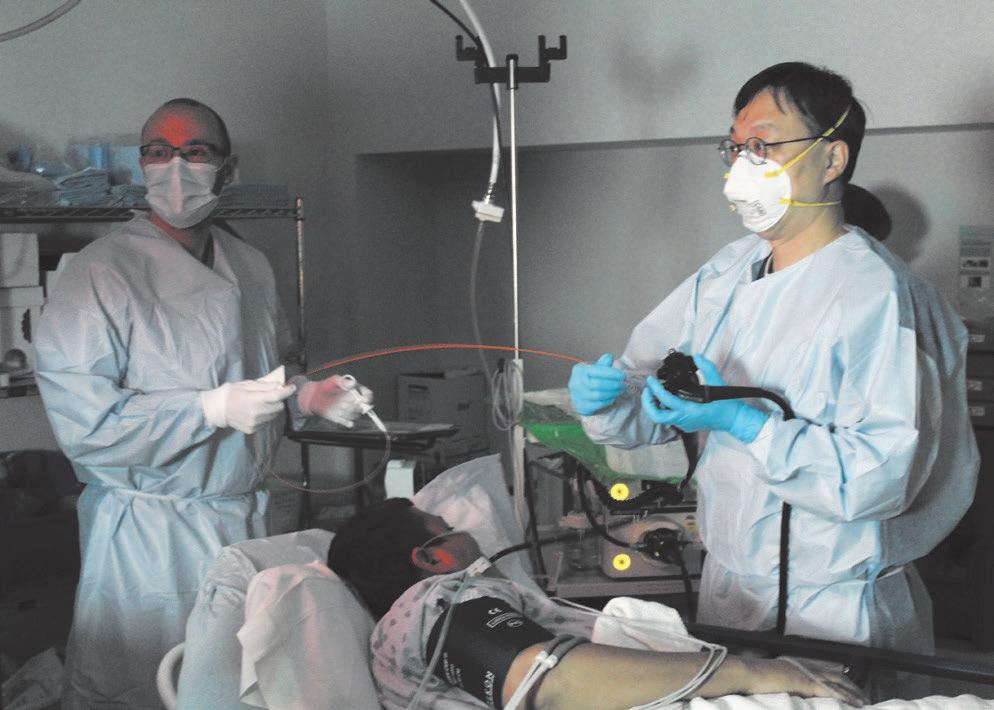
Imagine you’ve been struggling with heartburn or discomfort in the stomach, and despite trying different remedies, the symptoms just won’t go away. This is where Upper Endoscopy (EGD) can help. EGD is a medical procedure that lets doctors examine your upper digestive system— the esophagus, stomach, and the beginning of the small intestine. With the help of a thin, flexible tube with a camera, inserted gently through your mouth while you’re under sedation, doctors can get a close look to find out what might be causing your symptoms.
For many people, the story starts with acid reflux—when stomach acid escapes into the esophagus, leading to heartburn. Some may also experience symptoms like a cough, a feeling of a lump in the throat, or even hoarseness. While acid reflux is common, untreated, it can lead to serious conditions like esophagitis or Barrett’s esophagus, a precursor to esophageal cancer. If acid reflux persists or new symptoms arise, your doctor may recommend an EGD to determine if these more severe conditions are present and ensure you get the right treatment.


Imagine sitting down to a meal and suddenly feeling like food won’t go down smoothly. This is a common experience for those with difficulty swallowing, a symptom that may be caused by esophageal narrowing, motility (peristalsis) issues, or something more serious like cancer. EGD allows doctors to directly see what’s happening inside the esophagus, identifying blockages, inflammation, or growths early, which is crucial for proper treatment and avoiding serious complications.
Now consider a different scenario: you’ve been dealing with indigestion—nausea, bloating, or stomach pain that seems to linger. While indigestion often stems from benign causes like diet or stress, sometimes it’s a sign of more serious conditions like gastritis, ulcers, or even stomach cancer. EGD helps doctors rule out these more severe issues, ensuring that any potential problems are caught early and treated effectively.
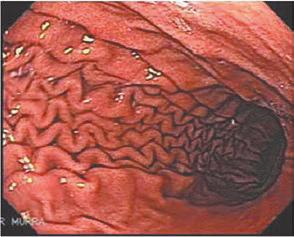

If you’ve been experiencing any of these symptoms, EGD could be the key to uncovering the cause and finding relief. Talk to your doctor, call 412-232-8104, or visit https://www.pghgastro.com/ to schedule an appointment at Spartan Health Surgicenter with the specialists from Pittsburgh Gastroenterology Associates
Pittsburgh Gastroenterology Associates: 2589 Boyce Plaza Road, Suite 5 Pittsburgh PA 15241 • 412-232-8104 office
Spartan Health Building 100 Stoops Drive, Suite 280 Monongahela PA 15063 • 412-232-8104 office









Story by April Barbe
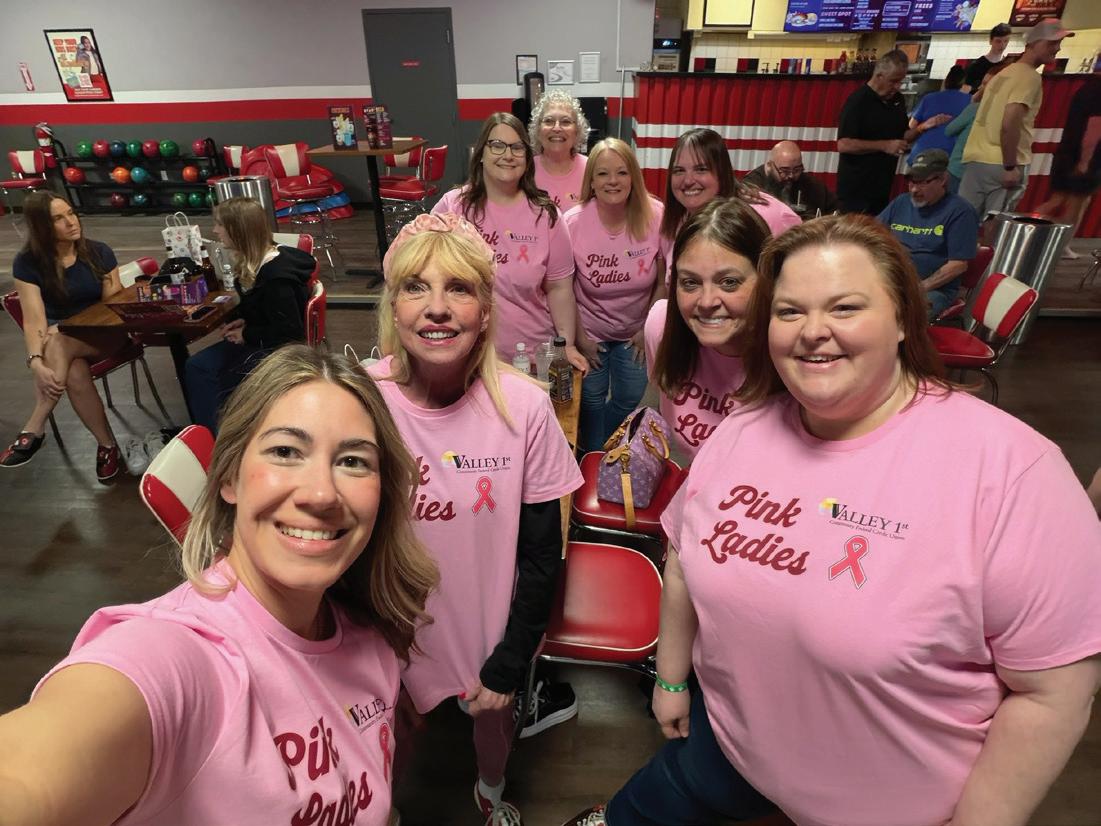
courtesy of Valley 1st Federal Credit Union
At Valley 1st Community Federal Credit Union in Monessen, customers can rest assured that they aren’t just a number on a computer screen.
“We’re deeply rooted in the community we serve, and that shows in everything we do,” said Tamlyn Bachetti, Valley 1st marketing representative. “Our members are our neighbors, friends and families, so we focus on personal service, real relationships and helping people feel confident about their finances.”
With roots dating back to 1935, the credit union has grown in many ways over the years, according to Bachetti. “We currently have 7,300+ members and are always looking to reach out and invest in our community so they can learn about what we do and welcome them to become members of the credit union,” Bachetti said.
She added that another way the credit union is different from a bank is that decisions are made in-house. Customers will not have to wait or contact anyone at another branch or in another state to have their needs met.
“Our mission is to enhance our members’ financial well-being, so when you become a member, you’re not just banking, you’re belonging to something local, supportive and built around you,” Bachetti said.
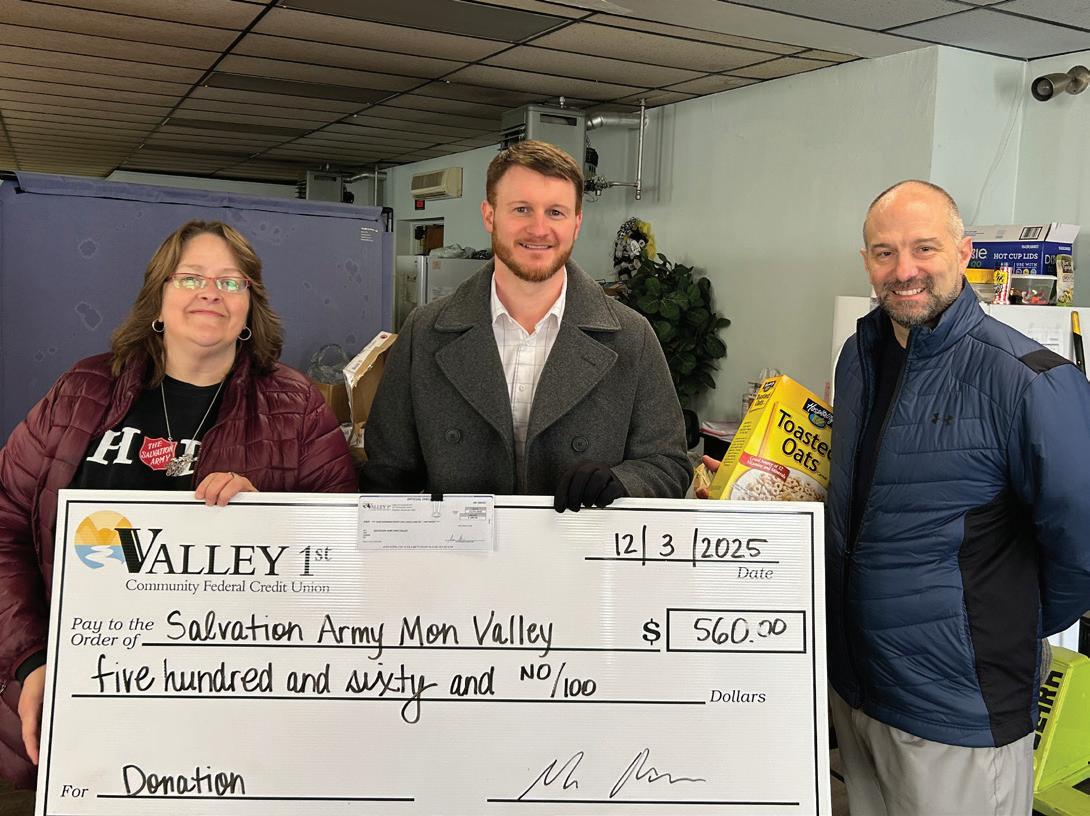
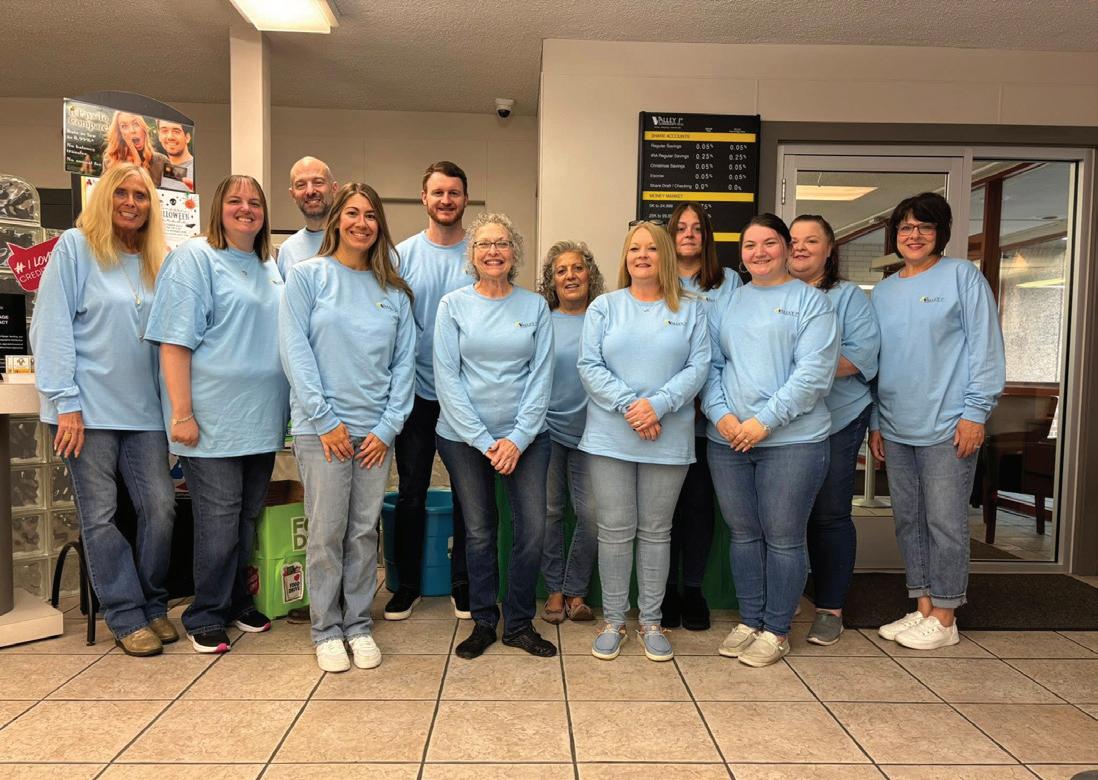
Giving back to the community is the company’s philosophy of “people helping people.” Valley 1st participates in financial education, volunteering, local partnerships and other programs, Bachetti said.
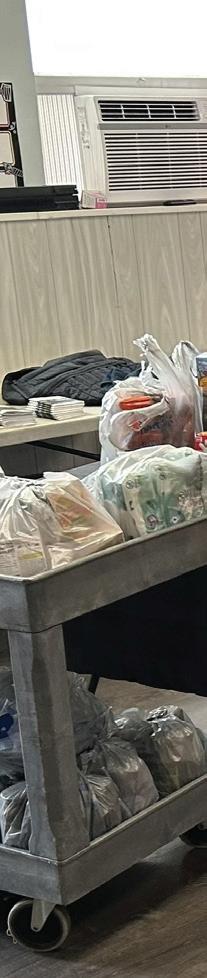
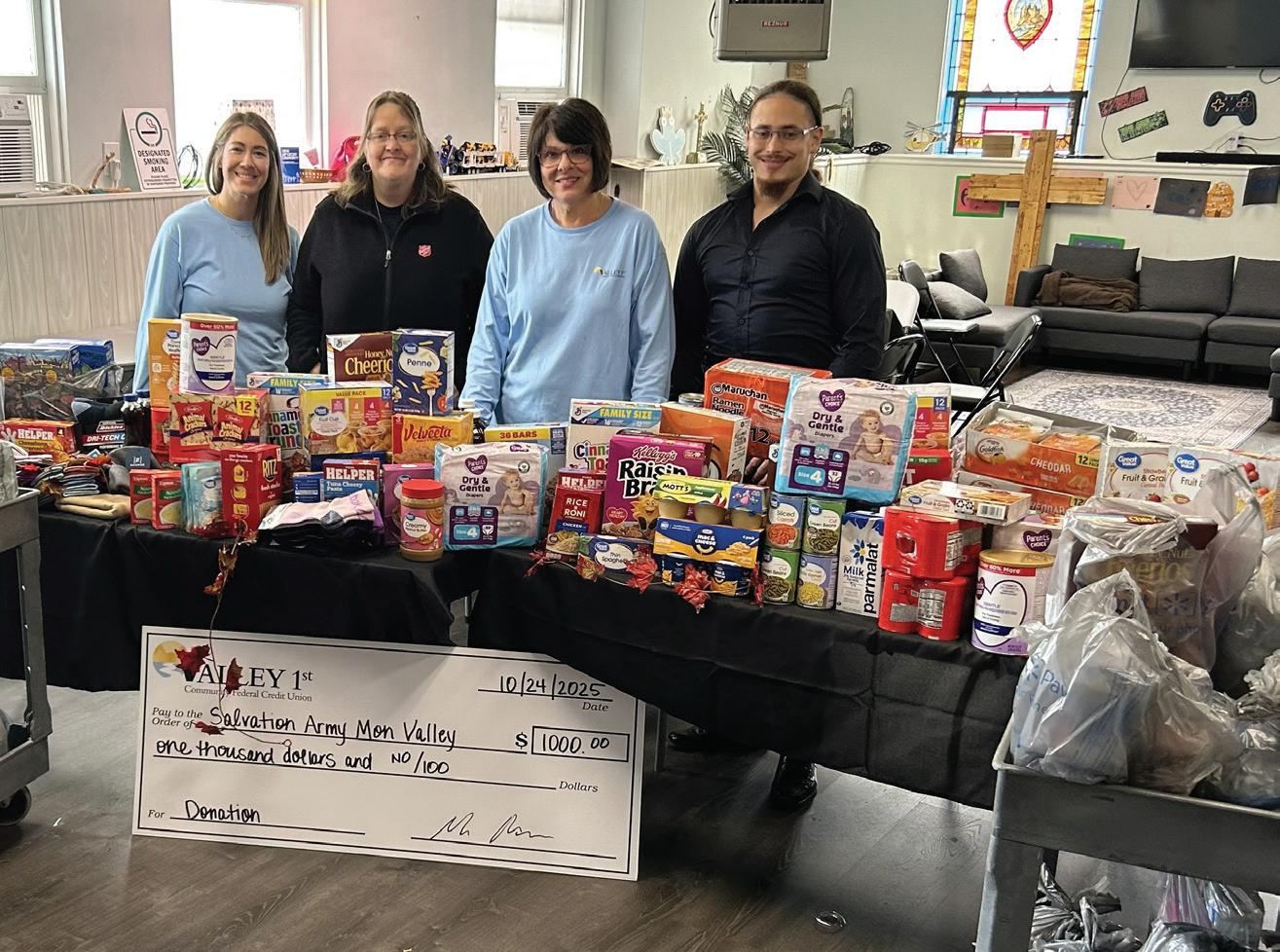
A few of the ways the company personally supports the community are through partnerships with Mon Valley Paws and the Salvation Army in Monessen. Valley 1st staff also volunteer for various events, including the Epiphany Church Fish Fry and Monessen and Rostraver community events.
Plus, each year, the credit union awards graduating seniors in the area a chance to win a $2,000 scholarship for continuing education.
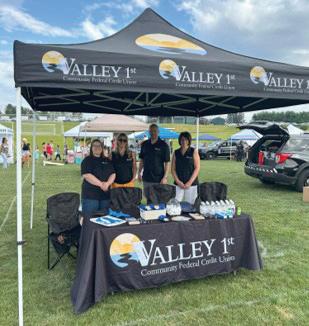
“A few new initiatives we are incorporating this year include our Water Fundraiser, where we donate bottles of water branded with our logo and information to community and sporting events so they can earn money off the sales of the water,” Bachetti said.
She said the program increases brand awareness and allows the community to earn money for their groups efficiently and effortlessly.
Valley 1st’s newest initiative is to educate, inspire and encourage financial literacy among younger generations. Through a partnership with Banzai, a financial literacy program, they can sponsor five area schools to help them complete the state-required financial literacy curriculum, team up with local businesses and non-profits and provide financial education to members and the public.
“This robust program is going to be a game changer for our commu-

nity, and we can’t wait to see how it improves our mission of enhancing our members’ financial well-being,” Bachetti said.
sonal information until you have confirmed it is a reputable site or someone can verify the validity of the request.

Valley 1st has been serving the residents of Mon Valley since 1935. Originally known as the Pittsburgh Steel Employees Federal Credit Union, it was established to assist employees at the local steel mill in Monessen.
In 1987, the name was officially changed to Valley 1st, and it expanded its membership to serve anyone who lives, works or worships in Monessen, Donora and Rostraver.
“Fast forward to 2022, we are now able to serve anyone who lives, works or worships in Washington, Westmoreland and Fayette counties,” Bachetti said.
The credit union acknowledges that artificial intelligence is the future, but Bachetti said the business’s goal is to provide “real person” interactions in person, digitally and over the phone.
“When you call our member support number, you speak directly to a real person, not an AI-generated assistant. You will hear our automated teller when our credit union is closed, but that is so we can continue to provide 24/7 account information whenever you need it,” she said.
She added that the credit union utilizes AI in its strategies, analytics and back-of-the-house programs, but it is mainly used to help provide quality services to members.
Tips on fraud prevention and scams?
Bachetti said scams aren’t only in the form of a prince from another country sending you an email; it can be as simple as answering a few questions by phone, responding to a text or buying a gift card on a website.
“Our biggest tip is to think before you act. Urgent messages for money are usually a red flag. Verify everything before you make your decision. Ask friends and family what they think about it before you do it. If you aren’t sure if you’re in the right place when buying something online, reach out and ask someone to help you find the correct website,” she said.
She added never to share account details, passwords, codes or per-
According to Bachetti, AI can also mimic voices. So, “trust your instincts, don’t jump to provide answers and always verify with people you trust to help you if something is off.”
She said at the end of the day, both banks and credit unions can provide great financial services, but what makes a credit union unique is that it’s member-owned and community-focused.
“So, our success is measured by how well we’re helping our members and neighbors thrive,” Bachetti said.
For more about the credit union, visit valley1st.org or call 724-684-8875.


























































































Story by Kristin Emery
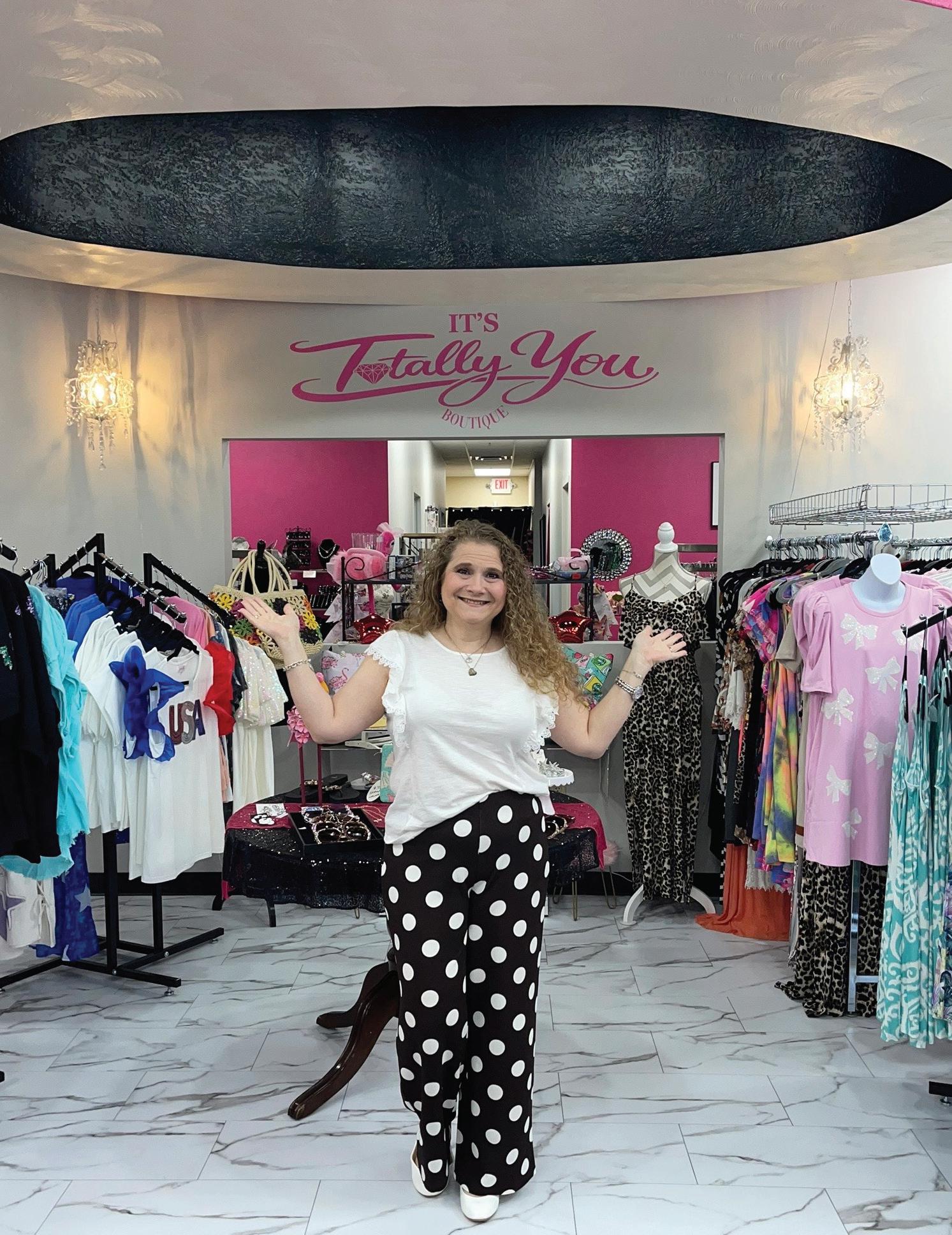
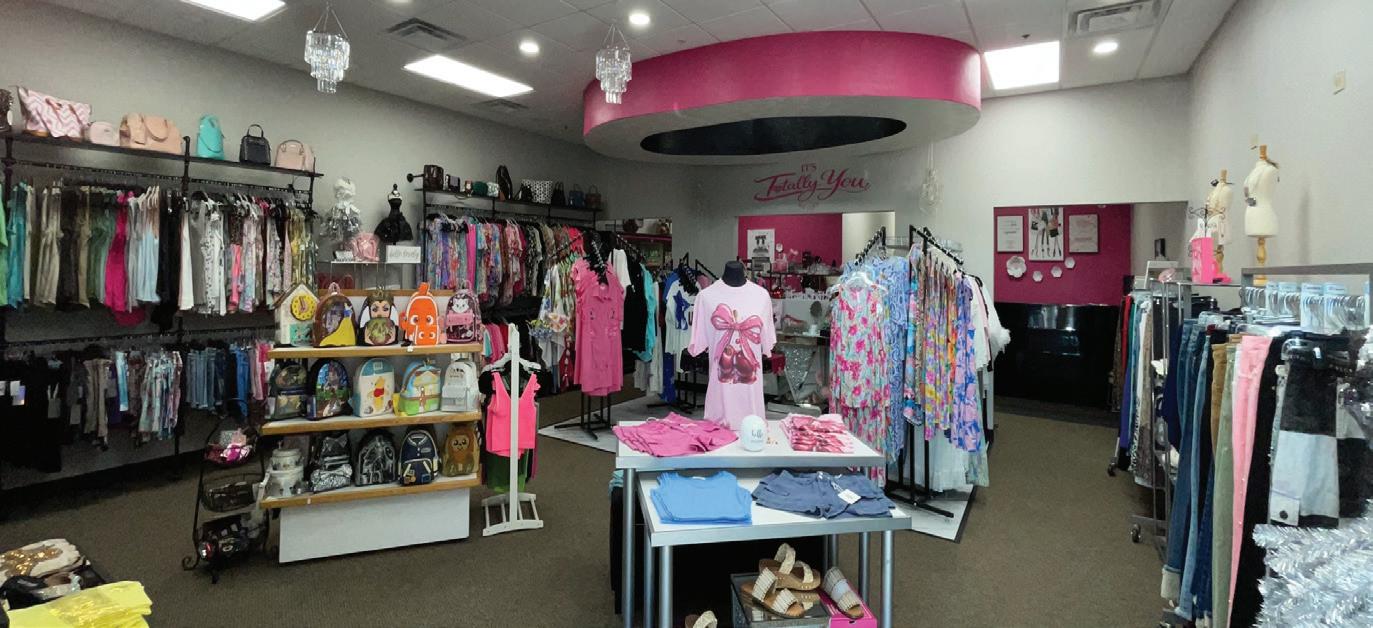
Lisa Benyak will tell you she is a shopper. She’s also a hard-working, tireless business owner. “I always make relationships with people. I love sales, and I love clothes,” says the Belle Vernon resident. “The business just combines everything that I love, and God has really blessed me. This new location, I’m so excited. It’s going to be wonderful.” That new location is the newly reopened Totally You Boutique at 170 Finley Road in Belle Vernon. “I had a yard sale page on Facebook, and I used to meet people in Gabe’s parking lot,” Benyak says. “When leggings started getting big, I ended up finding custom leggings.” The business grew so much that she rented a small space and started live-streaming on Facebook once a week to showcase items. Further growth led

her to expand the store space to 3,000 square feet in the old Fox Grocery Company warehouse. “I had my original following, my faithful group of ladies and word of mouth and ended up doing really well.” This spring, the landlord told her she had 40 days to move out because the building was being sold.
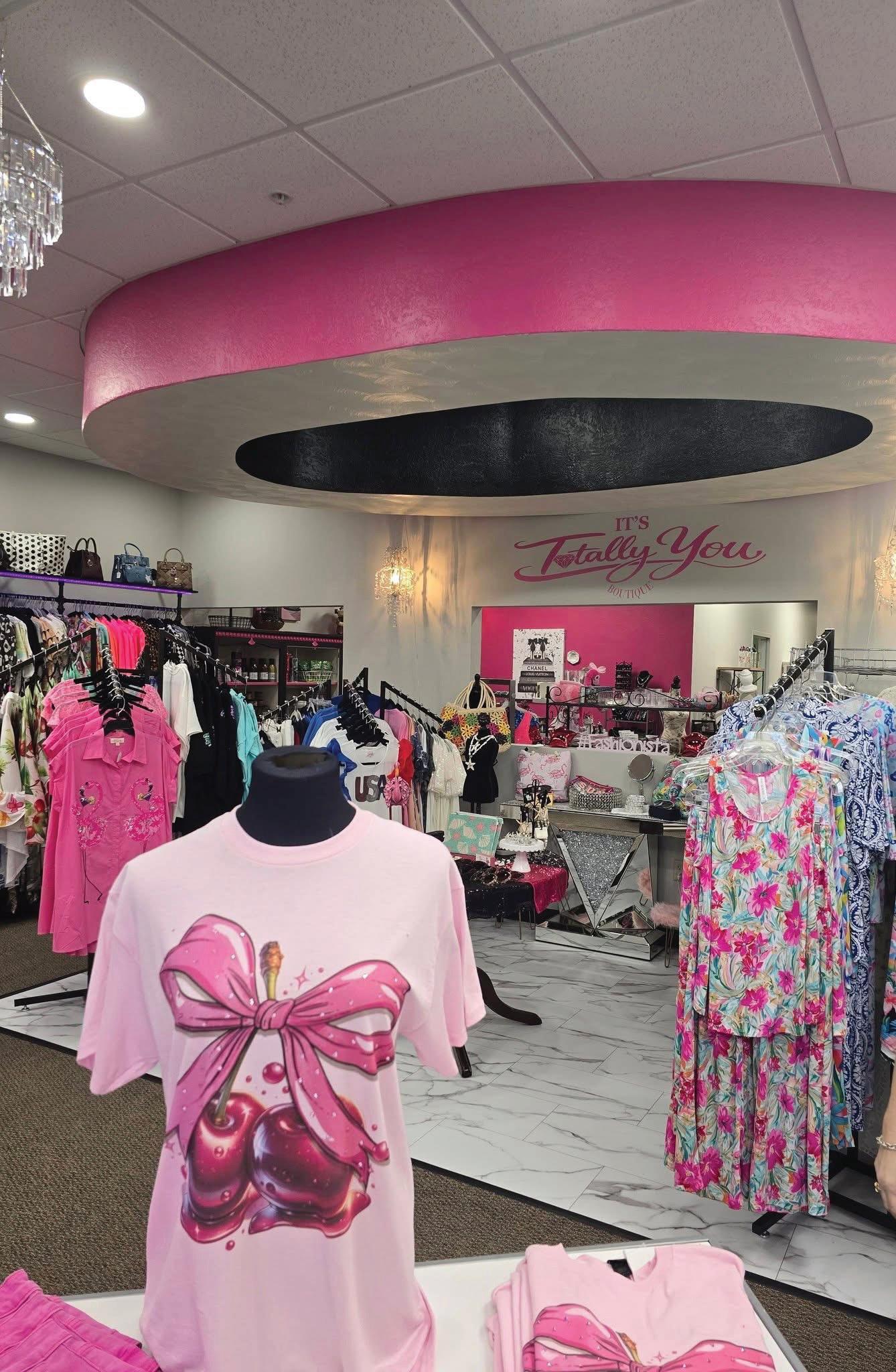
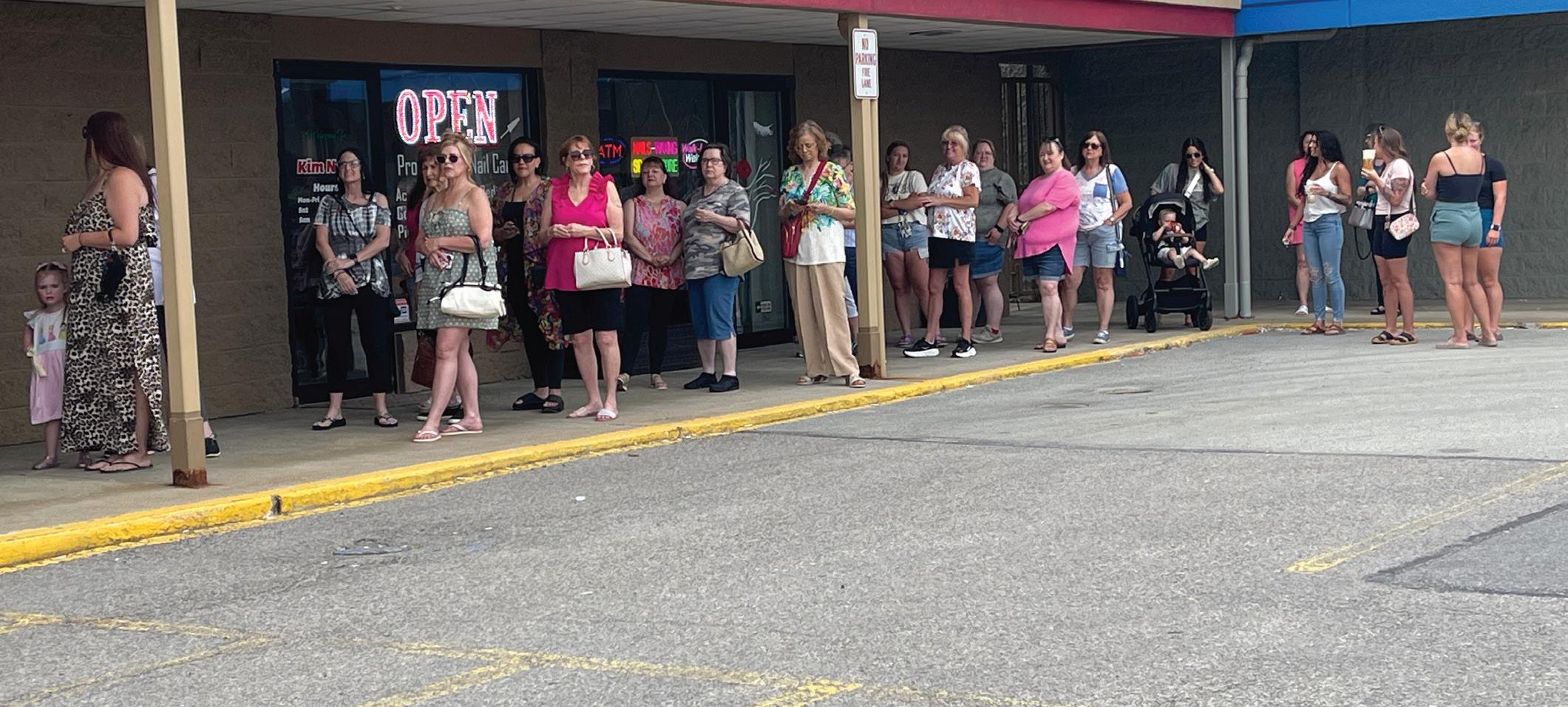
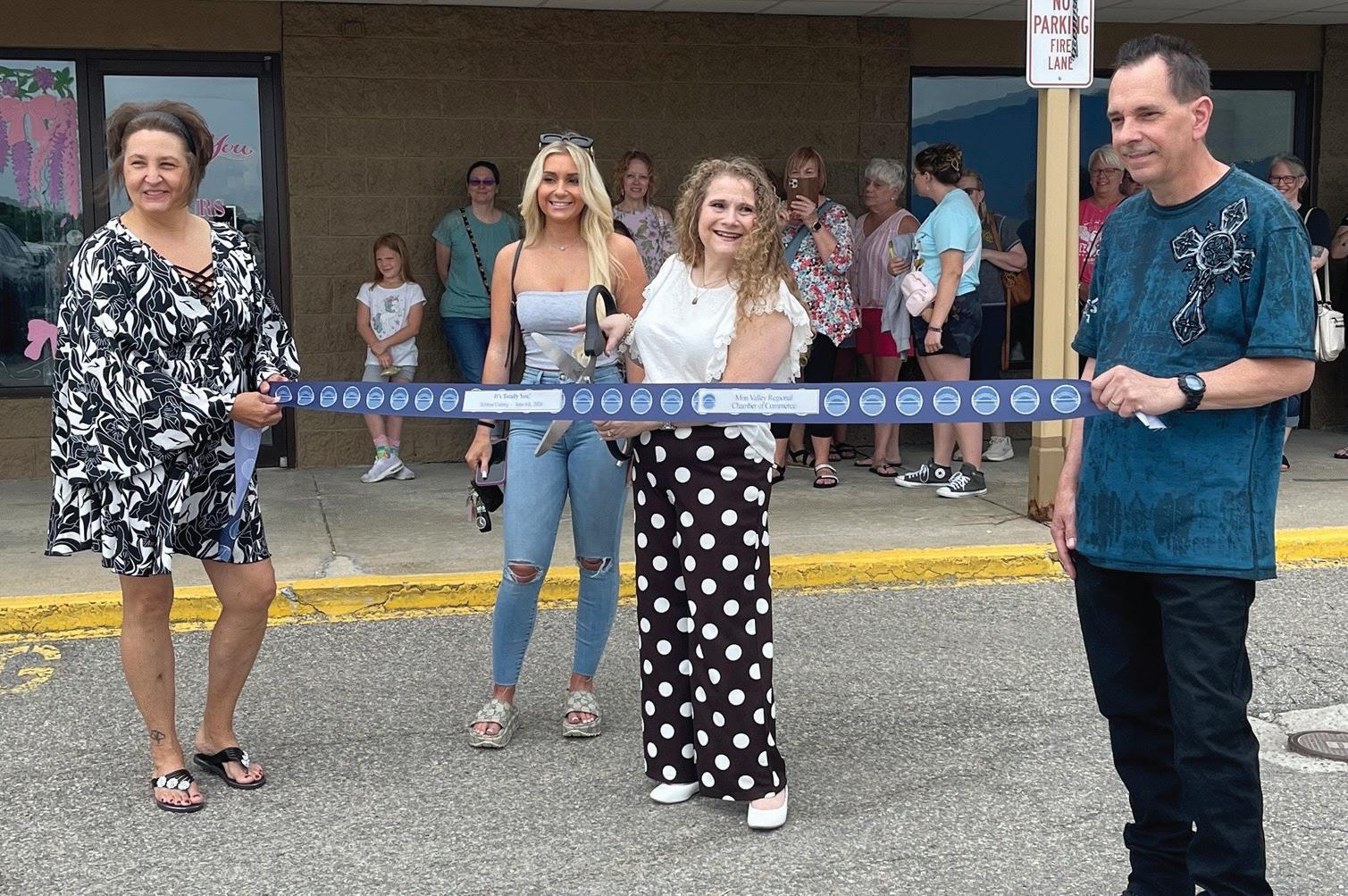
Benyak and her husband started searching for a new storefront and landed on what was formerly an eye doctor’s office in Gabe’s Plaza. “My mom always said, ‘When you don’t know, you pray and sit back and watch what God does,’” says Benyak. “Things just kept falling into place.” Her husband worked to help remodel the space for retail, and the Totally You Boutique held its grand reopening in early June. It has evolved and come a long way since carrying only leggings. “It’s ladies’ clothes,

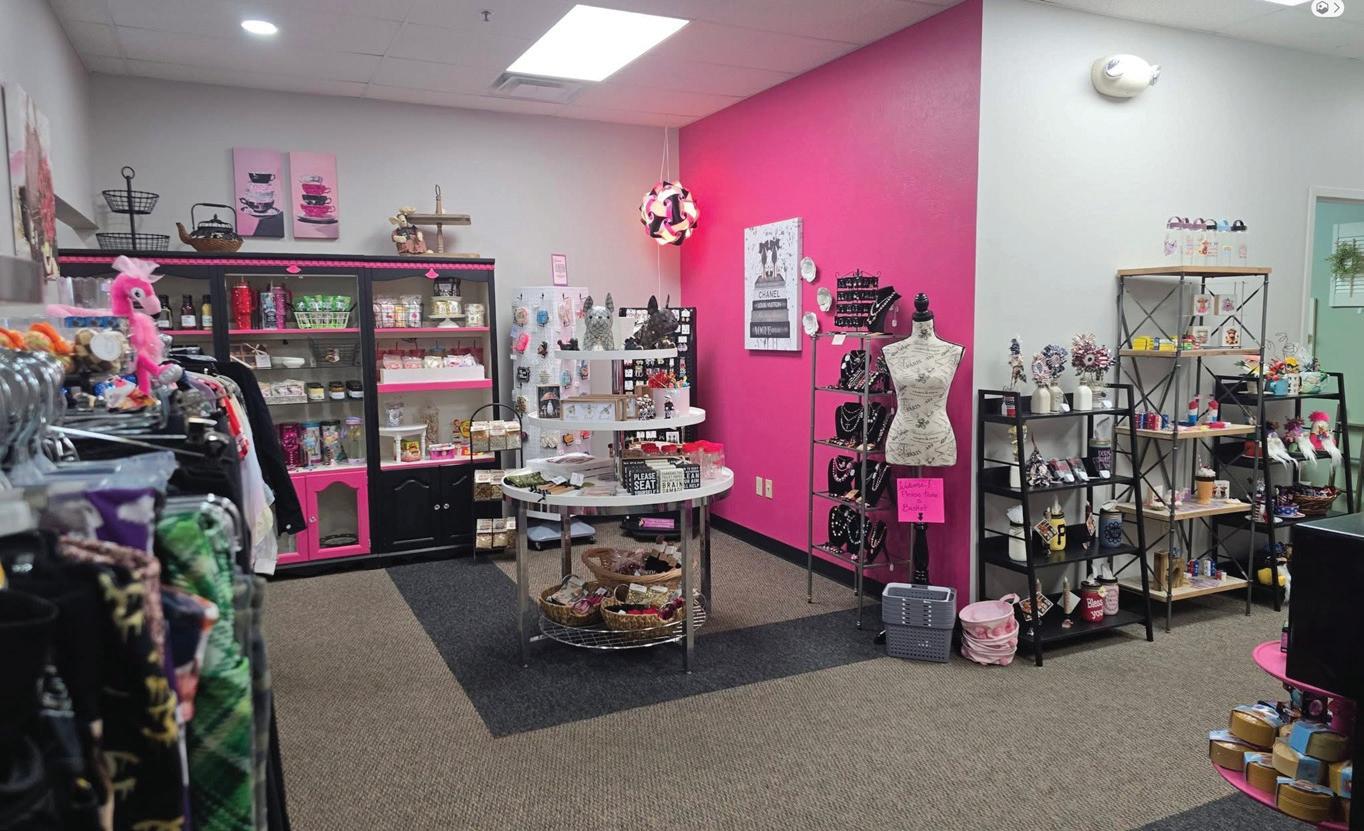
it’s all boutique clothing, jewelry, accessories, purses,” says Benyak. “The thing that makes my shop a little bit different is that I have about 12 to 15 vendors in there, and it’s all women-owned. It’s crafts, it’s things that they make. Art, candles ... there’s a little bit of everything.”
The boutique fills a retail need in the Mon Valley for women’s clothing. “All we have here is Gabe’s and Walmart,” Benyak says. “You can stop in if you need an outfit for a shower, if you need something for a funeral. If girls have a dance, there’s going to be pretty jewelry they can get.” Plus, the other vendors inside the boutique offer giftable items, creating an overall shopping destination complete with sections for teens and kids. “In the Valley, people don’t want to spend a lot, you know … I have boutique clothes that have the bling, they have the funky patterns. I have regular stuff, too, like basic jeans. I carry the brands that you can’t get anywhere else, like Judy Blue, Kancan, Risen — those are all boutique brands, the stretchy jeans that you can’t get anywhere else.” The price point for most of her items is $25-$35, with more “bling” items running around $40-$50. “I’m spending hours going through different brands to find things that are good quality, that are good prices,” she says. “If I’m able to give good quality for a lower price, it sells. I try to get everything you need.”
It’s tough for brick-and-mortar stores to compete with online shopping these days, but Benyak has found a blend of the two that works. “People wanting to shop from home, every Thursday at 7, I do lives on Facebook. I model the clothes, I show them how they fit and tell them what sizes I have,” she says. “They can claim them online and then whatever’s left goes into the store for the next day.” Another big draw in the new boutique space is the consignment of designer purses. “It’s a way they make extra money if they want to get something else, and the women love shopping for the designer bags at a fraction of the price.”
Totally You Boutique is located at 170 Finley Road in Belle Vernon and is open Tuesday through Friday from 10 a.m. to 6 p.m. and Saturday, 10 a.m. 3 to p.m. Those interested can catch Lisa’s live streams of new items each week in the private Facebook group, “LISAS LEGGINGS.”
Despite the challenge of finding a new location, remodeling and rebranding, she still loves what she does. “I think it’s making the relationships with the people I love,” says Benyak. “I love to get to know people, and I really think that’s the main thing. The women become my friends, and I’ve had people say I do not need any more clothes, but I come because you make it such a fun experience.”


















Story by Kristin Emery
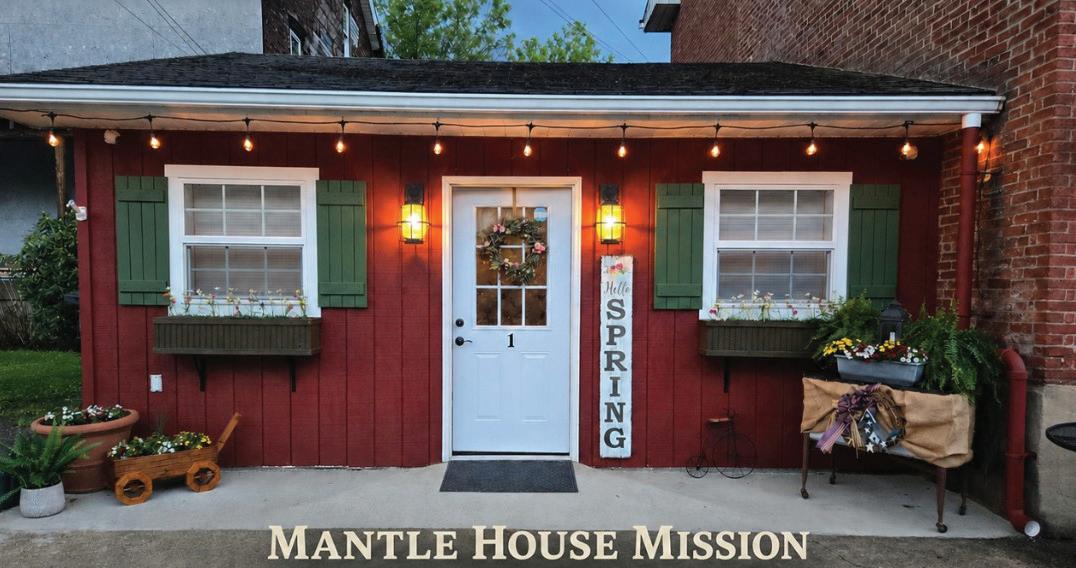
The Mantle House Mission and the resale store that funds it are constantly changing, evolving and growing. Marci Elsbury and her husband first had a vision for a mission back in 2010 when they took in a young man who needed housing and some help. That vision became Mantle House Mission in 2012 — originally a resale store intended to fund transitional housing for young homeless people. “That’s how we started, 18 to 24 year olds, and then in 2022 we basically switched it up to women only,” says Marci. The goal is constant: to
and assist homeless women and to demonstrate Christ-centered love and compassion. While that vision has remained, the location and scope have undergone some changes over the years, now leading to a brand-new resale storefront.
While the resale store’s location remains the same at 132 S. Water St. in West Newton, there have been extensive renovations and expansions over the years, culminating in a grand reopening in April. “In 2022, we decided to move to 132 S. Water St., the big building where we had our store, so we
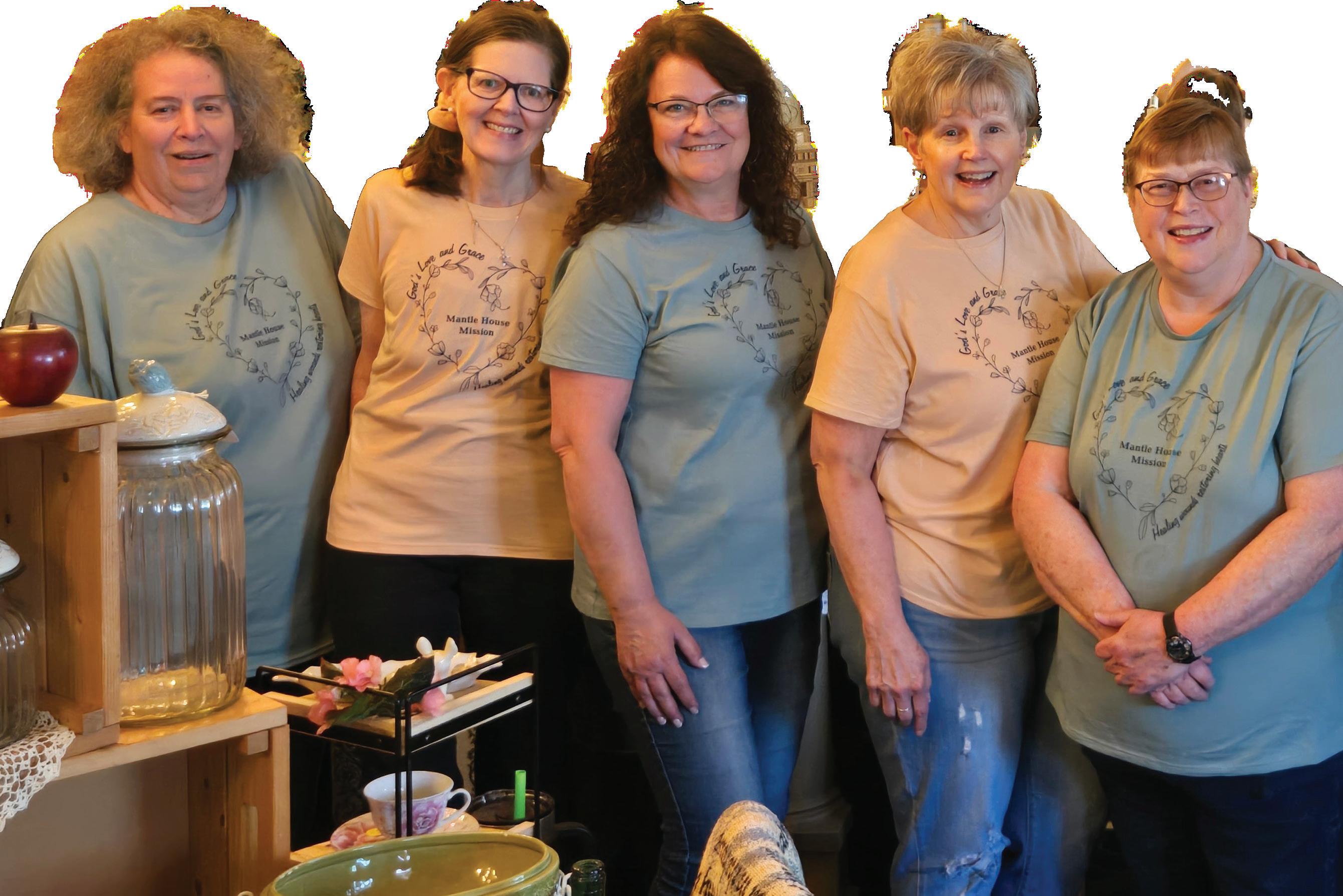

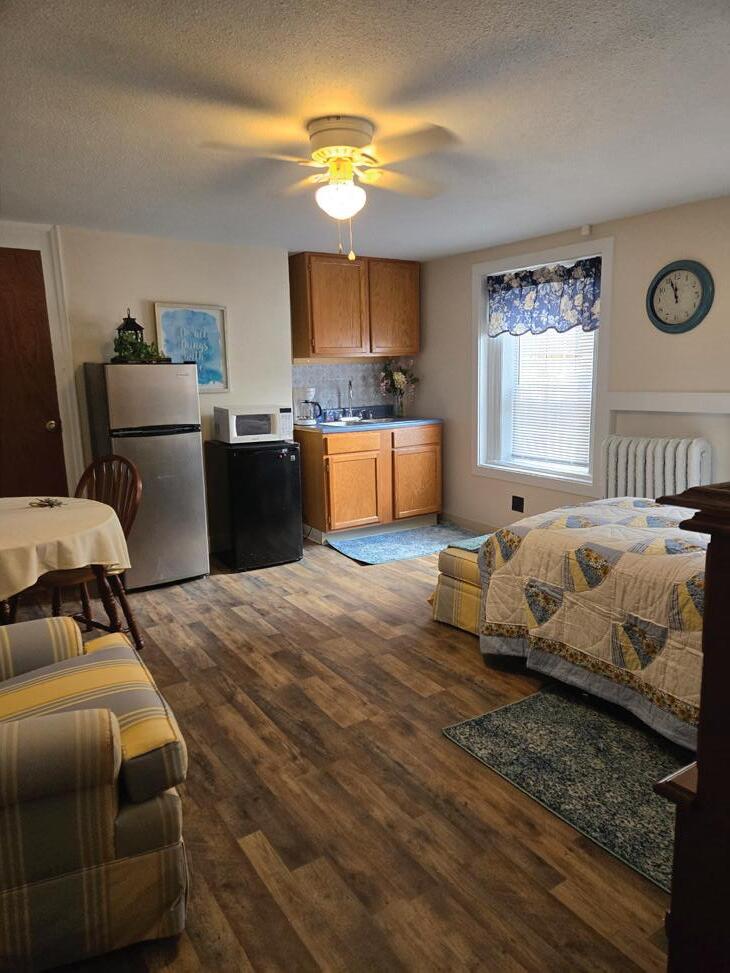
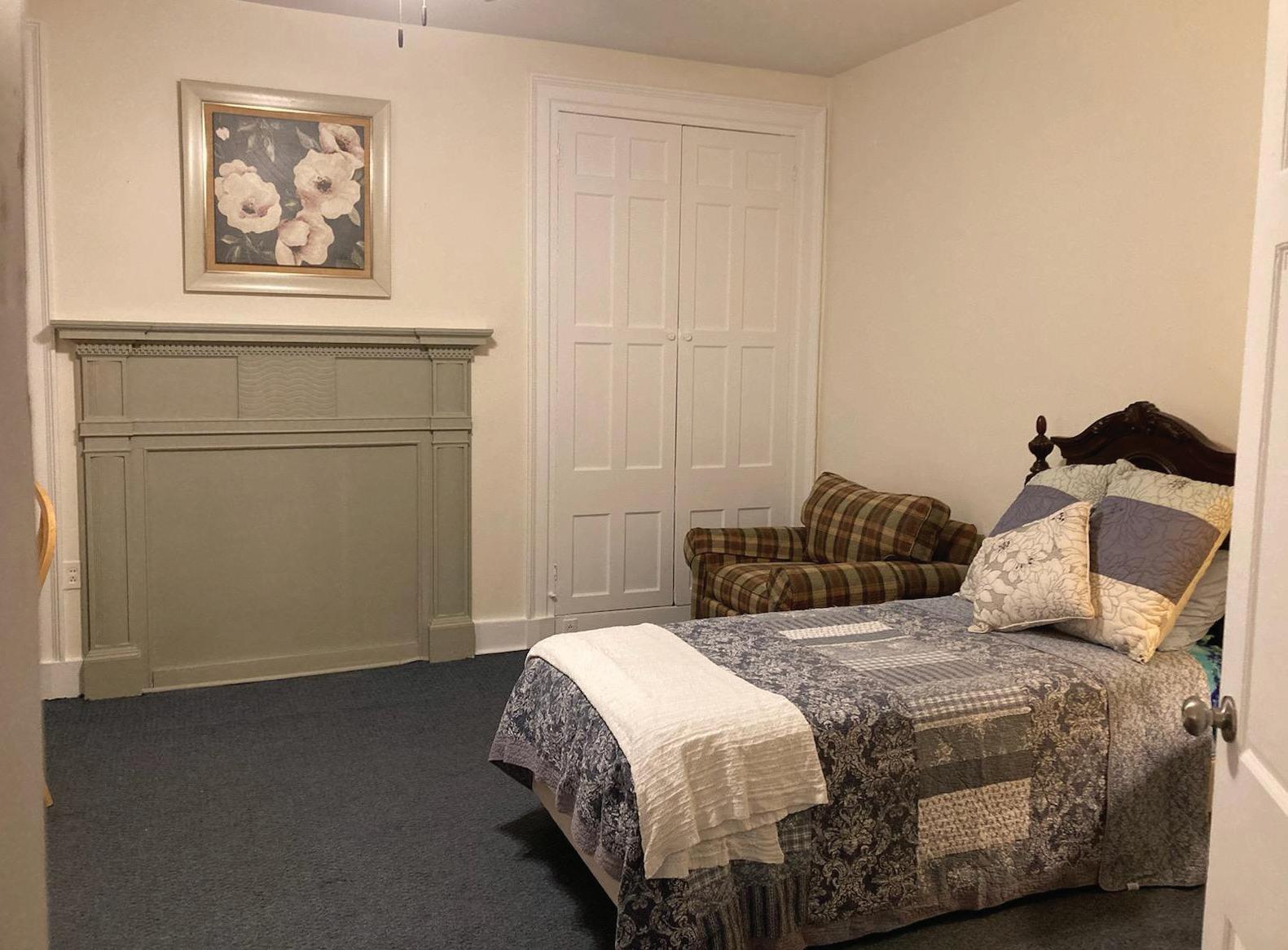
in about four different rooms and housing women upstairs,” Elsbury explains. Her husband worked on the housing by remodeling bedrooms. Then came the idea of moving the store out of the housing building entirely and setting up shop next door. “My husband built a new addition to our two-car garage that was part of our store for many years. We had our grand reopening in April. Now, the garage is our main building. When you walk through a hallway, you go into the new addition.” With the resale store now next door, the main building is completely dedicated to transition housing for three women.
The mission housed eight residents throughout last year, with contributing issues being homelessness, criminal activity, mental illness or drug and alcohol addiction. “I’ll get a phone call from themselves or family or case management, Salvation Army, you name it. We get phone calls from everywhere,” says Elsbury. “We’ve gotten phone calls from employers, police officers, too.” Residents must pass a drug test and meet certain expectations. “Our goal is to help them to rise above that, and because we’re Christian, we want to introduce them to Jesus and have them understand how he can bring peace and hope into their lives.” The mission is staffed entirely by volunteers, with many coming from surrounding church congregations. Residents are asked to attend church services once a week, maintain the residence and their living space and find a job in the area. Drug and alcohol testing are conducted, and there is zero tolerance for drug use.
With the resale store now operating in a new, larger space, Elsbury looks forward to regular shoppers enjoying the cozy country-cottage atmosphere. “We do nothing but household items in the store,” she says. “Knick-knacks, all kinds of different decor, wall hangings.” She calls it an ever-changing array of unique items. The store is open Thursdays and Fridays from 10 a.m. to 5 p.m., with occasional Saturday hours and is always looking for donations of household items and volunteers.
What keeps Elsbury going sixteen years into this mission? “Well, it can’t be anybody but the Lord,” she says. “That’s what keeps us going. It’s a passion. We see the change in the women’s lives, and it just keeps us going, and it’s a drive that doesn’t go away because the Lord has given us a mission, and this is our calling.”
For more information on Mantle House Mission and its resale store, visit mantlehousemission.org or visit the Facebook page.