




















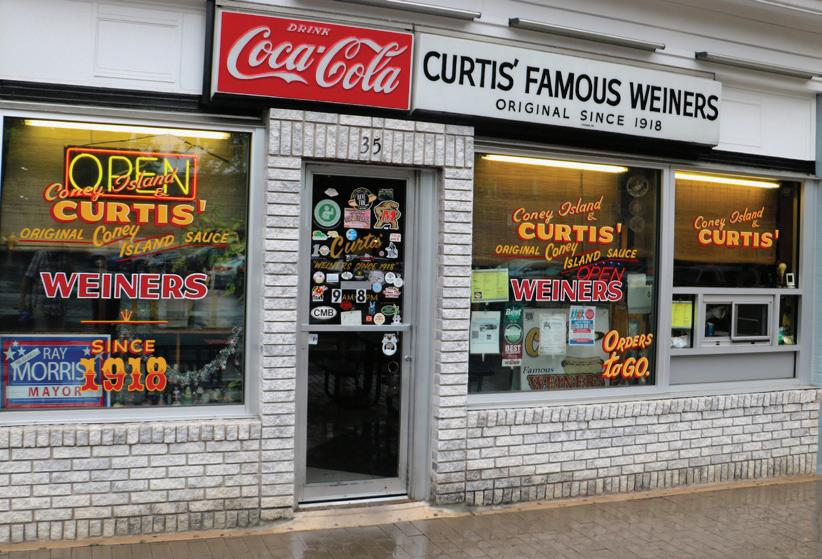
Outside Curtis Coney Island Famous Wieners
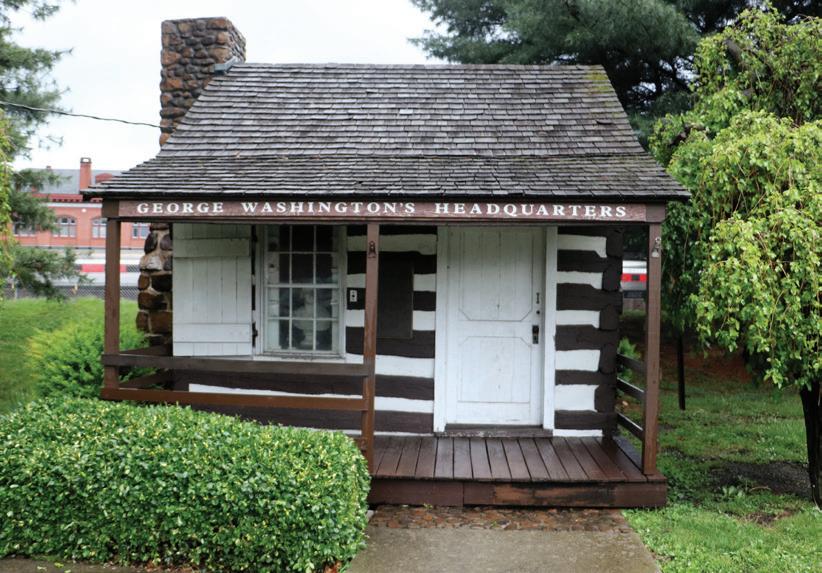
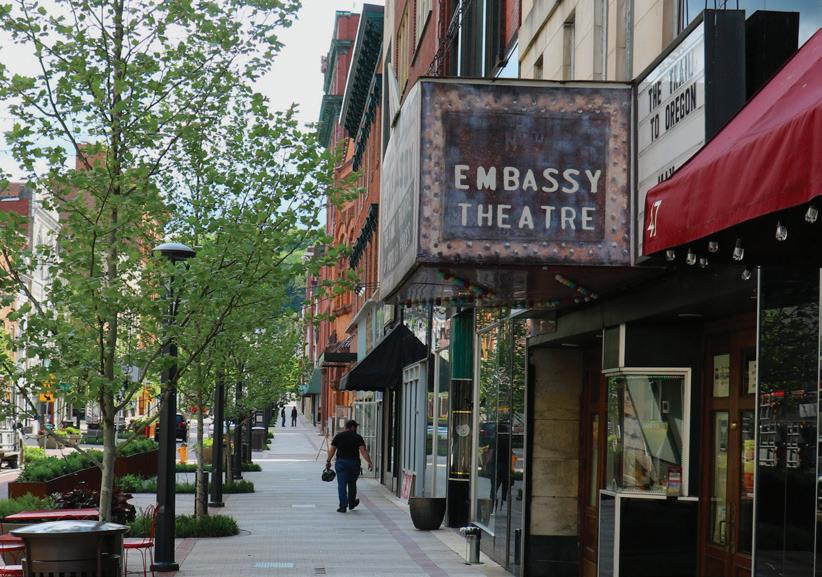
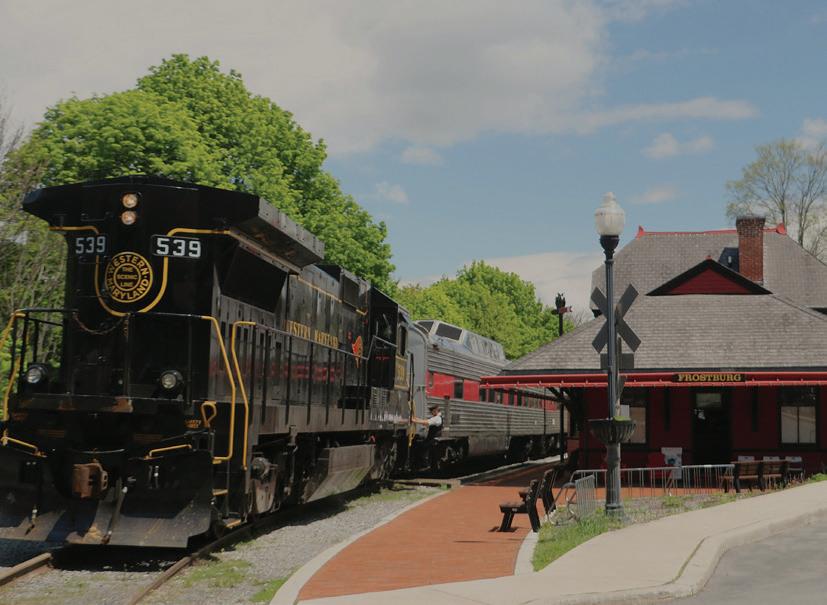

Outside Curtis Coney Island Famous Wieners
Photos and story by Dave Zuchowski
Cumberland, once Maryland’s secondlargest city, has since faded into a sort of quiet inconspicuousness. But the town, located at the juncture of the northern branch of the Potomac and Willis Creek, is surprisingly interesting for many reasons.
Much of its important history is based on its being both a starting point and a terminus. First, prehistoric animals blazed a trail north through the mountains, then came prehistoric man. Later, a Native American named Nemacolin showed early White settlers the way north, a route that young George Washington and General Braddock would also follow on their way to take Fort Duquesne from the French.
Washington, in particular, had a large presence in Cumberland, first as a 16-year-old surveyor in Oldtown, then as a 21-year-old envoy to the French entrenched at Fort Leboeuf.
Washington’s subsequent travels in 1753 from Cumberland led to Fort Necessity and the start of the French and Indian War.
Two years later, he was aide-de-camp to General Braddock when they and 2,000 elite British troops marched north from Fort Cumberland past St. John’s Rock near Frostburg as part of their ill-fated campaign. Modern hikers take note: The rocky precipice is said to be a hard-toget-to but exhilarating experience.
Washington’s last visit to Cumberland came in 1794 when he reviewed federal troops preparing to close down the Whiskey Rebellion.
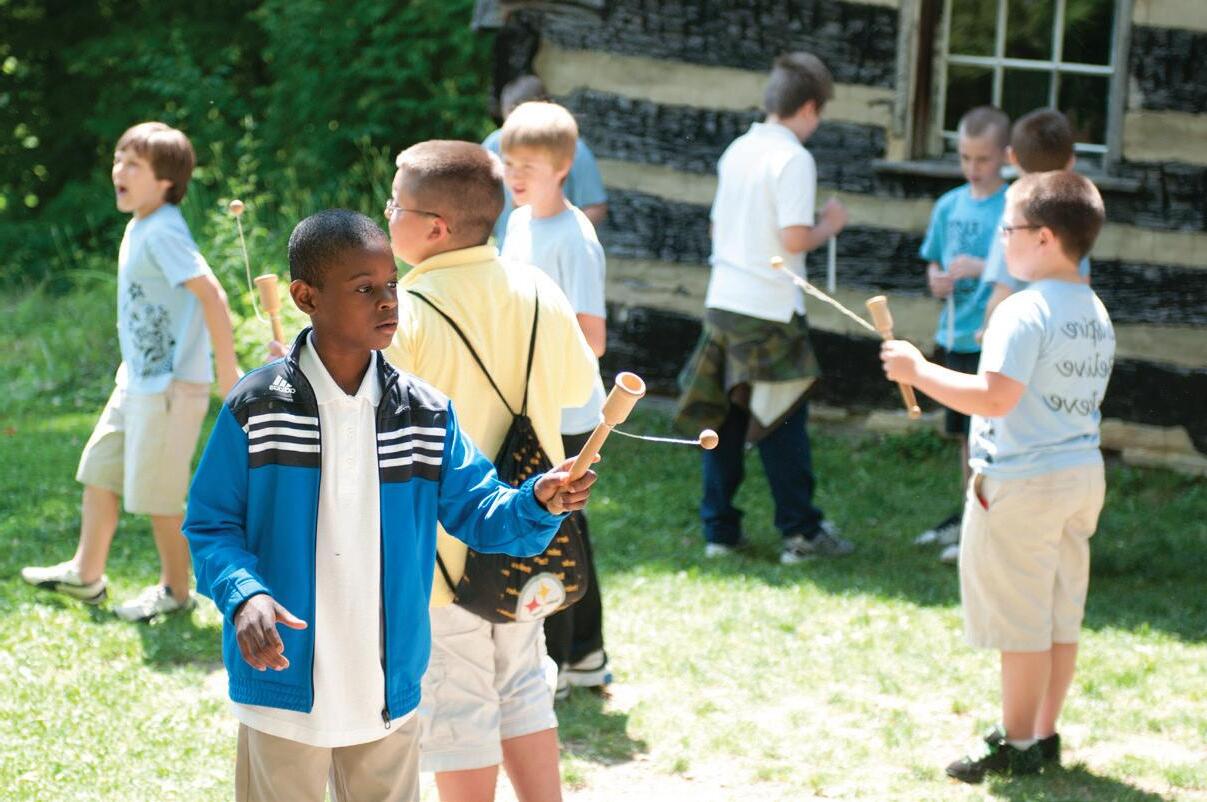
Today, visitors can view Washington’s Headquarters, a log cabin originally built between 1755 and 1758, which is the only surviving structure from Fort Cumberland. Housed in Downtown Cumberland in beautiful Riverside Park, the cabin can only be viewed from the outside, but visitors are permitted to glance into the interior through its glass windows.
transport market in the Ohio country. The railroad arrived first in 1842, eight years before the canal. Although the canal ceased operating in 1924, it has been transformed into a historic national park, virtually a 184.5-mile-long hiking and biking trail.
The National Park Service oversees the park, and exhibits about the canal can be found in the historic Western Maryland Railway Station. The building features a museum with interactive displays on canal construction, a model of the Paw Paw Tunnel and a full-scale replica of a canal boat.
One not-to-miss Cumberland attraction, the Allegany Museum, has been ranked among the top 10 small-town museums in the U.S. The museum touches on subjects in an interesting way about topics like Paleo Native Americans and artifacts from 12,000 years ago, a Paleo dwelling, the National Road, the canal and rail history, Washington and Fort Cumberland, local brewing history, a collection of wooden sculptures, and local industries such as Kelly tires and the glass industry.
Highlights include a painting of Nemacolin leading settlers along his namesake trail, a model of Fort Cumberland and an AI regression that simulates Washington at the various ages that he visited Allegany County.
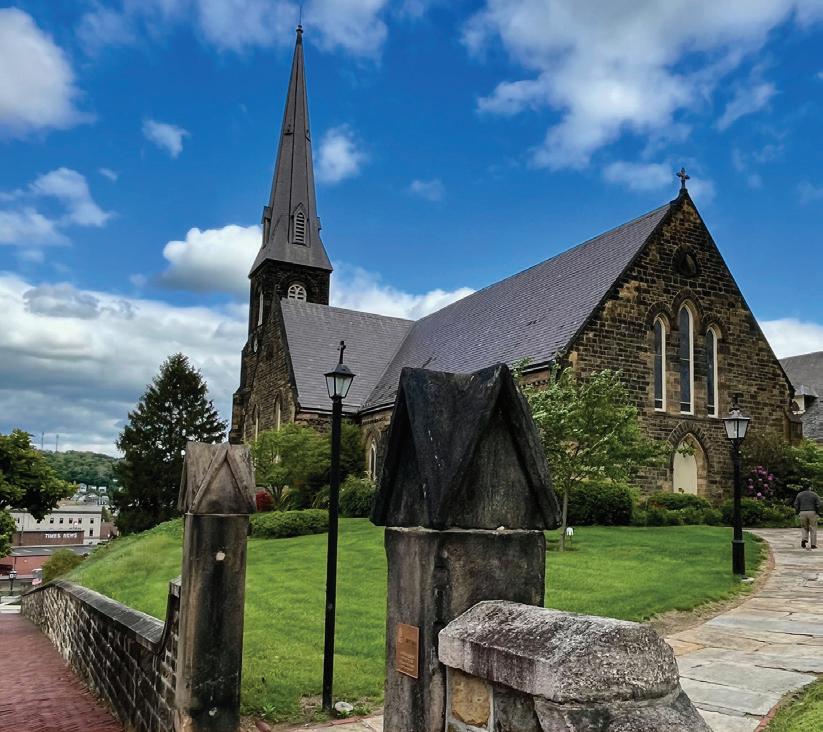
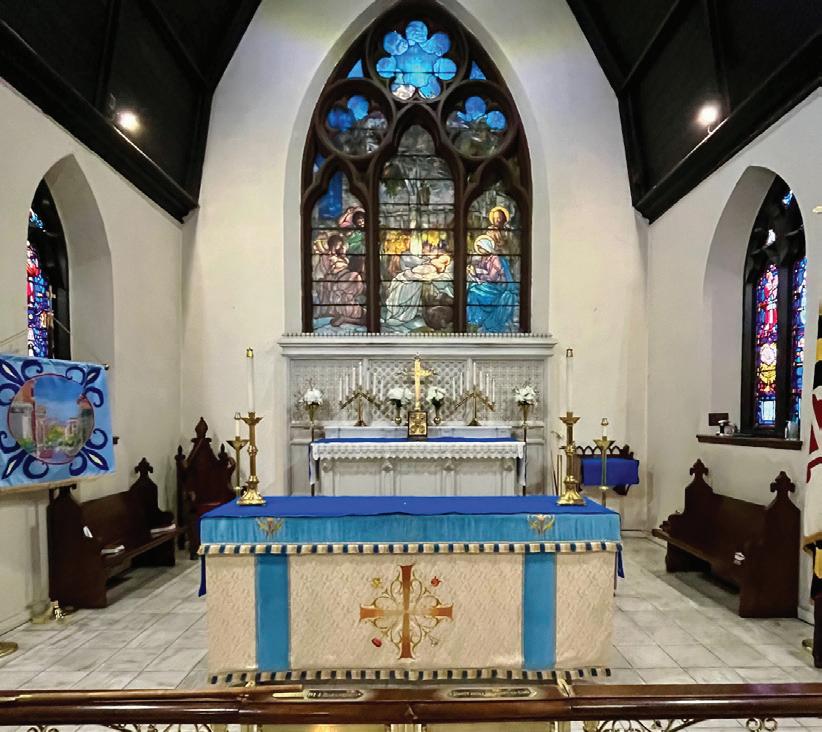
Cumberland is home to some remarkable architecture, and visitors can take a historic walking tour highlighting 32 buildings. These include the gorgeous red brick county courthouse and Emmanuel Episcopal Church, built on the site where Fort Cumberland once stood. Besides having three Tiffany stainedglass windows, the church rests on the fort’s earthworks, and tunnels below have been rumored to have sheltered runaway slaves as part of the Underground Railroad.
On pedestrian-friendly Baltimore Street, visitors can find unique shops such as the Emporium, Cumberland’s premier antiques and collectible store, outdoor dining and the historic Embassy Theatre.
Cumberland is also the starting point for the National Road, the first highway funded by the federal government, which headed north, then west, on its way to Vandalia, Illinois. A zero-mile marker monument can be found in Cumberland’s Riverside Park.
As a terminus, Cumberland was also the goal of the rival Chesapeake and Ohio Canal and the B&O Railroad. Both vied to reach Cumberland first to capture the
Nearby at 17 North Liberty, Curtis Coney Island Famous Wieners has been in the same location for 58 years, but dates back to 1918. While the small diner serves hamburgers, fish sandwiches and milkshakes, the focus is on the hot dog, which hasn’t changed over the years and comes with chili sauce, raw diced onions and mustard.
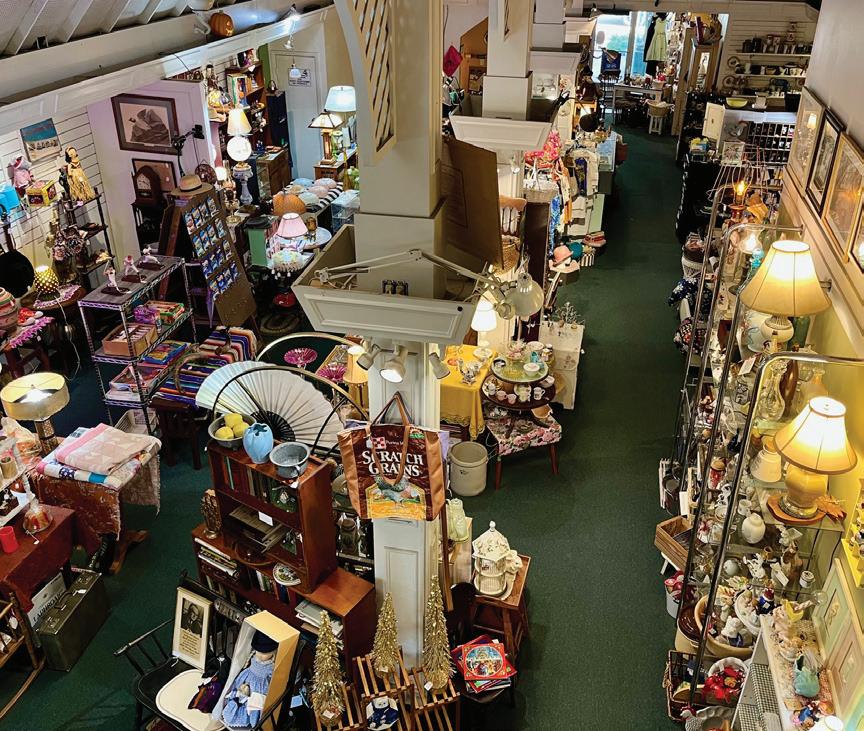
At the F. Brooke Whiting House and Museum, you’ll find a collection of antiques assembled by the house’s namesake, a worldwide traveler and connoisseur, who selected art and antiques during his travels.
For recreation, Allegany County has 200 miles of developed biking and hiking trails, and at Lake Habeeb at Rocky Gap State Park, visitors can canoe, kayak, paddleboard and swim.
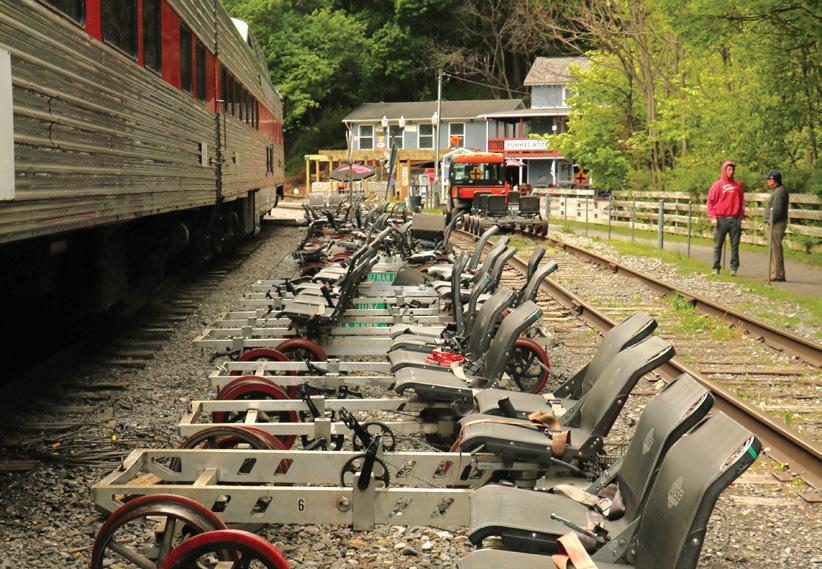
In Frostburg, adventure enthusiasts can rail bike via Tracks and Yaks, a rental enterprise. With several rail bike ride selections to choose from, the Mountain Ridge Rider option is a threehour downhill ride over bridges, through Brush Tunnel and around two horseshoe curves.
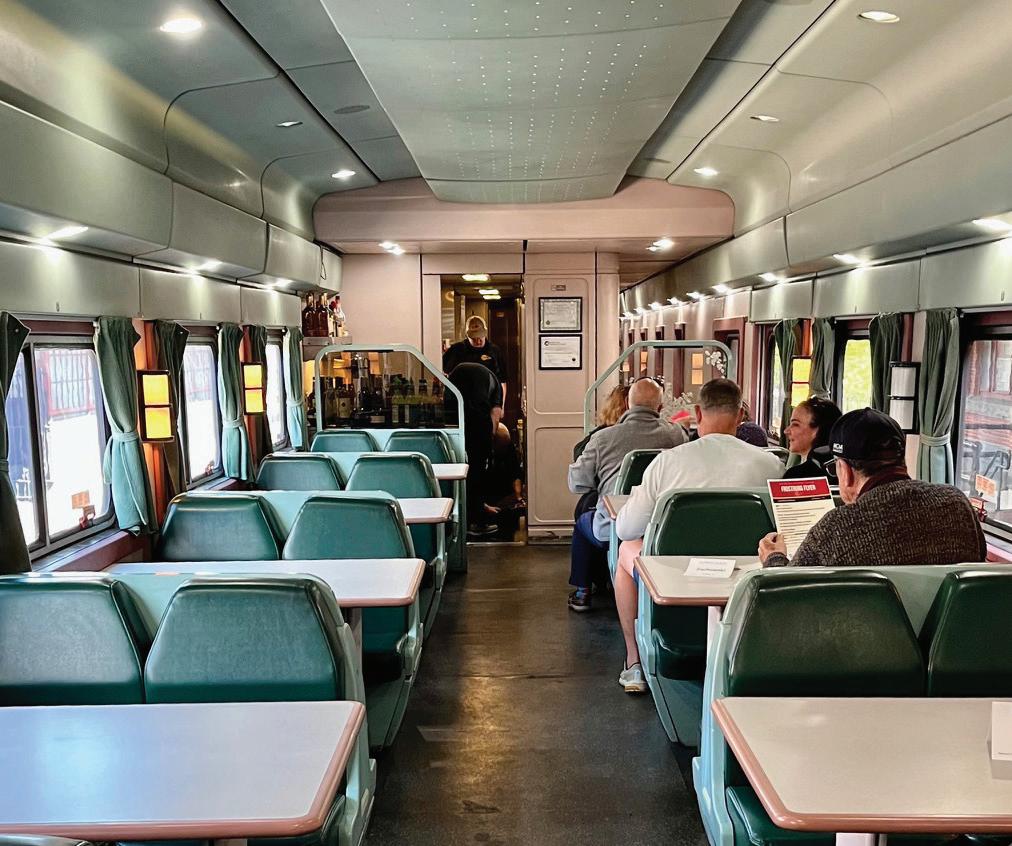
One of Cumberland’s most popular attractions, the Western Maryland Scenic Railroad, offers roundtrip rides from Cumberland to Frostburg, nearly 1,000 feet up the mountain and back, in vintage cars pulled by diesel-electric and steam locomotives.
In addition to gourmet lunch and dinner excursions, the rail line also lists murder mystery, ice cream and sunset-on-the-mountain excursions.
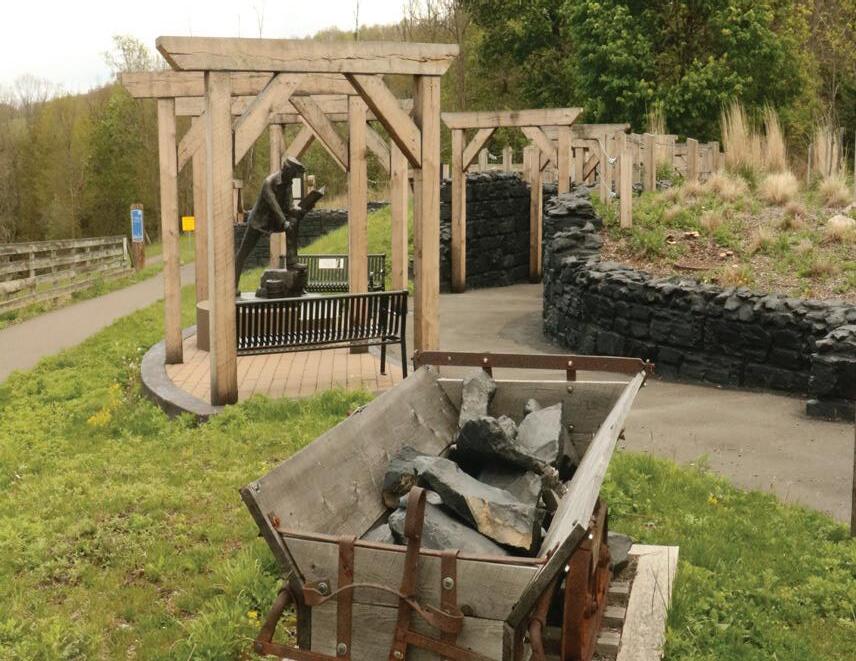
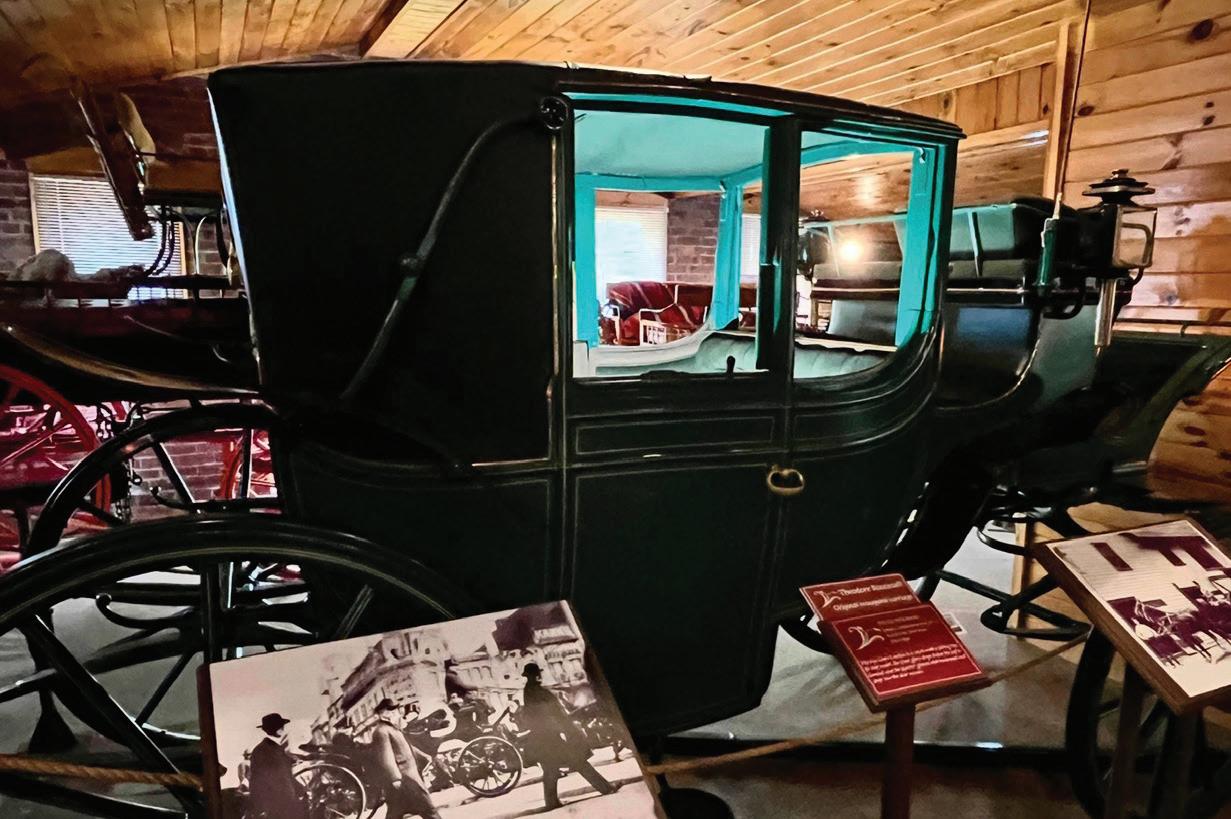
In Frostburg, riders can watch the engine reverse direction on the historic turntable, walk to the nearby Miner’s Memorial and explore one of the nation’s largest collections of antique horse-drawn carriages at the Thrasher Carriage Museum.
Other attractions to consider are the circa 1835 LaVale seven-sided toll gate house and the historic town of Mount Savage, where the first iron rail was pressed in the nation and home to the Evergreen Heritage Museum.
Cumberland is home to some culinary trails, but the most interesting of the lot is the Mountain Maryland Orange Crush Trail. At these seven different stops, you can try variations of the cocktail made with vodka, triple sec, freshly squeezed orange juice and a splash of lemon-lime soda.
If you like festivals, two of the area’s most popular are the Del Fest, a bluegrass music festival held over the Memorial Day weekend, and the Appalachian Fest, held in Frostburg this year on September 17-19.
For more information on Cumberland and the surrounding area, phone 301-7775132 or visit www.mdmountainside.com.











secure your spot on marketing materials, sponsorships must be paid for by July 13th.



TUESDAY: MEATLOAF OR PORK CHOP DINNER
WEDNESDAY: CHICKEN AND BISCUITS, SPAGHETTI WITH MEAT BALLS, MEATBALL HOAGIE, AND CHICKEN PARMESAN THURSDAY: TACOS OR WINGS
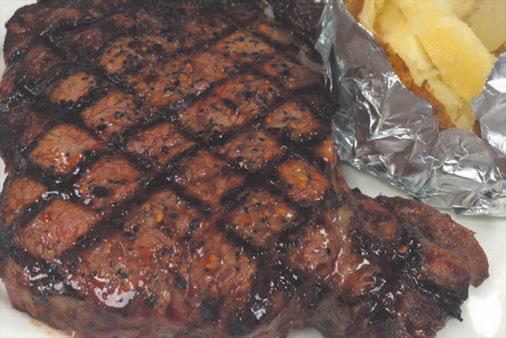
FRIDAY: NEW YORK STRIP, CRAB CAKE DINNER, SHRIMP DINNER, FISH DINNER, SEAFOOD DINNER
ALL DINNERS COME WITH SALAD, ROLLS AND 2 SIDES. OTHER SIDES AVAILABLE TO EAT IN OR TO GO DINNER
FROM 4:30 TO 8:00 P.M. KITCHEN
TUESDAY THRU FRIDAY







Looking for a fun way to commemorate our nation's 250th anniversary? How about a road trip to some of Pennsylvania's historic and iconic sites all along one road? A new initiative, the Highway of Heroes Historic Trail, has created a fun, educational way to celebrate our nation's history and learn about it through a scenic road trip along the Lincoln Highway. Together, the sites present Pennsylvania’s historic places as part of a broader, connected story and illustrate the commonwealth’s enduring role in American history, from the French and Indian War and the American Revolution through the Civil War, the Cold War and the events of Sept. 11, 2001.
The Lincoln Highway is one of the first transcontinental highways in the U.S. and one of the first designed mainly for automobiles. Dedicated back in 1913, the Lincoln Highway runs coast to coast from Times Square in New York City all the way to San Francisco. The original route ran through 13 states, including Pennsylvania. Gradually, the Lincoln Highway name was replaced with numbered routes, and most of it became U.S. Route 30 from Pennsylvania to Wyoming. This project is a collaboration among national and state historic parks, the Lincoln Highway Heritage Corridor and Pennsylvania destination marketing organizations. It creates a fun way to learn all about the Keystone State's historic sites.
By Kristin Emery
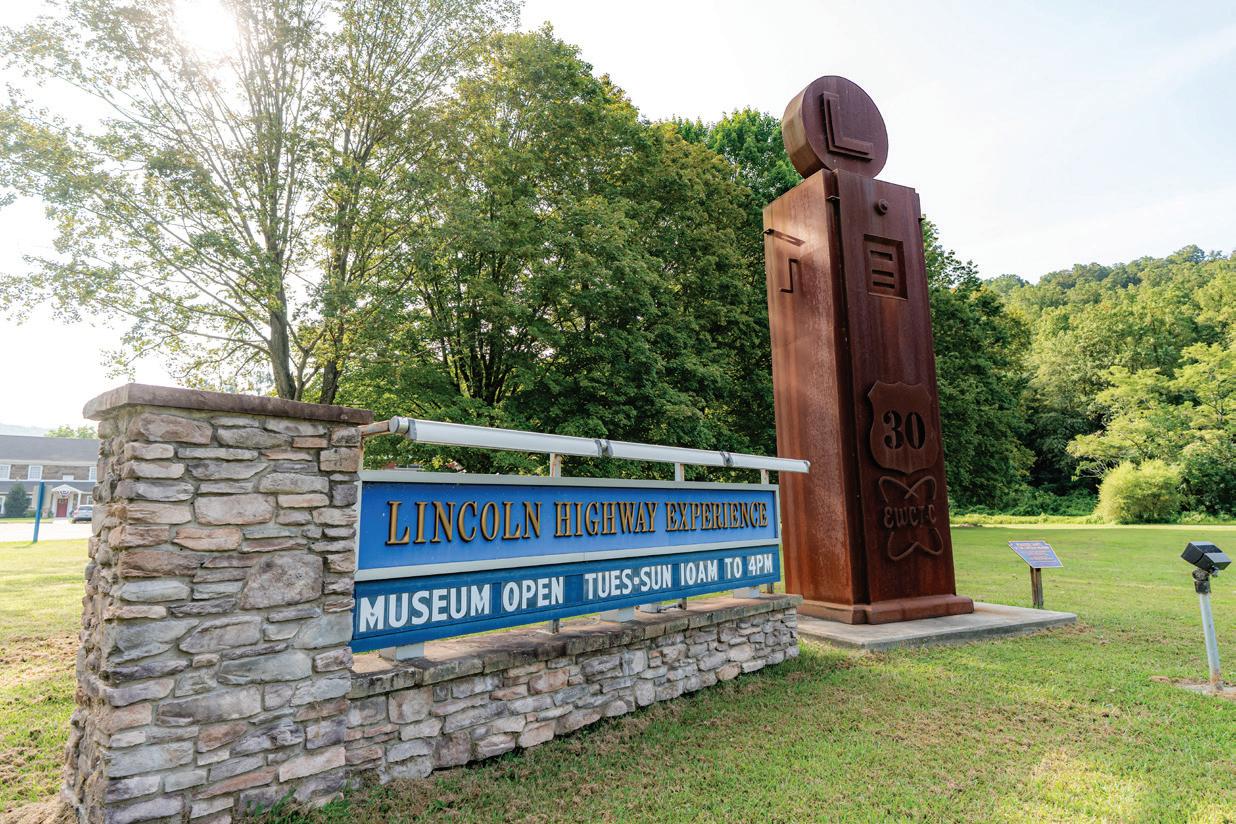
Six sites sit along Pennsylvania’s new Highway of Heroes trail across the commonwealth’s southern tier. From east to west, the trail links Independence National Historical Park in Philadelphia, Valley Forge National Historical Park, Gettysburg National Military Park, Eisenhower National Historic Site, Flight 93 National Memorial near Shanksville and Fort Pitt Museum in Pittsburgh. One bonus site (or alternate site for check-ins) is the Lincoln Highway Experience museum at 3435 State Route 30E in Latrobe, which covers 100-plus years of Lincoln Highway history along with authentic, restored 1930s Lincoln Highway artifacts. While visiting all six sites is the ultimate goal (and a road trip across the state), you could also plan a shorter, gas-tank getaway with just the historic sites closer to home. Or, start with this itinerary on one short journey, then save the central and eastern Pennsylvania Highway of Heroes sites for the next leg to finish your quest.
Visitors who complete the trail by checking in at six qualifying sites will receive a commemorative display and six challenge coins representing the participating locations. A visit to the Lincoln Highway Experience
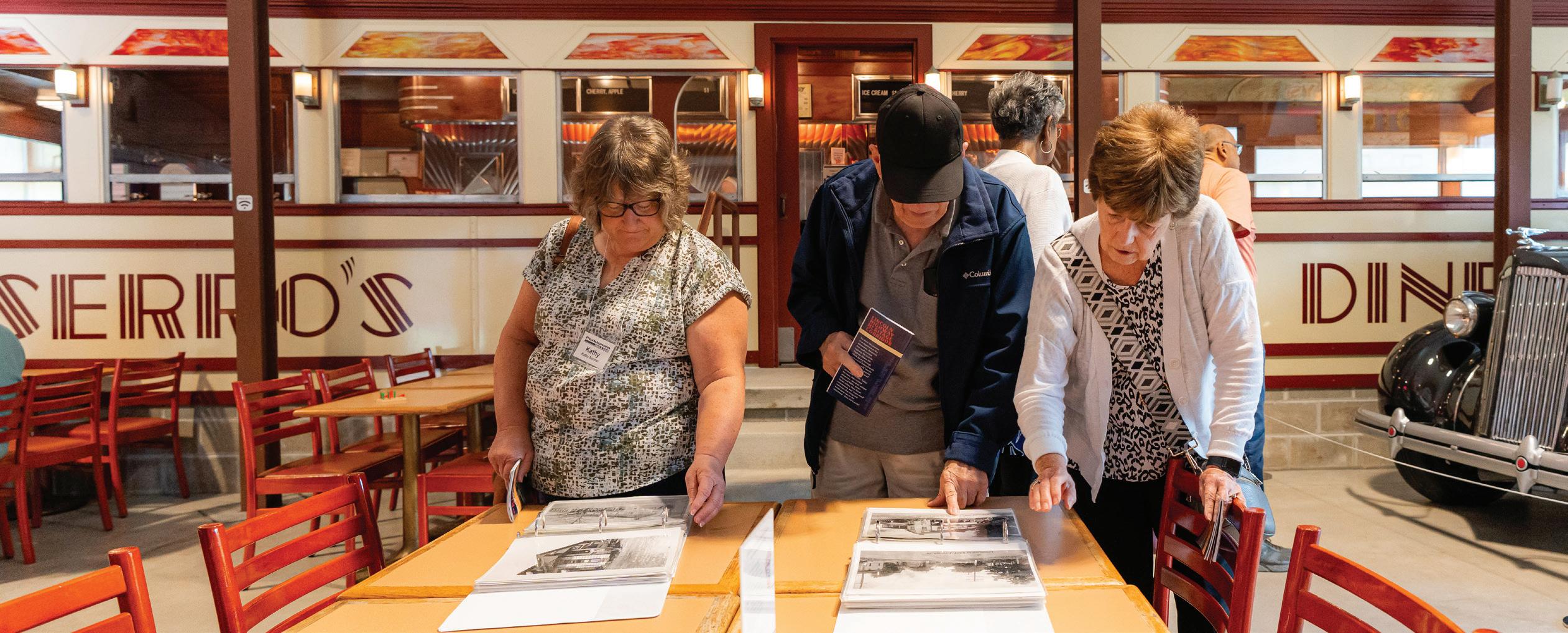


museum in Latrobe may substitute for one of the required stops. Visit the sites and use the official platform to record your visit at each site. Finish all six check-ins to receive the 2026 commemorative coin collection and display case. There is no cost to participate, and visitors have one year to complete the trail and receive the commemorative coin display. The program continues through March 26, 2027. More information about the Highway of Heroes and how to participate is available at pahighway.com. Get started in Western PA
To get started on your Highway of Heroes journey, here's a suggested itinerary beginning in Pittsburgh and taking you over into the Laurel Highlands with some other fun stops for everyone, in addition to the Highway of Heroes locations:
Day 1
• Fort Pitt Museum, 601 Commonwealth Place, Pittsburgh. Fort Pitt served as the American headquarters for the western theater of the American Revolutionary War.
• Drive Route 30 (Lincoln Highway) to the Big Mac Museum, 9051 US-30 North Huntingdon
• Drive Route 30 to Lincoln Highway Experience, 3435 State Route 30 E, Latrobe
• Walk and shop in quaint Ligonier, with dinner at The Kitchen on Main, 136 E. Main St., Ligonier.
• Spend the night at Sunset Cottages, similar to some of the cottages that used to dot the Lincoln Highway, 1651 Route 30, Ligonier. Day 2
• Tour Fort Ligonier, 200 S. Market St., Ligonier. George Washington served here and faced what he later said was the most perilous battle of his life during the Friendly Fire Incident. Family option:
• Spend the rest of the day at Idlewild and SoakZone, 2574 Lincoln Highway, Ligonier.
• Dine at Carol and Dave's Roadhouse, 122 N. Market St., 2nd Floor, Ligonier.
History option:
• Drive to Fort Necessity National Battlefield, National Pike, Farmington, PA 15437. The first shots of the French and Indian War were fired in nearby Jumonville. Washington also served here, surrendering for the only time in his military career.
• While there, also visit
• Braddock's Grave
• Jumonville Glen
• Cross of Christ at Jumonville
• Dine at Stone House Restaurant and Inn
Adventure option:
• Visit Laurel Caverns State Park (Pennsylvania’s newest and only underground state park)
• Dine at Historic Summit Inn (on the veranda for an incredible sunset)
Day 3
• Drive to Flight 93 National Memorial/Visitor Center, 6424 Lincoln Highway, Stoystown.
• While there, also visit:
• Post-9/11 US Armed Forces Memorial at Patriot Park, 6150 Lincoln Highway, Stoystown.
• Remember Me Rose Garden, 6488 Lincoln Highway, Stoystown.
• Forbes Trail Brewing, 6108 Lincoln Highway, Stoystown.
• Dine at Flying Lion Pub and Eatery, 1498 W. Pitt St., Jennerstown.
















By Olivia Kiger
Photos courtesy of the Greene County Tourist Promotion Agency

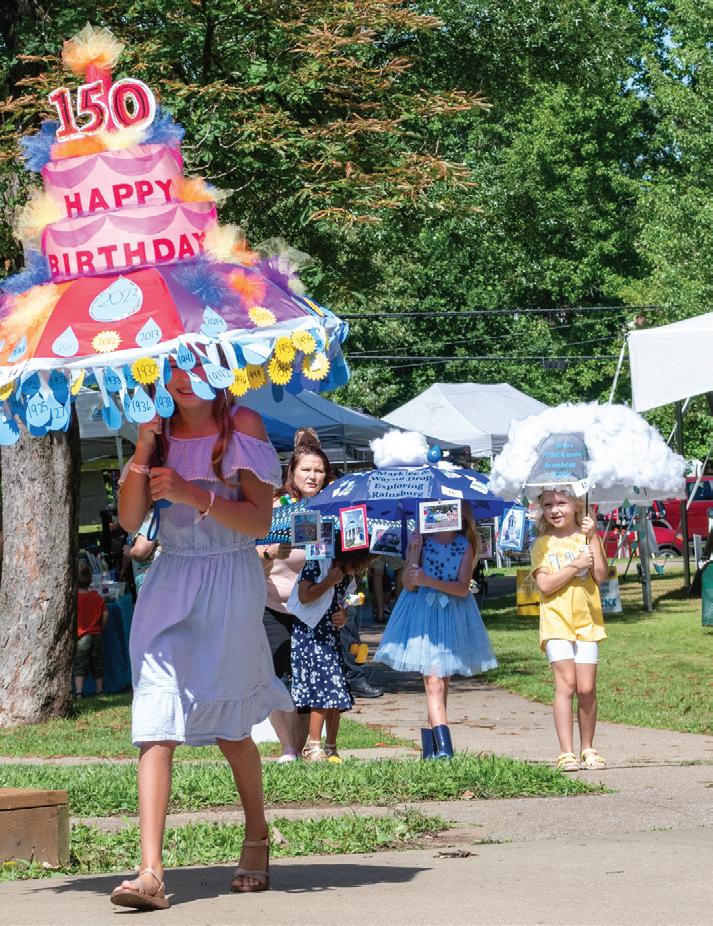
Over 150 years ago, a unique tradition of weather observation was born in Waynesburg on July 29. What began as a simple local curiosity has grown into a cherished tradition that continues today, bringing people together for live music, delicious food and the hopeful anticipation of a summer rain.
In 1874, local farmer Caleb Ely walked into J.T. Rogers & Co. Drug Store and shared a remark that would become part of Waynesburg history. He told pharmacist William Allison that it always seemed to rain on his birthday. Whether it was a light sprinkle, a steady shower or a full downpour, July 29 rarely seemed to stay dry.
Intrigued but skeptical, Allison began keeping a careful record of rainfall on July 29 each year. What started as simple curiosity soon became a tradition passed down through generations. Year after year, rain fell on July 29.
In the late 1920s, John O’Hara, then a student at Waynesburg College working parttime for local newspapers, first heard about Rain Day. Captivated by the story, he shared it with both the Washington Observer and the Waynesburg Democrat Messenger, though he felt the tradition deserved wider attention. Through continued conversations with the Allison family, he became convinced that the story of July 29 in Waynesburg needed to reach a larger audience.
In 1931, O’Hara submitted his first Rain Day story to the Pittsburgh Post-Gazette. From there, interest in the tradition spread as additional media outlets began covering the unusual annual occurrence. Today, Rain Day is recognized far beyond southwestern Pennsylvania, drawing attention each year to whether rain will fall on July 29 in Waynesburg.
In 1939, John Daly helped elevate the tradition by introducing one of its most memorable customs, the celebrity hat bet. Serving as the unofficial “hat bettor,” Daly contacted celebrities across the country, wagering their hats against the likelihood of rain in Waynesburg. If it rained, Waynesburg kept the hat. Notable wins included Bob Hope in 1948, Cassius Clay, later known as Muhammad Ali, in 1963, Arnold Palmer in 1964 and Johnny Carson in 1977. Losses included Bob Prince in 1955, Paul Shannon and the Three Stooges in 1960, Myron Cope in 1982 and Franco Harris in 1984.
Daly often spent Rain Day in quiet anticipation, dressed in his rain gear and seated near the Greene County Courthouse. He would wait for the first drop, and when it arrived, he would leave under his umbrella with a satisfied smile, knowing the tradition had held true once again.
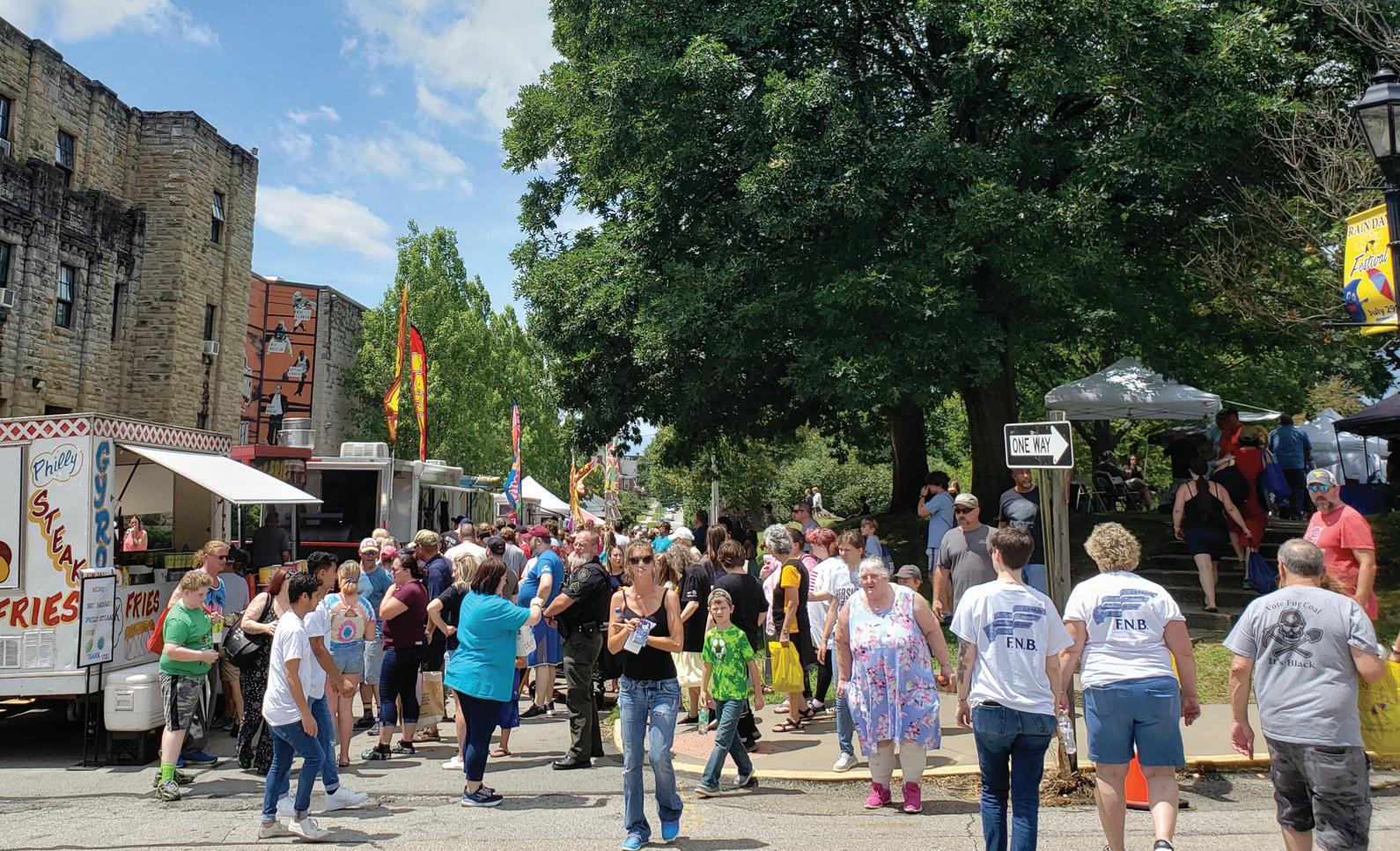


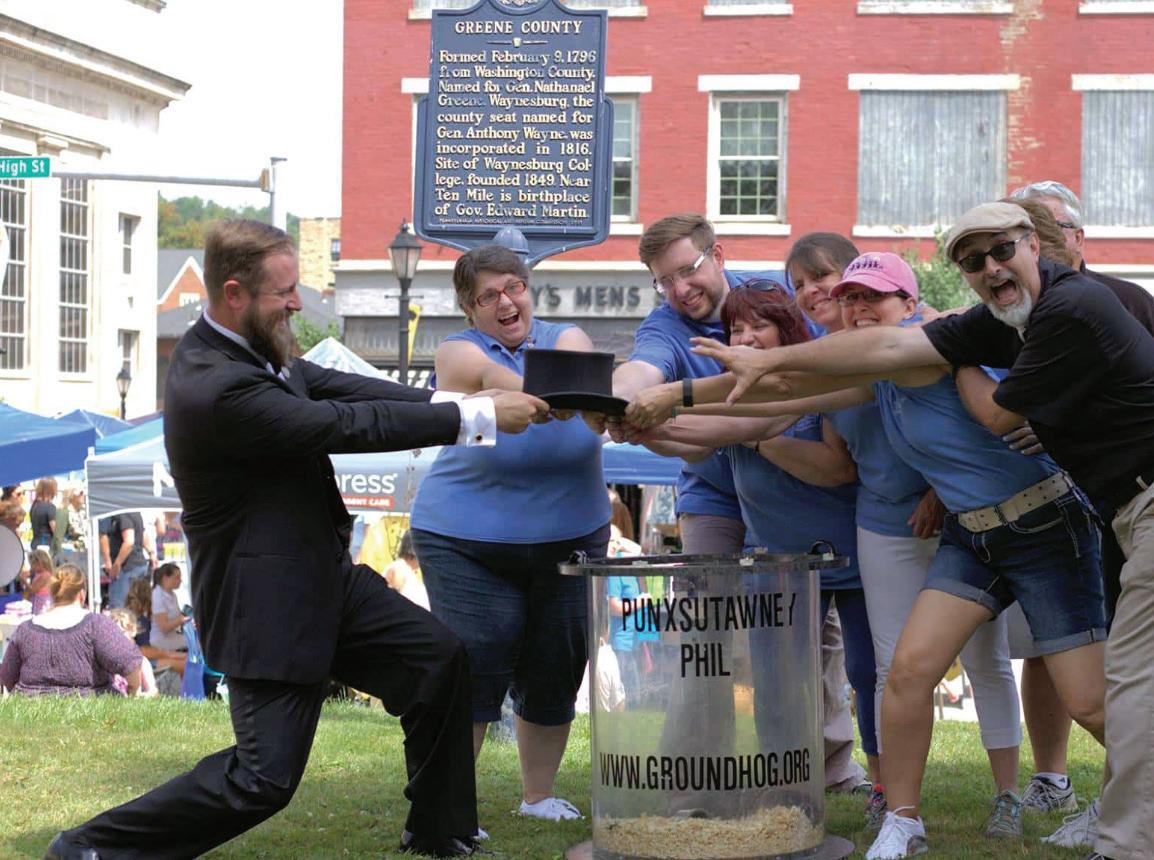
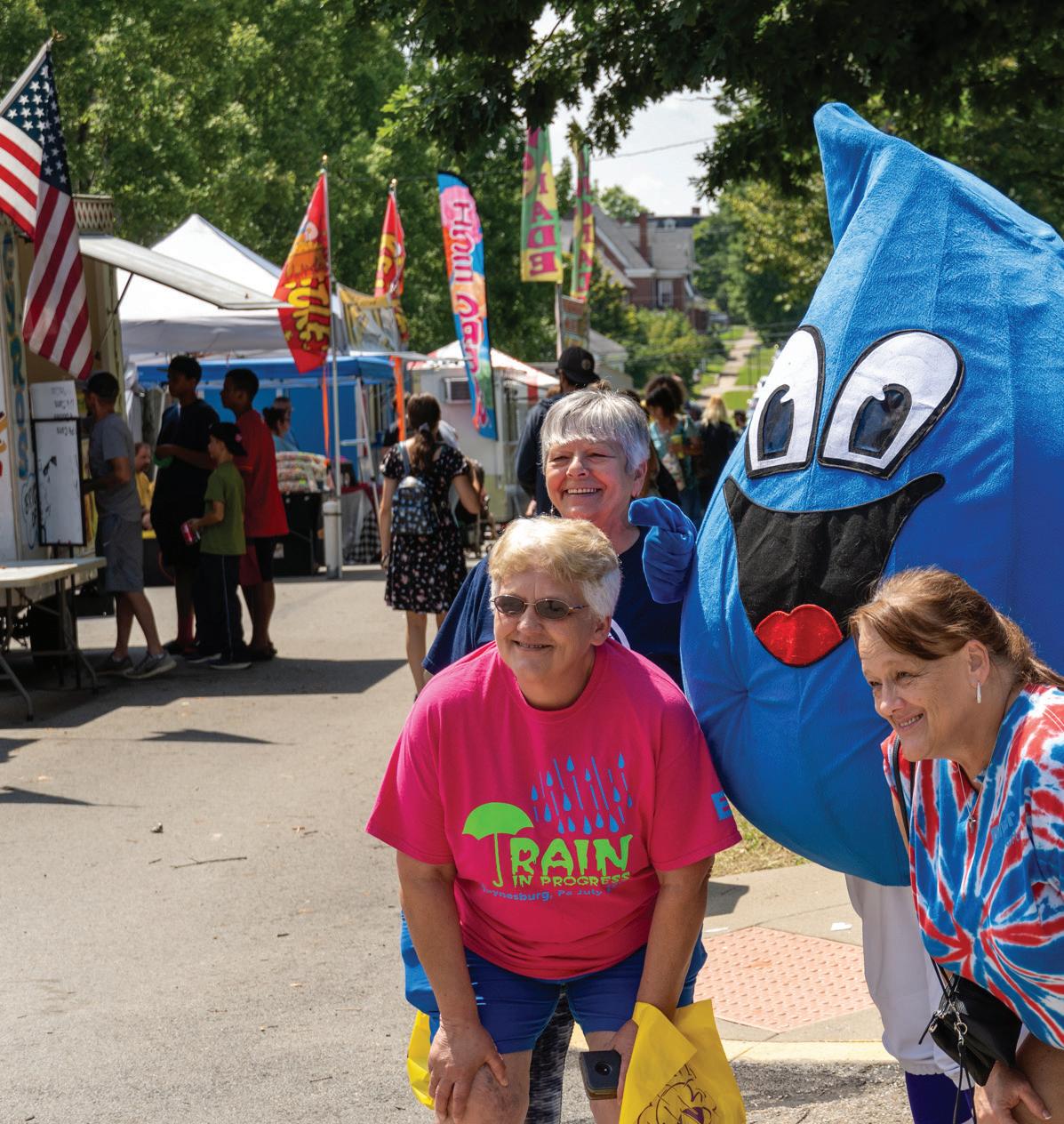
Alongside media attention and the hat bets, small community celebrations began taking shape in the 1930s. These early gatherings honored the tradition and the hope of at least a passing shower. The celebration continued to grow, and in 1979, the Waynesburg Borough Special Events Commission was formed to help organize larger festivities. A pageant was also introduced, with young women competing for the title of Miss Rain Day.
The Rain Day tradition endured through decades of storytelling, community pride and shared history. John O’Hara remained deeply connected to its legacy, helping to keep the story alive while often deflecting credit for its success.
“Daly made Rain Day famous. I am just the echo, the voice. I have always been a huckster looking for a place to tell a story.” — John O’Hara, Pittsburgh Press, 1983
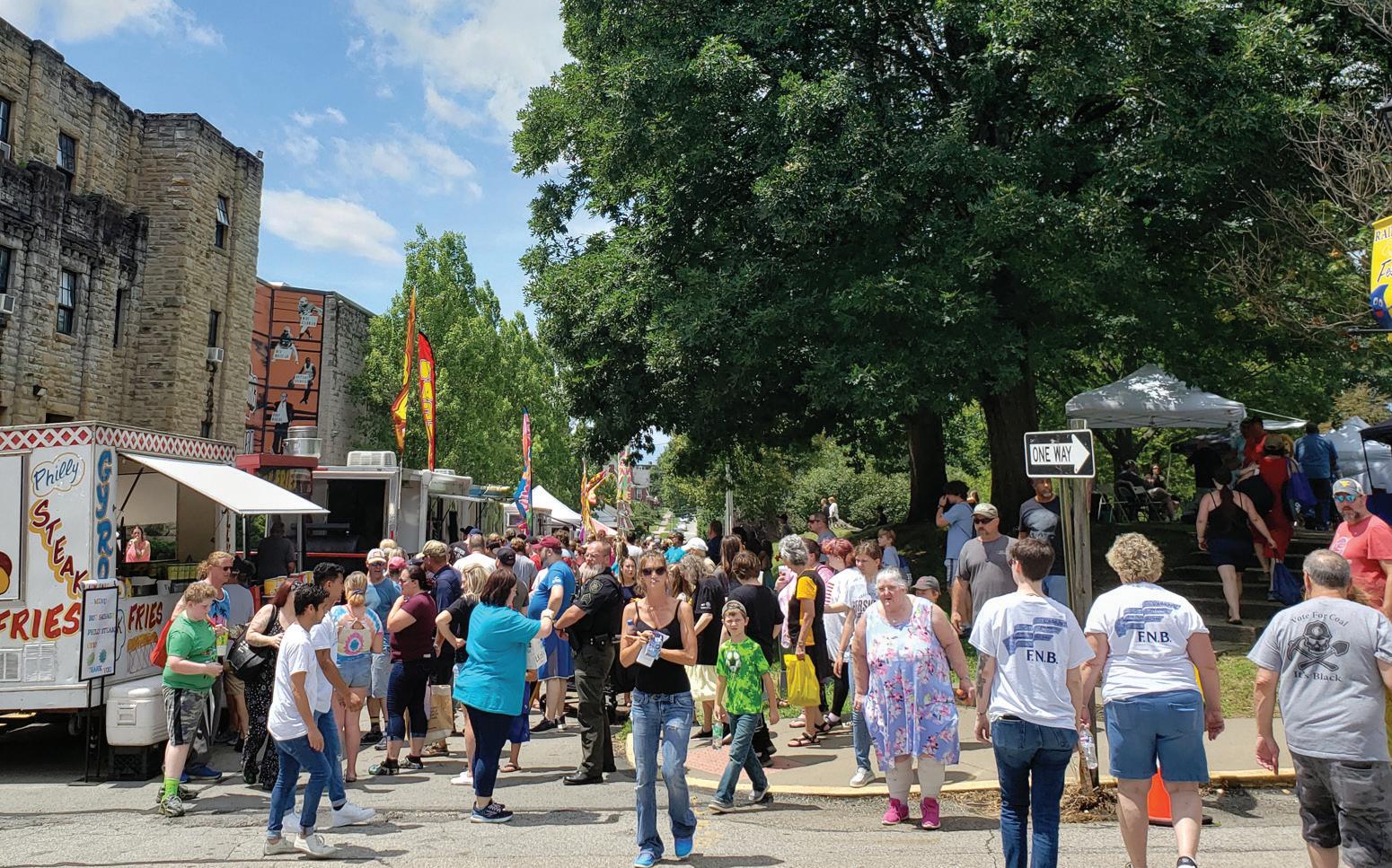
Today, Rain Day is a lively celebration featuring food vendors, games, creative attractions and live music. What began as a simple remark has become a fullscale community event eagerly anticipated by Waynesburg residents each year. Remarkably, rain has fallen on July 29 in 119 of the tradition’s 152 years. The question remains: will Rain Day bring showers to Waynesburg once again this year?
Story By April Barbe
Laurel Ridge State Park sees approximately 110,000 visitors per year, according to Kimberly Peck, Environmental Education Specialist.
It is estimated that about 70,000 of those visitors are specifically trail users.
“The Laurel Highlands offer a wonderful place to explore the highest mountains in Pennsylvania,” Peck said. “The Allegheny Mountains along the Appalachian Plateau boast an array of scenic vistas and welcome visitors who seek out seasonal hikes that are always changing. The high elevation of this area continues to offer four very distinct seasons.”
The park is celebrating its 50th anniversary this year, and Peck said she is excited to mark the milestone.
“I am very excited to work with our local community members and trail enthusiasts to have a celebration honoring a trail that means so much to all of us. It is wonderful to celebrate the vision, coordination and development of such a valuable Pennsylvania resource,” Peck said.
Multiple events are planned to recognize the anniversary, Peck said.
Peck said there will be a community celebration in June near the trail, and a 1976-style party in July near the trail's highest point. It will allow attendees to join a few hikes of approximately 2 to 3 miles.
An August event will include a celebration of a thru-hike on the entire 70 miles of the trail.
“This hike will see all types of terrain, including our most difficult at
either end of the trail, traversing the Youghiogheny and Conemaugh gorges. This hike will be advertised for those that have backpacked with us previously and have their own equipment,” Peck said.
In September, an event will celebrate the official anniversary of the completion of the Laurel Highlands Hiking Trail in 1976. Organizers will lead two hiking groups to the celebration location. Peck said each hike will be 2 to 3 miles in length one way. The total hike, out and back, will be 5 to 6 miles. The terrain will be moderate with some climbing and a brisk pace, she added.
The planned events for the Laurel Highlands Hiking Trail 50th Anniversary will all be free. The best way to stay up to date is to follow the Laurel Ridge State Park Facebook page.
Laurel Ridge State Park was established in 1967 under Governor Raymond P. Shafer. “The idea of the Laurel Highlands Hiking Trail was already being discussed among community members, Western Pennsylvania Conservancy and the Department of Forests and Waters,” Peck said.
“The plan was to complete a recreation trail that would conserve the high mountain environment and offer a place for a wilderness experience. Much of the land along the ridge was already managed by conservation agencies. Additional land purchases made the trail complete,” she said.
The staff broke ground on the trail in 1970 and completed it in late September 1976.
Over the past 50 years, Peck said, some reroutes have been introduced to the
trail to create more sustainable terrain, but the path has largely stayed the same.
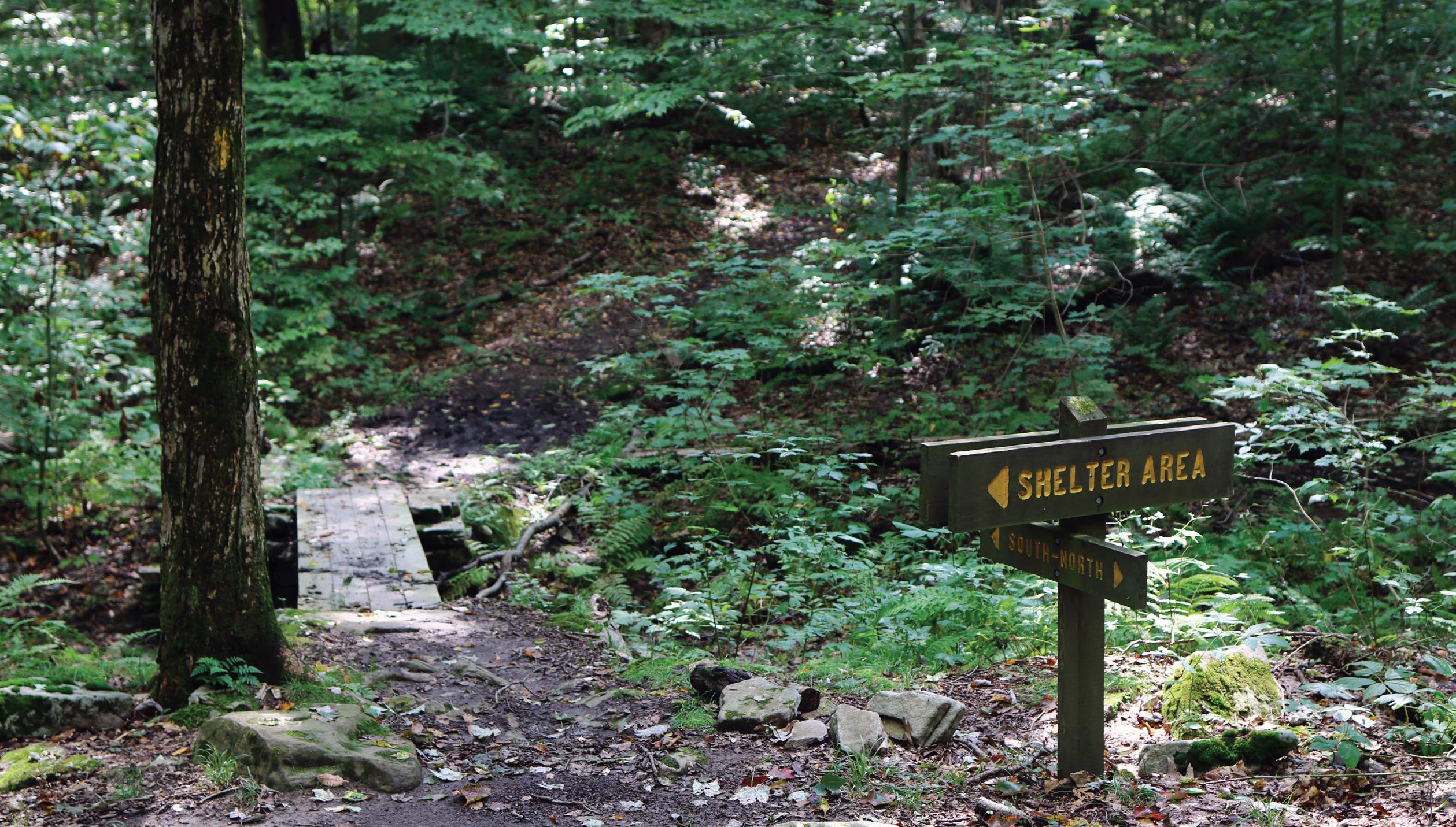
However, the shelter areas have seen upgrades, including bear poles, firewood shelters and the repointing of stone fireplaces.
“We work to educate visitors about trail etiquette to help keep our trail and shelter areas in the best shape possible,” Peck said.
The shelter areas have five Adirondackstyle shelters and space for multiple tents. There are pit latrines and nonpotable water pumps at each shelter. Firewood is available as a courtesy but not always guaranteed, she added.
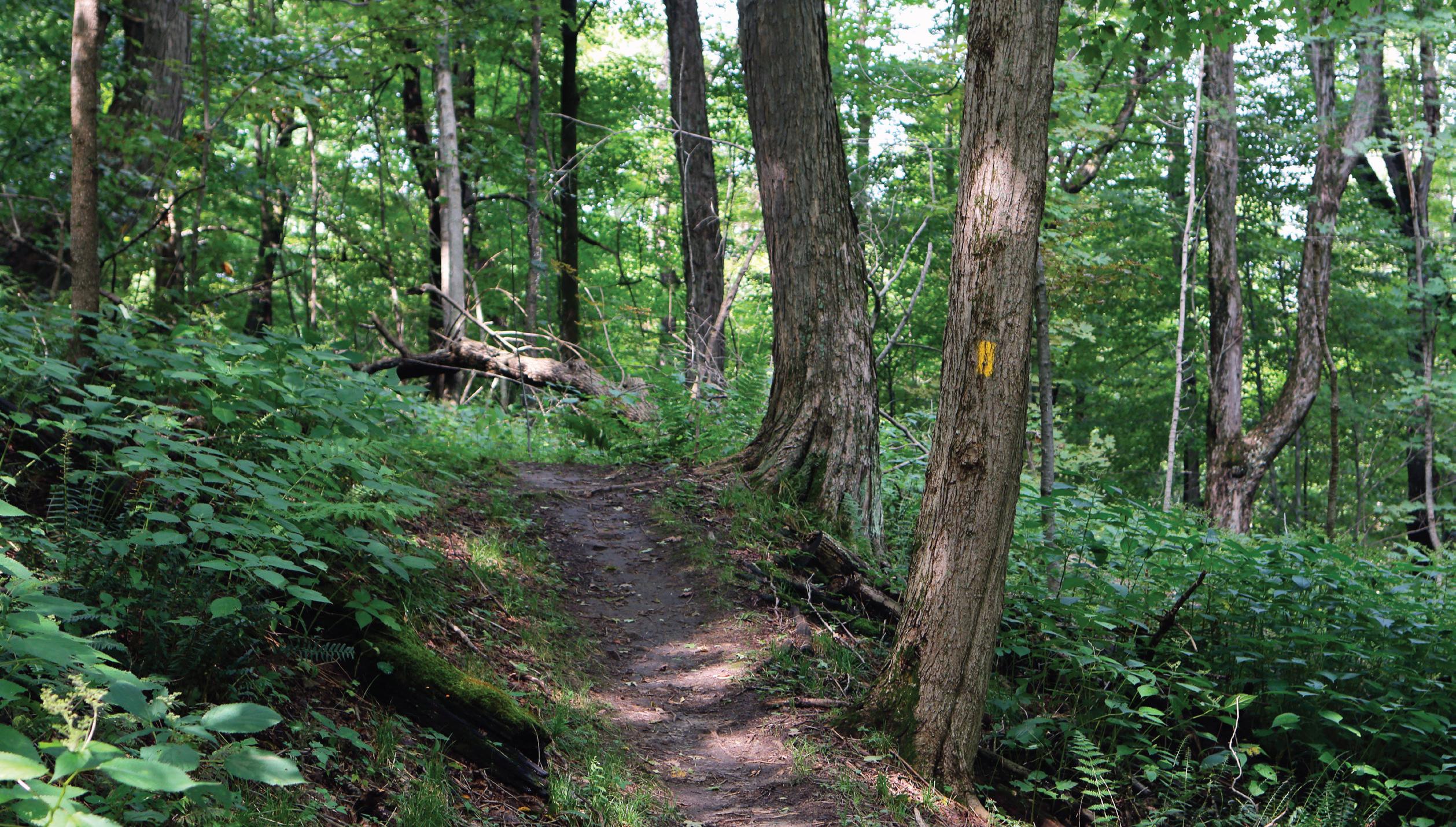
She said it is likely that the Laurel Highlands Hiking Trail is popular because it is so accessible. It traverses through four counties, including Fayette, Somerset, Westmoreland and Cambria. There are six parking areas and eight shelter areas along the trail so that it can be used by day hikers, backpackers and trail runners. Multiple access points and mile markers provide a userfriendly experience for a range of trail users.
“Visitors can use our map to be sure to navigate to the terrain they are most interested in hiking. Some sections are steep and challenging, and others are milder. The Laurel Ridge State Park map offers an elevation profile to assist hikers in finding the right hike for each hiker, runner or backpacker.”
Peck said details are still being finalized for celebratory events, but the most up-to-date information will be on the Laurel Ridge State Park Facebook page.
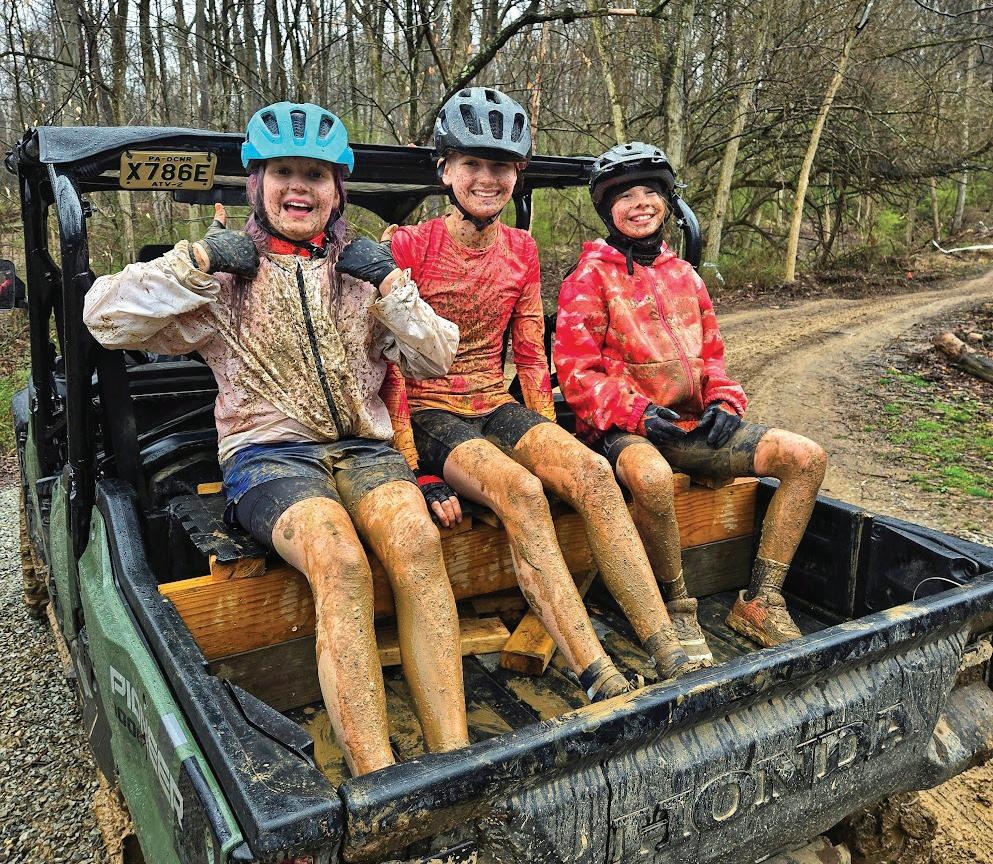
Rose Baker, Violet Baker and Anna Friedman know that getting on the shuttle and being hauled to the top of the hill is an adventure in itself.
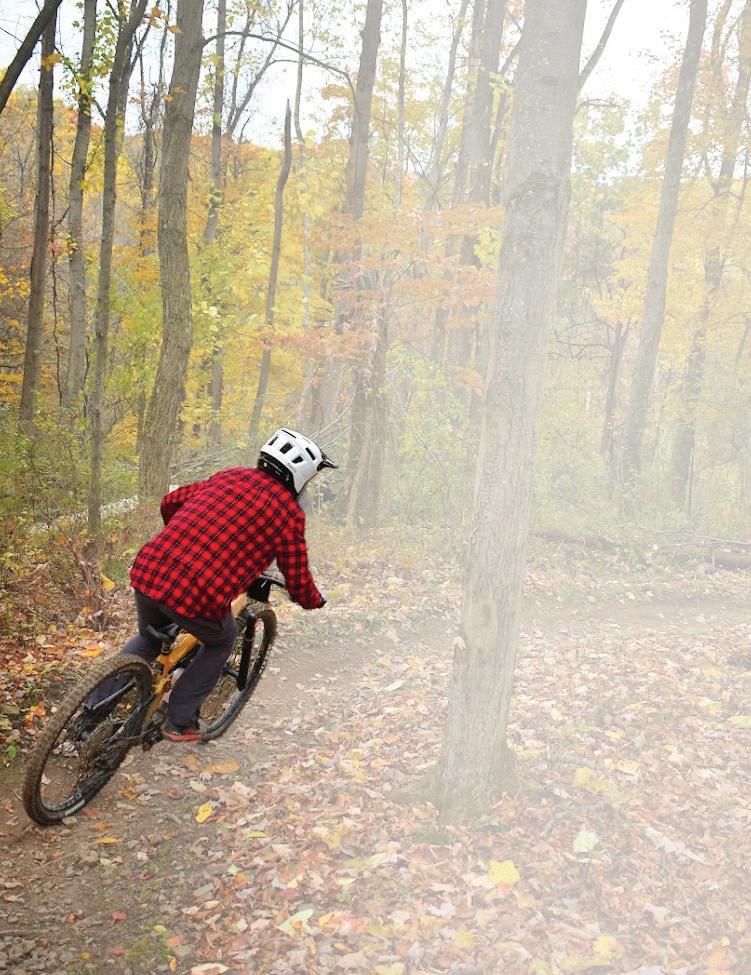
As the newest gravity-focused mountain biking trail in the area, riders have described Tower Hill Trail Center as almost like an amusement park.
“We love the thrill of riding downhill trails,” said Dave Friedman. “It’s a roller coaster that you get to control. The trail system is large enough to entertain you for the day and small enough that you cannot get lost. There is inherent risk, but managing those risks is what makes it great.”
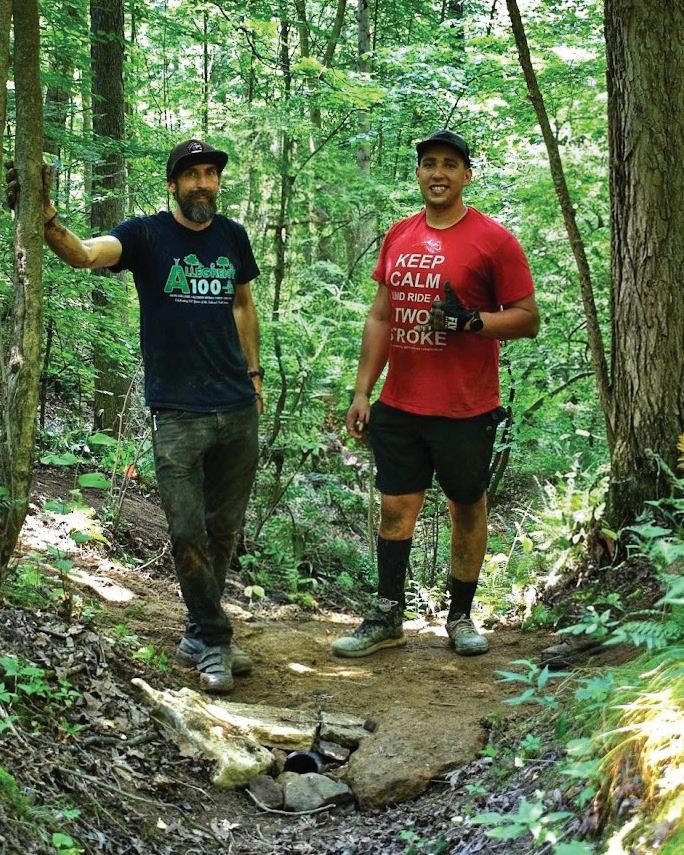
Tower Hill Trail Center is owned, operated and built by Nathan Boyle and Ian Santi. “We are just two avid mountain bikers that got tired of driving more than three hours for gravity riding and want to see the local mountain biking community grow,” said Boyle. “We started a grassroots trail center. No big loans, just two guys, a dream, lots of hand tools and one mini excavator. We are currently in phase two of construction and working hard.”
Boyle and Santi are not trail builders by profession, so as they learn and expand the trail, they are seeking as much feedback as they can from the community of riders.
The primary difference between a mountain biking trail and a gravityfocused mountain biking trail is the emphasis on pedaling.
“When you are on a mountain biking trail, you are more focused on putting in mileage for fitness, but on a gravity-focused trail, you just want to go downhill. If you have to pedal, some people get upset. They’re like, ‘Why am I pedaling?’”
Boyle and Santi both have full-time jobs, so they work on the trails on the weekends. They have been building the trail on 40 acres of overgrown hillside on Boyle’s parents’ property for three years, and it is still not complete.
“So normally, you get some investment money and put it all together,” said Boyle. “Most of these parks that have been built are in the public space. There are not
many private ones. They are growing, but most of them are in the South and the Southwest. Some of the bike parks in the north are also ski resorts. That’s typically where you see them. It’s that type of style where you ride the lift up, and then you take the fun trails back down.”
Boyle said the type of trail where riders use a shuttle to reach the top came about four or five years ago.
“That’s how we caught wind of it,” said Boyle. “We went down through North Carolina, Georgia and Tennessee. And, I was like, ‘Wow, this stuff’s great. We really need this up here.’ So, all this stuff just kind of came together, all the little bits and pieces. We started building it. We are not finished. We still have a ways to go to fully open the park and say we are done.”
Boyle said they have about 40 acres they are working with.
“It’s very interesting terrain, and it all funnels back down to a common spot,” said Boyle. “So, it’s really good for what we’re doing.”
Boyle said they started to hand-build and then slowly began picking up equipment.
“The first year that we were open, we started a Patreon (a monetization platform for content creators),” said Boyle. “For the bike park, we’re like, ‘Hey, give us a few bucks a month, and you can come out and ride when we have ride days.’ Stuff like that. That was before we had shuttles running. We had to push to the top of the hill. It was all very grassroots. This whole thing is very grassroots. We would love to be super professional, but until we have some dough, this is all very, ‘everybody, help out please’.”
Boyle said that with the money they received, they purchased a little backhoe, an excavator and a skid steer.
Avid rider Lucas Wright is one of those who have stepped up to help out quite a bit.
“I usually do whatever they need,” said Wright. “I have done a lot of clearing, digging and stacking berms. I try to ride there whenever I can. If I have nothing going on, I’ll probably spend the day there. It’s a great place, and the people are awesome. I think what Nate and Ian have built is great. It is the only shuttle park near me,
and it has really progressed my skills over the years. There are so many features to learn that it will help with other trails. I have also met some great people there.”
Dave Friedman, his wife, and their two daughters, Anna, 10, and Sarah, 8, all have season passes to Tower Hill Trail Center. They ride as many shuttle weekends as they can. He said that age doesn’t matter and the main purpose is to have fun with friends.
“If you show up on your own, you will be riding with friends before you know it,” said Friedman.
Friedman wanted to ease riders’ concerns about the trails' difficulty and entice them to check them out.
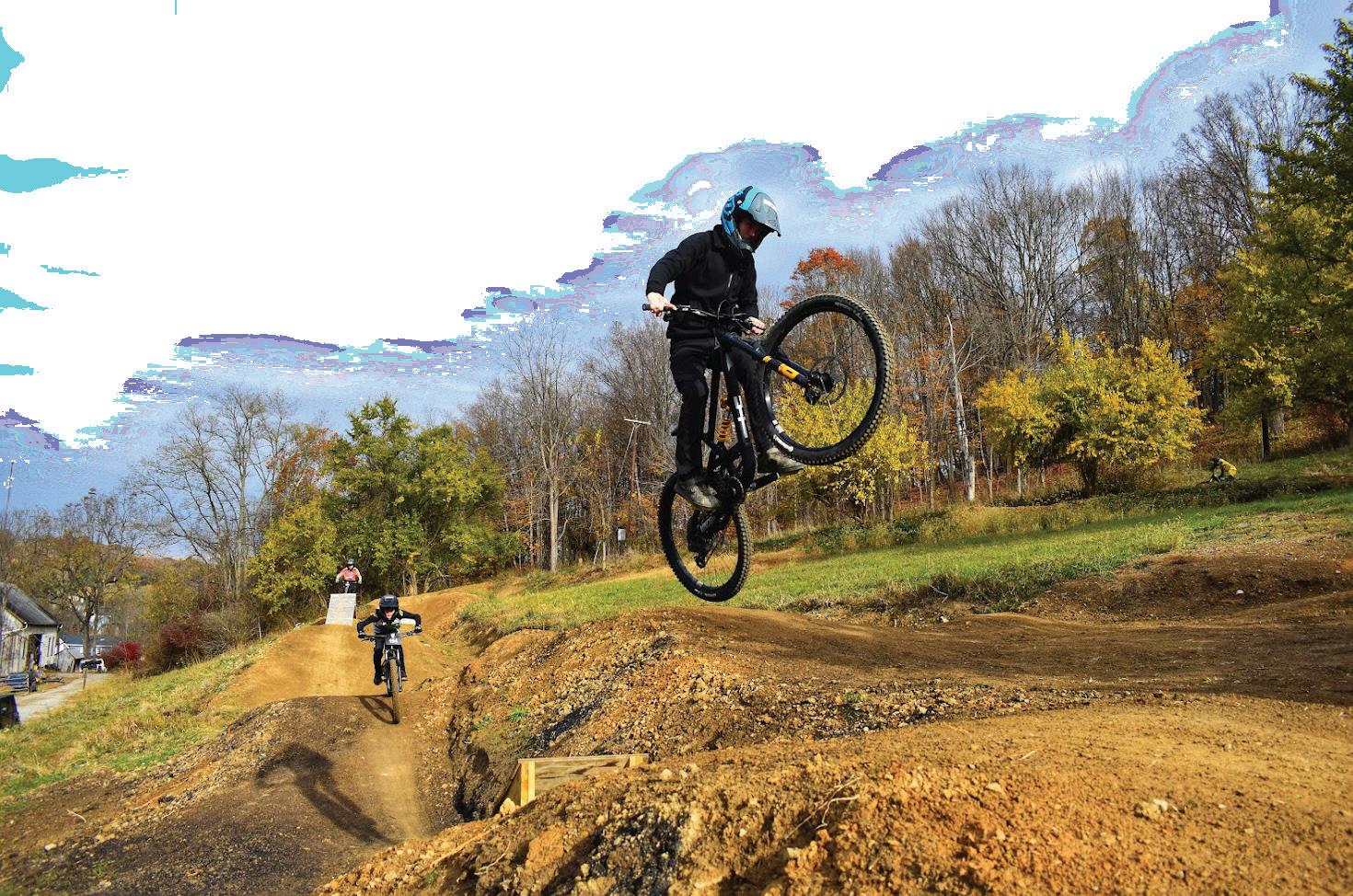
“The trails at Tower Hill Trail Center reflect the advancements in bikes with a full range of trails for all abilities,” said Friedman. “You do not need a fancy bike to try the easier trails, but your skills will be tested. For more advanced riders, there are larger features that you need to see for yourself. There is a sense of nostalgia, with simplicity, and it is continually developing with new trails and features. It’s a unique layout unlike anything else in the area with a range of jumps, log overs, wooden drops and downhill creek ravines.”
The trails at Tower Hill Trail Center are not rail trails; they are for those who are interested in a more interesting ride.
“If you go out to your local trail system, it’s going to be a lot of single tracks,” said Boyle. “Where we are very feature-heavy.
to the top of the hill is an adventure in itself.
Tower Hill Trail Center offers shuttle day passes and pedal day passes. The difference is that on a pedal day pass, you have to get yourself to the top using a climbing trail. Boyle said many people come out with e-bikes and pedal themselves to the top. But others choose to use the shuttle.
Since there is a fee to access the park, that comes with the benefit of being able to ride whenever you want.
Boyle said that everyone signs a waiver and that, in addition, they have a risk management plan that they have given to the local EMS.
“We have had no issues so far,” said Boyle.
An upcoming racing event planned at Tower Hill Trail Center is the Downduro Cup, which will begin on May 31 with round 1. Round 2 will be June 28, and round 3 will be Nov. 1. There will be shuttles to the top. Six to eight stages on a mix of our trails (it will never be the same), with a fee of $40 per race, and spectators are free.
“I would definitely recommend it to anyone at any skill level with any mountain bike,” said Wright. “The blue trails are great beginner trails and teach you skills for the black trails. There are so many cool and weird features at the park, it forces you to learn them and just makes you an overall better rider.”
Boyle said he would love to see more local mountain bike riders on their trails.
everybody into the scene.”
Boyle said they will continue to build and hope to finish phase two by the end of this year.
He said they would love to help build more mountain bike trails locally to bring more mountain bikers to the area. He said that if someone manages nearby parks and wants to build a trail, he would love them to contact him to build it.
“If there were more trails here at all for mountain bikers, more people would have mountain bikes; that would just mean there is more of an audience for our hill,” said Boyle. “We are not trying to compete; we just want more trail on the ground.”
Tower Hill Trail Center is located at 2605 East Finley Drive in Claysville. Check the website, towerhilltrailcenter. com, for pricing. Tower Hill Trail Center is open 24/7 for pedal laps.









JUNE
June 13


Power Lifting Alpha Fitness
7:45am-5pm
JULY
July 11 & 12
Duncan Miller Sale
11th - 9am - 4pm




12th - 10am - 3pm
AUGUST
August 15th-22nd
Sept 17th, 18th and 19th Little Blessings Dressing Consignment Event
Thur. 17th - 8am-8pm Fri. 18th - 10am-3pm Sat.19th - 8am-2pm
Sept 24th Senior Expo 10am- 1:30












Washington Co Agricultural Fair Fairgrounds


Sept 26th Train Show 9am-3pm”







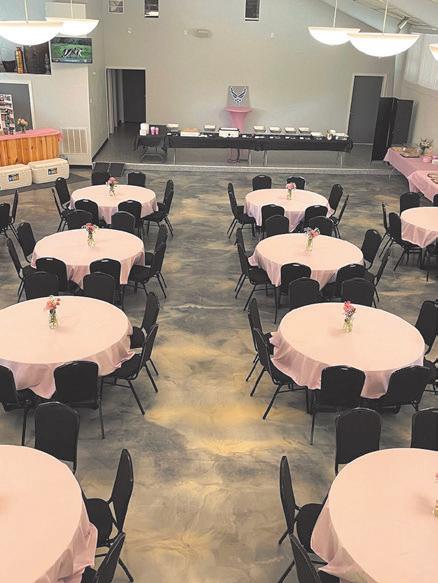
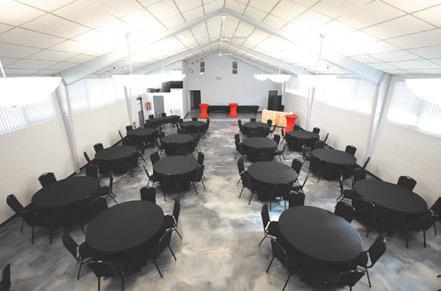
From a meeting for 10 people to a trade show for thousands, The Washington County Fairgrounds & Expo Center has the facilities and the experience to help make your event a success. The Fairgrounds venues are situated on 156 acres and include five exhibit halls, ten barns, a show tent, show arena, a three thousand seat grandstand, and more parking than you will ever need.