MANAGEMENT PROGRAM BULLETIN
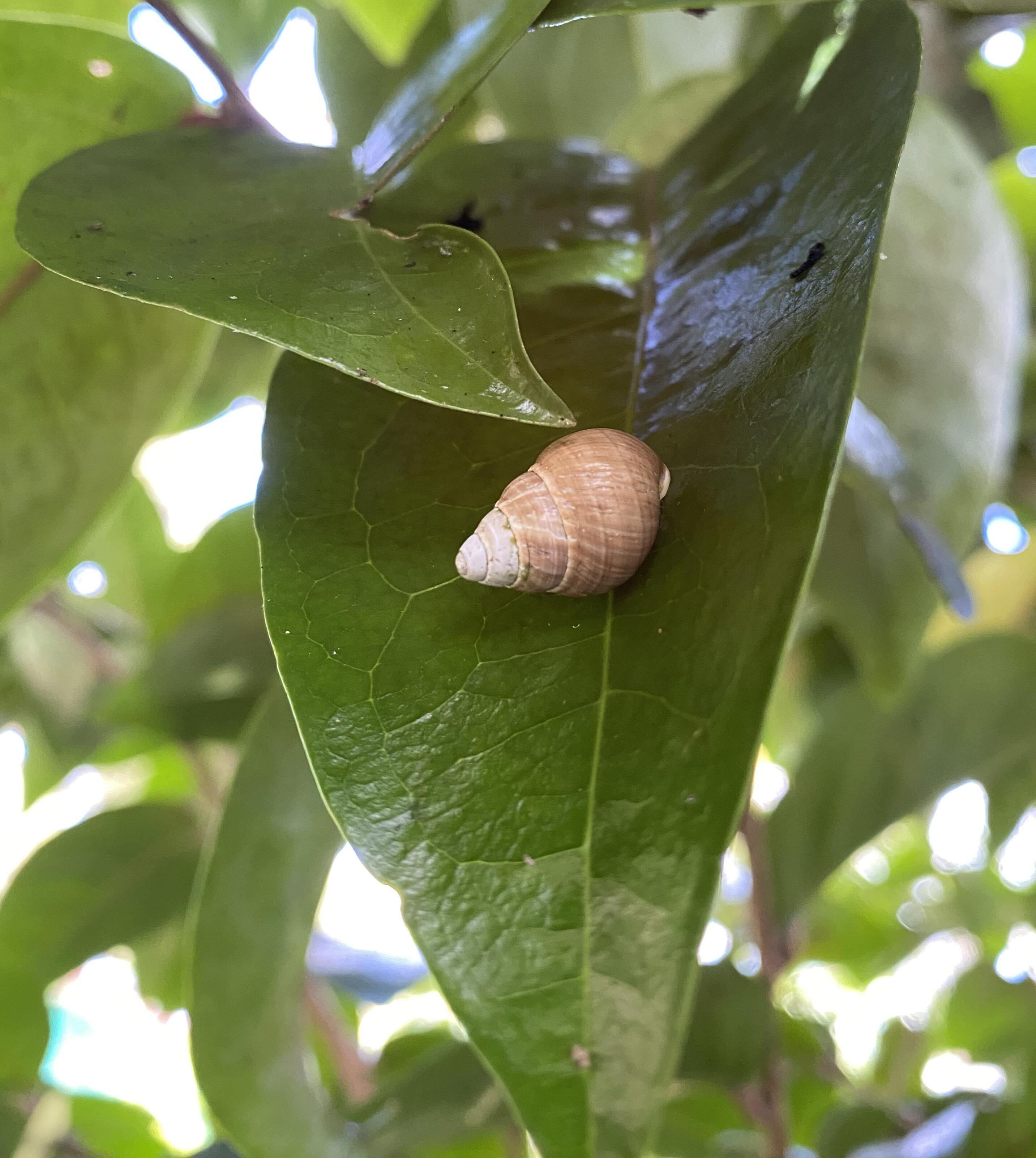
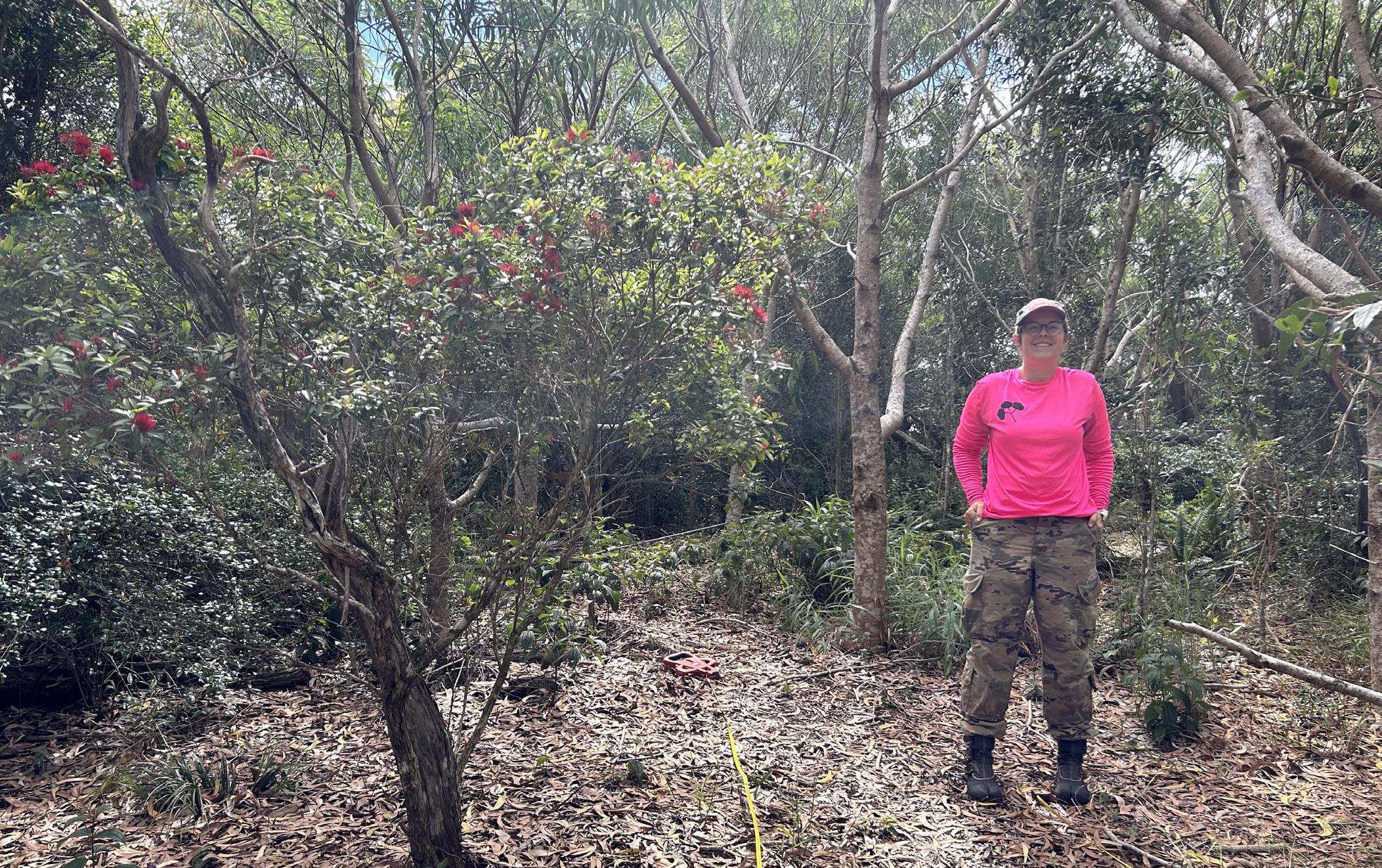
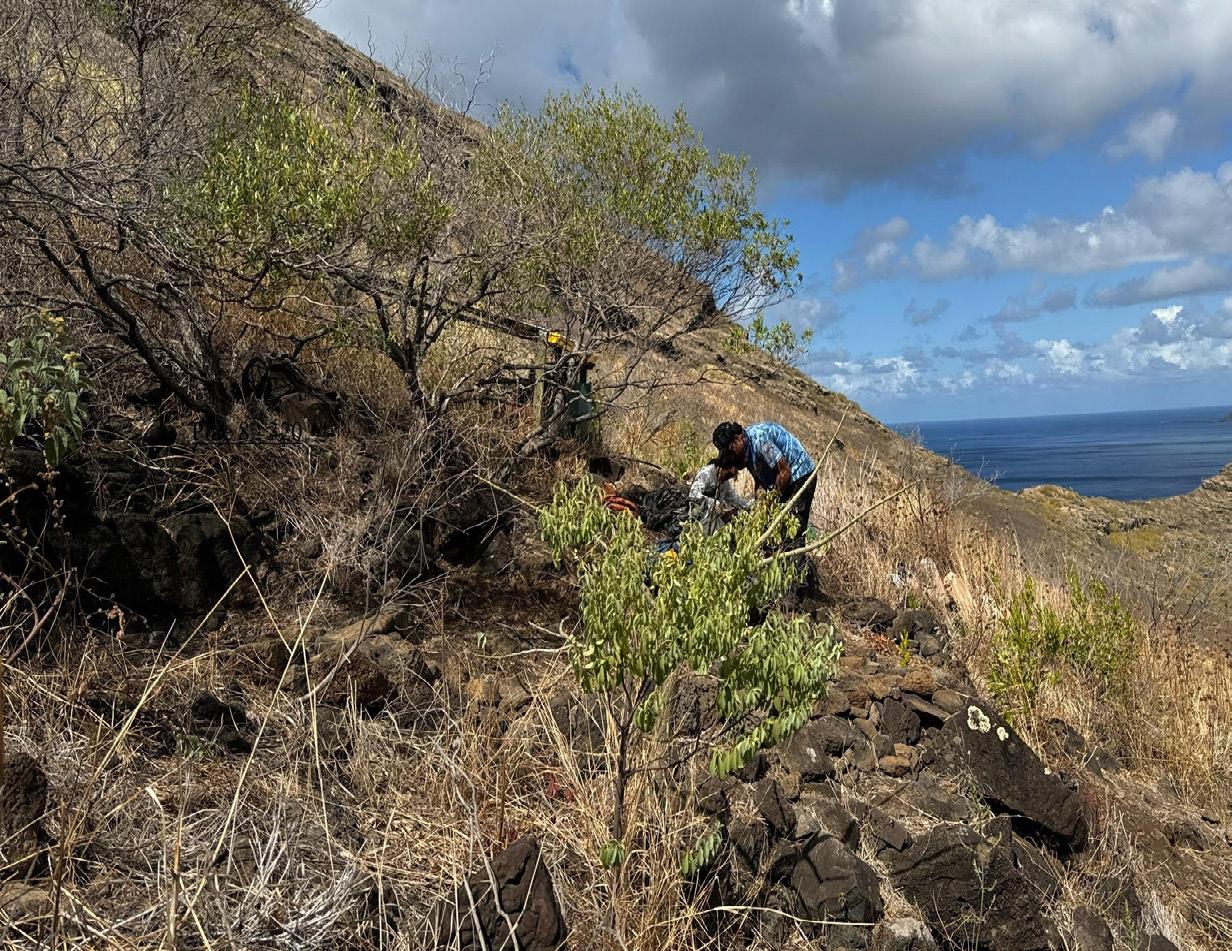
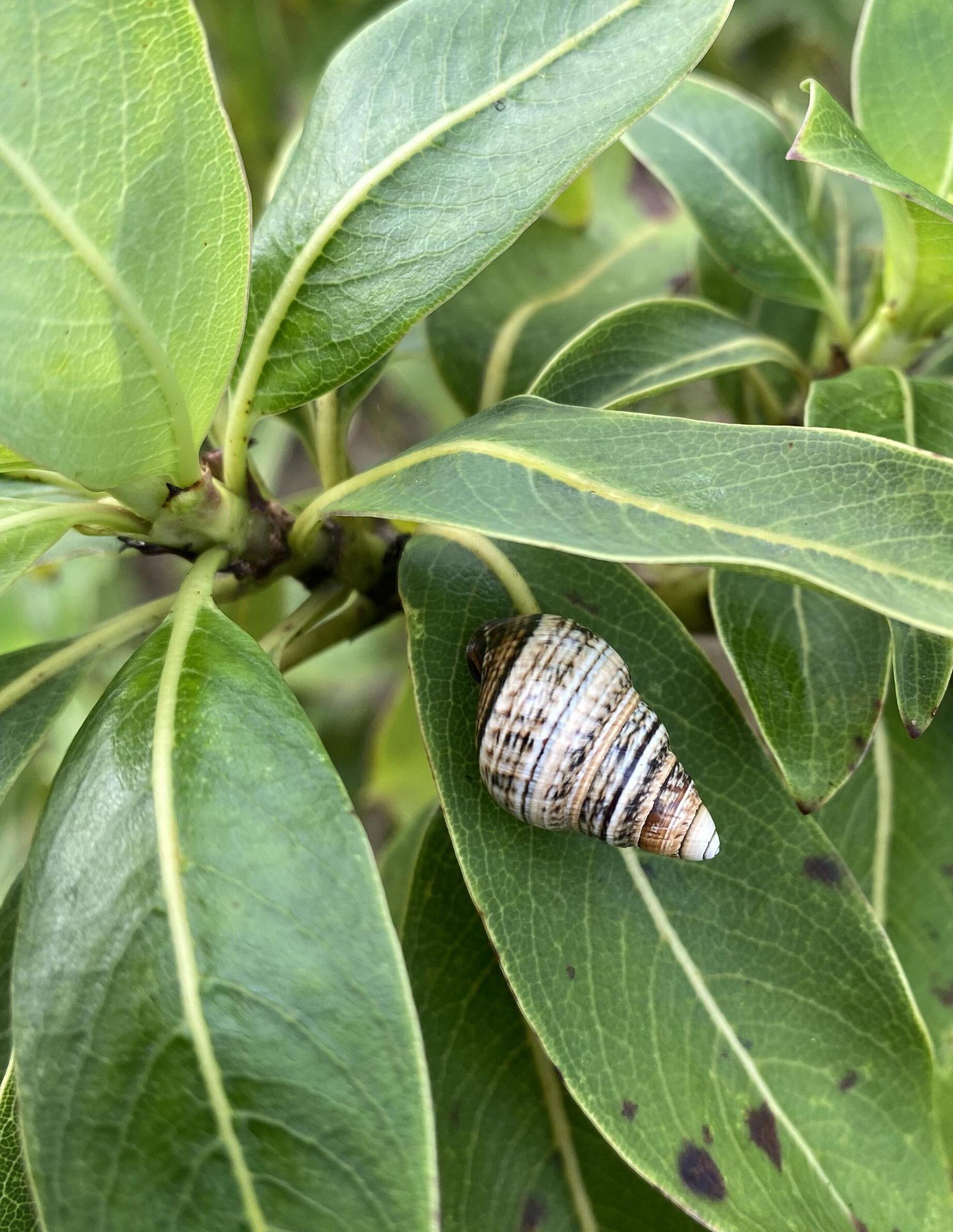
PRECEDING PAGE A kāhuli (Achatinella mustelina) resting on a hame (Antidesmaplatyphylla) leaf, one of its preferred host trees, at the Makaleha West snail exclosure. BACKGROUND At the West Makaleha snail exclosure, native understory increased from 26% to 53% in just three years from a combination of natural recovery and outplanting.
TAYLOR MARUNO & ANRPO STAFF
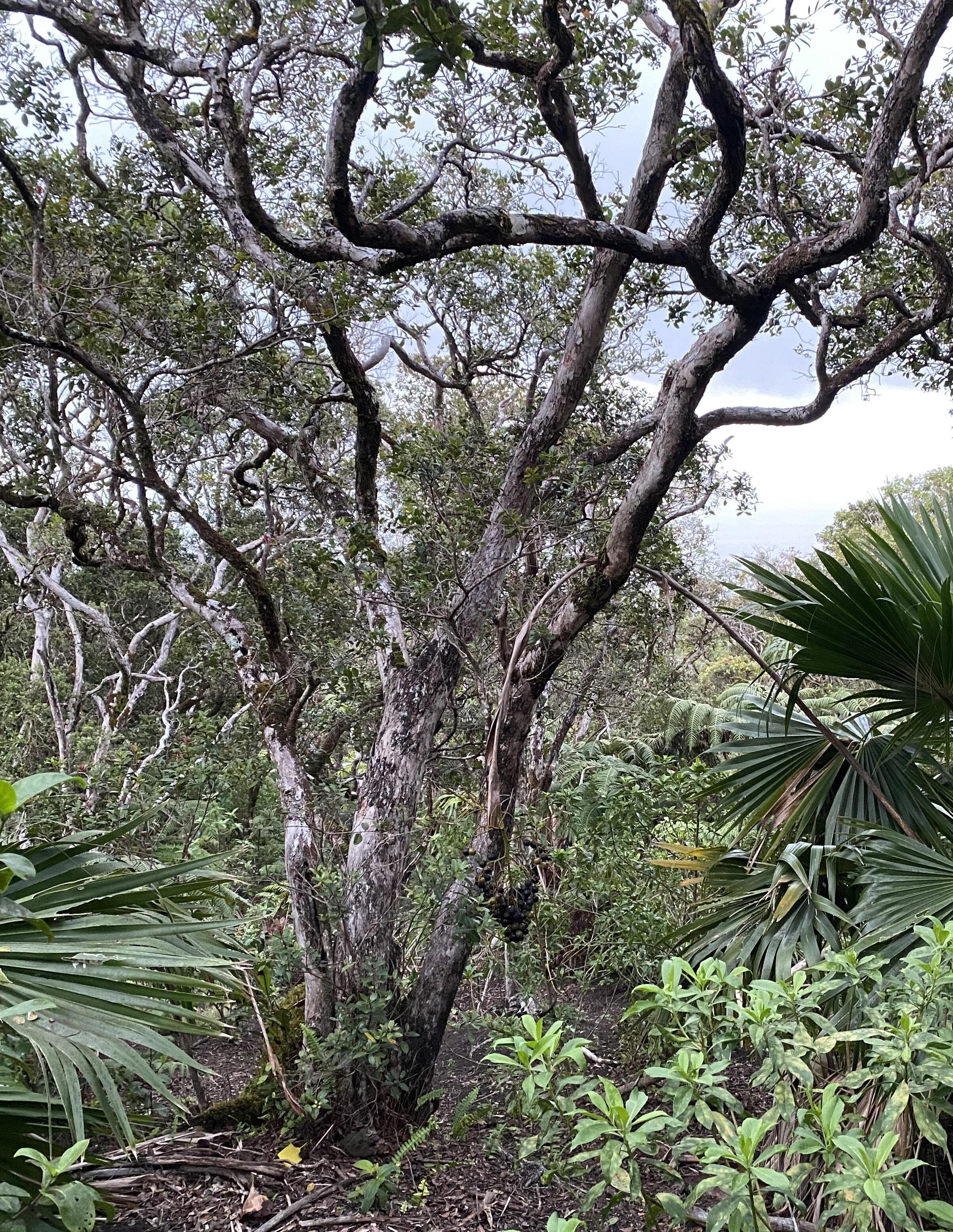
MOVING FORWARD TOGETHER
The Hawaiian islands are the most geographically isolated group of islands on Earth. They are also home to more than 500 federally listed threatened and endangered species and countless cultural and archaeological resources.
A number of these unique resources can be found on U.S. Army installations and training areas. From plants and birds, to snails, bats and insects, the Army's natural resources programs on O ‘ahu and Hawai'i Island manage more than 120 threatened and endangered species. Likewise, the Army's cultural resources programs in Hawai ‘i manage more than 3,000 significant cultural resources, including historic sites, structures, buildings and artifacts.
The Ecosystem Management Program Bulletin is designed to educate the public and the military community about the unique resources on Armymanaged lands and the Army's efforts to conserve them. Our hope is to encourage a collective conservation ethic, foster innovation, and inspire and expand opportunities for collaboration and partnership with academia, industry and beyond.
The Army's core mission is to train our Soldiers so they are ready when called, and this mission is directly tied to the environmental stewardship of the resources in our care. Protecting the environment means sustaining the mission and securing the future.


Peter G.
Director of Public Works

U.S. ARMY GARRISON HAWAI ‘ I
Rachel D. Sullivan Colonel, U.S. Army Garrison Hawai i Commander Published for the U.S. Army Garrison Hawai‘i by the Office of the Vice President for Research and Innovation
Huller
EDITOR
Jenna Patague
Outreach/Volunteer Program Specialist
Office of the Vice President for Research and Innovation
DISTRIBUTION
This magazine is produced on a yearly basis and distributed electronically to more than 2,000 readers.
DISCLAIMER
This publication is produced in coordination with U.S. Army Garrison Hawaiʻi Public Affairs and does not alter Army policy or operational guidance.
CONNECT WITH US
Have a comment, suggestion, reprint request or want to be on the mailing list? Contact us at OUTREACH@OANRP.COM
The Army Protects Rare Tree Naʻ ena ʻ e, Dubautiaarborea,at Pōhakuloa Training Area on Mauna Loa
After 27 years of monitoring, Army biologists at Pōhakuloa Training Area have documented a hybrid of a rare tree, Naʻ ena ʻ e.
BY LENA SCHNELL
Watching Forests Return: ANRPO Tracks Hawaiʻi’s Native Comeback
A glimpse of the Army Natural Resources Program, Oʻahu mission to restore native forest from the ground up.
BY MICHELLE AKAMINE
Hazard Analysis and Critical Control Point Training : A Strategic Approach to Biosecurity
Working in natural resource management, there is always risk in spreading invasive species. Hazard Analysis and Critical Control Point Training (HACCP) integrates best management practices and standard operating procedures to mitigate these risks.
BY LEYLA KAUFMAN
Strengthening Hawaiʻi’s Defenses: New Biosecurity Plans for Oʻahu and PTA
New efforts are on their way to Army installations and surrounding ecosystems. These new biosecurity plans ensure the prevention of the spread of invasive species .
BY KAIA KONG
ANRPO Taxa Highlights
From tiny ground-dwelling snails to the rarest marine animals on Earth, check out the latest update on existing endangered species and new rare species on Army lands.
BY PHILIP TAYLOR & TAYLOR MARUNO
Readiness and Environmental Protection Integration
A reflection on past and present REPI projects and the collaborative multi-agency approach to support watershed conservation, coastal and climate resilience, and preservation in Hawaiʻi.
All photos, maps, and illustrations are courtesy of U.S. Army, Office of the Vice President for Research and Innovation, and Center for Environmental Management of Military Lands, unless otherwise noted.
CONTRIBUTORS

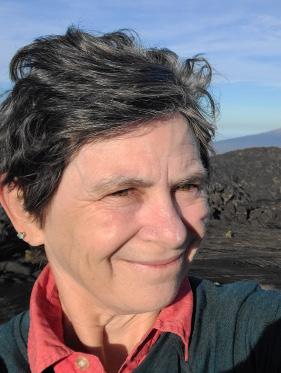
"I am constantly inspired by the grandeur and majesty of Pōhakuloa and grateful to work toward conserving these landscapes."
LENA SCHNELL
Lena Schnell has been managing natural resources in Hawaiʻi for almost 30 years. She has worked with the Peregrine Fund, the National Park Service, and U.S. Geological Survey. Her career focused at Pōhakuloa Training Area where she has worked conserving threatened and endangered species and their habitats since 1995.
Lena is a senior program manager with the Center for Environmental Management of Military Lands, working for U.S. Army's Natural Resources Program at Pōhakuloa Training Area.
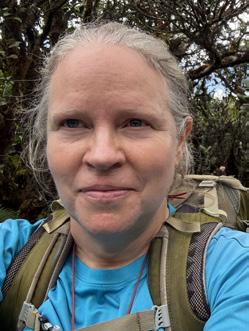
MICHELLE AKAMINE
Michelle Akamine began her conservation career with the Army Natural Resources Program on Oʻahu in 2008. She held various positions before landing her dream job as the Monitoring Program Biologist, where she enjoys nerding out on native plants and getting down and dirty with data.
Michelle is a monitoring program biologist with the Office of the Vice President for Research and Innovation of the University of Hawaiʻi, working for the U.S. Army's Natural Resources Program.
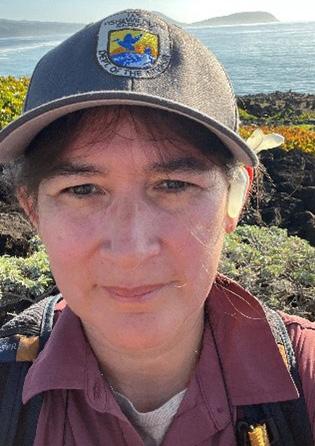
“An ounce of prevention is worth a pound of cure.” Investing in prevention efforts is more cost effective and more successful than trying to control or eradicate invasive species once they have established."
LEYLA KAUFMAN
"ANRPO’s commitment to ecosystem restoration is long-term and science-driven. Monitoring ensures that this investment pays off in healthier forests for future generations."
Leyla Kaufman is originally from Lima, Peru. She has worked in Integrated Pest Management (IPM) in the Netherlands and Hawaiʻi. Leyla served as the Research and Projects Coordinator for the Hawaiʻi Invasive Species Council (HISC), where she oversaw the Ports of Entry Monitoring Program (PoEM). In 2024, she joined the U.S. Fish and Wildlife Service (USFWS) as the Biosecurity Coordinator for the Pacific Islands Fish and Wildlife Office (PIFWO). In this role, she leads biosecurity initiatives across the Pacific Islands, working to strengthen prevention and management of invasive species.
Leyla is a biosecurity coordinator with the US Fish and Wildlife Service for Pacific Islands Fish and Wildlife Office (PIFWO).

KAIA KONG
Kaia Kong started her conservation career as an intern with the Army Natural Resources Program on Oʻahu in 2016. She held various positions within the program before becoming the U.S. Army Garrison Hawaiʻi’s Natural Resources Specialist in 2024. Being born in Hilo, Hawaiʻi and raised in Kaimukī, Oʻahu, she has a deep passion for conserving and protecting what makes these beautiful islands so special.
Kaia is a natural resources program specialist with the U.S. Army Garrison Hawaiʻi, DPW Environmental Division, Natural Resources Program.
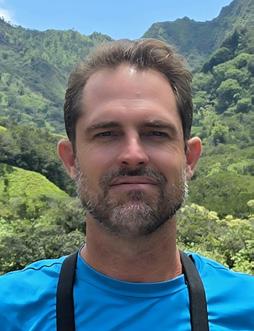
Phil Taylor's passion for bird conservation started at a young age. For the past 18 years, he has worked with the Army Natural Resources Program on Oʻahu, helping protect the endangered Oʻahu ʻelepaio. When he is not in the field, Phil enjoys sharing his love for birds and the sport of tennis with his daughter.
Phil is a rare vertebrate conservation biologist with the Office of the Vice President for Research and Innovation of the University of Hawaiʻi, working for the U.S. Army's Natural Resources Program.

Taylor Maruno has worked with Hawaiian land snails throughout her entire career in natural resources. She previously studied snails at the Bishop Museum Malacology Collection before joining ANRPO in 2023.
Taylor is a rare snail conservation biologist with the Office of the Vice President for Research and Innovation of the University of Hawaiʻi, working for the U.S. Army's Natural Resources Program.
"Huli ka lima i lalo. When our hands are turned down, they are not idle; they are working, giving back, and tending to what is before us."
"Be passionate about what you do. Passion is contagious. That passion will spread as you inspire those around you. "
"Appreciate the small things- the smell of naupaka kuahiwi, the sound of falling rain, the way shells of kāhuli shine in the light."
PHILIP TAYLOR
TAYLOR MARUNO
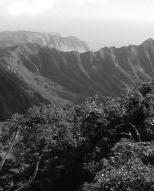
Dubautia arborea at Pōhakuloa Training Area on Mauna Loa
STORY BY LENA SCHNELL
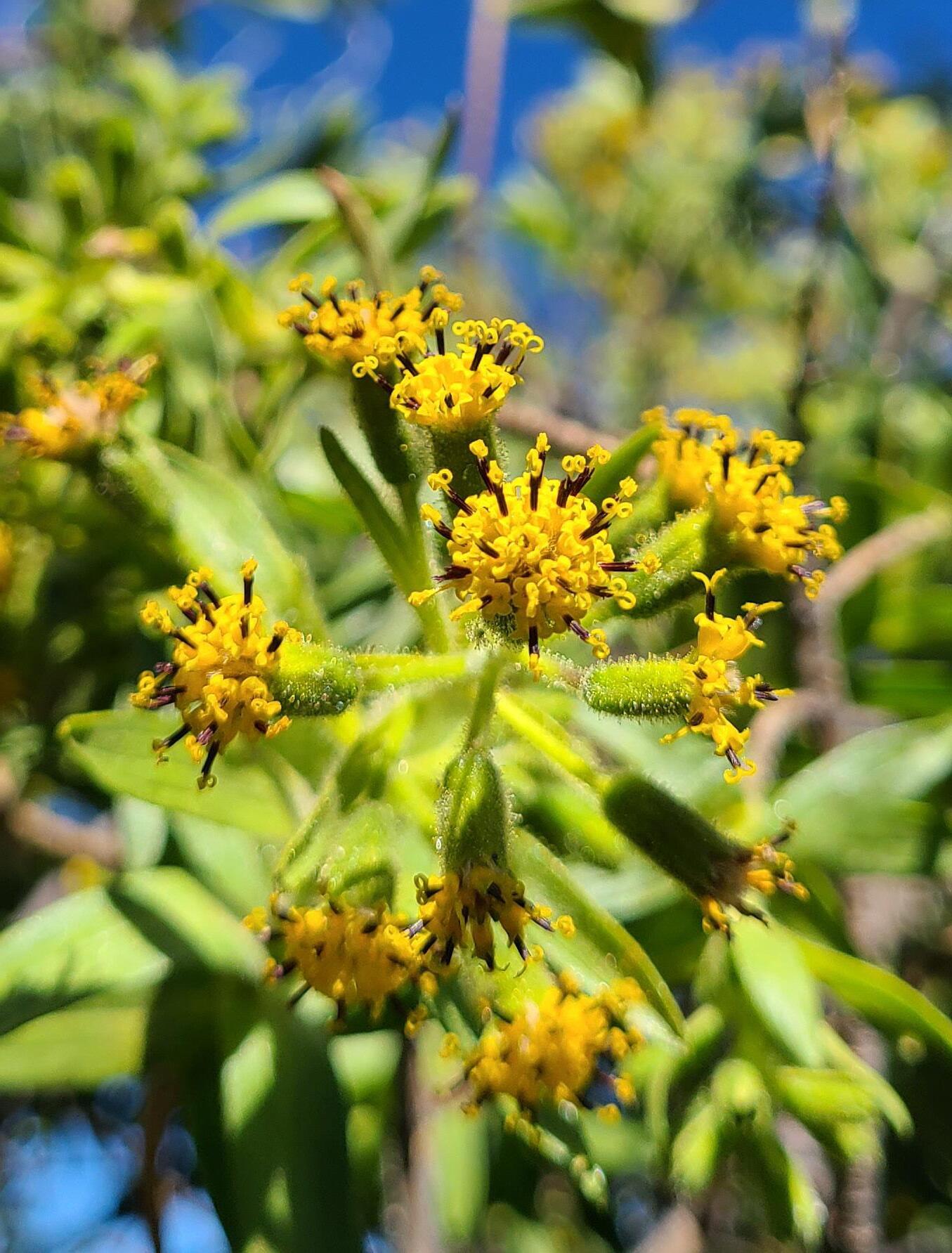
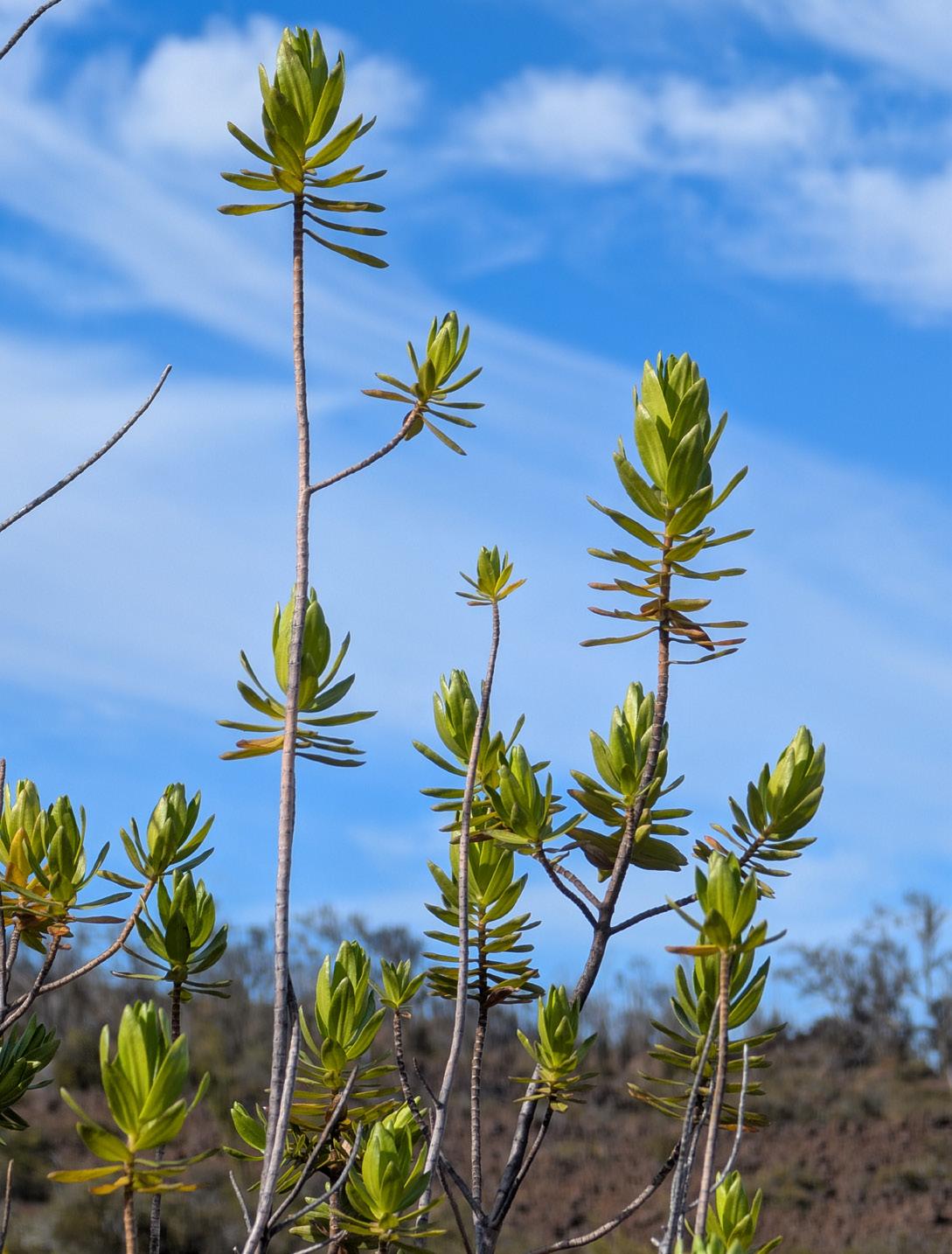
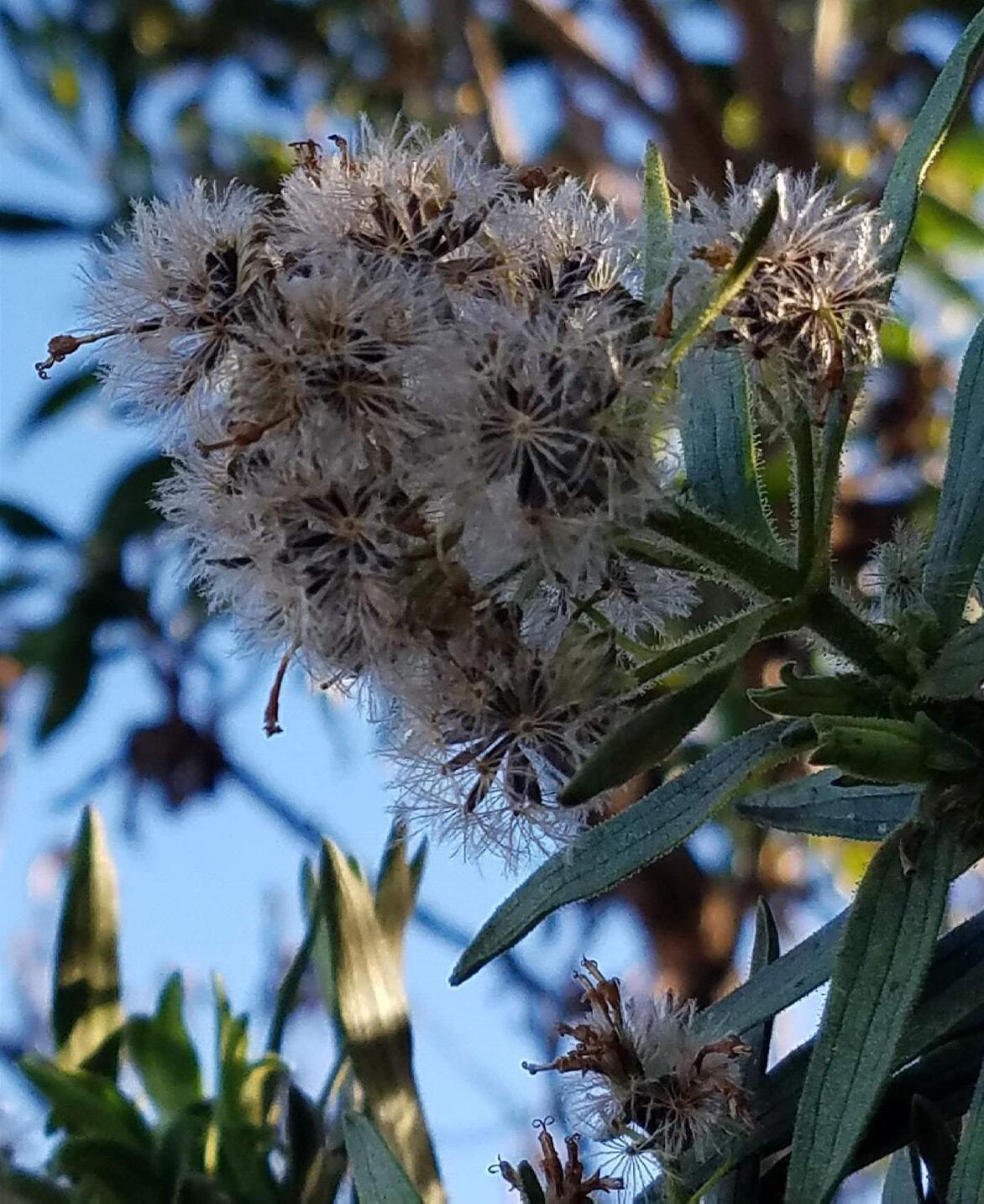
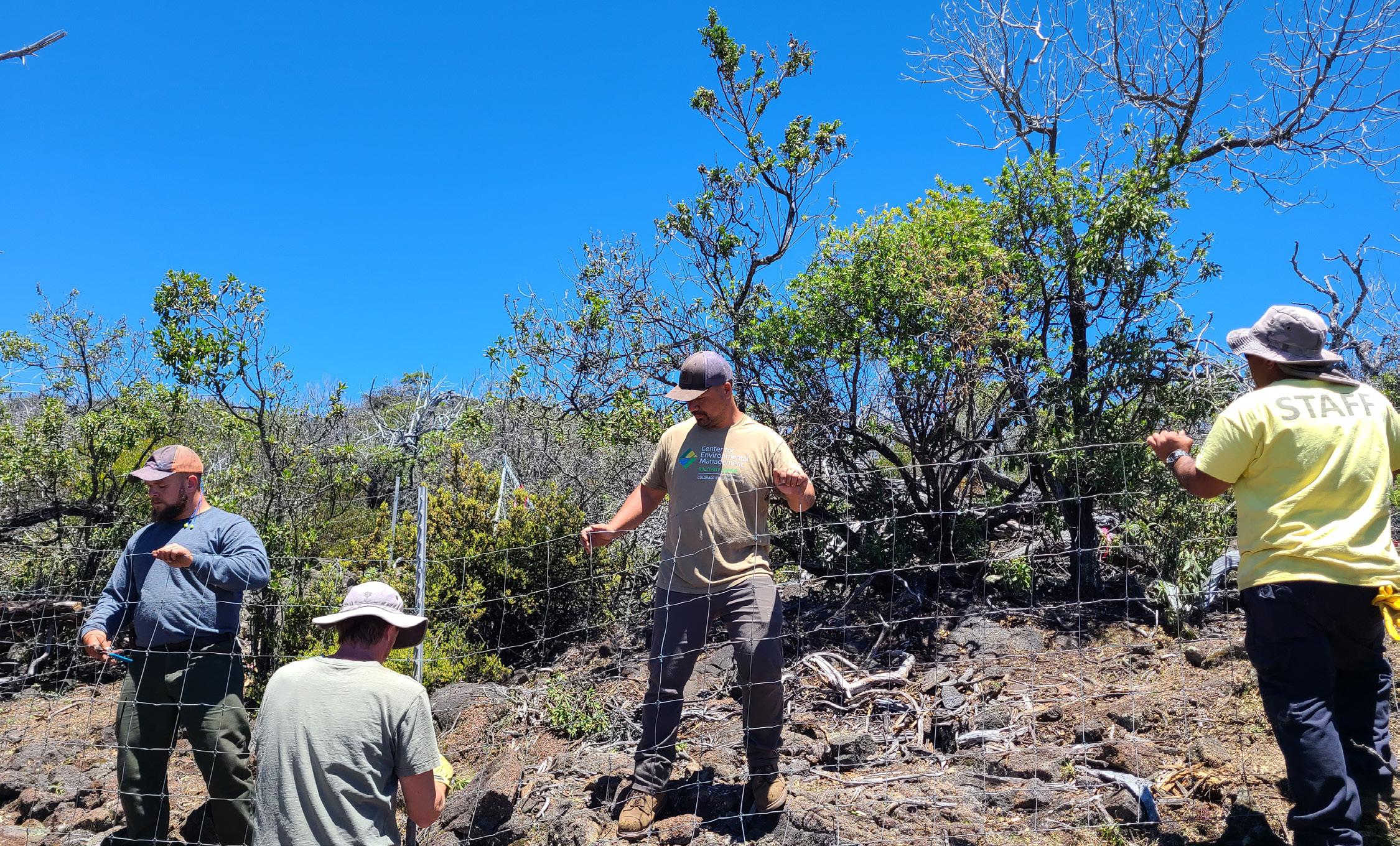
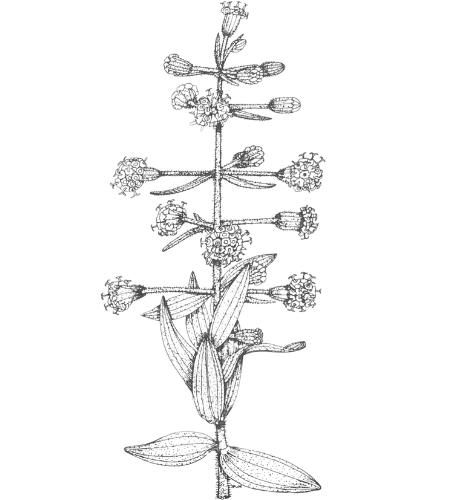
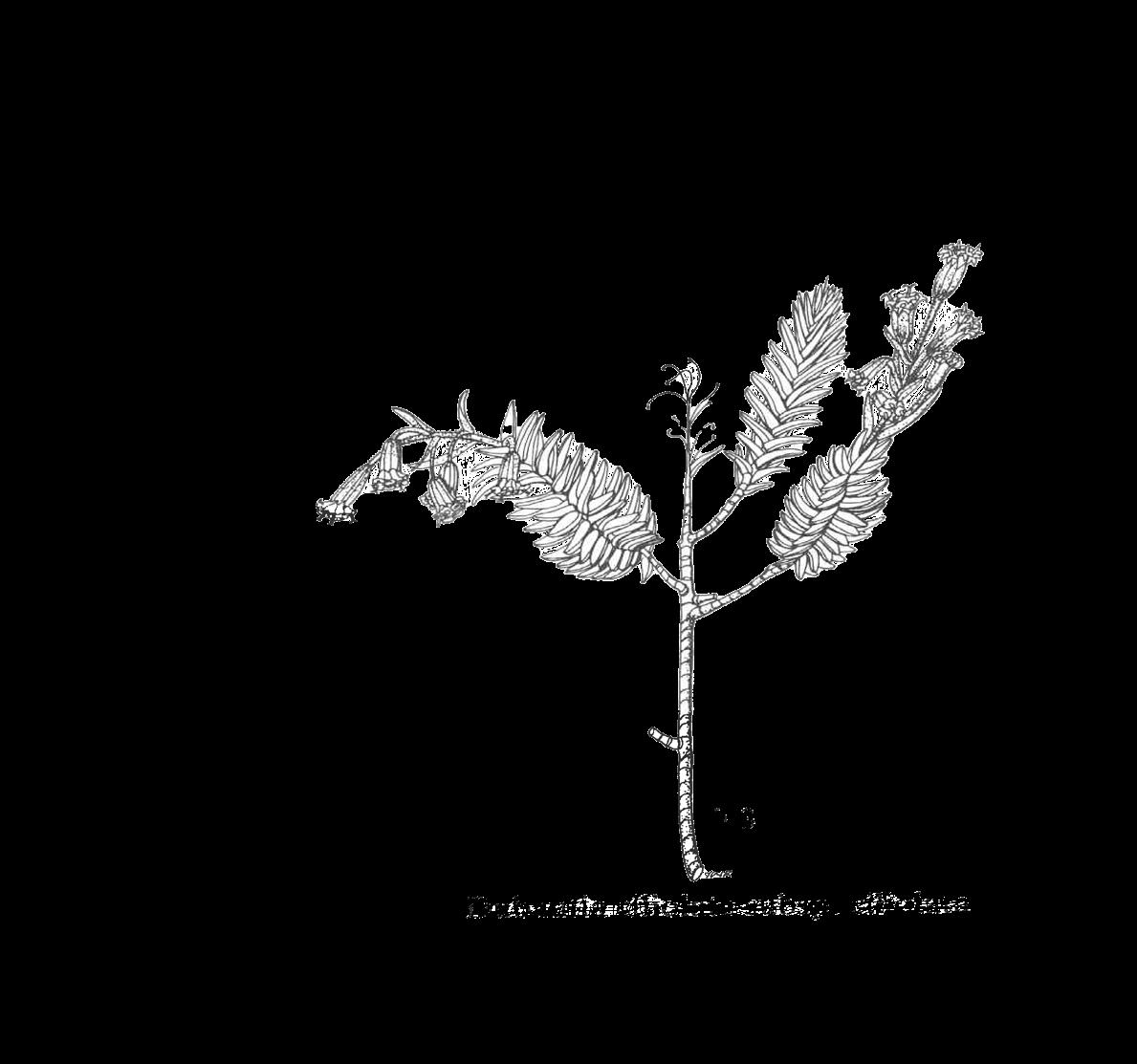
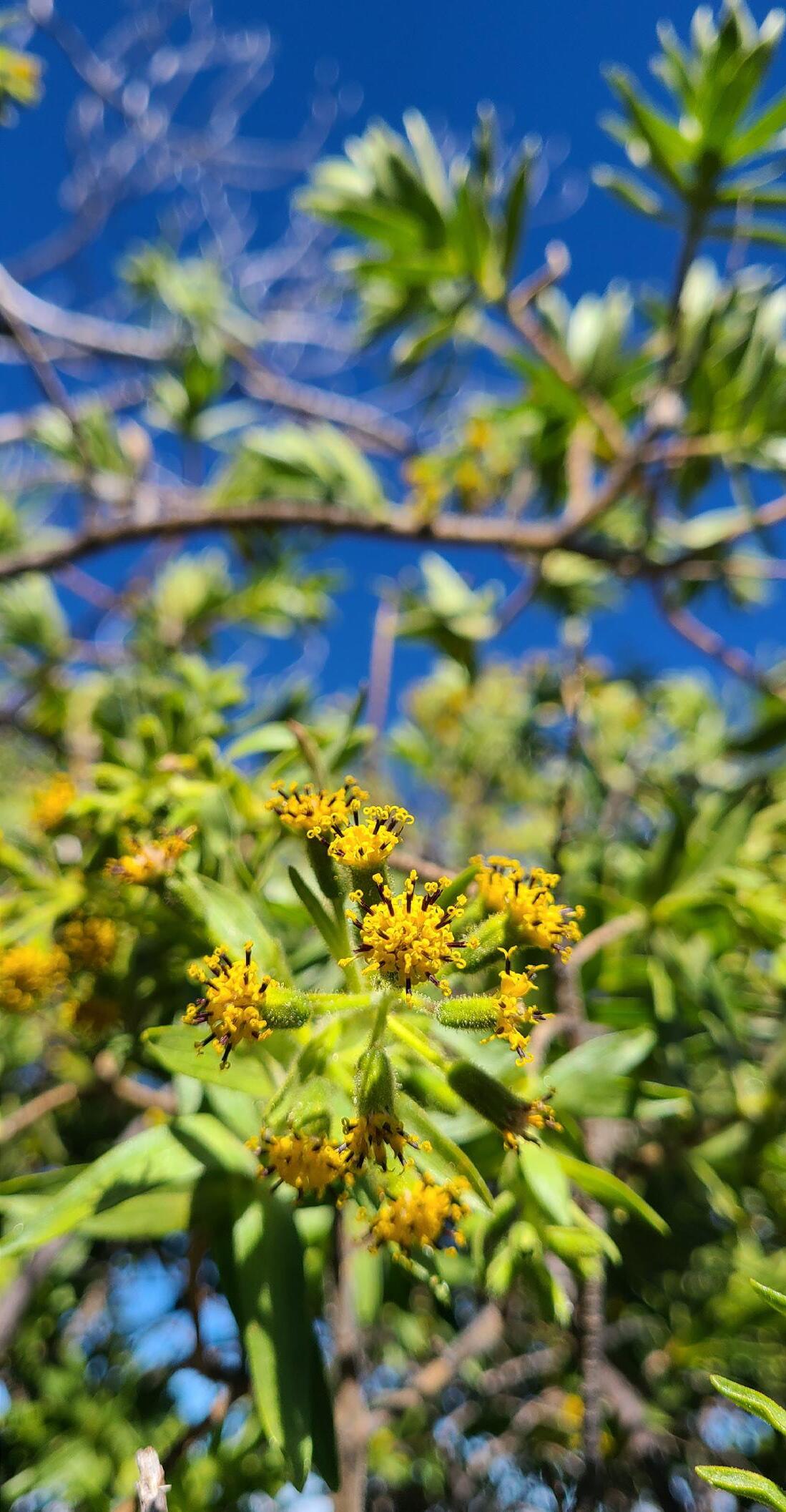
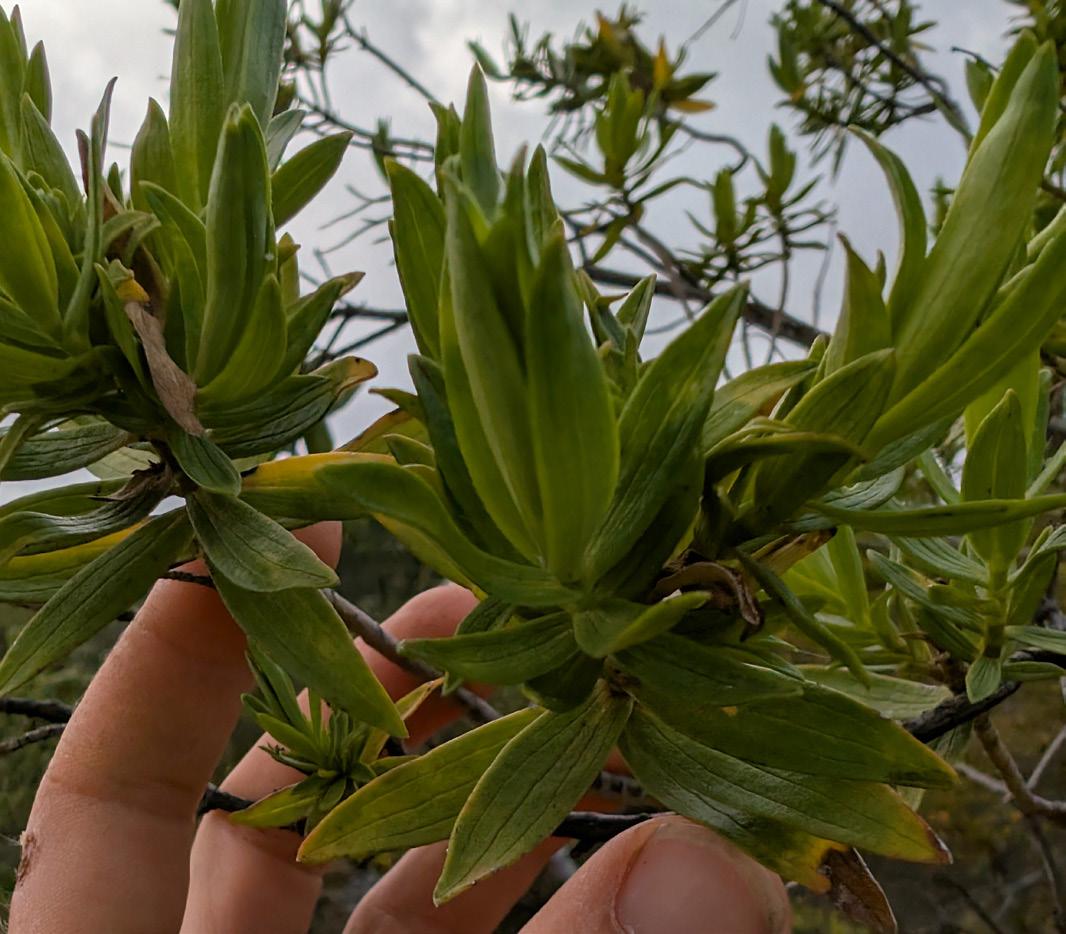
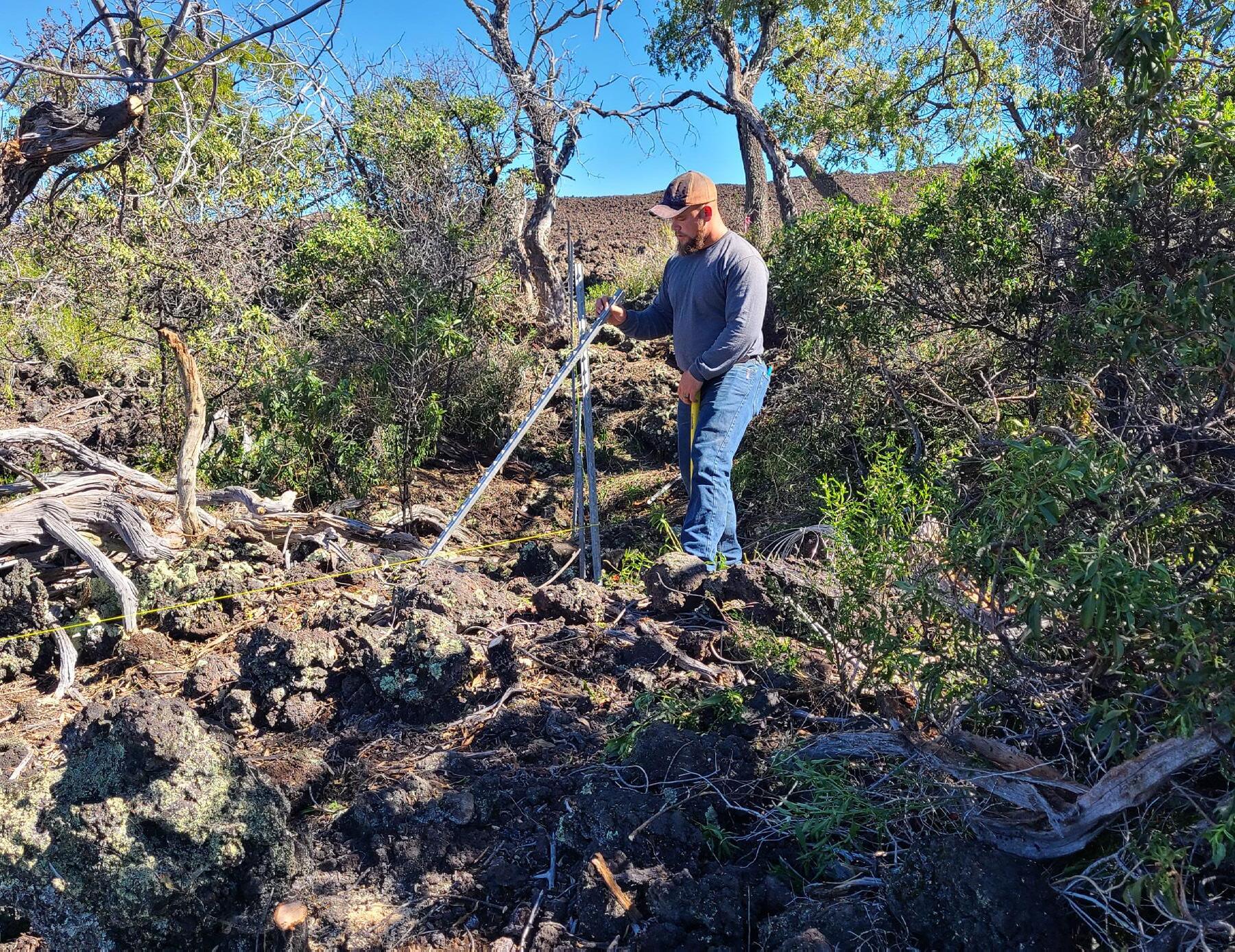
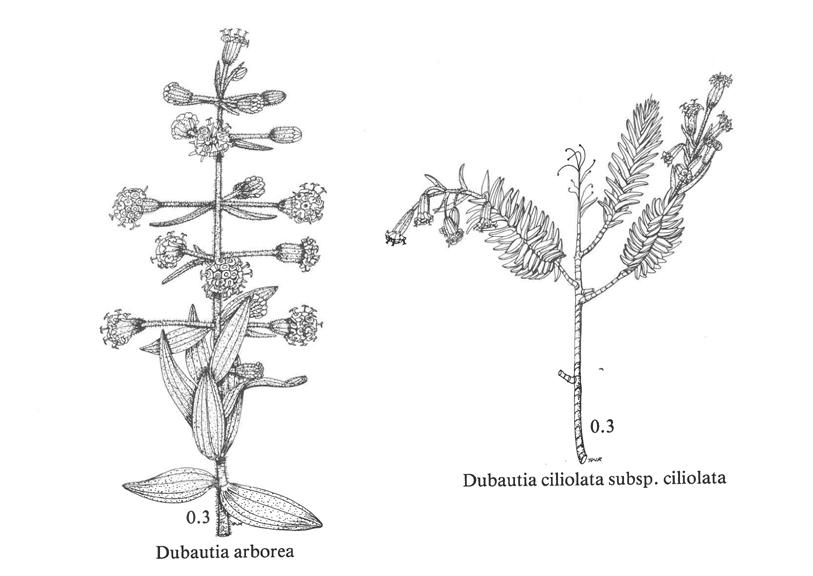
PRECEDING PAGE Technical drawings of Dubautiaarboreaand Dubautiaciliolatafrom the Manual of Flowering Plants of Hawaiʻi and a flowering D.arboreafrom the 1998 discovery on Mauna Loa. ABOVE CLOCKWISE Tree naʻenaʻe discovered on Mauna Loa in 2013. Tree naʻenaʻe seeding. Pōhakuloa Training Area Natural Resources (PTA NRP) staff fencing the 1998 tree naʻenaʻe at its discovery area. LENA SCHNELL
Twenty-seven years after discovery, the U.S. Army Garrison-Pōhakuloa Training Area Natural Resources Team (PTA NRP) fenced a rare occurrence of tree dubautia (Dubautia arborea), or tree naʻenaʻe, to protect it from browsing by sheep and goats and the surrounding area for seedlings to grow. Naʻenaʻe is the name for the 26 species in the genus Dubautia , which belong to the sunflower family, Asteraceae. Endemic to Hawai'i island, this species mostly occurs on Mauna Kea, but also on Hualalai. Trees found at Pōhakuloa Training Area are the only occurrences reported from Mauna Loa. Although tree naʻenaʻe is rare, it is not a federally listed species.
Discovery of Tree Naʻ
ena ʻ
e on Mauna Loa
In 1998, during routine biological surveys conducted by Army natural resource personnel, I discovered a single tree naʻenaʻe, high on the northern flank of Mauna Loa at PTA. I first smelled the aromatic leaves of the tree naʻenaʻe. Upon exploring further, I located the fragrant foliage about 15 to 20 feet above my head, entwined with a naio (Myoporumsandwicense) tree. While I had seen tree naʻenaʻe on Mauna Kea, this tree was much larger with a trunk diameter of about 30 inches, approximately 12 inches above the ground, where the main trunk split into two large branches. Due to its remote location, the next visit occurred in 2007, when samples were collected and the species was confirmed by Dr. Robert Robichaux. When we visited in 2020, we found the tree had fallen over but remained alive.
In 2021, I was surveying with the PTA NRP team in the same general region of PTA, when once again I smelled tree naʻenaʻe and subsequently discovered two more large trees approximately a 0.5 mile from the tree I found in 1998. Although one tree was healthy, the larger older tree was still alive but had fallen over.
Protecting Tree Naʻ ena ʻe on Mauna Loa
Seeing the large, older trees on the ground— exposed to increased browsing from sheep and goats—we decided to fence them. Due to the remote nature of the sites, specialized logistical support was used to safely transport personnel and materials necessary to complete conservation actions. In August 2024,
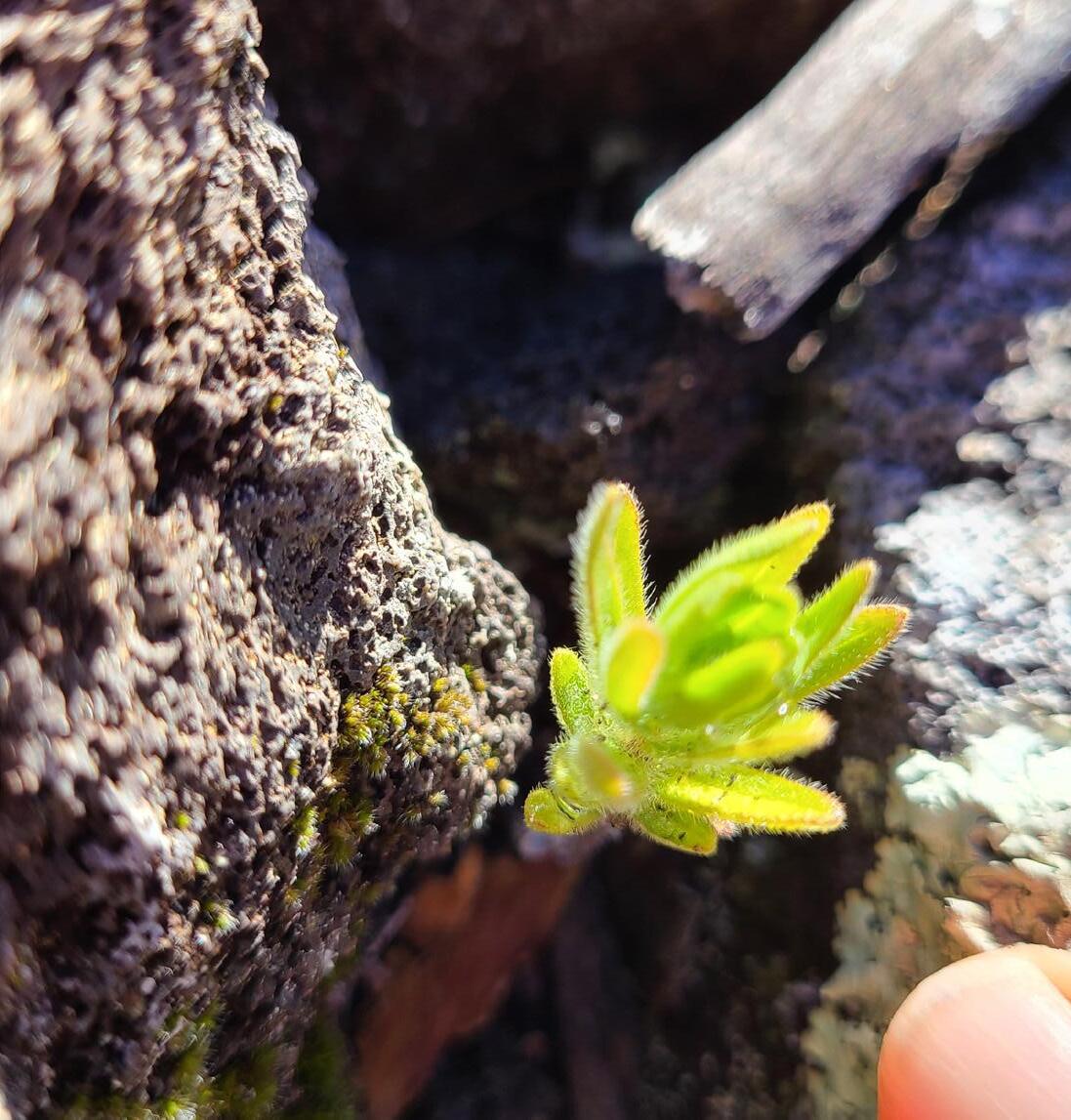
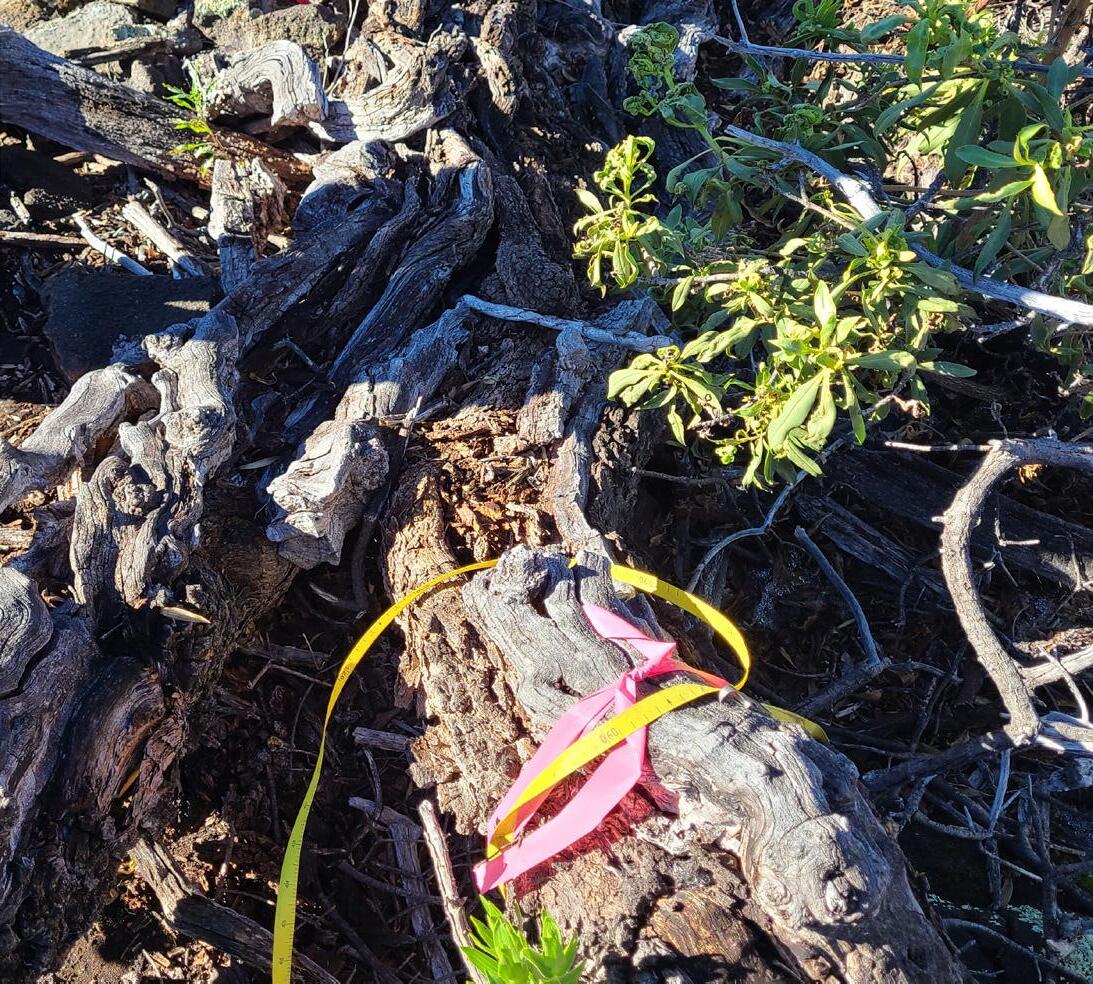
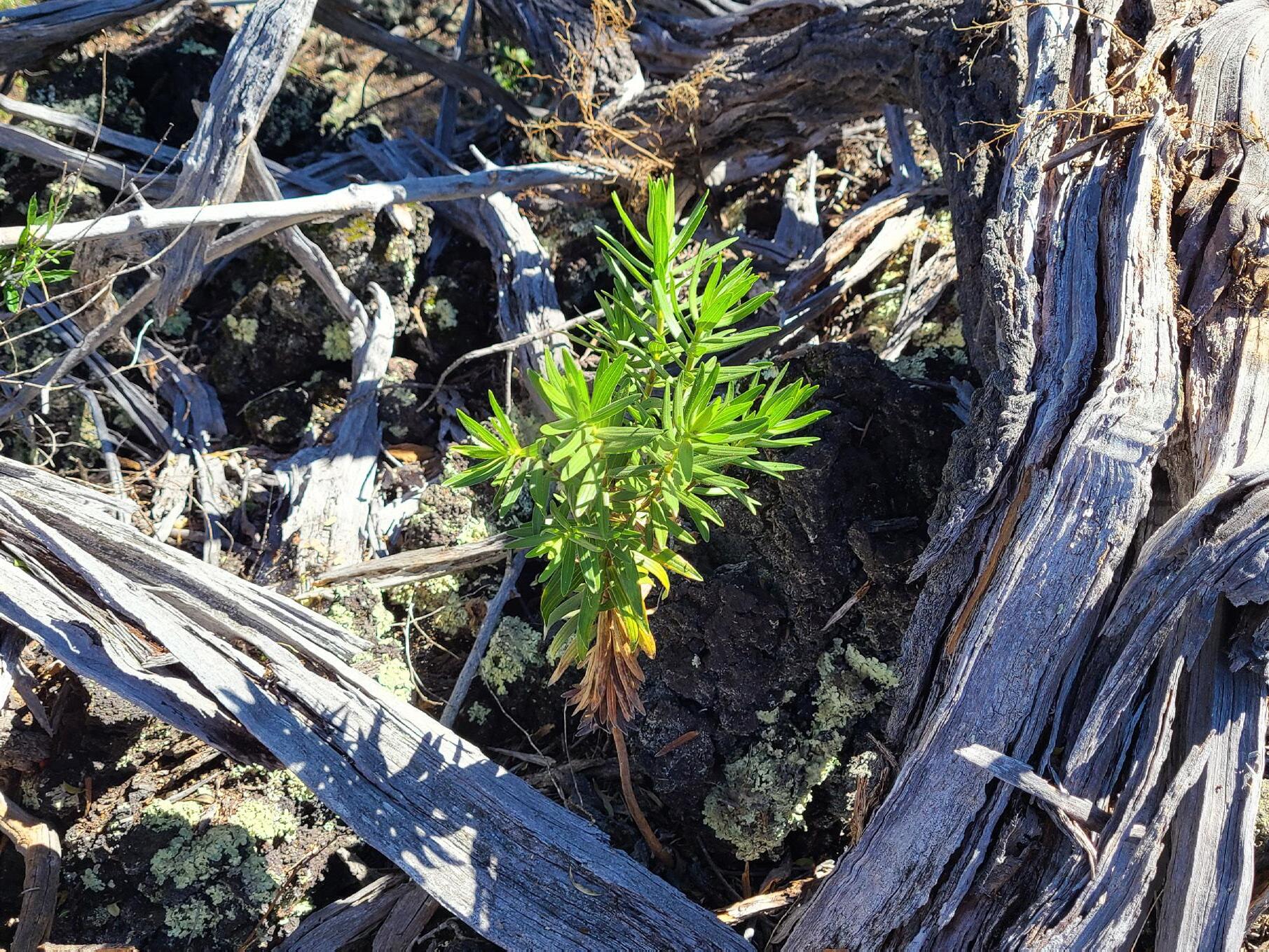
TOP A little Dubautiaseedling found in the constructed fence unit near the 1st discovered tree naʻenaʻe. ABOVE The main trunk of the 1998 tree naʻenaʻe now lies prostrate making it difficult to measure.
PTA NRP estimates the main trunk was about 30 inches in diameter.
LENA SCHNELL
conservation fencing was completed to protect the original tree and surrounding habitat. We started construction in January 2025 on another 800 ft 2 for the trees found in 2021, but we found a juvenile plant nearby and decided to expand the unit to protect the young tree. Additional protective fencing was completed in early 2025 to safeguard newly identified juvenile plants.
The fences were an immediate success—we found seedling and juvenile plants in both fence units in March 2025. The trees will continue to be monitored periodically to assess long-term health, recruitment, and population trends. We tagged each tree naʻenaʻe with a unique identification number, so we can track their abundance over time and gather other life history traits such as life span. These tree naʻenaʻe are apparently long-lived and I suspect that the tree I found in 1998 is 40 to 50 years old, based on its size at that time. Now that we have tags on the young plants, biologists will be able to track their development over time.
Discovery of the Hybrids in 2024
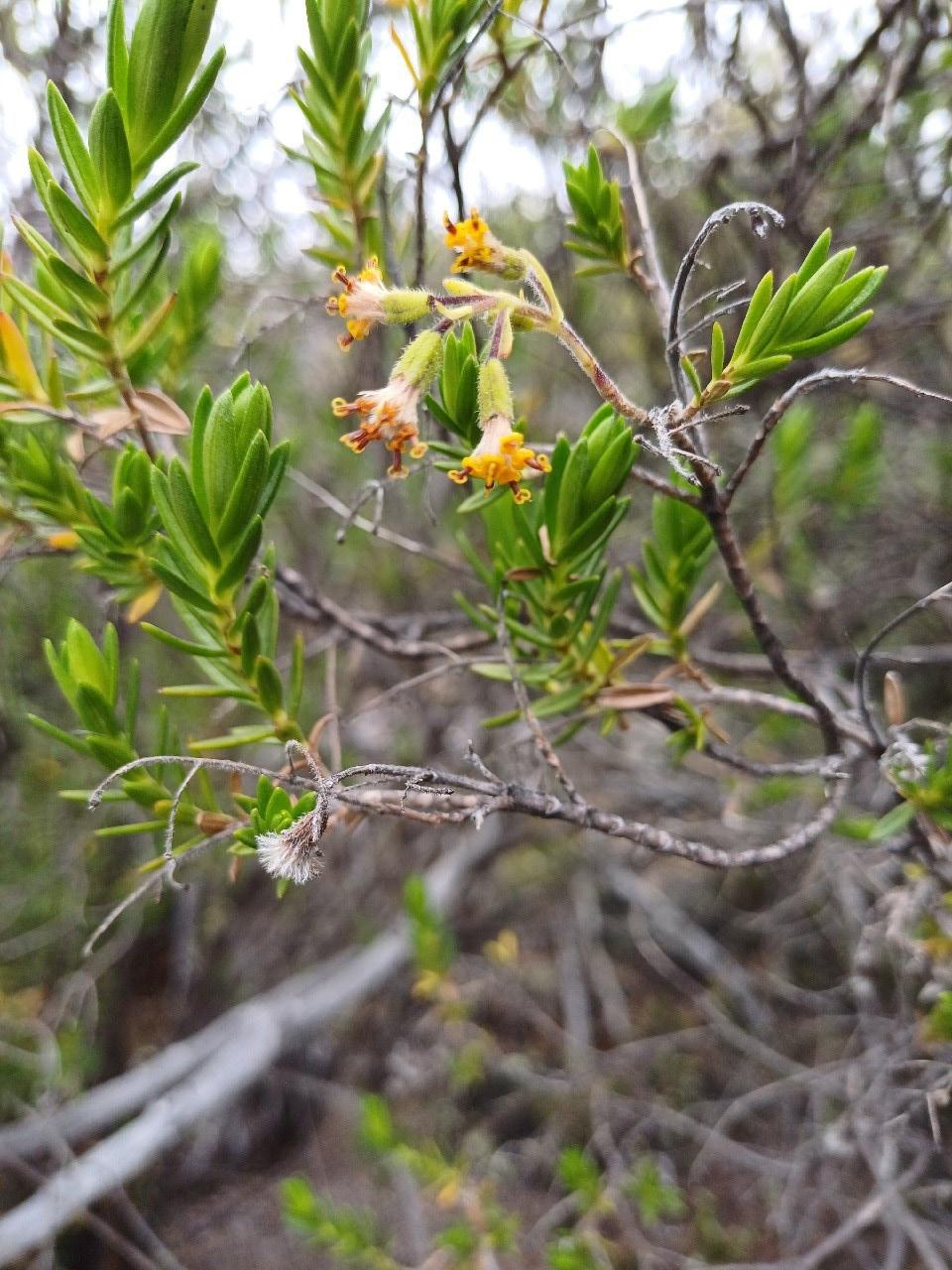
With my curiosity piqued after finding more trees in 2021, I checked earlier plant survey data and found NRP staff discovered two additional tree naʻenaʻe locations within a conservation fence unit in the same region of PTA in 2013. In December 2024, I hiked to the locations and found several interesting naʻenaʻe at one of the locations. At least 3 trees resembled the other tree naʻenaʻe at PTA, but several individuals appeared to be hybrids. Dubautia species are known to form hybrids—a blending of genes from two different species. We believe the hybrids are a cross between D. arborea and D. ciliolata, another Hawaiʻi endemic naʻenaʻe that grows on pāhoehoe lava flows adjacent to the hybrid’s location. We thoroughly searched the area in March 2025 discovering 30 apparent hybrids. The survey yielded more individuals than expected, exceeding our supply of tags-a good problem to have. We plan to return to the area next year to tag the remaining plants to track changes in abundance, distribution, and life history traits.
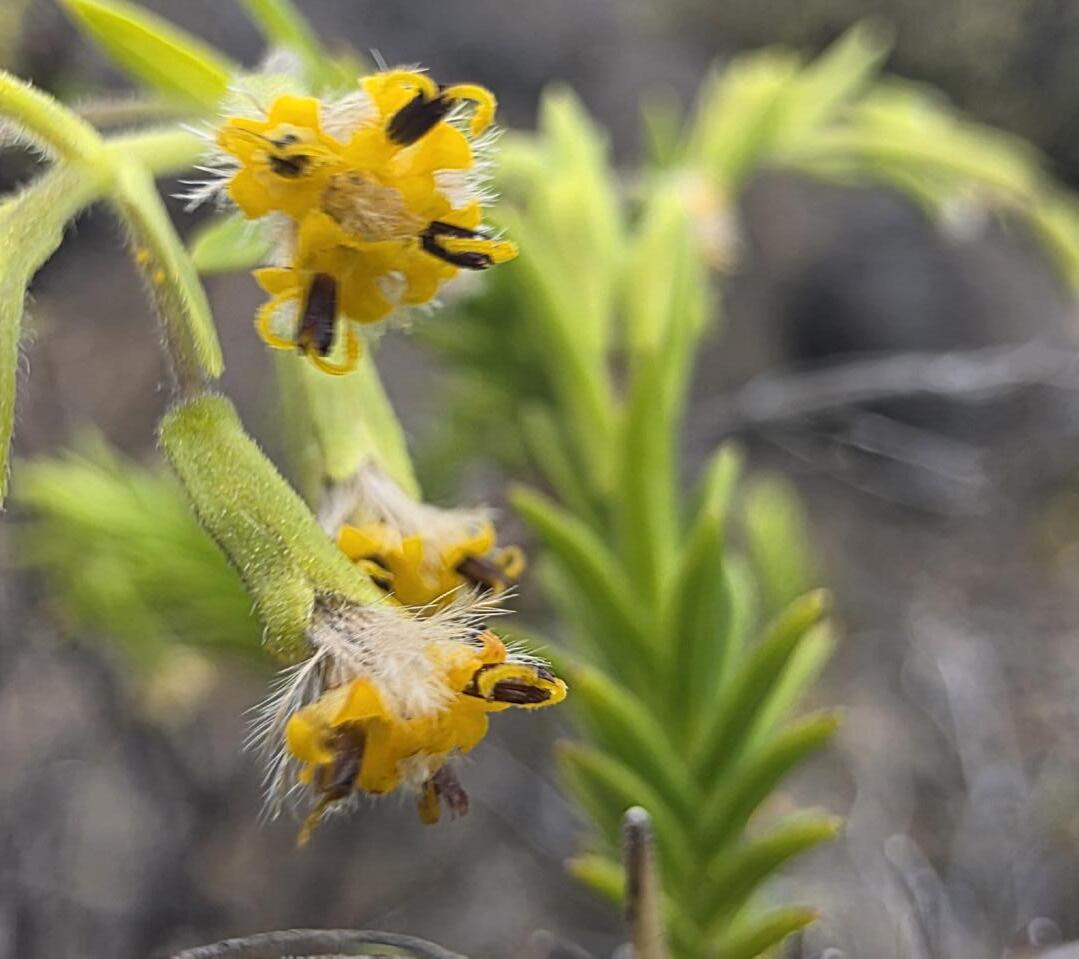
"Dubautia species are known to form hybrids—a blending of genes from two different species."
Future Directions and Research
Dubautia is one of three genera that evolved in the Hawaiian Islands—known as the Hawaiian silversword alliance—from a common progenitor species of California tarweed, a group of plants that produce aromatic resin in leaves and flower structures. Hawaiʻi has many examples of this type of rapid evolution,
TOP Dubautiaciliolatain flower and ABOVE a close up of tree naʻenaʻe leaves FACING PAGE Flowers and foliage of a hybrid naʻenaʻe, likely a cross between Dubautiaarboreaand Dubautiaciliolata .
LENA SCHNELL
TOP The young tree
found in the 2022 survey was fenced in March 2025.
2021.

the
The timeline of Dubautiaspecies PTA from first discovery to the recent population survey in March 2025 with a technical drawing of Dubautiaarboreaand Dubautiaciliolata from the Manual of Flowering Plants of Hawaiʻi.
naʻenaʻe
(BOTTOM) PTA NRP fencing
tree naʻenaʻe found in
LENA SCHNELL. FACING PAGE
Tree Dubautia on Mauna
Loa Timeline

Samples were collected & confirmed as tree dubautia (Dubautia arborea) by Dr. Robert Robichaux
DISCOVERY
1 Tree dubautia discovered in northern PTA
SURVEY
SURVEY
2 additional tree dubautia found in the same region of PTA from the 1st discovery
Initial tree had fallen, but confirmed still alive

PROTECTION
Expansion of conservation fence (800 ft 2 ) to include trees found in 2021

as well as how environmental conditions influence these processes. Recently, we contributed leaves from the tree naʻenaʻe and the hybrids to Dr. Bruce Baldwin, a professor at the University of California, Berkeley. Dr. Baldwin researches genetic and ecological processes that shape plant dispersal and evolution, along with the evolutionary importance of hybridization. Dr. Baldwin’s team will extract the genetic material from the tree naʻenaʻe leaf samples, which will be used to further test scientific questions about evolution and hybridization.
PROTECTION
Construction of conservation fence (400 ft 2 ) around the 1st discovered tree dubautia
PROTECTION/ SURVEY
1,000 ft 2 of conservation fence complete. 4 tree dubautia and 30 hybrids (cross between D.arborea & D.ciliolata were surveyed

The evolution of the tree naʻenaʻe from its Californian tarweed ancestor is yet another extraordinary example of adaptive radiation in the Hawaiian Islands. By studying the genetic mechanisms that interact with the selective pressures in the natural environment, scientists continue to discover insights about the process of evolution and speciation. By fencing and monitoring the rare tree naʻenaʻe on Mauna Loa at PTA and collaborating with researchers, the Army contributes to advancing both the protection and understanding of Hawaiʻi's unique flora.
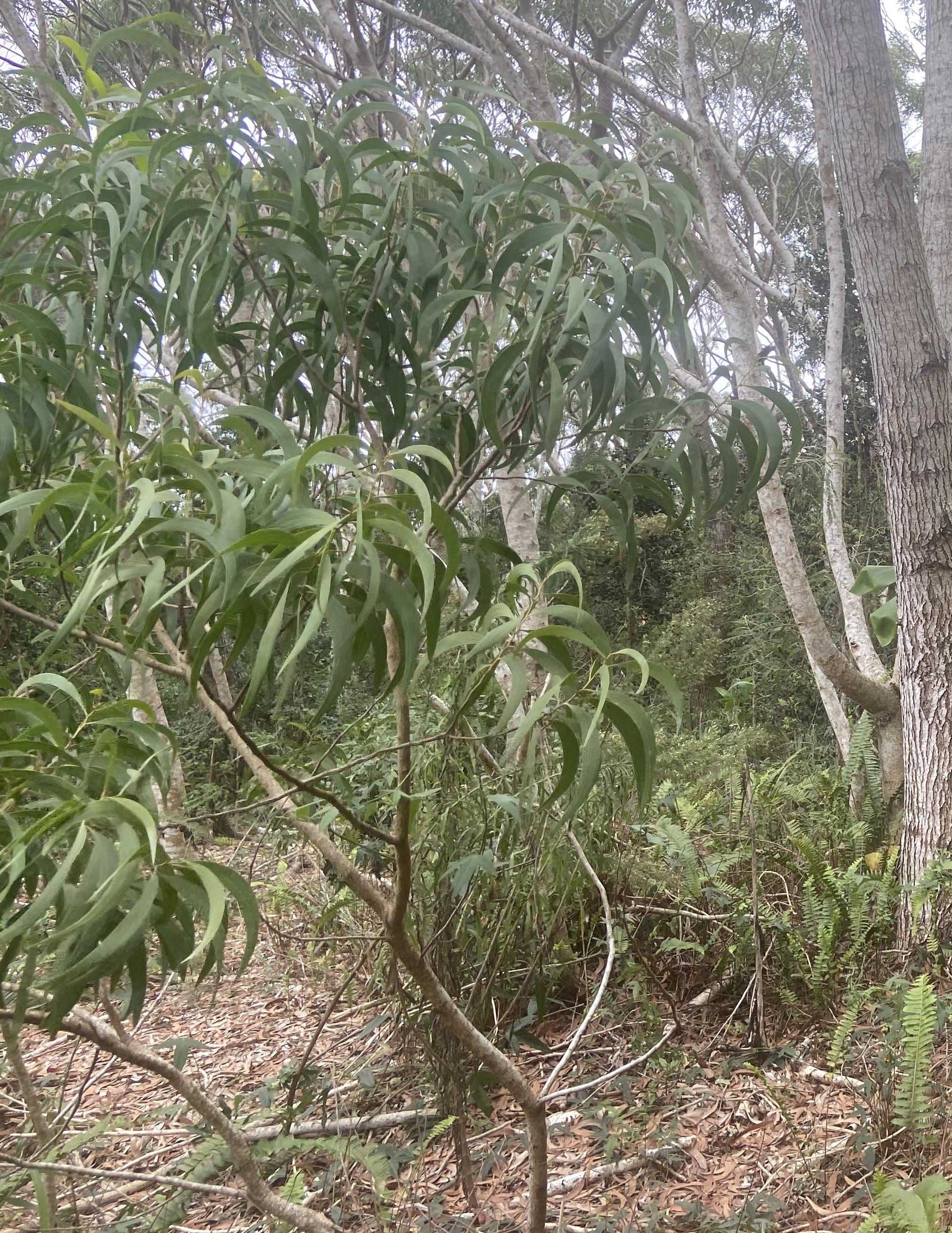
WATCHING FORESTS RETURN: Anrpo tracks Hawai'i's Native comeback
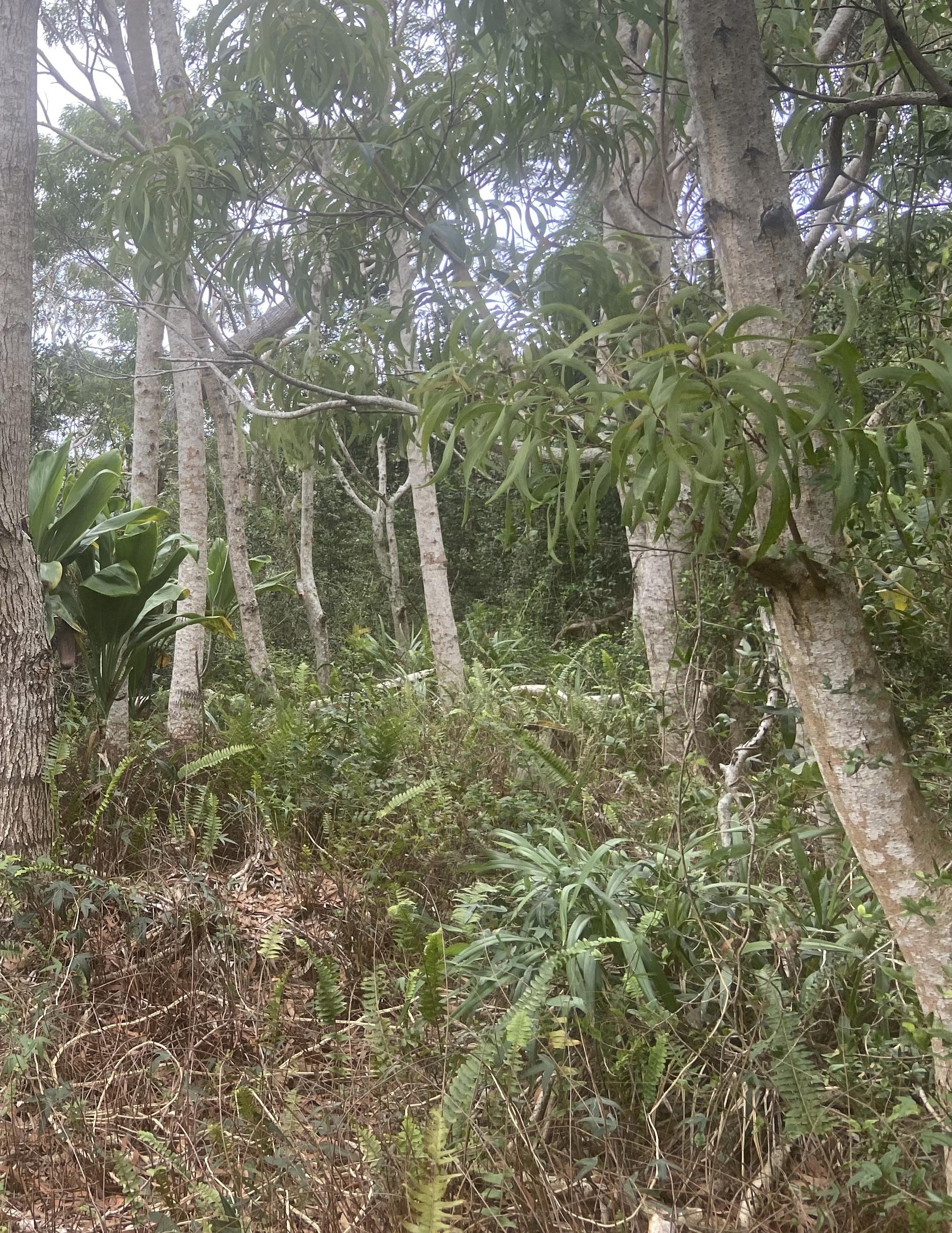
BY Michelle Akamine
When the Army Natural Resources Program on Oʻahu (ANRPO) first began experimenting with native forest restoration in 2010, the idea was simple: clear out invasive trees and see if native plants would come back on their own. Sometimes, they did. But it soon became clear that Hawaiʻi’s fragile ecosystems often needed a stronger helping hand. By 2015, ANRPO shifted to a more active approach—planting hundreds, then thousands, of native trees, shrubs, and ferns each year—helping to rebuild ecosystems rather than leaving it to chance.
Today, the results of these efforts are tracked through ANRPO’s Monitoring Program, which turns restoration sites into living classrooms. At a subset of these sites, vegetation monitoring helps managers see what’s working, what isn’t, and how quickly native species are reclaiming ground once dominated by weeds. Each place tells its own story of challenge, adaptation, and recovery.
Why Monitoring Matters
Since 2008, ANRPO has tracked vegetation change across its managed areas. The data revealed a clear trend: invasive tree cover expands by about 10% per decade. Without intervention, Hawaiʻi’s fragile ecosystems lose native plants, including those that sustain rare snails, insects, and birds. Simply clearing weeds isn’t always enough—without replanting natives, bare ground is often quickly colonized by more aggressive invaders.
Restoration cover goals set clear targets for each project—benchmarks such as reaching 50% native understory cover within a few years, or ensuring less than 10% weed cover. Tracking progress against these numbers helps managers decide whether a site needs more planting, more weeding, or simply more time.
“MONITORING IS THE COMPASS THAT KEEPS RESTORATION ON COURSE.”
before
Patience and Recovery at Maile Flats Chipper Site
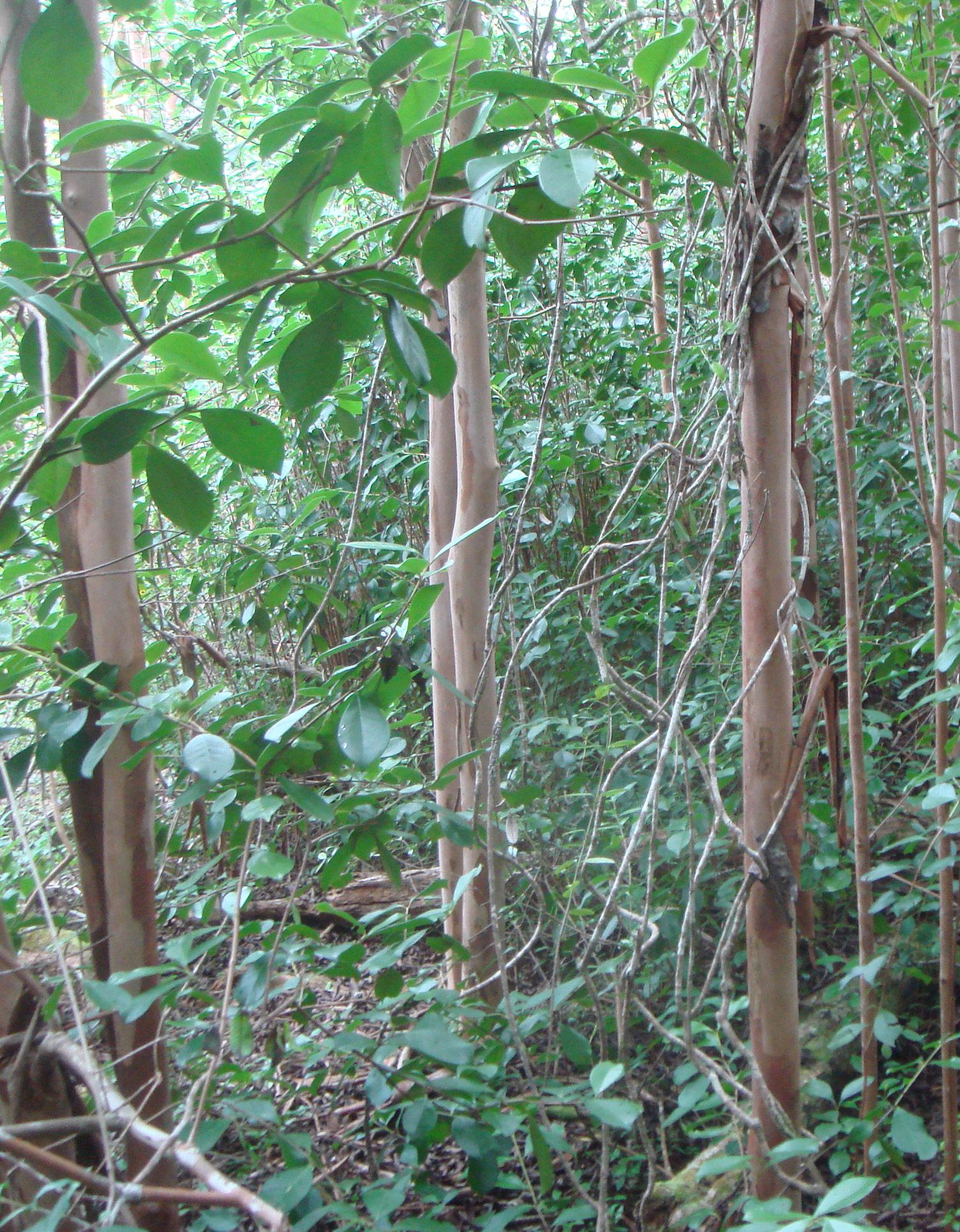
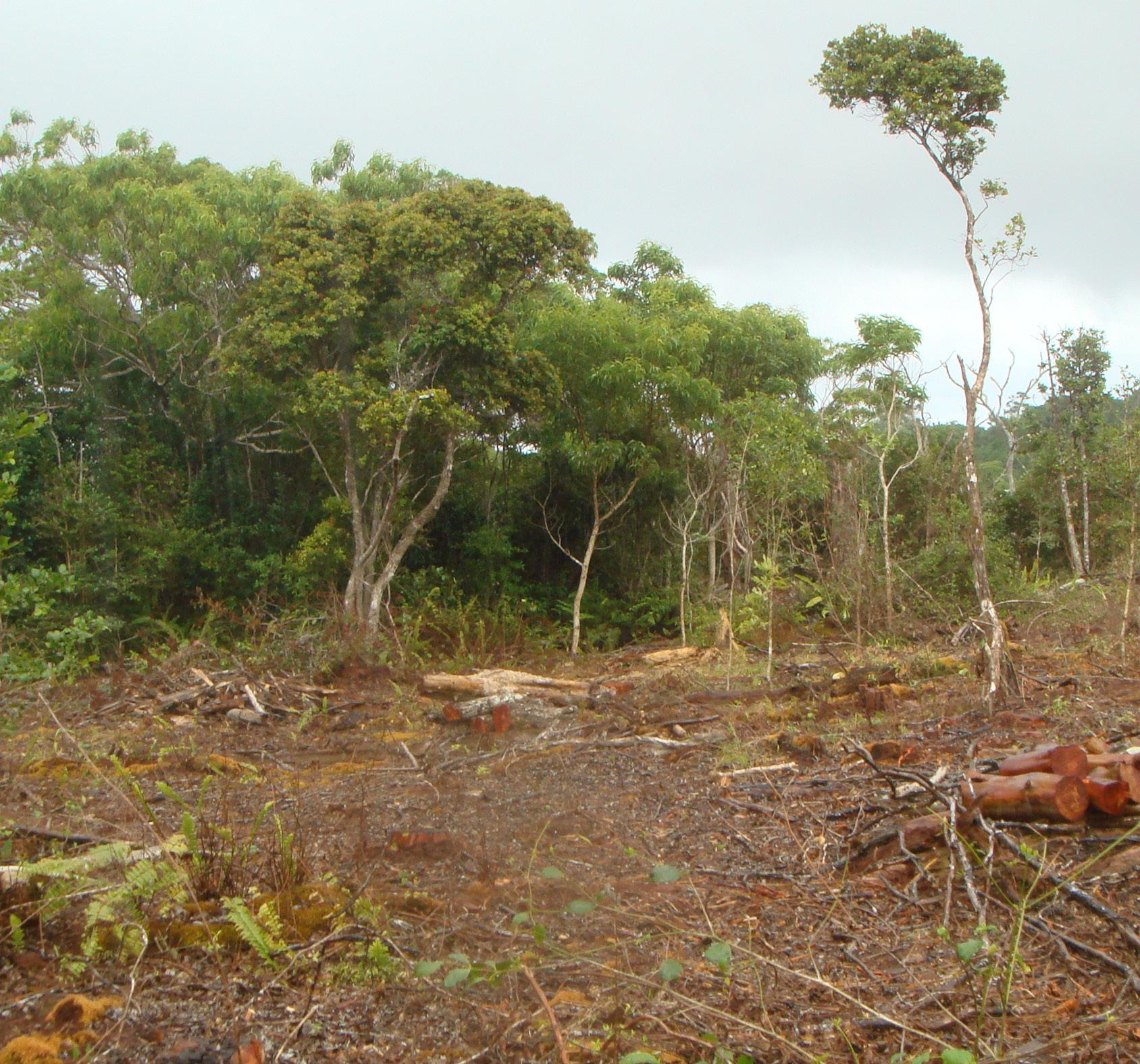
The story begins in the upper reaches of Mākua Military Reservation, at Kahanahāiki’s Maile Flats, the first large-scale restoration site ANRPO tackled starting in 2010. Crews cleared nearly a hectare of invasive strawberry guava trees (Psidium cattleianum) and fed the slash into a chipper. Unlike later projects, they didn’t follow up with heavy planting. Instead, they waited to see how the forest would respond on its own— an approach called “passive” restoration.
The results showed both the power and the limits of passive restoration. Soon after clearing, koa (Acacia koa) seedlings sprouted in dense numbers. The understory grew as ferns, shrubs, and vines filled in alongside the koa—though with less diversity than later projects using outplants. By Year 15, the once-monoculture thicket had become a koa forest, with 65% canopy cover. But weeds remained persistent. Without
outplants to anchor the site, invasives crept back into the understory, demanding regular weeding. Monitoring at Maile Flats proved that passive recovery could succeed given enough time, but it also highlighted why ANRPO changed its approach to restoration in later projects.
after“FROM BARE SOIL TO THRIVING CANOPY, WE CAN WATCH THE FOREST RETURN IN REAL TIME.”
TOP LEFT Letting nature heal itself, a success story from atop Mākua Military Reservation: One of ANRPO’s oldest restoration projects, the Maile Flats Chipper Site underwent dramatic change, as seen in photos over time.
TOP LEFT Before clearing in 2010. LEFT After clearing. BOTTOM Staff monitoring the site, where a naturally regenerated forest now stands. PRECEDING PAGE A koa (Acacia koa) forest now stands at the Maile Flats Chipper site, where invasive strawberry guava (Psidiumcattleianum) once formed a dense monoculture. MICHELLE AKAMINE
Fire and Resilience at ʻŌhikilolo
Lower
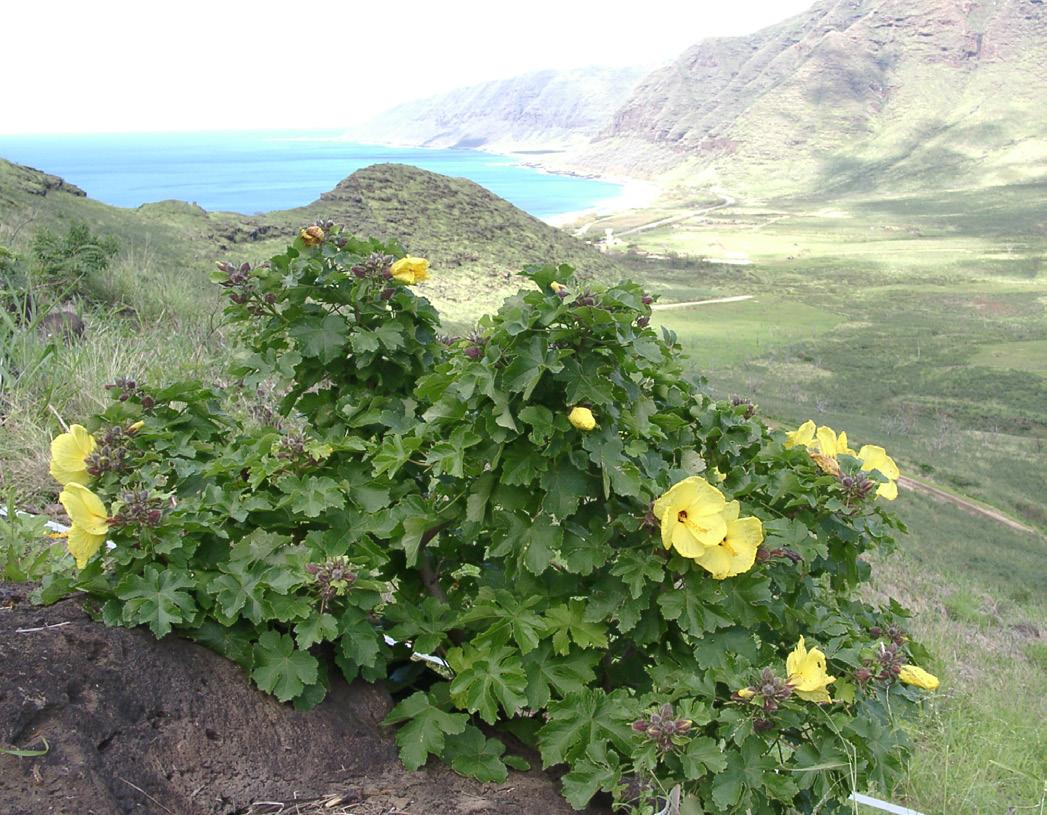
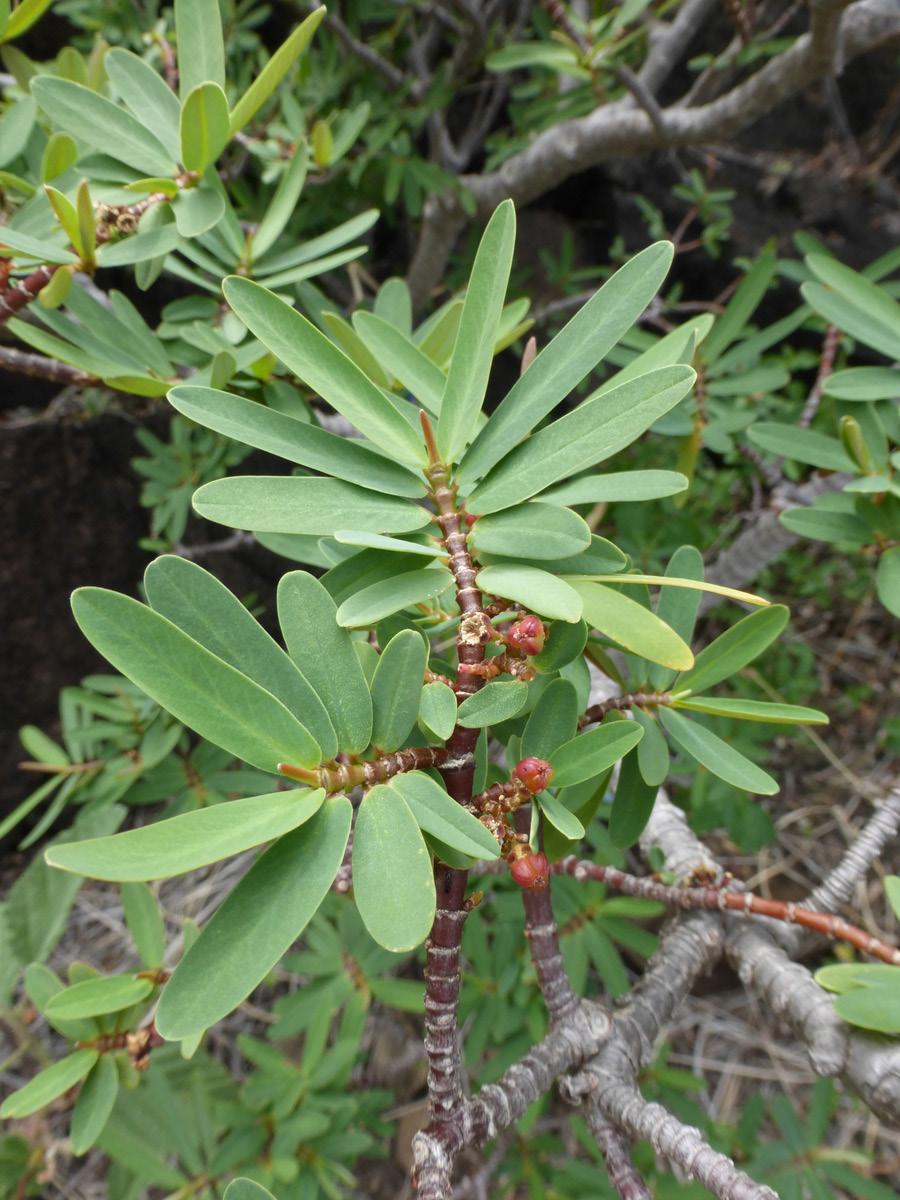
By 2016, ANRPO had expanded into more active approaches to restoration. Further west, on the lower slopes of Mākua Military Reservation, the focus is on rare plants ʻakoko (Euphorbiacelastroides var. kaenana) and maʻo hau hele (Hibiscusbrackenridgei subsp. mokuleianus) at ʻŌhikilolo Lower Management Unit. Here, staff combined intensive weed control with thousands of outplants—more than 4,400 since 2016.
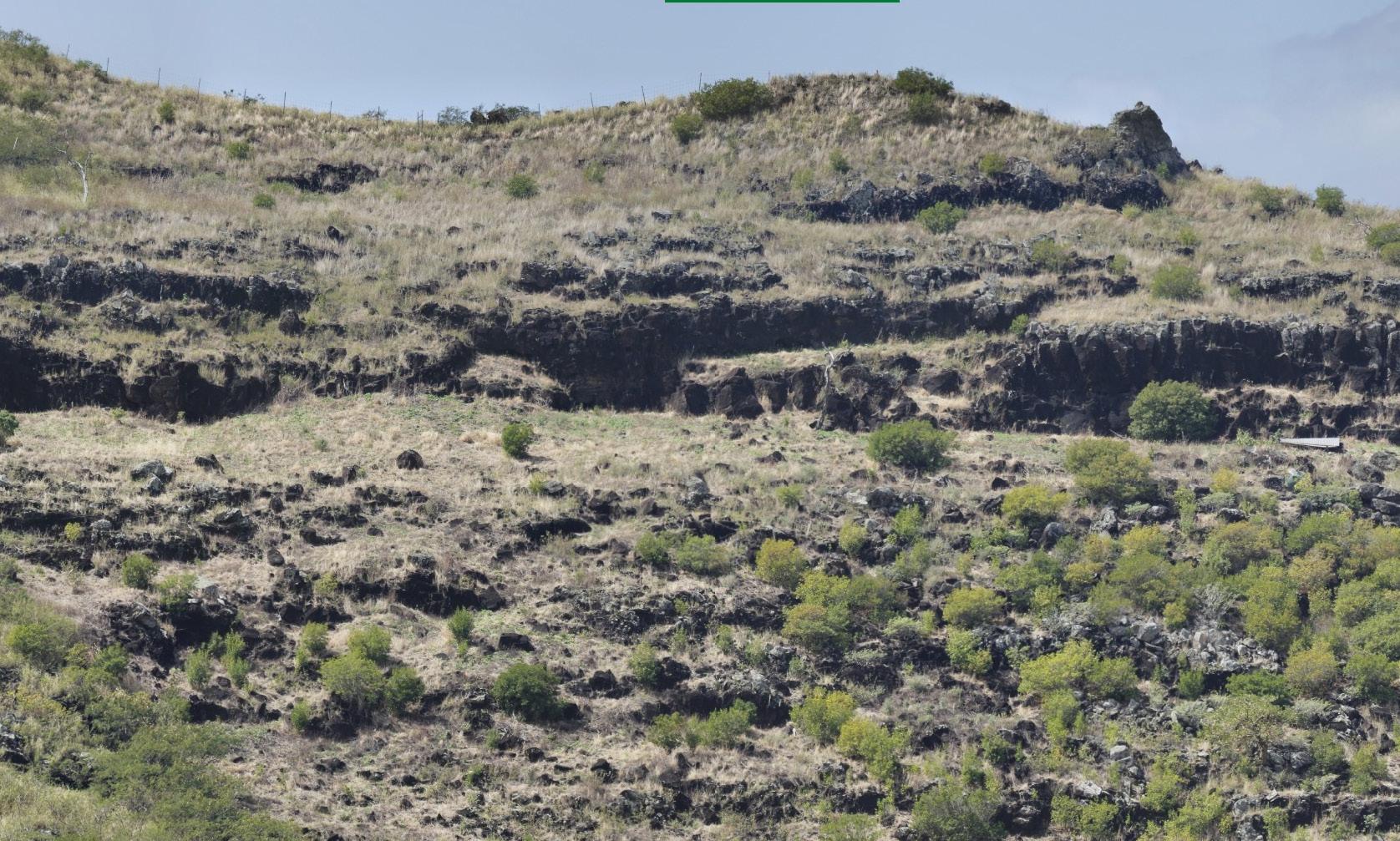
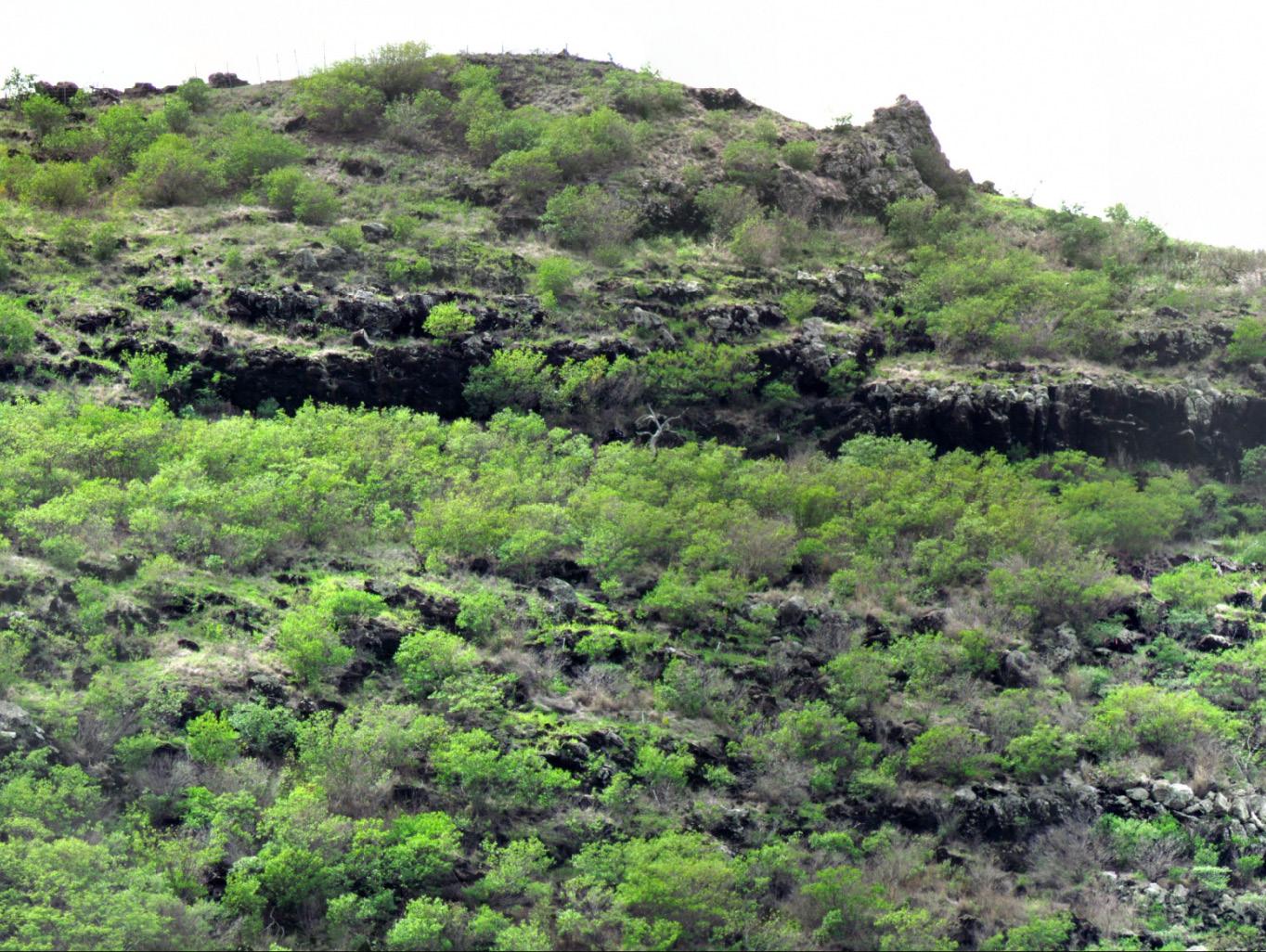
To track change in this dry shrubland, staff use gigapixel panoramic imagery. From fixed vantage points, cameras on robotic mounts (designed for the Mars Rover, no less!) capture sweeping views of the landscape. Over time, these panoramas reveal the steady spread of native shrubs and trees.
The story has been one of both gains and setbacks. By 2022, native cover reached 46-55% in the restoration patches. Sadly, a fire that same year burned through the maʻo hau hele patch, slashing native cover from 46% down to 6%. Monitoring captured both the devastation and the resilience: many large native wiliwili trees (Erythrinasandwicensis) survived, and several maʻo hau hele plants clung on. These records now guide a renewed focus on planting fire-resilient species and strategic planting, ensuring future restoration is better prepared for the realities of Hawaiʻi’s fire-prone drylands.
“It’s not just about planting trees— it’s about building the right forest for rare species to survive.”
LEFT A maʻo hau hele (Hibiscusbrackenridgeisubsp. mokuleianus) stands atop ʻŌhikilolo Lower Management Unit at Mākua Military Reservation prior to restoration. ABOVE Gigapixel imagery shows how vegetation at an ‘akoko patch in ʻŌhikilolo Lower. Cover was sparse in 2016. TOP In 2025, the 'akoko patch is now thriving BOTTOM RIGHT BACKGROUND Thriving 'akoko (Euphorbiacelastroidesvar. kaenana) on the lower slopes of Mākua Military Reservation.
“Less weeds and more natives means a healthier ecosystem for everything that depends on it.”
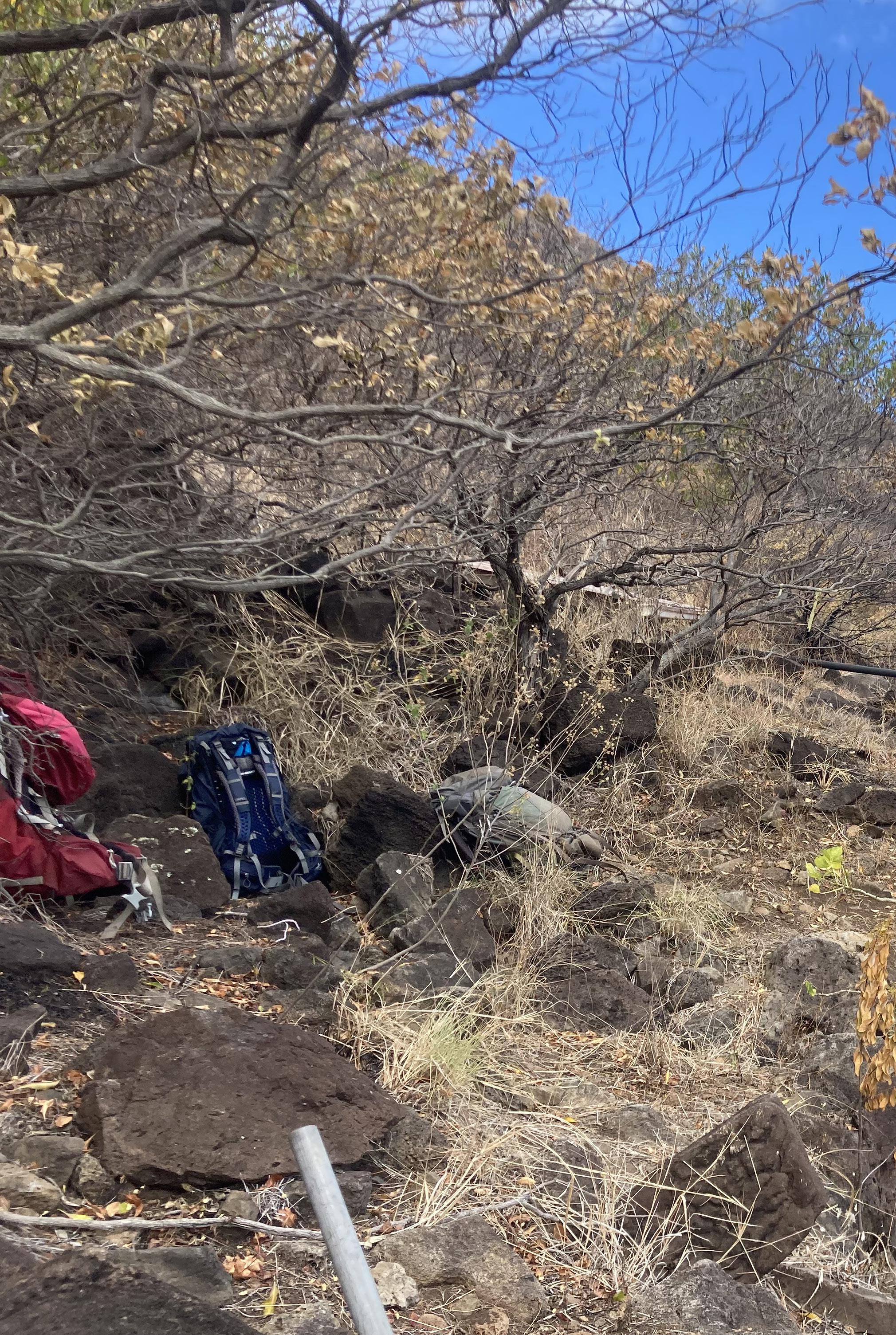
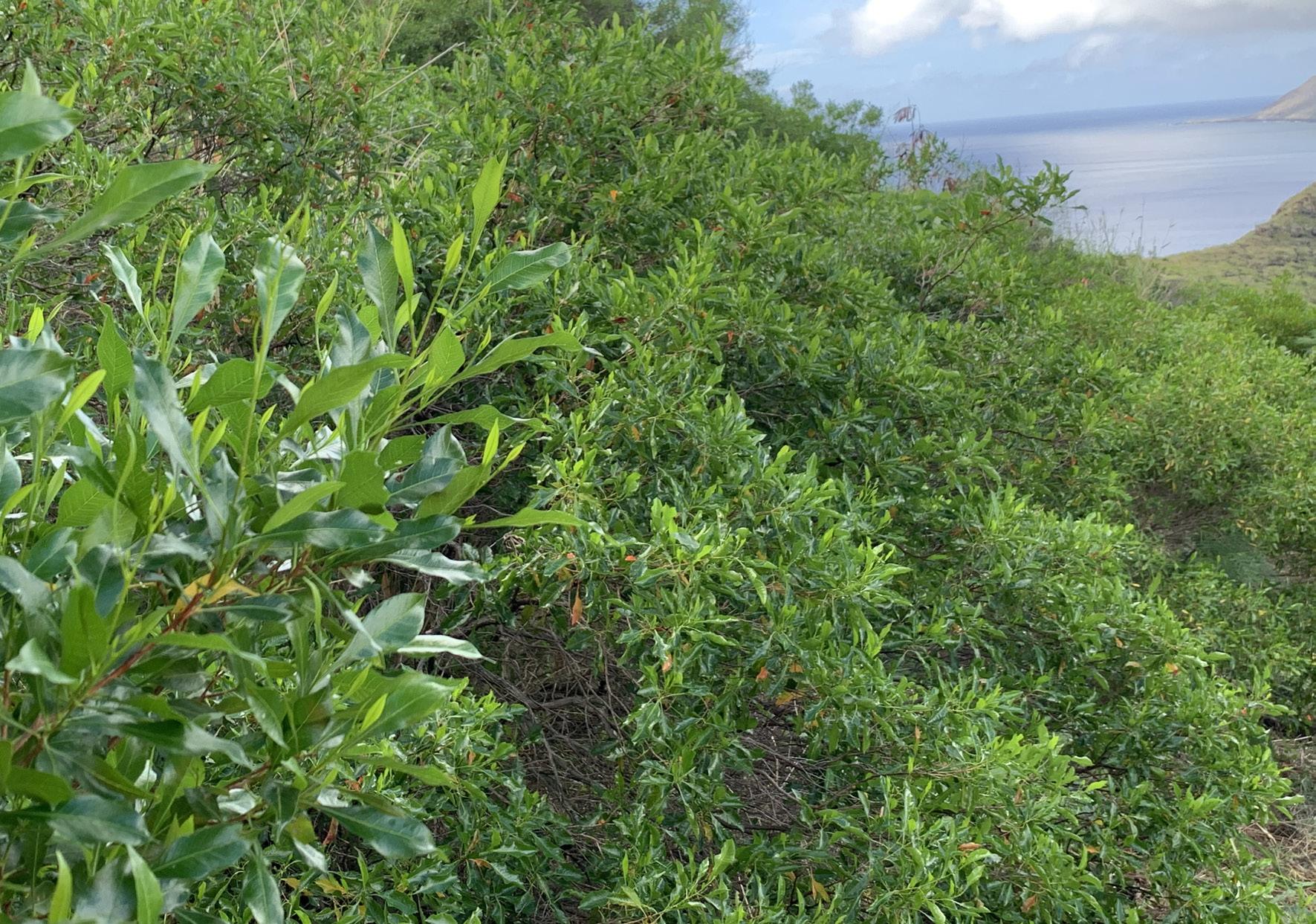
"A photopoint tells the story of success, devastation, and resilience at 'Ōhikilolo lower"
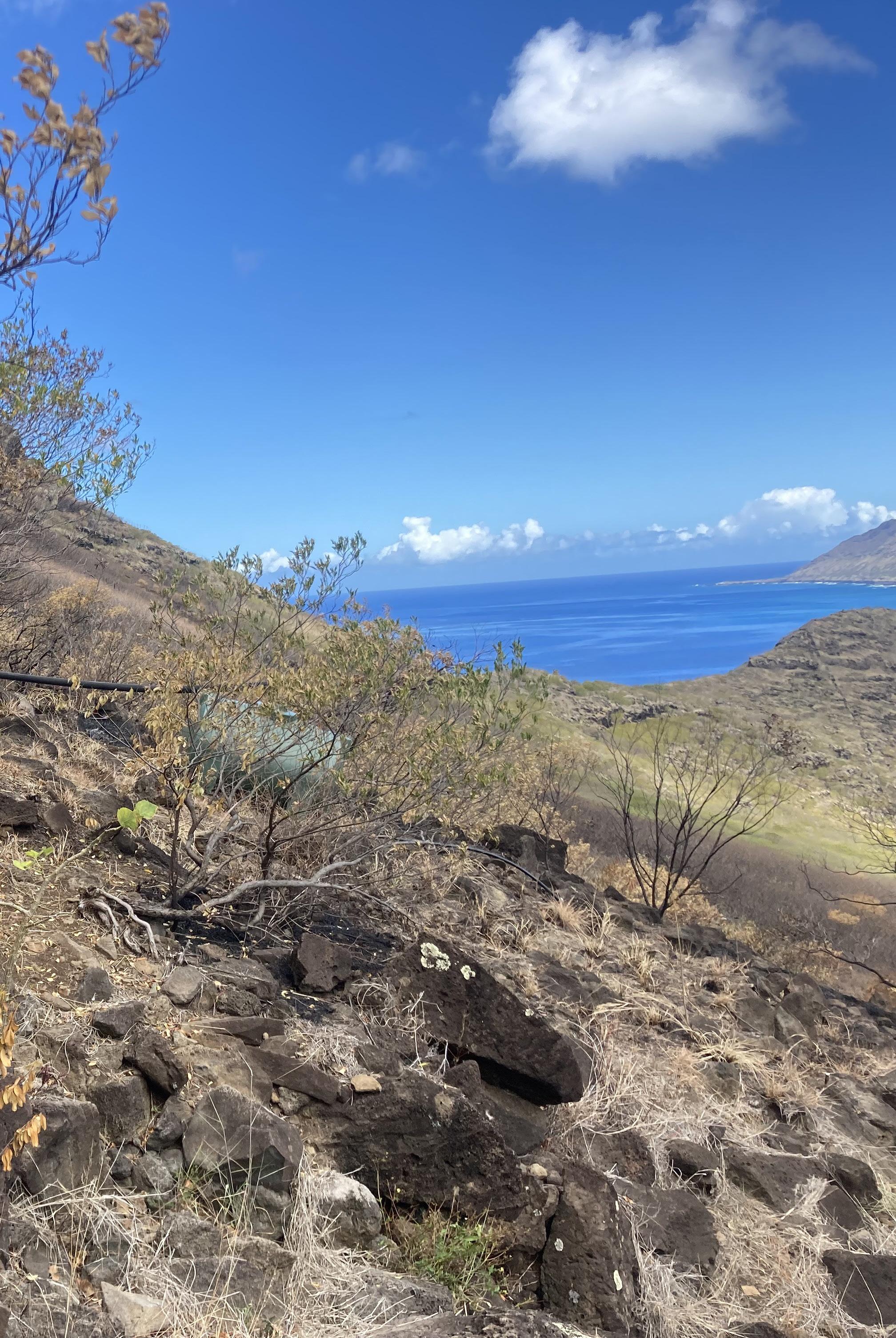
A photopoint series at the maʻo hau hele patch shows lush restored shrubland in 2020 (LEFT), only to be laid waste by fire in 2022 (BACKGROUND). Undeterred, ʻaʻaliʻi (Dodonaeaviscosa) and ʻiliahi aloʻe (Santalum ellipticum) are making a comeback by 2024 (RIGHT).
Michelle Akamine & ANRPO staff
A Haven for Snails at Palikea North
In the wetter forests of the Waiʻanae range, the Palikea North snail exclosure tells yet another story. Here, ANRPO paired active restoration with a unique conservation goal: protecting endangered kāhuli tree snails (Achatinella mustelina) inside a predator resistant exclosure. Beginning in 2016, staff clear-cut dense thickets of invasive plants, replacing them with natives—over 4,000 outplants, 39,000 seeds, and dozens of transplants in just seven years. These included host species that kāhuli depend on.
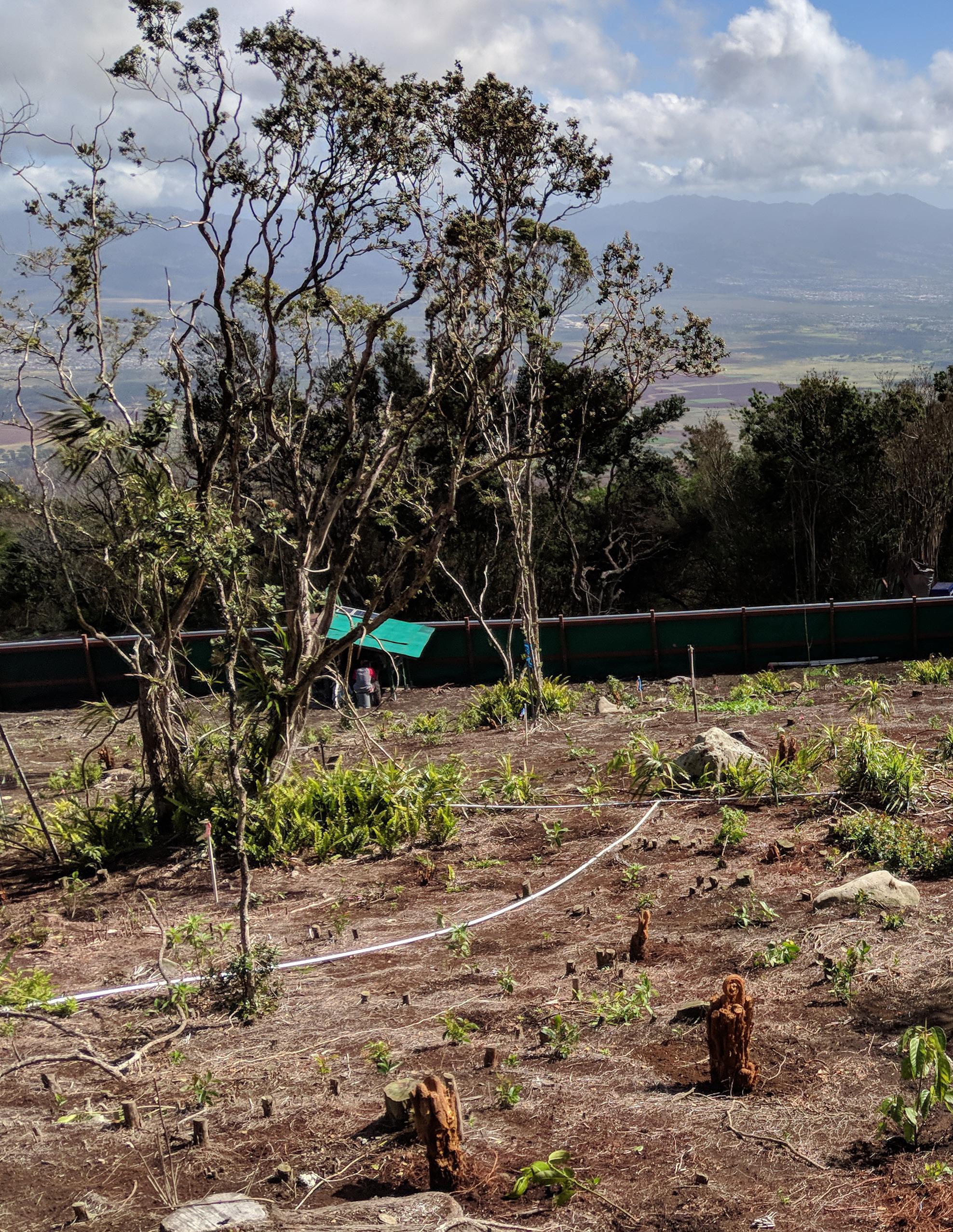
Monitoring here tracks vegetation at three levels: ground cover, shrub layer, and canopy. The goal is to create a stable, multi-layered forest structure that supports not only snails but also native insects and birds. By Year 7, native vegetation covered more than 75% of the site overall. Ferns thickened the ground, shrubs filled the mid-story, and young trees began knitting together the canopy. Best of all, the kāhuli population is thriving.
Invasive grasses remain a challenge, and the canopy will take more time to mature. But steady gains are clear, and monitoring shows the new forest is becoming the kind of diverse multi-layered habitat that supports snails and other wildlife. Monitoring also helps managers see exactly where weeds are making inroads, allowing control efforts to be focused where they matter most.
“From wall of weeds to thriving canopy— the change is dramatic.”
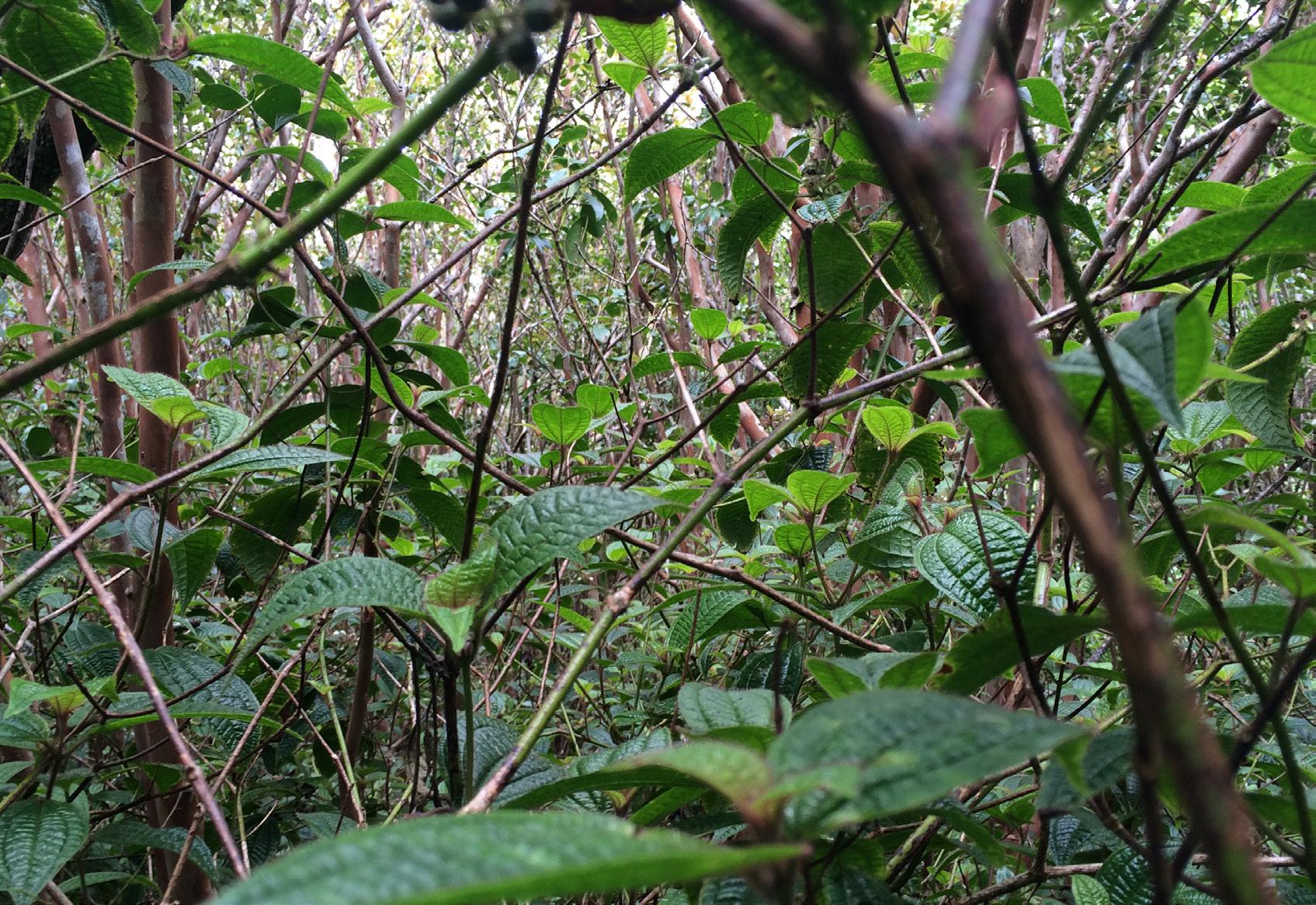
“With the right plants, we can rebuild a refuge from the ground up.”
The Palikea North kāhuli exclosure is more than just a fence, it’s a snail sanctuary built from scratch. The exclosure was filled with a thicket of weeds before clearing. (LEFT) After clearing, the site was nearly a blank slate. (BACKGROUND) Seven years later, a young forest supports an endangered snail population. (RIGHT) PRECEDING PAGE A kāhuli (Achatinella mustelina)taking refuge on a pilo (Coprosmalongifolia) leaf at the Palikea North snail exclosure.
Taylor Maruno
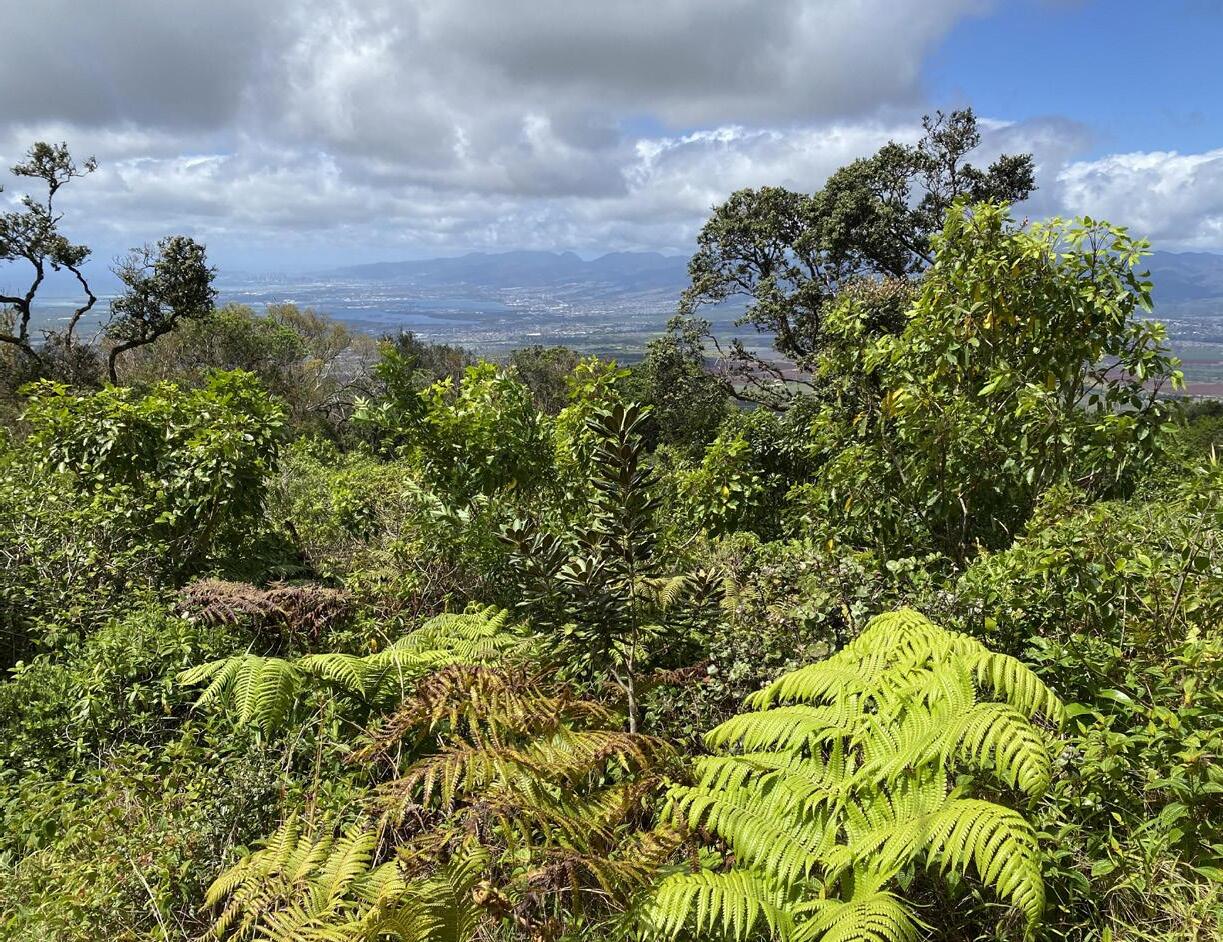
Native Forest Resurgence at Giant ‘Ōhi‘a
Deep in Mākaha Valley, the “Giant ʻŌhiʻa” restoration site shows what can happen when active restoration is paired with strong remnants of native forest. Beginning in 2016, crews cleared invasives, but left many girdled trees standing to prevent damaging native vegetation. Over time, they added outplants, transplants, and seed sows of common natives, from shrubs and trees to grasses and ferns.
Monitoring tells a story of rapid recovery. By just two years after clearing, native canopy cover surpassed 80%, meeting long-term goals far earlier than expected. By Year 6, the understory nearly doubled in native cover to 44%. The canopy is now dominated by native trees like alaheʻe (Psydraxodorata), koa, and, of course, ʻōhiʻa lehua (Metrosiderospolymorpha). Happily, very little weeding is needed.
The success here highlights how fast native species can expand when invasives are removed strategically. It also shows how the presence of remnant natives can jumpstart recovery and suppress weeds—an important lesson for other sites where native cover is sparse, and a key consideration when selecting new restoration sites.
“Each site teaches us something new about how Hawai‘i’s forests recover."
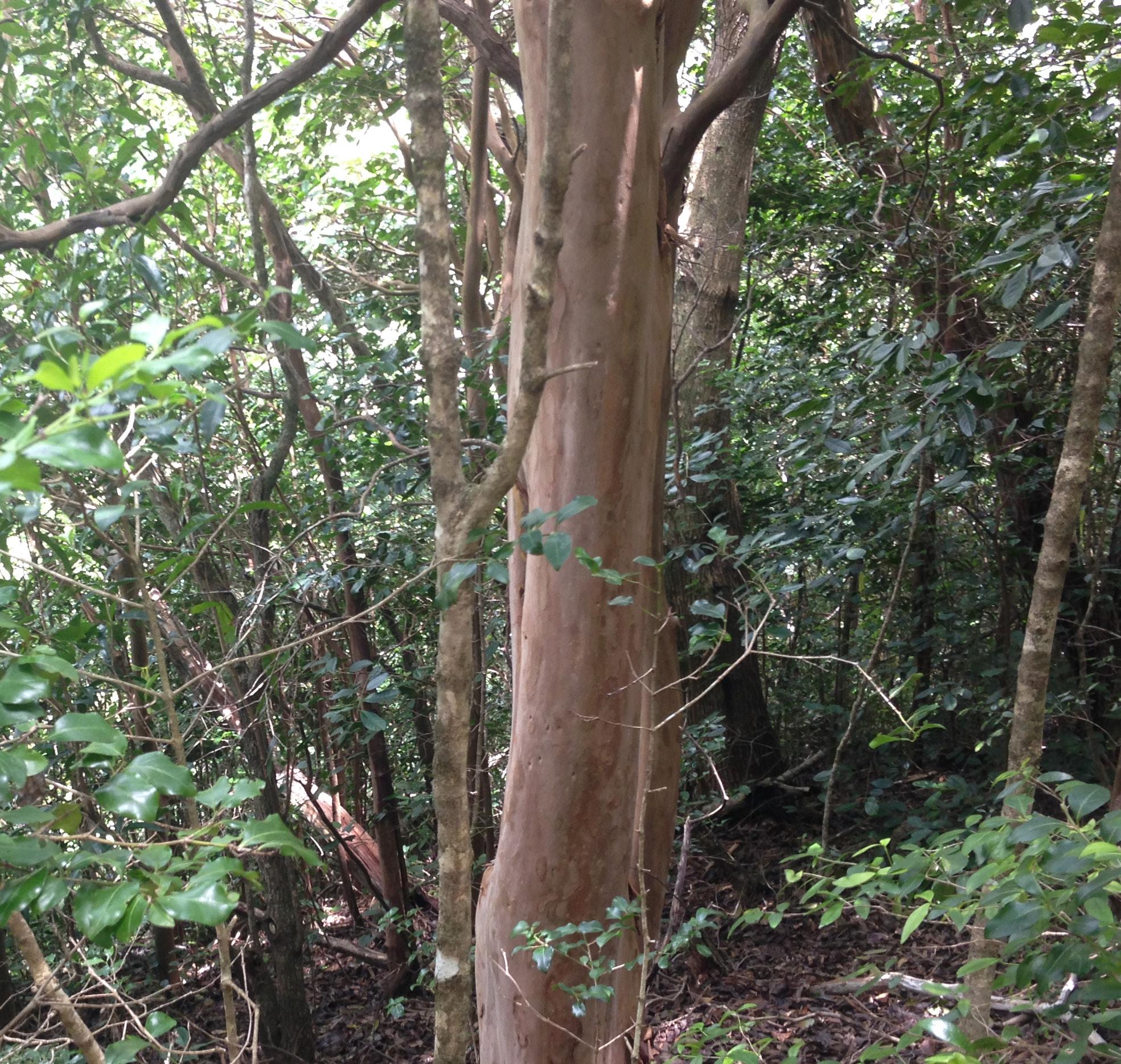
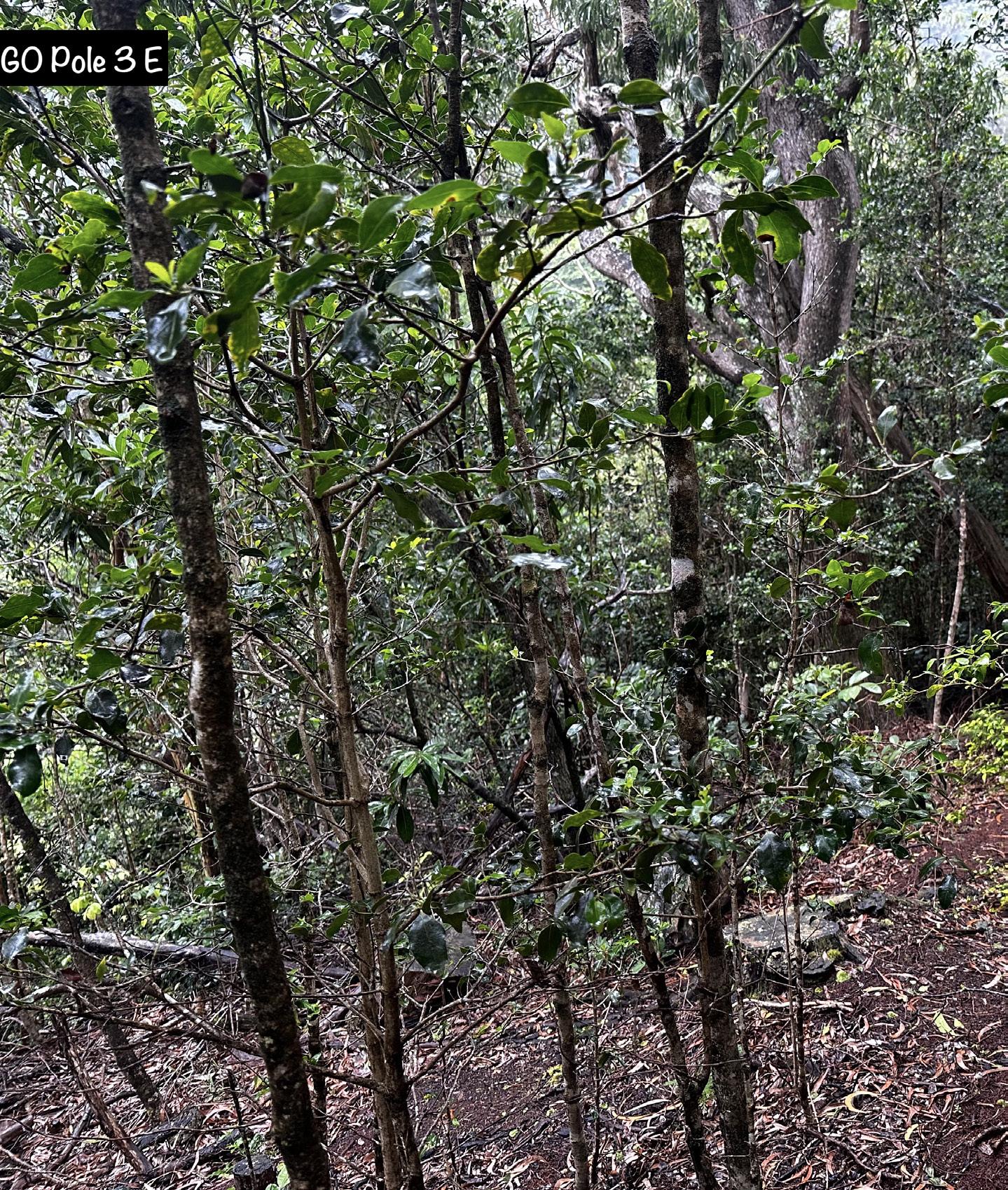
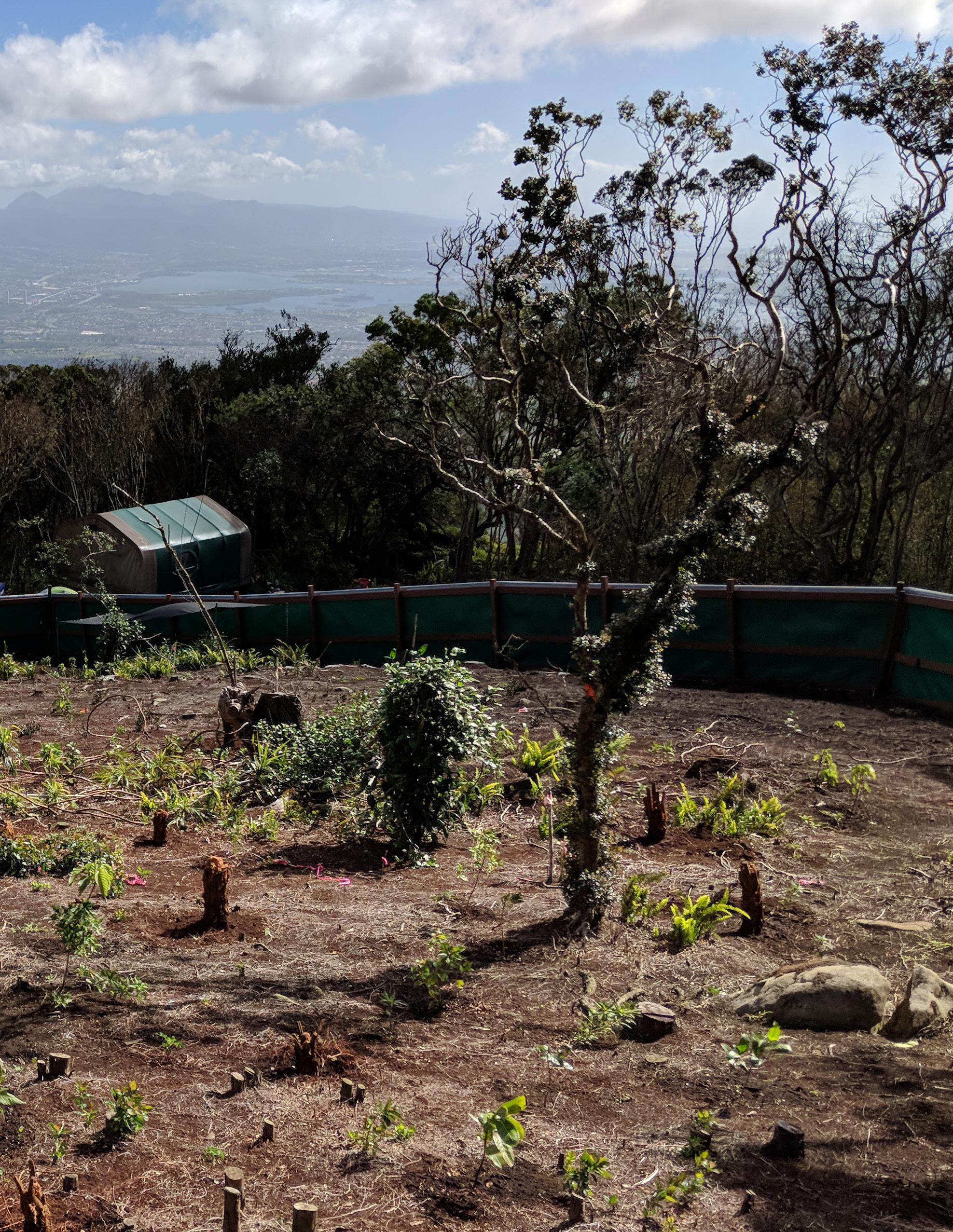
A New Beginning at ‘Amakihi Ave
Now, ANRPO is applying everything it has learned to its newest restoration area: ʻAmakihi Ave. At this site, located above Schofield Barracks South Range in the Honouliuli Forest Reserve, remnant native forest was being choked out by invasive trees. In 2024, crews cleared the invasives, with plans to follow up with outplanting natives and sowing seeds. Monitoring will track the story from the very beginning—what happens when invasive trees are cut, and both active planting and natural regeneration take place side by side.
Additional monitoring techniques are applied here—with careful recording of seedlings in plots—to learn which species spring up on their own, which need extra help, and how quickly native trees can re-establish themselves. Along with this, photos of the canopy, notes on species presence, and data on understory and canopy cover will build a detailed picture over the years.
Less than a year after clearing began, the first signs of a new forest are already taking root. Anchored by native trees covering over 50% of the site, the presence of native seedlings is already up by 94%. By comparing ʻAmakihi Ave with older sites, ANRPO can refine strategies and keep improving restoration outcomes across Oʻahu.
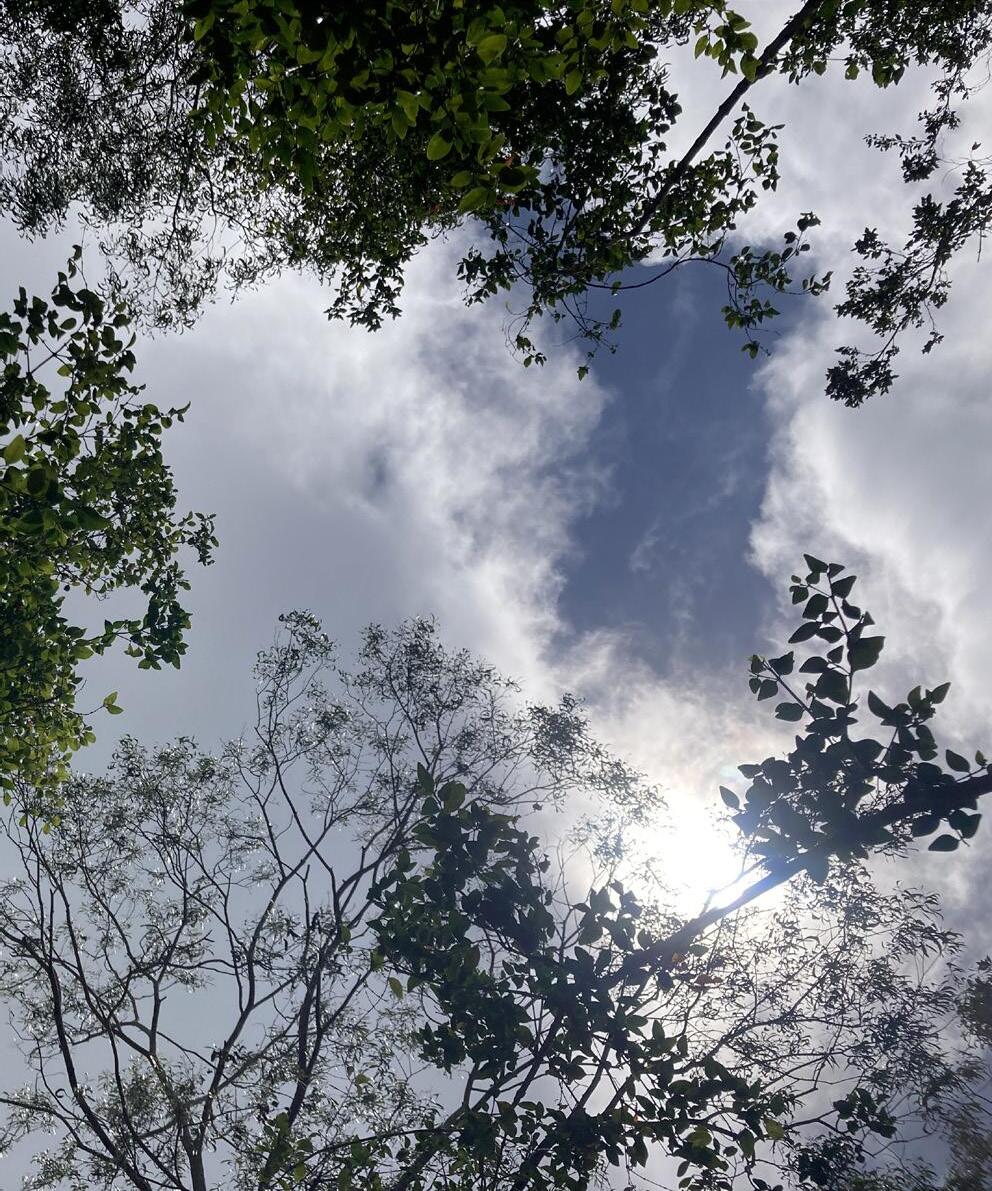
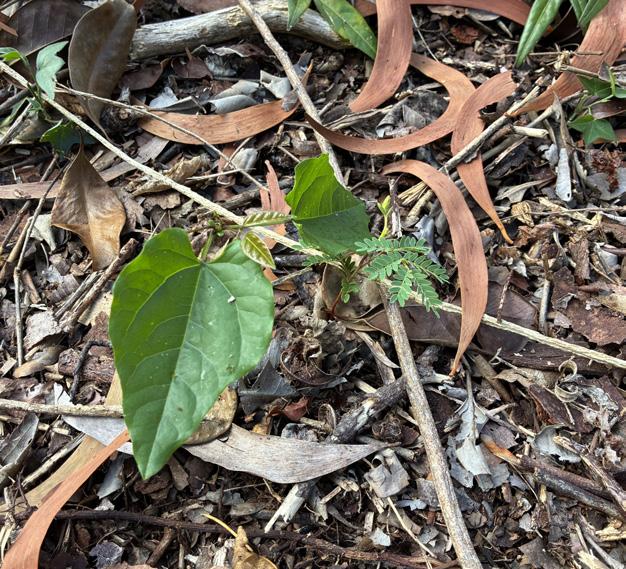
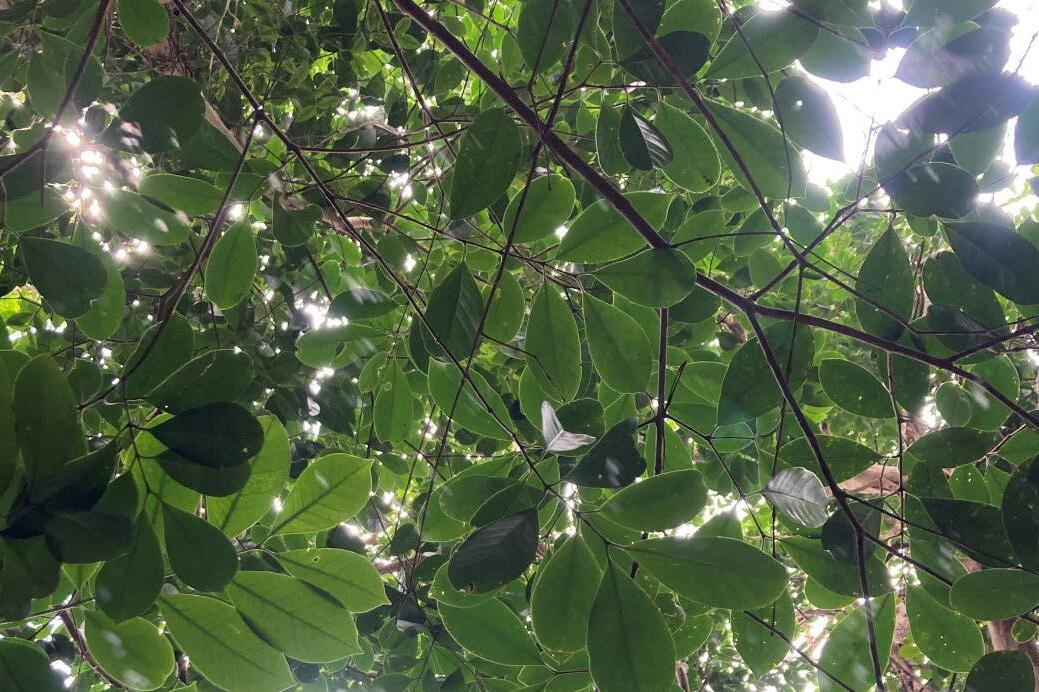
FAR LEFT A native forest is rescued from invaders at the Giant ʻŌhiʻa restoration site. Invasive strawberry guava trees were choking out remnant native forest in 2016. LEFT Native trees now dominate, once again. BELOW A view into the canopy at ‘Amakihi Ave reveals its transformation. Before clearing, invasive weeds strawberry guava and Australian red cedar (Toonaciliata) crowded the canopy. RIGHT Now, remnant native trees are free to flourish, and ready to anchor recovery. INSET BELOW An early indicator of restoration progress: koa and ʻāwikiwiki (Canavaliagaleata) seedlings emerge after invasives are cleared at ʻAmakihi Ave.
Building Better Forests
Across these different sites, a bigger picture emerges. Passive restoration— letting nature heal itself—works in some places. But active restoration— outplanting, sowing seeds, and transplanting—gives managers control over species composition, speeds up recovery, and suppresses weed recruitment.
Through ANRPO, the U.S. Army is investing in ecosystems that not only recover native plants but also strengthen habitat for endangered species. These efforts don’t just fill space. They restore the full stru cture and function of diverse, multilayered native forests. They also allow managers to plant host species tailored to rare species, ensuring that ecosystem restoration directly supports endangered species conservation.
Monitoring makes it possible to measure these successes and learn from setbacks. It reveals how native plants respond to clearing, fire, or competition with weeds, and it highlights which restoration techniques produce the strongest results.
Looking Ahead
Ecosystem restoration takes years of planning, planting, and tending—and requires constant vigilance against invasive species. But through careful monitoring, ANRPO is showing that progress is possible.
"The data tells the story. Native plants are returning. Forests are rebuilding."
Even in the face of challenges like wildfire or aggressive weeds, the commitment of ANRPO and the U.S. Army to steward Hawaiʻi’s natural resources is paying off. And with every round of monitoring, managers are not just recording progress—they’re learning how to build better forests for the future.
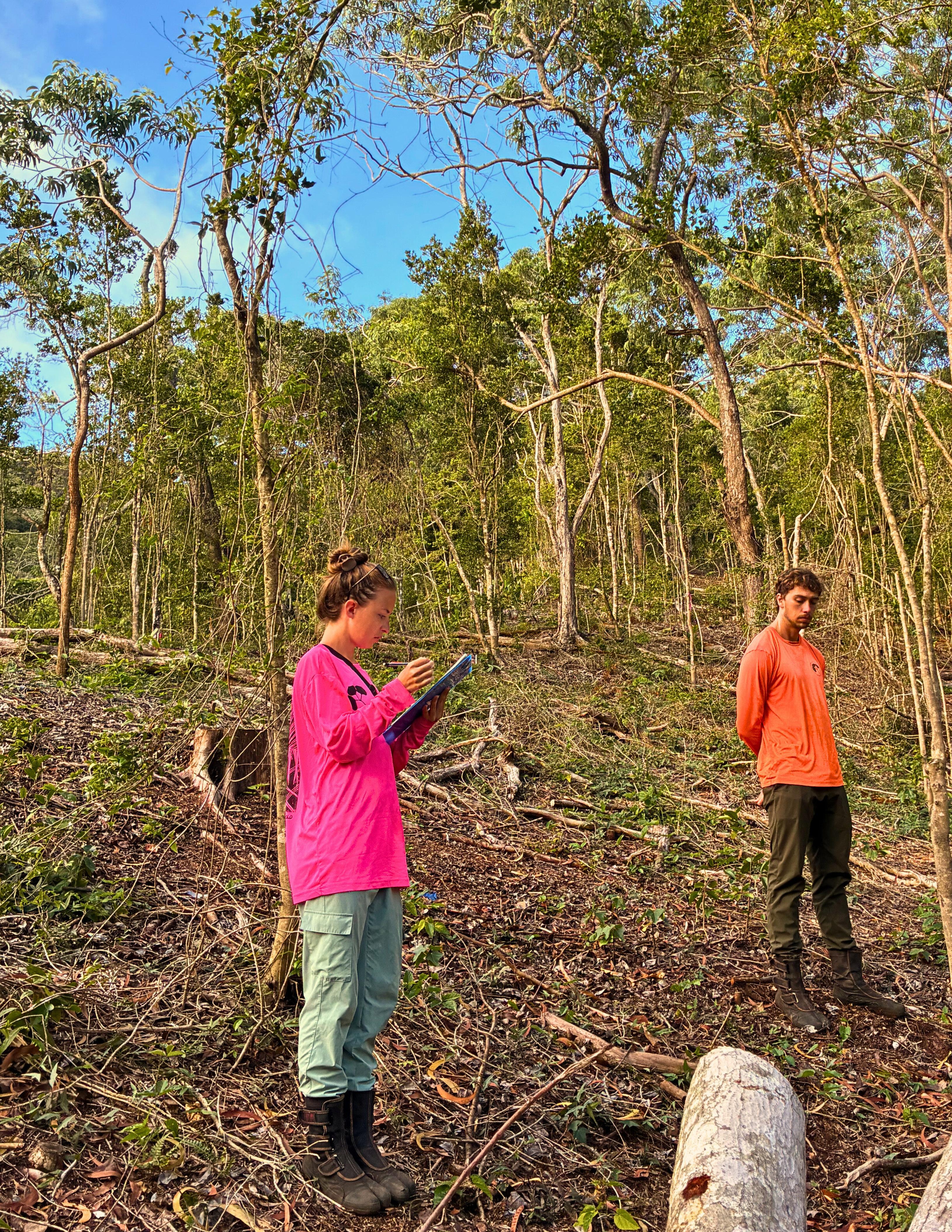
After invasives were removed, ANRPO staff returned to ʻĀmakihi Avenue to monitor how the forest is rebuilding itself.
ANRPO staff
H azard A nalysis & C ritical C ontrol P oint Training A Strategic Approach to Biosecurity
by Leyla Kaufman
Routine natural resource management activities, such as transporting equipment, conducting research, collecting samples, or restoring habitats, can unintentionally facilitate the spread of invasive species if not carefully planned and managed. To address this risk, Hazard Analysis and Critical Control Point (HACCP) planning offers a structured, risk-based framework for evaluating whether human activities may lead to the inadvertent movement of non-native organisms. HACCP planning enables practitioners to identify when, where, and how risks arise, and to implement measures that effectively reduce and mitigate risk. Beyond guiding field operations, HACCP plans also document when and how best management practices (BMPs) and standard operating procedures (SOPs) are most effectively used, reinforcing their application and importance.
At its core, HACCP is a risk management tool built around five integrated steps designed to pinpoint stages in an activity where invasive species risks are greatest. Once risks are identified, preventive measures are established, supported by safeguards, known as Prescribed Ranges, Limits, or Criteria (PRLC), along with corrective actions to ensure these measures function effectively.
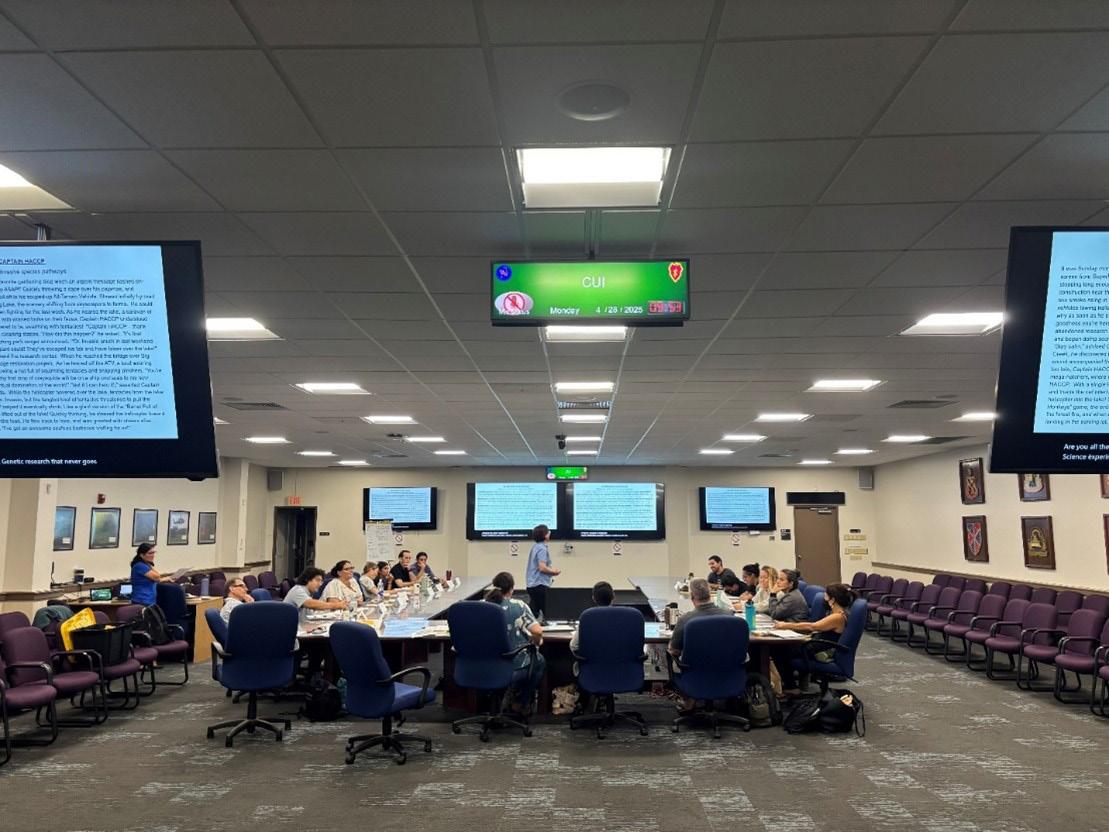
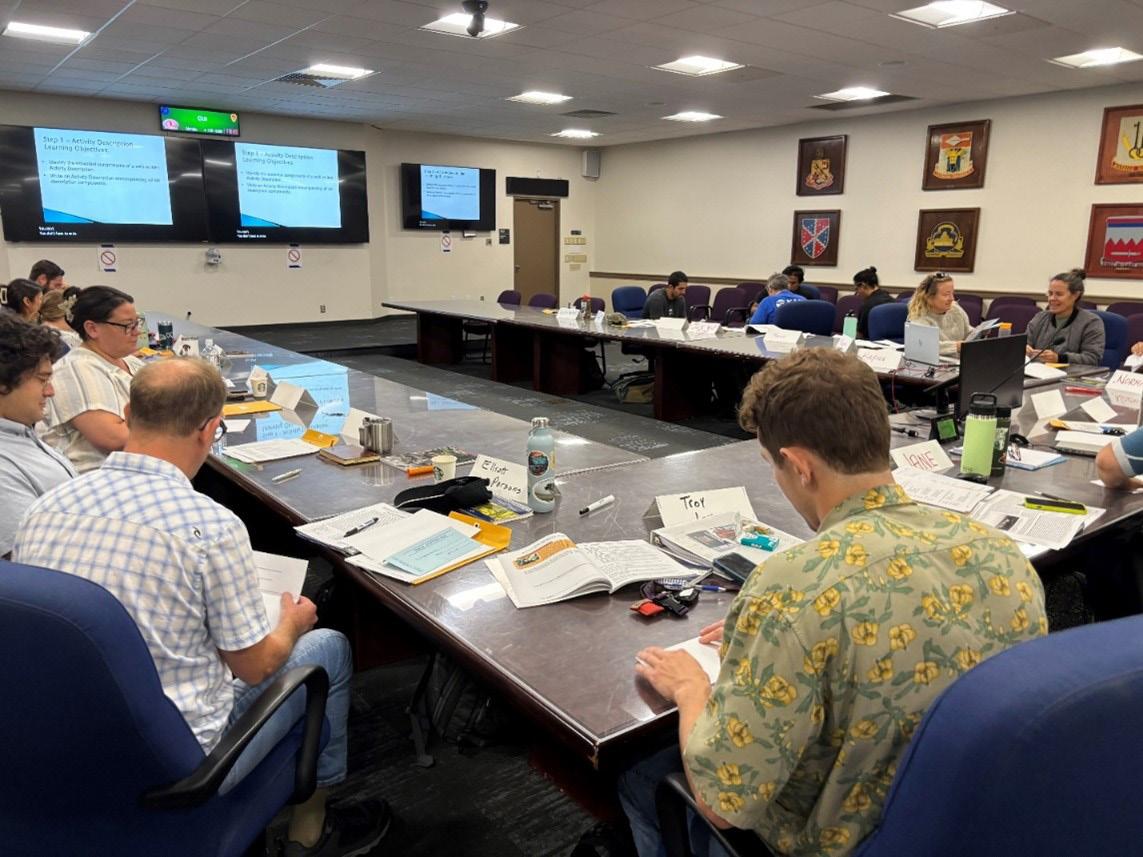
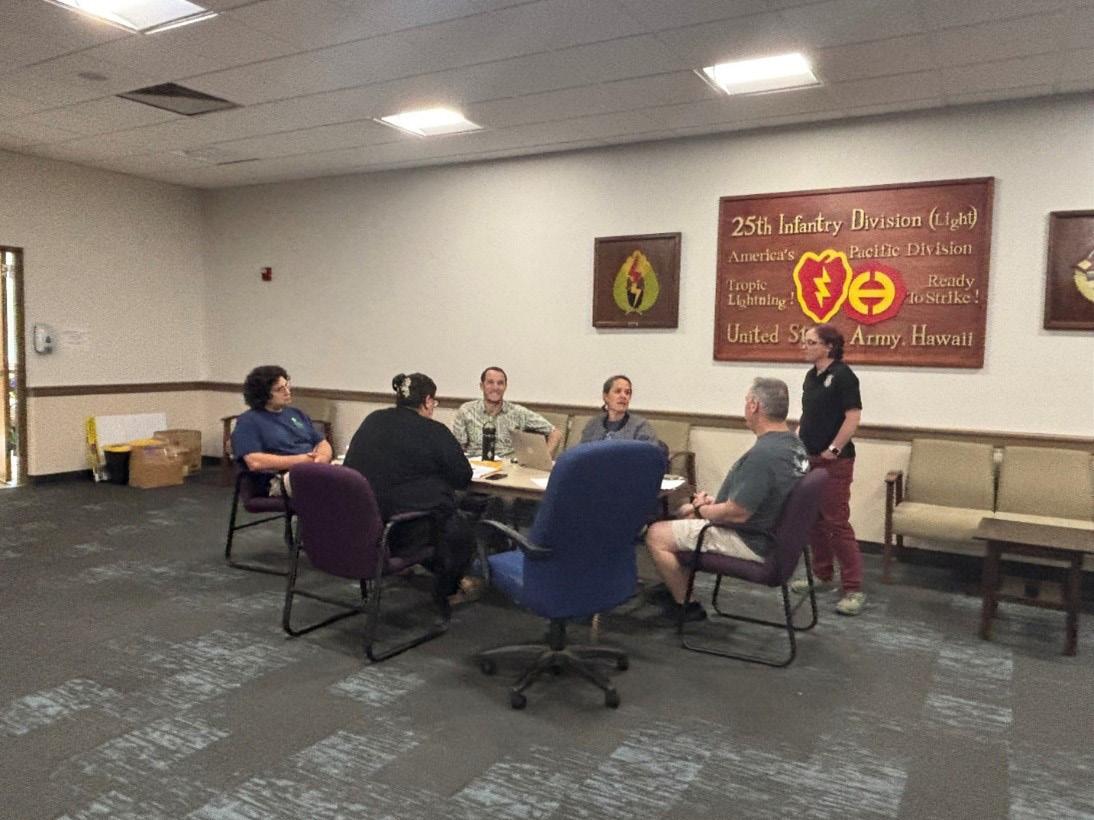
On April 28–29, 2025, U.S. Fish and Wildlife Service (USFWS) staff (Theresa Thom, Josh Fisher, and Leyla Kaufman) provided a HACCP certification training at Schofield Barracks, attended by 23 participants representing the Army, Air Force, Navy, NOAA, and the Hawai‘i Invasive Species Council. This two-day, in-person training combined
instructional modules with interactive group exercises. As part of the class, several activities were evaluated using HACCP, including tsunami response, inter-island troop movement, natural resource survey work across multiple management units, and inter-island transport of goods via watercraft.
The structure of the HACCP training is as follows:
Day 1: introduces the five steps of HACCP planning: (1) activity description, (2) activity flow chart, (3) non-target species, (4) non-target analysis worksheet (NTAW), and (5) non-target risk assessment plan. Each unit is paired with group exercises, allowing participants to apply the concepts in real-time.
Day 2: begins with a review of Day 1, followed by a learning game in which teams pose HACCP-related questions to test and reinforce knowledge. The remainder of the day focuses on developing HACCP plans for activities selected by the participants. Each group presents its plan and receives constructive feedback from both instructors and peers. Day 2 ends with a short self-graded quiz.
Building on this training, additional HACCP certification opportunities are anticipated to continue in coordination with partner agencies. For more information about HACCP, please contact Leyla Kaufman, Biosecurity Coordinator with the U.S. Fish and Wildlife Service, Pacific Islands Fish and Wildlife Office (PIFWO) (Leyla_Kaufman@fws.gov).
5 steps of HACCP planning
1 Activity Description
This step provides a brief description, rationale, and intended impact of the activity. This step answers questions such as who, what, where, when, how, and why.
Activity Flow Chart
This step outlines the sequence of tasks that occur during an activity. It expands on the "How" from Step 1. The sequence of tasks focuses on the movement of things and people.
Non-Target Species
This step identifies the potential non-targets that may be moved through the tasks identified in Step 2.
Non-Target Analysis Worksheet (NTAW)
The NTAW identifies tasks that pose significant risk in moving non-target species, control measures that can reduce the risk, and critical control points.
Non-Target Risk Assessment Plan (NTRAP)
The NTRAP contains the prescribed range limits and criteria (PRLC) for the control measures, and the corrective actions (what to do if control measures fail). 2 3 4 5
STRENGTHENING HAWA IʻI'S DEFENSES New biosecurity
Plans for Oʻahu & PTA BY KAIA KONG
The U.S. Army Garrison Hawaiʻi (USAG Hawaiʻi) is taking proactive steps to protect Hawaiʻi’s natural resources by partnering with the U.S. Fish & Wildlife Service (USFWS) to create a biosecurity plan for Oʻahu and Pōhakuloa Training Area (PTA). This work is part of a nationwide pilot project, funded in 2024 through the Department of Defense’s Environmental Resilience Project, that aims to prevent invasive species from threatening Army installations and surrounding ecosystems.
The project, “Protecting Army Assets from Invasive Species Using the Hazard Analysis Critical Control Point (HACCP) Plan Framework”, is one of four pilot efforts across the country, with parallel work underway in Alaska, New York, and Colorado. Its aim is to create a robust, installation-specific approach to invasive species detection and prevention, tailored to the unique mission needs of Army training lands.
As an initial step, USFWS will develop pilot biosecurity plans that include pathways analysis to identify potential threats before they arrive. This will help to distinguish which species pose the highest risk, direct efforts where they will be most effective, and put monitoring and rapid response systems in place. The biosecurity plans will be asset-based, designed around the unique operational needs, physical infrastructure, and natural resources of each installation.
USAG Hawaiʻi sees this project as an opportunity to compile and align guidance from multiple existing installation management documents, including the Integrated Pest Management Plan, Integrated Natural Resources Management Plans, and other Army policies, regulations, and memoranda into one comprehensive biosecurity framework. The result will be a well-structured, actionable plan that helps USAG Hawaiʻi strike the right balance between protecting Hawaiʻi’s natural resources and keeping training activities compatible with those efforts.
By partnering with USFWS and drawing on their expertise, USAG Hawaiʻi is contributing to the Army’s broader effort to develop Early Detection and Rapid Response (EDRR) capabilities nationwide. Lessons learned from the Hawaiʻi biosecurity plan will inform future biosecurity planning across other installations, helping to safeguard military assets and surrounding ecosystems from invasive species for years to come.
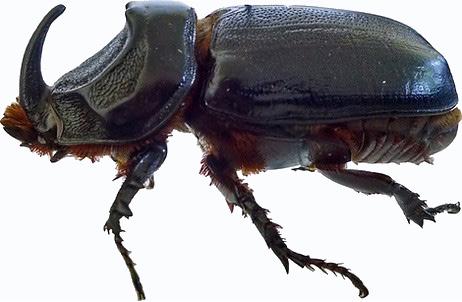
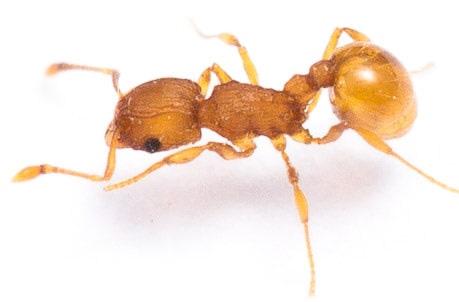
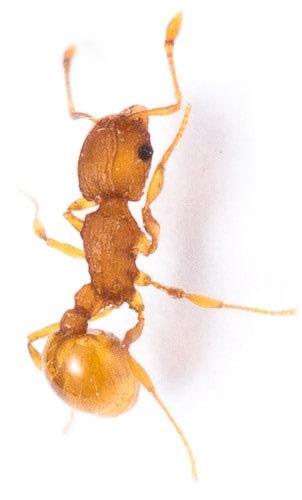
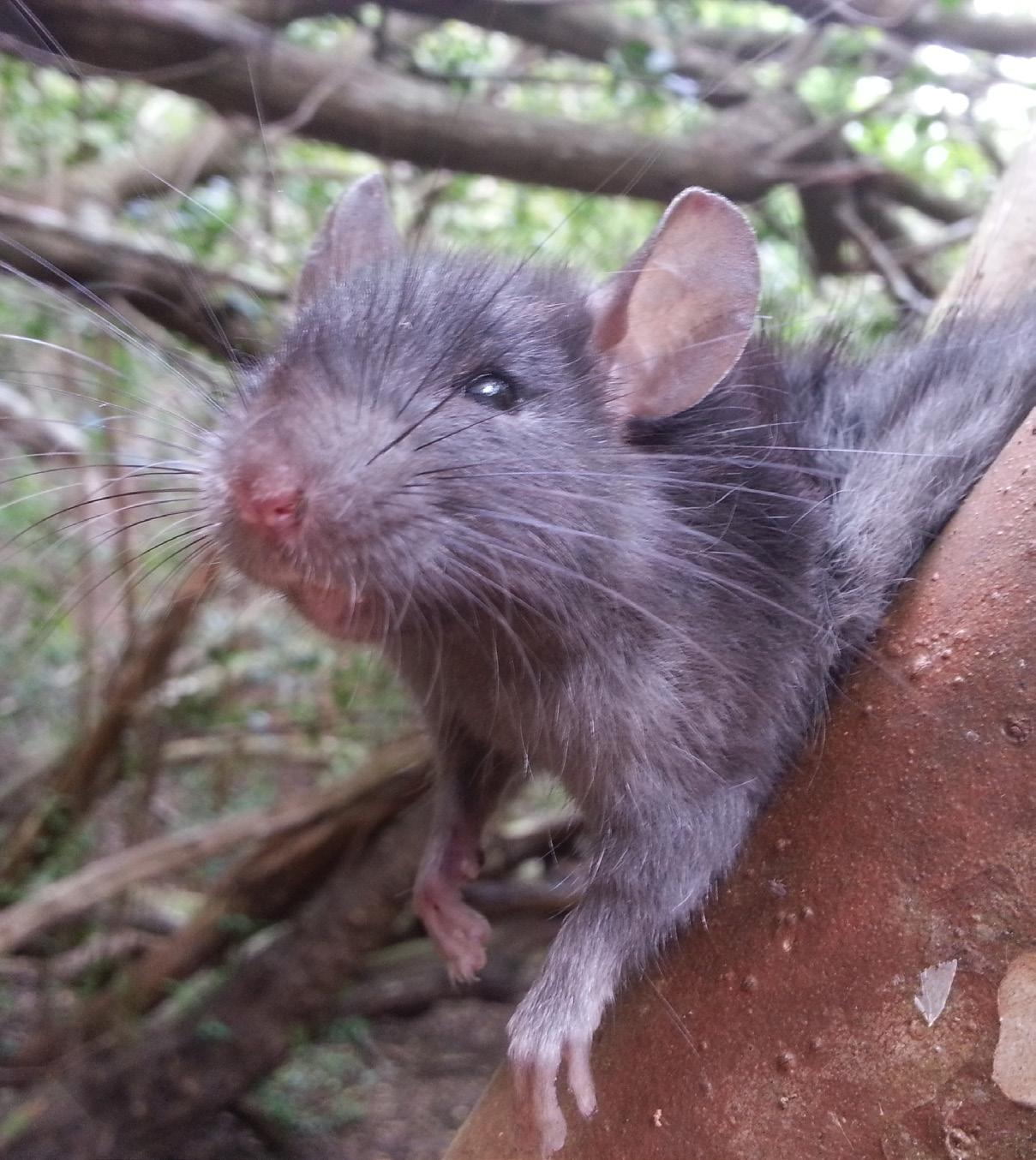
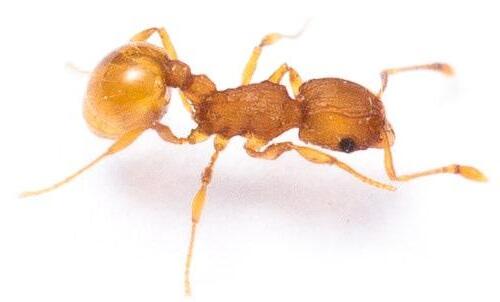
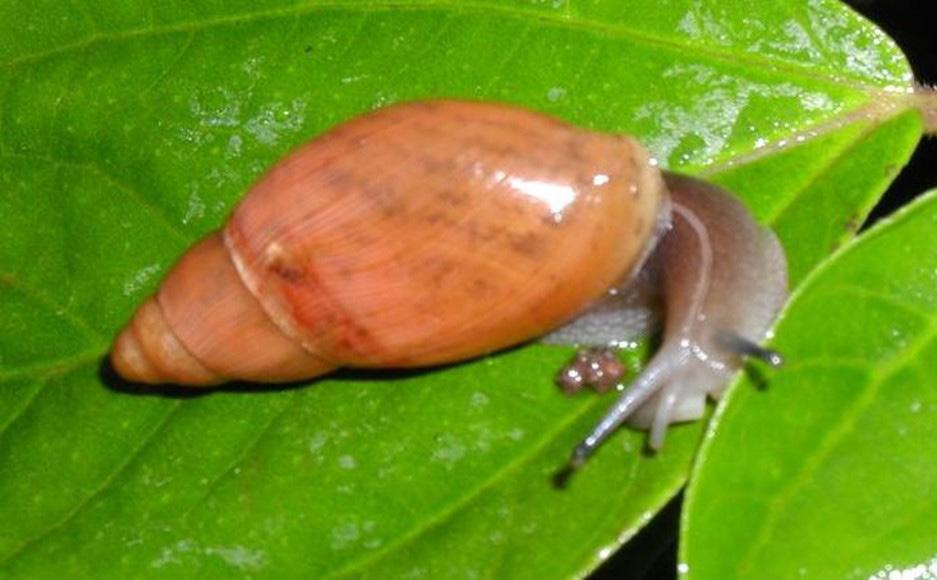
CLOCKWISE FROM TOP Coconut Rhinoceros Beetle (CRB-Oryctes rhinoceros);Little Fire Ant (LFA-Wasmanniaauropunctata); Rosy wolfsnail/cannibal snail (Euglandinaspp); Black rat (Rattusrattus).ANRPO staff
ANRPO Taxa Highlights
Current status Oahu Elepaio
by Philip Taylor
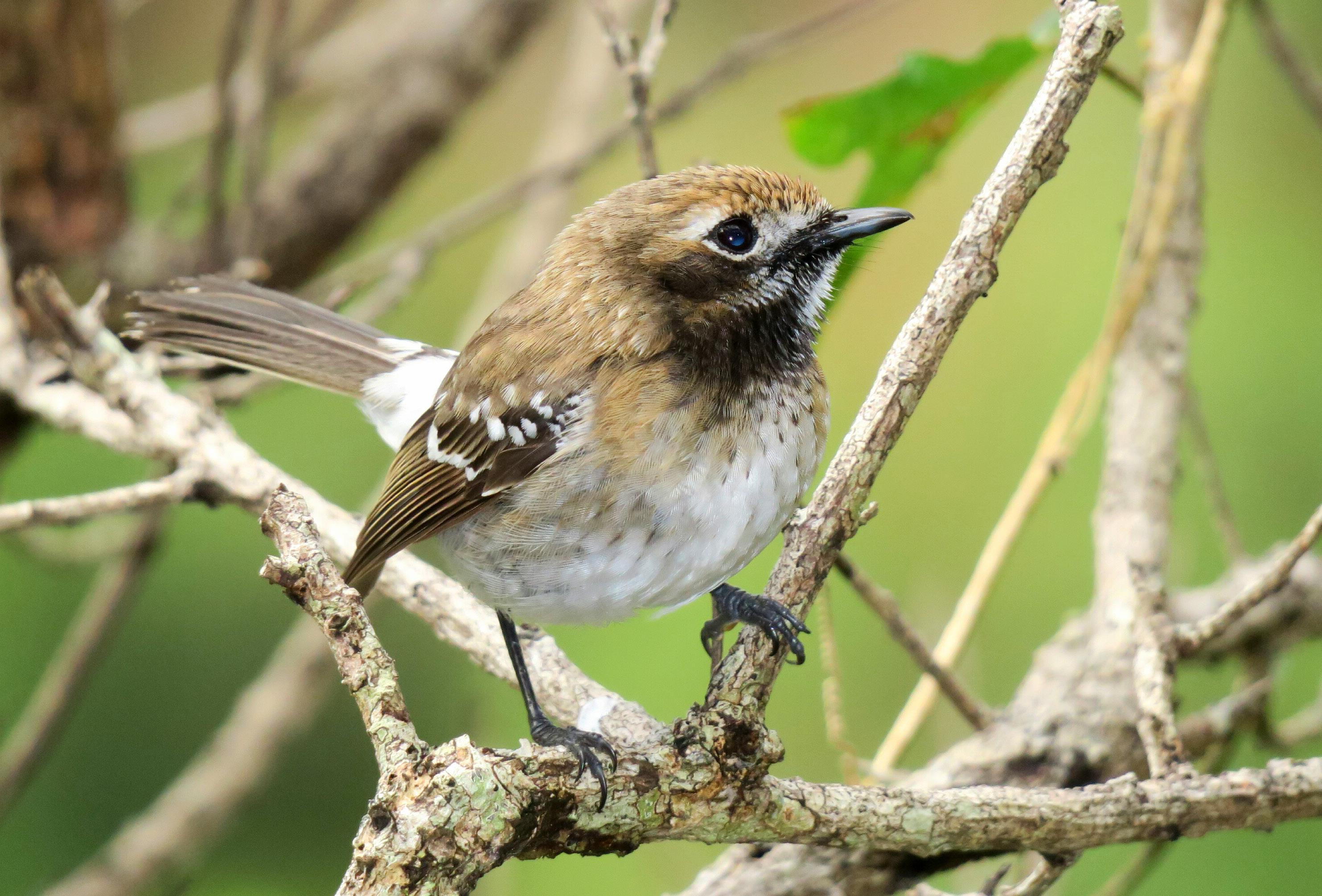
The O‘ahu ‘Elepaio (Chasiempisibidis), once considered a guardian spirit of Hawaiian canoe builders, is a curious little flycatcher endemic to the island of O‘ahu. In Hawaiian tradition, the ‘Elepaio was said to warn woodworkers of rotten and insect infested trees if it was seen tapping its beak against fallen wood. If the bird showed no interest, then the wood was solid and could be used for canoe building. This cultural link highlights the bird’s importance not only to the ecosystem but also to Hawaiian heritage. Today, however, the O‘ahu ‘Elepaio is endangered and restricted to valleys and gulches in the Wai‘anae and Ko‘olau Mountains on O‘ahu. The story of the O‘ahu ‘Elepaio reflects both the challenges facing native species and the hope offered by sustained conservation work.
For over a century, the O‘ahu ‘Elepaio steadily declined. Precious forested habitat gave way to development and invasive weeds, while introduced predators such as the alien black rat (Rattus rattus) raided nests, consuming eggs, nestlings, and even adult birds. The arrival of mosquitoes added further threats, spreading avian pox and malaria that devastated native forest birds. Although the O‘ahu ‘Elepaio proved more resilient than some species, populations throughout the island struggled to deal with the non-native threats and suffered drastic declines.
Surveys in the Wai‘anae Mountains during the 1990s and again from 2006 to 2010 revealed that ‘Elepaio were continuing to decline and their distribution remained fragmented, with only a few populations remaining. In response, the Army Natural Resources on Program on O‘ahu (ANRPO) began predator control to protect select ‘Elepaio pairs on Army training ranges in 1998 and scaled up efforts in 2006 to protect the remaining pairs in the largest populations in the Wai‘anaes. These efforts focused on suppressing rat populations during nesting seasons to give young birds a better chance to survive.
Beginning in 2020, ANRPO staff launched new surveys across the Wai‘anae Mountains to assess how populations responded to decades of management. Using the same methods as the earlier surveys, staff hiked gulches and valleys, stopping to broadcast recorded ‘Elepaio songs. ‘Elepaio are extremely aggressive and territorial, often responding immediately if they believe another ‘Elepaio is invading its territory. If birds responded, surveyors documented the observation and recorded its location.
From 2020 to 2024, these intensive surveys produced striking results.
The number of O‘ahu ‘Elepaio nearly tripled with their range expanding throughout the Wai‘anae Mountains.
Instead of continuing a long downward slide, populations showed clear recovery.
Several factors appear to explain this turnaround. Predator control, applied consistently for nearly two decades, greatly reduced nest predation. More nestlings survived to adulthood, helping to boost numbers. At the same time, surveyors noted fewer birds with signs of avian pox, suggesting that O‘ahu ‘Elepaio may be building resistance to mosquito-borne diseases. Together, these changes gave the species the foothold it needed to grow.
The recovery is especially encouraging because it occurred in forests dominated by alien plants on the most heavily populated island in the Hawaiian chain. Many native forest birds survive only in pristine, high-elevation refuges where mosquitoes are scarce. By contrast, the O‘ahu ‘Elepaio has shown adaptability in degraded habitat, a trait that increases its chances of long-term survival. Managed populations may also act as sources for dispersal, helping the bird recolonize areas where it had disappeared.
The significance of this success extends beyond O‘ahu. It demonstrates that consistent, longterm management can reverse declines even in difficult circumstances. Predator control, careful monitoring, and persistence have combined to shift the trajectory of a species once thought to be nearing extinction. The O‘ahu ‘Elepaio now provides a rare example of recovery among Hawaiian forest birds, many of which continue to struggle.
Looking forward, efforts are expanding beyond the Wai‘anae range. The Department of Land and Natural Resources, Division of Forestry and Wildlife (DOFAW), has begun management and surveys in the Ko‘olau Mountains, aiming to replicate ANRPO’s approach and assess whether similar gains are occurring there.
The story of the O‘ahu ‘Elepaio remains unfinished, but it is already a hopeful one. Once in steep decline, the bird now shows resilience and growth thanks to sustained conservation and its own adaptability. For conservationists, the lesson is clear: long-term commitment can produce results, even against serious odds. The O‘ahu ‘Elepaio continues to embody the deep ties between nature, culture, and perseverance, offering a glimmer of hope for endangered forest bird recovery in Hawaiʻi.
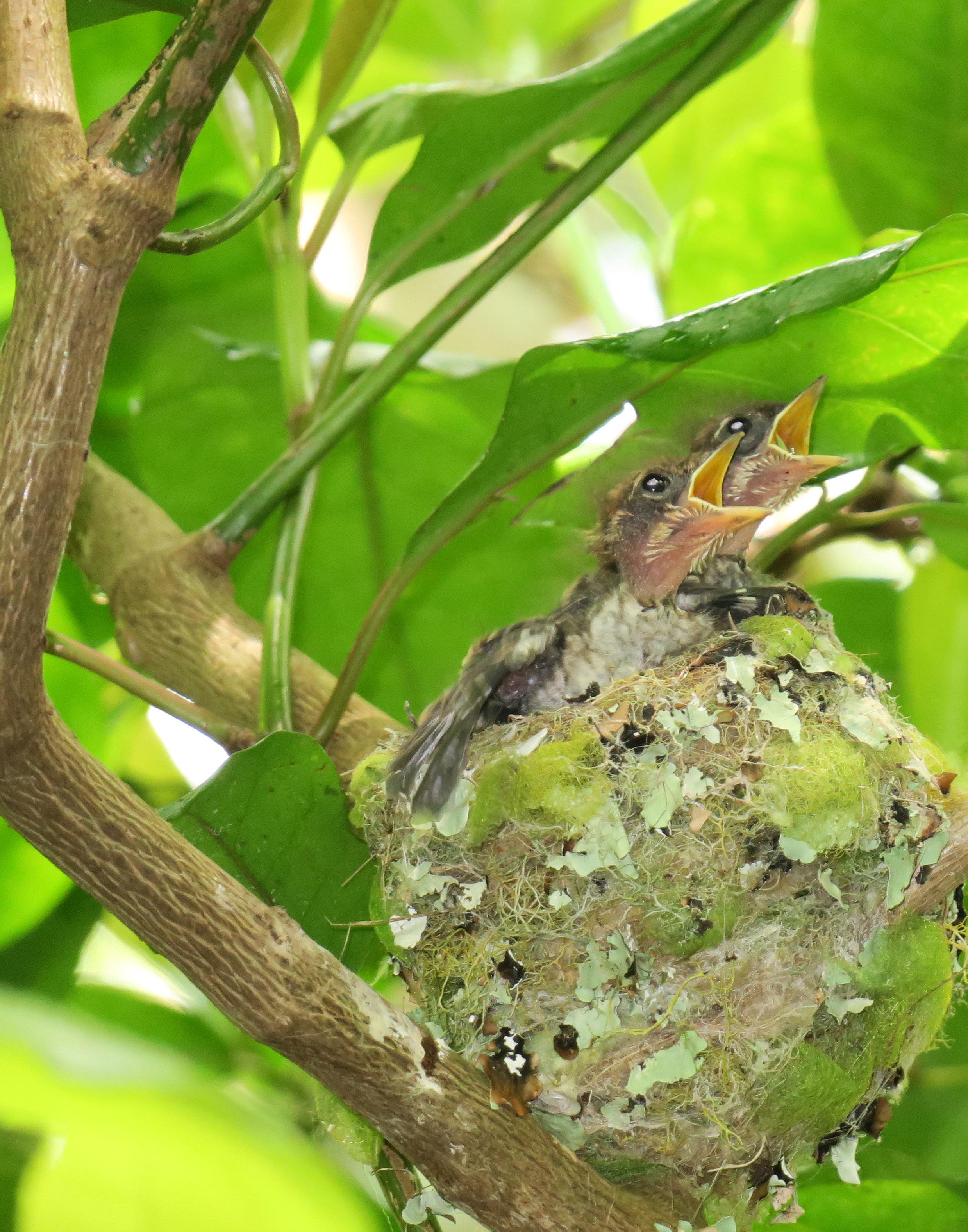
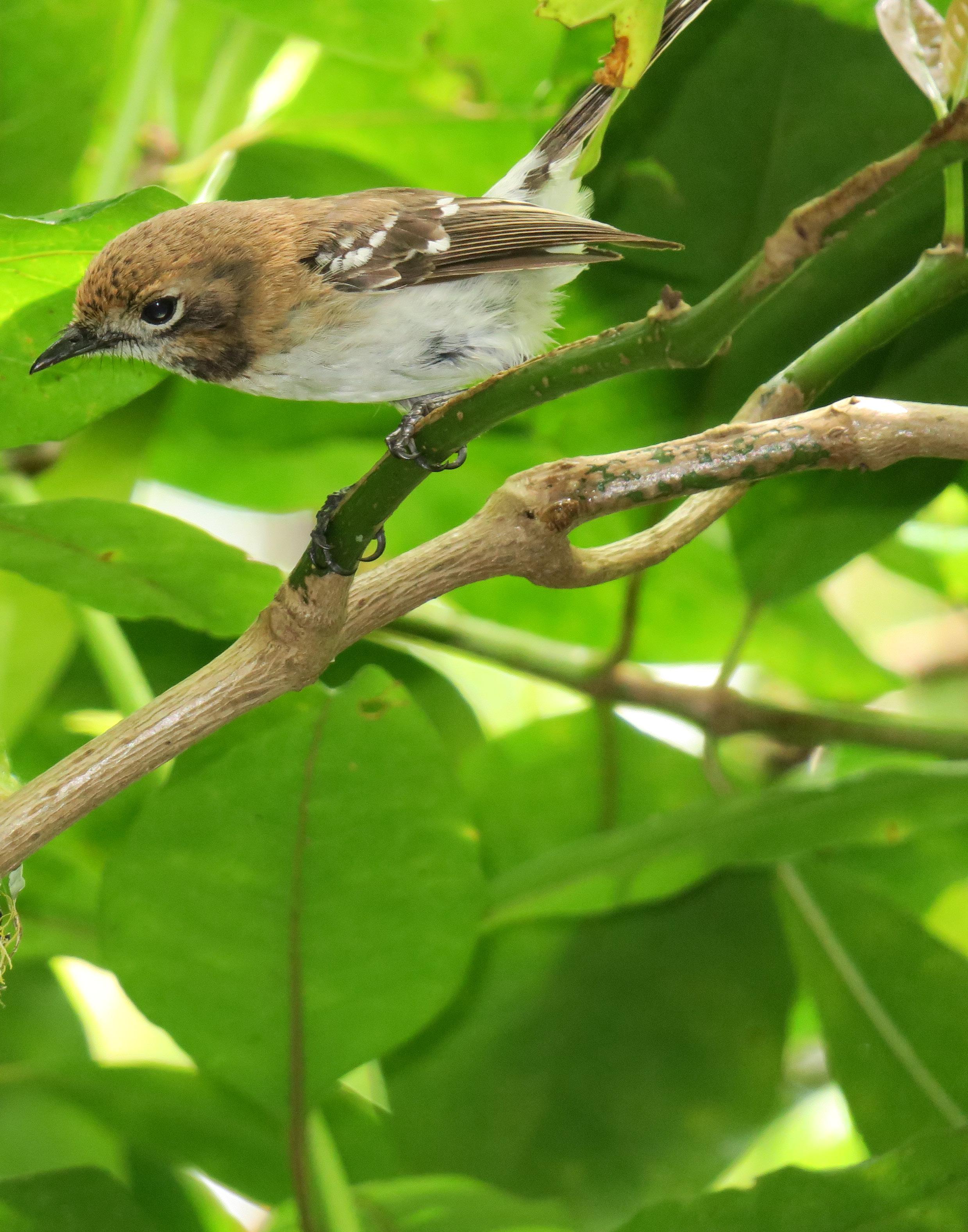
FACING PAGE Adult Oʻahu ʻElepaio feeding two chicks in their nest. ABOVE Adult Oʻahu ʻElepaio.
Philip Taylor
New Taxa on Army installations
If you’ve ever visited Waikīkī Beach and taken a moment to look up at the sky you’ve probably noticed, other than the constant stream of commercial airplanes, the pointy-winged silhouette of the Manu-o-Kū or Blue-billed White-Tern. Listed as Threatened by the State of Hawai‘i, this beautiful all-white native Hawaiian seabird nests in urban and suburban areas on the island of O‘ahu.
Nesting for Manu-o-Kū consists of laying a single egg on a horizontal tree branch or other flat surface. After the chick hatches both adults make trips to the sea in search of small fish that they will bring back to the young tern. Introduced predators such as rats and feral cats are a threat to eggs and chicks, but it is thought that the birds might prefer areas of high pedestrian and vehicular traffic to deter predation. Since the first nest was discovered in 1961, the population of Manu-oKū on O‘ahu has continued to grow with a current population of more than 2,300 birds with nests ranging from Hawai‘i Kai to Ford Island.
Conservation programs work with the public to help identify and mark nest trees so that tree trimmers take precautions to ensure nests and adults are not harmed. As the population of Manuo-Kū increases within and around Honolulu, the range of nesting has also been expanding. This prompted staff at ANRPO to conduct Manu-o-Kū surveys at Army installations near Honolulu. In May, three Manu-o-Kū were observed roosting in a large Monkeypod tree at Fort Shafter Military Reservation. Since then, up to nine birds have been observed at the Monkeypod either roosting or flying in the area. In July, four Manu-o-Kū were observed flying above a small shopping center at Āliamanu Military Reservation. Surveys since these sightings have not yet reported nesting. Staff will continue to monitor these areas for nesting and be prepared to mark nesting trees and notify installation personnel so that steps can be taken to protect breeding Manu-o-Kū.
Manu-o-Ku
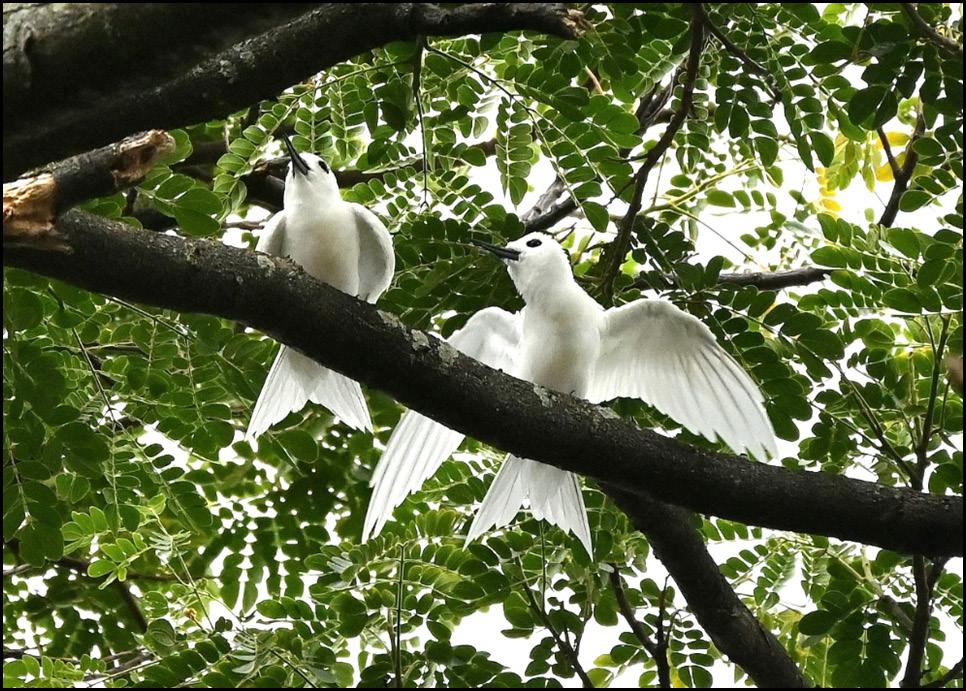
ABOVE A pair of Manu-o-Kū at Fort Shafter Military Reservation. Philip Taylor
New Rare Taxa HawaiianMonkSeal
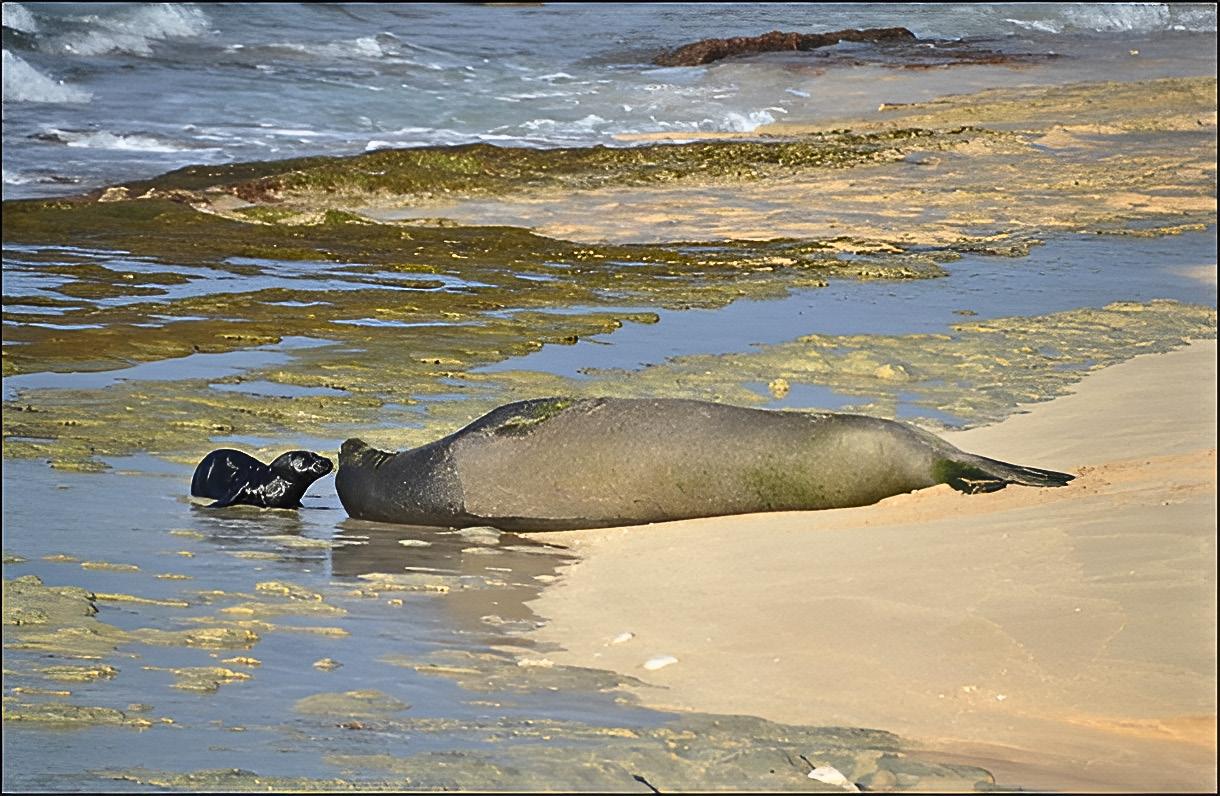
A rare and exciting event took place back in October 2024 at an Army controlled beach on the North Shore of O‘ahu. A female monk seal known as R303 and nicknamed BG, emerged from the water and gave birth to her pup along a stretch of beach belonging to the Army’s Dillingham Military Reservation (DMR). Female monk seals typically give birth to pups between March and September and this late birth already added to what was a record-breaking year for monk seal pups on O‘ahu. Male monk seals have no role after mating, which leaves the female with sole parental responsibilities.
During the nursing period staff from the Army Natural Resources Program on O‘ahu (ANRPO) aided Hawai‘i Marine Animal Response with pup watch shifts. After a brief training session, staff learned how to spot unusual behaviors and report any concerns that arise while monitoring the pup. Staff were also trained in how to provide awareness and help educate beachgoers. The Army does not conduct training on the beach, which is easily accessible to the public. Monk seal pup monitoring was a new and fun experience for ANRPO staff, as most conservation work is limited to rare terrestrial resources in upper elevations of the Wai‘anae and Ko‘olau Mountains.
After almost seven weeks, the pup successfully weaned from his mother in early December and was later given the name Mana by students at Sunset Beach Elementary School.
The Hawaiian monk seal (Neomonachus schauinslandi) is endemic to the Hawaiian Islands and federally listed as endangered. Fewer than 1,600 individuals are spread throughout the island chain and make this one of the rarest marine animals on earth. While it’s believed that threats such as marine debris entanglements, human-caused trauma, and diseases such as toxoplasmosis continue to keep the species in decline, monk seal sightings on the main Hawaiian Islands are increasingly more common.
Chris
TOP A female Hawaiian monk seal, R303, resting on the beach with her pup, Mana.
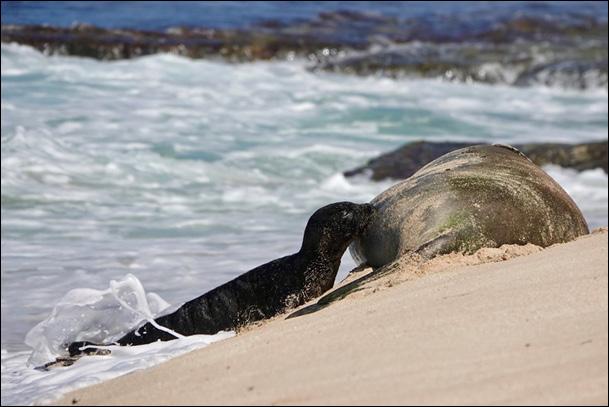
Pup feeding while mom rest. Hawaiian monk seals are one of the rarest marine animals on earth. Matthew Mancuso
Wong, horticulture supervisor for ANRPO, checks on one of several thousand endangered native plants grown within the ANRPO rare plant nurseries at Schofield Barracks. ROY KIKUTA
LEFT
New Rare Taxa Succineawaianaensis
by Taylor Maruno
Endemic to the Waiʻanae Mountains, Succinea waianaensis is a rare Hawaiian land snail belonging to the family Succineidae. While most of the other native Succineid species in Hawaiʻi are arboreal, such as hinihiniʻula commonly found on Kaʻala, S. waianaensis are ground-dwelling snails found in leaf litter and under talus rock. Records from the early 1900s indicate their historic range may have been rather widespread across the Waiʻanae Mountains, however those records end in the 1940s, and the species has not been observed for decades since in any location besides ʻŌhikilolo. Despite numerous searches at Ōhikilolo, there have been only a handful of Succineid observations, the last in 2022, when a single adult was observed. In October 2024, ANRPO staff found three subadult S. waianaensis in leaf litter. Originally thought to be another rare Succineid, Succinea cinnamomea, malacologists at Bishop Museum identified the snails through shell morphology as S. waianaensis. The status of this population is difficult to assess as very little is known about either of these species. It's uncertain whether both S. waianaensis and S. cinnamomea exist at ʻŌhikilolo, or if observations in the past mistook one for the other. Further molecular sequencing will help to reveal the true identity of this cryptic snail, though no matter the name, the persistence of this endemic population is crucial in the preservation of the species.
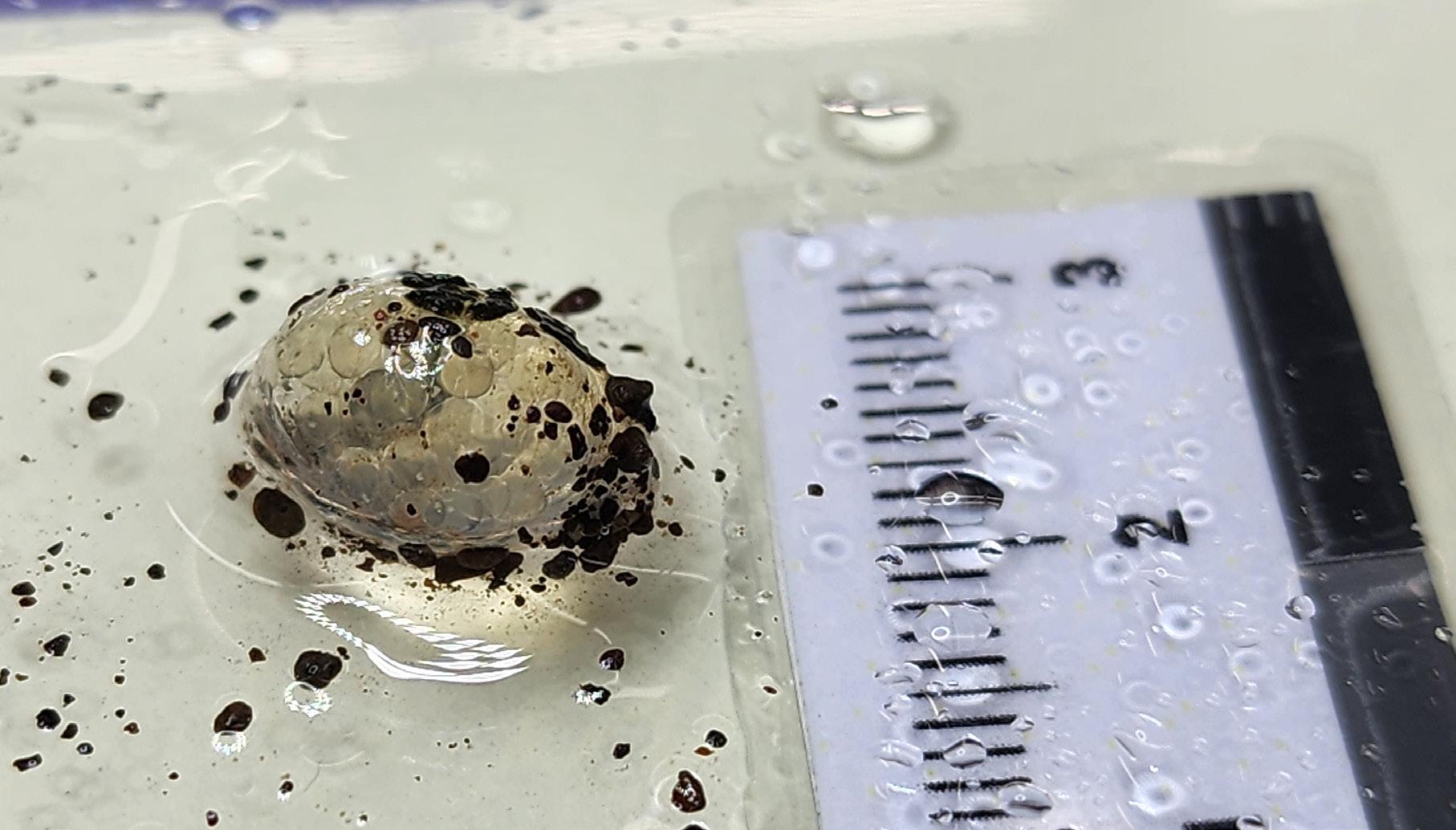
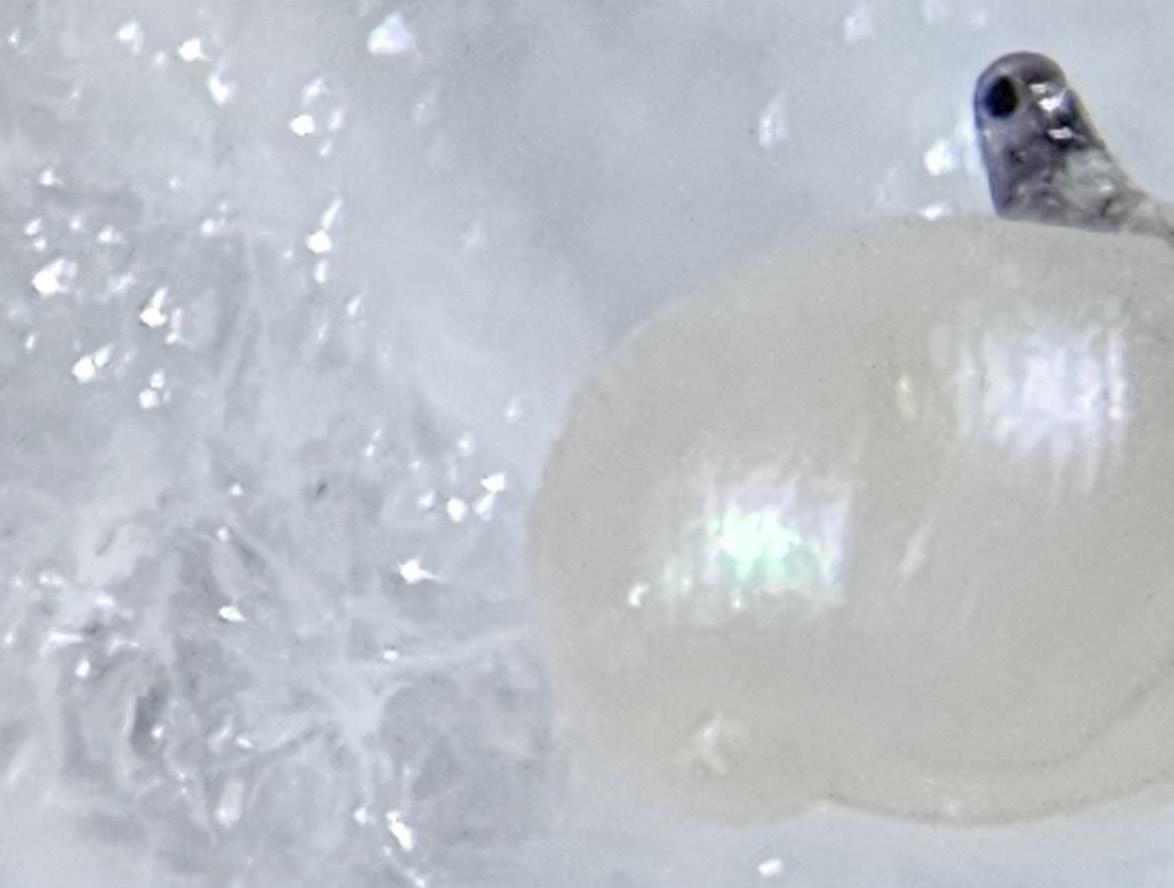
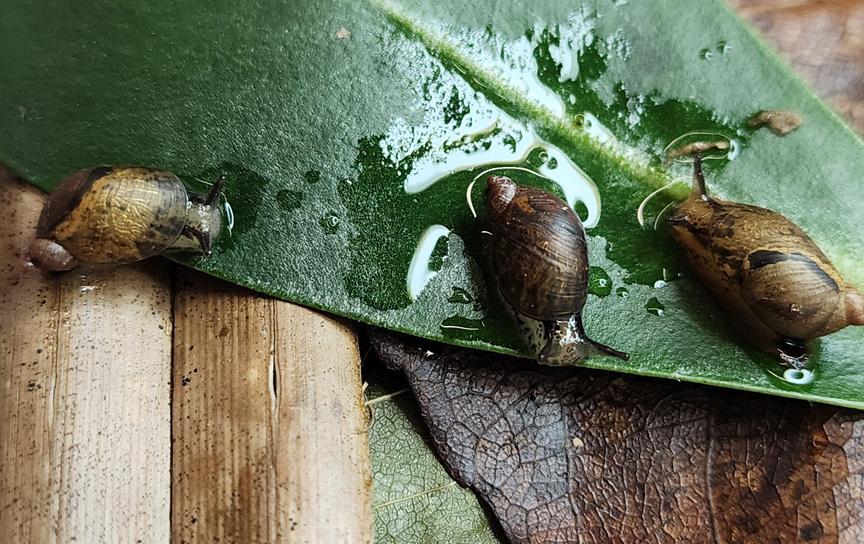
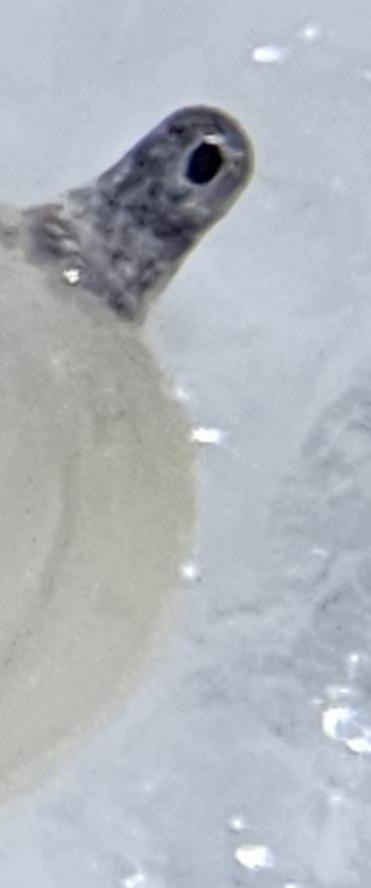
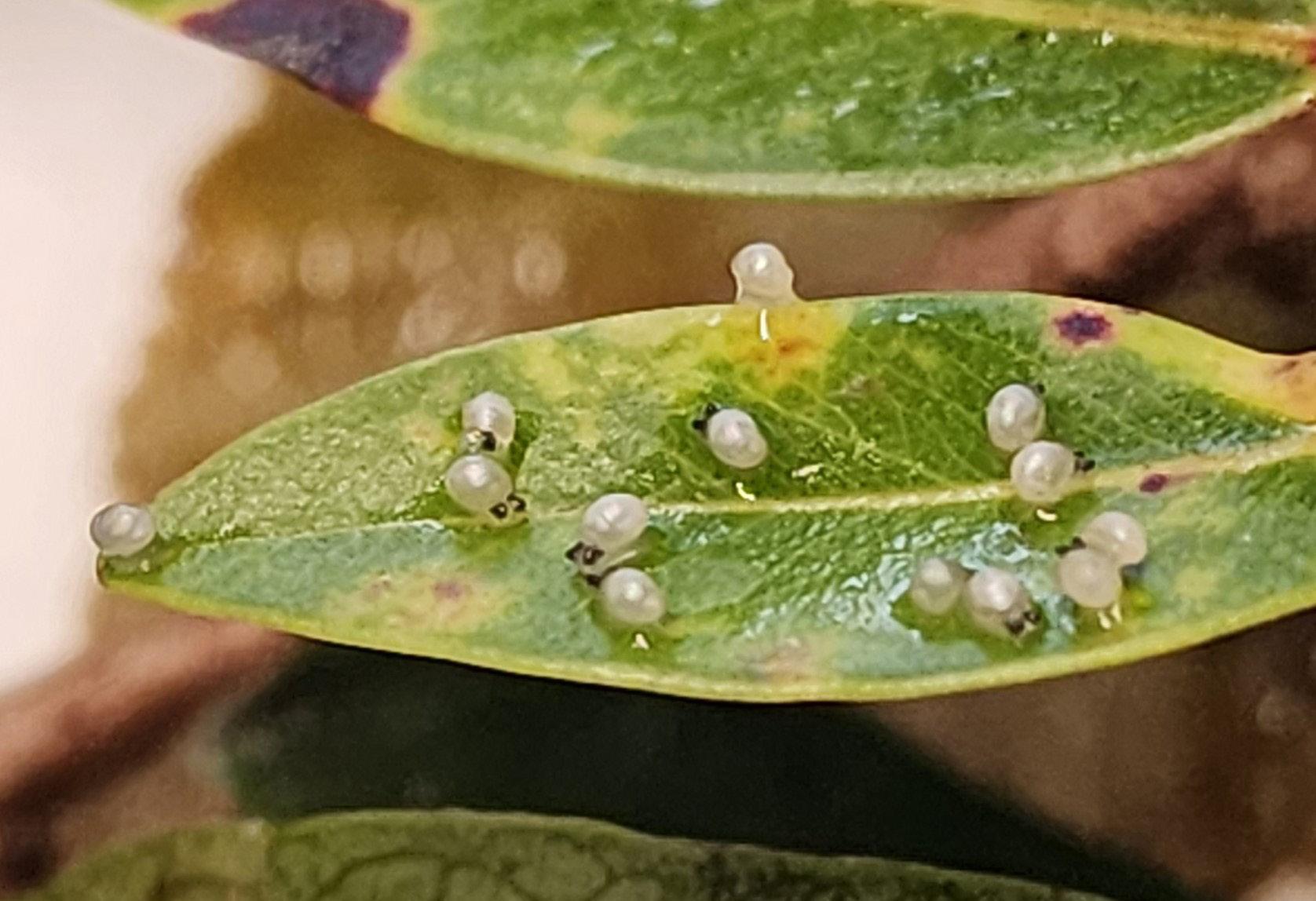
CLOCKWISE FROM TOP Succinea waianaensisadults; S.waianaensis hatchlings; Close up image of a keiki S.waianaensis; Measurement of a S.waianaensisegg mass.
Jan Kealoha - Bishop Museum
Chris Wong, horticulture supervisor for ANRPO, checks on one of several thousand endangered native plants grown within the ANRPO rare plant nurseries at Schofield Barracks. ROY KIKUTA
The Department of Defense’s (DOD) Readiness and Environmental Protection Integration (REPI) Program enables installations to strengthen military readiness by alleviating restrictions on mission-critical training, reducing long-term operational costs, and ensuring compatible land use in support of Department priorities. In the Pacific, the REPI Program plays a strategic role in advancing defense mission assurance by fostering collaborative partnerships with Federal, state, local, and private land managers to promote integrated land stewardship and regional stability.
As one notable example on Hawaiʻi Island, REPI funding supports an enduring partnership between the Department of Land and Natural Resources (DLNR) Division of Forestry and Wildlife (DOFAW) and U.S. Army Garrison Hawaiʻi Pōhakuloa Training Area to enhance installation and community resilience to wildfire threats while preserving native ecosystems that are essential to long-term defense operations. This project aims to mitigate fire risks in Nāpuʻu, situated in North Kona, by enhancing firefighting capabilities and upgrading the fuel
break network on public lands. These actions directly support the protection of nineteen endangered plant species and twenty-seven Species of Concern, supporting both biodiversity conservation and mitigation of wildfire risks to defense assets and surrounding communities. These measures are pivotal in bolstering our ability to prevent and combat fires effectively, ensuring the protection of defense and civilian communities, natural landscapes, and cultural resources in West Hawaiʻi. DLNR leverages State funding as well as other funding sources to combine with REPI funding for these priority projects.
Through this partnership, DLNR DOFAW’s Nāpuʻu Natural Resources Management team at the Puʻu Waʻawaʻa and Puʻu Anahulu ahupuaʻa (traditional land management areas) have begun several actions to strengthen the resilience of this landscape, including:
• Fire Fue l Break Creation : Controlled invasive grasses in order to establish fuel breaks along the
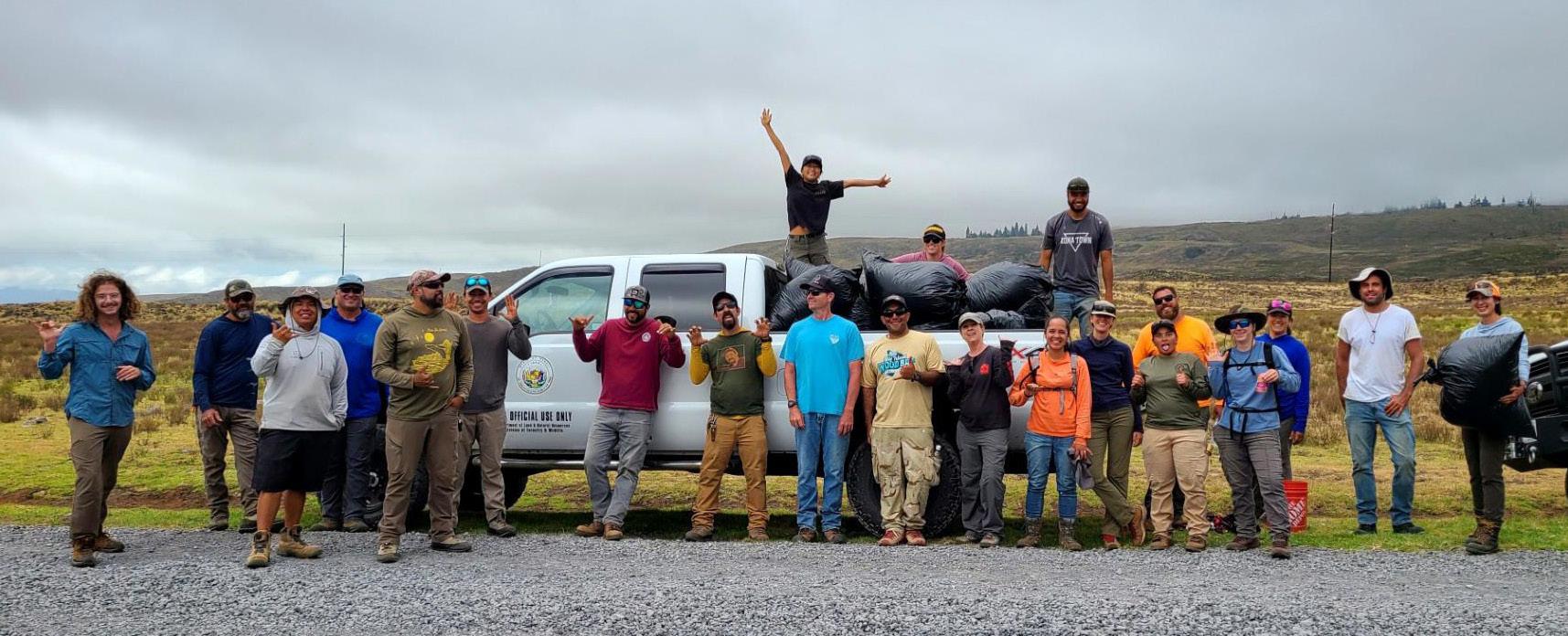
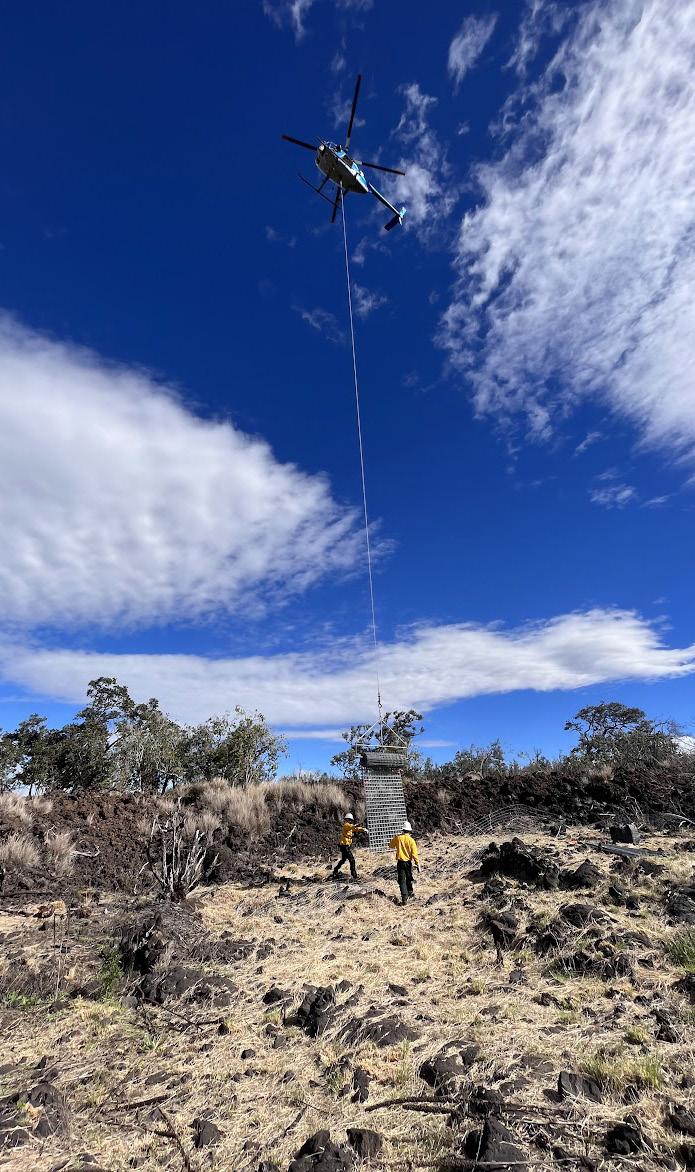
ABOVE Volunteers help remove invasive species at Nāpuʻu with Department of Land and Natural Resources Department of Forestry and Wildlife (DLNR DOFAW) Nāpuʻu Natural Resources Management (NRM) team at one of their volunteer days. PRECEDING PAGE DLNR DOFAW NRM staff receive fence panels from a helicopter for a 254-acre fencing project in the Anahulu I conservation unit to protect native species and prevent habitat degradation.
fencelines protecting endangered plants.
• Post-Fire Restoration Site : Piloted the application of native seed using aerial distribution methods appropriate for post-fire recovery in remote terrain. In March 2025, REPI funds supported the one-year monitoring of this native seed pilot project. The Nāpuʻu team utilized both on the ground transects and aerial imagery to assess the success of seed distribution patterns.
• Rare Plant Populations : REPI funding will be used to collect seed, propagate and outplant endangered plants to bolster population numbers at four reintroduction sites.
• Fencing in the Anahulu area : REPI is supporting the fencing of the 254-acre Anahulu I conservation unit to protect native species and prevent habitat degradation.
• Outreach : Nāpuʻu has resumed
regular volunteer days and is welcoming the return of school and community group visits, as well as hosting larger events such as the annual Run for the Dry Forest and Kaiser Day of Service.
REPI funding will also support longterm initiatives to inform regional wildfire resilience planning, including the development of a fire plan that integrates state lands at Nāpuʻu with adjacent private properties and aligns with PTA’s fire risk management strategy. This landscape-scale approach, enabled by leveraged funding from multiple partners, ensures the protection of critical natural and cultural resources while maintaining uninterrupted mission success for the DOD in Hawaiʻi.
To explore how the REPI Program is advancing military readiness and mission assurance across the Pacific Region, visit: www.repi.mil/BufferProjects/REPI-Pacific/ and www. repi.mil/Resources/Reports-andFact-Sheets/.

into your community
‘ OA ‘
U.S. Army Garrison Hawai ‘ i Natural Resources Program staff lead monthly volunteer service trips to protect rare and endangered plants and animals on Army-managed lands. Each educational trip incorporates hiking and a hands-on opportunity to care for Hawai ‘ i's natural resources through invasive weed control in native habitat and occasional planting activities.
BECOME A VOLUNTEER
JOIN THE VOLUNTEER LISTSERV
Contact OUTREACH@OANRP . COM to be added to the volunteer database.
ORGANIZE A TRIP
Contact OUTREACH@OANRP.COM to organize a service opportunity for your class, hālau or group.

ABOUT U.S. ARMY GARRISON HAWAI ‘ I
U.S. Army Garrison Hawai ‘ i is responsible for the day-to-day operations of Army installations and training areas in Hawai ‘ i. U.S. Army Garrison Hawai ' i team provides facility management and quality Soldier and military family services for more than 95,000 Soldiers, retirees, civilians and families across 22 military installations and training areas on O ‘ahu and Hawai ‘ i Island. These installations include O ‘ahu-based Schofield Barracks, Wheeler Army Airfield, Fort Shafter, Tripler Army Medical Center, and t he Island of Hawai ‘ i-based Pōhakuloa Training Area.
The Directorate of Public Works Environmental Division Office at U.S. Army Garrison Hawai ‘ i is comprised of two branches: the Compliance Branch and the Conservation Branch, which are ded icated to providing guidance, support and liaison services to those who live, work and train on the installation, while also protecting the environment. The Conservation Branch includes the Army's Natural and Cultural Resources Programs, which protect endangered species and cultural resources, respectively, on O ‘ahu and Hawai ‘ i Island. To learn more about the Army's environmental stewardship mission, visit HTTPS://HOME.ARMY.MIL/HAWAII/INDEX.PHP/GARRISON/DPW/

ABOUT THE OFFICE OF THE VICE PRESIDENT FOR RESEARCH AND INNOVATION (OVPRI)
The Office of the Vice President for Research and Innovation (OVPRI) provides leadership, coordination and support of research and innovation efforts throughout the 10-campus University of Hawai‘i System, including oversight of extramural funding, compliance, export controls, technology transfer and commercialization, and the Applied Research Laboratory at UH – one of only 13 U.S. Department of Defense University Affiliated Research Centers (UARC). Through an intergovernmental support agreement, OVPRI supports U.S. Army Garrison Hawai‘i Natural Resources Program on O‘ahu. For more about OVPRI, please visit: WWW.HAWAII.EDU/RESEARCH/