‘Sometimes’, opined that great thinker Dr. Suess, ‘the questions are complicated and the answers are simple’. Arguably, it is when the questions are simple that the answers are the most intriguing. The crafting of a great question is a key part of the adventure of inquiry: something that sets the spinning top in motion, to unpredictably ping off whatever it encounters.
Once again, that spirit manifests across this edition of ASK: an eclectic bundle of queries that will, hopefully, inspire interest and exploration well beyond the life of the project. So, once again, let us allow the ideas to ricochet around our minds.
David Harrow, Headmaster
Year 7 Inquiry Learning Project
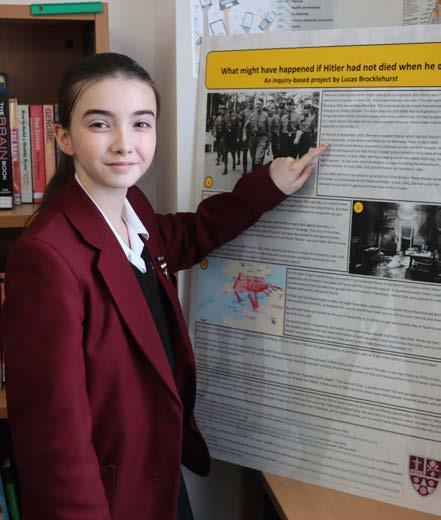
Since the start of this academic year, students in Year 7 have been working hard in their Learning 2 Learn lessons to undertake a course of Inquiry Learning around a topic that truly fascinated them. The key was to explore many different topics and eventually find an area of interest that would hold their attention for the whole project. Some students decided to explore a topic that already held their interest; others found themselves on a voyage of discovery and had to be courageous, taking a risk to explore a topic they knew nothing about. Either way, each student was encouraged to look at the topic somewhat differently and take the question they wanted to ask in a direction that challenged them to think way beyond what they already knew.
Gaining an understanding of how to research and where to look for this research was key to the process that followed. It was important that several sources were found to back one viewpoint and then others were found to present the alternative. They had to organise their thoughts and ideas and put them into an order that clearly answered the question they were asking; their own thoughts being added in the conclusion. All this, once drafted and re-drafted, was adapted into the academic poster that stands before you today with, might I add, a fully referenced bibliography of sources and cited in-text references, not so dissimilar to what a student a lot older would normally be taught.
It has been truly wonderful to see all the students’ posters come to life and I have thoroughly enjoyed, and learnt a considerable amount from, all the posters that I have had the pleasure of reading. This is the fourth volume in the ASK Big Questions series. This collection allows all the posters to be in one place, not only acting as a memorable keepsake but allowing all students to celebrate each other’s work and, over time, for them to have the chance to educate themselves further in so many different areas of interest.
We must always remember, however, that, whilst the poster celebrates their achievements and every one of you should be very proud of what you have achieved, it is the process itself that teaches us more about ourselves. This has not come easy; in fact Year 7 students have been stretched and challenged at every stage of this process. It has required hard work and discipline, as well as a high level of attention to detail and accuracy. Students have grown to understand the high expectations we expect of them and what can be achieved if they are only made to see their true potential. I know this is only the start of developing a sense of inquiry and I look forward to seeing how each student develops further as they continue their AKS journey.
Faye Marland, Assistant Head (Staff and Student Development)
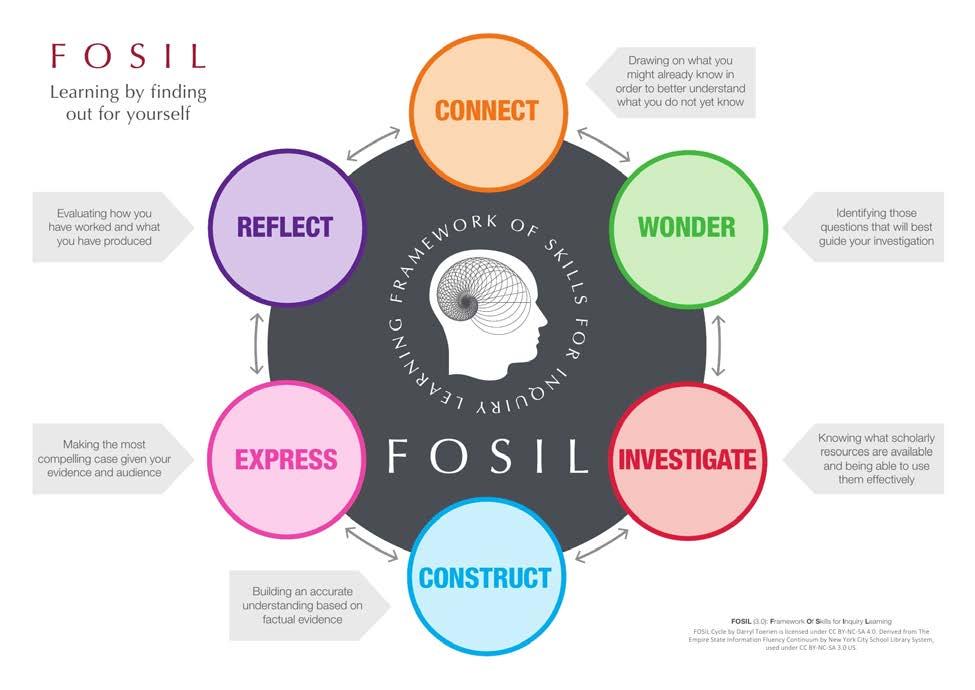
“I am immensely proud of the commitment and work ethic shown by our Year 7 students this year. Throughout the project, it has been a pleasure to hear them debating their choice of topics, refining their questions, and pushing beyond surface-level understanding to reach the very heart of their inquiries. Guided by the FOSIL framework, they have approached their work with a level of maturity, curiosity, and academic rigour that goes well beyond expectations for their age. These posters reflect not only what they have learned, but also the thoughtful and disciplined way in which they have engaged with the learning process.”
Adam Brown, Head of Year 7 and Transition
How Do Reality TV Shows Shape Girls’ Identity and Self-Image Today?
An Inquiry-based project by Brooke Adler
Have you ever wondered if reality TV is really what it seems?
Over the past 10 years, reality TV has become extremely popular. Shows featuring children have grown in particular, and many people seem to be fascinated by them.
I chose this topic because I have watched reality TV before, and I have often questioned whether what happens on these shows is actually real. This topic is meaningful to me because many of these shows are based on performance, and as a dancer myself, I know I need to be careful in the future about the possible negative effects that could come from being involved in performing or appearing on television.
At first, nobody really knew the real story behind these shows. But as some of the stars got older, the truth slowly began to come out. However, even then, some people believe that what has been said may still be exaggerated or not completely accurate. Whether the events on reality TV were fully real or not, being part of that environment could still have a major impact on girls’ mental health, self-image, and identity as they grow up.
One very famous reality show, Dance Moms, is one of the main examples that became extremely popular. For such an iconic show, it is also surrounded by controversy. T he show had a major impact on the girls’ lives both during and after filming. Being under the spotlight from a very young age, t he cast had to deal with intense pressure and harsh criticism from their dance teacher, Abby Lee Miller.
Today, the girls are between the ages of eighteen and twenty-two, and many believe the environment they grew up in has shaped who they are today. Maddie Ziegler, one of the most well-known cast members and often seen as the favourite at the time, spoke in a 2022 interview about how the toxic environment affected her while growing up [2].
Many cast members have also shared their experiences. Nia Sioux, another star from Dance Moms, wrote a book called Top of the Pyramid, where she describes Abby Lee Miller’s teaching style as strict, toxic, and manipulative, and explains how this contributed to much of the pressure and drama on the show. Nia appeared on the show for seven years and has said that Abby made negative comments about her appearance, which left her feeling insecure and wishing she looked like the other dancers [D].
In May 2024, a Dance Moms reunion aired, which surprised many fans. Brooke, Paige, Kendall, Kalani, Chloe, JoJo, and their mothers all appeared in the reunion. However, some of the original stars, including Nia Sioux, Maddie Ziegler, and Mackenzie Ziegler, did not attend. Some peo ple believe this was because they did not want to relive the emotional difficulties and trauma linked to their time on the show [7].
During the reunion, Kalani Hilliker spoke about her mental health struggles connected to the show. At one point, the cast watched old performances and discussed their favourite routines. Kalani became visibly upset while watching one of the dances. She said, “I don’t know if I can talk about this dance,” and then left the room in tears. JoJo Siwa followed her and tried to support her, saying, “when you want a friend, I’m out here.” Kalani later opened up about having experienced suicidal thoughts and having contacted a suicide hotline. This moment shocked many viewers and highlighted the emotional impact the show had on some of the dancers [4].
In my opinion, this reflects aspects of American reality TV culture, where highly emotional or extreme themes are often shown on stage. Some of the dances in Dance Moms included themes such as car crashes, serial killers, kidnappers, addiction, and hospital waiting rooms. In England, this might be seen as shocking, but audiences still watch it for drama and entertainment. However, many people do not always realise the emotional impact these performances can have on the children involved or what happens behind the scenes.
Abby Lee Miller, the star and teacher of Dance Moms, was later sentenced to one year in federal prison. In 2010, she owed $400,000 in back taxes on her Pittsburgh studio and filed for bankruptcy. The FBI later discovered she had hidden $775,000 of income. It was also revealed that in 2014 she and associate s misused $120,000 earned from a Dance Moms Australia masterclass [3].
Paige Hyland, one of Abby Lee’s students, also sued her for $5 million in 2014. The lawsuit claimed Abby had physically and emotionally mistreated her during rehearsals. One incident involved Abby throwing a chair during a rehearsal after becoming angry, which was filmed and shown publicly [5].
After these controversies, Abby Lee Miller still gained more attention and fame. This is because audiences are often drawn to drama and conflict. Even after her legal issues and accusations of abusive behaviour, she remained widely known and continued to appear in media, teaching, and tours. It is striking how someone linked to serious allegations can still maintain popularity, although I remain unconvinced that this is a positive outcome.
REFERENCES:
[1] Cooper, D. (2025) The dirty truth about Dance Moms finally REVEALED: Stars spill on bullying, rivalries, cat-fights...and just how fake the iconic show really is. Available at: https://www.dailymail.co.uk/tvshowbiz/article15299483/Dance-Moms-divided-ugly-allegations-Nia-Sioux-Abby-Lee-Miller.html [Accessed: 12 December 2025].
[2] Daddio, O. (2023) The Dance Moms Effect: How These Child Stars Were Affected into Adulthood. Available at: https://www.hercampus.com/school/fsu/culture -the-dance-moms-effect-how-the-reality-show-affected-these-childstars-into-adulthood/ [Accessed: 28 December 2025].
[3] Hanrahan, L. (2019) Why Did ‘Dance Moms’ Star Abby Lee Miller go to Prison? Everything You Need to Know. Available at: https://www.womansday.com/life/entertainment/a28712751/dance -moms-abby-lee-millerprison/ [Accessed: 27 February 2026].
[4] Johnson, K. (2024) ‘Dance Moms’ Kalani Hilliker shocks cast by revealing mental health struggles. Available at: https://www.foxla.com/news/dance-moms-kalani-hilliker-opens-up-about-mental-health-struggles [Accessed: 6 March 2026].
[5] Schumann, R. (2025) Paige Hyland’s Lawsuit Against ‘Dance Moms’ Star Abby Lee Miller Dismissed by Judge. Available at: https://www.ibtimes.com/paige-hylands-lawsuit-against-dance-moms-star-abby-lee-miller-dismissedjudge-2013500 [Accessed 20 March 2026].
[6] Viento, G. (2022) ‘Dance Moms’ star Abby Lee Miller responds after Maddie Ziegler calls show ‘toxic’. Available at: https://www.today.com/popculture/tv/dance -moms-star-abby-lee-miller-responds-maddie-ziegler-calls-showtox-rcna34170 [Accessed: 21 November 2025].
[7] Walrath-Holdridge, M. (2026) ‘Dance Moms: How to watch Lifetime special and catching up with stars. Available at:https://eu.usatoday.com/story/entertainment/tv/2024/05/02/watcn -dance-momsreunion/73542757007/ [Accessed: 13 February 2026].
Are Humans Becoming Less Intelligent?
An inquiry-based project by Holly Ainslie
Many people believe that modern technology is making children less intelligent. For some time, people have questioned whether humans are becoming less intelligent due to the development of mobile devices and the effect they may have on children’s brains and the way they think. Recently, I received my first mobile phone, but I was one of the last people in my class to receive one. This was because my parents believed that I would become addicted and spend excessive time scrolling, which they thought would be detrimental to my intelligence. However, it is worth questioning whether this view is correct. It is possible that technology, including mobile phones, the internet, and artificial intelligence, when used properly, can improve intelligence. This project aims to explore this theory.
Why is technology bad for our brains? In recent tests, results show that many hours spent on screens can affect the brain in a negative way. “There have been many tests that suggest the overconsumption of the internet and screens could decrease humans' cognitive abilities and speech” [5]. This is because chronic exposure to devices means children do not talk to each other as often, which can “reduce verbal skills and structured reasoning” [1]. Another reason technology may be harmful to our brains is that it affects dopamine levels, which control motivation and mood regulation. “Dopamine is a chemical in the brain that creates satisfaction and calmness by releasing what are often referred to as feel-good chemicals” [2]. This means that when people use phones and tablets, they may experience a sense of reward and increased dependence on devices; however, when they are not using them, they may feel tired, bored, or demotivated.
Why is technology good for our brains? On the other hand, technology can be considered beneficial for our brains, as it allows people to learn technical skills which may be useful in later life, for example creating presentations or using spreadsheets. Technology can also provide quicker and mo re efficient access to information, meaning people are able to learn more rapidly because information is immediately available rather than requiring extended research in books. Technology is also considered beneficial for children because, although it is often used for entertainment, there are also many educational videos, songs, and games which can “enhance learning through interactive education” [3], rather than relying solely on traditional teaching methods.
There are a wide variety of reasons why technology can be both beneficial and harmful to the brain, with “each generation fac ing new challenges, requiring adaptability and problem-solving skills” [4]. Computers and technology were developed to enable communication and learning; however, due to the widespread use of devices, they are now also commonly used for entertainment, with “social media being a potent source of dopamine -driven engagement” [2]. This project suggests that excessive screen time can be detrimental to concentration, but limited use can help develop useful skills for later life. It also “enhances children's devel opment, learning and future success” [3]. Overall, technology can benefit the brain when used for educational purposes rather than excessive entertainment. Technology is not the only factor that may affect intelligence; there are additional areas to consider.
Environmental factors: Although its impact may be relatively small, the environment also plays a role in children’s cognitive development. “Scientis ts are increasingly linking a decrease in IQ with environmental degradation” [6]. It has been suggested that the consumption of pro cessed foods low in nutrients and exposure to chemicals such as pesticides and plastics can have a negative effect on brain development. These processed foods include oil, butter, sugar, sa lt, ham, cheese, white bread, bacon, salted nuts, tinned fruit, ready-made meals, breakfast cereal, biscuits, cakes and crisps. Air pollution, microplastics, polluted water, and high levels of lead in the body can also affect the brain and nervous system.
The education system: The modern education system often focuses on the memorisation of information rather than developing problem-solving skills and critical thinking. Schools and universities may prioritise exam performance rather than encouraging deeper understanding of a topic. This can result in students learning only the necessary information to pass exams rather than developing broader knowledge. This may contribute to a decline in complex problemsolving skills, which can affect intelligence.
Although these explanations for changes in intelligence are debated, they have been suggested by scientists as contributing factors. For example, individuals with healthier diets may experience better cognitive development than those who consume large amounts of processed food. Similarly, those who engage with complex problem -solving tasks may develop stronger cognitive skills than those who rely solely on memorisation, although this is not always the case.
Overall, it can be argued that intelligence may be declining due to technology being used more frequently for entertainment p urposes. The overconsumption of processed foods and changes in the education system may also contribute to this trend. However, tec hnology, when used correctly, has the potential to improve intelligence. If it continues to be used for development and education, it may significantly increase cognitive potential.
REFERENCES
[1] Aranda, C. (2025) The decline of the intelligence quotient in the digital age: cognitive reconfiguration and global trends. Available at: https://www.pressenza.com/2025/07/thedecline-of-the-intelligence-quotient-in-the-digital-age-cognitive-reconfiguration-and-global-trends/ [Accessed: 23 March 2026].
[2] Ferrarese, F. (2025) How Digital Media Made Us Dopamine Addicts? Available at:https://www.federicoferrarese.co.uk/2025/01/01/digital-media-anddopamine/ [Accessed: 12 February 2026].
[3] Jetlearn.com (2026) Why Is Technology Good for Kids? 10 Positive Impacts Explained. Available at: https://www.jetlearn.com/blog/why-is-technology-good-for-kids-10-positiveimpacts-explained [Accessed: 6 March 2026].
[4] Olteanu, M. (2024) Is the Average IQ Declining or Increasing? Here's What Research Says. Available at: https://check-iq.org/blog/is-iq-decreasing [Accessed: 22 January 2026].
[5] Ramus, F. (2023) Declining global IQ: reality or moral panic? Available at: https://www.polytechnique-insights.com/en/columns/society/declining-global-iq-reality-or-moralpanic/ [Accessed: 29 January 2026].
[6] Williams, C. (2025) The Reverse Flynn Effect Why Has the Average IQ Been Decreasing Lately? Available at: https://www.techtimes.com/articles/309507/20250226/reverseflynn-effect-why-has-average-iq-been-decreasing-lately.htm [Accessed: 11 December 2026].
How Do Planes Fly
An inquiry-based project by George Benson
When I was younger, I often imagined soaring through the sky, travelling on a plane to my favourite places around the world. I was very curious, so I read a book about aeroplanes, which made me ask: how do planes fly? How do they rise so high without falling? Why do they not tip over or spin out of control?
Is it all science and skill?
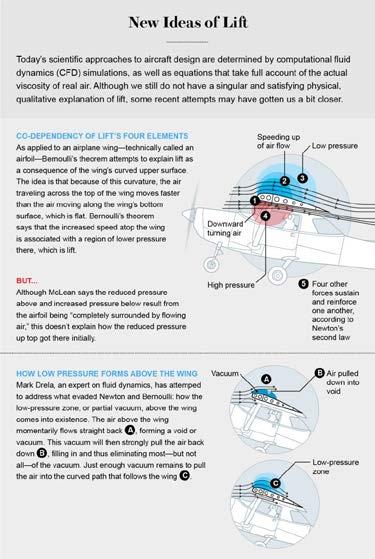
Let us start with the wings. They have an important feature called flaps, which move up and down to help the plane lift off and stay airborne. The flaps also help control the plane, slowing it down during take-off and landing, and keeping it stable in the sky. Flaps may be small, but they do one of the biggest jobs on the plane [3]. Another key part of flying is aerodynamics. The front of the plane is smooth, thin and long to help it cut through the air and gain speed. Without that speed, the plane would no t be able to lift off. The shape of the plane is designed to make sure it can take off safely and move smoothly through the sky [1]. So, how do planes stay up in the air? It is all about the interaction of four fundamental forces: lift, weight, thrust and drag.
Lift is generated by the wings, which are designed with a special shape called an air foil. This shape helps the air move faster over the top of the wing than underneath, creating an upward force that keeps the plane in the sky.
Plane wings are shaped so that air moves faster over the top than underneath. Faster air has lower pressure, so the higher pressure under the wing pushes the plane upward. This is what helps the plane rise into the sky [4].
Weight is the force pulling the plane down because of gravity. For a plane to fly, lift has to be stronger than weight. Thrust is the force that pushes the plane forward. This comes from the engines, which either spin propellers or use jet power to move air backwards, pushing the plane forwards.
As the plane moves faster, more air flows over the wings, creating more lift [5].
Drag is the force that slows the plane down. It is caused by air resistance as the plane moves through the sky. Planes are designed to be smooth and streamlined to reduce drag as much as possible.
When a plane takes off, the pilot increases thrust so the plane speeds up along the runway. As it goes faster, the wings create enough lift to overcome the plane’s weight, and it rises into the air. Once flying, the pilot balances all four forces to keep the plane steady [2]
In conclusion, planes fly because of the balance between four main forces: lift, weight, thrust and drag. Before take -off, pilots carefully plan the flight, including altitude and direction, and communicate with air traffic control to ensure everything is safe. For a plane to take off, it must generate enough thrust to move forward and enough lift to overcome gravity, which pulls the plane down. As the p lane speeds up, air moves over the wings, creating lift and allowing it to rise into the air. Drag works against this by slowing the plane down, so the aircraft must be designed to reduce air resistance as much as possible. All four forces must be balanced for the plane to stay in the air safely, which shows that flying is a combination of science, careful pl anning and skilled control.
REFERENCES
[1] Flydays.co.uk (2023) How Do Planes Take Off? The Science Behind the Flight. Available at: https://www.flydays.co.uk/news/how-do-planes-take-off-the-science-behind-theflight/ [Accessed: 28 November 2025]
[2] Flyinginhawaii.com (2017) Hawaii Airport Rent Increases. Available at:https://flyinginhawaii.com/hawaii-airport-rent-increases/#comment-8259 [Accessed: 5 December 2025]
[3] Regis, E. (2020) No One Can Explain Why Planes Stay in the Air. Available at: https://www.scientificamerican.com/video/no-one-can-explain-why-planes-stay-in-the-air/ [Accessed: 28 November 2025].
[4] Woodford, C. (2025) Airplanes. Available at: https://www.explainthatstuff.com/howplaneswork.html [Accessed: 28 November 2025].
[5] Quora.com (2026) How do planes take off? Available at: https://www.quora.com/How-do-planes-take-off-Do-they-turn-or-go-straight-up-into-the-sky.com [Accessed: 28 November 2025].
Why Do Animals Communicate Differently?
An inquiry-based project by James Blackburn
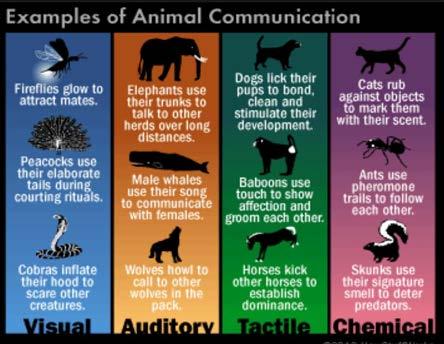
Have you ever had that thought where you wonder, “I wonder what those dogs are talking about?” Well, that is what this inquiry project is all about. It can feel like your pets, especially when you are close to them on the brightest of mornings, are quietly communicating with each other or even with other animals behind your back. It is almost as if they are planning to jump on the counter, sneak out of their cage, go through the bin and cupboards to find extra food, or even escape and run away from home. This made me think of the perfect question for my Inquiry Project: why do animals communicate differently?
I chose this topic because I love animals and I enjoy mysteries. I was also inspired by a children’s book I read when I was younger about tigers using a secret language to hide their conversations from other animals in the jungle. In the story, they would plan hunting together without any of the other animals understanding what was happening. I remember thinking this was a clever and fascinating idea.
Even if the answer to the question (why do animals communicate differently?) seems simple, such as different species developi ng in different ways, I still feel there is more to understand before we reach a complete explanation. I would like the answer to b e something more surprising, such as the idea that all animals once shared one form of communication, and then over time evolved separately from humans, l eading us to develop completely different ways of interacting. Different species of animals communicat e in different ways, often through sound, movement, and visual signals. Some examples are quite unusual. For example, in 1973, a scientist named Karl von Frisch won the Nobel Pr ize for his work on bee communication. He discovered that bees do not communica te through buzzing alone, but through movements inside the hive known as the waggle dance [1].
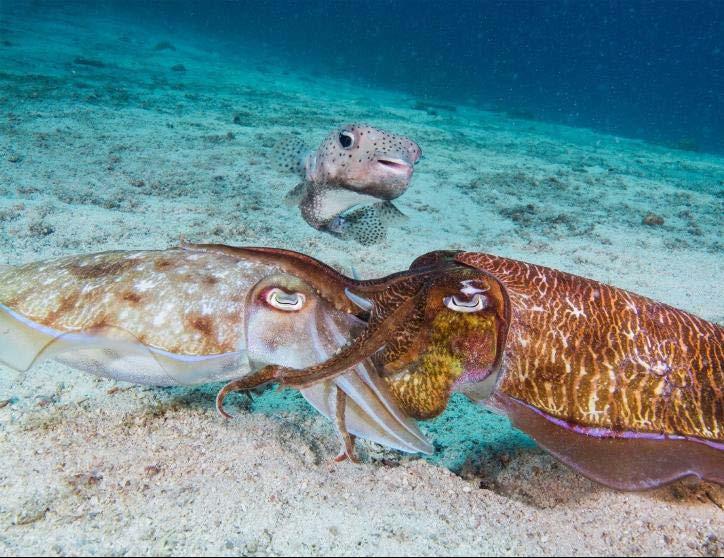
Many cephalopods, such as octopuses and cuttlefish, use colour and light to communicate. If they feel threatened, they may ch ange colour to blend in and also warn others nearby. Some animals, including the African demon mole rat (Tachyoryctes daemon), comm unicate by thumping their bodies against the ground. The white rhino uses scent -based communication through dung, while dholes, which are wild dogs, communicate through whistling, humming, and growling. Another interesting example is the fairy -wren in Australia, which communicates through singing [2]
Some animals are even able to imitate sounds in ways that seem similar to human speech. One example is a parrot named Alex, who was part of a well -known study beginning in 1977 [3]. Other examples include Lucy the chimpanzee, who was studied by Dr Robert Fouts and learned over 250 signs in American Sign Language. Wilkie the orca was observed mimicking sounds made by other orcas and humans. Koshik the elephant, who lived at Everland Theme Park in South Korea, became known around 2012 for producing sounds tha t resembled human speech [4].
Noc the beluga whale was reported in 1984, when scientists at the National Marine Mammal Foundation in San Diego believed they could hear human -like speech patterns coming from the tank. Rocky the orangutan, studied at the Indianapolis Zoo in 2016, showed the ability to adjust vocal sounds in ways that researchers compared to early speech development. Finally, Hoover the seal was raised by George Swallow after being found near the coast of Maine in 1971. Hoover later became known for mimicking a human voice with a noticeable accent [3].
In conclusion, there is no single correct answer to why animals communicate differently. The most likely explanation is that different species adapted to their environments and developed communication methods that best suited their survival. While we do no t yet have a complete answer, future research may help us understand even more about how animal communication evolved over time.
REFERENCES
[1] Batham, O. (2025). A Complete Guide to How Animals “Speak.” Available at: https://preply.com/en/blog/english-words for-animal-sounds/ [Accessed: 12 December 2025].
[2] Brown, C. (2023). Eight quirky ways that animals communicate. Available at: https://www.nathab.com/blog/animal-communication [Accessed: 12 December 2025].
[3] Lemus, A. (2022). Discover ways animals can talk like humans. Available at: https://a-z-animals.com/animals/lists/animals-that-can-talk-like-humans/ [Accessed: 28 November 2025].
[4] Toothman, J. (2024). How do animals communicate? Available at: https://animals.howstuffworks.com/animal-facts/animals-communicate.htm [Accessed: 28 November 2025].
[5] Tynemouthaquarium.com. (2024) How do animals communicate? Available at: https://www.tynemouthaquarium.co.uk/blog/animal-stories/how-do-animalscommunicate/ [Accessed: 12 December 2025].
[6] Wilson, D. (2025). Can animals really talk like humans? Available at: https://www.fodmapeveryday.com/can-animals-really-talk-like-humans-what-science-reveals/ [Accessed: 5 December 2025].
Are Humans Becoming More or Less Intelligent? An
inquiry-based project by Rebecca Blacoe
This inquiry explores human intelligence and asks whether we are actually becoming less intelligent, and how rapidly. Could t his be stopped? If intelligence is increasing, will we reach a tipping point where it plateaus, or could it decline significantly o ver time?
I will address questions such as: what makes up intelligence? How can we maintain and develop it, and what affects it? What i s the real definition of intelligence, and have we misunderstood it? This inquiry will explore the brain, past theories of intellec t, IQ tests (and whether they measure intelligence accurately), and other relevant topics.
I chose this question because I am intrigued by human intelligence and how it is not just about success in exams, but instead involves a wide range of cognitive abilities. I also became aware that everyone’s intelligence is different, much like fingerprint s, and that cognitive abilities depend heavily on environment and context.
What really is intelligence?
To answer this inquiry, we must first understand what intelligence is, what it involves, and how intellectual differences are identified. Intelligence differs between individuals and consists of the abilities ‘to learn from experience, adapt to new situations, an d understand and handle abstract concepts’, as well as using knowledge to interact with one’s environment [2].
A clear definition varies, and many scientists and psychologists dedicate their careers to studying this complex concept. Som e emphasise learning and the ability to respond effectively to questions, while others stress abstract thinking. However, psycholog ists have more recently ‘generally agreed that adaptation to the environment is key to understanding both what intelligence is and what it does’ [5]. Adaptation involves changing oneself to cope more effectively with the environment, but it can also involv e changing the environment or finding a new one.
Collectively, intelligence can be defined as the ‘collection of cognitive abilities that allow individuals to learn, reason, solve problems, and adapt to their surroundings’ [2]. It includes the ability to understand complex ideas and apply knowledge in pr actical situations.
Intelligence is not a single ability but a combination of processes such as perception, learning, memory, reasoning, and prob lem-solving. The study of intelligence has long involved debate over which abilities define it. Despite its importance, defining in telligence remains complex, especially as technology advances and our understanding of the brain develops.
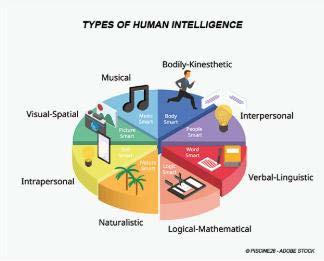
Types of Intelligence: Bodily-kinaesthetic intelligence is the ability to manipulate objects and use physical skills with precision and timing. This is oft en seen in athletes, dancers, surgeons, and craftspeople. Interpersonal intelligence is the ability to understand and communicate effectively with others, including both verbal and non -verbal communication. Teachers, social workers, actors, and leaders often demonstrate this ability. Linguistic intelligence is the ability to think in words and use language to express complex meanings. It is common in writers, journalists, and effective public speakers. Logical-mathematical intelligence is the ability to calculate, analyse, and evaluate problems logically. It is often developed in mathematicians, scientists, a nd individuals who enjoy patterns, strategy, and problem-solving. Musical intelligence is the ability to recognise and create pitch, rhythm, and tone. Individuals with this ability are often sensitive to sound and can connect emotion with music [6].
IQ Tests: The measurement of intelligence is referred to as the intelligence quotient (IQ). Although widely used, many believe it is no t the most reliable measure. IQ tests mainly assess abilities such as logical reasoning, memory, pattern recognition, and problem -solving [1]. This means they measure only a limited range of cognitive abilities and do not reflect the full complexity of intelligence. As a result, intelligence cannot be fully measured by a single test. Instead, IQ is often used to estimate aca demic potential rather than overall intelligence.
How Intelligence Develops and What Affects It : Many people suggest ways to develop intelligence, such as following personal interests, challenging oneself, maintaining phys ical health, learning new skills, and reading regularly [4]. These behaviours can support cognitive development. However, one significant modern influence is technology. While technology and artificial intelligence are valuable tools, over-reliance on them may reduce opportunities for independent thinking. To counter this, individuals can limit screen time and us e strategies such as thinking independently, consulting books, discussing ideas with others, and seeking guidance when needed.
Genetics and Environment: The development of intelligence is influenced by both genetics and environment. Genetics can account for a significant propor tion of variation in intelligence between individuals. Estimates suggest that heritability ranges from 40% to 80%, increasing with age [2]. However, environmental factors are equally important. These include socio -economic status, access to education, parental support, and nutrition. Supportive environments that encourage learning and problem -solving can significantly enhance cognitive development, while less supportive environments may limit opportunities. Ultimately, intelligence develops through the interaction between genetic predispositions and environmental influences.
Theories of Intelligence: Several theories attempt to explain intelligence. Spearman’s g -factor theory suggests that individuals who perform well in one area are likely to perform well in others. In contrast, Gardner’s theory of multiple intelligences proposes that intelligence con sists of different types rather than a single ability Sternberg’s triarchic theory suggests that intelligence includes three components: analytical, creative, and practical intelligence [2]. These theories highlight the co mplexity of intelligence and the difficulty of defining it as a single concept.
Data: Globally, Hong Kong has one of the highest reported average IQ scores at 107.73, while the United Kingdom average is 101.57. High levels of educational expectation and competitive academic environments may contribute to these results. However, some data suggests that intelligence levels may be declining. Between 1950 and 1975, the global population nearly doubled, while average IQ scores showed a slight decrease. Over the past 25 years, some studies suggest a further decline. Pr ojections estimate that the average IQ could fall to 86.32 by 2050 [7].
In conclusion, some evidence suggests that human intelligence may be declining, and one possible contributing factor is increased reliance on technology. While technology is highly beneficial, excessive dependence on it may reduce opportunities for independent thinking.
The key lesson is not simply to ‘become smarter’, but to develop habits that support learning, such as reading widely, engagi ng in challenging tasks, and maintaining a healthy learning environment. By making positive behavioural changes and practising cons istently, individuals can continue to develop their intellectual abilities.
If the right habits are developed and maintained, intellectual growth can occur gradually, much like a seed growing in the ri ght conditions.
REFERENCES
[1] Carnevale, J. (2025) Measurement of Intelligence - IQ Test & History. Available at: https://study.com/academy/lesson/methods-of-measuring-intelligence-interpreting-an-iqscores-score-range.html#:~:text=IQ%20measures%20intelligence%20based%20on,participant%20to%20complete%20the%20test [ Accessed: 28 November 2025].
[2] Cteec.org. (2026) Human Intelligence: Understanding What Makes Us Intelligent. Available at: https://cteec.org/human-intelligence/ [Accessed: 26 November 2025].
[3] Locklear, M. (2024) New state of mind: Rethinking how researchers understand brain activity. Available at: https://medicalxpress.com/news/2024-04-state-mind-rethinkingbrain.html [Accessed: 24 March].
[4] Ruiz, A. (2026) How to Be Intelligent Available at: https://www.wikihow.com/Be-Intelligent [Accessed: 1 December 2025].
[5] Sternberg, R. (2025) Human Intelligence. Available at: https://www.britannica.com/science/human-intelligence-psychology [Accessed: 26 November 2025]
[6] UTHSC.edu. (2022) Multiple Intelligence Theory. Available at: https://www.uthsc.edu/tlc/intelligence-theory.php [Accessed: 28 November 2025].
[7] Walker, J. (2004) Global IQ: 1950–2050. Available at: https://www.fourmilab.ch/documents/IQ/1950-2050/ [Accessed: 12 March 2026].
How Might Technology Affect the Sleep Habits of Young People?
An inquiry-based project by Olivia Boardman
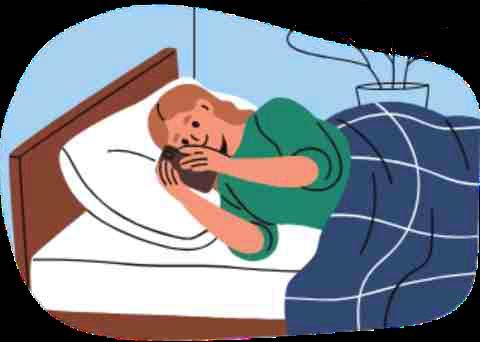
Have you ever stayed up too late scrolling on your phone or iPad and then struggled to wake up for school or a normal working day? Technology is a big part of our lives, but it can also affect how we sleep. I really thought about this project because this situation happens to me quite often. I can barely get any sleep because of m y iPad and phone, and it is so hard to wake up in the morning and get ready for school. That is why I want to figure out how techno logy affects sleep for young people and share some helpful tips, including night routines and other ways to feel less tired in the morning. I hope this inquiry project can help my generation find a better balance and get the sleep we need, something that could help everyone, including myself.
Believe it or not, you have the power to regain the freedom you did not know that you had lost. Here are some ideas to help w ith that.
One idea is to dock your phone early. When I realised what was happening a year ago, I decided to make one simple change that made a huge difference. Technology, particularly screens, can significantly impact sleep quality. This disruption can lead to difficulty falling asleep and staying asleep, as well as increased alertness during the day. To reduce these effects, it is recommended to limit screen time before bed, ideally for around 1.5 hours, and to use passive devices such as e-readers instead of interactive ones [3]. Another idea is to create a tech-free bedtime routine and use blue light filters to help improve sleep hygiene and overall wellbeing.
What is the impact of sleep disorders on morning tiredness?
Sleep disorders can significantly affect the quality of sleep and result in chronic morning tiredness. Conditions such as sleep apnoea, insomnia, restless legs syndrome and narcolepsy can disrupt sleep patterns, causing people to wake up feeling tired and unrefreshed.
Instead of using phones, televisions and laptops before bed, a spa-style routine with no technology can help. This could include putting on a face mask, taking a bath and relaxing. Without technology, light stretching such as “up, down, side to side” can also be helpful [3].
Sleeping with a phone nearby can disrupt sleep patterns in two ways. First, the blue light emitted from screens can suppress melatonin production, making it harder to fall asleep. In addition, constant notifications and vibrations can keep the brain in a state of alertness, making it difficult to relax.
Blue light is one of the biggest factors affecting sleep. It encourages wakefulness, and people may not realise how long they have been looking at a screen, which can negatively affect health. Removing phones from the sleep environment can improve sleep quality and help people wake up feeling more refreshed and energised [2].
Advice on technology use: If a young person does not have a phone, it is recommended that they only receive one when they move into high school, and ev en then it should mainly be for safety purposes so parents can know their location. Apps such as WhatsApp and Life360 can help parents stay informed about their child’s location. If allowed, a small number of games may be appropriate, but excessive use of social media such as Instagram, TikTok and Facebook is not recommended.
Luckily, screen time limits can be used to help manage usage. Avoiding computers, smartphones and other blue light-emitting devices before bedtime is recommended. However, this is not always possible for people who study or work at night. In these cases, strategies can help improve sleep quality. 1
Research and recommendations: The National Centre for Biotechnology Information provides access to scientific research on health and sleep. It shows that excessive use of electronic devices is linked to shorter sleep duration, delayed sleep onset and reduced sleep quality. Parents are encouraged to discuss screen use with teenagers and set appropriate boundaries.
A regular bedtime routine is important for healthy sleep. The hour before bed should include relaxing activities that do not involve screens. Keeping the bedroom free of screens can also improve sleep quality. Many people keep televisions or phones in their bedrooms, but this can negatively affect sleep patterns. Keeping lights dim in the evening is also helpful, as bright light can suppress melatonin production and interfere with the sleep cycle. Many devices now include night mode settings that reduce blue light and make screens easier on the eyes before bed. If devices do not automatically adjust brightness, it should be reduced manually. Some people also use blue light blocking glasses, which are designed to reduce exposure to screen light. While not suitable for everyone, some studies suggest they can be effective [1].
In conclusion, making bedrooms technology-free would be very helpful because it allows people to do more enjoyable activities instead of staying on their phones. This could include going outside, spending time with friends and being more active.
Technology can still be used in moderation, but excessive use, especially before bed, can negatively affect sleep. Overall, reducing screen time and increasing physical activity can help improve sleep quality and overall wellbeing.
REFERENCES
[1] Portsmouthhospital.com. (2025) Screen time before bed. Available at: https://portsmouthhospital.com/blog/entry/screen-time-before-bed-how-tech-affects-sleep-habits [Accessed: 16 December2026].
[2] Sleepfoundation.org. (2025) Can Electronics Affect Quality of Sleep. Available at: https://www.sleepfoundation.org/how-sleep-works/how-electronics-affect-sleep [Accessed: 12 December 2025].
[3] Sleephealthfoundation.org.au. (2024) Technology and Sleep. Available at: https://www.sleephealthfoundation.org.au/sleep-topics/technology-and-sleep [Accessed: 5 December 2026].
What Might We Learn About Intelligence From Studying Einstein’s Brain?
An inquiry-based project by Austin Brennand
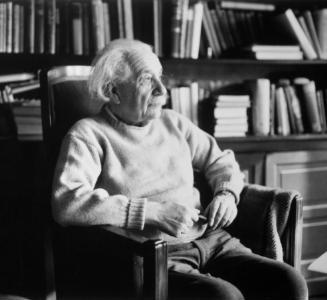
Einstein possessed legendary intelligence and is widely seen as the definition of a genius. We all believe we know the story of Einstein’s life, but do we really? After his brain was dissected in 1955 [6], something fascinating was discovered. I chose this topic because I was interested in the unusual story of Einstein’s brain and how intelligent he was, especially after I found out about its disappearance and later dissection from a YouTube short. I later discovered that Einstein was exceptionally intelligent, and that we might be able to learn more by studying his brain, which pushed me to explore this topic further. I really do hope that we, as humans, can develop our understanding of the brain by learning from Einstein’s case. So, let us get started.
Einstein was born on 18th March 1879, and died sixty years later. This is where my inquiry project begins.
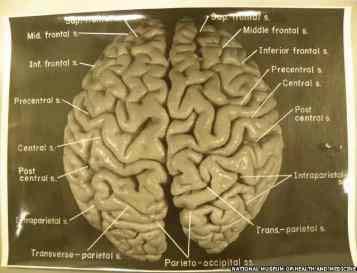
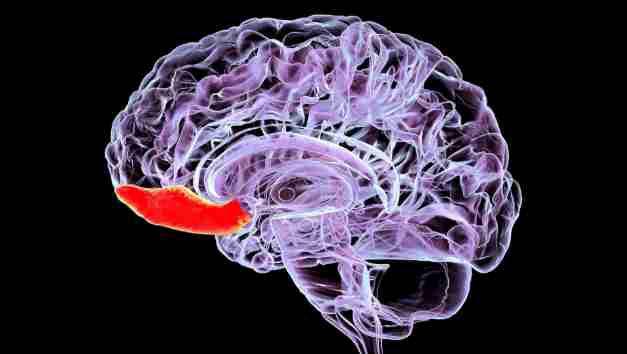
When Einstein’s brain was dissected, something was discovered that scientists had not seen before. He had an unusually large region in the right frontal lobe, which some researchers suggest may have been linked to ADHD, shaping aspects of his thinking and the structure of his brain. He also had an unusually large number of folds in his brain, which led scientists to believe these structural differences may have contributed to his intell igence. The right frontal lobe is associated with spatial awareness and emotion, possibly contributing to Einstein’s understanding of spatial relativity [3]. The folds in the brain, known as gyri, are important for cognitive function because they increase surface area, allowing for more neurons and synaptic connections. His brain was also relatively light, weighing approximately 1230 grams, which is unusual given his level of intelligence, as the average brain weight is ar ound 1300–1400 grams.
But what can we actually learn from Einstein’s brain? In the future, humans may be able to genetically engineer intelligence, and studying Einstein’s brain could contribute to this idea of creating highly intelligent humans. However, in the present, we can use this research to bet ter understand conditions such as ADHD and how people with ADHD can show exceptional abilities in certain areas, including music or, in Einstein’s case, physic s. However, this research is limited because parts of Einstein’s brain w ere lost after dissection, and only a small number of the original 200 slides remain intact, with access mostly limited to the scientific community.
Thomas Stoltz Harvey (Dr Harvey) removed Einstein’s brain and dissected it into hundreds of slides [8]. Many years later, Marion Diamond studied Einstein’s brain and found that he did not have more neurons than an average person, but he did have more astrocytes, which are supporting cells that connect neurons to blood vessels. Diamond believed this may explain stronger synaptic connections and therefore enhanced cognitive function. She also conducted an experiment on mice, where astrocytes were introduced into newborn mice brains. These mice later showed improved learning abilities, suggesting astrocytes may play an important role in intelligence due to their effect on brain connections. She also stated: “We have always assumed that a synapse, the point where two brain cells join to carry information, is made up of two brain cells. We were wrong. A synapse is made of two brain cells and an astrocyte” [9].
More recently, researcher Dean Falk identified unusual patterns in Einstein’s brain. “The most striking observation,” Falk says, “was the complexity and pattern of convolutions on certain parts of Einstein’s cerebral cortex, especially in the prefrontal co rtex, and parietal lobes and visual cortex” [5]. This is significant because the cerebral cortex is responsible for functions such as memory, learning, reasoning, emotion, and problemsolving [4]. Falk also argued that there is a limit to what we can learn from studying Einstein’s brain, which contrasts with Marion Diamond’s more optimistic interpretation. Although both researchers studied the same subject, they reached different conclusions.
In conclusion, I believe we can learn a great deal from studying Einstein’s brain, particularly in understanding intelligence and brain structure. It may even contribute to future developments in neuroscience, and potentially areas such as medical treatmen t for brain disorders. After considering both perspectives, my final view is positive, studying Einstein’s brain does help us understand intelligence more deeply.
[1] BBC.co.uk. (2015) The strange afterlife of Einstein's brain. Available at: https://www.bbc.co.uk/news/magazine-32354300 [Accessed: 21 November 2025].
[2] BBC.co.uk. (2026) Albert Einstein: A life spent re-imagining physics. Available at: https://www.bbc.co.uk/teach/articles/zfhy6v4 [Accessed: 21 November 2025].
[3] Britannica.co.uk. (2026) How Albert Einstein Developed the Theory of General Relativity. Available at: https://www.britannica.com/story/how-albert-einstein-developed-thetheory-of-general-relativity [Accessed: 21 November 2025].
[4] Clevlandclinic.org (2022) Cerebral Cortex. Available at: https://my.clevelandclinic.org/health/articles/23073-cerebral-cortex [Accessed: 6 March 2026].
[5] Eveleth, R. (2012) What Studying Einstein’s Brain Can and Can’t Tell Us. Available at: https://www.smithsonianmag.com/smart-news/what-studying-einsteins-brain-can-and-canttell-us-136585791/ [Accessed: 6 March 2026].
[6] Hughes, V. (2014) The tragic story of how einsteins brain was stolen and wasn't even special https://www.nationalgeographic.com/premium/article/the-tragic-story-of-howeinsteins-brain-was-stolen-and-wasnt-even-special [Accessed: 5 December 2025].
[7] Markel, H. (2022) The strange story of Einstein's brain. Available at: https://www.pbs.org/newshour/health/the-strange-story-of-einsteins-brain [Accessed: 5 December 2025].
[8] Specktor, B. (2022) Where is Einstein's brain? Available at: https://www.livescience.com/whereis-albert-einstein-brain [Accessed: 5 December 2025].
[9] Storoni, N (2017) The Scientist Who Studied Einstein’s Brain Learned That These 5 Factors Make You Smarter. Available at: https://www.inc.com/mithu-storoni/what-einsteinsbrain-tells-us-about-intelligence-a.html [Accessed: 27 February 2026].
An inquiry-based project by George Brown
“Death is one experience everyone will face, yet it remains the greatest mystery” [1].
Is There an Afterlife? ?
The concept of an afterlife, a continuation of existence beyond biological death, has fascinated humans for thousands of years. People often see science and the afterlife as opposites. Yet modern research, especially in quantum physics, reveals patterns that raise interesting questions about consciousness after death [1].
Scientific theories from various fields suggest our awareness might not end when our bodies die. The evidence comes from unexpected places: quantum experiments, hospital rooms, psychology research, and mathematical models of reality. While none of these th eories proves life after death exists, they offer new ways to think about consciousness and what happens when we die” [1].
It is plausible that an afterlife could exist, but under current scientific understanding there is no empirical evidence supporting the survival of consciousness after death. Neuroscience establishes that consciousness depends on neural activity, and physics does not currently provide a mechanism for memories or identity to continue after death.
Near-death experiences show that 10–20 percent of individuals facing imminent death report sensations such as moving through a tunnel, encountering bright lights, or seeing deceased relatives; these reports often lead to profound personal or spiritual tran sformations [2]. Young children reporting accurate memories of past lives have been studied globally. Reports often include specific statements, behaviours, skills, and physical traits matching alleged previous identities, sometimes unknown to the family o r the child [3].
Some philosophers argue that the number of testimonies from individuals who have experienced neardeath experiences provides a basis for considering the possibility of an afterlife. These accounts often describe floating outside the body, encountering dece ased relatives, and experiencing strong feelings of peace. However, these experiences remain subjective and difficult to verify scientifically. The idea that there might be an afterlife remains unproven, but continues to be explored through both scientific and philosophical perspectives.
In religious traditions, ideas of an afterlife are more defined and structured. In Christianity, the story of Lazarus and the rich man describes a clear separation between heaven and hell. The rich man, who ignored the suffering of Lazarus during life, is sent to torment, while Lazarus is rewarded. The rich man asks Abraham for relief and for a warning to be sent to his family, but both requests are denied. This suggests a fixed and irreversible judgement af ter death. This passage is often interpreted as evidence that judgement occurs immediately after death rather than at the end of t ime. It also suggests a permanent separation between souls, implying an eternal afterlife. Unlimited election is suggested, because those who do bad go to hell Some interpretations argue that the rich man’s awareness and communication in the afterlife indicate a structured spiritual realm rather than symbolic meaning [2].
Christians believe that faith in Jesus leads to eternal life in heaven, while sin leads to punishment in hell. Muslims believe in a final judgement where individuals are assessed based on their deeds and faith, leading to paradise or hell. Hinduism teaches the cycle of samsara (birth, death, and rebirth), with moksha as liberation from this cycle. Buddhism also teaches rebirth and the goal of enlightenment to escape the cycle of suffering. Sikhs believe in reincarnation and the soul’s journey towards union with God. Belief in an afterlife is not only religious but also cultural, influencing how societies understand death and morality.
Some tribal cultures also hold beliefs about life after death. For example, the Oraon tribe believe in Merxa, a peaceful land where souls go after death depending on how they lived. Cherokee and Alabama traditions describe layered spiritual worlds, often including upper, middle, and lower realms. These beliefs vary across cultures but share the idea that consciousness continues beyond physical death.
In conclusion, there is currently no scientific proof that an afterlife exists. However, philosophical ideas, near-death experiences, and religious traditions continue to support the belief that consciousness may continue in some form. Ultimately, while science has not confirmed life after death, the question remains open and continues to be explored through different perspectives.
REFERENCES
[1] BBC.co.uk (2026) The life after death. Available at: https://www.bbc.co.uk/bitesize/guides/zddbqp3/revision/1 [Accessed: 5 December 2026].
[2] Rawlette, S. (2026) Does Afterlife Obviously Exist? Available at: https://www.psychologytoday.com/gb/blog/mysteries-consciousness/202204/does-afterlife-obviouslyexist?msockid=3630feb8ecc56aba3ec1e800ed596bec&scrlybrkr=103f4d53 [Accessed: 5 December 2025].
[3] Sciencenewstoday.org. (2026) The Scientific Afterlife. Available at: https://www.sciencenewstoday.org/is-there-life-after-death-science-mystery-and-the-search-for-what-liesbeyond [Accessed: 5 December 2026].
[4] Vole, A. (2026) Ancient Egyptian Religion. Available at: https://www.britannica.com/topic/afterlife-religion [Accessed: 5 December 2025]
How Might WW2 Have Changed if General Franco Had Joined the Axis?
An inquiry-based project by Alexander Campbell
Have you ever heard of General Franco? If you have, you will know that he never officially joined the Axis Powers, but what might have happened if he had? Would Adolf Hitler have won the war, or would the result have been the same? Would Franco have betrayed him, or would he have helped Hitler gain land and power? My inquiry project focuses on Franco’s perspective and what might have happened if he had joined Adolf Hitler and Benito Mussolini, and why he chose not to do so. Was it because Spain required recovery time after the Spanish Civil War, or simply because he was stubborn? That is the type of question I asked myself when I came across Franco whilst investigating Joseph Stalin. I found that they had interesting conflicts in terms of behaviour and outlook, so I dived deeper and found an answer to my question: How might the Second World War have changed if General Franco had joined the Axis? This topic means a lot to me, as it reflects not only my love for history, but my interest in politics and religion
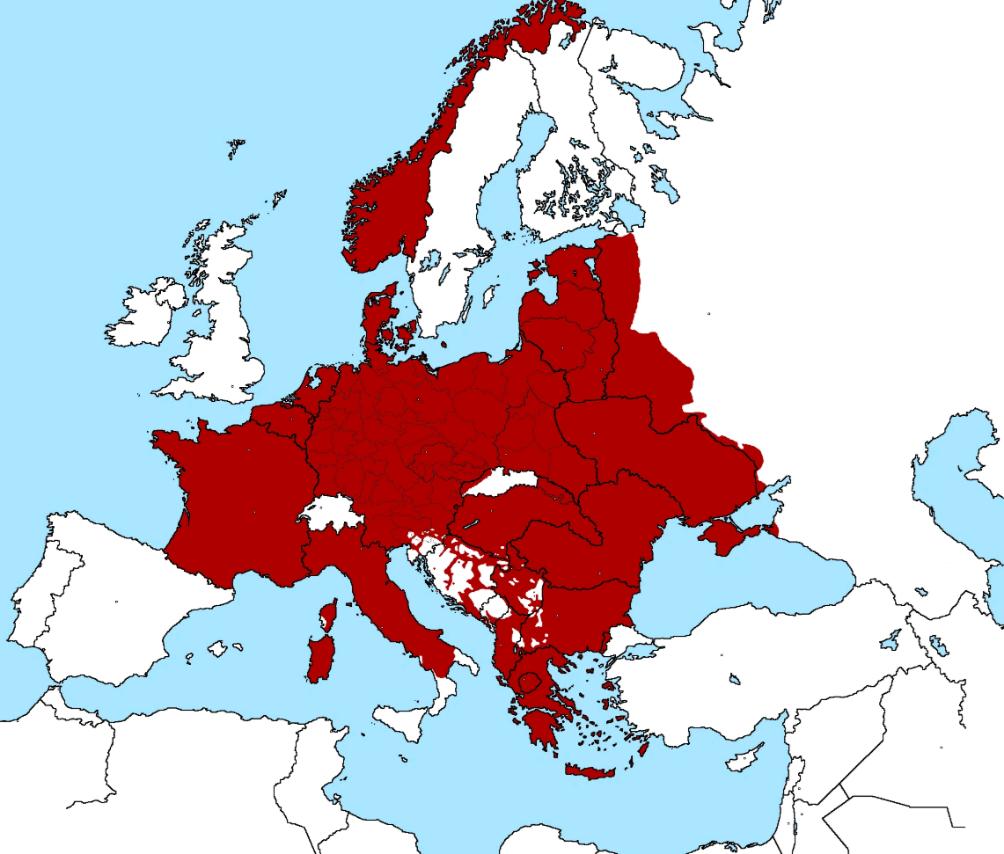
To begin with, we need to understand the Second World War. This was a conflict that began in 1939 when Adolf Hitler invaded Poland. He had already annexed Austria, remilitarised the Rhineland, and established the Luftwaffe. In 1938, he also took the Sudetenland in Czechoslovakia. Everything on Hitler’s side was going well, partly due to the policy of appeasement led by Neville Chamberlain. The world realised Hitler had gone too far when his alliances with Benito Mussolini and other Axis powers expanded the conflict [3].
After a couple of years of conflict, Nazi Germany expanded rapidly, but Hitler made a critical mistake by invading the Soviet Union in winter. Heavy losses followed, the war turned against Germany, concentration camps were discovered, and Adolf Hitler died in his bunker in April 1945.
Francisco Franco grew up in Spain and always dreamt of a military career. He attended a Catholic school until the age of 12 before entering military training. After rising through the army, Franco led a nationalist movement against communism. A famous quotation from him at this time is, “In Spain you are a Catholic or you are nothing” [3]. This shows he believed Catholicism should be central to Spanish identity [5].
When the monarchy ended in 1931, the new republican government introduced reforms that alarmed many right-wing nationalists, including Franco. This tension escalated into civil war in 1936. With support from Germany and Italy, Franco’s forces eventually captured Madrid in March 1939. On April 1st 1939, Franco became the sole ruler of Spain [4]. He ruled until his death in 1975.
After rebuilding Spain into a dictatorship, Franco had to decide how to repay Hitler for earlier support. Instead, he prioritised Spain’s recovery while remaining officially nonbelligerent. Eventually Adolf Hitler sought Franco’s cooperation, leading to the meeting at Hendaye. Although both leaders hoped for agreement, the talks collapsed after seven hours. Hitler reportedly said, “I would rather have my teeth pulled out than meet again with Franco” [11].
Now we reach the central question. How might the Second World War have changed if General Franco had joined the Axis? Even though Franco was a capable military leader, Spain was weakened after a devastating civil war involving hundreds of thousands of deaths, leaving the country in no condition for another major conflict [9]. However, if Spain had joined the Axis, Hitler may have gained additional manpower, strategic territory, and control over key regions such as Gibraltar [12]. With Spanish involvement, Germany might have increased pressure on Britain and France, potentially threatening Allied control of the Medit erranean. Some historians suggest this could have strengthened the Axis position in southern Europe and North Africa and delayed Allied advances.
It is also possible that Adolf Hitler may have altered his strategy regarding the Soviet Union depending on Spanish support e lsewhere. However, even with Franco’s assistance, major limitations would still exist, including stretched supply lines, strong Allied naval power, and the industrial strength of the United States and Soviet Union. In an extreme scenario, the Axis may have gained more territory across Europe and Africa in the short term. However, long -term success would still have been uncertain due to resource limitations, resistance movements, and strategic overreach. It is also possible that Franco, facing heavy losses, may eventually have withdrawn support from the war effort.
In conclusion, if General Franco had joined the Axis Powers, the Second World War may have become longer, more destructive, a nd more widespread across Europe and beyond. Spain could have provided strategic advantages to Adolf Hitler, particularly in southern Europe, and may have strengthened the Axis position temporarily. However, despite these possible advantages, it is unlikely that the overall outcome of the war would have changed. The indust rial strength of the Allies, the resilience of the Soviet Union, and the strategic mistakes made by Hitler would still have placed the Axis Powers under extreme pressure.
Therefore, while Franco’s involvement may have altered the pace and scale of the war, the eventual defeat of Nazi Germany wou ld still likely have remained the outcome. This shows how individual political decisions can influence history, but also how larger global forces ultimately shape the result of conflict.
REFERENCES
[1] Bing.com (2026a) Nazi Controlled Area. Available at: https://th.bing.com/th/id/R.fa764ea0d9c66751c26002e9de1a6f51?rik=FPC7BUBFvqlTow&riu=http%3a%2f%2fimg3.wikia.nocookie.net%2f__cb20140202215720%2fmilitary%2fimages%2f3%2f33%2f Map_of_Nazi_Germany_controlled_territory.png&ehk=41WfXAsaa%2bVdfx3v%2bQCw9ERJ0KW%2bgXsXktkZhIhBO20%3d&risl=&pid=ImgRaw&r=0 [Accessed: 2 February 2026]. [2] Bing.com (2026b) Nazi Flag. Available at: https://tse1.mm.bing.net/th/id/OIP.qc6Y_E1PvUSVYV0uVgNzYgHaD4?rs=1&pid=ImgDetMain&o=7&rm=3 [Accessed: 2 February 2026].
[3] Britannica.com (2025a) Francisco Franco. Available at: https://www.pbs.org/tpt/dictators-playbook/episodes/francisco-franco/ [Accessed: 28 November 2025.].
[4] Britannica.com (2025b) Francisco Franco. Available at: https://www.britannica.com/biography/Francisco-Franco Accessed: [28 November 2025].
[5] Britannica.com (2026a) Adolf Hitler. Available at: https://www.britannica.com/biography/Adolf-Hitler [Accessed: 13 February 2026].
[6] Britannica.com (2026b) Climate of Spain. Available at: https://www.britannica.com/place/Spain/Climate#ref70267 [Accessed: 9 January 2026].
[7] Britannica.com (2026c) Franco’s Spain, 1939–75. Available at: https://www.britannica.com/place/Spain/Francos-Spain-1939-75 [Accessed: 9 January 2026].
[8] Britannica.com (2026d) Nanjing Massacre. Available at https://www.britannica.com/event/Nanjing-Massacre [Accessed: 13 February 2026].
[9] Brittanica.com (2026e) Spanish civil war. Spanish Civil War | Definition, Causes, Summary, & Facts | Britannica [Accessed: 13 February 2026].
[10] Orton, K. (2021a) General Franco’s Intentions in the Second World War. Available at: https://kyleorton.co.uk/2021/06/25/general-francos-intentions-in-the-second-world-war [Accessed: 28 November 2025].
[11] Orton. K. (2021b) Franco and Hitler: A Meeting and its Consequences. Available at: https://kyleorton.co.uk/2021/06/17/franco-hitler-meeting-hendaye/ [Accessed: 13 February 2026].
[12] Statista.com (2026) Number of personnel mobilized by selected Axis and Allied countries or territories during the Second World War from 1937 to 1 945. Available at: https://www.statista.com/statistics/1342260/wwii-mobilization-by-country/ [Accessed: 13 February 2026].
How Can Tsunamis from Deep Underwater Affect Land Far Away?
An inquiry-based project by Matthew Cassidy
How can a surge from deep underwater travel for miles and then hit land, causing incredible damage?
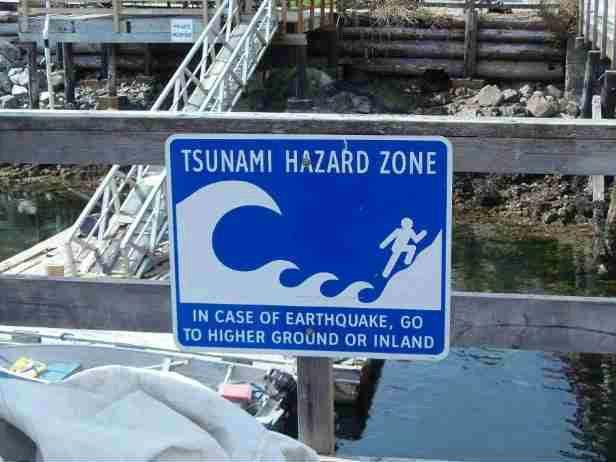
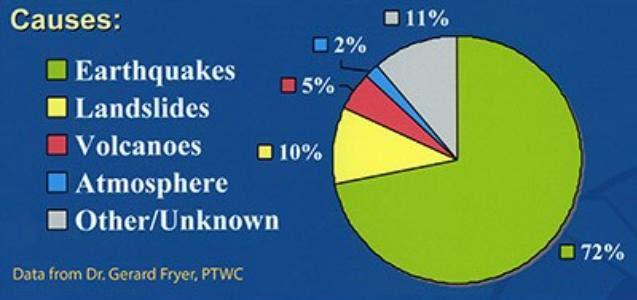
?First of all, have you ever wondered how an impact deep underwater can create a wave that travels across the ocean and eventually reaches land? A tsunami is a series of waves generated by a large and sudden displacement in the ocean [5]. Tsunamis begin far offshore [6] and can travel from the site of the original impact until they reach land. The main cause of a tsunami is an earthquake, which occurs when tectonic plates deep within the Earth’s crust move against each other, causing the seabed to shift. When this happens underwater, it disturbs the sea and creates waves that can develop into a tsunami.
Although earthquakes are the main cause of tsunamis [1], there are several other ways they can form. These include landslides, underwater volcanic eruptions [8], and even atmospheric disturbances [9]. Landslides can trigger tsunamis when a large mass of rock falls into the ocean and hits the seabed, suddenly displacing water and creating waves.
The reason I am curious about this topic and why I chose to write about tsunamis is because I have always wondered what might be happening deep underwater and how these events occur. I think it is incredible that a tsunami can begin at the bottom of the oc ean and travel miles to affect land far away. The aftermath of a tsunami shows just how powerful these waves are when they hit land. They can cause severe damage to buildings and put human lives at risk. In total, tsunamis have taken nearly 230,000 lives a cross just eleven countries.
A tsunami can destroy buildings and houses, causing major structural damage. They have also taken hundreds of thousands of li ves and caused billions of pounds worth of damage worldwide. Countries such as Japan and the United States were issued evacuation w arnings on 31 July 2025 due to a tsunami [2].
A tsunami deep underwater may go unnoticed, but as it travels towards shore, it increases in height as the water becomes shallower. The speed of the wave depends on water depth: the deeper the water, the faster the wave travels, and the shallower the water, the slower it becomes. A tsunami can travel as fast as a jet plane, only slowing when it reaches shallow water near land.
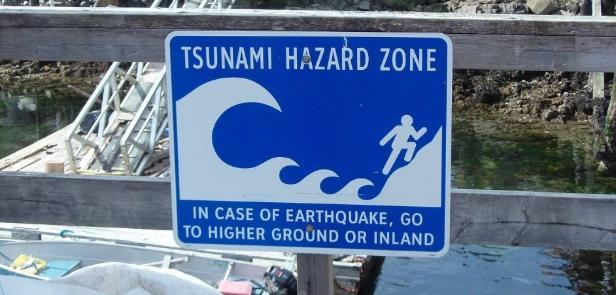
Tsunamis can hit any coastline, but they are most common around the Ring of Fire in the Pacific Ocean. This area includes countries such as Indonesia, Japan, Mexico, and Peru. Tsunamis are most likely to hit coastlines, but they can also affect rivers or lakes if conditions allow. Waves can reach heights of up to 100 metres [3].
Tsunamis in history have had devastating impacts. One of the most significant occurred in the Indian Ocean in 2004, affecting 14 countries, killing over 230,000 people, and displacing millions. Another major example is the 2011 Tōhoku tsunami, which caused widespread destruction in Japan. A further example is the 1755 Lisbon tsunami, which followed a major earthquake and devastated Portugal’s capital, killing thousands of people.
As a tsunami approaches shallow coastal areas, the decrease in water depth causes the wave to slow down while increasing in height. The energy and water volume become compressed, resulting in a steep and powerful wave [4].
After researching this topic, I have realised that tsunamis are far more than just waves and can be extremely destructive. Th ey can take lives, destroy buildings, and cause billions of pounds in damage. Tsunamis are remarkable in how they can travel for mi les, and people should learn more about them because they can happen suddenly and have devastating effects. Although rare, tsunamis can occur at any time and are usually recorded once or twice a year [7].
REFERENCES
[1] BBC.co.uk. (2025a) Earthquakes and Tsunamis – Eduqas. Available at: https://www.bbc.co.uk/bitesize/guides/zgmdv4j/revision/6 [Accessed: 4 December 2025].
[2] BBC.co.uk. (2025b) What is a Tsunami and what causes them? Available at: https://www.bbc.co.uk/newsround/articles/c741l7npkwwo [Accessed: 27 November 2025].
[3] BGS.ac.uk. (2025) Tsunamis. Available at:https://www.bgs.ac.uk/geology-projects/shallow-geohazards/tsunamis/ [Accessed: 27 November 2025].
[4] Geologyhub.com. [2025] What are Tsunamis? Available at: https://geologyhub.com/tsunamis/ [Accessed: 11 December 2025].
[5] NOAA.gov (2024) The science behind Tsunamis. Available at: https://www.noaa.gov/explainers/science-behind-tsunamis [Accessed: 27 November 2025].
[6] Sciencefocus.com. (2025) How do Tsunamis form? Available at: https://www.sciencefocus.com/planet-earth/how-do-tsunamis-form [Accessed: 4 December 2025].
[7] Shelterbox.org. (2025) Disasters explained: Tsunamis. Available at: https://shelterbox.org/disasters-explained/tsunamis/ [Accessed: 27 November 2025].
[8] Spaceplace.nasa.gov. (2025) What Is a Tsunami? Available at: https://spaceplace.nasa.gov/tsunami/en/ [Accessed: 4 December 2025]. [9] Tsunami.org. (2022) What causes a Tsunami? Available at: https://tsunami.org/what-causes-a-tsunami/ [Accessed: 27 November 2025].
How Might Repeatedly Heading a Football Affect the Brain?
An inquiry-based project by William Chappell
Football is often seen as a safe and enjoyable sport; however, growing evidence suggests that repeated head impacts may have long-term effects on the brain.
?
For many years, scientists and medical professionals have raised concerns about the effects of repeatedly heading a football and the potential risks this may pose for players.
In October 2019, a study led by the University of Glasgow showed that former professional footballers have approximately a three-and-a-half-times higher rate of death due to neurodegenerative diseases, such as Parkinson’s disease and dementia, compared to the general population.
In addition, studies in the United States record that hundreds of young male and female athletes are admitted to hospital each year with a concussion.
This topic interests me because it combines my enjoyment of football with my curiosity about why some footballers develop dementia at an earlier age than might otherwise be expected.
A study funded by the Drake Foundation was carried out by the National Hospital for Neurology and Neurosurgery. This study ex amined fourteen retired footballers with dementia in Swansea, Wales, between 1980 and 2010. Post-mortem examinations were conducted on six of the former players. Chronic Traumatic Encephalopathy (CTE) pathology was identified in four of the six brains examined, and all six showed signs of Alzheimer’s disease. The study also demonstrated that the rate of CTE found in f ootballers’ brains exceeds the 12 percent average background rate identified in a previous survey of 268 individuals from an unselected population at Queen
A study funded by the Drake Foundation was carried out by the National Hospital for Neurology and Neurosurgery. This study ex amined fourteen retired footballers with dementia in Swansea, Wales, between 1980 and 2010. Post-mortem examinations were conducted on six of the former players. Chronic Traumatic Encephalopathy (CTE) pathology was identified in four of the six brains examined, and all six showed signs of Alzheimer’s disease. The study also demonstrated that the rate of CTE found in f ootballers’ brains exceeds the 12 percent average background rate identified in a previous survey of 268 individuals from an unselected population at Queen Square’s Brain Bank [8].
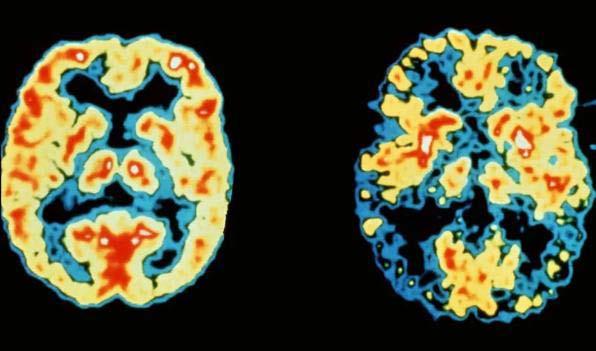
A concussion occurs when a footballer collides with another player or repeatedly heads the ball. Repeated heading over an ext ended period can cause the brain to move within the skull and damage brain tissue. The consequences of these impacts may include th e development of dementia and CTE. Dr Bennet Omalu was the first person to raise public awareness of CTE in contact sports. He identified CTE after studying the brain of deceased former National Football League (NFL) player Mike Webster in 2 002. When Omalu conducted the autopsy, he observed “abnormal accumulations of protein that did not resemble any known dementia” [5]. He concluded that repeated blows to the hea d during Webster’s A concussion occurs when a footballer collides with another player or repeatedly heads the ball. Repeated heading over an extended period can cause the brain to mo ve within the skull and damage brain tissue. The consequences of these impacts may include the development of dementia and CTE.
A more recent case involving a younger individual with dementia is that of Dean Windass, who was diagnosed with stage two dementia at the age of fifty -five after playing professionally for twelve clubs during a career spanning nineteen years between 1991 and 2010. This example highlights the possible link between dementia and repeatedly heading the ball during matches [3].
Another case examining the connection between repeated head impacts and dementia focuses on Gordon McQueen, who played thirty times for Scotland. He also played as a central defender for St Mirren, Leeds United, and Manchester United between 1970 and 1985 [4]. McQueen was known for being a strong and committed defender who spent many hours practising heading a heavy football. One of his daughters stated in an interview with BBC News that “Dad absolutely loved everything about football, but ultimately, it to ok him in the end” [4]. He was diagnosed with vascular dementia and died in 2023, aged 70. He was also diagnosed with CTE after his death. This suggests that repeated heading may contribute to CTE, which is linked to dementia and other neurological conditi ons.
An example of a well-known footballer who experienced a prolonged struggle with dementia is Jack Charlton. Towards the end of his life, he no longer recognised members of his family or events from his past, such as when he won the World Cup in 1966. After his death, a documentary titled Finding Jack was produced, which explored his life, his diagnosis of dementia, and the progression of his condition. This documentary highlighted the potential link between Charlton’s position on the field, as a centre-back who repeatedly headed the ball, and his cognitive decline.
For all the reasons previously outlined, the Football Association (FA) is now implementing precautions in grassroots football to prevent concussions. Examples of these new rules include prohibiting players aged under 7 –12 from heading the ball in matches; deliberate heading results in the opposing team being awarded an indirect free kick. The FA has introduced these measures to reduce the number of head injuries and concussions in grassroots football. If such rules had been introduced earlier, there may hav e been fewer brain injuries within the game [7]. A Football Association meeting in 1983 indicated that it was “always fully aware of the dangers” of concussions in football, according to former players and their families who are now pursuing legal action against several of the game’s governing bodies [2]
In conclusion, it can be argued that repeatedly heading a football contributes to brain damage, including conditions such as dementia, and that this issue is becoming increasingly significant and requires further attention and funding. This conclusion is s upported by the introduction of new rules by the FA, which suggests that there is a recognised risk associated with heading t he ball. Furthermore, the numerous past and emerging cases of former footballers experiencing neurological conditions reinforce this argument. Based on the scientific research and evidence available, it is difficult to deny that there is a direct link between repeated heading and brain injuries in football.
REFERENCES
[1] BBC.co.uk (2017) Football headers 'linked to brain damage'. Available at: https://www.bbc.co.uk/news/health-38971750 [Accessed: 4 December 2025].
[2] BBC.co.uk (2024) Concussion in football: Dangers known for decades, say former players suing governing bodies. Available at: https://www.bbc.co.uk/sport/football/68625899 [Accessed: 4 January 2026].
[3] BBC.co.uk (2025) Windass: 'Dementia scares me, we need more help'. Available at: https://www.bbc.co.uk/news/articles/c798x88l9j7o [Accessed: 4 January 2026].
[4] BBC.co.uk (2026a) 'Heading football likely to have contributed to McQueen's brain disease'. Available at: https://www.bbc.co.uk/sport/football/articles/c0er74njxgro [Accessed: 29 January 2026].
[5] BBC.co.uk (2026b) The brain that changed a sport. Available at: https://www.bbc.co.uk/programmes/articles/4z8mK2kPPwDfhMJQzcp8hT9/the-brain-that-changed-a-sport [Accessed: 9 February 2026].
[6] BBC.co.uk (2026c) Why sports stars who head the ball are much more likely to die of Alzheimer's, Parkinson's and motor neurone disease. Available at: https://www.bbc.co.uk/future/article/20260106the-health-dangers-of-heading-the-ball-in-sport [Accessed: 8 January 2026].
[7] Englandfootball.com (2026) Heading in U7-U11 youth grassroots football matches is being phased out following IFAB trial. Available at: https://www.englandfootball.com/participate/learn/BrainHealth/Heading-in-Football [Accessed: 22 March 2026].
[8] UCL.ac.uk. (2017) Evidence of brain damage found in former footballers. Available at: https://www.ucl.ac.uk/news/2017/feb/evidence-brain-damage-found-former-footballers [Accessed: 4 December 2025].
Square’s Brain Bank [8].
Are the Nazca Lines Peru’s Greatest Mystery?
An inquiry-based project by Freya Chatterjee Gristwood
Have you ever been curious about extra-terrestrial theories?
Whether they are real or not, this inquiry explores a range of ideas surrounding one of the most intriguing mysteries found in the Nazca Desert. Beneath what appears to be a vast, dry landscape lies something far more complex. So, could it be aliens or Hom o sapiens? Will you be the next to create a fresh theory surrounding one of Peru’s oldest mysteries: the Nazca Lines?
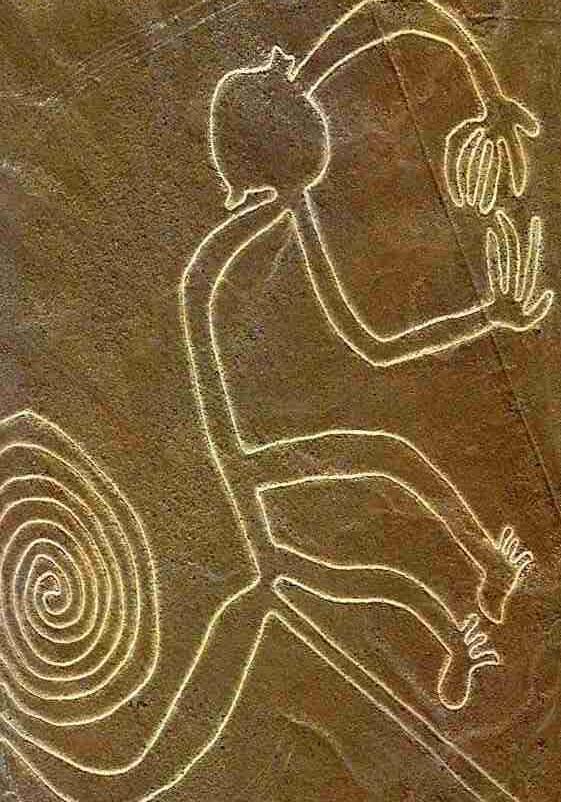
You may be wondering what the Nazca Lines actually are. When I first discovered them, I had the same question. They are enormous geometric patterns and lines stretching for miles across the desert floor. These designs depict animals such as birds, fish, llamas, spiders and monkeys, as well as plants and geometric shapes such as spirals. For decades, they have puzzled researchers. Even today, scientists have not reached a definitive conclusion about why or how they were created. This is what makes them such a fascinating topic to explore. This leads to the key inquiry: are the Nazca Lines Peru’s greatest mystery?
Many believe that the lines were created by the Na zca people as a tribute to their gods. However, other theories suggest more complex possibilities that may still lie undiscovered.
Nearly 2,000 years ago, people may have created these patterns , but how? The drawings cover between 170 and 190 square miles, with a combined length of approximately 1,300 kilometres. At the time, creating designs on such a scale, visible only from above, would have been extre mely challenging without modern technology. Despite this, the Nazca people cannot be ruled out. One theory suggests that artists first created smaller designs and then scaled them up accurately onto the desert surface [6].
Another theory proposes that the lines were used for ritual or sacrificial purposes. Evidence for this includes the discovery of bodies, such as mummified heads and decorated remains, near the site. This may suggest that rituals were performed to seek wate r or survival in the harsh desert environment. However, it remains unclear how strongly this theory can be supported compared to others [1].
A more controversial theory involves extra-terrestrials. This idea gained popularity following the publication of Chariot of the Gods by Erich von Däniken. Supporters argue that the scale, precision, and preservation of the lines suggest the involvement of advanced or even supernatural forces. Some point to a large humanoid figure among the drawings as possible evidence of alien contact. Others believe the Nasca people may have received guidance from aerial visitors. While this theory is widely known, it remains highly debated.
Astronomical calendar theory
Astronomy played an important role in many ancient cultures, including those in Peru. In 1941, the American historian Paul Kosok observed the lines from an aeroplane and suggested that they may have astronomical significance [3]. He noticed that the sun se t directly over one of the lines during the summer solstice and described the area as “the largest astronomy book in the world”. Some lines do appear to align with the Sun and certain stars. However, the number of confirmed alignments is not enough to full y support the idea that the Nazca Lines functioned as a complete astronomical calendar system [4].
In conclusion, the Nazca Lines are widely regarded as one of Peru’s greatest mysteries. Their scale, precision, and unknown purpose continue to int rigue both researchers and visitors. While several theories attempt to explain their origins, none have been definitively proven. P erhaps future discoveries will provide clearer answers or perhaps the mystery will remain unsolved.
REFERENCES
[1] Golomb, J. (2026) Why the Nazca Lines are among Perus greatest mysteries. Available at: https://www.nationalgeographic.com/history/article/nasca-lines [Accessed: 24 March 2026].
[2] Llamatravel.com (2026) Peru Holiday. Available at: https://www.llamatravel.com/destinations/peru/peruholidays?msclkid=4ee6feff1edf10e4d992973d9a3f60c8&utm_source=bing&utm_medium=cpc&utm_campaign=Peru%20June%202021&utm_term=See%20the%20Nazca%20Lines&utm_content=Nazca%20 Lines#/holidays?FL.Location=Paracas,%2BPacific%2BCoast&sort=ordering%7CASC&page=1 [Accessed 24 March 2026].
[3] Norman, R. (2026) Nazca Lines. Available at: https://www.britannica.com/place/Nazca-Lines [Accessed: 21 November 2025].
[4] Ritcher, C. (2021) Astronomical Investigation to Verify the Calendar Theory of the Nazca Lines. Available at: https://www.mdpi.com/2076-3417/11/4/1637# [Accessed: 21 November 2025].
[5] Thearchaeologist.org (2025) The mystery of the Nazca Lines. Available at: https://www.thearchaeologist.org/blog/the-mystery-of-the-nazca-lines [Accessed: 24 March 2026].
[6] Watson, S. (2021) The famous Nazca lines aren't mysterious – but rather ingenious. Available at: https://www.popsci.com/story/science/nazca-lines-theory/ [Accessed: 21 November 2025].
Could Society Survive Without Money?
An inquiry-based project by Oscar Collier-Baker
Could society survive without physical money when credit and debit cards are widely used?
I became interested in this topic after receiving a bank card and questioning why physical money is still used. In many places, shops now accept only card payments, and fewer people carry cash. This raises the question of whether physical money may eventually become unnecessary.
People have different opinions on this issue. Some believe notes may disappear within the next ten years, while others argue that society should not rely entirely on digital payments. It has also been suggested that a single global currency could make travel easier by removing the need for exchange. However, this could create disagreements over which currency should be adopted [6].
Is Money Necessary for Survival?
Many people believe that money is essential for survival. However, it is possible for individuals to live with limited or no access to money, particularly in communities that rely on alternative systems of exchange or support. If money did not exist, governments would not be able to collect taxes in the same way. This could affect the funding of infrastructure such as roads and public services. In addition, individuals who are known primarily for their wealth might lose social s tatus if money no longer held value [5]. Although it may be possible to survive without money, there would likely be significant challenges in maintaining organised societies.
Where Did Money Originate? The origins of money are complex and not attributed to a single country. Different civilisations developed forms of currency at different times, using a variety of systems to record and exchange value [4]. The use of metal as a form of money can be traced back to ancient Babylon before 2000 BCE. Standardised coinage is believed to have emerged later, around the 7th century BCE. Many historians suggest that th e kingdom of Lydia (in presentday Turkey) produced the first regulated coins during the reign of Ki ng Alyattes. These coins were made from electrum, a natural mixture of gold and silver [3].
Changes in Modern Currency
In some countries, physical currency is already being reduced. For example, the United States Mint has stopped producing larg e quantities of one-cent coins due to the high cost of production compared to their value. In some cases, only collector versions o f these coins continue to be produced [1]. This suggests a gradual shift away from physical money in certain economies.
Alternatives to Money
It is possible to exchange goods and services without money through systems such as bartering. Bartering involves trading goo ds or services directly without using currency. For example, one person might provide food in exchange for another service, such as childcare or assistance. This system has existed for thousands of years, with evidence suggesting its use as early as 6000 BCE. However, while bartering can work on a small scale, it becomes more difficult to manage in large and complex societies.
REFERENCES
In conclusion, it may be possible for society to function without physical money, particularly as digital payment methods continue to develop.
However, removing money entirely would create significant challenges, especially in areas such as taxation, organisation, and large-scale trade.
There are also concerns about security and privacy. For example, digital payments can be vulnerable to theft, and transaction records may reduce personal privacy.
Overall, while society could potentially adapt to a system without physical money, it is unlikely that money in some form will disappear entirely in the near future.
[1] Corky, S. (2025) It's curtains for the penny after more than two centuries in circulation. Available at: https://www.nbcnews.com/news/us-news/penny-out-of-circulation-mint-rcna243486 [Accessed: 21 November 2025].
[2] Gov.nl.ca. (2018) Where Does the Money Come From? Available at: https://www.gov.nl.ca/ourfiscalfuture/from.html [Accessed: 24 March 2026].
[3] Kidsbritannica.com. (2026) Currency at a glance. Available at: https://kids.britannica.com/kids/article/currency-at-a-glance/625207 [Accessed: 6 January 2026].
[4] Porter, L. (2024) A Complete Guide to British Currency Available at: https://www.tripsavvy.com/uk-currency-photographs-4123326 [Accessed: 21 March 2026].
[5] Tikkanen, A. (2025) A Brief (and Fascinating) History of Money. Available at: https://www.britannica.com/story/a-brief-and-fascinating-history-of-money [Accessed: 12 December 2025].
[6] Youtube.com (2023) Uncomplicated - What Would Happen if the Whole World Used Same Currency? Is It Good or Bad? Available at: https://www.youtube.com/watch?v=WEYQyVg8CEQ [Accessed: 12 December 2025].
Is Britain Hiding an Area 51 of Its Own
An inquiry-based
project by Henry Collins
People often assume that Area 51 is only an American phenomenon. However, just because it is not officially called “Area 51” does not mean there are no restricted military sites in Britain.
If there is a British equivalent, where is it, how many are there, what are they hiding, and why do they exist?
Since the 1970s, many people have debated what might be inside Area 51 in the United States, but far fewer people discuss similar restricted sites in Britain, if they exist at all [5]
People once assumed there could not be multiple heavily restricted sites hiding classified activity. However, over the past 2 0 years there have been numerous reports of highly secured locations guarded by security personnel and, in some cases, the military There are several restricted sites in Britain, but one of the most commonly discussed is Rudloe Manor.
Rudloe Manor: Rudloe Manor, also known in part as RAF Rudloe Manor, is a restricted site in Wiltshire in the southwest of England. Over the years, there have been claims of a secret underground network beneath the site, connected to military operations and Cold War infrastructure.
Today, parts of the Rudloe network are derelict, while others, particularly MOD Corsham, remain operational. The manor house itself, once used by RAF command, has fallen into disrepair. However, beneath it are reported tunnel systems consisting of reinforc ed corridors, underground rooms, and former operational spaces once used for emergency wartime planning [ 1].
Underground claims and reports:
Some reports describe the underground areas as old, dark, and extensive, making it difficult to determine their full original purpose. Some theories suggest connections to wartime operations or Cold War planning.
From the 1950s onwards, UFO sightings across the UK were reportedly logged by the Ministry of Defence. Witnesses who reported unusual lights or unidentified objects were often told their reports would be passed to official authorities. Some of these report s were later linked to RAF and security departments associated with sites such as Rudloe Manor [ 3].
History and military use: Rudloe Manor is a historic site dating back to 1685, originally owned by the Beauplan family. During the Second World War, the site was adapted for military use due to its strategic location and underground tunnel systems.
It later became an important operational centre for No. 10 Group RAF. The underground structures were used for communication, intelligence, and secure wartime operations.
The wider area of Corsham and Rudloe sits above an extensive network of old stone quarries dating back to the 19th century. These tunnels were later adapted by the War Office, the predecessor of the Ministry of Defence, and used for ammunition storage, war time manufacturing, and Cold War contingency planning. Some sections of the network are still believed to be used for restricted government or military purposes, although many areas are now inactive or sealed.
In conclusion, while there is no confirmed British equivalent of Area 51, sites such as Rudloe Manor and MOD Corsham show tha t the UK does contain highly restricted military locations with complex underground networks. Many of the claims surrounding these sites are based on speculation, historical military use, and limited publicly available information. However, their long history of secrecy and strategic importance continues to fuel public curiosity and debate about wh at may still exist beneath them.
REFERENCES
[1] Barrett, T. (2024) Campaign calls on new MP to shed light on spy base. Available at: https://www.bbc.co.uk/news/articles/c299dlwzkndo [Accessed: 16 January 2026].
[2] BBC.co.uk (2020) Prince Charles visits RAF Menwith Hill. Available at: https://www.bbc.co.uk/news/uk-england-york-north-yorkshire-54515146 [Accessed: 16 January 2026].
[3] Court, M. (2023) RAF Menwith Hill. Available at: https://www.gazetteherald.co.uk/news/23778144.raf-menwith-hill-giant-domes-secret-uk-base/ [Accessed: 16 January 2026].
[4] Nair, J. (2026) UK conscription rules explained as list of five groups most likely to serve first revealed. Available at: https://www.ladbible.com/news/uk-news/uk-conscription-ruiesexplained-five-groups-most-likely-903204-20260112 [Accessed: 16 January 2026].
[5] Scott, J. (2026) The ‘top secret’ RAF Menwith Hill on our doorstep in North Yorkshire. Available at: https://www.thenorthernecho.co.uk/news/19963459.top-secret-raf-menwith-hilldoorstep-north-yorkshire/ [Accessed: 16 January 2026].
How Might the Expansion of Space Affect Our Galaxies
An inquiry-based project by Henry Colt
Have you ever looked up at the starry sky and wondered, “Is space getting bigger?” For over 100 years, scientists have known that the universe is expanding because of something called redshift. After watching a documentary about infinity, I became fascinated with space and astrophysics and started asking myself how the universe’s expansion affects our planet, space, and our galaxies.
When I was younger, I visited a science research centre called Jodrell Bank, which houses the famous Lovell Telescope. The pl ace amazed me because it was full of so many science facts and incredible space exhibits and I am carrying out this inquiry project because my favourite thing is thinking about all the possibilities of space and science, my two favourite topics. Through this project, I will be researching data and exploring how the expansion of the universe affect s galaxies, eventually coming to my own conclusion.
5
The expansion of the universe is almost incomprehensible when you think about it, yet most of us will have heard the fact that the universe is expanding uttered numerous times throughout our lives. At school, many of us will have been told that the gravity of all matter in the universe would cause that expansion to slow down and reverse, leading to an end-of-universe scenario known as the "big crunch". Now, we know that the expansion of the universe isn't slowing down. It's speeding up [2]. We call the unknown force behind this acceleration dark energy; but how much do we know about the expansion of the universe, and what can it tell us about how objects in the universe behave?
What is dark energy? As physicists understand it, dark energy is a property of empty space. Like some sort of anti-gravity, it pushes empty space away from itself, accelerating the expansion that started 13.8 billion years ago with the Big Bang, creating ever more space in the process. More space means more dark energy, so the effect is self-reinforcing. The discovery of the accelerating expansion of the universe, by two competing teams of astronomers in 1998, saw that a recorded “standard candle” (a type o f star with a known brightness) was dimmer than expected, indicating that the distance between Earth and them was increasing. Contrary to expectation, the team found that distant supernovae were speeding up relative to those nearer, supporting accelerating expansion. The discovery won them the Nobel Prize for Science in 2011. But after two decades of additional research, the true nature of dark energy is still a complete mystery [3].
The expansion of the universe certainly keeps some astrophysicists and cosmologists up at night, because of the tremendous amount of uncertainty about this topic. Are we going to see a future where everything becomes stretched out too far apart for gravity to exert its force anymore? Judging from most of our current observations of the rate of expansion so far, not for the foreseeable future. Moons will continue to revolve around planets; planets will continue to revolve around stars; stars will continue to form galaxies. If the force of dark energy becomes more powerful than the opposing force of gravity, then those stars could begin exploding and destroying the planets and moons around them.
Why? Well let’s say you have two cars driving down the highway, one 30 feet in front of the other. If the universe is expanding, then theor etically the distance between those objects will get larger over time. If the second car were to slowly and consistently accelerate over time, it would overcome the expansion’s effect, and maintain the same 30-foot distance from the first car. As astrophysicist Ethan Siegel writes, the expansion of the universe is not a force exerted within it, but a rate and it’s possible for other forces to outpace that rate [4].
The expansion of the universe does not affect the relative position of astronomical bodies within galaxies. It is true that t he universe is expanding, but this does not alter the distance between the Earth and the Sun. It also does not affect the distance between atoms. The expansion of the universe is partly caused by the Big Bang, and partly caused by dark energy. This expansion should not be thought of as stars flying away from each other in a static spacetime fab ric. Instead, the stars are more or less static relative to a spacetime fabric that is itself expanding. The question is often asked, "Where is the centre of the universe's expansion?" This question only makes sense if all the stars were flying away from some central point. Because the expansion is space itself, there is no centre.
Think of an infinite sheet of paper with a grid of one-inch squares drawn on its surface, and another infinite sheet with a grid of two-inch squares. The second sheet is expanded relative to the first, but there is no centre of expansion. Solar systems do not expand despite existing in an expanding universe because of the binding force of gravity. In fact, even galaxies have enough gravity to withstand expansion. Only when you get to the level where mutual gravi tational attraction is negligible; the intergalactic level; does the expansion of the universe become evident. Similarly, the electrons in atoms are not drifting apart de spite the expansion of the universe. Everything on Earth, from your hand to a ruler, is not expanding. This fact is the reason we can detect the expansion of the universe in the first place. If our rulers were expanding at the same rate that the galaxies are drifting apart, we would never have discovered the expansion of the universe.
This expression that gravity locally overcomes the universe's expansion is somewhat oversimplified. Spacetime on the cosmolog ical scale is quite complicated. A more accurate statement would be that when near to matter (in galaxy groups), spacetime curves, causing objects to be attracted, and we call this attraction gravity; but far away from matter (in between galaxy groups) spacetime naturally expands of its own accord [1].
In conclusion, I have found that, for the foreseeable future, nothing may change. But in the long term, the universe is infinitely stretch ing, infinitely pulling the planets and galaxies apart, so eventually our planets will have an infinite distance between them. The consequences of this are not yet fully understood, and the physics of dark energy and gravity may follow different laws on an infinitely large scale. Further advances in science may answer these questions in the future.
REFERENCES
[1] Baird, C. (2013) How long before the expansion of the universe causes our earth to drift away from the sun? Available at: https://www.wtamu.edu/~cbaird/sq/2013/05/04/how-longbefore-the-expansion-of-the-universe-causes-our-earth-to-drift-away-from-the-sun/ [Accessed: 6 January 2026].
[2] Chown, M. (2024) Expansion of the universe. Available at: https://www.skyatnightmagazine.com/space-science/expansion-universe [Accessed: 6 January 2026].
[3] Ghod, C. (2026) Dark Energy. Available at https://science.nasa.gov/dark-energy/ [Accessed: 6 January 2026].
[4] Patel, N. (2019) Will the universe’s expansion mean planets no longer orbit stars? Available at: https://www.technologyreview.com/2019/11/08/132013/will-the-universes-expansionmean-planets-no-longer-orbit-stars/ [Accessed: 6 January 2026].
[5] Rubin, D. & Hayden, B. (2016) Is the expansion of the universe accelerating? Available at: https://iopscience.iop.org/article/10.3847/2041-8213/833/2/L30/pdf [Accessed: 6 January 2026].
Can Animals be Heroes
An inquiry-based project by Charles Dawson
On Remembrance Day, have you ever stopped to think about the brave animals who died in war, whether they were delivering mess ages or carrying ammunition? Animals can be some of the best ‘soldiers’ in wars, with some saving many more lives than humans. Animals are some of the most intelligent species on Earth, with some having incredible memory and others having amazing abilities. This leads to the question: can ani mals be heroes? I chose this topic because I love animals and have always felt that they can change the world as much as humans can, and possibly even more.
On September 1st, 1939, the Second World War (WWII) began, and soldiers were sent into battle. They needed an efficient way to deliver messages and decided to use pigeons to carry messages across long distances. A notable pigeon was Mary of Exeter, who com pleted four missions despite being hit by three shotgun bullets, being attacked by a hawk and losing part of her wing. Another heroic animal is Warrior the horse, who served in the First World War (WWI) and was known as “the horse the Germans could not kill” [4]. He survived machine gun fire and even being buried under rubble.
It is not only animals that served in war that are heroes. On 11th September 2001, a tragic terrorist attack happened on the Twin Towers in New York City, taking many lives. As emergency services arrived to save people, animals also played a role. Salty wa s a Labrador guide dog who was with his owner on the 71st floor when the first plane hit. Salty became increasingly agitated before leading his owner towards the stairs. As Salty began to go down, he returned to his owner, who said, “I knew for certain that he loved me as much as I loved him and he was telling me to come with him” [6].
Something in common between these animals is that they all received the Dickin Medal. The medal was created in 1943 by Maria Dickin, the founder of the PDSA (People’s Dispensary for Sick Animals), a veterinary charity that helps people who cannot afford tr eatment for their animals [1]. She noticed the heroic acts of animals during WWII and saw that soldiers were awarded the Victoria Cross for bravery, so she decided to create an equivalent award for animals, called the Dickin Medal. The first recipients wer e three carrier pigeons called White Vision, Winkie and Tyke, who were recognised for carrying important messages [2]. Since then, the award has been given to 75 animals, including 38 dogs, 32 pigeons, 4 horses and 1 cat [1].
Not all heroic animals have received the Dickin Medal, as even wild animals have saved lives. In 2004, off the coast of New Z ealand, a lifeguard and his daughter were swimming when a group of dolphins surrounded them. When they tried to swim away, the dolp hins blocked them by hitting the water with their tails. It later became clear that the dolphins were protecting them from a great white shark. Once the shark had gone, the dolphins swam away, having saved both of their lives [3].
Heroes do not just have to be brave or strong, they can also be loyal.
In 2014, a fire broke out in Fort Lauderdale, but the fire alarm failed. The family’s pet parrot, Perlie, noticed the danger and alerted the family, giving them enough time to escape before the fire became fatal. This shows strong loyalty, as instead of flying away through an open window, Perlie stayed and risked its life [3].
Another example is Kabang, a mixed-breed dog in the Philippines. When two children were about to be hit by a speeding motorcycle, Kabang jumped in front of it, saving their lives. Although Kabang suffered severe injuries and needed treatment, the children were left unharmed [3].
In conclusion, animals can be heroes in many different ways, whether through bravery, loyalty or intelligence. From war anima ls such as Mary of Exeter and Warrior in WWI, to animals in WWII such as carrier pigeons, to guide dogs like Salty and even wild an imals such as dolphins, there are many examples of animals saving human lives. These stories show that animals can make a huge difference, sometimes without recognition. I beli eve animals should be appreciated more for their actions, as even small acts can have a big impact. Next time you see an animal, it is worth remembering that it could have helped save lives without anyone ever knowing.
[2] Dickinmemorialanimalhospital.com. (2026) Dickin Medal Recipients Available at: https://dickinmemorialanimalhospital.com/dickin-medal-recipients [Accessed: 28 November].
[3] Genv.org. (2023) 10 times animals amazed the world by being absolute heroes. Available at: https://genv.org/10-times-animals-amazed-the-world-by-being-absolute-heroes/ [Accessed: 12 December].
[4] Historic-uk.com. (2026) History of Britain the Dickin Medal. Available at: https://www.historic-uk.com/HistoryUK/HistoryofBritain/The-Dickin-Medal/ [Accessed: 28 November].
[5] Hughes, N. (2023) Heroic animals at war the history of the PDSA Dickin Medal. Available at: https://heritagecalling.com/2023/12/21/heroic-animals-at-war-the-history-of-the-pdsa-dickin-medal/ [Accessed: 12 December].
[6] PDSA.org.uk. (2026) PDSA Dickin Medal Appollo, Rosselle and Salty. Available at: https://www.pdsa.org.uk/what-we-do/animal-awards-programme/pdsa-dickin-medal/appollo-roselle-and-salty [Accessed: 12 December].
Are Witches Real?
An inquiry-based project by Isabelle Dawson
Are witches real? Yes, but not in the ways you might think, so let me tell you about some infamous witches, the Pendle Witches, in particular Alizon Device. One of the many reasons I have chosen to write about the Pendle Witches is that when I was younger, I visited Pendle Hill. When this project was set, I knew I could write about Alizon Device, as she left her mark on history and cursed her family, which is why she was accused of witchcraft. Let me tell you why.
Alizon Device lived with her grandmother, Elizabeth Southern. She was more seen as a Demdike in her village because she was 80 years old, even though life expectancy was about 20 –30 at this time. Within their strange little house was her mother and her two younger siblings, James Device and Jennet Device, and their household was known for witchcraft [3]
Witchcraft was not really a bad thing in the seventeenth century, as a witch may have also been a ‘healer’ or ‘cunning woman’.
The reason Alizon Device was accused of witchcraft was that when she lived in her village, she was in the woods and met a ped lar called John Law, and she wanted to buy some pins. At the time, pins were used for witchcraft, and Law refused to sell these ite ms to her. In a moment of anger, Device cursed him, who almost immediately fell to the ground; his arms went limp, he could not speak, and his face became slack. Although Device was not originally blamed for Law’s stroke, she blamed herself and was absolutely convinced that she placed the curse on him. She even begged Abraham Law to let her visit John Law in his sick bed and to ask for forgiveness [ 2].
One of the worst things Device could have done was admitting to cursing Law, because the case caught the attention of Roger N owell, who happened to be the Sheriff of Lancashire. He ordered the family to show up in court. Nowell was known for being fearsome and was also desperately trying to win the king’s favour; finding out about Alizon Device put him in a good position. Unfortunately for the Device family, she set in motion so mething monstrous [3]. She not only confessed that she cursed Law, but also that she had meetings with the Devil. She said that when Law refused her the pins, a great black dog appeared, and she believed this was the presence of the Devil and that she had sold her soul [4]
In 1604, the law stated that it was illegal to practise witchcraft, and a great betrayal followed. Device said that her grand mother, Elizabeth Southern, was a witch and had bewitched the daughters of Richard Baldwin. She also accused Anne Whittle (known as Chattox) of murder and claimed that Chattox had killed her own father and a friend.
Elizabeth Southern (Demdike), Anne Whittle (Chattox), and Anne Redferne were summoned to appear before Nowell on 2 April 1612. Though vulnerable, both Southern and Whittle were blind and in their 80s at this time; they both admitted to selling their souls to the Devil. Anne Redferne refused to admit such a thing, but like the Devices, this was another family that believed in all or nothing, and her own mother accused her of making clay figures used in witchcraft.
With three confessions of guilt, it is no surprise that Nowell sent all four women , Southern and her granddaughter Device, and Whittle and her daughter Redferne , to Lancaster Castle to await an official trial. Perhaps this would have been the end of it, and removing four witches would have been seen as a success for Nowell, but on Good Friday, 10 April 1612, Elizabeth Device organised a meeting at Malkin Tower. Those who were sympathetic to the family’s situation attended; to feed them, James Device stole a neighbour’s sheep. When word reached Nowell and an inquiry was carried out, eight more people who had attended the meeting were accused of witchcraft, and seven of them were sent to join the others in Lancaster Castle [ 5]. Unfortunately, Jennet Preston was found guilty of witchcraft and was hanged on 29 July 1612.
Of those accused, Alice Nutter was set apart from the rest on account of her class. While the majority of the people caught u p in the Pendle trials were peasantry, Nutter was from a fairly wealthy family in Roughlee and, as a widow, owned her own land. Tod ay it is thought likely that she was seen at Malkin Tower on her way to another meeting with a group of local Catholics, as the Nutter family were known to be loyal to the Catho lic faith. To keep her fellow Catholics safe, Nutter said nothing aside from pleading not guilty at her trial. To conclude, Alizon Device has the most interesting story because she believed the black dog was the Devil, although it is possible she was hallucinating due to fear, guilt, and deprivation of food and wa ter. So, yes, people believed witches were real, but they were not simply imaginary characters with broomsticks and pointy hats. Instead, they were often ordinary people caught u p in fear, accusation, and misunderstanding.
REFERENCES
[1] Agecrofthall.org (2016) The Trials of the Pendle Witches: The Assize in Action. Available at: https://www.agecrofthall.org/single-post/the-trials-of-the-pendle-witches-the-assize-in-action [Accessed: 17 April 2026].
[2] BBC.co.uk (2025) The Pendle Witches. Available at: https://www.bbc.co.uk/bitesize/articles/zmff239 [Accessed: 28 November 2025].
[3] Scaredycatskeptic.co.uk (2026) Pendle Witches - Devastating story of Alizon Device. Available at: https://scaredycatskeptic.co.uk/alizon-device-pendle-witches/ [Accessed: 9 January 2026].
[4] Sheldon, N. (2017) The Pendle Witches: 12 Disturbing Details About the Notorious 17th Century Witch Trials. Available at: https://historycollection.com/pendle-witches-twelve-stepsgallows/ [Accessed: 17 April 2026].
[5] Thehistorypress.co.uk (2018). The Pendle witches. Available at: https://thehistorypress.co.uk/article/the-pendle-witches/ [Accessed: 9 January 2026].
[6] Tschanz-Hofmann, H. (2017) The big flood. Available at: https://fineartamerica.com/featured/the-big-flood-heinz-tschanz-hofmann.html [Accessed: 17 April 2026].
How Do the Olympic Games Inspire People to Go for Gold
An inquiry-based project by
Georgiana Denison-Davies
An inquiry-based project by Georgiana Denison-Davies
How might the Olympic Games affect the world and its endless possibilities? Have you ever wondered if the Olympics could chan ge the world, influence people, or even change you? The Olympic Games are more than just a sporting event, they represent ambition, discipline, and achievement. One moment of excellence from a role model can inspire millions around the world. How do the Olympic Games inspire people to go for gold? The Olympics can motivate people to try their best, work hard, and reach their goals. Ma ny athletes and spectators are inspired by seeing individuals achieve things that once seemed impossible. The Games demonstrate how determination, talent, and teamwork can push people beyond their limits.
Another powerful Olympic moment was seen during the Paris Olympic Games, where athletes showed sportsmanship and respect across competitions. Rebeca Andrade of Brazil won gold in the gymnastics floor final, while Simone Biles and Jordan Chiles showed respe ct during the medal ceremony. This moment highlighted that the Olympics are not only about winning, but also about respect and unity between competitors [5].
Sprinter Noah Lyles also became an inspirational figure after winning gold in the 100-metre final at the Paris Olympic Games. He later spoke about his personal challenges, including asthma, ADHD, dyslexia, anxiety, and depression, explaining that these do not define what a person can become. His message emphasised perseverance and self -belief.
The idea of inspiration can also be explained through psychology and human behaviour. Watching elite athletes perform can increase motivation and excitement, which may encourage individuals to improve their own performance in sport or personal goals. This is often linked to emotional response and dopamine activity in the brain, which can increase focus and enjoyment [1]. Athletes themselves often describe being inspired by others. Olympic competition creates role models who demonstrate resilience, discipline, and recovery from failure. This can encourage younger athletes to believe that success is achievable through long -term commitment. An extension of this is the impact of mental health and resilience in elite sport. Simone Biles is an American artistic gymnast who faced significant mental health challenges during the 2021 Tokyo Olympic Games, where she withdrew from several events to protect her wellbeing [4]. However, she later returned to elite competition and continued to achieve success at internationa l level, including medals at later championships.
One philosophy of the Olympic Committee, known as Olympism, promotes the idea of blending sport with culture and education. I t encourages individuals to build a way of life based on effort, respect, and ethical values. The Olympic Games also have a global impact. Athletes from around the world come together to compete, even during times of political conflict. This demonstrates that sport can act as a unifyi ng force, bringing people together across divisions.
In conclusion, the Olympic Games inspire people to go for gold by showing what is possible through hard work, discipline, and determination. They create role models who motivate others to improve themselves, both in sport and in everyday life.
Although not everyone will become an Olympic athlete, the values shown in the Games, such as resilience, teamwork, and respec t, can influence anyone to set higher goals. The Olympics therefore do not just inspire sporting success, but also personal develop ment and ambition. Overall, the Olympic Games show that excellence is not only about winning, but about becoming the best version of yourself.
REFERENCES
[1] Lloyd, B. (2024) The Pursuit of Excellence: Lessons from the Olympics. Available at: https://www.actstrust.org.uk/2024/08/06/the-pursuit-of-excellence-lessons-from-theolympics/ [Accessed: 14 October 2025].
[2] Olympics.com (2021a) Olympic Motto - "Faster, Higher, Stronger – Together". Available at: https://www.olympics.com/ioc/olympic-motto [Accessed: 15 October 2025].
[3] Olympics.com (2021b) The unifying power of the Olympic Games to bring the world together in peaceful competition - Olympic News. Available at: https://www.olympics.com/ioc/news/the-unifying-power-of-the-olympic-games-to-bring-the-world-together-in-peaceful-competition [Accessed: 15 October 2025].
[4] Olympics.com (2024a) Gender equality in sport. Available at: https://www.olympics.com/ioc/gender-equality [Accessed: 16 October 2025].
[5] Olympics.com (2024b) Olympic Values - Excellence, Respect and Friendship. Available at: https://www.olympics.com/ioc/olympic-values [Accessed: 16 October 2025]
How Does Ring Rain Affect Saturn’s Rings?
An inquiry-based project by Sophia Denison-Davies
For the past 100 to 300 million years, Saturn’s rings have been pulled towards the planet, slowly making them smaller over time. This is because of a phenomenon called ring plane crossing; this happens approximately every fifteen years. Did you know? In the 17th century, scientists came up with all sorts of theories about Saturn. Some thought it was a single object with a strange, stretched spherical shape [1]. Then in 1659, the Dutch astronomer Christian Huygens first suggested that Saturn was surrounded by “a thin, flat ring, nowhere touching, and inclined to an imaginary line representing the Sun’s apparent yearly path across the sky against the background of stars, caused by Earth’s orbit around the Sun” [4].
These rings are incredibly thin compared to their wide diameter, which means they reflect very little light when viewed edge-on. Saturn is tilted at about 27 degrees, which is why the rings appear and disappear from view over time. The rings are mostly made of ice and rock, and Ring Rain pulls some of this material into Saturn’s atmosphere. These particles are believed to come from broken moons, comets, asteroids, and possibly fragments of former satellites torn apart by Saturn’s strong gravity.
The reason I am interested in this topic is because when I was little, my dad used to tell me about the stars and let me look through his telescope. He always said that Saturn was slowly losing its rings, which made me wonder what was actually happening to them. Ring Rain is caused by particles of ice and rock being pulled into the planet’s atmosphere by its magnetic field. It was first discovered in the 1980s and later studied in detail by the Cassini mission. Icy ring particles become electrically charged by solar ultraviolet radiation and micrometeorite impacts. Once charged, these particles are drawn along Saturn’s magnetic field lines into the atmosphere, creating a “rain” of water and dust. This process slowly removes material from the rings and transfers it into Saturn’s upper atmosphere [7]
A surprising fact is that enough water falls into Saturn’s atmosphere every 30 minutes to fill an Olympic-sized swimming pool. This material includes water, methane and other compounds, which can heat the upper atmosphere and create dark bands filled with ions and electrons. Scientists estimate that around 10,000 kilograms of ring material is lost per second, meaning the rings could disappear in under 100 million years [7]
This phenomenon was confirmed by data from the Cassini spacecraft’s final orbits. Ring Rain explains how material enters the upper atmosphere and suggests that Saturn’s rings may be relatively young, possibly under 100 million years old [3]
Scientists also detected excess ultraviolet emissions, seen as bright hydrogen signatures in Saturn’s upper atmosphere. This pattern supports the idea that charged particles from the rings are being pulled into the planet along magnetic field lines. The rings are not evenly affecting the atmosphere. Instead, they create “shadows” in regions of Saturn’s upper atmosphere, covering around 30 to 43 percent of the planet between 25 and 55 degrees latitude.
These shadows are much larger than earlier observations from the Voyager missions suggested. Although Saturn’s rings extend up to around 175,000 miles from the planet, they are extremely thin, often less than one kilometre thick in places.
Did you know that Saturn’s rings were first observed by Galileo Galilei in 1610? He initially thought they might be “ears” or separate objects attached to the planet. Also, even though Saturn is a gas giant, it is the least dense planet in our solar system Ring Rain is slowly changing the structure of Saturn’s upper atmosphere.
This process involves electrically charged particles created when the atmosphere is exposed to solar energy and energetic particles. Scientists studying hydrogen emissions expected to see a steady pattern of heat. Instead, they observed repeating stripes of higher and lower activity, which matched the structure of the rings [6]
They concluded that charged particles from the rings are being pulled into Saturn along magnetic field lines. This creates dark regions in the upper atmosphere where material from the rings is falling in. The ring system is enormous, spanning over 275,000 kilometres across, but it is extremely thin compared to its width [5]. The rings are also not static; they are dynamic systems, influenced by small moons called “shepherd moons” which help shape and maintain th eir structure through gravity. Because of Ring Rain and other processes, scientists believe the ring system is gradually disappearing. Some estimates suggest that in around 100 to 300 million years, Saturn may no longer have visible rings at all.
In conclusion, I have learnt that Saturn’s rings are not permanent. Ring Rain is slowly removing material from the rings and transferring it into Saturn’s atmosphere. This means that one of the most iconic features of our solar system is slowly changing and may eventually disappear entirely.
REFERENCES
[1] BBC.co.uk (2026) Planet’s iconic rings to disappear. Available at: https://www.bbc.co.uk/newsround/67343412 [Accessed: 30 March 2026].
[2] Earthsky.org (2026) Saturn. Available at: https://earthsky.org/search/saturn [Accessed: 30 March 2026]. H
[3] Hotbot.com (2026) Why is Saturn losing its rings. Available at: https://www.hotbot.com/answers/why-is-saturn-losing-its-rings [Accessed: 30 March 2026].
[4] Raviv, S. (2019) Saturn Could Lose Its Rings in Less Than 100 million Years. Available at: https://www.smithsonianmag.com/science-nature/saturns-rings-are-slowly-disappearing-180972856/ [Accessed:
5 December 2025].
[5] Seamashable.com (2026) Saturn will lose its iconic ring in 300 million years. Available at: https://sea.mashable.com/science/1565/saturn-will-lose-its-iconic-ring-in-300-million-years-but-heres-why-itsgreat-news [Accessed: 5 December 2025].
[6] Starr, M (2018) Saturn Is Losing Its Rings at a Shockingly Fast Rate, Says New Study. Available at: https://www.sciencealert.com/saturn-s-rings-are-dying [Accessed: 5 December 2025]
[7] Steigerwald, B. (2018) Research Reveals Saturn is Losing Its Rings at Worst-Case-Scenario Rate. Available at: https://science.nasa.gov/solar-system/nasa-research-reveals-saturn-is-losing-its-rings-atworst-case-scenario-rate/ [Accessed: 5 December 2025]
Who Was Katherine Parr Before She Married Henry VIII?
An inquiry-based project by Kristina Docherty
?Katherine Parr is often known as Henry VIII’s sixth wife; however, she was far more than this title suggests. Some historians describe her as the king’s “saintly nurse”, yet she was also an energetic and intellectually engaged queen. She was a published author, a devoted stepmother, and an outspoken supporter of the English Reformation. Katherine also served as regent general while Henry VIII waged war in France and helped to reconcile him with his two daughters, Mary (later Mary I) and Elizabeth (later Eli zabeth I). She not only outlived Henry VIII but also went on to marry Sir Thomas Seymour. In addition, she survived a serious plot to have her arrested for heresy.
In 1529, Katherine married Sir Edward Borough (she was 16 and he was 21). Historians know very little about her first marriage. The couple lived in the household and on the estate of Edward’s father, Thomas Borough, 3rd Baron of Gainsborough in Lincolnshir e. Lord Borough was a strong supporter of the Reformation, a religious movement that separated the English Church from the authority of the Pope in Rome. He also served as chamberlain to Henry VIII’s second wife, Anne Boleyn.
By the early 1530s, Katherine had lost both her mother, Maud, and her first husband, Edward. While her siblings established themselves at court in the south of England, tradition suggests that Katherine, now a young widow with limited resources, stayed with her family at Sizergh Castle in Cumbria, in the north of England.
By 1534, Katherine had married her second husband, the twice -widowed John Neville, 3rd Baron Latimer. The Neville family was a powerful northern dynasty, making this a prestigious connection for the Parr family. Katherine became fond of her second husband and settled into her role as Lady Latimer, managing her household and acting as stepmother to Neville’s two children.
In 1536, Katherine became involved in the Pilgrimage of Grace, a major northern uprising against the English Reformation. She and her stepchildren were confined to their own home, while Lord Latimer was taken by the rebels. Although he was sympathetic to t he rebels’ concerns, his attempts to mediate angered both sides, and he was nearly charged with treason.
Following the Pilgrimage of Grace, Lord and Lady Latimer moved south, although Neville frequently returned north on governmen t business. Katherine likely benefited from being closer to her siblings in London, both of whom held positions at the Tudor court [3].
Some historians argue that Katherine joined the household of Mary, Henry VIII’s eldest daughter, in the winter of 1542 –1543, although this remains disputed [3]. Nevertheless, her family connections meant she was likely a regular presence at court.
By early 1543, Lord Latimer’s health was failing, and Katherine knew she would soon be widowed again. However, she wished to remarry, this time for love. Sir Thomas Seymour was the ambitious, charismatic, and somewhat controversial brother of Jane Seymour, Henry VIII’s third wife. This made him the king’s brother -in-law and uncle to Prince Edward. Katherine was likely introduced to Thomas through her brother William [3].
Katherine fell in love with him. She later wrote to Thomas that “my mind was fully bent on the other time I was at liberty to marry you before any man I know” [3]. However, fate had other plans, and Katherine also came to the attention of the king.
A year after his fifth wife, Catherine Howard, was executed at the Tower of London, the 52 -year-old Henry VIII remained a widower. He was increasingly unwell and physically limited, and he had been deeply affected by Catherine Howard’s infidelity, making h im hesitant to remarry [3].
Eventually, Henry’s attention turned to Katherine Parr. It is unclear exactly how he first became aware of her. Some accounts suggest he encountered her during visits to his daughter Mary’s household in early 1543, where Katherine is sometimes placed as a lady-in-waiting. Others suggest he may have met her through her husband or her family connections at court. Katherine is also said to have petitioned the King on behalf of her uncle, Sir George Throckmorton, in 1540.
Lord Latimer died in March 1543. Henry did not wait long before proposing marriage to Katherine.
In conclusion, Katherine Parr was far more than just Henry VIII’s wife. Before marrying him, she was an educated woman, a wri ter, a devoted stepmother, and someone who strongly supported religious change [2]. She experienced different marriages, responsibi lities, and challenges that helped shape who she became later in life. From my research, I believe Katherine Parr was already an important and capable figure before she met H enry VIII, and her life shows that she should be remembered for much more than jus t being a queen.
REFERENCES
[1] Artuk.org (2025) Catherine Parr: more than a survivor. Available at: https://artuk.org/discover/stories/catherine-parr-more-than-a-survivor [Accessed: 4 December 2025].
[2] HRP.org.uk (2025) Katherine Parr: Scholar, Stepmother, Survivor. Available at: https://www.hrp.org.uk/hampton-court-palace/history-and-stories/katherine-parr/ [Accessed: 4 December 2025].
[3] Katherine Parr (2025) The wife of henry VIII who ‘survived’. Available at: https://www.historyextra.com/period/tudor/katherine-parr-marriage-henry-viii-husbands-deathwriting/ [Accessed: 4 December 2025].
Are Poltergeists Real or Is There a Scientific Explanation?
An inquiry-based project by Darcy Elliott
Are poltergeists real, or is there a scientific explanation behind them? This is a question I have often asked myself. When I was younger, I was fascinated by the paranormal, and even now my interest continues to grow as I learn more about famous cases and investigations. To explore this, I would like to introduce Ed and Lorraine Warren, a well -known husband-and-wife team of paranormal investigators. They were involved in several famous cases, including the Enfield Haunting, the Amityville Horror, and the Smurl case. Throughout their careers, they claimed to investigate intense paranormal activity, often in highly stressful environments where families believed they were being targeted by unseen forces.
One of the cases they investigated took place in 1974 at the Smurl family home. Jack and Janet Smurl reported disturbing experiences such as loud noises, unpleasant smells, and physical disturbances affecting both the environment and members of the household. The family claimed that objects moved on their own and that their dog was thrown against a wall. In response, the Warrens attempted to investigate and suggested that a powerful demonic presence may have been responsible. They also reported unusual activity during their visit, including shaking mirrors and moving furniture. At one point, they claimed a message appeared on a mirror reading “Get out!” which they interpreted as a warning or threat [4]
What is a poltergeist? A poltergeist is generally described as a type of spirit or entity associated with physical disturbances rather than simple a pparitions. The term comes from German, where ‘poltern’ means to make noise and ‘geist’ means spirit. However, the interpretation of poltergeist activity varies widely, and many scientists argue that these events can often be explained without involving the supernatural. Why do people believe paranormal activity is real? Belief in paranormal activity is influenced by a combination of psychological, cultural, and emotional factors. Human perception is not always reliable, especially in moments of fear or stress, when the brain can misin terpret normal events as something unusual or threatening. Cultural influence also plays a major role. People who grow up hearing ghost stories or watching films that portray paranormal events as real are more likely to interpre t unexplained experiences in a supernatural way. Films such as The Conjuring, which claim to be based on true stories, can reinfor ce these beliefs. In some cases, natural psychological phenomena such as sleep paralysis can create extremely vivid experiences, including the sensation of a presence in the room. These experiences feel real to the individual, even though there is no exter nal cause. Another important factor is uncertainty. When people cannot immediately explain something unusual, the idea of a paran ormal cause can feel more satisfying than admitting “I don’t know.” Personal experience is also powerful; once someone believes they have encountered something supernatural, it can strongly shape their future beliefs [4]
Who investigates paranormal claims? Paranormal claims are investigated by a range of different groups. Some researchers come from scientific backgrounds such as psychology or physics and attempt to explain reported events using known natural laws. They often focus on perception, environmenta l effects, and human error. There are also dedicated paranormal investigators who visit reportedly haunted locations using equipment such as cameras, audio recorders, and electromagnetic fi eld detectors. While their work is popular in media, it is not generally considered scientific by mainstream experts. Skeptics and debunkers also play an important role. Individuals such a s James Randi investigated paranormal claims and often demonstrated how illusions, tricks, or misun derstandings could explain many alleged supernatural events. In some cases, religious figures are also involved, particularly when experiences are interpreted as spiritual or demonic in nature [4]
Where do famous cases take place? Some of the most well -known paranormal cases are reported in both the United Kingdom and the United States. In the UK, locations such as the Enfiel d Haunting, the Tower of London, and Borley Rectory are often associated with ghost sightings and unexplained activity. Borley Rectory in particular became known as “the most haunted house in England.” In the United States, cases such as the Amityville house and the Stanley Hotel are widely known, largely due to their influen ce on books and films. Eastern State Penitentiary is also frequently linked to reports of ghost sightings [2]
How are paranormal events recorded and explained? Paranormal investigators often use equipment such as video cameras, audio recorders, motion sensors, and electromagnetic fiel d meters in an attempt to capture evidence of unusual activity. One commonly referenced method is EVP, or electronic voice phen omena, which is claimed to record unexplained voices. However, scientific explanations often point to more natural causes. Many supposed paranormal events can be explained through misinterpretation of sound or images, environmental factors such as building movement or plumbing noise, and psychological effects such as pareidolia, where the brain recognises patterns like faces in rand om objects. Fear and expectation also play a significant role. If someone believes a location is haunted, they are more likely to i nterpret normal sensations as something supernatural.
When did major cases occur? Most widely discussed cases occurred between the late 19th and late 20th centuries. Early cases such as Borley Rectory became famous between the late 1800s and early 1900s. The Amityville Horror took place in 1975 and became globally known through media an d books. The Enfield Poltergeist occurred between 1977 and 1979 and remains one of the most famous modern cases. Around the same period, the Perron family case also gained attention and later inspired The Conjuring films. In the 1980s, the Arne Johnson trial brought further attention to claims of demonic possession in legal contexts [1] In modern times, fewer “new” famous cases exist, but paranormal stories continue through television, documentaries, and online media.
Why do some cases remain debated even when science explains many events? Many paranormal cases remain debated because evidence is often unclear, unrepeatable, or open to interpretation. Recordings and photographs rarely provide definitive proof, and different people interpret the same event in different ways. Psychology also explains why belief can persist. Human memory is influenced by emotion, expectation, and suggestion, meaning experiences can become distorted over time. Media portrayals further exaggerate stories, making them seem more convincing or dramatic than they may originally have been. Finally, belief systems differ. Some people are more ope n to supernatural explanations, while others require strict scientific proof. Because of this, agreement is often impossible, even when examining the same evidence.
Case Study: The Enfield Poltergeist (1977 –1979) The Enfield Poltergeist involved a family in North London who reported objects moving on their own, knocking sounds, and furn iture being thrown. One of the most famous claims was that a child levitated from her bed. Witnesses, including neighbours and jour nalists, reported unusual activity, and recordings captured a deep voice that appeared to speak through one of the children. However, the case became controversial when it was later suggested that some events may have been staged. As a result, it is now often viewed as a mixture of possible unexplained phenomena, psychological factors, and hoaxing [2]
Case Study: The Amityville Horror (1975) The Amityville Horror began when the Lutz family moved into a house in New York where a previous mass murder had taken place. They claimed to experience frightening events such as strange smells, slamming doors, and disturbing visions, leading them to leav e the house after only a short period. Later investigations questioned the accuracy of these claims, suggesting that parts of the story may have been exaggerated or influenced by media attention [1]
There is currently no strong scientific evidence proving that poltergeists or paranormal activity exist. Many reported experi ences can be explained through psychology, environmental factors, or misunderstanding. However, belief in the paranormal continues to persist because human perception, emotion, and culture strongly influence how people interpret unexplained events.
REFERENCES
Ultimately, whether poltergeists are real or not may depend less on physical evidence and more on how individuals choose to i nterpret what they experience
[1] BBC.co.uk (2026a) From Amityville-an-origin-story. Available at: https://www.bbc.co.uk/iplayer/episodes/m001vdxj/amityville-an-origin-story [Accessed: 28 November 2025].
[2] BBC.co.uk (2026b) From the Endfield poltergeist. Available at: https://www.bbc.co.uk/iplayer/episode/m002389b/hauntings-series-1-1-the-enfield-poltergeist [Accessed: 17 April 2026].
[3] BBC.co.uk (2026c) Haunting Series. Available at: https://www.bbc.co.uk/iplayer/episode/m002389b/hauntings-series-1-1-the-enfield-poltergeist [Accessed: 17 April 2026].
[4] Dagnall, N. (2026) From Eight things you need to know about poltergeist. Available at: https://www.mmu.ac.uk/news-and-events/news/story/eight-things-you-need-know-aboutpoltergeists-just-time-halloween [Accessed: 9 January 2026].
How Did One Dancer Change Ballet?
An inquiry-based project by Maisie Fisher
When you dance, you can feel your body connecting with the music. This raises an interesting question: how did individual dancers influence the development of ballet and modern dance?
I chose this topic because I love dancing and expressing movement through music. I began dancing at the age of two, which helped develop my interest in performance and choreography.
This inquiry explores whether one dancer significantly changed ballet, or whether change in dance is shaped by wider cultural and historical influences.
Who is Dai Ailin? Dai Ailin was born on the 10th of May 1916 in Trinidad, China. As she grew older, she became a talented dancer, dance teacher, choreographer, and company director [4] Dai Ailin was always interested in dance. Not having the resources to attend formal training at first, she would look through the window at ballet classes and go home to practise. She was eventually enrolled into a dance class. When her ballet teacher had to return to England, Dai Ailin was entrusted to teach the class at only 11 years old. At fourteen, she was sent to England, where the renowned Sir Anton Dolin took her into his studio as one of only six students to study dance with him.
Dai Ailin also gave performances to help raise funds for China, which led to her being invited back to China in 1940. She is often referred to as the “Mother of Chinese Modern Dance” [5]
After the founding of the People’s Republic of China in 1949, Dai Ailin was at the centre of the push to create new dance ins titutions and cultural reform in China [3] Her artistic path became even wider after the founding of New China, where she was involved in the creation and performance o f one of the first ballet-style productions in China: Dove of Peace Dai Ailin’s work as a choreographer was not only about creating dance routines, but also about shaping culture. Her choreographic style was character ised by a synthesis of traditional Chinese dance elements such as elegant gestures, symbolic movements and martial arts influences, combined with Western ballet and modern dance techniques. This allowed her to create performances th at blended both traditions [6] Dai Ailin died in 2006, leaving behind a strong legacy that continues to be studied and celebrated. Her death marked the end of an era, but today she is still viewed as a foundational figure who bridged traditional Chinese artistic forms with moder n choreographic expression. She received many international awards during her lifetime [5]
REFERENCES
Career Development and Influence: Throughout her career, Dai Ailin’s contributions to dance and choreography were wide-ranging. She played a crucial role in establishing modern Chinese dance. After graduating from the Shanghai Dance School in the late 1930s, she faced the challenge of building a professional career as a choreographer. She taught, ran workshops for young dancers, and formed a small troupe dedicated to modern Chinese dance. Her performances often included martial arts influences such as tai chi and kung fu, which she adapted into stage choreography. These early works showed her ability to combine cultural traditions with modern dance techniques, which made her stand out from more traditional choreographers. In the early 1940s, her reputation grew as she staged her first notable productions. One of her breakthrough works, The Spirit of the River, symbolised resilience and hope, blending traditional Chinese themes with modern dance vocabulary. The piece was well received, and critics praised her innovative choreography and emotio nal expression. This success established her as a rising figure in Chinese dance, even though her career was still developing [6]
Influences on modern choreography: Margaret Craske was an important influence on Dai Ailin’s development as a dancer and choreographer. In addition, her exposure to Lesley Burrows -Goossens and Kurt Jooss in the 1930s helped her combine Chinese movement styles with modern dance. Dai Ailin wa s also influenced by German expressionist dancers and the Indian dancer Uday Shankar, who inspired her to develop new forms of Chinese dance. Her dedication to modern dance and her ability to blend traditional and contemporary styles was widely recognised.
To conclude, Dai Ailin is recognised for her contribution to modern dance, beginning with her early passion and her determination to pursue a professional career. She took part in one of the earliest major ballet-influenced productions in China, Dove of Peace Although she is not the only figure to influence ballet or dance, Dai Ailin significantly shaped modern dance in China through her teaching, choreography, and cultural fusion of styles. Today, she remains an inspiration to dancers and choreographers around the world. Overall, no single dancer changed ballet completely, but Dai Ailin played a major role in developing modern Chinese dance by working with influential choreographers and creating a new blended style of movement.
[1] CICB.org (2026) Dai-Ailian. Available at: https://cicb.org/dai-ailian/ [Accessed: 24 March 2026].
[2] Daiailianfoundation.org. (2026) Dai Ailian Foundation. Available at: https://www.daiailianfoundation.org/background.html [Accessed: 24 March 2026].
[3] Dixon, B. (2026) From T&T to Beijing: Dai Ailin. Available at: https://www.guardian.co.tt/article-6.2.383374.bfa1c6f7fb [Accessed: 5 December 2025].
[4] Isaac, E. (2026) Dai Ailian Explained. Available at: https://everything.explained.today/Dai_Ailian/#google_vignette [Accessed: 5 December 2025].
[5] Kuiper, K. (2026) Diaghilev, Petipa, Fokine - Britannica. Available at: https://www.britannica.com/art/ballet/The-era-of-the-Ballets-Russes [Accessed: 5 December 2025].
[6] Meisner, N. (2026) Dai Ailian the Independent - The Independent. Available at: https://www.independent.co.uk/news/obituaries/dai-ailian-5335408.html [Accessed: 5 December 2025].
How Does the Corpse Lily Survive and
Do Other Carrion Plants Survive in the Same Way?
An inquiry-based project by Ellie Ford
I have always loved going out in the garden with my mum or nanny to plant and grow different kinds of flowers and foods. This led me to explore more unusual types of plants, which is how I discovered the Corpse Lily, and what I found intrigued me. Unlike most pleasant-smelling plants, the Corpse Lily lives up to its name and stinks of rotting corpses. It is extremely unique because of its de caying smell, enormous size, and despite its name, it is not a typical flower but a parasite. This raises an i nteresting question: what is a parasitic plant and how does this flower survive? Understanding this offers an intriguing look into the wonders of nature and the world around us.
The Durian, however, uses a different survival strategy. It has strong, spread-out roots that support its large trunk. Its flowers produce a strong, sour, buttery smell, which attracts bats and moths for pollination [2]. These animals are drawn to the scent because it often signals food sources in the wild.
The Carrion Starfish Flower is another example of a carrion plant. It produces a strong odour similar to rotting meat, which attracts its main pollinators: flies. This plant is native to South Africa and is well adapted to hot, dry climates [ 3].
The Venus Flytrap, which grows from a bulb-like rootstock, produces small white flowers at the top of an erect stem 20 –30 cm tall [1]. Venus flytraps are carnivorous plants, meaning they lure, trap and digest insects to gain nutrients that are missing in their natural environment. They use a snap -trap mechanism where sensory hairs detect movement. When two hairs are triggered within about 20 seconds, an electrical signal causes the trap to snap shut and capture the insect.
Although these plants have different survival strategies, they also share similarities. They adapt to their environments and use specialised features to help them survive. Many of them rely on scent or movement to attract insects or animals that assist with pollination or nutrition.
Deep in the rainforests of Sumatra, a rare and unusual plant grows: the Corpse Lily. It was first discovered in 1797 by the French naturalist Louis Auguste Deschamps during an expedition to Java. His notes and illustrations were later taken by the British when he returned to Europe in 1798. However, the plant was later rediscovered by Joseph Arnold, a surgeon and naturalist, during an expedition to Sumatra in 1818. The discovery was groundbreaking in the world of botany. There was a lot of confusion at the time because people did not understand how a plant could survive without visible roots, stems or leaves [4].
Parasitic plants usually survive by living on another plant. They adapt to their environment and extract nutrients from a host plant using specialised structures. However, the Corpse Lily is unusual even among parasites. It lives on vines from the genus Tetrastigma, growing thread-like structures inside the vine and taking water and nutrients from it. It can grow up to three feet in diameter and weigh over twenty pounds [5]. Its survival strategy is supported by its strong smell, which attracts flies, its main pollinators. It also has a unique timing system where female flowers open for only 12 –24 hours, followed by male flowers opening a day or two later, helping prevent self -pollination.
In conclusion, the Corpse Lily survives through a highly specialised parasitic relationship, using scent, structure and timin g to attract pollinators and gain nutrients from its host plant. Other carrion plants and species survive in different ways, but ma ny still rely on similar strategies such as strong smells or specialised trapping methods. Overall, these plants show how life can adapt in unusual and highly effective ways to survive i n challenging environments.
REFERENCES
[1] Brittanica.com (2026) Venus flytrap. Available at: https://www.britannica.com/plant/Venus-flytrap [Accessed 16 January 2026].
[2] Gale, J. (2025) What smells attract bats? Available at: https://iere.org/what-smell-attracts-bats/ [Accessed at: 9 January 2026].
[3] Gardenia.net (2026) Stapelia grandiflora. Available at: https://www.gardenia.net/plant/stapelia -grandiflora-starfish-flower-grow-care-guide [Accessed at: 9 January 2026].
[4] Sankar, N. (2023) What Is a Corpse Lily and Why Is It the Largest, Stinkiest Flower in The World? Available at: https://www.scienceabc.com/nature/what-is-a-corpse-lily-and-whyis-it-the-largest-stinkiest-flower-in-the-world.html [Accessed at: 12 December 2025].
[5] Shaw, J. (2017) The largest flower in the world is a parasite. Available at: https://www.harvardmagazine.com/2017/02/colossal-blossom [Accessed at: 28 November 2025]
Are Trees Speaking a Secret Language and Sharing an Interdependence With Fungi?
An inquiry-based project by Harriet Frank
Have you ever walked through a forest and wondered if the trees were talking to each other? Under the ground, fungi act like the natural internet of our planet, connecting trees in ways we cannot see. This makes me ask an exciting question: are trees speaking a secret language?
I chose this topic because I love nature, forests, and science, especially the hidden underground world. When I was younger, I read The Faraway Tree series, where the trees whispered to each other like friends. Even though I knew that trees do not talk like humans, I still wondered if they could communicate in other ways. I wanted to find out if trees can send distress signals, share food, or help each other when one of them is struggling.
Fungi help trees do many things, such as absorbing water, sharing nutrients, and allowing them to warn each other of potential threats or diseases. Mushrooms are only the fruit of the fungus, while most of the fungal organism lives in the soil [3]. These fungi are the ‘often overlooked architects of our woodland ecosystems’ [5]. Trees are even able to share carbon with each other through fungal networks. Fungi also play a vital role in breaking down dead plants, returning nutrients to the soil and allowing new plant life to thrive. Without this species, forests would struggle to get rid of dead matter, regenerate, and support the animals living there [6].
Fungi have been on the planet since the earliest plant species, and some scientists even believe that life may not have evolv ed at all without them. The length of the mycorrhizal hyphae in the top 10 cm of soil is estimated to be half the width of our gala xy. The fungi interconnect with the root systems of plants; in fact, around 90% of all plants depend on relationships formed with fungi [8].
Although trees may look like they are passive in their environment, they are always on alert. To help get rid of bugs and pat hogens, trees have developed unique ways to protect themselves. Trees are social and can ‘talk’ above and below the ground. If a tr ee is attacked by a pest or a pathogen, it can send warning signals below ground to its neighbours. As well as communicating locally, trees can also connect with others at a distance. They can use chemicals and scents to warn each other of danger, get rid of predators, and attract helpful insects to either pollinate or remove invasive pests [7]. If a tree is attacked by an invasive insect or an animal grazing on its leaves or buds, it will warn other trees that danger has arrived. Like birds, which use recognisable calls when danger is near, trees send distress messages more slowly. The information passes from the branches, through the trunk, to the roots, which then share signals with connected trees. However, roots are not the only way trees communicate; they may also use touch, smell, and other sensory responses [1].
Trees and fungi live in harmony with each other. They help each other so much that some people believe they could not survive without one another. The two have a remarkable way of exchanging organic matter and minerals. Tree roots provide fungi with 20–40% of photosynthesised carbohydrates, and in return, fungi supply trees with 30–40% of the minerals captured by the mycelial (thread-like) network [1]. Fungi can also provide water in times of drought or dormancy and allow plants to live in harsh environments. This exchange of nutrients has been shown to increase growth rates and improve survival rates of plants, while also supplying essential nutrients to the fungi [8].
In forests, there are many types of fungi, such as saprotrophic fungi. They are the main decomposers in woodland ecosystems and play a key role in keeping forests clear from rotting matter. In contrast, parasitic fungi invade living plant s and form a mycelial network between the cells to absorb nutrients, which can cause illness or even death. Most tree diseases are caused by parasitic fungi, and their effects can be devastating. One of the most damaging is honey fungus, which surrounds the plant using mycelial cords and paralyses the roots by taking nutrients from the tree before digesting the dead material. However, mycorrhizal fungi work in a different way by forming a mutual relationship with plants, particularly trees, and providing them with water and nutrients. There are two main types of mycorrhizal fungi: ectomycorrhiza (found in 2% of plant families) and endomycorrhiza (found in 90% of plant families) [8]. The soil beneath our feet represents one of the most diverse environments on Earth. A single grassland can contain millions of individual organisms [4]. Although there are an estimated 2.2 to 3.8 million species of fungi, only 148,000 have been formally identified [8].
Sometimes, trees can help keep ‘dead’ stumps alive by supplying nutrients produced through photosynthesis until the stump becomes self-sufficient. Saplings growing in the shade of a larger tree may not receive enough sunlight to photosynthesise effectively. In these cases, older trees help support them. Similarly, so -called mother trees can detect their young and often provide them with nutrients, sometimes even reducing competition from their own roots to give them space to grow [2]. This process also occurs through root systems [1]. In winter, some evergreen trees that continue to photosynthesise supply carbon to dormant or deciduous trees. In return, deciduous trees provide carbon to coniferous trees in the spring and summer [8].
In conclusion, fungi help trees survive by allowing them to share nutrients, support one another, and respond to danger. Thro ugh the mycelial network, trees are able to communicate and cooperate in ways that suggest a complex and interconnected system bene ath the forest floor.
REFERENCES
[1] Ecotree.green (2024) Trees communicate with each other through astonishing networks. Available at: https://ecotree.green/en/blog/do-trees-communicate [Accessed: 5 December 2025].
[2] Green.earth (2021) Trees talk to each other and recognise their offspring. Available at: https://www.green.earth/blog/trees-talk-to-each-other-recognize-offspring [Accessed: 21 November 2025].
[3] Holewinski, B. (2024) Underground Networking: The Amazing Connections Beneath your Feet. Available at: https://www.nationalforests.org/blog/underground-mycorrhizal-network [Accessed: 5 December 2025].
[4] Manchester.ac.uk (2014) The unbelievable world and its impact on us all. Available at: https://www.manchester.ac.uk/about/news/the-unbelievable-underworld-and-its-impact-on-us-all/ [Accessed:28 November 2025]
[5] Robinson, E. (2025) Fungi are the foundation for new life and a healthy woodland ecosystem. Available at: https://forestrycommission.blog.gov.uk/2025/10/16/fungi-are-the-foundation-for-new-lifeand-healthy-woodland-ecosystems/ [Accessed: 5 December 2025].
[6] Thomas, A. (2023) The magical Relationship Between Fungi and Our Trees and Plants. Available at: https://treepeople.org/2023/04/14/fungi-and-trees-plants/ [Accessed: 5 December 2025].
[7] Treesforcities.org (2021) How trees adopt unique ways to protect themselves. Available at: https://www.treesforcities.org/resources/how-trees-adopt-unique-ways-to-protect-themselves [Accessed: 5 December 2025].
[8] Webber, S. (2025) The wood Wide Web-Why Fungi Are Essential to forests. Available at: https://www.creatingtomorrowsforests.co.uk/blog/the-wood-wide-web-why-fungi-are-essential-to-forests
[Accessed: 12 December 2025].
Will New Technology Replace Live Theatre?
An inquiry-based project by Alexia Gillhirst
Imagine sitting in a theatre. The lights dim and the first note of music fills the room. You feel goosebumps as a sense of ex citement builds. This experience is difficult to recreate through a screen or virtual environment. Watching a hologram, artificial intelligence performance or using a virtual reality headset would not feel the same as being physically present in a theatre.
In recent years, technology has advanced rapidly. Instead of going to a theatre, it is now possible to watch performances thr ough a television, phone or virtual reality headset. However, the atmosphere of a live audience cannot be replicated at home. In a theatre, you can hear reactions from the audience and feel part of a shared experience. At home, everyday sounds such as a kettle boiling or a dog barking interrupt that atmosphere. Ev en smell and surroundings play a role in shaping the experience. In a theatre, the environment is focused entirely on the performance, whereas at home there are constant distractions. Another important difference is interaction. In live theatre, actors and dancers can engage directly with the audience, creat ing a sense of connection. Audience members may feel involved in the performance. This is something that cannot happen when watchin g from home.
Holographic Technology: In 2022, a hologram performance of ABBA was released. For many fans, this provided an opportunity to experience a concert they would otherwise never see. However, it is important to recognise that the performers are not physically present. Although the experience may feel realistic, it is still based on technology rather than a live performance.
The ABBA concert, called “ABBA Voyage”, uses digital avatars created through motion capture technology. The members of ABBA wore motion capture suits for an extended period to record their movements, facial expressions and performance style. This data was then used to create realistic digital versions of the band, which perform alongside a live band on stage [2]. The concert takes place at the purposebuilt ABBA Arena in East London. It uses large screens, advanced lighting and sound design to create an immersive experience. While this demonstrates how technology can enhance performance, it still differs from traditional live theatre.
Virtual reality has also been explored in theatre for many years. Early examples include Brenda Laurel’s “Placeholder” in 1993 and Char Davies’s “Osmose” in 1995, which used head-mounted displays and interactive environments [4]. These productions allowed audiences to engage more actively, changing the traditional relationship between performer and spectator. Virtual reality theatre can create unlimited environments and allow audiences to interact with digital performers in real time. However, this shift also changes the nature of theatre itself, as the focus moves away from live actors and shared physical space [4].
Challenges of Technology in Theatre: Despite its advantages, technology also presents several challenges. One major issue is cost. Advanced equipment such as lighting systems, sound technology and projection tools can be extremely expensive, especially for smaller productions [3].
Technical failures can also affect performances. For example, problems with sound or lighting can disrupt the experience and reduce audience enjoyment. In one 2017 Broadway production, a sound failure during a key moment led to a significant drop in audien ce satisfaction, showing how dependent performances can become on technology [1]. There is also the issue of authenticity. Some audience members may struggle to fully engage with performances that rely heavily on digital effects, as they are aware that what they are seeing is not real.
In conclusion, technology is improving and can enhance theatre by creating new and immersive experiences. However, it cannot fully replace live theatre. The atmosphere, interaction and emotional connection of a live performance remain unique. While technol ogy will continue to develop, it is more likely to support and improve theatre rather than replace it completely in the near future.
REFERENCES
[1] Marguerite themusical.com (2025) The Role of Lighting in Enhancing Emotional Impact on Stage . Available at: https://marguerite-themusical.com [Accessed: 21 March 2026].
[3] Talemusical.com (2025) Exploring the Use of Technology in Modern Musical Theatre Performances. Available at: https://talemusical.com/exploring-the-use-of-technology-in-modernmusical-theater-performances/#what-are-the-key-technological-advancements-influencing-performances [Accessed: 21 January 2026].
[4] Thetheatretimes.com (2017) How Virtual Reality is Changing the Way We Experience Stage Shows. Available at: https://thetheatretimes.com/virtual-reality-changing-way-experiencestage-shows [Accessed: 21 January 2026].
[5] Twolivesonelifestyle.com (2015) 3 Reasons Why Theatre Acting Is So Much Fun Available at: https://twolivesonelifestyle.com/3-reasons-why-theater-acting-is-so-muchfun/ [Accessed: 21 January 2026].
[6] Westendworld.co.uk (2025) How Does ABBA Voyage Work? Everything You Need to Know. Available at: https://westendworld.co.uk/how-does-abba-voyage-work/ [Accessed: 16 January 2026].
How Did William Wallace Change Scottish History?
An inquiry-based project by Arran Gorry
How Did He Change Scottish History?
This inquiry explores the role of William Wallace in shaping Scottish history and considers how his actions influenced Scotland’s struggle for independence. I chose this topic because of my interest in Scottish history and culture. After watching Braveheart, I became curious about the historical figure behind the story and wanted to understand whether William Wallace was truly a national hero and how he contributed to Scotland’s past.
Who Was William Wallace? William Wallace was a Scottish leader during the Wars of Scottish Independence. Unlike many warriors of his time, he is believed to have been educated, with knowledge of reading, writing, and possibly Latin. This would have given him an advantage in leader ship and communication. Wallace became known as a military leader who organised resistance against English control and played a key role in early Scottish uprisings [3].
Early Life: William Wallace was the second son of Malcolm Wallace. During his early life, Scotland was under increasing pressure from England, which sought to control the country [1] After the deaths of members of his family in conflict with English forces, Wallace’s life was shaped by the ongoing struggle between Scotland and England. Some accounts suggest that he spent time learning skills such as combat and strategy, which later influenced his leadership [2].
Key Battles: One of Wallace’s most significant military successes was at the Battle of Stirling Bridge, where he fought alongside Andrew Moray. Despite having a smaller force, the Scottish army used the narrow bridge and surrounding landscape to their advantage [4] The English army, which was larger in number, was forced into a vulnerable position while crossing the bridge. At this moment, the Scottish forces attacked, leading to a decisive victory. This demonstrated Wallace’s ability to use strategy and terrain effectively in battle [2]. However, not all of Wallace’s campaigns were successful. At the Battle of Falkirk, Scottish forces were defeated by the English army led by King Edward I. A lack of support from Scottish nobles weakened Wallace’s position and contributed to the loss. Wallace was later captured and executed by the English authorities. His death was intended as a warning to others who might challenge English rule [6].
William Wallace played an important role in the early stages of Scottish resistance against English control. His leadership helped to unite different Scottish groups and encouraged continued opposition [1]
Although he did not secure Scotland’s independence himself, his actions contributed to a wider movement that was later continued by leaders such as Robert the Bruce. In this way, Wallace can be seen as an important figure in the development of Scottish nat ional identity and resistance [2].
His death also had a lasting impact. He came to be viewed as a symbol of sacrifice and commitment to Scotland, which helped inspire future generations. His legacy continues through monuments, literature, and historical accounts [3].
In conclusion, William Wallace did not single-handedly change Scottish history, but he played a significant role in shaping its direction.
Through his leadership, military strategy, and resistance against English control, he contributed to a broader movement for Scottish independence. His influence extended beyond his lifetime, as his actions helped inspire future leaders and strengthened a sense of national identity in Scotland.
As a result, he is remembered as an important historical figure whose impact continues to be recognised today.
REFERENCES
[1] BBC.co.uk. (2011) The Battle of Stirling bridge. Available at: https://www.bbc.co.uk/news/uk-scotland-glasgow-west-13412135 [Accessed: 5 December 2025].
[2] BBC.co.uk. (2026) The Battle of Falkirk 1298. Available at: https://www.bbc.co.uk/bitesize/articles/zjwdbdm [Accessed: 30 December 2025].
[3] Britannica.com (2026) William Wallace. Available at: https://www.britannica.com/biography/William-Wallace [Accessed: 5 December 2025].
[4] Clanwallace.org. (1996) The Battle of Stirling Bridge. Available at: https://clanwallace.org/cw/about-william-wallace/battle-of-stirling-bridge/ [Accessed: 30 December 2025].
[5] Royal.uk. (2026) Edward 1 'Longshanks’. Available at: https://www.royal.uk/edward-i-longshanks [Accessed: 5 December 2025].
[6] Undiscoveredscotland.co.uk. (2026) Andrew Murry. Available at: https://www.undiscoveredscotland.co.uk/usbiography/m/andrewmurray.html [Accessed: 30 December 2025].
Can Vaping as a Teen Cause Lifelong Addiction?
An inquiry-based project by Logan Hamilton
Many people know that vaping is harmful, but not everyone understands how dangerous this can be when someone starts at a young age. Teens choose to try vapes for many different reasons, such as peer pressure, curiosity, or stress, without fully understanding what is inside them. One of these substances, nicotine, can seriously affect brain development and lead to addiction. After researching the effects of vaping, it becomes clear that starting to vape as a teen can increase the risk of lifelong addiction and long-term health problems.
Vapes contain many harmful substances, such as nicotine. However, vapes also contain other substances, such as propylene glycol, a liquid used to carry flavour. Nicotine is highly addictive for adults, but for teens it is even more addictive due to the development of their brains. If too much nicotine is taken in, the brain may become dependent on vapes. Nicotine is harmful to the teenage brain because it affects the reward system by reducing natural dopamine production, meaning the brain becomes less sensitive to everyday pleasures such as social interaction and activities.
The battery-operated devices come in many forms and can look like conventional cigarettes, pens, or even sleek tech gadgets. Users inhale and exhale a vapour-like aerosol. This method of taking in nicotine poses health risks to both users and non-users [2]
Teens are much more vulnerable to vaping due to peer pressure and the curious teenage brain. This may result in a lifelong addiction, as continued exposure to nicotine causes the brain to become dependent on its dopamine response. Some individuals with mental health conditions may use nicotine as a form of “self-medication” to experience temporary relief. However, nicotine withdrawal can worsen symptoms such as anxiety and depression [5].
Nicotine: Nicotine is one of the most frequently found substances in vapes. It is a nitrogen-containing compound found in certain plants, including tobacco. The aerosol produced by vaping contains nicotine and flavourings, and second-hand exposure may also pose health risks. The more someone vapes, the more the brain and body adapt to nicotine, making it harder to stop. When vaping stops, nicotine levels in the bloodstream drop, which may cause withdrawal symptoms, unpleasant feelings, and strong urges to vape [8].
Symptoms and support: Teens experiencing nicotine dependence should consider reducing use and seeking support. Removing vaping devices from access and spending time with friends and family may help improve mood through social interaction. Some alternatives include sugar -free gum or listening to music to help manage cravings [4]. Returning to vaping can reinforce dependence, as withdrawal symptoms such as anxiety and restlessness are part of nicotine wi thdrawal. Relaxation strategies and support from others may help during this process [7].
What could happen in the future? There is some evidence of potential benefits of vaping in smoking cessation. A study (2022) at Sheffield Hallam University fo und that ecigarettes may help reduce cigarette cravings. It is estimated that there are 10 million cigarette smokers in the UK and 1.3 billion worldwide. Smoking remains the leading preventable cause of death globally, largely due to cardiovascular disease [3]. Vaping is sometimes used as an alternative to smoking because it provides similar sensations, such as throat sensation. However, it is important to note that vaping is not completely harmless, and nicotine delivery stil l poses risks [6].
How easy are vapes to get hold of? Vapes are widely accessible, despite legal age restrictions requiring users to be 18+ in the UK. Some retailers may fail to enforce age restrictions for commercial reasons. Illegal vapes are still easily available, and many contain higher levels of nicotine than legally permitted. Vapes are also designed in appealing forms, which may increase their attractiveness to young people.
Statistics on vaping: Government research shows that between 3.1 and 3.2 million adults in England vape, including 18% of 18-yearolds. Surveys also show that 15% of 16–17-year-olds regularly vape.
The NHS states that vaping is not completely harmless. Although it does not contain tobacco or carbon monoxide, which are highly harmful in cigarettes, it is still considered harmful [1].
In conclusion, vaping at a young age can lead to lifelong addiction due to the addictive nature of nicotine and the fact that the brain is still developing. Nicotine affects the brain’s pleasure and reward system, increasing dependence over time. If a young person begins vaping illegal products, they may unknowingly consume much higher nicotine levels than permitted, increasing the risk of addiction and harm. Overall, vaping during adolescence can have serious long-term consequences on health and development.
REFERENCES
[1] Guysandstthomasspecialistcare.co.uk (2026) How does vaping impact your lung health? Available at: https://guysandstthomasspecialistcare.co.uk/news/how-does-vapingimpact-your-lung-health/ [Accessed: 27 November 2025].
[2] Heart.org (2024) Is Vaping Better Than Smoking? Available at: https://www.heart.org/en/healthy-living/healthy-lifestyle/quit-smoking-tobacco/is-vaping-safer-thansmoking [Accessed: 27 November 2025].
[3] Heartsearch.org.uk (2026) Study finds vaping benefits blood vessel health as much as other nicotine replacements. Available at: https://heartresearch.org.uk/new-study-findsvaping-benefits-blood-vessel-health-as-much-as-other-nicotine-replacements/ [Accessed: 27 November 2025].
[4] Kidshealth.org (2024) Vaping: What You Need to Know. Available at: https://kidshealth.org/en/teens/e-cigarettes.html [Accessed: 26 November 2025].
[5] Mdanderson.org (2024) Vaping and your brain: What to know. Available at: https://www.mdanderson.org/cancerwise/vaping-and-your-brain-what-to-know.h00159696756.html [Accessed: 26 November 2025].
[6] NHS.uk (2026) Vaping myths and the facts. Available at: https://www.nhs.uk/better-health/quit-smoking/ready-to-quit-smoking/vaping-to-quit-smoking/vaping-myths-and-thefacts/ [Accessed: 27 November 2025].
[7] NHSinform.scot (2026) Vapes are not for children or non-smokers. Available at: https://www.nhsinform.scot/campaigns/vaping/ [Accessed: 26 November 2025].
[8] Teensmokefree.gov. (2026) Vaping Addiction and Nicotine Withdrawal. Available at: https://teen.smokefree.gov/quit-vaping/vaping-addiction-nicotine-withdrawal [Accessed: 26 November 2025].
How Have Militaries Advanced Over Time, and Will They Continue to Do So in the Future?
An inquiry-based project by Lucca Harris
As technology and global threats change, how might militaries continue to advance over time?
I first became interested in militaries when I was around seven years old. It used to fascinate me that people volunteered to join the military and protect their countries, but I never really understood what they were protecting them from. Now that I am older, I see the bigger picture of why militaries are so important, after learning about civil wars, terrorist attacks, and the threats countries and people can face.
Have you ever imagined a robot fighting in a war instead of a human? As technology continues to advance, militaries around the world are finding new ways to use machines and artificial intelligence. Robotics and artificial intelligence have already made their mark on the battlefield, with unmanned drones and vehicles enhancing military performance. While this may sound like science fiction, robotic technology is already being used in modern warfare. In recent years, we have seen militaries using drones in w arfare; for example, it was reported that in the Russia–Ukraine war, “Russia facilitated an overnight barrage on Kyiv using 297 drones and 50 missiles of various types” [2]. Drones are small and can be remotely controlled, making them useful for transporting weapons and explosives undetected.
This raises an important question: could relying on robots in war harm humanity by taking away jobs or changing the value of human life, or does using robots and AI save more lives?
“National and global security is crucial to our existence” [1]; the world we live in can feel like a constant battlefield, with people seeking power and control. This raises questions about how this affects humanity and the Earth. The materials required fo r these future machines must come from somewhere, so how can they be produced responsibly without damaging the environment? Also, as weapons continue to advance, so do the threats. When I learnt about the Second World War, what stood out to me was that every military weapon was operated by humans; however, in the modern day, most weapons are operated by computers.
Nations are always looking for ways to protect themselves from each other to prevent conflict and bloodshed. To do this, “countries are enhancing domestic security, strengthening military capabilities and collective security, like NATO” [3].
NATO is a group of countries that have an alliance to help one another when they are in need of aid; “if a war broke out, the countries in NATO would work together to tackle the challenge” [4].
Countries also try to increase their strength by upgrading their global presence, alliances and partnerships, technological advancements, and military modernisation.
Now to answer the big question: can militaries advance over time? In my opinion, yes. As the world continues to develop, so w ill its militaries. In addition, as new threats emerge, countries will need to find new solutions to stay safe and maintain securit y. This will require constant innovation, particularly through the development of new technologies, because opposing forces may already understand how to counter existing systems. As a result, militaries cannot rely on outdated methods, as they may quickly become ineffective in modern conflict. This essentially means out with the old and in with the new, as military progress is driven b y the need to adapt and stay ahead.
REFERENCES
[1] Breitenbach, J (2025) Future Warfare: The Key Trends Shaping Modern Military Defense. Available at: https://www.rti.com/blog/shaping-modern-military-defense [Accessed: 27 November 25]
[2] Genesysdefense.com (2026) The Evolution of Military Technology: From Traditional Warfare to Advanced Systems. Available at: https://genesysdefense.com/intl/the-evolution-ofmilitary-technology-from-traditional-warfare-to-advanced-systems/ [Accessed: 27 November 25].
[3] Globaltechaward.com (2025) The Evolution and impact of military technology. Available at: https://www.globaltechaward.com/techbytes/detail/the-evolution-and-impact-ofmilitary-technology [Accessed: 27 November 25].
[4] Pusztaszeri, A. & Harding, E. (2025) Technological Evolution on the Battlefield. Available at: https://www.csis.org/analysis/chapter-9-technological-evolution-battlefield [Accessed: 27 November 25].
Why Do Aeroplanes Have a Livery?
An inquiry-based project by William Haworth
Do aeroplanes need a livery?
While aircraft can operate without one, liveries play an important role beyond appearance. This raises the question: why do airlines invest time and resources into designing aircraft liveries?
I chose this topic because I have a strong interest in aircraft and their design. I became particularly interested after seeing a Boeing 777 at Manchester Airport, which led me to explore how aircraft are presented visually.
What Is the Purpose of a Livery?
Aircraft liveries are primarily used for branding and identification. A distinctive design allows an airline to be recognised easily, even from a distance. For example, well -known airlines use consistent colours, logos, and symbols to build familiarity and trust with passengers.
Liveries also include important safety and regulatory markings. These include aircraft registration numbers, emergency exit indicators, and airline identification, all of which must meet specific visibility standards set by aviation authorities.
In addition, liveries can represent national identity. Some airlines incorporate elements such as flags, cultural symbols, or national colours, presenting the aircraft as a form of representation on an international stage [2]
Special and Promotional Liveries: Airlines sometimes create special liveries for promotional or commemorative purposes. These designs may celebrate events, partnerships, or milestones. For example, airlines have produced liveries to mark global events such as the Olympic Games or to celebrate anniversaries. Alliance liveries, such as those representing global airline partnerships, are also used to indicate cooperation between diff erent carriers. These special designs help generate public interest and increase brand visibility [1]
Aircraft as Advertising: Aircraft act as moving advertisements. Whether in flight, on the ground, or featured in media, they continuously promote the airline’s brand. Special liveries can increase this effect by attracting attention and encouraging engagement, particularly in the age of social media. As a result, liveries are not only aesthetic but also a strategic marketing tool [3]
How Have Liveries Changed Over Time? Aircraft liveries have evolved significantly. In the early period before the 1960s, liveries were simple, often featuring minimal text and basic striping. Many aircraft retained natural metal finishes due to weight considerations and the difficulty of applying paint. During the Jet Age (1960s–1980s), liveries became more complex, incorporating bold colours and distinctive logos to reflect speed, modernity, and the growing appeal of air travel. Between the 1980s and 2000s, increased competition led airlines to focus more on brand identity [4]. This included the introduction of more distinctive and sometimes experimental designs. Since the 2000s, there has been a shift towards more minimal designs, often referred to as “euro-white” liveries. These typically feature a predominantly white body with a coloured tail and simplified branding. This approach is influenced by cost, weight, and ease of repainting.
Low-Cost vs Premium Airline Liveries: There are noticeable differences between low-cost and premium airline liveries. Low-cost airlines often use bright colours and bold designs to attract attention and promote affordability. In contrast, premium airlines tend to use more restr ained and elegant designs to communicate reliability and quality. According to industry perspectives, the aircraft fuselage can be viewed as a “canvas” for branding, but the extent of visual impact varies depending on the airline’s positioning. While some airlines use the aircraft primarily as an advertising space, others rely more on the passenger experience to define their brand [4]. Types of Liveries: Airlines use different types of liveries depending on purpose Commemorative liveries celebrate events, anniversaries, or achievements. Themed liveries promote destinations, partnerships, or cultural elements. These variations allow airlines to adapt their branding for different contexts.
In conclusion, Although aeroplanes do not require a livery to function, liveries play a significant role in branding, identification, and ma rketing. They allow airlines to communicate their identity, represent their country, and engage with the public. Over time, liveries have evolved from simple designs to carefully planned visual identities that balance aesthetics, cost, and practicality. Overall, aircraft liveries are not just decorative; they are an essential part of how airlines present themselves in a competitive global industry.
[1] Aerospaceglobalnews.com (2025) The secrets to designing a successful airline livery Available at: https://aerospaceglobalnews.com/video/the-secrets-to-designing-a-successful-airline-livery/ [Accessed 28 November 2025].
[2] Brookfieldav.com (2026) Why do airlines have special liveries? Available at: https://www.brookfieldav.com/single-post/why-do-airlines-have-special-liveries [Accessed: 12 December 2025].
[3] Crankyflyer.com (2022) What matters in an aircraft livery - not much. Available at: https://crankyflier.com/2022/02/01/what-matters-in-an-aircraft-livery-not-much/ [Accessed: 12 December 2025].
[4] Nowakowski, A. (2023) Flying Colours: How Aircraft Liveries Define Airlines. Available at: https://www.airwaysmag.com/legacy-posts/aircraft-liveries-define-airlines [Accessed: 12 December 2025].
[5] Spray, A. (2025) How much airlines change livery. Available at: https://simpleflying.com/how-much-cost-airlines-change-livery// [Accessed: 4 December 2025].
How Have Formula One Engines Evolved Over Time?
An inquiry-based project by Josef Hollowell
Picture this. It is 1950 and you are on a balcony overlooking the Monte Carlo track, watching a Ferrari zoom by at 150mph, he aring tyres screeching and engines roaring past. In 2026, the same race would look and sound very different. This leads to the ques tion of how Formula One (F1) engines have changed over time, and whether those changes have made them better or worse.
The power and speed of F1 engines have changed greatly over time due to Fédération Internationale de l’Automobile (FIA) regul ations. Turbocharging has been introduced, removed, and reintroduced. Engine size and weight have changed significantly, affecting speed and car design. These changes have mainly been driven by the need to balance performance with safety, sustainability, and environmental concerns. This raises the quest ion of whether older, lighter engines were more effective overall compared to the h eavier hybrid systems used today.
Formula One (F1) officially began in 1950, with early regulations focusing mainly on engine size. Between 1947 and 1953, FIA rules limited naturally aspirated engines to 4.5 litres and supercharged engines to 1.5 litres [8]. During this period, teams used a wide variety of engine types, including inline fours and larger V8s.
Between 1954 and 1960, FIA regulations changed again. Engine size was reduced to 2.5 litres for naturally aspirated engines and 0.75 litres for supercharged engines [4]. However, the smaller forced induction engines were unpopular, so most teams continued using the larger naturally aspirated engines. Cars during this era were heavy, and engines were front mounted, which caused handling problems such as understeer [4].
To improve balance and handling, teams later moved engines to a mid -mounted position. This improved weight distribution and tyre performance [8]. In 1961, FIA introduced further regulation changes reducing engine size to 1.5 litres and setting a minimum ca r weight of 450kg [6]. These changes were made because F1 cars had become extremely fast, reaching over 180mph, at a time when safety features such as barriers were very limited [4]. As a result, cars temporarily became slower, and engineers began focusing more on aerodynamics and suspension [8].
By the late 1960s, FIA regulations changed again and allowed 3.0 litre naturally aspirated engines and 1.5 litre turbocharged engines [8]. This period led to some of the fastest and most powerful engines of the time. Engineers also experimented with large engines such as V12s, which were mounted low in the chassis for better balance [8]. These engines were powerful but heavy and inefficient, which limited their long-term use [7].
In 1977, Renault introduced turbocharged engines with the RS01. Although unreliable at first, turbo technology quickly became dominant across the grid [6]. By 1986, almost all F1 cars used turbocharged engines [4]. These engines produced extreme power, but also raised safety concerns and became very expensive to develop. As a result, turbo engines were banned in 1989 [6].
The 1990s saw the rise of the V10 engine, which became famous for its sound and performance. These engines could reach up to 20,000rpm and focused on maximum power output, although they had high fuel consumption and emissions [4].
In 2006, FIA reduced engine size to 2.4 litres to improve sustainability and reduce costs [4]. In 2014, Formula One introduced 1.6 litre V6 hybrid turbo engines, which are still used today [6].
These engines combine combustion power with hybrid technology to improve efficiency while maintaining high performance [8].
In conclusion, F1 engines have changed significantly over time due to safety rules, technological development, and environmen tal concerns. Early engines focused mainly on raw speed and excitement, while modern engines focus on efficiency, sustainability, a nd controlled performance. Although today’s engines are more advanced and reliable, they lack some of the sound and simplicity of older designs. Overall, F1 engines have improve d in terms of safety and technology, but they have also become more complex, wh ich has changed the character of the sport.
REFERENCES
[1] Bhattacharjee, S. (2024) Timeline: How Have Formula 1 Engines Evolved From 1950 to Present Date? Available at: https://thesportsrush.com/f1-news-timeline-how-have-formula-1-engines-evolved-from1950-to-present-date/ [Accessed: 13 February 2026].
[2] Bing.com (2021) The Incredible Evolution of Formula 1 Engines. Available at: https://www.bing.com/videos/riverview/relatedvideo?q=first+engine+1950+f1&mid=DD3CBA134D313FD0CE4CDD3CBA134D313FD0CE4C&churl=https%3a%2f%2fwww.youtube.com%2fchannel%2fUCtbLA 0YM6EpwUQhFUyPQU9Q&FORM=VIRE [Accessed 14 February 2026].
[3] Collins, S. (2022) A brief history of the evolution of Formula 1 engines. Available at: https://www.formula1.com/en/latest/article/watch-a-brief-history-lession-on-the-evolution-of-formula-1engines.4CePUwEOAwNKVaDeWCeFnW [Accessed: 25 January 2026].
[4] Dagless, G. (2023) How have F1 engines evolved? Available at: https://www.givemesport.com/how-have-f1-engines-evolved/ [Accessed 28 December 2025].
[5] Jones, O. (2026) What engines do F1 cars use in 2025? Available at: https://enzoferraricar.com/what-engines-do-f1-cars-use-in-2025/ [Accessed 23 March 2026].
[6] Seymor, M. (2026) The key regulation changes in formula one history and the teams that nailed them Available at: https://www.formula1.com/en/latest/article/the-key-regulation-changes-in-f1-historyand-the-teams-that-nailed-them.2iq8c5E6S1HOffT5PBLl6i [Accessed: 10 February 2026].
[7] Stadden, P. (2025) Why Formula One Engines Went From V12s To V6s. Available at: https://www.jalopnik.com/1962316/how-formula-one-evolved-from-v12-to-v6-engines/ [Accessed: 25 January 2026].
[8] SXDRV.com. (2021) The incredible evolution of Formula 1 engines. Available at: https://sxdrv.com/article/the-incredible-evolution-of-formula-1-engines [Accessed: 25 January 2026].
The Curse of The Wizard of Oz: Fact or Fiction
An inquiry-based project by Emily Holmes
Imagine watching your favourite movie and discovering it might be cursed. Would you still watch it? In this project, I want to find out whether the so -called curse associated with The Wizard of Oz is fact or just a myth.
I chose this topic because I have always loved The Wizard of Oz and I have a real interest in theatre. This topic allows me to explore one of my favourite films and stage productions in more depth.
First, I am going to give a short overview of the story. It begins with a girl called Dorothy from Kansas, who is swept away by a tornado into Munchkin land. She follows the Yellow Brick Road and meets the Scarecrow, who has no brain, so he joins Dorothy on her journey to see the Wizard. Next, they meet the Tin Man, who wants a heart, and he joins them. Finally, they meet the Cowardly Lion, who wants coura ge, and he also joins the group [3].
Now, onto the main focus: is The Wizard of Oz cursed or not?
In the story, the Wizard represents authority and control over the Emerald City. According to the author L. Frank Baum, “Oz” is linked to the word ounce, suggesting ideas around money and value in the United States [3].
One of the most popular interpretations of The Wizard of Oz is as a political allegory. In this reading, the characters represent aspects of American society at the turn of the twentieth century. Dorothy is often seen as a representation of the average American: innocent, kind -hearted, and caught in forces beyond her control [3].
The theory of the Tin Man: The Tin Man, also known as Nick Chopper, is a central character. He was once a woodman who was transformed into a metal figure by the Wicked Witch of the East. His journey with Dorothy and her companions explores themes of love, compassion, and humanity. H is desire for a heart symbolises the importance of empathy and emotional understanding [1]. Some interpretations suggest the Tin Man also represents industrialisation and dehumanisation, where workers become emotionally detached and mechanised. There is also a theory that materials used in early film production may have contained toxic substances, which could have affected actors over time. However, claims about a specific substance called “ Lumion” are not supported by reliable historical evidence and should be treated cautiously [ 6].
The Hanging Munchkin: Despite being regarded as one of the greatest films of all time, The Wizard of Oz is surrounded by myths and rumours. One of the most famous urban legends claims that a Munchkin actor can be seen hanging in the background during filming. This theory spread widely with the rise of the internet and film blogs. However, film historians and restored versions of the movie confirm that the shape seen in the background is actually a bird on set, not an actor [5].
Symbolism and interpretations: Theories regarding the meaning of The Wizard of Oz include:
• Dorothy represents the average American citizen, especially from the Midwest.
• The Yellow Brick Road symbolises the gold standard.
• The Silver Slippers (in the original novel) represent prosperity and financial value.
• The Emerald City represents illusion and currency-based power structures.
• The Scarecrow represents struggling farmers.
• The Tin Man represents industrial workers.
• The Cowardly Lion represents military or political power lacking confidence.
• The Wizard represents illusion, authority, or financial deception.
• The Tornado represents political and economic upheaval [ 4].
In conclusion, while there is no credible evidence that The Wizard of Oz is truly cursed, the film has become surrounded by myths, rumours, and interpretations over time. Many of these ideas come from symbolic readings and internet -based legends rather than verified facts. However, the film does contain strong symbolic meaning, which is why it continues to be analysed in different ways. Overall, I believe The Wizard of Oz is not cursed, but it is rich in symbolism and interpretation, which explains why so many theories and myths have developed around it.
REFERENCES
[1] Britannica.com (2024) The Tin Man Theory. Available at: https://www.britannica.com/topic/the-Tin-Man [Accessed: 23 April 2026].
[2] Historycollection.com (2018) 16 Hidden Symbolic Messages in The Wizard of Oz You May Have Missed. Available at: https://historycollection.com/16-hidden-symbolic-messages-inthe-wizard-of-oz-you-may-have-missed/ [Accessed: 17 April 2026].
[3] Nevillewright.com (2018) The hidden meanings behind the wizard. Available at: https://nevillewright.com/2024/03/13/the-hidden-meanings-behind-the-wizard-of-oz/ [Accessed: 17 April 2026].
[4] Nevillewright.com (2026) The hidden Messages Behind the Wizard of Oz. Available at: https://nevillewright.com/2024/03/13/the-hidden-meanings-behind-the-wizard-of-oz/ [Accessed: 23 April 2026].
[5] Oz.fandom.com (2026) The Hanging Munchkin. Available at: https://oz.fandom.com/wiki/The_Hanging_Munchkin [Accessed: 23 April 2026]. [6] Time.com (2026) Was the Wizard of Oz Cursed or Not? Available at: https://time.com/5647491/wizard-of-oz-curse/ [Accessed: 23 April 2026].
How Might Neurodivergence Affect Addiction?
An inquiry-based project by Kaitlyn Horrocks
Are neurodivergence and addiction mutually exclusive? Neurodivergence is becoming more and more common in today’s society. Globally, around 15% of people are neurodivergent. So does this mean addiction may also become more common? Will we have to start giving different tr eatment to neurodivergent people because of the way their brain works? I have chosen this topic because, being potentially neurodivergent myself, I wanted to under stand how addiction might affect people like me and whether there are strategies to reduce this risk.
1
So, what is neurodivergence? Neurodivergence is the term used to describe someone whose brain processes mean they learn and/or behave differently from what society considers ‘typical’. Studies have also shown that autistic individuals with an above-average IQ (sometimes referred to as “high functioning”) may have a higher risk of developing addiction -related problems.
Some neurodivergent conditions include Attention Deficit Hyperactivity Disorder (ADHD) and Autism Spectrum Disorder (ASD). Most neurodivergent people react differently to drugs and alcohol. In some cases, this can result in heightened sensitivity or parado xical reactions, which may lead to complications. There is also a concept known as dual diagnosis, where ADHD and/or autistic individuals are also diagnosed with Substance Use Disorder (SUD) [6].
In fact, there is evidence suggesting a heightened risk of addiction -related problems in neurodivergent individuals. This risk may be higher when ADHD and autism co -occur, especially when combined with additional mental health conditions such as anxiety or depression [8]
People with ADHD are more prone to behavioural addictions (such as gaming, gambling, or shopping), but they also show an increased risk of substance use. Research suggests that autistic people may have a significantly higher rate of substance use disorder compared with matched non-autistic groups [7]
Impulsivity can lead to risky experimentation with alcohol and drugs, which may increase vulnerability further. There is also what is sometimes described as a “double hangover”, which refers to neurodivergent individuals feeling mentally and physically dra ined after prolonged socialising and masking, particularly when alcohol is involved [3]
People with ADHD may use substances to manage hyperactivity or racing thoughts, while autistic individuals may use them to cope with social anxiety or sensory overload [9]. These behaviours can be understood as forms of self-medication [1].
Having these conditions can also make recovery from addiction more complex, which makes rehabilitation more challenging. Unfortunately, standard addiction treatment programmes are not always designed with neurodivergence in mind. A typical rehabilitation s etting often relies on group therapy and strict schedules.
For someone with autism, large group sessions can be overwhelming due to sensory and social input. For people with ADHD, long discussions or rigid routines may also be difficult to follow [2]. Centres such as Delamere in Northwich, England, are beginning to adapt support for neurodivergent individuals by allowing tools such as headphones and sunglasses for sensory regulation, as well as supporting self -stimulatory behaviours (stimming). These behaviours are accepted and understood rather than discouraged, h elping individuals feel less self-conscious [7]. Clients may also be given time to settle in, understand routines, and meet staff and peers gradually [ 3]
There are also public figures often discussed in relation to neurodivergence and addiction. Albert Einstein (sometimes specul ated to have traits associated with ADHD and autism) was known to be a heavy smoker. Nikola Tesla (often associated with obsessive traits linked to OCD) reportedly had compulsive behaviours, including gambling. Elon Musk, who has spoken about having Asperger’s syndrome, has discussed using substances su ch as ketamine, LSD, cocaine, ecstasy, and psychedelic mushrooms. So, in conclusion, neurodivergent people may be at a higher risk of addiction in certain contexts. However, this does not mean addiction is inevitable. It suggests that treatment approaches may need to be adapted with greater awareness of sensory, cognitive, and emotional differences to ensure support is effective and inclusive.
REFERENCES
[1] Alcoholchange.org.uk (2026) Alcohol neurodiversity - Q&A with Neurodiversity UK. Available at: https://alcoholchange.org.uk/blog/alcohol-and-neurodiversity-q-a-with-neurodiversity-uk [Accessed: 8 January 2026].
[2] Cam.ac.uk (2021) Autistic individuals may be more likely to self-medicate their mental health. Available at: https://www.cam.ac.uk/research/news/autistic-individuals-may-be-more-likely-to-userecreational-drugs-to-self-medicate-their-mental [Accessed: 5 December 2025].
[3] Common, R. (2025) Neurodiversity & Addiction Overlap. Available at: https://beekeeperhouse.com/neurodiversity-addiction-overlap/ [Accessed: 8 January 2026].
[4] Grinspoon, P. (2019) Opioid VS Opiate VS Narcotics: What Are The Alternatives And Conversion Process? Available at: https://addictionresource.com/drugs/opioids/vs-opiates-vs-narcotics/ [Accessed: 24 March 2026].
[5] Largou, S. (2023) Navigating the Risks of Alcohol: Understanding and Managing its Impact on Our Lives. Available at: https://discover.hubpages.com/health/Navigating-the-Risks-of-AlcoholUnderstanding-and-Managing-its-Impact-on-Our-Lives [Accessed: 24 March 2026].
[6] Maier, J. (2025) How Neuro-divergency Overlaps with Addiction. Available at: https://www.psychologytoday.com/gb/blog/philosophy-and-therapy/202501/how-neurodivergence-overlaps-withaddiction [Accessed: 28 November 2025].
[7] Molyneux, A. (2025) The Link Between Neurodiversity and Addiction. Available at: https://delamere.com/blog/the-link-between-neurodiversity-andaddiction?scrlybrkr=add99996#neurodiverse [Accessed: 8 January 2026].
[8] Moore, M. (2024) ADHD and Addiction. Available at: https://americanaddictioncentres.org/co-occurring-disorders/adhd [Accessed: 5 December 2025].
[9] Shantipdx.com. (2026) Neurodiversity and Addiction. Available at: https://shantipdx.com/neurodiversity-and-addiction-is-there-a-connection/ [Accessed: 8 January 2026].
Is Bitcoin the Future?
An inquiry-based project by
Freddie Jackson
Have you ever wondered what our world would be like without cash?
That is exactly why I chose to research Bitcoin for my inquiry project, to explore whether it could answer that question. Bitcoin is a digital form of money, meaning it does not exist physically. This raises an important question: is Bitcoin the future of financial transactions, or is it simply a temporary trend?
I became interested in Bitcoin because I have always questioned what might happen when debit and credit cards become outdated and less efficient compared to new technologies such as Bitcoin and other cryptocurrencies. This curiosity led me to investigate how Bitcoin could potentially change the way money is used in the future.
What is Bitcoin? Bitcoin is a type of cryptocurrency, which is a form of digital money. It is traded through computer networks across the worl d. Although it is mainly used as a financial asset, it can also be associated with illegal activity such as unauthorised trading or misuse in unregulated markets. One reason people believe Bitcoin could represent the future of money is that it is decentralised, meaning it does not rely o n banks or central authorities. Transactions can take place directly between users, which allows for fast transfers without traditi onal banking systems. Another key feature is that there will only ever be 21 million Bitcoins in existence. This fixed supply is one of its most important design features. [5]
These features are significant for investors and users because the absence of central control raises questions about security and regulation. If there is no central authority, it becomes important to consider who ensures that transactions remain safe and p rotected from fraud. This uncertainty could affect confidence in Bitcoin and other cryptocurrencies. Overall, these characteristics are important when considering Bitcoin’s future role in the global economy. While it may appear to be an alternative to trad itional currency, it also raises concerns about security, regulation, and long-term stability.
Why are there only 21 million Bitcoins? The limit of 21 million Bitcoins was created by its mysterious inventor, Satoshi Nakamoto, when Bitcoin was introduced in 2009. [5] This limit was designed to create scarcity, similar to precious metals such as gold and silver. Unlik e traditional currency, Bitcoin cannot simply be printed or increased by governments or banks. Instead, it is controlled by coded rules that require global agreemen t to change.
Why might people choose Bitcoin over traditional currency? Bitcoin differs from traditional money because its supply is fixed and controlled by code. However, it cannot directly be used in most everyday transactions such as buying food or clothing in physical shops. Gavin Brown, Senior Lecturer at Manchester Metropolitan Business School, explains that there are thousands of cryptocurrencies in existence and only a small number are likely to become highly valuable in the future. [4] This suggests that some i nvestors believe Bitcoin and similar currencies may continue to grow in importance, even if only a few succeed in the long term.
What is Bitcoin mining? Bitcoin mining is the process by which transactions are verified and new Bitcoins are introduced into circulation. Miners use powerful computers to solve complex mathematical problems that secure the network. [1 ] Miners are rewarded with Bitcoin for successfully completing these calculations. However, competition is extremely high, and success is not guaranteed. As a result, mining can be financially r isky, and individuals must carefully consider the costs and potential returns before becoming involved.
REFERENCES
What is the future of Bitcoin? It is unlikely that Bitcoin will become a widely accepted everyday currency for purchasing goods such as food or clothing. If its value were to decrease significantly, investors could lose large amounts of money in a short period of time.
In addition, Bitcoin has no central bank, meaning there is no system for financial support such as loans or emergency intervention. It would also require global agreement for it to function as a universal currency, which is highly unlikely. Furthermore, integrating Bitcoin into everyday payment systems such as bank cards and mobile applications would be difficult. As a result, its role in everyday life may remain limited.
[1] Hong, E. (2025) How Does Bitcoin Mining Work? A Beginner's Guide. Available at: https://www.investopedia.com/tech/how-does-bitcoin-mining-work/ [Accessed: 12 March 2026].
[2] Hooson, M. (2026) What Is Bitcoin? And How Does It Work? Available at: https://www.forbes.com/advisor/investing/cryptocurrency/what-isbitcoin/#:~:text=Bitcoin%20is%20a%EE%80%80%20decentralized%20digital%20currency%EE%80%81 [Accessed: 5 October 2025].
[3] Kraken.com. (2025) Busting Crypto Myths: Bitcoin Isn't Backed By Anything. Available at: https://www.kraken.com/learn/bitcoin-isnt-backed-by-anything [Accessed: 29 November 2025].
[4] MMU.aca.uk. (2018) Senior Lecturer talks Bitcoin on the BBC’s One Show sofa. Available at: https://www.mmu.ac.uk/news-and-events/news/story/senior-lecturer-talks-bitcoinbbcs-one-show-sofa [Accessed:23 February 2026].
[5] Mybitstore.com (2025) Why 21 Million BTC? Understanding Bitcoin’s Supply Limit. Available at: https://www.mybitstore.com/blog/why-21-million-btc-understanding-bitcoinssupply-limit [Accessed: 21 January 2026].
How Does Science Affect the Running Shoes We Wear, and Does This Make Runners Faster
An inquiry-based project by Benjamin Johnson
Scientists and researchers disagree about how much science actually improves running shoes. Some believe traditional material s and natural movement are more important, while others argue that scientific testing and design play a major role in performance. Modern running shoes are developed using scientific research into materials, design and performance data. Scientists use test ing to decide which features improve speed, comfort and efficiency, although different studies can lead to different conclusions.
In this project, I want to find out how science has changed running shoes over the years and what makes some shoes better for different types of running.
I really enjoy running and have tried different types of running shoes. Last year I used Nike Pegasus, but this year I have switched to On Cloud because I am doing more sprinting and jumping events. I also use running spikes for sprinting. I will explore how materials, design and technology in running shoes have improved over time to help athletes run faster, jump higher and stay comfortable.
I think science must play a role in making the perfect running shoe. A shoe would need different features such as breathable fabric to keep feet cool and foam cushioning to make long distance running feel easier.
Evidence suggests that science has significantly improved running shoes over time. Shoe design has changed and scientific research is used to improve performance.
There are many companies producing running shoes, so choosing the right one can be difficult. Science helps this process by testing features such as cushioning, grip and weight so runners can select what suits them best.
Have you ever wondered why some running shoes feel like they make you fly? Science plays a major role in designing running sh oes, from cushioning in the soles to breathable fabrics that help regulate temperature during exercise [4].
Spikes can improve traction and grip, helping athletes achieve a faster start. However, highly cushioned shoes can help other runners maintain speed over longer distances. This shows how different scientific designs suit different running styles, and how p erformance can depend on the type of shoe chosen [3].
For long distance running, more cushioned and comfortable shoes are often better because they reduce strain over time. For shorter distances, lighter shoes are preferred because they allow faster movement and quicker acceleration. There is a large amount of science behind running shoe design, which helps athletes perform better. It is not simply about combining foam and fabric, as shoes go through extensive testing to find the right balance of comfort, weight and performance. This p rocess often involves both scientific research and human testing [5].
Some research suggests that running shoe innovation may be reaching a limit, but new technology and materials are still being developed. Future improvements may involve artificial intelligence and advanced design systems to create faster, lighter and more comfortable shoes [7]. An example of this is the use of carbon fibre in running shoes, which has been linked to improved marathon performance and record-breaking times [2]. However, there are also concerns that advances in shoe technology may create unfair advantages. This has led to discussions about whether certain shoes should be restricted in competitions such as the Olympics, depending on how much they affect natural performance.
In conclusion, science does influence both the speed and comfort of running shoes. Different shoes are designed for different types of running, such as long distance, short distance and mountain running. Long distance shoes use cushioning to improve comfor t over time, while sprinting shoes are designed to be lightweight and may include spikes for better traction and acceleration. Mountain running shoes focus on grip, durability and protection on uneven surfaces. There is a large and competitive market in sp orts footwear, where companies use science and testing to improve performance and advertise their shoes as the best. Even small design choices can affect comfort, speed and overall performance.
REFERENCES
[1] Decentfoot.com (2025) What makes a good running shoe? Available at: https://decentfoot.com/what-makes-a-good-running-shoe/ [Accessed: 5 December 2025].
[2] MMU.ac.uk (2019) Running shoes: How science can help you to run faster and more efficiently Available at: https://www.mmu.ac.uk/news-and-events/news/story/running-shoes-how-science-can-helpyou-run-faster-and-more-efficiently [Accessed: 28 November 2025].
[3] Runnersworld.com (2024) 11 best running spikes. Available at: https://www.runnersworld.com/uk/gear/a40740140/running-spikes/ [Accessed: 5 December 2025].
[4] Runnersworld.com (2025) The best running shoes for 2026. Available at: https://www.runnersworld.com/uk/gear/shoes/a776671/best-running-shoes/ [Accessed: 5 December 2025].
[5] Telegraph.co.uk (2025) The best trail running shoes for muddy paths. Available at: https://www.telegraph.co.uk/recommended/leisure/fitness/best-trail-runningshoes/?msockid=13dd62bc84cb6ab3edb747c856e6b89 [Accessed: 5 December 2025].
[6] Trailrunnermag.com (2023) The Evolution of Running Training Theory. Available at: https://www.trailrunnermag.com/training/the-evolution-of-running-training-theory/ [Accessed: 5 December 2025]. [7] Yoursole.com (2019) Insoles for wide running shoes - The Lightest Tread. Available at: https://yoursole.com/blog/us/wide-insoles-running [Accessed: 5 December 2025].
What Are Yokai and What Is Their Role in Japanese Mythology and Culture ?
An inquiry-based project by
Joshua Jubb
Have you ever played a Japanese-based game, watched an anime, or read a historical book based on mythical creatures and wondered how mythological yokai creatures have developed into modern-day manga? Well, I have.
Yokai are mythical creatures from Japanese folklore which can come in thousands of different shapes and forms. The reason I am interested in this topic is that these mythological beings are still seen in modern culture today in different interpretations and media. Yokai (妖怪) are strange, supernatural creatures and phenomena from Japanese folklore. The word is a combination of the characters shown in this inquiry project. Over the years, many different English translations have been used to describe them, su ch as ‘attractive’ or ‘bewitching’ [1].
Nekomata (which translates to fork-tailed cat) are fictional beings from Japanese folklore. This creature is said to develop from a domestic cat, but is also believed to dwell in mountainous regions of Japan and China. It belongs to a group of higher yokai . Nekomata can mostly be found in cities and towns in folklore traditions [4].
The Nekomata is considered to be a relative of the Bakeneko (also a magical cat spirit), although the distinction between the m is often unclear and they are frequently confused. Only the double or forked tail is said to clearly distinguish them [ 4]. Nekomata are not only related to Bakeneko, they are considered a transformed form of them; a more monstrous version of these mysterious beings.
The behaviours of Bakeneko and Nekomata can differ significantly, even though they are closely linked. While not all Bakeneko are harmful or violent toward humans, Nekomata are often described as hostile and view humans with contempt [ 6].
Kitsune are trickster fox spirits from traditional Japanese folklore. They are a type of yokai, a class of supernatural beings often compared to demons or spirits in English. Kitsune are known for their paranormal abilities, particularly transformation.
As they age, these abilities are said to become stronger. Kitsune are believed to live for hundreds, sometimes thousands, of years. They are widely represented in Japanese culture and appear in art, literature, and at religious shrines.
There are two main types of kitsune: mischievous and good. The good type is often linked to spiritual and protective roles [2].
Yokai are a diverse group of supernatural beings, spirits, and monsters in Japanese folklore. They range from playful and humorous to frightening and dangerous, reflecting the complexity and richness of Japanese culture and spirituality [ 3].
The value and importance of yokai in Japanese culture is significant, as they continue to influence beliefs, stories, and tra ditions. Just as people in the Western world have their own beliefs and cultural figures, yokai play a similar role in shaping imag ination, storytelling, and cultural identity in Japan.
REFERENCES
[1] Esa, J. (2020) Ghosts, Demons and Shapeshifters: An Introduction To Japanese Yokai Culture. Available at: https://www.tripsavvy.com/introduction-to-japanese-yokai-4843984 [Accessed: 17 April 2026]
[2] Martin, R. (2026) Kitsune. Available at: https://www.britannica.com/topic/kitsune [Accessed: 21 November 2025]
[3] Studyinjapan.org (2025) Yokai: The Fascinating Supernatural Worl Of Japan. Available at: https://studyinjapan.org/yokai-the-fascinating-supernatural-world-of-japan/ [Accessed: 9 January 2026]
[4] Thejapanbox.com (2026) Nekomata. Available at: https://thejapanbox.com/blogs/japanese-mythology/nekomata [Accessed: 9 January 2026]
[5] Whitman, L. (2026) Unveiling The Mystical Kitsune: 8 Enchanting Secrets Of Japan's Shapeshifting Fox Spirits. Available at: https://memorycherish.com/kitsune-japanese-folkloreshapeshifting-spirits/ [Accessed: 17 April 2026]
[6] Yokai.com (2026) Nekomata. Available at: https://yokai.com/nekomata/?srsltid=AfmBOoqygdQguBimEaBQy3XAta9b_tjFSq0IIeny5UEnFggNghK6n6vY [Accessed: 9 January 2026]
How
Does Downforce Decide Who Wins in a Formula 1 Grand Prix?
An inquiry-based project by Darragh Kaura
?
Did you know that, in theory, a Formula 1 car going at full speed could drive on the roof of a tunnel? This is only possible because of a force called downforce. You are probably wondering what downforce is. To explain, think of an airplane and its wings. Airplane wings create lift to make the plane rise, but the wings on a Formula 1 car work like an upside-down version of an airplane wing. Instead of lifting the car, they push it down towards the track. The faster the car goes, the more downforce is generated.
To see downforce in action, look at Turn 1 at the Circuit of the Americas. This corner relies heavily on downforce to be taken successfully at high speed. To navigate it at a top level, a car must travel at around 195 miles per hour (approximately 315 kilometres per hour). The corner also rises approximately 133 metres above the starting line, making downforce crucial for keeping the car on the track and maintaining control.
Is it useful or not? Formula 1 cars can corner at incredibly high speeds [2]. “Without downforce, Formula 1 cars would not be able to corner as fast as they can as they would rely more on mechanical grip (i.e. grip resulting from the weight of the car on the tyres) rather than aerodynamic grip. The cars just cannot produce enough mechanical grip to allow these high cornering speeds” [2]. However, without the big wings, complex floors, and giant diffusers, the cars would not be able to manipulate airflow to generate the levels o f downforce these vehicles produce However, there is a catch to downforce and speed. The more downforce produced, the higher the drag and the slower the car goes. Drag refers to the aerodynamic resistance experienced by a car as it moves through the air, slowing it down.
Low or high downforce circuits: In some cases, downforce is more useful on twisting circuits than on straight-line speed circuits. For example, the Circuit de Monaco is known for tight corners and a single overtaking point.
Many of the corners of the Monaco circuit are high-speed and extremely tight, with one chicane being the end of the race for many drivers. This is because they simply do not have enough downforce to take the corner at the high speed at which they often approach, especially when attempting to create a gap so that when they pit, they lose fewer race positions.
In other cases, downforce is not as useful as straight-line speed. For example, the Autodromo Nazionale Monza track is famed for its very small number of slow corners and multiple long straights. On this track, cars often hit 230 miles per hour (approximately 370 kilometres per hour), hence the reason for lower downforce setups.
The ‘dirty air’ effect: High levels of downforce in corners produce maximum grip at high speed without the cars going off track. This means teams aim to increase all factors that contribute to higher downforce levels. One of those factors is air density [6]. The air behind a car with large wings and intricate bargeboards will be significantly less dense than the air the car is travelling through.
Because downforce is proportional to air density (for example, as density increases, downforce increases, with all other factors remaining equal), decreasing air density reduces the amount of downforce the following car can produce. Lower downforce reduces grip and also reduces cornering performance. This is called the ‘dirty air’ effect, and it has been so powerful in the past that drivers would struggle to follow each other through corners, even when several seconds apart [6]. Because of ‘dirty air’, in 2022 the FIA attempted to reduce its impact by reintroducing ground effect, meaning cars were designed to generate more downforce from the underbody, along with simplified front and rear wings. This helped reduce the effect of ‘dirty air’ [6].
To give some perspective on how much downforce these modern F1 cars generate, it is similar to older regulations. At around 150 km/h, the car generates as much downforce as it weighs (the minimum weight of the car is 795 kg). By the time the car reaches to p speed at the end of a straight, it can generate three to four times its own weight [5].
The difference between downforce and drag: Downforce and drag are two different forces acting on a car. Downforce pushes the car towards the ground, while drag slows it down [4]. F1 teams aim for high downforce setups on tight circuits with slow corners, while reducing drag on high-speed tracks. This affects lap times and overall performance depending on the circuit layout [1].
In conclusion, downforce influences who wins a Formula 1 Grand Prix by increasing grip in corners, allowing faster exit speeds, but it also increases drag, which reduces speed on straights and can cost lap time. Some circuits require higher or lower downforce depending on the number of straights or tight corners they contain. I think that Formula 1 cars will always remain around the speeds they reach today, because too much speed reduces cornering grip, while too much dow nforce reduces straight-line speed, costing time.
REFERENCES
[1] Drivecraft.org (2025) Formula 1 Car Aerodynamics: How Downforce and Drag Shape Racing Performance. Available at: https://drivecraft.org/formula-1-car-aerodynamics-how-downforce-drag-shaperacing/ [Accessed: 6 March 2026].
[2] Formula1.com (2024) F1 Explains: Downforce and why F1 cars have wings – with McLaren Aero Specialist Emel Cankaya. Available at: https://www.formula1.com/en/latest/article/f1-explainsdownforce-and-why-f1-cars-have-wings-with-mclaren-aero.10xj8CJPz8s7CmwfoyWmCU [Accessed: 22 January 2026].
[3] Holm, L. (2022) This is Downforce in F1. Available at: https://formulapedia.com/downforce-in-f1/ [Accessed: 19 March 2026].
[4] Khoder, S. (2023) Unlocking the Power of Formula 1 Downforce. Available at: https://www.dive-bomb.com/article/unlocking-the-power-of-formula-1-downforce/ [Accessed: 22 January 2026]. [5] Mercedesamgf1.com (2026) Feature: Downforce in Formula One, Explained. Available at: https://www.mercedesamgf1.com/news/feature-downforce-in-formula-one-explained [Accessed:22 January 2026].
[6] Opong, R. (2026) How Do F1 Cars Generate Downforce? Available at: https://flowracers.com/blog/how-f1-cars-generate-downforce/ [Accessed: 22 January 2026]. [7] Sportstelly.com (2024) The Role of Downforce in F1 – Insights from McLaren’s Emel Cankaya. Available at: https://sportstelly.com/formula-1/downforce [Accessed: 19 March 2026].
How Does Music Motivate the Brain?
An inquiry-based project by Ralf Kearney
?
Have you ever listened to music to motivate you through something like going on a walk, being in the gym, or doing homework? Music can be a powerful way to motivate people. Many use music platforms such as Spotify, Amazon Music or YouTube Music to help the m focus, relax or feel energised.
There are many kinds of music in the world. Some suit meditation, some motivation, some study, and others are simply for relaxation and enjoyment. I chose this topic because I did not know much about music and the brain, but I do know that music can change people’s emotions depending on the style of music and the mindset they are in [2].
With different types of music, people often choose music to suit the task they are doing. You would not usually listen to sad music while running a marathon; you would probably choose motivational music instead.
But if you were doing homework, you might listen to music with no lyrics, just melody. Motivational music can make the brain feel more focused and can encourage people to believe they can do more than they first thought.
People often use headphones to focus on things so they are not distracted. Music can affect mood and mindset because different music suits different situations. For example, people often choose certain music for celebrations, exercise or relaxation dependin g on how they want to feel [5].
Listening to music can trigger dopamine. Dopamine is a special chemical in the brain called a neurotransmitter. It acts like a messenger, helping the brain send important signals around the body. It plays a role in movement, motivation and feelings of plea sure. Dopamine can make tasks feel more enjoyable and encourage people to keep going [4].
Music can also help reduce stress because it shifts attention away from worries and towards rhythm, melody or lyrics [3]. This can help people feel calmer and more focused. However, music tends to work best when a person allows themselves to relax and beco me immersed in what they are listening to.
When we listen to music we enjoy, it activates the brain’s emotional centres and can quickly shift our mood. This means that if someone feels bored, stressed or unmotivated, the right music can replace those feelings with energy, excitement or calm focus. Because emotions strongly influence behaviour, this mood change can make it easier to start or continue a task.
Another reason music can boost motivation is its impact on physical energy. Fast, rhythmic music can increase heart rate and stimulate parts of the brain linked to movement. This is why upbeat songs can make exercise feel easier and help people push themse lves further. Music can also distract the mind from discomfort or boredom, reducing how difficult a task feels [1].
People also say motivational music can help mental health by supporting a positive mindset and helping people feel happier. During running, studying or doing chores, music can pull attention away from tiredness or repetitive work, making the activity feel more enjoyable and less demanding.
The use of music by athletes before important competitions clearly demonstrates its potential to empower performance. Many athletes use carefully chosen songs to increase confidence, focus and determination before they compete.
In conclusion, music can have a powerful effect on motivation, concentration and emotion because it influences how the brain responds to reward, movement and mood. Whether helping athletes perform, students focus, or people relax, music can shape both mind set and behaviour. Different kinds of music can affect people in different ways, but I think music can be a powerful tool for improving motivation, supporting mental wellbeing and helping people perform at their best.
REFERENCES
[1] Andrew, E. (2020) Why is music good for the brain. Available at: https://www.health.harvard.edu/blog/why-is-music-good-for-the-brain-2020100721062 [Accessed: 12 February 2026].
[2] Eck, A. (2024) How music resonates the brain. Available at: https://magazine.hms.harvard.edu/articles/how-music-resonates-brain [Accessed: 29 January 2026].
[3] Huberman, A. (2023) How to use music to boost motivation, mood and improve learning. Available at: https://www.hubermanlab.com/episode/how-to-use-music-to-boost-motivation-mood-andimprove-learning [Accessed: 12 February 2026]
[4] Medium.com. (2025) How the power of music can change your mindset and maybe your life. Available at: https://medium.com/gain-indpiration/how-the-power-of-music-can-change-your-mindset-andmaybe-your-life-6a25aa861662 [Accessed: 5 February 2026].
[5] Sciencenewstoday.org (2025) Why we love music the phycology behind the melody. Available at: https://www.sciencenewstoday.org/why-we-love-music-the-psychology-behind-the-melody [Accessed: 29 January 2026].
Was Maurice Flitcroft Delusional or a Dreamer?
An inquiry-based project by Austin Law
‘I have been insulted, abused, pelted with stones, manhandled by the police, prosecuted, fined, and finally physically assaulted. In spite of it all, I shall continue to try and be a professional golfer, and no amount of sabre -rattling is going to stop me [2]’.
Maurice Flitcroft is relatively unknown, but in 1976 he became a worldwide phenomenon. In 1976, an extraordinary man named Maurice G. Flitcroft unveiled himself to the golfing world by doing one of the most remarkable things any sportsperson has ever done, attempting to enter the Open Championship. However, his roots were much humbler; he wa s just an ordinary person, but a person who was not afraid to dream or take risks. He showed great determination and a huge amount of drive and resilience. By using those key characteristics, he became a huge inspiration and a powerful example of who people should aim to be in life.
This inquiry follows the story of a man whose life should be celebrated across the golfing world. He was, and perhaps still should be, considered to be a worldwide celebrity, someone who dared to dream. Even though larger stories in the modern world dominate golfing headlines, I believe that if we look deeper into people’s lives, we can learn a great deal about how to navigate our own. This also raises the central question of whether Maurice Flitcroft should be considered delusional or a dreamer.
Maurice Flitcroft first made headlines when he was said to have ‘gate-crashed the Open Championship’, nearly giving every R&A (Royal and Ancient Golf Club of St Andrews) official at the time a ‘severe heart attack’ [6]. He did so in dramatic fashion, shoot ing a record-breaking 121, including a 12 on the seventh and an 11 on the tenth. Maurice was continuously criticised on the tees and chased from the course by referees carrying pitchforks. To some, this performance could suggest delusion, as he entered a professional competition without the necessary ability. However, others may interpret this as determination and belief in his ambitions.
There are also some memorable quotes exchanged between him and his son, and caddy at the time, Gene, who was also a part -time DJ. After six holes, Maurice insisted, ‘I know what I am doing,’ with Gene immediately replying, ‘No you don’t.’ During Maurice’s third attempt to get into the Open, his son defended him by saying, ‘He’s not as bad as people think,’ almost uncovering his father’s identity in a year Maurice was competing under a pseudonym [4].
His strong connection with his mother was equally memorable. After being told he had shot the highest score, the two of them were jubilant; however, their celebrations were soon cut short by a reporter live on camera explaining that the point of the game w as to achieve the lowest score.
What makes this story so extraordinary is that Maurice had no formal golf experience at all; membership in Barrow -in-Furness was prohibitively expensive. This resulted in him practising with a makeshift set of hickory golf clubs on the sandy shores of Walney Island. Yet these moments were only the beginning. Entering Open qualifying was no easy feat. First, he had to present himself as a professional golfer, which was more difficult than it appeared, considering he did not have a handicap. In addition, security was tight, and any hint of suspicion would have resulted in him being removed. The fact he shot 121 without any of the R&A of ficials raising the alarm is remarkable. This behaviour could be viewed as unrealistic or deceptive, yet it could also be interpreted as evidence of his persistence and refusal to give up on his goal.
The media also had a significant influence on how the public viewed him. In 2010, a book written by Scott Murray and Simon Farnaby was published just four years after Flitcroft passed away in his home city. This, for the first time, gave the world an insight into another side of his life, challenging the belief that he was a fraud who should have been arrested [3]. Then, in 2021, a film called ‘The Phantom of The Open’ was released on BBC iPlayer, starring Mark Rylance, Sally Hawkins and Ian Porter, bringing to a global audience what happened during Maurice’s appearance at Open Qualifying [6]. The film also explored how he entered under various disguises [2]. His preparations were unconventional: he ordered a cheap, half-broken set of golf clubs while practising with his aunt-in-law’s walking stick turned upside down. He spent time hitting small balls into a coffee cup he had taken from the shipyard. He also discovered that the Open qualifying was being held at Formby Golf Course, a two-hour and twenty-minute drive from his home in Barrow-in-Furness. Against all the odds, he managed to fool every R&A official and capture the attention of golf fans around the world [4]. The way the media portrayed him contributed to the ongoing debate about whether he was delusional or simply a determined dreamer.
I have discovered that Maurice Flitcroft is an incredible man. The things he managed to achieve over the course of his life are truly commendable, and I think his life is not celebrated as much as it should be. So, was Maurice Flitcroft delusional or a dreamer? In my view, Maurice Flitcroft should be considered a dreamer rather than delusional. After considering all the evidence, it becomes clear that the way he lived and the choices he made transformed his life. He rose from what might have been a typical Barrow-in-Furness path of working at the Vickers shipyard to becoming a man whose story inspired both a book and a film. His journey is remarkable, and he stands as a true inspiration.
REFERENCES
[1] Belotti, A. (2021) How 'world's worst golfer' tricked his way into the Open despite never playing a round. Available at: https://www.mirror.co.uk/sport/golf/how-worlds-worstgolfer-tricked-25203148 [Accessed: 27 March 2026].
[2] Dear, T (2026) 'The Phantom of the Open' Brings Maurice Flitcroft's Amusing, Inspiring Story to Big Screen. Available at: https://www.si.com/golf/lifestyle/the-phantom-of-theopen-brings-maurice-flitcrofts-amusing-inspiring-story-to-big-screen [Accessed: 27 December 2025].
[3] Farnaby, S Murray, S, (2010) The Phantom of the Open. London: Yellow Jersey Press
[4] Kindred, D (2007) Available at: https://www.golfdigest.com/story/kindred_gd0707 [Accessed: 27 December 2025].
[5] Mair, L (2022) The Besotted Open Journey of Maurice Flitcroft. Available at: https://www.globalgolfpost.com/featured/the-besotted-open-journey-of-mauriceflitcroft/ [Accessed: 27 November 2025].
[6] Randa.com (2026) Available at: https://www.randa.org/ [Accessed: 17 January 2026].
[7] Sens, J (2022) The Great Pretender: Recalling Open Championship gate crasher Maurice Flitcroft. Available at: https://golf.com/lifestyle/maurice-flitcroft-worlds-worst-golferfilm/. [Accessed: 30 December 2025].
[8] Thebrassie.com (2026) Maurice Flitcroft. Available at: https://thebrassie.com/how-many-times-did-maurice-flitcroft-play-the-open/ [Accessed: 11 December 2025].
How Does Cancer Affect People Emotionally and Physically
An inquiry-based project by Sienna-Rose Lawson
Cancer does not only affect the body; it can also affect the mind. The word itself carries many emotions and meanings. I have always wondered how cancer affects people emotionally, and I chose this topic because my nan has beaten stage four cancer and is o ne of my biggest role models. Her experience shows that cancer does not always make someone weaker, but can make them stronger. This topic is important not only to me, but to many others, so I wanted to l earn more about it.
Diagnosis and Treatment: Being diagnosed with cancer is one of the hardest things a person can hear. Each day, approximately 5,500 people are diagnose d in the United States. Although there is no single cure for all cancers, there are treatments such as chemotherapy and radiotherapy. These treatments can be effective, but they also involve risks and do not always work. However, many patients choose to undergo treatment because it offers hope.
Detecting cancer early is very important, as treatment is more likely to be successful at earlier stages. Being aware of key signs and symptoms can help people seek medical advice sooner and improve their chances of recovery.
The Potential of FLASH: Kristoffer Petersson is a researcher working to improve cancer treatment. He is developing a method called FLASH radiotherapy, which could transform how cancer is treated.
FLASH radiotherapy delivers radiation at an extremely high speed, around one thousand times faster than conventional methods. This damages the DNA in cancer cells while reducing harm to healthy cells. Studies suggest that damage to normal cells can be reduced by up to 50 percent compared to traditional radiotherapy.
This approach could reduce side effects and allow doctors to safely use higher radiation doses, making treatment more effective. Researchers believe that FLASH has great potential, although further testing is still required. As Dr Petersson states, it could eventually change how radiotherapy is delivered to patients [5].
The TNM Staging System: The TNM staging system is used to describe how advanced a cancer is. It stands for Tumour, Node, and Metastasis.
• T (Tumour) describes the size of the cancer and how far it has spread into nearby tissue, graded from 1 to 4.
• N (Node) describes whether cancer has spread to the lymph nodes, graded from 0 to 3.
• M (Metastasis) describes whether the cancer has spread to other parts of the body, either 0 or 1.
For example, a cancer described as T2 N1 M0 means a moderate-sized tumour that has spread to nearby lymph nodes but not to other parts of the body. A more advanced cancer might be T4 N3 M1, meaning a large tumour that has spread further. Doctors may also use letters such as a, b or c to give more detail. For example, M1a, M1b and M1c describe how far the cancer has spread [4].
Stages of Cancer
Cancer is often grouped into stages from 1 to 4, depending on how far it has developed and spread. Stage 1 is a small and localised cancer that has not spread to lymph nodes or other parts of the body. Treatment at this stage is often successful and may include surgery [2].
Stage 2 means the tumour is larger than in Stage 1 or has started to spread to nearby lymph nodes. For example, Stage 2 breast cancer may involve a tumour between 2 and 5 centimetres, or a smaller tumour that has spread to nearby lymph nodes. Similarly, Stage 2 non-small cell lung cancer may involve a tumour of around 4 to 5 centimetres without lymph node spread [1].
Stage 3 is sometimes referred to as locally advanced cancer. At this stage, the cancer has grown further or spread to surrounding tissues or lymph nodes, but not to distant parts of the body. It is more serious than Stage 2, and patients may need to consider different or more intensive treatment options [3].
Stage 4 is the most advanced stage, where the cancer has spread to other parts of the body. Although this stage is very serious, some patients can live for years with treatment. The aim of treatment is to slow the spread of cancer, reduce symptoms and improve quality of life [6]. 5
In conclusion, cancer affects people in both physical and emotional ways. It can weaken the body, but it can also challenge a person’s mental strength. The different stages of cancer show how the disease progresses, from early and treatable to more advance d and serious conditions. However, experiences such as my nan’s show that people can remain strong and resilient despite these challenges. Although cancer is a difficult condition, advances in treatment and research continue to improve outcomes and give hope to patients.
REFERENCES
[1] Biologyinsights.com (2025) How Serious Is Stage 2 Cancer? Factors & Prognosis. Available at: https://biologyinsights.com/how-serious-is-stage-2-cancer-factors-prognosis/ [Accessed: 23 March 2026].
[2] Cancercentre.com (2026a) Stage 1 cancer. Available at: https://www.cancercenter.com/stage-one-cancer [Accessed: 23 March 2026].
[3] Cancercentre.com (2026b) Stage 3 cancer. Available at: https://www.cancercenter.com/stage-three-cancer [Accessed 23 March 2026].
[4] Cancerresearchuk.org (2023) Stages of cancer. Available at: https://www.cancerresearchuk.org/about-cancer/what-is-cancer/stages-of-cancer [Accessed: 23 March 2026].
[5] Cancerresearchuk.org. (2024) Revolutionising radiotherapy: how we are innovating a century old cancer treatment Available at: https://news.cancerresearchuk.org/2024/01/25/revolutionising-radiotherapy-how-were-innovating-a-century-old-cancer-treatment/ [Accessed: 23 March 2026].
[6] City of Hope (2026) Stage 4 cancer. Available at: https://www.cancercenter.com/stage-four-cancer [Accessed 23 March 2026].
How Did Cotton Fuel Manchester’s Growth?
An inquiry-based project by Joseph Lawton
How can you build a city from cotton? The cotton industry in Manchester has been a main source of growth even after the Industrial Revolution. It has generated billions for the city’s economy and led to many inventions. The name ‘Cottonopolis’ is a nickname for the city, reflecting the massive impact that it had on the city, and the way that the city had to go through hardship to grow in the way that it has and at the pace that it has over generations.
The reason I chose this topic is because of my strong interest in industrial machines, which inspires my photography. I am fascinated by the industrial machines that powered the city for generations.
The Industrial Revolution that started in Britain in the 1700–1900 period was fuelled by Manchester. Manchester was powered by steam and cotton, and the mills ran day and night; even children had to work in the mills so that they could afford to eat. It kept families fed and the growing economy funded rail lines, canals, roads, buildings, airports, mills, and the Manchester that we know today [5].
The cotton industry in Manchester has helped Manchester be the place it is today, and its infrastructure was funded by the money from these mills. It was a near-infinite cycle in which factories made money that went to the council that helped to fund rail projects and companies to grow even more [2].
To help boost this lucrative market even more, the Manchester–Liverpool railway was built. It took goods from Manchester to the ports of Liverpool; from there, they could be transported around the world. The railway came about after many factory owners in Manchester and Lancashire wanted a cheaper way to get raw material from the port of Liverpool to factories in Manchester. So, an application was made for an Act of Parliament for a railway to be built, lead ing to the first steam railway designed by George Stephenson, a renowned designer in the 19th century [6].
During this period, it was very common to see what would nowadays be incredibly illegal working conditions. The expectations that were placed on the working people of that time period were massive; if you did not work 16-hour days in a factory, you would be classed as a person who could not support their family. The social impact this had was mixed. If you had a factory, it was like printing money; you could underpay hundreds of people and give them very little. Workers in these factories were underpaid and maltreated. Many people did not really have the choice whether or not to work there, and this led to many deaths and serious illnesses. Working in cotton factories also led to hearing loss, as all the machines were running non-stop [7].
The global connections made by the Industrial Revolution were vast; it stretched across the British Empire and led to wealth that fuels Manchester to this day. The trade has led to unions being set up and foreign relationships that have not only boosted the city's economy, but whole nations. The money has funded infrastructure, wars and revolutionary inventions (for example, it helped establish the first proper factories) that have helped our generation to this day, saving costs along the way. The money that was generated by Manchester did not only fund its own economy but also influenced other countries. For example, it massively influenced tea production in India and boosted tea sales around the world. This also helped the British Empire to industrialise the whole of the Empire, massively increasing the wealth of those countries [2].
The decline of the Industrial Revolution was significant. The main reason for this was the Workers’ Rights Act of 1833 [F]. The Act made the working laws for children and women much more comprehensive. For example, no children under the age of nine were allowed to work, there were reduced hours for children aged 9–13, and women and children under the age of 18 could not work more than ten hours a day. These regulations were the start of many that came into place to help workers’ rights [3]. This Act made the industry much less profitable because employers could not use the cheaper labour provided by women and children. Subsequent labour acts resulted in higher investment in working standards. For example, factories had to be kept clean and properly ventilate d and dangerous machinery had to be fenced off. Higher operating costs led to less investment in the manufacturing sector due to lower profitability [1].
I believe Manchester has earned its name as the “worker bee” of the United Kingdom, which reflects a strong sense of pride in its industrial heritage. One of the most memorable quotations I have come across during this project is by Manchester musician Noe l Gallagher: “the thing about Manchester is… it all comes from here” [4]. This quotation suggests that Manchester developed through its own industry and determination, without relying on outside support, which is why I chose it for my inquiry project.
REFERENCES
[1] BBC.co.uk. (2026) The Factories Act. Available at: https://www.bbc.co.uk/bitesize/articles/zgxpywx#zhw2tcw [Accessed: 4 October 2025].
[2] Beck, E. (2022) Working Conditions in the Industrial Revolution. Available at https://www.historycrunch.com/working-conditions-in-the-industrial-revolution.html#/ [Accessed: 1 November 2025].
[3] Gallagher, N. (2025) The thing about Manchester is...it all comes from here. Available at: https://www.bing.com/videos/riverview/relatedvideo?q=the+thing+about+Manchester+is+%E2%80%A6+it+all+comes+from+here+audio+book&cvid=663b4 [Accessed: 17 November 2025].
[4] Lawton, J. (2025) Manchester Industry and Science Museum. [image] (Authors own private collection).
[5] Nationalarchives.gov.uk. (2026) 1833 Factory Act. Available at: https://www.nationalarchives.gov.uk/education/resources/1833-factory-act/ [Accessed: 15 February 2026].
[6] Scienceandindustrymuesum.org.uk (2026a) First in the world: The making of the Liverpool and Manchester Railway. Available at: https://www.scienceandindustrymuseum.org.uk/objects-andstories/making-the-liverpool-and-manchester-railway [Accessed: 1 November 2025].
[7] Scienceandindustryuesum.org.uk. (2026b) Manchester was the world's first industrial city. Available at: https://www.scienceandindustrymuseum.org.uk/objects-and-stories/worlds-first-industrialcity [Accessed 4 October 2025].
How Might Genomics Help Cure Cancer?
An inquiry-based project by Charlie Leach
Have you ever wondered if science could cure cancer and change the world’s history?
Cancer is caused by abnormal changes to the DNA in our cells. The better we understand those changes, the more we can do to p revent, detect, manage and treat the disease. That is why genomics, the study of all the information in our DNA , is such a crucial part of cancer research [3]. Cancer is one of the leading causes of death globally, with nearly 20 million new cases and 9.7 million deaths in 2022 [4].
Genomics is the study of genes in our DNA and how they influence the growth, development and functioning of the body. It uses different techniques to analyse DNA and the chemical processes within it. Some people believe genomics could play a key role in cu ring cancer and changing medical history, so I will explore this idea in this inquiry project.
When I was younger, unfortunately, one of my family members and two of my friends were diagnosed with cancer. Because of this , I often wondered if one day everyone could be cancer-free and no longer have to worry about this illness.
4
New developments in cancer research
What is genomics and why is it important?
Genomics is driving a shift away from a ‘one size fits all’ approach to cancer care towards treatments that consider individual genetic differences. However, this change is happening quickly, and health systems are still adapting.
Genomic testing can reveal information that helps predict a person’s risk of developing certain cancers, improve diagnosis, and guide treatment. In around 5% of cases, people are born with a gene variant that significantly increases their risk of developin g cancer [1].
What is genomics and why is it important?
Genomics is driving a shift away from a “one size fits all” approach to cancer care towards treatments that consider individual genetic differences. However, this change is happening quickly, and health systems are still adapting. Genomic testing can reveal information that helps predict a person’s risk of developing certain cancers, improve diagnosis, and guide treatment. In around 5% of cases, people are born with a gene variant that significantly increases their risk of developing cancer [1].
Cancer incidence rates in the UK have risen by around 4% in the last ten years, showing an increasing need for improved diagnosis and treatment methods [2]. New approaches such as liquid biopsies and immunotherapy are transforming cancer care. Scientists are working to develop blood tests that can detect fragments of cancer DNA in the body. For example, Nickolas Papadopoulos, an oncology professor at Johns Hop kins School of Medicine, is researching blood-based tests that could identify early signs of cancer by detecting DNA fragments released by tumours [4]. However, imaging is still needed to confirm findings and locate tumours. This shows that while progress is significant, multiple methods are still required together.
Future directions in genomics
Experts believe future cancer research will focus more on the molecular processes of cancer, including less understood proteins sometimes referred to as the “dark proteome”. These proteins may play an important role in how cancer develops and spreads.
As William L. Dahut, Chief Science Officer at the American Cancer Society, explains, some cancer-related proteins are not directly linked to DNA mutations but may still influence how the immune system detects and responds to cancer [4].
In conclusion, genomics is already transforming cancer care by making it more personalised and targeted rather than relying o n a single standard treatment for everyone. While a complete cure is not yet available, advances in genomics, combined with technologies such as AI, suggest that future treatments could become far more effective. This means that in the coming years, genomics may play a major role in curing or signif icantly controlling cancer
REFERENCES
[1] Cancerresearchuk.org. The latest news, analysis and opinion from Cancer Research UK. Available at: https://news.cancerresearchuk.org/shorthand_story/what-is-genomics-howcan-we-use-it-for-cancer [Accessed: 21 December 2025].
[2] Cornish, F. (2022) Another step closer to personalised cancer care. Available at: https://www.genomicsengland.co.uk/blog/another-step-closer-to-personalised-cancercare [Accessed: 9 January 2026].
[3] Ecancer.org. (2025) A breakthrough technology in early cancer screening . Available at: https://ecancer.org/en/news/26358-liquid-biopsy-a-breakthrough-technology-in-earlycancer-screening#:~:text=Liquid%20biopsy%20has%20significant%20potential,breast%20cancer%20from%20healthy%20controls [Accessed: 12 December 2025].
[4] Schmitt, K. (2025) 6 Ways Science Is Shaping the Future of Cancer. Available at: https://magazine.publichealth.jhu.edu/2025/6-ways-science-shaping-future-cancer [Accessed: 28 November 2025].
How Does Tyre Design Affect Performance and Durability
An inquiry-based project by Clarke Lindon
Have you ever seen cars driving down a road and wondered how car tyres can spin hundreds of times in a minute without breakin g? Car tyres are engineering marvels, as manufacturers have spent many years improving them and pushing them to their limits. This leads to the question: how does tyre design affect performance and durability?
I chose this topic because I am interested in cars and the engineering behind them. As I have grown up, I have always enjoyed cars and racing, from playing games such as Gran Turismo and Mario Kart to watching real motorsport. This made me curious about how tyre design affects speed, grip and durability.
Types of Tyres: In racing series such as Formula One (F1) and National Association for Stock Car Auto Racing (NASCAR), different tyres are used depending on conditions. These include hard, soft and wet tyres.
Hard tyres are designed for durability and last longer, but they are slower in corners and on straights because they are made from a harder compound that provides less grip. This makes them suitable for long distance use, but not ideal for short, high -speed performance.
Soft tyres provide more grip and better performance in corners and acceleration. However, they wear out much more quickly because they are made from a softer compound. This makes them better for short distance performance rather than long races.
Wet tyres are designed for rainy conditions. Unlike dry tyres, they have grooves called treads, which help move water away from the surface. This reduces the risk of aquaplaning, which happens when water builds up under the tyre and causes a loss of contro l. Treads allow water to pass through the tyre instead of trapping it underneath, improving safety and grip in wet conditions.
Radial vs Cross-Ply Tyres: In the early 20th century, most cars used cross-ply tyres. These were made with layers of nylon cords that crossed diagonally and were covered with thick rubber [4]. While they were strong and resistant to damage, they also created high rolling resistance, which increased heat and air pressure inside the tyre [4]. At high speeds, this could lead to overheating or even tyre failure. As car technology developed, radial tyres were introduced. These are made with cords that run across the circumference of the tyre and are reinforced with steel belts [4]. This structure improves flexibility, fuel efficiency and comfort. Radial tyres also offer better heat resistance and water handling compared to cross-ply tyres. Cross-ply tyres were mainly used from the 1920s to the 1970s, while radial tyres have been the standard since then.
History of the Tyre: The wheel was first invented around 3500 BC and is one of the most important inventions in human history [5]. Early wheels were made of wood and later improved with leather or metal reinforcement for strength [5].
A major development came with vulcanisation, discovered by Charles Goodyear [5]. This process involves heating rubber with other materials to improve durability, elasticity and heat resistance [6][7]. Vulcanisation allows rubber to maintain its shape and strength under pressure, making modern tyres possible. It requires controlled heat and pressure to successfully bond the materials together [7].
A clear example of tyre development can be seen in lap times at the Nürburgring Nordschleife. In the 1950s, average lap times were around 9 minutes 30 seconds. Today, the fastest recorded lap is around 6 minutes 30 seconds, achieved by the Mercedes -AMG One [2]. This improvement suggests that tyre technology, along with overall vehicle engineering, has significantly advanced over time. Modern tyres now include features such as smart sensors that monitor pressure and temperature, improving both performance and safety [3].
In conclusion, tyre design has evolved dramatically in terms of grip, durability and efficiency. These improvements show that tyres will continue to develop in the future, making vehicles faster, safer and more advanced than ever before. 1
REFERENCES
[1] Anthony, C. (2026) Reinventing the wheel: A brief history of tyres. Available at: https://whattyre.com/news/reinventing-the-wheel-a-brief-history-of-tyres/ [Accessed: 11 December 2025]. [1]
[2] Birch, R. (2025) Fastest Nürburgring lap times 2026: quickest cars and lap records. Available at: https://www.autoexpress.co.uk/best/fastest-nurburgring-lap-record-times/ [Accessed: 12 March 2026]. [2]
[3] Feldman, H. (2025) The Evolution of Tires: From Wooden Wheels to Smart Rubber. Available at: https://www.performanceplustire.com/Blog/evolution-of-tires-from-wooden-wheelsto-smart-rubber [Accessed: 27 February 2026].
[4] Helsby, L. (2021) Tyre Construction and design. Available at: https://www.national.co.uk/blog/tyre-construction-and-design [Accessed: 12 December 2025].
[5] Pang, E. (2022) The Complete History of Tires. Available at: https://toptirereview.com/the-complete-history-of-tires/ [Accessed: 13 February 2026].
[6] Rubberandseal.com. (2026) What is vulcanisation in rubber. Available at: https://rubberandseal.com/what-is-vulcanization-in-rubber/ [Accessed: 12 March 2026].
[7] Walkerrubber.co.uk. (2026) What is Vulcanisation? Available at: https://www.walker-rubber.co.uk/knowledge-hub/what-is-vulcanisation-372 [Accessed: 13 February 2026].
In What Ways
Has Bipolar Disorder Shaped Tom Fletcher’s Success?
An inquiry-based project by Henrietta Liversidge-Cooke
Have you ever wondered how someone can turn the challenges of a mental health condition into success? I am going to explore that idea in this inquiry project. The main person I know and look up to who has a mental health condition is Tom Fletcher, who has bipolar disorder . I did not know this until I was researching my topic and found several articles about it. I became interested because I had never known about his mental heal th condition before. I chose this topic because I have been reading Tom Fletcher’s books since I wa s in Year 5. I have read many of the books he has written for children, and my favourites are The Christmasaurus and Danger Gang
In his early life, he was in a band called McFly. He played rhythm guitar and shared lead vocals with Danny Jones, and also played instruments such as the ukulele and piano. At an early age, Tom Fletcher began writing music commercially. He originally audi tioned for the band Busted but lost the role to Charlie Simpson. The members of McFly are Danny Jones, Harry Judd, Dougie Poynter, and Tom Fletcher. The band was named after the character Marty McFly from Back to the Future, reflecting Fletcher’s love of the film.
He also performed on Strictly Come Dancing in 2021, which was my favourite series. A few years later, he wrote music for Paddington the Musical and also performed one of the songs on Strictly Come Dancing. This is why my inquiry question is: In what ways has bipolar disorder shaped Tom Fletcher’s success? He is very successful in everything he does, so it raises the question of whether his experiences have influenced his creativity, or whether his life has also been more of a struggle behind the scenes.
Bipolar disorder: Bipolar disorder is a mental health condition where a person experiences extreme mood swings, which can make everyday life an d work challenging. I want to explore how Tom Fletcher manages this while being successful as a singer, author, and performer [I].
Tom Fletcher has said, “I would struggle with down periods – I’m sure I was a nightmare to be with, but I kept most of it from Giovanna, my wife.” He also explained that, like many men, he often hid how he was feeling from the people closest to him [4]. In another article, he said that his experiences eventually led to a diagnosis of bipolar disorder. He also admitted that at first he did not realise his struggles could be classed as a clear mental health condition [1].
Other struggles: When Tom Fletcher was 39, he also struggled with eating habits. He said he did not want to be “the fat one”, so he survived on a fruit muffin and a cup of coffee from Starbucks each day, which was around 450 calories. He also explained that he would feel angry and frustrated if he could not get Starbucks while working.
He admitted he became very strict with his eating and said, “I wanted to lose weight, but rather than going about it the sensible way, I pretty much stopped eating.” In 2005, he opened up about these intense dieting habits, which he felt contributed to per iods of depression. He later decided to seek help and visited his GP, who referred him to a specialist. His treatment included antidepressants and hypnotherapy recordings to help him sleep [2].
Impact on his life and career : Looking at Tom Fletcher’s career and life, it seems that his condition has influenced both his struggles and his success. His low periods affected his mental health, and this may have influenced his emotional understanding and creativity in music and writing. It also affected his outlook on life and relationships with others. However, he has also shown resilience and determination to continue achieving his goals despite these challenges. Tom Fletcher has spoken about experienc ing both highs and lows with bipolar disorder. He has also said that the music industry itself comes with emotional extremes, and if someone already struggles with depression, those highs and lows can feel even stronger. He has emphasised that mental healt h conditions are more common than people think, and that there is no shame in seeking help [3].
In conclusion, Tom Fletcher’s bipolar disorder has shaped his life in both difficult and positive ways. It has contributed to personal struggles, but it may also have influenced his creativity and emotional expression in his work. Although he has faced cha llenges with mental health, he has continued to succeed as a musician, writer, and performer. This shows that while mental health conditions can make life more difficult, they do not pre vent people from achieving success.
REFERENCES
[1] Burns, G. (2025) McFly singer Tom Fletcher opens up on health struggles which left him in ‘tears’. Available at: https://www.express.co.uk/celebrity-news/2033985/mcfly-singer-tom-fletcher-bipolar-mentalhealth [Accessed: 13 February 2026].
[2] Hart, P. (2024) Inside the voice coach Tom Fletcher’s terrifying diet obsession before shock health diagnosis. Available at: https://www.ok.co.uk/lifestyle/inside-voice-coach-tom-fletchers33550970 [Accessed: 27 February 2026].
[3] Hellomagazine.com (2013) McFly’s Tom Fletcher talks depression. Available at: https://www.hellomagazine.com/celebrities/2013112715865/mcfly-tom-fletcher-bipolar-depression/ [Accessed: 27 February 2026].
[4] Penwill, A. (2025) McFly's Tom Fletcher reveals he 'just cried' after health diagnosis. Available at: https://www.dailyrecord.co.uk/tv/mcflys-tom-fletcher-reveals-just-34950857 [Accessed: 12 December 2025].
[5] Preda, A. (2024) What are bipolar disorders? Available at: https://www.psychiatry.org/patients-families/bipolar-disorders/what-are-bipolar-disorders?scrlybrkr=e3ae0659 [ Accessed on 12 December 2025]
Colonisation of Mars: A Pipe Dream or a Reality?
An inquiry-based project by Jasper Lunney
?During the last decade, interest in colonising Mars has significantly increased. Well-recognised space agencies such as SpaceX and NASA have spent millions on research proposals and the development of technology that could turn this interest into a reality. Mars is often described as the most habitable alternative planet in our solar system due to the presence of frozen and potential subsurface water, its axis being tilted to a similar degree as Earth’s (creating comparable seasons), and its relatively close proximity. With a travel time of approximately six months, transporting humans and equipment becomes a distinct possibility. I have chosen this topic because I am extremely interested in space and I find it incredible that colonising another planet could become a reality in my lifetime. I also enjoy reading non-fiction space books and watching space documentaries.
What problems do we have to overcome? It seems many people have a desire to leave our planet, and “it is easy to imagine that human civilisation on Mars is inevitable” [6], but before humans consider leaving Earth, “it is worth considering the obstacles that have to be overcome to build a sustainable extraterrestrial colony” [6]. Despite the fact that NASA plans to develop spacecraft capable of reaching Mars within the next ten years, actually travelling there will be far more complicated than it might initially appear.
First of all, the equipment needed to travel, land, and sustain life on Mars will be extremely expensive. Cost estimates range from “tens of billions of dollars” [6], “one hundred and fifty billion dollars” [4], to “two trillion dollars” [4]. To minimise t ravel time, missions must launch when Mars is closest to Earth in its orbit and then calculate trajectories based on its predicted position six months later. However, with the combined advancements of companies such as SpaceX, NASA, Boeing, and Blue Origin, there is the very real capability of transporting humans to Mars to form a colony [4].
How might Mars’ atmosphere affect colonists? Since “robotic explorers have studied Mars’ atmosphere, geology and habitat for more than forty years” [4], scientists have gained “insight into the feasibility, challenges and possible solutions” [7] that would be required to create a sustainable human colony on Mars. As Mars’ atmosphere is mostly carbon dioxide, humans would need artificial oxygen supply systems in order to survive without oxygen tanks. This means advanced life-support systems would be required to recycle water and produce breathable air, reducing reliance on Earth for supplies.
Why would radiation on Mars be a problem? As well as this, the surface of Mars is exposed to high levels of radiation. According to Space.com, scientists estimate that colonists could face radiation levels eight times higher than current government-recommended limits. “NASA’s Mars Curiosity Rover calculated average daily radiation doses over a six-month period to be the equivalent of 24 CAT scans” [4]. Without Earth’s protective atmosphere, Mars’ cosmic and solar radiation poses a serious risk of colonists developing cancer over time. In addition, due to reduced gravity, muscle and bone health would deteriorate, leaving colonists with reduced strength and a higher likelihood of fractures.
How could we use Mars’ surface to sustain a colony? “Astrogeologists are mapping Mars water sources and planning to use Mars’ regolith (the surface layer of loose material that covers bedrock) as a resource to support a closed ecosystem for human colonisation” [2]. Martian regolith is ma de up of rock, soil, and dust with “a high iron oxide content, causing the planet’s distinctive red colour” [7]. For sustainable human colonisation of Mars, it would be esse ntial to use these local resources to develop concrete, infrastructure, and habitats. This would reduce the need for costly resource shipments from Earth. Any buildings or habitats would also require airlock and airfiltration systems to minimise exposure to toxic dust for astronauts and equipment.
The extreme temperatures on Mars: Another significant challenge to sustaining human life on Mars is the extreme variation in temperature. “Temperatures on Mars can range between twenty degrees Celsius and minus one hundred and fifty-three degrees Celsius” [1]. Current ideas to mitigate these conditions include “building pressurised habitats that are heated” [5] and sending “early cargo ships containing fuel” [3].
In conclusion, travel to and exploration of Mars is already well underway, with agencies such as NASA and SpaceX acting as ea rly pioneers. Mars is within relatively close proximity to Earth; in fact, it is close enough that exploration spacecraft have already been sent to its surface. This research suggests that despite the presence of water reservoirs, the lack of a protective atmosphere and the presence of radiation and toxic dust pose significant challenges to s ustaining human colonies.
I think that while travel to and exploration of Mars will be achievable for humans in the near future, the possibility of suc cessfully colonising Mars and creating a fully sustainable environment is highly unlikely within my lifetime.
REFERENCES
[1] Biologyinsights.com (2025) How Could We Colonize Mars: The Science Explained. Available at: https://biologyinsights.com/how-would-we-colonize-mars-the-science-explained/ [Accessed: 2 January 2026].
[2] Cook, D. (2020) Mars Resources for Human Settlement. Available at: https://www.aapg.org/news-and-media/details/explorer/articleid/58423/mars-resources-for-human-settlement [Accessed: 27 November 2025].
[3] Drake, N. (2026) Elon Musk: A Million Humans Could Live on Mars By the 2060s. Available at: https://www.nationalgeographic.com/science/article/elon-musk-spacex-exploring-mars-planets-spacescience [Accessed 2nd January 2026].
[4] Fit.edu (2025) Is Our Future Dependent on a Mars Colony? Available at: https://www.fit.edu/lp/is-our-future-dependent-on-a-mars-colony/ [Accessed: 11 December 2025].
[5] Glanze, P. (2025) Colonizing Mars and Beyond: What Science Reveals About Life on Other Habitable Planets. Available at: https://www.sciencetimes.com/articles/60724/20251107/colonizing-marsbeyond-what-science-reveals-about-life-other-habitable-planets.htm [Accessed: 2 January 2026].
[6] Hollingham, R. (2014) Five Steps to Colonising Mars. Available at: https://www.bbc.co.uk/future/article/20141030-five-steps-to-colonising-mars [Accessed: 27 November 2025].
[7] Neukart, F. (2024) Towards sustainable horizons: A comprehensive blueprint for Mars colonization. Available at: https://pmc.ncbi.nlm.nih.gov/articles/PMC10884476/ [Accessed: 2 January 2026].
What Is the Dark Side of the Rainbow in The Wizard of Oz?
An inquiry-based project by Elsie-May Mather
The Wizard of Oz is a story full of magic, courage and teamwork. But have you ever wondered if that was the exact experience for all the actors? Well, if you thought yes, then you are wrong. Even though a lot of people would not expect it, The Wizard of Oz is one of the films with one of the most disturbing backgrounds. This makes me wonder: what is so unbelievable about this set? What is the dark side of the rainbow in The Wizard of Oz? I chose this topic because I have always loved watching the film and have even portrayed the character of the Wicked Witch of the West on stage with my musical theatre group. I am also really interested in dark secrets. For these reasons, I am going to talk about each character and how their experiences differed behind the scenes.
If you are not familiar with the story, the narrative follows a young farm girl from Kansas named Dorothy and her little dog, Toto, who are swept away to the magical land of Oz and embark on an adventure to find their way home. Along the way, Dorothy meets memorable characters such as the Munchkins, the Wicked Witch of the West, the Good Witch of the North, the Cowardly Lion, the Tin Man, the Scarecrow and, of course, the Wonderful Wizard of Oz. All of these will be discussed in my project.
If you know the film well, you will know that Dorothy Gale was played by Judy Garland in 1939, when she was 16 years old. How ever, Dorothy was meant to be a much younger child, around the age of 11. The role was originally intended for the famous child actor Shirley Temple, but she was not cast because she could not sing the demanding high notes in “Somewhere Over the Rainbow”. As a result, Judy Garland was chosen instead. Judy Garland was treated very poorly on set, even by some of her co-workers. She told biographer Paul Donnelley in an interview that she was given pills “to keep us on our feet long after we were exhausted… then knock us out with sleeping pills… then after four hours, they would wake us up and give us the pep pills again so we could work 72 hours in a row” [5]. Judy Garland also struggled with her weight and was put on a strict diet of chicken soup, black coffee, cigarettes and diet pills during filming. MGM executives r eportedly referred to her as “a fat little pig with pigtails” [3]. At one point, director Victor Fleming slapped her during filming after she struggled to complete a scene without laughing. Despite being the lead, Judy Garland was paid one of the lowest salaries among the main cast, earning only slightly more than the dog who played Toto [3]. The dog, whose real name was Terry, was reportedly paid around $125 per week, which was more than many of the actors who played the Munchkins. This highlights the inequality present in early Hollywood and how certain groups of performers were treated unfairly.
The Wizard of Oz was visually groundbreaking at the time because it was one of the early films to use Technicolor. The original book featured silver slippers, but these were changed to ruby slippers in the film to showcase the new colour technology. Dorothy’s dress, often remembered as blue and white, was actually designed in blue and pink so that it would appear correctly on camera [2].
The next cast member to consider is Margaret Hamilton, who played the Wicked Witch of the West. Although she played the villain, many of her co-workers described her as one of the kindest people on set [5]. However, her experience was extremely dangerous. During one scene, she was meant to disappear in a burst of flames, but when the trapdoor failed, she was badly burned. Margaret Hamilton suffered second-degree burns to her face and third-degree burns to her hand, and she required six weeks to recover [6]. She later returned to filming on the condition that no more fire effects would be used.
Her stunt double, Betty Danko, was also injured when a prop broomstick exploded during filming [2]. In addition, the green make-up worn by Margaret Hamilton was toxic, as it contained copper. Because of this, she had to follow a strict liquid diet, and great care had to be taken to remove the make-up safely each day.
Buddy Ebsen, who was originally cast as the Tin Man, also suffered serious health problems. The aluminium dust used in his make-up caused him to develop severe breathing difficulties, and he was hospitalised. He had to withdraw from the film and was replaced by Jack Haley. Later, Buddy Ebsen claimed that the exposure affected his health for the rest of his life [4]. It is also important to mention the Munchkin actors, as there were many reported issues involving them. MGM hired attendants to assist them during filming, and some reports suggested that certain cast members behaved inappropriately off set. There were also claims of disorderly behaviour, including drinking and arrests, which required studio intervention [5].
Bert Lahr, who played the Cowardly Lion, faced physical challenges due to his costume, which was made from real lion skin and fur. The costume weighed around 90 pounds and was extremely hot, meaning he had to remove it between takes to cool down [6]. Ray Bolger, who played the Scarecrow, also suffered, as the prosthetics used on his face caused lasting marks and irritation.
I have really enjoyed researching this topic because I would love to become an actress in the future. It has been especially interesting to learn what happened behind the scenes of such a famous film. Although The Wizard of Oz is seen as magical and joyful, the reality of filming it was very different, showing how much the film industry has changed over time.
REFERENCES
[1] Bing.com (2024) The Lion Costume. Available at: https://www.bing.com/images/search?q=the+wizard+of+oz+lion+costume&form=HDRSC3&adlt=strict&first=1 [Accessed: 16 January 2026].
[2] Dennings, H. (2022) The Controversy With The Wizard of Oz. Available at: https://fable.co/blog/the-controversy-with-the-wizard-of-oz [Accessed: 16 January 2026
[3] Garafano, L. (2024) 19 Shocking, Wild And Disturbing Behind-The-Scenes Facts About The Wizard Of Oz. Available at: https://www.newsbreak.com/buzzfeed1592444/3702647355044-19-shocking-wild-and-disturbing-behind-the-scenes-facts-about-the-wizard-of-oz [Accessed: 16 January 2026].
[4] Osborne, J. (2024) The Myth of The Wizard of Oz’s Dead Munchkin Explained. Available at: https://www.thedigitalfix.com/wizard-of-oz/munchkin-hanging [Accessed: 16 January 2026].
[5] Rosenthal, P. (2018) The Disastrous Wizard of Oz. Available at: https://www.patheos.com/blogs/goodletters/2018/09/the-disastrous-wizard-of-oz/ [Accessed: 16 January 2026].
[6] Rossell, C. (2022) The Dark Secrets Surrounding The Wizard Of Oz. Available at: https://faroutmagazine.co.uk/the-wizard-of-oz-dark-secrets/ [Accessed: 16 January 2026].
What Actually Causes Déjà Vu?
An inquiry-based project by Conrad McCormack
8
Ever since I was younger, I have always been fascinated by déjà vu and what the true meaning behind it is, as well as its causes. Some people believe it is something deeper or even mysterious in a psychological or spiritual sense, while others think it is simply a ‘glitch’ in the mind. I want to uncover the truth and dive into the wonders and possibilities of this eerie subject.
Have you ever stepped into a room and had an overwhelming, almost eerie sensation that you have done exactly the same thing before, even though you know you haven’t? It feels as if it has already happened, but in reality, it has not. Believe it or not, ‘déjà vu’ is French for ‘already seen’, which is why we use this term when referring to that sensation [8]
More than 80% of the world’s population has experienced this strange feeling at some point. To this day, people still do not fully understand what the real cause of it is.
Neurologists suggest that déjà vu can sometimes be caused by temporal lobe epilepsy, while others prefer to think of it as something more spiritual, such as reincarnation. A similar sensation to déjà vu is called presque vu, which translates to ‘almost seen.’ This is the feeling of being on the edge of a realisation, such as trying to recall a memory, word, or phrase. It is sometimes similar to the ‘tip-of-the-tongue’ experience, where you feel like you are about to remember something familiar, but you just cannot quite access it [7]
Most people report experiencing this when they are tired, overwhelmed, or under emotional pressure. Scientists actually know even less about presque vu than they do about déjà vu, which is saying a lot considering how little we already understand [1]
But that is not the end of these strange and similar phenomena. Another lesser-known experience is jamais vu, which translates to “never seen.” This is almost the opposite of déjà vu. It is the feeling of something familiar suddenly seeming unfamiliar.
For example, have you ever looked at a word you know is spelled correctly but suddenly felt like it looks wrong or strange? T hat is an example of jamais vu. It can also happen when a familiar place or action suddenly feels unfamiliar [9]
In 2023, Dr O’Connor conducted an experiment where participants repeatedly wrote the same words over and over. After some tim e, many of them began to feel that the words looked strange or incorrect, showing how the brain can become fatigued and temporarily disconnect familiarity
The first recorded mention of déjà vu dates back to 1876 by Émile Boirac, a French philosopher, who described it as “one has lived through the present situation in the past.” If déjà vu did not exist as a known experience, many people might think it sounds like something from a science fiction film. Those who have never experienced it often describe it in similar ways, suggesting how unnatural and unusual it can feel. Even today, we still do not fully understand why it happens, and it may remain a mystery for a long time [3]
Though we do not have a definite answer, there are many theories. Some people believe déjà vu is a bad omen, but from a scientific perspective, it may actually be linked to how the brain checks and processes memory. It could be the brain briefly confirming whether something feels familiar or correctly stored [5]
Scientists have also discovered unusual activity in the hippocampus during episodes of déjà vu, which is the part of the brain responsible for memory. Rather than causing panic, déjà vu often creates a strange stillness, as if the mind is trying to process something it cannot immediately understand. It feels like the brain is searching through past experiences to make sense of the moment [6]
Some people believe déjà vu could be linked to reincarnation or past lives, though this idea is debated and not scientifically proven. Other research suggests that lack of sleep, stress, or fatigue may make déjà vu more likely, as a tired brain can misinterpret familiar situations and create a
sense of recognition. This means it
happen at any time, even in completely ordinary moments, like sitting in your living room and suddenly feeling like you have already lived that exact moment before
In conclusion, déjà vu is still a mystery that does not have a single definite explanation. However, scientists are slowly ge tting closer to understanding it. The most likely explanation is that it is related to memory processing errors in the brain, rather than anything supernatural. Other theories, such as reincarnation or spiritual experiences, remain beliefs rather than scientific facts. Another possibility is that the brain sometimes incorrectly matches a present moment with a stored memory, creating a false sense of familiarity. Although we still do not fully understand déjà vu, it remains one of the most fascinating and unexplained experiences of the human mind. And perhaps, in the future, we may finally discover the truth behind it.
REFERENCES
[1] Betterhelp.com (2026) Why do people experience déjà vu. Available at: https://www.betterhelp.com/advice/psychology/the-psychology-behind-what-causes-deja-vu/?scrlybrkr=33f29150 [Accessed: 17 April 2026].
[2] Brainhealthuniversity.com (2026) Déjà vu: A cognitive glitch or a deeper insight. Available at: https://brainhealthuniversity.com/brain-health-insights/deja-vu-a-cognitive-glitch-or-a-deeper-insight/ [Accessed: February 16th 2026].
[3] Conditions Health (2025) That Strange Feeling of Déjà Vu Explained Available at: https://health.clevelandclinic.org/deja-vu-what-it-is-and-when-it-may-be-cause-for-concern [Accessed: 17 April 2026].
[4] Healthline.com (2020) What are the causes? Available at: https://www.healthline.com/health/mental-health/what-causes-deja-vu#what-it-is [Accessed: 15 March 2026].
[5] Ling, T. (2025) The Human Body: Déjà vu. Available at: https://www.sciencefocus.com/the-human-body/deja-vu [Accessed: 24 February 2026].
[6] Murtoff, J. (2026) Brain Health Insights. Available at: https://brainhealthuniversity.com/brain-health-insights/deja-vu-a-cognitive-glitch-or-a-deeper-insight/ [Accessed: 15 March 2026].
[7] Pappas, S. (2023) What causes the feeling of Déjà vu? Available at: https://www.scientificamerican.com/article/what-causes-the-feeling-of-deja-vu/ [Accessed: 9 February2026].
[8] Seed, S. (2026) What is Déjà vu? Available at: https://www.webmd.com/mental-health/what-is-deja-vu [Accessed: 17 March 2026].
[9] Ummeedrehab.com (2026) Déjà vu. Available at: https://www.ummeedrehab.com/brain-glitches-deja-vu-jamais-vu-presque-vu/ [Accessed: 21 February 2026].
fa lse
can
[4]
How Do the Physical Traits, Habits and Mindset of Successful Endurance Athletes Set Them Apart?
An inquiry-based project by Charlie McKeown
Have you ever wondered how far someone can go without stopping?
A new study quantifies that there is a ceiling that you cannot pass for endurance activities. When exercising over a few hour s, a variety of evidence suggests that most people can max out at 5 times their BMR (basal metabolic rate) [1]. When it comes to running, how far and how fast you can go is determined by the volume of oxygen you can pump around your body and your lactate threshold, as a build-up of this chemical makes you run less efficiently [1]. I chose this topic because I am fascinated by how far the human body can push itself and wanted to investigate how the physical traits, habits and mindset of the world’s most successful endurance athletes compare, and which of these factors have the biggest impact on endurance levels [3].
Studies show there is a limit to endurance. Over several hours of exercise, most people can reach about five times their basa l metabolic rate (BMR) [5]. When running, how far and how fast you can go depends on the amount of oxygen your body can use (VO2 max, the total maximum volume of oxygen the body can consume) and your lactate threshold, which affects efficiency when chemical buildup slows you down [4].
Physical traits: The key physical traits for successful endurance athletes include a high VO2 max, a strong heart, increased lung capacity, a high number of slow twitch muscle fibres, and increased lactate processing. If you have a higher VO2 max, that means your heart and lungs are more effectively supplying blood to your muscles, and your muscles are efficiently extracting and using oxygen from your blood [7].
This is important because your aerobic metabolic pathways are the most efficient source of energy for the body. A higher VO2 max is also associated with a reduced risk of heart disease, diabetes, cancer and stroke, according to Harvard Health Publishing (July 2024) [7]. A high VO2 max therefore reflects a strong heart, efficient lungs, and an effective circulatory system working together to deliver oxygen. Endurance athletes who have a high number of slow twitch fib res have superior endurance, fatigue resistance and efficiency for long-duration, low-intensity activities [5]. Improved lactate processing means the body becomes more efficient at producing, shuttling and clearing lactate, allowing athletes to maintain higher intensity efforts for longer before fatigue develops [5].
Habits: The habits of successful endurance athletes include high training volume, structured training routines, disciplined nutrition and effective recovery.
High volume training, which involves performing multiple sets and repetitions, is widely discussed in relation to adaptation and performance [2]. It is argued that higher volumes stimulate greater muscle protein synthesis and hypertrophy by increasing time under tension and metabolic stress.
Strength endurance training is important because it develops both muscular strength and stamina. This combination is useful for activities that require repeated force over time. Endurance athletes also rely on aerobic conditioning, strength training, nutrition and recovery to optimise performance [4]. Nutrition and recovery involve a structured approach to fuelling the body and reducing the risk of injury.
Mindset: The mindset of successful endurance athletes includes patience, resilience, motivation and pacing strategy. It is often asked whether the mental side of training is stronger than the physical side in endurance events; however, the mental side is difficult to measure compared to VO2 max, muscle fibre distribution or lactate threshold [2]. Endurance sports are as much mental as physical, as athletes must deal with fatigue, self-doubt and the urge to stop, and mental resilience helps them overcome these barriers and maintain performance [4].
Visualisation techniques are also important, as athletes create mental images of success, often using multiple senses to make scenarios feel realistic, which improves motivation, reduces anxiety and helps them respond effectively in competition [5].
Athletes also use strategies such as breaking events into smaller goals, for example focusing on the next checkpoint in a 100mile race rather than the full distance ahead [2]. They must also embrace discomfort, as pain and fatigue are unavoidable in long events, and they learn to tolerate and push through these sensations [6]. Positive self-talk, such as repeating “I can do it”, helps maintain focus and confidence [1], while learning from setbacks allows athletes to improve by adjusting future performance based on past experiences [5].
Many endurance athletes are also driven by strong personal motivation or deeper reasons that keep them committed to their sport [4]. Finally, resilience is essential, as it allows athletes to recover from setbacks such as injury and continue progressing, for example Johnny Waddell, who recovered from a serious crash and relearned how to walk, talk and ride a bike [3].
After researching this topic, my plan is to improve my strength and become more resilient during physical activity. I can do this by setting realistic goals and embracing challenges that I may face in the future. I have learnt that endurance can be improved by maintaining a positive mindset and staying motivated when difficulties increase. It is important to stay patient and pace correctly, because going too fast too early can lead to exhaustion and reduced performa nce.
REFERENCES
[1] BBC.co.uk. (2019) Ultimate limit of human endurance found. Available at: https://www.bbc.co.uk/news/health-48527798 [Accessed: 28 November 2025].
[2] Beautythebustednews.com. (2017) Persistent hunting. How the San people of the Kalahari master the art of endurance. Available at: https://beauty.thebustednews.com/p/persistence-hunting-how-the-san-people-of-the-kalahari-master-the-art-of-endurance-10781 [Accessed: 20 March 2026]
[3] Fluga.co.uk. (2025) Why mental endurance matters as much as physical strength. Available at: https://www.fljuga.co.uk/fljuga-mind/mental-endurance-vs-physicalstrength [Accessed: 20 March 2026].
[4] Runnersworld.com. (2019) The ultimate limit of human endurance has been found. Available at: https://www.runnersworld.com/uk/news/a27780656/limit-of-human-endurancefound/ [Accessed: 20 March 2026].
[5] Sciencefocus.com. (2026) What are the limits of human endurance? Available at: https://www.sciencefocus.com/the-human-body/what-are-the-limits-of-humanendurance [Accessed: 28 November 2025].
[6] Scitechdaily.com. (2025) How far can the body go? Scientists find the ultimate limit of human endurance. Available at: https://scitechdaily.com/how-far-can-the-body-goscientists-find-the-ultimate-limit-of-human-endurance/ [Accessed: 13 March 2026].
[7] UTMB.edu. (2019) The limits of human endurance. Available at: https://www.utmb.edu/mdnews/podcast/episode/the-limits-of-human-endurance [Accessed: 13 March 2026].
Are Golfers Athletes?
An inquiry-based project by Henry McLoughney
For many years there has been ongoing debate about whether golfers are athletes. An athlete is someone who trains their body and mind to the limit to perform successfully in sport. I will explore both sides of this argument before reaching a conclusion.
The reason I have chosen this as my inquiry project is due to my fascination with the game. As a sportsman, I have seen that opinions are divided on whether golfers should be classed as athletes; this led me to ask the question: are golfers athletes?
This activity, requiring physical and mental strength, originated from Scotland and has been a much-loved sport for many years [4]. I am looking forward to exploring this topic further and reaching a clear conclusion.
Where does golf fit in the sporting world? A point of much debate in the world of sport is whether golf is a sport, like football or basketball, or merely a game, like chess [5]. Golf may not seem as physically demanding as football and rugby, but there are many similarities, as they both require men tal strength and a whole lot of practice. Golf is a major sport and supports over two million jobs nationwide [ 1]. Sports come in many different forms, such as football, which demands endurance and strength, or darts and archery, which require precision. The argument stating that golfers are athletes would point towards the fact that major golf competitions are played over four days, requiring endurance, strength and precision, and the average journey around a golf course is 4 miles. However, others would argue against this, stating that it is not physically demanding and does not require much speed and agility. From this perspective, golfers are highly skilled, but they do not meet the traditional image of an ath lete. This leads therefore to the question, what is an athlete?
Fitness and Training: We all know how much athletes train in order to become as fit as possible, but the question is do golfers do that as well? So me may say golf is not especially athletic as players do not run fast, jump high or tackle, like rugby players; others beg to diffe r though, for example, walking around a course of approximately four miles requires mental strength and endurance to play at a high level [ 2].
In times gone by, it would be unlikely to see golfers in the gym, but modern -day professional golfers have nutritionists and personal trainers to keep them as fit and healthy as possible [4]. Previously, people who played golf would probably not be classed as athletes, as they did not care for their physique and mental fitness, whereas now modern-day golfers develop their strength in the gym for enhanced skills in competition. Being an athle te is not just about having a muscular physique; it is about performing to the best of your potential in tournament play when the pressure is on.
Differences and Similarities: The question in focus is are golfers athletes? So now we are going to investigate in depth and look for differences between the two, an athlete and golfers. For example, the average golfer walks around four miles each time they walk around the course, this is about the same distance a footballer travels running around a football pitch in 90 minutes. As you may be able to tell, some golfers do not have the same physique as a traditional athlete, like Messi or Ronaldo, however being an athlete is not just abo ut having an amazing physique or being fast, it is how you display your talent. Many experts would agree that athletes have four main traits to be defined as an athlete: regular and consistent training, being mentally strong, physically fit and dedicated to their sport [6]. To excel at golf, golfers must train on a regular basis, because golf is a very technical sport. They also carry the trait of being mentally strong because, when playing golf, it can be mentally intense. Golf does not require pure streng th but instead relies upon technique to hit the ball well; as such, not all golfers might be described as physically fit. Becoming a professional golfer requires thousands of hours of practice and therefore true dedication to their sport.
In conclusion, after exploring this topic and considering both sides of the argument, I have come to a decision as to whether a golfer is an athlete or not. Had you asked this question 20 years ago, I believe my answer would be different to what it is today. Today, golf i s one of the most competitive sports played and becoming a professional golfer is extremely difficult. Therefore, in today's game, golfers must train hard, both technically and physically, behaving like professional athletes. After writing this essay, I can officially say that the modern -day golfer can be considered an athlete.
REFERENCES
[1] Britannica.com (2026) Golf. Available at: https://www.britannica.com/procon/golf -debate [Accessed: 5 December 2025].
[2] Collegeofgolf.keiseruniversity.edu. (2026) A Brief History of Golf. Available at: https://collegeofgolf.keiseruniversity.edu/brief -history-golf/ [Accessed: 5 December 2025].
[3] Historicuk.com (2026) The History of Golf. Available at: https://www.historic-uk.com/HistoryUK/HistoryofScotland/The-History-of-Golf/ [Accessed: 12 December 2025]
[4] Moran, F. (2026) Golf. Available at: https://www.britannica.com/sports/golf [Accessed: 19 December 2025].
[5] Myavidgolfer.com (2026) Golf Science. Available at: https://myavidgolfer.com/golf-science-are-golfers-athletes/ [Accessed: 12 December 2025].
[6] Practical-golf.com (2026) Is Golf a Sport? Debating the Myths and Conceptions. Available at: https://practical-golf.com/is-golf-a-sport/ [Accessed: 5 January 2026].
An inquiry-based project by Matilda Meadows
How Might Humans Evolve if the World Keeps Changing? ?
For many years, people have wondered what we will look like in the years to come. No one knows. However, in this inquiry project, I am exploring how humans could evolve if the world continues to change. Environmental variation, disease, and technology may all influence how people live. Although there are no peer-reviewed publications claiming evolution has stopped, it has been argued that evolution has shifted because humans now adapt to their environment through cultural and non-biological evolution [3]. One misconception about evolution is that it always takes millions of years. However, given the right conditions , strong selection pressures, isolated populations, and reproductive differences change can occur much more quickly [4]. Humans can read such statements in books and hear them in interviews with prominent scientists and naturalists quite often. The reas on I have chosen evolution for my topic is because I am interested in science and find it very intriguing how life on Earth has ch anged over time.
Human adaptation in a rapidly changing world: Human adaptation in a rapidly changing world is becoming more important as climate change, new diseases, and advancing technology continue to affect our daily lives. As temperatures increase due to climate change, humans may gradually develop better tolerance to heat, especially in countries that experience extreme weather conditions, such as Chad, Syria, and Afghanistan. In addition, we are being introduced to new viruses and bacteria, which could lead to stronger immune systems over many generations. Technology may also influence human evolution, as people rely more on digital devices and artificial intelligence for communication, learning, and problem-solving. For example, posture, eyesight, or even the way people think could slowly change due to constant use of screens and modern devices. Although these changes would take many generations to occur, it is possible that humans will continue adapting, both biologically and technologically, to survive and succeed in a changing environment.
How can natural selection help shape future generations?
If the Earth continues to change, humans may evolve through natural selection. Natural selection means that individuals with traits that help them survive in their environment are more likely to live longer and have children. For example, if global temperatures continue to rise, humans who can tolerate heat more effectively may have a greater chance of survival. Similarly, if new diseases spread, individuals with stronger immune systems may be more likely to resist infection. Over many generations, these helpful traits could become more common in the population. This suggests that if the Earth keeps changing, human evolution may continue as our bodies slowly adapt to new environmental challenges.
If natural selection will not work, what is next?
Although natural selection can play a major role in evolution, there are many other factors that can affect it, such as mutation, genetic drift, and gene flow. The evolutionary impact of these three forces has been strongly altered in recent human history and continues to change rapidly, thereby causing an acceleration, not a reduction, in the rate of human evolutionary change, both non-adaptive and adaptive, because these mechanisms also interact with natural selection [5]. Rather, it places a renewed focus on the genetic material that is being passed along by those who are having children. Writing in The Guardian, Dr Rickard explains, “Natural selection requires variation. It needs some individuals to thrive more than others” [2].
What changes could occur to our bodies in the future?
I have discussed many mental changes, but what about physical changes? Physical changes could occur, such as our teeth becomi ng smaller. Although humans already have smaller jaws than in the past, and less space for all 32 adult teeth, it is unlikely that a major change in the number of teeth will occur. However, if diets continue to change, we may see further reduction in jaw size and more crowded teeth [1].
Another possible change is body size. Due to changes in body size over the last 300 years towards larger bodies, this trend c annot continue indefinitely. Size cannot increase beyond a certain limit, as the mechanical demands on the tissues of exceptionally large bodies differ from those of medium-sized bodies [5]. If body size changes significantly, there would also need to be changes in organ function and bone structure. In addition, body weight may also change in the fut ure due to modern diets containing high levels of fat, sugar, and processed foods. However, humans could also become slimmer due to the growth of veganism, new diets, and modern food trends, as many people become more aware of the need to preserve the planet’s resources.
My conclusion to this inquiry project is that technology will have a major impact on the future, particularly artificial inte lligence, due to how quickly it is developing and influencing everyday life. However, even if technology does not become as influential as expected, physical changes in humans are still likely to shape our existence over time. Overall, evolution is not something that has stopped. It may not always be obvious, but humans are still adapting to changes in the environment, disease, and lifestyle. This means that the way humans look and function in the future could be different from today, even if these changes take place very slowly over many generations.
REFERENCES
[1] Australian.museum (2021) What will we look like in the future? Available at: https://australian.museum/learn/science/human-evolution/what-will-we-look-like-in-the-future/ [Accessed:10 December 2025].
[2] Medicalnewstoday.com (2025) Are humans still evolving? Available at: https://www.medicalnewstoday.com/articles/321942#Natural-selection-requires-variation [Accessed: 10 December 2025].
[3] Pmc.ncbi.nlm.nih.gov.com. (2023) Is there still evolution in the human population? Available at: https://pmc.ncbi.nlm.nih.gov/articles/PMC9806833/ [Accessed:10 December 2025].
[4] Sciencenewstoday.com. (2024) What the Future of Human Evolution Might Look Like. Available at: https://www.sciencenewstoday.org/what-the-future-of-human-evolution-mightlook-like [Accessed: 10 December 2025].
[5] Yourgenome.com. (2025) Are humans still evolving? Available at: https://www.yourgenome.org/theme/are-humans-still-evolving/ [Accessed: 10 December 2025].
Who Was Hitler and What Shaped His Rise to Power?
An inquiry-based project by Nithin Murugesan
?People in Britain are often taught about what Hitler did while in power, including me. But have you ever wondered what shaped him on his path to power? Have you ever considered the sacrifices, hardships, and experiences that may have influenced his rise, or how his childhood could have affected him? I did. Because of this, I have decided to investigate who Hitler was and what shaped his rise to power, including his childhood, adolescence, young adulthood, and his efforts to become Chancellor of Germany.
Early Life: Hitler was born on 20 April 1889. His father, Alois, was a customs official; his mother, Klara, was a homemaker. Despite this, the Hitler family was financially stable, but this does not mean they were happy. Adolf sometimes ‘ended up on the wrong side of his father’s short temper’ [1]. At school, he was considered intelligent and fairly popular, but he did not achieve strong academic success and often lacked effort. He preferred to ‘re-enact battles from the Boer War’ or get into trouble [1]. He left school at 16 with no qualifications, but with an ambition to pursue art.
Hitler had a strong interest in art, although his father did not support this career path. After his father’s death, he was able to pursue this ambition more freely. However, in October 1907, the Vienna Academy of Arts rejected him, which was a major setback in his life.
The First World War: Hitler disliked the multi-ethnic rule of Austria-Hungary, so in 1913 he moved to Munich, partly to avoid military service. However, when war broke out in 1914, he joined the German army. During the war, Hitler served in France and Belgium and was awarded medals for bravery, but he was also injured twice: once at the Somme, and later during a gas attack. He survived the war and was recovering when he learned that Germany had been defeated. He felt betrayed and angry about the outcome. This experience strongly influenced his later political views.
The Treaty of Versailles: After the First World War, the Treaty of Versailles was signed. It placed full blame on Germany, forcing them to accept responsibility for the war. Germany lost around 13% of its territory and was required to pay large reparations, estimated at the modern equivalent of 442 billion USD. The German military was heavily restricted, limited to 100,000 soldiers, and conscription was banned. In addition, the Rhineland was demilitarised [3] These conditions created widespread anger and instability within Germany [4]
Der Führer (Rise in Politics): Hitler was sent by the army to observe the German Workers’ Party. He agreed with some of their nationalist and antisemitic ideas and decided to join. Using strong public speaking skills, he quickly became a key figure in the party. By 1922, he was speaking to large audiences in Munich. He also used propaganda techniques to increase support. As his influence grew, the party’s original leadership became concerned. Attempts were made to limit his role, but this failed. Hitler resigned briefly but returned when he was given full control of the movement.
Beer Hall Putsch: During this period, Germany was in crisis. Inflation was extreme, with basic goods becoming almost worthless in value. In 192 3, Hitler attempted to seize power in what became known as the Beer Hall Putsch. He led a group of stormtroopers into a Munich beer hall where Bavarian leaders were meeting. Gustav Kahr was forced at gunpoint to support the uprising [2]. However, the next day, police stopped Hitler’s march through Munich. In the clash, 16 Nazis and 3 police officers were kil led. Hitler was arrested and sentenced to five years in prison for treason. While in prison, he wrote Mein Kampf, where he outlined his political ideas. He blamed Germany’s problems on race rather than economics and promoted the idea of Aryan superiority while describing Jewish people in extremely negative terms. He served only nine months before being released.
The Wall Street Crash and Rise to Power: After the failure of the Beer Hall Putsch, the Nazi Party began to use elections to gain power. At first, their support was low, with only 2.6% of the vote. However, the Wall Street Crash of 1929 caused global economic collapse. Germany was heavily affecte d because it relied on American loans. Unemployment rose to around six million people, and political support shifted rapidly. During this period, Hitler also met Ev a Braun. By the July 1932 election, the Nazi Party became the largest party in Germany, gaining around 37% of the vote. In January 1933, Hitler was appointed Chancellor of Germ any, marking the start of his rise to full power [5]
In conclusion, Hitler was a determined man who experienced many setbacks throughout his early life and rise to power. He held strong beliefs and continued to pursue political influence despite rejection, failure, and imprisonment. His journey shows how personal experiences, alongside major historical events such as the First World War and the Treaty of Versailles, helped shape his path. Overall, while his actions and ideology had devastating consequences, his rise to power was the result of determination combined with the unstable political and economic conditions of the time.
REFERENCES
[1] BBC.co.uk (2026) Adolf Hitler: Man and Monster. Available at: https://www.bbc.co.uk/teach/articles/zbrx8xs [Accessed: 27 November 2025]. [2] Encyclopedia.ushmm.org (2023) Beer Hall Putsch (Munich Putsch). Available at: https://encyclopedia.ushmm.org/content/en/article/beer-hall-putsch-munichputsch#:~:text=They%20began%20at%20the%20B%C3%BCrgerbr%C3%A4u,a%20unified%20Greater%20German%20Reich [Accessed: 27 November 2025].
[3] Encyclopedia.ushmm.org (2026) Treaty of Versailles. Available at: https://encyclopedia.ushmm.org/content/en/article/treaty-of-versailles [Accessed: 6 January 2026]. [4] Britannica.com (2026) German reparations and military limitations. Available at: https://www.britannica.com/event/Treaty-of-Versailles-1919/German-reparations-and-militarylimitations [Accessed: 26 February 2026].
[5] Britannica.com (2026) Stock market crash of 1929. Available at: https://www.britannica.com/event/stock-market-crash-of-1929 [Accessed: 6 January 2026].
Can Breathing Different Gases Underwater Make Diving
Safer or Riskier?
An inquiry-based project by Mila
Naftel
Have you ever wondered how deep-sea divers can explore places like the Mariana Trench and the ocean floor? It is impressive that they can go so deep, thanks to their equipment and the gases they breathe, which help keep their bodies working properly. But this made me wonder: can breathing different gases underwater actually make diving safer, or could it make it more risky for the diver?
I have been researching illnesses that can affect divers because of the gases they breathe, and what might happen to the body. I chose this topic because I had not selected a project yet and my dad suggested diving. It sounded interesting and complex, and since science is one of my favourite subjects, I decided to explore the question: can breathing different gases underwater make diving safer or riskier?
The most common diving illness that affects people is decompression sickness (DS), most commonly known as “the bends” [1]. Th is happens when pressure around the body decreases too quickly and nitrogen bubbles form in the blood. These bubbles can damage blo od cells and block normal blood flow. Symptoms include joint pain (which can cause a person to bend over), dizziness, headaches, skin rash, and weakness in the arm s or legs [4].
Besides the bends, nitrogen can also cause another condition called nitrogen narcosis, which affects the brain and nervous sy stem. Scientists do not fully agree on the exact cause, but they know it is linked to breathing pressurised gas underwater. One ide a is that the anaesthetic effect of nitrogen increases under higher pressure, which affects the central nervous system (CNS). This usually occurs below depths of around 30 metres. Symptoms can include confusion, short-term memory loss, tiredness, dizziness, anxiety, and in severe cases coma or death [3].
It may also be surprising that oxygen can become toxic during a dive, even though it is essential for breathing on the surfac e. While air contains around 21% oxygen, breathing gases with a higher oxygen percentage under pressure can lead to oxygen toxicity . Our bodies are used to a partial pressure of about 0.21, so higher levels increase risk [5].
Symptoms include coughing, chest tightness, difficulty breathing, and damage to the alveoli in the lungs. These risks can be reduced by adding helium to the breathing gas mixture. “God gave us helium for diving, and the devil replaced it with nitrogen. At least he tried replacing it, and giving it a bad name” [7]
“Helium is used for a number of reasons, it is light, cheap and does not dissolve in blood the same way that nitrogen does. Being inert it cannot be toxic to the diver or corrosive to equipment.” – Nigel Skelton [7]
During the early days of technical and recreational diving, helium was feared and often discouraged. It was sometimes referred to as a “voodoo gas”, and divers were warned against using it. However, modern diving has shown that helium can be very useful an d safe when used correctly.
Helium helps prevent nitrogen narcosis because it reduces the proportion of nitrogen in the gas mixture. Unlike nitrogen, helium has a very weak anaesthetic effect. It is added to oxygen and nitrogen mixtures to reduce narcosis risk and make deep diving sa fer.
Helium also helps reduce decompression sickness by lowering the amount of nitrogen dissolved in the blood. In addition, it reduces the risk of oxygen toxicity by lowering oxygen concentration in the breathing mix, helping to protect the lungs and maintain normal lung function [5].
So, it seems that diving gases can make diving either safer or riskier depending on what is used. Gases such as nitrogen and oxygen are essential but can cause serious side effects at depth. However, adding helium can reduce many of these risks. The problem occurs when divers do not use the correct gas mixture, such as Nitrox (oxygen and nitrogen only), or do not understand the importance of helium, which can lead to serious consequences [8].
Overall, breathing different gases underwater can make diving both safer and riskier, depending on how they are used. Air on its own is not suitable for deep diving because of the effects of nitrogen and oxygen under pressure.
However, when gases are carefully adjusted, such as by adding helium, many of these risks can be reduced or even prevented. The key factor is not just the gases themselves, but how well they are understood and managed by the diver. Therefore, with the corr ect knowledge and equipment, different gas mixtures generally make diving safer rather than more dangerous.
REFERENCES
[1] Chimiak, J. & Nord, D. (2025) Scuba Diving: Decompression Illness and Other Dive-Related Injuries. Available at: https://www.cdc.gov/yellow-book/hcp/environmental-hazards-risks/scuba-divingdecompression-illness-and-other-dive-related-injuries.html#:~:text=The%20most%20common%20injury%20in,pressure%20gradient%20across%20the%20eardrum [Accessed: 12 December 2025].
[2] Fineartamerica.com (2018) Underwater Bubbles. Available at: https://fineartamerica.com/featured/1-underwater-bubbles-christophe-launay.html [Accessed: 23 March 2026].
[3] Gotter, A. (2018) Nitrogen Narcosis: What Divers Should Know. Available at: https://www.healthline.com/health/nitrogen-narcosis#causes [Accessed: 12 December 2025].
[4] Healthharvard.edu. (2026) Decompression Sickness. Available at: https://www.health.harvard.edu/a_to_z/decompression-sickness-a-to-z [Accessed: 12 December 2025].
[5] Lagonadivers.com (2026) What is Oxygen Toxicity in Diving? Symptoms, Causes and Prevention. Available at: https://www.lagona-divers.com/en/what-is-oxygen-toxicity/ [Accessed: 13 February 2026].
[6] Moon, R. (2025) Gas toxicity during diving. Available at: https://www.msdmanuals.com/home/injuries-and-poisoning/diving-and-compressed-air-injuries/gas-toxicity-during-diving [Accessed: 12 December 2025].
[7] Ridge, J. (2026) Helium and Scuba Diving. Available at: https://www.proscubadiver.net/padi-course-director-joey-ridge/helium-and-diving/ [Accessed: 12 December 2025].
[8] Scubatechphilippines.com. (2026) Why do divers use Helium? Available at: https://scubatechphilippines.com/scuba_blog/why-do-deep-divers-use-helium/ [Accessed: 5 December 2025].
[9] Stockcake.com (2026) Underwater coral wonderland. Available at: https://stockcake.com/i/underwater-coral-wonderland_460507_381120 [Accessed: 23 March 2026].
Is the Bermuda Triangle Still Active Today?
An inquiry-based project by Molly Oliver
Have you ever heard about the mysteries of the Bermuda Triangle? To this day, it remains one of the most debated and intriguing regions in the world, and even some of the most experienced scientists have not reached a single, definite explanation.
I chose to research this topic because I find it extremely fascinating. I first learned about the Bermuda Triangle, also known as the Devil’s Triangle, in 2023 while visiting my grandfather’s house. While looking through a collection of books, I came across one about plane crashes that included several theories about the Bermuda Triangle. Since then, it has remained a subject of great interest to me. In August 2025, some scientists claimed to have discovered the real reason behind the many plane and ship di sappearances in the area [5]. However, the question remains: are these explanations factual, or are they simply theories? In this essay, I will explore the strange incidents associated with the Bermuda Triangle and examine possible explanations.
The Bermuda Triangle is a region in the North Atlantic Ocean covering approximately 440,000 square miles. It is located between Bermuda, Florida, and Puerto Rico [2]. For many years, ships and aircraft travelling between Europe, America, and the Caribbean have passed through this area. The term “Bermuda Triangle” was first used in 1964 by Vincent Gaddis in an article published in Argosy Magazine
Over 50 ships and 20 aircraft have reportedly disappeared within this region. One of the most well -known cases is the disappearance of Flight 19, a group of five United States Navy bombers [5]. On 5 December 1945, the aircraft departed from a naval air station in Florida for a routine training mission. After several hours in the air, all communication with the planes was suddenly lost. There were 14 crew members on board, and neither the a ircraft nor the crew were ever found. Despite extensive investigation s, the cause of this disappearance remains unknown.
Another incident occurred on 22 December 1967, involving a cabin cruiser named Witchcraft. The vessel departed from Miami with its captain, Dan Burack, and his passenger, Father Patrick Horgan [4]. The boat was a 23-foot luxury craft and was only intended for a short journey along the coast. However, shortly after departure, the captain reported that the boat had struck an object in the water [1]. The coastguard arrived at the reported location within 19 minutes, but the vessel had completely disappeared [3]. No wreckage or evidence of the boat was ever found, despite a thorough search. This is particularly unusual, as the vessel was considered highly resistant to sinking and was equipped with multiple safety devices.
A further case involves the USS Cyclops, which disappeared in 1918. The ship was travelling from Brazil to Baltimore carrying over 300 crew members and a large cargo of manganese ore [2] Shortly after departure, a message was sent indicating that there were no issues [5]. However, the ship later vanished without sending any distress signal. Despite extensive searches, no trace of the vessel was ever discovered.
Reports of abandoned ships in the region date back even further. In 1840, a vessel known as the Rosalie was reportedly found abandoned, although there is some confusion regarding its identity. Some accounts suggest it may have been a different ship entirely. In one version of the story, the ship was discovered with only animals on board, including a cat and several birds, all in a weakened condition. While this case remains unclear, it adds to the long list of unexplained events associated with the Bermuda Triangle [3]
Despite these mysterious incidents, many scientists argue that there is no supernatural explanation. Instead, they suggest th at natural causes such as severe weather conditions, powerful storms, underwater gas eruptions, and strong ocean currents may be re sponsible for many of the disappearances. Human error and navigational challenges may also play a significant role [4]
In conclusion, while the Bermuda Triangle continues to capture the imagination of many people, there is no confirmed evidence that it is an active or uniquely dangerous area beyond natural explanations. Although some theories suggest extraordinary causes s uch as extraterrestrial activity or unknown forces, scientific research generally supports more logical explanations. Nevertheless, due to the number of unusual and unre solved cases, the Bermuda Triangle remains one of the most fascinating mysteries in the world.
REFERENCES
[1] Britannica.com (2026) Bermuda Triangle. Available at: https://www.britannica.com/place/Bermuda-Triangle [Accessed: 16 January 2026].
[2] Nationalgeographic.com (2022) The mystery behind the Bermuda Triangle. Available at: https://www.nationalgeographic.com/premium/article/bermuda-triangle-mysterydisappearance [Accessed: 17 March 2026].
[3] Phillips, G. (2019) The Bermuda Triangle – 1978. Available at: https://www.whatsafterthemovie.com/movies/the-bermudatriangle-1978 [Accessed: 16 January 2026]. [e]
[4] Smith, N. (2024) What Is Known (and Not Known) About the Bermuda Triangle. Available at: https://www.britannica.com/story/what-is-known-and-not-known-about-thebermuda-triangle [Accessed: 16 January 2026].
[5] Sykes, B. (2020) 5 famous mysterious stories of the Bermuda Triangle. Available at: https://www.marineinsight.com/maritime-history/5-famous-mysterious-stories-of-thebermuda-triangle/ [Accessed: 13 March 2026].
How Might Inflation Affect Those on High Versus Those on Low Incomes?
An inquiry-based project by Sebastian Pomroy
Inflation, on average, has risen by about 3.4% each year [2]. This may sound small, but over fifty years it leads to a significant change in prices. The problem is that wages have not kept up; pay has only crept up at around 0.5% a year [4]. With prices ri sing faster than earnings, money buys less each year. Even small pay rises can be wiped out by larger price increases, leaving people worse off.
What does this look like in real terms? Here are two examples:
The Drink Test: Imagine a drink that used to cost £1. With sustained inflation, by 2030 that same drink could cost £5 more than it did [1]. Items that were cheap for our parents or grandparents now cost much more.
The Salary Gap: If someone earned £20,000 a year in 1970, that made them well off. To have a comparable standard of living in 2020, you would need about £60,000 [1]. Even though £60,000 seems much higher, it does not go as far because rent, food, and clothes now cost so much. It feels like the finish line keeps moving further away. Since the 1970s, prices of everyday items have simply been rising much more rapidly than before.
Ongoing price rises: Despite lower inflation rates in recent times, the continued rise in prices still poses a significant challenge for household s, resulting in a higher cost of living than in previous years. This ongoing trend has not only affected the cost of everyday essen tials but has also increased financial strain on individuals and families, creating greater economic pressure. This has led to a notable rise in financial stress among households, with surveys showing that approximately 22% of adults in Great Britain have felt compelled to seek additional financial support [6], including borrowing money or relying on credit to maintain their standard of living. These statistics highlight the real -world impact of inflation [3] on personal finances and th e wider economy, emphasising the importance of proactive financial planning to manage these conditions effectively.
Challenging times: While wealthier households may have more financial resources to manage inflation, they are still affected by wider economic pressures. The ability to reduce the impact of inflation is not only determined by income, as unexpected events and wider economic c hanges can affect financial stability across all income groups. It is therefore important to recognise that inflation affects different households in different ways and that careful financial planning is needed to maintain stability during periods of econo mic change. Inflation impacts not only financial figures but also the everyday decisions of individuals and families, highlighting the importance of adapting to changing economic conditions.
The problems with rising inflation: A rise in inflation can change how people live day to day; wages shift, savings lose value, and prices increase without warning. Work patterns can also change during these periods, with some jobs appearing and others disappearing, reshaping livelihoods in ways that are not always immediately visible [5]. Although increased money supply can support employment and business activity, instability in inflation can create uncertainty, particularly for those already struggling to meet basic needs, such as older adults living on fixed retirement income.
The impact of inflation depends heavily on economic conditions, including how money circulates, banking costs, and access to financial support, all of which influence who is most affected. Changes in economic policy can also have wide effects; for example, tightening lending rules may reduce job opportunities. These effects spread across society, influencing households, businesses, and communities.
I have found that people on higher incomes are less affected by inflation because they have more financial flexibility, meani ng they can still afford essential goods when prices rise. In contrast, those on lower incomes are more affected by rising costs, a s they have less flexibility in managing everyday expenses. Lower-income groups suffer more than higher -income groups due to there being less financial flexibility when it comes to buying and selling goods.
REFERENCES
[1] Economictimes.com (2026) Breaking finance. Available at: https://m.economictimes.com [Accessed: 8 December 2025].
[2] Economist.com (2026) Inflation hits breaking news Available at: https://www.economist.com/search?q=inflation&nav_source=masthead [Accessed: 4 December 2025].
[3] IMF.org (2026) Prices on the Rise Available at: https://www.imf.org/en/home.com [Accessed: 4 December 2025].
[4] SIEPRstanford.edu (2026) Top 10 affects you must know Available at: https://siepr.stanford.edu/publications/policy-brief/who-most-affected-inflation-considersource.com [Accessed: 4 December 2025].
[5] SIEPRstanford.edu (2026) Who is most affected by inflation. Available at: https://siepr.stanford.edu/publications/policy-brief/who-most-affected-inflation-considersource [Accessed: 4 December 2025].
[6] Tradingeconomics.com (2026) USA trade. Available at: https://tradingeconomics.com/united-states/indicators [Accessed: 4 December 2025].
Was Cannabis Sativa the First Plant Used for Medication?
An inquiry-based project by Evie-Grace Robins
Although many people today seem to think that the first medication created and used was paracetamol, they are wrong.
After researching this topic, I found that cannabis sativa is believed to be one of the earliest plants used for medical purp oses. This got me interested, because each time I take medicine like Calpol or cough drops, I wonder how such treatments were creat ed. Were they actually developed from natural sources, or not? It is confusing that cannabis sativa is considered one of the earliest plant -based medicines, even though cannabis is also known as a drug.
So how does it help, since medicines often contain drugs as their active ingredients? In this inquiry project, I will explore the key information behind this question.
What is Cannabis Sativa?
Firstly, sativa comes from the Latin term meaning ‘cultivated’. Sativa plants are tall and grow up to about two metres in height; they take longer to mature than other varieties of cannabis. They are also native to East Asia and have long, thin leaves.
Cannabis is a compound found in the sativa plant that can either be consumed, depending on medical use, or applied externally in certain treatments. [4]
Medical use and early understanding
Has Cannabis Sativa helped us in the past, or was something else used that was non -plant based? Some people believe it may not be effective because of recorded side effects found in government documents and medical reports. Statements such as, “they strain , in contrast, and are not sedative” suggest it does not strongly cause sleepiness or sedative effects [7].
Medicine is always changing every few weeks and months. There are people who must take medicine every day for their whole life and who cannot miss it. Right now, as I am writing, someone will be taking their daily dose of medicine. A lot of people question cannabis sativa because of the drug compounds it contains. I will now explore this further [2].
There are several reported benefits associated with cannabis sativa, such as “increased focus”, “boosts your mood”, “gives you an uplifting feeling” and “helps you feel at ease” [6].
However, there are also side effects, including dizziness, dry mouth (which may be reduced by staying hydrated), insomnia, and anxiety. These effects are usually linked to overuse, which is why it is recommended to start low and go slowly [6]. Because of these side effects, some people may reduce or stop their use of cannabis -based medicine.
Medical applications
What are the medical uses of Cannabis Sativa? Research suggests it may help treat anxiety. Due to its uplifting effects, sativa has also been linked to the treatment of emotional conditions such as depression. However, some patients also report that it can increase anxiety levels in certain cases [1]. This shows that its effects are not universal and depend heavily on the individual.
In conclusion, cannabis sativa is believed to be one of the earliest plant -based medicines used before modern treatments developed today. Some sources suggest it was used for medical purposes for thousands of years [5].
However, while it may have had early medicinal uses, its effects are complex and can vary between individuals. This means its medical use depends strongly on dosage, context, and the person using it. 3
REFERENCES
[1] Alternaleaf.co.uk (2024) Unlocking the Benefits of Cannabis Sativa. Available at: https://www.alternaleaf.co.uk/post/unlocking-the-benefits-of-cannabissativa#:~:text=Medical%20Uses%20of%20Cannabis%20Sativa,emotional%20disorders%20such%20as%20depression [Accessed: 12 December 2025].
[2] Brian, F. (2023) Cannabinoid Toxicity. Available at: https://www.ncbi.nlm.nih.gov/books/NBK482175/ [Accessed: 1 December 2025].
[3] Harris, S. (2026) Cannabis sativa L. (Cannabaceae). Available at: https://herbaria.plants.ox.ac.uk/bol/plants400/Profiles/CD/Cannabis [Accessed: 3 February 2026].
[4] Pollio, A. (2016) The Name of Cannabis: A Short Guide for Nonbotanists. Available at: https://pmc.ncbi.nlm.nih.gov/articles/PMC5531363/ [Accessed: 12 December 2025].
[5] Res, H. (2020a) History of cannabis and the endocannabinoid system. Available at: https://pmc.ncbi.nlm.nih.gov/articles/PMC7605027/ [Accessed: 3 February 2026].
[6] Res, H. (2020b) Marijuana as a Substitute for Prescription Medications: A Qualitative Study. Available at: https://pmc.ncbi.nlm.nih.gov/articles/PMC6625880/ [Accessed: 12 December 2025]
[7] Res, H. (2023) Cannabis sativa: origin and history, glandular trichome development, and cannabinoid biosynthesis. Available at: https://pmc.ncbi.nlm.nih.gov/articles/PMC10485653/ [Accessed: 21 November 2025].
Can Stronger Minds Make Stronger Gymnasts?
An inquiry-based project by Milan Shearer
?
Do you know how your mindset can impact you as a gymnast? The American artistic gymnast Simone Arianne Biles has earned 11 Olympic medals and 30 World Championship medals, which makes her the most decorated gymnast in history. At the 2020 Summer Olympics, where she was favoured to win at least four of the six available gold medals, she withdrew from most of the competition after the qualification round due to ‘the twists’, a temporary loss of air awareness while performing twisting elements. She won a silver medal with the United States team, nicknamed the ‘Fighting Four’.
Early life and education: Simone Biles was born on March 14, 1997, in Columbus, Ohio, the third of four siblings. Her birth mother, Shannon Biles, was unable to care for Simone and her other children, and all four went in and out of foster care. In 2000, Simone’s maternal grandfather, Ron Biles, and his second wife, Nellie Cayetano Biles, began caring temporarily for Shannon’s children in the north Houston suburb of Spring, Texas, after learning his grandchildren were in foster care. In 2012, Biles switched from public school to homeschooling, allowing her to increase her training from about 20 to 32 hours a week. She earned her high school diploma in mid-2015. Biles verbally committed to UCLA on August 4, 2014, and signed a National Letter of Intent in November 2014, planning to defer enrolment until after the 2016 Summer Olympics in Rio de Janeiro. Instead, on July 29, 2015, she announced that she would turn professional and forfeit her NCAA eligibility to compete for UCLA [1]
Early gymnastics career: Biles first tried gymnastics at the age of six during a day-care field trip. The instructors said that she should continue with the sport, and she soon enrolled in an optional training programme at Bannon’s Gymnastix. She began training with coach Aimee Boorman at the age of eight. Biles began her elite gymnastics career at the age of 14 on July 1, 2011, at the American Classic in Houston. She placed third all -around, first on vault and balance beam, fourth on floor exercise, and eighth on uneven bars. In 2014 she missed the beginning of the season because of injury, sitting out the AT&T American Cup and the Pacific Rim Championships. Her debut that year was at the U.S. Classic in Chicago. On September 17, Biles was selected to compete at the 2014 World Arti stic Gymnastics Championships in Nanning, China. She dominated the preliminary round despite a major error on the uneven bars, qualifying in first place to the all-around, vault, beam and floor finals, while contributing to the United States team’s first-place qualification into the team final [1].
Senior gymnastics career: In 2013, Biles’ senior international debut was in March at the American Cup, a FIG World Cup event. She and Katelyn Ohashi were named as replacements for Elizabeth Price and 2012 Olympic gold medallist Kyla Ross, both of whom withdrew because of injuries. Biles led for two rotations but finished second behind her teammate Ohashi after a fall off the beam. In July, she competed at the U.S. Classic. She performed poorly, falling several times, and did not compete on vault after twisting her ankle on the floor exercise. In the aftermath of this poor performance, Biles consulted a sports psychologist, whom she credits with helping her anxiety and confidence issues and allowing her to begin her streak of dominance in the sport. In Septem ber 2016, Biles’ medical information was released, and she was accused of doping to enhance performance by Russian media following the Russian cyber espionage group Fancy Bear’s hack into the World Anti-Doping Agency. Biles then disclosed on Twitter that she had attention deficit hyperactivity disorder and was permitted to take medication for it, having applied for and received a therapeutic use exemption. She was applauded for opening up about ADHD [2].
Personal life: In September 2017, Biles spoke about having attention deficit hyperactivity disorder (ADHD) after her medical records were le aked online, revealing that she had been taking Ritalin methylphenidate to treat the condition during the Olympics. Having been diagnosed as a child, she had previously disclosed her condition to the World Anti-Doping Agency and obtained a medical exemption, allowing her to take the medication during competition. Biles stated that ‘ADHD is nothing to be ashamed of and nothing that I’m afraid to let people know’. Biles underwent a breast augmentation in June 2025 and openly discussed details of the procedure. She also disclosed receiving other cosmetic procedures including a lower blepharoplasty and earlobe surgery [2].
Mindfulness and preparation: Biles incorporates meditation and mindfulness practices to calm a busy mind and maintain focus; these ground her in the prese nt moment, reducing anxiety and enhancing her psychomotor control, which is crucial for executing complex gymnastic routines safely [3].
The mindset of Simone Biles: Simone Biles’ mindset is characterised by a combination of discipline, emotional courage, perfectionism and adaptability. Her approach to the sport is deeply influenced by her personality traits, which include being an ESFJ personality type, meaning she focuses on what she is doing and is very organised. This trait enhances her awareness of others’ emotions, which is valuable in team dynamics and public performances. Her extraverted intuition contributes to her adaptability in competitions, while her inferior function, introverted thinking, supports her analytical approach to training and skill develo pment [4].
In conclusion, I believe stronger minds can make stronger gymnasts because, looking back at Biles’ journey, it seems to me that she had an amazing mindset throughout her gymnastics career. Even though she went through many challenges, she stayed strong, kept positive t houghts and improved each time, which shows that nothing is impossible. Biles also puts her health before her sport, which I think is very important in whatever sport you do, because having a strong mind can be just as important as being physically strong. In my opinion, gymnastics is not only about skill and training, but also about confidence, focus and resilience, which is why I believe stronger minds really can make stronger gymnasts
[2] Neurolaunch.com (2026) Simone Biles Mental Block: Navigating Performance Pressure in Elite Gymnastics. Available at: https://neurolaunch.com/simone-biles-mentalblock/ [Accessed: 26 January 2026]
[3] Olympics.com (2026) Simone Biles exclusive on mental health: What a difference three years make. Available at: https://www.olympics.com/en/news/simone-biles-exclusivemental-health-debate-gymnastics-jade-carey-jordan-chiles-ellie-black [Accessed: 26 January 2026]
[4] Time.com (2026) Simone Biles Has Forever Changed Gymnastics And How Athletes Talk About Mental Health. Available at: https://time.com/7279240/simone-biles-gymnasticstime100-impact-award/ [Accessed: 26 January 2026].
How Does Adrenaline Influence Performance on Different
Contact and Non-contact Sports?
An inquiry-based project by George Shepherd
Have you ever been in an exciting situation and felt your body buzzing, or struggled to stay still when you need to focus? Th is is the effect of adrenaline (or epinephrine), a hormone released by the adrenal glands in response to stressful or exciting circ umstances. So, this makes me wonder, could this have a positive or a negative effect when playing different contact and non -contact sports? I chose this topic because I play contact sports like rugby and football. I have noticed that when I am tired or too excited, I do not play as well, and it made me wonder how adrenaline affects performance. Can it give an advantage, or does too much make it harder to play? In what different games would adrenaline provide a negative benefit?
In the heat of competition or a high -pressure situation, you will have likely felt that familiar rush of energy and heightened focus; these are the effects of adrenaline kicking in. While adrenaline can provide a powerful surge of athletic performance, it can also work against you, a s if you have too much adrenaline it can cause athletes to lose technical precision, make poor decisions, and become emotionally reactive : a dangerous combination in competitive environments [3].
How does it work? When athletes face high-pressure situations, whether stepping onto the field, lining up at the start of a race, or preparing to tackle a challenging wave, their brains interpret these moments as stressors, triggering an adrenaline rush. During an adrenalin e rush, the adrenal glands release adrenaline into the bloodstream. The hormone binds to receptors in the heart, increasing the heart rate (tachycardia) and the force of each contraction. This response ensures a rapid supply of oxygen and nutrients to musc les, enabling peak performance [5].
Adrenaline also dilates airways and redistributes blood flow to critical areas, such as skeletal muscles, while reducing flow to non-essential regions like the digestive system. However, having too much can affect your heart, lungs and brain. Like caffeine , it can overstimulate the body and may lead to serious medical issues such as cardiac arrest or heart failure.
Risks associated with adrenaline rush : The effects of adrenaline on the heart are not without risks. Prolonged or repeated adrenaline surges, such as those experienced during intense competition or high -stakes moments, can lead to elevated blood pressure and strain on the cardiovascular system. In extreme cases, this may contribute to arrhythmias or even cardiac events, especially in athletes with underlying heart conditions [4]. Terri Williams, a professor of ecology and evolutionary biology at University of California Santa Cruz, proposes that the nervous adrenaline rush at the start of a triathlon race, combined with the physiological impact of sudden immersion in cold water, creates an extreme challenge for the heart.
The effects of adrenaline in extreme sports can be exhilarating, often leading to feelings of euphoria and a heightened sense of concentration. Understanding how this hormone works is important for optimising performance and ensuring safety during intense activities. By managing your adrenaline levels, you can maximise your potential and reduce risks.
In which sports might adrenaline have negative benefits? The rush of adrenaline into the working muscles has a positive effect on athletic performance. Unfortunately, if the athlete isn't able to control this hormonal flow, it could have negative effects on overall health [1]. The production of adrenaline is designed as a survival technique. An example of this would be when you are playing a sport like darts or golf, where you need to focus but you can't because your mind is rushing and you cannot stay still. This is one of the negative effects of adrenaline.
What is Noradrenaline? Noradrenaline (or norepinephrine) is another type of catecholamine responsible for preparing the body for stressful situation s. Both the adrenal medulla and postganglionic neurons of the sympathetic nervous system secrete noradrenaline. In general, noradre naline is produced in the axons of these neurons and stored inside vesicles. When an action potential travels down the neuron, noradrenaline is released into the synaptic gap to stimulate the postsynaptic neuron [3].
What’s the difference between Noradrenaline and Adrenaline? Adrenaline and noradrenaline are two closely related hormones that play crucial roles in the body's response to stress and danger. Adrenaline, also known as epinephrine, is primarily produced by the adrenal glands and acts as a powerful stimulant. It increases heart rate, dilates blood vessels, and enhances the body's ability to convert stored energy into usable fuel [6]. Noradrenaline, also called norepinephrine, is produced by both the adrenal glands and nerve cells in the brain. It functions as a neurotr ansmitter and plays a key role in regulating blood pressure and heart rate. While adrenaline is responsible for the initial "fight or flight" response, noradrenaline helps to s ustain and control this response.
While adrenaline is a powerful tool for achieving peak performance, its effects must be managed carefully. Coaches, trainers, and sports scientists play a vital role in helping athletes balance the benefits and risks [1]. Overall, it depends on what sport you are playing and how you manage the adrenaline. It can improve performance in fast, physical sports, but in sports that require control and focus, it can make performance worse.
REFERENCES
[1] Cottrill, M. (2018) Why do muscles need more blood during exercise? Available at: https://www.sportsrec.com/7714137/how-does-adrenaline-affect-an-athletesperformance [Accessed: 14 January 2026].
[2] Dilthey, M. (2013) How Does Adrenaline Affect an Athlete's Performance? Available at: https://www.sportsrec.com/why-do-muscles-require-more-blood-duringexercise.html [Accessed: 13 March 2026].
[3] Franzese, P. (2025) The Double-Edged Sword of Adrenaline, Available at https://www.velouniversity.com/post/adrenaline-athletes-performance [Accessed: 14 January 2026].
[4] Guy-Evans, O. (2025) What is the role of Adrenaline? Available at https://www.simplypsychology.org/role-of-adrenaline.html [Accessed: 7 January 2026].
[5] KMGcommunications.com.au (2024) Adrenaline Rush and Performance, Mental versus physical? Available at https://www.kmgcommunications.com.au/blog/adrenaline-rush-andperformance mental-versus-physical- Accessed: 14 January 2026].
[6] Lanka, A. (2018) What is the difference between adrenaline and noradrenaline? Available at: https://pediaa.com/what-is-the-difference-between-adrenaline-andnoradrenaline/ [Accessed: 13 March 2026].
Is Homework Necessary?
An
inquiry-based project by Ivy Shiels
Do we really need homework, or is it causing too much stress?
Homework is making students spend hours a day studying at home. This often means staying up late and is affecting people’s da ily lives. I chose this topic because, personally, I struggle with homework and keeping on top of deadlines and making tasks the be st that I can do.
The problem with homework:
One of the most pressing issues around homework is how it disproportionately affects students from less affluent families. The American Psychological Association (APA) explained: “Kids from wealthier homes are more likely to have resources such as computers, internet connections, dedicated areas to do schoolwork and parents who tend to be more educated and more available to help them with tricky assignments. Kids from disadvantaged homes are more likely to work at afterschool jobs, or to be home without supervision in the evenings while their parents work multiple jobs.” [1]
In terms of history, homework is a relatively modern idea in the U.S. Students have done work at home for a long time, but the idea of homework as we know it today was influenced by educational reformer Horace Mann, who brought ideas from Prussia to Americ a in the 1800s.
Today, it is not just disadvantaged students who suffer from the stress that homework can cause. A 2014 CNN article, Is Homework Making Your Child Sick?, discussed the pressure placed on students in higher-income areas. The article looked at a study surveying more than 4,300 students from ten highperforming public and private high schools in upper -middle-class California communities.
When it comes to health and stress, too much homework can be damaging for children at both ends of the social scale, which ra ises the question: how much homework is too much?
Many students take part in sports, music, clubs, or part -time jobs. Excessive homework can make it difficult for them to balance these activities, reducing opportunities for hobbies that support personal growth and well -rounded development. Missing out on extracurricular activities can affect students’ ability to develop teamwork, leadership, and creative skills outside the classroom. It can also reduce time for socialising with friends and family. Social interaction is important for emotional development, and too much homework can interfere with these relationships. When students are overwhelmed with assignments, they may struggle to maintain friendships or take part in family life, which can lead to feelings of isolation [3].
Homework can also take a toll on students’ mental health, contributing to feelings of frustration, fatigue, and depression. W hen students lack downtime to relax and engage in social activities, their overall well -being may suffer. Long periods of stress from excessive homework can lead to emotional exhaustion and may reduce students’ self-esteem and academic confidence [4]
Key reasons to do homework:
Homework has several key benefits, including reinforcing learning by helping students practise and apply what they have been taught in class, which improves understanding and memory, promoting discipline and time management by encouraging students to organ ise their time and prioritise tasks, improving academic performance through extra practice and exam preparation, encouraging independent learning by helping students think for themselves and develop problem-solving skills, and building responsibility by te aching students to take ownership of their learning and studies [4].
Homework has long been part of education, designed to reinforce learning and support academic progress outside school hours. It has developed over time, but the main purpose remains the same: to help students understand and remember what they are taught in class. Supporters argue that homework improves achievement and builds key skills. However, others argue that too much homework can cause stress, lack of sleep, and negative effects on mental health [3]. The debate continues, but many agree that homework should support learning without overwhelming students.
In conclusion, I believe that homework can negatively affect stress and wellbeing. Therefore, while there is a need to balance home life and schoolwor k, we must be aware of the potential harm caused by too much homework and work to ensure it is used in a fair and manageable way.
REFERENCES
[1] Lathan, J. (2026) Is Homework Necessary? Education Inequity and Its Impact on Students. Available at: https://onlinedegrees.sandiego.edu/education-inequity-and-homework/ [Accessed: 24 March 2026]
[2] WebMD (2016) A Heavy Load: Teens and Homework Stress. Available at: https://www.google.com/search?safe=active&sca_esv=5cb444661cf9bcf8&udm=7&fbs=AIIjpHxU7SXXniUZfeShr2fp4giZ1Y6MJ25_tmWITc7uy4KIeoJTKjrFjVxydQWqI2NcOhYPURIv2wPgv_w_sE_0Sc6QLv Dm7a9ZTpW1I1zYSRrvqgKra4ibGDaVzNEKujYNxm6BoARrazB67atkGhxy5lMKmLiBTQ3u3cQOeW3SWVPISzB42HS9PZf4ADQe_z8qEOpJZdJqG55A78C7TIR5Rm8TpKrAw&q=homework+stress+on+students&sa=X&ved=2ahUKEwiHlpW8saaRAxXXU0EAHeD3Ku4QtKgLegQIDBAB&biw=1912&bih=954#fpsta te=ive&vld=cid:9c666ebd,vid:FAvrNLsgl4c,st:0 [Accessed: 24 March 2026].
[3] Youtube.com (2023) Keeping ahead of homework stress. Available at: https://www.youtube.com/watch?v=RttPva30sJc [Accessed: 24 March 2026]. [4] Zoloth, S. (2025) How Homework Affects Students: The Pros And Cons. Available at: https://www.nshss.org/resources/blog/blog-posts/how-homework-affects-students-the-pros-and-cons/ [Accessed: 12 December 2025].
Heroism or Sacrifice: How Did
Edith Cavell’s Actions Shape Her Legacy?
An inquiry-based project by Evie Smith
Do you know who Edith Cavell is? Over time, there has been debate over whether Edith Cavell’s actions represent heroism or sacrifice. Edith Cavell’s actions during the First World War exemplify both heroism and sacrifice. By helping Allied soldiers escape the war, she knowingly risked her life and, unfortunately, paid the price. Her execution in 1915 shocked the world and shaped her legacy, which captured the attention of thousands of people.
I am interested in this topic because Cavell’s life story is intriguing and captivating. I am also drawn to her extraordinary actions and the impact she had during the First World War. Another reason I chose this topic is because my mum has been a nurse for 20 years, and I find World War One fascinating. I also think Edith Cavell is a strong role model because she once stated, “I cannot stop while there are lives to be saved.”
The early life of Edith Cavell: Edith was born in the village of Swardeston in Norfolk, England [4]. Her parents were Louisa Sophia and Reverend Frederick Cavell, the vicar of a local church. She had three younger siblings: two sisters, Lillian and Florence, and a brother called John. When she was around 10, Edith showed artistic talent and had a passion for painting flowers. At around 15, in 1880, she enrolled at Norwich High School for Girls, then later attended three different boarding schools. Edith was an excellent student and excelled in many subjects, particularly French, a skill she would later use in her working life.
Edith Cavell’s life after school: In 1890, Edith moved to Brussels, the capital city of Belgium, to work as a governess (a woman who teaches children in a priv ate household) for the François family. She spent five years there, educating their four children: Marguerite, George, Helen, and E veline. She proved to be very capable in her role, taking a kind but strict approach to teaching. Sadly, in 1895, her father became ill, so Edith returned to Swardeston to care for him [5]. After this, she developed a new ambition: she wanted to become a nurse.
Edith Cavell’s career as a nurse: In 1896, Edith attended Fountains Fever Hospital for a few months to see if nursing was the right profession for her. Later t hat year, she was accepted at The Royal London Hospital to begin her professional training. In 1897, a deadly disease called typhoid broke out in Maidstone, Kent, and Edith, along with several other nurses, was sent to help those suffering from the life-threatening illness, where her nursing skills were tested [3]. She performed well and received the ‘Maidstone Medal’ – an award given to those who worked hard to combat the epidemic. Over the next few years, Edith worked in several hospitals in England. In 1907, she was asked to return to Belgium to help care for a sick child with Dr Antoine Depage. By this point, Edith was a well-respected nurse, and Dr Depage soon offered her another important role with significant responsibility [3]. Dr Depage opened Brussels’ first training school and placed Edith Cavell in charge. She was a strong fit for this position and led the school successfully. Edith trained nurses for three hospitals, 24 schools, and 13 nurseries.
Edith Cavell during the First World War: In 1914, during a visit to Norfolk to see her family, Edith learned about the outbreak of the First World War. After hearing about soldiers being sent to fight, she decided she must help. Although her family feared for her safety and begged her to stay, Edith returned to Brussels at the Red Cross Hospital, declaring: “At a time like this I am more needed than ever” [3]. There, she instructed nurses to treat all soldiers who arrived, regardless of which side they were on [1]. In August 1914, German forces advanced into Belgium and occupied the country. At this point, Edith made a decision that would shape her fate: she chose to help British, French, and Belgian soldiers escape to neutral Holland. Working with other nurses and a secret network, she sheltered Allied soldiers in the hospital until they recovered, then helped them escape using hidden routes. She also provided money and false identity papers to assist their escape [2]. Over time, German authorities became suspicious. Colleagues encouraged her to flee, but Edith refused and continued helping, ultimately assisting around 200 Allied soldiers to escape Belgium. In August 1915, the secret network was discovered after a Belgian informant revealed the tunnel beneath the hospital. On 3 August, Edith was arrested. During interrogation, she chose to tell the truth and confessed her actions [3].
Edith’s execution: News of Edith’s arrest spread quickly. Many believed she should be shown mercy, as she had helped both Allied and German soldiers. However, their appeals were ignored. Edith was found guilty of treason, sentenced to death, and executed by a German firing squad in Brussels on 12 October 1915. She famously said the day before her execution: “Patriotism is not enough; I must have no hatr ed or bitterness towards anyone” [1].
Overall, Edith Cavell’s actions have shaped her legacy through her willingness to risk her own life to save injured soldiers. She trained many nurses and became an inspiring role model. Her story reflects both heroism and sacrifice, and she should be remembered as a selfless and compassionate figure.
REFERENCES
[1] BBC.co.uk (2026) Who was Edith Cavell? Available at: https://www.bbc.co.uk/bitesize/articles/z92m2nb [Accessed: 17 December 2025]. [2] Britannica.com (2026) Edith Cavell. Available at: https://www.britannica.com/biography/Edith -Cavell [Accessed: 17 December 2025]. [3] Greatbritishlife.co.uk (2026) Edith Cavell: the inspirational First World War heroine. Available at: https://www.greatbritishlife.co.uk/magazines/norfolk/25855210.edith -cavell-inspirational-first-world-war-heroine/ [Accessed: 17 December 2025]. [4] IWM.org.uk (2026) Who Was Edith Cavell? Available at: https://www.iwm.org.uk/history/who-was-edith-cavell [Accessed: 17 December 2025]. [5] Redcross.org.uk (2026) Remembering Edith Cavell: a brave First World War nurse. Available at: https://www.redcross.org.uk/stories/our-movement/ourhistory/remembering-edith-cavell-a-brave-first-world-war-nurse [Accessed: 2 January 2026].
How Could Genetic Engineering Destroy Humanity?
An inquiry-based project by Luke Strickland
Have you ever thought about the future and imagined being genetically modified into a superhuman? Thinking about this made me wonder how genetic engineering might possibly destroy humanity rather than helping it evolve.
I have chosen this topic because I have always been interested in biology, even from a young age, and I knew this would be a good opportunity to write about something I am passionate about. I recently read a book where animals were genetically modified to survive in a toxic environment, which made me want to explore both the advantages and the possible dangers of ‘playing God’ with nature.
I am going to start with the problems and the dilemma. For years, people have wanted to become superhuman, with strength or speed beyond imagination. However, what if I told you that it is highly improbable and that the process of gene splicing could be extremely dangerous? “Roughly 19 percent of patients would survive being mutated, not counting age restrictions” [2]. Furthermore, the ethics of testing on animals are questionable at best, and many animal rights activists could strongly oppose the use of animals as test subjects [6], which could lead to conflict and disruption.
On another point, if the first genetically modified humans were successfully created, there is a concern that some individual s might misuse their abilities or feel superior, leading to bullying or breaking laws [4]. Moreover, if someone with harmful intentions were modified, they could become extremely dangerous and difficult to control. In addition, modifying food could introduce unexpected diseases, such as new strains of cancer, stronger tuberculosis, or more s evere flu viruses [3]. Because of this, even the “best scientists might not be able to find a cure or treatment” [3].
Another concern is genetic modification in animals. If animals were made more intelligent, there is a possibility of unpredic table consequences, including behavioural changes that could threaten humans. This raises the question of whether we could unintentionally create imbalance in nature. Similarly, if plants were genetically modified, unknown changes in DNA could introduce new allergies or health risks to humans [7]. On the other hand, genetic engineering could also be extremely beneficial. It could potentially cure diseases such as cancer or eliminate illnesses like the flu. If used correctly, it could transform medicine and improve human life.
For example, genetic engineering could be used to improve food production. In theory, if animal genetics were altered, it could increase food supply and help address world hunger [7]. This could include animals growing faster, requiring less feed, or producing more usable meat or dairy from the same resources. Another possibility is creating ‘super soldiers’ with enhanced strength or endurance, which could improve defence and potentially reduce conflict, although this also raises serious ethical concerns about how far human enhancement should go.
In addition, genetic engineering could improve intelligence or cognitive ability to extraordinary levels [5], for example by enhancing memory retention or problem-solving ability. It could also allow communication between humans and animals if certain neurological traits were introduced, potentially enabling animals to respond to basic commands or signals more effectively. This leads to ideas such as animals being trained or enhanced to assist humans in daily tasks, such as searching, rescue work, or carrying out basic support roles in environments where humans cannot easily operate.
Furthermore, genetic engineering could help combat climate change. For example, biological modifications could improve human endurance or even create systems that reduce environmental damage. Most importantly, it could transform medical research. Scientists have long been in a ‘war with cancer,’ and genetic engineering may offer new ways to treat or prevent it. For example, increasing natural killer (NK) cells in the body could help prevent cancer from forming due to mutations [1]. Similarly, increasing CD4 T cells could help fight diseases such as tuberculosis, potentially saving millions of lives.
In conclusion, the risks of genetic engineering currently seem to outweigh the benefits. However, as science continues to pro gress, it may become safer and more controlled. Humanity is making scientific breakthroughs every day, so it is possible that in the future these risks could be reduced. Overall, genetic engineering could either pose serious risks to humanity or lead to major medical and scientific advancements. The outcome depends on how responsibly it is developed and controlled.
REFERENCES
[1] BBC.co.uk. (2026a) Benefits and risks of genetic engineering. Available at: https://www.bbc.co.uk/bitesize/guides/zsg6v9q/revision/7 [Accessed: 12 November 2025].
[2] BBC.co.uk. (2026b) Genetic modification - uses in medicine. Available at: https://www.bbc.co.uk/bitesize/guides/zgfm3k7/revision/9 [Accessed: 12 November 2025].
[3] CLRN.org. (2025) Genetic engineering-does genetic engineering impact. Available at: https://www.clrn.org/how-does-genetic-engineering-impact-biodiversity/ [Accessed: 12 November 2025].
[5] English.umd.edu. (2025) Genetic Engineering: A serious threat to human society. Available at: https://english.umd.edu/research-innovation/journals/interpolations/interpolations-spring-2011/geneticengineering-serious https://english.umd.edu/research-innovation/journals/interpolations/interpolations-spring-2011/genetic-engineering-serious[Accessed: 10 January 2026].
[6] Medicaldaily.com (2024) Gene editing with CRISPR technology: pros cons and the ethics of genetic modification. Available at: https://www.medicaldaily.com/gene-editing-crispr-technology-pros-consethics-genetic-engineering-474097 [Accessed: 10 January 2026].
[7] Scienceofbiogenetics.com. (2023) Genetic Engineering – Unveiling the Dark Side of Manipulating Nature. Available at: https://scienceofbiogenetics.com/articles/genetic-engineering-unveiling-the-darkside-of-manipulating-nature [Accessed: 12 November 2025].
How Did Frida Kahlo’s Illness Affect Her Career as an Artist
An inquiry-based project by Emily Taylor
Have you ever wondered if famous people had problems in their lives? In Frida Kahlo’s life, she spent most of her time in con stant inner pain and sadness. This made me question how her illnesses affected her career. I chose this topic because I love being creative, and art is one of my favourite things to do. When I was younger, I did not think people could change the world through having their own issues, like pain, illnesses, and sadness . Now I am older, I do not believe that anymore. People often experience pain and personal sacrifice to support their family, friends, and religion.
Frida Kahlo was born on 6 July 1907 in Coyoacán, Mexico, to a German father and a mestiza mother. She faced health challenges at an early age, but despite that, she was extremely academic and initially pursued a career in medicine before turning to art [ 2].
People who had been travelling on the bus saw that Kahlo was gravely injured. An iron handrail had impaled her pelvis. The people on the bus removed the handrail, causing Kahlo immense pain. Kahlo’s pelvic bone had been fractured, and the rail had puncture d her abdomen and uterus. Her spine had been broken in three places, her right leg in 11 places, her shoulder was dislocated, her collarbone was broken, and doctors later discovered that three vertebrae had been broken as well [5].
Kahlo remained in hospital for a month undergoing additional surgery and was then practically bedridden for several months at home, wearing a plaster cast. ‘She initially hoped to become a medical illustrator’ [6], but the pain from the incident forced her to abandon the idea and drop out of school. She turned to painting to fill the hours, using a specially made lap easel which allowed her to paint whilst lying down.
Kahlo wanted to have children, but pregnancies were terminated when doctors feared her life was at risk [5]. Kahlo’s wounds after her life-changing accident healed, but inside she was scarred for the rest of her life. You could hear the sadness in her voice when she said, ‘My painting carries with it a message of pain’ [A] and ‘they amputated my leg six months ago, they have given me centuries of torture and at moments I almost lost my reason. I keep on waiting to kill myself’ [ 1].
When Kahlo passed away, nobody ever found any evidence of how she died. Some people believe that she died of sadness and pain, but others think that she was so unhappy that she committed suicide. I am not sure which to believe, as she was constantly alone and in pain, so she could have died of sadness. However, in the last entry of her diary, she wrote, ‘I hope the exit is joyful and I hope never to return’ [ 4], which also suggests that she could have taken her own life.
Kahlo’s art was known to have bright and vibrant colours. Kahlo used a folk style when painting. Even though she painted with vibrant colours, many of her works were dark images of the pain she went through. Kahlo’s most famous pieces of artwork include The Two Fridas, The Wounded Deer, The Frame, and The Dream [D]. All the titles of these paintings reflect her pain.
Her accident led to a lifetime of pain. This condition not only affected her physical health but also her artistic expression . Kahlo’s art often reflects her struggles, using her body as a canvas to depict her pain, trauma, and identity. Her work is marked by colourful canvases and self -portraits, which reflect her unusual life and the impact of her ‘peculiar’ relationship with Diego Rivera. Her work has been both celebrated and controver sial, reflecting the complicated legacy she left behind.
Kahlo and Rivera were two of the most famous artists in Mexico. Rivera was older than Kahlo and already famous for painting h uge murals that told stories about Mexican history and the lives of everyday people. They got married in 1929, and even though they argued a lot, they also inspired each other’s art.
To conclude, what I have found out is that Kahlo had to miss a big part of her childhood and early adulthood because of some irresponsible behaviour on the roads. Kahlo lived in never-ending pain and sadness. In her diary, Kahlo wrote, ‘I hope the exit is joyful and I hope never to return’ [ 3] a few days before she passed away.
Kahlo might never have become the artist everyone remembers if she had not been so sick, because all that pain did not just h urt her, it pushed her to paint powerful, dark, and amazing pictures that changed art forever.
[1] Cain, S. (2025) Frida Kahlo self-portrait sells for $54.7m to set new auction record for a female artist. Available at: https://www.theguardian.com/artanddesign/2025/nov/21/frida-kahlo-self-portrait-sells-547-million-new-auction-record-female-artist [Accessed: 27 February 2026]
[2] Fridakahlo.org. (2026) Frida Kahlo and her paintings. Available at: https://www.fridakahlo.org/ [Accessed: 12 January 2026].
[3] Guttmann.com. (2024) Frida Kahlo diagnosis 70 years after her death. Available at: https://www.guttmann.com/en/news/frida-kahlo-diagnosis-70-years-after-herdeath [Accessed: 30 December 2025].
[4] Ishak, N. (2023) How Did Frida Kahlo Die? Why The Renowned Artist’s Death Remains Shrouded in Mystery. Available at: https://allthatsinteresting.com/how-did-frida-kahlo-die [Accessed: 2 January 2025]
[5] Maranzani, B. (2020) How a Horrific Bus Accident Changed Frida Kahlo’s Life. Available at: https://www.biography.com/artists/frida-kahlo-bus-accident [Accessed: 12 January 2026].
[6] Swindell, C (2021) Frida Kahlo, the Teacher. Available at: https://www.denverartmuseum.org/en/blog/frida-kahlo-teacher [Accessed: 12 January 2026].
Will the Great Attractor Destroy the Milky Way?
An inquiry-based
project by Violet-Rose Taylor
Do you know what the Great Attractor is, and could it potentially affect the Milky Way or Earth?
?
Why does the Great Attractor matter? It is reasonable to ask why the Great Attractor is important. Although it is extremely distant, it helps scientists understand how matter is distributed across the universe. The Great Attractor provides insight into large-scale cosmic structure, including dark matter and gravitational interactions between galaxy clusters. These forces shape the movement of galaxies over vast distances. Everything in the universe is in motion, and gravity plays a major role in directing t hat motion [5]. The Great Attractor is part of this system, influencing how galaxies move within the local universe. 6
Over recent decades, scientists have been discussing the Great Attractor, first identified in the 1970s. Astronomers have attempted to determine its location, distance, and why galaxies appear to be moving towards this region of space. The Great Attractor is located approximately 150–250 million light-years away in the direction of the constellations Centaurus and Hydra. It is hidden behind the dust of the Milky Way, making it difficult to observe directly. It appears to influence the motion of large numbers of galaxies, including our own Milky Way, drawing them towards it [1].
The Great Attractor is understood to be a region of gravitational influence in intergalactic space and is part of the larger structure known as the Laniakea Supercluster, which contains the Milky Way and around 100,000 other galaxies.
I chose this topic because I am interested in the universe, the scale of space, and the many unanswered questions that still exist. What is out there? Could Earth ever be affected by these forces? What exactly is this region we are moving towards? I first became interested in this topic after watching documentaries by Professor Brian Cox, whose explanations of the universe are highly informative and engaging.
The Great Attractor is one of the most significant unknown structures in astronomy and is not widely understood, so this inquiry project explores its nature and importance.
The Zone of Avoidance: A natural question is why the Great Attractor has not been directly observed. Astronomers are usually very effective at mapping distant structures in space. However, the Great Attractor lies in the direction of the constellation Centaurus, where the Milky Way itself blocks our view. The Milky Way contains large amounts of gas, dust, and stars, which obscure our observation of objects beyond it [3]. As a result, there is a region of space that is difficult to observe clearly. This region is known as the Zone of Avoidance [3]. It refers to areas of the sky that are obscured by our galaxy, making it harder to map distant cosmic structures.
Where are we going? The Milky Way is currently moving towards the Great Attractor at approximately 600 kilometres per second. Our Local Group, wh ich contains over 50 galaxies including the Milky Way and Andromeda, is also moving within this gravitational environment. In around 4 billion years, the Milky Way is expected to collide with the Andromeda Galaxy, forming a new galaxy often referred to as “Milkomeda”.
Over time, our galaxy will continue to be influenced by larger gravitational structures such as the Virgo Cluster and the wid er Laniakea Supercluster. Laniakea is a massive structure containing around 100,000 galaxies, including the Milky Way. Beyond this, other large structures such as the Shaple y Concentration also influence galactic motion [4].
Over extremely long timescales, gravitational forces may continue to reshape galaxy clusters. However, the expansion of the u niverse, driven by dark energy, may eventually separate large-scale structures from each other. The Great Attractor contains an extremely large amount of mass, including galaxy clusters such as the Norma Cluster and the Hydra-Centaurus region [4].
This combined mass influences the motion of surrounding galaxies across hundreds of millions of light -years. Observations confirm that the Milky Way and nearby galaxies are moving towards this region [4].
A lateral thought One idea sometimes discussed is whether the Great Attractor could be something more unusual, such as a structure connected to a black hole or another extreme gravitational system. There is also a theoretical idea suggesting that our universe could exist within a black hole. In this view, the Big Bang cou ld represent the formation of a new universe inside a black hole, rather than the absolute beginning of everything [ 2]. However, if this were true, it would be expected that clear gravitational evidence would be observable, which is not currently the case.
In conclusion, the Great Attractor is not a single physical object but a large region of space containing significant mass. This mass creates a gravitational pull that influences the motion of galaxies, including the Milky Way.
It is not considered dangerous or destructive, as it is not a black hole or a collapsing object. Instead, it is part of the l arge-scale structure of the universe and helps scientists understand how galaxies move and interact over vast distances.
REFERENCES
[1] NASA.gov (2026) Hubble Focuses on the Great Attractor. Available at: https://science.nasa.gov/missions/hubble/hubble-focuses-on-the-great-attractor/ [Accessed: 17 December 2025].
[2] NPR.org (2024) The mysterious 'Great Attractor' pulling the Milky Way galaxy off course. Available at: https://www.npr.org/2024/05/01/1198909922/great-attractor-universe-laniakea-milky-wayghttps://science.nasa.gov/missions/hubble/hubble-focuses-on-the-great-attractor/galaxy [Accessed: 17 December 2025].
[3] Scaleofuniverse.com (2026) Distance to the Great Attractor Available at: https://scaleofuniverse.com/en-gb/universe/distance-to-the-great-attractor [Accessed: 17 December 2025]
[4] Skyatnightmagazine.com (2026) The Milky Way and other galaxies are being pulled towards a point in space known as the Great Attractor. Available at: https://www.skyatnightmagazine.com/spacescience/great-attractor [Accessed: 17 December 2025].
[5] Universetoday.com (2022) Chipping Away at the Great Attractor Mystery. Available at:https://www.universetoday.com/articles/chipping-away-at-the-great-attractor-mystery-another-galaxy-clusterfound-behind-the-milky-ways-disk [Accessed: 17 December 2025].
[6] Worldatlas.com (2022) What Is the Great Attractor? Available at: What Is The Great Attractor? [Accessed: 17 December 2025].
How Might Engineers Use Physics to Make Roller Coasters More Thrilling?
An inquiry-based project by Nathaniel Tipping
?
Since the nineteenth century, roller coasters have been an essential element of amusement parks, but have you ever wondered about their evolution? I wondered the same thing and discovered it is easy to underestimate how far they have come and how far they may still go. Recently, while researching this project, a roller coaster called Falcon’s Flight opened and set three world records for being the fastest, highest and longest roller coaster ever built. The fact that a coaster like this can exist shows just how much roller coasters have developed, from small wooden rides to giant machines reaching speeds comparable to Formula 1 racing cars [1]. If coasters have been looping, inverting and dropping from great heights for decades, then the coming years may bring another revolution for roller coaster enthusiasts.
In the past, roller coasters were not even a recognised concept. If you showed someone in the early eighteenth century a modern roller coaster, they would likely have been astonished. Early forms appeared in Russia, where people slid down hills of ice. They were far less thrilling than modern rides, but the basic concept existed. The first roller coaster built for a theme park opened in 1884 at Coney Island and was called The Switchback Railway. It reached speeds of only six miles per hour and cost five cen ts to ride, which is around £1.20 in 2026. Although simple, it resembled a true roller coaster far more than the Russian ice slides and showed clear potential [5]. The ride was a success, and theme parks soon began adopting roller coasters more widely.
Looking at a more local example, Blackpool Pleasure Beach introduced the Big Dipper in 1923. Again, success followed, and the ride even marked its one hundredth anniversary in 2023. Having ridden it myself during that anniversary year, it felt slightly rou gh in places, yet remarkably comparable to many newer rides. Considering it was built before the World War II, that is impressive. When roller coasters were still a relatively new concept, many seemed guaranteed to succeed.
Looking at the present day, much has changed. During the development of roller coasters, wooden structures were often replaced by steel, creating much smoother rides, such as Icon at Blackpool Pleasure Beach, built in 2018. Some roller coasters now complet e their course forwards and then repeat the entire ride backwards. There are also drop towers that launch riders over one hundred feet into the air before dropping them back down. Some attractions even allow riders to influence the ride experience themselves.
As impressive as these developments are, roller coasters still attract particular attention. They often inspire more exciteme nt and fear than many other attractions. Even if someone knows what a roller coaster will do, it is difficult to understand the exp erience until riding it firsthand [3].
This development is remarkable, but it does not happen by chance. It depends upon the laws of physics.
“Everybody continues in its state of rest, or of uniform motion in a right line, unless it is compelled to change that state by forces impressed upon it.” That is Isaac Newton’s First Law of Motion [6].
“The alteration of motion is ever proportional to the motive force impressed.” That is Newton’s Second Law of Motion [6].
“For every action, there is an equal and opposite reaction.” That is Newton’s Third Law of Motion [6].
These laws allow roller coasters to function and to reach the level they have today. One of the most exciting things about th ese laws is that they do not necessarily limit creativity. With strong engineering and understanding, they allow roller coasters to become bigger and more advanced, while still accounting for safety and control [4].
One challenge, however, is environmental impact. As roller coasters grow in size and complexity, they require large amounts o f material and energy. Construction, transport, and operation can all affect the environment. However, a group called Extreme Manuf acturing Engineering designed and 3D printed a roller coaster bogie to improve structural performance while also reducing environmental impact [2]. This challenge is signif icant, but developing technology may help address it.
In conclusion, roller coasters show that physics is not a barrier, but a foundation for innovation. From early Russian ice sl ides to record-breaking machines over five hundred feet tall, roller coasters have developed enormously.
They continue to evolve rapidly, and in the next decade further major developments seem likely. Physics works hand in hand with engineering to create some of the most impressive inventions in the world. In the future, I would expect roller coasters to continue breaking records an d theme parks to grow further in popularity, as engineers keep using the laws of motion to create even greater thrills.
REFERENCES
[1] Behindthethrills.com (2025) World’s Fastest, Tallest Roller Coaster “Falcon’s Flight” Begins Testing at Six Flags Quiddya. Available at: https://behindthethrills.com/2025/07/worlds-fastest-tallest-rollercoaster-begins-testing-at-six-flags-quiddya/ [Accessed: 5 January 2026].
[2] Goengineer.com (2026) Reinventing Roller Coasters with Metal 3D Printing. Available at: https://www.goengineer.com/blog/reinventing-roller-coasters-with-metal-3d-printing [Accessed 19 January 2026].
[3] STEMeducationworks.com (2025) National Roller Coaster Day: The Science, History, and Engineering Thrills Behind the Ride. Available at: https://stemeducationworks.com/blog/roller-coaster-dayscience-stem/ [Accessed: 4 January 2026].
[4] Thesciencetimes.com (2025) Roller Coaster Physics: How Engineering Design and Kinetic Energy Create Thrilling Rides. Available at: https://www.sciencetimes.com/articles/60754/20251111/rollercoaster-physics-how-engineering-design-kinetic-energy-create-thrilling-rides.htm [Accessed: 4 January 2026].
[5] Thisdayofhistory.com (2025) AMERICA’S LOVE AFFAIR With THRILL RIDES BEGINS. Available at: https://thisdayofhistory.com/2025/06/15/june-16-1884-americas-love-affair-with-thrill-ridesbegins/ [Accessed: 17 January 2026].
[6] Thoughtco.com (2026) What Are Newton’s Three Laws of Motion? Available at: https://www.thoughtco.com/what-are-newtons-laws-of-motion-608324 [Accessed: 12 February 2026].
How Might the Big Five Survive in the Future?
An inquiry-based project by Winnie van Rijn
I chose this topic because I love wildlife and going outdoors to see animals in nature. I have been to Africa for my Dutch grandparents’ 50th anniversary. We went with my Dutch family, which became one of my favourite memories of spending time together.
The ‘Big Five’ comprise the lion, elephant, rhinoceros, leopard and Cape buffalo. These animals were once considered the most difficult and dangerous to hunt on foot during the colonial period [2]. This era refers to the late 19th to mid -20th century, when many countries including Britain, France, Germany, Belgium, Italy, Spain and Portugal established empires in Africa.
Decreasing animal numbers: Over the last 75 years, the numbers of Big Five animals have decreased significantly. Savanna elephants have decreased by 30% over the last 10 years. Rhino numbers dropped by 98% between 1960 and 1995. Lions are now at only 13% of their original numbers, leaving approximately 25,000 in Africa. Leopards are frequently threatened by humans, and approximately 200 are killed per year [2]. Additionally, trophy hunting refers to items taken from animals, including the horns of rhinoceros and buffalo, the tusks of elephants, the teeth of lions, and the skins of leopards and lions.
The African elephant is the largest of the five. They weigh about 6,000kg and are around 3.3m tall [1]. They can run up to 40km per hour. Cape buffalo are around 1.8m tall and weigh approximately 800kg. They can run up to 57km per hour. Leopards are around 1m tall and weigh up to 100kg. Their top speed is 58km per hour. Lions and lionesses are around 1.2m tall and weigh up to 225kg. They can run up to 80km per hour Rhinos are around 1.9m tall and weigh up to 2,300kg. They can run up to 50km per hour [3].
Multiple global efforts to enable survival of the Big Five: Royals have used their global platform to encourage people to come together to stop poaching and end the global ivory trade. Prince William is a Royal Patron of the wildlife conservation trust Tusk [4]. Tourism remains an important source of income for African countries, as tourists travel to see the Big Five. Because of this, local governments are encouraged to protect them. With international funding, local organisations are able to support rangers and communities in fighting poachers.
In some areas, rangers are authorised to use lethal force against poachers [5]. Through the internet and documentaries, people around the world are able to see that if the ivory trade continues, it could lead to the extinction of the Big Five. “Prince William’s support for Tusk over the years has been immensely helpful...his ability to draw global attention to the plight of endangered species being decimated...has been warmly welcomed by conserv ationists and we are enormously grateful to him.” (Charlie Mayhew OBE, Founder & President, Tusk) [4].
REFERENCES
Famous Big Fives: The most famous lion was called Scarface. His right eye was damaged during a fight with another lion. He was a male lion from Kenya and, despite his injury, remained powerful and respected. One reason he was famous was because he walked proudly and protect ed his territory [3].
The most famous elephant was Craig, a legendary bull elephant from Amboseli National Park. Craig had five unique features that made him remarkable. He weighed over 6,000kg and had perfectly curved tusks. His size meant he towered over most elephants in the park. He lived for 54 years, which is a long life for an elephant in the wild. He also had a strong cultural impact, becoming an ambassador for Kenya’s tusker logging and linking wildlife with national pride.
Finally, his legacy continued through the many calves he likely fathered, ensuring his influence lived on in Amboseli [3].
My conclusion is that, provided global conservation efforts continue to receive funding and support, the future of the Big Five could remain positive, as collective action helps protect habitats and reduce poaching.
However, if funding and conservation projects decrease, it becomes increasingly difficult to see a secure future for the Big Five as the twenty-first century continues.
[1] Basu, L. (2025) Dark History of Africa’s Big Five. Available at: https://a-z-animals.com/animals/lists/the-dark-history-of-africas-big-five-and-their-conservation-status/ [Accessed: 21 November 2025].
[2] Hathaway, P. (1983) Death in the Dark. Available at: https://www.shortform.com/summary/death-in-the-dark-continent-summary-peter-hathaway-capstick [Accessed: 26 December 2025].
[3] Safarisafricana.com. (2026) The Big Five Animals of Africa. Available at: https://safarisafricana.com/the-big-five-animals/ [Accessed: 23 November 2025].
[4] Tusk.org. (2025) Accelerating African-driven Conservation. Available at: https://tusk.org/ [Accessed: 27 December 2025].
[5] Worldsultimate.net. (2025) The Big Five. Available at: https://www.worldsultimate.net/big-five-safari-animals.htm [Accessed: 23 November 2025].
What Did Lance Armstrong Really Gain From Cheating?
An inquiry-based project by Isaac Wallwork
Have you ever wondered what someone could really gain from cheating in an endurance sport? I had heard about Lance Armstrong but did not know why he was so disliked in cycling when he had been at the top of his game for years and was a survivor of testicular cancer
Lance Armstrong was an elite cyclist who had won the Tour De France seven consecutive times between 1999-2005. One of his team-mates, Floyd Landis, ‘blew the whistle’ on Armstrong and an investigation into drug taking was launched. This led to Armstrong being fined $5M and his reputation ruined. In 2012, the United States Anti-Doping Agency (USADA) banned Armstrong from cycling for life, but Armstrong firmly denied his involvement in doping [6]. This all changed in 2013, when during an interview with Oprah Winfrey, Armstrong admitted to cheating despite his prior denial.
I wanted to understand what Armstrong really gained from cheating the system and how he managed to stay undetected for so long. Cycling is a sport that is renowned for doping, yet Armstrong and his team passed all the tests, as they were regularly tested. He eventually admitted to taking performance-enhancing drugs, so how did he stay ahead and beat the system?
Armstrong lost his reputation and was stripped of his seven Tour De France victories. When Armstrong won these achievements w as there no doubt in his mind that he was not going to be found out? In the case with USADA, Armstrong lost $5M and all of his majo r sponsors, including Nike, Oakley and Trek. “Armstrong thinks the cause of his testicular cancer in 1996 could have been caused by doping” [2]. Armstrong also lost the respect of people who had thought of him as a role model, which included younger people. He was even called a cheat by his former fans and supporters.
It was not just Armstrong doping, it was his teammates, as well as other teams involved in cycling. In 1998, five cyclists admitted to using erythropoietin (EPO) or had it detected in what is now known as the Festina Affair. In 1999, two more cyclists test ified to using EPO and other performance-enhancing substances. In 2006, Floyd Landis was fired from the Phonak team for an abnormally high testosterone/epi-testosterone ratio after stage 17 of the Tour de France. Floyd had been on the same cycling team as Armstrong, the US Postal Service Team, from 2002 -2005. There are similarities between these two riders, in that they both denied the use of performance -enhancing drugs. Floyd was given a 2-year ban from cycling and in 2010 he admitted to doping.
Six years after Floyd tested positive, he confirmed that Armstrong and other teammates had also taken performance -enhancing substances. In 2012, Armstrong received a lifetime ban from cycling. He would not be able to have another go at racing, that was it, his career was over. Armstrong’s doping admission reduced the popularity of cycling and many people stopped watching the sport. While Armstrong drew most of the attention because he was the most famous cyclist, many other riders were also doping, and several even tested positive. During the investigation into Armstrong's doping case, he was believed to have “encouraged his teammates on the U.S cycling team to use performance-enhancing drugs and match his performance” [3]. Armstrong had a “win at all costs mentality” [6]. He once said: “Two things scare me. The first is getting hurt. But that is not nearly as scary as the second, which is losing” [5].
REFERENCES
So, when all other cyclists and teams are gaining an advantage by using performance-enhancing substances, is it really cheating? [1]
Armstrong gained a lot of popularity not just because of his Tour wins, but he won many races including a bronze medal at the Olympics in Sydney (1996) and a road world race in 1993. Armstrong gained multiple sponsors due to his success, and in 1997 Armstrong founded a company called the Livestrong Foundation, which focused on survivorship. The company became famous for its yellow wristband, launched in 2004 which people bought to show support for the charity. People with cancer have been supported by Livestrong. More than 91 million wristbands have been worn, creating a global movement [4].
In my view, Armstrong gained a lot from cheating, but then it all came crashing down when he and others were found out. His case also helped make drug testing more serious and routine in sport, as there were many previous examples of doping, such as Ben Johnson, the Canadian sprinter. Going back to 1930, it was even stated in the cycling rule book that cyclists were allowed to dope, as long as teams sourced their own supplies. There have been many dopers over time, and many were eventually caught, and I was surprised when looking through the records at just how many cases there were. There were also major scandals, such as the Festina scandal in 1998 and, earlier, Tom Simpson in 1967. I know that sounds like a long time ago, but Tom actually died on Mont Ventoux, one of the hardest stages of the Tour De France.
So, whilst Armstrong himself lost so much, it could be argued that society has gained, and that sport in a wider sense has been cleaned up and more strictly regulated since Armstrong first pulled on the yellow jersey.
[1] Britannica.com (2026) Lance Armstrong. Available at: https://www.britannica.com/biography/Lance-Armstrong [Accessed: 12 December 2025].
[2] Cyclingnews.com (2020) Lance Armstrong admits that doping could have caused his testicular cancer. Available at: https://www.cyclingnews.com/news/lance-armstrong-admitsthat-doping-could-have-caused-his-testicular-cancer/ [Accessed: 5 December 2025].
[3] Cyclingnews.com (2026) Armstrong’s Doping Downfall. Available at: https://www.cyclingnews.com/news/lance-armstrong-admits-that-doping-could-have-caused-his-testicularcancer/ [Accessed: 5 December 2025].
[4] Livstrong.org (2026) Our History and Impact. Available at: https://livestrong.org/about/our-history/ [Accessed: 19 March 2026].
[5] Silva C. (2024) The 10 biggest scandals in cycling history: Festina, Operation Puerto, Simpson, Armstrong. Available at: https://cyclinguptodate.com/cycling/the-10-biggestscandals-in-cycling-history-festina-operation-puerto-simpson-armstrong [Accessed: 20 March 2026]
[6] USADA.org. (2012) Lance Armstrong receives lifetime ban. Available at: https://www.usada.org/sanction/lance-armstrong-receives-lifetime-ban-and-disqualification-ofcompetitive-results-for-doping-violations-stemming-from-his-involvement-in-the-united-states-postal-service-pro-cycling-team-doping-conspi/ [Accessed: 28 November 2025].
Can Tiny Actions Really Cause Huge Effects?
An inquiry-based project by Evarose Welsh-Tweedie
Can a butterfly flapping its wings in the Amazon cause a tornado in Texas? The Chaos Theory [1], or butterfly effect, says sm all changes can make big things happen. This raises the question of how this phenomenon is possible. I chose this subject because I am interested in nature and wildlife, and I always have been. This project led me to consider whether small actions can have significant effects. For example, what if man never used flint to create a spark? Wha t might the course of human evolution have been?
We make countless choices every single day, from the mundane to the life -altering. What to eat, or what to wear – these decisions, big and small, ripple through our lives and shape our future. While we may consider the impact of major choices, it is easy to overlook the significance of seemingly trivial everyday decisions. Even the smallest choices can have significant consequences. [3]
The earliest references relating to the butterfly effect appear in the historical proverb “For Want of a Nail”, first recorded by the 13th century didactic poet Freidank:
“For want of a nail the shoe was lost, For want of a shoe the horse was lost, For want of horse the rider was lost, For want of a rider the battle was lost, For want of the battle the kingdom was lost, And all for the want of a horseshoe nail” [6].
This proverb illustrates the idea that seemingly minor events can lead to a chain of consequences with unpredictable outcomes. Missing a single nail in a horseshoe might appear insignificant, but it can indirectly result in major historical consequences [3].
Just as in the famous metaphor for a chaos system, where a butterfly flaps its wings in the Amazon and triggers a hurricane in Texas, our seemingly insignificant choices can create ripple effects that influence the lives of those around us [3].
A hasty decision to drive after one-too-many drinks can lead to a devastating accident, with life-altering consequences for everyone involved. A thoughtless scowl at a slow-moving shopper can negatively affect their day. Even neglecting to say goodbye to loved ones in a rush can create a subtle distance, affecting relationships over time. The key idea is that every choice matters [3].
Meteorologist Edward Lorenz first identified the butterfly effect whilst he was a professor at the Massachusetts Institute of Technology, while testing a computer model designed to simulate various weather patterns.
When Edward repeated a simulation he had previously run, he rounded a value from 0.506127 to 0.506. The small alteration configured the program to an entirely different weather simulation. Lorenz discussed his finding in a 1963 paper titled Deterministic Nonperiodic Flow, and in 1972, he introduced the idea to a larger audience at a conference of the American Association for the Advancement of Science, where he gave a talk titled “Predictability: does the flap of a butterfly’s wings in Brazil set off a tornado in Texas?”. The title, coined by meteorologist Philip Merilees, fed into Lorenz’s idea, called the butterfly effect, where small changes in initial conditions can lead to major differences in chaotic systems [4].
This raises the question: can a butterfly’s movement directly cause a tornado in another part of the world? To address this, it is important to distinguish between two interpretations of the butterfly effect. The first, known as the sensitive dependence on initial conditions (SDIC), refers to Lorenz’s original findings that small initial changes can lead to large differences in chaotic systems. This is widely recognised and demonstrated in modelling studies [8].
Debates about the butterfly effect often focus on whether a small disturbance, such as a butterfly’s wings, can have large gl obal consequences. In reality, studies suggest this is unlikely in the real atmosphere. According to researchers Bo -Wen Shen, Rodger Pielke Sr., and Xubin Zeng, such disturbances are generally too small to significantly affect large-scale atmospheric conditions [8].
COVID-19 is often used as an example of how small events can have widespread impacts. There was speculation that a pandemic could o ccur given the interconnected nature of the modern world, where it can be difficult to prevent the spread of a highly connect ed global system. Navindu Katugampola, a financial advisor, describes COVID19 as an example of the butterfly effect. It began in one location and went on to affect almost every country in the world. A small event can therefore have large and nonlinear effects on society [8].
In conclusion, the butterfly effect can demonstrate how small individual actions may contribute to large -scale outcomes. There is ongoing debate about the exact outcomes of complex systems such as the Earth’s climate and society. The Earth functions as a complex interconnected system, and human activity can have significant long-term effects. While future outcomes are uncertain, the butterfly effect highlights that small actions may influence larger systems in unpredictable ways.
REFERENCES
[1] Britannica.com (2026) Chaos Theory. Available at: https://www.britannica.com/science/chaos -theory [Accessed: 20 March 2026].
[2] Curiouscorner.in (2024) Understanding Chaos Theory: The Butterfly Effect Explained. Available at: https://curiouscorner.in/2024/11/16/understanding -chaos-theory-the-butterfly-effect-explained/ [Accessed: 20 March 2026].
[3] Puff, R. (2024) The Butterfly Effect of Choices. Available at: https://www.psychologytoday.com/ca/blog/meditation -for-modern-life/202410/the-butterfly-effect-of-choices?msockid=1d7a629c650b6d930b55747c64166ccc [Accessed: 13 March 2026].
[4] Raunch, A. (2026) Butterfly Effect. Available at: https://www.britannica.com/science/chaos -theory [Accessed: 6 March 2026]
[5] Researchgate.net (2026) A Summary of Two Kinds of Butterfly Effects. Available at: https://www.researchgate.net/profile/Bo-WenShen/publication/383629974_A_Summary_of_Two_Kinds_of_Butterfly_Effects/links/66ea5d5001cba963bf265635/A -Summary-of-Two-Kinds-of-Butterfly-Effects.pdf?origin=scientificContributions [Accessed: 20 March 2026].
[6] Sketchplanations.com (2026) For Want of a Nail. Available at: https://sketchplanations.com/for-want-of-a-nail [Accessed: 20 March 2026].
[7] Springer.com (2026) Deterministic Nonperiodic Flow. Available at: https://link.springer.com/chapter/10.1007/978-0-387-21830-4_2 [Accessed: 20 March 2026]. [8] Thedecisionlab.com. (2026) The Butterfly Effect. Available at: https://thedecisionlab.com/reference-guide/economics/the-butterfly-effect. [Accessed: 6 March 2026]. 8
Is Japan Living in the Future, or Are We Just Catching Up?
An inquiry-based project by Alice Whiteley
?
Why does Japan appear more technologically advanced than other countries? Japan is often seen as one of the most technologically advanced countries in the world. From high-speed transport systems to highly automated public services, many aspects of daily life in Japan appear more developed than in other nations. For visitors, it can feel as though they are experiencing a society that is significantly more technologically advanced than their own. I have chosen this topic because I am interested in how Japan has developed such advanced technology and why other countries appear to be progressing at a different pace [1]
One of the most significant examples is transport. Japan is well known for its railway system, particularly the Shinkansen bullet train, which is regarded as one of the most advanced forms of public transport in the world. It is extremely fast and provides an “incredibly smooth and stable ride” [3], demonstrating how engineering and precision can improve large-scale travel systems.
Another area is public facilities and hygiene systems. Japanese toilets are highly advanced and include features such as heated seats, automated cleaning systems, and digital controls that improve comfort and hygiene. These designs show how technology is i ntegrated into everyday life.
Food systems also reflect innovation. In some cases, food can be customised to customer preferences, and vending machines are widely used across the country. It has been reported that there are approximately 4.15 million vending machines in Japan [7], show ing how automation is embedded into everyday purchasing systems.
Japan also uses technology to solve practical everyday problems. For example, umbrella storage systems have been introduced in public spaces to prevent theft during rainfall. This reflects how design solutions are used to improve organisation and reduce ev eryday issues.
Hospitality has also developed in a distinctive way. Capsule hotels have been introduced in response to limited urban space. These provide compact sleeping units that maximise efficiency in densely populated cities, showing how architecture adapts to envir onmental pressures.
Another area that reflects modern Japanese culture is behaviour in public spaces. For example, Japanese football fans have become known internationally for cleaning stadiums after matches. This reflects strong cultural values around responsibility and respect for shared environments.
Fashion is also an important cultural feature. In districts such as Akihabara in Tokyo, people often wear distinctive and unconventional clothing styles, including retro and science -fiction-inspired outfits. This demonstrates how fashion in Japan can refle ct creativity, individuality, and cultural expression [5].
Technology in Japan is deeply integrated into everyday life. It is used to improve efficiency, organisation, and convenience in both public and private systems. Many innovations are developed in response to population density, limited space, and the need for high levels of efficiency in urban environments.
In conclusion, Japan is not living in the future, but it does demonstrate how technology can be applied in highly efficient and innovative ways. Many of the systems that appear futuristic are the result of long -term development, cultural priorities, and practical problem-solving rather than “future living” itself [3].
It is also important to recognise that other countries are developing similar technologies and gradually adopting systems ins pired by Japan’s innovations. This suggests that Japan is not separate from global progress, but instead part of a wider pattern of technological development happening at different speeds.
Overall, Japan provides a strong example of how technology can be integrated into daily life to improve efficiency, organisat ion, and experience, and many of its ideas are likely to continue influencing global design and innovation in the future.
REFERENCES
[1] Britannica.com (2025a) 20 Under 40: Young Shapers of the Future (Health and Medicine). Available at: https://www.britannica.com/story/20-under-40-young-shapers-of-the-future-health-andmedicine [Accessed: 4 January 2026].
[2] Britannica.com (2026b) Britannica image. Available at: https://www.britannica.com/place/Mount-Fuji [Accessed: 23 March 2026].
[3] Interestingengineering.com. (2025) 23 Reasons Why Japan is Already Living in the Future. Available at: https://interestingengineering.com/lists/23-reasons-why-japan-is-already-living-in-thefuture [Accessed: 4 December 2025].
[4] Japannews.yomiuri.co.jp (2026) Japan 2050: Changing Lifestyles / Private Sector Tries Innovative Ways to Help Depopulating Regions Survive. Available at: https://japannews.yomiuri.co.jp/society/socialseries/20240630-195416/ [Accessed: 17 January 2026].
[5] Medium.com (2025) Living in the future how Japan quietly left the rest of the world behind. Available at: https://medium.com/@mswkfkvbx/living-in-the-future-how-japan-quietly-left-the-rest-of-theworld-behind-59eac4a46c95 [Accessed: 4 January 2026].
[6] Theguardian.com (2025) The future's tiny: Japan's microhomes craze – in pictures. Available at: https://www.theguardian.com/artanddesign/gallery/2015/oct/19/japan-avant-garde-houses-naomipollock-in-pictures [Accessed: 4 December 2025].
[7] Thinkingthefuture.com (2025) Why Japan is living in 2050? Available at: https://www.re-thinkingthefuture.com/technology-architecture/a11990-why-japan-is-living-in2050/#:~:text=Leaders%20of%20Robotics,common%20in%20restaurants%20and%20receptions [Accessed: 4 December 2025].
What Effect Did the Dick Kerr Ladies Football Team Have on Attitudes to Women’s Football? An inquiry-based project by Lily Whiteley
Did you know that football was one of the most popular sports during the First World War? Over one hundred years ago, during World War One (WWI), there was a team that made history called the Dick Kerr Ladies. Instead of working, women began playing footba ll while men were fighting in the war. Since there were fewer restrictions placed on them at the time, women formed teams and organised matches, creating their own competitive league. However, when the men returned from the frontline, attitudes changed aga in.
I chose this subject for my inquiry project because I have loved football since I was young and wanted to learn more about wo men’s football. I started liking football because my brother and my dad always watched matches on television, and it looked interes ting, so I asked if I could join a team and play with a group of girls.
Who were the Dick Kerr Ladies? The Dick Kerr Ladies were one of the most famous and successful women’s football teams. From 1917 to 1965, they played around eight hundred games, winning 746 of them. During and after the war, they toured the country playing charity matches to raise money for injured servicemen [3].
The FA Ban: After the First World War, attitudes towards women’s football changed dramatically. In December 1921, The Football Association (FA) met at its headquarters in London and announced a ban on women playing football at professional grounds owned by clubs affil iated to the FA. They stated that “the game of football is quite unsuitable for females and ought not to be encouraged”. This decision pushed women’s football into public parks for nearly 50 years. Despite this, women continued to play and remain determined. Around thirty teams from across England met in Liverpool on 10 December 1921 to form the English Ladies Football Assoc iation (ELFA), which aimed “to popularise the game among girls and to assist charity” [3].
Growth and Change: Despite negative attitudes and press coverage, demand for women’s football continued [D]. Women wanted to play without discrimination and to be judged fairly based on ability. As society began to change during the 1960s, women’s football slowly started to grow again. In November 1969, representatives of 44 clubs attended the first meeting of the Women’s Football Association (WFA) in London. The Women’s FA Cup was first contested in 1971, marking an important step in the development of the women’s game.
Women’s Football Today: The growth of girls’ and women’s football has been significant in recent years. Experts predict that the number of female football players worldwide could reach 60 million by 2026, compared to around 30 million previously (FIFA, 2022) [ 2].
In the last few years, participation has increased by 56 percent. Inspiring Positive Change set a target for 75 percent of schools to offer equal access to football for girls by 2024. This target was achieved in 2023 and has now increased to 77 percent, ac cording to the FA [4].
In March 2022, El Clásico set a world record for women’s club attendance at Camp Nou, the largest stadium in Europe. However, discrimination still exists. A survey by Women in Football in May 2024 found that 89 percent of female respondents had experienced discrimination, and many reported that no action was taken afterwards. WIF is a professional network of over 9,000 members working in football and supporting gender equality [H].
Yvonne Harrison, chief executive of Women in Football, stated: “Everyone knows that gender discrimination happens in football, but the problem is not just that it happens, it is how football deals with it” [1]. 5
In conclusion, I believe that attitudes towards women’s football have changed massively over time. There are now many more girls’ teams and competitive leagues for players of all ages, including my own. These changes have mainly happened because organisations such as the Women’s Football Association have worked to support and promote the game since its early development, starting with clubs forming back in 1921. Over time, their efforts have helped to challenge discrimination and improve opportunities for women in football, bringing the sport into the modern era with a much brighter future.
REFERENCES
[1] BBC.co.uk (2026) Most women in football suffered discrimination. Available at: https://www.bbc.co.uk/sport/football/articles/czrrln4vmk8o [Accessed: 27 February 2026].
[2] Smith, A. (2024) The rise of girl's football. Available at: https://thefootballanalyst.substack.com/p/the-rise-of-girls-in-football [Accessed: 14 February 2026].
[3] Thebritishlibrary.cn (2026) The history of women’s football in the UK. Available at: https://www.britishlibrary.cn/en/articles/the-history-of-womens-football-in-the-uk/ [Accessed: 12 December 2025].
[4] TheFA.com (2026) Women's and girls' football see record growth in a historic four years for the game. Available at: https://www.thefa.com/news/2024/sep/27/women-and-girlsstratgy-progress-inspiring-positive-change-20242709 [Accessed: 14 February 2026].
[5] Thewomenorganisation.org.uk (2025) The History of Women’s Football in England. Available at: https://www.thewomensorganisation.org.uk/history-of-womens-football/ [Accessed: 12 December 2025].
Were Tudor Women Punished for Power, Gender or Superstition?
An inquiry-based project by Millie Whiteside
Witches were persecuted, but who gained from this system? Were women accused of witchcraft punished because of their actions, or because of their gender and the beliefs of Tudor society?
?There were many witches in Tudor times, most of whom were women. They were hunted down by groups of men, tried, and usually executed. This raises important questions about whether these punishments were driven by superstition, fear, or gender inequality. I chose this topic because the Tudors have always been one of my interests in history, and I have also taken an interest in women’s rights and why they were treated differently to men.
The Tudor period in England lasted from 1485 to 1603. It was a time shaped by strict social hierarchy, religious belief, and widespread superstition. Many people believed that witches used harmful magic to cause harm to others. These beliefs were strongly influenced by fear, religion, and limited scientific understanding.
Ultimately, many women were accused and blamed for witchcraft. Poor and often innocent women were punished for something they did not do. This took away their power and protection, leaving many women labelled as weak or dangerous [5].
Henry VIII was a powerful Tudor king who lived about 500 years ago. He believed that women should be obedient, serve their husband, and, most importantly, produce a male heir to continue the royal line.
He had very traditional views on women for his time. His strong desire for a son was a major reason behind his multiple marriages and political decisions. However, because Henry VIII was focused on securing a male heir, some women around him were able to gain influence. For example, Anne Boleyn played a role in the English Reformation. She initially resisted marrying him, but Henry was determined to marry her. After they married, she gave birth to a daughter [1].
Henry was disappointed and Anne Boleyn was later executed. However, their daughter, Elizabeth I, later became Queen of England and ruled for 44 years. This shows that women were capable of holding significant power despite the restrictions placed on them. Katherine Parr was Henry VIII’s sixth and final wife. She was an educated and influential queen who supported religious reform and acted as regent while Henry was away at war. She also helped reconcile Henry with his daughters, Mary I and Elizabeth I. However, Katherine Parr also faced danger at court and was almost accused of heresy, showing that even queens were not completely safe from political and religious accusations. Another example of gender, power, and superstition is the ducking stool. This wooden device was used to punish women accused of gossip, disobedience, or witchcraft. Women were strapped to a chair and repeatedly dunked into water. This demonstrates how punishment was linked to controlling women’s behaviour. Even queens and court women were not fully safe from accusations. One woman in the court of Katherine Parr, Anne Calthorpe, was believed to have had prophetic abilities. She was also linked to accusations of heresy during the same period [4]
Euphame MacCalzean was accused of witchcraft in 1590 during a major witch hunt in Scotland. Her case has been linked to inheritance disputes, suggesting that accusations may sometimes have been influenced by personal conflict and social tensions [5].
Similarly, Margaret Aitken confessed to witchcraft under pressure and claimed she could identify other witches. However, her claims were later proven unreliable, and she was executed. This shows how fear and pressure could lead to false accusations.
Did any women have power? Queens were not treated the same as kings during the Tudor period. While queens had responsibilities and influence, they were generally seen as less powerful than male rulers. Kings held primary authority over government and military decisions [2].
However, Katherine Parr was given significant authority when she acted as regent during Henry VIII’s military campaign. This shows that some women could hold power in specific circumstances, although this was rare.
Ordinary Tudor women lived very different lives. Most were expected to marry, raise children, and manage households. Marriage was expected at a young age, and women had limited independence [3].
Life also depended on social class. Noblewomen had more privileges but were still restricted by family expectations, while poorer women had fewer opportunities and more vulnerability.
In conclusion, women’s lives in Tudor England were shaped by strict gender roles, superstition, and power structures. Most women were expected to marry, raise children, and obey male authority, and those who did not conform were more likely to face suspicion or accusation, including witchcraft. Although superstition played a role in these accusations, it was closely linked to gender inequality and social control. Women were often judged more harshly than men due to beliefs about weakness and morality.
Childbirth was an important expectation, and women were often judged by their ability to have children. Midwives assisted in childbirth, but women were generally excluded from most professions.
While some women, such as Elizabeth I and Katherine Parr, were able to gain influence and authority, these cases were rare exceptions and did not reflect the experience of most Tudor women.
Tudor society was patriarchal, meaning men held most of the power. Women were often viewed as the weaker sex and were expected to follow strict social roles [a].
REFERENCES
Overall, Tudor women were not punished for a single reason. Instead, punishment and accusation were shaped by a combination o f superstition, gender expectations, and power structures. The strongest influence, however, was gender, as it shaped how women were viewed, judged, and treated throughout Tudor society.
[1] BBC.co.uk (2026) What happened to those accused of being witches? Available at: https://www.bbc.co.uk/bitesize/articles/z79psk7 [Accessed: 13 March 2026].
[2] Byrd, S. (2026) A seer, a prophet or a witch? Available at: https://www.susanhigginbotham.com/posts/a-seer-a-prophet-or-a-witch-a-guest-post-by-sandra-byrd/ [Accessed: 19 December 2025].
[3] Englandcast.com (2024) A Day in the life of tudor women. Available at: https://www.englandcast.com/2024/04/lifeoftudorwomen/ [Accessed: 4 December 2025].
[4] HCP.org.uk (2026) History and stories. Available at: https://www.hrp.org.uk/hampton-court-palace/history-and-stories/katherineparr/#:~:text=But%20Katherine%27s%20influence%20and%20beliefs,have%20her%2 [Accessed: 22 January 2026]
[5] Historylearningsite.co.uk (2023) Women in Tudor England. Available at https://www.historylearningsite.co.uk/tudor-england/women-in-tudor-england/ [Accessed: 4 December 2025]. [C]
[6] Publicdomainpictures.net (2025) Anne Boleyn. Available at: https://www.publicdomainpictures.net/pictures/680000/nahled/tudor-woman.png [Accessed: 4 December 2025].
How Does Exercise Affect the Quality of Sleep?
An inquiry-based project by
An inquiry-based project by Joshua Wilkinson
Joshua Wilkinson
Have you ever been tired after exercising? And is exercising helping sleep? Well, when I got back from football training the other day my legs felt very tired and this made me want to dive deeper into this question: how does exercise affect the quality of sleep?
How do you get tired? Tiredness can be caused by several things in sport like muscle repair, energy depletion, dehydration, and electrolyte loss. Sweating during a workout can reduce hydration levels, which affects energy and increases fatigue. Hydration can reduce tiredness after exercise and helps deliver nutrients to muscles, supporting recovery. Oxygen deficit is another factor, where high intensity exercise reduces oxygen availability, leading to faster fatigue and muscle strain [1]
It is often said that if you do not get 7–9 hours of sleep the night before, your body is already starting with “low batteries” and will tire much faster. Rehydration is also important after sport because drinking water or an electrolyte drink soon after e xercise helps recovery and reduces fatigue [3].
The effects of energy drinks: Energy drinks often contain around 200mg of caffeine, which is roughly the same as two cups of coffee. They may also contain sugar and B vitamins to boost alertness and energy levels. For example, a 12 -ounce bottle of Coca-Cola contains about 39 grams of sugar. The main effect of energy drinks is increased alertness, but high caffeine intake can negatively affect athletic performance by causing mistakes, increased heart rate, and dehydration [4]
In some cases, excessive use may increase the risk of serious health issues such as heart strain or strokes. However, they can provide a short-term energy boost during physical activity [ 5].
Energy in the human body refers to the ability to perform biological work, including muscle movement, nerve signalling, chemical reactions, and maintaining body temperature.
Energy exists in different forms. Chemical energy is stored in food such as carbohydrates, fats, and proteins. Kinetic energy is the energy of movement. Potential energy is stored energy in the body.
How does exercise help you get a better night’s sleep? Research suggests that 7–9 hours of sleep is necessary for the human body to recover properly after exercise. Exercise can improve sleep by reducing stress, regulating body temperature, and improving circadian rhythm alignment. It can also reduce the risk of health conditions such as obesity, which is linked to sleep disorders like obstructive sleep apnea (OSA). Around 60% of moderate to severe OSA cases are linked with weight -related factors.
There has been debate about whether exercise close to bedtime affects sleep quality. Traditional sleep guidance suggests that intense exercise within three hours of bedtime may increase heart rate, body temperature, and adrenaline levels, which could make it harder to fall asleep [2]
However, some studies show that evening exercise does not always negatively affect sleep quality [ 4]. Dr Charlene Gamaldo explains that exercise can improve sleep by supporting hormone regulation and helping the body relax more effectively.
In conclusion, exercise does improve sleep quality by helping the body release energy, reduce stress, and regulate important biological systems. However, it is also important to balance exercise with proper recovery. The human body requires around 7 –9 hours of sleep to fully repair and prepare for the next day. Overall, exercise and sleep are closely linked, and regular physical activity can help improve both energy levels and sleep quality over time.
REFERENCES
[1] Askdruniverse.wsu.edu (2028) Why Do We Get Tired? Available at: https://askdruniverse.wsu.edu/2018/01/07/why-do-we-get-tired/ [Accessed: 13 March 2025].
[2] Britannica.com (2026) Health Effects of Exercise. Available at: https://www.britannica.com/topic/exercise-physical-fitness/Health-effects-of-exercise [Accessed: 28 November 2025].
[3] Hopkinsmedicine.org (2026) Wellness and prevention. Available at: https://www.hopkinsmedicine.org/health/wellness-and-prevention/exercising-for-better-sleep [Accessed: 28 November 2025]
[4] RUPAhealth.com (2025) Energy Drinks Benefits and Risks. Available at: https://www.rupahealth.com/post/energy-drinks-benefits-risks-and-alternatives [Accessed: 13 March 2025].
[5] Sleepfoundation.org (2026) Exercise and Sleep. Available at: https://www.sleepfoundation.org/physical-activity/exercise-and-sleep [Accessed: 13 March 2025].
An inquiry-based project by Sienna Wilkinson
Did Humans Really Land on the Moon? ?
It has been suggested by some that a man has never stepped on the Moon. For many years, people have believed that Neil Armstrong was the first person ever to land on the Moon. But was he? You may think the photographs prove it, but were those pictures real? Were they staged? Or were they showing the truth? Some argue the answe rs are rooted in money, national prestige and protecting space programme jobs [4].
On 20 July 1969, millions of people gathered around their televisions to watch two U.S. astronauts do something no one had ever done before. Wearing bulky spacesuits and backpacks of oxygen to breathe, Neil Armstrong and Buzz Aldrin became the first people to walk on the Moon. After stepping onto the lunar surface, Armstrong famously said, “That’s one small step for man, one giant leap for mankind” [ 6].
Some people contend that the astronauts appear to move in slow motion, which they believe suggests the footage was filmed on Earth. Slowing down film, however, requires more frames than usual, meaning a camera must capture far more frames each second than a normal one. This is called over-cranking. When played back at a standard frame rate, the footage appears slowed down. If footage is artificially slowed after recording, extra frames must be generated and stored. [3]
An Apollo Lunar Television Camera was mounted on the side of the Apollo 11 Lunar Module when it broadcast Armstrong’s first step. A photograph taken by NASA at the time of the broadcast showed the technology could not store enough slow -motion footage to fake the moonwalk for the length shown. It could capture only 30 seconds in total, producing around 90 seconds of slow -motion footage. To fake 143 minutes in slow motion, you would have needed to record and store 47 minutes of live action, which was not possible with the technology available. [2]
Some conspiracy theories argue that the lack of stars in photographs proves the landing was staged. If the pictures were really taken on the Moon, shouldn’t we see a sky full of stars? The answer is no. The image was taken during daytime on the Moon, with the astronauts and lunar surface brightly lit by the Sun. In bright conditions, camera settings are adjusted for the foreground, which means faint objects such as stars do not show up. [7]
Another conspiracy theory claims the Moon landing was faked because Neil Armstrong’s preserved spacesuit does not match the f ootprint pictured on the Moon. However, the famous footprint was made by Buzz Aldrin, not Armstrong. It was also made by a lunar ov ershoe, worn over the spacesuit boot to provide traction in the dust. These overshoes were left on the Moon because of weight restrictions. Some also ask why the American flag appears to wave when the Moon has no atmosphere. If you look carefully, a horizo ntal pole held the flag out. When the astronauts planted it into the ground, their movements caused ripples in the fabric. With almost no atmosphere to disturb it afterwards, the flag simply stayed in that shape. [ 7]
One of the most persistent Moon theories claims that the Moon is hollow, perhaps even an artificial structure. This idea grew after Apollo experiments detected vibrations lasting longer than expected when spacecraft components were deliberately crashed int o the Moon. Some reports described the Moon as “ringing like a bell”. To some, this sounded like evidence the Moon was empty inside.
However, scientists offer a different explanation. The Moon lacks water and tectonic activity, meaning its crust is extremely dry and rigid. On Earth, seismic waves are quickly dampened by water and fractured rock. On the Moon, vibrations can travel much f arther and last longer because there is little internal energy loss. Modern measurements show the Moon has a crust, mantle and core, including a partially molten metallic core. The Moon “r ings” not because it is hollow, but because it is geologically quiet and dry. [5]
The next major push for a Moon landing came after the second Space Shuttle disaster, that of Columbia in 2003. Criticism of N ASA focused on a human space programme that seemed to lack direction. In response, President George W. Bush announced the Vision fo r Space Exploration in 2004. The Space Shuttle would be retired, and new spacecraft would be developed to return humans to the Moon and eventually reach Mars. NASA created the Co nstellation Program, which aimed to return Americans to the Moon by the 50th a nniversary of Apollo 11 in 2019. However, the programme was underfunded, fell behind schedule and was later cancelled by Barack Obama. [1]
After researching both the conspiracy theories and the scientific evidence, I believe humans did land on the Moon. Many of th e claims suggesting the Moon landing was faked can be explained through science, technology and historical evidence. The photograph s, the astronaut footage, the lunar experiments and the continued efforts to return to the Moon all support the idea that Apollo 11 was real. I also think the fact that people s till question it makes the topic even more interesting, because it shows how im portant evidence is when investigating history. So, after looking at the facts, I believe Neil Armstrong really did take that first step on the Moon.
REFERENCES
[1] BBC.co.uk (2024) Did we really land on the Moon? Debunking the Moon landing conspiracy theories. Available at: https://www.bbc.co.uk/bitesize/articles [Accessed: 4 December 2026].
[2] IOP.org (2026) How do we know that we went to the Moon? Available at: https://www.iop.org/explore-physics/moon/how-do-we-know-we-went-to-the-moon [Accessed: 20 April 2026]
[3] Kids.nationalgeographic.com (2026) The Moon Landing. Available at: https://kids.nationalgeographic.com/history/article/moon-landing [Accessed: 20 April 2026]
[4] RMG.co.uk (2026) Moon landing conspiracy theories, debunked. Available at: https://www.rmg.co.uk/stories/space-astronomy/moon-landing-conspiracy-theories-debunked [Accessed: 4 December 2025].
[5] Sciencenewstoday.org (2026) 10 weirdest moon theories that people actually believe. https://www.sciencenewstoday.org/10-weirdest-moon-theories-that-people-actually-believe [Accessed: 20 March 2026]
[6] Skyatnightmagazine.com (2026) Astronomy News. Available at: https://www.skyatnightmagazine.com/news [Accessed: 20 March 2026].
[7] Skymagazine.com (2026) 6 Apollo Moon landing conspiracy theories and how to defeat them. Available at: https://www.skyatnightmagazine.com/space-missions/apollo-moonlanding-conspiracy-theories-crushed [Accessed: 20 April 2026].
What Secrets Lay in the Appalachian Mountains?
An inquiry-based project by Maja Wolniak
Have you ever thought about what really happened in the Appalachian Mountains, not just the stories people tell? What if the reality is completely different from what we hear? That question leads to a bigger one: what secrets lie in the Appalachian Mountains? Many people share strange stories about their experiences, but what if some of them are exaggerated or even made up for attention? From my perspective, it is difficult to know what is real because so many accounts come from second-hand stories or online sources. My theory is that some people visit abandoned woods or isolated places and then exaggerate or edit sounds and footage to make them seem more frightening, and because of this, others believe it.
I chose this topic because I have always been curious about what really happens there and I have often wanted to go myself to see whether these stories are true. Even if my theories are wrong, I still want to understand what is real and what is myth. But why is it seen as so scary? The Appalachian Mountains are rich in history, culture, and natural beauty, offering a unique blend of outdoor life, folklore, and community traditions. However, Appalachia is often also seen as frightening due to its dense forests, rich legends, and long history of mystery and superstition.
The Appalachian Mountains are characterised by thick, shadowy forests that can create an unsettling atmosphere. Tall trees often block out sunlight, leaving dim light on the forest floor, which can affect perception and make the environment feel unfamiliar. The sounds of wildlife, such as coyotes or other nocturnal animals, can also add to the sense of being alone or watched. These natural features contribute to the region’s reputation as a place of mystery.
From the misty hollows of West Virginia to the deep forests of North Carolina, the Appalachian region has long been associate d with unusual sightings, local legends, and stories passed down through generations [2]. The mountains are more than just a hiking destination; they also carry centuries of folklore and cultural memory. The Appalachian region is one of the most mysterious and misunderstood areas in the United States. Stretching over 1,000 miles from southern New York to northern Alabama and Georgia, Appalachia is known for its mountains, forests, and rural communities [5]. While it is often described as peaceful and scenic, it is sometimes portrayed as isolated or eerie in popular culture. For years, books, films, and legends have presented Appalachia as a place filled with s trange creatures, haunted forests, and communities far removed from modern life. But where do these ideas come from, and how much of it is based on reality?
What is Appalachia? Appalachia is not a single state, but a region that spans parts of 13 states in the eastern United States. It is mainly defined by the Appalachian Mountains, which are among the oldest mountain ranges in the world. The landscape includes forests, caves, and wildlife, and its long history of isolation has helped shape a distinct culture with strong traditions in music, storytelling, and folklore.
However, the region has also experienced economic hardship, including job loss and environmental damage linked to coal mining. These challenges, combined with its rural geography, have influenced both the reality of life in Appalachia and the myths that surround it [1].
Why is Appalachia seen as scary? Many people find Appalachia unsettling because of its remoteness. Some communities are located deep in the mountains, far from major roads, cities, or modern infrastructure. In certain areas, there is limited internet or mobile signal, which can make the environment feel cut off from the rest of the world [4]
The natural landscape also adds to this perception. Dense forests, foggy conditions, and winding terrain can create a sense o f uncertainty. In quiet environments like this, people can sometimes feel a strong sense of isolation, even when they are not in da nger. This setting has become the perfect background for many local legends and modern internet stories [3].
Folklore and legends: Appalachian culture has a strong tradition of storytelling. For generations, people have passed down folktales, superstitions , and ghost stories. Some of these stories were created to explain the unknown, while others were used to teach lessons or warn about dangers in the wilderness. One example is the legend of the ‘Mothman’, a mysterious winged figure said to have been seen in parts of Appalachia, often associated with unsettling events and unexplained sightings.
To conclude, the Appalachian Mountains are not just a physical landscape but also a place shaped by history, culture, and sto rytelling. While many of the stories associated with the region are based on folklore or exaggeration, they continue to influence how people see it today. The combination of natural isolation, cultural tradition, and historical hardship has helped create a sense of mystery that surrounds Appalachia. Ultimately, the ‘secrets’ of the Appalachian Mountains may not be hidden creatures or supernatural events, but rather the blend of real history and storytelling that has grown over time.
REFERENCES
[1] Brooks, M. (1965) Appalachian Mountains. Available at: https://www.newworldencyclopedia.org/entry/Appalachian_Mountains [Accessed: 12 December 2025].
[2] Climbingkilimanjaro.com (2025) Appalachian Mountains. Available at: https://www.climbingkilimanjaro.com/appalachian-mountains/ [Accessed: 8 December 2025].
[3] Dykeman, W. (2025) Appalachian Mountains. Available at: https://www.britannica.com/place/Appalachian-Mountains [Accessed: 5 December 2025].
[4] Garcia, J. (2023) Appalachian Mountains. Available at: https://www.ebsco.com/research-starters/social-sciences-and-humanities/mothman [Accessed: 18 December 2025].
[5] Isidory, M. (1997) Appalachian Mountains. Available at: https://zaratanzaniaadventures.com/appalachian-mountain-range-location-myth-and-folklore/ [Accessed: 18 December 2025].
Can a Chicken Survive Without a Head?
An inquiry-based project by Amber Woodings
3
Have you ever been told that you are acting like a headless chicken? This common saying has a strange and unsettling backstory, centred on a chicken that survived what should have been a fatal attempt to become dinner. On a quiet and rural farm located in Fruita, Colorado, in 1945, a farmer called Lloyd Olsen was beheading chickens to eat and sell at his local market. However, one chicken defied all odds and survived for 18 months after an axe failed to fully end its life [4]
I chose this topic because, when I was younger, my parents told me to stop behaving like a headless chicken. Years later, a news article reignited this saying in my mind and led me to a deeper question: could a chicken really survive without a head, and ho w did this event happen?
When Olsen took his chickens down to the farm sale, he brought the rooster with him. Lloyd began to bet people that he had a living, headless rooster. This strange news spread fast around Colorado and later to parts of Utah. Back in the 1940s, the Olsens h ad a small and struggling farm [5]. One day, a promoter from Salt Lake City travelled 300 miles to tell them to take the rooster, who was later named Mike, to a circus. Soon, Lloyd, Clara, and Mike were travelling around the USA, and this marked the beginn ing of their rise to fame. Whilst in Salt Lake City, Mike’s fame reached a peak when Life magazine wrote about him and published photographs [ 5].
Mike and the Olsens became widely known, earning a staggering $10,000 at the time, which would be worth significantly more to day [4]. They travelled across the country performing in shows and gaining attention for their unusual act involving a chicken that had sur vived without a head.
Lloyd and Clara’s great -grandson, Troy Waters, later recalled that Mike had been placed in an old apple box on the farm’s front porch overnight [ 5]. When someone went outside the next morning, they discovered that the chicken was still alive [5]. Troy first heard this story as a young child when his greatgrandfather shared it.
Now for the science behind it. When Lloyd Olsen swung the axe, it removed the front part of Mike’s head, but most of the chicken’s brain is located towards the back of the skull and remained attached to the brainstem [ 1]. Because of this, Mike was able to retain basic bodily control. Many of his movements were reflex actions. These reflexes are controlled by neural circuits called central pattern generators, which are found in the spinal cord. These systems can allow movement even without full brain involvement [2]
The brainstem, which includes the midbrain, pons, and medulla, plays a vital role in survival. It controls essential bodily functions such as breathing, heart rate, blood pressure, sleep, hunger, and reflex responses [ 1]. Because Mike’s brainstem remained intact, these vital functions continued. He was even able to perform simple movements and reflex behaviours [ 1].
To conclude this inquiry, it is clear that a chicken can, in very rare and unusual circumstances, survive without a head if t he brainstem remains intact. Mike the chicken is the most famous example of this phenomenon and has become part of both scientific discussion and popular culture. While it is not something that could normally be expected in nature, this case shows how survival can sometimes depend on ext remely specific biological conditions.
Ultimately, Mike’s story is both unusual and fascinating, as it challenges what we assume about life and survival. It also ex plains why the phrase ‘headless chicken’ has remained in everyday language, symbolising chaotic but determined movement.
REFERENCES
[1] Aykroyd, D. (1945) The unbelievable story of Mike the headless chicken Available at: https://www.history.co.uk/articles/the-unbelievable-story-of-mike-the-headlesschicken?page=0 [Accessed: 5 December 2025]
[2] Katzman, R. (2014) Here’s Why a Chicken Can Live Without Its Head. Available at: https://modernfarmer.com/2014/08/heres-chicken-can-live-without-head/ [Accessed: 5 December 2025]
[3] Knorovsky, K. (2008) Strange Planet: Mike the Headless Chicken Festival. Available at: https://www.nationalgeographic.com/travel/article/strange_planet_mike_the_headle [Accessed: 28 November 2025]
[4] Neese, J. (2026) Stories about mike the headless chicken Available at: https://www.ripleys.com/stories/mike-headless-chicken [ Accessed: 5 December 2025]
[5] Vaughan, D. (2015) How Mike the chicken survived without a head. Available at: https://www.britannica.com/story/how-mike-the-chicken-survived-without-a-head [Accessed: 28 November 2025]