FUNDING SOLUTIONS FOR FLEET ELECTRIFICATION
A ZERO-EMISSION FUTURE FOR TRANSIT
Transportation remains one of the largest contributors to greenhouse gas (GHG) emissions worldwide, and public transit plays a pivotal role in reducing that footprint. In the United States, transit use avoids more than 37 million metric tons of CO₂ annually— the same climate benefit as planting a forest the size of the state of Indiana. By moving large numbers of people efficiently, transit reduces congestion, improves air quality in dense urban areas, and delivers critical mobility for historically excluded communities.
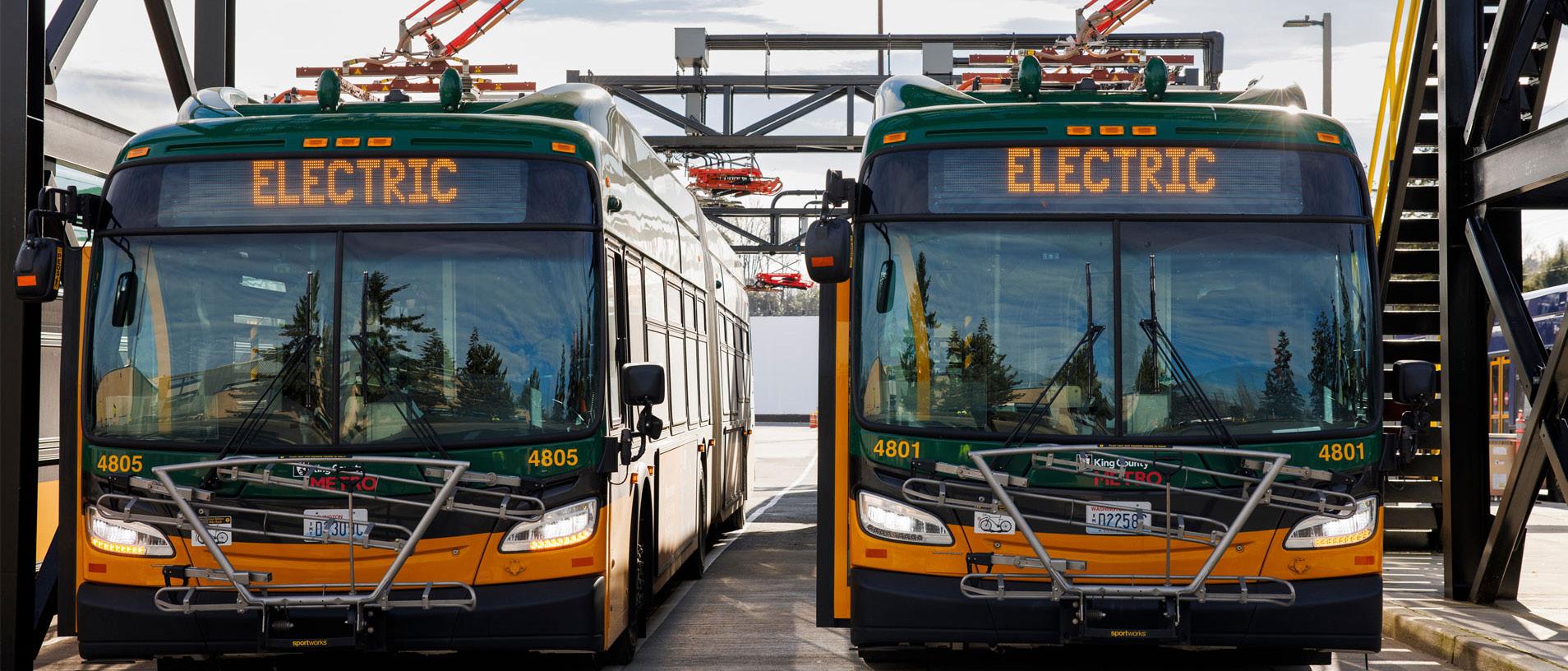
Over the past century, transit agencies have repeatedly led the way in adopting new technologies, from electric streetcars over a century ago to today’s battery-electric and hydrogen-powered fleets. Now, they stand at the forefront once again, driving the transition to zero-emission transportation through innovation, infrastructure investment, and strategic partnerships.
These zero-emission investments not only cut pollution in often underserved, high-density communities but also pave the way for broader transportation decarbonization, showcasing scalable solutions for sectors like trucking, logistics, and waste management.
Electrification has evolved from isolated pilot programs into a global movement. The shift reflects growing awareness to the impacts of climate change and demand for sustainability, though recent funding instability has challenged that momentum.
The significant upfront capital required to launch zero-emission initiatives has long been a barrier, particularly in the face of shifting political priorities. But while propulsion and storage technologies have advanced rapidly, so too have project delivery models and financing mechanisms. Together, these innovations offer practical pathways for agencies to set and achieve their decarbonization goals.
TODAY’S LANDSCAPE
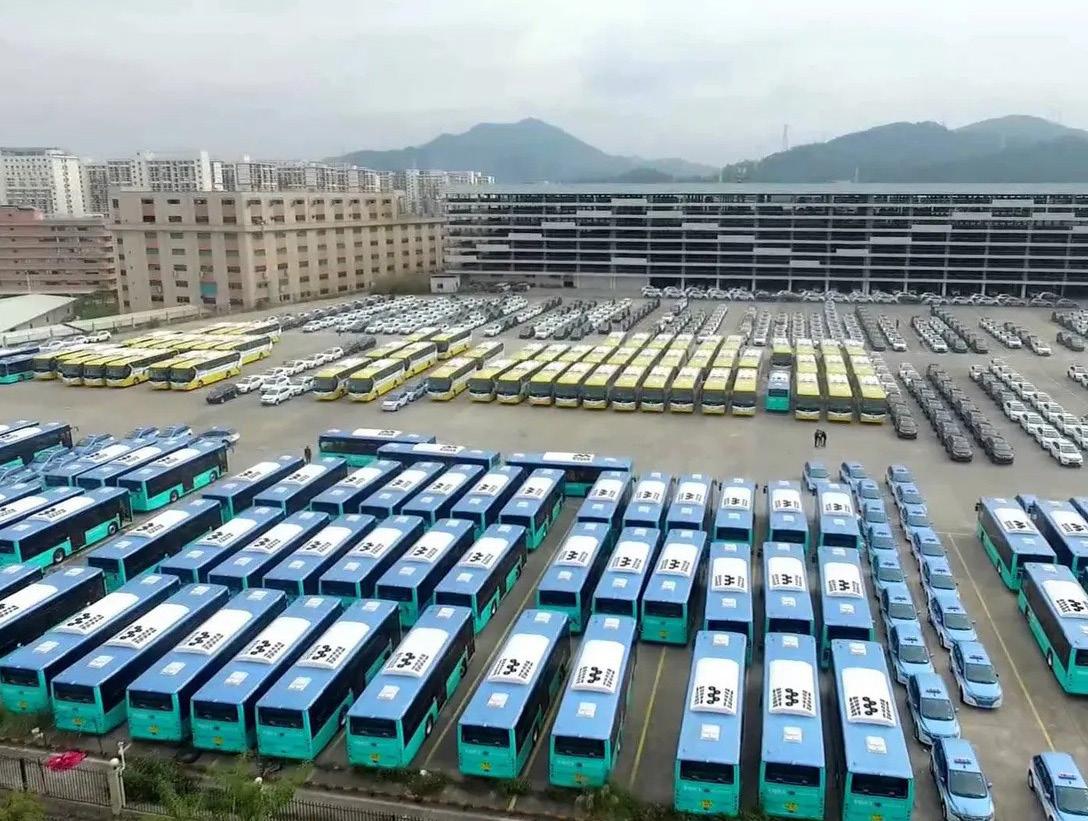
Transit decarbonization is accelerating. Battery and hydrogen-based electric propulsion systems are becoming central to zero-emission strategies. Battery electric buses (BEBs) now dominate the market, thanks to improved battery chemistry, regenerative braking, and efficient thermal management systems. In cities like Shenzhen, China, more than 16,000 BEBs demonstrate the scalability of these technologies.
Real-world trials have shown that battery range limitations can be a challenge for longer transit blocks. In response, many agencies are exploring hydrogen fuel cell alternatives, which offer extended range and onboard energy storage while supporting zero-emission goals. Despite improvements in battery and charging tech, and the development of hydrogen storage and dispensing systems, the cost of full-scale electrification remains high. These solutions surpass the expense of diesel and hybrid systems and require significant infrastructure upgrades, including utility coordination and yard reconstruction.
Early federal investments helped boost domestic manufacturing. Companies like Gillig, New Flyer, and Proterra ramped up production alongside U.S. facilities for global players like BYD. Buy America requirements have also driven domestic infrastructure production from providers such as ABB and Siemens with a goal of keeping investment largely within the U.S.
However, recent shifts in federal policy—including the suspension of the National Electric Vehicle Infrastructure (NEVI) Formula Program and a broader pullback from green initiatives—cast doubt on the long-term feasibility of public transit electrification. As these funding streams dry up, agencies are increasingly left searching for new, viable ways to fund their transitions.
CASE STUDY
PROOF AT SCALE: SHENZHEN’S ELECTRIC FLEET TRANSFORMATION
A leading example of large-scale transit decarbonization can be found in Shenzhen, China—the first city in the world to fully electrify both its public bus and taxi fleets. Now operating more than 16,000 electric buses and 20,000 electric taxis daily, the transformation was made possible by deliberate planning, coordinated policy, and strong collaboration between public agencies and private partners.
The key to Shenzhen’s success was early national support through China’s “Ten Cities, One Thousand Buses” program, which provided funding and policy incentives to accelerate electric fleet adoption. The city built out an expansive charging network, with over 1,800 charging stations strategically placed to support vehicle uptime and route efficiency. Public-private partnerships with companies like BYD played a central role in not only supplying electric vehicles but also co-developing charging infrastructure, refining battery technologies, and training local maintenance teams.
Despite China’s energy grid still being heavily coal-dependent, Shenzhen’s zero-emission fleet has cut an estimated 194,000 tons of carbon dioxide annually, while also reducing particulate pollution and improving air quality in one of the most densely populated urban regions in the world. The transition has delivered many operational benefits, including reduced fuel and maintenance costs, quieter streets, and increased public satisfaction with transit services.
For North American transit agencies, Shenzhen provides a compelling proof of concept. While funding structures and regulatory environments differ, the city’s model highlights how long-term vision, integrated planning, and strong delivery partnerships can help overcome infrastructure and cost barriers. It underscores that successful decarbonization is not only about vehicle procurement, it’s about aligning financial tools, delivery methods, and utility coordination to enable sustainable, scalable outcomes.

FINDING SOLUTIONS
With federal grants faltering and local budgets stretched thin, the private sector is stepping up. Public-private partnerships (P3s) are helping agencies deploy zero-emission infrastructure without heavy upfront investment. These partnerships combine public oversight with private-sector financing, design, construction, and maintenance, allowing agencies to access expertise and upfront capital in order to convert their operation.
In a transit P3, private partners may fund, build, and operate elements of a transit system. In return, they are compensated through long-term contracts, user fees, or revenue from the project. P3s bring several advantages:
• Access to private capital and innovation
• Greater flexibility in project execution
• Shared risk between public and private entities
• Expertise and experience from private industry specialist
Still, P3s carry risks. Private partners are ultimately seeking a return on investment, and long-term operating agreements can plague agencies for decades. Complex contracts can also be hard to negotiate. Successful P3s require experience, transparency, and well-structured agreements.
Currently, there are three key models of P3s that are available to transit agencies:
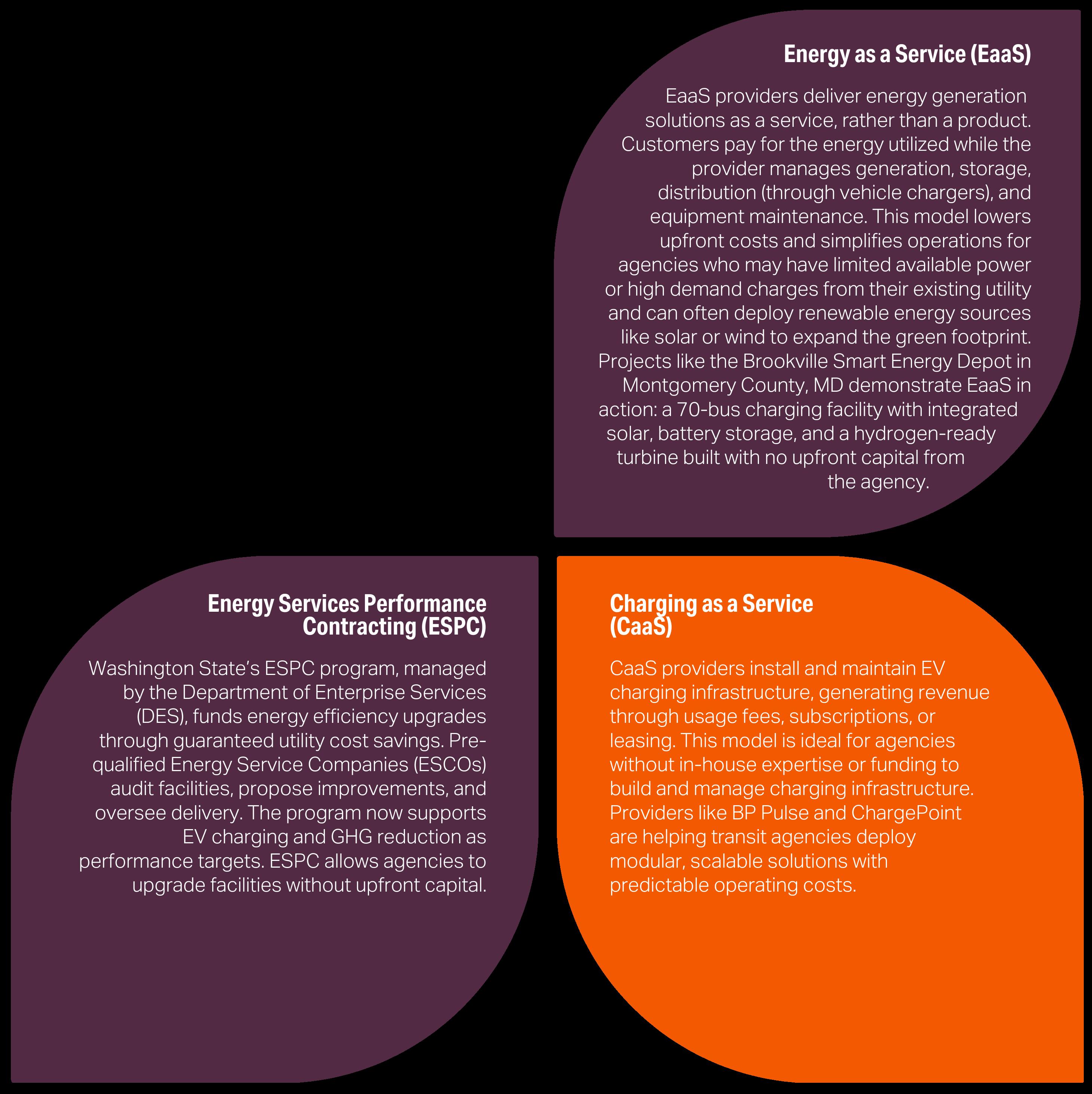
Brookville Smart Energy Depot

SETTING AGENCIES UP FOR SUCCESS
The zero-emissions industry is changing fast. The collapse of Proterra and Enel-X, coupled with shifting federal priorities, has left many agencies navigating uncertain terrain. In this evolving landscape, internal expertise is often limited, and large-scale deployments remain rare. Agencies must assess their risk tolerance and resources and reframe their approach to align with today’s financial realities.
When internal capacity is limited, owner’s representatives (owner’s reps) provide critical support—acting as trusted extensions of the owner’s team. Firms like OAC bring deep expertise in procurement, delivery, and regulatory compliance, helping agencies set clear goals, align scope with available funding, and navigate complex stakeholder landscapes. With the right guidance, agencies can move forward with confidence and clarity.
Owner’s reps are particularly valuable in keeping agencies compliant with relevant legal frameworks, such as Washington State RCWs. For example, RCW 39.35 establishes standards for energy efficiency in public facilities, promoting conservation during construction and renovation to reduce costs and environmental impact. Similarly, RCW 47.46 and RCW 47.29 provide frameworks for public-private partnerships (P3s) and innovative project delivery methods, which require adherence to transparency, accountability, and procedural guidelines. Navigating these legal frameworks is complex, and missteps can jeopardize funding or delay projects. Owner’s reps mitigate these risks.
They also draw from experience across similar projects, offering insight into best practices and access to a broad network of professionals. This guidance helps agencies avoid common pitfalls, capitalize on emerging opportunities, and build sustainable, futureready solutions.
MAKING IT HAPPEN
Transit electrification goes beyond reducing emissions. It promotes healthier communities, stronger infrastructure, and a more sustainable future. With the right mix of strategic partnerships, innovative delivery models, and proactive planning, agencies can lead the charge toward cleaner, more resilient transit systems. At OAC, we bring clarity to complexity. With deep industry expertise and a collaborative approach, we guide agencies from vision to delivery, turning bold goals into real-world impact. Decarbonization is a challenge—but with the right partner, it’s not just achievable, it’s transformative.
Largest Emitters