

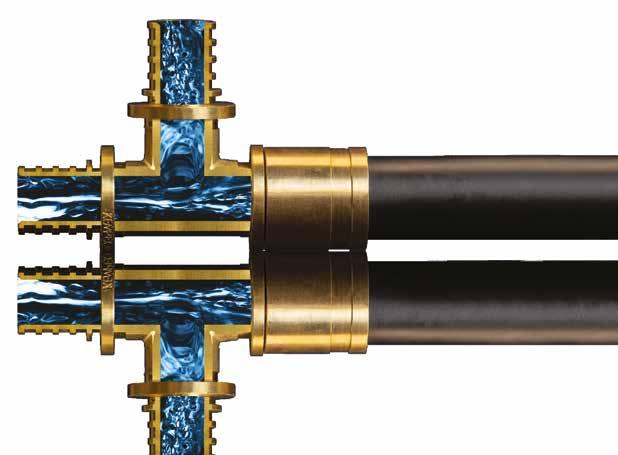
KemPex Slide fittings incorporate PE-XGUARD Technology a unique set of features designed into the connection system:
n Improves installation quality
n Minimises risks during and after installation
n Provides identifiable cues for incorrect installation
n The ability to manage and monitor on-site performance
n One Brand. One System. One Warranty.
LEAD-FREE Made from Lead-Free DZR Brass material
TRUSTED TECHNOLOGY
Used by New Zealand plumbers for over 20 years.
Increases bore size and better flow rate
ON-SITE TRAINING Reduce your risk. On-site training and demonstrations.
MACHINED SHOULDER Allows maximum contact with compression tool BLUETOOTH KEMPRESS TOOLS Manage on-site performance

25 YEAR WARRANTY All KemPex Crimp fittings conform to AS3688 & Australian Watermark Certification

50 YEAR DESIGN LIFE The KemPex Crimp connection system is designed not to leak fora minimum of 50 years
Fax:
www.instagram.com/mmbrandsnz
Volume 78, Number 3
MAGAZINE TEAM
CEO Greg Wallace
EDITOR
Beverly Sellers 0272 923 923 bsellers@masterplumbers.org.nz
PRINT Blue Star 33 Jackson Street, Petone, Wellington
DESIGN
SCG Senior Designer – Julian Pettitt
SCG Senior Account Director – LauraGrace McFarland scg.net.nz
SUBSCRIPTIONS
NZ Plumber is published six times a year by Master Plumbers, Gasfitters & Drainlayers NZ. Members receive all six editions. If you wish to opt out, please email admin@masterplumbers.org.nz
To order an annual subscription, go to www.masterplumbers.org.nz
MAILING LIST
For enquiries, or to update your details: admin@masterplumbers.org.nz
Non-Master Plumbers’ members with address detail changes should notify the PGD Board direct, giving their registration number: registration@pgdb.co.nz
TO ADVERTISE advertising@masterplumbers.org.nz
NZ Plumber is the official magazine of Master Plumbers, Gasfitters & Drainlayers NZ Inc. Contact details for the Master Plumbers board, staff, branches and associations are available at www.masterplumbers.org.nz
©NZ Plumber 2013. Registered as a Newspaper, GPO, Wellington, ISSN 0111-4379. NZ Plumber is subject to copyright in its entirety. The contents may not be reproduced in any form, either in whole or in part, without written permission of the publisher. All rights reserved in material accepted for publication, unless initially specified otherwise. All letters and other material forwarded to the magazine will be assumed intended for publication unless clearly labelled ‘Not for Publication’. Views expressed in articles in NZ Plumber magazine are not necessarily those of Master Plumbers, Gasfitters & Drainlayers NZ Inc, or of the Editor. While every effort has been made to ensure the accuracy of the information included in this publication, the publisher and the Editor take no responsibility for errors or omissions or for any consequences of reliance on this information. Publication of advertising material implies no endorsement of either a product or service.
If our last edition looked back in time,
this one grabs the future with both hands.
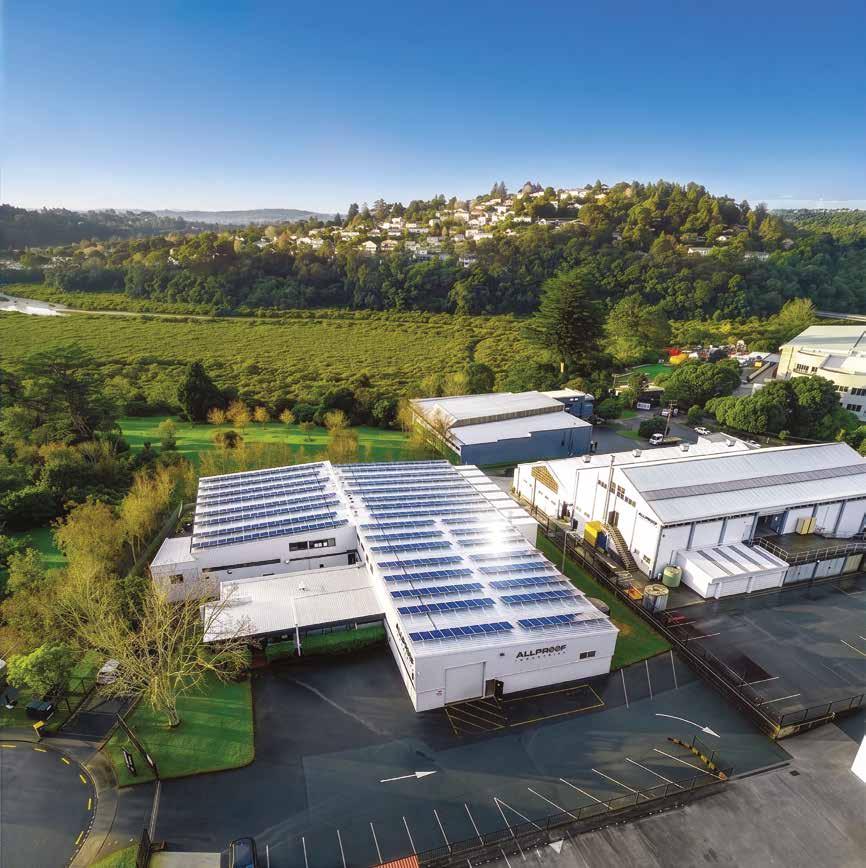
Our cover stars this edition are Kewa and Ashleigh McMillan-Parata, who set up Ka Pai Plumbing in Porirua six years ago. They say they’re only just hitting their straps, having learned the realities of managing a small but growing business through hands-on experience, and in a tough economic climate. Their future goal is clear, though—helping young people in their local community into a career path that will set them up for life. Turn to page 36 to read more. We also take a look around the brand-new Allproof facility in Pōkeno, manufacturing uPVC pipes and fittings for DWV systems. While the current environment is challenging, Allproof GM Adam Jackson remains unfazed, saying they’re here for the long-term. Join our tour on page 46.
From the Ed: Continuing our historic theme from last edition, we couldn’t resist including these photos, sent in by Ministry of Plumbing business manager Paul Tribe. Paul’s grandfather Keith Croskery is shown here, crouching on the highest part of Wellington’s 51m Carillon War Memorial, holding tin snips in one hand and with his other arm around the foreman. Keith was a 22-year-old apprentice plumber when the photo was taken in 1932.
The group had been doing the flashings for the copper cladding of the Carillon roof in time for its opening on Anzac Day in the same year, shown in the other photo.
Talk about taking your life in your hands!
Photograph: Crown Studios of Wellington. Source: National Library of New Zealand.
Our regular Career Starters section is where we focus on tomorrow’s talent, and the people who train this industry’s apprentices. This edition is no exception (starting on p79), as we introduce the new members of the Apprentice Representative Group and take a look at how the new workplace assessment training model works in practice.

Beverly Sellers Editor, NZ Plumber bsellers@masterplumbers.org.nz Ka mua, ka muri
Walking backwards into the future




Gas lines
Practical guidance on gas appliance clearances
Down to earth
Why alterations to galvanised pipe can affect a property’s electrical safety
Products Latest products making a splash
Business brief Support for extreme weather recovery
We all make mistakes
Ensure you’re covered for when they happen
Private cash jobs
Why they’re not worth the risk
Coaching vs poaching
Training and retaining is the right way to grow the skills pool
She’ll be right, until...
The health risks of trying to push through at all costs
challenge too big”
A young apprentice who has defied the odds to complete his qualification
Meet the new ARG members
Six new members for the Apprentice Representative Group
Workplace assessment
Step by step to success
10 minutes with...
Stu Brickland, plumber and prizewinning fundraiser
Dodgy plumbing
The handymen have been at it again



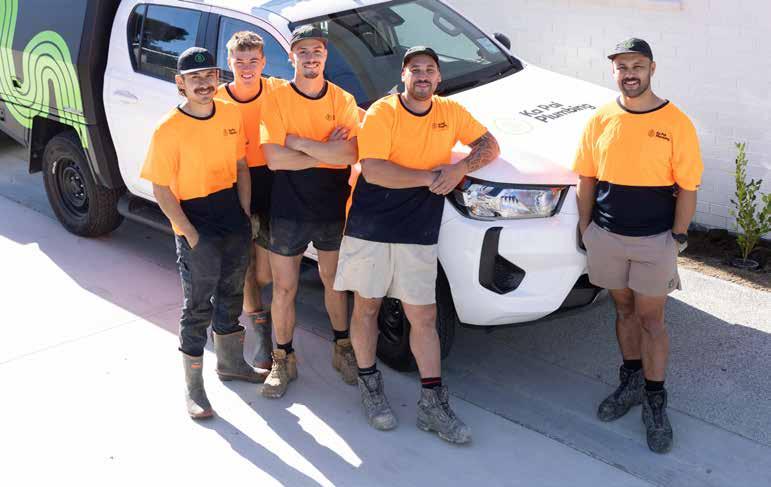
Kewa and Ashleigh McMillan-Parata founded Ka Pai Plumbing in Porirua in 2020 with a purpose beyond profit: creating meaningful trade pathways for local rangatahi. Growing from Kewa working alone to a valued six-person team, their aim is to build the systems and leadership skills needed for other team members to head up their maintenance and project work streams, freeing Kewa to focus on training apprentices, business growth, and making a positive mark in the community. Read more about Ka Pai Plumbing on page 36.
Cover photograph: Neil Mackenzie

As NZ Plumber goes to print, the 2026 NZ Plumbing Conference will be underway in the mighty Waikato. We look forward to seeing more than 300 attendees from across the country building strong connections and enjoying the programme on offer to members and their partners.
As you can imagine, a lot of work goes into delivering a conference, and we’re excited for the interactions we will have with members and the fantastic line-up of speakers. In advocacy news, we are thrilled to announce that Royal Assent has been granted for the plumber and drainlayer self-certification amendment bill, with the scheme expected to go live in September.
That is a quick statement to announce an Act that has been a long time in the making and has represented a huge amount of work by the Master Plumbers team. The saying goes that the wheels of power turn slowly but I’d suggest that’s an understatement when you start a project like this. We’ve had to navigate successive governments, and have worked with MBIE and the Plumbers, Gasfitters & Drainlayers Board along the way—probably causing them many headaches.
As the details of the system emerge, I accept that some members are comparing it with gasfitter selfcertification. As with all advocacy work, compromise must be reached to achieve your goals. We also need to remember we are only at stage one and there will be changes and improvements as the scheme progresses.
Essentially, self-certification is about recognising that tradespeople are qualified and competent to complete the task in front of them, and have systems and evidence to demonstrate compliance. As we know, self-certification by gasfitters and electricians has been in place for 15 years and there have been no substantial issues.
New Zealand has now gone lead-free for plumbing products in contact with drinking water. Most suppliers embraced the change early and were well prepared. Some, however, have been late to the party and have wanted to debate the change at the eleventh hour. The reality is, plumbers bear the responsibility to provide safe drinking water to New Zealand consumers and harm caused by lead exposure is a well-documented fact.
As I’ve said many times before, lead has been taken out of petrol and paint, and it’s now time to take it out of our water. I encourage all members to proactively select lead-free products to ensure you are providing your customers with safe water to drink. Not only is it important to comply with the Building Code, but it’s also integral to the Plumbers, Gasfitters and Drainlayers Act.
“Essentially, self-certification is about recognising that tradespeople are qualified and competent to complete the task in front of them, and have systems and evidence to demonstrate compliance.”
Whilst plumber and drainlayer self-certification is voluntary, I would expect most members to opt in to benefit from the productivity gains and efficiencies. By opting in, you will also show you back your team’s ability to complete plumbing and drainlaying work to a high standard. With proportional liability changes around the corner for the construction sector, the reality is that all tradespeople will be responsible for the work they complete. Councils will no longer be the last man standing.
I’m acutely aware that many consumers won’t know about the change. Part of a plumber’s role is to educate consumers and make sure they’re aware of Building Code requirements.
Finally, I want to acknowledge with deep sadness the sudden passing of Erica Cumming, which came as a huge shock to all of us. Erica was CEO of the Construction and Specialist Trades Industry Skills Board and brought passion and vibrancy to the sector. Starting out as a hairdresser in Gore, Erica was a true advocate for vocational education and led a distinguished career. Master Plumbers sends our heartfelt condolences to Erica’s partner Gregor and her wider family.
Greg Wallace, CEO Master Plumbers, Gasfitters & Drainlayers NZ
At Plumbing World, we’re backed by long-standing partnerships with the industry’s most trusted suppliers. Built over years of collaboration, shared values and a commitment to doing right by our customers. By working closely with these partners, we provide dependable, innovative solutions designed to support your business to navigate challenges and maximise successes.
Get in touch with our team today.
The plumber and drainlayer self-certification scheme is being expanded to cover more residential work and some commercial and rural activity.
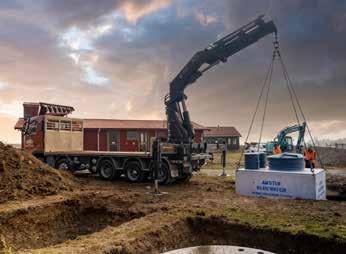
The voluntary, opt-in scheme originally focused on straightforward residential plumbing and drainage, but will now cover most plumbing and drainlaying work in a home, along with some commercial jobs. It will also encompass some rural work, including common on-site systems, as well as stormwater retention tanks for rural and urban areas.
Only plumbers and drainlayers who are licensed and in good standing with the Plumbers, Gasfitters and Drainlayers Board (PGDB) will be eligible for an endorsement to self-certify.
A recent webinar by the PGDB and MBIE focused on how the self-certification scheme will work in practice. It covered aspects such as:
scope of work covered by the scheme eligibility requirements to opt in as an endorsed practitioner endorsed practitioner responsibilities how the scheme fits in with the consent process application process and costs auditing of the scheme.
The plumber and drainlayer self-certification Bill has received Royal Assent and is now enacted. Much of the detail will be defined in regulations, which will be consulted on in June. The go-live date for the scheme is expected in September.
Watch the webinar recording at www.pgdb.co.nz/manage_your_licence/self_certification
THIS EDITION’S INDUSTRY NEWS ROUND-UP INCLUDES AN UPDATE FOR THE GRANNY FLAT CONSENT EXEMPTION, AND A PGD HEALTH HAZARDS SURVEY FROM WORKSAFE.

New research from Plumbing World suggests artificial intelligence is already reshaping how New Zealanders think about their careers, with growing concern about the future of office-based roles.
A nationally representative survey of more than 1,000 Kiwis found that almost three quarters (72%) are concerned AI will reduce the number of entry-level office jobs in the next decade, including one in three (33%) who are very concerned.
That concern is translating into a clear shift in attitudes, says Plumbing World CEO Brett Cruickshank. As uncertainty around traditional career pathways grows, so too does confidence in more
hands-on, skills-based roles. Three quarters of New Zealanders believe trades offer better long-term job security in an AI-driven world, with 76% saying a specialist trade (such as plumber, builder, electrician) provides greater stability than a corporate-focused university degree.
Seven in ten (70%) say they are now more likely to encourage a young person into a trade than they were five years ago.
“What we’re seeing is a renewed appreciation for careers that are hands-on, highly skilled, and essential to our communities,” says Brett Cruickshank. “That’s something the trades have always offered.”
Ben DeClifford was sentenced in March and received an $8,000 fine after pleading guilty to eight charges for completing illegal plumbing and drainlaying work on five properties in Wānaka and Cromwell.
Mr DeClifford had previously held an exemption to carry out restricted drainlaying work under supervision,
and a trainee authorisation for sanitary plumbing, but had never held a registration or practising licence.
A technical review found the noncompliant work posed a moderately serious risk to public health and safety. Issues included incorrectly sized drainage pipes, unsafe proximity between potable water and wastewater
pipes, and pipework installed beneath concrete slabs without accessible ducts.
Mr DeClifford was charged with falsely representing himself as a licensed practitioner, including signing a producer statement using another practitioner’s registration number. The practitioner concerned was unaware Mr DeClifford was using his details on council documents.

Two new changes are being made to the granny flat consent exemption to support off-site construction.
Consent-exempt granny flats will be able to be built off site before a PIM (Project Information Memorandum) is issued, provided all conditions are met. This will speed up construction time and enable homeowners to inspect the house before purchase.
A PIM will still be required before any on-site works begin.
The exemption is also being expanded to include SIPs (Structural Insulated Panels) with a CodeMark certificate.
These changes are expected by quarter three of 2026.
More remote and rural schools will be able to upgrade their drinking water with a $30m Government investment through the Drinking Water in Schools Programme. Around 20% of New Zealand’s schools and kura manage and supply their own drinking water—and most of these are small and rural.
The investment is aimed at fixing ageing infrastructure and modernising the way drinking water is provided at schools facing the highest risk of disruption to their water supplies.
Remediation work has already begun at 64 or the 230 schools engaged in the programme, and drinking water assessments are underway at others. Twenty schools have completed full supply upgrades through a mix of new connections to council infrastructure, modernising bores and source water, and new filtration systems.
The Ministry of Education is also providing school staff and principals with dedicated resources, technical guidance and a free training programme for all schools.

Have you shared your knowledge of health hazards in the plumbing, gasfitting, and drainlaying trades with WorkSafe?
WorkSafe wants to hear from you—the people in the field—about your experiences with the following PGD work that can expose you to hazardous dust, fumes, and chemical vapours:
Brazing
Using solvent cement
Mixing, cutting or grinding cement-based materials
Heating pipe joints
Using expanding foams.
Your experience and insight are essential to understanding the health risks across these trades and helping shape safer, healthier workplaces across Aotearoa New Zealand. The survey is anonymous and takes less than 10 minutes. Don’t miss this chance to have your say.


The Government is to invest an additional $69 million in Trades Academies, doubling the number of places from 10,000 to 20,000. This will give more Year 11-13 students the chance to gain practical skills and industry experience while still at school.
The money for this in Budget 2026 is being made available through ending the Fees Free scheme, which saw eligible tertiary students and apprentices reimbursed by up to $12,000 on completing their qualification.
“It also supports our wider qualifications reforms, which are creating stronger vocational pathways for young people and ensuring they have access to meaningful, real-world learning opportunities while they are still at school,” said Finance Minister Nicola Willis.
The Government is also investing a further $15 million for Industry Skills Boards (ISBs) to develop new vocational subjects, including Building and Construction, as part of new senior secondary qualifications.
“For the first time, vocational subjects will be fully integrated into our national qualification system and developed in partnership with industry,” said Minister Willis.
Other construction-related announcements in Budget 2026 include:
$7 billion of new capital investment to help deliver public projects like Whangārei Hospital, 10 school redevelopments, the next stage of the Waikato Expressway, state highway resilience projects, new courthouses and new police stations.
A gas transition loan scheme to help businesses transition from natural gas.
$294 million of funding to begin rolling out the next stage of the Going for Housing Growth programme through Resource Management Act reform. This includes a new, centrally managed platform for planning, consenting and compliance, so things aren’t done different ways across 78 different councils.
Each year, more than 60,000 young people leave school. While around 30% move directly into degree-level study, the remainder have no equivalently structured pathway. In a recently released white paper, the Skills Group urges tertiary providers and employers to work in partnership with secondary educators to build and deliver these pathways within the school curriculum.
“The system is still overly focused on university entrance as a goal,” explains Skills Group CEO Rosanne Graham.
“At the same time, structured tertiarybased opportunities or work experience are only offered to a small minority.
“Supporting young people on a productive and successful pathway to their next step beyond school is the core purpose of the final years of schooling.”

The new senior curriculum needs to genuinely recognise and deliver multiple pathways, says Skills Group CEO Rosanne Graham.
Read the document in full at https://skills-group.org/news/ multiple-pathways-to-success
Design By Avail

SNZ PAS 5210:2026
High-temperature heat pumps
The objective of this publicly available specification (PAS) is to provide good practice advice and information to support the adoption of energy-efficient heat pump systems for domestic, commercial, and industrial applications. This PAS is limited to the most common systems available, which are normally those that utilise a mechanical vapour compression cycle using electricity.Free access to this PAS has been sponsored by EECA (Energy Efficiency and Conservation Authority).
Download at www.standards.govt.nz/shop/ SNZ-PAS-52102026
Public access for Australians to all mandatory standards is a “landmark step forward”, according to Standards Australia.
The Australian Government’s commitment to this initiative was announced in its Federal Budget on 12 May.
“Sponsored access to mandatory standards will help support every Australian, especially small businesses, apprentices and tradies,” said Standards Australia CEO Rod Balding.
The announcement follows strong momentum from industries across the economy, where the role of standards and building codes has been a central focus.
In New Zealand, the Government funds free access to 134 standards used for Building Code compliance, including some hot water heating standards.
Key plumbing, gasfitting and drainlaying standards are also available for download in the trade log-in at the Plumbers, Gasfitters and Drainlayers Board website: www.pgdb.co.nz
Access the full list of free New Zealand buildingrelated standards at: www.standards.govt. nz/get-standards/sponsored-standards/ building-related-standards
The Construction and Specialist Trades Industry Skills Board (ISB) is deeply saddened by the sudden passing of Chief Executive Erica Cumming in May.
“Erica was an exceptional leader, colleague and advocate for vocational education whose influence extended well beyond our organisation,” says Deputy Chair Tina Wieczorek. “As Chief Executive, Erica brought courage, warmth, intelligence and an unwavering commitment to her work. She believed strongly in the value of vocational education and the opportunities it creates for people, industries and communities.
“She worked tirelessly to ensure that qualifications and pathways reflect industry needs, supporting a skilled, capable workforce for the future.”
Erica was also a passionate advocate for diversity and inclusion, particularly for women in trades and construction.
She will be remembered for her energy, generosity, leadership, sharp thinking and genuine care for people.

There’s plenty to love on these pages.
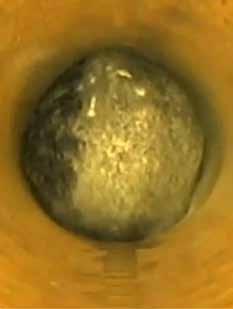
Council maintenance workers in the Australian town of Bega spotted what looked like a fatberg in a stormwater pipe during a routine camera inspection, reports Yahoo News
But the hairy ball uncurled itself to reveal a wombat, which had somehow made its way into the pipe, perhaps mistaking it for an underground burrow. The cheeky chap then chased the council camera back down the pipe.


Retired plumber Ken Body is among the tradies, farmers and 4x4 club members doing their bit to protect Mid Canterbury’s rivers and shores. Once a week, they set off in their vehicles to help set traps and remove pests that affect native birdlife and eggs.
Environment Canterbury asked the club to trap in the Mid Canterbury 4x4 Park, as it sits along the Ashburton Hakatere River, which is home to some of our rarest birds.
RNZ Country Life talked to Ken, who has trapped around the South Rakaia huts since 2021. Ken was busy checking beach traps that help vulnerable dotterels, who nest on exposed patches of shingle. “I think it’s making a difference,” said Ken of the traps, which catch the likes of weasels, stoats, rats and hedgehogs.

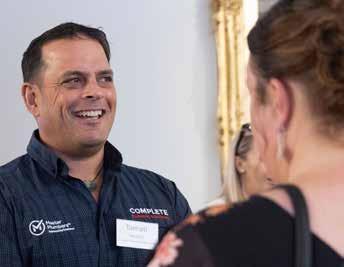
Karaitiana Wilson gifted a special karakia to Master Plumbers, Gasfitters & Drainlayers NZ to celebrate this year’s 125th Anniversary for the organisation. Karaitiana wrote the karakia for his brother Tamati Wilson, who runs Master Plumbers member business Complete Plumbing Solutions and is President of the Hutt Valley/Wairarapa Branch. It was a fitting welcome to the 125th Anniversary event at Government House in March.
E rau, e rau, te kotahi rau mā rua tekau mā rima ngā tau
He hono tangata, he hono wai
I rere tahi ai te wai, i tūhonohia ai te iwi
Kia rere tōtika te rere, kia ū te tūāpapa
He mahi tahi ki te whenua, he mahi tahi ki te hapori
Kia mauritia te rere, kia kōpaka te hononga
E rau, e rau, te kotahi rau ngā tau anō
Haumi ē, hui ē, tāiki ē!
A hundred, a hundred, 125 years!
A joining of people, a joining of water
The waters have flowed together, and the people have connected. May the flow be straight and true, may the foundation be firm.
Working together with the land, working together with the community. Let the flow be peaceful, let the connection be true.
One hundred, one hundred, one hundred years again.
Join, gather, unite!
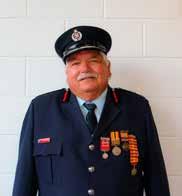
Chris New, who ran Master Plumbers member company Tairua Plumbing for 21 years, retired as the local Fire Chief in April. Chris served with the Tairua branch of Fire and Emergency NZ for an incredible 42 years, 25 of them as Fire Chief.
Chris joined for the camaraderie, to meet people and to give service to the community, he told
The Coromandel Informer in March. He now plans to spend more time travelling in his caravan with his wife,
and their little dog,
catching up with family and some of their brigade friends.
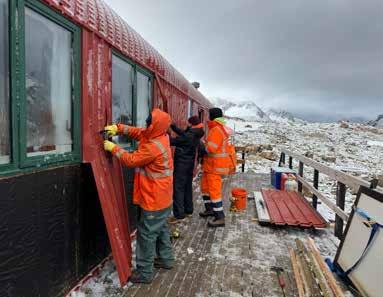
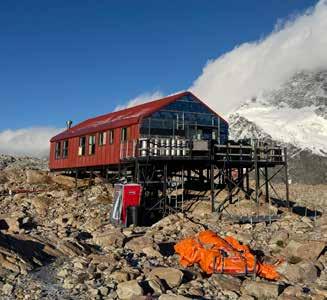
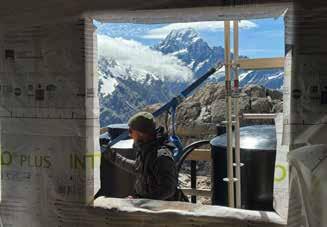
Rob Stewart was DOC project lead on the “insanely challenging” recent spruce up of the iconic Mueller Hut. The hut, opened by Sir Edmund Hillary in 2023, sits at 1850m and looks out over New Zealand’s highest peak, Aoraki/Mount Cook. Gale force winds and snow tested the DOC contractors to the extreme as they put in new windows and doors, replaced interior and exterior cladding, and put in new water tanks.
Sixteen loads of materials were helicoptered in, plus 10 loads of people, including an amazing group of gasfitters, plumbers, painters and builders.
“We’ve future-proofed Mueller Hut with an upgrade to the gas system and water tanks and strengthened the hut structure,” says Rob. “This building takes an unbelievable hammering from the elements, so we wanted to make sure we’ve maintained it to last for another 20 years at least.”
The route to Mueller Hut is a challenging ‘stair climb’ of around four hours one way and attracts numerous day walkers and visitors for overnight stays.
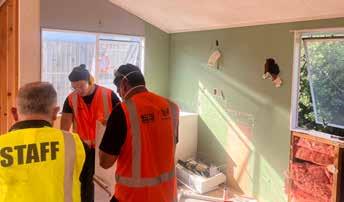
One Tree Hill College Trade Academy students are reviving an old 74m2 three-bedroom home with a $1 price tag, that was destined for landfill. The target is to turn it into a net-zero home with a 7 Homestar rating to be used as rental accommodation for teachers. The house was moved on site in February, with estimated completion in September. The pre-trades students are working alongside licensed tradespeople to learn real life skills, using funds raised from the successful auction of a similar previous project.
BOP Plumbing & Gas were premium sponsors for a glamorous evening of fashion, entertainment, and community spirit in Te Puke in May, in support of a major new community hub for the region. Funds raised from the Fashion & Floral event will go towards the planned Bay of Plenty Movement HQ—a multi-purpose facility designed to bring together sport, fitness, and wellness providers under one roof. Fundraising is well underway for the project, estimated to cost about $5 million. If successful, the completed facility could be welcoming up to 25,000 users each year.
Donations can be made at www.bopmovementhq.co.nz

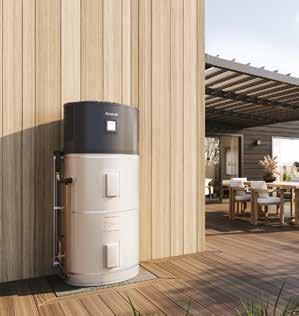
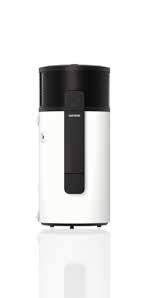
Rinnai HydraHeat® Integrated Hot Water Heat Pump
Using the efficiency of a NZ designed and manufactured Heat Pump head unit, HydraHeat® will quickly heat a home’s water from the top-down while saving you up to 75% on your water heating costs* Available in 275L & 340L capacities.
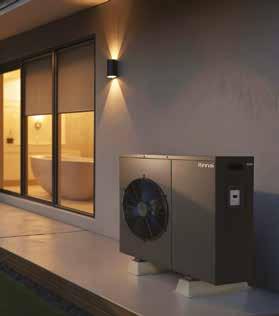
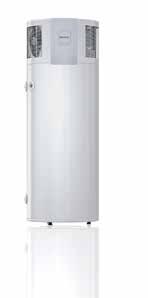
Rinnai HydraHeat® Split Hot Water Heat Pump
Introducing the HydraHeat® Split –a versatile top-down water heating solution compatible with both new and existing cylinders**. Designed and built right here in NZ.
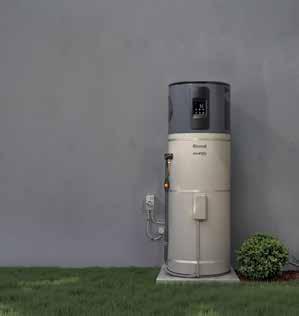
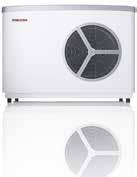
Rinnai Enviroflo™ GR Series Hot Water Heat Pump
Designed to meet a variety of installation needs across New Zealand, the GR Series offers capacities of 215L, 265L and 300L
*When a comparison calculation is made to a 250L standard electric hot water cylinder when heating water from 19°C to 55 °C.
** Please refer to our cylinder compatibility checklist to find out if your cylinder is compatible with the HydraHeat® Split system.
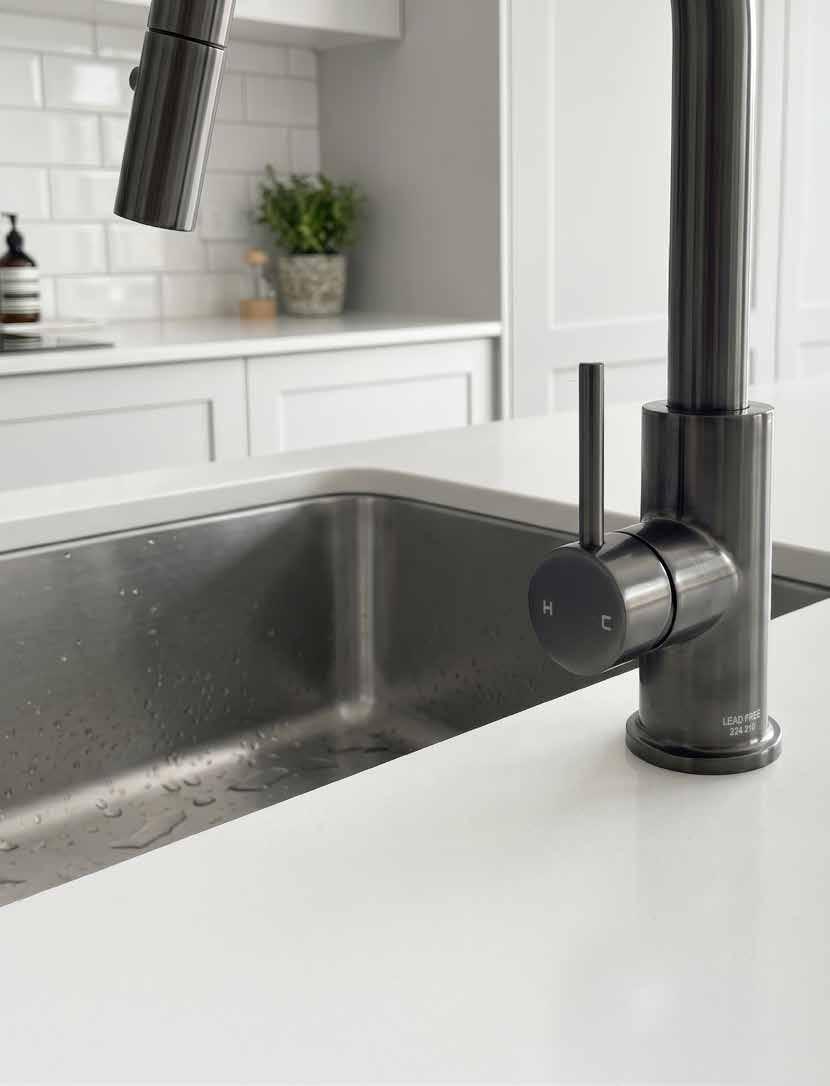
After eight years of government lobbying by Master Plumbers, new lead-free and dezincification rules for plumbing products are now in place—and plumbers must comply. Here’s what you need to know.

In essence, the lead-free requirements put the onus on plumbers to ensure any new plumbing products they install in a potable water system must be lead-free and dezincification resistant, to protect public health.
The new rules came into effect on 2 May 2026 and apply only to new building work. They are not retrospective.
For replacement or repair work under Schedule 1 of the Building Act, a comparable product may be selected but must meet the Building Code at the time of installation.
Master Plumbers’ advice to members is to inform customers of the new lead-free rules and to choose lead-free products even for replacements, in the interests of public health.
Q: What’s changed?
A: Acceptable Solution G12/AS1 has been updated with new lead-free and dezincification provisions. Plumbers must now use only G12/AS1 Amendment 14, available for download at www.building.govt.nz
Any copper alloy product used in a potable water system must now contain no more than 0.25% lead (the previous limit was 4.5%).
If a copper alloy component in a potable water system is subject to hydrostatic pressure, it must be made from DZR (dezincification resistant) copper alloy.
Dezincification is a corrosion process that can cause zinc to leach into the water supply.
Note: Brazing can affect the dezincification resistance of brass fittings. Plumbers should avoid localised ‘hot spots’ and perform brazing operations at as low a temperature as is practicable when brazing brass fittings.
Q: What type of products are included in the new lead-free and DZR copper alloy rules?
A: Examples of products include: copper alloy fittings
stainless-steel braided hoses
valves (such as valves for isolation, backflow prevention, alteration of pressure and temperature)
taps and mixers
water meters
pumps (for use with cold and hot water supply systems)
water heaters
hose taps connected to the potable water supply
residential water filtration equipment
water dispensers (such as boiling and cooling units, drinking fountains and bottle fillers) fire sprinkler systems connected to cold water supply systems and not isolated from fixtures and fittings intended to supply water for human consumption.
Showers and baths for bathing, including shower and bath mixers are not included.
A full list of products not included in the G12/AS1 Amendment 14 provisions is available at building.govt.nz
Q: What must I do to comply?
A: All building work must comply with the Building Code, whether or not a building consent is required. The new lead-free and DZR requirements are no exception.
Plumbers and building practitioners are responsible for ensuring all plumbing works, products and methods are compliant with the Building Code.
For work not requiring a consent, it is recommended you comply with an MBIE approved solution, such as Acceptable Solution G12/AS1 Amendment 14, to demonstrate compliance with the Building Code.
For work requiring a consent, if you choose to use G12/AS1 in a building consent application, you must use Amendment 14.
For consents submitted or granted on or before 1 May 2026, the work can continue using the Acceptable Solution provisions that were approved in the building consent (eg, G12/AS1 Amendment 13).
See the compliance checklist below.
Use lead-free copper alloy components for potable water systems
Ensure products under pressure are dezincification resistant
Avoid high-temperature brazing of brass fittings, as this reduces corrosion resistance
Confirm products are tested to:
• NSF/ANSI/CAN 372:2020 (lead-free)
• AS 2345:2006 (dezincification resistance)
Confirm verification with IANZaccredited test certificates or equivalent international certification (WaterMark, for example).
Use this flow chart to confirm whether lead-free products are required in the work you’re doing when any products will come in contact with potable water for human consumption.
Q: What if I’m working on a project where the building consent was applied for, or granted, before 2 May 2026?
A: You can continue using the Acceptable Solution provisions that were approved by the building consent.
The project doesn’t need to meet the new lead-free requirements set out in the Amendment 14 Acceptable Solution. However, you may choose to follow Amendment 14 provisions, in the interests of public health.
Master Plumbers is encouraging members to apply a principle-led approach. If a product comes into contact with drinking water, it should be lead-free.
Q: What about exempt work under Schedule 1?
How are you demonstrating compliance with Building Code Clause G12?
Exemption under Schedule 1 of the Building Act (eg, like-for-like repair or replacement) Using Acceptable Solution G12/AS1 (Amendment 14) Use LEAD FREE products
an Alternative Solution Use LEAD FREE products (an alternative solution must demonstrate that it complies with the performance requirements of the current Building Code)
Will the product be in contact with drinking water?
A: Exempt work doesn’t require a building consent but must still comply with the Building Code at the time of installation. Schedule 1 permits replacement that is the same as, or no worse, than what was there before. If an equivalent lead-free product is available, MBIE encourages plumbers to choose this in the interests of public health.
“International health guidance indicates even low levels of lead exposure can pose long-term health risks. Accordingly, this principle should remain the primary consideration when selecting replacement plumbing products intended for contact with potable water.”
Ministry of Business, Innovation & Employment (MBIE)
Is a suitable lead-free product available for the repair work?
Q: How can I check a product is lead-free?
A: The easiest way is to look for a lead-free marking on the product or packaging. This might be a manufacturer’s or supplier’s own labelling, the Lead Free WaterMark, or a Master Plumbers Recommended LeadFree label (see more on opposite page).
To be sure of compliance, confirm the product is tested to:
NSF/ANSI/CAN 372:2020 (lead-free) AS 2345:2006 (dezincification resistance)
Check IANZ-accredited test certificates or an equivalent international certification, such as WaterMark.
When the lead-free requirements were announced in New Zealand, Apex Valves reached out to their Watts team in the USA, who had already transitioned to lead-free brass. They worked with them on best practice methods to control quality of lead-free brass, which included onsite checking of material composition using an XRF (X-Ray Fluorescence) scanner.
The scanner is the final check to ensure the safety and compliance of the company's plumbing products. As it emits ionising radiation similar to an x-ray machine, Apex Valves must comply with the Radiation Safety Act 2016 to own and operate it, and they have extremely rigorous safety procedures in place for its operation.
The device can accurately determine the percentage of each element in the sample—in this case, the composition of brass. Apex Valves specifically checks the amount of lead on each production batch of every brass component that comes into the factory. Each test takes as little as 15 seconds to complete, but a number of repeat tests are carried out on each part to ensure the lead content is measured accurately.
“A few people have approached us to use our XRF scanner to verify if a brass component is actually lead-free,” says Apex Valves R&D Director James Hammond. “Unfortunately we have found a number
Plumbers can help raise consumer awareness by letting customers know to look for lead-free labelling on products.
Master Plumbers has also developed a consumer fact sheet and letter that plumbers can give their customers— available in the Member Toolbox at www.masterplumbers.org.nz
Q: How are plumbing products coming into New Zealand being monitored and verified as lead-free?
A: There is no ongoing monitoring or auditing of plumbing products being sold in New Zealand, to ensure they are lead free. There is also no mandatory thirdparty testing and verification scheme in place to certify that products are lead-free.
Many New Zealand manufacturers choose to certify their products through the WaterMark scheme for plumbing and drainage products, which is mandatory in
of cases where a supplier has stated a material is lead-free, but it does not actually meet NZ lead-free requirements.
“For the safety and compliance of plumbing products, we believe it’s important to carefully check that all plumbing brass complies with lead-free regulations to keep drinking water safe for New Zealanders.”
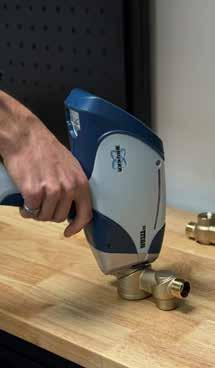
Apex Valves uses an XRF scanner as a final compliance check for all its lead-free plumbing products.
Australia. Master Plumbers is calling for a similar mandatory scheme in New Zealand.
Q: Can retailers still sell lead-free products?
A: New Zealand retailers were sent a letter by MBIE before the lead-free product deadline, reminding them of the expectation to phase out any products not meeting lead-free and DZR requirements by 2 May 2026.
However, the onus is on the installer, not the retailer, so plumbers must check the compliance of any products they install. With no monitoring or mandatory verification of products for sale in New Zealand, it is quite possible that noncompliant products will remain available for purchase, particularly through overseas online retailers.
Plumbers should advise their customers of the new rules and decline to install a customer-bought product if they can’t be sure it is lead-free.
Master Plumbers has introduced a new ‘Proudly Lead Free’ mark to its Master Plumbers Recommended scheme. Master Plumbers Recommended helps consumers find suppliers with plumbing products that are built to last, designed for New Zealand homes, and backed by manufacturer guarantees. The new Master Plumbers Recommended ‘Proudly Lead Free’ mark is designed to give consumers peace of mind that the products going into their home have been tested and independently verified against the WaterMark AS/NZS 4020 standard for suitability of products in contact with drinking water.
To date, the following suppliers are Master Plumbers Recommended: Proudly Lead Free.
Nero
Caroma
Methven
Greens Tapware
Voda Plumbingware
Kohler
Englefield
United Supply Co
Hydroflow
Learn more in the Homeowner section at www.masterplumbers.org.nz
ADVERTISEMENT
The New Zealand Plumbing Conference brings together the best in the PGD business every year. It’s a reminder of what this industry stands for, and the standard Skills Trades Training holds itself to when training the next generation of tradies.
That commitment extends well beyond the classroom. Skills Trades Training is proud to support the Plumbing World Young Plumber of the Year competition, one of the most respected showcases of emerging talent in the trade. This year, the Skills PGD Programme Team wrote all of the theory exam content for the competition, bringing direct industry experience to every question.
“It was a real privilege to be involved. The content had to reflect current legislative requirements and real-world application. That’s what separates a good plumber from a great one,” says Martin Kelly, Academic Lead for Plumbing, Gasfitting, Drainlaying and Roofing.
Skills Trades Training hosted the Dunedin branch qualifier at its campus on 12 May and will be hosting the Auckland Metro regional final at the East Tamaki campus
in July. It’s a partnership that reflects a genuine commitment to the next generation of PGD tradies.
“Partnering with Skills Trades Training on Young Plumber of the Year has been a natural fit,” says Daniel Keenan, Advertising and Promotions Manager at Plumbing World. “Having their expertise behind the theory content, and the use of Skills Trades Training’s purposebuilt, hands-on training facilities means competitors are tested in an environment that best mirrors the real job site.”
The support for Young Plumber of the Year sits alongside some significant investment in Skills Trades Training’s own facilities. In Dunedin, a purpose-built
gas lab is in the planning stages, and will give apprentices access to live gas systems with domestic and commercial appliances. The Hamilton campus is being expanded to include dedicated PGD training, responding to strong demand across the Waikato and Bay of Plenty regions. A new campus is in development for the Wellington region, strengthening Skills Trades Training’s presence in the area.
The next generation of PGD tradies deserves the best. Skills Trades Training is building everything around that.
To find out more or enquire about enrolment, visit skillstrades.co.nz or phone 0508 754 557.
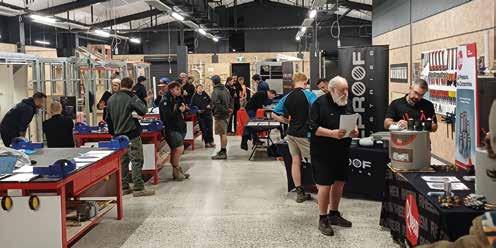


With more women entering the PGD industry, momentum continues to build across the sector. NZ Plumber looks at initiatives helping to support and recognise wāhine working in the trades around Aotearoa New Zealand.
2026 winners announced
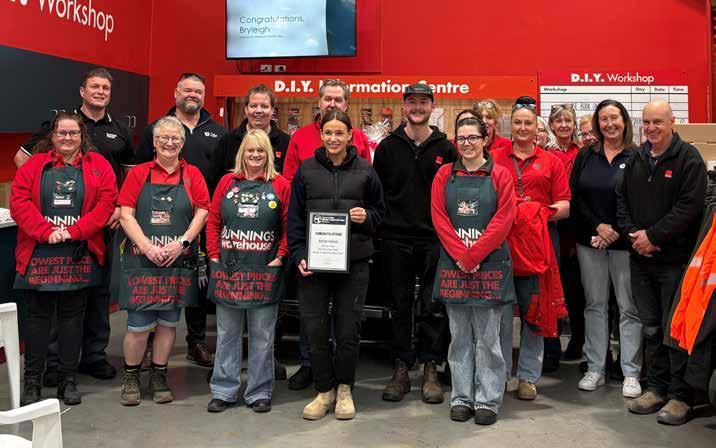
Each year, Bunnings celebrates women building careers in the trades by awarding them with Women in Apprenticeships support packs.
The award provides them with resources and professional support to help them thrive and inspire other women to join the industry.
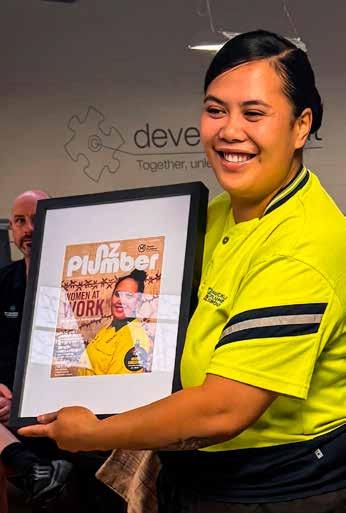
The 2026 award winners were announced in early June from among 1,203 nominations across New Zealand. They include plumbing apprentice Bryleigh Scannell. Bryleigh is a fourth-year apprentice plumber, drainlayer and gasfitter with Foleys in Dunedin.
The judges noted her commitment to the trade, the respect she’s earned from her peers, and her passion for encouraging more women into a plumbing career.
Continuing a proud family legacy in the trades, Bryleigh became the first female plumber in her family. Drawn to the technical side of the work, she pushed for an opportunity on the tools and quickly proved herself.
With plans to become fully qualified and eventually start her own business with her partner, she’s passionate about inspiring more young women to see trades as viable and rewarding career paths.
“Bryleigh is driven to challenge the outdated perception that plumbing is a ‘dirty’ or male dominated trade,” says her award nominator Bronwyn Rees from Skills Trades Training. “Instead, she speaks proudly about the variety, problem solving, teamwork and satisfaction the job provides.
“Bryleigh feels strongly that women belong in the trades and that visibility matters, which is why she has volunteered to join me in visiting local girls’ schools to speak with students. She wants them to see what’s possible, hear her experience firsthand, and understand that the plumbing industry is supportive, inclusive, and full of opportunity.”
Congratulations to all six 2026 winners! Bryleigh – Plumber, Dunedin
Courtney – Plasterer, Palmerston North Pohatu – Carpenter, Tokoroa
Natasha – Carpenter, Morrinsville
Lexiga – Fabrication Welder, Auckland
Laura – Arborist, Auckland.
Each year, the Women in Trades not-for-profit runs events to promote trades as a viable career option for women.
At a Rotorua event this March, women and girls were invited along to meet potential employers, industry organisations and training providers.
Masterlink apprentices Mia and Phoebe went along with host employer Sarah Jamieson of BOP Plumbing and Gas to welcome young female rangatahi from right across the wider Bay of Plenty—some travelling all the way from Tokoroa.
“It was awesome to see so much curiosity and enthusiasm, as they explored what careers in plumbing, gas and drainage really involve,” says Sarah. “We talked through the different piping systems they might find in their own homes and had a hands-on activity where they built a pipe system by following a template.
“So many great questions, curious minds, and potential future tradies in the room. A truly great day supporting and encouraging wāhine into the trades.”
Mia also spoke on one of the interactive panel sessions, sharing her real-life experiences and insights.
Women make up half the population but hold less than 12 percent of trades jobs, say Women in Trades.
“Trades training is not just about individual’s employability—it is good for the health of the economy. Trades make up on average 5 percent of every country’s GDP. For every $1 put into construction and trades work, $3 value is added to the national economy.”
Find out more at womenintradesnz.com
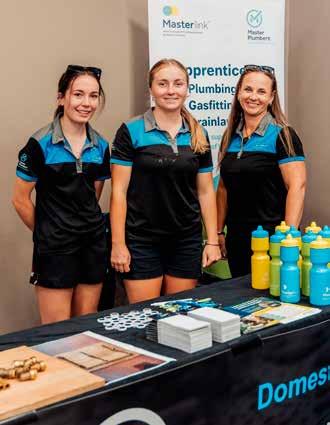

2026 winner to be announced at the NZ Plumbing Awards in June
Each year since 2020, the Jackson Women in Plumbing Award has been presented at the New Zealand Plumbing Conference.
The award recognises women who have made an outstanding contribution to the PGD industry and is named in honour of Maureen Jackson (1941-2020), who was the wife and business partner of Ian Jackson MNZM. The couple established Jackson Plumbing in Auckland in 1966 and went on to establish Allproof Industries NZ in 1987, working in the daily operations of both businesses.
Combining effervescent energy, an easy way with people, strong financial acumen and time management skills, Maureen Jackson paved the way for many hard-working women with the industry today.
“The women in our family—my mother, my sister, my wife and daughter have all made a great contribution,” said Ian Jackson when the award was established. “Historically, the plumbing industry has been dominated by men. There is a shift now with more women being involved with ownership, management, marketing and, of course, working on the tools. May this continue.”
The winner of the 2026 Jackson Women in Plumbing Award will be announced on 26 June at the New Zealand Plumbing Awards Night, to be held at Claudelands in Hamilton.
The table below shows the number of individual PGD authorisations issued to women during the 2025-2026 licensing year.
2026 NAWIC Excellence Awards finalists have been announced
This year marks 30 years for NAWIC—the voluntary, non-profit National Association for Women in Construction in New Zealand.
With 14 branches across New Zealand, NAWIC provides women working in all aspects of construction with opportunities to connect, learn and grow.
This includes site visits, webinars, social events, Pink Ribbon breakfasts and the Annual NAWIC Excellence Awards.
This year’s finalists have now been announced and the winners will be celebrated in July at the 2026 NAWIC Excellence Awards ceremony in Wellington.
Discover the finalists and watch the ‘Breaking the Concrete Ceiling’ webinar at www.nawic.org.nz

“WE NEED MORE WOMEN TO HELP BUILD OUR COUNTRY’S FUTURE”
NAWIC Governance Board member Hera Eruera is among the 30 women to share their stories as part of NAWIC’s 30-year celebrations.
A proud Wahine Māori from Oruawharo, Hera shows what determination, grit and heart can build. As a registered plumber and drainlayer and apprentice gasfitter, Hera covers a wide range of Auckland Super City doing residential maintenance with Auckland Plumbers Group.
Her path began back in high school, where supportive Gateway teachers encouraged her to try off-campus courses at MIT and Unitec. “I always chose woodwork,” she says with a laugh. “Little Hera back then would’ve cracked up if you told her she’d be a plumber one day!”
Beyond her skill and professionalism on the tools, Hera mentors Māori and Pasifika women, and advocates for equal pay and more representation and visibility for women in trades.
“Take the first step, sis! Be your authentic self and tackle every challenge head-on,” she says. “There’s a whole community of wāhine trades supporting you.”
Passionate about helping her whānau and community, Hera spends her free time volunteering at her marae, diving for kaimoana, or making memories with her husband and two young children.
Through her social-media storytelling and other media opportunities—including a lively chat with Kerre Woodham on her NewstalkZB morning show this March—Hera inspires others to pick up the wrench, and the courage, to follow.
“We need more women to help build our country’s future,” Hera says. “And I’m here for it.”
“THERE’S STILL A LITTLE
The construction and infrastructure sector will need more than 150,000 additional workers by 2027, according to estimates by former workforce development council Waihanga Ara Rau.
A Ministry for Pacific Peoples spokesperson told PMN News in May that construction and trades remain key pathways for Pacific workers, but Pacific women are still underrepresented in the sector.
In Taupō, Elenoa Tabudravu, a maintenance plumber and drainlayer who is Fijian and Māori, is close to finishing her apprenticeship, working with Simione Malimali at family-owned and operated Malimali Contractors in Auckland.
“I love the diversity of the work here, old homes through to new homes,” she told PMN News
“I passed my drainlaying registration in October and just finished my last two plumbing papers. I am the first woman of Fijian descent to hold this qualification. When I started, there was maybe only one other woman that I knew of who was Māori, so there’s still a little way to go.
“I would love to eventually get my certifying licence in plumbing and drainlaying and run my own business, that’s the goal.”
Elenoa’s career path has been anything but ordinary. Straight out of school, she joined the NZ Navy, spending six years as a combat systems specialist (“the eyes and ears of the ship”) tracking vessels and aircraft by radar.
But in 2021, she was ready for change. Inspired by meeting her first woman tradie, Elenoa enrolled in a Level 3 certificate in plumbing, gasfitting and drainlaying. She quickly discovered she loved the work—the physical challenge, the problem solving, and the deep satisfaction of getting the job done right.
When she needed new power tools but couldn’t afford them, she found support through the Chenery Memorial Education Trust Award from New Horizons for Women: Hine Kahukura.
This nationwide charitable trust provides an annual awards programme for women in Aotearoa New Zealand who are pursuing tertiary education, exploring a new career path, promoting research that benefits women and girls, or studying in underrepresented industries. The awards can be used for study and living costs, relieving some of the financial pressure that can come with committing to study.
“I was just so happy to be successful. I’m still using the tools I bought with the money,” she says. Learn more about New Horizons for Women: Hine Kahukura at www.newhorizonsforwomen.org.nz



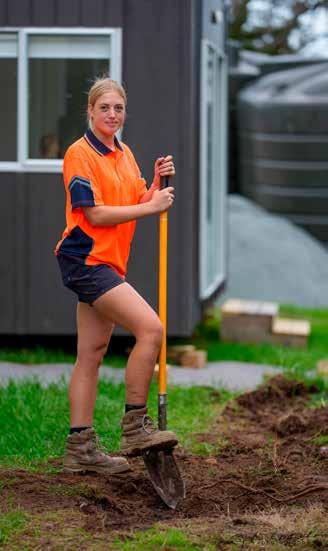
When Zoe Kusanic was in high school, she always picked the more practical classes, such as wood tech and metalwork. “I never liked the idea of going to uni and having to sit in a classroom and do more study, so leaned towards the idea of a doing a practical job, like a trade,” she says.
The outdoor type, Zoe likes to hike and ride her horse around the farm in her spare time or go to the beach for 4WD adventures with friends and camp in her rooftop tent.
When it came time to pick a trade, she chose PGD for the variety of work, with no two jobs the same from one day to the next. In her last year at high school, she did a couple of weeks’ work experience for her neighbour, who is a plumber.
“Once I knew I wanted to get into plumbing I started looking for jobs,” she says. “At the time, I had a part-time job working Saturdays at a bakery, as I love baking and making cakes. My bakery boss gave me a contact for her friend Zane Britton, who runs Coreflow Plumbing & Civil in Kerikeri, which is where I started my apprenticeship.”
Zoe says she is super grateful for the three years she spent with the supportive crew at Coreflow. “They were such an amazing team, and I learnt so many good skills during my time there. They nominated me for Best All Round Completed Year 1 Apprentice 2024 for Master Plumbers Auckland and Northland, which I won! I also completed my drainlaying with Zane, so now I’m a qualified drainlayer.”
Zoe has since moved two hours’ drive south to Mangawhai to continue her apprenticeship at Allan Plumbing & Gas. “My new workmates have made me feel super welcome and I am grateful that Mike Allan has given me the opportunity to carry on my apprenticeship through his company. I can’t wait to see where it takes me,” she says.
Zoe adds that doing her apprenticeship through Masterlink has helped her “incredibly” by finding a new host to carry on her apprenticeship and sorting out job interviews and trials.
“They also provide accommodation when I stay in Auckland for my block courses, which relieves a lot of stress trying to plan for my week down there,” she says. “Steve, my Masterlink regional manager, is always in contact to check in with how I’m tracking through my bookwork.”
When Zoe got into a trade, she thought she wouldn’t have to do much paperwork. “But I was wrong—there is so much you have to learn and study. They do try and make it easier for you with online theory sessions you need to complete before you go onto a block course, where you learn and are assessed on the practical side of things.
“The most challenging part about doing a plumbing apprenticeship—apart from crawling under house where there are heaps of spiders, which I hate—is the amount of knowledge that you need to learn and just trying to remember all the codes and standards for all three trades of plumbing, gas and drainage.”
Being a female in these trades hasn’t really presented a physical challenge for Zoe. “Most of the time, I think the guys are more surprised and impressed that a female can do just as much as they can.
Around 7% of Masterlink apprentices are female. Masterlink signs them all up for free NAWIC membership, to help them gain additional support.
“I’ve also had heaps of good reactions when I introduce myself to clients as the plumber. They say things like: ‘I love seeing women in the trades ’cause they are just as good as men, if not better,’ or: ‘Yay the girls.’ Always such supportive feedback.”
Zoe thinks that working as a female in the male-dominated construction industry has become more normalised. “But I do always get heaps of stares and guys trying to hit on me when working on site.”
Something else she thinks could improve is uniforms. “Shorts and pants never fit right and are mainly just designed for men.”
That aside, Zoe would recommend the plumbing industry to other women. “Don’t let anything hold you back, because women are just as capable as men in this industry. If you enjoy practical and hands-on work, a PGD apprenticeship is a great option. Why pay to study when you can get paid to learn? It’s not always easy but it’s definitely worth it in the long run.”

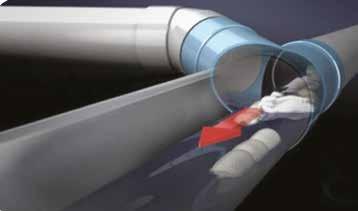

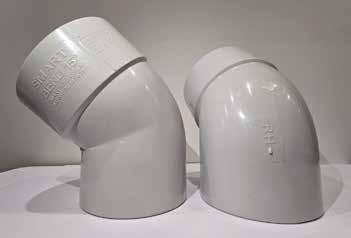
Looking for a way to achieve 15O incline on your branch drain? Available in Right-Hand & Left-Hand. Fits





Master Plumbers, Gasfitters & Drainlayers NZ thanks the following Partners for their support:




































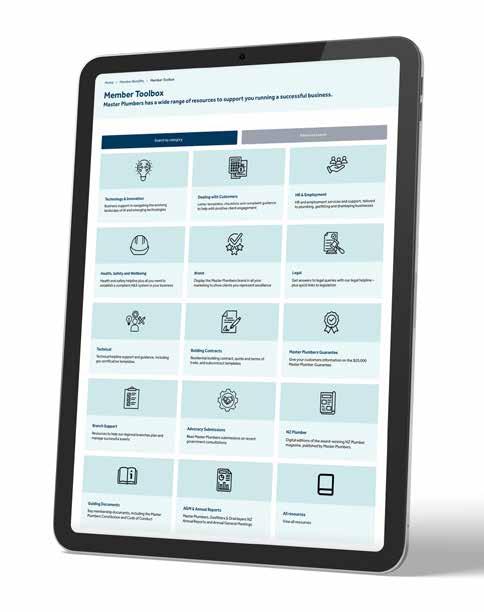
To run a successful plumbing business, you need the right support behind you. The Master Plumbers Member Toolbox contains a smart set of practical tools, ready when you are.
Open the Member Toolbox on the Master Plumbers website to get hold of tools in a wide range of business categories, including:
HR & Employment
Health & Safety
Building Contracts
Technical Legal
Customer Engagement.
The Toolbox is also where members can go to download the Master Plumbers brand and guarantee, plus a whole lot more. All you need to do is sign in to the website and the full toolbox is open for your use.
Forgotten your sign-in or need assistance? Just contact the friendly team at Master Plumbers: admin@masterplumbers.org.nz
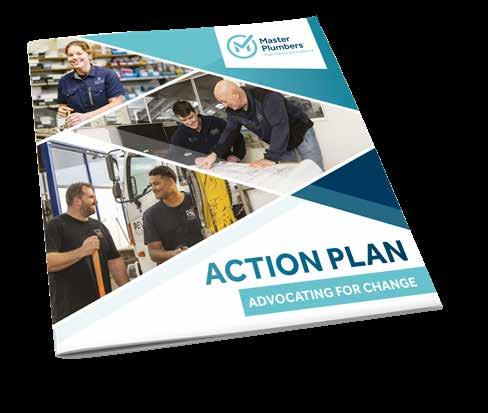
Master Plumbers has shared its advocacy priorities with key policymakers ahead of November’s General Election.
Priorities for the time ahead include strengthening Apprenticeship Boost funding and reviewing the PGD Certifying Licence class with a view to simplifying the pathway to become certified.
In the environmental arena, Master Plumbers would like
to see greater certainty and investment in biogas, which would enable biomethane to be injected into the gas network as a renewable energy source. A national funding programme is also needed to increase heat pump water heating uptake.
With lead-free plumbing product rules now in place, Master Plumbers wants thirdparty certification of all products
sold in New Zealand, with a publicly accessible database of compliant products.
Targeted testing is also needed to quantify lead levels in the water supply network and a plan for remediation and replacement of pipes and fittings containing lead.
WorkSafe is developing draft content for an approved of practice (ACOP) for identifying health and safety roles and responsibilities on a residential construction site.
ACOPs are a recognised, practical way for businesses and workers to comply with the Health and Safety at Work Act 2015. This draft ACOP aims to make it easier
to make safer, more confident decisions, especially where multiple parties are involved on site.
Master Plumbers provided feedback on the draft by the May closing date. “Whilst the draft provides practical advice, there are areas that lack clarity—particularly around the interaction between small PCBUs and larger principal contractors,”
says Master Plumbers CEO Greg Wallace.
“We also think that limiting the focus to ‘critical risks’ may overlook other common yet significant non-critical risks, such as slips, trips and falls, manual handling injuries and mental health and wellbeing risks.”
WorkSafe expects to provide a finalised draft to the Minister for Workplace Relations and Safety in mid-2026.

Boost your knowledge of hot water heat pump systems with this hands-on training opportunity.
A collaboration between Master Plumbers, EECA and Stiebel Eltron, the two-hour session will give you practical insights you can apply on the job. Topics will include the difference between integral and split systems, understanding Coefficient of Performance (COP), seismic restraints, refrigerants, and green loans. Sessions include morning or afternoon
tea—giving attendees time to connect, ask questions and continue the conversation.
Dates for each location have a 8-10am or 4-6pm option.
1 July – Auckland
23 July – Christchurch
28 July – Wellington
19 August – Queenstown
Book your place at www.masterplumbers.org.nz, under Training & Events
Master Plumbers appreciates the engagement it has had with Building and Construction Minister Hon Chris Penk throughout the development of the self-certification scheme and welcomes the changes to the scheme that were announced in April.
“We are extremely pleased that the scheme is to be expanded to better support rural communities, by including pumped systems, septic tanks, water tanks and solar hot water and greywater collection systems,” says Master Plumbers CEO Greg Wallace.
“The Minister has listened to industry feedback and worked collaboratively with the sector to ensure the new scheme is practical and effective.”
The expanded scope will be set through regulations and will cover work on buildings up to three storeys, excluding apartments.
Onsite systems must use an approved standard design where one exists. Where no standard design is available, the system can still be self-certified but must still meet the requirements of the Building Code.
The scheme is expected to come into effect in September.
A special celebratory dinner will be hosted by the Queenstown Lakes Master Plumbers Branch this September to mark the 50th anniversary of the Mac McKenzie Awards, which have been presented each year since 1976.
If you are a previous winner, or know someone who is, please be in touch if you or they would like to attend! Partners are invited too.
These prestigious awards are presented annually to apprentices in the PGD trades within the Otago, Queenstown Lakes and Southland regions. They recognise current and recently completed apprentices who have shown huge improvement or have overcome major adversity during their apprenticeship,
Entries for the 2026 Mac McKenzie Trust Awards are open until 30 June.
To enter the 2026 awards, or to RSVP to the 50th Anniversary Dinner, please email Ray Galt: info@macmckenzieawards.nz

For 50 years, STIEBEL ELTRON has been at the forefront of heat pump technology engineering efficient, reliable, and future‑ready solutions for homes around the world. This milestone reflects our commitment to sustainable innovation, precision German design, and delivering exceptional comfort through smarter hot water and heating systems. www.stiebel-eltron.co.nz
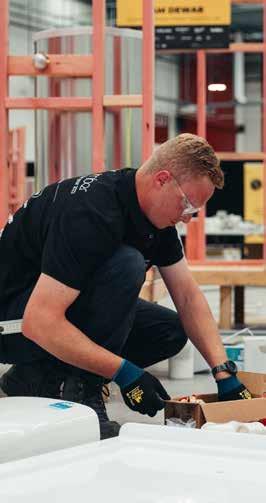
Master Plumbers is a strong supporter and Gold Sponsor of Plumbing World’s annual Young Plumber of the Year competition, which is open to plumbers aged 31 and under.
The competition now includes an apprentice category, supported by NEXA—the new training academy being established by Master Plumbers.
“By introducing an apprentice category this year, we’re encouraging newer members of our plumbing community to get involved, meet likeminded colleagues and build a career with real, long-term potential,” says Plumbing World CEO Brett Cruickshank.

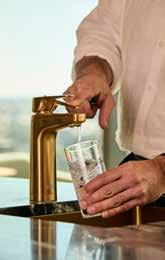
Billi specialises in premium drinking water systems for homes and workplaces. They design and manufacture energy-efficient underbench units that deliver instant filtered boiling, chilled, and sparkling water from a single tap. Their systems are known for their space-saving design, sustainability focus, and high performance, making them a popular choice across offices, healthcare, hospitality, and high-end homes.
For plumbers, Billi offers straightforward installation, reliable build quality, and strong after-sales support. Their products have been engineered and manufactured in Australia for over 35 years, with a focus on quality, reliability, and sustainability. They also provide training, technical resources, and responsive service to support their installer network.
Partnering with Billi gives plumbers access to a trusted brand, innovative technology, and growing demand for integrated, environmentally conscious water solutions that add value to every project.
www.billi.co.nz
0800 636 0 636; info@billi.co.nz
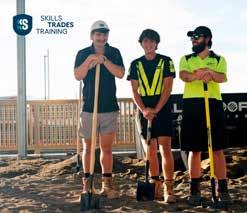
Skills Trades Training is the new name behind familiar faces. Formerly ICE (Industry Connection for Excellence), they’ve been training plumbing, gasfitting and drainlaying tradies for New Zealand businesses for years.
Their modernised, purpose-built campuses are equipped with industry-standard tools and facilities, giving apprentices hands-on experience in environments that reflect real job sites. Their tutors are industry experts who teach for real-world application, not just assessment.
Apprentices return from each training block with practical skills and PGD knowledge they can put to use on site straight away. Skills Trades Training also conduct regular workplace visits, so you always have a clear picture of where your apprentice is at. They’re proud to be training the next generation of PGD tradies, and helping New Zealand businesses build skilled, committed workforces that last.
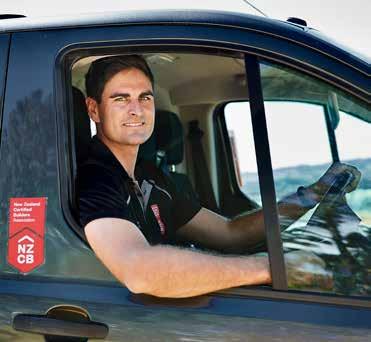
Master Plumbers and NZ Certified Builders (NZCB) have partnered on a one-year trial, giving NZCB members access to the Master Plumbers Guarantee for eligible residential plumbing, gasfitting and drainlaying work. NZCB members are being encouraged to engage a Master Plumbers member when managing building work for homeowners to access the $20,000 Master Plumbers Guarantee—adding confidence and protection to projects.
A warm welcome to new Master Plumbers member businesses:
Plumbing H2O Ltd
Auckland
Hydrofix Plumbing & Gas Ltd
Auckland
A Good Plumber Ltd
Wellington
Wenborn Plumbing 2021 Ltd
Canterbury
Prime Plumbing & Gasfitting Ltd
Northland
JC McCall Plumbing Contractors Ltd
Auckland
Daniel Bot Plumbing Ltd
Hawke's Bay
Progressive Plumbing & Gasfitting Ltd
Wellington
The Good Plumbing Company Ltd
Wellington
GN Brewer
Canterbury
Lancewood Plumbing Ltd
Canterbury
Southern Alps Plumbing Ltd
Queenstown Lakes District
All Plumb Korere Wai Ltd
Otago
Formula Plumb Ltd
Waikato
Go with The Flow 2026 Ltd
Wellington
Tesh Ltd
Auckland
GVR Ltd
Auckland
Waiboys Plumbing Ltd
Waikato
Simon’s Plumbing Ltd
Auckland
Rawson Pitcon Ltd
Waikato
It is with great sadness that we mark the passing of Master Plumbers member Shane Luke, who died on16 April 2026, six days after his 47th birthday, following a courageous battle with terminal glioma.
Shane was a respected plumber, gasfitter and drainlayer, who took great pride in his trade and his business. In 2022, he and his wife Sara fulfilled a long held dream when they purchased Rawlinson Plumbing & Gas in Rotorua from Dave Sander.
Active members of Master Plumbers, Shane and Sara were recognised in 2024 when they received the Volcanic Plateau Master Plumber of the Year Award for business excellence.
To honour Shane's courage and fighting spirit Sara Luke walked 5km each day during May for Brain Tumour Awareness Month—walking with friends and family by her side on the final day and raising a total of $1,000 for the cause.
The month is led by Brain Tumour Support NZ, which provided the Luke family with valuable support and resources throughout Shane's illness.
Those wishing to support the cause can donate to www.braintumoursupport.org.nz
We extend our heartfelt condolences to Sara, their four children and the wider Luke family.
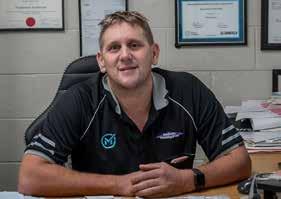
Master Plumbers is here to support all businesses in the plumbing, gasfitting and drainlaying industry. Members are Quality Assured and backed by the Master Plumbers Guarantee. We offer a wide range of business resources, health and safety, employment, legal and technical support, plus training and member discounts— and we advocate for our members as a collective industry voice. Get in touch today!
Contact 0800 502 102 membership@masterplumbers.org.nz
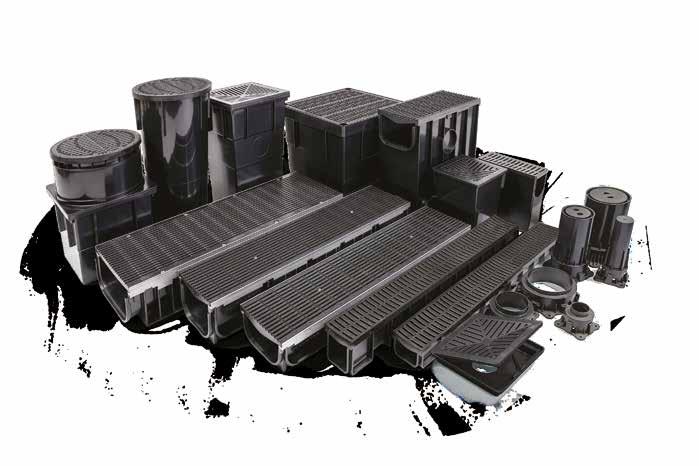
Proudly manufacturing innovative drainage & passive fire solutions at our Toitū enviromark® bronze certified Auckland production facility.
Innovative solutions for a better future.
For Kewa and Ashleigh McMillan-Parata,
business success means doing good for the industry and their local community.
WORDS: BEVERLY SELLERS
PHOTOGRAPHY: NEIL MACKENZIE
When Kewa and Ashleigh McMillan-Parata launched Ka Pai Plumbing in Porirua, they had a clear ‘North Star’: helping young people into meaningful employment.
“A lot of kids here lack the confidence to believe they can do more than low-skilled work,” says Kewa. “By giving them work opportunities through the school Gateway programme, we want to show them that a plumbing career is within their grasp.”
Kewa says his own dad encouraged his four sons into the trades, with two becoming sparkies, one a builder, and Kewa signing up for plumbing. “I had a great apprenticeship and stayed at the company for 10 years,” he says.
He and Ashleigh established Ka Pai Plumbing in 2020, shortly after New Zealand entered Covid lockdowns. Ashleigh’s career in tech start-up operations had included a lot of overseas travel, but the lockdowns saw her grounded. It seemed a good time to realise their business ownership plans, so they seized the moment.
If they were seeking change, they got it, with their first son George arriving the next
year, followed by second son Apirana in 2024. Throughout, Ashleigh found time to continue her career and help out with the plumbing admin and accounts, thanks to amazing support from family. It is only in the past year that she has started to work fully in the business.
To begin with, it was just Kewa on the tools, as he found his feet. “Having so many friends and family in the trades, and starting their own businesses, the work was there.”
Growth happened organically, with the chance to employ a first staff member coming along the following year, when qualified plumber Bronson Talivai was looking for a job. Born and raised in Porirua, Bronson shows incredible skill at new housing work. “There’s not many that can do it more efficiently or with better quality,” says Kewa.
The team has since grown to six, with Ari Burley and Caleb Tulepu coming on board last year. “It’s because of our great people that we can have a business,” Kewa continues. “Ari had just moved here from Australia with his Kiwi dad, wanting to learn about his New Zealand whakapapa. He loves living in Titahi Bay and brings
youthful energy and a good background in all areas of the trade.”
Caleb, meanwhile, had been locally trained by a one-man-band. “He is so kind and gentle—the perfect person to make you feel comfortable when walking into your house to take care of your plumbing and drainage needs.”
Full-time labourer Tiki Read came to them as a Gateway student. The son of a builder, 16-year-old Tiki is used to how worksites operate and brings good energy to the team. He’s keen to get started with his apprenticeship as soon as he gets his licence.
Kewa and Ashleigh’s goal of consistently taking on local apprentices will, of course, rely on business profitability. Post-Covid economic recovery has been challenging for New Zealand’s construction industry, and the couple have had to remain flexible and open to change.
Ensuring diverse revenue streams is key, and for Ka Pai Plumbing this is a mix of maintenance and projects. An exciting opportunity arose for Kewa through the 2020 Government and Ngāti Toa iwi Te Āhuru Mōwai partnership, which

manages around 1,000 homes for people in the region on lower incomes and with other social support needs.
Of Ngati Toa descent himself, Kewa was among the trades businesses to have successfully tendered for work on several properties before the market tightened. “It’s amazing housing, with beautiful design and high energy efficiency ratings— and a true community with old-fashioned street parties and BBQs,” he says.
This has been a sizeable workload for the team and has helped Kewa learn a new skill set, giving him the capability to bid on other work.
The learning curve may have been steep, but it has been smooth, thanks to Ashleigh’s operational skills. “We’re lucky we’re a super young team,” she says. “We’ve prioritised the right software and setting it up properly from the get go.”
She is also excited by the rapid growth in AI tools. “Luckily we both like tech and we’re confident with using AI to speed up tasks, like quotes and time sheets.”
Kewa agrees, adding that he uses AI to quickly style documents and emails in the way they want them presented.
Master Plumbers’ membership has been valuable, too—particularly being able to
tap into the HR and legal helplines for personal assistance with employment queries. “It’s a no-brainer for the services available,” says Ashleigh.
As the team has expanded, the couple have engaged a mentor to help them manage business growth. As a husband-and-wife team, their priority is being present for their boys. They share the kindy pick-ups and drop-offs and make time for dinner together at 5.30pm each evening.
“It’s because of our great people that we can have a business.”
Kewa was born and raised in the Māori culture, growing up with his mum and dad in the Hongoeka Marae community, surrounded by his own and his mum’s cousins in the neighbouring houses. He missed out on the arrival of Māori immersion schools but says there’s a whole generation of bilingual kids, and their goal is to put their own kids through the local kōhanga.
The five-year plan for Ka Pai Plumbing is to have the systems in place for other team members able to head up the maintenance and project revenue strands, so everything continues to function smoothly if Kewa and Ashleigh are not around to answer questions.
This would free up time for Kewa to work on the business, focus on their apprentice training plans, and make the most of family time.
“We want to create an internal sense of ownership and responsibility,” says Ashleigh. Or, as Kewa puts it, having everyone moving the boat in the same direction, with a shared sense of pride and purpose.
It’s a big work in progress and the pair say they feel they’re just at the start line, now they’ve had time to learn the hard truths through owning a small business with up to six staff. By building on these foundations, their hope is to reach their business goals in the next five years, helped along by the support from friends and family.
As Kewa says: “We want to be a successful business, generating enough work to do good and leave our footprint in the community.”
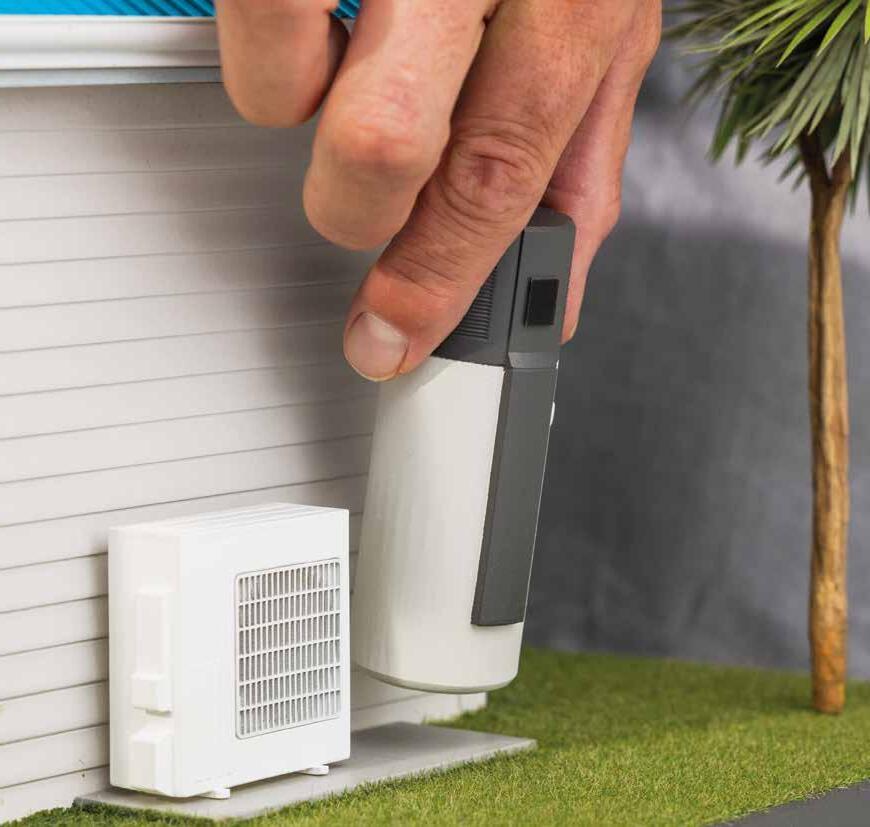
EECA’s good practice Installer’s Guide for hot water heat pumps helps installers pick the best size and type of system for the home’s hot water needs and climate. It provides details on plumbing, electrical work and refrigerant handling, along with references to key standards and regulations, to ensure the best results for your customers.
Download the guide, and read EECA’s latest research into the real-world performance of HWHPs, at eeca.govt.nz/hwhp-installers-guide

“The businesses that kept the faith are reaping the rewards.”
Rhys Nimmo General Manager, Masterlink and Master Plumbers
When the work dried up, the temptation was real. Trim the team, cut the costs, survive the squeeze.
Most businesses did exactly that. And honestly? No judgement. When margins are tight and projects aren’t flowing, the payroll is the biggest lever you’ve got.
But something interesting happened while the industry was hunkering down.
The businesses that held their people, that kept investing in training, kept their apprentices ticking along, kept building capability even when the pipeline was thin—those businesses didn’t just survive.
Two Masterlink apprentices from host businesses in Rotorua and Hamilton have been selected for the 2026 Masterlink Outward Bound Scholarships.
Congratulations to Jackson Cutts from BOP Plumbing & Gas and Cooper Robinson from Plumbing & Gas Works! Jackson and Cooper each won a fully-funded place on the 16-day Outward Bound Building Leaders Course, which took place this June as NZ Plumber was going to print. We’ll cover their experience in an upcoming edition.
They’re the ones leading the charge as the economy starts to find its feet again—and frankly deserved because I bet it came with some sleepless nights along the way.
It’s not a coincidence. It’s a pattern.
There’s a well-worn truth in business that the companies who invest through the downturn are the ones who own the upturn. Our trades industry is no different. When recovery builds, and it is building, the businesses with trained, capable teams are already running. Everyone else is scrambling to hire, scrambling to upskill, scrambling to meet demand they can’t service, or waiting until things pick up.
We all know New Zealand’s trades workforce is understaffed. That’s not a future problem, it’s a now problem. The fix isn’t going to come from somewhere else. It comes from all of us deciding to train the next generation. Not just some of us—all of us working together can make a real difference.
Taking on an apprentice is strategic. You’re not just adding a body, you’re building your own future tradesperson, shaped the way you want them. Taking on a Masterlink apprentice is one of the smartest long game plays a host business can make. One of our great hosts recently shared a photo of their ‘wonderful work family’. As I scanned across the smiling faces, I thought that’s not just a team, that’s a force to be reckoned with. Hardly surprising they’re doing well even in a tight market.
The recovery window is open. The businesses filling it are the ones already investing in people—and the Masterlink team is here to help you every step of the way.


Emma Dunkley joined Masterlink in March, bringing with her a strong background in the construction industry and a passion for supporting people within the trades. Before joining Masterlink, Emma worked with MATES in Construction, where she was involved in promoting wellbeing, connection and support across the industry.
Her move to Masterlink was driven by a desire to work more closely with apprentices and help support the next generation coming through the plumbing, gasfitting and drainlaying industry. She enjoys building relationships and is passionate about creating positive experiences and opportunities within the trade sector.
Originally from Auckland, Emma now calls Canterbury home. She loves the easily accessible outdoorsy lifestyle and goes hiking and fishing in her spare time, making the most of what New Zealand has to offer.
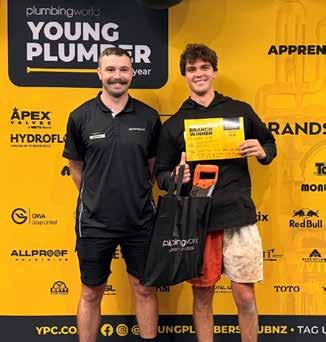
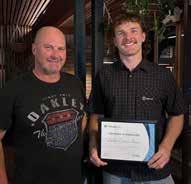
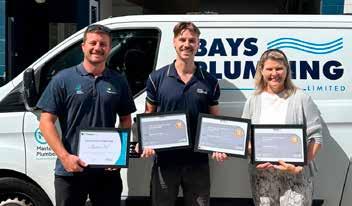
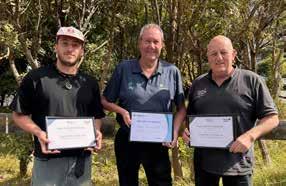
Congratulations to all 13 Masterlink apprentices who won their branch qualifiers in the nationwide 2026 Young Plumber of the Year competition—five of them in the new Apprentice Category for first- to third-year apprentices!
They will now go on to compete in the regional events, being held in July and August.
The national final will be held on 14 October at Claudelands in Hamilton. Good luck—we’re with you all the way!


Nau mai, haere mai to new Masterlink apprentices:
Hayden Vanderharst
Heron Plumbing, Auckland
Nathan Bradley
Tranquillity Plumbing & Gas, Motueka
Antony Posa
Aquaheat Facility Services, Hamilton
William Ormsby-Northcott
EG Glennies, Wellington
Theo Roberts
Mander & Co, Wellington
Willow Smith
BOP Plumbing & Gas, Rotorua
Ishua Morro
Bassetts Plumbing & Drainage, Auckland
Harry Simmons
Southplumb 2020, Christchurch
Hunter Winiata
Scott Plumbing, Auckland
Completing Level 4 NZ Certificates is a major milestone. Congratulations to:
Plumbing
Kyle Shields
Plumbing & Drainlaying
Lachlan Cuttance-Dunne and Jakob O’Dwyer
Drainlaying
Oliver Bawden, Teina Toeke-McIntyre, Eric Gruythusen, Paige Samuel, Phillip Webster and Taine Smith.
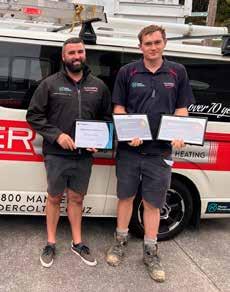








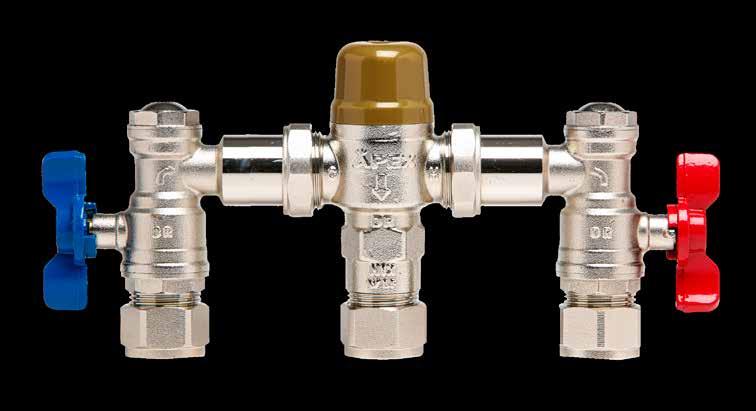
Delivers stable, safe water temperatures, even under pressure uctuations. Built for hospitals, aged care, schools, and other high-risk environments where consistency matters.
The new Apex TMV20BVW has integrated isolating valves, accessible check valves, and strainers to simplify maintenance. Built in thermal flush capability supports system disinfection when needed.
Complies with G12/AS1 & AS4032.1, meets lead-free standards (NSF/ANSI/CAN 372:2020), and certified under WaterMark WMKA20137.


Hansen Easy Fit Compression Fittings
Hansen Easy Fit ID Compression Fittings
Hansen True Fit Threaded Fittings
Hansen True Fit Tank Fittings
Hansen Full Flow Ball Valves
Hansen Fastflo Valves
Hansen Superflo Plastic & Brass Valves

Hansen
Fit Poly Fittings

It’s a guy thing... men tend to open up more when side to side with someone, rather than face to face.

When we walk side by side, our eyes are forward as we head in the same direction. We don’t feel we’re being put on the spot and conversations seem easier.
Even better, it is well proven that walking both reduces stress and stimulates both sides of the brain, which helps emotional processing and problem solving.
This is the message from Men’s Health Week (MHW), which ran earlier this month. Missed it? It’s never too late to look after your biggest asset... your health.
The MHW website has heaps of useful information on making little changes that will make a big difference to your physical and mental health.
Take their two-minute What’s Your Score? survey. It might just add years of happiness.
Find it all at menshealthweek.co.nz
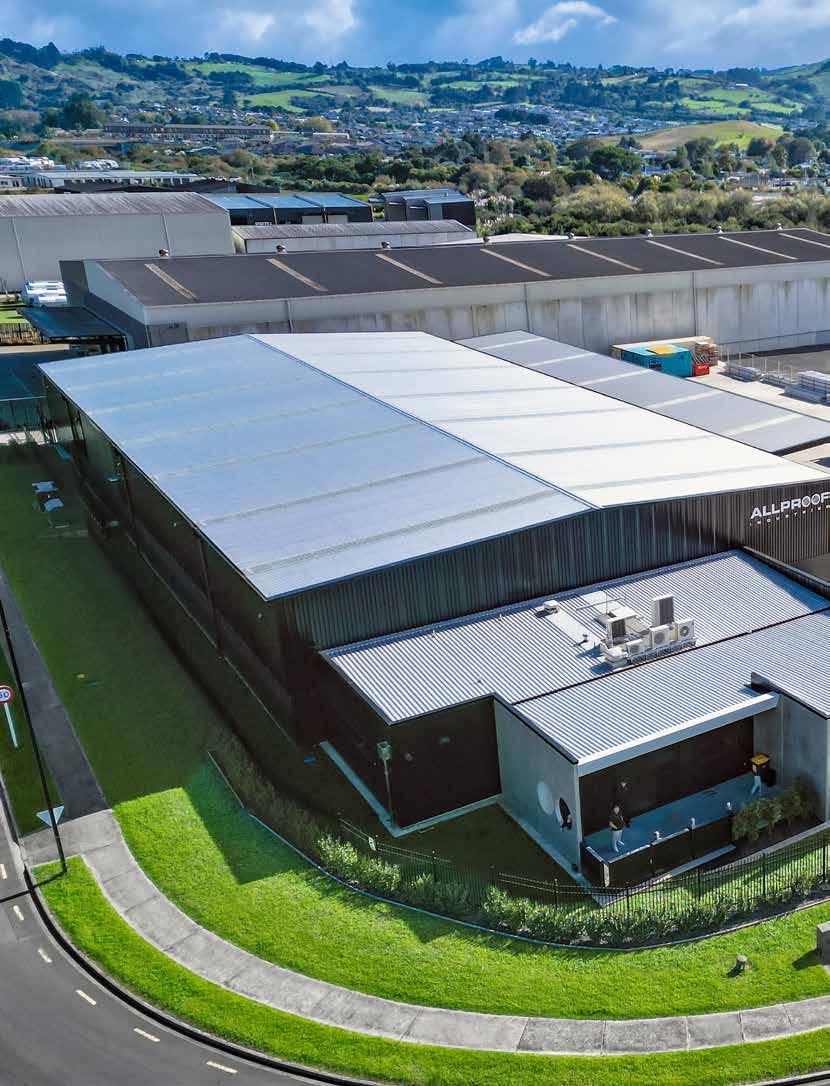
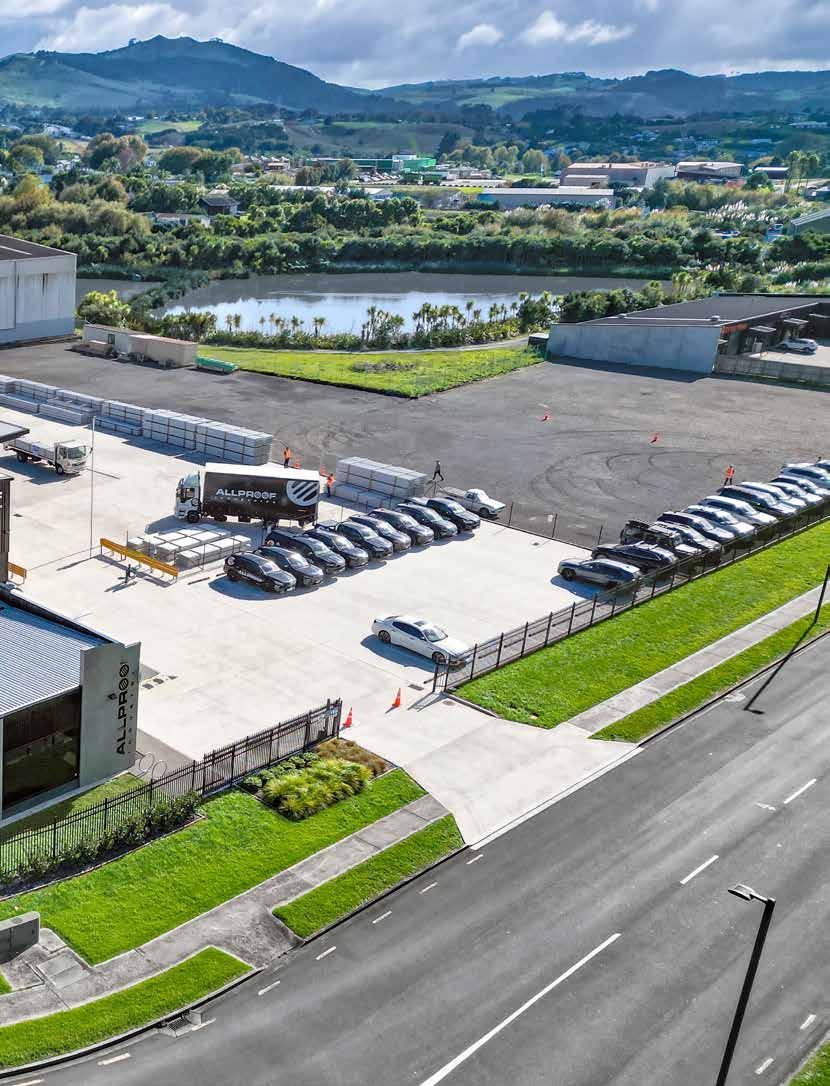
New Zealand drainage solution manufacturer Allproof Industries has taken a significant leap forward in its growth strategy, officially opening a purpose-built facility in Pōkeno dedicated to PVC pipe production for DWV systems. NZ Plumber takes a tour.
WORDS: JE T’AIME HAYR
The launch of the new Allproof PVC pipe manufacturing facility marks a natural evolution for the family owned and operated company, which has spent more than two decades manufacturing injection-moulded drainage components. Adding pipe extrusion to its capabilities positions Allproof to offer more complete system solutions to the market.
“This is a logical expansion for the growth of our business,” says General Manager Adam Jackson. “Our company has been around for nearly 40 years and we’ve been involved in the PVC fittings category for about 20 years, but we didn’t offer pipe, so this has been a consideration for a long time.”
The new 2,500m2 facility on a 12,000m2 site took four years from concept to completion and represents the largest single investment in Allproof’s history. Purpose-built for pipe manufacturing, the plant houses a 30-metre-long extrusion line capable of producing PVC pipe in standard six-metre lengths.
Rather than relying on external expertise, the company upskilled their staff for complete in-house capability. That process has included sourcing machinery globally and working closely with material suppliers, giving staff exposure to international manufacturing practices while building local capability.
“We’ve done this 100% internally with our existing production and engineering teams,” Adam says. “Naturally there’s been a bit of trial and error and a lot of learning along the way, but we’re really happy with how things are shaping up.”
Production output and the number of products offered to the market is currently growing, with capacity expected to scale over time.
The addition of PVC pipe manufacturing allows Allproof to move closer to becoming a full-system provider in the DWV space—a shift that has clear benefits for customers.
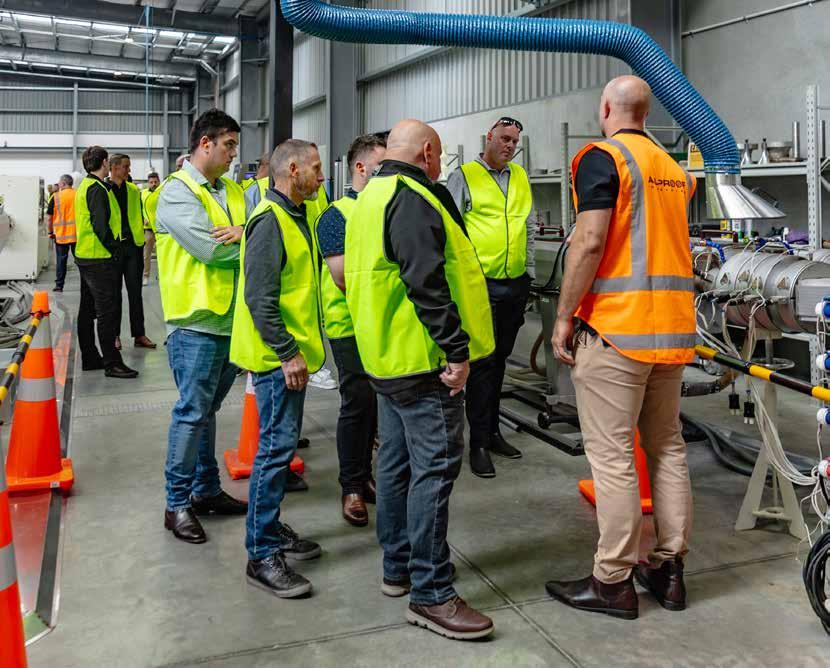
“By offering more complete systems, we simplify procurement for plumbers and merchants and introduce more choice into the market.”
Adam Jackson General Manager, Allproof
“By offering more complete systems, we simplify procurement for plumbers and merchants and introduce more choice into the market—particularly for those seeking locally made products,” says Adam.
“Plumbers are running businesses as well, so they’re making decisions based on price, quality and lead times, so our goal is to be competitive across all those factors. We want Allproof pipe to represent our existing brand and values. And by providing our customers with more choice that makes the industry more robust.”
Another benefit? Controlling both pipe and fittings gives Allproof greater oversight of quality and consistency across its offering.
The facility comes online at a time when global supply chains—particularly for petrochemical-based materials—are under pressure. Like others in the industry, Allproof is feeling the impact.
“We’re tackling the same resin issues as the wider market,” Adam says. “Supply is constrained, but demand is still there, and that’s pushing prices up.”
The company is working with suppliers to secure material from a broader range of sources, such as the United States instead of Asia where necessary.
“All suppliers are scrambling to ensure security of supply, so it’s an industrywide challenge.”
Despite these pressures, Allproof’s strategy remains unchanged and Adam is optimistic.
“This has been a long time in the making. Our position here is long-term, so while the current environment is challenging, it doesn’t alter our strategy.”
While the raw materials used in PVC production are largely imported, Allproof sees clear environmental and logistical advantages in manufacturing pipe locally.
“If you’re shipping finished product, you’re essentially shipping a lot of air,” Adam explains. “Bringing in raw materials uses container space far more efficiently.”
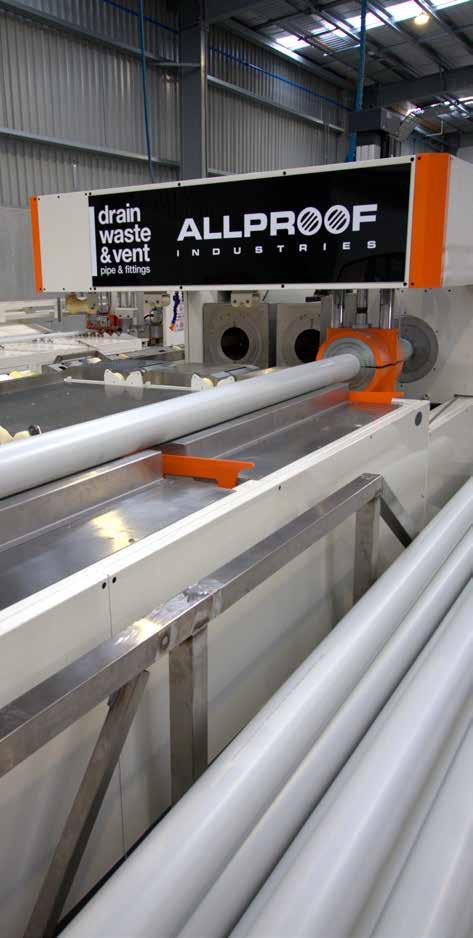
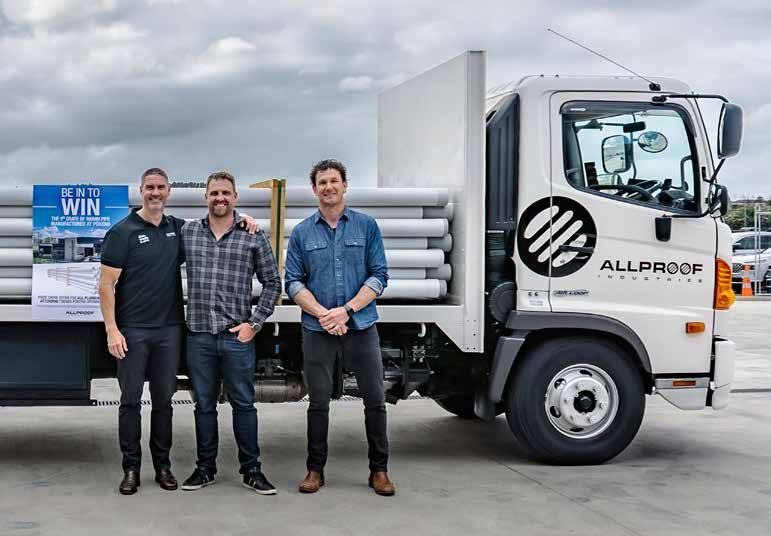
The PVC pipe itself is technically 100% recyclable, although reprocessing comes with limitations around how the material can be reused. And recycled content is already being considered where appropriate, though it is not viable across the full product range.
The new operation aligns with Allproof’s existing environmental certifications and manufacturing practices, extending them into the pipe category.
The Pōkeno facility has created eight new roles to date, spanning production, quality and warehousing, with further growth expected as operations scale.
Taking a measured approach, the company is focused on building capability sustainably rather than expanding too quickly.
“We’re still in the early stages,” says Adam. “Right now, it’s about building that customer base and then growing from there.”
More broadly, the move reflects a view that local manufacturing has an important role to play in New Zealand’s construction sector.

“There are some products that make sense to manufacture locally. In a global market, not everything will be made here, but there are opportunities where it stacks up.
The facility was officially opened by New Zealand’s Prime Minister Christopher Luxon in front of around 120 guests, including customers and industry partners—a milestone moment for the company.
“We were incredibly proud to host the Prime Minister and showcase what we’ve built,” Adam says. “It was a great recognition of what local manufacturing can achieve.”
Looking ahead, Allproof’s ambitions are clear. “As a business, we measure success through market share, customer experience and ultimately sales growth. This is about continuing to build on that and expanding our presence in the market.”
Factory tours are available for customers, offering plumbers and merchants the opportunity to see the production process and gain a deeper understanding of how locally manufactured systems are made.
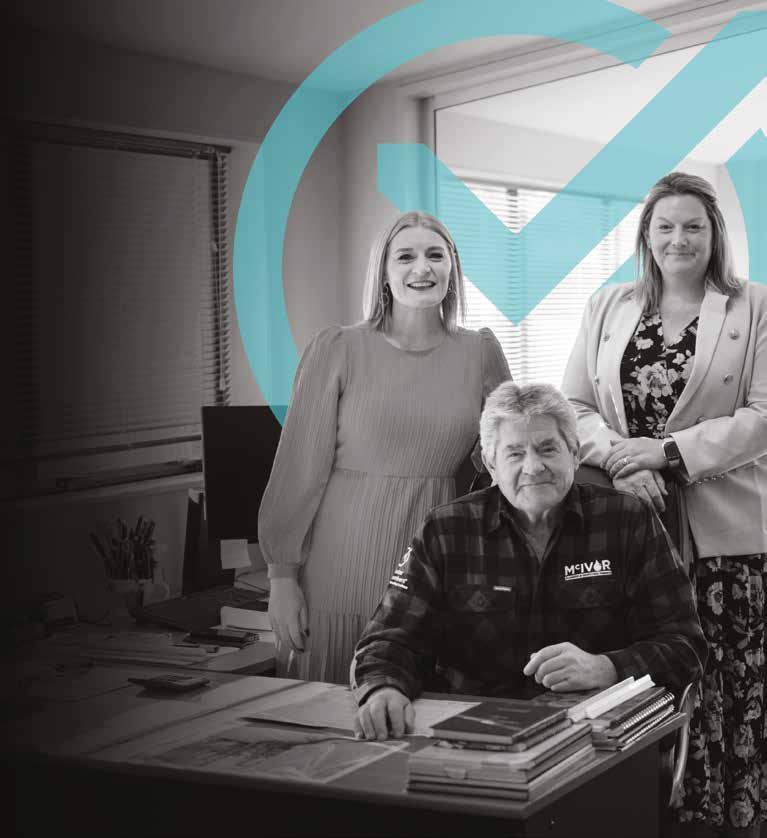
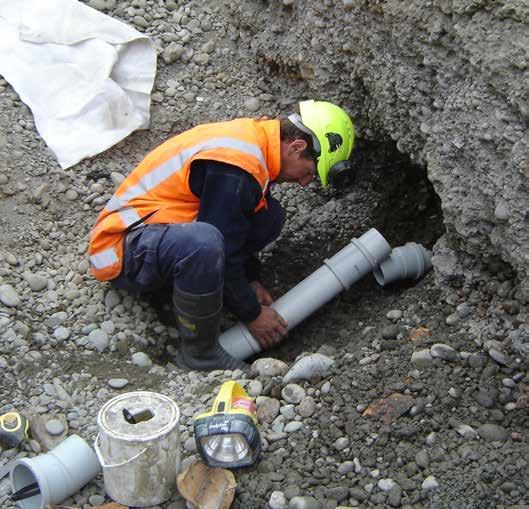
Flexible elastomeric joints play an essential role in PVC gravity wastewater drainage. Frank O’Callaghan of Iplex answers common questions about their use and outlines the history of their development.
AUTHOR: FRANK O’CALLAGHAN, NATIONAL TECHNICAL MANAGER, IPLEX PIPELINES NZ
Q: Are these pipes and fittings approved by the New Zealand Code?
A: Correctly designed and installed PVC drainage pipes and fittings with elastomeric seal joints complying to AS/NZS 1260:2017 will satisfy the relevant performance requirements of New Zealand Building Code Clauses B2 (Durability), G13 (Foul Water), E1 (Surface Water) and G14 (Industrial Liquid Waste).
Q: Are these fittings SN16 rated?
A: Injection moulded plain wall PVC drainage fittings complying to AS/NZS 1260:2017 are suitable for use in gravity drainage systems using SN classes up to and including SN16 plain wall or sandwich construction wall PVC pipe.
Q: What is the yellow band on some seals fitted into my PVC pipes?
A: Seals in PVC drainage pipes to AS/NZS 1260 are factory fitted into the pipe sockets and can be either a fully black coloured elastomeric seal or with a yellow polypropylene reinforcement band bonded to the black elastomer seal. The yellow band is designed for machine insertion during pipe production. Both styles of seals have the same performance in service.
Q: Do PVC joints with seals need to be chamfered before assembly?
A: Injection moulded PVC drainage fittings with ‘M&F’ design (ie, seal ring socket one end and male spigot the other) come with a moulded chamfer on the male end, ready to use.
Pipes with seal ring joints are factory chamfered on the spigot end, ready to use. Pipe spigots cut on site must have a chamfer applied with a file before assembly into seal ring sockets on fittings or pipes.
Q: Do I need to lubricate the seal rings before assembly?
A: Seal rings to AS/NZS 1260 are designed with minimum contact width and interface pressure to retain wastewater securely inside the pipeline and prevent ground water infiltrating the joints. This means jointing lubricant must always be used, both on the seal and on the spigot entering the joint. This is best applied with a small paint brush.
Q: How far do I insert spigots into seal ring sockets?
A: Most fittings have a small register or ‘shoulder’ at the bottom of each socket to guide assembly. Spigots on fittings and on pipes inserted into fittings should always be fully pushed home to butt up against this register.
For pipe-to-pipe joints, all factory manufactured pipe spigots have a witness mark to guide depth of insertion. The spigot is inserted up to, but not past the witness mark, which allows for normal inservice expansion/contraction movements within the joint.
Q: How can I use seal ring joint fittings for cut-ins and repairs?
A: ‘Slip’ style PVC couplings are manufactured without the socket register, allowing the whole fitting to slide fully over and along the pipe for cut-in of service lateral connections and repairs or extensions to existing in-ground pipes. The coupling is slid back to centre over the joint. Apply plenty of lubricant to the coupling seals and the sections of pipes being slid over.
Before today’s flexible plastic pipelines, rigid glazed earthenware (GEW) gravity drainage systems were widely used in New Zealand.
These early GEW systems, with fully rigid cement mortar joints between pipes and fittings, proved highly vulnerable in our ground conditions. Widespread service problems emerged over time with the joints: earthquake damage, infiltration, exfiltration, tree root invasion, breakages from ground settlement, and traffic loads.
From the early 1960s, New Zealand-made PVC-U gravity drainage systems quickly revolutionised underground function and performance of wastewater drainage.
Early PVC systems used solvent cement (SC) joints between pipes and fittings, but continuous product development recognised that flexible elastomeric seal joints can provide in-ground resilience, aid speed of installation, and allow practical utility/adjustments at the time of assembly.
Elastomer compounds used in pipe seals achieved rapid international technical advances throughout the 1960s. In 1970, performance tests were added to British
Synthetic
Standard BS 2494 to prevent microbiological degradation of elastomeric seal rings used in underground drainage pipelines.
New Zealand manufacturing of elastomeric seal joints began in 1975. In the late 1970s, the former Christchurch Drainage Board led ground-breaking research, and partnered with major NZ PVC pipe system manufacturers and Standards New Zealand to develop and verify Minimum Performance Test levels.
Today, almost 50 years after these Minimum Performance Tests were adopted, they remain in joint product Standard AS/NZS 1260, verifying longterm elastomeric seal joint performance.
Synthetic seal ring elastomers, such as EPDM and SBR, have become widely accepted, providing high resistance to microbiological attack, chemicals in wastewater, and compression stresses.
During earthquake events, including those at Edgecumbe, Gisborne, Christchurch and Te Anau, PVC gravity drainage systems with elastomeric seal joints were generally found to perform well when compared with other non-plastic pipe materials.
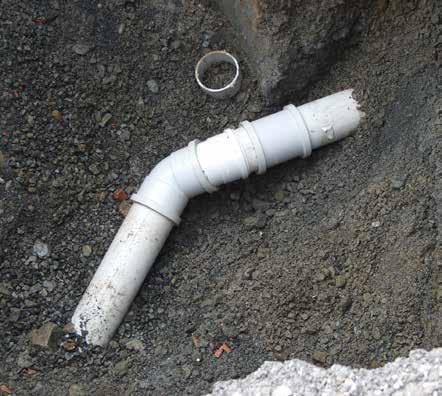
It may sound obvious but always know and comply with the manufacturer’s installation instructions! You can get these from your trade supplier or directly from the manufacturer’s website. Their purpose is to simply help you achieve a successful job, first time. Always carefully avoid getting any dirt or grit in the joint or mixed into the lubricant. Use a small brush to apply it—lube on your hands can be messy and easily picks up dirt. Drill a small hole through the lubricant container lid and push a short 50mm paint brush through the hole. That keeps the lid on and the dirt out. Simply top it up when it empties.
Seal ring joints can be easily adjusted or rotated for a short time following assembly to align the angles and fitting arrangement. Completed pipe and fitting assemblies should always have a suitable field test applied, so any issues be found and corrected before putting in service.
About the author: Frank O’Callaghan is National Technical Manager at Iplex Pipelines NZ. A professional pipeline engineer, he has more than 45 years first-hand experience with manufacturing, development, design, specification and construction of infrastructure plastic pipelines here in New Zealand and overseas.
Frank represents Plastics New Zealand on several joint Australian/New Zealand technical committees responsible for plastics pipe standards used in plastics pipe manufacturing and installation.
For any technical queries, call Iplex on 0800 800 262 or go to www.iplex.co.nz/contact
On-site wastewater systems provide wastewater management for approximately 21% of New Zealand’s population, making system performance a critical public health and environmental issue.
AUTHOR: PLUMBERS, GASFITTERS & DRAINLAYERS BOARD
Long-term performance of on-site wastewater systems relies on the integration of treatment, land disposal, installation quality and ongoing maintenance, rather than any single design element.
Domestic wastewater contains pathogens, organic matter (BOD5), suspended solids (TSS) and nutrients. Primary treatment via a septic tank provides solids separation and limited anaerobic treatment but is insufficient on its own for many sites. Modern systems commonly incorporate: Effluent outlet filters to reduce solids carry over and modulate surge flows; Secondary treatment (eg, aerated treatment plants); or
Advanced secondary treatment (eg, recirculating textile filters) to achieve lower BOD and TSS concentrations.
Where site sensitivity or exposure risk is high, tertiary treatment (typically UV disinfection in New Zealand) may be required to further reduce pathogen concentrations.
Design, sizing, construction, and maintenance requirements for domestic on-site systems are guided by standard AS/NZS 1547:2012 On-site domestic wastewater management.
AS/NZS 1546.3:2008 On-site domestic wastewater treatment units – Aerated wastewater treatment systems and technical publication TP58 provide accepted methodologies for flow assessment, risk management, and system selection across many jurisdictions.
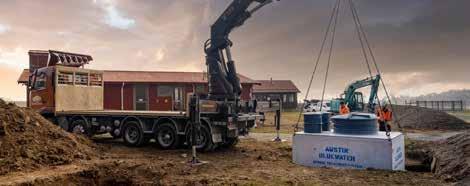
Regardless of treatment level, land disposal remains the final treatment stage. In-ground treatment relies on soil structure, biology and chemistry to weaken remaining contaminants.
Best practice disposal design requires: Hydraulic loading matched to soil infiltration capacity
Even effluent distribution across the full basal area
Avoidance of localised saturation that can promote preferential flow to groundwater.
Uneven loading, inappropriate distribution materials, or construction damage to disposal areas can negate upstream treatment gains and lead to premature system failure.
In New Zealand, NZBC Clause G13 Foul Water is the overriding regulatory requirement for on-site wastewater systems, regardless of the treatment standard or design methodology used.
Clause G13.3.4—particularly G13.3.4(d)— requires systems to be constructed to avoid contamination of soils, groundwater and waterways, except as permitted under the Resource Management Act 1991.
Practitioners must also consider Regional Council Water and Land Plans, which may impose requirements that differ from AS/NZS 1547, including limits on discharge volumes and minimum separation distances to groundwater and surface water bodies.
Technical reviews have identified cases where designs compliant with AS/NZS 1547 did not meet applicable regional plan rules.
Many system failures arise from:
Poor installation practices
Stormwater inflow and infiltration
Compaction or disturbance of disposal areas during construction
Inadequate maintenance or lack of owner understanding.
Practitioners have a key role in risk management, including compliance with consent conditions, adherence to recognised standards, and clear communication of maintenance and operational requirements to system owners.


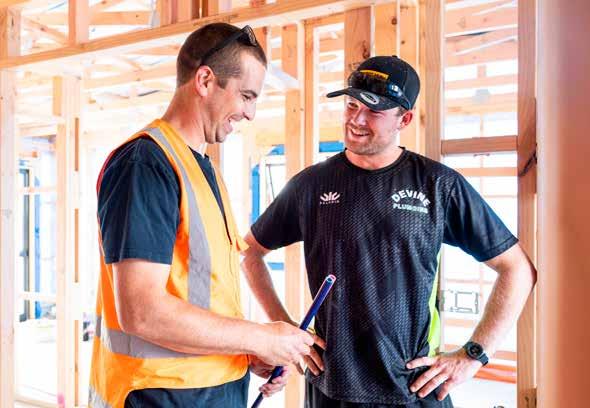
Get surface water control right on real jobs by starting with three basics, as Aqualine outlines here.
On site, surface water control can feel like the ‘last 10%’—until it’s wrong. Then it’s the first thing clients notice: ponding at thresholds, water tracking toward garages, blocked outlets after a single leaf fall, or a grate that rocks under traffic.
In New Zealand, the baseline expectation is clear: surface water must be disposed of, so it doesn’t adversely affect buildings or other property. Drainage systems should use gravity where possible, avoid blockages, and prevent leakage.
One of the most reliable ways to stay out of the call-back zone is to remain disciplined on fundamentals before selecting products.
Start with three basics: flow path, capture points, and maintenance access
Before choosing pits, channels, or grates, get clear on three questions.
1. Where is the water coming from?
Most sites deal with a mix of roof discharge, hardscape runoff, driveway falls, and wet-use areas, such as pool surrounds. The key is observing how water behaves during heavy rain: where it concentrates, how fast it moves, and where it wants to cross finished surfaces.
Residential threshold zones and driveway entries are common pressure points. These areas often need deliberate surface capture to stop water reaching doors, garages, and internal spaces.
2. Where are you catching it—point or linear?
Point capture using pits works best at defined low points: downpipe discharge locations, driveway sags, and isolated surface depressions. Linear capture via channel drainage is usually more effective where sheet flow travels across wider areas—patios, courtyards, pool surrounds, walkways and alfresco zones. Channels intercept water along a line rather than relying on a single inlet.
RELN’s Storm Drain Pro™ Hidden Channel is an example of this approach: a linear drainage
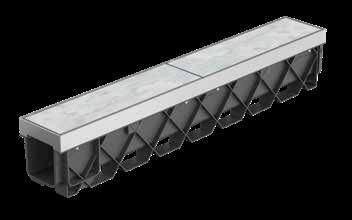
3. How will it be cleaned?
Drainage longevity depends on access as much as it does on hydraulics. If clearing debris requires tools, lifting pavers, or dismantling surrounds, maintenance simply won’t happen—and performance will degrade over time.
A practical design cue is to prioritise systems with lift-out baskets or trays and clear access to outlets. The Hidden Channel system supports this with trays that lift out using a supplied key (no tools), making routine cleaning more realistic for owners and maintenance teams.
ratings aren’t paperwork
Load ratings determine whether the install survives traffic. Pits and grates operate in the real world: vehicle wheels, turning loads, delivery trucks, and the occasional ‘it’s only a ute’ moment. That’s why AS3996 load classifications matter.
AS3996 classifies covers and grates by class A to G and assigns responsibility to the designer to select the appropriate class, based on installation location. Where there’s any doubt, the standard is clear: choose the higher class.
The takeaway is simple. If a pit or grate is in a trafficable zone— or even a potential one—treat the load rating as a core design decision, not a last-minute substitution.
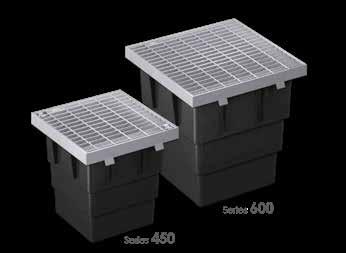
Consider strength, handling, installation when choosing the right pit for the job.
Concrete pits still have a place, but many projects come down to handling, positioning, and speed on site. This is where modern plastic pit systems can be trade-friendly without compromising performance.
RELN’s Civil Edge Pit™ range positions itself as a higherspec stormwater solution for contractor and civil markets, addressing real installation pain points: a galvanised edge frame, anti-flotation feet for installation stability, and recycled plastic construction for durability and easier handling.
The range is designed for class-rated environments, including Class D applications, with multiple grate options to suit different site conditions, rather than forcing compromises.
In practice, the real innovation isn’t just the material choice—it’s the time saved when pits can be moved, levelled, and installed efficiently, allowing installers to focus on falls, connections, and finishing details that prevent problems later.
Choosing
Linear drainage is often the right solution where sheet flow needs to be intercepted and finishes protected, particularly around high-value outdoor areas. However, standard surface grates can clash with architectural intent.
Hidden channel systems address this tension by integrating cleanly into tile, stone or paver finishes, while maintaining hydraulic capacity. RELN’s Storm Drain Pro™ Hidden Channel is positioned as a premium example, offering a seamless finish with no visible grates.
In New Zealand, stormwater drainage work is commonly assessed against Building Code expectations for surface water management, with AS/NZS3500.3 often referenced to demonstrate compliance with NZBC E1.
Across real jobs, the best-performing installs tend to share the same habits:
Tracing the flow path
Choosing capture points deliberately (pits vs channels)
Matching load ratings to the installation location
Ensuring maintenance access is realistic.
When those fundamentals are right, modern pit and channel systems make execution easier—whether that’s a classrated pit designed for trafficable environments, or a hidden channel solution that delivers architectural approval without sacrificing long-term serviceability.
About the author: For over 30 years, Aqualine has maintained its position as a market leader in New Zealand’s plumbing, gas and drainage industry, supplying DWV and stormwater fittings for all your drainage needs. Find Aqualine products at most leading plumbing merchants nationwide.




Gas, electric, and heat pump hot water heating solutions all have their place, depending on what best suits the individual property. NZ Plumber takes a look.
When it comes to choosing a hot water heating system for a property, it’s not ‘one size fits all’. Electric, heat pump, and gas systems all have different advantages. Electric water heaters remain a reliable and widely used option, while heat pumps can significantly reduce running costs by using energy from the air. Gas systems heat water on demand and suit homes with high peak usage.
Which water heater best suits a property?
NZ Plumber reached out to Rinnai and Rheem to help us develop the table below as an approximate guide. Both companies supply a wide range of water heating solutions for New Zealand households.
Specific considerations
It’s important to note that the table shown here is a rough guide only. The accuracy of which water heater is most suitable for a home will depend on several factors, including but not limited to:
1. Water pressure
Most newer homes use mains pressure, while older homes may still run low pressure systems. Most gas water heaters only work off mains pressure.
2. New build or reno
Is the water heater for a new home or replacing an existing product?
3. Household size
Depending on how many people live in the property, larger homes may need systems designed for higher demand, while smaller homes can prioritise efficiency.
4. Hot water outlets
The number of hot water taps and showers in the property.
5. Property use
How is the property normally used? A holiday home, for example, would suit on-demand gas continuous flow over electric storage, unless initial heat up times are not an issue. A group of high-rise apartments or a sports club would need commercial grade and/or spec’d water heaters (not listed in the table) to be able to deliver the required high-use demand.
6. Positioning
Will the installation be indoors (typically electric or gas) or outdoors (heat pumps and a wider range of electric options)?
To ensure fast hot water delivery to the kitchen tap, will a small electric cylinder (25L or 45L) need to be installed closer to the point of use, in addition to the water heaters used for a shower?
7. Geographical location
Northland properties will have a very different need to those in Southland.
8. Cost
Three aspects should be considered: the water heater itself, the installation costs, and the ongoing running costs, which may vary by energy source and region. Ultimately, the best solution is one that suits your home now while still allowing flexibility for the future.
Source: EECA (www.eeca.govt.nz/insights/eeca-insights/hot-water-heat-pumps-in-the-home)
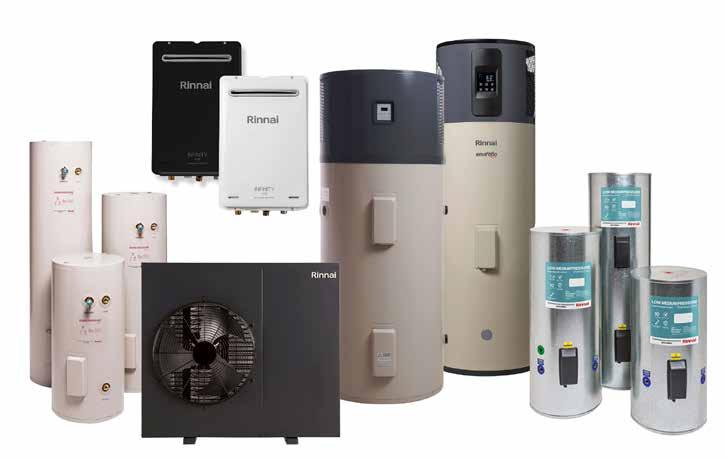
Rinnai’s hot water range of products is engineered with the trade in mind.
The Rinnai INFINITY™ remains a go-to for plumbers, delivering endless hot water on demand with compact wall-mounted units that free up valuable indoor space and simplify replacements or new builds. Their ability to handle high, simultaneous demand makes them ideal for larger homes and multi-bathroom projects.
Rinnai’s Hot Water Heat Pump range offers an energy-efficient alternative, utilising ambient air to heat water and significantly reducing running costs. These systems are well suited to homeowners looking to lower energy consumption while still achieving reliable mains pressure performance.
Rounding out the range, Rinnai’s cylinders provide dependable, familiar installation options, supporting fast replacements and consistent delivery of mains pressure hot water.
Together, Rinnai equips installers with the flexibility to match the right solution to every project.
Once you’ve narrowed down the criteria for selecting a suitable water heater, there’s still the final step of choosing the right model for the property.
The Rheem Mains Pressure Vitreous Enamel electric water heating range (25L-400L) is an ideal option for homes upgrading to mains pressure, with strong corrosion resistance across challenging water conditions.
For homes with an older low-pressure cylinder, Rheem All Pressure Vitreous Enamel (90L-250L) is the go-to for a like-for-like replacement, while also being mains pressure ready for future upgrades.
Rheem Mains Pressure Stainless Steel (135L-300L) is a lightweight electric solution and compatible with heat pump and solar systems.
Gas Continuous Flow (16-27 models) is a compact option, providing efficient hot water on demand for busy or occasional-
use homes. For larger households and multiple bathrooms, Gas Storage (130L-170L) provides high delivery mains pressure hot water.
For energy-efficient water heating that uses heat from the air to help lower running costs, the Rheem Heat Pump range (180-280L) is the way to go.
Designed, manufactured, and tested in New Zealand, Rheem has been a trusted choice for plumbers and homeowners for over 60 years.
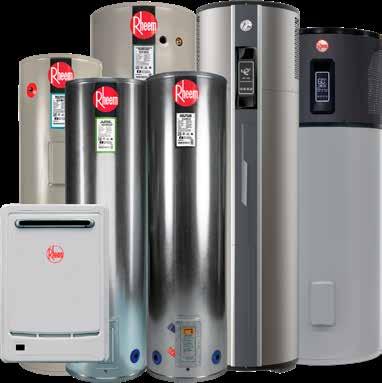
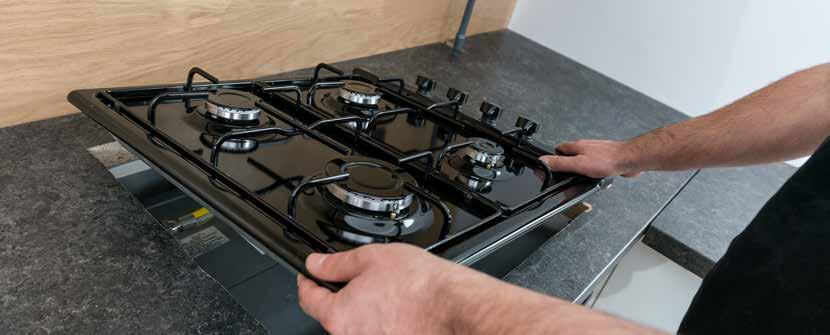
Clearance requirements around gas appliances are one of the most common topics for technical enquiries received by the Plumbers, Gasfitters and Drainlayers Board. This article sets out practical guidance to get it right first time.
AUTHOR: PLUMBERS, GASFITTERS AND DRAINLAYERS BOARD (PGDB)
Most questions about clearance requirements relate to appliances installed too close to combustible materials, uncertainty about manufacturer requirements, or confusion between indoor and outdoor installations.
Many clearance issues arise from assumptions rather than deliberate non compliance.
Examples include accepting an installation because ‘it fitted’, assuming an outdoor location removes clearance requirements, mixing clearance requirements from different appliance models, and not accounting for later additions such as cabinets, shelves, or TVs.
Someone else, such as a joiner, may cut the gas cooktop opening in the benchtop and potentially ignore manufacturer instructions relating to clearances to combustible surfaces.
Clearances are a core safety requirement for all gas appliance installations. Adequate separation from surrounding surfaces reduces the risk of fire and heat damage, helps prevent overheating and ensures appliances can be safely operated, serviced, and inspected.
Clearances also support compliance with manufacturer instructions and New Zealand gasfitting standards.
Where clearances are reduced or overlooked, the PGDB regularly see non compliance identified at inspection, often resulting in avoidable rectification work.
Clearance requirements vary by appliance type and installation context. The sections below summarise the areas that most often cause issues in practice, and what to check before you sign the job off.
Clearances are critical above, behind, and to the sides of gas cooktops.
Rangehoods or overhead cabinetry installed too close above the cooking surface
Combustible splashbacks not suitable for heat exposure
Reduced clearances where cooktops are retrofitted into existing joinery (the clearances above gas hobs have been increased in AS/NZS 5601.1:2022).
Check the appliance installation manual before work begins
Where more than one appliance applies (eg, a cooktop and a rangehood), the larger clearance requirement will usually govern Treat timber, laminate, and composite boards as combustible unless their heat rating is clearly confirmed.
It is common to assume outdoor appliances have ‘no clearance issues’, but clearances still apply and are a regular cause of rework when appliances are installed under covers or too close to nearby structures.
Common issues
BBQs installed under timber structures without sufficient overhead clearance
Appliances placed too close to fences, walls, or storage units
Installations in enclosures that effectively create an indoor environment without suitable ventilation.
Good practice
Maintain side, rear, and overhead clearances even outdoors, and take extra care where an appliance is under cover or partially enclosed
Confirm whether the BBQ is approved for enclosed or semi enclosed spaces before proceeding.
Fireplaces and space heaters can produce significant radiant heat, so clearances are often the deciding factor for where mantels, shelving, and TVs can be safely located.
Common issues
Mantels installed below the required clearance height
TV units or shelving added later within the heat zone
Installers relying on general rules of thumb rather than the appliance’s installation data.
Good practice
Measure clearances from the installed appliance (not just plans)
Check all directions including flue components
Document the confirmed clearances at installation.
Installations near combustible linings and joinery remain a frequent source of technical calls, particularly where the combustibility of materials is assumed or where shielding is relied on without confirming the full installation details.
Common issues
Assuming that thin materials do not count as combustible
Thinking that heat shields automatically remove clearance requirements
Relying on appliance panels as sufficient protection.
Good practice
Treat plasterboard, cabinetry and decorative panels as combustible unless confirmed otherwise
If heat shields are used, ensure they are designed, spaced, and installed correctly to be effective
When in doubt, check Appendix C in AS/NZS 5601, and increase clearance rather than reduce it.
For outdoor installations, clearance considerations also extend to flue terminals, ignition sources, and nearby openings such as windows, doors, and vents.
Common problems
Flues terminating too close to eaves or openings
Outdoor heaters installed where gas can collect in enclosed or poorly ventilated areas.
Good practice
Check when installing an outdoor appliance that the clearances to a bathroom or kitchen ceiling vent outlet from the flue terminal are not compromised by the electrician installing the bathroom or kitchen vent after your installation has been completed.
Measure clearances during installation, not after the fit off Confirm the combustibility of nearby materials
Re check clearances after any modification or appliance replacement
Record relevant compliance details on certification and in job documentation, so the installation is compliant
Clearances from outdoor appliance flues have increased in AS/NZS 5601.1:2022.
Please note, this is indicative only. Always follow the manufacturer’s installation instructions. Where instructions differ from the NZ gas installation standards, the appliance specific requirement applies.
Appliance type
Cooktops/hobs
BBQs
Fireplaces
Indoor heaters
Outdoor appliances
Common clearance risk
Overhead and adjacent cabinets and splashbacks
Overhead coverings, side fences
Mantels, TVs, timber surrounds
Side walls, floor protection
Flue terminals, enclosed spaces
Manufacturer instructions must be followed, and required clearances should be documented in a way that is clear and compliant. If you are unsure about a clearance requirement, seek technical advice before signing off.

& VERIFIED DESIGNED TOMEET AS/NZS 1260 & NZ BUILDING CODE
Complies with NZ Building Code & AS/NZS 1260

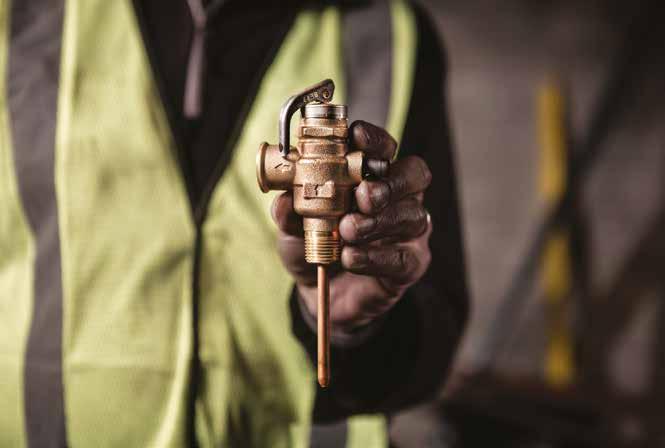

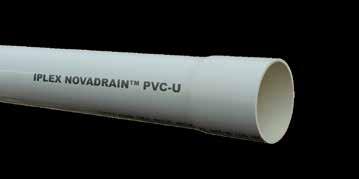

What happens when a metallic water pipe that was being used as a property’s main earth gets cut and replaced with plastic pipe? Master Electricians NZ has advice.
In homes built before 1976, it was acceptable to use the main galvanised water pipe as the earth electrode to connect the building’s electrical system and the earth. In fact, it was one of the best methods available, because there was plenty of surface area contact with the soil. Unfortunately, using this type of water pipe as the main earth also creates hazards for those unaware of them.
An earth electrode provides a path for fault currents. Without a good earthing system, the protective devices designed to keep us safe may not operate correctly, potentially leading to life-changing or fatal injuries.
As galvanised pipes age, the zinc coating gradually wears away, making the household’s water look brown and murky. The only real way to deal with this is to remove the old pipework and start again. Typically speaking, this involves replacing the whole pipe, not just a section. Regardless, any alteration may affect the safety of the system.
Whenever a metallic water supply pipe, or section of pipe, is replaced with nonconductive synthetic pipe, a dedicated earth electrode should be installed, according to AS/NZS 3019:2022 Electrical installations – Periodic assessment
Installing a new main earth electrode like this one must be done by a currently licensed electrician, electrical engineer or electrical inspector.
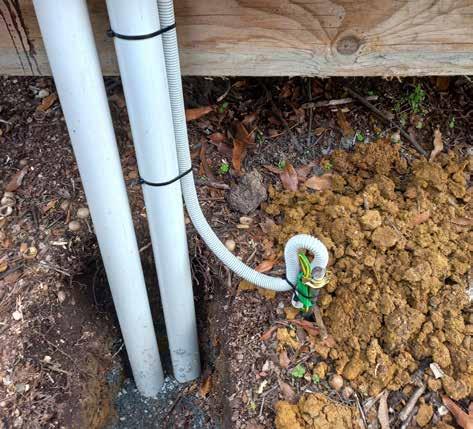
Not doing so can create a serious and immediate safety risk, both to the person cutting the pipe and subsequently to the homeowner.
Plumbers may be familiar with seeing a wire—sometimes with green insulation— coming off the metal clamps attached to metal pipes. These are used for equipotential bonding, which connects all metallic, non-electrical parts together to equalise their voltage, preventing shocks if someone touches two items with different potentials, such as a metal pipe and a metal benchtop.
Earthing is different from bonding. Earthing provides a direct, low-resistance path to the earth (yes, the literal ground we walk on) for fault currents. If there’s an electrical fault, the large current surge causes the tripping of the circuit breakers and RCDs that protect us against electric shock.
The earthing system acts like a huge sink, sucking up all that electrical energy that would otherwise seek to cause us harm in fault conditions.
Unfortunately, the clamps used for bonding other service pipes can look identical to the connection of the main earth electrode—in this case, the main water pipe.
The first clue that the clamp may be the main earth will be its location, typically under a house and near the soil.
Due to the nature of renovations and alterations to properties over time, we cannot always be certain the main water pipe was being used as the main earth. Sometimes the connection to this pipe has been covered by debris, or a new main earth has been installed, with the old wire connected to it left behind to act as a bonding conductor.
Sometimes the clamp is placed in a precarious position—accessible, but not easy to spot.
This is why care is needed when working on such jobs.
All the water piped into a house must come out eventually, one way or another. It’s much the same with electricity. All the energy that comes in on a live conductor should go out on a neutral cable. When this doesn’t happen, typically we have a problem.
If, for example, the neighbouring property has a broken neutral cable, or a bad neutral connection, the current that is meant to flow through the neutral back to the transformer will take the path of least resistance.
It could flow through the link between the neutral and earth bars, down the main earth for that property, through the wet soil and back up the main earth cable of the property you are working on.
This means when you go to cut through that pipe, there is a chance you are effectively cutting into a live conductor.
Electrical workers are aware of this hazard and have procedures to check for this condition before doing work. If you suspect you are about to cut into what is being used as a main earth electrode, call an electrician to come and check for you.
When a main earth conductor no longer has connection to ground, this creates a dangerous situation. The installation is considered ‘electrically unsafe’ and, as per Regulation 19 of the Electricity (Safety) Regulations 2010, this triggers a notification to the owner or occupier of the building and WorkSafe as soon as is practicable.
If a plumber cuts out the main earth and doesn’t get it fixed, there are potential noncompliance consequences.
Clause G10.3.1 (c) of the Building Regulations 1992 stipulates that piping systems must be constructed to avoid adverse interactions, such as physical contact or leakage, with electrical systems.
Cutting a pipe—particularly when it causes leakage, damage, or brings metallic piping into contact with electrical wiring— constitutes a breach of this regulation.
As a plumber, you also have a legal obligation under the Electricity (Safety) Regulations 2010 to ensure your work does not make electrical installations unsafe.
Requirements include:
Piping must be installed and maintained to prevent damage and avoid adverse interaction with electrical installations.
If you damage an electrical cable or service while cutting pipework, it must be treated as ‘live’, the area isolated, and the service owner contacted immediately. Plumbers must avoid placing water pipes close to electrical components (eg, in service ducts) and ensure no direct contact occurs.
Anyone doing work on installations must ensure the work has not affected the safety of other parts of the building.
Failure to comply can result in a hefty fine.
Now, you might ask, if I cut the pipe after the earthing clamp and the pipe stays in the ground, no longer being used as the main water pipe, why can’t it be left there as the main earth electrode?
The issue is that it’s not possible to ascertain the depth, length and condition of the pipe without digging it all up, so it becomes vastly impractical to certify it as being compliant.
It was commonplace to connect bonding straps from one pipe to another further up the system, so you may be removing the continuity of bonding required by the other parts of the property.
By cutting a pipe used as main earth, you are making an alteration to the earthing system. Alterations can typically be done to the standards that applied at the time, but only if they comply as a minimum with the Electricity Regulations 1997, which do not allow the main water pipe to be used as the main earth electrode anymore.
Anyone doing this kind of pipe replacement work should take additional steps to ensure they are not negatively impacting the property and creating a dangerous situation.
Installing a new main earth electrode must be done by an electrician, electrical engineer or electrical inspector with a current practising licence.
In some cases, it may be possible to extend the old cable to a new electrode.
In any event, this will trigger a mandatory Electrical Inspection with a Record of Inspection, which gets entered into the Electricity and Gas High-Risk Database against the property address.
If you’re unsure about any work on a property’s main galvanised water pipe, call an electrician or electrical inspector. Find a Master Electrician at masterelectricians.org.nz/for-consumers/ only-use-a-master-electrician
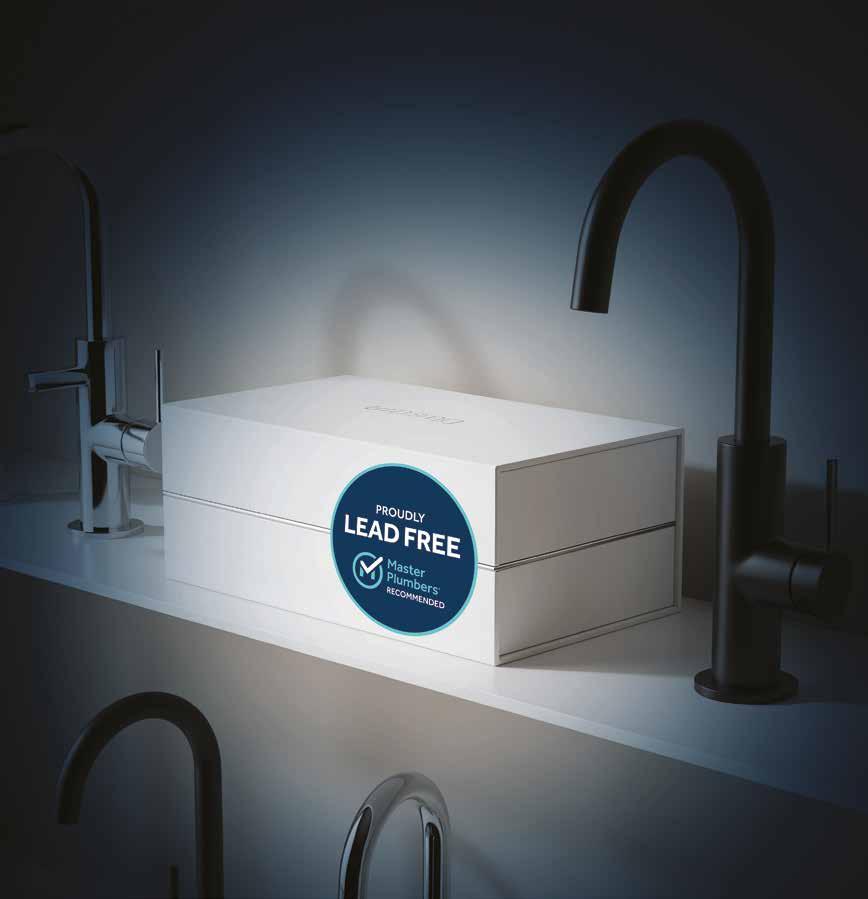

With solid DR Lead-Free Brass construction, the 6-star rated, all pressure Le Vivi Timer tap is built for water conservation in high-demand commercial and industrial settings. With a single water feed (hot/cold/mixed), installation for your team is a breeze. With a full 5-year warranty and parts and after sales support, this will make a great addition to your specification portfolio.
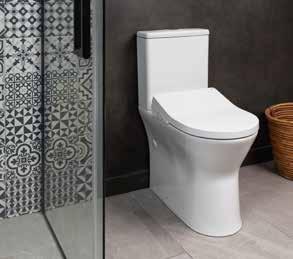
The Adesso Mode vanity range by St Michel brings a refined, architectural sensibility to the bathroom, balancing clean lines with practical performance for modern living. Designed and made in New Zealand, Adesso Mode is defined by its decorative front detailing, available in two distinct styles that introduce texture and depth. A sculpted, scalloped finger-pull is formed directly into the decorative panel, a considered detail that creates a natural point of interaction while maintaining a clean, handle-free aesthetic. With a comprehensive range of sizes to suit a variety of spaces, and a refined palette of finishes, Adesso Mode offers a consistent, considered solution designed to perform in everyday environments. Exclusive to Mico and PlaceMakers
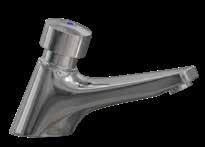
Bidet seats are moving from niche upgrade to a smart, technically sound bathroom solution and plumbers are at the centre of that shift.
Introducing the Englefield D-Shape Bidet Seat, delivering instant warm-water cleansing, heated seating, air drying and intuitive remote control in a retrofit-friendly format designed to suit common D-shape toilet pans used across New Zealand.
What sets the solution apart is system integration.
Englefield now offers complete combinations such as the Evora Integrated Toilet Suite with D-Shape Bidet Seat and Tivoli Integrated Toilet Suite with D-Shape Bidet Seat, pairing rimless toilets with a bidet seat incorporating built-in high-hazard AVB backflow prevention, removing the need for separate RPZ devices.
Backed by a 3-year replacement warranty on the bidet seat, these integrated systems give plumbers fewer components to install, clearer compliance pathways, and a future-ready solution that balances hygiene, performance, and long-term confidence.
Find out more at https://englefield.co.nz/d-shape-bidet-seat
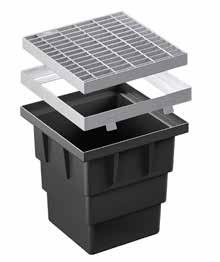
The RELN Civil Edge Pit™ is a high spec stormwater pit range engineered for civil and contractor applications where performance, compliance and installation confidence are critical. The Civil Edge Pit™ Series 450 and 600 combine high AS3996 load ratings with practical, on site efficiency—giving contractors confidence from installation through to long term service. Manufactured from tough recycled plastic, the pits are up to 17 times lighter than traditional concrete alternatives, reducing manual handling strain, accelerating placement, and simplifying transport without compromising strength. Integrated anti flotation feet securely anchor the metal edge frame during installation, ensuring long term stability in demanding conditions. Certified to AS3996 Class A, B, C, and D load ratings and supported by a range of interchangeable grate options, RELN Civil Edge Pit™ delivers a robust, trade friendly system. It installs faster, meets specification with confidence, and performs reliably across residential, commercial, and civil stormwater applications.
An easy upsell that’s now even easier to install Marley’s next-generation Curve downpipe leaf diverter has been reworked with plumbers and installers front of mind. The result is a unit that’s easy to install at shoulder height and offers an attractive added extra for the homeowner. When you’re fitting a downpipe, adding a Curve is a simple way to add value to the job while improving rainwater collection. Curve now handles higher rainfall rates more efficiently, maintaining flow performance even in heavy downpours. The new design significantly reduces splash off with less than 1% water loss at 134 litres per minute. A few smart refinements have made Curve installation quicker and more flexible on site. Curve uses the same glueless installation approach plumbers are familiar with and includes a stick on cutting template. It fits standard 80mm round uPVC or steel downpipes
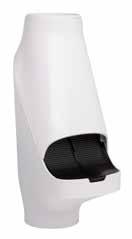

and, with an additional adaptor, can even be made to fit 65mm downpipes. Effective leaf and debris diversion plays a key role in keeping tanks, downstream drainage, and stormwater systems flowing freely, reducing the risk of blockages and overflow during heavy rain. For plumbers, Marley Curve remains a straightforward, added value sale that fits neatly into any downpipe install.
The Makita 40Vmax XGT Brushless 125mm Circular Saw delivers fast, controlled cutting with a high-efficiency brushless motor and Automatic Torque Drive Technology (ADT), powering through 45mm framing timber in a single pass. ADT automatically adjusts performance under load for consistent results in a compact cordless design. A tool-less removable subbase enables flush cutting, while a -15° negative bevel is ideal for close-to-wall applications, extending to 45° for standard bevel cuts. Precision features include fine cuttingdepth adjustment, accurate base squareness tuning, and a rigid aluminium base plate for clean, controlled cuts. Anti-Kickback Feedback Technology (AFT) enhances safety by stopping the blade if rotation speed drops suddenly. An LED job light with pre- and after-glow improves visibility, while a blower function and AWS compatibility support dust management. Built tough, it features an aluminium die-cast base and XPT protection for demanding job site conditions.
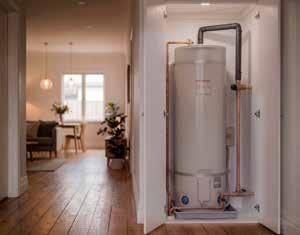
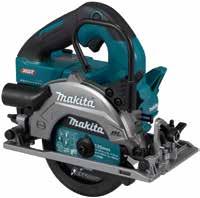
The Rinnai EasySwap™ 180L indoor hot water cylinder has been developed with one clear goal: make cylinder replacements faster and simpler for plumbers. Designed and purpose-built for direct-swap applications, the EasySwap™ cylinder aligns with 180L top-port configurations, meaning minimal pipework changes on typical retrofit jobs. For installers, that translates to reduced time on site and more predictable installs—particularly when working in tight or existing cupboard spaces. Constructed with a durable enamel-lined cylinder and anodic protection, the Rinnai EasySwap™ cylinder is designed to perform reliably across a wide range of New Zealand water conditions. The unit is mains pressure, rated to 850kPa, and available in both 2kW and 3kW element options. A Coloursteel® jacket provides a clean, modern finish, helping deliver a noticeable upgrade for customers. Backed by a 7-year cylinder warranty, the Rinnai EasySwap™ cylinder offers a practical, installer-focused solution for everyday replacement work.
For fast, clean shower installs
For tradies and plumbers looking to streamline bathroom installs, SlateForma® offers a practical alternative to tiled shower floors. This one-piece composite tray eliminates grout lines, making it easy to clean and quicker to install. At just 25mm high, the low-profile design allows for a near seamless transition from bathroom floor to shower and can be rebated for level entry, ideal for modern builds and accessible bathrooms. Unlike tiled options, it doesn’t require additional waterproofing, helping reduce both labour time and overall project costs. The tray features a durable gel coat finish designed to replicate natural slate, available in three colours: chalk, stone and anthracite. Aluminium upstands are customfitted in Auckland to suit your installation, ensuring a precise fit on site. With high slip resistance comparable to P4-rated surfaces, SlateForma® delivers on safety, efficiency and finish, making it a smart choice for new builds and renovations alike.
SlateForma® Shower Trays by Athena Bathrooms are available through leading plumbing merchants nationwide. Visit athena.co.nz
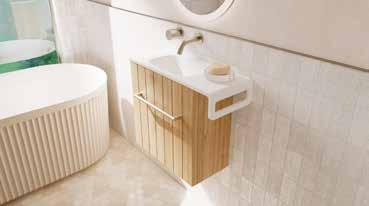
The Array Serifos Hand Basin with Towel Holder from Athena is a smart solution for tight spaces, designed with plumbers and installers in mind. Ideal for powder rooms, guest bathrooms, minor dwellings and compact layouts, it offers a clean, functional setup without compromising on style.The unit features a durable matte vanity top with a compact footprint, plus an integrated ‘waterfall’ towel holder, reducing the need for additional fittings and saving install time. Its streamlined design allows for straightforward wall mounting and efficient use of space. Available in four front panel styles and five thermoform colour options, it’s easy to match across a range of projects and client preferences. Built for practicality, durability and ease of installation, the Serifos range is a reliable choice for modern bathroom builds and renovations.
Available through leading plumbing and building merchants nationwide.
The research and development team at Buteline continues to highlight the strength of a New Zealand-owned and operated business. By working closely with customers, the company gathers practical feedback and turns it into innovative product solutions. In response to industry demand, Buteline has launched a new range of transition fittings, designed to connect green Polypropylene Random Copolymer (PPR) pipe to both Buteline and Pexline systems. These fittings are a first for New Zealand, enabling plumbers to crimp directly onto PPR, improving efficiency and ease of installation.
PPR Pipe to Buteline:
PPR 16mm x Bute 15mm – PPRB1615
PPR 20mm x Bute 20mm – PPRB2020
PPR 25mm x Bute 28mm - PPRB2528
PPR Pipe to Pexline:
PPR 16mm x Pex 16mm – PPRX1616
PPR 20mm x Pex 20mm – PPRX2020
PPR 25mm x Pex 25mm - PPRX2525


Further additions to the range are expected soon.

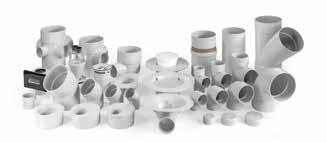
Allproof manufactures uPVC DWV pipe and a comprehensive range of uPVC drainage fittings in New Zealand, providing the industry with a genuine quality option backed by the trusted Allproof brand. This locally produced system supports residential and commercial applications where reliability, consistency and compliance are essential. Produced from unplasticised PVC (uPVC), the range offers strong chemical resistance, dimensional stability, and long-term durability for drain, waste and vent installations. Suitable for both aboveand below-ground use, the pipe and fittings are robust yet lightweight for ease of handling and installation. The range includes pipe, bends, junctions, gullies, and specialist fittings, enabling complete system solutions designed to meet New Zealand and AS/NZS standards. Local manufacturing supports efficient supply and reliable product availability across a wide range of project types. Allproof’s uPVC DWV pipe and fittings are Watermark certified to AS/NZS 1260, with an ongoing commitment to quality and continuous product development.

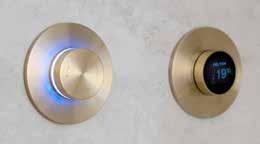
Elevating everyday routines
Transform daily bathing into a luxurious ritual with the Linea Digital Thermostatic Shower Mixer and Wall Mounted Basin/Bath Mixer. With effortless, touch-button temperature control, these sleek fittings bring precision and comfort to modern bathrooms. LED indicators, built-in safety features and a minimalist aesthetic combine innovation with everyday ease. Pre-set at 38°C, the thermostatic mixer maintains a consistent temperature, preventing sudden fluctuations—even when other taps are in use—making it a safer choice for families with children or elderly users. Unlike traditional systems, the mixing unit is separate from the controller, allowing flexible installation in ceilings or vanities for convenient access. Designed for mains pressure systems (up to 500kPa) and powered by low-voltage DC12V, Linea Digital delivers energy-efficient performance without compromising on comfort. Available in chrome, black and a range of PVD finishes through local plumbing merchants.
Find out more at www.felton.co.nz/digital
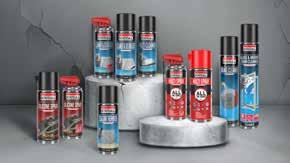
Soudal’s new Technical Aerosol Range is built for plumbers and gasfitters who need products that work fast and keep jobs moving. From freeing seized fittings and lubricating valves to protecting tools and components, these aerosols deliver reliable performance on site and in the van.
Pro grade cleaning and lubrication for tough environments
Precision spray control to hit the exact spot, every time
Fast acting formulas that save time on the job
Built tough for construction, automotive and industrial maintenance.
PRODUCT SPOTLIGHT:
One can, eight powerful functions: lubrication, penetration, corrosion protection and moisture control. A true multi tool aerosol, available in leading plumbing stores nationwide. One can, eight powerful functions— it works as a rust remover, lubricant, cleaner, water repellent, penetrating oil, corrosion inhibitor, contact spray, and shock spray. A true multi-tool aerosol, available in leading plumbing stores nationwide.


The first half of 2026 has seen New Zealand communities battered by extreme weather, putting extra pressure on plumbing businesses called to assist. Master Plumbers has resources for members dealing with emergency callouts and recovery work.
Storms, high winds and floods are becoming more common, causing sudden and devastating damage where they hit. This year to date, we’ve already seen states of emergency declared in several parts of New Zealand.
This can leave plumbing, gas and drainage businesses struggling to cope with unusually high numbers of urgent callouts and a big recovery workload for their communities.
The Master Plumbers branch network can be extremely valuable at times like this, with members from neighbouring regions willing to lend a hand.
For affected branches, all that’s needed is a freephone call to the Master Plumbers national office and the team will do all they can to assist with response coordination.
Branches also have access to the emergency response trailer, which was commissioned by the Hawke’s Bay Branch with industry funds raised in the aftermath of Cyclone Gabrielle. The trailer is
fitted out with a GPS tracker, full alarm system and power pack so it can run off grid. It also has storage space for water and fuel, rescue gear and health and safety equipment.
The Master Plumbers website has a dedicated web page with emergency management guidance. This includes links to resources to help your business prepare an emergency plan, manage safety risks, and carry out recovery work.
Plus, if your business provides emergency callouts, you can now highlight this service to customers on the online Find a Plumber search facility.
Extreme weather can disrupt your own business operations and cause considerable stress. The Master Plumbers HR Helpline is on hand to answer employment queries and point you in the direction of wellbeing support.
Stay safe out there.

“ We recently did a job for a customer that required new piping in their house. Unfortunately, one of the joins was not crimped and, while the customer was travelling, water leaked and saturated the floor. The carpet was badly stained and can’t be cleaned or repaired. Parts of the flooring also swelled up and need replacing. We have fixed the join where the water was leaking, but what should we do next?”
When a plumber accidentally causes damage to a customer’s property, like the example above, the incident is typically covered under public liability insurance.
Public liability insurance is designed to protect tradespeople against claims of third-party property damage or injury arising from their business activities. This includes situations where workmanship faults cause damage to someone else’s home or belongings.
So, while the repair of the faulty workmanship sits with the plumber, the damaged caused as a result is the kind of incident public liability cover would respond to.
From a claim perspective, while motor vehicle claims remain the most common Gallagher Insurance see in the industry, liability claims are the next largest category, with an average claim value of around $9,500.
The majority of these relate to public liability claims arising from plumbing, gasfitting or drainage work.
This often includes:
Water escape from joints, valves or fittings—sometimes discovered long after the work was completed
Accidental damage caused onsite while work is carried out
Rectification costs where third-party property has been affected.
1. Contact your insurance broker immediately. The sooner the insurer knows what has happened, the smoother the path ahead will be. Be prepared to share everything you can: photos, your work process, what materials you used, who was onsite, and any relevant certifications.
2. Ask your customer to lodge a claim with their own house insurer. This is the most efficient way to get their home restored.
Their insurer will handle the reinstatement work, like replacing the flooring and carpet, far quicker than waiting on the liability process alone. Once the dust settles and liability is confirmed, your customer’s insurer will simply recover their costs from your insurer.
3. Resist the urge to race ahead with repairs beyond making the site safe. Insurers often need to see the damage themselves or engage an assessor.
Tidying too much, too soon, can unintentionally complicate things.
At Gallagher, the team understand that even the most capable professionals can encounter the unexpected. What matters most is how you respond.
By taking these steps, you’re demonstrating accountability, safeguarding your business, and helping ensure your customer’s property is restored quickly and with minimal disruption.
You can count on Gallagher to support you throughout the entire claims process, providing guidance and expertise every step of the way. For more information on how liability insurance can support your business, get in touch with Gallagher today: masterplumbers@ajg.co.nz


If you think employees may be doing private cash jobs for mates or family outside of work, let them know of the risks to them—and you.
It can be tempting for employees to help out friends and family by doing a quick cash job outside of work hours. Trouble is, it comes with more risks than it’s worth. Here are 10 good reasons why to turn the work down.
1. Breach of employment agreement
Most employment agreements contain clauses relating to secondary employment, conflicts of interest, duty of good faith and use of employer resources.
Carrying out cash jobs outside of employment may breach these clauses. Competing directly with your employer, using their clients, or diverting work may constitute serious misconduct.
Using company vehicles, tools and materials could justify disciplinary action, including dismissal.
2. Tax evasion
Accepting payment in cash doesn’t remove tax obligations.
Cash jobs are often not declared to Inland Revenue, which may result in prosecution for tax evasion, tax reassessments, penalties and interest charges.
3. Licensing risks
Carrying out restricted work outside authorised scope can lead to complaints to the Plumbers, Gasfitters and Drainlayers Board. This could result in disciplinary proceedings, fines and suspension or cancellation of the person’s licence.
Gasfitting and sanitary plumbing work requires proper certification and compliance documentation. Failure to provide this can breach regulatory obligations.
If the employee doing the private cash job is an apprentice, or holds a limited or provisional licence, the job can also expose their supervisor to investigation and potential disciplinary action.
4. Health & safety liability
Any person conducting a business or undertaking (PCBU) has health and safety duties under the Health and Safety at Work Act. So, if you undertake private work, you may personally become a PCBU. This means you are responsible for health and safety compliance and may be personally liable for unsafe practices.
If an accident happens, ACC may cover injury, but you may face a WorkSafe investigation, personal fines and even prosecution in serious cases.
5. Insurance risks
Employer insurance policies generally don’t cover unauthorised private work. If something goes wrong, the individual could be personally liable for property damage, fire or explosion, flooding or structural damage, and legal costs.
Claims can run into hundreds of thousands of dollars.
6. Consumer Guarantees Act disputes
The person carrying out private work may be considered to be ‘in trade’ under the Consumer Guarantees Act 1993.
You can’t contract out of the Act in more residential situations and customers could pursue disputes through the Disputes Tribunal or courts.
7. Reputational damage
Complaints about private jobs often reflect badly on the employer and wider industry. They can damage the employer’s brand, undermine trust in the workplace, and damage your own professional reputation.
The client may believe the company has endorsed or authorised the work, even if it hasn’t—particularly if the employee is using a branded company vehicle.
If something goes wrong, the client may contact the company and insurance disputes may follow.
8. Potential criminal prosecution
Depending on circumstances, cash jobs may involve tax evasion, fraud (if using employer materials or accounts) and theft (if misappropriating materials or time). Serious cases may result in criminal prosecution.
9. Dismissal possibilities
If a cash job involves dishonesty, misuse of company property, competing business activity or loss of trust and confidence, the employer may have grounds for investigation, disciplinary action and summary dismissal for serious misconduct.
10. Career impacts
Short-term financial gain may result in long-term professional damage for the employee doing an unauthorised private cash job. It could impact future employment references, promotion opportunities, industry relationships and licensing reputation.
Licensed tradespeople operate in a highly regulated industry. What might seem like a small out-of-hours cash job can have serious consequences for an employee’s employment, their licence and the professional standing of their supervisor and the company they work for.

Master Plumbers has developed a fact sheet for employers to share with their employees on the risks of accepting private cash jobs. Available for member download in the Member Toolbox at www.masterplumbers.org.nz, under HR & Employment.
When your only income comes from your employment, your boss takes care of most of your tax hassles for you. But as soon as you start doing cash jobs on the side, you need to start filing and paying your own taxes.
Every year Inland Revenue receives hundreds of tip-offs about tradespeople not declaring cash income. When it’s about a plumber who is an employee, and not declaring any cash income, it’s usually obvious what’s going on.
The consequences are serious. The IR can look into your bank accounts, trade accounts and EFTPOS transactions. If you haven’t told them what your real income is, they can estimate what they think it was based on available information.
Then you’ll need to pay the tax you owe, plus interest that has kept building up for as long as you haven’t been paying what you should have, and you may also face big penalties. New Zealanders have to pay tax on their income, whether or not it is earned as an employee or through jobs on the-side.
It’s how NZ pays for the things that make it a great place to live and work.
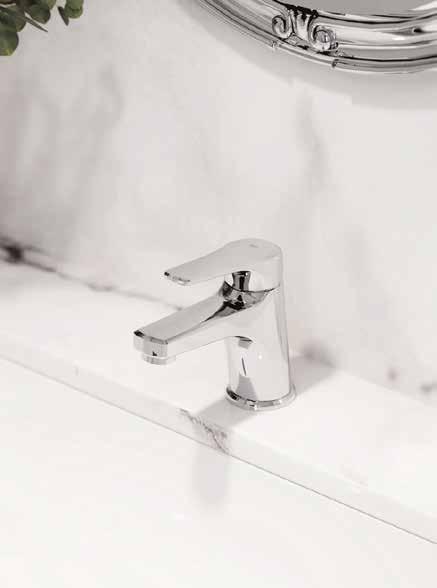


Introducing Greens Tapware’s new Lead Free Trade Ranges. Marrying design with functionally these ranges are both stunning and highly practical.

Greens Tapware - designed and engineered in NZ since 1935 – fostering the plumbing industry today for a bright future tomorrow.
The smartest employee retention strategy is simple: be the kind of employer your people won’t want to walk away from, as Lisa Duston explains.
AUTHOR: LISA DUSTON, PEOPLE & CULTURE MANAGER, MASTER PLUMBERS & MASTERLINK
In a tight market, it can be tempting to look over the fence and admire someone else’s fully trained tradie and think, I’ll have that, thanks. But before you try to lure away another business’s hard-earned team member, it’s worth asking yourself: how would I feel if someone did it to me?
Our industry is too small, and too stretched, for a game of tradie tug-of-war. Pinching staff from each other might solve a short-term problem, but it does nothing to fix the bigger one. We need more skilled people in the industry, not just the same ones moving around in different uniforms.
That is why building a workplace where people want to stay matters so much. Good pay is important, sure… but a great culture is what keeps people. Do your employees feel respected? Do they get decent communication, proper support, and a bit of flexibility when life happens? Do they know their effort is noticed, not just expected? Are they learning, growing and feeling like they have a future with you? When people feel valued, they are far less likely to be tempted by the business down the road offering a shiny ute and a slightly higher hourly rate.
And let’s not forget apprentices. If we want a stronger industry, we need to grow our own talent. That means investing time into training, mentoring and developing the next generation—not just hoping someone else will do the hard yards and then swooping in once they’re productive. A strong business is not built on poaching. It is built by leadership, loyalty and a culture that people don’t want to leave.

Looking for guidance around employee retention strategies? Give Lisa Duston a call on the Master Plumbers HR Helpline. Find contact details at www.masterplumbers.org.nz under Member Benefits.

Tradies are good at pushing through. Tired? Keep going. Sore back? She’ll be right. Stressed? Just crack on. It’s a mindset that gets the job done… until it doesn’t.
AUTHOR: LISA DUSTON, PEOPLE & CULTURE MANAGER, MASTER PLUMBERS & MASTERLINK
Here’s the thing. Fatigue, stress and burnout don’t just affect wellbeing. They are health and safety risks too.
A worker who is running on empty is more likely to make mistakes, miss hazards, lose patience, cut corners, or have slower reactions. That’s when things go wrong—not always because someone is careless, but because they are exhausted, distracted or under too much pressure.
In our industry, we’re pretty good at spotting physical risks. We know to watch
for slips, trips, tools, vehicles, and working at height. But sometimes the bigger risk is the one you can’t see straight away: the worker who has been doing long hours for weeks; the apprentice who’s too overwhelmed to speak up; or the team member who isn’t quite themselves but keeps saying they are “fine”.
Looking after your crew doesn’t mean wrapping them in cotton wool. It means running a smart business. Good planning, realistic workloads, proper breaks, decent communication, and checking in with your people all make a difference. So does creating a culture where speaking up is seen as a strength, not a weakness.
Because ‘tough’ shouldn’t mean running yourself into the ground. And ‘good at your job’ doesn’t mean carrying stress and exhaustion like some sort of badge of honour.
The best workplaces know looking after people is not separate from health and safety—it is part of it.
So yes, work hard. Take pride in the job. But if your team is cooked, stretched too thin, and trying to push through at all costs, that is not toughness. That is risk.
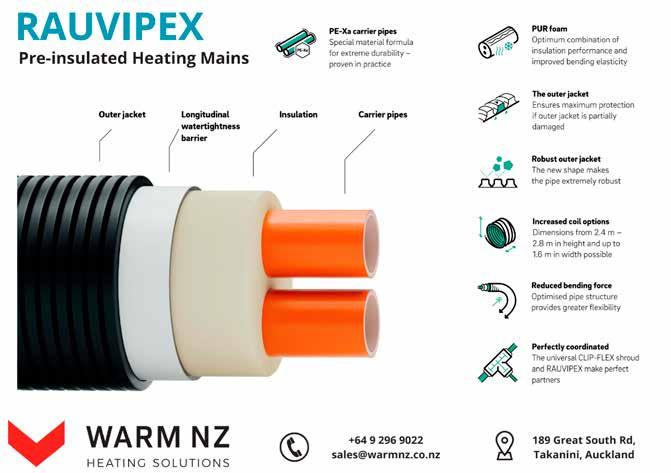





From compact units to full-house systems, each Allflow pump chamber comes fully assembled with an industrial rated vortex or grinder pump ready to handle stormwater, greywater, or wastewater. Fully assembled, quick to install – get in, get it done, and move on.

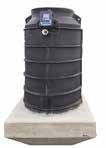
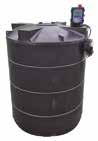


Young apprentice Charlie Gilchrist has defied the odds to complete his drainlaying qualification after a life-threatening accident.
At just 19 years old, drainlayer Charlie Gilchrist has already faced challenges that would test even the most seasoned tradesperson.
A devastating accident in January 2025 left Charlie with extensive injuries, including 18 broken bones, a broken neck, brain bleeds and collapsed lungs. He spent four weeks in a coma followed by months of recovery. Yet, against the odds, he has achieved
something many thought unlikely—returning to work and completing his drainlaying qualification.
Behind that achievement was a whole heap of determination, together with a strong support network, including family, his employer Probuilt Earthworks, and the team at Skills Trades Training, who were all there for him throughout his apprenticeship and recovery.
Charlie always knew he wanted to work in the trades. Growing up with his grandparents, mum and three siblings in Whitford, a small coastal village to the east of Auckland city, he left school midway through Year 12 to pursue an apprenticeship.
With an uncle who runs a building company, Charlie had early exposure to construction. But it was drainlaying that really captured his interest. “No two days are the same and there’s always something different to do,” he says.
Charlie was progressing steadily through his drainlaying apprenticeship and was close to completing his qualification when his world suddenly turned upside down. He and a friend were heading home from a night out when their vehicle crashed into a ditch. It took four hours for emergency services to retrieve him from the wreckage.
He spent six weeks in hospital followed by another four weeks in rehabilitation. While Charlie’s injuries were extensive, remarkably his friend walked away without a scratch. Doctors warned Charlie’s family that the outcome could be severe. At one point they prepared his mother for four possible scenarios, including permanent disability or paralysis.
“They definitely weren’t expecting me to get back to drainlaying,” he says.
Recovery was slow and filled with challenges. “At the start I couldn’t do anything—I couldn’t even give a thumbs up with my left hand.”
Learning to move again, rebuild strength and return to normal life took months of determination. But throughout his
recovery, Charlie kept one goal firmly in mind. “I always had it in my head that I was going to finish my qualification. Seeing everyone around me living their normal life made me want to get back to that too.”
There were several moments that marked turning points in his recovery, including the day doctors removed his cast and he was able to walk again. Returning to work was another major milestone.
Learning to move again, rebuild strength and return to normal life took months of determination.
Skills Trades Training stayed connected during Charlie’s recovery and helped him navigate the final steps of his training when he was ready. Training Advisor Dan Pattison, who had supported Charlie throughout his apprenticeship, worked closely with the rest of his team to ensure Charlie could complete the remaining components of his qualification once he had recovered enough to return to study. Plumbing, Gasfitting and Drainlaying Tutor Matthew Baylis was also part of the support network, helping Charlie complete his final two block courses on campus.
For Dan, Charlie’s sheer determination stood out. “Anyone who survives an accident with the multiple injuries Charlie sustained is remarkable in itself,” he says. “It would have been very easy for him to give up on a lot of things, but he didn’t.”
Dan says stories like Charlie’s highlight the importance of the pastoral care provided by Skills Trades Training staff—including Training Advisors, tutors and learning support managers—who work closely with apprentices to support them through challenges that go beyond the classroom.
“Our role isn’t just about helping someone complete a qualification,” he says. “It’s about building relationships and supporting learners through whatever life throws at them.”
Charlie officially completed his drainlaying qualification at the end of January 2026. The achievement was celebrated with a surprise gathering organised by his mum and Dan, which brought together family, friends, workmates and his girlfriend. Dan presented Charlie with his qualification certificate at the celebration.
“It meant so much to me to have everyone there and to receive my qualification,” says Charlie.
Now he is focused on continuing his recovery while getting back to the job he loves. He has returned to work part-time and is gradually increasing his hours. “I’m working three days a week at the moment and will move up to four soon.”
The experience has changed how he sees life and the future. “I appreciate my health and everyone around me and how much they care.”
For other apprentices who may face setbacks or challenges during their training, Charlie has some simple words of advice. “Keep going. Just get it done. No challenge is too big to overcome.”
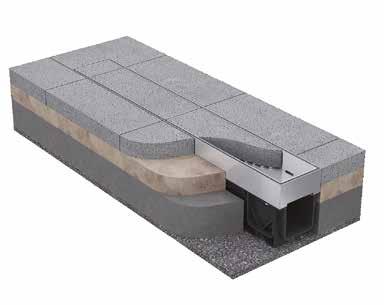




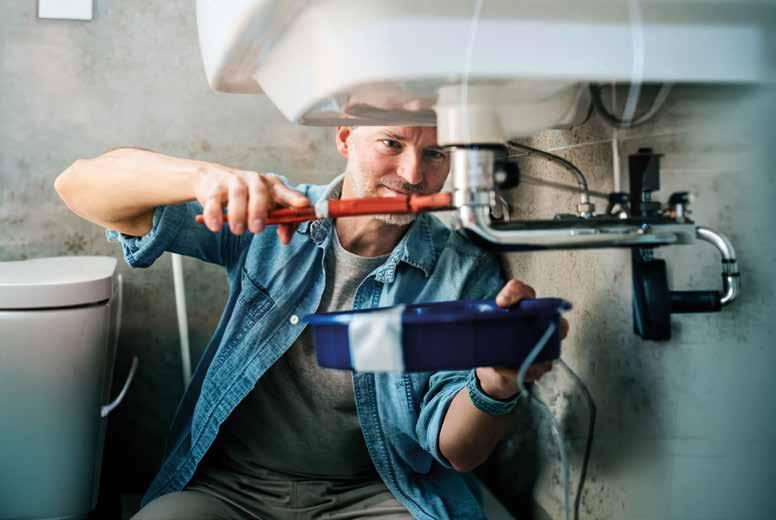
Six new apprentice members have been confirmed for the Apprentice Representative Group (ARG) in 2026.
Oli Shivnan, Nathan Giddens, Niko Sarch, Jaimee Cartwright, Jack Borham and Trent Toomey joined the Apprentice Representative Group early in 2026 and are looking forward to sharing their experiences and views on training delivery.
ARG’s goal remains the same as ever: making sure the apprentice voice is heard where change is needed.
The executive committee also remains the same, comprising Greg Wallace, Lisa Duston, Colleen Upton and Paul Olsen. The group will hold two in-person meetings and two online meetings during the year, with the support of the Plumbers, Gasfitters and Drainlayers Board, who are contributing to the group’s travel and accommodation costs. The first online meeting was held in June.

The outgoing apprentice members must be acknowledged for their valuable contributions. By sharing their reallife experiences, they have influenced decisions on apprentice training at industry and government level.
NZ Plumber will profile the new members over upcoming editions. We start with Oli Shivnan here.
Oli Shivnan is a third year Masterlink plumbing, gasfitting and drainlaying apprentice at Next Level Plumbing in Auckland.
Oli, who’s 28, was doing irrigation work in his Gisborne hometown before moving up to Auckland with his partner. “I decided to start a PGD apprenticeship as it would open more doors for me in the future, and I found working with water to be an interesting career path. It’s very rewarding.”
There is plenty Oli would like to see the Apprentice Representative Group achieve in the months ahead, including more support for people with learning difficulties. “I don’t have learning difficulties myself, but I’m aware that people who do have no issues with practical skills but can find it difficult to pass online assessments,” he says.
On the familiar topic of block courses, Oli thinks there should be more scheduled for each practical block, as they fill up quickly with so many people having to complete the same course. He also feels that the first year can be a struggle for PD or PGD apprentices whose companies don’t do drainage, as the initial block courses are mostly drainage.
“I would try and pair those apprentices with another apprentice who does drainage in the workplace, so that person can help them learn the way they do things.”


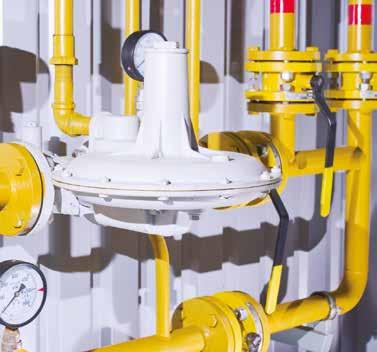



E-26191 145mm x 1.6mm x 8T 5pk
200mm x 1.6mm x 8T 5pk
260mm x 1.6mm x 8T 5pk
145mm x 1.6mm x 8T 5pk
x 1.6mm x 8T 5pk 300mm x 1.6mm x 8T 5pk 350mm x 1.6mm x 8T 5pk
200mm x 1.5mm 5pk
x 1.5mm 5pk
x 1.5mm 5pk



Have you got your head around the new workplace assessment apprentice training model? It’s easier than you may think.
The biggest difference between the new apprentice training system and the previous version? It’s no longer one size fits all. The new model is tailored to the individual apprentice and the actual services you offer as a business. If you provide a wide variety of work, the apprentice can do more of their training in the workplace and less on block course—which means less time away from work. Let’s take it step by step.
Map out the work your business does. Is it plumbing maintenance and new builds? What about drainlaying? And gasfitting? Do you provide any specialist services, like solar water heating or on-site wastewater treatment?
Sit down with your apprentice to complete their tailored Learner Plan, which is sent out by the training provider. This contains all the modules within the apprenticeship, and which of these must be done on block course, in the workplace, or a choice of either. The Learning Plan can be reviewed each year.
Agree with your apprentice what practical work you can train in the workplace and what they will need to complete at block course
Complete the apprentice’s Learner Plan to confirm your approach
The apprentice collects evidence of all practical on-job learning towards earning unit standards
The verifier (eg, supervisor) in your workplace signs off this learning
The learning is assessed by an in-house or external assessor against the unit standard
The apprentice passes the unit standard, or must resit
As you’ll see from the table, for the Chambers and Traps module, you can choose to send your apprentice to block course—for example, if you don’t provide this type of work in your business. The Gas Pipework module must be completed in the workplace. So, if your business doesn’t offer gasfitting services, your apprentice cannot train in gasfitting. A block course isn’t an option here.
The same goes for drainlaying and plumbing. Your business must be able to train in the basics of each trade for the apprentice to be able to choose this path.
Once all unit standards are passed, the apprentice completes their training
The apprentice must pass the PGDB registration exam before applying for a practising licence.
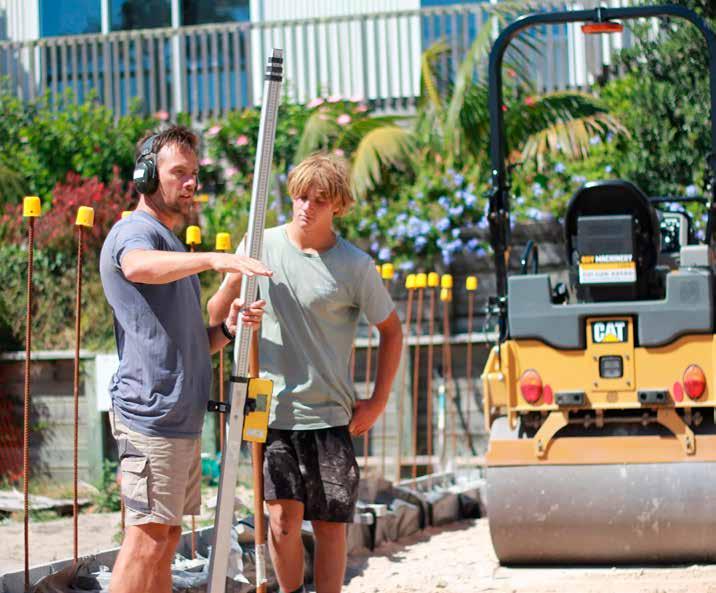
All modules your apprentice completes in the workplace can be assessed either inhouse or externally—but must be verified in-house. Verifiers must hold a current licence in the trade they verify (this must be a certifying licence for gas).
The apprentice collects evidence of their practical learning as they go—for example photos, job specs, as-laid plans, job cards, manufacturer’s instructions, or sitespecific instructions.
The verifier’s job is to observe the apprentice’s work, verify it meets the required workplace and industry standards, and sign off the evidence, ready for assessment.
Your apprentice is going to complete the two practical unit standards within the Chambers and Traps module in their workplace.
One is to install an inspection chamber, the other to install a trade waste interceptor trap. They will take photos of these jobs as they go and gather other evidence, such as job specs, job cards, as-laid plans, or sitespecific instructions.
The chosen verifier(s) in your business will observe the apprentice’s work and validate the apprentice’s evidence.
The other two unit standards in this module are theory learning, which the apprentice completes online.
Both the theory and practical unit standards then get assessed and marked against the unit standard by the workplace assessor.
The assessor can be someone in your workplace. However, you’ll need to be sure they are eligible and have enough time available to support, mentor, monitor and
assess the apprentice’s learning—keeping them on track to complete in good time.
You may find it easier to use an external assessor, eg through the training provider or a group apprentice training scheme like Masterlink.
Your apprentice spends less time away at block course
Your apprentice earns unit standards doing jobs they carry out in their daily work
Your apprentice is working on real jobs with proper equipment and materials
The training provider can focus on teaching the apprentice in aspects they don’t already carry out in their daily work.

Plumber, fundraiser, and ASB Good as Gold prize winner!
Stu Brickland is more than a busy Bay of Plenty plumbing business owner. Any downtime is spent organising his annual March fundraiser—the Pukehina Surf ’n’ Sand Autorama.
WORDS: DAWN ADAMS
Have you always lived in Pukehina?
I ran a plumbing business while living in the Chatham Islands before coming back to mainland New Zealand and working with someone else in Rotorua.
That was just before I moved out to Pukehina and started my own business, Complete Gas & Plumbing BOP, around 20 years ago. It was a decision to look after my health. I decided to move to this little seaside place and thought I could probably work three or four days a week… I failed miserably. It’s more like five, six, seven days a week. It’s enjoyable because I love the community.
How did the Pukehina Surf ’n’ Sand Autorama begin?
Being a plumber, you’re going into people’s houses, their farms, workplaces and commercial properties, and you see stuff in the garage. Like a nice car, some motorbikes, or a cool tractor. So, I got to thinking, what would happen if I put a community shout-out on Facebook?
Then I thought, why don’t we raise a little bit of money whilst we’re doing it? I expected maybe a couple of dozen vehicles to turn up. I put up the shout-out, and for the first show we had about 185 cars. That was five years ago, and it’s grown from there.
Can you tell us about your fundraising causes?
When we did the first show, we collected money in a bucket and were quite naive. Somebody pointed out that, if we were going to carry this on—and there’s obviously an appetite in the community— we needed to start a charitable trust. So, we created the Pukehina Community Charitable Trust.
Some of our sponsors are accountants, so they helped guide me in the right direction. Some people who had been helping out became trustees, and we got a committee together.
We support the local surf club and fire brigade, which we call our local heroes, because they give their time for free. The Pukehina Volunteer Fire Brigade only gets funding for the fire engine and the activities and equipment, but they do so much more.
They have a first response vehicle, so if somebody injures themselves, has a car crash, a heart attack or a stroke, they can be there in minutes. They can administer first aid to keep you alive until the ambulance can come up from Tauranga, which could take 40 minutes or more.
We felt that was an important activity to support, and the same with the Pukehina Surf Rescue. They help people when they
tip over on the bar taking their boat out, and they help train kids to become surf lifesavers. We’ve also branched out to ask for expressions of interest every year. Local groups like the kindergarten, fishing club, and bowling club have put their names forward. This year, we supported six different groups.
Tell us about your Seven Sharp interview in March. Was that a complete surprise? Oh, 100%. I got up in the morning and went to do the Autorama show. I’m running around with my walkie-talkie, and I have a call to go to the main stage. And next thing I’ve got a camera in my face and a guy asking questions! Karen Raggett, a trustee, and Pat McGrath, on the committee, had planned it all and put my name forward.
When you were told about your ASB Good as Gold $10,000 prize, you didn’t hesitate to add this amount to your fundraising total. Why was that? Yeah, 100%. There’s 20 people doing just as much work as I am to make this event happen. I might have had the idea, but there are heaps of people putting in so much time and effort. It’s beyond question that the money has to go into the pot to be used for the community. So, the $50,000 we raised became $60,000.
Do you have a date for next year’s Autorama event?
We do. It’s always the second Saturday of March, so the 13th of March.
You’re clearly a vehicle enthusiast. What kind of cars do you own?
I’ve always been into vehicles and motorbikes, right from having a driver’s licence.
I’ve got a 1956 Cadillac DeVille, which is my main car. Then I’ve got a 1946 Chevy Pickup for my business.
I see from the Seven Sharp feature that your business has a strong community focus too. What drives that (no pun intended)? Where we live, there are a lot of holiday homes. People turn up on Friday night, and maybe they’ve got no hot water, or there’s a leaking pipe. It’s quite reactive, and you have to be there for your community. We just respond as required; we’re always available.
Is there anything else you’d like to share with readers?
Get involved in your community, especially if you’re in a smaller community. Get out there and make stuff happen because you’ll find that, when you do, there’ll be a lot of people who want to join you and help. Individually, we’re great, but together we’re much stronger.

Those handymen have been at it again...
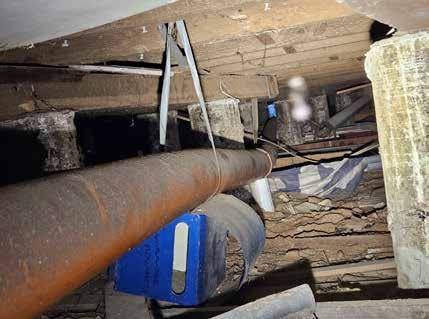
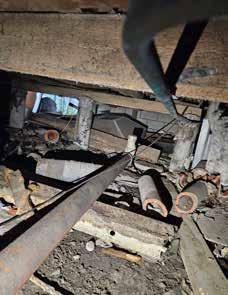
What lies beneath
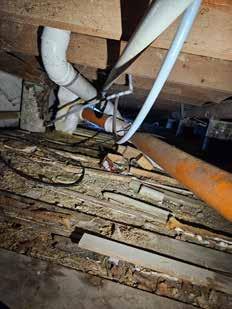
“This is the worst I have seen in 46 years in the trade,” says Steve Thomas of Thomas Plumbing & Gas of this dodgy plumbing they came across in Kāpiti.
“Soil pipe run in orange power duct, sagged to the point of constant blockages, supported by a letterbox and offcut of pipe. Gully trap under the floor overflowing. Terminal vent connection under the floor with no terminal vent pipe attached.”
Pipe dreams?
“Just a couple of snaps of interesting plumbing and blockages in Tauranga,” says Carl Wolfsbauser of Bell Plumbing.
Send your dodgy photos to the Ed: bsellers@masterplumbers.org.nz
Take the hassle out of finishing at ground level. With just a few quick turns of its patented screw system, AdjustaPit allows fast, precise height adjustment on site – no cutting, packing or rework required. That means less time fussing about and more time saved on every install.
Designed for flexibility, AdjustaPit is available with interchangeable square or round tops to suit the job, delivering a clean, professional finish every time.